100 Cricketers – 1st X1: The All-rounders

Continuing my “100 cricketers” series.

INTRODUCTION

Welcome the latest installment in this series. So far there has been the introduction, a post about Tammy Beaumont, and a post about the other specialist batters from my first XI. This post now deals with the all-rounders from that list, of whom there are no fewer than four (including the wicketkeeper)…

ANDREW “FREDDIE” FLINTOFF

He took a long time to really establish himself at international level, but then had a couple of years when he could seemingly do no wrong, which included the fantastic 2005 Ashes series. Later on injuries took their toll, but even at the very end of his career his last involvement in the action was a direct hit on the stumps to run out Australian captain Ricky Ponting.

His performance at Edgbaston in 2005, when he scored 73 and 68 and took four wickets in each innings was outstanding, and helped to turn a series that very nearly died a premature death into one that nobody will ever forget. His 18 overs off the reel at the Oval in that same series to give England an unexpected first innings lead was incredible. In the second match of the 2009 series at Lords he bowled England to their first victory over Australia at that venue since 1934 when Hedley Verity took advantage of a rain affected pitch (remember, they played on “ooncoovered pitches” in those days) to record match figures of 15-104). 

England were rather more sensible about Flintoff’s departure than they had been about Ian Botham’s in the early 1990s, when many young cricketers had promising careers effectively strangled by having the “next Botham” label draped round their necks. This time they realised that a straight replacement for Flintoff was, to put it mildly, unlikely, and set about building a different kind of team.

Flintoff had two and a half really superb years (2004, 2005 and 2006 before the tour to Australia at the end of that year which was an unqualified disaster for him and most of the rest of the squad) and produced flashes of brilliance both before and after that period. 

KATHRYN BRUNT

She started out as a specialist bowler, batting low in the order. At one point she dropped out of the game but then made a comeback. Subsequently she has remained the England Womens team’s first choice opening bowler and has improved her batting to the point that she can be regarded as an all-rounder (she now habitually bats at no 6 or 7 in tests and ODIs, and often comes in higher than that in T20s when quick runs are wanted). 

So long as her back holds out (she has been plagued by problems in that area down the years) she will be wanted by England (in the final ODI against India recently she took 5-28, her wickets being those of the top five in the Indian order, and was on 18 not out when England completed their victory). 

ELLYSE PERRY

I saw a very young Ellyse Perry live at the Adelaide Oval in 2009, playing in an ODI for the Australian Women versus the New Zealand Women. In those days she bowled fast with new ball, batted at no 8 (it was obvious that she would be moving up the order in the future) and had a superb throwing arm.

She still bowls fast with the new ball, remains a brilliant fielder, and is now just about the best batter in the women’s game (a test-match double century being her career highlight, along with her recent dominance of the Women’s Big Bash League – three individual centuries in the most recent tournament). 

If you were selecting an Earth Women XI to take on Mars Women she would undoubtedly by the first name on the team sheet and it would go down in ink, not pencil. 

She should still have a few years ahead of her at the top, and my advice would be: enjoy it while you can – talents of this magnitude do not come along very often.

BEN FOAKES

One of the best wicketkeepers in the game, he has played five test matches for England and averages 41.50 with the bat as well as having demonstrated his skills as a keeper. Yet ridiculously his international future is in doubt because of the difficulty (in the minds of the current England selectors at least) of fitting him and Jonny Bairstow into the same England team. If they do not want to use Bairstow as a specilaist batter, filling the no3 slot, then as far as I am concerned he, and not Ben Foakes, should be the one to miss out.

Providing the England selectors see sense Foakes should go on to have a stellar international career.

THE NEXT POST IN THIS SERIES

My next post in this series will feature the specialist bowlers from my first XI and introduce my second X1 preparatory to posting about them.

PHOTOGRAPHY

A few of my own photographs to end:

P1210740
Seen from the Tuesday Market Place, King’s Lynn
P1210741
Near the Gaywood River, North Lynn
P1210744
My new beanie – from the part of Cornwall where my parfents live.


Addenbrookes Visit Brings Good News

An account of yesterday’s visit to Addenbrookes.

INTRODUCTION

Regular readers will be aware that I have had a tough time lately, including two unscheduled visitsTHto my local hospital. It was therefore with feelings of some trepidation that I approached my scheduled visit to Addenbrookes yesterday. I will take you through what happened at various stages of the day in the rest of this post.

CONSULTATION WITH DR MAZHAR

The encouraging news from this session was that my tumour markers are continuing to fall (having at one stage been up in the hundreds of thousands they are now down at 20). Immediately after this session I went for a chest x-ray, preparatory to an afternoon appintment with a respiratory specialist. 

THE RESPIRATORY SPECIALIST

Given my situation the news from this appointment could have been anything from dreadful up to reasonable (given the known state of my lungs it was not going be good on any normal definition of that word). In the event the news was, to adapt a line from S J Simon’s “Why You Lose at Bridge”, the best news possible – the lung infection had cleared up, and it is virtually certain that the main problem in my lungs is not, as some had feared, a case of Bleomycin toxicity. It is almost certainly caused by small scale haemorrhaging (the lungs act like a sponge, soaking up the loose blood, which causes some problems but explains why there is little external evidence in such cases). A CT scan has been booked to further check this out, and if warranted this will be followed by a bronchoscopy.

THE CURRENT SITUATION

My physical state is improving – while I found walking around the hospital tiring I did not actually need to stop at any point, and I never felt like I was close to trouble. Since I went public about having experienced such things I have had no further anxiety/ panic attacks (and given both my recent circumstances and my mental health history it is no great surprise that I did experience such things). The mild tranquilizers (Diazepam for those interested in exact details) that my doctor provided to help with this issue have worked so far. There is a long way to go yet, but at least at the moment I seem to be heading in the right direction.

PHOTOGRAPHS

Here are some photographs from yesterday… 

P1210767
The West Winch village sign
P1210768
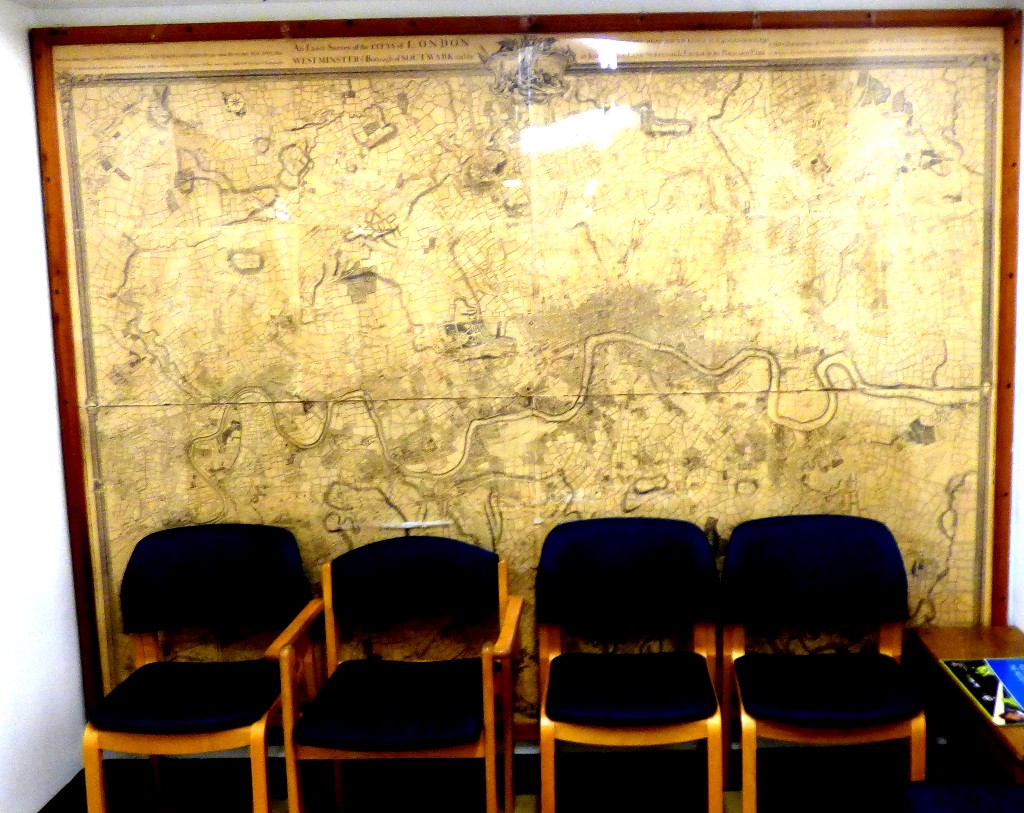
This magnificent map adorns one wall of the waiting room for the respiratory clinic.
P1210770
The first of two shots I got of Ely Cathedral during the return journey.

P1210769

100 Cricketers – Gower, Cook and Pietersen

INTRODUCTION

I launched this series with an introduction a while back and devoted a stand-alone post to Tammy Beaumont. Now after a some delays I continue with the remaining specialist batters from my first XI. I will deal with them in chronological order, starting with…

DAVID GOWER

I saw the last day of test cricket in the English season of 1990 live at The Oval. England were battling to save the game and thereby secure a series win, and the not out batsmen overnight were Mike Atherton and David Gower. Atherton did not last long that morning, but Gower batted magnificently through the day, finishing on 157 not out. John Morris kept him company for a good while but failed to reveal the stroke play that had earned him what was to a brief chance at international level. Allan Lamb then made a half century to ensure that no embarrassments could happen. Robin Smith had time to play one cut shot before the end. However, all of these players, and indeed the Indian bowling attack, were merely supporting cast for a day that belonged to Gower. 

There would be only two more years of Gower at international level before he was passed over for a tour of India (an unqualified disaster for England, although Graeme Hick and Chris Lewis each had moments in the sun during that series) and announced his international retirement. 

In the course of his test career David Gower scored over 8,000 runs at an average of  44, and he scored them in all circumstances and against all opponents. At Perth in 1978 while Geoffrey Boycott was taking 454 minutes to score 77 (one all-run four, but no boundary hits) Gower scored his maiden Ashes century. At Edgbaston in 1979 he took 200 not out off India. At Jamaica in 1981 he secured a draw for England by defying possibly the most fearsome pace quartet ever seen in cricket history (Garner, Croft, Marshall, Holding) for eight hours and an undefeated 154 – England would wait seven more years and ten straight defeats before they next shared the honours with the West Indies. In the 1985 Ashes he made three scores in excess of 150, two of which contributed to innings victories by England. Even in the 1990-1 Ashes down under, when England were crushed by an Australian side that knew itself to be the best in the world he made two centuries in the series.

A David Gower innings would stick in the memory. It never looked like he had really hit a ball until you saw it speeding to the boundary. It was precisley because he was so very good that his dismissals often looked absolutely terrible – how could such a player produce a shot like that?

KEVIN PIETERSEN

Fast forward 15 years to 2005 but stay at The Oval, and again a final day of the test match season started with England needing to secure a draw to win the series. This was an Ashes series, and since 1989 when a combination of injuries and a rebel tour to Apartheid South Africa saw England surrender the Ashes (only the weather prevented Australia from making history by winning all six matches in a six match series) the urn had been firmly in Australian possession. Kevin Pietersen (three fifties but as yet no century in his debut series) was dropped early in this innings by Shane Warne (who had a magnificent series overall), but England were definitely struggling at lunch time. 

Post lunch Pietersen decided that attack was the only form of defence and went after the bowlingn to spectacular effect. Paul Collingwood for an hour and Ashley Giles for two and a half hours played crucial supporting roles. By the time Pietersen was out for 158 England were well and truly safe.

Pietersen went on to play many more fine innings for England, although his career eventually ended in somewhat controversial circumstances, but if he had never scored another run after that day in 2005 he would have done enough to ensure imperishable fame. No one who witnessed that innings will ever forget it.

ALASTAIR COOK

England’s all-time leading run scorer, whose career started with a fifty and century against India in 2006 and ended in the same fashion 12 years later. In between times it included the most successful visit to Australia by anyone named Cook since Captain James of that ilk was in his prime. Having saved the first match at Brisbane with 235 not out he then contributed 148 at Adelaide, Pietersen making 227 and finally ensured that England would win the series by scoring 189 at Sydney. In total the series brought him 766 runs, second only for an English batter in Australia to Hammond’s 905 in the 1928-9 series.

As well as making big runs all the way through his career Cook also managed to be fit and available every time England needed him, a remarkable feat of longevity and endurance when so much cricket is being played. 

LOOKING AHEAD

Having covered the specialist batters from my first XI I will next be considering the all-rounders, including the wicketkeeper.

Physical Health Impacts on to Mental Health

An account of the last few days, explaining the current problems I am facing (regular readers will be well aware that I have been taking a battering in various ways over the last five months).

INTRODUCTION

Earlier this week I came out of one hospital visit caused by breathlessness only to go almost straight back in. Now I am back out again, but there are still problems – only they are mental rather than physical.

THE BOOMERANG DAY

On Tuesday I was discharged from Queen Elizabeth Hospital and came home. That evening when considering going to bed I became breathless, tested by SP02 on a machine I now have for that purpose, got a low reading and found myself heading back to A&E. I was tested there and we established that my machine always reads one or two points too low, and that at the hospital there was no major issue with my breathing. After a six hour wait for further developments I was moved to a bed, and I remained at the hospital until yesterday.

YESTERDAY

Yesterday evening, when I headed for bed, having made sure that my SP02 was not low, I became breathless just from thinking about getting into bed. I called my father, and with his assistance, having identified this as a panic attack, I eventually did get to sleep. I was up quite late this morning, but got my coffee going OK and checked in on the computer.

TODAY – BREAKFAST PROBLEMS

I was just preparing my breakfast (the cereal was in the bowl and I was opening the milk) when I had another breathlessness related panic attack and called my father for assistance. He came round, I ate the breakfast and have subsequently managed to get dressed and go out with him for a very short walk. I have an appointment at my GP surgery at 4:20PM to discuss my mental health situation (I am definitely in need of help in this department) and see what can be done about it. 

TOMORROW AND SUNDAY

These are the two days that will pose the most problems – I will be at Addenbrookes for most of Monday, and there are plans for a visit from Tapping House on Tuesday. That leaves something to be done about the weekend. 

FINAL THOUGHTS

My physical health is probably is good, given what has happened over the last few months, as it could be, but mentally I am struggling. I do not know why it is these recent incidents that have had this effect, but undoubtedly they have, and something needs to be done – I hope the doctor at my surgery can help with this.