All Time XIs – Match Ups 22

Continuing my extended analysis of how the all time XIs I selected for each letter of the alphabet fare against one another.

Welcome to the latest instalment in my extended analysis of how the all time XIs I selected for each letter of the alphabet fare against one another. The Es XI continue to occupy the spotlight, and they start today on 21 of a possible 75 points.

THE Es V THE Qs

The Es dominate the batting, and are also massively superior in pace bowling, having a proper new ball pairing in the form of T Emmett and Elliott, whereas the Qs only front line seamer is a bad third in the seam bowling rankings across the sides. The Qs have a numerical advantage in the slow bowling department, but Ecclestone is probably the best individual slow bowler on either side. I do not think that even on a turning pitch the Qs can close the gulf between them and the Es and accordingly score this one Es 5, Qs 0.

THE Es V THE Rs
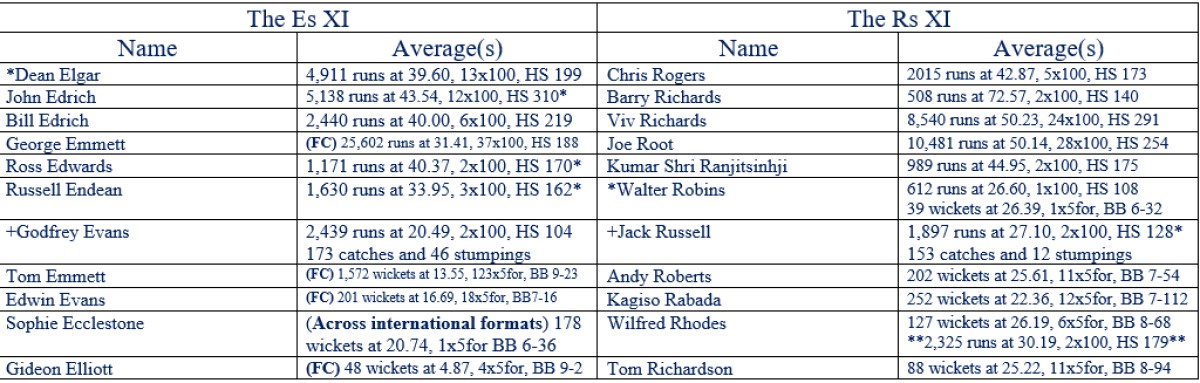
The Rs win the first five batting match ups, and while Endean ranks ahead of Robins as a batter, Robins’ all round skills partly compensate for that, and he also comfortably outranks the fairly pedestrian Elgar as a captain. Russell’s batting advantage of over 6.5 per innings over G Evans undoubtedly more than makes up for any slight superiority Evans may have had as a keeper. The Rs are comfortably clear in bowling as well – they have three front line pacers to the Es two, and magnificent though she is Ecclestone cannot be ranked ahead of Rhodes in the pantheon of left arm spinners. I score this one Es 0, Rs 5.

THE Es V THE Ss

The Ss dominate in all departments save wicket keeping – G Evans was undoubtedly a finer keeper than Sangakkara. Es 0, Ss 5.

THE Es V THE Ts
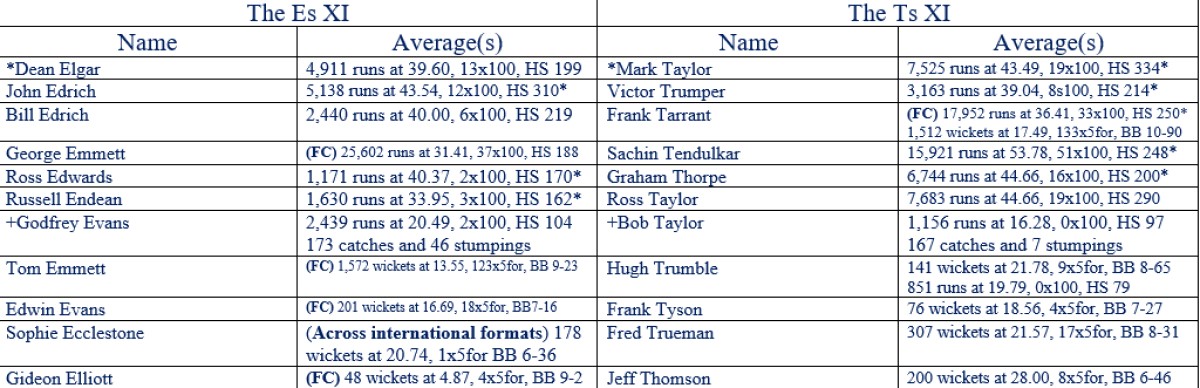
I give the Ts the verdict on opening pairs – Taylor’s marginal disadvantage v J Edrich is compensated for by his greater tally of runs, while Trumper made his runs on much more difficult pitches than Elgar. Additionally I would rate Taylor a better skipper than Elgar. While Tarrant loses the batting element of his match up against Bill Edrich, he offers an extra bowling option. The Ts have an overwhelming advantage in the number 4,5 and 6 positions. Bob Taylor ranks below Evans with the bat, similarly as a keeper. The Ts have far the stronger pace attack, and while Ecclestone just outranks Tarrant as a bowler Trumble has a significant advantage over E Evans. The Ts are well ahead and I score this Es 0, Ts 5.

THE Es V THE Us

The Es win the first three batting slots, the Us win the the next three. Umar Akmal outranks G Evans with the bat but is miles behind him as a keeper. The Es comfortably outrank the Us in the new ball contest, though Ulyett’s presence as a third pace option reduces the gap in this department. Ecclestone against Underwood is a mighty contest, though Ecclestone offers more with the bat. Given that he has done his bowling on 21st century pitches, which offer less to slow bowlers than the 19th century surfaces that E Evans exploited I put Ur Rahman ahead in this match up. Overall the Es should have enough, but it is close: Es 3, Us 2.

THE Es PROGRESS REPORT

The Es have scored 8 of a possible 25 points today, moving them to 29 out of 100 – 29%.

PHOTOGRAPHY

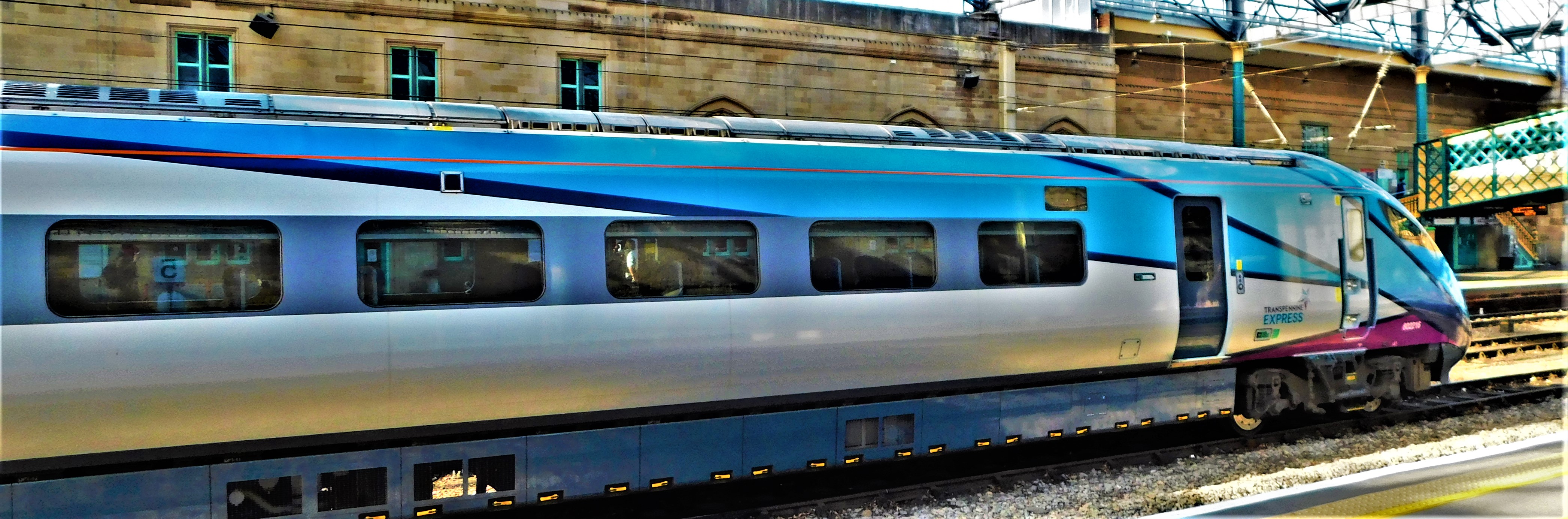
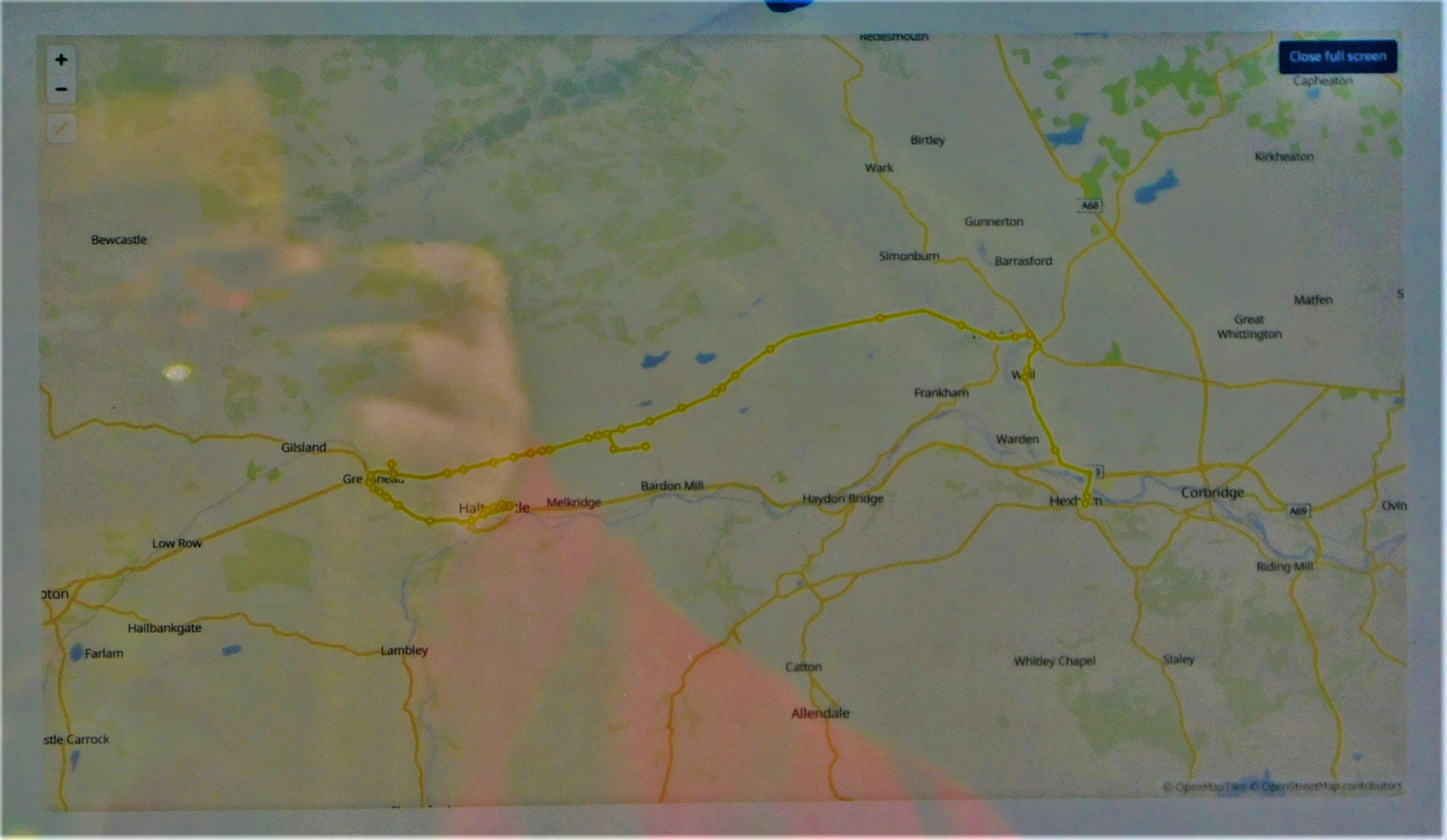
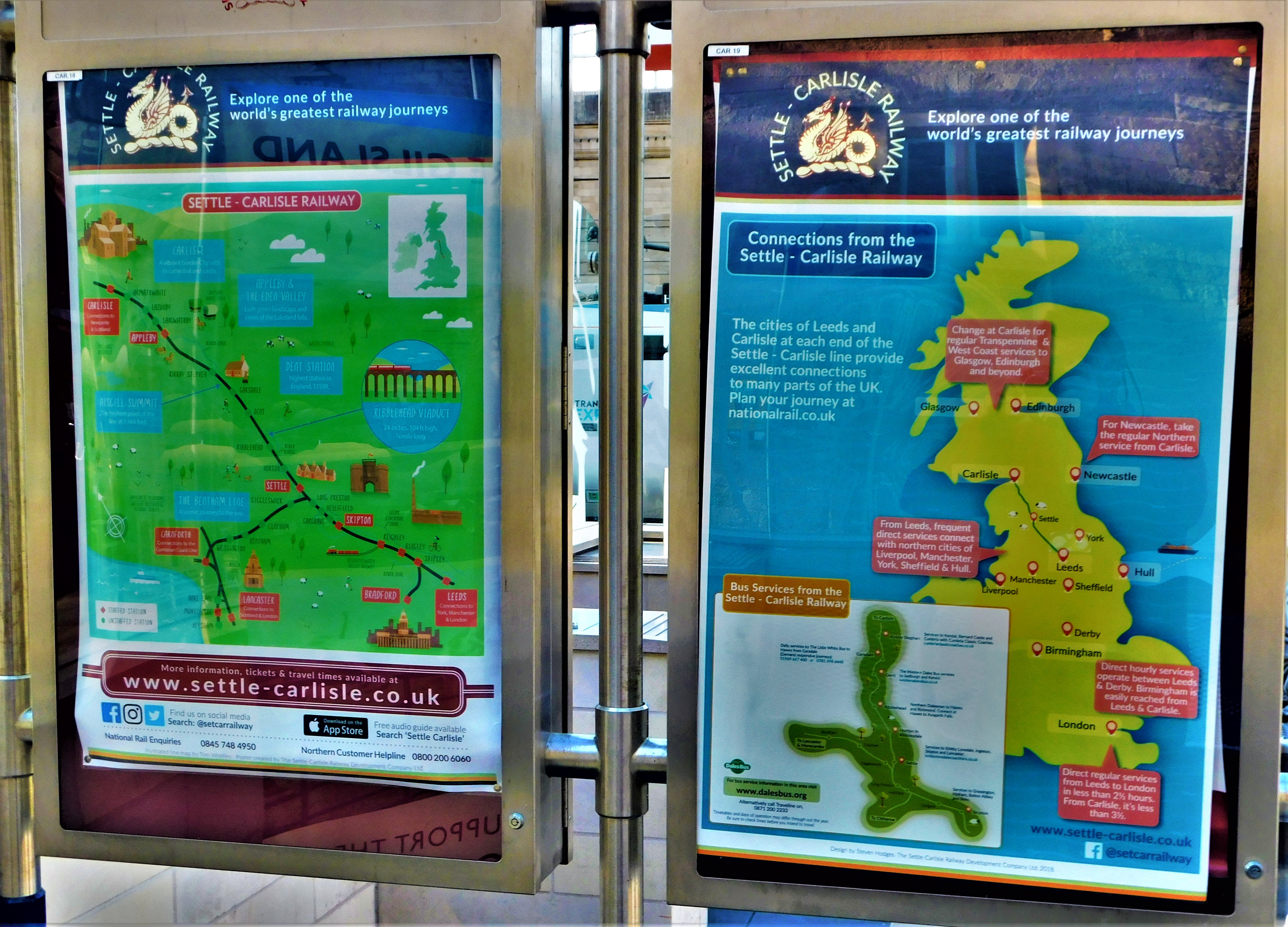
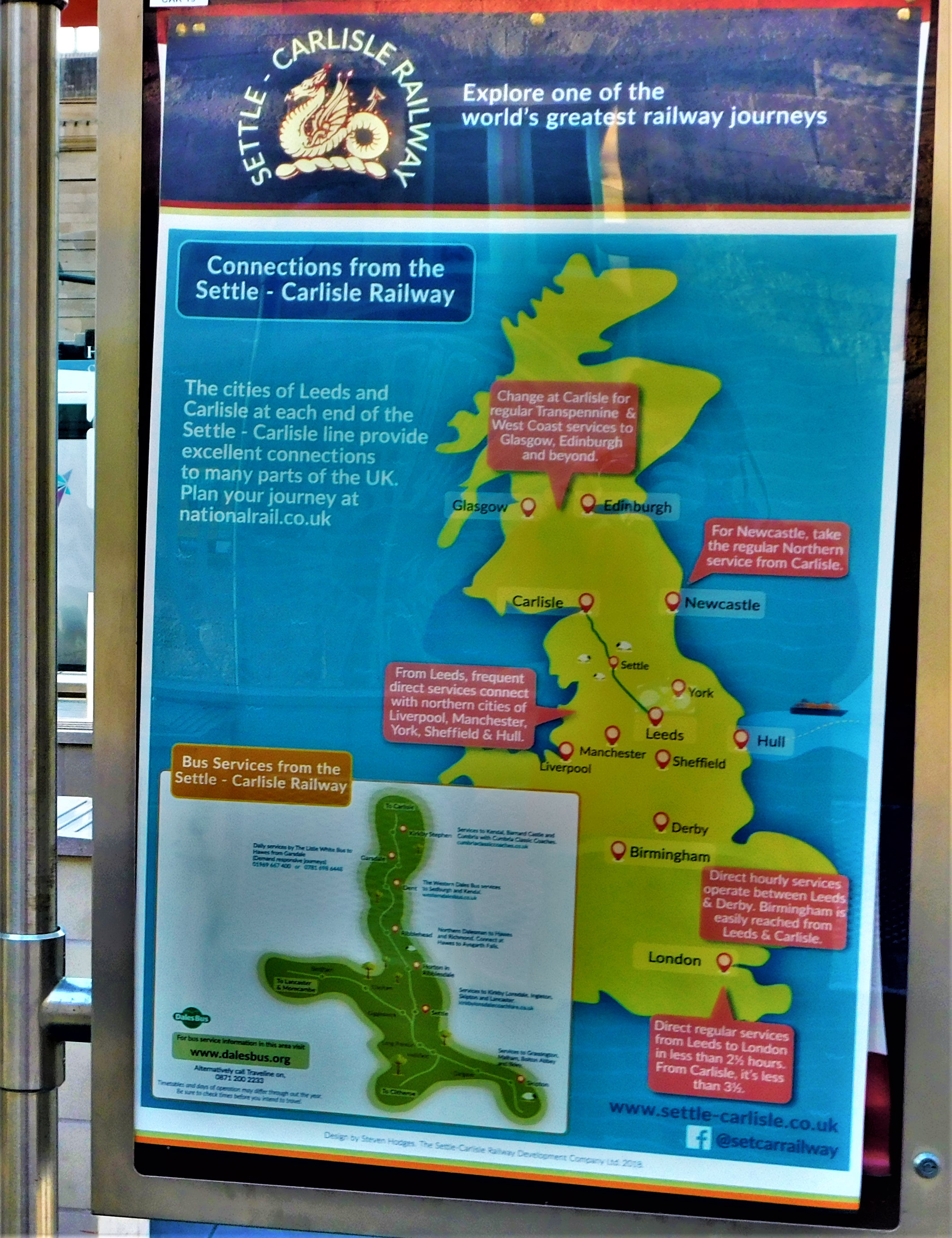
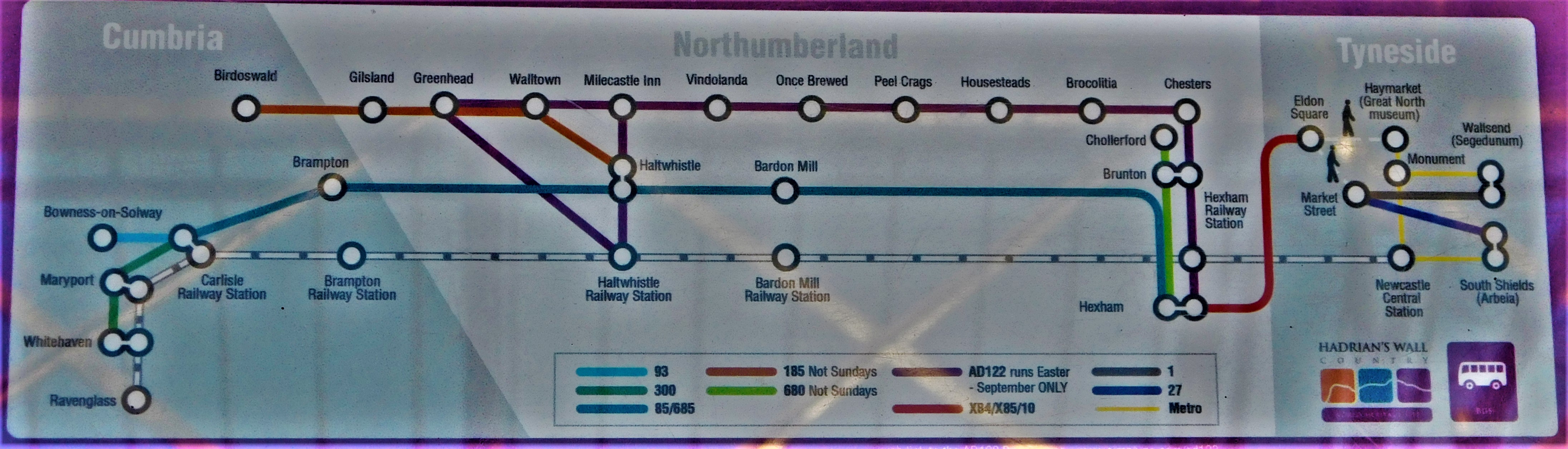
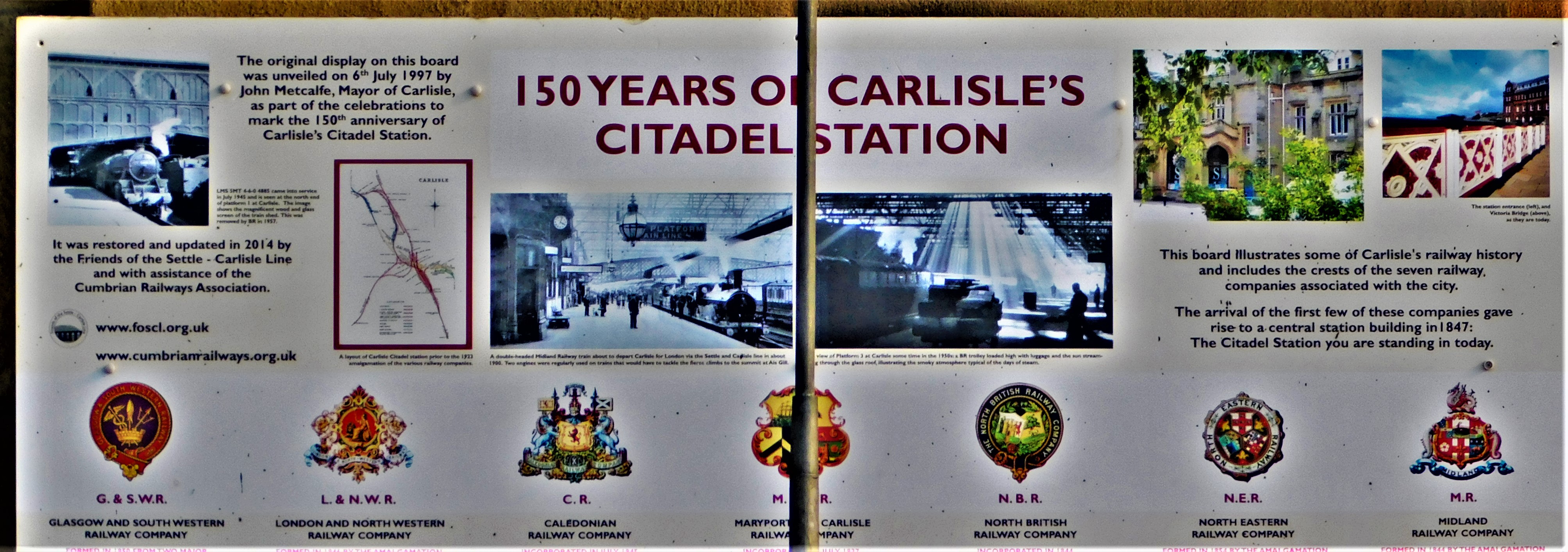
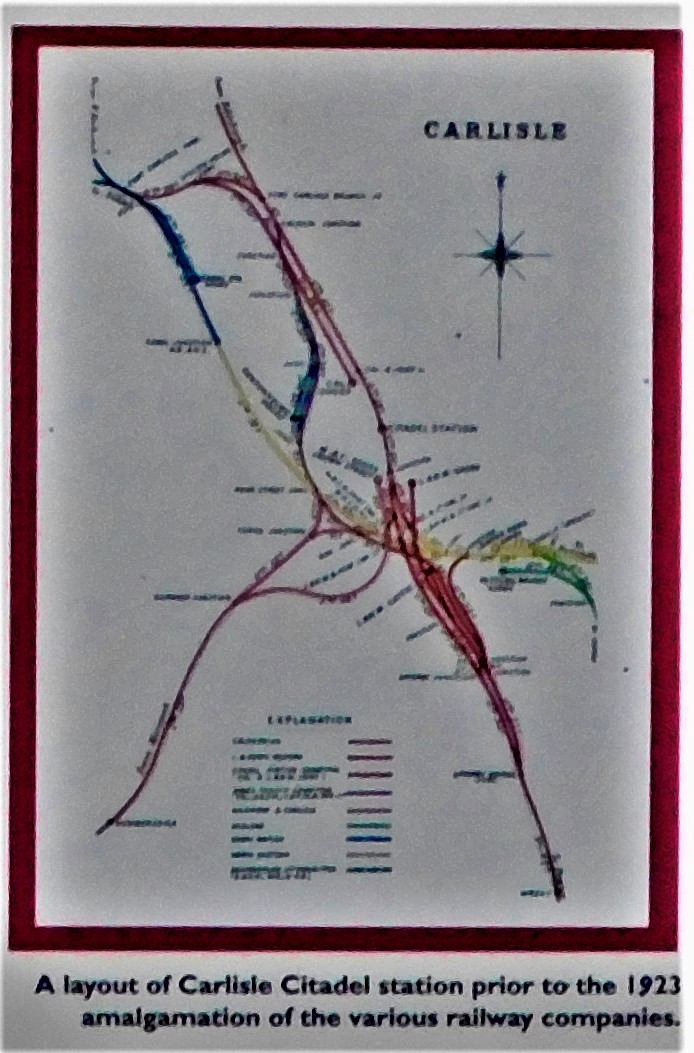
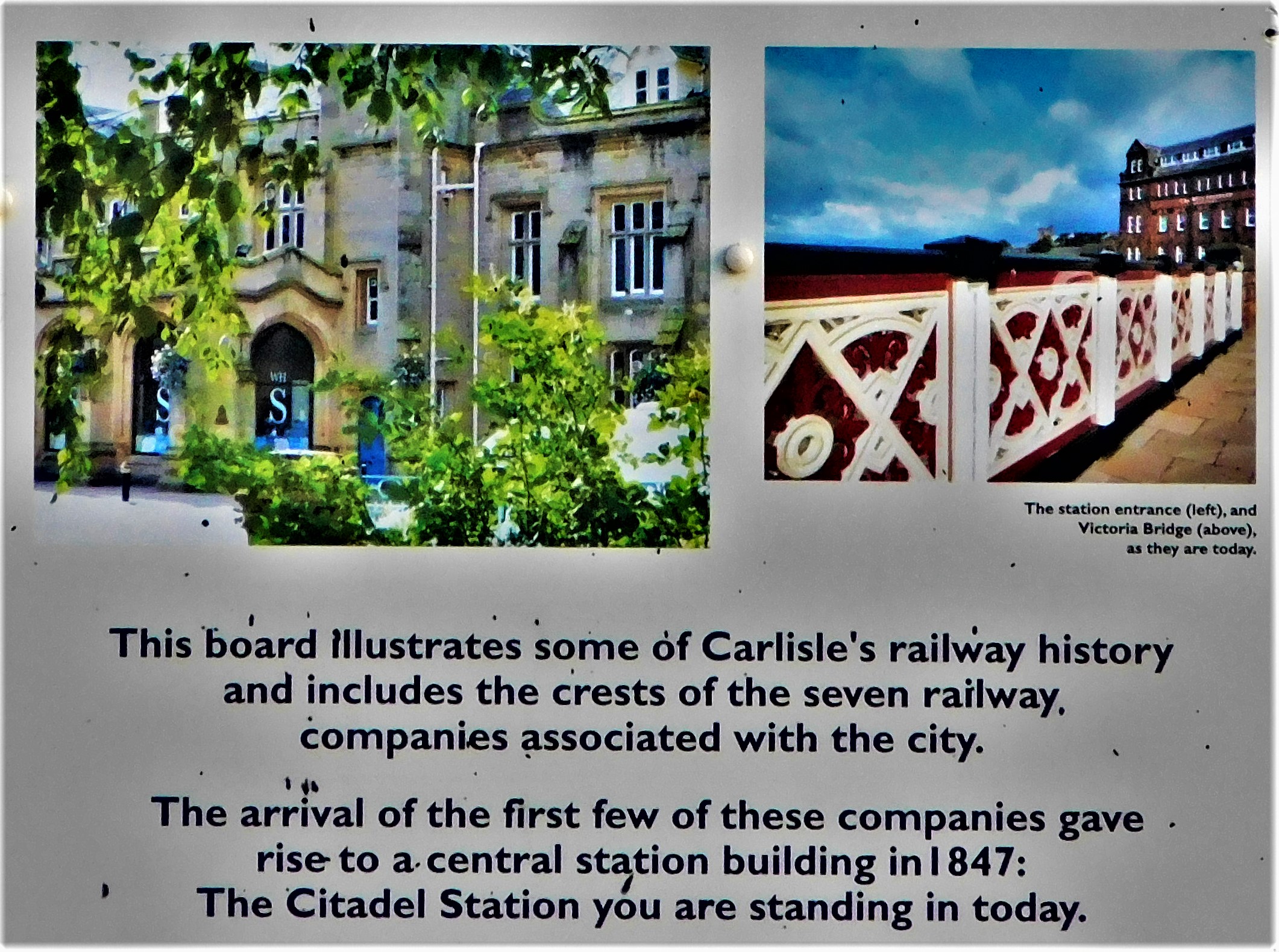
Today’s photo gallery comes from the first part of my return journey from Cumbria. I agreed to be dropped at Penrith station and buy a single from Penrith to Carlisle to get back on track with my return journey. I had a bit of a wait at Carlisle for a train to Newcastle, and as you will see the station there has various points of interest. This gallery takes us to my arrival at Newcastle, where I had a much longer wait as I opted to travel on the train on which I had a reserved seat rather than trying my luck on an earlier service.


All Time XIs – The Letter E

A look at the letter E as I continue my all time XIs theme.

This blog post continues the All Time XIs theme with a look at the letter E.

THE XI IN BATTING ORDER

  1. Dean Elgar (South Africa). Among the best contemporary long form openers, a very tough competitor. He also bowls left arm orthodox spin, although he is not likely to be needed for that by this side.
  2. John Edrich (Surrey, England). One of two Norfolk born cricketers in this XI (out of five members of their family to play FC cricket). Like Elgar a very tough competitor who had to be got out. He had the useful knack of really making it count when he got himself in, illustrated by a HS of 310* v NZ and scores of 175 and 164 against Australia.

  3. Bill Edrich (Middlesex, England). Lost six years of his prime to WWII, also often missed due to differences of opinion between himself and those in authority, but still averaged 40 in test cricket. He could also bowl useful right arm fast medium, more than once taking the new ball in a test match. Possessed of almost limitless courage, exemplified by his efforts as a flying ace during the war, he was a fine player of fast bowling in particular.
  4. George Emmett (Gloucestershire, England). A fine batter for Gloucestershire.
  5. Ross Edwards (Australia). Once scored 170* against England in a test match. In the 1975 Ashes, at the end of which he retired from test cricket he showed his battling qualities with a 56 in just over four hours at Edgbaston and a 99 that saved Australia from the wreckage of 81-7 (with the assistance of a certain DK Lillee, who produced 73*)
  6. Russell Endean (South Africa). A hunch pick by his captain Jack Cheetham for a tour of Australia after SA had been hit with a huge number of retirements, leading some to argue for the abandonment of the tour. SA drew the series 2-2 with Endean justifying his skipper’s faith by producing a score of 162* in seven hours at a crucial juncture.
  7. +Godfrey Evans (Kent, England). One of the greatest keepers of all time (173 catches and 46 stumpings, the latter an England record, at test level). His batting highlights included two test centuries and an innings where with England battling for a draw he was on 0* for 97 minutes, supporting Denis Compton who was batting at the other end.
  8. Tom Emmett (Yorkshire, England). A great left arm fast bowler and a good enough lower order batter to have scored a first class ton at a time when those were not easy to come by.
  9. Edwin Evans (Australia). A right arm slow bowler and reasonably capable lower order batter, his domestic record was outstanding, and he played in the second test match ever.
  10. Sophie Ecclestone (Lancashire, Manchester Originals, England). A left arm orthodox spinner who takes her international wickets at 20 a piece overall and has had her moments batting down the order. Her stock bowling speed is in the low to mid 50s miles per hour, which is somewhat quicker than that of Matt Parkinson to give just one example. I would not pick a female seam/ pace bowler as they are a lot slower than their male equivalents, but spin is not principally about the speed at which one propels the ball, and I believe Ecclestone is up to the job.
  11. Gideon Elliott (Victoria). A right arm fast bowler who played less than anyone else to feature in any of these XIs – just nine FC matches between March 1856 and a similar time in 1862. In those nine matches he took 48 wickets at less than five runs a piece, including the performance in which wickets taken outstripped runs conceded by the greatest amount in FC history – 9-2 in a single innings.

This team has a solid top six, a great keeper and four splendid and varied bowlers. Given that Bill Edrich took the new ball on occasions at test level I am not that worried about him being the third bowler of above medium pace in this side, while the slower bowlers, Ecclestone and Edwin Evans provide a classic contrast in styles.

HONOURABLE MENTIONS

I will deal with the spin situation first: there were two obvious spinners whose surnames begin with E, John Emburey and Philippe-Henri Edmonds. As valuable as these two were to Middlesex’s cause over the years neither had a great test record, and Emburey blotted his copybook by going on both English rebel tours to South Africa, the only person to do so.

Fidel Edwards would have been a more conventional choice of a right arm fast bowler than Gideon Elliott, but my feeling is that Elliott’s absurdly cheap wicket taking average, even from so small a sample size justifies his inclusion.

The only challenger to Godfrey Evans for the gauntlets was Faroukh Engineer of India, but though he was a better bat than Evans he was not as good behind the stumps, and as usual I opted for the better keeper.

The only other test match opening batter whose surname begins with E that I could think of was Bruce Edgar, and his average was only just the right side of 30, considerably less than either Elgar or John Edrich.

Richard Ellison, a right arm fast medium bowler and useful lower order batter, had his moments for England, including the last two matches of the 1985 Ashes, but his record is not quite good enough overall.

PHOTOGRAPHS

My usual sign off…