All Time XIs – England ‘Bazball’

A quirky all time XI – an England XI picked to play in the style of the current one.

It is ‘all time XI’ time again. The brief for this one is to pick an all-attacking all time England XI which is as perfectly balance as I can make it. This is a team that would score its runs quickly and have no problem taking 20 wickets in a test match. Also, no two successive batters in the envisaged order bat with the same hand.

THE XI IN BATTING ORDER

  1. Ben Duckett (left handed opening batter, occasional wicket keeper). He has been doing splendidly since his recall under Stokes’ captaincy.
  2. *WG Grace (right handed opening batter, right arm bowler of various styles, captain). The only conceivable choice as right handed opener for this XI, someone who was always looking to score runs.
  3. Frank Woolley (left handed batter, left arm orthodox spinner). A stroke making batter, a fine bowler and the only non-keeper to have taken over 1,000 first class catches.
  4. Denis Compton (right handed batter, occasional left arm wrist spinner). A natural born entertainer if ever there was one, holder of the fastest ever first class triple century (got to that mark in 181 minutes in a tour match at Benoni, South Africa).
  5. David Gower (left handed batter). Ideally suited to a side of this nature.
  6. +Les Ames (right handed batter, wicket keeper). Averaged 40 with the bat at test level, scored over 100 FC hundreds, twice won the Lawrence trophy for the fastest first class hundred of the season. Over 1,100 first class dismissals including an all time record 418 stumpings.
  7. Ben Stokes (left handed batter, right arm fast medium bowler, vice captain and talisman). Had to be included in this side, and a nod had to be given to his leadership, hence the award of the vice captaincy.
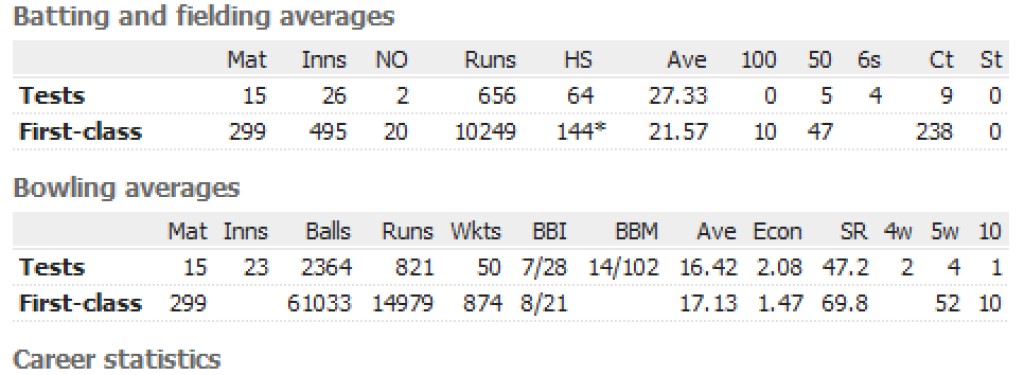
  8. Billy Bates (off spinner, right handed batter). A great all rounder whose career was ended prematurely by the loss of an eye in a freak accident. His test career was brief, but his first class career averages of 21.57 with the bat and 17.13 with the ball – both figures would be higher today (probably 32 with the bat and 25 with the ball) – illustrate his credentials.
  9. Tom Emmett (left arm fast bowler, left handed batter). A great fast bowler and a good enough batter to have scored a first class hundred at a time when that was not particularly easy to do.
  10. Syd Barnes (right arm fast medium bowler, right handed batter). 189 test wickets at 16.43 a piece in just 27 test matches.
  11. James Anderson (right arm fast medium bowler, left handed batter). England’s all time leading test wicket taker, and though his position in this batting order is unarguable, he would probably get off the mark with a reverse sweep.

This side has great batting depth, and with Stokes, Woolley, Grace and at a push Compton all capable of backing up the front four there is a wealth of bowling as well. This side would win a lot of matches, lose a few and probably not draw any unless epic quantities of rain fell.

HONOURABLE MENTIONS

I will go through these in batting order. Bob Barber was a contender for the left handed opener’s slot I gave to Duckett, but his top level career was much briefer. Had I not wanted Grace as captain Charlie Barnett and Colin Milburn would both have merited attention for the right handed openers slot. Woolley’s role as second spinner meant that the number three slot was nailed down. I might have named several at number four: Hammond, Dexter, May, Cowdrey, Pietersen and Root were all in the mix. Gower at number five had few challengers – the two left handed middle order players with really substantial test records, Phil Mead and Graham Thorpe were both more sedate in approach, while Percy Chapman, undoubtedly aggressive in nature, was never really worth his England place as a player. Ames at six and with the gloves had few challengers – Jonny Bairstow is not good enough with the gloves for the dual role, though I might have considered Matt Prior. Stokes really had to get the number seven slot. I regretted not being to accommodate Gilbert Jessop, though he can be designated fielding sub. There were two challengers for the number eight slot: Graeme Swann and Greville Stevens (with Woolley inked in I wanted a second spinner who was not an SLA). With Barnes indispensable I had no way to accommodate Trueman.

PHOTOGRAPHS

A couple of links before my usual sign off:

  1. A Guardian article about a site that is due to be used as the marker for the dawn of the anthropocene.
  2. An excellent twitter thread by Richard Murphy.

All Time XIs – Match Ups (9)

Continuing my extended analysis of how my all time XIs for each letter of the alphabet fare against one another.

I continue my series of posts analysing how my all time XIs for each letter of the alphabet fare against one another. The Bs XI are still in the hot seat, and they come into this series of match ups on 55 points out of 80.

THE Bs V THE Rs

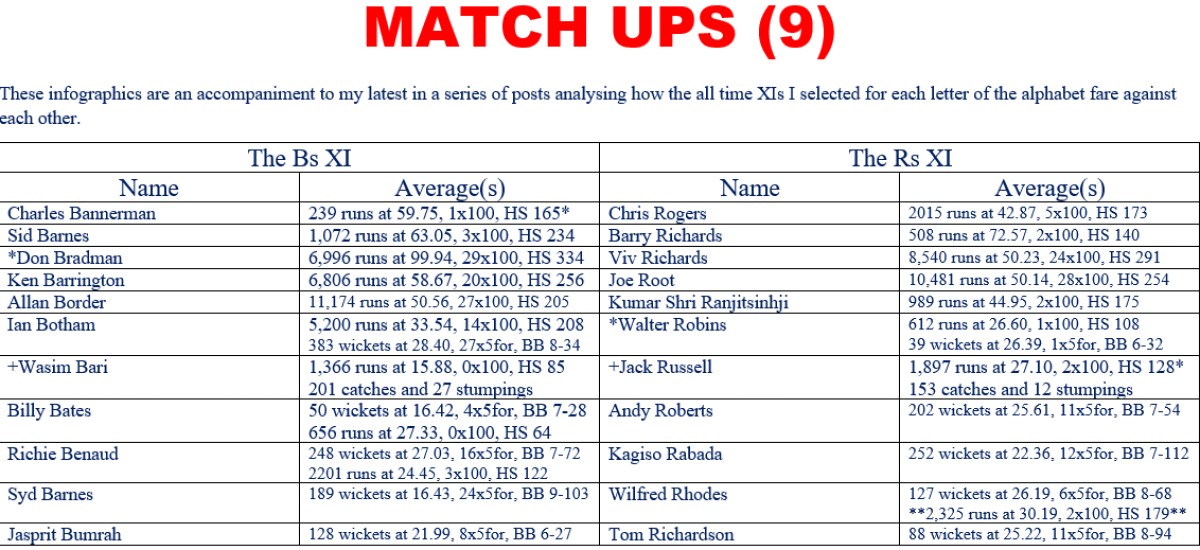
The Bs are massively ahead on batting. They also have the better new ball pairing, but whoever out of Roberts or Richardson ends up first change is a better third pacer than Botham. Benaud outdoes Robins, but Rhodes is a match for Bates. Though the Rs do have an advantage in bowling it is a small one and does not make up for the gulf in batting. Bs 3.5, Rs 1.5.

THE Bs V THE Ss

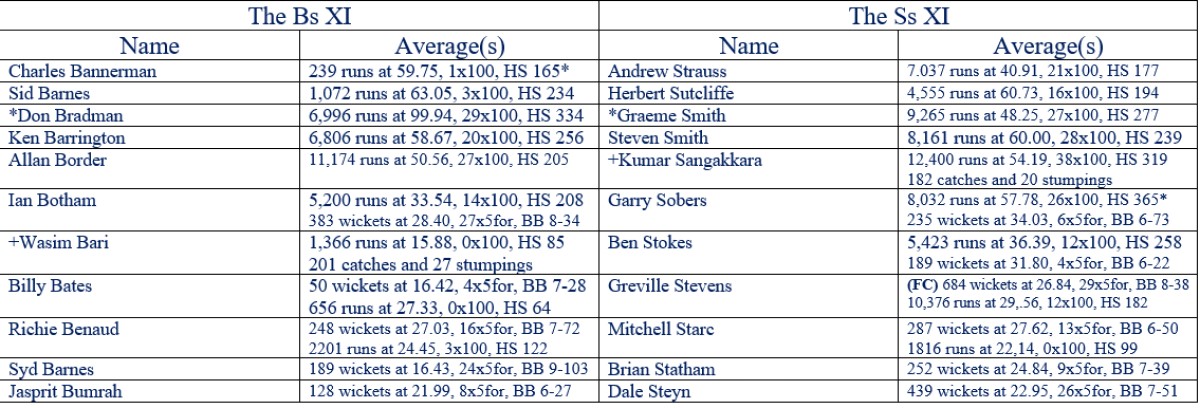
The Ss are only definitively behind the Bs in one batting slot – the number three position. Sangakkara as keeper and Sobers’ constellation of talents mean that other than number three the only position for which batting skill is noted that the Bs win is at number nine, where Benaud outdoes Starc. Though Barnes and Bumrah are the best new ball combination available to either side Starc far outdoes Botham as a bowler, and his left handedness gives his side an extra variation. Stokes and Sobers in his quicker guise are decidedly useful back up seamers as well, while Sobers in his slower guises and Stevens will be a good spinning combination, albeit not the equal of Benaud and Bates. The Ss XI have a clear but not utterly overwhelming advantage: Bs 1.5, Ss 3.5.

THE Bs V THE Ts

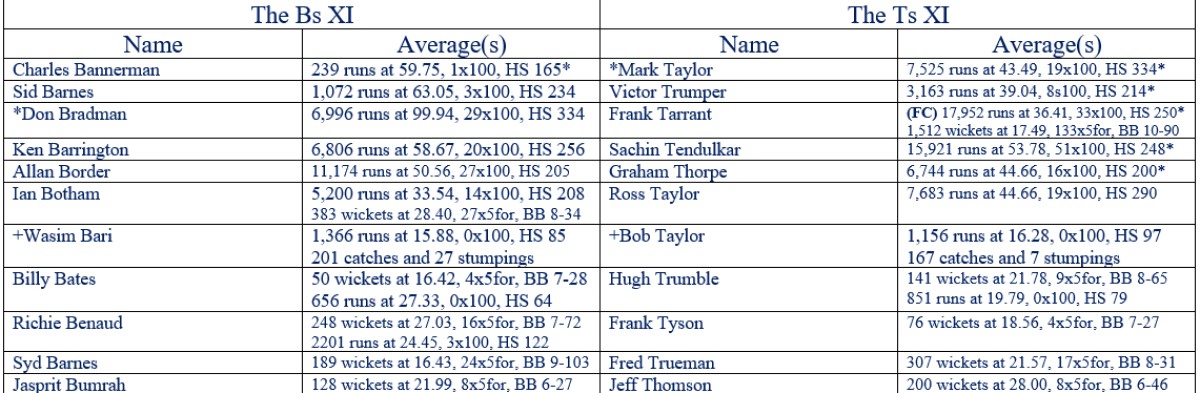
The Bs have an advantage in batting, but the Ts have the fastest pace combo of any letter, with Tyson and Trueman matching Barnes and Bumrah for potency with the new ball and Thomson a better third pacer than Botham. Frank Tarrant and Hugh Trumble are certainly at least as potent as Benaud and Bates – Bates may have an advantage over Trumble, but Tarrant has the edge on Benaud. I think the Ts just about have the bowling guns to negate the Bs advantage with the bat. Bs 2, Ts 3.

THE Bs V THE Us

The Bs boss the top batting, with only Inzamam Ul-Haq and Misbah Ul-Haq within ten runs an innings of their opposite numbers in the first five positions. Umrigar outbats Botham, but is much less of a bowler. Similar Umar Akmal outbats Bari, but is nowhere near him as a keeper. Umar Gul has an ordinary bowling record, Umran Malik has earthshaking potential but little actual experience, leaving Ulyett the pick of their fast bowlers. Underwood rates ahead of Benaud as a bowler, and Ur Rahman looks about even with Bates, though again, as with Umran Malik, he lacks experience. The presence of Ulyett and Umrigar does mean that the Us have six bowling options to the Bs five, but I don’t think that can save them, although they might just have a field day if Underwood and Ur Rahman with Umrigar as back up get to work on a raging bunsen. Bs 4 Us 1.

THE Bs V THE Vs

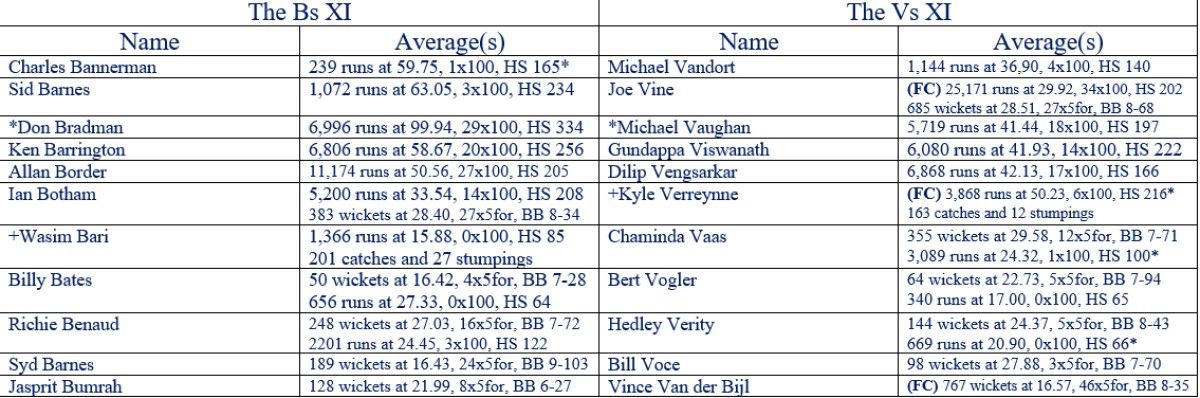
The Bs have their usual huge advantage with the bat, but the Vs are stronger in bowling. While Barnes and Bumrah have to be considered to outrank Voce and Van der Bijl as a new ball pair, Vaas is ahead of Botham as third seamer, and probably by more than the figures show – he would almost certainly fare better as third seamer in a strong attack than he did as opening bowler in a moderate one. Vogler beats Benaud as a leg spinner, while Verity and Bates look on a par, although Verity’s test figures were achieved in a decade of doped pitches and Bradman’s batting. Verity’s advantage over Bates is clear if you compare their FC figures. I do not think that the Vs can make up for their deficit in the batting department, but I would expect a good contest: Bs 3, Vs 2.

THE Bs PROGRESS

The Bs scored 14 out of 25 points in today’s match ups, moving them on to 69 of a possible 105 points, 65.72% overall. The As by comparison were on 54 points at this stage of their match ups.

PHOTOGRAPHS

My usual sign off…

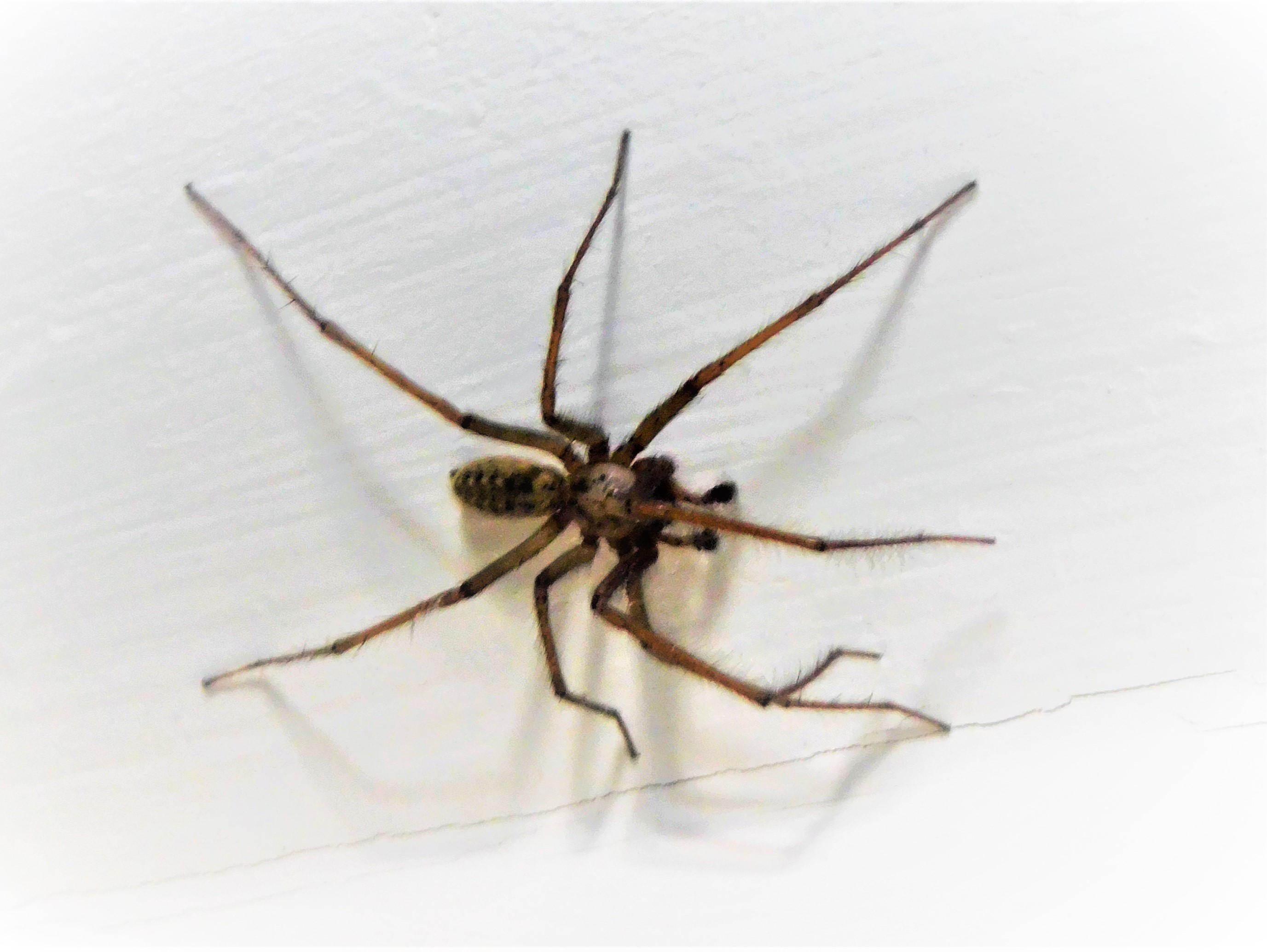
I have separated some of my photographs off from the rest because I know that some of my readers are arachnophobic. If you are among them skip the last few photos…

All Time XIs – Match Ups (8)

Continuing my extended analysis of how my all time XIs for each letter fare against each other. Also some of my own photographs.

We continue our extended look at how the all time XIs I picked for each letter of the alphabet fare against each other. The Bs are still in the hot seat, and go into today with 35 points out of a possible 55.

THE Bs V THE Ms

The top batting is the usual story of dominance by the Bs, although Macartney’s skill as a bowler should be born in mind when looking at his position. Miandad outdoes Border in the number five slot, Miller is clear of Botham with the bat and miles clear of him with the ball. Marsh is better in both departments than Bari. Marshall and McGrath at least match Barnes and Bumrah as a new ball pairing. Fazal is ahead of Benaud, his nearest bowling match in opposition ranks, although the Aussie was a much better batter. Muralidaran just beats Bates – in the modern era, with pitches being less treacherous than they were in Bates’ day he would probably have paid about 24 per wicket to Murali’s 22, in addition to which Murali’s performance would probably be better as part of this attack than it was IRL, when he was largely carrying an indifferent bowling unit. Also, as touched on earlier, the Ms have a sixth bowling option (and Macartney did win Australia a test match as a bowler). I think the Ms stellar bowling resources are enough for them to overcome the advantage that the Bs have in the batting department, but this would be a heck of a contest – I score it Bs 2, Ms 3.

THE Bs V THE Ns

The Bs totally dominate in batting, and while Bari would rate the better of the two keepers Nixon has his batting to compensate. The Bs, with due respect to Ntini and Nortje have the better new ball pairing, and Botham rates ahead of Nawaz as third seamer. Bates was a finer bowler than Noble, though the latter was better with the bat. Benaud is streets ahead of Nadeem in both departments. I find it very hard to see any situation in which the Ns can make a contest of this: Bs 5, Ns 0.

THE Bs V THE Os

Oldfield wins the clash of the keepers, and O’Reilly outpoints Benaud as a leg spinner, though the latter was a much better bat. O’Riordan outpoints Botham with the ball, though Botham wins with the bat, the Irishman’s left arm is an extra point of variation for the Os. The Os have an extra bowling resource – while Ojha is outdone by Bates as second spinner, the Os also have a third spinner in Odumbe. However on a raging bunsen Border could bowl his left arm spin, so even on that surface I do not see the Bs being unduly challenged: Bs 5, Os 0.

THE Bs V THE Ps

The Bs have the advantage in batting, also less so than usual – G Pollock at no 4 outpoints Barrington, Pant has a clear advantage over Botham in that department, Procter is even more dominant over Bari. S Pollock is on figures ahead of Bates with the bat, but Bates’ average is worth about 40 in 21st century conditions. The Ps are slightly behind on new ball pairings, but that is compensated for by the extent to which Procter outclasses Botham as third seamer. Bates has to be rated ahead of Prasanna with the ball, but Parker is at least a match for Benaud in that department. This is a very close contest, but I think the Bs just about have enough: Bs 3 Ps 2.

THE Bs V THE Qs

The Bs dominate this one in all areas, and there is simply no way for the Qs to make a contest out of this: Bs 5, Qs 0.

Bs PROGRESS UPDATE

The Bs have scored 20 out of 25 in this set of match ups, which puts them on 55 points out of 80, 68.75%. The As for comparison were on 43.5 out of 80 points.

PHOTOGRAPHS

My usual sign off…

All Time XIs – Match Ups (7)

Continuing my analysis of how my all-time XIs for each letter of the alphabet stack up against each other.

I am continuing my analysis of how my all-time XIs for each letter of the alphabet fare against each other. The Bs XI are currently in the hot seat, and come into today on 19.5 points out of a possible 30.

THE Bs V THE Hs

The Bs are ahead on batting, with only Hussey of the top five out batting his counterpart from the the Bs XI, but Hendren and Healy are both better with the bat than their opposite numbers. Healy wins the clash of the keepers. While Hadlee and Holding are close to Barnes and Bumrah as a prospective new ball pairing, Botham has to be preferred as third seamer to Hammond. Bates and Benaud are at least the equal as spinners of Harmer and Herath. I score this one Bs 3.5, Hs 1.5.

THE Bs V THE Is

This is a monster mismatch – only Imtiaz Ahmed with the bat beats his opposite number. Shoriful Islam and Anthony Ireland are hopelessly outclassed as a new ball pairing by Barnes and Bumrah, while Illingworth loses to fellow Yorkie Bates in the off spinning all rounders clash – adjusting their figures for improved pitches by the time Illingworth was playing, Bates is equivalent to an Illingworth era or later player averaging 40 with the bat and 25 with the ball, so he comfortably beats Illingworth in both departments. Ironmonger beats Benaud as a bowler, though he was of zero value with the bat. Quite simply there are no circumstances in which the Is can be envisaged troubling the Bs and I score this Bs 5, Is 0.

THE Bs V THE Js

This looks like a mismatch but 1) The Js have an extra front line bowling option compared to the Bs, 2)A Jones is a much better bat than the figures from her few test appearances suggest and is a superb keeper, 3) Jessop was the ultimayte x-factor player. Johnston, S Jones, Johnson and Jessop give the Js a clear edge in the seam bowling department, Jupp is good match for Bates, and though Benaud beats Jayasuriya with the ball, the Sri Lankan is well clear with the bat. The Bs advantage with the bat will probably tell in their favour, but this is much closer than it appears it first sight and I score it Bs 3, Js 2.

THE Bs V THE Ks

The Bs have their usual advantage in the top batting slots, with only Kallis beating his opposite number in that department. However, Khan wins the battle of the all rounders, Kirmani rates above Bari with both bat and gloves. King, Kortright and Khan represent a fearsome pace trio, with Kallis a decidedly useful fourth seamer. Although them both being leg spinners is less than ideal there is enough of a contrast in bowling styles between R Khan and Kumble to mitigate that, and they are a good match for Bates and Benaud. Here I think the Ks bowling depth will swing it for them: Bs 2, Ks 3.

THE Bs V THE Ls

Once again the Bs dominate the top batting positions, but Langridge wins the battle of the allrounders, Langley and Bari are level pegging. In bowling Lindwall, Lillee and Lohmann outpoint Barnes, Bumrah and Botham – even if you rate Barnes and Bumrah one and two in the pacers department, Lillee, the third best of the Ls on statistics is far clear of Botham as a bowler. Laker and Langridge are about level with Bates and Benaud. I do not see the Bs batting advantage saving them here, and I score a close contest as Bs 2, Ls 3.

THE Bs PROGRESS UPDATE

The Bs have scored 15.5 out of 25 in these five match ups and are therefore up to 35 points out of 55, a score of 63.63%. The As were on 28 at this same stage of their progress.

PHOTOGRAPHS

My usual sign off…

India Poised To Make It 1-1

A look at day three in Chennai, and provoked by events therein a feature on off spinners who bat.

This post looks at day three in Chennai, where there was much drama.

THE INDIAN INNINGS

India resumed at 54-1, an advantage of 249. England, helped by some sensational keeping from Ben Foakes took five wickets quite rapidly, reducing India to 106-6, at which point R Ashwin came in to bat in front of his home crowd. He and Virat Kohli put on a superb partnership, before Kohli fell to Moeen Ali, and although neither Kuldeep Yadav nor Ishant Sharma lasted long, Mohammad Siraj stayed there to see Ashwin complete a superb century, the third time in his 76 match test career that he has combined a century with a five wicket innings haul (only Ian Botham who did so against New Zealand, Pakistan, India, Australia and New Zealand has done so more frequently in the history of test cricket). The Indian innings ended at 286, an advantage of 481. The record 4th innings chase in test history is 418, although at Lord’s in 1900, in that year;s big showpiece game the Players after being rolled for 136 in their first innings did chase down 501 in just over a full day to beat the Gentlemen. There were four wickets each for Jack Leach and Moeen Ali, with Stone ending the innings with his fourth wicket of the game. This was the fifth successive test match second innings in which Leach had taken four or more wickets.

ENGLAND’S RESPONSE

While victory was clearly the longest of long shots there was plenty for England to play for. A respectable showing with the bat second time round would salvage some pride, and Rory Burns and Dan Lawrence were both in need of runs to secure their positions, with Zak Crawley likely to return from injury for the next game, Bairstow also available, and Foakes surely established as keeper after his performance here.

Sibley fell cheaply to make it 16-1, but Burns and Lawrence played with aggression but not mindlessly so to take the score to 50, before Burns departed. Leach came in as nightwatchman, and almost immediately departed to his left arm orthodox spinning rival Axar Patel to make it 50-3. England nearly suffered a monster hammer blow just before the close, Joe Root being hit on the pad, given not out by the on field umpire, and the DRS technology showed that the point of impact of ball on pad was “umpire’s call”, while the ball would have made a right mess of the stumps had the pad not impeded it. The replay also showed that the ball actually brushed the stump very faintly on its way through even after impact with pad. England had been on the wrong end of some horrible decisions during the first two days, including one clear breach of DRS protocol by the third umpire, and now it was India’s turn to experience some frustration. Kohli disputed this one with the umpires after the DRS adjudication, at least his third significant infraction of that type in the match, following standing there for a clean bowled on day 1 and talking back after being reprimanded for running on the pitch during his own second innings. I gather that he is danger of a suspension, and he richly deserves it – his behaviour towards umpires here has been ‘Punteresque’, and the original ‘Punter’ committed his worst infraction of that type when there was at least the explanation (not, never, excuse) that his team were on the wrong end of a monstering at the MCG in 2010, whereas here it is Kohli’s side who are handing out the thrashing. England closed on 53-3, needing 429 with two whole days to go, while India need seven wickets.

OFF SPINNERS WHO BAT

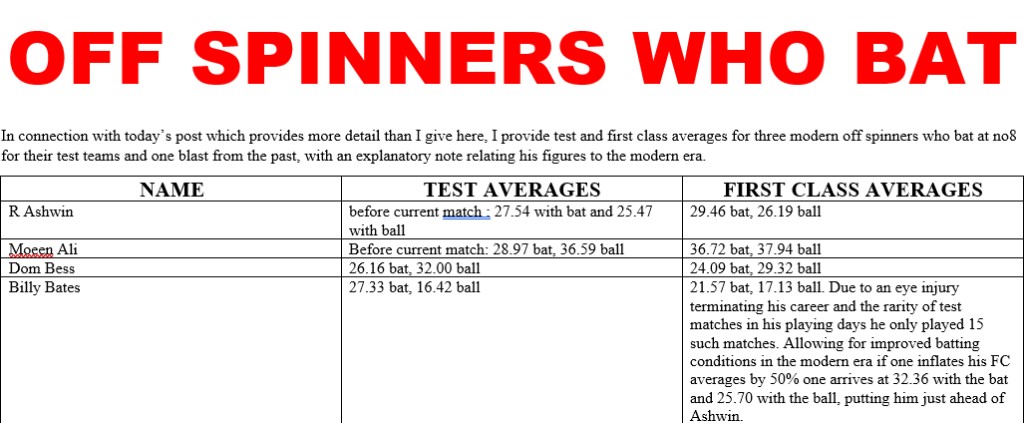
The fact that Moeen Ali has taken a few wickets in this match, long after it was already pretty much a guaranteed loss, a position that owed much to his earlier dreadful bowling has led to a resurgence of support for him. I remain adamant that replacing a 23 year old with 33 year old whose record is at best moderate is a retrograde step and may well have damaged Bess’s confidence to boot. I have hunted out some figures for players whose main task is to bowl off spin, but whose batting is considered part of the equation. Below I show four sets of figures, three for contemporary cricketers, two of whom are involved in this match, and one for a fine player from the long past, with supplementary explanation. (see mini gallery that ends this section as well)

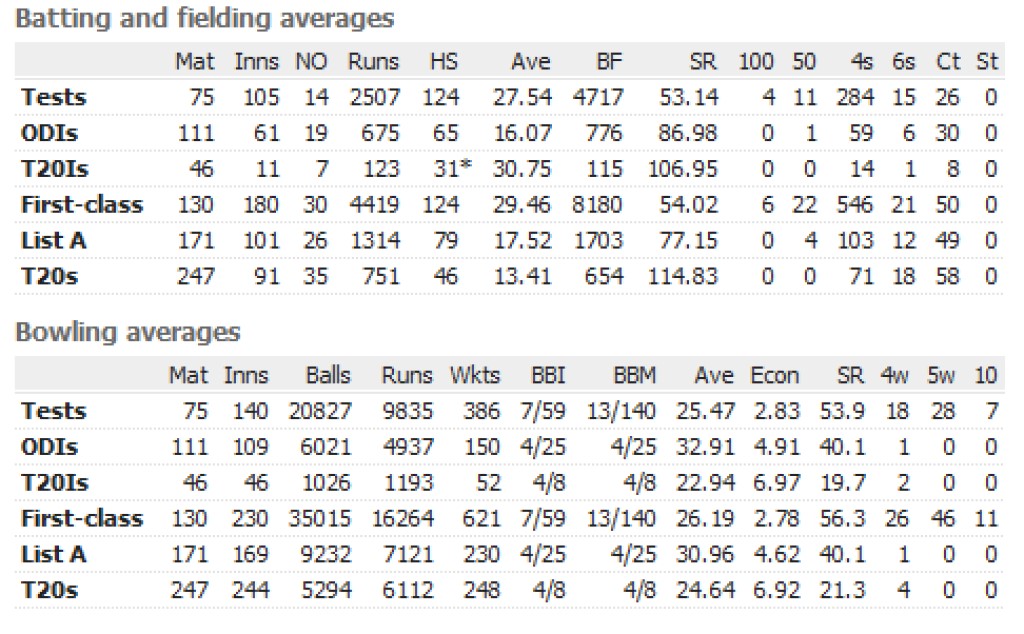
  1. R Ashwin – the best current purveyor of off spin, and as he demonstrated earlier today a very useful lower order batter: test cricket: Averages 27.54 with the bat and 25.47 with the ball excluding the current match, first class cricket, averages 29.46 with the bat and 26.19 with the ball
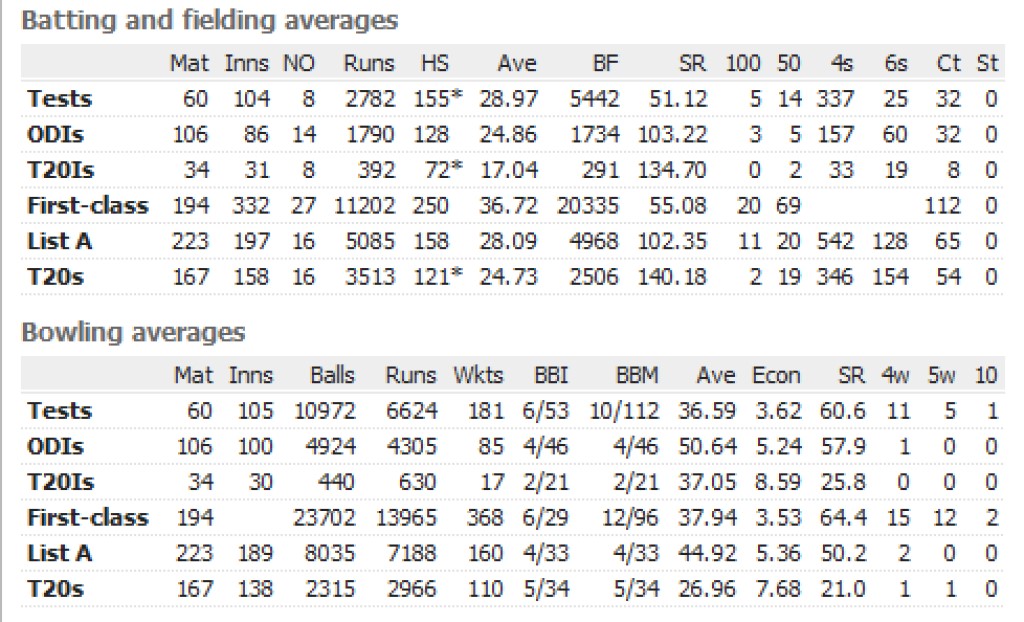
  2. Moeen Ali – being regarded at present by far too many as an “all rounder”: test cricket: Averages 28.97 with the bat and 36.59 with the ball excluding this match, first class cricket averages 36.72 with the bat and 37.94 with the ball. His averages in test cricket are the wrong way round by some way, and his first class averages less so, but the relative paucity of his bowling in non-test first class cricket is illustrated by the fact that more than half of his first class scalps have come in test cricket.
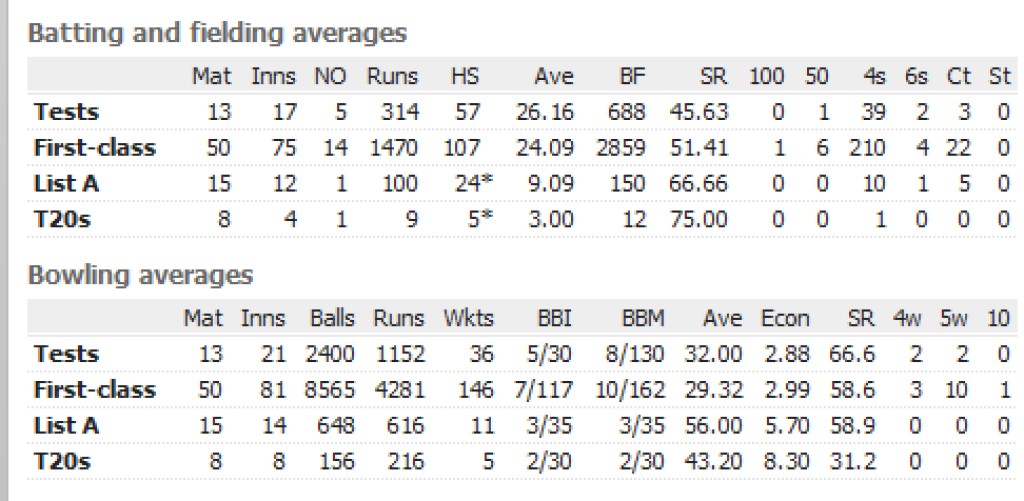
  3. Dominic Bess – dropped and replaced by Moeen Ali: test cricket 26.16 with the bat and 32.00 with the ball, though he has played very few matches at that level, first class cricket 24.09 with the bat and 29.32 with the ball. His 37 ordinary first class matches yield a bowling average of 28.54, 3.46 runs per wicket better than his current test average, and at 23 he is very much an improving player who would be expected to hit his absolute peak years in approximately five years.
  4. Billy Bates – someone who was this kind of player in the early days of test cricket. His 15 tests yielded 656 runs at 27.33 and 50 wickets at 16.42, while the much longer sample of his first career yielded a batting average of 21.75 and a bowling average of 17.13. Allowing for inflation due to surfaces being kinder to batters these days that first class record equates in modern terms to averaging 32.36 with the bat and 25.70 with the ball, putting him marginally ahead of Ashwin at that level.

PHOTOGRAPHS

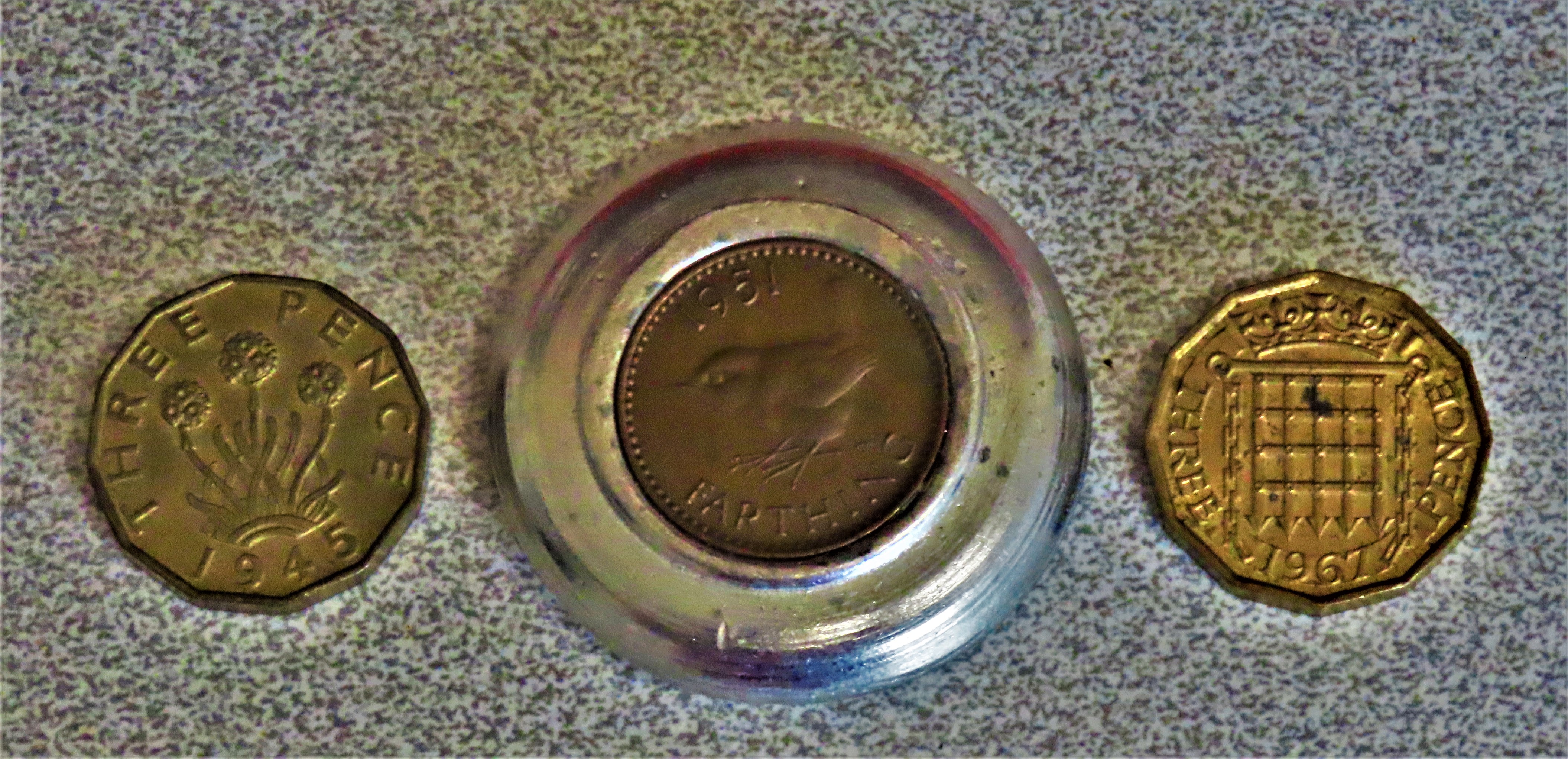
Today’s gallery comes in three parts: a special section marking the 50th anniversary of the introduction of decimal currency in Britain, a standard issue gallery, and a standalone infographic created to serve as the feature image.

Now the regular gallery:

Finally, the feature infographic:

All Time XIs – The Birthday Bash

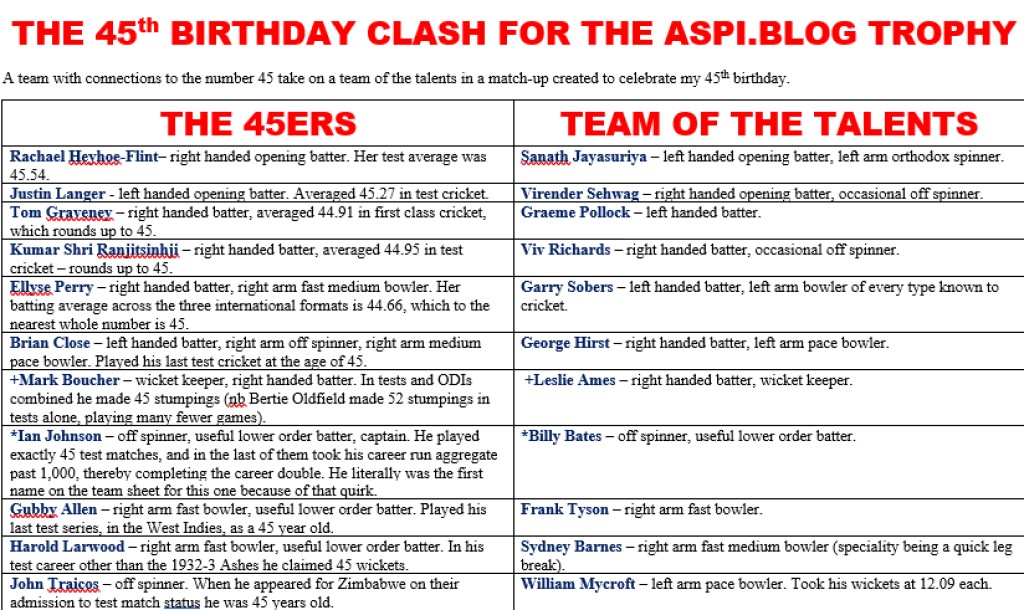
A special ‘all time XI’ cricket themed post to mark my 45th birthday – the 45ERs, who all have a connection to that number, take on an Entertainers XI.

INTRODUCTION

Welcome to the 45th birthday special edition of my ‘all time XI‘ series. I have selected one team with a specific eye to the landmark itself, and the second with an eye to entertainment value.

THE BRIEF IN DETAIL

The teams who will do battle for the aspi.blog trophy consist of an XI all of whom have associations with the number 45. In each case I explain the connection with varying degrees detail. The other side is a side picked for entertainment value, although of course class is not overlooked. The Gentlemen v Players match at Lord’s in 1898 was scheduled so that the third day thereof was WG Grace’s 50th birthday (see David Kynaston’s book “WG’s Birthday Party”), while eight years later WG again marked his birthday by batting against the Players at Lord’s, and played a crucial innings of 74.

THE 45ERS

  1. Rachael Heyhoe-Flint – right handed batter. Her test average was 45.54, which tecnically rounds to 46, but I allowed myself this tiny degree of latitude. Her best test score was 179 against Australia. It is appropriate that as I listen to ‘retrolive’ commentary on the 2019 World Cup final there is a someone who won a world cup for England in action (she captained England to success in the 1973 Women’s World Cup, the first such tournament ever played).
  2. Justin Langer – left handed opening batter. He had a test average of 45.27. His test best was 250 against England.
  3. Tom Graveney – right handed batter. He averaged 44.91 in first class cricket, which to the nearest whole number is 45. His test average was a little less, a mere 44.38. His highest test score was 258 against the West Indies. He holds two niche first class records – he scored 200 in the lowest ever team score to feature such an innings, and he is also alone in scoring over half of his team’s score in each innings of a first class match.
  4. Kumar Shri Ranjitsinhji – right handed batter. He averaged 44.95 in test cricket, which to the nearest whole number is 45. His two test centuries were both 150+ scores – 154 at Old Trafford on debut and 175 at Sydney in the opening match in the 1897-8 series.
  5. Ellyse Perry – right handed batter, right arm fast medium bowler. Her combined average across the three international formats is 44.66 (4,864 runs in total for 109 times out), which to the nearest whole number is 45. You may consider that using an all-format average is a slightly sneaky way of including someone, but I consider this to be entirely justified, especially given who it enables me to pick.
  6. Brian Close – left handed batter, right arm off spinner, right arm medium pace bowler. He gets in because he played his last test series (against the West Indies in 1976) at the age of 45, a mere 27 years after making his debut at the highest level.
  7. +Mark Boucher – wicket keeper, right handed batter. In total across tests and ODIs he made 45 stumpings, which qualifies him for this team (Bert Oldfield in many fewer matches, tests alone, made 52, while Eng;and’s Sarah Taylor made over 50 in each of ODIs and T20Is. Boucher did almost all of his keeping at the highest level to quick bowlers which is why his stumping tally is low for so accomplished and enduring a practitioner.
  8. *Ian Johnson – off spinner, useful lower order batter. He was literally the first name on tbis team sheet because he played precisely 45 test matches. In the 45th and last he took his tally of test runs to precisely 1,000, thereby completing the career double. He was captain of Australia in between Lindsay Hassett, who succeeded Bradman, and Richie Benaud, another spinner who could handle a bat as well.
  9. Gubby Allen – right arm fast bowler, useful lower order batter. His last international appearances came when at the age of 45 he captained a tour party to the West Indies. He once scored a test century from no9 – 122 against New Zealand as he and Les Ames (137) put on 246 for the eight wicket, England rebounding from 190-7 to tally 454.
  10. Harold Larwood – right arm fast bowler, useful lower order batter. Setting aside his 33 wickets in the 1932-3 Ashes series, in the rest of his test career he managed 45 scalps.
  11. John Traicos – off spinner. The ultimate multinational cricketer, born in Egypt to parents of Greek descent, he turned out for South Africa as a youngster. Then, when Zimbabwe were promoted to test status he played for them at that level as well, and  by the time the great moment arrived, 22 years after his last appearance for South Africa, he was 45 years old.

This team has a good top six, of whom two, Perry and Close, could also weigh in with the ball, a top of the range keeper, and four fine bowlers, of whom three are capable of contributing with the bat. The balance is not ideal, with both spinners being off spinners, but it is still a side that should give a good account of itself, and given the constraints around selection I am pleased with it. On the name 45ERS, USian readers will recognize ’49ers’ as the name of a famous sporting franchise, which reflects the 1849 California gold rush (they are, or at least were, based in San Francisco), and I adapted that name to suit my purposes.

THE ENTERTAINERS XI

  1. Sanath Jayasuriya – left handed opening batter, left arm orthodox spinner. The star of the 1996 World Cup, his finest test batting display was probably the 213 he made at The Oval in 1998, which gave Muralitharan the opportunity to spin England to defeat, duly accepted.
  2. Virender Sehwag – right handed opening batter, occasional off spinner. The only batter ever to score a 100+ runs in each session of a test day. He made a century on test debut, and he is definitely among his country’s all time top five openers (Agarwal and Sharma, the current incumbents would be there in most reckonings, Gavaskar’s record speaks for itself and Vijay Merchant, at a time when India by and large struggled had a test average of 47.


  3. Graeme Pollock – a magnificent and all-attacking batter, with an average of 60.97 in test cricket.
  4. Viv Richards – right handed batter, occasional off spinner. The man who gave cricket ‘intimidatory batting’.
  5. Garry Sobers – left handed batter, left arm bowler of every type known to cricket. The most complete all rounder the game of cricket has ever known. In 1971-2 he scored  254 for The Rest of The World versus Australia, an innings that Don Bradman described as the greatest he evr saw played in Australia.
  6. George Hirst – right handed batter, left arm pace bowler. One of the two subjects of the famous question and answer: “Who is the world’s best all rounder?” “He comes from Kirkheaton, bats right handed and bowls left, and that is all that can be saud for sure.” Hirst was more aggressive in approach than Rhodes, and was also noted as one of the most brilliant fielders of the day.

  7. Leslie Ames – right handed batter, wicket keeper. The man who won the Walter Lawrence trophy for the fastest first class hundred of the season twice in its first three seasons. Over 400 of his 1,100+ first class dismissals were stumpings, a tribute both to his skill standing up and to the spinners who played for Kent at that time.

  8. *Billy Bates – off spinner, useful lower order batter. Opposite number to Ian Johnson. He averaged 27 with the bat and 16 with the ball in his 15 match test career, which was terminated by an eye injury.
  9. Frank Tyson – right arm fast bowler. My pick to ‘keep Larwood honest’ – how’s that for a tasty clash.
  10. Sydney Barnes – right arm fast medium. His speciality was a leg break delivered at fast medium pace, and 189 wickets in 27 tests at16.43 each, 77 of them in 13 matches down under, is testament to his effectiveness.
  11. William Mycroft – left arm fast bowler. He was the first ever to take 17 wickets in a county match (17-103 for Derbyshire v Hampshire in 1876 – Hampshire sneaked home by one wicket in spite of his efforts). He took his first class wickets at 12.09 each, but was in his prime just too early to play test cricket.

This team has a powerhouse top six, all attacking players by instinct, two fo them genuine all rounders, an aggressive keeper batter and wonderful depth and variety in the bowling department – right arm pace from Tyson, left arm pace from Mycroft, Hirst and Sobers, off spin from Bates, with Sehwag and Richards as back up, Barnes’ craft and guile which serves as a leg spin equivalent, and left arm spin from Sobers or Jayasuriya.

THE FIGHT FOR THE ASPI.BLOG TROPHY

Unsurprisingly given the selection constraints on the 45ERS, the Entertainers would start as strong favourites, but I would expect it to be a fine contest, well worth watching. I would hope for the curator to produce a pitch with pace and bounce that also offers turn for the spinners.

A QUIRK ABOUT THE NUMBER 45

45 X 45 = 2,025 and 20+25 = 45
45 x 45 x 45 = 91,125 and 9+11+25 = 45
45 x 45 x 45 x 45 = 4,100,625 and 4+10+06+25 = 45

The sequence ends at this point – there is a way of making the digits of 45 x 45 x 45 x 45 x 45 add up to 45 but involved a lot more in the way of ‘cooking’ than merely using a leading zero which would not normally be present. However, no other number has arrangemnets of this nature for its second, third and fourth powers.

PHOTOGRAPHS

My 45th birthday special post is at an end, so all that remains is to apply my usual sign off…

IMG_0310 (2)IMG_0311 (2)IMG_0313 (2)IMG_0314 (2)IMG_0315 (2)IMG_0316 (2)IMG_0317 (2)IMG_0319 (2)IMG_0321 (2)IMG_0323 (2)IMG_0323 (3)IMG_0324 (2)IMG_0325 (2)IMG_0326 (2)IMG_0327 (2)IMG_0328 (2)IMG_0329 (2)IMG_0330 (2)IMG_0331 (2)IMG_0333 (2)IMG_0334 (2)IMG_0335 (2)

45
The teams in tabulated form.


The Royal London Cup Last North Group Games

A look atr today’s Royal London Cup matches, with predictions as to their outcomes. A feature on offspinning allrounders and lots of photographs.

INTRODUCTION

This post resumes my following of the Royal London Cup, interrupted by a week in hospital. For that reason I am jot going to do an in depth examination of my last set of predictions. For the record I got three right and three wrong, putting me on 26/42 overall. 

TODAY’S MATCHES AND PREDICTIONS

There are four matches in progress today:

  • Northamptonshire v NottinghamshireNorthamptonshire 325-7 from 50 overs.
    Substantial contributions from Vasconcelos (74), Cobb (61), Keogh (71) and Wakely (53) seem to have put Northamptonshire in control of this one. Samit Patel with 2-51 from his 10 overs was the best of the Nottinghamshire bowlers. The fact that a spinner fared best of all Nottingshamhire’s bowlers suggests that offspinner Tom Sole will be important for Northamptonshire, who I confidently expect to defend this total.
  • Derbyshire v WorcestershireDerbyshire 351-9 from 50 overs
    Centuries from Luis Reece and Wayne Madsen, backed up by 43 of 31 balls from Alex Hughes would seem to have given Derbyshire an unassailable total. No Worcestershire bowler deserves to have their figures quoted.
  • Leicestershire v Warwickshire Leicestershire 340 all out from 49.3 overs.
    Useful scores from Harry Dearden (69) and Colin Ackerman (74) did not look like being enough for Leciestershire, but Tom Taylor, mainly a bowler, played an extraordinary innings, making 98 not out off 56 balls to change the complexion of the game. Warwcikshire had two teenagers who supposedly bowl offspin, Liam Banks and Robert Yates, but did not turn to either of them, even though Jeetan Patel, another offspinner, had 2-46 from his 10 overs, and Alex Thomson had 1-39 from his full 10 bowling…off spin. Instead of trying the youngsters Warwickshire allowed Hannon-Dalby (3-85, so at least he got wickets), Miles (1-74), Panayi (1-85 from 9.3) and Will Rhodes (one over for 13) to get hammered. I expect Leicestershire to defend these quite easily.
  • Yorkshire v DurhamDurham 179-2 after 33.1 overs, rain affected
    Yorkshire, already certain of qualification, quite sensibly used this match as a chance to blood some youngsters (this has caused some moaning from those based on the wrong side of The Pennines, as a Durham victory would be bad news for them), and it would appear that they will face a stiff target once the DLS adjustment has been made (when the rain came Durham had 80% of their wickets and 33% of their overs remaining, so I would expect Yorkshire’s target to be in excess of seven an over, maybe more if the match is greatly shortened. The four non-regulars getting a run out for Yorkshire today are Will Fraine, a 22 year old right hand batter, Jared Warner, a 22 year old right-arm fast medium (5 overs for 32 today), Jordan Thompson a 22 year old right arm medium pacer (5 overs for 43 today) and Ben Birkhead, a 20 year old wicketkeeper. Leg spinner Josh Poysden with six overs for 27 was the most economical of the bowlers. Sam Steel made 68 for Durham and Lees was on 50 not when the rain came. Unless the rain wins this one I expect Durham to do so.

In view of the fact that Warwickshire should have used one or both of Banks and Yates and that Leciestershire already have Ackerman bowling his offspin early in the Warwickshire innings I am going to give you an extra feature looking at some…

OFF SPINNING ALL ROUNDERS

In view of the difficulty of accommodating two non-batting spinners (it either means having a long tail to the team or only having two specialist pace bowlers) it is clearly advantageous to have spinners who can bat. Here are five from across cricket’s history who played that role, bowling off-spin and batting well in the middle of the order:

  1. Billy Bates, Yorkshire and England.
    For England he played 15 times, scoring 656 runs at 27.33 and taking 50 wickets at 16.42. In all first-class cricket he scored 10,249 runs at 21.57 and took 874 wickets at 17.13. Note that his averages were slightly better in test cricket than in first-class cricket. His wickets would have cost more these days, but his batting average would also have been higher. I reckon that by today’s lights he would be a good person to have batting at number eight and bowling his off-breaks. His best test match was at Melbourne in 1883-4 when he scored 55 and then took seven wickets in each innings, including the first test hat-trick by an England bowler, as England secured an iunnings victory. His son W E Bates played for Yorkshire and Glamorgan, and his grandson Ted was involved in various capacities with Southampton FC for over six decades.
  2. George Giffen, South Australia and Australia.
    He played 31 test matches, scoring 1,238 runs at 23.35 and taking 103 wickets at 27.09. In all first class cricket he scored 11,758 runs at 21.54 and took 1022 wickets at 21.31. In the 1894-5 series, the first ever five match series, he scored 475 runs and took 34 wickets, but still finished on the losing side, Andrew Stoddart’s England winning the first, second and fifth matches to take the series 3-2. For South Australia against Victoria in 1891-2 he scored 271 and took 7-70 and 9-96.
  3. Monty Noble, NSW and Australia.
    He played 42 test matches, scoring 1,997 runs at 30.25 and taking 1, she21 wickets at 25.00. In all first class cricket he managed 13,975 runs at 40.74 and took 624 wickets at 23.14.
  4. Vallance Jupp, Sussex, Northamptonshire and England.
    Only eight tests, which yielded 208 runs at 17.33 and 28 wickets at 22.00, but in all first class cricket he scored 23,296 runs at 29.41 and took 1,658 wickets at 23.58. This included doing the double of 1,000 runs and 100 wickets for the season 10 times, eight of them in successive seasons (a level of consistency beaten only by George Hirst, 10 of whose 14 doubles happened in successive seasons and rivalled only by Wilfred Rhodes who twice achieved seven successive doubles).
  5. Deepti Sharma, India Women.
    A current player (indeed she is only a little older than the two youngsters who inspired this section of the post), she has not hat the opportunity to play test cricket but her records in other forms of the game (48 ODIs, 1,380 runs at 41.81 and 56 wickets at 27.39, 30 T20Is, 197 runs at 15.15 and 28 wickets at 22.92) suggest that she would fare well in the longer form, especially looking at that highly impressive ODI batting average (and her HS of 188). 

I hope that Warwickshire will give Banks and Yates opportunities to bowl sooner rather than later (and ditto Somerset with George Bartlett, another young middle order batter who supposedly bowls offspin but has been given little chance to demonstrate it), because if they become genuine bowlers as well as good batters there will be much more scope for variety in the England attack. 

PHOTOGRAPHS

My usual sign off…

P1230344P1230345P1230346P1230347P1230348P1230349P1230350P1230352P1230353P1230354P1230355P1230356P1230357P1230358P1230359P1230360P1230361P1230362P1230363P1230364P1230365P1230366P1230367P1230369P1230370P1230373P1230374P1230375P1230376P1230377P1230379P1230380P1230381P1230382P1230383P1230384P1230385P1230387P1230389P1230390P1230393P1230395P1230396P1230397P1230398P1230399P1230400P1230401P1230402P1230404P1230405P1230406

P1230407
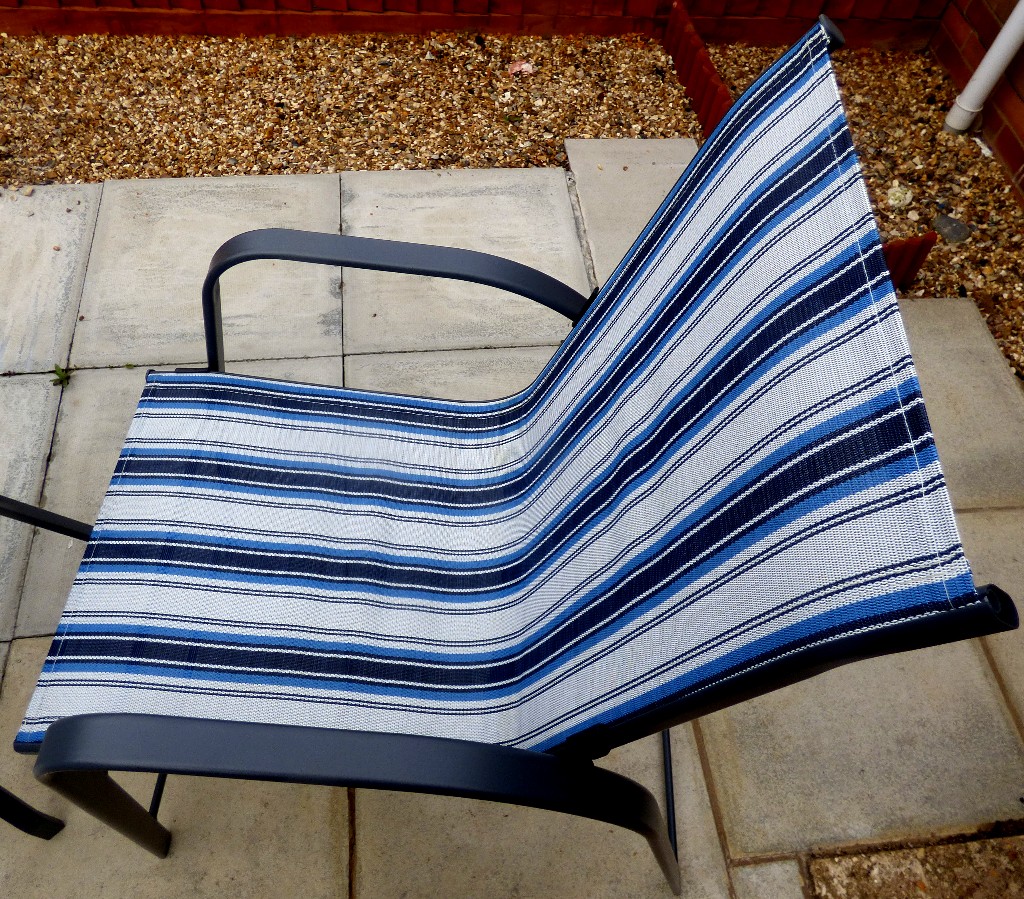
My new outside furniture.

P1230408P1230409P1230410