A look back at today’s World T20 Final between India and New Zealand and a photo gallery.
The final of the 2026 World T20 Cup took place in Ahmedabad this afternoon UK time. The contending sides were the home side India, who had beaten England by seven runs in a semi-final that yielded almost 500 in 40 overs, and New Zealand who had spectacularly downed South Africa in the other semi-final. This post looks back at today’s match.
THE INDIAN INNINGS
New Zealand had won the toss and opted to bowl, hoping to do what they had in the semi-final. That was soon looking very unlikely, as Abhishek Sharma and Sanju Samson tucked into a Kiwi bowling attack never looked remotely threatening. Sharma, who had had a miserable tournament prior to today, made spectacular amends by hitting 52 off 21 balls, while Samson scored 89 off 46 balls, and Ishan Kishan weighed in with 54 off 25 balls. A final blitz of 26* (8) from Shivam Dube took India north of 250 – 255-5 from 20 overs. Mitchell Santner had figures of 4-0-33-0, and Glenn Phillips bowled one over for five runs, and seems bizarre given what happened to his colleagues that he was not called on again – outwith the two bowlers I have just mentioned New Zealand leaked 217 runs from 15 overs, an ER of 14.47 per over. James Neesham managed 3-46 from his full four overs. At the other end of the scale fast bowler Lockie Ferguson was left nursing figures of 2-0-48-0.
THE NEW ZEALAND CHASE
There proved to be one bowler who was not emasculated by the pitch. Jasprit Bumrah, who calls Ahmedabad home, produced an incredible display. He finished with 4-0-15-4, which would have been outstanding figures in any situation, but in a major final on a pitch that gave every indication of being a batters paradise it strained credulity that anyone should achieve such figures. Wickets 2,3 and 4 were all clean bowled, all with deliveries that were in effect quick off breaks. The fourth victim, New Zealand skipper Santner who had made 43, knew exactly what was coming but was unable to prevent the delivery from doing its work anyway. India won by 96 runs to retain the world cup, and Bumrah quite correctly was named Player of the Match (on this surface his bowling far outweighed any batting performance), while Sanju Samson was named Player of the Series, having contributed 321 runs across the tournament, while also keeping wicket.
PHOTOGRAPHS
This gallery comes from Friday, when I travelled to Norwich to make use of the big library there, since King’s Lynn library is closed at present…
A look back at fay four at the MCG and a large picture gallery.
This post looks back at the events of day four of the test match at the Melbourne Cricket Ground.
A DAY OF UPS AND DOWNS
At one point after a great spell of bowling from Jasprit Bumrah, in the course of which he became a member of a club of one – bowlers with 200+ test wickets at under 20 a piece (among those whose careers have ended only Syd Barnes with 189 scalps at 16.43 each even has over 150 at under 20) – Australia were 91-6, 196 runs ahead. By the end of the day they were 228-9, 333 runs to the good. That margin is significant – the biggest ever successful fourth innings chase at this ground was 332-7 by England in the 1928-9 Ashes, Herbert Sutcliffe chiselling out 135, his second Ashes settling innings in two and a half years, following his 161 at the Oval in 1926 which left England with an effectively unassailable lead going into the fourth innings. However, in giving themselves this many to defend but not as yet declaring (an overnight declaration is possible), Australia may well have deprived themselves of sufficient time to dismiss India in the fourth innings – and Australia are more in need of a win than India, who as holders of the Border-Gavaskar Trophy need only to draw the series to retain it. Bumrah’s burst notwithstanding it has to be classed as Australia’s day, but it has a dog-in-the-manger feel to it with Australia not in a position to take that attitude.
PHOTOGRAPHS
My usual sign off…
Today there was a WNAG pizza making session at Pizza Express. This was my product in its finished state.
A look back at the first three days of the first test of a five match series between Australia and India, taking place in Perth.
The opening test of a five match series between the Australia and India men’s teams is under way in Perth, contested for the Border-Gavaskar Trophy. This post looks back at the action from the first three days of that match.
THE PRELIMINARIES
This series had one very unusual feature – both captains, Pat Cummins, who is Australia’s regular incumbent, and Jasprit Bumrah who is standing in for the unavailable Rohit Sharma are specialist fast bowlers. Australia had a controversial debutant in Nathan McSweeney. McSweeney has a fine batting record at state level, but his most productive positions in the order are numbers four and five, and at number three he averages a very modest 30, while he has never opened in professional cricket, and that was the job he was being selected to do in a test match. India won the toss and chose to bat first.
DAY ONE – BOWLERS ON TOP
At lunch on day one India’s decision to bat first was looking questionable – they were four wickets down, and no one had looked remotely good for them. Two further wickets shortly after the interval and it was looking like India were handling Perth no better than most visiting sides. Rishabh Pant, returning to test ranks after a long layoff due to injuries sustained in a car crash, and Nitish Kumar Reddy making his test debut. staged something of a revival for India, getting the total to 150 all out, which did not seem enough for a side choosing to bat first.
Jasprit Bumrah had other ideas. The captain and star bowler for India was soon getting busy among the Australian batters. His first victim was McSweeney for 10, pinned absolutely plumb in front of the stumps. Then he had the other opener Khawaja caught by Kohli for 8 and with his very next ball pinned Steve Smith plumb in front to make it 19-3. Labuschagne dug in, but simply could not get the ball away, and wickets fell at the other end from him with great frequency. Travis Head was clean bowled to become the first victim of the second of India’s test debutants, Harshit Rana., having scored 11. That was 31-4, and when Siraj had Mitchell Marsh caught behind for 6. Siraj struck again nine runs later, putting Labsuchagne out of his misery by pinning him LBW for 2, scored off 52 balls. For a slower innings of 2 by an Australian one has to go back to the 1960s and Bill ‘Phant’ Lawry who once took 55 balls over a score of 2. Australia were 47-6. There was still one wicket to come on this eventful day, one that symbolised the respective positions of the sides by then as Indian skipper Bumrah had his opposite number Cummins caught behind to make it 59-7. By the close Australia were 67-7. The pitch had pace and bounce, but no real mischief – the bounce was consistent and reliable, and there was nothing in the way of extravagant sideways movement. Bumrah ended his first day as Indian test skipper with figures of 4-12 from seven overs.
DAY TWO – CONSOLIDATION
Jasprit Bumrah completed his five-for by dismissing Alex Carey, caught behind for 21. That was 70-8. When Harshit Rana had Lyon caught by KL Rahul it was 79-9. The final Australian pairing of Starc and Hazlewood added 25 to this score, Starc becoming along the way top scorer of the innings, in itself a devastating statistic for Australia. Starc had scored 26, and had faced 112 balls to do so. Bumrah’s final figures were 5-30, while Rana had 3-48 and Mohammed Siraj 2-20.
Australia needed wickets, and quickly if the match wasn’t to get away from them. Yashavsi Jaiswal and KL Rahul realized this, and batted superbly for the situation. They batted through the 57 overs that Australia managed by stumps (over rates have been dire in this match from both sides), leaving India in complete control on 172-0, an overall advantage of 218. Jaiswal had 90*, Rahul 62* and 20 extras had been donated by Australia.
DAY THREE: RIPLEY’S BELIEVE IT OR NOT
If you had asked Jasprit Bumrah to script the third day of this match I don’t think he would have dared to make it as favourable for India as it actually was. India spent the first two sessions building their advantage steadily, Jaiswal advancing his score to 161, his fourth test century, and all four scores have ended up crossing 150. Only one other person in test history has a similar distinction, Graeme Smith of South Africa, also an opening batter. Although India had a minor blip, a high water mark of 275-1 becoming 321-5, Kohli, supported first by Washington Sundar and then by Nitish Kumar Reddy steadied the ship, and then in the final stages of the Indian innings attacked as a declaration loomed. Kohli reached his hundred off 143 balls, at which point India declared, with Reddy 38 not our from 27 balls at the other end. Australia needed 534 to win and had about 20 minutes plus two full days to bat. With the fourth ball of the innings Bumrah pinned McSweeney LBW for a duck to end a miserable debut for the ersatz opener. McSweeney’s efforts here, and those of Daniel Lawrence when asked by England to open the batting for the first time in his professional career in a test match constitute fairly damning evidence about how doing this works in practice, i.e. it doesn’t. Cummins now made what I consider a ‘right wrong call’ – he wrongly deemed this a sensible situation in which to use a nightwatch, but having made that error at least assumed responsibility for playing that role himself, rather than sacrificing one of his fellow bowlers. Siraj got Cummins, caught by Kohli for 2 to make it 9-2. Then just to put the cherry on top of this most one-sided of days, Bumrah pinned Labuschagne, the guy Cummins had tried to protect, LBW with what turned out to be the last ball of the day – there were four balls still to come in the over but were past the official close, so the umpires correctly called stumps (slow over rates have been around long enough that the Laws of Cricket have this contingency of a wicket falling after the scheduled close covered). That left Australia 12-3, and Bumrah with figures of 2-1. This means that Bumrah currently has 180 test wickets at 19.94 a piece. The last person to finish a test career with over 150 wickets at under 20 was Syd Barnes, with 189 wickets at 16.43, and the last of his 27 test appearances was in 1914. Australia with two whole days to come need 522 more runs to win and have seven wickets standing. India had won all three days outright, and on session scores I make it 7.5-1.5 – Australia had the better of the morning session on the opening day with those four wickets, the afternoon session was about even, the evening session of that day was overwhelmingly India’s, and days two and three belonged entirely to India, with Australia’s one decent passage of play on those days, when they reduced India from 275-1 to 321-5 being too insignificant in the scheme of things to matter – India were so utterly in command by then that even the wicket taking had continued and India had been say 350 all out it would have made no difference to the final result. With it also being IPL auction time, the commentators raised a question about their four expert summarisers, Sunil Gavaskar, Darren Lehmann, Glenn McGrath and Tom Moody: if all were available and in their pomp but you could sign only one for an IPL who it be? My answer is McGrath – I reckon I am getting four cheap overs, and wickets into the bargain, in pretty much every match. Moody’s all round skills make him second choice in my view, with Lehmann a poor third, and Gavaskar due to his approach to batting not even worth considering in this context.
PHOTOGRAPHS
My usual sign off…
The photos in this gallery were taken on three different days, Friday which was sunny but very cold……Saturday which was just plain horrible……and today, grey but dry, and much warmer (indeed so warm that I deemed a coat unnecessary)
An all time XI selected on a basis of juxtaposing ancient and modern – six players from way back, five players from the 21st century, interleaving with one another so that no two players from the same era are next to each other in the batting order, Also a bumper photo gallery.
In this post I present an all time XI selected using very specific criteria – my players are either from the long past or are players at least some of whose career took place in the 21st century, and the interleave so that no two players from the same era are next to each other in the line up.
THE XI IN BATTING ORDER
*WG Grace (England, right handed opening batter, right arm bowler of various styles through his career, captain). In spite of not getting to play test cricket until he was 32 years old he twice held the record individual score for England – 152 on debut in the first match on English soil in 1880, and 170 in the final match of the 1886 series, regaining the record from Arthur Shrewsbury who had set it the previous match with 164.
Yashavsi Jaiswal (India, left handed opening batter). Has just had an amazing series against England (712 runs including two double centuries), and looks set to have a long career for India.
Don Bradman (Australia, right handed batter). Quite simply the greatest test match batter the world has ever seen.
Brian Lara (West Indies, left handed batter). Succeeded everywhere and against every type of bowling, including 688 runs against Sri Lanka in Sri Lanka against peak Muralidaran (off spinners are supposed to cause left handers particular problems).
Aubrey Faulkner (South Africa, right handed batter, leg spinner). Has a case to be regarded as the most genuine of genuine all rounders, averaging 40.79 with the bat (just over 1,700 runs) and 26.58 with the ball (85 wickets). No one else to have played enough matches to qualify for consideration has ended with a batting average of over 40 and a bowling average of below 30.
Ben Stokes (England, left handed batter, right arm fast medium bowler). A talismanic figure for England in recent years, with a value to the side that goes far beyond his mediocre looking figures at test level.
+Leslie Ames (England, wicket keeper, right handed batter). The first test match class wicket keeper to also be a genuinely high class batter.
R Ashwin (India, off spinner, right handed batter). One of the greatest of all off spinners, and a useful lower order batter as well.
Syd Barnes (England, right arm fast medium bowler, right handed batter). 189 wickets in just 27 test appearances, at 16.43 a piece.
Jasprit Bumrah (India, right arm fast bowler, right handed batter). India’s greatest ever fast bowler, and one of the greatest of all time.
William Mycroft (Derbyshire, left arm fast bowler, right handed batter). Over 800 FC wickets at 12.09 a piece, but born just too early to play test cricket. In this XI he would probably come on first change after Barnes and Bumrah had done their stuff with the new ball.
This side has a powerhouse batting line up, and a bowling attack of Barnes, Bumrah and Mycroft to bowl pace/seam/swing and Ashwin and Faulkner to bowl spin, with Grace and Stokes in reserve, is not likely to have any great difficulty taking 20 opposition wickets. I will not produce an honourable mentions section on this occasion because it would have to be massive to do anything approaching justice to those who have missed out. Comments welcome, and if you are feeling really bold feel free to suggest an alternative XI selected on similar lines that you reckon could make a game of it with this one.
PHOTOGRAPHS
A bumper gallery for you today – while it has not been conspicuously sunny it has been reasonably pleasant outside…
A look back at the last two days of the second test match of the five match series between India and England and some thoughts about the composition of the England XI. Also a photo gallery.
After many twists and turns India won the second test of the five match India v England series at Vizag when Jasprit Bumrah clean bowled Tom Hartley for 36, making England 292 all out, and India victors by 106 runs. This post looks back at the last couple of days.
THE INDIAN SECOND INNINGS
India started day three of a possible five 28-0 in their second innings, 171 runs ahead with all their wickets intact. Shubman Gill enjoyed a charmed life, surviving one LBW due to an edge that was as much news to him as it was to the rest of us and another on umpire’s call when not quite enough of the ball was deemed to be hitting the top of middle stump. He made the most of this, going on to a century which was instrumental in India getting to 255, a score that meant England would need the highest total of the match batting last to win. Their target of 399 was also over 100 more than any visiting side had ever scored in a fourth innings in India, though four previous tests elsewhere have been won after higher run chases, and in the 99th and last ‘timeless test’ at Durban in 1939 England scored 654-5 before weather and the arrangements for their journey home led to the match being abandoned as a draw with England 42 runs short of the target. However England under Stokes have produced so many surprises that no one was consigning them to defeat just yet.
THE ENGLAND SECOND INNINGS
England lost Duckett just before the close of day three, and Rehan Ahmed was sent in at number three (Pope is a nervous starter, so it makes sense to protect him from having to do so twice over, and Ahmed is good enough with the bat that the possibility of a major innings from him could not be entirely discounted). England closed on 67-1, needing 332 more to win.
The fourth morning (this morning) started with news that James Anderson had said England were in a very good position and that Shubman Gill had assessed India 70-30 favourites, an assessment that in itself spoke volumes for the approach of this England team compared to the last one to visit India in 2021, and the extent to which they have ripped up conventional test standards.
Ahmed was the second to fall, contributing 23 before he did so. Pope exactly matched this score, and his dismissal brough Root to the crease. Root played a frenetic, almost frantic, innings, wildly at variance with the methods that have brought him over 11,000 test runs at an average of 50, and was out for 16 off 10 balls. Crawley, who had batted impressively, then fell to a controversial LBW, which was sent upstairs. At the point the ball hit Crawley’s pad two stumps were exposed and part of the third was visible, which raised questions over whether the impact was truly in line with the stumps. However, the technology ruled that it was out, and England were 194-5. With the score still at 194 Bairstow was pinned by a beauty from Bumrah, LBW for 26. Stokes and Foakes played well for a while, until Foakes edged one behind the wicket but on the floor, Stokes judged that a run was on and was beaten by Shreyas Iyer’s direct hit throw to make it 220-7, this being Iyer’s most significant contribution to the match. Foakes and Tom Hartley then crafted a solid partnership for the eighth wicket, which ended when Foakes gave Bumrah a return catch. That was 275-8. Two landmarks were possible at this stage, Ashwin’s 500th test wicket and a 10-wicket match haul for Bumrah. However Bashir edged one from Mukesh Kumar through to keeper Bharat to make it 281-9 (this was Kumar’s only wicket of what was in truth a wretched match for him) and rule out Bumrah’s 10 wicket match haul. Bumrah then produced a superb delivery to get through Tom Hartley’s defences and end the match. That gave him nine wickets in the match (6-45 and 3-46), and 155 career test wickets at 20.19. Bumrah was named Player of the Match, his marvellous bowling being deemed even more crucial to India’s success than Jaiswal’s double century. I agree with this assessment, though I would have been inclined to give a shared award to both players. England though comfortably beaten in the end were in no way disgraced, though there were too many 20s and 30s in that fourth innings effort, and only Crawley’s 73 as a score of real substance. I think that the ‘three spinners and one seamer’ approach England have taken thus far needs changing – with Leach injured the remaining spinners are all very inexperienced and none are capable at the moment of providing control. I believe that England’s 8,9,10,11 for the third match of this series should read: R Ahmed, T Hartley, OE Robinson, JM Anderson, and if England want to increase the back up spin options available to them in the XI they can drop Bairstow, who has not been impressive this series, and select Dan Lawrence in his place, giving them two part time spin options (Root being the other).
An account of day two of India v England at Vizag, dominated, as the day’s play itself was by the brilliance of Jasprit Bumrah. Also my customary photo gallery.
Today was day two of the second test match of the five match series between India and England. This match is taking place at Vizag. I covered day one here.
THE CONCLUSION OF THE INDIAN INNINGS
Although it was a mere prologue to the main event of the day the end of the Indian innings was not devoid of significance. England appeared to have done reasonably well to keep India below 400, with the tenth wicket going at 396. Yashavsi Jaiswal who had dominated day one resumed on 179 not out. He completed his double century, but facing the risk of being stranded got out for 209, meaning that the highest score by an Indian opener against England remains the 221 that Sunil Gavaskar scored at the Oval in 1979. Anderson claimed his second and third wickets of the innings, and kept his economy rate below two an over, while young spinners (their combined age is less than that of Mr Anderson) Rehan Ahmed and Shoaib Bashir also finished the innings with three wicket hauls.
THE ENGLAND INNINGS
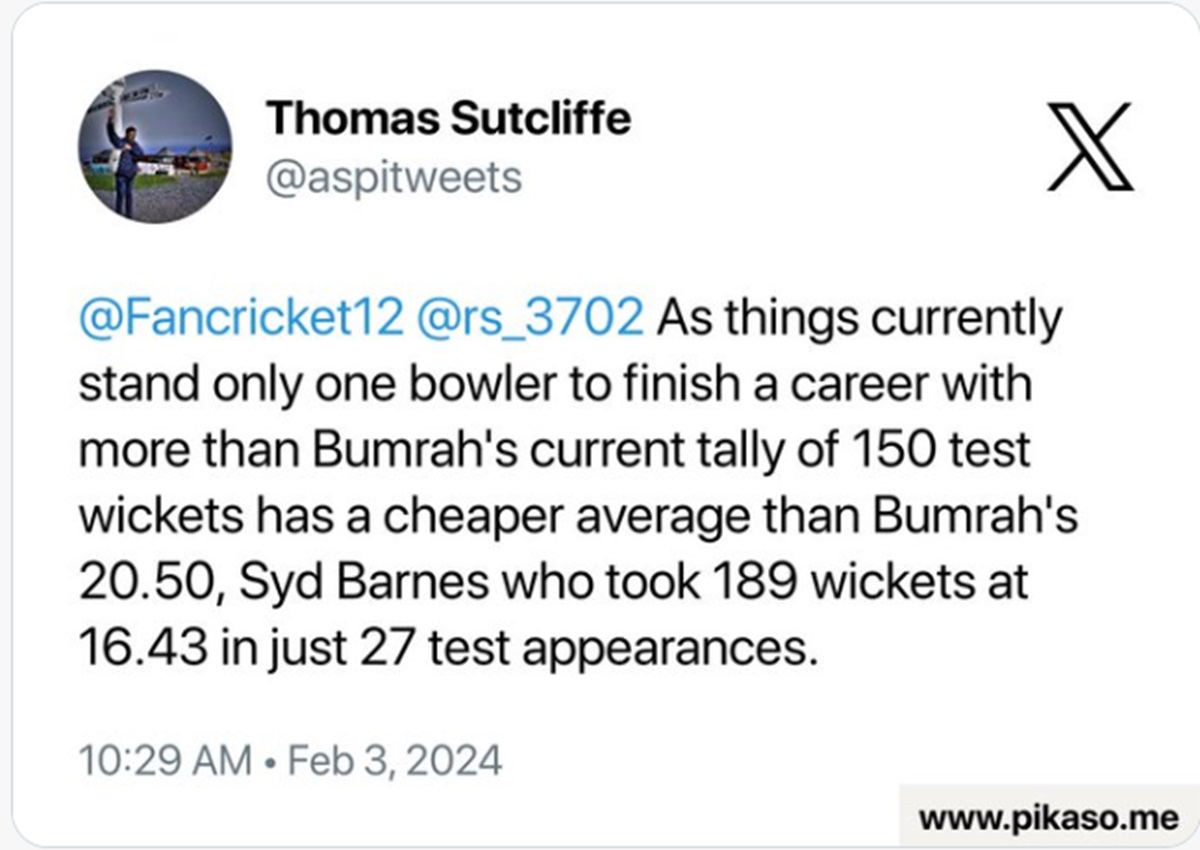
England began brightly, with Zak Crawley playing well. Mukesh Kumar did not at any stage resemble a genuine test match new ball bowler. Axar Patel, R Ashwin and left arm wrist spinner Kuldeep Yadav all took turns at the bowling crease. At high water mark England were 114-1, but then Crawley fell to catch by Iyer of Axar Patel. Bumrah was then called back into the attack to deal with Joe Root. Nine runs later Bumrah found the edge of Root’s bat, Gill took the catch and it was 123-3. Then Pope, who was just beginning to look settled after a typically nervous start had two of his stumps uprooted by an absolutely unplayable ball from Bumrah to make it 136-4. Bairstow and Stokes resisted for a time, but the unstoppable Bumrah found one to take the edge of Bairstow’s bat for another catch to Gill to make it 159-5. Kuldeep Yadav got Foakes with a good ball and Ahmed courtesy of a loose stroke which gave Gill his third catch of the innings and England were 182-7. Tom Hartley now joined Ben Stokes, and Stokes threatened to wrest the initiative back for England. However, with Stokes on the verge of a half century a superb delivery from Bumrah rattled his stumps to make it 229-8. That was Bumrah’s 150th test wicket, at an average of 20.50 a piece, a fact the significance of which I noted in the tweet reproduced in screenshot form below (follow the link highlighted in blue to note the exact time at which I posted it):
The day got better yet for Bumrah, as he induced Hartley to give Gill a fourth catch of the innings, which brought the debutant Shoaib Bashir in to join Anderson, given a one place promotion from his usual slot presumably on grounds of experience for the last wicket stand. Bumrah finished the innings by pinning Anderson LBW. England had just crept past 250, but a final score of 253 all out gave India a first innings advantage of 143. Bumrah had taken 6-45 from 15.5 overs on a pitch not offering much assistance, a truly great display of test match fast bowling, from one of the great masters of that art. This gives him an overall tally of 152 test wickets at 20.29 each, with Barnes ahead of him on 189 wickets at 16.43, and Alan Davidson the great Australian left armer having taken 186 at 20.53, with West Indians Ambrose, Garner and Marshall all also having finished with over 150 wickets at less than 21 a piece. Barnes and Bumrah were both in my all time Bs XI. I make one change to that XI in retrospect, Benaud being moved from being in the XI to fronting the TV commentary and Bishan Bedi taking his place giving an XI off: C Bannerman, SG Barnes, *DG Bradman, KF Barrington, AR Border, IT Botham, +Wasim Bari, W Bates, SF Barnes, BS Bedi, JJ Bumrah. I first noticed Bumrah when not long discharged from Addenbrooke’s after emergency cancer treatment, when he destroyed Australia in Australia (see here).
THE START OF THE INDIAN SECOND INNINGS
There was time for five overs of the Indian second innings, in the course of which they scored 28-0, meaning that they start day three with a lead of 171 and all their second innings wickets intact. Cricket is a game which regularly makes fools of those who make over-dogmatic statements about match situations, and this is never truer than when Stokes’ England are involved in the action, but it is at any rate not contentious to state that India are in a very strong position, especially given the tendency of Vizag pitches to break up as the match progresses (average innings scores there show a very straightforward pattern of declining from first to fourth innings of the match).
An all time XI all of whom have given names beginning with J. There was a massive embarrassment of riches available for this letter, so the honourable mentions section is large. There is also a photo gallery of course.
Today, in a post the will feature a huge list of honourable mentions, our XI are linked by having given names beginning with J.
THE XI IN BATTING ORDER
Jack Hobbs (England, right handed opening batter, occasional right arm medium pacer). One of the greatest ever to play the game, unchallengeable for this spot.
John Edrich (England, left handed opening batter). A member of the ‘hundred hundreds’ club and someone with a superb test record. Scores of 310* v New Zealand and 175 & 164 v Australia show his ability to really cash in on a good start.
Javed Miandad (Pakistan, right handed batter, occasional leg spinner). In the whole of his long test career his average never dipped below 50. Many would still name him as his country’s all time number one batter.
Joe Root (England, right handed batter, occasional off/ leg spinner). Undoubtedly one of the greatest batters England has ever produced.
Jacques Kallis (South Africa, right handed batter, right arm fast medium bowler). An absolute champion cricketer. Garry Sobers mastered a greater range of skills, one could argue that the likes of Aubrey Faulkner, Keith Miller and Imran Khan were truer all rounders, and one can list batters (though not very many) who were better and a greater number of bowlers who were better, but it would be brave person to state unequivocally that anyone has been a better cricketer than the South African.
James Langridge (England, left handed batter, left arm orthodox spinner). He got few opportunities at test level due to overlapping with Hedley Verity, though he did take a seven-for on debut at that level. In a long and distinguished first class career he averaged 35 with the bat and 21 with the ball.
+James Foster (England, wicket keeper, right handed batter). The most heavily contested slot in the entire XI, as you will see when we look at the honourable mentions, but the person I have chosen was a magnificent keeper, a good middle order batter and was badly treated by the England selectors of his day.
*Jason Holder (West Indies, right arm medium fast bowler, right handed batter, captain). An impressive captain, in spite of never having had the luxury of having a really strong side under his command, and his averages are the right way round.
Jim Laker (England, off spinner, right handed batter). One of the greatest off spinners ever to play the game. In 46 test appearances he took 193 wickets at 21.24 each, which included the best innings and match figures in test history, 10-53 and 19-90, at Old Trafford in 1956 against the oldest enemy.
James Anderson (England, right arm fast medium bowler, left handed batter). England’s all time leading test wicket taker, more test wickets than any other non-spinner, and still going in his 40s.
Jasprit Bumrah (India, right arm fast bowler, right handed batter). One of the leading contemporary pace bowlers, and probably the best pace bowler his country has ever produced.
This side has an awesomely strong top five, a genuine all rounder, a keeper who was also a good batter, a bowling all rounder and three all time great specialist bowlers. The bowling, with Bumrah, Anderson and Holder to bowl pace, Laker and Langridge to bowl spin, Kallis as sixth bowler and in the unlikely event of them being needed Hobbs, Miandad and Root available as back up options is both strong and well varied, and should have little trouble taking 20 opposition wickets on even the flattest of pitches.
HONOURABLE MENTIONS
Jack Robertson is the only obvious challenger for an opening role. The middle order was studded with options: Johnny Tyldesley, Joe Darling, Jack Ryder and Jesse Ryder being the four most obvious to miss out. James Hildreth had a magnificent record for Somerset but never got picked for England. I would expect James Rew to avoid Hildreth’s fate, but at the moment he is one for the future. James H Parks and James M Parks would both also have their advocates. The two legendary Hambledonians James Aylward and John Small have to be relegated to the honourable mentions due to lack of sufficient detail about the career records.
Jack Gregory might have had the slot I gave to Jason Holder but I wanted the latter’s captaincy as well as his playing skills. Jacob Oram of New Zealand was a fine all rounder, but I wanted a spinning all rounder, given that Kallis’ selection was set in stone and I also wanted Holder in the number eight slot. Johnny Douglas, both an England cricket captain and an Olympic gold medallist at middleweight boxing, cannot be completely ignored.
There was a logjam of keepers to consider, even after disqualifying Robert Charles ‘Jack’ Russell and Clifton James ‘Jack’ Richards is in neither case was Jack either their given name or derived from John. John Murray, Jackie Hendriks, Jeff Dujon, Junior Murray, Jack Blackham, Jimmy Binks and Jim Kelly are the seven most obvious potential keepers that I had to overlook.
There was if anything an even greater wealth of seam/ pace bowling talent. Josh Hazlewood is probably the most obvious miss to a contemporary audience, but two other Aussies, Jeff Thomson and Jason Gillespie were also formidable in this department. Jack Cowie, probably New Zealand’s best pre-Hadlee quick, also merits a mention. John Wisden has to be mentioned for historical significance, and a later Sussex pacer, John Snow also had a fine test record. Javagal Srinath, the first genuinely fast Indian bowler I ever saw in action, was another candidate. James Broadbridge was one half of the first truly great bowling partnership in cricket history, along with William Lillywhite, but it was the latter who was the greater bowler.
James Lillywhite Jnr, England’s first ever test skipper, was one of the spinners I had to overlook. Jason Krejza once took 12 wickets in a test for Australia, but he conceded 358 runs while doing so. Jim Sims was a good enough leg spinner to be selected for England and a useful lower order batter. Jemma Barsby, who bowls both off spin and left arm orthodox spin, and has recently helped the Adelaide Strikers to win a second successive WBBL title was another I considered. Jack Noreiga remains in a club of one as a West Indian to have test match nine-for. Jim Higgs had some successes as a leg spinner for Australia. Jack Saunders, who bowled left arm spin and seam for Australia in the early 20th century had a fine record as well. Two left arm spinners, Johnny Briggs and Johnny Wardle, both had excellent test records. Jimmy Matthews once took a hat trick in each innings of a test match, but those six scalps were almost half his career tally of test wickets and he never took more than four in an innings at that level.
In the absence of live cricket to write about I have created a clash between a team of players from before ODI cricket was a thing and a team of ODI players to do battle with one another. Also a photo gallery.
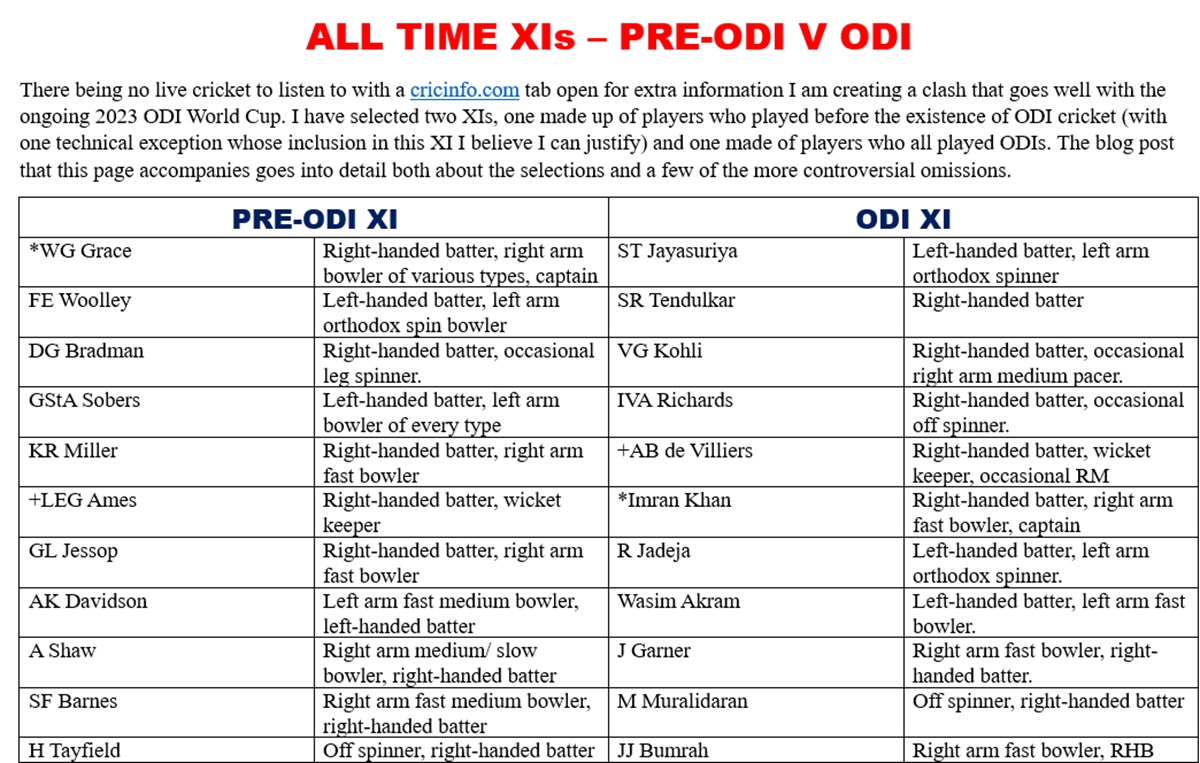
There is no live cricket today, so with the ODI World Cup 2023 approaching its final phase I have decided to produce a contest between two XIs – one of players whose careers took place before ODI cricket existed (with one very minor exception explained when we come to him) and one of ODI players. The following playing conditions would apply to what would be a five match ODI series: only one new ball per innings – using two as happens currently deprives us of old ball skills such as reverse swing because a ball that is only in use for 25 overs doesn’t get old, two minute time limit between a wicket falling and the new batter being ready to face (I am not expecting any ‘Timed Out’ dismissals but I am making sure that situation is covered anyway) and my own playing condition regarding overs not bowled within the time limit: The batting side to be awarded 10 runs or twice the current scoring rate, whichever is the greater, for each unbowled over, counting incomplete overs as ‘unbowled’ for this purpose.
THE PRE-ODI XI
*WG Grace (right handed batter, right arm bowler of various types through his career, good close catcher, captain). His commitment to attacking cricket is without question, his captaincy record is superb, and he was the dominant cricketer of his era.
Frank Woolley (left handed batter, left arm orthodox spin bowler, excellent close catcher). A fast scorer, a fine bowler and an excellent close fielder. Only one cricketer ever achieved the first class career treble of 10,000 runs, 1,000 wickets and 1,000 catches – Woolley.
Don Bradman (right handed batter, occasional leg spinner, excellent outfielder). The most prolific batter the game has ever known and capable of scoring seriously fast as well.
Garry Sobers (left handed batter, left arm bowler of every type known to cricket, excellent fielder). Before the pedants fly in, yes he did play a solitary ODI near the end of his career, in which he scored a duck. That is not enough to class him as an ODI player in my book, and I refuse to not pick the most complete player the game has ever known, so I include him in this XI.
Keith Miller (right handed batter, right arm fast bowler). One of the greatest all rounders ever to play the game, and both his attacking approach to batting and his willingness to experiment with the ball would be well suited to ODI cricket.
+Les Ames (right handed batter, wicket keeper). Twice winner of the Lawrence trophy for scoring the fastest first class hundred of the season, and maker of over 1,000 wicket keeping dismissals in his career.
Gilbert Jessop (right handed batter, right arm fast bowler, gun fielder). The most consistently fast scoring batter the game has ever known, a more than useful bowler and a brilliant fielder. I have listed him at seven in this order but I would expect Grace to display some flexibility in this matter – if wicket number 1,2,3 or 4 falls with say 10 overs to go I expect Jessop to come in.
Alan Davidson (left arm fast medium bowler, left handed batter, brilliant fielder). Among bowlers to play exclusively post WWII, to have ended their careers and to take 150 or more test wickets the one with the most economical bowling average is Davidson, with 186 test scalps at 20.53 each. He also had moments with the bat even at the highest level, averaging 24 in test cricket with an HS of 80 and his fielding earned him the nickname ‘the claw’.
Alfred Shaw (right arm medium/ slow bowler, right handed batter). The man who bowled more FC overs than he conceded runs at that level, and took just over 2,000 FC wickets at 12 a piece just has to be in this XI.
Sydney Francis Barnes (Right arm fast medium bowler, right handed batter). He would grumble about only being allowed 10 overs, but I would fully expect him to make superb use of those overs – he was probably the most skilful bowler ever to pick up a cricket ball.
Hugh Tayfield (off spinner, right handed batter). The leading test wicket taker for South Africa in their first period as a test nation, and by some way at that. He was also notoriously miserly with the ball, once sending down 137 successive dot balls including 16 successive eight ball maidens.
This side has seven top line batters and a capable number eight in Davidson. However the true jewel in this side’s crown is the bowling, with that front four of Davidson, Barnes, Shaw and Tayfield backed by all rounders Miller, Jessop, Sobers, Grace and Woolley. The only recognized bowling type not covered is leg spin, and Syd Barnes’ signature weapon largely fills that gap. Also there are few if any ‘passengers’ in the field in this XI, and a number of genuinely outstanding fielders. This is a side that would take a lot of beating.
HONOURABLE MENTIONS
New Zealander Bert Sutcliffe would be well suited to the left handed opener’s gig, but he does not have Woolley’s advantage of also offering a bowling option. Mulvantrai Himmatlal ‘Vinoo’ Mankad was another possibility, but I rated his batting not explosive enough. Mushtaq Mohammad could have been selected in place of Keith Miller had I been really desperate for leg spin representation. Among the bowlers I regretted not being able to include were Bill O’Reilly, Clarrie Grimmett, Hedley Verity, Johnny Wardle and Wilfred Rhodes (his approach to batting rules him out of an upper order slot in this format IMO). Billy Bates instead of Hugh Tayfield would strengthen the batting, but I think the South African was the finer bowler.
THE SOUTH AFRICAN ISSUE
Various white South Africans around the time ODIs were first getting going had limited opportunities to showcase their talents, and while several could make cases for inclusion I have opted not to pick any – I could not count them as ODI players since they never got to play those, and it would have been against the spirit of the exercise to pick them in the above line up. I will repeat something I have previously stated about this issue: these individuals deserve some sympathy, but not as much as the non-white South Africans who were entirely deprived of the chance to showcase their talents, going all the way back to Krom Hendricks in the 1890s.
THE ODI XI
Sanath Jayasuriya (left handed batter, left arm orthodox spinner). He gets this gig for his stellar role in Sri Lanka’s only World Cup win back in 1996.
Sachin Tendulkar (right handed batter). His record tally of ODI centuries has just been equalled, but his claim to this slot is in my view unarguable.
Virat Kohli (right handed batter, occasional right arm medium pacer). Currently the co-holder of the record for ODI centuries.
Viv Richards (right handed batter, occasional off spinner). The first truly great ODI batter.
+AB de Villiers (right handed batter, wicket keeper, occasional medium pacer). The man known to fans as ‘Mr 360’ because he could score literally anywhere in the whole 360 degree arc.
*Imran Khan (right handed batter, right arm fast bowler, captain). One of the greatest all rounders ever to play the game, and his leadership in the ‘cornered tigers’ world cup of 1992 removes any doubt about who has that role in this side.
Ravindra Jadeja (left handed batter, left arm orthodox spinner, gun fielder). One of the finest all rounders of the modern era.
Wasim Akram (left arm fast bowler, left handed batter). A great bowler and a handy lower order batter.
Joel Garner (right arm fast bowler, right handed batter). His immense height meant that he posed problems in 3D geometry for opposition batters, and very few could surmount them.
Muthiah Muralidaran (off spinner, right handed batter). One of the stars of that 1996 world cup win – the Sri Lankan seamers Vaas and Wickremasinghe often bowled only their opening spells, the remainder of the overs being bowled by spinners, and this man invariably bowled his full ten overs, generally with fine figures.
Jasprit Bumrah (right arm fast bowler, right handed batter). One of the reasons India have won all nine of their group games at the current tournament has been the excellence of their bowling, and this man is the spearhead of that attack.
This side is well equipped batting wise, and has a stellar bowling line up, with Jayasuriya likely to be seventh bowler. There is no leg spin – to accommodate either of the two best ODI leg spinners I have seen in action I would have to drop Jadeja and promote Akram to number seven.
HONOURABLE MENTIONS
Some would have ignored Jayasuriya’s bowling and selected Adam Gilchrist to open the batting and keep wicket. Some Indian fans would want Dhoni to be both keeper and captain, but I disagree, and they already have four players in my chosen XI. A live alternative for the number seven slot, though it would remove a spin option would be one of two South African bowling all rounders: right arm seamer Shaun Pollock or left arm seamer Marco Jansen. Some would pick McGrath ahead of Garner as the tall mean right arm pacer and in test cricket I would agree, but in ODIs I rate the West Indian just ahead of the Australian. Feel free to volunteer further suggestions in the comments, but remember to consider how your choices would affect the balance of the sides.
An all time XI of players whose first two initials are identical and a large photo gallery.
In this post I create an XI of players who each have two forenames that begin with the same letter of the alphabet. While CCC ‘Box’ Case (Somerset) did not do enough to qualify there is one completely alliterative player in the team. I have shown due regard for team balance, and as you will see a few serious players missed out.
THE XI IN BATTING ORDER
Tamsin Tilley Beaumont (England Women, right handed opening batter). Tammy Beaumont as she is better known is an outstanding opening batter. Her double century in this year’s Women’s Ashes saw her join the club of players to have scored centuries in all three international formats. Also as a result of that innings she has 40+ averages in both Tests and ODIs.
Conrad Cleophas Hunte (West Indies, right handed opening batter). His impressive test record looks better still when considered in light of the fact that he was never part of a settled opening pair.
Ramnaresh Ronnie Sarwan (West Indies, right handed batter). Averaged 40 in test cricket at a time when WI as a whole were struggling.
Walter William Read (England, right handed batter). An aggressive stroke maker, and good enough to be only the second English batter after WG Grace to score a first class triple century. He also had a test century, a remarkable 117, scored from number 10 in the order, with William Scotton stonewalling at the other end.
*Warwick Windridge Armstrong (Australia, right handed batter, leg spinner, captain). In test cricket he scored 2,863 runs at 38.68 and took 87 wickets at 33.59, while at first class level his figures were 16,158 runs at 46.83 and 832 wickets at 19.71. He also averaged a catch a match in the field in spite of his considerable bulk. Added to this he was a shrewd and ruthless skipper, the first ever to lead a side to victory in every match of a five match series (the 1920-1 Ashes).
Robert Richard Relf (Sussex, right handed batter, right arm fast medium bowler). He was originally picked for his bowling, but an innings of 210* (he would add two further FC double centuries to that before the end of his career) as nightwatch earned him a permanent move up the order and his bowling took second place thereafter. His best innings bowling was 8-79. He never earned an England call up, but he did once score 73 for the Players against the Gentlemen.
+Cyril Clairmonte Depeiaza (wicket keeper, right handed batter). He preferred his middle name Clairmonte to his first name Cyril. He had one of cricket’s more interesting nicknames, based on that surname “Leaning Tower”. His career was very brief, but his only FC century came in a test match (as part of a seventh wicket stand of 347 with Denis Atkinson, who made 219), and he averaged over two dismissal per game at that level (7 catches and four stumpings in five appearances), while he made 40 dismissals in his total FC career of 16 matches.
George Gibson Macaulay (England, off spinner, right handed batter). Only eight test appearances, which yielded him 24 wickets at 27.58, and 112 runs at 18.66 with an HS of 76. In FC cricket he took 1,837 wickets at 17.65 with a best of 8-21 and scored 6,055 runs at 18.07 with an HS of 125* (one of three FC centuries). When he first came to the Yorkshire nets he bowled fast but he acted on advice from George Hirst to slow his pace and develop spin instead.
Wesley Winfield Hall (West Indies, right arm fast bowler, right handed lower order batter). A great and lion hearted fast bowler.
John James Ferris (Australia, England, left arm swing bowler, left handed lower order batter). Nine tests, one of them a game on a privately organized tour of South Africa elevated to test status in retrospect (his “England” appearance) yielded him 61 wickets at 12.70 each, while his 198 FC matches, including a spell at Gloucestershire, yielded 812 wickets at 17.54.
Jasprit Jasbirsingh Bumrah (right arm fast bowler, right handed lower order batter. One of the best contemporary pacers in the game, currently coming back from an injury layoff. He has already done enough to secure his place, including claiming membership in the select club of visiting pacers to have terrorized the Aussies on their own pitches (his test best came there, 6-27 at the MCG in 2018).
This side has a well equipped though not sensational batting line up, and a wonderful bowling attack. Bumrah, Hall and Ferris to bowl pace, swing and seam, with Relf as fourth seamer if needed, and a spin pairing of Macaulay and Armstrong, with the latter to captain them amounts to serious riches in that department. In other words this side is a bit like 1930s Yorkshire or 1950s Surrey – the batters will more than likely score enough for the bowling unit to capture 20 wickets.
HONOURABLE MENTIONS
I have already mentioned the overall grand champion of alliterative initials, CCC ‘Box’ Case, and the fact that his record falls just short. Two early Aussie openers, HH Massie and JJ Lyons might have had Beaumont’s slot, though in each case the sample size is small. Both had one things going for them – they were very attacking in approach, which would make them a good contrast to Hunte. A side picked for limited overs would feature Moeen Munir Ali (England), attacking batter and useful off spinner, but his long form record does not justify selecting him, especially with Macaulay, a far superior off spinner, inked in for a slot. At least three classy pace options had to be overlooked – WW Davis and WW Daniel (both WI) and JJ Bridges (Somerset, 685 wickets at 25.71 in FC cricket). Readers may well have their own suggestions.
PHOTOGRAPHS
My usual sign off – it has been unpleasant for much of today, but I got out early enough that I caught only the warning signs of unpleasantness to come, in the form of an ominously stiffening wind…
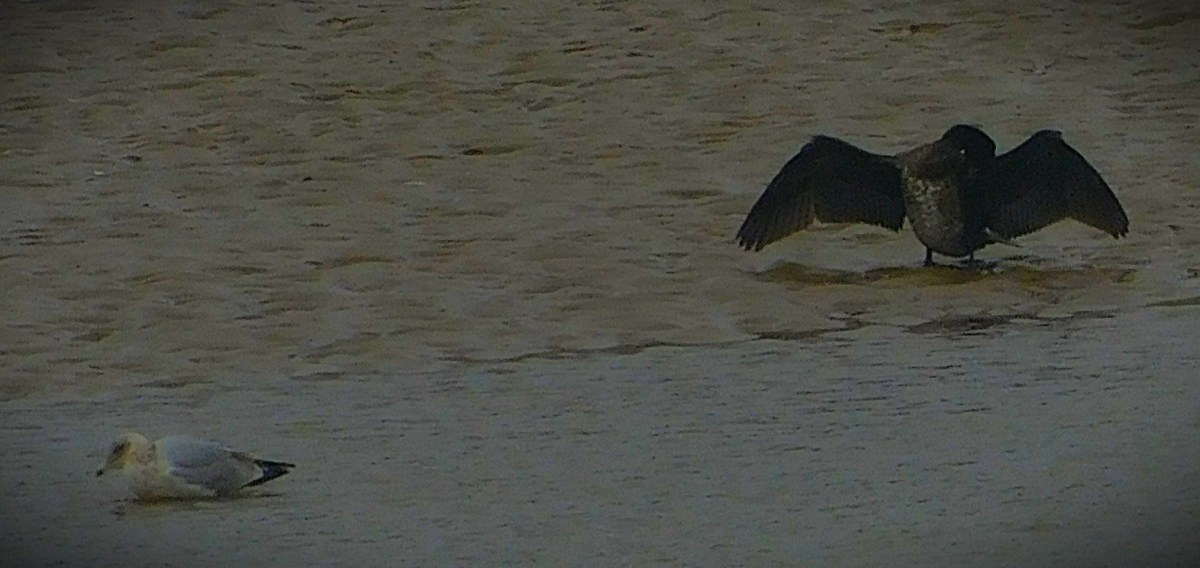
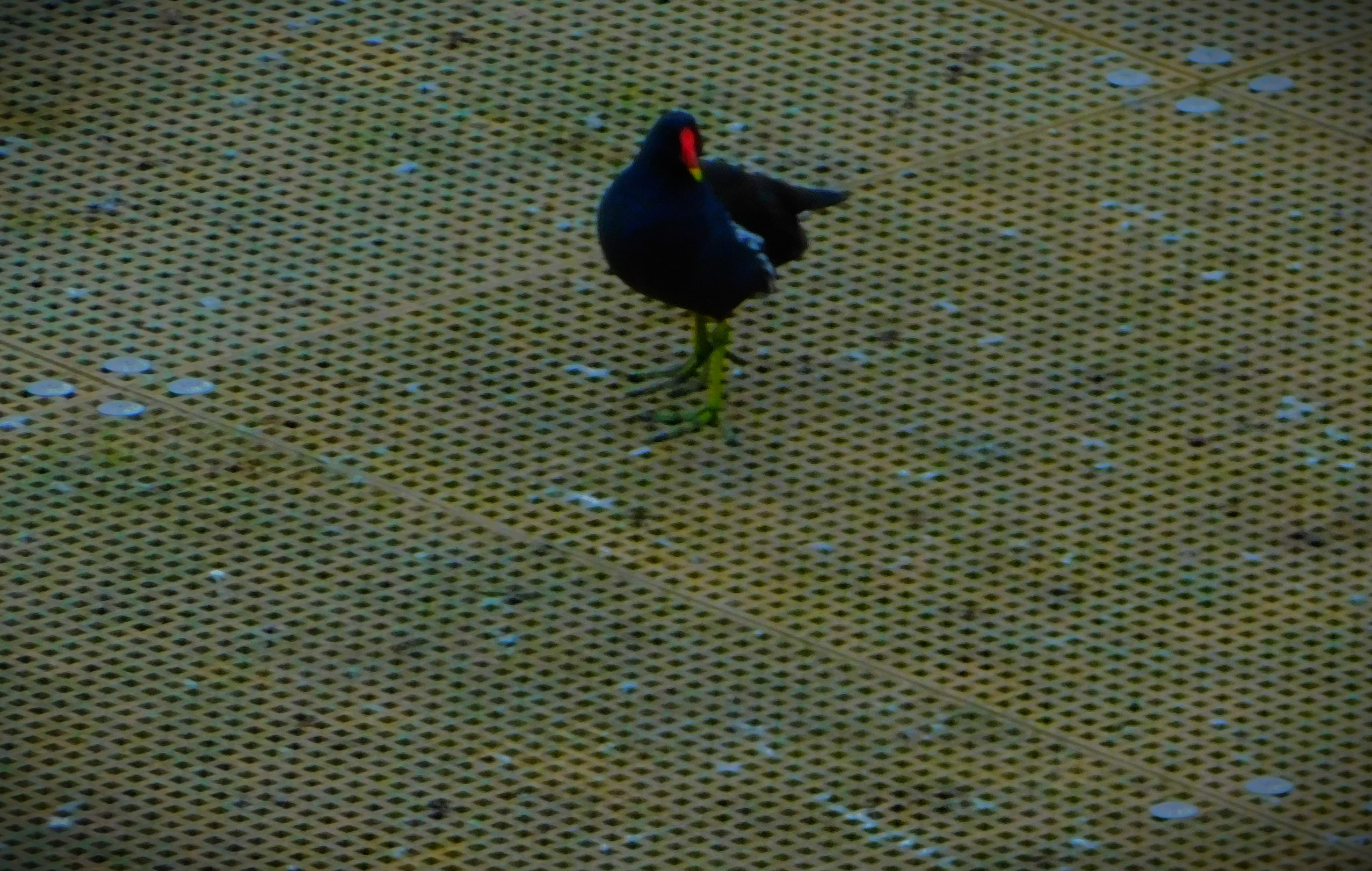
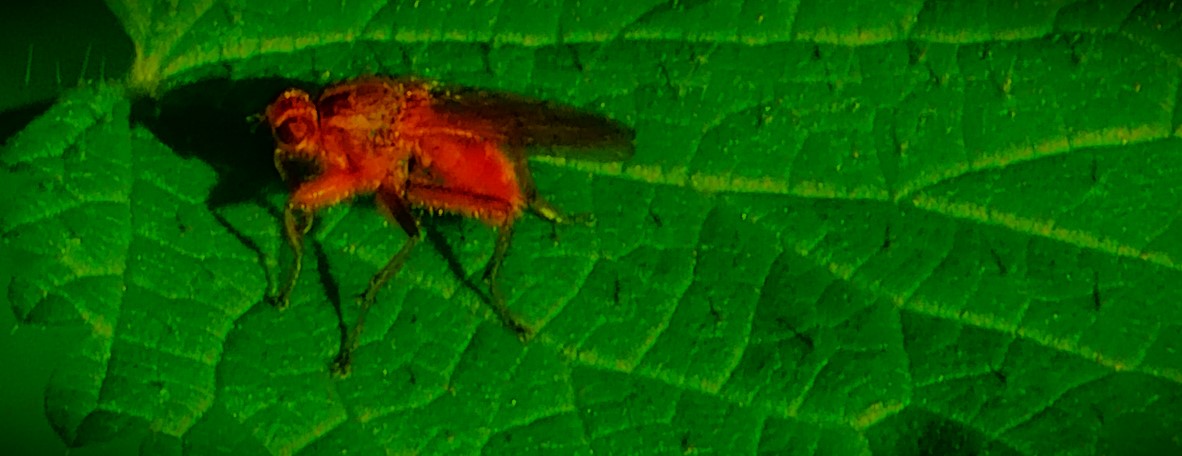
I am reasonably confident that this (two pics – next one a little closer up) is a Ruddy Darter.
The deciding ODI between England and India is intriguingly poised as I start this post picking the greatest XI of cricketers with surnames beginning with B (see the As). Elsewhere, Rory McIlroy is within sight of The Open Championship and five of the most unpleasant human beings anyone could conjure up are engaged in a battle to make Sauron look like one of the good guys as a way of securing the Conservative party leadership and with it the post of Prime Minister.
THE XI IN BATTING ORDER
Charles Bannerman – Australia. The Kent born opener scored 165 in the first ever test match innings, and even with him scoring that many his team could only tally 245 all out. He also impressed in his native land during the heavily rain affected summer of 1878, though that tour did not feature a test match.
Sidney George Barnes – Australia. A combination of WWII and continual skirmishes with the authorities limited his test career to 13 matches, but a batting average of 63 speaks for itself.
*Donald Bradman – Australia. The most prolific batter the game has ever seen, his test average of 99.94 leaves a respectable career average (around 40) between him and the best of the rest at that level.
Ken Barrington – Surrey and England. The Berkshire born right hander averaged 58 at test level, with a best of 256 at Old Trafford in 1964.
Allan Border – Essex and Australia. The nuggety left hander pretty much was Australia’s resistance batting wise for about the first 10 years of his illustrious career. In the last few years of that great career, with Australia a good side, he played some excellent attacking innings. He would be the vice-captain of this side, as an acknowledgement of his status as the best skipper Australia have had in my lifetime.
Ian Botham – Somerset, Worcesstershire, Durham and England. For a few years he was a genuinely great all rounder, for a few more after that he was a producer of occasionally devastating performances. England selectors of the period during and after his final decline spoiled many a promising career by trying to get decent young cricketers to fit into the Botham shaped hole opening in England’s ranks.
+Wasim Bari – Pakistan. Pakistan’s best ever wicket keeper, and unlike some of his successors in that post there were never any questions asked about where his real loyalties were.
Billy Bates – Yorkshire and England. His brief test career was ended by a freak eye injury sustained during net practice, but 656 runs at 27 and 50 wickets at 16 at that level are some testament to the off spinning all rounders capabilities. He took England’s first ever test hat trick, part of a match performance that yielded 55 in the only innings he had to play and seven wickets in each Australian innings.
Richie Benaud – Australia. Before becoming ‘the Bradman of TV commentators’ (yes I believe he was that far clear of the best of the rest in that role) the Aussie leg spinning all rounder became the first to achieve the test career double of 2,000 runs and 200 wickets.
Sydney Francis Barnes – England. Probably the most skilled bowler of any type ever to have played the game. Like his near namesake who is opening the batting for this XI he had a less than harmonious relationship with the authorities. He played little county cricket because he was paid better for being a professional for various clubs in the northern leagues. This meant that he played less than half of the test matches that England played between the start and end of his test career. Nonetheless, 189 wickets in 27 matches at 16.43 a piece is sufficient evidence of the trouble he caused even the best opponents.
Jasprit Bumrah – India. He burst on the scene at the end of 2018, taking a cheap six-for in that year’s Boxing Day test in Melbourne. He is now established as one the finest contemporary pace bowlers, and is still young enough that he should still be improving. He would form a seriously potent new ball combination with Barnes (sorry Beefy, in this line up you don’t get the new ball).
This team has a heavy scoring top five, a colossus of an all rounder at six, a top drawer keeper, two bowlers who can bat and two of the greatest specialist bowlers. The bowling, with Barnes and Bumrah sharing the new ball, Botham as back up pacer and two contrasting spinners in Benaud and Bates is both strong and well balanced.
HONOURABLE MENTIONS
The team has no left arm orthodox spinner, and two who came very close were the Indians Bishan Singh Bedi and Palwankar Baloo. However, the only people I could have dropped to make way for one of them were Bates or Benaud, and that would have weakened the batting. Warren Bardsley (Australia), Bill Brown (Australia) and Jack Brown (Yorkshire, England) were three fine opening batters, any of whom might have been selected instead of Bannerman. Davud Boon suffered due being a regular number three – a position which for this particular letter is not open to debate! Jonny Bairstow missed out due to the extreme strength of batting available here and the fact that he has blown hot and cold (currently blazing hot) through his career. Two South Africans, Eddie Barlow and Colin Bland were very close to selection – the former missing out to Ian Botham and the latter to the general batting strength available, though he is of course designated fielding sub in the event of anyone having to leave the field. Bill Bowes was the best pace bowler to miss out and would certainly be in the tour party for this letter. West Indian speedsters Winston and Kenny Benjamin were also fine players, but no one is persuading me that they get in ahead of Barnes and Bumrah (or indeed Bowes). I also regretted not being able to accommodate Somerset and England’s Len Braund, resourceful batter, good leg spinner and brilliant slip fielder. West Indies batter Carlisle Best was ruled out for the same reason I had to rule out Keith Arthurton in the previous post – not enough substance to go with the style.






























































































































































































































































































































































































































































































































 aspiblog