An all time XI of players whose given names begin with the letter S, including a detailed honourable mentions section which features some serious players. Also a photo gallery.
Today I run the rule over players whose given names begin with the letter S. My chosen XI contains players who match all the words in my title and more besides. Also, while the embarrassment of riches is not on the same scale as two days ago when I looked at given names beginning with R, there are some indubitable greats who have received no more than an honourable mention.
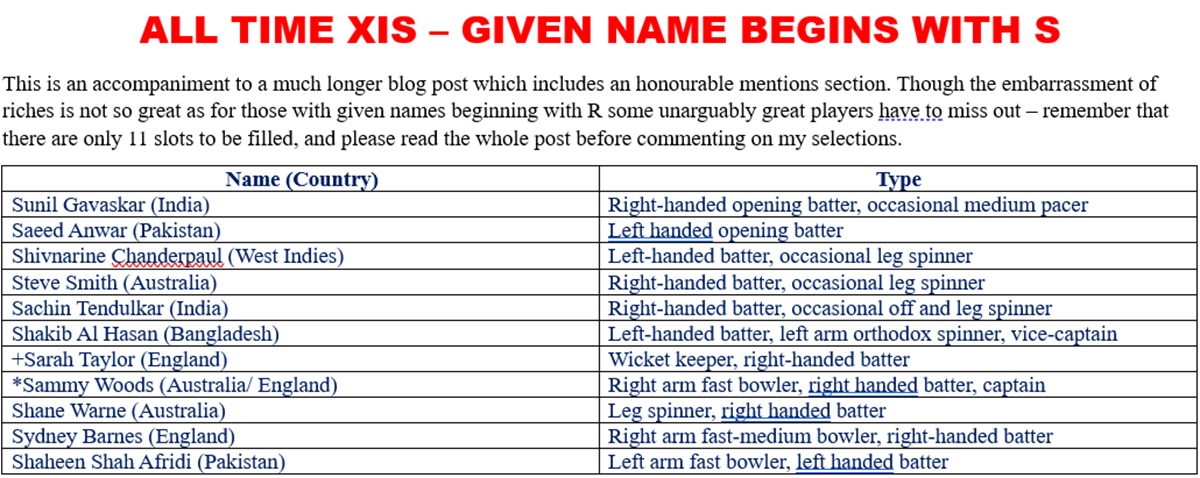
THE XI IN BATTING ORDER
Sunil Gavaskar (India, right handed opening batter, occasional medium pacer). He was the first to reach the career milestone of 10,000 test runs. At the time of his retirement his career tally of 34 test centuries was also an all comers record.
Saeed Anwar (Pakistan, left handed opening batter). With a defensively minded right hander locking down one of the opening berths the ideal would be to fill the remaining place with an attack minded left handed, and fortunately I have available someone who was just that and was also good enough to have a test average of 45.
Shivnarine Chanderpaul (West Indies, left handed batter, occasional leg spinner). He first came to general attention when he scored a double century for West Indies U19s against England U19s, and was promptly fast tracked into the test side (unlike England’s own double centurion in that U19s series, whose achievement was ignored by England management). He went on to establish a magnificent test record in a side that was went into freefall around him.
Steve Smith (Australia, right handed batter, occasional leg spinner). Probably the second best batter ever to come out of Australia behind the mighty Don Bradman.
Sachin Tendulkar (India, right handed batter, occasional off/ leg spinner). Most test runs, most test hundreds, most test appearances, only player to have scored 100 or more centuries across international formats. Probably the biggest compliment ever paid him was by Don Bradman, who was watching television coverage of one of his innings when he thought he spotted something familiar about Tendulkar and called his wife to check, and she confirmed that there were indeed similarities in batting style between the two of them.+
Shakib Al Hasan (Bangladesh, left handed batter, left arm orthodox spinner, vice-captain). A genuine all rounder. Sometimes controversial, many were critical of his role when Angelo Mathews made history as the first person ever to be given Timed Out in an international match, though in truth the Bangladeshi was in the right, and Mathews’ reaction to falling victim to such an unusual dismissal was what really deserved censure.
+Sarah Taylor (England, wicket keeper, right handed batter). A superb keeper and a fine batter as well.
*Sammy Woods (Australia, England, right arm fast bowler, right handed batter, captain). Born in Sydney, but spent most of his career playing for and captaining Somerset. Somerset rarely if ever had the luxury of a settled side in his day, but his achievements as a captain were still impressive, including leading his county to victories over Yorkshire in three successive seasons when the northern county were generally ruling the roost.
Shane Warne (Australia, leg spinner, right handed batter). One of the all time greats of the game, his case for inclusion needs no further amplification.
Syd Barnes (England, right arm fast medium bowler, right handed batter). That official ‘right arm fast medium’ tells a tiny fraction of the story of Barnes’ methods. His signature weapon was a leg break delivered at fast medium pace, and 189 wickets at 16.43 each in just 27 tests (yes, an average of seven wickets per match at test level) is testament to just how good he was.
Shaheen Shah Afridi (Pakistan, left arm fast bowler, left handed batter). He is still in the fairly early stages of his career, but 105 wickets at 25.58 in 27 test matches is a very fine start at the highest level.
This side has an excellent and contrasting opening pair, a mighty engine room of Chanderpaul, S Smith and Tendulkar, a genuine all rounder, a great keeper/ batter, a bowling all rounder and three superb specialist bowlers. The bowling, with Afridi, Barnes and Woods to attend to the pace and Warne and Al Hasan to bowl spin is also superb, and it is hard to see any conditions in which this attack would struggle.
HONOURABLE MENTIONS
The opening pair both had ironclad cases for inclusion. If I were picking for limited overs then I would settle for two left handed openers, with Sanath Jayasuriya replacing Gavaskar whose record in limited overs was not great, but in long form there is no contest. The trouble comes in the number four and five slots, where in addition to the two I opted for, there were two other outstanding candidates, who are very unlucky that their given names begin with this letter, which keeps them out: Steve Waugh and Stan McCabe both of Australia. Also, Saud Shakeel has had an amazing start to his test career, and may yet force his way in, but with the top five I have plus the two reserves I have already mentioned selecting someone on the basis of seven test matches, however outstandingly he has done in them would be unwarrantable. Finally for this area of the order, Stephen Fleming had a respectable rather than truly outstanding record for New Zealand, and could only have commanded a place had I been dire need of a captain, which I was not.
Shakib Al Hasan had no challengers at six, not least because with Warne inked into the side Shahid Afridi’s leg spin was unlikely to add much to the bowling attack. In a limited overs side, Sikandar Raza of Zimbabwe, an off spinning all rounder, would come into the mix – with Jayasuriya opening he increases the bowling variation available. However, his long form record is not special.
There were at a push four serious challengers to my actual choice for the wicket keeping role: Steve Marsh, who was fine keeper/ batter for Kent without ever getting the England job, Steve Rhodes who did do the England job, but was not IMO in Taylor’s bracket in either department, Sadanand Viswanath, a talented Indian keeper who didn’t fully deliver on his talents and Steve Rixon, understudy to Rod Marsh on at least one Ashes tour for Australia.
In the fast bowling department two England bowlers missed out for differing reasons: Steve Harmison was devastating when it was his day, but it was rather too frequently not his day for him to be classed as a genuine great. Had Simon Jones been able to keep himself in one piece he would have been a shoo-in, but injuries ruined his career. Schofield Haigh had a magnificent record for Yorkshire for many years, but never accomplished much for England. Sarfraz Nawaz, right arm fast medium for Pakistan, merits a mention, but no way could he dislodge either Barnes or his countryman Afridi. There is an extra reason for backing Shaheen Afridi in this area, which is that Barnes’ finest Ashes series, in 1911-2, came when he shared the new ball with a left arm pacer, Frank Foster.
Three off spinners have to be mentioned, though I had no way of accommodation them in the XI: Simon Harmer, unlucky to have played as little international cricket as he has, Saqlain Mushtaq, a genuine great, but not good enough to displace Warne, and Srinivas Venkataraghavan, one of the Indian spin quartet of the 1970s. The truth is that the other three spinners in question, Bedi, Chandrasekhar and Prasanna were all a distinct cut above Venkataraghavan, who sometimes got the nod because he offered extra batting compared to the other three. The quartet only once played in the same XI, on which occasion Prasanna, the other off spinner, was the most successful of the four. However, Venkataraghavan definitely qualifies for an umpiring gig, and his on-field colleague can be Sadanand Viswanath.
PHOTOGRAPHS
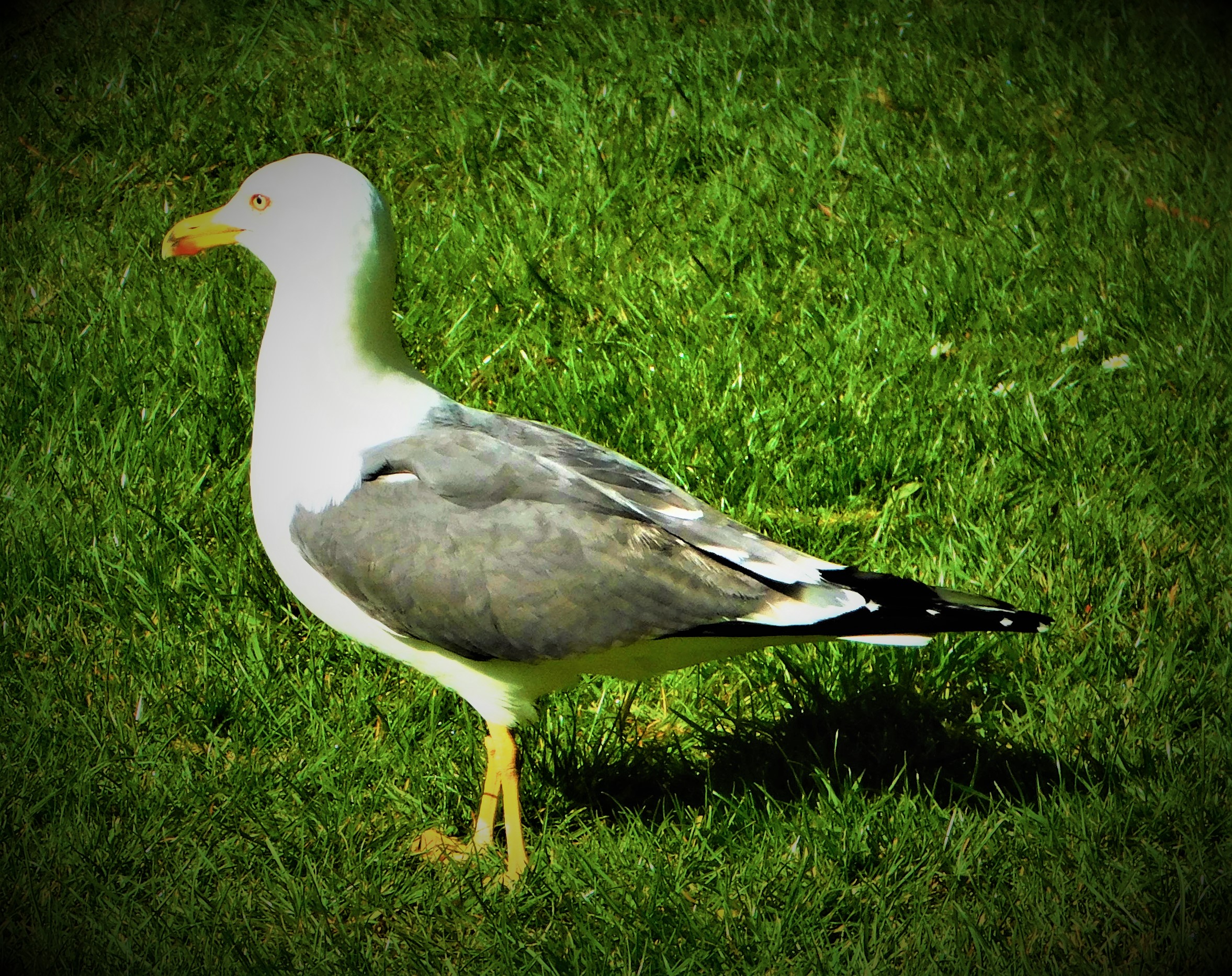
I start this section with a single picture and a reminder that you can view those in the gallery the follows at a larger size by clicking on any picture that attracts your attention.
I gave a brief twitter friendly answer yesterday, and I am now using this post to expand my thoughts and look at the architecture of an all time XI.
THE BRIEF
I have taken Tanmay’s question as referring specifically to players who played for Asian nations as opposed to players of Asian heritage who played for other nations. I also decided that for the purposes of this post only players with genuinely weighty test records should be considered – there have been players who have been brilliant at lower levels and struggled at the summit, and there have been players who have made incredible starts at test level and then fizzled out (look up Narendra Hirwani in the context of this specific post). I also require that any XI I name be well balanced and obviously capable of functioning as a unit, so I try to select varied players.
BUILDING OUR XI
We start with the openers. Here there is one candidate who overshadows all others, Sunil Gavaskar with over 10,000 test runs at an average above 50. Gavaskar’s partner should ideally pose a contrast, so I want a more attacking player, and preferably a left handed one. For me the person who fits the bill best in terms of Asian test players is Saeed Anwar of Pakistan.
The number three slot is non-negotiable in my opinion – Rahul Sharad Dravid with 13,288 test runs at an average of 53 is a lock for this slot
There would be more candidates for the number four slot but for the presence of Sachin Ramesh Tendulkar who preferred this slot in test matches.
At number five I want a left hander given that numbers three and four are right handers, and again there is one commanding candidate: Kumar Sangakkara, the second most prolific of all test match left handers behind Alastair Cook, and with a better batting average than the former England opener.
At number six I want an all rounder, and there is once again a clear cut candidate, who also happens to have been an outstanding captain, Imran Khan.
A wicket keeper who can make major contributions with the bat is a major asset to any side, and Mushfiqur Rahim, a fine keeper and one of the most consistent test batters Bangladesh has yet produced fits the bill nicely.
A number eight should be primarily a bowler, but ideally you want them to be reasonably capable with the bat as well, and Wasim Akram, one of the greatest of all left arm fast bowlers and possessor of a test match double century to boot would seem the ideal candidate.
Numbers 9, 10 and 11 are bowling slots, and we want at least one more fast bowler and at least one spinner. Waqar Younis of Pakistan and Muthiah Muralidaran of Sri Lanka answer these descriptions – the former a genuinely great right arm fast bowler and regular bowling partner of Wasim Akram as well and the latter an off spinner and holder of the record for career test scalps – 800 in 133 matches. For the number nine slot my preference is for a second spinner and one who does something different to Murali, and I opt for leg spinner Anil Kumble, fourth in the list of all time test wicket takers and a big contrast to Murali.
Thus we have constructed our XI and in batting order it reads:
This gives us a very powerful top five, one of the greatest of all all rounders, a quality keeper who is also a very good bat and four top line bowlers of great quality and variety. The bowling with three fast bowlers, one of whom bowls left arm for extra variation and two of the greatest spinners ever to play has both depth and variety as well. I hesitate to say that this side could beat an ROW all time XI because the latter, something like: JB Hobbs, H Sutcliffe (the best ever test match opening pair), *DG Bradman, SPD Smith, G St A Sobers, AW Greig, +AC Gilchrist, AK Davidson, MD Marshall, SK Warne, GD McGrath has arguably even stronger batting and definitely greater depth and variety in the bowling – between Sobers and Davidson any type of delivery that a left arm bowler can produce is covered, while Marshall, McGrath, Warne and Greig do likewise for right arm bowlers, but this Asian XI would be able to give even such formidable opposition as this a genuine contest.
THE MISSING
In an exercise of this nature many legendary cricketers are bound to miss out and probably no two people would pick the same XI. I would not argue against the likes of Virat Kohli, Javed Miandad or any of a fistful of left arm spinners: three all rounders, ‘Vinoo’ Mankad, Ravindra Jadeja and Shakib al Hasan and at least two specialists in the craft, Bishan Singh Bedi and Rangana Herath would all have their advocates, merely in favour of my own choices. Two contemporary greats who I decided did not yet have the weight of achievement at test level to merit selection but who I may well include should I revisit this in a few years were Rishabh Pant (who may very well displace Mushfiqur Rahim) and Rashid Khan (who faces an even more formidable obstacle in the form of Kumble).
PHOTOGRAPHS
Just before my usual sign off I have a petition to share: The Academy in Brixton is in danger and there is a petition on change.org to save it. I grew up in southwest London, close enough to Brixton that when I temped there for a period in 1997 I walked to and from work. Finally we come to the photographs…
A look at a selection of record breaking and utterly unique cricketers by way of explaining the unanswerability of the question “who was the greatest ever cricketer”.
This post was provoked by a question I saw posted on twitter yesterday: who was the greatest cricketer of all time. This question is of course unanswerable and to explain why this is so I have assembled a touring party of 17 all of whom were about as good as players of their type can be. All of these players have attributes that mean that the claim that they stand alone in cricket history is unassailable, and I explain why in the course of my look at that them.
FIRST XI IN BATTINGORDER
JB Hobbs – right handed opening batter, occasional right arm medium pacer. ‘The Master’, scorer of more FC runs and more FC centuries than anyone else in the history of the game.
*WG Grace – right handed opening batter, right arm bowler of various types through his career. The most dominant player of any era, towering over his contemporaries both literally and metaphorically.
DG Bradman – right handed batter, occasional leg spinner. A test batting average of 99.94, maintained over 52 matches at level needs no further comment.
SR Tendulkar – right handed batter, occasional bowler. The only player to have scored 100 centuries across formats in international cricket.
FE Woolley – left handed batter, left arm orthodox spinner. The only cricketer to tally over 10,000 FC runs, take over 1,000 wickets and hold over 1,000 catches in the course of a first class career.
GS Sobers – left handed batter, left arm bowler of every type known to cricket. The most complete cricketer the game has ever seen.
GH Hirst – right handed batter, left arm fast medium bowler. Achieved the feat of 1,000 runs and 100 wickets in first class matches in each of 10 successive seasons, including the only ever instance of 2,000 runs and 200 wickets in the same FC season.
+RW Taylor – wicket keeper, right handed batter. The most wicket keeping dismissals (1,649 of them – 1,473 catches and 176 stumpings) of anyone in first class cricket history.
W Rhodes – left arm orthodox spinner, right handed batter. More first class wickets than anyone else in the game’s history, even though there was a phase in his career when he hardly bowled. He also scored almost 40,000 runs in FC cricket.
SF Barnes – right arm fast medium bowler, right handed batter. The best wickets per game ratio of anyone to play 20 or more tests – 189 in 27 matches, at 16.43 each = seven wickets per match. Generally regarded as the greatest of all bowlers.
T Richardson – right arm fast bowler, right handed batter. The fastest to the career landmarks of 1,000 FC wickets (134 matches) and 2,000 (327 matches). From the start of the 1894 season to the end of the 1897 season he took just over 1,000 wickets, a period of wicket taking unique in cricket history.
This is a well balanced XI of awesome power. Now onto…
THE RESERVES
These are my six designated reserves:
H Sutcliffe, right handed opening batter. My reserve opener was the ultimate big game player. His overall FC average was 52.02, his overall test average 60.73 and his overall Ashes average 66.85. As he himself once said to Pelham Warner “ah Mr Warner, I love a dogfight”.
JH Kallis, right handed batter, right arm fast medium bowler. Has a fair claim to be regarded as the best batting all rounder ever to play the game. He didn’t master the full range of skills that Sobers did, hence his place as a reserve rather than in the starting XI.
GA Faulkner, right handed batter, leg spinner. The only cricketer to have finished a career of over 20 test matches with a batting average of over 40 and a bowling average of less than 30.
GL Jessop, right handed batter, right arm fast bowler. The most consistently fast scorer ever to play the game.
+LEG Ames, right handed batter, wicket keeper. The only recognized keeper to have scored 100FC hundreds, also holds the record for most career stumpings in first class cricket – 418.
GA Lohmann, right arm medium fast bowler, right handed batter. The man with the lowest career bowling average of anyone take 100 test wickets – 10.75.
CONCLUSIONS
This little collection of players fully illustrates why there is no definitive answer to the question I saw on twitter yesterday. I also missed the taker of 800 test wickets (Muralidaran), the only player to score 5,000 test runs and take 400 test wickets (Kapil Dev), the holder of the record test and first class individual scores (Lara), and quite a few others who have and deserve to have legions of fans. If forced to provide a single player as answer to this question I would consider WG Grace to be less far wrong than any other single answer.
I take on the near impossible task of selecting an all time test XI. Also some more photographs for you.
Let me start by saying that this task, suggested on twitter by Adam Sutherland, is the sort of thing Alexa might come up with if asked for an example of an insoluble problem. The embarrassment of riches at one’s disposal is such that I would expect no two people to arrive at the same answer. Nevertheless it is fun to do, and I am going to offer my answer. Feel free to list your alternatives, or if you dare, a completely different XI of your own to take on mine in a five match series in the comments.
THE TEAM
There are lots of candidates for an opening pair. In my case I resolve the issue by selecting an opening pair who were the best in test history and who I therefore pick as a package: Jack Hobbs and Herbert Sutcliffe, with their average partnership of 87.81 at that level.
Number three, with all due respect to such masterly practitioners as Rahul Dravid and Ricky Ponting is one of the two nailed on certainties for a place in this XI: the one and only Donald Bradman, who I also name as captain of the side. An average of over 30 runs an innings more than any of the competition does not allow for argument.
Number four has many contenders, but having named three right handers I wanted a left hander, and the best record among such batters is held by Graeme Pollock, with an average of 60.97 (Brian Charles Lara is the other contender, but too many of his really big scores came in either defeats or draws).
Number five goes to Sachin Tendulkar. Again there were many possibilities, but I accept the word of Don Bradman, who recognized something of himself in the way Tendulkar batted (a resemblance also acknowledged by Lady Bradman when consulted), and there can be no higher praise.
Now we need an all-rounder, and this is the other utterly undisputable slot other than no3: the most complete cricketer there has ever been, Garfield St Aubrun Sobers. He scored 8,032 test runs at 57.78, took 235 wickets, bowling virtually every type of delivery known to left arm bowlers (he was originally selected as a left arm orthodox spinner, batting no9) and he was also one of the greatest fielders the game ever saw.
For the wicket keeper, although I do not normally approve of compromising at all on keeping skills I rate Adam Gilchrist’s batting at no seven so highly that I am selecting him for the role.
For my remaining bowlers I go for Wasim Akram at no8, left arm fast and capable of generating prodigious swing. No9 is Malcolm Marshall, for me the greatest fast bowler of the golden age of West Indies fast bowling. No10 is Sydney Barnes, 189 wickets in just 27 tests (seven per game) at 16.43 a piece. I round out the order with the off spinner Muttiah Muralitharan.
Barnes’ principle weapon was a leg break at fast medium pace, so I felt that the off spinner Muralitharan as opposed to a leg spinner (Warne, O’Reilly, Grimmett and Kumble being the principle contenders) gave the attack more variation. Wasim Akram’s place as left arm paceman could have gone to Alan Davidson or Mitchell Johnson without appreciably weakening the side, and there are a plethora of right arm quicks for whom cogent cases could be made. Barnes’ extraordinary record made him the third clearest selection in the entire XI.
PHOTOGRAPHS
Just before my usual sign off, a link to the piece I produced OTD last year as part of my ‘all time XIs’ series: Leicestershire. Now for those photos…
Today in my all-time XIs series I look at a test playing line up and put myself in the firing line for 1.3 billion of the game’s most avid fans – yes it’s India in the spotlight.
INTRODUCTION
Welcome to the latest of my variations on an ‘All Time XIs‘ theme. Today for only the second time since starting this series I am doing a test XI, and I my choice puts me in the firing line of 1.3 billion avid cricket fans – yes it is India in the spotlight today. I am going to begin from players whp featured in the time that I have been following the game, and will then move to on the all-time element of the selection.
INDIA FROM MY CRICKET LIFETIME
For this element of the post I have set my cut off point at that 1990 series in England – I caught snatches of the 1986 series, but the 1990 one is the earliest involving India of which I can claim genuine recollection (England should have visited India in 1988-9 but that tour was cancelled for political reasons).
Mayank Agarwal – 11 test matches, 17 innings, 974 runs at 57.29, no not outs to boost the average. He has made a sensational start at the highest level, and is also part of a tremendously successful opening partnership with…
Rohit Sharma – 2,164 runs at 46.54 in test cricket sounds good but a little short of true greatness. However, Sharma was initially played at test level as a middle order batter, and his results since being promoted to the top of the order have been utterly outstanding.
Rahul Dravid – 13,288 test runs at 52.31 for ‘the wall’. In the 2002 series, he and Michael Vaughan of England took it in turns to produce huge scores. Dravid assisted in one of test cricket’s greatest turnarounds in 2001, when India were made to follow on and emerged victorious by 171 runs, and I shall have more to say about this match in due time.
Sachin Tendulkar – more runs and more hundreds (precisely 100 of them) in international cricket than anyone else in the game’s history. He was one of the few batters of his era who could genuinely claim to have had the whip hand on Shane Warne. I first saw him in that 1990 series when he was 17 years of age, and his personal highlights included a maiden test century and an astonishing running catch (he covered at least 30 metres to get to the ball).
*Virat Kohli – one of the top few batters in the world today (the Aussies Smith and Labuschagne both have higher test averages, and Kiwi skipper Kane Williamson bears comparison, and heterodox as I am about such matters I would also when it comes to long form batting throw Ellyse Perry into the mix), and has certainly already achieved enough to be counted among the greats.
+Mahendra Singh Dhoni– wicket keeper and dashing middle order batter. Of the contenders for the gloves he alone has a batting record the enables me to select five front line bowlers.
Ravindra Jadeja – left arm orthodox spinner, lower middle order batter and superb fielder. His averages are the correct way round (35 with the bat and 24 with the ball).
Kapil Dev – right arm medium fast, attacking lower middle order batter. He spent much of his career with no pace support whatsoever, having to attempt to be the spearhead of an attack that was often moderate. At Lord’s in that 1990 series he played an innings that should have saved his side from defeat, though it did not. Facing 653-4 declared (Gooch 333) India were 430-9, with Narendra Hirwani, a fine leg spinner who had captured 16 West Indian wickets on test debut but a genuine no11 bat at the other end, when Kapil faced off spinner Eddie Hemmings. There were four balls left in the over, and Kapil’s task was to score 24 to avert the follow-on. He proceeded to hit each of those last four balls for six to accomplish the task. Hirwani, as predicted, did not last long, and England had a lead of 199. Gooch crashed a rapid 123 in that second England innings (a record 456 runs in a test match, the triple century/ century double was subsequently emulated by Sri Lanka’s Kumar Sangakkara), and India collapsed in the fourth innings of the match, giving England what turned out to be the only victory of the series.
Anil Kumble – leg spinner, lower order batter. One of only two bowlers, the other being Jim Laker, to have taken all 10 wickets in a test innings, and the third leading test wicket taker of all time.
Mohammed Shami – right arm fast bowler. India has not generally been known for producing out and out quick bowlers, but Shami’s 180 wickets at 27.49 are a testament to his effectiveness.
Jasprit Bumrah– right arm fast bowler, 14 test matches, 68 wickets at 20.33. Save for when the West Indies were in their pomp visiting fast bowlers have rarely been able to claim to have blitzed the Aussies in their own backyard. Bumrah, who virtually settled the destiny of the Melbourne test of 2018, and with it the Border-Gavaskar trophy, with a devastating spell in the Australian first innings is one of the exceptions.
This combination boasts a stellar top five, a wicket keeping all rounder at six, and five varied and talented bowlers, the first three of whom can all contribute with the bat as well. I believe that Kapil Dev as third seamer in a top quality attack rather than spearhead in a moderate one, which was too often the role he had to play, would be even finer than he was in real life. Now we look at the…
HONOURABLE MENTIONS
This section begins with an explanation (nb not an excuse, there being in my opinion nothing to excuse) of one of my choices:
JADEJA V ASHWIN
The choice for the second spinner role was really between these two, and there will be many wondering at the absence of Mr Ashwin. Here then is the explanation:
Jadeja – 1,869 test runs at 35.24, 213 test wickets at 24.62. Ashwin – 2,389 test runs at 28.10, 365 wickets at 25.43
Jadeja outdoes Ashwin both with bat and ball, which is why he gets the nod from me.
Now we on to the other honourable mention to get his own subsection…
THE VERY VERY SPECIAL INNINGS
Against the mighty Aussies in 2001 Vangipurappu Venkata Sai Laxman came in in the second innings with India having followed on and already four down and still some way behind. He proceeded to score 281, at the time the highest individual test score ever made by an Indian, India reached 657-7 declared (Dravid 180 as well), and with 383 to defend rolled Australia for 212 to win by 171 runs. India took the next match and with it the series as well – Laxman in one brilliant, brutal innings had upended the entire series. Laxman finished his career with 8,781 test runs at 45.24, a very respectable record, but not quite on a par with the middle order batters I actually selected – India has always been hugely strong in this department.
OTHER HONOURABLE MENTIONS
Two other opening batters besides my chosen pair featured in my thoughts – Virender Sehwag, scorer of two test triple hundreds, and a shoo-in for Agarwal’s partner had I decided not go with the known effective partnership, and Navjot Singh Sidhu, an attack minded opener in the 1990s, who had a fine test record, but not quite fine enough to make the cut. For much of my time as a cricket follower India have struggled to find openers, often selecting makeweights to see of the new ball before the folks in the middle order take control (Deep Dasgupta, Shiv Sunder Das, Manoj Prabhakar and Sanjay Bangar, the last two of whom also served as opening bowlers are four examples that I can remember). In the middle of the order Mohammed Azharruddin, Sourav Gangulyand Vinod Kambli were three of the highest quality performers to have missed out, although the first named is of course tainted by his association with match fixing. Cheteshwar Pujara was a candidate for the no 3 slot I awarded to Dravid, but for me ‘the wall’ just shades it. Kiran More, Nayan Mongia, Rishabh Pant and current incumbent Wriddhiman Saha are a fine foursome of glove men all of whom would have their advocates. Among the spinners I passed over were Chauhan and Raju in the 1990s, Harbhajan Singh in the early 2000s and Narendra Hirwani the leg spinner who took 16 on debut but did little else in his career. Also, while mentioning Indian spinners who I have been privileged to have witnessed in action I cannot fail to mention Poonam Yadav, who nearly bowled her country to this years T20 world cup. The seam bowling department offered fewer alternatives, but Javagal Srinath, the first Indian bowler of genuine pace who I ever saw, left arm fast medium Zaheer Khan and dependable fast medium Bhuvneshwar Kumarwould all have their advocates, but I had already inked Kapil in the for role of third seamer and wanted the two out and out quick bowlers of the current era as my shock bowlers.
INDIA ALL TIME
I will only mention the players I have not already covered, before listing the batting order in full and moving on to the honourable mentions.
Sunil Gavaskar has a test record that absolutely demands inclusion – he was the first to 10,000 test runs and made a good portion of those runs against the West Indies when they were stacked with fast bowlers. I could not include him in the team from my time as a cricket follower, because he was finishing his great career just as my interest in cricket began to develop. I saw one reminder of his past glories, when he batted for The Rest of The World v the MCC in the MCC Bicentenary match and made a chanceless century, never giving the bowlers a sniff.
Cottari K Nayudu was an off spinning all rounder and India’s first ever test captain. His seven test matches left him with a modest looking record at that level, but his first class record, built up over a span of 46 years looks very impressive indeed.
Syed Kirmani is generally considered to be have been India’s greatest wicket keeper.
Amar Singh was a shooting star across the cricketing sky, India’s first great fast bowler, and for many years the only one of international repute that his country produced. His seven test appearances produced 28 wickets at 30.69, but it is record in 92 first class appearances, 506 wickets at 18.35 that gets him the nod from me, especially given what cricket in India was like in that period.
Palwankar Baloo was a left arm spinner who played his cricket before India was a test playing nation, and had to contend with huge prejudice as a member of a low caste. Unlike the various Jam Sahebs, Maharajas and Nawabs who were able to strut their stuff in English county cricket he had to settle for those games people would pick him for in India. The 33 games he played at first class level yielded him 179 wickets at 15.31 each. Although I am open to correction on this I believe he is also the only first class cricketer to share a name with a character from the Jungle Book (Baloo is the big brown bear who teaches Mowgli the law of the jungle in Rudyard Kipling’s magnum opus).
Thus my all-time Indian team in batting order is: 1)Sunil Gavaskar 2)Mayant Agarwal who in spite of his short career to date holds his position 3)Rahul Dravid 4)Sachin Tendulkar 5)*Virat Kohli 6)Cottari K Nayudu 7)Kapil Dev 8)+Syed Kirmani 9)Amar Singh 10)Palwankar Baloo 11)Jasprit Bumrah
This combination features a stellar top five, 6,7 and 8 all capable of useful runs, and three superb specialist bowlers. The wicket keeper is top drawer. The bowling attack features two genuinely fast bowlers, Kapil Dev as third seamer and two contrasting spinners in Baloo (left arm orthodox) and Nayudu (off spin).
HONOURABLE MENTIONS
Other than those mentioned earlier the only other opener I considered was Vijay Merchant, who had the second highest first class average of anyone at 71.22. His test average was a mere 47 however, a massive decline on his first class output for reasons I shall go into later, and for this reason I reluctantly ruled him out. In the middle order Vijay Hazare, Pahlan Umrigar and Gundappa Viswanath would all have their advocates, will I also had to ignore the possessor of the 4th highest first class score in history, Bhausaheb Nimbalkar. Among all rounders the biggest miss was Mulvantrai Himmatlal ‘Vinoo’ Mankad, who completed the double of 1,000 runs and 100 wickets in test cricket in his 23rd match (only Botham has required fewer), but I was determined to select Baloo, which meant that there would be less scope for Mankad’s left arm spin, so in the interests of balance I left him out. My view on the mode of dismissal named after him is that it is the batter who is trying to gain an unfair advantage by leaving the ground earlier, and if the bowler spots and runs them out well done to them, although delaying before going into delivery stride in the hope of catching a batter napping is taking things a little too far. Dattu Phadkar, a middle order batter who was often used as an opening bowler was another who could have been considered. With all due respect to Messrs Bedi, Prasanna and Venkataraghavan who each had more than respectable records the only one of the great 1970s spinners I really regretted not being able to find a place for was Bhagwath Chandrasekhar the leg spinner who was a genuine original. His right arm was withered by polio, and that was the arm he bowled with. Among specialist pace bowlers there are, as I have previously indicated, few contenders, but Chetan Sharma had has moments in the 1980s. It is now time for…
A CODA ON THE DOMINANCE OF THE BAT IN INDIAN CRICKET
For a long time first class matches in India were timeless, which is to say they were played out until a definite result was reached. Some of the scores were astronomical, with the only two first class matches to have had aggregates of over 2,000 runs both played in India. I will use one match as a case study:
BOMBAY V MAHARASHTRA 1948
This match featured in Patrick Murphy’s “Fifty Incredible Cricket Matches”, and he used a phrase about matches such as this one that I just love “a meaningless fiesta for Frindalls” (William Howard Frindall, aka ‘Bearders’, was the second chronologically of two legendary statisticians to have initials WHF, the other being William Henry Ferguson). Bombay scored 651-9 declared in their first innings, Maharashtra made 407 in response, and Bombay declined to enforce the follow-on, racking up 714-8 declared at the second time of asking to set Maharashtra 959 to win. Maharashtra managed 604 of these, losing by 354 runs in a match that saw 2,376 runs and 37 wickets, the highest aggregate for any first class match ever. Three batters notched up twin centuries, Uday Merchant (nb Uday, not the famous Vijay) and Dattu Phadkar for Bombay, and Madhusudan Rege for Maharashtra. Phadkar was a test regular, Rege played one test match in which he aggregated 15, and even in first class cricket averaged only 37 in all, while Merchant had a first class average of 55.78 but was never picked for a test match, and there were three other individual centuries. What this kind of thing meant was that Indian bowlers tended to operate under a collective inferiority complex, while the batters would flounder any time they faced other than a shirt front. Fred Trueman, who bowled against Pahlan Umrigar in the 1952 test series (at his retirement Umrigar held a fistful of Indian test records), and claimed that there were times when he was bowling and the square leg umpire was nearer the stumps than Umrigar, the batter, and while this story may have grown in the telling, it would have been an exaggeration rather than a complete invention. This is why I would need a lot of convincing of the actual merits of some of those who had fine looking batting records in those years, while any bowler with a good looking record is likely to get huge credit, and it is one reason why I make no apology for my choices of Amar Singh and Palwankar Baloo in my All Time Indian XI.
LINKS AND PHOTOGRAPHS
We have reached the end of our journey through Indian cricket, and it only remains to put in a couple of links before applying my usual sign off. First, finishing with the cricket I draw your attention to the pinchhitter’s latest offering, which will certainly repay a read. Finally, a splendid piece on whyevolutionistrue in defence of governor Andrew Cuomo who has been pilloried by religious zealots for daring to not give god full credit for such success as has been had in the fight against Covid-19. And now, in my own distinctive way it is time to call ‘Time’:
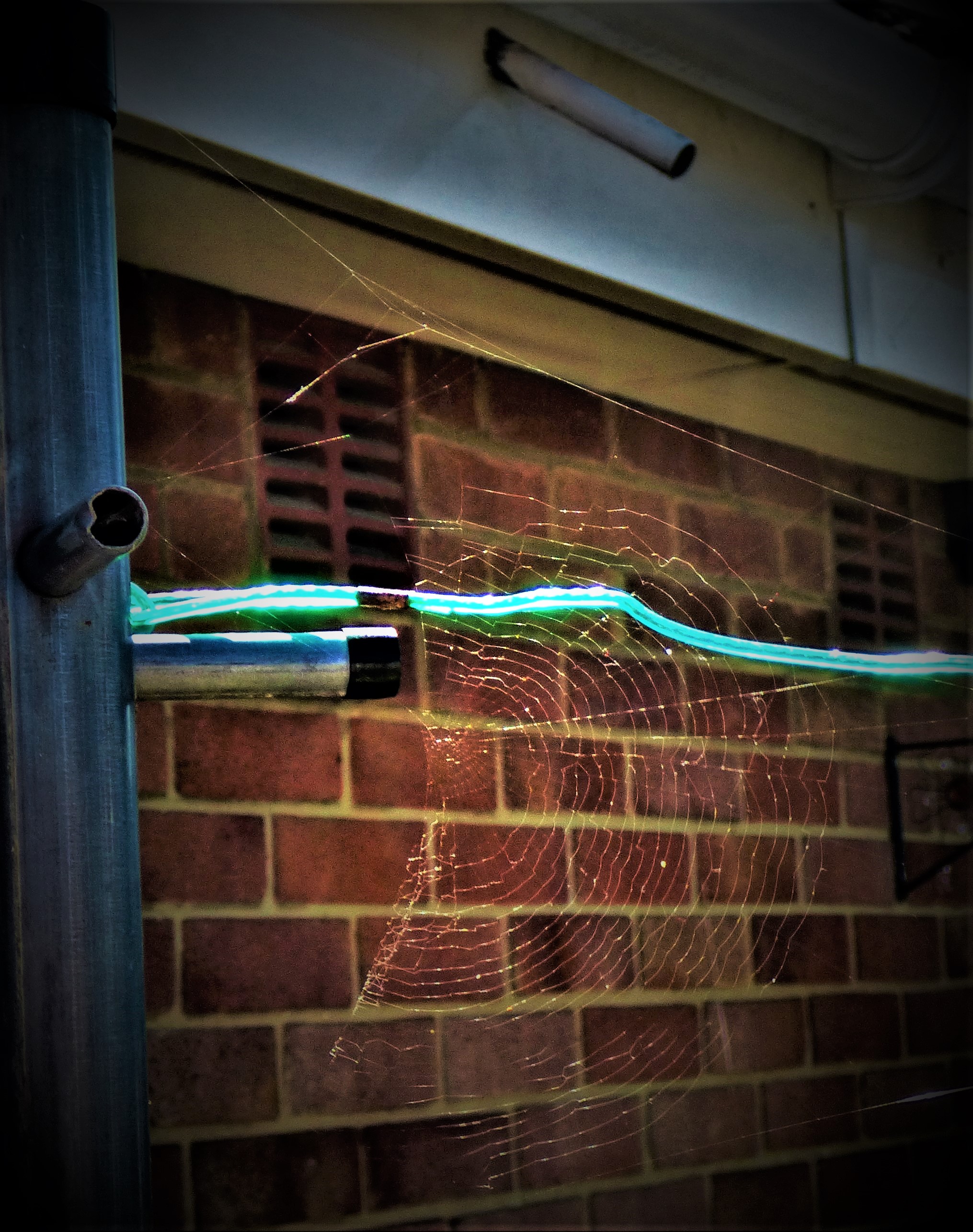
A splendid orb web brought to my attention by the angle of the sun in my garden this morning (five pictures)
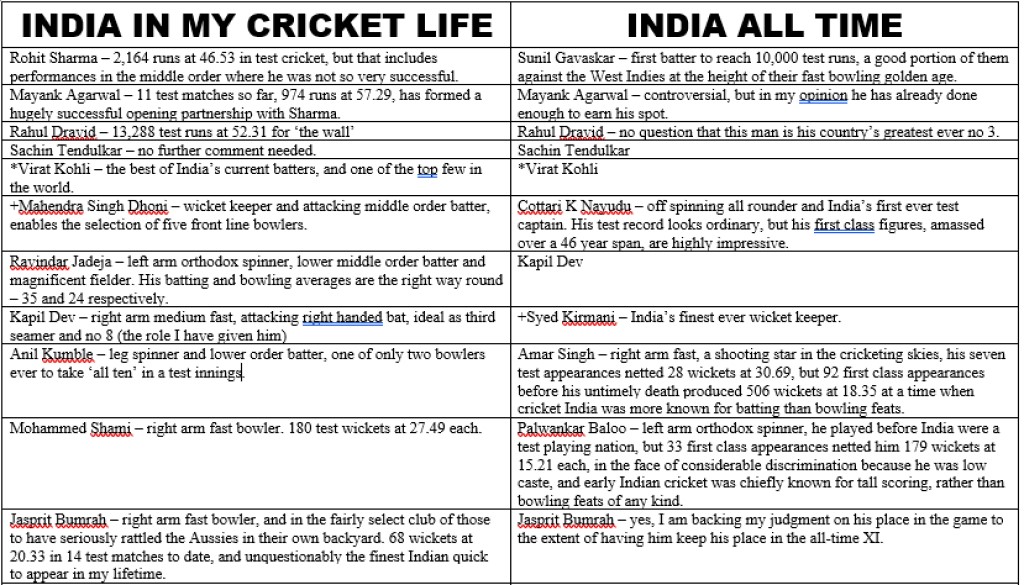
The two XIs in tabulated form with greatly abridged comments.
A continuation of my “100 cricketers series”, with links to three important petitions – if you are able please sign and share them.
INTRODUCTION
Welcome to the latest post in my “100 cricketers” series, in which I deal with the remaining specialist batters from my second XI. My most recent post in the series dealt with the all-rounders so as to tie in with International Women’s Day. After the cricket part of the post there will be some photographs, and then some links to petitions that I am suffiiciently concerned about to share on this blog. The next post in this series will feature the bowlers from second XI and introduce the third XI in batting order.
I first saw Sachin Tendulkar as a teenager in the 1990 series in England, in the course of which he racked up a century. He also took an amazing catch in that series, making a lot of ground before holding on to the chance.
His amazing subsequent career is well documented. The greatest batter in the history of cricket, Sir Donald Bradman, publicly rated Tendulkar as being, along with Brian Lara, the best of the moderns, and also noted similarities between himself and Tendulkar, his attention having been drawn to them by Lady Bradman, while they were watching him on television.
At the moment Tendulkar is the only person to have scored 100 international hundreds. As a a testament to his longevity he also stands alone in having played 200 test matches. 463 ODI appearances and a T20 in addition mean that approximately four years of his life have been spent in international cricket action.
Although cross-era comparisons are generally invidious (Bradman’s colossal – 40 runs per innings – margin of superiority over the rest making him an exception) I feel sure that Tendulkar would have had had an outstanding record whatever era he had been born into and whichever kind of bowling he had had encountered.
An outstanding captain of Australia over many years, and a great left-handed batter whose career had two distinct portions.
For the first decade of his long international career Australia were a struggling outfit. He started in the 1978-9 Ashes series, won 5-1 by Mike Brearley’s England, and it was not until their unexpected triumph in the 1987-8 World Cup that things really started going right for Australia. In these circumstances Border was very often battling to save his side from defeat, and many of his innings were through sheer force of circumstance defensive in nature, batting as long as possible.
In the latter years of his career when he was finally in charge of a strong, confident side he showed that given the opportunity he had plenty of strokes and was willing to play them – in all of his last three Ashes series (1989, won 4-0 by Australia and would have been 6-0 but for major rain interruptions in the other two matches, 1990-1 and 1993 he batted in attacking fashion at every opportunity).
Of the four long-serving Australian captains of my lifetime I rate Border a very clear first – looking at their records in this specific role we have:
Allan Border – took over a weak, struggling side that had little idea of how to win, and left for his successor a side who were by then acknowledged as the best in the world.
MarkTaylor – took over from Border and maintained Australia’s position at the top of the cricket world.
Steve Waugh – taking over the captaincy of a team who were already acknowledged as champions he made them even better, a highlight of his term of office being a record run of 16 consecutive test match victories.
Ricky Ponting – in his first few years in charge he won a lot of matches with the remnants of the great Australian side of the previous era, but he lost three Ashes series out of four, including one on home soil in which his team were three times defeated by innings margins.
In this XI, where the batting is overall exceedingly attacking in nature, Border is the person who in the event of bad start could dig the team out of a hole, while at the same time if the innings is going well he would be perfectly capable of stepping on the accelerator. His presence also means that there is a left-hander in the middle order, valuable from the point of view of giving the bowling side a different challenge. Finally, although not by any means a major part of his game his occasional slow left-arm did once win his country a test match against the West Indies (11 wickets in the match, including 7-46 in the first innings), and his safe hands (156 catches pouched in the course of his 156 test matches) would also be useful.
PHOTOGRAPHS
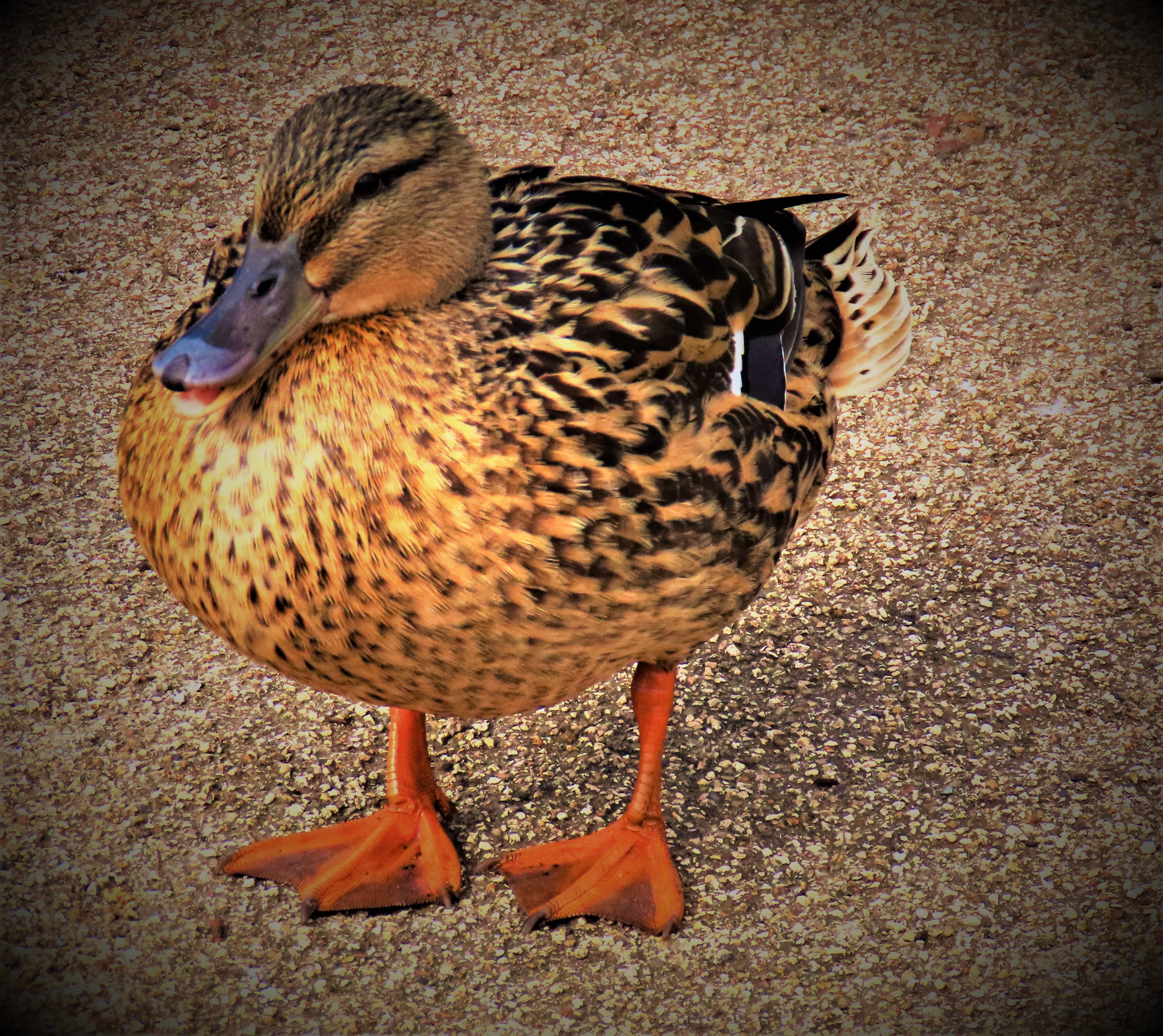
A pair of mallards whose Sunday morning walk took them past my front window – you can just see the tail feathers of the female as she heads into the lavender.
The male, keeping an eye on his companion.
A couple of close-ups of the female as she emerges.
PETITIONS
First up, a petition on 38 Degrees produced by the Grenfell survivors, calling on the government to make our housing system work for tenants. As someone who has recently moved into social housing through force of circumstance this is particularly important to me. To sign and share please click on the screenshot below.
My final two petitions are both on the official UK Government petition site, meaning that only UK citizens are allowed to sign. The first is a call for increased funding for Children’s Mental Health. If you are able and willing to sign and share please click the screenshot below:
Last and by no means least is a petition calling for police officers to be given mandatory autism training, something that I as an autistic person consider to be very important. Again, please click the screenshot below to sign and share.






























































































































































 aspiblog