All Time XIs – Four Fast Bowlers v Balanced

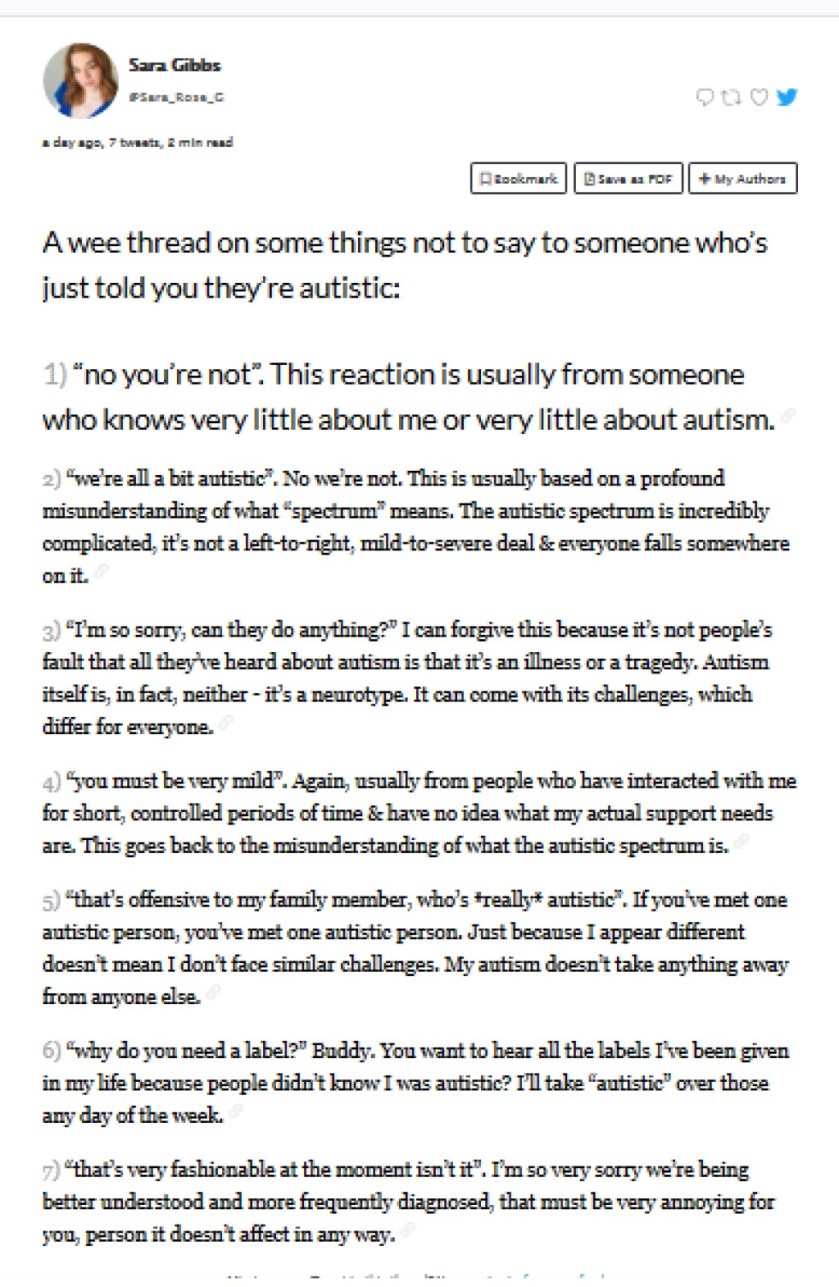
A team with an attack of four fast bowlers is pitted against a fully balanced team. Also a solution to yesterday’s teaser and a link to an autism related thread, and of course some photographs.

INTRODUCTION

Welcome to my latest variation on an ‘all time XI‘ cricket theme. Today’s post owes its genesis to three twitter correspondents who raised valid points in response to yesterday’s piece. Rather than change yesterday’s XIs I have decided to acknowledge the validity of the comments by selecting two teams that enable to me to devote coverage to the issues raised.

THE FOUR FAST BOWLERS XI

When I covered the West Indies I named an attack of four fast bowlers in the West Indies team from my lifetime, as a tribute to the great West Indies teams of my childhood, which were based precisely on that type of attack. I now name an all-time team with the same type of bowling attack.

  1. Barry Richards – right handed opening batter, named by Don Bradman in his all-time XI (see “Bradman’s Best” by Roland Perry). The four tests that he played before South Africa’s enforced isolation (four more than any of his non-white compatriots in the period concerned save for Basil D’Oliveira, who managed to get to England) yielded him 508 runs at 72.57, with two centuries. He was subsequently one of the stars of Kerry Packer’s World Series Cricket.
  2. Herbert Sutcliffe – right handed opening batter. Statistically the most successful opener among those to have played 20 or more tests, with 4,555 runs at 60.73 at that level, including 2,741 at 66.85 in Ashes cricket. This upward progression of averages as the cricket he played got tougher bore out his famous response to being congratulated by Pelham Warner on a good rearguard action: “Ah, Mr Warner, I love a dogfight.”
  3. George Headley – right handed batter. Averaged 60.83 in test cricket, converting 10 of his 15 fifty-plus scores at that level into hundreds. I decided that to give either side Don Bradman would give them too big an edge, so he is not present today – instead we have ;the black Bradman’.
  4. Graeme Pollock – left handed batter. Averaged 60.97 at test level, a figure exceeded among thos to have played 20+ games only by Don Bradman and Adam Voges, the latter of whom was lucky in his opponents – his sole Ashes series was a poor one. A twitter correspondent yesterday suggested that he should have been in my non-county XI, and very constructively suggested I drop George Giffen to make way for him. I acknowledge the validity of the comments by naming him here.
  5. *Clive Lloyd – left handed batter and captain. 7,515 test runs, a century in the first men’s world cup final in 1975. He was the man behind the West Indies ‘four fast bowlers’ strategy that propelled them to the top of the cricket world and kept them there for a long time. As such there could be no better captain for an ‘all time’ squad whose chief feature is an attack of four fast bowlers. A twitter correspondent suggested that I could have found a place for him in yesterday’s best overseas county player team, again a perfectly valid suggestion, and I hope his presence here in the role he played so successfully IRL will be taken as a suitable acknowledgement.
  6. Steve Waugh – right handed batter. Probably the finest ever to be a regular no 6. He played 168 test matches, and in spite of not reaching three figures until the 27th of those he ended up with a batting average of over 50. His twin tons at Old Trafford in conditions with which none of the 21 other batters in that match came to terms were a particularly outstanding example of his toughness and determination.
  7. +Adam Gilchrist – left handed batter, wicket keeper. Statistically the greatest keeper batter ever to play test cricket.
  8. Wasim Akram – left arm fast bowler, left handed lower middle order batter. His record speaks for itself.
  9. Malcolm Marshall – right arm fast bowler, right handed lower middle order batter. Probably the greatest fast bowler of the golden age of West Indies fast bowling.
  10. Curtly Ambrose – right arm fast bowler. The lowest bowling average of any bowler to have taken over 400 test wickets. A twitter correspondent yesterday queried the absence of Joel Garner from my overseas county stars team, and suggested that perhaps I was placing too much stress on balance: “with Macko and Bird bowling together do you need balance?” While not wholly agreeing I acknowledge that the objection had weight (after all, I did include Garner in my Somerset team), and the selection of this side is an acknowledgement that one can rely exclusively on fast bowling. Rather than ‘big bird’ I opted for another extra tall fast bowler whose record was even better.
  11. Waqar Younis – right arm fast bowler. His ability to produce greased lightning yorkers seemingly on demand led cricket journalist Martin Johnson to write “when a pitch does not favour him, Waqar Younis does not bother to use it.” At one time he was probably the fastest in the world, and his great record stands as testament to his overall effectiveness.

This side has an awesome top six, a fabulous keeper batter and four awesome specialist fast bowlers. In Clive Lloyd they have the perfect captain to handle an attack thus constituted, and their opponents will need to be on their mettle to have a chance.

THE BALANCED XI

  1. Jack Hobbs – right handed opening batter. Known universally as ‘The Master’, he tallied 61,237 first class runs with 197 centuries, both all time records. He still holds the England records for Ashes runs and centuries, with 3,636 and 12 respectively, the last made at the age of 46 making him test cricket’s oldest ever centurion.
  2. Bert Sutcliffe – left handed opening batter. The Kiwi’s most astounding performance came for Otago versus Canterbury, when he scored 385 in an all out tally of 500, and Canterbury in their two innings combined managed 382 off the bat all told! On the 1949 tour of England he aggregated more first class runs than any other tourist save only for Bradman. Given his left handedness and the challenge posed by pairs comprise one left and one right handed batters, and his outstanding skill there is every reason to believe that this Hobbs/Sutcliffe opening pair would be every bit as effective as the original.
  3. Frank Woolley – left handed batter, left arm orthodox spinner, brilliant close fielder. The only cricketer to have achieved the career first class treble of 10,000 runs, 1,000 wickets and 1,000 catches, and indeed the only outfielder ever to have taken 1,000 catches.
  4. *Frank Worrell – right handed batter, occasional left arm medium fast. The first black captain of the West Indies, and he led them to the top of the cricket world. Before his time success had been something of a rarity for the West Indies. CLR James contributed a chapter on him to “Cricket: The Great Captains”, and also gives him extensive coverage in “Beyond a Boundary”, and the name Worrell occurs again and again in the pages of the collection of CLR James writings titled simply “Cricket”.
  5. Walter Hammond – right handed batter, right arm medium fast, ace slipper. The first ever to reach 7,000 test runs (7,249 at 58.45), the first fielder to pouch 100 test catches and sometimes useful with his bowling as well. He scored seven test match double centuries, four of them against the oldest enemy – 251 and 200 not out in successive matches in 1928-9, 231 not out in 1936-7 and 240 at Lord’s in 1938, which stood for 52 years as the highest score by an England captain.
  6. Garry Sobers – left handed batter, every kind of left arm bowler known to cricket, brilliant fielder. The most complete all rounder there has ever been. He is the fulcrum of this side, enabling it to have a vast range of options.
  7. +Leslie Ames – wicket keeper, right handed batter. The only recognized keeper to have scored 100 first class hundreds, holds the record for most career stumpings (over 400 of them, to go with 700 catches). In two of the first three years in which the Lawrence trophy for the fastest first class hundred of the season Ames won it (the intervening time it went to another Kent legend Frank Woolley).
  8. Frank Tyson – right arm fast bowler. I covered him in my Northamptonshire piece. Suffice to say that he was probably the quickest there has ever been.
  9. Sydney Francis Barnes – right arm fast medium bowler. Probably the greatest of all bowlers. 27 test matches yielded him 189 wickets at 16.43 each. His special weapon was a leg break delivered at fast medium pace, beautifully described by Ian Peebles, himself a former test bowler, in a piece titled “Barnes The Pioneer” which appears in “The Faber Book of Cricket”.
  10. Muttiah Muralitharan – off spinner. The all time leading taker of test wickets, with 800 of them at a rate of just about six per game (Barnes had he played the same number of tests and maintained his wicket taking rate would have had approximately 930 test wickets). His 16 wickets on a plumb Oval pitch in 1998 (England batted first, Sri Lnaka scored nearly 600 in between the two England efforts) remains the greatest match performance I have ever seen by bowler. Two years before that he had been one of the heroes of the Sri Lankam world cup winning side, which relied as much on its phalanx of spinners not getting collared as it did on its dazzling batting line up. 
  11. William Mycroft – left arm fast bowler. He never got to play test cricket, his prime years coming just too early for that (and I mean just – in 1876 he took 17 wickets in a match against Hampshire, which Hampshire sneaked by one wicket). I note that he played for a county who have always been unfashionable (Derbyshire), and that 138 first class games yielded him 863 first class wickets at 12.09 each. I believe he would be even more devastating as part of the attack I have created here than he actually was. His brother Thomas was a wicket keeper, and this combination and the Nottinghamshire pair of fast bowler Frank Shacklock and keeper Mordecai Sherwin may well have been the inspiration for the names of Sherlock and Mycroft Holmes (Arthur Conan Doyle was a cricket fanatic, and a very useful cricketer, some times turning out for MCC, and at least once accounting for WG Grace, albeit his bowling was not required until that worthy had 110 to his name). His presence alongside Tyson means that this side have some heavy weaponry of their own to counter the pace onslaught, as India did not in 1975-6, nor England in 1976, 1980 or 1984.

This side has a strong and varied top five, the greatest of all all rounders at six, a legendary keeper batter at seven and four superbly varied bowlers. The bowling, with Mycroft, Tyson, Barnes and Muralitharan backed up by Sobers, Woolley, Hammond and Worrell has pretty much every base covered.

THE CONTEST

This would be an epic contest. The toss would hardly be needed, since Lloyd would probably want to bowl first and Worrell would definitely want to bat first. Although I acknowledge that as exemplified by the West Indies under Lloyd a team with four fast bowlers can be well nigh unbeatable I am going to predict that it is Frank Worrell’s side who would emerge victorious.

SOLUTION TO TEASER

Yesterday I offered up the following from brilliant:
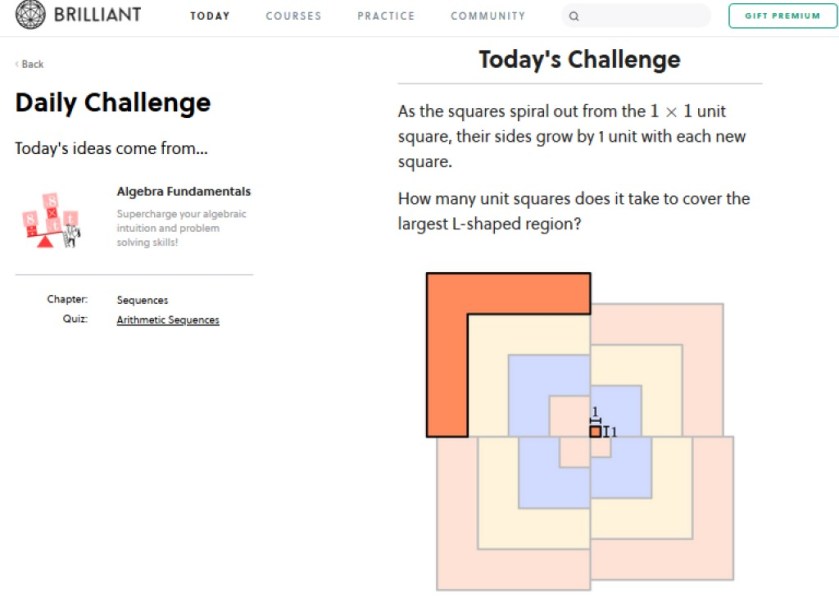
I got the the correct answer by first identifying the size of the large square from which the ‘L’ section comes – it is 16 by 16. I then counted backwards round the spiral to arrive at the size of the next largest square in the relevant segment – 12 X 12. So the answer we are looking for, for the area of the ‘L’ section is (16 x 16) – (12 x 12), which is equal to 256 – 144 = 112 units. NB – it took me less long to do the actual working out, which I did in my head, than it has to type this explanation.

A LINK AND PHOTOGRAPHS

Our two contending XIs have been introduced, I have provided a solution to the teaser I posed yesterday, which leaves on one thing to do before applying my usual sign off. Pete Wharmby has produced a superb thread about ‘functioning labels’ in relation to autism. His advice is the autism equivalent of Darwin’s famous note to himself about evolutionary biology: “avoid the words higher and lower.” I urge you to read his piece in full, which you can do here. Now for my usual sign off…
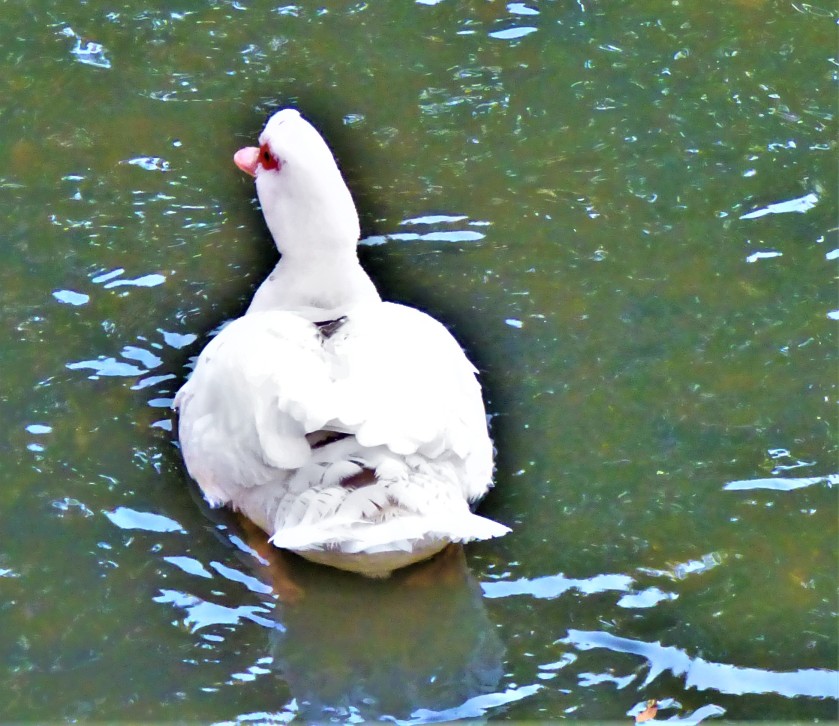
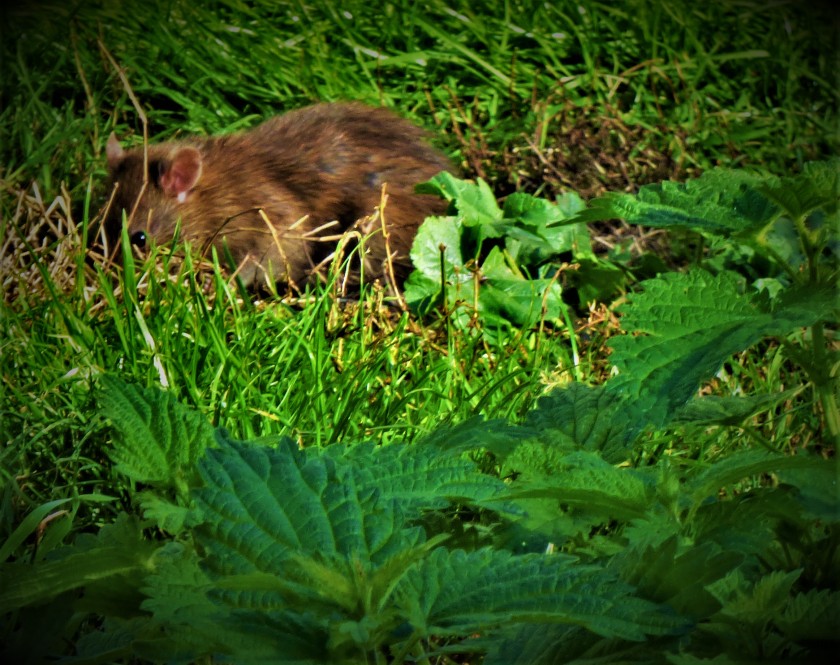
P1320719 (2)P1320722 (2)P1320723 (2)P1320727 (2)P1320728 (2)P1320729 (2)P1320731 (2)P1320732 (2)P1320734 (2)P1320736 (2)P1320736 (3)P1320737 (2)P1320738 (2)P1320739 (2)P1320740 (2)P1320741 (2)P1320742 (3)P1320743 (2)P1320744 (2)P1320745 (2)P1320746 (2)P1320747 (2)P1320749 (2)P1320750 (2)P1320751 (2)P1320752 (2)P1320754 (2)P1320755 (2)P1320755 (3)P1320756 (2)

P1320757 (2)
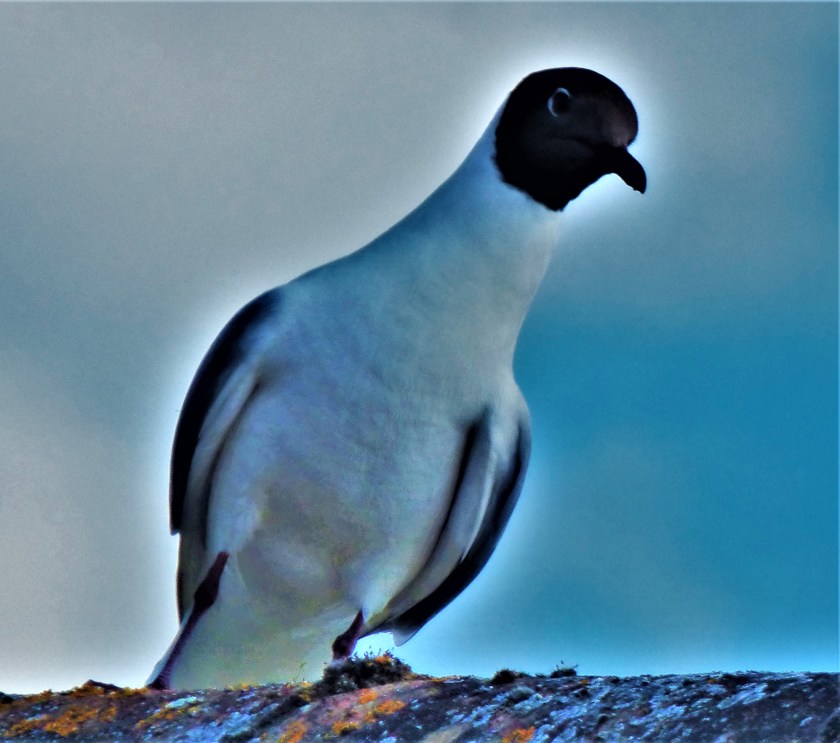
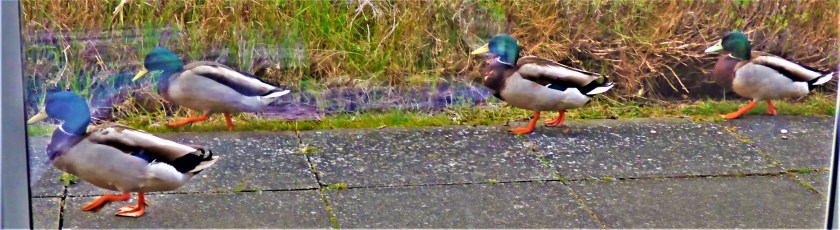
A Black Headed gull.
P1320758 (2)
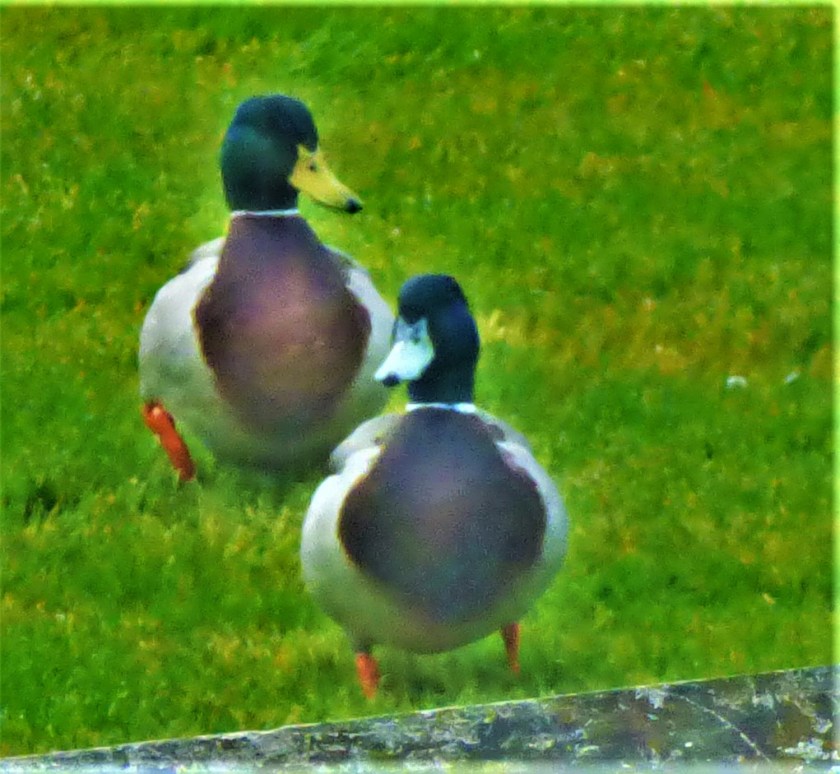
The beak is a slightly darker maroon than a well looked after West Indies cap.

P1320759 (2)

Pace v Balanced
The team in tabulated form.


All Time XIs -The Cognominal Clash

For my latest variation on the ‘All time XI’ cricket theme I offer you the Cognominal Contest for the ‘Nugget-Davo’ Trophy! Also features a video clip of the little gem that is Tammy Beaumont, an important autism related link and a few photos.

INTRODUCTION

Welcome to my latest variation upon an ‘all time XI‘ theme. This one requires a little bit of preliminary explanation, so without further ado…

THE COGNOMINAL BRIEF

I have devised the word cognominal myself from the Latin cognomen, meaning nickname. Some Roman cognomina were merely functional: Scaevola indicated that the cognominee or an ancestor (cognomina were often inherited) was left handed, Magnus or Maximus indicated achievement, arrogance or some combination of the foregoing, since the meant great and greatest respectively, and there were many other such. Others pointed up features, so that if an ancestor had a wart on their nose one might inherit the cognomen Cicero, meaning chickpea because that was what the wart looked like. Others were ironic – the first Claudius to be cognominated Pulcher meaning beautiful was so dubbed because he had a decidedly unbeautiful character, and some could be cruel – the already multiply cognominated Gaius Julius Caesar Strabo Vopiscus (Caesar implying possession of a luxuriant head of hair, Strabo meaning ‘cross-eyed’ and Vopiscus meaning that he was the survivor of what had been a pair of twins) subsequently acquired Sesquiculus, not just an arsehole but an arsehole and a half! Cricketer nicknames can be excellent or they can show an utter lack of imagination. The Cognominal Clash features an XI who had impressive nicknames and an XI whose nicknames were all in the ‘must do better’ category. Some of the players I have placed in the latter XI also had less unimpressive nicknames, but I have played fair in terms of creating a contest by picking two decent looking teams. It is now time to meet the teams starting with the…

LAME NICKNAMES XI

  1. Graham Gooch – Goochie – right handed batter, right arm bowler of a pace that was described at various stages of his career as anything from fast medium to slow medium, scorer of 8,900 test runs, one of the openers for my all-time Essex XI. As well as his ‘must do better’ nickname his moustache caused him to be dubbed ‘Zap’ in honour of the Mexican revolutionary Zapata. I personally rate the 154 not out in a team total of 252 all out on a pig of a pitch and in the face Ambrose at his most host hostile at Headingley in 1991 to have been the finest innings he ever played, although he scored more on quite a few occasions.
  2. Matthew Hayden – Haydos – left handed batter, very occasional medium pacer. He was also referred to as Hulk on account of his size and his approach to batting. He was the first to cash in on the brain fade that led Nasser Hussain to put Australia in at the Gabba in 2002, walloping 197 in the first innings and then belting another ton in the second innings. He finished with a test average of over 50, in spite of a dreadful run spanning the first four matches of the 2005 Ashes.
  3. *Michael Vaughan – Vaughany – right handed batter, occasional off spinner, uncertain catcher. The elegant right hander, who also had the nickname Virgil, crunched three centuries in ultimately losing cause in the 2002-3 Ashes series (not a record, Herbert Sutcliffe hit four centuries for England in the 1924-5 Ashes which Australia won 4-1) but got his revenge when he captained England to victory in the 2005 series. In the home summer of 2002 the Indians found weaknesses, but not generally until a double century (approached closely on two occasions but never actually reached) was on the horizon!
  4. Neil Harvey – Harv – left handed batter. At the age 19 Neil Harvey ran up a ton in his first Ashes innings, at Headingley in 1948, and by the time he called it a day he had amassed over 6,000 test runs at an average of 48.41.
  5. Mike Gatting – Gatt – right handed batter, occasional right arm medium pacer. He benefitted from being far more chances to establish himself in test cricket than most, and after taking over 50 innings to notch his first three figure score at that level he ended up producing sufficiently much more to finish with an average of 35.
  6. Ian Botham – Both – right handed bat, right arm fast medium bowler. The all rounder, who also had some more colourful monikers such as Beefy (for his build), Guy and Gorilla, both in honour of a popular resident of London Zoo, took just 21 matches to complete the test double of 1,000 runs and 100 wickets.
  7. +Ian Healy – Heals – wicket keeper, right handed lower middle order bat. The most accomplished male Australian wicket keeper I have actually seen in action, and without doubt, even in a team captained Steve Waugh, the undisputed world sledging champion for pretty much his entire career. Adam ‘Church’ Gilchrist was of course a far better wielder of the willow, though Healy could be a major irritant in that department as well. Why did I specify male Australian wicket keeper? Well, Alyssa Healy, Ian’s niece, is a very fine practitioner with the gloves as well and undoubtedly a finer striker of the ball than her uncle was.
  8. Shane Warne – Warney – leg spinner, attacking lower order bat. He took over 700 wickets in test cricket, and was only once in 14 years on the losing end of an Ashes series, in 2005. He was also a shrewd tactician, and although I have honoured Vaughan with the captaincy, I name him as vice-captain, and was severely tempted to name him as captain.
  9. John Emburey – Embers – off spinner and unorthodox right handed lower order bat. He also had the marginally less unimaginative moniker Ernie, derived from his middle name of Ernest. He was four times an Ashes winner, at home in 1981 and 1985 and away in 1978-9 and 1986-7.
  10. Jeff Thomson – Thommo – right arm fast bowler and occasionally useful right arm lower order batter. One of those mentioned when discussion arises about who was the fastest bowler ever. He was at his best in the second half of the 1970s, and although he toured England in 1985 he was by then approaching 35, and unlike Lillee, his most famous bowling partner, he did not have the technical virtuosity to turn himself into a quality operator once the pace had gone, which meant he posed little threat by then.
  11. Matthew Hoggard – Hoggy or The Hogster – right arm fast medium, sometimes adhesive as a lower order batter. He took over 300 test wickets, and unlike many who make their names gaining movement on green pitches and under grey English skies he did not lose much of his effectiveness abroad. His career batting highlight was undoubtedly at Trent Bridge in 2005 when his cool head pulled England through what had every appearance of a crisis – chasing 129 to win and go one up with one to play England were 116-7 with only Harmison and a crocked Simon Jones to follow when Hoggard walked into bat. Hoggard and Giles scored those 13 runs, with Hoggard latching on to a full toss from Brett Lee for a crucial boundary to ease the tension. The full value of that little innings was illustrated a couple of weeks later, when a combination of the weather, some odd Australian decision making (accepting an offer of the light when they were pummelling England’s bowlers, and they needed there to be as much play as possible, since only a win could do them any good) and an extraordinary knock by Kevin Pietersen, well supported by that man Giles, saw England draw the match and claim the Ashes which had been in Australian hands since 1989.

The ‘Lame Nicknames’ have a solid opening pair, a contrasting 3,4 and 5, an x-factor all rounder, a keeper who can bat, two spinners who would complement each other nicely and Thommo to take the new ball with the wind behind him, while Hoggy gets his regular job of opening into the wind. Now it is time to meet…

THE COOL NICKNAMES XI

  1. Jack Hobbs – The Master – right handed opening batter, occasional medium pacer. The scorer of 61,237 first class runs, including a 197 centuries at that level, both all-time records. His tallies of 3,636 runs and 12 centuries are England Ashes records, beaten only by Bradman (5,028 runs and 19 centuries). You may have seen other figures given for his first class records, but Hobbs himself vehemently opposed any changes to traditionally accepted figures. I am 100% certain that Hobbs would not have retired had he believed himself to be only one short of 200 centuries rather than three. He opens for my Surrey All Time XI.
  2. *WG Grace – The Champion – right handed opening bat, right arm bowler of various types, close fielder. He had a wide variety of other nicknames over the course of his long, illustrious and richly storied career. He tallied 54,896 first class runs, including 126 centuries and took 2,876 first class wickets, both records at the time of his retirement, and both still in the top half dozen all-time figures. The revisionists who increase Hobbs’ tallies decrease Grace’s, reducing his century county by two, an action which retrospectively nullifies the scenes at Taunton in 1925 when Hobbs scored his 126th and 127th first class centuries there to equal and then break the Grace record. Of course it is unthinkable for anyone else to captain this side, just as he captains my all time Gloucestershire XI.
  3. George Headley – Atlas – right handed batter, nicknamed after the titan of Greek mythology who carried the world on his shoulders, because he carried the West Indies on his shoulders. Twice he scored twin tons in test matches.
  4. Mike Hussey – Mr Cricket – left handed batter. He averaged over 50 in test cricket, and in the 2010-11 Ashes series down under it was only when England got him cheaply at Melbourne and Sydney that Australia’s resistance definitively crumbled.
  5. Clem Hill – Kruger – left handed batter, brilliant fielder. Hill amassed eight test centuries, which was a record until Hobbs overhauled it. At Old Trafford in 1902, when Australia secured the Ashes with a victory by three runs he had a ‘champagne moment’, when he sprinted thirty yards and then dived to take a catch that accounted for Dick Lilley – and it is claimed that his momentum carried him on a further twenty yards beyond where he actually held the catch! This catch made the difference between England needing eight with one wicket left and needing four with two wickets left, so it can genuinely be claimed as a catch that won a match. He was one of the ‘big six’ who refused to travel to England in 1912 because of a quarrel with the then newly established Australian Board of Control for International Cricket, later the Australian Cricket Board and now Cricket Australia. During the 1911-2 Ashes, won 4-1 by England, Hill was involved in a selectorial row that turned physical – he and Peter McAlister who were at loggerheads regarding the board anyway disputed over the right make up of the team, insults were exchanged, and an outraged Hill snapped and slapped McAlister’s face, which was the start of a brawl between the two that allegedly lasted twenty minutes. The ‘Kruger’ nickname arose because of a supposed physical similarity between him and the great South African leader.
  6. Alfred Mynn – The Lion of Kent – right handed batter, right arm fast bowler. The best all rounder of the 1830s and 40s.
  7. Gilbert Jessop – The Croucher – right handed batter, right arm fast bowler, brilliant fielder. His nickname was derived from his batting stance, and is perhaps not all that cool, but I was prepared to compromise to set up a contest in which Jessop and Botham were on opposite teams.
  8. FR Spofforth – The Demon – right arm fast bowler (added many variations later in his career), right handed bat. Frederick Robert Spofforth announced himself to English audiences at Lord’s in 1878, when he was brought on to replace Frank Allan (dubbed ‘bowler of the century’ in the pretour publicity – Aussie mind games are nothing new) with the MCC score reading 27-2. MCC were all out for 33, Spofforth 6-4 in 23 deliveries! The Australians fared little better, inching their way to a very slow 41, after which the Australian captain did not call on Allan but went straight to Spofforth and Harry Boyle. This time MCC were all out for 19, with Boyle the chief destroyer capturing 6-3, while Spofforth had 4-16. Needing 12 to win, Australia lost one wicket getting them, the game ended on the same day it had started, and that aggregate of 105 runs for 31 wickets remains the lowest ever for a completed first class match. Spofforth was injured for the inaugural test on English soil in 1880, which the hosts won, but in 1882 he produced the bowling performance that created The Ashes, 14-90 in the match, seven of them in the second England innings, when needing only 85 to win the hosts crashed for 77 and were beaten by seven runs. England reached 50 with only two batters, Hornby and Barlow, gone, but then Ulyett was out 51 and crucially, Grace at 53, for only the second 30 plus score of the match, 32. Lyttelton and Lucas froze like rabbits in headlights, and Hornby, a poor choice as skipper, started tinkering with the batting order, and that was where the match was lost. Spofforth ultimately settled in England, marrying a woman from Derbyshire, and turning out a few times for that county.
  9. Charles Turner – The Terror -right arm medium-fast. Just as England were thinking that the terrors of Spofforth and Boyle were safely behind them, another amazing Aussie bowling pair arrived on the scene, Turner and the left armer Jack Ferris. Medium-fast described Turner’s pace, but leaves his method entirely out of account. He had formidably strong fingers (he could crush an orange to pulp between his thumb and forefinger), and gave the ball a ferocious rip, generating vicious .movement in any and all conditions. Only one bowler has ever taken 100 first class wickets in an Australian season – Turner in 1887-8.
  10. William Lillywhite – The Nonpareil – right arm fast, right handed lower order bat. He was one of the pioneers of ’round arm’ bowling, the form that came between under arm and over arm, and with his regular partner James Broadbridge he turned Sussex into a force that could take on the Rest of England, a situation that has never been the case since then and had not previously been the case. Some bowlers today still bowl with their arms at similar height to the position used by Lillywhite – I refer you to Lasith Malinga, the Sri Lankan slinger. In any case, I suspect Lillywhite would have been delighted to be allowed to bowl proper over arm and would have done so magnificiently – a champion in one era would be a champion in any era. About that nickname, courtesy of merriam-webster.com:
    Nonpareil MW

    Note the first entry under the ‘noun’ section.
  11. +EJ Smith – Tiger – wicketkeeper, was wont to say that he was willing to bat at no 1 or no 11 but nowhere in between, so I have given him his second choice, no 1 having a prior claimant! The nickname owed to his ferocious disposition. He kept at a time when wicket keepers habitually stood up no matter who was bowling, and I would guarantee that ‘St Smith B Spofforth’ would appear at least once, and probably more in scorecards featuring these teams.

This team has a top of the range opening pair, a wonderful array at nos 3-5, two ferocious all rounders at six and seven, a fine and varied trio of bowlers who would live up to their fearsome cognomina and a brilliant keeper who would let nothing through.

THE CONTEST

The battle for what I shall call the “Nugget – Davo” Trophy, honouring Keith Miller and Alan Davidson, who I could not find a place for in the two teams would be intense and hard fought, but I think the ‘Cool Nicknames’ would have the edge on as well as off the field and I would expect them to emerge victorious.

LINKS AND PHOTOGRAPHS

The scene has been set for the Cognominal Clash for the ‘Nugget-Davo’ Trophy, but I have a few links to share before applying my usual sign off.

One final cricket related link – as drawn to my attention by the pinchhitter blog, England cricket are honouring their female batting stars this week. Our ‘cool nicknames’ XI features a fast scorer of diminutive stature, 5’7″ Gilbert Jessop, and this video courtesy of England cricket shows and even smaller player, Tammy Beaumont climbing into South Africa to the tune of a 47-ball hundred (and it’s not slogging – these are high class cricket shots struck with perfect timing):

Charlie Hancock, an autistic writer who I follow on twitter has contributed two magnificent pieces to spyglass magazine this month, which between them make a superb ten points:

Please read both, and on that note, due to the weather being uncooperative I there is less to my standard sign off than usual…

P1320262 (2)P1320263 (2)P1320264 (2)P1320265 (2)P1320266 (2)P1320267 (2)P1320267 (3)P1320268 (2)P1320269 (2)P1320270 (2)

Nicknames battle
The teams in tabulated form with abbreviated comments.

All Time XIs – Nottinghamshire

INTRODUCTION

Welcome to the next post in my “All Time XIs” series. Today we look at Nottinghamshire. There is at least one omission that will seem huge to some eyes, but as I explain in the section immediately after I have presented my chosen XI it is actually not.

NOTTINGHAMSHIRE ALL TIME XI

  1. Arthur Shrewsbury – when WG Grace (see my Gloucestershire team) became the first batter to record 100 first class hundreds he was second on the list of century makers with 41 to his credit. WG at a time when his primacy was unchallenged was asked who he rated next best among batters and responded “Give me Arthur”. In 1886 at Lord’s he took 164 off the Aussies to set England up for an innings victory, and at the time his score was the highest for England in a test match (WG Grace reclaimed the record that this took from him two matches later at The Oval with 170). Shrewsbury’s Nottinghamshire team mate Alfred Shaw, probably the most miserly bowler of all time, asked that he be buried 22 yards from Shrewsbury so that he could send him a few balls – and their graves are actually 27 yards apart, allowing space for Shaw’s standard five yard run up. For much of Shrewsbury’s playing career there was no such thing as a tea break, and it is said that if he was not out at lunchtime he would instruct the dressing room attendant to bring a cup of tea out to the middle at 4PM, such was his confidence that he would still be batting by then.
  2. George Gunn – a man who positively relished taking on the quicks. In 1907-8 when he was in Australia not as part of the official tour party but initially for the good of his health he was drafted into the test side in desperation and proceeded to score 119 and 74. He was also on the 1911-12 tour as part of the chosen party. In 1929-30 when England contested a test series in the West Indies for the first time Gunn at the age of 50 formed one half of test cricket’s oldest ever opening partnership along with the comparative pup 39 year old Andy Sandham (an honourable mention in my Surrey piece). In the 1929 English season he had celebrated turning 50 by being one half of a unique occurrence – he scored 183 for Nottinghamshire and his son George Vernon Gunn made precisely 100 in the same innings. A local amateur of no huge skill once determined to take Gunn on in a single wicket match, suggesting a £100 stake. Gunn was reluctant at first, but eventually succumbed to repeated importunings, although insisting that the stake be reduced to £5. They played during successive evenings – Gunn batted first and by the end of the first evening was 300 not out. At the end of the second evening Gunn had reached 620 not out and the amateur suggested that a declaration might be in order. Gunn refused but as a concession allowed the amateur to bowl at the heavy roller, six feet wide, instead of a regulation set of stumps. Half way through the third evening Gunn had reached 777 and the amateur finally decided that he had had enough and left Gunn to his triumph.
  3. William Gunn – elder brother of George (there was a third brother, John, who also played for Notts and indeed England as well, plus George’s son GV, but as far as I can establish, although she was born in Nottingham, contemporary England Women’s star Jenny Gunn is not related to this Gunn family), regularly no 3 for Notts and England. He scored 225 for The Players against the visiting Australians on one occasion, and in a Non-smokers v Smokers match he and Shrewsbury shared a stand of over 300 as the non-smokers made 803 (qualifications for these matches were not that rigorously checked – on another occasion Bonnor, the big hitting Aussie, made a century for the non-smokers – and was subsequently seen strolling round the boundary puffing on a cigar). William Gunn in addition to his playing career was the original Gunn of “Gunn and Moore” the bat makers, and at a time when many professionals died in poverty, sometimes destitution, he left an estate worth over £100,000. There is a book about the Gunns, “The Bridge Battery”, by Basil Haynes and John Lucas.
  4. Richard Daft – in the 1870s he was considered the next best batter in the country to WG Grace.
  5. Joe Hardstaff Jr – played for Nottinghamshire and England in the 1930s and 1940s. He contributed an undefeated 169 to England’s 903-7 declared at The Oval in 1938, while in 1946 he scored a double century against India.
  6. Garry Sobers – aggressive left handed batter, with a test average of 57.78, left arm bowler of absolutely everything (he began his career as slow left arm orthodox bowler, adding first wrist spin and then also adding pace and swing. He was at one time as incisive as anyone with the new ball. He was also excellent in the field.
  7. Wilfred Flowers – an off spinning all rounder from the late 19th century whose record demands inclusion.In first class cricket he averaged 20 with the bat and 15 with the ball.
  8. +Chris Read – a wonderful wicket keeper and a useful attacking middle order batter, he was badly treated by the England selectors and should have played more test cricket than he actually did. He made 1,109 dismissals in his first class career.
  9. Harold Larwood – the list of English fast bowlers who have blitzed the Aussies in their own back yard is a short one (Frank Tyson in 1954-5 and John Snow in 1970-1 are the only post Larwood examples I can think of, and while Tom Richardson (see my Surrey piece) was clearly magnificent in the 1894-5 series his gargantuan efforts hardly constitute a blitzing of his opponents), and he is on it. His treatment after that 1932-3 series, when he should have been seen as the conquering hero, was utterly shameful as the English powers that be caved to Aussie whinging, and he never again played test cricket after the end of that series, though he continued for Nottinghamshire until 1938. As late as 1936 he produced a spell in which took six wickets for one run.
  10. Tom Wass – a bowler of right arm fast medium and leg spin. On one occasion an over zealous gate keeper did not want to let his wife into the ground and Wass dealt with him by saying “if that beggar don’t get in then this beggar don’t play”. 1,666 first class wickets at 20.46, 159 five wicket hauls and 45 10 wicket matches are testimony to his effectiveness.
  11. Fred Morley – left arm fast bowler who was in his pomp in the 1870s. He paid a mere 13 a piece for his wickets. He died at the tragically young age of 33, or he would probably have had many more wickets even than he did. He was the most genuine of genuine number 11s. In his day the roller at his home ground, Trent Bridge, was horse drawn, and it is said that the horse learned to recognize Morley and when it saw him walking out to bat it would place itself between the shafts of the roller ready for the work it knew would not be long delayed (Bert Ironmonger, the Aussie slow left-armer who was the second oldest of all test cricketers, playing his last game at the age 51, is the subject of another classic ‘incompetent no 11’ story – a phone call came through to the ground he was playing at, and it was Mrs Ironmonger wanting to speak to her husband, “sorry, he has just gone into bat” came the response, to which Mrs Ironmonger said “I’ll hang on then”!).

This team contains a solid top five, the greatest of all all rounders at no 6, a second fine all rounder at 7, a top of the range wicket keeper and three specialist bowlers of widely varying types.

NOTTINGHAMSHIRE PRESENT & FUTURE

Stuart Broad did not qualify for two reasons. Firstly, his wickets cost 27 a piece, which is respectable but not by any means bargain basement. Secondly, as a right arm fast medium (kindly do not attempt to persuade me that he counts as fast, he does not) his effectiveness is heavily dependent on conditions and therefore very variable.Graeme  Swann was a very fine spinner of the recent past, but the inescapable fact is that his first class wickets cost 32 a piece, twice as much as those of Wilf Flowers, and while I would accept that Flowers would pay more today and Swann would have paid less in Flowers’ day I do not accept that the difference would be enough to close the gap that yawns between them. Joe Clarke is a highly talented young batter who may yet go on to become great, but he is very much not the finished article yet. Billy Root has shown some signs of skill but has a way to go to get close to big brother Joe (see my Yorkshire piece). Liam Patterson-White is a left arm spinner who if handled properly should have a huge future ahead of him, and if I revisit this series in a decade or so it is quite possible that he like Zak Crawley and Oliver Graham Robinson who I mentioned in yesterday’s piece about Kent will demand consideration by then.

OTHER OMISSIONS

First of all, I deal with…

OVERSEAS PLAYERS

There were four of these other than Sobers who obviously demanded attention. Bruce Dooland immediately before Sobers was an Australian all-rounder (right hand bat, leg spin) who performed wonders for Nottinghamshire, but he is hardly in the same bracket as Sobers. Clive Rice was more a batter who bowled than a genuine all rounder but he could bowl decidedly quick when in the mood. He was not as good a wielder of the willow as Sobers and his bowling did not have the same range. Closest to displacing Sobers as overseas pick was Sir Richard Hadlee, a right arm fast bowler and attacking left hand bat in the lower middle order. Had he not been a Kiwi he would have been an absolute shoo-in, but I am restricting myself to one overseas player per team, and with the presence of Larwood and Morley I felt that Sobers brought more that I did not already have available to the table. Franklyn Stephenson had one sensational season in 1990, when he did the double of 1,000 runs and 100 wickets, the only player other than Hadlee to do so since 1969 (for those who consider that the limitation of English first class seasons to 14 games now makes this impossible, WG Grace achieved this double in the space of the last 11 games of his 1874 season – and people who are over-inclined to use the word “impossible” in the context of cricket often end up with egg on their faces), and he finished that season with a match in which he scored twin centuries and took four first innings wickets and seven second innings wickets, the most dominant four-innings match display since George Hirst’s twin centuries and twin five wicket hauls for Yorkshire against Somerset in 1906), but overall he did not do enough to warrant consideration.

OPENING BATTERS

William Scotton was too much the out and out stonewaller for my liking. He was part of a rare happening at The Oval in 1886, when such was the difference in approach between him and WG Grace that the scoreboard at one stage showed No 1 134 and No 2 34. Walter Keeton, Freddie Stocks, Reg Simpson and Brian Bolus all had their moments at the top of the order, without the enduring success of Shrewsbury and the Gunns. In the 1980s Chris Broad and Tim Robinson were both chosen to open for England, and each had one magnificent Ashes series, Robinson at home in 1985, Broad in 1986-7, but neither did enough overall as far as I am concerned, and Robinson was certainly found out in no uncertain terms by the West Indies.

THE MIDDLE ORDER

I regretted not being able to find a place for Derek Randall, but I had reasons for all of my inclusions. Wilf Payton, Joe Hardstaff Sr and John Gunn (who also bowled medium pace), would all have their advocates as well.

WICKET KEEPERS

Nottinghamshire does not quite offer the embarrassment of riches in this department that some other counties do, but other than my choice of Read there are four who would definitely have their advocates: Fred Wyld, Mordecai Sherwin, Ben Lilley (who did the job when Larwood and Voce were in their pomp) and Bruce French who was an England pick at times in the 1980s.

BOWLERS

Sam Redgate was the first Nottinghamshire bowler to make a real impression, and he was followed by John Jackson. Alfred Shaw, over 2,000 wickets at 12 a piece was unlucky to miss out, while his name sake Jemmy Shaw, a left arm medium pacer of similar vintage also had a fine record. It was Jemmy Shaw who summed up what many at that time probably felt in similar circumstances when tossed the ball to have a go against a well set WG Grace: “there’s no point bowling good ‘uns now, it’s just a case of I puts where I pleases and he puts it where he pleases”. William Barnes was an England all-rounder for a time, and once arrived for a match late and rather obviously the worse for wear and still had a hundred on the board by lunchtime. Rebuked over his tardiness by the committee he responded by asking them “how many of you ever scored a hundred, drunk or sober?”. Finally, there was Larwood’s partner in crime Bill Voce. Voce was less quick than Larwood, and probably less quick than Morley who I selected as my left arm pace option, and while not by any means an expensive wicket taker, he did pay 23 a time for his scalps, which puts him in the respectable rather than truly outstanding class. Once many years after their careers were done Voce visited Larwood in Australia where the latter had settled, and while they were drinking together a breeze blew through a window behind Larwood, prompting Voce to say “Harold, after all these years you’ve still got the wind at your back”, a comment that Gus Fraser (an honourable mention in my Middlesex piece) would probably have appreciated.

AFTERWORD

Although the County Championship was not put on an official footing until 1890, various cricketing publications named what they called “champion counties” before then, and in the last 25 years before that watershed in 1890 Nottinghamshire were so named on ten occasions. This is why there are so many 19th century names in my selections for this county – Nottinghamshire were strong then, and barring odd intervals have not been particularly so. The current Nottinghamshire would but for Covid-19 be preparing for a season in the second division of the championship after a quite ghastly season in 2019. Doubtless some readers will have their own ideas about players who I could have included, and I welcome such comments with the proviso that they show due consideration for the balance of the side and that there is some indication of who your suggestions would replace.

LINKS AND PHOTOGRAPHS

Our little journey through Nottinghamshire cricket is at an end, but just before my usual sign off I have a couple of important links to share, to posts by Richard Murphy of Tax Research UK:

  1. Answering the Question: ‘How are you going to pay for it’? – a very clear and straightforward answer to this question, and one that everybody should read.
  2. Writing off NHS debt of 134 billion is a charade. What is required instead is the renationalisation of the NHS: nothing less will do – another hugely important piece, and one that again I urge you to read.

We end as usual with some pictures…

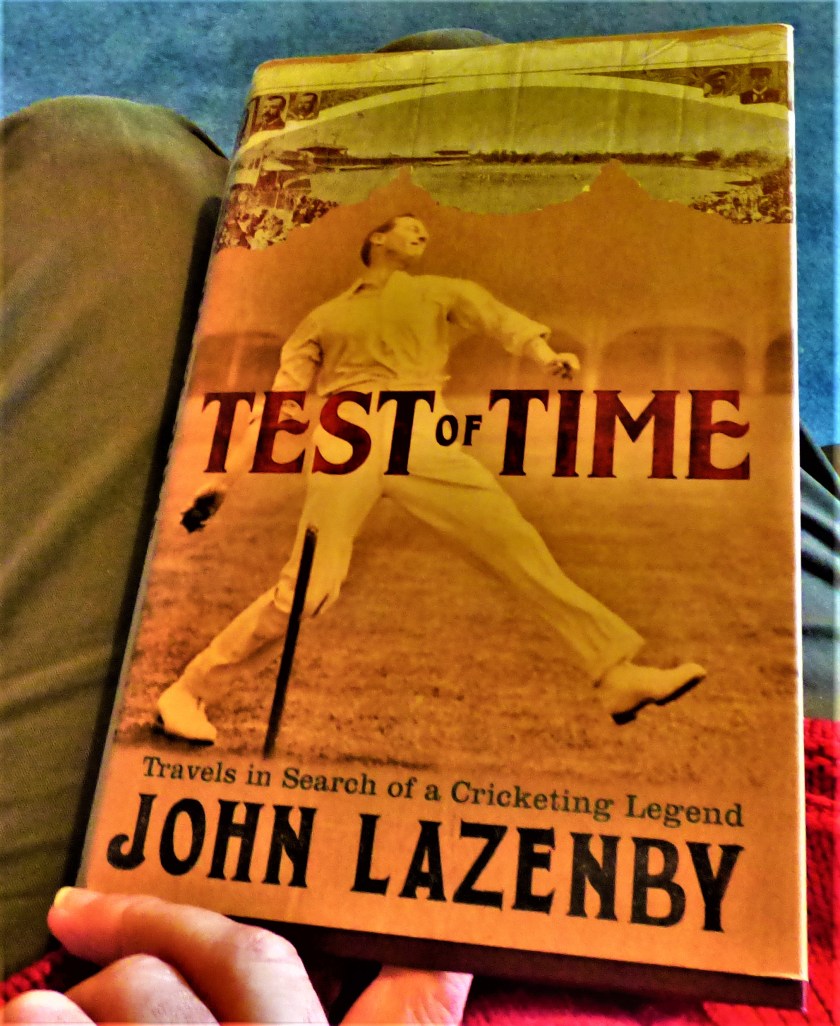
Test of Time
The John Lazenby book that I mentioned in my Kent and Lancashire pieces.

Test of Time back cover

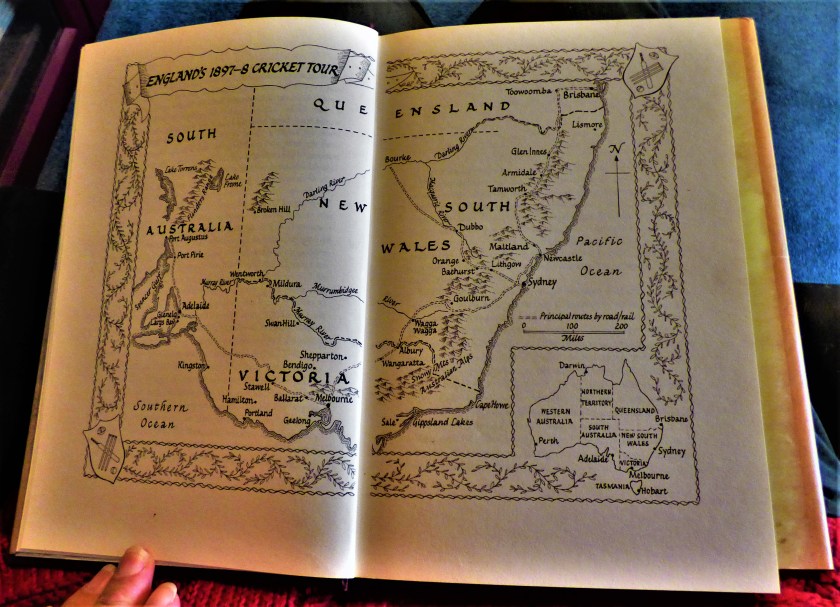
Tour map
The map showing the route of the 1897-8 Ashes tour.

P1310537 (2)P1310538 (2)P1310540 (2)P1310541 (2)P1310542 (2)P1310543 (2)P1310544 (2)P1310545 (2)P1310546 (2)

P1310547 (2)
Virtual interaction with NAS West Norfolk for Autism Awareness Month – this shows me donating £1 as I prepare to eat my lunch (just for the record the wine went back in the fridge with a plate covering the glass, and I will drink it with supper this evening). On the top page the spiral bound notebook are four of my all-time XIs – Warwickshire, Lancashire, Kent and Nottinghamshire.


Not Weird, Just Limited Edition: Inside the Autistic Mind – Book Review

My review of Not Weird, Just Limited Edition: Inside the Autistic Mind. I urge you to all to buy copies of this fabulous little book.

INTRODUCTION

You may remember that a couple of posts ago on here I mentioned a new book about Autism titled “Not Weird, Just Limited Edition: Inside the Autistic Mind”. Well the copy of that book that I ordered arrived yesterday, and now it is time for a quick review.

A LITTLE GEM OF A BOOK

The book, written by Faye Flint, who was diagnosed as autistic only at the age of 27 (regular readers of this blog will recall that I was 31 when I got my own diagnosis, so this is a situation that is more than a little familiar to me). It is 108 pages long, with the text very generously spaced. Each page is a separate event, recording a particular thought or train of thought, and each is beautifully clear, and for obvious reasons many are instantly recognizable to me. If you are autistic yourself, or know/ are related to someone autistic, or even just have an interest in autism this book, written as it is by someone who is actually autistic is an absolute must read. I am going to share some of my personal favourites (I have selected six out of 108 pages to quote – and the quotes will be indented and italicised to set them apart from my own writing:

First, page 31:

I was a child with Asperger’s.
I will remain an adult with Asperger’s.

Page 45:

No, I won’t ‘grow out’ of my Asperger’s.
Asperger’s is who I am.
But I have lived with myself for 30 years.
I have learned how to manage myself.
To be able to fit into society more appropriately.

Page 49 (I am bolding as well as italicising this one for reasons that should become obvious):

“But you don;t seem like my friend’s son who is autistic?”
Ahh, well maybe that’s because…
I am a grown autistic woman,
Not a 7 year old autistic child.
Yes, there really is a difference.

Page 64:

No, my Asperger’s cannot be cured.
Nor would I want it to be.
This took me a long time after such a late diagnosis.
However,
It has made me, me.
And I kind of like me.
In fact,
Many people say my ‘differences’ are what they love most!

Page 69 (another one that I chosen to bold as well as italicise)

Just ask.
If you want to know about the spectrum,
Ask someone who is on it!
We aren’t offended.
If anything,
It makes us happy that you care enough to want to learn.
There is nobody better to ask,
Than someone who goes through it,
Every.
Single.
Day.

Finally, page 81:

I promise I am listening to you.
But my brain has 2,644 other tabs open right now.
It is very distracting.

The book is available in paperback or on kindle (click here to order).

FF1 (2)
The front cover
FF2 (2)
The back cover.

FF2 (3)FF2 (4)

Cornish Winter Break 15: Signature Dish

An account of cooking my signature dish to serve six, plus a mention of a new book about autism.

INTRODUCTION

This one will be somewhat different from the other posts in my Cornish Winter Break series – it is about the supper I cooked for six people near the end of my stay. I accompany it with pictures that don’t belong to any of the places I give specific posts to. Before getting into the main body of the post I have a small matter to attend to:

A NEW BOOK ABOUT AUTISM

“Not Weird, Just Limited Edition: Inside the Autistic Mind” is now available in kindle and paperback. It is by Faye Flint, who happens to be the niece of NAS West Norfolk chair Karan McKerrow. I am looking forward to reading it, and you may be sure that when I have done so I will give it a full blog post. If you wish to join me in ordering a copy click here – the kindle version is the third item down and the paperback is the sixth.

THE MEAL

I was cooking my signature dish – my own version of Lemony Chicken and Coriander (the original recipe is by Madhur Jaffrey, but I have made so many changes that I now claim this as entirely my own. For a description of the cooking process when I do it for myself visit this post. This version differed from my usual in several ways – I was cooking twice as much (it reheats superbly, so cooking three meals worth at once works well), my mother was cooking rice tog with it whereas I do pasta, and there was also going to be broccoli. Additionally, rather than having fresh lemons to squeeze I was using a bottle of lemon juice. The meal came together beautifully, the bottled lemon juice worked pretty much as well as the real thing, and the final product was excellent – a view evidenced by the fact that hardly a molecule of it was left at the end of the meal. I am aware that different cultures have different opinions on this matter, but as far I am concerned a total lack of leftovers is a sign of success in this situation.

PHOTOGRAPHS

My usual sign off…

P1290806 (2)P1290807 (2)

P1290808 (2)
The building in which my parent’s apartment is located.

P1290809 (2)P1290810 (2)P1290893 (2)P1290896 (2)P1290898 (2)P1290901 (2)P1290903 (2)P1290904 (2)P1290905 (2)P1290906 (2)P1300129 (2)P1300130 (2)P1300132 (2)P1300133 (2)P1300134 (2)P1300135 (2)P1300522 (2)P1300524 (2)P1300525 (2)P1300526 (2)P1300527 (2)

P1300528 (2)
This bumper sticker was on a car parked near St Germans station.

Post Election Thoughts (And Other Stuff)

Some thoughts on GE2019, cricket, an autism related twitter thread and of course a few photographs.

INTRODUCTION

I am not going to relive Thursday night and Friday morning here. I am going to look to the future.

LOOKING AHEAD

After the carnage of the 2019 General Election Johnson has emerged with a substantial majority, Northern Ireland has a majority of non-unionist MPs for the first time ever and Scotland saw the expected SNP tsunami. Labour has fewer MPs than at any time since 1935 – 203 – but also more female MPs than any party has ever had (see here), the Liberal Democrats had a disaster relieved only by Sarah Jane Olney winning Richmond Park from Zac Goldsmith, and the Greens failed to increase their MP count, but did get 850,000 votes in total, in yet another election that showed FPTP in a terrible light. Those MPs who switched parties and were standing for a new party for the first time all lost, though the vile Tory masquerading as Lib Dem Sam Gyimah (aided by a mendacious article in the Observer on the Sunday before the election) did enough to cost Emma Dent Coad Kensington and Chelsea.

The Liberal Democrats and Labour are both looking for new leaders. The likely pick for the LDs is Layla Moran. Labour need to work hard to regain trust in the North, and for that reason I think they need to select a leader who is not London based. For me (although this is not a prediction) the obvious choice, given that Laura Pidcock was among the election casualties, is Angela Rayner, with another northerner as deputy (possibly Chi Onwurah, the first MP to be officially confirmed as such at this election, and a north-easterner to go with north-westerner Rayner). Among Labour’s few bright spots was the election of 23 year old Nadia Whittome in Nottingham – and she has immediately announced that she will be taking only £35,000 of her £79,000 salary, the rest going to local charities. As this piece in The Mirror makes clear she is doing this not to say that MPs are overpaid but to say that nurses, teachers and the like are underpaid.

Labour, LDs and Greens are going to have to get better at working together to do anything in the ‘lesser Britain’ comprising England and Wales that we are likely to see in the not distant future (Scotland will go independent one way or another, and a united Ireland is firmly on the cards – note that the DUP’s Westminster leader Nigel Dodds lost his seat to John Finucane (son of murdered lawyer Pat Finucane).

CRICKET

England Women have been playing Pakistan Women in Kuala Lumpur. In the two ODIs that had enough play for a definite result England won comfortably both times. In the first openers Dani Wyatt (promoted, as following the retirement of Sarah Taylor, Amy Jones is now first choice keeper and has dropped to no 5 in the order) and Tammy Beaumont both racked up centuries, Kate Cross took four wickets and debutant spinner Sarah Glenn took 2-38. In the second match Natalie Sciver scored 100 not out, Heather Knight 86 and Fran Wilson a blistering 85 not out off 49 balls in a total of 327-4 and Pakistan were all out for exactly 200 in 44.5 overs. Anya Shrubsole, Sophie Ecclestone, Knight, and once again Glenn (2-37 this time) each took two wickets.

Meanwhile, although it has been spoiled by rain, test cricket has returned to Pakistan itself for the first time in a decade, with Sri Lanka (it was an attack on their team bus in Lahore that led to the removal of test matches from that country) the visitors.

In blazing Perth New Zealand have become the latest visitors to discover that Australia is a tough place to go – the home side began by racking up 416, with Marnus Labuschagne racking up his third successive test century, and then dismissed the Kiwis for 166, and declining to enforce the follow-on had reached 167-6, a lead of 417 by the close. Labuschagne managed a beggarly 50 this time round, with Joe Burns making 53. Assuming that Australia do not declare overnight Messrs Wade and Cummins are in occupation.

AN AUTISM RELATED THREAD

Steve Silberman, author of THE definitive history of Autism, Neurotribes, has produced this twitter thread about Greta Thunberg, Time “Person of the Year” for 2019:

A thread on the historical significance of @GretaThunberg being chosen as the first proudly autistic @Time Person of the Year. The fact that autistic folks often speak the truth bluntly, even rudely at times, is often framed as a social deficit. [1/7]
In Greta’s case, her relentless reiteration of the facts of #climate change, and the importance of science, has made her a focus of incandescent hatred by the same pompous liars and paid-for buffoons who are selling the earth from under the feet of their own grandchildren. [2/7]
The “autistic” qualities of Greta’s war on the status quo – her visceral distrust of rationalizations and vacuous rhetoric – are precisely the qualities all humanity must emulate at a time when global political discourse is dominated by nonsense and gaslighting. [3/7]
As the author of a history of autism, I’ve said for years that gut-level loathing for unfairness and injustice could practically be added to the diagnostic criteria for autism. At this point in human history, when lies and denial of facts are dooming future generations… [4/7]
Greta’s monotropic insistence on “walking her talk,” and her impatience even for vacuous praise instead of meaningful action, are vivid demonstrations of the role neurodivergent people can play in the advancement of human civilization. In the case of #climatechange… [5/7]
the “social deficits” are all on the neurotypical side, on Greta’s opponents and critics, who use misogyny, ableism, and ageism against her. They lie for a living, deceiving millions of fellow neurotypicals in the process. [6/7]
The success of climate disinformation campaigns in sowing seeds of doubt about science is proof of a potentially fatal “truth dysfunction” in non-autistic people. Want to know the role of #neurodiversity in our collective future? We may not have one without it. Go, Greta! [7/7]

PHOTOGRAPHS

My usual sign off…

P1280871 (2)
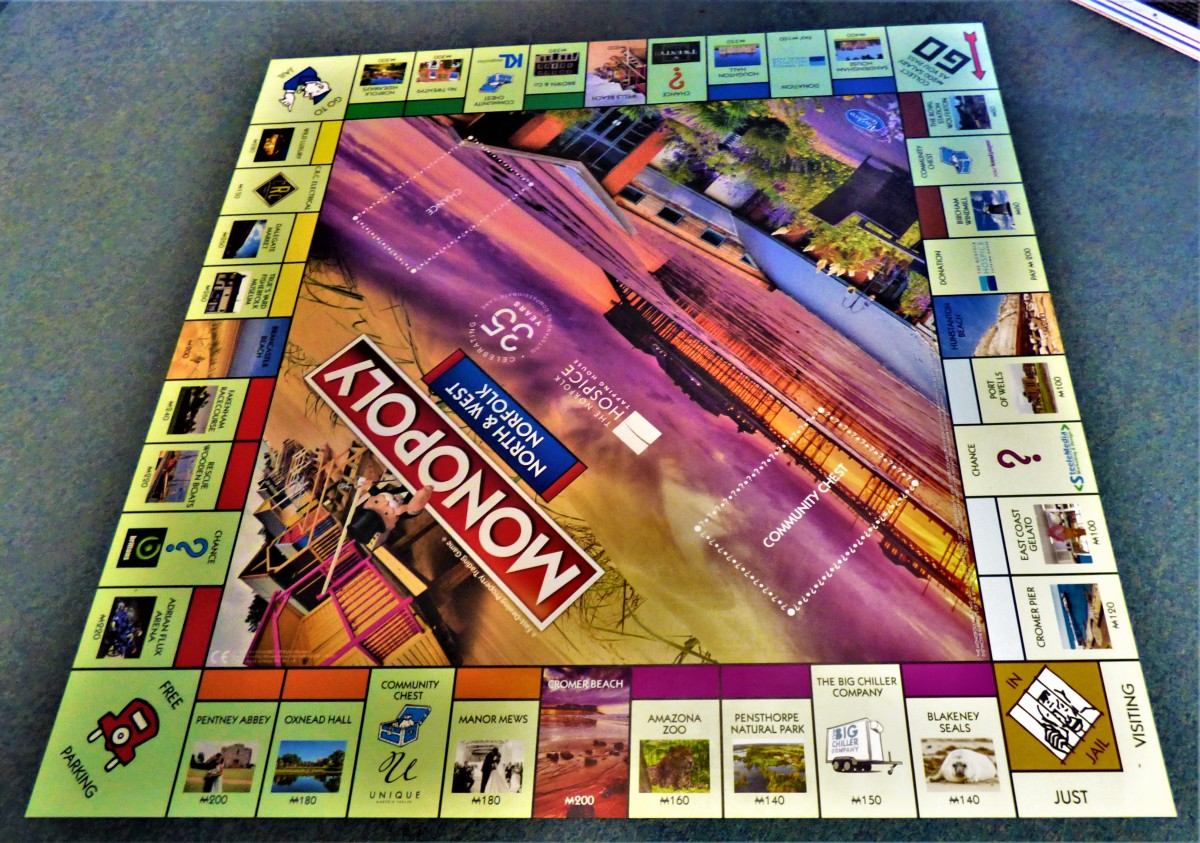
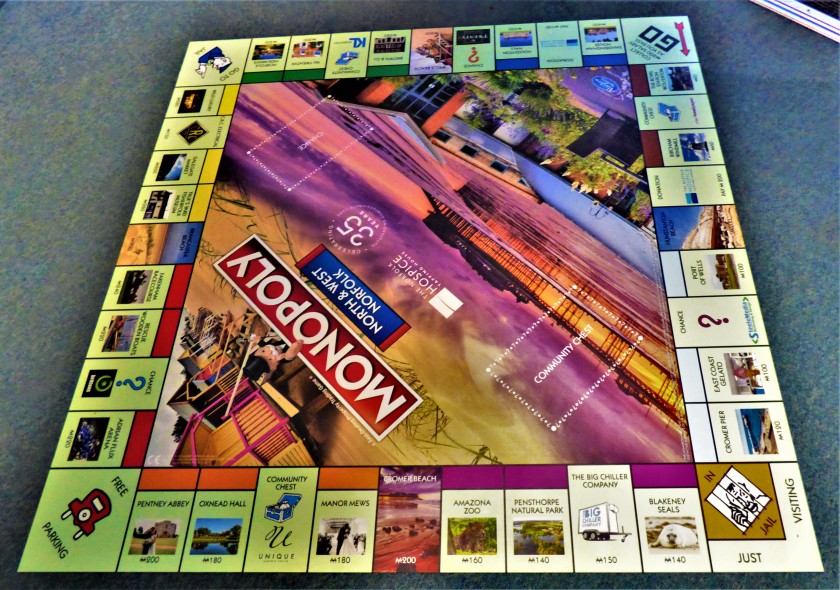
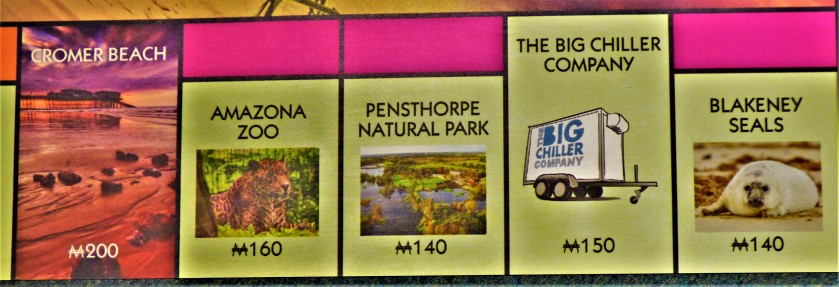
This giant monopoly board is in the foyer of the Norfolk Hospice, Tapping House (I went there on Monday to tell them my story for use in subsequent publicity materials).

P1280872 (2)P1280873 (2)P1280874 (2)P1280875 (2)P1280876 (2)P1280877 (2)P1280878 (2)P1280879 (2)

P1280880 (2)
My favourite set on this board – note the Pall Mall equivalent, the seals at Blakeney.
P1280881 (2)
About the only time you will see this in Norfolk!

P1280882 (2)P1280887 (2)P1280889 (2)P1280890 (2)P1280891 (2)P1280892 (2)P1280893 (2)P1280895 (2)P1280896 (2)P1280897 (2)P1280898 (2)P1280899 (2)P1280901 (2)P1280903 (2)P1280904 (2)P1280905 (2)P1280905 (3)P1280910 (2)P1280911 (2)P1280912 (2)P1280913 (2)P1280917 (2)P1280918 (2)


England Lose Twice In Under 24 Hours

Accounts of the Rugby World Cup Final, a WBBL T20 and England’s 2nd T20I v New Zealand. Also lots of photographs.

INTRODUCTION

Most of my readers will be aware of what happened in Yokohama yesterday morning, but that was not the only fixture involving an England team this weekend, and before sharing some photographs I mention both matches.

ENGLAND RUGBY TEAM HAMMERED

England went into the men’s Rugby World Cup final as favourites, having downed the mighty All Blacks in the semi-final. I was listening to commentary on the Women’s Bag Bash League game while keeping an eye on developments in the Rugby. The best it got for England was when they were briefly level at 6-6. Thereafter South Africa were utterly dominant, the two tries they ran in near the end merely making the scoreline a realistic reflection of that dominance. The WBBL game was excellent. The victorious Melbourne Stars had spinners bowl 12 of their 20 overs, and those 12 overs went for a mere 51 between them. Lizelle Lee scored an astonishing century for the Stars to give them a very respectable total, which their bowlers as described above defended.

NEW ZEALAND LEVEL T20 SERIES

England won the first match of the five game T20 series in New Zealand, but the hosts struck back in the small hours of the morning GB time. Worcestershire’s Pat Brown got slapped for 32 off just two overs, while Lewis Gregory who mysteriously also only got two overs started his international bowling career by knocking a stump back with his very first delivery and finished with 1-10. England were not up with the rate at any point of the chase, and when their final wicket fell to the penultimate ball of the game the margin was 21 runs (substantial in this form of the game). Chris Jordan had a fine match for England, with 3-25 and then 36 off 19 balls (second top England score behind Dawid Malan with 39). Saqib Mahmood, picked without the domestic figures to suggest international quality, had 1-46 from his four overs, a very poor showing.

PHOTOGRAPHS

My usual sign off (features a couple of spider pics near the end)…

P1280184 (2)P1280185 (2)P1280187 (2)P1280188 (2)P1280190 (2)P1280191 (2)P1280195 (2)P1280196 (2)P1280197 (2)P1280198 (2)P1280199 (2)P1280200 (2)P1280202 (2)P1280207 (2)P1280208 (2)P1280209 (2)P1280211 (2)P1280212 (2)P1280213 (2)

P1280218 (2)
The “Impossipuzzle” – merely difficult when an autistic person who enjoys puzzles takes it on (total completion time aprrox three hours).

P1280220 (2)P1280221 (2)P1280222 (2)

P1280222 (3)
At the autism friendly social group, King’s Lynn Library, next two sessions Wednesday November 13 and Monday November 25.

P1280216 (2)P1280217 (2)P1280219 (2)P1280263 (2)P1280264 (2)P1280265 (2)P1280266 (2)P1280267 (2)P1280269 (2)P1280270 (2)P1280271 (2)P1280273 (2)P1280273P1280275 (2)P1280276 (2)P1280277 (2)P1280278 (2)P1280281 (2)P1280282 (2)P1280284 (2)P1280286 (2)P1280287 (2)P1280291 (2)P1280293 (2)P1280294 (2)P1280295 (2)P1280298 (2)P1280299 (2)

P1280300 (2)
Ths puzzle was much easier than the other featured here. Can you spot what is wrong with the track arrangement that forms a border?)…

P1280301 (2)P1280302 (2)P1280303 (2)P1280304 (2)

P1280305 (2)
…As shown trains can get on to the circle of track but not off it.

P1280307 (2)P1280308 (2)P1280309 (2)P1280311 (2)P1280314 (2)P1280315 (2)P1280317 (2)P1280318 (2)P1280319 (2)P1280321 (2)P1280323 (2)P1280324 (2)P1280325 (2)P1280326 (2)P1280330 (2)P1280335 (2)P1280338 (2)P1280341 (2)P1280343 (2)P1280345 (2)P1280346 (2)P1280347 (2)

P1280348 (2)
Spotted while out and about today, a small hedgehog near the Gaywood River (three pics)

P1280349 (2)P1280350 (2)

Autism, Elections, Cricket

Some thoughts on Autism, Elections and Cricket, a couple of interesting links and plenty of photographs.

INTRODUCTIONS

I have some excellent stuff on Autism to share, and it is no great secret that a General Election is looming here in Britain, and nor would it be a surprise to anyone that I have something about cricket to fit in.

AUTISM THREADS FROM TWITTER

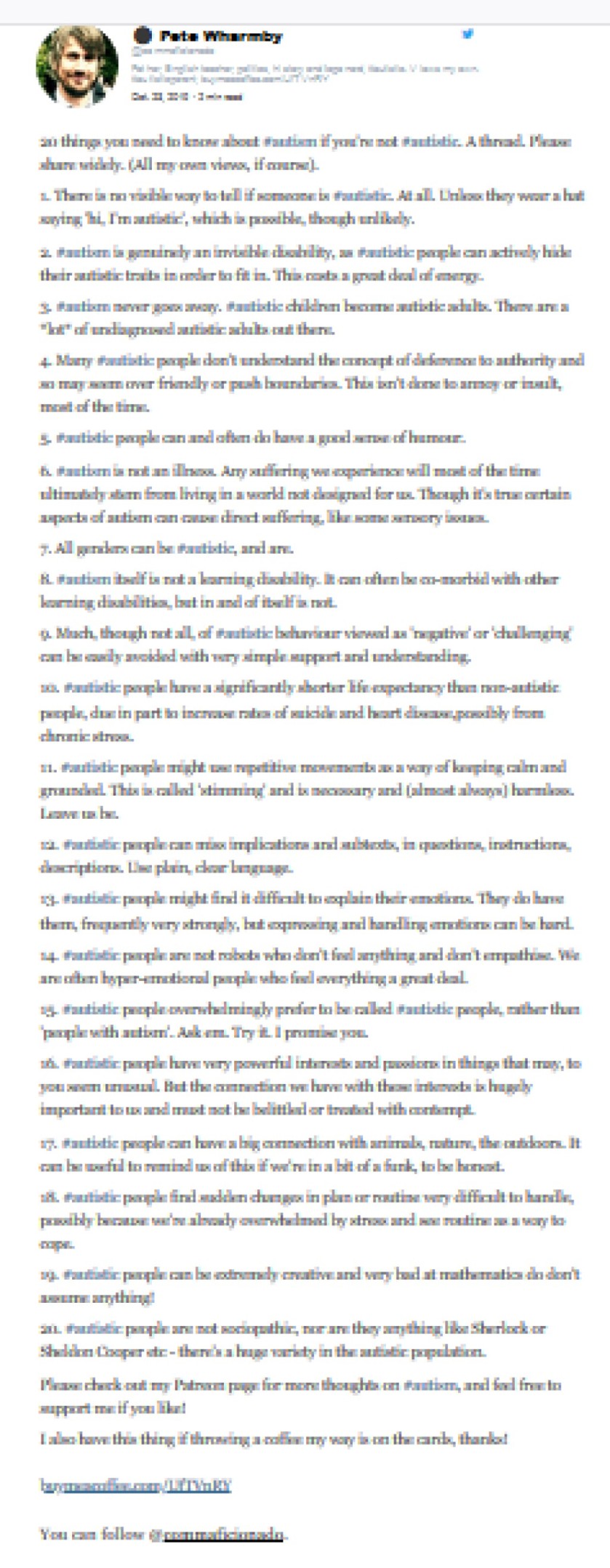
I have two and a bit threads relating to autism to share with you. In all cases this is #ActuallyAutistic people talking about autism – I always prefer primary sources. First of all, “20 things you need to know about autism if you are not autistic“, by Pete Wharmby:

PW1

Next up, Sara Gibbs lists some things not to say to someone who has just told you they are autistic:


SG

Finally for this section the first 17 posts in another thread from Pete Wharmby on the subject of diagnosis:

PW2

That concludes this section of the post.

ELECTION THOUGHTS

Some time in the not too distant future there is going to be a general election. Boris Johnson, the lame duck Prime Minister, sees a general election as the only way out of the hole he is currently in, while the main opposition party, Labour, are also ready for one, as soon they have guaranteed the election period cannot be used as a means of forcing a no deal Brexit through. In my constituency the decision for anyone opposed to the Tories is a very straightforward one – only two parties in this constituency have a share of the vote even worth thinking about, the Tories who hold the seat, and Labour who polled 15,000 votes last time round. Support for the Greens is increasing in this area, as it should, and as shown by Michael De Whalley being elected a local councillor, but constituency wide they are building from too small a base, and would be well advised to sit this one out, leaving the field clear for Labour.

In Scotland the SNP will clean up everywhere – the callous disregard shown for that country by the UK’s current misgovernment has all but ensured that Scotland will be an independent country before too long (and good luck to them – were it not for the necessity of travelling to and from Cambridge for some years to come I might well be looking at flats in Fort William or Inverness with a view to moving north post indepndence, and were I a Scot I would undoubtedly be voting SNP). Northern Ireland for different reasons is also an exception, but in England and Wales I would recommend that Labour and the Green Party operate as follows:

  1. Labour do not stand in Caroline Lucas’ seat, nor in any seat where the Greens came second last time round.
  2. The Greens do not stand in Labour held seats or in seats where Labour were second last time round.

Post election, in the event that the combination of Labour, Greens and SNP have enough seats to form a government (at least until Indyref 2 has been organised – which will be the SNPs condition for assisting) Labour should also offer cabinet places to people from these parties (e.g Caroline Lucas being put in charge of environmental policy, someone from the SNP getting the position of Secretary of State for Scotland etc.). Additionally, abolishing the outdated and flawed FPTP voting system should be high on the agenda.

My advice to people in England and Wales who want rid of the Tories is look at who in your area has more support out of Labour and Green (and possibly Plaid in Wales) and vote for that party. It is important to maximize the chances of turfing the Tories out by not giving them any opportunity to capture seats against a split opposition.

A COUPLE OF EXCELLENT VITALITY BLAST SIGNINGS FOR SURREY

One of the claims advanced on behalf of The Hundred, aka “Harrison’s Harebrained Have a Hit” (acknowledgements to The Full Toss blog for that excellent alternative name) is that it has attracted top overseas players, a claim that The Full Toss put to the sword here. There are two parts to exploding this claim: firstly no Indian players at all are involved in the new competition, and secondly that counties are in any case capable of attracting overseas players of real quality, which leads to Surrey’s recent overseas signings for next years Vitality Blast (T20) competition. Darcy Short has been the leading run scorer in the last two seasons of the Mens BBL (Australia’s T20 competition), and is a fine signing for Surrey. Pakistan’s young legspinning all-rounder Shadab Khan is if anything an even more impressive signing than Short. At 21 he already has 117 international wickets to his name, and being a legspinner he nicely complements Surrey’s existing slow bowling talent (Freddie Van Den Bergh, SLA, and Amar Virdi, OS), and his batting talent means that Surrey if so minded could certainly select all three, thereby giving themselves three spinners of differing types.

TWO LINKS AND SOME PICTURES

Greta Thunberg, the autistic teenager who has become the face of the international movement against climate change, has been honoured by having a new species named after her. Click on the picture below to read the full article about this on the Natural History Museum’s website:

New species of beetle named after Greta Thunberg

In a Darwin Award worthy piece of karma, a US hunter got himself killed by a deer he thought he had shot dead. Click on the picture below to visit the BBC website’s article about this:

Stock image of a whitetailed deer buck in the US

Now for my usual sign off…

P1280073 (2)P1280074 (2)P1280076 (2)P1280077 (2)P1280078 (2)P1280079 (2)P1280080 (2)P1280081 (2)P1280082 (2)P1280083 (2)P1280084 (2)P1280085 (2)P1280086 (2)P1280087 (2)P1280088 (2)P1280089 (2)P1280090 (2)P1280091 (2)P1280091 (3)P1280092 (2)P1280092 (3)P1280093 (2)P1280094 (2)P1280095 (2)P1280096 (2)P1280097 (2)P1280098 (2)P1280099 (2)P1280100 (2)P1280101 (2)P1280103 (2)P1280105 (2)P1280107 (2)P1280108 (2)P1280109 (2)P1280110 (2)P1280111 (2)P1280112 (2)P1280113 (2)P1280114 (2)P1280115 (2)P1280116 (2)P1280117 (2)P1280118 (2)P1280119 (2)P1280120 (2)P1280121 (2)P1280122 (2)P1280127 (2)P1280128 (2)P1280129 (2)P1280130 (2)P1280131 (2)P1280132 (2)P1280133 (2)P1280134 (2)P1280143 (2)P1280150 (2)P1280151 (2)P1280152 (2)P1280153 (2)P1280155 (2)P1280156 (2)P1280157 (2)P1280158 (2)P1280159 (2)P1280160 (2)P1280161 (2)

Some Thoughts on Transport

Mainly about public transport, but also features autism and cricket, and of course has the usual stack of photographs.

INTRODUCTION

This post was prompted to by events on Monday, when I had to journey to Cambridge and back – in the course of the post I describe that day in full. However, before I get to the main body of the post there is something else to attend to…

NINE HUNDRED THANK YOUS

Well actually 902 to be precise, since that is the number of you now following this blog. I am very grateful to all of you.

A DAY THAT WAS AN ARGUMENT FOR RENATIONALISING THE RAILWAYS

I was due to visit Addenbrookes for a check-up on Monday, and had to be there by 12:00. This meant that the last train to Cambridge I could catch and arrive there with sufficient time to get to Addenbrookes was at 9:44AM, since the next was the 10:44 due at Cambridge at 11:37, which would have meant that even if it was on time I would have needed Lady Luck to play ball to be at Addenbrookes by 12:00. Being excessively cautious when it comes to making journeys by British public transport I was actually ready to leave my flat by 8:40 and saw no grounds for not doing so. I thus arrived at the station just before 9:00 and with no queue at the ticket office was actually able to board the 09:10 train, and never one to object to having extra time to spare did precisely that. It was a few minutes late departing, and then had to wait at Downham Market for a train coming the other way to pass (there are single track stretches between Downham Market and Littleport). Speed restrictions between Downham Market and Littleport cost us further time. At Cambridge I got a bus to Addenbrookes, and was there just before 11AM, giving me time to consume an early lunch before going to the oncology reception and announcing my presence.

Although the consultant was ready to see me promptly the people taking blood samples for testing were running behind, so I had to see the consultant first and then get that done. The consultation was exceedingly brief, since the scans done a week and a half earlier revealed nothing untoward (no news in this situation is most unequivocally good news). Once it came to my turn to be seen for them the blood samples were also to my great relief obtained without undue delay. Nevertheless, it was 12:45PM before I was finished at Addenbrookes. I got the express bus back to Cambridge (£2.20 instead of £1 for the regular bus, but in the circumstances worth the extra cost) and was there in time for the 13:36 to Lynn…

…Cue more chaos. There was an out of service train occupying the platform from which the Lynn train was supposed to depart, causing a late platform alteration. The service was also delayed slightly (somebody had been hit by a train earlier in the day and the knock-on effects of that were being felt everywhere). However, once it got underway it ran fairly smoothly. Between them having the blood samples taken and the consultation took maybe ten minutes, maybe less, yet I left my flat at 8:40 and did not arrive back there until 3PM, and of that six hours and twenty minutes only about 40 minutes can be put down to Addenbrookes – the rest was a combination of my caution and the inadequacies of British public transport.

Although I fully accept that one cannot prevent incidents such as people being hit by trains from happening the rest, including the service pattern that meant I dared not run any risk being on a later train than 9:44 when I had an appointment at a hospital on the outskirts of Cambridge at 12:00 and the platform alteration due to an out of service train blocking the intended platform are wholly indefensible, and in the case of the platform alteration happen sufficiently often to be classed as regular occurrences on that line.

We need our railways to be fully publicly owned and fully publicly accountable. There only two groups of people in my opinion who should decide how railways are run – those who provide the service (railway workers) and those who use it (railway passengers).

Here are some photos from the journey:

P1270922 (2)P1270923 (2)P1270924 (2)P1270926 (2)P1270927 (2)P1270928 (2)P1270929 (2)P1270930 (2)P1270932 (2)P1270934 (2)P1270935 (2)P1270936 (2)P1270937 (2)P1270938 (2)P1270939 (2)P1270940 (2)P1270941 (2)P1270942 (2)P1270943 (2)P1270945 (2)P1270946 (2)P1270947 (2)P1270948 (2)P1270949 (2)P1270950 (2)P1270951 (2)P1270952 (2)P1270953 (2)P1270955 (2)P1270956 (2)P1270957 (2)P1270958 (2)P1270959 (2)P1270960 (2)P1270961 (2)P1270962 (2)P1270963 (2)P1270964 (2)P1270965 (2)P1270966 (2)P1270967 (2)P1270968 (2)P1270971 (2)P1270971 (3)P1270972 (2)

A NEW BOOK RELATING TO AUTISM

The book is to be called Your Life As I Knew It, and you can be part of making it a reality by visiting the funding site for it here.

EARTH XI TO PLAY MARS

This section was prompted by a post on the Full Toss blog comparing Virat Kohli and Steve Smith and inviting us to make a decision between them. My resolution to the conundrum was simply to avoid treating it as an ‘either, or’ situation. With Rohit Sharma and Mayant Agarwal shoo-ins as opening pair that left me only seven more players to find to make an XI. I have opted for Kane Williamson as the fifth specialist batter, Ben Stokes at six and as fifth bowler, Ben Foakes as wicketkeeper (he is the best currently playing, though as a controversialist I might be tempted to see if I could lure Sarah Taylor out of retirement for this one!), Rashid Khan the Afghan legspinner at 8 (a gamble, but I would love to see how he fares as part of an all-stars combo), Pat Cummins, Jofra Archer and Kagiso Rabada (Jasprit Bumrah is currently injured, otherwise he would be a shoo-in.). Thus the current Earth XI to take on Mars is as follows:

  1. Rohit Sharma
  2. Mayant Agarwal
  3. Virat Kohli
  4. Steve Smith
  5. *Kane Williamson
  6. Ben Stokes
  7. +Ben Foakes
  8. Rashid Khan
  9. Pat Cummins
  10. Jofra Archer
  11. Kagiso Rabada

As twelfth man I nominate Ravindra Jadeja, spin bowling all-rounder and quite magnificent fielder.

PHOTOGRAPHS

My usual sign off…

P1270792 (2)P1270793 (2)P1270794 (2)P1270795 (2)P1270796 (2)P1270797 (2)P1270798 (2)P1270799 (2)P1270801 (2)P1270802 (2)P1270803 (2)P1270804 (2)P1270805 (3)P1270806 (2)P1270807 (2)P1270809 (2)P1270810 (2)P1270811 (2)P1270812 (2)P1270813 (2)P1270814 (2)P1270815 (2)P1270817 (2)P1270818 (2)P1270822 (2)P1270823 (2)P1270824 (2)P1270836 (2)P1270839 (2)P1270840 (2)P1270841 (2)P1270842 (2)P1270845 (2)P1270848 (2)P1270849 (2)P1270850 (2)P1270862 (2)P1270863 (2)P1270864 (2)P1270867 (2)P1270879 (2)P1270880 (2)P1270886 (2)P1270887 (2)P1270890 (2)P1270892 (2)P1270894 (2)P1270896 (2)P1270897 (2)P1270906 (2)P1270908 (2)P1270909 (2)

One Year On From A Narrow Escape

An anniversary, some thoughts about autism, the London Mayoral elections and diplomatic immunity and a lot of photographs.

INTRODUCTION

I have various things to mention besides the main subject of this post, and a few links to share. First up, in accordance with this blog’s “reverse tabloid” policy regarding such matters comes…

AN APOLOGY

I recently suffered a problem with my email settings that caused two things:

  1. I missed some of your posts because they were going to my spam folder.
  2. A couple of commenters waited longer than they should for a response from me because due to the same issue I did not initially see the comments.

I have now resolved the issue, and all should be back to normal.

THE NARROW ESCAPE

Exactly one year ago, on October 8th 2018 I was so ill that I had to be given a half-size saline drip and a lot of further assistance to get from the flat I was then living in to an ambulance that took me to Queen Elizabeth Hospital. I will be visiting that hospital under my own steam today for a hearing appointment. I have written various posts about the illness that nearly killed me and my subsequent gradual return to health and fitness.

COFFEE MORNING

There is a coffee morning taking place at King’s Lynn Library tomorrow between 11AM and 1PM. At this time of year various shops and businesses have an “autism hour” during which they make particular efforts to be more accessible to autistic people. Of course many of the changes they make could and should be made permanently anyway – are such things as ultra bright lights and loud “music” really necessary to attract allistic customers?

Talking of which, Pete Wharmby, an #actuallyautistic autism advocate, posted a splendid thread on twitter last night about employing autistic people.

LINKS AND PICTURES

Just a couple of links before the pictures…

  1. The London Mayoral election campaign is now in full swing. There has been much entirely unmerited excitement about the decision of Rory Stewart, who knows precisely nothing about London, to stand. If I lived in London my vote would unquestionably go to Sian Berry, once again the Green Party candidate, with a second preference for the incumbent Sadiq Khan (they use STV for the London Mayoral elections). Here is an article in inews inwhich Ms Berry takes aim at Mr Stewart with (IMO) deadly accuracy.
  2. Autistica have produced an excellent guide to writing about autism, which I recommend you to read in full.
  3. Jerry Coyne at whyevolutionistrue has put up a post about Anne Sacoolas’ abuse of “diplomatic immunity” after she killed Harry Dunn in a hit and run accident. She is very probably going to escape unpunished for killing someone because neither of the two countries has a leader who can even be hoped to do the right things. For those who use social media look up #JusticeForHarryDunn. My own view is that diplomatic immunity should be waived, she should be done for causing death by dangerous driving and hit with the maximum possible punishment for that offence (on the grounds that her attempted use of diplomatic immunity counts as the absolute reverse of co-operation).

PHOTOGRAPHS

First up, a warning to arachnophobes – there is a spider coming up. Now, my usual sign off…

P1270661 (2)P1270662 (2)

P1270663 (2)
A bug of some description exploring my spectacles (four pics)

P1270663 (3)P1270663 (4)P1270663 (5)P1270664 (2)P1270665 (2)P1270666 (2)P1270667 (2)P1270668 (2)P1270670 (2)P1270673 (2)P1270677 (2)P1270680 (2)P1270680 (3)P1270681 (2)P1270682 (2)P1270683 (2)P1270684 (2)P1270685 (2)P1270686 (2)P1270686 (3)P1270687 (2)P1270688 (2)P1270689 (2)P1270690 (2)P1270691 (2)P1270692 (2)

P1270693 (2)
The first of a load of pictures during a journey to and from Addenbrookes

P1270694 (2)P1270696 (2)P1270697 (2)P1270698 (2)P1270699 (2)P1270700 (2)P1270701 (2)P1270703 (2)P1270704 (2)P1270706 (2)P1270707 (2)P1270708 (2)P1270709 (2)P1270710 (2)P1270710 (3)P1270710 (4)P1270711 (2)P1270712 (2)P1270713 (2)P1270714 (2)P1270715 (2)P1270716 (2)P1270717 (2)P1270719 (2)P1270721 (2)P1270722 (2)P1270723 (2)P1270724 (2)P1270725P1270726 (2)P1270729 (2)P1270730 (2)P1270731 (2)P1270734 (2)P1270735 (2)P1270736 (2)P1270737 (2)P1270738 (2)P1270739 (2)P1270739 (3)P1270740 (2)P1270741 (2)P1270742 (2)P1270743 (2)P1270744 (2)P1270745 (2)P1270746 (2)P1270747 (2)P1270748 (2)P1270749 (2)P1270750 (2)P1270751 (2)P1270752 (2)P1270753 (2)P1270754 (2)P1270755 (2)P1270756 (2)P1270757 (2)P1270758 (2)P1270759 (2)P1270760 (2)P1270761 (2)P1270762 (2)P1270763 (2)P1270764 (2)P1270765 (2)P1270766 (2)P1270767 (2)P1270768 (2)P1270770 (2)P1270771 (2)P1270772 (2)P1270773 (2)P1270774 (2)P1270775 (2)P1270777 (2)

P1270778 (2)
Walking home from King’s Lynn station post Addenbrookes…

P1270779 (2)P1270780 (2)

P1270784 (2)
…this poster produced by school students impressed me (sadly the weather overnight was dreadful, and I had to pick up a couple of badly damaged copies the following morning when on my way into town).

P1270785 (2)P1270786 (2)