An illustrated account of a pizza making event to remind folks of my existence, and of course a regular photo gallery. Everything should be back to normal email and internet wise from Monday afternoon.
My internet and email situation will be back to normal on Monday. This Sunday just gone I took part in a pizza making session for autistic adults at the King’s Lynn branch of Pizza Express. The body of this post describes the process.
FROM DOUGH TO PIZZA
Pizza making in these sessions does not start absolutely from scratch – we have preprepared dough to work with. When we get to it we have the following starting position…
an ellipsoid lump of very sticky dough surrounded by flour.
The first stage is to dust the dough (which would otherwise be too sticky to work with) with flour. Then one uses fingers to flatten out the edge of the dough, leaving a dome in the middle (at this stage the dough should be about the same size and shape as a fried egg). Next the dome has to be flattened with the palm of the hand, and then the now flat piece of dough needs to be worked on until it is roughly circular and not too different in size from the tray in which it will be cooked. It then needs to be inserted into the tray, and manipulated once in so that it covers the entire base, and there is a small rise up the side of the tray to keep all the toppings in…
The pizza base ready for the addition of the toppings.
The first addition to the base is a ladleful of tomato puree (Pizza Express do not allow for the making of ‘white pizzas’), which has to be spread out evenly using the back of a spoon…
Next come the optional toppings, the first two of which I accepted being mushrooms and olives…
Then came the meat toppings, of which I accepted pepperoni and passed on the rest…
The penultimate addition when all the optional toppings are in place is the cheese, without which of course it would not be a pizza…
Finally, for those who want it comes that classic Mediterranean flavour enhancer, oregano. For those who, like me, opted to accept this, you take it in your non-dominant hand so that you can sprinkle it evenly over your pizza with your dominant hand…
The pizza, now ready for cooking.
A few minutes later the pizza was ready for eating, and it was excellent.
The pizza, cooked and ready to be eaten.
PHOTOGRAPHS
My usual sign off…

It is early in the year for hares to be out and about (the Lewis Carroll character is ‘The March Hare’ for a reason), but here are two in a single shot.
A look at how Brisbane Heat secured top spot in the Big Bash League earlier today and a large photo gallery.
Today’s Big Bash League Match saw Brisbane Heat take on Perth Scorchers. Heat came into the game knowing that a win would guarantee them a first place finish, while Scorchers knew that a win would ensure them qualification. I missed the Heat innings due to a morning commitment in town, but I listened to the Scorchers chase after I got back.
SCORCHERS PULL UP SHORT
At the halfway stage of the chase Scorchers were 80-3 chasing Heat’s total of 191, some way behind the required rate, but with Laurie Evans just starting his innings. Two overs later they were 103-3 and looking much better placed. It was at this point that they took their Power Surge, which was always likely to have a major impact on the outcome. I believe they were right to do so, with two batters both going well at the crease together. However, having picked a good moment to take the Power Surge you then have to make good use of it, and Scorchers did not. Spencer Johnson bowled the first over, and his six legal deliveries were good, but he also bowled three wides along the way, and was probably fortunate that a couple of others weren’t called. The second Power Surge over was better for Scorchers, and with six overs to go they were 122-4, needing 70 to win. Evans played a fine knock, reaching a half century off 28 balls, but no one else did enough (Ashton Agar who came in at number seven was especially culpable, scoring slowly and almost being run out when arguing with Evans over the merits of taking a single early in an over). Evans won the argument, and fortunately for Agar the bowler, Spencer Johnson, foozled the run out attempt. The next two balls after the spurned single saw Evans hit a four and then score three off the next, illustrating why he had not wanted to give up the strike so early in the over. Scorchers fell further and further behind, and by the time the 20th over came round they needed 30 from it to win with two tailenders together. The final margin was 23 runs, and Michael Neser secured Player of the Match, having placed a vital innings with the bat, fielded superbly and claimed two wickets with the ball.
PHOTOGRAPHS
My usual sign off…

My main errand this morning was being at a cheque presentation in this building, in my capacity as WNAG Secretary.
A look back at the Boxing Day test between Australia and Pakistan, a brief comment on the Lamichhane case (some may find this distressing), a mention of the Panto at the Corn Exchange and a photo gallery.
Early yesterday morning the the Boxing Day test match between Australia and Pakistan ended a day ahead of schedule. The main part of this post looks back at that match. There is then a second section that some readers may find distressing, covering a piece of news that should not be overlooked. I end with my usual photo gallery.
A HARD FOUGHT BATTLE
I posted about developments earlier in this match here. Pakistan ended up 61 behind on first innings. They began the Australian second innings breathing fire, reducing their hosts to 16-4 at one point. They had a chance to make it 46-5, but it went to ground as more than one other did in the course of the match. The reprieved batter, Mitchell Marsh, went on to top score with 96 and Australia had 316 to defend in the end. The biggest ever successful chase at The G is 332, by England in 1928-9 in the match that won them that Ashes series, while Pakistan have a horrible record down under – last time they won a test match anywhere in Australia the side was captained by Imran Khan.
However, Pakistan did not surrender meekly, as their subcontinental neighbours had at Centurion in the other Boxing Day test (India 245, South Africa 406, India 131 – South Africa won by an innings and 30 runs), they had a real go at the target.
The got to within 100 of the target with the sixth wicket pairing of Mohammad Rizwan and Agha Salman together and going nicely. Cummins appealed for a catch behind against Rizwan, given not out on the field, with the TMS commentary team also certain that it wasn’t out and Rizwan indicating that it had hit his forearm on the way through. Australia sent it upstairs, and after about five minutes of using every piece of technology available to him the third umpire Richard Illingworth found what he believed was evidence to overturn the decision and instructed Michael Gough, the on field umpire, to do so. My belief is that having studied replays for that long there is no way the evidence Illingworth had could have been convincing enough to warrant an overturn.
The controversial breakthrough thus achieved, Australia did not take long to do the rest of the job, Pakistan being all out for 237 to lose by 79 runs. Pat Cummins in addition to captaining his side took five wickets in each Pakistan innings (5-48 and 5-49 respectively), and there was thus only one candidate for Player of the Match. Nevertheless, for me, the circumstances of Rizwan’s dismissal in the final innings means that this victory by Australia is somewhat tainted. A full scorecard can be seen here.
THE LAMICHHANE CASE
Yesterday it was announced that the a Nepalese jury had found Sandeep Lamichhane, the Nepali leg spinner, guilty of raping a minor, an offence that under Nepali law carries a possible 12 year jail term. In my view the ICC, as cricket’s world governing body, have a duty to respond to this news: Lamichhane should forthwith be banned outright from ever having anything more to do with organized cricket – no playing, no umpiring, no commentary gigs, no coaching (especially this latter given what he has been found guilty of) etc.
THE CHRISTMAS PANTO
This year’s Christmas Panto at the Corn Exchange, King’s Lynn was Dick Whittington, and on Thursday night the West Norfolk Autism Group had block booked seats. The fact that we were buying in bulk got us a substantial discount on the regular price, and members were only asked to pay £5 per ticket by us. It was an excellent production, well worth the minor inconvenience of the timing (a scheduled 5:30PM start, which meant all I had time to do at home between work and the performance was get changed out of my work clothes, and supper had to wait until I got home again at the end of the evening).
PHOTOGRAPHS
My usual sign off…

The Corn Exchange Advertising in the foyer of the Corn Exchange.
An all time XI of players whose given names begin with T, including an honourable mentions section which pays particular attention to four specific areas, and a photo gallery.
Today I look at great players with given names beginning with the letter T. This was a particularly tough XI to select, and I will be starting the honourable mentions section with four disputed areas in this team. Incidentally I offer wholehearted congratulations to India Women on their all time record test victory over England Women. Their star was Deepti Sharma, who scored runs in both innings and was the chief destroyer with the ball as well, claiming 5-7 in the first England innings and 4-32 second time round.
THE XI IN BATTING ORDER
Tom Hayward (England, right handed opening batter, right arm medium pacer). In 1900 he passed his 1,000 FC runs for the season before the end of May, only the second ever to do so after WG Grace, all though the good Doctor scored all his runs actually in May, whereas Hayward’s tally included runs in April. 14 years later Hayward brought up the career landmark of 100 first class hundreds, again second ever to do so after WG. In 1906 he scored 3,518 first class runs in the season, a tally that stood as a record for 41 years, before Denis Compton and Bill Edrich both beat it in the same season. He also ushered on to the scene a fellow native of Cambridge named John Berry Hobbs.
Tamim Iqbal (Bangladesh, left handed opening batter). An attack minded left hander to go with the more conservatively minded right hander Hayward, and one with a test average of close to 40.
*Tom Abell (England, right handed batter, right arm medium pacer, captain). I needed a captain for this side, and this was my solution.
Tom Graveney (England, right handed batter, occasional leg spinner). A stylish batter, with a test record of very considerable substance as well.
Travis Head (Australia, left handed batter, occasional off spinner). It has taken a while for him to really establish himself at the very highest level but he is now one of the best batters in the world.
Trevor Goddard (South Africa, left handed batter, left arm medium pacer). A genuine, but massively under-appreciated all rounder, I go into more detail about this slot in the next section of the post. For the moment, suffice it to note that he averaged 34 with the bat and 26 with the ball at test level.
+Tom Blundell (New Zealand, wicket keeper, right handed batter). An accomplished keeper/ batter for New Zealand, his record demands that he be included.
Tom Emmett (England, left arm fast bowler, left handed batter). By the time test cricket was a thing he was past his absolute prime, but his FC averages were the right way around, 14.84 with the bat and 13.55 with the ball, which convert using my usual metric to 22.26 with the bat and 20.23 with the ball in the modern era.
Tom Richardson (England, right arm fast bowler, right handed batter). His 14 test appearances yielded 88 wickets. His achievements for Surrey were staggering as well. Between 1894 and 1897 inclusive (four English seasons and one tour of Australia), Richardson claimed 1,005 first class wickets.
Tom Goddard (England, off spinner, right handed batter). He started as a fast bowler, but following advice from Gloucestershire team mate Charlie Parker, who had noted the size of Goddard’s hands and the strength of his fingers he went away and remodelled himself as a spinner, and in that capacity he was one of the greats, ending a very long career (forced because of an attack of pleurisy) as the fifth leading first class wicket taker of all time, with 2,979 scalps at 19.84 each.
Taijul Islam (Bangladesh, left arm orthodox spinner, left handed batter). 44 test appearances have yielded him 192 wickets, sufficient to earn him his place in this XI.
This side is strong in batting, even with the 9, 10, 11 being old style tail enders, and has lots of bowling, with Emmett, Richardson, Tom Goddard, Islam and Trevor Goddard as the main attack and Hayward, Abell and Head all capable of providing support if needed.
HONOURABLE MENTIONS
I will start with four particularly contentious areas, in batting order:
First, the number three slot. Technically I should have given this to Tom Latham of New Zealand, but I decided it was worth possibly sacrificing a few runs per innings to have Abell’s captaincy available.
Second, the all rounder position. Many would have opted for Trevor Bailey, but Goddard actually had better records in both departments than the other Trevor. Bailey averaged 29.74 with the bat and 29.21 with the ball at test level, Trevor Goddard 34.46 with the bat and 26.22 with the ball. Goddard also had a better wicket taking rate than Bailey, claiming an average of exactly three per test whereas Bailey averaged just 2.16 per test. Thomas Odoyo of Kenya would be a contender for a limited overs side.
Third, the wicket keeper’s slot. Taslim Arif had an amazing record with the bat for Pakistan in the few tests he got selected for, but he was never first choice keeper. Tim Ambrose of England was a quality keeper and a useful batter, but not quite good enough to displace Blundell. Tom Box, an legendary keeper of the mid 19th century also merits a mention.
Fourth, the new ball pairing. I opted for a pair of outstanding practitioners he never overlapped, rather than a pair with respectable records who bowled in tandem a considerable number of times at the highest level, Trent Boult (LFM) and Tim Southee (RFM), both of New Zealand. My feeling is that Emmett and Richardson were so great as individuals that I am prepared not to pick the established pairing, but I acknowledge that there is a good case for picking the Kiwis.
Thilan Samaraweera of Sri Lanka was a fine batter on flat subcontinental pitches, but did little outside of Asia.
Two quality English seamers who missed out were Tom Cartwright and Tim Bresnan. Tom Wass of Nottinghamshire, a bowler of both fast medium and leg spin who took 1,666 first class wickets at 20 without ever getting an England call up was a challenger for the place I gave to Taijul Islam. Tymal Mills would be in the mix for a T20 side, but concerns over his back have led him to restrict himself to cricket in which he never has to bowl more than four overs at a stretch.
Tim May of Australia was a fine off spinner, but not fine enough to dislodge the fifth leading wicket taker in FC history. Tommy Mitchell of Derbyshire was a good leg spinner, who claimed three wickets at 20 each in his sole test appearance, which came during the 1932-3 Ashes in the one match for which England deemed two specialist spinners necessary.
Tom Walker of Hambledon does not have a complete enough career record to be selected, but needs mention for historic reasons – he was the first to attempt round arm bowling, and also pioneered lob bowling. Thomas Lord, a native of Thirsk, was a negligible cricketer, but the third of the three grounds he arranged for the Marylebone Cricket Club, which opened for business in 1814 is one of the most famous cricketing venues in the world.
Finally, while picking a fictional character is too much even for me to consider, Tom Spedegue of “Spedegue’s Dropper” would certainly have given the bowling extra variety.
PHOTOGRAPHS
My usual sign off…

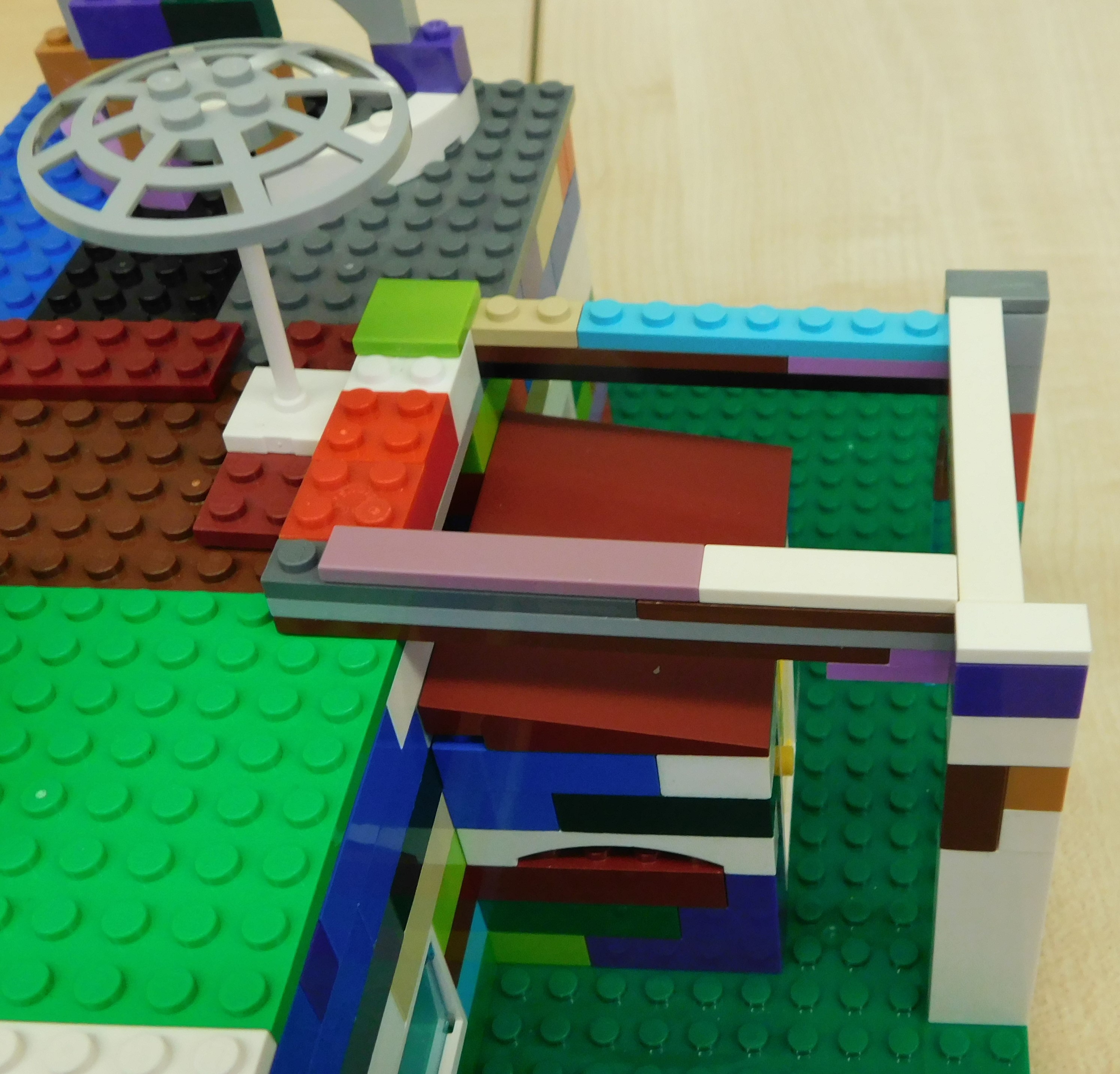
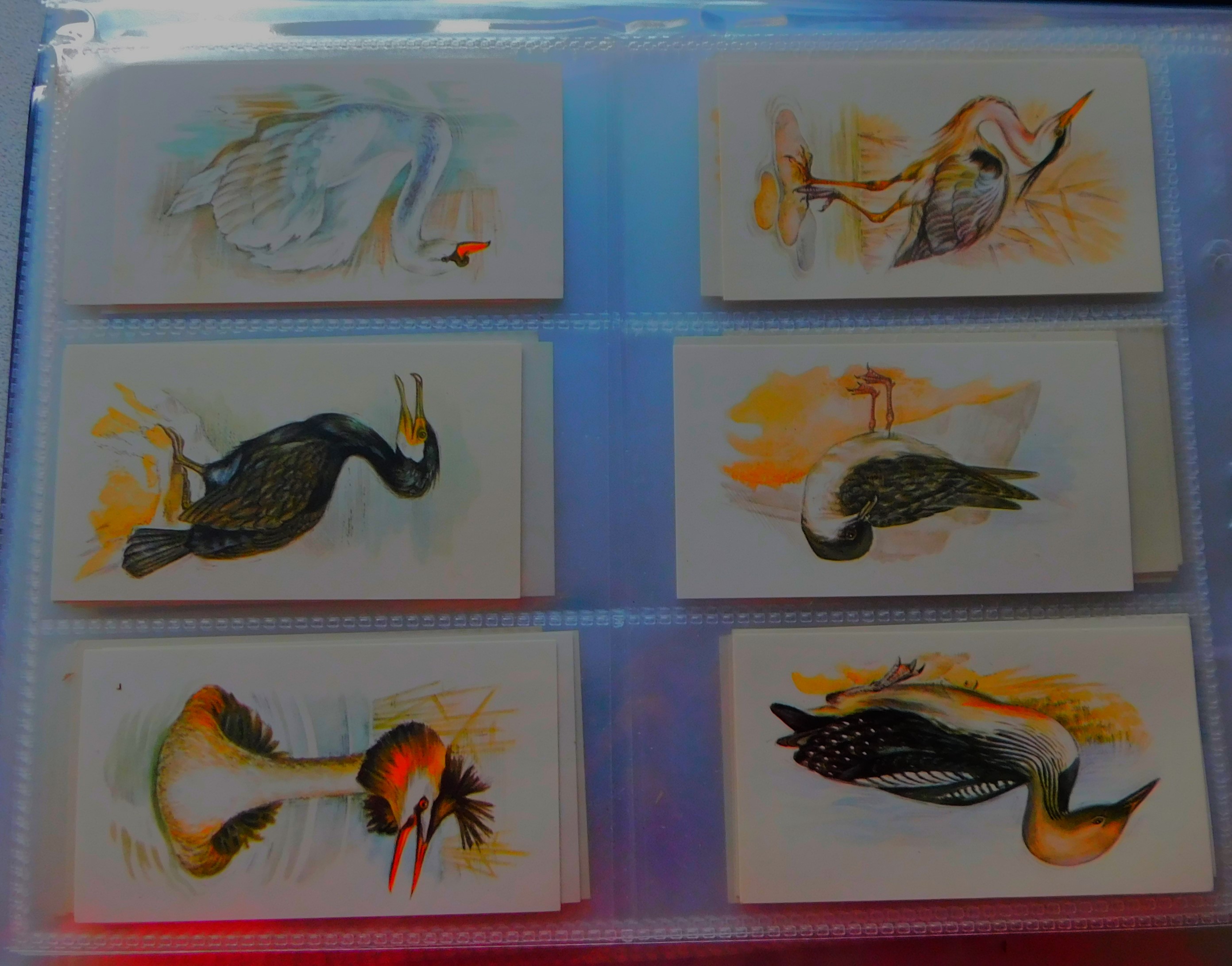
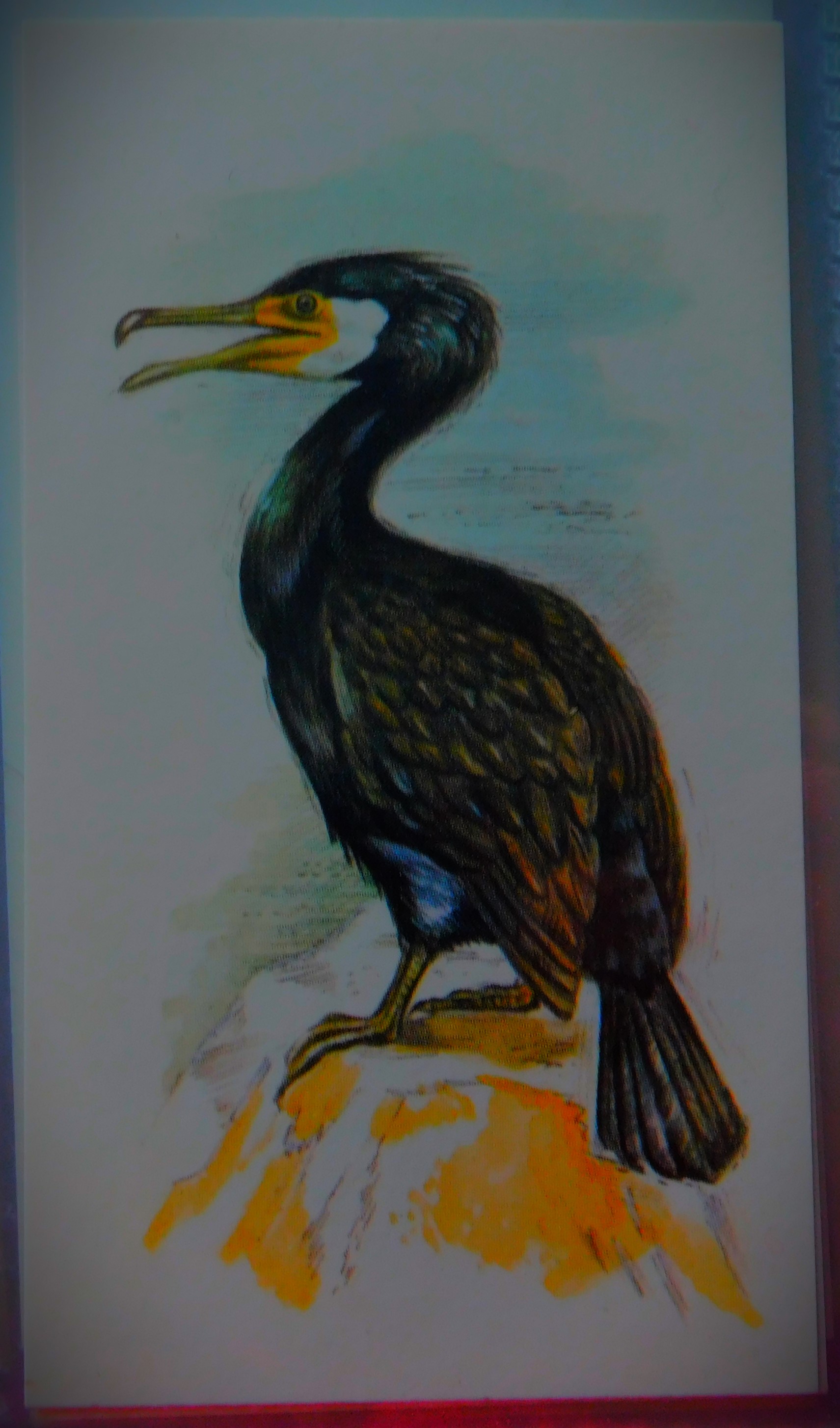
The dates for the next year’s Autism Acceptance just a cuppa sessions at King’s Lynn libraryLego architecture, at today’s Autism Acceptance just a cuppa (six pics)A cormorant swimming in the Gaywood River near Kettlewell Lane was an unexpected sight (features in a number of pics).A title page for my wildlife themed cigarette cards, using one of my own photos.
An all time XI of players whose given names begin with the letter M, a more than usually important honourable mentions section, which deals with several areas of controversy and a two part photo gallery.
Today I present an all time XI of cricketers whose given names all begin with the letter M, and an honourable mentions section of more than usual importance. I also have plenty of photos to share.
THE XI IN BATTING ORDER
*Mark Taylor (Australia, left handed opening batter, captain). The second in a sequence of extraordinarily successful Aussie skippers, in that role he consolidated the achievements of Border who had taken over a team of also rans and passed his successor a team of champions and was succeeded by Steve Waugh. The wheels eventually came off the Aussie juggernaut under Waugh’s successor as skipper, Ricky Ponting, who suffered three Ashes series defeats, the last of which featured Australia on the wrong end of three innings defeats. His status as a batter was first shown in 1989 when he scored 839 runs in that year’s Ashes, a series tally beaten by only one Australian (Don Bradman, 974 in 1930), and bested by only Hammond among England players (905 in 1928-9). Probably his most famous moment came when he declared with himself on 334*, at the time a joint record individual score for an Australian with Don Bradman.
Michael Slater (Australia, right handed opening batter). An attack minded opener who once scored 123* in a total of 184 all out, a performance that almost certainly won his side the match in question.
Mahela Jayawardene (Sri Lanka, right handed batter). One of his country’s finest ever batters. He once scored 374 against South Africa, a test record for a right handed batter, in the course of which he shared a third wicket stand of 624, a first class record for any wicket, with Kumar Sangakkara. Almost 12,000 test runs at 49 show that he was far from being the Colombo specialist he was sometimes labelled.
Martin Crowe (New Zealand, right handed batter). With the greatest of respect to Kane Williamson who has been part of a much stronger batting line up, he was probably the greatest batter his country has produced to date. His maiden test century, against England in the 1983-4 series between the two countries inspired his team mates to save a game in which they looked well beaten for most of the duration. This result in turn helped New Zealand to win a series against England for the first time ever, a feat they then repeated in England two and a half years later.
Martin Donnelly (New Zealand, left handed batter). When he was in his prime cricket in New Zealand was almost entirely amateur, a fact that caused him to leave the game early, taking up a post as marketing manager at Courtauld’s of Sydney. In his brief career he became one of only two players to score Lord’s centuries in a Varsity match, a Gentlemen versus Players match and a test match. The last of this trio was an innings of 206. Also in a now legendary match between England and the Dominions, again at Lord’s, he was one of two Dominions players along with Keith Miller to score centuries, while a banquet of batting was completed by Hammond who scored twin tons for England.
Mulvantrai Himmatlal ‘Vinoo’ Mankad (India, right handed batter, left arm orthodox spin bowler). This is probably the most controversial selection of my XI, but this guy was a lot more than the first to run out a non-striker for stealing ground in a test match – he completed the double of 1,000 runs and 100 wickets in his 23rd test match, a mark bettered only by Ian Botham (21 matches) ever since. His batting highlights included four double centuries, while his best test innings figures were an eight-for.
+Mark Boucher (wicket keeper, right handed batter). Over 500 test match dismissals in the course of his very long career, and good enough with the bat to average 30 at test level.
Malcolm Marshall (West Indies, right arm fast bowler, right handed batter). For my money the greatest fast bowler of the golden age of West Indies fast bowling, and therefore by definition among the greatest of all time. He was also a useful lower order batter.
Mitchell Johnson (Australia, left arm fast bowler, left handed batter). This was another close call, the other candidate for the left arm fast bowler’s slot also being an Australian with the given name Mitchell, but my reckoning is that Johnson had a higher ceiling than Starc, and for that reason he gets the nod.
Michael Holding (West Indies, right arm fast bowler, right handed batter). “Whispering Death” first gained legendary status at The Oval in 1976, when he conjured 14-149 (8-92 and 6-57) out of one of the flattest pitches imaginable, a surface on which every other bowler in the match took exactly as many wickets between them as he managed on his own, and he never lost the status he gained then for the rest of his playing career, also going on to a successful commentary career once his playing days were done.
Muthiah Muralidaran (Sri Lanka, off spinner, right handed batter). More test wickets than any other bowler, 800 in 133 appearances at that level. In 1998 at The Oval, on a pitch that was flat to begin with and never turned truly spiteful he collected 16 English wickets across the two innings, a performance that separated the sides.
This side has a strong top five, a great and often underrated all rounder st six, one of the finest of all keeper/ batters and four mighty specialist bowlers, of whom three are definitely capable of chipping in with the bat as well. A bowling attack of Marshall, Holding, Johnson, Muralidaran and Mankad should never struggle unduly to take 20 opposition wickets.
HONOURABLE MENTIONS
I will deal with some obvious controversies first, starting with…
THE NUMBER SIX SLOT
Two big names missed out here. Mike Procter, the South African genius whose international career was cut short by the enforced isolation of his country would be the choice of many, but I wanted a spin bowling all rounder, given the pace bowlers who were already inked in further down the order, and although Procter did have spin in his locker it was off spin, and I had an off spinner marked for inclusion as well. Mushtaq Mohammed, the Pakistan leg spinning all rounder who made his test debut at the age of 15 was another possibility, and I would not argue with anyone who picks him ahead of Mankad – my verdict went to the Indian who deserves better than to remembered for his association with one particular mode of dismissal.
NUMBERS FOUR AND FIVE
Martin Donnelly’s left handedness secured him the number five slot for reasons of balance. This left a big call to made at number four between two antipodeans who both graced that slot at test level, and Mark ‘Afghan’ Waugh missed out in favour of Martin Crowe. Again, this was a very close and possibly controversial decision, and I accept that those who favour ‘Afghan’ have a valid point of view.
THE OPENERS
The fact that I wanted Mark Taylor to captain the side dictated the selection of the left handed opener, and I like a left/ right opening combo if possible, which led to the selection of Slater as Taylor’s opening partner, a role he actually played. Matthew Hayden had a serious claim on the left handed openers slot but for the need for a captain, and Marcus Trescothick was also in the frame.
OTHER HONOURABLE MENTIONS
Michael Vaughan was another candidate for captain, but his natural slot in the order would be number three and that would mean dropping Mahela Jayawardene. Misbah-ul-Haq would also have his advocates for the captaincy role, but the only player I could have dropped to make way for him would have been Martin Crowe. Mansoor Akhtar had a good record in domestic cricket in Pakistan, but never delivered in international cricket. Mitchell Marsh of Australia would be one of the first names on the team sheet for a limited overs XI, but his test record is nothing special. Madhusudan Rege had his moments in Indian domestic cricket, but played at a time when conditions in that country were preposterously favourable to batting, and was a one=cap wonder at test level. Marizanne Kapp came closest among female players to challenging for a place in this XI. Mushfiqur Rahim, who recently made history as the first Bangladeshi given out for handling the ball (a dismissal along with the former ‘hit ball twice’ now lumped in under Obstructing the Field) was a potential rival to Boucher for the gauntlets, but I rate the Saffa as the finer keeper and reckon that this side is strong enough batting wise that the extra five runs or so per innings that Rahim might be worth would be unlikely to make a lot of difference. Mushtaq Ahmed, the Pakistan leg spinner of the 1990s and early 2000s, came very close, and if the match were being played at the Narendra Modi stadium I might drop Holding and go in with just Marshall and Johnson to bowl pace and spin trio of Muralidaran, Ahmed and Mankad. Moeen Ali would merit consideration for a limited overs XI, but does not qualify for an XI picked with long form cricket in mind – the notion that the extra batting he offers might even come close to compensating for the gulf in class between him and Muralidaran as bowlers is frankly risible as far as I am concerned.
PHOTOGRAPHS
Today’s photo gallery comes in two parts. First we have some pictures from the place where the West Norfolk Autism Group committee had their Christmas meal earlier today…
A look at developments in the cricket world cup, with a special focus on today’s match between Afghanistan and South Africa – a valedictory on Mohammad Nabi and an acknowledgement of a new star in cricket’s firmament, Azmatullah Omarzai. Also a prize winning photograph and one of my regular galleries.
The 2023 ODI Cricket World Cup is approaching its conclusion, with the final round of group fixtures being played. I did not witness a single ball of either Tuesday’s or Thursday’s games because of work commitments, and England’s performance on Wednesday while impressive in isolation merely applied an unwarranted late gloss to what has been an appalling tournament for them. Today’s match was between Afghanistan and South Africa. South Africa are already qualified for the semi-finals, where their opponents will be Australia. Afghanistan had the slenderest of chances of taking the fourth slot going into today (slenderer by far than the threads holding the mythical sword above Damocles).
THE AFGHANISTAN INNINGS
To overhaul current fourth placers New Zealand on net RR Afghanistan needed a record breaking win – they would have to bat first, and would need win by at least 438 runs. They won the toss and chose to bat (no one in their right minds puts this South Africa side into bat even if it is not absolutely mandated by the group situation, do they Jos?). Unfortunately, this was not a pitch for heavy scoring, and it was soon apparent that Afghanistan were not going to score enough to give themselves any chance of qualifying. In the end the main question as their innings headed to towards the end of the scheduled 50 overs was as to whether Azmatullah Omarzai, of whom more later, would manage to complete a century. When he found himself facing the bowling, on 97 not out with three balls to come it looked on, but it was not to be. He failed to score off any of the three deliveries, and the number 11 was run out of the final ball of the innings. Afghanistan had scored 244 from 50 overs, with Gerald Coetzee, a fiery and talented young fast bowler, taking 4-44, and Keshav Maharaj achieving a notably economical analysis with 2-25 from his full 10 overs of left arm spin.
THE SOUTH AFRICAN REPLY
There were times in the innings when it looked like Afghanistan might be signing off with a victory – South Africa never got right away from them. Rashid Khan had 2-37 from 10 overs of leg spin, the veteran Mohammad Nabi topped him with 2-35 from 10 overs of off spin in what may well be the last world cup innings in which he features as a player. Nabi has an extraordinary playing history, having been part of the Afghanistan men’s side for their entire history as a cricketing nation, and having played his part in victories over no fewer than 43 different opposing countries. The least impressive of Afghanistan’s four front line spinners was Mujeeb Ur Rahman, with 1-51 from his 10 overs. He seems to feel an obligation to showcase his variations by bowling six different types of delivery per over, a strategy that in T20s can work very well, but in longer formats he would be better served by bowling his stock ball four or five times in an over and slipping in the variations every so often as a surprise. Andile Phehlukwayo eventually finished things in the 48th over when he hit left arm seamer Naveen-ul-Haq for 6,4,6 in successive balls to get his side over the line. Afghanistan are thus sixth in the group, which is the lowest they can finish. Tomorrow sees Pakistan in action against England. If Pakistan can conjure a win by 287 or more runs they will pip New Zealand to the final qualifying slot, while if they suffer a heavy defeat in going for the huge win they need they might drop below Afghanistan in the standings. The scorecard of today’s match is available here.
Azmatullah Omarzai
The young Afghan all rounder (RHB, RMF) has had an excellent tournament, and I regretted that he missed out on his century today, though of course that particular tally only has significance because we use base 10. I am sufficiently convinced by what he has done this tournament that although I usually base my judgements for such things on long form cricket I am prepared to change my all time Os XI – he displaces Irish seam bowling all rounder of yesteryear Alec O’Riordan from the number six slot in that XI. He has been one of the finds of this tournament as an individual, just as teams wise his team have been THE find of the tournament.
PHOTOGRAPHS
The results of the West Norfolk Autism Group autumn photography competition are in, and I won a £10 Amazon gift voucher for this picture:
When I took this picture on October 10th this autumnal leaf on which you can see both a snail with a very dark shell and much lighter coloured slug was still attached to it’s branch, though clearly almost ready to fall. I got a second picture out of this shot, focussing more closely on the snail.
Now for my usual sign off – some photographs from the last few days (to view any of these at a larger size just click on them)…
Some pictures from Wednesday evening when WNAG had an adult’s meal at Knight’s Hill.My parents are currently away travelling, and this postcard from Australia arrived yesterday.This, the feature image for this post, and the one from which the next four pictures after this one were extracted may be the last hurrah of 2023 insects wise.
A look at developments in the world cup since England disgraced themselves on Saturday. A decent match between India and new Zealand yesterday, and today’s match between Afghanistan and Pakistan. Also a photo gallery.
This post looks at what has happened in the 2023 ODI World Cup since England’s humiliation on Saturday.
INDIA v NEW ZEALAND
This was a match between the only two teams to still be unbeaten. I missed a lot of it because I had to go through the annual torture known as a check for signs of Glaucoma (there is family history which makes this a necessity), and that knocked out most of the morning, since the appointment was at 10AM. I also had a commitment in the afternoon which took out a chunk of play – the West Norfolk Autism Group had a bowling session booked at Strikes for 4:00.
India won the toss and put New Zealand in. With ten overs to go a total of 300 looked on the cards for NZ, but some excellent Indian death bowling restricted them to 273. I only witnessed the start and end of the Indian innings. They eventually won by four wickets with two overs to spare, Kohli scoring 96 and getting out just before the end.
AFGHANISTAN V PAKISTAN
Pakistan won the toss and quite correctly chose to bat first. Afghanistan’s spinners bowled well, but a late flurry from Ifitkhar Ahmed and Shadab Khan, and a bizarre decision to trust the very ordinary medium pacer Azmatullah Omarzai over Mujeeb Ur Rahman at the death allowed Pakistan to get to 283, a formidable total on a slow surface. The Afghanistan is just underway, and I will be missing a lot of it, but the key will be Rahmanullah Gurbaz – to get anywhere close Afghanistan will need him to produce a major innings. So far all is progressing nicely for them – 25-0 in the fourth over.
PHOTOGRAPHS
Yesterday was sunny, and the walk back from my appointment (this location is borderline in terms of distance from my home, so I usually get the bus there and walk back, as I did yesterday) gave the photo gallery a welcome boost…
The pictures from the walk back from my appointment start here.And end here.This is the time when being an early riser and having an east facing front window enables one to capture the dawn (three pics)
A look at recent developments in the ODI cricket world cup, and a very large photo gallery.
In this post I will look briefly at events yesterday, which all took place while I was at work and in today’s match between New Zealand and Bangladesh.
AUSTRALIA IN TROUBLE
Yesterday in the world cup Australia took on South Africa. I did not catch any of the match as Australia were so inept that it finished before I was home from work, with the proteas victorious by a thumping 124 runs. At the moment, with New Zealand and Bangladesh in action today every team has played two group matches, and Australia lie second from bottom having lost both of their matches and having a ghastly net run rate of -1.846. This effectively means that they need to win six of their last seven group matches to qualify, as their poor net run rate means that five wins and four losses will not be good enough for them to qualify. Four teams have won two out of two, South Africa, New Zealand, India and Pakistan and two others, England and Bangladesh have won one and lost one, while the other four, Sri Lanka, Netherlands, Australia and Afghanistan have lost both their matches.
BANGLADESH v NEW ZEALAND
A West Norfolk Autism Group committee meeting meant that I missed the whole Bangladesh innings. They managed 246 from their 50 over, which would not normally be expected to be a winning total. However Bangladesh are faring quite well in the field – New Zealand are 101-2 in the 22nd over. Bangladesh used to be over reliant on spin, but they have finally got some decent pace bowlers – in this match they have three specialists in that department, Mustafizur Rahman, Shoriful Islam and Taskin Ahmed, the last named being the quickest of the trio. Both the spinners in the XI, Shakib Al Hasan and Mehidy Hasan Miraz are genuine all rounders.
PHOTOGRAPHS
My usual sign off…
While I have been preparing this for publication New Zealand have advanced to 123-2 after 25 overs, meaning that they are precisely halfway to the target after precisely half of their overs.
The Men’s ODI World Cup is now underway (I did not get to catch any of the opener between England and New Zealand yesterday – between 9:30AM when I set out on an extended walk to the bus stop to get the bus to Fakenham before work and 8:25PM when I got home from an evening talk at The Globe Hotel in central King’s Lynn I was at home for less than 20 minutes, in between the two events, though the evidence is pretty conclusive that England either batted badly, bowled badly, or weren’t good enough in either department), with The Netherlands giving a decent account of themselves against Pakistan today. I am marking the start of the tournament with an ODI XI made up exclusively of players who played before ODIs were a thing (I have slightly cheated with one player, who made a duck in his only ODI appearance).
A FURTHER OUTLINE OF THE BRIEF
ODIs are different from T20Is and other very short form games. While the emphasis is still on fast scoring it is also necessary to be able score genuinely big runs to do well in ODIs, whereas a collection of lightning fast 20s, 30s and 40s will do very nicely in T20. Thus, at least at the top of the order one cannot simply select super fast scorers with no regard for the size of their scores.
THE XI IN BATTING ORDER
Bert Sutcliffe (New Zealand, left handed opening batter). The possessor of the two highest FC innings ever played in New Zealand (385 and 355), and noted for the speed of his scoring – that 385 came in a total of 500 all out, and the opponents, Canterbury, managed only 382 off the bat in their two innings combined. One account I have read of that innings said that he “dominated the Canterbury bowlers and dominated his partners”.
Victor Trumper (Australia, right handed opening batter). At Old Trafford in 1902, knowing that Bill Lockwood would be dangerous once the pitch and the run up area had dried sufficiently for him to be risked, Trumper scored a hundred before lunch on the opening day, by which time Australia were 173-1. Lockwood was indeed difficult after lunch, and even with Joe Darling smashing a rapid half century by way of a counter Australia only managed 299. They won the match by three runs, after England had reached 92-3 in pursuit of 124 in the final innings and then collapsed, and with that victory secured retention of The Ashes.
Charles Macartney (Australia, right handed batter, left arm orthodox spinner). Against Nottinghamshire in 1921 he scored 345 in less than four hours at the crease, still the highest score by a member of an Australian touring party in England. Five years later at Headingley, after Warren Bardsley fell to the first ball of the match, he emulated Trumper’s 1902 feat of having a century on the board by lunch on the first day of a test match. His bowling feats included a ten-wicket match haul in a test match.
Graeme Pollock (South Africa, left handed batter). One of the greatest batters ever to play the game, and known for seriously rapid scoring.
Garry Sobers (Nottinghamshire, West Indies, left handed batter, left arm bowler of every type known to cricket). The most complete player ever to player to play the game.
+Les Ames (Kent, England, right handed batter, wicket keeper). Over 1,100 FC dismissals, including an all time record 418 stumpings, and over 100 FC hundreds, 75 of which were scored while in possession of the gauntlets (at the start of his career he had to wait for John Hubble to retire before getting the keeping gig, and lumbago in the later stages of his career meant that he had to yield the gloves to a young Godfrey Evans. He twice won the Lawrence trophy for the fastest FC century and once when Kent were set 219 to win in 90 minutes Frank Woolley was asked if they could do it and replied “yes, if Les fires”. Les did fire on that occasion, and with Woolley himself also contributing handsomely Kent achieved their outlandish chase.
*Gilbert Jessop (Gloucestershire, England, right handed batter, right arm fast bowler, captain). The holder of the record for the fastest test century ever scored for England, a record he has held since 1902 (it has been challenged a couple of times recently, but stands for the moment). In FC cricket he scored the second and third fastest hundreds ever made against serious bowling (i.e not bowlers who were giving runs away in an effort to induce a declaration), in 40 and 42 minutes respectively. The latter became the fastest ever FC 150 (63 minutes) as well, and ended in a score of 191 in 90 minutes. He was also a useful fast bowler, habitually taking the new ball for his county, and a gun fielder.
Alan Davidson (Australia, left arm fast bowler, occasional left arm orthodox spin bowler, left handed batter). 186 test wickets at 20.53, a test match HS of 80 (in test cricket’s first ever tie – his four contributions being 5-135, 44, 6-87, 80). He was also a brilliant fielder, nicknamed ‘the claw’ on account of his ability to hold barely believable catches.
Billy Bates (Yorkshire, England, off spinner, right handed batter). A superb all rounder, the first ever to score a 50 and take a 10 wicket haul in the same test match. He was also extremely economical as a bowler, on one occasion bowling a spell of 17 (four ball) overs from which just eight runs accrued.
Alfred Shaw (Nottinghamshire, Sussex, England, right arm medium, right arm slow bowler, right handed batter). Possibly the most economical bowler ever to play the game – he bowled more FC overs than he conceded runs. He took just over 2,000 FC wickets at 12 a piece, including 186 at 8.54 in his best season.
Sydney Barnes (Warwickshire, Lancashire, England, right arm fast medoiujm bowler, right handed batter). 189 wickets in just 27 test matches at 16.43. Although he fared a lot better against South Africa, who were often fairly hapless with the bat than he did against Australia, his record against the latter was still mighty fine – 106 wickets in 20 appearances, 77 of those wickets in 13 matches down under. Although his position at number 11 is justified he did once produce a crucial 38* in a test match, helping the last wickets to score the 73 needed for England to win.
This side has massive batting depth – even Barnes at number 11 was far from being a bunny, while there are seven top line batters, and two bowling all rounders at eight and nine. The bowling, with Barnes, Davidson, Shaw, Bates, Jessop, Macartney and Sobers is similarly replete with both depth and variety.
HONOURABLE MENTIONS
There are far too many of these for a full listing, and many would fully justify places in this XI. I particularly regretted not being able to accommodate leg spinning all rounder Percy Fender. I look forward to seeing reader suggestions.
PHOTOGRAPHS
My usual sign off…

The next few pictures were taken inside The Globe Hotel.
A brief account of Pride in the Park, and the first part of a two part All Time XIs post, plus my regular photo gallery.
Welcome to the first in a two part all time XIs post. Today I present the first of two XIs to do battle, each comprising four pairs and one trio of related cricketers. Today I start with an unrelated feature after which I will introduce the first of the two XIs to feature in this envisaged contest. Tomorrow will see the second XI make their appearance, followed by an honourable mentions section and a comparison between the two XIs.
PRIDE IN THE PARK
Yesterday was King’s Lynn and West Norfolk Pride. There were two elements to the day, a march from the Tuesday Market Place to the Recreation Field, part of The Walks, and the festivities at the Recreation Field. I was not involved with the march, but the West Norfolk Autism Group had a stall in the Recreation Field, and I was there from set up until about 3PM. We had a some information cards about our group, a display board, two stand up banners, one horizontal banner, one large pride flag and were running two activities for which we charged – a lucky dip at £1 per go and a “guess the teddy’s name”, also at £1 per go. Our little stall attracted a stream of visitors through the day, especially once the march arrived. The occasion benefitted from impeccable weather.
WG GRACE’S XI
We meet the first of our two XIs mentioned in the introduction, listed as usual in batting order.
*WG Grace (right handed opening batter, bowler of various styles and captain). One of the greatest of all cricketers, and although he was already 32 by the time he played in the first test on English soil in 1880 he twice topped 150 at that level, 152 on debut in 1880 and 170 six years later.
EM Grace (right handed opening batter, occasional lob bowler, daring close fielder). Until his brother overhauled him he was the greatest of all Victorian era cricketers. A one cap wonder at The Oval in 1880, but in the first innings there he shared an opening stand of 91 with his brother.
Ian Chappell (right handed batter, occasional leg spinner, vice captain). A fine number three and a shrewd skipper, which latter I have acknowledged by naming him as WG’s vice captain in this side.
Greg Chappell (right handed batter, occasional leg spinner, occasional medium pacer, brilliant slip fielder). One of Australia’s greatest ever batters.
Eric Bedser (right handed batter, off spinner). One half of a pair of identical twins. They did not think that one county would sign two medium-fast bowlers at the same time, and not able to bear being separated tossed a coin for who would continue bowling medium-fast and who would switch to spin and develop their batting. Eric lost the toss and made the switch. He never quite gained an England cap, but was a crucial part of Stuart Surridge’s amazing tenure as Surrey skipper (five seasons as captain, five county championships won).
Fred Grace (right handed batter, right arm medium fast bowler, brilliant outfielder). In the 1870s his FC batting average of 25 was only exceeded on a consistent basis by his most famous brother, and he also took his wickets at 20 a piece. He only played one test, scoring a pair but taking a legendary catch to dismiss Aussie big hitter Bonnor (the batters were allegedly on their third run when he completed the catch). He died of a chill not long later, at the tender age of 29.
+Don Tallon (wicket keeper, right handed batter). Selectorial horse trading cost him the opportunity to play for Australia in his absolute prime, but he had a fine career in the early post WWII era, and Don Bradman rated him the greatest keeper he ever saw in action.
Maurice Tremlett (right arm fast medium bowler, right handed batter). His career was ruined by well meaning coaches after a storybook start, but I am envisaging him as he might have been had he been left to develop as the cricketer he was rather than suffering attempts to turn him into the cricketer that England thought they needed.
Alec Bedser (right arm medium fast bowler, right handed batter). The Bedser twin who won that famous coin toss, and went on to become one of England’s greats. He was the first England bowler to take 200 test wickets, and when his career ended his final tally of 236 was an all comers record at that level.
Chris Tremlett (right arm fast medium bowler, right handed batter). He was great in the 2010-11 Ashes.
Bill Tallon (leg spinner, right handed batter). His career record makes poor reading, but it was a very brief career.
This XI has a good batting line up, a great range of bowling options and will be superbly led by WG Grace and his deputy, Chappelli.