All Time XIs – Match Ups (19)

Continuing my extended analysis of how the all time XIs I slected for each letter of the alphabet fare against one another.

Welcome to the continuation of my extended analysis of how the all time XIs I selected for each letter of the alphabet fare against one another. Today we see the end of the Ds and the Es taking over the spotlight.

THE Ds V THE Ws

Woolley outranks Dent as a batter and offers a bowling option. Worrell loses his batting match up against Dempster, but also offers a bowling option, and is probably the top rated captain of any of my XIs, whereas Dennett never had the job in real life. Weekes outranks Dravid, Walcott outranks Donnelly, and S Waugh’s much larger sample size at least neutralizes the gap between his and Duleep’s batting averages. D’Oliveira was a much better batter than Woods, but a fraction of the bowler that Woods was. Dujon was a finer keeper than Watling, but the Kiwis batting partly compensates for that. Whitty, Willis and Woods are a fair match for Donald, Davidson and Daniel in the pace department, Warne tops the spin rankings, and his main back up, Wardle, probably outranks Dennett as a bowler, and the Ws still have Woolley as third spinner. I make the Ws ahead on batting, equal on pace/ seam bowling and ahead by the proverbial country mile in the spin department, and accordingly score this Ds 0, Ws 5.

THE Ds V THE Xs
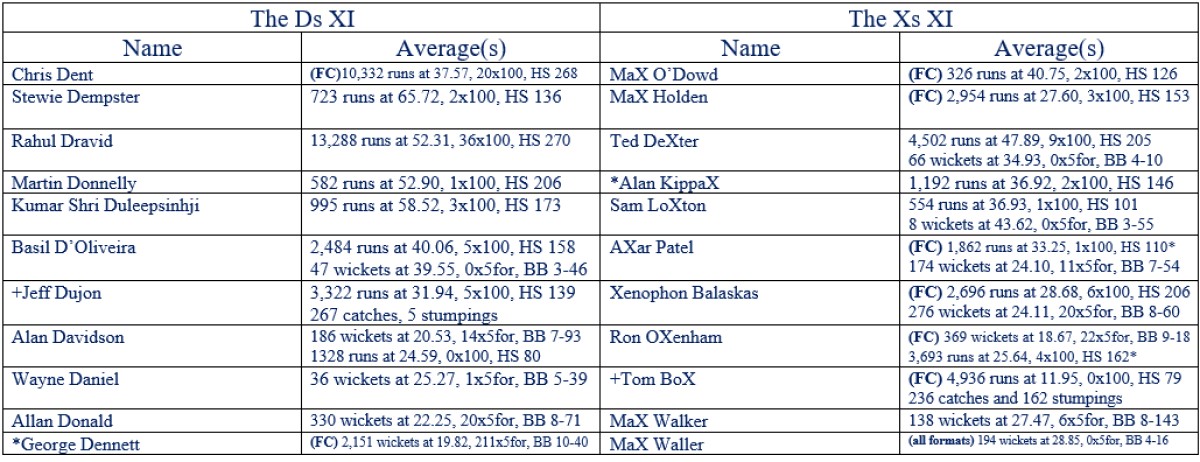
The Ds are miles ahead in batting and in pace bowling. The Xs have a clear advantage in spin bowling, and also Box was a finer keeper than Dujon, and not as much less of a batter than raw figures suggest – his average of 12 compared to Pilch’s 18 (Pilch was the best batter of Box’s era) is not massively different to Dujon’s 31 compared to Viv Richard’s 50. However, save on a Bunsen the Ds have a commanding advantage: Ds 4, Xs 1.

THE Ds V THE Ys
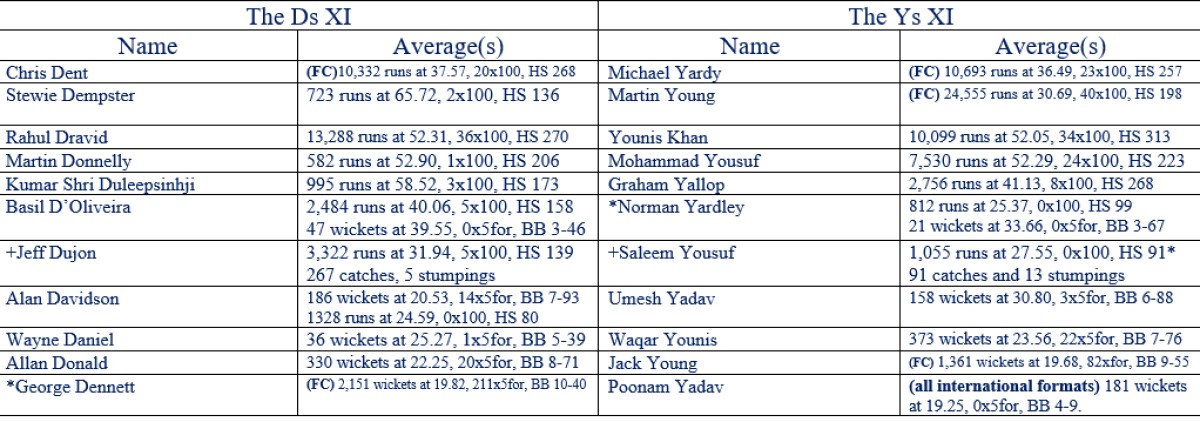
Dent just wins his match up against Yardy. Dempster has M Young on toast. Dravid just edges his match up against Younis Khan. M Yousuf beats Donnelly – the greater sample size on which his average is based more than making up for Donnelly’s slightly higher average. Duleep beats Yallop, D’Oliveira beats Yardley, although Yardley has to be considered to better of two captains. Dujon outranks S Yousuf in both departments. The Ds comfortably win the pace department, while the Ys are better equipped spin wise. Final score: Ds 3, Ys 2.

THE Ds V THE Zs
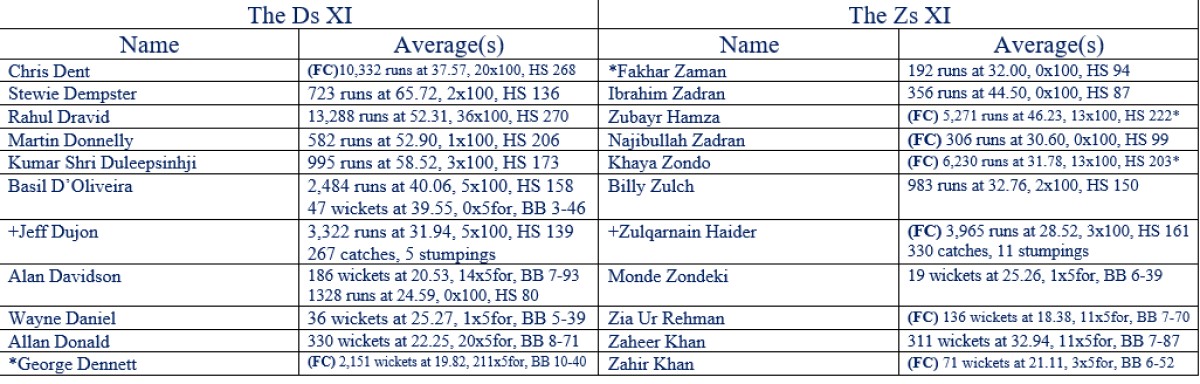
The Ds dominate the batting, being ahead in all the top eight slots. The Ds also have the finer keeper, and the captaincy is a close call. The Ds dominate the pace bowling, having the number 1,2 and 3 ranked pacers in this contest. The Zs have a numerical advantage in the spin contest, but Dennett would be the top ranked spinner in this match up. I score this Ds 5, Zs 0.

THE Ds FINAL RECKONING

The Ds scored 12 of a possible 20 points today, giving them 59 out of 125 overall, 47.2%, which places them third of the four teams we have seen in full so far.

THE Es V THE Fs

I give Elgar and J Edrich the edge over Fredericks and Fry as an opening pair. Flower wins the number three slot, and Fletcher and Faulkner win their match ups, with Faulkner also providing a bowling option. Foakes is ahead of Evans with the bat, and not far enough behind with the gloves to alter the outcome of their match up. While the presence of Endean increases the depth of the Es batting it reduces their bowling options. Fender was a fine all rounder and would have to be considered a better skipper than the pedestrian Elgar. Both sides have magnificent bowling options, and Foster and Flowers’ ability to contribute with the bat neutralizes Endean. I think the Fs have enough to win this and score it Es 2, Fs 3.

THE Es SO FAR

The Es came into the spotlight with 7 of a possible 20 points banked, which means they now have 9 out of 25, 36%.

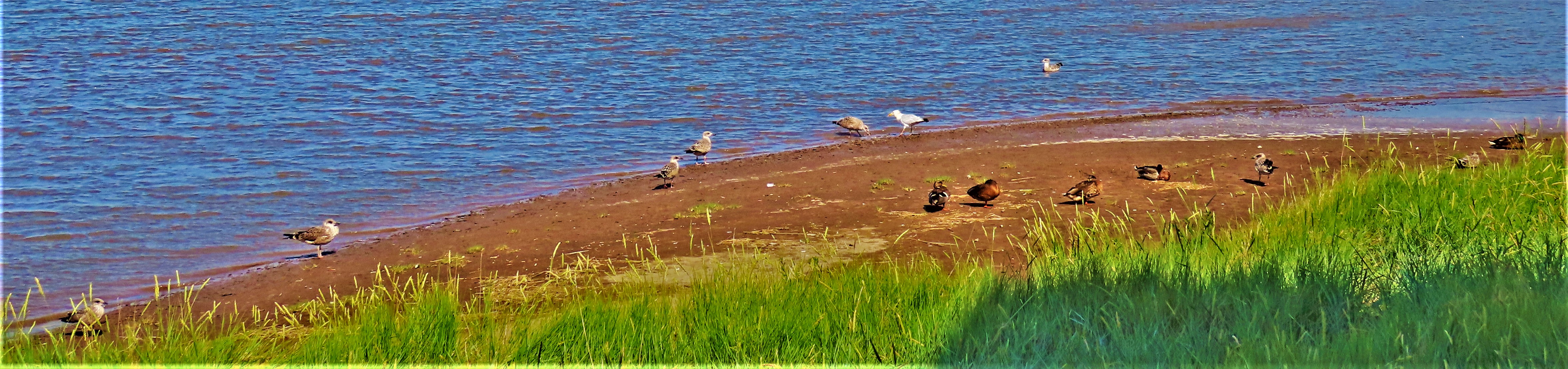
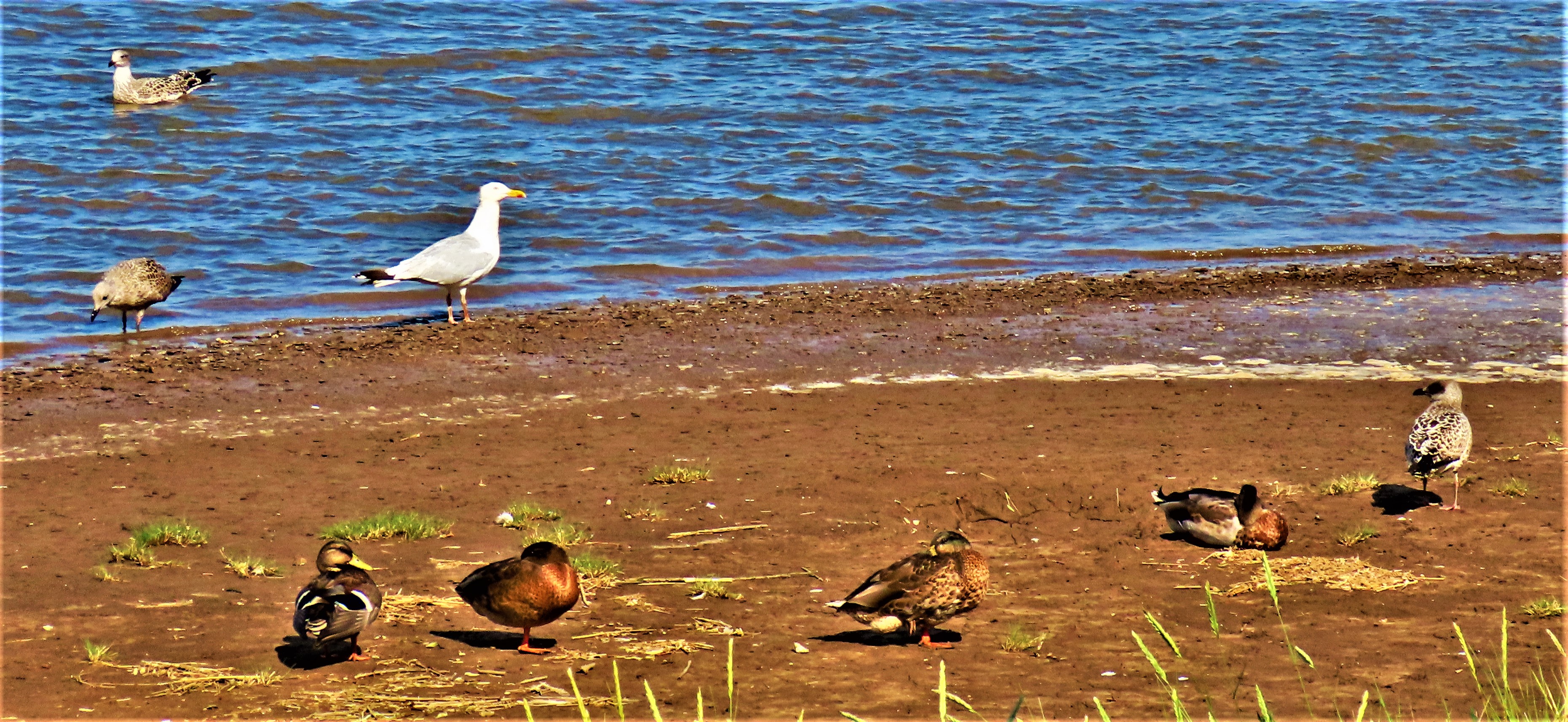
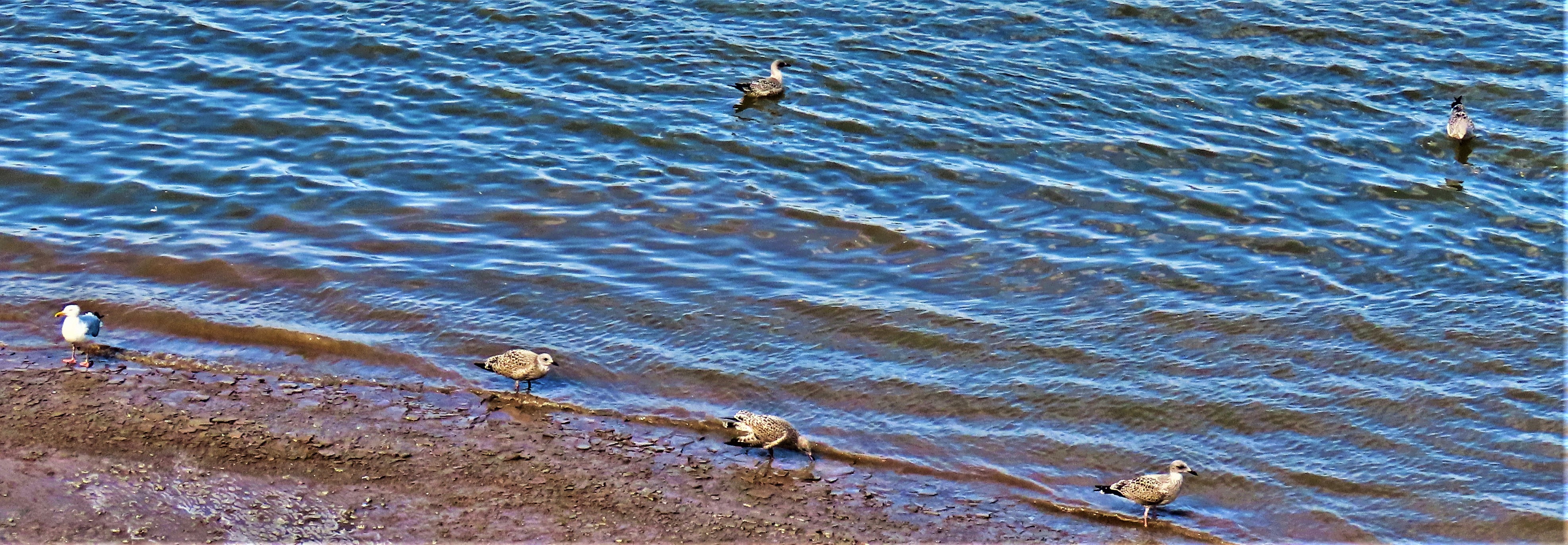
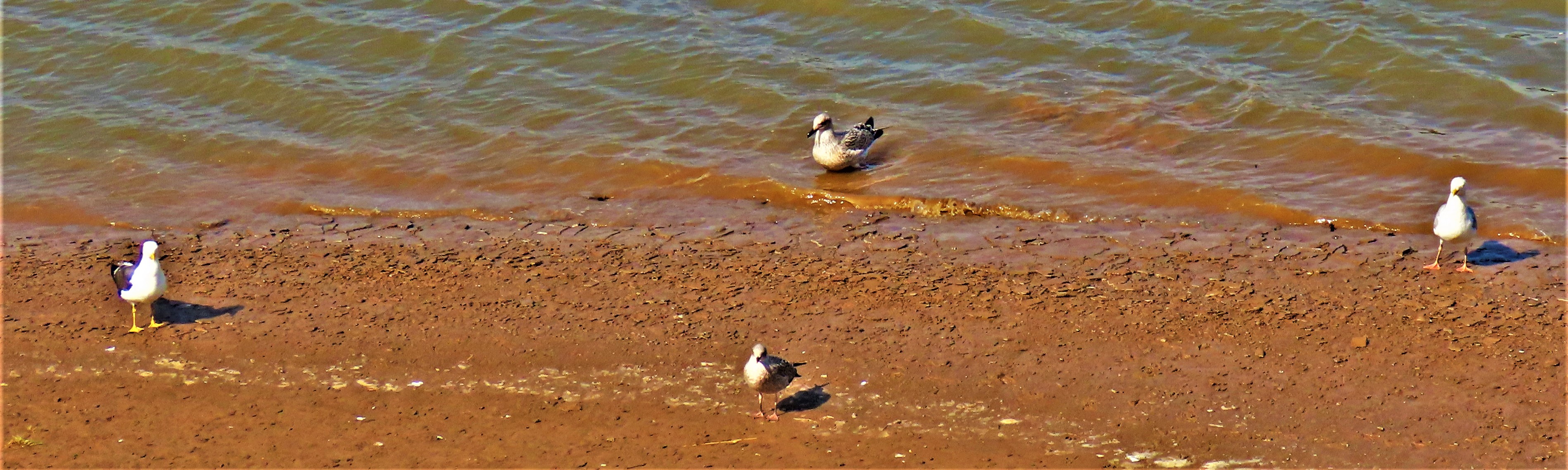
PHOTOGRAPHS

My usual sign off…

All Time XIs – Match Ups 15

Continuing my extended analysis of how the all time XIs I picked for each letter of the alphabet fare against one another. Also some photographs.

Welcome to the latest installment in my extended analysis of how the teams I created for each letter of the alphabet fare against one another. This post features a ‘changing of the guard’ – the Cs occupy the hot seat at the beginning, and then we start the Ds. The Cs start today with 33 out of 115 points.

THE Cs V THE Ys

The Cs definitely have the stronger opening pair, nos 3,4 and 5 are very close, with Younis Khan outpointing I Chappell to the same extent that G Chappell outpoints Yallop. Norman Yardley outbats Constantine but loses the bowling element of their match up. Also, Chappelli is the better captain. S Yousuf outbats Carter but is out kept by the Aussie. Cummins and Croft have to be ranked above Younis and U Yadav as a new ball pair. Jack Young comfortably outmatches Cornwall as a finger spinner, while P Yadav vs Chandrasekhar is an even contest. The Ys have a marginal batting advantage, and win the spin bowling, but the pace bowling advantage is strongly with the Cs, and I think that will count for more than anything else and accordingly score this one: Cs 3, Ys 2.

THE Cs V THE Zs

The Cs dominate the top batting, with only Cowdrey arguably losing his match up against I Zadran. Zulch outbats Constantine, but does not offer a serious bowling option. Carter wins the wicket keeping match up, and Zaheer Khan and Monde Zondeki are way behind Cummins and Croft in the fast bowling stakes, while Constantine is the only back up pace option available to either side. The Zs probably win the spin department, but I don’t see that making much difference to the outcome of this one: Cs 4, Zs 1.

THE Cs FINAL SCORE

The Cs finish with 40 out of 125 points, a total score of 32%, comfortably bottom out of the three XIs who have been fully under the spotlight so far.

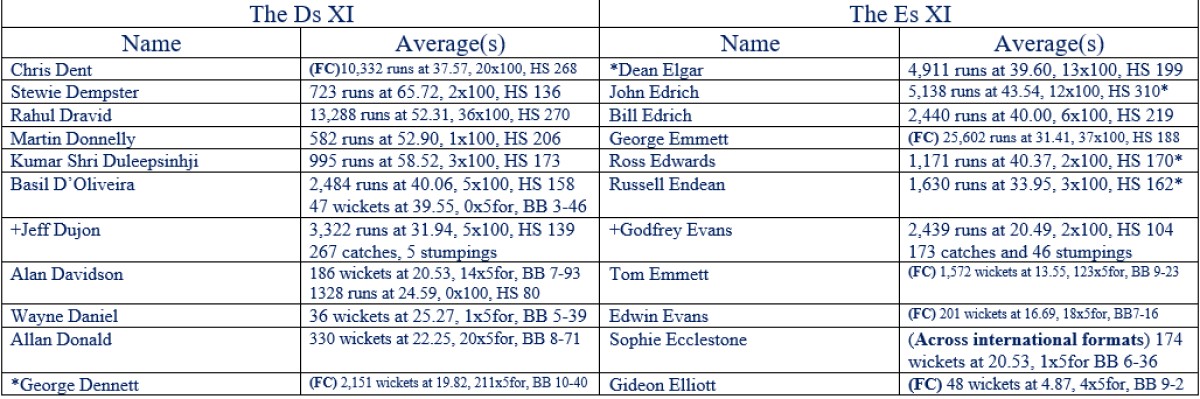
THE Ds V THE Es

The Cs have one solid pro and one genius opening the batting, one of the greatest number threes of all time, two legendary stroke makers at four and five, and a number six whose record at the top level suffered because his elevations was massively delayed by his personal circumstances and who still had a fine record. Dujon was an excellent keeper and a stylish batter, their pace trio is awesome, with Daniel probably third seamer behind an opening pair of Davidson and Donald, and they have a great spinner who was unlucky to overlap with two even greater ones of the same type – Wilfred Rhodes and Colin Blythe. The Es have two left handed battlers to open the batting, a number three who is less far behind his opposite number than figures suggest on two counts – 1)Dravid batted in an easier era for batting than Bill Edrich, and 2) Edrich lost six prime years to WWII, in which he distinguished himself as a flying ace. Emmett and R Edwards are undoubtedly well behind Donnelly and Duleepsinhji, and Endean is beaten by D’Oliveira. Dujon wins the batting element of his match up against Evans, but the Englishman was an even greater keeper than the West Indian. The Es have a left/ right opening pair of pacers, and a couple of crafty slower bowlers in Evans and Ecclestone. Evans v Daniel is not strictly a match up since they were very different types of bowler, and it is hard to say who would be preferable. I rank Ecclestone ahead of Dennett as a slow left armer. The Ds are ahead on batting, the Es may be ahead on front line bowling, but the Ds have an extra option in D’Oliveira. I score this one as Ds 3, Es 2.

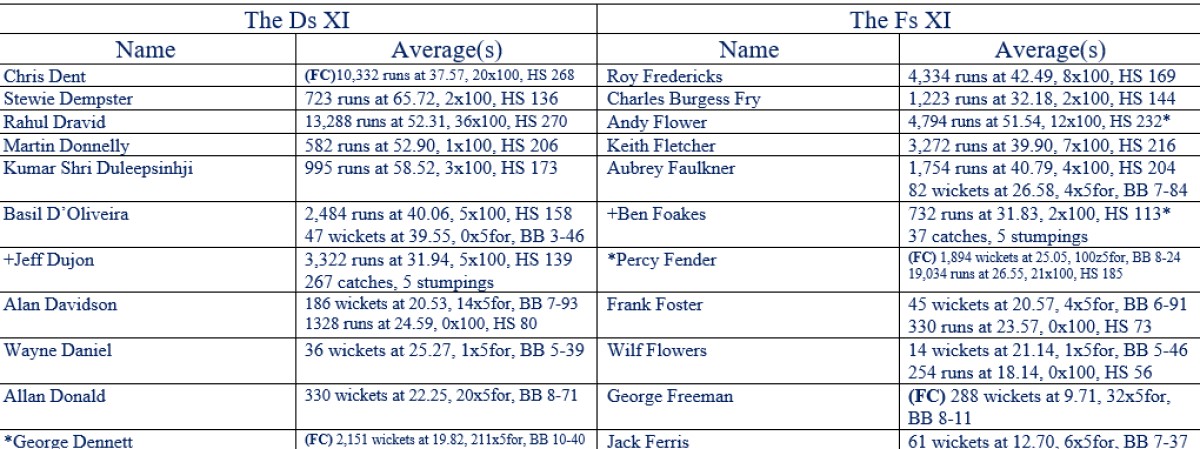
THE Ds V THE Fs

The Ds have a marginal advantage when it comes to the opening pair, and Dravid rates above Flower as a number three. Donnelly beats Fletcher confortably, and Duleepsinhji beats Faulkner with the bat, but as against that Faulkner offers a bowling option. The Ds are stronger with the bat at nos 6,7 and 8, but the Fs have the potential of useful contributions from Flowers at 9. The Fs boss the bowling, Foster, Freeman and Ferris being at least as good a pace combo as Davidson, Donald and Daniel, and the Fs having three front line spin options to the Ds 1. I expect the Fs to win this comfortably and score it Ds 1, Fs 4.

THE Ds V THE Gs

The Ds have the edge in batting, though by less than it seems at first glance, the Ds also have the better pace attack, with only Garner in the same class as their trio. The Gs have a significant advantage in the spin bowling department, and they have the redoubtable WG as skipper. I still make the Ds favourites and score this one Ds 3, Gs 2.

THE Ds PROGRESS REPORT

The Ds had 8 points out of 15 from their three previous encounters. They are now on 15 points out of 30, exactly 50%.

PHOTOGRAPHS

My usual sign off…
All Time XIs – Match Ups (11)

Welcome to the next post in my series analysing how the all time XIs I selected for each letter of the alphabet fare against each other. The Cs XI currently occupy the hot seat, and they enter this post on 3.5 out of 15 points.

THE Cs V THE Es

The Cs are ahead in each of the top five batting positions, though Elgar and J Edrich aren’t out of position whereas Cowdrey and Chanderpaul are. Also Bill Edrich lost six prime years to WWII, so Chappelli’s advantage over him the bat is slightly illusory. Endean outbats Constantine but doesn’t bowl. Evans is marginally behind Carter with the bat, but compensates by being the finer keeper. Tom Emmett and Gideon Elliott look capable of matching Cummins and Croft, and Emmett’s left arm is an extra point of variation. Edwin Evans beats Cornwall with the ball, while Ecclestone against Chandrasekhar is a close contest. The Cs have better back up bowling options, with Constantine, Compton, Chanderpaul and G Chappell all capable of offering something, whereas only Bill Edrich is remotely close to being a back up bowling option for the Es. This is a close contest, but I think the Es superiority in front line bowling is just enough: Cs 2, Es 3.

THE Cs V THE Fs

The Cs have the edge in batting, although the Fs extra depth in that department narrows the gap. The Fs are dominant in bowling – Ferris, Foster and Freeman are all arguably superior to any of the Cs pacers, and whoever out of Foster or Ferris ends up third seamer knocks Constantine out of the park in that department. Similarly, the Fs three front line spin options, Faulkner, Fender and Flowers are all better than Cornwall, with Faulkner and Flowers both clearly also ahead of Chandrasekhar. For all their marginal batting advantage there are no circumstances in which I can envisage the Cs having the advantage, and Fender is one of the few skippers not to lose that contest to Chappelli. I score this one Cs 1, Fs 4.

THE Cs V THE Gs

The opening pairs are apparently closely matched, but Gavaskar and Greenidge are in their natural positions, while Chanderpaul and Cowdrey are not. Similar Chappelli at three is not as well placed over Grace as the figures make it look – Grace came late to test cricket – 32 when he made his debut, almost 51 when he finally retired, and that batting average of 32 is worth at least half as much again in more modern times. Plus he provides a bowling option. The Cs win the number four and five slots. However Gilchrist knocks the spots off Carter with the bat, though the latter was probably the better keeper. Gregory outpoints Constantine in the battle of the fast bowling all rounders. Geary and Garner are a little behind Croft and Cummins as a pair, but not significantly so. Grimmett outpoints Chandrasekhar, and from a bowling point of view Gibbs is the proverbial country mile clear of fellow West Indian Cornwall. The Gs are definitely ahead in terms of the front five bowlers, and their sixth option, WG Grace, outpoints at least two of the Cs front five as well. The Gs have a significant advantage, and a skipper who will certainly stand up to opposite number Chappelli. Not even Chappelli can salvage anything for the Cs from this one: Cs 0, Gs 5.

THE Cs V THE Hs

The Hs win the first four batting positions, G Chappell just having the edge on compatriot Hussey at no 5. Hendren is far superior with the bat to Constantine, while Healy clearly beats Carter. Hadlee and Holding at least match Cummins and Croft, Harmer and Herath beat Cornwall and Chandrasekhar. The Cs have the better fifth bowler, Constantine outdoing Hammond in that department. The Cs extra bowling depth does not make up for their lack of front line strength or for the fact that they are badly outgunned with the bat: Cs 0, Hs 5.

THE Cs V THE Is

The Cs boss the first five batting positions, , though the Is win the next three. Bowling wise the Is win on spinners, but lose heavily in the pace department – Iremonger may rate as a better third seamer than Constantine, but the new ball pairing does not compare to Cummins and Croft. I score this as Cs 4, Is 1.

Cs PROGRESS REPORT

Even with four points in the final match up the Cs have scored just seven points out of 25 today, moving them on to 10.5 out of 40, 26.25% so far.

PHOTOGRAPHS

My usual sign off…

All Time XIs – The Letter F

A look at some of the greatest cricketers to have surnames beginning with the letter F and some photographs.

I continue my exploration of the all time XI theme with a look at players whose surnames begin with the letter F.

THE XI IN BATTING ORDER

  1. Roy Fredericks (West Indies). Somewhat overshadowed by the later deeds of the greatest opening combo WI have ever produced, Greenidge and Haynes, Fredericks was nevertheless a player of the highest class. His most famous test knock was an innings of 169 against Australia at the WACA in Perth, not generally a happy hunting ground for visiting players. He was also only the second player to score a century in a men’s ODI after Dennis Amiss.
  2. Charles Burgess Fry (Sussex, England). His mastery of the art of batting is all the more astonishing given that cricket was just one area in which he excelled. He once scored a six successive first class centuries, a feat equalled by Bradman and Procter but unsurpassed to this day. Although he did score test centuries possibly his greatest innings at that level was the 79 he scored on a horrible pitch at The Oval in 1912, which put England in an unassailable position and secured both the match and the first and only triangular tournament for England.
  3. Andrew Flower (Essex, Zimbabwe). Without doubt the best test match batter his country has ever produced, he was also an adequate wicket keeper and an occasional off spinner, neither of which roles he will be called on to perform in this side.
  4. Keith Fletcher (Essex, England). At the time of his retirement he had scored more FC runs for Essex than any other player, though Graham Gooch broke that record.
  5. Aubrey Faulkner (South Africa). Only one person to have played 20 or more test matches can claim the double feat at that level of averaging over 40 with the bat and under 30 with the ball: Faulkner, who averaged 40.79 with the bat and took 85 wickets at 26.58 each.
  6. +Ben Foakes (Essex, Surrey, England). The best keeper of the 21st century, with the possible exception of Sarah Taylor of the England women’s side and a good batter. In this side there are three batters of serious substance to follow him, and only one genuine bunny.
  7. *Percy Fender (Surrey, England). As I stated in my Surrey piece his aggression makes him an ideal person to bat at seven in a very strong line up. A good leg spinner, a brilliant fielder and a shrewd captain (unlike the England selectors of his day I have given him this role in the side).
  8. Frank Foster (Warwickshire, England). His career was terminated early by a motorcycle accident, but he had done enough, including joining forces with Sydney Barnes in the 1911-12 Ashes to form the most potent opening bowling pair seen to that point in test cricket to justify his selection here. He was also a fine middle order batter, indeed the first Warwickshire player ever to record a triple century.
  9. Wilfred Flowers (Nottinghamshire, England). With two all rounders in the side whose bowling speciality was leg spin I wanted someone to spin the ball the other way, and Flowers, a bowling all rounder who bowled off spin fitted the bill nicely.
  10. George Freeman (Yorkshire). 288 wickets in 44 first class matches at less than 10 runs a piece earn him his place in this XI. He played as an amateur, hence the small number of appearances he made at FC level, earning his living as an auctioneer.
  11. Jack Ferris (Australia, England). The left armer had an astonishing record in his brief test career, and his FC record over a much bigger sample size also stacks up very well. His “England” appearance came on a privately organized visit to South Africa, where the match that team played against an SA XI was classed as test match somewhat later.

This side has a very strong batting line up, with Flowers at number nine having done the season’s double of 1,000 runs and 100 wickets in first class matches on five separate occasions. The bowling, with Ferris, Freeman and Foster to bowl varieties of seam, and Flowers, Faulkner and Fender available as front line spin options has both depth and variety. There is a very shrewd captain in Fender, and a keeper who will accept every chance going in the form of Foakes.

HONOURABLE MENTIONS

I am going to start this section with subsection dedicated to the most glaring omission:

ALFRED PERCY ‘TICH’ FREEMAN

The second leading wicket taker in first class history, only bowler to have claimed 300 FC wickets in a single season, only bowler to take all ten wickets in a first class innings three times. Considered purely on this basis he should be sho0-in, but two factors mitigated against his inclusion: he was a specialist leg spinner, and with Faulkner and Fender both having ironclad cases for inclusion I wanted a third spinner who did something different, also while he was destroyer of small fry his record against the stronger counties, and at test level, was no more than respectable, and this was an additional strike against him.

BATTERS

Reginald Erskine ‘Tip’ Foster scored 287 on test debut, but only topped 50 at that level once thereafter, so record breaker though he was he doesn’t qualify. Arthur Fagg, until recently the only player to score two double hundreds in a first class match, might have had an opening slot, but Fredericks’ left handedness plus the fact that he delivered at the highest level and Fagg did not swung that position his way. Some Aussies might root for Aaron Finch, and if I was picking a limited overs side he would be a sh00-in, but I make my judgements based on long-form cricket, and Finch’s numbers don’t stack up there. Francis Ford, an attacking left hander of the late 19th century did not have a good enough test record to merit inclusion. Neil Fairbrother never quite delivered at international level as he did for Lancashire.

WICKET KEEPERS

James Foster of Essex and England was a magnificent keeper, and scurvily treated by the England selectors of his day, but in the old saying “two wrongs don’t make a right”, and to select him in this side would be to wrong Ben Foakes. The only other keeper of note to have a surname beginning with F, Bruce French, was not in the same class as Foster or Foakes in either department.

BOWLERS

Other than ‘Tich’ Freeman with whom I started this section, the best known bowler I have omitted is Gus Fraser, who had a fine test record, but who I could not in honesty place above any of Ferris, George Freeman or Frank Foster. A combination of injuries, selectorial caprice and a decision to join a rebel tour of apartheid South Africa robbed Neil Foster of the kind of record that would have earned him a place alongside his namesake Frank. If I had been going to risk picking a female pace bowler I would have gone for Cathryn Fitzpatrick, the Aussie who was by some way the quickest female bowler of her generation. Left arm wrist spinner ‘Chuck’ Fleetwood-Smith was just too expensive to claim a place. West Indian quick George Francis was past his best by the time they gained test status. Paul Franks had a fine career for Nottinghamshire but never did anything of note at international level.

ALL ROUNDERS

Duncan Fletcher might have been the second Zimbabwean to feature in this XI, but he finished before his country gained test status, so will have to settle for being head coach of this XI, a job he performed with distinction for England. Aussie James Faulkner would be well in the running were I selecting a limited overs side, but his long form record is not quite good enough.

PHOTOGRAPHS

Now that our look at cricketers whose surnames begin with F is at an end it remains only to offer up my usual sign off…

The England Test Squad For The Caribbean

A look at the England squad selected for the test series in the Caribbean and some of my own photographs.

After the debacle of the Ashes in Australia (|Australia 4, the weather 1, England 0) a number of ECB management figures departed which was welcome news, although Tom Harrison remained in post. Paul Collingwood was appointed interim head coach, with Andrew Strauss taking over as director of cricket. Their first job together was to pick the party for the test tour of the Caribbean, and this post looks at their choices and includes a suggestion for the permanent head coach role.

INTRODUCING THE SQUAD

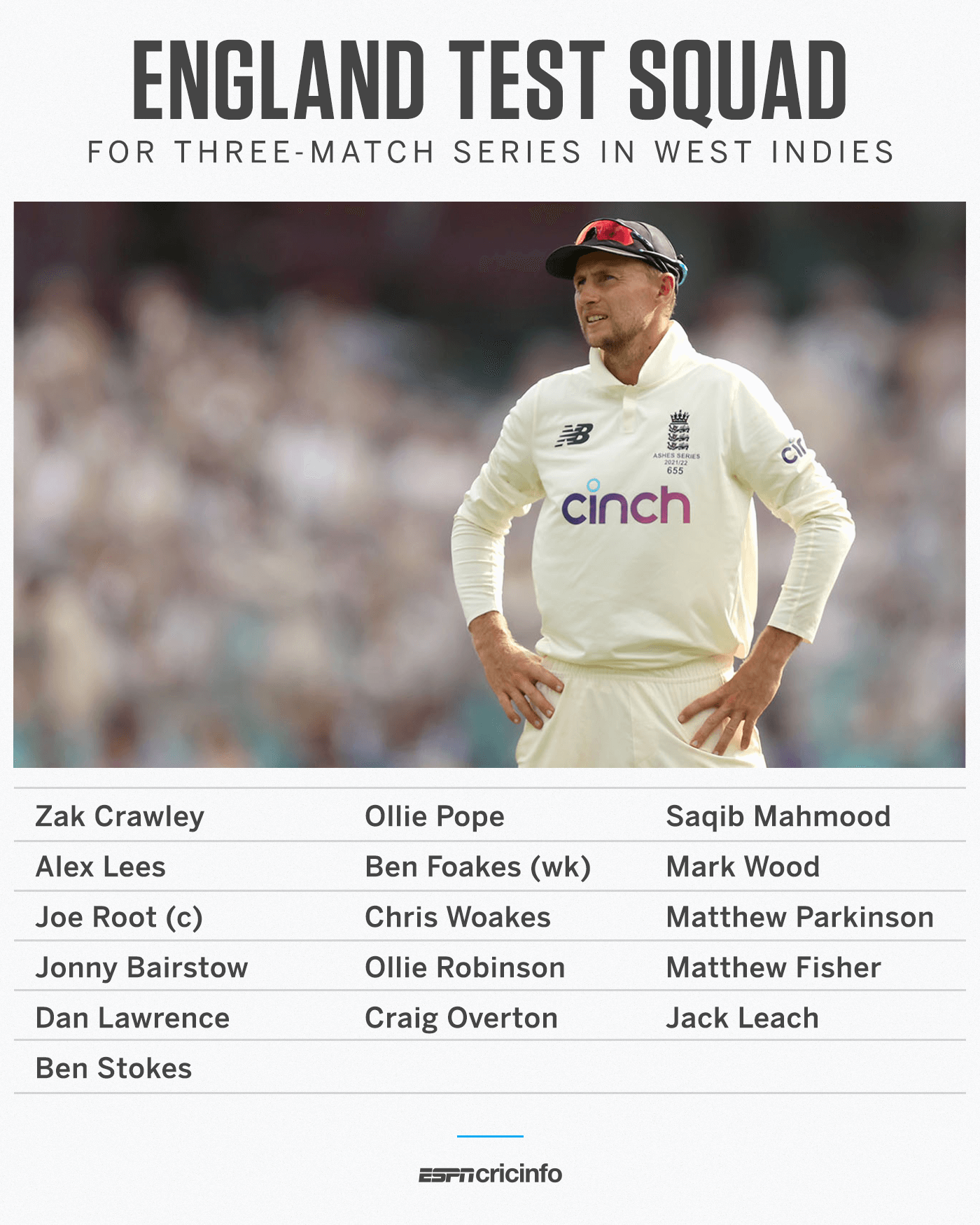
There is an article on cricinfo about the squad which I urge to read (click here), and I use their graphic to introduce the squad:

Story Image

THOUGHTS RE THE SQUAD

This is one of the worst selections I have ever seen done for England (and I have seen a lot). There are only two recognized openers, Lees (whose presence I welcome, he has built a fine record at Durham over the last few years) and Crawley (averages in the low 30s at FC level and less than that at test level, a poor selection). There is no recognized number three at all (apparently Root, one the best number fours England have ever had, is going bat there, a quite awful call by Strauss/Collingwood). Pope and Lawrence are fine middle order players though neither have done anything great at test level as yet. Stokes of course is a great player. Bairstow does not have a great test record, but he did score a century in the only game in Australia in which England were not utterly destroyed (with the assistance of some weather interventions they hung on for a draw nine down in the second innings). Foakes is one of three selections I am genuinely pleased about (I welcome the inclusion of Parkinson the leg spinner in a full squad for the first time, and Jack Leach has been mishandled but is still the best current English spinner). While I understand the thinking behind the inclusion of Woakes – his all round skills theoretically give England more options – but in practice outside England his bowling is insignificant, which means that what you actually have is an averagely good lower middle order batter. Craig Overton is good cricketer, but unlikely to pose much of a threat with the ball in the Caribbean. Mark Wood, Ollie Robinson and Saqib Mahmood are all fine bowlers and I welcome the inclusion of Mahmood, not quite out and out fast, but quicker than most English seamers. Matthew Fisher has played 21 FC matches for Yorkshire, in which he has taken 63 wickets at 27.52, a respectable but not outstanding record, and he is yet another of the right arm fast medium brigade with which English cricket is overstocked. Neither James Anderson nor Stuart Broad have been included in the party. Defenders of this move are arguing that this tour is being used for experimentation and that we already know what Anderson and Broad are capable of. To this I say: pshaw – England should by now have learnt that they are not strong enough as a test side to take any opposition lightly, especially away from home, and first and foremost their target should be win the current series.

Other than the two veterans (Anderson especially, who at 39 continues to be majestic with the ball) the players I feel have been worst treated in this shambles are Abell, Bohannon and Bracey, three recognized number threes with good recent records, any one of whom could have been included in this party to fill that slot. I also feel that Crawley is very fortunate to be persisted with – a recall for Sibley, or elevation for any one of Libby, Haines or Yates would have looked a better move.

I conclude this section by congratulating West Indies in advance for the series win they have just been handed by the England selectors.

THE HEAD COACH ROLE GOING FORWARD

As far as I am concerned Collingwood by his role in this utter shambles of a selection process has just ruled himself straight out of the permanent role as head coach. The right person for head coach of the test side for me is Gary Kirsten, who should have had the job when it was given to Silverwood instead. Kirsten wants split coaching roles, so that the ODI and T20 sides have a head coach of their own. I am happy to go along with this, and I suggest that the head coach of these sides should be Charlotte Edwards who after an awesome playing career has gone on to build up an excellent coaching record.

PHOTOGRAPHS

Time for my usual sign off…

Championship Performances of Promise

A look at some of the more important success stories from this round of county championship games and a bumper crop of photographs.

As this round of county championship matches heads towards its conclusion (three are already settled – congratulations to Essex, Gloucestershire and Hampshire on their wins) I highlight several performances of potential interest to England.

While Ollie Pope dominated Surrey’s massive total against Leicestershire with his 245 there were also useful runs for Jamie Smith (119) and far more significantly for Ben Foakes (87), who should feature as England’s test wicket keeper.

For Leicestershire, Hassan Azad, mentioned as a candidate for an opening berth (Burns remains under some scrutiny after his winter, and Sibley is injured and may not be fit for the first test, while Lammonby is struggling horrendously after a fine start to his FC career) made a century in the first innings and is well on the way to doubling up. As things stand at the moment he is averaging 44.84 in FC cricket, while playing his 31st match at that level.

In the west country derby Ryan Higgins had a fine match, and with there being a possible vacancy for an all rounder with Stokes injured and Woakes playing in the IPL that could prove significant. Of more definite significance is the performance of James Bracey – a century and an 82 not out in the second innings. He has been part of the England set up but has yet to play a test match.

Finally, Matt Parkinson for Lancashire has produced a good bowling performance. He took 3-49 in the first innings, including a pretty good impression of the ‘Gatting ball’ and already has 2-23 in the second as Lancashire press for victory (Northamptonshire can do no better than a draw from here). His five wickets in this match have taken his bowling average in FC cricket below 25 (currently 67 wickets at 24.42). He remains #2 to Leach among current England spinners, although he is now paying less per wicket than Leach in FC cricket, because Leach has over 300 wickets to his credit at FC level and is faring respectably at test level, but he may well be earning himself a trip to Australia as an accredited member of the party rather than a ‘reserve’ as was over the winter just gone.

Oliver Edward Robinson of Sussex, definitely a candidate for elevation, has just recorded innings figures of 9-78, giving him 13-128 in the match. If England want five bowling options, Higgins at seven, Robinson at eight, one out and out speedster, Leach and one of Broad/ Anderson could work well, Higgins and Robinson have decent batting credentials.

PHOTOGRAPHS

I have lots of photographs to share with you…

India Dominant In Chennai

A look at day two in Chennai and some matters that arise from it.

This post looks at day two in Chennai, and at a few related issues.

INDIA’S DOMINANT DAY

The second day of the second test match got underway with India 300-6 overnight. Jack Leach began with a maiden over. Moeen Ali was gifted a couple of wickets (one a magnificent stumping by Foakes when Axar gave him the charge in the day’s second over, and one a full toss placed into the hands of the fielder) to bring his tally up to four, but also continued to bowl regular quantities of dross. It fell to Olly Stone, the fast bowler, to end the Indian innings, taking the last two wickets, to go with his earlier wicket of opener Shubman Gill.

England’s response was shocking, as they slumped to 39-4 and then 52-4. At that point the two Surrey men, Pope and Foakes, who had been sensational with the gloves, shared a stand that bolstered the total to 87, before Pope was dismissed. Moeen Ali, whose batting was allegedly part of the justification for his selection, contributed six to a stand of 19 for the seventh wicket, Leach made a run less but batted for longer, and Broad, sent in at number 11, made that position look his natural one, getting out as he did. Foakes was stranded on 41, and England, were all out for 134, a deficit of 195. They had taken the follow-on question out of India’s hands, just, but there was no way India were going to enforce and take even a 0.1% chance of having to bat last on this pitch.

Olly Stone took the new ball with no joy, but Broad did not share it with him, Leach coming on instantly. Moeen leaked 11 from his first over of the second innings. Leach got the wicket of Gill, and England deserved more success but were unlucky on several occasions with close decisions, and victim of at least one scandalously bad piece of umpiring, when Rohit Sharma was given not out for an LBW, and the official grounds for confirming it as not out were that he had played a shot, when even he did not make that claim on his own behalf, having tucked his bat in behind his bat. In the end India closed on 54-1, 249 runs to the good, and the question is when, and not if, they level the series.

CONTROVERSIES

Let me make one thing clear here: I am not in the business of deflecting blame or denying India credit. India deserve to be in the box seat in this game, having both batted and bowled better than England. However, it is legitimate to raise questions about a pitch is certain to see the game end with one whole day unused and may even see it end with two days unused. India have made better use of it than England (and how!) but that does not excuse producing such a strip for a match that is scheduled to last for FIVE days.

Secondly, although I do not believe them to have had any serious impact on the match situation, there have been a number of very poor umpiring decisions all of which have gone against England. None of the officials handling this game, either the two on-field umpires or the TV replay umpire have done their jobs anything approaching properly, and none should ever stand again in any match of any importance.

SELECTION ISSUES

India correctly dropped Sundar, who although he batted well in the first match was a liability with the ball. Ashwin, Axar Patel (who has had a splendid test debut) and Kuldeep Yadav all bowled impressively, especially Ashwin (5-43). By contrast, willfully refusing to learn from what happened with Sundar, England went the other way, dropping Bess and recalling Moeen Ali. For all that he somehow has four wickets against his name Ali is also the single biggest reason that England are in quite such massive trouble, having been leaking runs at nearer five than four per over on a helpful surface. He is almost 34, his bowling average at test level is approximately 37 and not improving, his batting average is below 29 and on the decline. I am absolutely certain that England need to admit to perpetrating a colossal blunder and drop him forthwith. The third match of this series is a day-nighter, and I would be tempted to for that game to go in with Leach the sole specialist spinner, with Stone selected alongside both of Anderson and Broad as a pace attack. If England feel they must have two front line spinners then they should either recall Bess or promote one or other of Parkinson or Virdi in his place. Pardon the all-caps here, something I very rarely do, but just to emphasise: MOEEN ALI IS NOT TEST MATCH CLASS WITH EITHER BAT OR BALL and continuing to pick him will hand the series to India on a plate.

PHOTOGRAPHS

My usual sign off…

England XI For 2nd Test

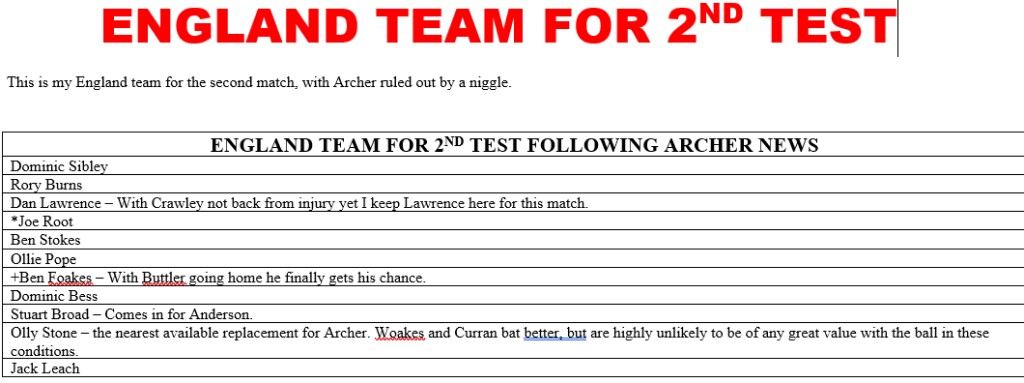
A very brief post setting out my England XI for the second test of the India v England series in the light of the news that Jofra Archer will not be involved due to a niggle.

Jofra Archer will miss the second test due to a niggle, so ideas about the England XI for that match need rejigging. What follows is my effort.

THE XI IN BATTING ORDER

  1. Dominic Sibley – his long innings at the start of the first match was crucial to England’s eventual success, and they will probably need more of the same from him.
  2. Rory Burns – his dismissal in the first innings was reprehensible, but up to that point he had batted decently, and this is no time for desperate replacements.
  3. Dan Lawrence – two failures in the first match, but with Crawley still not available it makes no sense to give this slot to yet another newcomer.
  4. *Joe Root – the most indisputable of all selections at this time.
  5. Ben Stokes – had a fine first match, and England will need him to produce something in this one as well.
  6. Ollie Pope – A quiet first match back from injury for the youngster, but he deserves to hold his place.
  7. +Ben Foakes – with Buttler heading home for a rest this one is unarguable.
  8. Dominic Bess – He is taking wickets, whatever you think about the manner of some of the dismissals, and exhibit A in the case against an Ali for Bess swap goes by the name of Washington Sundar, selected precisely because he could do it with the bat, did do it with the bat, but was ineffective with the ball. While a case could be made for promoting Virdi or Parkinson from the reserves I am not sure that the middle of an away series against India is a good time to blood a youngster.
  9. Stuart Broad – there was already a strong case for resting Anderson with a view to the day-night match coming up, and Archer’s injury strengthens it.
  10. Olly Stone – the replacement for Jofra Archer. The other options, Sam Curran and Chris Woakes both handle a bat better, but are unlikely to pose any threat with the ball on a Chennai pitch, so I opt to retain some genuine out and out pace in my attack.
  11. Jack Leach – in my view his claim on the no1 spinners spot is currently indisputable, and the way he bounced back from being savaged by Pant in the first innings of the first match speaks volumes for his character.

PHOTOGRAPHS

The Case Against A Test Recall For Jonny Bairstow

The case against the proposed recall to the England test squad of Jonny Bairstow.

Apparently England are considering recalling Bairstow to the test squad due to an injury to Ollie Pope. In this post I set out the reasons why they should not be doing so.

TRIED AND UNTRUSTED

Bairstow was dropped from the test squad because he was consistently failing to deliver in that format. His brilliance in limited overs cricket is unquestionable, but the case of Jason Roy should serve as a warning. Roy had a fantastic 2019 World Cup, and was drafted into the test squad off the back of it. Save for one good innings against Ireland at Lord’s he never looked like making the grade as a test batter. Not only that, the knock that his confidence took through his failures in test cricket has impacted on his international white ball form to the extent that his place in the squad is now in jeopardy.

DANIEL LAWRENCE AND JAMES BRACEY

On any rational assessment Daniel Lawrence and James Bracey should be ahead of Bairstow in the queue for a test place. Both have fine recent first class records, both made runs in intra-squad games in the preparation for the Covid-hit 2020 home international season. I would probably opt for Lawrence of the two, but fully acknowledge the case for Bracey. Lawrence and Bracey are both very much players for the future, and the upcoming series in Sri Lanka would give them a chance to stake a long term claim, whereas Bairstow would be a very regressive selection.

COUNTY CHAMPIONSHIP

The proving ground for long format players is supposed to the county championship, and even in the abbreviated 2020 season, where Essex and Somerset played six matches each and everyone else five more than one youngster accepted opportunities that came their way. The inclusion of Bairstow in a test squad would smack of ‘closed shop’ practices and look suspiciously like a slap in the face not just for the players I have actually named above, but for the County Championship. Jordan Cox of Kent had an amazing season, especially for someone who was still in his teens at the time (he has just turned 20), and has every right to expect a test call to come sooner rather than later, and like Lawrence and Bracey he would be more deserving of such than Jonny Bairstow.

The other alternative route the selectors could go down given his recent success with the bat is to promote Buttler to no 6 and give the wicket keeper’s role to Foakes. This too would be superior to the non-solution of a recall for Bairstow, especially if given the nature of Sri Lankan pitches they plan to elevate Matthew Parkinson, the young leg spinner.

PHOTOGRAPHS

Here are some recent photographs…

England’s Victory

Looking at the turnaround in the test match at Old Trafford, plus a few other bits.

INTRODUCTION

The main focus of this post is the opening test match against Pakistan at Old Trafford, with a brief glimpse at the second round of fixtures in the Bob Willis Trophy as well.

FROM THE JAWS OF DEFEAT

England’s fightback in this match began on Friday evening, when they reduced Pakistan’s second innings to 137-8. Although it did not take very long yesterday morning for the last two wickets to fall, 32 runs were accrued from the 3.2 overs for which Pakistan batted. This left England needing 277 to win, and at first, as wickets fell steadily it looked very unlikely. When Pope got out out to a brutal ball to make it 117-5 it seemed a matter of when, not if. At that point Chris Woakes with seven single figure scores in his last eight test knocks came in to join Jos Buttler who had had a stinker of a match up to that point. Both players played their shots, recognizing that taking the attack back to Pakistan was the only chance. As the partnership developed Pakistan became a little ragged, although nerves also kicked in for the England pair and progress slowed. Buttler fell for 75 with just over 30 still required, and England sent in Stuart Broad, known as a quick scorer, with the aim of making sure that the second new ball was not a serious factor. The ploy worked, and by the time the new ball became available the target had been reduced to 13. In desperation Pakistan put on a fast bowler at one end but kept Yasir Shah going at the other. Broad was out with England a boundary away from victory and Bess survived the remainder of the over. Woakes edged the first ball of the next over through the slip region for four and England were home by three wickets. Woakes had scored 84 not out, going with 19 in the first innings and total match figures of 4-54. In view of the result there was no other candidate for Man of the Match.

There has only been one occasion when an England no7 has scored more in a 4th innings run chase – at The Oval in 1902 when Gilbert Jessop came in with the team 48-5 in pursuit of a target of 263 and blasted 104 in 77 minutes. Woakes’ performance was more reminiscent of George Hirst’s effort in that match – five wickets with the ball and scores of 43 and 58 not out.

ENGLAND PLAYER RATINGS

  1. Rory Burns – 4 – the opener failed twice in this match.
  2. Dominic Sibley – 6 – one long innings and one failure with the bat, also a superb unassisted run out in the field,
  3. Joe Root – 6 – not many runs for the skipper, but he led the side well, and his promotion of Broad to cater for the specific circumstances of the second innings was an excellent decision.
  4. Ben Stokes – 6 – failed with the bat, but although not fully fit to bowl took a hand at the bowling crease in England’s hour of need and bagged a wicket.
  5. Ollie Pope – 7 – a magnificent knock in the first innings, when it looked like he was facing a different set of bowlers to everyone else, and the delivery that got him was all but unplayable. Also played a few decent shots in the second dig before fetching another ‘jaffa’.
  6. Jos Buttler – 4 – a horror show behind the stumps, including missing a chance to see the back of Shan Masood for 45 (he went on to 156) and several other howlers, a gritty first innings batting effort, and a fine effort in the second innings, but still even after that knock in overall deficit for the match.
  7. Chris Woakes – 9 – a magnificent match for the under-rated all rounder. He is now indispensable in England (in some other parts of the world where the combination of the Kookaburra ball and the different atmospheric conditions effectively eliminates swing he is a lot less of a player) and his Man of the Match award was thoroughly deserved.
  8. Dominic Bess – 5 – bad wicket keeping caused him to miss out on several wickets, but in the second innings with the ball definitely turning he should have done better than he did.
  9. Jofra Archer – 5 – an ordinary game for the express bowler.
  10. Stuart Broad – 7 – bowled reasonably, played two splendid cameo innings.
  11. James Anderson – 5 – the veteran was unimpressive by his own standards, though respectable by anyone else’s.

These ratings mostly look low for players in a winning side and that is for a good reason – Pakistan bossed this game through its first two innings, and England were fortunate to emerge victorious.

THE REST OF THE SERIES

News has just emerged that Stokes is heading to New Zealand for family reasons and will not play in the remaining matches of the series. Buttler cannot continue as keeper, the question being whether you think he can justify being picked purely as a batter. I personally do not and would leave him out. My chosen line-up from those available would be Burns, Sibley, Crawley, *Root, Pope, +Foakes, Woakes, Bess, Robinson, Archer, Broad. Anderson I think needs to be rested, and I opt for Robinson as his replacement. If Buttler’s selection is non-negotiable he gets the nod at six as a specialist batter, and Robinson misses out. Bess needs a good match sooner rather than later but I would not want to be without a front line spin option.

THE BOB WILLIS TROPHY

The second round of matches in this competition are well underway. Worcestershire scored 455-8 against Glamorgan, who are 27-0 in reply. Yorkshire managed 264 in their first innings and Notts are 140-4 in reply. Northants v Somerset has seen some extraordinary happenings – Somerset made 166 in the first innings, Northants were then bowled out for 67, and Somerset were at one point 54-6 in their second innings before recovering to reach 222, Northants are 5-0 in their second innings. Middlesex made 252 against Hampshire, who are 129-3 in reply. Leicestershire managed 199 against Derbyshire who are 235-3 in response. Sussex made 332 against Kent who are 131-1 in response. Gloucestershire scored 210 all out v Warwickshire who are 73-3 in reply. Durham were all out for 180 against Lancashire, who are 138-4 in response. Finally, Essex scored 262 in their first innings, and Surrey are 81-4 in response.

SOLUTION AND NEW TEASER

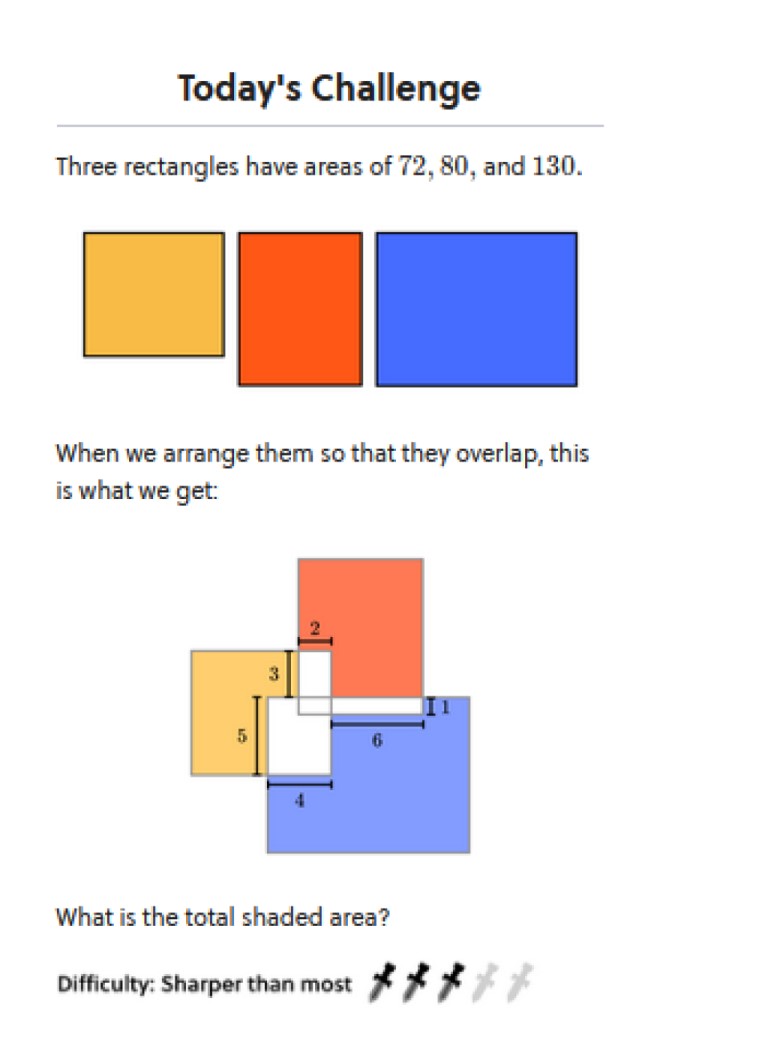
I posed this problem from brilliant in my last post:

Venn Rectangles

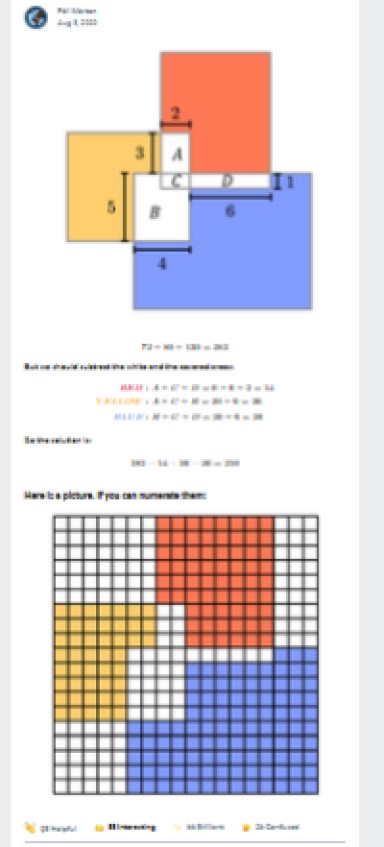
The answer is 216, as shown in this published solution by Pall Marton:

PM

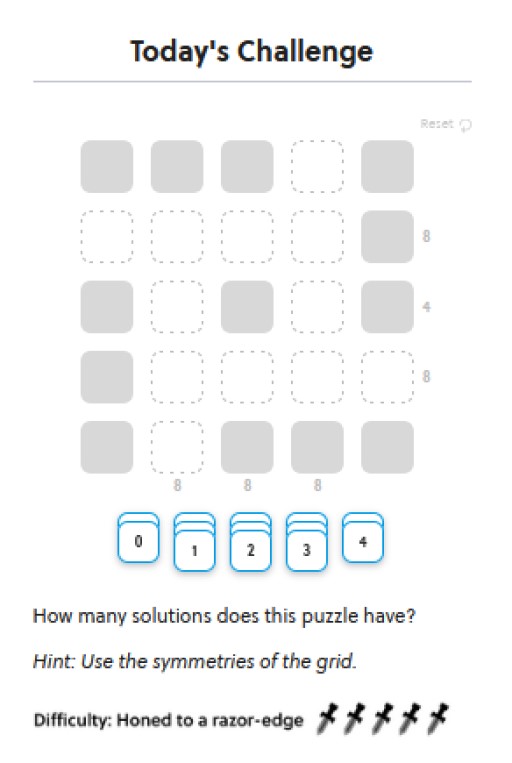
Here is another teaser, this one tangentially connected with sudoku:

Pinwheel

This one is not as hard as the five dagger rating suggests, but it is quite challenging. Solution in my next post.

PHOTOGRAPHS

My usual sign off…

IMG_2645 (2)IMG_2646 (2)IMG_2647 (2)IMG_2648 (2)IMG_2649 (2)IMG_2650 (2)IMG_2651 (2)IMG_2652 (2)IMG_2653 (2)IMG_2656 (2)IMG_2657 (2)IMG_2657 (3)IMG_2658 (2)IMG_2659 (2)IMG_2659 (3)

IMG_2662 (2)
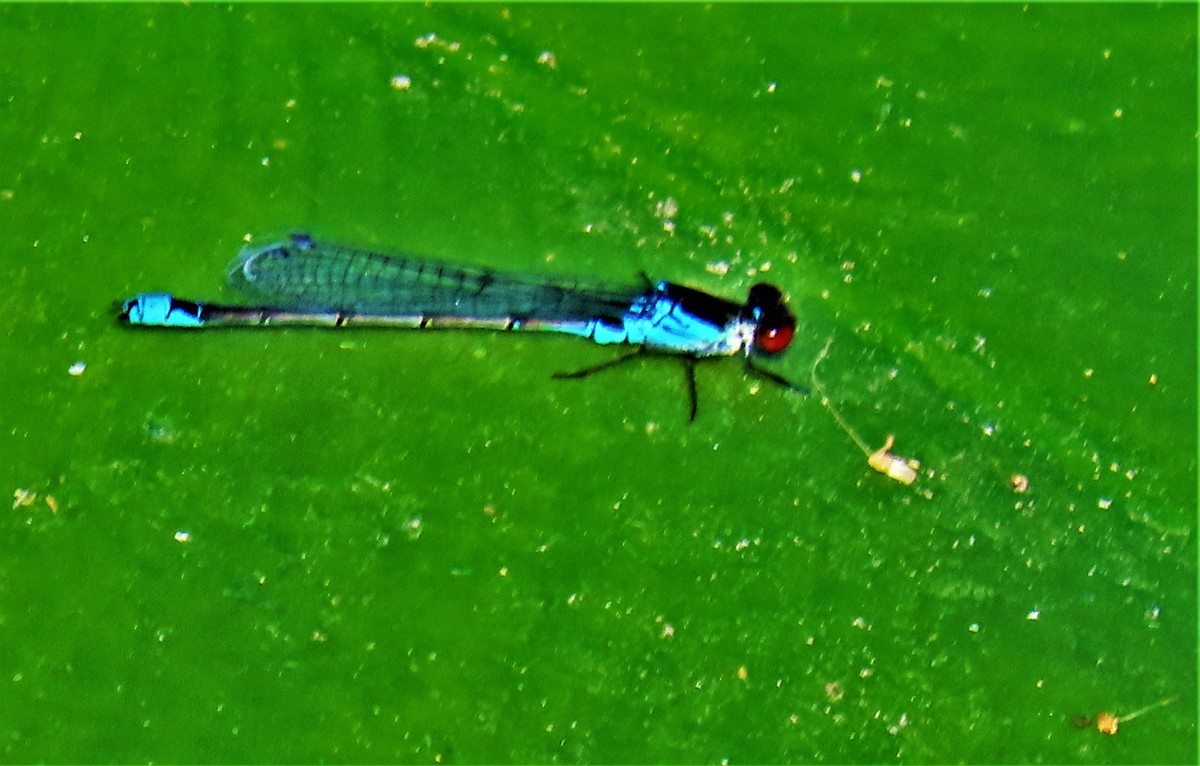
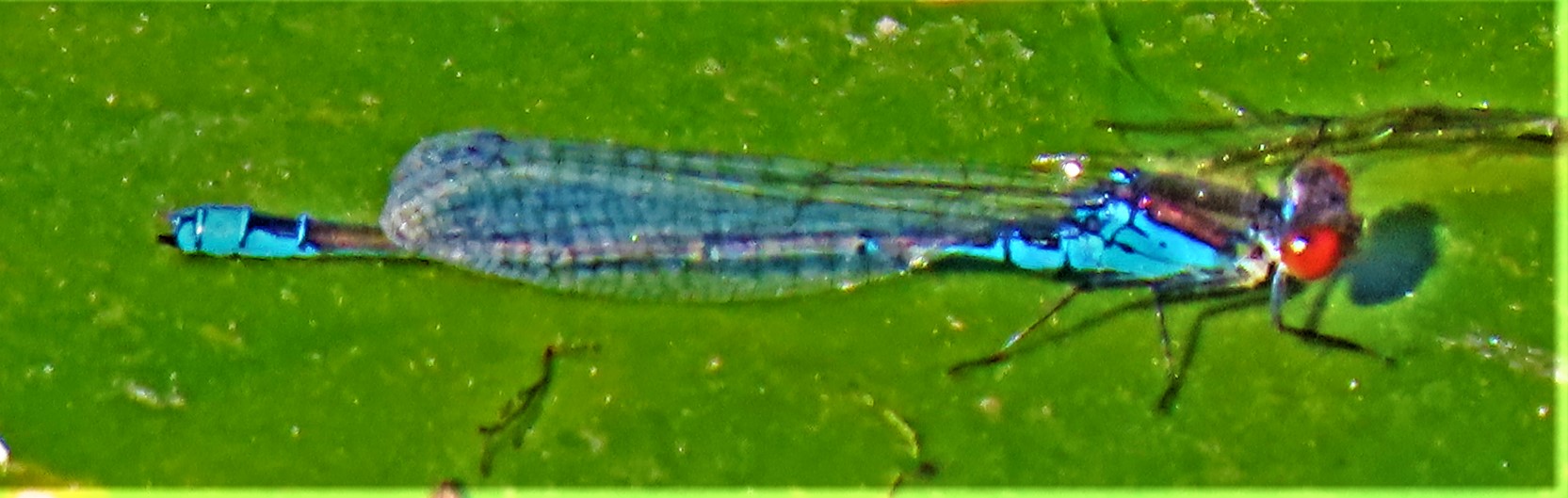
Damselflies have been out in force, as these remaining pictures show. They are tricky in two ways – actually capturing them on camera, and editing the shots to best effect.

IMG_2662 (3)IMG_2663 (2)IMG_2663 (3)IMG_2664 (2)IMG_2664 (3)IMG_2664 (4)IMG_2665 (2)IMG_2665 (3)IMG_2665 (4)IMG_2667 (2)IMG_2667 (3)IMG_2668 (2)IMG_2668 (3)IMG_2669 (2)IMG_2669 (3)IMG_2670 (2)IMG_2670 (3)IMG_2670 (4)IMG_2671 (2)IMG_2671 (3)IMG_2671 (4)