A look at last night’s T20I between the England and West indies women’s teams and a photo gallery.
Last night the England and West Indies women’s teams assembled at Hove for the second match in a three match T20 series. This post tells the story of what happened.
HOW NOT TO HANDLE A T20I INNINGS
England won the toss and chose to bowl first. They named an unchanged XI, while for the West Indies Stafanie Taylor and Shemaine Campbelle returned to action after injuries. As early as the fourth over it was possible to forecast the final result. With the second ball of that over Em Arlott clean bowled Hayley Matthews, and such is the extent to which West Indies depend on her for runs that that really did feel like it had pretty much settled the match. England bowled well, had moments of brilliance in the field, and West Indies played like a beaten team. The bowling figures for England, who relied entirely on their front five, since at no stage was enough pressure being applied to even suggest that Capsey or the skipper Sciver-Brunt would be needed were reflective of just how little the West Indies batters did. I present them in full below:
Bell 4-0-28-3 Arlott 4-1-14-3 Smith 4-0-15-0 Dean 4-0-12-2 Wong 4-0-10-1
Arlott bowled her four overs straight through at the start of the innings, leaving West Indies in the toils. Smith’s figures are for me the key indicator of where West Indies were lacking. She is an excellent bowler, but it should not be possible for someone who is not taking wickets to go for only 15 in four overs in a T20. If you are going to bat in a T20I you have to be able to keep the scoreboard ticking even if you cannot hit boundaries on a regular basis, and West Indies blocked far too many balls.
A total of 81-9 was never going to challenge England, and even with Danni Wyatt-Hodge falling to first ball of their innings it never looked anything but straightforward. Natalie Sciver-Brunt who had had a quiet first outing as skipper now came to the fore with an unbeaten 55 off 30 balls, while Dunkley played the support role ending with 24 not out from 25 balls. England won by nine wickets and required only 9.2 of a possible 20 overs to reach the target.
Should England win the toss again in the third match I would say they should choose to bat first this time round, as with the series won this is a fine opportunity to get some practice at doing what they don’t want – no side wins every toss after all.
A look at the events of the first two days of England v Zimbabwe at Trent Bridge and a photo gallery.
The second match of the Womens T20I series between England and West Indies has just got underway at Hove. Today has been the second day of a four day test match between England and Zimbabwe men’s teams at Trent Bridge. I missed most of yesterday’s play for various reasons.
MISJUDGEMENTS AT THE TOSS
Zimbabwe won the toss and inserted England. Allegedly Ben Stokes would also have bowled first had he won the toss. Whatever the reasoning behind Zimbabwe’s decision, and the one England would possibly have made, bowling first did not work out well for Zimbabwe. By the close of day one England had piled on 498-3 from 88 of a supposed minimum of 90 overs. I only caught one fairly brief passage of this day’s play, but I did get to hear Pope’s century (the third of three scored for England that day), Root’s 13,000th test run (only four others have ever reached this milestone – Dravid, Kallis and Ponting will be all in Root’s rear view mirror by the end of this season, but Tendulkar’s tally of 15,921 remains a long way off) and Pope’s 150 (he was going ballistic by this stage of proceedings, and that third 50 took only 33 balls). England continued scoring quick runs on the second morning. It was the dismissal of Brook for 58 off 50 balls, which made the score 565-6 that prompted Stokes to declare. The Zimbabwe first innings was a one man show, that man being 21 year old right handed opening batter Brian Bennett, who reached three figures off a mere 97 balls. He did not get a great deal of support from the rest of the order. He was reprieved on 89 when Root dropped a catch in the slips off Ben Stokes. Stokes was not long delayed – he took a wicket in his next over, and added a second in the course of what was a fairly brief spell. At 139 Josh Tongue had him fending a short ball into the hands of Pope at forward short leg but a call of no-ball saved him. In Tongue’s next over the same sequence of play – short ball, fend, catch by Pope, ensued and this time it was a legal delivery. Bennett’s dismissal made it 246-6, and with Richard Ngarava having injured his back while bowling and not being fit to bat it did not take terribly long to wrap the innings up. The final score was 265 all out, giving England a lead of precisely 400. In view of it being a four day match, and tomorrow’s forecast being a little dodgy Stokes had no hesitation in sending Zimbabwe in again. Bennett could duplicate his first innings form, being pinned LBW by Atkinson for 1 (it was given not out on the field, but Atkinson sent it upstairs and was proven right). Tongue then intervened with the wicket of Zimbabwe skipper Craig Ervine, caught by Pope at forward short leg. Sean Williams batted impressively to reach 22 not out by the close, but at 30-2 Zimbabwe are still 270 runs short of avoiding an innings defeat.
An account of the second test of the Pakistan v England series in Multan, which ended this morning UK time, and a photo gallery.
The second test of the three test series between Pakistan and England has just ended with the home side winning by 152 runs. The pitch was reused from the first match, and it was always likely that the side winning the toss would also win the match. This post looks back at a compelling match.
THE TOSS AND PRELIMINARIES
Pakistan, with a selection committee so large it almost outnumbered their playing staff, had named a completely revamped XI. They had picked only one front line seamer, Aamer Jamal, with their second ranked operator in that department being skipper Shan Masood with eight wickets in over 150 FC matches. The side was packed with spinners. The other big news was that Babar Azam was replaced by Kamran Ghulam. For England a fit again Stokes replaced Woakes, and of course captained the side, and Potts replaced Atkinson, meaning that England’s three front line seamers in the match all played for Durham, the first time an England seam attack containing at least three players were all from one county since the 1894-5 Ashes when Tom Richardson, Bill Lockwood and Bill Brockwell all of Surrey played all five test matches. The two front line spinners, Leach and Bashir, both play for Somerset, whereas in the 1894-5 Ashes the spin was in the hands of Peel (Yorkshire) and Briggs (Lancashire). Pakistan won the toss, and as was mandatory on what was already a day six pitch chose to bat first.
THE FIRST INNINGS
The debutant Kamran Ghulam scored a century, Saim Ayub managed 77, and with a few contributions from further down the order Pakistan tallied 366. Carse was impressive, taking 3-50, Potts had 2-66, Leach took 4-114, and Bashir’s inexperience was exposed as he finished with 1-85.
England lost Crawley early, but Ben Duckett played a magnificent innings, and at 211-2 England might have hoped for a first innings lead. However Root and Duckett fell in fairly quick succession, and a collapse ser in. Jamie Smith’s dismissal made it 262-9. Leach and Bashir added 29 to that tally before Bashir fell for 9, leaving Leach unbeaten on 25. Aamer Jamal was innocuous, and Zahid Mahmood, the leg spinner, also went wicketless, the damage being done by off spinner Sajid Khan, 7-111 and left arm spinner Noman Ali, 3-101.
THE SECOND INNINGS
England bowled well second time round, and Pakistan at one stage were 156-8, 231 ahead overall. However Salman Agha and Sajid Khan shared a ninth wicket stand of 65, which meant that England ultimately needed 297 to win. Bashir took 4-66, though he also went at 3.5 an over. Leach had 3-67, and was even more expensive. Carse took two wickets and Potts one. Salman Agha scored 63.
By the end of day three England were 36-2, with both openers gone. The fourth and final day, such as there was of it, belong to Noman Ali. The 38 year old left arm spinner whose appearances at the highest level have been sporadic tore through England. The only wicket to go anywhere else in this session was that of Pope, caught and bowled by Sajid Khan for 22. Ali had Root and Brook LBW, Stokes stumped (a particularly embarrassing dismissal for the skipper since he lost his grip on his bat while essaying the shot and had to have said implement returned to him by a fielder), and Smith, Carse, Leach and Bashir all caught, the last two in successive balls, both by Abdullah Shafique. This left England 144 all out, Stokes top scoring with 37, Carse second best with 27, which included three sixes. Noman Ali had innings figures of 8-46, giving him 11 in the match, and Sajid Khan had the other two giving him nine wickets for the match. This was only the seventh time in history that two bowlers had accounted for all 20 wickets for their side in a test match, and only the second occasion for two spinners to do so after Laker (19) and Lock (1) at Old Trafford in 1956. Sajid Khan, who had done the damage in the first innings when the pitch wasn’t offering so much, and shared in two significant ninth wicket stands (49 in the first innings as well as that 65 in the second) was named Player of the Match. Incidentally while a spectacular reversal of fortunes going from winning by an innings and 47 runs to losing 152 is not an England record for such – in the 1965-6 Ashes they won one match by an innings and lost the next by an innings to even things up. I have no issues with this pitch – I prefer matches where the bowlers are properly in the game, as they were in this one. Of course it was a challenge for England in the later stages – not since Durban in 1939 has anyone faced a day nine surface! The challenge for the Rawalpindi ground staff is to produce a surface that has something to offer without already having had five days played on it – they have only one match there.
Some thoughts on the England XI for the test match that starts at Lord’s tomorrow and a photo gallery.
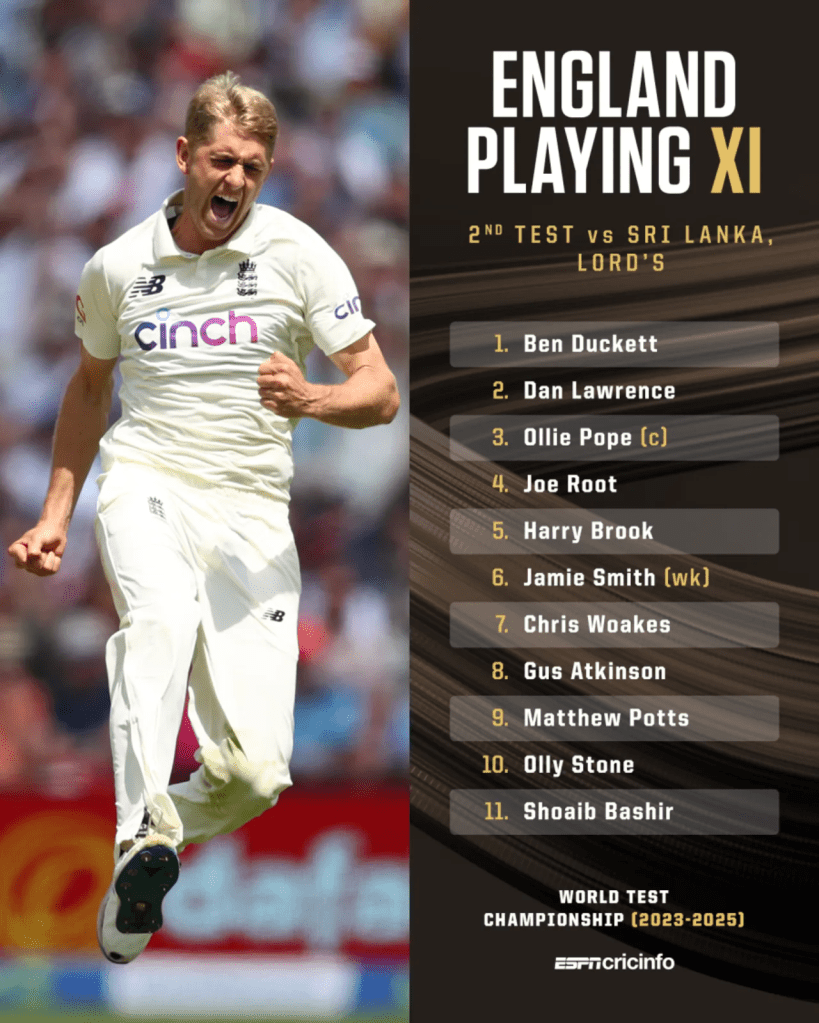
Tomorrow the second of three test matches between the England and Sri Lanka men’s teams gets underway at Lord’s. England announced their playing XI yesterday and this post looks at that announcement
The only change is the injury enforced one of Olly Stone for Mark Wood.
THOUGHTS ABOUT THE XI
Ben Duckett failed twice in the first test but has done enough to prove himself as a test opener. Dan Lawrence is not really an opener at all, but a) he didn’t do too badly in Manchester and far more significantly in my view, b) to change your mind about something like this after one match would smack of panic. Ollie Pope has a magnificent FC record but an ordinary test one to date, though his average at number three in test cricket is respectable. As skipper he was going to keep his place barring injury, but there remains a Hick like chasm between his FC and test returns. Root, Brook and Smith are the engine room of the batting, and to have left any of them out would have been rank stupidity. The question arises over number seven. England, sticking to the policy with which they won the first test, went for the genuine all rounder Chris Woakes, leaving Smith with the gauntlets and enabling the selection of five front line bowlers. I wholeheartedly approve of this policy. The alternatives were either to deepen the batting at the cost of leaving the bowling light or to select a keeper at seven and relieve Smith of the gloves. I would have preferred to see Smith elevated as a pure batter rather than as batter/ keeper, but he barely put a foot wrong since his promotion to international status, and I much prefer a full range of bowling options (have a look at some of my All Time XIs, especially the one of players whose surnames begin with V for more on my thoughts in this regard). Atkinson fared well with the bat at number eight last time out, and has done brilliantly with the ball all through his test career to date. Potts had a poor game at Old Trafford, but I think it right to persist with him rather than give up straight away. Stone is a fine bowler who would have played many more times at the highest level but for the injury problems that have dogged him all through his career. Bashir has not any tremendously helpful conditions this home season but he has been adequate as a spinner. Thus over these selections I am broadly supportive of the ECB (it would be frankly laughable for anyone to make out that I of all people am blindly loyal to the ECB).
PHOTOGRAPHS
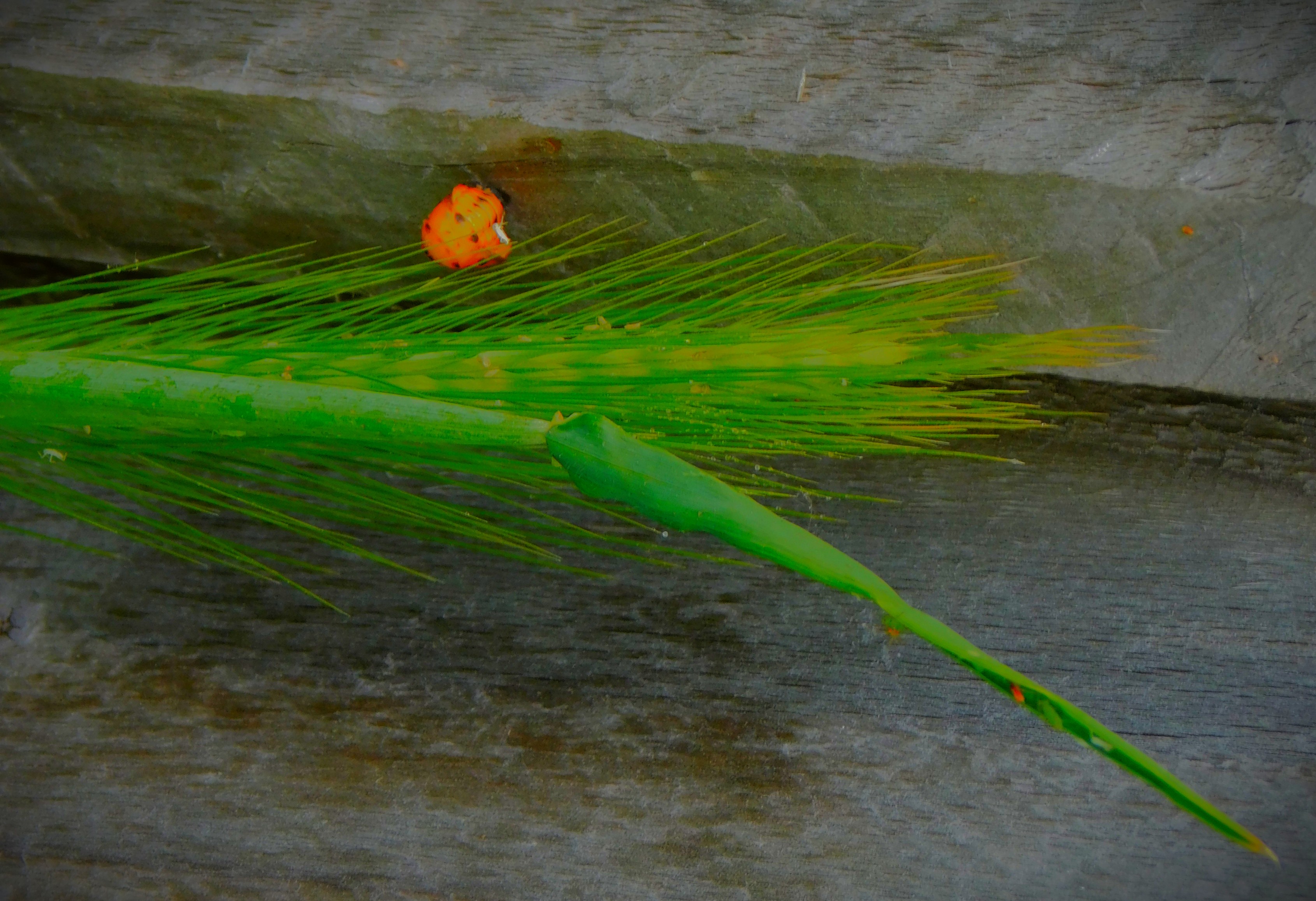
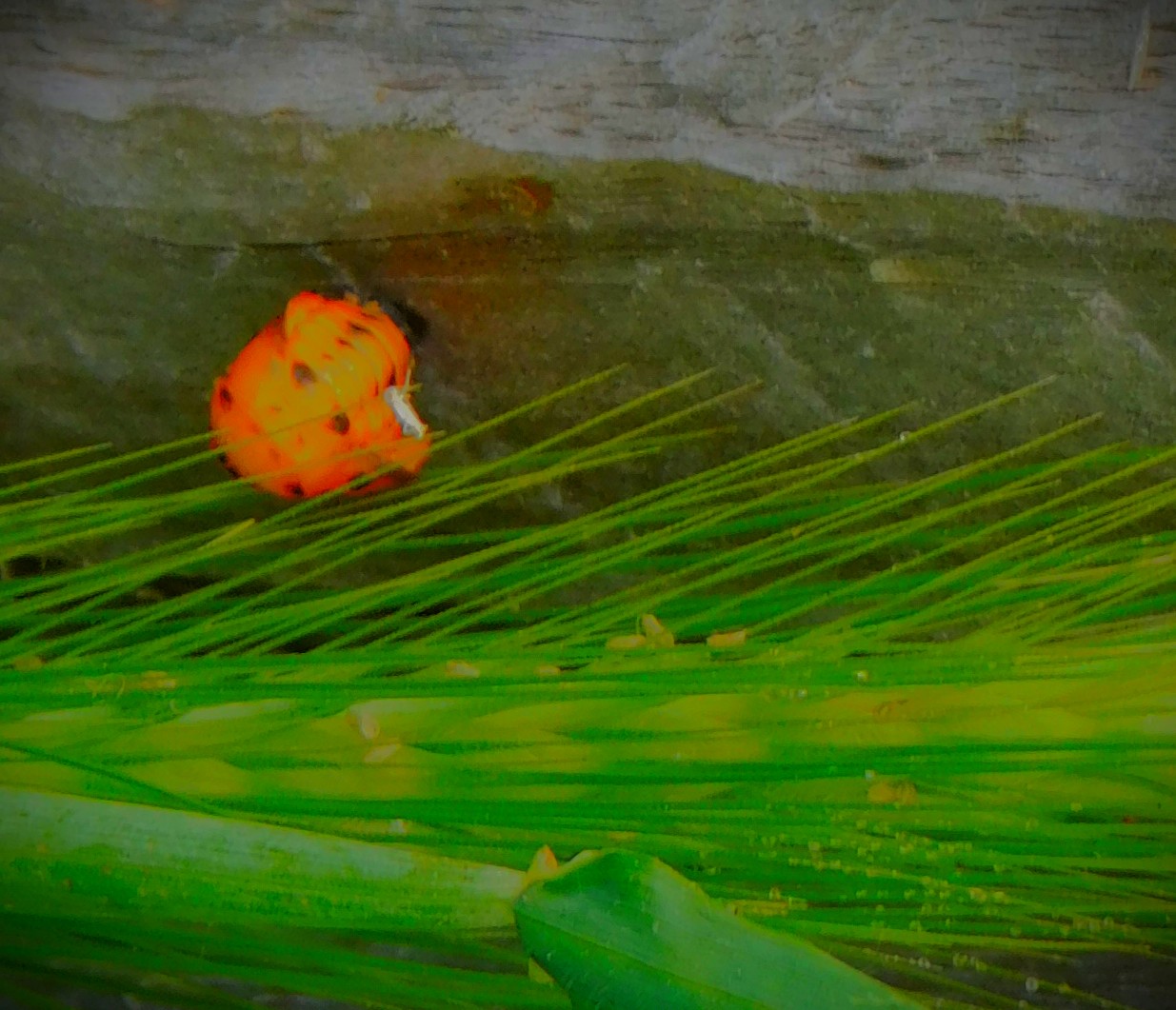
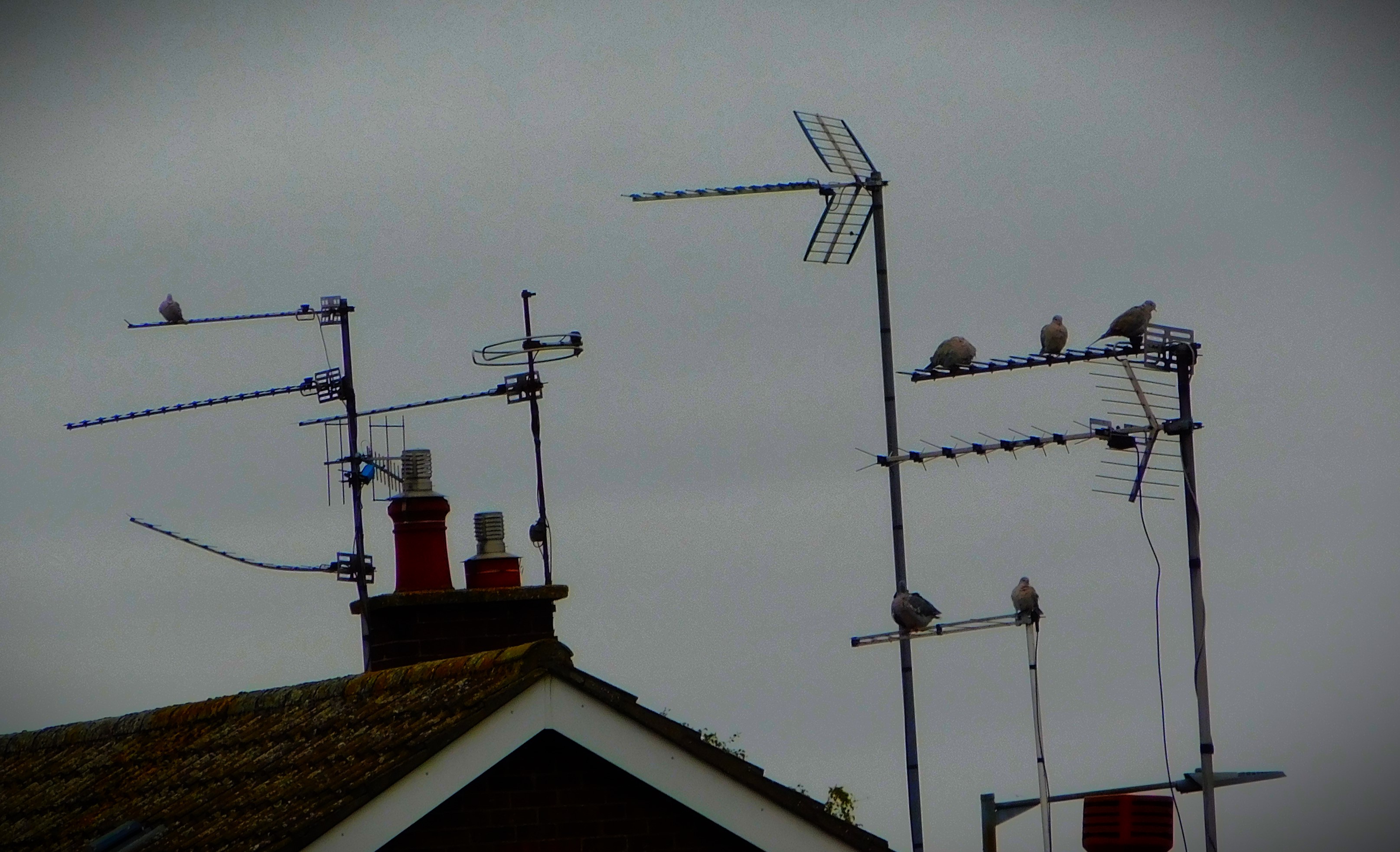
Before I present the full gallery (remember to view images at a larger size than shown here just click on the image) a brief note about the featured image which appears last of all. It is a composite of two images taken approximately 26 hours and about a quarter of a mile apart – the first was something I spotted on a leaf in my back garden when setting off for work yesterday, the second something I saw on the way home from a walk that took in among many other places both the library and a supermarket (the first of three walks today – the pictures from the other two are still on my camera). We are now ready for my usual sign off…
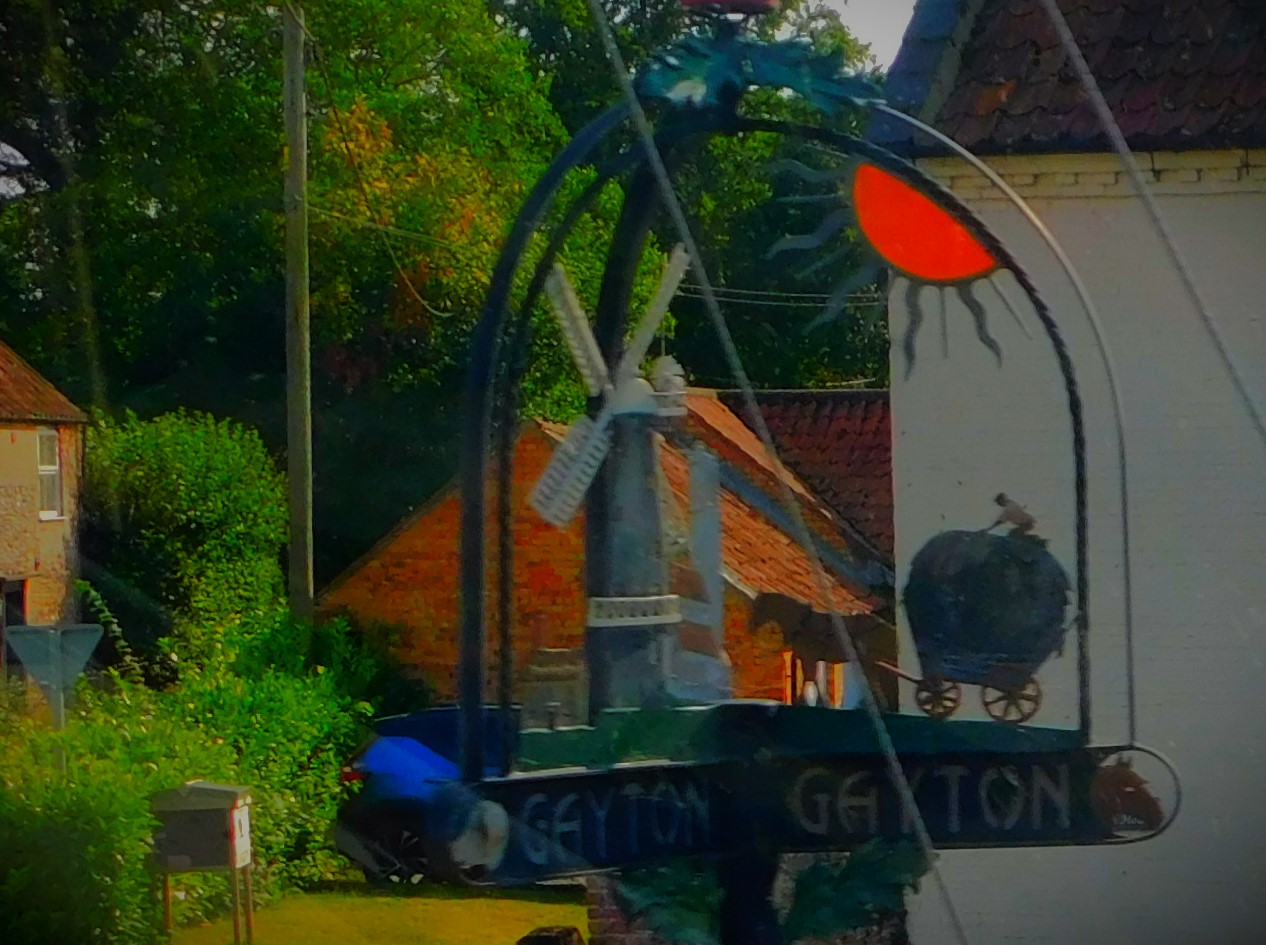
This picture of the remarkable Gayton village sign (a 3d construction) came with the assistance of me having got the best seat on a closed-top double decker bus – the non-drivers side front window seat on the top deck.
A look back at today’s Hundred (women’s) match between Manchester Originals and Trent Rockets, with special focus on the final ten balls. Also a photo gallery.
Today the Hundred has matches between Manchester Originals and Trent Rockets. The men’s match will be starting in a quarter of an hour. This post looks back at a the women’s match.
THE MANCHESTER ORIGINALS INNINGS
Manchester Originals have come in for considerable stick over the make up of their squad. They have an overload of opening batters – todays playing XI featured four regular openers (Emma Lamb and Eve Jones being the two to come in down the order). Today however Eve Jones went a long way to addressing such concerns with a fine innings from number 5. Originals skipper Sophie Ecclestone hit 13 off just five balls to give the total a late boost. Even so, a total of 137 didn’t look exactly mountainous.
THE FIRST 90 BALLS OF THE ROCKETS CHASE
The Rockets lost three wickets fairly early in the chase, but then Nat Sciver-Brunt and Ash Gardner settled into a stand that looked to be moving things in their favour. With ten balls to go in the chase Rockets needed 22 to win, with Sciver-Brunt and Gardner still in residence.
THE LAST 10 BALLS
Lauren Filer was given responsibility for bowling balls 91-95, and she did an excellent job. Even with her final ball going for four the equation was 13 needed off the last five balls. Filer had 2-26 in total from her 20 balls. Kathryn Bryce was given responsibility for bowling the last five balls of the match. Gardner hit the first two of these balls for four to reduce the ask to five runs off three balls, and that point it looked like Rockets had done the job. Gardner went for glory off the 98th ball but hit it too high and Beth Mooney was able to get round underneath it, which meant the ask was now five off two balls with a brand new batter to face the first of them. Heather Graham, the new batter, did the sensible thing and grabbed a single, bringing Sciver-Brunt with an undefeated half century to her name down on strike with the task of hitting a four to win the match. Sciver-Brunt whipped the final ball towards midwicket, but while the shot had power it lacked for placement, failing to located a big enough gap in the field and Rockets only managed two runs of the final ball, meaning that Originals had hung on to win by one run. Filer was named Player of the Match for her bowling, and deservedly so. Scorecard here.
PHOTOGRAPHS
My usual sign off…
This may look a bit like a boiled sweet, but it is actually what is known depending on your source either as a ‘jewel bug’ or a ‘metallic shield bug’.An ultra close-up of one of these bugs.
A look at developments in the T20 World Cup, including the eliminations of Sri Lanka and new Zealand, a revival in England’s fortunes and the situation currently unfolding in Florida. Also a large photo gallery.
This post looks at recent developments in the men’s T20 World Cup. I am typing it while waiting on developments in Florida (of which more later).
SRI LANKA AND NEW ZEALAND ELIMINATED
Sri Lanka became the first full member nation to be eliminated from the tournament, after a washed out match left them too far adrift to qualify. New Zealand’s elimination was confirmed in the small hours of this morning UK time when Afghanistan beat Papua New Guinea comfortably, a result which left Afghanistan and the West Indies both with three wins out of three, making the match between Afghanistan and West Indies a contest for who wins the group outright, with both sides certain of qualification.
ENGLAND THROW THEMSELVES A LIFELINE
Last night England played Oman in a match which they not only had to win, they had to win it by a very big margin due to net run rate being a factor. Had England been permitted to invent a result for this game to suit themselves they would not have dared to come up with what actually happened – they bowled Oman out for 48, Rashid taking 4-11 and Mark Wood and Jofra Archer each snaring three victims, and then blasted their way to the target in a preposterous 3.1 overs. This means that net run rate is effectively no longer a factor – if England beat Namibia and Australia beat Scotland then England will qualify for the super eights,
AN ODD QUADRANGULAR IN FLORIDA
I call this one a quadrangular because there are four factors, three present at the Lauderhill ground (unlike the pop-up stadium at Nassau County, New York this is an authentic cricket ground) and one watching nervously on the outcome. The Lauderhill ground is situated close enough to Fort Lauderdale railway station for the railway to be useful for visiting journalists. The three participants who are present are respectively The USA cricket team, the Ireland cricket team and some decidedly grim local weather. The fourth participant in the drama, watching from afar, and desperately hoping that the weather will allow some cricket as a washout would mean elimination for them are the Pakistan cricket team. It hosed down in Florida earlier today, though Lauderhill was less badly hit than some parts of the state. At the moment it is dry, and the sun has even been spotted, but the ground is not yet dry enough for play to proceed, although there is an inspection due in 22 minutes time if the weather hold. Ireland need a match to happen, as like Pakistan they hanging on by their fingernails, while a washout would guarantee the USA qualification, so they will be the least bothered of the three teams waiting on developments.
In this post I select an all time England XI who were not the best players in their own families. Some of my choices are undoubtedly controversial but I believe I can defend them all.
THE XI IN BATTING ORDER
EM Grace (Gloucestershire, England, right handed opening batter, lob bowler). In the early 1860s, before WG, seven years his junior, overtook him he was the acknowledged cricketing marvel of the age. His sole England appearance came in the first test on English soil in 1880, and even then, at the age of 39 and long past his best he was able to contribute to an opening stand of 91 with WG in the first innings. The test that led to the creation of The Ashes may well have gone the other way had he been in the team instead of AN ‘Monkey’ Hornby – WG would have undoubtedly captained the side better than did Hornby, whose tinkering with the batting order in the final innings contributed to England’s defeat, and EM, even at 41, would probably have been better value with the bat than Hornby, who was never comfortable against Spofforth. I have explained in previous posts how under arm could be relegalized without danger of a repeat of the Trevor Chappell incident – simply rule that a ball that rolls (or is rolled) along the deck has bounced an infinite number of times and call it ‘no ball’.
Chris Broad (Gloucestershire, Nottinghamshire, England). His England career ended when he decamped on the last ever rebel tour of apartheid South Africa in 1989, but while nowhere near on a par with son Stuart he had a very respectable England career, including an away Ashes series in which he scored 487 runs at 69 including three successive centuries.
Michael Vaughan (Yorkshire, England, right handed batter). Although at a casual glimpse his test record reads the best of the three members of his family to have played at that level (he is related to Johnny and Ernest Tyldesley of Lancashire and England many years ago), I have noted that Johnny Tyldesley’s record was better than it looked due to him playing the vast majority of his cricket before WWI, generally on wickets that favoured bowlers, while Ernest got surprisingly few England caps for so prolific a county scorer, so I have (with Neville Cardus doubtless backing me from beyond the grave) opted to rate Johnny the best of the three and therefore select Michael Vaughan and Ernest Tyldesley in this XI.
Ernest Tyldesley (Lancashire, England, right handed batter). The only Lancastrian ever to score 100 FC hundreds. See my comments re Vaughan for the justification of his inclusion.
KS Ranjitsinhji (Sussex, England, right handed batter). One of two members of the ruling family of Nawanagar to play for Sussex and England, and I have decided that the other, his nephew KS Duleepsinhji, outranks him and so included him in this XI.
Richard Hutton (Yorkshire, England, right handed batter, right arm fast medium bowler). Good enough to be selected for England as an all rounder, but unquestionably outranked by his father Leonard.
*David Bairstow (Yorkshire, England, wicket keeper, right handed batter). The best wicket keeper in the Bairstow family, but outranked overall by his son due to the latter’s batting.
Maurice Tremlett (Somerset, England, right arm fast medium bowler, right handed batter). The most talented of his family, but was sadly messed up by well meaning coaches, meaning that he was outachieved by his grandson Chris.
Tim Tremlett (Hampshire, right arm medium pace bowler, right handed batter). Never selected for England, but 450 FC wickets at 23.99 each shows that he was a good county bowler, and he also managed a first class hundred.
*James Lillywhite junior (Sussex, England, left arm orthodox spinner, left handed lower order batter, captain). The fact that his uncle William Lillywhite, “The Nonpareil” was regarded as the greatest bowler of his era, a distinction never conferred on the nephew, enables to me to include England’s first ever captain in this XI. His two tests, the first two such games ever played, yielded him 8 wickets at 15.75. In first class cricket, where the sample size is much larger, he took 1,210 wickets at 15.23, including 96 five wicket innings hauls and 22 ten wicket match hauls. His best innings figures were 10-129. He also scored 5,530 runs at 14.30 with a best of 126*.
Dean Headley (Kent, Middlesex, England, right arm fast medium bowler, right handed batter). His grandfather George was one the game’s all time greats, which enables me to select him in this team (his father Ron also played test cricket). In 15 test matches he managed a very respectable 60 wickets at 27.85, while in all first class cricket he took 466 wickets at 28.52.
This team has a powerful top five, a genuine all rounder at six, a keeper who can bat, and four high quality front line bowlers. The spin bowling is a bit light, with only Lillywhite a front liner in that department. For all that none of these players were on my reckoning the best in their own families I would expect this combination to give a good account of itself.
HONOURABLE MENTIONS
GF Grace might have had to slot I gave to Richard Hutton, but I preferred to accommodate an extra family. The Cowdrey and D’Oliveira families missed out because in each case the principal cricketer in that family was the only one worthy of inclusion (picking Brett D’Oliveira as an opening batter would also have given me a leg spin option, but in truth he is not good enough in either department). John Langridge was a contender for the right handed openers slot I gave to Chris Broad, being definitely outranked as a player by James Langridge, but still very fine. While there is reasonable evidence to support the view that Gubby Allen was actually the son of Plum Warner and not of Walter Allen I could not accommodate Plum in this XI, and while Gubby Allen’s extra pace would have been welcome he has to outrank his alleged father as a cricketer and was thus ineligible. A possible leg spin option was Archie Lenham of Sussex, currently definitely outranked by father Neil and possibly by grandfather Les, but more than likely to eclipse both before he is done. Claude Woolley (Northamptonshire) was undoubtedly outranked by brother Frank, but was IMO not good enough to warrant selection in this XI. Second choice keeper for this XI would be Leslie Compton (Middlesex), outranked in cricketing terms by brother Denis, and possibly by two of Denis’ grandsons, Nick and Ben. In football, Denis and Leslie both played for Arsenal, and it would be Denis in that sport who would rate as not the best in his own family.
At about 4:15PM UK time yesterday (the match was taking place in Italy, an hour ahead) Tommy Fleetwood won the 16th hole to go two up with two to play in his match against Rickie Fowler. That meant that a minimum a half a point was guaranteed for Europe in that match, which meant that Europe could no longer finish on less than 14.5 points, which meant that whatever happened from that moment on the Ryder Cup would be returning to Europe. This post looks back at the victory (I have covered up to the early stages of the Saturday afternoon fourballs here).
THE CLOSING STAGES OF DAY TWO
The Saturday afternoon fourballs went better for the USA than any previous session, though that isn’t saying a great deal. In the end the day finished with the scores Europe 10.5 USA 5.5, which meant that to retain the cup the USA would have to achieve a record turnaround on the final day. Singles is traditionally the USA’s strongest suit, possibly because the team element is more remote there than in either fourballs or especially foursomes – the day can be viewed as 12 straight head to head contests, whereas team play obtrudes on fourballs and is inescapable in foursomes, when the players play alternate shots – if your partner puts a ball in the water you then have to play the shot from the drop zone, if they dump one into a bunker it is your sand skills that get tested, but even so they were looking straight up a very steep mountainside.
PHOTO GALLERY ONE
Here to break things up a bit are some pictures from yesterday…
DAY THREE – MOMENTUM
Both teams were seeking a fast start in the singles – the USA because they needed to wrench the momentum back from Europe and Europe because the easiest way to prevent a good lead from being overturned is to settle the match quickly, snuffing out any chance of a revival. At Brookline in 1999 when the USA were 6-10 behind at this stage they came out and won the first seven singles matches, completely turning things upside down, and in the end, albeit in bitterly controversial circumstances the USA won (there was some disgraceful USian behaviour on the 17th in the crucial match, when their guy holed a long putt across that green, and premature celebrations involving both spectators and USian players, which distracted Jose Maria Olazabal of Europe, who had a slightly shorter putt on the same line (and was an excellent putter) to halve the hole – he unsurprisingly missed, and the USA were uncatchable). Here, John Rahm and Scottie Scheffler fought out a halved match in which both played some outstanding golf, while Europe in the persons of Hovland and McIlroy dominated matches two and four, with only Patrick Cantlay in match three winning an early point for the USA. Europe were on 13, the USA 7, and although the USA were doing well in a number of the remaining matches it was as good as settled.
THE CLOSING STAGES
Matt Fitzpatrick lost match five on the closing hole, by which time Tyrrell Hatton had banked Europe’s 14th point, winning match six 3&2. The 7th, 8th and 9th matches all went USA’s way, hauling it back to 14-11, but by that point Europe had moved ahead in all three remaining matches, and in quick succession Fleetwood and MacIntyre had made themselves sure of at least half a point a piece, while Shane Lowry and Jordan Spieth were in a contest that would go to the wire. Fleetwood and MacIntyre both made sure of full points, and with the destiny of the cup long settled and the 18th in the Lowry/ Spieth match a carnival scene those two players shook hands on a halved match, making the final score Europe 16.5, USA 11.5, which also meant a single scores of 6-6 meaning Europe had won days 1 and 2 and tied the third.
PHOTOGRAPHS
My usual sign off…
Following the news of the act of vandalism against the Sycamore Gap tree near Hadrian’s Wall I am making an effort to photograph more trees.
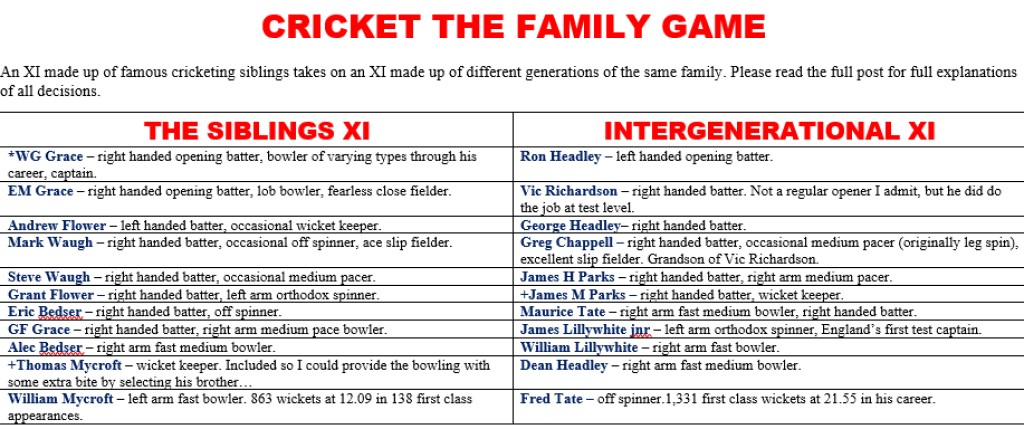
Today’s all time cricket post looks at cricketing families – an XI of siblings takes on an intergenerational XI. Please note the requirement that at least two members of each selected family feature in the team.
INTRODUCTION
For today’s all time XIcricket post we are looking at cricketing families. A team made up of groups of siblings do battle against an intergenerational XI. There are a number of famous cricketing families I could not include – I set myself a rule of including at least two members of each chosen family – not just select one and name their cricketing relations.
THE SIBLINGS XI
*WG Grace – right handed opening batter, right arm bowler of varying types through his career, captain. The way to get round 11 being an odd number when selecting a team of siblings is to pick one group of three siblings, and fortunately there is a darned good such grouping readily available. His test batting average was only 32.29, but he made his debut at the age 32 and played on at that level until he was almost 51 – had the first test in England been in 1870 rather than 1880 his record would have been considerably better. He won eight of his 13 tests as captain, and all 13 of those matches were against the oldest enemy.
EM Grace – right handed opening batter, lob bowler, fearless close fielder. Seven years WG’s senior, that inaugural test in England was his only one, and he shared an opening stand of 91 with his brother in the first innings thereof. England would probably have fared better in the 1882 match that inaugurated the Ashes had he been present in place of AN Hornby. Before WG’s rise overshadowed everyone else EM had been regarded as a phenomenon.
Andrew Flower – left handed batter, occasional wicket keeper. He averaged over 50 in test cricket (see my ‘Minor Nations’ post from Monday), and makes a good selection for the critical number three slot, especially since other considerations prevented the use of the only other sibling to have been a really good test no 3, ‘Chappelli’.
Mark Waugh – right handed batter, occasional off spinner, ace slip fielder. The first of two pairs of twins to make their appearances in this XI. He announced his presence at the highest level (selected in place of his brother!) with a scintillating 138 against England and went to establish a superb record.
Steve Waugh– right handed batter, occasional medium pace bowler. He was first picked in 1985 at the age of 20 as a ‘bowling all rounder’, but it is his batting that gets him in – he averaged over 50 at the highest level, and that after taking 27 matches to reach his first century (177 not out at Headingley, as Australia, put in by England skipper Gower cashed in on an ‘attack’ comprising four medium pacers to the tune of 601-7 declared). He would be vice captain of this side.
Grant Flower – right handed batter, occasional left arm orthodox spinner. Andrew’s younger brother, averaged just over 40 in test cricket.
Eric Bedser – right handed batter, off spinner. His averages are just the wrong way round – 24.00 with the bat, 24.95 with the ball (833 first class wickets in total), and he is the first of three members of the XI not to have played test cricket.
GF Grace– right handed batter, right arm medium pace bowler. In his case his sudden death from a freak illness prevented him from having a better record – he was 29 years old and just two weeks previously had played in the inaugural test in England, and had there been such a thing in 1880 his catch to dismiss George Bonnor would have been a shoo-in for the ‘Champagne Moment’. He averaged 25 with the bat and 20 with the ball, and the former figure puts him on a par with Richard Daft, rated no2 to WG Grace in the 1870s, GF’s decade.
Alec Bedser – right arm fast medium bowler, useful lower order batter. Eric’s identical twin brother – and they used to wear identical clothes as well apparently. Because they considered playing for separate counties unthinkable they tossed a coin for who would stick to medium pace, and who would work on batting and off spin, and Alec won. There is a story that once in a benefit match Eric finished an over that Alec had started, and no one noticed the substitution, which suggests that Eric remained quite useful as a medium pacer.
+Thomas Mycroft – wicket keeper, right handed batter. The most obscure of my choices, but he did average almost three dismissals a game in his brief first class career, and his presence enables me to give some much needed punch to the bowling by selecting his brother…
William Mycroft – left arm fast bowler. 138 first class matches, 863 wickets at 12.09 each, and hopefully a suitable new ball partner for Alec Bedser.
This team is strong in batting, and the three Graces plus Eric Bedser should between them be able to provide sufficient bowling back up to the new ball pairing of Mycroft and Eric Bedser.
OTHER POSSIBILITIES
I might have opted for a new ball pairing of half brothers, Fidel Edwards and Pedro Collins, with Alec Bedser coming on first change, but that could only have been done by giving Andrew Flower the gauntlets and dropping the Mycrofts, and I prefer my no3 not also have to keep wicket. Although both captained England neither Arthur nor Harold Gilligan had a record to merit inclusion, and I certainly could not accommodate both. The Pitheys of South Africa were good rather than great. John and Hugh Trumble and Richie and John Benaud were two pairings that each had one weak link and so could not be accommodated. Johnny and Ernest Tyldesley were also in the mix, but would you drop either the Flowers or the Waughs for them? Richard and Dayle Hadlee could also have been picked to share the new ball, using the same method as for Edwards and Collins.
INTERGENERATIONAL XI
Ron Headley – left handed opening batter. The Headleys provide three members of this side. He opened for Worcestershire for many years, although his two matches for the West Indies were not a great success.
Vic Richardson – right handed batter. He was not an absolutely regular opener, but he did do the job at test level. We shall meet one of his grandsons at no4 in this order.
George Headley – right handed batter. Averaged 60.83 in test cricket, and no3 was his regular position. The first of the family to play top level cricket.
*Greg Chappell – right handed batter, occasional right arm medium pace (started as a leg spinner), excellent slip fielder, captain. Averaged over 50 in test cricket, one of three grandsons of Vic Richardson who all played test cricket.
James H Parks – right handed batter, right arm bowler. The only player ever to have scored 3,000 runs and taken 100 wickets in the same first class season.
+James M Parks – right handed batter, wicket keeper. Son of James H Parks, a fine batter/ keeper for Sussex, and had today;s attitudes to selecting keepers existed in the 1960s he would have played many more times for England in that role than he did.
Maurice Tate – right arm fast medium bowler, right handed lower middle order batter. One of the greatest of all bowlers of cutters, and the first bowler to be able to use the sea fret at Hove to facilitate movement in the air.
James Lillywhite jnr– left hand batter, left arm orthodox spinner. England’s first test captain; 1,210 wickets at 15.12 in first class cricket. Nephew of…
William Lillywhite – right arm fast roundarm bowler. Known as the ‘nonpareil’ such was his superiority to other bowlers of his era.
Dean Headley– right arm fast medium bowler. The third of the Headley family trio, he played for England and would have had more success had he not been plagued by injuries.
Fred Tate – off spinner, good close fielder. His one test appearance, coming late in his long career, was undistinguished, but 1,331 first class wickets at 21.55 confirms that he is not just here to get his son into the side.
This side has a solid batting line up, and the bowling looks adequate, albeit that Fred Tate is the only front line spin option.
OTHER CRICKETING FAMILIES
Sussex have a grand tradition of cricketing families, as the above team shows – and I did not include the two members of the ruling family of Nawanagar, ‘Ranji’ and ‘Duleep’. The Tremletts produced three generations of first class cricketers, but accommodating all three would have been a challenge. Chris Broad would have been preferable to Ron Headley as opening batter, and Stuart preferable to Dean as a bowler, but if I had made that call I would have had to drop George Headley, and likewise dropping Vic Richardson would have necessitated dropping Greg Chappell. The Cowdreys are the only cricketing family to have produced four successive generations of first class cricketers, but of them all only Colin was truly top class. I would have liked to include the D’Oliveiras but to do so I would have to have found room for either Damian or Brett, so Basil missed out. Charles Townsend, the Gloucestershire leg spinning all rounder would have been useful, but I would have to had to find a place for either his father Frank or his son David, neither of whom were genuinely top class. I could have selected Jonny Bairstow as a batter and David as a keeper in place of the Parkses, but considered JH’s bowling to be a valuable asset. Perhaps the biggest miss caused by my criteria of demanding at least two members of each family feature was Denis Compton, but that would have necessitated finding space for his grandson Nick. The Gunns of Nottinghamshire also missed out. Billy Quaife would have been a solid opener, but I would have had to accommodate his son Bernard, less good, as well. The Quaife’s once faced up as opening batters to Billy and Robert Bestwick, likewise related, but again Robert Bestwick would not have been worth his place. Len Hutton would have strengthened the batting, but accommodating his son Richard would have been a challenge, while the same applies even more strongly to Herbert and Billy Sutcliffe. The great-grandfather/ great-grandson pairing of William Cooper and Paul Sheahan obviously appealed, but neither were really of the highest class. Richard Hadlee missed out because there was no way to accommodate his father Walter. Vinoo Mankad was another in this mix, but again his son Ashok was not good enough to warrant a place. Had I been willing to forego Greg Chappell I could have had an adhesive opening pair of Hanif and Shoaib Mohammad.
THE CONTEST
The contest for the ‘Cowdrey-Tremlett trophy’ (honouring two of the great cricket dynasties) would be a good one, with a splendid contest within a contest between Alec Bedser and Maurice Tate at the heart of it. I think the better balance of the intergenerational side just gives them the edge.
PHOTOGRAPHS
Time for my usual sign off:
Butterflies will soon be in evidence…
…a caterpillar dozing on a leaf
Two caterpillars visible in this shot…
…this one and…
….this one.
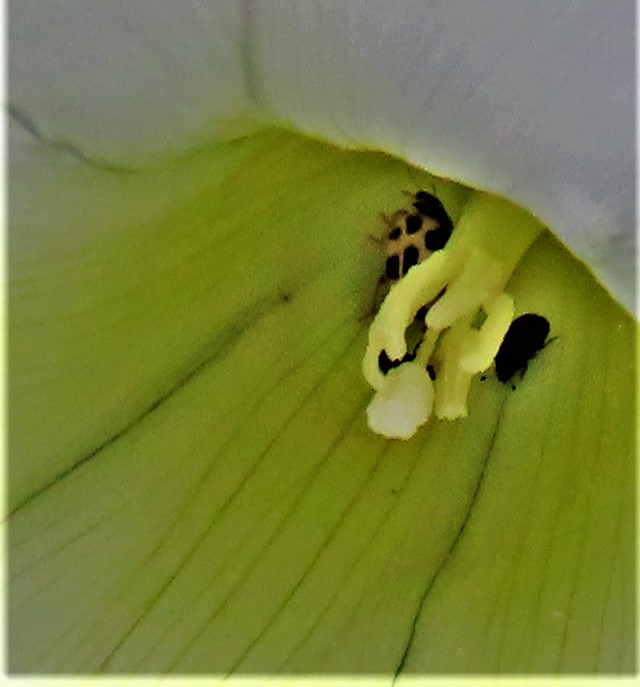
A flower that lures…
…bugs like this one…
…to their dome – besides the one I was focussing on, which crawled in but was not going to be getting out any time soon you can two other bug bodies in there.
This bee has a large load of pollen.
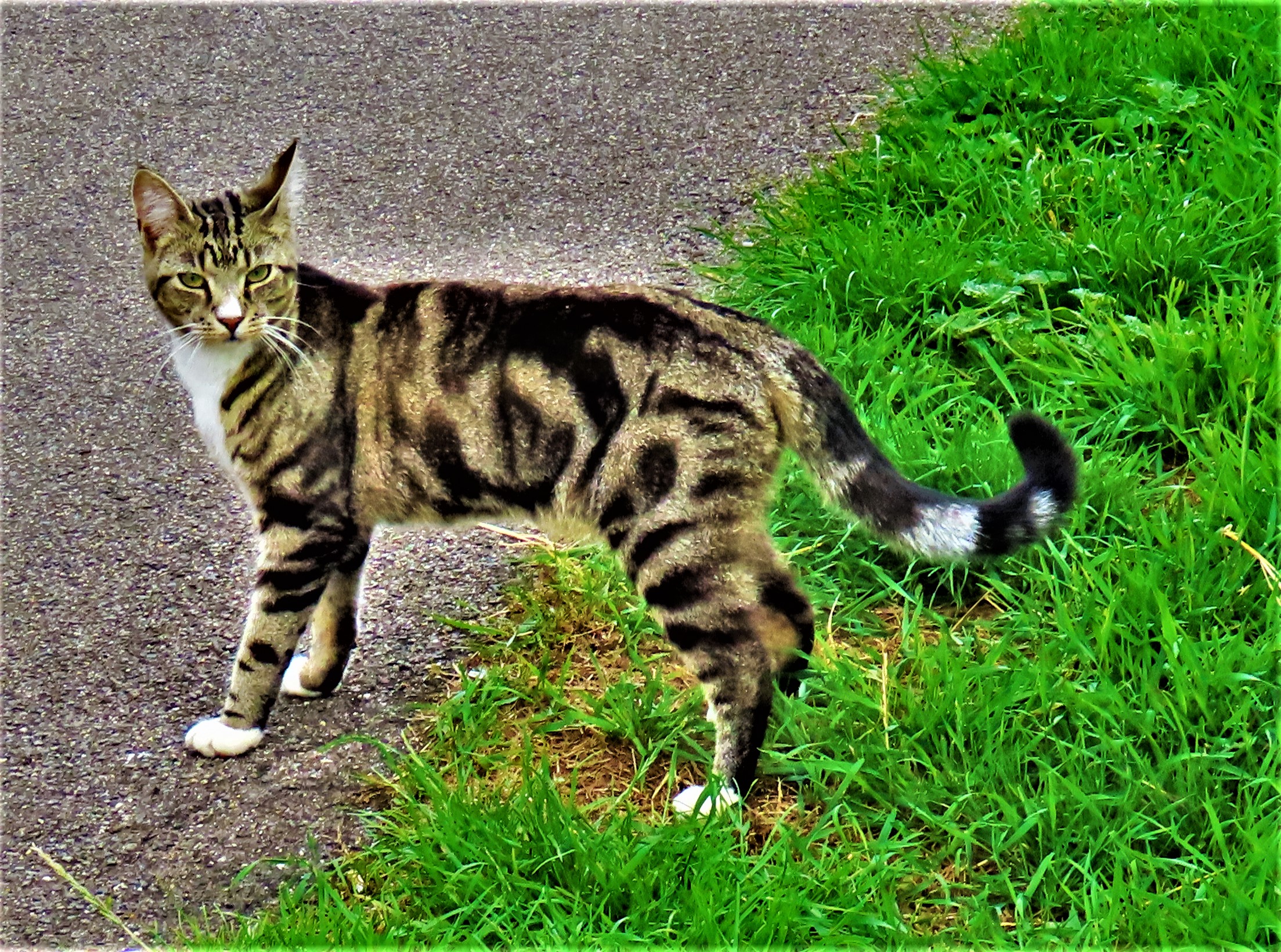
A flick of a dark coloured tail caught my attention, but it was merely an adventurous young cat…




















































































































































































































































































































































































































































































































































































































































































































































































































 aspiblog