The End of a Match and an Era

A brief look at the conclusion to the last ‘timeless’ test match ever to be played, a conclusion which unfolded on March 14th 1939, 11 days after the match had begun.

Up until World War II broke out both Australia and South Africa were believers in timeless test matches (i.e. played until one or other side had won). This post looks briefly at the match which finally ended timeless tests.

As March 14th 1939 dawned England were within sight a victory that had it eventuated would have strained credulity. At one point South Africa had been over 400 runs to the good with all ten second wickets standing. Both sides knew that although the test match, which had begun 11 days previously on March 3rd, had been designated timeless this would have to be the final day as England needed to catch a train to Cape Town or miss their boat home and be stranded for at least a month (and of course war was looming, which made folk even less keen on being trapped abroad than they would have been anyway. Although it had rained on several occasions in the match these interludes had served only to bind the surface of the pitch back together, and it was still playing well and true. England, set a mammoth 696 to win, went past 600 with only three wickets gone. At 611 Eddie Paynter was fourth out for 75. Les Ames now joined Hammond at the crease, and the pair were still together when the 650 came up. At exactly 650 Hammond was stumped off Dalton for 140. That brought Bryan Valentine, a specialist batter, in to join Ames. Four runs later the heavens opened, and the downpour proved terminal. In total the match had seen 1,981 runs scored for the loss of 35 wickets, an aggregate that remains a test match record but was beaten twice in the next decade in FC matches, both involving Bombay as it was then called – Bombay v Holkar yielding 2,078 runs, including 249 in losing cause for Denis Compton, and then in 1948 Bombay v Maharashtra yielding 2,376. The Durban test match still had the record for the longest span of any first class match. Hedley Verity, the left arm spinner, sent down 774 balls across the two South African innings (96.6 eight ball overs under the playing conditions of the day, equivalent to 129 six ball overs. For South Africa Norman Gordon, a seamer no less, sent down 736 balls (92 eight ball overs, equivalent to 122.4 six ball overs). There is a book about this match “Edging Towards Darkness” by John Lazenby. No timeless match has been scheduled since this one. For the moment here is the scorecard.

My usual sign off…

My First Butterfly of 2025

Describing my first butterfly sighting of 2025, with a picture of the butterfly and a large photo gallery.

I will present a full photo gallery at the end of this post as usual, but the feature is indicated by the title.

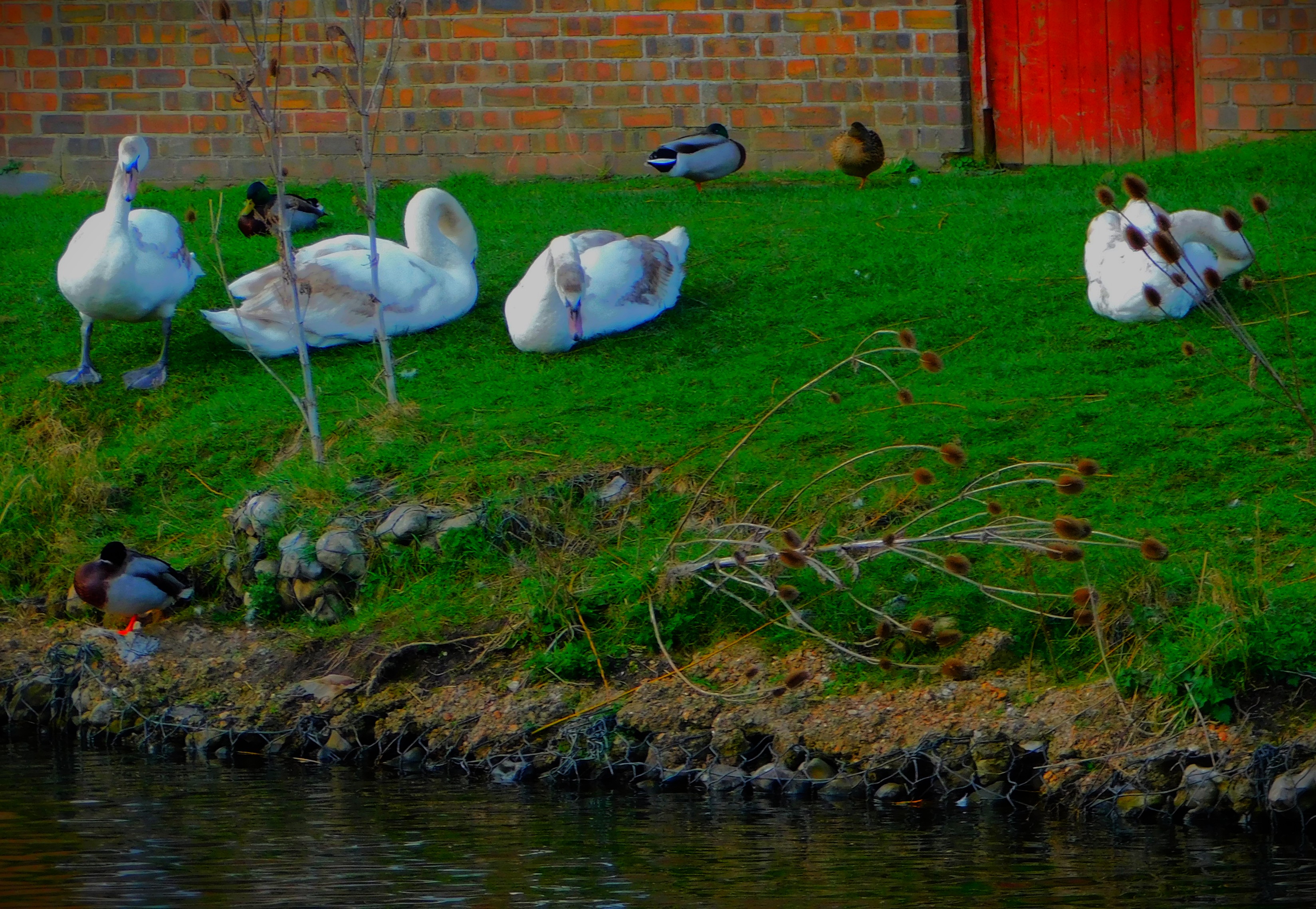
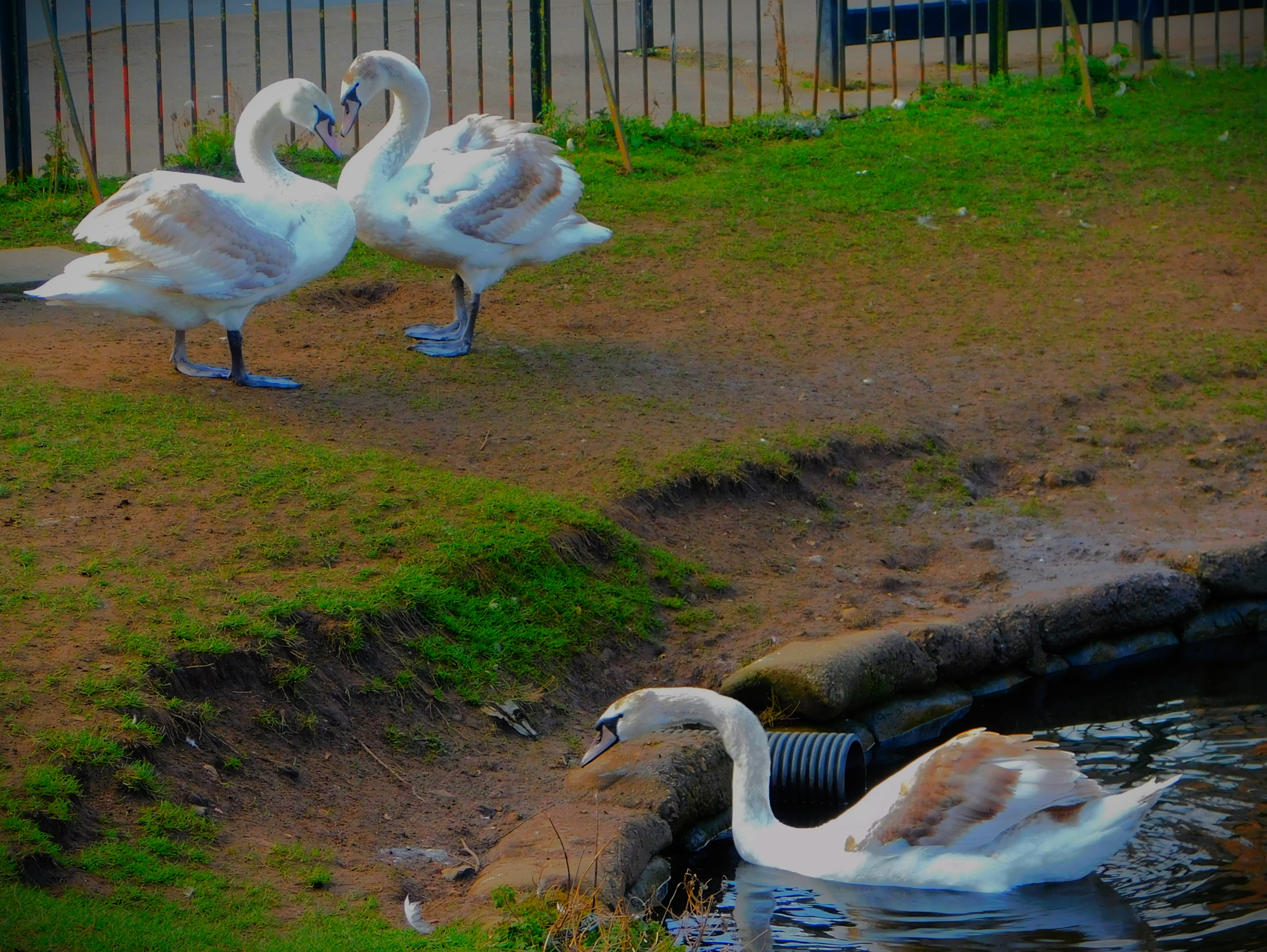
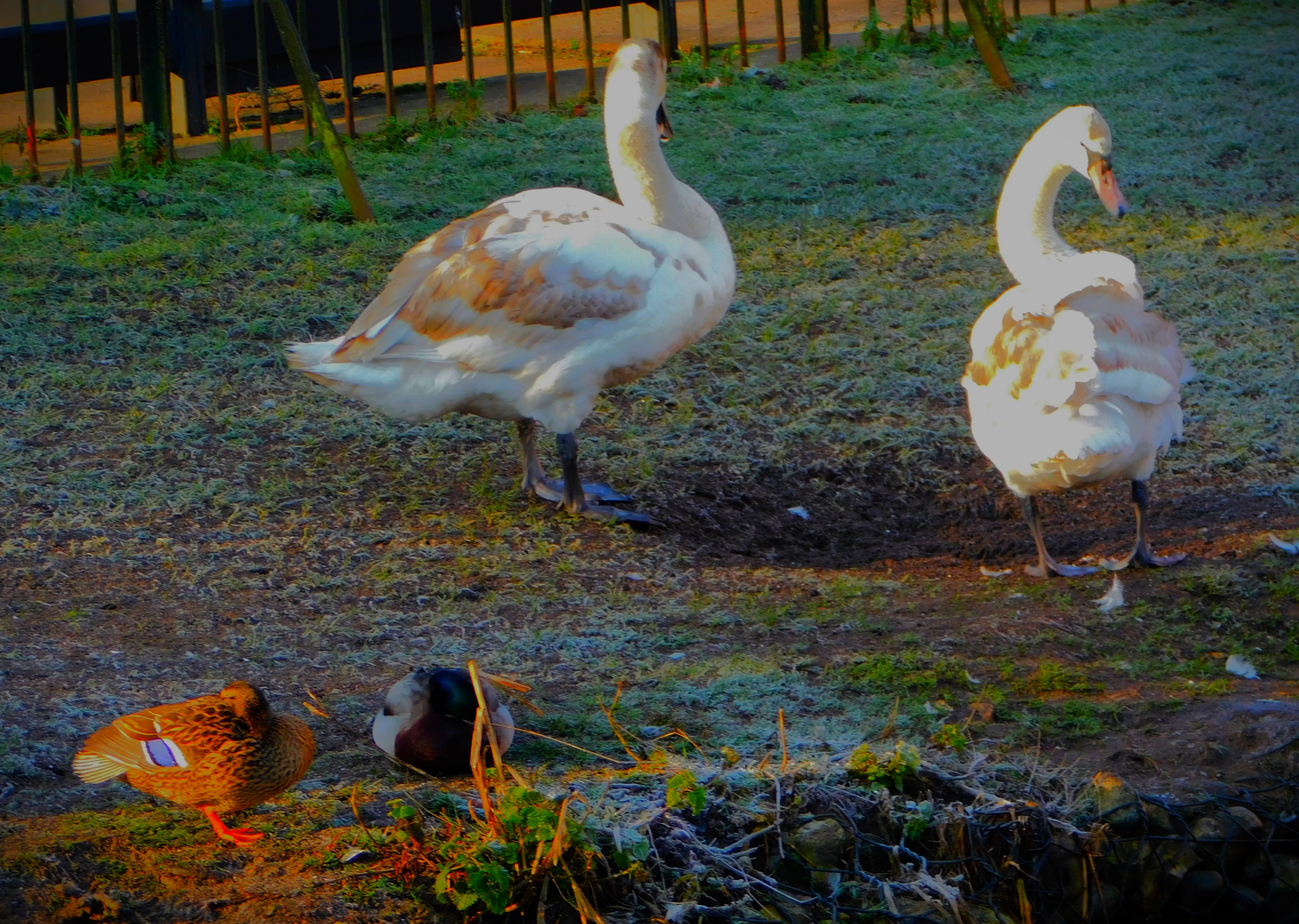
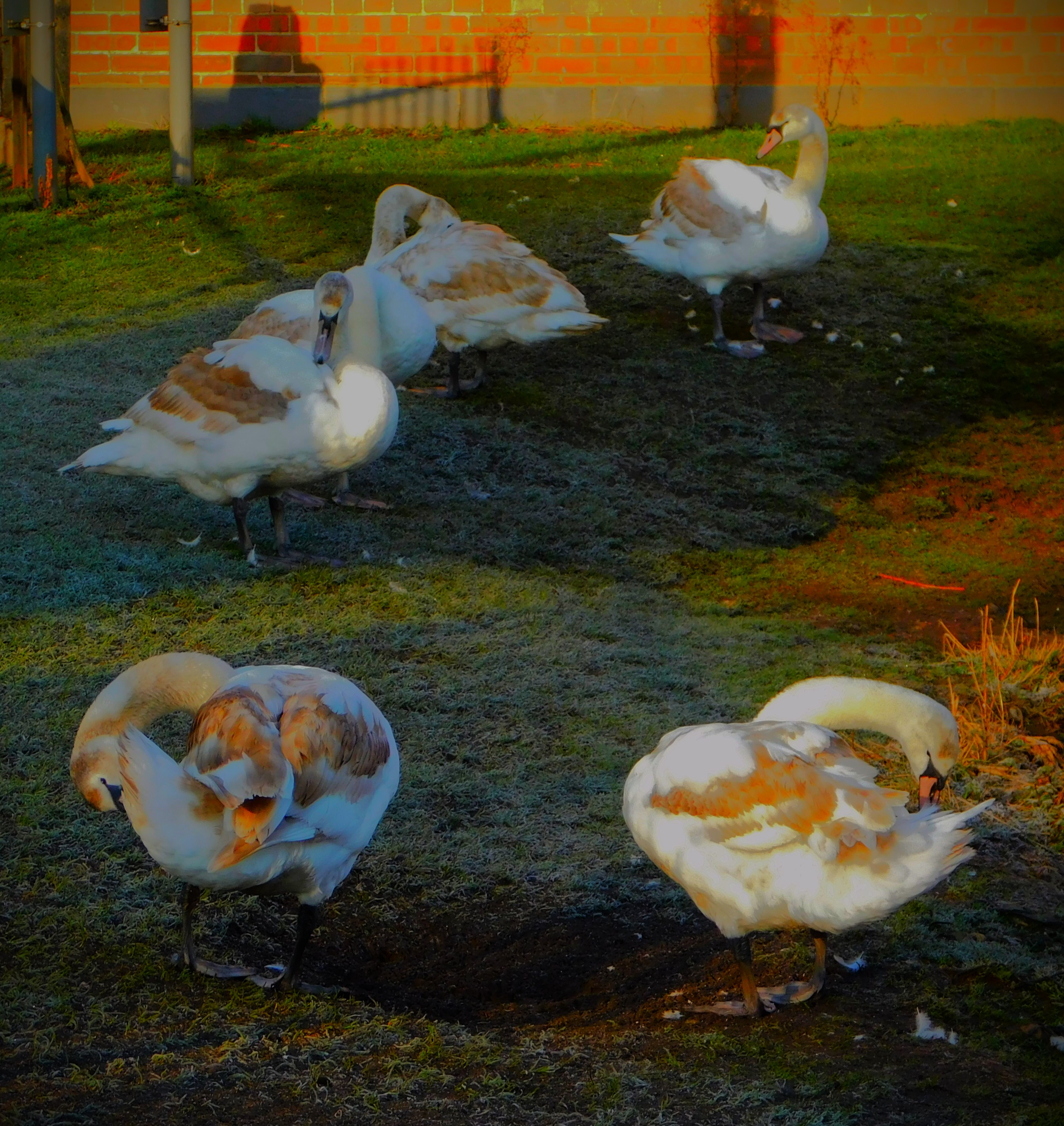
Yesterday morning in the course of my extended walk to the bus stop for work I had reached the final stage, a short trip along a stretch of the Gaywood River that briefly runs parallel to Gaywood Road, from where I get the bus, and was already reasonably pleased with the photos I had got – it was bright, sunny and by the standards of early March it was warm as well. Before crossing Loke Road, next to the bridge that takes that road across the Gaywood, I had managed to photograph a pair of swans just before they left my field of vision as they headed in the opposite direction to me. I was not expecting anything further, but halfway between the bridge and the path through to Gaywood Road (it pretty much hits Gaywood Road at the bus stop) I spotted a European Peacock butterfly among the dry reeds at the far edge of the river from me. I managed to get a photograph. This butterfly is no great rarity, nor is King’s Lynn outside its usual range, but even so is is rare to get a sighting this early in the year. I emailed Butterfly Conservation about it last night and received an enthusiastic response this morning.

My first butterfly sighting of 2025.

Here is the rest of today’s gallery…

New Zealand off to a Strong Start

A look at early developments in the second semi-final of the Champions trophy, a link (teslatakedown.co.uk). and a large photo gallery.

The second semi-final of the Champions Trophy is underway. Work commitments meant that I did not catch a single ball of yesterday’s match between Australia and India. India won, which means that the final of the tournament will take place outside the official host nation, and on the worst pitch on show at this tournament, the paceless strip of rubbish that Dubai has served up. This post looks at the early stages of the match between New Zealand and South Africa.

New Zealand won the toss and chose to bat. The pitch at Lahore looks very flat, with even the towering Marco Jansen struggling to generate bounce. Will Young has been the only casualty so far, for a 23 ball 21. Rachin Ravindra has reached an excellent 50, taking 47 balls to get there. He has added ten further runs of another eight deliveries since reaching the landmark. Kane Williamson is currently on 27 from 36 balls, and New Zealand are 111-1 from 19 overs.

Bin-gland

A look at the state of the England Men’s ODI team. Also a large photo gallery.

England’s participation in the Champions Trophy is at an end, and they have been the worst team at the tournament, being the only side in either group not to record a single point. This post looks briefly at yesterday’s match and then at the problems with this England Men’s ODI side.

England’s elimination was already confirmed before yesterday’s match began, but the question was whether they would depart with a bang or a whimper. Afghanistan were hoping for it to be an almighty bang, since a victory by 207 or more runs would push South Africa’s net run rate below Afghanistan and mean that the latter made the semi-finals. In the event England exited with the tamest of whimpers. The match started in familiar fashion, with Phil Salt (no 1 in the England batting order) and Jamie Smith (no 3) both departing cheaply, both to terrible shots. That once again brought Duckett and Root together with a rebuilding operation to perform. This time round we got an illustration of the fact that if you keep on needing rescue operations you don’t always get them – Duckett made 24 and Root 37, which would remain England’s top score. Brook, officially next in line for the captaincy vacated by Buttler, managed 19. Buttler, attempting to provide some stability, a role for which he is not well suited, managed 21 off 43 balls, while Jofra Archer ended up second top scorer with 25 off 31 balls, and the comparative ease with which he was able to bat was a damning indictment of his alleged betters in that department. All of this added up to 179 all out from 38.2 overs – a scoring rate of below five an over and 11.4 overs left unused. Marco Jansen took 3-39, and was outdone figures wise by Wiaan Mulder who had 3-25. No South African bowled badly, with Kagiso Rabada’s 1-42 from seven overs being the worst figures of any of their five bowlers. Rassie van der Dussen, 72 not out off 87 balls, and Henrich Klaasen, 64 off 56 balls before perishing in the moment of victory were the chief performers responsible for making England’s total look as pathetic as it was, South Africa winning by seven wickets with 20.5 overs to spare – in other words they had more than the length of a T20 innings to spare.

England personnel wise (for the moment we will ignore questions of the domestic schedule) have four main issues, of which only the first is definitely being dealt with:

  1. They have the wrong captain. Buttler has stepped down, which starts to address this, but my own feeling is that they need to do something more radical than merely turn to ‘next cab in the rank’ Brook. Perhaps Liam Dawson, who playing skills would help to address other problems could be brought straight in as captain.
  2. Numbers one and three in the order need replacing. You cannot expect to win matches when losing two early wickets on an absolutely regular basis, and the dismissals of Salt and Smith against South Africa suggest that neither learned anything from their failures in the first two matches.
  3. Lack of all rounders. This, with five bowlers required to be used in every innings, creates issues of balance – you either pick five proper bowlers, relying on the top six to do the bulk of the scoring, or you pick four front line bowlers only and rely on part timers to bowl the fifth allocation of ten overs. England have opted for the latter approach, and their lack of either depth or variety in the bowling department has cost them at this tournament, which leads to…
  4. Too much similarity in bowling. England have not a left armer of any type at this tournament (look up the bowling half of the package offered by Dawson the player), the fast bowlers used have all been very similar, making it easy for opposing batters to take them on. The one trustworthy component of the England bowling attack at this tournament, Adil Rashid, is now 37 years old, and the endurance of James Anderson notwithstanding probably has a fairly limited remaining shelf life at the top level.

England have not been struggling in ODIs for nearly as long as they had been when they crashed out of the 2015 World Cup, but a reset of a similar type to the one that took place then is required.

My usual sign off (with a reminder as we start a new month that images can be viewed at a larger size by clicking on them)…

Australia v England

A look at yesterday’s Champions Trophy match between Australia and England. Also a photo gallery.

Yesterday the Champions Trophy saw Australia take on England. This post looks at what has been thus far the match of the tournament (and today’s match, between another pair of fierce rivals, India and Pakistan is not looking like rivalling it right now).

Phil Salt and Jamie Smith were both out fairly early for England, but then Ben Duckett and Joe Root had a splendid partnership for the third wicket. There were stages when a total not far short of 400 looked possible. Duckett, often fairly criticized for not being willing to give himself time to get settled in, played an absolute blinder of an innings. Even in ‘restrained’ ODI mode he scored rapidly, eventually falling late on in the innings for 165 off 143 balls. Buttler got himself out in the 43rd over, and in the end England amassed 351-8. Even on a good pitch and a fast outfield that looked fairly impressive…

At one stage Australia were 136-4, and it looked like England were in control, though they had gone batting heavy – the fifth bowling allocation was in the hands of Livingstone and Root. In the event it was the three specialist pacers, Archer, Carse and Wood who proved shockingly expensive. Buttler demonstrated again what a poor captain he is, giving Root and Livingstone just one over more than the minimum he needed from them, though they were faring less badly than the quicks. The sole England bowler to fare really well was 37 year old Adil Rashid who recorded 10-1-47-1. The Australian comeback began with Inglis and Carey putting on 146 for the fifth wicket in 19.2 overs. The last ball of the 38th over was the moment the match swung decisively – Archer dropped a very easy chance offered by Carey, which would have had Australia 248-5, needing 104 off the last 12 overs with only five wickets left. By the time Carey was dismissed, the ask was down to 70 off 8.2 overs, not normally considered difficult these days, and Australia made it look very easy in the end. There were 2.3 overs to go when Inglis finished it in style with a six, the sixth of his innings. Inglis had 120* from 86 balls. The three fast bowlers had combined figures of 26.3-0-226-3, an average of 75.33, a strike rate of a wicket every 53 balls and an economy rate of 8.53. Livingstone and Root had 11-0-73-1, an average of 73.00, a striker rate of a wicket every 66 balls and an economy rate of 6.64 per over – below the required rate, and 1.89 runs per over less than the quicks went at. England now need to win both their remaining games, the first of which is against Afghanistan.

My usual sign off…
The ICC Champions Trophy So Far

A look at the early stages of the Champions Trophy, currently taking place in Pakistan. Also a large and varied photo gallery.

The 2025 ICC Champions Trophy got underway on Wednesday. This tournament features the top eight sides in the ICC world rankings, which at present means there are several countries missing who might be expected to be there – none of Sri Lanka, West Indies or Zimbabwe made the cut for example. The format of the tournament (round one seeing the eight split into two groups of four, with the top two from each group moving into the semi-finals) means that even early on teams can find themselves in serious jeopardy.

Today’s match, between Afghanistan and South Africa, was the third of the tournament, with the only two teams yet to see action being Australia and England who play each other tomorrow. The tournament is officially being staged in Pakistan, but India’s matches are taking place in the UAE as they refuse to travel to Pakistan, and their power in the cricket world is such that they get away with this sort of behaviour whenever they choose to indulge in it.

The tournament opened with Pakistan hosting New Zealand in Karachi. New Zealand batted first and compiled 320, which looked substantial, and was soon made to look even more so by a combination of good New Zealand bowling and some poor batting from Pakistan. Babar Azam scored 60, but took 93 balls to get there, which when your side has been set to score at 6.4 per over is simply not acceptable. Of the first 141 balls of the Pakistan innings exactly 100 were dot balls.

I did not catch any of the game between Bangladesh and India yesterday due to work. I gather that India won comfortably, though not as comfortably as they might – Rohit Sharma dropped an easy chance which would have given Axar Patel a hat trick, the first ever in the Champions Trophy, and the reprieved batter than took part in a huge partnership which gave Bangladesh something to attempt to defend.

Today’s match had strong echoes of Pakistan v New Zealand. South Africa won the toss and batted first, and with Ryan Rickelton scoring a fine century, Bavuma helping to set a platform for them with 58 and then van der Dussen and Markram scoring quicker 50s later on the in the innings (each made 52, off respectively 46 and 36 balls) South Africa emerged with 315-6 from their 50 overs, which looked more than enough. Probably the most disappointed of the Afghans would have been Rashid Khan whose figures of 10-0-59-0 continue a very poor showing in ODI tournament matches (he now has 17 wickets in 19 such matches at an average of over 50 a piece, though his economy rate is acceptable, largely because he is so good that opposition sides will happily settle for blanking his wickets column. Noor Ahmad, the young left arm wrist spinner, was frankly poor, recording 9-0-65-1. In reply Afghanistan never got into the hunt. Rahmat Shah played a fine knock but found no significant support. Other than his 90, the next highest scores were 18s from Azmatullah Omarzai and Rashid Khan. When Shah was last out, nicking one from Rabada through to Rickelton South Africa had won by 107 runs, a result which has probably already confirmed that Afghanistan will be making an early exit from the tournament. Rickelton’s century and solid keeping performance (two catches taken, only two byes let through) earned him the Player of the Match award, though Rabada’s 3-36, with Azmatullah Omarzai the least regarded batter of the trio, must have come into the reckoning.

Australia are in a weakened state – tomorrow will be the first time in nine years that they take the field without any of Cummins, Hazlewood or Starc, and so makeshift is their squad that they are captained by the sandpaper tarnished Steve Smith. England have been in poor form, and much will come down to how they approach their batting. New Zealand and South Africa have played it right, building a base and then upping the tempo in the later stages. Pakistan were far too conservative in the first half of their chase against New Zealand, dropping irretrievably behind the required rate. England have a tendency to treat 50 over innings as extended versions of 20 over innings, which is how they might well come a cropper. The extra length of the innings means that there are times when consolidation is necessary – though not to the extreme of allowing 100 of the first 141 balls of your team’s innings to be dots!

My usual sign off…

England Win In Six Nations

A brief account of England’s last gasp win over France in the Six Nations rugby, a mention of the West Norfolk Autism Group including photos of our office spacr, and a large photo gallery.

There have been two Six Nations rugby matches today. In the first Wales’ recent miseries continued as Italy beat them, meaning that this Welsh side are now holders of an unwanted record – no other Welsh side has ever lost 14 consecutive matches as this one now has. The second game, which ended just a few minutes ago saw England facing France.

Having been beaten by Ireland last time out England needed to win this match, while France had hammered Wales in their first game of the tournament. France were not at their best at any stage of this match, but heading towards the end of the match it looked like they had done enough. There were 79 minutes gone (Rugby Union matches are supposed to last 80 minutes), with France ahead by 25 points to 19 when Elliot Daly received an excellent pass from Fin Smith and scored close to the posts. Smith then added the conversion to make it England 26 France 25. There were some nervy moments even then in the very closing stages, but England held on and secured the win. England have lately been struggling to close out games, but this time it was their opponents who suffered the late reverse.

Before I get to the main gallery, Friday was the AGM of the West Norfolk Autism Group, and our office space in West Lynn is now fully functional…

Now for my regular gallery…

A Morning Spent on Foot

An account of a long morning walk, which was planned for a specific purpose. Includes a photo gallery.

I have an important meeting to attend on Friday at a location just beyond the western end of the road bridge across the Great Ouse, and with the weather much less brutal than it was a month ago I am of a mind to walk to and from the venue, although it is a fair walk from my home in North Lynn. It was with a view to that that I planned this morning’s excursion.

I had 14 library books out this morning, only one fewer than the permitted maximum for a single borrower, which made the library an essential port of call. Of course having returned the books I had out I naturally had a scout for new ones to take out. I found two by a recent find whose work I am really enjoying, Helen Cox. Her series based in and around York features a librarian who doubles up as a private enquiry agent. I also found a trio of north west Norfolk based crime novels by someone named Andrea Bramhall which I am looking forward to reading. This part of the walk was accomplished largely without recourse to main roads, save for a short stretch of London Road, from the end of The Walks to the library.

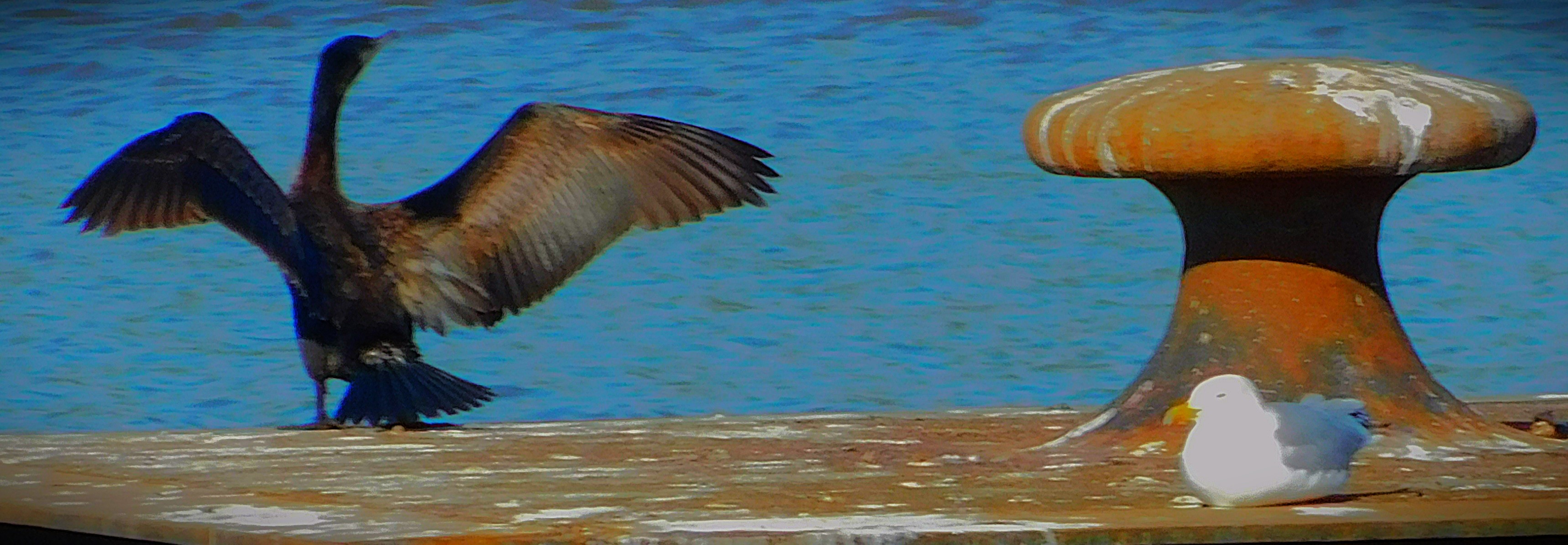
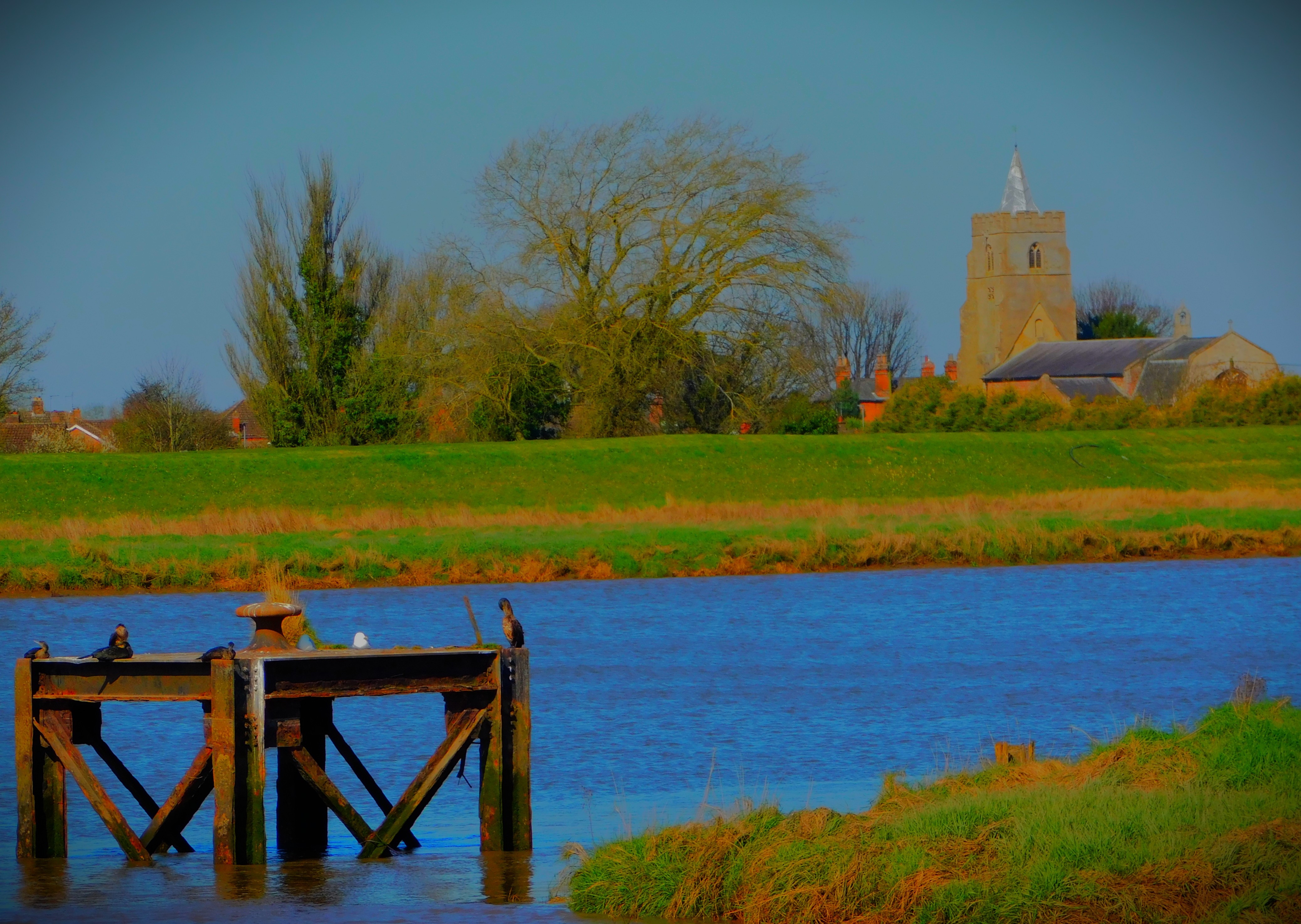
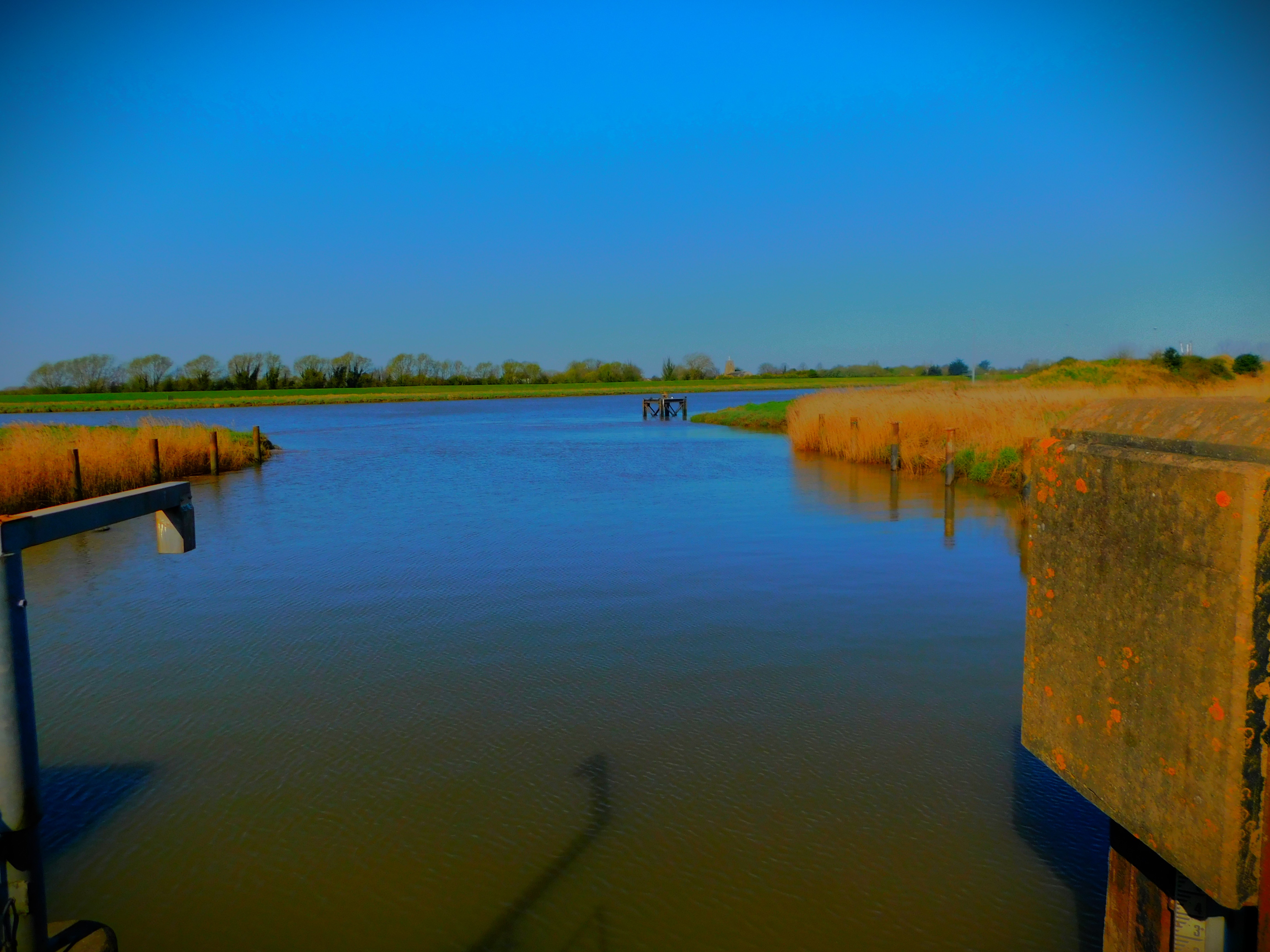
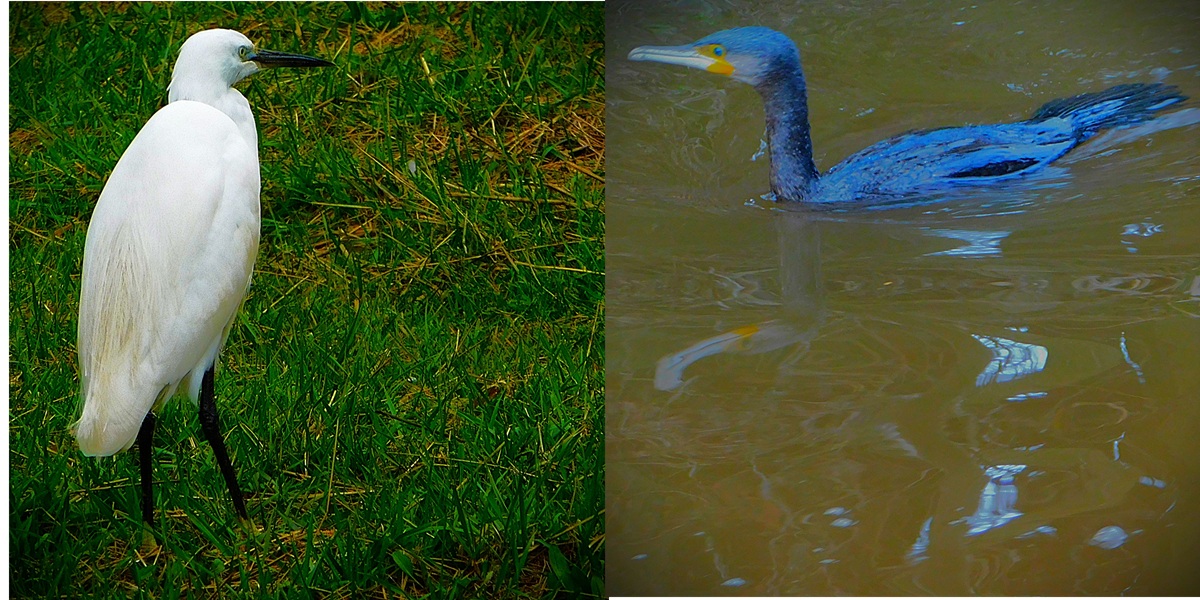
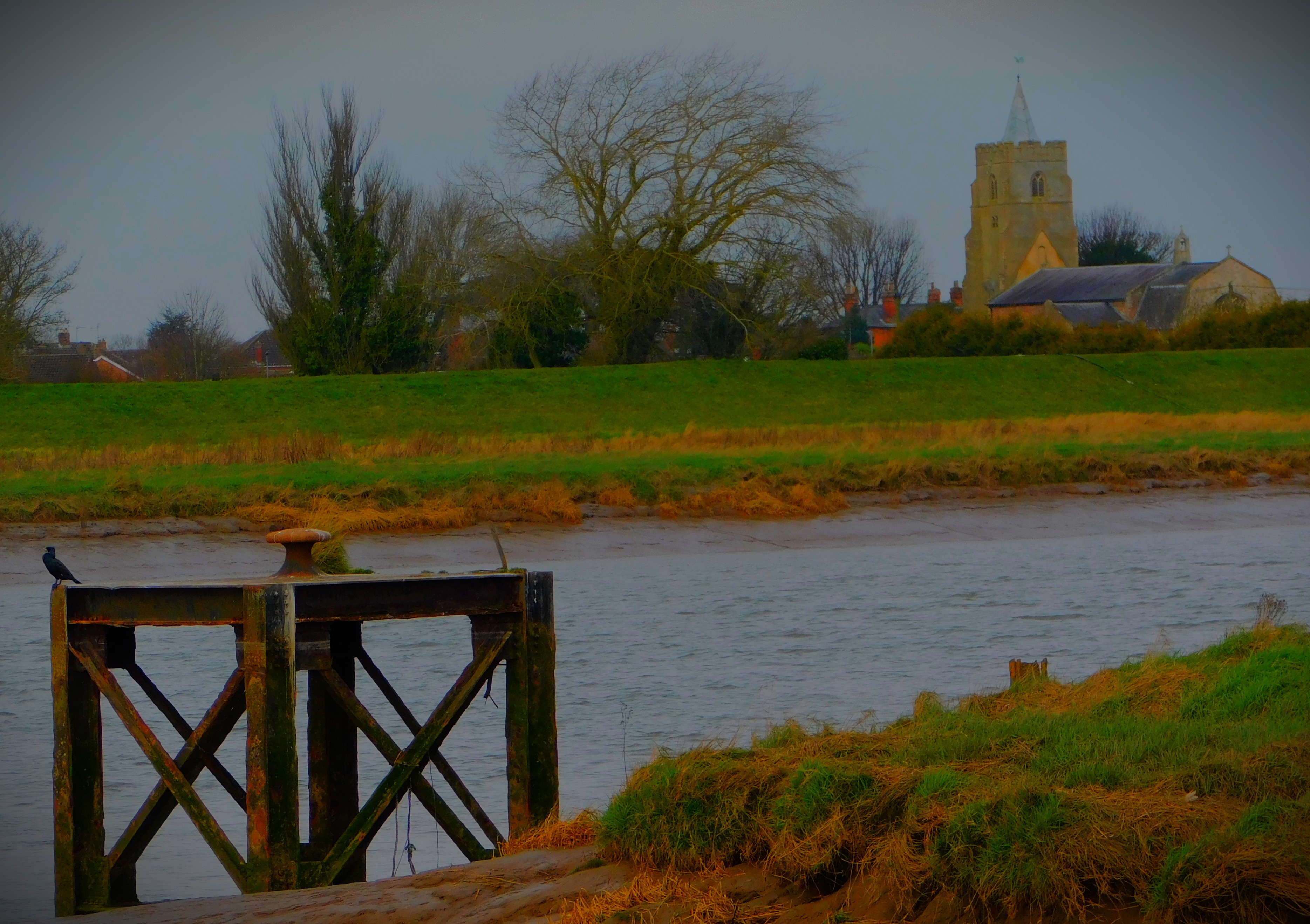
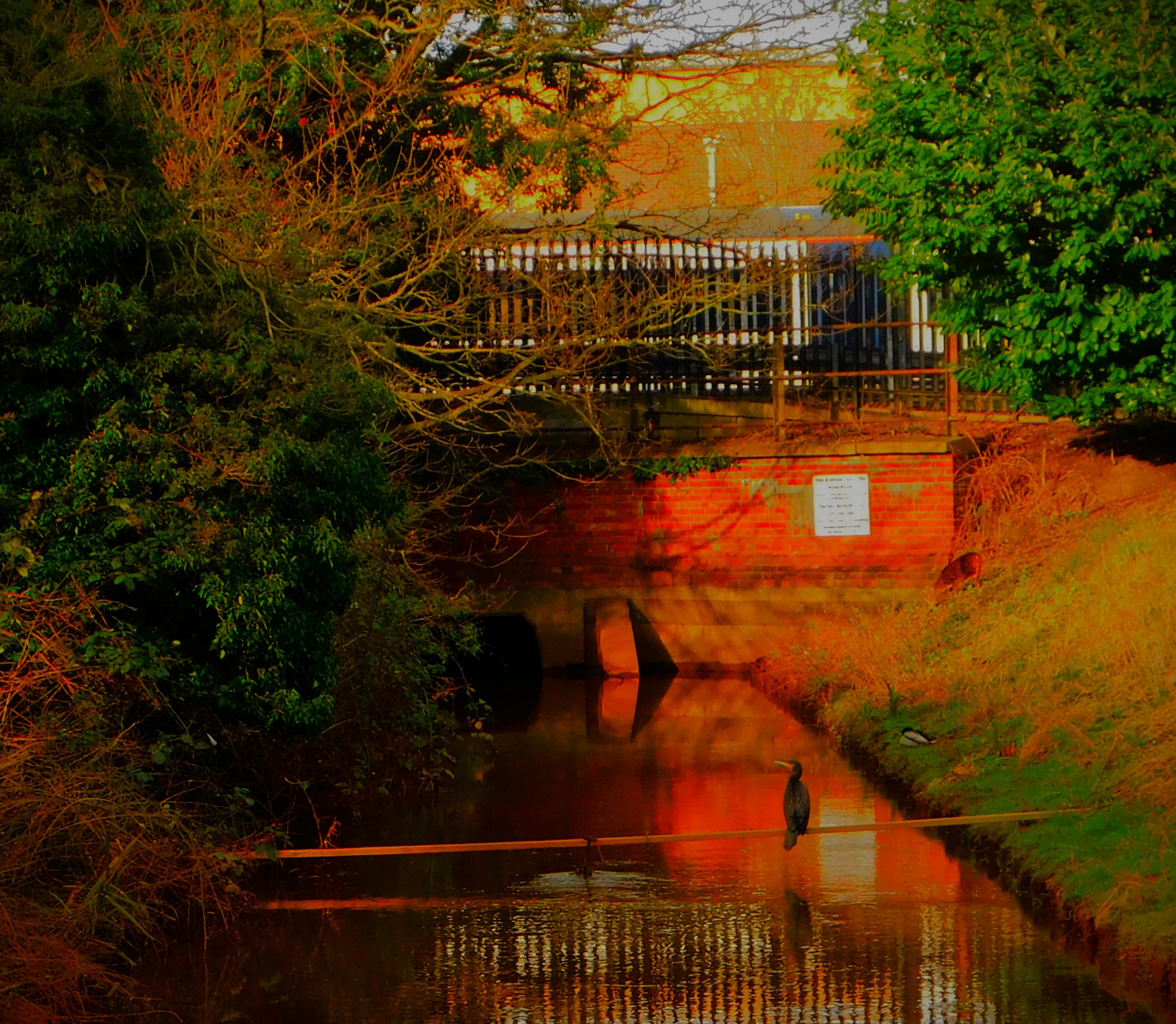
From the library I headed through Hillington Square and down to the Great Ouse, reaching the river front a few hundred metres before the Nar outflow and the structure I have dubbed ‘Cormorant Platform’. which as you will see more than lived up to my name for it on this occasion.

The bright, sunny weather helped to maintain my resolve to extend my walk to the industrial estate on which WNAG’s meeting room/ office space is located, and I duly did so, ensuring that on Friday morning, when I will need to arrive in good time, there will be no mishaps.

My route home followed my route out in reverse as far as All Saints Church, at which point I diverted slightly, away from the crossing of Millfleet and towards London Road instead. I crossed London Road, and left it by way of the Broadwalk, then looping round by way of the Vancouver Garden and the path out of it to St John’s Walk. I got to Morrison’s, did the little bit of food shopping that had to be done today and then headed home. I had been out for about two and a half hours. My bag will be lighter on Friday, and I will have the duration of the meeting to recover from the outbound leg, so I am now confident that walking is the way to go for this meeting.

This gallery features exclusively pictures taken this morning.

Parts of it Were Excellent

A mention of the start of the Six Nations rugby tournament and a large photo gallery.

The title of this post borrows the tactful response of a curate served a bad egg by his vicar. It refers to England’s first match in this year’s Six Nations rugby union, which was against Ireland in Dublin yesterday.

Ireland won both the 2023 and 2024 tournaments and are bidding to become the first side to win this tournament three times in a row. France had hammered Wales in Paris on Friday evening, and Scotland had beaten Italy earlier yesterday. England played very well in the first half and had a handy lead at the interval. In the second half Ireland found their mojo, and England wilted under increased pressure from their hosts. In the end only a late try scored long after the result was settled secured England a losing bonus point. Ireland are thus off to a winning start, while England must regroup, though the latter do have the advantage of having three home matches to play.

Today has been bright and sunny, albeit still cold (there was an overnight frost which hadn’t completely cleared when I went out for the first time, and I have a fine photo gallery to share…

Australia Complete WAshes Whitewash

An account of the third and as it turned out final day at the MCG and a photo gallery.

The word ‘WAshes’, with the first two letters capitalized is a social media hashtag created by combining the W from women’s with the word Ashes. This post looks at the events of the third and as it turns out final day of the one-off test match that ended this year’s WAshes series.

The early stages of the day, which got underway at 3:30AM UK time, saw England produce their best bowling and fielding of the series. Knight opted for the contrasting threats of Ecclestone (left arm, slow) and Filer (right arm, fast), and both bowled beautifully. Mooney became the first Australian to complete centuries in all three formats (Heather Knight and Tammy Beaumont, both playing for England in this match, are also members of this small club). She was out to a beauty from Lauren Filer which clean bowled her. The Australian innings ended when Perry, who came in at number ten after being held back due to injury, chipped a return catch to Ecclestone who thus claimed a place on the MCG honours board with her fifth wicket of the innings. She had toiled hard – the final ball of the Australian innings was the third of her 45th over thereof. Footage of this good spell for England can be viewed here.

England had scored a mere six runs when Darcie Brown got through the defences of Maia Bouchier, ending a wretched tour for the 26 year old, who was out for one. Bouchier’s tour aggregate was 33 runs from six innings, she does not bowl, and in a side who are not great in the field she is one of the most frequent offenders when it comes to dropped catches.

Beaumont and Knight batted well for a time, both hitting some highly impressive shots. However, with 79 on the board Knight was dismissed to a catch by Litchfield off Gardner. Nat Sciver-Brunt started impressively and the 100 came up without further loss, but at that point Alana King, in what was to be a long unchanged spell from the Shane Warne Stand end took centre stage with her leg spin. At 100 she trapped Sciver-Brunt plumb in front for 18. Three balls later Dunkley fell to an incredible ball. Footage of this delivery is available here, and I urge you to watch it and see for yourself what it did. Danni Wyatt-Hodge is high class batter, and a very experienced one, but she did not play like one this time round. She essayed a sweep, a shot that England have got in trouble with against Australia’s spinners all through this series, and Litchfield took a fine catch. The score had not advanced from King got one through Beaumont’s previously impregnable defences to dismiss the diminutive opener for 47. That was 109-6, and right on the stroke of the second interval Amy Jones edged one from Gardner to Mooney who made no mistake behind the stumps. Soon after the resumption Ryana MacDonald-Gay was eighth out, helplessly popping up a catch to Brown off King. Both spinners were involved in the dismissal of Ecclestone, joint third top scorer with 18, King taking the catch off Gardner. That left the two Laurens, Filer and Bell, to delay the inevitable as long as they could. In the event the numbers 10 and 11 hung on for 11.2 overs together before Filer fell to a catch by Sutherland off King to give Australia victory by an innings and 122 runs and a 16-0 clean sweep in the multi-format series. It was an appropriate ending – Sutherland was the obvious choice for Player of the Match for that dazzling 163 and King, with 23 wickets in all, was an equally obvious choice for Player of the Series. That Ecclestone, Filer and Bell, numbers 8,10 and 11, survived respectively for 50, 45 and 30 balls (the last being an unbeaten 0) serves to further highlight the wretchedness of that headlong plunge from 100-2 to 122-8. A highlights package from today can be viewed here. A full scorecard of this match can be viewed here. Australia absolutely deserved their clean sweep, and England need to make big changes moving forward.

My usual sign off…