All Time XIs – England Before WWI

A look at England’s resources in the early years of test cricket and a large photo gallery.

Today is the third anniversary of my first ever All Time XIs post, about Surrey and I am varying the theme today with a look not at an all-time XI but an XI for a particular period of cricket’s history – England before WWI, so picked from players who appeared in the first 37 years of test cricket.

THE XI IN BATTING ORDER

  1. *WG Grace (right handed opening batter, right arm bowler of various types and captain). WG’s test record looks fairly modest, but he was already 32 by the time he made his debut at that level and almost 51 by the time of his last appearance. He also did twice hold the England record individual score at that level, with 152 on his debut at The Oval in 1880, which lasted six years, and 170 at the same ground in 1886 to reclaim his record from Arthur Shrewsbury after one match. This latter stood until the 1894-5 Ashes series when Stoddart topped it with 173. Had test cricket been established a little earlier than it was Grace’s record would have been a lot better – in the 1870s he averaged 49 in FC cricket when no one else in England could do more than half as well.
  2. Jack Hobbs (right handed opening batter). Included in this XI as well as the one for the inter-war era out of deference to his own expressed wish to be remembered for how he batted before WWI – he was actually firmly established as the best in the world before the outbreak of WWI although his main record breaking years were after that conflict.
  3. Johnny Tyldesley (right handed batter). It was a choice between this man and David Denton of Yorkshire for the number three slot (both filled it with distinction) and I opted for the Lancastrian due to the fact that his brother misses out on a place in the inter-war XI because of England’s immense batting strength in that era.
  4. KS Ranjitsinhji (right handed batter). 989 test runs at 45 including two 150+ scores. One of the great geniuses of batting.
  5. FS Jackson (right handed batter,right arm medium fast bowler, vice captain). He never managed an overseas tour due to work commitments (he was a genuine amateur in terms of his cricket), but he still managed five test centuries against Australia in home matches. His peak came in the 1905 Ashes, when he won all five tosses, led England to victory in the only two matches to have definite results and topped both the batting and bowling averages for the series.
  6. Len Braund (right handed batter, leg spinner). The all rounder of the side, and an excellent slip fielder to boot.
  7. Frank Foster (left arm fast medium bowler, right handed batter). His career was cut short by a motorcycle accident, but in the few years he was around he did enough to claim his place, including playing a key role in a 4-1 win down under in 1911-2.
  8. +Augustus “Dick” Lilley (wicket keeper, useful lower order batter). The longest serving of England’s prewar keepers, and with an excellent record.
  9. George Simpson-Hayward (under arm off spin, right handed lower order batter). Selected for historical significance as the last specialist under arm bowler to feature at test level (and he did well in the five matches he got to play btw). He would need a law change (see here for a suggestion of how such a change could safely be made) to be able to play today.
  10. SF Barnes (right arm fast medium bowler, right handed lower order batter). That official ‘right arm fast medium’ is about as complete a description of Barnes the bowler as ‘artist’ is of Leonardo da Vinci – it tells a tiny fraction of the story of someone who could bowl every type of delivery known to right armers of his day and whose special weapon was effectively a leg break at fast medium.
  11. Wilfred Rhodes (left arm orthodox spinner, right handed lower order batter). Although Rhodes’ brief period as an England opening batter happened just before WWI I have selected him for his bowling – he started and ended his career as a specialist bowler with two spells as an all rounder and in the middle a spell as a specialist batter and I have put him in the slot from which he helped George Hirst to knock of the the 15 required when they came together at The Oval in 1902 and from where he helped RE Foster to add 130 for the last wicket at Sydney in 1903.

This XI has powerful top order, all rounders at six and seven, a fine keeper who could also bat at eight and three master bowlers to round out the order.

HONOURABLE MENTIONS

Other than my actual choices the main contenders for opening slots were Archie MacLaren and Arthur Shrewsbury. Reginald Foster has two places in the record books – his 287 at the SCG in 1903, at the time an all comers test record remains the record for someone playing their first test innings, and he is the only person to have captained England men at both cricket and football, but other than that amazing debut performance he only topped 50 once more in his career and that was an innings in which he benefitted from good fortune. Many would have expected CB Fry to be a shoo-in but his test record was not nearly as good as his FC record, and with WG inked in for the captaincy, and FS Jackson a more than able deputy his leadership skills were hardly required. Allan Steel might have had the all rounders slot I gave to Braund (like the latter he bowled leg spin). George Hirst may well have been as his Yorkshire skipper Lord Hawke was wont to claim the best ever county all rounder, but his performances for England were overall not that great, though he did have his moments.

George Lohmann was probably the biggest bowling omission but I felt he was too similar to Barnes to be able to pick both. The side also lacks a really fast bowler. The obvious candidate would be Tom Richardson, with 88 wickets in his 14 test matches, and if I were to be debarred from selecting Simpson-Hayward then Richardson would take his place, but I prefer the greater variety that Simpson-Hayward’s presence brings. Schofield Haigh’s England successes were limited for all that he was outstanding for Yorkshire. There were a stack of left arm spinners I could have picked: Johnny Briggs, Bobby Peel and Colin Blythe being the three most notable other than Rhodes in this period, while George Dennett never actually got an England cap, but 2,151 wickets at 19.82 in FC cricket provide proof of his greatness.

PHOTOGRAPHS

My usual sign off…

All Time XI – Minor Counties

Revisiting the all time XIs theme with an XI of the greatest cricketers to have been born in minor counties. Also a huge photo gallery.

Today I revisit a theme I started exploring in earnest when Covid-19 meant that there was no live cricket for a while – all time XIs.

THE BRIEF

This XI is based on birthplaces – players who play their whole careers for minor counties cannot really be considered great whatever their records. Every player in this XI was born in a county in mainland Britain but one which is not a home to first class cricket.

THE XI IN BATTING ORDER

  1. Jack Hobbs (Cambridgeshire). The right handed half of an all East Anglian opening pair, both of whom played their FC cricket for Surrey and England, indisputably among the games all time greats, with more FC runs and more FC hundreds to his name than anyone else.
  2. John Edrich (Norfolk). One of five members of this Norfolk family to play FC cricket, he amassed over 100 FC hundreds in a long and distinguished career.
  3. Bill Edrich (Norfolk). Another of the Norfolk Edriches, an older cousin of John. In spite of losing six years of his cricketing prime to WWII he amassed 86 FC centuries in total and also had his moments bowling right arm fast medium.
  4. Ken Barrington (Berkshire). An average of almost 59 at test level, including 20 centuries. His career best FC score, 256 v Australia in 1964, came in a test match. That 256 was his first century in a test match in England, his previous nine having all come overseas.
  5. *Peter May (Berkshire). The captain of this side. Although he retired from top level cricket at the young age of 30 he had amassed 85 FC centuries by that point. In the low and slow scoring 1950s this attack minded batter managed to average 46 at test level, with a best of 285* against West Indies at Edgbaston in 1957.
  6. Tom Graveney (Northumberland). A member of the ‘100 first class hundreds’ club, and with a fine test record as well. His test best of 258 came against the West Indies, and he was also part of an extraordinary turn around against them at The Oval in 1966 when England slipped to 166-7 in reply to WI’s 268 before Graveney (165) and Murray (112) completely turned the match upside down. Their heroics inspired numbers 10 and 11, John Snow and Ken Higgs to such an extent that both scored 50s of their own boosting England to a final total of 527. West Indies, understandably demoralized by this, were never at the races in their own second innings and England won by an innings margin.
  7. Ian Botham (Cheshire). For five years (1977-82) he was unarguably among the greatest all rounders ever seen, for another five he had occasional great moments before finally tailing off altogether. Between the five years of undoubted greatness and the five years in which he had some great moments he set some astonishing records. When he came on the scene only two players had scored a century and taken five wickets in an innings of the same test match more than once, Mushtaq Mohammad and Garry Sobers who each achieved the feat twice. Botham did it five times, including the first time a male player scored a century and took 10 wickets across the two bowling innings of the same test match, against India in 1980 (Enid Bakewell had achieved this for England Women against West Indies Women a few months earlier). Since Botham’s retirement one other player has done it more than twice: R Ashwin of India has achieved the feat three times.
  8. +Bob Taylor (Staffordshire). More FC dismissals than any other keeper in history – 1,649 of them (1,473 caught, 176 stumped). His England career was limited by the fact that he overlapped with Alan Knott, whose better batting usually got him the nod. However Taylor was far less negligible in this latter department than this often leads people to think – his six hour 97 at Adelaide was undoubtedly crucial to England securing that series which was actually much harder fought than the final 5-1 scoreline suggests.
  9. Syd Barnes (Staffordshire). Rated by many as the greatest bowler in the history of cricket. He reached the landmark of 100 test wickets in his 17th match at that level, a figure beaten only by George Lohmann who got there in 16, and then so dominated the remainder of his test career that he finished with 189 wickets in just 27 test matches, an average of seven per match. He played in less than half of the test matches that England played between the start and end of his career due to a less than harmonious relationship with the powers that be. Although he never played for England after WW1 he was a formidable bowler even then in Lancashire League and Minor Counties cricket, taking a nine-for in a Lancashire League match at the age of 59. As late as 1930 there were those who thought a recall for Barnes might be the answer to Donald Bradman (Bradman confounded those who doubted his ability to score in England that summer by having a tour aggregate of 2,960 at 98.66 including 974 at 139.14 in the five test matches).
  10. ‘Old’ Jack Hearne (Buckinghamshire). The fourth leading wicket taker in FC history with 3,061 scalps. He didn’t play a vast number of games for England but even at that level his record was respectable.
  11. Peter Such (Dunbartonshire). When the Leicestershire, Nottinghamshire and Essex off spinner gained international recognition in 1993 he started in fine style, taking 6-67 in his first bowling innings at test level. Unfortunately that was as good as it got for him at the very highest level, and he emerged with 37 wickets at 33.56 from 11 test appearances (the emergence of Robert Croft, a bowler of similar type and quality and a much better lower order batter was a major factor against him) but his FC record was impressive.

This side is strong in batting. The bowling, with Barnes, Hearne, Botham and Such as full timers and Bill Edrich’s fast medium, Barrington’s leg spin and Hobbs’ medium pace as back up options is also impressive.

HONOURABLE MENTIONS

Tom Hayward (Cambridgeshire) scored over 100 FC centuries, but I felt that John Edrich’s left handedness gave him an edge. David and John Steele (both Staffordshire) were two gutsy left handed batters who both bowled a bit of spin on the side, but neither really make the grade, though if I wanted an extra back up spin option I might put David Steele at three in place of Bill Edrich. Alec Bedser is by far the biggest name to miss out, but I feel Jack Hearne is a better support act to Barnes than Bedser was. Alec’s twin brother Eric Bedser, a batter and off spinner was simply not a good enough batter to deny Graveney, the only way I could have got him in. Ian Peebles (Aberdeenshire) was a fine leg spinner, but with Barnes greatest weapon being effectively a leg break delivered at fast medium and with Barrington available as well I felt that Such as an off spinner was a better fit for the role of front line spinner. The side contains no bowler of express pace. There are two potential options, Olly Stone (Norfolk) and George “Tear ‘Em” Tarrant (Cambridgeshire), either of whom could replace ‘Old’ Jack at number 10, and possibly if the pitch was such that no front line spinner was deemed necessary both could be included by also dropping Such. Tom Dollery (Berkshire) was a fine middle order batter, even finer skipper and an occasional wicket keeper for Warwickshire, but he was not quite good enough to claim a front line batting slot in this XI and I would laugh outright at any suggestion that he might get the gauntlets ahead of Bob Taylor.

PHOTOGRAPHS

My usual sign off…

Changing the Politcal Landscape

A bit about leafleting for the Green Party and a photo gallery.

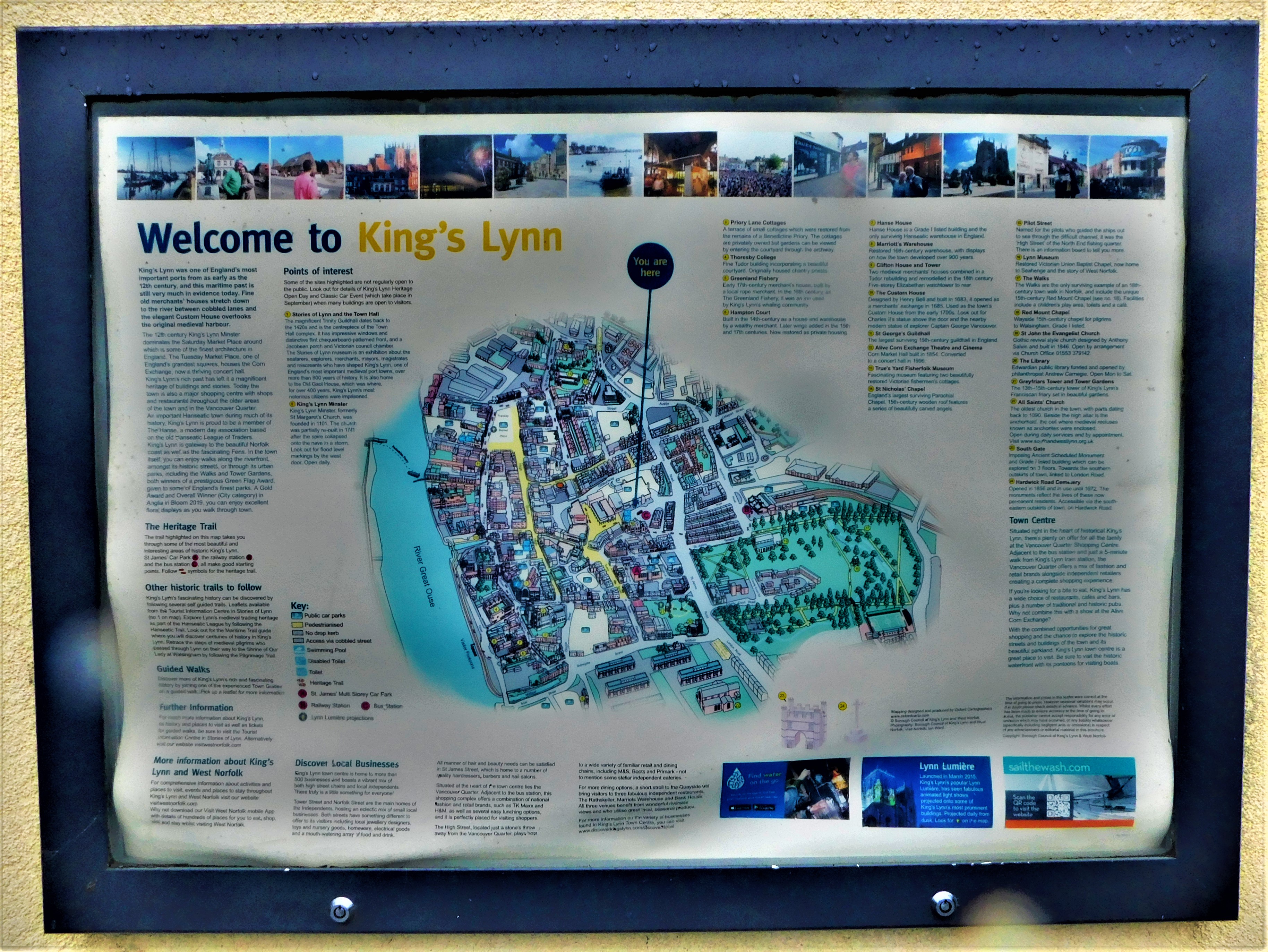
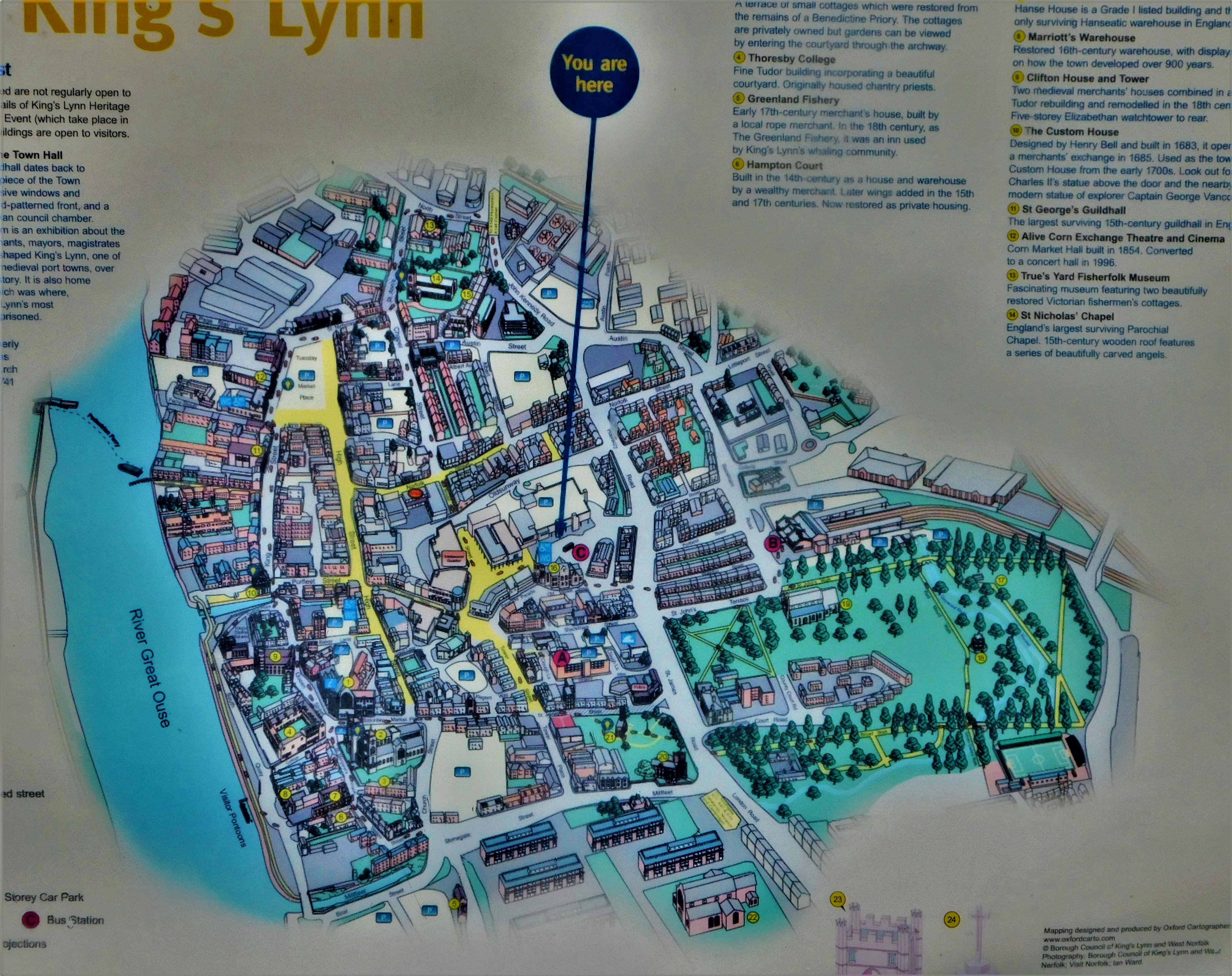
There are local elections coming up in May. As a member of the Green Party I am delighted that they have two excellent candidates standing in the centre of my town, officially known as St Margaret and St Nicholas Ward (King’s Lynn Minster was St Margaret’s Church before its promotion to being a Minster, while St Nicholas Chapel is it’s North End counterpart). I am helping with the leafleting – I did some yesterday and plan to do more tomorrow. The northern boundary of the ward is marked by a railway spur only a few minutes walk from my house, which means that my leafleting area is all within easy walking range.

GETTING STARTED

I got an email about upcoming campaigns on Thursday evening, noted that one of them was for Rob Archer, a former railway worker who was only just short of being elected first time round, and emailed him to say that I would be round on Saturday morning. Having established that his home was somewhat closer to the South Gate than to the town centre, and with a stated start time of 10:00 I set off at 9:30, duly arrived at 10, and was entrusted with a pile of leaflets and a map of the northern part of the ward, at which point I set off. I did two streets, Wyatt Street (too old to have been named after Danielle Wyatt, but there could be a connection to former Warwickshire and England skipper Bob Wyatt) and Kettlewell Lane on my way home, then I took a short break, and set forth again, polishing off Archdale Street (another with possible cricket connections – England Women’s first ever skipper Betty Archdale, and Somerset keeper the reverend Archdale Palmer Wickham), Eagle Yard, Eastgate Street and their side of Gaywood Road.

THE LEAFLET

The current leaflet, a double sided A4 sheet in the form of a newsletter (which means it has to be folded to fit through almost all letterboxes) is highly impressive:

PHOTOGRAPHS

Yesterday’s activity contributed to a splendid photo gallery, and this morning’s walk augmented it. These pictures both showcase some of the natural sights that King’s Lynn has to offer, and in some cases further illustrate why more Green councillors are badly needed:

The Womens Premier League So Far

A look at developments in the inaugural WPL and a large photo gallery.

In this post I run my eye over the doings of the five franchises in the competition to date.

RCB Women

The Royal Challengers Bangalore men are the Cinderella club of the IPL – they are one of the founding franchises but have never won the competition. The women’s side have had a horror start in the inaugural competition, with four defeats in four games, the last confirmed just now, with their opponents having 10 wickets and exactly seven overs to spare.

GUJURAT GIANTS

Not in quite as desperate a position as RCB, they have one win and two losses from their three games, but they also have a massive negative net RR, which could well stymie any attempt to move up the table – wins are no longer enough for them – they need to win big for it really count.

UPW

Their huge win against RCB today puts them third in the table, behind second place on net run rate. Their three front line slow bowlers, Ecclestone (4-13), Deepti Sharma (3-26) and Rajeshwari Gayakwad (1-26) proved too much RCB’s batting. Although I don’t think it made a difference today, given the sheer margin of superiority enjoyed by UPW, RCB’s habit of using Heather Knight at number five has proved costly in at least two of their defeats, when she played excellent cameo innings too late to influence the result. In today’s match, Alyssa Healy scored 96* off 47 balls, making RCB’s modest 138 look positively risible, while Devika Vaidya played the support role with 36* (31) at the other end.

DELHI CAPITALS

Like UPW they have two wins and one loss from three matches. They have a somewhat better net run rate.

MUMBAI INDIANS

They have hit the ground running, with three wins from three games, and they have all been very comfortable wins as well. It is at the moment hard to look beyond them for the inaugural WPL champions. I would actually be more inclined to back UPW to spring a surprise in this regard than DC for all that the latter are currently second.

PHOTOGRAPHS

My usual sign off…
The Women’s Premier League

A look at the opening salvos of the Women’s Premier League, a petition and a large photo gallery.

The inaugural Women’s Premier League kicked off yesterday, and as I type this the second of today’s matches is in progress. This is currently a five team franchise tournament, with expansion likely in the future. In this post I look at developments so far (unfortunately there has been no live radio commentary for me to listen to – men in fast cars are more important to five live sports extra than pioneering female cricketers, so all of this is second hand, by way of cricinfo and twitter).

GAME 1: MUMBAI INDIANS PUT DOWN A MARKER

The opening game of the tournament featured Mumbai Indians against Gujurat Giants. Mumbai Indians absolutely dominated the match, with Harmanpreet Kaur scoring the first 50 of the tournament and Amelia Kerr blazing her way to 45* in the closing stages of the innings. With over 200 to chase Gujurat Giants needed a good start with the bat and they actually had a catalogue of disasters, being 23-7 at low water mark, with Kerr having bowled a double wicket maiden along the way. They made a bit of a fight back, but the ninth wicket fell at 64, and the injured Beth Mooney did not resume her innings, so the match ended at that point. Mooney does not feature in the current match in which Gujurat Giants are playing Uttar Pradesh Warriorz (that ‘z’ is not a typo – they really spell the name this way).

GAME 2: DELHI CAPITALS DOMINATE

The first match of today featured Delhi Capitals and Royal Challengers Bangalore. Delhi posted a massive 223-2 with Meg Lanning and Shafali Verma both in top form. RCB could do no better than 163-8 in response. The only player from an Associate nation to be involved in the tournament, USian Tara Norris wrote her name into the record books as the taker of the first five wicket haul in the competition. The US has only produced one authentically great cricketer in the past, Bart King, the original ‘King of Swing’.

UTTAR PRADESH ENTER THE FRAY

Gujurat Giants had a fast start to their innings and have had a big finish, but they were a little slow in the middle, with the result that they have a good but by no means unassailable total. Sophie Ecclestone made her first mark on the tournament with 2-20 from her four overs.

PHOTOGRAPHS

I have a link to share before my usual sign off: Flight Free UK have a petition going on change.org calling on the BBC to stop awarding prizes that include flights. Please click here to sign and share the petition. Today’s photos were mostly taken in the course of a long walk this morning:

The Knockout Stages of the Womens World T20 Cup

A look back at the closing stages of the women’s T20 world cup and a photo gallery.

In this post I look at the semi-finals and final of the Women’s World T20 Cup in South Africa.

AUSTRALIA V INDIA

I was at work when this match was played, so my knowledge of it is entirely second/ third hand. Australia won by five runs, and there appear to have been two key moments in the chase – Harmanpreet Kaur being run out due to a failure to ground her bat properly when coming back for a second and a brilliant piece of fielding by Ellyse Perry which saved a seemingly certain boundary.

SOUTH AFRICA V ENGLAND

No South African side, male or female, had ever reached a world cup final in either T20 or ODI cricket. England were unbeaten in the tournament and have plentiful experience of finals. SA posted a very respectable score. Katherine Sciver-Brunt playing her last ICC tournament had a terrible time in the field. After viciously upbraiding several of her team mates for perceived lapses she had a horror time bowling the 20th over, conceding 18 from it, which lifted SA into the 160s. This did not seem to matter when Dunkley and Wyatt made a blazing start to the chase, putting England ahead of the required rate, but the fall of wickets and a quiet spell spanning overs 9-15 inclusive turned the game South Africa’s way, and although England fought back hard in the closing stages South Africa won by six runs and thus claimed a place in the final.

SOUTH AFRICA V AUSTRALIA

With the hosts in the final Newlands was absolutely jam packed. Unsurprisingly both teams picked the same XIs that had won their respective semi-finals. Australia won the toss and batted. SA bowled well, but not quite well enough, and aided by a big final over Australia posted 156 from their 20 overs. SA started slowly and although Laura Wolvaardt (who overtook Natalie Sciver-Brunt to become the tournament’s leading run scorer in the course of her 61 off 48 balls) and Chloe Tryon staged a mid-innings revival that briefly hinted at making a serious challenge for the runs, Australia were just too good. In the end the margin was 19 runs. This was a sixth T20 World Cup for the Australian women, a 13th global trophy in all for them, and the fifth time that Meg Lanning had captained a side to a world cup victory (no one else of either sex has achieved this feat more than twice). South Africa had fought hard, and to the credit of the fans Newlands remained full right to the end even though the result was obvious some way before it was officially confirmed. Much more will be heard of this South African squad in the future, and it took the most dominant cricket team on the planet (either sex) to stop them in their tracks this time round.

PHOTOGRAPHS

My usual sign off…

England On Top In New Zealand

A look at goings on the second test between New Zealand and England and a large photo gallery.

I am writing this as Australia and South Africa do battle in the final of the Womens’ World T20 Cup in front of a packed house crowd at Newlands, Cape Town – I will cover the closing stages of this tournament tomorrow. In this post I look at the first three days play in Wellington, where England are poised to win the test series against New Zealand.

THE ENGLAND FIRST INNINGS

I missed the first day’s play entirely – this being in New Zealand it is happening overnight my time. England were 21-3 at one point, but Harry Brook (184* by the close) and Joe Root (101* by the close) put on an unbroken 294 in what was left of the day – rain called a halt after 65 overs.

Brook was out early on the second day, but Root kept going, and when he reached his 150 Stokes declared. England had amassed 435-8. Root, the greatest English test batter of the 21st century and his heir apparent Brook had scored 339 of those for once out between them (Brook 186, Root 153*).

THE NEW ZEALAND FIRST INNINGS

By the end of day two, again hastened by bad weather, NZ were 135-7 and in all kinds of bother. A blitz by Southee, who ended with 73 off 48 balls, got NZ passed 200, but at 209 all out they had not quite done enough to dodge the follow-on. Anderson, currently the world no1 ranked test bowler at the age of 40, had three wickets as did Broad, and Leach outdid both of them with four. The next question was what Stokes would do – most current test skippers would not have enforced the follow-on, but as Stokes demonstrated at Rawalpindi not so long ago he is emphatically not most current test skippers…

THE NEW ZEALAND SECOND INNINGS

Stokes did enforce the follow-on, correctly in my view, given that this was day three and the weather was not to be relied on. New Zealand batted better second time round and reached the close on 202-3, still 24 runs in arrears. Kane Williamson and Henry Nicholls committed absolutely to defence in the latter stages of the day, which is why NZ are still in debit. If New Zealand can bat through day four they may be in a position to cause England trouble, but at the moment England are heavy favourites, and a couple of early strikes to start day four would underline that status.

PHOTOGRAPHS

My usual sign off…

The Womens’ T20 World Cup Semi Finalists

A brief look at the four teams in the semi-finals of the Womens Under 19 World Cup, and a substantial photo gallery.

The semi-finalists of the Womens T20 World Cup are now established, as are the timings of their matches. Tomorrow when I shall be at work Australia face India, while on Friday England take on the hosts South Africa. This post looks at the four sides and their passage to the semi-finals.

AUSTRALIA

They came into this tournament as heavy favourites and there is no great reason to alter that assessment. They have disposed of everyone in their path to date. They still have two tough contests ahead of them, but all available evidence suggests that they are thoroughly capable of adding yet more silverware to the best stocked trophy cabinet in international cricket.

ENGLAND

England are also unbeaten, and finished their group stage with a flourish (a game I know about only at second hand due to work commitments), beating Pakistan by 114 runs (213-5 plays 99). They should have what it takes to get past South Africa in the semi-final, but unless India produce something beyond anything they have shown thus far in the tournament the women in green and gold will be waiting in the final, and England will need to be at their absolute best and probably have a bit of luck in addition to win that contest. England have been strong in all areas, with their least effective player of the tournament so far being the veteran Katherine Sciver-Brunt whose last ICC tournament this is.

INDIA

Other than suffering a narrow defeat at England’s hands India did everything right in their group. They should also be buoyed by the recent success of their juniors in the Womens U19 T20 World Cup, the first world cup win by any Indian women’s team, and the upcoming Womens Premier League (female equivalent of the IPL) will act as a spur to ensure that they produce their best on the biggest stage, but they face a mighty obstacle in the semi-finals in the form of the Aussies.

SOUTH AFRICA

The hosts left ir right to the last gasp to ensure their own qualification. They entered the last match of the group stage, against Bangladesh, needing a win (nothing else – net RR was not an issue) to qualify. South African teams have been known to fail to close out such deals, notably the South African men, who in the last men’s T20 World Cup were in the identical position against even less significant opposition, The Netherlands, and suffered a humiliating defeat and consequent early exit. SA were less impressive than their final winning margin of 10 wickets with 2.1 overs to spare suggests – Bangladesh batted poorly, and failed to capitalize on a number of opportunities they were given in the field. Although sometimes teams who only just sneak in at the last moment end up winning because they are the ones in form I don’t think even the most one-eyed of South Africa fans would dispute that they rank as fourth out of the teams to qualify for the semi-finals.

PHOTOGRAPHS

My usual sign off…

England Men in New Zealand

A look back at the first New Zealand v England test match, a couple of 15-minute city related links and lots of photographs.

The first test of mini-series of two matches between New Zealand and England men’s teams has ended early on the fourth of five scheduled days in a crushing victory for England. This post looks back at the match.

ENGLAND BAT FIRST

England batted first and scored at a very quick rate, so that the regular loss of wickets was not as much of an issue as it might have been. When the ninth England wicket fell at 325, with a bit of time left in the day, Ben Stokes declared in order to get New Zealand in under the lights. Harry Brook had made 89 and Ben Duckett 84.

EARLY WICKETS AND A FIGHTBACK

Anderson, Broad and Robinson proved highly effective in the situation that the England batters and their skipper Stokes had created for them and by the end of day one New Zealand were 37-3. On the second day, largely through Tom Blundell (138), the Kiwis mounted a spirited fightback and ended up only 19 runs in deficit on first innings. Stuart Broad and James Anderson stood on the cusp of yet another piece of history, needing one more to wicket between them to have taken more wickets in test matches in which they played together than any other pair of bowlers.

ENGLAND’S SECOND INNINGS

England scored briskly once again, and avoided losing excessive numbers of wickets to the new ball. On day three Neil Wagner put in a spirited bowling effort for the Kiwis, but half centuries for Root, Brook and Foakes plus aggressive contributions from Stokes and Robinson got England to 374 in their second innings, and at pace that meant that for the second time in the match they got to attack the Kiwis under the lights with the new ball (I reckon even if they hadn’t been all out Stokes would have declared to make sure of this, just as he did in the first innings).

NEW ZEALAND SECOND INNINGS

England were even more devastating under the lights second time round, and the Kiwis ended day three on 63-5 and surely knowing that the writing was on the wall.

In the event, in the very small hours of this morning UK time, while I was asleep, the Kiwis managed to exactly double this score, going down by 267 runs. Anderson finished with 4-18, Broad 4-45. Harry Brook was named Player of the Match for his 143 runs across the two England innings. A full scorecard can be viewed here. The biggest difference between the sides was in how they used the new ball – England, helped by Stokes’ game management that saw them twice get to use it under floodlights, kept things tight and took plenty of wickets, while New Zealand took few wickets with the new ball and got smacked around when trying to use it.

SIDELIGHT: INDIA MEN RETAIN BGT

Meanwhile India men were in action against Australia men in the second match of the Border-Gavaskar trophy series, India having won the first by a huge margin. Going into today Australia looked like they had a real chance to level the series, but a brainless display of batting against Jadeja (7-42) and Ashwin saw them crash from 60-1 to 115 all out, and India were never seriously in danger of failing to chase their target of 114 (yes, the teams were separated by a single run on first innings), getting there with six wickets in hand.

PHOTOGRAPHS

I have lots of photographs to share with you. Most of my photographs are taken within walking distance of my home in King’s Lynn, which links to the subject of 15-minute cities – a vision of providing people with amenities close enough to home not to require a car to visit them, and I have two good links to share on this topic:

  1. This Guardian article by Oliver Wainwright.
  2. A twitter thread by Haringey based active travel enthusiast Carla Francome based on a recent radio interview.

Now for my usual sign off…

Developments in the 2023 Womens World T20 Cup

A look at developments in the Womens T20 World Cup and a bumper photo gallery.

Since I last blogged there have been three games in the tournament: Ireland v England, South Africa v New Zealand and Australia v Bangladesh. This post looks at those matches (the first of today’s two matches, between India and West Indies is just getting underway).

IRELAND V ENGLAND

England were heavy favourites, and the match went to form. However Ireland showed a bit of fight. They were 80-2 at one stage but a collapse led to them being all out for 105. Sophia Dunkley made a brutal early assault on this small target, taking just 21 balls to reach 50. However, Ireland never completely gave up, and although England had plenty of time to spare they were six wickets down by the time they crossed the winning line.

SOUTH AFRICA V NEW ZEALAND

This was a must-win game for both sides, as each had lost their opening match of the tournament. New Zealand did reasonably well with the ball, only a fighting 40 from Chloe Tryon getting SA to 132-6 from their 20. However, for the second time in as many matches both Kiwi openers went without scoring, and it was soon 18-4. New Zealand did not improve much from this awful start, eventually being all out for 67 to lose by 65 runs. This total was nine runs fewer than the Kiwis had scraped against Australia in their first match of the tournament.

AUSTRALIA V BANGLADESH

Bangladesh could not score with any speed, although they did at least reach three figures. They bowled better than they had batted, and although defeat for Australia looked a serious possibility it take them until the 19th over to finally reach the target.

PHOTOGRAPHS

I have another big haul of photographs. I plan my walking routes to to ensure that opportunities arise, and also, living as I do on the edge of a very compact town I am able to conduct almost all of my non-working life on foot, and whether I expect the opportunities to arise or not I never venture forth without at least one camera…