All Time XIs – Given Names Begin With F

An all time XI of players whose given names begin with F and a photo gallery.

Today’s post sees an all time XI of players whose given names begin with F make their appearance. There will be plenty of honourable mentions as well.

  1. Frank Woolley (England, left handed batter, left arm orthodox spin bowler). The only player ever to complete the career triple of 10,000 runs, 1,000 wickets and 1,000 catches in first class matches.
  2. *Frank Worrell (West Indies, right handed batter, left arm medium fast bowler, captain). One of the finest captains in the game’s history and a test batting average of 49 as well.
  3. Frank Tarrant (Middlesex, left handed batter, left arm slow medium bowler). A habitual opener for Middlesex, and a very fine bowler as well.
  4. Fawad Alam (Pakistan, left handed batter). Someone who when he gets in takes a lot of getting out – five of the seven 50+ scores he amassed at test level were centuries, a Bradmanesque conversion rate.
  5. Francois ‘Faf’ du Plessis (South Africa, right handed batter). Just over 4,000 test runs at an average of 40.
  6. +Farokh Engineer (India, wicket keeper, right handed batter). An attacking batter and an excellent keeper. He once scored 94 runs in a morning session of a test match.
  7. Frank Foster (England, left arm fast medium bowler, right handed batter). Though I have listed his bowling first among his attributes he was a genuine all rounder, good enough with the willow to be Warwickshire’s first ever triple century maker. Even at test level his averages are the right way round – 23.57 with the bat and 20.57 with the ball.
  8. Fred Titmus (England, off spinner, right handed batter). A fine off spinner and plenty good enough with the willow to come in at number eight.
  9. Fred Trueman (England, right arm fast bowler, right handed batter). The first ever to capture 300 test wickets. His 307 test scalps came in 67 matches, and at an average of 21.57 each. He was not entirely without merit as a batter either, amassing three first class centuries over the years.
  10. Frederick Spofforth (Australia, right arm fast medium bowler, right handed batter). In 1878 pace alone sufficed for him to destroy a strong MCC batting line up at Lords (MCC 33 and 19 all out in their two innings, Spofforth 10-20 in the match). Four years later at The Oval he helped to inaugurate The Ashes by taking 14 wickets in the match with a mixture of pace and guile as England lost a low scoring match by seven runs. WG Grace, whose 32 in the final innings was one of only two 30+ individual scores in the whole match was fourth out with a mere 32 further runs needed, but a combination of English nerves and the sheer relentlessness of “the Demon” proved sufficient to put this beyond them.
  11. Fazal Mahmood (Pakistan, right arm fast medium bowler, right handed batter). Pakistan’s first great test match bowler, star of their win at The Oval in 1954. His great weapon was the leg cutter, which led to comparisons with England’s Alec Bedser, who deployed the same weapon to great effect.

This side has decent batting strength, with a strong top five, Engineer and Foster both definitely counting as all rounders, and Titmus a capable number eight. It also boasts a stellar bowling line up, with Spofforth, Trueman, Fazal Mahmood and Foster a fine pace/seam/swing/cut quartet, Titmus and Woolley to provide orthodox spin and Tarrant’s slow medium also available as an extra variation. Fazal Mahmood, given his expert usage of the leg cutter, can also be said to attend to the leg spinner’s angle of attack.

Had I been picking with limited overs cricket in mind Fakhar Zaman would have been one of the first names on the team sheet. In long form cricket he would be a more dubious asset and therefore I have omitted him. Faoud Bacchus of the West Indies was a possible for a batting slot, but although he did score a test match 250 that was his only three figure score at that level. Francis Ford had a decent first class batting record by late 19th century standards, but at test level he was an unequivocal failure, with a best score at that level of a mere 48. Fred Grace was among the leading batters of the 1870s, but his death at the age of 29 after one England appearance meant that there is no way of assessing his test capabilities. Frank Chester seemed destined for the top before a war time injury ended his playing career. He would certainly by one of the umpires, having stood in a then record 48 tests in the course of his second cricket career, and his colleague would be Frank Lee. Freddie Calthorpe was a decent county all rounder, but save for having the embarrassment of leaving what was supposed to be a ‘timeless test’ with a draw in a match his side had bossed (he deemed a first innings advantage of 563 insufficient to enforce the follow on, and a combination of two days of rain and the timing of England’s boat home punished him for his timidity) he did little of note at international level. Another Freddie, Brown of Surrey and Northants, was similarly not quite good enough as a player, though he handled himself better as a captain than did Calthorpe. There are cartloads of seam/ pace bowlers who were in the mix: Frank Farrands, a fine fast bowler of the 1870s, Frank Laver, one of the first great swing bowlers, Fanie de Villiers (good record for South Africa in the 1990s, but loses points for provoking Devon Malcolm into producing that 9-57 at The Oval in 1994) and current Afghanistan bowler Fazalhaq Farooqi who would be a strong candidate for a limited overs side being the most obvious. Feroze Khushi, a talented young middle order batter for Essex, is not there yet, but there are promising signs, and he may force his way in in due course.

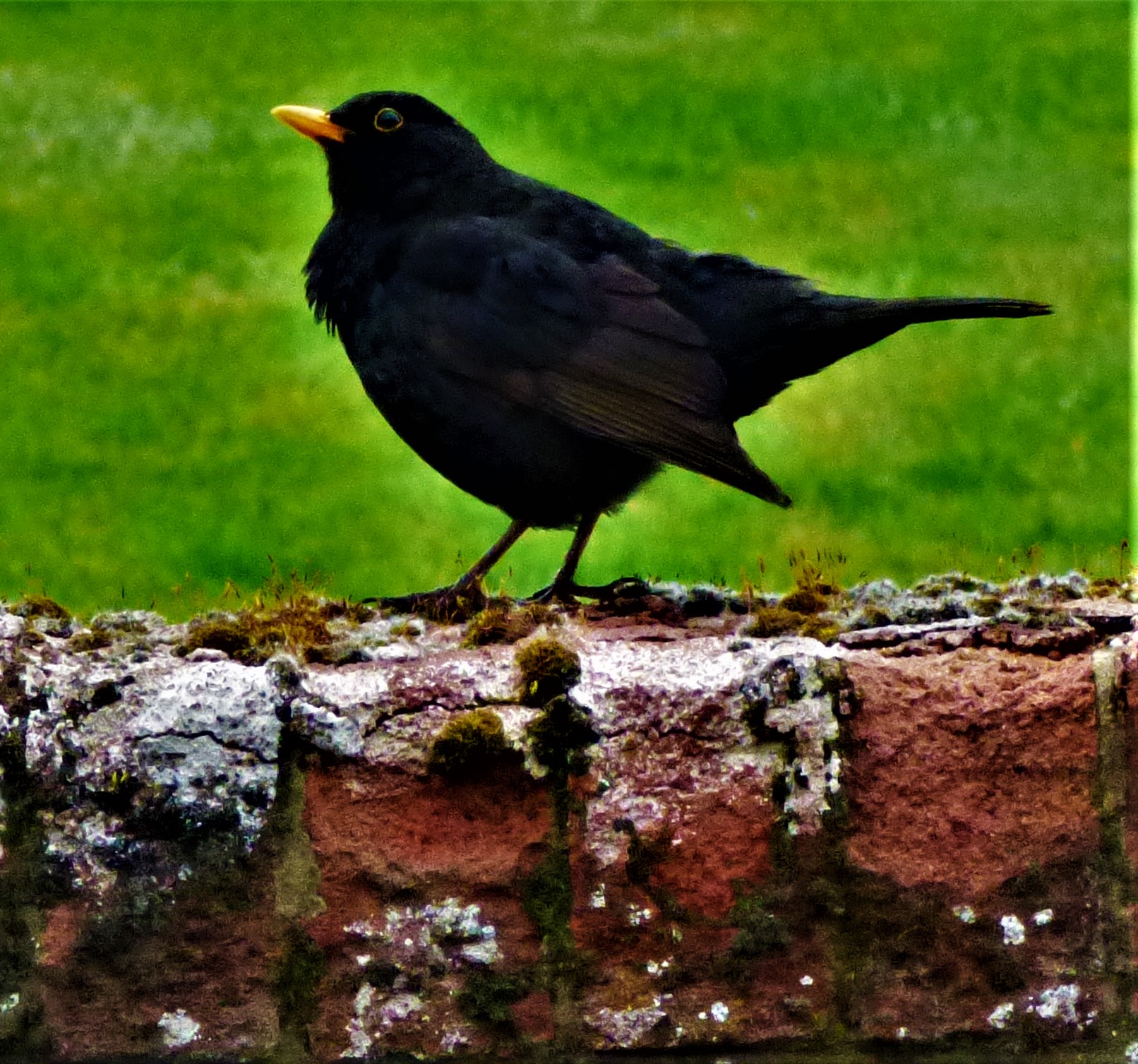
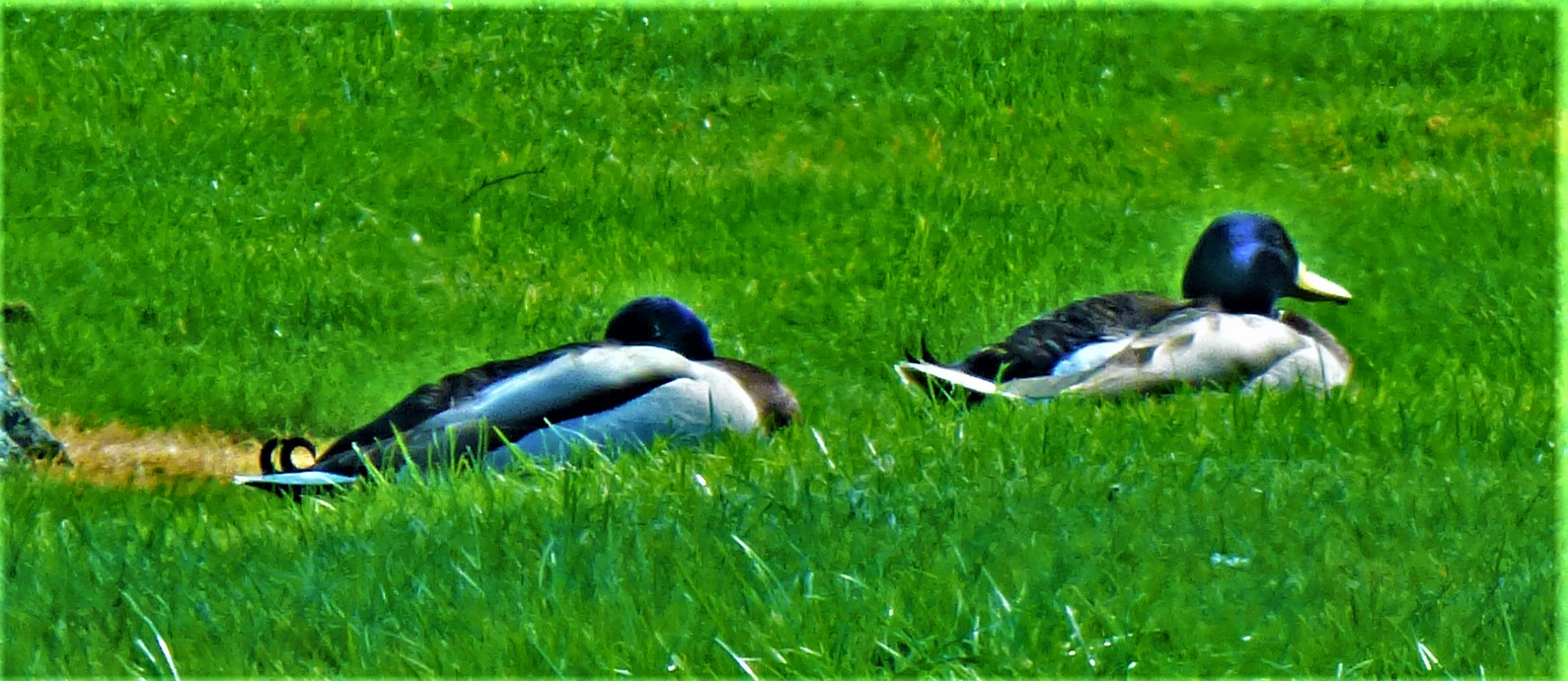
It has not been an ideal day for photography. to put it mildly, but I do have enough for my usual sign off…

All Time XIs – The Workers XI

INTRODUCTION

Welcome to the latest in my series of ‘All Time XIs’ posts. This one is yet another new take on my running theme, and warrants some preliminary explanation.

THE SELECTOR’S BRIEF

Everyone must have a name associated with an occupation of some description, and no occupation may be used more than once in the XI. Finally, the XI must be a reasonably balanced side, capable of giving a decent account of itself anywhere. Having set out the limits I imposed for this exercise it is is now time to introduce you to…

THE WORKERS XI

  1. Vijay Merchant A right handed Indian opener of the immediate post WWII era, and helped by the batter’s paradises that predominated in his homeland he recorded a first class average of 71.22, second only among those who played 20 or more games to Donald Bradman. He got few test opportunities, playing 10 times at that level and racking up 859 runs in 18 innings for an average of 47.72, some way short of his stellar FC figures but still eminently respectable, especially for someone batting at the sharp end of things. His highest first class score was 359, which came in a run of three innings that yielded 750 for once out, the second most productive such trio in history behind WG Grace’s August 1876 runfest when he scored 344 for MCC v Kent, 177 for Gloucestershire v Nottinghamshire and then 318 not out for Gloucestershire v Yorkshire, 839 runs in three innings.
  2. *Mark Taylor – left handed opening bat for Australia. Poms of my generation and older will never forget him, since he scored 839 runs against the motley crew who turned out for England in the 1989 Ashes, the highest aggregate for a series in England by anyone not named Bradman. He went on to captain his country with great distinction, maintaining the position at the top of the game’s rankings that they had gained under the stewardship of Allan Border. I have named him as captain of this side, rating him only marginally behind Border, level with his successor Steve Waugh and ahead of both Ponting and ‘Sandpaper’ Smith, and his time as captain was not marred by any of the controversies that affected some of the later holders of that office.
  3. Mark Butcher – left handed batter for Surrey and England. The highlight of his England career was a match winning 173 not out at Headingley in 2001. He could also bowl presentable medium pace, and on one occasion helped to win a test match with his bowling, albeit against a Zimbabwe side who should probably not still have been playing test cricket.
  4. Robin Smith – a hard hitting right handed batter (Hampshire and England) who averaged 43 in test cricket and was discarded too soon by the selectors of his day. He probably holds the record for the shortest period of time to elapse between bat making contact with the ball and ball crashing against the boundary fence square on the off side. He shares with Jack Russell the distinction of being an England cricketer whose standing was improved by their performances in the 1989 Ashes (29 Poms took the field against 12 Aussies in the course of that series, and if 29 against 12 sounds like an unfair fight, it was: the 29 never had cat’s chance in hell).
  5. Nari Contractor – an Indian left handed batter who scored twin centuries on first class debut (an achievement he shares with Arthur Morris, NSW and Australia, and Aamer Malik, a Pakistani right hander) and went on to average a respectable 39 in first class cricket and a slightly less impressive 31 in test cricket. He also famously suffered one of the nastiest injuries ever seen on a cricket field, subsequently requiring multiple blood transfusions (although unlike George Summers at Lord’s in 1870 and Philip Hughes at Sydney in 2014 he did live to tell the tale).
  6. Ted Wainwright – Yorkshire all rounder, who batted right handed and bowled right arm off spin. He played during the 1890s and 1900s, and produced plenty of fine performances down the years – 12,533 at 21 and 1871 wickets at 18 in first class cricket. He failed at test level, being part of the ill-fated 1897-8 Ashes tour party, and finding himself unable to turn the ball on Australian pitches. Such bowling as he got in the five tests of that series yielded him a combined 0-77, while his 132 runs at 14.66 were not sufficient for someone who was not contributing with the ball. It is said that when he got back from that tour (a highly readable account of which has been produced by John Lazenby, titled “Test of Time”) he went straight to the nets and started bowling without even taking his coat off, and that when he saw the ball turn on an English surface he wept with relief. He made a famous remark about the great ‘Ranji’, which reflected one view of his batting: “he never played a christian stroke in his life.” As a Yorkshireman, Wainwright would of course have been reared on strict orthodoxy, and would probably not have been impressed at seeing impeccable off breaks glanced to the fine leg boundary as would have happened when he bowled to ‘Ranji’. Some etymology, just in case: a wain is a type of cart, and a wright is someone who makes stuff, hence one of his ancestors must have made carts.
  7. +Farokh Engineer – a wicket keeper who was also a highly effective attacking bat. As well as representing his country with distinction he played county cricket for Lancashire, spent some time as a Lancashire League pro, and ultimately settled in Altrincham, which gave rise to a story that has it place in cricket’s folklore. At one time when there was fighting going on in his native India, Engineer was asked if he would take up arms, and baiting his trap said, “yes if the fighting reaches my village.” The interviewer, blissfully unaware of the truth asked Engineer which was his village, and Engineer closed the trap by saying dead pan “Altrincham”. Engineer took 704 catches and made 129 stumpings in his career. He averaged 31 with the bat in test cricket and 29 in first class cricket.
  8. Ash Gardner – Australian off spinner and right handed bat. She is the only female I have selected. However, she is undoubtedly worth her place – to be an established Aussie international is no mean feat, especially in this era, and Gardner has made herself that at the tender age of 22 For more about my thoughts on women playing alongside men please go to this post, which launched my earlier “100 cricketers” series.
  9. Harold Butler – Notts right arm fast medium bowler, two England appearances, in which he took 12 wickets at less than 18 each.
  10. Charles ‘The Terror’ Turner – Australian right arm medium fast bowler, which description is about as full as is the standard designation right arm fast medium for SF Barnes. Turner played 17 test matches in the 1880s, taking 101 wickets at 16.53 each. He spun the ball fiercely – it is said that he could put an orange between his thumb and forefinger and reduce it to pulp, a trick that would have any watching batter squirming. On the 1884 tour of England he took 283 wickets in first class games, easily a record for anyone on any tour, while in 1887-8 he became the first and only bowler to take 100 first class wickets in an Australian season. He also plays a role in a great ‘Aussie cricket chain’ – Bill ‘Tiger’ O’Reilly was at one time being put under pressure to change his bowling methods, and Turner, then an old man but very definitely still living in the present and in possession of his faculties, strongly advised O’Reilly not to do so, O’Reilly subsequently gave a young man named Richie Benaud some sensible advice, and Benaud in his turn passed on some similar advice to Shane Warne, but there is, as far as I know, no next link in the chain. An etymological note: according to dictionary.com one definition of a turner is: “a person who fashions or shapes objects on a lathe.
  11. Bert Ironmonger – left arm spinner, clumsy fielder and hopeless batter (no room for that type in more modern times eh, Tuffers?!). He was Australia’s oldest ever debutant at almost 46, in the first match of 1928-9 Ashes (Eng won the series 4-1), and played his last test at 51, second oldest ever participant in a game at that level (Wilfred Rhodes at 52 years, 165 days old was the oldest of all, while the great Indian all rounder of yesteryear, Cottari K Nayudu, made his last first class appearance at the age of 68, 46 years after his debut).  His Victorian team mate Don Blackie, an off spinner (and no11 when Victoria piled up 1,107 against NSW) was already past 40 when he made his state debut. Ironmonger is the subject of one of the classic ‘incompetent no11 stories’, which I have already told in my post about Nottinghamshire, in connection with Fred Morley, also the subject of a well known ‘incompetent no11’ story.

So, my Workers XI, consists of a solid top five, a genuine all rounder, a wicket keeper who can bat and four varied bowlers, with Butler and Turner to take the new ball, and Ironmonger, Gardner and Wainwright all capable of big wicket hauls. This side looke to me like a strong one, with sufficient depth in batting, depth and variety in bowling and a fine keeper. Therefore I claim without reservation to have met my brief, and i, while nvite those who think they know better the weigh in with comments. Also, with a Gardner (sic) they should be able to provide some of their own food, while the presence of a Wainwright, an Engineer and a Smith (to attend to the metalwork), plus an Ironmonger to provide the tools and a Turner should any woodworking be required means that there is no excuse for failing to come up with a method of transportation. A Butcher should be able to source meat, while a Taylor (sic) should be able to attend to clothing needs. A Butler, provided he is not involved in the on-field action at the time should be able to handle the drinks trolley, while a Contractor should be able to deal with the small print.

I invite the cricket fans among you to follow my brief laid out before I introduced my XI and create XIs of a similar nature to go up against this one (therefore none of my XI can be reused).

PHOTOGRAPHS

Well, another XI has taken its bow on this blog, and it remains only for me to provide my usual sign off…

P1310833 (2)P1310836 (2)P1310837 (2)P1310838 (2)P1310839 (2)P1310840 (2)P1310842 (2)P1310843 (2)P1310844 (2)P1310845 (2)

P1310846 (2)
My “easter egg”, arranged by my parents and delivered by my nephew – both better and longer lasting than any chcocolate.

P1310847 (2)
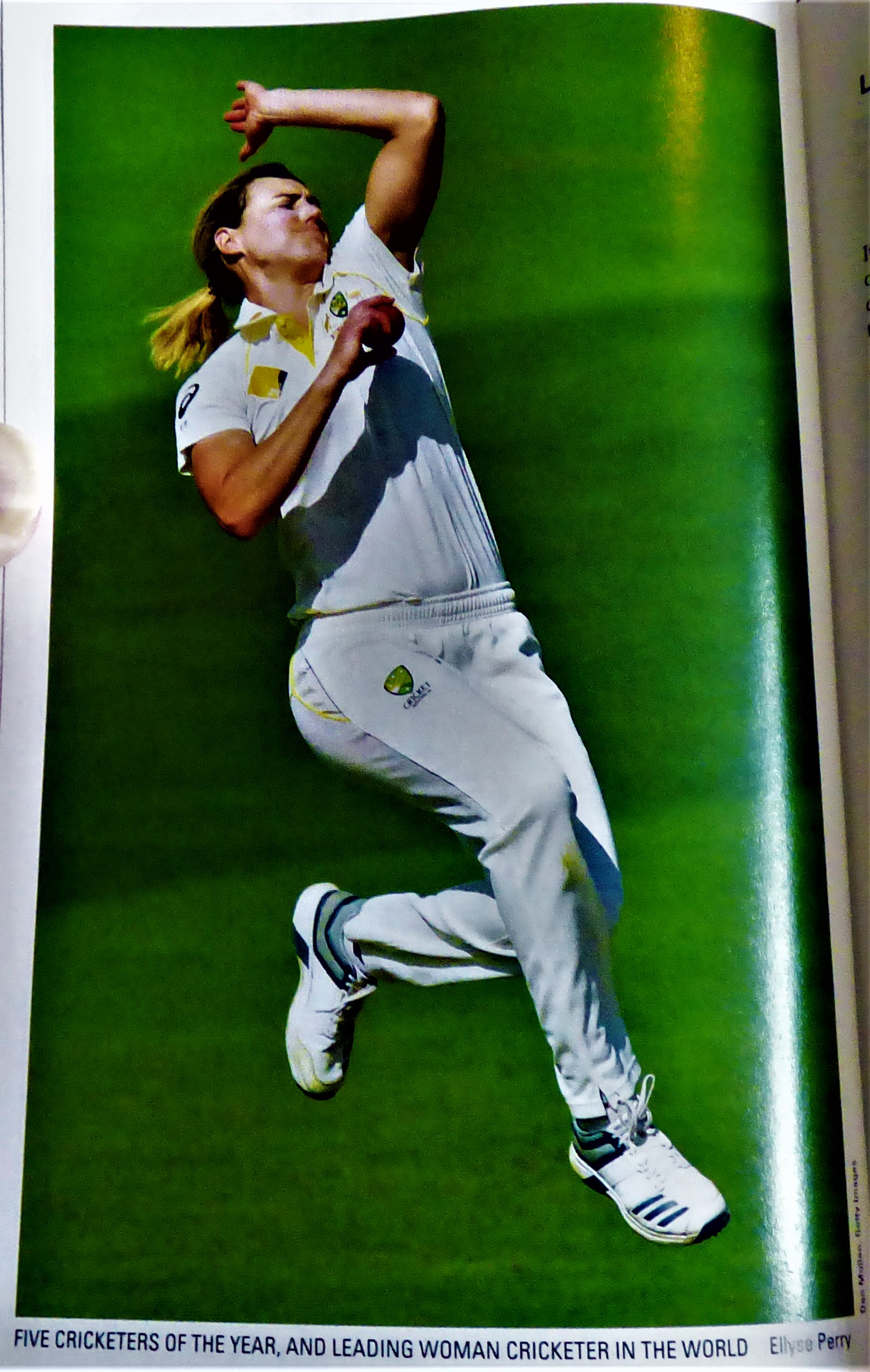
The action photograph of female player of the year and one this year’s ‘Five cricketers of the year’, Ellyse Perry (both awards thoroughly deserved, though I would, even as a Pom, have preferred her to be given player of the year and Ben Stokes male player of the year).

P1310848 (2)

Workers XI
The team in tabulated form with abridged descriptions.