Pizza Making

An illustrated account of a pizza making event to remind folks of my existence, and of course a regular photo gallery. Everything should be back to normal email and internet wise from Monday afternoon.

My internet and email situation will be back to normal on Monday. This Sunday just gone I took part in a pizza making session for autistic adults at the King’s Lynn branch of Pizza Express. The body of this post describes the process.

Pizza making in these sessions does not start absolutely from scratch – we have preprepared dough to work with. When we get to it we have the following starting position…

an ellipsoid lump of very sticky dough surrounded by flour.

The first stage is to dust the dough (which would otherwise be too sticky to work with) with flour. Then one uses fingers to flatten out the edge of the dough, leaving a dome in the middle (at this stage the dough should be about the same size and shape as a fried egg). Next the dome has to be flattened with the palm of the hand, and then the now flat piece of dough needs to be worked on until it is roughly circular and not too different in size from the tray in which it will be cooked. It then needs to be inserted into the tray, and manipulated once in so that it covers the entire base, and there is a small rise up the side of the tray to keep all the toppings in…

The pizza base ready for the addition of the toppings.

The first addition to the base is a ladleful of tomato puree (Pizza Express do not allow for the making of ‘white pizzas’), which has to be spread out evenly using the back of a spoon…

Next come the optional toppings, the first two of which I accepted being mushrooms and olives…

Then came the meat toppings, of which I accepted pepperoni and passed on the rest…

The penultimate addition when all the optional toppings are in place is the cheese, without which of course it would not be a pizza…

Finally, for those who want it comes that classic Mediterranean flavour enhancer, oregano. For those who, like me, opted to accept this, you take it in your non-dominant hand so that you can sprinkle it evenly over your pizza with your dominant hand…

The pizza, now ready for cooking.

A few minutes later the pizza was ready for eating, and it was excellent.

The pizza, cooked and ready to be eaten.

My usual sign off…

Australia 1946-62

A look at Australia in the period 1946-62 and some photographs.

Today’s post looks at Australia immediately after WWII (for the significance of 1962 as a dividing year check this post). Please note that in this XI positions 7-10 in the order are flexible – Australia in this era was well equipped with bowlers and keepers who could bat well in the middle and lower order. Australia have not had so many multi-dimensional test players in later eras, and the mighty side of the late 1990s and early 2000s tended to rely on six specialist batters, a keeper and four specialist bowlers.

THE XI IN BATTING ORDER

  1. Arthur Morris (left handed opening batter). Picked by Don Bradman as the left handed opening batter in his all time world XI. His peak series came in England in 1948 when he scored 696 runs at 87.00.
  2. Sidney George Barnes (right handed opener). Like his English near namesake of an earlier era, Sydney Francis Barnes, he often failed to see eye to eye with authority figures, which along with WWII was one reason his appearances at the highest level were limited. In the few appearances he did get to make art the top level he averaged 63 with the bat, with a highest score of 234 at Sydney in 1946.
  3. Don Bradman (right handed batter). Not quite the overwhelming force with the bat that he had been before WWII, but still the best around, albeit he benefitted from a controversial call in the first match of the 1946-7 Ashes when he sent a shoulder high catch to Jack Ikin at second slip, stood his ground and was given not out.
  4. Neil Harvey (left handed batter). The only 1940s test cricketer still alive (95 years old as I write this), he was part of the Invincibles of 1948, on which tour he scored his maiden test century. He scored over 6,000 test and averaged 48 in his career.
  5. Norman O’Neill (right handed batter, occasional leg spinner). His debut was in the Brisbane 1958 snoozefest. In the final innings of that match, immediately after Trevor Bailey had snailed his way to 68 in 458 minutes (428 balls faced, of which 388 were dots) he scored 71* in less than two and a half hours to see Australia to victory. He would average 46 overall in test cricket, and he retained his commitment to playing his shots throughout his career.
  6. Keith Miller (right handed batter, right arm fast bowler, occasional right arm off spinner). A superlative all round cricketer and possibly the best captain Australia never had (Rod Marsh and Shane Warne of later eras are also in the mix for this one).
  7. Ray Lindwall (right arm fast bowler, right handed batter). One of the greatest of all fast bowlers, and in an example of how cricket transcends national boundaries he modelled his run up and action on Harold Larwood, Australia’s nemesis in the 1932-3 Ashes.
  8. Alan Davidson (left arm fast bowler, left handed batter, occasional left arm spinner). His greatest match performance came in the first ever tied test match at Brisbane in 1960: 5-135, 44, 6-87, 80, becoming the first male test cricketer to score 100 runs and take 10 wickets in the same match. 186 wickets at 20.53 places him among the greatest ever masters of his type of bowling, and he was also a superb fielder, referred to as ‘the claw’ for his habit of grabbing unlikely catches.
  9. *Richie Benaud (leg spinner, right handed batter, captain). In the first phase of one of the most outstanding careers connected with cricket he was the first player to achieve the test career of 2,000 runs and 200 wickets, and the time of his retirement he was Australia’s leading wicket taker at that level with 248 scalps. He was also a superb skipper, hence why I gave him that job, rather than Bradman who had it for the interwar team. He went on once his playing days were done to establish himself as ‘the Bradman of TV Commentators’ (yes, that far ahead of the rest IMO).
  10. +Don Tallon (wicket keeper, right handed batter). Named by Bradman as keeper in his all time world XI. A combination of selectorial politicking which denied him a place on the 1938 tour of England and WWII meant that he was past his very best by the time he got the opportunity at test level, but his only rival as a keeper in that era was Godfrey Evans of England.
  11. Bill Johnston (left arm fast medium bowler, left arm orthodox spinner, left handed tail end batter). Australia’s leading wicket taker in three series immediately postwar, when he was very effective at sweeping up after Lindwall and Miller had made early inroads. He was injured on the 1953 tour of England, but with the connivance of some his team mates (who when they realized the possibility was there got themselves out to preserve his average) he became only the second person to average over 100 with the bat for a full season in England (102.00, with 16 of his 17 innings being not outs), after Don Bradman’s 115.66 in 1938.

This XI is awesomely strong in batting, with a powerful top five, one of the all time great all rounders at six, and a collection of players in slots 7-10 who while batting was the second string to their bows were all capable of match winning knocks on their day. The bowling has two great right arm fast bowlers, one of the greatest of all left arm fast bowlers, a left armer who could bowl seam or spin according to team necessity, a great leg spinner, and Miller could turn his hand to off spin if needed. This side ticks every box and would take a lot of beating, especially with Benaud captaining them.

HONOURABLE MENTIONS

Colin McDonald was a gritty right handed opener in the 1950s, and Bobby Simpson made his debut near the end of the era in question. Most of the bowlers who bowled Australia to a 4-0 series win in 1958-9 had dodgy actions, being either throwers, draggers or both of the foregoing, ruling them out of serious consideration. Ernie Toshack did a useful job as a fill-in bowler while Lindwall and Miller were resting in the immediate postwar era. Australia had three other fine keepers besides Tallon in this era: Gil Langley, Len Maddocks and Wally Grout. Ken ‘Slasher’ Mackay, a left handed blocker and workaday medium pacer had a respectable test record but was hardly a challenger to any of those I included. Ron Archer might have become a great fast bowling all rounder, but he suffered a career ending injury in Pakistan in 1956-7 at a very young age.

PHOTOGRAPHS

My usual sign off…

GoGo Hares

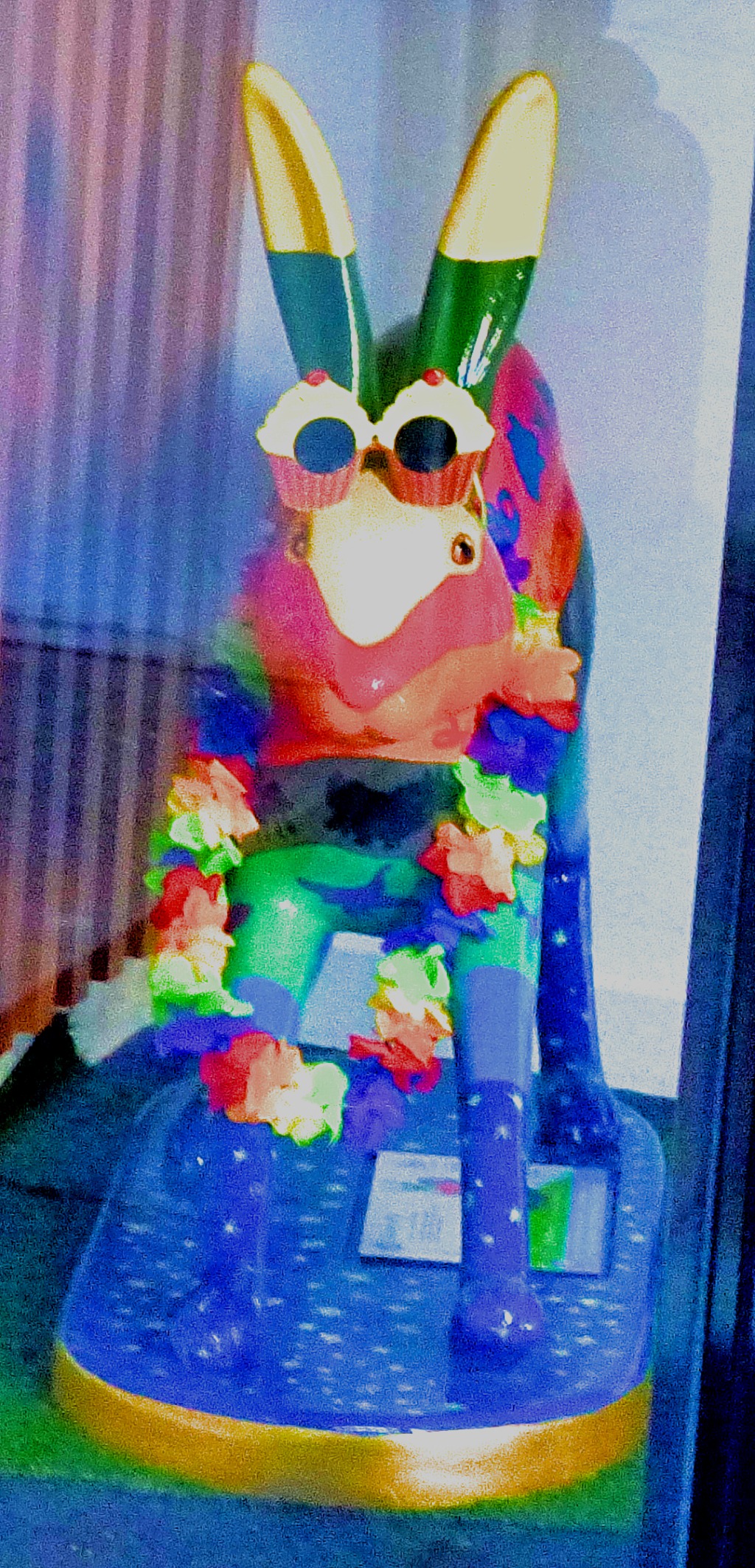
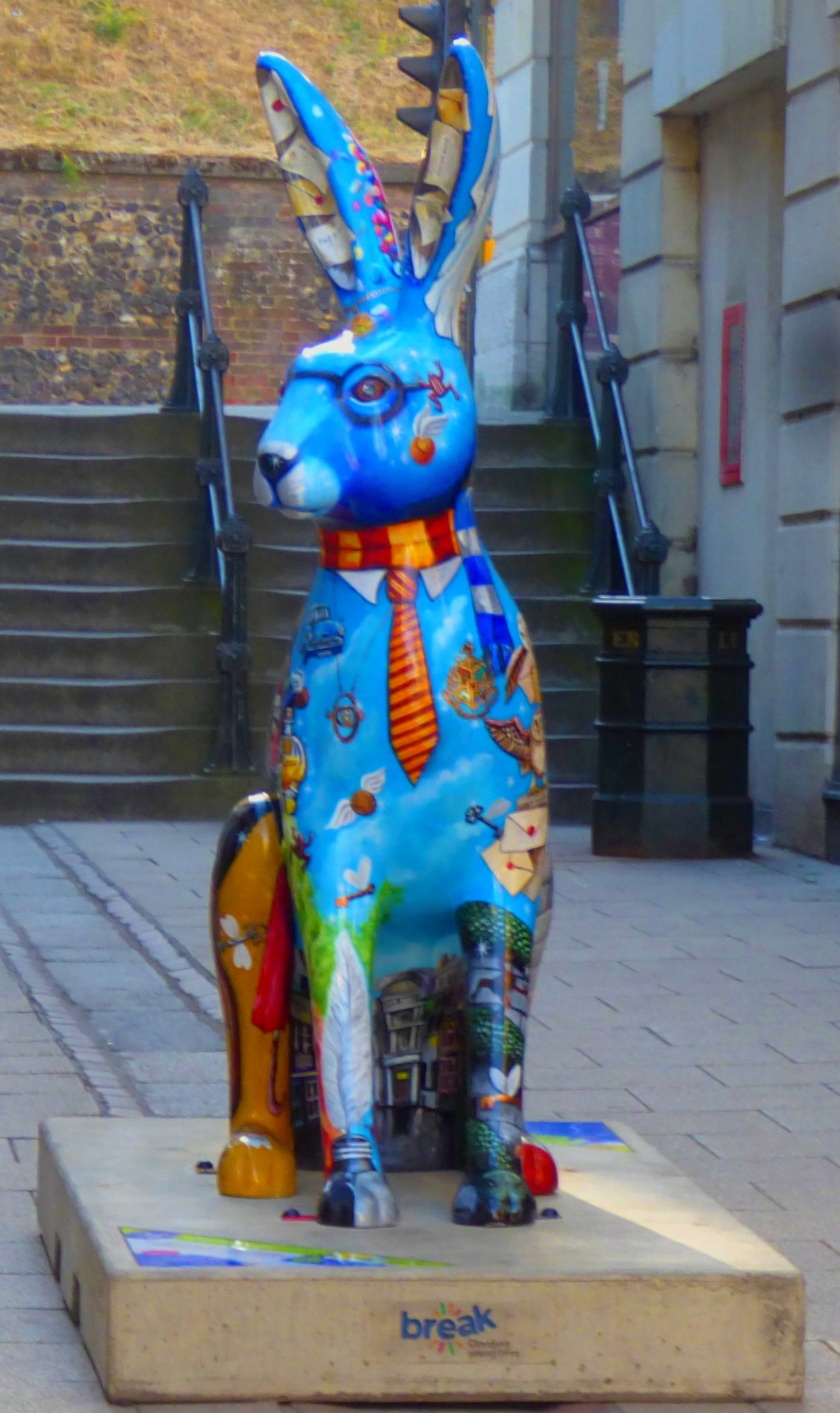
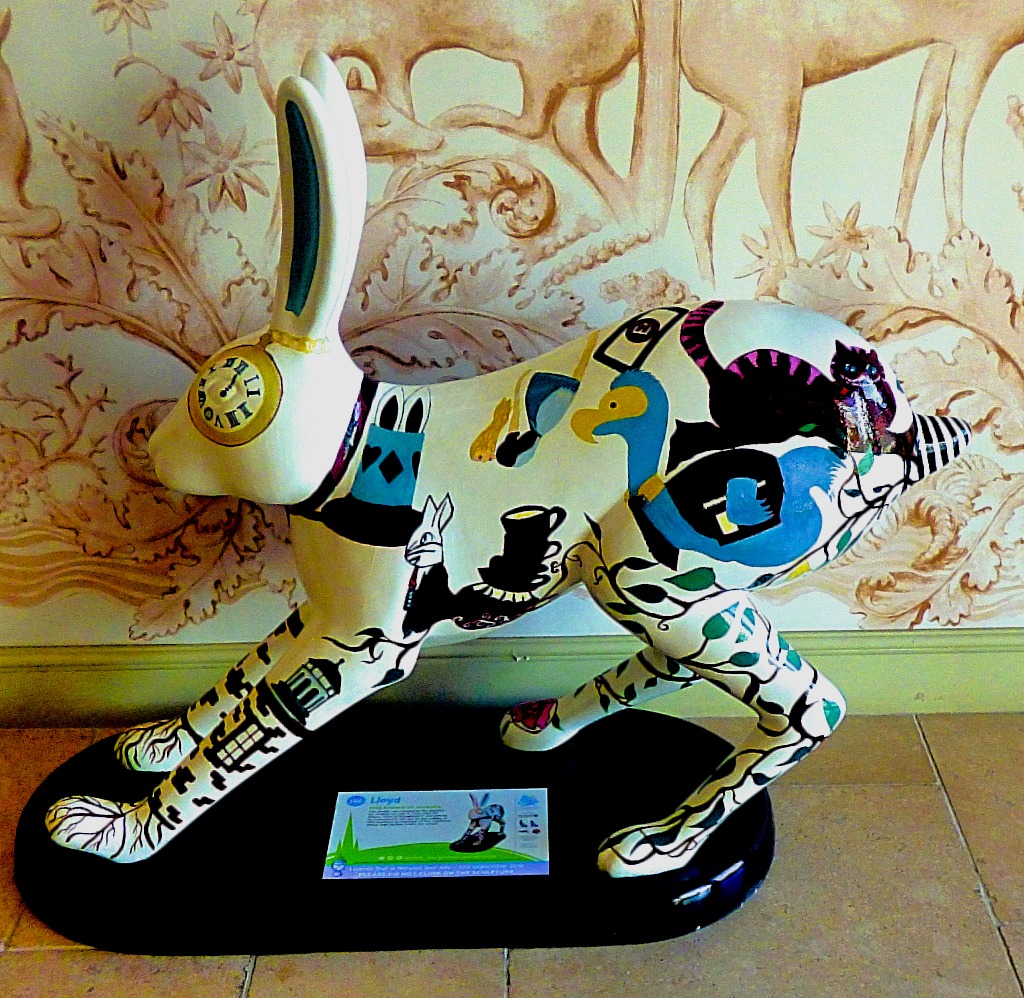
Introducing the GoGo hares – worthy heirs to the elephants and dragons that preceded them.

INTRODUCTION

The charity Break have established something a tradition involving large painted fibreglass animals – it started with elephants, then dragons, and now for a third installment we have hares. This year they are looking beyond Norwich – there is one in Fakenham, which I saw on Friday, there is one in Dereham which I saw through the windows of the ExCel bus travelling to and from the auction that my employers had in the fine city of Norwich yesterday and there are a load of them distributed around Norwich, some of which I captured on camera.

PICTURES OF THE HARES

Lancaster
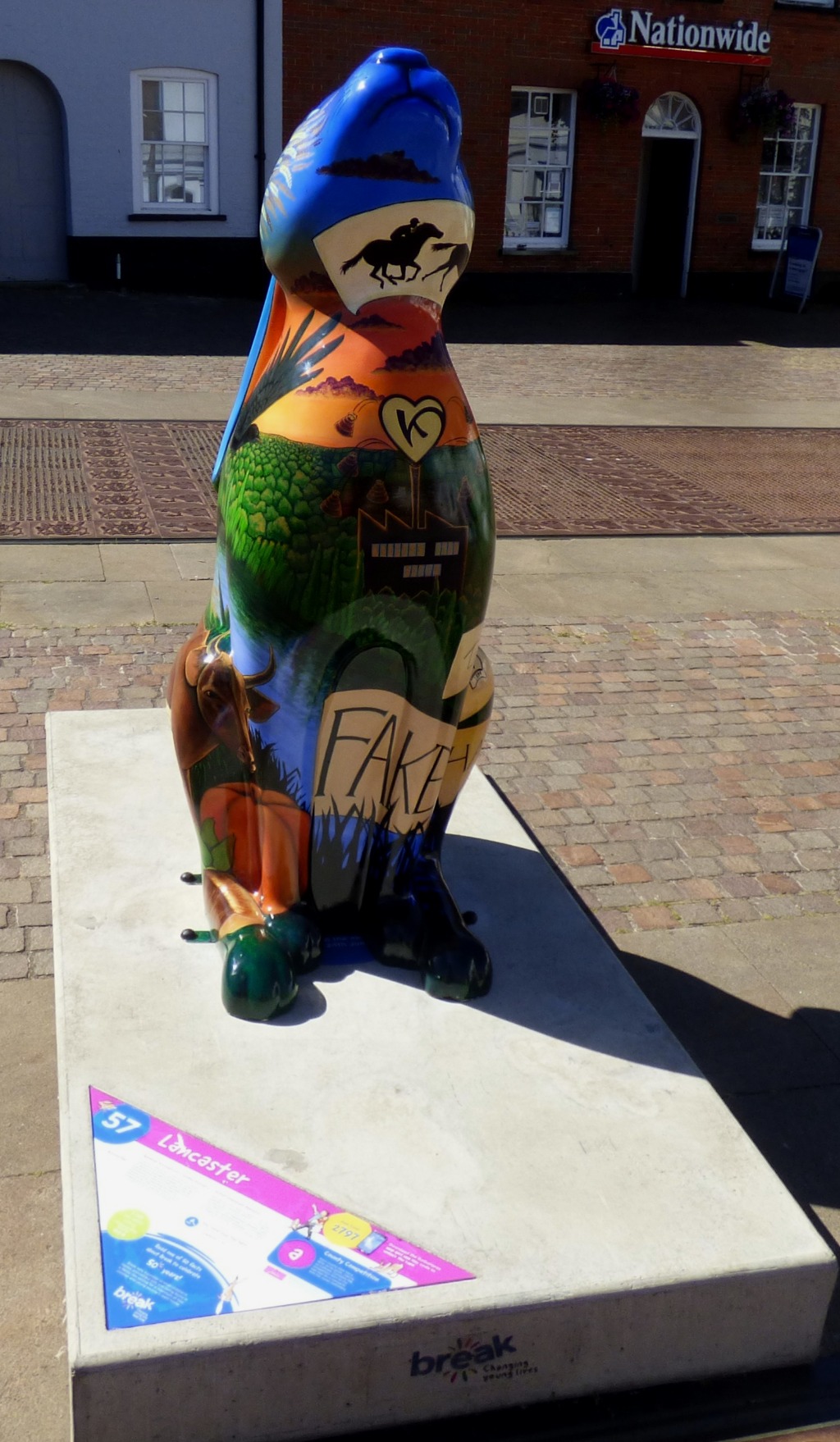
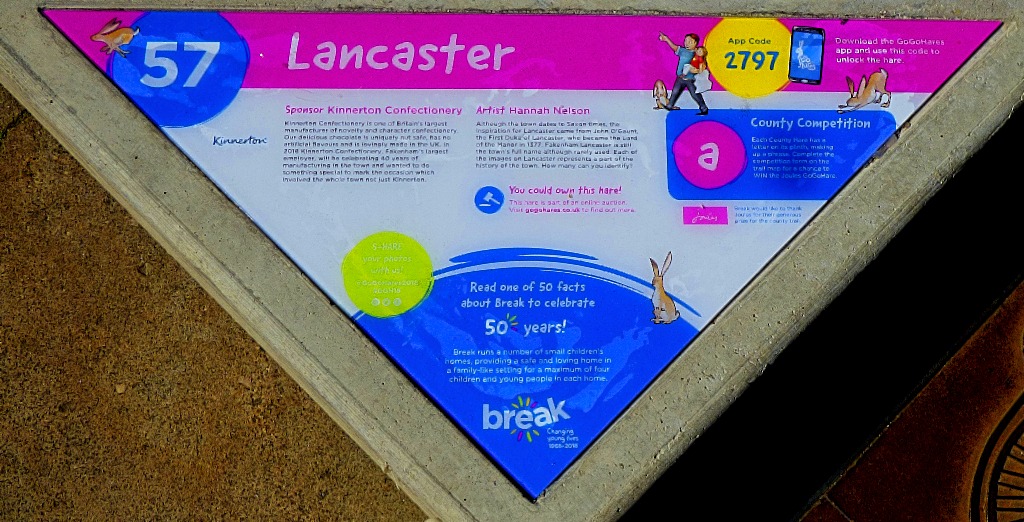
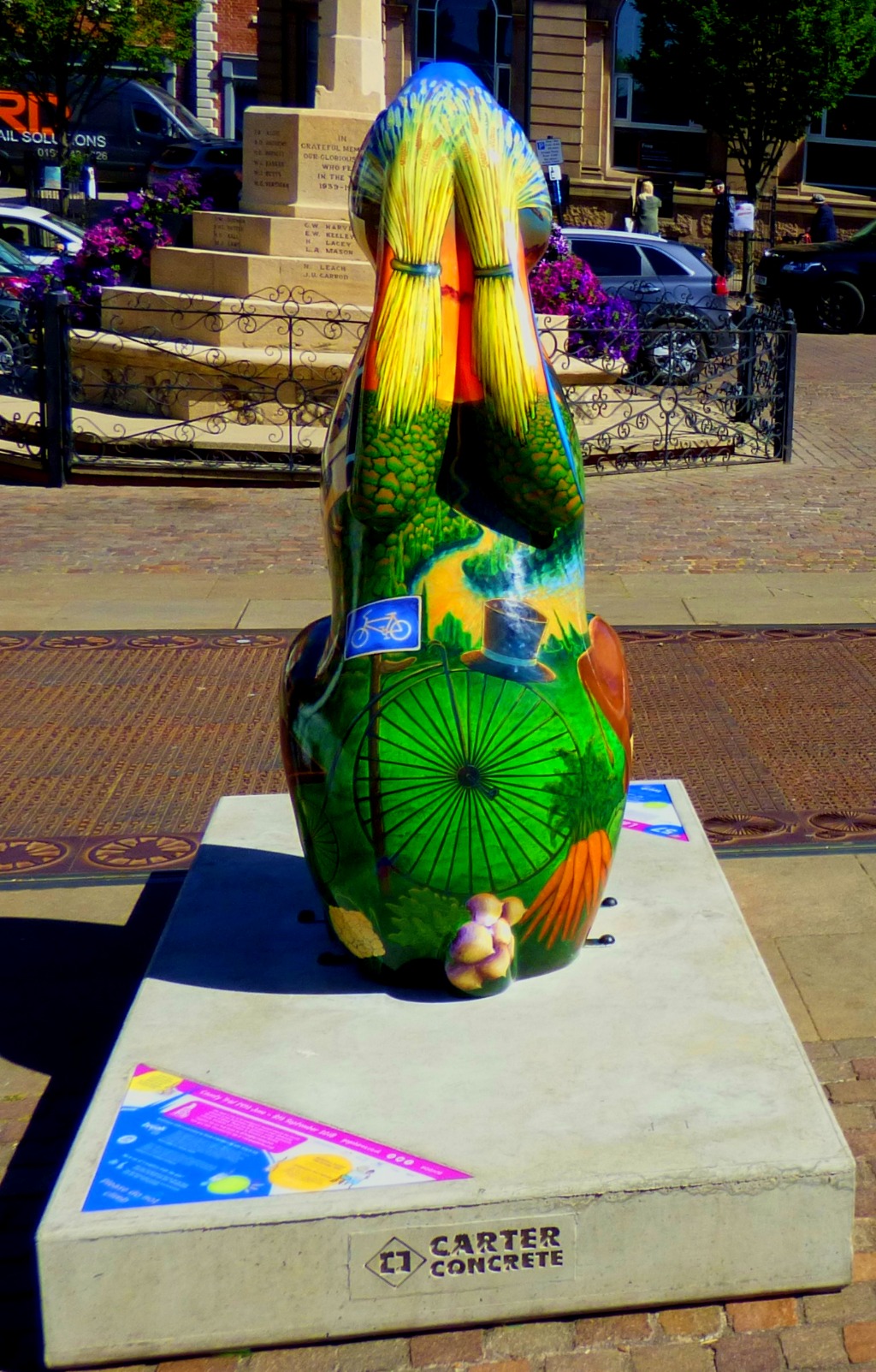
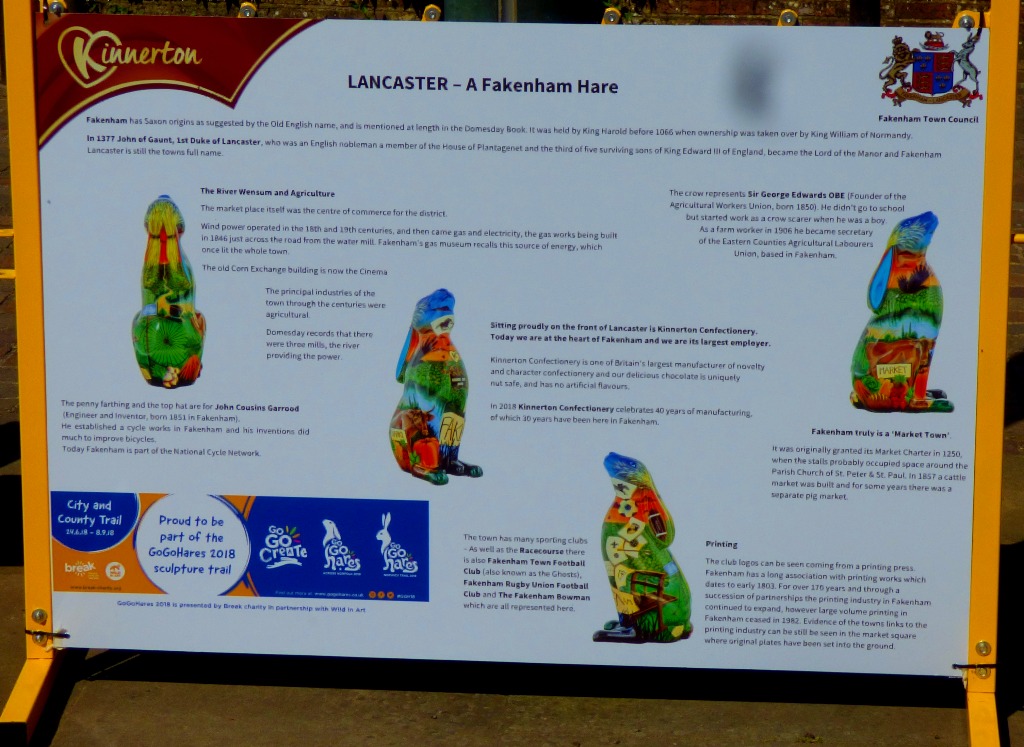
The first five images relate to Lancaster, the Falenham Hare, whose acquaintance I made while banking my wages.

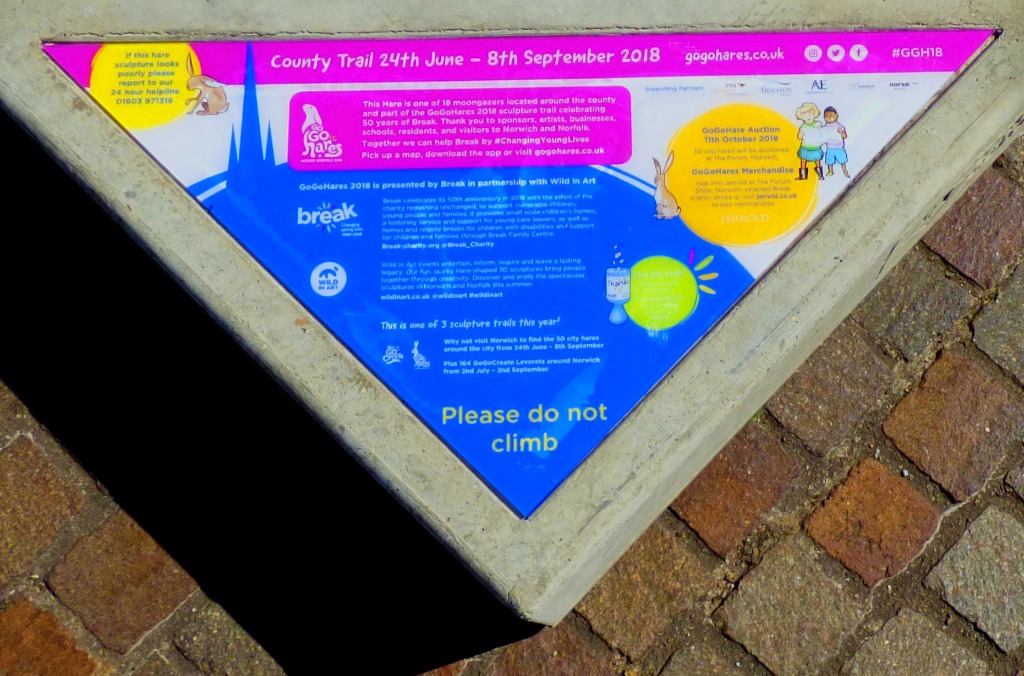
Lancaster infoLancaster - rear viewCounty TrailLancaster story board

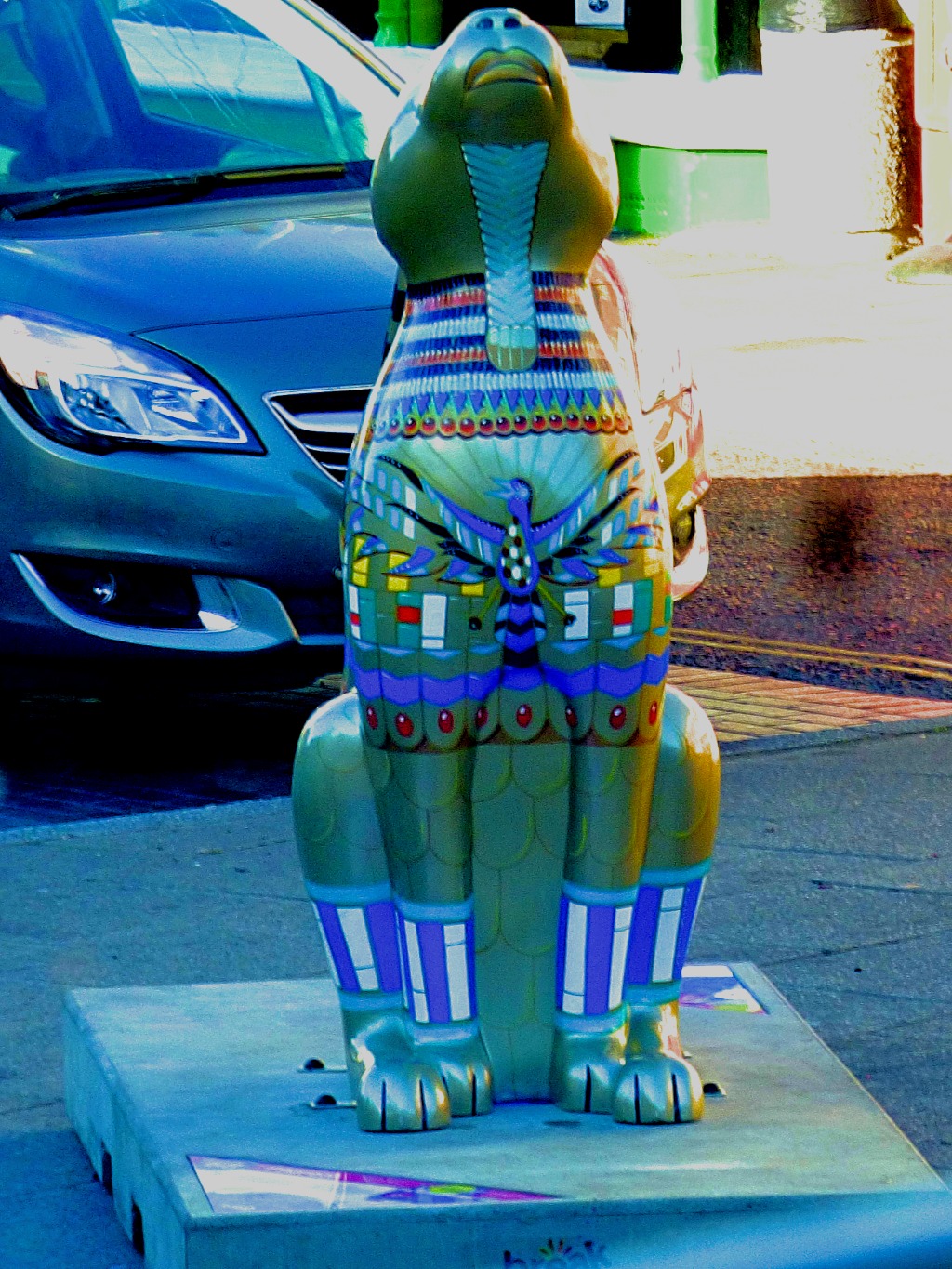
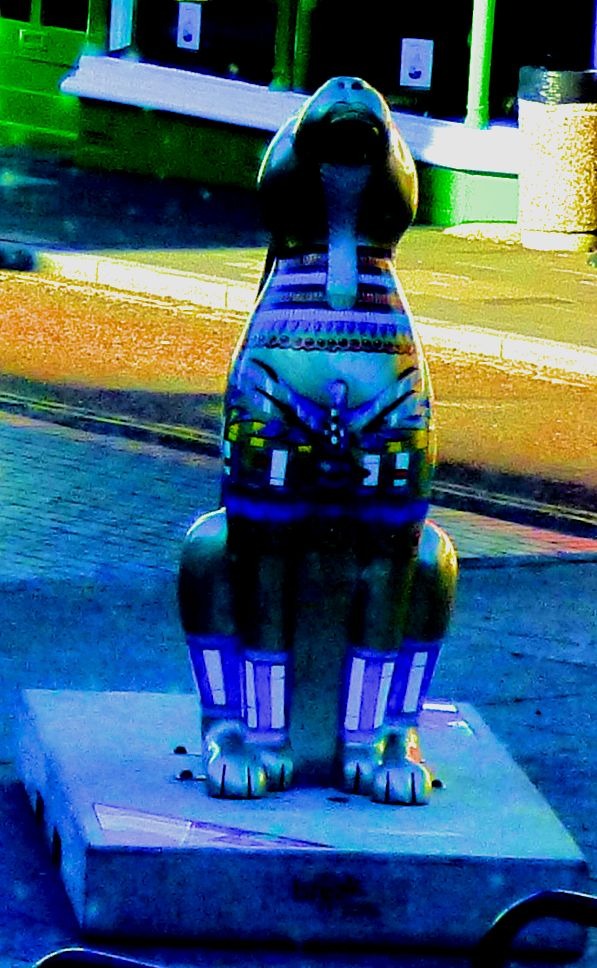
Egyptian Hare, Dereham
This Egyoptian style hare adorns the market place in Dereham

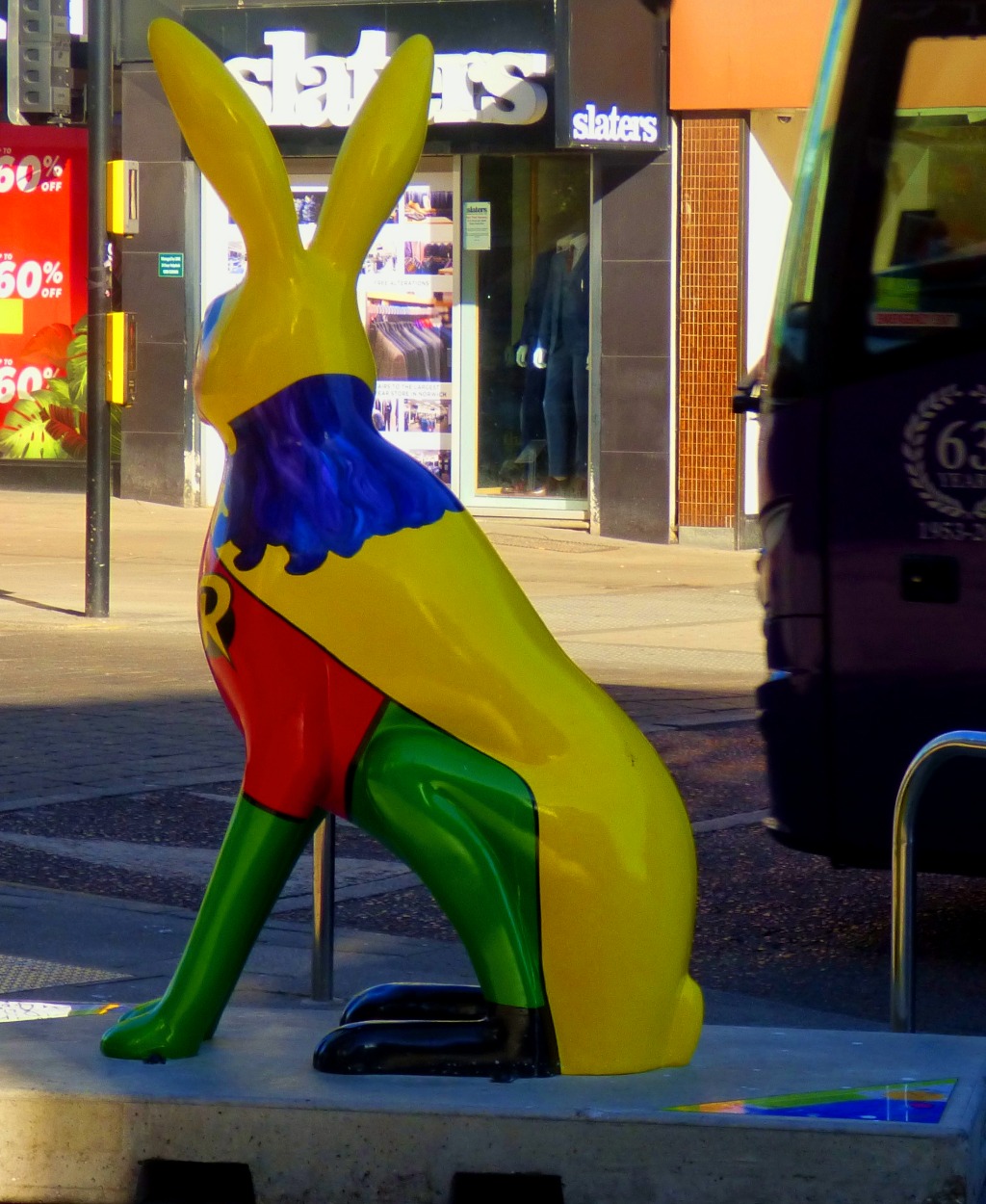
Egyptian Hare, Dereham IHare, St Stephens Street, NorwichHare, near Norwich CastleHare in a shop windowHare, Davey PlaceHare, Bank Plain

Hare, The Maids Head Hotel
This hare resides at The Maids Head Hotel where we had our auction.

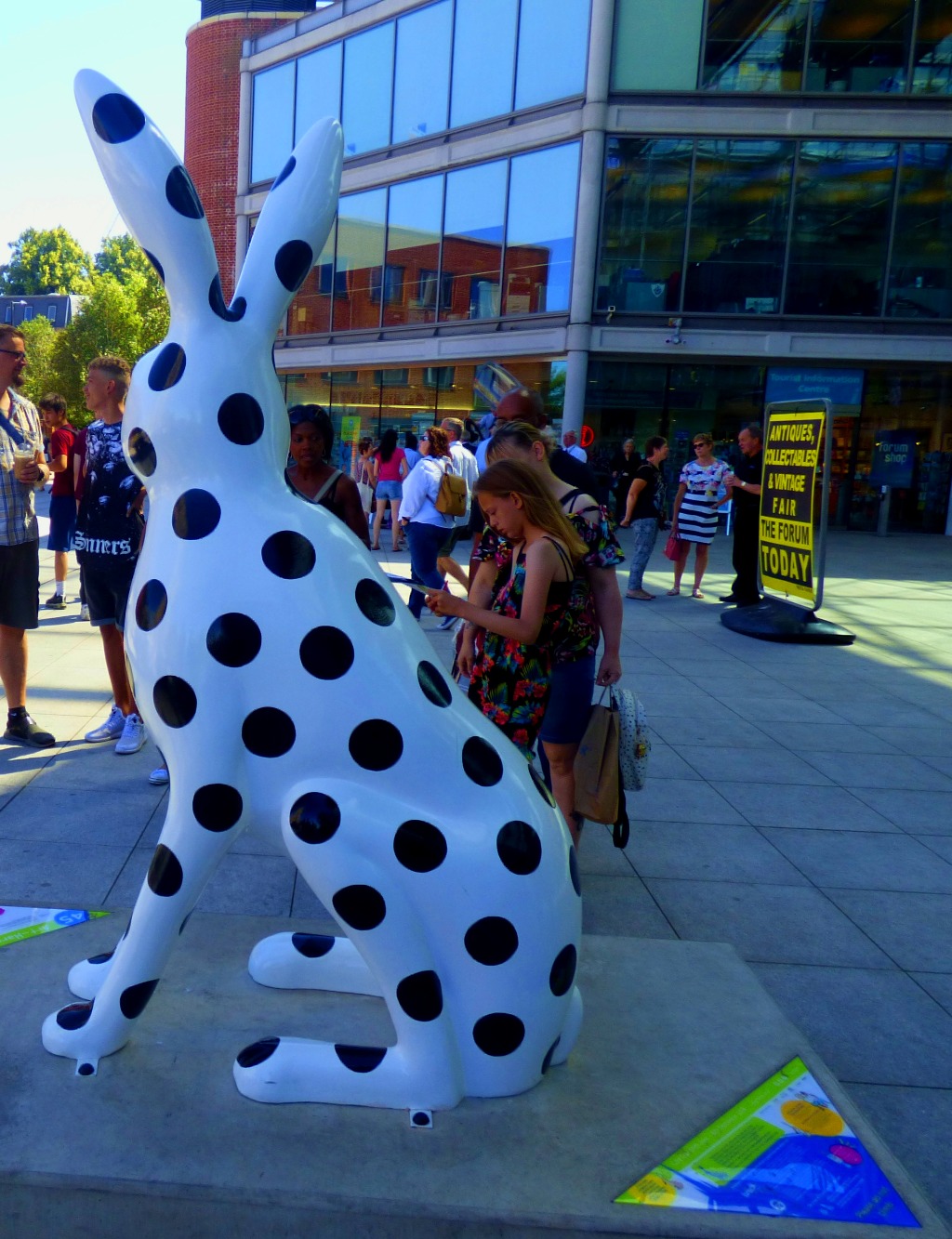
Polka Dot Hare, The Forum
Cruella De Vil might like this hare, located outside the Forum.

Kafkaesque Hare, OS Library
This kafkaesque creation can be found just outside Norwich Millennium library

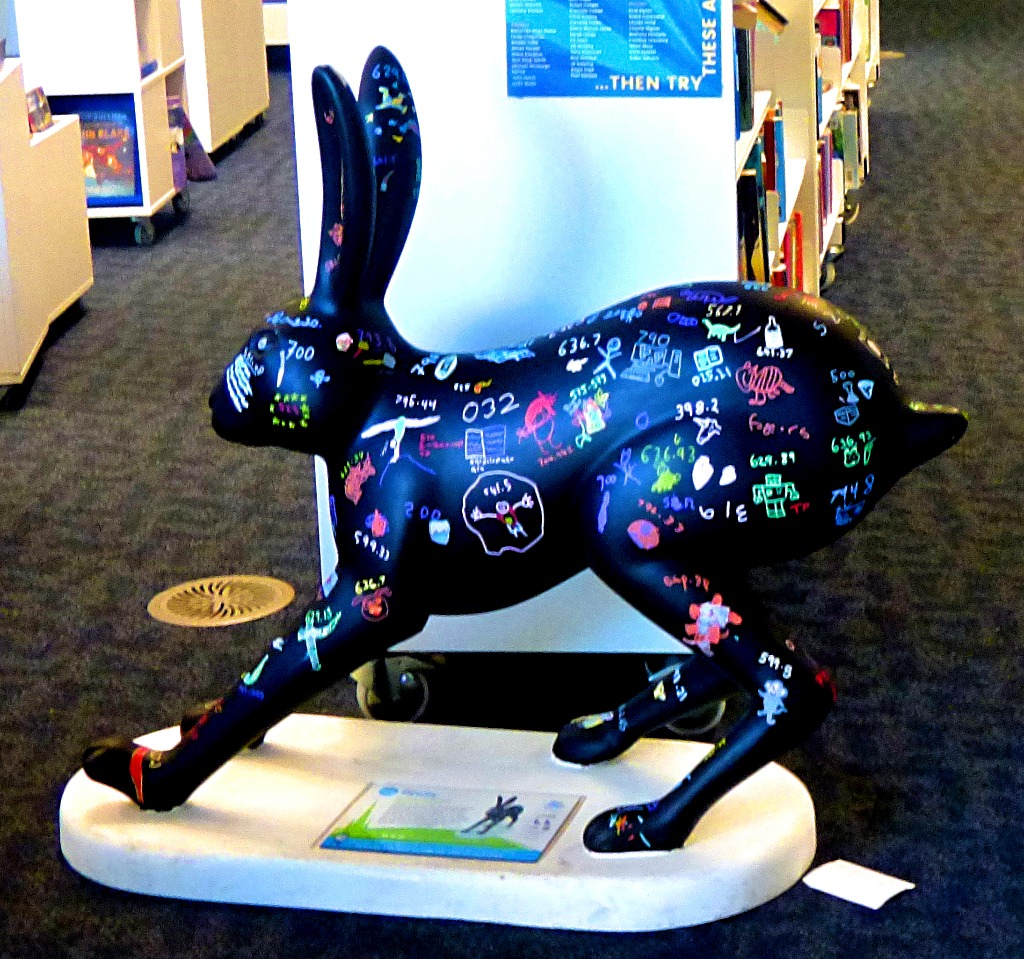
Hare, Norwich Library
While this one is inside the library

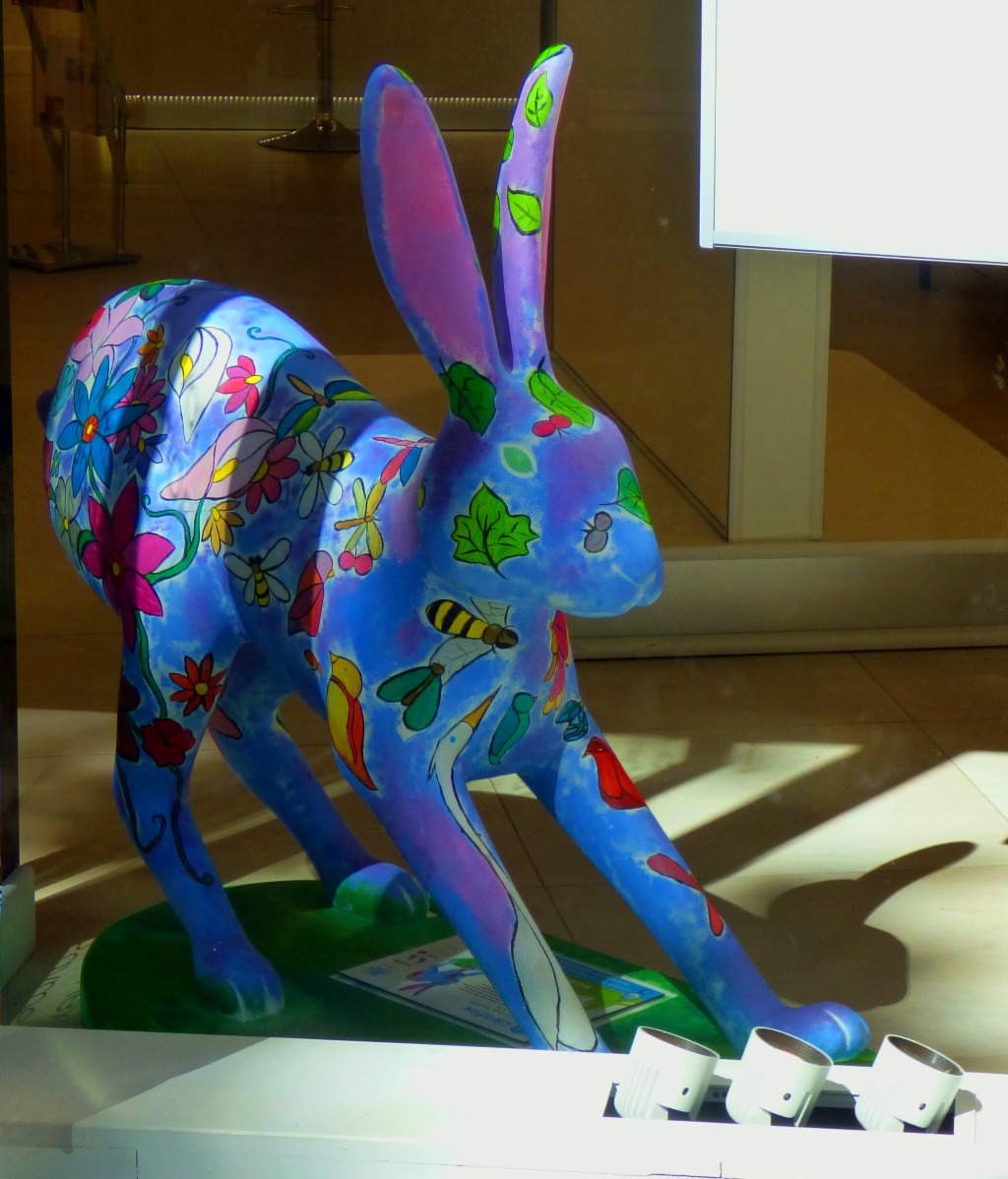
Hare, Tourist Information Office
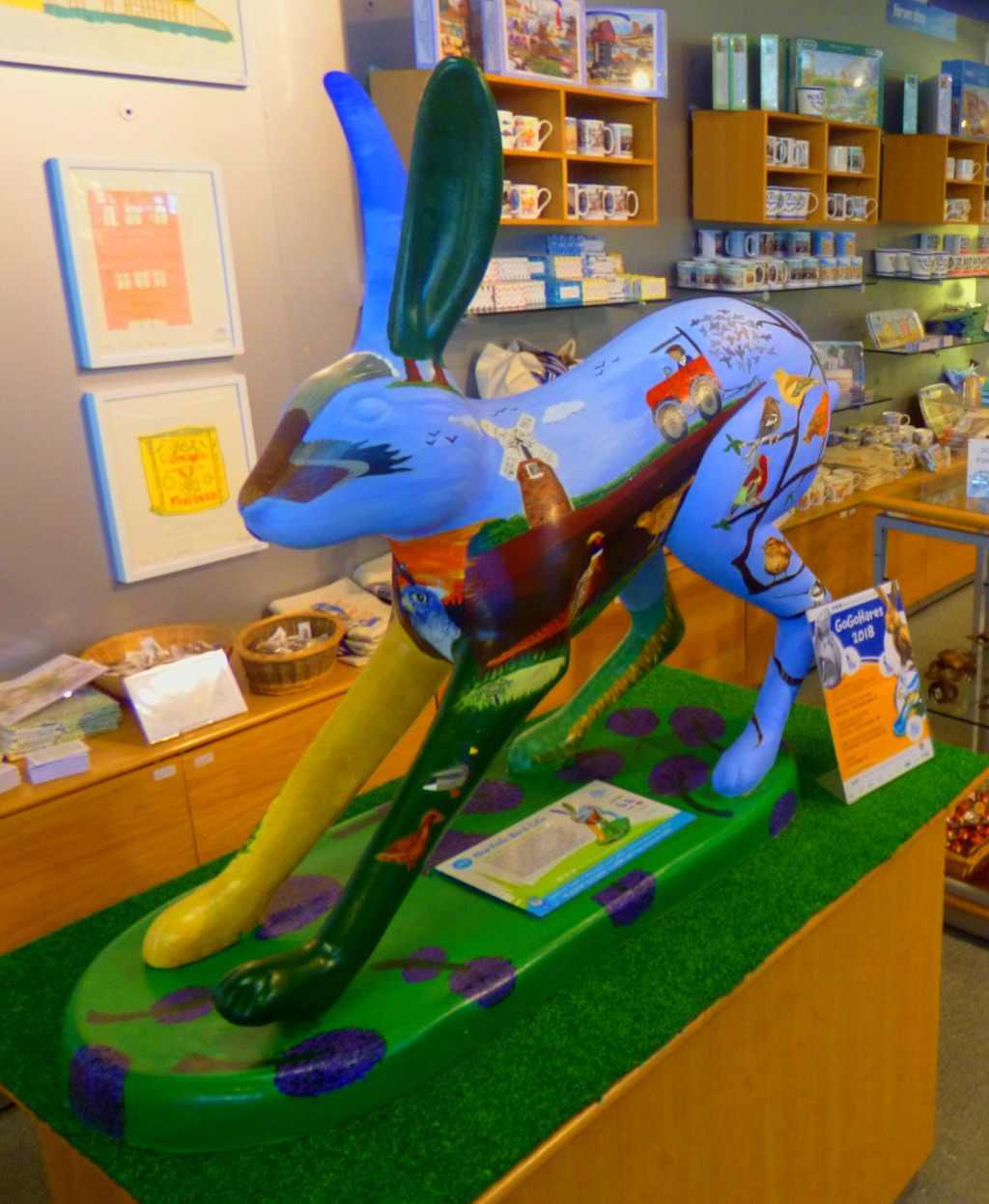
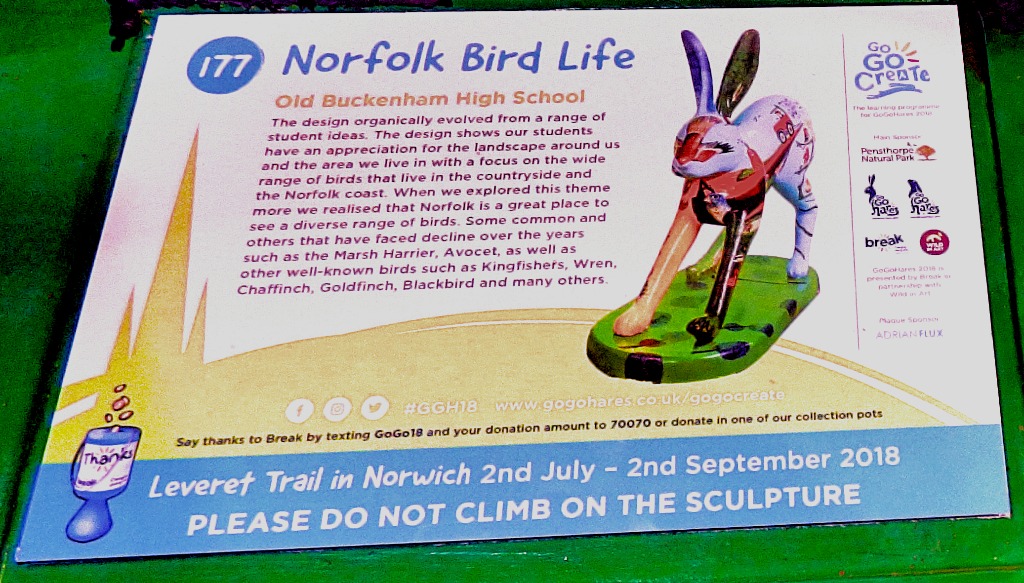
This “Norfolk birds” hare is in the main Tourist information office in Norwich

Info on Tourist Office Hare

Tiger Striped Hare, nr Top Shop
The late legendary Richard Whiteley would probably have described this as a hare-tigger (he specialised in this kind of pun).

Hare, nr M&S

The Great Ouse at High Tide

Some stuff about the Great Ouse at high tide, some stuff about evolutionary biology, lots of pictures and links.

INTRODUCTION

Having finally completed (after a couple of false starts – fortunately not a DQ offence in the blogosphere!) my post about the Metropolitan line I now have this offering which includes some links and a couple of quality infographics.

HIGH TIDE

This morning the Great Ouse was at very high tide. Cormorant Platform was almost enitrely submerged. There was also a high tide yesterday morning, but not quite so high as this – I have pictures from both for comparison purposes.

The first three pics are from yesterday.

DSCN4940 DSCN4941

One of several pics from today that indicate just why the marshland around old Boal Quay is most definitely not suitable for building on!

DSCN4963
Not suitable for building on!

DSCN4957 DSCN4959 DSCN4960 DSCN4962

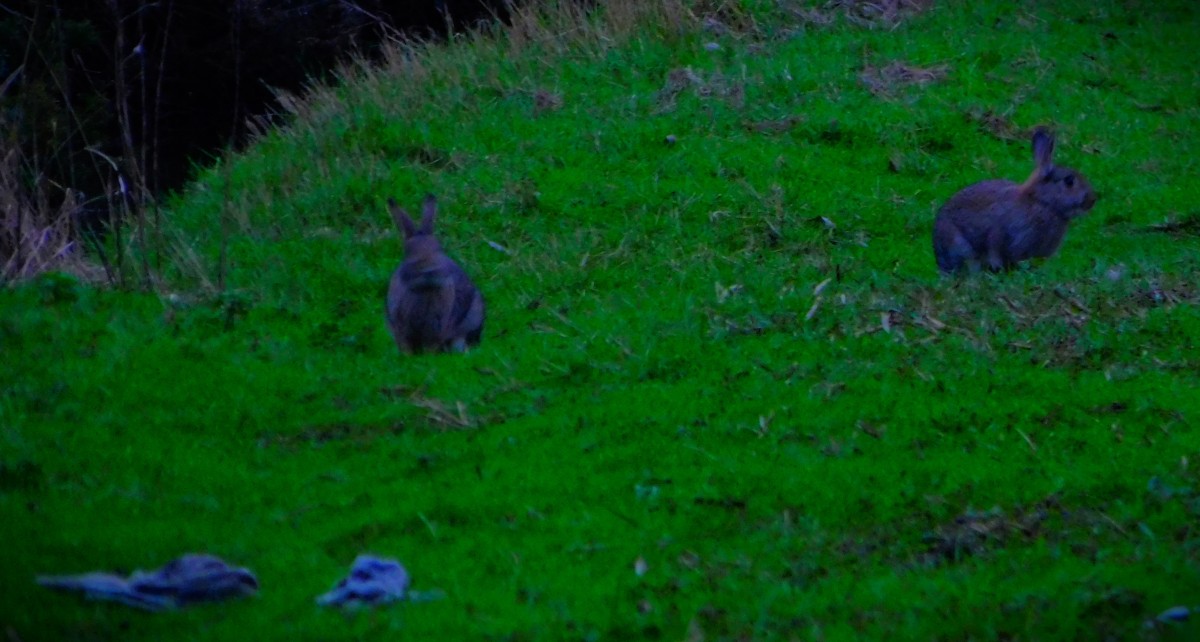
In addition to these, my walk this morning provided some other splendid pictures. I saw a small rodent by the water near the bandstand, and a hare, a member of the lagamorph order of mammals later on in the walk. The lagamorphs and rodents form a cohort (intermediate between an order and a class in the system of classification) called Glires. For a fun and digestible account of these relationships and others among living things I recommend Richard Dawkins’s book “The Ancestors Tale: A Pilgrimage to the Dawn of Life”.

DSCN4967 DSCN4968 DSCN4969 DSCN4971 DSCN4972 DSCN4973

An excellent read.
An excellent read.

I also got a few more pictures of other things that I consider worth sharing…

DSCN4936 DSCN4942 DSCN4947 DSCN4965 DSCN4970 DSCN4974 DSCN4975 DSCN4976 DSCN4977

LINKS

I have some petitions to share with you, but will start with the other links first:

First up, this from counterpunch titled “Return to Crisis – Things Keep Getting Worse

My next two links both come from the Corbyn campaign:

The wonderful kittysjones has this piece turning her guns on the Daily Mail for its (and Tory MuPpet Ian Liddell-Grainger’s) response to the news that UN Special Raporteur on the Rights of Persons with Disabilities Catalina Devandas Aguilar will be investigating the UK’s welfare reforms to see if they constitute human rights abuses. Ms Jones’ excoriation of the Daily Mail is an excellent read.

My next link is to a story of yet another outrage perpetrated by religious zealots, brought to my attention by newhumanist. This is the story of an Indian rationalist murdered in his own home.

Courtesy of pertinentproblems comes this account of why TTIP would be bad for Europe.

Cosmos Up, a regular source of good material, have this about New Horizons’ next target.

PETITIONS

First up, courtesy of change.org comes this one having a go at Virgin Trains over the amount by which they are increasing their fares.

My next two links are both concerned with women’s rights:

My remaining petitions all concern one man, the

INHUMANE DESPICABLE SOCIOPATH

First, Maggie Zolobajluk’s well merited victory celebration (kudos also to Mike Sivier of Vox Political whose FOI request started the whole process).

Second, this from thepetitionsite demanding IDS’s resignation.

Finally, this petition to parliament to assess the full impact of cuts to support & social care for disabled people.

INFOGRAPHICS

A couple of classics to end this post:

Corbyn hitting the nail on the head.

A hilarious guide to the dark art of quote manipulatiion.
A hilarious guide to the dark art of quote manipulation.