County Stalwarts of my Lifetime XI

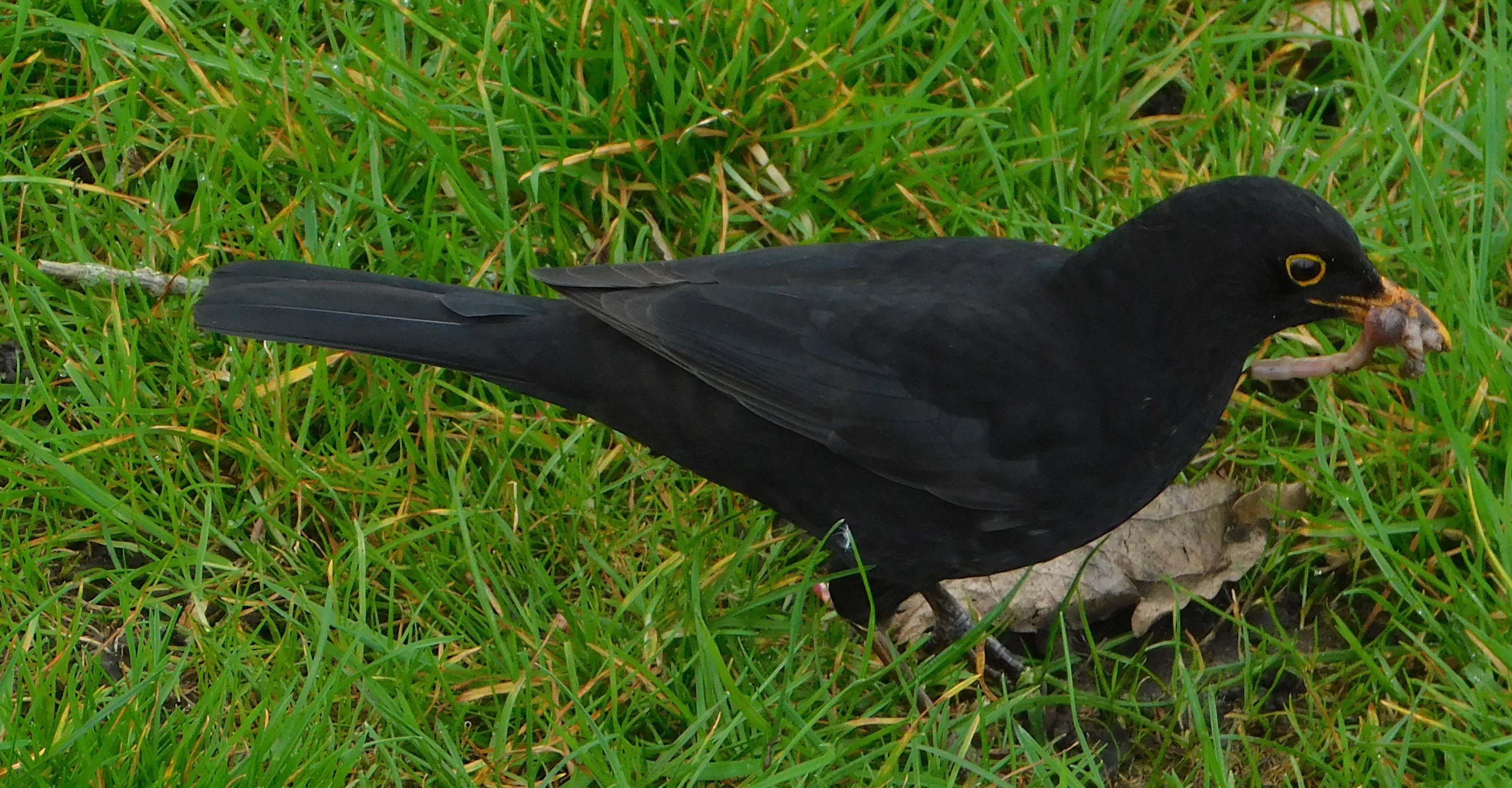
With precisely three weeks to go until the start of the English season I offer up an XI of county stalwarts who played in my lifetime. I also have a splendid photo gallery.

I present an XI of county stalwarts from my lifetime. I have allowed myself one overseas player only, and when it came to the home players the accent was on folk who were IMO treated shabbily by the England selectors. There will be a very brief honourable mentions section at the end. I also have a splendid photo gallery for you – the last couple of days have been genuinely springlike.

  1. Daryl Mitchell (Worcestershire, right handed opening batter, occasional medium pacer). While the current pairing at the top of the England order of Duckett and Crawley seems to be functioning fairly well there was a long period after the retirement of Andrew Strauss when England could not find an opener to score consistent runs as Alastair Cook’s partner. Somehow, in spite of scoring almost 14,000 FC runs at an average of 38 Mr Mitchell’s name never came to the attention of the selectors (nb the Daryl Mitchell who plays for NZ is a middle order batter and is eight years younger than the Worcestershire opener).
  2. Chris Dent (Gloucestershire, left handed opening batter). Another, like Mitchell, who was superbly consistent (just over 11,000 FC runs at an average of 37, and no attention from the England selectors.
  3. Graeme Hick (Worcestershire, right handed batter, occasional off spinner). The only batter ever to score triple centuries in three different decades (1980s, 19902, 2000s). His test returns were decidedly modest (he averaged 31 at that level and only managed five centuries in quite a number of matches), but he was an absolute destroyer of county bowling (Ollie Pope, the current England number three, is at risk of ending his career with a similar record of having destroyed county bowling and not quite done the business at test level, although he has time to rectify that, and has already done more at test level than Hick managed in his career – nevertheless, the wrong way round disparity between the record of Pope of Surrey and that of Pope of England is cause for concern).
  4. James Hildreth (Somerset, right handed batter, occasional right arm medium pacer). It borders on ludicrous that a player who scored 18,000 FC runs at 44 finished his career without an international cap, but such was the fate of Somerset stroke maker James Hildreth.
  5. David Sales (Northamptonshire, right handed batter). A 17 year old announces himself at first class level by scoring 210* on debut – surely a case if ever there was one for fast tracking, but no. Sales, who added a triple century and a 276* to that debut knock along the way and tallied almost 14,000 FC runs at an average of just over 39 would end his career uncapped by his country.
  6. +Ben Foakes (Essex, Surrey, right handed batter, wicket keeper). The best keeper around in the men’s game today (the likes of Eleanor Threlkeld and Rhianna Southby are also superb practitioners of the stumpers art), and a fine middle order batter (Surrey habitually use him at number five, followed by a cluster of all rounders and bowlers). However, after a tour in which England suffered the fate of every recent visiting side from any country to India – namely got well beaten, there are already murmurs about England dropping him for the home summer. In this side, with a genuine all rounder, a bowling all rounder and a batter who bowls in the next three slots this wicket keeping all rounder is unlikely to find himself having to attempt to nurse along genuine tail enders as he did in each of the fourth and fifth tests of the recent tour.
  7. Darren Stevens (Leicestershire, Kent, right handed batter, right arm medium pacer). In his Leicestershire days he was treated as a specialist batter and his record in that department did not merit an England call up. He was already past 30 years of age when his move to Kent saw him morph into a genuine all rounder, and his age always counted against him in terms of England selection, even when he kept on going and going into his middle 40s with no sign of his skills declining.
  8. Richard Hadlee (Nottinghamshire, right arm fast bowler, left handed batter). I have deliberately chosen an overseas player who served one county for a number of years rather than one of the more modern foreign mercenaries who never develop any loyalties but play instead for whoever will pay them. The fact that he would be in any rational person’s top two or three overseas players of the period under consideration (1980s forward basically, given my age) gives him a strong case anyway. While batting was unquestionable the second string to the bow of one the greatest fast bowlers of all time, 12,000 FC runs at an average of 31 is definitely enough to class him as a bowling all rounder, as is the fact that in 1984 he achieved the season’s double of 1,000 runs and 100 wickets in first class matches, the first time anyone had achieved the feat since the reduction of the FC season in 1969 to make way for the John Player League, and achieved only once since then, by Franklyn Stephenson, also of Nottinghamshire. Of course in the 2020s 14 game FC season anyone achieveing this feat would be doing something on a par with George Hirst’s ‘double double’ – 2,000 runs and 200 wickets in first class matches for the season – of 1906.
  9. *Phil Carrick (Yorkshire, left arm orthodox spinner, right handed batter, captain). He captained Yorkshire at a time when that job was the biggest poison chalice in cricket. He also took 1,081 FC wickets at 29.82, and scored 10,300 FC runs at 22.00 – a handy person to be coming in at number nine.
  10. Steve Watkin (Glamorgan, right arm medium fast bowler, right handed batter). Many bowlers with far worse test averages than Watkin’s 27.72 got much more recognition than the tall Welsh seamer, who finished with three international caps. He was a workhorse for Glamorgan, at or near the top of the national bowling averages season after season. He did eventually gain the reward of being part of Glamorgan’s third (and to date last) ever championship winning side in 1996.
  11. Jamie Porter (Essex, right arm medium fast bowler, right handed batter). Generally speaking if you want to see a champion side look at the bowling -Yorkshire in the 1900s and 1930s were a much stronger bowling side than theyb were with the bat, and they dominated both decades, Surrey owned the 1950s , again with a bowling dominant side. Similarly Essex dominated the second half of the 2010s, and there were three main reasons for this – Porter and Sam Cook with the new ball and Simon Harmer’s off spin. Porter is now approaching his 31st birthday, which probably means that he will remain uncapped by England, which given that he has 466 FC wickets at 23.75 looks nearly as bizarre as does Hildreth remaining uncapped.

This side has a powerful top five, plenty of scope for runs from the middle and lower middle order, with Foakes and Stevens genuinely front line batters, Hadlee almost so and even Carrick better than most number nines would be in that department. The bowling, with Hadlee’s pace, two very different types of high quality medium-fast in Porter and Watkin, Carrick’s spin and Steven’s medium pace should not struggle to take 20 wickets either. Though I have acknowledged the bowling capacities of some of the batters, I do not see any of them, with the possible exception of Hick on a fourth day pitch, being needed.

Those who read my county all time XIs back in 2020 would have noted from them that if I choose an overseas player I nearly always go for a bowler, and that being the case along with my desire to pick a long serving county player narrowed the potential choices down to two – Hadlee, who I actually opted for, and Malcolm Marshall (Hampshire). There is little to choose between two such outstanding cricketers, and I would be happy to see Marshall at number eight as well.

The spinner was a difficult choice, because with Hick in the ranks I preferred either a left armer or a leggie as my primary spinner. No English leggie has had a really good record in recent years (and Matt Parkinson, the nearest thing to such and animal, would have meant a genuine nine, ten, jack), and not many left armers have been that special either (and the two most obvious candidates, Tufnell and Panesar would cause the same worry as Parkinson batting wise). I could have found another English pacer, and picked Warne as overseas player, but I did not think his period at Hampshire was extensive enough to qualify.

Had I not been concentrating my attention on those who were badly treated by selectors then Marcus Trescothick (Somerset) would have had Chris Dent’s slot. Two men of Kent, Mark Benson (one England cap in 1986) and David Fulton (uncapped by England) were in with a shout for Mitchell’s slot.

Two other opening bowlers to be ignored by England in spite of excellent FC records were Ben Coad (Yorkshire) and Ben Sanderson (Northamptonshire).

My usual sign off…

All Time XIs – Running Rampant

An all time XI of players whose given names begin with R, a particularly important and detailed honourable mentions section and a multi-part photo gallery.

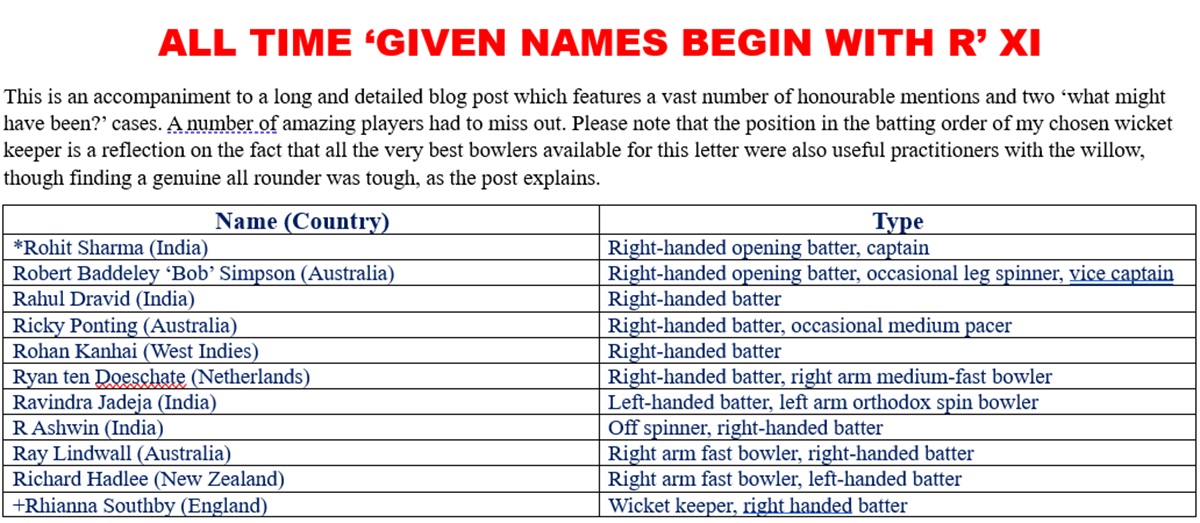
I continue my tour of cricketing given names with a look at the letter R, skipping over Q on the grounds of insufficient candidates being available for that letter. R offers a very different kind of challenge – there are huge numbers of players with overlapping skills sets and only 11 can make the final cut. I hope that the honourable mentions section, in which offer an alternative team formation that I elected not to go with will clarify these issues.

  1. *Rohit Sharma (India, right handed opening batter, captain). A naturally aggressive batter, his test record is eminently respectable even if he is better known for his exploits in limited overs cricket. As both opener and captain he can be expected to lead from the front.
  2. Robert Baddeley ‘Bob’ Simpson (Australia, right handed opening batter, occasional leg spinner, vice captain). Although both my chosen openers are right handers it would be harder to find a more contrasting pair in terms of approach. At Old Trafford in 1964, the same ground where Ian Johnson’s side had spectacularly come to grief eight years earlier, Australia went into the match one up in the series and needing only a draw to ensure retention of The Ashes. The groundsman at Old Trafford produced one of the flattest pitches ever seen, and Simpson ensured that Australia would keep the Ashes, quite literally off his own bat – he won the toss, chose to bat first and was only dismissed on the third morning of the match, for 311. England responded in kind, and there was barely time for the second Australian innings to begin before the umpires called time – such bowling as was required in this third innings of a scheduled four was done by Titmus and Barrington with an old ball. In addition to his impressive test batting record Simpson’s leg spin was good enough that he enjoyed some success with it even at test level, and he was an outstanding slip fielder. I have named him as vice captain as a nod to his leadership qualities.
  3. Rahul Dravid (India, right handed batter). A test record that speaks for itself.
  4. Ricky Ponting (Australia, right handed batter, occasional medium pacer). One place down from his usual slot as I feel he would handle the lower position better than Dravid, though if Sharma were first out I might send him in to avoid having Simpson and Dravid bat together.
  5. Rohan Kanhai (West Indies, right handed batter). The Guyanese was rated a genius by CLR James, and almost 7,000 test runs at 47 provide some solid achievement to back up that assessment.
  6. Ryan ten Doeschate (Netherlands, right handed batter, right arm medium fast bowler). The Dutchman established a superb record in limited overs international (his country are not a test playing nation as yet), and his record in FC cricket, mainly over the course of a long and distinguished association with Essex is eminently respectable.
  7. Ravindra Jadeja (India, left handed batter, left arm orthodox spinner, outstanding fielder). A magnificent all round cricketer.
  8. R Ashwin (India, off spinner, right handed batter). Over 400 test wickets, and a batting record that includes five test match centuries.
  9. Ray Lindwall (Australia, right arm fast bowler, right handed batter). One of the best fast bowlers ever seen in the game, and good enough with the bat to have scored two test centuries along the way.
  10. Richard Hadlee (New Zealand, right arm fast bowler, left handed batter). The best bowler of any type ever to play for New Zealand, and a handy lower order batter, though the first in this line up to have had a test career and not scored a century at that level.
  11. +Rhianna Southby (England, wicket keeper, right handed batter). The most controversial pick of all my XI, but although there were many options for this letter I wanted to showcase one of the very best of contemporary wicket keepers. Her position in this order is less a reflection on her batting than an acknowledgement of the fact that all of my chosen bowlers were also talented in that department.

This XI is very strong in batting, keeping and spin bowling, with the seam/ pace element of the attack a little light, since the only pace/seam support for the Anzac new pall pairing of Lindwall and Hadlee would come from ten Doeschate.

This will be a multi-faceted section and I start with…

Although there is one absolutely genuine all rounder in Jadeja available for this letter, there was no one available for the number six slot. Ron Archer of Australia might have become the perfect fit for that slot had he not suffered a freak injury when Australia visited Pakistan on their way home from the 1956 Ashes. The injury occurred at Karachi, where Archer caught his studs in a piece of matting and wrenched a knee, and it ended his bowling career at the age of 23, though he played one more season for Queensland as a specialist batter. Had he not suffered that injury he might have gone to become the replacement for Keith Miller that Australia were hoping he would, in which case selecting this side would have been a lot easier. There were three potential alternatives to Southby for the wicket keeper’s slot: Robert William ‘Bob’ Taylor, who made more FC dismissals than any other wicket keeper in history, Rod Marsh, holder of the record for test career dismissals at the time of his retirement, and Rishabh Pant of India. A possible alternative to my chosen line up which addresses the seam/ pace bowling potential issue would be to pick Pant in place of ten Doeschate and Robert George Dylan ‘Bob’ Willis in place of Southby at number 11, giving an XI of *RG Sharma, RB Simpson, RS Dravid, RT Ponting, RB Kanhai, +R Pant, R Jadeja, R Ashwin, RR Lindwall, RJ Hadlee, RGD Willis.

Robert William ‘Bob’ Barber had his moments as a left handed attacking opener for England, including scoring 185 against Australia in an innings win in Australia, but his career record lacks the overall heft to displace Sharma. Richard Barlow who played for England in the 1880s, and remains the only person ever selected for an England men’s test team on the understanding that he was going to open both the batting and the bowling was another potential candidate, and his left arm seam bowling would have added variation to the attack, but if I apply my usual conversion method to his career averages his record adjusts to an average of 34.08 with the bat and 33.83 with the ball, not really good enough in either department. Roy Park was highly rated by some of his Australian contemporaries, including Warwick Armstrong, but his sole test innings lasted precisely one ball. Robert ‘Bobby’ Abel, the first England batter to carry his bat through a test innings, was clearly a very fine right handed opener of the more cautious type, and a case could be made for him getting Simpson’s slot.

The unluckiest middle order batters of those to miss out were a pair of West Indians with fine test records, Richie Richardson and Ramnaresh Sarwan. Neither of the individuals concerned would be out of place in the number five slot I awarded to Kanhai. Robin Smith was a fine number three for England, but he is a mere candle to the Alexandrian lighthouses of Dravid and Ponting.

Ryan Higgins, now re-ensconced at Middlesex after a few years away at Gloucestershire, has a fine county record, but he has not yet been picked for England. Rikki Clarke had a very fine FC record, but did not make the most of such chances as he got at international level. Rich Pyrah of Yorkshire was a very fine limited overs player but his record in long form cricket was no more than respectable. Rehan Ahmed, the young England leg spinning all rounder, may well force his way in in due course, but at the moment, especially with Simpson able to bowl a bit of leg spin if needed, he has to wait. Robert ‘Bob’ Relf of Sussex was a good enough county all rounder to deserve a mention. Robert ‘Bobby’ Peel of Yorkshire and England was a great left arm spin bowler who could bat, but not good enough to dislodge Jadeja. Similarly, Ray Illingworth was a fine cricketer, but no one is convincing me that he comes particularly close to challenging R Ashwin for that slot. Richie Benaud was a high quality leg spinning all rounder, and would have been captain had I been able to accommodate him in the XI. Since I cannot do that, he would be the ONLY candidate to head up the TV commentary team. Roy Kilner, with 14,000 Fc runs at 30 and 1,000 FC wickets at 18 was unlucky to be up against Jadeja for a slot. Given the galaxy of talent already covered, for all her unique status as an international captain who has turned out for The Metronomes there can be no place for the Brazilian all rounder Roberta Moretti Avery.

Rashid Khan, the Afghan leg spinner, was probably the best of the bowlers I could find no place for. Rangana Herath of Sri Lanka was a very fine left arm spinner, but like Peel and Kilner mentioned in the all rounders section suffered due to the overlap with Jadeja.

Richard Peter Borgnis as he appears in the record books (his actual full name was Richard Peter Hammond-Chambers-Borgnis) had an astonishing first class career – one match in which he scored a century and took a three-for.

Rahmanullah Gurbaz of Afghanistan would be in the mix were I picking with limited overs cricket in mind, but he is as yet unproven in long form cricket.

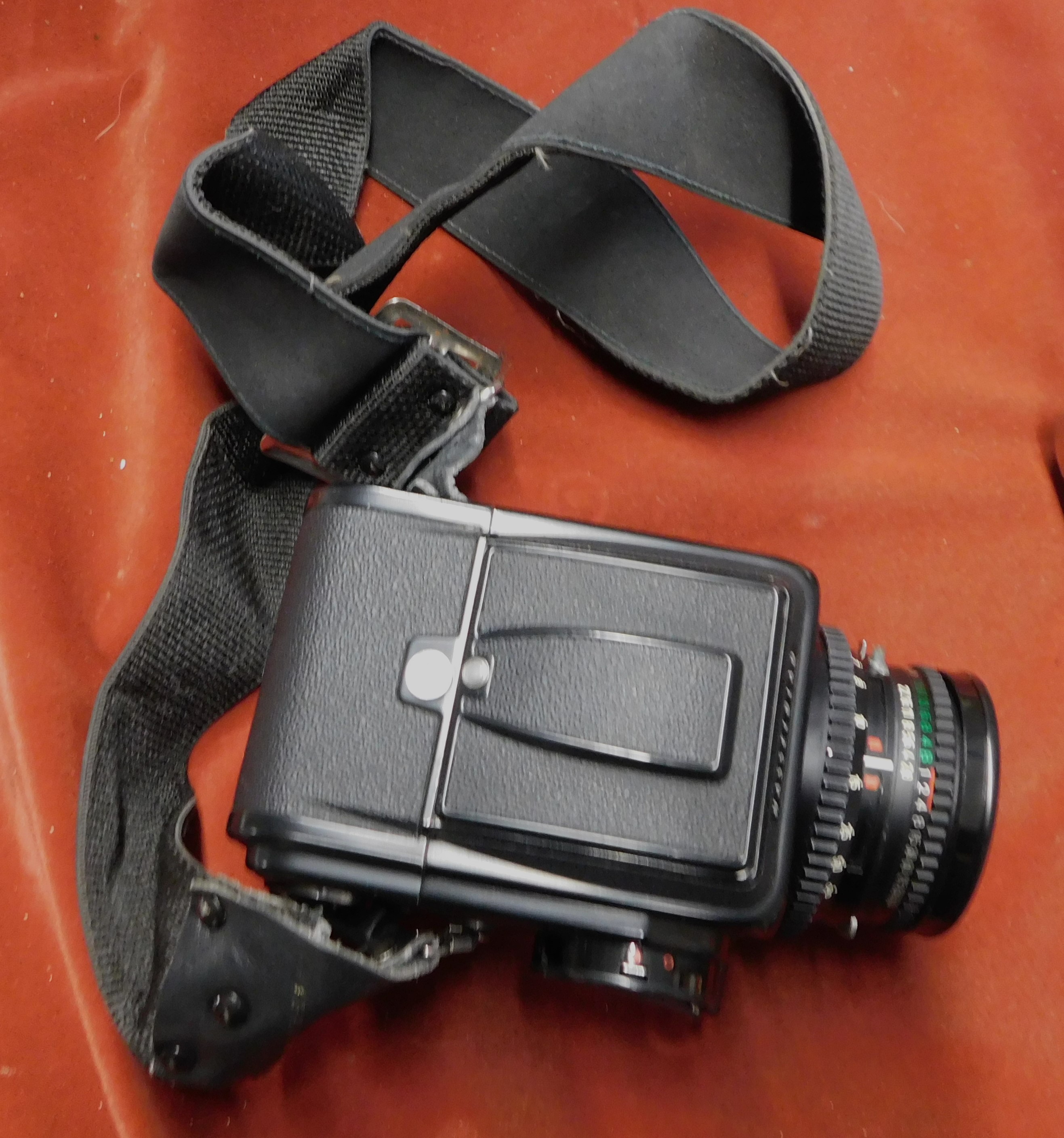
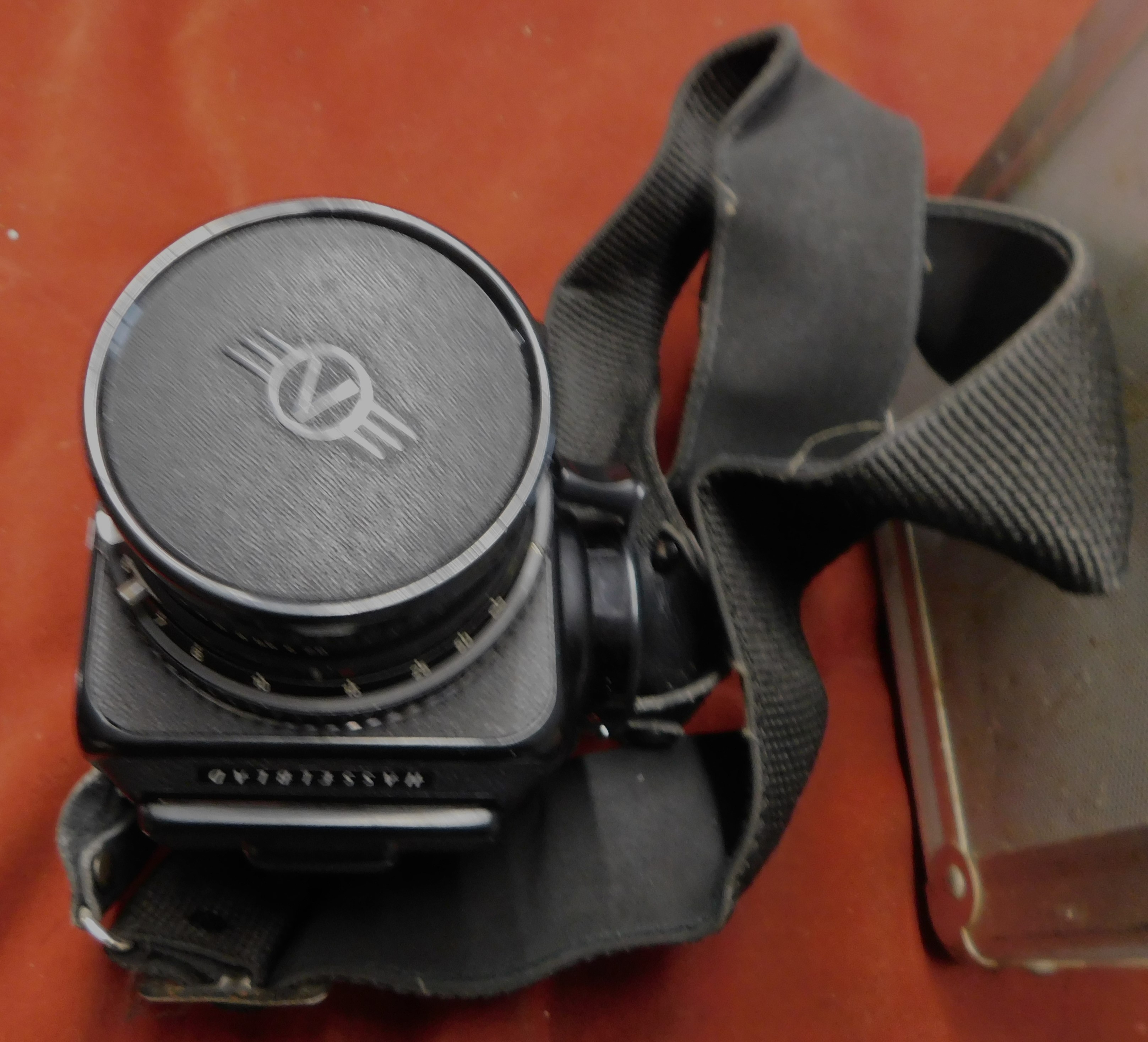
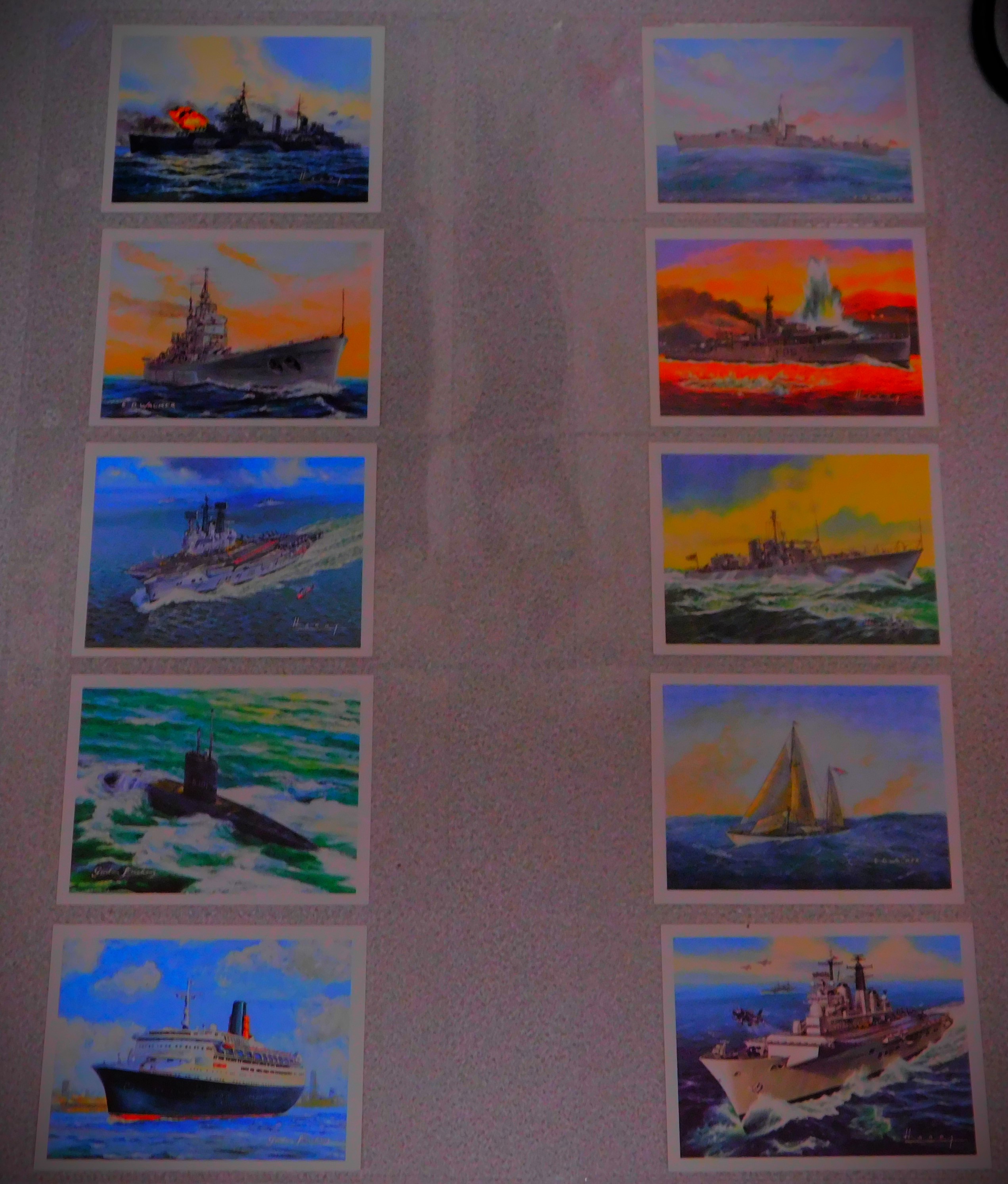
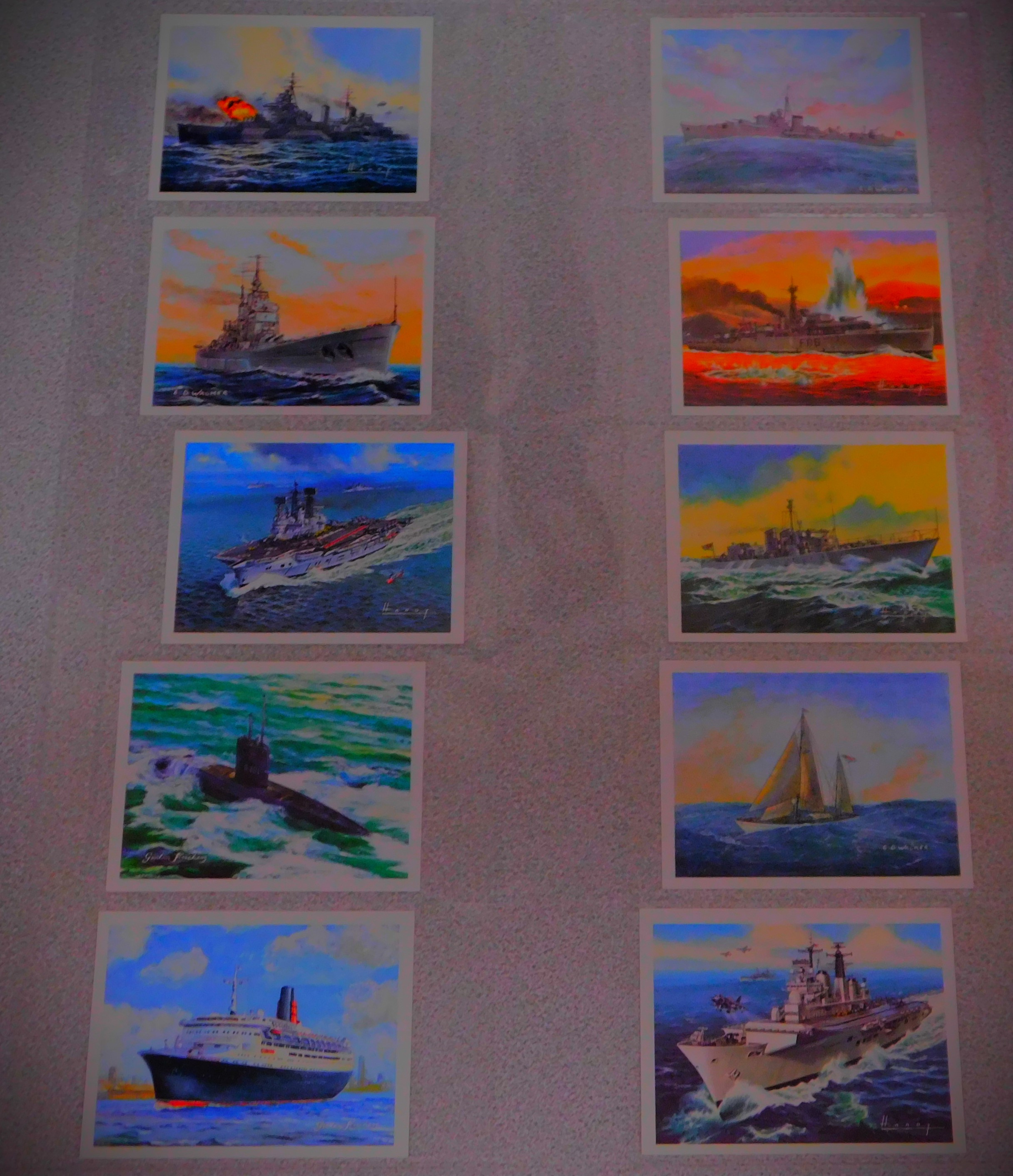
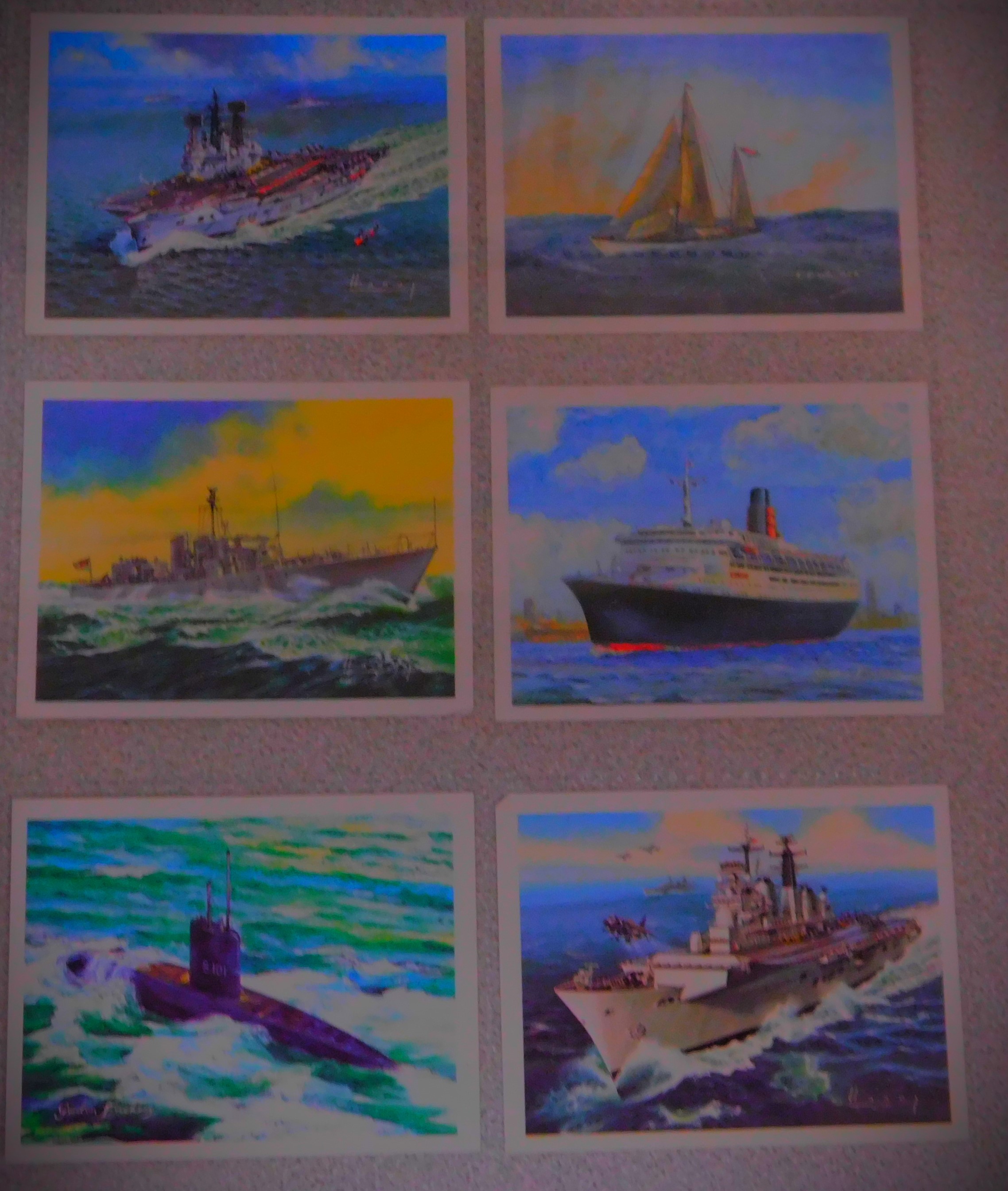
A multi-part photo gallery today. James and Sons had an auction this week, and I focus on two lots. Lot 304 was a Hassalblad camera in an aluminium case with a lot of extra bits and pieces and attracted considerable interest. I produced an extended gallery for it in order to deal with queries that were coming in, and the result was very pleasing – it sold for £1,000.

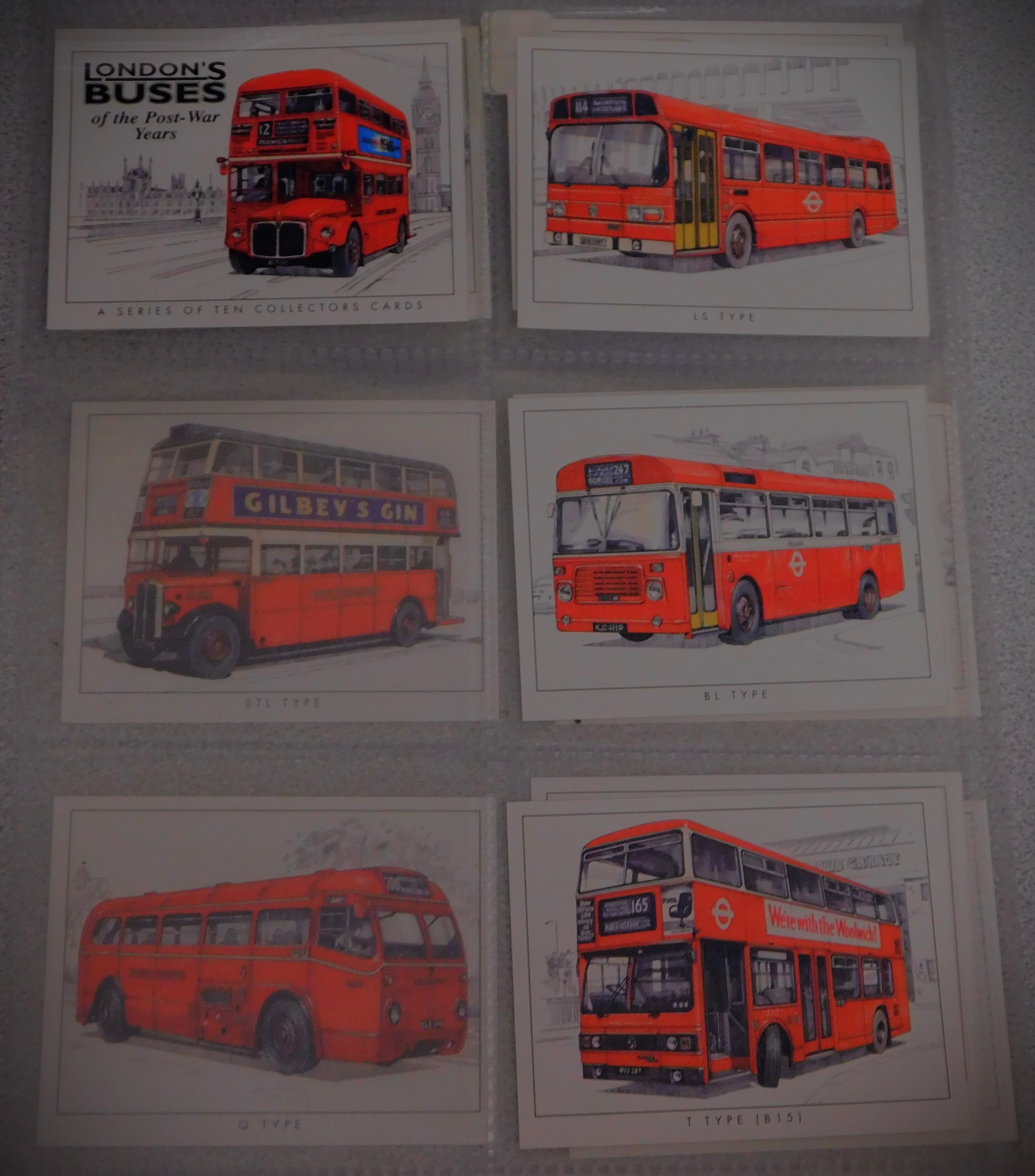
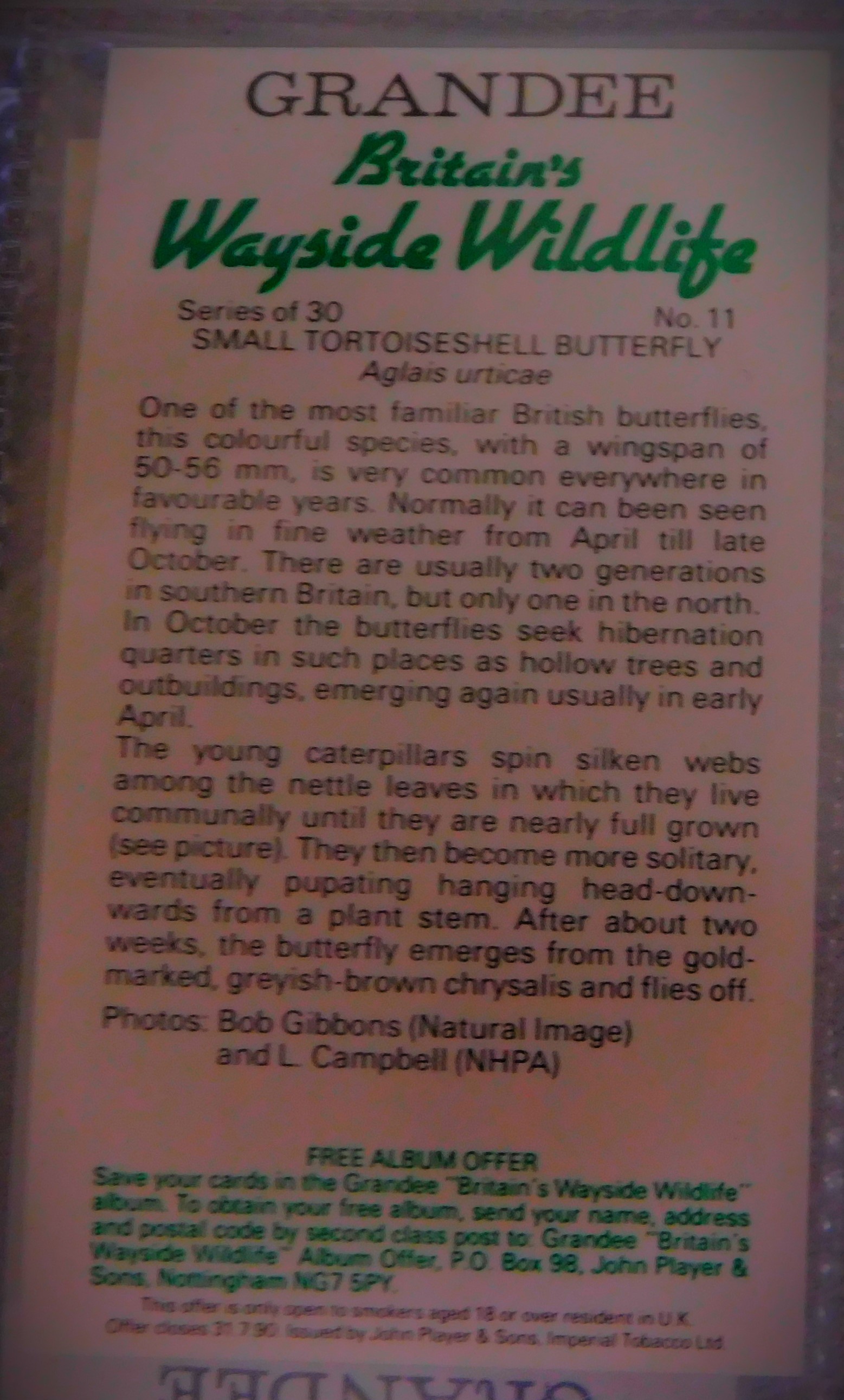
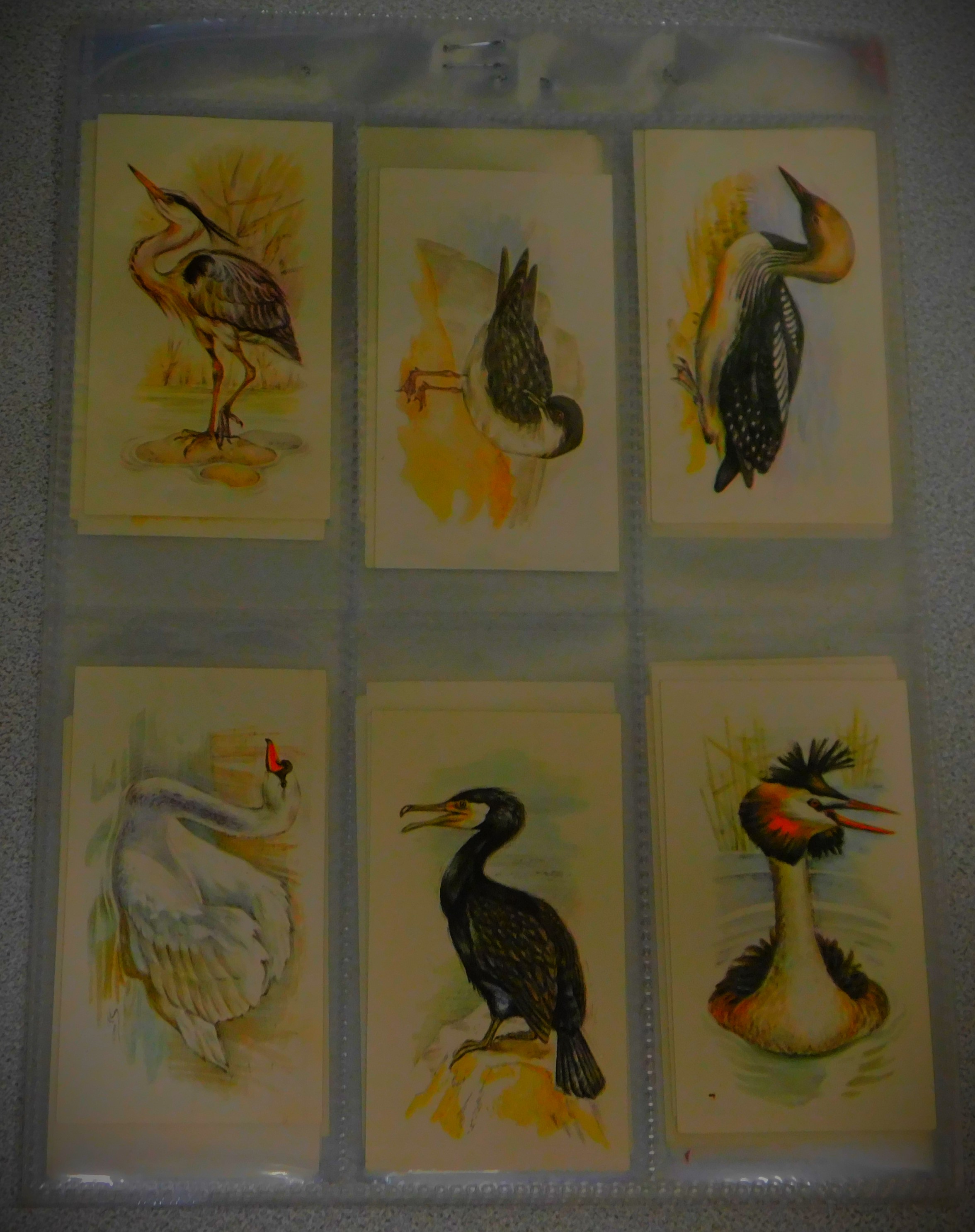
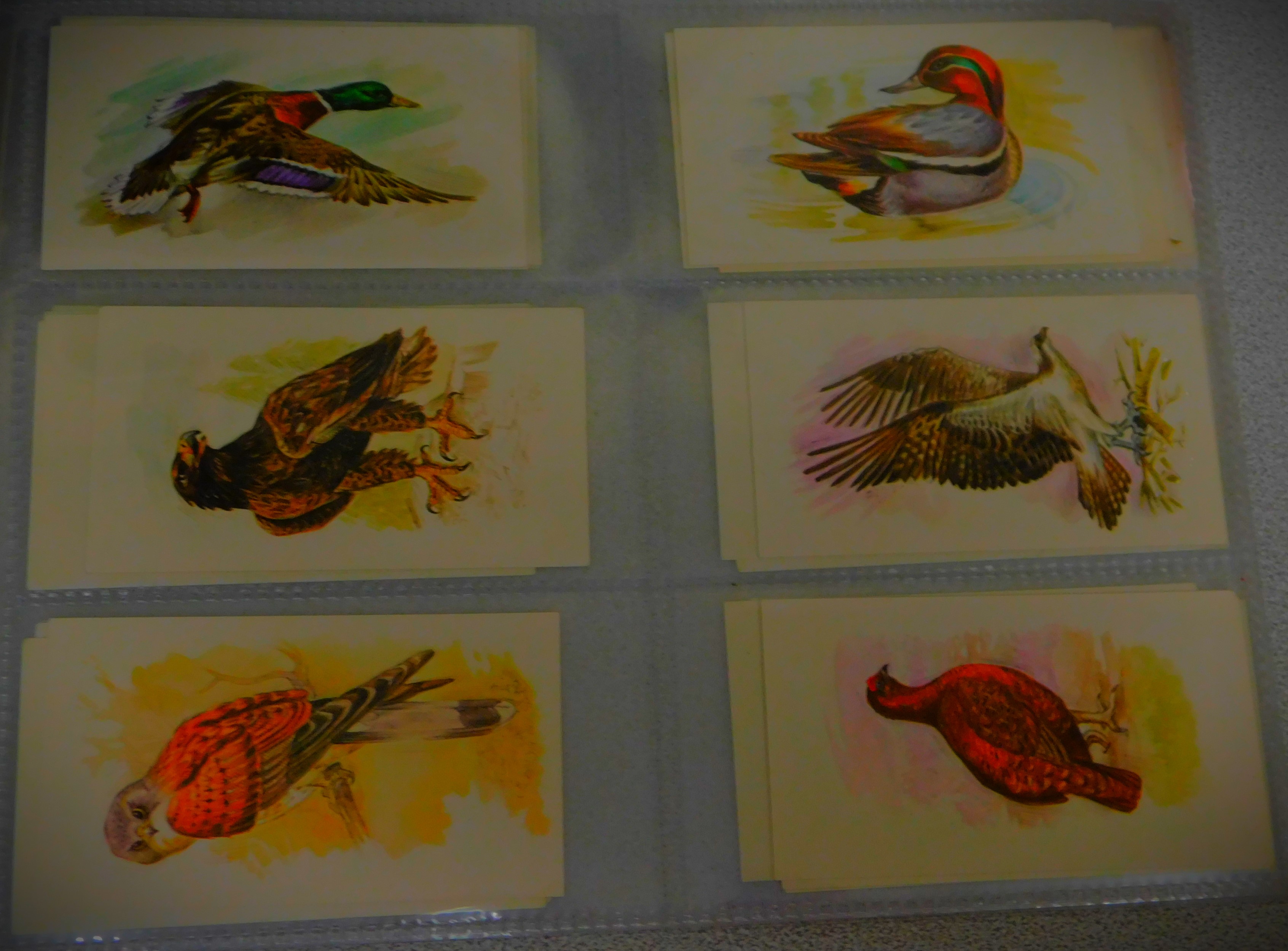
The second lot I focus on was number 574. This lot, a collection of cigarette/ trade cards, was knocked down to me for £10. I produced a good gallery for it…

Having taken possession of it I have been through it in much more detail than imaging for auction allows…

Now I end with a few of my regular photographs

All Time XIs – Match Ups 34

Continuing my extended analysis of how the all time XIs I created for each letter of the alphabet fare against one another.

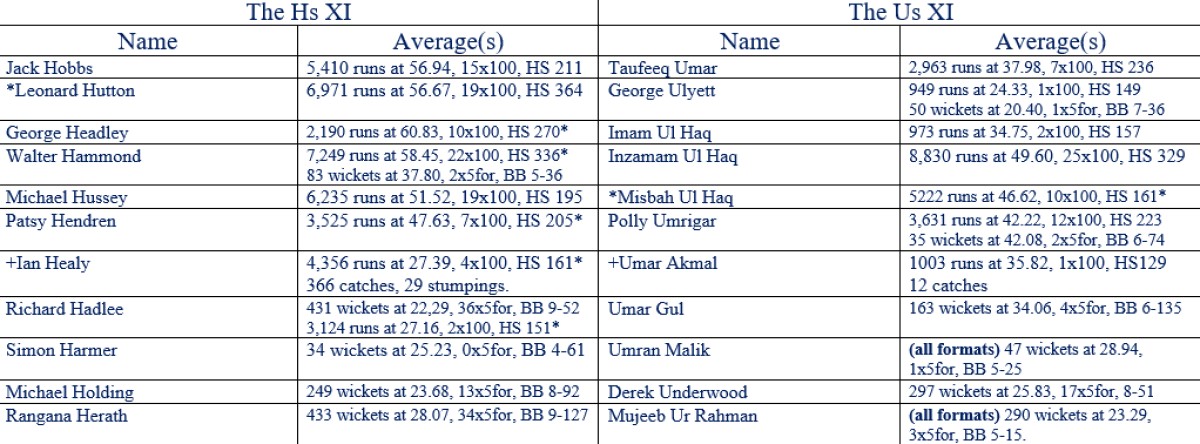
Welcome to the latest instalment in my extended analysis of how the all time XIs I selected for each letter fare against each other. The Hs occupy the spotlight and have so far accrued 55 out of a possible 90 points. The Men’s T20 World Cup is just underway, and we have already seen two major upsets – yesterday Namibia beat current Asia Cup holders Sri Lanka by 55 runs, while early this morning UK time Scotland beat twice former winners the West Indies by 42 runs.

THE Hs V THE Ts

The Hs as usual dominate batting wise, though there are several factors that lessen that dominance. Taylor and Trumper are a right/ left opening combo whereas Hobbs and Hutton were both right handed, and in addition Trumper played on poorer pitches than any of the others. Second is that Tarrant offers a genuine top line bowling option, unlike any of the Hs top six. Tyson and Trueman are at least a match for Hadlee and Holding as a new ball pairing, while Thomson is miles clear of Hammond as third seamer. Trumble outranks Harmer, and for my money Tarrant outranks Herath as a bowler, though that contest is a close one. The Ts also have the better keeper. I don’t reckon that the Hs advantage in batting is enough to make up for their deficit in bowling and score this Hs 2, Ts 3.

THE Hs V THE Us

This one is not a contest at all – the Hs comfortably outrank the Us in all areas, leading to an inevitable scoreline of Hs 5, Us 0.

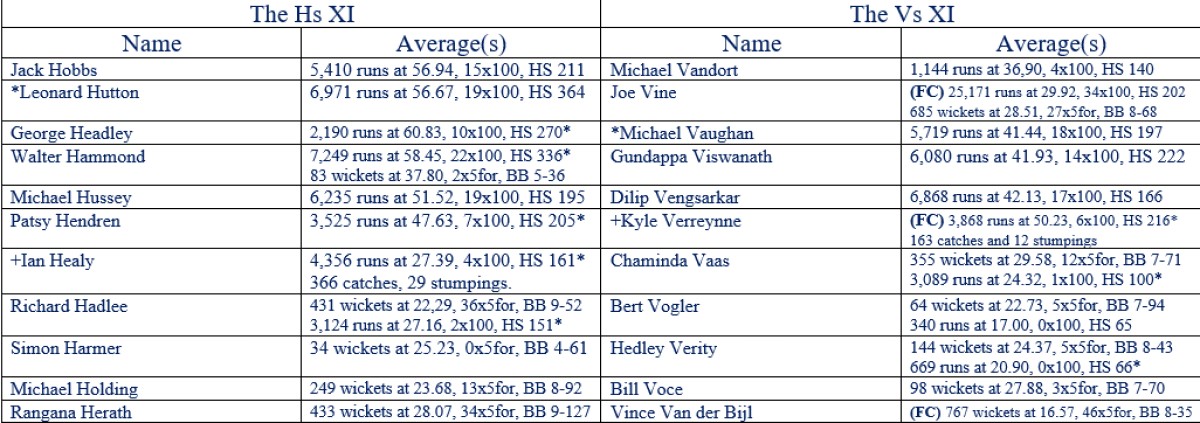
THE Hs V THE Vs

The Hs dominate the batting, and have the better keeper. Bowling wise is a very different story – Voce and Van der Bijl have to be considered at least the equal of Holding and Hadlee as a new ball pair, and Vaas far outranks Hammond as third seamer, especially given that he would be likely to fare even better as third seamer in a strong attack than he actually did as new ball bowler in a moderate one. Verity far outranks Herath, and for my money Vogler outranks Harmer. I think the Vs bowling advantage outweighs the Hs batting advantage: Hs 2, Vs 3

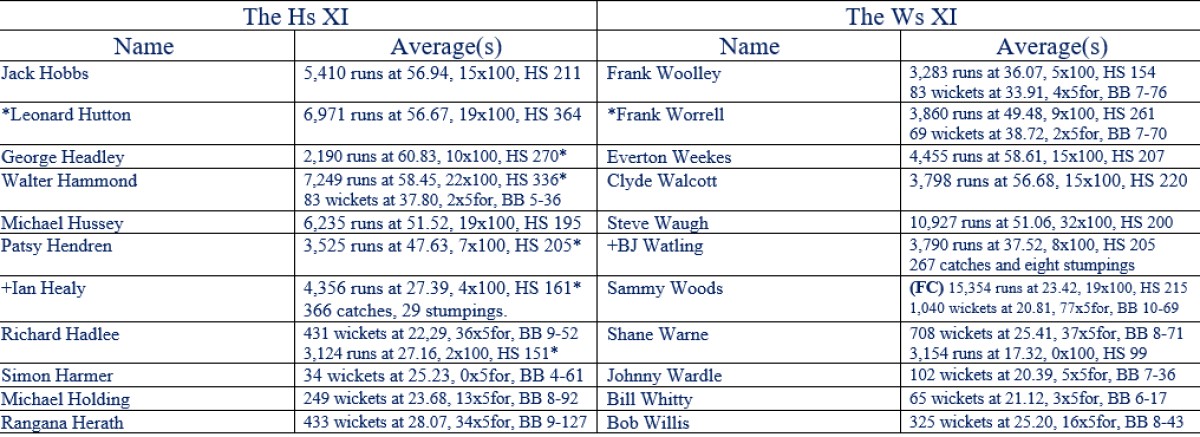
THE Hs V THE Ws

The gap between the opening pairs is reduced by the fact that the Ws have a left/ right opening combination as against two right handers. Nos 3-5 feature three titanic clashes, while Hendren wins the batting element of his match up at six and Healy wins the keeping element but loses the batting element of his match up to Woods (Woods played on the rough and ready pitches of England before WWI and would have averaged more playing today). Whitty and Willis would be at least as potent a new ball pair as Holding and Hadlee, and Woods comfortably outranks Hammond as third seamer. Warne far outranks Harmer, while Wardle is clear of Herath, and there is also Woolley to bowl left arm spin. The Hs have a small advantage in batting and a massive deficit in bowling: Hs 1, Ws 4.

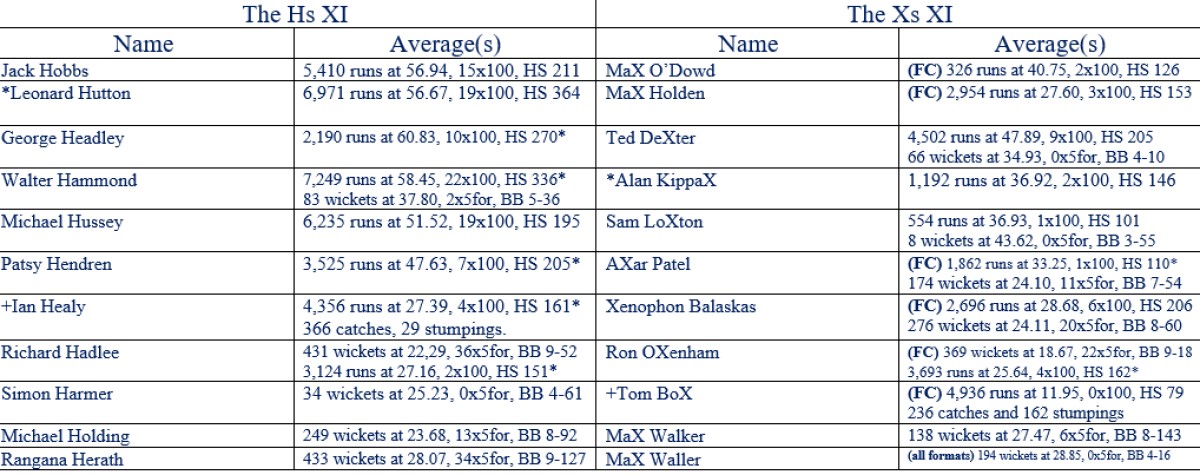
THE Hs V THE Xs

The Hs are massively ahead overall, though the Xs do have decent spin bowling and they do have the better keeper. Still, the Hs superiority is so marked that there can only be one scoreline: Hs 5, Xs 0.

THE Hs PROGRESS REPORT

The Hs have scored 15 out of 25 today, putting them on 70 out of 115, 60.87% (yesterday’s percentage was incorrect – should have read 61.11%, not 55.56%).

PHOTOGRAPHS

My usual sign off…

All Time XIs – Match Ups 33

Continuing my extended analysis of how the all time XIs I selected for each letter of the alphabet fare against one another.

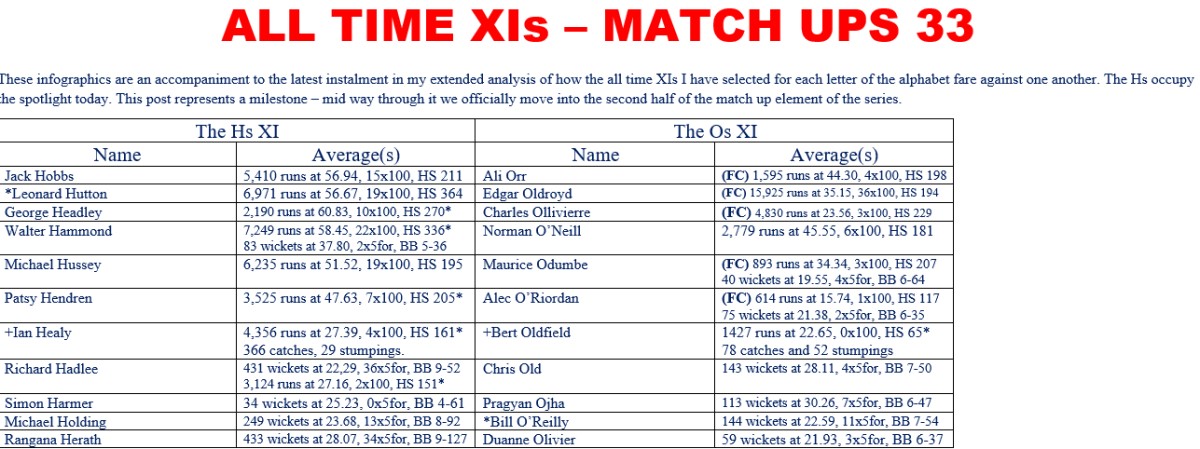
Welcome the the latest instalment in my extended analysis of how the all time XIs I selected for each letter of the alphabet fare against one another. This post sees us move past halfway in the match ups element of the series. The Hs are in the spotlight today and they so far have 36 out of 65 points.

THE Hs V THE Os

The Hs have much the stronger batting, the better new ball pairing (although O’Riordan outranks Hammond as third seamer). The Os have the best individual spinner in this match up in the person of O’Reilly, and they also have a numerical superiority in that department, but Harmer and Herath both outrank Ojha. The Os have the better keeper, though Healy wins the batting element of that match up. The Os may have the better bowling attack and certainly have more options in both pace and spin departments, but the overwhelming superiority of the Hs batting renders that null: Hs 5, Os 0.

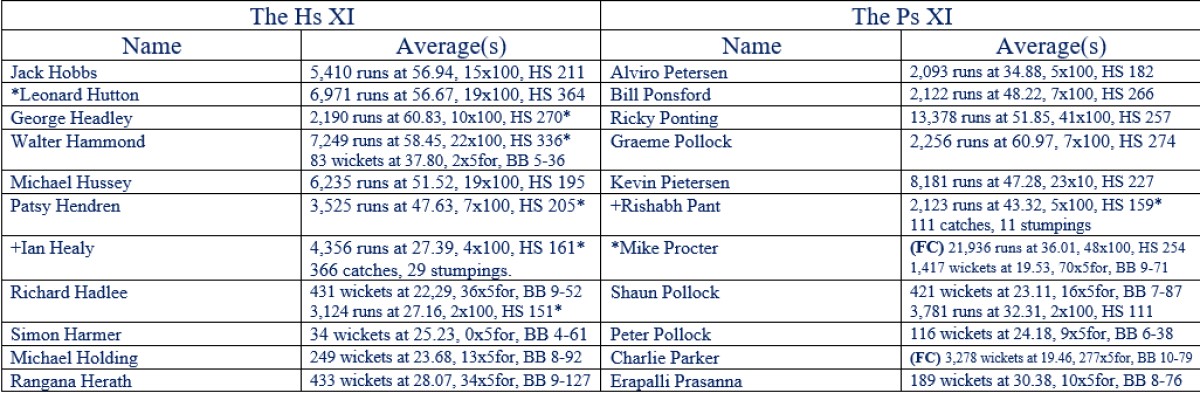
THE Hs V THE Ps

The Hs win five of the first six batting match ups, the Pant, Procter and S Pollock all their batting match ups. Healy outranks Pant as a keeper, Procter outranks Hutton as skipper. Hadlee and Holding v P and S Pollock is a close contest for which is the better new ball pairing, but Mike Procter massively outranks Hammond as a bowler. The Hs have the edge in spin bowling. I see this as about even in batting, the Ps ahead in pace bowling and the Hs a tiny bit better in the spin department, and I expect the Ps pace bowling to settle the issue: Hs 2, Ps 3.

THE Hs V THE Qs

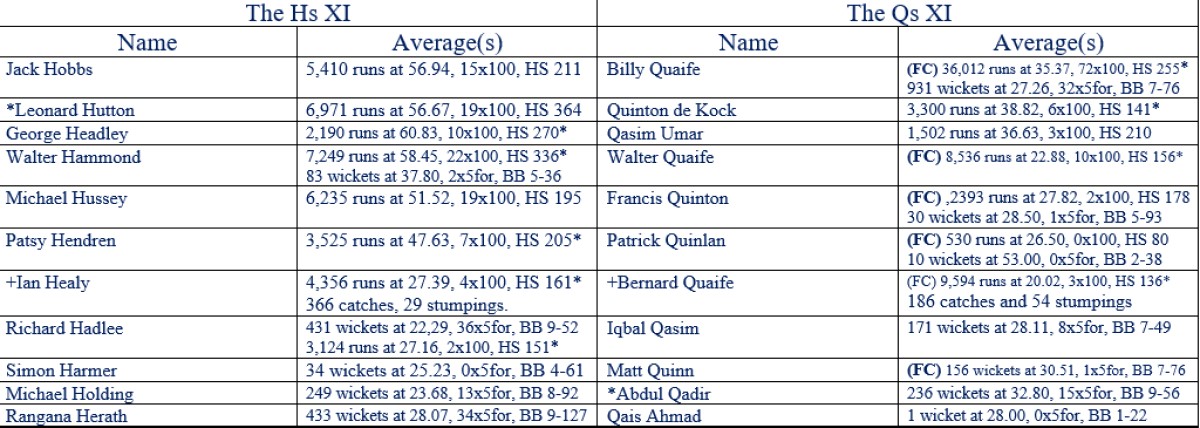
This one is clear cut, with the Hs ahead in all departments. Hs 5, Qs 0.

THE Hs V THE Rs

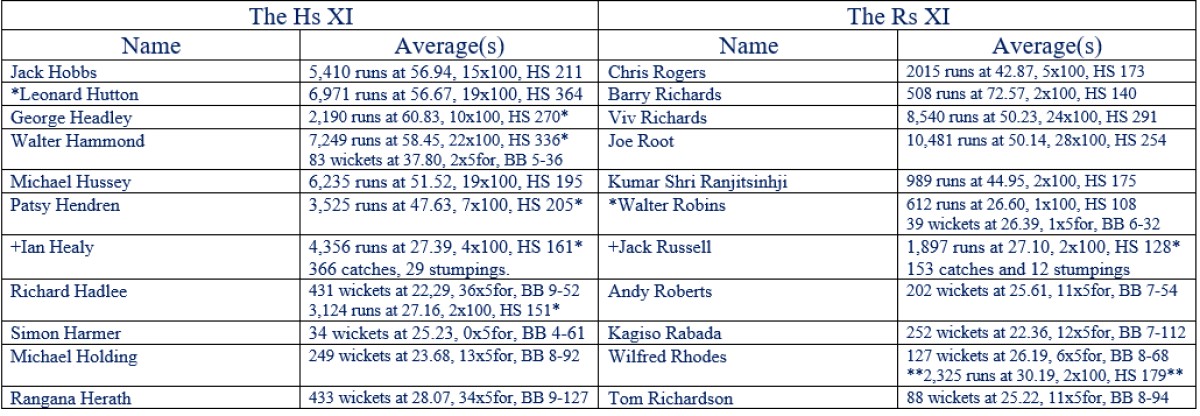
The Hs have the better batting line up, the Rs have the better keeper and also the better bowling – even if Hadlee and Holding are the best available new ball pair, which is open to debate, whoever out of Rabada, Roberts and Richardson ends as third seamer is way ahead of Hammond as a bowler. The spin department is closer, but Rhodes was certainly the finest of the four front line spinners featured in this match up. The Hs batting advantage is not enough to overcome their deficit on the bowling and keeping fronts: Hs 1.5, Rs 3.5.

THE Hs V THE Ss

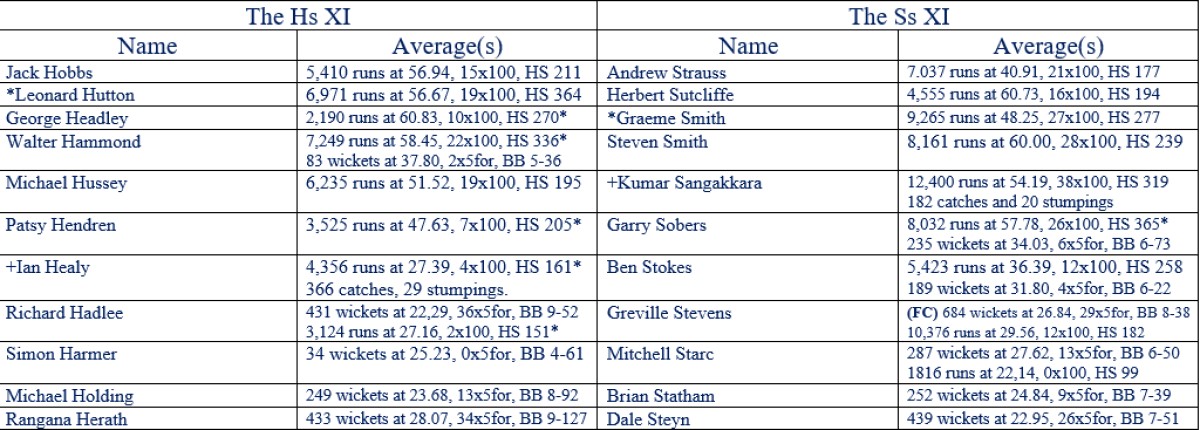
This is very close on batting, with the Ss extra depth in that department possibly making the difference there. The Hs have the finer keeper, but the use of Sangakkara as keeper plus the presence of Sobers gives the Ss a range of bowling options far greater than that possessed by the Hs. Sobers in his quicker incarnation would be fifth choice seamer for the Ss, and he outranks Hammond, the Hs third seamer, as a bowler. Herath outranks the left arm orthodox version of Sobers, but does not also offer a wrist spin option. Harmer outranks Stevens. I think that with the batting fairly evenly match and the Hs having only a small advantage in spin bowling the Ss vast superiority in pace bowling gives them a huge win: Hs 0.5, Ss 4.5.

THE Hs PROGRESS REPORT

The Hs have scored 14 out of 25 points in this set of match ups, putting them on 50 points out of a possible 90, 55.56% so far.

PHOTOGRAPHS

My usual sign off…

All Time XIs – The Letter H

Continuing the all-time XI theme with a look at the letter H.

Before introducing this post I have a point of information to offer. I have various commitments over the next few days which may mean I don’t get to put up any further posts before Sunday. We continue the all-time XIs theme with the letter H (letter G was treated out of position to coincide with the skipper’s birth anniversary), which presents us with a massive embarrassment of riches. There will be a vast mass of honourable mentions.

THE XI IN BATTING ORDER

  1. Jack Hobbs (Surrey, England). The Master’s case for inclusion needs no further amplification – it is beyond dispute.
  2. *Leonard Hutton (Yorkshire, England). His extraordinary record is even more extraordinary when you consider he lost six prime development years to WWII and emerged from that conflict with one arm shorter than the other due to a training accident.
  3. George Headley (West Indies). To date the only test cricketer to have been born in Panama, and one of the select few to finish with an average in excess of 60 at that level. He was nicknamed ‘Atlas’ because he seemed to carry WI’s batting on his shoulders.
  4. Walter Hammond (Gloucestershire, England). Only an ill advised comeback post WWII when he was in his mid forties reduced his test average below 60 runs an innings. He was also an ace slip fielder and a serviceable medium-fast bowler.
  5. Mike Hussey (Northamptonshire, Australia). His test career started late because when he was in his absolute prime Australia were utterly dominant, with a strong and settled batting line up, but once the chance came he took it with both hands, establishing a superb record at the highest level.
  6. Patsy Hendren (Middlesex, England). The third leading scorer of FC runs and second leading scorer of FC centuries in history, he rounds out a fearsome top six.
  7. +Ian Healy (Australia). Australia have had a long line of top class wicket keepers, and this guy was one of the greatest of them all, though his batting was not a match for that of his successor, Gilchrist.
  8. Richard Hadlee (Nottinghamshire, New Zealand). Indisputably the finest cricketer ever to play for New Zealand (Clarrie Grimmett, the great leg spinner, was born in Dunedin, though he had to cross the Tasman to find cricketing fulfilment).
  9. Simon Harmer (Essex, South Africa). So far he has had few opportunities at test level, but his performances for Essex in the county championship have been sensational over the years, and I expect to see him in action against England later this summer.
  10. Michael Holding (Derbyshire, Lancashire, West Indies). Attained legendary status in 1976 when alone among the bowlers on either side he managed to make things happen on a placid Oval surface, claiming 14-149 in the match, as many wickets as the other bowlers on both sides took put together. In 1981 he produced possibly the most intimidating opening over ever bowled in a test match, at Bridgetown, when veteran opener Geoff Boycott was comprehensively beaten by four balls, got bat on one and lost his off stump to the sixth.
  11. Rangana Herath (Sri Lanka). The left arm spinner was one of the best of his kind ever to play the game, and his test record makes hugely impressive reading.

This side contains a massively strong top six, a great keeper who could bat and four of the greatest bowlers ever to play the game. Due to my decision to select Harmer, the only controversial choice in the XI, it has only two specialist quicks, with Hammond as third seamer, but I don’t foresee taking 20 wickets being a huge problem even so.

HONOURABLE MENTIONS

We start with the openers, of whom at least four were unlucky to have surnames beginning with the same letter as Hobbs and Hutton: Two west Indians, Conrade Hunte aka ‘old everlasting’ and Desmond Haynes had excellent test records but could not quite challenge my two choices, two other English openers, Tom Hayward and Percy Holmes both had fine records, although the latter got few opportunities at test level due to overlapping with Hobbs and Sutcliffe. Finally, Matthew Hayden had a magnificent overall record, but he has one black mark: in England in 2005 he had a shocking series only partially redeemed by a score of 138 in the final match thereof.

Among the middle order batters who failed to make the cut are Neil Harvey, a magnificent left hander who might have been awarded the slot I gave to Hussey, David Hussey who had a fine domestic record but got few opportunities at test level, Clem Hill, another legendary left hander, Hunter ‘Stork’ Hendry also had a fine record but not quite good enough to challenge. James Hildreth of Somerset never got the opportunity to show what he could do at the highest level, and given the strength of the batting available for this letter he has to miss out again.

Three wicket keepers challenged for the slot I gave to Ian Healy: his niece Alyssa, who has a magnificent record for the Aussie women’s team, Brad Haddin, who was not Healy’s equal with the gauntlets though may have been better with the bat and Warren Hegg of Lancashire. Those who pick their keepers solely on batting ability might have looked to Geoff Humpage of Warwickshire, but even he would not claim on his own behalf to have been a great keeper, and I am disinclined to pick anyone who chose to go on rebel tours to South Africa, as he did.

I did not pick an all rounder, which is unusual for me, but I felt that none of that top six could be left out. Five all rounders had records to merit consideration: George Hirst of Yorkshire and England, and Jason Holder of the West Indies are the two pace bowling all rounders to merit a mention for this letter, while three leg spinning all rounders, JW ‘young Jack’ Hearne, David Holford (West Indies) and Wanindu Hasaranga (Sri Lanka) also merit mentions. Krom Hendricks, the first South African to be excluded from selection based on skin colour, back in the 1890s, does not have a detailed enough record to be given more than a mention.

There is an absolute plethora of great bowlers for with surnames beginning with H: Wes Hall, Josh Hazlewood, Peter Heine, Vanburn Holder (part of the original WI pace quartet of 1976), Steve Harmison and JT ‘old Jack’ Hearne (the fourth leading wicket taker in FC history, with 3,061 scalps) being clear cut examples. Ryan Harris and Dean Headley were fine bowlers who were deprived of greatness by injuries. Rodney Hogg had a meteoric career starting in the late 1970s and ending in the early 1980s. Schofield Haigh, a bowler of above medium pace who could swing, seam, cut or spin the ball had a massively successful county career for Yorkshire but only a few England caps. David Harris of Hambledon would need a law change to be able to use his preferred methods in the modern game, and a lack of any detail about his career figures relegates him to the honourable mentions. Finally, Alex Hartley, a world cup winning left arm spinner, is unlucky to be competing with Herath for a slot, and has to settle for a commentary gig (she is good at that too).

Our on-field umpires to go with this XI can be John Holder and Anna Harris.

PHOTOGRAPHS

After a look at the cornucopia of talent available to a selector of a side with surnames beginning with H it is time for my usual sign off…

An XI Of Players Whom Age Did Not Wither

A team of players who performed great deeds when in the veteran stages of their careers.

This post, which revisits all-time XIs territory was inspired by a discussion on radio 5 live about people delivering as veterans. Here therefore is a team composed entirely of players who enjoyed great success during their veteran years.

THE VETERANS XI

  1. Warren Bardsley – left handed opening batter. At the age of 42 he carried his bat through Australia’s first innings at Lord’s in 1926, still the oldest to achieve that feat at test level. His previous test centuries, twin tons at The Oval, had come 17 years previously, a record lapse between test centuries.
  2. Jack Hobbs – right handed opening batter. The Master was 46 when he scored the last of his test centuries, at Melbourne during the 1928-9 Ashes, still the oldest ever to reach three figures at that level (at first class level the palm goes to Billy Quaife of Warwickshire who signed off with a ton in his last first class knock at the age of 56 and 4 months).
  3. Charlie Macartney – right handed batter, left arm orthodox spinner. At the age of 40, in the second, third and fourth matches of the 1926 Ashes he peeled of centuries, including reaching one during the morning session of the first day after a wicket had fallen to the first ball of the match at Headingley.
  4. *Misbah-ul-Haq – right handed batter, captain. More test centuries after the age of 40 than anyone else. One of those centuries as a veteran was the quickest in terms of balls faced in test history.
  5. Michael Hussey – left handed batter. He had to wait until he was into his 30s for a test call up, and made full use of it when it finally came. In the 2010-11 Ashes he performed a series-long ‘Casabianca on the burning deck’ act, not quite enough to save his side, but mightily impressive for a veteran.
  6. Imran Khan – right handed batter, right arm fast bowler. One of the greatest of all all rounders he came out of retirement to lead his country to World Cup glory in 1992. He was the other possible captain, had I not awarded that distinction to Misbah-ul-Haq.
  7. Richard Hadlee – right arm fast bowler, left handed batter. He just seemed to get better as his career went on. He is to date the only person to have played test cricket after being knighted for cricket reasons (the Hon Sir FS Jackson’s knighthood was bestowed for other reasons, while Sir TC O’Brien was a baronet with the honorific inherited). This team’s number 10 may well join him in this club if he does not consider our honours system irretrievably tainted by some of the recent beneficiaries.
  8. +Bob Taylor – wicket keeper, right handed batter. After spending many years as Alan Knott’s understudy at test level it was in the veteran stage of his career that he became officially England’s first choice keeper. He turned 40 during the Headingley test of 1981, and his career still had three years to run at the top level.
  9. Sydney Francis Barnes – right arm fast medium bowler, right handed lower order batter. His greatest test moments were the 1911-2 Ashes (34 wickets, at the age of 38), the 1912 triangular tournament and the 1913-4 tour of South Africa, when at the age of 41 he took 49 wickets in the first four test matches before a quarrel over Ts and Cs led to him missing the final match. He paid just over 10 runs a piece for those last 49 wickets, ending his career with 189 wickets in 27 matches at the highest level, seven per game, which is far more than anyone else to have played a double figure number of test matches (Lohmann, just over six, with 112 wickets in 18 tests is number two on that list). These wickets cost him just 16.43 a piece, and although he played no first class cricket after World War 1, he had professional contracts in various leagues right up to the outbreak of World War 2, meaning that for 44 years of his adult life there was someone willing to pay him to play cricket.
  10. James Anderson – right arm fast medium bowler, left handed lower order batter. He has taken more wickets in tests since turning 30 than anyone else in the game’s history, and his wickets in 2021 are currently costing him just 10 a piece.
  11. Clarrie Grimmett – leg spinner, right handed lower order batter. The Dunedin born leggie had not only to move countries, but then cross two state boundaries to find regular first class cricket. As a result, he was already 33 when called up for his first test match. Even starting that late he took 216 wickets in 37 test appearances, and although he was then 46, many, including his old friend and bowling partner Bill O’Reilly, would have taken to him to England for the 1938 Ashes.

This team has a left/right handed opening combination, three excellent batters one of whom is a left hander in the next three slots, a genuine all rounder at six, a bowling all rounder at seven, one of the greatest of all keepers and three ace bowlers to round out the XI. The bowling is awesome, with Hadlee, Khan and Anderson a formidable pace trio, Barnes the greatest of all bowlers, and two front line spinners in Grimmett and Macartney.

PHOTOGRAPS

My usual sign off, with the addition of an infographic:

All Time XIs – Mixed Chirality

Today’s ‘all time’ XI circket themed posts focusses on players who batted and bowled with different hands. Also contains a couple of links and some photographs.

INTRODUCTION

Welcome to today’s variation on an all-time XI cricket theme. As hinted at yesterday, today we look at players who bat and bowl with different hands.

THAT WORD CHIRALITY

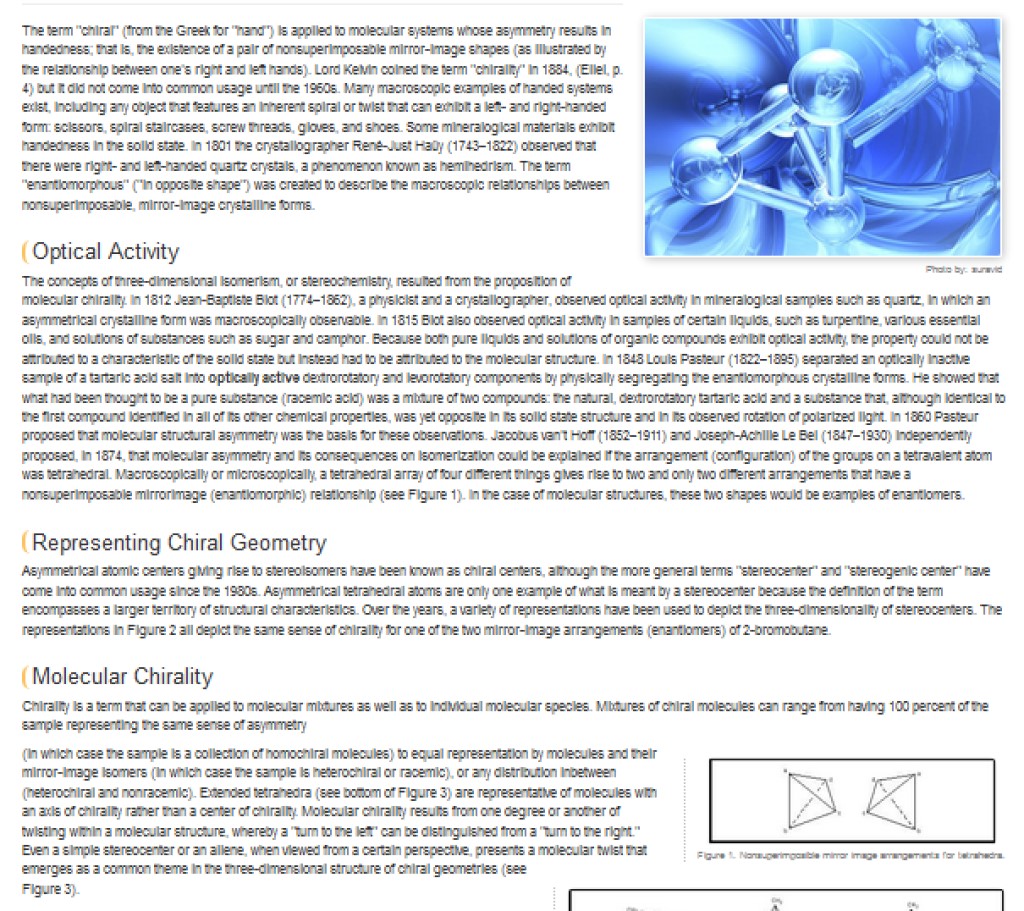
I have borrowed this from the realm of chemistry. Here is an official definition – screenshot below:

Chirality

BATTED LEFT AND BOWLED RIGHT XI

  1. Matthew Hayden – left handed opening batter, very occasional right arm medium pace bowler. He averaged 50 with the bat in test cricket with the bat. He did bowl at that level as well, but never picked up a wicket.
  2. Alastair Cook – left handed opening batter, very occasional off spinner. Bizarrely has one of the most economical wicket taking averages of all in test cricket – his one visit to the bowling crease in his long career yielded him figures of 1-7, an average of 7.00. He scored nearly 12,500 runs at 45 as a batter, including a 50 and a century on debut against India, and the same double in his last match against the same opponents 12 years later.
  3. Brian Lara – left handed batter, very occasional leg spinner. Holds world record individual scores at both test and first class level.
  4. Graeme Pollock – left handed batter, very occasional leg spinner. Averaged 60.97 in his test career, before his country’s isolation brought the curtain down on it.
  5. Shivnarine Chanderpaul – left handed batter, occasional leg spinner. Possessor of one of the most unusual of all batting stances – and opponents have been given plentiful opportunities to study it at length. 
  6. *Ben Stokes – left handed batter, right arm fast bowler. The ultimate big occasion player. I have named as captain of this team, a role he is due to assume later this year on a temporary basis, while Joe Root is with his wife for the birth of their child.
  7. +Adam Gilchrist – left handed batter, wicket keeper, very occasional off spinner. He bowled two overs in all senior first team cricket across the formats, and they were classed as off spin.
  8. Richard Hadlee – right arm fast bowler, left handed lower middle order batter. Quite simply his country’s G.O.A.T.
  9. Bill O’Reilly – leg spinner, left handed lower order batter. One of the greatest of all bowlers, rated by Bradman as the best he ever saw or faced. His batting highlight was an unbeaten 30 in the third test of the 1930 Ashes, which prevented Australia from having to follow on, after his narrow failure to do the same at Lord’s had led to them suffering an innings defeat. Avoiding the follow on meant that Australia saved that match, and after a draw in the 4th match they won at The Oval to regain the Ashes.
  10. Curtly Ambrose – right arm fast bowler, left handed tail end batter. One of the greatest of all fast bowlers, taking his wickets at under 21 a piece in test cricket, the most economical rate of anyone to have taken 400 or more.
  11. James Anderson – right arm fast medium bowler, left handed tail end batter. England’s all time leading test wicket taker, currently on 584 and officially still counting.

This team has an excellent top five, the ultimate x factor all rounder, a keeper batter, and four excellent bowlers. There is only one genuine spin option, O’Reilly, but overall the bowling is pretty impressive.

THREE NEAR MISSES

Stuart Broad, right arm fast medium bowler and left handed lower order batter, came close, but I do not think one could seriously pick him ahead of Ambrose. Stan Nichols and Jack Gregory were both attacking left handed batters who regularly bowled right arm fast with the new ball, but they hardly challenge Stokes and Hadlee.

BATTED RIGHT AND BOWLED LEFT XI

  1. Wilfred Rhodes – right handed opening batter, left arm orthodox spinner. 39,807 first class runs, 4,187 first class wickets. In one of the many phases of his extraordinary career he was effectively a specialist batter, opening for England with Jack Hobbs, and being number two in the batting averages as well.
  2. Vinoo Mankad – right handed opening batter, left arm orthodox spinner. He once scored 184 and 72 either side of a five wicket haul. He amassed four double centuries in his test career, including what was then the Indian record of 231, when he and Pankaj Roy put on 413 for the first wicket.
  3. *Frank Worrell – right handed batter, left arm medium fast bowler, occasional left arm orthodox spinner, captain. Averaged 49.48 in test cricket, was the first black captain of the West Indies.
  4. Denis Compton – right handed batter, left arm wrist spinner. Averaged 50 in his test career, and fared respectably with his wrist spin, which he developed after a tour to Australia in which he noticed how many Aussies were good at more than one department. He chose left arm wrist spin because he was impressed by Chuck Fleetwood-Smith, a specialist bowler in that style.
  5. Charlie Macartney – right handed batter, left arm orthodox spinner. Averaged 41.78 with the bat, including three successive centuries in the 1926 Ashes. Also had a ten wicket match haul with his left arm spin.
  6. +Sarah Taylor – wicket keeper, right handed batter. I could not find a high class keeper who batted right handed and was an occasional left arm bowler, so I went for one who batted right handed and never bowled a ball in senior first team cricket (and who happens to be one of the two best English keepers I have ever seen in action).
  7. George Hirst – right handed batter, left arm fast medium bowler. One of the greatest of all all rounders. When he and Rhodes, known as the ‘Kirkheaton twins’ because they both hailed from that village, were in the prime there was a famous joke quiz question “who is the world’s best all rounder?” The only definitive answer to which was “he comes from Kirkheaton, bats right handed and bowls left, and beyond that we cannot go.” Hirst was always inclined to award Rhodes the palm, while Rhodes, cagier (he was after all the original author of the definitive Yorkshire phrase “we doan’t play it for foon, tha knows”), always refused to be drawn.
  8. Frank Foster – right handed batter, left arm fast medium bowler. He and Sydney Barnes (32 and 34 wickets respectively) were the bowling force behind arguably England’s greatest ever series performance in Australia, the 4-1 win in 1911-2 against a definitively full strength Aussie side, which held the Ashes going into that series. Foster was also a very fine batter, the first Warwickshire player to score a treble century, and captain of their first ever championship winning side.
  9. Hedley Verity – left arm orthodox spinner, right handed lower order batter. 1,956 first class wickets at 14.90, 144 of them at 24 in test cricket. Although definitely not a genuine all rounder he did have some useful batting performances to his credit, including stepping in as emergency opener for England and seeing through a dangerous period. He never managed the season double of 1,000 runs and 100 wickets, tallying just over 800 in his best batting season.
  10. Derek Underwood – left arm slow medium bowler, right handed tail end batter. A very economical bowler, rarely collared even on the flattest of pitches and a destroyer on a rain affected pitch (and also the match winner on the only documented fusarium affected pitch in test history, at Headingley in 1972). He did eventually register a first class ton, near the end of his long career, but there was never any serious chance of him being considered an all rounder.
  11. William Mycroft – left arm fast bowler, right handed tail end batter. He flourished just before test cricket was a thing, but 138 first class matches brought him 863 wickets at 12.09 each. 791 runs at 5.34 over the same period makes him not so much a rabbit in that department as a ferret (the one who comes after the rabbits).

This team has a respectable opening pair, an excellent 3,4 and 5, a superb keeper batter, two of the greatest of all all rounders, and three excellent specialist bowler. It commands the full range of left arm bowling from outright pace (Mycroft) through fast medium (Hirst and Foster), medium fast (Worrell), slow medium (Underwood) and spin (Verity, Rhodes, Mankad and Macartney bowling the orthodox variety, Compton wrist spin).

A NEAR MISS

Chuck Fleetwood-Smith, a left arm wrist spinner, came very close to selection, but I felt that with Compton in the side, Underwood’s slow-medium craft and guile offered me an extra variation.

THE CONTEST

The contest would be a good one. I think that the bowling options possessed by the batted right, bowled left brigade just give them the edge, but it is a very close call.

SPORTING AMBIDEXTERITY

The first Dr Grace, WG’s father, was a moderate cricketer, but noted for one peculiarity – although he insisted on batting right handed, he bowled and threw with his left. There are stories of Hanif Mohammad bowling with both hands at club level, and even snagging a wicket left handed. Neil Harvey, a great left handed batter, was right handed for everything other than cricket. I have yet to locate a cricketer who actually had bowling styles with each arm at first class level, but ambidexterity is positively encouraged these days, so it is probably just a matter of time. In other sports golfer Phil Mickelson plays left handed while being right handed everywhere other than the golf course. Snooker legend ‘Rocket’ Ronnie O’Sullivan regularly plays left handed shots in championship matches, and has apparently made entirely left handed century breaks in less exalted settings. Moving back to cricket, the sideways on stance used by almost all batters means that a right handed batter sees the ball mainly with their left eye, while a left handed batter sees it mainly with their right eye (this is why the Nawab of Pataudi junior, aka Mansur Ali Khan, could return to top level cricket after losing his right eye in an accident but Colin Milburn, another attacking right handed batter, could not do so after losing his left.

LINKS AND PHOTOGRAPHS

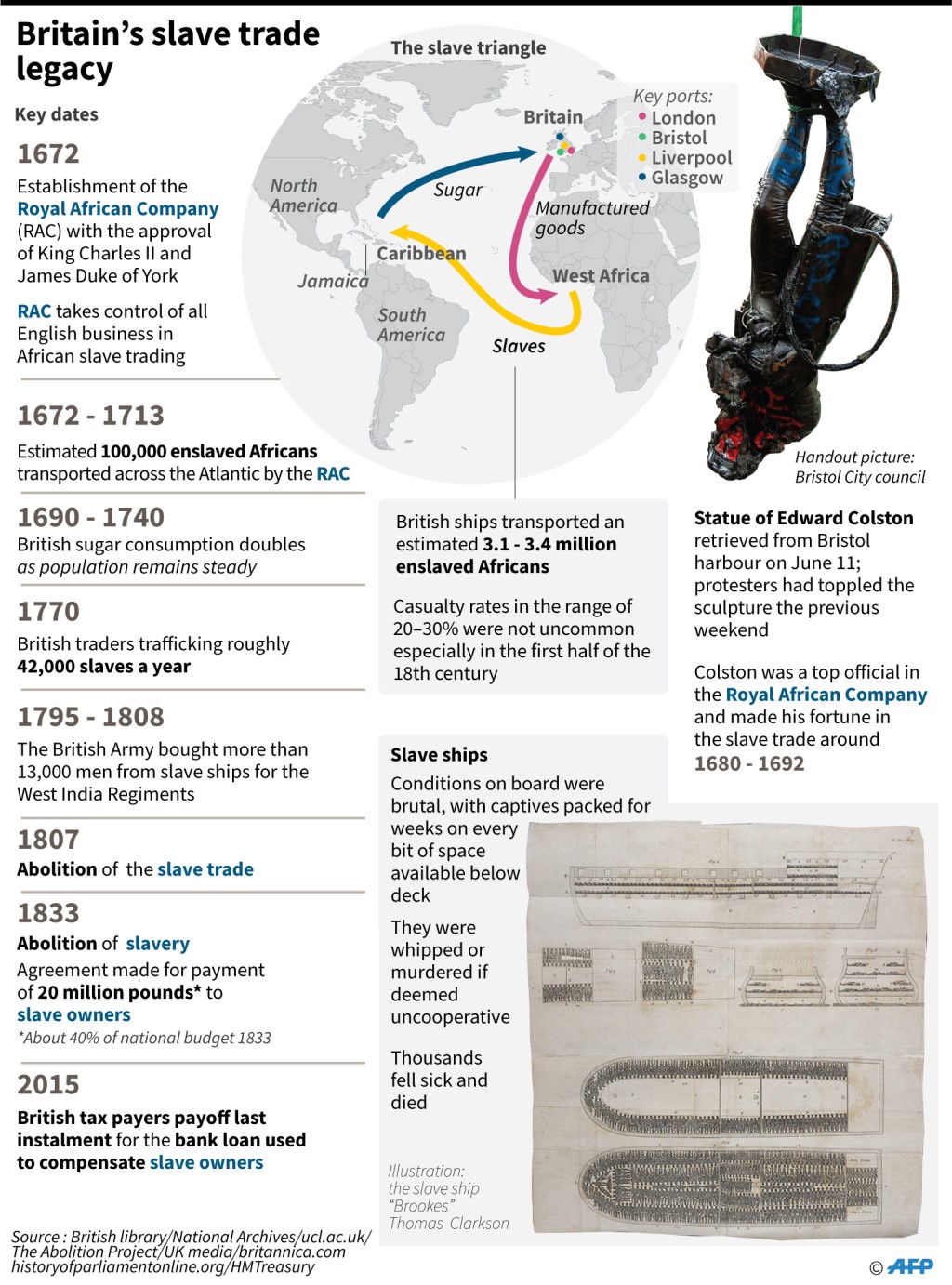
The statue of slave trader Robert Milligan has recently been removed from its plinth in West India dock in response to public pressure. Now there is a petition for its place to be taken by a memorial honouring writer and abolitionist Olaudah Equiano, which you can sign and share here.
Equiano

APF News Agency have produced this splendid infographic about Britain and the slave trade:

BST

Now it is time for my usual sign off…

IMG_0673 (2)IMG_0674 (2)IMG_0675 (2)IMG_0677 (2)IMG_0678 (2)IMG_0680 (2)IMG_0681 (2)IMG_0682 (2)IMG_0683 (2)IMG_0684 (2)IMG_0685 (2)IMG_0686 (2)IMG_0687 (2)IMG_0688 (2)IMG_0689 (2)IMG_0690 (2)IMG_0691 (2)IMG_0692 (2)IMG_0693 (2)IMG_0694 (2)IMG_0695 (2)IMG_0696 (2)

IMG_0697 (2)
Radioactive clocks, from Dawkins’ “The Greatest Show on Earth”.

Mixed Chirality
The teams in tabulated form.


All Time XIs – New Zealand

It being Monday, today’s exploration on the ‘all time’ cricket XI theme looks at an international unit, in this case New Zealand.

INTRODUCTION

Welcome to the latest in my series of ‘all time XI’ themed posts. Today being a Monday we are looking at an international outfit, and under the spotlight today is the land of the long white cloud (actually more often the land of the the thick black cloud) New Zealand.

NEW ZEALAND IN MY LIFETIME

  1. John Wright – right handed opening batter. He was the first Kiwi to reach the landmark of 5,000 test runs. He was at one time successful for Derbyshire as well.
  2. Bryan  Young – right handed opening batter. He came late to this role but performed it conscientiously and successfully when the time came.
  3. *Stephen Fleming – left handed top order batter, excellent captain. A successful captain and a big run scorer, though a stickler would point the relative dearth of centuries in his record.
  4. Martin Crowe – right handed middle order batter. He scored almost 20,000 first class runs. His elder brother Jeff also played for NZ, though not so successfully. The other family link is that world famous actor Russell Crowe is a cousin. Martin Crowe’s maiden test century, against England in the 1983-4 series was the key innings that inspired his team to save a game that England has been bossing – Coney then made 174 not out and Lance Cairns played a useful supporting knock at the end. Against Sri Lanka, facing a huge first innings deficit he shared a New Zealand record partnership for any wicket with Andrew Jones, making 299 himself as the Kiwis reached safety on 671-4. He was unfortunate to find himself in the midst of a vicious controversy when Somerset named as overseas player in preference to either of the two West Indians Viv Richards and Joel Garner, which prompted the acrimonious departure from the club of Ian Botham.
  5. Ken Rutherford – right handed batter – his test batting career got off to a start that might have made a tail ender blush, but he ended up with a fine record, and was also a good captain for a period.
  6. +BJ Watling – wicket keeper and gritty middle order batter. He is the pivot of this side, and I have good cause to know just how dangerous he is – it was a long innings by him that out New Zealand in control of England’s last series there, a position they never relinquished.
  7. Amelia Kerr – leg spinner and right handed middle order bat. My pick is the genuine all rounder. As is all too common with the best female players she has not had the opportunity to show what she can do in long form cricket, but a 232 not out in a 50 overs a side international match plus her leg spin bowling is recommendation enough for me.
  8. Richard Hadlee – right arm fast bowler, left handed attacking lower middle order bat. Quite simply his country’s GOAT (Greatest Of All Time). What makes his performances at the highest level all the more impressive is that his support cast was generally speaking pretty ordinary. Graham Gooch, scorer of 183 not out against the 1986 Kiwis, the first to win a test series in England, described facing New Zealand as being like “facing a world XI at one end and Ilford 2nds at the other.” He became the first person knighted specifically in connection with cricket to play a test after acquiring the ‘Sir’ in front of his name (Bradman played his final first class match as Sir DG Bradman, while the Hon Sir FS Jackson was not knighted for reasons to do with cricket).
  9. Daniel Vettori – left arm orthodox spinner, useful lower middle order batter. At the age of 20 he helped consign England to the bottom of the world test rankings not long after they had been shown the door of the World Cup they were hosting, and from then until his retirement he was an essential part of New Zealand’s plans. In later years the captaincy and the fact that he also had to do a lot of batting somewhat reduced his effectiveness as a bowler, but the 1999 version bowled left arm orthodox spin as well as I have seen it bowled.
  10. Trent Boult – left arm fast medium bowler. The ‘conductor’ has been an effective leader of New Zealand’s pace attack for some years now, and just a few months ago he caused England considerable problems. He also gives my chosen pace attack an extra element of variety, bowling with his left hand.
  11. Danny Morrison – right arm fast medium. Danny ‘the duck’ (hence his position at no11) was New Zealand’s outstanding pace bowler of the 1990s, and could be relied on to provide excellent back up in that department for Messrs. Hadlee and Boult.

This team has a solid opening pair, an excellent no 3,4 and 5, a fine keeper at six, Amelia Kerr the x-factor all rounder at seven and a fine bowling line up. The bowling attack, with a varied pace trio of Hadlee, Boult and Morrison backed by the contrasting spin styles of Vettori and Kerr also looks pretty impressive.

HONOURABLE MENTIONS

Had it not been for Stephen Fleming’s claims, and my desire that he should be captain, Andrew Jones would have been a strong contender for the no3 slot, and some would say that I should have picked him as an opener anyway. Nathan Astle, an explosive batter and sometimes useful purveyor of slow-medium would definitely have his advocates, as would big hitting all rounder Chris Cairns. ‘Two Metre Peter’ Fulton would have his advocates for an opening slot. Among the seam/swing/pace options I have overlooked were Shane Bond, the quickest his country has ever produced but sadly blighted by injuries, Tim Southee the ever reliable and Neil ‘the composer’ Wagner whose bouncers sometimes confound opposition batters. Colin De Grandhomme, a magnificent limited overs player, might have had the number seven slot I gave to Kerr, but his bowling offers less. I also considered another big hitting female all-rounder, Sophie Devine, but decided I wanted the extra spin option offered by Kerr. Brendon McCullum would have his advocates for the wicket keeping slot, as would Adam Parore, while I also thought about Ian Smith, but he will have to make do with being part of the commentary team, for which role he is a ‘shoo-in’. Finally, combative off spinner John Bracewell would have been the obvious choice had I wanted a third spin option.

THE NEW NAMES IN THE ALL TIME XI

  • Bert Sutcliffe, a left handed attack minded opener, who averaged just over 40 in a test career that began at Christchurch in 1947 and ended at Edgbaston in 1965 comes in at the top of the order. For Otago against Canterbury he once scored 385. Otago’s all out tally in that innings was precisely 500, and in their two efforts Canterbury scored 382 runs off the bat – three fewer than Sutcliffe managed on his own! One over, bowled a chap named Poore, had Sutcliffe in two minds in the way bowlers don’t want – he hit three deliveries for four and three for six.
  • Glenn Turner, a right handed opening batter, the only Kiwi to score a hundred first class hundreds. During the Kiwis 1973 tour of England he reached his thousand first class runs before the end of May, one of only two to do that in an English season since World War II, the other being Graeme Hick in 1988.
  • Martin Donnelly, left handed middle order bat, scorer of Lord’s centuries in The Varsity Match, for The Gentlemen against The Players and in a test match for New Zealand. Also, in a 1945 match for The Dominions against England he made a century, considered by observers the outstanding innings in a game that also featured a ton by Keith Miller and one in each innings by Wally Hammond.
  •  +Stewie Demspter – right handed batter, wicket keeper. Charles Stewart Dempster played a mere 10 test matches for New Zealand, before devoting himself to county cricket with Leicestershire. In this 10 test matches he scored 723 runs at 65.72, assisted it is true by four not outs, but even not taking the not outs into account that average would still be 48.20. Selecting him as keeper, a role he did on occasion perform, was the only way I could fit him in.
  • Jack ‘Bull’ Cowie – right arm fast bowler. He took his test wickets at 21 each, and one contemporary writer was moved to comment “had he been English or Australian he would no doubt have been termed a wonder of the age.” His last test series was in 1949 at the age of 37, and even then on flat pitches (all four test matches were drawn) he caused plenty of problems.

With these players coming in our All Time New Zealand XI reads: B Sutcliffe, GM Turner, *S Fleming, MD Crowe, MP Donnelly, +CS Dempster, AC Kerr, RJ Hadlee, DL Vettori, T Boult, J Cowie. This combo, with a great opening pair, Dempster in for Watling and Cowie looking a distinct cut above Morrison looks like a superb unit.

HONOURABLE MENTIONS

Merv Wallace, who came close to 1,000 first class runs before the end of May on that 1949 tour was considered for a batting place. John Richard Reid, a man whose range of cricketing skills was huge, was also a big miss. Middle order batters Geoff Howarth and Bevan Congdon both had good records at a time when New Zealand collectively had little to shout about. Two keepers, Eric Petrie and Ken Wadsworth, were both outstanding practitioners, but neither could offer much with bat, Petrie in particular being a genuine ‘bunny’ in that regard. Brian Taylor, who scored a century and bagged a five wicket haul on his test debut earned consideration as an all rounder, but there is no shortage of pace options. Of the cricketing Hadlees, other than Richard the only one who many would seriously consider was Dayle, a fast bowler who at one time was rated higher than his brother, but ended up many leagues behind. New Zealand have had few class spinners play for them, which leads neatly on to…

THE ONES WHO GOT AWAY

One name dominates this category, that of leg spinner Clarrie Grimmett, who crossed the Tasman to better himself. He failed to claim a place in either the NSW or Victorian state sides, but eventually managed to establish himself for South Australia, and at 33 made his test debut for his adopted country, bagging 11 England wickets for 82 runs. In 37 test matches he took 216 wickets, a wickets to matches ratio outstanding for anyone not named Sydney Barnes. He was dropped for the 1938 Ashes tour, a decision that Bill O’Reilly for one considered to be crazy – Frank Ward who travelled in his place did little, while Chuck Fleetwood-Smith had his moments but was as erratic, unpredictable and expensive as anyone familiar with his approach would have expected.

Two others who would have merited consideration had they not abandoned the possibility of playing for their country were leg spinner Bill Merritt whose first class victims (mainly for Northamptonshire) cost 24 each and fast bowler Tom Pritchard who had an impressive record for Warwickshire (818 wickets at 23.30 in all first class cricket, and he lived – just – long enough to celebrate the most impressive of all centuries, dying 165 days after reaching that landmark birthday).

PHOTOGRAPHS

We have concluded our virtual tour of the home of The Lord of The Rings and The Hobbit movie series, and it remains only to apply my usual sign off…

P1320425 (2)P1320427 (2)P1320428 (2)P1320429 (2)P1320430 (2)P1320431 (2)P1320432 (2)P1320433 (2)P1320434 (2)P1320435 (2)P1320437 (2)P1320438 (2)P1320440 (2)P1320441 (2)P1320442 (2)P1320444 (2)P1320445 (2)P1320446 (2)P1320447 (2)P1320448 (2)P1320449 (2)P1320450 (2)P1320451 (2)P1320452 (2)P1320459 (2)P1320462 (2)P1320464 (2)P1320465 (2)P1320469

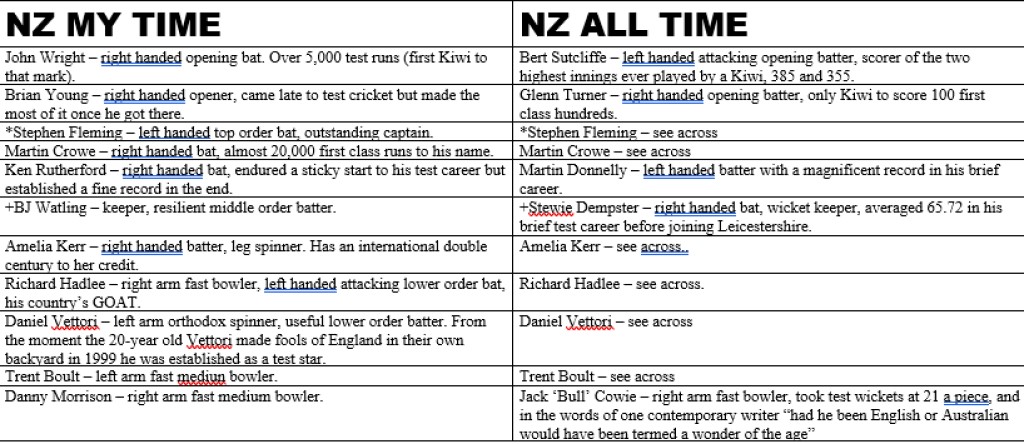
NZ
The teams in tabulated form, with abbreviated comments.


100 Cricketers – The Eighth XI Allrounders

The latest addition to my “100 cricketers” series, featuring the all-rounders in my eighth XI. Also includes some of my photographs.

INTRODUCTION

Welcome to the latest post in my “100 cricketers” series, with the spotlight on the allrounders from the eighth XI. The introductory post to the whole series can be seen here, the post in which I introduce the eighth XI can be seen here and the most recent post in the series is here. Before I get into the main meat of the post it is time for…

COUNTY CHAMPIONSHIP UPDATE

All matches are now underway, Somerset v Kent having finally started at 1:10PM today. Here is a match by match update:

  • Nottinghamshire v Yorkshire – Nottinghamshire 408, Yorkshire 136-2
    Joe Clarke reached the first championship hundred of the new season yesterday, but not go on long today, being out for 112. Duanne Olivier, Yorkshire’s somewhat controversial new signing collected five wickets and Stephen Patterson four. Adam Lyth is on 70 not out for the tykes.
  • Hampshire v Essex – Hampshired 525-8 declared, Essex 24-1
    Only bad light yesterday evening prevented Sam Northeast from being the first to three figures in this years championship, and today he went to 169. There were solid contributions all the way down the Hampshire order, and no Essex bowler distinguished themselves. For Essex Nick Browne is already out, but Sir Alastair Cook is still there, in the company of Tom Westley. The sole wicket has gone to West Indian fast bowler Fidel Edwards.
  • Somerset v Kent – Somerset 147-8
    Somerset have struggled badly in this delayed match, with only Tom Abell (49) doing anything remotely significant with the bat. 24 year-old Matt Milnes who has struggled for first-team opportunities thus far in his career has 3-36 (prior to this match he was paying almost 43 a piece for his wickets) , while veteran ex-Yorkshire seamer Mitchell Claydon has 4-30.
  • Derbyshire v Durham – Derbyshire 197 and 45-2, Durham 171
    Two promising young bowlers, Ben Raine and James Weighell took three wickets each in the Derbyshire first innings, a 28-year old who has played little first-class cricket by the name of Luis Reece bagged five in the Durham reply, and Raine and Matt Salisbury, a 25 year-old who has done little previously to suggest stellar quality have each picked up a wicket in the Derbyshire second innings.
  • Northampstonshire v Middlesex – Northamptonshire 445, Middlesex 79-3
    No centuries in the big Northamptonshire total, just solid contributions all the way down the order. Ireland star Tim Murtagh took 6-80 for Middlesex, while former and possibly future England quick Steven Finn bagged three. The top three in the Middlesex order have been dislodged, two to West Indian all-rounder Jason Holder and one to Nathan Buck, a 27-year old seamer who has pulled up few trees in his career. 
  • Sussex v Leicestershire – Sussex 173 and 140-2, Leciestershire 252
    At one point it looked like Sussex may have a first innings lead, but stout lower-middle order resistance led by wicket-keeper Hill (67) and also featuring Harry Dearden (40) and Tom Taylor who had already taken six cheap wickets (33) reversed this. Ollie Robinson finished with 4-46. For Sussex in their second innings Philip Salt made 80, but has just recently lost his wicket. Maybe if he can go on and make some centuries he could claim on opening spot for England (there are vacancies at the top of the England order as I have pointed out in previous posts, including this one where I make a radical suggestion). Now to the main business of the post starting with…

+ANDREW FLOWER

63 Test matches for Zimbabwe brought him 4,794 runs at 51.94, with a best of 232 not out, and 151 catches and nine stumpings. For most of those 63 matches he was carrying a very weak batting line-up and captaining as well as keeping wicket. His international playing career ended when he joine Henry Olonga in a protest against ‘the death of democracy’ in Zimbabwe, the two players turning up in symbolic black armbands. He went on to become one of the world’s leading coaches, guiding England to number one in the world test rankings. He and his brother Grant hold the test record for the highest partnership between a pair of brothers.

He played county cricket for Essex, which is where he first encountered Alastair Cook who subsequently flourished when he was England coach.

RICHARD HADLEE

86 Test matches yielded him 3,124 runs at 27.16 and 431 wickets (all-time record back in the day) at 22.29. The West Indies lost one series in the whole decade of the 1980s – to New Zealand spearheaded by Hadlee. Hadlee also starred in New Zealand’s first series victories over England (in NZ in 1983-4 and in England in 1986), and took 34 wickets in the three match series that saw their first triumph over Australia. In 1984, for Nottinghamshire who her served as overseas player for many years,  he achieved one of only two season doubles of 1,000 runs and 100 wickets in English first-class cricket since the reduction of first-class cricket in 1969 (the other was by Franklyn Stephenson in 1990). With the season now reduced to a mere 14 games it will take someone extraordinary to achieve the feat now (although W G Grace scored over 1,000 runs and took over 100 wickets in his last 11 first-class fixtures of the 1874 season and George Hirst topped 2,000 runs and 200 wickets in 28 matches in 1906), although one should never be over-dogmatic about stating that something is impossible. The performance that made him favourite to complete his coveted double in 1984 was against Middlesex when he scored a career best 210 not out to take his season’s aggregate up to 880, and thereafter it was never in any great doubt. He subsequently wrote an account of that season titled “At The Double” (yes, I have read it, although I do not own a copy – I had it out of the library once). 

Richard Hadlee was a quite magnificent bowler and a useful lower-middle order batter, and in this XI he is part of a varied and strong bowling attack. Next in this series the spotlight is on the specialist bowlers from this XI and the ninth XI is introduced in batting order.

PHOTOGRAPHS

I conclude this post in my usual fashion.

P1220432P1220433P1220434P1220435P1220436P1220438P1220439P1220440P1220441P1220442P1220443P1220444P1220445P1220446P1220447P1220448P1220449P1220450P1220452P1220453P1220456P1220458P1220459P1220460P1220462P1220463P1220464P1220465P1220466P1220467P1220468P1220469P1220471P1220472P1220473P1220474P1220475P1220476P1220477P1220478P1220479