All Time XIs – The Game’s Old Testament

An XI picked from cricket’s early history and a huge photo gallery.

This exercise looks as the title suggests at cricket’s early history. I have allowed myself one cricketer who played test cricket but otherwise these players are all of pre-test vintage.

  1. *WG Grace (right handed batter, right arm bowler of various types, excellent close catcher, captain). The sole test cricketer in the XI, but although he played test cricket over a period spanning almost 19 years he was past his absolute prime by the time he debuted in that format in the first test on English soil in 1880.
  2. John Small (right handed batter). John Nyren in his book about Hambledon (his father Richard was closely involved with the club) waxes lyrical about Small. Small’s most remarkable effort was a 138* that was spread over three days play.
  3. James Aylward (left handed batter). Only eight years after John Minshull scored the first recorded century in any cricket match this man set the Hambledon all time record with an innings of 167.
  4. Nicholas Wanostrocht aka Felix (right handed batter). He played his cricket (for Kent among others) under the assumed name ‘Felix’ because he worked as a schoolmaster and felt it would damage his professional reputation to play under his own name. He was also author of ‘Felix on the Bat’.
  5. Fuller Pilch (right handed batter). Recognized as the best batter of the 1830s and 1840s. He used a bat with a long blade and a comparatively short handle.
  6. Vyell Walker (right handed batter, slow bowler). One of seven brothers from Southgate – the cricket ground there is still known as Walker’s Ground. A Middlesex regular, and along with Grace one of only two players to have scored a century and taken all ten wickets in an innings in the same first class match.
  7. +Tom Box (wicket keeper, right handed batter). He played every Sussex game from 1832 to 1856 inclusive, a remarkable achievement. He often batted in the top half of the order for them, and was clearly an excellent keeper.
  8. William Clarke (right arm leg spin bowler, right handed batter). An extraordinary wicket taker, and not the worst batter. He also created the All England XI, a professional touring XI who played all round the country. Over the next 30 years a number of other such teams were created, but in the end a potential schism was averted when WG Grace threw his lot in with the MCC. ‘Old Clarke’ has left the modern game one great legacy – it was he who bought the Trent Bridge Inn, enclosed some adjoining fields and turned them into a cricket ground.
  9. James Broadbridge (right arm fast bowler, right handed batter). One half of cricket’s first acknowledged great bowling partnership, along with…
  10. William Lillywhite (right arm fast bowler, right handed batter). ‘The Nonpareil’, regular bowling partner of Broadbridge.
  11. David Harris (right arm fast bowler, right handed batter). The first authentically great bowler, his method is splendidly described by Nyren in his book.

This XI has a good batting line up and a strong, varied bowling attack – three great pacers, two great and contrasting spinners and Grace as sixth bowling option. It also has an excellent captain and a great keeper.

The nearest overseas player to making the cut was Gideon Elliott, the Victoria fast bowler whose handful of first class matches yielded 48 wickets at less than five a piece. I picked Walker for the all rounders slot over Alfred Mynn, ‘the Lion of Kent’ for reasons of balance, which also ruled out either Osbaldeston or Lambert. I regretted not being able to find a place for John Wisden, the diminutive fast bowler who created Wisden’s Almanac. Julius Caesar, the remarkably named Surrey batter who toured Australia in 1863-4 deserves a mention, and also Heathfield Harman Stephenson, performer of the original hat trick, in a match at Hyde Park, Sheffield – the name coming about because someone in the crowd passed their hat around to collect money which was presented to Stephenson in honour of his feat. Two early Yorkshire greats, Ephraim Lockwood and Louis Hall might have their advocates. Three fast bowlers who I have not yet mentioned who had fine achievements to their credit were Sam Redgate, John Jackson and George Tarrant. George Freeman of Yorkshire was also close to selection.

My usual sign off…

Middlesex in the Mire

A look at the mess Middlesex are currently in – facing relegation and in trouble with the ECB.

Middlesex, winner of more county championships than anyone else bar Yorkshire and Surrey, are in terrible state right now, facing relegation to the second division and in deep financial trouble. This post explores their situation.

Middlesex have been adjudged by the ECB to have become overly financially dependent on that organization. The following punishments have been meted out:

“The ECB will henceforth reduce payments to Middlesex by £150,000, of which £100,000 will be suspended until 31 October 2025. The points deduction, equivalent to the maximum points for one win in each of the County Championship, the One Day Cup and the T20 Blast, is also suspended until 31 October 2025.”

The above quote comes from an espn story about the situation which can be read here.

Middlesex have been treated rather more kindly than were Durham a few years back when that county was guilty of offences of a similar nature.

Middlesex are facing relegation, which with their very limited capacity for attracting new players given the punishments hanging over them will be hard to come back from. They are struggling with both bat and ball – their two former test match openers Stoneman and Robson have both had poor seasons with the bat, and the middle order is inexperienced, while their bowling attack is toothless – they barely even have an 80mph bowler in their ranks, never mind a 90mph one. Josh de Caires, the off spinner, has had two good matches with the ball recently, but Middlesex lost both times, as the opponents had a better spinner available to them – Liam Dawson and Simon Harmer respectively. Indian leg spinner Kuldeep Yadav is there for the tail end of the season, but at the moment the only question in their current match is whether the Manchester weather has done enough to save them from defeat. Kent, currently just behind Middlesex and in the second relegation slot (Northamptonshire are pretty much beyond redemption at the bottom of the table) are going to get at least a draw from their game against Nottinghamshire, fourth from bottom, and may well manage to win it, which would put Middlesex in real jeopardy, not only in the R zone, but adrift of third bottom by a double figure points margin.

How have Middlesex, with the advantage of having a base at the most famous ground in England, got themselves into such a horrendous mess?

I have lots of photos to share…

Heritage Open Day 2023

A brief account of Heritage Open Day 2023, with a large photo gallery.

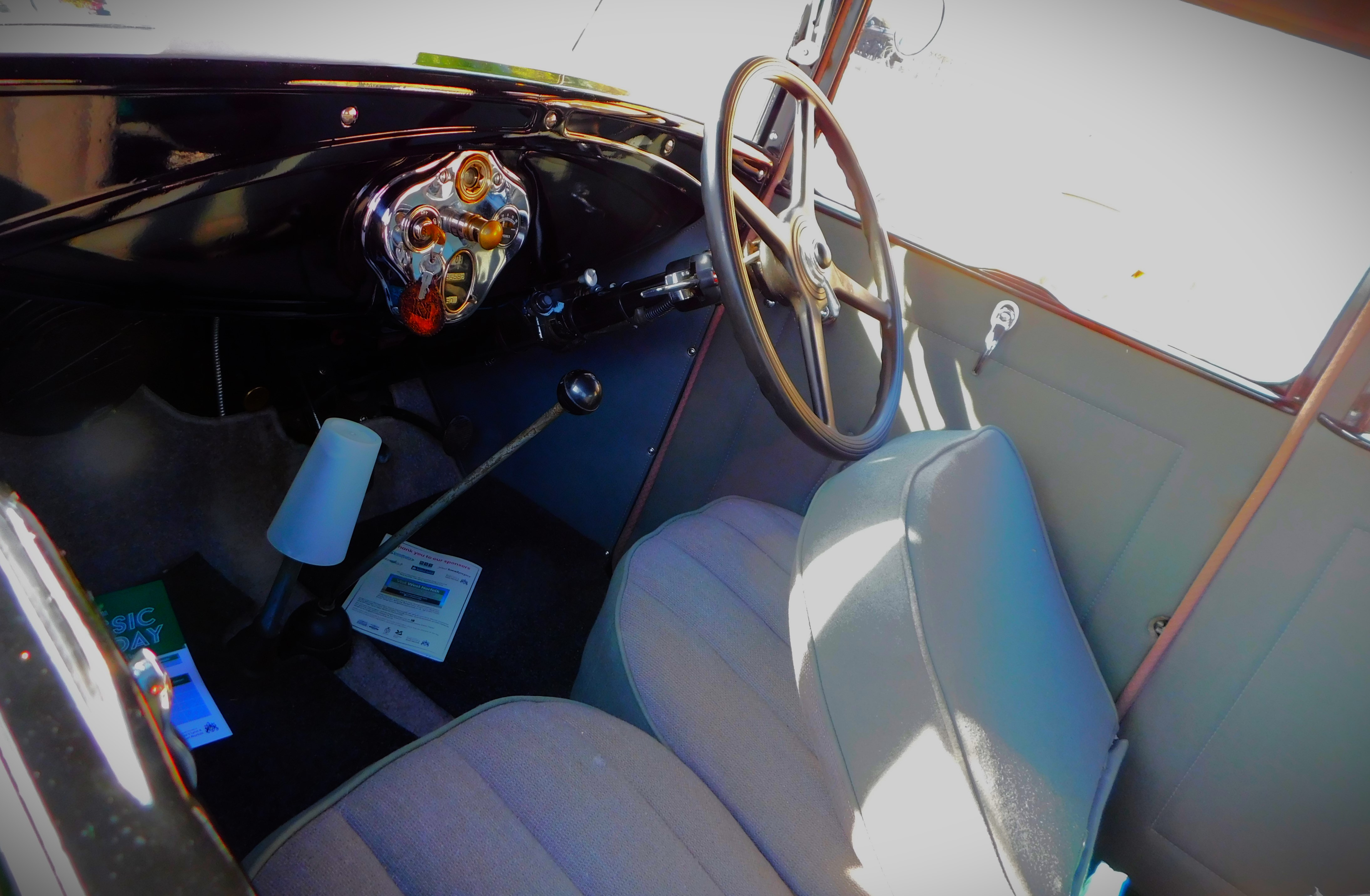
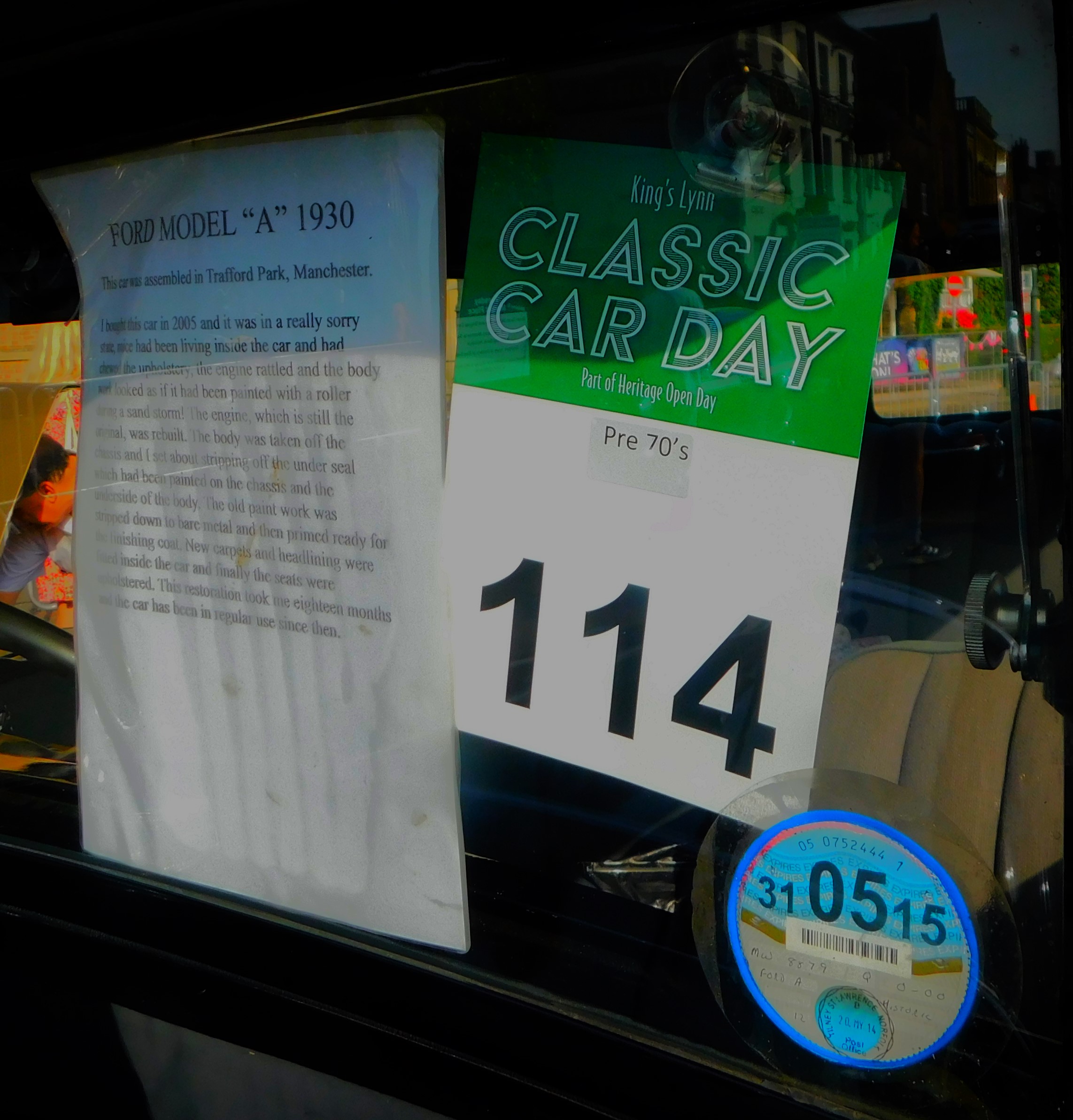
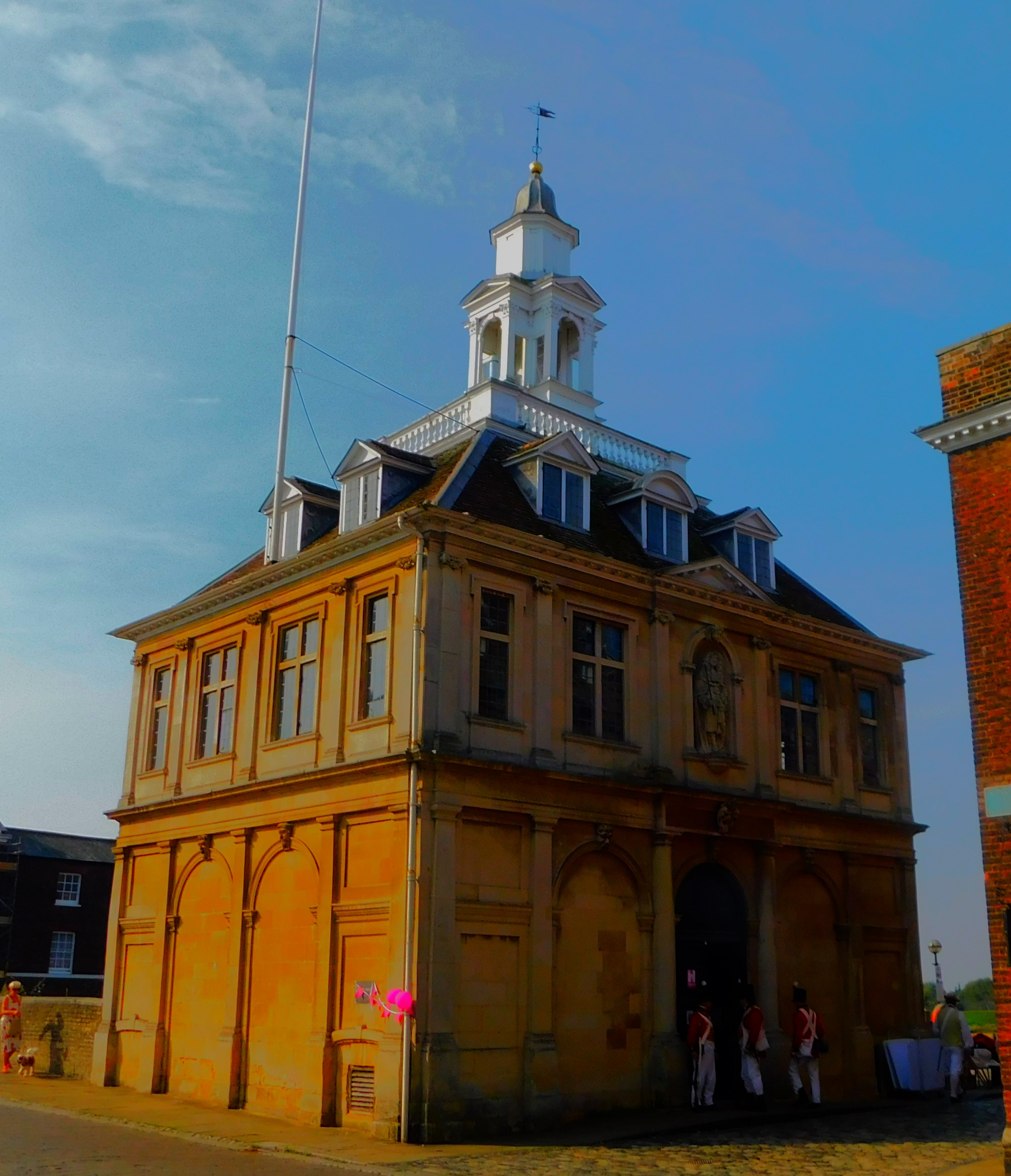
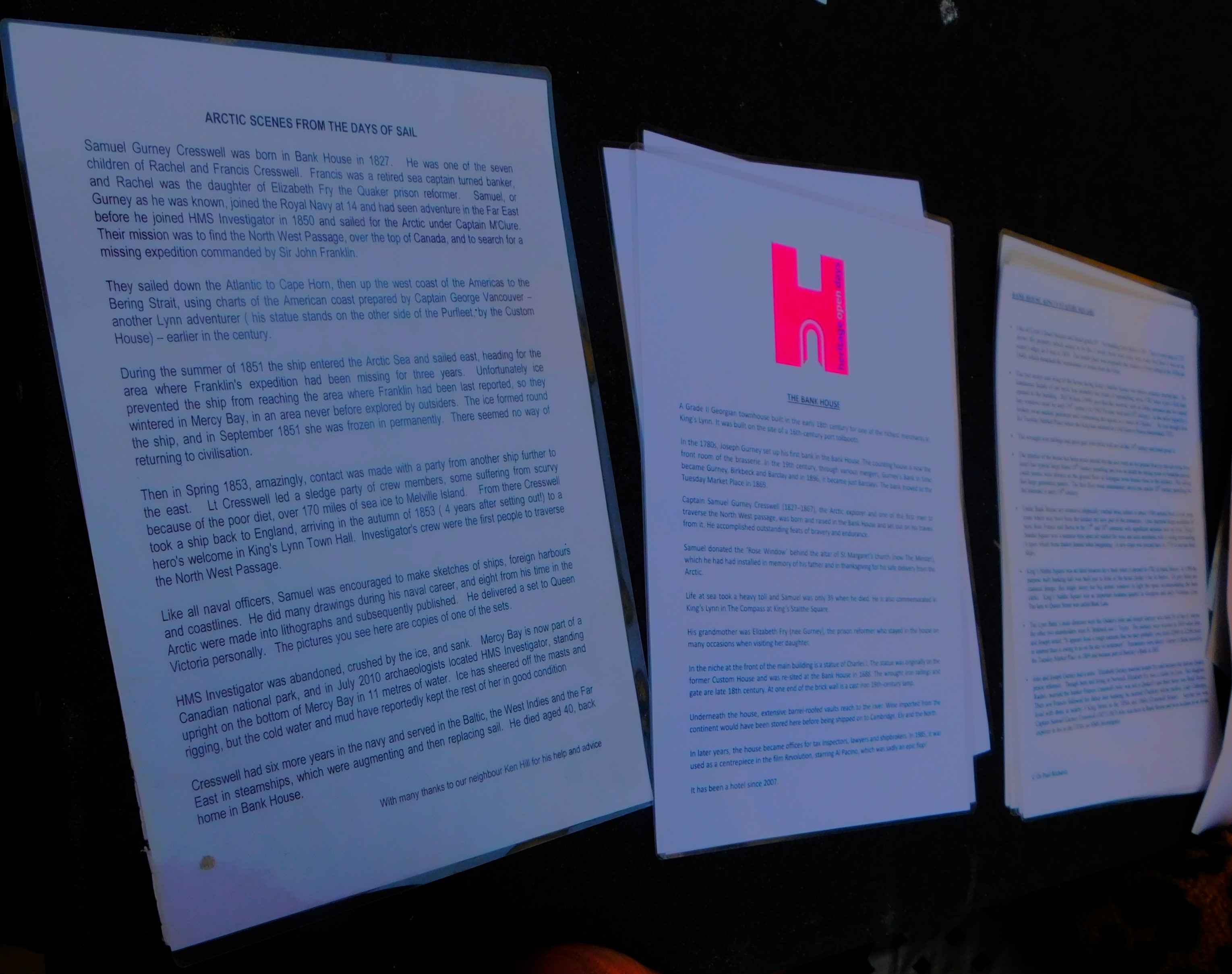
Yesterday was King’s Lynn Heritage Open Day 2023. The fixed element of my day was my stewarding commitment at The Bank House, where I was scheduled to be between 12 and 2. I opted to go in early, soak up some of the atmosphere of the occasion, do my stewarding and then seen how I felt at 2PM.

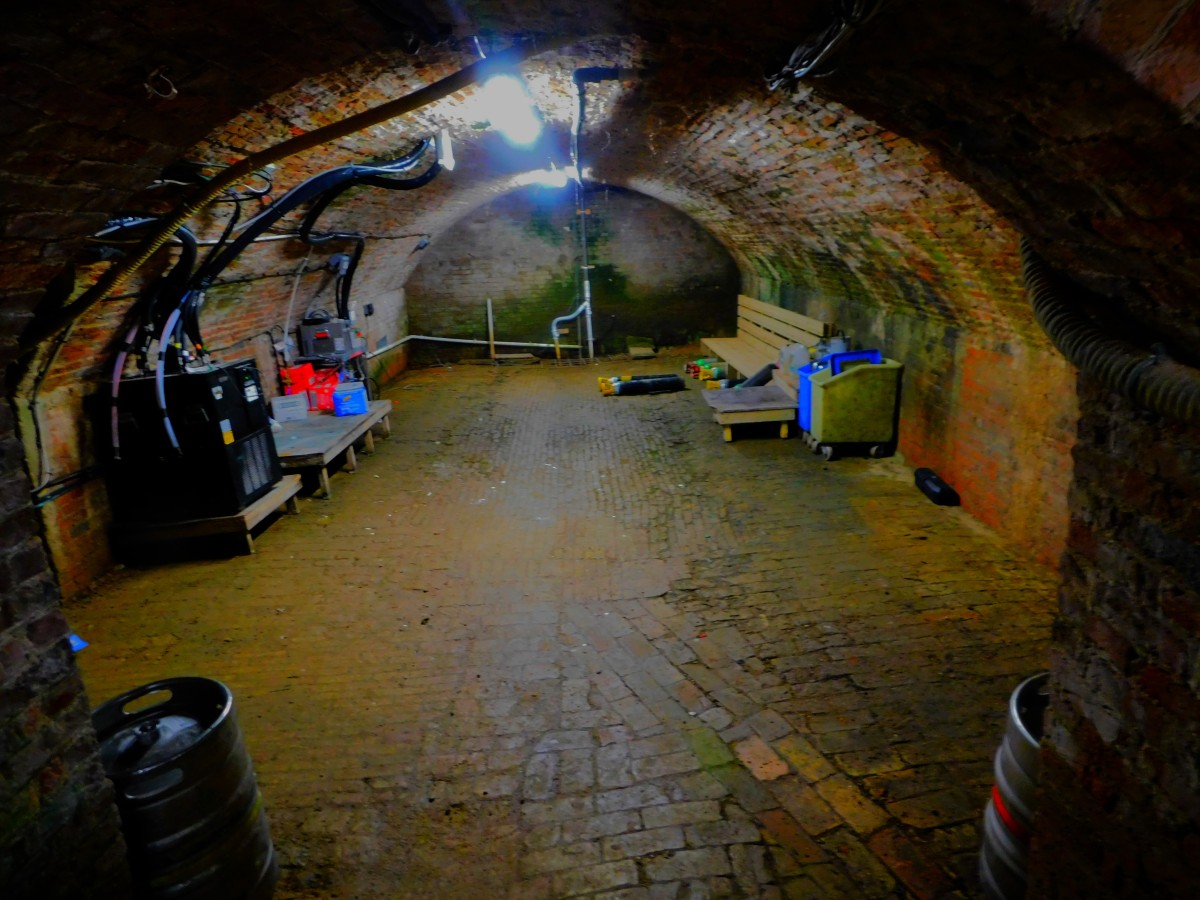
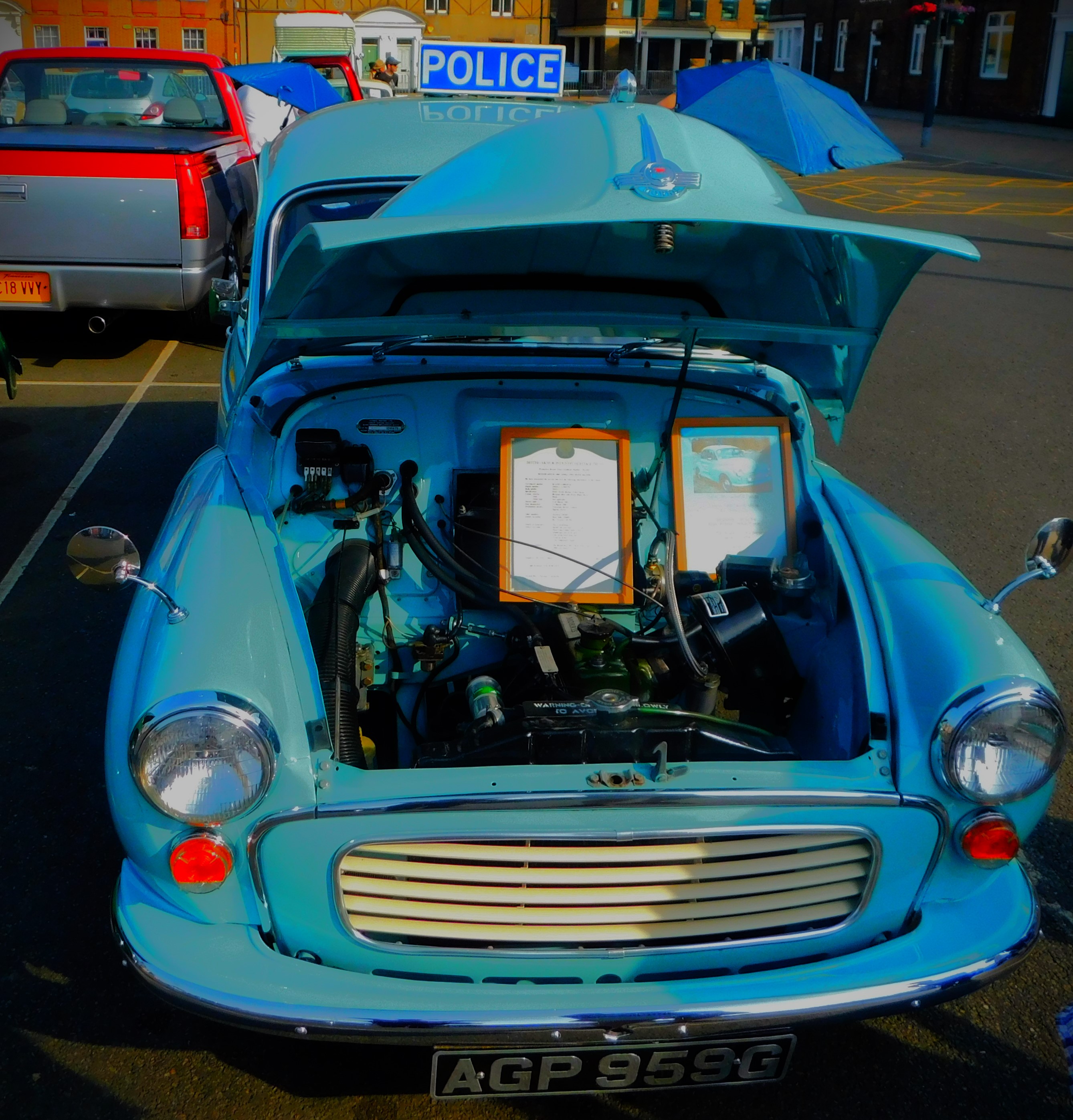
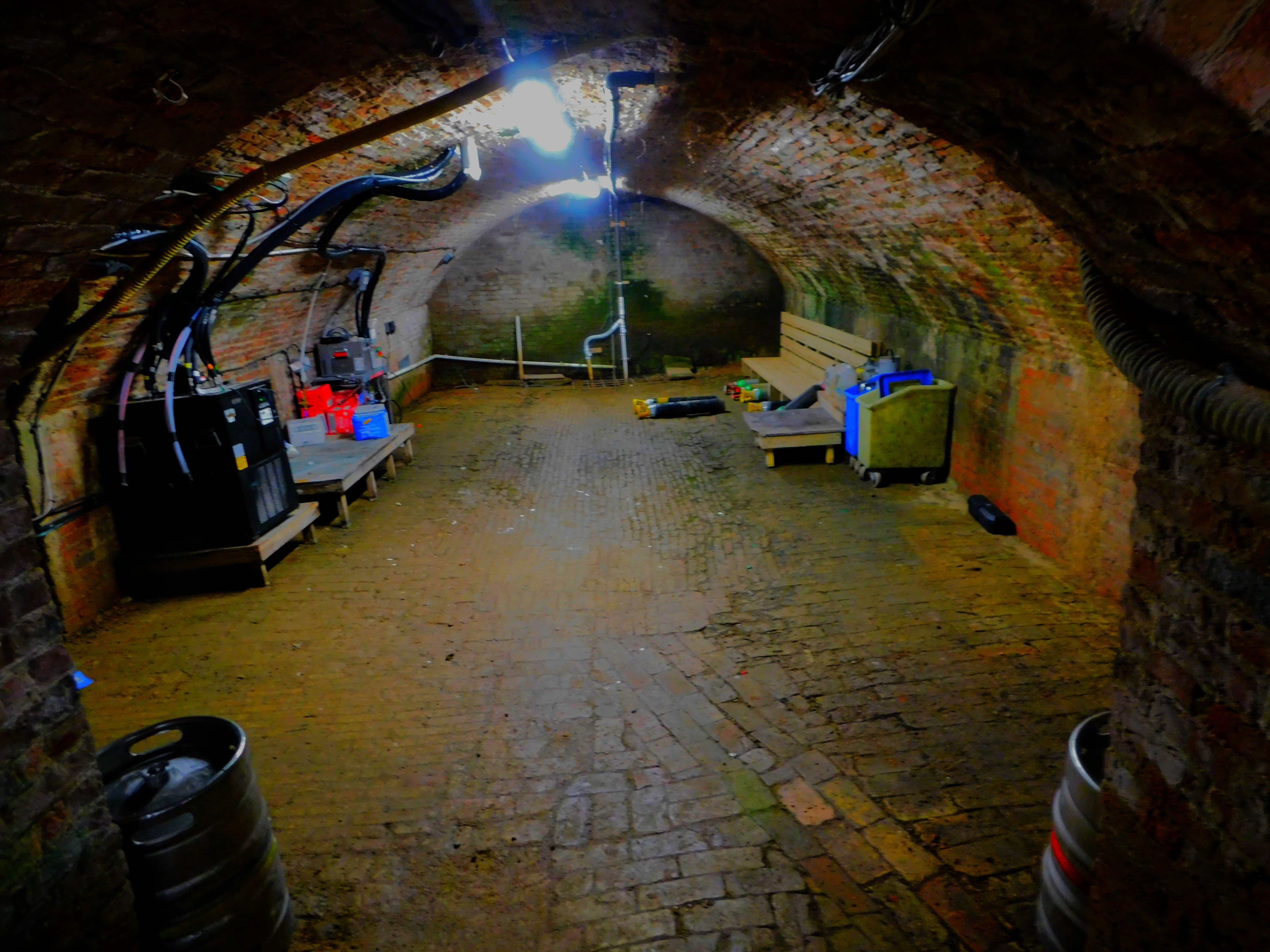
I started at the Tuesday Market Place, where there is always a classic car display. It was while planning the next stage of my day that I realized that I had failed to bring any water with me, so I found a shop where I could buy some. In King Staithe Square, very close to the Bank House I spotted a very old London Transport bus and noted that it was running 35 minute tours with the first at 11. I decided this would be an interesting experience, and did a bit of walking around looking at things to fill in the time. I then planned on arrival back from the tour to go to The Bankhouse, reacquaint myself with the cellars which are the main feature there, and then do my stewarding duties.

I ended up with the outside duties – keeping tally of how many visitors the site got, giving people directions, answering questions, keeping eyes on things that people sensibly deemed inappropriate to take inside, and occasionally taking rudimentary crowd control measures – if a lot of people had gone in and not many had come out in a particular period I would make people wait until more people had come out – overcrowding was definitely a potential problem, especially since in the fierce heat (Cambridge, an hour south by train, recorded 32.5 Celsius and I suspect the temperature in Lynn was not much if any less) a building whose main feature of interest is a cellar complex was naturally an even more popular port of call than usual (and even in ordinary years it is quite popular). I also had to make sure the paperwork, which was laid out on a sloping roof of what had once been a coal store was all present and correct, which was not entirely a trivial matter, since the nature of the surface on which it was displayed meant that so much as a breath of wind resulted in stuff ending up on the ground. At 2PM I was duly relieved, and offered the new steward some advice. I decided to head home at this point. I enjoyed my stewarding, but it was draining in such heat.

Here are the pictures I took on the day…

England v Sri Lanka Mismatch

A brief account of today’s very brief ODI between the England and Sri Lanka women’s teams, and a photo gallery.

The first ODI of the England v Sri Lanka women’s series has come to a very premature end, with England winning by seven wickets with 32 overs (of a possible 50) unused in their innings. This post looks back at the match.

England fielded three ODI debutants, Mahika Gaur, Lauren Filer and Maia Bouchier. In Sri Lanka’s beggarly 106 all out three bowlers each took three wickets – Gaur, Filer and Sarah Glenn. England lost three wickets in their successful run chase, and the third debutant, Maia Boucher was on 17* (17) at the end, meaning that all three debutants had reasons to be proud of their performances.

England induced a number of edges, meaning that wicket keeper Amy Jones was often in action. She held five catches, the first England keeper to do so in a Women’s ODI.

Mahika Gaur was named Player of the Match for her 3-26. Her three-for was more significant than those of Filer and Glenn (though Filer was particularly impressive) because it included both openers, one of whom, Chamari Athapaththu, is unquestionably the prize wicket whenever Sri Lanka women are batting. Gaur’s new ball burst, the first by an England woman on debut since Isa Guha in 2001 (before Guha, Sue Redfern, involved in this match as on-field umpire, also took the new ball on England ODI debut).

In such a low scoring affair there were naturally few batting highlights. Only two players in the match managed as many as 30 – Harshitha Samarawickrama scored 35 for Sri Lanka, offering the only real resistance on show during their innings and Tammy Beaumont, back at the top of the order for England after not being selected for the T20I series, scored a punchy 32, being the only player on either side to have an SR above 100. Emma Lamb with 27 and Heather Knight with 22 also made useful contributions for England, and Nat Sciver-Brunt was batting alongside Bouchier at the end.

My usual sign off…
All Time XIs – Colours

An all time XI, an auction announcement and a large photo gallery.

I cannot claim that the XI that forms the body of this post is an absolutely stellar one, but I have a specific reason for this piece of whimsy which I will explain later in the post.

  1. Jack Brown (Yorkshire, England, right handed opening batter). A very successful opening batter for his county, and played two legendary innings in games of higher standard than county – a match and series winning 140 in the last match of the 1894-5 Ashes series and a spectacular 163 which helped the Players to chase down 501 against the Gentlemen at Lord’s in 1900.
  2. Bill Brown (Australia, right handed opening batter). A successful opening batter after the retirements of two other Bills, Ponsford and Woodfull and before the rise of Barnes and Morris pushed him out of the side.
  3. George Brown (Hampshire, England, right handed batter, ). A tough competitor, especially noted for his play against fast bowling.
  4. +Ben Brown (Sussex, Hampshire, right handed batter, wicket keeper). A little high in the order, but a very fine batter and keeper at county level.
  5. Cameron Green (Australia, right handed batter, right arm fast bowler). A splendid all rounder.
  6. *Freddie Brown (Surrey, Northamptonshire, England, right handed batter, leg spinner, right arm medium pacer, captain). He was the youngest member of the 1932-3 Ashes tour party, and didn’t play much on that trip. His next visit to Australia came 18 years later as captain (Norman Yardley and George Mann were both unavailable for business reasons, and England weren’t quite ready for a professional captain, so Brown who had done well as skipper of Northamptonshire ended with the job, and had a respectable series as player and even in a well beaten side was acknowledged to have done a good job as captain. In first class cricket he scored over 13,000 runs and took over 1,200 wickets.
  7. Gordon White (South Africa, right handed batter, leg spinner). His test stats look fairly ordinary, but he was an important part of the SA teams of his day, and his FC averages were the right way around – 27.70 with bat, 20.05 with ball.
  8. Dougie Brown (Warwickshire, Scotland, right handed batter, right arm fast medium bowler). A good county all rounder, his presence at number eight gives the batting depth. His FC averages, like those of Gordon White are the right way round – 30 with the bat and 28 with the ball in his case. I have placed him below the South African because batting was easier in the 1990s than it had been nine decades earlier, which more than makes up for him having a higher batting average.
  9. Jack ‘Farmer’ White (left arm orthodox spin bowler, right handed batter). One of Somerset’s finest cricketers, and his accuracy and stamina were crucial to England’s comprehensive triumph in the 1928-9 Ashes. At Adelaide in that series he toiled through 124 overs across the two Aussie innings and emerged with 13-256 in the match.
  10. David ‘Butch’ White (Hampshire, England, right arm fast bowler, left handed tail end bat). The reason for this XI making its appearance. Part of a new ball pairing with Derek Shackleton which was instrumental in the winning of Hampshire’s first ever County Championship. Unplayable on his day, he took over 1,100 FC wickets at 23 a piece, though he gained only two England caps.
  11. George Brown (Sussex, Hampshire, fast bowler, right handed tail end batter). He played in the 1820s, and his speed was the stuff of legends – one story which clearly grew in the telling was of a dog walker walking close to the boundary behind the stumps when one of Brown’s rockets beat everyone including the keeper and was racing directly towards the dog, the dog walker attempted to stop the ball with their coat and the ball burst straight through the coat and killed the dog.

This XI is undoubtedly a little light on batting, though the number of all rounders there, highlighted by Dougie Brown being at number eight, is somewhat of a mitigating factor, and the bowling attack is superb. Butch White and George Brown the bowler opening, with Dougie Brown third seamer, Cameron Green fourth seamer, and Farmer White, Gordon White and Freddie Brown spin options (I can’t think of situation in which Freddie’s seam or George Brown the batter’s occasional quick stuff could be required by this team) make this team a serious bowling force.

On September the 26th James and Sons will be having an auction of various items of sporting memorabilia, including some very old football programmes and a range of items of cricketana. The latter includes three balls with which Butch White performed great bowling feats and which have silver plaques affixed to them detailing the feats in question. Catalogues can be viewed here or here.

Now for my usual sign off…

Surrey Thrash Warwickshire

A look back at Surrey v Warwickshire in the county championship, a mention of the state of play between Essex and Middlesex and a photo gallery.

Surrey consolidated their position at the top of the County Championship table by claiming victory over Warwickshire yesterday morning. Essex, Surrey’s closest challengers, are poised for victory over Middlesex, in spite of off spinner Josh de Caires claiming eight wickets in the first Essex innings.

An unbeaten century for Foakes and 50+ scores from Sibley, Jamie Smith and Steel (the latter also unbeaten overnight) enabled Surrey to end the day on 339-4 and seemingly destined for a massive score.

Surrey seemed to have lost the initiative when their last six wickets only advanced their score by a further 57, Foakes last out for 125, his 15th FC century and an innings that left him 16 short of 8,000 FC runs. However by the lunch interval Warwickshire were 38-3 and in deep trouble. They never looked like extracting themselves from this situation, and their first innings ended for 161, giving Surrey an advantage of 235. With Warwickshire clearly demoralized Surrey rightly went for the jugular, sticking their opponents back in. Warwickshire were soon 35-5 in their second innings. The sixth and seventh wickets offered some resistance, with Dan Mousley completing the only Warwickshire 50 of the match along the way, but Warwickshire ended day two 124-7 in the second innings, still 111 short of avoiding the innings defeat. The Surrey bowling performance was typical of them, with the wickets widely shared rather than any one bowler dominating proceedings. Their general approach this season has been to select four specialist batters, Ben Foakes and give themselves six genuine bowling options, a luxury permitted them by the presence of all rounders and the fact that almost all of those picked purely as bowlers have some degree of skill with the bat. Essex, their closest rivals, are less well served by all rounders/ bowlers who can bat reasonably well and tend to select six batters, a keeper and rely on four bowlers doing the job.

I was at work when this unfolded, but it took very little time. The key dismissal was that of Mousley, ninth out for 61. Warwickshire had folded for 138 in their second innings, giving Surrey victory by an innings and 97 runs.

This is the key match among those still in progress from a Surrey point of view, as Essex are the only side with any serious chance of denying them the championship. Middlesex are showing little appetite for the battle, the scores as I type being Essex 304 and 319-7 declared, Middlesex 179 and 41-3, meaning that Middlesex need 404 with seven second innings wickets standing. Middlesex are in serious danger of relegation – the two relegation slots would seem to be between Northamptonshire (almost certainly doomed), Middlesex and Kent.

My usual sign off…

Surrey In Control Against Warwickshire

A look at developments in the Surrey v Warwickshire match in the county championship and a photo gallery.

I mentioned the opening stages of the match between Surrey and Warwickshire in the County Championship in yesterday’s post. Things have moved on dramatically since then.

Ben Foakes racked up his 15th first class century, and there were 50+ scores from Sibley, Jamie Smith and Cameron Steel, the latter unbeaten, as Surrey closed day one on 339-4.

When the last six Surrey wickets fell for 57 early on day two, Foakes last out for 125, it looked like they had missed out on a really big score, but Dan Worrall and Kemar Roach had other ideas. Warwickshire were two down in next to no time, and stubborn Barbadian opener Kraigg Brathwaite fell on the stroke of lunch to an uncharacteristically loose shot, making it 38-3, and 95-9 for the morning session. Two more wickets immediately after lunch left Warwickshire absolutely reeling at 39-5. Sam Hain and Michael Burgess then offered serious resistance, putting on 40 before Hain was dislodged to make it 79-6. Burgess and Danny Briggs have added 20 for the seventh wicket so far. Kemar Roach, yet another fine cricketer to hail from Barbados, has three wickets so far, Dan Worrall two and Jordan Clark one. Incidentally, the movement of players is not all one way – Laurie Evans of Surrey is currently in Barbados playing in the Caribbean Premier League. Surrey’s closest challengers, Essex, are currently struggling against Middlesex, but they are batting first in hot, dry conditions and have the best spinner on the county circuit, Simon Harmer, in their ranks.

My usual sign off…

County Championship Action Resumes

A brief look at the resumption of the county championship, an account of a ‘Make your own pizza’ session arranged by the West Norfolk Autism Group and a photo gallery.

After a break for The Hundred and The One Day Cup the County Championship has resumed. I am following developments at The Oval where Surrey host Warwickshire (although at the moment only by way of cricinfo – I am listening to commentary on the third T20I between England and New Zealand.

Surrey are batting first, and are faring reasonably well. Ben Foakes has just become the third Surrey batter to reach 50, after an aggressive innings by Jamie Smith and much less aggressive one from Sibley, although 65 off 174 is not slow by the opener’s regular standards. I missed the morning session due having a commitment elsewhere, though it is fairly clear from what the commentators have had to say that Ed Barnard has been the best of the Warwickshire bowlers so far. Tea is now being taken, with Surrey 224-4.

This morning the West Norfolk Autism Group had a Make Your Own Pizza session for adults, hosted by Pizza Express in King’s Lynn town centre. We started with a lump of dough which had been turned into a pizza base. This process was quite tricky, but I managed to get it done. Once the base was in the baking tray in which it would be cooked the next step was to create a barrier by elevating the edge of the base (as close to the very edge as possible). Then came the application of tomato puree, which was the one element with which I required a little assistance. Then came the selection of ingredients – in my case I said yes to mushrooms, pepperoni and olives and no to the rest (ham, chicken, two types of pepper, both too hot for my tastes, spiced beef and goats cheese), after which it was time add the mozzarella, which needed to be distributed as evenly as possible. Before the cooking there was on e more thing to do – to name our pizzas. I was very pleased with my creation and ate every scrap of it.

My usual sign off…

All Time XIs – Barbados Born

An all time XI of Barbados born players, highlighting the immense talent produced by that tiny coral island down the years. Also a photo gallery.

I have mentioned in some of my previous all time XIs posts the remarkable number of amazing cricketers produced by the tiny coral island of Barbados. Now I select an XI specifically to showcase the extent of the talent produced by this island with a population of under 300,000.

  1. Gordon Greenidge (right handed opening batter). One half of the greatest opening pair the West Indies have ever had, and both hail from this island.
  2. Desmond Haynes (right handed opening batter). The other half of that legendary opening pair.
  3. *Frank Worrell (right handed batter, left arm medium fast bowler, captain). The total number of West Indies captains to truly overcome inter island rivalries totals two – this man and Clive Lloyd of Guyana. Worrell was a classy batter who scored his test runs at an average of 49, and his appointment as skipper ended one of cricket’s nastier shibboleths – the view that a mainly black team needed a white man to lead them.
  4. Everton Weekes (right handed batter). One of the most powerful stroke makers ever seen, but a firm believer in keeping the ball on the ground – he rarely hit sixes. He averaged 58.61 in test cricket, including a sequence at that level of five centuries in successive innings.
  5. Clyde Walcott (right handed batter, occasional wicket keeper, occasional medium pacer). Like Weekes a ferocious hitter of a cricket ball, and a colossal scorer even at test level (average 56). Additionally he once shared fourth wicket stand of 574 for Barbados with Frank Worrell, at the time an FC record for any wicket, though it was beaten only a few years later when Gul Mahomed and Vijay Hazare got to work for Baroda against Holkar, also for the fourth wicket, and that in turn was beaten by Mahela Jayawardene and Kumar Sangakkara for Sri Lanka against South Africa, when they put on 624 for the third wicket.
  6. Garry Sobers (left handed batter, left arm bowler of every type known to cricket). The most multi-skilled player ever to play the game.
  7. +David Murray (wicket keeper, right handed batter). Barbados’s finest ever keeper, and good enough to play for the West Indies.
  8. Malcolm Marshall (right arm fast bowler, right handed batter). One of the greatest fast bowlers ever to play the game and a more than useful lower order batter.
  9. Wes Hall (right arm fast bowler, right handed lower order batter). A legendary fast bowler of the late 1950s and early 1960s and a good enough lower order batter to score a first class century.
  10. Joel Garner (right arm fast bowler, right handed lower order batter). An awkward proposition because of the immense height from which he released the ball (above the height of many sightscreens), and capable of useful runs at need.
  11. Manny Martindale (right arm fast bowler, right handed tail end batter). Not many test appearances, as he belonged to the early days of West Indies test history, but he took his wickets at that level at 21 each, and over a larger sample size at FC level paid 25 each for his wickets.

This side has a stellar top six, a keeper who could bat and four great fast bowlers, most of whom had at least some capability with the bat as well. The spin bowling is weak, with Sobers the only front line option in that department, but that reflects the fact that conditions in Barbados have generally favoured fast bowlers and not spinners. Still not many places with similar populations could offer up an XI that would come close to challenging this one.

Some my chosen XI moved away from Barbados, but all played for the West Indies. Four Barbadian born cricketers moved to England and have played for their new country: Roland Butcher (right handed batter), Gladstone Small (right arm fast medium bowler), Chris Jordan (right arm fast medium bowler, right handed batter and ace fielder) and Jofra Archer (right arm fast bowler). Of these four the only one who might challenge for a place is Archer, and his injury history counts against him. Having covered that I now deal with a player who I regard as deserving a paragraph to himself in this section…

The third of the three unequivocally top of the range test openers to come out of Barbados. I left him out, because although I have little doubt that considered in isolation he outranks Haynes, and maybe even Greenidge I felt that proven effectiveness of Greenidge and Haynes as an opening combination meant that I had to pick them, which meant that I could not accommodate Hunte.

The spin bowling issue is problematic – leg spinning all rounder David Holford is not worth a place in either department, and the best specialist spinner that Barbados has produced, Sulieman Benn, has a very ordinary test record. One possible solution to getting a second front line spinner into the XI is to drop Martindale, drop Murray and the three remaining quicks a place each down the order and select Hayley Matthews, an off spinning all rounder with a great record for Barbados and West Indies women’s teams at number seven.

There are a stack of fast bowlers who could not be accommodated who would be instant selections in many another team: Wayne Daniel, Sylvester Clarke Herman Griffith and Charlie Griffith the four most obvious specialists plus a trio of all rounders – Jason Holder, Franklyn Stephenson and Ottis Gibson.

Some of you will have ideas of your own about players who could have been mentioned or selected – fire away with your comments.

My usual sign off…

All Time XIs – Closed Underground Stations

An all time XI all whom connect to defunct London Underground stations. Also a large photo gallery.

The main feature of today’s post is an all time XI every player of which can be connected back to a former London Underground station. In each case I elucidate the connection. Unfortunately a major rain interruption prevented the T20I between the England and Sri Lanka women’s teams providing as much news as seemed likely. England won by 12 runs on the DLS method, after SL’s innings was reduced to six overs (rain had reduced the match to 17 overs per side, and then 3.1 overs into the SL response more rain fell). The DLS adjustment, helped by England having scored incredibly fast in their innings, left SL needing 45 off 17 balls on the resumption and they never looked like getting them.

  1. *WG Grace (right handed opening batter, right arm bowler of various types, captain). His case for inclusion on cricketing grounds needs no stating. He gets in by dint of his first given name, William, which links to King William Street, the first northern terminus of what was then the City & South London Railway, which was abandoned in 1900 when the line was extended northwards.
  2. Frank Hayes (right handed opening batter). He scored 13,000 runs at 35 in FC cricket, though barring a debut century his test record was very ordinary. Between 1883 and 1885 the Metropolitan District Railway as it then was ran services to Windsor, and one of the intermediate stops was Hayes.
  3. Ernie Hayes (right handed batter, leg spinner). A fine all rounder whose Surrey career lasted three decades. His closed station is the same is that of Frank Hayes.
  4. Clem Hill (left handed batter). At the time his test career ended he had scored more runs at that level than anyone else, and was also an athletic fielder. One stop west of Ealing Broadway in the days of District services to Windsor was a station known by two names in its brief history with that line, Castle Hill, another which we will see later in this piece.
  5. Marcus North (left handed batter, occasional off spinner). He averaged 35 at test level and 40 in FC cricket with the bat and had his moments with the ball. North Weald station was on the Epping – Ongar section of the Central line, which became part of London Underground post WWII and closed in 1994.
  6. Paul Winslow (right handed batter). A notable big hitter in his day. In the days the expansionist Edward Watkin the Metropolitan Railway was extended many miles northwest of London. Beyond Aylesbury was a junction at Quainton Road, with one branch leading to Verney Junction by way of Granborough Road and Winslow Road, the latter of which gets him in. We will see the other branch later.
  7. +Gil Langley (wicket keeper, right handed batter). A great keeper in his day. Langley was on the Windsor branch referred to earlier in this piece.
  8. Charlie Dean (off spinner, right handed batter). An excellent spinner and a useful lower order batter. The other name by which Castle Hill was known in that period between 1883-85 was Ealing Dean.
  9. Wes Hall (right arm fast bowler, right handed batter). A legendary fast bowler for the West Indies. Blake Hall was on the Epping-Ongar branch of the Central line, though it closed over a decade before the rest of the branch due to being so lightly used.
  10. Mark Wood (right arm fast bowler, right handed batter). A very fine and very fast fast bowler. Wood Siding was one of the stations on the Duke of Buckingham’s private railway, which Edward Watkin bought for the Metropolitan Railway, of which it remained part from 1899 to 1935. The terminus of this line, Brill, is 51 miles from Baker Street, the furthest from central London any of the lines now part of London Underground have ever extended (Amersham, the current record holder, is a mere 27 miles out).
  11. Esmond Kentish (right arm fast medium, right handed batter). A fine bowler, but a genuine number 11. South Kentish Town, which gets him into this XI, was on what is now the High Barnet branch of the Northern line. In the 1920s strike action closed Lots Road Power Station temporarily, and that caused services on various lines not to be able to run. When services resumed South Kentish Town did not reopen.

This XI is not too bad given the criteria – a good top five, a great keeper and an excellent bowling attack – Wood, Hall and Kentish to bowl seam, Dean and Ernie Hayes to bowl spin, and Grace and North as back up options.

My usual sign off…