The Womens Premier League So Far

A look at developments in the inaugural WPL and a large photo gallery.

In this post I run my eye over the doings of the five franchises in the competition to date.

RCB Women

The Royal Challengers Bangalore men are the Cinderella club of the IPL – they are one of the founding franchises but have never won the competition. The women’s side have had a horror start in the inaugural competition, with four defeats in four games, the last confirmed just now, with their opponents having 10 wickets and exactly seven overs to spare.

GUJURAT GIANTS

Not in quite as desperate a position as RCB, they have one win and two losses from their three games, but they also have a massive negative net RR, which could well stymie any attempt to move up the table – wins are no longer enough for them – they need to win big for it really count.

UPW

Their huge win against RCB today puts them third in the table, behind second place on net run rate. Their three front line slow bowlers, Ecclestone (4-13), Deepti Sharma (3-26) and Rajeshwari Gayakwad (1-26) proved too much RCB’s batting. Although I don’t think it made a difference today, given the sheer margin of superiority enjoyed by UPW, RCB’s habit of using Heather Knight at number five has proved costly in at least two of their defeats, when she played excellent cameo innings too late to influence the result. In today’s match, Alyssa Healy scored 96* off 47 balls, making RCB’s modest 138 look positively risible, while Devika Vaidya played the support role with 36* (31) at the other end.

DELHI CAPITALS

Like UPW they have two wins and one loss from three matches. They have a somewhat better net run rate.

MUMBAI INDIANS

They have hit the ground running, with three wins from three games, and they have all been very comfortable wins as well. It is at the moment hard to look beyond them for the inaugural WPL champions. I would actually be more inclined to back UPW to spring a surprise in this regard than DC for all that the latter are currently second.

PHOTOGRAPHS

My usual sign off…

The Women’s Premier League

A look at the opening salvos of the Women’s Premier League, a petition and a large photo gallery.

The inaugural Women’s Premier League kicked off yesterday, and as I type this the second of today’s matches is in progress. This is currently a five team franchise tournament, with expansion likely in the future. In this post I look at developments so far (unfortunately there has been no live radio commentary for me to listen to – men in fast cars are more important to five live sports extra than pioneering female cricketers, so all of this is second hand, by way of cricinfo and twitter).

GAME 1: MUMBAI INDIANS PUT DOWN A MARKER

The opening game of the tournament featured Mumbai Indians against Gujurat Giants. Mumbai Indians absolutely dominated the match, with Harmanpreet Kaur scoring the first 50 of the tournament and Amelia Kerr blazing her way to 45* in the closing stages of the innings. With over 200 to chase Gujurat Giants needed a good start with the bat and they actually had a catalogue of disasters, being 23-7 at low water mark, with Kerr having bowled a double wicket maiden along the way. They made a bit of a fight back, but the ninth wicket fell at 64, and the injured Beth Mooney did not resume her innings, so the match ended at that point. Mooney does not feature in the current match in which Gujurat Giants are playing Uttar Pradesh Warriorz (that ‘z’ is not a typo – they really spell the name this way).

GAME 2: DELHI CAPITALS DOMINATE

The first match of today featured Delhi Capitals and Royal Challengers Bangalore. Delhi posted a massive 223-2 with Meg Lanning and Shafali Verma both in top form. RCB could do no better than 163-8 in response. The only player from an Associate nation to be involved in the tournament, USian Tara Norris wrote her name into the record books as the taker of the first five wicket haul in the competition. The US has only produced one authentically great cricketer in the past, Bart King, the original ‘King of Swing’.

UTTAR PRADESH ENTER THE FRAY

Gujurat Giants had a fast start to their innings and have had a big finish, but they were a little slow in the middle, with the result that they have a good but by no means unassailable total. Sophie Ecclestone made her first mark on the tournament with 2-20 from her four overs.

PHOTOGRAPHS

I have a link to share before my usual sign off: Flight Free UK have a petition going on change.org calling on the BBC to stop awarding prizes that include flights. Please click here to sign and share the petition. Today’s photos were mostly taken in the course of a long walk this morning:

The Knockout Stages of the Womens World T20 Cup

A look back at the closing stages of the women’s T20 world cup and a photo gallery.

In this post I look at the semi-finals and final of the Women’s World T20 Cup in South Africa.

AUSTRALIA V INDIA

I was at work when this match was played, so my knowledge of it is entirely second/ third hand. Australia won by five runs, and there appear to have been two key moments in the chase – Harmanpreet Kaur being run out due to a failure to ground her bat properly when coming back for a second and a brilliant piece of fielding by Ellyse Perry which saved a seemingly certain boundary.

SOUTH AFRICA V ENGLAND

No South African side, male or female, had ever reached a world cup final in either T20 or ODI cricket. England were unbeaten in the tournament and have plentiful experience of finals. SA posted a very respectable score. Katherine Sciver-Brunt playing her last ICC tournament had a terrible time in the field. After viciously upbraiding several of her team mates for perceived lapses she had a horror time bowling the 20th over, conceding 18 from it, which lifted SA into the 160s. This did not seem to matter when Dunkley and Wyatt made a blazing start to the chase, putting England ahead of the required rate, but the fall of wickets and a quiet spell spanning overs 9-15 inclusive turned the game South Africa’s way, and although England fought back hard in the closing stages South Africa won by six runs and thus claimed a place in the final.

SOUTH AFRICA V AUSTRALIA

With the hosts in the final Newlands was absolutely jam packed. Unsurprisingly both teams picked the same XIs that had won their respective semi-finals. Australia won the toss and batted. SA bowled well, but not quite well enough, and aided by a big final over Australia posted 156 from their 20 overs. SA started slowly and although Laura Wolvaardt (who overtook Natalie Sciver-Brunt to become the tournament’s leading run scorer in the course of her 61 off 48 balls) and Chloe Tryon staged a mid-innings revival that briefly hinted at making a serious challenge for the runs, Australia were just too good. In the end the margin was 19 runs. This was a sixth T20 World Cup for the Australian women, a 13th global trophy in all for them, and the fifth time that Meg Lanning had captained a side to a world cup victory (no one else of either sex has achieved this feat more than twice). South Africa had fought hard, and to the credit of the fans Newlands remained full right to the end even though the result was obvious some way before it was officially confirmed. Much more will be heard of this South African squad in the future, and it took the most dominant cricket team on the planet (either sex) to stop them in their tracks this time round.

PHOTOGRAPHS

My usual sign off…
England On Top In New Zealand

A look at goings on the second test between New Zealand and England and a large photo gallery.

I am writing this as Australia and South Africa do battle in the final of the Womens’ World T20 Cup in front of a packed house crowd at Newlands, Cape Town – I will cover the closing stages of this tournament tomorrow. In this post I look at the first three days play in Wellington, where England are poised to win the test series against New Zealand.

THE ENGLAND FIRST INNINGS

I missed the first day’s play entirely – this being in New Zealand it is happening overnight my time. England were 21-3 at one point, but Harry Brook (184* by the close) and Joe Root (101* by the close) put on an unbroken 294 in what was left of the day – rain called a halt after 65 overs.

Brook was out early on the second day, but Root kept going, and when he reached his 150 Stokes declared. England had amassed 435-8. Root, the greatest English test batter of the 21st century and his heir apparent Brook had scored 339 of those for once out between them (Brook 186, Root 153*).

THE NEW ZEALAND FIRST INNINGS

By the end of day two, again hastened by bad weather, NZ were 135-7 and in all kinds of bother. A blitz by Southee, who ended with 73 off 48 balls, got NZ passed 200, but at 209 all out they had not quite done enough to dodge the follow-on. Anderson, currently the world no1 ranked test bowler at the age of 40, had three wickets as did Broad, and Leach outdid both of them with four. The next question was what Stokes would do – most current test skippers would not have enforced the follow-on, but as Stokes demonstrated at Rawalpindi not so long ago he is emphatically not most current test skippers…

THE NEW ZEALAND SECOND INNINGS

Stokes did enforce the follow-on, correctly in my view, given that this was day three and the weather was not to be relied on. New Zealand batted better second time round and reached the close on 202-3, still 24 runs in arrears. Kane Williamson and Henry Nicholls committed absolutely to defence in the latter stages of the day, which is why NZ are still in debit. If New Zealand can bat through day four they may be in a position to cause England trouble, but at the moment England are heavy favourites, and a couple of early strikes to start day four would underline that status.

PHOTOGRAPHS

My usual sign off…

The Womens’ T20 World Cup Semi Finalists

A brief look at the four teams in the semi-finals of the Womens Under 19 World Cup, and a substantial photo gallery.

The semi-finalists of the Womens T20 World Cup are now established, as are the timings of their matches. Tomorrow when I shall be at work Australia face India, while on Friday England take on the hosts South Africa. This post looks at the four sides and their passage to the semi-finals.

AUSTRALIA

They came into this tournament as heavy favourites and there is no great reason to alter that assessment. They have disposed of everyone in their path to date. They still have two tough contests ahead of them, but all available evidence suggests that they are thoroughly capable of adding yet more silverware to the best stocked trophy cabinet in international cricket.

ENGLAND

England are also unbeaten, and finished their group stage with a flourish (a game I know about only at second hand due to work commitments), beating Pakistan by 114 runs (213-5 plays 99). They should have what it takes to get past South Africa in the semi-final, but unless India produce something beyond anything they have shown thus far in the tournament the women in green and gold will be waiting in the final, and England will need to be at their absolute best and probably have a bit of luck in addition to win that contest. England have been strong in all areas, with their least effective player of the tournament so far being the veteran Katherine Sciver-Brunt whose last ICC tournament this is.

INDIA

Other than suffering a narrow defeat at England’s hands India did everything right in their group. They should also be buoyed by the recent success of their juniors in the Womens U19 T20 World Cup, the first world cup win by any Indian women’s team, and the upcoming Womens Premier League (female equivalent of the IPL) will act as a spur to ensure that they produce their best on the biggest stage, but they face a mighty obstacle in the semi-finals in the form of the Aussies.

SOUTH AFRICA

The hosts left ir right to the last gasp to ensure their own qualification. They entered the last match of the group stage, against Bangladesh, needing a win (nothing else – net RR was not an issue) to qualify. South African teams have been known to fail to close out such deals, notably the South African men, who in the last men’s T20 World Cup were in the identical position against even less significant opposition, The Netherlands, and suffered a humiliating defeat and consequent early exit. SA were less impressive than their final winning margin of 10 wickets with 2.1 overs to spare suggests – Bangladesh batted poorly, and failed to capitalize on a number of opportunities they were given in the field. Although sometimes teams who only just sneak in at the last moment end up winning because they are the ones in form I don’t think even the most one-eyed of South Africa fans would dispute that they rank as fourth out of the teams to qualify for the semi-finals.

PHOTOGRAPHS

My usual sign off…

England Men in New Zealand

A look back at the first New Zealand v England test match, a couple of 15-minute city related links and lots of photographs.

The first test of mini-series of two matches between New Zealand and England men’s teams has ended early on the fourth of five scheduled days in a crushing victory for England. This post looks back at the match.

ENGLAND BAT FIRST

England batted first and scored at a very quick rate, so that the regular loss of wickets was not as much of an issue as it might have been. When the ninth England wicket fell at 325, with a bit of time left in the day, Ben Stokes declared in order to get New Zealand in under the lights. Harry Brook had made 89 and Ben Duckett 84.

EARLY WICKETS AND A FIGHTBACK

Anderson, Broad and Robinson proved highly effective in the situation that the England batters and their skipper Stokes had created for them and by the end of day one New Zealand were 37-3. On the second day, largely through Tom Blundell (138), the Kiwis mounted a spirited fightback and ended up only 19 runs in deficit on first innings. Stuart Broad and James Anderson stood on the cusp of yet another piece of history, needing one more to wicket between them to have taken more wickets in test matches in which they played together than any other pair of bowlers.

ENGLAND’S SECOND INNINGS

England scored briskly once again, and avoided losing excessive numbers of wickets to the new ball. On day three Neil Wagner put in a spirited bowling effort for the Kiwis, but half centuries for Root, Brook and Foakes plus aggressive contributions from Stokes and Robinson got England to 374 in their second innings, and at pace that meant that for the second time in the match they got to attack the Kiwis under the lights with the new ball (I reckon even if they hadn’t been all out Stokes would have declared to make sure of this, just as he did in the first innings).

NEW ZEALAND SECOND INNINGS

England were even more devastating under the lights second time round, and the Kiwis ended day three on 63-5 and surely knowing that the writing was on the wall.

In the event, in the very small hours of this morning UK time, while I was asleep, the Kiwis managed to exactly double this score, going down by 267 runs. Anderson finished with 4-18, Broad 4-45. Harry Brook was named Player of the Match for his 143 runs across the two England innings. A full scorecard can be viewed here. The biggest difference between the sides was in how they used the new ball – England, helped by Stokes’ game management that saw them twice get to use it under floodlights, kept things tight and took plenty of wickets, while New Zealand took few wickets with the new ball and got smacked around when trying to use it.

SIDELIGHT: INDIA MEN RETAIN BGT

Meanwhile India men were in action against Australia men in the second match of the Border-Gavaskar trophy series, India having won the first by a huge margin. Going into today Australia looked like they had a real chance to level the series, but a brainless display of batting against Jadeja (7-42) and Ashwin saw them crash from 60-1 to 115 all out, and India were never seriously in danger of failing to chase their target of 114 (yes, the teams were separated by a single run on first innings), getting there with six wickets in hand.

PHOTOGRAPHS

I have lots of photographs to share with you. Most of my photographs are taken within walking distance of my home in King’s Lynn, which links to the subject of 15-minute cities – a vision of providing people with amenities close enough to home not to require a car to visit them, and I have two good links to share on this topic:

  1. This Guardian article by Oliver Wainwright.
  2. A twitter thread by Haringey based active travel enthusiast Carla Francome based on a recent radio interview.

Now for my usual sign off…

Developments in the 2023 Womens World T20 Cup

A look at developments in the Womens T20 World Cup and a bumper photo gallery.

Since I last blogged there have been three games in the tournament: Ireland v England, South Africa v New Zealand and Australia v Bangladesh. This post looks at those matches (the first of today’s two matches, between India and West Indies is just getting underway).

IRELAND V ENGLAND

England were heavy favourites, and the match went to form. However Ireland showed a bit of fight. They were 80-2 at one stage but a collapse led to them being all out for 105. Sophia Dunkley made a brutal early assault on this small target, taking just 21 balls to reach 50. However, Ireland never completely gave up, and although England had plenty of time to spare they were six wickets down by the time they crossed the winning line.

SOUTH AFRICA V NEW ZEALAND

This was a must-win game for both sides, as each had lost their opening match of the tournament. New Zealand did reasonably well with the ball, only a fighting 40 from Chloe Tryon getting SA to 132-6 from their 20. However, for the second time in as many matches both Kiwi openers went without scoring, and it was soon 18-4. New Zealand did not improve much from this awful start, eventually being all out for 67 to lose by 65 runs. This total was nine runs fewer than the Kiwis had scraped against Australia in their first match of the tournament.

AUSTRALIA V BANGLADESH

Bangladesh could not score with any speed, although they did at least reach three figures. They bowled better than they had batted, and although defeat for Australia looked a serious possibility it take them until the 19th over to finally reach the target.

PHOTOGRAPHS

I have another big haul of photographs. I plan my walking routes to to ensure that opportunities arise, and also, living as I do on the edge of a very compact town I am able to conduct almost all of my non-working life on foot, and whether I expect the opportunities to arise or not I never venture forth without at least one camera…

Two Great Run Chases

A brief look back at yesterday’s cricket and a huge photo gallery, including the first lapwings of 2023.

Yesterday was Subcontinent day in the Womens T20 World Cup. In the first match of the day India were pitted against Pakistan, while in the second Bangladesh took on Sri Lanka.

INDIA V PAKISTAN

Pakistan looked to have done pretty well when they tallied 149 from their 20 overs. The experienced Bismah Maroof scored 68* off 55 balls, while Ayesha Naseem made an aggressive 43* off 25 balls. India were second best for 16 of their allotted 20 overs, but a combination of poor Pakistani bowling and some good batting by them in overs 17,18 and 19 saw them turn things round and win with a whole over to spare.

BANGLADESH V SRI LANKA

Bangladesh made a not terribly impressive 126 from their 20 overs. However, when teenager Marufa Akhter took 3-0 in her first eight balls as an international bowler Sri Lanka were 25-3 and looking shaky. The fourth wicket pair stopped the rot, and upped their tempo once the immediate danger of a collapse had past. In the end, like India earlier in the day they had a whole over to spare when the winning boundary was hit. The unbroken 4th wicket stand was worth 104* and both players had topped 50.

PHOTOGRAPHS

I have a huge gallery to share with you, including the first decent pictures I have managed to get of lapwings in 2023 – this morning at the point where the Nar flows into the Great Ouse.

England and Australia off to Winning Starts at the Womens T20 World Cup

A look back at yesterday’s two matches in the Women’s T20 World Cup and some photographs.

The Womens World T20 Cup is underway in South Africa. This post looks back at the two matches that took place yesterday.

ENGLAND V WEST INDIES

West Indies batted first. There were no huge selection surprises. Katherine Sciver-Brunt entered the record books just by taking the field – at 37 years 224 days she became the oldest person ever to turn out for England in a Women’s T20 World Cup match. She also then became England’s oldest ever wicket taker in a match of this nature. England were not quite at their best with the ball and in the field, though Sophie Ecclestone emerged with 3-23 from her four overs. West Indies probably scored about 15 runs more than they should have done due to English lapses, eventually finishing on 136.

Sophia Dunkley served notice of her and England’s intentions by scoring 34 off 18 balls. However, she, Danni Wyatt and Alice Capsey all fell before England were halfway to the target. At that point Heather Knight joined Natalie Sciver-Brunt, and there were no further alarms as England cruised home with over five overs to spare.

AUSTRALIA V NEW ZEALAND

Australia are the current holders, and arrived at the tournament with an awesome looking squad. A blistering batting performance, with Alyssa Healy scoring a record equalling sixth World T20 cup 50 and Ellyse Perry scoring 40 off just 22 balls saw Australia total 173-9, a total that would require excellent batting and a fair amount of luck to overhaul.

The Kiwis, whose batting line up is not the deepest, started disastrously with both openers out for ducks in the first over of the reply. The third wicket pair hinted briefly at a revival, but when that stand was ended by a controversial decision. Thereafter no one really threatened to anything with the bat. Ashleigh Gardner took her first ever international five-for, 5-12, half of those runs coming from one defiant blow from Jess Kerr with the writing already on the wall. To sum up NZ’s fortunes, she was out to the very next delivery, and thje tenth and final wicket fell four balls later. NZ had scraped up a measly total of 76, going down by 97 runs.

PHOTOGRAPHS

Today’s usual sign off comes in two parts, first a general gallery and then a specific focus on the Egret that seems to have taken up residence in the environs of the Gaywood River.

Now for the Egret pics…

Have West Indies Men Found A Proper Opening Pair?

A post noting a new West Indies men’s test record opening partnership and looking at what this might mean for West Indies going forward. Also walk details and of a course a photo gallery.

In today’s post I look a story developing in Zimbabwe, and what it might mean for West Indies Men’s test team.

A NATIONAL RECORD OPENING STAND

Zimbabwe are not the most threatening of opponents, but as against that West Indies had to contend with regular interruptions due to the weather and the fact that overhead conditions when play was possible during the first two days certainly favoured the bowlers. Remarkably, the opening pairing of Kraigg Brathwaite and Tagenarine Chanderpaul were still together for the start of the third day’s play. With the score on 296 Brathwaite was dropped, and he then hit the next ball for four to bring up WI’s first ever 300 run opening stand in test cricket (also beating the previous national record of 298 by Gordon Greenidge and Desmond Haynes in the process). The stand had reached 336 by the time Brathwaite was dismissed. England’s all time record opening stand was also achieved in southern Africa – Len Hutton and Cyril Washbrook putting up 359 at Ellis Park, Johannesburg during the 1948-9 tour of South Africa. Tagenarine Chanderpaul was still there on 207* when West Indies declared at 447-6, while Brathwaite had scored 182. Zimbabwe ended the day 114-3 in reply. They can only hope to save the match, while West Indies need 17 wickets in the last two days to win it (and also for Zimbabwe’s first innings to end up at 247 or less – with so little time left WI cannot hope to win if they have to bat a second time unless it is in pursuit of a very small total, with Zimbabwe having just avoided an innings defeat).

WEST INDIES OPENING WOES

In their entire history West Indies have had two authentically great opening partnerships, Greenidge and Haynes already referred to, and the earlier combination of Allan Rae and Jeffrey Stollmeyer. Conrad Hunte, an excellent test match opener in the late 1950s and early 1960s, never had a truly reliable opening partner, and neither did Chris Gayle in the 2000s. A side who can get away to a strong start when batting have a much better chance than one that regularly loses early wickets, and while finding a reliable opening pair has been far from the only problem West Indies have had since the end of their golden era in the early 1990s it will be big news not just for them, but for cricket as a whole, if this pair prove to be the real deal (Brathwaite already has a substantial test record, but Tagenarine Chanderpaul has only played a few matches, though he has made a stellar start to his test career).

PHOTOGRAPHS

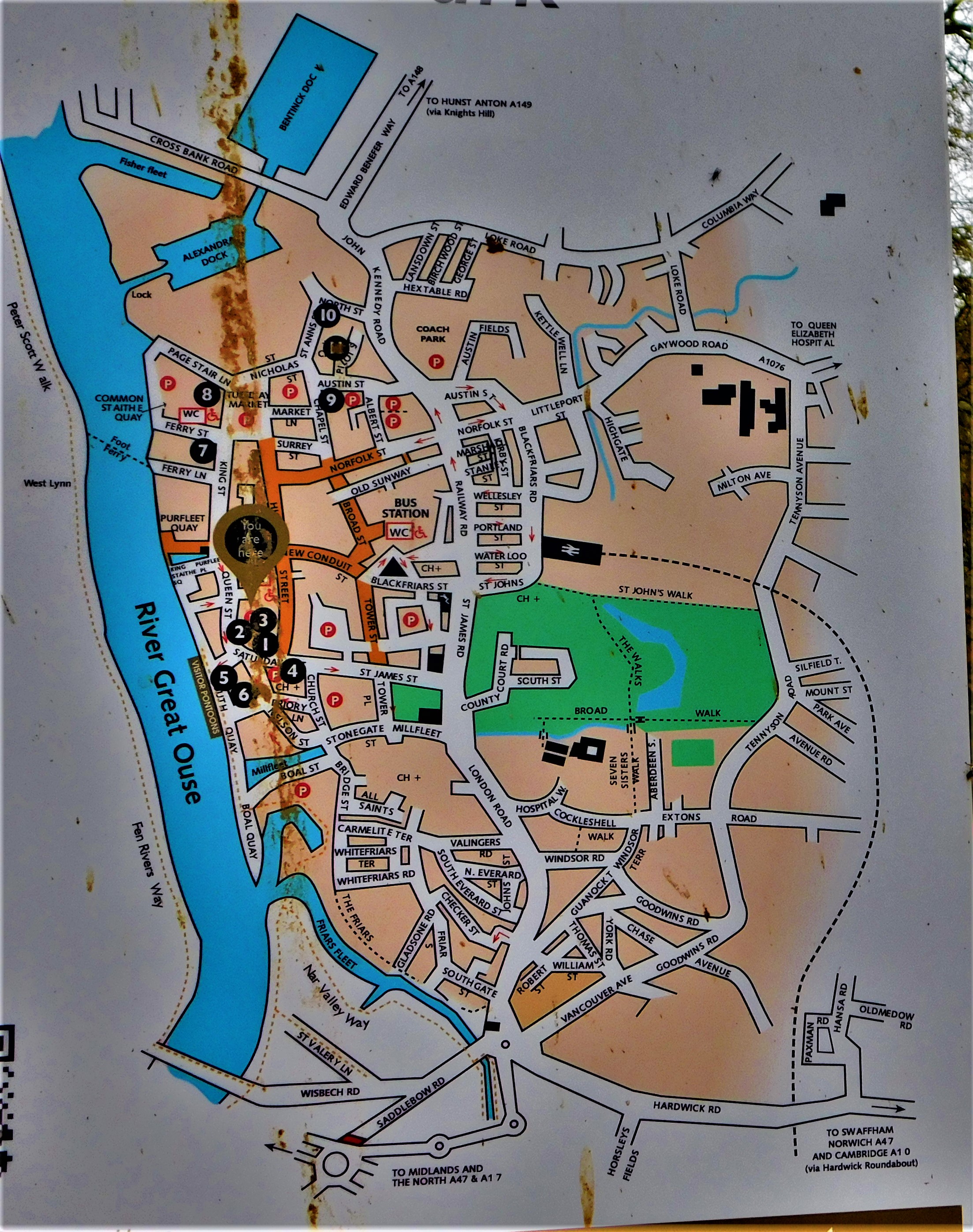
Most of the photographs in today’s gallery come from two walks, with a few in between them. Yesterday I was invited to an early supper at a flat on Purfleet Quay. By the direct route this a walk of 15-20 minutes, but I had decided to go a long way round on the way there and take the quick route home due to the fact that the latter walk would be entirely in the dark. Thus I headed by way of the two ponds near me, the stretch of the Gaywood near Kettlewell Lane, across Littleport Street, past Highgate Methodist Chapel, across another section of the Gaywood, along the only section of main road I followed during the walk down past the station to the entrance to The Walks. I headed onto St John’a Walk, then took the footpath past the Red Mount Chapel and turned onto Broad Walk, emerging onto London Road, which I crossed onto the top of Millfleet, then passing through Hillington Square and inter alia All Saints Church, the oldest in King’s Lynn. Then it was down to the river by various side roads, a quick check in at the location where the Nar joins the Great Ouse, then round the dike that overlooks old Boal Quay, and on to the Great Ouse which I followed as far as the point where the Purfleet joins it, and having crossed the bridge I then headed up Purfleet Quay to the flat.

The second walk was today, and I started by walking along Columbia Way until it meets Bawsey Drain, along which I headed towards town. I departed from Bawsey Drain via the last bridge across it before one reaches town, headed by a combination of minor roads and footpaths through to Loke Road near Loke Road Recreation Ground, from which I followed a path which leads to the Kettlewell Lane river section, and then I looped round by way of Morrison’s, before passing the Kettlewell Lane river section a second time, heading past the two ponds and thus back to my back door.

Now for the photos…