England Versus India

An account of the first three matches of the test series between England and India plus some photographs

INTRODUCTION

I have not written about the goings on in the current England versus India Test series as yet, because I have been busy writing about other stuff. This post repairs the omission.

MATCH 1 AT EDGBASTON

This was a nail-biter of a game, with fortunes swinging constantly as it progressed. When India were 115-6 in response to England’s 287 it looked like the home side were firmly in the driving seat, but Virat Kohli marshalled the lower order to such purpose that India trailed by only 13 on first innings. When England then slumped to 87-7 in their second innings it looked settled in India’s favour, but Sam Curran played a fine innings to give England a target of 194 to defend. England took wickets consistently, but not until Kohli was finally dislodged by a Ben Stokes yorker that trapped him plumb in front to make it 141-7, leaving nos 8, 9, 10 and 11 needing to cobble together a further 53 did the home side actually look favourites. They managed only 20 of those runs, and England were one up in the series. Curran was deservedly named player of the match (Kohli’s contribution of 149 and 51 was not enough to save his side from defeat, so it would have been wrong for him have got the award).

SECOND TEST MATCH AT LORD’S

India batted first in very difficult conditions. Nevertheless, and magnificently as England’s seamers bowled in conditions made to measure for them, a tally of 107 all out looked pretty definitively inadequate. When England were 131-5 themselves it looked less so, but a monster partnership between Bairstow and Woakes (in in place of the unavailable Stokes) effectively settled the outcome of the match. Woakes completed his maiden test century, being 137 not out when England declared, while Bairstow missed adding to his own tally of such scores by a mere four. India collapsed again (130 all out this time) and England were 2-0 up in the series. Anderson became the first bowler to take 100 test wickets at Lord’s in the course of this game, and only the second ever to 100 at a single venue anywhere (the first, Muttiah Muralitharan, did so at no fewer than three different venues). Woakes’ century meant that joined the select list of cricketers to feature on batting and bowling honours boards at Lord’s (Ian Botham is there, and among overseas cricketers Keith Miller is the sole person on both boards). 

THE THIRD TEST AT TRENT BRIDGE

Before this match got underway England perpetrated a blunder, setting the scene for four and little bit days in which such things would become routine, by dropping Sam Curran after two matches in which he performed excellently to make way for Ben Stokes, now cleared of all criminal charges, to return to the squad. I personally would not have selected Stokes at all, but even had a gun at the head proposition forced me to do so nothing would have induced to me to drop Curran (yeah, pull that trigger if dropping Curran is the price to pay for you not doing so!). 

Perhaps feeling after the first two matches that they could bowl India out on anything England put them in after winning the toss. India tallied 329, helped by some butter-fingered English fielding. The match was won and lost in the space of an hour and a half on day two when England being 54-0 in reply to 329 became England 128-9 in reply to 329. Buttler and Anderson got the final England first innings total up to 161. In their second innings India reached 352-7 before declaring leaving England two days and a mini-session to negotiate or 521 to score. Kohli had his second century of the series, having misssed out by three in the first innings. Cook and Jennings did the first part of their mammoth task, getting England to the close without losing a wicket. Both then fell early on day four, and two more quick wickets followed, at which point Buttler and Stokes joined forces. Their partnership at least showed some belated fight, and Buttler completed his maiden test hundred, while Stokes batted for a long time in largely defensive manner. Another clatter of wickets followed the breaking of the partnership and it was only some bloody-mindedness on the part of Rashid and Anderson (who had earlier in the game become only the second bowler to record 100 wickets in test matches against India, behind Muralitharan) took the game into a fifth day.

Somewhat bizarrely the Trent Bridge authorities decided to charge £10 for admission on a day that could have lasted for one ball (actually it managed to last for 17, meaning that anyone who paid to get in did so a rate of just under 59p per delivery). At the MCG in 1982, when again the final day could have lasted one ball, but there was also an outside chance of a home victory (37 needed with one wicket left BUT at the crease with no 11 Jeff Thomson was a certain Allan Robert Border) the authorities there did not charge admission. On that earlier occasion those who took advantage of the freebie got 85 minutes of gut-wrenching tension and one of the closest finishes of all time (England won by three runs after Thomson nicked one from Botham that would have had the umpire spreading his arms had the no11 simply ignored it, Tavare palmed the ball upwards and Geoff Miller took the rebound. Here, with in excess of 200 required and nos9 and 11 together at the crease there could only be one result (the largest number of runs that a last wicket pair have ever knocked off to win a first-class match is 76 way back in the fifties). Thus England were well beaten and lead the series 2-1.

LOOKING AHEAD

England’s top four is their major current problem area. At Trent Bridge those positions were filled by:

  • England’s all-time leading test run scorer but also someone who has not had a decent score since the Melbourne featherbed in December.
  • Someone who is clearly out of his depth at this level (Jennings)
  • One of the three best batsmen currently eligible for test cricket (Root – Kohli and kiwi Kane Williamson are the other two) to be found anywhere in the world.
  • A fine young batsman who at this stage of his career is not a test match number four.

The above situation, India managing a decent first innings total and the fact that Root for once had a poor game put a lot of pressure on the middle order, and Buttler and Stokes kin the second inninsg apart, they folded under it.

My suggested squad for the fourth test is: A N Cook, R J Burns (someone with a magnificent record as an opening batsman who is probably ready for elevation to the test match ranks), B A Stokes, J E Root*, O Pope (I did not say that he is not a test match batsman, and I believe that he can be, and should be persevered with, just not as high as number four, a position he never occupies even for his county), J C Buttler+, C Woakes, S Curran, A Rashid, S C J Broad, J M Anderson. If two spinners are warranted then Bess comes in for Broad, with Curran sharing the new ball with Anderson (the latter being a change I might make anyway, having Broad as third seamer). When recovered from his injury Bairstow comes in to the squad, probably replacing Stokes at no 3, just possibly coming as opener, bringing down the curtain on Cook’s illustrious career. Some of these suggestions, especially even considering dropping Cook might be seen in certain quarters as heretical. 

I still just about make England favourites for the series (after all, they are still ahead), but they need to respond better to opponents making decent totals – this not the first time in recent years that they have folded in response to a respectable but not massive total – it happened twice against South Africa last year.

PHOTOGRAPHS

For you hardy souls who have made it to the end of this post, here are some of my photos:

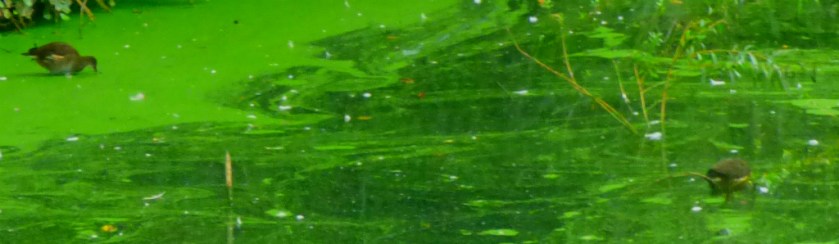
White buiterfly with black spotsMoorhen and chick

Pride in the Park from afar II
The first of a number of shots here featuring the inaugural King’s Lynn and West Norfolk Pride – I found out about the event which took place a week ago too late to take part, as I already had other commitments, one of which I was on my way to honour when I took this.

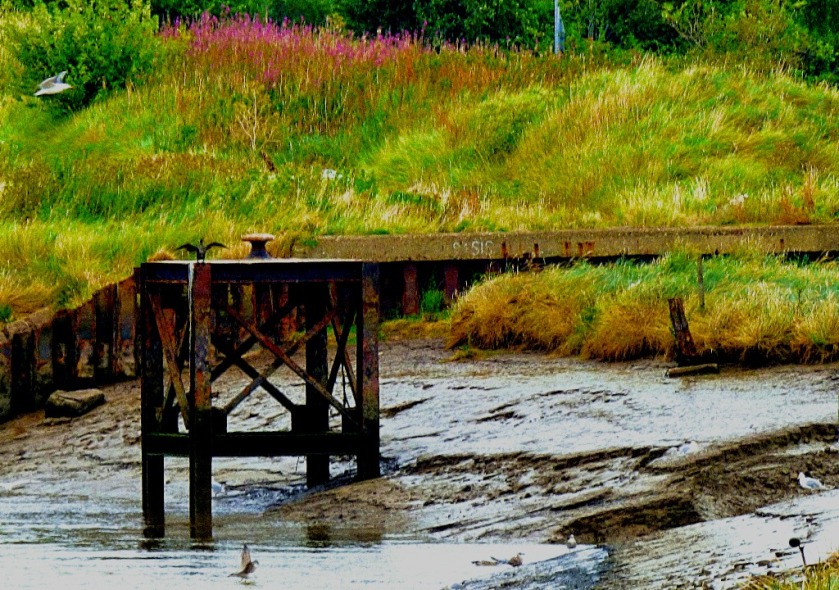
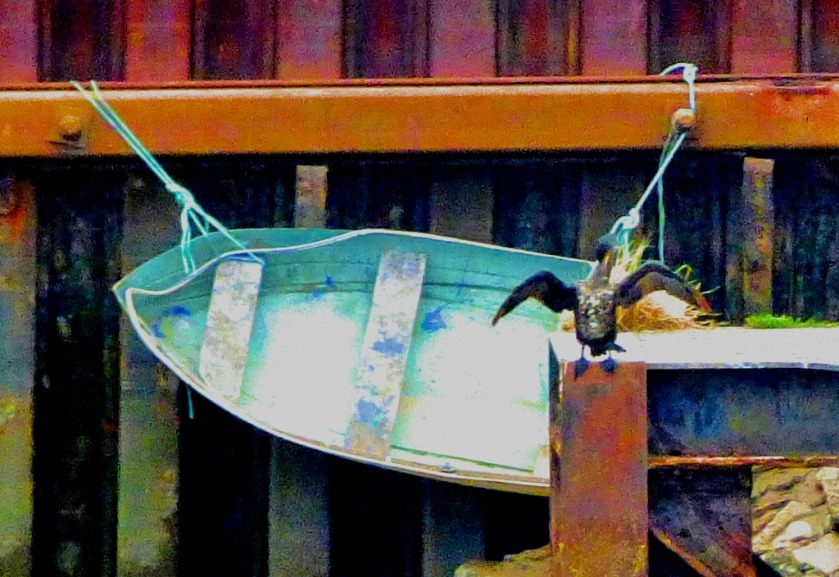
Pride in the Park from afar IMoorhenMallard familySquirrelBaden Powellbirds and a churchWing spanCormorants and gullsWhite Butterfly

Muntjac II
I had to photograph this muntjac from long range – as soon as they spot a human they flee.

Red Admiral IIRed AdmiralBandstandPride in the parkPride flagGuildhall

A Solution and Some New Problems

A solution and a couple more problems from brilliant.org.

INTRODUCTION

On Wednesday I left you with a problem from brilliant.org to tacke having presented solutions to several others. Today I start with a solution and then present you with some new problems.

SOLUTION TO WEDNESDAYS PROBLEM

Here is the problem again:

Fermat Challenge

Here is the answer:

Fermat answer

And now here is Mark Hennings’ published solution:

Hennings

As a side issue various commenters on brilliant.org demonstrated their failure to read the question by bringing up examples of numbers that are both square and cube (e.g 64), but these are utterly irrelevant since the question was about a number that is both one more than a square and one less than a cube.

NEW PROBLEMS

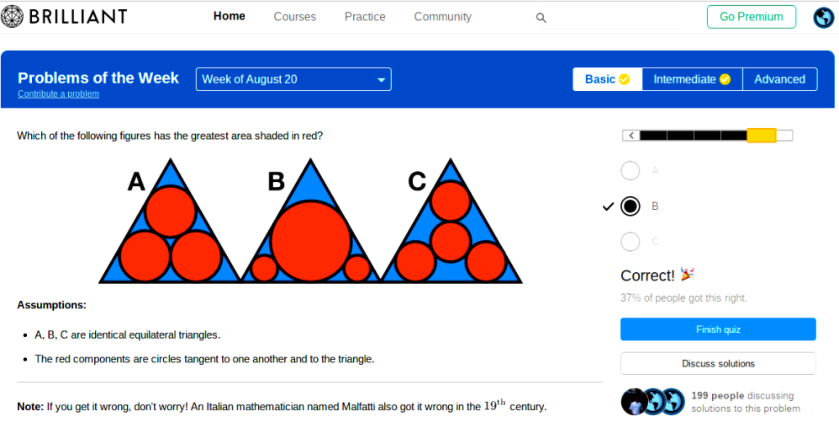
Two new problems for you, one easy, especially if you are familiar with the story of Signor Malfatti, and one slightly more difficult but quite fun.

CAN YOU OUTDO MALFATTI?

Malfatti Mistake question

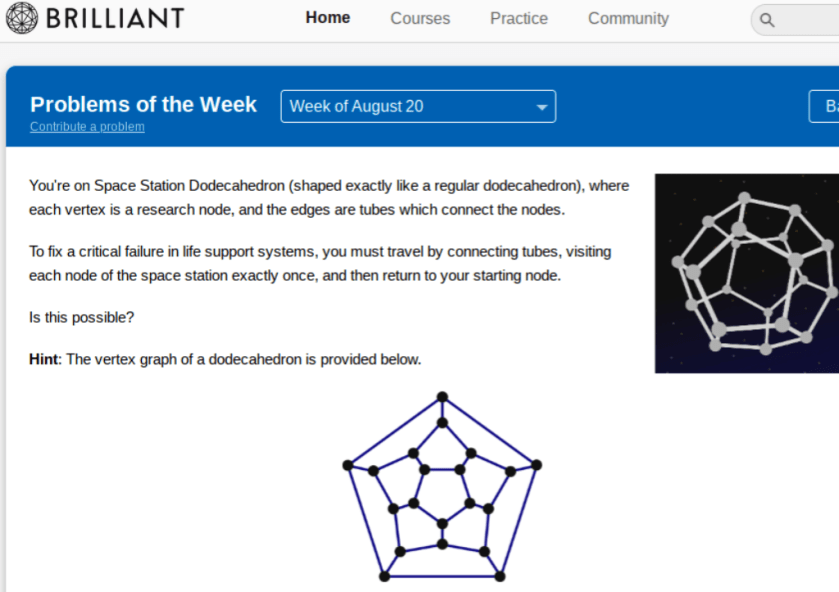
SPACE STATION DODECAHEDRON

Space station Dodecahedron

A Massively Successful Auction

An account of yesterday’s splendidly successful auction.

INTRODUCTION

On Wednesday James and Sons had a small but very important auction featuring gold coins and proof sets. We were anticipating a very considerable success, because we knew that there were bids of sufficient size on every lot that everything would sell, and we also knew that some of the items had a very large number of watchers online (one had no fewer than 17). The rest of this post tells the story of a truly amazing auction.

TUESDAY – FINAL PREPARATIONS

In view of the high value of the gold the only items that were set out on display were as many of the proof sets as I could lay out on one large table. I also made sure that the IT was all fully functional, as the last thing we wanted was for a glitch to affect this auction. I was able to enjoy the NAS West Norfolk Steak Night at The Globe later that evening in the knowledge that all had gone as smoothly as it could have (I restricted myself to a modest two pints of Ringwood Fortyniner in view of the importance of the following day). 

WEDNESDAY – A DAY OF TRIUMPHS

I awoke a few minutes before my alarm was due to go off (not uncommon with me – the alarm is more insurance policy than necessity) and left my flat precisely as intended at 6:45, ensuring that there was no chance of missing the bus. Arriving at the shop, I unlocked, deactivated the alarm, then relocked the door as in view of what was in the shop I did not want customers coming in while I was there on my own. I then began to set up for the day. The auctioneer arrived not very long after me, and I was able to complete the setup, verify that everything was working and take some photographs. Before nine o’clock customers started arriving, and by 9:30 it was standing room only in the shop, as no fewer than 16 potential room bidders were present, in addition to over 60 online bidders and not a few who had put commission bids in in advance of the sale.

P1190889
The proof set display, with lot 135 front centre
P1190886
One of the two significant coins from lot 139…
P1190887
…and the other
P1190888
The setup before anyone else had arrived.
P1190892
Potential room bidders (three pics)

P1190893P1190894

P1190891
Lot 139 on the big screen.

THE AUCTION STARTS

The first five lots were 1974 Krugerrands which were expected to make approximately £800 each and did exactly that. Then came lot 6, the James II Guinea which was one of two items that had been the subject of a query the previous day as a result of which it had extra images above the regular image gallery for such an item. Estimated at £500-750 the interest it had attracted saw the final hammer price reach exactly £1,000.

6
The first three images constitute my regular image gallery for a single coin.

6-a6-b

6-c
One of the questions asked about this coin related to the edge, and to help back up my own comments on the edge of this coin I took two photographs that between showed it in its entirety.

6-d

Lot 7 was a William III Half Guinea, which in relative terms fared even better since with an estimate of £300-500 it actually went for £900!

77-b7-a7-c7-d

Lots 8 to 24 inclusive were half sovereigns, and all sold well, most going for around the £100 mark. Lots 25 to 90 incluisve were…

SOVEREIGNS FROM VICTORIA THROUGH ELIZABETH II

These we knew would sell respectably, because a major and long standing client whose job is to sell gold items had put in commission bids of £180 a time on the whole lot, confirming our auctioneers valuation was on the mark. Most of the sovereigns actually sold for more than that, £190 being a common figure and a few of them going to and in some cases beyond £200. Then came…

LOTS 91-5 – THE HUGE SUCCESSES

The first four of these lots were high value gold proof sets which we were expecting to be on or around the four figure mark. Actually, and barely believable they went for £1,600, £2,000, £2,000 and £1,600 respectively!!

9191-a91-c91-d91-e9292-a92-c92-d92-e9393-a93-b9494-a94-b

Lot 95 was a sovereign in a gold mount with a gold chain and 8 1mm diamonds (in otherwords a very fancy necklace). Estimate at £300-400 it eventually sold for £550.

9595-a

After these it was time for…

THE REGULAR PROOF SETS

Of course after what gone before the proof sets were a little bit “after the Lord Mayor’s show”, but there were still a handful of highlights to come.

LOTS 113 AND 114

These were respectively a Scottish and Welsh proof set (hence the split colouring of the heading) each expected to make £8-12. The Scottish set went for £20 and the Welsh for £18

113113-a113-b114-a114

These were a mere curtain raiser for…

LOT 121

A 1992 proof set featuring an EEC 50p coin the rarity of which turned a £10-15 estimate into a £50 hammer price!

121

The next big success was…

LOT 128

This 1999 proof set featuring a Diana Princess of Wales £5, a bimetallic rugby £2 and Scottish coins from £1 down to 1p had an estimate of £15-20 and ended up going for £32.

128

Then came two successive monster successes with…

LOTS 135 and 136

Lot 135, a 2009 proof set, featuring as it did the highly prized Kew Gardens 50p, the Henry VIII £5, and the Darwin and Burns £2 coins was estimated at £100-120 but ended up going for £220!

135135-a135-b135-c

135-d
A close up of this one was mandatory.
135-e
I also deemed the Darwin £2 worthy of a close-up

135-f

Lot 136 was a 2010 proof set featuring a Restoration of the Monarchy £5 (350th anniversary thereof), A Florence Nightingale £2, a London £1 and a Girl Guiding 50p. Estimated at £20-25 it sold for £100!!

136

Not long later came…

LOT 139 – A BITTERSWEET IMAGER’S TRIUMPH

This London Underground 150th anniversary proof set had been badly misdescribed, with one of the £2 coins mentioned as featuring trains, and the roundel coin not even mentioned, but the imager’s efforts more than compensated for this. Estimated at £25-30 it attracted sufficient interest to push the final price up to £52 (and inter alia out of the imager’s reach, hence the heading of this section).

139
Lot 139 in all it’s glory.
139-c
The ’roundel’ coin which is fairly rare.
139-b
The other London Underground 150th anniversary coin, which is much less rare.

139-a

That was the last of the yearly proof sets, but there were still a few lots to go, and two of them provided noteworthy results.

LOT 148 – A SENEGALESE STUNNER

This 1975 Senegal Triple Crown, solid sterling silver, Euroafrique 150 franc coin, boxed and with a certificate was estimated at £15-20, but a lively bidding battle pushed the final price up to £48.

148148-a148-b148-c

Finally, came…

A STRONG FINISH

Lot 151, the final lot in this small sale,  was an accumulation box containing a few good bits and some ordinary stuff.  Estimated at £40-50 it ended up going for £95.

151

Once the auction setup had been dismantled and the last room bidders had gone it was time for me to attend to other matters. You can view a catalogue for the general collector’s auction we have next Wednesday here.

THURSDAY – PUTTING TOGETHER A PRESS RELEASE ABOUT THIS AUCTION

Yesterday morning I produced a PR piece about the success of this sale, going big on the images as well. I conclude this piece with a link and a screenshot:

GOLD COIN AUCTION GIVES FAKENHAM AUCTIONEER BEST RESULT IN YEARSPRimage


Solutions to Good and Bad Mathematical Problems

Solutions to the problems I put up here on saturday and some new problems.

INTRODUCTION

On Saturday I produced a mixed bag of offerings from brilliant.org, promising to provide solutions in a later post, and now that time has arrived.

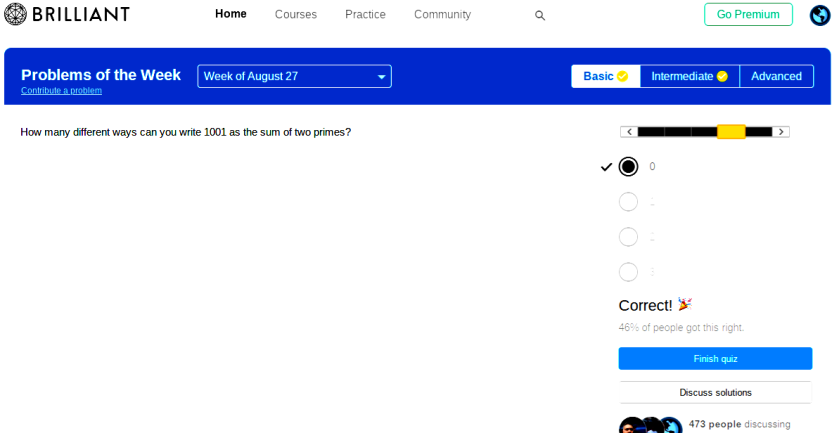
THE WORST SET PROBLEM I HAVE EVER ENCOUNTERED ON BRILLIANT

bad problem

I got nowhere close to solving this for reasons which will soon become obvious.

Here is the official “correct” answer:

solution to dreadful problem

My beef is with that diagram. The answer given works on the red section being the largest part of the parallelogram whereas the diagram shows it as the smallest, which was the basis on which I worked. This is way beyond a diagram being “not to scale”, which I have no great issue (the most famous of all such schematic diagrams, variations of which can now be seen representing transport systems in cities everywhere in the world is of course H C Beck’s London Underground diagram), but showing what is actually the lagrest single area of the diagram as the smallest is a bridge too far (Beck enlarged the central area so the stations were easier to see, but he did not actually make it cover a larger area than the surrounding suburbs, merely a less small area than was actaully the case, which to me is what if the approach is to have any validity is what “not to scale” should mean). The diagram in this question was literally worse than useless – wkith no diagram at all it would be have been a better question than it was with the actual diagram.

ANSWERS TO THE TWO FABULOUS PROBLEMS

First, what I now call the “Mendrin Circles Problem” after its creator:

Mendrin Circles

MSC.jpg

Here is Albert Lau’s published solution:

Lau solution

Second, the problem of Mr Mediocre’s Lawn:

First the answer:

Mr Mediocre

Jeremy Galvagni’s published solution was worthy of this splendid problem:

JeremyG

The ‘chessboard shading’ in this diagram is the key to the excellence of this solution – it rules out A and D, while B’s location rules it out, leaving only C as an option.

THE BONUS PROBLEM

Honey the ant

The answer:

Honey solution

Attaching the leash to an edge or a corner introduces restrictions which are not there if it is attached to the centre of a face. At full extent Honey can be diametrically opposite her starting position, which means that the entire surface of the cube is available to her.

A NEW PROBLEM

This is a very old problem indeed:

Fermat Challenge


A Grockle’s Eye View of Cornwall 12: Homeward Bound

Bringing my series on my visit to Cornwall to a close.

INTRODUCTION

All good things come to an end, even this series of blog posts, and with this post we do indeed reach the end of my account of my visit to Cornwall. 

THE JOURNEY HOME

With my train due to leave St Germans at 9:27AM on Monday July 16th we had decided that a departure from Fort Picklecombe at 8:30AM was warranted due to the fact that I had a reserved seat on that train, which was going all the way to London, and would have been in the region of £100 down had I missed it. We arrived early at the station, and once the train arrived I found my seat easily enough, although as had happened on the journey down they had reversed the running order of the train and I was facing against the direction of travel instead of with it (trust me, for a photographer this is quite significant). Here are the last of the Cornish pictures…

sea birdSt GermansScheduleRiverMarshy riverRiver with boardsYacht and buoyWaterside housesSaltash stationCrossing the Tamardetail from suspension bridgesuspension bridge and boatsTamar Bridge

The rest of this post takes place outside Cornwall. The train ran a trifle slow, arriving into Paddington sufficiently late to ensure that I would not make my intended connection at Kings Cross. However, the failings of Great Western were as nothing compared to those of Great Northern. The train arrived at Cambridge where it was supposed to divide in two as usual with four coaches going on to King’s Lynn and the rest going back to London, then a good couple of minutes later we got an announcement telling us that the split was not happening and that we needed to go to Platform 7. As a direct consequence of this mess up we then hit two red signals, at Waterbeach and again at Watlington, arriving into King’s Lynn much later than we should. This made it four successive journeys on Great Northern where the schedule had not been adhered to. Their failures appear to have got worse – just a few days ago I saw a special bus service running between King’s Lynn and Ely.

DevonportSouth Devon RailwayStationStation IIView from the trainNewton Abbot stationNewton AbbotNewton Abbot canopy and big buildingRiver near Newton AbbotRacecourselong bridgeLone boatAcross the waterAcross the water IIChurch towerAcross the water IIIBoats and buildingsBoats and hillsidesGrand HouseChurchButterflyriverside walksrural riverExeter St Davidstree and housesTiverton ParkwayTiverton Parkway IITauntonTrain, ExeterTrain, Bristol IIMetal curlicuesTrains, BristolBristol with trainsBristol Temple MeadsCleaning Britain's Railwaysbridge and pipebridge and pipe IIBath SpaBath Spa IIChurch tower IIBarge and churchBig churchcricket fieldRailway buildingGWR MuseumGWR Museum IISTEAM building

Tunnel trucks
These trucks look like tunnel segments on wheels.

SwindonPlatform detailGoods trainsingle trainReadingReading Stationtrains near ReadingLondon Underground train

Royal Oak
Westbourne Park, the penultimate Hammersmith & City line station west of Paddington – until quite recently local mainline train services stopped here as well. When the Metropolitan Railway opened in 1863 it used GWR rolling stock (broad guage in those days), and there were track connections between the two railways. This line to Hammersmith became part of the Metropolitan Railway in 1864, and between 1877 and 1910 services ran through to Richmond by way of a viaduct from Goldhawk Road the far end of which can still be obeserved at Ravenscourt Park. The last legacy of these connections is that today the Hammersmith and City platforms at Paddington are nos 15 and 16 of the main station.

Hammersmith and City line trainPaddington platforms

Interchange, Baker Street
The interchange from Circle and Hammersmith and City through to the four platforms that serve the Metropolitan line at this station (and escalators down another four platforms which serve the Bakerloo and Jubilee lines)

Screen


A Grockle’s Eye View of Cornwall 11: The End of the St Michaels Mount Day

Concluding my account of the day at St Michael’s Mount as we near the end of my series about my visit to Cornwall.

INTRODUCTION

Welcome to the latest installment in my series of posts about my recent visit to Cornwall. This post completes the day at St Michael’s Mount, leaving me with a post to do about the journey home and finally a page from which all the posts about this trip can be accessed. The fact that this will mean (including the page) 13 pieces relating to the trip bothers me not a jot – I have no more time for triskaidekaphobia than I do for any other ridiculous superstition.

WRAPPING UP ST MICHAEL’S MOUNT

Having finished our exploration of the mount itself it was time for lunch, which was excellent. The establishment at which we ate our lunch has a rule that alcoholic drinks can only be served if food is ordered at the same time, and according to their interpretation cream teas do not count as food, so on two occasions in the course of that meal we ordered portions of chips to go with drinks. Mention of cream teas (a speciality of the far west of England) brings me to a debate that rages unchecked: which goes on the scone first, the cream or the jam? The cream advocates argue that cream in this context is the equivalent of butter (and if it is Cornish clotted cream it is so thick that one can pretty much slice it like butter!), and that if you put the cream on first you do not get jam in it. I am not sure what the jam advocates base their case on.

Lunch consumed it was time to head back to our parking place on the edge of Penzance. The tide was just starting to turn but was still a long way out, and unlike the Mont St Michel, on which the current setup of St Michael’s Mount is modelled the tide here comes in slowly (no danger of galloping horses being swallowed by an inrushing tide, as allegedly happened at Mont St Michel on one famous occasion), so we were still able to walk back across a vast expanse of beach to rejoin the official footpath just west of Marazion. I omitted to remove my socks and shoes for this part of the journey, and they ended up thoroughly soaked, although by the end of the walk they had dried out again (without the sea breeze the heat would have been fiendish).

Mathematical Pic
The first few photos here, including these mathematical pictures are from lunch

Mathematical picsMathematical Pic IIMetal pictureThrough the windowCornish beer ICornish Beer IICornish Beer IIIBoilersdetail from bottleDetail from bottle IIPaintingLooking towards the mainland

Sea birds
Just before recrossing the causeway to the mainland, we saw these birds – the one with the red bill used for digging would have been having a bonanza – there were huge numbers of worm casts in the sand.
Causeway close-up II
The causeway from close up

Worm castReturning to MarazionLooking WestGWR works, near PenzanceBeach viewShell

Farewell to St Michaels Mount
A farewell shot of the mount

St Michael's Mount panorama

Chough
A shore dwelling corvid, the Chough

Good and Bad Mathematical Problems

Two splendid problems, one terrible one and one intermediate one, all courtesy of brilliant.org.

INTRODUCTION

This week on brilliant.org I have encountered two of the finest mathematical problems that I have seen on that site, and also unequivocally the worst. In the rest of this post I will share these problems with you – solutions and explanations will appear in a later post.

FIRST THE BAD NEWS

This is the terrible problem referred to in the introduction. In almost 15 months og being a brilliant.org solver I have complained about precisely one problem – this one:

bad problem

The “correct” answer when I give it will make it clear precisely why I was so annoyed by the setting of this problem.

TWO FABULOUS PROBLEMS

These two problems were beautifully set, very fun to solve, and one has a published solution that I consider to be quite superb. First:~
Mendrin Circles

I tackled this one this very morning:

Mr Mediocre question II

A BONUS PROBLEM

Can you give Honey the ant maximum possible access to the surface of the cube?

Honey the ant

A Grockle’s Eye View of Cornwall 10: The Map Room at St Michael’s Mount

Continuing my account of my visit to Cornwall. Today we look at the map room at St Michael’s Mount.

INTRODUCTION

Welcome to the latest post in my series about my visit to Cornwall. As part of my coverage of a day at St Michael’s Mount I am devoting a whole post to the map collection there.

A Collection of Antique Maps

For a cartophile such as me this section of the visit was particularly good fun…

Plymouth to Senan
In the days before googlemaps this is what a walking route looked like!

Exeter to TruroeWilliam Holes - Devon and Cornwall

Jan Janssons Cornwall
At one time the Dutch were trailblazers when it came to cartography.

two antique maps of CornwallJames Pigot's CornwallModelFour antique maps of CornwallNicolas Sansons West of England MapThe Isles of ScillyChristopher Saxton's CornwallMounts BayMap room mantelshelfMounts Bay IIThree views of cornish buildingsduoDuo IICottage PicSextetSextet II

Falmouth
Falmouth – one of the people who have noticed my posts about cornwall is thecornishbird, whose offerings include this about Falmouth: https://cornishbirdblog.com/2018/07/14/things-to-do-in-falmouth/

sextet IIIThree maps in one frameCornwall and Devonshiresix maps, two pictures

A Grockle’s Eye View of Cornwall 9: The Top of St Michael’s Mount and the Descent

Continuing my account of a visit to St Michael’s Mount.

INTRODUCTION

This is the third to last post about the day at St Michael’s Mount, and the ninth in my series about my summer visit to Cornwall. The next post will be all about the vast collection of antique maps that are on show here, and then a final post about the last stages of the day. I then have the journey home to cover to complete the series.

THE REMAINDER OF THE SUMMIT

At the end of the previous post in this series were about to head indoors for the second time in our exploration of St Michael’s Mount…

The mainlandStained glass VIIRoseCarving and stone inscriptionTrio of miniaturesShepherdEagle and windowangelthree in one frameSeptetRose II

Organ
This organ looks splendid.

Organ close-up 1Organ close-up 2DedicationAngel and windowMemorial and windowMemorials and windowPainting and windowTrio and window panelsText and windowThe second Lord St LevanArchitectOrgan and windowLiving roomPortrait XPortrait XIMantel clockbusts and windowCupid

At this point we entered the map room. As an appetiser for the next post I offer one picture from there…

Christopher Saxton's Cornwall

After the maps came a display featuring large amounts of weaponry…

remains of spiral staircase
The remains of a spiral staircase

hornDollArmour IgunsTruncheonstruncheons and gunsMore gunsWeapons VSpearsWeaponryWeaponry IIShield IIHorses Head

Cornish map with extras
A final map, separated from all the others.

girls armourbreastplates and helmetsGiant clock IClockfaceClock case18th Century mugMug provenanceUniformCapShoulder plate

That ended the indoor stuff until lunch time.

THE DESCENT

The descent takes past an emplacement of mini-cannons which are of French Revolutionary origin…

mini cannonsMini cannoncannon markings ICannon markings IICannon markings IIIMini cannon emplacementCannon markings IVCannon markings VCornish flagCannon markings VICauseway from the cannon emplacementFarewell to the cannons

Just beyond this I encountered a Red Admiral butterfly:

Red Admiral I
At first it had its wings folded making ID difficult…

Red Admiral II

Red Admiral III
…but when it opened them out there was little room for doubt.

Red Admiral IV

Not long after this we could see our next destination, where we would be having lunch.

Nearly back at sea levelsea level buildings

A Grockle’s Eye View of Cornwall 8: Ascending St Michael’s Mount

Continuing my account of my visit to Cornwall, with the ascent of St Michael’s Mount.

INTRODUCTION

Welcome to the latest post in my series about my stay in Cornwall. This post takes us up St Michael’s Mount and covers some of the stuff at the top. There will be at least two and possibly three more posts about the day.

BASE CAMP (!)

Among the places at ground level, before the ascent begins are the restaurant where we would be having lunch and a visitor’s centre which provides a comprehensive introduction. After these one passes through a field that contains a dairy cottage before the ascent begins.

Ships in the distanceSea ViewFind Your WayMapLooking back at the mainlandMuralIllyriaFootprintsMural PlaqueModel of the mountPlan the dayWelcome to St Michael's MountPicture of the mountTL1

TL2
No sops for creationists here! The straight truth about the formation of the granite of which the mount consists – it was formed longer before the dinosaurs roamed the earth than we are after the last dinosaurs disappeared.

TL3The castleThe GardensTL4Boat 1Boat 2Boat info boardThe DrakeAmphibious vehiclesDUKWBoat on the islandThe St MichaelOur venue for lunchMarazion from the IslandThe abbey from belowCreelsOutdoor artworkHutConservation notice

THE ASCENT BEGINS

The climb up to the buildings on top of the mount begins by way of The Pilgrims Steps, continues past the Giant’s Well and the Giant’s Heart and a cannon emplacement. Then comes the first indoor section and a roof terrace where we pause until the next post in this series…

The pilgrims stepsView across the sea

Giants Well
The Giant’s Well – from an old folk tale

Giants Well sign

The vicinity of the Giants Heart
And about 50 yards further along The Giant’s Heart.

The giants heart sign

The Giants Heart
The actual heart!

FrontageArcher's alcoveSea view from aboveSea view from above IISea view from above IIICannonsCannonMarking on cannonView from the cannon emplacementSea View from above IVThe main buildingDistant view of PenzanceYachts and a headlandPenzance from St Michael's Mounttwo yachtsThree yachts

Wall mounted militaria I
The first weapons display – in the next post you will see another one.

Swordsthree swordsGunsGunCrossbowJewellery displayCannon and ammogiant crestCrossed swords ICrossed swords IIDrummers kitPortrait 1Portrait 2Trio IMantelpiece and trioClockCentral UnitGrandfather clockCentral Unit IIBoyPortrait IVCorner unitChest IChest IITrio IILadyArtists representation of the mountMiniaturesquartetLady IIQuartet IIMiniatures IIMiniatures close-upFancy CabinetLiving spaceLibrary and game zoneChess boardChess board IIHeraldry display wallRoof patterning and friezechapelShieldsshields and ornamentsLong tablefrieze workstained glass Istained glass IIstained glass IIIsingle panelShields anf friezeshields and friezeRoof beamsAlcovewooden bas-reliefShieldSilverwareSilverware IISilverware IIIStained glass VStained glass VIShip panelstained glass womanTriple panelstained glass heraldic lionStained glass jester panelCircular stained glass panelsSilverware IVdecorated chestQuintetOval picturePicture of a Cornish gentFireplaceTrio IVbay window

Garden from above I
Us hoi polloi can only view these gardens from above – we never actually get into them.
A study in blueGarden from above IIGarden from above IIIGarden from above IV

Sundial
A very elaborate sundial.
Detail from sundial

Roof terrace
This where our next post will start from.