Sunday Social is a place to mingle, collaborate, and share our blogs. Sunday Social is one more place where you can share a post that maybe didn’t get as much feedback as you were hoping for. Sunday Social is a place to meet new bloggers.
This weekly post is a “wild card” of sorts. There aren’t many rules but I do ask that you follow a few guidelines.
Give honest, constructive feedback, but always be courteous.
If someone takes the time to comment on your post, please return the favor and check out their endeavors too.
How do you participate?
It’s very easy.
Copy and paste the link to your blog or a specific blog post in the comment section below.
Give us a little blurb about your blog, the feedback you are looking for, or if you are just hoping to meet some new blogger buddies.
Thoughts onthe new bus service between King’s Lynn and Fakenham one week in.
INTRODUCTION
I have now done one work week using the new Lynx Bus 49 for the journeys, the withdrawal of Stagecoach from King’s Lynn now being an accomplished fact (apart from the 505 to Spalding, most of which route is in Lincolnshire). This post covers my week at work as well as detailing my thoughts about the new services.
TUESDAY
Setting off from my flat at 6:45AM I was at the bus station in good time for the bus that I needed to catch at 7:00. The bus arrived and departed in good time, and arrived in Fakenham at 7:49, as indicated by the timetable (unlike the unlamented Stagecoach their schedules include some slack, so that a traffic jam does not always mean running behind schedule). As it was warm enough that my workplace would definitely be bearable, and I had a lot of imaging to do and little time in which to do it I decided to go straight there and get stuck in early. I commenced proceedings by finishing off the badges on boards as images of these were needed for the catalogue, and then got to work on the cigarette cards, and managed to image the first 50 lots of those as well, before closing time, and my departure for the library, to do stuff there until I could catch the bus home (the service is very infrequent at present). I have already shown some images from this day’s work in a previous post. The bus back duly arrived and set off exactly as it should (a double decker for the evening run btw), and there were no significant delays en route.
THURSDAY
Again no issue with the journey out. Tony’s Deli stall was still being set up when I headed to work, so I got ready to start the day, and then popped back out to make my purchases there, before returning to get stuck into work. I did the loose badges (imaging them in batches of six to save time) for the first of the two days of badge sales, before once again focussing my attention of the cigarette cards, the last lot of the day being lot 166. Another visit to Fakenham library to fill in time at the end of the day, and once again home on a bus that ran to time.
Lot 88, uncut cigarette cards – very unusual (until we got this consignment our expert on such cards, with nearly half a century of experience had not seen any.
Lot 100, famous cathedralsClose-ups of the two local examples (even if you cavil at Ely being described as local to a Norfolk auctioneer, the octagonal tower was designed a mid-14th century prior named Alan of Norwich).
Lot 133, famous castlesA close up shot of two among the castles that I have visited.Lot 134 – famous cathedrals
FRIDAY
After another uneventful journey in I imaged some militaria for the first day of that sale, reverted to cigarette cards until I had imaged the last album to have been numbered up (ending at lot 294), at which point I started imaging badges on boards for the second day of that sale.
These backpacks (three items, there are two images of this one and one of each of the other two) are quite heavy even when empty, but that metal framework probably gives them gfreat stability.
A close up of the local building.
Both local and arguably the most iconic of all the buildings in this set.
Lot 279 – the cigarette card equivalent of a 50-piece jigsaw.
It was warm and sunny when I locked up at work, and also of course a Friday, so I headed for The Limes and some liquid refreshment taken in the outside seating area. I had entertained hopes of finding a locally brewed craft ale, but given the actual options settled for Hobgoblin (still a very decent drink). The bus back was significantly late, but the still left Lynx with a score of 5 out of 6 for punctuality on the week – something that Stagecoach had not approached in a very long time.
THE LYNX BUS 49
The buses themselves are clean and comfortable, the drivers are friendly, such services as there are by and large run punctually. The trouble is that there are so few services on the new route. I might, particularly in winter, see if I can use my tickets on the route via Wells, which ultimately gets to King’s Lynn by way of Hunstanton. The prime disadvantage of this route is its length (doing the journey by that route would take about two hours on the bus. However, Lynx have stepped up to the plate in difficult circumstances, and their service standards are much better than Stagecoach. The cost of tickets is greater than on Stagecoach as well. I believe there remains a possibility of the 48 route, which currently terminates at Pott Row being extended to join the A148 and then on to Fakenham.
The first in a series of posts about #Autisticspecialinterests that will be appearing here during May.
INTRODUCTION
Here as promised is the first of a series of posts I shall be doing about my special interests. I am starting with public transport, and in this post I shall be referring to events that took place long before I was diagnosed as autistic.
GREAT ORMOND STREET HOSPITAL AND THE BIRTH OF A SPECIAL INTEREST
I was a patient in a child psychiatric unit at Great Ormond Street Hospital for over a year in the early 1980s. The trigger for the illness that put me there appears to have been a bout of chickenpox. For the first half of my time there I was an in-patient, at the hospital 24/7, and then when they deemed it safe for me to sent home at nights I was a day patient. Although I cannot remember a time when trains did not interest me, it was during this period that I would say that my special interest in public transport was formed.
My family moved to London in 1979, when I was four, and I have a London Underground map from that time:
Now, here is an edited version, highlighting the two key stations:
Tooting Bec was our local station, just about a mile from our house, while Russell Squareis the station for Great Ormond Street Hospital. My father would take me there in the mornings and pick me up in the afternoons, using London Underground. We took some very bizarre routes, as my fascination grew, which sometimes led to my father getting awkward questions from ticket inspectors (yes folks, in those days London Underground had on-train ticket inspectors).
TEENAGE YEARS – GOING SOLO
In later years I was able to explore on my own, and when I was in my early teens the child rate for a one-day travelcard was only 90p, so I would often go out on a Saturday and explore London transport in detail (I used various local railway lines as well as the Underground, though in those days I did not make much use of buses). It was also in this period that I discovered the London Transport Museum at Covent Garden.
A big moment for me was the opening of The Docklands Light Railway (I travelled on it on its first day of operation way back in 1987, and it was a huge buzz to be there at the start of a new development in public transport). In particular I first developed the method of visiting Greenwich described in this post on www.londontu.be as a teenager, and since the DLR was then pretty much brand spanking new I claim to be the pioneer of that method.
Like most who have been regular users of it I came to despise the Northern Line, and later in my teenage years it was a thing with me to make my excursions without using the Northern line (this meant starting and finishing at one of various railway stations which were walkable from home – Tooting, Streatham Common, Streatham, or Streatham Hill). A frequent finish to my excursions was to take the Hammersmith & City line to Hammersmith, get an eastbound District line train to Earl’s Court and then cross the platform to get a Wimbledon train, finally changing to railway train to Tooting.
At the same time as I was exploring public transport in London to the full I was also learning more about its history and development.
Very late in my teens I became a regular commuter, because after finishing at my local comprehensive I decided to resit my Chemistry ‘A’ Level and do the first year of Maths and Physics ‘A’ Levels at Richmond Upon Thames College of Further Education, whose local station was Twickenham, two stops west of Richmond. I had two regular routes there, either travelling in my mother’s car as far as Baron’s Court (the nearest station to the school she was teaching at in that period), District to Richmond, train to Twickenham, or from home, walk to Balham (about a half-hour walk, perfectly manageable for an 18 year old), get a train to Clapham Junction and change for another train to Twickenham. The fastest trains over the Clapham Junction – Twickenham section were those going to Reading, which did it non-stop. Those trains were also the only ones that still had manually opened and closed doors (two choices folks, either slam the thing, making a monstrous crash, which most people did, or learn, as I did, how the catches worked so that one could shut the door quietly).
FURTHER POSTS
When I revisit this series, probably at the weekend, the story will move away from London, as I did, and will indeed go international. To finish for today, here are some old pictures of Tooting Bec Station, taken from the book Bright Underground Spaces:
The Stapleton Road sufrface building agt Tooting Bec, which was the one I used to enter and exit by.Both of Tooting Bec;s surface buildings (from 1926-50 the station was called Trinity Road).
Setting out my stall for May, including a forthcoming series of posts about my #Autisticspecialinterests
INTRODUCTION
April is behind us, so I am going use this post to set out my stall for May. As a lead up, here is a screenshot of a tweet by Autism Mom:
A NEW SERIES SPECIFICALLY FOR MAY
Eve Reiland of internationalbadassactivistssuggested a theme for #actuallyautistic people for May:#AutisticSpecialInterest – a theme I am more than happy to run with, so, starting tomorrow I will be producing posts dealing with my special interests through the month.
THE EFFECT THAT THE NEW BUSES HAVE ON MY WORK
Those who have read my blog recently will be aware that today was my first day travelling to work on the Lynxnumber 49, which has replaced the Stagecoach X29 route. It runs considerably less frequently, but the buses are comfortable, the staff are friendly, and at the moment it has a score of 1/1 for punctuality, which after Stagecoach feels near miraculous.
AN UPCOMING HOLIDAY
I will be off for a week in Greece, leaving King’s Lynn on Friday May 11th, late in the evening so as to get to Gatwick for the flight to Kalamata, which takes off at 5:40AM. Therefore I will accept that sleep ain’t happening that night, and spend a few hours waiting at the airport. I will arrive back in the early afternoon of Saturday May 19th. I will endeavour to keep up to date with everyone during that period, but there will almost certainly be days on which I do not manage to access the internet.
IMAGING FOR MAY’S AUCTIONS
In May we are having a one-day cigarette card auction, followed by two days of military badges (and these will be on the Monday, Tuesday and Wednesday after I return from holiday). Here to finish things off are some images…
My employer wanted an insert of badge pictures for the catalogue, and to enable that as well as in the interests of speed the badges were numbered up on their boards, and I took pictures of the entire boards and then extracted individual images from the whole.
There are 750 lots of cigarette cards, in a total of 67 albums, of which I have imaged 51, covering four whole albums and 1 from a fifth.
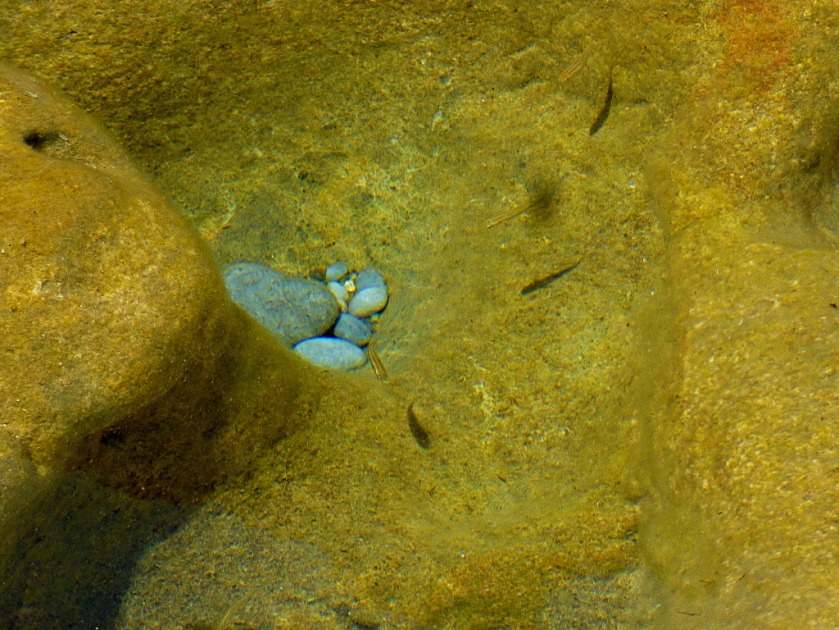
Pictures of ducklings exploring the Gaywood River.
INTRODUCTION
I saw two broods of ducklings while on my way to a Musical Keys session on Saturday.
THE PICTURES
I was delighted to see the ducklings, particularly in that location, on the Gaywood River, where they are far enough from the Great Ouse that they should not fall victim to large and aggressive gulls (yes, gulls do target ducklings).
A detailed look at lot 1047 from James and Sons’ April Auction.
INTRODUCTION
When I did my post about James and Sons’ April Auction I said that I would be devoting a whole post lot 1047, an album of railway postcards that fell to me, and here it is.
IMAGING LOT 1047
I had time for only one close up in addition to a sample shot of four images, so this is what I did:
LOT 1047 IN DETAIL
Here are is a detailed look through look lot 1047:
Sunday Social is a place to mingle, collaborate, and share our blogs. Sunday Social is one more place where you can share a post that maybe didn’t get as much feedback as you were hoping for. Sunday Social is a place to meet new bloggers.
This weekly post is a “wild card” of sorts. There aren’t many rules but I do ask that you follow a few guidelines.
Give honest, constructive feedback, but always be courteous.
If someone takes the time to comment on your post, please return the favor and check out their endeavors too.
How do you participate?
It’s very easy.
Copy and paste the link to your blog or a specific blog post in the comment section below.
Give us a little blurb about your blog, the feedback you are looking for, or if you are just hoping to meet some new blogger buddies.
Some cricket related thoughts, photographs and solutions to my most recent set of problems.
INTRODUCTION
I have a couple of cricket related things to share, a few photographs, and solutions to the puzzles I set in the post “Cricket, Photographs and Puzzles”.
CRICKET
The third round of Championship matches were scheduled to start yesterday, but most did not get underway due to the weather, and those that did get underway were heavily affected by the weather. I have two other things to mention in this section:
WORLD CUP 2019 SCHEDULE
The schedule for the 2019 World Cup is now available to the public (see here for full details). The tournament is as usual spread out over far too long (starting at the end of May but not finishing until mid July) because the organisers will not stand up to the TV people and schedule multiple matches for the same day. In 2015 I put up a post demonstrating how a 16-team tournament could be scheduled to last no more than three and a half weeks, and I reproduce the text from that post below:
THE SUTCLIFFE FORMULA FOR ORGANISING A CRICKET WORLD CUP
There has been much talk at the Cricket World Cup about how the tournament should be formatted, especially given that there are those who would reduce it to a ten team tournament (so utterly harebrained a notion that I do no more than mention it). Several of the associate nations at this world cup have given good accounts of themselves, with Ireland having a strong chance of progressing to the quarter finals.
My formula for a Cricket World Cup would be as follows:
16 teams to play in the tournament. Stage one would involve two groups of eight teams, the top four from each group progressing. Each group would play its matches in sets of four (hence two groups of eight), making seven rounds of matches for each group, to played on alternate days (i.e. this stage would span two weeks, with each side having a day off between matches.
After the group stage would be a three day break before the quarter-finals, which would be played all on one day. After a two day break the semi–finals would take place. Then following another two day break the final would take place. This would mean that the tournament would be played in a period of three and a half weeks (a sensible length for a global tournament).
As for the TV people: If they don’t like it they can lump it.
A SUGGESTED ENGLAND TEAM FOR 1ST TEST MATCH
The early stages of this cricket season have been less than satisfactory, but I have some thoughts about an England team for the first test match nonetheless. In batting order:
A Cook
H Hameed – Mark Stoneman has had ten test matches without producing a serious score, and the fact that he has reached 50 five times but not gone beyond 60 is enough for me to call time on him. Hameed is restored to full fitness (it was injury that ciost him his place after an encouraging start to his test career) and should be given another chance.
J Bairstow, playing as a specialist batsman (he is plenty good enough to do so).
J Root (Captain)
D Malan – one of the few England test batsmen to be able to claim a successful tour of Australia and New Zealand.
B Stokes
M Burgess (wk) – a fine wicketkeeper, and in what is currently a very exclusive club of batsmen who have produced two major scores this season.
S Curran – a left-arm pace bowler who has been knocking on the door. The fact that he bowls with his left-arm will lend variation to the seam attack.
J Leach – finally given a chance in the last test of the New Zealand leg of the tour, he bowled well and must surely be persevered with.
S Broad
J Anderson
D Bess– stranger things have happened than an English pitch in May warranting the selection of two spinners, so Bess gets the nod as 12th man. Incidentally, controversial as it would be, the person who would have miss out were I going the two spinners route is Broad, going for a new-ball combo of Curran and Anderson.
Of the three players who went into the Ashes tour as England players and who do not feature above James Vince may yet redeem himself by producing some huge scores for Hampshire, while Stoneman and Ali are as far as I am concerned firmly in the category of ex-England players.
PHOTOGRAPHIC INTERLUDE
We now change focus, and I am marking this with some photographs. There will be more after I have presented solutions to the problems I left you to tackle.
During the fine weather last week I used the ‘outside study area’.
SOLUTIONS
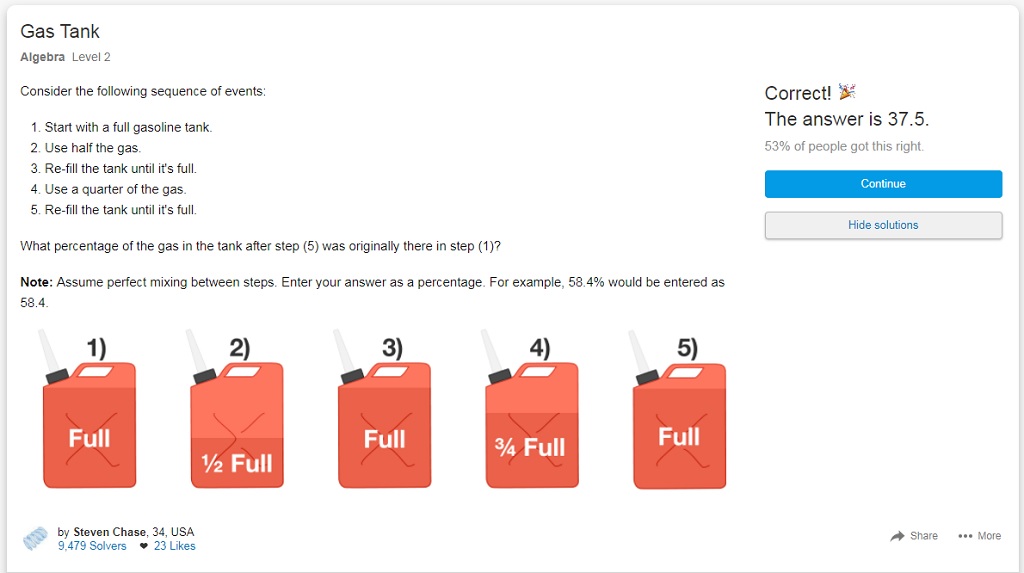
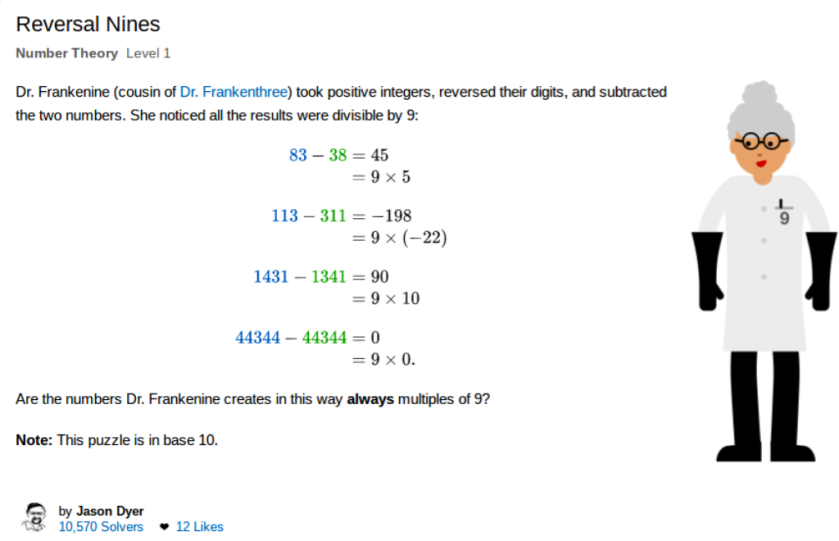
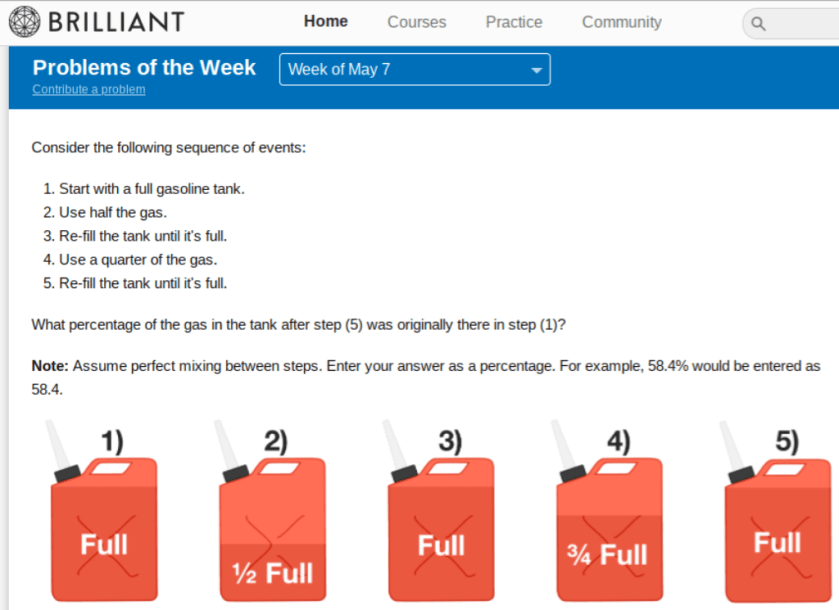
All of these problems were taken from brilliant. The first was:
MATCHSTICKS
First the answer:
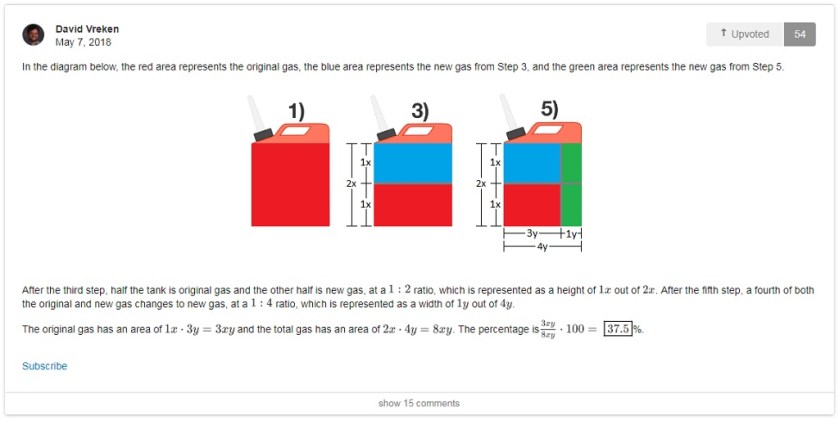
Now here is Marvin Kalngan’s published solution:

SOLUTION 2: CLEAR ICE
Here is the problem:
And the answer:
SOLUTION 3: POLYOMINO
The problem:
The answer:
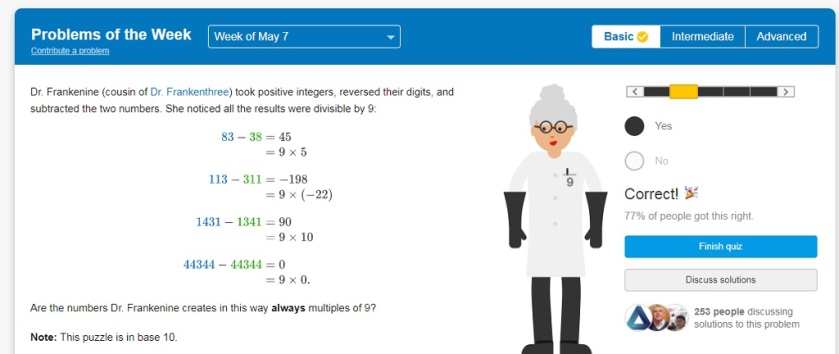
I solved this one the lazy way – I noted that shape B very easily forms a rectangle, and after visualising various assemblages of shape A and noting that none were rectangular I opted for B only given that this is a Basic level problem. Stefan van der Waal published this solution:
SOLUTION 4: CONVERGENCE
The problem:
The answer:
Since the sequence involves numbers between 0 and 1 being multiplied together, and such numbers multiply to produce smaller numbers, the series actually converges on 0.
SOLUTION 5: CUBE
The problem:
The answer:
I solved this as follows:
1)Because you are specifically allowed to rotate the cube you can see every individual block that appears on the outside… 2)This means that the only blocks that can you cannot see are those wholly inside the cube…
3)…Which since the surface layer is 1 block thick, and occurs twice in each direction amounts to a 4 x 4 x 4 cube… 4)…Therefore 64 blocks are invisible, which means that (216-64) = 152 blocks are visible.
To end this section here is Aaa-Laura Gao Gao’s solution:
An account of James and Sons’ April auction – very successful overall, and to my immense relief free of any technical issues.
INTRODUCTION
This week saw James and Sons’ April auction, a three day affair on Tuesday, Wednesday and Thursday. Overall it was very successful, with a couple of disappointments, but lots of sales.
DAY 1: SPORTING MEMORABILIA, BOOKS AND EPHEMERA
In order to avoid being rushed during the preliminaries I caught the first bus of the morning, and got to the shop at 7:10AM. I attended to an urgent query first thing, and then it was time to complete the IT setup. To my great relief there were no hitches at all, and everything was in working order. During this period the auctioneer also briefed me about the May auction, and what was required in terms of imaging a very large quantity of military badges. In view of this I decided that I would have to leave some of the railway photographs unimaged, although it was a necessity from an ethics point of view to image lots 1203-12 as I was intending to buy a couple from that range, and it would not do for there to be any suggestion of influencing things in my favour by not making images available to the public.
We got underway bang on schedule at 10AM, and while there were no headline making prices a decent quantity of the sporting memorabilia did sell. Then came some books, and a few big sales. Lot 260 had an estimate of £50-75 but vigorous internet bidding pushed the final price up to £220.
Lot 260 – old and rare, and a big hit (two images)
Willie Hoppe’s “Thirty Years of Billiards”, lot 279, was in with an estimate of £20-30, but caught the eyes of online bidders to such an extent that the final hammer price was £180!
Lot 279 (three images)
Less dramatically, lot 282, Levi Riso’s “Billiards in a Lighter Vein” had an estimate of £15-20 and actually fetched £30.
Lot 282 (two images)
Lot 302 had an estimate of £10-20 and went for £30.
Lot 302 (three images).
Near the end of the first day lot 340, a curious little item, attracted no interest from anyone other than me:
Lot 340 – my first purchase of this auction.
After lunch I started work on the badges for the May auction.
DAY 2: COINS AND MILITARIA
Another early arrival, and another hitch-free preliminary before going live at 10AM. We had three coin buyers in the room, and some internet interest, so the coins sold well. Lots 475, 501 and 695 all went signifiantly above estimate, and most of of the other coin lots also found buyers.
Lot 475Lot 501 (two images)
Lot 695
We had a 15 minute break between the coins and the militaria, which kicked off in style with lot 700. Lots 704, 705, 711, 719, 727, 761, 802, 823, 824, 828, 830, 831, 832, 837, 838, 844, 846 and 847 all also went significantly over estimate, and almost none of it remained unsold.
Lot 700 (two images) – £470 hammer price
Lot 704 (four images) – est £100-200 actual hammer price £440!
Lot 705 (four images) est £60 – 80, actual £120
Lot 711 (two images) – estimate £15-20, actual price £55
Lot 719 0- estimate £35-40 – actual price £85.This close up of the two rings was in response to a query.Lot 727 – est £15-20, actual £50Lot 761 est £60-80, actual £150.Lot 802 – only just above top estimate, but the buyer was somebody to whom I had sent an image of the reverse of this badge in response to a late query.
Lot 823 – a holster with no gun – est £10-15, actual £28.828831832837838Lot 844 – These images (alo incl those for 846 and 847) were suppliued by the vendor, along with descriptions
846847
DAY THREE: POSTCARDS AND RAILWAY POSTCARDS
I arrived early once again, did some badge imaging and then paid a visit to Tony’s Deli (Thursday is market day in Fakenham, and this food stall is excellent value for money). For the third straight day there were no hitches in the preliminary stage – although I was not especially happy about doing the official sound check at 9:57, not least because I already knew it was working. A couple of early postcard lots (856 and 857) achieved big prices, and most of the postcards found buyers.
Lot 856 sold for £80Lot 857 sold for £100
The other notewaorthy postcard lot was 1047, which became my second purchase of the auction. I will at some stage be giving this lot a whole post to itself, but here are some pictures for the present:
These are modern reproductions rather than original pictures, hence why no one else showed any interest in this item.
An old Metropolitan line train near Wembley.Abstract art featuring a Northern line train of 1959 stock A picture of one of the original ‘gated stock’ trains that ran services on what was then the Great Northern, Piccadilly and Brompton Railway – this scene would have taken place in 1906 or not long after.
The Railway Photographs did not attract any interest, although this was not helped by the fact that the auctioneer was hurrying through them. The only three to sell were all bought by me – lot 1071 (locomotive at Haworth), 1208 and 1209 (respectively arriving at and leaving Mallaig – for more on this journey go here):
The images available to the public (three per lot – nine in total).
And to finish, now that the items are bought an paid for, unwatermarked images taken at home (three in total)
The departure from Mallaig, with Skye visible in the background.
A few more badges imaged for the May auction, and I was able to make my last ever journey on a Stagecoach X29 (on Tuesday, when I return to work it will be on a Lynx Bus number 49, since squillionaire bus company Stagecoach have deemed their Norfolk services insufficiently profitable and bailed out on them),.
A review of Douglas preston and Lincoln Child’s “Beyond The Ice Limit” – an example of the best kind of science fiction.
INTRODUCTION
Welcome to my review of this recent book by the team of Douglas Preston and Lincoln Child. As so often with books reviewed here I found it courtesy of a library (in this case Fakenham library, which is a couple of minutes walk from where I work).
PUTTING THE BOOK IN CONTEXT
Beyond The Ice Limit is a sequel to the The Ice Limit, and also an addition to the Gideon Crew series, but has also been carefully crafted by its authors to work as a stand alone novel.
The phrase ‘ice limit’ refers to those latitudes in which there is sea ice all year round (at least until climate change renders it meaningless).
As this story starts, an alien life form has been slowly developing on the floor of the Southern Ocean for a period of five years, and Eli Glinn, who was inadvertently resonsible for the alien life form taking root, is now leading a mission to kill it before it can destroy the world. One of those who he ropes in is Gideon Crew, who has only a few months left to live.
Glinn and his team head south on a huge research vessel with a two-part plan – first find out whatever they can about the alien life form, and then use that knowledge to destroy it. The reason for this approach is because the ‘seed’ from which this alien emerged was actually a huge meteorite, weighing 25,000 tons, and there is only one such ‘seeds’ could be dispersed into space – by the destruction of the host planet (yes, this alien is the ultimate parasite).
Among their equipment are the components for a nuclear weapon (the explanation for how they have acquired such is that in certain former satellite states anything is for sale if you have sufficient money).
Since the creature is living two miles below the surface of the sea they also have four DSVs (Deep Sea Vehicles – more sophisticated versions of the bathyscaphe) for carrying out research. These for DSVs are painted yellow on the outside, and hence have been named George, Paul, John and Ringo.
Eventually they discover that the alien, dubbed The Baobab, has no brain of its own, but instead commandeers the brains of others (the first clue comes when they decode messages put out in the form of blue whale calls, which translate as “kill me” – a message that the current brain being used by the Baobab manages to put out). They also discover that deep below the sea floor are six egg-like structures which at their centers appear to have human brains. Five of these they can account for, because three headless bodies were discovered in the wreck of the Rolvaag, the ship that was carrying the meteorite when it broke open, and two of their own people have been taken by the Baobab, and an autopsy of one revealed that her brain had been extracted.
Gideon Crew gets launched on what he fully expects to be a suicide mission, to trigger the nuclear device directly above the Rolvaag in order to cause enough of an explosion to destroy the Baobab in its entirety, just before infected crew members (the Baobab sends out parasitic worms which take up residence in the brains of those they infect, causing them work for the Baobab) seize control of the ship.
Unfortunately another infected crew member is in the only intact DSV other than the one Gideon is piloting, and so Gideon prevented from carrying out his intended plan, but the nuclear device ends up on the Rolvaag, and the explosion is (apparently) sufficient to kill the Baobab.
With the Baobab dead, the parasitic worms also die, and the brain of the alien that it had commandeered is finally released, and sends a thank you message to the people of who have released it before it too dies.
SPECULATIONS
While the manner of its arrival and emergence makes it clear that the Baobab is a product of a process that has destroyed at least one planet already (by breaking it up so the ‘seeds’ can be dispersed) there is a question of whether this parasitic system has accounted for even more planets (either because the planet from one of whose inhabitants the Baobab commandeered a brain was not the first to have been subjected to this process, or because some of other ‘seeds’ from that occasion did hatch and destroy their new host planets). The second part of the question is clearly unanswerable, but I would incline to the Baobab being a ‘second generation’ of its type because there are a couple of things that would have made it even better at what it seeks to do than it is:
Although it is somehow able to commandeer brains to make up for its own lack of such it is not able to completely subdue said brains to its requirements – remember the message that the alien brain manages to get to the team.
Although the worms work perfectly in terms of getting everyone they infect to act on behalf of the Baobab they have no capacity for identifying the significance of those they infect – had their first victims been Eli Glinn and Gideon Crew then the mission would almost certainly have been doomed to failure.
FINAL THOUGHTS
This book represents the very best of science fiction: there is nothing that definitely flouts any laws of science, and none of the events are impossible to believe. The story is never less than compelling (I have actually read it twice in the space of a week, and the second reading was at least as satisfying as the first, and with a memory like mine there could have been nothing new in that second reading), and the actual scientific theories that come for discussion are well and interestingly presented. I believe that given its component parts this book could not have been improved on, and hence were I permitted to review in the place where reviews carry a star rating (I am not because the copy I read was not purchased through them) I would unquestionably give it the full five stars.