All Time XIs – Given Names Begin With H

An all time XI of players whose given names begin with H, a number of honourable mentions and a large photo gallery.

Today I introduce an all time XI of players whose given names begin with the letter H, and sundry honourable mentions. By and large the difficulties with this one were caused by an embarrassment of riches. There is one exception as to this rule of which more later.

  1. Herbie Taylor (South Africa, right handed opening batter). This guy averaged 40 opening the batting in test cricket, with WWI disrupting his career and often having little support from the rest of the order. In the last test series contested prior to WWI, with Sydney Barnes running amok, claiming 49 wickets at 10 a piece in four matches before missing the final match due to a dispute over terms and conditions, Taylor scored 509 runs in the series at 50.90. In one innings that series he made 109 in a total of 182 all out, a performance that inspired a piece that appears in “The Faber Book of Cricket” under the title “Herbie Taylor Masters Barnes”, the last two words constituting a claim never made about any other batter.
  2. Herbert Sutcliffe (England, right handed opening batter). The ultimate in big occasion players, as demonstrated by the progression of his averages – 52.02 in FC cricket, 60.73 in test cricket and 66.85 in the cauldron of The Ashes.
  3. Hashim Amla (South Africa, right handed batter). One of the greatest ever – a team comprising players who have represented his country since its readmission to international cricket in the early 1990s would undoubtedly feature him at number three.
  4. Harry Brook (England, right handed batter). Currently has a sensational test record, averaging 62 at that level to date.
  5. *Herbie Collins (Australia, right handed batter, captain). Had a fine test record with the bat, captained successfully at home in 1924-5 and unsuccessfully away in 1926.
  6. Hardik Pandya (India, right handed batter, right arm medium fast bowler). This one was the problem position, and I have filled with a guy whose limited overs record is better than his long form record, though his averages in test cricket are just the right way round.
  7. Heath Streak (Zimbabwe, right arm fast medium bowler, right handed batter). This is probably one place too high in the order for him, but nevertheless, as you will see this XI can hardly be accused of having a long tail.
  8. Hugh Trumble (Australia, right handed batter, off spinner). His tally of 141 wickets in Anglo-Australian tests stood as a record for such contests for 77 years until Dennis Lillee overhauled it. He was also a useful batter, good enough to achieve the double of 1,000 runs and 100 wickets in first class matches on the 1899 tour of England.
  9. Harold Larwood (England, right arm fast bowler, right handed batter). One of only three English fast bowlers to put the wind up the Aussies in their own backyard, along with Tyson in 1954-5 and Snow in 1970-1, and good enough with the bat that he had Ashes scores of 98 and 70 in the course of his career.
  10. Hedley Verity (England, left arm orthodox spinner, right handed batter). 1,956 first class wickets at 14.90, including the cheapest ever first class all-ten, 10-10 v Nottinghamshire in 1932. 144 test wickets at 24.37 in a decade of doped pitches and Bradman’s batting. He averaged over 20 with the bat at test level and 18 at first class level.
  11. +Herbert Strudwick (wicket keeper, right handed batter). Only two wicket keepers made more first class dismissals than him, Bob Taylor and John Murray.

This XI contains a powerful top five, an all rounder, four high quality bowlers all of whom had some level of competence with the bat and an all time great keeper. A team with Larwood, Streak and Pandya to bowl pace/ seam and Verity and Trumble to bowl spin would have little difficulty in taking 20 opposition wickets.

There is no left handed batter, which is very unusual for me. The trouble is that the best left hander to have a given name beginning with H, Henry Nicholls of New Zealand, averages under 40 at test level, and could only be accommodated by dropping one of my top five, or reducing the bowling options by dropping Pandya.

Besides my chosen pair of openers, whose claims I regard as ironclad, Hanif Mohammad of Pakistan, Herschelle Gibbs of South Africa and Harold Gimblett of England would have their advocates, with Gibbs definitely getting in the limited overs XI. Huw Morris of Glamorgan was a fine county opener, and in common with many associated with that particular county was badly treated by the England selectors of his day. In the middle order Hashan Tillekaratne of Sri Lanka deserves a mention. In a limited overs XI Harmanpreet Kaur of India Women would be a shoo-in for a middle order slot. Heinrich Klaasen is another who would feature in a limited overs XI.

Only two other wicket keepers besides Strudwick merit mentions, Hylton Philipson and Harry Wood both of England. Neither were in the same class as Strudwick.

The biggest miss among the bowlers was Harbhajan Singh of India, an off spinner who might have had the slot I opted to give to Trumble. Hugh Tayfield of South Africa was also in the mix for that slot. Among the seamers who had to miss out were Hasan Ali of Pakistan, Hines Johnson of the West Indies and Harry Boyle of Australia. Herbert’Ranji’ Hordern, Australia’s first regular user of the googly merits an honourable mention. Haris Rauf of Pakistan would merit consideration for a T20 XI, but not even for a 50 over squad would he enter the equation, never mind long form. Harold Butler of Nottinghamshire and England was a fine county seamer, but his test appearances were restricted to two.

We end with my usual sign off…

All Time XIs – G for Glory

An all time XI of players whose given names begin with G, a massive honourable mentions section which includes mention of today’s WBBL Challenger match, and a photo gallery.

Today I choose an all time XI of players whose given names begin with Gs. This letter poses particular challenges which I will explain in the course of the post, and there are a vast number of honourable mentions.

  1. *Graeme Smith (South Africa, left handed opening batter, captain). A superb playing record and an outstanding captain.
  2. Gordon Greenidge (West Indies, right handed opening batter). One half of the West Indies greatest ever opening pair. His highlights include twin tons on the most difficult surface of the 1976 series, two contrasting double centuries against England in 1984, one a brutal match winning knock at Lord’s after England had the temerity to declare their second innings closed on the final morning (and some reckoned they should have done so earlier), and the other a ten hour marathon innings which put his side fully in control of the match at Old Trafford.
  3. George Headley (West Indies, right handed batter). Nicknamed ‘Atlas’ because he seemed to carry his side on his shoulders, he is among the select few to have played over 20 test matches and have an average of above 60 – 60.83.
  4. Graeme Pollock (South Africa, left handed batter). Another member of the select club referred to above. In what proved to be South Africa’s last series before isolation he set an individual scoring record for that country with 274 against Australia. That score has been beaten by four players since South Africa’s readmission – Daryll Cullinan, Gary Kirsten, Graeme Smith and Hashim Amla.
  5. Greg Chappell (Australia, right handed batter, occasional medium pacer, occasional leg spinner). A superb batter, one of the safest slip fielders the game ever saw and a part time bowler of two types.
  6. Garry Sobers (West Indies, left handed batter, left arm bowler of every type known to cricket). The most complete player the game has ever seen, and therefore, as always when he is eligible for selection, the first name on the team sheet for this XI.
  7. Gilbert Jessop (England, right handed batter, right arm fast bowler). The ultimate X-factor player, with an approach to batting ideally suited to someone coming at number seven in a strong side.
  8. +George Duckworth (England, wicket keeper, right handed batter). A great wicket keeper, and in a side with the batting guns possessed by this one I am not worried about his limited skill in the latter department.
  9. George Lohmann (England, right arm medium fast bowler, right handed batter). Of bowlers to have taken at least 100 wickets he has the best average by some way, a barely believable 10.75, and also the best strike rate – a wicket every five and a half overs on average.
  10. George Dennett (Gloucestershire, left arm orthodox spinner, left handed batter). Never capped for England, but 2,151 FC scalps at 19.82 a piece. England were exceptionally well served by left arm spinners in his playing days – Rhodes, Blythe, the all round skills of Frank Woolley and Roy Kilner etc.
  11. Glenn McGrath (Australia, right arm fast bowler, right handed batter). We have our ‘enforcer’, one of the greatest of all time.

This side has a stellar top six, including the most complete player the game has ever known, the ultimate in x-factor players at number seven, a great keeper and three great specialist bowlers. The bowling does not have quite the dazzling array of options possessed by some of my sides, but I do not think that McGrath, Lohmann, Dennett, Jessop and Sobers would be likely to find capturing 20 opposition wickets beyond them on any surface.

This will require a systematic approach, so I shall work my way down the order…

Glenn Turner, the only New Zealander ever to score 100 first class hundreds is the biggest miss here, but Gautam Gambhir of India would also have his advocates, Gary Kirsten of South Africa deserves a mention (and can have the head coach job that England infamously refused to give him allegedly because his power point presentation wasn’t good enough) and George Gunn, who played for England many years ago, and absolutely did things his way also deserves a name check.

These guys missed out because of the stellar cast available to fill these slots. Geoff Howarth of New Zealand, Gundappa Viswanath of India and Gilbert Parkhouse of England would all have merited serious consideration for a letter less well stocked with world beating batters, but none can get in here.

The presence of five of the greatest ever specialist batters and Sobers limited the scope for the inclusion of all rounders. Luminaries such as George Giffen (Australia, right handed batter, off spinner), George Hirst (England, right handed batter, left arm fast medium) and two leg spinning all rounders, Greville Stevens (England) and Garnet Lee (Nottinghamshire, Derbyshire) all missed out. Had I been picking with limited overs in mind Glenn Maxwell of Australia would have been one of the first names on the team sheet, but I preferred Jessop at seven, and the only one of the top six who I could even have contemplated not picking was Greg Chappell. George Pope of Derbyshire and England was a good enough all rounder to merit a mention as well. George Ulyett, who played for England in their very early days and had an HS of 149 and a BB of 7-36 was also unlucky.

Godfrey Evans was the nearest challenger to Duckworth, wkith Graham Manou, a fine keeper who was scurvily treated by the Aussie selectors of his day and Gil Langley of Australia also in the mix.

George Simpson-Hayward, the last underarm bowler to make a serious impression at test level (over 20 wickets in his only test series, against South Africa in South Africa) was close to dislodging Dennett. George Macaulay of Yorkshire and England never managed much at test level.

It is in this category that we meet the greatest number of top cricketers to miss out for this letter. Garth Le Roux, the giant South African quick of the 1970s and 80s never got to play test cricket, otherwise he might well have had a slot. Graham McKenzie, the best Aussie pacer between the retirement of Davidson and the rise of Lillee was also close. George John was rated by CLR James as the finest of the early West Indian fast bowlers, but he was finished before they started playing test cricket. Gideon Elliott who had a very brief but freakishly successful fast bowling career in the late 1850s and early 1860s (48 wickets at less than 5 a piece, including innings figures of 9-2) deserves a mention. George “Tear ’em” Tarrant was a hugely successful fast bowler in the era immediately before the rise of WG Grace, but the way the good Doctor quelled those who before he came along had intimidated by dint of sheer pace on often treacherous pitches explains why I overlooked him. Had I not had Sobers to perform the role, two candidates for the role of left arm pacer would have been Gary Gilmour (Australia) and a gamble on George Garton, yet to establish himself as an England player. George Freeman, whose 288 FC scalps came at less than 10 a piece was another in the mix. George Geary might have had the slot I gave to Lohmann, but my feeling is that the difference between their test records is too great to be put down solely to the flat pitches on which Geary had to operate at that level. Glenn Chapple of Lancashire is a what might have been – injuries prevented him from gaining international recognition, and as fine a player as he was in domestic cricket I cannot justify dropping either Lohmann or the other Glenn to make way for him.

I was not able to include a female in this XI, but the Challenger in the Women’s BBL took place today, and Grace Harris with a superb innings, Georgia Redmayne with a great display of wicket keeping, and Georgia Voll with a stellar bowling performance all had big days out in a superb win for Brisbane Heat over Perth Scorchers, while Georgia Adams, a spin bowling all rounder, is also making a name for herself. Of the players I have named the most likely to earn a place in this squad in years to come is Redmayne, who if she continues to keep the way she did today could challenge Duckworth.

I have doubtless missed some of the riches available for this XI, though I do remind people wishing to comment that I have declared a policy of not selecting anyone who made rebel tours of Apartheid South Africa. Please feel free to make suggestions, so long as you examine the effect they would have on the balance of the side. With five batters and a batting all rounder having ironclad cases for inclusion fitting in enough bowling is a challenge for this letter.

My usual sign off…

All Time XIs – Given Names Begin With F

An all time XI of players whose given names begin with F and a photo gallery.

Today’s post sees an all time XI of players whose given names begin with F make their appearance. There will be plenty of honourable mentions as well.

  1. Frank Woolley (England, left handed batter, left arm orthodox spin bowler). The only player ever to complete the career triple of 10,000 runs, 1,000 wickets and 1,000 catches in first class matches.
  2. *Frank Worrell (West Indies, right handed batter, left arm medium fast bowler, captain). One of the finest captains in the game’s history and a test batting average of 49 as well.
  3. Frank Tarrant (Middlesex, left handed batter, left arm slow medium bowler). A habitual opener for Middlesex, and a very fine bowler as well.
  4. Fawad Alam (Pakistan, left handed batter). Someone who when he gets in takes a lot of getting out – five of the seven 50+ scores he amassed at test level were centuries, a Bradmanesque conversion rate.
  5. Francois ‘Faf’ du Plessis (South Africa, right handed batter). Just over 4,000 test runs at an average of 40.
  6. +Farokh Engineer (India, wicket keeper, right handed batter). An attacking batter and an excellent keeper. He once scored 94 runs in a morning session of a test match.
  7. Frank Foster (England, left arm fast medium bowler, right handed batter). Though I have listed his bowling first among his attributes he was a genuine all rounder, good enough with the willow to be Warwickshire’s first ever triple century maker. Even at test level his averages are the right way round – 23.57 with the bat and 20.57 with the ball.
  8. Fred Titmus (England, off spinner, right handed batter). A fine off spinner and plenty good enough with the willow to come in at number eight.
  9. Fred Trueman (England, right arm fast bowler, right handed batter). The first ever to capture 300 test wickets. His 307 test scalps came in 67 matches, and at an average of 21.57 each. He was not entirely without merit as a batter either, amassing three first class centuries over the years.
  10. Frederick Spofforth (Australia, right arm fast medium bowler, right handed batter). In 1878 pace alone sufficed for him to destroy a strong MCC batting line up at Lords (MCC 33 and 19 all out in their two innings, Spofforth 10-20 in the match). Four years later at The Oval he helped to inaugurate The Ashes by taking 14 wickets in the match with a mixture of pace and guile as England lost a low scoring match by seven runs. WG Grace, whose 32 in the final innings was one of only two 30+ individual scores in the whole match was fourth out with a mere 32 further runs needed, but a combination of English nerves and the sheer relentlessness of “the Demon” proved sufficient to put this beyond them.
  11. Fazal Mahmood (Pakistan, right arm fast medium bowler, right handed batter). Pakistan’s first great test match bowler, star of their win at The Oval in 1954. His great weapon was the leg cutter, which led to comparisons with England’s Alec Bedser, who deployed the same weapon to great effect.

This side has decent batting strength, with a strong top five, Engineer and Foster both definitely counting as all rounders, and Titmus a capable number eight. It also boasts a stellar bowling line up, with Spofforth, Trueman, Fazal Mahmood and Foster a fine pace/seam/swing/cut quartet, Titmus and Woolley to provide orthodox spin and Tarrant’s slow medium also available as an extra variation. Fazal Mahmood, given his expert usage of the leg cutter, can also be said to attend to the leg spinner’s angle of attack.

Had I been picking with limited overs cricket in mind Fakhar Zaman would have been one of the first names on the team sheet. In long form cricket he would be a more dubious asset and therefore I have omitted him. Faoud Bacchus of the West Indies was a possible for a batting slot, but although he did score a test match 250 that was his only three figure score at that level. Francis Ford had a decent first class batting record by late 19th century standards, but at test level he was an unequivocal failure, with a best score at that level of a mere 48. Fred Grace was among the leading batters of the 1870s, but his death at the age of 29 after one England appearance meant that there is no way of assessing his test capabilities. Frank Chester seemed destined for the top before a war time injury ended his playing career. He would certainly by one of the umpires, having stood in a then record 48 tests in the course of his second cricket career, and his colleague would be Frank Lee. Freddie Calthorpe was a decent county all rounder, but save for having the embarrassment of leaving what was supposed to be a ‘timeless test’ with a draw in a match his side had bossed (he deemed a first innings advantage of 563 insufficient to enforce the follow on, and a combination of two days of rain and the timing of England’s boat home punished him for his timidity) he did little of note at international level. Another Freddie, Brown of Surrey and Northants, was similarly not quite good enough as a player, though he handled himself better as a captain than did Calthorpe. There are cartloads of seam/ pace bowlers who were in the mix: Frank Farrands, a fine fast bowler of the 1870s, Frank Laver, one of the first great swing bowlers, Fanie de Villiers (good record for South Africa in the 1990s, but loses points for provoking Devon Malcolm into producing that 9-57 at The Oval in 1994) and current Afghanistan bowler Fazalhaq Farooqi who would be a strong candidate for a limited overs side being the most obvious. Feroze Khushi, a talented young middle order batter for Essex, is not there yet, but there are promising signs, and he may force his way in in due course.

It has not been an ideal day for photography. to put it mildly, but I do have enough for my usual sign off…

All Time XIs – Given Names Beginning With E

An all time XI of cricketers whose given names begin with the letter E and a large photo gallery.

Today I pick an all time XI of players whose given names begin with the letter E. A couple of selections may well raise eyebrows but I reckon all are well justified. There will be an honourable mentions section.

  1. Eric Rowan (South Africa, right handed opening batter). At a time when South Africa weren’t the strongest he managed to record a test average of 43.66. His highest score was 236, which at the time was the highest individual score for South Africa, beaten by Graeme Pollock in the last series of South Africa’s first incarnation as a test nation. There was a famous occasion when notified while a match was in progress that he had been dropped for the next one he proceeded to show the selectors what they were missing by scoring a match saving 156* in the final innings, batting right through the final day.
  2. EM Grace (England, right handed opening batter, lob bowler). He was the first member of his family to be an acknowledged cricket marvel (his eldest brother Henry first developed the family’s ruling passion, and his love for the game led to their father and an uncle, Alfred Pocock, coaching the whole family). His bowling achieved some great successes as well – on one occasion he accounted for the famously hard to shift Harry ‘Not at Dorking’ Jupp with a steepling lob that landed exactly on top of the stumps, dislodging a bail.
  3. Everton Weekes (West Indies, right handed batter). One of the greatest batters ever to play the game.
  4. Eddie Paynter (England, left handed batter). The highest career average of any left hander to have played 20 or more tests, 59.23. That included double centuries against both Australia and South Africa. His most famous innings was an 83 in stifling heat at Brisbane, when he was suffering severe tonsilitis and rose from his hospital bed in England’s hour of need, which helped England secure the victory that confirmed them as winners of the 1932-3 Ashes.
  5. Elias ‘Patsy’ Hendren (England, right handed batter). Only Hobbs scored more than his 170 first class hundreds, and only Hobbs and Woolley exceeded his 57,610 first class runs. One record which remains his is most FC centuries at a single ground, 74 of his having come at Lord’s.
  6. *Eddie Barlow (South Africa, right handed batter, right arm medium pace bowler, captain). He averaged 45 with the bat at test level, and while his bowling was not much used at that level his FC bowling figures stack up well. He was an inspiring captain, in the 1970s he invigorated a Derbyshire side who had grown used to propping up the championship table and led them to some very respectable finishes.
  7. +Eleanor Threlkeld (England, wicket keeper, right handed batter). One of the best contemporary wicket keepers, and a fine batter as well, as evidenced by the match winning hundred she scored for Thunder against Storm in the Rachael Heyhoe-Flint Trophy (50 overs per side, the longest non-test match format played by women) on September 16 this year.
  8. Ernie Robson (Somerset, right arm medium fast bowler, right handed batter). An excellent bowling all rounder. His outswing was rated by Jack Hobbs, aka The Master, as the most difficult bowling he ever faced.
  9. Ernest Jones (Australia, right arm fast bowler, right handed batter). One of the fastest bowlers of the 1890s, he once famously sent a ball through WG’s beard.
  10. Erapalli Prasanna (India, off spinner, right handed batter). One of four spinners to regularly play for India in the 1970s (he, Bedi and Chandrasekhar were indisputably world class practitioners, the fourth member of the quartet, Srinisvaraghavan Venkataraghavan was a cut below the rest).
  11. Eric Hollies (England, leg spinner, right handed batter). Possessor of the all time worst wrong way round disparity between runs scored and wickets taken in FC cricket (1,673 FC runs at 5.00, boosted by 282 not outs in 616 innings, and 2,323 Fc wickets taken at 20.94 each). Also the man who stopped Bradman from recording a final test average in three figures, bowling him for a duck in his last test innings, which turned 6,996 runs at 101.39 into 6,996 at 99.94.

This side has a powerful top five, a quality all rounder, a quality keeper who can bat, a fine bowling all rounder and three splendid and contrasting specialist bowlers. A bowling attack that has Jones, Robson and Barlow to bowl pace/ seam, Hollies and Prasanna to bowl spin, and EM Grace as a wildcard has both depth and variety.

The opening batters had few challengers – Eve Jones’ left handedness bringing her into the picture, but not being sufficient to dislodge either of my choices. On a spinning pitch Eddie Barlow would give way to Enid Bakewell, an all rounder whose bowling stock in trade was left arm orthodox spin, with EM Grace taking the captaincy. Ernest Tyldesley was the best batter to miss out, a member of the 100 FC hundreds club and possessor of a very respectable test record. Two Eds, Joyce (Ireland/ England/ Ireland) and Smith (England) were respectable rather than outstanding. The main keeping rivals to Threlkeld were EFS Tylecote who as a schoolboy in 1868 took advantage of the batting friendly conditions of Clifton College to score the first recorded quadruple century in any form of cricket, 404* in a house match (31 years later another schoolboy, AEJ Collins, scored 628* in a house match at the same ground), and going on to keep wicket for England, Edward Pooley who should have been England’s first ever keeper but was cooling his heels in a New Zealand prison when the appointed time arrived and EJ ‘Tiger’ Smith of Warwickshire and England. Ernie McCormick was fast but erratic, and his 1938 tour of England was ruined by no-ball problems. Ernest Toshack had his moments as a left arm medium pacer, including taking 5-2 in an innings against England but did not have a weighty enough record to garner more than an honourable mention. Eiulf Peter ‘Buster’ Nupen, the only test cricketer to date to have been born in Norway, would be in the mix if the match was to be played on a matting wicket, but not otherwise. Edwin Tyler, a left arm orthodox spinner, once took an all-ten for Somerset, but falls short overall. Edward Wainwright of Yotrkshire and England had a good record as an off spinning all rounder in FC cricket, but failed to take a wicket in any of his five test appearances, finding the Australian pitches of 1897-8 unresponsive to his type of bowling, setting a trend that has continued to the present day when it comes to English off spinners in Australia. Ellyse Perry is a magnificent cricketer, but for this exercise she could only be picked if her batting was good enough on its own, and given the strength of the upper and middle order of this side I do not think it is. I end with a ‘what might have been’ – Edwin Boaler Alletson (Nottinghamshire). At Hove in 1911 he reached lunch on the final day on 47* from 50 minutes, which appeared to be merely delaying the inevitable. 40 minutes after the resumption he holed out in the deep – for 189! Those last 142 came out of a last wicket stand of 152 with Bill Riley, which left Sussex grateful to emerge with a draw after they lost a few early wickets in their second innings. This was Alletson’s maiden ton, and it ended up being a first and only for him. Had that innings given his career the boost it should he might well have had the slot I gave to Ernie Robson, but it proved a flash in the pan, and nor was his bowling that impressive overall.

My usual sign off…

All Time XIs – Given Names Beginning With D

A look at some of the greatest cricketers to have given names beginning with D and a large photo gallery.

Today I select an all time XI of players whose given names begin with D. There will be quite a few honourable mentions.

  1. David Warner (Australia, left handed opening batter). Few openers with given names beginning with D make a really strong case for inclusion, and in spite of various question marks (lack of runs in spin friendly India and Sri Lanka, ditto in swing and seam friendly England and New Zealand) about him this guy has to have the number one slot in this XI.
  2. Desmond Haynes (West Indies, right handed opening batter). His test record is excellent, and he habitually opened with a more attack minded partner in Gordon Greenidge. He would be an excellent foil to Warner.
  3. *Donald Bradman (Australia, handed batter, captain). Indisputably the best test batter there has ever been, and a splendid captain into the bargain.
  4. David Gower (England, left handed batter). A stylish left hander who also had enough steel to score 8,000 test runs at an average of 44.
  5. Denis Compton (England, right handed batter, left arm wrist spinner). Lost six years to WWII, was dogged for most of his post-war career by knee troubles and still had a superb record at the highest level.
  6. Dane van Niekerk (South Africa, right handed batter, leg spinner). The most controversial selection I have yet made in this latest blogging venture. She has not had the opportunity to play a test match, but her record in ODIs is better than her record in T20Is, which suggests that longer formats suit her. She is an attacking batter and a big spinner of the ball.
  7. +Don Tallon (Australia, wicket keeper, right handed batter). One of the greatest keepers ever to play the game and a more than adequate middle order batter. My chosen captain would be the first to endorse my choice of wicket keeper, since he rated Tallon the best he ever saw in action.
  8. Daniel Vettori (New Zealand, left handed batter, left arm orthodox spinner). New Zealand has not produced vast numbers of quality spin bowlers, but he was one of them. In 1999 as a youngster he played a huge role in consigning England to the home series loss that put them at the bottom of the world test rankings.
  9. Dennis Lillee (Australia, right arm fast bowler, right handed batter). One of the greatest fast bowlers ever to play the game.
  10. Dale Steyn (South Africa, right arm fast bowler, right handed batter). Even South Africa, which has produced a wealth of quality pacers, has had precious few to match Dale Steyn.
  11. David Harris (Hambledon, right arm fast bowler, right handed batter). The game’s first unarguably great bowler, largely responsible for the fact that catches are now credited to the bowler (simply because he showed precisely how bowlers can bowl with the specific intention of generating catches in mind). He would need a law change to be able to bowl in the style that he did back then, a matter I have covered in previous blog posts. My final word on this selection refers to the latter stages of his career: he was crippled by gout, but was so important to his team that they used to bring an armchair on to the field so that he could rest his feet when not actually bowling.

This side has strong batting, and with Lillee, Steyn and Harris to bowl pace and two contrasting front line spinners in Vettori and van Niekerk plus Compton as back up it is also well served in the spin department. Add to this a great captain and an outstanding keeper and you see a side with all bases covered.

Before I go into general honourable mentions there is a particular slot to be given special treatment…

There is of course someone who regularly batted at number six for Australia with distinction and whose given name begins with D: Doug Walters. The reason for my omission of Walters is down to the balance of the side – Walters was a batter who bowled, while I wanted an all rounder, and a spin bowling all rounder for preference. Within the brief of ‘spin bowling all rounder’ the main rival to van Niekerk was David Holford of the West Indies, but he did not really measure up in either department. Dattu Phadkar of India, a middle order batter and a bowler of fast medium or off spin according to circumstances had a fine FC record, but his international record was decidedly ordinary. Deandra Dottin of the West Indies was a seam bowling all rounder, and there was a significant decline between her records at T20I and ODI cricket, which suggests that genuinely long form cricket would not suit her at all. My contention here is a simple one: of all those I could have selected for this slot Dane van Niekerk most closely meets the specific requirements of this XI.

Don Kenyon was a fine opener for Worcestershire, but a failure for England. Deep Dasgupta once scored a century for India against England as an opener, but his presence in that role said more about the nature of the pitches and of the fact that the best Indian batters of the time disliked opening than it did about his skills. His wicket keeping is a red herring in this context since he ranks several miles below Tallon in that department. Two other Aussie batters besides Walters who had to be overlooked were Dean Jones and Darren Lehmann. Dilip Vengsarkar of India had a good test record, and was among the few of his day who fared better against the West Indies than he did overall, but no way could he displace Compton. Daryl Cullinan of South Africa was another who was unlucky to miss out. Duleep Mendis of Sri Lanka did enough to earn a mention here but not enough to force his way in. Daryl Mitchell of New Zealand is a fine middle order batter. Douglas Jardine was a good player and a great captain. Denis Lindsay of South Africa had one great series with the bat against Australia, but that was not enough to displace Tallon as keeper. Derek Shackleton was a superbly reliable and consistent medium pacer, taking 100 or more FC wickets in each of 20 successive English seasons, and would get the nod for the third seamer’s slot if I were to be debarred from selecting Harris. Devon Malcolm was fast, and on his day, as when he took 9-57 against South Africa he could be unplayable, but when it wasn’t his day he could also go round the park. Doug Wright, the Kent and England leg spinner of the immediate post war era was too erratic – in between the moments of devastation, which included taking a record seven first class hat tricks he could leak runs at an alarming rate. Doug Bollinger had some good moments, but his performance at Adelaide in 2010 when he could barely raise a gallop sent my estimation of him through the floor. Dushmantha Chameera of Sri Lanka is as yet unproven, but may force his way in eventually, as may Dilshan Madushanka. David ‘Butch’ White of Hampshire had some great moments while not quite meriting selection.

My usual sign off…

All Time XIs – Given Names Beginning With C

An all time XI of players whose given names begin with C with a lot of honourable mentions, a mention of my recent auction purchases, a brief book review and my usual photo gallery to end.

In addition to the main feature this post has a couple of bonus features before the usual sign off. Today we look at cricketers whose given names begin with C, and we will have a huge number of honourable mentions after the main XI have been introduced.

  1. Chris Gayle (West Indies, left handed batter, occasional off spinner). Better known for his exploits in limited overs cricket, Chris Gayle still had a very fine test record, including two triple centuries at that level. I was at the Adelaide Oval when he scored an incredible 167 against Australia that should have set up a classic finish. Unfortunately Australian skipper Ponting took the cowards option when faced with an ask of 330 off 81 overs against a less than formidable attack and settled for the draw, Australia making no effort at any stage to get on terms with the required rate.
  2. Cyril Washbrook (England, right handed batter). He averaged 42.81 over a career that spanned 37 test matches spread over 19 years, slightly up on his overall FC average of 42.67. The 359 that he and Len Hutton put on together at Ellis Park, Johannesburg remains England’s record opening partnership three quarters of a century on.
  3. Colin Cowdrey (England, right handed batter, occasional leg spinner). The first player ever to be awarded 100 test caps, and holder at one time of the England record tally of test career runs with 7,624.
  4. Clyde Walcott (West Indies, right handed batter, occasional wicket keeper, occasional medium pacer). Averaged over 56 at test level.
  5. *Clive Lloyd (West Indies, left handed batter, captain). A world class batter, and one of the most successful of all test captains.
  6. Clive Rice (Nottinghamshire, right handed batter, right arm fast medium bowler). His native South Africa being banned from international cricket for almost his entire career meant that he never got to play test cricket, but I have decided to give him the benefit of the doubt on this occasion and select him in the all rounders slot based on his great FC record.
  7. +Chris Read (England, wicket keeper, right handed batter). A great keeper and a useful middle order batter, scandalously treated by the England selectors of his day.
  8. Curtly Ambrose (West indies, right arm fast bowler, left handed batter). One half of a legendary new ball duo who are both in this XI.
  9. Colin Blythe (England, left arm orthodox spinner, right handed batter). One of the greatest bowlers of his type ever to play the game. In the years running up to WWI Kent won four championships, largely propelled there by a contrasting opening bowling pair of Blythe and the right arm fast bowler Arthur Fielder. In 1907 Blythe destroyed Northamptonshire with match figures of 17-48, only beaten in FC cricket by Jim Laker’s 19-90 at Old Trafford in 1956, and according to team mate Frank Woolley in “King of Games” Blythe was within an ace of taking all-20 that match.
  10. Courtney Walsh (West Indies, right arm fast bowler, right handed batter). Curtly Ambrose’s regular new ball partner, and during their long association he became the first ever to claim 500 test wickets, finishing with 519.
  11. Clarrie Grimmett (Australia, leg spinner, right handed batter). A man who had to leave his native land and then cross two state boundaries in his adopted country to find cricketing fulfilment and still became the first to take 200 test wickets, finishing with 216 scalps from just 37 appearances. In the last full Sheffield Shield season before WWII, with his 50th birthday not far distant, he claimed a competition record 73 scalps. The Flipper, now considered an essential part of any wrist spinner’s armoury, was very largely his creation.

This side has a stellar top six including a genuine all rounder, a keeper who can bat and four great and well varied specialist bowlers. The proven new-ball combo of Ambrose and Walsh has Rice to offer pace back up, and the spin pairing were two of the best such ever to play the game. On any surface I would back this side to take 20 wickets without any great trouble.

This will be a long section. First, to address cricket’s largest fan base, I must acknowledge the sterling performances of Cheteshwar Pujara as a number three. However, as good as he has been in that role both for India and in domestic cricket I do not believe that he dislodges the first player ever to play 100 test matches.

Among the openers who challenged for inclusion without in my view quite being good enough were Charles Bannerman, CB Fry, Cyril Walters, Chris Rogers and Charlotte Edwards, with the last name being naturally a shoo-in for the head coach’s position. Some might mention Chris Broad in this context, but I take a dim view of those who chose to sign up for rebel tours of Apartheid South Africa. Had I been picking with limited overs in mind Chamari Athapaththu would have merited consideration as well.

Claire Taylor had a magnificent record for England Women, averaging over 40 in both tests and ODIs. Two Colins, de Grandhomme of New Zealand and Bland of South Africa were fine middle order batters, and the latter is this side’s designated fielding sub. Clem Hill was at one time the all time leading scorer of test runs, until Jack Hobbs overhauled his tally, but he cannot displace Clive Lloyd. Charith Asalanka of Sri Lanka may eventually force his way in, but he is not there yet. Chloe Tryon, the big hitting South African who bowls a bit of left arm spin, would merit consideration were I picking with limited overs in mind. Two West Indians, Carl Hooper and Carlisle Best, both missed out due to not having enough substance to go with their style.

Among those who missed out on the gauntlets due to the presence of Read were Colin Metson, Carlton Baugh and Carla Rudd.

Charles Townsend, a left handed batter and a leg spin bowler, missed out on the all rounders slot because I preferred to pick a pacer for that slot and include Grimmett in the XI. Chris Woakes and Chris Cairns were both a little short of the necessary batting credentials to take the slot. On a really raging turner CK Nayudu, the Indian off spinning all rounder might take Rice’s place. The abrasive Cecil Pepper was another leg spinning all rounder who could not be accommodated, though he gets an umpiring gig.

Among the specialist seam/ pace bowlers to miss out were Craig McDermott, Chris Tremlett, Chris Old, Chaminda Vaas, Craig Matthews and Carl Rackemann (he like Bruce Reid mentioned a couple of days ago was rarely fit for long enough to build up a record of much substance). Charles ‘The Terror’ Turner had a sensational record, but 1880s pitches were generally much more favourable to bowlers than they became later.

Cecil Parkin and Charlie Dean rank as the two finest specialist off spinners to have had given names beginning with C. For a limited overs side Collins Obuya, the Kenyan off spinner, would merit consideration.

It was auction week at James and Sons, and I had placed advance bids on three items which looked likely to go cheap and were of interest to me. In the event I secured all three for very little, and an opportunistic bid on a fourth item was also successful.

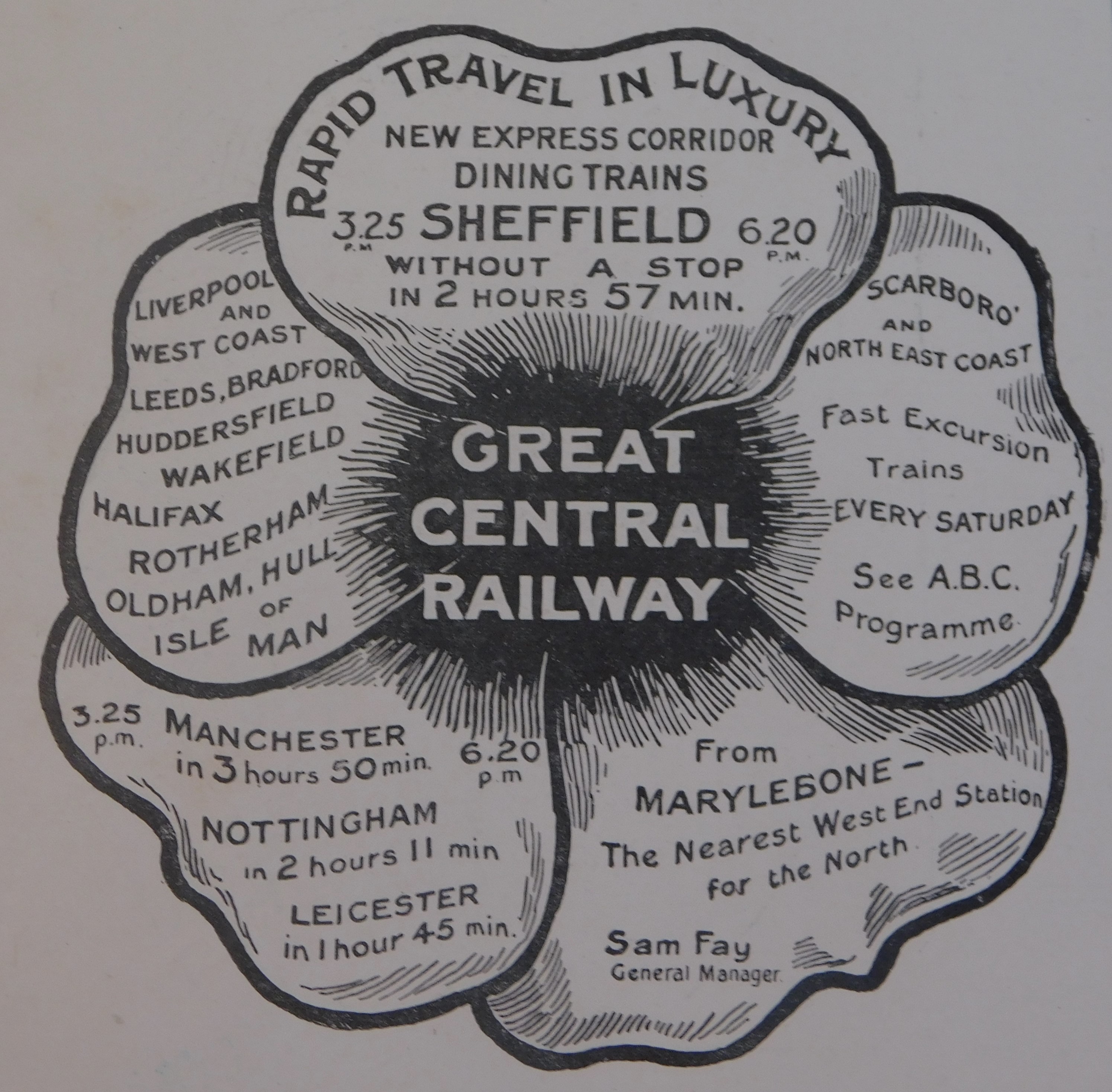
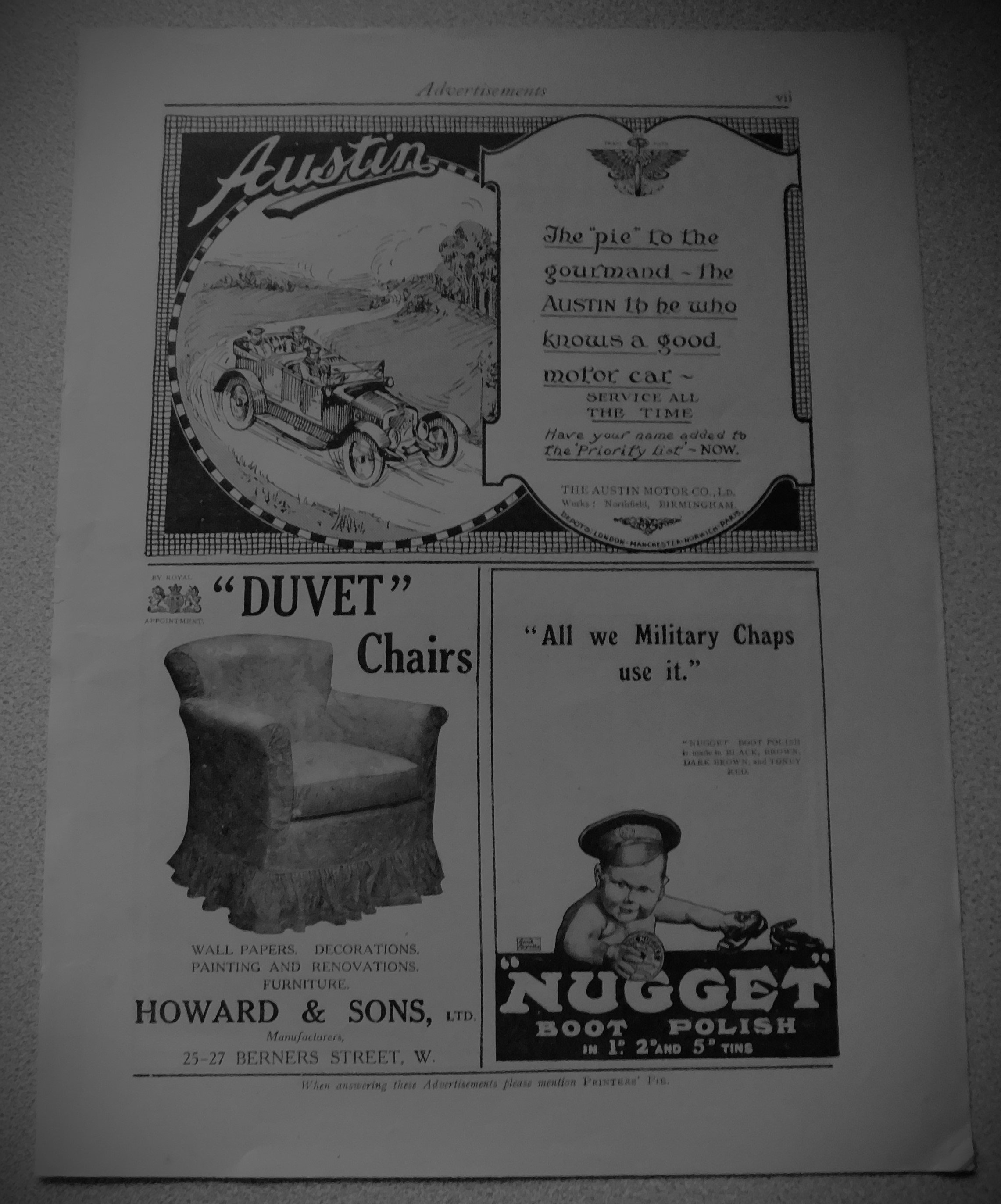
Had I not been the one to image this item it would have been unsold, because anyone else imaging it would have imaged only the bit described in the catalogue listing. Fortunately, I looked and imaged more closely. The images available to online bidders were as follows:

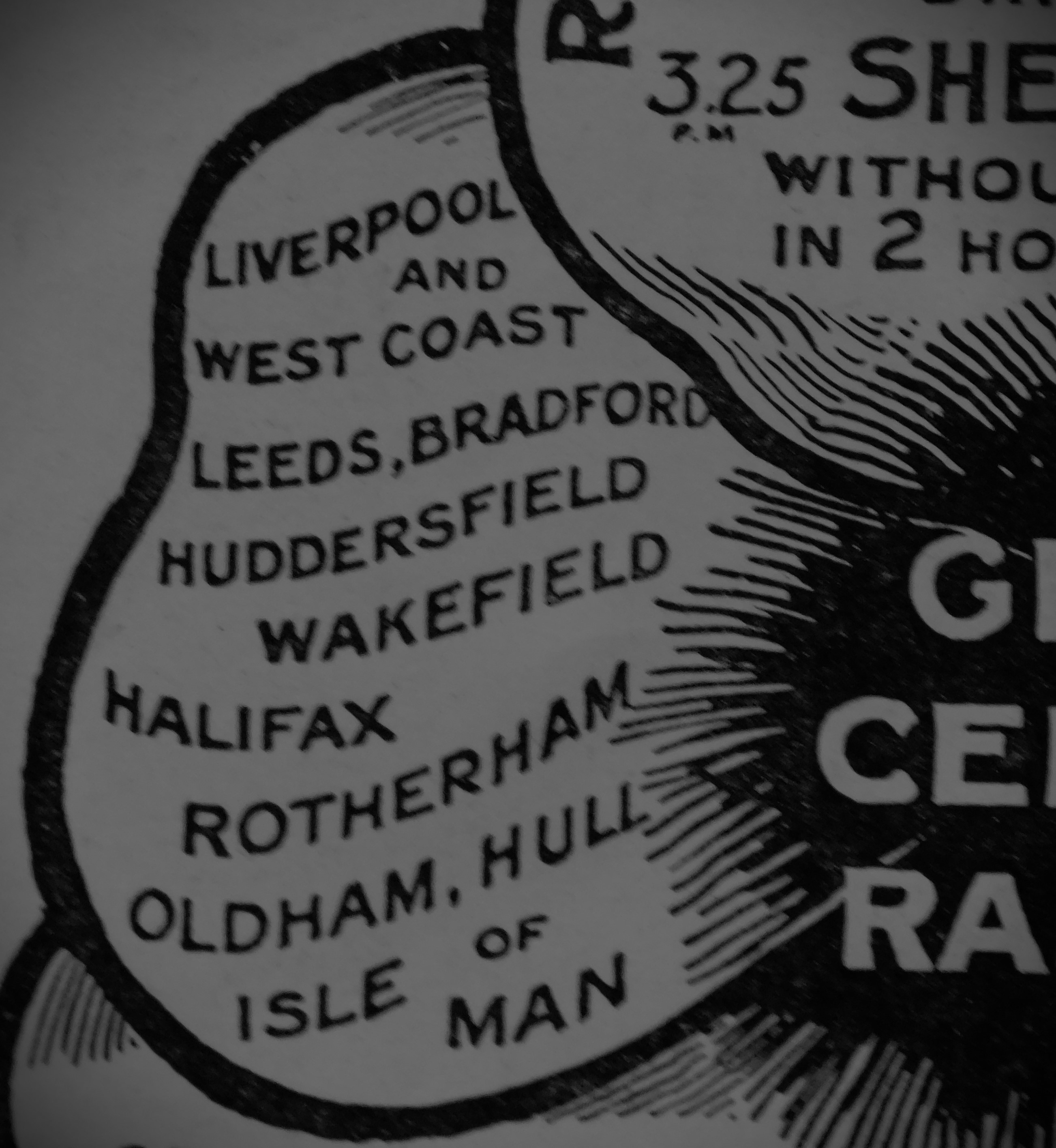
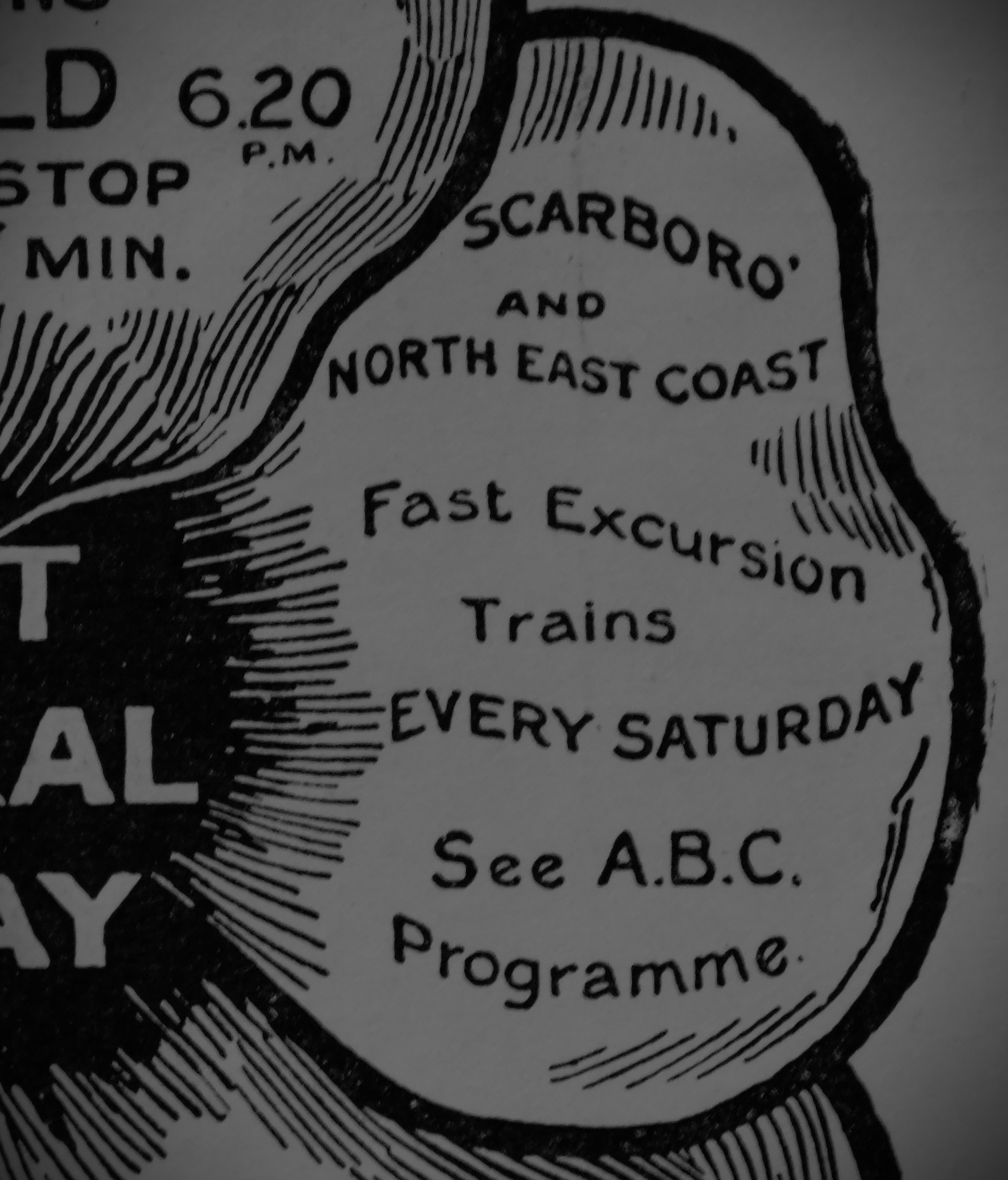
My interest in the Great Central Railway advert was the only interest of any kind shown in this lot, which was duly knocked down to me. My treatment of the item since taking possession of it reflects my reason for buying it, as shown by the following pictures…

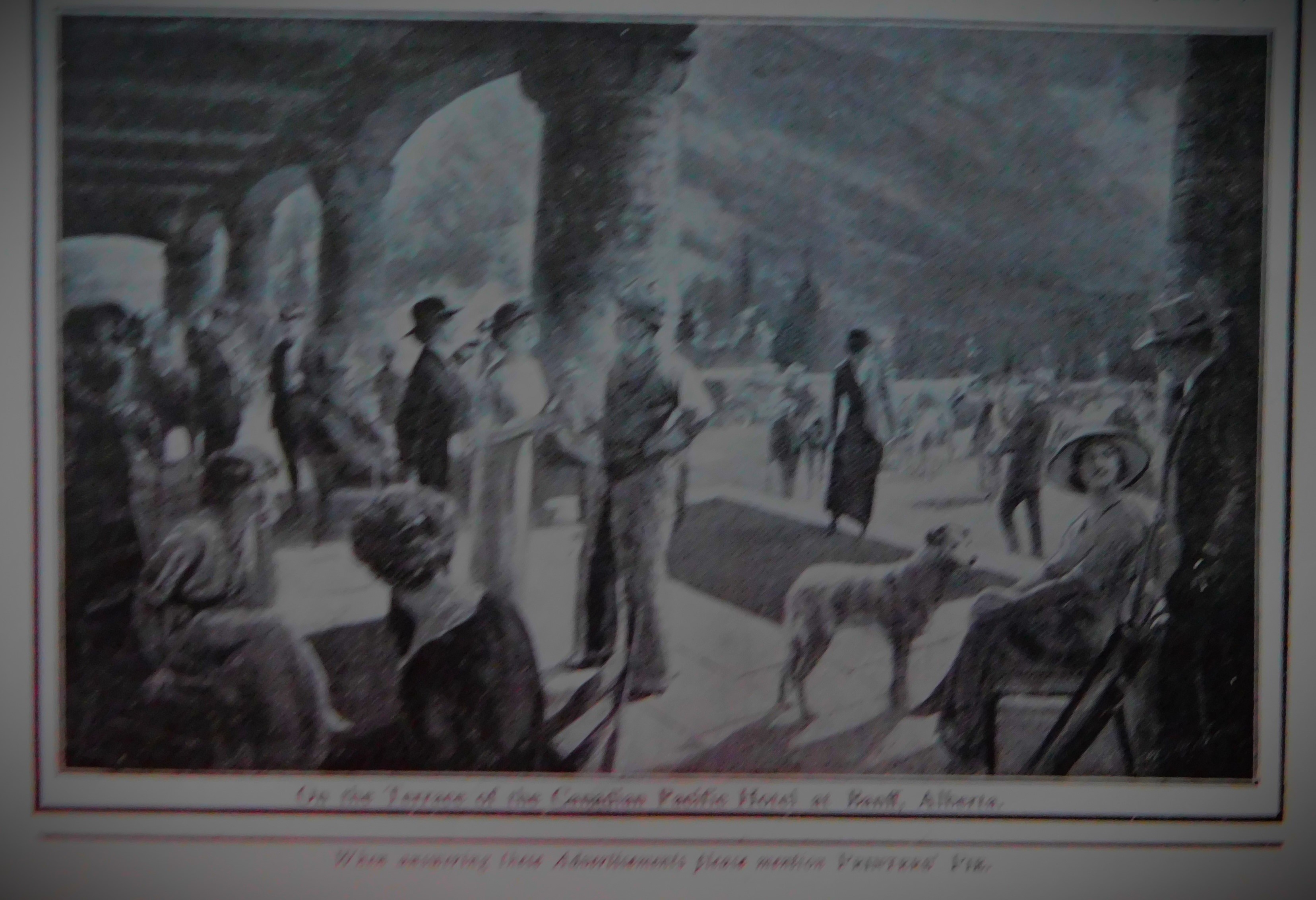
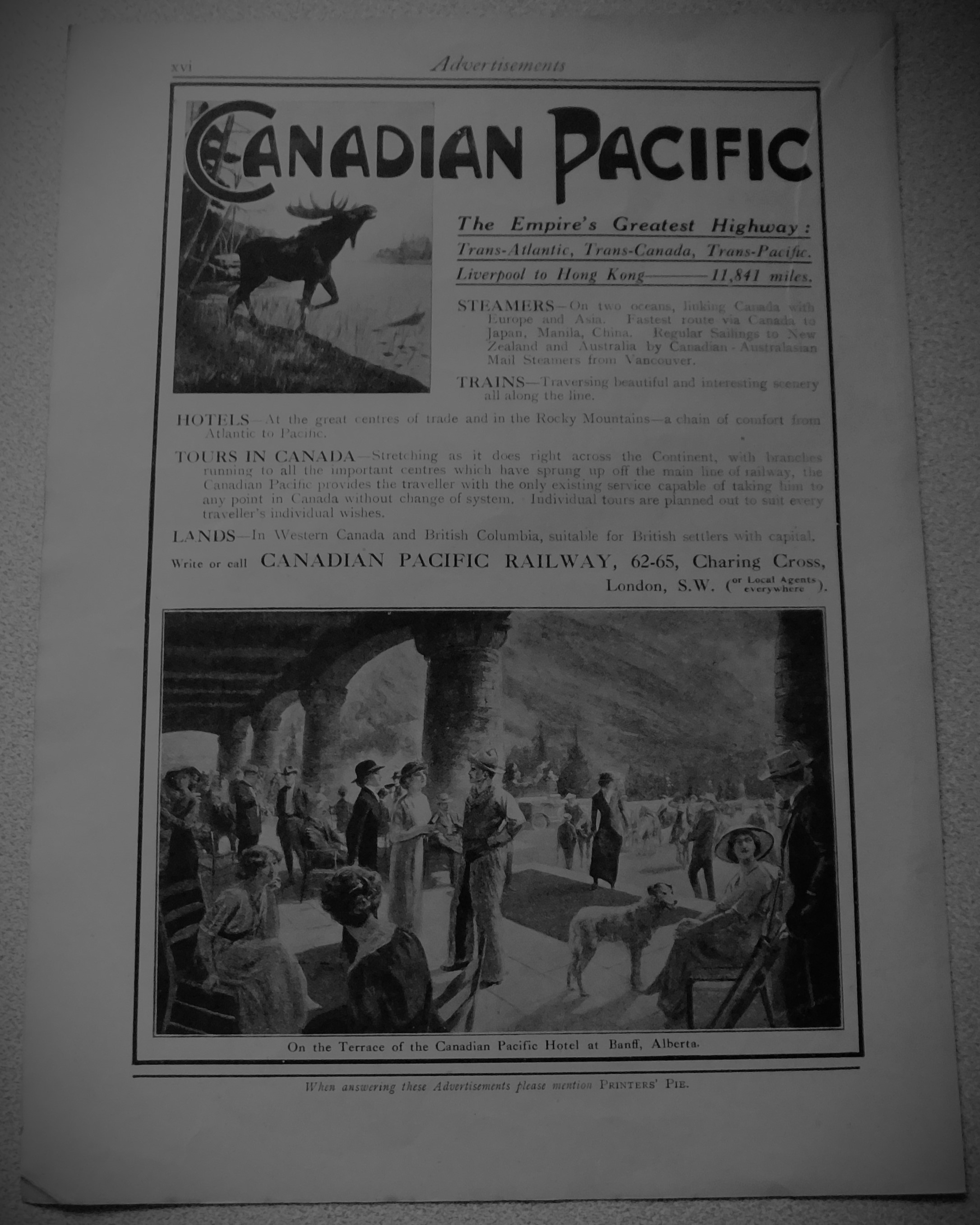
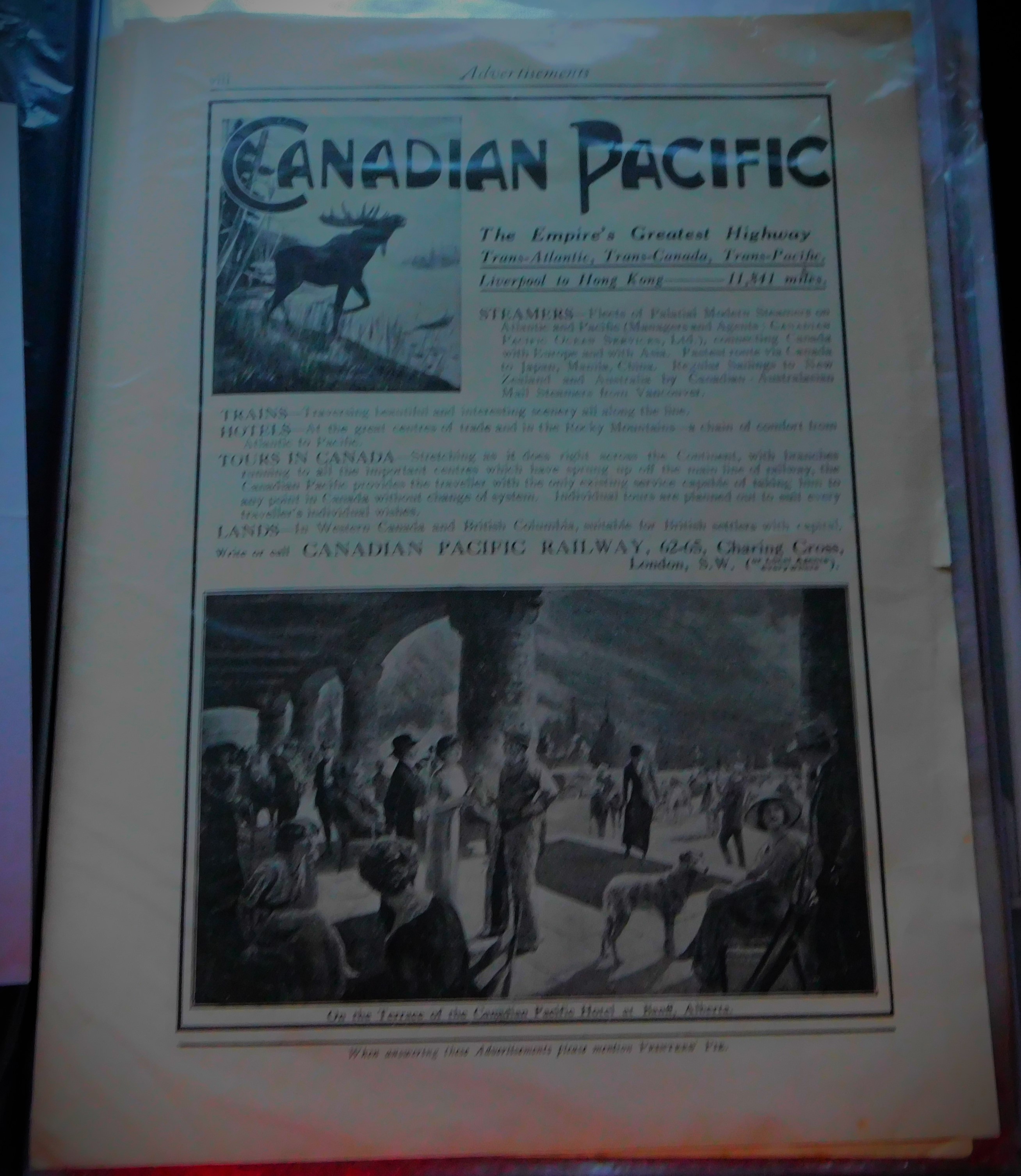
These two items are both PR sheets for the Canadian Pacific Railway with other adverts on the back.

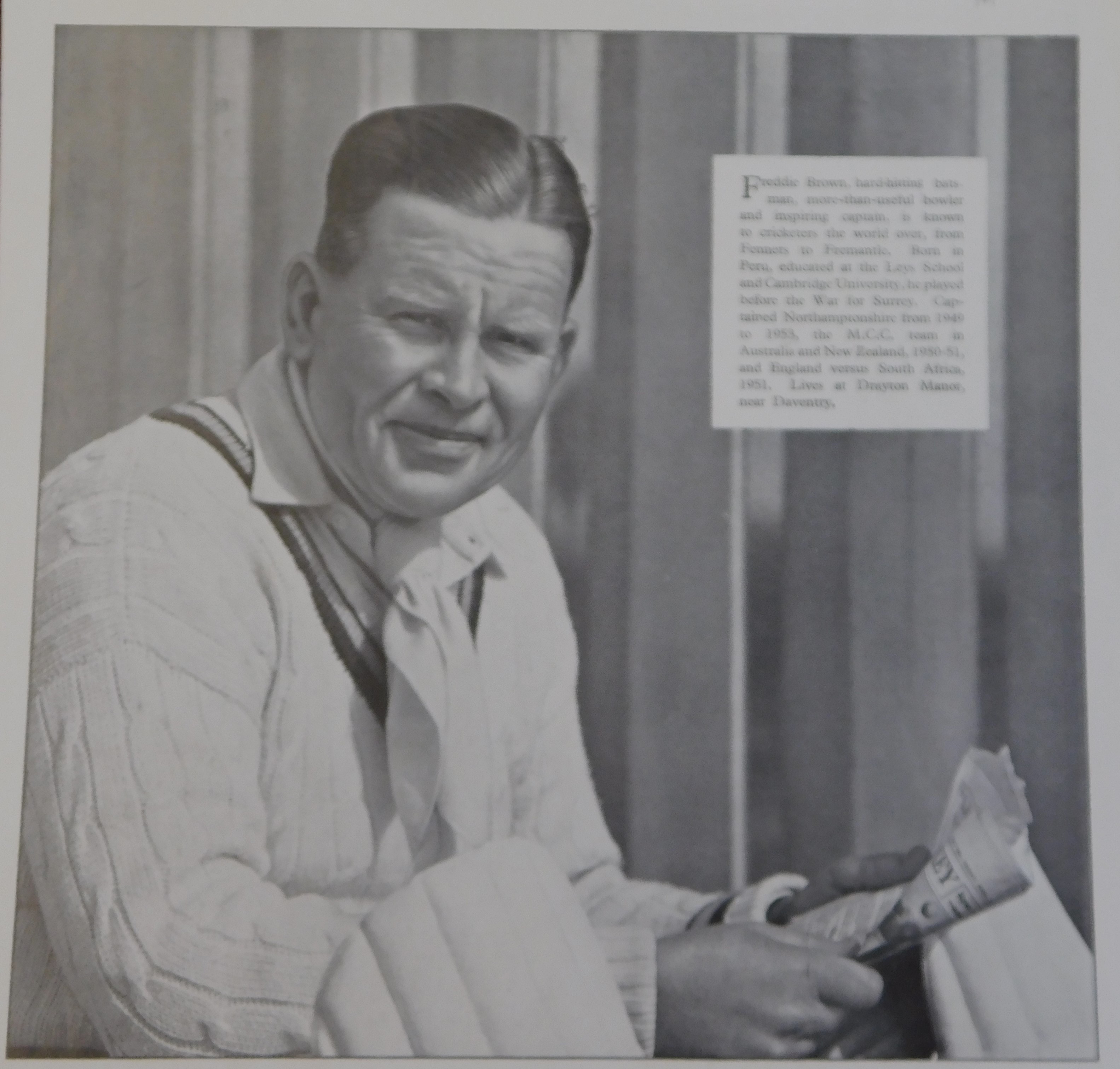
This item was allegedly of interest for the cigarette advertisement featured on one side of it. However, it was what was on the reverse side that caught the attention of the only person to show interest in it:

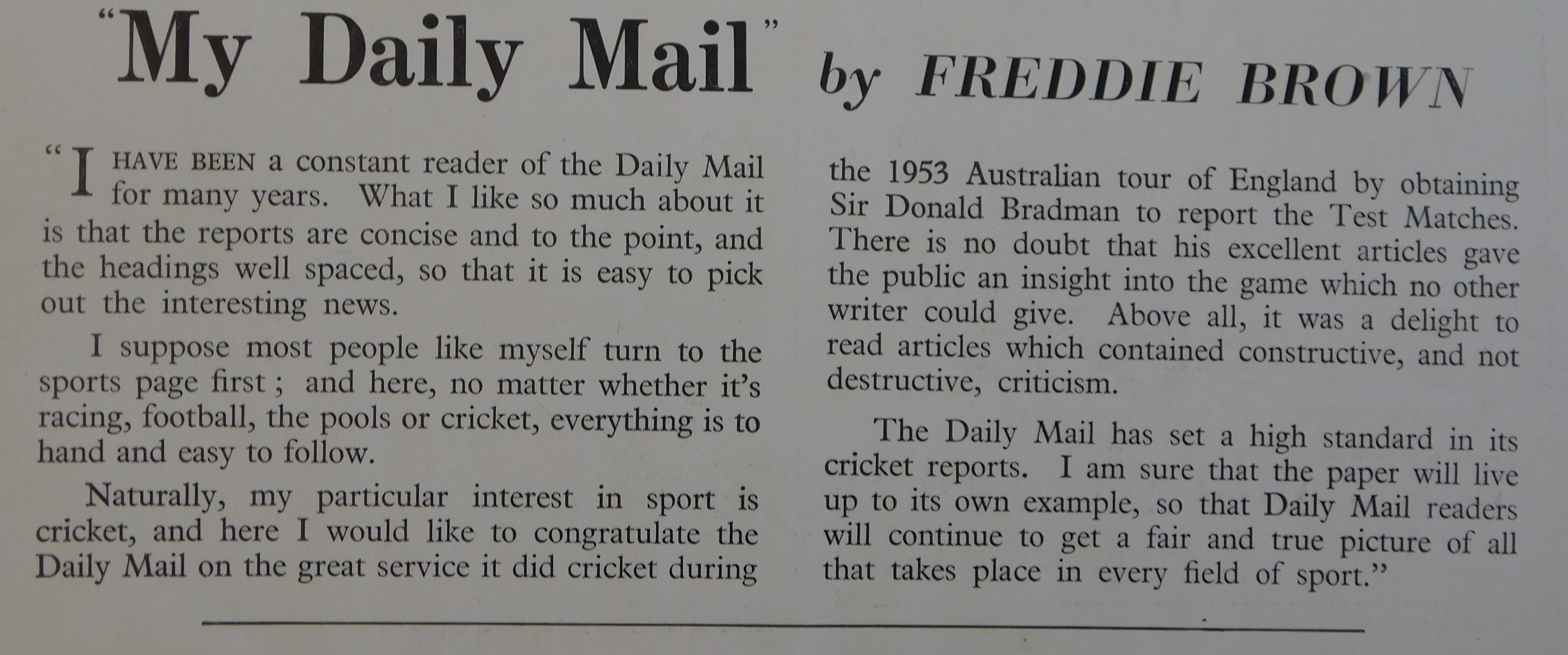
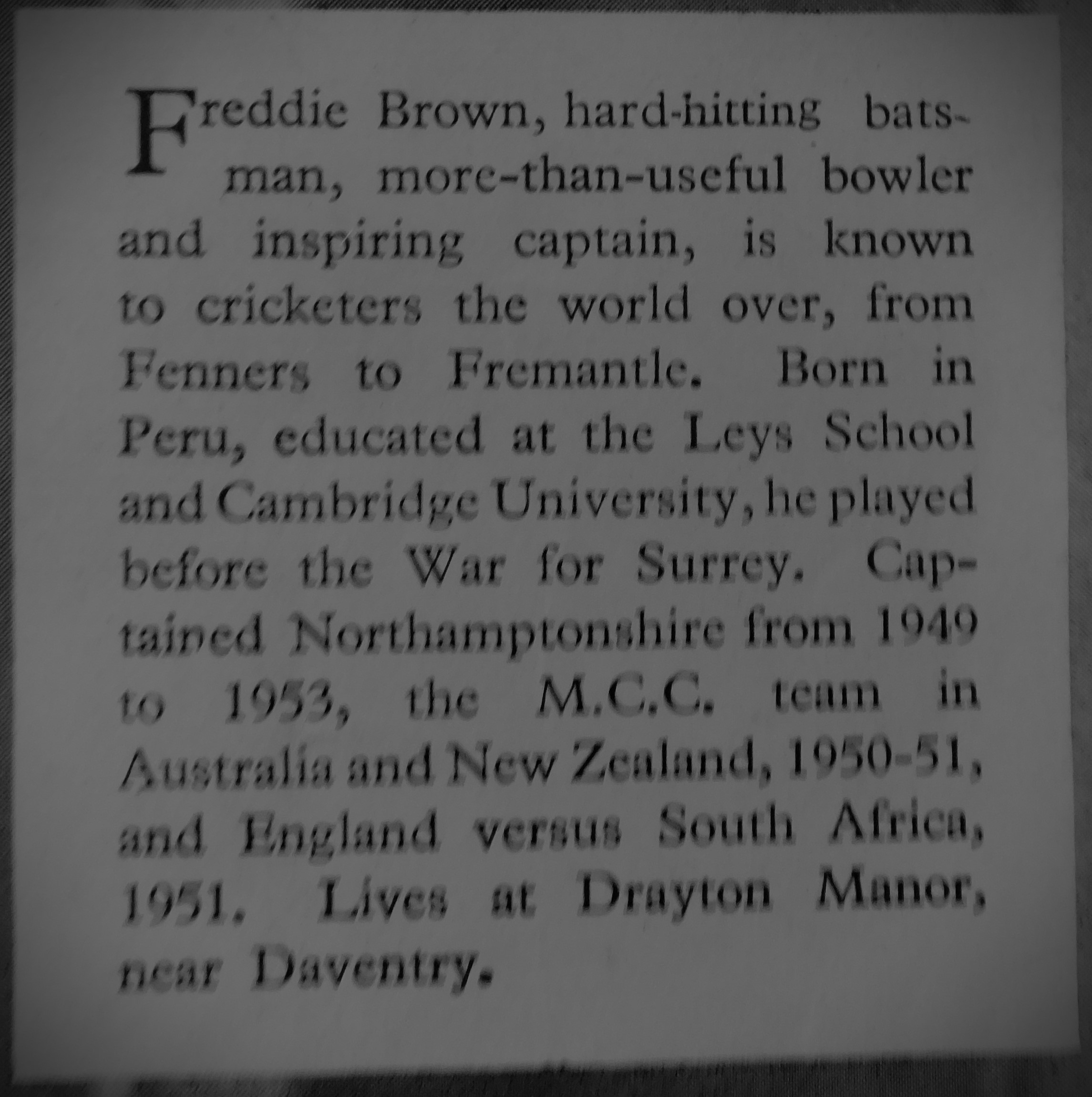
This one did not require radical treatment as had number 685 to fit my interests, just a bit of folding to make it fit in a display folder and display what I wanted – the stuff about Freddie Brown minus him spruiking a filthy far rate hate rag…

Interestingly by the time this was published in 1955 Freddie Brown had not featured for England in two years – Lord’s 1953 was his last test appearance, and his last appearance of note came in May 1956 when he played for Free Foresters against Oxford University, doing little with the bat, but claiming 11 wickets including a first innings haul of 8-60 – yet the far right hate rag of “Hurrah For The Blackshirts” infamy still thought him good PR for them.

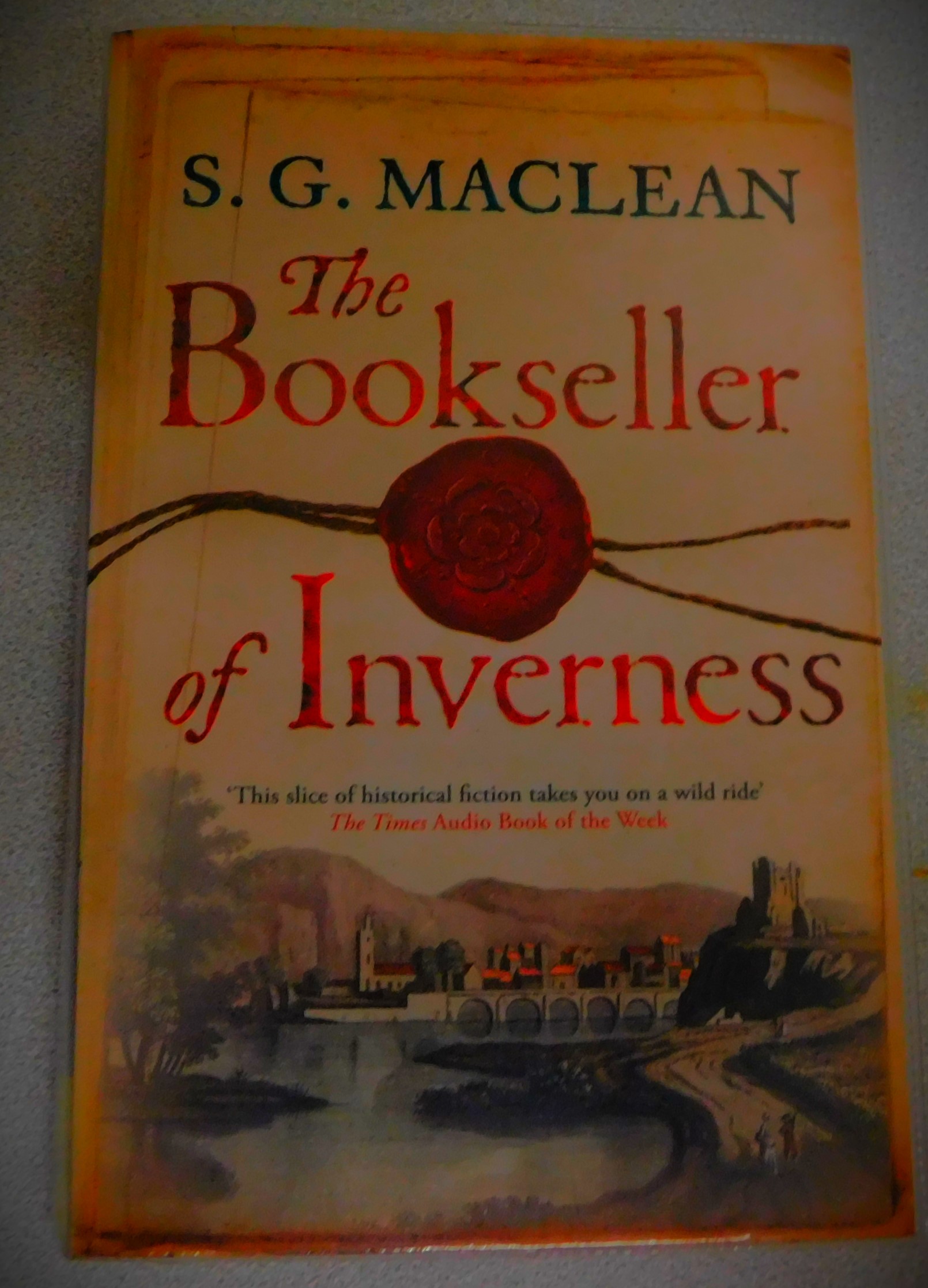
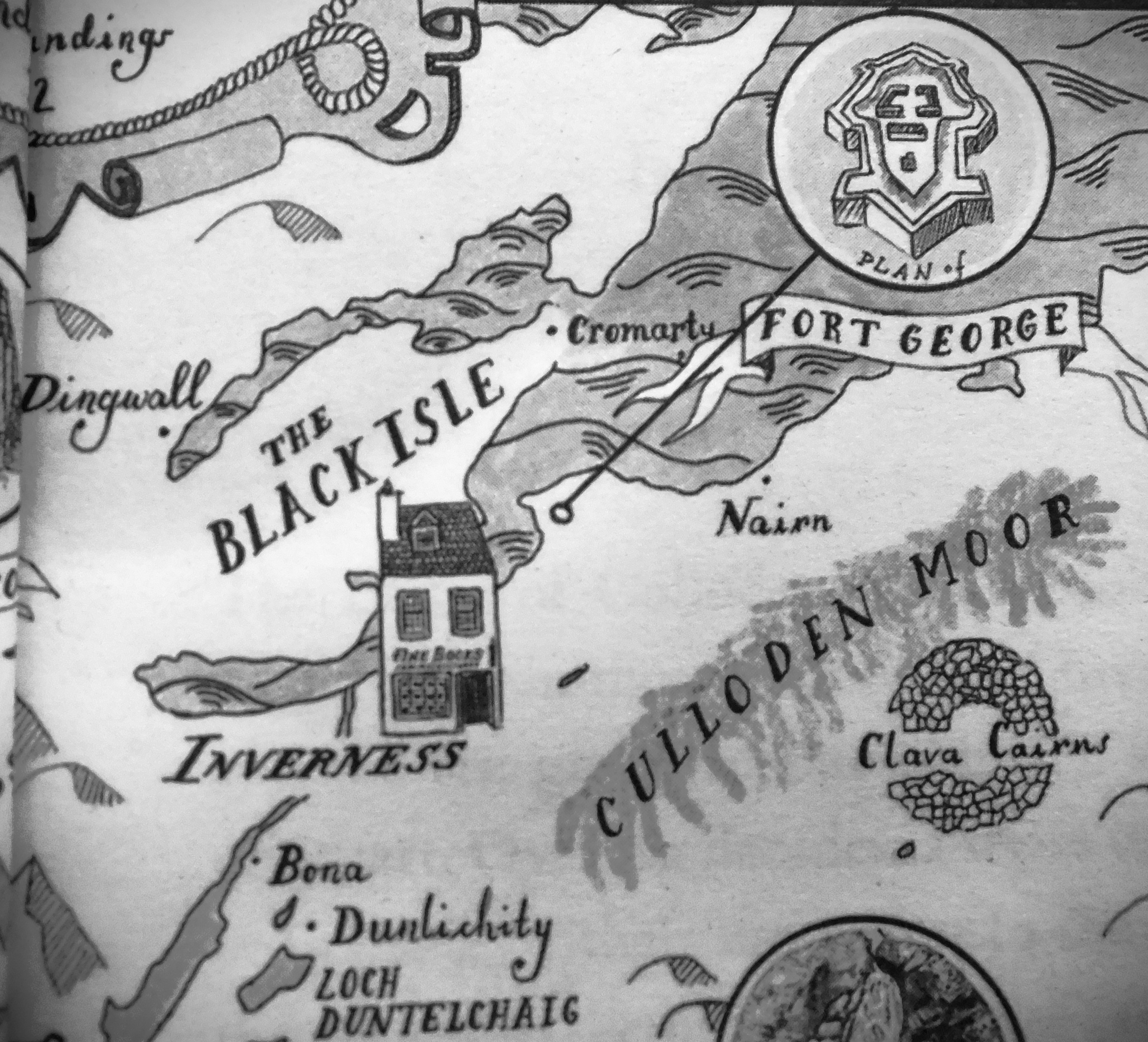
Set in the turbulent years of the 1750s, when attempts to restore the Stewarts (James Edward Stewart, based in Rome at this time, and his son Charles Edward Stewart a.k.a Bonnie Prince Charlie) to the throne were still in vogue, this book is a thoroughly gripping, indeed enthralling read. It also has a special feature of particular appeal to me, a very intricate map of the area in which most of the action takes place. Not only do I highly recommend this book, I will be looking of the author’s name on future library visits.

Time for my usual sign off…

All Time XIs – Given Name Begins With B

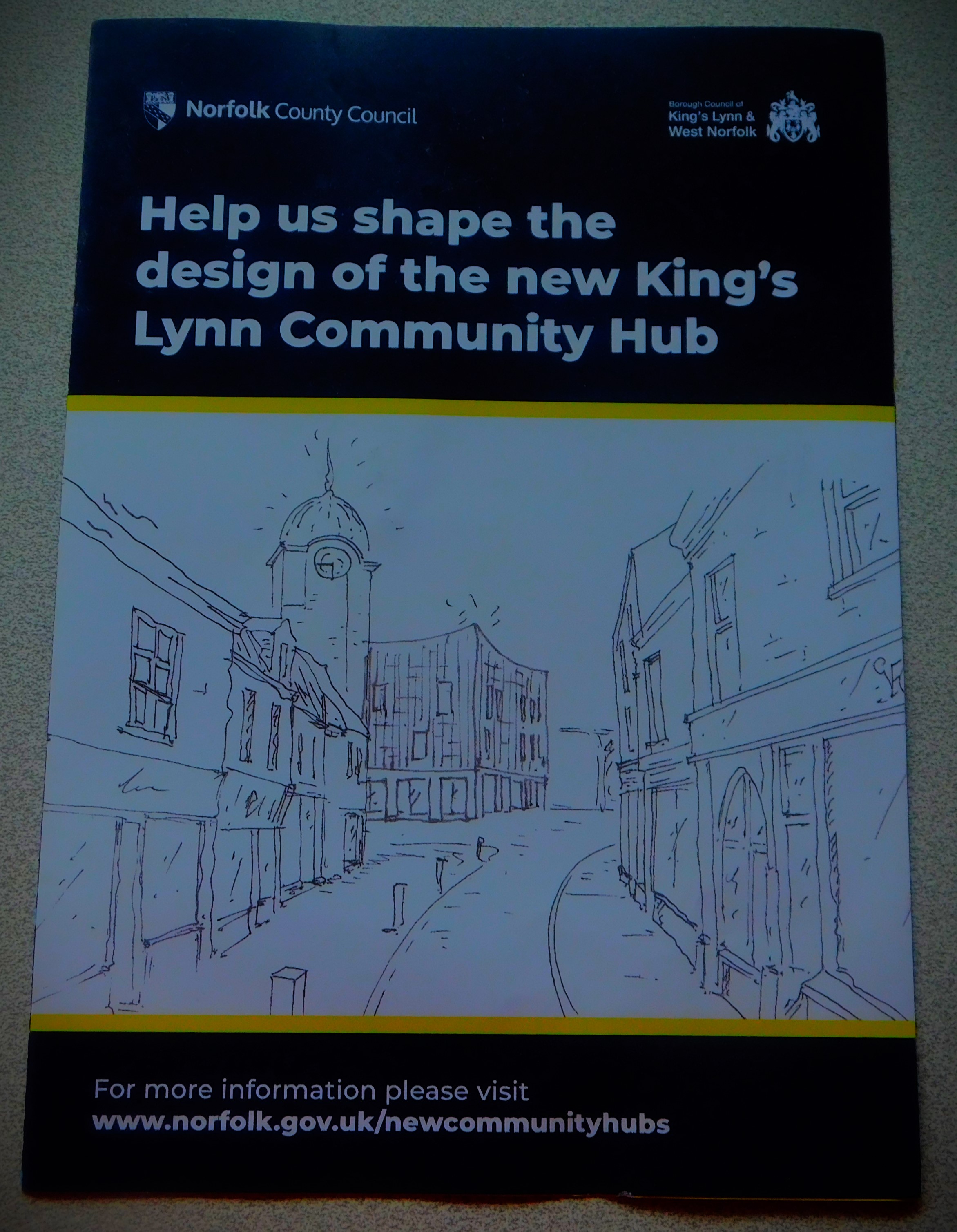
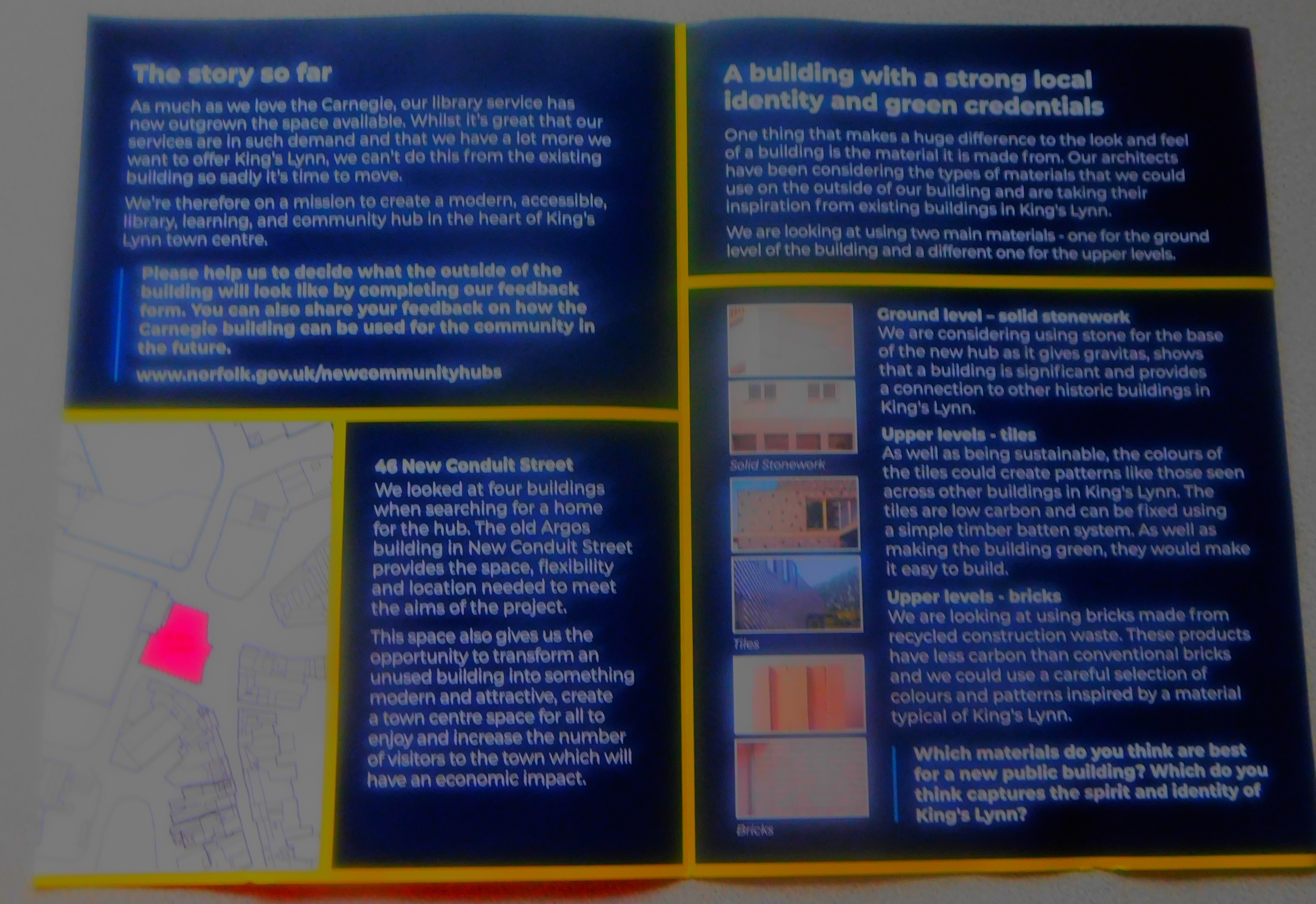
An all time XI of players whose given names begin with B with a lot of honourable mentions, a look at plans for the creation of a new library/ community hub in King’s Lynn and a large photo gallery.

Today I look at cricketers whose given names begin with B. My XI is I believe a very good one and quite a few fine players had to miss out.

  1. Bert Sutcliffe (New Zealand, left handed opening batter, occasional off spinner). The Kiwi left hander, scorer of the two highest first class innings ever played by anyone from that country (385 and 355) and successful at test level as well deserves his place here.
  2. Barry Richards (South Africa, right handed opening batter, occasional off spinner). He played in what turned out to be the last series of South Africa’s first incarnation as a test nation, and in four matches scored 508 runs at 72.57 with two centuries. Normally I would not read much into such a small sample size, but pretty much everyone who saw him bat and has expressed an opinion on the matter reckons that he was good enough to have maintained that average over a long test career had he been given the chance (among them Don Bradman, who officially consigned South Africa to exile from the international arena) and that domestic cricket was just too easy for him to keep him properly motivated.
  3. Brian Lara (West Indies, left handed batter). The holder of the world first class and test record individual innings (501* and 400*), also scorer of 688 runs in a series in which he, a left hander, had to contend with Muralidaran on pitches made to measure for the off spinner.
  4. Babar Azam (Pakistan, right handed batter). One of the finest of contemporary batters.
  5. Basil D’Oliveira (England, right handed batter, right arm medium pacer). In spite of the fact that due to the circumstances of his birth (born in South Africa and possessed of dark skin) the opportunity to play international cricket arrived far later than it should have done, and at an age when many are thinking about the impending end of their careers he established a fine test record.
  6. +Ben Foakes (England, wicket keeper, right handed batter). This slot was one of the first to be filled in this XI.
  7. *Ben Stokes (England, left handed batter, right arm fast medium bowler, captain). I have named him as captain of this XI due to his success with the England test team, and placed him at number seven because I think he is well suited to batting in that position in a strong line up, which this is.
  8. Bart King (Philadelphians, right arm fast bowler, right handed batter). over 400 wickets in 65 first class appearances at just 15 runs a piece, and a batting average of 20 as well. In the last of his four visits to England with Philadelphian touring sides he topped the first class bowling averages for the season, claiming 87 wickets at 11 each.
  9. Brian Statham (England, right arm fast bowler, right handed batter). For England, where he was generally number two bowler to either Tyson or Trueman, and had to take the end they did not want he took 252 wickets at 24 a piece. For Lancashire, when he had the choice of ends, he claimed wickets at just 18 a piece.
  10. Bishan Singh Bedi (India, left arm orthodox spinner, right handed batter, vice captain). I don’t always name a vice-captain in these XIs, but although there are several other former skippers in this XI I feel that while Stokes has to be skipper, Bedi stands far enough clear of the rest to warrant being named vice-captain. 266 test wickets at 28.71 each earn him his place in this XI.
  11. Bhagwath Chandrasekhar (India, leg spinner, right handed batter). Whereas Bedi was a classic left arm orthodox spinner and was simply better at doing what such bowlers do than most other such this guy was an absolute one of a kind bowler. The pair were regular team mates through their careers, and I reckon they would do even better in this side than they did in actual life.

This side has a powerful batting line up – a very strong top four, and arguably four all rounders, with King’s batting and bowling averages being the right way round. The bowling, with Statham and King opening the attack, Stokes and D’Oliveira available as back up seam options, two superb specialist spinners, and the opening batters able to bowl fill-in off spin if needed is both strong and superbly varied. This side will take a lot of beating.

Before I get into the actual honourable mentions there are two things to be cleared up to set the scene.

Bill and Billy are nearly always diminutive forms of William, and would therefore belong under the letter W in my classification. The two main exceptions I can think of are Billy Stanlake and Billy Taylor, both of whom were actually given the name Billy. Neither have records that would enable them to dislodge any of my choices, though Stanlake would enter the reckoning were I thinking in limited overs terms. Similarly, Bob and Bobby are generally diminutives of Robert and would be filed under R. NB while it is a diminutive Ben escapes this because it is short for either Benjamin or Benedict, which begin with the same letter.

I will go through the actual honourable mentions in batting order. Belinda Clark of Australia was closest to dislodging either of my chosen openers, though not massively close. Brendon Kuruppu, scorer of Sri Lanka’s first ever test double century did little outside of that one huge innings, while two Bens, Compton and Charlesworth, have yet to be given the opportunity to show their mettle at the highest level. Barry Wood would have merited serious consideration for a limited overs XI – his list A record was outstanding, and in that format his medium pace was often very valuable as well. Brad Hodge like so many of his generation missed out on international recognition due to the sheer strength of Australian sides in that era. Basil Fitzherbert Butcher had a fine test record, but not good enough to dislodge any of my chosen batters. There have been many quality keepers whose given names begin with B: Ben Barnett, Brian Taber, Brad Haddin, Budhi Kunderan and Brendon McCullum being five who deserve a mention, with the last named obviously getting a coaching gig. Brian Close had a fine record for Yorkshire and later for Somerset, where he taught a county unused to winning how to do so, but his England record does not stack up. Another Yorkshire Brian, Sellers, could only have been considered had I been struggling for a skipper, and I wasn’t. Brian McMillan had a fine record for South Africa, but not good enough IMO to dislodge D’Oliveira. Bruce Taylor of New Zealand was a decent all rounder, but not good enough to dislodge Stokes or King. Ben Hollioake’s untimely death in a car accident prevented him from qualifying. Brett Lee had a respectable record as a fast bowler, but he was somewhat expensive. Bruce Reid might well have had a place had he been able to keep himself in one piece for any length of time, but his actual record does not qualify him for selection. Ben Hilfenhaus was a useful fast-medium bowler, but in the 2010-11 Ashes when confronted with a strong batting line up he looked decidedly unthreatening. Brydon Carse is genuinely quick, but is also very erratic and hence always likely to be expensive. The almost anagrammatical Brian Brain fell too far short of the necessary class for me to accommodate him. Brian Langford and Bruce Yardley were fine off spinners, but with Bert Sutcliffe and Barry Richards both part time offies I preferred the Indian duo of Bedi and Chandrasekhar as my specialist spinners.

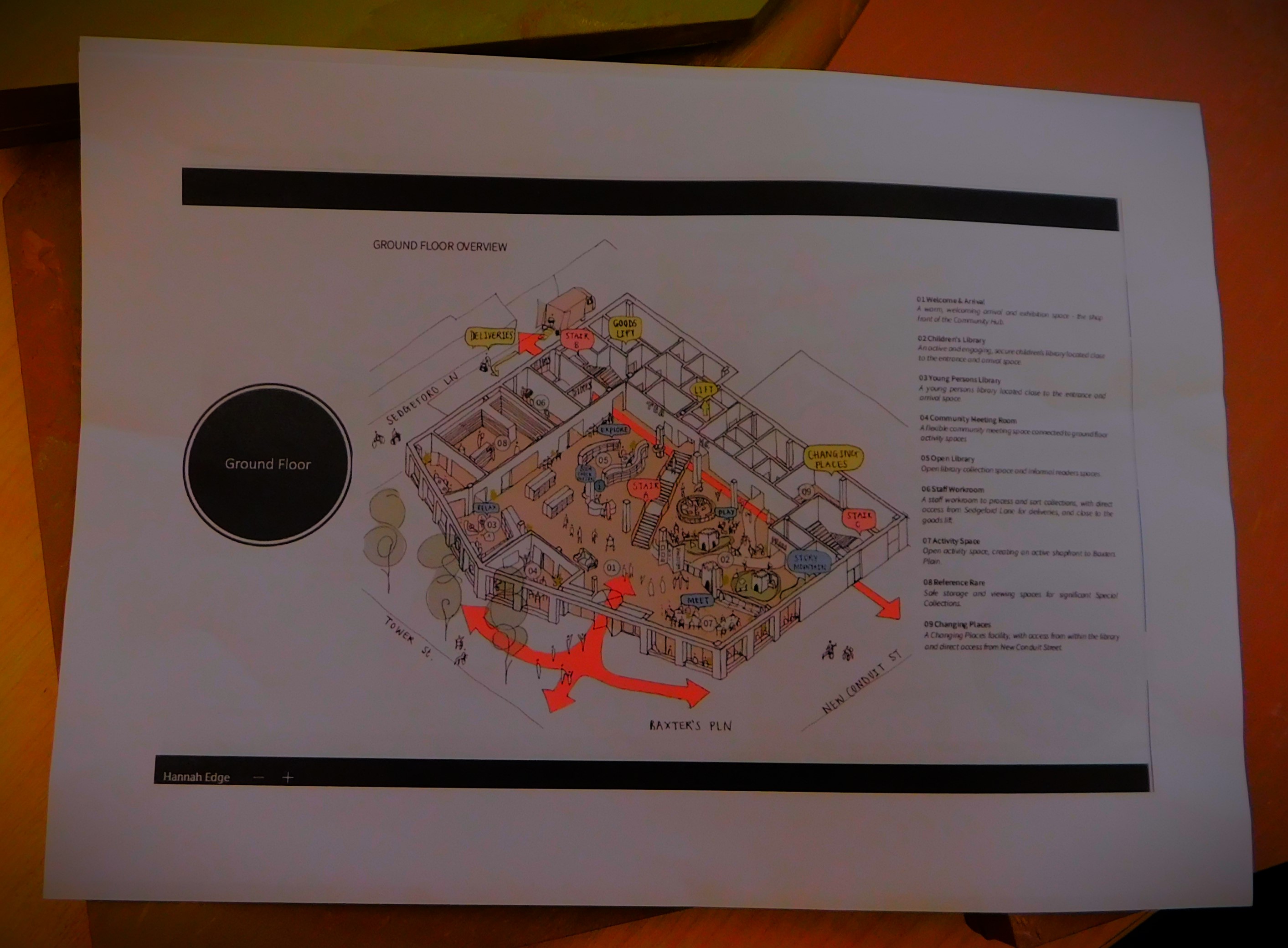
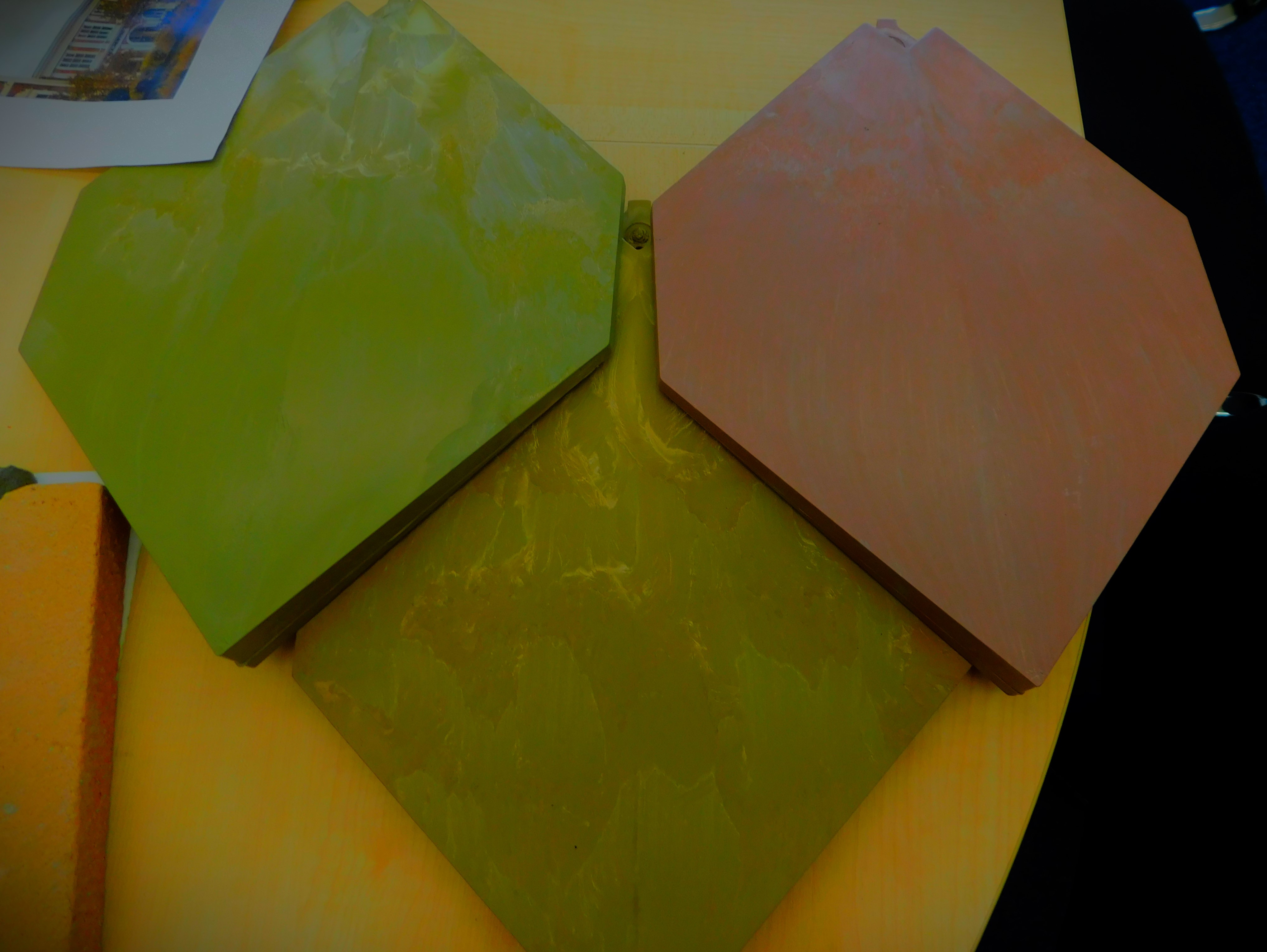
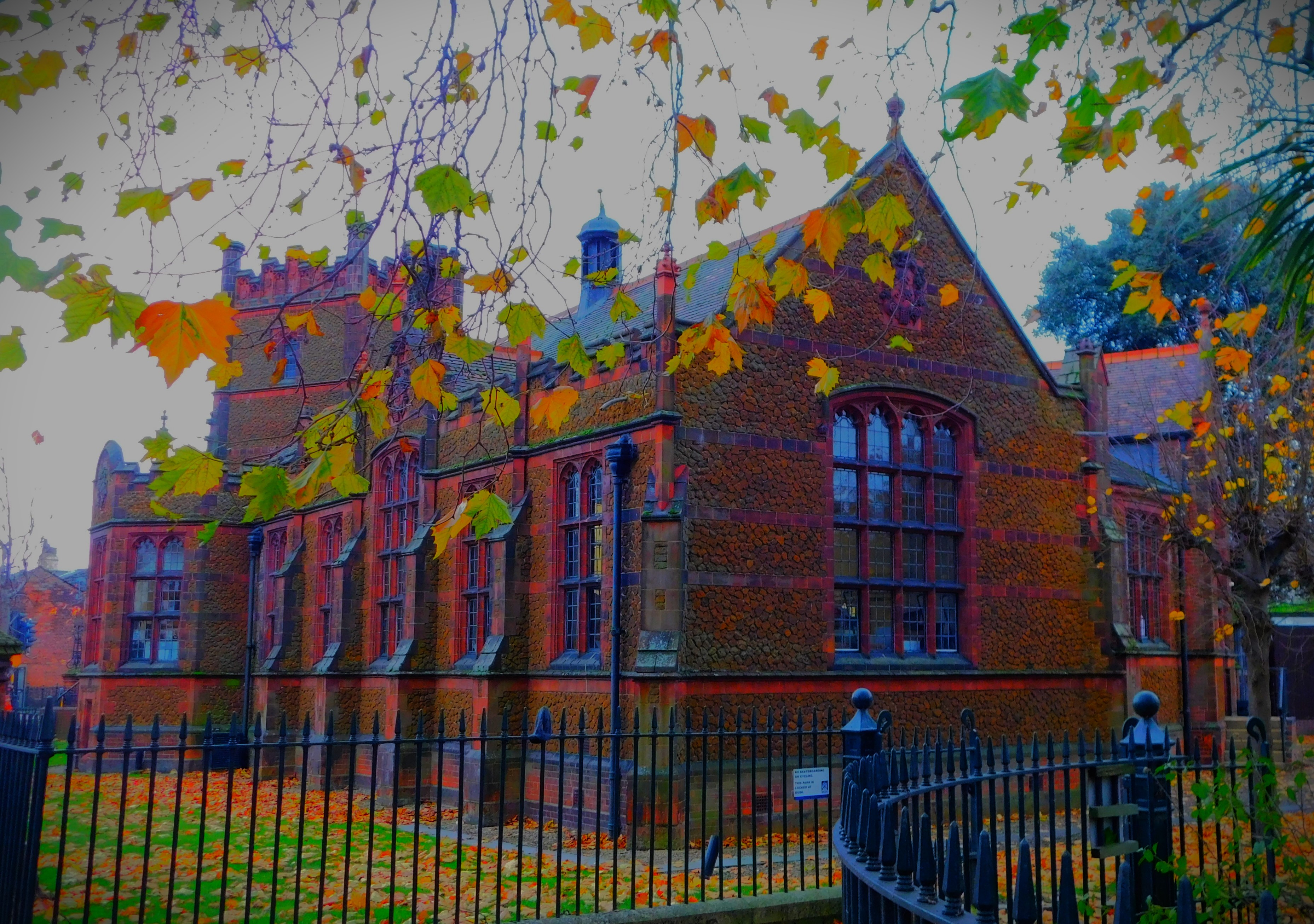
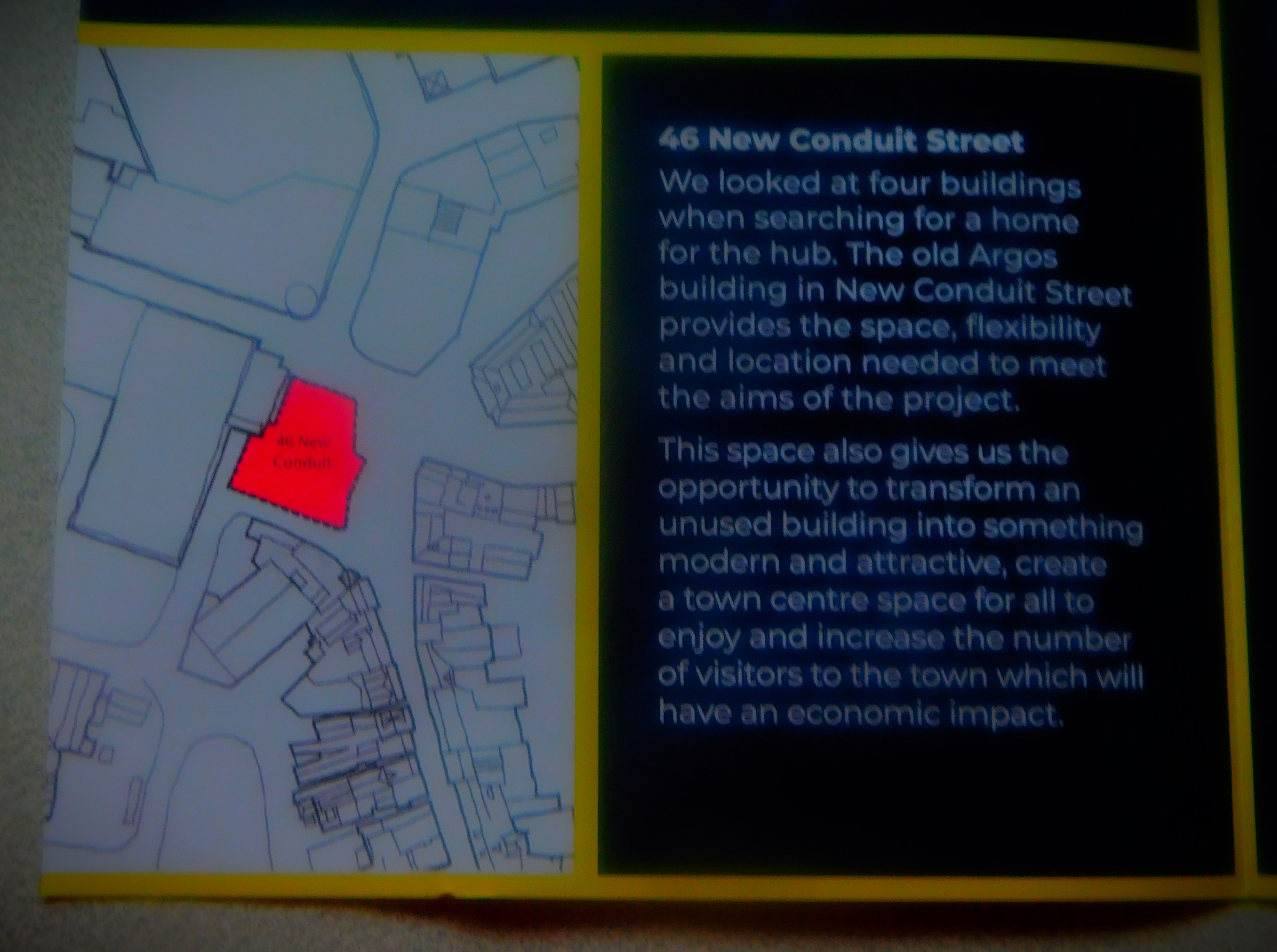
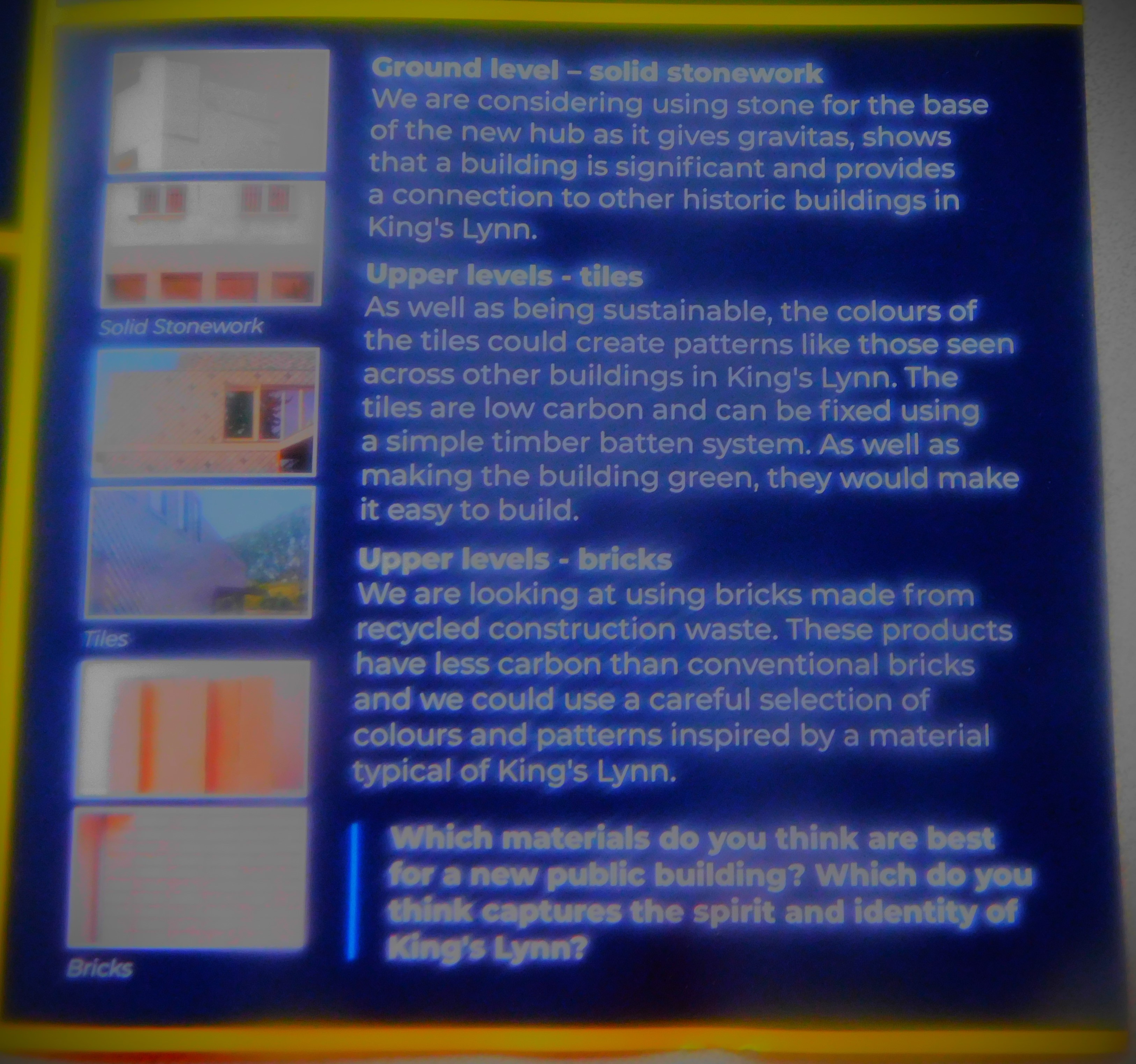
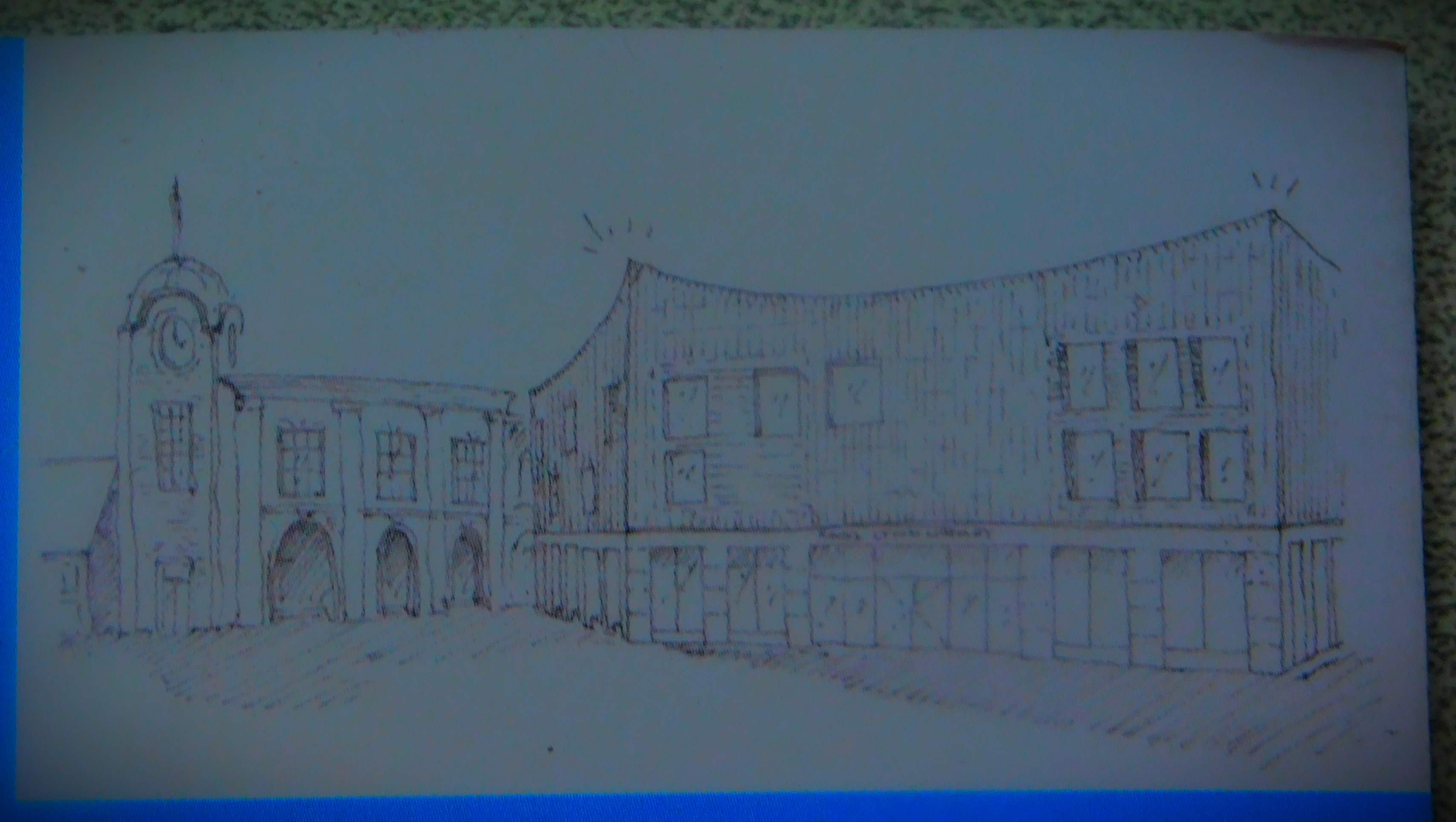
King’s Lynn Library will be moving from its current premises to the site of what used to be the King’s Lynn branch of Argos. The current premises are a listed building and therefore have to be preserved, and it is an essential part of the plan that whatever the current premises become it will be something that is fully accessible to the public (so no flats, no private business premises etc.). The new building will be constructed using environmentally friendly materials, with the ground floor featuring stone, and the upper floors and the roof featuring bricks and tiles, the latter made from recycled materials (I have seen samples of such materials at the library, and was favourably impressed). There is an initial consultation taking place which has two days to run (click here). If this scheme is carried out properly the new library/ community hub could become a modern landmark fully in keeping with Lynn’s history as a medieval town, as well as serving its purpose as library and community hub. Also a vibrant new establishment in place of the shell of the old Argos cannot fail to be an improvement.

Time for my usual sign off…

All Time XIs – Given Name Begins With A

An all time XI of players whose given names begin with A, with a lot of honourable mentions. Also a photo gallery.

Last year I took an alphabetical trip through cricketing surnames. This post may be the starting point for a trip through cricketing given names. For the moment it is an All Time XI of players whose given names all begin with A.

  1. Andrew Strauss (left handed opening batter). One of the openers in the England test side that rose to number one in the world rankings in 2011.
  2. Andrew Stoddart (right handed opening batter). Captained England to an away Ashes series win in 1894-5, the first such series to contain five matches. In the second match of that series he scored a then England record 173 in their second innings. England, all out for 75 at the first time of asking managed precisely 400 more second time round and went on to win the match to go two up in the series. He also captained England at rugby union.
  3. Andrew Jones (right handed batter, occasional off spinner). No one’s idea of a stylish player, the Kiwi was a gutsy, gritty number three good enough average 44 in test cricket as part of what was not the world’s strongest batting line up.
  4. Aravinda de Silva (right handed batter, occasional off spinner). The Sri Lankan at one time held the test record score for his country with an innings of 267. He also produced Player of the Match performances in the semi-final and final of the 1996 ODI World Cup.
  5. *Allan Border (left handed batter, occasional left arm orthodox spinner, captain). The first ever to reach the career milestone of 11,000 test runs, and for about the first decade of his long career he was continually attempting to rescue lost causes.
  6. Alfred Mynn (right handed batter, right arm fast bowler). The greatest all rounder of his era, known as the Lion of Kent.
  7. +Adam Gilchrist (Wicket keeper, left handed batter). One of the greatest ever.
  8. Alan Davidson (left arm fast medium bowler, left handed batter). An all time great of the game, and his left arm angle adds variation to the attack.
  9. Andy Roberts (right arm fast bowler, right handed batter). The original leader of the four-pronged pace attack that made West Indies such a ferocious force in the late 1970s and on through the 1980s, and a handy lower order batter as well.
  10. Anil Kumble (leg spinner, right handed batter). The fourth leading test wicket taker of all time, behind Muralidaran, Warne and Anderson, and one of only three bowlers ever to take all ten wickets in a test innings (and only two of those, Jim Laker and Kumble, did so in winning cause).
  11. Allan Donald (right arm fast bowler, right handed batter). The first unquestionably great bowler of South Africa’s second incarnation as a test nation.

This side contains a powerful batting line up, with genuine match winners in that capacity occupying the top seven slots, numbers 8,9 and 10 all capable of useful efforts in that role and Donald the only genuine tail ender. The presence of only one genuine spinner is offset by the presence of Border and de Silva as back up options in that department, while the pace attack of Davidson, Donald, Roberts and Mynn is superb.

Angelo Mathews, who recently made history as the first player ever to be ‘Timed Out’ in an international match, has had a fine career without doing quite enough to dislodge any of my chosen players. Andrew Flintoff would be the choice of many for the all-rounders slot but the truth is he took a long time to deliver at the top level, and his time at the top was very brief before injuries spoiled the latter stages of his career. Two regular openers named Arthur, Messrs. Morris and Shrewsbury, a left hander and a right hander respectively, were both unlucky to miss out. Arthur Frederick Augustus ‘Dick’ Lilley was a potential candidate for the gauntlets, but the fact that he was always known by his nickname and the presence of Gilchrist persuaded me to give the latter the nod. Alyssa Healy was also a candidate for the gauntlets. Alec Stewart was a candidate for the openers role, but would have sneaked in under false pretences had I given him the gauntlets. Two Archies, MacLaren of Lancashire and England and Jackson of Australia deserve mentions. Two Alfreds, the impeccably accurate Shaw and the leg spinner Freeman merit mentions – the latter misses out because while his FC numbers were almost beyond belief his test returns were no better than respectable. Alec Bedser was a superb bowler, but I rank him behind my three chosen pacers. Angus Fraser had a fine career, but not quite good enough to merit serious consideration. Angus Alexander Patrick Atkinson, generally referred to as Gus Atkinson, is a highly promising young pace bowler and a competent lower order batter, but he is not as yet a serious challenger to any of my chosen pacers. Azhar Mahmood was a fine all rounder. Two current Aussie tweakers, Alana King and Amanda-Jade Wellington deserve mentions. Abdul Qadir who virtually kept the art of leg spin alive in the 1980s deserves the acknowledgement of an honourable mention. Ajaz Patel, in spite of having a test match all-ten, has to miss out – his side were soundly thrashed in the match in question, and his all-ten was more down to the absolute impotence of the rest of the bowling attack than to any particular brilliance of his. On a pitch that absolutely demanded two genuinely front line spinners I would drop Mynn, promote Gilchrist one place up the order and bring in Axar Patel at number seven. Albert Trott is a case of ‘what might have been’ and therefore it is only an honourable mention for him. Azmatullah Omarzai of Afghanistan may yet force his way in to this XI, but he is at the moment one for the future.

My usual sign off…

All Time XIs – ODI Special

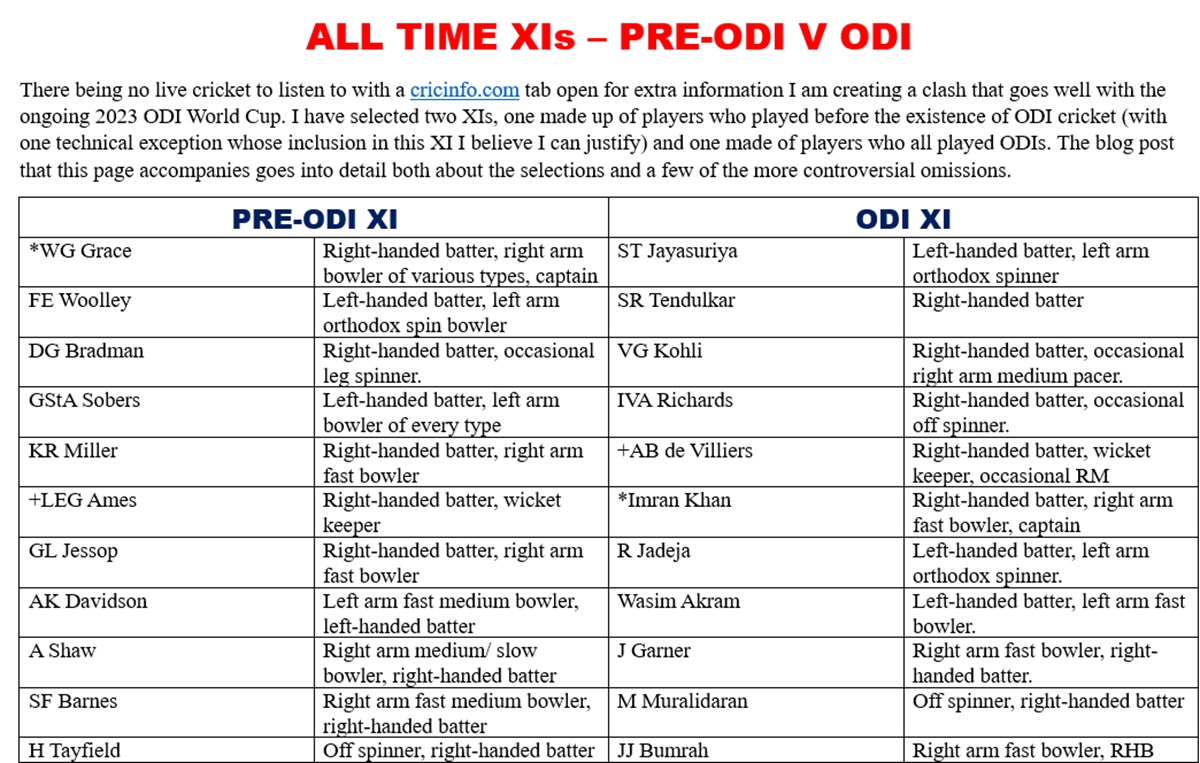
In the absence of live cricket to write about I have created a clash between a team of players from before ODI cricket was a thing and a team of ODI players to do battle with one another. Also a photo gallery.

There is no live cricket today, so with the ODI World Cup 2023 approaching its final phase I have decided to produce a contest between two XIs – one of players whose careers took place before ODI cricket existed (with one very minor exception explained when we come to him) and one of ODI players. The following playing conditions would apply to what would be a five match ODI series: only one new ball per innings – using two as happens currently deprives us of old ball skills such as reverse swing because a ball that is only in use for 25 overs doesn’t get old, two minute time limit between a wicket falling and the new batter being ready to face (I am not expecting any ‘Timed Out’ dismissals but I am making sure that situation is covered anyway) and my own playing condition regarding overs not bowled within the time limit: The batting side to be awarded 10 runs or twice the current scoring rate, whichever is the greater, for each unbowled over, counting incomplete overs as ‘unbowled’ for this purpose.

  1. *WG Grace (right handed batter, right arm bowler of various types through his career, good close catcher, captain). His commitment to attacking cricket is without question, his captaincy record is superb, and he was the dominant cricketer of his era.
  2. Frank Woolley (left handed batter, left arm orthodox spin bowler, excellent close catcher). A fast scorer, a fine bowler and an excellent close fielder. Only one cricketer ever achieved the first class career treble of 10,000 runs, 1,000 wickets and 1,000 catches – Woolley.
  3. Don Bradman (right handed batter, occasional leg spinner, excellent outfielder). The most prolific batter the game has ever known and capable of scoring seriously fast as well.
  4. Garry Sobers (left handed batter, left arm bowler of every type known to cricket, excellent fielder). Before the pedants fly in, yes he did play a solitary ODI near the end of his career, in which he scored a duck. That is not enough to class him as an ODI player in my book, and I refuse to not pick the most complete player the game has ever known, so I include him in this XI.
  5. Keith Miller (right handed batter, right arm fast bowler). One of the greatest all rounders ever to play the game, and both his attacking approach to batting and his willingness to experiment with the ball would be well suited to ODI cricket.
  6. +Les Ames (right handed batter, wicket keeper). Twice winner of the Lawrence trophy for scoring the fastest first class hundred of the season, and maker of over 1,000 wicket keeping dismissals in his career.
  7. Gilbert Jessop (right handed batter, right arm fast bowler, gun fielder). The most consistently fast scoring batter the game has ever known, a more than useful bowler and a brilliant fielder. I have listed him at seven in this order but I would expect Grace to display some flexibility in this matter – if wicket number 1,2,3 or 4 falls with say 10 overs to go I expect Jessop to come in.
  8. Alan Davidson (left arm fast medium bowler, left handed batter, brilliant fielder). Among bowlers to play exclusively post WWII, to have ended their careers and to take 150 or more test wickets the one with the most economical bowling average is Davidson, with 186 test scalps at 20.53 each. He also had moments with the bat even at the highest level, averaging 24 in test cricket with an HS of 80 and his fielding earned him the nickname ‘the claw’.
  9. Alfred Shaw (right arm medium/ slow bowler, right handed batter). The man who bowled more FC overs than he conceded runs at that level, and took just over 2,000 FC wickets at 12 a piece just has to be in this XI.
  10. Sydney Francis Barnes (Right arm fast medium bowler, right handed batter). He would grumble about only being allowed 10 overs, but I would fully expect him to make superb use of those overs – he was probably the most skilful bowler ever to pick up a cricket ball.
  11. Hugh Tayfield (off spinner, right handed batter). The leading test wicket taker for South Africa in their first period as a test nation, and by some way at that. He was also notoriously miserly with the ball, once sending down 137 successive dot balls including 16 successive eight ball maidens.

This side has seven top line batters and a capable number eight in Davidson. However the true jewel in this side’s crown is the bowling, with that front four of Davidson, Barnes, Shaw and Tayfield backed by all rounders Miller, Jessop, Sobers, Grace and Woolley. The only recognized bowling type not covered is leg spin, and Syd Barnes’ signature weapon largely fills that gap. Also there are few if any ‘passengers’ in the field in this XI, and a number of genuinely outstanding fielders. This is a side that would take a lot of beating.

New Zealander Bert Sutcliffe would be well suited to the left handed opener’s gig, but he does not have Woolley’s advantage of also offering a bowling option. Mulvantrai Himmatlal ‘Vinoo’ Mankad was another possibility, but I rated his batting not explosive enough. Mushtaq Mohammad could have been selected in place of Keith Miller had I been really desperate for leg spin representation. Among the bowlers I regretted not being able to include were Bill O’Reilly, Clarrie Grimmett, Hedley Verity, Johnny Wardle and Wilfred Rhodes (his approach to batting rules him out of an upper order slot in this format IMO). Billy Bates instead of Hugh Tayfield would strengthen the batting, but I think the South African was the finer bowler.

Various white South Africans around the time ODIs were first getting going had limited opportunities to showcase their talents, and while several could make cases for inclusion I have opted not to pick any – I could not count them as ODI players since they never got to play those, and it would have been against the spirit of the exercise to pick them in the above line up. I will repeat something I have previously stated about this issue: these individuals deserve some sympathy, but not as much as the non-white South Africans who were entirely deprived of the chance to showcase their talents, going all the way back to Krom Hendricks in the 1890s.

  1. Sanath Jayasuriya (left handed batter, left arm orthodox spinner). He gets this gig for his stellar role in Sri Lanka’s only World Cup win back in 1996.
  2. Sachin Tendulkar (right handed batter). His record tally of ODI centuries has just been equalled, but his claim to this slot is in my view unarguable.
  3. Virat Kohli (right handed batter, occasional right arm medium pacer). Currently the co-holder of the record for ODI centuries.
  4. Viv Richards (right handed batter, occasional off spinner). The first truly great ODI batter.
  5. +AB de Villiers (right handed batter, wicket keeper, occasional medium pacer). The man known to fans as ‘Mr 360’ because he could score literally anywhere in the whole 360 degree arc.
  6. *Imran Khan (right handed batter, right arm fast bowler, captain). One of the greatest all rounders ever to play the game, and his leadership in the ‘cornered tigers’ world cup of 1992 removes any doubt about who has that role in this side.
  7. Ravindra Jadeja (left handed batter, left arm orthodox spinner, gun fielder). One of the finest all rounders of the modern era.
  8. Wasim Akram (left arm fast bowler, left handed batter). A great bowler and a handy lower order batter.
  9. Joel Garner (right arm fast bowler, right handed batter). His immense height meant that he posed problems in 3D geometry for opposition batters, and very few could surmount them.
  10. Muthiah Muralidaran (off spinner, right handed batter). One of the stars of that 1996 world cup win – the Sri Lankan seamers Vaas and Wickremasinghe often bowled only their opening spells, the remainder of the overs being bowled by spinners, and this man invariably bowled his full ten overs, generally with fine figures.
  11. Jasprit Bumrah (right arm fast bowler, right handed batter). One of the reasons India have won all nine of their group games at the current tournament has been the excellence of their bowling, and this man is the spearhead of that attack.

This side is well equipped batting wise, and has a stellar bowling line up, with Jayasuriya likely to be seventh bowler. There is no leg spin – to accommodate either of the two best ODI leg spinners I have seen in action I would have to drop Jadeja and promote Akram to number seven.

Some would have ignored Jayasuriya’s bowling and selected Adam Gilchrist to open the batting and keep wicket. Some Indian fans would want Dhoni to be both keeper and captain, but I disagree, and they already have four players in my chosen XI. A live alternative for the number seven slot, though it would remove a spin option would be one of two South African bowling all rounders: right arm seamer Shaun Pollock or left arm seamer Marco Jansen. Some would pick McGrath ahead of Garner as the tall mean right arm pacer and in test cricket I would agree, but in ODIs I rate the West Indian just ahead of the Australian. Feel free to volunteer further suggestions in the comments, but remember to consider how your choices would affect the balance of the sides.

My usual sign off…

Afghanistan Out

A look at developments in the cricket world cup, with a special focus on today’s match between Afghanistan and South Africa – a valedictory on Mohammad Nabi and an acknowledgement of a new star in cricket’s firmament, Azmatullah Omarzai. Also a prize winning photograph and one of my regular galleries.

The 2023 ODI Cricket World Cup is approaching its conclusion, with the final round of group fixtures being played. I did not witness a single ball of either Tuesday’s or Thursday’s games because of work commitments, and England’s performance on Wednesday while impressive in isolation merely applied an unwarranted late gloss to what has been an appalling tournament for them. Today’s match was between Afghanistan and South Africa. South Africa are already qualified for the semi-finals, where their opponents will be Australia. Afghanistan had the slenderest of chances of taking the fourth slot going into today (slenderer by far than the threads holding the mythical sword above Damocles).

To overhaul current fourth placers New Zealand on net RR Afghanistan needed a record breaking win – they would have to bat first, and would need win by at least 438 runs. They won the toss and chose to bat (no one in their right minds puts this South Africa side into bat even if it is not absolutely mandated by the group situation, do they Jos?). Unfortunately, this was not a pitch for heavy scoring, and it was soon apparent that Afghanistan were not going to score enough to give themselves any chance of qualifying. In the end the main question as their innings headed to towards the end of the scheduled 50 overs was as to whether Azmatullah Omarzai, of whom more later, would manage to complete a century. When he found himself facing the bowling, on 97 not out with three balls to come it looked on, but it was not to be. He failed to score off any of the three deliveries, and the number 11 was run out of the final ball of the innings. Afghanistan had scored 244 from 50 overs, with Gerald Coetzee, a fiery and talented young fast bowler, taking 4-44, and Keshav Maharaj achieving a notably economical analysis with 2-25 from his full 10 overs of left arm spin.

There were times in the innings when it looked like Afghanistan might be signing off with a victory – South Africa never got right away from them. Rashid Khan had 2-37 from 10 overs of leg spin, the veteran Mohammad Nabi topped him with 2-35 from 10 overs of off spin in what may well be the last world cup innings in which he features as a player. Nabi has an extraordinary playing history, having been part of the Afghanistan men’s side for their entire history as a cricketing nation, and having played his part in victories over no fewer than 43 different opposing countries. The least impressive of Afghanistan’s four front line spinners was Mujeeb Ur Rahman, with 1-51 from his 10 overs. He seems to feel an obligation to showcase his variations by bowling six different types of delivery per over, a strategy that in T20s can work very well, but in longer formats he would be better served by bowling his stock ball four or five times in an over and slipping in the variations every so often as a surprise. Andile Phehlukwayo eventually finished things in the 48th over when he hit left arm seamer Naveen-ul-Haq for 6,4,6 in successive balls to get his side over the line. Afghanistan are thus sixth in the group, which is the lowest they can finish. Tomorrow sees Pakistan in action against England. If Pakistan can conjure a win by 287 or more runs they will pip New Zealand to the final qualifying slot, while if they suffer a heavy defeat in going for the huge win they need they might drop below Afghanistan in the standings. The scorecard of today’s match is available here.

The young Afghan all rounder (RHB, RMF) has had an excellent tournament, and I regretted that he missed out on his century today, though of course that particular tally only has significance because we use base 10. I am sufficiently convinced by what he has done this tournament that although I usually base my judgements for such things on long form cricket I am prepared to change my all time Os XI – he displaces Irish seam bowling all rounder of yesteryear Alec O’Riordan from the number six slot in that XI. He has been one of the finds of this tournament as an individual, just as teams wise his team have been THE find of the tournament.

The results of the West Norfolk Autism Group autumn photography competition are in, and I won a £10 Amazon gift voucher for this picture:

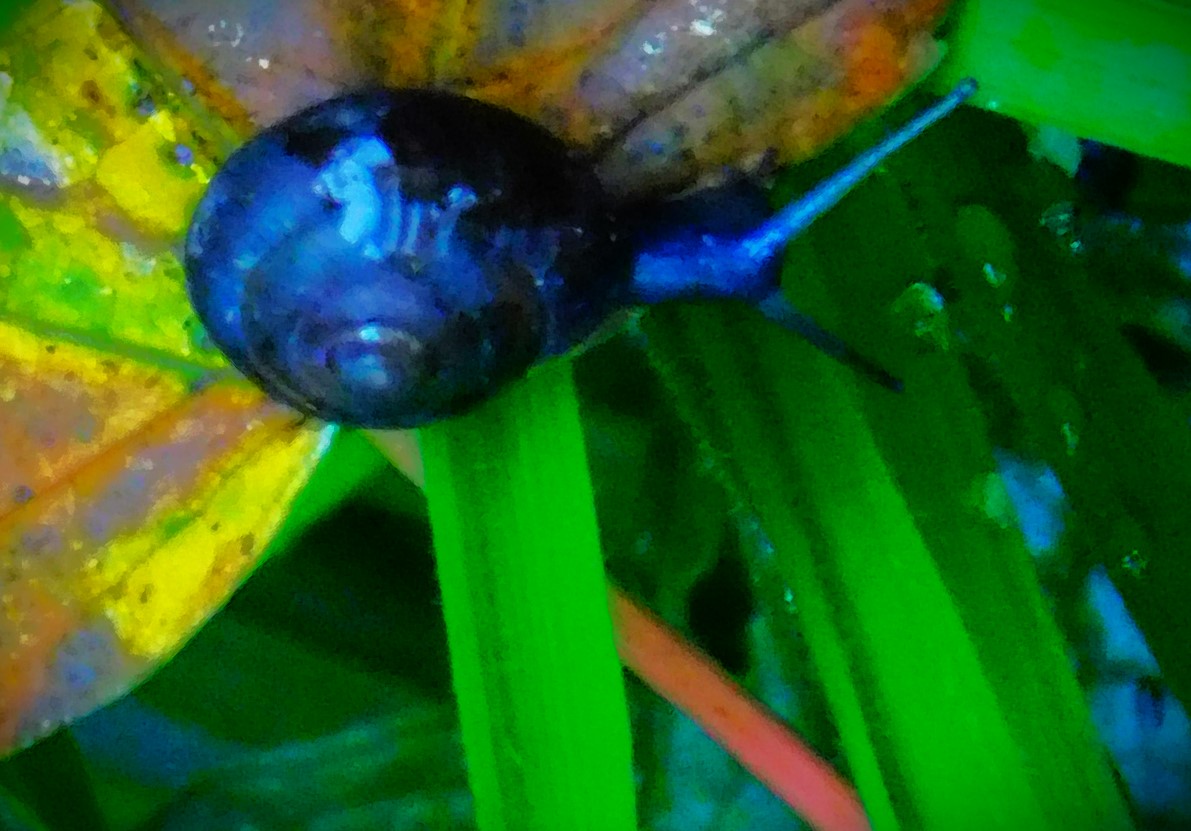
When I took this picture on October 10th this autumnal leaf on which you can see both a snail with a very dark shell and much lighter coloured slug was still attached to it’s branch, though clearly almost ready to fall. I got a second picture out of this shot, focussing more closely on the snail.

Now for my usual sign off – some photographs from the last few days (to view any of these at a larger size just click on them)…