100 Cricketers – Second XI Bowlers and Introducing the Third X1

A continuation of my “100 cricketers” series, rounding out the second XI and introducing the third XI.

INTRODUCTION

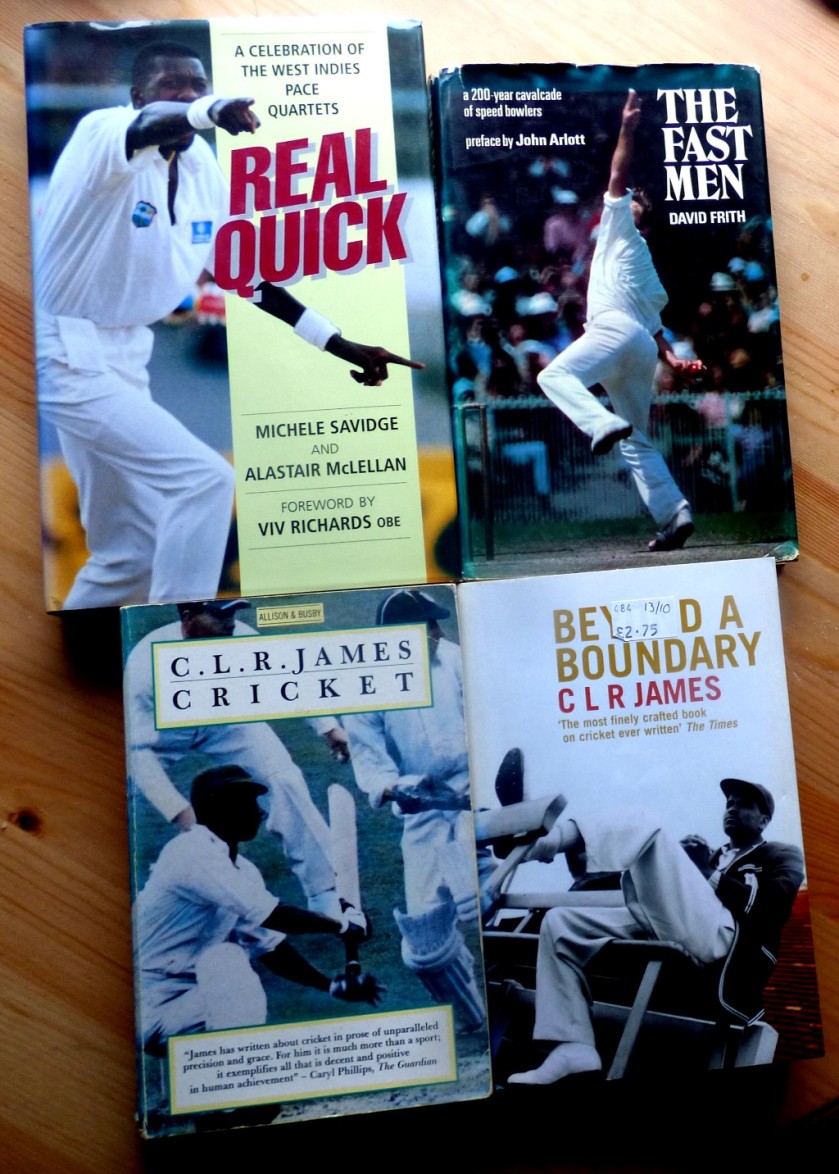
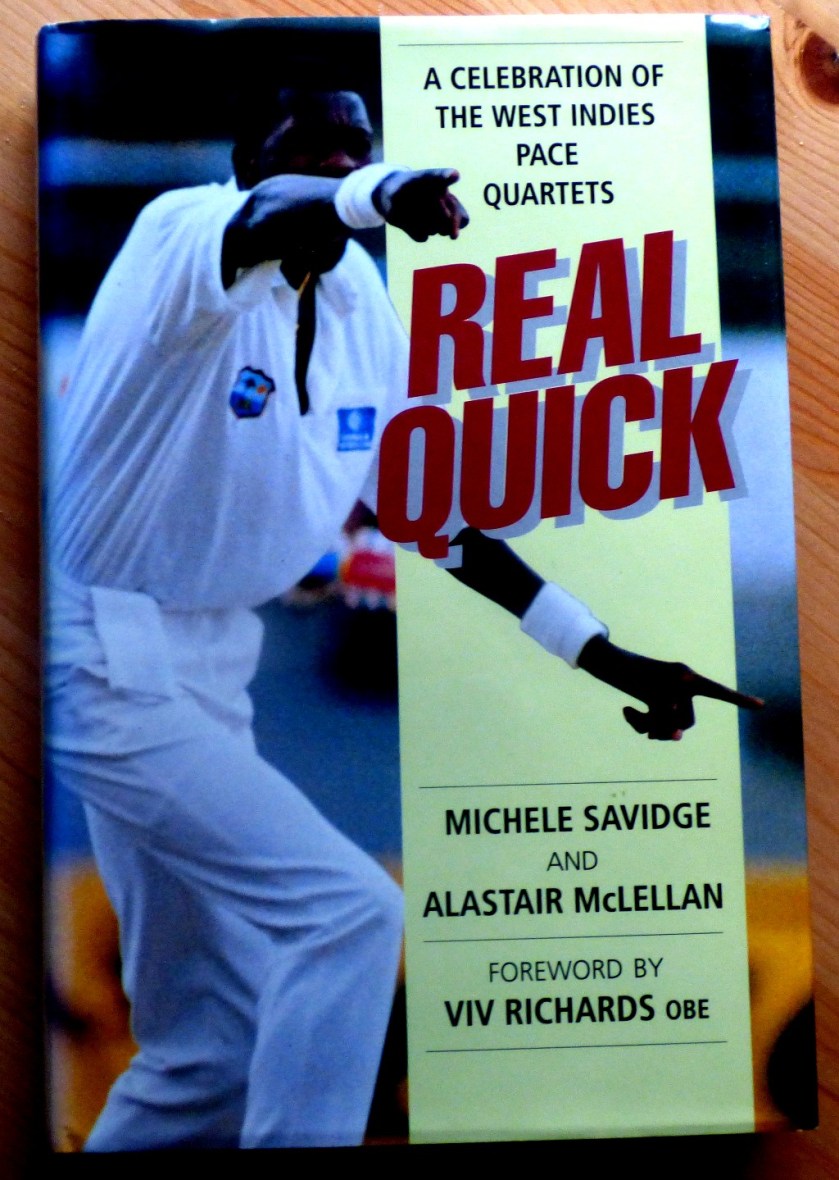
Welcome to the latest post in my “100 cricketers” series. We have covered the batters and all-rounders from our second XI, as well as the whole of the first XI, so this post deals with the bowlers from the second XI and introduces the third XI in batting order. In keeping with usual philosophy I have equipped this XI with a well-balanced bowling attack. Later in this series we shall see an example where I depart from this, because having started following cricket when I did I believed it necessary to feature a quartet of West Indies fast bowlers somewhere along the way.

WASIM AKRAM

A left-arm fast bowler who took over 1,000 wickets in all forms of international cricket, and also a very handy batter to be coming in number 8. He was spotted bowling in the nets by Imran Khan, and called into the Pakistan team while still in his mid-teens. He made an immediate impact, and never looked back. Wasim was one of the pioneers of reverse swing bowling. 

WAQAR YOUNIS

Another left-arm fast bowler, even quicker than Wasim. Like Wasim he played county championship cricket as an overseas player, in his case for Surrey and then for Glamorgan. Overseas players in the championship is a thorny issue, my opinion being that an overseas player should only be signed if they are definitiely bringing something that no-one already in your squad can provide, and if they are good enough to attract the attention of their own national selectors. The temptation to sign any old overseas player just because you are allowed to do so should be resisted. Waqar’s great trademark was a thunderbolt yorker, although against Sri Lanka in the semi-final of the 1996 World Cup he memorably came a cropper when he deployed it too predictably and his last two overs went for 40 runs. With this pairing to open the bowling and Botham as back-up the pace bowling side of things is now well covered…

SHANE WARNE

In 1993 he settled the fate a series with his first delivery therein, the legendary “Gatting Ball”, which pitched well outside leg-stump and turned so much that it dislodged the off bail. From that moment on England were spooked and the series was only ever going one way. 12 years later when England ended a long Ashes drought by winning the 2005 series Warne still captured 40 wickets in the series, in the process becoming the first bowler to take 100 test wickets in a country other than his own. When Australia took their revenge on a complacent and under-prepared England 18 months later Warne had another fine series, including the spell that virtually settled things by turning the Adelaide match upside down.

Over 700 wickets (I will not give an exact tally here, because there is an inconsistency in his official record, where wickets against a World XI are counted as test wickets, while those who played against Rest of the World sides which were recruited to replace South African touring teams in the 1970s did not have their achievements counted in the test match records) in test cricket, a tally beaten by only one bowler, and not under any immediate threat from anyone else is testament to his amazing skills, which revived a largely forgotten art (through the 1970s and 1980s spinners had increasingly, if used at all, come to be seen as keeping things tight while the quicks rested) and changed the face of cricket.

There is one caveat about Warne however – if the match or matches were scheduled to be played in India I would not pick him because he paid very dearly for his wickets in that country. Nevertheless, his huge achievements everywhere else undoubtedly qualify him to be regarded as one of the finest of all-time.

MUTTIAH MURALITHARAN

The leading wicket taker in test match history with 800 scalps to his credit. At the Oval in 1998 his captain Arjuna Ranatunga chose to field first on a plumb pitch because he wanted to be sure that his main man got a proper rest between bowling stints. England made 445, but Murali claimed seven wickets with his off-spin. Sri Lanka then made almost 600, Sanath Jayasuriya leading the way with 213, and England collapsed second time round for 166, Murali adding nine wickets to his first innings seven, and Sri Lanka knocked off their tiny target without difficulty. 

There have been many questions over his action down the years, but as far I as concerned he is one of the all-time greats, and well worth a place in this list.

INTRODUCING THE THIRD XI

Here in batting order is my third XI, perparing the way for a continuation of this series:

  1. Chamari Atapattu
  2. Virender Sehwag
  3. Jonathan Trott
  4. A B De Villiers
  5. Graham Thorpe
  6. *Steve Waugh
  7. +Jeff Dujon
  8. Ravindra Jadeja
  9. Kagiso Rabada
  10. R Ashwin
  11. Allan Donald

PHOTOGRAPHS

P1210835
My aunt, whose house I had lunch at yesterday, has a large collection of bird themed cups, this one (three pics) being devoted to the Dartford Warbler.

P1210836P1210837

P1210840
This was a fun puzzle to complete (the place name that appears twice being Hayle ).
P1210841
A map of the local area
P1210842
A close-up showing the part of town where I live.


100 Cricketers – Second XI – The Remaining Specialist Batters

A continuation of my “100 cricketers series”, with links to three important petitions – if you are able please sign and share them.

INTRODUCTION

Welcome to the latest post in my “100 cricketers” series, in which I deal with the remaining specialist batters from my second XI. My most recent post in the series dealt with the all-rounders so as to tie in with International Women’s Day. After the cricket part of the post there will be some photographs, and then some links to petitions that I am suffiiciently concerned about to share on this blog. The next post in this series will feature the bowlers from second XI and introduce the third XI in batting order.

SACHIN TENDULKAR

I first saw Sachin Tendulkar as a teenager in the 1990 series in England, in the course of which he racked up a century. He also took an amazing catch in that series, making a lot of ground before holding on to the chance. 

His amazing subsequent career is well documented. The greatest batter in the history of cricket, Sir Donald Bradman, publicly rated Tendulkar as being, along with Brian Lara, the best of the moderns, and also noted similarities between himself and Tendulkar, his attention having been drawn to them by Lady Bradman, while they were watching him on television.

At the moment Tendulkar is the only person to have scored 100 international hundreds. As a a testament to his longevity he also stands alone in having played 200 test matches. 463 ODI appearances and a T20 in addition mean that approximately four years of his life have been spent in international cricket action.

Although cross-era comparisons are generally invidious (Bradman’s colossal – 40 runs per innings – margin of superiority over the rest making him an exception) I feel sure that Tendulkar would have had had an outstanding record whatever era he had been born into and whichever kind of bowling he had had encountered.

ALLAN BORDER

An outstanding captain of Australia over many years, and a great left-handed batter whose career had two distinct portions.

For the first decade of his long international career Australia were a struggling outfit. He started in the 1978-9 Ashes series, won 5-1 by Mike Brearley’s England, and it was not until their unexpected triumph in the 1987-8 World Cup that things really started going right for Australia. In these circumstances Border was very often battling to save his side from defeat, and many of his innings were through sheer force of circumstance defensive in nature, batting as long as possible.

In the latter years of his career when he was finally in charge of a strong, confident side he showed that given the opportunity he had plenty of strokes and was willing to play them – in all of his last three Ashes series (1989, won 4-0 by Australia and would have been 6-0 but for major rain interruptions in the other two matches, 1990-1 and 1993 he batted in attacking fashion at every opportunity).

Of the four long-serving Australian captains of my lifetime I rate Border a very clear first – looking at their records in this specific role we have:

  • Allan Border – took over a weak, struggling side that had little idea of how to win, and left for his successor a side who were by then acknowledged as the best in the world.
  • Mark Taylor – took over from Border and maintained Australia’s position at the top of the cricket world.
  • Steve Waugh – taking over the captaincy of a team who were already acknowledged as champions he made them even better, a highlight of his term of office being a record run of 16 consecutive test match victories.
  • Ricky Ponting – in his first few years in charge he won a lot of matches with the remnants of the great Australian side of the previous era, but he lost three Ashes series out of four, including one on home soil in which his team were three times defeated by innings margins. 

In this XI, where the batting is overall exceedingly attacking in nature, Border is the person who in the event of bad start could dig the team out of a hole, while at the same time if the innings is going well he would be perfectly capable of stepping on the accelerator. His presence also means that there is a left-hander in the middle order, valuable from the point of view of giving the bowling side a different challenge. Finally, although not by any means a major part of his game his occasional slow left-arm did once win his country a test match against the West Indies (11 wickets in the match, including 7-46 in the first innings), and his safe hands (156 catches pouched in the course of his 156 test matches) would also be useful.

PHOTOGRAPHS

P1210824
A pair of mallards whose Sunday morning walk took them past my front window – you can just see the tail feathers of the female as she heads into the lavender.
P1210825
The male, keeping an eye on his companion.

P1210826

P1210828
A couple of close-ups of the female as she emerges.

P1210829P1210830P1210832

PETITIONS

First up, a petition on 38 Degrees produced by the Grenfell survivors, calling on the government to make our housing system work for tenants. As someone who has recently moved into social housing through force of circumstance this is particularly important to me. To sign and share please click on the screenshot below.

Grenfell petition

My final two petitions are both on the official UK Government petition site, meaning that only UK citizens are allowed to sign. The first is a call for increased funding for Children’s Mental Health. If you are able and willing to sign and share please click the screenshot below:

Childrens Mental Health

Last and by no means least is a petition calling for police officers to be given mandatory autism training, something that I as an autistic person consider to be very important. Again, please click the screenshot below to sign and share.

police autism training

Two Wins For England Cricket Teams

Brief accounts of two T20 internationals that took place within twelve hours and ended in England wins.

INTRODUCTION

Twice in less than twelve hours England cricket teams have won matches both of which could easily have been lost. This post covers both games, the first briefly, the second in rather more detail.

WINNING AFTER A DREADFUL START

In the West Indies the England men’s team made a dreadful start to their last match of the tour, being 32-4 at one point. Then Joe Root and Sam Billings had a good partnership, Root using all his experience to reach 50 off just 37 balls, while Billings reached the landmark of two balls fewer before then really opening out in the last few overs in the company of David Willey to finish unbeaten on 87 as England reached an improbable 182-6. 

I decided that there was no way the West Indies were chasing that total down, and with the women due in action early in the morning my time went to bed. The West Indies had evidently been even more shattered by England’s recovery than I expected as was to find out that their response had been to crumple to 45 all out and defeat by 137 runs, Chris Jordan collecting extraordinary bowling figures of 4-6.

Full scorecard here.

A TIGHT FINISH IN GUWAHATI

With their series already won, the England women rested Kathryn Brunt for the last match, with a view to their upcoming tour of Sri Lanka. A bright start from Beaumont and Wyatt was frittered away as 51-0 became 93-6, but some good batting at the end by Sophia Dunkley, Brunt’s replacement, and Anya Shrubsole at least gave England 120 to defend. Poonam Yadav, the slowest spinner in international cricket, was her usual mean self, Anuja Patil took 2-13 from her four overs, while Harleen Deol, mainly a batter, picked up her first international wicket. In total 18 of the 20 overs of this innings were bowled by spinners, India’s sole quick bowler Pandey being required to bowl only two of her four overs.

India lost Deol early, but a good partnership for the second wicket between Smriti Mandhana (whose half-century was a quite superb innings) and Jemimah Rodrigues seemed to have put India firmly in control, especially when the veteran Mithali Raj assumed control of the chase thereafter.

Shrubsole looked to have given England a late chance when she tightened things up so that the target became 7 off 7 balls, but then her final ball was hit to the boundary by Raj, meaning that Kate Cross, given responsibility for bowling the last over in the absence of Brunt, had to prevent India from scoring three runs for England to win. Almost unbelievably, the target was still three as she prepared to bowl the last ball of the match – yes she had produced five successive dot balls at the death (claiming two wickets, Fulmali caught and Patil stumped along the way). Pandey connected firmly with that last delivery of the match, but a fine piece of fielding from Tammy Beaumont ensured that no more than a single could be taken and England had squeaked home by one run. That final match-winning over, which gave Cross total figures of 2-18 from her four overs also earned her the player of the match award – and this was her first T20 international series since 2015. Player of the series went deservedly to Danielle Wyatt who batted well in all three games.

This was an absolute cracker of a match, and I advise you to check out the scorecard here and the official report here.

PHOTOGRAPHS

P1210813P1210815P1210816P1210817P1210818P1210820P1210821P1210823

100 Cricketers: The Second XI – The Allrounders

Continuing my “100 cricketers” series with a post tailored to International Women’s Day.

INTRODUCTION

Welcome to the latest installment in my “100 cricketers series“. I decided to change the order in which I presented what is left of my second XI (see the introductory post for how I have subdivided my selected 100) because today is International Women’s Day and following a change to my second XI focussing on the allrounders mean that two of the three cricketers to feature today are female. My most recent post in the series introduced the opening pair from this XI, and I will talk about the remaining specialist batters from it in my next post and then the bowlers, also introducing my third XI in that post. I will start with the one male cricketer to be featured today before handing over the women for the remainder of the post…

IAN BOTHAM

He started his test career with five-fors in each of his first two matches against Australia in 1977. Against New Zealand that winter he hit his maiden test hundred, also claiming eight wickets in that match. Against Pakistan in the 1978 home series came two more hundreds, the second backed by a Lord’s ground record bowling analysis for an innings of 8-34. In the Jubilee Match against India he scored 114 not out and had match figures of 13-106 (The only others to have scored a century and had a ten-wicket haul in the same test match are Enid Bakewell for England Women, Betty Wilson for Australia Women and Imran Khan for Pakistan, although Alan Davidsons contribution in the 1960 tied test at Brisbane – 5-135, 44, 6-87 and 80 also deserves an honourable mention in this context). A disastrous spell as captain, not helped by the fact that his opposition for nine of his twelve matches in charge were the West Indies at their absolute zenith, was immediately followed a remarkable trio of matches back under the leadership of Mike Brearley. First at Headingley his 149 not out, backed up by Graham Dilley (56), Chris Old (29) and Bob Willis (who lasted over half an hour while Botham was blazing away) gave England 130 to bowl at, when they had been 92 behind with only three second wickets standing. A combination of the Bob Willis bowling for his international future and panic setting into the Australian team gave England victory by 18 runs to square the series. Then at Edgbaston, when Botham was called up as a last throw of the dice in another game that Australia looked to be winning his presence caused the self-destruct button to be pressed once again (of the five wickets he gained in that final spell at a cost of just one run only one, Ray Bright, got a really difficult delivery, while Kent, Marsh and Lillee all surrendered their wickets to ordinary deliveries, and Alderman at that stage of his career needed nothing more than a straight one to finish him). The third successive Botham special came at Old Trafford, when England were 104-5 in their second innings, 205 to the good. This innings came in three parts – the first 30 balls saw Botham accrue just three singles, then he changed gear to reach 28 of 53 balls (25 off the previous 23) before the arrival of the new ball sent him into overdrive and he plundered 90 off his last 49 balls to finish with 118 from 102 balls – the century off 86. Alan Knott and John Emburey followed up with half centuries, and Australia made a gallant effort facing a victory target of 506 but England won by 103 runs to retain the ashes.

Thereafter big performances from Botham became fewer and further between, but he remained a great wicket taker through sheer force of character, and scored the last of his 14 test hundreds at Brisbane in 1986 – setting England on their way to what would be their last Ashes win down under until the 2010-11 series. At Melbourne, when England completed their series victory a half-fit Botham took five first innings wicktes, sharing the spoils with Gladstone Small who went on to be Man of the Match. 

He finally retired in 1993, when it became clear that the England selectors would not pick him again. Sadly for us followers of the game they had not got over him, and a succession of promising young cricketers would have their careers ruined by being dubbed “the next Botham”. 

In the late 1990s he wrote The Botham Report, a hard hitting book which spelt out what was wrong with English cricket at the time, and what he thought needed doing to put it right. Many of his ideas have been put into practice with considerable success, as albeit with a few black spots along the way English cricket has fared rather better since the year 2000 than it did in the 1980s and 1990s.

SARAH TAYLOR

I have said before when commenting about her in this blog that I regard her as the best wicketkeeper of either sex currently playing the game. She is also a very fine batter. Mental health issues have interfered with her career of late, but at least the way in which these are being handled by the authorities show that they are learning (far too late and after far too many tragedies) how to handle such things – everything possible is being done to help her. 

Although she seems to have been around for a very long time she is still only 29, and so could yet have plenty of time ahead of her at the top. 

Whatever happens she has already done enough to ensure that she will never be forgotten by those who have witnessed her in action.

AMELIA KERR

I was astonished in the middle of the last English cricket season to see that a 17 year old, then known (if she was known at all) as a leg-spin bowler had scored a double-century in an ODI. I checked out the scorecard, managed to see highlights of the innings, and was amazed that someone that young could play that amazingly well. Her 232 not out is a record for a women’s ODI.

She currently averages 39.91 in ODIs (strike rate 108 runs per 100 balls) and takes her  wickets in that form of the game at 22.17 a piece. Because the women play so little test cricket she has yet to sample that form of the game. 

Maybe, as I have suggested about Tammy Beaumont and the current problems with the England men’s team’s top order, she could be given a call-up to the New Zealand men’s team to see what she can do in that environment.

I expect Kerr’s career, whether she stays in the women’s game or gets called up to play alongside the men to be a long and illustrious one – there will be people with questions to answer if it is not so.

PHOTOGRAPHS

If possible I always like to include some of my photographs in my blog posts, so here we are:

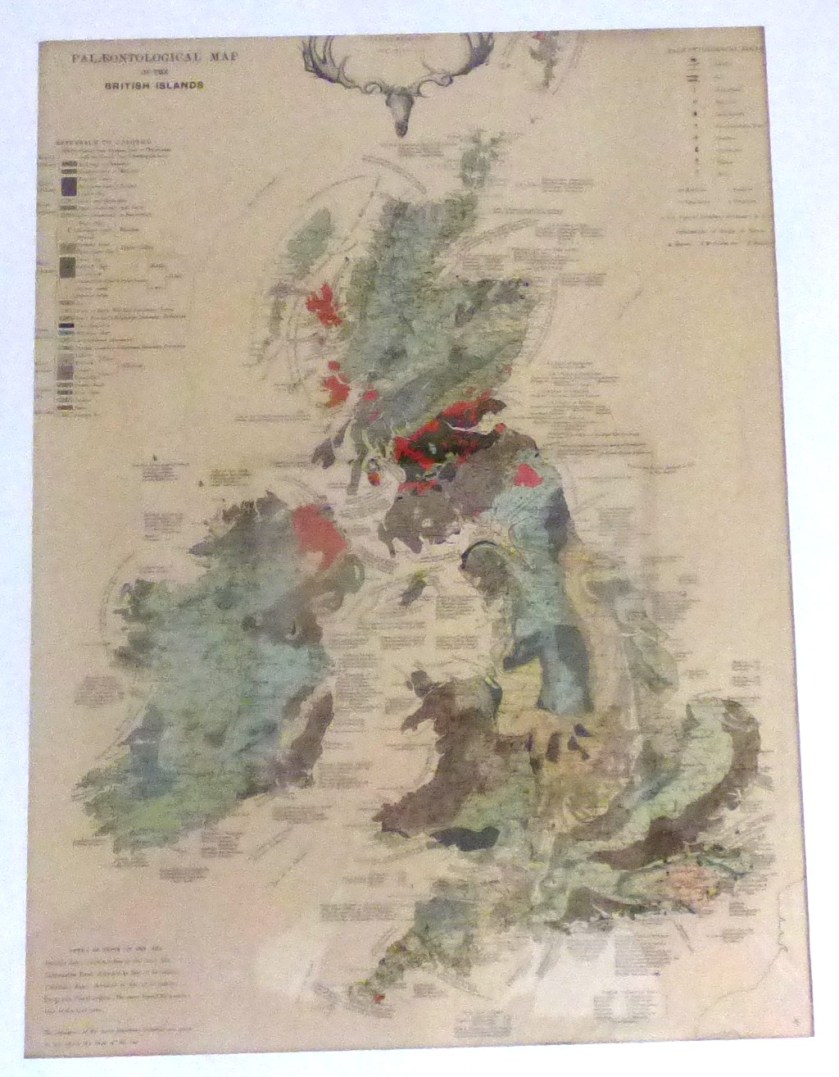
P1210793
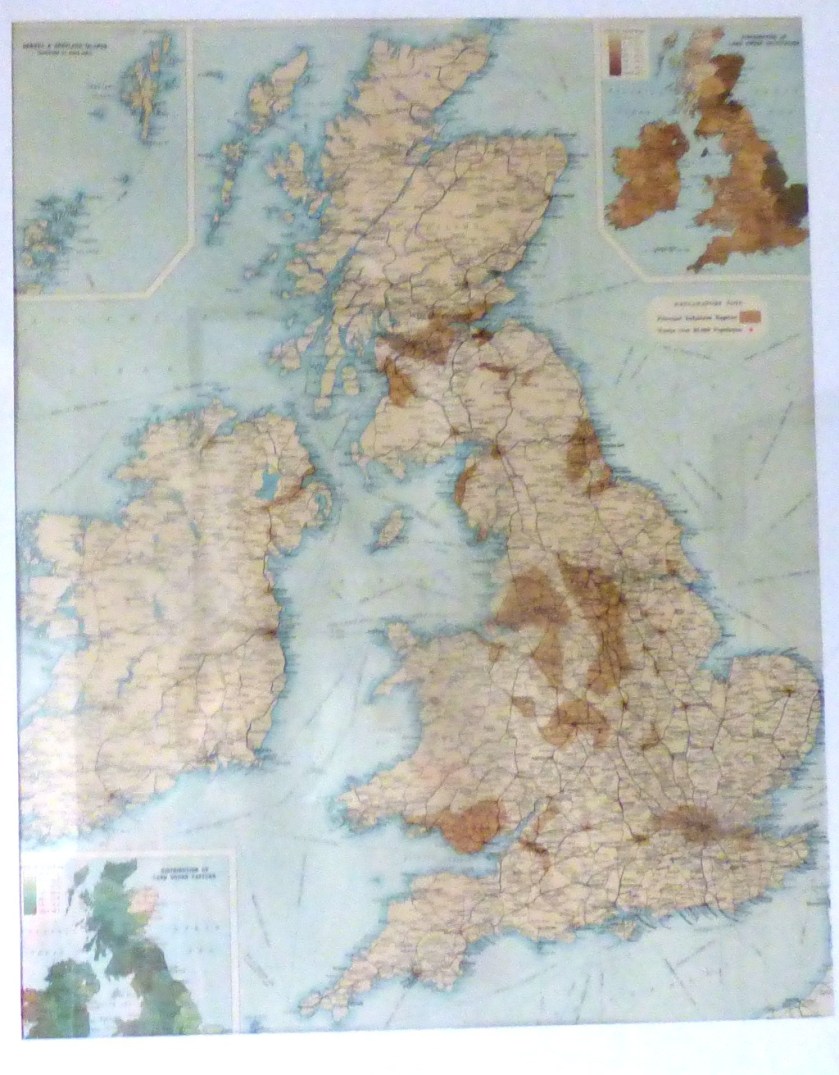
When thinking about photographs to accompany this blog post I realised that although I have had this map for many years I have never previously photographed it.

P1210794P1210795P1210796P1210798P1210799P1210800P1210801P1210802P1210804P1210805P1210806P1210807P1210808P1210809P1210810P1210812


100 Cricketers – The Second XI Opening Pair

Continuing my “100 cricketers” series with the opening pair from my second XI.

INTRODUCTION

Welcome to the latest installment in my “100 cricketers” series. We are starting on the second XI (as explained in my introductory post to the series I have organised my 100 cricketers in nine XIs with a stand alone at the end to round out the 100), with the opening batters (the whole second XI can be seen here).

CHRIS GAYLE

So far the most successful batter that T20 cricket has ever seen, he also has a fine record in other forms of the game, including having two test match triple centuries to his credit. I saw him play a magnificent innings at the Adelaide Oval, watching from what became my regular spot at that ground, the bleachers in front of the Chappell Stand. On that occasion he scored 167 not out, which left Australia with a target of 330 of 81 overs (4.07 on over). The pitch still appeared to be totally benign, and only two of the West Indies bowlers, Kemar Roach who was regularly hitting the 150KPH mark on the speed gun and Sulieman Benn with his left arm spin had looked capable of posing a serious threat. With this is mind I was hoping for a really good finish, because I did not reckon that Australia being 1-0 to the good in a three match series gave them an excuse for putting up the shutters when they had an opportunity to go for the kill.

Unfortunately Ricky Ponting assessed the situation differently and decided that no attmept would be made on what should have been a very tempting target. Most frustratingly of all, once the match had been condemned to an inevitable draw by Australia’s refusal to go for the target a couple of their batters did play some strokes near the end, showing what might have been.

Although it is his batting that earns Chris Gayle his place in my 100 cricketers he has also had occasional moments of success with his offspin bowling. 

SMRITI MANDHANA

Mandhana burst on to the scene in the 2017 Women’s World Cup, helping India to reach the final, before Anya Shrubsole’s incredible bowling, which saw her become the first female to feature on the front cover of Wisden won that match for England. In the very first match of that tournament, again between England and India Mandhana had made a spectacular 86, well supported by her opening partner Punam Raut and India had run out deserved winners. Still only 22, she is now captain of India and scoring lots of runs (although not earlier today – see my previous post).

Like Chris Gayle she bats left handed and takes a very attacking approach to the game. However she is small, while he is very tall and solidly built, so there are plenty of contrasts as well as similarities  between this pair of opening batters.

COMING UP

My next post in this series will feature the all-rounders from this second XI and then I will cover the remaining specialist batters and finally the bowlers, introducing the third XI in that post.

PHOTOGRAPHS

Here are some of my pictures, all taken this morning:

P1210775
I was well positioned while listening to the cricket this morning to take some photographs of this facsimile 1907 railway map.

P1210776P1210777P1210778P1210779P1210780P1210781P1210782P1210784P1210791P1210792


100 Cricketers – First X1 Bowlers and introducing the second X1

Continuing my “100 cricketers” series and taking the opportunity to say 750 thankyous.

INTRODUCTION

Welcome to the latest post in my “100 cricketers series“. In this post I complete the coverage of my first XI (see here, here and here for the other posts about this XI) and introduce my second XI in batting order. However, before I get to the main part of this post I would like to say…

750 THANKYOUS

This blog has been steadily gaining followers, and today the milestone of 750 was reached. I am honoured that so many of you take an interest in an eccentric personal blog. I have been blogging for almost eight years now, and that comprises two very distinct periods. From when I started in 2011 through to the first part of 2014 I was producing blog posts but was not doing anything else. Then from the second part of 2014 I learned from the good examples of other bloggers, such as Anna, and started to interact more, visiting blogs and leaving likes and where I deemed it appropriate comments. I have gone in the second period of my blogging life from being a plain blogger to being part of a blogging community, and the latter is much more satisfying. Now back to my cricketers…

JACK LEACH

When England won the series in Sri Lanka at the back end of 2018, their first victory in that part of the world since 2001, it was notable because it was achieved largely by England’s spinners outbowling their Sri Lankan counterparts in their own backyards. Part of this achievement saw Jack Leach record his first five wicket innings haul in a test match, and with 20 wickets at 24.90 from the four test matches he has played so far he seems certain to have a fine international career ahead of him. With all due respect to Moeen Ali, who fared reasonably well in the losing series against the West Indies, I believe that England’s first two choices for spinner’s roles at the moment should be Leach and Adil Rashid, who also recorded his first test match five-for against Sri Lanka. A further candidate who may force himself back in to the picture is Leach’s Somerset team mate Dominic Bess who may yet form a long standing England partnership with Leach, given that Rashid and Ali are both closer to the end than the beginning of their careers.

It is also possible that a new spinner will emerge from somewhere to make a case for themselves, but at the moment, unless the match is being played on a green-top and a spinner is clearly not going to be required Jack Leach would be my first choice as the front line spinner.

JAMES ANDERSON

When he first appeared on the scene James Anderson sported some ridiculous hairstyles (though never one quite as awful as Pietersen’s 2005 “Dead Skunk” effort) and recorded some quite horrible looking bowling figures. For a few years he was good if the ball swung and absolutely innocuous if it did not.

In the second phase of his career, starting with the 2010-11 Ashes series, he was absolutely magnificent in all circumstances, and it was a great moment when he finished England’s 4-1 beating of India (who only a few months later beat Australia in Australia) by becoming the all-time leading test wicket taker among pace bowlers, moving ahead of Glenn McGrath.

2019 could be his last home season as an England bowler (he is now 36 years old, and a home Ashes series would be a great stage on which to make his final curtain call), but so long as he remains fit and motivated he should definitely be among the first names on the team sheet. He has earned the right for his career to end at a moment of his own choosing.

I hope that as well as continuing to bowl well he uses his vast experience to assist younger swing bowlers such as Sam Curran, passing on the knowledge he has built up over the course of 15 years in international cricket.

OLLY STONE

This pick is a look to the future. The Norfolk born paceman has 116 first class wickets at 24.20, and is well capable of propelling a cricket ball at 90mph and above. Having seen how Mark Wood shook the West Indies up in the last match of what was otherwise a shocking series for England and also how Jasprit Bumrah and Pat Cummins both impacted the Australia v India series with their extra pace I feel that England need some serious pace at their disposal, as well as crafty swing bowlers like Anderson and Sam Curran, and of course in appropriate conditions spinners such as Leach and Rashid. 

Incidentally, although Norfolk has never been a first class county a number of Norfolk born players have achieved high honours in the game – five members of the Edrich family, led by Bill and John of that ilk, played first class cricket, Middlesex stalwarts Peter Parfitt and Clive Radley (test avergae 48.10) were both Norfolk born, and going back to the very early days, the leading batsman of the 1830s and 40s, Fuller Pilch, was also Norfolk born.

INTRODUCING THE SECOND XI

Preparing the ground for the continuation of this series, here in batting order is my second XI

    1. SMRITI MANDHANA
    2. CHRIS GAYLE


  1. SACHIN TENDULKAR
  2. *ALLAN BORDER
  3. AMELIA KERR
  4. IAN BOTHAM
  5. +SARAH TAYLOR
  6. SHANE WARNE
  7. WASIM AKRAM
  8. WAQAR YOUNIS
  9. MUTTIAH MURALITHARAN

I came up with the cricketers who will feature in this series of posts during one of my recent spells in hospital, and because I want this series to be fully authentic I am sticking to the choices I made then, and presenting them in the order in which I made them. As this series continues to unfold I offer a couple of challenges to those who follow it sufficiently closely:

  • Once I have presented the full 100 players pick your best Men’s XI
  • Your best Women’s XI
  • And your best mixed XI 

PHOTOGRAPHS

Here are a couple of of my photographs for those who have made it through the entire post:

P1210771P1210772


100 Cricketers – 1st X1: The All-rounders

Continuing my “100 cricketers” series.

INTRODUCTION

Welcome the latest installment in this series. So far there has been the introduction, a post about Tammy Beaumont, and a post about the other specialist batters from my first XI. This post now deals with the all-rounders from that list, of whom there are no fewer than four (including the wicketkeeper)…

ANDREW “FREDDIE” FLINTOFF

He took a long time to really establish himself at international level, but then had a couple of years when he could seemingly do no wrong, which included the fantastic 2005 Ashes series. Later on injuries took their toll, but even at the very end of his career his last involvement in the action was a direct hit on the stumps to run out Australian captain Ricky Ponting.

His performance at Edgbaston in 2005, when he scored 73 and 68 and took four wickets in each innings was outstanding, and helped to turn a series that very nearly died a premature death into one that nobody will ever forget. His 18 overs off the reel at the Oval in that same series to give England an unexpected first innings lead was incredible. In the second match of the 2009 series at Lords he bowled England to their first victory over Australia at that venue since 1934 when Hedley Verity took advantage of a rain affected pitch (remember, they played on “ooncoovered pitches” in those days) to record match figures of 15-104). 

England were rather more sensible about Flintoff’s departure than they had been about Ian Botham’s in the early 1990s, when many young cricketers had promising careers effectively strangled by having the “next Botham” label draped round their necks. This time they realised that a straight replacement for Flintoff was, to put it mildly, unlikely, and set about building a different kind of team.

Flintoff had two and a half really superb years (2004, 2005 and 2006 before the tour to Australia at the end of that year which was an unqualified disaster for him and most of the rest of the squad) and produced flashes of brilliance both before and after that period. 

KATHRYN BRUNT

She started out as a specialist bowler, batting low in the order. At one point she dropped out of the game but then made a comeback. Subsequently she has remained the England Womens team’s first choice opening bowler and has improved her batting to the point that she can be regarded as an all-rounder (she now habitually bats at no 6 or 7 in tests and ODIs, and often comes in higher than that in T20s when quick runs are wanted). 

So long as her back holds out (she has been plagued by problems in that area down the years) she will be wanted by England (in the final ODI against India recently she took 5-28, her wickets being those of the top five in the Indian order, and was on 18 not out when England completed their victory). 

ELLYSE PERRY

I saw a very young Ellyse Perry live at the Adelaide Oval in 2009, playing in an ODI for the Australian Women versus the New Zealand Women. In those days she bowled fast with new ball, batted at no 8 (it was obvious that she would be moving up the order in the future) and had a superb throwing arm.

She still bowls fast with the new ball, remains a brilliant fielder, and is now just about the best batter in the women’s game (a test-match double century being her career highlight, along with her recent dominance of the Women’s Big Bash League – three individual centuries in the most recent tournament). 

If you were selecting an Earth Women XI to take on Mars Women she would undoubtedly by the first name on the team sheet and it would go down in ink, not pencil. 

She should still have a few years ahead of her at the top, and my advice would be: enjoy it while you can – talents of this magnitude do not come along very often.

BEN FOAKES

One of the best wicketkeepers in the game, he has played five test matches for England and averages 41.50 with the bat as well as having demonstrated his skills as a keeper. Yet ridiculously his international future is in doubt because of the difficulty (in the minds of the current England selectors at least) of fitting him and Jonny Bairstow into the same England team. If they do not want to use Bairstow as a specilaist batter, filling the no3 slot, then as far as I am concerned he, and not Ben Foakes, should be the one to miss out.

Providing the England selectors see sense Foakes should go on to have a stellar international career.

THE NEXT POST IN THIS SERIES

My next post in this series will feature the specialist bowlers from my first XI and introduce my second X1 preparatory to posting about them.

PHOTOGRAPHY

A few of my own photographs to end:

P1210740
Seen from the Tuesday Market Place, King’s Lynn
P1210741
Near the Gaywood River, North Lynn
P1210744
My new beanie – from the part of Cornwall where my parfents live.


100 Cricketers – Gower, Cook and Pietersen

INTRODUCTION

I launched this series with an introduction a while back and devoted a stand-alone post to Tammy Beaumont. Now after a some delays I continue with the remaining specialist batters from my first XI. I will deal with them in chronological order, starting with…

DAVID GOWER

I saw the last day of test cricket in the English season of 1990 live at The Oval. England were battling to save the game and thereby secure a series win, and the not out batsmen overnight were Mike Atherton and David Gower. Atherton did not last long that morning, but Gower batted magnificently through the day, finishing on 157 not out. John Morris kept him company for a good while but failed to reveal the stroke play that had earned him what was to a brief chance at international level. Allan Lamb then made a half century to ensure that no embarrassments could happen. Robin Smith had time to play one cut shot before the end. However, all of these players, and indeed the Indian bowling attack, were merely supporting cast for a day that belonged to Gower. 

There would be only two more years of Gower at international level before he was passed over for a tour of India (an unqualified disaster for England, although Graeme Hick and Chris Lewis each had moments in the sun during that series) and announced his international retirement. 

In the course of his test career David Gower scored over 8,000 runs at an average of  44, and he scored them in all circumstances and against all opponents. At Perth in 1978 while Geoffrey Boycott was taking 454 minutes to score 77 (one all-run four, but no boundary hits) Gower scored his maiden Ashes century. At Edgbaston in 1979 he took 200 not out off India. At Jamaica in 1981 he secured a draw for England by defying possibly the most fearsome pace quartet ever seen in cricket history (Garner, Croft, Marshall, Holding) for eight hours and an undefeated 154 – England would wait seven more years and ten straight defeats before they next shared the honours with the West Indies. In the 1985 Ashes he made three scores in excess of 150, two of which contributed to innings victories by England. Even in the 1990-1 Ashes down under, when England were crushed by an Australian side that knew itself to be the best in the world he made two centuries in the series.

A David Gower innings would stick in the memory. It never looked like he had really hit a ball until you saw it speeding to the boundary. It was precisley because he was so very good that his dismissals often looked absolutely terrible – how could such a player produce a shot like that?

KEVIN PIETERSEN

Fast forward 15 years to 2005 but stay at The Oval, and again a final day of the test match season started with England needing to secure a draw to win the series. This was an Ashes series, and since 1989 when a combination of injuries and a rebel tour to Apartheid South Africa saw England surrender the Ashes (only the weather prevented Australia from making history by winning all six matches in a six match series) the urn had been firmly in Australian possession. Kevin Pietersen (three fifties but as yet no century in his debut series) was dropped early in this innings by Shane Warne (who had a magnificent series overall), but England were definitely struggling at lunch time. 

Post lunch Pietersen decided that attack was the only form of defence and went after the bowlingn to spectacular effect. Paul Collingwood for an hour and Ashley Giles for two and a half hours played crucial supporting roles. By the time Pietersen was out for 158 England were well and truly safe.

Pietersen went on to play many more fine innings for England, although his career eventually ended in somewhat controversial circumstances, but if he had never scored another run after that day in 2005 he would have done enough to ensure imperishable fame. No one who witnessed that innings will ever forget it.

ALASTAIR COOK

England’s all-time leading run scorer, whose career started with a fifty and century against India in 2006 and ended in the same fashion 12 years later. In between times it included the most successful visit to Australia by anyone named Cook since Captain James of that ilk was in his prime. Having saved the first match at Brisbane with 235 not out he then contributed 148 at Adelaide, Pietersen making 227 and finally ensured that England would win the series by scoring 189 at Sydney. In total the series brought him 766 runs, second only for an English batter in Australia to Hammond’s 905 in the 1928-9 series.

As well as making big runs all the way through his career Cook also managed to be fit and available every time England needed him, a remarkable feat of longevity and endurance when so much cricket is being played. 

LOOKING AHEAD

Having covered the specialist batters from my first XI I will next be considering the all-rounders, including the wicketkeeper.

England’s Impressive Start To ODI Series

An account of the 1st ODI between England and the West Indies.

INTRODUCTION

After a test match series most of which is best forgotten England last night started the ODI series against the West Indies in emphatic style. I followed the action on cricinfo, since there was no live commentary.

A RUN FEAST

Chris Gayle, playing his last international series at the age of 39, clubbed a spectacular century for the West Indies. The problem was that although he was smashing sixes like the Gayle of old he was no longer able to run at any sort of speed, and as a result his overall scoring rate was not actually that quick by modern standards as there were too many scoreless deliveries there.

The early lead in England’s response to the West Indies 360 was taken by Jason Roy who pretty much matched Gayle for freedom of stroke play and was also able to run properly, with the result that his strike rate was colossally impressive. Joe Root and Eoin Morgan then took over once he was out, and just before the end Root reached the third inidvidual hundred of the day, while Ben Stokes made an unbeaten 20 at the end to ensure that there would be no final wobble. Root was out at the death, caught of a dreadful full toss that was only just a legal delivery, but England’s margin was six wickets, with eight balls to spare, and at no point during the England innings did the West Indies look other than second favourites.

Although Gayle had a higher score the player of the match award went quite rightly to Jason Roy whose innings put England firmly in the driving seat, a position they never subsequently relinquished. In a match in which 724 runs were scored in 98.4 overs Ben Stokes’ bowling figures (3-37 from 8 overs) were noteworthy. Chris Gayle’s 135 came off 129 balls, so just above 100 runs per 100 balls, while Jason Roy’s 123 occupied just 85 balls – a strike rate of over 140 runs per 100 balls. A full scorecard can be viewed here.

In the early hours of tomorrow morning UK time, the England women take on India in an ODI, while the second match of the series in the West Indies gets underway later the same day.

PHOTOGRAPHS

Tammy Beaumont and Women Playing Alongside Men

A radical suggestion for dealing with the England men’s teams top order batting woes…

INTRODUCTION

Having introduced my new series about cricketers in my last post I now move on to an opening batter who provides a springboard for plenty of other ideas.

VALE ATQUE AVE

The 2015 English cricket season started with the news of the dropping and subsequent international retirement of Charlotte Edwards after a long and illustrious career (she features later in this series). Who was going to fill the monster sized vacancy that her departure left at the top of the England women’s batting order? 

The first England women’s squad post the dropping and retirement of Edwards featured an opening pair of Tammy Beaumont and Lauren Winfield. Beaumont immediately began making big runs in her new role at the top of the order, and remarkably a fairly seamless transition from one era to the next took place.

OPENING WOES IN THE MENS TEAM

Meanwhile in the ranks of the England men’s team a gaping hole was emerging at the top of the batting order. Alastair Cook, so long an absolute rock in that position, seemed to have gone into irreversible decline and none of those selected to partner him looked remotely good enough. Mark Stoneman went after a sequence of test matches that brought him four 5o plus scores but never saw him get as far as 60 (and he had several lives in the course of his top score of 59). He was replaced by Keaton Jennings who has scored two test hundreds but who is also looking at an average of 25.86 after 16 test matches (at least 15 runs per innings light for a specialist batter at that level). 

When Cook announced that he was retiring from international cricket the problem became greater still. Rory Burns of Surrey was an obvious candidate for one slot at the top of the order, having scored far more runs than anyone else in the English season. For the the other England faced a difficult decision between the following:

  1. Stick with the underachieving Jennings and hope for miracles.
  2. Revert to Stoneman with even less chance of success
  3. Bring in a second brand new opener and hope that (at least) one of the newbies hits their straps right from the start.
  4. Faced with an assortment of unappealing options as listed above go for someone who has been making stacks of international runs at the top of the order and give Tammy Beaumont her chance to play alongside the men.

In the event England took option one, and one big score for him in Sri Lanka apart it has not worked out either for them or for Jennings. In the test match currently under way at St Lucia England are doing well, but they have not had many top order runs to work with, although Burns batted a long time in the first innings. In the first two tests of this series England were roundly defeated, and the less said about their batting efforts, the better. 

COULD A WOMAN PLAY ALONGSIDE THE MEN?

The short answer is yes. I would not expect a female fast bowler to be able to hold their own as power is so important in this department, but in batting, fielding, wicketkeeping and slow bowling, where there is less of a premium on pure power I see no reason why a female could not hold their own with the men, and my suggestion relates specifically to an opening batter. 

If some new opener makes a succession of centuries in the early part of the English season , thereby forcing themselves on the selectors my current thinking may be modified, but at the moment I remain convinced that the best solution to the England Mens team’s opening woes is to give Beaumont her chance and see what happens.

THOMAS SQUAD FOR 1ST ASHES MATCH

I have misgivings about someone who is almost 33 starting a test career from fresh, but Joe Denly’s 69 in St Lucia would seem to have earned him an extended run, so it is on that basis that he features in my squad for the first Ashes Match. I will list the names, and then append some explanations:

  1. I Beaumont
  2. Rory Burns
  3. Joe Denly
  4. Joe Root*
  5. Joss Buttler
  6. Ben Foakes+
  7. Ben Stokes
  8. Sam Curran
  9. Adil Rashid
  10. Jack Leach
  11. Mark Wood
  12. James Anderson
  13. Olly Stone

I have named 13 because the exact make up the bowling unit will depend on the nature of the pitch and the conditions. I regard Anderson, Wood and Stone as essential for the seam attack (two outright quicks, and England’s all-time leading wicket taker), with Leach and Rashid in that order of precedence as spin options should conditions warrant it, and Curran as a fourth front-line seamer (possibly batting at 7 in place of Stokes) should conditions warrant that option. Bairstow at no 3, as a specialist batter, is also an option but would seem shockingly inconsistent given the Denly has produced a significant score in St Lucia, which is why he is not there in my list.

PHOTOGRAPHS

P1210663
A recent acquisition, which has also featured on my London Transport themed website.

P1210664P1210665P1210666P1210668P1210669P1210670P1210671P1210672P1210673P1210674