All Time XIs – G for Glory

An all time XI of players whose given names begin with G, a massive honourable mentions section which includes mention of today’s WBBL Challenger match, and a photo gallery.

Today I choose an all time XI of players whose given names begin with Gs. This letter poses particular challenges which I will explain in the course of the post, and there are a vast number of honourable mentions.

  1. *Graeme Smith (South Africa, left handed opening batter, captain). A superb playing record and an outstanding captain.
  2. Gordon Greenidge (West Indies, right handed opening batter). One half of the West Indies greatest ever opening pair. His highlights include twin tons on the most difficult surface of the 1976 series, two contrasting double centuries against England in 1984, one a brutal match winning knock at Lord’s after England had the temerity to declare their second innings closed on the final morning (and some reckoned they should have done so earlier), and the other a ten hour marathon innings which put his side fully in control of the match at Old Trafford.
  3. George Headley (West Indies, right handed batter). Nicknamed ‘Atlas’ because he seemed to carry his side on his shoulders, he is among the select few to have played over 20 test matches and have an average of above 60 – 60.83.
  4. Graeme Pollock (South Africa, left handed batter). Another member of the select club referred to above. In what proved to be South Africa’s last series before isolation he set an individual scoring record for that country with 274 against Australia. That score has been beaten by four players since South Africa’s readmission – Daryll Cullinan, Gary Kirsten, Graeme Smith and Hashim Amla.
  5. Greg Chappell (Australia, right handed batter, occasional medium pacer, occasional leg spinner). A superb batter, one of the safest slip fielders the game ever saw and a part time bowler of two types.
  6. Garry Sobers (West Indies, left handed batter, left arm bowler of every type known to cricket). The most complete player the game has ever seen, and therefore, as always when he is eligible for selection, the first name on the team sheet for this XI.
  7. Gilbert Jessop (England, right handed batter, right arm fast bowler). The ultimate X-factor player, with an approach to batting ideally suited to someone coming at number seven in a strong side.
  8. +George Duckworth (England, wicket keeper, right handed batter). A great wicket keeper, and in a side with the batting guns possessed by this one I am not worried about his limited skill in the latter department.
  9. George Lohmann (England, right arm medium fast bowler, right handed batter). Of bowlers to have taken at least 100 wickets he has the best average by some way, a barely believable 10.75, and also the best strike rate – a wicket every five and a half overs on average.
  10. George Dennett (Gloucestershire, left arm orthodox spinner, left handed batter). Never capped for England, but 2,151 FC scalps at 19.82 a piece. England were exceptionally well served by left arm spinners in his playing days – Rhodes, Blythe, the all round skills of Frank Woolley and Roy Kilner etc.
  11. Glenn McGrath (Australia, right arm fast bowler, right handed batter). We have our ‘enforcer’, one of the greatest of all time.

This side has a stellar top six, including the most complete player the game has ever known, the ultimate in x-factor players at number seven, a great keeper and three great specialist bowlers. The bowling does not have quite the dazzling array of options possessed by some of my sides, but I do not think that McGrath, Lohmann, Dennett, Jessop and Sobers would be likely to find capturing 20 opposition wickets beyond them on any surface.

This will require a systematic approach, so I shall work my way down the order…

Glenn Turner, the only New Zealander ever to score 100 first class hundreds is the biggest miss here, but Gautam Gambhir of India would also have his advocates, Gary Kirsten of South Africa deserves a mention (and can have the head coach job that England infamously refused to give him allegedly because his power point presentation wasn’t good enough) and George Gunn, who played for England many years ago, and absolutely did things his way also deserves a name check.

These guys missed out because of the stellar cast available to fill these slots. Geoff Howarth of New Zealand, Gundappa Viswanath of India and Gilbert Parkhouse of England would all have merited serious consideration for a letter less well stocked with world beating batters, but none can get in here.

The presence of five of the greatest ever specialist batters and Sobers limited the scope for the inclusion of all rounders. Luminaries such as George Giffen (Australia, right handed batter, off spinner), George Hirst (England, right handed batter, left arm fast medium) and two leg spinning all rounders, Greville Stevens (England) and Garnet Lee (Nottinghamshire, Derbyshire) all missed out. Had I been picking with limited overs in mind Glenn Maxwell of Australia would have been one of the first names on the team sheet, but I preferred Jessop at seven, and the only one of the top six who I could even have contemplated not picking was Greg Chappell. George Pope of Derbyshire and England was a good enough all rounder to merit a mention as well. George Ulyett, who played for England in their very early days and had an HS of 149 and a BB of 7-36 was also unlucky.

Godfrey Evans was the nearest challenger to Duckworth, wkith Graham Manou, a fine keeper who was scurvily treated by the Aussie selectors of his day and Gil Langley of Australia also in the mix.

George Simpson-Hayward, the last underarm bowler to make a serious impression at test level (over 20 wickets in his only test series, against South Africa in South Africa) was close to dislodging Dennett. George Macaulay of Yorkshire and England never managed much at test level.

It is in this category that we meet the greatest number of top cricketers to miss out for this letter. Garth Le Roux, the giant South African quick of the 1970s and 80s never got to play test cricket, otherwise he might well have had a slot. Graham McKenzie, the best Aussie pacer between the retirement of Davidson and the rise of Lillee was also close. George John was rated by CLR James as the finest of the early West Indian fast bowlers, but he was finished before they started playing test cricket. Gideon Elliott who had a very brief but freakishly successful fast bowling career in the late 1850s and early 1860s (48 wickets at less than 5 a piece, including innings figures of 9-2) deserves a mention. George “Tear ’em” Tarrant was a hugely successful fast bowler in the era immediately before the rise of WG Grace, but the way the good Doctor quelled those who before he came along had intimidated by dint of sheer pace on often treacherous pitches explains why I overlooked him. Had I not had Sobers to perform the role, two candidates for the role of left arm pacer would have been Gary Gilmour (Australia) and a gamble on George Garton, yet to establish himself as an England player. George Freeman, whose 288 FC scalps came at less than 10 a piece was another in the mix. George Geary might have had the slot I gave to Lohmann, but my feeling is that the difference between their test records is too great to be put down solely to the flat pitches on which Geary had to operate at that level. Glenn Chapple of Lancashire is a what might have been – injuries prevented him from gaining international recognition, and as fine a player as he was in domestic cricket I cannot justify dropping either Lohmann or the other Glenn to make way for him.

I was not able to include a female in this XI, but the Challenger in the Women’s BBL took place today, and Grace Harris with a superb innings, Georgia Redmayne with a great display of wicket keeping, and Georgia Voll with a stellar bowling performance all had big days out in a superb win for Brisbane Heat over Perth Scorchers, while Georgia Adams, a spin bowling all rounder, is also making a name for herself. Of the players I have named the most likely to earn a place in this squad in years to come is Redmayne, who if she continues to keep the way she did today could challenge Duckworth.

I have doubtless missed some of the riches available for this XI, though I do remind people wishing to comment that I have declared a policy of not selecting anyone who made rebel tours of Apartheid South Africa. Please feel free to make suggestions, so long as you examine the effect they would have on the balance of the side. With five batters and a batting all rounder having ironclad cases for inclusion fitting in enough bowling is a challenge for this letter.

My usual sign off…

All Time XIs – Barbados Born

An all time XI of Barbados born players, highlighting the immense talent produced by that tiny coral island down the years. Also a photo gallery.

I have mentioned in some of my previous all time XIs posts the remarkable number of amazing cricketers produced by the tiny coral island of Barbados. Now I select an XI specifically to showcase the extent of the talent produced by this island with a population of under 300,000.

  1. Gordon Greenidge (right handed opening batter). One half of the greatest opening pair the West Indies have ever had, and both hail from this island.
  2. Desmond Haynes (right handed opening batter). The other half of that legendary opening pair.
  3. *Frank Worrell (right handed batter, left arm medium fast bowler, captain). The total number of West Indies captains to truly overcome inter island rivalries totals two – this man and Clive Lloyd of Guyana. Worrell was a classy batter who scored his test runs at an average of 49, and his appointment as skipper ended one of cricket’s nastier shibboleths – the view that a mainly black team needed a white man to lead them.
  4. Everton Weekes (right handed batter). One of the most powerful stroke makers ever seen, but a firm believer in keeping the ball on the ground – he rarely hit sixes. He averaged 58.61 in test cricket, including a sequence at that level of five centuries in successive innings.
  5. Clyde Walcott (right handed batter, occasional wicket keeper, occasional medium pacer). Like Weekes a ferocious hitter of a cricket ball, and a colossal scorer even at test level (average 56). Additionally he once shared fourth wicket stand of 574 for Barbados with Frank Worrell, at the time an FC record for any wicket, though it was beaten only a few years later when Gul Mahomed and Vijay Hazare got to work for Baroda against Holkar, also for the fourth wicket, and that in turn was beaten by Mahela Jayawardene and Kumar Sangakkara for Sri Lanka against South Africa, when they put on 624 for the third wicket.
  6. Garry Sobers (left handed batter, left arm bowler of every type known to cricket). The most multi-skilled player ever to play the game.
  7. +David Murray (wicket keeper, right handed batter). Barbados’s finest ever keeper, and good enough to play for the West Indies.
  8. Malcolm Marshall (right arm fast bowler, right handed batter). One of the greatest fast bowlers ever to play the game and a more than useful lower order batter.
  9. Wes Hall (right arm fast bowler, right handed lower order batter). A legendary fast bowler of the late 1950s and early 1960s and a good enough lower order batter to score a first class century.
  10. Joel Garner (right arm fast bowler, right handed lower order batter). An awkward proposition because of the immense height from which he released the ball (above the height of many sightscreens), and capable of useful runs at need.
  11. Manny Martindale (right arm fast bowler, right handed tail end batter). Not many test appearances, as he belonged to the early days of West Indies test history, but he took his wickets at that level at 21 each, and over a larger sample size at FC level paid 25 each for his wickets.

This side has a stellar top six, a keeper who could bat and four great fast bowlers, most of whom had at least some capability with the bat as well. The spin bowling is weak, with Sobers the only front line option in that department, but that reflects the fact that conditions in Barbados have generally favoured fast bowlers and not spinners. Still not many places with similar populations could offer up an XI that would come close to challenging this one.

Some my chosen XI moved away from Barbados, but all played for the West Indies. Four Barbadian born cricketers moved to England and have played for their new country: Roland Butcher (right handed batter), Gladstone Small (right arm fast medium bowler), Chris Jordan (right arm fast medium bowler, right handed batter and ace fielder) and Jofra Archer (right arm fast bowler). Of these four the only one who might challenge for a place is Archer, and his injury history counts against him. Having covered that I now deal with a player who I regard as deserving a paragraph to himself in this section…

The third of the three unequivocally top of the range test openers to come out of Barbados. I left him out, because although I have little doubt that considered in isolation he outranks Haynes, and maybe even Greenidge I felt that proven effectiveness of Greenidge and Haynes as an opening combination meant that I had to pick them, which meant that I could not accommodate Hunte.

The spin bowling issue is problematic – leg spinning all rounder David Holford is not worth a place in either department, and the best specialist spinner that Barbados has produced, Sulieman Benn, has a very ordinary test record. One possible solution to getting a second front line spinner into the XI is to drop Martindale, drop Murray and the three remaining quicks a place each down the order and select Hayley Matthews, an off spinning all rounder with a great record for Barbados and West Indies women’s teams at number seven.

There are a stack of fast bowlers who could not be accommodated who would be instant selections in many another team: Wayne Daniel, Sylvester Clarke Herman Griffith and Charlie Griffith the four most obvious specialists plus a trio of all rounders – Jason Holder, Franklyn Stephenson and Ottis Gibson.

Some of you will have ideas of your own about players who could have been mentioned or selected – fire away with your comments.

My usual sign off…

All Time XIs – A Family Affair Part Two

The second part of a two part exercise that started yesterday, featuring the second XII, honourable mentions and a comparison, as well as a large photo gallery.

Welcome to the second part of a two part all time XIs piece that I started yesterday. Today we see our second XI, honourable mentions and a comparison.

  1. Graeme Pollock (left handed batter). Not a regular opener, but he did once score 274 in a test match from number three, and my reckoning is that he could cope with the task of opening. He averaged over 60 in test cricket before the curtain came down on South Africa due to the foul apartheid system of government in that country.
  2. Majid Khan (right handed opening batter). One of three cousins to have captained Pakistan (only one of the other two features in this post), he was a stylish and attack minded opening batter, generally rated by those who saw him as a better player than an average just the wrong side of 40 suggests.
  3. Garry Sobers (left handed batter, left arm bowler of every type known to cricket, brilliant fielder). The most multi-skilled player in cricket’s long history, and a regular in this batting position – his then test record 365* came batting here.
  4. Mark Waugh (right handed batter, occasional off spinner, ace slip fielder). Once dubbed ‘Afghan’ because how much longer it took the Aussie selectors to noticer him than it taken them to notice his twin brother, he was a stylish batter and the safest slip fielder I ever saw in action.
  5. Steve Waugh (right handed batter, occasional medium pace bowler, vice captain). A gritty and determined batter who tended to score runs when they were most needed, and I have acknowledged his leadership qualities by naming him as vice-captain of this XI.
  6. Jonathan Bairstow (right handed batter, occasional wicket keeper). He is picked in this side as a specialist batter, a role that in my view he is best suited to.
  7. *Imran Khan (right handed batter, right arm fast bowler, captain). One of the greatest of all allrounders, cousin of Majid Khan and designated captain of the XI. Some might make him vice-captain and S Waugh captain rather than vice-versa, but I believe he was the finer skipper, and also the Pakistan Cricket Board recently disgraced themselves by putting up a montage about Pakistan cricket history that did not even mention him.
  8. David Holford (right handed batter, leg spinner). A cousin of Garry Sobers, which is why I am prepared to pick him although his record is fairly moderate – a compromise to get Sobers in being worthwhile IMO. The two cousins once saved a test match against England by putting on 274 together.
  9. +David Bairstow (wicket keeper, right handed batter). This is why I selected Jonathan Bairstow – there are limited ways of getting a top drawer keeper into a side of this nature and this is one of them.
  10. Shaun Pollock (right arm fast medium bowler, right handed batter). Almost absurdly low in the order for him (nos 8,9 and 10 in this side are virtually interchangeable in terms of batting skill, and all rather better than a standard number eight).
  11. Peter Pollock (right arm fast bowler, right handed lower order batter). One of the most ferocious fast bowlers of South Africa’s first period as a test nation (JJ Kotze, Neil Adcock and Peter Heine are other contenders), a fine player to round out the XI.

This side is awesomely strong in batting, superbly equipped in seam/ pace bowling (P Pollock, S Pollock, I Khan, Sobers), has a great skipper and a great keeper, but is under par in the spin department, with the moderate Holford and Sobers in his slower guises the best available to them.

Two fast bowlers I could not accommodate in either XI were West Indian half brothers Fidel Edwards and Pedro Collins. The Mohammad brethren of Karachi, five of whom played FC cricket and four of whom gained test selection were perhaps the most notable family to be omitted, although the multi-generational Cowdreys (four generations), D’Oliveiras and Headleys (three generations each) all produced many first class cricketers and two of the five Edriches of Norfolk to play first class cricket would have been worthy selections. The two George Baileys of Tasmania, Great-great grandfather and Great-great grandson, are to date the furthest apart by generation of related first class cricketers, but the elder just missed out on international honours and the younger was never a regular in the Aussie team. The Gunns of Notttinghamshire produced four first class cricketers, two of whom, William (also the original Gunn of Gunn&Moore) and George did well for England. Sussex have a long history of cricketing families (see my post about that county), but the only family of theirs that had two players of sufficient class to potentially claim places were the ruling family of Nawanagar with ‘Ranji’ and ‘Duleep’.

The XI I presented today is stronger in batting (although G Pollock is out of position), and its pace/ seam attack is quicker though not necessarily better. Neither side is that strong in spin bowling. Both will be well led, and both have high class keepers, though Tallon would outrank D Bairstow in that department. No side with WG Grace in their ranks can be entirely discounted but I think todays XI have a clear advantage and would expect a five match series between these sides to end 4-1 in their favour.

My usual sign off…

All Time XIs – “Bazball”

An all time XI picked to play in the style of Ben Stokes’ England test team and a large photo gallery, including a new bird sighting.

Welcome to my latest offering. I am studiously avoiding paying any attention whatsoever to events in London today, and this sentence will be the only hint of anything to do with those events you get in this blog. Today I select an all time XI that I would trust to play cricket with the same approach as Ben Stokes’ current England test side. I am following my “county” rules in terms of selection – one overseas player allowed, the rest English.

THE XI IN BATTING ORDER

  1. *WG Grace (right handed opening batter, right arm bowler of various types through his career, captain). A batter who always looked to score runs and scored huge numbers of them, his approach to captaincy was also fundamentally attacking.
  2. Lionel Palairet (right handed opening batter). A dashing opening batter who scored 10o+ runs in a morning session on five separate occasions in 1901, one of them against that years champions Yorkshire when Somerset trailed by 238 on first innings and came back to win by 279 runs.
  3. Frank Woolley (left handed batter, left arm orthodox spinner, ace slip fielder). The only cricketer ever to score 10,000+ FC runs, take 1,000+ FC wickets and pouch 1,000+ FC catches, and noted for feats of fast scoring with the bat.
  4. Denis Compton (right handed batter, occasional left arm wrist spinner). A top drawer entertainer with a magnificent record.
  5. Garry Sobers (left handed batter, left arm bowler of every type known to cricket, ace fielder). There was really only one candidate for the overseas player in an XI of this nature – the most complete player there has ever been, and very attacking by inclination.
  6. +Les Ames (right handed batter, wicket keeper). He won the Lawrence trophy for the fastest first class century of the season twice in the first three years of its existence.
  7. Gilbert Jessop (right handed batter, right arm fast bowler, ace fielder). He scored 53 first class hundreds, yet only once did he bat for more than three hours in a single innings, for a score of 240. He still has the record for the fastest test century by an England batter, though there have been several recent challenges.
  8. Arthur Wellard (right arm fast medium bowler, right handed lower middle order batter). In 1935 he hit 66 sixes in the first class season, a record that stood for half a century. A quarter of his 12,000 FC runs came in sixes, and he was a good enough bowler to set the Somerset record for most first class wickets in a season.
  9. Jim Laker (off spinner, right handed lower order batter). With Woolley, Sobers and Compton able to cover every variety of left arm spin and the next player in the order famed for bowling what was effectively a quick leg break I felt that an off spinner was called for, and Laker was clearly the answer.
  10. Syd Barnes (right arm fast medium bowler, right handed lower order batter). Probably the greatest bowler there has ever been, a must pick.
  11. William Mycroft (left arm fast bowler, right handed tail end batter). My envisaged new ball partner for Barnes, he just missed out on the start of test cricket, being 35 years old when the inaugural such match was played, though he had had a fine season in 1876. He took over 800 first class wickets at 12 a piece.

This squad has a powerful batting line up, with all of the top seven save Palairet (two caps in 1902) test match regulars, and the only non-bowlers are keeper Ames and Palairet, though Compton would be unlikely to be called on for many overs in this line up. The bowling attack is richly varied, and that Barnes was well suited to sharing the new ball with a left arm pacer is proven by the great success he had in the 1911-12 Ashes when opening the bowling with Frank Foster, just such a bowler. I would expect this side to score big totals at a rapid rate and not to have any problems taking 20 opposition wickets.

HONOURABLE MENTIONS

Of course there are hundreds of potential qualifiers for this XI. My biggest regret was not being able to accommodate an under arm bowler – there were three outstanding candidates, David Harris, the first authentically great bowler, Digby Jephson who might have had Wellard’s slot and George Simpson-Hayward, the last of the breed to play at test level. If you want to suggest other players go ahead – as I have said there are many possibles, but do consider how your choices would affect the balance of the side.

PHOTOGRAPHS

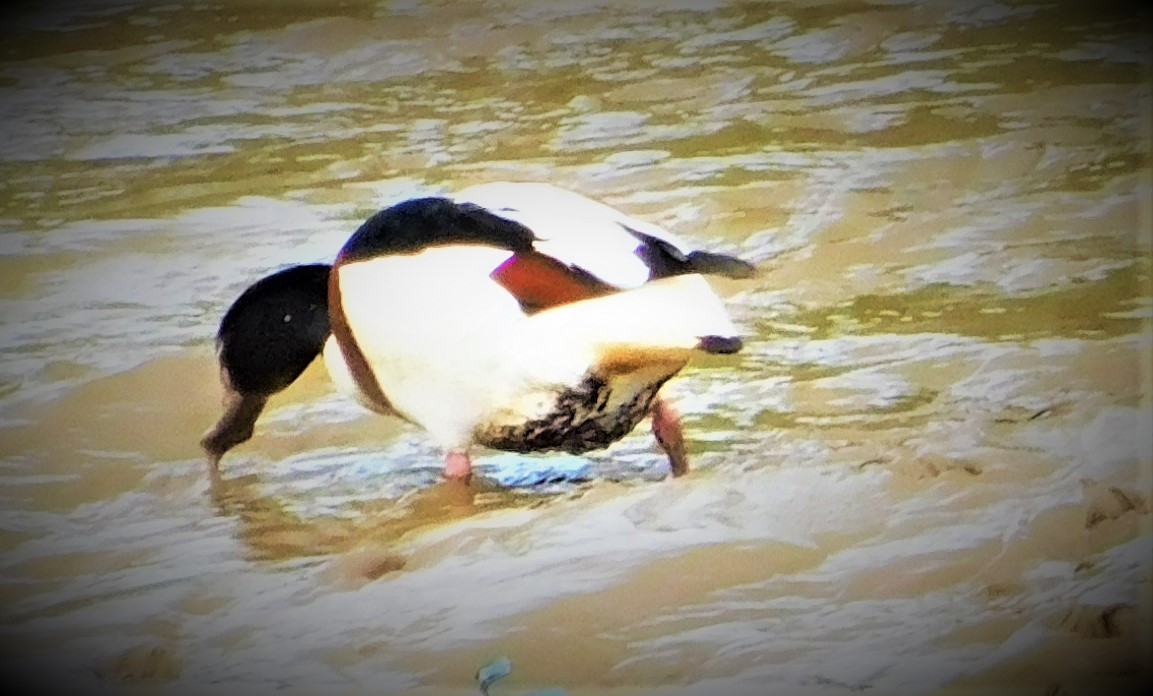
I have a fine photo gallery, including a new bird sighting – I saw a pair of shelduck where the Nar flows into the Great Ouse while out walking this morning. Also, I will probably not get a post up tomorrow as I will be out for most of the day since the Metronomes are playing at Broxbourne. Now for those photos…

All Time XIs – The Grand Finale

Bringing the curtain down on an immense series that has taken us through the alphabet, 200+ years of cricket history and every inhabited continent in the world. The XIs are presented in reverse ranking order, with links back to the selectorial posts.

This post concludes our cricketing journey through the alphabet, a couple of centuries of history and every inhabited continent, with a listing of each XI in reverse ranking order from 26th up to first. I have appended extra comments along the way where my thinking may have changed, or where cricketing developments caught up with me during the course of this series, which has been running since late July. Each XI is also accompanied by a link to the relevant selectorial post.

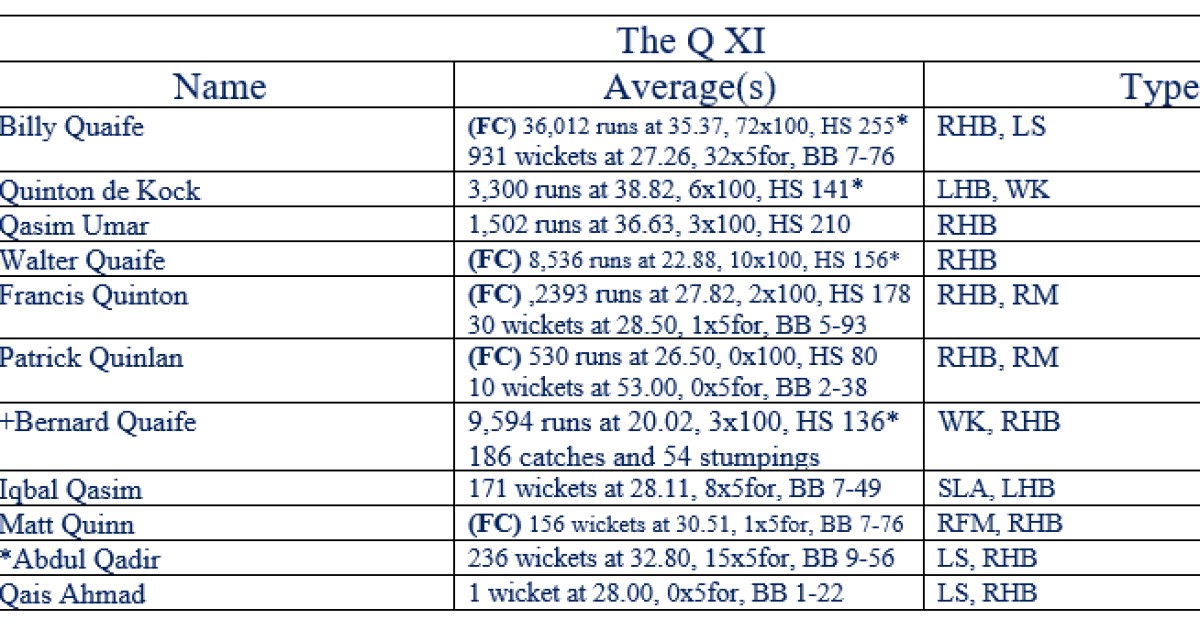
26TH: THE Qs

The challenge for this letter was actually finding 11 players to constitute an XI, and not surprisingly the final result was decidedly ill assorted. They managed just 7 of a possible 125 points.

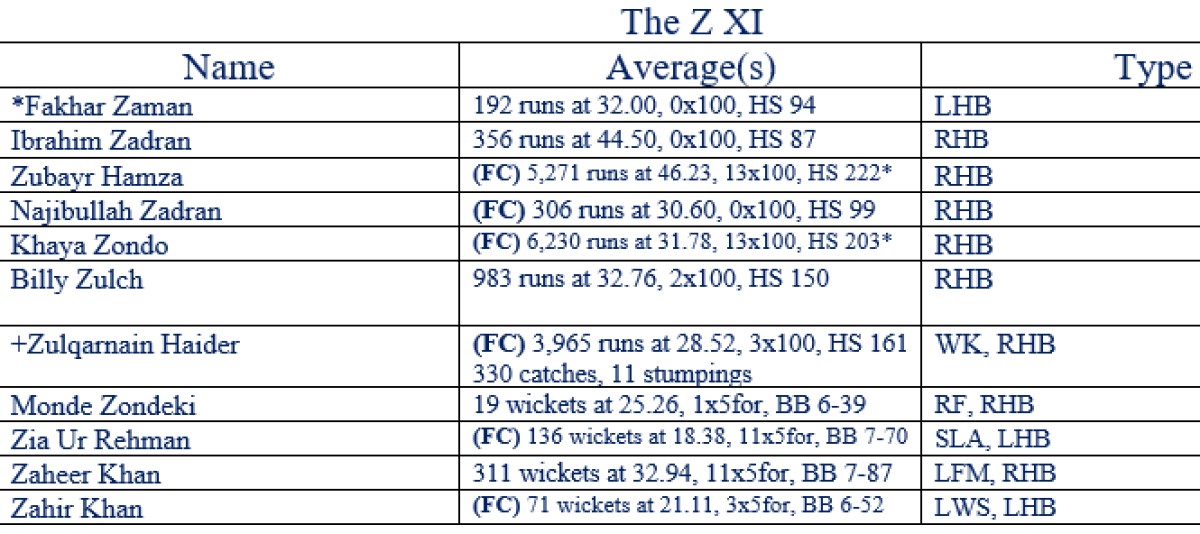
25TH: THE Zs

Click here for more information.

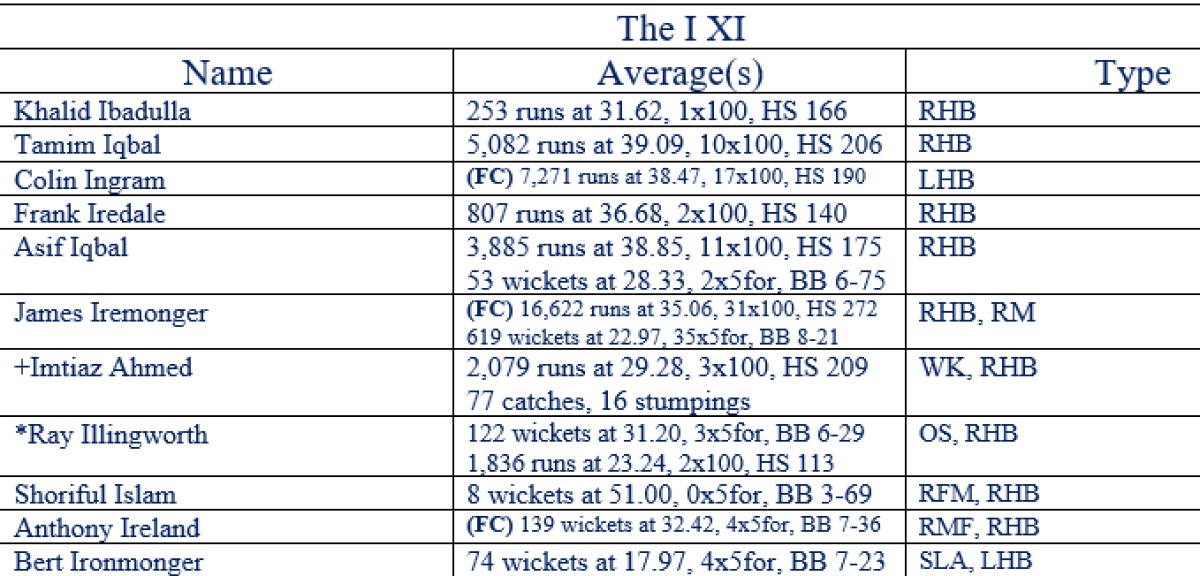
24TH: THE Is

While this XI has no great strength anywhere its biggest weakness was in the seam/ pace bowling department.

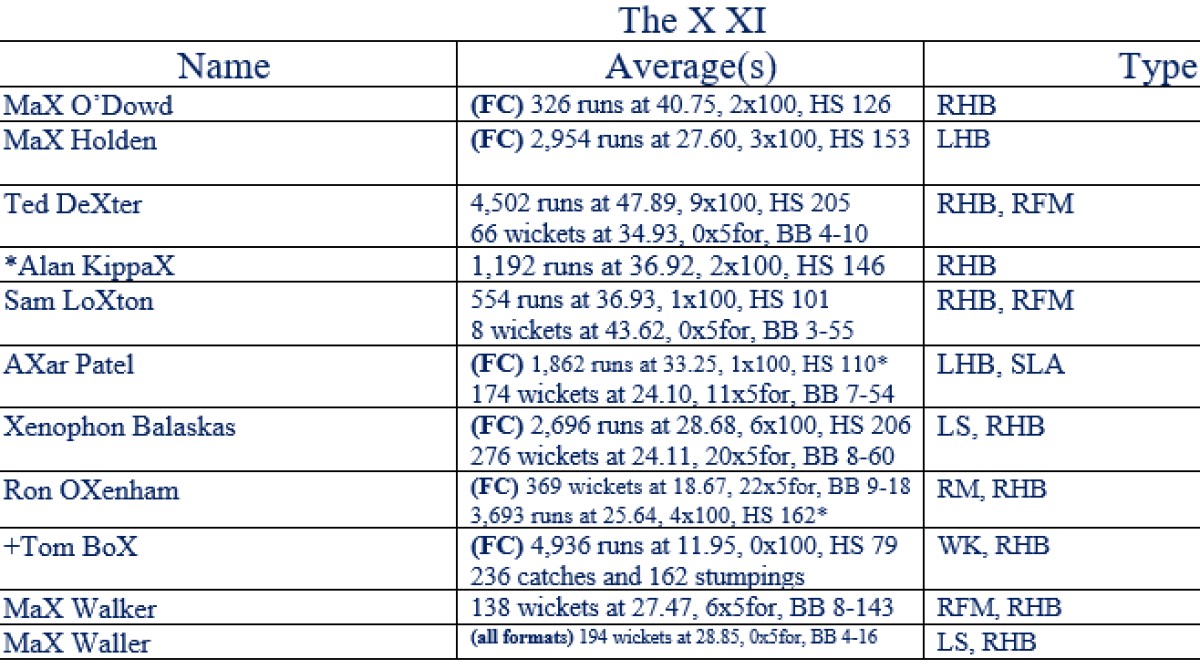
23RD: THE Xs

This was an XI which required a lot of chicanery to pull together. Between the creation of this XI and latter stages of the match ups a women’s tournament took place in New Zealand, and one development there was the arrival in the big time of off spinner Xara Jetly, who were I selecting this XI now would replace MaX Waller, who adds very little to the XI.

22ND: THE Us

Click here for more information.

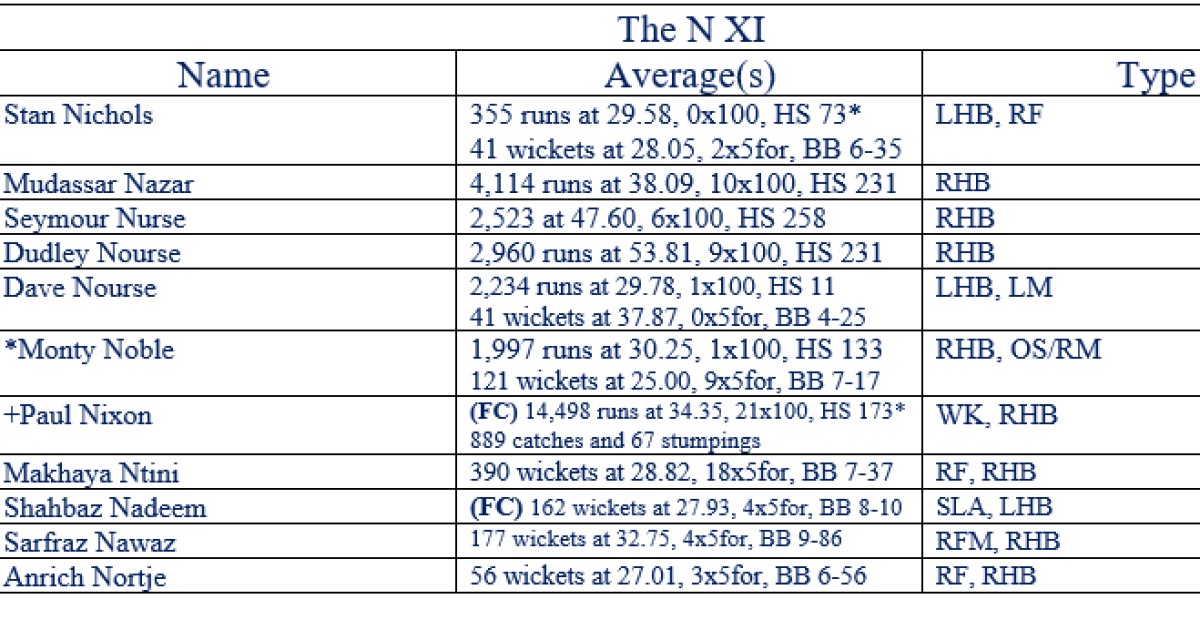
21ST: THE Ns

Click here for more information.

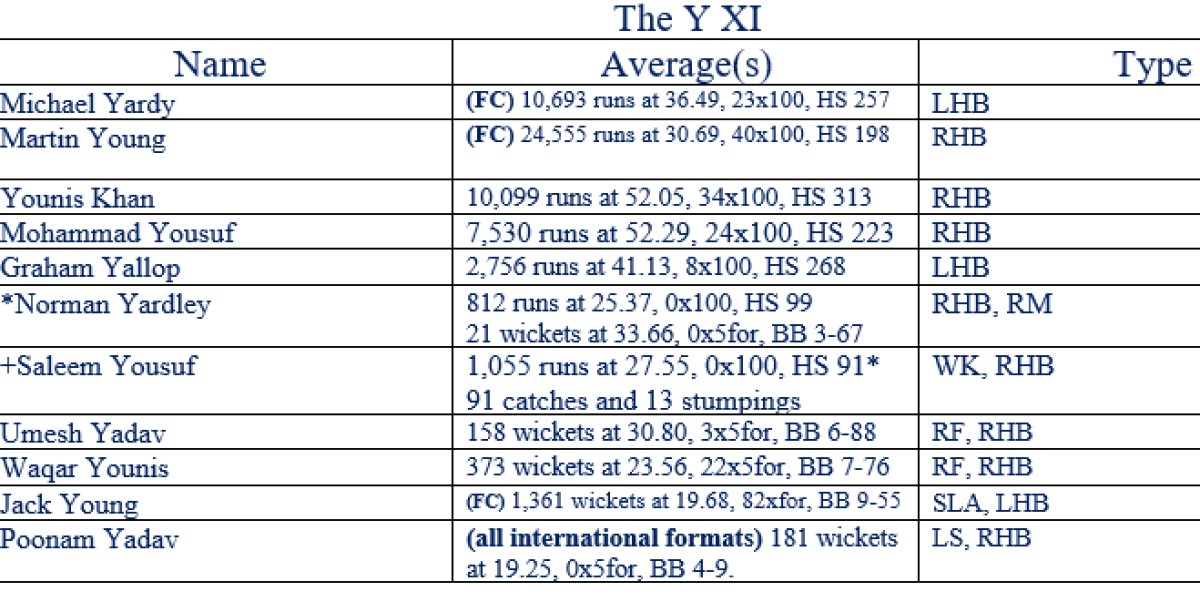
20TH: THE Ys

The strong middle order, good spin pairing and one high class fast bowler saved this side from complete disaster.

19TH – THE Cs

Click here for more information.

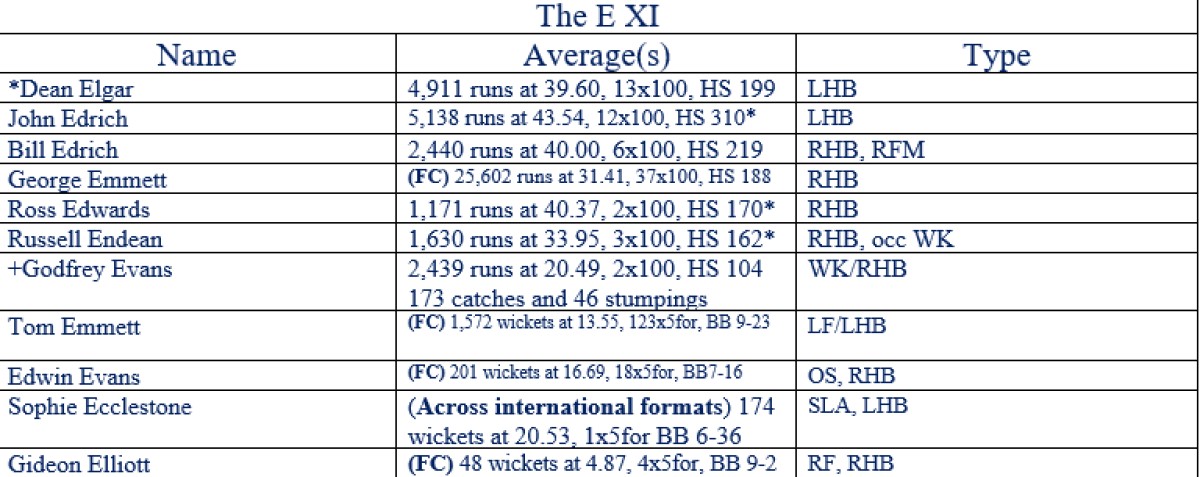
18TH: THE Es

A good spin pairing, two pacers with remarkable records and a world class keeper, but not enough batting for comfort and Bill Edrich the best available back up bowler. More here.

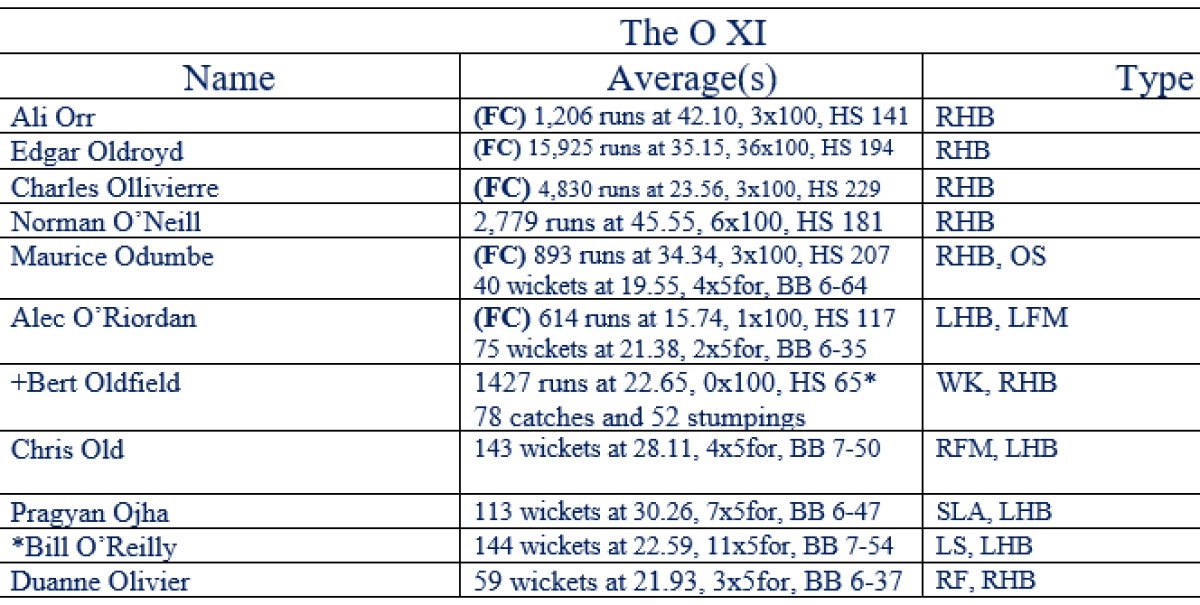
17TH: THE Os

The same score as the Es, but the Os get the higher spot as they won the match up between the two sides.

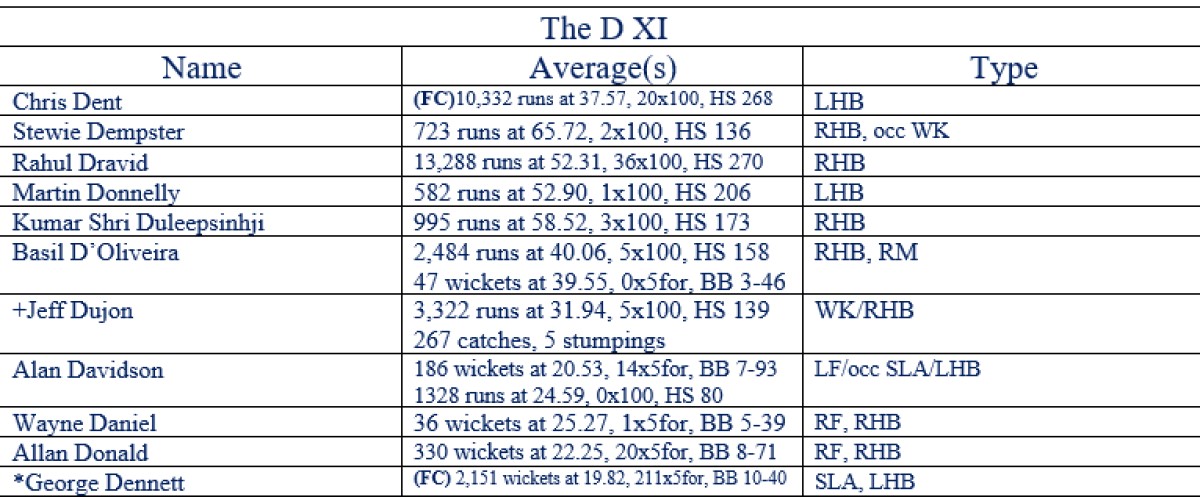
16TH: THE Ds

Good batting, good pace/ seam bowling, good keeper but the Ds fall down on spin bowling and captaincy.

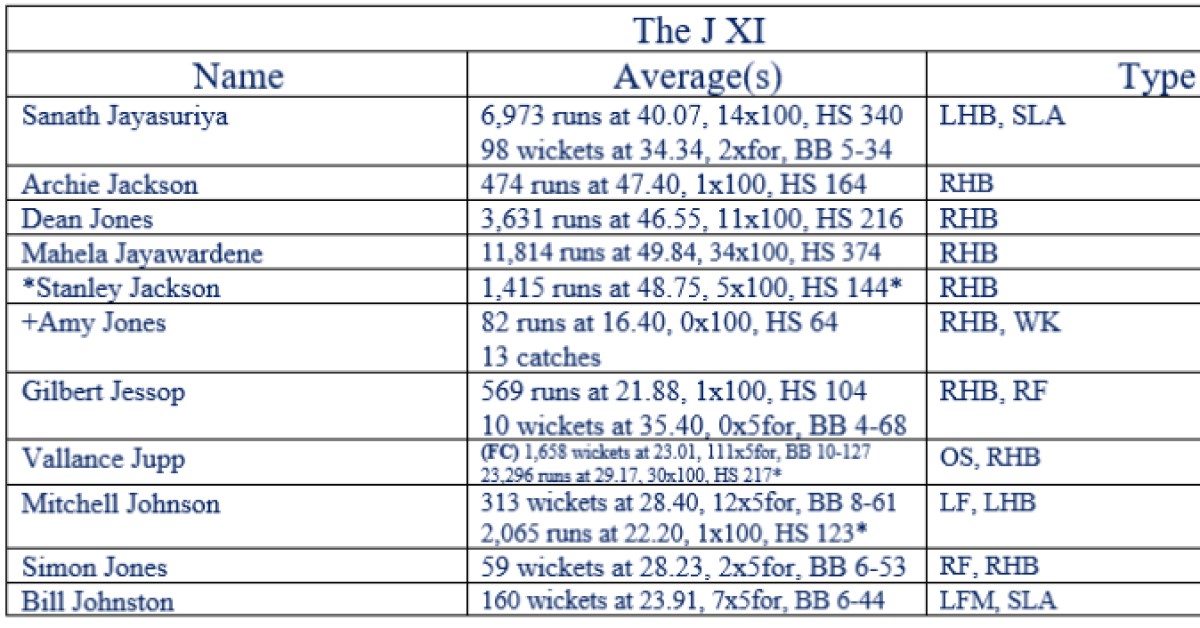
15TH: THE Js

The Js.

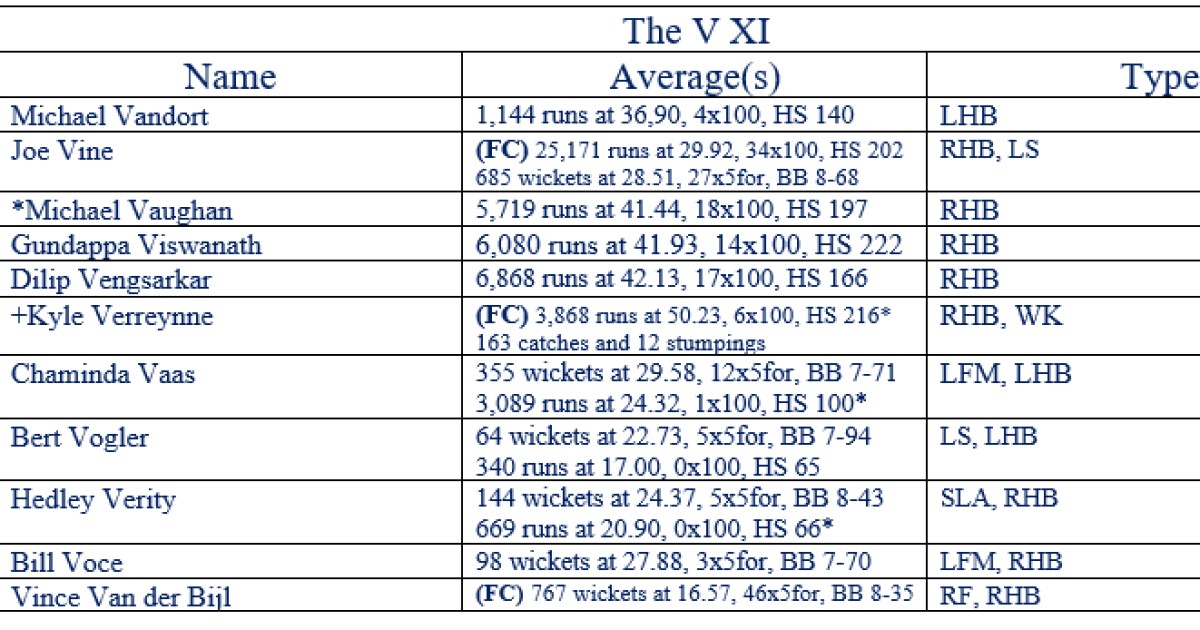
14TH: THE Vs

The Vs superb bowling unit did not quite propel them into the top half of the table, as they lost a split tie (both XIs scoring 69 out 125) to…

13TH: THE As

Solid batting, a top keeper and a superbly balanced bowling unit was just enough to get the As into the top half of the table, since they won their match up with the Vs.

12TH: THE Hs

Stellar batting, a great keeper and a sound captain, but not quite enough bowling to get them to the very top. Neil Harvey might replace Hussey in some people’s estimation, and I would probably have served this letter better had I steeled myself to pick an all rounder (probably George Hirst, with his bowling stock in trade being left arm pace) rather than Hendren, but dropping the scorer of the second most FC centuries ever would have been a huge call.

11TH: THE Ps

The Ps, just missing out on the top ten.

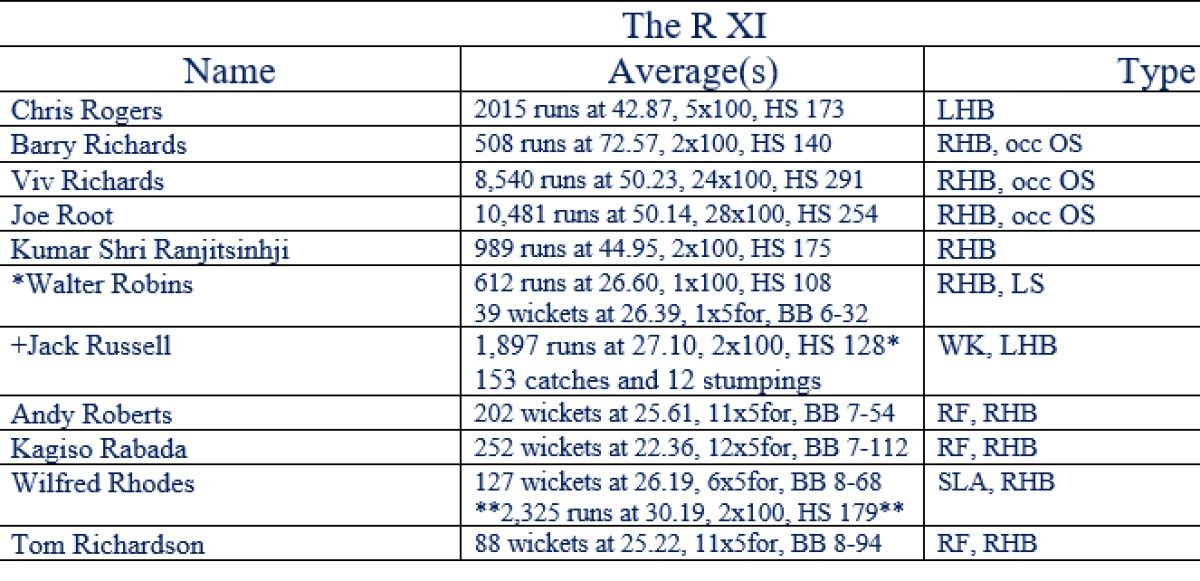
10TH – THE Rs

This exemplifies the advantage of having Rhodes available – you can pick him for any one of several roles depending on your needs. Here, Rhodes the specialist spinner was required and therefore I selected him in that capacity, the one in which he both started and finished his career. The Rs.

9TH – THE Bs

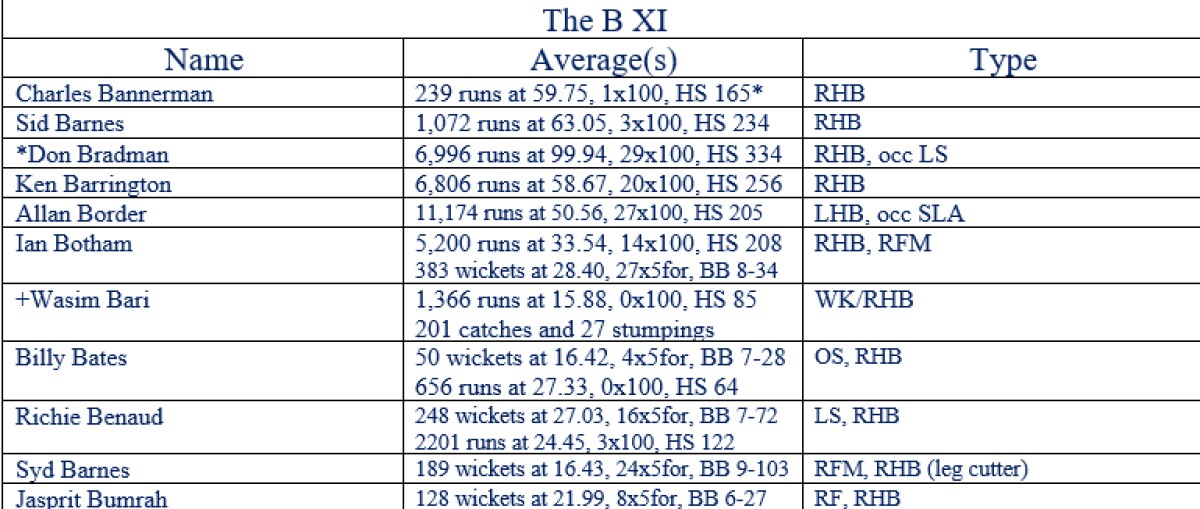
In retrospect, given that Barnes could be said to attend to the leg spinners angle of attack with his ‘Barnes ball’, as explicated by Ian Peebles, himself an England leggie, it might have made this team even better to have selected Palwankar Baloo, Bishan Singh Bedi or left arm spinning all rounder Enid Bakewell in place of Benaud (who could instead be put in charge of the commentary team) to increase the variety available in the bowling department. Nevertheless, the Bs are a fine combination, and it says more about the top eight than it does about them that they ended up ninth.

8TH: THE Gs

If the Gs can be said to have a defect it is that none of their bowlers are left armed.

7TH: THE Ts

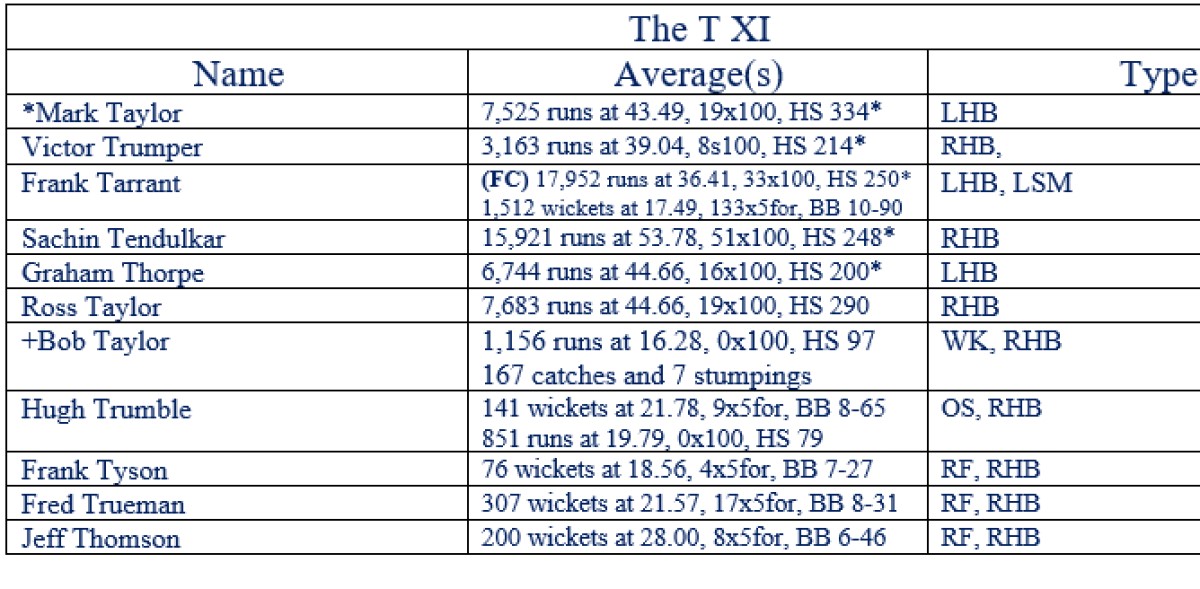
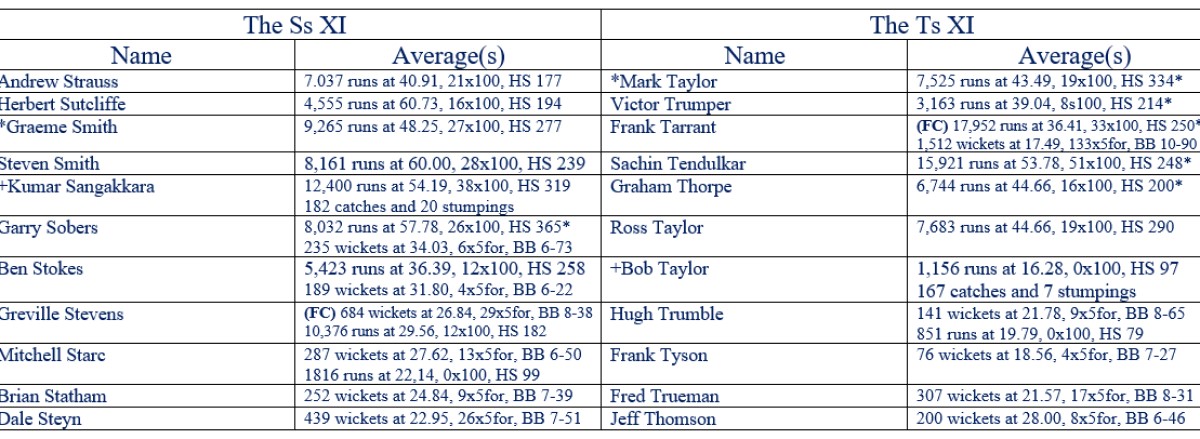
The Ts amassed the same number of points (90 out of 125) as the Ks and the Fs, but my tie-splitting procedure ranked them third out of three. Their batting was weakened slightly by the necessity of ensuring that there were relief bowling options available for three specialist quicks who demanded inclusion, a problem resolvable only by turning to the all round talents of Frank Tarrant.

6TH: THE Ks

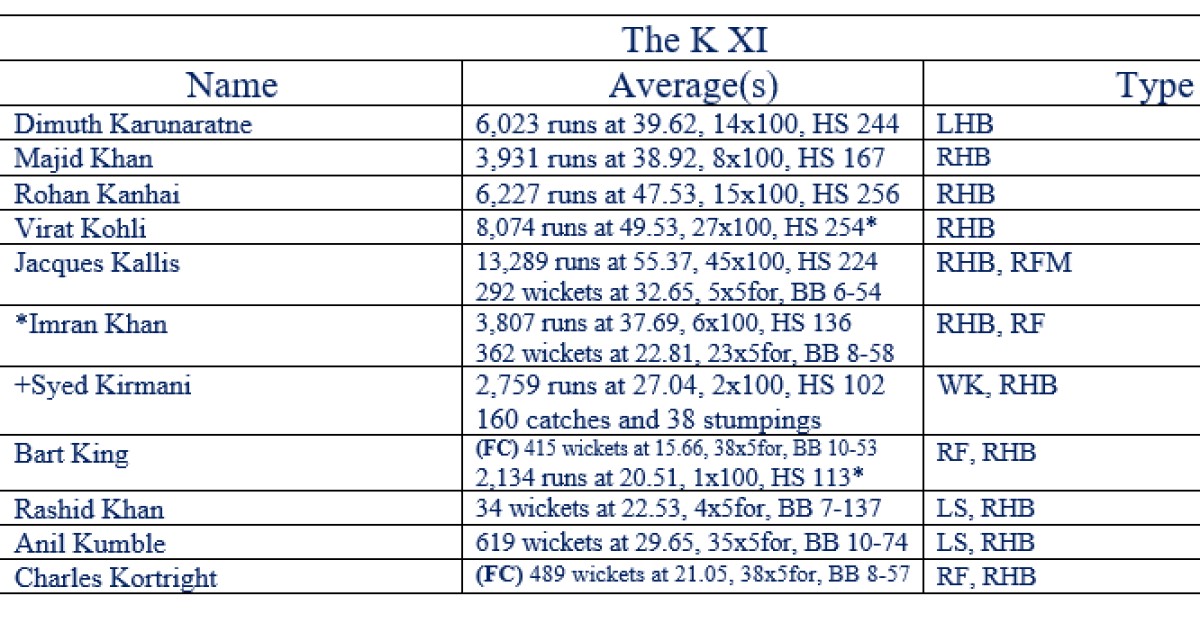
Click here for more information.

5TH: THE Fs

For more information click here.

4TH: THE Ls

Strong and well balanced, but the Ls just missed out on a medal.

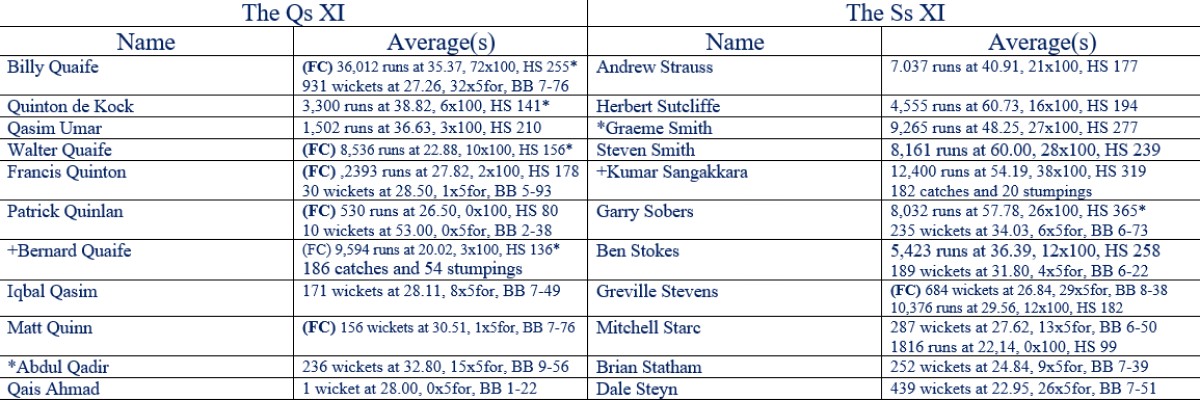
3RD: THE Ss

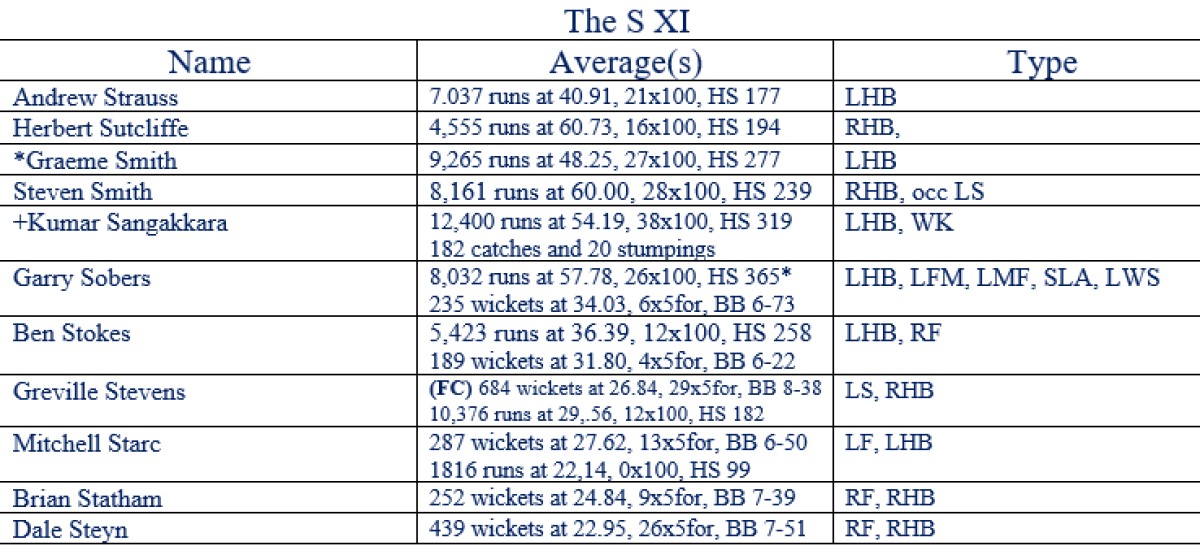
The Ss are a stellar combination, although Sangakkara would not be considered a top flight keeper and the spin options are limited.

2ND: THE Ms

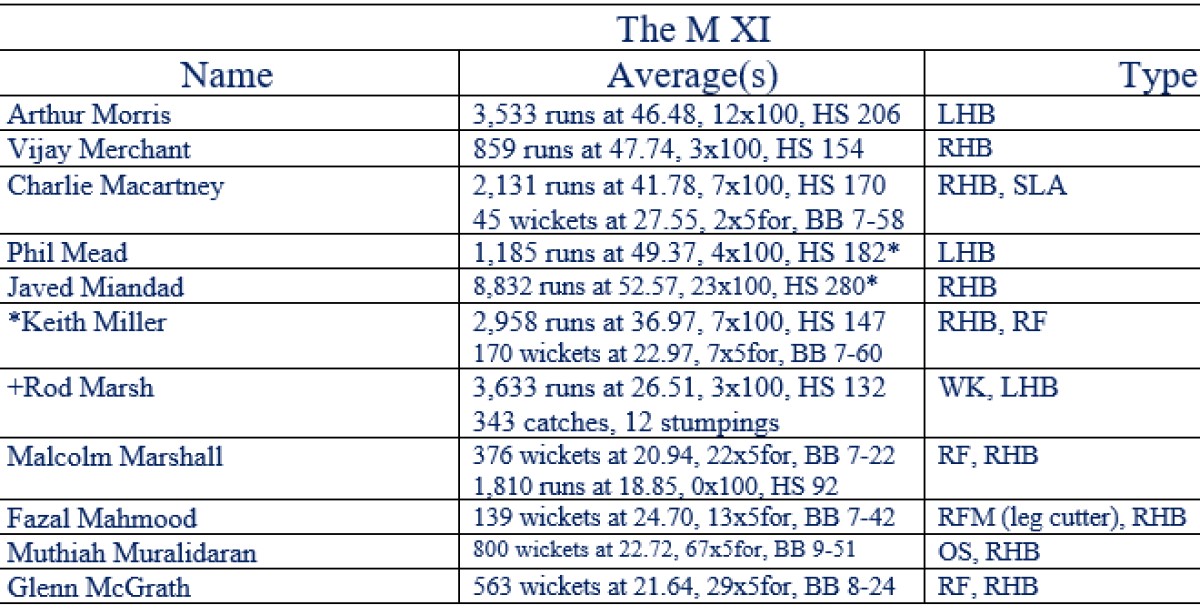
A powerful batting line up and a superbly balanced bowling line up, with Mahmood’s leg cutter meaning that a specialist leg spinner is unlikely to be missed.

FIRST: THE Ws

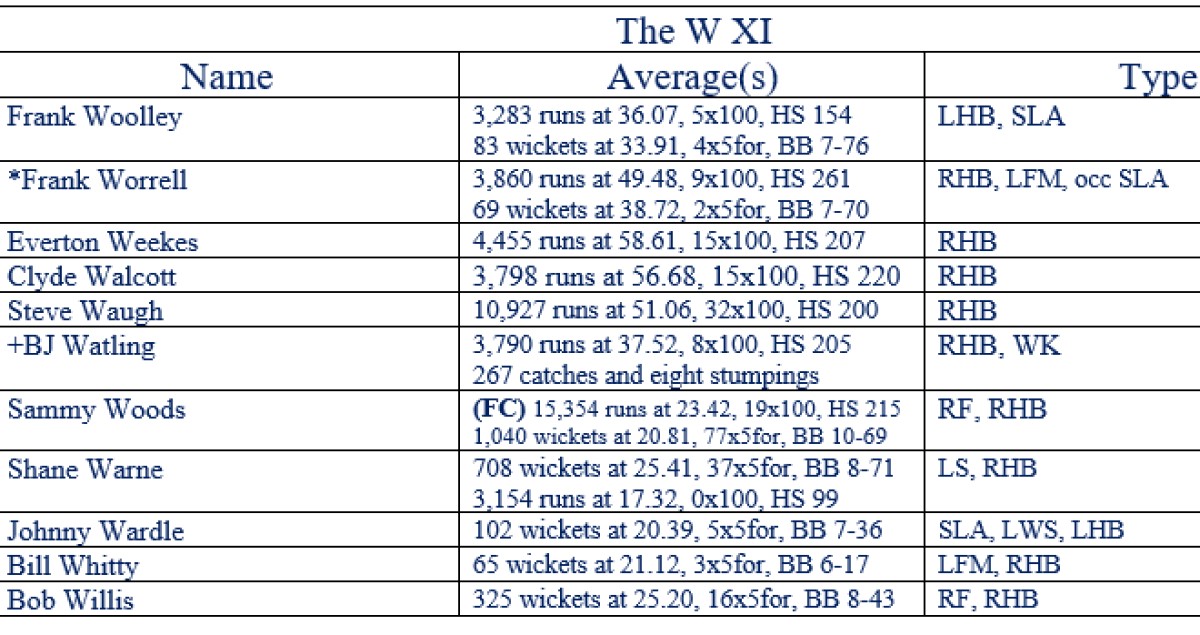
A strong batting line up, a wonderfully balanced bowling attack (Wardle’s ability to bowl left arm wrist spin covers the lack of an off spinner), a quality keeper and one of the greatest of all captains. The Ws are worthy champions.

This has been a fun exercise, though challenging in parts (both weak letters where actually completing an XI takes effort and strong letters where in some cases a second or third XI would beat most of the rest of the alphabet, which require extended acknowledgements of players one has overlooked).

PHOTOGRAPHS

Not one of my largest photo galleries, but I hope you enjoy it…

All Time XIs – Match Ups 61

Continuing my extended analysis of how the all time XIs I selected for each letter of the alphabet fare against one another.

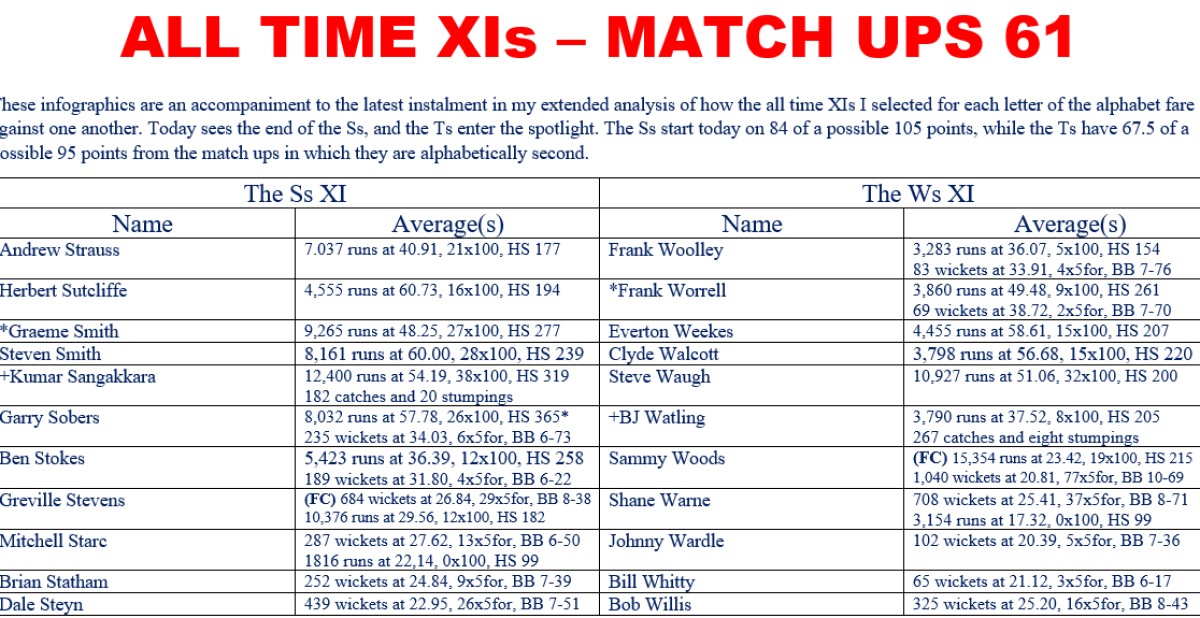
Welcome to the latest instalment in my extended analysis of how the all time XIs I selected for each letter of the alphabet fare against one another. Today sees the end of the Ss, who come into today with 84 of a possible 105 points, and the start of the Ts who have banked 67.5 of a possible 95 points from the matches in which they are alphabetically second.

THE Ss V THE Ws

The Ss have the better opening pair, although both Ws offer bowling options. The Ws win the match up at number three, and both sides have superb skippers. The Ss win every batting match up from four to nine inclusive, though Watling outranks Sangakkara as keeper, Warne comfortably outranks Stevens as a leg spinner and Wardle equally clearly outranks the slower incarnations of Sobers, and the Ws also have Woolley as a third genuine spin option. It is close between the front line pace trios, though the Ss have Stokes and the quick version of Sobers in reserve, whereas the Ws have only Worrell. Boiling it all down, the Ss have an advantage in batting and in pace/ seam bowling, while the Ws have much the better keeper, and much the better spin attack. I think the Ws advantages just outweigh those of the Ss and score this Ss 2, Ws 3.

THE Ss V THE Xs

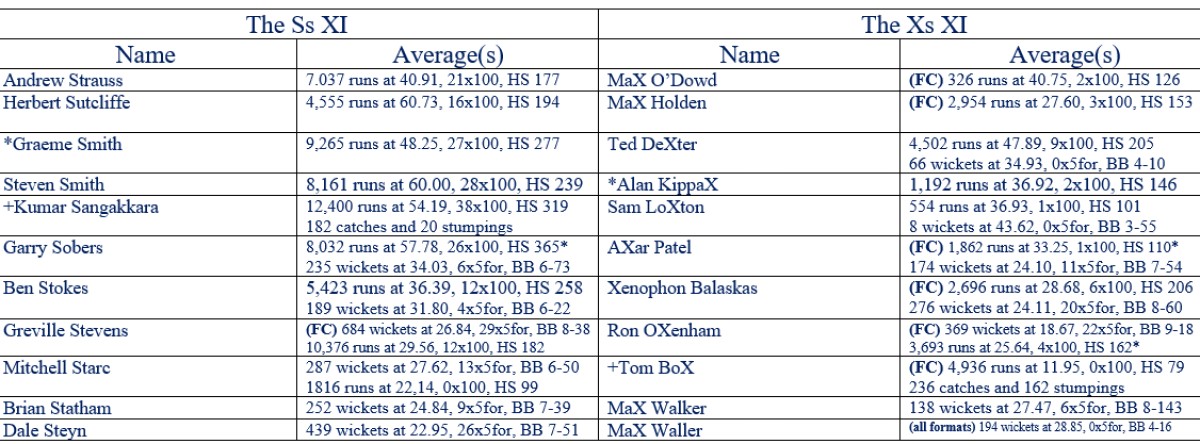
The Ss win every batting match up down to number eight. To a casual observer it looks like they also win the batting match up at number nine, but Fuller Pilch, the best batter of BoX’s era averaged only 18, and on that basis Box is as clearly ahead of Starc with the bat as he is of Sangakkara with the gloves. The Ss are miles clear in seam/ pace bowling and also have much the finer skipper. As against that the Xs have the better spin attack. I still think however that the Ss are so massively superior in the areas where they are superior that this has to be scored: Ss 5, Xs 0.

THE Xs V THE Ys

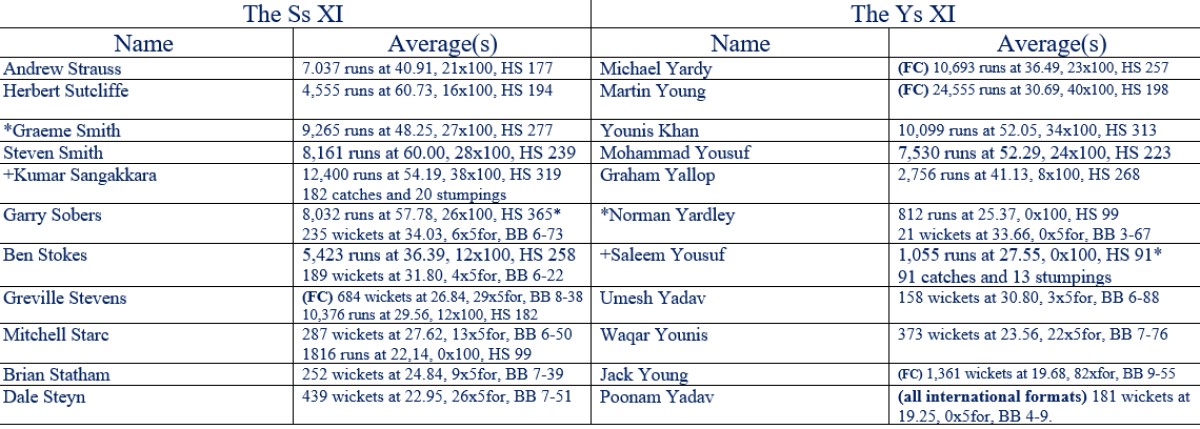
With the exception of the number three slot, which goes the way of Younis Khan, the Ss win every batting match up down to number nine. They also have an overwhelming dominance in the seam/ pace department. The Ys have the better keeper, and the better spin attack, but neither can save them from the inevitable: Ss 5, Ys 0.

THE Ss V THE Zs

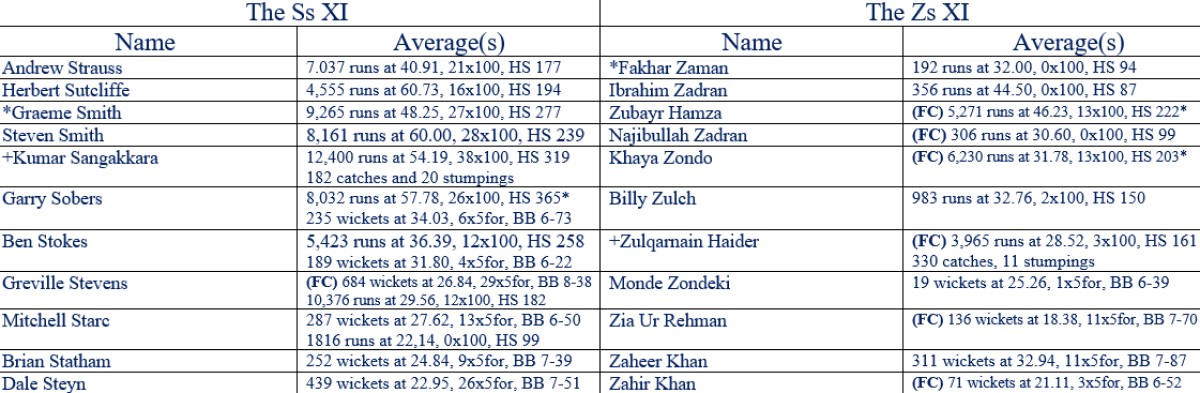
Full spectrum dominance for the Ss: Ss 5, Zs 0.

THE Ss FINAL SCORE

The Ss have scored 17 points out of 20 today, to give them a final score of 101 out of 125, 80.8% overall.

THE Ts V THE Us

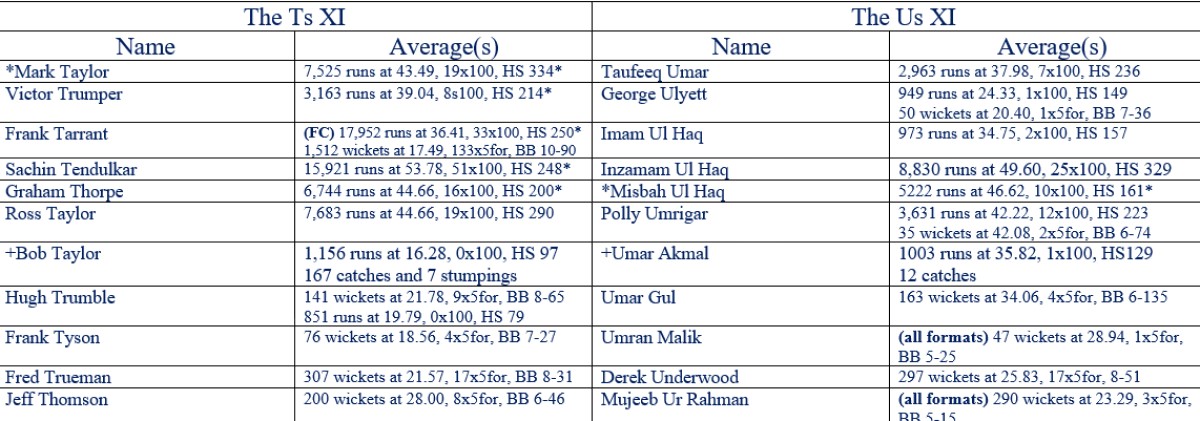
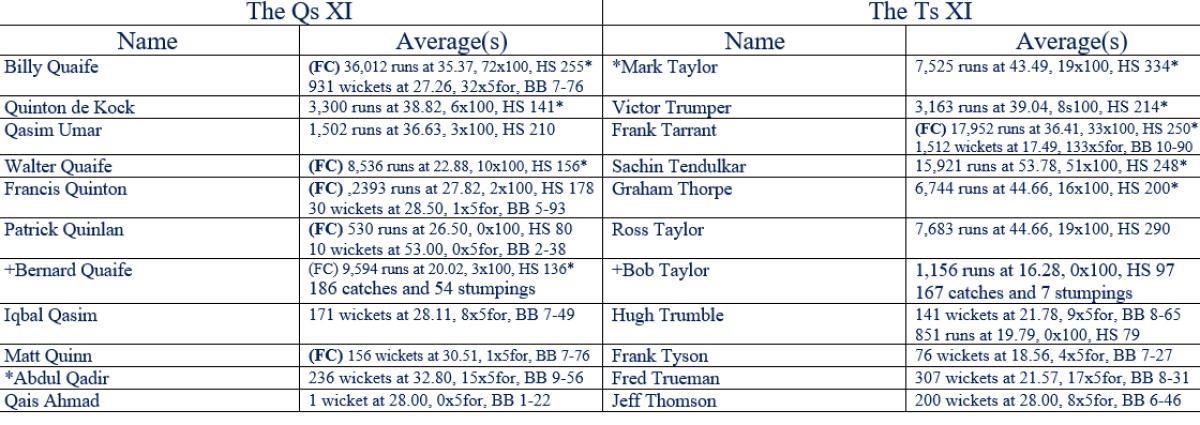
The Ts have the better opening pair. A casual observer might think that the Us win the number three slot based on test being more difficult than FC cricket, but Tarrant played a lot of his cricket before WWI, so my own view is that he wins that match up, and he also offers a bowling option. The Ts win the match up at number four, while number five is draw, Misbah Ul Haq’s slightly better batting average being offset by Thorpe’s greater sample size and the lack of support that Thorpe had at test level. Ross Taylor beats Umrigar in the number six slot. Umar Akmal wins the batting match up at number seven, but Bob Taylor wins the keeping element by a much greater margin. The Ts have much the better pace/ seam bowling unit. I also give the spin department to the Ts – Tarrant would be little if any inferior to Underwood as a bowler, and on proven success as opposed to potential Trumble has to outrank Ur Rahman, though their positions may be reversed in a few years time. The Us can make no dent on the Ts, resulting in Ts 5, Us 0.

THE Ts PROGRESS REPORT

The Ts are now on 72.5 out of 100, 72.5% overall.

PHOTOGRAPHS

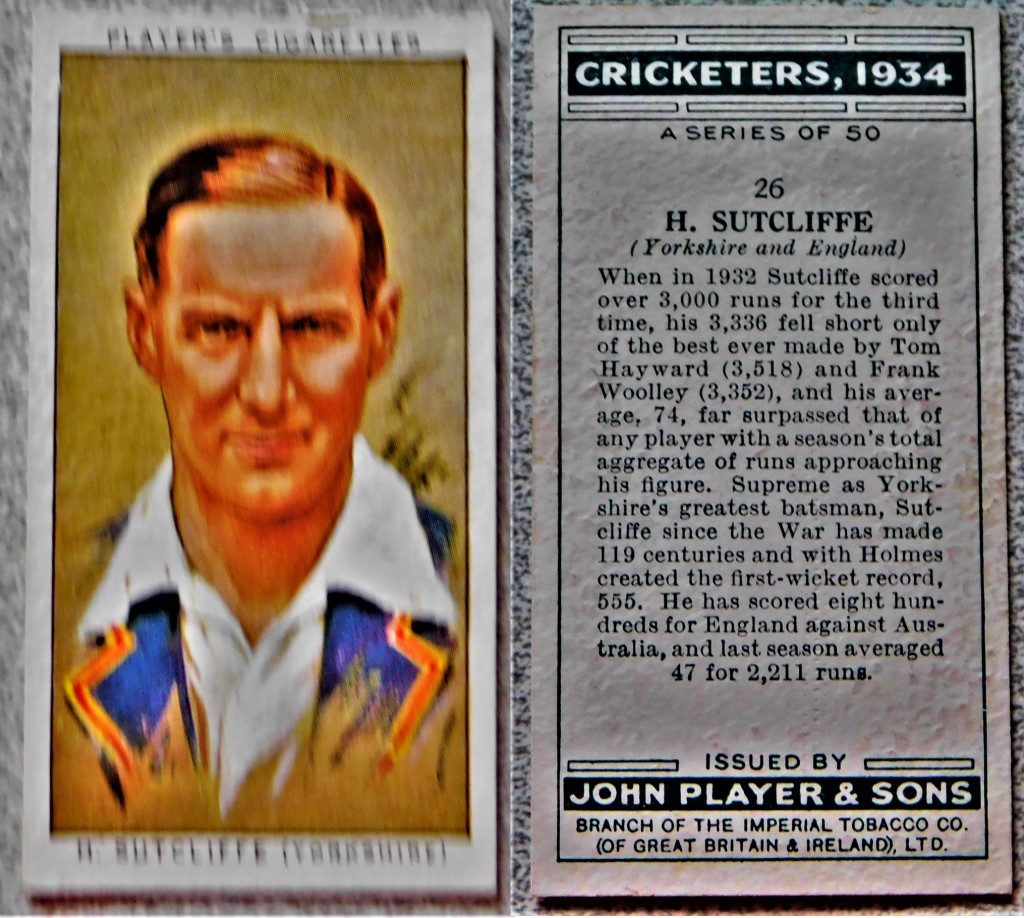
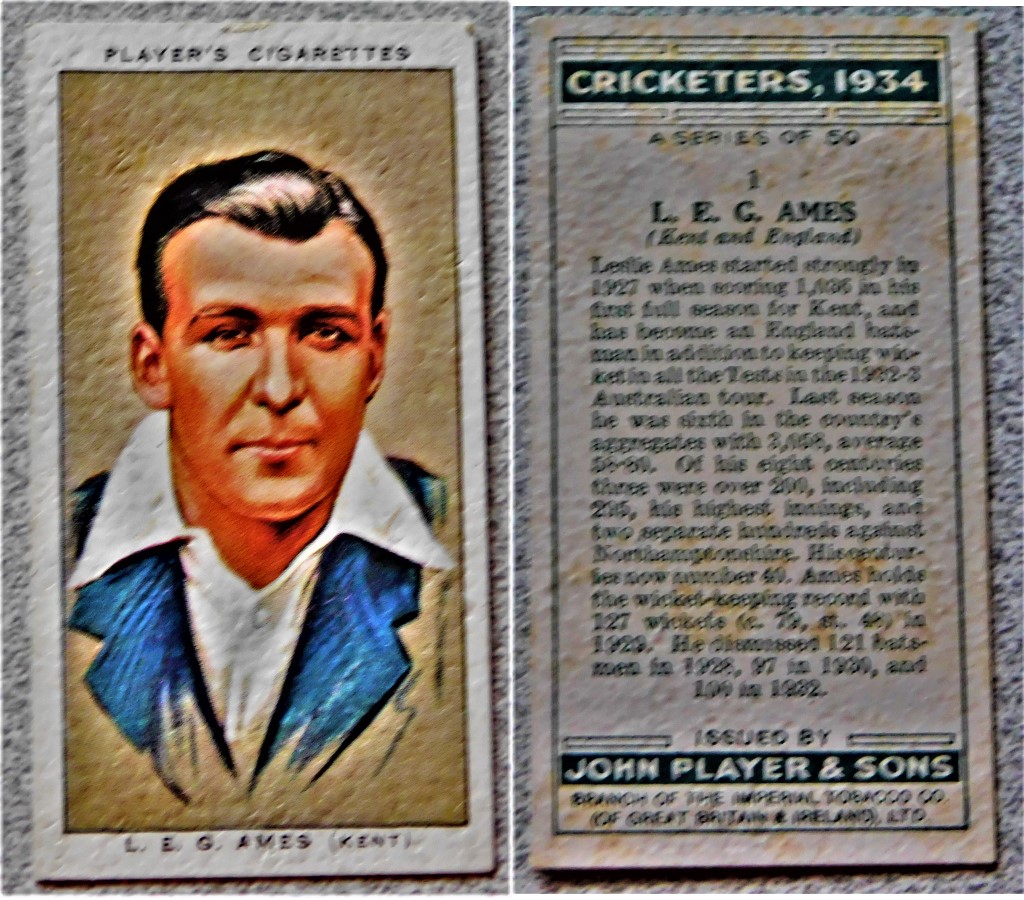
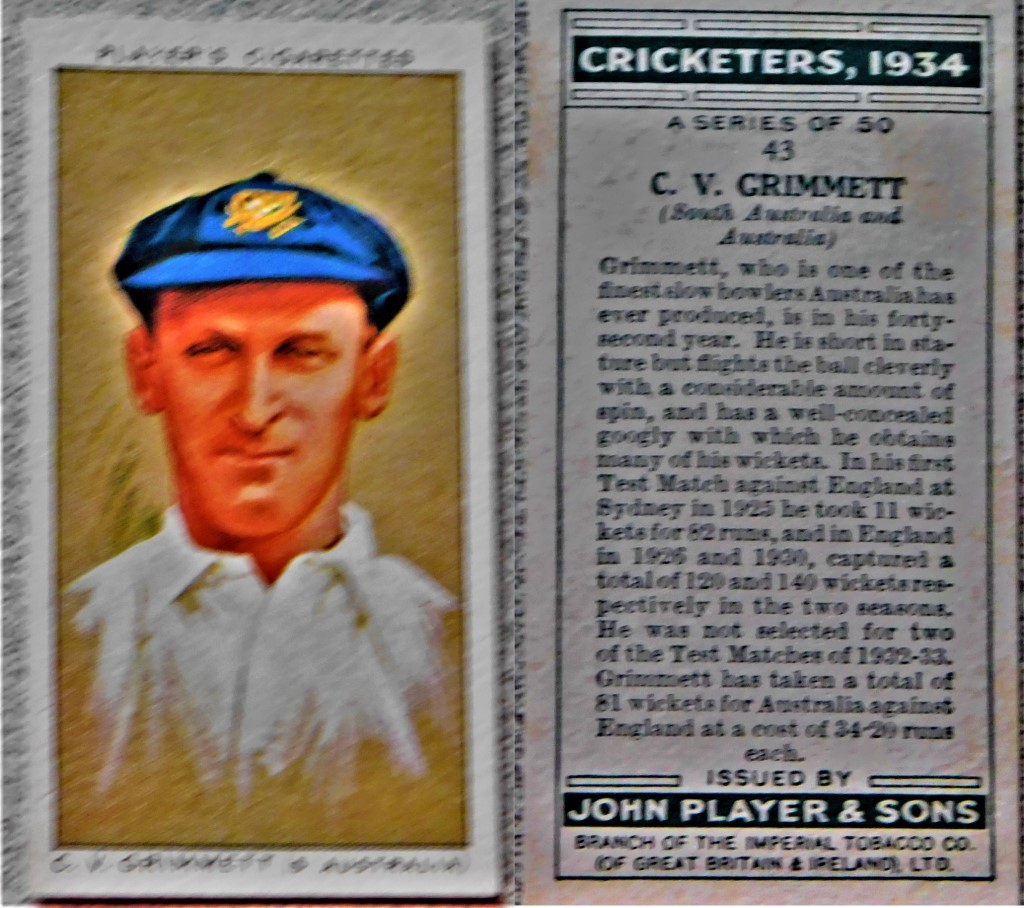
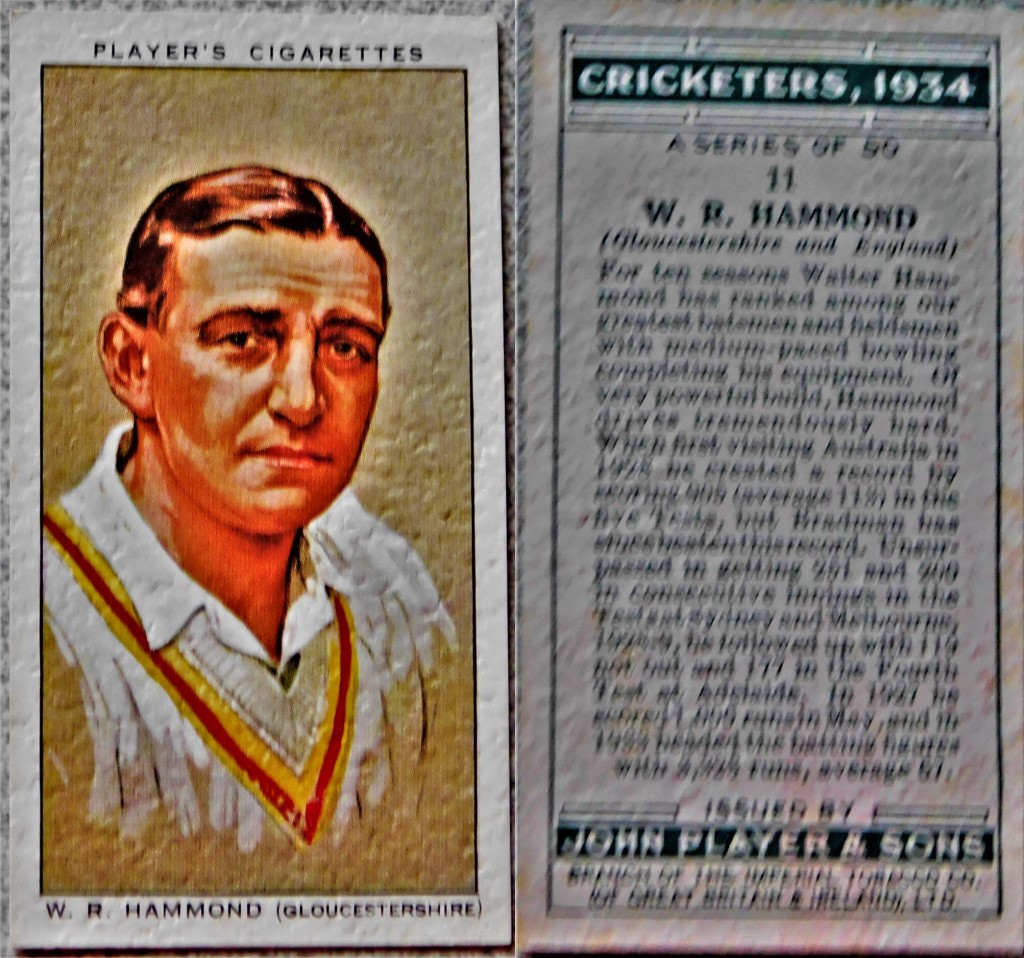
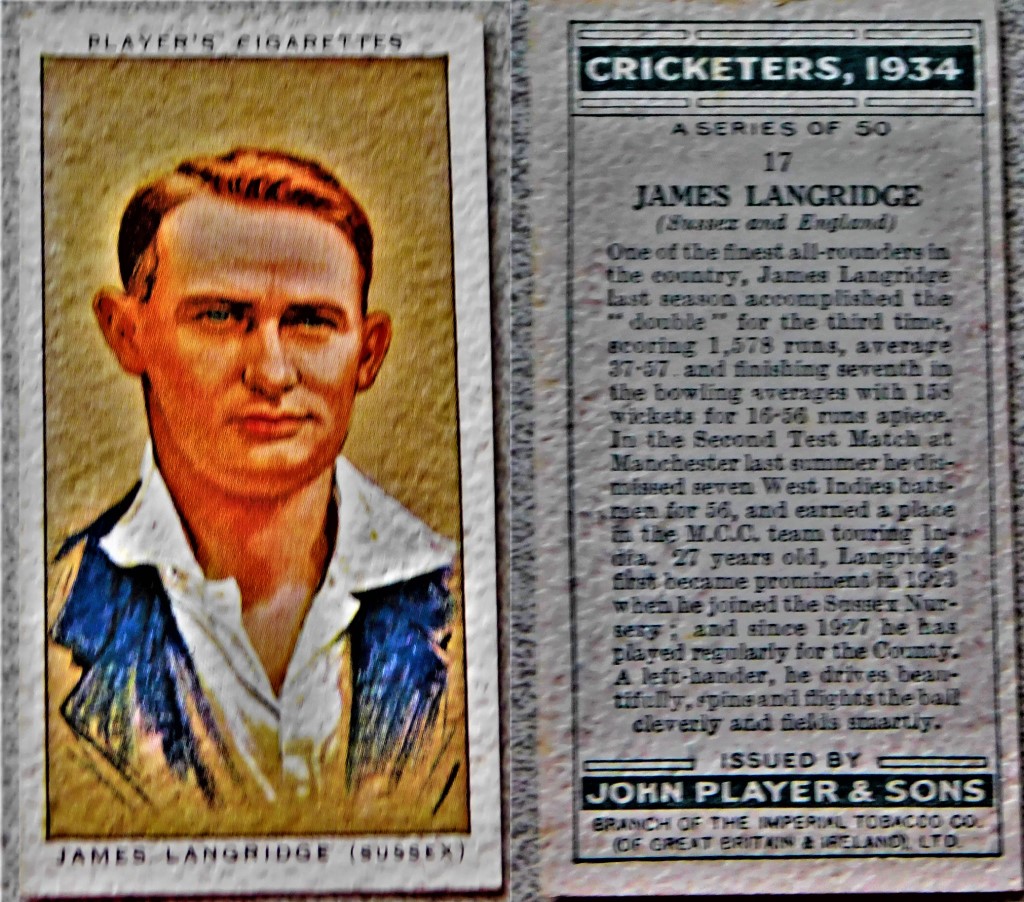
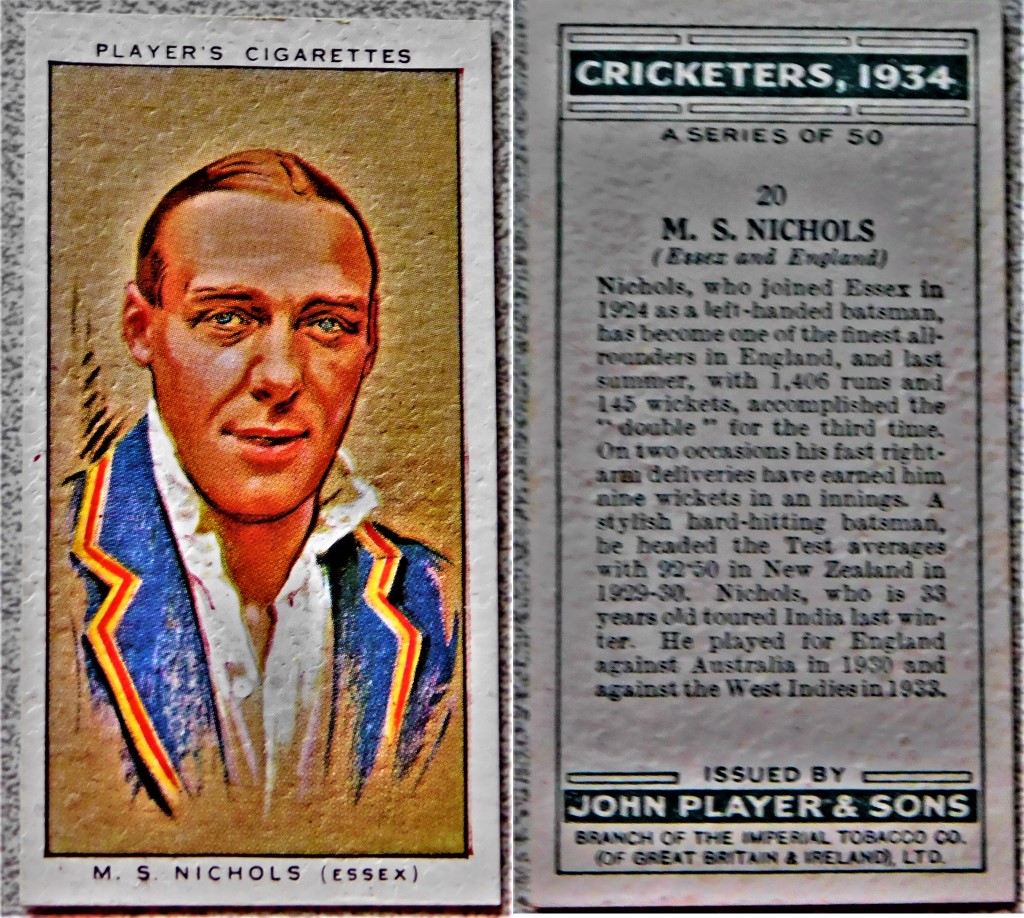
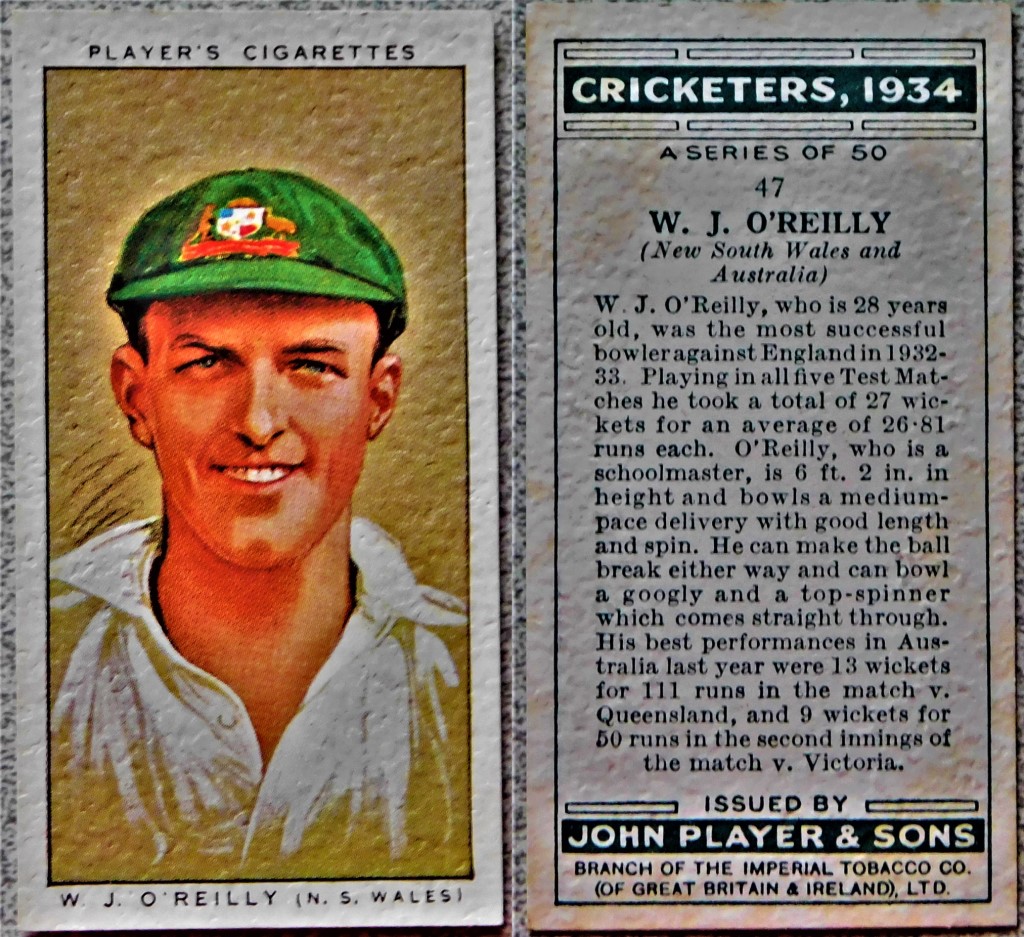
Today’s gallery comes in two parts – I have revisited by cricket cigarette card collection, digging out the first set I ever acquired, some years ago, and the ones I chose to photographs form the first gallery, with links to posts that the players feature in included…

…part two of the gallery features some of my regular photographs.

All Time XIs – Match Ups 60

Continuing my extended analysis of how my all time XIs fare against one another.

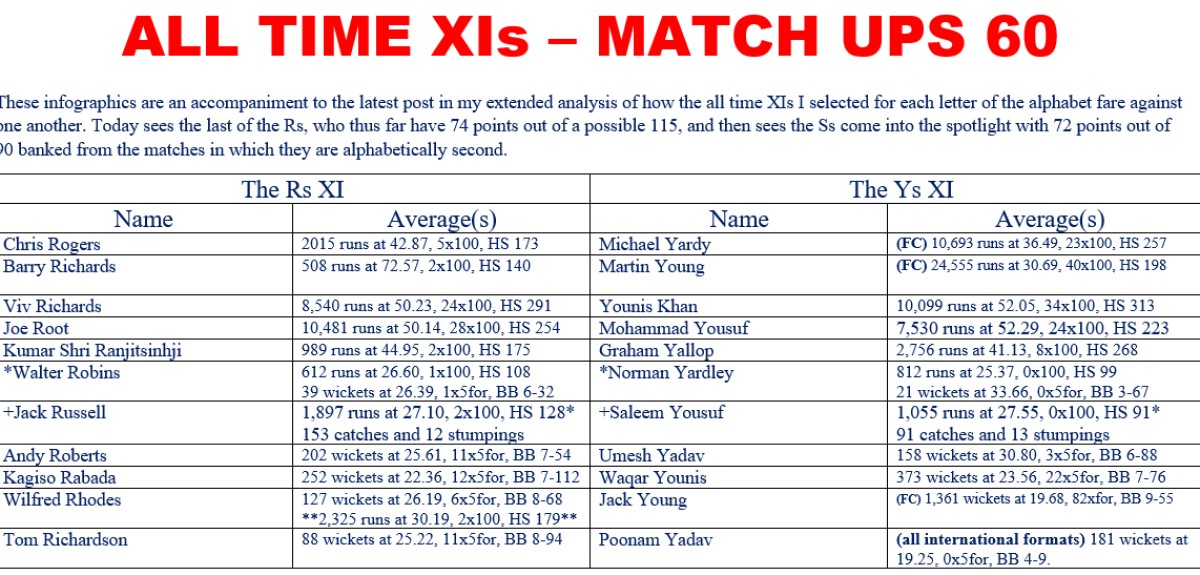
Welcome to the latest instalment in my extended analysis of how my all time XIs fare against one another. Today the Rs, with 74 out of 115 points, finish their time in the spotlight and The Ss, with 72 of a possible 90 points banked from the matches in which they are alphabetically second take their place in the hot seat.

THE Rs V THE Ys

The Rs have the better opening pair, the Ys win the batting match ups and three and four, the Rs win at number five and win the batting element of the match up at six, while Yardley as prospective third seamer is massively behind Tom Richardson. The batting match up at number seven is close, but Russell was definitely the better keeper. Rabada and Roberts outrank U Yadav and W Younis as a new ball pairing. Rhodes outranks Young as a left arm orthodox spinner, but Yadav outranks Robins as a leg spinner. The Rs are ahead in batting, way ahead in seam/ pace bowling, have the better keeper. In captaincy and spin bowling it is about level, so I see only one possible scoreline: Rs 5, Ys 0.

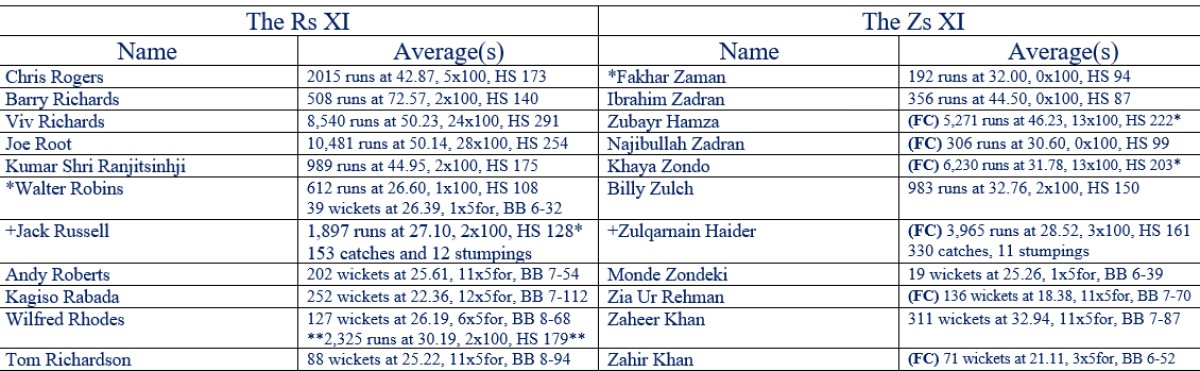
THE Rs V THE Zs

The Rs win all the top five match ups, Zulch and Zulqarnain Haider win the batting match ups at six and seven, but Zulch does not offer a bowling option and Russell was a finer keeper than Zulqarnain Haider. Zondeki and Zaheer Khan are massively behind Roberts, Rabada and Richardson. Rhodes comfortably outranks Zia Ur Rehman. Robins v Zahir Khan is closer, but not enough to alter the scoreline: Rs 5, Zs 0.

THE Rs FINAL SCORE

The Rs have scored 84 out of 125 points, 67.2% overall.

THE Ss V THE Ts

The Ss have the better opening pair – while Trumper would undoubtedly have averaged more playing in Sutcliffe’s era I do not think the difference is enough to close the gap. G Smith wins the batting element of the match up at number three, but Tarrant offers a bowling option that outweighs the slower incarnations of Sobers. The Ss win the batting match ups at five, six, seven, eight and nine, and while Bob Taylor massively outranks Sangakkara as a keeper, the quick version of Sobers, and Stokes, are two bowling options with no comparator available in the ranks of the Ts. Trumble definitely outranks Stevens as a bowler, and the Ts pace trio are quicker than the Ss, though there is not much in the overall comparison and the Ss as documented have back up options as well. Both sides are well captained. The Ss win comfortably on batting, win on seam/ pace bowling and lose on keeping and spin bowling, and I will allow the latter to prevent a whitewash: Ss 4, Ts 1.

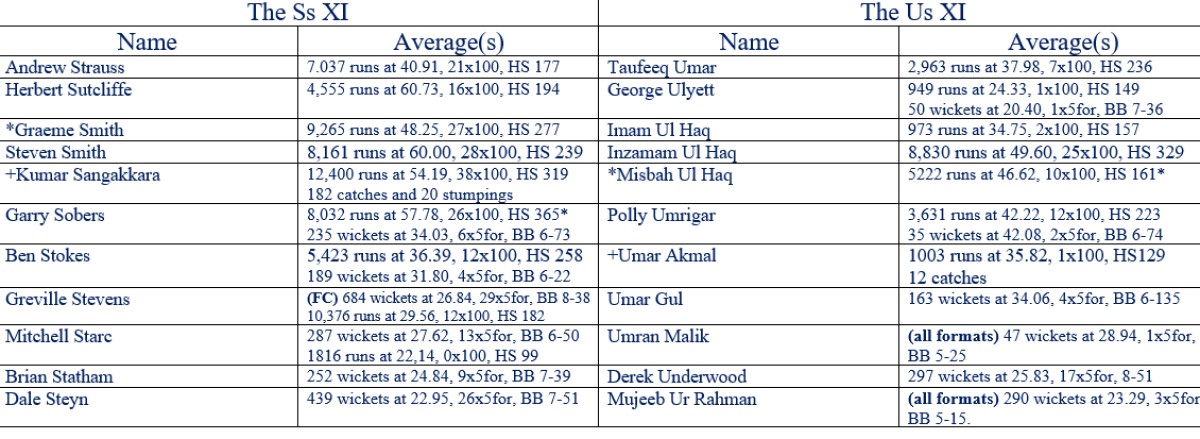
THE Ss V THE Us

A tale of almost total dominance by the Ss. Underwood outranks Sobers in his slower incarnations as a bowler, and Ur Rahman might outrank Stevens as bowler, but the Ss are miles ahead on batting and pace/ seam bowling, ahead on keeping and level on captaincy. I think the extreme strength of the Ss batting, especially bearing in mind Sutcliffe’s tendency to come good in difficult circumstances will prevent the Us from being able to do much even on a turner and accordingly score this Ss 5, Us 0.

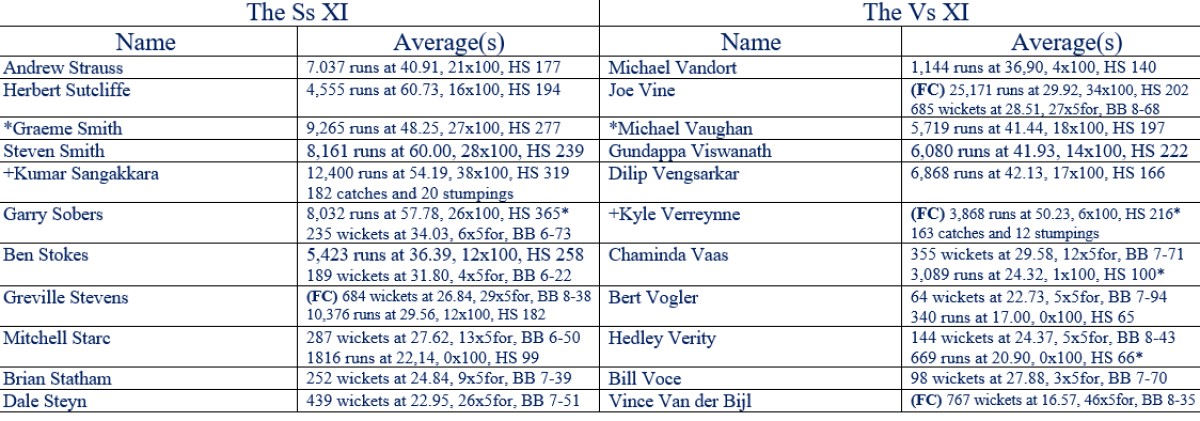
THE Ss V THE Vs

The Ss dominate the batting, winning every match up down to number nine. The Vs have the better keeper, and both sides will be well captained. Verity outranks the slower incarnations of Sobers as a bowling option, and Vogler considerably outranks Stevens as a bowler. The pace attacks are both excellent, though the Ss have a couple of bonus options in that area: Stokes and the quicker version of Sobers. I think the Ss deep batting and stronger pace attack are enough to win this for them, but the Vs are no pushovers even for a powerful side: Ss 3, Vs 2.

THE Ss PROGRESS REPORT

The Ss have scored 12 points today, moving them up to 84 points out of 105, exactly 80% so far.

PHOTOGRAPHS

My usual sign off…

All Time XIs – Match Ups 57

Continuing my extended analysis of how the all time XIs I selected for each letter of the alphabet fare against one another.

Welcome to the latest instalment in my extended analysis of how the all time XIs I selected for each letter of the alphabet fare against one another. Today sees the Qs take their place in the spotlight, currently having amassed 4.5 of a possible 80 points from the matches in which they were alphabetically second.

THE Qs V THE Rs

The Rs are utterly dominant in batting and pace bowling (the Qs sole accredited pace/ seam bowler ranks fourth in this match up, some way behind all three of the Rs pacers, have the better captain and the better keeper. The Qs have a numerical superiority in spinners, but until and unless Qais Ahmad develops his record to prove otherwise, the Rs two practitioners of spin bowling, Robins and Rhodes rank numbers one and two in that department. This is Qs 0, Rs 5.

THE Qs V THE Ss

The Ss absolutely boss the batting and pace bowling departments and have the better captain. The Qs are level on keeping and ahead on spin bowling, but not by enough to effect the scoreline: Qs 0, Ss 5.

THE Qs V THE Ts

The Qs win the batting match up at number seven, though Bob Taylor far outranks Bernard Quaife as a keeper. Appearances suggest they win the batting element of the match up of number three but I would argue otherwise – batting was more difficult in the early years of the 20th century when Tarrant played most of his cricket than it was in Qasim Umar’s day. Otherwise, it is the usual story for the Qs – any surface that offers Qadir, Qasim and Qais Ahmad assistance will also be good for Tarrant and Trumble, so once again the Qs suffer their regular fate: Qs 0, Ts 5.

THE Qs V THE Us

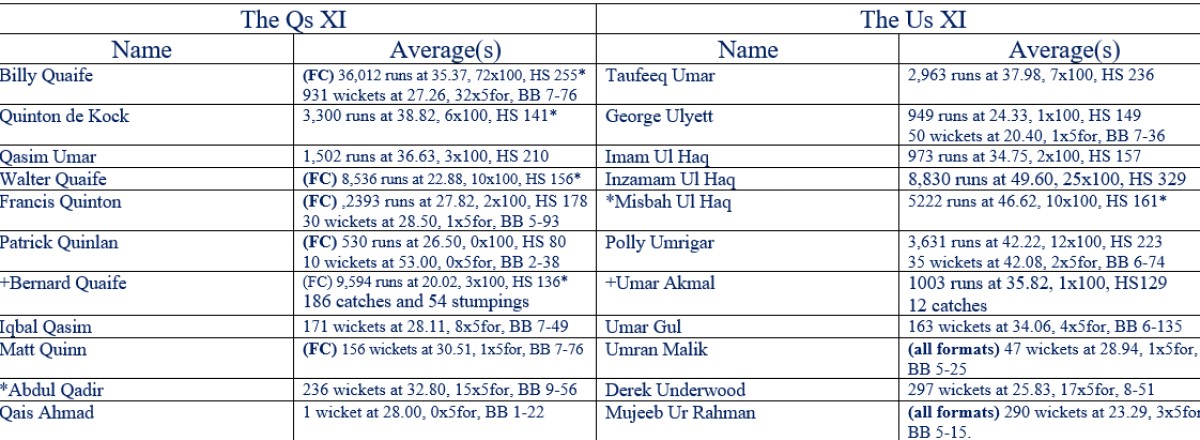
The Qs have the better opening pair here – Quinton de Kock outranks Ulyett by more than Umar outranks Quaife. Qasim Umar wins the match up at number three. Then normal service is resumed, with the Us winning every match up from four to seven inclusive, though Bernard Quaife outranks Umar Akmal as a keeper. The Us have the better captain. Even their less than impressive pace attack beats that of the Qs. The Qs have a numerical superiority in the spin department, but Underwood ranks as the best such bowler on either side, and Ur Rahman would outrank Qais Ahmad, if not as yet Qasim and Qadir. I will acknowledge the Qs possession of the stronger top order and probably a better spin attack to offset some of the damage they take elsewhere, but this a clear win for the Us: Qs 1.5, Us 3.5.

THE Qs V THE Vs

The Qs have marginally the better opening pair, but the Vs win every other batting match up down to number nine, they have the better captain, probably the better keeper. They absolutely dominate the pace bowling, and Verity and Vogler would rank as the two best spinners in this match up. On any surface giving serious assistance to the Qs spinners, Verity and Vogler would both be utterly unplayable. Thus only one scoreline in possible: Qs 0, Vs 5.

THE Qs PROGRESS REPORT

The Qs have scored 1.5 of a possible 25 points and are now on 6 out of 105, 5.76% so far

PHOTOGRAPHS

All Time XIs – Match Ups 55

Continuing my extended analysis of how the all time XIs I created for each letter of the alphabet. Also a couple og bonus features in addition to the regular photo gallery.

Welcome to the latest instalment in my extended analysis of how my all time XIs fare against one another. This is the first of two posts which between them will cover every match up in which the Ps come alphabetically first. They have 49 out of 75 points coming into the spotlight. There are also a couple of bonus features, after the main body of the post and before the final photograph gallery.

THE Ps V THE Qs

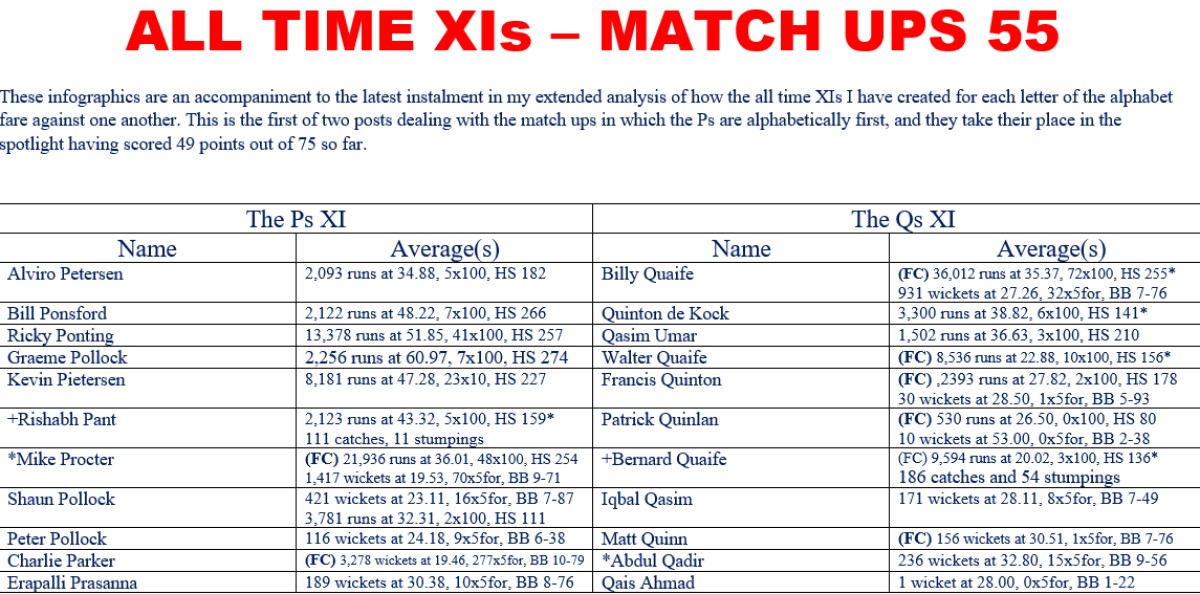
Close contests involving the Qs have been rare in this series, and this one does not buck that trend in any way. The Ps absolutely boss the batting, have the better captain, the better keeper and a far better pace attack. Only in spin bowling are the Qs possibly ahead, and if they do have an advantage there it is not enough to alter the scoreline: Ps 5, Qs 0.

THE Ps V THE Rs

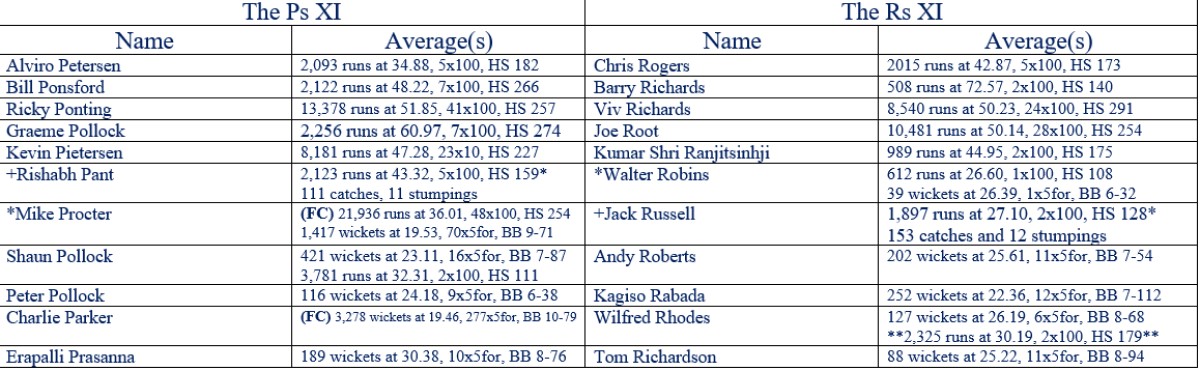
The Rs have the better opening partnership – Rogers clearly outranks Petersen, while no lesser person than Sir Donald Bradman, an Aussie team mat of Ponsford to boot, rated Barry Richards ahead of Ponsford. Ponting outranks Viv Richards, though not by much, while Root’s larger sample size does not wipe out a 10.83 run per innings gap in batting averages between him and G Pollock. Pietersen would seem to outrank Ranjitsinhji, but the latter played in an era when batting was more difficult, with pitches often treacherous, and Ranji got no easy opponents to cash in on (all his tests were played against Australia). Pant outranks Robins with the bat, while the latter is on a par with Procter as a skipper and outranks Prasanna as a bowler. Procter outbats Russell, while the latter was a finer keeper than Pant, and Procter is up there with any of the Rs fast bowlers, as great as they are. S Pollock outranks Roberts in both departments, while Rabada marginally outranks P Pollock as a bowler. Rhodes undoubtedly outranks Parker as a left arm spinner. The Rs are ahead in batting and keeping and about even in fast bowling, the Ps have an advantage in spin bowling. This is close, but I think that the the Rs are just winning it: Ps 2, Rs 3.

THE Ps V THE Ss

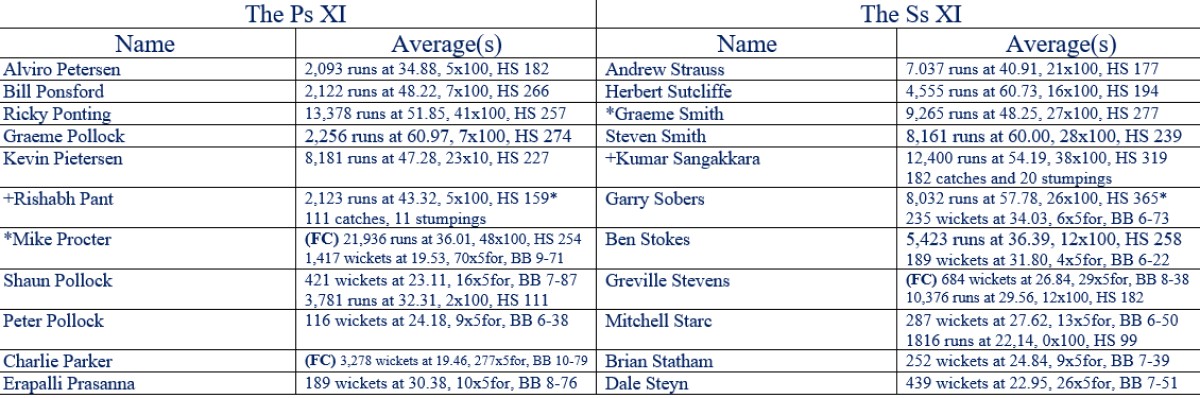
The Ss have the better opening pair – Sutcliffe was a near contemporary of Ponsford and outdid him at the highest level, while Strauss definitely outranks Petersen. Ponting wins the number three slot, bu G Pollock outranks S Smith – all evidence points to Pollock being on an upward trajectory when the curtain came down on SA’s first period as a test playing nation. Sangakkara outranks Pietersen with the bat, but Pant rates higher than him with the gloves. Sobers wins his batting match up with Pant, and has no bowling equivalent in the Ps ranks, though Parker was a finer exponent of left arm orthodox spin. Stokes wins the batting match up with Procter, but the Saffa was a much greater bowler than Stokes. Stevens outranks S Pollock as a batter, and marginally loses the nearest bowling match up for him, against Prasanna. The pace bowling is quite close in terms of the front liners – the Rs are a little better on averages, but the Ss have Starc’s left arm to add variety. Also, the Ss have back up in that department in the form of Stokes and the quicker versions of Sobers the bowler, which tips the scales in their favour in that department. The Ss thus win on batting and pace/ seam bowling, tie on captaincy, lose narrowly on spin bowling and heavily on keeping. I think the Ss are winning, and score this Ps 2, Ss 3.

THE Ps V THE Ts

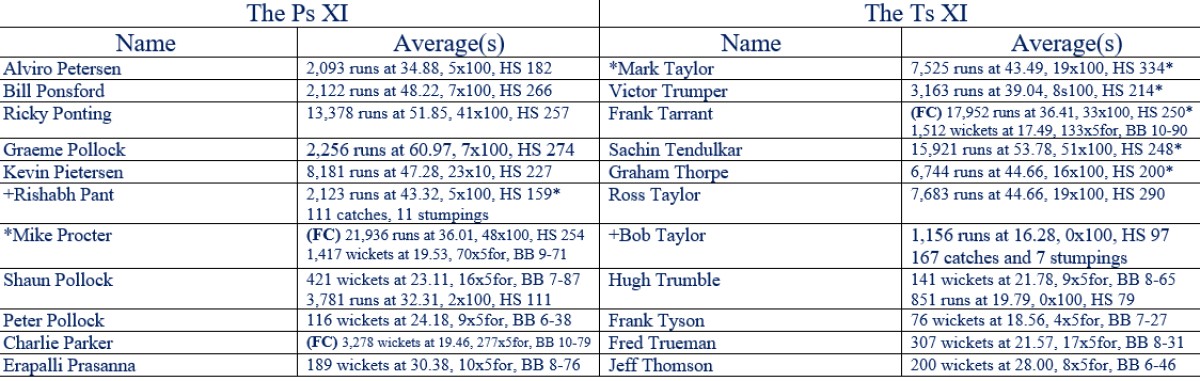
The Ts have the better opening pair – Trumper’s average of 39.04 on Victorian and Edwardian pitches is a more impressive achievement than Ponsford’s 48.22 on the shirtfronts of the interwar era, and ‘tubs’ Taylor clearly outranks Petersen. Ponting wins the batting match up at three, but Tarrant offers a bowling option comparable to Parker in quality. The number four batting match up is a draw, featuring two all time greats of the game. Superficially Pietersen seems to have Thorpe beaten in the number five slot, but Pietersen had a lot more support from the rest of the order than Thorpe, so I am giving Thorpe the verdict. Ross Taylor outranks Pant with the bat, while Bob Taylor was much better keeper. Procter outranks Bob Taylor with the bat, and also wins the bowling match up against Thomson. S Pollock outranks Trumble with the bat, but is outranked by Trueman with the ball, Peter Pollock just loses his match up against the even quicker Frank Tyson, and Trumble comfortably outpoints Prasanna in the battle of the off spinners. It is close with the bat, and in the fast bowling department, both sides are well captained, but the Ts have clear advantages in keeping and spin bowling, so I give them a narrow win in the contest: Ps 2, Ts 3.

THE Ps V THE Us

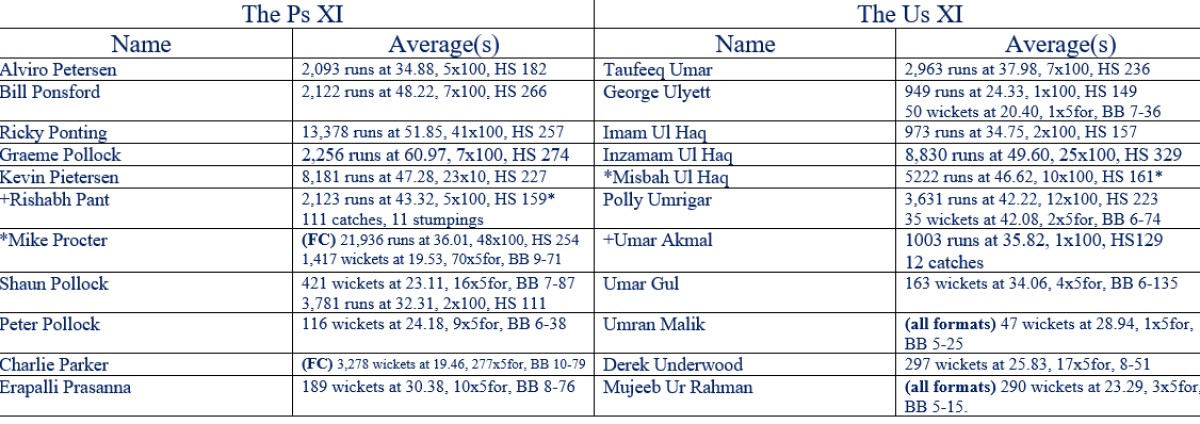
The Ps have an overwhelming superiority in batting and fast bowling, the better keeper and a captain at least the equal of his opposite number in that role. Underwood outranks Parker with the ball and it maybe that in time Ur Rahman will end up outranking Prasanna, but at the moment he is unproven. Nevertheless, I will concede that the Us win the spin bowling department, and allow them one big day out: Ps 4, Us 1.

THE Ps PROGRESS REPORT

The Ps have scored 15 points out of 25 today and move up to 64 points out of 100, 64%.

A BOOK REVIEW

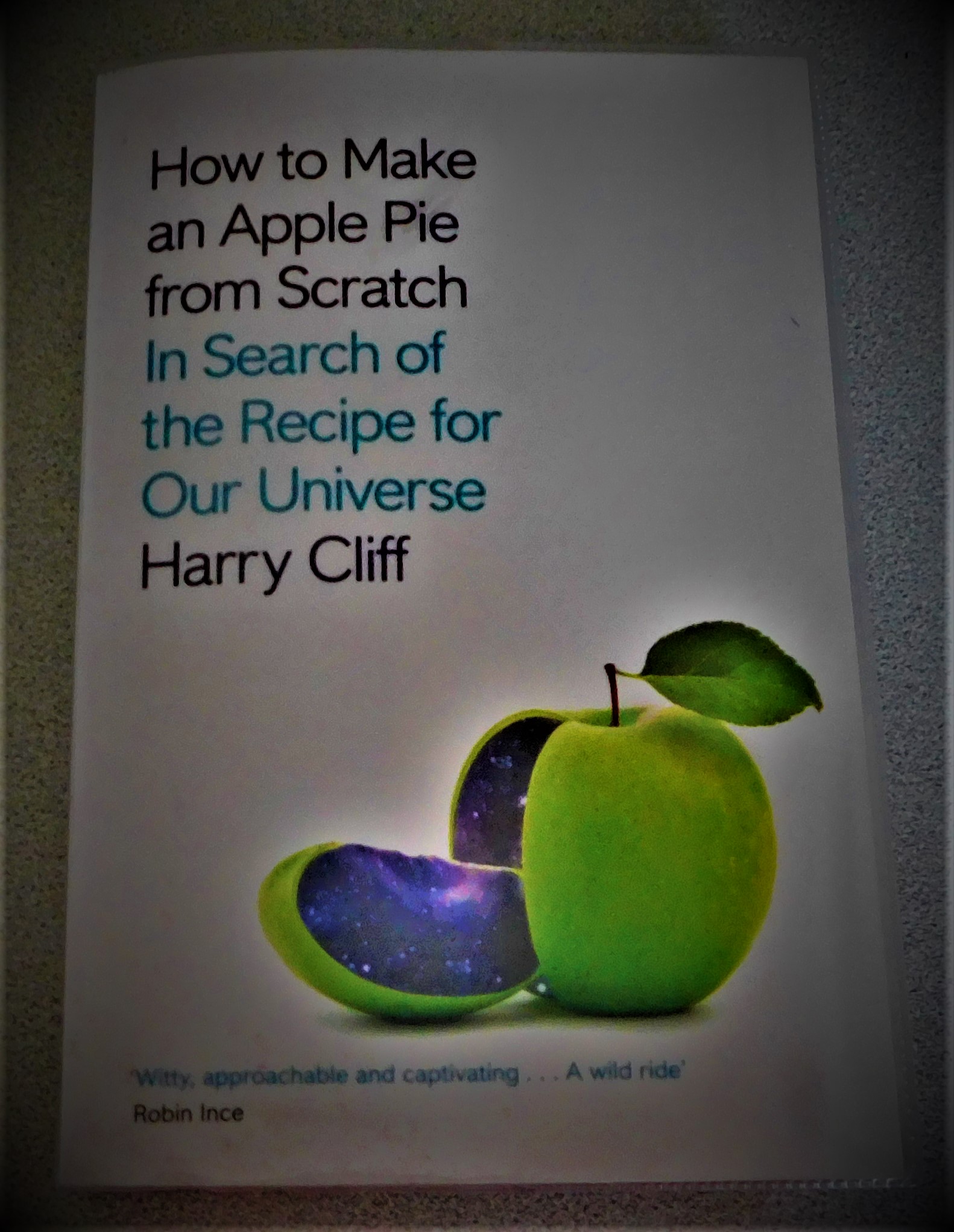
I have just finished reading “How to Make an Apple Pie from Scratch: In Search of the Recipe for Our Universe” by Harry Cliff, a quirky account of the current state of play in Particle Physics and Cosmology. I thoroughly enjoyed reading it and heartily recommend it.

CLIMATE CHANGE AT WORK

Bear in mind as you read this section that we are in the middle of November, and my home is roughly 100 miles north of London. This morning I walked into town by way of Bawsey Drain, and back by the route I use most frequently for this trip. On the outbound trip I saw a red admiral butterfly in a patch of nettles – a creature I have never previously seen in Norfolk any later than September. Then, on the homeward journey I saw a ruddy darter, a species of damselfly and hence even more out of place in Norfolk at this time of year, sunning itself (yes, a damselfly sunning itself in an English November, you read that right) on a brick wall.

PHOTOGRAPHS

Time for my usual sign off…

All Time XIs – Match Ups 53

Welcome to the latest instalment of my extended analysis of how the all time XIs I selected for each letter of the alphabet fare against one another. Today the Os are in the spotlight, and they start the day on 13.5 points out of a possible 75.

THE Os V THE Qs

The Qs have the better opening pair, given that Oldroyd is out of position, and they also clearly win the number three slot. O’Neill is massively clear of Walter Quaife at four, Odumbe outdoes Quinton in both departments at number five. Quinlan wins the batting element of the match up at six, but O’Riordan was a much better bowler. Oldfield is miles clear of Bernard Quaife. While Old and Olivier are a long way from being the best new ball pairing in this series, the Qs have only one recognized new ball bowler, Quinn. The Os have the best spinner on either side in O’Reilly, but Qasim and Qais Ahmad are probably better support options than Ojha and Odumbe. I think that the Os massive advantage in the pace/seam bowling department settles this one, but it is not an utter rout: Os 3.5, Qs 1.5

THE Os V THE Rs

The Rs totally dominate the batting, winning every match up down to number seven in that department. The Rs also have the better captain, while the keeping match up is a clash of titans. The Rs have the better pace trio, but O’Riordan’s left arm slightly reduces the difference as it gives the Os more variety. Rhodes is miles clear of Ojha as a left arm orthodox spinner, but O’Reilly is well clear of Robins as a leg spinner, and the Os have a third genuine spin option in Odumbe, whereas the Rs next best spin options after their front two would be between The Richardses and Root, so the Os are a little better in that department overall. The Rs advantages in batting, captaincy and pace/ seam bowling should be enough that their only disadvantage, in spin bowling, does not unduly damage them. I score this one Os 1, Rs 4.

THE Os V THE Ss

The Ss dominate the batting and are also streets clear in fast bowling and have to be given the captaincy match up as well. The Os have the better keeper and the better spin attack, though not massively so. This is a clear cut win for the Ss, but not quite a whitewash: Os 1, Ss 4.

THE Os V THE Ts

The Ts win every batting match up down to number six, lose the batting element of the keepers match up. The Ts also have the finer pace attack, and while O’Reilly outranks Trumble (he bowled on more batting friendly surfaces than Trumble) Tarrant outranks Ojha by a greater margin and Odumbe’s presence is not enough to influence this contest in the Os favour. The Ts also have to given the captaincy match up, while the keeping honours are split. There can be only one score: Os 0, Ts 5.

THE Os V THE Us

The Os have the better opening pair, the Us win the batting match ups from 3-7 inclusive, although their only bowling option in this slots, Umrigar, is outranked by both Odumbe and O’Riordan, and Umar Akmal massively loses the keeping match up. The Os claim pace bowling honours – Umran Malik is unproven and Umar Gul fairly ordinary, and O’Riordan’s left handedness lends them extra variety, though the right armed George Ulyett is of comparable stature as a bowler. O’Reilly outranks Ur Rahman, Underwood outranks Ojha, Odumbe monsters Umrigar in the bowling stakes, so I award spin bowling honours to the Os as well. The Us are better in batting and captaincy, but outclassed everywhere else. I will allow their strong batting to make its presence felt in the contest, but this is a clear win for the Os: Os 4, Us 1.

THE Os PROGRESS REPORT

The Os have scored 9.5 points out of 25 today and now have 28 points out of a possible 100, 28% overall.

PHOTOGRAPHS

My usual sign off…