A look at development’s in the Hundred so far today and a photo gallery.
Today in The Hundred Trent Rockets are hosting London Spirit. The Women’s match has just reached the halfway point, and this post looks back at the first 100 balls.
BUILDING A BIG TOTAL
London Spirit won the toss and decided to bowl first. Bryony Smith and Grace Scrivens opening for the Rockets had an excellent opening stand, and Scrivens, who also got good support from Nat Sciver-Brunt, completed an excellent half century. She was third out, bowled by Sarah Glenn for 55, which made it 121-3 with 21 balls to go in the innings. Heather Graham played a superb late innings, and although Ashleigh Gardner didn’t have a great time, Alana King played well in the very closing stages. The innings ended with the run out of Gardner for 7 (4) which left Rockets with a score of 158-5. Deepti Sharma, the Indian off spinning all rounder, had the best figures for the Spirit, taking 2-25 from her 20 balls. This total will take a lot of chasing down. If Rockets defend successful it will mean that there is a clear gap between the top three (Welsh Fire, Northern Superchargers and Oval Invincibles) and the rest. If Spirit do somehow pull this off the split will instead be between a top four and a bottom four.
A look at developments so far in the Hundred (women’s) match between Welsh Fire and Southern Brave, and a very large photo gallery.
Today the Hundred sees Welsh Fire taking on Southern Brave. The Women’s game is in progress as I type though it may well not be by the time I finish. This post looks at what has happened so far.
PRELIMINARIES
Welsh Fire came into this match looking to consolidate their position at the top of the group while Southern Brave were looking for their first win of this edition, in their fifth match. Fire won the toss and decided to bowl first.
A TALE OF WOE
The first ball of the match, bowled by Freya Davies, took the edge of Smriti Mandhana’s bat and went through to Sarah Bryce who took the catch. That set the stage for a procession to and from the Brave dug out. Danni Wyatt and skipper Georgia Adams added 28 together for the third wicket, but otherwise there was little hint of resistance. Adams’ 17 finished up being the top score of the innings. Wyatt managed 14, and Freya Kemp with 11 produced the only other double figure score of the innings. Highly unusually for a side batting first in this competition Brave actually failed even to bat for their 100 balls, being all out to the 92nd ball of their innings, for 84. The wickets were shared around, with only Georgia Elwiss of the six Fire bowlers used not getting at least one. West Indian ace Hayley Matthews had the best figures, with 3-16, while Davies and left arm spinner Jess Jonassen each had two wickets, Jonassen’s second being the tenth, that of fellow left arm spinner Tilly Corteen-Coleman. Beth Langston had 1-8 from ten balls, and Georgia Davis was the only bowler to concede more than a run a ball, taking 1-22 from her 20.
THE FIRE REPLY
Sophia Dunkley became the second opener to record a golden duck, being bowled by Lauren Cheatle. However, although she struggled horribly to score Matthews followed her good bowling by lasting 16 balls, while Tammy Beaumont was going well at the other end. When Matthews was second out at 28, Bryce came in to join Beaumont and that pair are still together as I type. Beaumont is on 27, Bryce 6, and the score is 48-2 – 37 needed off 42 balls. While I have been preparing this for publication Tammy Beaumont has been dismissed, bowled by Cheatle for 34. The score is now 63-3, 22 needed of 28 balls to win.
PHOTOGRAPHS
My gallery is well varied, though there is a huge preponderance of caterpillars – there are two stretches of Bawsey Drain, separated by the width of Columbia Way, where the caterpillars can be found in spectacular abundance.
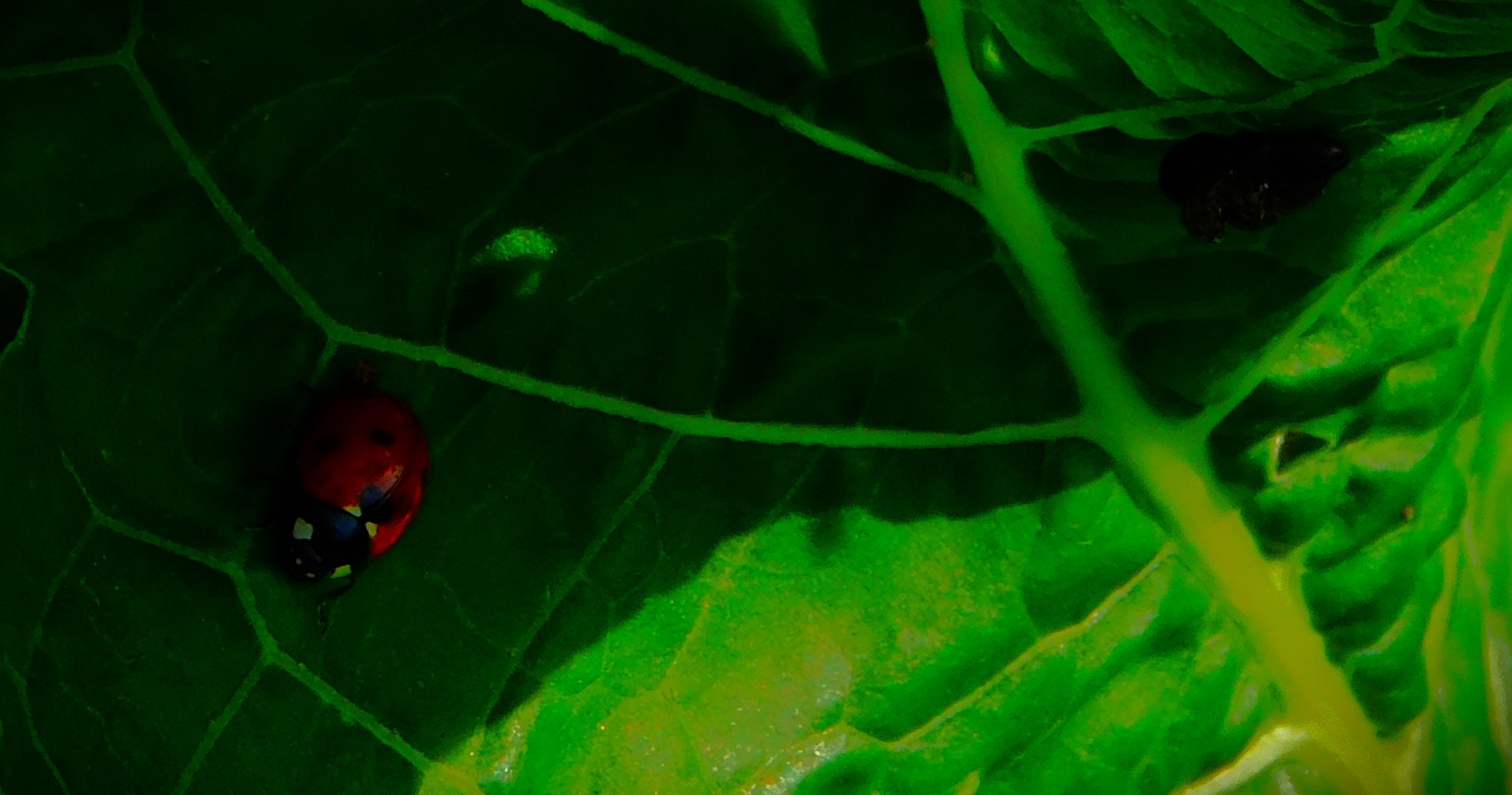
A peacock butterfly enjoying the Buddleia near Eastgate Bridge.There are a few caterpillars near this ladybird……and this is the last image to feature caterpillars.
A look at the amazing tie between London Spirit and Oval Invincibles in The Hundred (women’s) which concluded jus before I started this post, a look at the England men’s squad for the upcoming series against Sri Lanka and a photo gallery.
This title refers to the extraordinary match in the Hundred (women’s) between London Spirit and Oval Invincibles. This was a very local derby – the home grounds of the two sides are less than five miles apart.
THE LONDON SPIRIT INNINGS
London Spirit batted first. Although Meg Lanning fell very early, bowled by Marizanne Kapp with just two runs on the board Spirit reached 30 for no further loss. At that point Kapp bowled Cordelia Griffith 19, and dismissed the other set batter, Georgia Redmayne the same way for 9 to make it 31-3. Ryana McDonald-Gay then bowled Dani Gibson for 2 to make it 34-4. 13 runs later, with the 50th ball of the innings and the last of her allocation of 20 Kapp claimed a fourth wicket, yet another clean bowled, this time Heather Knight for 6. She had also only conceded 11 runs from those 20 balls. Charlie Dean now provided Indian all rounder Deepti Sharma with some good support, before Amanda-Jade Wellington got through her defences to make it 72-6. Sharma and Eva Gray now shared the best partnership of the innings, before McDonald-Gay achieved the seventh clean bowled dismissal of the innings, getting through Sharma for a fine 44. The run of bowled dismissals ended when Sarah Glenn went for a big hit against Sophia Smale on the 98th ball of the innings and was caught by Mady Villiers. Smale then bowled Sophie Munro with the 99th ball of the innings and it was 111-9. Smale was denied a hat trick, and indeed Tara Norris scored two off the final ball of the innings to give Spirit a final total of 113-9.
THE INVINCIBLES REPLY
Both of the Invincibles experienced openers, Chamari Athapaththu and Lauren Winfield-Hill fell cheaply, and it was 14-2. Marizanne Kapp and Alice Capsey had an excellent partnership, adding 55 for the third wicket before Capsey was bowled by Sharma to make it 69-3. Paige Scholfield, Villiers and Wellington all went cheaply and it was 82-6, but Joanne Gardner and Kapp looked to have settled things when they advanced the score to 110. Kapp just missed out on a half century when Sharma bowled her, but with four runs needed from eight balls it did not look like much difference. However Ryana McDonald-Gay now played a dreadful innings, failing to score of any of her first five balls, finally accruing two of her sixth, the 98th ball of the innings, and then having a swing and a miss at the next. That suddenly meant that Invincibles needed two off one ball. McDonald-Gay did make contact with this and got through for one, but was run out coming up for the second, which meant the match ended in a tie. It was a point thrown away by the Invincibles, and Kapp, taker of 4-11 and scorer of 47 off 32 was a clear Player of the Match. Gardner had 16*, and had McDonald-Gay had the wit to take a single early in her innings would probably have been able to finish things. Scorecard here.
ENGLAND MENS SQUAD FOR SRI LANKA SERIES
Zak Crawley and Dillon Pennington have been ruled out of this series by injuries. Olly Stone has replaced Pennington in the squad. Of more moment given that Pennington did not play against the West Indies is the Crawley situation, and while Jordan Cox (once of Kent, now of Essex) has been added to the squad England are allegedly planning to bring in Dan Lawrence in place Crawley. On ‘next cab off the rank’ principles this is unarguable – Lawrence has done a lot of drinks waitering of late. However Lawrence has never opened in red ball cricket, and while many things done by Stokes and McCullum have worked beautifully for them this one does have a bit of a look of a ‘cunning plan’ about it, with the usual weakness of such plans! One possible solution within the confines of the announced squad is for Stokes to go in right at the top, with Jamie Smith and Lawrence occupying the number six and seven slots which ever way round one cares to have them (Smith generally bats above Lawrence for Surrey), which would leave numbers 2,3,4 and 5 in the order unaffected. Detailed look at the squad here.
A look at Birmingham Phoenix v Southern Brave earlier today and a large photo gallery.
There are two Hundred double headers today – at 11AM this morning Birmingham Phoenix women took on Southern Braves women, with the equivalent men’s game currently in progress. Meanwhile the women’s game between Trent Rockets and Welsh Fire is approaching the halfway stage. This post looks back the early match.
THE PHOENIX INNINGS
Brave came into this match without a win so far this season. An up and down batting performance saw Phoenix reach 137-7 from their 100 balls. The highlight was a half century from Amy Jones. Emily Arlott with 22 off 12 balls near the end was the only other Phoenix player to top 20. Best bowler for the Brave was 16 year old left arm spinner Tilly Corteen-Coleman with 2-22 from her 20 balls.
THE BRAVE REPLY
Smriti Mandhana made a racing start with the bat, and at 18-0 after 11 balls Brave seemed to be going well. Then came a truly bizarre passage of play, as three times in the space of seven balls Ellyse Perry had appeals for caught behind turned down on the field but given on review. The first one, to dismiss Mandhana was a slightly tricky one as there were two different noises, Mandhana’s bat hitting the ground, and then a teeny but later the ball hitting Mandhana’s bat. However both Maia Bouchier (0 off 2 balls) and Georgia Adams (2 off three balls) got big nicks, and in both cases the ball also deflected significantly after passing the bat). At 21-3 things looked bad for the Brave but then Danni Wyatt and Freya Kemp had a fine partnership, and at 89-3 Brave were looking in control. Charis Pavely then found the edge of Pavely’s bat, and for the fourth time Amy Jones took the catch. Three runs later came what proved the killer blow, Danni Wyatt going to catch by Fran Wilson off Hannah Baker for 43 to make it 92-5. Chloe Tryon and Naomi Dattani put on 21 together, but then Pavely struck twice in three balls, first trapping Tryon LBW and then finding the edge Rhianna Southby’s bat for Jones’ fifth catch of the innings. That was 113-7, and any slender hopes Brave might have had of this being their day would have finally vanished three runs later when Dattani edged Arlott to give Jones a sixth catch, making it 116-8. The two Laurens, Bell and Cheatle, cobbled together five runs for the ninth wicket before Cheatle was run out desperate going for a second to keep Bell on strike, and leg spinner Katie Levick then bowled Bell and Brave were all out for 121, beaten by 16 runs. Player of the Match was an easy decision in view of Jones’ half century and stellar work behind the stumps. Full scorecard here.
Today the Hundred features Oval Invincibles v Northern Superchargers. The halfway stage of the women’s match is almost at the halfway stage. This post looks at that match.
AUSSIES TO THE FORE FOR SUPERCHARGERS
The Superchargers are posting an impressive looking total. With three balls to go they are 143-4. This total has been dominated by two Australians. Phoebe Litchfield made an excellent 44, while Annabel Sutherland is still going well. The Sjuperchargers have ended with 146-4, Sutherland 63* (40), an innings that has included five fours and three sixes. Best bowler for the Invincibles has been Rachel Slater who has mysteriously not been given her full allocation of 20 balls – she has 2-11 from 15 balls. On Wednesday Ellyse Perry had a magnificent all round match with 66, 1-10 and a barely believable catch. Annabel Sutherland is a younger Australian all rounder, who like Perry bowls fast medium and is a fine fielder.
A look at the first innings of today’s Hundred (women’s) match between Trent Rockets and Birmingham Phoenix. Phoenix put up a respectable total, but maybe not enough – they certainly didn’t use all their batting resources. Also a large photo gallery.
Today in the Hundred the Trent Rockets are entertaining Birmingham Phoenix. I am typing this immediately after the end of the Phoenix innings (they won the toss and batted first).
139-3 NOT GOOD ENOUGH?
The Phoenix total referred to in the headline above is roughly equivalent to 165 in a T20 innings for comparison purposes. Undoubtedly a respectable score, but not an invincible one. Ellyse Perry scored 66 of the runs off 33 balls in a magnificent display. That means that the rest of the Phoenix innings was 73 off 67 balls. Sterre Kalis was scoring at a rate of below a run a ball for most of her innings, and even after picking things up late on she had a mere 48* (42) to show for her efforts, and it is not as though she had the excuse of worries over Phoenix’s batting depth – Amy Jones faced only three balls in the innings, and Suzie Bates, down to bat at five, never got in at all, the third wicket, a run out, happening on the 100th ball of the innings. Even after those two there were still Fran Wilson, Emily Arlott and Seren Smale who can handle a bat to come – Phoenix left a lot of resources unused in this innings. Rockets themselves have questions to answer – Alexa Stonehouse bowled the first 10 balls of the match straight through, yielding only six runs and was not called on for the rest of the innings. The ten balls she did not bowl were bowled by Amanda-Jade Wellington who leaked 29. Of the four Rockets bowlers who bowled a full allocation Heather Graham was the stand out with 1-15. Nat Sciver-Brunt (0-30) and Kirstie Gordon (0-32) were expensive, and such are Alana King’s usual standards that she would regard 1-26 as a disappointing return.
PHOTOGRAPHS
My usual sign off…
If you click to view this one at larger size you will see a swallow.A green shieldbug.
A look back at today’s Hundred (women’s) match between Manchester Originals and Trent Rockets, with special focus on the final ten balls. Also a photo gallery.
Today the Hundred has matches between Manchester Originals and Trent Rockets. The men’s match will be starting in a quarter of an hour. This post looks back at a the women’s match.
THE MANCHESTER ORIGINALS INNINGS
Manchester Originals have come in for considerable stick over the make up of their squad. They have an overload of opening batters – todays playing XI featured four regular openers (Emma Lamb and Eve Jones being the two to come in down the order). Today however Eve Jones went a long way to addressing such concerns with a fine innings from number 5. Originals skipper Sophie Ecclestone hit 13 off just five balls to give the total a late boost. Even so, a total of 137 didn’t look exactly mountainous.
THE FIRST 90 BALLS OF THE ROCKETS CHASE
The Rockets lost three wickets fairly early in the chase, but then Nat Sciver-Brunt and Ash Gardner settled into a stand that looked to be moving things in their favour. With ten balls to go in the chase Rockets needed 22 to win, with Sciver-Brunt and Gardner still in residence.
THE LAST 10 BALLS
Lauren Filer was given responsibility for bowling balls 91-95, and she did an excellent job. Even with her final ball going for four the equation was 13 needed off the last five balls. Filer had 2-26 in total from her 20 balls. Kathryn Bryce was given responsibility for bowling the last five balls of the match. Gardner hit the first two of these balls for four to reduce the ask to five runs off three balls, and that point it looked like Rockets had done the job. Gardner went for glory off the 98th ball but hit it too high and Beth Mooney was able to get round underneath it, which meant the ask was now five off two balls with a brand new batter to face the first of them. Heather Graham, the new batter, did the sensible thing and grabbed a single, bringing Sciver-Brunt with an undefeated half century to her name down on strike with the task of hitting a four to win the match. Sciver-Brunt whipped the final ball towards midwicket, but while the shot had power it lacked for placement, failing to located a big enough gap in the field and Rockets only managed two runs of the final ball, meaning that Originals had hung on to win by one run. Filer was named Player of the Match for her bowling, and deservedly so. Scorecard here.
PHOTOGRAPHS
My usual sign off…
This may look a bit like a boiled sweet, but it is actually what is known depending on your source either as a ‘jewel bug’ or a ‘metallic shield bug’.An ultra close-up of one of these bugs.
An account of England’s victory over West Indies at Edgbaston and resultant 3-0 series triumph, plus a photo gallery.
Yesterday I put up a post just as England were moving into a first innings lead over West Indies in the third test match of the series at Edgbaston. This post looks at the events that have unfolded since that one.
ENGLAND SURGE AHEAD
Jamie Smith and Chris Woakes extended England’s lead at a rapid rate. Smith just missed out on a maiden test century, but his 95 was a command performance, beginning with England still very much in jeopardy and ending with them in complete control. The scoring was not quite done even then – Gus Atkinson belted a couple of sixes coming it number ten, and England ended with a first innings lead of 94, and West Indies had an awkward mini-session to get through with the bat.
EARLY WICKETS FOR ENGLAND
West Indies did not make as much of a Horlicks of this mini-session of batting as the 1994 England side had in Trinidad, but the experienced Kraigg Brathwaite fell early, and Kirk McKenzie completed a truly miserable series (33 runs at 5.50 in six innings from a supposed number three) by doing likewise.
WOOD WASTES WEST INDIES
The West Indies had a respectable morning, though they needed far more. Mikyle Louis who had previously produced a succession of scores in the 20s completed a maiden test 50, and Kavem Hodge also reached 50. However, the lunch time score of 151-5, with da Silva batting in company with Hodge held out little hope for them, being a lead of only 57. The end of the West Indies innings was swift and brutal as the pace of Mark Wood was simply too much for them. Joshua da Silva had been somewhat fortunate to survive two LBW appeals from Wood when he was given out at the third time of asking and did not review it. Six runs later Alzarri Joseph had his stumps comprehensively shattered, and then at 171 came the killer blow for such hopes as West Indies retained, Hodge edging one through to Smith who made no mistake with the catch. Three balls later Jayden Seales’ off stump was sent cartwheeling. Number 11 Shamar Joseph creamed a four through the off side but the second ball of his innings was fast, full and straight, took the edge of his bat and flew to Brook in the slips. West Indies were all out for 175 and Wood had figures of 5-40 for the innings.
STOKES SLAMS HOME ENGLAND’S SUPREMACY
Zak Crawley was having a scan on an injured finger, which means that England needed someone else to open. However with a target of only 82 (three runs fewer than has ever been successfully defended in the fourth innings of a test match, and that match in 1882 was incredibly low scoring – the highest of the four individual innings was Australia’s second innings of 122) this was unliekly matter much. Rather than ask anyone else to do the necessary Stokes donned the pads himself and opened the innings with Duckett – two left handers answering to Ben opening the innings together. It was soon apparent that Stokes intended the match to be over before the tea interval – before the innings was two overs old he had struck four boundaries, and he continued in that vein, overshadowing Duckett, not generally noted for being a shrinking violet with the bat. Stokes reached 50 off just 24 balls, the quickest ever for England in test cricket (four balls quicker than Botham v India during the 1981-2 series), and two balls outside the all-comers record by Misbah-ul-Haq of Pakistan. Stokes finished things by belting the second ball of the eighth over for six to give England victory by ten wickets with two days and a little more than a session to spare. Wood’s blistering spell to terminate the West Indies second innings saw him named Player of the Match, while Gus Atkinson with 22 wickets at 16.22 each in the three matches was named Player of the Series. The West Indies have a promising bowling attack, but their batting is indubitably weak and lacking in depth. Playing Holder at six and da Silva at seven requires a much stronger top five than West Indies currently possess – Louis batted well today, Brathwaite is experienced but no ones idea of a great test opener and Hodge has been impressive, but Athanaze has played only one innings of note in this series, and I have already mentioned Kirk McKenzie’s shocking series. A full scorecard for this match can be seen here.
PHOTOGRAPHS
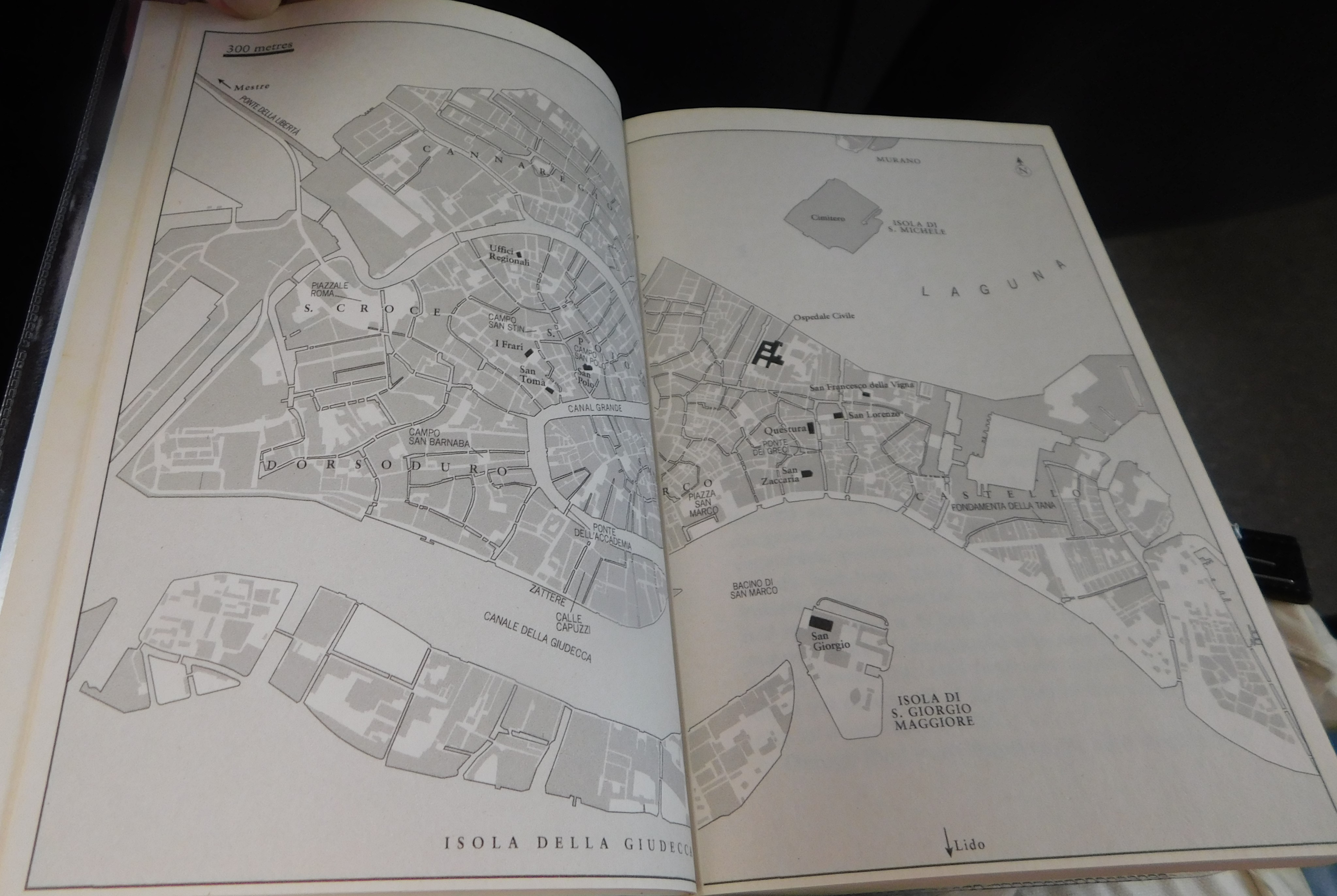
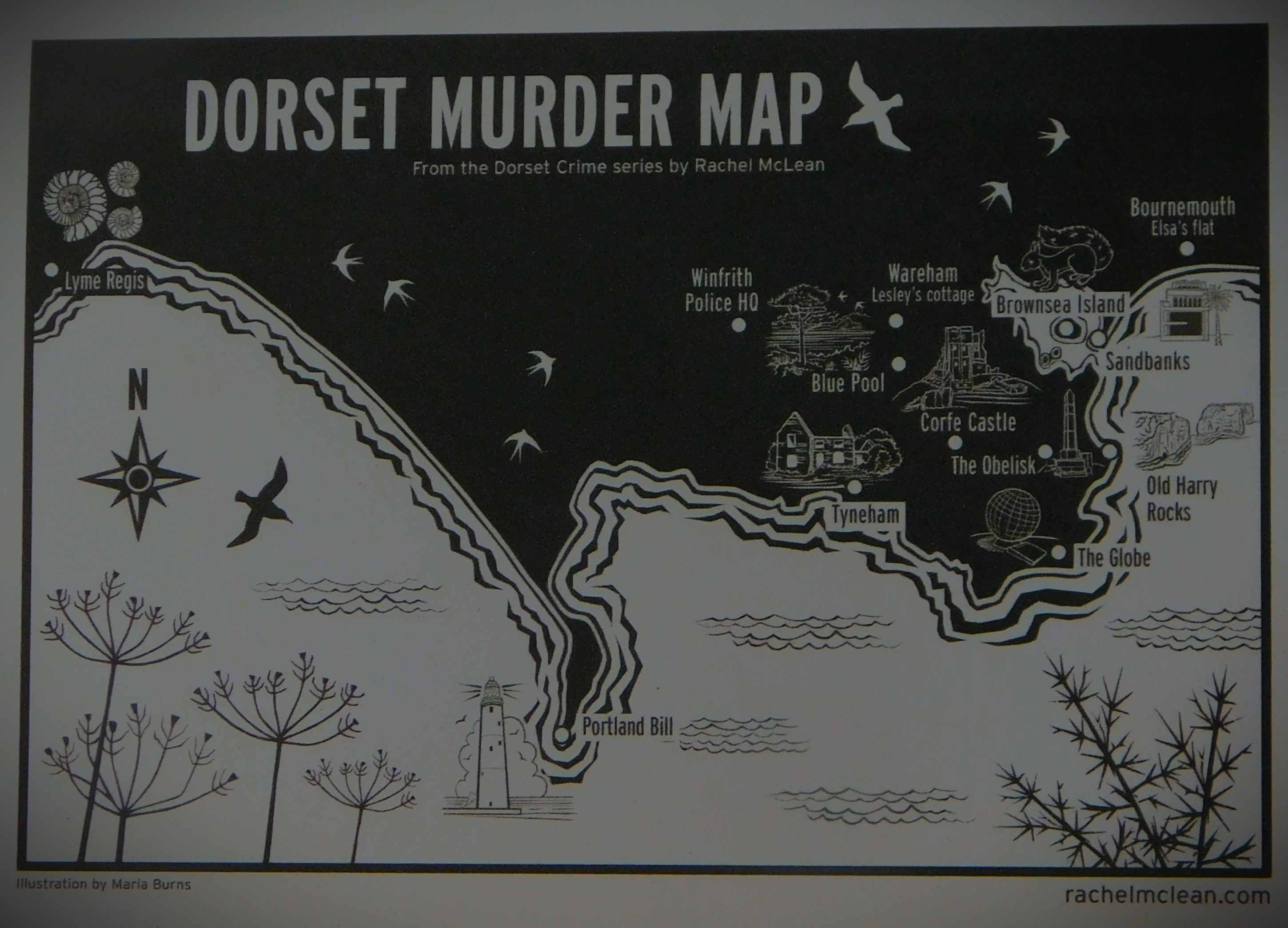
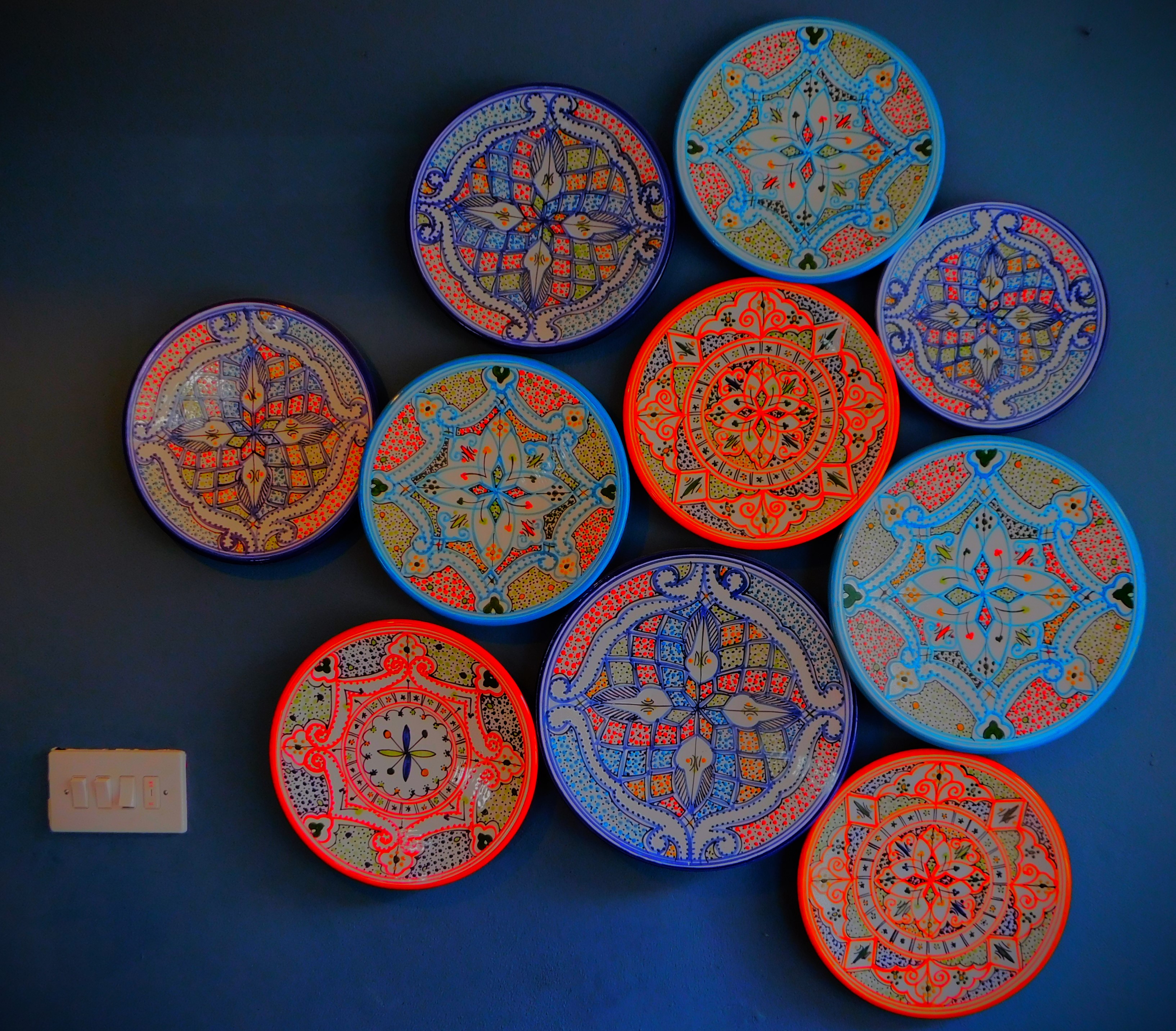
A little bit of a preamble to today’s gallery, relating to the first picture in it: one of my fairly recent library finds is Rachel McLean’s ‘Dorset Crime’ series, several volumes of which I have now read. I highly recommend this series, in which I have read books 1,3,4,5,6 and 7 to date. The seventh book, “The Blue Pool Murders” features a map showing all the locations (LJ Ross in her Northumbrian crime series does the same thing, as does Rebecca Tope in both her Lake District and Cotswold series). Preamble done here is my usual sign off…
A look at developments son far in the third test match between England and the West Indies at Edgbaston
Yesterday morning the third test match of the three match series between England and the West Indies got underway at Edgbaston, Birmingham.
THE PRELIMINARIES
England named an unchanged XI, logical but a little disappointing – one would have like to see Potts and/ or Pennington in action. West Indies showed one change – Motie who had missed the second match due to injury returning in place of Sinclair, who had stood in for him. West Indies won the toss and chose to bat first. Putting England in on a surface like the one at Edgbaston would have reeked of fear, so this was a positive sign.
DAY ONE
West Indies began well, with the opening stand yielding 76. However one wicket produced a clatter, and at 115-5 West Indies looked in deep trouble. Jason Holder and Joshua da Silva then had an excellent partnership for the sixth wicket. The lower order also contributed a little, and in the end West Indies posted 282 all out. Kraigg Brathwaite scored 61 opening the batting, Holder 59 in the middle of the order, and Gus Atkinson had the best bowling figures with 4-67, giving him 20 wickets one innings in to his third test match. England had a mini-session to negotiate before the close, and made rather a hash of doing so, losing both openers and nightwatcher Mark Wood to end the day on a precarious 38-3.
DAY TWO (SO FAR)
The day started as the previous one had ended, with England losing wickets rapidly – first Pope and then Brook departed cheaply, at which point it was 54-5. Root and Stokes began the recovery, putting on 115 together before Stokeshit a short ball from Alzarri Joseph straight to Kraigg Brathwaite at forward short leg. Root and Jamie Smith continued the good work before Motie trapped Root LBW 13 short of a century. In the course of this innings Root passed Lara’s career aggregate of test runs, took his own tally past 12,000 and in the process assured himself of ending the innings with his average above 50 – the sixth time in his career that he has moved his average above 50. That was 231-7, with Woakes joining Smith. Smith completed his second test fifty, and when the tea interval arrived England were 274-7, just 8 runs short of first innings parity. A rain delay has extended the tea interval but they are now back underway. While I have been preparing this for publication England have moved into a first innings lead, with Smith and Woakes still together.
A look back at the test match at Trent Bridge between England and West indies. and a fine photo gallery.
I did not actually get to follow a great deal of the match that unfolded at Trent Bridge between Thursday and Sunday (scheduled for five days, but four proved enough). Thursday was a work day, so I got only the closing stages of England’s 416, and as documented in my previous two tests I was busy over the weekend.
A HISTORIC MATCH
England amassed 416 on the opening day, but had, as opening batter Ben Duckett admitted, “left a few runs out there”. The West Indies response was led by two batters from the tiny island of Dominica (also birthplace of pace bowlers Norbert Philip of the West indies and Phillip DeFreitas of England) Alick Athenaze (82) and Kavem Hodge (120, the first test century by a Dominican), and at the end of day two they were 351-5 in response to that 416 by England. In the end, assisted by England trying to be too clever against the tailenders, West Indies led by 41. During the bit of listening I got in on the Saturday in between concerts Brook and Root batted beautifully after Pope had completed a 50 and then got out. Both players would get hundreds, but for the second time in the match England didn’t maximise their opportunity, suffering a collapse late on. They did however pass 400 for the second time in the match, the first England team to do so (though it has been done against them at least once – Headingley 1948, England 496 and 365-8 declared, Australia 458 and 404-3 to win by seven wickets). Part of the reason that occurrences are rare (there have been 12 in all of test history) is that sides putting up big totals used to expect only to bat once – declining to enforce the follow-on was much rarer than it has recently become. Also scoring rates were less rapid in test cricket in days gone by, which mean that topping 400 twice would almost certainly not have led to victory (the extraordinary Headingley 1948 match aside). West Indies thus need 385 to win – fewer than had been scored in any of the first three innings of the match. By the time I got to catch up on the action on Sunday after Norton Hill the West Indies second innings was already underway, and it did not initially look promising for England. However, with 61 on the board Woakes had Mikyle Louis caught behind and a dramatic collapse set in, including off spinner Shoaib Bashir entering the record books by taking wickets in each of his first three overs – before this only one spinner had taken wickets in each of their first two overs in a test innings at Trent Bridge – Shane Warne, when he almost bowled Australia to victory in 2005 with England needing only 129 to win. When Wood dismissed Sinclair courtesy of a catch by Crawley West Indies had tumbled to 93-6. They were still six down when I left for my evening engagement, but England, with the aid of the extra half hour got the job done that evening. West Indies were all out for 143 in the end, Bashir 5-41, including the final wicket, Shamar Joseph clean bowled for 8. Pope was named Player of the Match for his scores of 121 and 51. England had underachieved with the bat in the first innings on their own admission, had arguably done the same in the second, and had still emerged victorious by the huge margin of 241 runs.
PHOTOGRAPHS
My usual sign off…
A Red Admiral looking rather the worse for wear.In contrast this Comma looked in perfect health.




































































































































































































































































































































































































































































































































































































































































































































































































































































































 aspiblog