County Championship Action Resumes

A brief look at the resumption of the county championship, an account of a ‘Make your own pizza’ session arranged by the West Norfolk Autism Group and a photo gallery.

After a break for The Hundred and The One Day Cup the County Championship has resumed. I am following developments at The Oval where Surrey host Warwickshire (although at the moment only by way of cricinfo – I am listening to commentary on the third T20I between England and New Zealand.

Surrey are batting first, and are faring reasonably well. Ben Foakes has just become the third Surrey batter to reach 50, after an aggressive innings by Jamie Smith and much less aggressive one from Sibley, although 65 off 174 is not slow by the opener’s regular standards. I missed the morning session due having a commitment elsewhere, though it is fairly clear from what the commentators have had to say that Ed Barnard has been the best of the Warwickshire bowlers so far. Tea is now being taken, with Surrey 224-4.

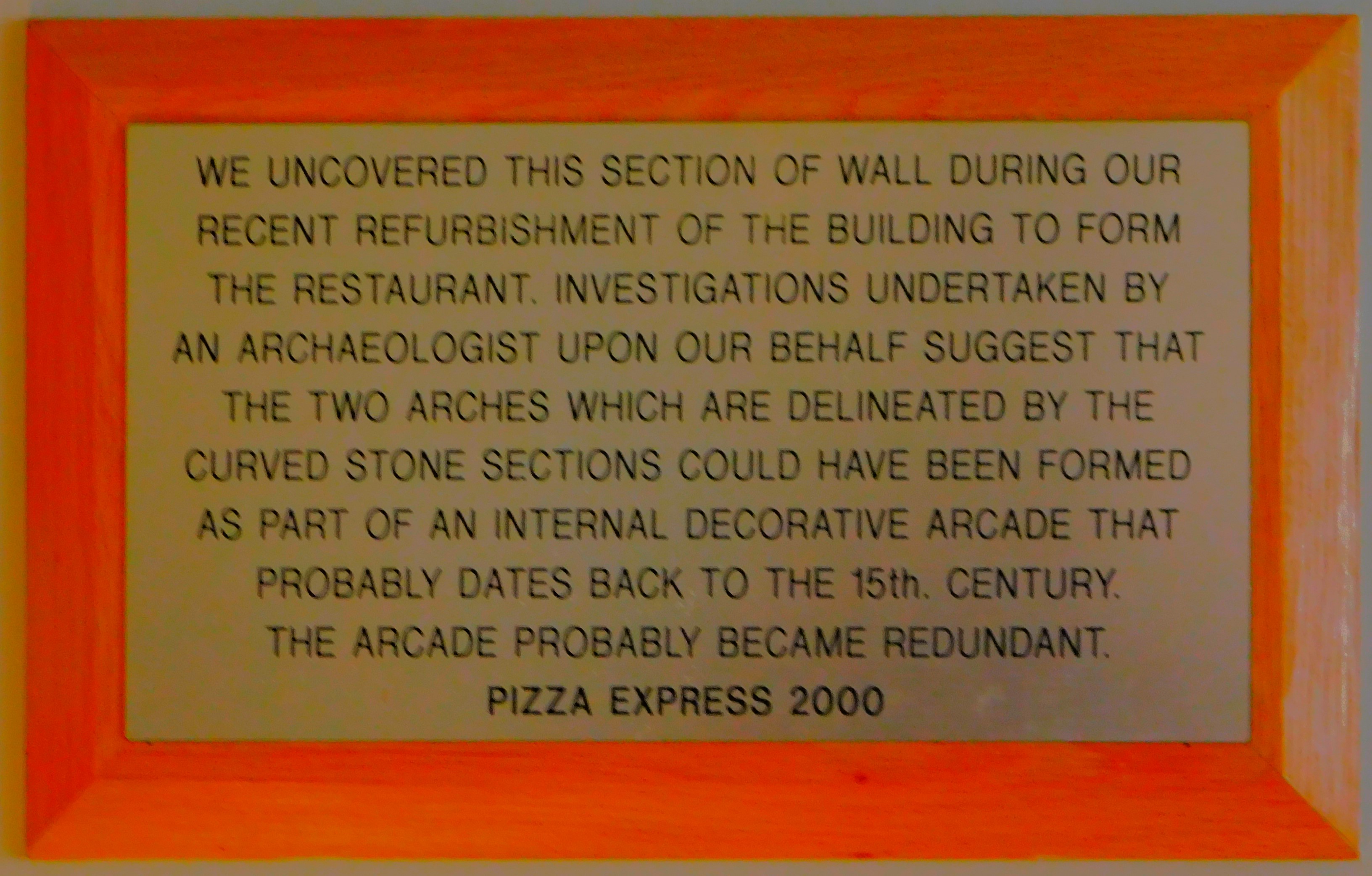
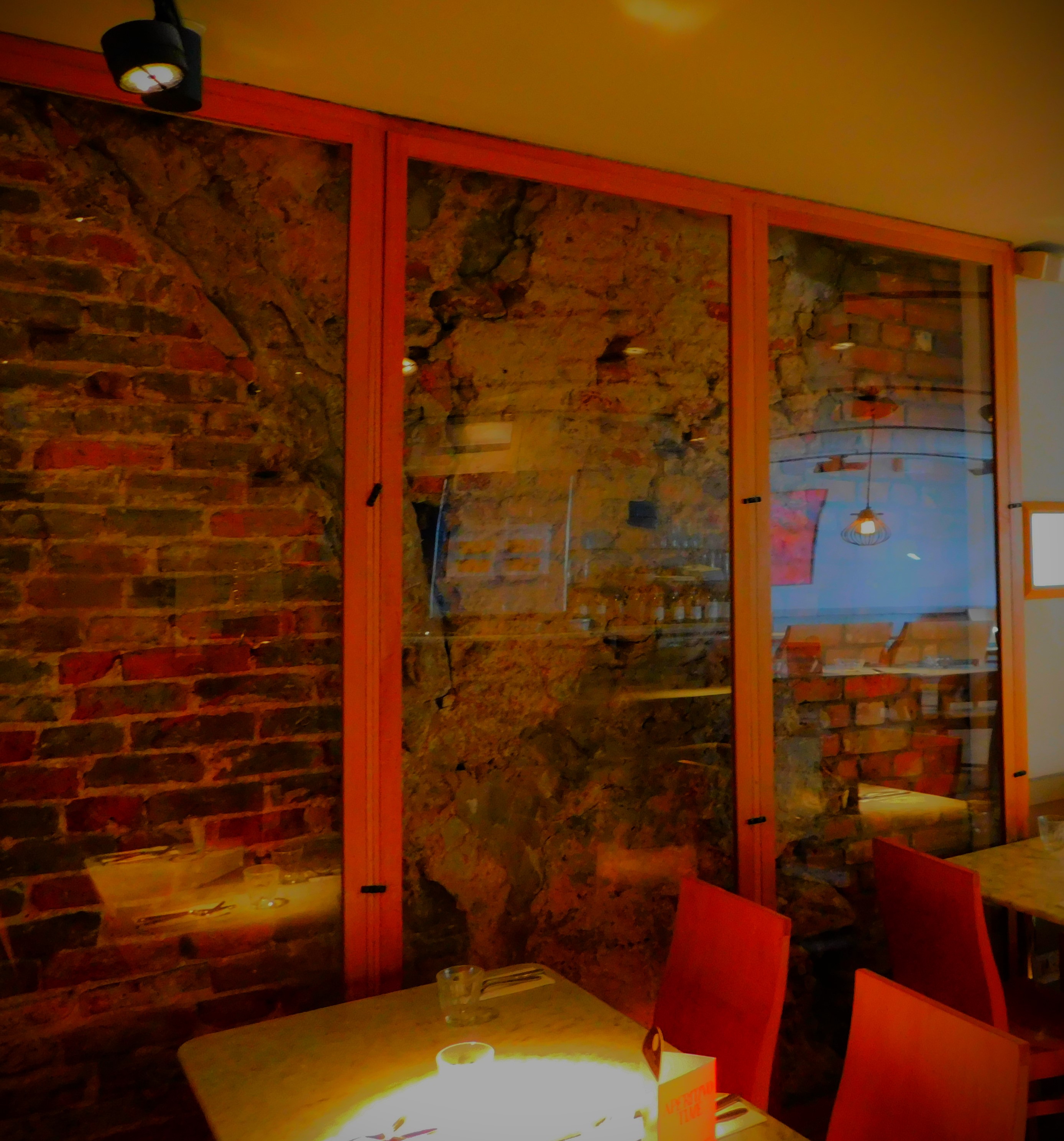
This morning the West Norfolk Autism Group had a Make Your Own Pizza session for adults, hosted by Pizza Express in King’s Lynn town centre. We started with a lump of dough which had been turned into a pizza base. This process was quite tricky, but I managed to get it done. Once the base was in the baking tray in which it would be cooked the next step was to create a barrier by elevating the edge of the base (as close to the very edge as possible). Then came the application of tomato puree, which was the one element with which I required a little assistance. Then came the selection of ingredients – in my case I said yes to mushrooms, pepperoni and olives and no to the rest (ham, chicken, two types of pepper, both too hot for my tastes, spiced beef and goats cheese), after which it was time add the mozzarella, which needed to be distributed as evenly as possible. Before the cooking there was on e more thing to do – to name our pizzas. I was very pleased with my creation and ate every scrap of it.

My usual sign off…

All Time XIs – Barbados Born

An all time XI of Barbados born players, highlighting the immense talent produced by that tiny coral island down the years. Also a photo gallery.

I have mentioned in some of my previous all time XIs posts the remarkable number of amazing cricketers produced by the tiny coral island of Barbados. Now I select an XI specifically to showcase the extent of the talent produced by this island with a population of under 300,000.

  1. Gordon Greenidge (right handed opening batter). One half of the greatest opening pair the West Indies have ever had, and both hail from this island.
  2. Desmond Haynes (right handed opening batter). The other half of that legendary opening pair.
  3. *Frank Worrell (right handed batter, left arm medium fast bowler, captain). The total number of West Indies captains to truly overcome inter island rivalries totals two – this man and Clive Lloyd of Guyana. Worrell was a classy batter who scored his test runs at an average of 49, and his appointment as skipper ended one of cricket’s nastier shibboleths – the view that a mainly black team needed a white man to lead them.
  4. Everton Weekes (right handed batter). One of the most powerful stroke makers ever seen, but a firm believer in keeping the ball on the ground – he rarely hit sixes. He averaged 58.61 in test cricket, including a sequence at that level of five centuries in successive innings.
  5. Clyde Walcott (right handed batter, occasional wicket keeper, occasional medium pacer). Like Weekes a ferocious hitter of a cricket ball, and a colossal scorer even at test level (average 56). Additionally he once shared fourth wicket stand of 574 for Barbados with Frank Worrell, at the time an FC record for any wicket, though it was beaten only a few years later when Gul Mahomed and Vijay Hazare got to work for Baroda against Holkar, also for the fourth wicket, and that in turn was beaten by Mahela Jayawardene and Kumar Sangakkara for Sri Lanka against South Africa, when they put on 624 for the third wicket.
  6. Garry Sobers (left handed batter, left arm bowler of every type known to cricket). The most multi-skilled player ever to play the game.
  7. +David Murray (wicket keeper, right handed batter). Barbados’s finest ever keeper, and good enough to play for the West Indies.
  8. Malcolm Marshall (right arm fast bowler, right handed batter). One of the greatest fast bowlers ever to play the game and a more than useful lower order batter.
  9. Wes Hall (right arm fast bowler, right handed lower order batter). A legendary fast bowler of the late 1950s and early 1960s and a good enough lower order batter to score a first class century.
  10. Joel Garner (right arm fast bowler, right handed lower order batter). An awkward proposition because of the immense height from which he released the ball (above the height of many sightscreens), and capable of useful runs at need.
  11. Manny Martindale (right arm fast bowler, right handed tail end batter). Not many test appearances, as he belonged to the early days of West Indies test history, but he took his wickets at that level at 21 each, and over a larger sample size at FC level paid 25 each for his wickets.

This side has a stellar top six, a keeper who could bat and four great fast bowlers, most of whom had at least some capability with the bat as well. The spin bowling is weak, with Sobers the only front line option in that department, but that reflects the fact that conditions in Barbados have generally favoured fast bowlers and not spinners. Still not many places with similar populations could offer up an XI that would come close to challenging this one.

Some my chosen XI moved away from Barbados, but all played for the West Indies. Four Barbadian born cricketers moved to England and have played for their new country: Roland Butcher (right handed batter), Gladstone Small (right arm fast medium bowler), Chris Jordan (right arm fast medium bowler, right handed batter and ace fielder) and Jofra Archer (right arm fast bowler). Of these four the only one who might challenge for a place is Archer, and his injury history counts against him. Having covered that I now deal with a player who I regard as deserving a paragraph to himself in this section…

The third of the three unequivocally top of the range test openers to come out of Barbados. I left him out, because although I have little doubt that considered in isolation he outranks Haynes, and maybe even Greenidge I felt that proven effectiveness of Greenidge and Haynes as an opening combination meant that I had to pick them, which meant that I could not accommodate Hunte.

The spin bowling issue is problematic – leg spinning all rounder David Holford is not worth a place in either department, and the best specialist spinner that Barbados has produced, Sulieman Benn, has a very ordinary test record. One possible solution to getting a second front line spinner into the XI is to drop Martindale, drop Murray and the three remaining quicks a place each down the order and select Hayley Matthews, an off spinning all rounder with a great record for Barbados and West Indies women’s teams at number seven.

There are a stack of fast bowlers who could not be accommodated who would be instant selections in many another team: Wayne Daniel, Sylvester Clarke Herman Griffith and Charlie Griffith the four most obvious specialists plus a trio of all rounders – Jason Holder, Franklyn Stephenson and Ottis Gibson.

Some of you will have ideas of your own about players who could have been mentioned or selected – fire away with your comments.

My usual sign off…

All Time XIs – Closed Underground Stations

An all time XI all whom connect to defunct London Underground stations. Also a large photo gallery.

The main feature of today’s post is an all time XI every player of which can be connected back to a former London Underground station. In each case I elucidate the connection. Unfortunately a major rain interruption prevented the T20I between the England and Sri Lanka women’s teams providing as much news as seemed likely. England won by 12 runs on the DLS method, after SL’s innings was reduced to six overs (rain had reduced the match to 17 overs per side, and then 3.1 overs into the SL response more rain fell). The DLS adjustment, helped by England having scored incredibly fast in their innings, left SL needing 45 off 17 balls on the resumption and they never looked like getting them.

  1. *WG Grace (right handed opening batter, right arm bowler of various types, captain). His case for inclusion on cricketing grounds needs no stating. He gets in by dint of his first given name, William, which links to King William Street, the first northern terminus of what was then the City & South London Railway, which was abandoned in 1900 when the line was extended northwards.
  2. Frank Hayes (right handed opening batter). He scored 13,000 runs at 35 in FC cricket, though barring a debut century his test record was very ordinary. Between 1883 and 1885 the Metropolitan District Railway as it then was ran services to Windsor, and one of the intermediate stops was Hayes.
  3. Ernie Hayes (right handed batter, leg spinner). A fine all rounder whose Surrey career lasted three decades. His closed station is the same is that of Frank Hayes.
  4. Clem Hill (left handed batter). At the time his test career ended he had scored more runs at that level than anyone else, and was also an athletic fielder. One stop west of Ealing Broadway in the days of District services to Windsor was a station known by two names in its brief history with that line, Castle Hill, another which we will see later in this piece.
  5. Marcus North (left handed batter, occasional off spinner). He averaged 35 at test level and 40 in FC cricket with the bat and had his moments with the ball. North Weald station was on the Epping – Ongar section of the Central line, which became part of London Underground post WWII and closed in 1994.
  6. Paul Winslow (right handed batter). A notable big hitter in his day. In the days the expansionist Edward Watkin the Metropolitan Railway was extended many miles northwest of London. Beyond Aylesbury was a junction at Quainton Road, with one branch leading to Verney Junction by way of Granborough Road and Winslow Road, the latter of which gets him in. We will see the other branch later.
  7. +Gil Langley (wicket keeper, right handed batter). A great keeper in his day. Langley was on the Windsor branch referred to earlier in this piece.
  8. Charlie Dean (off spinner, right handed batter). An excellent spinner and a useful lower order batter. The other name by which Castle Hill was known in that period between 1883-85 was Ealing Dean.
  9. Wes Hall (right arm fast bowler, right handed batter). A legendary fast bowler for the West Indies. Blake Hall was on the Epping-Ongar branch of the Central line, though it closed over a decade before the rest of the branch due to being so lightly used.
  10. Mark Wood (right arm fast bowler, right handed batter). A very fine and very fast fast bowler. Wood Siding was one of the stations on the Duke of Buckingham’s private railway, which Edward Watkin bought for the Metropolitan Railway, of which it remained part from 1899 to 1935. The terminus of this line, Brill, is 51 miles from Baker Street, the furthest from central London any of the lines now part of London Underground have ever extended (Amersham, the current record holder, is a mere 27 miles out).
  11. Esmond Kentish (right arm fast medium, right handed batter). A fine bowler, but a genuine number 11. South Kentish Town, which gets him into this XI, was on what is now the High Barnet branch of the Northern line. In the 1920s strike action closed Lots Road Power Station temporarily, and that caused services on various lines not to be able to run. When services resumed South Kentish Town did not reopen.

This XI is not too bad given the criteria – a good top five, a great keeper and an excellent bowling attack – Wood, Hall and Kentish to bowl seam, Dean and Ernie Hayes to bowl spin, and Grace and North as back up options.

My usual sign off…

The One Day Cup Semi-Finals

A look at the semi-finals of the One Day Cup, which took place yesterday, and a large photo gallery.

These matches took place yesterday, and I only witnessed one of the four innings.

This was the one I had not expected to catch any of, since it was an 11AM start, which meant that it was always more likely than not to be done before I was home from work. In the event it was over at 2:23PM, Warwickshire proving utterly spineless. Liam Dawson claimed 7-15 as Warwickshire were routed for 94. Hampshire then only lost one wicket knocking off the runs.

This one started at 2PM. By the time I was home from work the Gloucestershire innings was done, for a paltry 125, but it was raining. The rain eventually eased in time for a 6:15PM restart. Early on it looked like Gloucestershire might yet succeed in defending their low total. Leicestershire were 33-4 at low water mark. At that point Peter Handscomb, a former Gloucestershire player, was joined by Wiaan Mulder. This pair, slowly at first and more rapidly as their partnership endured, saw their side home to a six wicket victory. Thus Hampshire and Leicestershire will contest the final.

My usual sign off…

The Hundred Finals Weekend So Far

A look at what has happened in The Hundred finals weekend so far plus a photo galley.

With the final of The Hundred (women’s competition) under way this post looks back at the the action from yesterday. Before I go into it a note about the Hundred’s qualification rules: it is an eight team league, and in order to ensure that only teams who have been provably better than average qualify for the KO stages only three teams make it through. The team who finish top of the group qualify straight into the finals, while second and third place play off for the right to join them, with second place having the advantage that if the match gets rained out they progress based on league position.

This match, between Welsh Fire and Northern Superchargers, was the first scheduled for yesterday. Fire batted first and had reached 104-2 from 75 balls when the weather intervened, and did not let up in time for the match to be resumed. This meant that Superchargers, having finished second in the group, joined Southern Brave in the final, the match currently being contested. It also meant that Alex Hartley’s playing career, highlighted by being part of England’s 2017 World Cup winning side came to an end. Had Fire made the final she may have had another outing, but as it happened her time as a professional cricketer ended on the bench, not having being picked for the XI.

Southern Brave had a chance to make both finals, being joined in this Eliminator by Manchester Originals, with Oval Invincibles awaiting the winners. When they scored 196-1 from their 100 balls batting first this looked more than a possibility. Phil Salt (47 off just 17 balls) and Jos Buttler (82 off 46) had other ideas, and with other useful contributions along the way Originals, who were never at any point not ahead of the required rate won by seven wickets with four balls to spare. Jamie Overton made the winning hit, a six which meant that 196 balls had seen 397 runs scored. In view of the scoring rates elsewhere the approach of Brave opener Devon Conway (51* off 38) has to be questioned. Therefore tonight’s final of The Hundred (men’s competition) will be between Manchester Originals and Southern Brave.

Southern Brave are batting, and after the loss of two early wickets are mounting a decent recovery – they are currently 64-2 after 54 balls, Danni Wyatt 39*, Georgia Adams 16*. They will need to up the rate, but they are in decent shape.

My usual sign off…

Gloucestershire v Lancashire

A look back at Gloucestershire’s win against Lancashire yesterday, some cricket related links and a huge photo gallery.

Yesterday Gloucestershire took on Lancashire for the right to claim a slot in the One-Day Cup semi-finals. This competition uses an interesting qualification system – the winners of each of the two groups qualify direct for the semi-finals, while second place in one group plays at home to third place in the either to qualify for the remaining semi-final places. Tomorrow will see Hampshire play Worcestershire to complete the SF line up, with group winners Warwickshire and Leicestershire already qualified. This post looks back at yesterday’s game.

I missed part of the Lancashire innings because I had a dentist appointment at 11AM. Lancashire were already four down with not a huge number of runs on the board when I tuned in. Wickets continued to fall regularly, although the eighth wicket pair (Tom Aspinwall and Tom Bailey) battled hard and prevented a total debacle. Still, 177 all out in a 50 overs per side match, even on a pitch offering a bit to the bowlers, should never be a defensible total.

There had been a brief rain interruption to the Lancashire innings, but no overs had yet been lost. However, the weather remained threatening, given Gloucestershire motive to look to settle things quickly. In the event they required less than half of their 50 overs to chase down the target. The chief architect of this destruction of Lancashire was Miles Hammond, who reached his maiden list A century off 82 balls, hitting nine fours and six sixes along the way. He added two more fours, the latter the winning hit, after reaching the landmark to end up on 109*. Gloucestershire had eight wickets as well as 25.1 overs to spare. It would appear that Gloucestershire have hit their straps exactly at the right time, and they will be tough for anyone to deal with now (direct qualification for the SF for group winners is IMO a double-edged sword – by the time the SF comes round they have had less recent practice than those who have to win an extra match to claim their places). A Lancashire bowling attack being helpless in the face of a Gloucestershire batter named Hammond is not unprecedented – about a century ago Walter Hammond in a county championship fixture absolutely took Lancashire apart, including starting a day’s play by hitting Aussie pacer Ted McDonald for five successive fours.

This time last year I was making my cricketing trip through the alphabet. There are two more pieces to share to complete the set of selectorial posts:

My full post about players whose surnames begin with Y can be seen here. There is a change to this XI since I posted it – Yashavsi Jaiswal has announced himself for India in no uncertain terms, which means that Martin Young, a respectable county opener, loses his place. The revised XI for this letter is thus: M Yardy, Yashavsi Jaiswal, Younis Khan, Mohammad Yousuf, GN Yallop, *NWD Yardley, +Saleem Yousuf, U Yadav, Waqar Younis, J Young, P Yadav.

No changes to this one, which can be viewed in full here. The XI reads Fakhar Zaman, Ibrahim Zadran, Zubayr Hamza, Najibullah Zadran, K Zondo, JW Zulch, +Zulqarnain Haider, M Zondeki, Zia Ur Rahman, Zaheer Khan, Zahir Khan.

As well as the above I have a new blog to introduce. Brailly has opened up with a cricket themed post, reinventing the county championship as a red ball franchise competition. I am impressed by this effort, and in gratitude for getting an honourable mention I reciprocate by linking to it.

I have a splendid gallery to share with you today…

All Time XIs – England Every Decade

A quirky all time XI and some photographs.

Welcome to another quirky take on the all time XIs theme. This time I pick an England XI (plus twelfthy) in which every decade of test history is represented at least once.

  1. Jack Hobbs (right handed opening batter, 1900s-1930s). At the time of his retirement he was the leading run scorer in test history, and he still holds the England records for Ashes runs (3,636) and centuries (12).
  2. Herbert Sutcliffe (right handed opening batter, 1920s-30s). The only England batter to finish a career that spanned at least 20 test matches with an average above 60 (60.73).
  3. *WG Grace (right handed batter, right arm bowler of various types through bhis career, captain, 1880s-1890s). Made his debut for England in the first ever test match on English soil in 1880, and although he was already 32 by then he remained a formidable opponent for the next 19 years.
  4. Ken Barrington (right handed batter, occasional leg spinner, 1950s-60s). Averaged just short of 59 with the bat, including a career best of 256 against Australia.
  5. Wally Hammond (right handed batter, right arm medium fast bowler, ace slip fielder, 1920s-1940s). The first ever to score as many as 7,000 test runs. In the 1928-9 Ashes he scored 905 runs at 113.125, four years later he was joint leading run scorer for the series with 440 at 55.00, a performance followed up by scoring 227 and then 336* in two tests in New Zealand.
  6. +Les Ames (wicket keeper, right handed batter, 1930s). He averaged over 40 with the bat in test cricket and was also a top notch wicket keeper. Late in his career lumbago prevented him from keeping wicket, but he played on for Kent as a specialist batter, with Godfrey Evans maintaining the succession of great Kent keepers, going back to Tylecote in the 1880s.
  7. Ian Botham (right handed batter, right arm fast medium bowler, ace slip fielder, 1970s-1990s). I have placed him in the position from which he scored both of his legendary centuries in the 1981 Ashes. His last bow at international level was the 1992 World Cup – he retired from all competitive cricket part way through the 1993 home season when he realized that England would not be picking him again.
  8. Jim Laker (off spinner, right handed lower order batter, 1940s-50s). Perhaps the greatest of all orthodox off spinners, most famous for his destruction of the 1956 Australians. It is also noteworthy, especially in view of the generally awful record of English off spinners down under, that he took 15 economical wickets for a thoroughly beaten England in 1958-9.
  9. Syd Barnes (right arm fast-medium bowler , right handed lower order batter, 1900s-1910s). 189 wickets at 16.43 in just 27 test matches makes its own case for his inclusion.
  10. Hedley Verity (left arm orthodox spinner, right handed lower order batter, 1930s). Even in a decade of doped pitches and Bradman’s batting he claimed 144 test wickets at 24 each, while in FC cricket he was an absolute destroyer, paying less than 15 a piece for his wickets.
  11. James Anderson (right arm fast medium bowler, left handed lower order batter, 2000s-2020s). England’s all time leading test wicket taker.
  12. George Ulyett (right handed batter, right arm fast bowler, 1870s-1880s). The fast bowling all rounder was part of the earliest period of England’s international cricket history and could replace anyone save Ames without massively weakening the side – he once scored 149 in a test match, opening the batting, while his best bowling figures at that level were 7-36.

This side has a powerful batting line up, and a strong and well varied bowling attack. There is no front line leg spinner, and no left arm quick bowler, and no genuinely fast bowler, but nonetheless it is a pretty good side.

A two part photo gallery today…

From The Archives – U to X

A look back at the all time XIs I produced for the letters U, V, W and X last year, the last of them OTD last year, with some extra comments and one change. Also a fine photo gallery.

One of the things I have been doing on this blog lately is looking back at the cricketing trip through the alphabet that I took this time last year. In this post I look back at four of the posts on that journey.

In retrospect I should have mentioned left arm medium pacer Jaydev Unadkat. His very ordinary international record means he deserves no more than an honourable mention, but he deserves that much. I did give Andrew Umeed, an opening batter and occasional leg spinner, an honourable mention, and although Somerset as a whole struggled in the One Day Cup, never coming close to qualifying for a knockout slot, he had a quite superb tournament, scoring 613 runs with the bat. If he gets a county championship place in the strength of this and delivers in that competition as well he will represent a genuine threat to Imam Ul-Haq or Taufeeq Umar, but for the moment he has justified my giving him a mention. The XI in batting order remains: Taufeeq Umar, G Ulyett, Imam Ul-Haq, Inzamam Ul-Haq, *Misbah Ul-Haq, PR Umrigar, +Umar Akmal, Umar Gul, Umran Malik, DL Underwood, M Ur Rahman. Please read the full post before commenting on my selections.

No new information has come to light relating to this letter, and I remain happy with my selections. I admit that the batting looks precarious with Vaas at seven, but point out that while sides who are powerful in bowling and not quite so strong in batting have been big winners (1930s Yorkshire, 1950s Surrey etc) very few sides have been big winners with batting but a lack of bowling. This XI in batting order is: M Vandort, J Vine, *MP Vaughan, GR Viswanath, DB Vengsarkar, +K Verreynne, C Vaas, AE Vogler, H Verity, W Voce, V Van der Bijl. The full post can be viewed here.

I regard the 2023 Ashes, yet another away series in which D Warner did not deliver with the bat, as full vindication of my decision not to pick. I should have given Chris Woakes an honourable mention, but I still prefer Woods in the number seven slot. Everyone I selected deserved their places, though Willis and Walsh are a toss up for the no11 slot – I wanted Bill Whitty with his left arm to give the attack extra variation. The XI in batting order remains: FE Woolley, *FMM Worrell, E de C Weekes, CL Walcott, SR Waugh, +BJ Watling, SMJ Woods, SK Warne, JH Wardle, WJ Whitty, RGD Willis. The full post can be viewed here.
Footnote: Wasim Akram was in the As XI, and the Ys had greater need than the Ws, so Waqar Younis was held back for that letter.

This XI has changed since I created it OTD last year – Kiwi off spinner Xara Jetly has emerged in no uncertain terms, and she replaces MaX Waller in the number slot. The XI thus reads: MaX O’Dowd, MaX Holden, ER DeXter, *AF KippaX, SJE LoXton, AXar Patel, XC Balaskas, RK OXenham, +T BoX, MaX Walker, XC Jetly. The original post can be viewed here.

Time for my usual sign off…

All Time XIs – A Family Affair Part Two

The second part of a two part exercise that started yesterday, featuring the second XII, honourable mentions and a comparison, as well as a large photo gallery.

Welcome to the second part of a two part all time XIs piece that I started yesterday. Today we see our second XI, honourable mentions and a comparison.

  1. Graeme Pollock (left handed batter). Not a regular opener, but he did once score 274 in a test match from number three, and my reckoning is that he could cope with the task of opening. He averaged over 60 in test cricket before the curtain came down on South Africa due to the foul apartheid system of government in that country.
  2. Majid Khan (right handed opening batter). One of three cousins to have captained Pakistan (only one of the other two features in this post), he was a stylish and attack minded opening batter, generally rated by those who saw him as a better player than an average just the wrong side of 40 suggests.
  3. Garry Sobers (left handed batter, left arm bowler of every type known to cricket, brilliant fielder). The most multi-skilled player in cricket’s long history, and a regular in this batting position – his then test record 365* came batting here.
  4. Mark Waugh (right handed batter, occasional off spinner, ace slip fielder). Once dubbed ‘Afghan’ because how much longer it took the Aussie selectors to noticer him than it taken them to notice his twin brother, he was a stylish batter and the safest slip fielder I ever saw in action.
  5. Steve Waugh (right handed batter, occasional medium pace bowler, vice captain). A gritty and determined batter who tended to score runs when they were most needed, and I have acknowledged his leadership qualities by naming him as vice-captain of this XI.
  6. Jonathan Bairstow (right handed batter, occasional wicket keeper). He is picked in this side as a specialist batter, a role that in my view he is best suited to.
  7. *Imran Khan (right handed batter, right arm fast bowler, captain). One of the greatest of all allrounders, cousin of Majid Khan and designated captain of the XI. Some might make him vice-captain and S Waugh captain rather than vice-versa, but I believe he was the finer skipper, and also the Pakistan Cricket Board recently disgraced themselves by putting up a montage about Pakistan cricket history that did not even mention him.
  8. David Holford (right handed batter, leg spinner). A cousin of Garry Sobers, which is why I am prepared to pick him although his record is fairly moderate – a compromise to get Sobers in being worthwhile IMO. The two cousins once saved a test match against England by putting on 274 together.
  9. +David Bairstow (wicket keeper, right handed batter). This is why I selected Jonathan Bairstow – there are limited ways of getting a top drawer keeper into a side of this nature and this is one of them.
  10. Shaun Pollock (right arm fast medium bowler, right handed batter). Almost absurdly low in the order for him (nos 8,9 and 10 in this side are virtually interchangeable in terms of batting skill, and all rather better than a standard number eight).
  11. Peter Pollock (right arm fast bowler, right handed lower order batter). One of the most ferocious fast bowlers of South Africa’s first period as a test nation (JJ Kotze, Neil Adcock and Peter Heine are other contenders), a fine player to round out the XI.

This side is awesomely strong in batting, superbly equipped in seam/ pace bowling (P Pollock, S Pollock, I Khan, Sobers), has a great skipper and a great keeper, but is under par in the spin department, with the moderate Holford and Sobers in his slower guises the best available to them.

Two fast bowlers I could not accommodate in either XI were West Indian half brothers Fidel Edwards and Pedro Collins. The Mohammad brethren of Karachi, five of whom played FC cricket and four of whom gained test selection were perhaps the most notable family to be omitted, although the multi-generational Cowdreys (four generations), D’Oliveiras and Headleys (three generations each) all produced many first class cricketers and two of the five Edriches of Norfolk to play first class cricket would have been worthy selections. The two George Baileys of Tasmania, Great-great grandfather and Great-great grandson, are to date the furthest apart by generation of related first class cricketers, but the elder just missed out on international honours and the younger was never a regular in the Aussie team. The Gunns of Notttinghamshire produced four first class cricketers, two of whom, William (also the original Gunn of Gunn&Moore) and George did well for England. Sussex have a long history of cricketing families (see my post about that county), but the only family of theirs that had two players of sufficient class to potentially claim places were the ruling family of Nawanagar with ‘Ranji’ and ‘Duleep’.

The XI I presented today is stronger in batting (although G Pollock is out of position), and its pace/ seam attack is quicker though not necessarily better. Neither side is that strong in spin bowling. Both will be well led, and both have high class keepers, though Tallon would outrank D Bairstow in that department. No side with WG Grace in their ranks can be entirely discounted but I think todays XI have a clear advantage and would expect a five match series between these sides to end 4-1 in their favour.

My usual sign off…

All Time XIs: A Family Affair Part One

A brief account of Pride in the Park, and the first part of a two part All Time XIs post, plus my regular photo gallery.

Welcome to the first in a two part all time XIs post. Today I present the first of two XIs to do battle, each comprising four pairs and one trio of related cricketers. Today I start with an unrelated feature after which I will introduce the first of the two XIs to feature in this envisaged contest. Tomorrow will see the second XI make their appearance, followed by an honourable mentions section and a comparison between the two XIs.

Yesterday was King’s Lynn and West Norfolk Pride. There were two elements to the day, a march from the Tuesday Market Place to the Recreation Field, part of The Walks, and the festivities at the Recreation Field. I was not involved with the march, but the West Norfolk Autism Group had a stall in the Recreation Field, and I was there from set up until about 3PM. We had a some information cards about our group, a display board, two stand up banners, one horizontal banner, one large pride flag and were running two activities for which we charged – a lucky dip at £1 per go and a “guess the teddy’s name”, also at £1 per go. Our little stall attracted a stream of visitors through the day, especially once the march arrived. The occasion benefitted from impeccable weather.

We meet the first of our two XIs mentioned in the introduction, listed as usual in batting order.

  1. *WG Grace (right handed opening batter, bowler of various styles and captain). One of the greatest of all cricketers, and although he was already 32 by the time he played in the first test on English soil in 1880 he twice topped 150 at that level, 152 on debut in 1880 and 170 six years later.
  2. EM Grace (right handed opening batter, occasional lob bowler, daring close fielder). Until his brother overhauled him he was the greatest of all Victorian era cricketers. A one cap wonder at The Oval in 1880, but in the first innings there he shared an opening stand of 91 with his brother.
  3. Ian Chappell (right handed batter, occasional leg spinner, vice captain). A fine number three and a shrewd skipper, which latter I have acknowledged by naming him as WG’s vice captain in this side.
  4. Greg Chappell (right handed batter, occasional leg spinner, occasional medium pacer, brilliant slip fielder). One of Australia’s greatest ever batters.
  5. Eric Bedser (right handed batter, off spinner). One half of a pair of identical twins. They did not think that one county would sign two medium-fast bowlers at the same time, and not able to bear being separated tossed a coin for who would continue bowling medium-fast and who would switch to spin and develop their batting. Eric lost the toss and made the switch. He never quite gained an England cap, but was a crucial part of Stuart Surridge’s amazing tenure as Surrey skipper (five seasons as captain, five county championships won).
  6. Fred Grace (right handed batter, right arm medium fast bowler, brilliant outfielder). In the 1870s his FC batting average of 25 was only exceeded on a consistent basis by his most famous brother, and he also took his wickets at 20 a piece. He only played one test, scoring a pair but taking a legendary catch to dismiss Aussie big hitter Bonnor (the batters were allegedly on their third run when he completed the catch). He died of a chill not long later, at the tender age of 29.
  7. +Don Tallon (wicket keeper, right handed batter). Selectorial horse trading cost him the opportunity to play for Australia in his absolute prime, but he had a fine career in the early post WWII era, and Don Bradman rated him the greatest keeper he ever saw in action.
  8. Maurice Tremlett (right arm fast medium bowler, right handed batter). His career was ruined by well meaning coaches after a storybook start, but I am envisaging him as he might have been had he been left to develop as the cricketer he was rather than suffering attempts to turn him into the cricketer that England thought they needed.
  9. Alec Bedser (right arm medium fast bowler, right handed batter). The Bedser twin who won that famous coin toss, and went on to become one of England’s greats. He was the first England bowler to take 200 test wickets, and when his career ended his final tally of 236 was an all comers record at that level.
  10. Chris Tremlett (right arm fast medium bowler, right handed batter). He was great in the 2010-11 Ashes.
  11. Bill Tallon (leg spinner, right handed batter). His career record makes poor reading, but it was a very brief career.

This XI has a good batting line up, a great range of bowling options and will be superbly led by WG Grace and his deputy, Chappelli.

My usual sign off…