D(eepti) Day for India in Navi Mumbai

An account of events in Navi Mumbai today where India won the Women’s Cricket World Cup 2025, beating South Africa by 52 runs in the final. Also a photo gallery.

Today was the final of the Women’s ODI world cup, between India, who had chased down an Australian total of 338 to win their semi-final, and South Africa who had thrashed England by 125 runs in their semi-final. This post looks back at an amazing day.

It started rainy in Navi Mumbai, but the delay was not long enough for any overs to be lost. It was long enough for the BBC’s Team of The Tournament to be publicly named. The selection methodology used by those who set up this poll was questionable, and some of the voters (it was the final result of an online poll) must have had little idea of what they were actually voting for. The single most shocking detail of this team was that collectively the users of the BBC website’s cricket section did not find a place for Deepti Sharma, who came into this final as the leading wicket taker of the tournament and scorer of two half centuries with the bat as well. I named my team in this post and modified it after the first semi-final in this one, and it is my contention that I did a better job than the collective efforts of the voters on the BBC website. TMS commentator Daniel Norcross was every bit as unimpressed with the omission of Deepti Sharma as I was by the way. When the toss finally happened South Africa won it, and unsurprisingly opted to bowl first.

India started superbly, but did not quite keep the blistering momentum going. Still, in a final a score of 298-7 looked formidable. Shafali Verma made a career best ODI score of 87, and Deepti Sharma weighed in with 58, becoming the first player ever to score three half centuries and claim 10 or more wickets at a single edition of the world cup. Richa Ghosh produced a powerful 34 near the end to give an innings that had been faltering a late lift. Ayabonga Khaka took 3-58 from nine overs, while left arm spinner Nonkululeko Mlaba had the most economical figures, 1-47 from 10 overs.

At one end India were working their way steadily through the South African batting order, while at the other Laura Wolvaardt batted with absolute authority. A big moment came when Indian skipper Harmanpreet Kaur called up part time spinner Shafali Verma as seventh bowler, and was quickly rewarded with the wickets of Sune Luus and Marizanne Kapp to make it 123-4. Sinalo Jafta yet again demonstrated the she is NOT, repeat NOT, an international number six, making 16 off 29 balls, which caused the RRR to climb to 7.5 an over. Annerie Dercksen came next and made a spirited 35 before Sharma, whose day this was becoming, bowled her with an absolute jaffa to make it 209-6. The decisive moment came 1.4 overs and 11 runs later, when Laura Wolvaardt, who had just followed her magnificent 169 in the semi-final by also clocking up three figures in the final, went big against Sharma and was well caught by Amanjot Kaur for 101 to make it 220-7. Twice in the group stages Nadine de Klerk had won South Africa games that looked lost when they were chasing, so some hope remained for South Africa. Three balls and one run later Tryon was given LBW, and a review did not save her. That left de Klerk to attempt to knock off 78 more runs with two rank tail enders for company. On the last ball of the 44th over Ayabonga Khaka, who should have known the de Klerk was desperate to retain the strike and would run almost no matter what failed to back up properly, and Deepti Sharma’s throw beat her to the wicket keeper’s end to make it 246-9. The first two balls of the 46th over, Sharma’s 10th and last were dots, but off the third Nadine de Klerk went aerial and picked out Indian skipper who accepted the chance, giving Deepti Sharma her fifth wicket of the innings and 22nd of the tournament, easily the most of anyone. In the end Verma, with 87 off 78balls and 2-36 from seven overs was named Player of the Match, while Sharma with 215 runs and 22 wickets across the tournament was a shoo-in for Player of the Tournament, making the failure of users of the cricket section of the BBC website to select her for Team of the Tournament look even more egregious than it had before the start of play. Full scorecard and other details here.

My usual sign off…

Role Reversal in Guwahati

A look back at the world cup semi-final between England and South Africa at Guwahati today, and especially at an astonishing display from Laura Wolvaardt. Also lots of photos.

Today saw the first semi-final of the 2025 women’s cricket world cup, between England and South Africa. These two sides played their first match of the tournament at this same venue, and on that occasion South Africa were bowled out for 69 and England won by 10 wickets. In South Africa’s last group match, after a superb middle phase of the competition they fell victim to Alana King’s amazing one-woman show and were again all out for under 100. Thus England probably thought they had little to fear.

Laura Wolvaardt and Tazmin Brits led off with a century stand, but then England took three wickets in next to no time. Marizanne Kapp then provided fine support for Wolvaardt, scoring 42 from 33 balls before being caught by Charlie Dean off Sophie Ecclestone, who was looking something close to her best with the ball after sustaining a shoulder injury last time out. Many have suggested that Sinalo Jafta, the Proteas keeper, is too high in their order at number six, and 1 off four balls before Lauren Bell bowled her did nothing to alter that impression. Ms Jafta has now played 46 ODIs, with an average of 12.59 and a best score of 29, not the stuff of which top six batters are made. With the first ball of the 41st over Ecclestone claimed her fourth scalp of the day, her 16th of the tournament, making her leading wicket taker thereof, and her 37th world cup wicket in all, by bowling Annerie Dercksen for 1 to make it 202-6…

…Laura Wolvaardt had survived all the carnage, and reached three figures off 115 balls. Now, starting from that 202-6 after 40.1 overs, and with Chloe Tryon her main remaining supporter she turned a high class ton into the sort of innings that settles matches and possibly even tournaments. Wolvaardt’s acceleration in the final phase of the innings was so dramatic that her third 50 took a mere 21 balls, including four sixes when she had none in her first 100 runs. In the end a catch by Capsey off Bell got her for a magnificent 169 off 143 balls, including 20 fours and five sixes, with 62 off her last 69 runs being in boundaries – eight fours and five sixes in that period. The innings catapulted her to the top of the scoring charts for the tournament, moved her past 5,000 ODI runs in all and moved her ODI batting average north of 50. Her dismissal made it 291-7 after 48 overs. Chloe Tryon and Nadine de Klerk completed a remarkable last 10 overs for the Proteas by scoring 28 off the last two overs between them for a final total of 319-7, 117 of them in the last ten overs. Off the 40 overs not bowled by Ecclestone (10-1-44-4) South Africa scored 275-3. This innings has caused a backdated change to my team of the tournament – on Monday I had Alyssa Healy as Smriti Mandhana’s opening partner and Wolvaardt as reserve opener, but after today I have changed my mind, Wolvaardt opens with Mandhana and Healy is reserve opener and keeper, with Beth Mooney taking the gloves: S Mandhana, L Wolvaardt, +B Mooney, S Devine, A Sutherland, D Sharma, A Gardner, Shorna Akter, A King, S Ecclestone, Marufa Akter, with the reserves now N Sciver-Brunt, A Healy, L Smith and K Gaud.

The England innings began in spectacular fashion, of the wrong sort for them, with the top three of Amy Jones, Tammy Beaumont and Heather Knight all departing for ducks, with the only run accrued in the seven balls of mayhem in which this happened being a wide. After that beginning it was miracles required territory, and although Sciver-Brunt batted very well and Alice Capsey scored her maiden ODI 50 England never looked like getting on terms. When Linsey Smith was last out, caught by Luus off de Klerk for 27, England were all out for 194, beaten by 125 runs, a remarkable turnaround from that opening group fixture at this same venue. Full scorecard here.

My usual sign off…

One L Of An XI

An all time XI of players whose given names begin with L, a number of honourable mentions and a large photo gallery.

Today, with England Women in the process of thrashing India Women in a T20I and with England Men getting underway in the second ODI against West Indies Men at 5:30PM UK time we meet an all time XI all of whose given names begin with the letter L, and a few honourable mentions.

  1. Laurie Fishlock (England, left handed opening batter). Unsuccessful at the very highest level, partly due to World War II, which coincided with what should have been his best years as a player, his FC record was excellent.
  2. Len Hutton (England, right handed opening batter). One of the greatest openers there has ever been, and all the more remarkable given the effects of WWII – not just an enforced six year absence from playing, but also a training accident that left one arm shorter than the other.
  3. Laura Wolvaardt (South Africa Women, right handed batter). An average of 45.69 in ODIs is a fine achievement, and that it is way ahead of her T20I average suggests that longer formats suit her.
  4. *Lindsay Hassett (Australia, right handed batter, captain). His career was disrupted by WWII, but he still emerged with an excellent test record. Although Hutton won the only series in which he and Hassett were opposed as skippers I have noted that the only two of the first four matches which got close enough to completion to enable one to form a view were both heading Australia’s way when time ran out. Hassett had also got the better of Freddie Brown in 1950-1 down under, especially in the first match, when rain created a vicious sticky, Brown attempted to redress the balance by declaring at 68-7 to get Australia in on the treacherous surface, Hassett countered with a declaration of his own at 32-7, and England made such a hash of surviving the remainder of this hectic day that they closed on 30-6, including McIntyre being run out coming back for a fourth.
  5. Len Braund (England, right handed batter, leg spinner). A fine county all rounder who had his moments at test level. His batting was better than his record might suggest – almost the whole of his career happened before WWI, and he encountered a lot of poor pitches, and often didn’t have much support from the rest of the Somerset batting line up, which was notoriously brittle.
  6. +Les Ames (England, wicket keeper, right handed batter). The first test match keeper to also be a genuinely front line batter, his career highlights included 120 against Australia in an innings victory at Lord’s in 1934, a score which remained an Ashes record for a keeper until Alan Knott scored 135 at Trent Bridge in 1977.
  7. Liam Dawson (England, right handed batter, left arm orthodox spinner). He was called up for England before he was really ready for elevation and has been overlooked ever since (though with a test tour of India looming that may change), but he has been improving, and his all round skills played a large part in Hampshire faring well in the 2023 season.
  8. Learie Constantine (West Indies, right arm fast bowler, right handed batter) An explosive all round cricketer who had some great moments for the West Indies and became a legend in the Lancashire League for Nelson.
  9. Lance Cairns (New Zealand, right arm fast medium bowler, right handed batter). A fine bowler and a big hitting lower order batter.
  10. Lasith Malinga (Sri Lanka, right arm fast bowler, right handed batter). His career highlights include taking four wickets in four balls in each of two international formats.
  11. Lance Gibbs (West Indies, off spinner, right handed batter). He briefly held the record for career test wickets, going past Fred Trueman’s 307, ending with 309, which stood until Dennis Lillee went past it.

This XI has good batting depth, with a strong top seven and explosive bowling all rounders at eight and nine. The presence of so many multi-dimensional players, including the keeper Ames, enables the side to have an enviably balanced and well varied attack, with Malinga, Constantine and Cairns attending to pace/swing/seam and Gibbs, Dawson and Braund covering the spin department nicely.

I nearly went for an all-Yorkshire opening pair, with Louis Hall joining Hutton at the top, but Fishlock’s left handedness swung the verdict his way. Les Berry of Leicestershire and Lionel Palairet of Somerset were also potential openers. In the middle order Lala Amarnath, Hilary Angelo ‘Larry’ Gomes (the latter could have had the number three slot that I gave to Wolvaardt, giving me a second left hander) and another South African, Lizelle Lee, were all potential picks in this area. Lahiru Thirimanne of Sri Lanka was talented but ultimately failed to deliver on that talent. Liam Livingstone would at one stage have seemed a candidate, but his red ball form his been non-existent for some time, and in white ball cricket England seem to be treating him as a bowling all rounder, with his batting now considered of secondary importance. Lance ‘Zulu’ Klusener just missed out on an all rounders slot. A few years ago I would have expected Lewis Gregory to be worth a place in this XI but his career his flatlined. Len Hopwood, a left arm seamer and right handed batter for Lancashire, would have been a candidate for the number eight slot except that he failed absolutely in both of his test appearances. Len Coldwell spearheaded the Worcestershire bowling attack when that county when two championships in the 1960s but was found wanting at international level. Len Muncer of Middlesex and Glamorgan could spin the ball both ways, and played a significant role in the latter county winning its first championship in 1948, but he never played at international level. Laxman Sivaramakrishnan bowled leg spin for India in the 1980s, but not well enough to merit a place in this XI. Lisle Nagel, a tall right arm seamer in the 1930s once took an eight-for against a visiting England side in a tour match, but did little at international level. Two contemporary pacers, Lockie Ferguson of New Zealand, and Lance Morris, on the fringes of the Australian test side, would both have their advocates. Ferguson is a limited overs specialist, and if I were picking an XI for limited overs he would get the nod. Morris may yet force his way in to the reckoning, but at the moment he is unproven. Lebrun Constantine, father of Learie, was a fine wicket keeper but not fine enough to displace Ames.

I have a fine photo gallery to end with…

England Women have won their match against India Women, by 38 runs, which is a huge margin in a T20. Nat Sciver-Brunt scored 77 with the bat, and Sophie Ecclestone took 3-15 in her full four overs with the ball.

All Time XIs: A Women’s XI For International Women’s Day

An international women’s day special, selecting an XI of the finest contemporary female cricketers, with a couple of extra features.

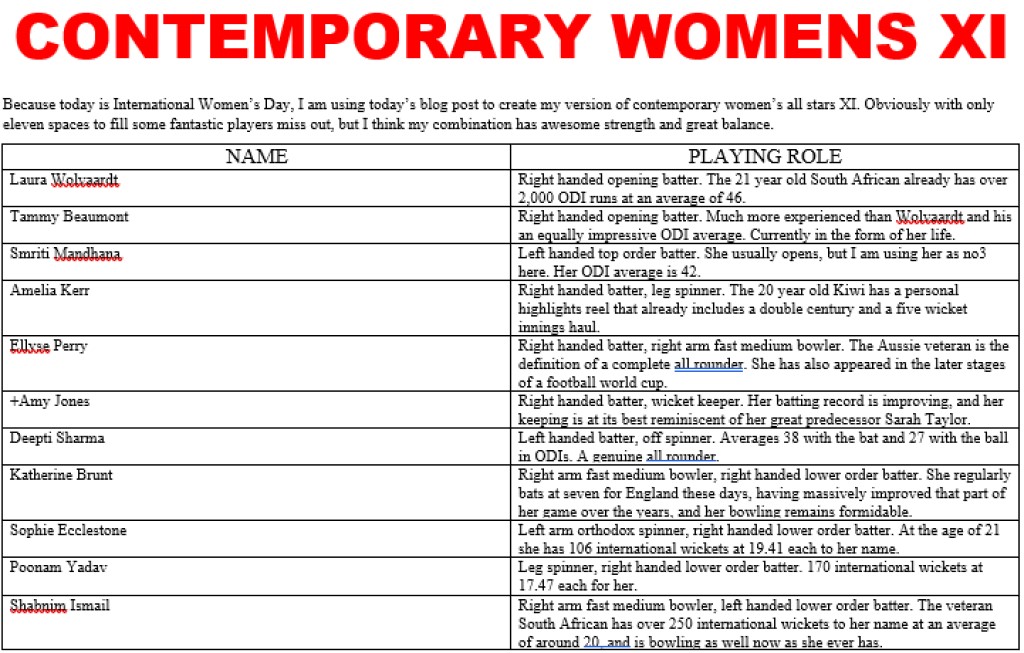
Today is International Women’s Day, and as a cricket fanatic I am commemorating it by selecting an XI comprising the finest talents from contemporary women’s cricket.

THE XI IN BATTING ORDER

  1. Laura Wolvaardt – right handed opening batter. The 21 year old South African already has over 2,000 ODI runs at an average of 46. She forms one half of an opening partnership that blends youth and experience and could confidently be expected to function superbly. A career best 149 and one other hundred indicate that she can go big.
  2. Tammy Beaumont – right handed opening batter. Just a few days short of her 30th birthday, the experienced England opener is in the form of her life at the moment, reflected by her status as the no1 ODI batter in women’s cricket. She averages a run per innings less than Wolvaardt, but has played rather more. Seven centuries in ODIs confirm her ability to go on and get big runs.
  3. Smriti Mandhana – left handed top order batter. She normally opens for India, but should also go well at number three. An ODI average of 42, including four centuries at that level indicates a player of high class, and she is also one of the most aesthetically pleasing of all international batters, especially when driving through the covers.
  4. Amelia Kerr – right handed batter, leg spinner. At the age of 20 she has a personal highlights reel at international level that includes a double century and a five wicket haul. In the one victory New Zealand recorded over England in their recent series she starred with 72 and four wickets.
  5. Ellyse Perry – right handed batter, right arm fast medium bowler. The 30 year old Aussie is the most complete all rounder in the game. Her eight test appearances have yielded her a batting average of 78 and a bowling average of 18, in 112 ODIs she averages 52 with the bat and 24 with the ball, while in 120 T20Is she averages 28 with the bat and 19 with the ball. She has also found time to feature in the later stages of a football world cup along the way – she is an all rounder in more than one sense!
  6. +Amy Jones – right handed batter, keeper. Her batting is improving, and her keeping at its best can be reminiscent of great predecessor in the role, Sarah Taylor.
  7. Deepti Sharma – left handed batter, off spinner. She averages 38 with the bat and 27 with the ball in ODIs.
  8. Katherine Brunt – right arm fast medium bowler, right handed lower order batter. She regularly bats seven for England, having massively improved that area of her game over the years, but it is her bowling that makes her worth her place.
  9. Sophie Ecclestone – left arm orthodox spinner, right handed lower order batter. 106 international wickets at less than 20 each and she is still only 21. For more detail on her please visit Inside Edge Cricket’s post on her produced specially for today as this post is, by clicking here.
  10. Poonam Yadav – leg spinner, right handed lower order batter. A complete contrast to her predecessor in the order, who is very tall, the leggie is the smallest member of the XI, and bowls very slow, high tossed spinners. She has many remarkable spells to her credit, perhaps the most outstanding being against Australia in a world T20 cup match, when the latter were seemingly cruising to victory when she was brought on and nailed on for defeat by the time she had bowled her four overs.
  11. Shabnim Ismail – right arm fast medium, left handed lower order batter. The veteran South African is bowling as well now as she ever as and will be an excellent new ball partner for Brunt. She had a superb tournament in the most recent running of the Women’s Big Bash League.

This team comprises a stellar top five, two of whom are genuine all rounders, a splendid keeper/batter at six, a genuine all rounder at seven, a top quality bowling all rounder at eight and three superb specialist bowlers. Brunt and Ismail with the new ball, Perry as third seamer if needed and spin quartet of Ecclestone, Yadav, Sharma and Kerr provides a bowling attack that should be comfortably able to meet all eventualities. Below is the team in infographic form:

LINK AND PHOTOGRAPHS

Just the one link before my usual sign off, a tweet which fits the international women’s day theme – it is a list of rape prevention tips, which rather than being the usual victim-blaming c**p such things usually are actually addresses those who need to be told – the men. It was posted by Theresa Drennan, and can be viewed it’s original niche by clicking here.

Now it is time for my latest photographs…

All Time XIs – One Cap Wonders v Nontest

Another variation on the ‘all time XI’ theme, this time ‘one cap wonders’ against ‘nontest stars’, with a bonus feature on women’s cricket and some photographs.

INTRODUCTION

It is time for another variation on the “All Time XI” theme. This one features an XI made up of one-cap wonders and and XI designated Nontest.

THE BRIEF

The ‘one cap wonders’ XI is fairly self explanatory – these people made precisely one appearance at the highest level for various reasons. The Nontest XI comprises players who either flourished before their country gained test status or belong to a country that has never enjoyed test status. Many of these players are making their debuts in this series of posts, but in some cases they have featured elsewhere. First be introduced, in most cases representing decisions that appear to make as much sense as cluttering up an already overloaded cricket calendar with a new competition featuring innings of 100 balls per team and a raft of rule changes are…

THE ONE CAP WONDERS XI

  1. Ken Eastwood – brought in for the final test of the 1970-1 Ashes series when the Australian selectors decided to replace Bill Lawry as skipper and without consulting their new skipper to be Ian Chappell decided that the old skipper could not play under the new. Eastwood, already 35 years of age, was like Bill Lawry a blocker by instinct, but he was nowhere near as good a batter, hence why he had not previously caught the selectors eyes. He is an example of what I consider the worst kind of ‘one cap wonder’ story – someone brought in at the end of a series who unless they do something very special is practically guaranteed never to get picked again. England in the 1980s and 1990s were continuously guilty of doing this, indeed Mike Brearley was only confirmed as skipper for the sixth test of the 1981 Ashes on the understanding that he would accept an ‘experimental selection’ for that game, with the series already decided, and I personally think that Mr Brearley should have said “If you are going to be experimental bring in your envisaged new skipper as well.”
  2. EM Grace – played in the first test on English soil in 1880, by when he was 40 years of age. He contributed 39 to opening stand of 91 with his brother WG in the first innings. He had toured Australia with an amateur party in 1863-4. He should have played in the 1882 test that inaugurated The Ashes, rather than AN ‘Monkey’ Hornby (the Hornby of “my Hornby and my Barlow, long ago”), who was as much Spofforth’s bunny as another Lancashire opener, Atherton, would be McGrath’s bunny in the later 1990s. Hornby’s bizarre tampering with the England batting order in the final innings contributed to the defeat – CT Studd, with two centuries against the Aussies to his name already that season was held back, getting progressively more nervous, until no10, and ended up 0 not out having not faced a ball! In addition to his aggressive top order batting EM Grace was a fearless close fielder (he once caught AE Stoddart, a renowned hitter, while standing so close in at point that he was able to pass the ball to the wicket keeper without moving his feet) and had moments with his bowling, which included lobs (he once dislodged renowned stonewaller Harry Jupp by landing a steepler directly onto that worthy’s bails).
  3. Jack MacBryan – the only capped test cricketer who never batted, bowled or fielded at that level – the match was ruined by rain, he was waiting for a bat when the weather made its final intervention and he was never called up again.
  4. Andy Ganteaume – the West Indian right handed batter suffered from a doctrinaire interpretation of the situation – he was selected in place of an injured player, scored 112 in his only innings, and then the injured player returned. Ganteaume thus had a test average of 112.
  5. Rodney Redmond – the Kiwi left hander is his country’s equivalent of Ganteaume – one test match in which he made 107 and 56, a record match aggregate for a one cap wonder.
  6. GF Grace – in his case the selectors cannot be blamed, since by the time of England’s next game after his solitary cap he was in his grave. However, he rated second only to his brother WG as an attacking batter at the time, had his moments with the ball and was a brilliant fielder.
  7. Arnold Warren – the Derbyshire fast bowler who was also a good enough bat to have a first class hundred was called up for one match in the 1909 Ashes, collecting 6-113 overall, including 5-57 in one innings.
  8. +Leslie Gay – when he was called up to keep wicket for England at the SCG in 1894 Gay completed a curious double – he had also kept goal for England at football. His performance with the wicket keeper’s gloves was not a distinguished one, and in England’s second innings 437 he was the only person not to reach double figures (bowled off his pads by a full toss with his score on 4). Nonetheless, England won the game (it was the ‘follow on’ match at the start of that series).
  9. Jack Durston – the giant Middlesex fast bowler was among the many called up by England during the 1921 Ashes (30 players appeared in home colours that series), and match figures of 5-136 suggest he was unlucky to be dropped, even if you do not subscribe to my opinion that ‘one cap wonders’ in general; say more about the inadequacies of the selectors than they do about the players.
  10. Charlie Parker – the Gloucestershire left arm spinner took more first class wickets than anyone else bar Rhodes (Yorkhsire, SLA) and Freeman (Kent, LS) and yet had to make do with one test cap. He was named in the XII for Leeds in 1926 but was the player left out, and skipper Carr then put Australia in, saw Bardsley out to the first ball of the game and then dropped a sitter from Macartney in the same over, and watched Macartney reach 100 by lunch time and ultimately 151 at a run a minute.
  11. Charles ‘Father’ Marriott – the Lancashire and Kent leg spinner and genuine no11 was called up against the West Indies in 1933, took 11-96 in the match and was never picked again.

Our assemblage of ‘one cap wonders’ has a strong looking top five, an all rounder at six, some good bowlers and a wicket keeper. It is now time to meet the opposition…

NONTEST STARS XI

  1. Percy Tarilton – one of the pair considered by many, including CLR James, to be the forefathers of West Indian batting (the other, George Challenor, did get to play test cricket, but only when well past his best).
  2. Mahadevan Sathasivam – reckoned the first great batter to be produced by the island then known as Ceylon, now Sri Lanka. He only played 11 first class matches, recording an average of 41 in those games with a best score of 215. Mike Marqusee in “War Minus The Shooting”, his account of the 1996 World Cup, tells some good stories about ‘Satha’ as he was known.
  3. William ‘Silver Billy’ Beldham – two centuries before Graham Thorpe this Farnham native was rated the best batter around. At a time when centuries at any level were rare (the first ever documented individual century was scored by John Minshull in 1769) Beldham amassed no fewer than three in matches considered to have been first class. He lived, as befits a character from the game;s old testament, to a great age, 96 to be precise, and in equally classic old testament fashion became the father of sons and daughters (no fewer than 39 of them, 11 with his first wife and 28 with his second!) According to one witness, James Pycroft, his speciality shot was the cut, which if Pycroft is even close to accurate must have rivalled the Robin Smith version for ferocity.
  4. Charles Ollivierre – the right handed batter came to England with the 1900 West Indians and stayed to play for Derbyshire.
  5. Clive Inman – among the first Ceylonese to be a regular in the County Championship, for Leicestershire and Derbyshire  (Laddie Outschoorn of Worcestershire, a near contemporary, was also from that island).
  6. Duncan Fletcher – A fine all rounder for Zimbabwe, batting left handed and bowling right arm fast medium. He was just too old to get to play test cricket, his playing highlight being 69 and 4-42 v Australia at the 1983 World Cup. After his playing days he coached, first at Glamorgan and then with England. He was in charge for the 2005 Ashes triumph, and although he overused the provisions of central contracts, effectively using them as a blanket ban on their holders playing county cricket overall he did a splendid job for England, the first of two Zimbabweans who did not say much to do so, the other being Andrew Flower who guided England to the top of the test match rankings, a mere 12 years after they had been bottom thereof. The story of England’s renaissance in the early 2000s spearheaded as it was by these two Zimbabweans is well told in Steve James’ (who experience Fletcher the coach in his Glamorgan playing days) “The Plan”.
  7. +Lebrun Constantine – West Indian middle order batter and wicket keeper. He made the 1906 tour party to England only after fans raised a subscription to pay for his passage. His son Learie did get to play test cricket as a brilliant and dashing all rounder and went on to achieve considerable success in the field of human rights, ultimately becoming Baron Constantine of Nelson and Maraval (Nelson was the Lnacashire town for whom he played league cricket, and where he settled, Maraval the place in Trinidad from which he hailed).
  8. Bart King – the USian (acknowledgement to Kiwi blogger Heather Hastie for this handy term) fast bowler was the original ‘King of Swing’ as I mentioned in my ‘non-cricketing birthplaces XI’, and took his wickets at a mere 15 a piece. He made four tours of England with The Philadelphians, on the last of which he took 87 wickets in 10 first class appearances.
  9. *Palwankar Baloo – those who saw my India post will already know that I was impressed enough by this mans achievements in the matches he did get to play to name him in my all-time India XI. It will come as no surprise that I chosen to name a spin bowler (left arm orthodox in this case) as captain, a distinction he was denied in life due to caste prejudice.
  10. George John – CLR James for one insisted that this man was one of the all time great fast bowlers. The West Indies gained test status too late for him to benefit (although his slightly younger regular bowling partner George Francis did play test cricket near the end of his career).
  11. Sandeep Lamichhane – the Nepalese leg spinner (see my ‘100 cricketers series‘, especially this post) has a magnificent record in limited overs cricket. Any county signing him as an overseas player would get a round of applause from me (he is still not yet 20), although I would not recommend an effort to fast track his country to the top table – Bangladesh were promoted at the wrong time and have suffered in consequence, Ireland’s promotion came just as a gifted generation were fading from the scene and has not worked out that well for them, though Afghanistan have benefitted from their promotion. Lamichhane the county overseas star could be one of the great stories of post Covid-19 cricket – I truly believe that if a county could secure his services it would be a case of ‘who dares wins’.

This team has a fine looking top five, an all rounder at six, a keeper who can bat and spectacular quartet of bowlers.

THE CONTEST

While according full respect to the ‘one cap wonders’ I would confidently expect the ‘Nontest Stars’ to dominate proceedings – the lower half of the ‘one cap wonders’ order is unlikely to score many runs, and King and John would seem to have the edge on Warren and Durston as new ball bowlers, while I would also expect Lamichhane and Baloo to compare decently with Marriott and Parker. Allowing for the uncertainties of cricket I will settle for predicting a series score of 4-1 to the Nontest Stars (no McGrath style 5-0 predictions for me!). The acknowledgement of the Nontest Stars in this post sets up a nice bonus feature.

FOR MORE WOMEN’S TEST MATCHES

It is time to attend to half of the potential pool of cricketers (see this post for nore on my opinions on women playing alongside the men), the women. At the moment, the women’s game is thriving, but save for one match every two years between the two oldest foes it is exclusively played over limited overs. I would like to see much more women’s test cricket played, involving many more countries. Here are just a few who will almost certainly miss out on what cna confidently predicted to be successful test careers:

  • Smriti Mandhana – the attack minded Indian opener fares better in ODIs than in T20s and it is my reckoning that she would be better still in tests.
  • Laura Wolvaardt – the 20 year old South African is a superb technician with the bat, fares considerably better in ODIs than T20s, and given the chance to open in test matches (her natural position in any batting order) she could well establish an Agarwal-like record.
  • Deepti Sharma – the Indian off spinning all rounder is another whose ODI record far outweighs her T20 record, and whose fundamentally correct batting approach seems to have all the right ingredients for long form cricket, while spinners usually benefit from being able to bowl more overs.
  • Shabnim Ismail – the South African quick bowler is impressive in limited overs cricket, and given the opportunity in test cricket she could be devastating.
  • Poonam Yadav – the diminutive Indian leg spinner is fabulous in limited overs cricket, and is a huge wicket taker, which latter suggests that she would make excellent use of the opportunity to bowl for long spells.

Also of course, if long form cricket were a regular feature of the women’s game there would be more who would be well suited to it.

PHOTOGRAPHS

Our two teams for today’s contest have strutted their stuff, and it remains only for me to apply my usual sign off…

P1320137 (2)P1320138 (2)P1320139 (2)P1320144 (2)

P1320146 (2)
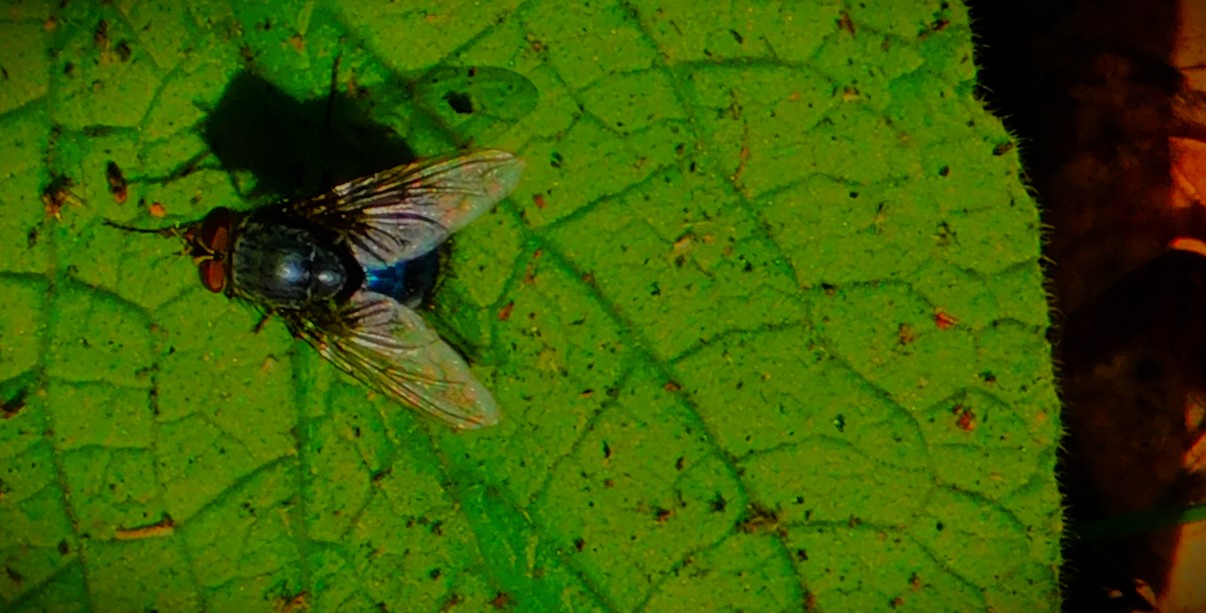
A fly resting on top of my back gate.

P1320149 (2)P1320150 (2)P1320152 (2)P1320153 (2)P1320154 (2)P1320155 (2)P1320156 (2)P1320157 (2)P1320158 (2)P1320160 (2)P1320161 (2)

P1320166 (2)
My back gate has also been alimed as a hime by one of our eight legged friends (two pics).

P1320167 (2)P1320168 (2)

OC v NTS
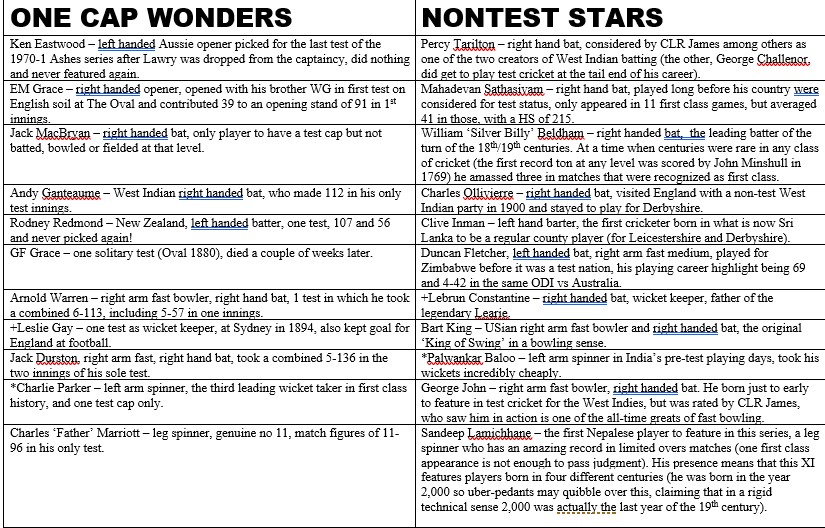
The two teams in tabulated form with abbreviated comments.

A Tale of Two Cricket Matches

An account of two recent cricket matches involving England and South Africa, first the England men’s humiliation at Trent Bridge, and then the nailbiter of a Women’s World Cup semi-final at Bristol.

INTRODUCTION

Both of the matches of my title were cricket matches between England and South Africa. The first was the test match between the men’s teams, and the second was the women’s world cup semi-final. A couple of notes about links in this piece:

  1. All cricket related links are to cricinfo, and…

  2. Some links are in red – these are to video footage.

IT WAS THE WORST OF TIMES

England had won the first test match of the series handily, with Joe Root scoring 190 in his first innings as England captain and Moeen Ali being player of the match for his first inning 87 and match haul of 10-112. Among England’s male players only Ian Botham with 114 not out and 13-106 v India in 1979 has topped Ali’s all-round haul in a single game (Enid Bakewell was the first player of either sex to combine a match aggregate of 100 runs with a haul of 10 or more wickets, hence the earlier caveat). 

Thus at Trent Bridge England should have been strong favourites. South Africa won the toss, batted first and made 335 in their first innings and England by bad batting handed South Africa a lead of 130, South Africa extended this to 473 with two days to play before sending England back in, messrs Elgar and Amla having demonstrated how to make runs on this pitch, each batting a long time. England’s second innings was quite simply shambolic, with batter after batter handing their wickets away. Four wickets down by lunch on the penultimate day it worse afterwards, with England being all out for 133 at approsimately 3PM. South Africa, having given themselves two days to dismiss England a second time had required less than two full sessions and were victors be 340 runs. 

ENGLAND’S MISTAKES

The first mistake England made was with the selection of the side. According to the powers that be Moeen Ali is happier as a second spinner than as either a sole spinner or as first spinner. However I find it hard to believe that even he could really consider himself no2 to Liam Dawson. Dawson is an ill thought out selection reminiscent of the dark days of the 1990s. For his county he averages in the low thirties with the bat and the high thirties with the ball, so even at that level he comes out as clearly not good enough in either department to warrant selection – the reverse of the true all-rounder. If a pitch warrants two spinners (and no Trent Bridge pitch in my lifetime ever has) the other spinner should be a genuine front-line option such as Dominic Bess (first class bowling average 19.83 per wicket – what are you waiting for selectors?). The other logical alternative would have been to bring in an extra batter (there are any number of possibilities) to strengthen this department. England’s batting in both innings smacked of panic. Other than Root whose 78 in the first innings was a gem and Cook who played well for a time in the second no England batter is entitled to be other than embarrassed by the way they played in this match. The scorecard, in all it’s gory detail, can be viewed here.

IT WAS THE BEST OF TIMES

On what should have been the final day of the men’s test match but for England’s spinelessness the women’s teams convened at Bristol for a world-cup semi-final. The final will be played at Lord’s and is already sold out. South Africa batted first and were restricted to 218-6 from their overs, Mignon Du Preez top scoring with 76 not out, and Laura Wolvaardt making 66. South Africa bowled better than they had batted, and the outcome remained in doubt right to the end. Anya Shrubsole who had earlier finished with 1-33 from her 10 overs settled things by hitting her first ball, the third-last possible ball of the match through the covers for four. Sarah Taylor’s 54 and a brilliant wicket-keeping performance highlighted by the spectacular stumping of Trisha Chetty off the bowling of Natalie Sciver earned her the player of the match award. Sciver incidentally is the pioneer of a shot that in honour of her first name and the f**tballing term ‘nutmeg’ commentator Charles Dagnall has dubbed the ‘Natmeg’, one example of which she played in this match. Video highlights of this amazing match can be seen here (runs for just under five minutes), while the scorecard can be viewed here.

THE ROLE OF EXTRAS

To set the scene for the rest of this section here are the extras (a cricket term for runs scored not off the bat) from both innings:

When South Africa batted: 

Extras (w 4) 4

When England batted

Extras (b 5, w 17, nb 3) 25

A note on the designations within extras: Byes (b) stands for runs scored when there is no contact made with the ball but either the batters are able to take runs, or the ball goes to the boundary unimpeded, legbyes (lb), of which there were none in this match, are runs scored when the ball hits the pad but not the bat. Wides (w) are deliveries that are too wide for the batter to be able to play, and no-balls are deliveries that are ruled illegal for some other infraction (bowler overstepping the crease, high full-toss etc). The 21 run difference between the two tallies shown above is of major significance given that England reached the target with just two balls to spare, and there is yet a further point.

WIDES AND NO-BALLS – WHAT APPEARS IN PRINT DOES NOT TELL THE FULL STORY OF HOW EXPENSIVE THEY ARE

England bowled four wides in the match, South Africa 17 and three no-balls. That is a 16-run difference, but the actual costs are likely be even more different because:

  • When a delivery is called wide, as well as incurring a one-run penalty an extra delivery must be bowled to replace it. Thus a wide costs the original penalty, plus possible extras (if it goes unimpeded to the boundary it costs 5, the original 1, plus four foir the boundary) plus any runs scored off the seventh delivery of the over, which the bowler had they been disciplined would not have had to bowl
  • When a delivery is called a no-ball, the batter can still score off it, the delivery immediately following it is designated a ‘free-hit’, meaning that the batter cannot be dismissed off it, and as with a wide an extra delivery must be bowled to replace it. Thus a no-ball actually costs the original penalty, any runs hit of that delivery, the lack of a wicket-taking opportunity on the next delivery and any runs of the seventh delivery of the over (which would otherwise not have needed to be bowled). 

Therefore the discrepancy between the sides in terms of wides and no-balls is probably much greater than shown on the score-card, and this in a very close match. Sarah Taylor certainly deserved her player of the match award, but the much tighter discipline shown by England’s bowlers than their South African counterparts was also crucial to the result.

PHOTOGRAPHS

After over 1,100 words those of you are still with me deserve some pictures, so here we are:

Bee1Bee2

Puppet theatre
This puppet theatre is in town for the Lynn Festival

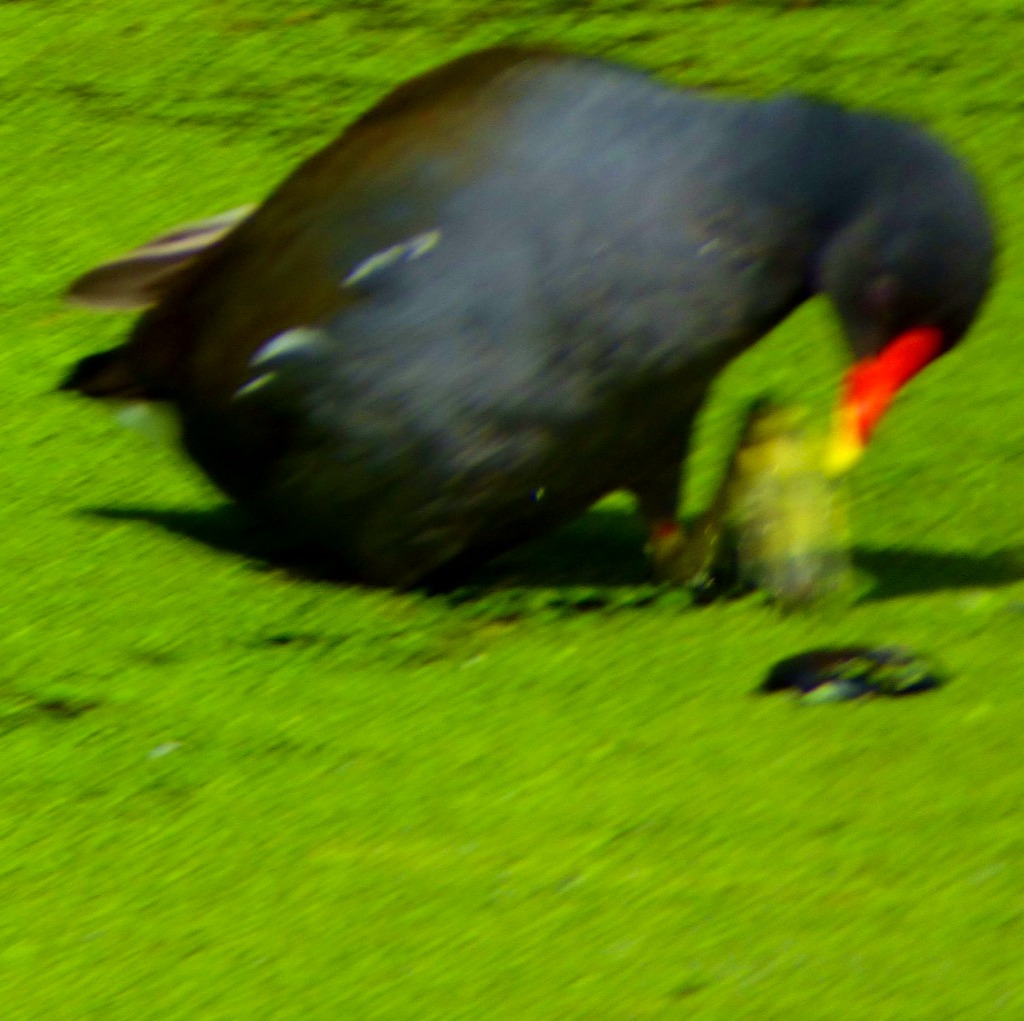
Purfleet1Moorhen chick

Greyfriars
Greyfriars Tower

Library
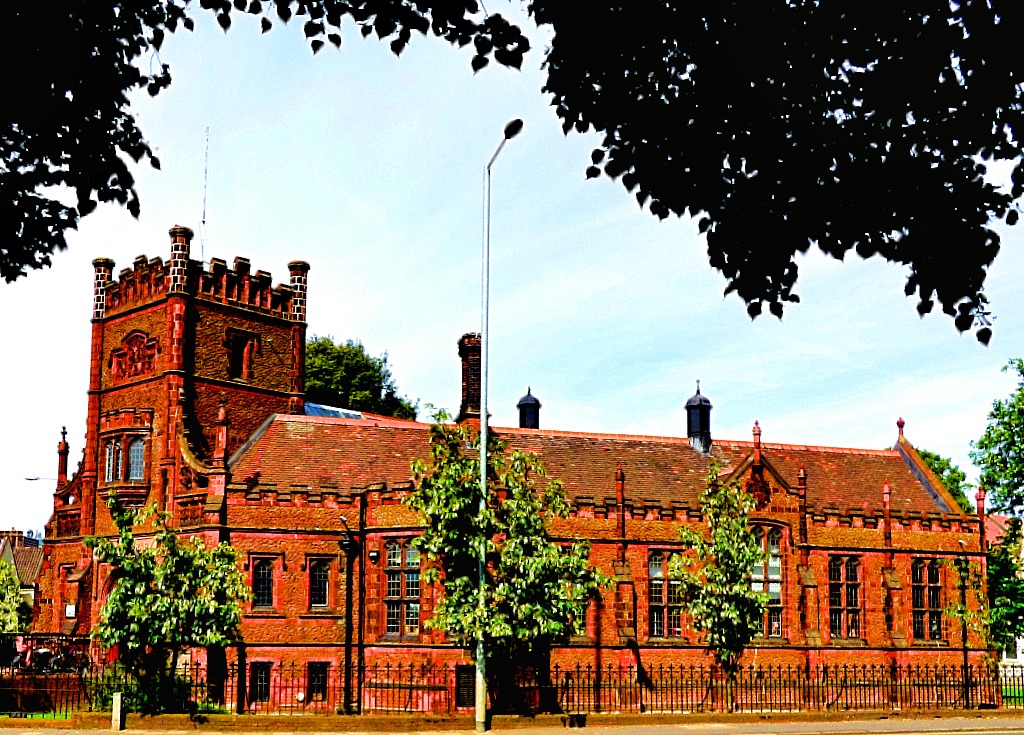
King’s Lynn library

Squirrel

Red Mount Chapel
The Red Mount Chapel

P1030346
The unedited Red Mount chapel picture.

Guanock Gate
The Guanock Gate

Moorhen and algaeStationPollinator

CH1
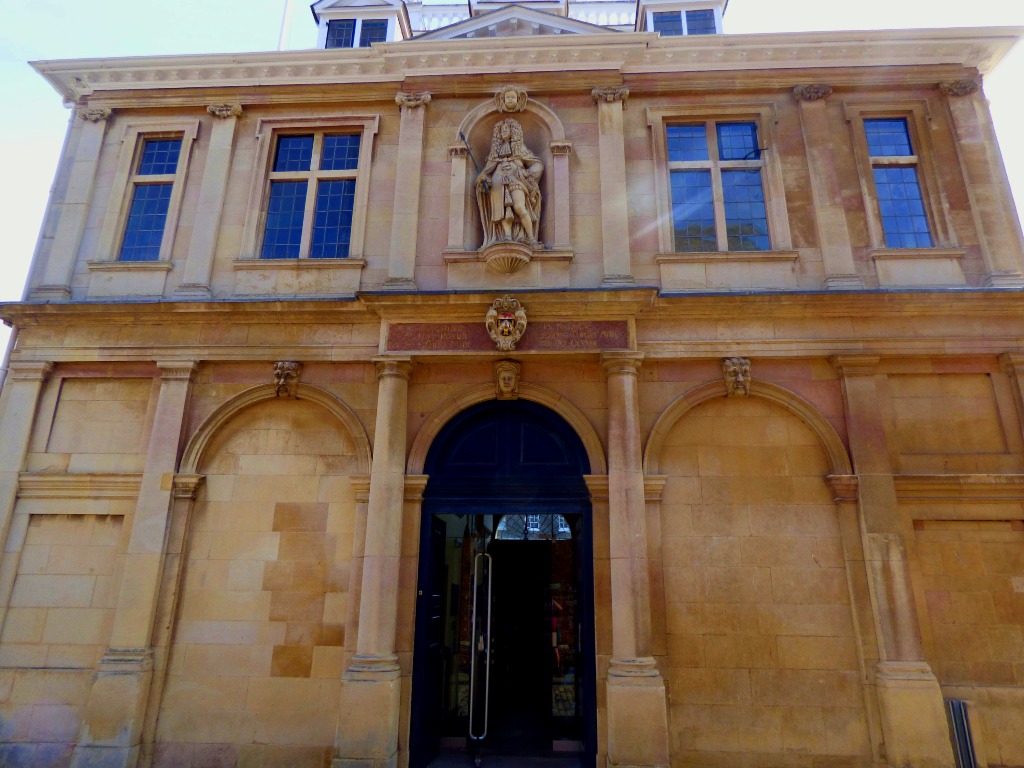
The first of three pictures featuring the Custom House

CH2CH3Boat1Boat2Gulls

West Lynn Church
West Lynn Church

Bee3
Just as a bee pic was worthy start to this series of photos, another bee pic is a worthy finish to it.