A look back at last night’s carnage at Old Trafford and a photo gallery.
The ODI series between the England and South Africa men’s teams ended with a record breaking win for England. The T20I series between the same two teams started with a narrow win for South Africa in the first match. The second match took place last night…
A REMARKABLE BLITZ
England batted first, and they got off to a flier. Jos Buttler reached 50 off 18 balls, Phil Salt took only one ball longer. The hundred was on the board before the six over Power Play was done. Buttler was first out, for 83 off 30 balls. Salt went on to a century, his fourth in T20 internationals, putting him behind only Rohit Sharma (five) on the all time list. Salt reached that mark off his 39th ball, an England all time record. The runs continued to amass at a ridiculous rate, and in the final over England became the first side ever to take a top tier (i.e. test playing) nation for 300 in a T20I. They ended up with a score of 304-2, pg which Salt’s share was 141 not out from 60 balls. South Africa had swelled the number of balls England actually faced by bowling a number of wides and no-balls. Bjorn Fortuin, a left arm spin bowling all rounder who had replaced Corbin Bosch, a right arm medium pace bowling all rounder, in the XI fared as well as anyone, taking 2-52 from his four overs. Kagiso Rabada, an all time great of the game, was left nursing figures of 4-0-70-0. With that kind of score on the board there could only be one result, and in the end the final margin was 146 runs. Sam Curran had 2-11 from two overs, varying his pace superbly (one of his slower balls was clocked at 47mph, similar to the stock pace in her playing days of world cup winning left arm spinner turned commentator Alex Hartley), and at the end, with the result long since confirmed (at the end of the 16th over South Africa needed 147 from four overs, and were down to tail enders only) Will Jacks picked up 2-2 from a single over of off spin.
An account of the second ODI between West Indies and England, which took place yesterday. Also a large photo gallery.
This post will tell the story of the second ODI between West Indies and England which took place yesterday afternoon and evening UK time (morning and afternoon Antigua time) at North Sound. Before I get to the main body of the post I have small chore to perform:
A CORRECTION TO MY PREVIOUS POST
In my previous post I named Jacob Bethell among England’s debutants in that match. This was not so – he had played five previous matches. The actual debutant I should have named among the four but did not was Jordan Cox, a top order batter and occasional keeper who started his career with Kent and now plays for Essex. In keeping with my policy on such matters I have ensured that this correction cannot be missed.
AN ODD BALANCE
John Turner came in for his international debut, having been in a number of England squads, without quite getting a cap. This meant that England had in effect seven multi-dimensional cricketers (although Cox played purely as a batter he is an occasional keeper) and four bowlers. As any reader of my all time XIs will be aware I am an ardent advocate of sides having a wide range of bowling options if such is possible. However, nine bowling options of varying degrees of seriousness does seem to be overdoing it a touch, especially given that it left the side with a fragile batting order.
LOTS OF OPTIONS, NO PLAN
In the course of the 50 overs of the West Indies innings England skipper Livingstone used all nine of his genuine bowling options. There was no obvious sign of a plan in his usage of his bowlers, and he certainly overused his own mixed spin – 7-0-56-1 is testament to that. West Indies tallied 328 from their 50 overs, a record score for North Sound.
A CAPTAIN’S INNINGS
Phil Salt started well for England. Unfortunately Will Jacks and Jordan Cox both went cheaply. Bethell and Salt had a good partnership, before Salt was dismissed for 59 to make it 107-3. Livingstone now joined Bethell. Bethell joined Salt in reaching 50, but shortly thereafter was fourth out at 160. That brought Sam Curran to the crease, being treated by England as a genuine all rounder, but under suspicion in some quarters of actually not being up to the job in either department. With only Mousley of significance as batter among those still to come the onus was on Livingstone and Curran to do most of the heavy lifting. Livingstone and Curran batted sensibly together, and were still in residence at the end of the 40th over. The target at that point was precisely 100, a rate normally considered achievable in modern limited overs cricket. It was now that Livingstone changed gears. The first bowlers to feel the effects of this were spinners Chase and Motie, but the most dramatic sufferers were two of the quicks, Shamar Joseph and Jayden Seales, who each visibly wilted under the Livingstone onslaught. Both bowled wides as well as full tosses (each were trying and failing to nail a yorker), and Livingstone sent two balls clean out of the ground and another into a concrete fixture in one of the stands. Curran, playing a valuable supporting role, brought up a 50 that though in the shadow of Livingstone’s pyrotechnics still came at a run a ball. He was fifth out at exactly 300, ending a match turning stand of 140 with Livingstone. There were 4.3 overs remaining as Mousley joined Livingstone, with the latter on the verge of an extraordinary century. Livingstone reached the landmark, his maiden ODI century, off just 77 balls, and continued on his merry way. He was now in absolutely rampant mood, and precisely two overs after the dismissal of Curran, so with England still having 2.3 overs to spare, he scored the winning run, taking his own score to 124 not out off 85 balls. In total he hit nine sixes and five fours in this spectacular take down of the West Indies.
LOOKING AHEAD
This result means that the sides will head to Barbados with the series locked at 1-1. The West Indies players would of course have preferred to settle the series in this match, but I suspect their board will not be entirely unhappy that the series is level heading to Bridgetown. Livingstone’s amazing innings and the various supporting roles played by Salt, Bethell and Curran should not be allowed to paper over some rather obvious cracks. The England squad is fundamentally unbalanced, and for most of yesterday’s match they looked second best, as they did for the entirety of the first match. I congratulate England on the win, but they do need to look at the balance of future squads, and deepen that batting order. If Livingstone had got out at any stage of overs 41-44 inclusive, as anyone batting like that easily could, it would have been pretty much settled in West Indies favour – it was a much closer thing than the ultimate 2.3 overs to spare suggests.
A look back at the first of the T20 Blast quarterfinals, between Surrey and Durham last night, and a photo gallery.
Yesterday evening saw the first of the T20 Vitality Blast quarter-finals, with Surrey playing against Durham at The Oval. This post looks at how the match unfolded.
THE DURHAM INNINGS
Surrey won the toss and decided to bowl. Graham Clark, whose brother Jordan was playing for Surrey, was out in the first over, without scoring. Durham continued to fare poorly in the early stages, and when their fourth wicket fell with the score at 36 an early finish looked likely. However a combination of some good batting and some very poor death bowling revived Durham’s fortunes to the extent that they had 162 to defend. What should have been the last ball of the innings was called no-ball, and then the extra delivery was smashed for four. This was still a poorish score for The Oval, where 180 is about par.
THE SURREY CHASE
Surrey did not have things all their own way in the chase. However, the fourth wicket pair of Dominic Sibley and Sam Curran shared an excellent partnership. Sibley was eventually out for an excellent 67, which included bringing up his 50 with a reverse scoop for six. That brought Tom Curran in to join brother Sam for the closing stages. By this point the question was how much time would Surrey have to spare, and in the end it proved to be precisely two overs.
An account of the concluding ODI between India and England, plus some thoughts on over rates and some photographs.
This post is devoted to the events of yesterday’s final and deciding ODI between India and England.
THE PRELIMINARIES
England decided to retain both Malan and Livingstone, so Billings missed out. They also opted to replace Tom Curran with Mark Wood, a decision that would have been indisputable had Wood been fully fit, but it rapidly became clear that he was not. India replaced Kuldeep Yadav with T Natarajan, changing the balance of their bowling attack. Jos Buttler won the toss and decided to bowl.
THE INDIAN INNINGS
India got off to a flying start, with Sam Curran and Reece Topley both somewhat wayward. Mark Wood bowled fast in spite of obviously not being well. It took the arrival of the spinners Adil Rashid and Moeen Ali at the bowling crease to stem the flow at all. Rashid accounted for both openers, one bowled and one caught and bowled, in successive overs, while Ali clean bowled Virat Kohli. Liam Livingstone had made his first contribution to the game with a fine piece of fielding out on the boundary that saved two runs. KL Rahul and Rishabh Pant maintained the momentum and for a while it looked like something close to 400 was on for India, but then Livingstone got Rahul, as the batter could only put a filthy full toss straight into the hands of a fielder. Thereafter England picked up wickets regularly, and India were all out for 329 in the 49th over. At that stage it looked anyone’s game, with England possibly favourites.
THE ENGLAND REPLY
For once neither Roy nor Bairstow managed a substantial score, and Stokes and Buttler both also went fairly cheaply. At that stage it was 95-4 and England looked in deep trouble. Livingstone and Malan batted well however and at the end of the 20th England were 132-4, two fifths of the way to the target after two fifths of the overs and having lost two fifths of their wickets. Livingstone was fifth out, having batted well, and then Malan having completed a fine 50 was sixth to go. That brought Sam Curran in join Moeen Ali, with England in deep trouble. At the end of the 30th England were 196-6. Moeen Ali’s departure seemed to be the final nail, but Rashid provided Curran support, and then extraordinarily, Mark Wood, for all that he was obviously not well, continued the support work, while Curran was playing a very special innings. Wood was ninth out, but even Topley, the most genuine of genuine number 11s, did his bit, and at the end of the 49th England were 316-9 needing 14 to win, and crucially Curran was at the strikers end. He did his best, but the task was just too much, and England were beaten by seven runs, with Curran 95 not out off 83 balls.
PLAYER OF THE MATCH
Sam Curran was named Player of the Match for his fighting knock, a decision which Indian skipper Kohli disapproved of. Shardul Thakur with 30 and four wickets was the obvious alternative candidate, and normally I would say that this award should go to someone from the winning side. However, at the point at which Curran came in to bat England were staring an absolute hammering in the face, with a three figure margin looking likely, and Curran turned that around to the extent that the game ended as a nail biter. Also most of Curran’s batting was done with the support of a no9, a sick no10 and a n011. Thus on this occasion I think the decision to give the award to someone from the losing side was justified, although I would not have quarrelled with the award going to Thakur.
OVER RATES
This match was conducted at a tempo that to borrow from the world of music could only fairly be described as ‘adagio molto’ – very slow. 100 overs occupied eight and a quarter hours of actual playing time, with England being in the field for three hours fifty minutes and India for four hours twenty five minutes. This leads me to revisit an old idea of mine in slightly revised form: based on the 15 overs per hour officially required in test matches I would allocate each team a fixed time slot to bowl their overs of three hours and 20 minutes, and for each over they have not bowled in that period the batting team get awarded penalty runs at a rate of ten per over or double the scoring rate, whichever is the greater. Obviously umpires would have to watch out for batters deliberately wasting time in the hope of securing penalty runs. If this was adopted there might be one ODI series/ tournament in which extras had a Bradmanesque aggregate but I reckon over rates would speed up pretty quickly. Here is a very famous slow tempo piece of music, Albinoni’s “Adagio for Organ and Strings”, from youtube:
A look at day three in Galle and a couple of issues raised therein.
This post looks at day three of Sri Lanka v England and at a couple of issues the arise from today’s play.
ROOT VS EMBULDENIYA
Although others contributed a fascinating third day in Galle was dominated by two players. Joe Root of England confirmed that he has rediscovered the art of going seriously big, as it took a run out in the day;s last over to dislodge him, by which time he had moved to 186. The other overarching performer was Sri Lanka’s left arm spinning find Lasith Embuldeniya who took his haul for the innings to seven wickets, Other than the impertubable England skipper the only person to play Embuldeniya with any great comfort was Jos Buttler who made a decent half century. The other significant batting effort on the day came from Dominic Bess, who came in with England staring down the barrel of a three-figure deficit on first innings with Sri Lanka to bat last. By the time he was dismissed the difference between the sides was under 50, and England were looking in the hunt. Unfortunately the odd looking decision to send the flamboyant Wood in ahead of the adhesive Leach with the close of play approaching did not work out well, and then there was the freakish run out of Root which ended the day, leaving England 339-9 in reply to Sri Lanka’s 381, with Leach and Broad to resume batting tomorrow.
ENGLAND’S BALANCING PROBLEMS ABSENT STOKES
Sam Curran looks a place too high in the order as a test match number seven, and the reason he is there is because on flat wickets England need to equip themselves with plenty of bowling options, and with Ben Stokes not available for this series they did not have their great x-factor player to turn to, which left them to choose between lengthening the batting or the bowling. Rightly in view of the conditions in which this series is happening they opted for the latter. There is strong evidence to support the view that if having to choose between batting and bowling strength the bowling strength is more important: Surrey won seven county championships in the 1950s with an average batting side that possessed a stellar bowling attack, Yorkshire won seven championships in the 1930s, and again the key ingredient of their success was a devastating bowling unit, spearheaded by Bill Bowes and Hedley Verity. Finally, in the first decade of the 1900s Yorkshire won five titles, although only one of their batters, David Denton, was good enough to be chosen for England purely on batting skill in that decade, with the key again being an awesome line up of bowlers, headed by the Huddersfield area trio of Hirst, Rhodes and Haigh. Sussex in that same decade had a very deep batting line up, but limited bowling resources, and never came seriously close to winning the title. However, a batting line up with Curran at seven does necessitate those at the top coming to the party and so far this series only the skipper has done so – without him England would undoubtedly be staring a 0-2 defeat in the face rather than being favourites to win the series.
THE ROLE OF DOMINIC BESS
England are desperate for Dominic Bess to establish himself as a test class spinner, because he is a splendid fielder and a capable bat as well. Currently in first class cricket he averages 23.77 with the bat and 29.41 with the ball (137 wickets in 48 matches at that level). In test cricket he averages 24.77 with the bat and 33.37 with the ball (27 wickets in 11 matches). The bowling average and the low wickets/matches ratio – just below 2.5 – both point to the issue: as much he offers outside his main role, barring one good series against South Africa he has yet to deliver in his main role, with the ball.
Today he contributed 32, and looked like he was handling the bowling as well as any of his team mates save Root. It may be that ultimately the way forward for Bess as an international cricketer is to concentrate more on his batting, and aim to be picked as batter who bowls, rather than a bowler who bats. Garry Sobers and Steven Smith were both originally selected at test level as spinners (Sobers was at no9 on test debut, Smith at no8) and ended up making their biggest marks with the bat, although Sobers continued to bowl, whereas Smith has all but given up that aspect of the game. Going back further, Wilfred Rhodes was the best spinner in the world early in his career, and batted no11 for England, and went on to tour Australia in 1911-12 as one of the designated opening batters, hardly bowling at all (he would pick up his bowling after World War 1, and return to the top in that department, finishing his career as once more a specialist bowler, as his sight declined – he would go blind during his retirement – and he could no longer bat). At the moment Bess is always likely to get the nod if England want two front line spinners, and the main in more danger of losing out is Leach, who bowled 36 overs in the first innings here without causing any great problems for the batters, but do not be surprised to see Bess moving up the order in the not distant future, as he seeks to find a more secure niche than ‘bits and pieces guy who gets selected when two spinners are needed’.
PHOTOGRAPHS
Today’s gallery starts with seven pictures on the theme of ‘red sky in the morning, shepherd’s warning’, although today’s weather in King’s Lynn, while far from pleasant has not really borne out that saying:
A look at the two test matches currently in progress, and at Joe Root’s status as an England batter.
There are two test matches in progress at the moment, with overlapping playing hours. This post looks at both.
GALLE: ENGLAND ON TOP
When bad light brought a slightly early end to day three in Galle (due to the old fort that adjoins the ground Galle stadium cannot have floodlights – the fort is a World Heritage Site, so my usual gripe re bad light and test matches does not apply here) Sri Lanka were beginning to offer resistance, but were coming from a very long way behind.
Day Two, also truncated by the weather, saw England establish complete control. Bairstow failed to add to his overnight 47, but debutant Dan Lawrence made a fine 73, Buttler was looking comfortable by the close, and Root had a blemish free 168 not out to his credit. England were 320-4 and looking at all sorts of history if things continued the same way.
Day Three saw the remaining England wickets add just a further 101, Root being last out for a splendid 228. The only chance he offered in this innings was the one that was taken at deep midwicket to end it. Embuldeniya had every right to feel more than a little frustrated, a fine effort with the ball leaving him with figures of 3-176 while the much less impressive Perera had four wickets in the end. Root’s innings took his test aggregate past 8,000, in fewer innings than any England batter save Pietersen (KP 176, Root 178). It now stands at 8,059, meaning that he needs a further 56 to become the all-time leading test run scorer among Yorkshiremen. Inspired by the rapid fall of England’s last six wickets Sri Lanka then showed some fight with the bat, helped it must be said by an unimpressive bowling display from England. Bess could not get his length right, Leach was unlucky, there was little for the quicker bowlers, though Curran picked up a wicket when a rank long hop sailed straight to deep third man. Root tried a few overs but unaccountably Lawrence was not given a go. Mendis finally got off the mark after four successive ducks, a sequence known in the trade as an ‘Audi’, thereby avoiding the ‘Olympic’, but fell just before the close. Sri Lanka sent Embuldeniya in as nightwatchman, and the light closed in quick enough that he was still there at stumps. Scores so far: Sri Lanka 135 and 156-2, England 421, SL need 130 more to avoid the innings defeat.
England are of course heavy favourites, but that should not conceal the problems – Bess has been far too erratic, and if he bowls this kind of stuff in India he will be destroyed, other than Root and Lawrence there were no major batting contributions.
IS ROOT ENGLAND’S GREATEST EVER BATTER?
This question was raised on twitter today, in view of the milestone Root has just reached in test cricket and his great records in the other two formats. My own answer was that this question cannot be resolved because it is impossible to compare different eras, but Root is a magnificent all-format player who would have been a great in any era. I am now going to look, in chronological order, at some of those who might have been just as good had there been multiple formats in their day. I have restricted myself to players who experienced international cricket…
WG Grace – the man who virtually created modern batting. He successfully countered every type of bowling that existed in his day, could score rapidly when the occasion warrants (in 1895, less than two months shy of his 47th birthday, he scored 257 and 73 not out v Kent, the latter played against the clock to chase down a target, which was achieved successfully.
Jack Hobbs – The Master, capable of very attacking performances, especially in his younger days.
Herbert Sutcliffe – as he once famously told Plum Warner “ah luv a dogfight”, a claim borne out by his averages: 52.02 in first class cricket, 60.73 in test cricket, 66.85 in Ashes cricket. Although he is best known for long determined innings, like his seven-hour 161 which began on difficult pitch at The Oval in 1926, and his 135 at Melbourne two and a half years later, he could and did attack when the occasion demanded it. His 100th first class hundred was made with Yorkshire needing quick runs, and he hit eight sixes along the way.
Walter Hammond – averaged 58.45 at test level. His highest score was 336 not out against New Zealand, accrued in just 318 minutes. When he scored 1,000 first class runs in May 1927 the innings that completed the achievement came at the expense of Hampshire, and saw him score 192 out of 227 made while he was at the crease. He once started a day’s play v Lancashire by hitting Ted McDonald, then the best fast bowler in the world, for five successive boundaries, and according to Neville Cardus, a Lancastrian, it was only a fine bit of fielding by Jack Iddon that stopped it being six boundaries out of six for the over.
Denis Compton – averaged over 50 for England, reached 100 first class hundreds in 552 innings, a tally beaten only by Bradman (295), scored the quickest ever first class triple hundred, reaching the mark in 181 minutes at Benoni in 1948.
Peter May – the 1950s were a low and slow scoring decade, and yet Peter May averaged 46 in test cricket through that decade, and was noted for his stroke making.
INDIA FIGHTING HARD AT THE GABBA
India have had terrible problems with injuries during their tour of Australia. Among those on the sidelines for this match were both halves of India’s best new ball pairing, Bumrah and Shami, both of India’s two best test spinners, Ashwin and Jadeja, and others. Nevertheless, they are very far from being down and out at the Gabba. Australia won the toss and batted, scoring 359, with three wickets a piece for Natarajan, Thakur and Sundar, of whom only Thakur had previously played test cricket. India had reached 62-2 in reply before a storm hit Brisbane, bringing an end to play for day two. Rahane and Pujara are together at the crease, with Agarwal and Pant still to come, Sundar at seven capable of making a useful contribution and then the specialist bowlers. If India win it will be an incredible achievement, if they manage the draw and thereby retain the Border-Gavaskar trophy that will still be a mighty effort, and even if Australia ultimately prevail I for one will salute India for making such a fight of this series in the face of so many misfortunes.
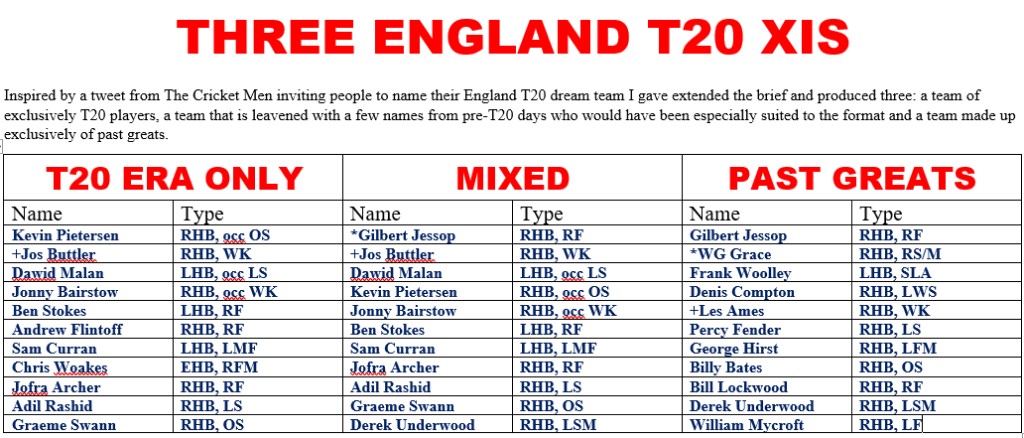
Three all-time England T20XIs selected with differing criteria in response to a twitter challenge from The Cricket Men, some photographs and a video.
This post is a response to a challenge thrown out on twitter yesterday by The Cricket Men. I have extended their brief, and rather than one XI will be naming three: one made up exclusively of T20 players, one which features two past greats who methods I believe would have been especially suited to T20, and one which is made up entirely of past greats.
CONVENTIONAL T20 XI
Kevin Pietersen – right handed batter, occasional off spinner. An explosive batter, just right for opening a T20 innings.
+Jos Buttler – right handed batter, wicket keeper. Possibly the finest limited overs batter England have ever had, and a shoo-in for this XI.
Dawid Malan – left handed batter, occasional left arm spinner. Officially the highest rated T20I batter ever, with 915 points following his amazing series against South Africa.
Jonny Bairstow – right handed batter, occasional wicket keeper. One of the most devastating of short form batters around. His 86 not out in the first match of the series against South Africa first kept England in the contest and then led them to victory.
Ben Stokes – left handed batter, right arm fast bowler. Explosive with the bat, and a golden arm with the ball, though probably seventh bowler in this combination.
Andrew Flintoff – right handed batter, right arm fast bowler. A must for this XI.
Sam Curran – left handed batter, left arm medium fast bowler. His stocks went through the roof in this year’s IPL, and his performances against South Africa confirmed his advancement.
Chris Woakes – right handed batter, right arm fast medium bowler. A big hitting batter and a crafty operator with the ball.
Adil Rashid – right handed batter, leg spinner. He is superb in this form of the game, economical with the ball even when he is not picking up wickets.
*Graeme Swann – right handed batter, off spinner. I preferred him to Moeen Ali for the second spinner’s role because he was a much better bowler, although not as good in his secondary role.
Jofra Archer – right handed batter, right arm fast bowler. With all due respect to Messrs Flintoff and Stokes, likely sixth and seventh bowlers in this combination, we need some genuine pace at our disposal, and for me Archer is the man to provide it
PAST GREATS INTO THE MIX
My second XI involves the addition of two blasts from the past who I consider would have been particularly effective in this format:
*Gilbert Jessop – right handed batter, right arm fast bowler. Jessop was the fastest scoring top line batter the game has ever seen, and bear in mind that for most of his career a ball had to go right out of the ground as opposed to just over the ropes to count six. He was also a highly skilled quick bowler who once bowled unchanged through a first class innings conceding just three runs (v Northants in 1907, in a total of 12 all out – George Dennett 8-9, Jessop 2-3). Finally, he was what is now termed a ‘gun’ fielder to the extent that most reckonings of his contribution in this department have him effectively coming to the crease already 30 not out. I have also named him as captain, a job he did for Gloucestershire for some years.
Jos Buttler
Dawid Malan
Kevin Pietersen
Jonny Bairstow
Ben Stokes
Sam Curran
Adil Rashid
Graeme Swann
Jofra Archer
Derek Underwood – right handed batter, left arm slow medium bowler. He was famously miserly at the bowling crease, and his style of bowling, with taking the pace of the ball so often being desirable at T20, would seem well suited to this format.
BLASTS FROM THE PAST
My final selection comprises entirely players from the past:
Gilbert Jessop
*WG Grace – right handed batter, right arm bowler of varying types, excellent close catcher, captain. With his range of skills and forceful personality he just has to feature.
Frank Woolley – left handed batter, left arm orthodox spinner, brilliant fielder. His attacking brilliance with the bat makes him well suited to the no3 slot in this team and he would also be full value in the field.
Denis Compton – right handed batter, left arm wrist spinner. Capable of scoring all round the wicket.
+Les Ames – right handed batter, wicket keeper. In the 1930s the Walter Lawrence trophy, awarded to the scorer of the fastest first class hundred of the English season, was launched. In two of it’s first three seasons it went to Les Ames, the only recognized keeper ever to score 100 first class hundreds. He holds the record for career first class stumpings – 418 of them in total.
Percy Fender – right handed batter, leg spinner. The scorer of the fastest competitive first class century (35 minutes vs Northants, there have been a few instances of players getting to the mark quicker against bowlers deliberately feeding them runs to bring about a declaration), a brilliant fielder, and a regular wicket taker. Also, although no one could usurp the mighty WG for the captaincy, I acknowledge his skills in this area by naming him vice captain of the XI.
George Hirst – right handed batter, left arm fast medium bowler. One of the greatest all rounders ever to play the game, and his attacking approach would be well suited to short form cricket. Like Jessop he was what we now call a ‘gun’ fielder, in his case usually patrolling mid off.
Billy Bates – right handed batter, off spinner. He had a remarkable record, including a 55 and two seven-fors in the same test match, at Melbourne in 1883. Playing for the Players against the Gentlemen in 1881 he had a spell of 17 overs for eight runs (so much for those carefree, all-attacking amateurs!), so he could certainly keep it tight.
Bill Lockwood – right handed batter, right arm fast bowler. Variation of pace was mentioned in the context of certain earlier bowlers, notably Alfred Shaw and the Australia FR Spofforth, but the first bowler about whom the phrase ‘slower ball’ was regularly used was this man, and his version appears to have been the deadliest to see the light of day until Franklyn Stephenson came on the scene almost a century later. Given the role the slower balls play in the armoury of T20 bowlers I suggest that one of the great early masters of the craft has to be included.
Derek Underwood
William Mycroft – right handed batter, left arm fast bowler. His extraordinary record (863 wickets in 138 first matches at 12.09 apiece), the fact that he could move the ball as well as propel it at great pace and his the fact that he bowled left handed all militate in his favour.
BRIEF ANALYSES OF THE XIS
My pure T20 squad has good batting depth, with everyone in it having some degree of skill with the bat, and seven genuine bowling options. It is well equipped to handle every challenge and would give a good account of itself.
The second squad has even greater bowling depth, and although it features one genuine tailender in Underwood the bowling depth is awesome.
My final offering, the blasts from the past combination, is simply awesome, with recognized batting talent all the way down to Lockwood at no9, and so much depth and variety in the bowling that Compton, by no means poor in that department, would probably be 10th choice bowler on most surfaces.
A FEW OF THE MISSING
These names all relate to the blasts from the past. Alfred Shaw, the man who bowled more first class overs than he conceded runs, was one I would have loved to include, while two fast medium bowlers who hit the ball miles when they batted, Jim Smith of Middlesex and Arthur Wellard of Somerset also commanded attention but could not quite get in. Cecil Parkin of Lancashire, with his penchant for bowling six different types of delivery per over, would have been good in T20, and I nearly selected him ahead of Bates. The great SF Barnes would have been formidable at any form of the game but I think he would have found being limited to four overs per innings insupportable, so he missed out. Some of you will doubtless have your own ideas, and I hope you will post them in the comments.
PHOTOGRAPHS
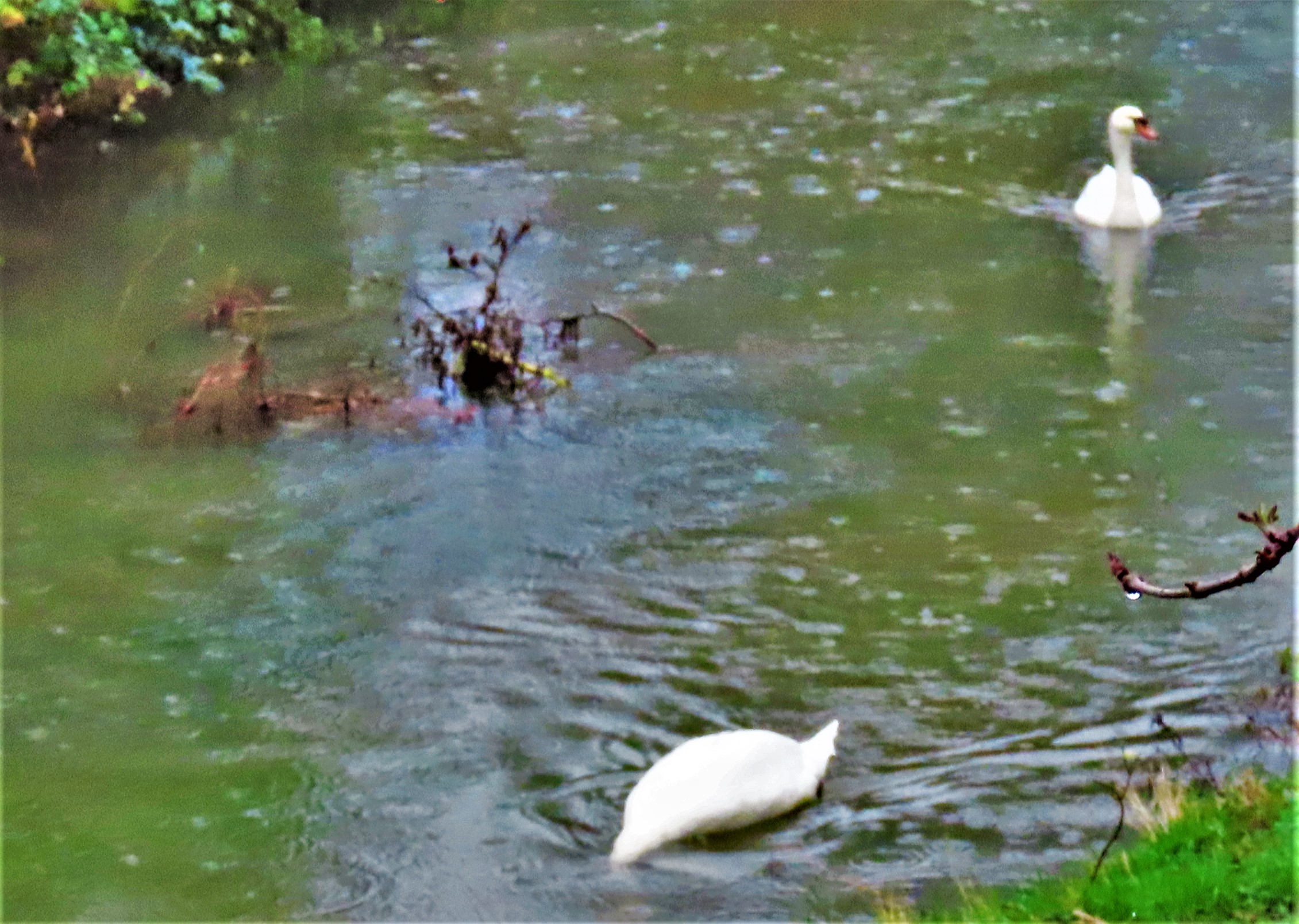
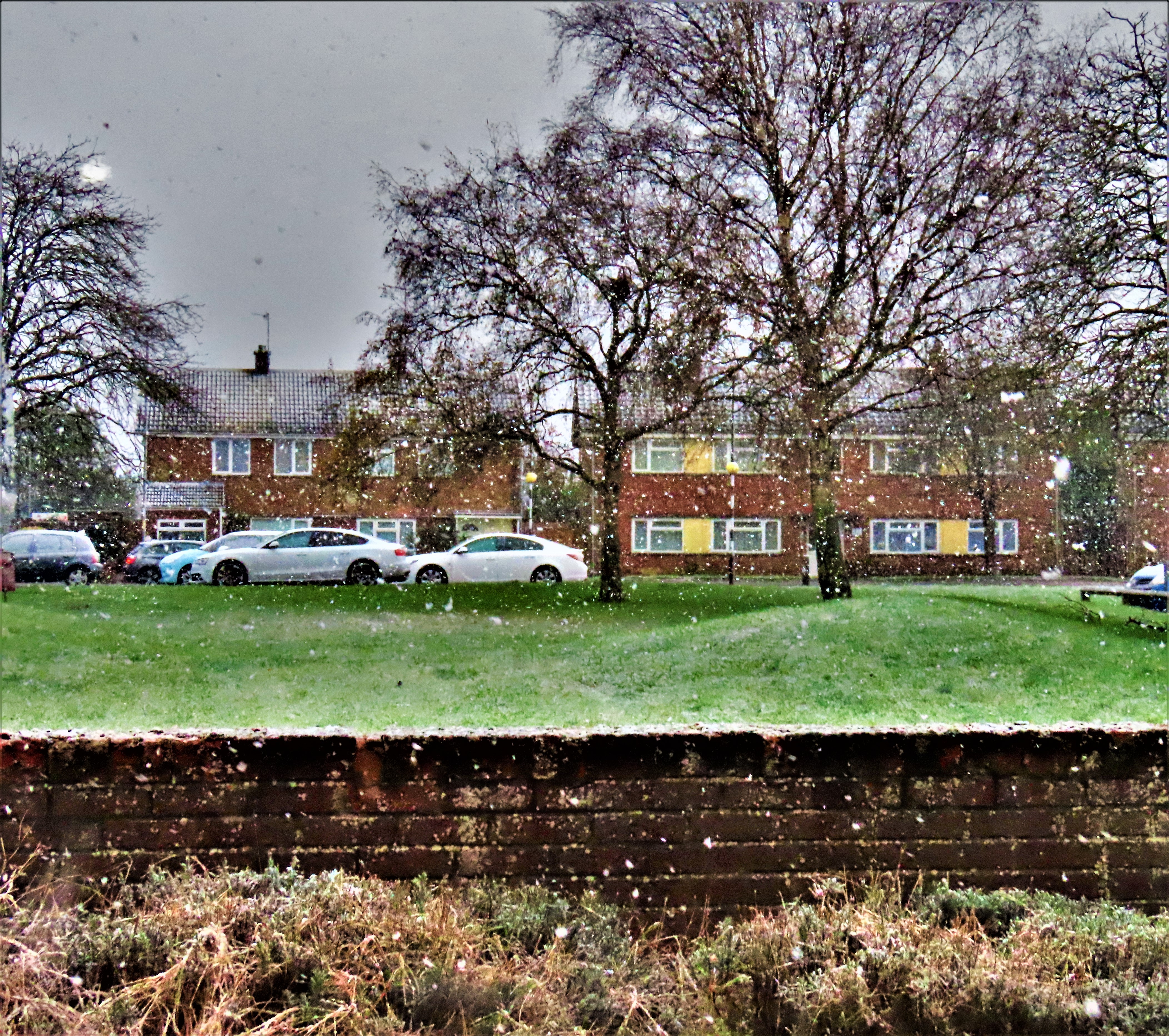
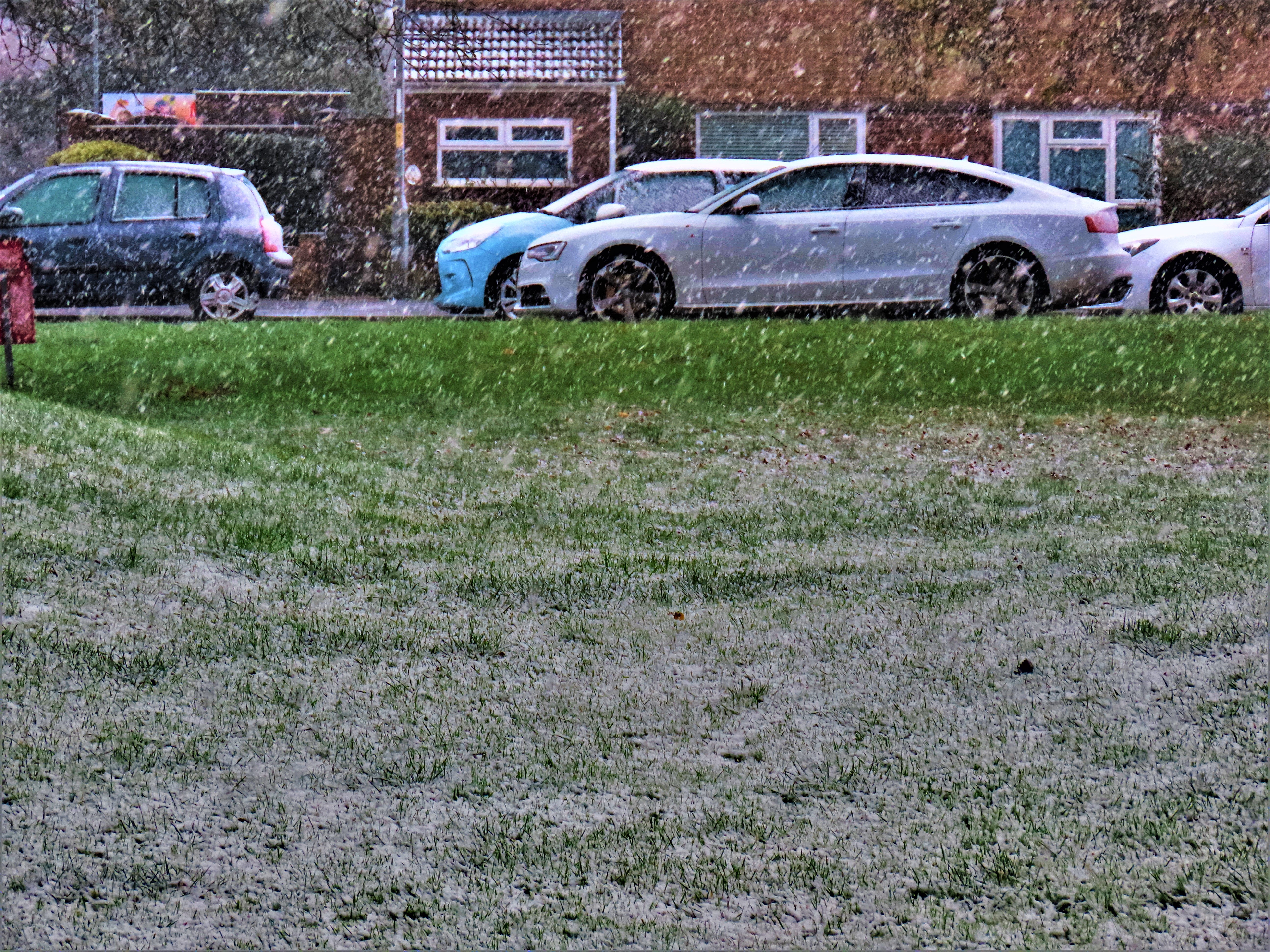
A very contrasting set of photographs, featuring yesterday’s snow and today’s far more benign weather.
To finish, here is a video of the snow falling yesterday (a rare happening in King’s Lynn):
My thoughts on the current test match and possible scenarios for what remains of it, plus a couple of bonus links and some photographs.
INTRODUCTION
The lunch interval on day4 of the second test match at Old Trafford is nearing its end, so what are the propsects?
THE STORY SO FAR
Yesterday was entirely lost to the weather, meaning that the West Indies started today 32-1 in reply to England’s 469-9 declared. The morning session has been much better for them than for England, with only nightwatchman Alzarri Joseph dismissed, a wicket for Dom Bess. Kraigg Brathwaite and Shai Hope are currently together with the score 118-2. Can England win this match and keep the Wisden Trophy alive?
POTENTIAL WINNING SCENARIOS
I see three potential winning scenarios, each of which has two subvariations. They are as follows:
1. England bowl the West Indies out for 269 or less, which is still possible although the likelihood is receding. Then either a)England enforce follow-on, bowl West Indies out cheaply and win by an innings margin, b)England enforce follow on, bowl West Indies out and have a small run chase in the final innings c)if England really are determined to give their bowlers a short rest between bowling stints they bat for 10 or 15 overs taking an ‘all guns blazing approach’ and then get the West Indies in again and bowl them out to win by a runs margin.
2. England bowl the West Indies out for 270-319, definitely a possibility. Then either a)England forfeit their second innings in and all or nothing gamble on victory and bowl the West Indies out to win the match.
b)England go in again taking the ‘all guns blazing’ approach and declare giving the West Indies a tough but achievable chase (they need to dangle a carrot otherwise the West Indies simply shut up shop and secure the Wisden Trophy) and manage to bowl the West Indies out a second time.
3. England bowl the West Indies for a total in excess of 320, but still with a useful lead for England, and England go all out for quick runs, either being bowled out or declaring to set the West Indies a tough but achievable target, and bowl the West Indies out.
IF ENGLAND HAVE TO BAT AGAIN
If it is for a very straightforward run chase with no major acceleration needed then no change is needed to the batting order. In any other scenario (i.e. runs needed at speed) I would hold Sibley, Burns and Craw;ey back for emergencies and send Stokes and Buttler into open with instructions to treat it as a T20 innings, with Pope coming at three, Woakes four, Curran five, Bess six, Root 7, and only if all of these are out cheaply enough for England to be in danger of defeat turn to the regular nos 1-3 to shut up shop. In a quick runs for a declaration scenario where I thought a couple more overs batting would be beneficial I would even take this further should the situation arise and promote Broad to have a swing. I would also say that although I have allowed for the possibility of not enforcing the follow-on I reckon that England should do so unless they can boost thei lead by enough quickly enough to get the West Indies in again by tomorrow morning at the latest.
LOOKING AHEAD TO THE THIRD MATCH
I am reckoning that Anderson and Wood will return, Archer will be considered but may not play. Also, in view of the turn that Bess is extracting I would consider picking Parkinson and gambling on two specialist pacers plus Stokes to handle that side of things. As I write this Sam Curran has just claimed the third West Indies wicket to make it 123-3, and he has two of them. A possible ‘gamblers pick’ for the third test would be give Pope the gauntlets and keep him at no6, and then five regular bowlers, Curran, Bess, Archer, Wood and Anderson, or the two-spinner ‘gamblers pick’ which is similar except Parkinson replaces Wood, meaning a one place promotion for Anderson (Parkinson is a genuine no11). England have played well this match, and I suspect that if they do manage to win it they will take the series. An England win to level the series would be good for cricket, creating a winner-takes-all scenario for the final game. So to, though it is a remote possibility, would a win for the West Indies, giving them their first series win in England since 1988, albeit in a different way. A drawn match has little to commend it, since the West Indies would then be thinking very much in terms of avoiding defeat in the final match and thereby winning the series (a draw when 0-2 down could not benefit England, whereas a win would at least salvage some pride).
LINKS AND PHOTOGRAPHS
Two related pieces here:
Molly Scott Cato, professor of economics and one of the leading lights of the Green Party, has a piece at theecologist.org titled “If Humanity Counted“.
Some thoughts on the early stages of the second test match between England and the West Indies.
INTRODUCTION
The second test match between England and the West Indies at Old Trafford, Manchester is underway, and already curious things are happening.
THE SELECTIONS
England had decided to rest Anderson and Wood for this game (both have had injury problems of late, and were unlikely to stand up to three matches in quick succession, so resting them for the middle match made sense. What did not make sense was Jofra Archer deciding to visit his home in Brighton (south east of Southampton) before heading to Manchester (north west of Southampton), thereby breaking the bio-secure protocols that everyone else involved manage to stick to (btw Anderson’s family home is only a few miles down the road from Old Trafford, and he did not succumb to temptation) and rendering himself ineligible for the match. With Oli Stone also not fully fit that meant that England had no out and out speedster available to them. They therefore opted for Curran’s left arm to give them some variation in the seam department and Woakes rather than a debut for Oliver Edward Robinson. They correctly gave Crawley the no3 slot, dropping Denly. They wrongly, indeed inexcusably, but unsurprisingly persisted with Buttler as keeper and no7, so the full 11 reads: Sibley, Burns, Crawley, *Root, Stokes, Pope, +Buttler, Woakes, Curran, Bess and Broad. Curran’s left arm provides some variation, and he may create some useful rough for Dom Bess to exploit. However, the only possibility of providing some genuine pace will be if Stokes is used in short spells in which he goes all out for speed – no one else in this side is capable of producing anything describable as genuinely fast. The West Indies are unchanged, which means that off spinner Rahkeem Cornwall, probably the heaviest international cricketer since Warwick Armstrong captained Australia in 1921 while weighing in at 22 stone, misses out.
THE EARLY EXCHANGES
Some traditional Manchester weather meant a delayed start, and the toss took place at noon, with a one hour session scheduled for 12:30-1:30, afternoon 2:10-4:25, evening 4:45 – 7:00, with half an hour overlap allowed, so a potential 7:30 finish. The West Indies one the toss and put England in. Burns and Sibley saw off the quicker bowlers, but then Burns fell to the off spin of Roston Chase on the stroke of lunch, and Crawley fell to Chase’s next delivery, immediately after the interval. Sibley and Root are now together, doing their best to stabilize things. England need to bat well, but on a pitch which is already looking like it could break up a first innings tally of 300 would put them in the box seat. Two wickets down this early is not good news for England, bit if they were going to lose two fairly early wickets losing them to Roston Chase is less bad than the alternatives, given that Bess is likely to enjoy this pitch even more, and that England are short of serious pace in this game (btw Robinson would not have helped in that regard – he specializes in moving the ball around a bit at just above medium pace, a method that has brought him 236 first class wickets at 22 a piece but which is not likely to have test batters quaking in their boots).
LOOKING AHEAD
England are probably second favourites for this match given the effect that the combination of their selection policy and Archer’s misdemeanour has had on them, but it does look like the West Indies misread the pitch and would have done better to bat first. If the West Indies do win this game they win the series, the first time they will have done that in England since 1988 (the 1991 and 1995 series were both drawn 2-2, England won the 2000 series and have been dominant in these contests since then), if England prevail it will be 1-1 and all will come down to the decider at this same ground. My own feeling is that for the West Indies to win the series and retain the Wisden trophy (they won the last series in the Caribbean) they need to win this match – a draw would also secure them the Wisden Trophy as the series could not then finish worse for them than 1-1, but if England win I think the West Indies will find it tough to pick themselves up for the final game. For the moment, Sibley and Root remain in possession, and although they are not scoring quickly they are looking quite secure.
A view of where things stand in fifth Ashes test at The Oval, and what the likely result means for England, plus a photo section that invites reader involvement – one of these pictures will be in the 2020 wall calendar.
INTRODUCTION
England seem likely to make the 2019 Ashes series a 2-2 draw either later today or some time tomorrow, after a good second innings batting performance secured their control of a game in which Australia by dreadful batting ceded the initiative to England on Friday. This post, written as I prepare myself for Heritage Open Day, looks at what is going on there and examines the merits and demerits of what the likely result of this match means for England. However, before I get into the main body of this post there is a small matter of business to attend to…
A CORRECTION TO MY PREVIOUS POST
On previous occasions when such has been necessary I have made it clear that it is policy on this blog not to do the equivalent of burying corrections in six point type in the middle of page 27. Therefore I am giving due prominence to a mistake I made in regard to this year’s County Championship. Somerset are indeed comfortably ahead of Essex at the top with no one else having a chance of taking the title, but I said in my previous post that they had a game in hand. This was an error – I misread the presentation of the table on cricinfo as saying that the game Essex were playing, which was still in progress, was their 13th, because their games played appeared as 12* which I took to mean that they had already played 12. In actuality the game in progress was their 12th, and I take this opportunity to correct the error. What this means is if Somerset and Essex both win their next games, Somerset will need a draw in their final match, which is a showdown against Essex to secure the title, if Somerset win and Essex don’t then Somerset will effectively be over the line with a game to spare, while victory for Essex and any other result for Somerset would make the final game a true “winner takes all” affair.
A POTENTIAL PYRRHIC VICTORY
The phrase “Pyrrhic victory” comes from king Pyrrhus of Epirus who won a battle against the then fledgling Roman empire but said when congratulated on his victory “I cannot afford another such victory”. Not many years later Epirus became a province of Rome. Why do I describe the victory that England are approaching in the fifth Ashes test as Pyrrhic?
The Ashes are still Australia’s, so it changes nothing in that regard, while
By giving a 2-2 series scoreline it creates an excuse for inaction on the part of the selectors that would not be there had the final scoreline been the 3-1 to Australia that cricketing justice demands, so on that ground it is a classic case of a victory that is at least potentially damaging to the victor’s long term hopes
Several players who should probably be facing the axe have produced performances that may just save them (Buttler with two decent innings in the game, and Denlywith a second innings 94 – such is the proportion of his runs that have now come in second innings efforts that he is turning into a batting equivalent of Andy Caddick, only less good, to name but two).
Thus in many ways it would actually be better for England if Australia pulled off the mammoth second innings run chase that will be facing them. There were three unequivocal pluses for England in the first three days of this game – Burns‘ first innings 47, Archer’s second haul of six wickets in a test innings and Sam Curran’s wickets (although he does not have the pace to pose much of a threat when the ball is going through straight – without lateral movement he is a blunt sword). Australia have not been at the races in the three days we have had thus far, but I acquit them of trying to lull England into a false sense of security because I am well aware that no Aussie team would ever willingly accept defeat at England’s hands – it is just happens to be the case that a poor performance here may end up helping them in the long term, depending on exactly how ostrich-like Ed Smith and co turn out to be.
Given the size of the total Australia will be facing, and the only remotely likely way they will get anywhere near chasing to down, just for the record Steve Smith needs 224 to bring his series aggregate to 975 and claim one of Don Bradman‘s records for himself.
PHOTOGRAPHS
A variation of my usual sign off. I am presenting various pictures of a full moon from a couple of days ago, one of which will feature in my 2020 wall calendar. Please use the comments to nominate your choice…






































































































































































































































































































































































































































































































































 aspiblog