All Time XIs – The Literary Clash

Today’s all time XI cricket themed post uses fictional characters for its inspiration. Also featured are #NHSPayRise and #BlackLivesMatter.

INTRODUCTION

Welcome to another variation on an ‘all time XI‘ cricket theme. Today I pit two XIs whose players share names with characters from fiction against each other.

ROLY JENKINS’ XI

  1. Arthur Morris – left handed opening batter. 46 test matches yielded him 3,533 runs at 46.48, and Don Bradman rated him the best left handed opener he ever saw. King Arthur has been fictionalized by many writers, arguably beginning with Geoffrey of Monmouth. In primary school I read “Swords and Circles” by Rosemary Sutcliff, and almost equally long ago I first read “The Once and Future King” by TH White, but it is particularly Stephen Lawhead’s “Pendragon” series that I wish to flag up.
  2. Alec Stewart – right handed opening batter. I have commented on his success in this specific role before. The literary connection is to Alan Breck Stewart, who features in two of Robert Louis Stephenson’s novels.
  3. Jimmy Sinclair – right handed batter, occasional medium pacer. He registered the first test century for South Africa. His literary alter ego is Sabrina Sinclair, the female lead in Magda Josza’s “Sherlock Holmes and the Femmes Fatales”, the sequel to “The Private Diaries of Doctor Watson”.
  4. Eoin Morgan – left handed batter. England’s current One Day International captain. One of Colleen McCullough’s novels is titled “Morgan’s Run”, and the Morgan in question is Eoin’s literary alter ego for this purpose.
  5. Jamie Dalrymple – right handed batter, occasional off spinner. When he first appeared on the first class scene big things were expected of him, but he ended with a respectable rather than genuinely outstanding record. His alter ego is Carola Dunn’s series character Daisy Dalrymple.
  6. Ben Stokes – left handed batter, right arm fast bowler. He was already established as one of England’s finest before 2019, but his deeds that year moved him into the category of all time greats. His literary connection is a slightly convoluted one involving Thomas Hardy’s “Tess of the D’Urbervilles”. Unlike Tess, who is a direct descendant of the real D’Urbervilles the villain of the story, Alec D’Urberville owes his surname to his grandfather, Simon Stokes, who changed his name by deed poll and purchased a coat of arms to back it up.
  7. *Roly Jenkins – leg spinner, right handed batter. 386 first class matches brought him 10,073 runs at 22.23 and 1,309 wickets at 23.64. His problem with the bat was a failure to convert fifties to hundreds – he reached 50 on 41 occasions, but only once went on to the hundred. He has a part share in a first class record: in a match between Worcestershire and Scotland the county’s keeper Hugo Yarnold accounted for six Scotland second innings wickets in a row – all stumped! Four of those six stumpings were effected off the bowling of Jenkins. His literary namesake is Tilly Jenkins of Mandy Morton’s “No2 Feline Detective Agency” series of novels. Tilly Jenkins is one of the two detectives in said agency, along with Hetty Bagshaw.
  8. +Godfrey Evans – wicket keeper, right handed batter. He played 95 test matches, scoring 2,439 runs at 20.49, taking 173 catches and making 46 stumpings. While in his 465 first class appearances he scored 14,882 runs at 21.22, took 816 catches and made 250 stumpings. Bradman named him as England wicket keeper in “Bradman’s Best Ashes Teams”. His literary alter ego is ‘Killer’ Evans, villain in “The Adventure of the Three Garridebs”, one of the stories that appears in the collection “The Casebook of Sherlock Holmes”, the fifth and last book of Conan Doyle’s Sherlock Holmes short stories.
  9. Percy Jeeves – right arm fast medium bowler, useful lower order batter. 50 first class matches brought him 1,204 runs at 16.05 and 199 wickets at 20.03. He took 12 five wicket hauls, with a best of 7-34, and achieved one ten wicket match. He is not merely a namesake of famous fictional character, his performance for Warwickshire v Gloucetsreshire at Cheltenham, witnessed by PG Wodehouse, actually inspired the naming of Jeeves the valet.
  10. Edwin Tyler – left arm orthodox spinner. A one-cap wonder for England, against South Africa at Cape Town in 1896 – he took four wickets at 16.25 in that sole international appearance. His 185 first class appearances brought him 895 wickets at 22.09, with 77 five wicket innings hauls and 22 10 wicket matches. His best innings figures were 10-49, the first all-ten by a Somerset bowler. He gets in on a childhood memory – at primary school one of the books I read was Gene Kemp’s “The Turbulent Term of Tyke Tiler”.
  11. William Mycroft – left arm fast bowler. 138 first class appearances yielded him 863 wickets at 12.09, with 87 five wicket innings hauls and 28 10 wicket matches. His namesake is of course Mycroft Holmes, elder brother of Sherlock, who appears twice in the original Holmes stories, with a mention in a third (“The Greek Interpreter”, “The Bruce-Partington Plans”, and a walk on role in “The Final Problem”) and many times in pastiche/ new Holmes stories by other authors.

This team has a respectable batting order, and a strong bowling line up, with Mycroft and Jeeves likely to share the new ball, Stokes third seamer, Jenkins and Tyler as front line spinners and Dalrymple as sixth bowler.

PETER MAY’S XI

  1. Bobby Abel– right handed opening batter. 13 test match appearances yielded him 744 runs at 37.20, with two centuries and a best of 132 not out. In all first class cricket he scored 33,128 runs at 35.46, with 74 centuries, including the Surrey individual record 357 not out. His literary namesake is Abel Whittle who appears in Thomas Hardy’s “The Mayor of Casterbridge.”
  2. Vince Wells – right handed opening batter, occasional medium pacer. He once scored three double centuries in the same season for Leicestershire, but typically his England call up did not occur during this purple patch, but a little later in his career. He ended with 9,314 first class runs at 32.79 and 302 wickets at 26.22. He owes his place here to being a namesake of Daisy Wells, president of the Wells & Wong Detective Society from Robin Stevens’ “Murder Most Unladlylike” series.
  3. *Peter May – right handed batter, captain. In a difficult decade for batting, the 1950s, he averaged 46.77 in test cricket, captaining his country 41 times along the way. His literary namesake is John May of the Peculiar Crimes Unit, the May of Christopher Fowler’s “Bryant and May” series of novels. Another May, John’s grand-daughter April, also appears in those books.
  4. Willie Watson – left handed batter. The only person to have played in a football world cup and for England in test cricket. His most famous innings was his five and three quarter hour century at Lord’s in 1953 which helped England to a draw, the full value of which was brought home at The Oval in the final match of the series when England’s victory secured them the Ashes for the first time since surrendering them in 1934. In his 468 first class matches he scored 25,670 runs at 39.86 with a best of 257. He is of course namesake of Dr John H Watson, narrator of the original Holmes stories.
  5. Toby Colbeck – right handed batter. He played 32 first class matches between 1905 and 1913-4, in which he scored 1,368 runs at 24.87, with three centuries, and a best of 175 not out. I would not normally select someone with a record of this nature, even given the allowances that can be made for him, but I was willing to stretch a point to be able to include a namesake of Inspector Robert Colbeck, aka The Railway Detective, star of a series of novels by Edward Marston. I have given these books coverage elsewhere on this blog (here, here and here).
  6. Vic Wilson – left handed batter, brilliant close fielder. 502 first class matches brought him 21,650 runs at 31.33 and also 549 catches in the field. He was the first professional to be officially appointed as captain of Yorkshire. His literary alter ego is Daniel Wilson, one of the two stars of Jim Eldridge’s ‘Museums’ series of murder mysteries (“Murder at the Fitzwilliam Museum”, “Murder at the Ashmolean”, “Murder at the British Museum”, and one that I have yet to read, ‘Murder at the Manchester Museum’) – the other being Abigail Fenton.
  7. +Jock Cameron – wicket keeper, right handed batter. 26 test appearances brought him 1,239 runs at 30.21, with 39 catches and 12 stumpings. In all first class cricket he made 107 appearances, scoring 5,396 runs at 37.47, and took 155 catches and made 69 stumpings. He once took 30 in an over from the great Hedley Verity, an onslaught that got the bowler some ‘Yorkshire brand sympathy’ from keeper Arthur Wood “tha’s got ‘im in two minds Hedley, he doan’t know whether t’hit thee for fower or six.” His position in this line up is by way of a nod to Cassandra ‘CJ’ Cameron, hero of Matthew Reilly’s “The Great Zoo of China”, with an acknowledgement also to the journalistic couple Pete and Alison Cameron in “Ice Station” by the same author.
  8. Johnnie Clay – off spinner, useful lower order batter. He played for Glamorgan when they were promoted to first class status in 1921, and was still in the team when they won their first county championship in 1948! He played 373 first class matches, taking 1,317 wickets at 19.76 each with 105 five wicket innings hauls and 28 10 wicket matches, and scored 7,186 runs at 15.45, with two first class hundreds. His literary analogue is John Clay, villain of “The Red Headed League”, who also appears in “Sherlock Holmes and the Femmes Fatales” as partner of Sabrina Sinclair’s sister, in Hugh Ashton’s novel “The Darlington Substitution”, and also one of Ashton’s collections of short stories, presented as an autobiography.
  9. Frank Holmes Tyson – right arm fast bowler. A meteor who blazed through the cricketing skies in the 1950s, he played 17 test matches, taking 76 wickets at 18.56 and being the star of the 1954-5 Ashes, and also scoring 230 runs at 10.95. He played 244 first class matches in all, taking 767 wickets at 20.89 and scoring 4,103 runs at 17.09. I have given his full name including middle name, because of course it is that middle name of Holmes that gets him in here.
  10. Joel Garner – right arm fast bowler. A magnificent servant of Barbados, Somerset and the West Indies down the years. 58 test match appearances saw him capture 259 wickets at 20.97 and score 672 runs at 12.44. His total first class record was 214 matches, 881 wickets at 18.53 and 2,964 runs at 16.74. His literary namesake is Paul D Garner, from Toni Morrison’s “Beloved”.
  11. Shannon Gabriel – right arm fast bowler. 45 test matches have yielded him 133 wickets at 30.63, with a best of 8-62. In all first class cricket he has played 103 matches, taking 289 wickets at 29.67. His literary alter ego is Gabriel Oak, the shepherd in Thomas Hardy’s “Far From The Madding Crowd”

This team has a strong top four, Colbeck at five, Wilson a respectable six, a keeper who can really bat and four fine bowlers. There is a shortage of spin options, with only Clay available in that department, but Tyson, Garner and Gabriel look a fearsome trio of quick bowlers (I suggest Tyson and Garner with the new ball, Gabriel on when Tyson needs a breather).

THE CONTEST

Both squads have strengths and weaknesses. I think that the presence of the genuine all rounder in Ben Stokes just tips the odds in favour Roly Jenkins’ XI but I would expect it to be close.

NHS POSTER COURTESY OF 38 DEGREES

A little while back I signed up to get a free poster from 38 degrees calling for NHS workers to be given a pay rise, and it arrived in today’s post and is now on display in my front window. Regular readers of this blog will know that I have been through a very serious illness, and my experiences then have served only to underline the extent to which I value our NHS (see the posts you find following this link), and it is long past time they received a pay rise. Their efforts during this pandemic have been amazing.


IMG_0659 (2)
The window I chose, the most prominent I have.
IMG_0660 (2)
A close up of the poster.

LINK AND PHOTOGRAPHS

Maureen Fitzsimmons has produced an excellent twitter thread on what the #BlackLivesMatter protests have accomplished thus far, the beginning of which is screenshotted below – click to view full thread:

Fitzsimmons

IMG_0616 (2)IMG_0617 (2)IMG_0618 (2)IMG_0619 (2)IMG_0620 (2)IMG_0621 (2)IMG_0622 (2)IMG_0623 (2)IMG_0625 (2)IMG_0626 (2)IMG_0627 (2)IMG_0628 (2)IMG_0629 (2)IMG_0630 (2)IMG_0631 (2)IMG_0632 (2)IMG_0634 (2)IMG_0636 (2)IMG_0637 (2)IMG_0638 (2)IMG_0640 (2)IMG_0641 (2)IMG_0642 (2)IMG_0643 (2)IMG_0644 (2)IMG_0645 (2)IMG_0646 (2)IMG_0647 (2)IMG_0648 (2)IMG_0649 (2)IMG_0650 (2)IMG_0652 (2)IMG_0654 (2)IMG_0655 (2)IMG_0656 (2)IMG_0657 (2)IMG_0658 (2)

Literary Clash
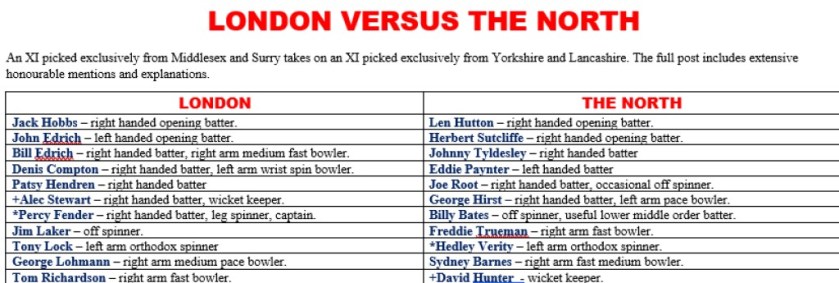
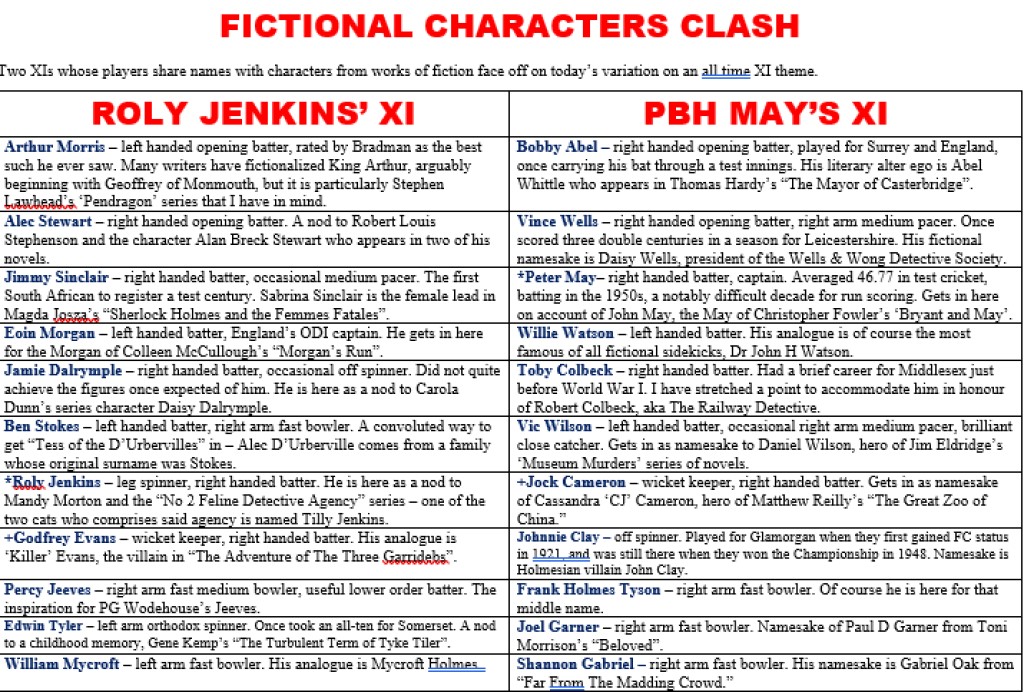
The teams in tabulated form.

All Time XIs – Anti-racism XI

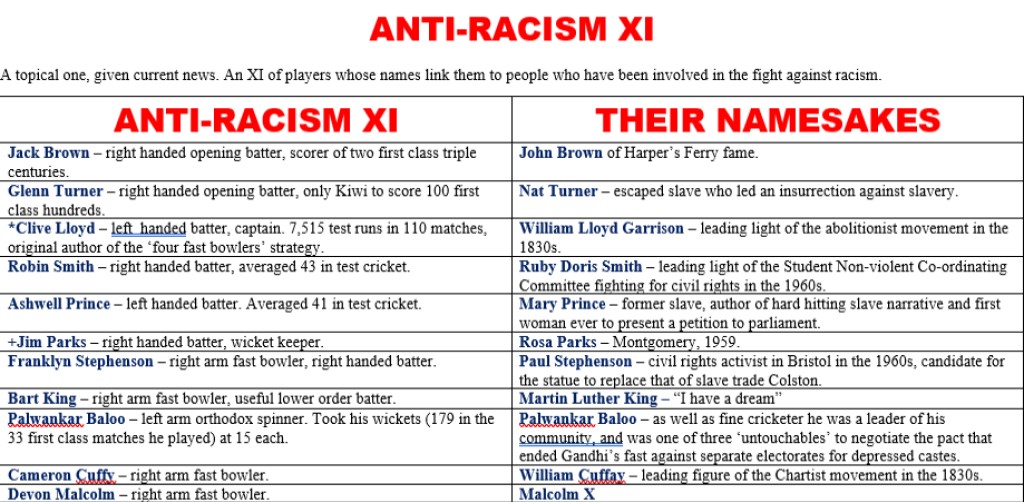
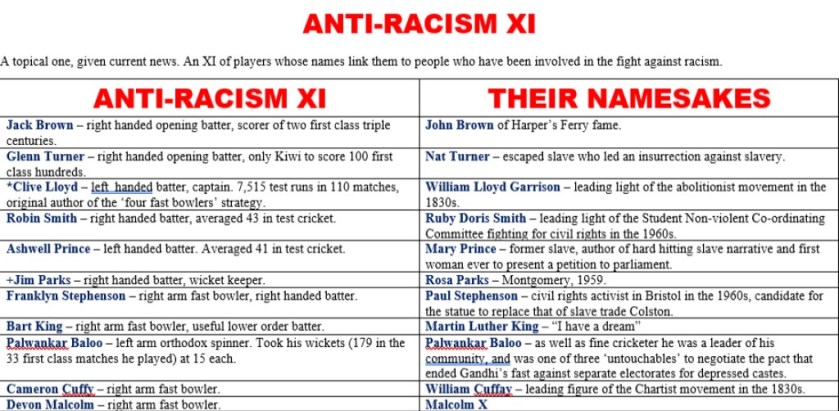
Today for my all-time XI cricket themed post I present a team of players whose names provide links to those who have fought against racism.

INTRODUCTION

Welcome to today’s installment in my ‘all time XI‘ cricket series. Today we have a single XI rather than a match up, and our focus is on anti-racism. I have selected an XI of players who share names with important figures who have fought against various manifestations of racism. There is one player in this XI who doubles up as a campaigner.

THE ANTI-RACISM XI

  1. Jack Brown – right handed opening batter. A great player for Yorkshire and England in his day. He is a namesake of John Brown, a legendary name among the abolitionists who fought against slavery in the US.
  2. Glenn Turner – right handed opening batter. The only Kiwi to have scored a hundred first class hundreds. His namesake for the purposes of this XI is Nat Turner, an ex-slave who was involved in an insurrection, and who wrote an autobiography in which he gave an account of this and other doings of his.
  3. *Clive Lloyd – left handed batter, captain. Scorer of 7,515 runs in 110 tests, and the man responsible for the four pronged pace attacks that took the West Indies to the top of the world game and kept them there for almost 20 years. I have got him in by linking to William Lloyd Garrison, another legend of the abolitionists.
  4. Robin Smith – right handed batter. Averaged 43 in test cricket, and it was only that low because Shane Warne gave him a horrible time in 1993. His namesake is Ruby Doris Smith, who got arrested at an anti-segregationist sit in as a teenager, and went on to become one of the leading figures on the Student Non-Violent Co-ordinating Committee, which organized such protests in the 1960s.
  5. Ashwell Prince – left handed batter, occaional off spinner. Averaged 41 in test cricket. His analogue is Mary Prince, author of a particularly graphic slave narrative, and the first woman ever to present a petition to parliament.
  6. +Jim Parks – wicket keeper, right handed batter. An England cricketer in his time, although by no means a regular. He took 1,087 first class catches and made 94 stumpings at that level. His namesake is of course Rosa Parks who refused to sit at the back of the bus, and triggered the Montgomery Bus Boycott.
  7. Franklyn Stephenson – right handed batter, right arm fast bowler. One of only two cricketers (the other being Sir Richard Hadlee) to have done the double of 1,000 runs and 100 wickets in an English first class season since the reduction of first class games to accommodate the John Player League in 1969 (anyone achieving it in a 14 game season as we have had for the last few years would achieve a feat that is in truth comparable to George Hirst’s ‘double double’ of 1906). His namesake is Paul Stephenson, an anti-racist campaigner who is being suggested as a replacement for Edward Colston on the now vacant plinth from which the statue of that slave trader was removed by #BlackLivesMatter protesters. The petition is here.
  8. Bart King – right arm fast bowler, useful lower order batter. The greatest of all USian cricketers, a pioneer of swing bowling whose 415 first class wickets cost just 15 a piece. His namesake is Martin Luther King.
  9. Palwankar Baloo – left arm orthodox spinner. Just 33 first class matches, in which he took 179 wickets at 15.21 each. He was a member of a low caste, and he was one of three members of his caste who negotiated the pact that ended Gandhi’s fast against separate electorates for members of depressed castes.
  10. Cameron Cuffy – right arm fast bowler. His career suffered because the West Indies were still very strong in fast bowling when he was in his prime. He only got an extended run at the highest level when already past his best. I admit to a small cheat here – his namesake is actually the black Chartist leader William Cuffay.
  11. Devon Malcolm – right arm fast bowler. England’s fastest bowler of the 1990s, with his career highlight that 9-57 against South Africa at The Oval. He was one of many among his generation to be adversely affected by Ray Illingworth’s tenure os supremo of English cricket (the idea was a sensible one, and had been advocated by CB Fry many years previously, but the person chosen for the role was catastrophically wrong, a mistake which destroyed a number of careers and hindered others). His namesake is Malcolm X.

This team has a good top five, a keeper batter, an allrounder and four fine bowlers. The bowling is heavy on pace and light on spin, but nevertheless this side should be able to give a good account of itself.

LINKS AND PHOTOGRAPHS

Just a few links before I bring this little post to a conclusion…

Finally, just a few pictures…

IMG_0616 (2)IMG_0617 (2)IMG_0618 (2)

AR
The players and their analogues in tabulated form.


All Time XIs – England

Today is international day in my ‘all-time XIs’ cricket series, and it is England in the spotlight. I also have a mini-section offering solidarity to #BlackLivesMatter.

INTRODUCTION

Today is a Monday, which means that it is international day in my ‘all time XIs’ cricket series. The international set up in the spotlight today is England.

ENGLAND IN MY TIME

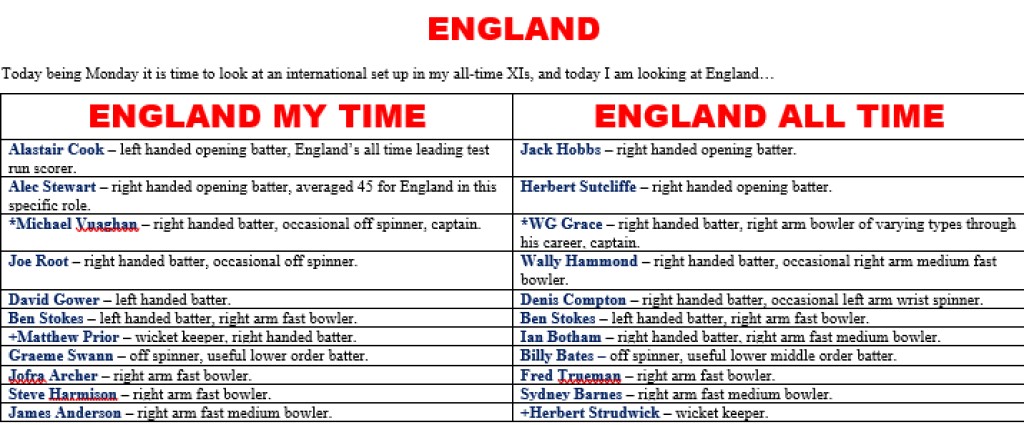
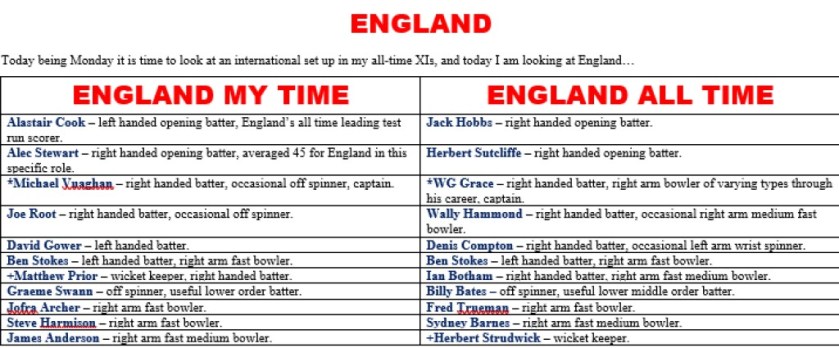
  1. Alastair Cook – left handed opening batter. England’s all time leading scorer of test runs and test centuries.
  2. Alec Stewart – right handed opening batter. His average for England in this specific role (he played many roles in his long and distinguished career) was 45, excellent for his era. I have opted for him out of my available options because as a right hander of fundamentally attacking inclinations he complements Cook perfectly.
  3. *Michael Vaughan – right handed batter, occasional off spinner, captain. The captaincy did somewhat negatively affect his batting output, as it has done a lot of incumbents, but he was such a good captain that I am prepared to accept that.
  4. Joe Root – right handed batter, occasional off spinner. A magnificent batter, but wasted as captain, a role which is negatively affecting his output.
  5. David Gower – left handed batter. There were two choices for the left handed specialist middle order batter, Gower or Graham Thorpe, and I opted for Gower.
  6. Ben Stokes – left handed batter, right arm fast bowler. Ian Botham’s pomp occurred before I had got seriously into cricket, so I could not honestly include him in this XI, which left me two choices for the all-rounder, Flintoff or Stokes, and I regarded Stokes as the better option.
  7. +Matthew Prior – right handed batter, wicket keeper. This is a thorny one, which I shall be going into more detail on later on. Suffice to say for the present that this is not a selection I am entirely happy with.
  8. Graeme Swann – off spinner, useful lower order batter. The best spinner England have had in my lifetime (although the future in that department looks bright).
  9. Jofra Archer – right arm fast bowler. One of the most exciting talents I have ever seen.
  10. Steve Harmison – right arm fast bowler. Rated number one in the world at his absolute peak.
  11. James Anderson – right arm fast medium. England’s all time leading test wicket taker.

This team has a decent balance, although there is only one genuine spin option – until very recently England struggled in that department. The batting in strong, and Stokes’ bowling workload should be kept reasonably light with Harmison, Archer, Anderson and Swann also there.

HONOURABLE MENTIONS

I will split these into playing roles:

  • Opening batters – besides my actual choices there were three outstanding candidates for the positions, Marcus Trescothick, Andrew Strauss and Graham Gooch.
  • Nos 3-5 – the main candidates among those I did not pick were Graham Thorpe, Jonathan Trott, Ian Bell and Kevin Pietersen. I expect Ollie Pope to force his way in in the next few years.
  • The all-rounder – Flintoff was the only other serious candidate. I saw many ‘all rounders’ who were in truth not up to the job with either bat or ball.
  • The wicketkeeper – Ben Foakes should be England’s current keeper, and if he was he would have been in this team. Jack Russell was a fine keeper who was poorly treated by the selectors of his day. I also considered registering my unhappiness with the behaviour of the current England selectors over the keeping position by naming Sarah Taylor, a magnificent keeper for the England Women’s team.
  • Spinners – None of slow left armers Tufnell, Panesar, Giles or as yet Leach have a record to quite merit selection, nor does leg spinner Rashid. There are various young spinners who may feature in a few years time.
  • Fast bowlers. Mark Wood was in the mix and might have displaced Harmison. Simon Jones was another to merit consideration.

ENGLAND ALL TIME

  1. Jack Hobbs – right handed opening batter. Among the greatest ever to have played the game.
  2. Herbert Sutcliffe – right handed opening batter. Averaged 60.73 in test cricket, and 66.85 in the cauldron of The Ashes. Also formed the greatest opening partnership ever seen in test cricket with Hobbs (average stand 87).
  3. *WG Grace – right handed batter, right arm bowler of various types through his career, captain. His test average of 32.29 looks modest, but was achieved between 1880 and 1899, when batting averages were lower, and he was already 32 by the time he made his debut in the first test on English soil in 1880. His record as test captain was excellent – eight wins in 13 matches in that role, another reason for his selection. He usually opened, and I see value in having three recognized openers at the top of the order.
  4. Wally Hammond – right handed batter, occasional right arm medium fast bowler. 85 test matches, 7,249 runs at 58.45. Had he not returned to top level action after World War II, when into his forties, he would have had 6,883 test runs at 61.75.
  5. Denis Compton – right handed batter, occasional left arm wrist spinner. He averaged over 50 in test cricket in spite of losing six years of his prime to World War II.
  6. Ben Stokes – left handed batter, right arm fast bowler.
  7. Ian Botham – right handed batter, right arm fast medium bowler. For about the first five years of his career he was an authentic great, and he still had great moments after that for a few more years, although he went on long after his decline had become obvious. He completed the test career double of 1,000 runs and 100 wickets in 21 matches, 2,000 runs and 200 wickets in 42, maintaining the pace, and then slowed down, reaching the triple double in his 72nd test, while by the end of his career after another 30 matches he had over 5,000 runs, but was still short of 400 wickets.
  8. Billy Bates – off spinner, useful lower order batter. An eye injury ended his test career after just 15 matches, but 656 runs at 27.33 and 50 wickets at 16.42 were testament to his effectiveness. He was the first England bowler to take a test hat trick, in a match in which he took seven wickets in each innings and scored a 50.
  9. Fred Trueman – right arm fast bowler.
  10. Sydney Barnes – right arm fast medium bowler. 189 wickets in 27 test matches at 16.43 each. 77 of those wickets came in 13 matches in Australia.
  11. +Herbert Strudwick – wicket keeper. His career was disrupted by World War 1. 28 test matches between 1910 and 1926 saw him take 61 catches and execute 12 stumpings, while his 674 first class appearances saw him achieve 1,495 dismissals.

This team has a very strong top five, two magnificent all rounders at six and seven, a superb keeper and three excellent and varied bowlers. Although he would have share the new ball with Trueman, there is an argument for regarding Barnes, based on descriptions of his method as effectively a leg spinner, which is why I did not select a second front line spinner (Compton is also available as back up).

HONOURABLE MENTIONS

It is impossible to cover everyone who would have claims advanced on their behalf, but I shall mention some of the more obvious omissions:

  • Opening batters – I had positive reasons, based on their records, and their amazing success as an opening pair for going for Hobbs and Sutcliffe, and the only other England opener for whom I would consider breaking this pair up is Len Hutton, who was also an all-time great.
  • Nos 3-5 – Eddie Paynter (test average 59.23), Ken Barrington (58.67) and KS Duleepsinhji (58.52) had the highest averages of anyone I omitted, and Paynter in particular as a left handed batter was unfortunate. Peter May who averaged 46 batting in a difficult decade for run scoring (the 1950s) would also have his advocates. Frank Woolley, Patsy Hendren, Phil Mead and KS Rinjitsinhji all also had fine test records, while Colin Cowdrey’s longevity at the highest level was remarkable, and Ted Dexter would also have his advocates.
  • The all-rounders – Andrew Flintoff had a a few magnificent years (2004, 2005, first part of 2006) and had occasional moments either side of that golden period, but cannot displace Botham on any rational assessment. George Hirst, Trevor Bailey and Tony Greig all did good things for England over the years without having records to merit serious consideration.
  • Keepers – England have had some excellent ones, including the three contrasting Kent characters Ames, Evans and Knott, Bob Taylor and JT Murray.
  • Spinners – Jim Laker would have been the conventional selection as an off spinner, There have been a plethora of quality left arm spinners down the years: Johnny Briggs, Bobby Peel, Wilfred Rhodes, Colin Blythe, Roy Kilner, Hedley Verity, Johnny Wardle, Tony Lock and Phil Edmonds of the conventional type, plus the left arm slow-medium of Derek Underwood. Also three bowlers of that type who barely believable given their first class records have a single cap between them: George Dennett, Alonzo Drake and Charlie Parker. There have been fewer leg spinners with really good England records, but Tich Freeman, Ian Peebles and Doug Wright might all have their advocates.
  • Pace bowlers – too many of these to name. I am aware that I have not selected a left arm quick, and the best options in that department among those who got to play for England would be Fred Morley, Frank Foster or Bill Voce, while William Mycroft was at his peak just too early (he took his wickets at 12.09 each in first class cricket).

If naming another five players to make up a standard sized touring party I would choose Paynter and Woolley as reserve batters, Ames officially as reserve keeper, noting that he could also be played as a batter, and noting Woolley’s skill as an left arm orthodox spinner, Lohmann (right arm medium fast, 112 wickets at 10.75 in 18 test matches) and Underwood as my reserve bowlers.

LINKS AND PHOTOGRAPHS

This links section is to declare my solidarity with the Black Lives Matter movement, and especially to support the activists who toppled the statue of slave trader Edward Colston in Bristol.

Had Covid-19 not caused a change of plan for them, soprano Charlotte Hoather and her fiancee, pianist George Todica would have been married this weekend. Instead they settled for giving a wonderful concert from their balcony, posted by Charlotte on her blog yesterday.

Finally it is time for my usual sign off…

IMG_0581 (2)IMG_0583 (2)IMG_0584 (2)IMG_0586 (2)IMG_0587 (2)IMG_0588 (2)IMG_0589 (2)IMG_0590 (2)IMG_0591 (2)IMG_0594 (2)IMG_0595 (2)IMG_0597 (2)IMG_0598 (2)IMG_0599 (2)IMG_0602 (2)IMG_0603 (2)IMG_0604 (2)IMG_0605 (2)IMG_0606 (2)IMG_0607 (2)IMG_0608 (2)IMG_0609 (2)IMG_0611 (2)IMG_0612 (2)

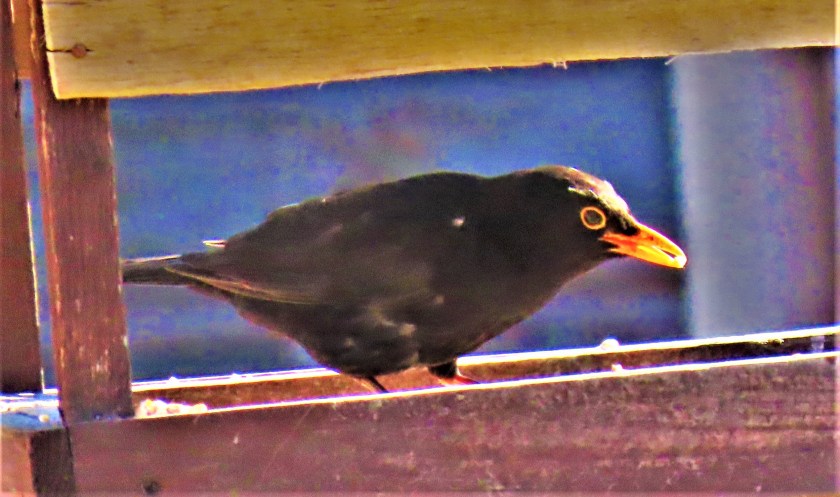
IMG_0613 (2)
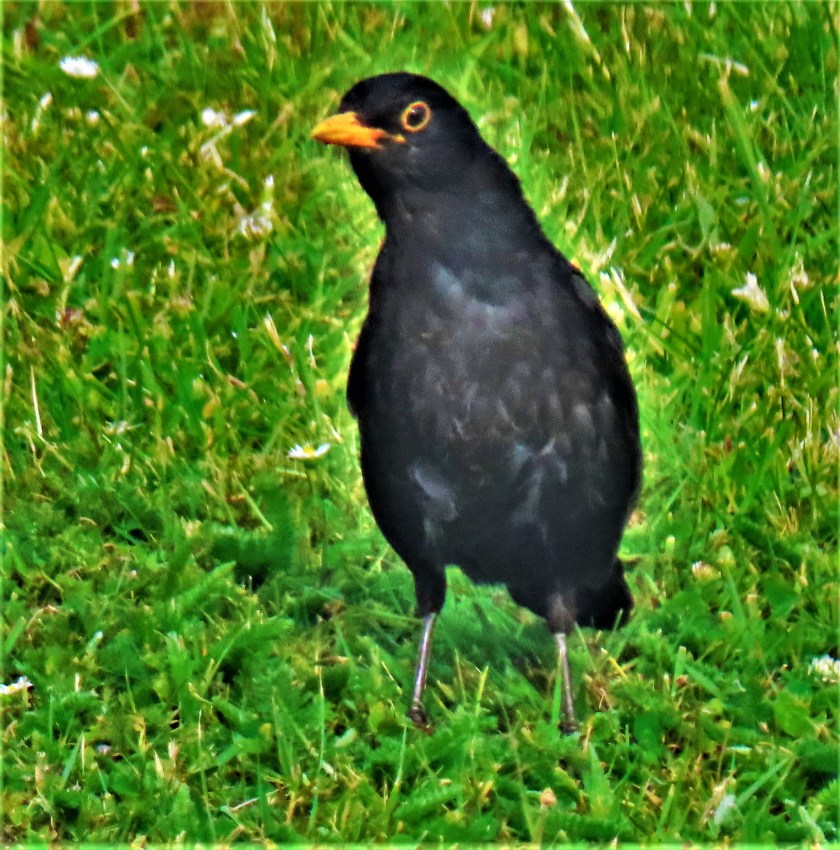
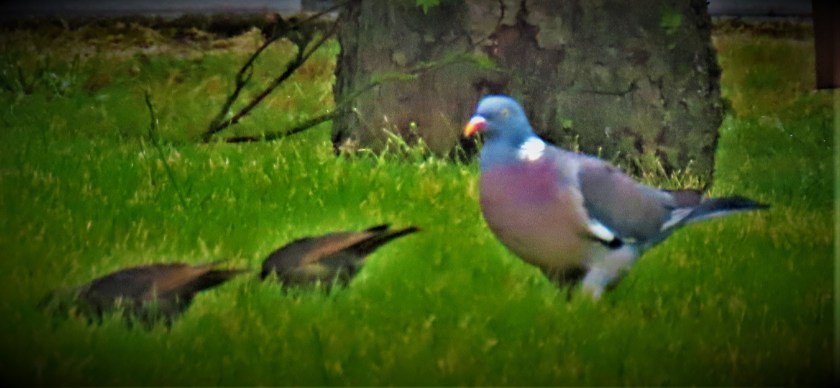
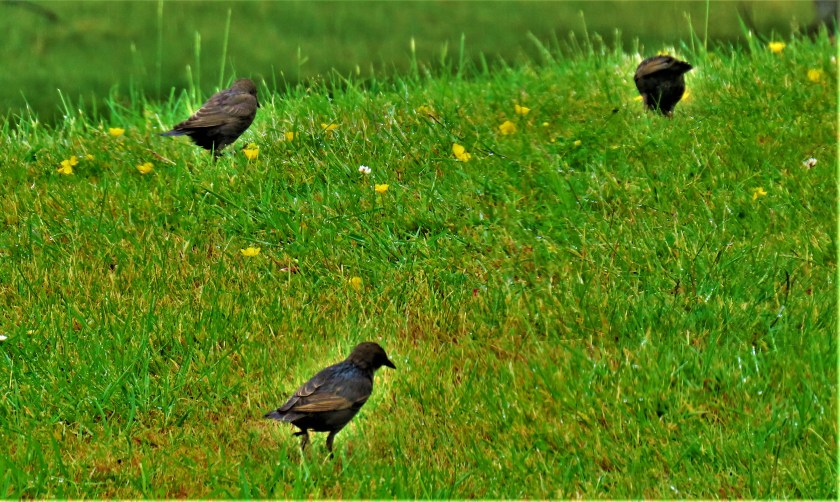
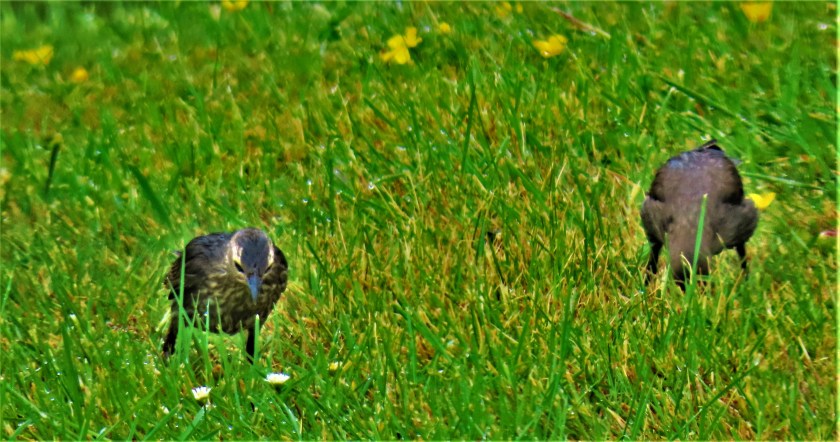
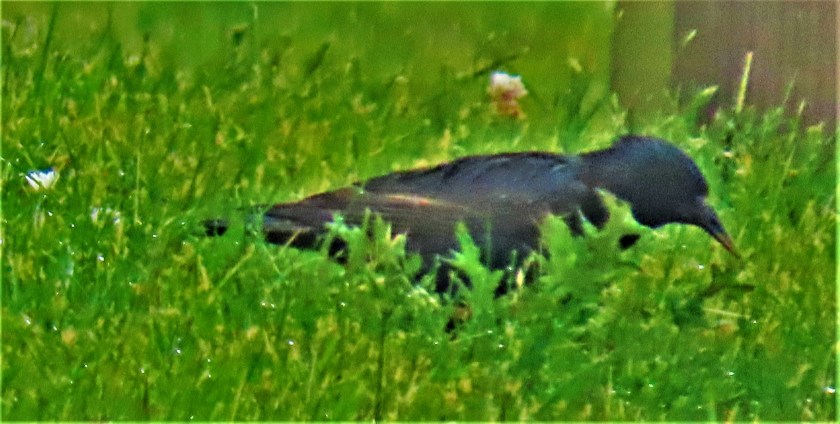
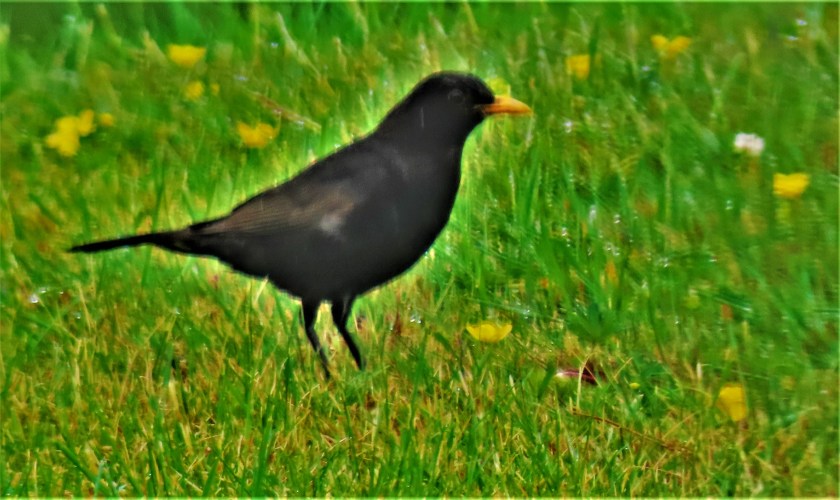
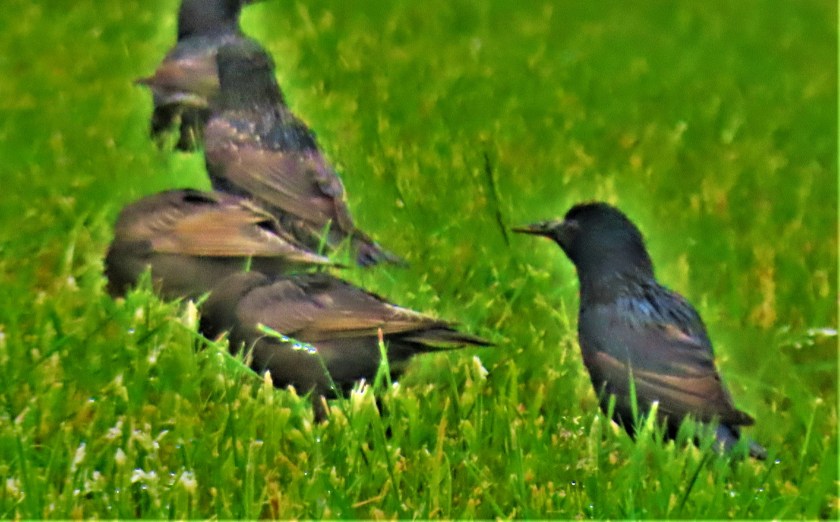
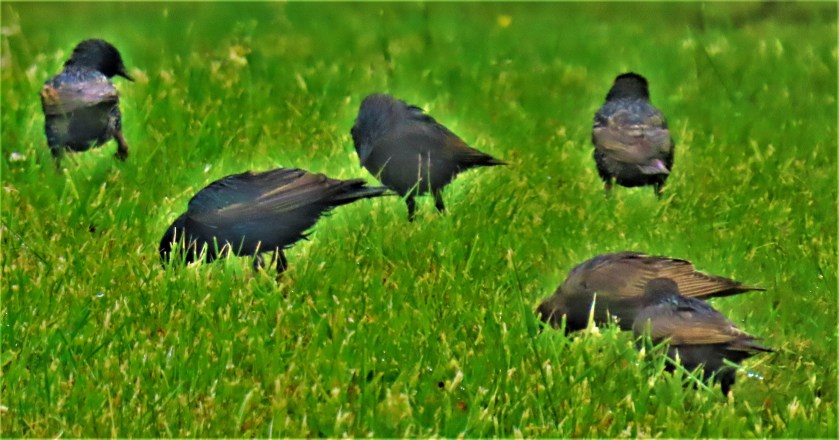
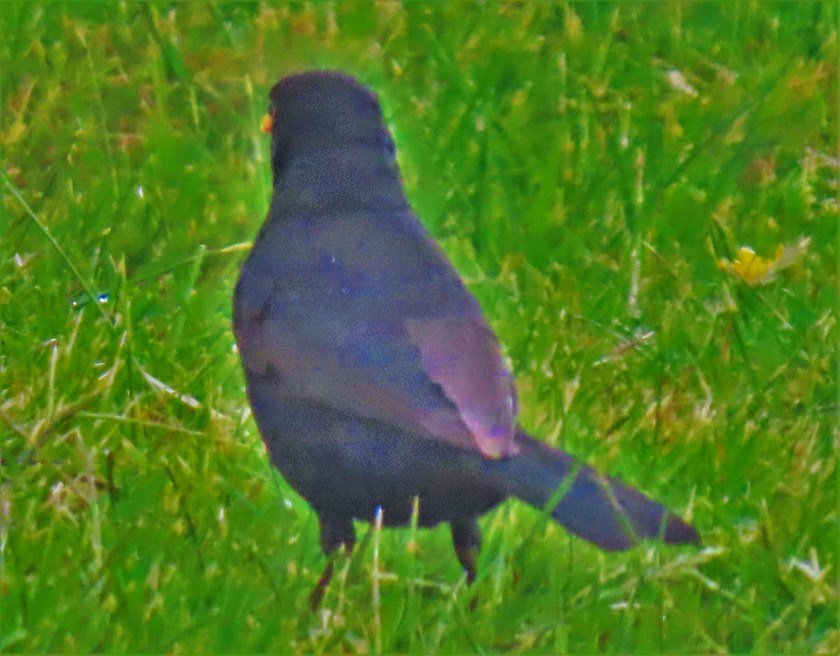
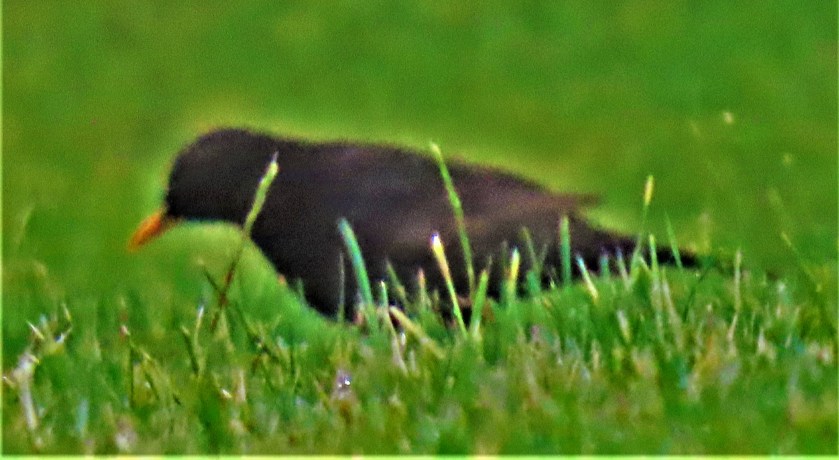
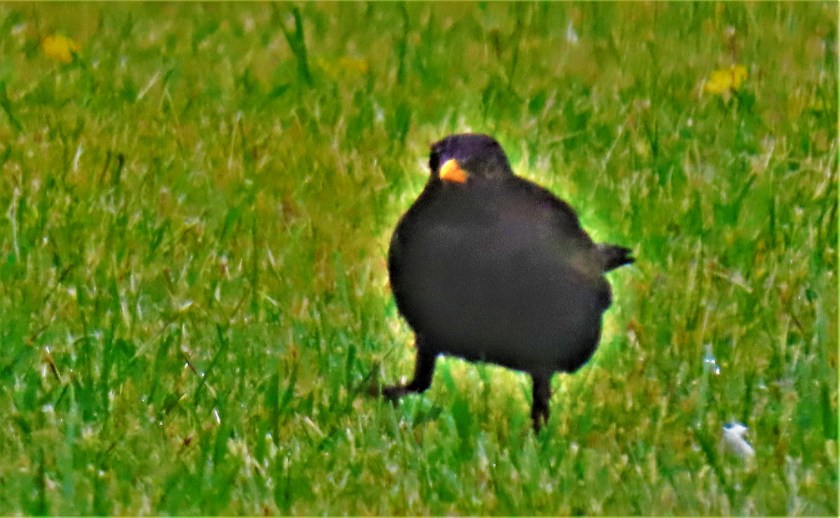
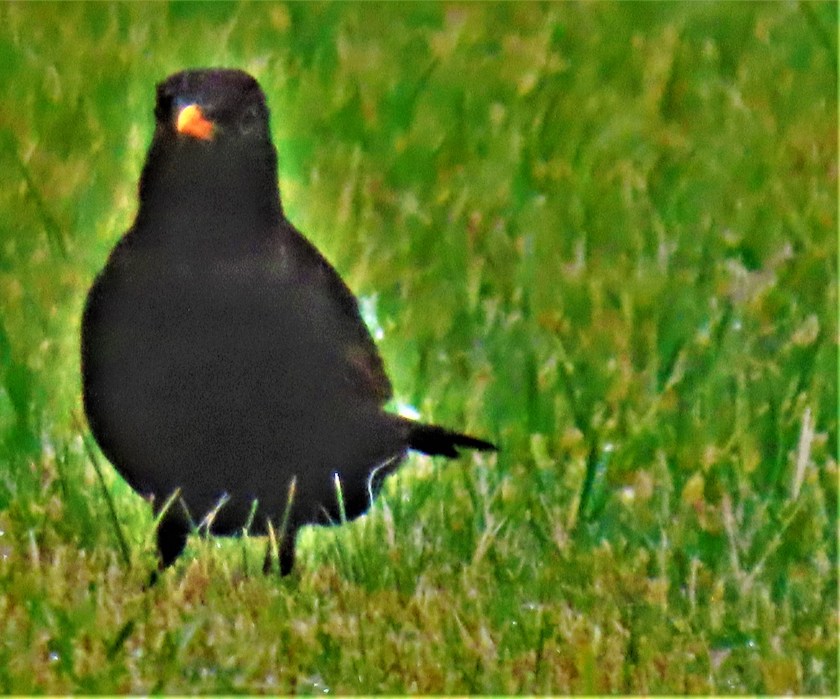
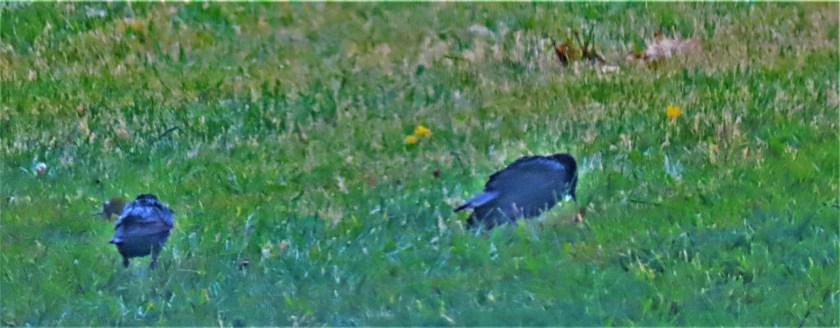
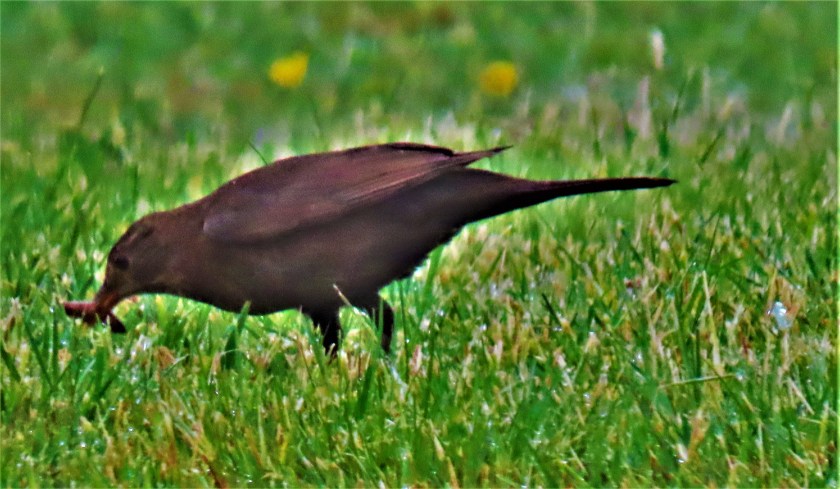
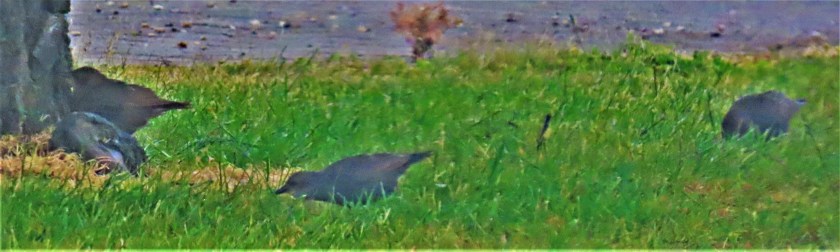
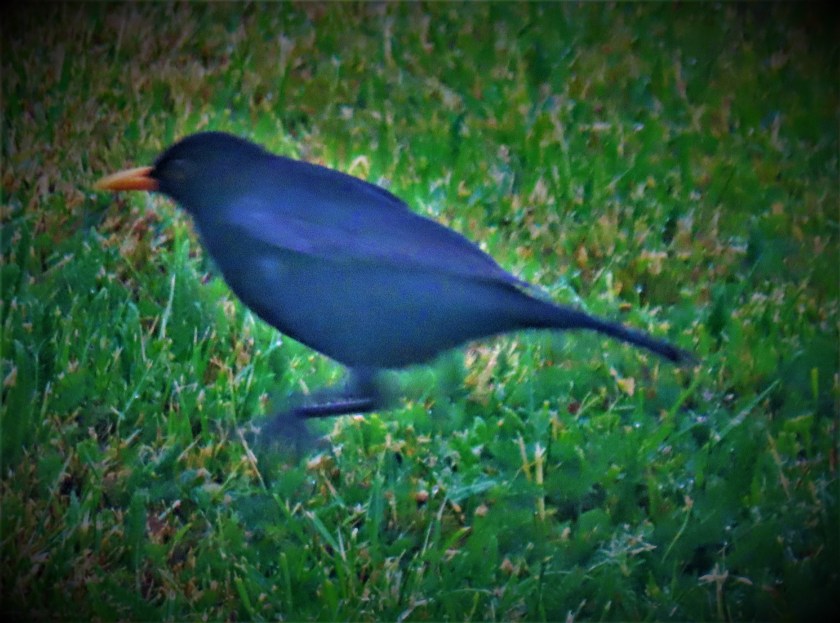
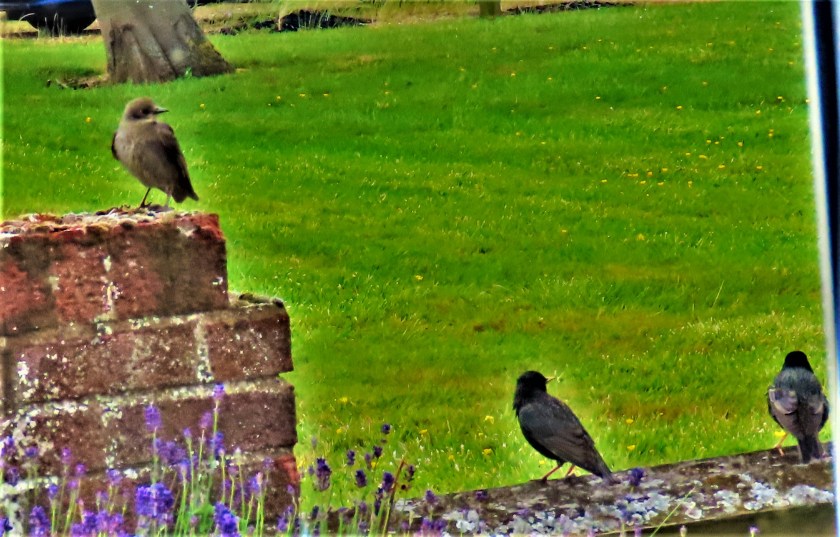
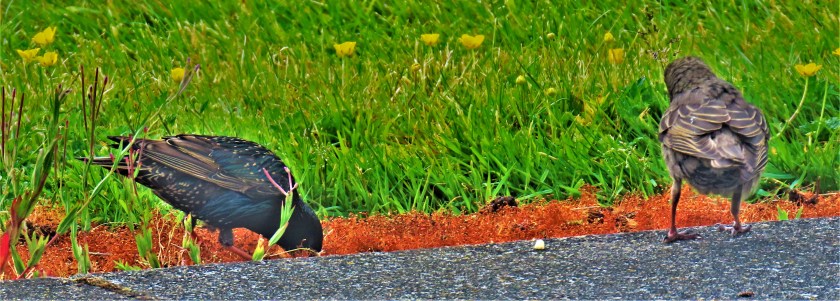
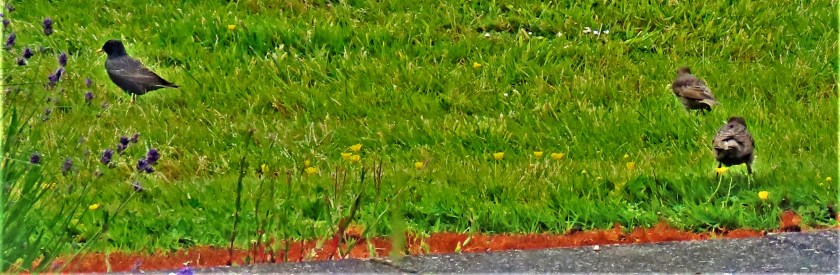
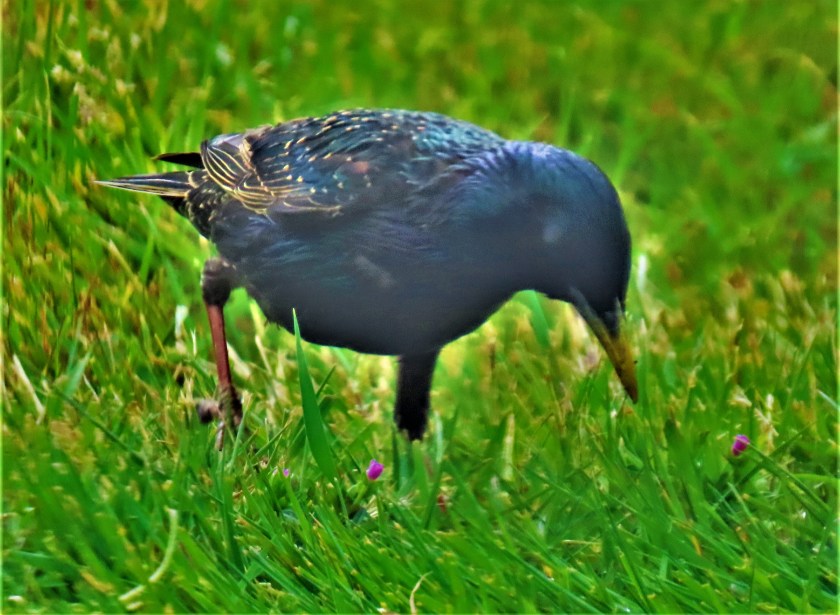
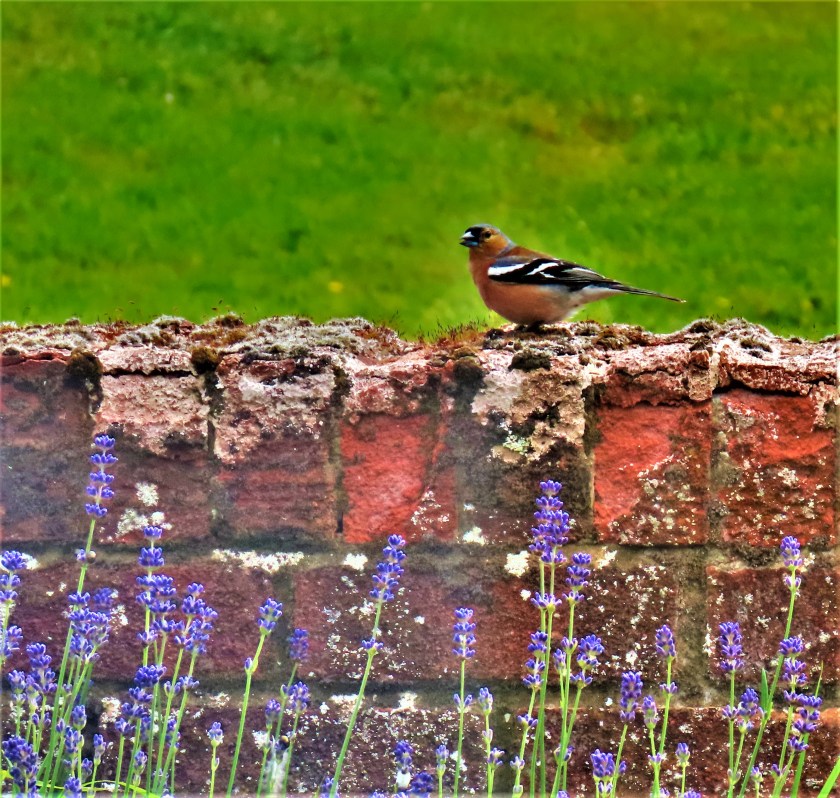
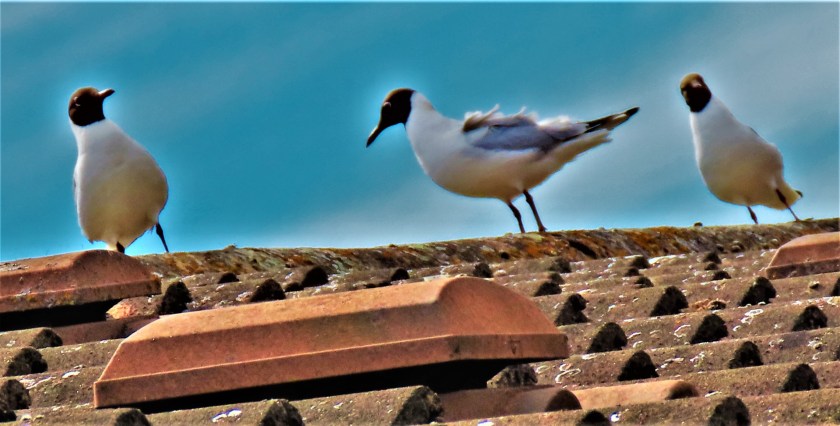
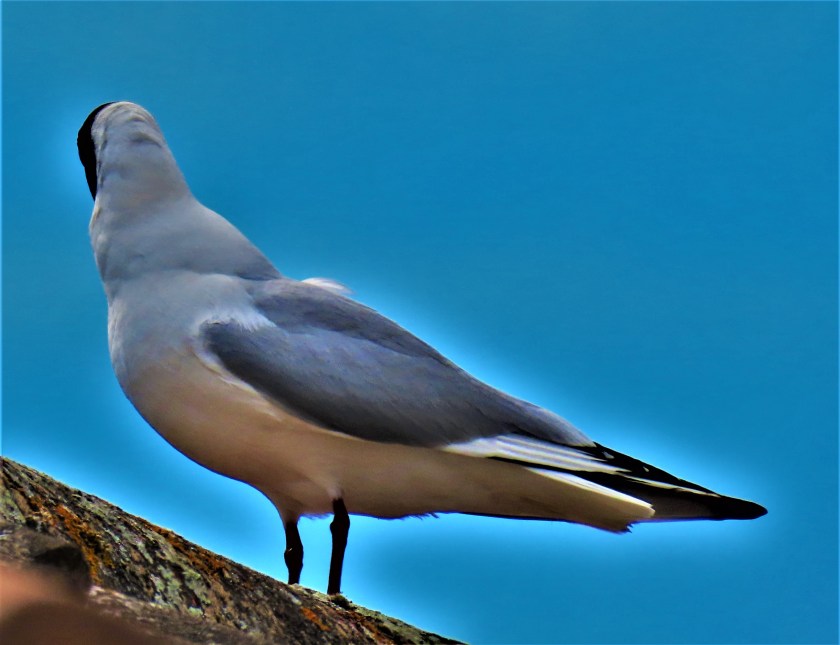
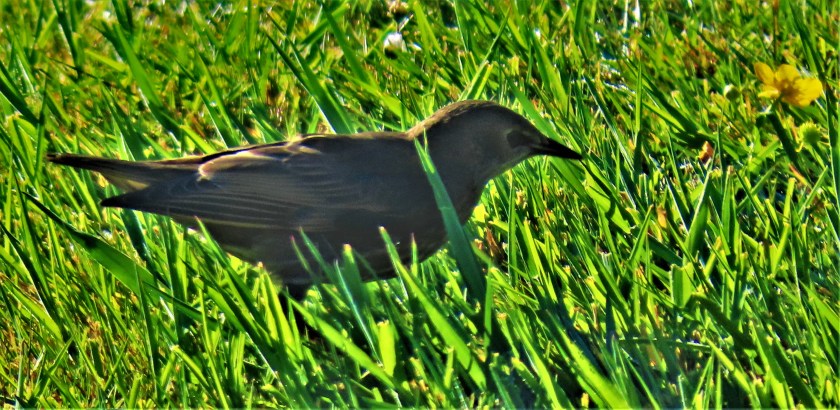
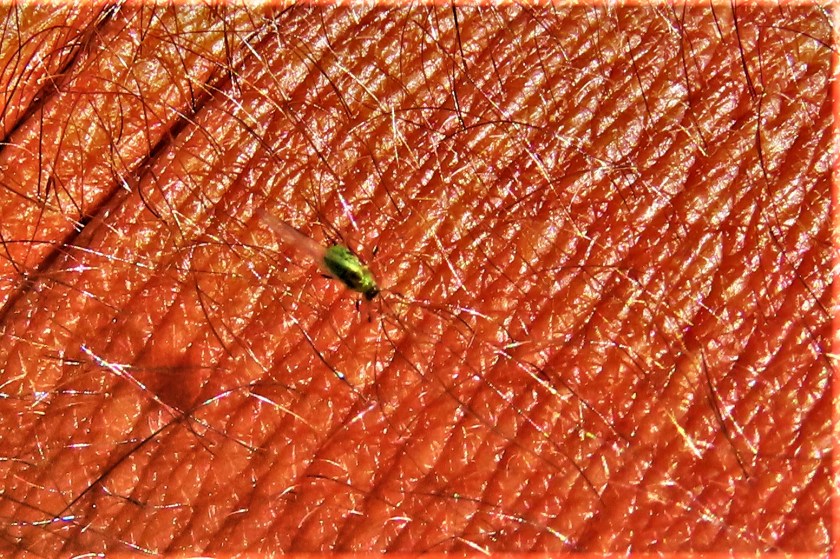
This picture, and the next five after it are of a little bird that I spotted for the first time yesterday and captured on camera. My bird book does not offer a conclusive answer, so I post it here to invite comment.

IMG_0613 (3)IMG_0613 (4)IMG_0613 (5)IMG_0613 (6)IMG_0613 (7)IMG_0614 (2)IMG_0615 (2)

England
The teams in tabulated form.

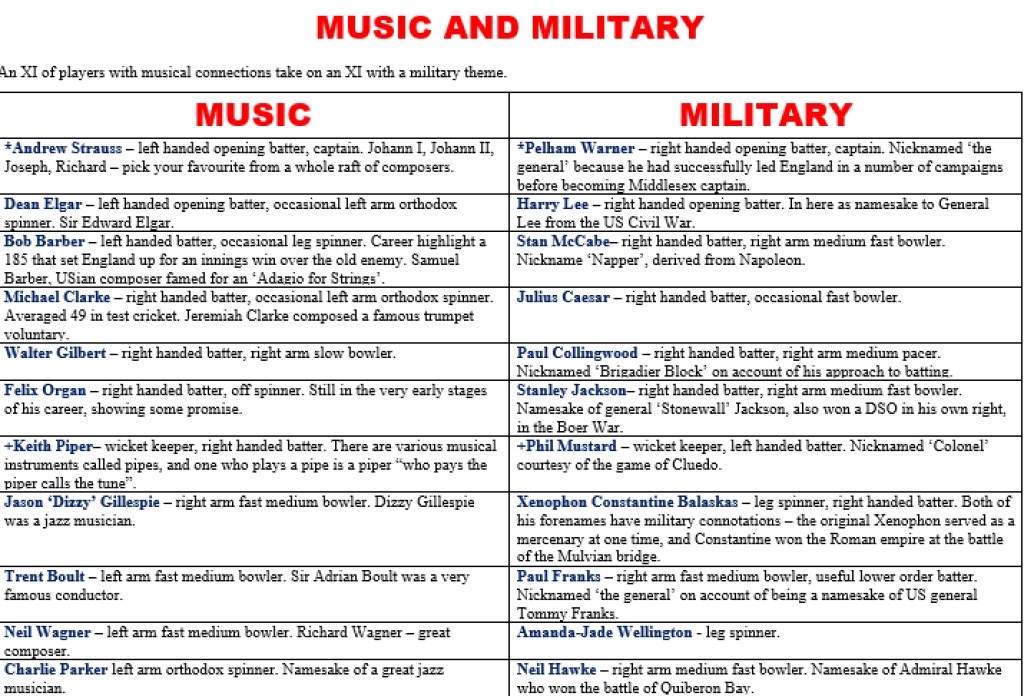
All Time XIs – Music and Military

Today’s ‘all time XI’ cricket post sees two topics beginning with M, music and military, as the themes for our XIs.

INTRODUCTION

Welcome to another installment of my ‘all time XI‘ cricket series. Today we have an XI of players with names that connect to music and an XI with names that connect to military matters.

THE MUSIC XI

  1. *Andrew Strauss – left handed opening batter, captain. The man who captained England to the top of the test world, and who have a very respectable test average. There have been a phalanx of composers named Strauss – Johann I, Johann II, Joseph, Richard etc. Here is a youtube video of Johann Strauss II’s “Blue Danube Waltz”:
  2. Dean Elgar – left handed opening batter, occasional left arm orthodox spinner. Has a fine record for South Africa, though just short of being genuinely top drawer. He gets in here thanks to Sir Edward Elgar. Since openers represent the overture to the innings, here is a youtube video of Elgar’s “Cockaigne Overture”:
  3. Bob Barber – left handed batter, occasional leg spinner. An attacking batter whose greatest innings was played when opening the batting for England in the 1965-6 Ashes – 185 to set up an innings victory. Samuel Barber was a USian composer, best known for his “Adagio for Strings”:
  4. Michael Clarke – right handed batter, occasional left arm orthodox spinner. Averaged 49 in his test career, in spite of a truly horrible series in the 2010-1 Ashes. Jeremiah Clarke was a composer, chiefly known for his “Trumpet Voluntary”:
  5. Walter Gilbert – right handed batter, right arm slow bowler. A cousin of WG Grace whose career ended in sad circumstances. He played a peripheral role in bringing about the first test match to be played on English soil – he and GF Grace strengthened many of the sides against whom the 1880 Aussies, who had arrived under a major cloud, played against, and were impressed by their strength, which they communicated to WG, who was eventually able to persuade the right people that a test match should be arranged. He gets is as name sake to WS Gilbert, the Gilbert of Gilbert and Sullivan.
  6. Felix Organ – right handed batter, off spinner. A very promising youngster, having already scored a century and taken a five for in the course of his fledgling career. He averages 26 with the bat and 15 the ball at the present moment, but his five-for does account for more than half of his tally of first class wickets.
  7. +Keith Piper – wicket keeper, right handed batter. Part of Dermot Reeve’s Warwickshire side that had a brilliant period in the mid 1990s. There are various musical instruments that include the name pipes, and one who plays the pipes is a piper, as in “who pays the piper, calls the tune.”
  8. Jason ‘Dizzy’ Gillespie – right arm fast bowler. The original Dizzy Gillespie was a famous jazz musician:
  9. Trent Boult – left arm fast medium bowler. Sir Adrian Boult was a famous conductor.
  10. Neil Wagner – left arm fast medium bowler. Very different to Boult in approach. He is here as analogue to Richard Wagner, a great composer. Here is a youtube video of “The Ride of The Valkyries”:
  11. Charlie Parker – left arm orthodox spinner. The third leading wicket taker in first class history, with 3,278 scalps at that level. The other Charlie Parker was a jazz musician. Here, again from youtube, is “Ornithology”:

This team has a solid top four, two all rounders, an excellent keeper and four very respectable bowler. Gillespie, Boult, Wagner and Parker backed by Gilbert and Organ, with Barber’s leg spin also available make for a decent and very balanced attack.

THE MILITARY XI

  1. *Pelham Warner – right handed opening batter, captain. He earned the nickname ‘the general’ because by the time he became captain of Middlesex he had led England on several successful campaigns, including the 1903-4 Ashes.
  2. Harry Lee – right handed opening batter. A regular opening partner of Warner at Middlesex. He was once the victim in a very quirky scorebook line, when Middlesex played Somerset – his brother Frank took the catch that dismissed him off the bowling of his other brother Jack. His analogue is General Lee.
  3. Stan McCabe – right handed batter, right arm medium fast bowler. Nicknamed ‘Napper’, which derived from Napoleon.
  4. Julius Caesar – right handed batter, occasional fast bowler. Appropriately given his name he was inclined to the aggressive approach. His playing days were before the era of test cricket, but he did tour Australia in 1863-4. His military namesake can be read about here.
  5. Paul Collingwood – right handed batter, right arm medium pace bowler. His approach to batting earned him the nickname “Brigadier Block”.
  6. Stanley Jackson – right handed batter, right arm medium fast bowler. Hero of the 1905 Ashes, when as England captain he won all five tosses, led England to victory in both the matches that reached a conclusion and topped both the batting and bowling averages. Although it is as a namesake of general ‘Stonewall’ Jackson that I have picked him he also won a DSO in the Boer War.
  7. +Phil Mustard – wicket keeper, left handed batter. Due to his surname and the game Cluedo he was nicknamed ‘Colonel’.
  8. Xenophon Constantine Balaskas – leg spinner, right handed batter. The original Xenophon served as a mercenary soldier, while the most famous Constantine became Roman Emperor after winning the battle of the Mulvian Bridge.
  9. Paul Franks – right arm fast medium bowler, useful lower order batter. Referred to as ‘the general’ because of US general Tommy Franks.
  10. Amanda-Jade Wellington – leg spinner. Yes, on this occasion we have a Napoleon – ‘Napper’ McCabe – and a Wellington on the same side!
  11. Neil Hawke – right arm medium fast bowler. Played for Australia in the 1960s, and had a decent record. His analogue is Admiral Hawke who won the naval battle of Quiberon Bay. His direct descendant, Martin Bladen seventh Baron Hawke, captained Yorkshire for many years, but his playing record did not justify inclusion.

This side has a respectable top five, an all rounder in Jackson, a keeper who could bat and four varied bowlers. There is a lack of genuine pace, and also both front line spinners are leg spinners, but the bowling attack is perfectly respectable.

THE CONTEST

I have to say that, notwithstanding managing to accommodate references to Napoleon and Wellington in the same side for that purpose, the music themed side looks the stronger and I would expect them to win the contest for the ‘John Philip Sousa Trophy’ (he was a composer of military music).

LINK AND PHOTOGRAPHS

DPAC (Disabled People Against Cuts) have produced an official response to Jonathan Reynolds’ (supposedly ‘Labour’) comments on welfare reform. Please click on the screenshot below to see it in full:

DPAC

Now we are ready for my usual sign off…

RS

IMG_0560 (2)IMG_0561 (2)IMG_0562 (2)IMG_0563 (2)IMG_0565 (2)IMG_0566 (2)IMG_0567 (2)IMG_0568 (2)IMG_0569 (2)IMG_0570 (2)IMG_0570 (3)IMG_0571 (2)IMG_0572 (2)IMG_0573 (2)IMG_0574 (2)IMG_0575 (2)IMG_0576 (2)IMG_0577 (2)IMG_0578 (2)IMG_0579 (2)IMG_0580 (2)

MM
The teams in tabulated form.

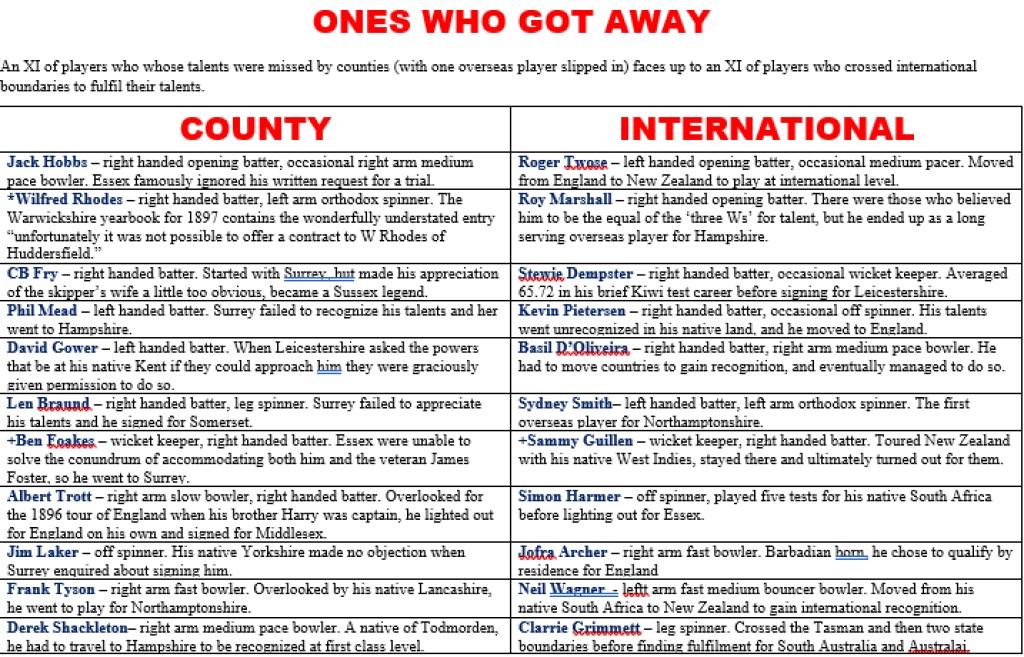
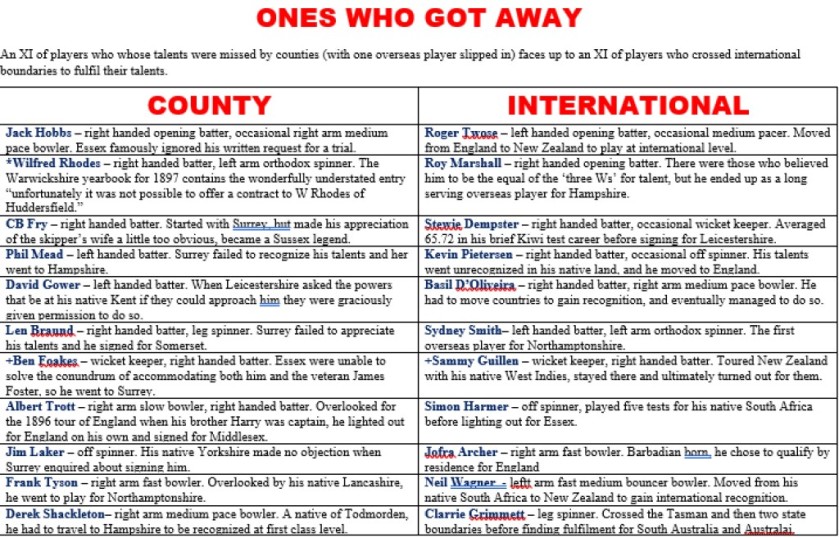
All Time XIs – Ones That Got Away

Today we look at players whose careers caused them to make major moves.

INTRODUCTION

Welcome to another ‘all time XI‘ cricket post. Today our we look at players whose talents were overlooked somewhere along the line, but who came through. We have an XI mainly comprising players who made it big after their first county overlooked them, with an overseas player to boost them and an XI of players who moved countries to make it. A little bit of good news – when TMS live coverage, as opposed to the ‘retrolive’ I am currently enjoying, resumes, it will be without the obnoxious Boycott.

THE ONES THAT GOT AWAY – COUNTY

  1. Jack Hobbs – right handed opening batter, occasional right arm medium pace bowler. While his mentor and fellow Cambridge native Tom Hayward was lobbying Surrey on his behalf the man himself wrote to Essex requesting a trial. The letter was ignored, but thankfully Surrey listened to Hayward. 61,237 first class runs at 50.65 and 197 centuries rather emphatically demonstrates which county got this one right!
  2. *Wilfred Rhodes – left handed batter, left arm orthodox spinner. There is an entry in the Warwickshire year book for 1897 which reads “unfortunately it was not possible to offer a contract to W Rhodes of Huddersfield.” In that same year of 1897 Bobby Peel, the incumbent Yorkshire left arm spinner, disgraced himself and saw his first class career brought to a sudden close. Rhodes was given his chance for his native county, took 13 wickets in the match first time out for them and never looked back. He and Hobbs opened together for England just before World War 1, and on one occasion against the old enemy they put on 323 together to launch the innings, Hobbs first out for 178, Rhodes second out, with the score at 425, for 179.
  3. Charles Burgess Fry – right handed batter. Having grown up in southwest London, albeit attending boarding school in Derbyshire (Repton, where he competed for sporting honours with the Palairet brothers, Lionel who subsequently opened for Somerset and Richard, assistant manager of the 1932-3 Ashes tour party) he began his county career for Surrey. Unfortunately for him and Surrey he took a slightly too obvious shine to the wife of then skipper Kingsmill Key, leading to his departure from the county, and the start of his association with Sussex.
  4. Phil Mead – left handed batter. He began his career with Surrey, where he was considered to be mainly a bowler, and they let him go. He signed for Hampshire, and ended his career with the 4th highest career aggregate of first class runs (55,061) and also 4th highest ever tally of centuries (153) ever assembled.
  5. David Gower – left handed batter. When Leicestershire made enquiries about speaking to a talented teenage left hander his native Kent raised no objections, and David Ivon Gower headed for the east midlands. A few years later at the age of 21 he was making his England debut and announcing his presence at the highest level by hitting his first ball at that level for four and going on to score 58. Later that year he scored his maiden test century, and then that winter his maiden Ashes century, ultimately becoming only the second England batter to reach 8,000 test runs. When he decided to leave Leicestershire, he considered two options, Kent and Hampshire, and for the second time it was Kent who missed out, as he signed for Hampshire.
  6. Len Braund – right handed batter, leg spinner. Like Phil Mead he failed to make a sufficient impression on the folk at The Oval. He headed for Somerset, and after an incident in which he was selected for a game at Lord’s before having served his residential qualifiying period he went on to a distinguished career for both Somerset and England.
  7. +Ben Foakes – wicket keeper, right handed batter. To be unwilling to drop the veteran James Foster to make way for a talented youngster is understandable, but allowing said youngster to fly the coop altogether is less so. Foakes signed for Surrey, and has subsequently played for England, a position that many think should be his as a matter of course, rather than merely for a handful of appearances.
  8. Albert Trott – right arm slow bowler, right handed batter. Overlooked for the 1896 tour of England after a sensational start to his test career (and the captain of that party was his brother Harry) he made his own way to Blighty and signed for Middlesex. In 1899 and 1901 he combined a haul of over 200 first class wickets with a tally of over 1,000 first class runs (an equivalent in today’s shorter FC season would be 100 wickets and 500 runs). He and Wilfred Rhodes were together when the Players completed a dramatic chase of 501 in under seven hours to beat the Gentlemen at Lord’s in 1900.
  9. Jim Laker – off spinner. When Surrey made enquiries about signing a young spinner from Bradford no one up north thought to raise an objection. James Charles Laker duly became a Surrey cricketer, and went on to become the greatest off spinner of the era, and possibly the greatest England ever had, with all due respect to Mr Swann.
  10. Frank Tyson – right arm fast bowler. Lancashire failed to impressed by a young quick bowler, and he headed for pastures new, in this case Northamptonshire. In the next few years Lancashire would discover just what a rick they had made, as Frank Holmes Tyson blazed across the cricketing skies like a meteor. In a final irony Tyson’s greatest cricketing moments came in partnership with Brian Statham of Lancashire.
  11. Derek Shackleton – right arm medium pacer. A reverse of Phil Mead, who was overlooked at The Oval because his bowling was not up to standard. Shackleton was viewed in his native north (he was born and raised in Todmorden) as a batter, his bowling rarely used. He moved south to Hampshire, and after a brief and unsuccessful dalliance with leg spin he reverted to his natural medium pace, and in 1949 achieved his first season haul of 100 first class wickets, a feat he would repeat for every season until 1968, 20 successive seasons in total, ending his career with the eighth highest total of first class wickets ever recorded.

This team has a fine top five, a genuine all rounder in Braund, a great keeper who can certainly bat and a great quartet of bowlers. Tyson and Shackleton would probably combine well as an opening pair, and Trott, Laker, Braund and Rhodes are an excellent looking slow attack.

INTERNATIONAL ESCAPEES XI

  1. Roger Twose – left handed opening batter, occasional medium pace bowler. He played well for Warwickshire but was never able to attract the attention of the England selectors. So when the opportunity to play for New Zealand arose he accepted gratefully. His test record was modest but he did superbly in ODIs.
  2. Roy Marshall – right handed opening batter. When he first appeared on the scene there were those who thought he would be a match for the ‘three Ws’ who dominated Caribbean batting at the time. In the event he signed for Hampshire, and scored stacks of runs for them, his test promise remaining unfulfilled.
  3. Stewie Dempster – right handed batter. A brief but spectacular career for New Zealand, which saw him average 65.72 in 10 test matches ended when he signed for Leicestershire, who he served well for a long period.
  4. Kevin Pietersen – right handed batter, occasional off spinner. Believing that his talents were going unrecognized in his native South Africa he moved to England. With an English mother the qualifying period was less for him than if he had had no connection to England, but still long enough for him to burn his bridges at one county (Nottinghamshire), and it was only after a move to Hampshire that he played for his new country. He top scored in both innings of his debut test, albeit in a losing cause, and at the end of that series played the innings that ensured that England would regain The Ashes. He went on to average just a bit below 50 in test cricket.
  5. Basil D’Oliveira – right handed batter, right arm medium pace bowler. The colour of his skin condemned him to second class status in his native South Africa, but he managed to escape, helped by John Arlott. By the time he was called up for England he was 35 years old, but he still averaged over 40 in test cricket, playing his last match at that level as a 41 year old. The events surrounding the aborted 1968-9 tour of South Africa finally forced people to take notice of the way South Africa conducted itself, and a visit by Bradman in 1971 in which he met with South African leader Vorster and was shocked by the latter’s behaviour and attitudes led to the final banishment of apartheid South Africa, although Ali Bacher and others made misguided efforts on their behalf by doing things like organizing rebel tours, it was only after the abolition of apartheid that South Africa were readmitted.
  6. Sydney Smith – left handed batter, left arm orthodox spinner. He was born in the West Indies, long before they became a test nation. He got to show what he could do in front of wider audience because he qualified by residence for Northamptonshire. He did the double in his first season for them, and enjoyed a most distinguished career for them.
  7. +Sammy Guillen – wicket keeper, right handed batter. He was picked for his native West Indies for a tour of New Zealand, stayed there and ended up playing for them later in his career.
  8. Simon Harmer – off spinner, useful lower order batter. After playing five tests for South Africa he decided to sign for Essex as a ‘Kolpak’, and has rendered them colossal service. He is now qualified by residence for England, but the rise of Dominic Bess, the fact that Amar Virdi is clearly knocking on the door, the presence of spinners of other type such as Leach and Parkinson, and the more distant but visible prospects of the likes of Liam Patterson-White and the all round talents of Lewis Goldsworthy mean that at least as far as I am concerned it would be a retrograde step for him to be selected for England at this stage. This is not intended as a reflection on Harmer, a denigration of his qualities, or least of all a suggestion that people who have started elsewhere should not play for another country. It is his misfortune that he has qualified at the same time as England after a fallow few years have started to develop some serious spinning talent.
  9. Jofra Archer – right arm fast bowler. The Barbadian born fast bowler, inspired by Chris Jordan, decided to try his luck in England. Having qualified by residence for his new country he played a crucial role in its triumph in the 2019 World Cup, including being chosen the bowl the ‘super over’ that settled the final. He subsequently had some great moments in the test arena, and will be part of England’s plans for some years to come.
  10. Neil Wagner – left arm fast medium bowler (mainly bouncers). Another who left South Africa to find fulfillment elsewhere, in his case in New Zealand. He has had considerable success for New Zealand.
  11. Clarrie Grimmett – leg spinner. He had cause for reckoning that he had to move if he was going to make the most of himself as a cricketer – as it happened he was already 38 by the time his native New Zealand gained test status, and in spite of treading a winding road that involved trying his luck in NSW and Victoria before finally breaking through for South Australia, he had been playing test cricket for over five years for his new country. His test career ended when he was not selected for the 1938 tour of England, but he played on in first class cricket until World War Two caused Australian first class cricket to be suspended in 1941.

This team has a good top five, a genuine all rounder at six, a fine keeper and four well varied bowlers. Archer and Wagner should combine well with the new ball, and D’Oliveira and Twose can provide seam back up, while Grimmett, Harmer and Smith are a fine trio of spinners.

THE CONTEST

The contest, for what I shall call the ‘Learie Constantine Trophy’ would be a good one. I certainly could not forecast a winner.

LINK AND PHOTOGRAPHS

I have introduced the concept and the teams, but just before bringing th curtain down I have an excellent video from Alex Collins about the importance of conservation:

Time for my usual sign off…

IMG_0548 (2)IMG_0549 (2)IMG_0549 (3)IMG_0550 (2)

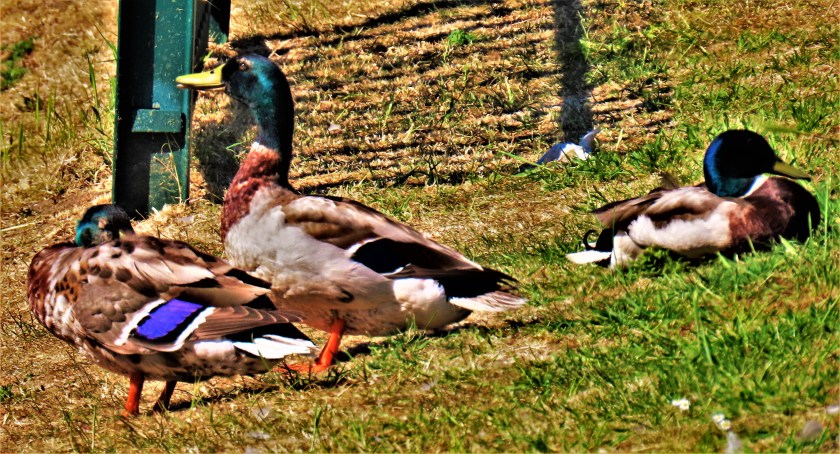
IMG_0552 (2)
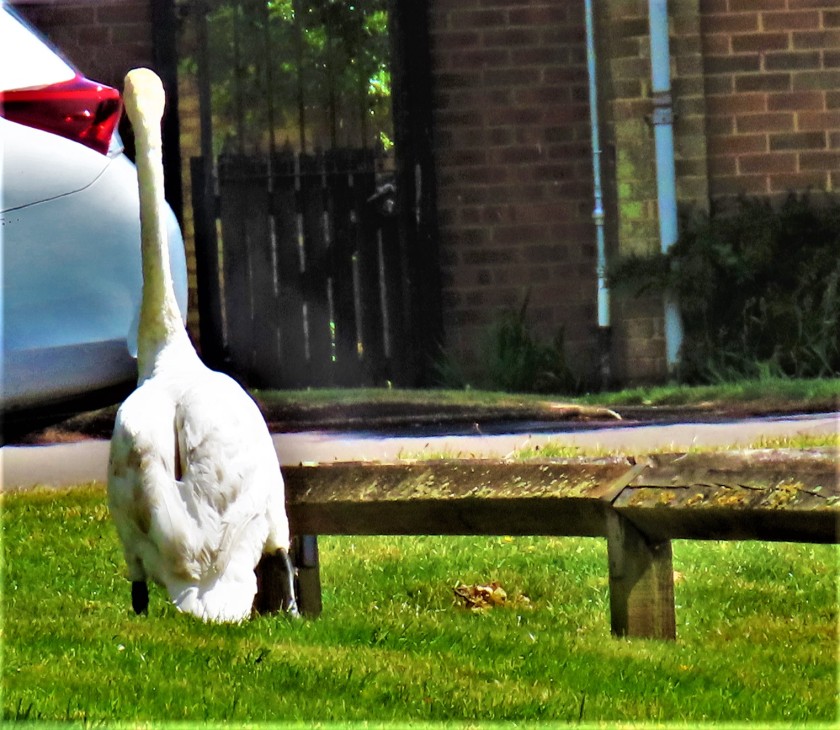
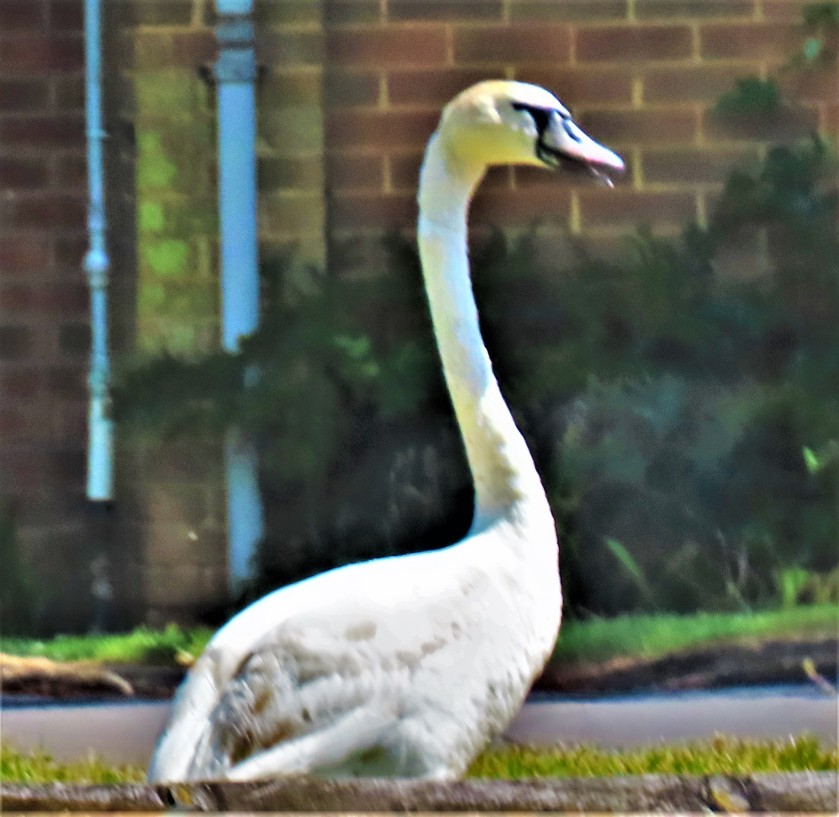
The first time I have ever seen a swan on the patch of grass outside my bungalow. They are much more aquatic in nature than ducks, and walk very inelegantly.

IMG_0553 (2)IMG_0554 (2)IMG_0555 (2)

Ones That Got Away
The teams in tabulated form.


All Time XIs – All Rounders v Specialists

Today’s ‘all time XI’ cricket post pits all rounders against specialists.

INTRODUCTION

Welcome to another variation on an ‘all time XI‘ cricket theme. Today an XI noted for all round talents take on an XI largely made up of specialists (although I have allowed them one all rounder).

THE ALL ROUNDERS

  1. *WG Grace – right handed opening batter, right arm bowler of varying types through his career. He tallied 54,896 runs at 39.55 in first class cricket and took 2,876 first class wickets at 17.92 each. I note two things in defence of his batting average: he played on poor wickets for much of his career, and that career was very long, and went on well past his cricketing prime. In the decade of the 1870s, when he was at his zenith he averaged 49 with the bat, while no one else who played consistently over the course of that decade averaged over 25. If we accept that he would have paid for his wickets and averaged more with the bat playing on good pitches and allow 50% inflation for the effects of the change in pitches then his career figures become a batting average of 59.42 and a bowling average of 26.88.
  2. Wilfred Rhodes – right handed batter, left arm orthodox spinner. His career figures were 39.807 runs and 4,187 wickets, at averages of 30 and 16 respectively, but his career had several distinct periods: he started as pure bowler, batting no 10 or 11, then he moved up into the middle order for a few seasons, batting habitually at 6 or 7, and doing the double regularly (seven successive seasons), then he moved up to the top of the batting order, and on the 1911-2 Ashes tour he was England’s number two in every way – number two in the order, and second to Hobbs in the batting averages. Then, after World War 1, with Yorkshire needing more bowling he picked up his bowling arts, dropped into the middle order (no 5 initially, and moved down as years passed), and he again did the double in the first seven post war seasons. In 1926, now batting at no 8, he returned to the England team at the age of 49 for the Ashes decider at The Oval, and took 4-44 in the second innings. Then came the final stage of his career, when eyesight problems, which eventually became complete blindness late in his life, caused his batting to decline and he played as an out and out rabbit with the bat who was still worth his place as a batter. He went on the 1929-30 tour of the West Indies, playing for his country for the last time at the age of 52 years 165 days, the oldest ever to play test cricket for any country. In 1930 Hedley Verity began his Yorkshire career, and at the end of that season, at the age of 53, Rhodes retired from first class cricket to leave the stage clear for the younger man. A A Thomson wrote a two part book about the ‘Kirkheaton twins’, titled simply “Hirst and Rhodes”.
  3. Frank Woolley – left handed batter, left arm orthodox spinner, close fielder. 58,969 first class runs at 40.75, 2,068 wickets at 19.85 and 1,018 catches (the only player ever to achieve this treble, and indeed the only outfielder ever to take 1,000 first class catches. The 1906 Wisden said of Woolley after his debut season that “it is doubtful whether he is robust enough to enjoy a really long career.” He only lasted 32 years, up to the end of the 1937 season!
  4. Wally Hammond – right handed batter, right arm medium fast bowler, ace slip fielder. 50,551 first class runs at 56.10, 732 wickets at 30.58, 820 catches. He lost two seasons of his early career, one to bureaucratic malice (Lord Harris, a stickler on matters of qualification, and dedicated to Kent, noted Hammond’s Dover birthplace, and that school – Cirencester Grammar – did not technically count as residence, and caused this hiatus), and one to a mysterious illness picked up in the Caribbean, and six seasons of his later career to World War II, so his figures might have been ever more remarkable.
  5. Garry Sobers – left handed batter, left arm bowler of every type known to cricket, fine fielder. 28,314 first class runs at 54.87, 1,043 wickets at 27.74, 407 catches. The most complete all rounder the game has ever seen. Like Rhodes he started his career as a left arm spinner who did not really bat. Unlike Rhodes having climbed up the order he never went right back down, although he was moved down from three to six when his captain Frank Worrell noted that he and Rohan Kanhai were not combining very well and split them up.
  6. +Les Ames – wicket keeper, right handed batter. 37,248 runs in first class cricket at 43.51, 703 catches and 418 stumpings. The only wicket keeper ever to score 100 first class hundreds.
  7. Gilbert Jessop – right handed batter, right arm fast bowler, ace fielder. 26,698 first class runs at 32.63, 873 wickets at 22.79, 407 catches. A contemporary assessment of his fielding had it worth 20-30 runs per innings. He scored 53 first class innings, five of them doubles, with a best of 286, and only once in his career did he spend over three hours at the crease. For most of his career a ball had to go right out of the ground to score six, otherwise his record would have been even more extraordinary. He was once involved in a partnership of 66 to which he contributed…66 – the highest such partnership in first class cricket history. 
  8. George Hirst – right handed batter, left arm fast medium bowler. 36,356 first class runs at 34.13, 2,742 wickets at 18.73. In each of 1904 and 1905 he achieved the 2,000 runs, 100 wickets double, only previously achieved by WG Grace, Charles Townsend and Gilbert Jessop, though matched in 1905 by the Aussie Warwick Armstrong, and then in 1906 he became the only player ever to the ‘double double’, scoring 2,385 runs and taking 208 wickets in first class matches. Every season from 1903-13 inclusive he scored at least 1,000 runs and took at least 100 wickets in first class matches. He went on to be a successful coach, first at Harrow, then for Yorkshire. He was at the Yorkshire nets when Trueman had his first bowl there, and when others were fretting over the youngster’s wildness Hirst said coolly “just imagine what he will do when he teach him to bowl straight”, correctly realizing that pace cannot be taught but accuracy can.
  9. Maurice Tate – right arm fast medium, right handed batter. 2,784 first class wickets at 18.16, 21,616 first class runs at 25.04. Other than Hirst’s 1906 ‘double double’ only two cricketers have ever combined a season tally of 1,000 first class runs with 200 wickets, and he is one of them. He relied on swing and cut, being the first bowler to make really devastating use of the sea fret at Hove – usually the flatness of the pitches there emasculated bowlers.
  10. Albert Trott – right arm slow bowler, right handed batter. 1,674 first class wickets at 21.09, 10,696 runs at 19.48. The first of only two members of this team to have averages the wrong way round. In 1899 and 1901 he combined over 200 wickets with over 1,000 runs in first class matches. However, his decline was rapid thereafter as an obsession with repeating his 1899 feat of hitting a ball over the Lord’s pavilion negatively affected his batting and his bowling lost its fizz, and somewhere along the line he completely lost the fast yorker that was such a devastating weapon in his armoury. His first misfortune occurred when after making a sensational start to his test career he was not picked for the 1896 tour of England, and made his own way to that country, ultimately signing for Middlesex. He seemed to have put the disappointment behind him by the time another Aussie side visited in 1899, but then came that shot of Monty Noble, and its subsequent effect on his batting.
  11. Peter Smith – leg spinner, right handed batter. 1,697 wickets at 26.55 , 10,142 runs at 17.95 in first class cricket. He achieved the season’s double for the first time in 1947, and it was in that season that he had his greatest batting moment. In the game before his big day out he had batted at no 10 and bagged a pair, so he had seemingly little cause for complaint at being made no 11 for the game against Derbyshire. The ninth Essex wicket fell at 199 and he walked out to join Frank Vigar. By the time he was out the score had risen to 417, and his share of that stand of 218 was 163, with five sixes and 23 fours, the highest first class score ever made by a no 11.

This team has an excellent top five, statistically the best batter keeper there has ever been, the ultimate x-factor player in Jessop and a fine foursome who are there principally as bowlers. Counting Sobers as three options because of his multiplicity of styles there are 12 front line bowling options in this team.

THE SPECIALISTS

  1. Jack Hobbs – right handed opening batter. 61,237 first class runs at 50.65. Both this tally of first class runs and his 197 centuries are first class records, and he lost four years of his cricketing prime to World War 1. His entry into first class cricket was also slightly delayed because he was a native of Cambridge and had to qualify by residence for Surrey (after someone at Chelmsford apparently binned his letter asking for a trial without having read it).
  2. Herbert Sutcliffe – right handed opening batter. 50,670 first class runs at 52.02. The only player to score at least 2,000 first class runs in every inter-war season. He and Jack Hobbs were statistically the most productive of all test opening partnerships, the average opening stand between them being 87.81 per wicket, including 15 century opening stands.
  3. *Don Bradman – right handed batter. 28,067 runs at 95.14 in first class cricket. In his 338 innings he reached 50 186 times and went on to the century on 117 of those occasions, an average of a century per 2.78 innings, a figure not remotely approached by anyone else who played enough innings to qualify for assessment. 37 times he topped 200, an all time first class record, and on six of those occasions he scored over 300, the only player have more than four such first class scores (Hammond and Ponsford joint 2nd).
  4. Phil Mead – left handed batter. 55,061 runs at 47.67. His Hampshire tallies of 48,809 runs and 138 centuries are both records for any single first class team. He was originally associated with Surrey, and considered to be mainly a bowler, but moved to Hampshire and ended up as one of the heaviest scoring batters of all time.
  5. Patsy Hendren – right handed batter. 57,611 runs at 50.80. The third leading first class run scorer of all time, and second leading centurion with 170. He did all of this while having a reputation for being a great joker and prankster, just to show that one can be a highly successful player while remembering that it should be fun.
  6. Keith Miller – right handed batter, right arm fast bowler. 14,183 first class runs at 48.90, 497 wickets at 22.30. Another who always realized that it should be fun. He served as an RAAF pilot in World War Two which led to his famous response to a question about pressure “There is no pressure in cricket – pressure is being in a Mosquito with two Messerschmidts up your arse.”
  7. +Bob Taylor – wicket keeper. He took 1,473 first class catches and executed 176 stumpings, totalling the most dismissals ever achieved by any keeper in first class cricket (two London based cricketers, John Murray and Herbert Strudwick are 2 and 3 on the list). Until he finally scored his maiden first class hundred near the end of his career he was in a club of two with Tony Lock – players who had over 10,000 first class runs, but no first class hundred (Lock’s highest score was 89 not out).
  8. Alec Kennedy – right arm medium fast bowler. 2,874 first class wickets at 21.23. He was seventh in the all-time list of first class wicket takers, and the only one of those seven not to be in Philippe-Henri Edmonds’ “100 Greatest Bowlers”. For many years he and Jack Newman (see yesterday’s post) carried the Hampshire bowling, until left arm spinner Stuart Boyes came along to lighten their workload a bit.
  9. Jack Hearne – right arm medium fast bowler. 3,061 first class wickets at 17.75 each. Number four in the list of all time wicket takers, a haul that included nine in an innings no fewer than eight separate times.
  10. Tich Freeman – leg spinner. 3,776 first class wickets at 18.42, taken in 550 first class games. Second on the all-time list of wicket takers behind Rhodes. Remarkably a combination of World War 1 and the strength of Kent’s bowling in his youth meant that by the time he turned 30 he had captured precisely 29 first class wickets. He took 200 or more wickets in each of eight successive seasons, including the only ever instance of 300 (304 in 1928).
  11. Charlie Parker – left arm orthodox spinner. 3,278 first class wickets at 19.46. The third leading wicket taker in first class cricket. Six times in first class cricket he achieved the hat trick, most remarkably in his benefit match when he hit the stumps five times in succession but the second was called no-ball.

This team has a stellar top five, a great all rounder, a great wicket keeper and four excellent and varied bowlers. The bowling with Kennedy, Hearne, Freeman and Parker with Miller as fifth option also looks highly impressive.

HONOURABLE MENTION

Every single batter to have scored over 50,000 first class runs is present in one or other of my teams, and numbers 1,2,3,4,6 and 7 of the all time leading wicket takers are also represented. No 5 in that list is Tom Goddard, the Gloucestershire off spinner who took 2,979 first class wickets at 19.84. For reasons of balance I had to select Kennedy, otherwise my only recognized pace options would have been Hearne and Miller, which is a bit too rich even for my blood.

THE CONTEST

This would be an absolute cracker of a contest. From no 3-11 inclusive the all-rounders team has a combined batting average of 280.95, while for different reasons it is hard to quantify Grace and Rhodes as openers. It would seem likely given their records when they were at their best as openers that these two would contribute sufficiently to make a team total of 400 more likely than not. The top six of the specialists team have a combined average of 344 in first class cricket, so nos 6-11 would have to come up with 50-60 between them to equalize things on this assessment. Without Bradman the specialists would have no chance whatsoever, with him it looks very even. I will call the trophy for this contest the ‘Martin – Stokes Trophy’, honouring two New Zealand born cricketers, one of the great specialists, that purest of pure bowlers Chris Martin, and a great all rounder in Ben Stokes.

AFTERWORD

For all that I would expect my side of all rounders to give a good account of themselves I most emphatically do not recommend selecting a fistful of all rounders in general. Especially I would warn of the curse of the ‘bits and pieces’ cricketer – the player who can bat a bit and bowl a bit but is not good enough at either to warrant selection. In general someone should only be picked if they merit selection as a specialist – and if they have a second string to their bow so much the better. The other problem that I did not highlight in connection with the all rounders side is that teams that bat literally all the way down often end up struggling because folk in such teams tend to develop the feeling that it is not likely to matter much if they do get out. I have memories seared in to me of England teams in the 1980s and 1990s picking bowlers who could bat a bit, and ending up neither able to score commanding totals nor to bowl the opposition out.

PHOTOGRAPHS

My usual sign off…

IMG_0510 (2)IMG_0511 (2)IMG_0512 (2)IMG_0513 (2)IMG_0515 (2)IMG_0516 (2)IMG_0517 (2)IMG_0518 (2)IMG_0519 (2)IMG_0520 (2)IMG_0521 (2)IMG_0522 (2)IMG_0523 (2)IMG_0524 (2)IMG_0526 (2)IMG_0527 (2)IMG_0528 (2)IMG_0530 (2)IMG_0536 (2)IMG_0537 (2)IMG_0538 (2)IMG_0539 (2)IMG_0540 (2)IMG_0541 (2)IMG_0542 (2)IMG_0543 (2)IMG_0544 (2)IMG_0545 (2)IMG_0546 (2)

All Rounders v Specialists
The teams in tabulated form.


All Time XIs – DRS and Umpiring Controversies

Today we have a fruity ‘all time XI’ #cricket themed post and an excellent autism related thread by Pete Wharmby.

INTRODUCTION

Welcome to the latest installment in my ‘all time XI‘ cricket themed series of blog posts. Today’s will require a bit of explaining, but before that there are a couple of matters in connection with yesterday’s post…

A HAT TIP AND A CORRECTION

In yesterday’s image showing the teams in tabulated form I has failed to change their names, so instead of the columns being headed “Playing Cards” and “Alliterative” they read “London” and “The North”, the names of the previous day’s teams. I noticed that this morning when creating today’s tabulated list. Within moments of my teams coming out yesterday Oliver Martens on twitter had come up with the name of Devon born Warwickshire and New Zealand left handed batter Roger Twose (pronounced twos) for the Playing Card XI, an ingenious suggestion. With a career FC average of almost 39 Twose rates above Collis King, and he could be accommodated by splitting the all right opening pair of Hobbs and Robertson, making the Playing Card XI read: Jack Hobbs, Roger Twose, Jack Robertson, Ryan ten Doeschate, Jack Mason, Jack Gregory, John King, Jack Board, Bart King, Jack Walsh and Jack Saunders. Well played, Oliver.

TODAY’S BRIEF

The two teams in action today are called DRS Burners, containing players who would be well advised not to use DRS, strengthened in the middle order by a couple of characters from earlier in the game’s history whose conduct suggests that they may not have been the best users of DRS (middle order batters often don’t get to burn up reviews because the openers have already done so) and the Rule Stretchers, players who have stretched the rules as far as they will go, to say nothing of beyond, and/or have been involved in ructions with officialdom.

THE DRS BURNERS XI

  1. Chris Gayle – left handed opening batter, occasional off spinner. The worst of his many failed reviews was at Brisbane in 2009 when he sent an LBW upstairs and the replay showed to the surprise of nobody other than possibly Gayle himself that the ball would have hit plumb in the middle of middle stump – as out as it is possible to be.
  2. Shane Watson – right handed opening batter. In some circles he is referred to as LBWatson because of both the frequency with which he suffered that mode of dismissal and the frequency with which he sent it upstairs only to discover it was stone cold out – usually hitting middle and leg.
  3. Ricky Ponting – right handed batter. He earned his place in this side at the MCG in 2010 when he had an onfield bust up with Aleem Dar over a decision that most of his team mates were not bothered by, for the very simple reason that Mr Dar had quite clearly got it right. Ponting saw a white mark, nowhere near either bat or ball, on the hot spot replay on the big screen, and his subsequent display of temper, which rivalled that over his run out by Gary Pratt in 2005, cost him 75% of his match fee.
  4. Greg Chappell – right handed batter, occasional medium pacer (leg spinner earlier in his career), fine slip fielder. He gets in for the first of two incidents involving him in an ODI against New Zealand. He was on 52 when he declined to accept Martin Snedden’s word that he had taken a catch in the deep. It happened that neither umpire had seen the incident, and in the words of one reporter on that match “they gave Chappell the benefit of their ignorance”. The replays showed that Snedden’s word had been pretty good. Chappell went on to reach 90. However this misdemeanour was overshadowed by his subsequent action when Brian McKechnie needed to hit a six of the final ball to force a tie and he instructed his brother Trevor to roll the ball along the ground to prevent that from happening. This provoked a typically hamfisted response from the powers that be, outlawing all underarm bowling. I have explained elsewhere how underarm bowling both of the Simpson-Hayward type and the more vigorous David Harris type could be legalized while running no danger of a repeat of this incident.
  5. *Faf Du Plessis – right handed batter, captain. He gets in for his repeated handling of the ball during his last test innings. England complained about his behaviour, but as far as I am concerned they should simply have appealed against him and left him to nurse any grievance he felt over being thus dismissed while sat in the pavilion.
  6. Tiger Lance – right handed batter, right arm medium pacer. This time we have an incident where a member of the Chappell family was the victim. Ian, the eldest brother, hit one which went to Lance, asked that worthy if he had caught it and on receiving an answer in the affirmative headed for the pavilion. A team mate of Lance asked him if was sure about it and Lance replied “he didn’t ask if it had bounced”, earning his place in this side.
  7. +Tim Paine – wicket keeper, right handed batter. Among the many misjudgements he as fielding captain perpetrated over when to use DRS there was one that assisted England to bring off the ‘Headingley Heist’ of 2019 – he sent an LBW appeal that had been turned down against Stokes upstairs, the ball was quite clearly wide and going on to miss, and a few minutes later he was unable to send another LBW decision upstairs which would have been resolved in his favour had not burned the review.
  8. Stuart Broad – right arm fast medium bowler. One who does not die wondering. Fortunately his captains have been as well aware of his over optimism in the matter of appeals as the rest of us so he has not actually burned up all that many reviews, but the intent has been there.
  9. Mitchell Starc – left arm fast bowler. Reviewed an LBW against him at the end of an ODI innings, but realized that it was so absolutely plumb that he did not bother to wait for confirmation.
  10. Kagiso Rabada – right arm fast bowler. Has recently served a test match suspension for accumulated demerit points.
  11. Monty Panesar – left arm orthodox spinner. Another who would have burned a stack of reviews given the opportunity but whose captains realized that he was seriously over-optimistic when it came to appealing.

This side has a strong top five, an all rounder, a keeper who can bat and four fine bowlers. Spin options are thin on the ground, but it is a decent side, though it would likely keep the match referee busy!

THE RULE STRETCHERS XI

  1. Chris Broad – left handed opening batter. Some of his responses to being dismissed were decidedly unsavoury, including a stump demolishing act in Lahore, and various very slow and reluctant departures. He subsequently turned game keeper, becoming a match referee in later years.
  2. *WG Grace – right handed opening batter, right arm bowler of various styles through his career. The only possible candidate for the captaincy of this particular XI. Stories of him stretching the rules to the absolute limit are legion, one such playing its part in the creation of The Ashes. In Australia’s second innings Sammy Jones left his crease to pat down a divot in the pitch, and Grace whipped the bails off and appealed, and since the ball had not been called dead umpire Bob Thoms raised the finger. This revved ‘the Demon’, FR Spofforth up to a pitch of near homicidal fury, and England needing 85 to win were bowled out for 77 to lose by seven runs. There were many other such incidents in the course of his long career.
  3. Frank Woolley – left handed batter, left arm orthodox spinner, close fielder. On one occasion he took so long to leave the crease after being given out that the umpire reprimanded him, prompting Woolley to explain “I was not disputing your decision, I just could not believe that such an awful bowler could get me out twice.”
  4. Colin Cowdrey – right handed batter, slip fielder. He was a self proclaimed ‘walker’, i.e someone who would give himself out without waiting to be told. However, there is a fair amount of evidence that he exploited this reputation to his own benefit, on occasions declining to walk because he knew that his reputation would make umpires reluctant to give him out. There is a big question mark over ‘walking’ anyway, because it was generally ‘amateurs’ who did it, implying that they knew what was going on better than the umpires, who were usually former professionals. If you are going to walk, then you cannot pick and choose your moments, you must do it every time. Personally I would say wait for the umpire’s decison, but once that finger is raised against you do not hang around.
  5. Bill Alley – left handed batter, right arm medium pacer. After a very long and quite distinguished playing career he became an umpire. There are a couple of stories, or possibly two versions of the same story, from the career of Alley the umpire that suggest he got up to his share of mischief as a player: version 1 features newly minted umpire Alley spotting a youngster tampering with the ball and telling him “no, this is how you do it” and providing a demonstration. Version 2 has Alley seeing the ball near the end of an over and saying to the young bowler “you’ve don a good job on this one, if you don’t get seven-for with it I am reporting you.”
  6. Vinoo Mankad – right handed batter, left arm orthodox spinner. He was the first bowler in test history to run out a non-striker for backing up too far, a mode of dismissal that now bears his name. My own view is that a non-striker trying to gain an advantage by leaving their ground early and being spotted by the bowler deserves to be run out, and I refuse to sympathise with the batter who is thus dismissed, although I accept that a bowler who deliberate pauses before going into their delivery stride in an effort to lure the non-striker out of their ground is going too far. If anyone on the opposition side is to be ‘Mankaded’ I would want it to be Ponting – his reaction would be something to behold.
  7. +Saleem Yousuf – wicket keeper, right handed batter. During Pakistan’s 1987 visit to England he claimed a catch when the ball had very obviously bounced well in front of him. The batter who waits for the finger to be raised is merely declining to plead guilty, whereas the fielder (or in this case keeper) who claims that catch in full knowledge that the ball has bounced is more in the position of someone faking evidence for the prosecution.
  8. Cec Pepper – leg spinner, right handed lower middle order batter. One of the best cricketers to not be picked for his country, the reason he suffered that fate is that he lost his cool with an umpire after that worthy turned down three successive confident LBW shouts by him against Don Bradman. He subsequently moved to England, became a Lancashire League pro and after that a highly respected umpire.
  9. Jack Newman – right arm fast medium, useful lower middle order bat. He once had an on field blow up which led to his captain, Lionel Tennyson, sitting him down and dictating a letter of apology to be sent to the umpires and the opposing captain. However, having seen to it that Newman produced an appropriate written apology Tennyson then proceeded to give him £5, not a negligible gesture in the 1920s, and one that suggests he recognized that Newman was not entirely at fault.
  10. John Snow – right arm fast bowler. He famously failed to see eye to eye with umpire Lou Rowan on the 1970-1 tour of Australia. The worst incident, at Sydney, reflects extremely poorly on Rowan. Terry Jenner, no 8 for Australia, but by no means a bunny with the bat, ducked into a short of a length ball and was hit in the face. Rowan after a short pause gave Snow a warning for intimidatory bowling, and the crowd subsequently bombarded the field with bottles and cans. As well as Rowan’s mishandling of the Jenner incident, England were frustrated by the fact that not a single Aussie was given LBW in that series. Also, after a test match at Melbourne was washed out without a ball being bowled, leading to the staging of the first ever ODI, England manager David Clark agreed without consulting skipper Illingworth or the players to the addition of another test match to the schedule, which made that the first and only test series to feature a seventh match (six had been scheduled right from the get go).
  11. Colin Croft – right arm fast bowler. Right at the start of the 1980s the West Indies suffered what would be their only series loss of the whole decade, in New Zealand, when the hosts sneaked home by one wicket in the only decided match. Colin Croft got so frustrated with the umpiring of Fred Goodall, which does indeed seem to fallen badly short in either competence, impartiality or both that at one stage he barged into him and sent him flying. In that same series Michael Holding kicked the stumps over in response to a poor decision.

This team features a strong top five, a genuine all rounder, a keeper who can bat and four excellent bowlers. The bowling also looks impressive, with Croft, Snow and Newman excellent pace options, Pepper and Mankad to bowl spin, and WG and Bill Alley both quite capable of taking a turn at the bowling crease.

THE CONTEST

This would be a very hard contest for umpires and match referees, but I think that the extra bowling strength of the Rule Stretchers XI would see them victorious. In acknowledgement of a famous incident not commemorated in my selections, and the fact that the two players I thus name definitely did not see eye to eye I will call the trophy for this one the Bradman-Hammond trophy. The incident in question happened in the first test of the 1946-7 Ashes, supposedly a goodwill tour except Bradman did not get the memo. Bradman had reached 28 without showing any great authority when he sent a ball shoulder high to Jack Ikin at second slip. Ikin did not appeal at first purely because he did not think it necessary – it was a high and clear catch. Bradman stood his ground, and when England finally did appeal it was turned down. Cliff Cary, himself an Australian, in “Cricket Controversy”, his account of that tour, makes it abundantly clear that Bradman should have been given out. Hammond’s immediate response was to comment “A fine ****ing way to start a series”. Bradman went on to make 187, Australia to tally 645 and England were then caught on a sticky following a tropical storm. Had Bradman been given out England would have batted before the storm hit, Bradman’s second innings would probably have happened on the sticky, and he might well have called it a day.

A LINK AND PHOTOGRAPHS

Pete Wharmby has produced an excellent twitter thread about autistic students and returning to school after lockdown. Please click on the screenshot below to visit the full thread:

Wharmby

Now it is time for my usual sign off…

IMG_0478 (2)IMG_0479 (2)IMG_0480 (2)IMG_0481 (2)IMG_0482 (2)IMG_0483 (2)IMG_0484 (2)IMG_0485 (2)IMG_0486 (2)IMG_0488 (2)IMG_0489 (2)IMG_0490 (2)IMG_0491 (2)IMG_0492 (2)IMG_0493 (2)IMG_0494 (2)IMG_0495 (2)IMG_0496 (2)IMG_0497 (2)IMG_0499 (2)IMG_0500 (2)IMG_0501 (2)IMG_0502 (2)IMG_0503 (2)IMG_0504 (2)IMG_0505 (2)

NDRS v RS
The teams in tabulated form.

All Time XIs – Playing Cards vs Alliterative

Today’s ‘all time XI’ cricket themed piece of whimsy pits an XI with connections to playing cards against an XI with alliterative names.

INTRODUCTION

Today’s ‘all time XI‘ cricket themed exercise sees an eleven whose names have an association with playing cards take on an eleven whose first names and surnames begin with the same letter. There are a few extra sections in which I explain various selection difficulties as well.

THE PLAYING CARD XI

Playing cards is a well known way of passing time in the pavilion when not directly involved in the action. Apart from his distaste for ‘taking candy off babies’ one of the explanations offered for Keith Miller’s first baller at Southend in 1948 (the 721 in a day match) is that he was enjoying a winning streak at the card table, which further increased his disinclination to involve himself with the slaughter of the Essex bowling. Mike Brearley once had some stern words to say about card playing in the Middlesex dressing room, creating a brief silence which was punctuated when someone finally piped up “whose deal is it then?”. Finally, at Melbourne in 1982 Australia resumed on the final day needing 37 to win with one wicket left, and Rod Marsh insisted that those in the pavilion should resume what they had been doing in the final session of the previous day, which in the case of Marsh and a handful of others meant playing cards and drinking beer. Marsh’s ‘superstitionship’ as Stephen Potter would have called it proved unavailing, as England did eventually get that last wicket and won by three runs.

  1. Jack Hobbs – right handed opening batter. The jack is the lowest ranking picture card in the deck, sometimes referred to as the knave.
  2. Jack Robertson – right handed opening batter. A worthy opening partner for ‘the master’.
  3. Collis King – right handed batter. His most famous innings was played in the final of the 1979 World Cup, when he and Viv Richards took England’s bowlers to the cleaners.
  4. Ryan ten Doeschate – right handed batter, right arm medium pacer. The Dutchman had a first class batting average of 46, and in ODIs for the Netherlands he averaged 67. He is the only one who gets in by association with a spot card – courtesy of having ten in his name.
  5. *Jack Mason – right handed batter, right arm fast medium bowler, excellent captain. He played regularly between 1893 and 1906, after which his work as a solicitor restricted his appearances. He averaged 33 with the bat in first class cricket and took his wickets at 22 runs each. As well as his considerable skill as a player he was a highly rated captain. Frank Woolley, not generally noted for hyperbole, rated him the best captain he ever saw.
  6. Jack Gregory – left handed batter, right arm fast bowler, ace slip fielder.
  7. John King – left handed batter, left arm medium pacer. He had a fine record for Leicestershire over the years.
  8. +Jack Board – wicket keeper, right handed batter. Good enough to amass nine first class hundreds over the years, with a best of 214, but not a consistently big scorer – he averaged 19.37 in first class cricket, which I believe is the lowest for someone who scored a double century, with Jason Gillespie averaging 19.59 and having a best of 201 not out. However, 851 catches and 355 stumpings are the real reasons for his inclusion.
  9. Bart King – right arm fast bowler, useful lower order batter. 415 first class wickets at 15.66.
  10. Jack Walsh – left arm wrist spinner.
  11. Jack Saunders – left arm medium pace bowler, left arm orthodox spinner. His 14 test matches left him with a batting average of 2.29, but also 79 wickets at 22.73, including an Ashes retaining moment, when he cleaned up Fred Tate at Old Trafford in 1902 to give Australia victory by three runs and put them 2-1 up with one to play, meaning that as Ashes holders they kept possession of the urn.

This team has a solid batting line up, with everyone down to Bart King at no 9 capable of significant contributions. The bowling, with Bart King and Jack Gregory taking the new ball, pace back up available from Mason, John King, Saunders in his quicker style and at a pinch ten Doeschate, and Walsh and Saunders offering different styles of left arm spin also looks impressive.

NEAR MISSES AND EXCLUSIONS

Jack Brown of Yorkshire was an excellent opening batter, and I was close to including him. Two players known as ‘Jack’ who I had to disqualify on grounds that it should be considered a nickname and not genuinely connected to their first names were Clifton James Richards of Surrey and Robert Charles Russell of Gloucestershire. Another great wicket keeper who missed out was Jack Blackham Australia’s first test wicket keeper. Surrey’s 21 year old batter who bowls a bit Will Jacks does not yet have a record of sufficient substance to merit inclusion, but there is certainly talent there, and his time may well come. Doubtless readers will have examples of their own.

THE ALLITERATIVE XI

Now it is time to defy that famously contradictory ‘commandment’: Always assiduously avoid all alliteration…

  1. Graham Gooch – right handed opening batter, occasional right arm medium pacer. 8,900 test runs at 42.38
  2. Gordon Greenidge – right handed opening batter. 7,558 test runs at 44.72. These two could have become a regular opening pair, because the Barbados born Greenidge was educated in Reading, and might have chosen to throw his lot in with England rather than the West Indies.
  3. Richie Richardson – right handed batter. 5,949 test runs at 44.39. At the height of his career he was ranked no 1 batter in the world.
  4. Steve Smith – right handed batter, occasional leg spinner. 7,227 test runs at 62.84 to date, an average that if he maintains it will see him second to Bradman among those who have played 20 or more tests.
  5. Colin Cowdrey – right handed batter. 7,624 test runs at 44.06. He played 114 test matches in all, and was the first to play a three figure number of such games.
  6. Mushtaq Mohammad – right handed batter, leg spinner. 3,643 test runs at 39.17, 79 wickets at 29.22.
  7. Sydney Smith – left arm orthodox spinner, left handed batter. Born in the West Indies, he played most of his career for Northamptonshire. He averaged 31 with the bat and 18 with the ball in first class cricket, missing out the career double of 10,000 runs and 1,000 wickets by 45 wickets.
  8. *Frank Foster – left arm fast medium bowler, right handed batter. He averaged 26.61 with the bat and 20.75 with the ball in first class cricket, and he took an average of 4.5 wickets per match.
  9. +Robert Charles ‘Jack’ Russell – wicket keeper, left handed batter. A very handy person to be coming at no 9, but it is his 1,192 first class catches and 128 stumpings that get him the nod.
  10. Muttiah Muralitharan – off spinner. 800 test wickets in his 133 appearances at that level – an average of six wickets per game.
  11. Colin Croft – right arm fast bowler. With Garner, Holding, Roberts and the young Malcolm Marshall as colleagues he was part of the meanest fast bowling machine ever assembled by any side in the history of cricket.

This team has an excellent top five, three genuine all rounders, a keeper who is by no means a ‘bunny’ with the bat and two master bowlers at 10 and 11. The bowling, with Croft and Frank Foster sharing the new ball, and Murali, Sydney Smith and Mushtaq Mohammad to bowl varieties of spin looks strong and well balanced. An extra quick would be nice, but accommodating them would be tricky.

SPECIAL MENTION: PETER POLLOCK

The best alliteratively named fast bowler after Croft is Peter Pollock of South Africa. Croft played 27 test matches and took 125 wickets at 23.30 at that level. Pollock played 28 test matches and took 116 wickets at 24.18. The only two players I could drop to accommodate Pollock would be Richie Richardson or Colin Cowdrey.

AWESOMELY ALLITERATIVE ASSOCIATES

Cecil Charles Coles Case, known as ‘Box’, obviously wins the alliterativeness stakes hands down, but he was a specialist batter who averaged only 22, so I could not include him. Robert Richard Relf, a Sussex bowler of fast medium pace and good enough batter that his career averages were the right way round (28.41 with the bat, 27.49 with the ball) was very close to inclusion, but Foster’s clear superiority as a bowler and the fact the he bowled left arm got him the nod.

HONOURABLE MENTIONS

There were huge numbers of possibilities. William Maldon Woodfull was a fine opening batter for Australia, but was generally called Bill. Conversely Billy Bates, the England off spinning all rounder was actually Willie in full, and hence he appears in records as W Bates. John Jameson had a fine record for Warwickshire but was a distinct cut below the very highest class. Paul Parker was a magnificent fielder but did not quite have the batting record to justify a place. Two Aussie keepers, Ben Barnett and Richie Robinson might have had Russell’s place, as might Ben Brown of Sussex or the Indians Parthiv Patel and Deep Dasgupta, but I felt it would be harsh to rule him out of two XIs on the same day. A hard hitting middle order batter and sometimes effective purveyor of medium pace who might have his advocates is the Aussie Mitchell Marsh. George Geary’s CV includes two Ashes winning moments, as he took the last wicket to fall at The Oval in 1926, and belted the four through mid on that won the match at Melbourne in 1928-9 to put England 3-0 up with only two matches to play. Chris Cairns the Kiwi all rounder would have his advocates as well. Two fine fast bowlers of the 19th century, John ‘Foghorn’ Jackson and Martin McIntyre, both with Nottingham connections, were also among the possibles. Finally, 23 year old George Garton has shown some promise as a left arm fast bowler, but his record needs considerable improvement before he can be considered. Two players named Willie Watson, the Yorkshire and England left handed batter and the Kiwi right arm medium pacer might have their advocates, while another Yorkie, Tom Taylor enjoyed some success in the late 1890s and early 1900s. Mulvantrai Himmatlal ‘Vinoo’ Mankad was a possibility for the place I gave to Sydney Smith, and Bishan Bedi was a great left arm orthodox spinner. Pakistani batter Wajahatullah Wasti one scored twin tons in a test match, but his overall record did not quite merit inclusion.

THE CONTEST

The only thing I can say for sure about this contest, which in honour of a great writer about the game I shall describe as being for the ‘Raymond Robertson-Glasgow Trophy’ is that it would be an absolute humdinger.

PHOTOGRAPHS

Time now for my usual sign off…

IMG_0431 (2)IMG_0432 (2)IMG_0433 (2)IMG_0437 (2)IMG_0438 (2)IMG_0439 (2)IMG_0440 (2)IMG_0441 (2)IMG_0442 (2)IMG_0443 (2)IMG_0444 (2)IMG_0445 (2)IMG_0445 (3)IMG_0446 (2)IMG_0447 (2)IMG_0448 (2)IMG_0449 (2)IMG_0450 (2)IMG_0451 (2)IMG_0453 (2)IMG_0454 (2)IMG_0455 (2)IMG_0457 (2)IMG_0458 (2)IMG_0459 (2)IMG_0460 (2)IMG_0461 (2)IMG_0463 (2)IMG_0464 (2)IMG_0465 (2)IMG_0466 (2)IMG_0467 (2)IMG_0468 (2)IMG_0469 (2)IMG_0470 (2)IMG_0472 (2)IMG_0473 (2)IMG_0474 (2)IMG_0476 (2)

PC v A
The teams in tabulated form.


All Time XIs – London vs The North

Today in ‘all time XI’ land we have a contest between London and the North.

INTRODUCTION

Welcome to today’s variation on an ‘all time XI‘ theme. Today features a battle between London and The North. I grew up in London, but have some northern ancestry and lived for a period in Barnsley, while I now live in Norfolk, so I consider myself decently equipped to handle this one.

THE BRIEF IN MORE DETAIL

For the purposes of of this post London means players from either Middlesex or Surrey. I am well aware that among the first class counties Kent and Essex also overlap with London. The Northern XI is drawn exclusively from Yorkshire and Lancashire, although there is an honourable mention for a Durham player. I have not included overseas players at all. Do check out my county XIs here.

LONDON ALL TIME XI

  1. Jack Hobbs – right handed opening batter. The man with more first class runs and more first class hundreds than anyone else who ever played the game (I go with the traditional figures of 61,237 runs and 197 hundreds). This is all the more remarkable, because having been born in Cambridge he had to serve out a two year qualification period before making his Surrey debut, and he also lost four years to Wiorld War 1. He ultimately became Sir Jack Hobbs, the first professional games player of any description to be knighted.
  2. John Edrich– left handed opening batter. Another scorer of over 100 first class hundreds.
  3. Bill Edrich – right handed batter, right arm medium fast bowler. A cousin of John. His test career got off to a slow start, but when he did manage a big score at that level it was seriously big – 219 versus South Africa at Durban, when England were baulked of victory by the weather and the necessity to return to Cape Town to get their boat home – they were 654-5 chasing 696 when time in what was supposed by a ‘timeless’ test match ran out.
  4. Denis Compton – right handed batter, left arm wrist spinner. Only Don Bradman reached the career landmark of 100 first class hundreds in fewer innings than Compton’s 552.
  5. Patsy Hendren – right handed batter, brilliant fielder. The second largest tally of first class hundreds, 170, and the third largest ever tally of first class tuns, 57,611, and he did all that while never forgetting that cricket was a game to be enjoyed. He took full advantage of playing for Middlesex – a record 75 of his first class hundreds were scored at ‘the home of cricket’.
  6. +Alec Stewart – right handed batter, wicket keeper. The man who scored more test runs than anyone else in the 1990s.
  7. *Percy Fender – right handed batter, leg spinner, captain. Exactly the right kind of player to be coming in at no7 in a very strong side, and an excellent captain.
  8. Jim Laker – off spinner. He was apparently capable of putting so many revs on the ball that it would hum in the air on its way to the batter.
  9. Tony Lock – left arm orthodox spinner.
  10. George Lohmann – right arm medium pace bowler. His test wickets came at 10.75 each, and a rate of one per 34 balls. He was joint quickest to 100 test wickets (17 matches, a record he shares with ‘Terror’ Turner).
  11. Tom Richardson – right arm fast bowler. The man who would walk from his home in Mitcham to The Oval carrying his cricket bag, bowl plenty of overs in the day and then walk back similarly encumbered. He nearly did a ‘Bob Willis’ at Old Trafford in 1896, when ‘Ranji’ had scored 154 to set the old enemy a victory target of 125 after England had been made to follow on. Richardson took 6-76 bowling unchanged, and Australia were relieved in the end to get home by three wickets.

This team has a super strong top five, a batter keeper at six, an all rounder who was also a very shrewd captain at seven and four well varied bowlers. Bill Edrich as third seamer can hardly be described as a weakness, given that he did on occasion take the new ball for his country, while Laker, Lock and Fender represent a fine spin trio.

THE NORTH

  1. Len Hutton – right handed opening batter, occasional leg spinner. His record looks even more extraordinary when you consider that he lost six years to World War Two, and a training accident during that conflict left him with one arm shorter than the other.
  2. Herbert Sutcliffe – right handed opening batter. He averaged 52.02 in first class cricket, 60.73 in test cricket and 66.85 in Ashes cricket, bearing out his famous comment “Ah Mr Warner, I love a dogfight.” His career was affected at both ends by war – World War 1 delayed his entry into first class cricket until he was 24 years old, while World War II finished his career – and in that last season of 1939 he had become the oldest player ever to carry his bat through a first class innings, so without the interruption he may well have carried on at first class level.
  3. Johnny Tyldesley – right handed batter. In the first decade of the 20th century only two professionals were selected for England purely on the strength of their batting, David Denton and Johnny Tyldesley. Tyldesley’s record was outstanding for a player of his era, and he was noted for his skill on bad wickets. He was also notably nimble footed, it being not unknown for him to deploy his favourite cut shot against balls pitched in line with middle stump.
  4. Eddie Paynter – left handed batter. He was baulked by the strength of Lancashire’s batting in his early years, but when he did reach the top he made it count, averaging 59.23 in test cricket, which included double centuries against Australia and South Africa.
  5. Joe Root – right handed batter, occasional off spinner. Note that I have not named him as captain because of his batting record while in that role, which is noticeably less good than his record before he became captain. It is his batting that I want, the same batting that saw him reach 3,000 test runs quicker than any other England batter.
  6. George Hirst – right handed batter, left arm pace bowler. This one caused me considerable thought, but his record was so good that, notwithstanding the roars of rage this decision will generate from folk based west of the Pennines I decided it had to be him. His 1906 feat of scoring 2,385 runs and taking 208 wickets in first class matches, echoed in miniature by his performance in the game against Somerset at Bath when he scored 111 and 117 not out and took six first innings wickets and five more in the second was a truly outstanding demonstration of skill and stamina – an equivalent in today’s much shorter first class season would be someone scoring 1,000 runs and taking 100 wickets in first class games, not an impossibility but certainly a feat that would be estraordinary, although anyone good enough to pull it off would very likely either be involved with England or spend some part of the season playing franchise T20 cricket somewhere else in the world.
  7. Billy Bates – off spinner, right handed lower middle order batter. He had a magnificent record until an eye injury brought a premature end to his career.
  8. Freddie Trueman – right arm fast bowler. No further comment needed.
  9. *Hedley Verity – left arm orthodox spinner. I have named him as captain, a role he never filled on the cricket field due to the prejudices of the era in which he lived, but which I believe he would have done splendidly. He did ultimately become a captain in a very different field – it was as Captain Verity of the Green Howards that he was fatally wounded in World War II. In less than a full decade of first class cricket prior to that he had captured 1,956 wickets at 14.90 each.
  10. Sydney Francis Barnes – right arm fast medium bowler. The man who took 189 wickets in 27 test matches at 16.43 each just has to feature.
  11. +David Hunter – wicket keeper. He was the keeper in the first truly great Yorkshire side, the one that dominated the early years of the 20th century, being champions five times in its first decade, including going unbeaten twice in 1900 and 1908.

This team has a formidable top five, one of the greatest of all allrounders, four excellent bowlers and a star keeper. There is a lack of leg spin, but otherwise all departments are well covered.

HONOURABLE MENTIONS

I am going to cover these in order by playing role:

  • Opening batters – South: At least three other Surrey openers, Hayward, Sandham and Abel had outstanding records, while Andrew Strauss and Jack Robertson of Middlesex might also have their advocates.
  • Opening batters – North: Percy Holmes of Yorkshire might be considered to recreate the great pairing of him and Herbert Sutcliffe, while Louis Hall and Jack Brown had fine records in an earlier era. Among Lancastrians, Cyril Washbrook and Mike Atherton were the two nost obvious candidates.
  • Nos 3-5 – South: strong cases could be made for Ken Barrington and Peter May here, although bringing either in for Bill Edrich would change the balance of the side, and it is hard to envisage dropping Compton or Hendren. If told that I must accommodate Barrington on account of his test average of  58.67 I would do so by dropping John Edrich, and moving Bill up to open, a job he sometimes did in tests, slotting Barrington in at no3. Mike Gatting and Mark Ramprakash both had fine county records, but neither did enough at test level – Gatting averaged 35.55, and Ramprakash less than 30. ‘Young Jack’ Hearne might have got in on all-round talent. If Ollie Pope continues his career the way he has started it he will in due time command a place.
  • Nos 3-5 North: Ernest Tyldesley of Lancashire scored over 100 hundreds, David Denton of Yorkshire warranted consideration, while more recently the Lancastrians Neil Fairbrother and John Craw;ey would have their advocates. Jonny Bairstow would have his advocates as well,and I might have created an extra slot by selecting him as keeper if I had full confidence in his glove work. Brian Close would also have his advocates.
  • The all-rounder South: I have already mentioned ‘young Jack’, and Bernard Bosanquet was another candidate, as was Greville Stevens.
  • The all-rounder North: Andrew Flintoff was an obvious candidate, and I did consider shelving the issue of transpennine rivalry by giving Ben Stokes of Durham the nod – he may yet make an already strong case irrefutable.
  • Spinners – South: No other Surrey spinners rank wiht the two I chose, although Pat Pocock was a fine cricketer. Fred Titmus, Philippe Edmonds, John Emburey and Phil Tufnell would all have their advocates on the Middlesex side.
  • Spinners – North: Ted Peate, Bobby Peel, Wilfred Rhodes and Johnny Wardle of Yorkshire were all possibles for the left arm spinner role, as was Johnny Briggs of Lancashire. For off spinners, Ted Wainwright, Bob Appleyard, Ray Illingworth and Roy Tattersall had fine records, although Wainwright had a disastrous tour of Australia in 1897-8.
  • Pace bowlers South: Alec Bedser is the most obvious miss, but Gubby Allen also had a fine record, and Maurice Allom took a hat trick on test debut, although his overall record was not that great. Martin Bicknell had a superb county record and was unlucky not to get more chances for England. Bill Lockwood, who was also a useful batter, appears to have been the first to develop a slower ball as a variation, and by all accounts it was devilishly difficult to spot. Neville Knox’s pace was legendary but he only had two really good seasons, in 1906 and 1907.
  • Pace bowlers North: Jimmy Anderson is the most obvious miss, but his huge tally of test wickets is down to longevity and the frequency with which test matches now take place more than to any special brilliance that he possesses. Brian Statham was a great bowler, but with Trueman and Barnes making irrefutable cases for selection there was no way to get him in without changing the balance of the side. Such luminaries as Schofield Haigh, George Macaulay and Bill Bowes, all magnificent bowlers, have to make do with honourable mentions, as to the two greatest Yorkshire quicks of the 19th century, Tom Emmett and George Freeman (209 wickets at 9.94 in first class matches). George ‘Happy Jack’ Ulyett was another early great, who could also have been considered as an all rounder.
  • The Keepers – South: Had I been going to select a specialist keeper for the South rather than rely on Stewart there were two obvious choices, John Murray and Herbert Strudwick, with some 3,000 dismissals in first class cricket between them.
  • The Keepers – North: apart from Jonny Bairstow, already mentioned for his batting, George Pinder, Joe Hunter (brother of David), Arthur Dolphin, Arthur Wood, Jimmy Binks and David Bairstow all had fine records for Yorkshire, while George Duckworth and Warren Hegg of Lancashire were both fine keepers.

There will doubtless be many more names that occur to readers, and do feel free to weigh in with comments.

THE CONTEST

The contest for what I shall jokingly call the ‘Watford Gap Trophy’ would be an absolute classic. I rate the London XI as stronger in batting, though not by much, but reckon that the Northern XI is somewhat better equipped in the bowling department. I cannot pick a winner here.

PHOTOGRAPHS

Having set up a fruity London vs The North contest, introduced the players and provided a detailed honourable mentions section it is time for my usual sign off…

IMG_0391 (2)IMG_0392 (2)IMG_0393 (2)IMG_0394 (2)IMG_0395 (2)IMG_0396 (2)IMG_0397 (2)IMG_0398 (2)IMG_0399 (2)IMG_0400 (2)IMG_0402 (2)IMG_0403 (2)IMG_0404 (2)IMG_0405 (2)IMG_0406 (2)IMG_0407 (2)IMG_0408 (2)IMG_0409 (2)IMG_0410 (2)IMG_0411 (2)IMG_0412 (2)IMG_0413 (2)IMG_0415 (2)IMG_0416 (2)IMG_0417 (2)IMG_0418 (2)IMG_0419 (2)IMG_0420 (2)IMG_0421 (2)IMG_0422 (2)IMG_0423 (2)IMG_0425 (2)IMG_0426 (2)IMG_0427 (2)IMG_0428 (2)IMG_0429 (2)IMG_0430 (2)

London vs North
The teams in tabulated form.

All Time XIs – England Women

Today we look at the England Women for our ‘all time XI’ cricket themed post.

INTRODUCTION

Welcome to the latest installment in my ‘all time XI‘ cricket series. Today is Monday,, which means that it is tipme to look at an international set up, and today’s subject is the England Women’s set up.

ENGLAND WOMEN IN MY LIFETIME

  1. Charlotte Edwards – right handed opening batter. She was an England regular for two decades, and her departure from the international scene caused some controversy when it final;y happened. However, it was undoubtedly the right decision, and within a short time the England Women had reaped rich rewards for making it. I first saw her in action as a teenager, when her more experienced team mates were by and large unable to offer any kind of resistance to Australia, and she chiselled out 74.
  2. Tammy Beaumont – right handed opening batter. She was moved up to the top of the order after Edwards’ departure and almost immediately began making big scores there. Regular readers of this blog will know that back in 2018, with Cook obviously due to retire soon and Jennings due for the chop (having replaced the proven international failure Mark Stoneman) I advocated that she be given an opportunity to play alongside the men. As it happened Rory Burns who had made an unanswerable case for selection came in, Jennings stayed on for the winter, and Joe Denly got given his test chance. After a disastrous experiment with Jason Roy as red ball opener and a summer of top order strife England subsequently turned to Dominic Sibley who had made a clear case for inclusion and also elevated Zak Crawley on rather less firm ground. I expect that when test cricket resumes post covid-19 the England men’s top three will read Sibley, Burns, Crawley, as it should, and that top three would be the most solid looking England have boasted since Strauss, Cook and Trott were in their prime.
  3. Claire Taylor – right handed batter. She averaged over 40 in both test cricket and ODIs, and no 3 was her regular position.
  4. *Heather Knight – right handed batter, occasional off spinner, captain. She has proven an outstanding captain since being given the job in succession to Edwards, and he record with the bat is excellent as well, while she has taken important wickets with her off spin.
  5. Natalie Sciver – right handed batter, right arm medium pacer. The Tokyo born all rounder has been one of the first names on the team sheet ever since first being picked for the side.
  6. +Sarah Taylor – right handed batter, wicket keeper. One of the two finest keepers I have ever personally seen in action (the other being Ben Foakes) and a magnificent batter as well. Her presence, plus the batting abilities of the next two in the order enables to the selection of five top line bowlers.
  7. Katherine Brunt – right arm medium fast bowler, useful lower middle order batter. She was a pure bowler when she came into the side, but has developed her batting, not quite in the manner of Ellyse Perry and Kiwi Sophie Devine to the point where it is arguably more important to the side than her bowling, but certainly to a sufficient extent to justify selection at no7.
  8. Laura Marsh – off spinner, right arm fast medium bowler, useful lower order batter. A multi-purpose bowler, and perfectly capable of batting for long periods in support of a more established batter, as she demonstrated famously in partnership with Heather Knight.
  9. Anya Shrubsole – right arm medium fast bowler. Brunt’s regular new ball partner. She was the hero of the 2017 Women’s World Cup final, taking six wickets to enable England to defend a fairly modest total against India, an achievement that saw her become the first female to appear on the front cover of Wisden.
  10. Sophie Ecclestone – left arm orthodox spinner. The best of the collection of young spinners currently doing well for England Women, which also features the likes of Kirstie Gordon, Linsey Smith, Sarah Glenn and Sophia Dunkley, with others such as Helen Fenby on the fringes.
  11. Isa Guha – right arm medium pacer. She made her international debut at the age of 17, bagging three cheap wickets to begin a journey that would see her at one time rated the best female bowler on the planet. She is probably better known today as an entertaining commentator who is a regular and welcome part of TMS. She did most of her international bowling into the wind, with Brunt often bowling with the wind at the other end.

This team has a formidable top six, including an incredible wicket keeper, and a collection of five bowlers who between them tick every box save leg spin.

ADDITIONS TO THE ALL TIME XI

  • Janette Brittin – right handed opening batter. Her record demands inclusion, although Beaumont still has time in which to change that.
  • *Rachael Heyhoe-Flint – right handed batter. Amagnificent captain, and a batter who averaged 45.54 in test cricket and just over 58 in ODIs.
  • Carole Hodges – right handed batter, off spinner. A magnificent all-rounder, whose feats included an ODI performance in which she scored 96 with the bat and her bowling figures included a hat trick.
  • Enid Bakewell – left handed batter, left arm orthodox spinner. An extraordinary all round record, averaging almost 60 with the bat and under 17 with the ball, including being the firsst player of either sex to score a century and claim a 10-wicket haul in the same test match.

Rejigging the team to include these legends gives us a batting line of Edwards, Brittin, C Taylor, *Heyhoe-Flint, Hodges, Bakewell, +S Taylor, Brunt, Shrubsole, Ecclestone, Guha. This makes the batting formidably strong, and gives us three front line seamers in Brunt, Shrubsole and Guha backed by three topline spinners, Ecclestone, Bakewell and Hodges. The similarity in bowling style between Bakewell and Ecclestone can be coped with.

HONOURABLE MENTIONS

I have already mentioned the phalanx of young spinners currently available to England Women, and I add to that list Alex Hartley, who was part of the 2017 World Cup winning squad, and up-and-coming off spinner Mady Villiers. Isabelle Wong, still in her teens, is quicker by some way (and actually styles herself as a fast bowler, as does her Aussie contemporary Tayla Vlaemink) than any of the seamers I have picked, and I fully expect her to force her way into consideration sooner rather than later. There has been one previous player of Chinese ancetsry to play international cricket, Ellis Achong after whome the ‘chinaman’ was named, and there was also a Sheffield Shield player many years ago by the name of Hunter Poon, while in my brief umpiring career I saw a boy who I believe to have been of Korean descent, named Kim (but no relation AFAIK to the ruling family of North Korea!) take 6-6 in a spell. Three fine all rounders who I could not find space for were Jo Chamberlain, player of the match in a world cup final back in the day,  Melissa Reynard, an unglamorous but mighty effective middle order accumlator and bowler of medium pace, and Jenny Gunn, possessor of the slowest ‘slower ball’ yet seen in international cricket. Danielle Wyatt would be a shoe-in for a T20 side, but her record in other formats is not good enough for her be given serious consideration in this exercise.

WOMEN PLAYING ALONGSIDE THE MEN

I reckon that a female playing alongside the men at the highest level is something that will be seen before too many more years has elapsed. Arran Brindle nee Thompson scored a century in men’s league fixture a few years ago. While it is unlikely that a female could ever bowl as fast the quickest men, batting does not depend solely or even principally on power – timing and placement are key, and there is also no reason why a female spinner should not prove deadly, and I have named a female wicket keeper as one of the best I have ever seen in that department. Of course women who can hold their own alongside the top men,if we do see such, will always be rarities, but I refuse to accept that the possibility should be ruled out entirely.

AN INVITATION

One of my twitter followers, Iain Davidson McKane, suggested that I might offer to produce these to fill third party requests. So, keeping things sensible (perhaps study previous posts in this series to see what I have already done), I now ask readers who have an ‘all time XI’ idea for me to suggest it in the comments. If you have a blog of your own and mention that as well then if your idea works and I can produce a post about it I will link to your blog.

PHOTOGRAPHS

And it is time for my usual sign off…

IMG_0339 (2)IMG_0341 (2)IMG_0342 (2)IMG_0345 (2)IMG_0347 (2)IMG_0350 (2)IMG_0352 (2)IMG_0353 (2)IMG_0355 (2)IMG_0356 (2)IMG_0358 (2)IMG_0359 (2)IMG_0360 (2)IMG_0362 (2)IMG_0364 (2)IMG_0365 (2)IMG_0366 (2)IMG_0367 (2)IMG_0368 (2)IMG_0370 (2)IMG_0371 (2)IMG_0372 (2)

IMG_0373 (2)
For the first time in over two months I have been somewhere other than my bungalow and its bit of garden – not very far afield (I don’t trust this government an iota, and although I am prepared to go out walking now I remain exceedingly cautious).

IMG_0374 (2)IMG_0375 (2)IMG_0376 (2)IMG_0378 (2)IMG_0379 (2)IMG_0380 (2)IMG_0381 (2)IMG_0383 (2)IMG_0386 (2)IMG_0387 (2)IMG_0388 (2)IMG_0389 (2)IMG_0390 (2)

EW
The teams in tabulated form.