All Time XIs – Myth & History vs Science

Today’s variation on the all-time XI theme links science, mythology and history. I also use this post to highlight the Dominic Cummings situation.

INTRODUCTION

Welcome to today’s ‘all time XI‘ cricket themed post. I have a Sunday spectacular for you, with a team of players who share names with characters from history or mythology taking on a team of players who share names with scientists or science writers.

THE MYTH & HISTORY XI

  1. *WG Grace – right handed opening batter, right arm bowler of various types, captain. The three Graces in a cricketing contest refers to this man and his brothers EM and GF who all played for England, all featuring in the Oval test match of 1880. The Three Graces were three sisters in Greek mythology, daughters of Zeus and the nymph Eurynome. Their names were Aglaia, Thalia and Euphrosyne. You can fet full details here.
  2. Septimus Kinneir – left handed opening batter. In a first class career that began in 1898 and ended in 1914 he amassed 15,641 runs at 32.72, with a best score of 268 not out. Septimus is a Latin name meaning ‘seventh son’, and if you add an ‘i’ you get Septimius, which gives Lucius Septimius Severus, one of the better Roman emperors.
  3. Krishnamachari Srikkanth – right handed batter. His 38 was the highest individual score of the 1983 World Cup final (India 183 all out beat West Indies 140 all out by 43 runs, in one of the greatest of all sporting upsets). The first seven letters of his forename spell out Krishna, an important Indian deity.
  4. Julius Caesar – right handed batter, occasional right arm fast bowler. I have not made him up – he played for Surrey in the 1850s. The Julii Caesares were a famous Roman family, the most famous of all being the original ‘Caesar’, murdered on the ides of March in 44BCE. Appropriately enough given his name the cricketing Julius Caesar took a very aggressive approach to his batting.
  5. Nicholas Felix – left handed batter. Another legendary player of the mid 19th century. His real surname was Wanostrocht (‘pronounced one-horse-trot’), but he played under the nom de guerre ‘Felix’ because he was also a schoolmaster and did not wish the parents of his charges to know about his cricketing sideline. He was an early player turned writer, author of ‘Felix On The Bat’. His name sake for this purpose was Felix, governor of Judaea in the reign of the emperor Claudius.
  6. Octavius Radcliffe – right handed batter, occasional off spinner. He played for Gloucestershire, and got selected for the 1891-2 Ashes tour. The Octavii were a Roman family which had two known branches, one of which was senatorial for most of its existence but died out in the mid 80s BCE, and the other of which did not number any senators until the very time that the senior branch died out, when Gaius Octavius whose father had made a fortune as banker was accepted into the senate. He reached the rank of Praetor, second highest in the ranking of magistrates in the Roman republic but died before he could become consul. His son, also Gaius Octavius was adopted in the will of his great uncle Julius Caesar and became Gaius Julius Caesar Octavianus, and eventually the emperor Augustus.
  7. +Arthur Frederick Augustus ‘Dick’ Lilley – wicket keeper, right handed batter. We have already met the emperor Augustus, but his first given name, Arthur gives him a link to the mythical King Arthur.
  8. Xenophon Constantine Balaskas – leg spinner, right handed batter. We have already met him in ‘The CLR James Trophy‘. As well as the historical Xenophon who I mentioned in that post his middle name connects to the first christian emperor of Rome, Constantine.
  9. Alfred Shaw – right arm slow to medium bowler. One of the most economical bowlers ever to play the game, he paid just 12 per wicket through a long career in which he bowled more overs than he conceded runs. His historical namesake isof course the only English monarch ever to have been dubbed ‘the Great’, Alfred of Wessex, king from 871 to 899CE.
  10. Freya Davies– right arm fast medium bowler. She is only just starting her career, but she has seven T20I wickets at 21 each, and an economy rate in that format of 5.88, which is highly impressive. If you add a j to her first name you get Freyja, a nordic/ teutonic goddess.
  11. Gideon Elliott – right arm fast bowler. I covered his brief but spectacular first class career in ‘Days In The Sun‘. His analogue is the biblical Gideon, who fought against the Midianites. His story appears in The Book of Judges, and I am both unrepentant and unapologetic in describing both that and indeed the bible of which it is part as mythology.

This team has a respectable top six, a fine keeper and four skilled and well varied bowlers. It is a fairly impressive looking side, especially given the selection criteria.

THE SCIENCE XI

  1. Marcus Trescothick – left handed opening batter, occasional medium pacer, slip fielder. I covered him in my Somerset post. He serves here as an introduction to two authors. Marcus Chown writes about cosmology, and among the books of his to be found on my shelves are “The Never Ending Days of Being Dead”, “We Need To Talk About Kelvin” and “Afterglow Of Creation”. He currently has a short article of the 1665 plague here. Marcus Du Sautoy writes about mathematics, and became the second holder of the Charles Simonyi Chair for the Public Understanding of Science after Richard Dawkins. His books, all highly readable, include “The Music of Primes” and “Number Mysteries”.
  2. Jimmy Burke – right handed opening batter. An adhesive opening batter who once scored 28 not out in four and a quarter hours (he was playing unselfishly, feeding his partners the strike, and in company with Norman O’Neill who played plenty of strokes, he saw Australia to victory). His full name was James Wallace Burke, which means he shares two names with his analogue, James Burke, author of “The Day The Universe Changed.”
  3. Colin McDonald – right handed batter. He usually opened, but I have dropped him one place in order to preserve the left-right opening combo. He was the batting star of the 1958-9 Ashes, well chronicled by Jack Fingleton in “Four Chukkas to Australia”. His counterpart is David McDonald, author of “The Velvet Claw”.
  4. Isaac Vivian Alexander Richards – right handed batter, occasional off spinner. I have rolled his full name rather than simply calling him Viv Richards because it is that first given name, Isaac, that gets him in here. His scientific counterpart is of course Isaac Newton, to date the only person from the Grantham area to have done anything that warrants being remembered. Newton was one of the greatest of all scientists. Patricia Fara is the author of an excellent book about him, “Newton: The Making of Genius.”
  5. Brian Close – left handed batter, off spinner and occasional medium pacer, fearless close fielder. His England career spanned 27 years, his debut coming in 1949 at the age 18, and his final appearances at that level being against the West Indies in 1976. Ten years after even that he turned out for a match in the Scarborough festival, and with his side due to field noted that protective gear had been set out in the dressing room. He asked about this and was told that it was the short leg fielder. The then 55 year old Close responded to that with “Well, ahm at short leg today and ah doan’t need it.” His scientific counterpart is Brian Clegg, author of “Inflight Science” and “First Scientist”, a biography of Roger Bacon, among others.
  6. Oliver Pope – right handed batter, occasional wicket keeper. He averages just over 60 in first class cricket, 47 in his fledgling test career, but I have kept him down at no 6 in this team because there have been suggestions regarding England moving him up, and I believe that at this stage of his career that would be a mistake. His analogue is Oliver Sacks, author of “Uncle Tungsten” and “An Anthropologist on Mars”. I especially recommend the former volume, which is indeed about a relative who worked with and was obsessed by tungsten.
  7. +Rachel Priest – right handed batter, wicket keeper. The Kiwi stumper gets in as counterpart to Rachel Carson, whose ‘Silent Spring’ made waves when it was first published. I have a copy of “The Sea Around Us” on my shelves and have read a couple of other books of hers. Anything with her name on the cover will be worth reading.
  8. Bart King – right arm fast bowler, right handed lower order batter. The greatest cricketer ever produced by the USA. The science link is to Brian King, co-author with Martin Plimmer of “Beyond Coincidence.”
  9. Jack Walsh – left arm wrist spin bowler. The Australian who played most of his first class cricket for Leicestershire took 1190 first class wickets at 24.55. His full name was John Edward Walsh, as compared to John Evangelist Walsh, author of “Unravelling Piltdown”, an account of one of the most famous of all scientific hoaxes, which identifies the culprit beyond any real doubt.
  10. Bob Newson – right arm fast bowler. His test bowling average was a horrible 66.25, partly because of his involvement in the infamous timeless test at Durban in 1939. Near the end of that match before the weather made its final intervention he took what was the 12th new ball to be used in its absurd duration. His first class record was 60 wickets at 26.03 each, or outside the test arena 56-1297 for an average of 23.16 each. His scientific counterpart is Lesley Newson, author of “The Atlas of the World’s Worst Natural Disasters”.
  11. Charlie Parker – left arm orthodox spinner. The third most prolific wicket taker in first class history with 3,278 scalps. Joint second in the list of first class hat trick takers, having performed the feat on six occasions. His counterpart is Andrew Parker, author of “In The Blink Of An Eye”, a natural history of the eye, and the role that the development of that organ played in the ‘Cambrian Explosion‘. Simon Ings is also the author of a book about eyes, “The Eye”, will Richard Dawkins’ “Mount Improbable” contains a chapter called ‘The Fortyfold Path to Enlightenment’, a title referring the minimum number of times on which eyes have evolved in the history of life on our planet.

This team has a fine top six, a keeper who can bat, and four well varied bowlers, with Close as a back up option in that department.

THE CONTEST

This should be a fine contest. My money would just about be on the team with scientific links.

A LINK AND SOME PHOTOGRAPHS

I have introduced the teams, but there is one thing to do before signing off. As some of my readers will be aware Dominic Cummings, the Rasputin of 21st century Britain, is in deep trouble. Yesterday it was revealed that he had travelled to Durham at the height of the lockdown, and then after some hours of various senior Tories sacrificing their credibility in desperate efforts to defend him, perpetrated at the behest of puppet prime minister Johnson, a second revelation came out yesterday evening regarding a trip to Barnard’s Castle during the lockdown period. The story had moved even further on, with a further sighting of Cummings in Durham on May 10th attested to by multiple witnesses. The lockdown policy, which was sensible but introduced far too late by the Johnson misgovernment, is unenforceable so long as Cummings remains in office, and those calling for his removal now include at least eight Tory MPs, with others doubtless to follow. I fully agree that his position is entirely untenable, and there is a petition running on change.org calling for his removal, which I have already signed, and now I urge all of you to sign and share it by clicking the screenshot below.

Scummings petition

Finally, it is time for my usual sign off…

P1330123 (2)P1330124 (2)P1330125 (2)P1330127 (2)P1330128 (2)P1330129 (2)P1330130 (2)P1330131 (2)P1330132 (2)P1330133 (2)P1330134 (2)P1330135 (2)P1330136 (2)P1330137 (2)P1330138 (2)P1330139 (2)P1330141 (2)P1330144 (2)P1330147 (2)P1330148 (2)P1330149 (2)P1330150 (2)P1330151 (2)

Science v History
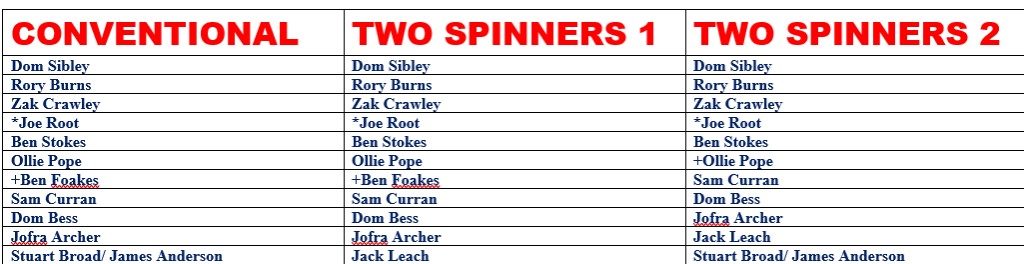
The teams in tabulated form.


All Time XIs – Nature Themed vs Materials

Today’s variation on the all-time XI cricket theme pits a team of players with nature-themed names against a team of players with names that have links to materials. Also includes a solution to the teaser I posed on Thursday, some links to excellent posts by Richard Murphy of Tax Research UK and some photos.

INTRODUCTION

Another day brings another variation on the all-time XI cricket theme. Today we havea team of players with nature themed names taking on a team of players with names that link to materials.

THE NATURE THEMED XI

  1. Joe Vine – right handed opening batter, leg spinner. A Sussex stalwart for many years. A vine of course is a type of plant.
  2. Jack Lyons – right handed opening batter. A more attacking type of player than Vine, he was an Aussie regular between 1887 and 1897.
  3. Alexander Webbe – right handed batter, right arm fast bowler, occasional wicket keeper. The most talented of three brothers, he did have one majorly embarrassing moment, when he overslept on the first morning of a game he was playing in for Oxford University v MCC. By the time he got to the ground an hour and a half late the University side had slumped to 12-9, and in his absence their innings had been declared closed.
  4. Joe Root – right handed batter, occasional off spinner. England’s best current test batter, though his output has been somewhat adversely by the captaincy, which for this reason I withhold from him in this team.
  5. Allan Lamb – right handed batter. Born in South Africa to English parents, circumstances in the country of his birth dictated that if he wanted an international career he return to the land of his parents, which he did. There do exist in some parts of the world species of sheep which live wild, notably the bighorn sheep of North America, and the word lamb applies to their young as much it does to that of their domesticated cousins.
  6. *Alonzo Drake – left handed batter, left arm orthodox spinner.
  7. Wilfred Flowers – right handed batter, off spinner. A fine all rounder in the late 19th century.
  8. +Arthur Dolphin – wicket keeper, right handed batter.
  9. Bill ‘Tiger’ O’Reilly – leg spinner. The only time in either squad that I have resorted to a nickname to get someone in – his record justifies stretching the rules to include him.
  10. Asher Hart – right arm medium pace bowler. A young hopeful, but a bowling average of 22.20 from his two first class appearances to date suggests that the hope may well be justified. His full is extraordinary – Asher Hale-bopp Joseph Arthur Hart – and given his DOB (March 30, 1997) it is safe to assume that the first of his middle names derives from the comet. One of the late legendary Carl Sagan’s books, simply titled “Comet” is a good way to find out more about these objects. A hart is an archaic word for an adult male deer (usually over five years old), particularly used in connection with red deer.
  11. Fred Martin – left arm fast bowler. He should be a good new ball partner for Hart. There are several types of martin, a bird related to the swallow. Click on the photograph below to view the Britannica article about these birds (the photo is from that article and is credited to Bruce Coleman).
    House martin (Delichon urbica)

This side looks pretty impressive, especially given the selection criteria, with decent batting depth, and a bowling attack of Martin, Hart, O’Reilly, Flowers and Drake backed by Webbe and Vine.

HONOURABLE MENTIONS

As well as the type of bird called a martin there is a type of mammal called a marten, and I might have selected William Marten in place of Asher Hart to include that. I could also have acknowledged the hazel nut by finding space for either left arm spinner Horace Hazell or off spinner Danielle Hazell. Finally, I could have replaced Lyons with a more recent attacking Aussie opener, Aaron Finch – there are various types of bird with finch in their name – see picture at bottom of this section which is one of my own recent ones. However, Mr Finch’s long form record is in relative terms, allowing for how much better batting surfaces are, less impressive than that of Mr Lyons, so he has to settle for a honourable mention.

P1330114 (2)
A goldfinch outside my front window yesterday.

THE MATERIALS XI

  1. Cecil Wood – right handed opening batter. He carried his bat through a record 17 first class innings, including both innings of one game against Yorkshire.
  2. Rachael Heyhoe-Flint – right handed batter, captain. She averaged 45 in test matches, 58 in ODIs. Her best test innings was 179 in almost nine hours against Australia. As a world cup winning captain she was the logical choice for that role in this team. Here is a picture of a flint church, one of many in the county of Norfolk:
    P1310291
  3. Frank Woolley – left handed bat, left arm orthodox spinner, excellent close catcher. I have sneaked him in on grounds of the first four letter of his surname – wool.
  4. Arthur Carr – right handed batter, occasional right arm medium. Carrstone is a dark coloured stone, used in quite a few prominent Norfolk buildings, notably Downham Market Railway Station, which I photographed in October 2017:
    Downham Market Station
  5. Allan Steel – right handed bat, leg spinner. A combination of the surname and an innings of 148 that set England up for an innings win over the old enemy get him in here.
  6. Stan Nichols – left handed batter, right arm fast bowler. The Essex all rounder gets in by means of bit of a quibble-cook (consult a copy of Ian Stewart’s “Hoard of Mathematical Treasures” for more on this term) justified by the fact that if you take the s of his surname you have ‘Nichol’, which sounds like nickel.
  7. +Arthur Wood – wicket keeper, right handed batter.
  8. Edric Leadbeater – leg spinner. Historically Yorkshire and England leg spinners are a rarity – he got his call up in the 1950s, and the next Yorkshire leg spinner to play for England was Adil Rashid, still part of the international set up. The first four letters of his surname spell lead.
  9. Mark Wood – right arm fast bowler.
  10. *Rockley Wilson – right arm slow bowler. Picked for the Ashes Tour of 1920-1 at the age of 40, he was one of England’s few successes in a series that was lost 5-0, topping their bowling averages. He was cricket coach at Winchester as well, one of his charges being Douglas Jardine. When he heard about Jardine’s appointment as captain for the 1932-3 Ashes Wilson is reported to have commented “He will win us the Ashes but may very well lose us a Dominion.” The only player to claim a place based on his given name – the first four letters of which form rock.
  11. Bert Ironmonger – left arm orthodox spinner. An ironmonger sells stuff made of iron.

This team has a good top five, an all rounder, a keeper who can bat and four varied bowlers. The bowling, with Nichols and Wood taking the new ball, Wilson, Leadbeater and Ironmonger to follow and Woolley, Steel and Carr all capable of playing supporting roles looks excellent.

THE CONTEST

The contest for the ‘Attenborough Trophy’ (going with the nature theme rather than picking a cricket name, though there was once a left arm pace bowled named Geoffrey Attenborough who had a respectable record for South Australia) should be a good one. I think that the ‘Nature Themed XI’ just have the edge and would predict a 3-2 series win for them.

SOLUTION TO THURSDAY’S TEASER

In Thursday’s post I posed the following teaser:

All you need to do is imagine what the parallelogram would look like if it was way out of true as opposed to only just out of true, and you can deduce that any change of angles away from 90 degrees makes the shape narrower, which means that the circles, tangential in the original, will no longer fit in the new shape, so the answer is no.

PROFESSOR MURPHY IN GOOD FORM

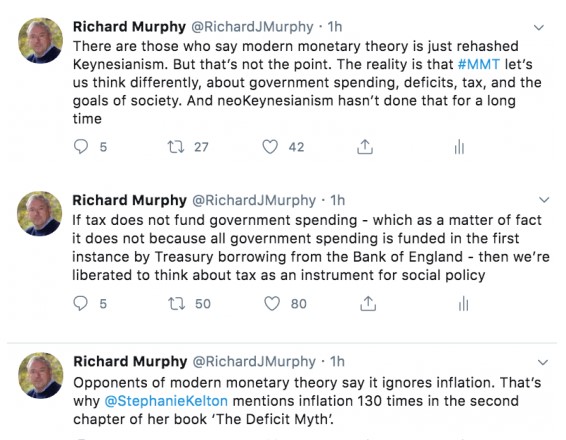
Richard Murphy of Tax Research UK is in fine form at the moment. Yesterday he produced a twitter thread about how the government creates money, which can be accessed by clicking the screenshot below which shows the first three parts of the thread or viewed in blog form by visiting the article that appeared on Tax Research UK this morning.
Murphy Thread

I link to only one more of his recent pieces, titled “Climate, economic and tax justice are the same fight.” I urge you to read it.

PHOTOGRAPHS

Finally it is time to end this Saturday squib with my usual sign off…

P1330105 (2)

P1330106 (2)
The fuchsia
P1330116 (2)
A close up of some of the flowers.

P1330107 (2)P1330108 (2)P1330109 (2)P1330110 (2)P1330111 (2)P1330112 (2)P1330113 (2)P1330115 (2)P1330117 (2)P1330118 (2)P1330119 (2)

Nature v Materials
The teams in tabulated form.

All Time XIs – Days In The Sun

Today’s exploration of ‘all time XI’ territory celebrates some outstanding individual performances.

INTRODUCTION

Welcome to my latest exploration of the ‘all time XI‘ cricket theme. Today the focus is on outstanding individual performances, in the main clearly defined match winners, although I allowed myself one exception whose outstanding individual performance came in a drawn match, but was frequently enough the key contributor to victories to qualify. (at least IMO). Our two teams, who will be competing for the ‘Stokes-Botham’ trophy to honour two famous match winners who I neglected to pick, are simply named in honour of their captains.

CLEM HILL’S XI

  1. Sanath Jayasuriya – left handed batter, left arm orthodox spinner. He was the player of the 1996 World Cup, and his test highlights include a 340 against India. However, the performance that gets him an opening berth here came at The Oval in 1998. Arjuna Ranatunga, one of the outstanding captains of my lifetime, won the toss and put England in on a flat pitch, and England batted decently to record a tally of 445 in the first dig. To give Ranatunga’s decision, taken in order to guarantee his bowling trump card, Muralitharan, got a decent break between what were going to be two long bowling stints Sri Lanka needed a big lead on first innings. Jayasuriya responded to this pressure situation with a rapid 213, the key contribution to a Sri Lankan tally of almost 600, which gave them both enough of a lead to be firm favourites and time to press home the advantage. A refreshed Muralitharan proceeded to slam home this advantage by twirling his way to 9-65 in the England second innings. Sri Lanka won very comfortably, with Muralitharan Player of the Match and Jayasuriya having to settle for an honourable mention (a joint award may have been appropriate on this occasion).
  2. Graham Gooch – right handed opening batter, occasional right arm medium (and impersonations of more regular bowlers). His record breaking double act at Lord’s in 1990 (333 and 123 in a comfortable victory) might seem the obvious qualifier, but India on that occasion had a bowling ‘attack’ that barely merited the conventional descriptor, and the pitch was flatter than the proverbial pancake. In the Headingley test of 1991 by contrast the pitch was tricky to put it kindly, and the West Indies had a very hostile bowling attack (Marshall, Patterson, Ambrose and Walsh if memory serves). On a pitch which had seen first innings tallies of 198 and 173, and with Ambrose hitting his straps right from the start, Gooch produced an undefeated 154, as England scraped up 252 (Ramprakash and Pringle joint second top scorers with 27 each). The West Indies collapsed in the final innings and were well beaten. This innings by Gooch almost certainly did make the difference between victory and defeat.
  3. *Clem Hill – left handed batter, brilliant fielder. It was a must-win game in the 1897-8 Ashes, the pitch was ordinary, and with one exception the Australian top order failed badly. The exception was Clem Hill, and with Hugh Trumble playing a stubborn supporting role for 46 in the only really substantial partnership of the innings. Australia reached 323, which put them in control of the match, and Hill’s share was 188.
  4. ‘Tip’ Foster – right handed batter. Foster played his first test innings at the Sydney Cricket Ground, at the start of the 1903-4 Ashes series. He responded to this initiation by producing an innings of 287 in an England total of 577. The ninth England wicket fell at 447, but Wilfred Rhodes, giving the first major indication of the batting skill that would see him play for his country as a specialist opener only a few years later, scored an unbeaten 40 from no11, helping the last wicket to add 130.
  5. Garry Sobers – left handed batter, left arm bowler of every type known to cricket, brilliant fielder. When Garry Sobers walked out to bat against Pakistan after the loss of an early wicket at Sabina Park in 1957 he had a few decent knocks to his credit but had yet to go on to the three figure score that would confirm his claims to front line batting status. By the time the next wicket fell two days had gone by, and Comrad Hunte, the batter who was dislodged had scored 260, with the second wicket stand worth 446, just five short of the then test record held by Bradman and Ponsford at The Oval in 1934. Sobers, the century well behind him, continued on remorselessly, taking full advantage of a depleted Pakistan attack. Eventually he went past Len Hutton’s test record inidvidual score of 364 made at The Oval in 1938, and at that point the Windies declared at 790-3. Pakistan, thoroughly demoralized by Sobers’ ten hour display of dominance folded twice to lose to by a huge margin, and Sobers, having turned his first three figure test innings into a then record 365 not out was well and truly launched on the batting career that would ultimately bring 8,032 runs at 57.78 per innings with 26 centuries.
  6. Amelia Kerr – right handed batter, leg spinner. At the tender age of 17 she belted 232 not out in an ODI, the highest ever by a woman in that form of the game. Thus far this effort remains her only major batting effort, but thanks to it her batting average is ahead of her bowling average (across international formats she averages 24 with the bat and 22 with the ball), and as she is still only 19 almost her entire career should still be ahead of her. Given the dearth of quality spinners in New Zealand if I was put money on a current female player becoming the first to play test cricket alongside the men my £1 would be on her to be the one to do it. I have argued elsewhere the batting does not depend on pure power, but on timing as well, and cited examples of successful batters of diminutive starure, and as a spinner she purveys a type of bowling that is all about craft and guile. In terms of the current Kiwi men;s team, the natural way to accommodate her would be to stick with Watling as keeper and no six batter, play her at no 7, and then bowlers at 8-11.
  7. +Steve Marsh – wicket keeper, right handed batter. Wicket keepers scoring centuries has only become commonplace very recently, and wicket keepers making as many as eight dismissals in an innings remains a considerable rarity. To achieve both in the same match, as Steve Marsh of Kent did in the 1990s is therefore a truly remarkable double feat. In total during his career Marsh accounted for 737 dismissals and had a batting average of 28, which was very respectable for a wicket keeper in those days.
  8. Stuart Broad – right arm fast medium bowler. Trent Bridge 2015 saw a combination of a little bit of late movement for Broad, some poor batting techniques from our ‘frenemies’ the Aussies and a couple of superb pieces of fielding which between them amounted to SCJ Broad 8-15, Australia 60 all out and match and Ashes settled on the first morning. The pinchhitter included video footage of this in their post this morning and I recommend you read the post and watch the video.
  9. Jim Laker – off spinner. He qualifies several times over. At his native Bradford in 1950, for England against the Rest he took 8-2 on the first morning of the match as the Rest were skittled for 27 – and one of those singles was a gift to Eric Bedser, twin brother Alec having purposely moved back a few yards to make it easy for him to get off the mark! Fred Trueman scored the other single and was (no surprise here) unimpressed by the batting of some of his team mates. Then came 1956, with the prologue of 10-88 in the first innings of the Surrey v Australia tour match (2-42 at the second attempt, as Tony Lock came to the party with7-49) and the crushing final act at Old Trafford when his 9-37 and 10-53 (a first class record 19-90 in the match) won the match and the Ashes. England had run up 459 in the first innings, with Peter Richardson and David Sheppard, neither of them absolutely top ranking batters, scoring centuries. After Australia had slipped from 62-2 to 84 all out in the first innings, Colin McDonald batted five and a half hours for 89 in their second, with Jim Burke, Ian Craig and Richie Benaud all also showing fight, while there was a contest between Harvey and Mackay for the most embarrassing pair of spectacles in test history – Harvey bagged his by smashing a full toss straight to a fielder, while Mackay looked a complete novice, and although he survived a few deliveries he did not make contact with any. Four front line spinners operated in the course of this match and three of them had combined match figures of 7-380 for an average of 54.43 per wicket, while the other took 19-90, an average of 4.74 per wicket.
  10. Gideon Elliott – right arm fast bowler. He was born in Merstham, Surrey in 1828, but played his first class cricket for Victoria, between 1856-7 and 1861-2. In that short span he played a mere nine matches, which brought him 48 wickets at 4.87 each! His most remarkable analysis in this brief but spectacular period was 9-2.
  11. Edmund Peate – left arm orthodox spinner. The founder of a great lineage – he was thr first of a series of left arm spinners from Yorkshire  that continued with Bobby Peel, Wilfred Rhodes, Alonzo Drake, Roy Kilner, Hedley Verity, Johnny Wardle and the last such to play for England, Don Wilson. He began as part of a troupe of ‘clown cricketers’ run by Arthur Treloar but recorded some very serious bowling figures before he had finished, including the innings of haul of 8-5 that earns him his place here. In total he bagged 1,076 first class wickets at 13.43 – he was definitely not just the guy whose wild swing against Harry Boyle condemned England to the defeat that created The Ashes.

This team features an excellent top five, a hugely promising young all rounder, a keeper who can bat and a well varied foursome of bowlers. There are three top line pace/ seam/ swing options with Elliott, Broad and Sobers, while Peate, Laker, Kerr and Sobers represent an abundance of spin options. Now it is time to meet the opposition.

ALONZO DRAKE’S XI

  1. Herbert Sutcliffe – right handed opening batter. His massively impressive CV includes two clear cut Ashes winning innings. In 1926 at The Oval, with the England second innings starting with a small deficit and on a decidedly unpleasant pitch he and Jack Hobbs each made centuries, Hobbs going for precisely 100, Sutcliffe scoring 161 in seven hours. Thanks to this effort England made 436 in that second innings, and another Yorkshireman, 49 year old Wilfred Rhodes, took 4-44 in the final innings as Australia slumped to 125 all out and defeat by 289 runs. Fast forward two and a half years to Melbourne 1928 and the third match of that Ashes series, with England two up. At the start of the fourth innings England needed 332, and the pitch was so spiteful that with their innings starting on the resumption post lunch there was speculation that England would not even last until the tea break. Actually, the opening partnership was still intact come tea, and as it endured Hobbs decided to send a message that Jardine rather than Hammond should come in at three if a wicket fell that evening (ironically it was Jardine who was despatched to find out what Hobbs wanted). When Hobbs fell for 49 to make England 105-1 Jardine emerged, with the wicket still difficult, and held out until the close of play. The following morning Jardine went on to 33, and by the time he was out the pitch had eased considerably. Herbert Sutcliffe held out until he had reached 135 and England were almost over the line. They stumbled a little in those closing stages, but George Geary finally cracked a drive through mid on to settle the match by three wickets.
  2. Alastair Cook – left handed opening batter. By the time England and Australia convened at Sydney for the final match of the 2010-11 Ashes Cook had already amassed two big hundreds in the series (a match saving 235 not out at Brisbane and 148 to help set up the win at Adelaide) and had helped, in company with Strauss to ensure that Australia’s first innings collapse at the MCG would be terminal to their hopes, although Trott with a big undefeated century was the batting star of that match. At The SCG Australia had won the toss, batted first and amassed a just about respectable 281, helped by some lusty blows from Mitchell Johnson. Unfortunately, when it came to his main job, with the ball, Johnson was barely able to raise a gallop or indeed hit the cut stuff. Weather interruptions meant that the England response got underway just before tea on day 2. There was less than an hour of day three to go when Cook finally surrendered his wicket for 189, bringing to an end 36 hours of batting for the series, with Australia’s goose well and truly cooked. A first Ashes ton for Matt Prior and some lively hitting from the tail boosted England’s total to 644, ending just before lunch on day 4. By the end of that day Australia were 169-6, and it was all over bar the shouting (of which the Barmy Army provided plenty on that final day). Before Australia’s third innings defeat of the series was confirmed Peter Siddle at no9 managed to be part of Australia’s largest partnership of the match for the second time in successive games, a stinging commentary on the efforts of their ‘front line’ batters.
  3. Dilip Vengsarkar – right handed batter. The tall Indian averaged 42.13 in test cricket, and especially impressive for a batter of the 1980s, his record was better against the West Indies than it was in general. His ability to handle tough situations was never better illustrated than at Headingley in 1986, on a pitch on which 21 players did not manage a single fifty plus score between them, and Roger Binny, not normally regarded as a frightening prospect with a ball in his hand, claimed seven cheap wickets. In among this low scoring carnage Vengsarkar scored 61 and 102 in a convincing win for his side, which meant that they had won a series in England, for the first time ever.
  4. Steve Smith – right handed batter, occasional leg spinner. Yes, I know that has batting style, to put it very kindly lacks visual appeal, and there are some who would say that being captain for ‘sandpapergate’ should have finished his career rather than merely interrupting it. However, ill disposed to him though I am, I have to acknowledge the sheer strength of character he displayed in making two 140+ scores on his return to the firing line at Edgbaston in 2019. Moreover that great batting double undoubtedly won the match for his side, and gave them a position of control in the series that, the ‘Headingley Heist’ notwithstanding, they never truly lost.
  5. Ellyse Perry – right handed batter, right arm fast medium bowler. I am picking her in this team as more batter than bowler, so the performance that officially qualifies her is one that came in a drawn game. However she contributed, often decisively, to a fistful of victories in other formats. The innings in question of course is her remarkable test double century, which overshadowed everything else in that match. Her recent seven-for in an ODI is just one example of an unquestionably match winning effort by her. I suggested Amelia Kerr as a possibility for playing test cricket alongside the men, and although I do not now see that happening for Perry, I refer readers to this post from 2015, in which I suggested an unorthodox solution to Australia’s then middle order woes.
  6. +Adam Gilchrist – left handed batter, wicket keeper. The most explosive keeper batter there has ever been. His first major test innings, with everyone thinking Australia were beaten was a thunderous 149 not out to win the match for his side, and it is that innings which gets him the nod today – his 57 ball ton at Perth in 2006-7 was scored at the expense of a thoroughly demoralized England who never looked remotely capable of doing anything other than losing that match.
  7. Gilbert Jessop – right handed batter, right arm fast bowler, brilliant fielder. Until the final innings of the 1902 test match at The Oval he had had a fairly quiet game, managing only 13 in England’s first innings, and his highlight in the field had been a lightning pick up and throw that ran out Victor Trumper at the start of the Aussie second innings. Jack Saunders and Hugh Trumble tore through the top England batting (four wickets to Saunders, one to Trumble to follow his eight in the first dig), and when Jessop emerged at 48-5, with England still needing 215 all most were hoping was that he would provide some fireworks before the inevitable end. 77 minutes later Jessop holed out with 104 to his name, having smashed the all-conquering Saunders out of the attack, although Trumble was still wheeling away at one end. The score was 187-7, meaning England still needed 76, but George Hirst was still there, and Lockwood stayed while 27 were added, then keeper Lilley helped the ninth wicket add a further 34, and the second ‘Kirkheaton twin’, Wilfred Rhodes, emerged from the pavilion with 15 needed for a famous victory. Gradually, amidst huge tension, they inched their way to the target, and it was eventually Rhodes who obtained the winning single. Jessop’s innings would not be approached either for speed or match turning quality in an Ashes match for a further 79 years, until Ian Botham twice took innings that Australia’s bowlers looked like destroying by the scruff of the neck.
  8. *Alonzo Drake – left handed batter, left arm orthodox spinner. Before World War I abruptly terminated his career Drake achieved some astonishing feats. At Chesterfield in that final 1914 season he and Wilfred Rhodes turned a Derbyshire score of 64-2 into 68 all out, Drake capturing four wickets with successive balls along the way. Against Somerset that year he became the first Yorkshire bowler ever to take all ten in an innings, 10-35, that innings being the fourth successive first class innings in which he and Major Booth (given name, not rank) had bowled through unchanged.
  9. Sarfraz Nawaz – right arm fast medium bowler. Australia, set 388 for victory, were apparently cruising at 305-3 when Sarfraz prepared to begin another spell of bowling. In his next 33 deliveries Sarfraz took the last seven wickets while conceding a single, and 305-3 had become 310 all out. Sarfraz’s total innings figures were 9-86.
  10. Curtly Ambrose – right arm fast bowler. The WACA in Perth is not a venue that many visiting sides have fond memories of, though a side equipped with fast bowlers who manage to pitch the ball up rather than being lured into banging it in short by the bouncy nature of the surface are less likely than most to suffer there. In the 1992-3 series when the West Indies visited Australia reached the hundred with only one wicket down, and the script looked like being adhered to. Then Curtly Ambrose produced a spell of 7-1 in 33 deliveries, and Australia ended with a total of about 120, and the West Indies did not let this amazing spell go to waste – they won comfortably.
  11. Arthur Mailey – leg spinner. During the 1920-1 Ashes, won 5-0 by Australia, he captured 36 wickets, becoming the first Australian to record a nine wicket haul in a test innings (9-121). Australia then travelled to England for the 1921 season. Their tour match against Gloucestershire seemed to be going fairly uneventfully, with Mailey having a couple of tail end wickets in the first innings, when in the second innings skipper and fellow leg spinner Armstrong tossed the ball to Mailey, saying “see what you can do against the top order this time.” Mailey responded by bowling right through the Gloucestershire innings, recording figures of 10-66, which gave him the perfect title for his autobiography “10 For 66 And All That”.

This team has a solid looking top four (that opening pair could certainly be expected to take a lot of shifting!), a couple of quality all rounders, a great keeper batter and a fine foursome of bowlers. It lacks an off spinner, but apart from that the bowling, with Sarfraz Nawaz, Curtly Ambrose, Gilbert Jessop and Ellyse Perry to bowl pace and Alonzo Drake and Arthur Mailey as spin options looks deep and varied.

AN EXCLUSION EXPLAINED

Many will have their own ideas as to who I should have included, and you are welcome to post comments to that effect. However, rather than doing a long list of honourable mentions I am going to explain one exclusion which will undoubtedly have upset some. Brian Charles Lara twice set world record test scores, 375 and 400 not out, ten years apart at Antigua, and scored a world first class record 501 not out v Durham. The problem is that all three of those games were drawn, and the Warwickshire performance and the second test performance were noteworthy for Lara’s obsessive pursuit of the record over and above all other considerations, to the extent that he actually asked Warwickshire skipper Dermot Reeve not to declare because he wanted the record.

THE CONTEST

The contest for the Botham-Stokes trophy looks like being a cracker. I would expect it to go to the wire, and I cannot predict who would emerge victorious.

AN APPEAL AND PHOTOGRAPHS

I have introduced my two teams for ‘Days In The Sun’, contending for the Botham-Stokes trophy, explained one high profile omission, and this post is already on the long side, so I am holding back a few things I intended to include until tomorrow. However, as some readers will be aware, my mother has recently started a blog. She has as yet no home page, and wants to rectify the omission. I have given her some advice on how to create one, and knowing how collaborative wordpress can be at its best I now ask people to visit my mothers blog, starting with today’s post, and comment there with suggestions for her home page. Now it is time for my usual sign off…

P1320990 (2)P1320991 (2)P1320997 (2)P1330003 (2)P1330004 (2)P1330008 (2)P1330062 (2)P1330065 (2)P1330066 (2)P1330067 (2)P1330068 (2)P1330069 (2)P1330070 (2)P1330071 (2)P1330075 (2)P1330079 (2)P1330080 (2)P1330087 (2)P1330088 (2)P1330091 (2)P1330093 (2)P1330095 (2)P1330097 (2)P1330098 (2)P1330099 (2)P1330102 (2)P1330103 (2)P1330104 (2)

Days In The Sun
The teams in tabulated form.

All Time XIs – Archonicknames v Feuders

Today sees the ‘Archonicknames XI’ taken on the ‘Feuders XI’ for the ‘Bradman-Jardine Trophy’.

INTRODUCTION

Welcome to today’s visit to ‘all time XI‘ cricket territory. Today’s variation takes its cue from the pinchhitter blog which in the course of giving me an honourable mention today suggested that I might create an XI of feuding players. This post is my answer to that suggestion.

THE BRIEF & A LEXICOGRAPHICAL NOTE

For the feuders XI I selected five pairs of cricketers known to not be buddies and who have been regular team mates plus a wicket keeper non of whose contemporaries appear to have had a good word to say about him. The word ‘Archonickname’ is of my own coinage, and appropiately for a language that has as many roots as English it too has mixed origins: the prefix ‘archo’ derives from ancient Greek – people elected to ruling offices in ancient Athens, which they could only fill for one year were known as Archons. I got the idea of using this prefix from archosaur, a grade name in palaeontology that refers to the ‘ruling reptiles’, covering dinosaurs, the air and seagoing reptiles of the same era and the crocodiles who are still with us today. Nickname of course needs no explanation, but the practice of creating a convenient new compound word as I have done is of Germanic/ Nordic origin. To bring this section to a close an ‘archonickname’ is one that implies mastery/ power. There are a couple of exceptions to this rule which I explain and (I hope) justify. Having explained the derivation and creation of the word it is time to introduce…

THE ARCHONICKNAMES XI

  1. Jack Hobbs – right handed opening batter, occasional right arm medium pacer. Known as ‘The Master’. He is eminently qualified for the role I have given him here.
  2. *WG Grace – right handed batter, right arm bowler of various types through his career, good close fielder, captain. ‘The Champion’ has an irrefutable case for inclusion, and his presence in this side also provides extra insurance that the match will be rich in incidents.
  3. Ted Dexter – right handed batter, right arm medium fast bowler. ‘Lord Ted’ is an ideal choice for no3 in this side, with an excellent playing record to go with his nickname.
  4. Viv Richards – right handed batter, occasional off spinner. Whether you prefer “King Viv” or “Master Blaster” he qualifies handsomely for this team, and his aggregate of over 8,500 test runs at 50, combined with his status as the only West Indian to record 100 first class hundreds deal with any arguments over his playing qualifications.
  5. Charlie Macartney – right handed batter, left arm orthodox spinner. “The Governor General” for his air of command was a magnificent attacking batter, once scoring a hundred before lunch on the first day of a test match, and had a ten wicket magtch haul at that level as well.
  6. Stan McCabe – right handed batter, right arm medium fast bowler. He played three of the most remarkable of all test innings, his 187 in the first innings of the 1932-3 Ashes, his 232 at Trent Bridge in the 1938 Ashes and a 189 not out against South Africa that saw his side close to chasing down an outlandishly large target – play was abandoned in that match after Herby Wade, captain of South Africa, appealed against the light, as was allowed in those days, though it was rare for a fielding side to do so. He was also good enough with the ball to be trusted with the new ball in test matches on occasion. His nickname, “Napper” derived from Napoleon, to whom certain of his team mates detected a resemblance.
  7. +Jack Blackham – wicket keeper, right handed batter. Dubbed the “Prince of Wicket Keepers”.
  8. Bart King – right arm fast bowler, right handed batter. King by name, and by nature the original ‘king of swing’, though he was never so nicknamed – I have let him on ground of his surname and the fact that someone clearly should have thought of the nickname he never acquired.
  9. Ashley Giles – left arm orthodox spinner, useful right handed lower order batter. “The King of Spain”, courtesy of a batch of commemorative mugs that contained a now legendary printing error – the intention of course was to dub him ‘King of Spin’.
  10. Herbert Hordernleg spinner. His nickanme “Ranji” derived from the first of three Indian princes to play for England before India became a test playing nation, though sadly it was more down to his dark complexion than to a princely bearing. He was a fine bowler who hit his peak at the wrong time – seven test matches was all he got to play and they yielded him 46 wickets at 23.36.
  11. William Mycroft – left arm fast bowler. 863 wickets in 138 first class matches at 12.09 represent his playing qualification. I have sneaked him in by accepting the claim that he and his brother Thomas were joint inspiration for the name of Mycroft Holmes, whose btother tells as in “The Adventure of the Bruce Partington Plans” that “…you would also be right if you said that on occasion he IS the British Government.”

This team has a strong top six, a splendid keeper and four well varied bowlers. Additionally, at least four of the top six (Grace, Dexter, Macartney and McCabe) could be reasonably asked to take a turn at the bowling crease, and even Richards and Hobbs are far from being entirely negligible in that department, so I think the absence of an official all rounder is hardly crippling. This team will therefore take a considerable amount of beating. For more on nicknames in cricket check out The Cognominal Challenge.

THE FEUDERS XI

  1. Chris Gayle – left handed opening batter, occasional off spinner. His sparring partner appears at no5 in this order. His playing qualifications include two test match triple centuries.
  2. Sunil Gavaskar – right handed opening batter. His feud was with the guy who appears at no7 in this batting order. He was the first ever to top 10,000 test runs, and 13 of his 34 test centuries came at the expense of the West Indies, the best in the world for much of his career.
  3. Kevin Pietersen – right handed batter, occasional off spinner. A playing record that includes a test averahe not far short of 50, and the second most significant ever innings of 158 (at The Oval in 2005). His dismissal of ‘Pup’ Clarke at the end of the penultimate day of the Adelaide test of 2010 helped ensure that England would secure the victory they deserved. His sparring partner appears at no 8 in this order.
  4. *Steve Waugh – right handed batter, occasional right arm medium pace bowler, captain. 168 test matches and an average of over 50 qualify him in playing terms, and his sparring partner is at no 9 in this order.
  5. Ramnaresh Sarwan – right handed batter, occasional off spinner. A heavy scoring batter during what was generally a poor period for the West Indies. Chris Gayle’s enemy.
  6. Wasim Akram – left arm fast bpwler, left handed batter. A magnificent international record, although no6 is possibly a place too high for him. His sparring partner is at no11, which completes our introduction of the feuding pairs
  7. Kapil Dev – right arm medium fast bowler, right handed batter. The only player to have scored over 5,000 test runs and taken over 400 test wickets. His sometimes fractious relationship with Gavaskar reflected a historic source of tension in Indian cricket, between Mumbai (Gavaskar) and the north (Kapil, “The Haryana Hurricane”).
  8. Graeme Swann – off spinner, useful right handed lower order batter. Pietersen’s ‘reverse buddy’, and the best front line spinner England have had in my lifetime.
  9. Shane Warne – leg spinner, useful right haned lower order batter. Steve Waugh’s frenemy. His record needs no further comment.
  10. +William ‘Barlow’ Carkeek – wicket keeper, left handed batter. None of his contemporaries appear to have a good word to say about him – from what Gideon Haigh says about him in “The Big Ship”, a biography of Warwick Armstrong there would appear to have been a cloud over his personal life. His brief test career, in 1912 when Australia were riven by internal bickering, saw him average just six with the bat, and his keeping was ujniversally reckoned to be way below the standards set by the likes of Blackham, Jim Kelly and Hanson Carter (a Yorkshire born Aussie for those interested in players with a foot in each camp).
  11. Waqar Younis – right arm fast bowler. Regular bowling and sparring partner of Wasim Akram. Note that for all that country;s reputation for internal bickering there is only one pair of Pakistanis in the eleven.

This team has a strong front five, two genuine all rounders, three excellent and varied bowlers and a keeper who did play test cricket. The main bowling, with Wasim, Waqar and Kapil to bowl varieties of seam/swing/pace and spin twins Warne and Swann looks pretty good as well. In feuding terms the line up is: Gayle/ Sarwan, Gavaskar/ Kapil Dev, Pietersen/ Swann, Waugh/ Warne and Wasim/Waqar, with a universally despised keeper in Carkeek to fill out the XI. A quick dishonourable mention: I could also have got round 11 being an odd number by including the Westralian feuding trio of Kim Hughes, Rod Marsh and Dennis Lillee (see “Golden Boy” for more details), but preferred my actual combination.

THE CONTEST

The contest for what I dub the “Bradman-Jardine” trophy in honour of a famous pair who did not see eye-to-eye, but as opponents could be expected not to (besides which Bradman’s inclusion would bias things in favour of his side) promises to a fine and very spicy one. If the Feuders XI could bury their differences for long enough they would definitely have a chance, but overall I think that the odds firmly favour the Archonicknames XI. I suggest Dickie Bird and Frank Chester as on-field umpires, with Aleem Dar as TV Replay umpire, and the only match referee who could conceivably handle this one is Clive Lloyd (best of luck – you will need it).

TEASER AND PHOTOGRAPHS

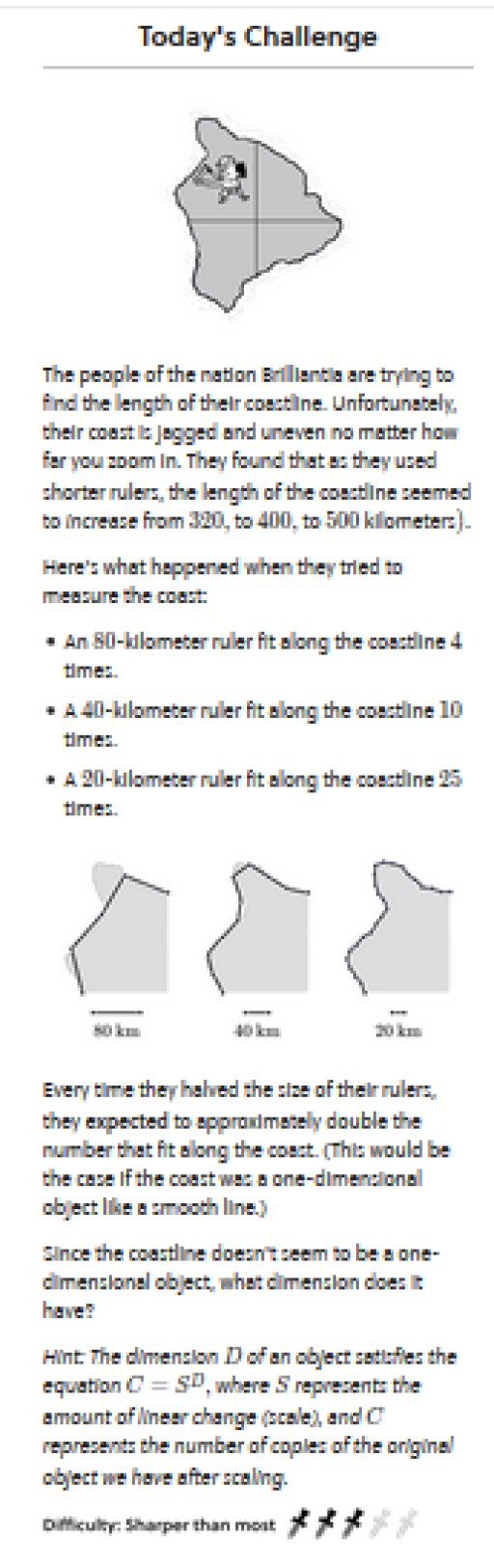
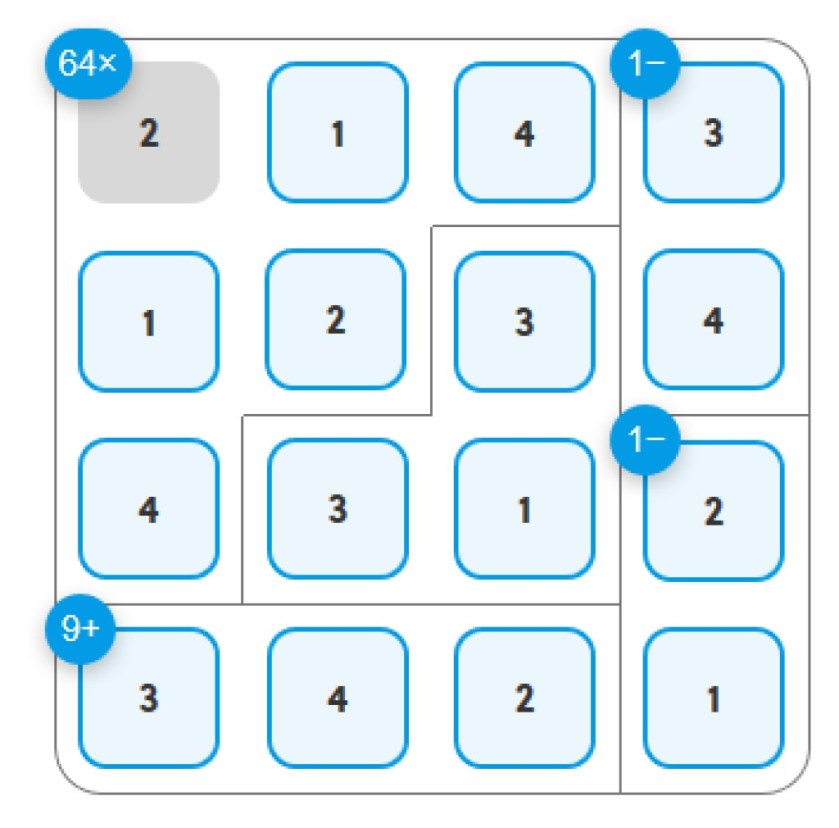
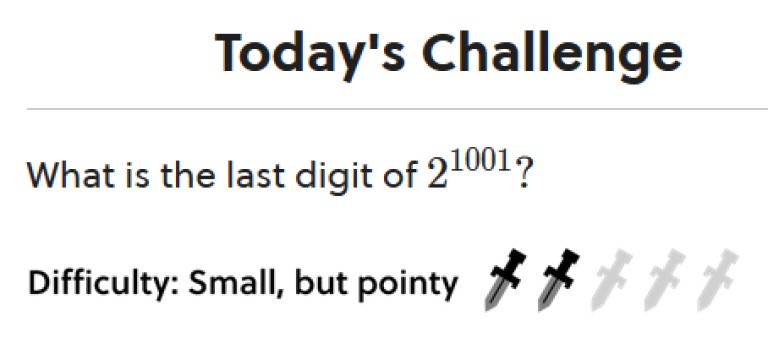
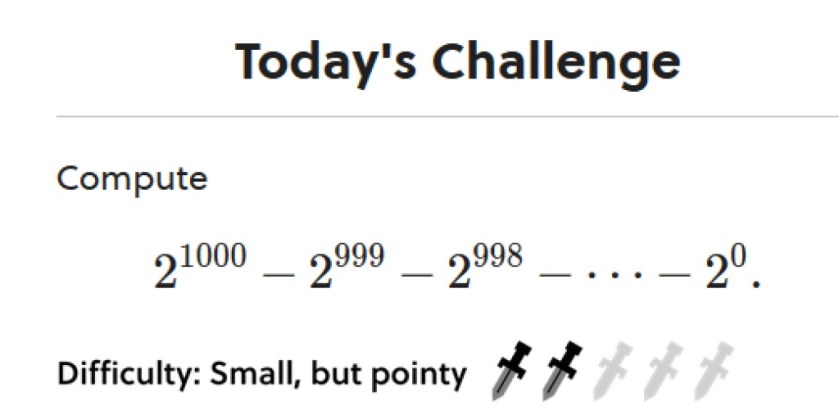
I have introduced my two teams, hopefully justified my selectorial decisions and unveiled the ‘Bradman-Jardine’ trophy, but before I bring the curtain down on this post I share a teaser from brilliant.org:

Teaser

And now it is time for my usual sign off – my little bit of garden is proving in this fine weather to be an excellent location for photography:

P1320917 (2)
An aeroplane passes between clouds.
P1320917 (3)
A close up of the aeroplane.

P1320918 (2)P1320919 (2)P1320920 (2)P1320921 (2)P1320922 (2)P1320923 (2)P1320924 (2)P1320925 (2)P1320926 (2)P1320927 (2)P1320928 (2)P1320929 (2)P1320930 (2)P1320931 (2)P1320932 (2)P1320933 (2)P1320934 (2)P1320935 (2)P1320936 (2)P1320938 (2)P1320941 (2)P1320942 (2)P1320943 (2)P1320944 (2)P1320945 (2)P1320949 (2)P1320952 (2)P1320960 (2)

P1320974 (2)
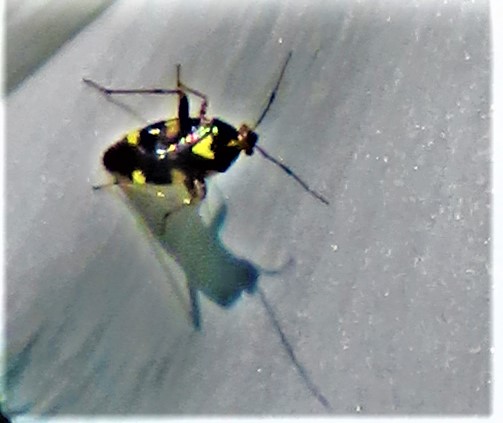
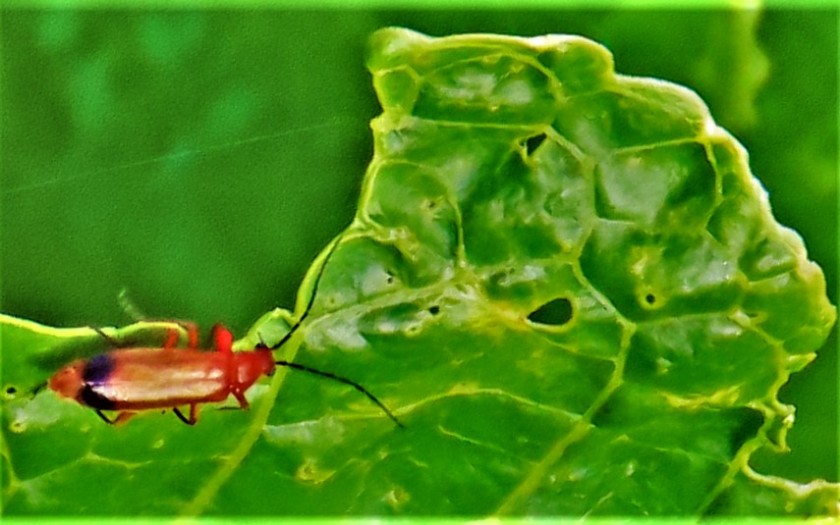
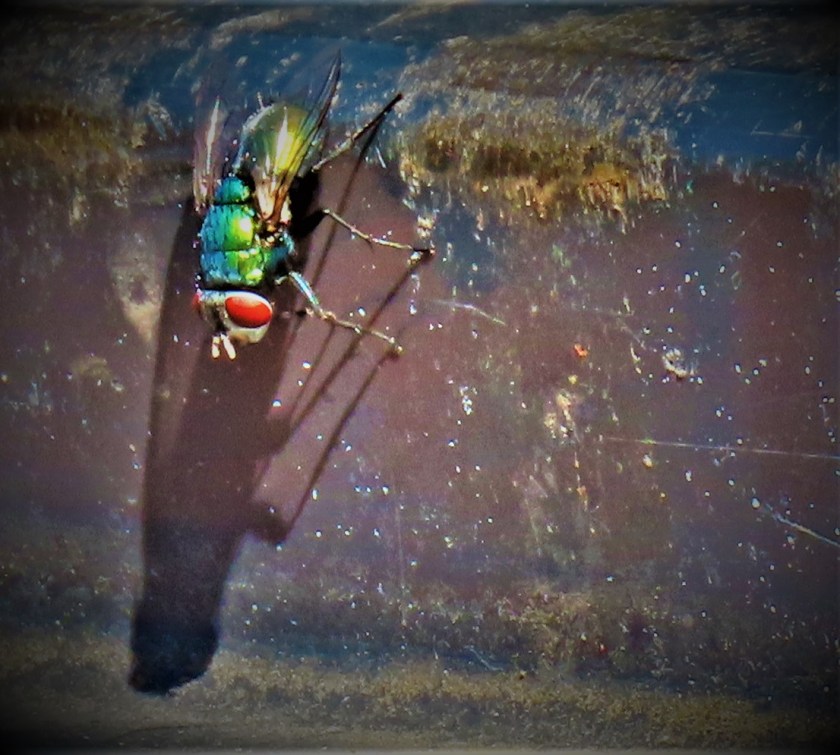
A green bug crawling on the side of my outside tabletop.

P1320981 (2)P1320983 (2)P1320984 (2)P1320985 (2)

Archonicknames v Feuders
The teams in tabulated form with abbreviated comments.

All Time XIs – Cultural XI v Player-Authors XI

Today’s variation upon an ‘all time XI’ cricket theme is built around cultural connections.

INTRODUCTION

Welcome to the latest in my series of variations on an ‘all time XI‘ cricket theme. This one pits a team of cricketers who share names with people who have made cultural contributions against a team of cricketers who wrote books after retirement.

THE CULTURAL XI

  1. Jack Hobbs – right handed opening batter, occasional right arm medium pacer. See yesterday’s post among others for more about him. I have sneaked him in by adding an e to his surname for the cultural reference – to Thomas Hobbes, author of Leviathan, and also author of one of the pieces included in “The Portable Atheist” edited by Christopher Hitchens.
  2. Roy Marshall – right handed opening batter. A massively successful batter for Hampshire for many years. My cultural reference is to another Marshall with middle initial e, HE Marshall, author of “Our Island Story”.
  3. Michael Vaughan – right handed batter, occasional off spinner. A bit of reaching here, as the reference is to Pip Vaughan-Hughes, a historical novelist whose books I have enjoyed reading.
  4. ‘Tup’ Scott – right handed batter. An early Aussie middle order batter, he claims his place in this team as analogue to Manda Scott, a historical novelist whose books include the Pantera series of Roman novels and the Dreaming series of novels about Boudicca.
  5. Clyde Walcott – right handed batter, occasional wicket keeper. He averaged 56.68 in test cricket, so I was particularly please to be able to include him by reference to Charles Doolittle Walcott, the USian palaeontologist who discovered the Burgess Shale, one of the most important of all fossil beds. The best known writer to have covered the Burgess Shale is Stephen Jay Gould.
  6. Adrian Kuiper – right handed batter, right arm medium pacer. He gets in as analogue to Gerard Peter Kuiper, a USian astronomer after whom the Kuiper Belt, considered a frontier in our solar system, is named.
    Illustration of Kuiper Belt and Spacecraft locations
  7. George Rubens Cox – right handed batter, left arm medium pace bowler, left arm orthodox spinner. I give him his full name to distinguish from another George Cox who also played for Sussex. Although he shares his middle name with Peter Paul Rubens, the Belgian artist, I am actually including him as a hat tip to professor Brian Cox.
  8. *Tony Lock – left arm orthodox spinner. For those wondering about my naming him as captain he was the first ever to captain Western Australia to a Sheffield Shield title, and his years in that role also saw him usher Dennis Lillee on to the cricketing stage. He also had a telling effect on the fortunes of Leicestershire when he became their captain. His analogue is crime writer Joan Lock, two of whose novels “Dean Born” and “Dead Image” I can recommend. Also, addition of an e to his surname brings in philosopher John Locke and engineer Joseph Locke, the latter of whom is commemorated in the name of Locke Park in Barnsley.
  9. +Eric Petrie – wicket keeper, right handed batter. He was by reputation a brilliant wicket keeper, but a very limited batter, who I mentioned in passing in my New Zealand post. His inclusion here links to Egyptologist sir Flinders Petrie. Readers of the late Elizabeth Peters’ Amelia Peabody series will recognize Petrie as one of the few among his fellow Egyptologists about whom Radcliffe Emerson is other than utterly scathing.
  10. Tich Freeman – leg spinner. The second leading wicket taker in first class history, with 3,776, of which all bar 29 were taken after the age of 30. The 5’2″ legspinner is here as analogue to Freeman Dyson, one of the world’s leading scientists and author of “From Eros to Gaia”.
  11. Jeff Thomson – right arm fast bowler. One of the quickest and nastiest ever. His analogue is June Thomson, author of six books of Sherlock Holmes mysteries and the overview/dual biography “Holmes and Watson”. I rate her very high among those  who have chronicled adventures of the Baker Street pair since Conan Doyle finsihed.

This team has a strong top five, two all rounders, a splendid keeper and three ifne bowlers. It is somewhat short in the pace bowling department, with one of Cox or Kuiper likely to open the bowling with Thomson. However, they do have a very shrewd captain in Lock.

THE CRICKETER-AUTHORS XI

  1. Graham Gooch – right handed opening batter, occasional medium pacer. 8,900 test runs, more runs in first class and list A combined than anyone else in the game’s history. He is the author of “Captaincy”.
  2. David Lloyd – left handed opening batter, occasional left arm orthodox spinner. As well as having a test double century to his credit, ‘Bumble’ as he is nicknamed is the author of “The World According to Bumble” and “The Ashes According to Bumble”.
  3. Tom Graveney – right handed batter. The second leading scorer of first class runs in the post World War Two era with over 47,000 of them.  He is the author of “The Ten Greatest Test Teams”, a book which analyses ten famous combinations and rates which is the very best.
  4. *Greg Chappell – right handed batter, occasional right arm medium (earlier bowled leg spin), brilliant slip fielder. The first Aussie to record 7,000 test runs, he book ended his test career with centuries, 108 v England at Perth to start and 182 v Pakistan to finish. He is the author of “The 100th Summer”, which details the test matches of the 1976-7 season, when he was captain of Australia.
  5. Doug Walters – right handed abtter, occasional right arm medium pace. A stroke maker who succeeded everywhere except England, where never managed a century. His highest test score of 250 came against New Zealand and featured a 217 run partnership with Gary Gilmour who racked up his one and only test ton. He twice scored over 100 runs in a test match session. He was also noted as a partnership breaker. He is the author of “One For The Road”.
  6. Ian Botham – right handed batter, right arm fast medium bowler. Author of “The Botham Report” and “Botham’s Century” among other books.
  7. +Tiger Smith – wicket keeper, right handed batter. He actually first played for Warwickshire as a batter, while Dick Lilley retained the gloves. He gave a series of interviews to Pat Murphy, which ultimately became “Tiger Smith”.
  8. Shane Warne – leg spinner, right handed lower order batter. Author of “Warne’s Century”.
  9. Jim Laker – off spinner. An excellent ‘spin twin’ for Warne, who holds the record for wickets in an Ashes series – 46 at less than 10 each in 1956. He earns his place in this role by dint of being the author of “Cricket Contrasts”.
  10. Fred Trueman – right arm fast bowler. The first to record 300 test wickets, an unquestioned great of the game. He is the author of “As It Was” and co-author with John Arlott of “The Thoughts of Trueman Now”.
  11. Matthew Hoggard – right arm fast medium. An ideal type of bowler to share the new ball with Trueman, a position for which he qualifies b y being author of “Welcome To My World”.

This team has a fine top five, a top class all rounder at six, a keeper who can bat and a splendid foursome of bowlers. There is no front line left arm option but I feel that lack can be coped with – overall it looks a fine side.

THE CONTEST

The second of my two teams would clearly start as favourites, but both have some fine players and I would expect the contest to be a splendid one.

LINK AND PHOTOGRAPHS

I have introduced the two teams, but just before I sign off in my usual fashion I have a link to share. Richard Murphy of Tax Research UK has produced an excellent post about funding government spending, available here. Below is a ‘mind-map’ included in the post:


https://www.taxresearch.org.uk/Blog/wp-content/uploads/2020/05/Screenshot-2020-05-18-at-15.32.06.png

Finally it is time for my usual sign off…

P1320847 (2)
The first 13 pictures here come from Jerry Coyne’s “Why Evolution Is True”, a book that has subsequently spawned a website which you visit by clicking here.

P1320848 (2)P1320849 (2)P1320850 (2)P1320851 (2)P1320852 (2)P1320853 (2)P1320857 (2)P1320858 (2)P1320862 (2)P1320863 (2)P1320869 (2)P1320870 (2)

P1320873 (2)
May be a shieldbug (three pictures)

P1320874 (2)P1320875 (2)P1320880 (2)P1320882 (2)P1320883 (2)P1320884 (2)P1320887 (2)P1320888 (2)P1320889 (2)P1320890 (2)P1320892 (2)P1320893 (2)P1320894 (2)P1320897 (2)P1320898 (2)P1320899 (2)P1320900 (2)P1320901 (2)P1320901 (3)P1320902 (2)P1320903 (2)P1320905 (2)P1320906 (2)P1320907 (2)P1320908 (2)P1320910 (2)P1320911 (2)P1320912 (2)P1320913 (2)P1320914 (2)P1320915 (2)P1320916 (2)

Literary Clash
The two teams in tabulated form.

All Time XIs -Beginning v End of Alphabet

A team of players whose surnames start early in the alphabet against a team of players whose names start late in the alphabet, plus an important petition.

INTRODUCTION

Welcome to my latest variation on an ‘all time XI‘ cricket theme. Today after a couple of overseas posts we return to home territory, but featuring cricketers from four different centuries. The dividing line between these teams is the centre of the alphabet – our first team have surnames that begin with a letter from early in the alphabet while our second mutatis mutandis have surnames beginning with letters from late in the alphabet.While limiting myself to home players for this post I have aimed to embrace a wide range of types of player with the prime focus on entertainment.

BEGINNING OF THE ALPHABET XI

  1. Jack Hobbs – right handed opening batter, occasional right arm medium pacer. ‘The Master’ is a good place to start any XI – 61,237 first class runs with 197 centuries at that level.
  2. Tammy Beaumont – right handed opening batter. A wonderful timer of a cricket ball, probably the smallest player on either side in this contest, but with a proven ability to score big – and quick – she once reached a ton against South Africa off just 47 balls.
  3. James Aylward – left handed batter. One of three 18th century cricketers in this XI, in 1777, a mere eight years after the first record century in any cricket match, he scored 167 versus England, batting through two whole days in the process. He is the ‘sticker’ of this team, surrounded by more aggressive talents.
  4. William ‘Silver Billy’ Beldham – right handed batter. At a time when such scores were very rare he amassed three first class centuries. His special glory so we are told was the cut shot. He was exceptionally long lived, being born in 1766 and not dying until 1862 – in his childhood canals were the new big thing in transportation, and he missed out by a mere six months on living to see the opening of the world’s first underground railway.
  5. Denis Compton – right handed batter, left arm wrist spinner. He averaged 50 with the bat over the course of 78 test matches, and he scored his runs fast. According to the man himself in “Playing for England” he developed his left arm wrist spin as a second string to his bow because he was impressed by the Aussie ‘Chuck’ Fleetwood-Smith, and because he noticed during the 1946-7 Ashes tour how many of the Aussies had second strings to their bow and thought that he should develop one.
  6. George Hirst – right handed batter, left arm pace bowler, brilliant fielder. One of the greatest all rounders ever to play the game. He achieved the season’s double of 1,000 runs and 100 wickets in first class games on 14 occasions, 11 of them in successive years. Having topped 2,000 to go with over a hundred wickets in both 1904 and 1905 he then achieved the double double in 1906 – 2,385 runs and 208 wickets in first class matches (in the 21st century a non-pandemic hit English season involves 14 first class games, so anyone doing the 1,000 run, 100 wicket double would achieve a feat of similar standing, while 500 runs and 50 wickets would be a jolly impressive all round effort). In the Oval 1902 match in which Jessop blazed his 75 minute century Hirst took the first five Aussie wickets in the first innings and scored 101 for once out in the match (43 and 58 not out to see England home). He also stands alone in first class cricket history thus far in achieving the double double match feat of centuries in both of his own team’s innings and five wicket hauls in both of his opponents innings (Yorkshire v Somerset 1906).
  7. +Leslie Ames – wicket keeper, right handed batter. The only recognized keeper to have tallied a hundred first class hundreds.
  8. Billy Bates – off spinner, right handed lower middle order batter. The first ever to combine a fifty with a ten wicket match haul in a test match. His 15 appearances at that level brought him 656 runs at 27.33 and 50 wickets at 16.42. His career was ended prematurely by an eye injury. If we were to assume that without that injury he could have kept going until 40, very fair by the standards of the time, that would mean that he could have played in the 1888, 1890, 1893 and 1896 home series against Australia, the 1891-2 and 1894-5 away series against the same opposition and in a couple of the early series in South Africa, which brings him close to 40 test matches, and if he maintained similar output an aggregate of 1,749 runs and 133 wickets. If we accept that nowadays he would be pay half as much again for his wickets, we must also allow that that applies to all bowlers and that he would also score half as many runs again, so an approximate conversion of his averages in to today’s terms sees him average 41 with bat and 24.63 with the ball – a handy person to be coming in at no8!
  9. Sydney Barnes – right arm fast medium. Possibly the greatest of all bowlers. At Melbourne in the 1911-12 Ashes when Johnny Douglas won the toss and inserted Australia early wickets were needed to back that decision up, and Barnes in his opening burst accounted for the entire Australian top four for a single between them. Australia recovered from this blitz to tally 184, but as at Adelaide 99 years later, the damage had been done on the first morning, and England were in control of the match throughout.
  10. Sophie Ecclestone – left arm orthodox spinner. She has already enjoyed considerable success in her fledgling career, with a best ODI bowling performance of 4-14 and a T20I bowling performance of 4-13 among her highlights. In total across international formats she has 93 wickets for 1793 runs, an average of 19.28 per wicket, and she only turned 21 less than a fortnight ago.
  11. David Harris – right arm fast (underarm). The first great bowler, so highly prized that late in his career when gout was causing him horrendous problems an armchair would be brought out on to the field so that he could sit down when not actually bowling! If you look at early scorecards (early to mid 18th century) you will see that catches were not generally credited to the bowler, and the single person most responsible for changing that was Harris, who sought extra bounce with the precise intention of inducing batters to yield up catches. All you bowlers of today who rely on slip cordons, bat-pad catchers, short legs, silly mid-ons etc take note of the man who pioneered bowling to induce catches and be grateful that catches are credited to you. I have argued elsewhere for the re-legalization of under arm bowling both of Harris’ type and of under arm spinners such as Simpson-Hayward. The Greg/Trevor Chappell type of ‘grubber’ can be simply dealt with now that balls that bounce more than once are automatically called no-ball – simply add a coda that for the purposes of this law a ball that rolls along the deck shall be considered to have bounced an infinite number of times and is therefore a no ball.

This team has a splendid top five, one of the greatest of all all rounders, a keeper batter up there with the best in history and a wonderfully varied foursome of bowlers. Barnes, Harris and Hirst represent an excellent trio of pacers, Bates and Ecclestone are two high class spin options. There is no fronnt line leg spinner, but Barnes’ greatest weapon was a leg break delivered at fast medium pace, and there is Compton with his left arm trickery as well should a sixth bowler be needed. I would expect this team to take a lot of beating.

THE END OF THE ALPHABET XI

  1. Herbert Sutcliffe – right handed opening batter. He went through his entire test career with an average in excess of 60 – it ended at 60.73. He was often reckoned to be one of fortune’s favourites, but that was at least partly because when he did benefit from a slice of luck he made it count. For example, at Sydney in the opening match of the 1932-3 Ashes series he was on 43 when he chopped a ball from Bill O’Reilly into his stumps without dislodging a bail – and thus reprieved he went on to a test best 194, setting England up for a ten wicket win (Australia dodged the nnings defeat by the narrowest possible margin, leaving England a single to get in the fourth innings, duly scored by Sutcliffe).
  2. Arthur Shrewsbury – right handed opening batter. He was rated second only to WG Grace in his era. In those days the tea interval was not a regular part of the game, and on resuming his innings after lunch he would ask the dressing room attendant to bring him a cup of tea at four o’clock, so confident was he that he would still be batting by then. He briefly held the highest test innings score by an Englishman, 164 at Lord’s in 1886 which set his side up for an innings victory – two matches later at The Oval Grace reclaimed the record which had been his 152 in 1880 with a score of 170, made out of 216 while he was at the wicket.
  3. *Frank Woolley – left handed batter, left arm orthodox spinner, excellent close fielder. Once, when Kent were chasing 219 in two hours for a victory, his partner suggested that he should try to hit fewer sixes as it took time for the ball to come back from the crowd! Kent won that match, due in no small part to Woolley. At Lord’s in 1921 when Gregory and McDonald were laying waste to the rest of England’s batting he scored 95 and 93.
  4. Eddie Paynter – left handed batter. He averaged 59.23 in test cricket, with double centuries against both Australia and South Africa along the way. He was 28 by the time he broke into the Lancashire team, and World War II brought his career to a close. He it was who officially settled the destiny of the 1932-3 Ashes, hitting the six that won the 4th match of that series giving England an unassailable 3-1 lead (they won the fifth match as well, that one also ending with a six, this time struck by Wally Hammond). None of England’s huge scorers are more frequently overlooked than the little fella from Oswaldtwistle.
  5. Ben Stokes – left handed batter, right arm fast bowler. The reverse combo to George Hirst, and definitely somewhat more batter than bowler – my intention in this side is that when called on to bowl it will be in short, sharp bursts.
  6. George Osbaldeston – right handed batter, right arm fast bowler (under arm). Another explosive all rounder, the fastest bowler of his day.
  7. +Sarah Taylor – wicket keeper, right handed batter. One of the two finest English keepers I have seen live (Ben Foakes is the other) and a magnificent stroke making batter. Mental health issues brought her career to a premature close. Across the international formats she scored 6,535 runs at 33.17, took 128 catches and executed 102 stumpings – most of those latter eye-blink swift leg side efforts.
  8. Frank Tyson – right arm fast bowler. One of the quickest ever – I suspect that not even the keeper I have chosen would be making many stumpings off his bowling!
  9. Bill Voce – left arm fast medium bowler. An excellent foil to an outright speedster at the other end.
  10. Linsey Smith – left arm orthodox spinner. One of a phalanx of young spinners currently involved with the England Women’s side – as well as Ecclestone and Aberdonian SLAer Kirstie Gordon there are several leg spinners, including Sophia Dunkley and Sarah Glenn, with Helen Fenby on the periphery. Thus far Smith has only been required in T20Is, but she takes her wickets in that form of the game at a bargain basement 14 a piece.
  11. Douglas Wright – leg spinner. A leg spinner with a 15 yard run up, and whose armoury included a bouncer to ensure that there was no automatic going on to the front foot against him. The problem was, that especially if the fielders were not having  one of their better days, the human world was too fallible a place for his kind of bowling – far too often he simply beat everyone and everything all ends up. When things went his way they could do so in spades – he took a record seven first class hat tricks. He is not quite the only specialist spinner to have had an accredited bouncer – Philippe-Henri Edmonds could also bowl one when the mood took him.

This team has a powerful top four, two explosive all rounders, one of the finest of all keeper batters and a strong and varied quartet of specialist bowlers. The bowling, with Tyson and Voce sharing the new ball, Osbaldeston and Stokes offering pace back up and spin twins Smith and Wright also looks impressive

THE CONTEST

This contest, for what I shall call the ‘Bakewell – Nichols Trophy’, in honour of two fine all rounders, Stan Nichols, a left handed batter and right arm fast bowler and Enid Bakewell, who batted right handed and bowled slow left arm would be an absolute belter. It is mighty hard to pick a winner, but I think that Barnes just gives the side from the beginning of the alphabet the edge, and I would suggest that a five match series would finish 3-2 to the team from the beginning of the alphabet.

LINK AND PHOTOGRAPHS

There is a petition currently running calling on the government of Botswana not to legalize elephant hunting. Please click on the screenshot below to sign and share:

Botswana

Petition Pic

Above is the picture accompanying the tweet that drew my attention to this petition.

Now, with the teams introduced and an important link shared it is time for my usual sign off:

P1320807 (2)P1320808 (2)P1320809 (2)P1320810 (2)P1320811 (2)P1320812 (2)P1320813 (2)P1320815 (2)P1320816 (2)P1320817 (2)P1320819 (2)P1320822 (2)P1320823 (2)P1320825 (2)P1320826 (2)P1320828 (2)P1320829 (2)P1320830 (2)P1320831 (2)P1320833 (2)P1320834 (2)P1320835 (2)P1320837 (2)P1320838 (2)P1320839 (2)P1320840 (2)P1320841 (2)P1320842 (2)

P1320844 (2)
A tiny bug crawling over the page of my copy of Jerry Coyne’s “Why Evolution Is True”

P1320859 (2)P1320860 (2)P1320861 (2)P1320865 (2)P1320866 (2)

Alphabet
The teams in tabulated form.

All Time XIs – Pakistan

Today being Monday the ‘all time XI’ post focusses on an international outfit, in this case Pakistan.

INTRODUCTION

Welcome to the latest installment in my series of all time XI‘ cricket themed posts. Today, in keeping with our Monday tradition we look at an international set up. Today the focus is on Pakistan.

PAKISTAN IN MY TIME

  1. Azhar Ali – right handed opening batter. He has played 79 test matches and averages just under 43 at that level. He has also been a successful overseas player for Somerset. Pakistan have not been that well endowed with opening batters down the years, since most batters in that part of the world prefer to delay their entry until the shine has gone from the ball. The achievements of those who do open the batting are therefore all the more impressive because so few do so.
  2. Saeed Anwar – left handed opening batter. A test average of 45 per innings. His left handedness augurs well for my chosen opening pair.
  3. Babar Azam – right handed batter. This man averages 45 in test cricket and over 50 in both forms of limited overs internationals, an all format success rate that puts him firmly among contemporary greats not just of Pakistan but of world cricket.
  4. Javed Miandad – right handed batter. 8832 test runs at an average of over 50 (indeed he spent his entire test career with an average of over 50, a remarkable record of consistent success). 
  5. Misbah-ul-Haq – right handed batter. His arrival as a test cricketer came late in his career, but he made up for lost time to emerge with a batting average of 46 at that level, and an excellent record as captain.
  6. *Imran Khan – right handed batter, right arm fast bowler, captain. Even if his record as a player did not automatically command a place there could be only one choice as captain of an all-time Pakistan team. As it is he stands as one of the greatest of all all rounders, and beyond a doubt the finest that his country has ever produced. He is now of course demonstrating his leadership skills in the political sphere, running his entire country rather than merely the cricket team thereof.
  7. +Zulqarnain Haider – wicket keeper, right handed batter. A one cap wonder, he made 88 on his only test appearance and kept well. He subsequently fled to Britain, believing his life in danger from match fixers and that the Pakistan authorities were not doing enough to protect him. Pakistan have had many wicket keepers, but most of those who might be considered have question marks hanging over them.
  8. Wasim Akram – left arm fast bowler, left handed batter. He was discovered by Imran who saw him bowling in the nets as a teenager and had him fast tracked into the national side. He went on to establish a record that places him firmly among the all time greats of the game.
  9. Saqlain Mushtaq – off spinner. A pioneer of the ‘doosra’, an off spinner’s equivalent of the googly that has always been controversial because of the arm angle required to produce it (there is a newer version called the ‘carrom ball’ which is less controversial). His record both for his country and for Surrey as an overseas player speaks for itself.
  10. Mushtaq Ahmed – leg spinner. He was one of two candidates for this position, Abdul Qadir being the other. However, for all Qadir’s merit in keeping alive the art of wrist spin at a time when fast bowlers ruled the world cricket roost, Mushtaq has the finer overall record. As well as his triumphs for Pakistan he was part of the first Sussex side ever to win a County Championship, having previously played for Somerset. He has gone to a coaching career which included a role in the England set up.
  11. Waqar Younis – right arm fast bowler. At one time he was probably the quickest on the planet, and his yorker was a devastating weapon for a number of years. Also, he bowled particularly effectively in tandem with Wasim Akram.

This team has a solid top five, one of the greatest ever all rounders and captains at no six, a keeper who can bat, and an awesome quartet of bowlers. The bowling, with a left arm speedster, two right arm speedsters, a leg spinner and an off spinner has both depth and variety. With Imran to captain them this would be a very tough unit to do battle against.

THE NEW NAMES FOR THE ALL TIME XI

  • Hanif Mohammad – right handed opening bat. He held the records for the highest first class score (499 for Karachi vs Bahawalpur) and the longest ever first class innings (337 in 970 minutes v West Indies, in a match saving second innings score of 657-8). Both have subsequently been broken, although his 970 minutes remains a test record for a single innings. He and the left handed, much more attack minded Saeed Anwar would make a formidable opening combination.
  • Zaheer Abbas – right handed batter. The only Asian batter to have scored 100 first class hundreds, a record that includes eight instances of twin centuries in a first class match (itself a record, which includes another record of four such instances including a double century). Although best known for his tall scoring in long form cricket he was also one of the best early ODI batters, being the first ever to hit three successive tons in that format.
  • Mushtaq Mohammad – right handed batter, leg spinner. He av eraged 39 with the bat and 29 with the ball, including twice combining centuries with five wikcket innings hauls.
  • +Wasim Bari – the finest keeper ever to play for Pakistan, his career ended just before I started following the game in earnest, but his record speaks for itself.
  • Fazal Mahmood – right arm fast medium. An expert bowler of the leg cutter, he took as test wickets at 24 each and his first class wickets at 18.96. He took 12 wickets in the first test match that his country won, against England at The Oval. His presence adds craft and variety to the bowling attack.

Thus, our Pakistan All-Time XI reads in batting order: Hanif Mohammad, Saeed Anwar, Zaheer Abbas, Javed Miandad, Mushtaq Mohammad, *Imran Khan, Wasim Akram, +Wasim Bari, Saqlain Mushtaq, Fazal Mahmood and Waqar Younis. This team contains a very strong top four, three all rounders, a keeper and three varied bowlers. Waqar, Wasim, Imran, Fazal, Saqlain and Mushtaq Mohammad is a superb all round bowling unit.

THOSE WHO MISSED OUT

I have mentioned in passing Abdul Qadir, who I believe deserves full credit for keeping wrist spin bowling alive. Shoaib Akhtar, the ‘Rawalpindi Express’ might have had a fast bowling spot, but his record does not compare with Waqar Younis, and I am a little sceptical about his ‘first record 100mph delivery’, since a) there was something of an obsession during that world cup with the mark being reached, b)the delivery in question did not actually cause many problems and c)Jeff Thomson, Frank Tyson and even Charles Kortright of old may well have bowled deliveries that travelled at over 100mph but were not recorded as doing so, there being no recording equipment available at the time. If Shaheen Shah Afridi continues as he has started his left arm pave bowling will merit serious consideration, but it is Waqar’s place that would in danger – he is very much a pure bowler, and so could not be selected in place of Wasim. Sarfraz Nawaz, a fast medium not altogether dissimilar to Fazal produced one outstanding spell, 7-1 in 33 balls v Australia as 305-3 became 310 all out, but his record overall is not a match for Fazal’s. Shahid Afridi, a big hitting batter and leg spin bowler, was among the most watchable of all cricketers but his record does not have the substance to match the style. There are three batters with outstanding records who I have ignored for reasons other than their cricketing ability. Inzamam-ul-Haq was considered for the place that I awarded to Misbah, and I fully accept that he has a valid claim. Imtiaz Ahmed and Taslim Arif were both heavy scoring keepers. Asif Iqbal, a middle order batter and sometimes useful slow-medium bowler would also have his advocates. It is also a matter of regret to me that I could find no way of equipping this unit with a front line left arm spin option, and I am open to genuine suggestions about this. Finally, Asif Mujtaba and Ijaz Ahmed both had good records, but I could not see them ahead of those I actually picked. I also remind people that no two people’s selections would ever be in complete agreement in an exercise of this nature, although I would expect the choice of Imran as skipper to be pretty much unanimous.

LINKS AND PHOTOGRAPHS

Our journey through Pakistan cricket is at and end, but before my usual sign off I have a couple of links to share, both from Tax Research UK:

  1. The Way To Tackle The ‘How Are You Going To Repay The Borrowing?’ Question
  2. We Do Not Need A One Off Wealth Tax To Pay Off The National Debt

And now for those pictures…

P1320761 (2)P1320764 (2)P1320765 (2)P1320766 (2)P1320767 (2)P1320768 (2)P1320772 (2)P1320773 (2)P1320775 (2)P1320777 (2)P1320778 (2)P1320779 (2)P1320780 (2)P1320781 (2)P1320782 (2)P1320783 (2)P1320784 (2)

P1320785 (2)
A series of illustrations from Stephen Jay Gould’s “Dinosaur in a Haystack”

P1320787 (2)P1320788 (2)P1320789 (2)P1320790 (2)P1320791 (2)P1320786 (2)P1320792 (2)P1320793 (2)P1320795 (2)

P1320796 (2)
A splendid little book.

P1320797 (2)P1320798 (2)P1320799 (2)P1320801 (2)P1320802 (2)P1320803 (2)P1320804 (2)P1320805 (2)P1320806 (2)

Pakistan
The teams in tabulated form.


All Time XIs – Four Fast Bowlers v Balanced

A team with an attack of four fast bowlers is pitted against a fully balanced team. Also a solution to yesterday’s teaser and a link to an autism related thread, and of course some photographs.

INTRODUCTION

Welcome to my latest variation on an ‘all time XI‘ cricket theme. Today’s post owes its genesis to three twitter correspondents who raised valid points in response to yesterday’s piece. Rather than change yesterday’s XIs I have decided to acknowledge the validity of the comments by selecting two teams that enable to me to devote coverage to the issues raised.

THE FOUR FAST BOWLERS XI

When I covered the West Indies I named an attack of four fast bowlers in the West Indies team from my lifetime, as a tribute to the great West Indies teams of my childhood, which were based precisely on that type of attack. I now name an all-time team with the same type of bowling attack.

  1. Barry Richards – right handed opening batter, named by Don Bradman in his all-time XI (see “Bradman’s Best” by Roland Perry). The four tests that he played before South Africa’s enforced isolation (four more than any of his non-white compatriots in the period concerned save for Basil D’Oliveira, who managed to get to England) yielded him 508 runs at 72.57, with two centuries. He was subsequently one of the stars of Kerry Packer’s World Series Cricket.
  2. Herbert Sutcliffe – right handed opening batter. Statistically the most successful opener among those to have played 20 or more tests, with 4,555 runs at 60.73 at that level, including 2,741 at 66.85 in Ashes cricket. This upward progression of averages as the cricket he played got tougher bore out his famous response to being congratulated by Pelham Warner on a good rearguard action: “Ah, Mr Warner, I love a dogfight.”
  3. George Headley – right handed batter. Averaged 60.83 in test cricket, converting 10 of his 15 fifty-plus scores at that level into hundreds. I decided that to give either side Don Bradman would give them too big an edge, so he is not present today – instead we have ;the black Bradman’.
  4. Graeme Pollock – left handed batter. Averaged 60.97 at test level, a figure exceeded among thos to have played 20+ games only by Don Bradman and Adam Voges, the latter of whom was lucky in his opponents – his sole Ashes series was a poor one. A twitter correspondent yesterday suggested that he should have been in my non-county XI, and very constructively suggested I drop George Giffen to make way for him. I acknowledge the validity of the comments by naming him here.
  5. *Clive Lloyd – left handed batter and captain. 7,515 test runs, a century in the first men’s world cup final in 1975. He was the man behind the West Indies ‘four fast bowlers’ strategy that propelled them to the top of the cricket world and kept them there for a long time. As such there could be no better captain for an ‘all time’ squad whose chief feature is an attack of four fast bowlers. A twitter correspondent suggested that I could have found a place for him in yesterday’s best overseas county player team, again a perfectly valid suggestion, and I hope his presence here in the role he played so successfully IRL will be taken as a suitable acknowledgement.
  6. Steve Waugh – right handed batter. Probably the finest ever to be a regular no 6. He played 168 test matches, and in spite of not reaching three figures until the 27th of those he ended up with a batting average of over 50. His twin tons at Old Trafford in conditions with which none of the 21 other batters in that match came to terms were a particularly outstanding example of his toughness and determination.
  7. +Adam Gilchrist – left handed batter, wicket keeper. Statistically the greatest keeper batter ever to play test cricket.
  8. Wasim Akram – left arm fast bowler, left handed lower middle order batter. His record speaks for itself.
  9. Malcolm Marshall – right arm fast bowler, right handed lower middle order batter. Probably the greatest fast bowler of the golden age of West Indies fast bowling.
  10. Curtly Ambrose – right arm fast bowler. The lowest bowling average of any bowler to have taken over 400 test wickets. A twitter correspondent yesterday queried the absence of Joel Garner from my overseas county stars team, and suggested that perhaps I was placing too much stress on balance: “with Macko and Bird bowling together do you need balance?” While not wholly agreeing I acknowledge that the objection had weight (after all, I did include Garner in my Somerset team), and the selection of this side is an acknowledgement that one can rely exclusively on fast bowling. Rather than ‘big bird’ I opted for another extra tall fast bowler whose record was even better.
  11. Waqar Younis – right arm fast bowler. His ability to produce greased lightning yorkers seemingly on demand led cricket journalist Martin Johnson to write “when a pitch does not favour him, Waqar Younis does not bother to use it.” At one time he was probably the fastest in the world, and his great record stands as testament to his overall effectiveness.

This side has an awesome top six, a fabulous keeper batter and four awesome specialist fast bowlers. In Clive Lloyd they have the perfect captain to handle an attack thus constituted, and their opponents will need to be on their mettle to have a chance.

THE BALANCED XI

  1. Jack Hobbs – right handed opening batter. Known universally as ‘The Master’, he tallied 61,237 first class runs with 197 centuries, both all time records. He still holds the England records for Ashes runs and centuries, with 3,636 and 12 respectively, the last made at the age of 46 making him test cricket’s oldest ever centurion.
  2. Bert Sutcliffe – left handed opening batter. The Kiwi’s most astounding performance came for Otago versus Canterbury, when he scored 385 in an all out tally of 500, and Canterbury in their two innings combined managed 382 off the bat all told! On the 1949 tour of England he aggregated more first class runs than any other tourist save only for Bradman. Given his left handedness and the challenge posed by pairs comprise one left and one right handed batters, and his outstanding skill there is every reason to believe that this Hobbs/Sutcliffe opening pair would be every bit as effective as the original.
  3. Frank Woolley – left handed batter, left arm orthodox spinner, brilliant close fielder. The only cricketer to have achieved the career first class treble of 10,000 runs, 1,000 wickets and 1,000 catches, and indeed the only outfielder ever to have taken 1,000 catches.
  4. *Frank Worrell – right handed batter, occasional left arm medium fast. The first black captain of the West Indies, and he led them to the top of the cricket world. Before his time success had been something of a rarity for the West Indies. CLR James contributed a chapter on him to “Cricket: The Great Captains”, and also gives him extensive coverage in “Beyond a Boundary”, and the name Worrell occurs again and again in the pages of the collection of CLR James writings titled simply “Cricket”.
  5. Walter Hammond – right handed batter, right arm medium fast, ace slipper. The first ever to reach 7,000 test runs (7,249 at 58.45), the first fielder to pouch 100 test catches and sometimes useful with his bowling as well. He scored seven test match double centuries, four of them against the oldest enemy – 251 and 200 not out in successive matches in 1928-9, 231 not out in 1936-7 and 240 at Lord’s in 1938, which stood for 52 years as the highest score by an England captain.
  6. Garry Sobersleft handed batter, every kind of left arm bowler known to cricket, brilliant fielder. The most complete all rounder there has ever been. He is the fulcrum of this side, enabling it to have a vast range of options.
  7. +Leslie Ames – wicket keeper, right handed batter. The only recognized keeper to have scored 100 first class hundreds, holds the record for most career stumpings (over 400 of them, to go with 700 catches). In two of the first three years in which the Lawrence trophy for the fastest first class hundred of the season Ames won it (the intervening time it went to another Kent legend Frank Woolley).
  8. Frank Tyson – right arm fast bowler. I covered him in my Northamptonshire piece. Suffice to say that he was probably the quickest there has ever been.
  9. Sydney Francis Barnes – right arm fast medium bowler. Probably the greatest of all bowlers. 27 test matches yielded him 189 wickets at 16.43 each. His special weapon was a leg break delivered at fast medium pace, beautifully described by Ian Peebles, himself a former test bowler, in a piece titled “Barnes The Pioneer” which appears in “The Faber Book of Cricket”.
  10. Muttiah Muralitharan – off spinner. The all time leading taker of test wickets, with 800 of them at a rate of just about six per game (Barnes had he played the same number of tests and maintained his wicket taking rate would have had approximately 930 test wickets). His 16 wickets on a plumb Oval pitch in 1998 (England batted first, Sri Lnaka scored nearly 600 in between the two England efforts) remains the greatest match performance I have ever seen by bowler. Two years before that he had been one of the heroes of the Sri Lankam world cup winning side, which relied as much on its phalanx of spinners not getting collared as it did on its dazzling batting line up. 
  11. William Mycroft – left arm fast bowler. He never got to play test cricket, his prime years coming just too early for that (and I mean just – in 1876 he took 17 wickets in a match against Hampshire, which Hampshire sneaked by one wicket). I note that he played for a county who have always been unfashionable (Derbyshire), and that 138 first class games yielded him 863 first class wickets at 12.09 each. I believe he would be even more devastating as part of the attack I have created here than he actually was. His brother Thomas was a wicket keeper, and this combination and the Nottinghamshire pair of fast bowler Frank Shacklock and keeper Mordecai Sherwin may well have been the inspiration for the names of Sherlock and Mycroft Holmes (Arthur Conan Doyle was a cricket fanatic, and a very useful cricketer, some times turning out for MCC, and at least once accounting for WG Grace, albeit his bowling was not required until that worthy had 110 to his name). His presence alongside Tyson means that this side have some heavy weaponry of their own to counter the pace onslaught, as India did not in 1975-6, nor England in 1976, 1980 or 1984.

This side has a strong and varied top five, the greatest of all all rounders at six, a legendary keeper batter at seven and four superbly varied bowlers. The bowling, with Mycroft, Tyson, Barnes and Muralitharan backed up by Sobers, Woolley, Hammond and Worrell has pretty much every base covered.

THE CONTEST

This would be an epic contest. The toss would hardly be needed, since Lloyd would probably want to bowl first and Worrell would definitely want to bat first. Although I acknowledge that as exemplified by the West Indies under Lloyd a team with four fast bowlers can be well nigh unbeatable I am going to predict that it is Frank Worrell’s side who would emerge victorious.

SOLUTION TO TEASER

Yesterday I offered up the following from brilliant:

I got the the correct answer by first identifying the size of the large square from which the ‘L’ section comes – it is 16 by 16. I then counted backwards round the spiral to arrive at the size of the next largest square in the relevant segment – 12 X 12. So the answer we are looking for, for the area of the ‘L’ section is (16 x 16) – (12 x 12), which is equal to 256 – 144 = 112 units. NB – it took me less long to do the actual working out, which I did in my head, than it has to type this explanation.

A LINK AND PHOTOGRAPHS

Our two contending XIs have been introduced, I have provided a solution to the teaser I posed yesterday, which leaves on one thing to do before applying my usual sign off. Pete Wharmby has produced a superb thread about ‘functioning labels’ in relation to autism. His advice is the autism equivalent of Darwin’s famous note to himself about evolutionary biology: “avoid the words higher and lower.” I urge you to read his piece in full, which you can do here. Now for my usual sign off…

P1320719 (2)P1320722 (2)P1320723 (2)P1320727 (2)P1320728 (2)P1320729 (2)P1320731 (2)P1320732 (2)P1320734 (2)P1320736 (2)P1320736 (3)P1320737 (2)P1320738 (2)P1320739 (2)P1320740 (2)P1320741 (2)P1320742 (3)P1320743 (2)P1320744 (2)P1320745 (2)P1320746 (2)P1320747 (2)P1320749 (2)P1320750 (2)P1320751 (2)P1320752 (2)P1320754 (2)P1320755 (2)P1320755 (3)P1320756 (2)

P1320757 (2)
A Black Headed gull.
P1320758 (2)
The beak is a slightly darker maroon than a well looked after West Indies cap.

P1320759 (2)

Pace v Balanced
The team in tabulated form.


All Time XIs – Overseas Stars

Today is overseas players day as an XI of the best county overseas players to on an XI of the best overseas players not to play for counties. Also features a very important petition, a measure of mathematics and some very interesting links, as well as my usual photographs.

INTRODUCTION

Welcome to my latest variation on the All Time XI cricket theme. Today overseas players have the floor, as I pit a team of the best county overseas players against a team of overseas stars who were not county players.

THE COUNTY OVERSEAS PLAYERS

  1. Barry Richards – right handed opening batter. Played for Hampshire for many years, producing a number of extraordinary performances. See my recent South Africa post for more about him.
  2. Roy Marshall – right handed opening batter, occasional off spinner. The Barbadian scored a huge number of runs for Hampshire, and the speed with which he scored them was a crucial factor in Hampshire’s first ever County Championship, when he several times led successful run chases.
  3. Brian Lara – left handed batter. The holder of the highest individual scores in both test and first class cricket, the latter made for Warwickshire against Durham in his and their record breaking 1994 season.
  4. Viv Richards – right handed batter, occasional off spinner. An all-time great who featured in my West Indies team but had to make do with an honourable mention in the Somerset post due to my selection policies regarding overseas players.
  5. *Allan Border – left handed batter, occasional left arm orthodox spinner. The Aussie was as respected for Essex as he was in native land.
  6. Garry Sobers – left handed batter, left arm bowler of every kind known to cricket, brilliant fielder. The most complete all rounder ever to play the game, he played for Nottinghamshire for a number of years.
  7. +Stewart Dempster – right handed batter, wicket keeper. One of the most talented cricketers ever to come from New Zealand, he averaged 65.72 in his brief test career before signing up to play for Leicestershire, whom he served well for a number of years.
  8. Richard Hadlee – right arm fast bowler, left handed attacking middle order bat. The Kiwi legend was also outstanding for Nottinghamshire over a number of years. In 1984 he achieved the double of 1,000 runs and 100 wickets in the first class season, the first time it had been done since the reduction of first class fixtures to make space for the John Player League in 1969. Could such a ‘double’ be achieved in a 14 game first class season such as has been the case in England in recent years? Yes – WG Grace once had a run of 11 matches in 1874 in which he achieved the feat, but anyone who does manage it will achieve a feat comparable to the great George Hirst’s 1906 season when he scored 2,385 first class runs and took 208 wickets, the only ever season’s ‘double double’.
  9. Malcolm Marshall – right arm fast bowler, right handed lower order batter. The biggest haul of wickets in a first class season since the reduction of fixtures referred to above is 134, taken by Marshall for Hampshire, for whom he played over the course of a number of years.
  10. Shane Warne – leg spinner, right handed lower order batter. Our fourth player with a Hampshire connection and the greatest leg spinner of the modern era.
  11. Ted McDonald – right arm fast bowler. One half of the first great pair of fast bowlers in test history along with Jack Gregory, and the first truly great player to come from Tasmania (with due respect to Charles Eady who once took a seven-for and then scored 566 in a club final, and to Kenny Burn, selected for an England tour as reserve keeper after a misunderstanding – he was a specialist batter, and his brother was a keeper), he then signed up to play as a Lancashire League pro and ultimately signed for the county, and was fast bowling spearhead for them during their greatest ever period, the second half of the 1920s. In 1930 when Bradman was taking all the headlines McDonald greeted the boy wonder by rolling back the years, posting five slips, making the ball fly and dismissing him for nine.

This XI features a stellar top five, the greatest of all all rounders, a keeper-batter and four fabulous and varied bowlers. The batting is very deep with Shane Warne due to come in at no 10, and the three fast bowlers, Hadlee, Marshall and McDonald backed by Warne and Sobers with Roy Marshall, Richards and Border in reserve looks like a superb bowling attack as well.

THE NON-COUNTY XI

  1. Arthur Morris – left handed opening batter, named by Bradman as the best he ever saw.
  2. George Headley – right handed batter. He was known as ‘the black Bradman’, and his average at test level was 60.83. He usually batted three, but the West Indies so often lost an early wicket that he was effectively opening anyway,  so I have promoted him to do that job, making way for…
  3. *Donald Bradman – right handed batter, the best ever.
  4. Everton Weekes – right handed batter. He averaged 58 in test cricket, including five successive centuries. He also played Bridge for his native Barbados.
  5. George Giffen – right handed batter, right arm medium/ off spin. An all-rounder whose deeds saw him dubbed ‘the WG Grace of Australia’, his most astounding match performance came at the expense of Victoria when he hit 271 and then took 7-70 and 9-96. In the 1894-5 Ashes he scored 475 runs and took 34 wickets, still finishing on the losing side. I decided that my top four here were so strong that I could afford to start the all rounders at no 5, naming two as compensation for the presence of Sobers in the ranks of the opposition.
  6. Keith Miller – right handed batter, right arm fast bowler. Australia’s greatest ever all rounder. 2,958 test runs at 36.97 and 170 wickets at 22.97 at that level.
  7. +Adam Gilchrist – left handed batter, wicket keeper. Statistically the best keeper batter in test history.
  8. Fazal Mahmood – right arm fast medium bowler. His size and build combined with his mastery of the leg cutter led to him being labelled ‘the Bedser of Pakistan’. He took 12 wickets in the match when Pakistan achieved their first test victory. His test average per wicket was 24 for 139 wickets, while his fast class wickets came at 18.96 each.
  9. Dennis Lillee – right arm fast bowler. He did play a few games for Northamptonshire, but he was not a regular county cricketer. He took a then record 355 test wickets from 71 appearances at that level, 167 of them against England.
  10. Palwankar Baloo – left arm orthodox spinner. I wrote about him in my piece on India. I consider his 179 wickets in 33 first class games at a mere 15.21 each doubly outstanding because he contended against caste prejudice all his life (he was one of three ‘untouchables’ who negotiated the pact that ended Gandhi’s fast against separate electorates for depressed castes) and because Indian cricket was chiefly known for tall scoring rather than for any sort of bowling success.
  11. Clarrie Grimmett – leg spinner. He crossed the Tasman from his native New Zealand, and then twice moved states in his new adopted home before establishing himself as a first class cricketer. In consequence of this circuitous route to the top he was 33 years old when he finally got to don the baggy green. He took 11-82 on test debut v England and never looked back. In all he played 37 test matches and took 216 wickets, his career at that level ending when he was passed over for the 1938 tour of England, but he was still taking big first class wicket hauls two seasons later than that. In all first class cricket he captured 1,424 wickets, a record for anyone who never played county cricket (we met no2 on this list yesterday), from 248 appearances, averaging over 5.7 wickets per match.

This team has a top four with a combined average of approximately 267 at test level, two quality all rounders at five and six, a great keeper batter at seven and four excellent and varied bowlers. The bowling, with Lillee and Miller as outright fast bowlers, Fazal Mahmood’s cutters, Baloo and Grimmett as specialist spinners plus Giffen also looks highly impressive.

THE CONTEST

These are two awesomely strong and well balanced sides, and the only thing I can say for sure about the contest is that it would be an absolute humdinger.

A SOLUTION AND A NEW PROBLEM

Yesterday I offered you a little teaser from brilliant.org

This is how I resolved this:

  • The bottom shape is a right angled triangle and we are told that all angles of the same colour are identical. This means that 180-90 = 3x yellow angle, so yellow angle = 90/3 = 30 degrees.
  • The four top left triangles together form an angle of 180 degrees, and three of the four contain the blue angle, while the other contains the yellow angle, established at 30 degrees, so (180-30)/3 = blue angle, this simplifies to 150/3 = blue angle = 50 degrees.
  • The big central triangle is a right angled triangle with a blue angle and the green angle. Since the internal angles of a triangle sum up to 180, 90 + 50 + green =180, which means that the green angle that we are looking for is 180 – (90 + 50) which equals 40 degrees.

From the same source comes another teaser, this time on the theme of pattern recognition:

Square spiral

As with the previous one this was originally multiple choice but I am just leaving you to work out the answer.

AN IMPORTANT PETITION

A petition seeking justice for Belly Mujinga, a transport worker who died after being spat at by someone who knew they had covid-19, is running on change.org. There was a second victim of this despicable assault who did not die, so when the perpetrator is found they should face a charge of attempted murder as well as one of murder. Please sign and share the petition by clicking on the screenshot below.

Mujinga

LINKS AND PHOTOGRAPHS

Just a few links before it is time for my usual sign off:

  • Marina Hyde hits top form on the subject of Johnson apparently needing a baying mob behind him to be able to handle Prime Ministers Questions, with this splendid piece in The Guardian.
  • Elizabeth Dale who runs a blog called Cornish Bird which is devoted to revealing some of the less well known parts of her home county has a splendid post up at the moment about St Loy Cove, Penwith.
  • National Geographic have a post up at the moment introducing the guina, a tiny South American wild cat weighing just six pounds and in danger of extinction.
  • Finishing these links where we started, with The Guardian, Lucy Jones has a piece titled “Noticing nature is the greatest gift you can get from lockdown“, which is both an excellent read, and an appropriate place from which to provide my usual sign off..

P1320698 (2)P1320700 (2)P1320701 (2)P1320702 (2)P1320704 (2)P1320705 (2)P1320706 (2)P1320707 (2)P1320708 (2)P1320709 (2)P1320710 (2)P1320711 (2)P1320712 (2)P1320714 (2)P1320715 (2)P1320716 (2)P1320717 (2)P1320718 (2)

Overseas
The teams in tabulated form.


All Time XIs – Scientists v Novelists

My latest variation on the all time XI cricket theme pits a team of cricketers who share names with famous scientists against a team who share names with famous writers of fiction.

INTRODUCTION

Another day sees another variation on the all time XI cricket theme. Today we pit a team of cricketers who share names with famous scientists against a team of cricketers who share names with famous novelists. In all bar two cases the shared name is a surname. As per usual I have not selected anyone purely because their name fits. I am well aware that some very eminent scientists also wrote novels – Carl Sagan’s “Contact” is on my shelves to name but one.

THE SCIENTISTS XI

  1. John Rutherford – right handed opening batter. He was the first Western Australian to be selected for his country, being picked for the 1956 tour of England. Although he failed, in common with most of his team mates, on that tour he had a very respectable first class record, and probably should have been given the opportunity to perform on home soil. His scientific namesake is Ernest Rutherford, born on the other side of the Tasman, and justly famous for his work on the atomic nucleus, and having the element Rutherfordium named in his honour.
  2. Navjot Singh Sidhu – right handed opening batter. At a time when his country found it hard to find anyone to go in against the new ball Sidhu did so and recorded a very respectable average. Although he was better against the quicks he could give mediocre spin and absolute walloping, as John Emburey and Ian Salisbury discovered to their cost on the 1992-3 tour of India. The scientist with whom he shares a name is Simon Singh, author of books that include “Fermat’s Last Theorem”  and “Big Bang”.
  3. Geoff Marsh – right handed batter. A first class triple centurion, and a fine test record as well. Among the many humiliations the 1989 Aussies inflicted on the disorganized and inadequate rabble masquerading as “England” that year Marsh and his left handed partner Taylor became only the second opening pair in Ashes history (after Hobbs and Sutcliffe who did so at Melbourne in 1924 in response to a total of 600) to bat through a whole day’s play – by tea on day 2 England had captured precisely two wickets in five uninterrupted sessions of bowling, before Australia did lose some wickets after that interval as they hustled to a declaration at 602-6, enough to win by an innings and plenty. Two sons, Shaun and Mitchell Marsh have also represented Australia with some success, although neither have a record to place them in the very top bracket. The scientist to whom Geoff owes his selection in this XI is palaeontologist Othniel Charles Marsh, who identified and catalogued a vast number of fossil species in the course of his long and distinguished career.
  4. Derek Randall – right handed batter, brilliant fielder. The heavy scoring Nottinghamshire batter was often made to bat right up at the top of the order for England, a role to which he was not best suited, though he did deliver one Ashes winning innings at no3, a nine and a half hour 150 in scorching heat at Sydney in the 1978-9 series. His speed around the field earned him the nickname ‘Arkle’ in honour of one the most famous racehorses of the time. His scientific namesake is cosmologist Lisa Randall, who I first came across in a wonderful little book by another cosmologist, Janna Levin, titled “How The Universe Got Its Spots”.
  5. Ian Bell – right handed batter. A superb timer of the ball, it often did not look like he had really hit the ball until one saw it speeding to the boundary. He overcame an early reputation for being somewhat soft to become for a period one of the most respected middle order batters in world cricket. His matching scientist is Jocelyn Bell, later Jocelyn Bell Burnell, who discovered the first pulsar. She was scandalously deprived of the Nobel Prize this warranted as the committee decided to give sole credit to her supervisor Anthony Hewish, when at best he deserved a share of the award, though I personally would have limited him to an honourable mention in the citation.
  6. +John Hubble – wicket keeper, right handed batter. One of a succession of top drawer keepers that Kent have had down the years, he initially got into the side as a batter, while Fred Huish retained the gloves, but after World War 1 and before the rise of Ames who continued the sequence (which runs on through Evans and Alan Knott to Oliver Graham Robinson of today) he was keeper as of right. His scientific alter ego is of course Edwin Powell Hubble, discoverer of the red shift phenomenon and prover that ours is not the only galaxy in the universe, after whom the Hubble constant and the Hubble space telescope are named. Hubble was able to achieve what he did in no small part due to the hard and largely unheralded work of human ‘computer’ Henrietta Swan Leavitt.
  7. James Franklin – left handed batter, left arm medium fast bowler. The Kiwi who played for Middlesex for a number of years, fully merits his place as all rounder – at his best he was a very fine cricketer indeed. As befits the all rounder of the side he has two eminent scientific namesakes – Rosalind Franklin whose x-ray diffraction photographs helped to reveal the structure of DNA, though she got none of the credit, as her work was shown to Francis Crick and James Watson without her even being consulted and neither of those two saw fit to even mention her in connection with their claimed discovery and Benjamin Franklin, late 18th century polymath.
  8. Frank Tyson – right arm fast bowler. The Northamptonshire and England man destroyed Australia in their own backyard in the 1954-5 Ashes. A shooting star in cricket’s skies, his brief spell at the top left him with a test bowling average of 18.56. His scientific alter ego is Neil De Grasse Tyson, astrophysicist, cosmologist and planetary scientist.
  9. Srinivas Venkataraghavan – off spinner. The Indian, one of four specialist spinners who flourished for that country in the 1970s, was an off spinner more noted for accuracy than big turn. After his playing days were finished he went on to a very distinguished career as an umpire. His scientific namesake, slightly sneakily, is Srinivasa Ramanujan, the great Indian mathematician. Ramanujan was brought to England by the eminent Cambridge mathematician Godfrey Harold Hardy, and made serious waves in the few years he had before health problems overcame him. Hardy, in “A Mathematician’s Apology” tells a story of Ramanujan in his final illness: Hardy attempting to make conversation mentioned the number of the cab that had brought him there, 1729, and expressed the opinion that it was a rather dull number, to which Ramanujan said: “No Hardy, it is the smallest number that can be expressed as the sum of two cubes in two different ways.”
  10. Jeff Thomson – right arm fast bowler. Terrifyingly fast in his prime, when he teamed up with Dennis Lillee to lay waste to opposition batting orders. One of the things that gave Clive Lloyd the idea for the ‘four fast bowlers’ strategy he used to such devastating effect for the West Indies was the experience the men from the Caribbean suffered when beaten 5-1 in Australia in 1975, and they struggled badly against Lillee and Thomson, backed up by left arm pace bowler Gary Gilmour and right arm fast medium swing specialist Max Walker. His scientist alter ego is William Thomson, first Baron Kelvin, after whom the absolute temperature scale, and Marcus Chown’s book “We Need To Talk About Kelvin” are both named. There used to be a pub called the Lord Kelvin near King’s Lynn bus station, but it closed a while back, and the building has been slowly but visibly decaying ever since.
  11. *Bhagwath Chandrasakehar – leg spinner. One of the most individual bowlers in cricket’s long history, his right arm was withered from polio suffered as a child, and that was the arm he bowled with. He managed with the aid of the whippy, withered limb to be quick through the air and achieve sharp turn. He is second in the list of first class wicket takers who did not ever bowl in the County Championship behind another very different leg spinner, Clarrie Grimmett. I have gambled by naming him as captain, a role actually performed IRL by his fellow specialist spinner Bishan Bedi.  His scientific namesake is Subrahmanyan Chandrasakehar, a physicist and cosmologist who shared a Nobel Prize with Willy Fowler for work that explained the later evolutionary stages of massive stars. The Chandrasakehar limit, which relates to the collapse of stars after they have gone supernova (it is the greatest mass that a white dwarf can reach before it in it’s own turn collapses further to become a neutron star) is named in his honour.

The ‘scientists XI’ has a respectable top five, a good wicket keeper who can bat at six, an all rounder and four varied specialist bowlers. The bowling, with Tyson, Thomson, Franklin as third seamer, Chandrasakehar and Venkataraghavan should not struggle to take 20 wickets in a match either.

THE NOVELISTS XI

  1. Charlie Harris – right handed opening batter. Like his great Nottinghamshire predecessor George Gunn, Harris was an eccentric. Once when chided for slow scoring by a spectator he pointed his bat handle first towards the culprit and mimed shooting! His fiction writing alter ego for my purposes is Robert Harris, a writer of historical novels, including a trilogy about the life of Marcus Tullius Cicero, “Imperium”, “Lustrum” and “Dictator” and a novel about the selection of a new Pope, “Conclave”.
  2. MJK Smith – right handed opening batter. The Warwickshire and England man was a big scorer who never quite established himself at test level, partly because when he was in his prime Boycott and Edrich were normally first choice openers. He has two namesakes I choose to mention: Denis O Smith, a writer of new Sherlock Holmes stories, and Dodie Smith, author of “101 Dalmatians” and “Starlight Barking”, both of which I read and enjoyed as a child.
  3. *WG Grace – right handed batter, right arm bowler of various types. Cricket’s first superstar, used in my “CLR James Trophy” post to introduce the man he was named after, royal physician to Elizabeth I William Gilbert. This time he gets in to highlight action/ adventure novelist Tom Grace.
  4. Adrian Rollins – right handed batter, occasional wicket keeper. The Derbyshire man who could not have been far short of an England call up at his best gets in on account of the novels of James Rollins. The first Rollins novel that I read was “The Judas Strain”, which was set largely in the Angkor temple complex in Cambodia, and featured a bacteria that turned all the bacteria in the human body against their host. It is an excellent read, and I have found that to apply to many other Rollins books.
  5. Stanley Jackson – right handed batter, right arm medium fast bowler. A Yorkshire stalwart whose England appearances were limited to home matches against Australia (he scored five test centuries nevertheless). His fiction writing analogue is Douglas Jackson, a writer of historical fiction whose first book was “Caligula”, and who then moved forwards in time through the reigns of Claudius and Nero. This is a popular period with novelists, with Robert Graves’ classics “I, Claudius” and “Claudius The God” overlapping it, along with Roberto Fabbri’s “Vespasian” series and Simon Scarrow’s “Eagles” series.
  6. Dai Davies – right handed batter, right arm medium pacer, right arm off spin. Glamorgan’s first great home grown talent of their first class period (they became a first class county in 1921, he made his debut in 1923, retiring in 1939). He was umpiring in the game at Bournemouth in which Glamorgan sealed their first County Championship in 1948, and is alleged to have responded to the final appeal with “that’s out and we’ve won.”. His fiction writing analogue is David Stuart Davies, a highly skilled Holmesian writer whose credits include “Sherlock Holmes and The Ripper Legacy”, “The Veiled Detective” and many others.
  7. Ellyse Perry – right handed batter, right arm fast medium bowler. Her colossal list of cricketing credits include a test double century and a seven-for in an ODI. Her fiction writing namesake is Anne Perry, author of historical detective novels. Her two main series feature lead characters named Thomas Pitt and William Monk respectively.
  8. +Kycia Knight – wicket keeper, left handed batter. An excellent keeper with a very respectable batting record. Her sister Kyshona also plays for the West Indies. Her fiction writing alter ego is Bernard Knight, creator of the “Crowner John” series of historical detective novels.
  9. Bill O’Reilly – leg spinner. Rated by many as the best bowler of any type to play in the inter-war years, his achievements include topping 25 wickets in each of four successive series. His fiction writing counterpart is Matthew Reilly, a bit of a stretch, but worth it for his extraordinary action adventure novels. Whether it be his Jack West series, the Scarecrow series (these two were effectively amalgamated by “The Four Legendary Kingdoms”, which has been followed by “The Three Secret Cities”, leaving two volumes, the last of which I suspect will be titled “The Omega Event”, to complete that series, or his various stand alone efforts, such as “Temple”, “Tournament” and “The Great Zoo of China” the books are universally excellent. I put up a post about his novels a while back, and recommend you visit it by clicking here.
  10. Craig McDermott – right arm fast bowler. The red headed Queenslander was an excellent fast bowler in his day, though a trifle injury prone. His literary alter ego is Andy McDermott, author of a series of adventure novels featuring archaeologist Nina Wilde and her ex-SAS husband Eddie Chase. The most recent novel in the series is “The Spear of Atlantis”, but you will not be disappointed whichever of these novels you happen to pick up.
  11. Matthew Dunn – right arm fast bowler. At one stage, before injuries started to take their toll he seemed destined for an England call up. As it is he only gets in because he has two literary alter egos: Carola Dunn, author of two excellent series of detective novels, the “Daisy Dalrymple” series and the “Cornish Mysteries”, which feature DS Megan Pencarrow, and Suzannah Dunn, author of historical novels including “Confessions of Katherine Howard” and “Sixth Wife”.

This team has great batting depth, with everyone down to Knight at no8 recognized in that department, and the bowling is well stocked, with Dunn, McDermott and O’Reilly the specialists, and Perry, Grace, Davies and Jackson as more than handy back up options. The spin department is a little light, but even so it looks a good bowling unit.

THE CONTEST

The contest for what I have decided to call the ‘CP Snow Trophy’ looks an absolute cracker. The ‘scientists’ have a somewhat less strong batting line up, but a quite awesome bowling attack, while the ‘novelists’ have a better batting line up, but are less formidable as a bowling unit. It will probably come down to the contributions of WG Grace and Ellyse Perry, and it is hard not to see those two each producing a match winning performance somewhere, so in a five match series the ‘novelists’ are not faring any worse than a 3-2 defeat. Equally it is hard to see Tyson and Thomson not being match winners, so we arrive at 2-2 for four of the five matches – it will go down to the wire.

MATHEMATICAL TEASER

Here, linking both of today’s XIs, is a mathematical problem involving a bit of detective work, courtesy of brilliant.org:

Angle Detective

The original question was officially a multiple choice one, but I solved it in seconds and without reference to the available choices, so I am not making it multiple choice here.

A LINK AND PHOTOGRAPHS

The two sides contending for the ‘CP Snow Trophy’ have been introduced, and I have offered up a mathematical teaser for your attention. I offer one solitary link before my usual sign off: to a piece at gazetteseries calling for an ambitious approach to the reintroduction of beavers to the UK.

P1320680 (2)P1320681 (2)P1320682 (2)P1320683 (2)P1320684 (2)

P1320686 (2)
The nest five pictures are all the same shot edited in different ways.

P1320686 (6)P1320686 (3)P1320686 (4)P1320686 (5)P1320687 (2)P1320688 (2)P1320692 (2)P1320694 (2)P1320696 (2)P1320697 (2)

Scientists v Novelists
The teams in tabulated form.