Continuing my Italian holiday series with an account of the Piazza Navona and Domitian’s Stadium.
This is the latest post in my series about my recent holiday in Italy (not all of us feel obligated to deny our travels, especially when there is indisputable evidence as to our whereabouts at the times in question), and its main theme is a visit to two places which are one on top of another.
SUPPER AT A HISTORIC RESTAURANT
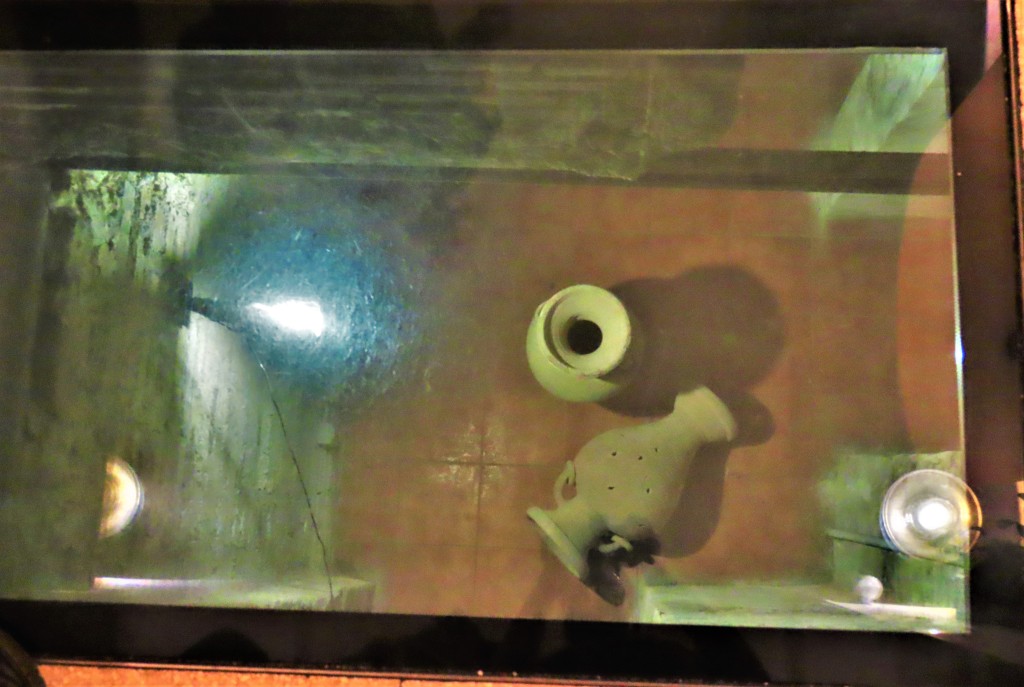
After our look at the Via Appia we went out for supper at very fine restaurant which had some ruins visible beneath its floor. The meal was excellent. It was obvious from some of the things that we were warned about while ordering our food that they have had problems with English folk before (disappointing but sadly unsurprising that this should be the case), but we all thoroughly enjoyed it.
PIAZZA NAVONA AND DOMITIAN’S STADIUM
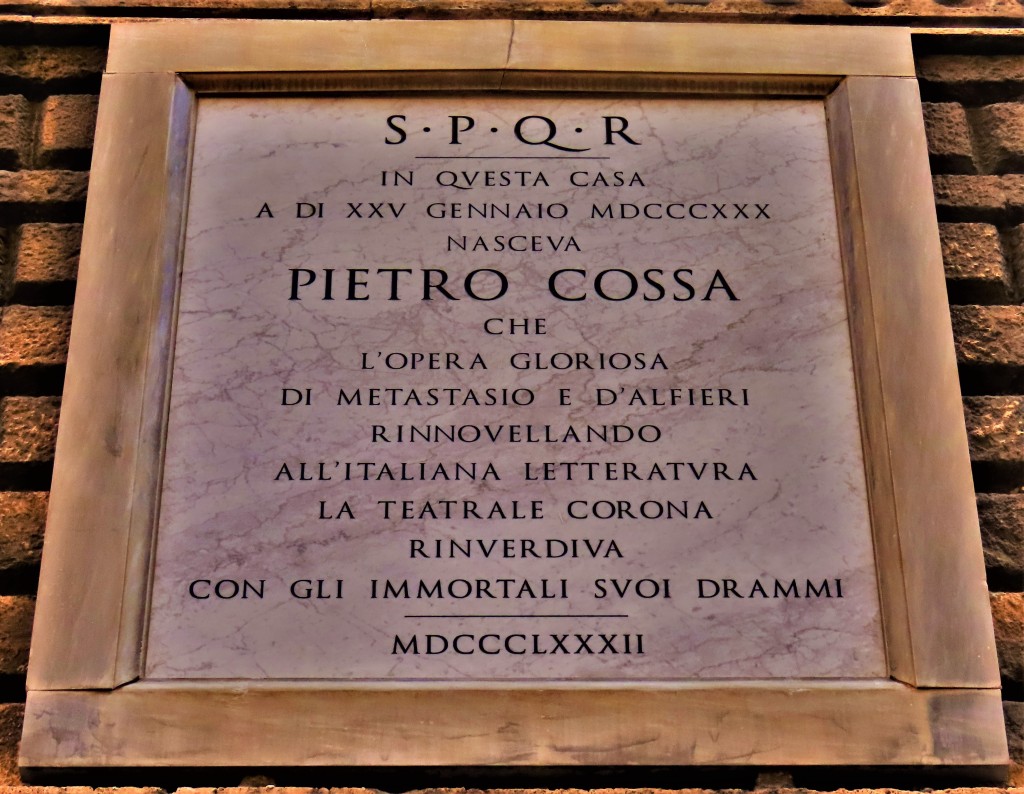
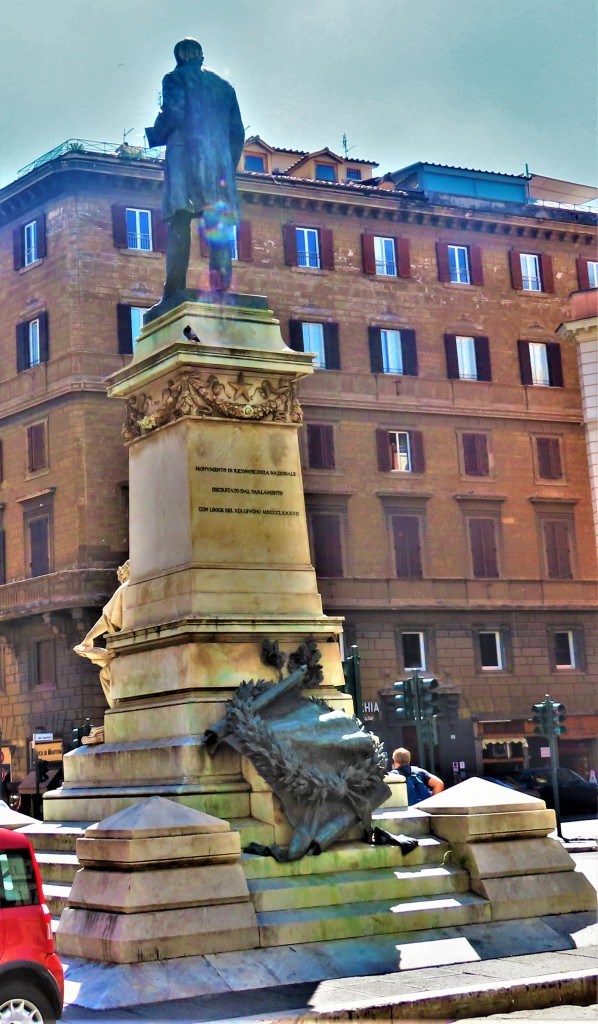
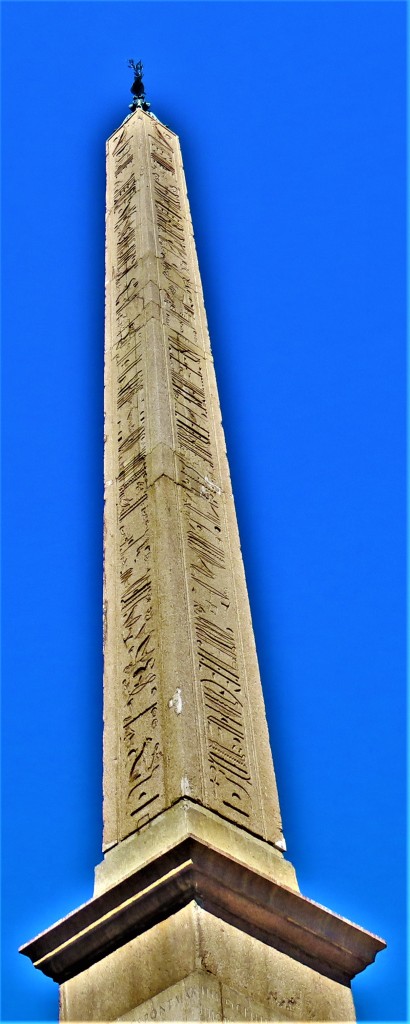
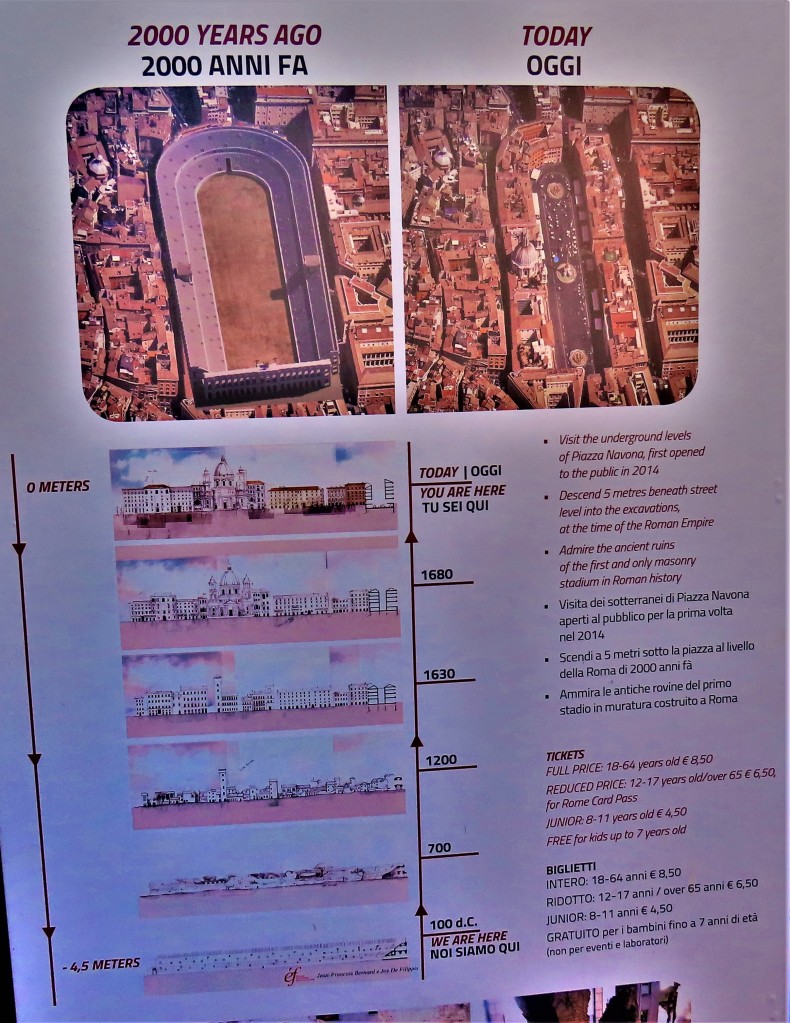
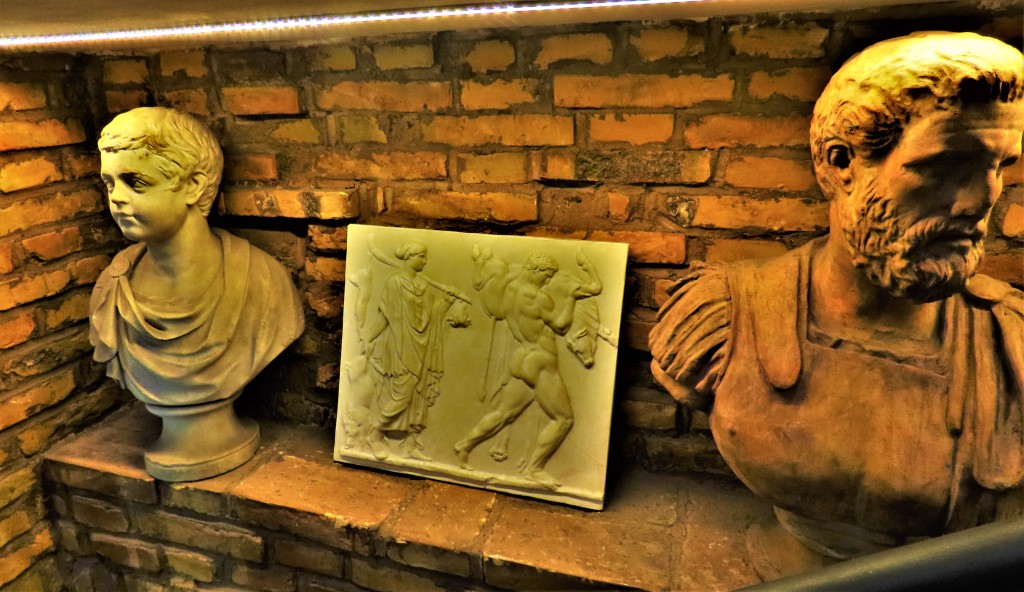
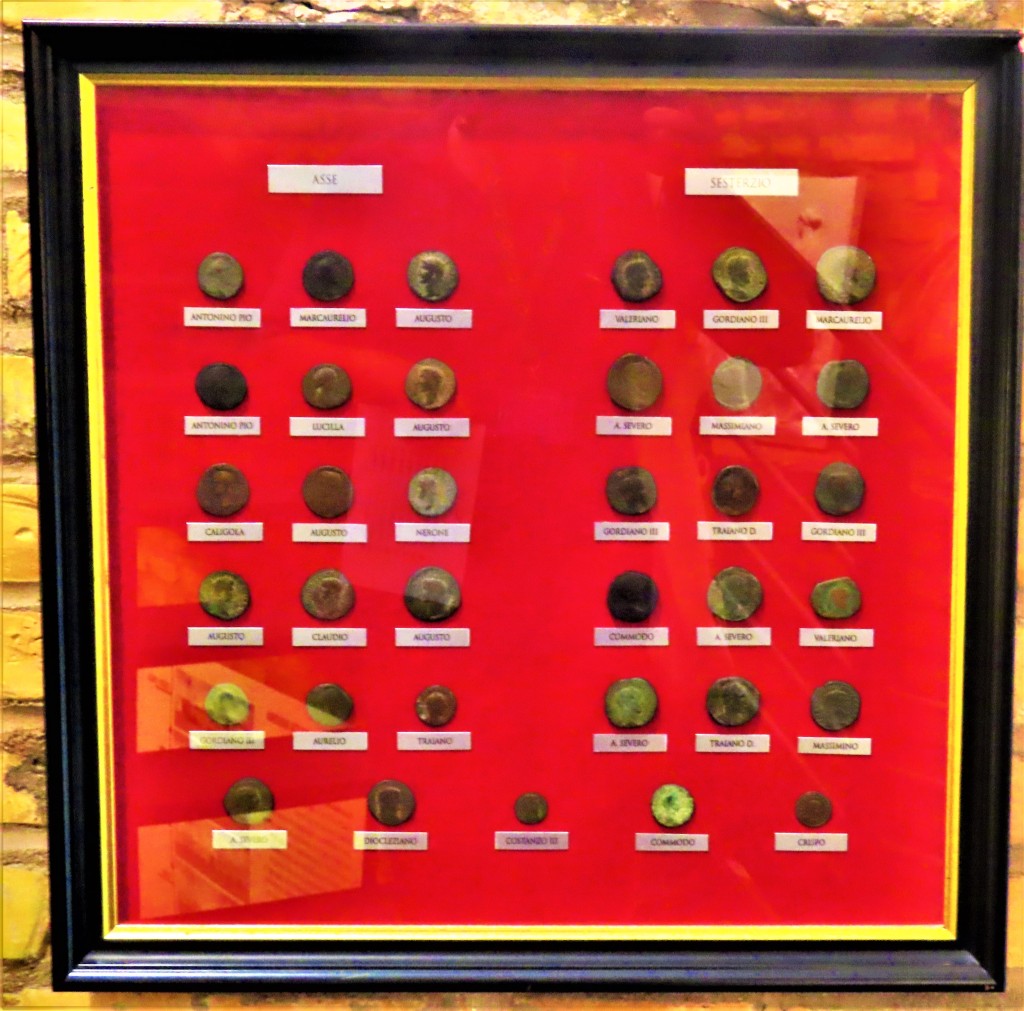
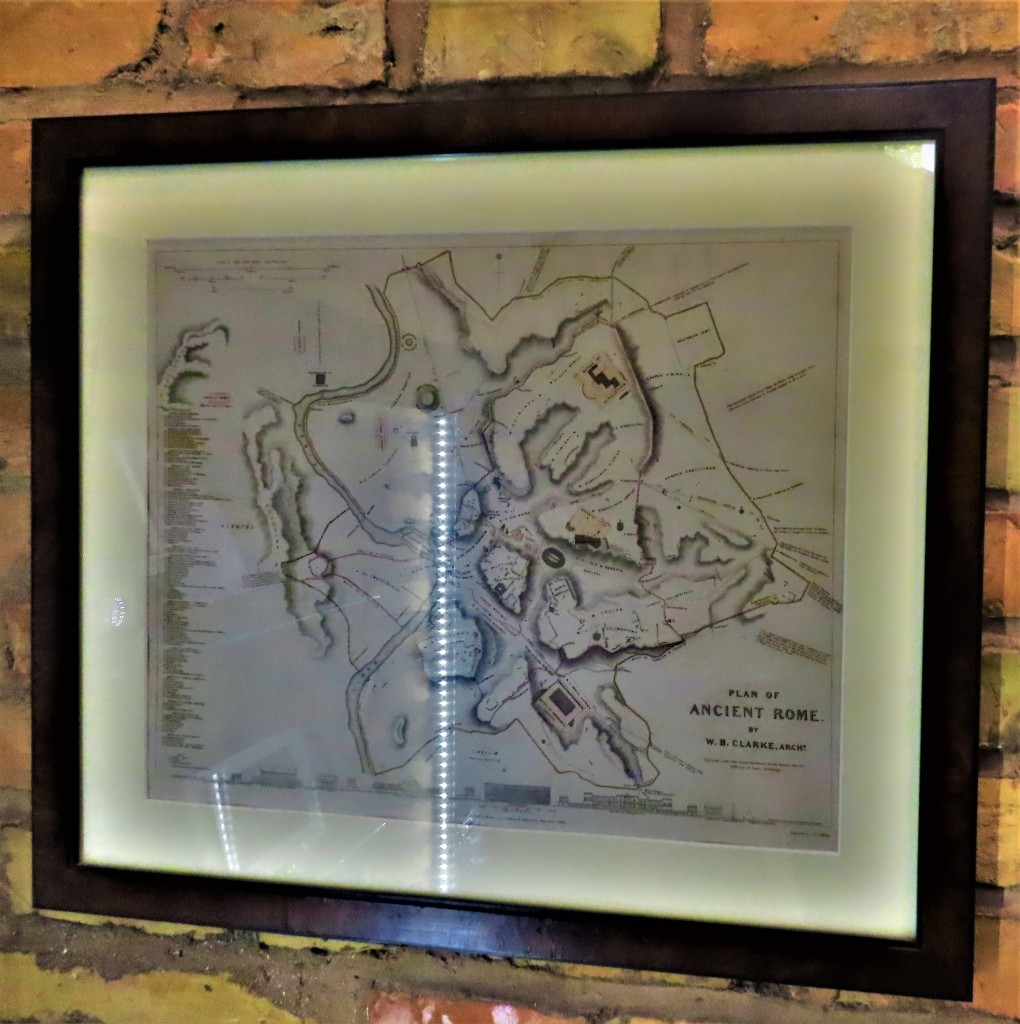
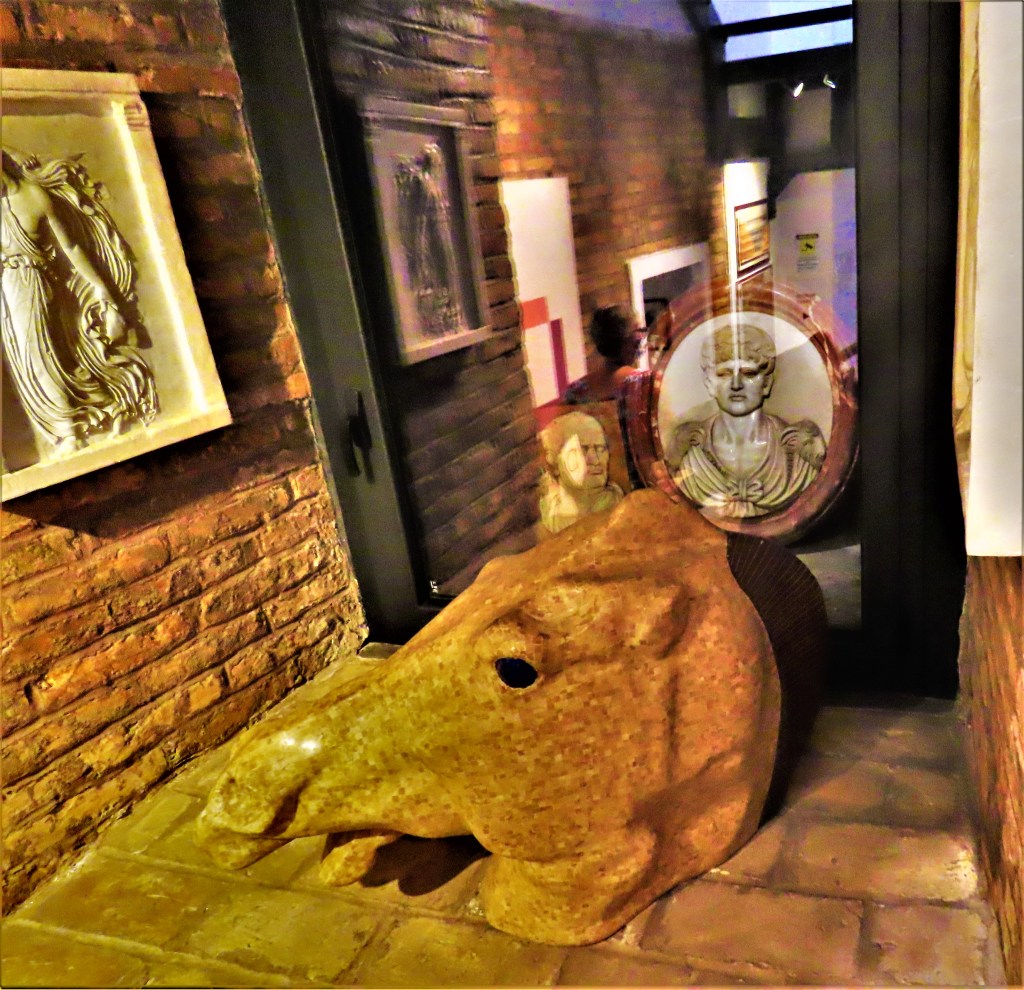
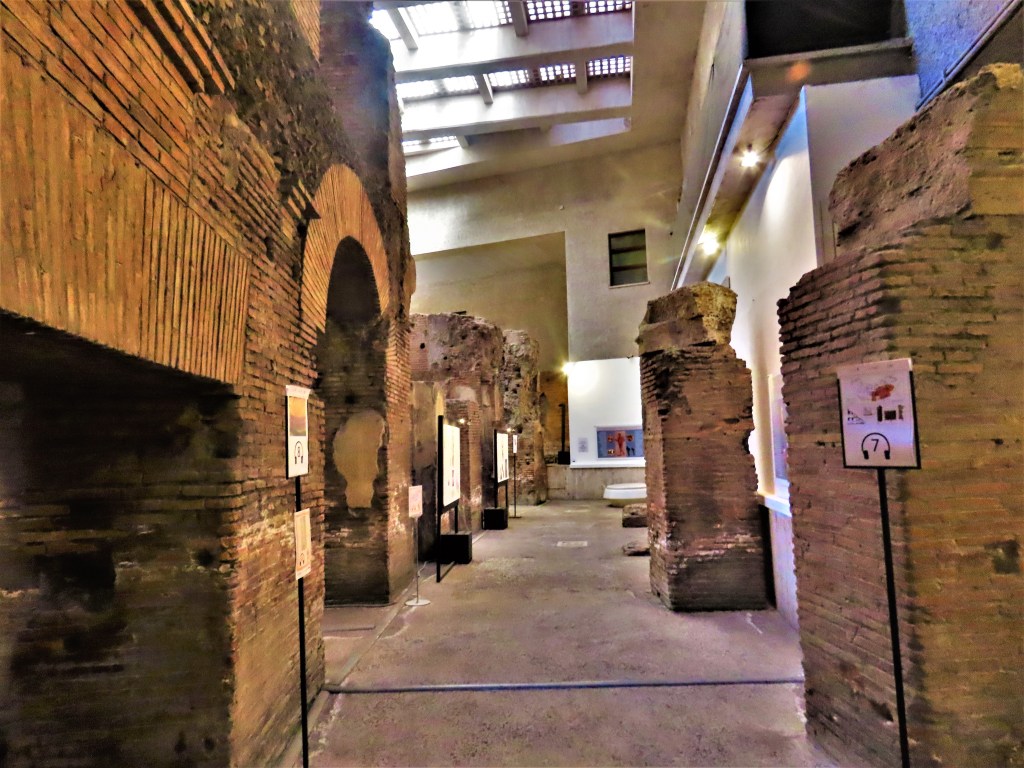
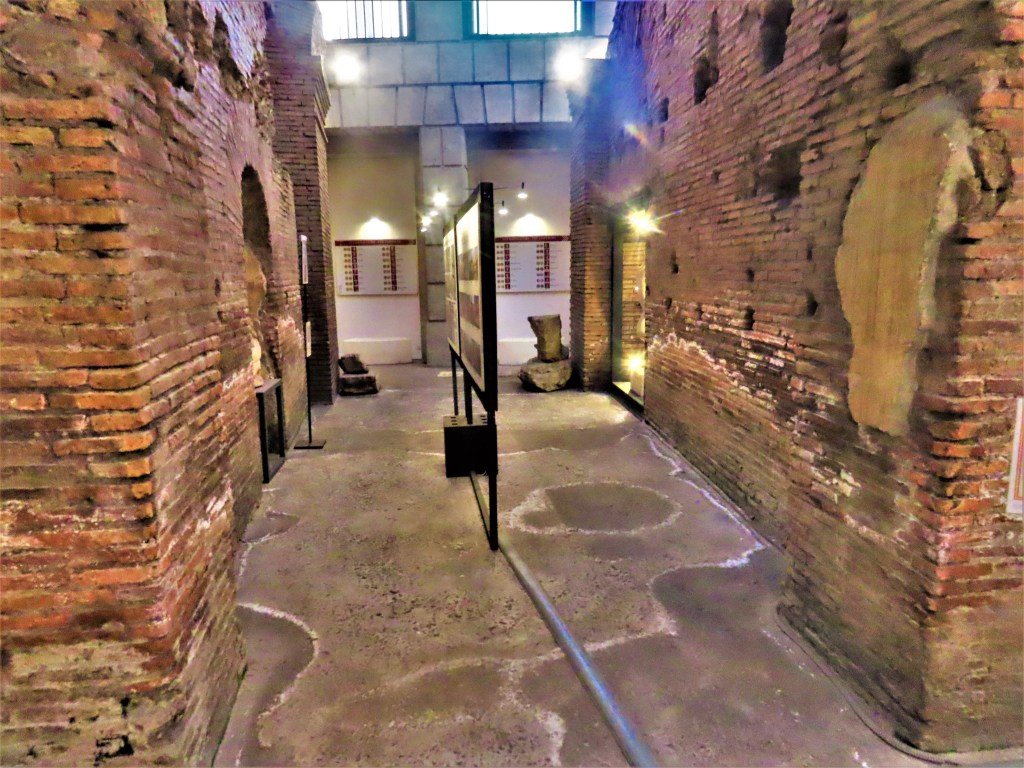
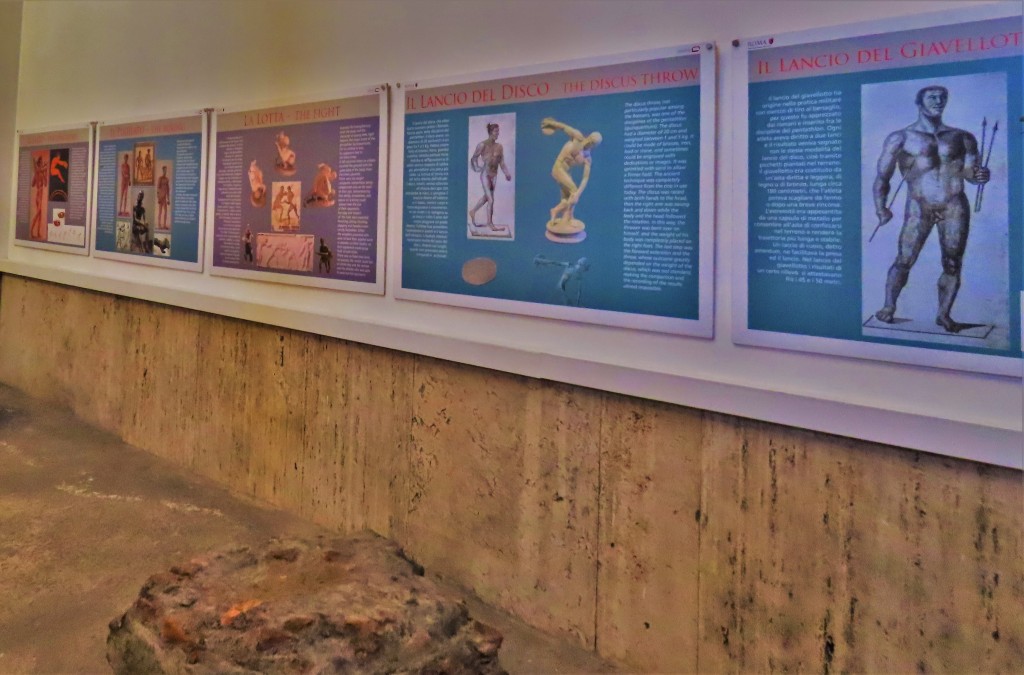
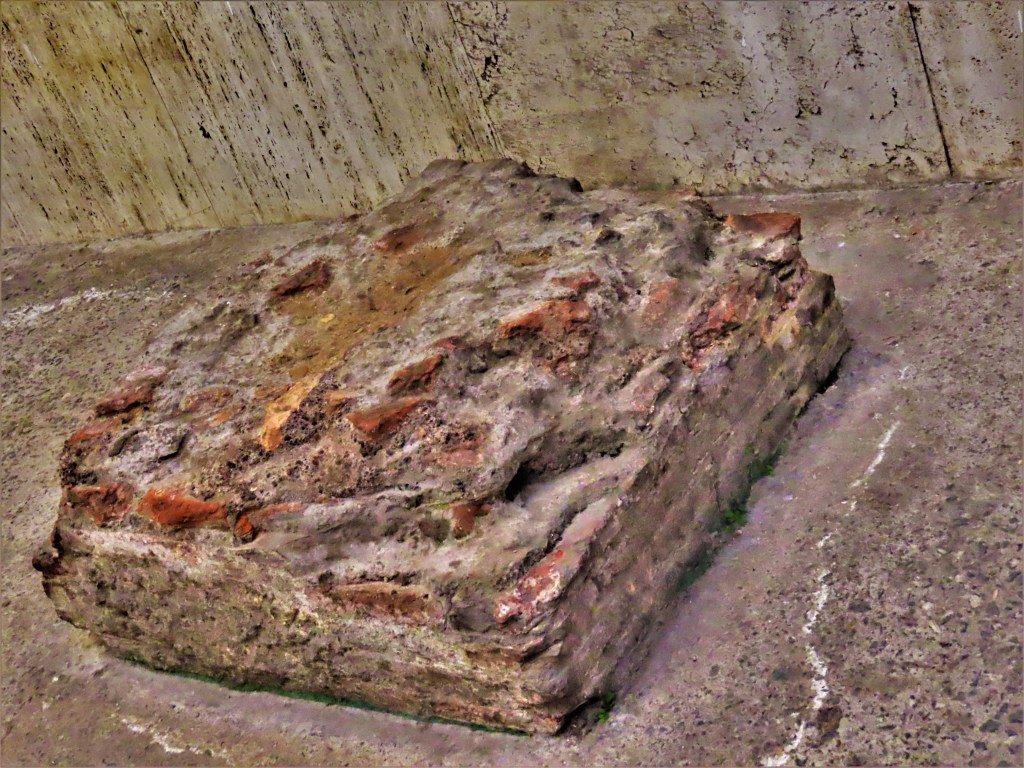
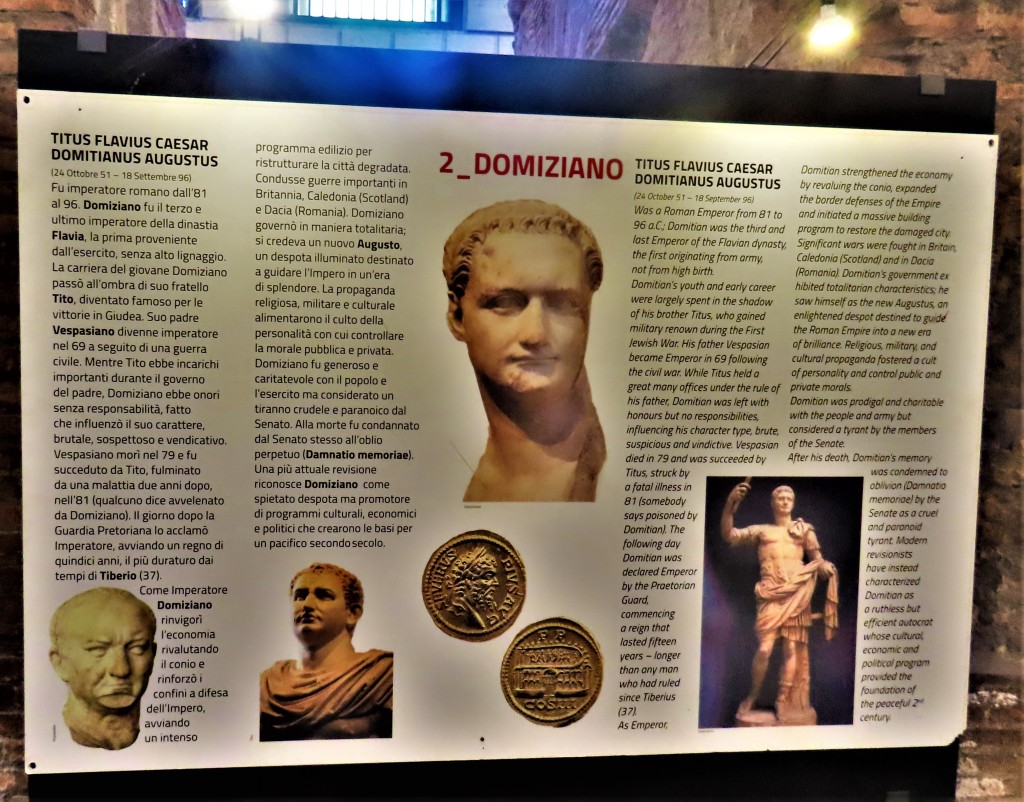
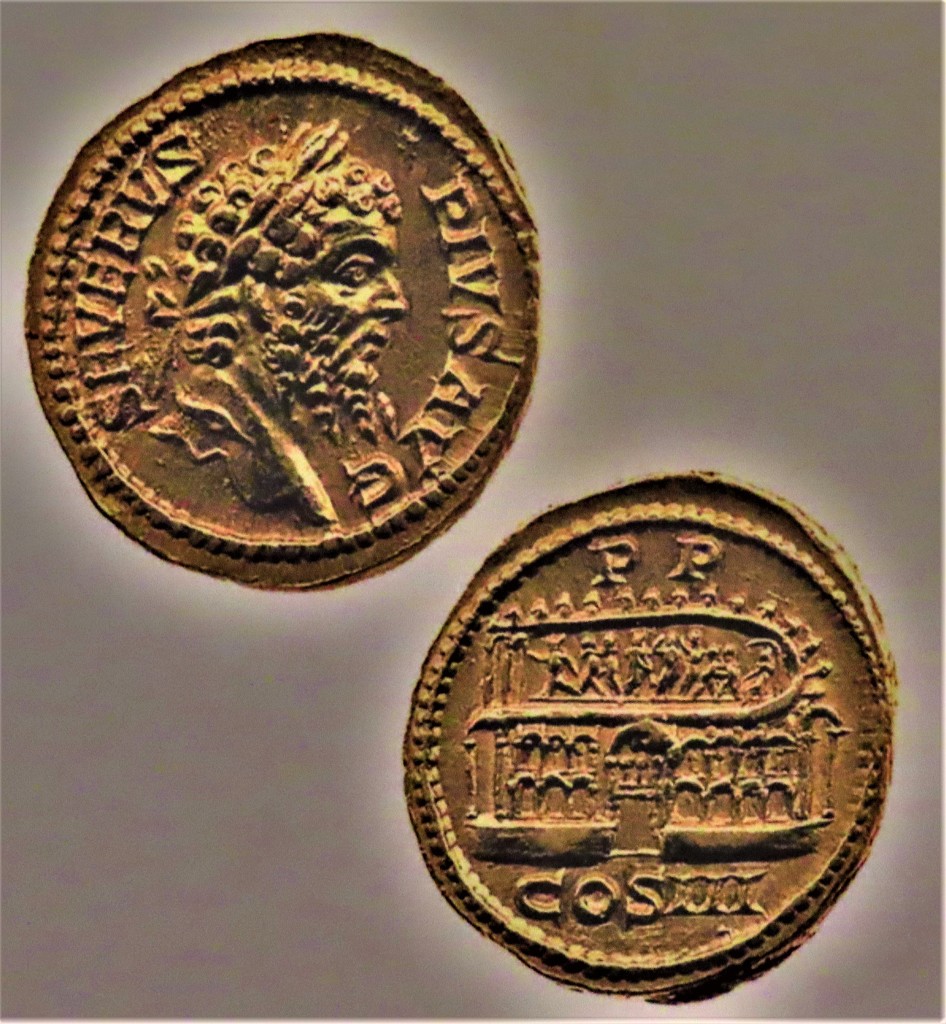
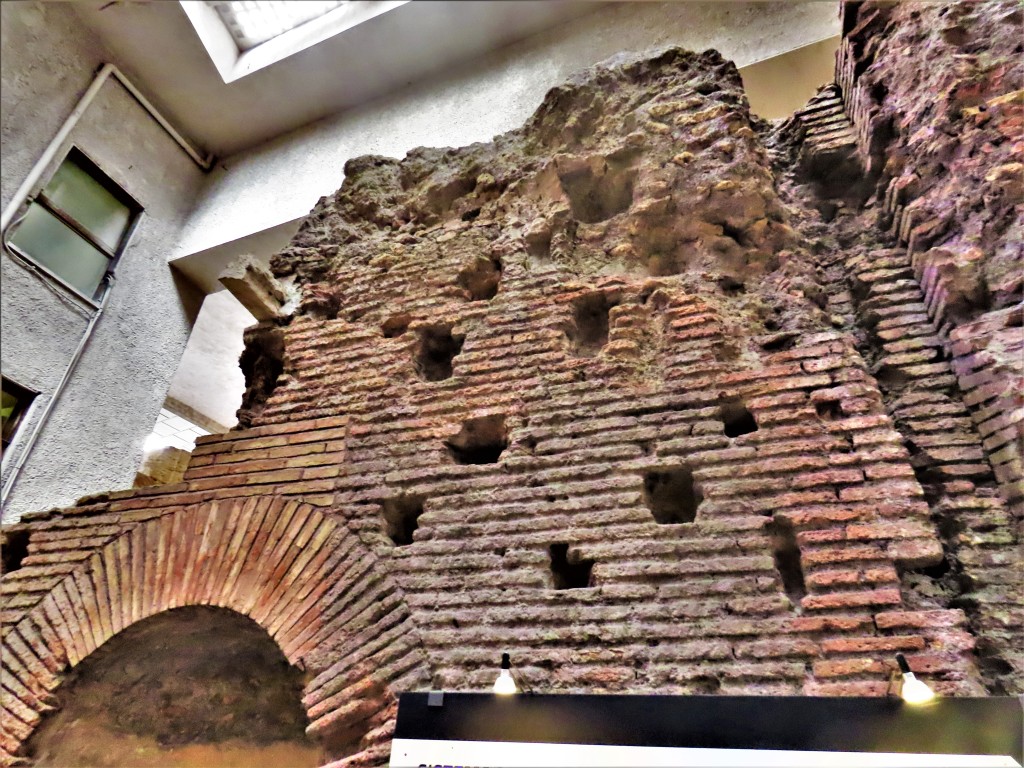
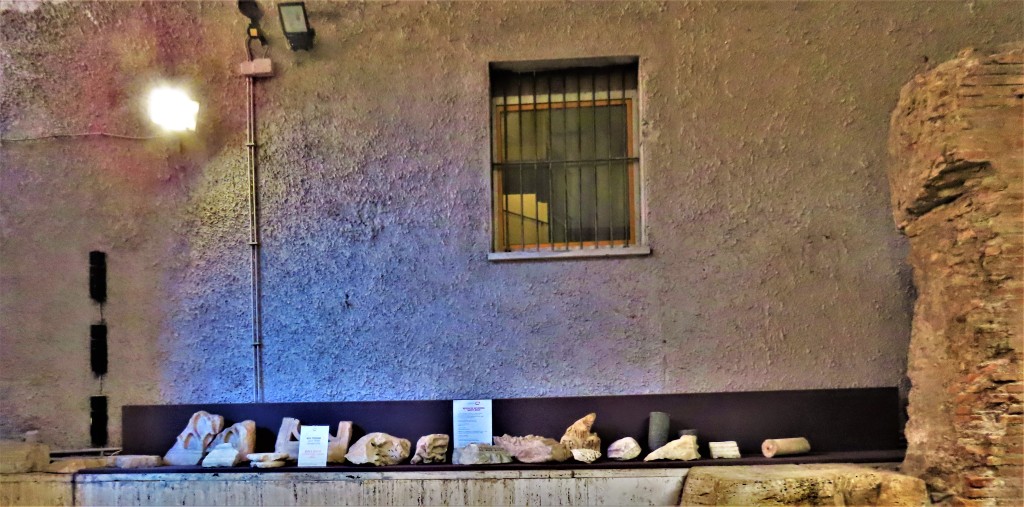
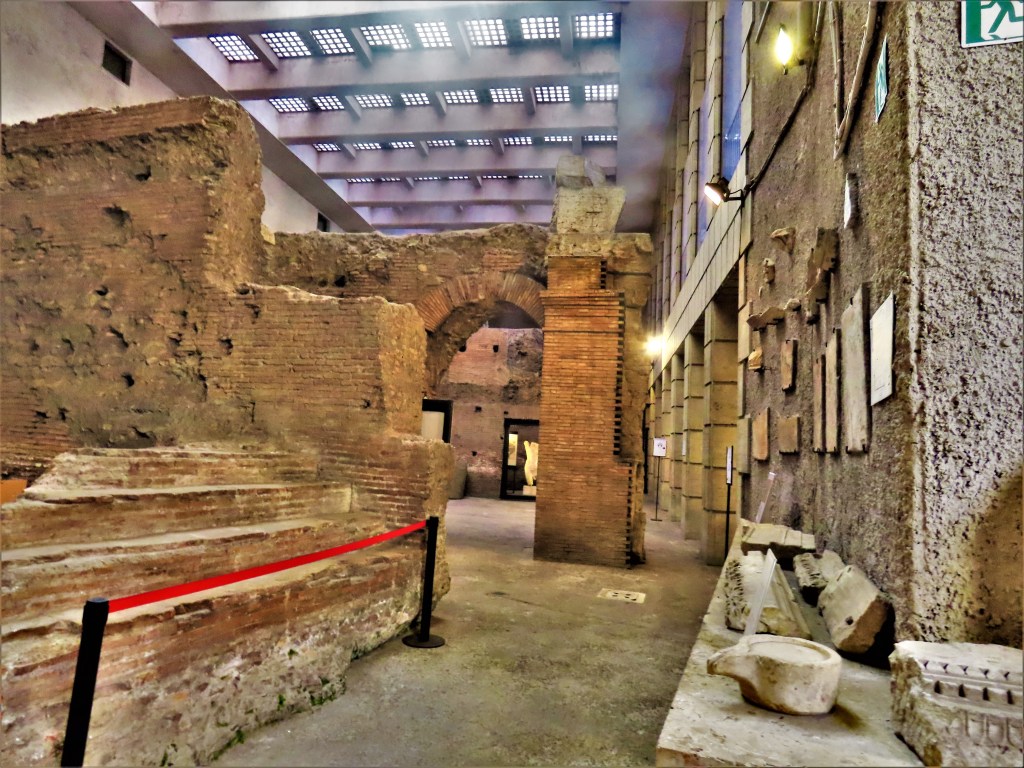
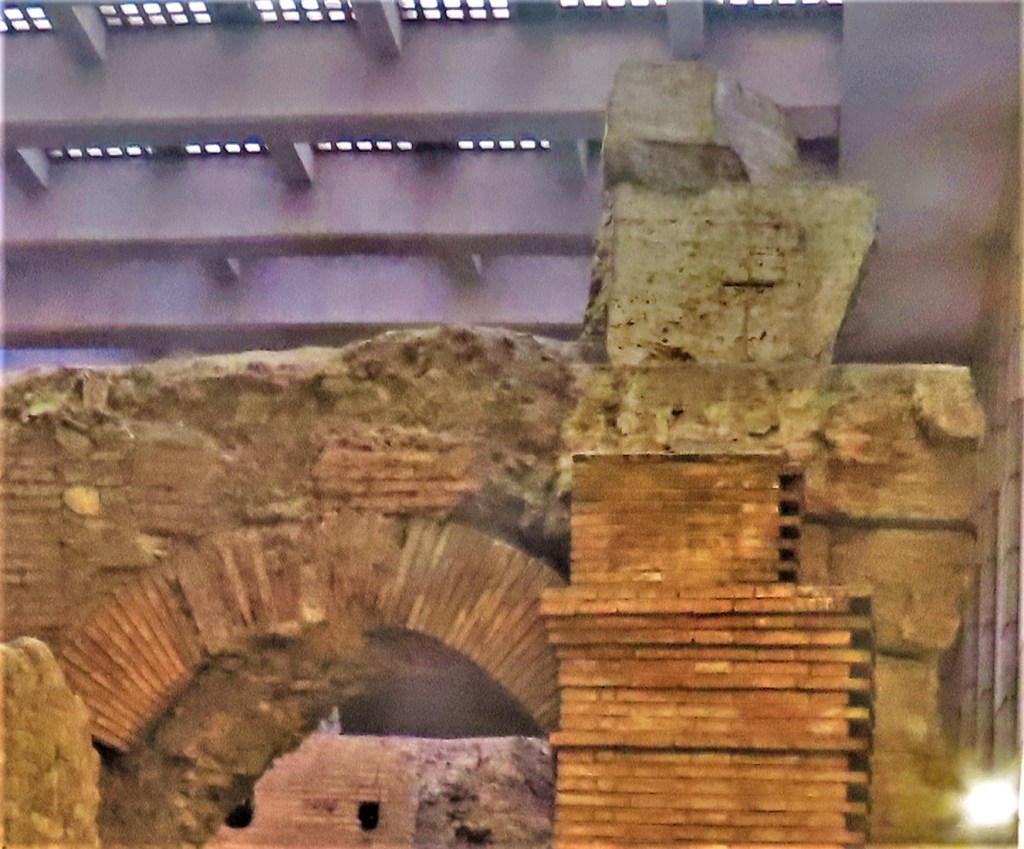
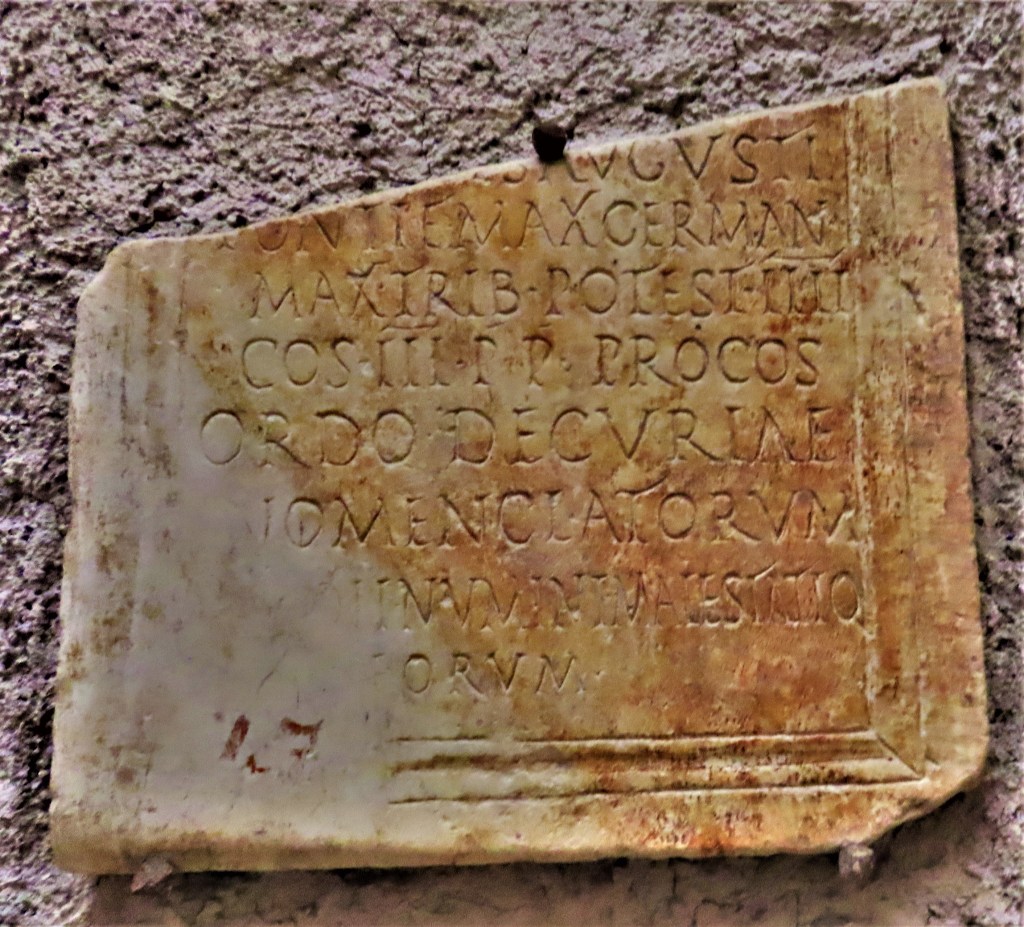
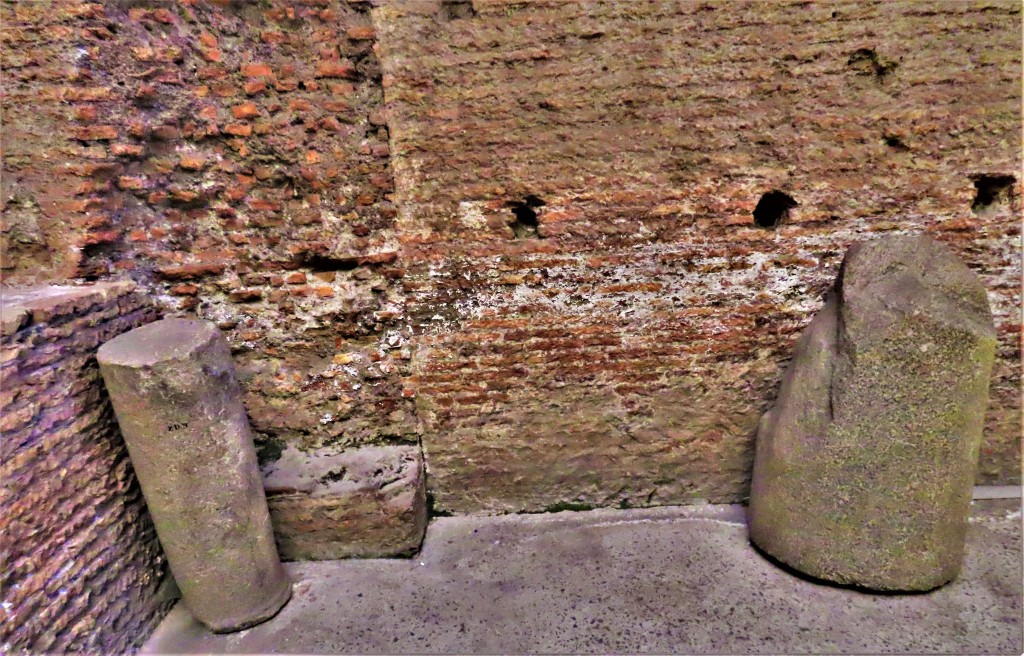
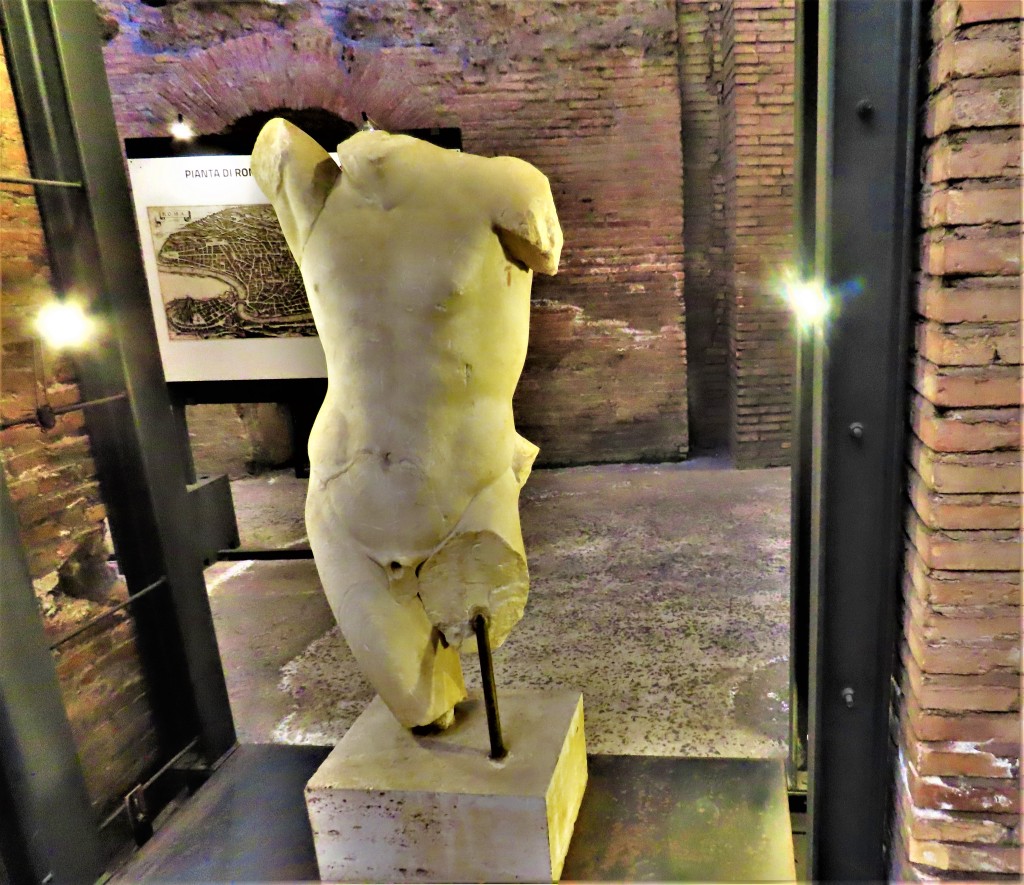
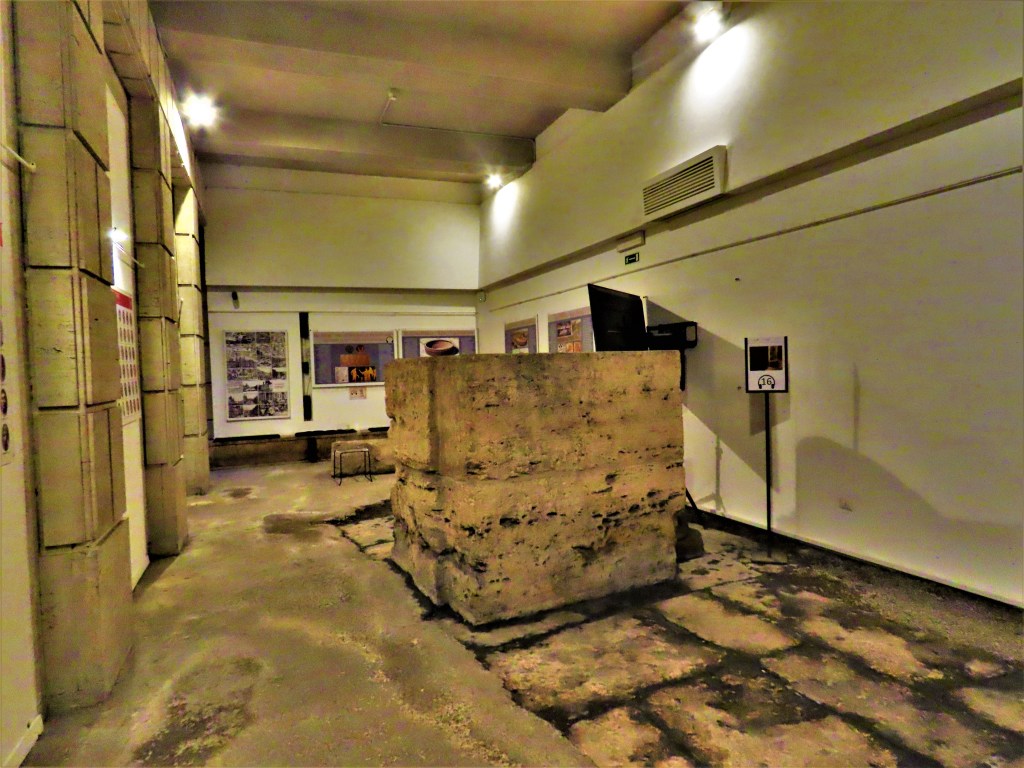
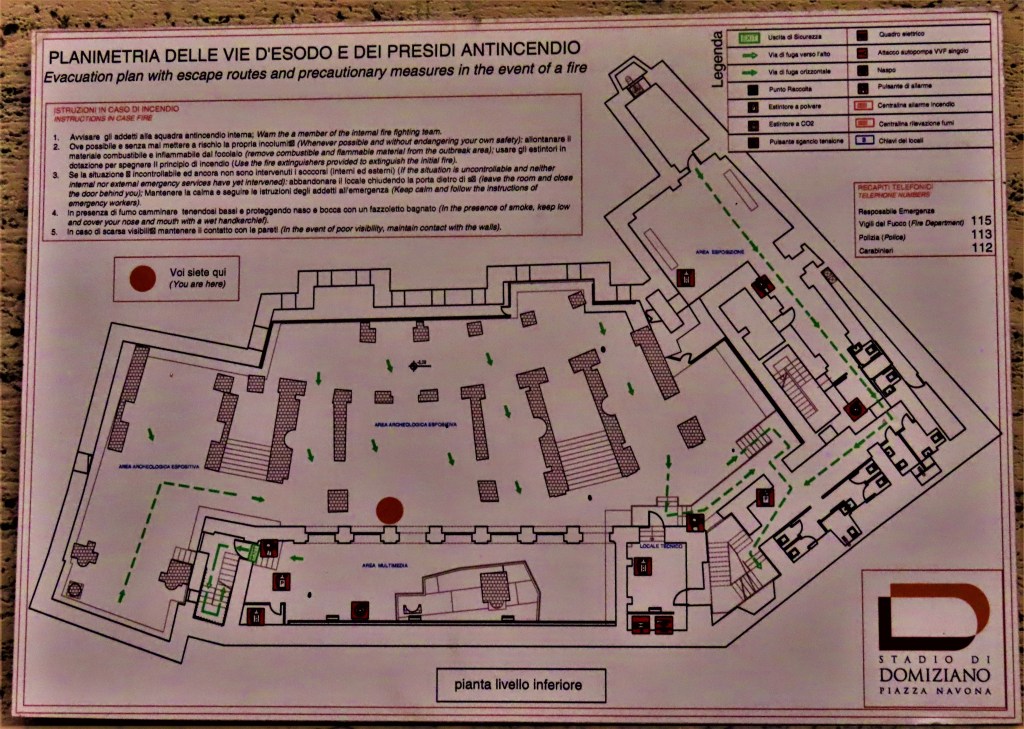
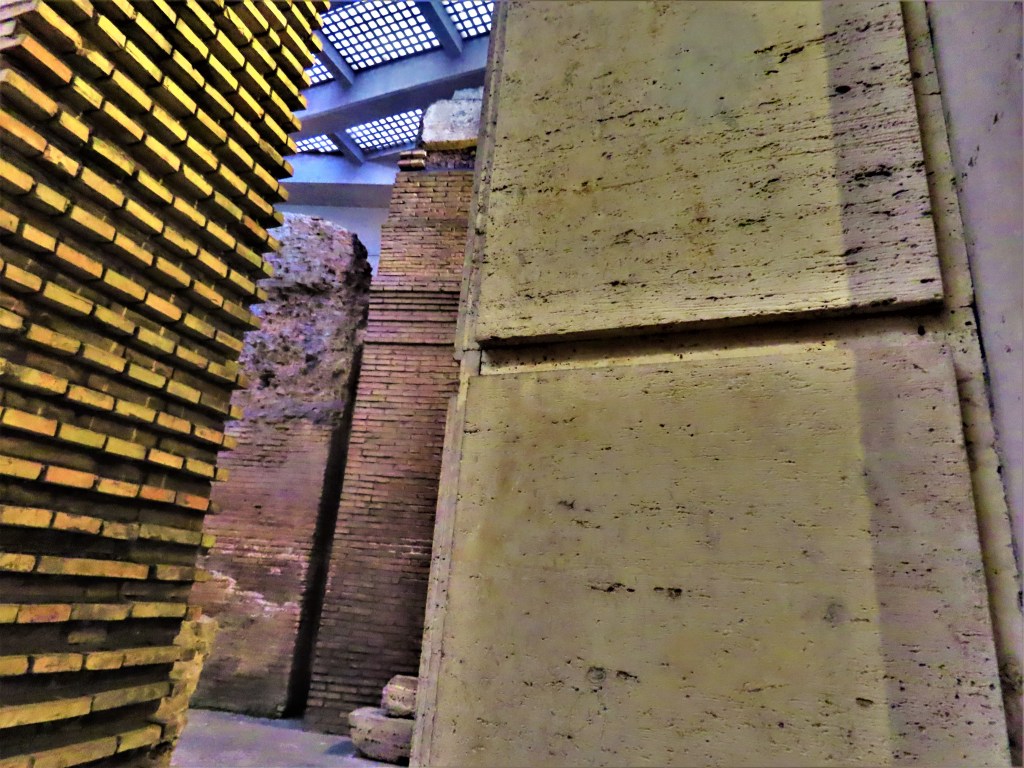
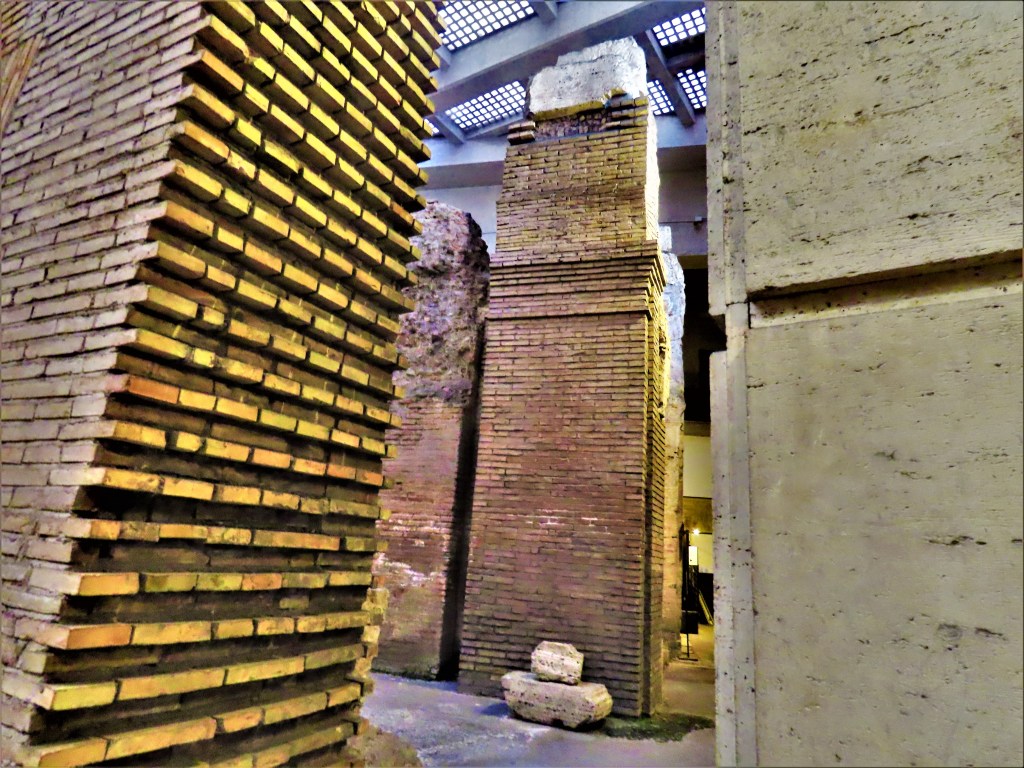
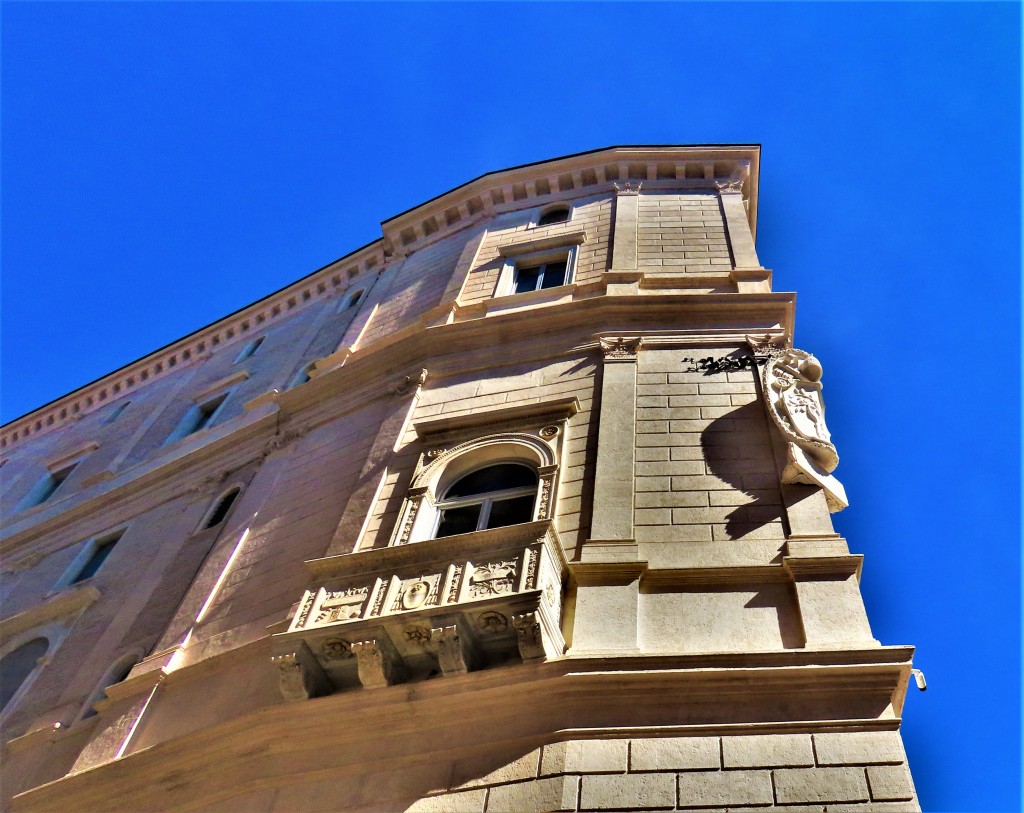
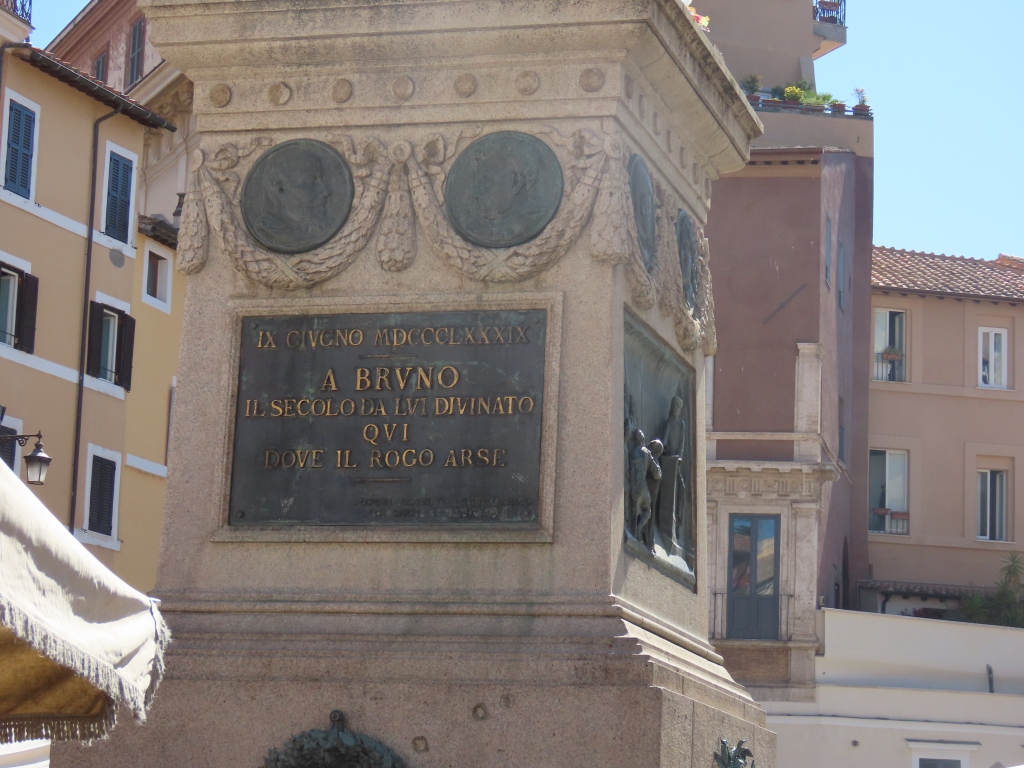
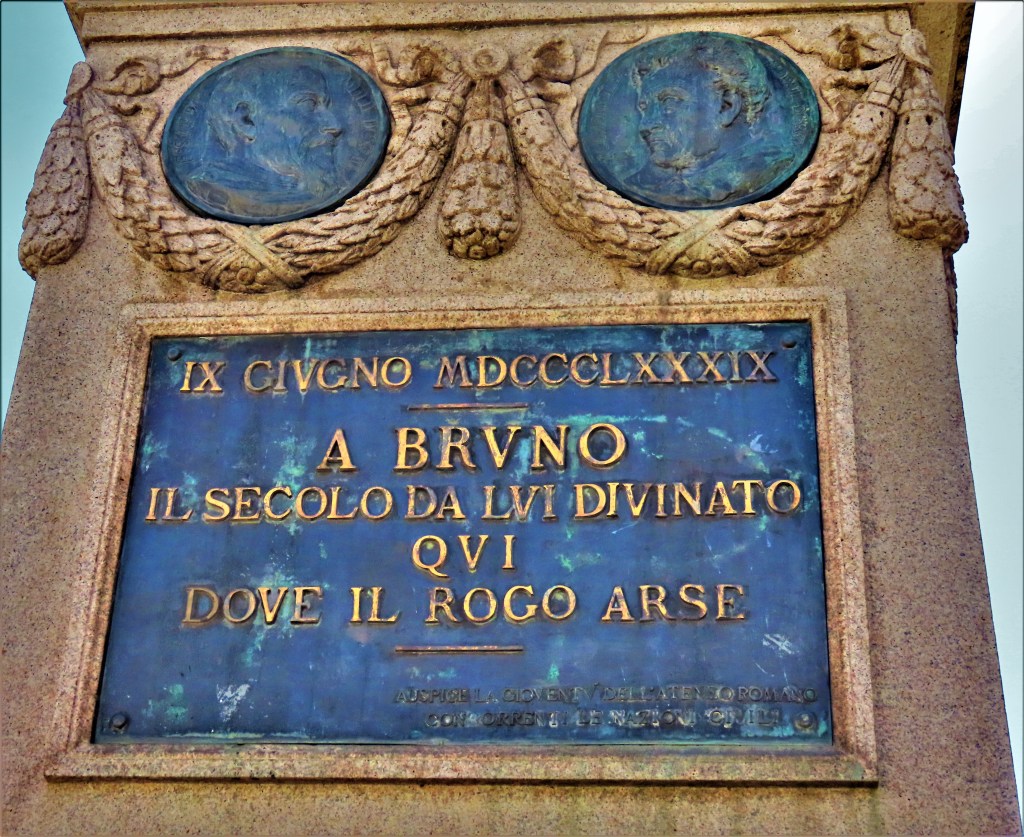
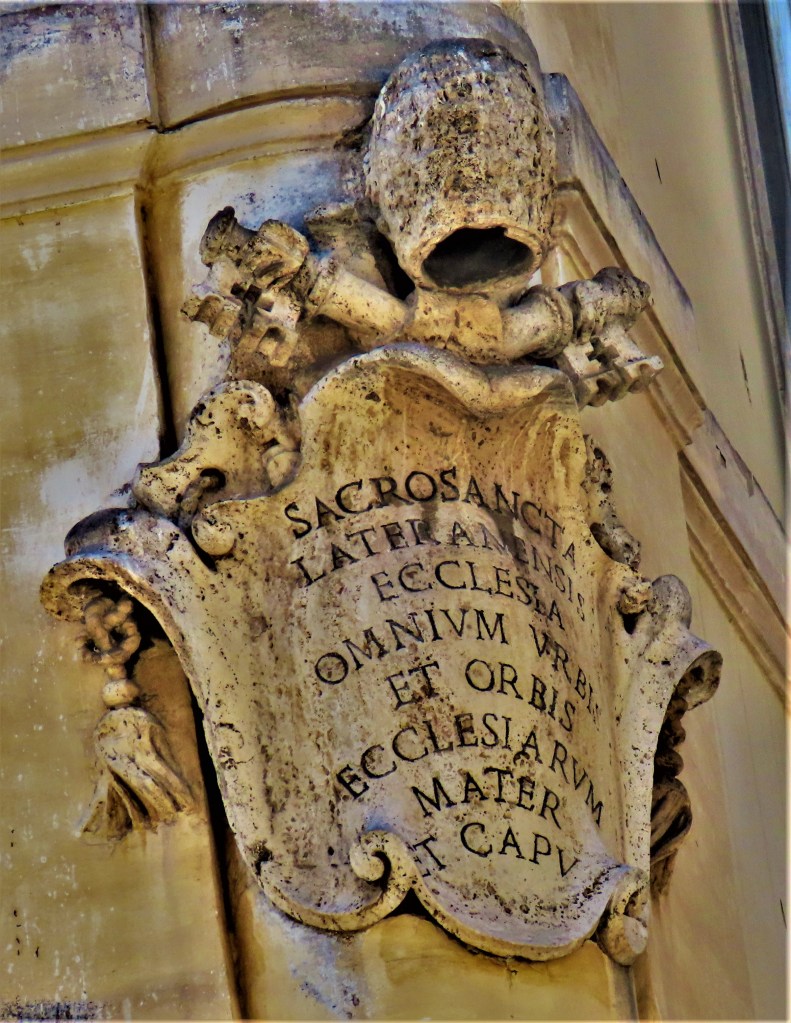
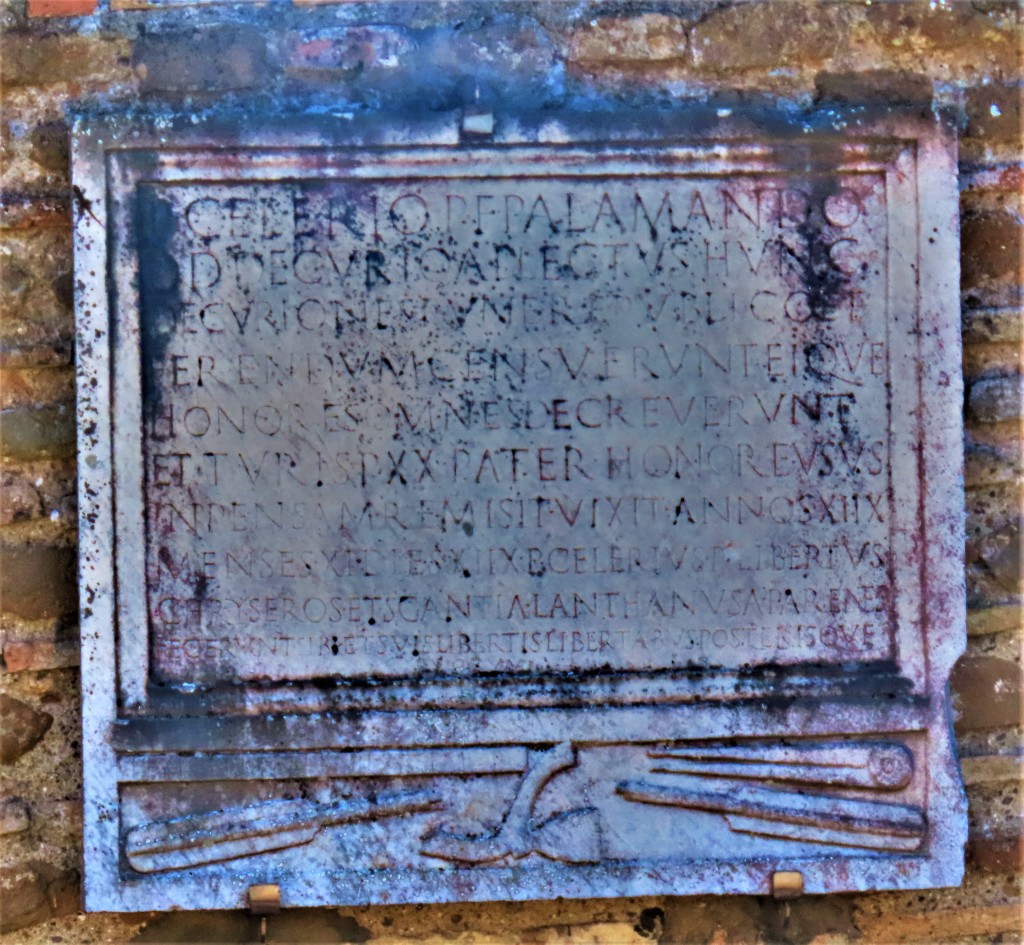
My sister, my nephew and I visited Piazza Navona in the morning, my mother being at that point in bed due to illness which we reckon was diabetes related. Although she ate very little that day she subequently perked up sufficiently to come out in the afternoon which began with a return to Piazza Navona and an exploration of Domitian’s Stadium, the remains of which are underneath Piazza Navona. We did a few other things which will feature in my next post after we had finished there.
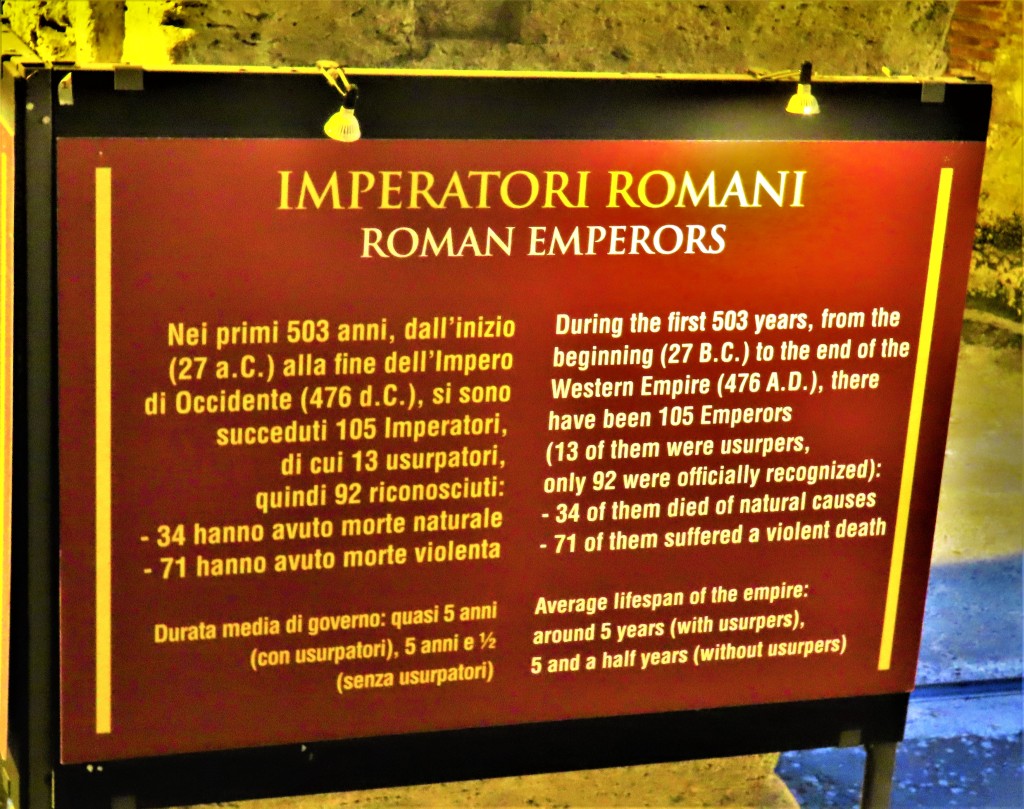
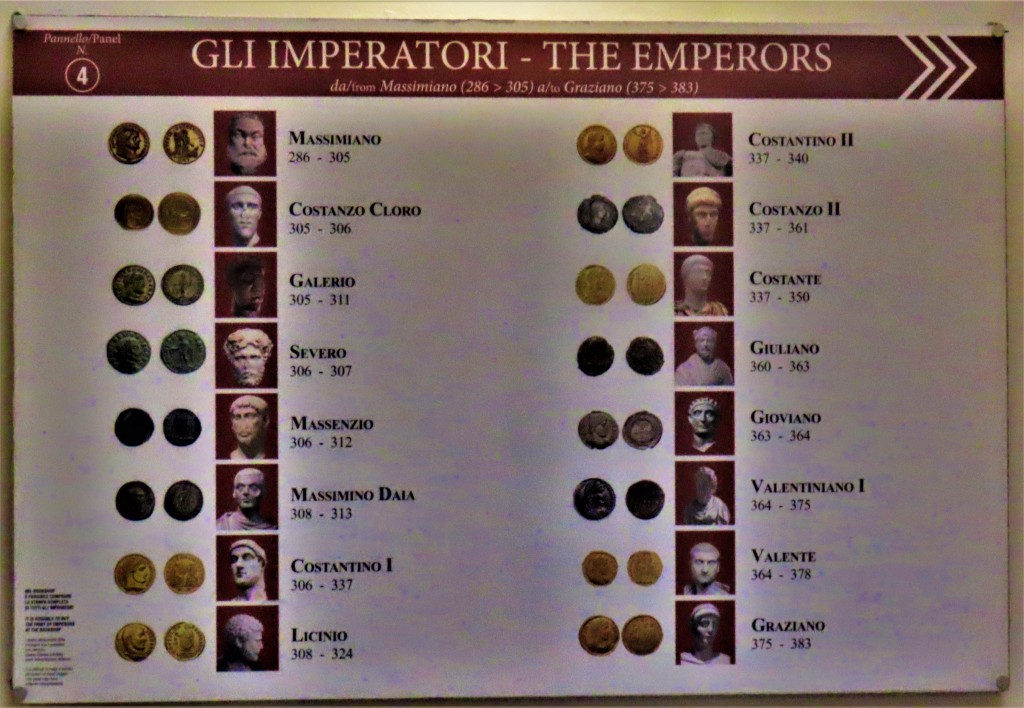
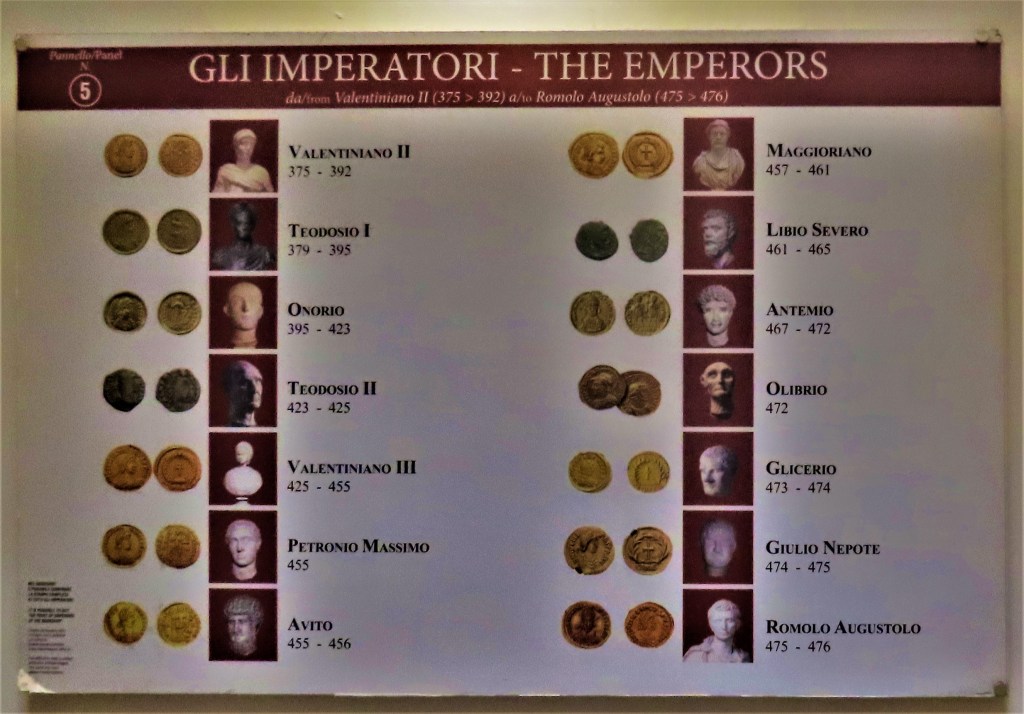
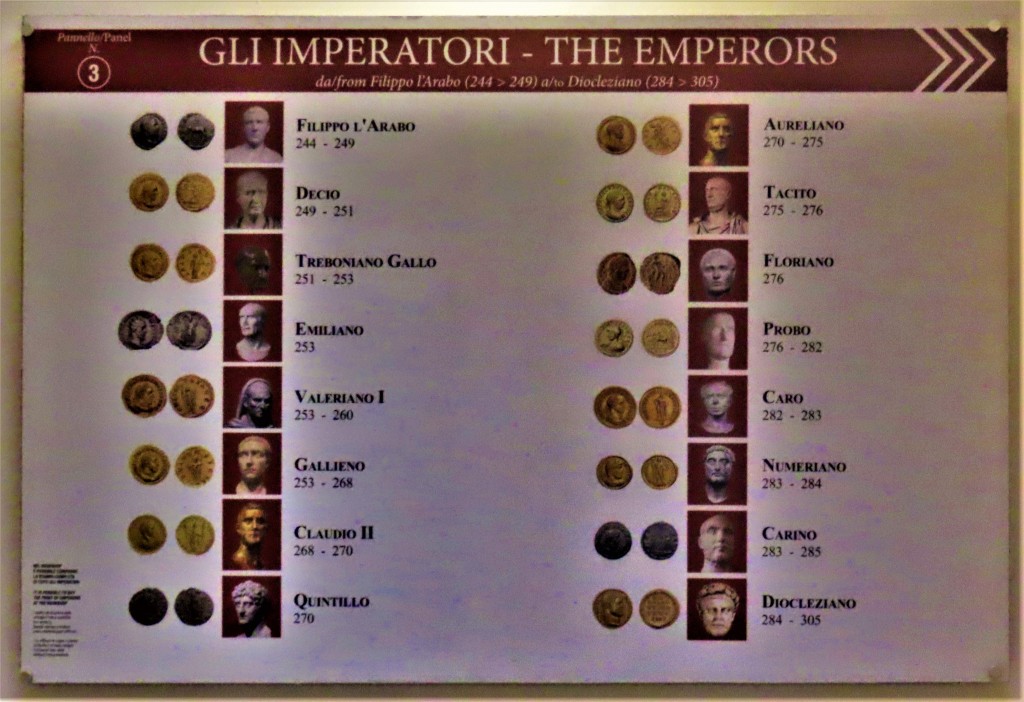
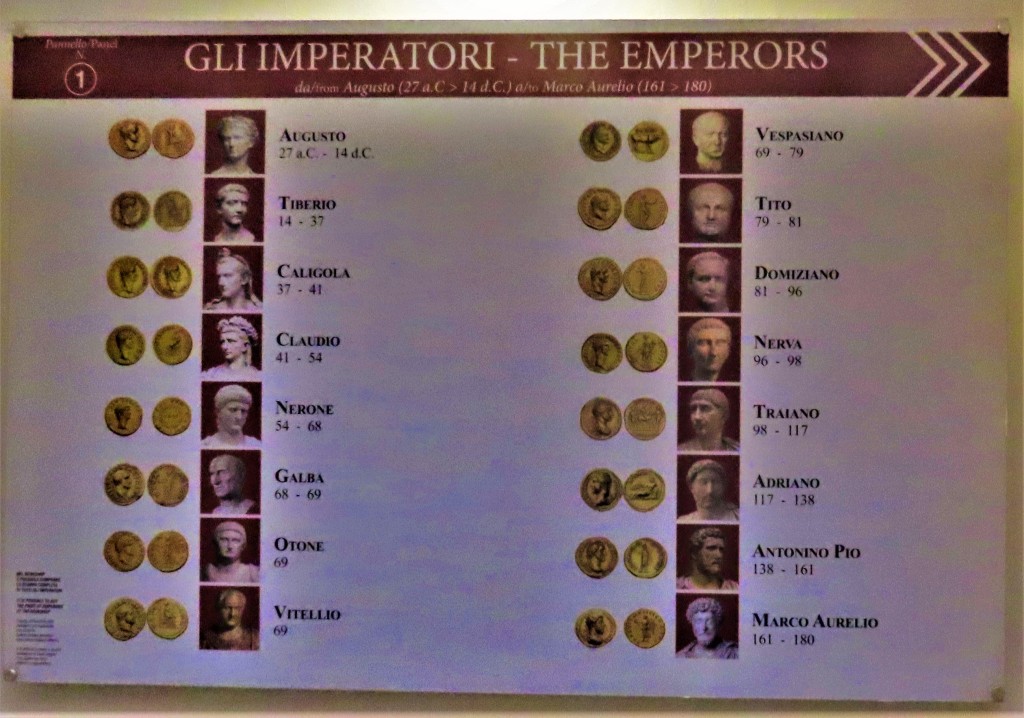
Domitian was one of Rome’s worst emperors, eventually being murdered in his palace and subsequently declared ‘damnatio memoriae’ – ‘damned to the memory’. Tacitus, who was too cautious to write about someone as recent as Domitian, used Tiberius, the second emperor after Augustus, as his ‘surrogate Domitian’. Domitian is also covered by Suetonius in “The Twelve Caesars”, being the twelfth Caesar – Suetonius starts with Julius Caesar who was never officially styled as emperor, and also covers Augustus, Tiberius, Caligula, Claudius, Nero, Galba, Otho, Vitellius, Vespasian, Titus and Domitian.
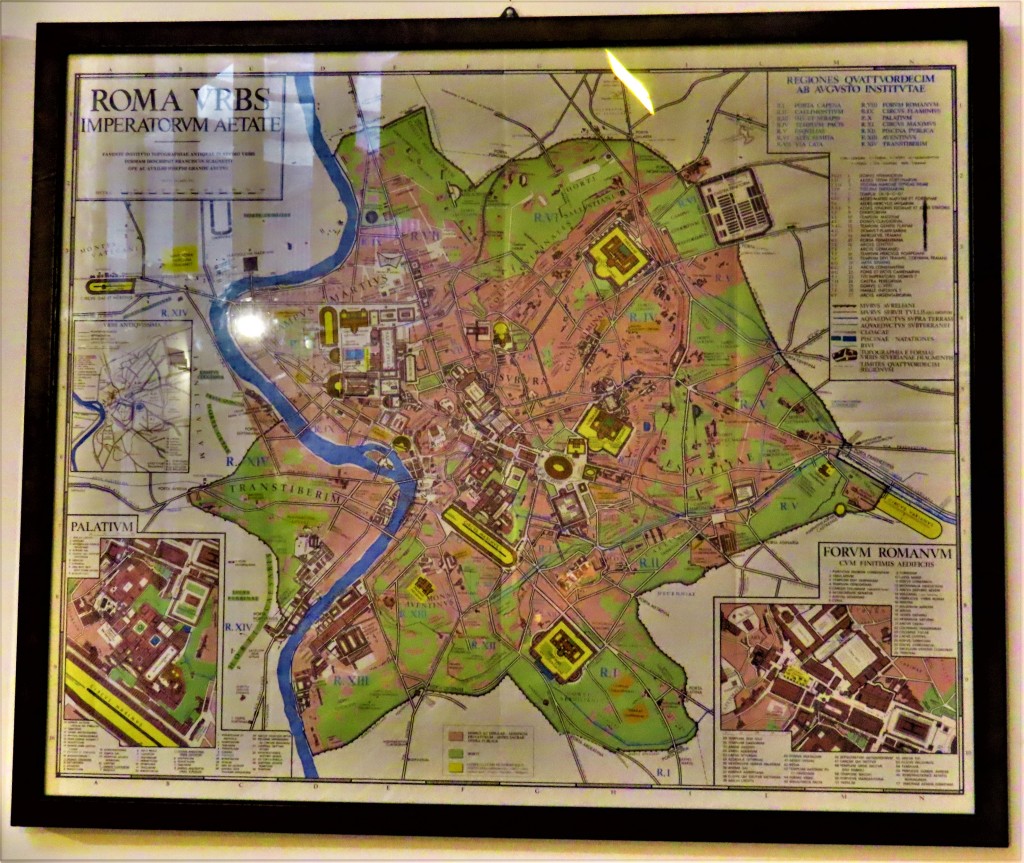
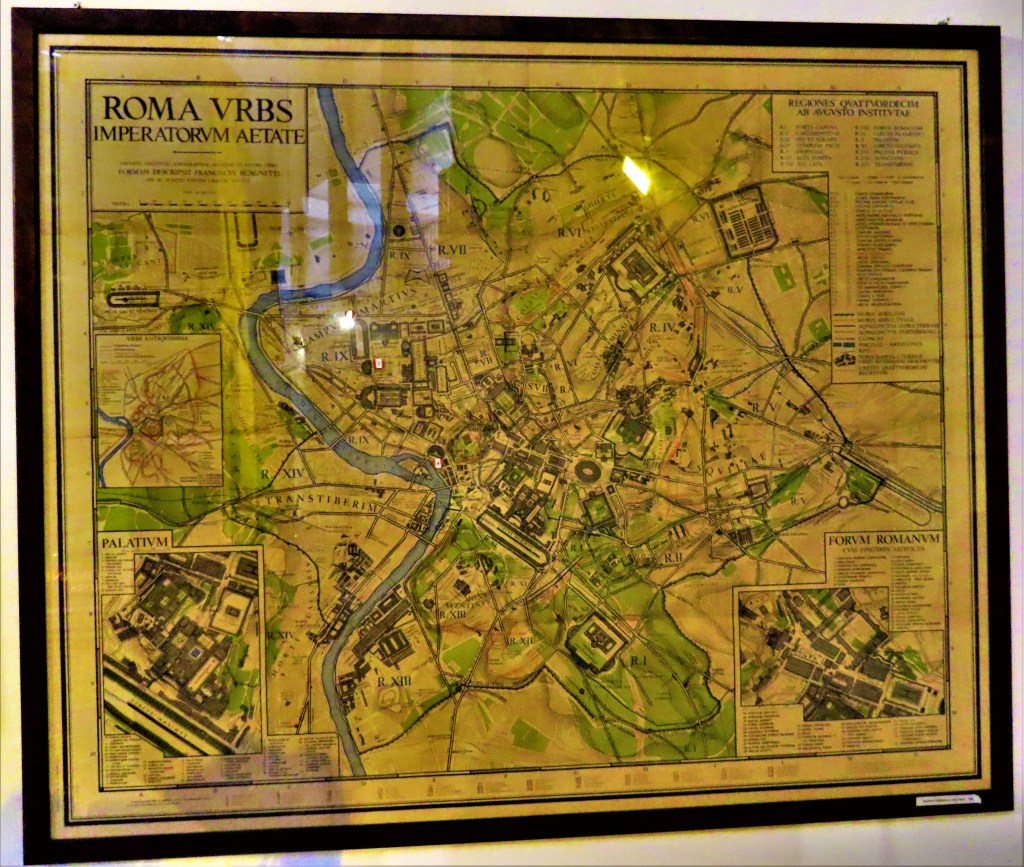
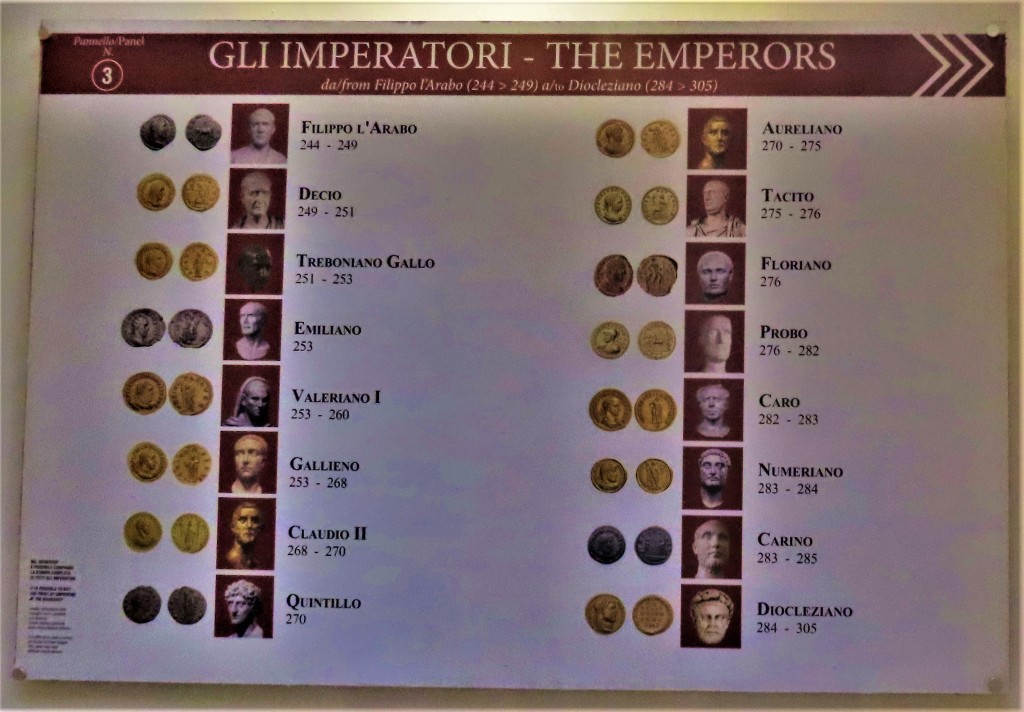
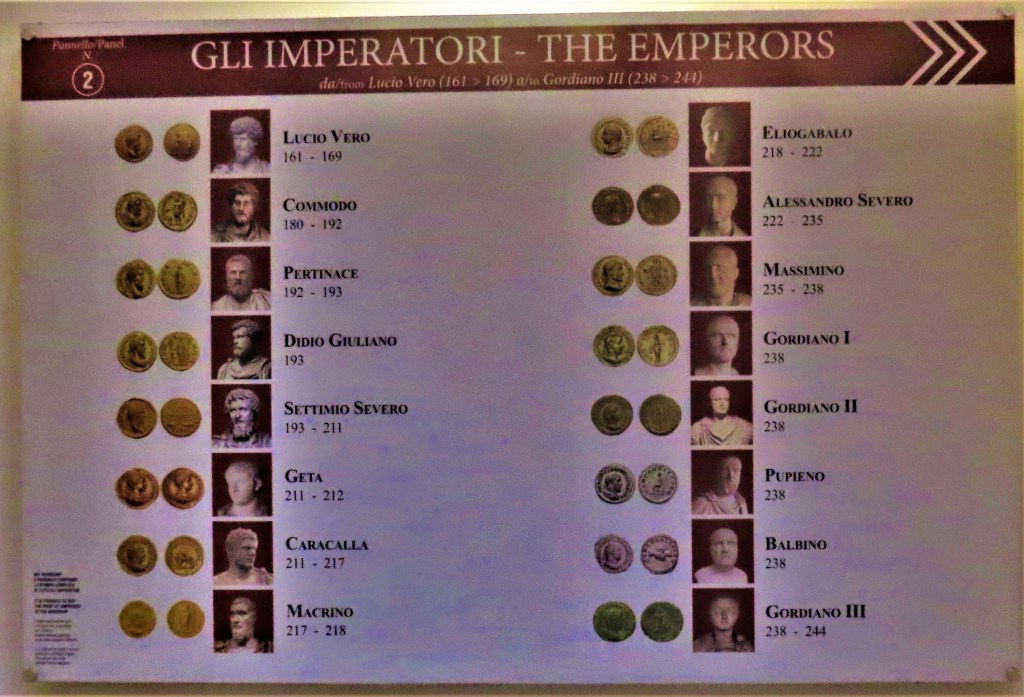
Both the Piazza Navona of today and the remains of Domitian’s stadium are well worth visiting. The latter has an audio guide which you can use for extra information – you get a headset and a map with number locations, and when you are at one of the locations you position the headset over that number on the map and play the relevant audio.
I end this post in my signature style with a waterfall video:
Continuing my account of my Italian holiday with a look at the Roman end of the Via Appia.
Welcome to the fourth post in my series about my Italian holiday (2-11 September 2020). This post picks up from the end of the Ostia post and covers the second major activity of the holiday, a look at the Roman end of the Via Appia (I saw the other end of the Via Appia at Brindisi – Brundisium in ancient times – on a previous visit to Italy some years back, but I have yet to see the intermediate point at Capua).
THE EVENING AFTER OSTIA
We had supper out at a place that was a fair walk from the apartment we were staying. The meal was well worth the walk. It was at this meal that I discovered wild chicory, which is excellent stuff. Here are some pictures from that evening.
THE MORNING
My mother, my sister and I went out to visit a food market near where we were staying. This was a very enjoyable little trip, and a good warm up for the afternoon’s activity.
JOURNEY TO THE VIA APPIA
My sister had worked out a route from our apartment to the Via Appia that involved two bus journeys with a change on the way, and we followed that route, albeit with a hitch in the middle due to confusion about where to catch the second bus from, which added a fair bit of walking to our day. Nevertheless we arrived at the Via Appia in reasonable time and were able to do some exploring. Here are pictures from the journey through Rome:
THE VIA APPIA
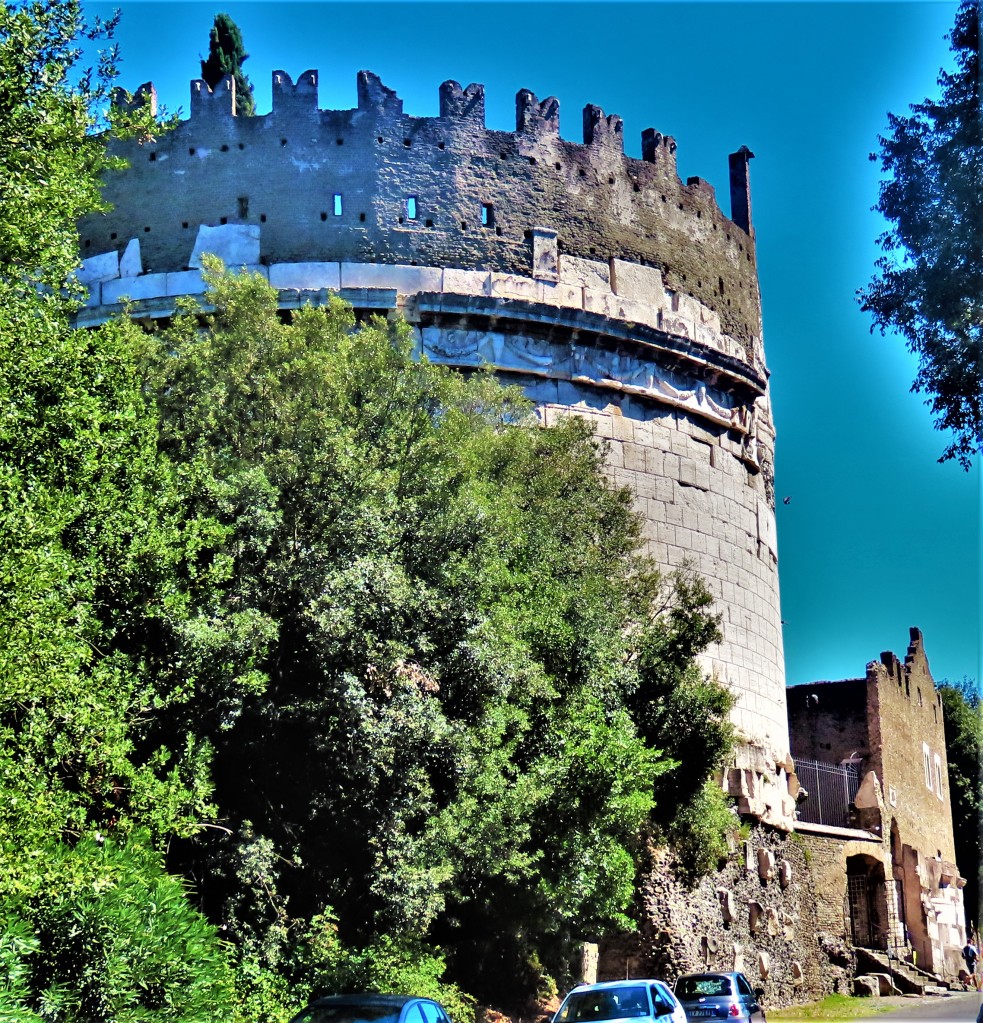
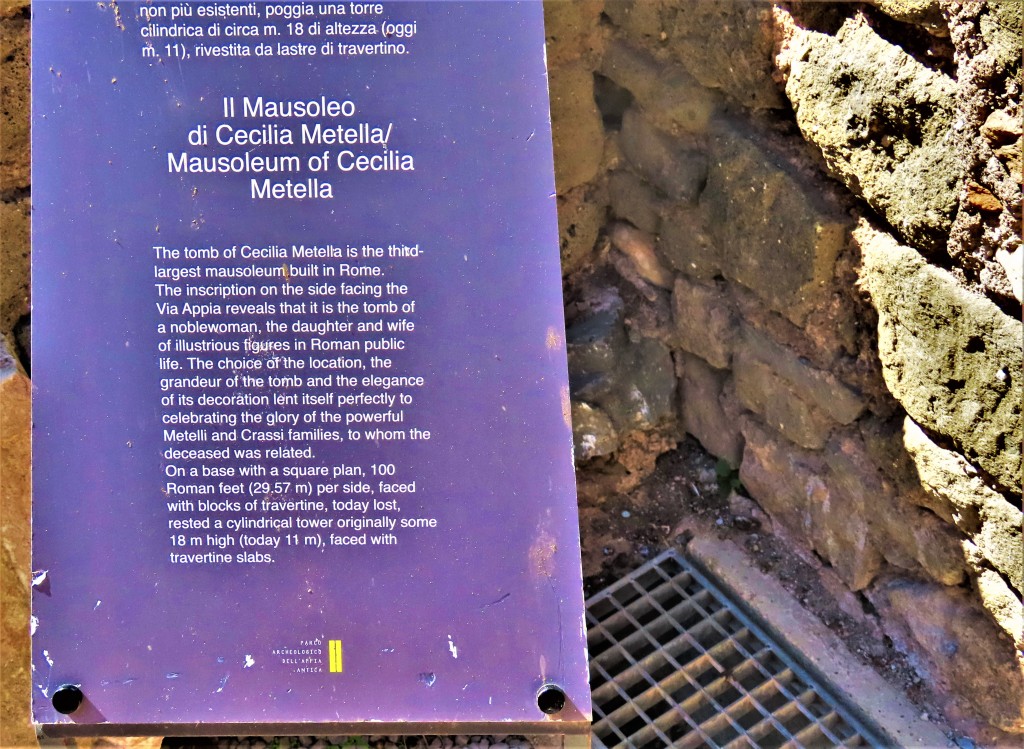
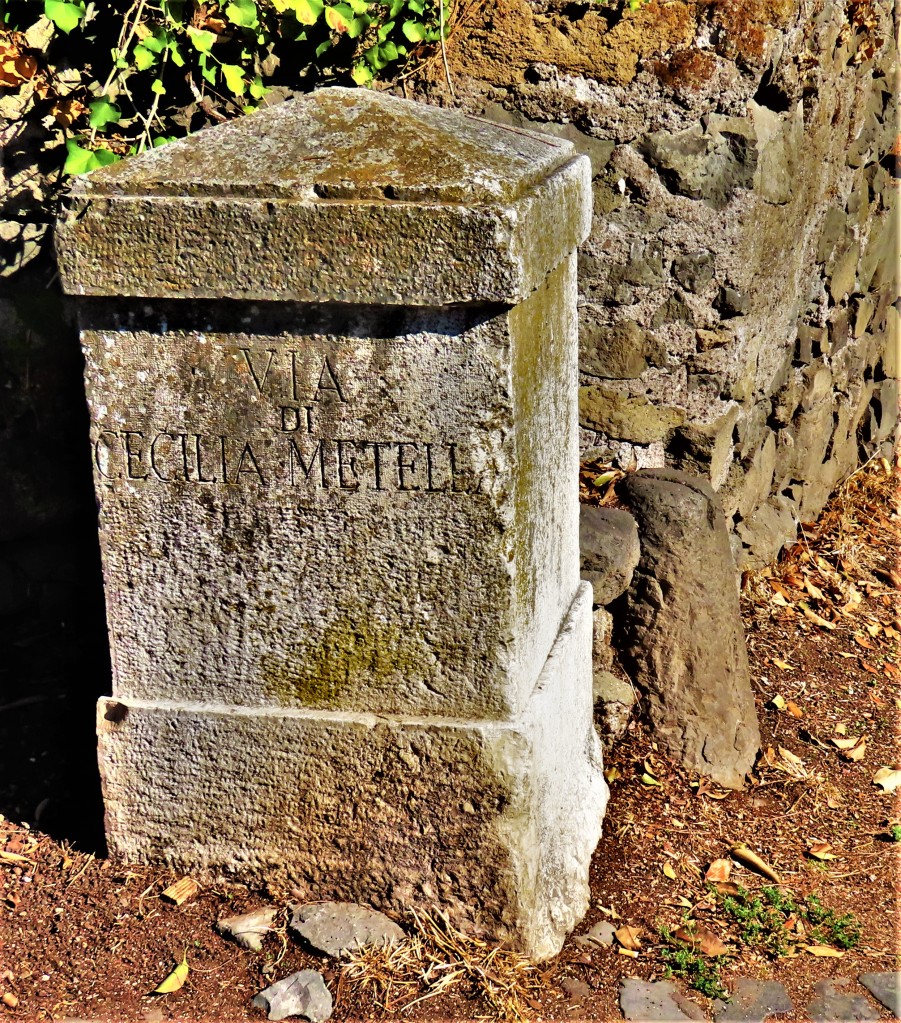
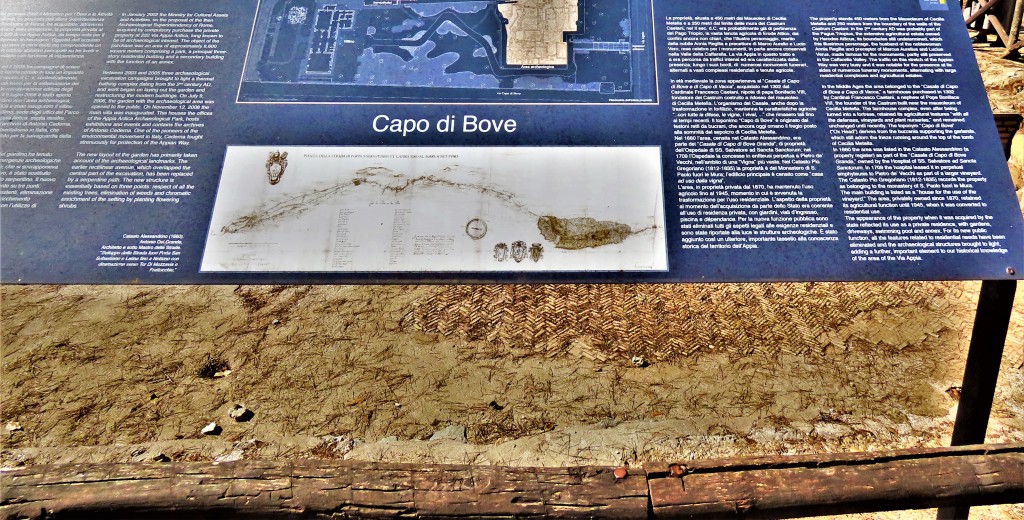
This was one of Rome’s great roads, built by Appius Claudius Caecus in the late 4th century BCE. It contained two legs, 132 miles from Rome to Capua, a military training town and then Capua to Brundisium. At the Roman end are several features of interest, including the tomb of Caecilia Metella, a villa of later vintage, the road itself, which still has some of its original cobblestones in place and a church which features the Quo Vadis story. There is also an excellent cafe – I drank a 50cl bottle of Peroni Gran Riserva Doppio Malto, which is a quite excellent beer. Unfortunately my camera battery ran out before the Quo Vadis church, so my photo gallery is not quite complete.
I end this post as usual with a waterfall video from Tivoli:
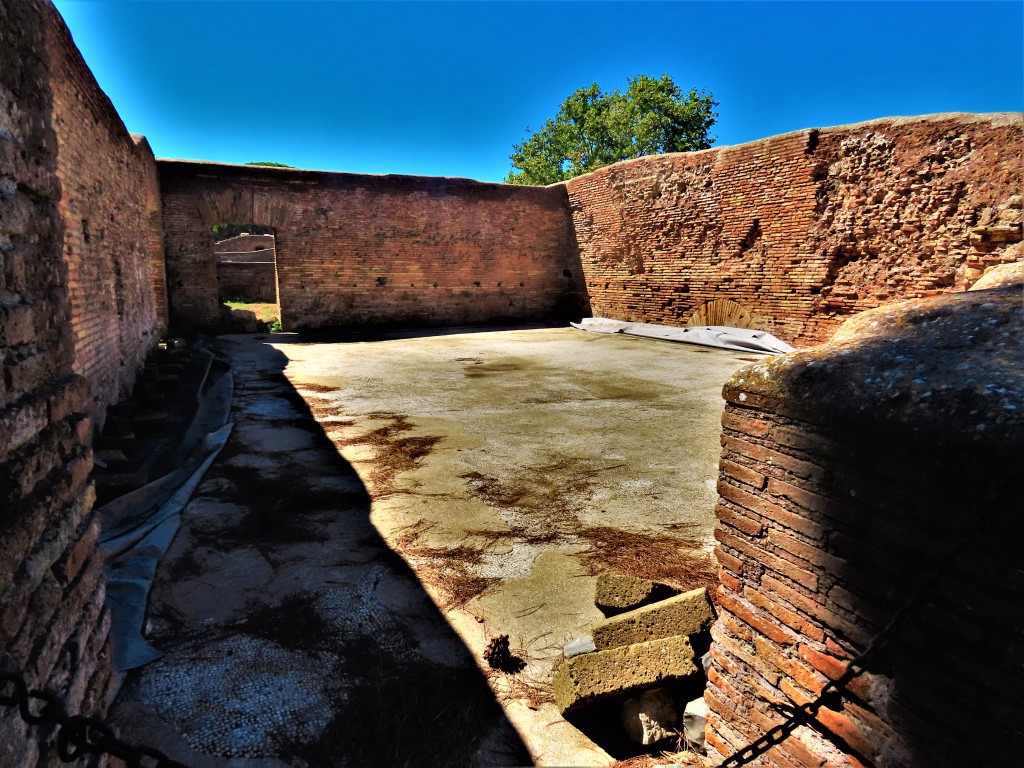
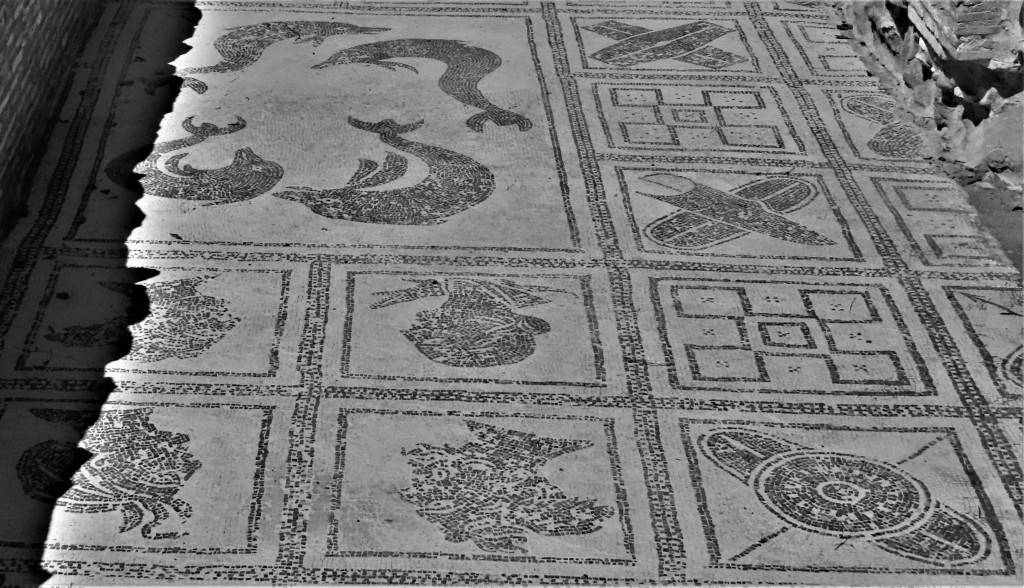
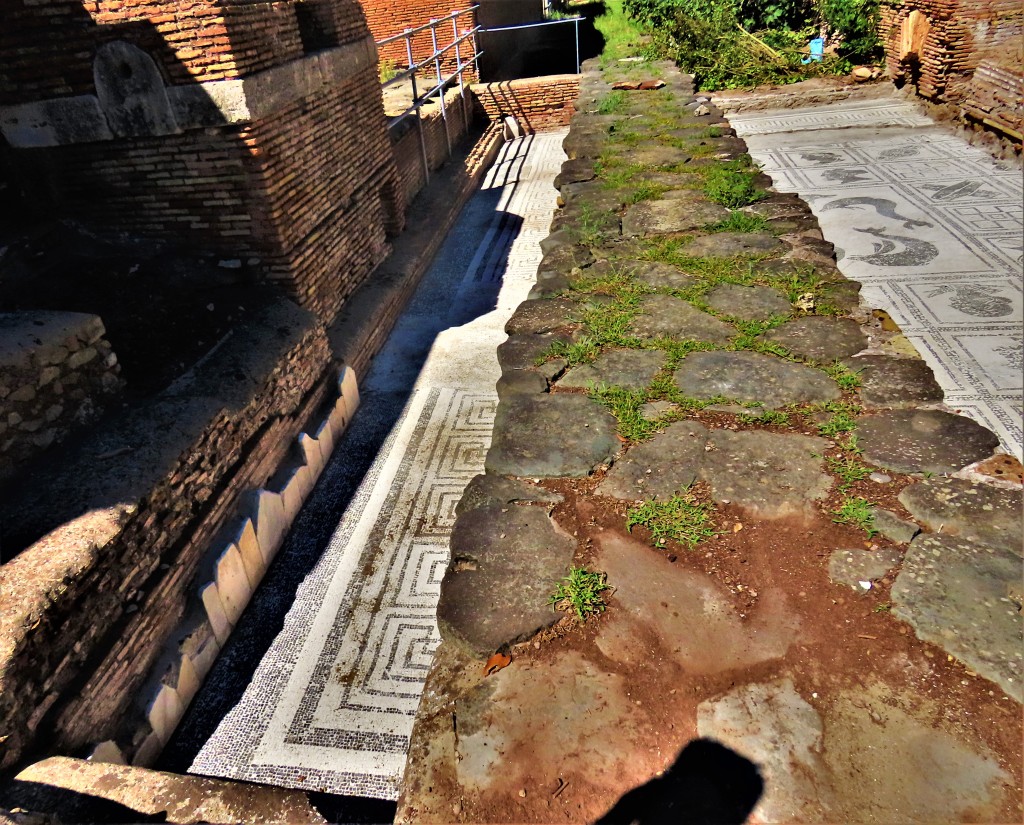
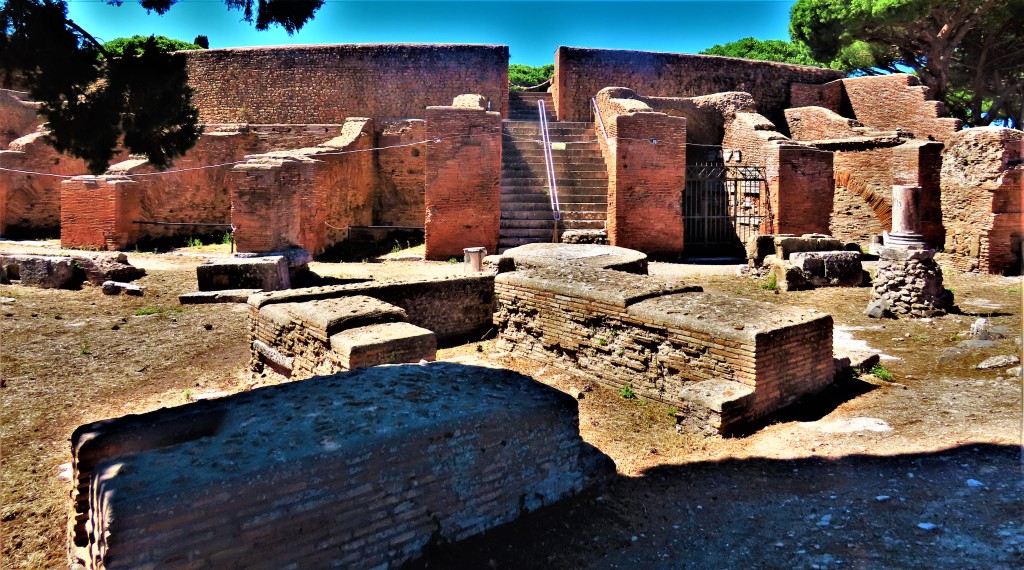
An account of a visit to ancient Ostia, as part of my Italy 2020 series of posts.
This is third post in my series about my Italian holiday (2-11 September inclusive) – see here and here.
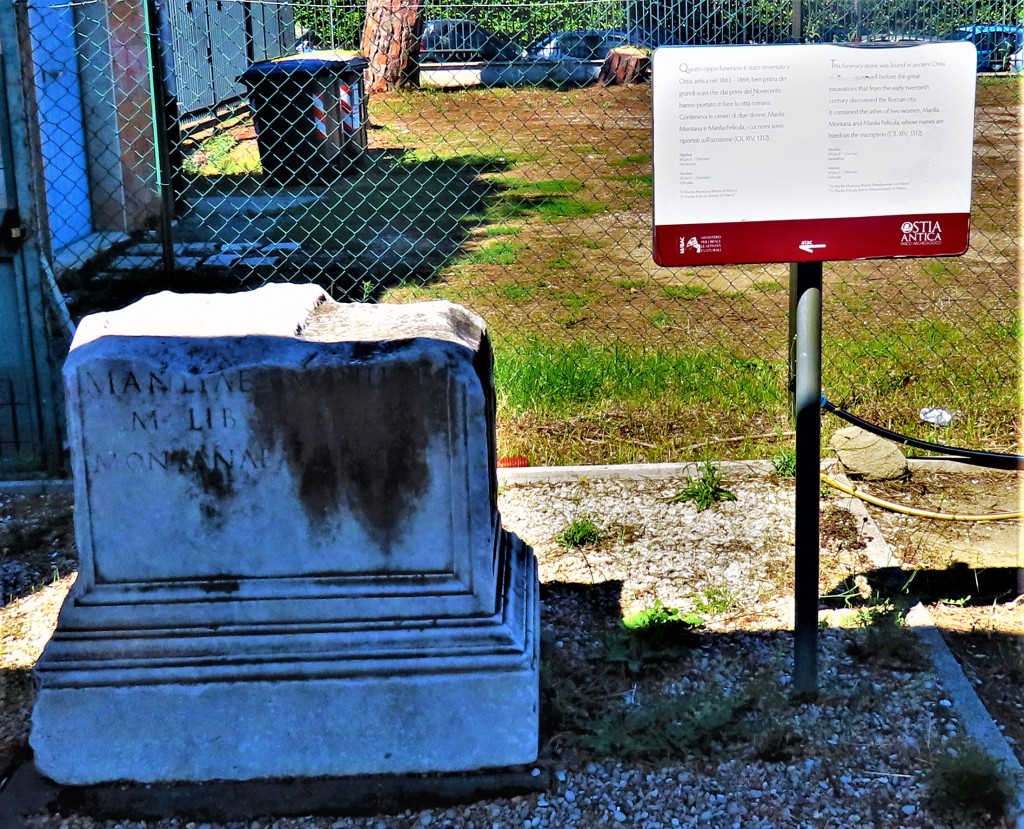
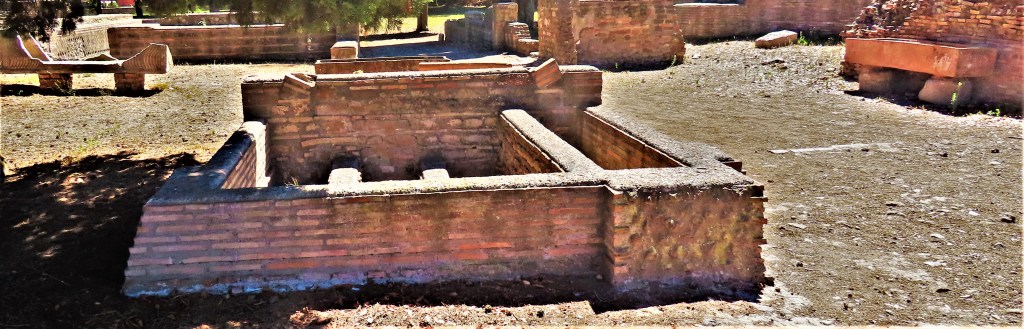
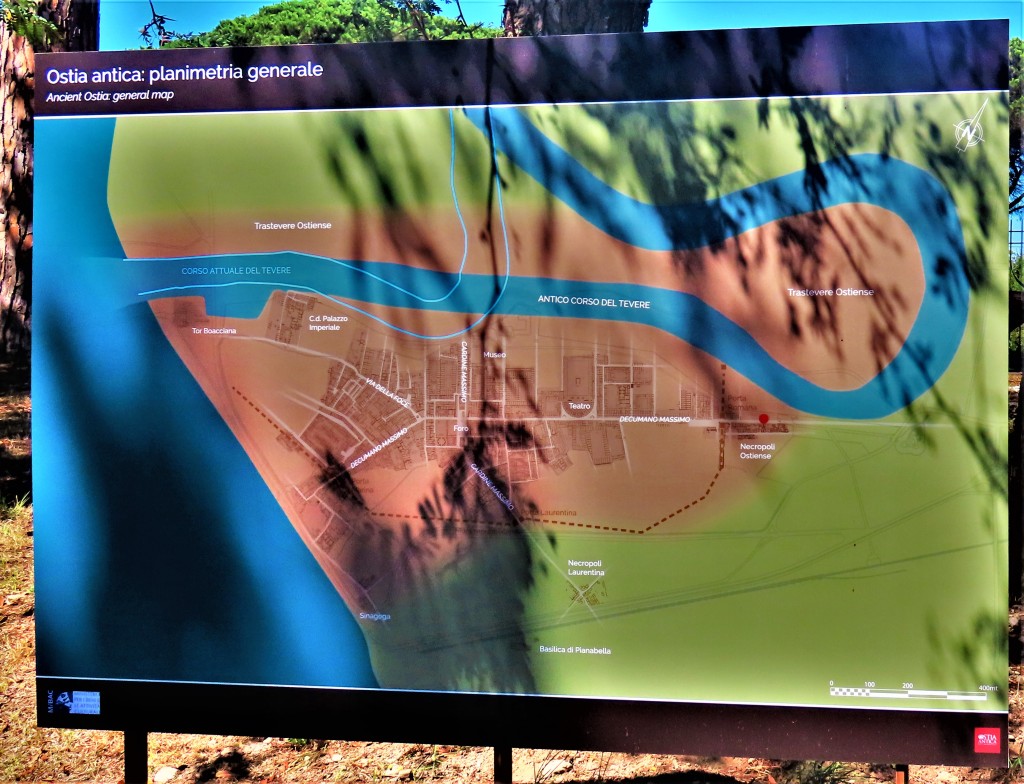
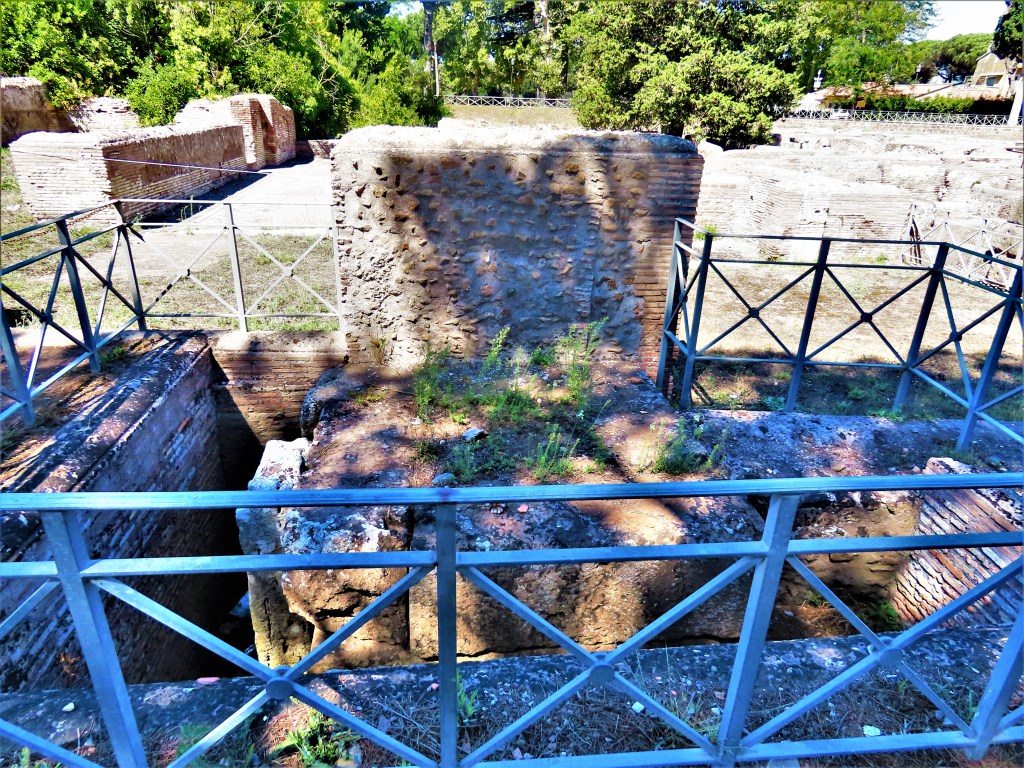
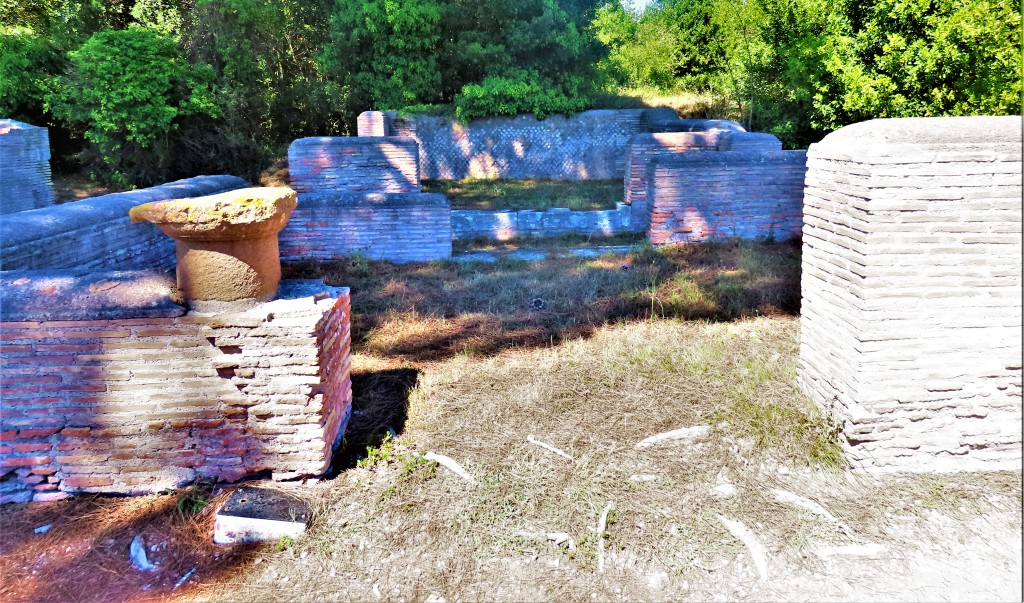
Ostia was the port that served Rome in ancient times. Ships bringing goods across the Mediterranean would dock there and goods would then be unloaded on to barges to go upriver to Rome. Other goods would go out from Ostia.
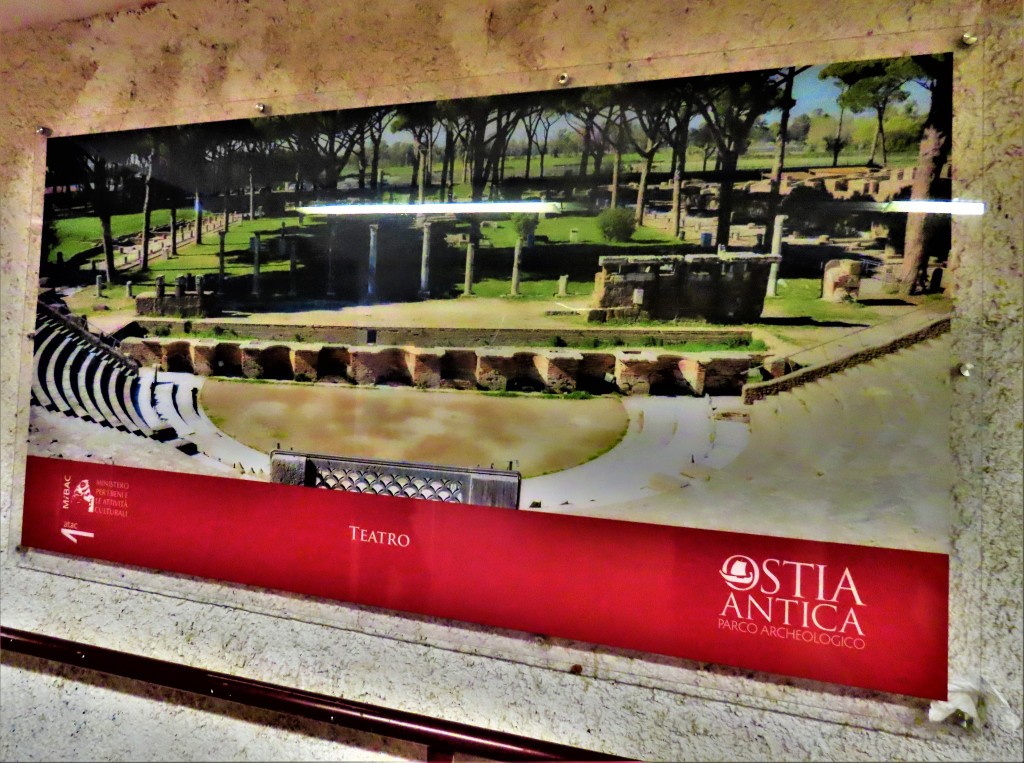
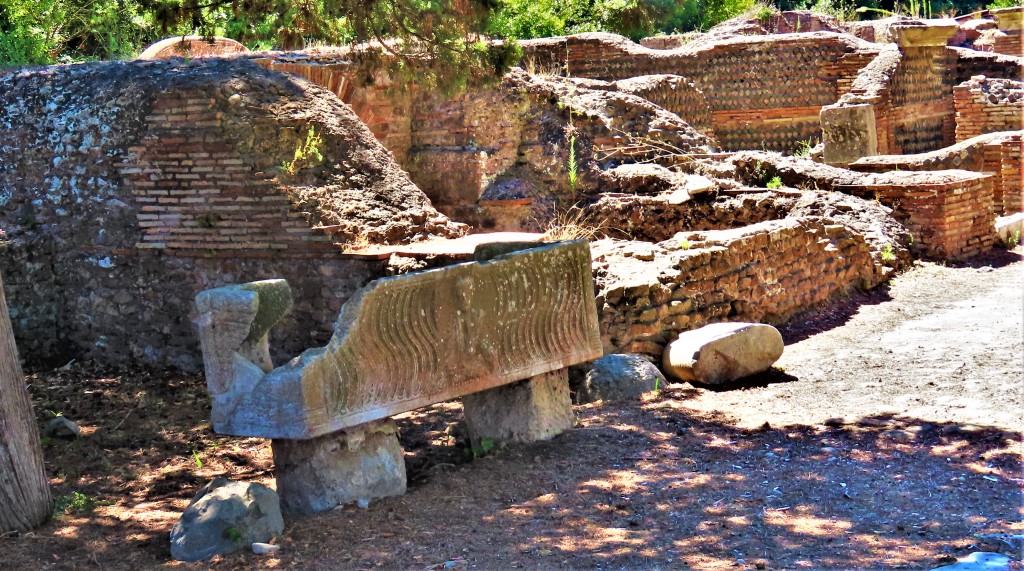
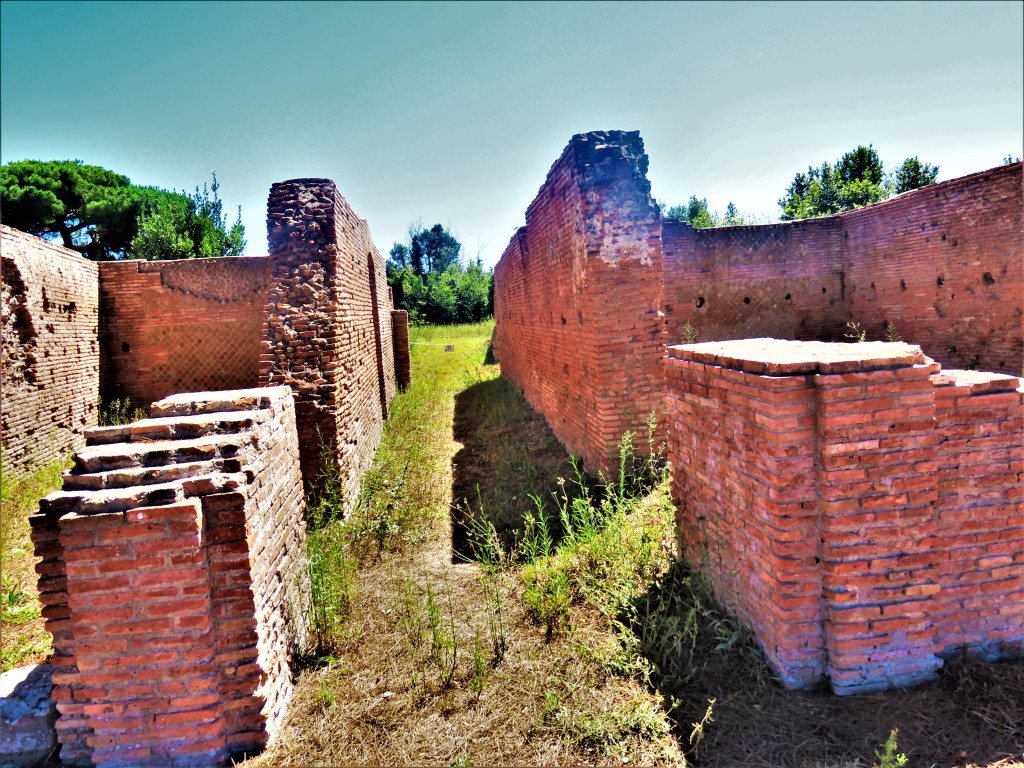
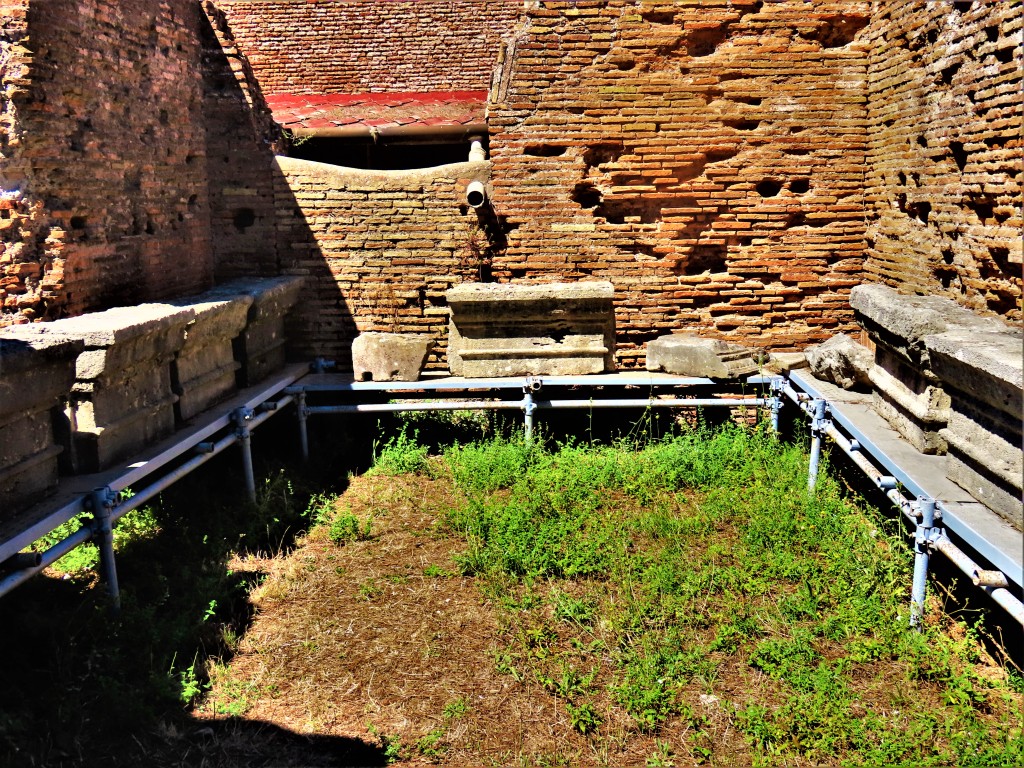
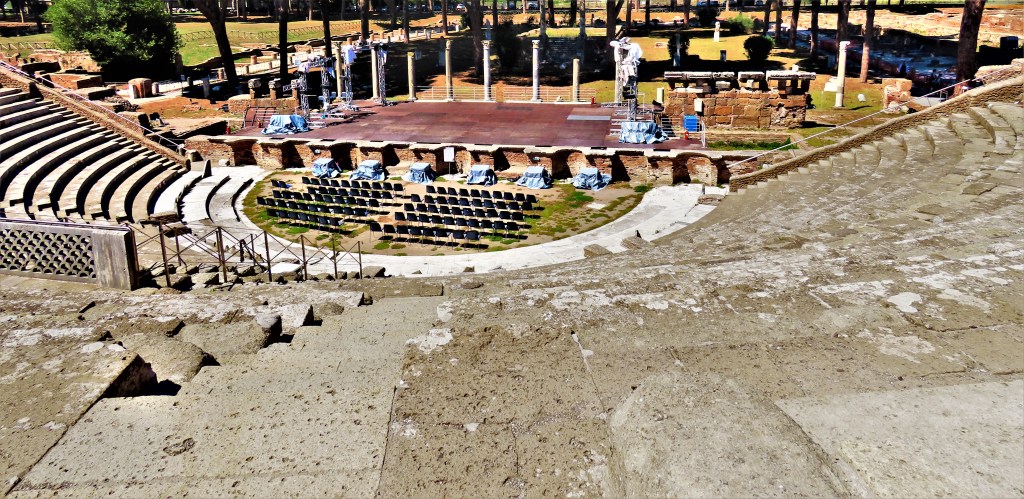
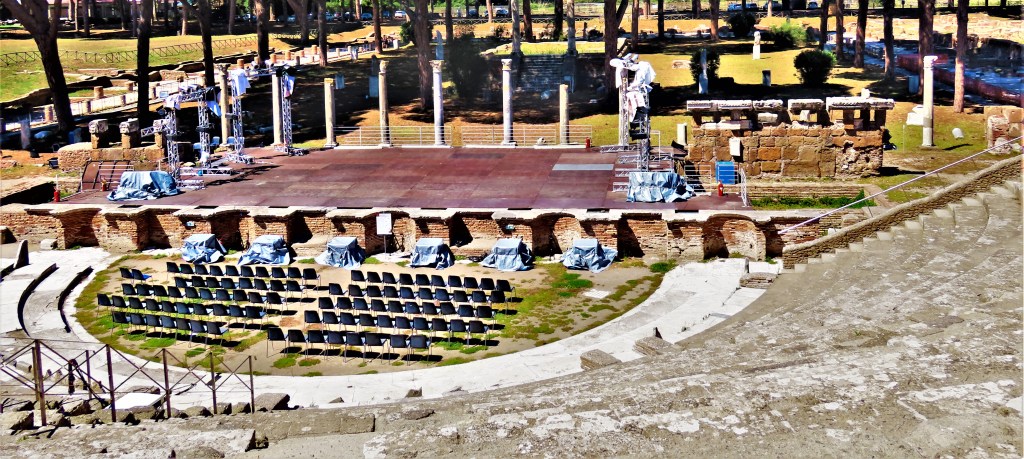
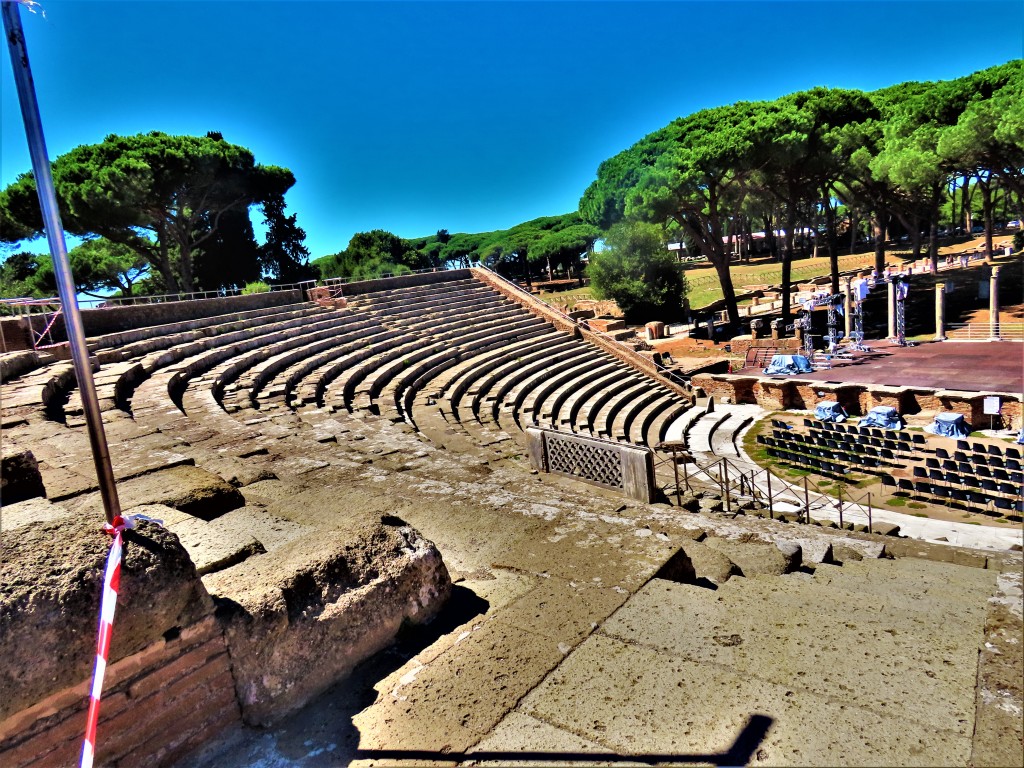
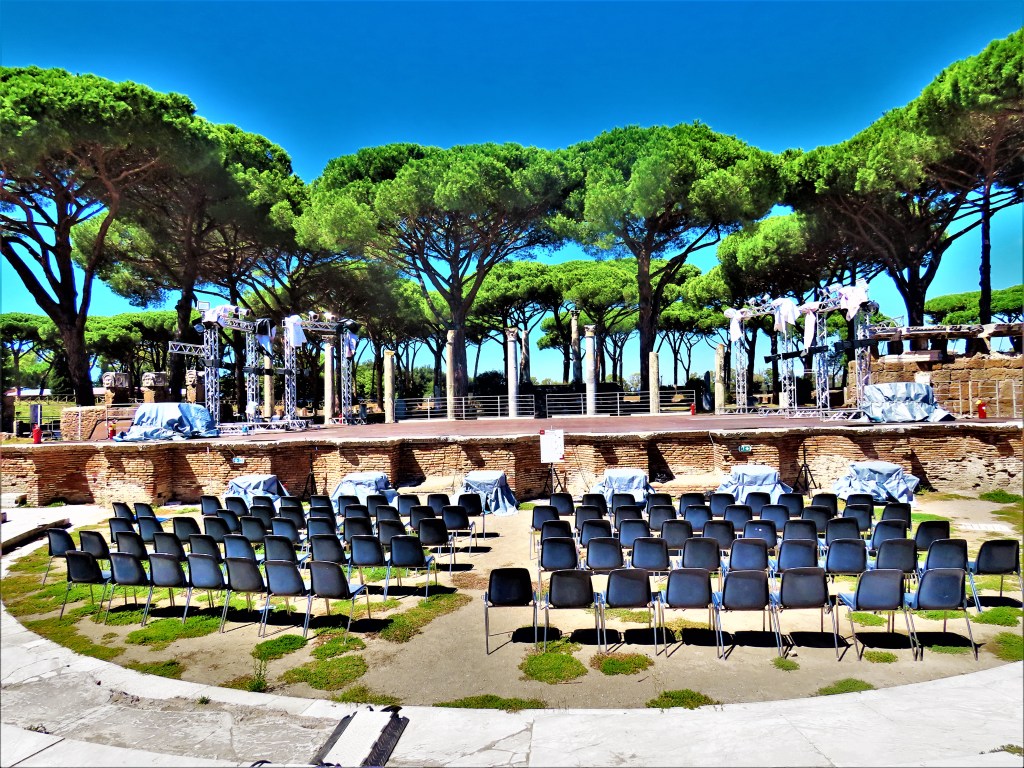
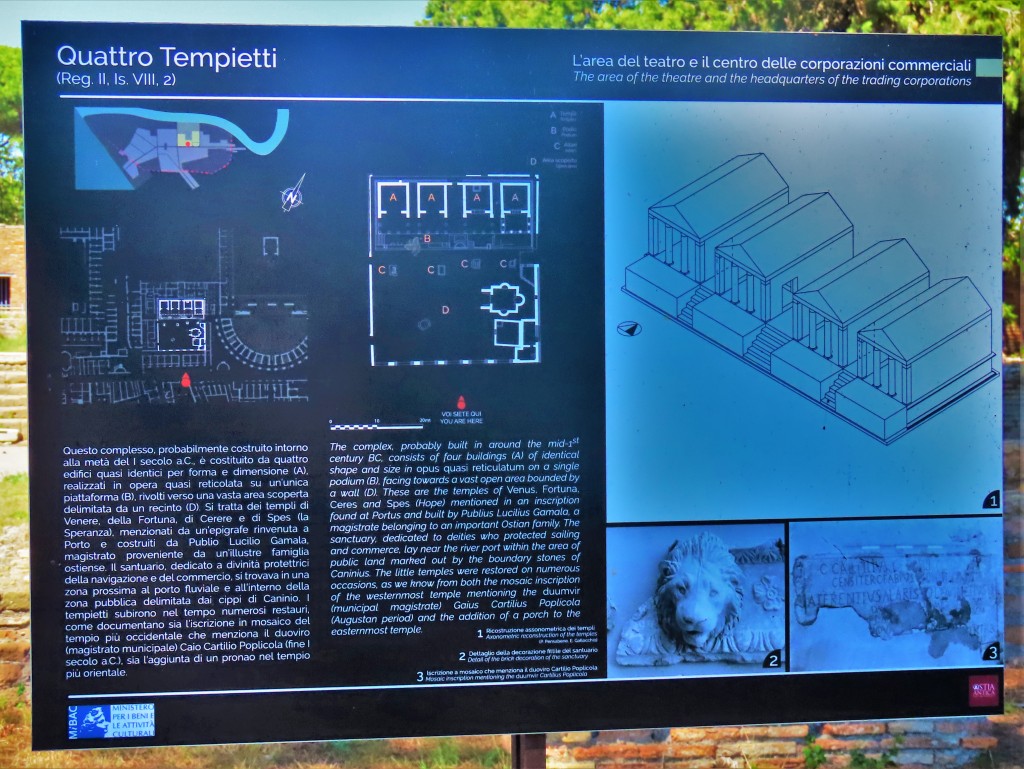
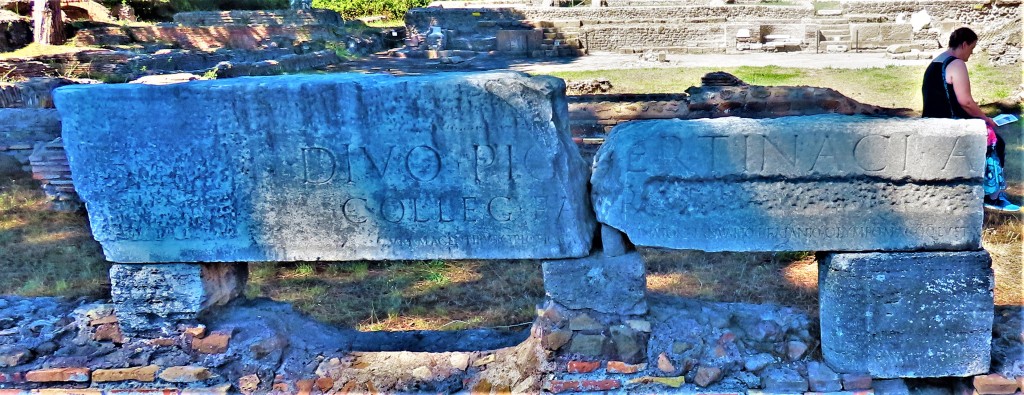
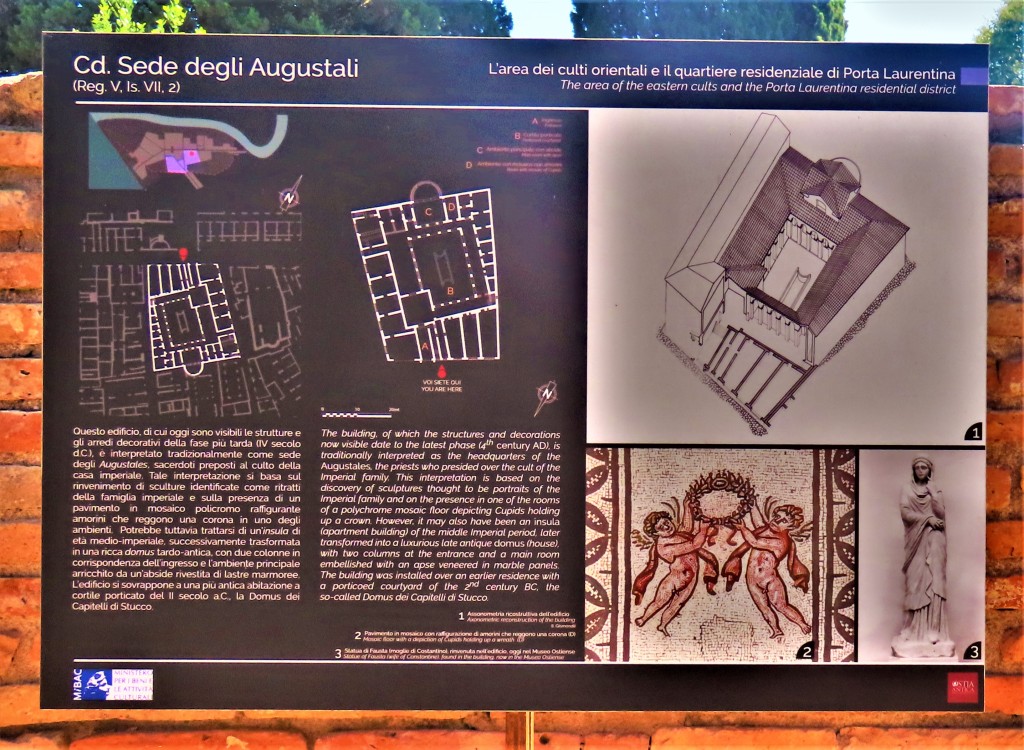
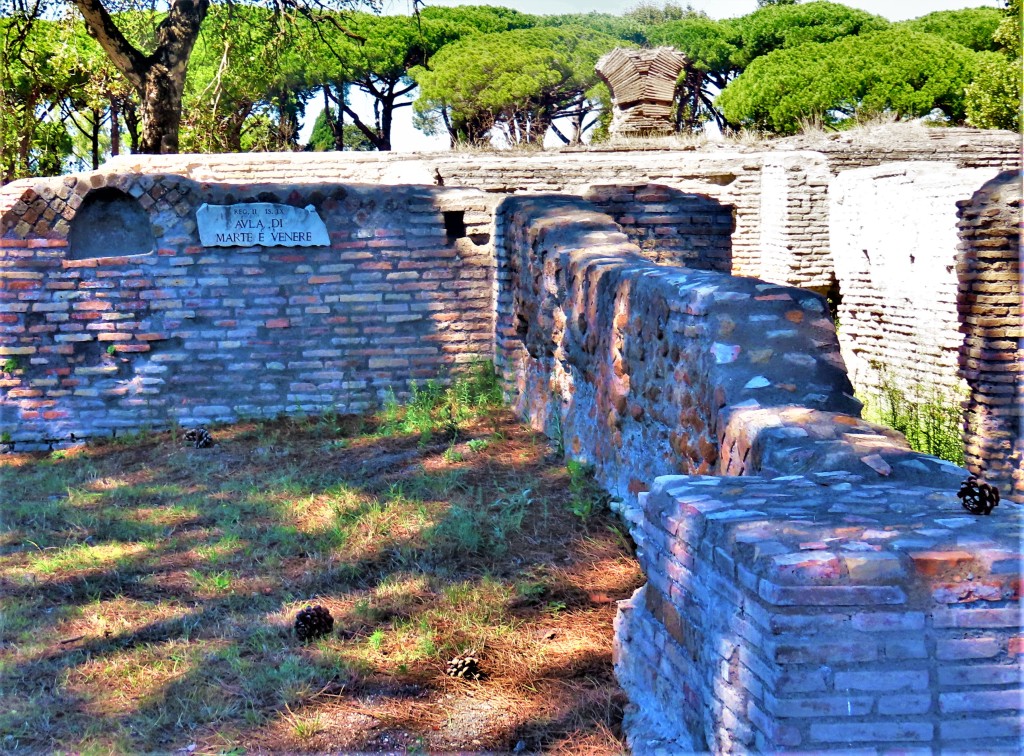
There is a huge amount of stuff to see there today, including most of the main street, nine metres wide and two kilometres long, bath houses, warehouse quarters, the theatre which is well enough preserved to stage live performances, the forum and other stuff.
It is served by its own train station, Ostia Antica, which is a very short walk from the entrance to the site. To get into the site you have to undergo temperature checks and to wear a mask at the gates and in any inside areas (and the Italians overall take mask wearing very seriously, although there was an anti-mask protest in Rome while we were there). My disabled persons railcard got both me and my sister as my designated companion in free, while my nephew’s student ID (he starts at Oxford this year) got him a discount.
An attempt after exploring the site to find a different way back to the exit was foiled by the fact that the site borders farmland which is under cultivation, and we eventually went back into the site by a not strictly legitimate route and headed back.
My ticket for the return journey got swallowed by an automated ticket gate and a new one had to be bought, and I was sufficiently rattled by the experience that I failed to don my mask before boarding the train back (my apologies to the passengers on that train for the minute or thereabouts that I was aboard while not masked up). While we were waiting for the bus from the train station at Rome a pick pocket targeted my sister and got away with a fifty euro note but fortunately not with her phone and wallet.
I have lots of pictures from Ostia, and end this post as is usual for this series with a waterfall video from Tivoli.
Pictures from ancient Ostia including one showing my nephew, sister and both parents.
Setting the scene for a major post about Ancient Ostia – lots of pictures of Rome, and a glimpse to the second part of the holiday with another waterfall video.
This is a continuation of the story of my Italian holiday (2-11 September inclusive) that I started in my previous post. It sets the stage for the account of our visit to ancient Ostia that will be the subject of my next post in this series.
EVENING AND MORNING
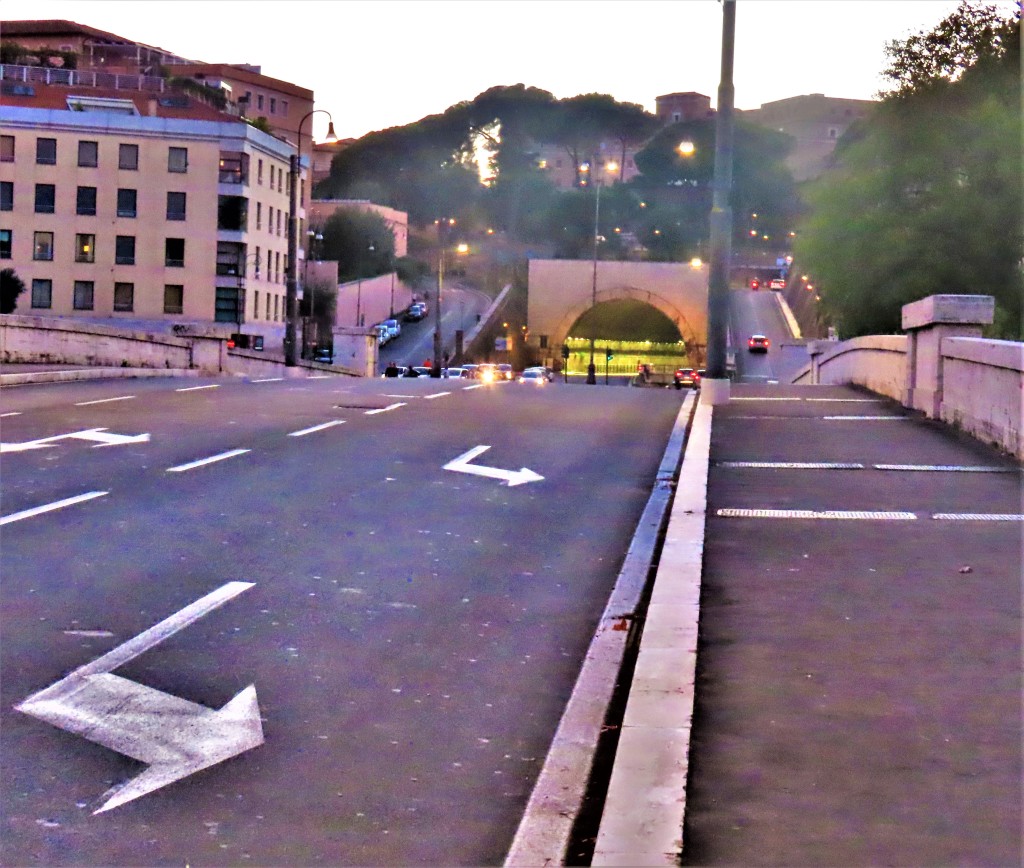
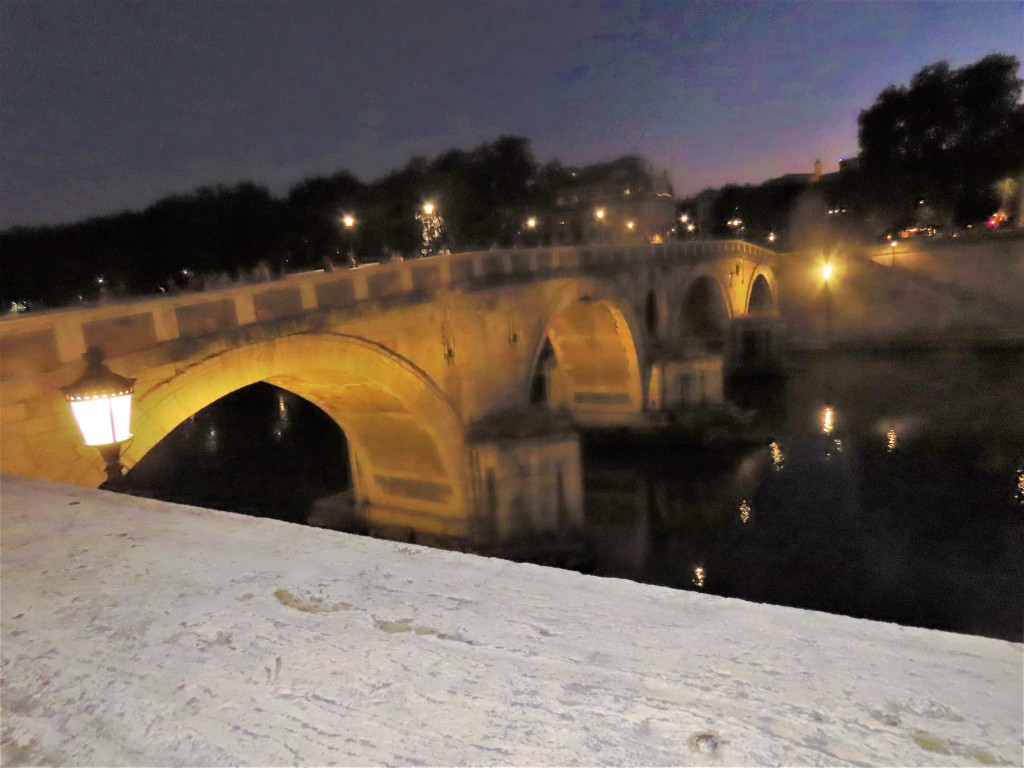
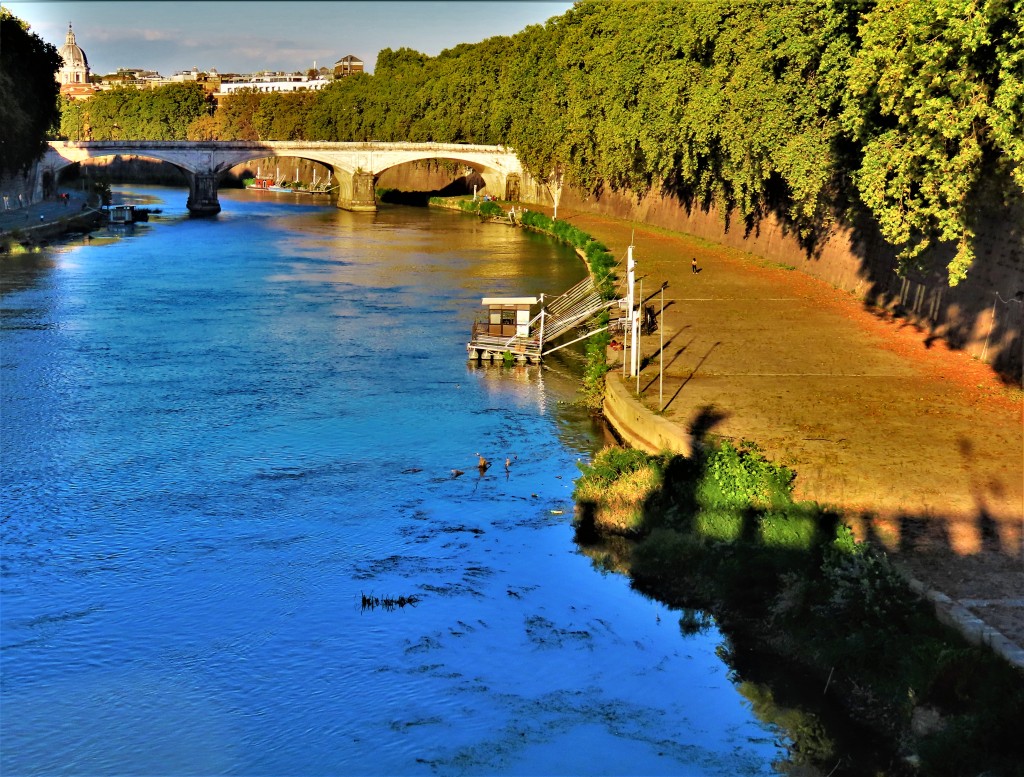
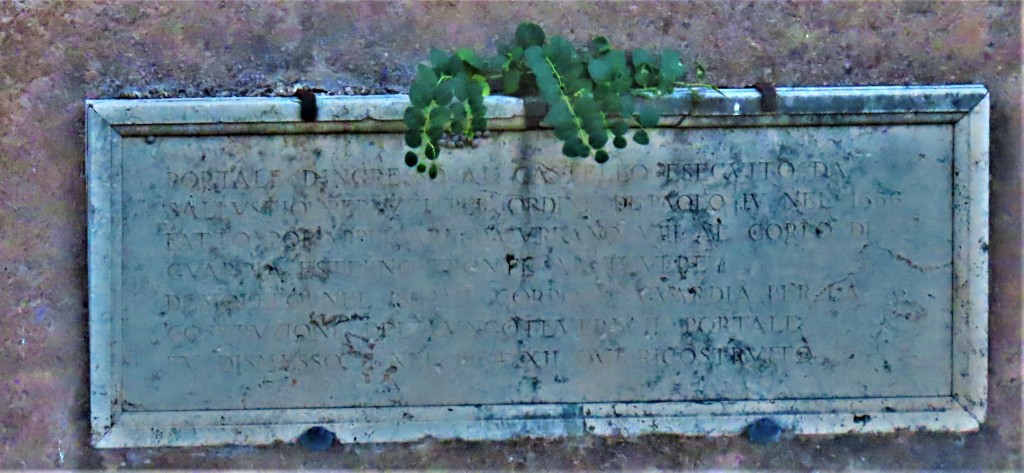
With my sister and nephew due to arrive late in the evening my parents and I did some local exploring, including walking right round the outside of Castel Sant’Angelo. In the opera of that name the tragic heroine Tosca throws herself from the top of the Castel (they use a bit of dramatic license to have her land in the Tiber. It is also that stretch of the Tiber that features in one of the Daniel Craig Bond movies, where Bond’s car ends up at the bottom of the river.
The following morning my mother, my sister and I went out to find a bakery (the local supermarket had stocked bread, but it was not very impressive). We were out for much longer than we intended, but we did find some decent bread, and snacks for everyone. Our snacks eaten it was time for the main part of the day, the trip to ancient Ostia which involved a bus trip and then a train journey (cost 1 euro 50 each way per person, which buys you 100 minutes of travel time from the moment the ticket is composted – how nice to find sensibly priced public transport as opposed Britain’s extortionate fares).
After the photographs from that first evening and morning I will end this post with another waterfall video.
A look at the end of the test match summer, and at the state of the Bob Willis Trophy.
INTRODUCTION
From Friday through Tuesday at those times the weather permitted England and Pakistan did battle at the Ageas bowl in the last test match of this strangest of all summers, and from Saturday through Tuesday the fourth round of the Bob Willis Trophy took place, again with considerable interference from the weather. I look back at the test match and forward to the final round of BWT fixtures.
YOUTH AND EXPERIENCE TO THE FORE
England amassed 583-8 declared in their first innings, a performance underpinned by Zak Crawley who scored 267, his first test century. The only higher scores for a maiden test ton have been Brian Lara’s 277 at Sydney, Tip Foster (287 in his first ever test innings at Sydney), Bobby Simpson’s 311 at Old Trafford and Garry Sobers’ 365 not out at Sabina Park. Among England batters only Compton (278 v Pakistan), Foster (287 v Australia), Cook (294 v India), John Edrich (310 not out v New Zealand), Andy Sandham (325 v West Indies), Graham Gooch (333 v India), Walter Hammond (336 not out v New Zealand) and Len Hutton (364 v Australia) have ever scored more in a single innings. Only Hutton has ever scored more at a younger age than Crawley, who is just 22 years old. Thereafter, in the cricket that the weather permitted the spotlight was focussed on 38 year old James Anderson, as he first took a five-for (and had three catches missed) in Pakistan’s first innings, to which skipper Azhar Ali contributed a splendid 141 not out. This put Anderson on 598 test wickets, and England enforced the follow on as they had to. By the end of day 4, as the weather played havoc with the match Pakistan were 100-2 in their second innings, with one of the wickets to Anderson moving him on to 599, and yet another catch having gone begging off his bowling. There was heavy overnight rain, and it continued to rain for most of the morning, finally stopping just after 11AM. The sodden ground then had to dry out before play could commence, but eventually, at 4:15PM, with a possible 42 overs (27 mandatory and a further 15 if a result seemed possible) to be bowled. Anderson did not break through in his first spell, and as England hurried through overs to get to the second new ball Joe Root took a wicket with his part time off spin and Dom Sibley bowled one of the filthiest overs ever seen in a test match with his even more part time leg spin. The new ball was taken, and in his third over with it James Anderson induced a nick from Azhar Ali and the ball was pouched by a waiting slip fielder, bringing him to 600 test wickets. No one who bowled above medium pace had previously reached this landmark, and of the three spinners who had got there only one, Muttiah Muralitharan had done so in fewer balls bowled. Shortly after this a well struck four brought up a remarkable statistical landmark highlighted by Andy Zaltzman on Test Match Special: 1,000,000 runs in test matches involving England. A little later the last 15 overs were called, and after one ball thereof the teams decided to accept a draw as the pitch was doing precious little, and they were all eager to get away from the biosecure bubble and back to loved ones.
At the moment there is no way of knowing when England will next be in test match action, but James Anderson has every intention of still being in action when they do, and since he is still regularly clocking 85mph even at the age of 38 (while it is not unusual for veteran bowlers to be very successful due to the smarts they have acquired from years of experience it is unusual for a bowler of that age not to have slowed down – Walsh was barely exceeding 80mph when he toured England in 2000, likewise Shaun Pollock and Glenn McGrath in their veteran years) and is statistically bowling better than he ever has I for one am not counting him out.
I would like to thank both the West Indies who visited for three test matches immediately before Pakistan came over and Pakistan for braving the uncertainties created by this pandemic and coming to play, ensuring we had some cricket. I also tender a second huge thank you to the West Indies because their women are coming over to play against our women after India and South Africa cried off. I hope that England will reciprocate as soon as possible.
ADVANTAGE SOMERSET IN THE BWT
The format of the Bob Willis Trophy, tailored to fit special circumstances, is that the 18 first class counties have been grouped into three regional conferences, meaning that five rounds of matches will be played, and then the two best group winners will fight out a five day final at Lord’s. After four rounds of matches Somerset lead the central group with 76 points, Derbyshire the north group with 71 points and Essex the south group with 70 points. Although bonus points (of which as readers of this blog will be aware I am not a huge fan) complicate the issue somewhat, basically any win in their final match will qualify Somerset, since it is next door to impossible to win a match without taking full bowling bonus points, which on its own would put Somerset on 95, meaning that Derbyshire could equal them with a maximum point win and Essex could finish on 94 with a maximum win. Somerset crushed Gloucestershire and the most recent round, dismissing them for 76 and 70. Surrey’s nightmare season went from bad to worse as they were beaten by Kent in spite of the restored Ben Foakes contributing a century and a fifty. A major role for Kent was played by Darren Stevens, an all rounder who bowls medium pace, and who remains a force to be reckoned with at county level even at the age of 44. Limited overs cricket will be the order of the day for most of the rest of this season, which will extend into October because of the hugely delayed start. The T20 blast competition gets underway tomorrow afternoon, with commentaries on all matches accessible via www.bbc.co.uk/cricket.
A look at the extraordinary events that are unfolding at the Ageas bowl as Zak Crawley establishes himself at the highest level.
INTRODUCTION
It is now all but a 100% certainty that England will win the series against Pakistan, and what follows explains why.
DAY 1
Yesterday after messrs Curran, Foakes and Robinson were allowed to leave the bubble at the Ageas Bowl to play for their counties in the Bob Willis Trophy, leaving an England side of Burns, Sibley, Crawley, *Root, Pope, +Buttler, Woakes, Bess, Archer, Broad and Anderson (Dan Lawrence and Ben Stokes had already been released in both cases for family reasons) Joe Root won the toss and chose to bat. The morning session went England’s way as they reached Lunch on 91-2. The loss of Root for 29 and Pope for 0 in quick succession made it 127-4, and seemingly turning in Pakistan’s favour. However, Zak Crawley was playing a magnificent innings, and Buttler continued his good recent form with the bat (pity he has been so bad with the gloves). By the tea interval it was 183-4 with Crawley on the verge of a maiden test century and England were starting to look good. The evening session was brilliant for England and horrible for Pakistan. Late in the day the runs were coming very fast as the Pakistan bowling got decidedly ragged. The day ended with England 332-4, Crawley 171 not out and Buttler within sight of a century of his own.
DAY 2
There have been two disruptions for rain, but in the cricket that has been played England have fared well, with the Pakistan bowling not looking remotely threatening. The score is now 380-4, and the stand between Crawley and Buttler is an all time England fifth wicket record against anyone, and Crawley is seven runs away from becoming the youngest England player to score a test double century since David Gower against India at Edgbaston in 1979. This is Crawley’s first test century and among those who have gone big on their first venture into three figures at this level are Bill Edrich (219 at Durban in 1939), Tip Foster (287 in his first test innings at Sydney in 1903), Bobby Simpson for Australia against England at Old Trafford (311) and at the top of this particular tree Garfield St Aubrun Sobers, 365 not out for West Indies v Pakistan at Sabina Park. Crawley has just brought up the double century with a four to third man, and England are now 391-4. Crawley was picked on potential, with not a lot in the way of major first class batting achievements behind him, and had passed 50 on three previous occasions in his fledgling test career, but this innings has surely settled the number three position for some considerable time to come – it has been a supreme performance, with no definite chances given. The record score for England against Pakistan is 278 by Denis Compton at Trent Bridge in 1954, which is definitely within Crawley’s compass from here. No3 has caused England many problems since I first started following cricket, with only Michael Vaughan and Jonathan Trott really succeeding there before the emergence of Crawley who has looked like a natural at no3.
THE REST OF THE MATCH
The weather forecast is pretty good for the rest of this match, and it is very hard to see any way of England losing from here, especially given that a draw will give them the series, which means they can shut up shop if trouble threatens. The 400 has just come up, and I reckon the way things are going that Crawley and Buttler should have at least half an eye on the all-time test record with wicket stand by anyone – the 405 that Sidney George Barnes and Donald Bradman put on together against England at Sydney in 1946. For the real pessimists the highest ever first innings to lose a test match is 586 by Australia at Sydney in 1894, when England replied with 325 and then in the follow on 437 and Australia got caught on a sticky in the final innings and were all out for 166, with Bobby Peel taking six cheap wickets. My own reckoning is that with England putting up a total like this after being 127-4 Pakistan will be demoralized and that England will win comfortably. Crawley has just had a little bit of good fortune, with an attempted catch becoming a six, and his score is now 222, moving him one run ahead of his mentor Rob Key’s highest test score. Only two England batters have had a higher maiden century, Hammond with 251 at Sydney in 1928 and Tip Foster’s 287 also at Sydney in 1903. The 300 stand has just come up for the fifth wicket.
Cricket and how to deal withe time being lost to the weather.
INTRODUCTION
The match at the Ageas bowl between England and Pakistan has been hammered by a combination of bad weather and excessive caution on the part of the umpires, and not a single one out of nine Bob Willis Trophy matches has escaped unscathed either. This post looks at the various matches and looks at reducing the toll poor weather takes of cricket.
THE TEST MATCH
The situation at the Ageas bowl is that the equivalent of over two whole days have been lost to the weather, and the teams are currently in their hotel sheltering from what is apparently quite heavy rain. In the play that has been possible Pakistan have amassed 236 in their first innings, with Mohammad Rizwan playing a fine innings, and Stuart Broad continuing his excellent summer with the ball. England in response are 7-1, with Burns out for a duck, and a little lucky to have lasted as long as he did, since his second ball was edged just short of the slip fielder before his fourth was caught in that region. Probably the only chance of a positive result in that game is if the teams broker a deal whereby England declare, Pakistan forfeit their second innings and England have a go at a target of 230, while Pakistan try to take 10 wickets.
THE BOB WILLIS TROPHY
Leeds has seen 79 overs in a day and a half, and Yorkshire are 288-4 against Derbyshire.
Birmingham has seen more play than most places, and Warwickshire were dismissed for 121 in the first innings, while Somerset are 134-5 off 45.2 overs in response.
At Hove there have been 61 overs of play and Sussex are 155-6 against Essex.
At Northampton Worcestershire made 219 in their first innings and Northamptonshire are 60-3 in response.
At Trent Bridge there have been 71.2 overs and Nottinghamshire are 268-2 against Lancashire.
The St Lawrence Ground at Canterbury has seen 46 overs so far, and Middlesex are 94-4 against Kent.
At the Arundel Castle Ground which Hampshire are using as a home venue since the Ageas Bowl is required for other purposes they have already given up on play for today, which means that two days have seen exactly 40 overs, off which Surrey have reached 130-8.
In the game I am currently listening to at Sophia Gardens, Cardiff, Glamorgan are 68-4 off 40 overs against Gloucestershire.
Finally, at Grace Road there have been 72.2 overs thus far and Glamorgan are 224-4.
REDUCING LOSSES TO THE WEATHER
Firstly, abolish stoppages for the light altogether – play all matches using pink balls, so that the floodlights can be allowed to take complete control if necessary. Rain is harder to deal with, but I have an idea to float. It should be possible to construct a strong, lightweight but entirely waterproof canopy which could be attached to the tops of the floodlight pylons, enabling matches to be continued even if it is raining. It is just possible that an almighty miscue could send a ball pretty much vertically upwards (there was a shot that Ian Botham played off Terry Alderman at Old Trafford in 1981 that might have done this – Mike Whitney made a gallant effort to get underneath it to take the catch but could not quite do so) and cause it to hit the canopy, but I am sure that that could be dealt with.
A look at the Bob Willis Trophy as round two draws to a close.
INTRODUCTION
We are into the penultimate possible session of play in round two of the Bob Willis Trophy. five of the matches are now finished, four still in progress. Only one match looks set to end in a draw.
THE FINISHED MATCHES
Several finished yesterday (see that my previous post), including the match between Kent and Sussex which Kent won for the loss of just one wicket. Hampshire completed their win over Middlesex today, making hard work if it as they lost seven wickets while chasing down 158. This match took place at one of the less well known of county venues – the Brunton Memorial Ground at Radlett. The two bowlers who troubled Hants were at opposite ends of the experience spectrum – Tim Murtagh with over two decades of top level cricket behind him took three, a haul matched by Thilan Wallalawita, a left arm spinner, who is playing his first season of first class cricket. Even more noteworthy in terms of difference in experience were two of the Kent heroes in their game against Sussex. Darren Stevens took five wickets in the Sussex second innings, at the age of 44, while Jordan Cox scored 238 not out for Kent at the age of 19. Cox is also a recognized wicket keeper, although Oliver Graham Robinson, also on England’s radar, had the gloves for Kent in this match.
THE MATCHES IN PROGRESS
The game between Worcestershire and Glamorgan is the one that is likely to end in draw – Worcs batted on in their second innings until their lead stood at 357, and there were less than two full sessions to play, a decision which seems unduly cautious.
Notts have been set 188 to win by Yorkshire and have responded to the challenge by collapsing to 80-6, putting Yorkshire in control. Gloucestershire have set Warwickshire 239 to win and the latter are 30-3 thus far. Finally, Surrey are facing a target of 337 and are currently 118-6, with all six of the wickets falling to off spinner Simon Harmer, who also took six in the first Surrey innings. Playing the ‘Casabianca’ role for Surrey is wicket keeper Jamie Smith, currently 33 not out. Incidentally, while his bowling achievement in this game has been immense, even if Harmer gets all the remaining wickets it will not be an Essex record – Walter Mead took 17 in a match against the 1893 Australians. It will be a record for Essex v Surrey at Chelmsford, beating leg spinner Peter Smith’s 13 wicket haul in 1950 (the same Peter Smith who three years earlier belted 163 from no11 against Derbyshire). Harmer will not get his all-ten – he has just taken a catch off the bowling of Aaron Beard to account for Jamie Smith and put Essex on the brink of victory (shades of the NZ v AUS game when Richard Hadlee took 9-52 in the first innings and the one he did not get was Geoff Lawson who was caught off the bowling of Vaughan Brown by Richard Hadlee).
The Bob Willis Trophy has already produced a clutch of magnificent matches, several towering individual performances and generally a huge amount to savour.
Nottinghamshire are now 97-9 against Yorkshire, and Glamorgan are doing their bit to breathe life back into their game against Worcestershire – they have slumped to 5-3 chasing a purely nominal 358. Update on the Notts v Yorkshire match – Notts are all out for 97, medium pacer Jordan Thompson 3-6, off spinner Jack Shutt 2-14. Yorks have won by 90 runs after conceding a first innings lead of 91. Both are local products – Shutt hails from Barnsley, while Thompson is from Rawdon, Leeds (which many years ago gave the world Brian Close).
Gus Atkinson has gone to the bowling of Harmer who now has 7-56 in the innings and 13 in the match. Surrey are 145-8, and the end seems nigh in that one as well.
After showing some fight Warwickshire have just lost their fourth wicket at 50, and now 52-4 needing a further 187 to win.
Surrey have just lost their ninth wicket, and Beard has his second. Essex have just taken the final wicket to win by 169 runs, and the final wicket went appropriately to Harmer, given him 14 for the match, a new Essex v Surrey record. It is also Essex’s tenth straight win in four day games at Chelmsford.
PHOTOGRAPHS
My usual sign off…
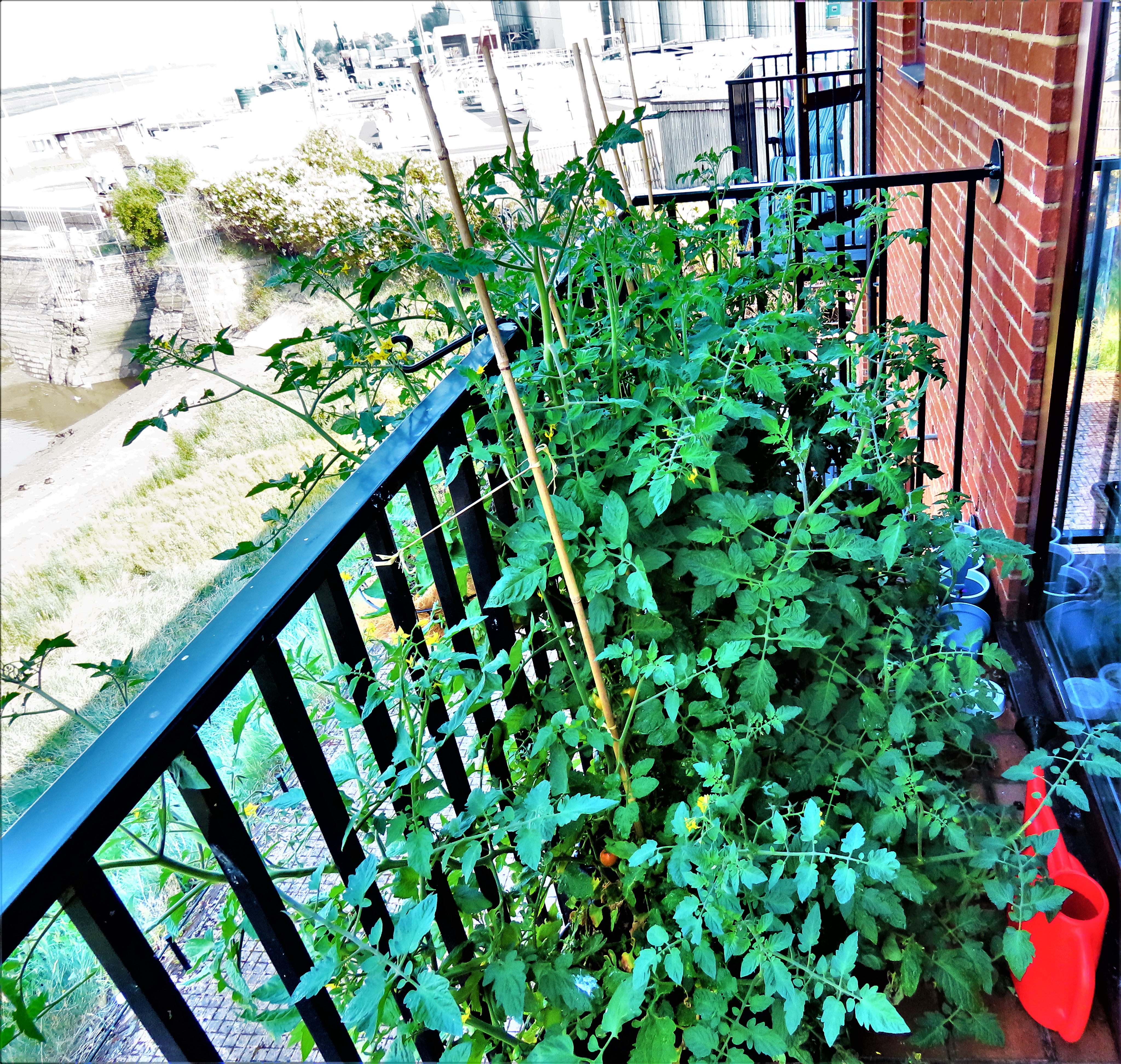
Tomotoes just starting to develop a hint of their eventual red colour.
The second round of the Bob Willis Trophy has by and large produced another fine set of games. In this post I look at developments in these matches.
THE BOB WILLIS TROPHY
The game between Northamptonshire and Somerset ended yesterday, with Northants subsiding to a heavy defeat. Jamie Overton collected four wickets in each innings for Somerset, while 35 of Northants’ first innings tally of 67 came from Ben Curran, youngest of the three Curran brothers. None of the other matches have ended yet, the situations being:
Worcestershire v Glamorgan – Worcs made 455-8 from the 120 overs that is the maximum length of time a first innings is allowed last in this competition. Glamorgan are 305-6 after 102 overs.
Yorkshire are 135-3 in their second innings against Nottinghamshire, which gives them a lead of 44 with seven wickets to fall.
Middlesex began their second innings against Hampshire with a deficit of 44 and are now 124-3.
Leicestershire are 85 behind Derbyshire with six second innings wickets standing.
Kent and Sussex are involved in an extraordinary game at Canterbury. Sussex made 335 in the first innings, to which Kent responded with 530-1 from 120 overs, a lead of 195. There were double centuries for Jordan Cox (238 not out) and Jack Leaning (220 not out), who shared a partnership of 423 unbroken for the second wicket. Sussex are now 18-1 in their second innings. Only three higher innings totals for only one wicket have ever been recorded at first class level – 561-1 declared for Karachi Whites v Quetta, 555-1 declared for Yorkshire v Essex and 549-1 declared for Rhodesia.
Gloucestershire are 59 runs ahead of Warwickshire with seven second innings wickets standing.
Durham conceded a first innings advantage of 128 against Lancashire and have only cleared half of that off while losing seven wickets.
A great combined bowling effort from Jamie Porter (right arm medium fast) and Simon Harmer (off spin) gave Essex a first innings lead of 75 over Surrey, and Essex are currently 165-4 in their second innings. Porter now has 335 first class wickets at 24 each. The only knight of the realm currently playing first class cricket scored 42 in each Essex innings. Varun Chopra has just tossed his wicket away for 39 to make it 167-5. This brings together the long and short of current Essex cricket – Paul Walter at 6’7″ is joined by Adam Wheater who is a full foot shorter – not the biggest difference in a partnership ever seen – I have seen a picture of a discussion between batting partners Joel Garner (6’8″) and Alvin Kallicharran (5’4″), while for the ultimate ‘long and short’ of top level cricket should it happen would be a partnership between Mohammad Irfan and Poonam Yadav!
In other cricket news Jimmy Anderson has indignantly denied claims that he is considering retirement, saying that he is still targeting another tilt at the old enemy in the 2021-2 series while also acknowledging that he did not bowl well in the recently concluded test match.
Looking at the turnaround in the test match at Old Trafford, plus a few other bits.
INTRODUCTION
The main focus of this post is the opening test match against Pakistan at Old Trafford, with a brief glimpse at the second round of fixtures in the Bob Willis Trophy as well.
FROM THE JAWS OF DEFEAT
England’s fightback in this match began on Friday evening, when they reduced Pakistan’s second innings to 137-8. Although it did not take very long yesterday morning for the last two wickets to fall, 32 runs were accrued from the 3.2 overs for which Pakistan batted. This left England needing 277 to win, and at first, as wickets fell steadily it looked very unlikely. When Pope got out out to a brutal ball to make it 117-5 it seemed a matter of when, not if. At that point Chris Woakes with seven single figure scores in his last eight test knocks came in to join Jos Buttler who had had a stinker of a match up to that point. Both players played their shots, recognizing that taking the attack back to Pakistan was the only chance. As the partnership developed Pakistan became a little ragged, although nerves also kicked in for the England pair and progress slowed. Buttler fell for 75 with just over 30 still required, and England sent in Stuart Broad, known as a quick scorer, with the aim of making sure that the second new ball was not a serious factor. The ploy worked, and by the time the new ball became available the target had been reduced to 13. In desperation Pakistan put on a fast bowler at one end but kept Yasir Shah going at the other. Broad was out with England a boundary away from victory and Bess survived the remainder of the over. Woakes edged the first ball of the next over through the slip region for four and England were home by three wickets. Woakes had scored 84 not out, going with 19 in the first innings and total match figures of 4-54. In view of the result there was no other candidate for Man of the Match.
There has only been one occasion when an England no7 has scored more in a 4th innings run chase – at The Oval in 1902 when Gilbert Jessop came in with the team 48-5 in pursuit of a target of 263 and blasted 104 in 77 minutes. Woakes’ performance was more reminiscent of George Hirst’s effort in that match – five wickets with the ball and scores of 43 and 58 not out.
ENGLAND PLAYER RATINGS
Rory Burns – 4 – the opener failed twice in this match.
Dominic Sibley – 6 – one long innings and one failure with the bat, also a superb unassisted run out in the field,
Joe Root – 6 – not many runs for the skipper, but he led the side well, and his promotion of Broad to cater for the specific circumstances of the second innings was an excellent decision.
Ben Stokes – 6 – failed with the bat, but although not fully fit to bowl took a hand at the bowling crease in England’s hour of need and bagged a wicket.
Ollie Pope – 7 – a magnificent knock in the first innings, when it looked like he was facing a different set of bowlers to everyone else, and the delivery that got him was all but unplayable. Also played a few decent shots in the second dig before fetching another ‘jaffa’.
Jos Buttler – 4 – a horror show behind the stumps, including missing a chance to see the back of Shan Masood for 45 (he went on to 156) and several other howlers, a gritty first innings batting effort, and a fine effort in the second innings, but still even after that knock in overall deficit for the match.
Chris Woakes – 9 – a magnificent match for the under-rated all rounder. He is now indispensable in England (in some other parts of the world where the combination of the Kookaburra ball and the different atmospheric conditions effectively eliminates swing he is a lot less of a player) and his Man of the Match award was thoroughly deserved.
Dominic Bess – 5 – bad wicket keeping caused him to miss out on several wickets, but in the second innings with the ball definitely turning he should have done better than he did.
Jofra Archer – 5 – an ordinary game for the express bowler.
Stuart Broad – 7 – bowled reasonably, played two splendid cameo innings.
James Anderson – 5 – the veteran was unimpressive by his own standards, though respectable by anyone else’s.
These ratings mostly look low for players in a winning side and that is for a good reason – Pakistan bossed this game through its first two innings, and England were fortunate to emerge victorious.
THE REST OF THE SERIES
News has just emerged that Stokes is heading to New Zealand for family reasons and will not play in the remaining matches of the series. Buttler cannot continue as keeper, the question being whether you think he can justify being picked purely as a batter. I personally do not and would leave him out. My chosen line-up from those available would be Burns, Sibley, Crawley, *Root, Pope, +Foakes, Woakes, Bess, Robinson, Archer, Broad. Anderson I think needs to be rested, and I opt for Robinson as his replacement. If Buttler’s selection is non-negotiable he gets the nod at six as a specialist batter, and Robinson misses out. Bess needs a good match sooner rather than later but I would not want to be without a front line spin option.
THE BOB WILLIS TROPHY
The second round of matches in this competition are well underway. Worcestershire scored 455-8 against Glamorgan, who are 27-0 in reply. Yorkshire managed 264 in their first innings and Notts are 140-4 in reply. Northants v Somerset has seen some extraordinary happenings – Somerset made 166 in the first innings, Northants were then bowled out for 67, and Somerset were at one point 54-6 in their second innings before recovering to reach 222, Northants are 5-0 in their second innings. Middlesex made 252 against Hampshire, who are 129-3 in reply. Leicestershire managed 199 against Derbyshire who are 235-3 in response. Sussex made 332 against Kent who are 131-1 in response. Gloucestershire scored 210 all out v Warwickshire who are 73-3 in reply. Durham were all out for 180 against Lancashire, who are 138-4 in response. Finally, Essex scored 262 in their first innings, and Surrey are 81-4 in response.
SOLUTION AND NEW TEASER
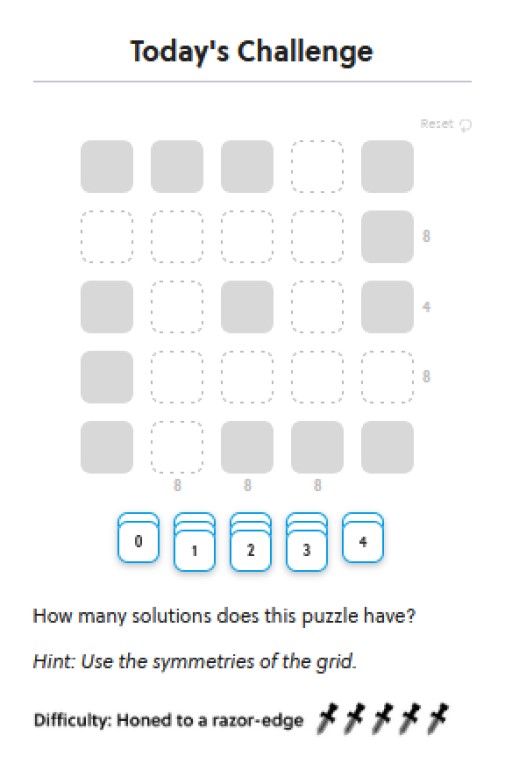
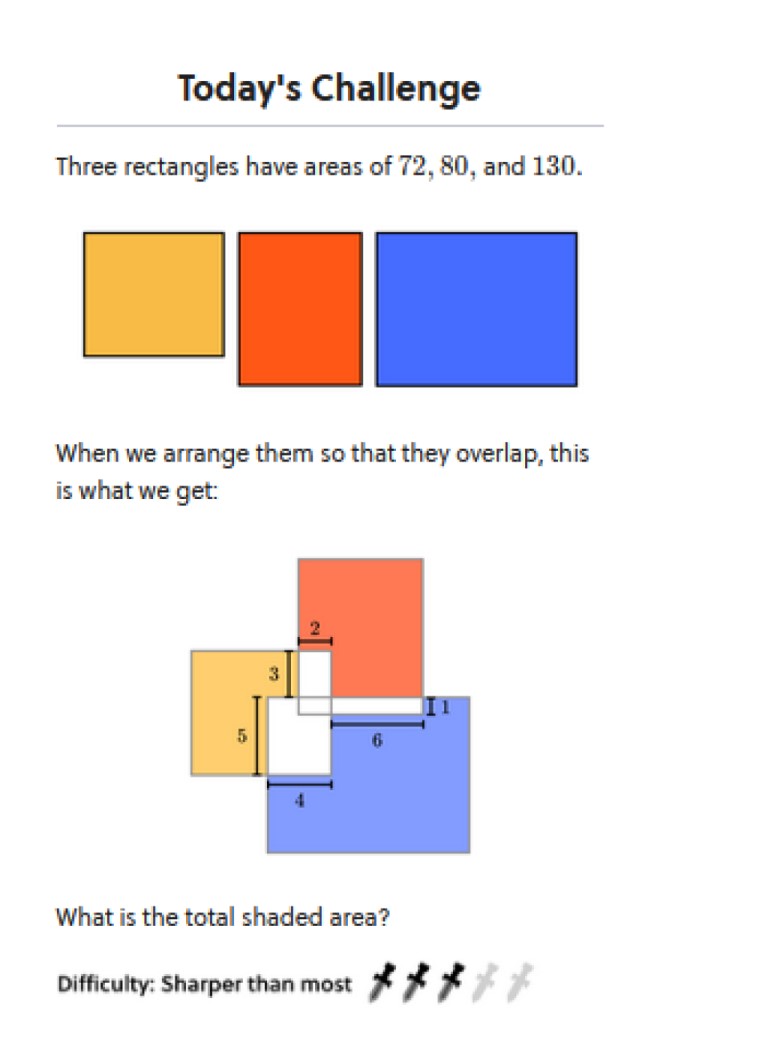
I posed this problem from brilliant in my last post:
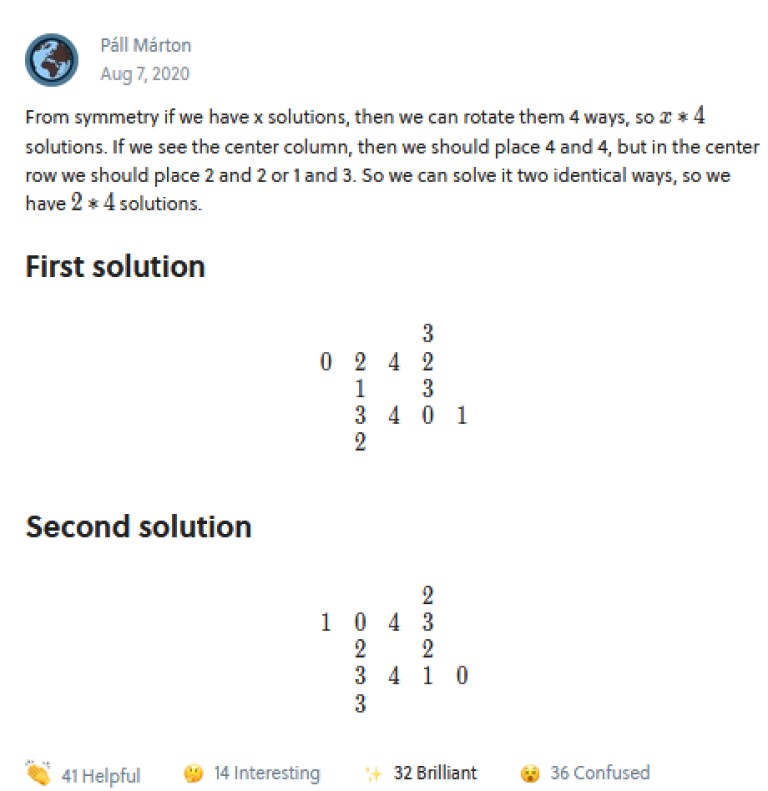
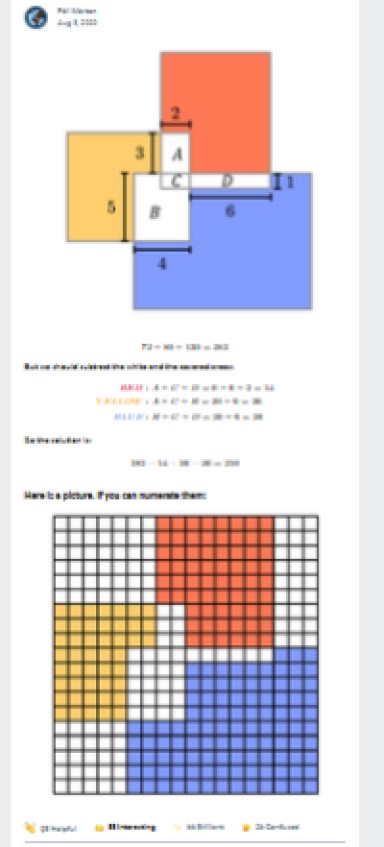
The answer is 216, as shown in this published solution by Pall Marton:
Here is another teaser, this one tangentially connected with sudoku:
This one is not as hard as the five dagger rating suggests, but it is quite challenging. Solution in my next post.
PHOTOGRAPHS
My usual sign off…
Damselflies have been out in force, as these remaining pictures show. They are tricky in two ways – actually capturing them on camera, and editing the shots to best effect.
















































































































































































































































































































































































































































































































































































































 aspiblog