A look back at the final stages of the contest for the Border-Gavaskar Trophy and a photo gallery.
Early this morning UK time, midway through the afternoon session of day three in Sydney, Australia completed a six-wicket win over India which gave them a 3-1 series victory with one match drawn, and for the first time in a decade possession of the Border-Gavaskar Trophy. This post looks at the developments of days two and three of the final match.
DAY TWO
Day two started well for India but in the end left them poorly placed. They secured a small first innings lead, dismissing Australia for 181. Their own second innings however was a poor show with the shining exception of Rishabh Pant. Pant, justly criticized for his two dismissals in the previous match at the MCG, played a magnificent knock on a pitch that always helped the bowlers. He scored 61 off 33 balls, hitting some gorgeous shots. In the circumstances, with wickets falling regularly it was the right way to approach things, and it was an unforgettable display. Even with these pyrotechnics India were still 141-6 at the close of day two, 145 runs ahead overall, and with Bumrah in hospital for scans on an injury.
DAY THREE AND WRAP UP
Ravindra Jadeja was out early, and the tail offered little further resistance. Cummins claimed two of the last four wickets and Boland the other two, his fifth and sixth of the innings and ninth and tenth of the match. Australia lost four wickets en route to victory, but Travis Head and Beau Webster, who had an excellent test debut, scoring 57 and 39 not out, as well as bowling 13 overs for 29 in the first Indian innings and taking 1-24 from four overs in the second, saw through such danger as there was, putting on an unbeaten 58 for the fifth wicket to take Australia over the winning line. Crucially for Australia, although he had batted Jasprit Bumrah did not bowl – their task would have been exponentially tougher had he been able to do so.
Scott Boland’s match haul of 10-76 (4-31 and 6-45) saw him named Player of the Match, while Jasprit Bumrah’s 32 wickets across the five matches saw him named Player of the Series. India came into this match still with a chance to retain the BGT, and that was almost solely due to Bumrah. Without him the only question at the SCG would likely have been whether or not the Aussies could make it 5-0. Full scorecard here.
A look at day one of the fifth and final test match in the Austyralia v India series and a photo gallery.
The fifth and final test of the Border-Gavaskar trophy series between Australia and India is underway in Sydney. This post looks at the events of day one.
THE PRELIMINARIES
India were captained by Jasprit Bumrah as Rohit Sharma had been ‘rested’. Prasidh Krishna was a like for like replacement for Akash Deep further down the order. For Australia Mitchell Marsh made way for Beau Webster to make his test debut. Webster is principally a batter, but does have a first-class six-for, taken earlier this season, to his name. Bumrah won the toss and elected to bat first.
INDIA UNABLE TO GET GOING
India needed to bat well, and sadly did not do so. The Australians did bowl well, especially Scott Boland. Mitchell Starc, whose fitness was uncertain coming into this match, took three wickets with his pace, but even he was second fiddle to Boland, who emerged with 4-31. Cummins had two wickets, Lyon one, and Webster on the first day of his test career was economical, sending down 13 overs for 29 runs. India mustered 185 from 72.2 overs in the end. Australia’s openers, Konstas and Khawaja, seemed to be surviving a mini-session of batting with little difficulty, much to the relief of Lyon, padded up to go in as nightwatch if needed, when karma struck. Konstas and Khawaja indulged in some time wasting to ensure there was no possibility of an extra over being sneaked in by India before stumps were drawn, words were exchanged between Konstas and some of the Indian fielders, Khawaja intervened to defuse the situation, and then the remaining delivery could finally be bowled. Karma, using Jasprit Bumrah’s arm as its agent now punished the Aussie openers – that sole remaining delivery took the edge of Khawaja’s bat and was caught by Rahul behind the stumps. Australia thus ended the day 9-1 after three overs in reply to India’s 185. If 14.4 overs seems considerably more than can be accounted for by a mere innings break you are spot on – over rates were disgracefully slow all through the day, and even if there had not been the innings break a good dozen of those 14.4 overs would have gone unbowled.
PHOTOGRAPHS
I lost some of my photographs when the memory card I had been using malfunctioned yesterday. Fortunately I have a spare, and though it has been cold, especially when the wind blows, the last couple of days have been bright and sunny, so I do still have my usual sign off…
The first seven pictures have appeared before – there were plenty of others from that day as well.Yesterday afternoon, post work in Fakenham.The first picture from today.I acquired these cigarette cards a while back, but have not got them on display – I was looking through them today and photographed some on a whim.
A look back at the ending to the test match between Australia and India at the MCG and a large photo gallery.
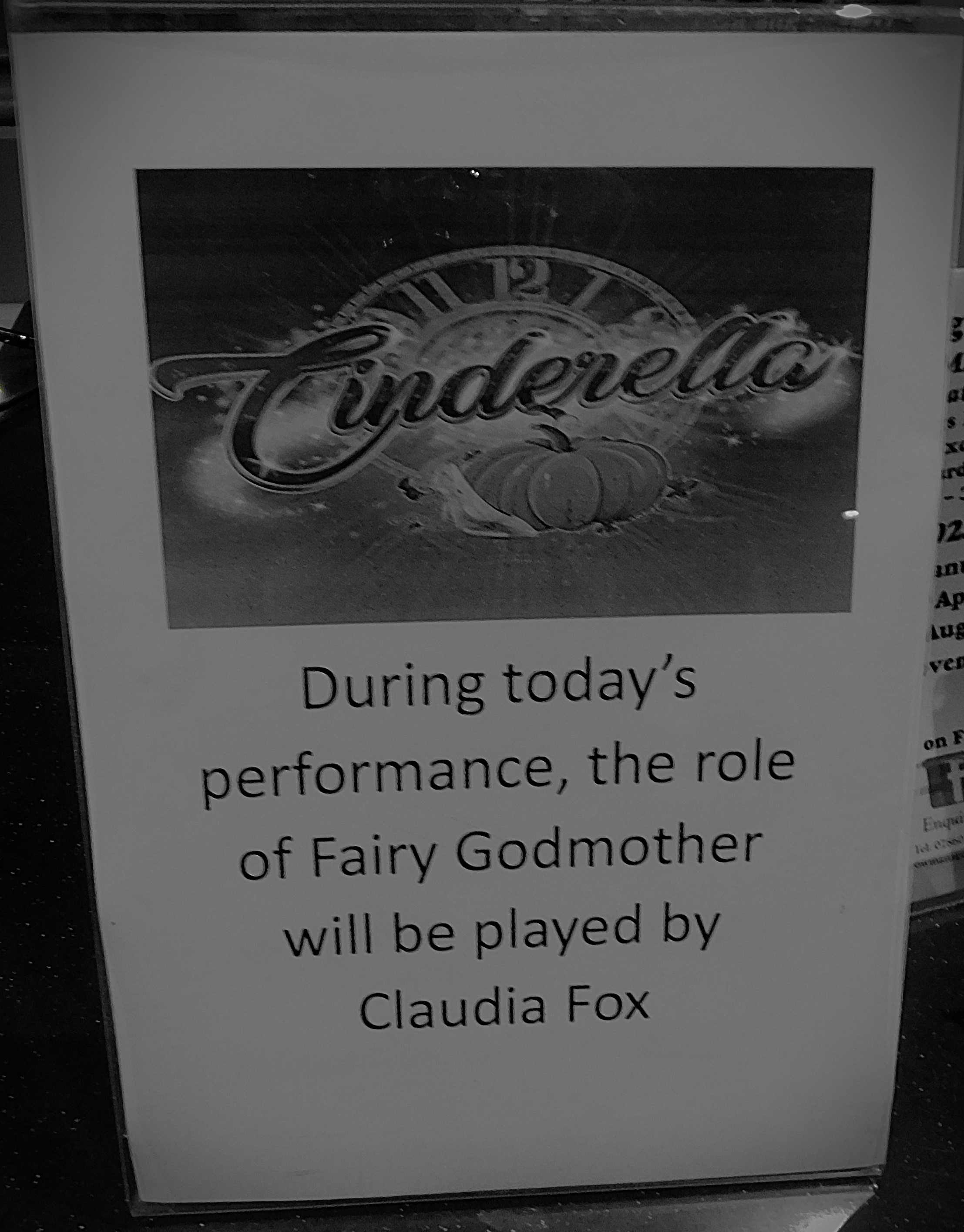
This post is a few days late – between the Christmas Panto and work I have been busy in the early part of this week. In it I look back at the final day of the Australia v India test match at the MCG.
A RASH SHOT AND A DRS CONTROVERSY
When India reached tea on day five only three wickets down in their second innings, and with Yashavsi Jaiswal and Rishabh Pant having batted through the afternoon session without too many signs of difficulty a draw looked likely. Immediately on the resumption Pant was tempted into a rash shot against a short ball and was caught in the deep, the second time he had tossed his wicket away in the course of this match. This dismissal was not quite as appalling as his first innings one, but he should have taken care to play the ball down in to the ground – India were looking to bat through for a draw, so safety first should have been the guiding thoughts. That opened the door for Australia, and when Ravindra Jadeja and first innings centurion Nitish Kumar Reddy both fell cheaply the door was practically off its hinges. The moment that effectively sealed India’s doom came via the Decision Review System (DRS). Yashavsi Jaiswal, on 84 and playing beautifully was given not out in response to an appeal for a catch. The Australians sent it upstairs. The replay appeared to show a deflection from either bat or glove, but the snickometer did not pick up any sound. Nevertheless, knowing that it was effectively handing the match to Australia, the third umpire, faced with conflicting evidence decided to go with the visual clue rather than the lack of a noise and told the on-field umpire to reverse his decision and give it out. That left Washington Sundar and three tail enders with a long time still to bat, and they did not come close.
Over the five days some 373,000 spectators watched at the ground, a record for a test in Australia, beating one that had stood since the 1936-7 Ashes when the star attraction was a certain DG Bradman.
Pat Cummins, with 90 runs across the two Australian innings and six wickets across the two Indian ones, was awarded the Mullagh Medal for Player of the Match (Johnny Mullagh was part of the all-aboriginal party that toured England in 1868, and showed himself to be a fine all rounder on that tour).
Australia won by 184 runs in the end, and as well as Pant’s two batting errors, the second of which opened the way for India’s final collapse, India were poor in the field, at least four clear cut chances being dropped. Australia now lead the series 2-1, meaning that so long as they do not lose in Sydney they regain the Border-Gavaskar trophy, which has been in Indian hands for a decade. Full scorecard here.
PHOTOGRAPHS
Most of these are from the back end of 2024, but I have included some from today…
The venue for the Pantomime.The first 2025 picture I have posted.
A look back at fay four at the MCG and a large picture gallery.
This post looks back at the events of day four of the test match at the Melbourne Cricket Ground.
A DAY OF UPS AND DOWNS
At one point after a great spell of bowling from Jasprit Bumrah, in the course of which he became a member of a club of one – bowlers with 200+ test wickets at under 20 a piece (among those whose careers have ended only Syd Barnes with 189 scalps at 16.43 each even has over 150 at under 20) – Australia were 91-6, 196 runs ahead. By the end of the day they were 228-9, 333 runs to the good. That margin is significant – the biggest ever successful fourth innings chase at this ground was 332-7 by England in the 1928-9 Ashes, Herbert Sutcliffe chiselling out 135, his second Ashes settling innings in two and a half years, following his 161 at the Oval in 1926 which left England with an effectively unassailable lead going into the fourth innings. However, in giving themselves this many to defend but not as yet declaring (an overnight declaration is possible), Australia may well have deprived themselves of sufficient time to dismiss India in the fourth innings – and Australia are more in need of a win than India, who as holders of the Border-Gavaskar Trophy need only to draw the series to retain it. Bumrah’s burst notwithstanding it has to be classed as Australia’s day, but it has a dog-in-the-manger feel to it with Australia not in a position to take that attitude.
PHOTOGRAPHS
My usual sign off…
Today there was a WNAG pizza making session at Pizza Express. This was my product in its finished state.
A look at the events of day three at the MCG and a mention of the miseries of Melbourne Stars. Also a huge photo gallery.
This post is largely devoted to the events of day three of the Australia v India test match at the MCG.
A BAD START
India had reached 164-5 at the end of day two, in reply to Australia’s first innings 474 (see here for more details). Pant and Jadeja had advanced that score to 191 when Pant fell to a truly awful dismissal, walking straight into very obvious trap set by Australia. That brought Nitish Kumar Reddy to the crease. The youngster is in his fourth test match and had made useful but not major batting contributions in all of the first three. With 84 still needed to avoid the follow-on things were looking grim for India, and when Jadeja departed at 221 it still looked bad for them…
THE GREAT REVIVAL
Washington Sundar now joined Reddy, and India enjoyed their best period of the match. The pair put on 127 together for the eighth wicket, in the process removing follow-on considerations from the equation. Sundar contributed exactly 50 of those, and Reddy was approaching a greater milestone. He was on 99 when Jasprit Bumrah was ninth out, but Siraj, a genuine tailender, rose to the occasion and held out for long enough for the landmark to be achieved. The weather also made its presence felt, eventually halting play a little early, with India 358-9, Reddy 105 not out. Australia lead by 116 with two days to play. Scott Boland, who knows this ground better than anyone else involved in the test match, reckons that Australia need to give themselves four sessions to get India out a second time. If they cannot do that India will go Sydney needing only a draw to retain the Border-Gavaskar trophy.
MELBOURNE STARS MISERY
Readers of this blog may recall that the Melbourne Stars women finished WBBL10 holding the wooden spoon. The 14th edition of the men’s BBL is now well underway, and Melbourne Stars defeat at the hands of Sydney Thunder today means that they have started the tournament with five losses in a row, which even with the qualification rules being over generous almost certainly means that they will not feature beyond the league stage.
A look at developments in the Boxing Day test match so far and large photo gallery.
At 11:30PM on Christmas Day UK time the Boxing Day test match at the MCG (between India and Australia – the fourth match of a five match series for the Border-Gavaskar Trophy – on this occasion) got underway.
DAY ONE
Australia won the toss and elected to bat first. This meant that debutant Sam Konstas, at the age of 19, would not have long to wait for his first bat at the highest level, since he would be opening the innings alongside Usman Khawaja, precisely twice his age, and the biggest age gap between Australian openers since Syd Gregory, induced out of retirement at the age of 42 by a dispute that left Australia without six of its leading players, and Charlie Kellaway padded up together way back in 1912. Konstas selection also meant two other things: he was only the third ever test player known to be of Greek heritage after Xenophon Constantine Balaskas (South Africa) and Athanasios John Traicos (South Africa, and, after a record mid-career hiatus at that level of 22 years, Zimbabwe). Marcus Stoinis, also of Greek ancestry, has played limited overs cricket for Australia, but not test cricket, and Ari Karvelas has played for the land of his ancestors but not as yet for that of his birth, South Africa; and Australia had a top three all born abroad – Konstas (Greece), Khawaja (Pakistan) and Labuschagne (South Africa).
Konstas played a magnificent innings, showing no sign of any nerves. His use of ramp and scoop shots forced India to deploy run-saving fielders directly behind the wicket, which also meant reducing the slip cordon so as not to leave gaps in front of the wicket. Left arm spinner Ravindra Jadeja got him, with, as is so often the case with this bowler, a ball that didn’t actually do anything – it just went straight through and hit a pad in line with the stumps, for a 65 ball 60, which came out of an opening stand of 89. Khawaja completed a much more pedestrian 50, as did Labuschagne, and by the close of day one Steve Smith had also exceeded 50, and it was still there. Bumrah claimed three wickets in the course of the day, and without him Australia would have been well and truly out of sight by the end of this day. A score of 311-6 was still a good effort. Khawaja did not make my all time Ks XI, but his stocks have risen since August 2022, and he would merit consideration now, although I might still stick with Karunaratne. If Konstas’ debut knock was any sort of clue to his future career then he will displace Majid Khan as the right handed opener in that XI before he is done.
DAY TWO
I missed a fair amount of this day’s action due to the inconvenient time of its happening, but I did get to see both India’s best and worst moments of a day that ended with Australia in total control. Australia reached 474, Steve Smith reaching 140, and Pat Cummins boosting the score with a late 49. India lost two wickets fairly early, but then a fine third wicket stand developed between Yashavsi Jaiswal and Virat Kohli. Half an hour before the end of the day it looked fairly evenly poised, and Jaiswal looked set for a century. Then Jaiswal played one towards Cummins, not a fielder whose arm should be challenged, set off for the single, only for Kohli, ball watching, to ignore his partner’s call, which resulted in the end of Jaiswal for 82. Kohli himself then edged Boland to Carey, and nightwatch Akash Deep also failed to survive until the close. Rishabh Pant and Ravindra Jadeja were thus together at the end of the day, with India 167-5, still over 100 runs short of avoiding the follow-on. India will have their work cut out to emerge from this with anything other than a defeat, which will mean that only a win in Sydney will see them retain the BGT.
PHOTOGRAPHS
My usual sign off…
There are a lot more pictures from Fakenham than usual in this gallery – I had misread a notice about library opening hours and had a lot of time to kill after work on Tuesday and did so doing a lot of walking.For all that it has Fakenham in its name this defunct train station is actually just into the adjoining village of Hempton.The last picture from Fakenham.This picture and the next were taken on Christmas Day morning – the rest of that gallery will appear in my next post.
Detailed looks at the men’s match between Australia and India and the women’s match between South Africa and England that are currently in progress, a mention of the men’s match between New Zealand and England, a 35 second video and a photo gallery.
The New Zealand and England men’s teams are currently playing the third match of a series already won by England, while the Australian and Indian men’s teams are playing the third match of a five match series for the Border-Gavaskar Trophy and the South Africa and England women’s teams are playing a one-off test match to end England’s tour there. This post looks at goings on in these matches, the second and third in a bit of detail as I have been able to follow them. As for the first, suffice to say that it looks like England are copping a hammering and that said result will be entirely justified.
THE GABBA: AUSTRALIA v THE WEATHER
The third match of the series for the Border-Gavaskar trophy in Brisbane has lost a lot of time to the weather with possibly more interruptions in the two days that remain. The weather has done rather more to stand in Australia’s way than India have managed. India won the toss and opted to field, a lure that has tempted several captains there in the past, though the results should influence modern era skippers against doing so: Hutton put Australia in in 1954-5 and they scored 601-8 declared and won by an innings and 160 runs, though England fought back to win the second, third and fourth matches of that series; Border put England in in 1986-7 and they scored 456, bowled Australia out twice and knocked off the runs needed in the fourth innings; and finally Hussain put Australia in in 2001-2, the hosts were 367-2 at the end of day one and won a thumping victory. Unless the rain persists Rohit Sharma will come away with the same result as those three did – Australia have scored 445, a total kept within some sort of bound only by Jasprit Bumrah who emerged with 6-79. In such batting time as the rain has allowed them in their own first innings India have limped to 48-4, meaning that Australia need 16 more wickets to win and are 397 ahead, given that we are going into day four and there is still rain about, if they do indeed bowl India out for 245 or less it will be mandatory to enforce the follow on.
THE GHOSTS OF DRS PAST AND FUTURE HAUNT CSA
This test match will almost be the last such game involving either sex not to feature the Decision Review System – both the England innings, and the South African response still in progress have featured moments where the absence of DRS for this match has been crucial, and England have been the beneficiaries of both. Tammy Beaumont was given not out in response to a concerted appeal for LBW on the second ball of the match, and South Africa would certainly have sent it upstairs had DRS been in place, and would very probably have seen it overturned. In the South African innings their skipper Laura Wolvaardt was on 65 and frankly looking impossible to dislodge when a ball from Ecclestone struck her pads and she was given LBW. Wolvaardt made it obvious that she was certain that she had nicked it into her pads, and with DRS in place she would have sent it upstairs and it would have been overturned. Maia Bouchier scored a century on her test debut, and Natalie Sciver-Brunt also contributed a ton, reached off just 96 balls, to England’s efforts. England fell away a bit late in their innings, but a score of 395-9 declared is not to be sniffed at. At 237-3 with Marizanne Kapp and Sune Luus going well South Africa looked to be heading for somewhere close to parity, but Kapp being bowled by Ryana McDonald-Gay opened an end for England, and wickets have been falling regularly since then. The latest go has been Chloe Tryon, clipping one from Lauren Bell straight into the hands of Tammy Beaumont. Luus had succumbed just previously to a fearsome burst from Lauren Filer, finally fencing one into the gloves of Amy Jones behind the stumps to go for 56. Number nine Tumi Sekhukhune has just got off the mark with a four, but at 275-7 South Africa are 120 adrift with only three first innings wickets standing. Things have moved on while I have been preparing this post for publication – Lauren Bell has bowled Jafta with a beauty and then with her next ball, assisted by the number 10 backing away so much that she was practically in a different post code from the ball, removed Nonkululeko Mlaba’s middle stump. Nat Sciver-Brunt has just terminated the innings by pinning Ayanda Hlubi LBW for 1 and South Africa are all out for 281, giving England a first innings lead of 114.
PHOTOGRAPHS
Before I produce my latest photo gallery I have a short video to share with you…
A look at goings on in two WODIs, Australia v India which finished a while back and South Africa v England which is approaching the halfway stage.
Today is a big cricketing day – in the early hours of this morning UK time an Australia v India Women’s One Day International started, and at midday today UK time a South Africa v England Women’s One Day International started. This post looks at what has happened so far.
AUSTRALIA v INDIA
Harmanpreet Kaur won the toss at the WACA in Perth (these days superseded by the Optus Stadium, but still a fine venue) and to fairly universal surprise opted to put Australia in with the temperature at 38 Celsius and set to rise during the first innings. A four wicket burst from Arundhati Reddy had Australia 78-4, but none of Reddy’s team mates managed to bowl well, and with an Annabel Sutherland century the highlight (Sutherland has a great record at this venue, including scoring 200 in a test match against South Africa) Australia regained control of proceedings, ending on 298-6. India were soon behind the rate, but they did do a good job of keeping wickets in hand for later in the chase. With coverage of the other match due to start at 11:45 I set out at 10:30 for a walk, aiming to arrive back as coverage of that match got underway, which I managed to do. I was reckoning that Australia had the match under control and that the only real obstacle in their pathway was Smriti Mandhana who was batting splendidly. Events confirmed both elements of this prediction – I was to find out that India had reached a high water mark of 189-3 before Mandhana having reached three figures was out, and the innings fell away to a low point of 203-8, before the last couple of wickets scraped up a further 12 runs to reduce Australia’s margin to 83 runs, still an emphatic victory for the hosts.
SOUTH AFRICA v ENGLAND
This match is taking place in Potchefstroom on the high veldt, where scoring can be rapid due to the ball travelling further and faster through the thinner air. However, South Africa, put in by England who won the toss, are not scoring particularly fast. Laura Wolvaardt scored a fine half century but when she had reached 61 she was pinned LBW by Ecclestone. South Africa appear to have decided that the left armer can be allowed to get through her overs effectively unscathed so long as she doesn’t take too many wickets. However, she has just added a second scalp, Chloe Tryon, stumped after about the first show of aggression by any Protea batter against Ecclestone. South Africa are 201-7 in the 41st over, and Ecclestone currently has 8-0-21-2. England lost Kate Cross injured before she had completed her first over, leaving them an allocation to fiddle through with part timers. Nevertheless England have the advantage and I would expect them to win from here. While I have been preparing this for publication an eighth wicket has gone, and South Africa are 201-8 in the 43rd over.
PHOTOGRAPHS
My usual sign off (please note that the featured image is not in the below gallery, being a composite of three separate pictures, showing both sides of the Guanock Gate and the information panel about said gate)…
A look at developments in the two test matches that are currently in the play, both of which have progressed at a rapid rate. Also a large photo gallery.
There are two test matches currently in progress, which is part of the explanation for the title of this post – the other part should become clear through the post. In Adelaide Australia anbd India are playing the second match of a five-match series for the Border-Gavaskar trophy, while in Wellington New Zealand and England are playing a day game. Most of this post will deal with the BGT game, which I have been able to follow live via test match special, but before I get to that I will briefly present…
WELLINGTON WONDERS
The Basin Reserve ground at Wellington is effectively a gigantic roundabout, and England have certainly been in fifth gear this match. After two days play England are 533 runs ahead with five second innings wickets standing, and I know courtesy of an interview that I head that Gus Atkinson was padded up in the closing stages of play, which suggests that a declaration is not immediately planned. Atkinson continued what has been a magnificent start to his international career by wrapping up the New Zealand first innings with a hat trick (Maurice Allom, of Atkinson’s own county Surrey, actually achieved this feat against New Zealand in his debut test many years ago). New Zealand, being made to look very ordinary by this England side, are fresh off whitewashing India in India.
AUSTRALIAN AVENGERS
India won the series opener in Perth comprehensively. This match in Adelaide has gone very differently so far. India won the toss and decided to bat. That was about the last thing that went right for them. Yashavsi Jaiswal was dismissed by the first ball of the match, and that set the tone for their first innings. Mitchell Starc has a particularly impressive record in pink ball test matches (nb for England fans looking ahead to next winter, the Adelaide test in that series, also in early December, is a day game with a red ball), and he further enhanced it by taking 6-48 as India reached 180 all out, lasting under 45 overs in total. India needed wickets in what was left of the opening day, but they did not get them. Bumrah under-used himself, and by the close of day one Australia were 86-1 and sitting pretty with two session of daylight batting ahead of them. A Travis Head century was the centrepiece of day two, as Australia amassed a lead of 157 on first innings. India faced a tricky period of batting in which they should have looked to avoid losing early wickets. Instead a frenetic performance saw them five down by the close, and although the runs came rapidly, they were still 29 in arrears when stumps were drawn. Bumrah’s 4-61 meant that he ended the Australian innings with his test bowling average below 20 per wicket – 185 wickets at 19.95. Mohammed Siraj also had four wickets, more expensively, and accompanied by an official warning for the send-off he gave Travis Head.
PHOTOGRAPHS
My usual sign off…
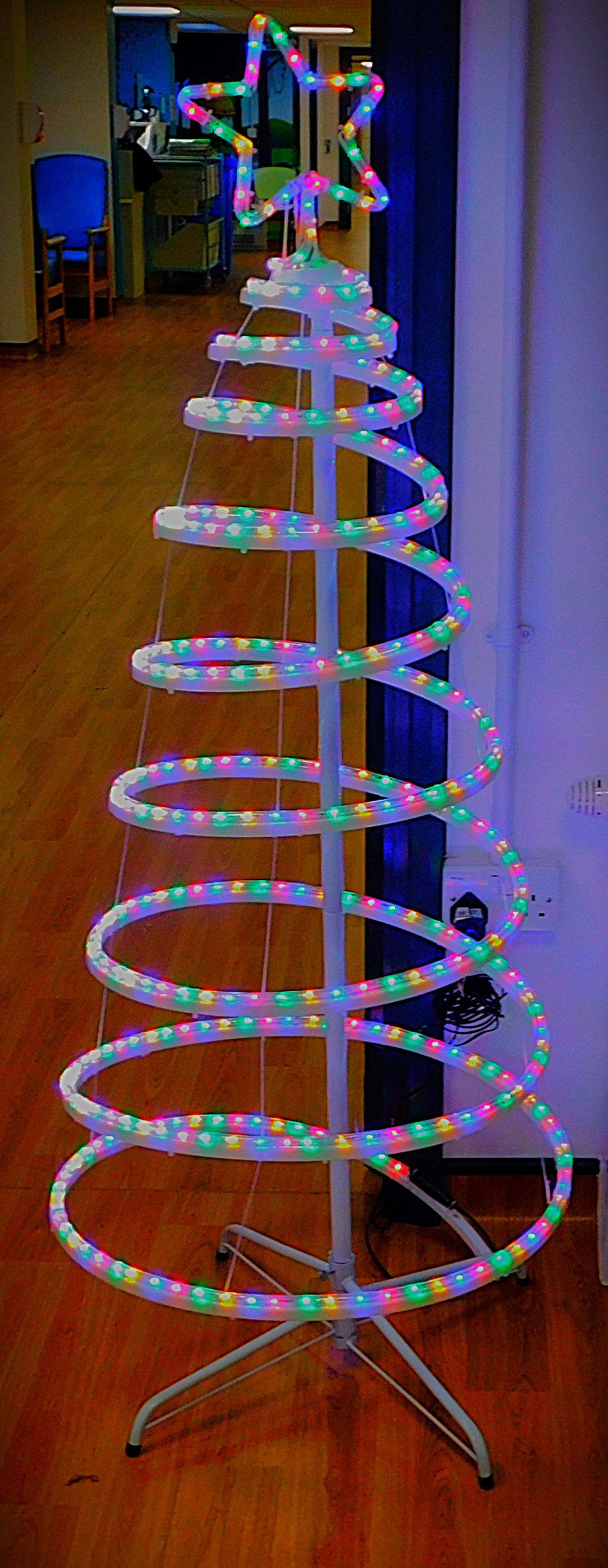
Pictures from the walk to the West Norfolk eye centre (was full dark by the time of the return journey).A Christmas tree alternative at the West Norfolk eye centre.Thursday pics either side of work start here.Friday picture start here.Todays pictures start here.
A look back at the first three days of the first test of a five match series between Australia and India, taking place in Perth.
The opening test of a five match series between the Australia and India men’s teams is under way in Perth, contested for the Border-Gavaskar Trophy. This post looks back at the action from the first three days of that match.
THE PRELIMINARIES
This series had one very unusual feature – both captains, Pat Cummins, who is Australia’s regular incumbent, and Jasprit Bumrah who is standing in for the unavailable Rohit Sharma are specialist fast bowlers. Australia had a controversial debutant in Nathan McSweeney. McSweeney has a fine batting record at state level, but his most productive positions in the order are numbers four and five, and at number three he averages a very modest 30, while he has never opened in professional cricket, and that was the job he was being selected to do in a test match. India won the toss and chose to bat first.
DAY ONE – BOWLERS ON TOP
At lunch on day one India’s decision to bat first was looking questionable – they were four wickets down, and no one had looked remotely good for them. Two further wickets shortly after the interval and it was looking like India were handling Perth no better than most visiting sides. Rishabh Pant, returning to test ranks after a long layoff due to injuries sustained in a car crash, and Nitish Kumar Reddy making his test debut. staged something of a revival for India, getting the total to 150 all out, which did not seem enough for a side choosing to bat first.
Jasprit Bumrah had other ideas. The captain and star bowler for India was soon getting busy among the Australian batters. His first victim was McSweeney for 10, pinned absolutely plumb in front of the stumps. Then he had the other opener Khawaja caught by Kohli for 8 and with his very next ball pinned Steve Smith plumb in front to make it 19-3. Labuschagne dug in, but simply could not get the ball away, and wickets fell at the other end from him with great frequency. Travis Head was clean bowled to become the first victim of the second of India’s test debutants, Harshit Rana., having scored 11. That was 31-4, and when Siraj had Mitchell Marsh caught behind for 6. Siraj struck again nine runs later, putting Labsuchagne out of his misery by pinning him LBW for 2, scored off 52 balls. For a slower innings of 2 by an Australian one has to go back to the 1960s and Bill ‘Phant’ Lawry who once took 55 balls over a score of 2. Australia were 47-6. There was still one wicket to come on this eventful day, one that symbolised the respective positions of the sides by then as Indian skipper Bumrah had his opposite number Cummins caught behind to make it 59-7. By the close Australia were 67-7. The pitch had pace and bounce, but no real mischief – the bounce was consistent and reliable, and there was nothing in the way of extravagant sideways movement. Bumrah ended his first day as Indian test skipper with figures of 4-12 from seven overs.
DAY TWO – CONSOLIDATION
Jasprit Bumrah completed his five-for by dismissing Alex Carey, caught behind for 21. That was 70-8. When Harshit Rana had Lyon caught by KL Rahul it was 79-9. The final Australian pairing of Starc and Hazlewood added 25 to this score, Starc becoming along the way top scorer of the innings, in itself a devastating statistic for Australia. Starc had scored 26, and had faced 112 balls to do so. Bumrah’s final figures were 5-30, while Rana had 3-48 and Mohammed Siraj 2-20.
Australia needed wickets, and quickly if the match wasn’t to get away from them. Yashavsi Jaiswal and KL Rahul realized this, and batted superbly for the situation. They batted through the 57 overs that Australia managed by stumps (over rates have been dire in this match from both sides), leaving India in complete control on 172-0, an overall advantage of 218. Jaiswal had 90*, Rahul 62* and 20 extras had been donated by Australia.
DAY THREE: RIPLEY’S BELIEVE IT OR NOT
If you had asked Jasprit Bumrah to script the third day of this match I don’t think he would have dared to make it as favourable for India as it actually was. India spent the first two sessions building their advantage steadily, Jaiswal advancing his score to 161, his fourth test century, and all four scores have ended up crossing 150. Only one other person in test history has a similar distinction, Graeme Smith of South Africa, also an opening batter. Although India had a minor blip, a high water mark of 275-1 becoming 321-5, Kohli, supported first by Washington Sundar and then by Nitish Kumar Reddy steadied the ship, and then in the final stages of the Indian innings attacked as a declaration loomed. Kohli reached his hundred off 143 balls, at which point India declared, with Reddy 38 not our from 27 balls at the other end. Australia needed 534 to win and had about 20 minutes plus two full days to bat. With the fourth ball of the innings Bumrah pinned McSweeney LBW for a duck to end a miserable debut for the ersatz opener. McSweeney’s efforts here, and those of Daniel Lawrence when asked by England to open the batting for the first time in his professional career in a test match constitute fairly damning evidence about how doing this works in practice, i.e. it doesn’t. Cummins now made what I consider a ‘right wrong call’ – he wrongly deemed this a sensible situation in which to use a nightwatch, but having made that error at least assumed responsibility for playing that role himself, rather than sacrificing one of his fellow bowlers. Siraj got Cummins, caught by Kohli for 2 to make it 9-2. Then just to put the cherry on top of this most one-sided of days, Bumrah pinned Labuschagne, the guy Cummins had tried to protect, LBW with what turned out to be the last ball of the day – there were four balls still to come in the over but were past the official close, so the umpires correctly called stumps (slow over rates have been around long enough that the Laws of Cricket have this contingency of a wicket falling after the scheduled close covered). That left Australia 12-3, and Bumrah with figures of 2-1. This means that Bumrah currently has 180 test wickets at 19.94 a piece. The last person to finish a test career with over 150 wickets at under 20 was Syd Barnes, with 189 wickets at 16.43, and the last of his 27 test appearances was in 1914. Australia with two whole days to come need 522 more runs to win and have seven wickets standing. India had won all three days outright, and on session scores I make it 7.5-1.5 – Australia had the better of the morning session on the opening day with those four wickets, the afternoon session was about even, the evening session of that day was overwhelmingly India’s, and days two and three belonged entirely to India, with Australia’s one decent passage of play on those days, when they reduced India from 275-1 to 321-5 being too insignificant in the scheme of things to matter – India were so utterly in command by then that even the wicket taking had continued and India had been say 350 all out it would have made no difference to the final result. With it also being IPL auction time, the commentators raised a question about their four expert summarisers, Sunil Gavaskar, Darren Lehmann, Glenn McGrath and Tom Moody: if all were available and in their pomp but you could sign only one for an IPL who it be? My answer is McGrath – I reckon I am getting four cheap overs, and wickets into the bargain, in pretty much every match. Moody’s all round skills make him second choice in my view, with Lehmann a poor third, and Gavaskar due to his approach to batting not even worth considering in this context.
PHOTOGRAPHS
My usual sign off…
The photos in this gallery were taken on three different days, Friday which was sunny but very cold……Saturday which was just plain horrible……and today, grey but dry, and much warmer (indeed so warm that I deemed a coat unnecessary)







































































































































































































































































































































































































































































































































































































































































































































































































































































































 aspiblog