Brilliant Bumrah Blitzes England

An account of day two of India v England at Vizag, dominated, as the day’s play itself was by the brilliance of Jasprit Bumrah. Also my customary photo gallery.

Today was day two of the second test match of the five match series between India and England. This match is taking place at Vizag. I covered day one here.

Although it was a mere prologue to the main event of the day the end of the Indian innings was not devoid of significance. England appeared to have done reasonably well to keep India below 400, with the tenth wicket going at 396. Yashavsi Jaiswal who had dominated day one resumed on 179 not out. He completed his double century, but facing the risk of being stranded got out for 209, meaning that the highest score by an Indian opener against England remains the 221 that Sunil Gavaskar scored at the Oval in 1979. Anderson claimed his second and third wickets of the innings, and kept his economy rate below two an over, while young spinners (their combined age is less than that of Mr Anderson) Rehan Ahmed and Shoaib Bashir also finished the innings with three wicket hauls.

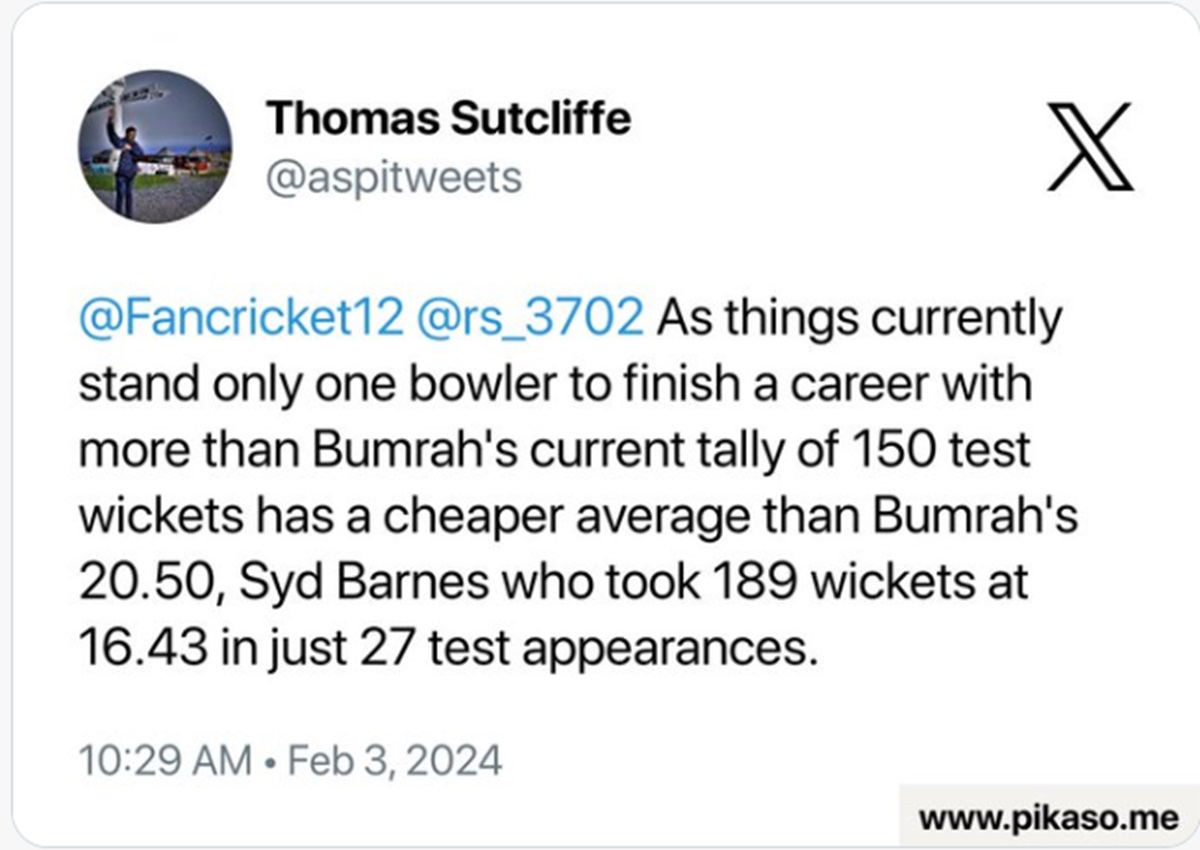
England began brightly, with Zak Crawley playing well. Mukesh Kumar did not at any stage resemble a genuine test match new ball bowler. Axar Patel, R Ashwin and left arm wrist spinner Kuldeep Yadav all took turns at the bowling crease. At high water mark England were 114-1, but then Crawley fell to catch by Iyer of Axar Patel. Bumrah was then called back into the attack to deal with Joe Root. Nine runs later Bumrah found the edge of Root’s bat, Gill took the catch and it was 123-3. Then Pope, who was just beginning to look settled after a typically nervous start had two of his stumps uprooted by an absolutely unplayable ball from Bumrah to make it 136-4. Bairstow and Stokes resisted for a time, but the unstoppable Bumrah found one to take the edge of Bairstow’s bat for another catch to Gill to make it 159-5. Kuldeep Yadav got Foakes with a good ball and Ahmed courtesy of a loose stroke which gave Gill his third catch of the innings and England were 182-7. Tom Hartley now joined Ben Stokes, and Stokes threatened to wrest the initiative back for England. However, with Stokes on the verge of a half century a superb delivery from Bumrah rattled his stumps to make it 229-8. That was Bumrah’s 150th test wicket, at an average of 20.50 a piece, a fact the significance of which I noted in the tweet reproduced in screenshot form below (follow the link highlighted in blue to note the exact time at which I posted it):

The day got better yet for Bumrah, as he induced Hartley to give Gill a fourth catch of the innings, which brought the debutant Shoaib Bashir in to join Anderson, given a one place promotion from his usual slot presumably on grounds of experience for the last wicket stand. Bumrah finished the innings by pinning Anderson LBW. England had just crept past 250, but a final score of 253 all out gave India a first innings advantage of 143. Bumrah had taken 6-45 from 15.5 overs on a pitch not offering much assistance, a truly great display of test match fast bowling, from one of the great masters of that art. This gives him an overall tally of 152 test wickets at 20.29 each, with Barnes ahead of him on 189 wickets at 16.43, and Alan Davidson the great Australian left armer having taken 186 at 20.53, with West Indians Ambrose, Garner and Marshall all also having finished with over 150 wickets at less than 21 a piece. Barnes and Bumrah were both in my all time Bs XI. I make one change to that XI in retrospect, Benaud being moved from being in the XI to fronting the TV commentary and Bishan Bedi taking his place giving an XI off: C Bannerman, SG Barnes, *DG Bradman, KF Barrington, AR Border, IT Botham, +Wasim Bari, W Bates, SF Barnes, BS Bedi, JJ Bumrah. I first noticed Bumrah when not long discharged from Addenbrooke’s after emergency cancer treatment, when he destroyed Australia in Australia (see here).

There was time for five overs of the Indian second innings, in the course of which they scored 28-0, meaning that they start day three with a lead of 171 and all their second innings wickets intact. Cricket is a game which regularly makes fools of those who make over-dogmatic statements about match situations, and this is never truer than when Stokes’ England are involved in the action, but it is at any rate not contentious to state that India are in a very strong position, especially given the tendency of Vizag pitches to break up as the match progresses (average innings scores there show a very straightforward pattern of declining from first to fourth innings of the match).

My usual sign off…

All Time XIs – Golden Oldies

In view of today’s happenings in Vizag I offer an XI of players whose skills and appetite for the game remained undimmed into their 40s. I also have my usual photo gallery for you.

The second test match of the five match series between India and England began at 4:00 this morning UK time. The pitch at Vizag is a batters paradise, which is why I reckon it is honours even at the end of day one. India are 336-6, with Yashavsi Jaiswal having batted all through the day for 179*. England actually bowled three overs more than the statutory minimum of 90, which is almost as rare as seeing a woodpecker in the environs of King’s Lynn, which also happened today:

Close up of a Green Woodpecker seen while walking along the Gaywood River path this morning.

England’s two young spinners, Rehan Ahmed and debutant Shoaib Bashir (born in Nottinghamshire and Surrey respectively for those who care about such things) each picked up two wickets, and each took a catch of the other’s bowling. Bashir became the 713th player capped by England Men, and one of his team mates in this match is the 613th player capped by England Men, one James Michael Anderson, who is the inspiration for today’s XI, comprising players who had great test match moments when past 40 years of age. Anderson had a fine day on a pitch offering him precious little, being parsimony personified, with 1-30 from 17 overs, meaning that he has now taken at least one test wicket in each of 22 successive calendar years.

  1. Jack Hobbs (England, right handed opening batter). Almost half of his test runs were scored after he had turned 40, and at Melbourne in 1929, at the age of 46, he became test cricket’s oldest ever centurion with an innings of 142.
  2. Warren Bardsley (Australia, left handed opening batter). At Lord’s in 1926, almost 17 years after he had become the first to score twin centuries in a test match, Bardsley, then 43 years old, carried his bat through Australia’s first innings, scoring 193 not out.
  3. Patsy Hendren (England, right handed batter). Like Hobbs a tall scoring batter to the very end of his long career – over 1,000 of his test runs came after turning 40.
  4. Tom Graveney (England, right handed batter). Another in the select ‘1,000 test runs after the age of 40’ club.
  5. *Misbah-ul-Haq (Pakistan, right handed batter, captain). Someone whose prime test years were after he had turned 40.
  6. Basil D’Oliveira (England, right handed batter, right arm medium pacer). Based on his test record a batter who bowled rather than a genuine all rounder, though that might very well have been different had he been able to play for his native land starting in his mid 20s rather than for another country starting officially in his mid 30s.
  7. +Bob Taylor (England, wicket keeper, right handed batter). The only candidate for this slot.
  8. Clarrie Grimmett (Australia, leg spinner, right handed batter). His career did not begin in earnest until his mid 30s, and his test career only ended when at 46 years of age he was left out of the squad for the 1938 Ashes in England. By then he had taken 216 wickets in 37 tests.
  9. Sydney Barnes (England, right arm fast medium bowler, right handed batter). His last series, played at the age of 41, saw him claim 49 wickets in four matches before an argument of terms and conditions saw him miss the fifth and final match of the series. Those 49 wickets were just over a quarter of his career tally of 189, taken in just 27 matches.
  10. James Anderson (England, right arm fast medium bowler, left handed batter). Incredible longevity at the top for a 21st century cricketer, and his performance today suggests that the skills are very much still there. He has been known to bowl left arm spinners in the nets, though as far as I am aware has not yet deployed this method in a match. The oldest ever test cricketer, Wilfred Rhodes, who played his last match at the age of 52 years 165 days bowled left arm spin.
  11. Bert Ironmonger (Australia, left arm orthodox spinner, left handed batter). He made his debut at the age of 46, played 14 tests over the course of five years, and took 74 wickets at 17.97 in those matches. Thus in spite of being the ultimate in one-dimensional players – a clumsy fielder, and possessor of a test batting average of 2.62, he was nailed on for selection in this XI.

This side features a strong top six, a keeper whose batting was better than it is often given credit for being, and four great bowlers. Going by D’Oliveira’s actual record rather than dealing in ‘what might have been’ it is very much six batters, a keeper and four bowlers, rather than five batters, an all rounder, a keeper and four bowlers. However, the two most dominant men’s test cricket forces of my life time, the West Indies under Lloyd and Richards, and their successors at the top of the test tree, the Australians under Mark Taylor and Steve Waugh, both relied on six batters, a keeper and four bowlers, so it clearly can work provided that the personnel involved are good enough at their jobs, and I believe that this team ticks that box.

Among the batters to merit serious consideration were Bobby Simpson of Australia, Eric Rowan of South Africa and Herby Taylor of South Africa. The only other keeper to do well at the very highest level when past 4o was Bert Strudwick of England, and he was a genuine tailender with the bat, which would have made things very dicey indeed batting wise. Freddie Brown, who captained England in Australia at the age of 40 and had a respectable series would have had the number six slot had I been desperate to tick the all rounder box, but I felt in view the people at 8-11 that D’Oliveira, the batter who bowled, was a better fit for the XI.. Few genuine quicks have kept their pace into their 40s, and although his presence at number eight would have strengthened the batting I did not feel that Gubby Allen (England), one of that select company, was good enough to dislodge any of my chosen bowlers.

My usual sign off…

Declarations

A look at declarations in the light of recent events in Brisbane, and a large photo gallery.

Declarations have been in the cricket news again lately after one by Australian captain Pat Cummins didn’t work out for him. In this post I look at that declaration and some stories from cricket history involving declarations or their equivalent.

West Indies had fought back from a poor start to record a first innings score of 311, Australia then had an even worse start to their first innings, being 24-4 at one point. They also fought back hard, and reached 289-9, at which point Cummins declared, opting to look for early wickets under the lights. While declaring when still in deficit is unusual there were justifications for taking this approach. Australia were unbeaten in day/night tests, largely because they as a whole, and Mitchell Starc in particular bowl so well under the lights, so it was natural for Cummins to want to play a potential trump card. Unfortunately for Cummins Australia managed only one wicket in the mini-session under the lights that he engineered for them, and West Indies ended up winning the match by eight runs.

Declarations were only allowed in the late 19th century, and two matches from the tail end of the period in which declarations were not permitted help to illustrate why.

When Surrey played Nottinghamshire in 1889 they were going well in their second innings – so well in fact that they were in danger of not having enough time left to dismiss Nottinghamshire a second time. Surrey captain John Shuter instructed his side to get themselves out quickly, and they did so. Surrey then bowled Nottinghamshire out cheaply. In 1893 England were playing Australia in a rain affected match, and England were batting with a small lead at the end of day’s play. England captain WG Grace inspected the pitch the following morning and getting back to the pavilion he told his team mates “I need you to get out quickly – we need to be bowling by 12:30 at the latest”. Grace was not the sort of skipper anyone would dare ignore, and England duly lost their remaining wickets in 20 minutes of play. Australia then collapsed on a pitch that was every bit as spiteful as WG had reckoned it would be and England won the match.

England were 2-0 up in an away Ashes series after two matches, and all seemed to going well when they got Australia out for 200 in the first innings of the third match. Then the rain came, turning the pitch into a vicious sticky. England limped to 76-9 before skipper Allen declared to get Australia back in again while the pitch was still misbehaving. Bradman countered by sending tailenders O’Reilly and Fleetwood-Smith in to play and miss until the close, and when O’Reilly was out before the close he sent in another tail ender, Frank Ward. All of this meant that by the time Bradman, normally number three, joined Fingleton, a regular opener, the score was 97-5, and the pitch was easing. Bradman and Fingleton put on 346 together for the sixth wicket, Bradman going on to record score for anyone batting at number seven in a test match of 270, and England were beaten by a massive margin.

The England squad for the 1950-1 Ashes arrived in Australia not expected to do much, with both batting and bowling looking questionable and the skipper Freddie Brown known to have been the third choice for that role. In the first match at Brisbane they rose magnificently to the occasion in the first innings and dismissed the Australians for 228 on a plumb pitch. Unfortunately for them it then rained, with the usual effect on uncovered pitches. At 68-7 Brown declared to get Australia in while the pitch was at its worst. Australia were 32-7, and in danger of being all out for a new all time test low, beating the 36 they had been rolled for at Edgbaston in 1902, when Hassett declared to get England back in that night. England held back Hutton for the following day, but unfortunately they did not make a great fist of surviving that evening being 30-6 by the close. The worst of many poor dismissals among those six was that of Arthur McIntyre, reserve keeper but playing that match as a batter, who was run out coming back for a fourth run. Hutton played a superb innings the following day, but England came up short.

Surrey were going a third successive title near the end of the 1954 season when they played Worcestershire. Worcestershire were all out for 27 batting first. With Surrey 92-3 Stuart Surridge decided he wanted another go at Worcestershire that evening and declared. Laker and Lock each claimed a wicket by the end of day one, and on the second morning Worcestershire were all out for 40, and won by an innings and 25 runs, which ensured that they would retain the championship.

A few months before England toured Pakistan in late 2022 Australia had visited, and when they played at Rawalpindi they had a full bowling attack, rated among the best in the world, and took precisely four Pakistan wickets in the match. Thus, England were already well in credit by tea on day four, having dismissed Pakistan in their first innings and built an advantage of 347. At that point Ben Stokes opted to declare, a declaration that many rushed to condemn. I had not been expecting the move, but did not rush to judgement on it. Having been following the match the whole way through I knew that both evening sessions would be abbreviated due to lack of daylight, so it was not quite as generous in practice as it was in theory. England secured the victory with time for probably nine more balls, and at most 15, before the light closed in on the final day (the final wicket went to the third ball of an over, and there were nine minutes left before the time at which the light had been judged unplayable the previous day).

New on my blog:

England Go 1-0 Up In India

An account of an amazing finish in Hyderabad and a mention of another in Brisbane.

This morning saw two superb test match finishes. I was following the India v England match on Talk Sport2, while over on Five Live Sports Extra TMS were covering Australia v West Indies. A West Indies side who lacked most of their best known names and had been written off in brutal terms in the run up to the series, and who were 0-1 down in a two match series (this latter is an abomination that should never occur) managed to overcome Australia, winning by a slender eight runs. The body of this post is devoted the action I was listening to, in Hyderabad.

England resumed 126 runs ahead of India with four second innings wickets standing (see here for an account of days 1-3). Rehan Ahmed and Tom Hartley both provided good support to Ollie Pope, while the Surrey man headed towards a double hundred. At 173 he established a new record for a visiting number three batter in a second innings in India, beating the 172 scored by Ken Barrington at Kanpur in 1961. At 177 he passed Alastair Cook’s record for the highest second innings score in India by any English batter. The loss of Hartley and Wood in quick succession, which brought a limping Leach to the crease (the left arm spinner has a knee injury, though he managed to both bat and bowl today) derailed Pope’s advance on the 200 mark, and in the new circumstances he essayed a somewhat desperate reverse sweep and was out for 196. Given the circumstances (India, pitch showing signs of misbehaviour – the ball that got Rehan Ahmed went through very low indeed, England under the gun for much of his innings) this was as good a test knock as has been played by an English batter in my lifetime. England had reached 420, setting India 231 to win the match. Lunch was taken at the end of the England innings. Few Indian bowlers had cause to enquire to closely as to their figures, but the shining exception was Jasprit Bumrah, who somehow conjured up figures of 4-41. Bumrah now has 146 test wickets at 20.85, which means that of bowlers who have finished with more wickets than him precisely two, Sydney Francis Barnes of England, 189 at 16.43 each and Alan Keith Davidson of Australia with 186 at 20.53 each have better averages than the Indian pace ace.

Rohit Sharma began well for India, while Tom Hartley, perhaps heartened by having batted so well, was a different bowler from the guy who took only just more than 20 overs to concede 100 in the first innings. Hartley got Jaiswal, who had given him a lot of stick in the first innings, and also got Shubman Gill cheaply. Gill has talent to burn, but the hard facts are that after a decent number of tests he now averages below 30 at that level, which is not the stuff of which number threes are made. At 63 Hartley made his most important intervention to date, pinning Sharma LBW for 39 (the Indian skipper sent it upstairs, but it couldn’t have been much plumber than it actually was). Axar Patel was promoted to number five in the hope that the presence of a left hander would disrupt Hartley. He batted reasonably until with 17 to his name he pushed one straight back to Hartley and it was 95-4. At 107 KL Rahul fell LBW to Leach. At 119 came a double blow which virtually settled the issue, Jadeja being run out by Stokes’ direct hit throw and then Shreyas Iyer being caught by Root off Leach. That left India needing 112, with keeper Bharat, off spinning all rounder Ashwin and the two rank tail enders Bumrah and Siraj to score them. Bharat and Ashwin threatened for a while, scoring 57 together before Hartley got one through Bharat;s defences for his fifth wicket of the innings. One run later a smart stumping by Foakes off Hartley sent Ashwin on his way, leaving the two specialist bowlers to attempt to score 54 more for victory. Virtually every ball, especially those faced by Siraj, looked capable of yielding the final wicket, but the end was prolonged deep into the extra eight overs, claimed by England to finish things today, as fortune favoured the batters for a time. Eventually Siraj charged down the pitch against Hartley and missed his shot giving Foakes the easiest of stumping chances, which the keeper made look every bit as easy as it was. India were all out for 202 giving England victory by 28 runs. Hartley, so awful in the first innings, had redeemed himself with 7-62 second time round. Pope, who had taken a couple of catches early in the Indian innings to go with his magnificent 196 was deservedly named Player of the Match. Without his innings there would have been nothing for England to defend. India had cause to rue the cavalier way in which they batted in the first innings – they could and should have scored well over 500 against the England bowling of that innings, and that would have prevented any chance of them facing a target in the face of which they could collapse.

Here are links to full scorecards of this match and AUS v WI.

My usual sign off…

Game on in Hyderabad

A look at the action in the first three days of the test match between India and England in Hyderabad and a photo gallery.

India and England are currently locked in battle at Hyderabad, and after three days of play there is just a chance of decent finish. This post looks at the action so far.

There were huge question marks over England’s selections. James Anderson was overlooked and three front line spinners were named – Rehan Ahmed, Jack Leach and Tom Hartley. Ahmed is 19 years old and hugely promising, Leach is England’s best current front line spinner (alas, not the highest of bars), while Hartley was quite frankly a joke of a selection – Lancashire’s decision to sign Nathan Lyon as overseas player for the upcoming season tells you what they think of him as a red ball cricketer. With Brook having withdrawn from the series for personal reasons even England could find no excuse for not playing Ben Foakes, so at least the gauntlets were in good hands.

England won the toss and batted. 70 from Ben Stokes got them to 246, which didn’t look too bad. However India got off to an absolute flier in reply, helped by Tom Hartley bowling some utter rubbish – he was at that point going at seven an over on a turner. Only the experienced Leach, with 1-24 from nine overs was anywhere near test standard with the ball, and India were 119-1 overnight.

India moved into seemingly complete control, even though their batting was far from flawless – virtually every wicket they lost was down to bat batting rather than good bowling, three players reached 80, and two of those three got themselves out in the 80s, while the third, Jadeja, was unbeaten at the close. The day ended with Axar Patel scoring 14 off the last three balls, bowled by Hartley, who in spite of being donated two test wickets never looked remotely like the real deal. India were 421-7 and ahead by 175.

I missed the first session due to not understanding the workings of my phone’s alarm system – it has different settings for week days and weekends. England took the last three Indian wickets quickly, restricting the deficit to 190. The most damning stat of the innings for England was that with three front line spinners selected Joe Root, very much a batter who bowls, had taken 4-79`. By lunch England were 89-1, with Crawley gone, but Duckett and Pope, who had been very jumpy in the first innings, both going well.

The afternoon session belonged to India, with four wickets going down, but Foakes staunched the flow of wickets and settled into a partnership with Pope. In the evening session Pope and Foakes continued to prosper, their partnership reaching 112, before a freak delivery from Axar Patel, which shot along the deck, accounted for Foakes. Pope had by then completed a century, and Rehan Ahmed proved to be a good partner as well. By the close England were 316-6, with Pope 148* and looking every inch a test match number three. England thus lead by 126. Given the paucity of their bowling, even with the pitch showing signs of genuine mischief they probably need to double their current advantage to really worry India, but the situation is not completely hopeless, as it seemed to be at the end of day two.

My usual sign off…

An Aspiblog All Time XI

A bit of fun on the all time XI theme, a look back at a James and Sons auction, and a photo gallery.

The first test match of a five match series between India and England is two days old as I type this post, but I am holding fire on that for the moment. This all time XI is picked with a view to being an entertaining watch. I have restricted it to players who played before I started following cricket, and save for allowing myself one overseas player I have concentrated on English cricketers. After I have paraded the XI there will be a section about some of the players who missed out, though I will limit myself, otherwise that section could be very long indeed.

  1. Frank Woolley (left handed batter, left arm orthodox spinner). An attacking batter, an excellent spinner and the only non-wicket keeper ever to take 1,000 first class catches.
  2. *WG Grace (right handed batter, right arm bowler of various types through his career, captain). Cricket’s first superstar.
  3. Wally Hammond (right handed batter, right arm medium fast bowler). Over 50,000 first class runs, including 167 centuries, in spite of missing eight complete seasons in the course of his career – one to bureaucratic malice on the part of Lord Harris, one to illness and six to WWII. Considered by Bradman to possess the best of all cover drives.
  4. Denis Compton (right handed batter, occasional left arm wrist spin bowler). A great cricketer and an even greater entertainer.
  5. Garry Sobers (left handed batter, left arm bowler of every type known to cricket). No cricketer before or since has mastered so great a range of skills as my chosen overseas player.
  6. +Les Ames (wicket keeper, right handed batter). Twice winner of the Lawrence trophy for the fastest first class hundred of the season, scorer of over 100 FC hundreds, maker of a record 418 first class stumpings in his career. The “wicket keeper’s double” of 1,000 runs and 100 dismissals in first class matches in an English season was only achieved four times before the reduction of first class fixtures in 1969 made it impossible, and three of those were by Ames (John Murray of Middlesex was the other to do it).
  7. Percy Fender (right handed batter, leg spinner, vice-captain). I have remarked before on his suitability for batting at seven in a strong line up and his tactical acumen.
  8. Jim Laker (off spinner, right handed batter). In 1956 he absolutely destroyed the visiting Australians, and it wasn’t all about the pitches helping him – when Australia played Surrey before the test series had started they batted first, and Laker, on a good pitch and having not slept the previous night due to his children being sick had figures of 46-18-88-10 in the first innings.
  9. George Simpson-Hayward (under-arm off spinner, right handed batter). The last specialist under arm bowler to play at the highest level, and his five test matches yielded him 23 wickets. Someone prepared to buck the trends as spectacularly as he did must have been worth watching,
  10. Syd Barnes (right arm fast medium bowler, right handed batter). My pick for the greatest bowler of them all – 189 wickets in just 27 test matches, at 16.43 a piece.
  11. Tom Richardson (right arm fast bowler, right handed batter). Only 14 test matches, which yielded him 88 wickets. His first class record was outstanding – he took his 1,000th first class wicket in his 134th first class match, and his 2,000th in his 327th match, both these figures being records.

This side has a powerful batting line up, and a spectacular bowling line up, with massive variety on show – Barnes, Richardson, Sobers in his quicker guises and Hammond to bowl pace/ seam, and Laker, Simpson-Hayward, Fender, Woolley, Sobers in his slower guises, and Compton to bowl spin plus of course the wild card of WG Grace.

The number seven slot was a two-way choice, and I opted for Fender who bowled spin over Jessop who bowled pace. I considered the presence of Woolley and Sobers to obviate the need for a specialist left arm spinner. There would have been a number of possibilities, Rhodes, Blythe, Verity and Wardle being just four of those I might have chosen. Digby Jephson who bowled fast underarm just a few years before Simpson-Hayward’s prime and was enough of a bat to be considered an all rounder was a possibility there, but Simpson-Hayward got the nod for two reasons: he played test cricket and Jephson did not, and also in view of the current state of England’s spin bowling, and some of the comments flying around that imply that England have never had great spinners I wanted to place extra emphasis on spin. I regretted not being able to accommodate either Harold Larwood or Frank Tyson, but I had only 11 spaces to fill. I also didn’t include a specialist left arm quick bowler, relying on Sobers for that. Had I done so William Mycroft would have got the nod.

James and Sons had an auction earlier this week, which did reasonably well, especially given that it was basically an appetizer for next week’s auction of sporting memorabilia. There were a few items of interest to me. Lot 68 was a pair of bookmarks, which went my way cheaply.

No prizes for guessing which bookmark I actually wanted!

Lots 141 and 142 would have been of interest to me but were beyond my purchasing power.

I did get lot 269.

Lot 329 also went to me…

I ignored lot 399…

I had produced a very extensive image gallery for lot 400, made more so by fielding a query on that lot. However, in the end my opportunistic bid was the only one on the lot.

Lots 402 was also railway related but discipline had to prevail.

Lot 602, a model of a locomotive sculpted from coal proved, as I expected to be the case, to be beyond my price range.

I end this section with a lot that attracted a fierce bidding war (in which I had no part, other than creating the images that generated it), and ended up fetching £150, having been expected to do no more than 20-30, number 197.

My usual sign off…

Team of the 1912 Triangular Tournament

The Team of the 1912 Triangular Tournament, plus a generous photograph gallery.

I am currently rereading Patrick Ferriday’s excellent book about the 1912 Triangular Tournament, “Before the Lights Went Out”. In this post I pick a team of that tournament.

The Triangular Tournament was an attempt to have the then three test playing nations in action in the same season. A combination of a wet summer, the fact that South Africa proved much weaker than expected and that Australia were missing six first team regulars due to a dispute between the players and the fairly newly formed board robbed the event of a lot of potential interest and it would 61 years before international cricket matches (in the form of the women’s ODI World Cup) took place at neutral venues again, and over 80 years before any further tests were held at neutral events. For all that the tournament was a flop there were some great players on show.

  1. Warren Bardsley (Australia, left handed opening batter). Even in conditions that would have been particularly alien to an Australian he had a very good tour, with the major highlight a knock of 164 against South Africa at Lord’s.
  2. Jack Hobbs (England, right handed opening batter). He came into the 1912 season already established as the best batter in the world and probably also the best cover point fielder in the game, and nothing happened to change that assessment of his position in the cricket world.
  3. Wilfred Rhodes (England, right handed batter). A decade earlier Rhodes, then a specialist left arm spinner who batted at number 11, scored 67 runs at 67.00 in the 1902 Ashes series. In the intervening years he had worked his way up the order, and towards the end of the period had pretty much let his bowling lapse, and on the 1911-12 Ashes tour he had been England’s number two batter in both averages and position in the order. After WWI, in response to Yorkshire’s needs he would once again become an all rounder, before eyesight problems forced him back down to the bottom of the order, though his bowling still kept him in the Yorkshire side until the emergence of Hedley Verity.
  4. Frank Woolley (England, left handed batter, left arm orthodox spin bowler). Woolley played some fine innings in the course of the tournament, and in the final match at The Oval, decreed by the powers that be to be a ‘winner takes all’ match that would be played until a result was achieved, he took five cheap wickets in each Australian innings, supported by Barnes in the first and Harry Dean, a left arm seamer, in the second.
  5. Charlie Macartney (Australia, right handed batter, left arm orthodox spinner). Featured prominently in both batting and bowling averages for the season, and if not quite the thing of beauty it became noted as being post WWI his batting was also apparently exceedingly watchable even then.
  6. Aubrey Faulkner (South Africa, right handed batter, leg spinner). South Africa overall had a tournament to forget, but Faulkner had moments with both bat and ball.
  7. *Frank Foster (England, right handed batter, left arm fast medium bowler). In 1911 he captained Warwickshire to their first ever County Championship, then in the 1911-2 Ashes he was one half of the most penetrative new ball pairing England had yet established alongside SF Barnes, and this duo carried on taking test wickets back home in England in 1912. He was good enough with the bat to have scored Warwickshire’s first ever first class triple century.
  8. Jimmy Matthews (Australia, leg spinner, right handed batter). He gets selected for an amazing bowling feat in the first test match of this tournament, when in the space of 90 minutes he took not one, but two test match hat tricks. Those were his only six wickets of the match, and none needed the assistance of a fielder. South Africa’s wicket keeper, Tommy Ward, was the hat trick victim both times, the second time somewhat bizarrely after being promoted ahead of Rolland Beaumont, who was allegedly a specialist batter, but spent most of this tour (when picked) batting low in the order.
  9. Syd Barnes (England, right arm fast medium bowler, right handed batter). He was firmly established as the best bowler of any type in the world by the time of this tournament, and even more firmly established as such by the time it ended.
  10. Bill Whitty (Australia, left arm fast medium bowler, right handed batter). He had an excellent season.
  11. +EJ ‘Tiger’ Smith (England, wicket keeper, right handed batter). Neither Australia nor South Africa had great keepers this series – South Africa had taken along two specialist keepers, but resorted to Louis Stricker, selected in the party for his batting, before the tour was done, because neither specialist keeper fared at all well, and Ward of course had the traumatic experience on test debut referred to above. Smith was an excellent keeper, though inclined to be cussed (he was apparently wont to say that he would bat at number one or number 11 but nowhere in between, so I have given him his second choice), and as a Warwickshire team mate of Frank Foster he was well used to keeping to the left armer, which some could find challenging.

This side has a powerful top six, a genuine all rounder at seven, three contrasting specialist bowlers and a quality keeper. Even with Rhodes not bowling at that stage of his career this side is well stocked with bowling options as well – Barnes, Foster, Whitty, Matthews, Faulkner, Woolley and Macartney are seven authentic options, and in one match of this tournament Hobbs’ occasional medium pace was pressed into service, and while unthreatening he managed to bowl 11 economical overs.

Gerry Hazlitt of Australia fared well with the ball, ‘young Jack’ Hearne was a candidate for the slot I awarded to Faulkner, while Sydney Pegler was the only South African bowler to really come to terms with English conditions. Arthur William ‘Dave’ Nourse, back in the land of his birth (as was South Africa captain Frank Mitchell) fared respectably enough to earn a mention.

My usual sign off…

Woeful Webster

A look at the BBL match between Melbourne Stars and Hobart Hurricanes, with particular focus on one of the worst major T20 innings ever played by anyone, an effort from Beau Webster than unquestionably cost his side the match. Also a photo gallery.

While listening to commentary from the Australian Open tennis this morning I had a cricinfo tab open to enable myself to keep an eye on goings on in the BBL match between Melbourne Stars and Hobart Hurricanes to decide fifth and six spots in the table.

Ben McDermott and Matthew Wade led the way for the Hurricanes after Melbourne Stars put them in to bat. A late flurry from Nathan Ellis, 16 off five balls including two sixes gave Hurricanes 187 to defend, a good but not invincible total.

Glenn Maxwell (32 off 18), Marcus Stoinis (48 off 32) and Hilton Cartwright (14* off eight) all batted well for the Stars, yet in spite of these three doing what is required when chasing a big target Stars never at any stage of the chase looked like favourites. The reason for this was the innings played by Beau Webster. Even with a six off the last ball of the match, by when it was already lost, Webster only boosted his score to 55* off 43 balls. For the majority of his innings his SR was actually less than 100. The result of this piece of stat padding by Mr Webster was that although only four Stars wickets fell in the course of their 20 overs they were beaten by seven runs, to end up sixth in the table. Nathan Ellis, whose late cameo had given the Hurricanes total what proved to be a vital boost, was also the pick of the bowlers, taking 2-29 from his four overs, and was deservedly named Player of the Match. Webster meanwhile has to be regarded as the antithesis of the Player of the Match – his innings cost his side the match. A full scorecard of the match can be viewed here.

My usual sign off…

Dog in the Manger at the Melbourne Derby

A look back at the Melbourne derby in the Big Bash League, and a bumper crop of photos.

This morning UK time saw the Melbourne Derby in the Big Bash League. The Renegades were already eliminated from the tournament, while Stars knew that if they won both their remaining matches they would progress to the final. It was also Aaron Finch’s final game as a professional cricketer, since that worthy had decided that a Melbourne derby was a fitter stage for his last bow than an entirely meaningless game in Sydney, which is where Renegades’ campaign will finish.

Stars never really got going at any stage, with only Glenn Maxwell, 20 off 10 balls, ever looking truly in command. Beau Webster took 34 balls to score 29, which is never acceptable in a T20, Hilton Cartwright was less unimpressive, but 38 off 30 is no great shakes in T20. Opening batter Thomas Rogers managed 23 off 17. Kane Richardson (right arm fast) managed 2-17, Akeal Hosein (left arm orthodox spin) 2-18. Stars had managed 137-8, which looked inadequate.

Aaron Finch ended a long and distinguished professional career with a highlu unimpressive duck, but Shaun Marsh, another oldster, and Jake Fraser-McGurk had an excellent stand for the second wicket. They were still together at the halfway stage, and had moved their side into control. They took the Power Surge for overs 11 and 12, the earliest point at which it can be taken, with a view to killing the game there and then. Those two overs yielded 19 runs but also three wickets, those of Fraser-McGurk, Jordan Cox and Will Sutherland. However, they were well ahead of the required rate, and after Sutherland was out the experienced Jonathan Wells joined Shaun Marsh, and these two veterans never looked in any hint of trouble, as Renegades coasted home with six wickets and 2.4 overs to spare. This means that Stars are no longer in control of their own destiny – if Adelaide Strikers win their final group match they will qualify and Stars will be eliminated.

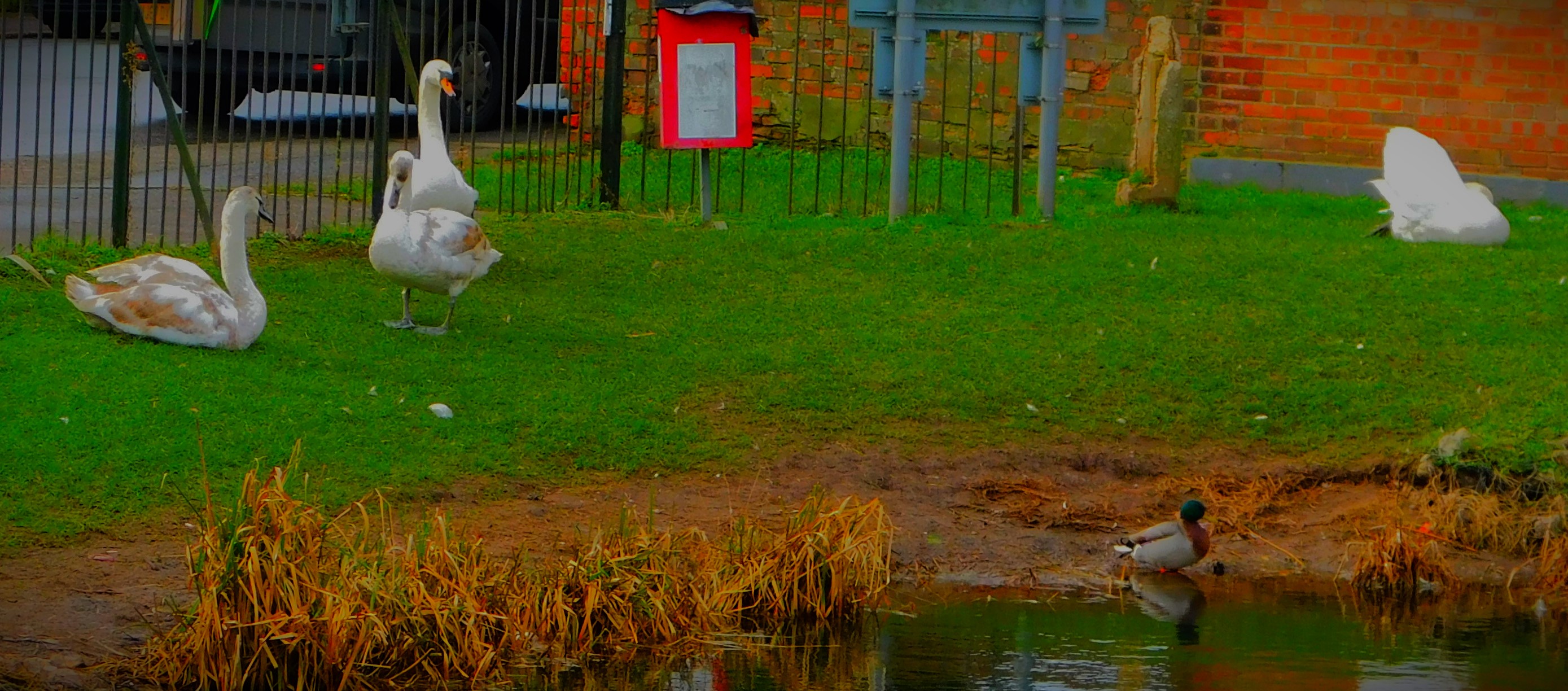
My usual sign off. Today was by January standards quite pleasant – dry, and the odd hint of sun poking through, and yielded a bumper crop of photos, including a grey heron, a large group of lapwings, cormorants in two very different locations, starlings, blackbirds and five squirrels (they were close enough together that there are two pictures featuring all five)…

The Sandpaper Derby

An account of today’s clash between the Sydney Sixers and the Sydney Thunder, “The Sandpaper Derby” ads I have dubbed it because of some of the personnel involved. Also a photo gallery.

Today’s Big Bash League match was between the two Sydney sides, the Sixers and the Thunder. I have dubbed it the sandpaper derby because Steve Smith was playing for the Sixers and David Warner and Cameron Bancroft were both in the Stars XI. A win would ensure Sixers a place in the knockout stages and definitively end the Stars hopes, while a win for the Stars would have created a logjam in the middle of the table.

It was recently confirmed that Steve Smith would be moving up to open the batting for Australia in test matches following the retirement of David Warner. Unfortunately for those looking for omens, Smith was out to the very first ball of this match and Sixers were 0-1 after one ball. They fought back from that early blow, and at 88-3 after 12 overs were looking reasonably placed. However they not only failed to take the Power Surge at that point, they also failed to do so an over later when they were still only three down. Then in the next over Josh Philippe was out, and the opportunity to take the Power Surge with two set batters together had been squandered. Sixers then completed a display of poor decision making by taking the Power Surge at an obviously bad time. It was only a late flourish that got them to the semi-respectability of 151-7 from their 20 overs.

Thunder set off like a train in pursuit of this seemingly moderate total, and were 44-0 at the end of their four over initial Power Play, 17 runs and one wicket better than Sixers at the same stage. However, veteran left arm spinner Steve O’Keefe bowled the fifth over, and he produced one that scooted through low to bowl Alex Hales for a fluent 28. Four balls later Bancroft, the Thunder number three, was on his way back, and five overs into the reply Thunder were 46-2. Warner and Kohler-Cadmore stopped the haemorrhage of wickets, but neither batted with any fluency, and in the tenth over Kohler-Cadmore holed out to Moises Henriques off the bowling of Hayden Kerr to make it 63-3, Kohler-Cadmore’s share 6 off 12 balls. The new batter was Oliver Davies, and he also failed even to strike at a run a ball, making 15 (18) before he was caught by Jack Edwards of Sean Abbott to make it 87-4. Daniel Sams, in at number six, proceeded to edge one from Ben Dwarshuis and it was 88-5 in the 15th. Two runs later Chris Green fell to a catch by Vince off Edwards to make it 90-6. With one ball of the 17th over remaining Warner became O’Keefe’s third victim, ending one of the worst T20 innings ever played, considering the circumstances and Warner’s vast experience (this was his 357th T20 match as a professional), 37 off 39 balls, with two sixes and a four early on, so that ex-boundaries he managed a measly 21 off 36. That was 101-7, and Thunder were pretty much done for. A late flurry from number 10 Liam Hatcher (20 off 10 with the game well and truly lost, a knock which should have had some of his supposed betters squirming with embarrassment) got Thunder to 132 when they were all out with one ball left of their allocation, defeat by 19 runs. O’Keefe, whose wickets of Hales and Bancroft started the turning of the tide, and who also accounted for Warner, and finished with 4-0-13-3, was deservedly named Player of the Match. Full scorecard here.

My usual sign off…