A look at developments at Edgbaston where India now have pretty much a complete stranglehold on proceedings and a photo gallery.
When I wrote yesterday’s post the sixth wicket stand between Harry Brook and Jamie Smith was still in progress. This post takes the story forwards from there.
THE END OF THE ENGLAND FIRST INNINGS
The great partnership between Smith and Brook that had partially revived England’s fortunes ended at 303 when Brook fell for 158. England were exactly 200 runs adrift at that point, needing one more to eliminate any chance of being made to follow on (India probably would not have enforced it anyway). They managed that, but not a whole lot more, as Mohammad Siraj and Akash Deep bowled magnificently with the second new ball to slice through the England lower order like a hot knife through butter. The innings ended when Siraj disposed of Josh Tongue and Shoaib Bashir in successive deliveries, his fifth and sixth scalps of the innings, giving him 6-70 on an absolutely plumb pitch. Deep had the other four wickets, also impressively cheaply on such a surface. England’s 407 was the lowest all out test innings to feature two 150+ scores (at Headingley in 1948 Australia scored 404-3 on the last day to win by seven wickets, with Morris scoring 182 and Bradman 173 not out, the last of his 29 test tons), and was also unique in featuring both two 150+ scores and six ducks (this is itself a joint test record, and unsurprisingly most of the totals to feature that number of ducks have been a lot smaller than 407). India thus had a lead of 180 on first innings.
INDIA PUSH ON
England managed one wicket before the close of play yesterday, by which point India were over 240 ahead. Thus today started with England in urgent need of early wickets. They did not get them, with Karun Nair and KL Rahul being the only casualties of the morning session. India took lunch on 177-3, with Pant and Gill both playing well in their respective styles. The afternoon began at rapid tempo, with Pant in particular going hard. Pant had been badly dropped by Crawley early in his innings, but the other England opener Duckett made no mistake when Pant failed to get quite enough on an attempted big hit off Bashir having hit 65 off 58 balls. That was 236-4, and in order to keep the left/ right handed combination going Jadeja was promoted ahead of Reddy to number six. Just before tea Gill reached his second hundred of the match, only the second Indian to have a double century and a century in the same test match (Sunil Gavaskar scored 124 and 220 against the West Indies in Trinidad in 1970). India went in to tea on 304-4, 484 ahead – already 66 runs more than any side has scored in a test match fourth innings to win. They have just resumed, probably planning to bat another hour, then have a go at England tonight, resume tomorrow with the ball still fairly new and the bowlers having had a night’s rest, and then be able to have a burst with the second new ball at the end of tomorrow if they have not already finished things by then. England are still talking about going for the win, which will surprise no one familiar with this iteration of England, but the truth is India are indeed in total control, and an England win from here would be an almighty shock.
PHOTOGRAPHS
My usual sign off…
Five hoverflies in one frame – three on the large dandelion head and two hovering nearby.
A look at goings on at Edgbaston where England and India are engaged in a test match. Also a huge photo gallery.
As we approach tea on the third day of the second test match of the series between England and India for the Anderson-Tendulkar trophy we have already seen some remarkable cricket.
THE PRELIMINARIES
England named an unchanged side, with the plan being to introduce Archer, fit again after many injury woes, at Lord’s, the second match of these two back to back tests. India made a number of changes. Karun Nair was moved up from number six to number three, B Sai Sudarsan was dropped, and Nitish Kumar Reddy, a batter who bowls medium pace came in at number six. Thakur was dropped, and Washington Sundar brought in to strengthen the batting (his off spin could not be accounted a major factor on an English pitch). India also decided that Jasprit Bumrah could not play both matches of a back to back sequence and reckoned that he would fare better at Lord’s, Akash Deep replaced him at number nine. The Indian line up was loaded with batting depth, but a little light on bowling. Ben Stokes won the toss, and in spite of neither pitrch nor conditions suggesting it, and in spite of India’s batting strength he chose to bowl, the tenth time he has done so out of 11 toss wins on English soil.
THE GLORY OF GILL
Shubman Gill came into this match with a test average in the upper 30s, with many reckoning he had the talent to be doing far better than that. His effort in the first innings here underlined exactly why. With some notable support, chiefly from Jadeja and Sundar at numbers seven and eight in the order Gill, who never previously topped 150 at test level scored 269 from number four in the order, propelling India to a score of 587. A score of that magnitude has sometimes been a prelude to a defeat – at Sydney in 1894 Australia lost after racking up 586 first up, while in a three-day match at Chesterfield in 1904 Essex lost by nine wickets after running up 597 in the first innings, and 78 years later at Southport Warwickshire scored 523-4 declared on day one of three, had Lancashire a wicket down by the close, and lost by ten wickets two days later. However, for all these examples it was not looking bright for England.
HITTING THE FLOOR AND REBOUNDING
England were three wickets down by the end of day two, though Brook and Root had fared reasonably after the top three all got out to bad shots. Root fell early this morning, edging behind to make it 84-4, still 503 adrift. One ball later that was 84-5, Stokes only able to offer a catch to the keeper off a brute of ball from Siraj. Jamie Smith hit the hat trick ball for four, the start of a blistering counter attack that saw him reach three figures before the lunch interval. Brook also went to a hundred, and Smith has now moved past 150, and has so far hit 19 fours and three sixes in the course of his innings. The sixth wicket stand is currently with 252 unbroken, though England are still over 250 short of first innings parity. Mohammad Siraj has three wickets, Akash Deep two, and no other Indian bowler any, and there has not been much threat from any of them either. There was a crazy passage this morning when Krishna attempted to test Smith with “bouncers”, which were at his pace and on this pitch medium paced long hops off which Smith helped himself to a succession of boundaries. This sixth wicket partnership is massively impressive, but am still 100% certain that Stokes should have chosen to bat first. He has chosen to bowl first in both matches, got away with it at Headingley because India had batting collapses in both innings after strong starts (430-3 to 471 all out and 333-4 to 364 all our) but does not look like getting away with it here. I also feel that India’s selection was fundamentally defensive – if they were resting Bumrah then left arm wrist spinner Kuldeep Yadav should have been selected to give the attack a bit of bite. The tea interval has arrived while I have been preparing this for publication, with England 341-5, still 246 short of first innings parity.
PHOTOGRAPHS
My usual sign off…
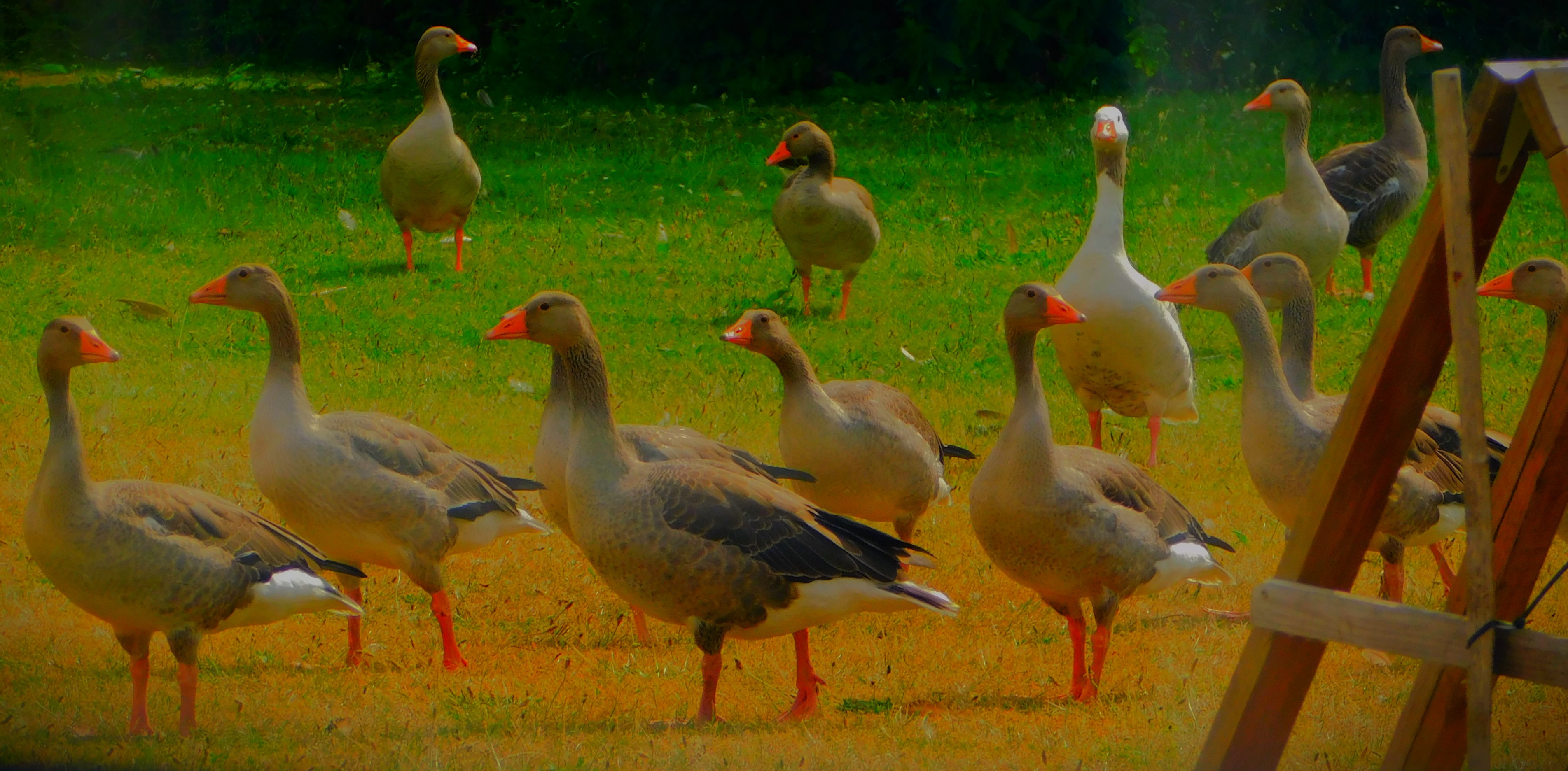
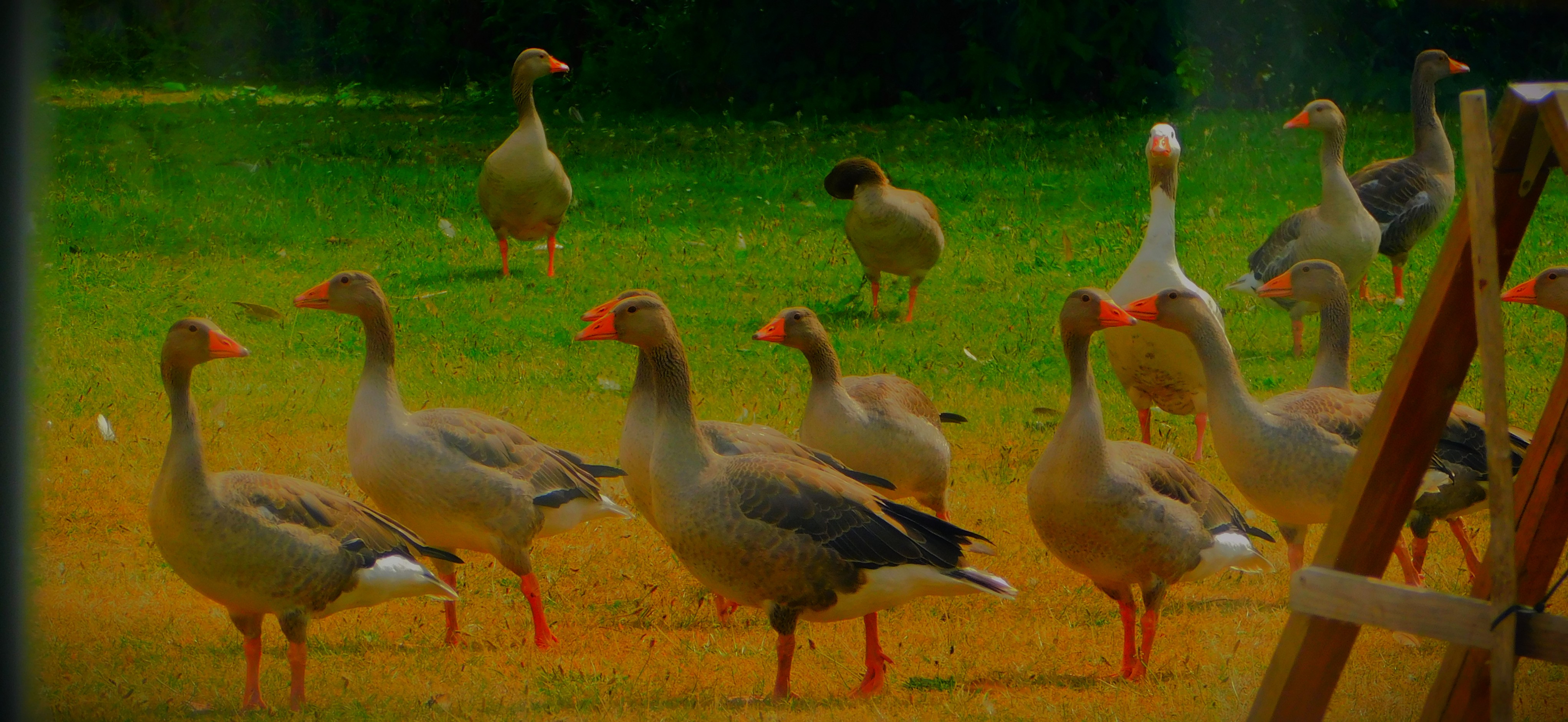
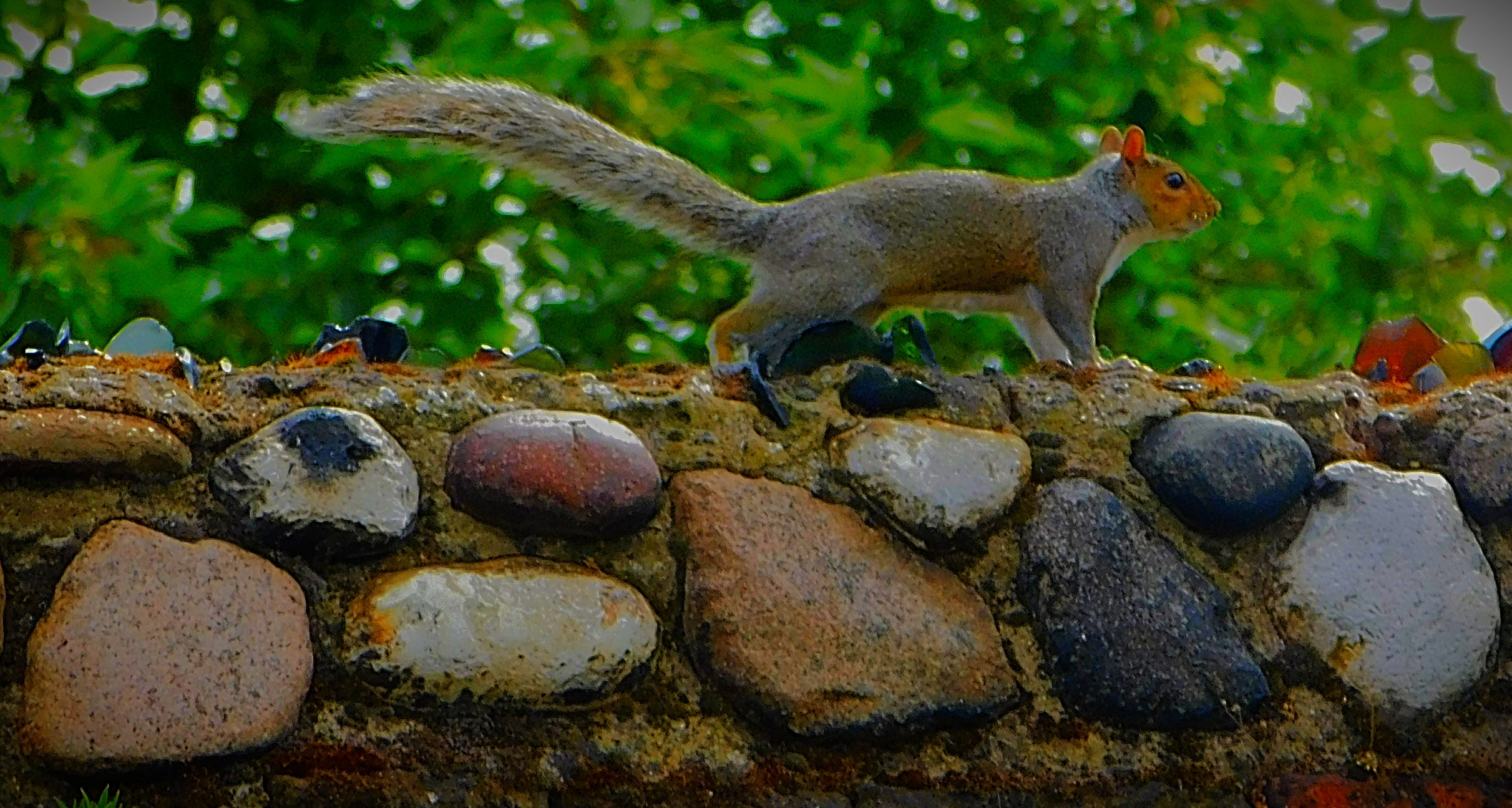
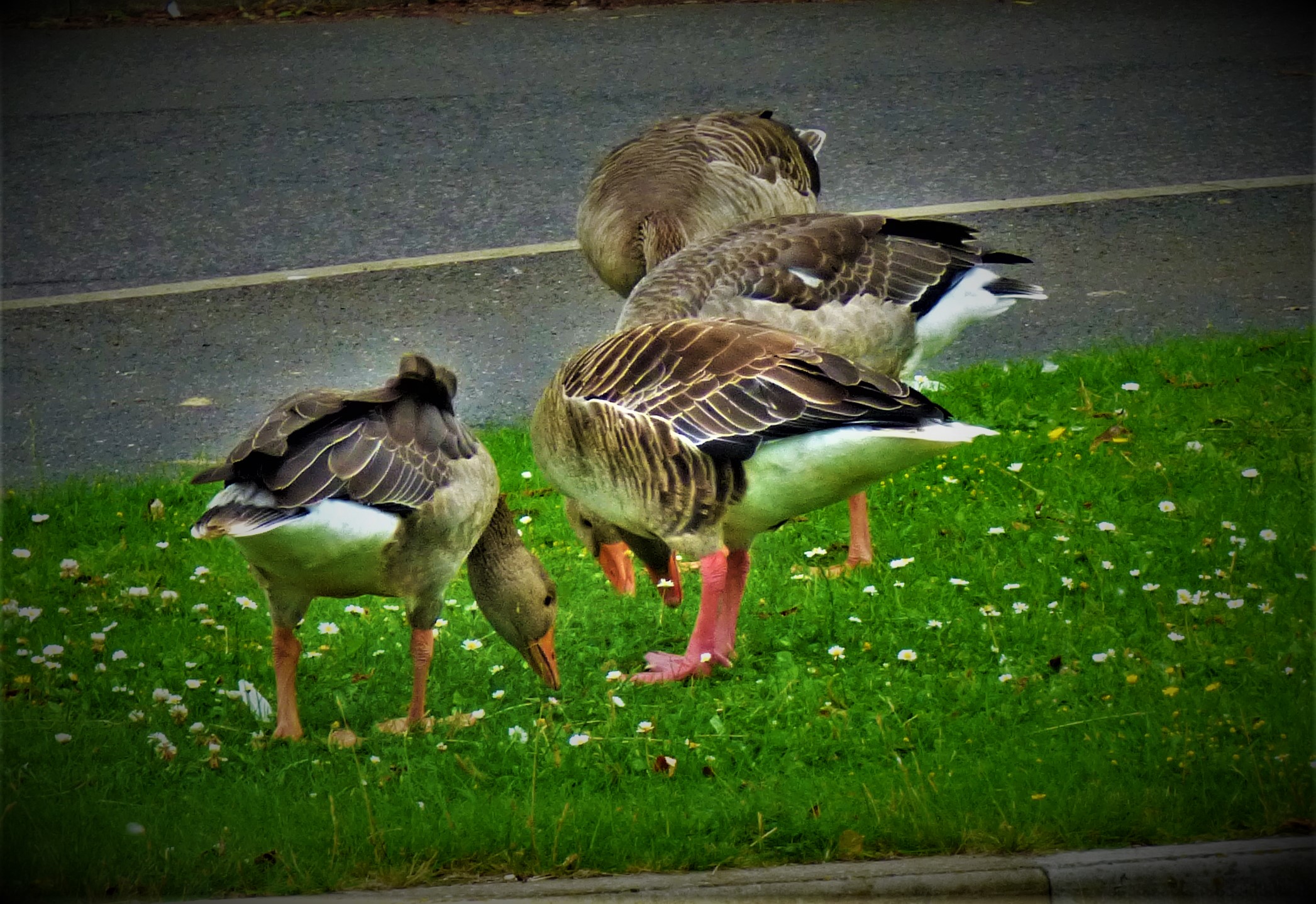
This oystercatcher was on the roof of the church of St Peter and St Paul in Fakenham, an inland town.These four pictures showing a large group of Greylag geese were taken through the window of a bus, while it was stopped opposite Great Massingham’s village green.Four into three does not go – four hoverflies and three dandelion heads in this case.A European peacock butterfly on a buddleia about 100 yards from King’s Lynn station.A squirrel running along a high wall (it is a surviving section of town wall)Two for one on dragonflies by the Gaywood river.
A look back at the test match that finished yesterday evening in a comfortable win for England, and at some of the other classics that Headingley has served up down the years. Also a photo gallery.
Just after 6:30 yesterday evening Jamie Smith hit Ravindra Jadeja for six, his second such blow in the space of four balls to take England to a five wicket win just after the last hour had been called (there had been rain early in the day, hence the late running of proceedings – in England at this time of year there was absolutely no danger of the light closing in). In truth, for all the size of the target England had been set (371), they never really looked in trouble. This post looks back at the match and some of the other classics that the Yorkshire ground has produced over the years.
INDIAN VULNERABILITIES
At 12:30 on day two India, put in to bat by Stokes, were 430-3 and a total somewhere north of 600 looked likely. Then a collapse set in, and India ended up with 471, still a big score, but a lot less than it might have been. England fought their way almost to parity, managing 465, in the course of which it became obvious that India’s bowling menace began and ended with the great Jasprit Bumrah (the only bowler to have over 200 career test wickets at an average of under 20 a piece). The second Indian innings was remarkably similar in structure to the first – at 333-4 they looked to have wrested the initiative right back, but again they suffered a collapse, the last six wickets going for 31 to make them 364 all out, leaving England to score 371 in the final innings in just over a day. I missed most of the final day’s action (all bar the last hour or so of the chase), but I can tell you that Duckett and Crawley launched the chase with a stand of 188, and that the nearest India came to creating worry was when Duckett (149) and Brook (0) fell in very quick succession to make it 253-4, 118 still needed/ Root and Stokes put on 49 together for the fifth wicket before the skipper was out, and then Smith joined Root for the denouement. This passage of play, most of which I was tuned in for, saw the Indian bowlers horrifically exposed, and it has to be said also saw some undistinguished captaincy from Gill, new to the job at this level. It became clear that he was pinning all his hopes on the second new ball, but it was also clear that England were scoring freely enough that by the time he got to take it he would have very little to defend. In the event Bumrah was off the field when the new ball became due, and Siraj took it from the Kirkstall Lane end, which would have been Bumrah’s natural end to bowl from, and such was Gill’s trust in the capacities of either Krishna or Thakur that he used Jadeja, the spinner, from the other end. Jadeja had found some turn, but he had claimed only one wicket, and even before the Smith onslaught on him that ended proceedings he had been conceding runs at closer to four than three per over (the Smith fusillade pushed that ER over four). Neither Sudarsan, debuting at number three (presumably to avoid him having to occupy Kohli’s former slot one place lower down, which Gill did instead) nor Nair, restored at number six, managed many runs, and from number seven downwards, save for a couple of big hits by Jadeja in the second Indian innings, runs were conspicuous by their complete absence. Bumrah, Siraj and Krishna are all really number 11s, and number eight is probably a position too high for Thakur, though the latter’s medium pace is a very doubtful asset – in this match he was neither economical nor threatening – his two second innings scalps were both down to batter error, not to good bowling. Until this match, in all of first class cricket history (and some 60,000 matches are officially designated as first class) no team had lost a match in which they had had five individual centuries (Jaiswal, Gill, Rahul and two from Pant). If India are going to have as weak an 8-11 as they had in this match they cannot have someone of Jadeja’s type at seven (he is worth his place as a test match number seven, but he is a conventional player by nature, not an explosive one, and with limited time available due to the weakness of the tail an explosive number seven is needed).
ENGLAND STRENGTHS
In the only innings in which they were required England’s 8-11 contributed far more than their Indian equivalents with the bat. Also Josh Tongue, though he did not do very well against the top and middle order did exterminate the Indian tail very swiftly in both innings, emerging with a match haul of seven wickets (and England have often struggled to deal with opposition lower orders in recent times, so if Tongue can do this on a regular basis he will be very useful to England). In terms of that run chase I would say that this was the match in which Stokes/ McCullum England reached maturity – while they scored those 370 runs at a good rate they were also fundamentally disciplined – Duckett, famed for being averse to leaving anything actually declined to play either of the first two balls of his innings on this occasion. Even the Smith blitz at the finish was calculated – the calculation being that although there was a small amount of turn for him Jadeja actually posed little threat. It was not an exciting finish, because by the time the game had reached that stage England had long since been out of any danger. This was not a ridiculous bish-bash-bosh involving a large measure of fortune, it was an absolutely ruthless hunting down of a target that the side knew they would reach so long as they were not bowled out. The match aggregate of 1673 runs for 35 wickets was a record for any match between these two sides. Full scorecard here.
A PLACE OFHEISTS AND HORROR SHOWS
Headingley has long been a ground noted for generation stories. Here are brief mentions of a few of the other classics
The 1948 Ashes match at Headingley was in some ways a precursor to this one – England reached the dizzy heights of 423-2 in their first innings, before then falling away to be all out for 496, Australia replied with 458, England declared on the final morning at 365-8, and Australia made the target of 404 look a stroll in the park, knocking it off for the loss of three wickets.
The third match of the 1981 Ashes at Headingley was Ian Botham’s first back in the ranks after he had bagged a pair in the drawn match at Lord’s and resigned the captaincy just as the selectors were making up their minds to demote him in any case. Mike Brearley, restored as captain as a way for the selectors to buy themselves a bit of thinking time, actually went so far as to check with the all rounder that he actually wanted to play. Bob Willis, then 32 years old and with dodgy knees, also nearly missed out (an invitation was actually sent to Mike Hendrick and then revoked). Australia batted first and scored 401-9 declared on a pitch on which as Brearley told his bowlers “a side could be bowled out for 90”. Botham had taken 6-95 in that innings, has first five-for since before he had become captain. Botham also scored 50 in England’s first innings, was they managed a meagre 174. Australia enforced the follow-on (aversion to doing so is a recent phenomenon), and at first all went well for them. England were 41-4 at one point, then 105-5 when Willey departed. At 133, when the previously impenetrable Boycott was trapped LBW it looked done and dusted, and two runs later when keeper Bob Taylor was dismissed it looked even more so. However, Botham and Dilley now shared an exhilarating stand of 117 in just 80 minutes, Chris Old helped the ninth wicket to add 67 more, during which Botham reached three figures, and even Bob Willis at number 11 provided some support for the reinvigorated all rounder. Many of the England team had checked out of their hotel that morning and now had to book back in for another night – among those who had to do was a certain IT Botham, by then 145 not out. Even with this amazing turnaround Australia still needed only 130 to win, and with lunch on the horizon they seemed to have matters under control at 56-1, just 74 short of the target. At that point Bob Willis was put on to bowl from the Kirkstall Lane end, with his test career on the line. He started by producing a sharp, straight bouncer that Trevor Chappell, who resembled a test class number three in name only, could only fend away for a catch. Then right on the cusp of the interval he struck twice more, removing skipper Kim Hughes, caught in the slips by Botham and then Graham Yallop, caught at short leg by Mike Gatting. Thus at lunch on the final day Australia were 58-4, needing 72 to win, and they suddenly had 40 minutes in which to contemplate the fact that the job was not yet done. After lunch Old rattled Border’s stumps to make 65-5, and then John Dyson, who had been in since the start of the innings essayed a hook at Willis and succeeded only in gloving the ball behind to make it 68-6. Marsh also took Willis on, and Dilley did well at deep fine leg to both hold the catch and keep himself inside the ropes. That was 74-7, and one run later Lawson popped up a catch for Bob Taylor to make it 75-8. Ray Bright and Dennis Lillee staged a late fightback, plundering 35 in four overs, but then Lillee miscued a drive at Willis and Gatting at mid-on ran and dived forward to take the catch and make it 110-9. In the next over Alderman was dropped twice by Old at third slip, but then Willis, summoning up the energy for one more over, his tenth off the reel, produced a yorker that sent Bright’s middle stump cartwheeling, and England, at one stage 92 adrift with only three second innings wickets left had won by 18 runs, only the second time in test history a side had won after following on. Willis, who had been so close to missing the match, and who had been put on for that final spell as a last gamble by Brearley, had taken a ground record 8-43 for the innings.
The 2001 match was a slow burner – it was not until the final innings, with England needing 320 to win that the story happened. That story was Mark Butcher, who was normally a fairly staid batter, suddenly for this one innings batting like Adam Gilchrist in a blue helmet. Butcher in that amazing knock savaged an unbeaten 173 and England won by six wickets after being behind for most of the match.
The 2019 match was one of the great heists of all time. Even with Stokes’ incredible innings it also took Australia burning their last review in the closing stages, which meant that when they found themselves facing a decision a few moments later that would have been overturned they could not send it upstairs.
The match that ended yesterday evening was a worthy addition to the above list – one of only three in which all four innings have been over 350 (Adelaide 1929, and the 1948 match mentioned above being the others).
A look at the state of play in the first test of the England v India series, now being played for the Anderson-Tendulkar Trophy, and a photo gallery.
The first test match in a five-match series between England and India for what is now the Anderson-Tendulkar Trophy got underway on Friday. Each side has now batted once, and there is nothing to choose between them. This post looks back at two similar scores achieved in very different ways.
THE PRELIMINARIES
With Rohit Sharma and Virat Kohli having recently retired from test cricket India had given a debut to B Sai Sudarsan and recalled Karun Nair after an eight year test match hiatus. Sudarsan was to debut at number three, not a common slot for a newbie to occupy, with Shubman Gill, newly anointed as skipper, batting in Kohli’s old slot at number four. England had several absentees, and their chosen XI looked stronger in batting than in bowling: Crawley, Duckett, Pope, Root, Brook, *Stokes, +Smith, Woakes, Carse, Tongue and Bashir. Stokes won the toss and on a hot sunny day (not quite so much so in Leeds, as here in King’s Lynn), with the outfield sure to be lightning quick given the dryness of recent months and no sign of demons in the pitch he opted to bowl, rather than turning first to his side’s stronger suit, that powerful batting line up.
A CATASTROPHE AVERTED
From the start of play on Friday until approximately 12:30 on Saturday India were in total control. Apart from the unfortunate Sudarsan who scored a duck on debut the Indian batters played sumptuously, with Jaiswal, Gill and Pant all reaching three figures. With half an hour to go until lunch on day two India were 430-3, and few would have bet against a total in excess of 600. However, once the 209 run stand between Gill and Pant was broken there followed a crash of wickets, and India lunched on 454-7. They added a further 17 after the interval. Ben Stokes had done his part with the ball, taking four wickets, a tally matched by Josh Tongue.
THE ENGLAND RESPONSE
The start of the England innings was delayed by rain, and there was in the end time for 49 overs of it before the end of day two. Ollie Pope scored his second successive century, in an England tally of 209-3. I missed most of the morning session today due to another commitment. England lunched on 327-5. When the seventh England wicket went down India still looked like having a substantial lead on first innings, but a riotous 50 partnership between Chris Woakes and Brydon Carse in just six overs, plus minor contributions from Tongue and Bashir got England to 465, a mere six behind India on first innings. Jasprit Bumrah had underlined has status as the best current bowler in the world with 24.4-4-83-5, which means he now has 210 test wickets at 19.33. Prasidh Krishna had three wickets but a) two of those were given rather than being taken, and b) he also conceded 128 runs from a mere 20 overs, absurdly expensive in red ball cricket. Overall then, it is pretty much honours even after the first innings of each side. However, there may yet be genuine assistance for Ravindra Jadeja, the most economical of India’s bowlers in this England first innings. Shardul Thakur, supposedly there to give India four seam options, was entrusted with only six overs in this innings, and conceded 38, looking utterly innocuous. Bumrah cannot do the job entirely unassisted, and to get through a five match series he will need a degree of ‘nursing’ (I suspect that if the proverbial good fairy offered Indian team management an absolute guarantee that their star pacer would be fit and firing for four of the five matches that offer would be taken up with no discernible hesitation).
PHOTOGRAPHS
My usual sign off…
Lavender grows abundantly outside the front of my house, and at this time of year it is in full bloom, and alive with insects.The first of three shots of a comma butterflyTwo for one on dragonflies down by the Gaywood River this morning.From this morning’s activity – my pizza immediately before it was cooked.The final product.
A look back at the T20 World Cup semi-finals and a photo gallery.
Yesterday was semi-finals day at the T20 World Cup. This post looks back at the two matches.
AFGHANISTAN v SOUTH AFRICA
This match was played in Trinidad, starting at 1:30AM Thursday UK time (8:30PM Wednesday Trinidad time). Unfortunately it was ruined by the fact that the ground staff had failed miserably to produce a surface that was fit for cricket. Some of the pitches in New York in the early part of the tournament were difficult to bat on, but the difficulties while some moaned about them were fundamentally fair. The pitch at Trinidad for this important match was blatantly unfair, with extremely variable bounce (swing, seam movement or spin can be countered, and they do not put batters personal safety at risk, variable bounce does, and it is impossible to get in the right position to play your shots because there is no means of knowing what the right position will be). Afghanistan in the face of South Africa’s powerful pace attack subsided to 56 all out, which South Africa chased down for the loss of only one wicket. Obviously Afghanistan were well short of a defensible total, but on that track I reckon another 40 runs for them would have had South Africa sweating. For Afghanistan it was a sad end to what has been a great tournament for them. They have a good bowling unit and two batters who are indisputably of the highest class in Rahmanullah Gurbaz and Ibrahim Zadran. There is a suspicion of a soft underbelly to the batting – almost all their significant scores have featured major contributions from one or other of the top two. For South Africa this was the end of a miserable run of losses in semi-finals of global competitions – they had reached seven previous semi-finals across formats and never won one.
ENGLAND V INDIA
This match was scheduled to start at 3:30PM at Providence, Guyana. This would have meant that I missed a lot of it with Thursday being a work day. However the start wads delayed by rain, and there was a second rain delay part way through the Indian innings. This match did not have a reserve day, but with a 10:30AM local time start they had a lot of leeway on the one available day – 250 minutes of spare time was allotted for weather interruptions (these morning starts were chosen with little regard for local fans because they fit with peak TV viewing times in India). India put up a decent total that soon looked very impressive as England mad an absolute hash of attempting to chase it. An overly zealous devotion to the concept of ‘match ups’ led to left handers Moeen Ali and Sam Curran being promoted up the order, the problem with this being that neither is actually a good enough batter to belong high in the order. Liam Livingstone who had bowled well with his mixed spin (he can bowl both off breaks and leg breaks and varies them according to who is facing) was England’s last serious hope with the bat, but Jofra Archer failed to respond to his call, resulting in a run out that left England miles adrift and with only bowlers left. India thus won very comfortably and will face of against South Africa in Barbados tomorrow.
PHOTOGRAPHS
My usual sign off…
A damselfly on the edge of a lily pad. These are smaller and have more diaphanous wings than the dragonflies.The first of many dragonflies
An account of England’s victory over India which they completed earlier today, and some of my recent photographs.
This post looks back at the match just concluded between England and India, officially the fifth of the 2021 series.
A LONG DELAYED FINALE
India won the the fourth test of the 2021 series comfortably, and then in the run up to the fifth test there was a Covid scare in the Indian camp. By the letter of the law the match should have been forfeited since England were able to play and India were refusing to put a team out, but because the BCCI pulls the ICCs strings a compromise was arranged, whereby the match would be played in 2022 instead. England after a miserable winter in Australia and then the West Indies had started 2022 in a blaze of glory, recording three successive spectacular victories over World Test Champions New Zealand (who won’t get to defend their title in consequence of this). India made some curious selecorial decisions (Pujara as makeshift opener when Mayank Agarwal was available, Thakur preferred to Ashwin, Vihari at three and Shreyas Iyer in the middle order all definitely questionable and the persistence with an aging, chronically out of form Kohli didn’t look right either), England had two obvious question marks, Crawley at the top of the order and the decision to drop Jamie Overton for the returning Anderson (Anderson’s return had to happen, but I would have had Broad make way for him).
INDIA IN CHARGE FOR THREE DAYS…
India had the better of all of the first three days, with only a century by Jonny Bairstow restricting England’s deficit on first innings to 132. India were then 126-3 in their second innings by the end of day three, leading by 258. James Anderson had underlined his enduring class in the Indian first innings by taking 5-60 while everyone else was was being thrashed. Rishabh Pant played a great innings for India, and was the centrepiece of their total of 416. At the end of day three (just under four playing sessions ago) you would have got generous odds on an England win, though probably not quite the 500-1 famously offered at Headingley in 1981.
…AND THEN
In the first part of day four India failed to make the most of their advantage, rather frittering away their last seven wickets for the addition of a further 120. Pujara scored a gritty 66, Pant a more flamboyant 57, but overall India would have been disappointed with a total of 245 all out, and would have been aware that they had not completely killed the game when they might have done. Ben Stokes claimed four wickets for England.
Just for once England did not lose their first wicket ridiculously early. Crawley and Lees both batted well, but just before tea Crawley was out for 46, leaving one that bowled him. This meant that Pope had to begin his innings twice over, either side of the interval. He managed the first, but not the second. Then Root made a horrible misjudgement which caused Lees to be run out. That was 109-3, 269 more still needed for victory, and Bairstow joined Root. Not only were this pair still together at the close, they had done a lot to break the back of the chase, taking England to 259-3, 119 short of victory with the final day to come. The final morning began with India surely needing to break the stand quickly, and probably needing to have both players out within the first half hour to keep their hopes alive. India showed themselves mentally already beaten when they set fields that effectively said “help yourselves to singles but please don’t bash us”. Root and Bairstow accepted the singles but did not comply with the second part of India’s implied request – anything loose (and India provided a fair quantity of this) was ruthlessly punished. After just an hour and a half of the fifth day, including two ball replacements (a huge number of balls have needed to be replaced in this season’s tests) the job was completed, with a single off the fourth ball of the 77th over of the innings. England won by seven wickets, Root 142*, Bairstow 114*. Root’s hundred was his 28th in test cricket, obliterating the so-called ‘curse of 27’, a piece of nonsense that had arisen due to Steven Smith and Virat Kohli both being stuck on 27 test tons for some considerable time. The truth is that a total of 20 players have scored as many as 27 test centuries, and 16, including Root, have gone on to at least 28, while only four (Allan Border, Graeme Smith, Steven Smith, Virat Kohli) failing to do so. It was also Root’s fifth test hundred of 2022, to follow the six he scored in 2021. Bairstow’s century was his fourth in five test innings, his sixth of 2022 and his second of this match. The Root/ Bairstow stand of 269* was the fourth biggest ever in a fourth innings behind 301 by Arthur Morris and Don Bradman at Headingley in 1948 (Aus won by seven wickets), 287* by Gordon Greenidge and Larry Gomes at Lord’s in 1984 (WI won by nine wickets) and 280 by Bill Edrich and Paul Gibb at Durban in 1939 (a preposterous draw, with England 654-5 chasing 696 for victory when play had to be abandoned). This was also the fourth successive time England had chased 275 or over to win a test match, and England’s record successful run chase, beating the 362-9 at Headingley in 2019.
Bairstow was named Player of the Match for his twin tons, and Root Player of the Series for his 737 runs across the five matches. Virat Kohli’s only noteworthy contributions to this match were sledging Bairstow when that worthy was struggling in the first innings, since which moment Bairstow scored a further 207 runs for once out and a disgraceful display of aggression at the fall of an English wicket yesterday which involved charging straight across the pitch and earned him a ticking off from the umpires and may yet have further repercussions in the form of a fine or even a ban.
For England, as well as the two batting guns Root and Bairstow, Anderson maintained his high standing, Potts looked the real deal, Leach came back well from a hammering in the first innings (1-28 from 12 overs in the second). Broad, two second innings scalps not withstanding, looks to be a fading force at test level. Lees and Pope both deserve extended runs in the side (Pope has just been assigned a new role at number three and has done quite well there, and Lees has shown a lot of promise). Zak Crawley’s second innings 46 should not be enough to save him from the axe, and I fully expect Lees to have a new opening partner against South Africa in six weeks time. India’s carelessness with the bat on the fourth morning probably cost them 100 runs, but the way this England handle fourth innings run chases even that might not have been enough. A full scorecard of the match can be viewed here.
A look back at the test match that concluded yesterday at The Oval and a look forward to Old Trafford.
This post looks back at the test match at The Oval that finished yesterday afternoon with India winning by 157 runs and guaranteeing themselves at least a share of the series and forward to the final match at Old Trafford.
A GREAT TURNAROUND
England won the toss and put India into bat. At first all seemed well, with India soon 127-7, but a fifty of record equalling rapidity from Shardul Thakur boosted India to 191. England’s first innings followed an all too familiar pattern: various players got starts but with the exceptions of Pope (81) and Woakes (50) no one went on to a significant score and England’s advantage was 99, much less than it should have been. On days three and four, under cloudless skies and on a pitch with no devil in it England were toothless. Most of the bowlers were at least reasonably economical, with the sore thumb like exception of Moeen Ali who leaked runs at 4.5 an over. England needed a spinner to bowl a long economical spell and enable the quicker bowlers to be properly rested and got 26-0-118-2, with one of the wickets definitely given away and the other a decent dismissal. With Rohit Sharma scoring a ton, Pujara a fifty and Thakur his second fifty of the match India reached 466, leaving England needing to score 368 which had they done it would have been their largest ever successful run chase, and over 100 more than their previous best such effort at The Oval, 263-9 in “Jessop’s Match” of 1902. Burns and Hameed batted through the closing stages of the fourth day with no alarms, closing on 77-0, with the ask down to 291. On the fifth morning this pair completed their second century stand in three innings as an opening pair. Both fell in quick succession after reaching 50s, but England were still only two down at lunch time. The first hour after lunch settled the destiny of the match. Bumrah bowled a magnificent spell and was brilliantly supported by left arm spinner Jadeja. Bumrah’s post lunch spell read 6-3-6-2. One of those wickets was Bairstow, cleaned up for a duck with a yorker that a fast bowler of an earlier era would have described as “wasted on thee” as it was a far better ball than would actually be required to pierce Bairstow’s “defences” early in an innings. Moeen Ali also collected a duck. His dismissal made it 147-6, and it was a question of when the final wicket would fall. England’s lower order resisted gallantly, but they were all out for 210 not long after tea and India had won by 157 runs.
All credit to India for a magnificent comeback and in the end a thoroughly convincing win. England have several problems, two of which the naming of the squad for Old Trafford addresses.
LOOKING AHEAD TO OLD TRAFFORD
England have named a squad of 16 from which the XI at Old Trafford will be picked. They have made two good calls – Buttler has made himself available and is included, and Leach has been recalled to the squad as well. Unfortunately Ali and Bairstow are both still in the squad, and Malan seemingly retains his no three slot.
The best available XI from the named squad in my opinion is: Burns, Hameed, Malan, *Root, Pope, +Buttler, Woakes, S Curran, Overton, Wood and Leach (Anderson is not in the squad, and Robinson is running on fumes and with a drawn series the best England can do should be rested.
To my mind two big mistakes have been made with the naming of this squad. Tom Abell should come in at number three (Malan is in his middle thirties and has a very moderate test record), and Matt Parkinson should be given his debut in front of a home crowd. I would also not have bothered including Ali or Bairstow in the squad as neither deserve to play. My chosen XI would thus have been Burns, Hameed, Abell, *Root, Pope, +Buttler, Woakes, Overton, Wood, Leach and Parkinson, reckoning that on a spin friendly ground Woakes, Overton and Wood plus a few overs of Abell’s medium pace would be enough seam options.
A look at the latest craziness to emanate from the ECB’s ivory tower – the naming of Moeen Ali as a spin bowling option in the test squad based on his recent form in The Hundred.
It has been confirmed this morning that Moeen Ali has been added to England’s squad for the second test against India. In this post I explain just how flawed this move is.
RECENT SUCCESS DOUBLY IRRELEVANT
Moeen Ali has been going well in The Hundred, an ultra short form competition massively removed from the long haul of test cricket. He has also been especially notable for his batting successes, coming in high in the order and throwing the bat as one has to in that competition. His bowling in that competition amounts to combined figures of 4-115 in five matches, and it is as a spinner that England will play him if they do play him. In other words, he has been succeeding in the form of the game furthest removed from test cricket and not in the department in which England would make most use of him at test level.
TACKLING THE WRONG PROBLEM
England are not short of bowling options but are suffering at the top end of the batting order, with Crawley definitely proven as inadequate at test level, Sibley questionable and even Burns not bombproof. Moeen Ali is therefore a ‘solution’ to a ‘problem’ that exists only in the minds of the England selectors.
DISRESPECT TO SPINNERS ALREADY IN THE SQUAD
England already have two front line spinners available to them, Jack Leach and Dom Bess. Bess is a slightly questionable inclusion in the squad, but Leach from the mere 16 matches he has been given has 62 wickets at 29.98, 3.875 wickets per match. For comparison, Ali takes 3.1 wickets per match and pays 36.24 a piece for them. Frankly the way England’s #1 spinner (Leach) is being treated by the selectors is nothing short of a disgrace.
SHORT SIGHTED AS WELL AS RETROGRADE
Additionally, one must look ahead to England’s next tour, which is the toughest of all – Australia. As I demonstrate in this piece, English off spinners have historically been of limited value in Australia, while left arm orthodox spinners have been very important. England’s two best ever Ashes tours, in 1928-9 and 1932-3 both featured a left arm spinner and a leg spinner in the party (Farmer White and Tich Freeman in the first, Hedley Verity and Tommy Mitchell in the second). Leach is the principal candidate for the left arm spinner’s role, while Matt Parkinson (86 FC wickets at 23.69) is the obvious candidate for the leg spinner’s place. Dan Moriarty with 31 wickets from four FC games at 19.77 a piece is a left arm spinner who might be in the mix, and Liam Patterson-White, who takes his FC wickets at 30.13 and averages 23.12 with the bat may yet make the grade. Also in the wings is Lewis Goldsworthy of Somerset. As a more radical idea, Sophie Ecclestone at the age of 22 has 125 international wickets across formats at 19.49 each. I would rather see any of the players I have just named than yet another recall for Moeen Ali. The latter’s last test was against India in India, and although he took wickets in the end he also bowled England into a losing position by leaking almost five an over in conditions that were helpful to a bowler of his type.
ENGLAND XI FOR THURSDAY
From the players in the squad I select as follows:
Rory Burns
Dom Sibley
Haseeb Hameed (Crawley’s time at the top level is done)
*Joe Root
Dan Lawrence
+Jos Buttler
Sam Curran
Ollie Robinson
Mark Wood
Jack Leach
James Anderson
If one wants more batting depth, Overton could replace Wood, and then there would be a 7, 8, 9 of Curran, Overton and Robinson, which should be depth enough for anyone. I prefer Wood because his presence provides some express pace to go with the seam and swing options, which with Curran’s left arm and Robinson’s extra height are well varied (Broad was ordinary in the first test, so I rest him rather than Anderson for this one). There is also England’s best spinner in there, as there should be.
I pick my England XI (constrained by the squad from which it will be picked) for the first test match v India which starts on Wednesday.
The first test in the England v India series for the Pataudi Trophy (The senior Nawab of Pataudi, Iftikhar Ali Khan, played for both England and India, playing for the former in 1932-3 and the latter in 1946 when he was captain, while his son, Mansur Ali Khan, played for India) starts on Wednesday. With that in mind I devote this post to selecting an England XI for that match. The squad from which the XI has to be chosen can be viewed here.
THE TOP THREE
The openers are open and shut – Burns and Sibley will occupy those slots. On the face of it there are several options for no3: Zak Crawley is the incumbent, Jonathan Bairstow has batted there in the past and Haseeb Hameed, in good form at the moment and with a century for a County Select XI v The Indians under his belt into the bargain would also be a logical choice. Restricting ourselves to these three, Crawley is in no sort of form and has played only one major test innings, the 267 against Pakistan which is receding ever further into the past. Bairstow’s recent test record is dire – since the start of 2018 he averages less than 25 at that level. Therefore, with the most obvious candidate for England no 3, Tom Abell, injured at present I go with Hameed, reckoning that he and Sibley are in a bat off for who opens alongside Burns once Abell can come into the side.
THE MIDDLE ORDER
Numbers four and five are clear cut, Root and Stokes. Number six is between Pope and Lawrence, and is a very close call. I plump for Lawrence – Pope at test level has developed an unfortunate habit of making impressive starts but then getting himself out before he manages a significant score. At no7, and keeping wicket in the absence of the injured Foakes, is Jos Buttler.
THE BOWLERS
There are two logical candidates for no8, Ollie Robinson and Sam Curran. Although the latter’s left arm creates an extra bowling variation I plump for the former because I see him as more likely to take wickets at test level. At no9 I opt for Mark Wood, the only express pace bowler in the squad, and as such an automatic pick for me. Number 10 and sole specialist spinner is Jack Leach, who is the only serious candidate for that role at present (although there are some promising youngsters starting to emerge at county level). Rounding out the order is England’s all time leading test wicket taker, James Anderson. My feeling is that it would be foolhardy to select both veterans in the first match of a five test series, and I opt for Anderson ahead of Broad (the latter will then get fired up by his omission!).
THE XI IN BATTING ORDER
Tying all this together I present the XI in likeliest batting order as per the above text (I have no truck with XIs being presented in alphabetical order, which is meaningless in a cricketing context – it may be acceptable to present a squad from which the XI is selected in alphabetical order, but never the XI):
Final thoughts on the just concluded England v India test series.
INTRODUCTION
Jimmy Anderson just a few minutes ago rattled the stumps of Mohammad Shami to finish the England versus India series and simulataneously move ahead of Glenn McGrath and test wicket taking list to become the all time leading wicket taker among seamers. He still possibly has enough juice left to get past wrist spinner Anil Kumble (619) into third place overall but I suspect that the tallies of Warne (708) and Muralitharan (800) are too far distant for him. In the rest of this post I will summarise the series from my perspective.
MATCH BY MATCH THROUGH THE SERIES
Englandcame into this series off the back of a poor recent run in test matches (obliterated in Australia, a clear second best in New Zealand and an unconvincing drawn home series against Pakistan) but a lot of success in ODIs, which national selector Ed Smith decided to channel by means of the selections of Buttler and Rashid. India mean time were ranked no 1, a good margin clear of the rest.
MATCH 1: EDGBASTON
England led by 13 runs on first innings, which looked like meaning precisely nothing when they then began their second innings by slumping to 87-7. However, for the first but not last time in the series, India proved unable to complete the job, baulked on this occasion by Sam Curran’s first major contribution, and England eventually left India 194 to chase, which proved to be more than they could handle.
MATCH 2: LORD’S
From the moment India were all out for 107 in their first innings the fate of this match was pretty much settled. At 130-5 England were making heavy weather of their response but a maiden test century from Chris Woakes and 96 from Jonny Bairstow put the game well and truly out of India’s reach and in the event they collapsed a second time to lose by an innings and 159 runs.
MATCH 3: TRENT BRIDGE
This match was settled in the space of an hour and a half on the second day, when England facing an Indian first innings of 329 slumped from 54-0 to 128-9. Even then the last apir cobbled together 33 to reduce the deficit, but the damage had been done, and India ran out comfortable and deserving winners
MATCH 4: THE AGEAS BOWL
When England were 86-6 after winning the toss and batting it looked like the final match would be a decider. However, with Sam Curran playing a second fine innings to rescue a dreadful start England reached 246. India took a small first innings lead, but England batted better second time around and India never threatened to get close in the fourth innings. England had sealed the series with a match to spare.
MATCH 5: THE OVAL
England were playing for pride and a bit of history in this match. After Jennings had fallen cheaply to the surprise of precisely no one who had been following the series Cook and Moeen Ali looked to have stabilised things, but then a clatter of wickets reduced England to 181-7. Buttler and Rashid made it through the the close at 198-7. When Rashid was dismissed early on the second day to make it 214-8 India seemed to be in the box seat. Then in what had become a recurring theme of the series India failed to finish what they had started. Kohli, one the three best batters currently eligible for test cricket (alongside Root and Kane Williamson of New Zealand), is also one of its worst ever captains, and here he was concentrating so much on trying to prevent Buttler from getting the strike that he seemed to forget about taking wickets with the result that England’s total mushroomed to 332. India in their own first innings staged a late order revival to reduce what had looke like being a three figure deficit to a mere 40. After Jennings had gone cheaply and Moeen Ali had also not done very much Cook in his final test innings and Root joined forces. This was the partnership that placed England’s boot firmly on India’s throat, as both completed hundreds, Cook in the process becoming test cricket’s all time most prolific left hander. Both lost their wickets in successive balls, and then after a bit of bat throwing by those lower in the order England declared setting India 464 to win.
Anderson took two wickets with the new ball to draw level with McGrath, while Kohli managed to complete his series without once falling to Anderson (by instead being done first ball by Stuart Broad), at which point India were 2-3 and the 4-1 outcome looked nailed on. A thunderous partnership on the final day between Lokesh Rahul and Rishabh Pant who both made centuries (Pant’s, his first in test cricket, could almost be described as a Gilchristian effort) but England broke through, and although for a long time it looked like India might escape with a draw the prospect of defeat never really loomed. Sam Curran took the eighth and ninth wickets with the second new ball (the latter of them being Jadeja, leaving nos 10 and 11, both out and out rabbits – indeed Bumrah at no 11 may even merit the term ferret). Bumrah managed to survive the last two balls of a Curran over, which meant that Anderson had a full over at two out and out tailenders in which to make history. With the third ball of said over Anderson did the trick as mentioned in the introduction.
Curran, who by taking his late wickets here had become only the second person to record 250 runs and 10 wickets in a test series before reaching the age of 21 (the other was chap by the name of Kapil Dev who may be familiar to some of you!) was rewarded for his all-round endeavours by being named England player of the series, while scores of 71 and 147 in his international swansong saw Cook named player of the match.
This was a truly extraordinary match, leaving me to ask a question: William Shakespeare did you secretly emerge from the grave to script this?!
4-1 – FAIR OR HARSH ON INDIA?
I have written about this before (see here), but I am now going to dot the is and cross the ts. Yes, as well as their big win at Trent Bridge India had good chances in three of the other matches, including the one just concluded, but the simple fact is that far too often they could press home the advantage when they had it, and every time they had an opportunity to close out a match England did so. Therefore, I say that 4-1 is a fair reflection of the series. However, not all in the England garden is rosy – the departure of Cook and the repeated failures of Jennings mean that England need a new opening pair, and have seven test matches before the arrival in town of the oldest enemy, the Aussies, for that pair to establish themselves. Also, given the reluctance of Root to bat there and the fact that Ali while adequate seems to morph into a darker skinned version of Chris Tavare when he bats there England also have problems filling the number three slot. This uncertainty at the top has been reflected in a series of poor starts to the England innings, most of which, save at Trent Bridge, were turned around by the middle and lower orders into something at least respectable.
PHOTOGRAPHS
A few from James and Sons collector’s auction on September 26, which is now ready for viewing online.
Lot 283, slightly frustrating for me…
…because if this ASLEF commemorative plate had been being sold as a single item I would certainly bid for it.
A selection of antique maps (lots 100-5 inclusive)
This picture of the Rhine is lot 110 (four images)
Lot 234, one of two figurines featuring leading French generals fron the Napoleonic era.