In today’s variation on the all-time XI theme we look at T20 cricket, with a team of former greats all of whom would have been well suited to that format pitted against a team of the best actual T20 players.
INTRODUCTION
Today’s variation on the ‘all time XI‘ theme looks at the game’s shortest regular format, T20 (one innings each of 20 overs per side), and I pit a team who were in their prime before top level limited overs cricket was played against a team of T20 experts.
T20 PLAYING CONDITIONS
At least five bowlers must be used, and no bowler may bowl more than four overs in a T20 innings. For the first six overs no more than two fielders may be stationed more than 30 metres from the bat, and thereafter no more than five. This format has been very successful since its top level introduction in 2003, with T20 tournaments flourishing all round the world. Having briefly set the scene it is time to meet our teams starting with…
THE PRET20 FRANCHISE XI
Garry Sobers – left handed bat, every kind of left arm bowling known to cricket, brilliant fielder. The most complete cricketer ever to play the game, he was an absolute must for this side.
Gilbert Jessop – right handed bat, right arm fast bowler and brilliant fielder. Even if his batting was his only recommendation the most consistently fast scorer the game has ever known would have been a ‘shoo-in’. Add his intelligent bowling and fielding that was estimated as being worth 30 an innings to his team and, from a century before the format was used at top level you have the blueprint for the perfect T20 exponent.
*WG Grace – right handed batter, right arm bowler of various styles, fine close catcher. My chosen captain.
Frank Woolley – left handed bat, left arm orthodox spin bowler, brilliant close catcher.
Denis Compton – right handed bat, left arm wrist spinner, fine fielder.
+Leslie Ames – right handed bat, wicket keeper. He won the Lawrence trophy for the fastest hundred of the season twice in the first three years of its existence. He was one of the Kent batters who combined to chase down 219 in two hours, with no fielding restrictions in place.
Bill Lockwood – right handed bat, right arm fast bowler. He was one of the pioneers of the ‘slower ball’, a type of delivery that is especially useful in T20, and it is for that reason that I have included him here.
Jim Laker – off spinner and right handed lower order bat.
Alfred Shaw – right arm medium/ slow bowler, lower order bat. The Nottinghamshire man bowled more overs in first class cricket than he conceded runs. He paid just 12 a piece for his first class wickets. He once said that “length and variation of pace are the secrets of successful bowling”, and though he would probably get hit occasionally I think his method would work beautifully in T20.
Hedley Verity – left arm orthodox spinner, useful lower order batter. His match against Nottinghamshire in 1932 provides a vignette of his bowling skills – in the first Notts innings on a pitch not assisting him he operated as a stock bowler taking 2-64 in 41 overs. In their second innings, after an overnight thunderstorm had gingered up the pitch he took 10-10 in 19.4 overs, with 16 maidens, still the cheapest ‘all ten’ in first class history. He was noted for being especially skilled at varying his pace to suit the conditions, and even in T20 it is hard to imagine anyone ‘collaring’ him.
David Harris – right arm fast bowler. Hambledon’s finest, who once sent a spell of 170 deliveries from which one solitary single was garnered by the opposition. I have argued elsewhere (see the Eccentrics post in this series) that proper styles of underarm bowling such as his, and the lobs of Simpson-Hayward mentioned in that post, as opposed to Trevor Chappell style grubbers should be legal. The grubber can be covered under today’s legislation with the single addition that a ball rolled along the deck is considered to have bounced an infinite number of times and will therefore be called no-ball.
This XI is strong in batting, everyone other than Ames would be capable of contributing with the ball, and the bowling is staggeringly rich in variety as well. Their designated fielding substitute can be Sydney Copley, who while on the Notts groundstaff took an astonishing catch as sub in the 1930 test match there to dismiss Stan McCabe (who unlike another Aussie top order batter dismissed by a sub in more recent times did not give vent to a string of obscenities on his way back to the pavilion), breaking a threatening partnership. Now we we turn to…
T20 ERA FRANCHISE XI
Chris Gayle – left handed opening bat, occasional off spinner. The ‘Universe Boss’ has to open the innings for this team, his record in this format being simply astonishing. As a very tall left handed bat he forms a perfect contrast to the person I have chosen to open with him…
Tammy Beaumont – right handed opening bat of diminutive stature but possessed of a full range of strokes, good footwork and incredible timing. Her many highlights include a 47 ball hundred against South Africa. Additionally, I consider that the completeness of the contrast between her and Gayle would pose a huge challenge to opposition bowlers. Yesterday’s post featured a video clip showing her in action – please go back and watch it.
*Virat Kohli – right handed batter. The best all format batter currently in world cricket – Steve Smith is better at test cricket, and Chris Gayle is better at T20.
Glenn Maxwell – right handed batter, off spinner. A man with an incredible record in limited overs cricket, and had I failed to select him I probably wouldn’t have needed radio equipment to hear the howls of protest from Australia.
Ben Stokes – left handed batter, right arm fast bowler. The x-factor all rounder.
+Adam Gilchrist – left handed batter, wicket keeper. His career started before the establishment of top level T20, but he did play the format before he finished.
Rashid Khan – right arm leg spinner, lower order batter. The Afghan has a phenomenal record in limited overs cricket, and has had some successes in his few forays into long form cricket as well. Save for being brutalized by Eoin Morgan in the 2019 world cup he has had few bad days.
R Ashwin – off spinner, lower order bat. An excellent limited overs record. Also, the possibility for what would be the cricket incident to end all cricket incidents were he to (as he has done to others) ‘Mankad’ WG Grace!
Jofra Archer– right arm fast bowler, right handed lower order batter. He went in a few months from people questioning whether England should pick him to being an essential part of a world cup winning outfit.
Chris Jordan – right arm fast medium bowler, right handed lower order bat, brilliant fielder. One of the most effective bowlers at mixing the pace up and sowing confusion that way, his fielding is so good as to practically be worth picking him even if you don’t plan to use his bowling.
Lasith Malinga – right arm fast bowler. The Sri Lankan slinger would be especially dangerous in the ‘death overs’.
This team has depth in batting, with only Malinga absolutely ruled out of making a significant contribution in that department, and a splendid range of bowling options to choose from. As a designated fielding sub I give them (who else?) the one and only Gary Pratt. I apologize for the player names not being formatted as links to their cricinfo profiles – that site is currently malfunctioning – hope normal service will soon be resumed.
THE CONTEST AND AN EXPLANATION
This would be a heck of a contest, with I think the PreT20 team just about favourites, but any of these 22 players could be the match winner.
Until this post my all-time XIs have all been picked with long form cricket in mind. The reason I changed that today was because of the following tweet from the folks at cricinfo:
They were asking specifically about T20 and their options were Gayle or Kohli, and I voted for Gayle, but as I explained, it is actually a very poor comparison, since Gayle’s bowling gives him a second string that wins it for him at T20 (and at that format, and only that format, he is of more value even purely as a batter than Kohli). I decided to use this blog post to address their question at greater length than can be managed in a tweet, meaning that post I was mentally planning for today will feature tomorrow instead (yes, when sufficiently provoked even an autistic person can make rapid changes to their plans). Note that while I have named Gayle as one half of the ultimate example of a contrasting opening pair I have also named Kohli as no 3 and skipper.
LINKS AND PHOTOGRAPHS
Just a few of links before signing off. First, the pinchhitter has again mentioned me in today’s offering, which I urge you to read. Second, to bring to the cricket part of this post to a close, a quiz in The Guardian.
Finally, a mathematical teaser adapted from a problem I solved on brilliant.org this morning (I considered their version waaay too easy, since they had made it multiple choice):
Finally, after a good sized chunk of cricket and a measure of mathematics it is time for my regular sign off:
Today in a break from some of my more esoteric ‘all time’ XIs we take a look at the West Indies. Also features, politics, nature and a couple of family blogs, plus a mention for the fulltossblog.
INTRODUCTION
Welcome to the latest installment in my series of ‘All Time XI‘ themed posts. It being a Monday (yes, even in the somewhat strange circumstances in which I am currently living I am managing to keep track of what day of the week it is!) I am looking at an international outfit, in this case the West Indies, before reverting to more esoteric matters for the rest of the week. As usual with an international set up I will start with a team from my cricket lifetime and move on from that to an all-time version.
THE WEST INDIES WITHIN MY LIFE TIME
For this purpose I am considering only players I actually witnessed.
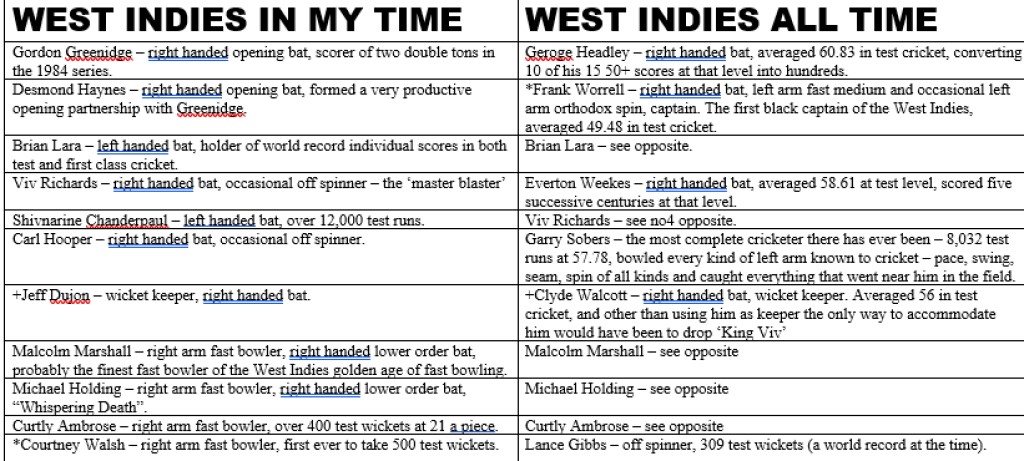
Gordon Greenidge – right handed opening batter, for Hampshire as well as his home island of Barbados and the West Indies. He scored two contrasting double centuries in the 1984 series, 223 not out in ten hours at Old Trafford, and 214 not out in about half of that time to win the Lord’s test for his side. I saw him score a ton in the MCC Bicentennial match, when he hit one square cut with such ferocity that the ball actually went through an advertising board. He was one half of a legendary opening partnership with…
Desmond Haynes – right handed opening batter, also Barbadian, and played county cricket for Middlesex for many years as well as international cricket for the West Indies. Where Greenidge was an attacker by instinct but capable at need of defending for long periods, Haynes was by inclination an anchor man, who could when circumstances demanded it absolutely annihilate bowling attacks, as shown by his magnificent ODI record.
Brian Lara – left handed batter. The Trinidadian holds the record test and first class scores, one of only two ever to have the double distinction (Bradman did so for a couple of years, between Headingley in 1930 where he made 334 to go with his 452 not out for NSW v Queensland and Christchurch 1933 where Hammond scored 336 not out) – 501 not out for Warwickshire against Durham in 1994 and 400 not out v England at Antigua in 2004. Ten years earlier he had hit 375 v England on the same ground, the only player to hold the world test record twice (Hayden intervening with 380 v Zimbabwe at Perth). A small caveat over these feats of tall scoring by Lara is that none came in winning cause – all three matches were drawn. Just for the record, the full progression of test record high scores is: Bannerman 165 in the first test innings of all in 1877, Murdoch 211 at The Oval in 1884, Foster 287 at Sydney in 1903, Sandham 325 at Kingston in 1930, Bradman 334 at Headingley in 1930, Hammond 336 not out at Christchurch in 1933, Hutton 364 at The Oval in 1938, Sobers 365 not out at Kingston in 1957, Lara 375 at Antigua in 1994, Hayden 380 at Perth, Lara 400 not out at Antigua in 2004.
Viv Richards – right handed bat, occasional off spinner. The ‘Master Blaster’. Among his many credits are a 56 ball hundred v England at Antigua in 1986, and an innings in 1990 against the same opposition when he twice mishit Devon Malcolm for sixes. He came into bat in a manner equivalent to a prima donna taking centre stage in an opera – all eyes immediately focussed on him, while everyone else, especially opposition bowlers, seemed simply to have the task of feeding him lines.
Shivnarine Chanderpaul – left handed bat, occasional leg spinner. He announced himself by scoring a double century in an under-19 match, and unlike his English equivalent who went straight back to his county second XI after doing so, he was fast tracked in the West Indies full team, and immediately began scoring runs (he would tally over 12,000 in test cricket).
Carl Hooper – right hand bat, semi-regular off spinner. This man simply exuded elegance and class – the main criticism that he attracted being that he did not often enough go on for the really big score.
+Jeff Dujon – Wicket keeper, right handed middle order bat – quite simply the best keeper the West Indies have had in my lifetime, and an average of over 30, including four test tons. He tended to get his runs when the team really needed them, not by thrashing already demoralized bowlers.
Malcolm Marshall – right arm fast bowler, useful lower right handed lower order bat. By my reckoning the greatest fast bowler of the West Indies’ golden age of fast bowling – and 376 test wickets at 20.94 is substantial backing for that claim. He was pretty much the ultimate pro, as he demonstrated during his years as Hampshire’s overseas star, and developed bucketloads of craft and guile to go with the pace he always possessed.
Michael Holding– right arm fast bowler, aggressive right handed lower order bat. ‘Whispering Death’ as he was known because of his silent run up was another magnificent fast bowler, one of the stars of the attack during both the ‘blackwashes’ the West Indies inflicted on England in the 1980s.
Curtly Ambrose – right arm fast bowler (later in his career slowed to fast medium, if not medium fast). Twice he won test matches by destroying the England batting, once with 8-45 in an innings at Bridgetown, and he was only prevented from the being the match winner at Headingley in 1991 by the batting of Graham Gooch (154 not out in a total of 252 all out on a pig of a pitch, second highest score 27 jointly by Ramprakash and Pringle) and a display of ineptitude by his own colleagues in the face of England’s much less threatening bowling ‘attack’. Against the Aussies in Perth he once produced a spell of 7-1 which unsurprisingly settled the outcome of that match. I saw him in action last year for Lashings World XI, when he bowled two overs off a reduced run up, and the opposition simply could not lay a bat on him.
*Courtney Walsh – right arm fast bowler (slowed late in his very long career to fast medium if not medium fast). The first bowler of any description to capture 500 test wickets. Although I do not usually think that fast bowlers make the best captains, he did the job well, suffering mainly from the fact that a once great side was becoming ordinary around him. His last bow, in England in the year 2000, showed up the problems in sharp relief (under the captaincy of Jimmy Adams), with the batting folding on a regular basis, and the bowling other than that of the then 38 year old Walsh being little to write home about – Trescothick made his test debut in that series, showed great character to survive the new ball but was still on 0 not out when Walsh was relieved, and got off the mark from the first ball bowled by Walsh’s replacement, going on to a fine 66.
This team has six quality batters, five of them definitely meriting the label ‘great’, a top drawer glove man who knew how to bat and four of the finest fast bowlers you would ever meet. There is little in way of spin for reasons I will go into in the next section of this post, with Hooper’s off breaks the nearest thing to a front line spin option.
EXPLANATIONS, HONOURABLE MENTIONS AND A SPECIAL FEATURE
I will start with a few honourable mentions: Chris Gayle, ‘Universe Boss’, scored two test triple centuries, and I saw him make a classic 167 not out at Adelaide in 2009, but I felt that the value of the Greenidge/Haynes combo was too great to include him. Richie Richardson was a fine batter, at one time rated no1 test batter in the world, but I could only have got him in by sacrificing Hooper at no 6. Clive Lloyd was a fine batter and captain, but I never actually witnessed him in action, so could not select him. Ramnaresh Sarwan was also a fine batter who I regretted not being able to fit in. Denesh Ramdin probably believes he was a candidate for the keeper’s slot, but in truth, a double ton against England on a feather bed of a pitch in Barbados notwithstanding, he was not in Dujon’s class in either department.
SPECIAL FEATURE: BALANCE, ALL ROUNDERS, BOWLERS AND THE WEST INDIES GOLDEN AGE
As mentioned in my overview of it the team lack either an all-rounder or a genuine spinner. The reason for this is that in my lifetime the West Indies men have only produced four cricketers who could be dubbed all rounders, Eldine Baptiste, Hamesh Anthony, Franklyn Stephenson and Ottis Gibson, and none were really good enough with the bat to drop a front liner for, nor with so many genuine fast bowlers to pick from could they force their way in that category. If I am mandated to select an all rounder then Stephenson comes in for Hooper, but under protest. Roger Harper, a middle order batter who bowled off spin and was a great fielder, was not quite good enough in either department to be considered. I only gave serious consideration to two specialist spinners, Suleiman Benn and Sunil Narine, but although Narine especially would have his advocates, neither have a test record that really commands respect, though Narine is an outstanding limited overs bowler.
Even had there been a spinner in the period concerned with a really fine test record, I had a particular reason for picking four specialist pace bowlers (albeit Marshall and Holding were both capable of scoring useful runs) – the four pronged pace battery propelled the West Indies to the top of the cricket world under Clive Lloyd and kept them there under Viv Richards. At Trinidad in the 1975-6 series against India Clive Lloyd, in anticipation of a turner was given a team containing three front line spinners, Inshan Ali, Albert Padmore and Raphick Jumadeen, to match the three India would play, Bedi, Chandrasekhar and Venkataraghavan. For three of the four innings, things went to plan, and India were set 406 to win. India knocked those runs off, a test record at the time, for the loss of just four wickets, the three West Indies spinners leaking 220 of the runs. Lloyd decided there and then that he wanted his best available bowling attack irrespective of conditions, and secured an all pace quartet (initially Andy Roberts, Wayne Daniel, Bernard Julien and Vanburn Holder) for the future. The West Indies did not look back from that point. One series was lost to New Zealand in 1980, but otherwise the West Indies ruled supreme until the rise of the Aussies in the 1990s. Other pace stars who featured for greater or lesser periods in this period were Colin Croft, Joel Garner, Sylvester Clarke, Milton Small and Tony Gray. Later, even after their domination had faded the West Indies produced a few other notably quick bowlers – Ian Bishop who was blighted by injuries, Kemar Roach (who I saw bowling at over 150kph at Adelaide, not a ground beloved of many bowlers) and most recently Shannon Gabriel. It is now time to move on to…
WEST INDIES ALL TIME
Of the players I named in the XI from my life, Lara, Richards, Marshall, Holding and Ambrose make the all-time XI. They are joined by the following:
George Headley – right handed bat, nicknamed ‘Atlas’ because he carried the team on his shoulders, like the titan of Greek mythology carried The Earth on his shoulders. He averaged 60.83 in test cricket, converting 10 of his 15 fifty plus scores into centuries. He usually batted three, but the West Indies in his day so often lost an early wicket that he was effectively opening anyhow, which is how I use him in this team.
*Frank Worrell – right handed bat, left arm fast medium and occasional left arm spin. He sometimes opened, which is the task I have given him in this team, and CLR James’ ghost would haunt me for eternity if I dared named anyone else as captain of an all-time West Indies XI. He was the first black player to be West Indies captain, breaking a particularly vile shibboleth that black fellows needed to be led by someone with white skin, and he led the West Indies to the top of the cricket world, becoming the first to succeed in banishing inter-island rivalries from the dressing room.
Everton Weekes – right handed bat, averaged 58 in test cricket, including a run of five successive centuries (ended by a run out 90). He also represented his home island of Barbados at Contract Bridge, a game that I enjoy playing.
Garry Sobers – left handed bat, left arm fast, left arm swing or seam and left arm finger and wrist spinner, brilliant fielder. Quite simply the most complete cricketer the world has ever seen, averaging 57.78 with the bat and taking 235 test wickets. If Ellyse Perry (still only 29 years old, though she has been around a long time) takes up spin bowling to add to her other cricketing accomplishments she may match him in that regard. Sobers was actually first selected as a left arm spinner, developed his batting after that, and then as a Lancashire League pro developed the ability to deploy pace, seam and swing because pros there are expected to be able to contribute heavily with both bat and ball no matter what, and the heavy skies and green surfaces that are both such regular features of north western England tend to lend themselves more to pace, swing and seam than to spin.
+Clyde Walcott – right hand bat, wicket keeper. He was a recognized wicket keeper, as well averaging 56 in test cricket, and the only way I could have got him in as other than a keeper would have been by dropping King Viv.
Lance Gibbs – off spinner, taker of 309 test wickets (world record at the time). While there was a reason why the West Indies team from my lifetime should feature an all-pace battery, for this combo I revert to a more balanced attack.
Thus my all-time XI in batting order reads: Headley, *Worrell, Lara, Weekes, Richards, Sobers, +Walcott, Marshall, Holding, Ambrose, Gibbs. This combination has a splendid looking opening pair, a stellar 3,4 and 5 with Lara a left hander for extra balance, the most complete cricketer of all time at six, a batter/keeper at 7, three fast bowlers and an off spinner. The bowling, with the three specialist quick bowlers backed up by Gibbs’ off spin, Sobers’ variety of left arm options, Worrell and possibly Richards as seventh bowler, looks awesome (the only base not covered is right arm leg spin).
HONOURABLE MENTIONS
George Challenor and Percy Tarilton, the pioneers of ‘Caribbean style batting’ never got to show what they could do at test level. Allan Rae and Jeff Stollmeyer were a highly successful opening combo, but had I opted to pick an opening partnership Greenidge and Haynes would have got the nod. Conrad Hunte was a great opener who never benefitted from having a truly established partner. I have the word of CLR James that Rohan Kanhai was an absolute genius with a bat in his hands, but just who could I drop to make way for him?
Among the great fast bowlers not getting the nod were: George John who flourished before his country played test cricket, Herman Griffith (also a tough captain – he was once captaining a youngster of whom big predictions were being made and when it came to time for the youngster to bowl he requested a suggestion of field placements beginning with the word ‘deep’, and when he prefaced his fourth successive position with that word Griffith snapped, and called up another bowler, saying “No, you obviously intend to bowl foolishness” – a refusal to accept low standards of which I wholeheartedly approve), Learie Constantine, Manny Martindale, Roy Gilchrist, Wes Hall and Charlie Griffith. Spinners to miss out included Ellis Achong (from whom the term ‘chinaman’ for the left arm wrist spinner’s equivalent of a googly derives – his parents came to Trinidad as indentured labourers, and were indeed Chinese, and the story is that when Walter Robins fell LBW to him, misreading the spin, he said en route back to the pavilion “fancy being done by a chinaman” and so the term was born), and my little pals Ram and Val (Sonny Ramadhin and Alf Valentine, who took the first eight wickets to fall in the first test innings in which he bowled). Had I been able to accommodate a specialist wicket keeper Deryck Murray would have got the nod, but with only 11 spaces to fill there was just no way to do so.
I am well aware that at least one of the regular readers of this series of posts knows a very great deal about West Indian cricket, and I hope that ‘africanherbsman’ as he identifies himself feels that I have done something approaching justice to the cricketers of his islands, for whose achievements I have great admiration.
LINKS AND PHOTOGRAPHS
Well, our virtual Caribbean cruise is at an end, but I have a few links to share before applying my usual sign off…
The fulltoss blog, which I highly recommend, have an excellent post up titled “The Joe Root Dilemma“. This refers to the fact that Root the captain averages whicless than Root the pure batter. My own view is that the best way to handle replacing Root as captain would be to appoint Burns as his successor, with Dominic Bess being made vice-captain and prepared for long-term succession to the role (I have stated before that other considerations being equal spinners, especially spinners who can bat a bit, should make the best captains, a view also expressed by Arthur Mailey, a test match spinner in his day, in his autobiography).
Welcome to the next post in my “All Time XIs” series. Today we look at Nottinghamshire. There is at least one omission that will seem huge to some eyes, but as I explain in the section immediately after I have presented my chosen XI it is actually not.
NOTTINGHAMSHIRE ALL TIME XI
Arthur Shrewsbury– when WG Grace (see my Gloucestershireteam) became the first batter to record 100 first class hundreds he was second on the list of century makers with 41 to his credit. WG at a time when his primacy was unchallenged was asked who he rated next best among batters and responded “Give me Arthur”. In 1886 at Lord’s he took 164 off the Aussies to set England up for an innings victory, and at the time his score was the highest for England in a test match (WG Grace reclaimed the record that this took from him two matches later at The Oval with 170). Shrewsbury’s Nottinghamshire team mate Alfred Shaw, probably the most miserly bowler of all time, asked that he be buried 22 yards from Shrewsbury so that he could send him a few balls – and their graves are actually 27 yards apart, allowing space for Shaw’s standard five yard run up. For much of Shrewsbury’s playing career there was no such thing as a tea break, and it is said that if he was not out at lunchtime he would instruct the dressing room attendant to bring a cup of tea out to the middle at 4PM, such was his confidence that he would still be batting by then.
George Gunn – a man who positively relished taking on the quicks. In 1907-8 when he was in Australia not as part of the official tour party but initially for the good of his health he was drafted into the test side in desperation and proceeded to score 119 and 74. He was also on the 1911-12 tour as part of the chosen party. In 1929-30 when England contested a test series in the West Indies for the first time Gunn at the age of 50 formed one half of test cricket’s oldest ever opening partnership along with the comparative pup 39 year old Andy Sandham (an honourable mention in my Surrey piece). In the 1929 English season he had celebrated turning 50 by being one half of a unique occurrence – he scored 183 for Nottinghamshire and his son George Vernon Gunnmade precisely 100 in the same innings. A local amateur of no huge skill once determined to take Gunn on in a single wicket match, suggesting a £100 stake. Gunn was reluctant at first, but eventually succumbed to repeated importunings, although insisting that the stake be reduced to £5. They played during successive evenings – Gunn batted first and by the end of the first evening was 300 not out. At the end of the second evening Gunn had reached 620 not out and the amateur suggested that a declaration might be in order. Gunn refused but as a concession allowed the amateur to bowl at the heavy roller, six feet wide, instead of a regulation set of stumps. Half way through the third evening Gunn had reached 777 and the amateur finally decided that he had had enough and left Gunn to his triumph.
William Gunn – elder brother of George (there was a third brother, John, who also played for Notts and indeed England as well, plus George’s son GV, but as far as I can establish, although she was born in Nottingham, contemporary England Women’s star Jenny Gunn is not related to this Gunn family), regularly no 3 for Notts and England. He scored 225 for The Players against the visiting Australians on one occasion, and in a Non-smokers v Smokers match he and Shrewsbury shared a stand of over 300 as the non-smokers made 803 (qualifications for these matches were not that rigorously checked – on another occasion Bonnor, the big hitting Aussie, made a century for the non-smokers – and was subsequently seen strolling round the boundary puffing on a cigar). William Gunn in addition to his playing career was the original Gunn of “Gunn and Moore” the bat makers, and at a time when many professionals died in poverty, sometimes destitution, he left an estate worth over £100,000. There is a book about the Gunns, “The Bridge Battery”, by Basil Haynes and John Lucas.
Richard Daft – in the 1870s he was considered the next best batter in the country to WG Grace.
Joe Hardstaff Jr – played for Nottinghamshire and England in the 1930s and 1940s. He contributed an undefeated 169 to England’s 903-7 declared at The Oval in 1938, while in 1946 he scored a double century against India.
Garry Sobers – aggressive left handed batter, with a test average of 57.78, left arm bowler of absolutely everything (he began his career as slow left arm orthodox bowler, adding first wrist spin and then also adding pace and swing. He was at one time as incisive as anyone with the new ball. He was also excellent in the field.
Wilfred Flowers– an off spinning all rounder from the late 19th century whose record demands inclusion.In first class cricket he averaged 20 with the bat and 15 with the ball.
+Chris Read – a wonderful wicket keeper and a useful attacking middle order batter, he was badly treated by the England selectors and should have played more test cricket than he actually did. He made 1,109 dismissals in his first class career.
Harold Larwood– the list of English fast bowlers who have blitzed the Aussies in their own back yard is a short one (Frank Tyson in 1954-5 and John Snow in 1970-1 are the only post Larwood examples I can think of, and while Tom Richardson (see my Surrey piece) was clearly magnificent in the 1894-5 series his gargantuan efforts hardly constitute a blitzing of his opponents), and he is on it. His treatment after that 1932-3 series, when he should have been seen as the conquering hero, was utterly shameful as the English powers that be caved to Aussie whinging, and he never again played test cricket after the end of that series, though he continued for Nottinghamshire until 1938. As late as 1936 he produced a spell in which took six wickets for one run.
Tom Wass – a bowler of right arm fast medium and leg spin. On one occasion an over zealous gate keeper did not want to let his wife into the ground and Wass dealt with him by saying “if that beggar don’t get in then this beggar don’t play”. 1,666 first class wickets at 20.46, 159 five wicket hauls and 45 10 wicket matches are testimony to his effectiveness.
Fred Morley – left arm fast bowler who was in his pomp in the 1870s. He paid a mere 13 a piece for his wickets. He died at the tragically young age of 33, or he would probably have had many more wickets even than he did. He was the most genuine of genuine number 11s. In his day the roller at his home ground, Trent Bridge, was horse drawn, and it is said that the horse learned to recognize Morley and when it saw him walking out to bat it would place itself between the shafts of the roller ready for the work it knew would not be long delayed (Bert Ironmonger, the Aussie slow left-armer who was the second oldest of all test cricketers, playing his last game at the age 51, is the subject of another classic ‘incompetent no 11’ story – a phone call came through to the ground he was playing at, and it was Mrs Ironmonger wanting to speak to her husband, “sorry, he has just gone into bat” came the response, to which Mrs Ironmonger said “I’ll hang on then”!).
This team contains a solid top five, the greatest of all all rounders at no 6, a second fine all rounder at 7, a top of the range wicket keeper and three specialist bowlers of widely varying types.
NOTTINGHAMSHIRE PRESENT & FUTURE
Stuart Broad did not qualify for two reasons. Firstly, his wickets cost 27 a piece, which is respectable but not by any means bargain basement. Secondly, as a right arm fast medium (kindly do not attempt to persuade me that he counts as fast, he does not) his effectiveness is heavily dependent on conditions and therefore very variable.Graeme Swann was a very fine spinner of the recent past, but the inescapable fact is that his first class wickets cost 32 a piece, twice as much as those of Wilf Flowers, and while I would accept that Flowers would pay more today and Swann would have paid less in Flowers’ day I do not accept that the difference would be enough to close the gap that yawns between them. Joe Clarke is a highly talented young batter who may yet go on to become great, but he is very much not the finished article yet. Billy Roothas shown some signs of skill but has a way to go to get close to big brother Joe (see my Yorkshirepiece). Liam Patterson-White is a left arm spinner who if handled properly should have a huge future ahead of him, and if I revisit this series in a decade or so it is quite possible that he like Zak Crawley and Oliver Graham Robinson who I mentioned in yesterday’s piece about Kentwill demand consideration by then.
OTHER OMISSIONS
First of all, I deal with…
OVERSEAS PLAYERS
There were four of these other than Sobers who obviously demanded attention. Bruce Doolandimmediately before Sobers was an Australian all-rounder (right hand bat, leg spin) who performed wonders for Nottinghamshire, but he is hardly in the same bracket as Sobers. Clive Rice was more a batter who bowled than a genuine all rounder but he could bowl decidedly quick when in the mood. He was not as good a wielder of the willow as Sobers and his bowling did not have the same range. Closest to displacing Sobers as overseas pick was Sir Richard Hadlee, a right arm fast bowler and attacking left hand bat in the lower middle order. Had he not been a Kiwi he would have been an absolute shoo-in, but I am restricting myself to one overseas player per team, and with the presence of Larwood and Morley I felt that Sobers brought more that I did not already have available to the table. Franklyn Stephenson had one sensational season in 1990, when he did the double of 1,000 runs and 100 wickets, the only player other than Hadlee to do so since 1969 (for those who consider that the limitation of English first class seasons to 14 games now makes this impossible, WG Grace achieved this double in the space of the last 11 games of his 1874 season – and people who are over-inclined to use the word “impossible” in the context of cricket often end up with egg on their faces), and he finished that season with a match in which he scored twin centuries and took four first innings wickets and seven second innings wickets, the most dominant four-innings match display since George Hirst’s twin centuries and twin five wicket hauls for Yorkshire against Somerset in 1906), but overall he did not do enough to warrant consideration.
OPENING BATTERS
William Scotton was too much the out and out stonewaller for my liking. He was part of a rare happening at The Oval in 1886, when such was the difference in approach between him and WG Grace that the scoreboard at one stage showed No 1 134 and No 2 34. Walter Keeton, Freddie Stocks, Reg Simpson and Brian Bolus all had their moments at the top of the order, without the enduring success of Shrewsbury and the Gunns. In the 1980s Chris Broad and Tim Robinson were both chosen to open for England, and each had one magnificent Ashes series, Robinson at home in 1985, Broad in 1986-7, but neither did enough overall as far as I am concerned, and Robinson was certainly found out in no uncertain terms by the West Indies.
THE MIDDLE ORDER
I regretted not being able to find a place for Derek Randall, but I had reasons for all of my inclusions. Wilf Payton, Joe Hardstaff Srand John Gunn (who also bowled medium pace), would all have their advocates as well.
WICKET KEEPERS
Nottinghamshire does not quite offer the embarrassment of riches in this department that some other counties do, but other than my choice of Read there are four who would definitely have their advocates: Fred Wyld, Mordecai Sherwin, Ben Lilley (who did the job when Larwood and Voce were in their pomp) and Bruce French who was an England pick at times in the 1980s.
BOWLERS
Sam Redgate was the first Nottinghamshire bowler to make a real impression, and he was followed by John Jackson. Alfred Shaw, over 2,000 wickets at 12 a piece was unlucky to miss out, while his name sake Jemmy Shaw, a left arm medium pacer of similar vintage also had a fine record. It was Jemmy Shaw who summed up what many at that time probably felt in similar circumstances when tossed the ball to have a go against a well set WG Grace: “there’s no point bowling good ‘uns now, it’s just a case of I puts where I pleases and he puts it where he pleases”. William Barnes was an England all-rounder for a time, and once arrived for a match late and rather obviously the worse for wear and still had a hundred on the board by lunchtime. Rebuked over his tardiness by the committee he responded by asking them “how many of you ever scored a hundred, drunk or sober?”. Finally, there was Larwood’s partner in crime Bill Voce. Voce was less quick than Larwood, and probably less quick than Morley who I selected as my left arm pace option, and while not by any means an expensive wicket taker, he did pay 23 a time for his scalps, which puts him in the respectable rather than truly outstanding class. Once many years after their careers were done Voce visited Larwood in Australia where the latter had settled, and while they were drinking together a breeze blew through a window behind Larwood, prompting Voce to say “Harold, after all these years you’ve still got the wind at your back”, a comment that Gus Fraser (an honourable mention in my Middlesex piece) would probably have appreciated.
AFTERWORD
Although the County Championship was not put on an official footing until 1890, various cricketing publications named what they called “champion counties” before then, and in the last 25 years before that watershed in 1890 Nottinghamshire were so named on ten occasions. This is why there are so many 19th century names in my selections for this county – Nottinghamshire were strong then, and barring odd intervals have not been particularly so. The current Nottinghamshire would but for Covid-19 be preparing for a season in the second division of the championship after a quite ghastly season in 2019. Doubtless some readers will have their own ideas about players who I could have included, and I welcome such comments with the proviso that they show due consideration for the balance of the side and that there is some indication of who your suggestions would replace.
LINKS AND PHOTOGRAPHS
Our little journey through Nottinghamshire cricket is at an end, but just before my usual sign off I have a couple of important links to share, to posts by Richard Murphy of Tax Research UK:
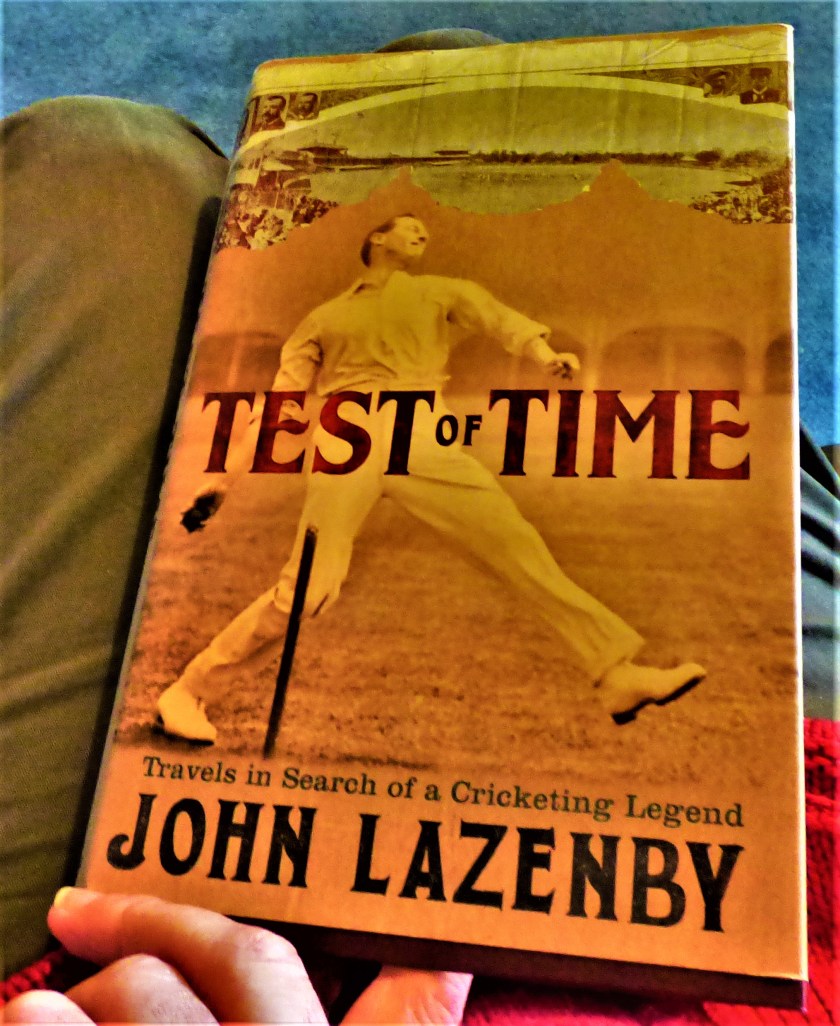
The John Lazenby book that I mentioned in my Kent and Lancashire pieces.
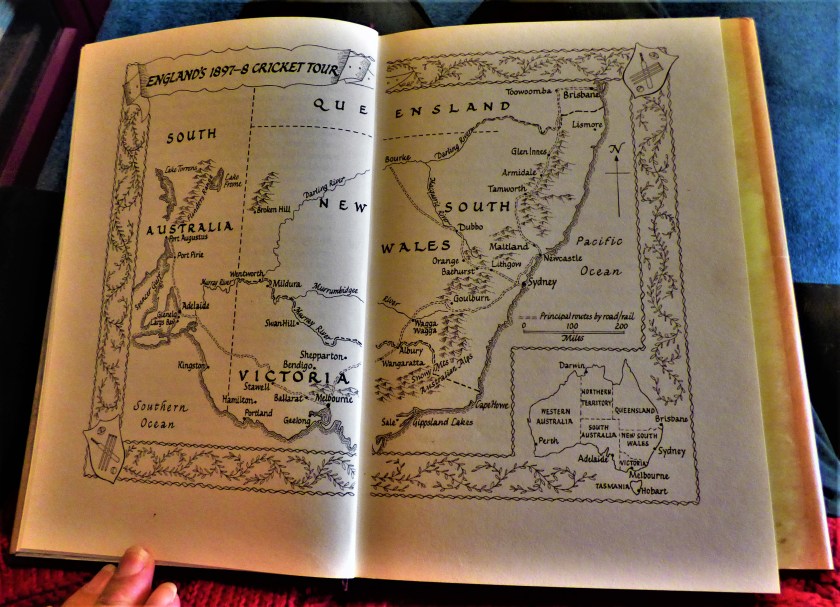
The map showing the route of the 1897-8 Ashes tour.
Virtual interaction with NAS West Norfolk for Autism Awareness Month – this shows me donating £1 as I prepare to eat my lunch (just for the record the wine went back in the fridge with a plate covering the glass, and I will drink it with supper this evening). On the top page the spiral bound notebook are four of my all-time XIs – Warwickshire, Lancashire, Kent and Nottinghamshire.
































 aspiblog