History at Lord’s

A look at developments in the first women’s test match ever to be played at Lord’s, a video and a photo gallery.

Yesterday morning a test match between the England and India women’s teams, at Lord’s, the first time a women’s test match has been played at that ground (a mere 89 years behind the other big London ground, The Oval, which staged the final match of the 1937 Women’s Ashes). With many ex-players present for the great occasion (from former world cup winner Alex Hartley, in her 30s and part of the commentary team as well to Enid Bakewell, some five decades older and still in full possession of her faculties) England won the toss and opted to bowl first. This post looks at developments so far in this match.

For much of the day it looked as though India were headed for big score, but in the end they were held to 285. Sophie Ecclestone took the last three wickets in the space of six balls, in the process going past Katherine Sciver-Brunt to become England’s leading all format wicket taker. She is also the leading test wicket taker among current England bowlers, and sits third in the all time all format wicket takers list behind two Indians, the retired Jhulan Goswami and Deepti Sharma, also playing in this match (contributed a 50 to the Indian cause). Goswami’s record will be going in the not too distant future to one or other of these contemporary greats. Ecclestone is the younger of the pair, 27 years old to Deepti Sharma’s 28.

By the end of day one England had lost veteran opener Tammy Beaumont, whose last international match this will be. They started very badly today, with overnight batters Bouchier and Knight departing quickly, and being followed in short order by Capsey. Amy Jones struck an aggressive 50 before being caught by Ghosh off Sneh Rana. Then Kranti Gaud, with three wickets already to her name already pinned England skipper Natalie Sciver-Brunt plumb in front. Because of the desperate situation the decision was sent upstairs, but it was definitively out – crashing into middle stump. That was 142-6. Ecclestone was eighth out caught behind off Sayali Satghare for 11. Shortly after that Gaud was recalled to the bowling crease, and became the first woman to claim a place on a test match honours board at Lord’s when a superb catch by Shafali Verma accounted for Lauren Bell. Her figures at that juncture were Gaud 15.2-6-33-5. Had she taken the tenth wicket of the innings and conceded 12 or fewer runs doing so she would have had the best innings figures by a woman in any international match at Lords, beating the 6-46 taken by Anya Shrubsole in the 2017 ODI world cup final. As it happened the final wicket, that of Lauren Filer, fell to Deepti Sharma, so Shrubsole’s record figures stand for now (when it comes to bowling figures in cricket the number of wickets is considered paramount, and it is only when considering hauls of the same number of wickets that the number of runs conceded becomes relevant). As it was Gaud, with final figures of 17-7-37-5 had been instrumental in securing her side a first innings lead of 115, which is likely to prove a match winning lead. Kranti Gaud is 22 years old, and as recently as 18 months ago she was not even on the Indian selectors’ radar. The other England v India match today, a men’s T20 at the Hampshire Bowl near, but crucially not actually in Southampton. got underway half an hour behind schedule due heavy traffic causing the Indian team to arrive late. That match is in its early stages, but not showing any great sign of ending the Indian men’s horror tour which has seen them reach this point with five defeats and a no-result to show for their endeavours.

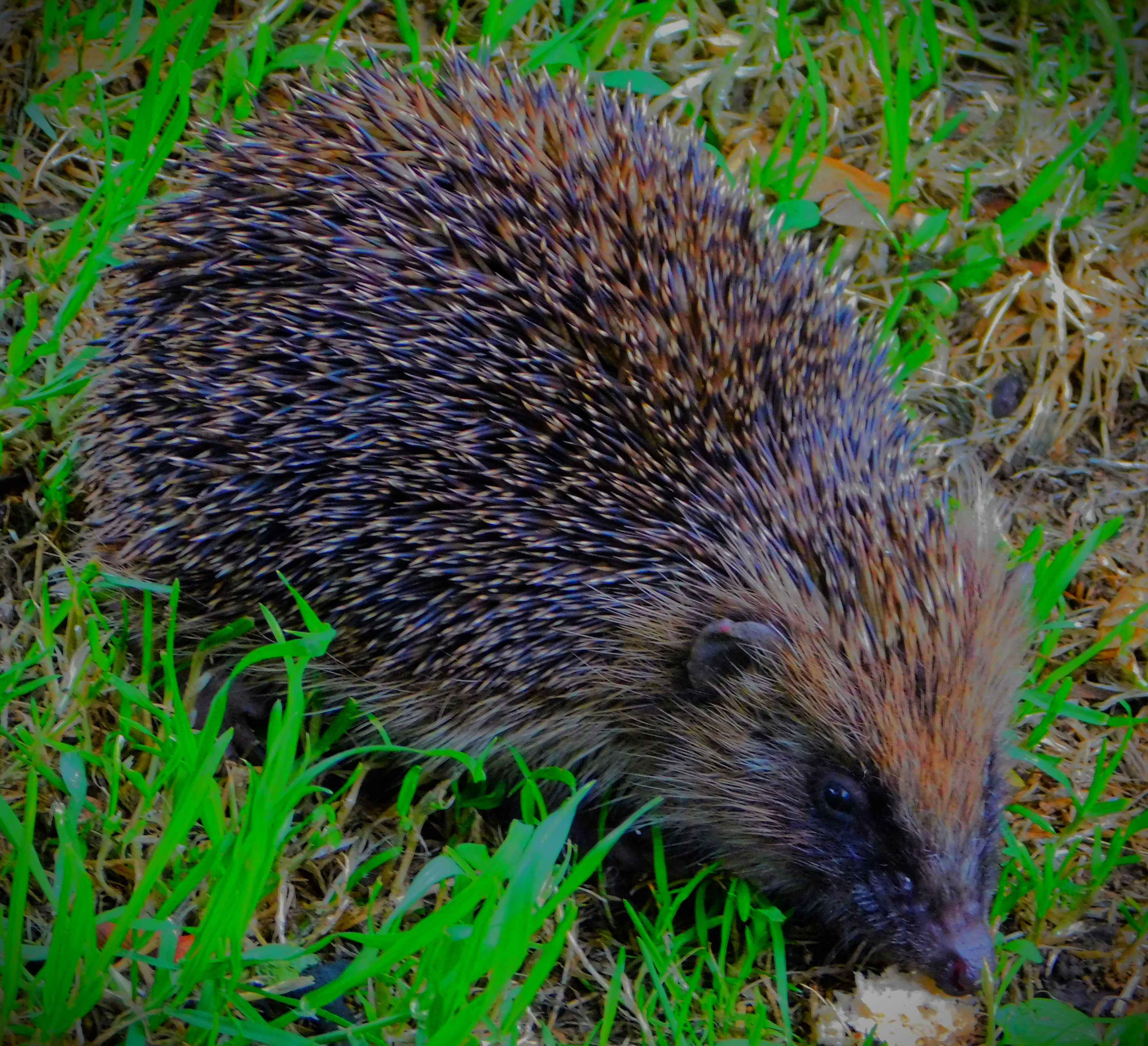
We start with a short video of a small hedgehog which was in the grass at Kettlewell Lane Park this morning:

Now for the photos…

Thrills, Spills and Net Run Rate Calculations

A look back at the final match in Group A at the Women’s T20 World Cup, a 20 second video of a hedgehog and a large photo gallery.

Today saw the final match in group A at the Women’s T20 World Cup. New Zealand faced Pakistan. New Zealand had an easily described task: win and the would be in the semi-finals. Pakistan faced a much more complex situation – they would need to win and win big – a narrow win for them would see India second on Net Run Rate. This post looks at back at the match.

New Zealand won the toss and opted to bat first, hoping that the need to score ultra quickly in response would lead to a Pakistan collapse. Pakistan claimed that they would have chosen to bowl anyway. I reckon that the easiest way to achieve a big NRR swing is to bat first, put a big total up, and then dismiss the opponents. New Zealand in this case would have to keep going no matter how ridiculous the target. With New Zealand batting first Pakistan had to restrict them as much as possible – their task would be a tough one almost whatever New Zealand did.

Pakistan bowled excellently, but their fielding was not great. There were times when a New Zealand tally of below 100 looked likely, and if Pakistan had caught even reasonably well this would have happened. However by the time the 20th over came round four catches had been grassed. Remarkably another three chances went begging in the course of the 20th over. In the end New Zealand had scored 110-6. If Pakistan had merely had to win to progress things would have looked excellent for them…

The calculations revealed that barring levelling the scores and then hitting a boundary Pakistan needed to chase down the target of 111 in 10.4 overs or less. The three basic scenarios, ignoring boundary finishes were:

1: Pakistan chase down the target in 10.4 overs or less: Pakistan go into the semi-finals, India and New Zealand take the next flight home.

2: Pakistan chase down the target in 10.5 or more overs: India progress to the semi-finals and it is home time for New Zealand and Pakistan

3: Pakistan fail to reach the target, presumably because they get bowled out: New Zealand progress and both subcontinental sides are homeward bound.

Pakistan were thus obliged to take an extremely aggressive approach while any sort of hope of the quick win remained. Such an approach means an increased chance of opposition wickets, and that is what eventuated. New Zealand did better catching wise than their opponents had, but even they were not flawless in the field. However, Pakistan were 28-5 after 5.3 overs, as their aggressive approach did not work out. The sixth wicket pair now settled in for a stand that gave India hope, if they could somehow keep it going, but amounted to Pakistan’s acknowledgement that their own challenge had ended. The second last ball of the tenth over saw the partnership broken when Nida Dar was deceived by a beauty from Kerr and Gaze made no mistake with the stumping. That was 52-6. Omaima Sohail gave Carson a return catch in the 11th over to make it 55-7. Syeda Aroob Shah was run out off the first ball of the 12th over, a fine return from Green to Kerr doing the job. Fatima Sana back on strike, and now her sides last remaining hope, was caught by Bates off the next ball to make it 56-9. Sadia Iqbal, the number two ranked WT20I bowler in the world, behind another left arm spinner Sophie Ecclestone, survived one ball, before she too was caught by Bates off Kerr, for a duck in her case. Pakistan were all out for 56, their lowest ever WT20I total (previously 60), though the nature of the challenge facing them provided mitigating circumstances. Bates’ final catch was her 400th in professional cricket. Incidentally if Bates manages to keep going until 2028 she could join a very small club of people who have competed in The Olympics in two different sports – at Beijing in 2008 a young Bates was part New Zealand’s basketball team, and cricket will feature at Los Angeles 2028.

This section was my main reason for wanting to put up another post today – my thanks to the New Zealand and Pakistan Women’s cricket teams for providing the material for the body of the post. I start with a video, taken on the bank of Bawsey Drain, King’s Lynn during my afternoon walk:

Now for the photos…
West Indies Under the Pump

A look at developments so far on day one of the England v West Indies test match, dominated by an extraordinary debut performance from Gus Atkinson. Also a photo gallery.

Today is day one of the opening test match of the series between England and West Indies, which is happening at Lord’s. This post looks at the action so far.

Both playing XIs were known in advance, England’s on Monday, West Indies’ yesterday. England had gone for batting depth, with Woakes at number eight, while the West Indies had opted for extra bowling strength, and both Holder at number six and da Silva at number seven looked to be a place too high in their order for comfort. England won the toss and elected to field first.

James Anderson in his final test match took the new ball in partnership with Woakes. West Indies got through 10 overs without losing a wicket, at which point Gus Atkinson came on for his first bowl in test cricket. Atkinson immediately showed the extra pace that had been the reason for his selection, and struck with his second ball, Kraigg Brathwaite dragging it on to his stumps. West Indies got through the rest of the over, but Atkinson avoided conceding any runs. Atkinson’s second over was also a maiden, and in his third he struck again, having Kirk McKenzie caught by Crawley. By the end of this over his figures were 3-3-0-2. Harry Brook held a sensational catch off Ben Stokes to get debutant opener Mikyle Louis, the first ever test cricketer to hail from St Kitts, although its sister island of Nevis has produced a few, for 27. That was 44-3, and Alick Athenaze and Kavem Hodge saw things through to lunch, with the score 61-3.

After the interval this pair advanced the score to 88 before Atkinson’s already impressive debut became a truly great one. He got Athenaze and Holder in successive deliveries, and although da Silva prevented the hat trick he was out second ball to make it three in four for Atkinson and a five-for in test debut. In the next over Kavem Hodge donated his wicket to an umimpressive Woakes, basically giving Pope catching practice, and that was 88-7 with four wickets having gone at the same score. Alzarri Joseph had a bit of fun before trying one aggressive shot too many and holing out to Woakes off Atkinson for the debutant’s sixth scalp. That was 106-8, and it was soon 106-9 as Shamar Joseph played the worst shot of the innings to give Pope his second catch. Atkinson at this point had 7-36 and was on for setting a record for the best bowling figures by an England debutant, but a combination of Gudakesh Motie scoring runs off him with a mix of luck and skill and James Anderson pinning Seales LBW to end the innings at 121 left him with 7-45, second best behind Dominic Cork’s 7-43 in 1995 (also against West Indies). However Cork’s effort had come in West Indies second innings, so Atkinson did have the best ever first innings figures by an England debutant. Ben Duckett has fallen cheaply, playing a loose shot at Seales and edging to keeper da Silva. However Crawley and Pope are going well together at the moment, with the score currently 58-1. While I have been preparing this for publication England have moved on to 71. An appeal for LBW against Pope has just been upheld, but has gone for review. However the replay shows the ball missing the wicket. England 71-1, already within 50 of first innings parity.

My usual sign off…