Australia 1963-83

A look at the best Australian cricketers of the period 1963-83 and a photo gallery.

I continue my look through Australia’s cricket history with a look at the best men’s cricketers of 1963-83, which brings us into the era covered in this post.

THE XI IN BATTING ORDER

  1. Bill Lawry (left handed opening batter). He averaged 47 with the bat over a long test career, which ended with him being dropped from the team when the Aussie selectors decided they wanted a new captain in Ian Chappell and that they did not think Lawry should play under his successor. This resulted in a first and only test appearance for Ken Eastwood, another dour left hander of similar age to Lawry but possessed of about half his skill.
  2. Bobby Simpson (right handed opening batter, ace slip fielder, occasional leg spinner). He took until his 30th test match to reach three figures at that level. In that first three figure innings he went on to 311, batting until the third morning of a match that Australia only needed to draw to retain the Ashes. Simpson scored nine further test centuries, one of them in the Ashes (a score of 225). He and Lawry also became the first pair of openers to score double centuries in the same test innings, their opening stand against the West Indies being worth 382 on that occasion.
  3. *Ian Chappell (right handed batter, captain, occasional leg spinner). A fine test match number three and a great skipper who took Australia to the top of the cricket world before the rise of Lloyd’s West Indies with their pace battery.
  4. Greg Chappell (right handed batter, ace slip fielder, occasional medium pacer, occasional leg spinner). The best Aussie batter to play his cricket exclusively in this era. Leg spin was his first style of bowling, but he learned to bowl medium pace while playing for Somerset as an overseas player.
  5. Allan Border (left handed batter, occasional left arm orthodox spinner). Although he had another ten years of test cricket ahead of him in 1983 he had done enough by then to warrant his place, and by the time of his retirement he would be remembered as an all time great, the first ever to score 11,000 test runs.
  6. Doug Walters (right handed batter, occasional medium pacer). Averaged in the mid-40s in test cricket, though he never quite cracked batting in England. His career best was 250 against New Zealand, and he also had a match in which he scored 242 and 103. He twice scored 100 runs in a single session of play in test cricket. As a bowler at test level he was mainly used to break awkward partnerships, though he was good enough as a youngster to take a seven-for on FC debut.
  7. +Rod Marsh (wicket keeper, left handed batter). At the time of his retirement he had made more test dismissals than any other wicket keeper and had also scored two test centuries. His departure left a hole in Aussie ranks that took a few years to properly fill, the search for decent test keeper only ending with the emergence of Ian Healy.
  8. Ashley Mallett (off spinner, expert gully fielder, right handed lower order batter). Very valuable in a supporting role when Australia had some serious fast bowling talent in the 1970s.
  9. Dennis Lillee (right arm fast bowler, right handed lower order batter). 71 test appearances yielded him 355 wickets, including 164 in Ashes matches, breaking a record that Hugh Trumble had held for three-quarters of a century. Lillee’s own tally was beaten in turn by Shane Warne.
  10. Jeff Thomson (right arm fast bowler, right handed lower order batter). The fastest bowler of the era, and possibly the fastest Australia has yet produced (Shaun Tait and the 2013-14 incarnation of Mitchell Johnson are possible rivals for this one). 200 test wickets in all, in spite of injury problems disrupting his career.
  11. Rodney Hogg (right arm fast bowler, right handed lower order batter). The 41 wickets he took in his debut series in 1978-9 were at the time an Australian record for an Ashes series. Injuries subsequently spoiled his career.

This side has a powerful top six, most of whom could also contribute something with the ball, a great keeper, a good off spinner and three genuinely fast bowlers.

HONOURABLE MENTIONS

The only other opening batter from this period who might have justified breaking the Lawry/ Simpson combo at the top was Keith Stackpole, but although his attacking approach may have made him a better foil to Lawry than Simpson, Simpson had the better record.

In the middle order there were two very near misses, Kim Hughes and Graham Yallop, but good as they were neither could realistically challenge either the Chappells or Border.

The main spin bowling challengers were two leg spinners, Terry Jenner and Kerry “Skull” O’Keeffe, but bearing in mind the spin bowling capacities of my front line batters I wanted on off spinner, and the only close challenger to Mallett on that basis was Bruce Yardley.

The pace bowling department was much more difficult. My decision to go for all out pace, with Hogg accompanying Lillee and Thommo meant that three guys with solid claims all missed out: Graham McKenzie was Australia’s best seamer between the retirement of Alan Davidson and the rise of Dennis Lillee, claiming 246 test scalps. Max Walker, the regular third seamer when Lillee and Thommo shared the new ball was also a candidate. Finally, brought into the picture by the fact that he bowled left arm fast medium which would have added variation and that he would have strengthened the lower order batting there was Gary Gilmour. In the ‘what might have been’ category is Bob Massie, who claimed 16 scalps on test debut, but then had a disastrous tour of the West Indies in which an attempt to generate extra pace led to him permanently losing his ability to swing the ball.

PHOTOGRAPHS

My usual sign off…
All Time XIs – Match Ups 13

Continuing my extended analysis of how the all time XIs I created for each letter of the alphabet fare against one another.

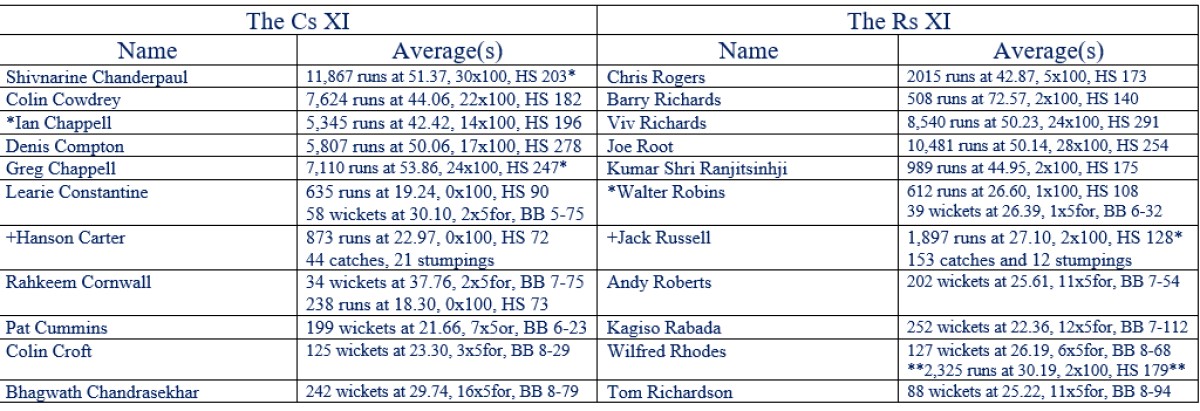
Welcome to the next installment in my extended analysis of how the all time XIs I created for each letter of the alphabet fare against one another. The Cs still occupy the hot seat, and they are on 14.5 out of of 65 going into today’s match ups.

THE Cs V THE Os

The Cs have an overwhelming advantage in batting, and also have the better captain. Finally, Cummins and Croft are a better pair of opening bowlers than Old and Olivier. However, as against that O’Riordan is certainly a better third seamer than Constantine, and his left arm gives the Os seam attack a point of variation. The Os comfortably win in the spin bowling department, with Odumbe, third ranked spinner for them, clearly better than Cornwall, second ranked spinner for the Cs. Unfortunately for the Os their spin superiority only reduces the margin by which they lose this one: Cs 3.5, Os 1.5.

THE Cs V THE Ps

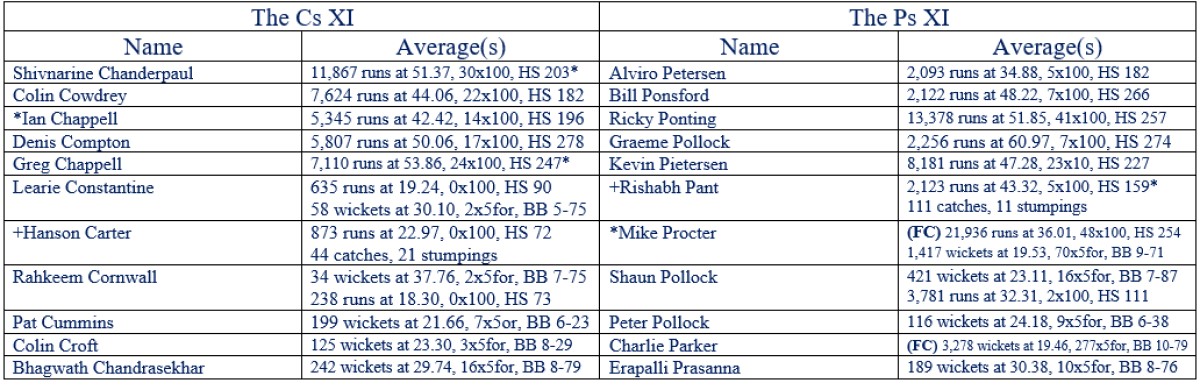
In theory the Cs have a substantial advantage in the opening position, but that is mitigated by the fact that both the Ps openers are regulars at the top of the order, unlike the C counterparts. Ponting and G Pollock comfortably win their match ups batting wise, and Ponting is not the captain. Chappelli probably does outrank Procter as a captain but not by as much as he would Ponting. G Chappell beats Pietersen in the number five slot. Pant wins the battle of the keepers, Procter is miles clear in the battle of the all rounders.S and P Pollock are outpointed by Croft and Cummins in the new ball stakes, but Parker and Prasanna are the better spin pairing. The Ps win everywhere except one batting slot (G Chappell outpointing Pietersen) and in the matter of the new ball pairing. These are more than compensated for by their overall superiority. Cs 0 Ps 5.

THE Cs V THE Qs

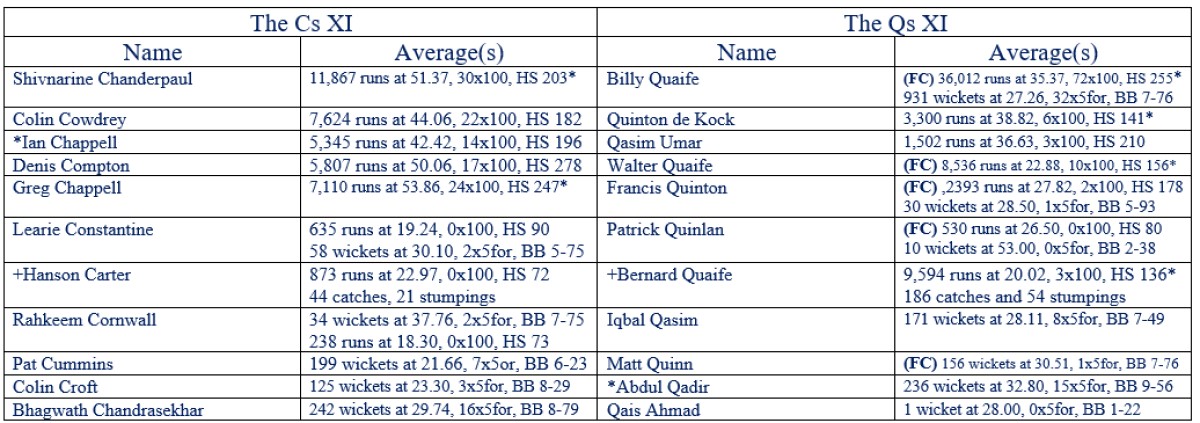
The Qs are massively outpointed in batting, keeping and fast bowling. Their advantage in the spin bowling department is not enough to make a dent in their inferiority elsewhere. Cs 5, Qs 0.

THE Cs V THE Rs

The Rs have the better opening pair, especially given that both of theirs are regular openers. Richards also wins the batting match up vs Chappelli. Root and Compton looks a very close contest, but Compton had more support than Root, who was often holding a dysfunctional order together, so I give that one to the Rs as well. G Chappell outpoints Ranji but not by as much as their figures make it look – Ranji played at a time when batting was a lot more difficult than it was in G Chappell’s pomp. Robins wins the battle of the all rounders, and is little if any inferior to Chappelli as a skipper. The Rs win the fast bowling comfortably – Croft and Cummins may outpoint whichever two of Roberts, Rabada and Richardson take the new ball, but the third of that trio is miles clear of Constantine. Robins and Chandrasekhar are closely matched as leg spinners. Rhodes comfortably outpoints Cornwall – far more so than a comparison of their overall records shows, since Rhodes the specialist spinner, the role I have given him in this XI, was one of the greatest of all time. Quite simply there is no set of circumstances in which I can envisage the Cs getting the better of the Rs: Cs 0, Rs 5.

The Ss have by far the better opening pair – especially given that both of theirs were regular openers. Graeme Smith wins the number three contest and draws the captaincy of element of his match up with Chappelli. Steven Smith beats Compton. Sangakkara wins his batting match up over G Chappell, though he loses the keeping match against Carter. Using Sangakkara as keeper enables the selection of Sobers and Stokes at six and seven. Sobers has no match up in the Cs XI, and Stokes beats Constanine massively on batting and just loses on bowling. Starc and Steyn are outpointed in the battle of the new ball bowlers by Cummins and Croft, but Statham is a far better bowler than Constantine, and the Ss have Sobers in his faster incarnations and Stokes as extra back up options in the seam department. Stevens is a close match for Chandrasekhar with the ball and better with the bat, while Sobers in his slower incarnations is at least as good as Cornwall. This is a complete non-contest: Cs 0, Ss 5.

THE Cs PROGRESS UPDATE

The Cs have scored 8.5 out of 25 points today moving them on to 23 of a possible 90 points, 25.56%.

PHOTOGRAPHS

My usual sign off…

All Time XIs – The Scribes Battle

Another variation on the ‘All Time XIs’ theme, this time featuring top cricketers who were or became top cricket writers. Where would your money be on the outcome of the battle for the ‘Cardus-Haigh’ Trophy?

INTRODUCTION

My latest variation on the ‘All Time XIs‘ theme looks at players who turned writer. Before introducing my chosen players I will explain my envisaged scenario to set the scene.

THE SCRIBES BATTLE – THE CONTEST FOR THE CARDUS – HAIGH TROPHY

My teams comprise people who made their names as high level players and who also wrote about the game. In each case I my cricket library contains at least one full book authored or co-authored by the chosen player. The Cardus – Haigh Trophy name honours two of my favourite cricket writers who did not play at a high level – Neville Cardus, a useful off spinner in club cricket, but never a first class cricketer, and Gideon Haigh, a rather less useful club off spinner. Thus, I have two teams to introduce, and I think I can guarantee that this would be a contest not to miss…

THE SCRIBES TEAMS

First up in our contest for the Cardus-Haigh Trophy I give you…
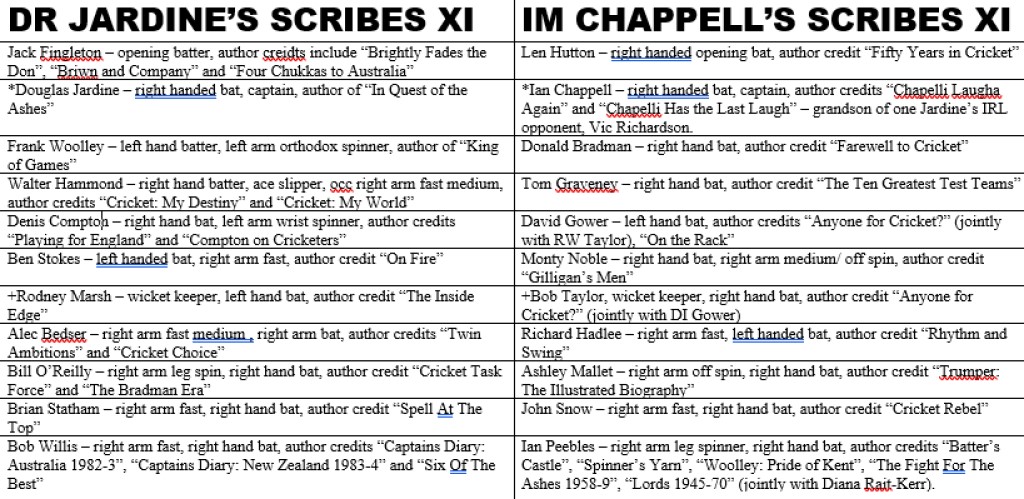
DOUGLAS JARDINE’S XI

  1. Jack Fingleton – opening batter and excellent writer. His author credits include “Brightly Fades The Don”, “Brown and Company” and “Four Chukkas to Australia” among others. His cricketing achievements included four successive test centuries.
  2. *Douglas Jardine – captain, and although not a regular opening bat, he did do the job at test level on occasions. His writing credit is for “In Quest Of The Ashes”, his own account of the 1932-3 tour of Australia when he was England captain. He was always adamantly of the opinion that runs could be scored against the method he devised, and when in 1933 the West Indies, via Manny Martindale and Learie Constantine, turned his own tactics on him he gave a convincing defence of his own case by scoring his one and only test century (127).
  3. Frank Woolley – left handed bat, left arm orthodox spinner, author of “King of Games”. He has already featured in my Kent all time XI and in my Record Setters XI.
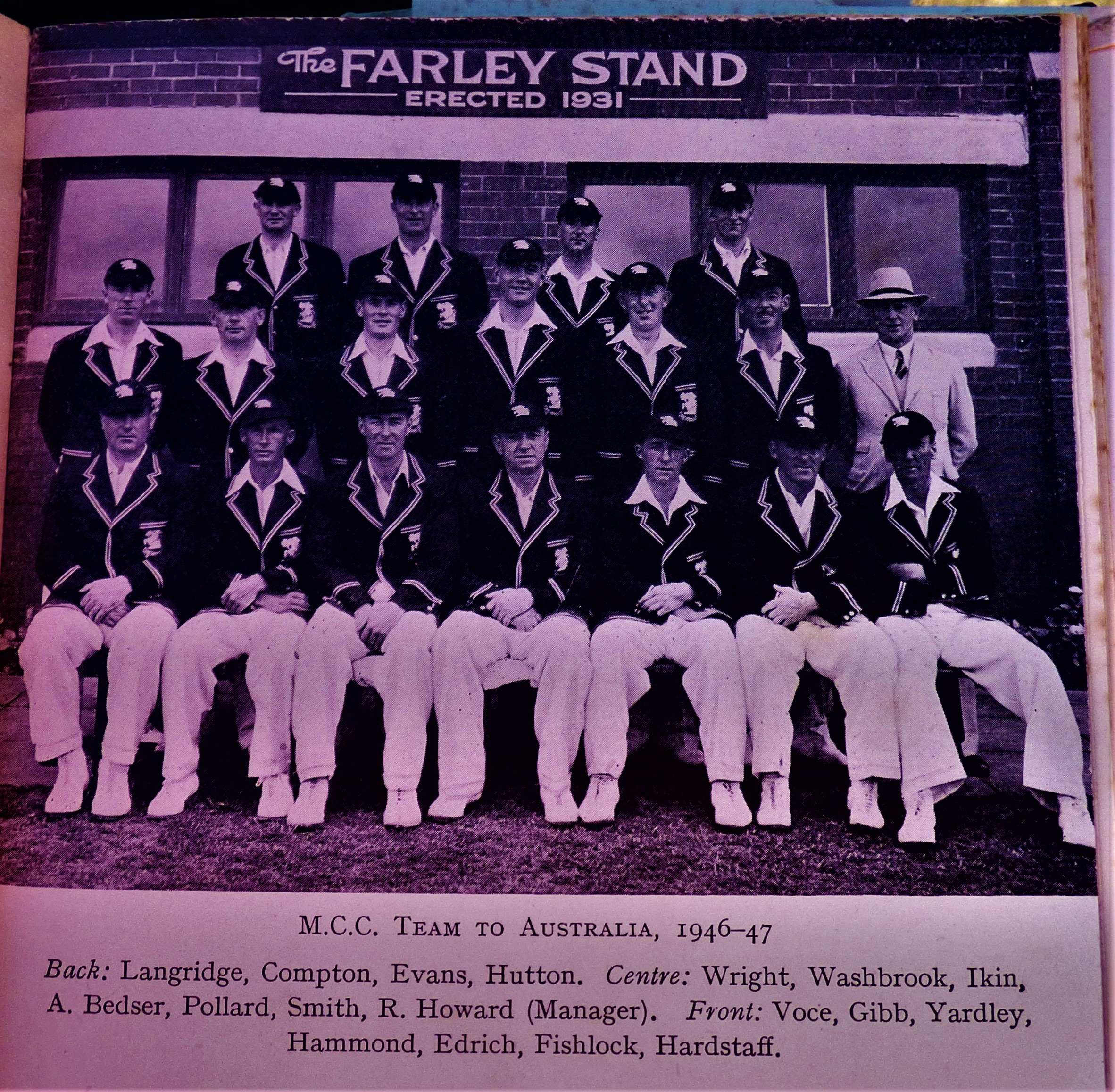
  4. Walter Hammond – right handed bat, slip ace, occasional right arm fast medium and author of two highly entertaining books, “Cricket: My Destiny and “Cricket: My World”. Had he not made an ill-advised test comeback after World War II he would have finished with 6,883 test runs at 61.75, and had the highest average of any England batter to play 20 or more test matches. As it was he became the first to reach the landmark of 7,000 test runs and finished with 7,249 at 58.45.
  5. Denis Compton – right handed bat, left arm wrist spinner, author of “Playing for England” and “Compton on Cricketers”, co-author with Bill Edrich of “Cricket and All That”. He features in my Middlesex and Record Setters XIs.
  6. Ben Stokes – left handed bat, right arm fast bowler, author of “On Fire”. The X-factor all rounder features in my Durham All Time XI. There is no bespectacled left arm spinner for him to bat with in the closing stages this time.
  7. +Rodney Marsh – wicket keeper, left handed bat, author “The Inside Edge”.
  8. Alec Bedser – right arm fast medium, right handed bat, author of “Cricket Choice” and “Twin Ambitions”. He also features in my Surrey All Time XI.
  9. Bill O’Reilly – leg spinner, right handed bat, author of “Cricket Task Force” and “The Bradman Era”. 
  10. Brian Statham – right arm fast bowler, right handed bat, author of “Spell At The Top”. He features in my Lancashire All Time XI, and should be an excellent foil to…
  11. Bob Willis – right arm fast bowler, right handed bat, author “Captai n’s Diary: Australia 1982-3”, “Captain’s Diary: New Zealand 1983-4” and “Six Of The Best”. He features in my All Time Warwickshire XI.

This side has a solid looking opening pair, an excellent trio at 3,4 and 5, all of whom can also contribute with the ball, an x-factor all rounder at six, a brilliant keeper  and four splendid bowlers. It lacks an off spinner, but has every other base covered, and of course has a ruthless skipper at the helm. It is now time to meet their opponents…

IAN CHAPPELL’S XI

  1. Len Hutton – right handed opening bat, author of “Fifty Years In Cricket”. One hald of the opening pair in my Yorkshire All Time XI (with my namesake, Herbert Sutcliffe), and scorer of 6.971 test runs at 56.67.
  2. *Ian Chappell – right handed bat, captain, author of “Chapelli Laughs Again” and “Chapelli Has The Last Laugh”. He usually batted three rather than opening, but I have moved him up one, because as you will see I have a rather stronger claimant to the no3 slot in this XI.
  3. Don Bradman – right handed bat, author of among others “Farewell to Cricket”. Quite simply the greatest batter of all time, and here given an opportunity to match wits once more with the only opposition captain who could claim with any justification to have got the better of him.
  4. Tom Graveney – right handed bat, author of “The Ten Greatest Test Teams”. He features in my Gloucestershire All Time XI, and had I not named there I would have done so for Worcestershire, the other county he played for. The first half of a supremely elegant middle order duo, with…
  5. David Gower – left handed bat, author of “Anyone for Cricket” (jointly with Bob Taylor), “On The Rack”, and an autobiography. 8,231 runs in test cricket at 44.25, he would need to me on his mettle in this contest as Jardine would without doubt keep two gullies in place for him owing to his tendency to fish at balls outside off stump. However I reckon that he would relish the contest. He features in my Leicestershire All Time XI and later played for Hampshire.
  6. Monty Noble – right hand bat, right arm medium and/or off spin, author of “Gilligan’s Men”, an account of the 1924-5 Ashes tour.
  7. +Bob Taylor – wicket keeper, right handed bat and co-author with Gower of “Anyone For Cricket?”. He has previously featured in my Derbyshire All Time XI and in the Staffordshire Born piece.
  8. Richard Hadlee – right arm fast bowler, left handed bat, author of “Rhythm and Swing”. He featured in my Record Setters XI and got an honourable mention in the Nottinghamshire piece.
  9. Ashley Mallett – right arm off spinner, right handed bat, gully specialist fielder, author of “Victor Trumper: The Illustrated Biography”.
  10. John Snow – right arm fast bowler, right handed bat, author of “Cricket Rebel”. He features in my Sussex All Time XI. In 1970-1 he blitzed the Aussies who had Ian Chappell in their ranks (captain for the final match after the deposition of Bill Lawry) in their own backyard. This time ‘Chapelli’ would be captaining Snow.
  11. Ian Peebles – leg spinner, right handed bat, author of “Batters Castle”, “Spinners Yarn”, “Woolley: Pride of Kent” and “The Fight For The Ashes 1958-9”. He featured in my Non-Cricketing Birthplaces XI.

This team has an opening pair who should combine well, the greatest batter of them all at no3, a supremely elegant combo at 4 and 5, a tough all rounder at six, a superb wicket keeper and four excellent bowling options. The presence of Hadlee and Snow gives them means to counter a barrage should Willis, Statham and Stokes provide one, something that the 1932-3 Aussies deprived themselves of (had Fingleton, Chapelli’s grandfather Vic Richardson, or Bill O’Reilly been given HOa say I suspect that at least two out of Laurie Nash, Jack Scott, Eddie Gilbert and ‘Bull’ Alexander would have been picked as part of the Aussie attack, and Jardine would not have had such on overwhelming advantage in fast bowling firepower).

HOW THE CONTEST WOULD WORK AND MY PREDICTION FOR THE OUTCOME

I envisage 10 5-day matches, five in England at Edgbaston, Lord’s, Headingley, Trent Bridge and The Oval, and five in Australia at Brisbane, Adelaide, Perth, Melbourne and Sydney. If after 10 matches the score is level, I would have the teams reconvene for a timeless match to settle the issue, to played at a neutral venue (Cape Town, Kolkata or Bridgetown would all be possibilities). Should that match be tied, then tie splitting option one would be for the trophy to go the team that took most wickets over the 11 matches played, and if that does not split them, then, and only then, would we resort to ‘super overs’ to find a winner (hope you’re still fit by then Mr Stokes!). In addition the main trophy, there would of course be player of the match and player of the series awards, and a special “Grace-Murdoch” medal (named after two of the early Ashes ‘heroes’) along similar lines to the “Compton-Miller” medal.

The umpires would need to be chosen carefully, and the only match referee who would even have a chance of handling this would be Clive Lloyd.

Notwithstanding the presence of Bradman in Ian Chappell’s XI I make Douglas Jardine’s XI slight favourites – and more than slight favourites if it gets so close that all the tie-splitting procedures are needed – assuming Stokes is still fit only one of these sides could win a ‘super over’ contest!

LINKS AND PHOTOGRAPHS

The ‘Cardus-Haigh’ Trophy for the battle of the cricket scribes and the two XIs to compete for it have taken their bows, but before I apply my usual sign off I have a couple of links to share (the honourable mentions are just too numerous to even attempt):

  • The pinchhitter has again honoured me with a mention in today’s offering, which I highly recommend.
  • Van Badham has a piece in The Guardian (Cardus wrote for it in it’s great days as The Manchester Guardian, under the control of legendary owner-editor CP Scott) giving awards to all the worst responders to coronavirus (small but unsurprising spoiler, the overall grand champion currently resides at 1600 Pennsylvania Avenue).
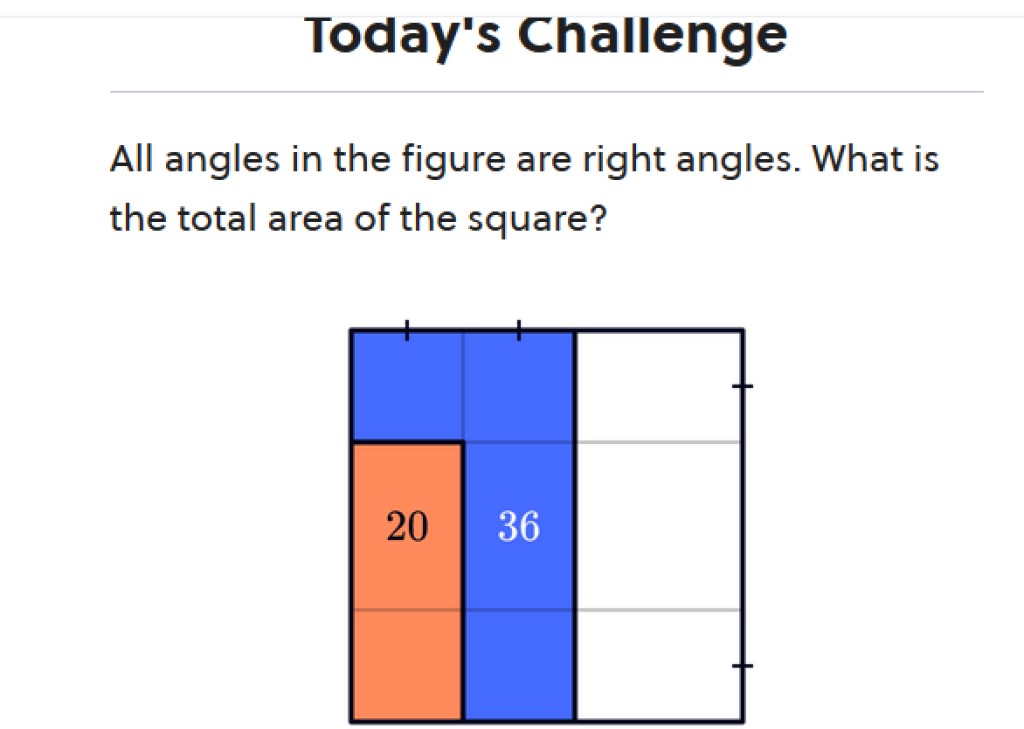
  • Finally, courtesy of brilliant.org, a little mathematical teaser (my current, personal record, problem solving streak there now runs to one day more than Dennis Lillee’s career tally of test wickets) – see screenshot and four available answers below. In my next post I will provide both my own (mathematical equivalent to Grace’s run out of Sammy Jones, as I freely admit) and a more authentic solution in my next post.
    Brilliant Challenge
    The four answers offered by the setter are 94, 96, 98 and 100. Over to you.

Now it is time for my usual sign off:

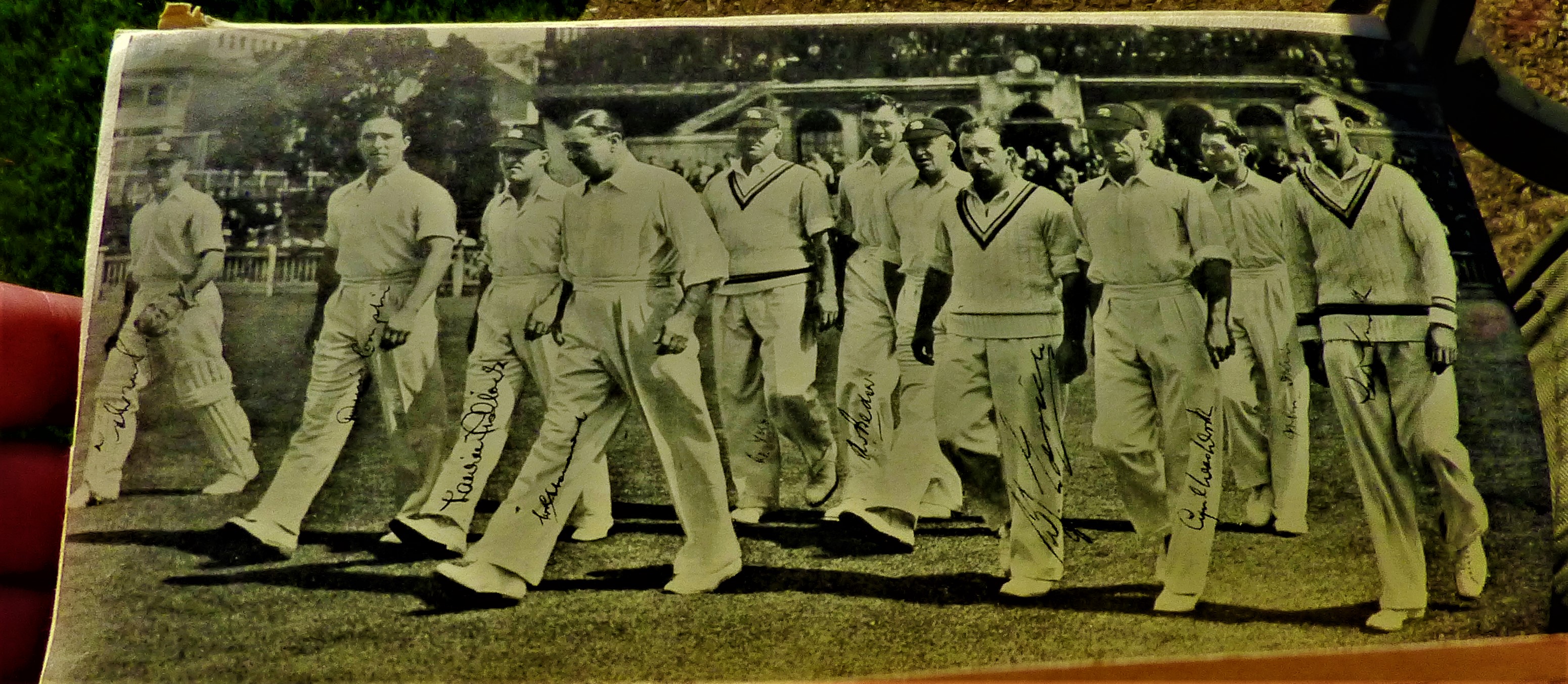
P1320074 (2)P1320075 (2)P1320076 (2)P1320077 (2)

P1320079 (2)
A couple of illustrations photographed from Hammond’s “Cricket: My World”

P1320080 (2)P1320082 (2)P1320083 (2)P1320086 (2)P1320087 (2)P1320088 (2)P1320089 (2)P1320090 (2)P1320092 (2)

Scribes XIs
The XIs in tabulated form with abridged comments.