All Time XIs – The Family Game

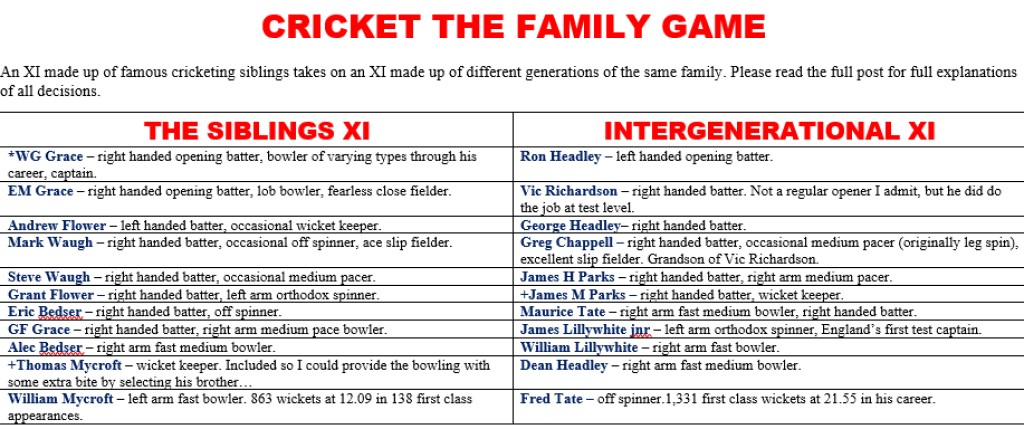
Today’s all time cricket post looks at cricketing families – an XI of siblings takes on an intergenerational XI. Please note the requirement that at least two members of each selected family feature in the team.

INTRODUCTION

For today’s all time XI cricket post we are looking at cricketing families. A team made up of groups of siblings do battle against an intergenerational XI. There are a number of famous cricketing families I could not include – I set myself a rule of including at least two members of each chosen family – not just select one and name their cricketing relations.

THE SIBLINGS XI

  1. *WG Grace – right handed opening batter, right arm bowler of varying types through his career, captain. The way to get round 11 being an odd number when selecting a team of siblings is to pick one group of three siblings, and fortunately there is a darned good such grouping readily available. His test batting average was only 32.29, but he made his debut at the age 32 and played on at that level until he was almost 51 – had the first test in England been in 1870 rather than 1880 his record would have been considerably better. He won eight of his 13 tests as captain, and all 13 of those matches were against the oldest enemy.
  2. EM Grace – right handed opening batter, lob bowler, fearless close fielder. Seven years WG’s senior, that inaugural test in England was his only one, and he shared an opening stand of 91 with his brother in the first innings thereof. England would probably have fared better in the 1882 match that inaugurated the Ashes had he been present in place of AN Hornby. Before WG’s rise overshadowed everyone else EM had been regarded as a phenomenon.
  3. Andrew Flower – left handed batter, occasional wicket keeper. He averaged over 50 in test cricket (see my ‘Minor Nations’ post from Monday), and makes a good selection for the critical number three slot, especially since other considerations prevented the use of the only other sibling to have been a really good test no 3, ‘Chappelli’.
  4. Mark Waugh – right handed batter, occasional off spinner, ace slip fielder. The first of two pairs of twins to make their appearances in this XI. He announced his presence at the highest level (selected in place of his brother!) with a scintillating 138 against England and went to establish a superb record.
  5. Steve Waugh – right handed batter, occasional medium pace bowler. He was first picked in 1985 at the age of 20 as a ‘bowling all rounder’, but it is his batting that gets him in – he averaged over 50 at the highest level, and that after taking 27 matches to reach his first century (177 not out at Headingley, as Australia, put in by England skipper Gower cashed in on an ‘attack’ comprising four medium pacers to the tune of 601-7 declared). He would be vice captain of this side.
  6. Grant Flower – right handed batter, occasional left arm orthodox spinner. Andrew’s younger brother, averaged just over 40 in test cricket.
  7. Eric Bedser – right handed batter, off spinner. His averages are just the wrong way round – 24.00 with the bat, 24.95 with the ball (833 first class wickets in total), and he is the first of three members of the XI not to have played test cricket.
  8. GF Grace – right handed batter, right arm medium pace bowler. In his case his sudden death from a freak illness prevented him from having a better record – he was 29 years old and just two weeks previously had played in the inaugural test in England, and had there been such a thing in 1880 his catch to dismiss George Bonnor would have been a shoo-in for the ‘Champagne Moment’. He averaged 25 with the bat and 20 with the ball, and the former figure puts him on a par with Richard Daft, rated no2 to WG Grace in the 1870s, GF’s decade.
  9. Alec Bedser – right arm fast medium bowler, useful lower order batter. Eric’s identical twin brother – and they used to wear identical clothes as well apparently. Because they considered playing for separate counties unthinkable they tossed a coin for who would stick to medium pace, and who would work on batting and off spin, and Alec won. There is a story that once in a benefit match Eric finished an over that Alec had started, and no one noticed the substitution, which suggests that Eric remained quite useful as a medium pacer.
  10. +Thomas Mycroft – wicket keeper, right handed batter. The most obscure of my choices, but he did average almost three dismissals a game in his brief first class career, and his presence enables me to give some much needed punch to the bowling by selecting his brother…
  11. William Mycroft – left arm fast bowler. 138 first class matches, 863 wickets at 12.09 each, and hopefully a suitable new ball partner for Alec Bedser.

This team is strong in batting, and the three Graces plus Eric Bedser should between them be able to provide sufficient bowling back up to the new ball pairing of Mycroft and Eric Bedser.

OTHER POSSIBILITIES

I might have opted for a new ball pairing of half brothers, Fidel Edwards and Pedro Collins, with Alec Bedser coming on first change, but that could only have been done by giving Andrew Flower the gauntlets and dropping the Mycrofts, and I prefer my no3 not also have to keep wicket. Although both captained England neither Arthur nor Harold Gilligan had a record to merit inclusion, and I certainly could not accommodate both. The Pitheys of South Africa were good rather than great. John and Hugh Trumble and Richie and John Benaud were two pairings that each had one weak link and so could not be accommodated. Johnny and Ernest Tyldesley were also in the mix, but would you drop either the Flowers or the Waughs for them? Richard and Dayle Hadlee could also have been picked to share the new ball, using the same method as for Edwards and Collins.

INTERGENERATIONAL XI

  1. Ron Headley – left handed opening batter. The Headleys provide three members of this side. He opened for Worcestershire for many years, although his two matches for the West Indies were not a great success.
  2. Vic Richardson – right handed batter. He was not an absolutely regular opener, but he did do the job at test level. We shall meet one of his grandsons at no4 in this order.
  3. George Headley – right handed batter. Averaged 60.83 in test cricket, and no3 was his regular position. The first of the family to play top level cricket.
  4. *Greg Chappell – right handed batter, occasional right arm medium pace (started as a leg spinner), excellent slip fielder, captain. Averaged over 50 in test cricket, one of three grandsons of Vic Richardson who all played test cricket.
  5. James H Parks – right handed batter, right arm bowler. The only player ever to have scored 3,000 runs and taken 100 wickets in the same first class season.
  6. +James M Parks – right handed batter, wicket keeper. Son of James H Parks, a fine batter/ keeper for Sussex, and had today;s attitudes to selecting keepers existed in the 1960s he would have played many more times for England in that role than he did.
  7. Maurice Tate – right arm fast medium bowler, right handed lower middle order batter. One of the greatest of all bowlers of cutters, and the first bowler to be able to use the sea fret at Hove to facilitate movement in the air.
  8. James Lillywhite jnr – left hand batter, left arm orthodox spinner. England’s first test captain; 1,210 wickets at 15.12 in first class cricket. Nephew of…
  9. William Lillywhite – right arm fast roundarm bowler. Known as the ‘nonpareil’ such was his superiority to other bowlers of his era.
  10. Dean Headley – right arm fast medium bowler. The third of the Headley family trio, he played for England and would have had more success had he not been plagued by injuries.
  11. Fred Tate – off spinner, good close fielder. His one test appearance, coming late in his long career, was undistinguished, but 1,331 first class wickets at 21.55 confirms that he is not just here to get his son into the side.

This side has a solid batting line up, and the bowling looks adequate, albeit that Fred Tate is the only front line spin option.

OTHER CRICKETING FAMILIES

Sussex have a grand tradition of cricketing families, as the above team shows – and I did not include the two members of the ruling family of Nawanagar, ‘Ranji’ and ‘Duleep’. The Tremletts produced three generations of first class cricketers, but accommodating all three would have been a challenge. Chris Broad would have been preferable to Ron Headley as opening batter, and Stuart preferable to Dean as a bowler, but if I had made that call I would have had to drop George Headley, and likewise dropping Vic Richardson would have necessitated dropping Greg Chappell. The Cowdreys are the only cricketing family to have produced four successive generations of first class cricketers, but of them all only Colin was truly top class. I would have liked to include the D’Oliveiras but to do so I would have to have found room for either Damian or Brett, so Basil missed out. Charles Townsend, the Gloucestershire leg spinning all rounder would have been useful, but I would have to had to find a place for either his father Frank or his son David, neither of whom were genuinely top class. I could have selected Jonny Bairstow as a batter and David as a keeper in place of the Parkses, but considered JH’s bowling to be a valuable asset. Perhaps the biggest miss caused by my criteria of demanding at least two members of each family feature was Denis Compton, but that would have necessitated finding space for his grandson Nick. The Gunns of Nottinghamshire also missed out. Billy Quaife would have been a solid opener, but I would have had to accommodate his son Bernard, less good, as well. The Quaife’s once faced up as opening batters to Billy and Robert Bestwick, likewise related, but again Robert Bestwick would not have been worth his place. Len Hutton would have strengthened the batting, but accommodating his son Richard would have been a challenge, while the same applies even more strongly to Herbert and Billy Sutcliffe. The great-grandfather/ great-grandson pairing of William Cooper and Paul Sheahan obviously appealed, but neither were really of the highest class. Richard Hadlee missed out because there was no way to accommodate his father Walter. Vinoo Mankad was another in this mix, but again his son Ashok was not good enough to warrant a place. Had I been willing to forego Greg Chappell I could have had an adhesive opening pair of Hanif and Shoaib Mohammad.

THE CONTEST

The contest for the ‘Cowdrey-Tremlett trophy’ (honouring two of the great cricket dynasties) would be a good one, with a splendid contest within a contest between Alec Bedser and Maurice Tate at the heart of it. I think the better balance of the intergenerational side just gives them the edge.

PHOTOGRAPHS

Time for my usual sign off:

IMG_0822 (2)IMG_0823 (2)IMG_0824 (2)IMG_0825 (2)IMG_0827 (2)IMG_0828 (2)IMG_0829 (2)IMG_0830 (2)IMG_0831 (2)IMG_0832 (2)IMG_0833 (2)IMG_0834 (2)IMG_0835 (2)IMG_0836 (2)IMG_0838 (2)IMG_0839 (2)IMG_0840 (2)IMG_0841 (2)

IMG_0843 (2)
Butterflies will soon be in evidence…
IMG_0843 (3)
…a caterpillar dozing on a leaf

IMG_0844 (2)IMG_0844 (3)

IMG_0846 (2)
Two caterpillars visible in this shot…
IMG_0846 (3)
…this one and…
IMG_0846 (4)
….this one.

IMG_0847 (2)

IMG_0848 (2)
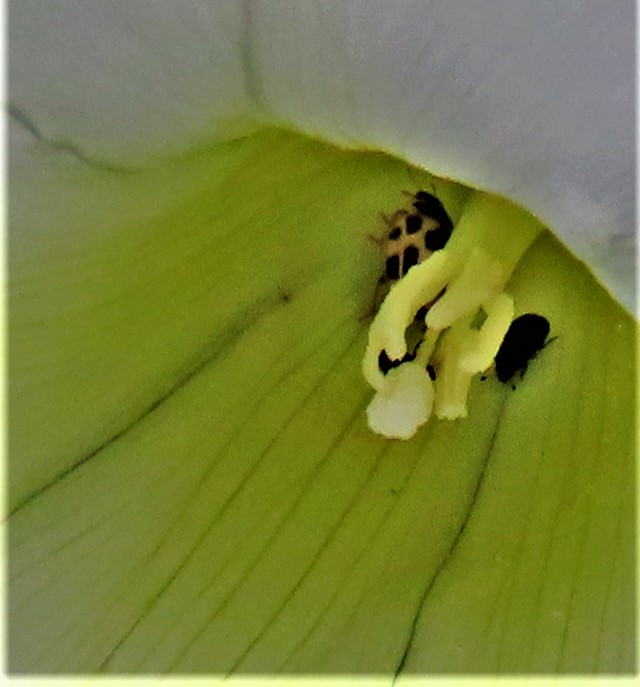
A flower that lures…
IMG_0848 (3)
…bugs like this one…
IMG_0849 (2)
…to their dome – besides the one I was focussing on, which crawled in but was not going to be getting out any time soon you can two other bug bodies in there.
IMG_0850 (2)
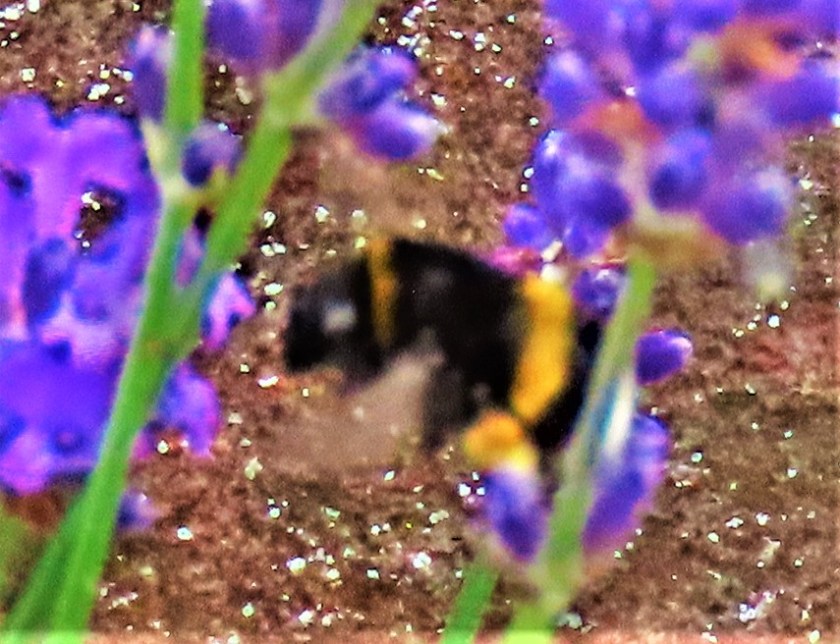
This bee has a large load of pollen.

IMG_0852 (2)

IMG_0853 (2)
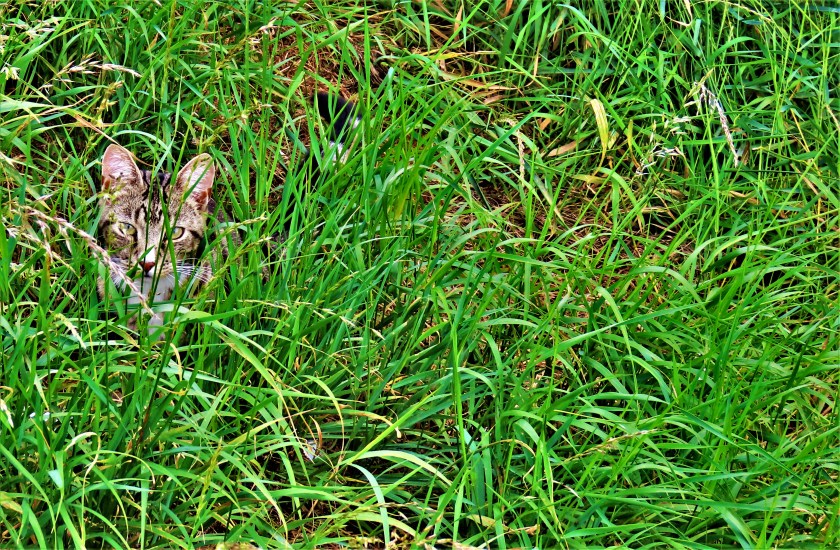
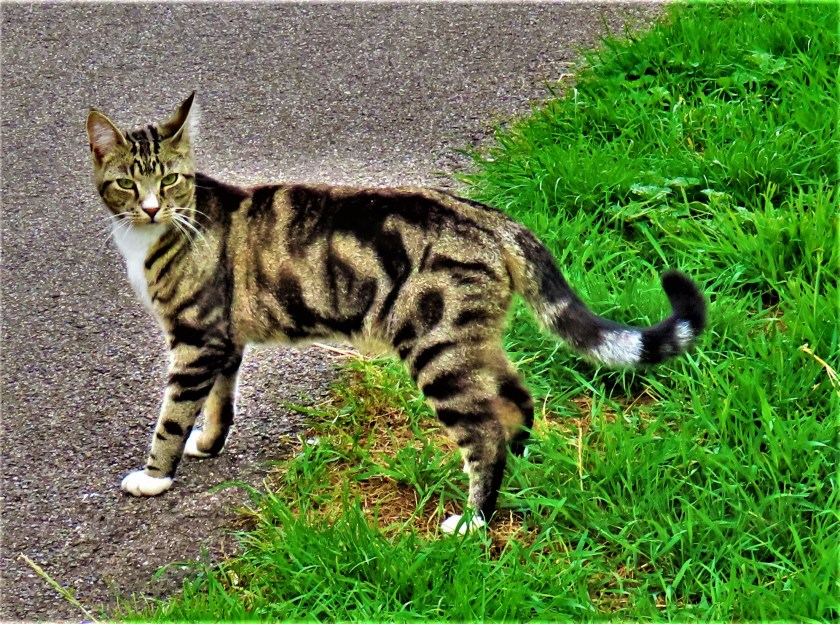
A flick of a dark coloured tail caught my attention, but it was merely an adventurous young cat…
IMG_0854 (2)
…returning the the path shortly afterwards.

IMG_0855 (2)IMG_0856 (2)IMG_0857 (2)IMG_0858 (2)IMG_0859 (2)IMG_0860 (2)IMG_0863 (2)IMG_0863 (3)IMG_0864 (2)IMG_0864 (3)IMG_0865 (2)IMG_0865 (3)

Family Game
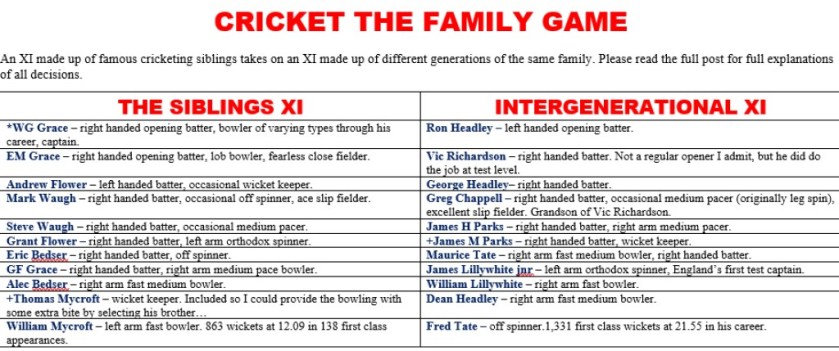
The teams in tabulated form.

All Time XIs – Graeme v John

Today’s voyage through ‘all time XI’ cricket territory features a team of players with forename Graham or Graeme take on a feature of players with forename John for the ‘Bretton Trophy’.

INTRODUCTION

Today’s exploration of ‘all time XI‘ cricket territory focusses on forenames. An XI all of whom have the forename Graeme or Graham take on an XI who all have the forename John.

THE GRAEME/GRAHAM XI

  1. Graeme Fowler – left handed opening batter, occasional medium pace bowler, occasional wicket keeper. His highest first class score came in a test match, 201 vs India in India. His most remarkable first class batting performance came against Lancashire at Southport in1982. He made 128 in the first innings and 126 not out in the second, as Lancashire, after seeing their opponents make 523-4 declared on the first day won by ten wickets. Fowler was injured early in his first innings, and batted for the rest of that innings with David Lloyd as his runner. In the second innings Ian Folley took over as runner, while Lloyd reverted to his main role as opening partner to Fowler. At the end of this match Fowler had eight first class hundreds to his credit and four of them had come at the expense of Warwickshire. He was dropped by England at the start of the 1985 season to make way for Gooch, returning from his three year international ban for going on the first rebel tour of apartheid South Africa. Then, with England winning the Ashes in 1985 the incumbents Gooch and Tim Robinson who had made a remarkable start to his test career were selected for the trip to the West Indies, with Wilf Slack of Middlesex chosen as reserve opener and Fowler ignored. Robinson failed badly on that tour, but there was to be no international return for Fowler.
  2. Graham Gooch – right handed opening batter, occasional medium pacer. He was a little fortunate to be brought straight back into the team after his ban for going to South Africa, and he then missed the 1986-7 Ashes, when Chris Broad and Bill Athey opened for England. He had a good series against the West Indies in 1988, but then some crass comments of his played their own role in the cancellation of the planned 1988-9 tour to India, and in 1989 against Australia he fared poorly, at one point in the series actually asking to be dropped. The 1989-90 tour of the Caribbean saw England fare respectably, winning one test and being denied victory in another only by scandalous time wasting tactics. However, it was the 1990 home season against New Zealand and India that saw Gooch, then 37 years of age, really come to the fore as an international batter. At Headingley in 1991 he played one of the finest of all test innings, and as late as 1994 at the age of 41 he hit a double century against New Zealand, but the Ashes tour of that winter was as he would subsequently admit a tour too far, and his test career ended with 8.900 runs at 42.38.
  3. Graeme Smith – left handed batter. An unattractive player to watch but his record speaks for itself.
  4. Graeme Pollock – left handed batter. He averaged 60.97 in test cricket before his country’s isolation for political reasons ended his career. He was due to play in Kerry Packer’s World Series Cricket, but fears of that being used as a stalking horse for the readmission of apartheid South Africa led to a ruling that only South Africans who played county cricket could participate. Besides Pollock a leg spinner named Denys Hobson missed out because he too was not a county cricketer.
  5. Graham Thorpe – left handed batter, occasional medium pace bowler. He made his debut in the Trent Brisge test of 1993, scoring 114 in the second innings, but not getting to savour a victory first time out as skipper Gooch delayed the declaration too long and Australia had no great difficulty securing a draw. His England career ended in 2005, when the selectors decided to go with Pietersen and Ian Bell for that year’s Ashes (for my money they made two mistakes in the early part of that season – Pietersen should have played in the tests against Bangladesh at the start of it, and Bell should have been left out – he fared well against Bangladesh but was unconvincing against Australia.
  6. Graham Dowling – right handed batter. He averaged 31 in test cricket for New Zealand, similar to the average recorded by Graeme Hick for England. The highlight of his test career was an innings of 239.
  7. +Graham Kersey – wicket keeper, right handed batter. His death following a  car accident at the age of 25 ended a career that had shown huge promise – in 59 matches at first class level he made 193 dismissals (181 catches and 12 stumpings) and had produced a few significant batting performances as well.
  8. *Graeme Swann – off spinner, useful lower order bat. England’s best off spinner of my life time.
  9. Graham McKenzie – right arm fast medium bowler. At the end of his career he had the most wickets ever by an Australian pace bowler (246), though he was overhauled by Dennis Lillee not many years later. On an Old Trafford pitch in 1964 which yielded 1,271 runs for 18 wickets over five days he had bowling figures of 7-153 in England’s 611.
  10. Graham Dilley – right arm fast medium bowler. His career was ravaged by injuries, and he also suffered from the sometimes bizarre approach of England selectors in those days. His test career ended when he signed up for what turned out to be the last of the rebel tours of apartheid South Africa in 1989, and he took his wickets at the highest level at only just under 30, while at first class level he paid 26 a time. It was him joining Botham, with the score reading 135-7 in the England second innings and 92 still needed to avoid the innings defeat that started the incredible turnaround at Headingley in 1981 – he contributed 56 to a stand of 117 in 80 minutes, which inspired Old to contribute a further 29 to a stand of 67, and finally Willis resisted gamely will Botham continued to lash out. In the final innings Dilley showed a cool head and excellent judgement to remain within the fine leg boundary while catching Rod Marsh’s skied hook, a moment that left Australia 74-7. Had Dilley misjudged and slipped over the rope it would have been 80-6 instead.
  11. Graham Onions – he was first noted because of his combination with his county wicket keeper, Phil Mustard, which led to a significant number of C Mustard B Onions entries on scoresheetts. While never a star at the very highest level he did not ever let England down either. He himself would not quarrel with his position at no11, but would justly point out that he did help to save two successive test matches withe bat.

This team is strong in batting, has an excellent wicket keeper, but the bowling attack is neither absolutely top line nor fully balanced. Still they would not be pushovers for anyone.

THE JOHN/JACK XI

  1. Jack Hobbs – right handed opening batter. ‘The Master’ is a fine start to any batting order.
  2. Jack Robertson – right handed opening batter. His 11 test appearances between 1946 and 1951 saw him average 46 at that level. Bizarrely he was not chosen for either the 1946-7 or the 1950-1 Ashes tours, even though one of England’s chief weaknesses on both tours concerned the top of the order.
  3. Johnny Tyldesley – right handed batter. His test highlight was 138 at Edgbaston in 1902. He was a regular part of the Lancashire line up from 1895 until the outbreak of World War I and made further sporadic appearances over the course of four years after that war ended. He was once involved in a famous exchange with Lancashire opener and captain Archie MacLaren. The pair of them were batting against Frank Laver who discovered a way to bowl a really vicious late swinger, and they initially played him with great caution. After a few overs MacLaren summoned Tyldesley for a mdiwicket conference. MacLaren said “Johnny, I’m going to drive this chap Laver” to which Tyldesley responded “You’ll of course do as you think best, Mr MacLaren, but I am going to cut him.”
  4. John Small – Right handed batter. He was one of the greats of Hambledon. He once batted through an innings lasting three whole days of play. He was also indirectly responsible for a major change to the game – on one occasion Edward ‘Lumpy’ Stevcns, rated no2 to David Harris among bowlers of that era beat him three times in an innings with balls the passed between the wicket, which at that time comprised two stumps and a single crosspiece linking them. Stevens’ misfortune was noted, and the arrangement of three stumps set sufficiently close together that a ball could not pass through with two bails on top was introduced. Since then top level matches have not seen any repeats of Stevens’ misfortune, but one HS Dawe of Thistleton took all of his opponents wickets but had his analysis slightly spoiled by two deliveries passing between the stumps. What happened? The umpires had used an old (and as it transpired) swollen ball to measure the distance between the stumps!
  5. John Richard Reid – right handed batter, right arm fast medium bowler. One of New Zealand’s greatest ever.
  6. *Johnny Douglas – right handed batter, right arm medium fast bowler. His initials, JWHT (for John William Henry Tyler), and his approach to batting saw Aussie spectators dub him “Johnny Won’t Hit Today”, with a few even suggesting that “Johnny Won’t Even Hit Tomorrow”. He was an effective user of the new ball, although giving it to himself in preference to SF Barnes in the first test of the 1911-2 Ashes was misconceived – a fact which Douglas eventually acknowledged, and he restored the new ball to Barnes for the rest of the series, which England won 4-1. He was sometimes temperamental in the field. On one occasion the Essex slips were being more than usually generous towards opposition batters, and eventually second slip muffed one sitter too many, and turning to chase the ball he found himself being overtaken by his skipper, who was shouting “don’t worry, I’ll fetch the bl***y thing myself.”
  7. +John Murray – wicket keeper, right handed batter. Eratosthenes, Librarian of Akexandria at a time when that was THE plum academic posting was once dubbed ‘Beta’ by a rival, after the second letter of the Greek alphabet on the grounds the he was “second best in the world at everything.” In a sense, Murray was the ‘Beta’ of wicket keepers  – second to Bob Taylor in career dismissals, and the second of only two (the other being Les Ames who achieved the feat three times) to manage the wicket keeper’s season double of 1,000 runs and 100 dismissals.
  8. John Emburey – off spinner, useful unorthodox lower order batter.  He was in his prime in an era that was not friendly to any kind of spin bowling, and was often required by his captains to bowl in a purely defensive capacity, keeping things tight while the quicker bowlers got thier breath back. This means that his record looks very ordinary by comparison with many of his forebears among conventional off spinners, but until the 1992-3 tour of India when he encountered batters who regularly dealt with quality spinners even in club cricket and was simply not allowed to bowl in his preferred style he was rarely collared. He visited Australia twice, in 1978-9 and 1986-7, and England won both series quite comfortably (the 1986-7 scoreline looks close, but England;s loss was in the final match of the series, when they took on a run chase that they would have eschewed had the series been live.
  9. Jack Walsh – left arm wrist spinner. An excellent counter part to the very orthodox off spin fo Emburey, the Leicestershire based Aussie was a huge spinner of the ball, regular taking huge bags of wickets in the county championship.
  10. John Wisden – right arm fast bowler. I opted for him in preference to that other Sussex speedster John Snow. His most famous bowling performance was all ten wickets in an innings, all clean bowled. On a tour of North America he once took six wickets with successive balls in a two day match.
  11. Jack Ferris – left arm medium fast bowler. One of the finest of Australia’s early bowlers.

This team has a fine top four, two genuine all rounders, a splendid keeper and four excellent and varied bowlers, three of whom could make useful contributions with the bat.

THE CONTEST

The contest for what I shall dub the ‘Bretton Trophy’ (from Charlotte Bronte’sVillette“, honouring the character John Graham Bretton, who we meet first as ‘Graham’ and then as ‘Dr John’) should be a good one. The Graene/Graham team are stronger in batting, but as against that the John/Jack (and all my chosen Jacks were actually registered as John at birth, but later referred to as Jack) team have greater strength, depth and variety in bowling, and therefore I would expect them to emerge victorious in the end.

A CRICKET VIDEO

My thanks to the pinch hitter for putting me on to video footage of Murali’s destruction of England at The Oval in 1998:

POLITICAL UPDATE

The Cummings/ Johnson scandal continues to rumble on, with the number of Tory MPs now being openly critical of Cummings into the 60s. Durham Police have confirmed what most of us already knew, namely that Cummings’ activities did constitute a breach of lockdown. My second message to my own MP, former Johnson advisor James Wild, remains, as does the first, unresponded to. If this is still the case come tomorrow morning then a third message from me will be hitting his inbox. This has gone beyond the political scandal it has been since Cummings’ activities were revealed and is now a public health scandal, as in spite of such being necessary to anyone with eyes to see, no government with Cummings still involved can claim the moral authority to enforce a lockdown. I recognize that I am fortunate in two regards, in that my home small as it is is all mine – it is not shared with anyone, and it does have a small garden, which means that although it is still two weeks before my shielding period expires I am at least able to get out in the open air, but it is still thoroughly annoying to see senior Tories effectively declaring that normal rules do not apply to them and their mates, while I have not been further afield than my little bit of garden since mid March.

SOLUTION TO YESTERDAY’S TEASER

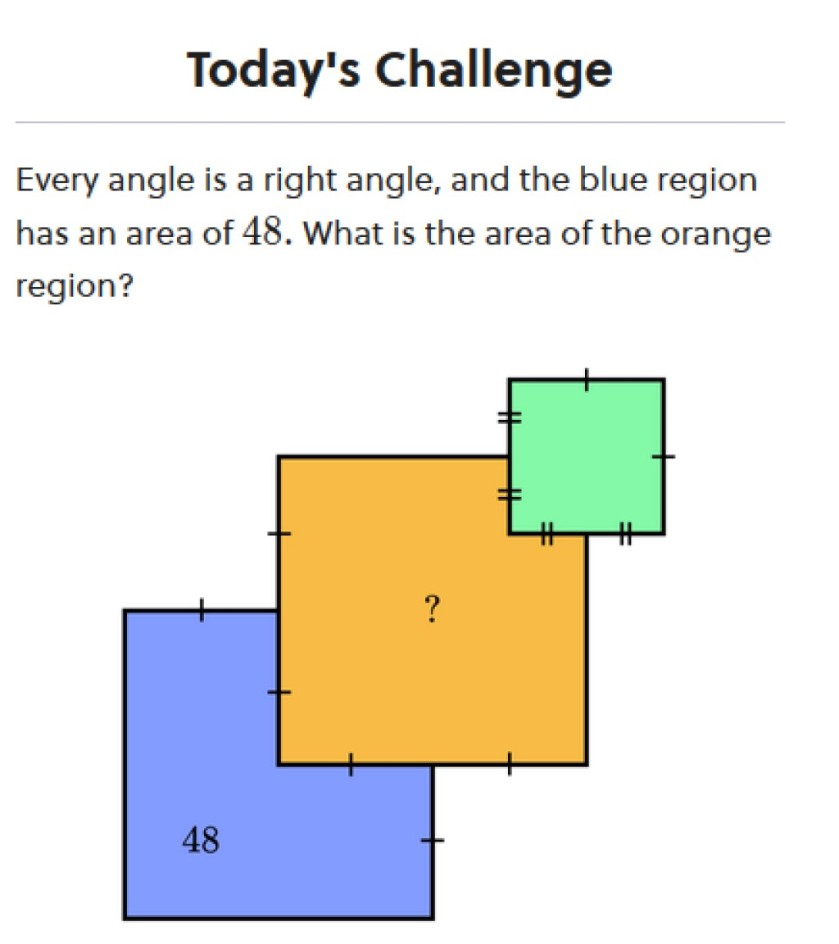
Yesterday’s post included the following from brilliant.org:

The blue area is three quarters of a square, which thus has area (48 x 4)/3 = 64. The orange area has area 64 less the overlapping portion of the green square. The green square has dimensions precisely half that of the blue and orange squares, i.e 4X4, making its area 16, and the overlap is one quarter of that = 4, so the orange region has a total area of 64 -4 = 60.

PHOTOGRAPHS

Having introduced today’s teams and explained the contest, produced a quick update on the political situation and solved yesterday’s teaser it is time for my usual sign off:
P1330216 (2)P1330217 (2)P1330218 (2)P1330219 (2)P1330220 (2)P1330221 (2)P1330222 (2)P1330224 (2)P1330227 (2)P1330228 (2)P1330229 (2)P1330231 (2)P1330232 (2)P1330236 (2)P1330239 (2)P1330241 (2)P1330242 (2)P1330243 (2)P1330244 (2)P1330245 (2)P1330247 (2)P1330250 (2)P1330252 (2)P1330254 (2)P1330255 (2)P1330256 (2)P1330257 (2)P1330258 (2)

Graeme v John
The teams in tabulated form.

Nomination For Sunshine Blogger Award (#3) And Other Stuff

A response to my third nomination for a Sunshine Blogger Award and plenty of other stuff.

INTRODUCTION

The nomination that gives this post its title comes from someone I had previously nominated for this award, which is why I am approaching things in the way I am, as I am going to use stuff from my last Sunshine Blogger Award nomination response to cover that side of things.

THE HIGHLIGHTS FROM MY PREVIOUS NOMINATION POST.

First, my thanks to Erika’s Corner (stigmasnomore) for the nomination. Now for those highlights (click the link in the section heading to view the full post):

RulesAnswersQsNominations

I open my questions up to responses from everyone.

THE SECOND MOST EXTRAORDINARY CRICKET MATCH OF 2019

For the most extraordinary match of the year start here. In any other year the inaugural England v Ireland test match at Lord’s would have had no competition for the title of that year’s most extraordinary match. Twice in a few weeks Lord’s was the scene of a match that reached deep into “script rejection” territory.

England slumped to 85 all out on the first day, a combination of poor batting and some good bowling, especially from Tim Murtagh and MarkRed‘ Adair (a nickname I coined in a previous post).

Ireland themselves managed 207 in response, a lead of 122. Olly Stone, Norfolk born fast bowler, took three wickets and surely ensured continuing involvement with test cricket for himself. Then, with England having one over to face at the end of day two Jack Leach, averaging four for Somerset in the county championship this year, was sent out to open, shielding Jason Roy.

Having survived the over in the evening Leach proceeded to make 92, while Roy, shielded from a potential second failure in one day also topped the 50. The came a slide from 177-1 at the high water mark of the innings to 303 all out, a lead of 181. Then in the most extraordinary twist, Stuart Broad, reckoned by some (including me) to be a fading force at test level and Chris Woakes took advantage of swing friendly conditions to rout Ireland for 38, giving England victory by 143 runs.

I note that for the first Ashes test Joe Root has been moved up to number three (desperately needed although he has little relish for it). However, this only deals with one top order problem. The opening pair remains an unresolved issue, with Roy having done so much tter at three than he did opening in the first innings. If England are 30-3 at the start of every innings against Australia they will be absolutely hammered in the series. I continue to hold out for what I now call the ‘Beaumont Solution‘.

LINKS AND PHOTOGRAPHS

I have two links to share with you before getting to the pictures:

  1. Anna was kind enough to give me a mention in her post “No 39 in my drawing goals for 2019” and I reciprocate here by advising you to visit the post.

The Skwawkbox has recently put up a post titled 124 policies Labour will deliver in government” – the policies themselves are below, in the form of the graphic (click on it to view it full size) that is the centrepiece of the Skwawkbox post:
Skwawkbox
The feature image of my previous post was a water based insect that at the time I had yet to identify. My research suggests that it is an Azure Damselfly:

British Nature Guide Pic:

Picture

And my close up photograph is below.

P1250638 (3)

Now for my new photographs, and there are plenty of them…

Beer Festival GP
We start with a few pictures from the King’s Lynn Beer Festival at Stuart House (NAS West Norfolk was this year’s designated charity beneficiary)

P1250685 (2)P1250686 (2)P1250687 (2)P1250688 (2)P1250689 (2)P1250691 (2)P1250692 (2)

P1250699 (2)
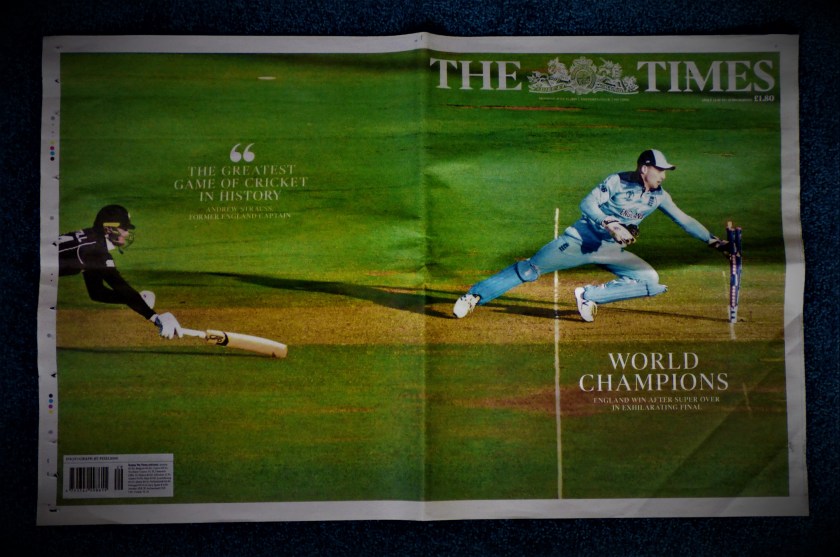
The moment the 2019 World Cup was won.

P1250700 (2)P1250701 (2)P1250703 (2)P1250704 (2)P1250705 (2)P1250706 (2)P1250707 (2)P1250711 (3)P1250712 (2)P1250713 (2)P1250714 (2)P1250715 (2)P1250716 (2)P1250717 (2)P1250718 (2)P1250719 (2)P1250719 (3)P1250721 (2)P1250722 (2)P1250723 (2)P1250724 (2)P1250730 (2)P1250731 (2)P1250732 (2)P1250735 (2)P1250737 (2)P1250739 (2)P1250741 (2)P1250750 (2)P1250751 (2)P1250754 (2)P1250758 (2)P1250759 (2)

P1250760 (2)
A Peacock Butterfly (relatively uncommon, although known to have some living places in King’s Lynn)
P1250762 (2)
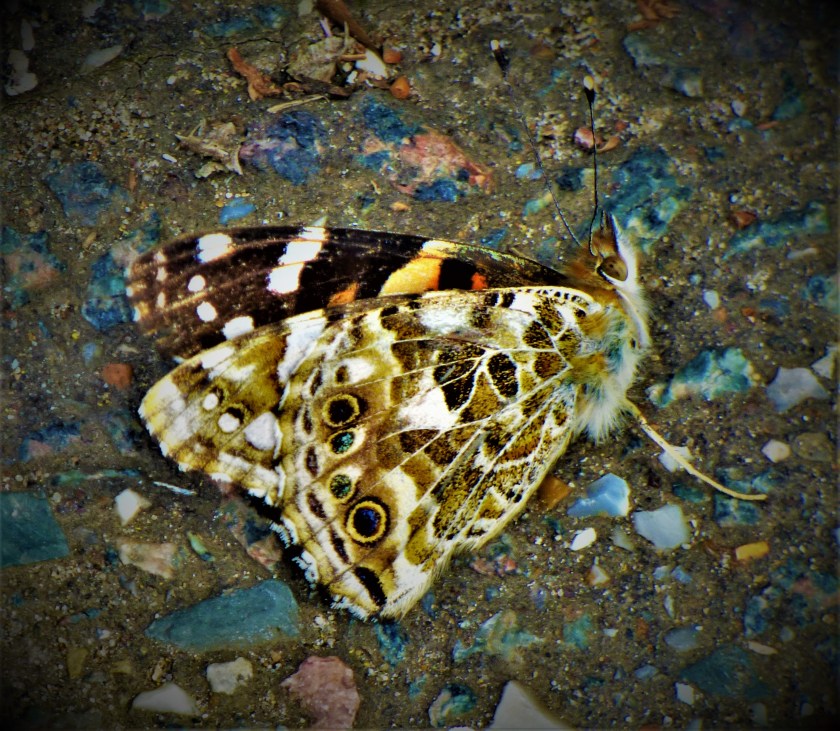
A Painted Lady (a variety of butterfly I had not previosuly observed in King’s Lynn)

P1250763 (2)P1250764 (2)P1250765 (2)P1250766 (2)P1250767 (2)P1250767

Inaugural England v Ireland Test Match Interestingly Poised

England v Ireland and some of the things I have done this week.

INTRODUCTION

I have a lot to share since I last posted, besides the situation in the cricket. However the first focus is indeed…

ENGLAND V IRELAND

England went into this test match with two test debutants, Jason Roy and Olly Stone (Lewis Gregory, in the 13, missed out for reasons beyond my comprehension). England won the toss and chose to bat. Some good bowling from Ireland and a terrible batting performance by England resulted in a total of 85 all out. Ireland were themselves all out before the end of day 1, and England sent Jack Leach into open with Rory Burns, shielding Jason Roy. Burns was out cheaply, but Leach and Roy shared an excellent stand that put England into credit, before both were out, Leach for 92. Joe Denly has just been run out as I write this, making England 194-4, a mere 72 to the good. Ollie Stone bowled well in his first test match, picking up three wickets. Burns deserves a little longer to prove himself, and Roy has one fine innings to his credit here, though I suspect that no 3 at test level suits him better than opening. I am unconvinced by Denly, who is nearer the end of his career than the beginning. I continue therefore to argue for the ‘Beaumont solution‘ to England’s current opening woes. Bairstow had just completed a pair, plunging England into trouble. The successful bowler was Mark Adair, surely to acquire the nickname “Red” if he has not already done so, who along with the veteran Murtagh has been Ireland’s best.

If England can put together another 80 or more the prospect of a fine finish remains, but at the moment I make Ireland strong favourites (and good luck to them, they have earned it).

THE KING’S LYNN FESTIVAL

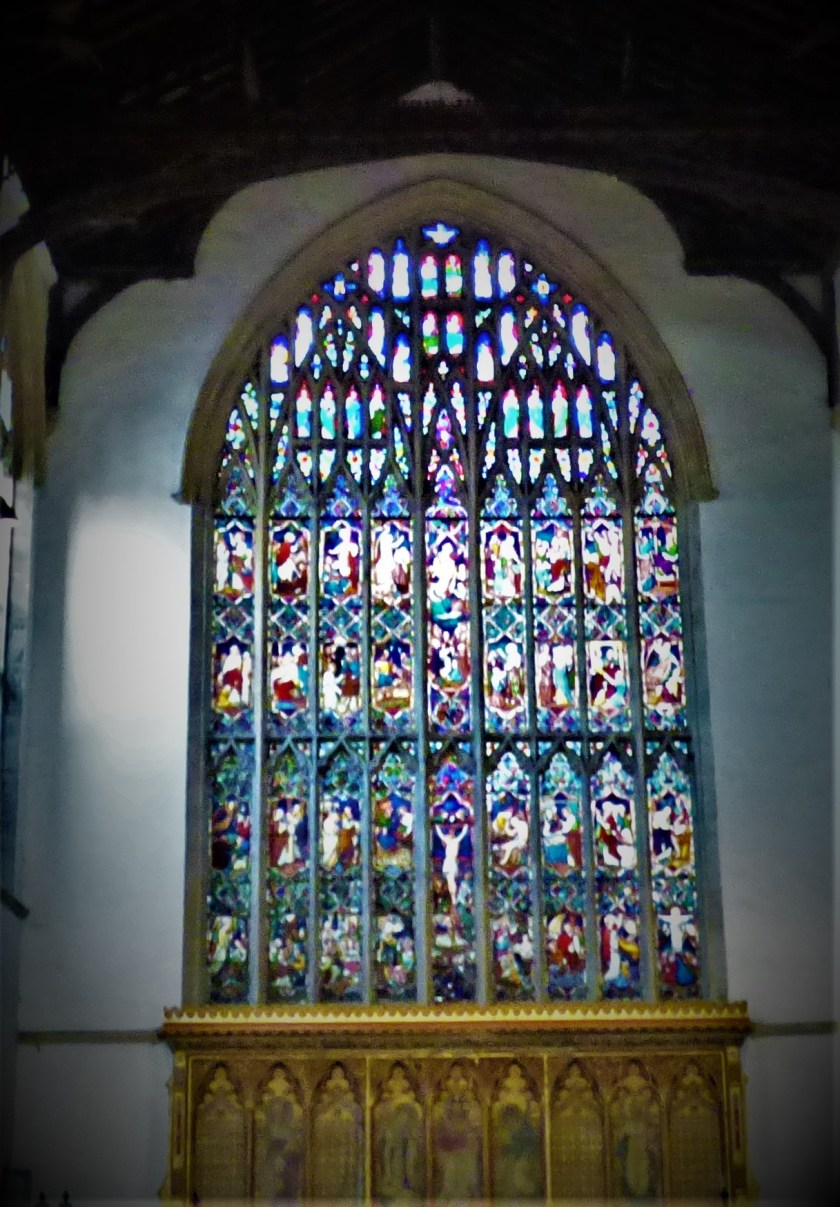
Yes, it is festival time in King’s Lynn. I attended the first of two early music concerts on Saturday evening. It featured the London Handel Players, with a programme of:

  1. Telemann – Concerto for Recorder and Flute in E minor
  2. Vivaldi – Concerto for violin and cello in F major Il Proteo o sia il mondo al rovescio
  3. J S Bach – Concerto for two violins in D minor
  4. William Herschel – Symphony for strings in F Minor (yes, he was also Astronomer Royal and a distinguished mathematician in his day)
  5. Vivaldi – Flute Concerto in D minor Il Gran Mogol
  6. J S Bach – Brandenburg Concerto no 4

It was an excellent and enjoyable evening, although the wine was overpriced even for such an event. The Herschel piece was not quite the equal of the others, but that is only to be expected given his other work.

P1250604 (2)
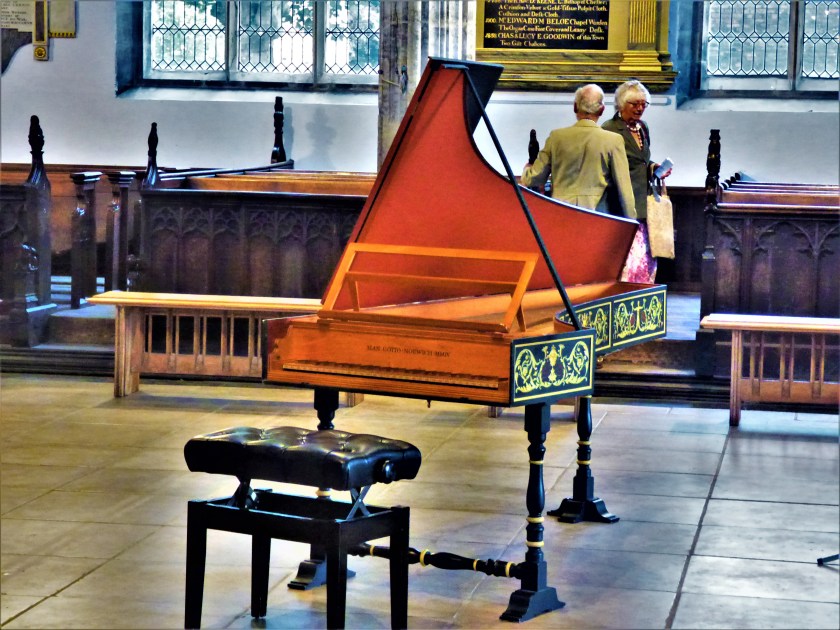
The stage is set (in St Nicholas’ Chapel)
P1250605 (2)
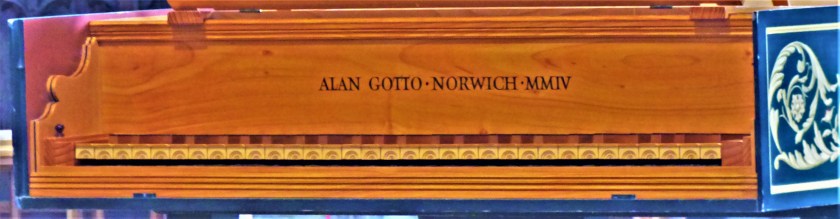
The Harpsichord, was played with consummate skill, providing excellent background without ever obtruding on one’s consciousness (like wicketkeepers, harpsichordists in group settings do not get noticed if they are doing things right).

P1250606 (2)P1250607 (2)P1250608 (2)P1250609 (2)

P1250610 (2)
As this shows the harpsichord is a very modern version.

P1250611 (2)P1250613 (2)P1250615 (2)P1250616 (2)P1250617 (2)P1250618 (2)P1250619 (2)

NEW PHYSIO SESSIONS

I will be starting new physio sessions at Tapping House a week today. This will help with developing my fitness.

STEAK NIGHT

On Tuesday NAS West Norfolk had a steak night at The Globe near the Tuesday Market Place. I was given a lift both ways, and it was well worth it – the evening was excellent.

P1250643 (2)P1250644 (2)P1250645 (2)P1250646 (2)P1250648 (2)P1250647 (2)P1250649 (2)P1250651 (2)

PHOTOGRAPHS

I finish with my usual sign off…

P1250594 (2)P1250595 (2)P1250596 (2)P1250597 (2)P1250598 (2)P1250599 (2)P1250600 (2)P1250601 (2)P1250602 (2)P1250603 (2)P1250620 (2)P1250621 (2)P1250622 (2)P1250624 (2)P1250626 (2)P1250627 (2)P1250629 (2)P1250631 (2)P1250634 (2)P1250635 (2)P1250636 (2)

P1250637 (2)
I have been taking walks when I can to rebuild my fitness, and on one of them this week I got the pond on Loke Road, and this water-based insect was one of the things I saw while there (two more pics)

P1250638 (2)P1250638 (3)P1250639 (2)P1250640 (2)P1250641 (2)P1250642 (2)

Lewis Gregory in England Squad

Celebrating the inclusion of Lewis Gregory in the England squad for the game against Ireland.

INTRODUCTION

Some of my recent posts (particularly those about England test teams accommodating two spinners) have taken the inclusion of Somerset all-rounder Lewis Gregory as read…

IT IS NOW

Today on cricinfo I was delighted to see that on this occasion at least what is obvious to me has also proven obvious to Ed Smith (whose opinions matter rather more in the current scheme of things!) and Gregory is in the squad announced for the one off test match against Ireland next week. True, given what he has been doing for Somerset recently this was a totally obvious call, but anyone who has followed English cricket as long as I have knows that that does not necessarily mean that it will happen!

I am delighted that Lewis Gregory has been given the call-up and I seriously hope that he plays rather than winding up as drinks waiter. A second of my calls – Jason Roy into the test team off the back of a tremendous World Cup – has also been made by a higher authority. My biggest call of all has yet to be made, but ever the optimist I am not prepared to abandon it just yet.

The cricinfo article can be read here.

PHOTOGRAPHS

My usual sign off…

P1250593 (2)P1250592 (2)P1250589 (2)P1250588 (2)P1250587 (2)P1250586 (2)P1250585 (2)P1250584 (2)P1250583 (2)P1250581 (2)P1250579 (2)

World Cup Final Stages Approaching

A look at the permutations for the semi-finals of the Men’s Cricket World Cup (nb the inaugural Women’s Cricket World Cup took place in 1973, two years before the men got started), plus a shed,load of photographs.

INTRODUCTION

The 2019 cricket men’s world cup semi-finals are all but sorted now. This post examines the possible permutations.

FAREWELLS

Afghanistan, The West Indies, Sri Lanka, South Africa, Bangladesh and Pakistan are heading home after the group stage unless Pakistan can beat Bangladesh by 320 runs or thereabouts (due to the workings of “net run rates” Pakistan cannot go through if Bangladesh bat first).

LOOKING FORWARD TO THE SEMIS

Barring an astonishing miracle result for Pakistan against Bangladesh the semi finals will be Australia v New Zealand and England v India. Three of these four teams definitely deserve to be there, while New Zealand are somewhat fortunate, and arrive in the semi-finals on a serious downturn having been thumped in their last two games, one by England.

SEMI FINAL 1: AUSTRALIA V NEW ZEALAND

Australia will be heavy favourites for this one, having played well throughout, while New Zealand have been poor in their last two games. Although I would love to see New Zealand deliver a sucker punch to the Aussies I cannot see it happening, therefore my prediction for this one is that Australia will win and go through to the final.

SEMI FINAL 2: ENGLAND V INDIA

Having put themselves under pressure by indifferent early from England have hit top gear just in time, despatching India and New Zealand in their last two games, both by comfortable margins. India had already secured their place in the semifinals by the time they came up against England. In view of the record of chasing sides in this competition so far I reckon that whoever wins the toss must opt to bat first and get their runs on the board. If England win that toss and make the right decision I reckon that they will win, just as they did in the group game between the two sides. If India bat first they will be favourites but I will not rule out England completely even then. Overall prediction: England, but I would not put money on it.

POTENTIAL FINALS

  • Australia v England – This will depend heavily on the toss – if England get their runs on the board they will be favourites, likewise Australia. I think England would be marginally less likely to lose chasing than Australia, so by the thickness of a cigarette paper I make them favourites if this final materialises.
  • Australia v India – Again this will come down to the toss – assuming they make the correct decision whoever wins it collects the cup.
  • New Zealand v England – New Zealand would be cock-a-whoop at beating Australia but may also be unable having achieved that to summon up the resolve for one last effort, and based on the group game between the two I would make England firm favourites for this one.
  • New Zealand v India – India would be favourites for this one for the same reasons as England in the one above.

Of these potential finals I would most like it to be New Zealand v England, with England b Australia 2nd choice and New Zealand v India third choice. A win for either New Zealand or England would be a first in the men’s world cup, while for India it would be their third triumph and for Australia their sixth. A final thought: If the miracle happens in the Pakistan v Bangladesh game then I believe that sheer relief at managing to qualify will be enough to propel Pakistan to victory – in that circumstance they would be alone among the four semi-finalists in having no pressure on them.

PHOTOGRAPHS

My usual sign-off…

P1250058 (2)P1250059 (2)P1250060 (2)P1250062 (2)P1250063 (2)P1250126 (2)P1250127 (2)P1250128 (2)P1250129 (2)

P1250130 (2)
Gettring really good pictures of these butterflies is a challenge – this one is porbably my best yet.

P1250131 (2)P1250132 (2)P1250133 (2)P1250134 (2)P1250136 (2)P1250137 (2)P1250139 (2)P1250140 (2)P1250141 (2)P1250143 (2)P1250145 (2)

P1250146 (2)
A female pheasant views the world from atop a car at The Norfolk Hospice, Tapping House.

P1250147 (2)P1250148 (2)P1250149 (2)P1250150 (2)P1250151 (2)P1250152 (2)P1250153 (2)P1250154 (2)P1250155 (2)P1250156 (2)P1250157 (2)P1250170 (2)P1250172 (2)P1250173 (2)P1250174 (2)P1250174 (3)P1250175 (2)P1250176 (2)P1250177 (2)P1250178 (2)P1250236 (2)P1250237 (2)P1250239 (2)P1250240 (2)P1250242 (2)P1250332 (2)P1250333 (2)P1250334 (2)P1250335 (2)P1250336 (2)P1250337 (2)P1250338 (2)P1250339 (2)P1250340 (2)P1250344 (2)P1250346 (2)P1250347 (2)P1250348 (2)P1250350 (2)P1250351 (2)

P1250352 (2)
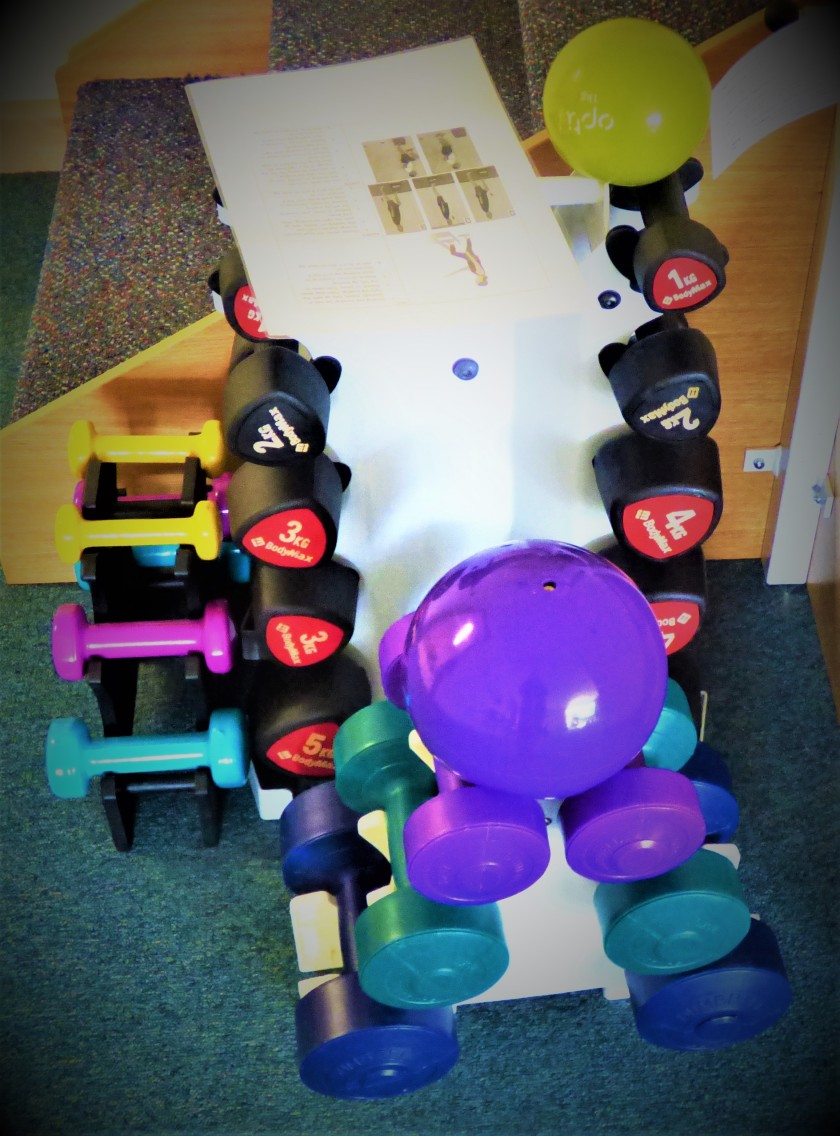
The weights we use for some of our exercises during therapy sessions at Tapping House.
P1250353 (2)
Raffe prizes at Tapping House
P1250354 (2)
I bought a ticket to support the cause, and this would be my first choice prize should the opportunity arise.

P1250356 (2)P1250357 (2)P1250358 (2)P1250360 (2)P1250361 (2)P1250362 (2)P1250363 (2)P1250364 (2)P1250365 (2)

How My Second Set of Predictions Fared

A look at the conclusions of yesterday’s Royal London Cup matches and an analysis of my predictions at the half way stages.

INTRODUCTION

Yesterday, when all the day fixtures in the Royal London Cup had reached their half-way stage I covered what was happening and made predictions for each result. Today I complete the story be revealing the results and mentioning noteworthy efforts from the second half of each game. 

YESTERDAY’S ROYAL LONDON CUP MATCHES

This is how it all unfolded:

  • Derbyshire v NorthamptonshireDerbyshire 268-6, Northamptonshire 215 (43.5 overs), Derbyshire won by 53 runs
    I backed Derbyshire to win this one because of the fightback they had made in the latter stages of their innings. This one was more one sided even than the margin suggests. At one point Northants were 112-8 before a lower order fightback gave them a hint of respectability. There were four wickets for young medium pacer Alex Hughes, three for Van Beek and two for Rampaul. Luke Procter scored an unbeaten 50, but no other Northants batter merits a mention.
  • Warwickshire v YorkshireWarwickshire 270-8 Yorkshire 270-9 TIED!!
    I got this one wrong, expecting Yorkshire to chase them down. At 112-6 it looked a certain win for Warwickshire, but Jonny Tattersall (79) and Tim Bresnan (89) staged a revival that very nearly won it for Yorkshire. England all-rounder Chris Woakes took 3-47 and the hugely promising teenager Henry Brookes took 3-50. Kiwi veteran Jeetan Patel was the most economical with 2-41.
  • Durham vLeicestershire  – Leicestershire 233-9, Durham 234-4 (45.3 overs) Durham won by six wickets
    This was an easy call after that poor Leicestershire innings, and an easy win for Durham in the end. Cameron Bancroft scored 118 not out, and received support from various of the Durham order. Dieter Klein and Gavin Griffiths each had a couple of wickets.
  • Hampshire v GlamorganGlamorgan 292-9 Hampshire 293-3 (41.5overs) Hampshire won by seven wickets.
    I had this down as a Glamorgan win. In the event Hampshire made it look very easy indeed, and Glamorgan’s future in this competition, even after just two matches looks bleak – they failed horrendously to chase in their first game and failed just as epically to defend in this one. Tom Alsop, a 23 year-old wicketkeeper batter opened the Hampshire innings and was 130 not out off 115 baals when they completed the win. Former England man James Vince scored 95 off 78 balls to put Hampshire in complete control of the chase. I will draw a veil over the Glamorgan bowling figures.
  • Nottinghamshire v Lancashire Nottinghamshire 417-7, Lancashire 406-9 Nottinghamshire won by 11 runs
    I called this one correctly. Lancashire made a tremendous effort, and until the dismissal of their captain Dane Vilas (166 off 100 balls) an extraordinary victory appeared to be on the cards. In the end that Nottinghamshire total was just enough. Steven Croft scored 110 off 82 balls. James Pattinson with 5-61 off his 10 overs was the star of the bowlers – if he had gone at the same rate as his colleagues Lancashire would have got home with time to spare (approximately an over and a half if you care to do the calculation).
  • Somerset v Kent Somerset 358-9, Kent 94 (27 overs) – Somerset won by 264 runs
    With that total on the board I called this one in Somerset’s favour, but even I was surprised by the margin of victory. AfterS had piled up their huge total Kent needed a good start to stay in the contest. Unfortunately for them they got the reverse, as Craig Overton followed his 66 by taking three early wickets (he would add two more before the end, finishing with 5-18) and Kent were reeling at 25-4. Thereafter Kent tried to salvage a hint of respectability and failed. The margin was a record for one first class county over another in limited overs cricket (various previous limited overs competitions featured minor county sides, so the distinction is needed). A detailed analysis of this match can be found here
  • Essex v Middlesex Middlessex 366-8, Essex 328 (49.2 overs) Middlesex won by 38 runs
    Again a big enough total to predict the final outcome with some confidence, but Essex put up a fine fight. Varun Chopra made 127 off 127 balls and Tom Westley 77 off 59 balls. For Middlesex Nathan Sowter, a 26 year-old legspinner with little previous experience of top level cricket took 6-62 from 9.2 overs

I called five of these matches correctly and two wrongly, making my overall record of predictions in this competition now eight right and four wrong. As with the first round there was a “day/night” match which was not far enough advanced for me to make a prediction on at the time:

Surrey v Sussex Surrey 274-9, Sussex 278-8 (48.1 overs)
This was a humdinger of a match. Surrey’s problem in their innings was that no-one went to a really big score – Foakes led the way with 64 and Will Jacks managed 56, while Mir Hamza rook 4-43. Tom Curran (3-37 from 10) and Gareth Batty (2-39 from 10) bowled excellently for Surrey, Morne Morkel and Rikki Clarke were respectable, but the fifth set of 10 overs let Surrey down, as Plunkett (6 overs, 1-57) and Jacks (4 overs for 26) both bowled very poorly. Sussex’s matchwinner was David Wiese (92 not out), while Luke Wright scored 69.

The first set of fixtures provided a lot of very one-sided games, but no one could complain about the fare on offer this time round – fine cricket featured in most if not all of the matches and several were very close, including the incredible tie between Yorkshire and Warwickshire.

PHOTOGRAPHS

My usual sign off…

P1220952P1220953P1220954P1220955P1220957P1220958P1220959P1220960P1220961P1220962P1220963P1220965P1220966P1220967P1220968P1220971P1220973P1220974P1220975P1220976P1220977P1220978P1220979P1220980P1220982P1220983P1220984P1220985P1220986

The Royal London Cup Round 2 Fixtures

A look at what is happening in the Royal London Cup, complete with predictions. Also some of my photopgraphs.

INTRODUCTION

The seven daytime Royal London Cup Fixtures taking place today have all reached the halfway stage, and as in this post, where I was 3/5 on predictions I will be essaying predictions as to the outcomes of these fixtures, as well as drawing attention to noteworthy efforts within the matches. Wihtou further ado…

THE ROYAL LONDON CUP 19/4

  • Derbyshire v NorthamptonshireDerbyshire 268-6 from 50 overs
    This total represents a fightback by Derbyshire, as at one stage they were 137-5. This and the fact that the sides batting first all won their games last time out influences me to call this one in Derbyshir’s favour. Billy Godleman played the anchor role for Derbyshire with 87 off 124 balls, while Matt Critchley scored 64 not out off 51 balls, having come in at 137-5. Blessing Muzurabani picked up 2-54 and Jason Holder 2-62. 
  • Warwickshire v YorkshireWarwickshire 270-8 from 50 overs
    Various Warwickshire players got starts, but only Tim Ambrose (77 off 108 balls) made a really significant score. Matthew Pillans added another three wickets to the five he took in the opening game, while Bresnan and Poysden took two each. I would expect Yorkshire to make it two wins out of two – all it will take is two of their top order play significant innings.
  • Durham v Leicestershire Leciestershire 233-9 from 50 overs
    Leicestershire were 112-7 at the low water mark of their innings, so this score represents a fight back. However, although it runs contrary to my hopes given their awful choice of captain I expect Durham to win this fairly easily and make it two wins from two. Tom Taylor made 59 off 63 balls and Dieter Klein, also mainly a bowler, scored 46 off 71 balls in the latter stages. Brydon Carse took 3-58, while Liam Trevaskis had 2-37 from his full 10 overs.
  • Hampshire v GlamorganGlamorgan 292-9 overs
    This is a tough one to call – Glamorgan’s total looks quite good, but none of their batters got more than 68 (achieved by David Lloyd off 62 balls and Graham Wagg off 57 balls). Kyle Abbott took 3-47 and Liam Dawson 2-57. Bearing in mind the successes of sides batting first so far this season I am going to predict a win for Glamorgan. 
  • Notinghamshire v Lancashire Nottinghamshire 417-7 from 50 overs
    A monster score by Nottinghamshire. Cricket is a glorious game precisely because it is wonderfully unpredictable, but it will the story of the day if Lancashire chase these down. My prediction is therefore a Nottinghamshire victory. Joe Clarke made 139 off 99 balls at the top off the order, Ben Slater hit 74 off 82, Tom Moores 74 off 39 and Luke Fletcher 46 not out off 17 at the end. Graham Onions managed 2–70 from his 10, quite an achievement in such a huge score, and Saqib Mahmood, a young medium pacer, collected 2-88 from his 10.
  • Somerset v Kent Somerset 358-9 from 50 overs
    A big total for Somerset, and one that I confidently expect them to defend. Tom Banton, a 20 year old keeper-batter scored 107 off 79 balls at the top of the Somerset order, Lewis Gregory contributed 51 from 45, and Craig Overton scored 66 not out off 36 at the death. Stevens, Podmore, Klassen and Milnes each took two wickets, the veteran Stevens managing to go for only 50 from his ten overs.
  • Essex v MiddlesexMiddlesex 366-8 from 50 overs
    A great effort by Middlesex. Dawid Malan led off with 95 from 102 balls, and Nick Gubbins with 56 off 57 kept things going when Middlesex might have got into trouble, before George Scott, a 23 year old right hander, scored 63 off just 28 balls to give the total a late boost. Peter Siddle took 3-71 and Dan Lawrence’s leg spin brought him 2-63 – his batting will be needed later if Essex are to get anywhere near chasing this total down. I expect Middlesex to win this one, especially given that teams batting first have done so well so far this season.

Thus my calls in these games are: Derbyshire, Yorskhire, Durham, Glamorgan, Nottinghamshire, Somersert and Middlesex. The Surrey v Sussex match is at too early a stage for a prediction as it is a day/night game. Surrey are 206-4 in the 40th over. Will Jacks made 56 for Surrey, Foakes has 41 not out and Pope, just starting to hit the launchpad, is 32 not out. None the Sussex bowlers have really noteworthy figures. If Foakes and Pope keep going and propel Surrey to something in the vicinity of 300 they will be favourites, while if Sussex keep Surrey below about 270 they will have a good chance. Update – Pope has just gone for 33, making 209-5, swinging things back towards Sussex. Rikki Clarke has joined Foakes. 

PHOTOGRAPHS

My usual sign off…

P1220922P1220923P1220924P1220925P1220926P1220928P1220929P1220932P1220935P1220937P1220938P1220939P1220940P1220941P1220942P1220943P1220944P1220945P1220946P1220947P1220949P1220950P1220951

All-Time Squads – England

I select an England squad from players I have witnessed and a true all-time England squad.

INTRODUCTION

This is the start of a new series which will appear on this blog periodically in between posts about other things. I will pick two squads in each of these posts – one restricted to players whose performances I have witnessed live and one true all-time squad, using my considerable knowledge of cricket history. I will also be including a few other things after the main body of the post. We will being the main part of the post with…

ENGLAND SQUAD FROM PLAYERS I HAVE WITNESSED LIVE

To begin with we need an opening pair. I refuse to consider those who went on the two English rebel tours to South Africa. The serious contenders left are:

  • Mike Atherton – 7,.728 runs at 37.69 from 115 test matches. A fine record, though that average was reduced by his encounters with Glenn McGrath who seriously had the wood on him. 
  • Alec Stewart – 8,463 test runs at 39.54 from 133 test matches. These already impressive figures conceal the fact that Stewart the specialist batter (the role in which I would be using him) averaged 47, while Stewart the keeper averaged 34. 
  • Marcus Trescothick – 76 test matches produced 5,825 runs at 43.79. An attack-minded left hander, Trescothick hit the ground running at Test level with 66 against the West Indies on debut, and until mental health issues caused his premature retirement from international cricket he went from strength to strength.
  • Andrew Strauss – 100 test matches, 7,037 runs at 40.91. An consistent opener who did even better as captain than he did in the ranks. 
  • Alastair Cook England’s all time leading test run scorer, with 12,472 at 45.35, he started his test career with a fifty and a century against India and ended it 12 years later with a fifty and a century against India. 

Of these five I can accommodate three in my squad (an opening pair and a reserve opener), and my choice, with due respect to Messrs Atherton and Trescothick is to go for Alastair Cook and Alec Stewart (mainly defensive left hander and more attacking right hander) as my first choice opening pair and Strauss as the reserve opener. It is a close call between Strauss and Trescothick, but Strauss’ captaincy experience gives him an edge.

My designated number three bat and captain is Michael Vaughan. Number three has traditonally been a problem position for England, but Vaughan was magnificent there – his only rival in my lifetime is Jonathan Trott, but since I want Vaughan as captain he gets the nod. When it comes to picking three middle-order batters there is an embarrassment of riches to choose from. There are two left-handers, David Gower and Graham Thorpe and a phalanx of right-handers including Kevin Pietersen, Ian Bell, Joe Root and Paul Collingwood who all did fine things at test level. I can only select three, two to be in the first XI and one as cover, and my choices are Joe Root, David Gower and Kevin Pietersen. 

With all due respect to Andrew Flintoff and Ben Stokes who have both had great achievements at the highest level there is only one candidate for the allrounders role in my view and that is Ian Botham

There are four potential candidates for the wicketkeepers slot, of whom I need to select two since I do not intend using Stewart in that role. My four candidates are:

  • Jack Russell – a magnificent keeper, but his test batting average of 27.10 was a little on the low side.
  • Matt Prior – there was never a question about his batting skills, but his keeping took a while to develop, though he became very good indeed.
  • Jonny Bairstow – A fine attacking batter and a good keeper, but rarely able to combine the two at test level
  • Ben Foakes – A magnificent keeper and averaging over 40 in his brief test career so far.

It will be considered controversial in some circles to give the nod to someone still in the early stages of their career, but my choices are Ben Foakes as first choice keeper and Matt Prior as reserve. 

I have now selected a total of ten players, and a regulation squad would be 16, so I have six places available to fill the squad. For quick bowlers I go for James Anderson, Stuart Broad, Simon Jones and Steve Harmison. Phil Tufnell was too inconsistent and Ashley Giles not really good enough, so my choices for the spinners slots are Monty Panesar and Graeme Swann.

Thus my squad of sixteen is:

Alec Stewart
Alastair Cook
Andrew Strauss (reserve opener)
*Michael Vaughan
David Gower
Kevin Pietersen
Joe Root
Ian Botham
+Ben Foakes
+Matt Prior
James Anderson
Stuart Broad
Steve Harmison
Simon Jones
Graeme Swann
Monty Panesar

The likely first XI, assuming a pitch that does not favour any particular type of bowling would be: Stewart, Cook, *Vaughan, Root, Gower, +Foakes, Botham, Swann, Broad, Anderson and Harmison, with Kevin Pietersen just missing the final cut in favour of Root (Gower’s lefthandedness works to his advantage).

THE ALL TIME SQUAD

For this one I start with the greatest of all opening pairs, Jack Hobbs and Herbert SutcliffeIn addition to being one half of the greatest of all opening pairs Herbert Sutcliffe’s averages suggest, as does everything ever written about him, a big match temperament par excellence – 52.02 in first class cricket, 60.73 in all test cricket and in the cauldron of The Ashes, 66.85. As reserve opener I select W G Grace, reckoning that his test batting average (32.29) was reduced both by the pitches he played on and the fact that he was already 32 when he played his first test match in 1880, and his career at that level lasted until within a couple of months of his 51st birthday. My remaining choices for batting slots are Joe Root (captain), Denis Compton, Walter Hammond and Frank Woolley (the latter two more than handy bowlers as well as great fielders, and Woolley a left-hander). For the wicketkeepers I opt for Les Ames as first choice and Ben Foakes as reserve. Ian Botham retains his place as designated all-rounder. For the bowlers I retain Anderson, and augment his presence with Fred Trueman, Syd Barnes (189 wickets at 16.43 from just 27 matches) and George Lohmann (112 wickets in 18 test matches at an eye-popping 10.75). My two players selected as spinners are Hedley Verity (slow-left arm) and Jim Laker (off-spin).

Thus my squad list reads:

Jack Hobbs
Herbert Sutcliffe
W G Grace (reserve opener)
Denis Compton
*Joe Root
Walter Hammond
Frank Woolley
+Les Ames
+Ben Foakes
Ian Botham
Fred Trueman
Syd Barnes
George Lohmann
James Anderson
Jim Laker
Hedley Verity

The first XI in batting order, assuming the pitch does not justify either two specialist spinners or an all-seam attack is: Hobbs, Sutcliffe, Compton, *Root, Woolley, +Ames, Botham, Lohmann, Laker, Trueman and Barnes. I select Laker ahead of Verity as the lone specialist spinner because Woolley was a good enough slow-left armer to have taken 10 wickets in a test match and Compton could bowl slow left-arm wrist spin.

A BIT OF NEWS

Today as part of my continuing recovery from cancer I attended a physio session at Tapping House, and it went very well. I handled all four of the exercises I did today reasonably well, and my breathing behaved itself. It is a nice small group, and the setting is good.

PICTURES

My usual sign off…

P1220843
The first 11 pictures here are from Tapping House.

P1220845P1220848

P1220849
It took three attempts…
P1220850
to get a decent picture…
P1220852
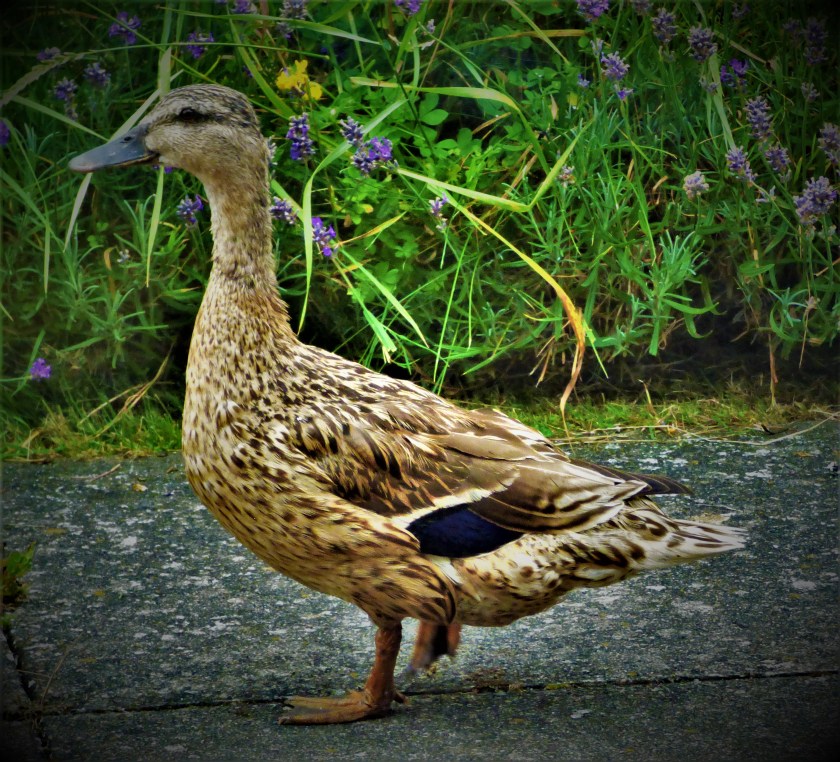
…of this bird which I saw crossing the carpark at Tapping House.

P1220853P1220854P1220857P1220858

P1220859
Tapping House’s youngest visitors!
P1220860
Back home.

P1220864P1220865P1220866P1220867P1220868P1220869P1220870P1220871P1220872P1220874P1220876P1220877P1220878P1220879P1220880


Sunshine Blogger Award Nomination

My response to being nominated for a Sunshine Blogger Award.

INTRODUCTION

Thank you to simpleillusionblog for the nomination. This post is my response to that nomination.

SBA

I hope that learnography will get something close to an answer to a question they raised in a comment recently:

Will you share how you feel before, during or after the writing? In fact, writing is the motor knowledge of brain circuits which deals with the finger mapping of cerebellar learnography. Your therapeutic experience is valuable in the development of cerebellar basal ganglia circuitry. Thanks

First up for the rest of thist post…

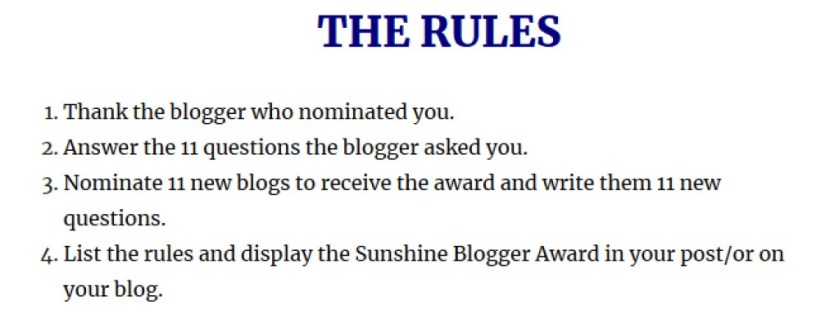
THE RULES

  1. Thank the blogger who nominated you.
  2. Answer the 11 questions the blogger asked you.
  3. Nominate 11 new blogs to receive the award and write them 11 new questions.
  4. List the rules and display the Sunshine Blogger Award in your post/or on your blog.

MY ANSWERS TO SIMPLEILLUSION’S QUESTIONS

  1. How dedicated are you as a blogger? pretty dedicated – in just under eight years since I started I have produced just over 1,500 posts, and whenever possible I like to put something up most days. I also read a huge number of blogs, posting likes and where appropriate comments.
  2.  What do you love most about blogging? Interacting with a community, something that I struggle with except via the medium of a computer.
  3. Do you collect anything when you travel and if so, what and why? I collect maps to remind of me of places I have visited and I also collect photographs to share so that others can see things that have caught my eye.
  4. Do you speak any other languages? No, I am sadly monolingual (my efforts to learn other languages have all been failures).
  5. Are you a tea or coffee drinker? I am a coffee drinker. These days I drink filter coffee, and my method for producing the perfect brew is: Two heaped scoops of coffee grounds into the pot, cover with enough boiling water to produce two cups of coffee, place the top over the pot and leave to stand for not less than five minutes (I check my emails while filling in this time), then press the plunger down and pour. The result looks like black muck and drinks like liquid velvet.
  6. How did your blog get its name and why did you start it? My blog got its name from a shortening of my official 2006 diagnosis – Asperger’s Syndrome – although these days like most autistic people I simply use autism and refer to myself where appropriate as an autistic person. I started the blog because I hoped that people would be interested in reading about an autistic person from their own point of view. Also, I find writing to be therapeutic – I always feel better for having created a blog post.
  7. What post are you most proud of on your blog? The one I wrote about going through a melt down, because it was a difficult and sensitive subject and if I had misfired with such a post I could have copped some serious stick, while in the event it was very well received.
  8. Name one thing you didn’t expect to happen with your blog that has. That I would acquire as many followers as I have done – almost 800 of you now follow this blog.
  9. What is your typical weekend like? I can no longer claim to have a typical weekend, but unless something (usually an unscheduled hospital trip these days) prevents it Sunday lunch with family remains a regular feature.
  10. What is your greatest inspiration in life? My inspiration comes from the natural world – I love to get outside in to green spaces and see what the beasts and birds are doing.
  11. What advice would you give someone wanting to start a travel blog today? I would say start by picking a title for your blog and creating a wordpress site, then continue by searching wordpress for travel blogs and see what kinds of stuff they post, also leave a few likes and comments to advertise your presence (I spent my first three years or so as a blogger failing to do this), then think about what you want your first post to look like and set about creating it. Once you have created the post make sure it is categorized and tagged properly (no more than 10 tags for a post or you could fall foul of various spam filters) and that you have a good feature image. If you do other forms of social media (not all bloggers do) then post links there to maximise exposure of the blog.

MY QUESTIONS

  1. What inspired you to become a blogger?
  2. How do you promote your blog?
  3. What has been your greatest recent challenge?
  4. Do you ever set yourself to do muli-post blogging projects (e.g my “100 cricketers” series, which occupied 40 posts)?
  5. How do you go about creating a blog post?
  6. Which of your posts did you most enjoy creating and why?
  7. Where in the world would you most like to visit and why?
  8. What is your favourite meal?
  9. What kind of music do you most enjoy? If you fancy expanding on this one you could do a “Desert Island Discs” style selection of eight pieces and finish by pickinf one from that list.
  10. What do you enjoy most about blogging?
  11. Do you have an idea that you think you could turn into a book? If so what is it?

MY NOMINATIONS

I have nominated the following, who I present as a bulleted list to avoid any suggestion of a ranking order:

If I have not nominated you but you fancy taking on my questions anyway, please feel free to do so.

PHOTOGRAPHS

I sign off in my usual fashion…

P1220761P1220764P1220766P1220767P1220768P1220769P1220770P1220771P1220772P1220773P1220774P1220775P1220776P1220778P1220779P1220780P1220781P1220782P1220783P1220784P1220785P1220786P1220787P1220788P1220789P1220790P1220791P1220792P1220793P1220794P1220797P1220798P1220799P1220800