And Then There Were Three

A look at goings on in the WBBL as that tournament approaches its climax. There are now only three teams left in the tournament. Also a huge photo gallery.

This morning saw the first of the knockout matches in the WBBL, between Sydney Thunder and Hobart Hurricanes, at the former’s home ground, the Drummoyne Oval, six kilometres or thereabouts west of Sydney city centre. This post looks at what happened today and how the KOs work in this tournament.

Four teams out of eight qualify for the knockout stages of the WBBL, and the system then works thus: third place take on fourth in what is termed the Knockout match, with third place having home advantage. The winners of this match then play away against the team who finished second, in what is called the Eliminator match, and finally the winners of that face up to the winners of the league stage at the latter’s home ground. In this edition of the tournament Melbourne Renegades and Brisbane Heat had 14 points each from their 10 group games, with the Renegades ahead on net run rate, while Sydney Thunder had 13, the single point coming from a washed out local derby against the Sydney Sixers, and Hobart Hurricanes had 10 points – five wins and five losses. They qualified with this modest tally through a combination of the top three all having such excellent records and the fact that having four teams in an eight team league qualify for knockout stages is over-generous (though less bad than the men’s equivalent where FIVE of the eight sides qualify, which means that there is a genuine chance of a team with an overall losing record making the KOs, which is plumb crazy).

Hobart Hurricanes won the toss and chose to bat first. They did not perform well. When Heather Graham was out to the last ball of the 10th over they were languishing at 47-4 halfway through their innings. They did pick things up in the second half of their innings, with Elyse Villani ending unbeaten on 49 from 42 balls, Suzie Bates managing 17 off 17 balls, and Kathryn Bryce with 10 off 6 and Lauren Smith with 6 not out off three balls giving things a late boost. A total of 126 still looked inadequate.

For a long time however, it looked as though Hurricanes might be defending it successfully. With three overs to go Thunder needed 26 to win, and although Litchfield was batting well Anika Learoyd was, as many had on both sides, progressing very slowly. The 18th over, bowled by Heather Graham, which was also the second of the Thunder’s Power Surge, turned the course of the match – 16 runs came from it, including three boundaries, one from Litchfield, and two, off the last two balls of it, from Learoyd. Litchfield then hit the first ball of the 19th over for six. The second and fourth balls yielded singles. The off the fifth ball Litchfield was bowled, which brought Georgia Adams to the crease with two runs needed for the win. Adams cut the only ball she faced for four runs to seal victory for the Thunder with an over to spare and send them on to Allan Border Field on Friday to do battle with Brisbane Heat for the right to face Melbourne Renegades. Litchfield’s 46 off 36 in a match in which few had struck at above 100 and three catches secured her Player of the Match. Molly Strano, one of the most successful bowlers in the WBBL’s history, had figures of 4-0-8-1 for the Hurricanes, unavailing in the end, but the joint most economical figures ever in the knockout stages of a WBBL tournament. A full scorecard of this match canb be seen here.

In many ways justice was done today, although Thunder were not convincing winners by any means. They were much better than the Hurricanes in the group stages, and it is right that the winner of this tournament should come from one of the top three – for Hurricanes to have emerged victorious after qualifying for the knockouts on 10 points would have left a bad taste in the mouth – and yes this is a pom criticizing an Aussie tournament for having overly soft qualification rules, and I stick by every comment I have made along these lines.

I have a very large gallery, due to not having posted on Monday. Monday and yesterday were both sunny although cold, while today has not been sunny and is still cold…

A Working Day

An account of a working day, and the journeys either way, and a photo gallery.

Yesterday was an eventful day at work – finishing the last of the imaging for the March auction, sending a mass email out (the second of two, the first went out on Tuesday) about that auction, and starting the imaging for the April sale. In this post I describe the day in full and say something about each element of the upcoming auctions.

My working hours, constrained by the operating hours of James and Sons and the way in which buses run in Norfolk are short – I start at 10:45 or thereabouts, and finish four hours later as the business shuts down for the day. However I get quite a bit done in that time, even on a somewhat fragmented day such as yesterday was. I generally leave home by 9:30, which allows me to take a scenic route to the bus stop (the direct route is about a five minute walk, but is not that interesting). Then I spend the bus journey reading, and will arrive at James and Sons’ premises in Fakenham clear-headed and ready to go.

My usual practice when imaging at work is photograph about 25 items (one column of lot numbers + indications of how many pictures I have taken of eahc item in my notebook) before loading them on to the computer and cropping and straightening them as required. If I am imaging for a sale that is not already online I will copy the images from the folder I save them in on my computer to the main images folder for that auction on the network drive at the end of the day, but when the auction is already online I also have to upload the new images, and sometimes notify bidders that the images are now available for viewing. I had initially started work on the April stuff, a quantity of which was already in my imaging area, but then had to switch back to the March stuff as there were some lots from day two of that sale (Stamps and Postal History) which had not been imaged. Near the end of the day I was able to revert to the April sale, but the next lot I came to for that sale (Sporting Memorabilia) was one that required a large photo gallery, so I had no time to do any more than that one extra lot.

Day one of the March sale is coins, banknotes and cheques, and can be viewed here and here. Day two, which I was finishing off the imaging for yesterday, is available on the same links, but for those who want to start on the page where the first lots of day two are can go here and here (the new day does not start on a new page because the auction is treated as a single entity on these platforms). I end this section with the image gallery for lot 655, the first item I imaged yesterday…

The next bus back to King’s Lynn after the end of the work day is at 3:45PM, so I generally fill in time by visiting Fakenham Library, as I did on this occasion. I get off the bus home one stop before the very closest stop to my home and walk home from there by way of the Gaywood River Path – always worth doing, especially in daylight, which by now is the case. I appreciated seeing several muntjac as I walked, though I was less impressed by lawbreaking oaf who roared past me (and a number of others) on a quad bike (illegal as it is a motorised vehicle and this path is for the use of pedestrians and cyclists only – an e-bike used with care and consideration would be acceptable, but a dirty great quadbike used with neither care nor consideration is most definitely not). This little section provides a useful lead into…

…My usual sign off…

A Test XI From My Lifetime

A test match XI made up of players some or all of whose prime years were in my lifetime, a few honourable mentions and a photo gallery.

In this post I select an all time XI intended to be perfectly balanced, and made up exclusively of players at least some of whose peak years have been in my lifetime. I also look at some of the players I omitted and explain my reasoning- in an exercise like this the challenge is just who one leaves out.

  1. Graeme Smith (South Africa, left handed opening batter). Over 9,000 test runs at an average of 48.
  2. Sunil Gavaskar (India, right handed opening batter). The first ever to reach the career milestone of 10,000 test runs, and an average of over 50 at that level, and a good record outside Asia as well.
  3. Brian Lara (West Indies, left handed batter). The greatest left hander to have batted in my lifetime, with any number of extraordinary knocks to cite in support of that claim.
  4. Sachin Tendulkar (India, right handed batter). Holder of the records for most test career runs, most test centuries and various others.
  5. Allan Border (Australia, left handed batter). For much of his career he carried a decidedly moderate Australian batting line up – it was only in the last few years of his career that he got to be part of a strong line up.
  6. *Imran Khan (Pakistan, right handed batter, right arm fast bowler). My chosen all rounder, and my chosen captain. Ian Botham was sensational for the firts few years of his career, a producer of occasional sensations for another few years and then tailed off badly as the 1980s wore on, whereas Imran Khan was a much more enduring cricketer.
  7. +Adam Gilchrist (Australia, wicket keeper, left handed batter). The man who revolutionized the role of the wicket keeper, playing many match winning innings from number seven. Unfortunately too many sides since his prime have been dazzled by the batting side of the equation and have given the gauntlets to folk whose keeping is not up to scratch (Gilchrist’s was).
  8. Wasim Akram (Pakistan, left arm fast bowler, left handed batter). While it is possible that peak Mitchell Johnson was even more devastating with the the ball than peak Akram it is certain that Johnson when the force was not with him operated at a lower level than Akram ever did.
  9. Malcolm Marshall (West Indies, right arm fast bowler, right handed batter). The greatest fast bowler of the golden age of West Indies fast bowling and a handy lower order batter.
  10. Shane Warne (Australia, leg spinner, right handed batter). Leg spin was a dying art when he appeared on the scene – Abdul Qadir of Pakistan was the only leg spinner of real quality in the 1980s, and until Warne’s emergence there was no one coming through in the 1990s either.
  11. Muthiah Muralidaran (Sri Lanka, off spinner, right handed batter). Only one bowler has ever taken 800 test wickets in a career, and unless James Anderson somehow continues to defy Father Time for another few years there is no prospect of anyone else reaching that landmark – the rise of franchise leagues around the world makes it likely that few if any of today’s younger players will be looking at having exceptionally long test careers. Murali took those 800 wickets at a rate of six per match, better among those to have played 20 or more test matches than anyone save SF Barnes who claimed 189 wickets in 27 matches for a wicket taking rate of seven per match.

This XI has good balance of left and right handed batters, great depth with everyone down to Akram at eight capable of playing a match winning knock and Marshall and Warne far from being genuine tail enders. The bowling above with three great fast bowlers and two great spinners is ideal for most pitches. If the match were to be played at Perth or Johannesburg I would drop Muralidaran and further strengthen the pace attack by bringing in McGrath, while on an absolute raging Bunsen I would replace Imran Khan with Ravindra Jadeja (India, left handed batter, left arm orthodox spinner) and rely on Akram and Marshall to bowl such pace as would be required. I also take this opportunity to explain the positioning of the captain and wicket keeper in the listed order – Gilchrist always said he never wanted to bat above seven at test level, while Imran Khan was comfortable batting at number six, so although Gilchrist was undoubtedly a finer batter than Imran Khan I have respected the Aussie keeper’s preferences and kept him at number seven.

A full honourable mentions section for a post of this nature would be virtually book length, there being so many potential candidates. So, if I make no mention of your favourite please assume I have my reasons for having not picked them – the listing that follows is not remotely comprehensive.

Left handed openers: Alastair Cook’s sheer longevity deserves a mention, and I would entertain arguments made on behalf of any of Saeed Anwar, Mark Taylor, Matthew Hayden, Justin Langer or Chris Gayle. I would not give the time of day to any arguments on behalf of David Warner – the absence of a single test century in any of seam friendly England/ New Zealand and spin friendly India/ Sri Lanka in my view disqualifies him from being regarded as a genuine great.

Right handed openers: The West Indian pair of Gordon Greenidge and Desmond Haynes come closest in my view to challenging Gavaskar.

Number three: I wanted a left hander in this slot, and I considered Lara’s case to be unanswerable.

Number four: Besides my actual choice there were three serious challengers for the slot – Steve Smith, Virat Kohli and Joe Root, the latter of whom enters the equation because he spent so much of his career carrying a weak England batting line up.

Number five: I opted for the left hander for extra balance. Jacques Kallis was unlucky to be right handed given that he would also have offered an extra bowling option. The other potential candidate had I wanted a right hander would have been Viv Richards. As it was the main challenger to Border was Sangakkara, and I would in no way object to the Sri Lankan’s inclusion in place of the gritty Aussie.

Number six: has been covered in the main part of the post. Had circumstances allowed him to play test cricket Clive Rice (SA) would almost certainly have provided stiff competition for this slot.

Number nine: In a few years time, if he maintains his current standards up to the end of his career Jasprit Bumrah of India will require that I move Warne up one place to this slot and put him in at number 10, but at the moment I am not quite prepared to make such a massive call as dropping Marshall, though I fully acknowledge the Indian’s greatness.

Number ten: Warne at the moment looks unchallengeable, but Rashid Khan (Afghanistan) merits an honourable mention.

Number 11: There are two remotely credible challengers for Murali’s slot – R Ashwin of India, who would make the batting ridiculously deep – he would slot in at nine, with Marshall at ten and Warne at 11, and Nathan Lyon of Australia, who gets extra credit for having succeeded as an off spinner when playing his home matches in Australia (check out the records of English off spinners in Australia for an emphatic illustration of this point).

My usual sign off…

Pizza Making

An illustrated account of a pizza making event to remind folks of my existence, and of course a regular photo gallery. Everything should be back to normal email and internet wise from Monday afternoon.

My internet and email situation will be back to normal on Monday. This Sunday just gone I took part in a pizza making session for autistic adults at the King’s Lynn branch of Pizza Express. The body of this post describes the process.

Pizza making in these sessions does not start absolutely from scratch – we have preprepared dough to work with. When we get to it we have the following starting position…

an ellipsoid lump of very sticky dough surrounded by flour.

The first stage is to dust the dough (which would otherwise be too sticky to work with) with flour. Then one uses fingers to flatten out the edge of the dough, leaving a dome in the middle (at this stage the dough should be about the same size and shape as a fried egg). Next the dome has to be flattened with the palm of the hand, and then the now flat piece of dough needs to be worked on until it is roughly circular and not too different in size from the tray in which it will be cooked. It then needs to be inserted into the tray, and manipulated once in so that it covers the entire base, and there is a small rise up the side of the tray to keep all the toppings in…

The pizza base ready for the addition of the toppings.

The first addition to the base is a ladleful of tomato puree (Pizza Express do not allow for the making of ‘white pizzas’), which has to be spread out evenly using the back of a spoon…

Next come the optional toppings, the first two of which I accepted being mushrooms and olives…

Then came the meat toppings, of which I accepted pepperoni and passed on the rest…

The penultimate addition when all the optional toppings are in place is the cheese, without which of course it would not be a pizza…

Finally, for those who want it comes that classic Mediterranean flavour enhancer, oregano. For those who, like me, opted to accept this, you take it in your non-dominant hand so that you can sprinkle it evenly over your pizza with your dominant hand…

The pizza, now ready for cooking.

A few minutes later the pizza was ready for eating, and it was excellent.

The pizza, cooked and ready to be eaten.

My usual sign off…

95 Days To The Start of The County Championship

Noting that the county championship is only 95 days away, by featuring Tom Soar’s career best. Also the first photo gallery of the new year.

Welcome to a new year. I have decided to make the main body of my first post of 2024 fit with the start of a new county championship season being 95 days away. I then have a photo gallery to share – today has been largely bright and sunny and I have been out and about.

Tom Soar is not an illustrious name in the history of cricket, and fast bowling was his main occupation (323 FC wickets at 23.82 with a best of 8-38). His highest score with the bat was 95, and it came in a truly remarkable match.

Somerset had batted first and posted a total of 315, Ernie Robson top scoring with 74. Hampshire began poorly in reply and it would have been even worse for them had Somerset keeper Wickham pulled off a stumping chance against Major Robert Poore. Poore survived, which would have felt ominous to Somerset, given that at Portsmouth earlier that season he had already smashed them for two centuries in the match. Hampshire were 62-4 when Soar joined Poore. The pair put on 196 together before Soar was out for 95. Poore was now joined by another army officer, Captain Teddy Wynyard, and just over four hours this pair proceeded to hammer 411 runs, before Wynyard fell for 225. Poore was out a few balls, for precisely 300 runs more than he had scored at the time Wickham missed that stumping. Hampshire declared at 672-7, an advantage of 357. A dispirited Somerset could only manage 206 at the second time of asking and lost by an innings and 151 runs.

My usual sign off…

Pakistan in Trouble in Boxing Day Test Match

A look at the first two days play between Australia and Pakistan at the MCG and a splendid photo gallery.

The Boxing Day test match between Australia and Pakistan at Melbourne has now seen two days play, albeit one of them disrupted by the weather, and is beginning to take shape.

Pakistan won the toss and elected to put Australia in to bat. A truncated opening day ended with the hosts 187-3 after a “curate’s egg” bowling and fielding effort by Pakistan. At 226-4 Australia still looked very well placed, but then Pakistan fought their way back into things, and Australia eventually tallied a mere 318, respectable after being sent in but by no means formidable. Marnus Labuschagne with 63 had the only half century off the bat in the innings, but Pakistan may well come to regret the fact that they allowed Extras to tally a half century as well (52, including 15 wides). Debutant Aamer Jamal claimed three wickets, while Shaheen Shah Afridi, Mir Hamza and Hasan Ali each had two, and Agha Salman, brought on to bowl the last over before lunch on day one, was gifted the wicket of David Warner.

Pakistan began well, and at 124-1 it looked like things were going their way, but then came a passage of play that completely changed things. Pat Cummins removed Abdullah Shafique for 62, hanging on to a hard return chance. Then he widened the breach by bowling new batter Babar Azam for 1. Lyon got Shan Masood for 54, Hazlewood produced a beauty to get through the defences of Saud Shakeel for 9, and Pakistan were 151-5 and in a lot of trouble. Cummins claimed a third scalp of the innings when he got one to take the edge of Salman’s bat to make it 170-6. However Jamal defended stoutly, while wicketkeeper Mohammad Rizwan, who had performed better behind the stumps than 20 byes and 15 leg byes might suggest, batted well. When the cut off time arrived Pakistan were 194-6, with Rizwan 29*. Much rests on him on day three – it will largely by his further contribution or lack of it that decides whether Australia will have a really commanding lead or not. At the moment Australia are in the box seat, but many worse positions than the one Pakistan are currently in have seen sides emerge victorious.

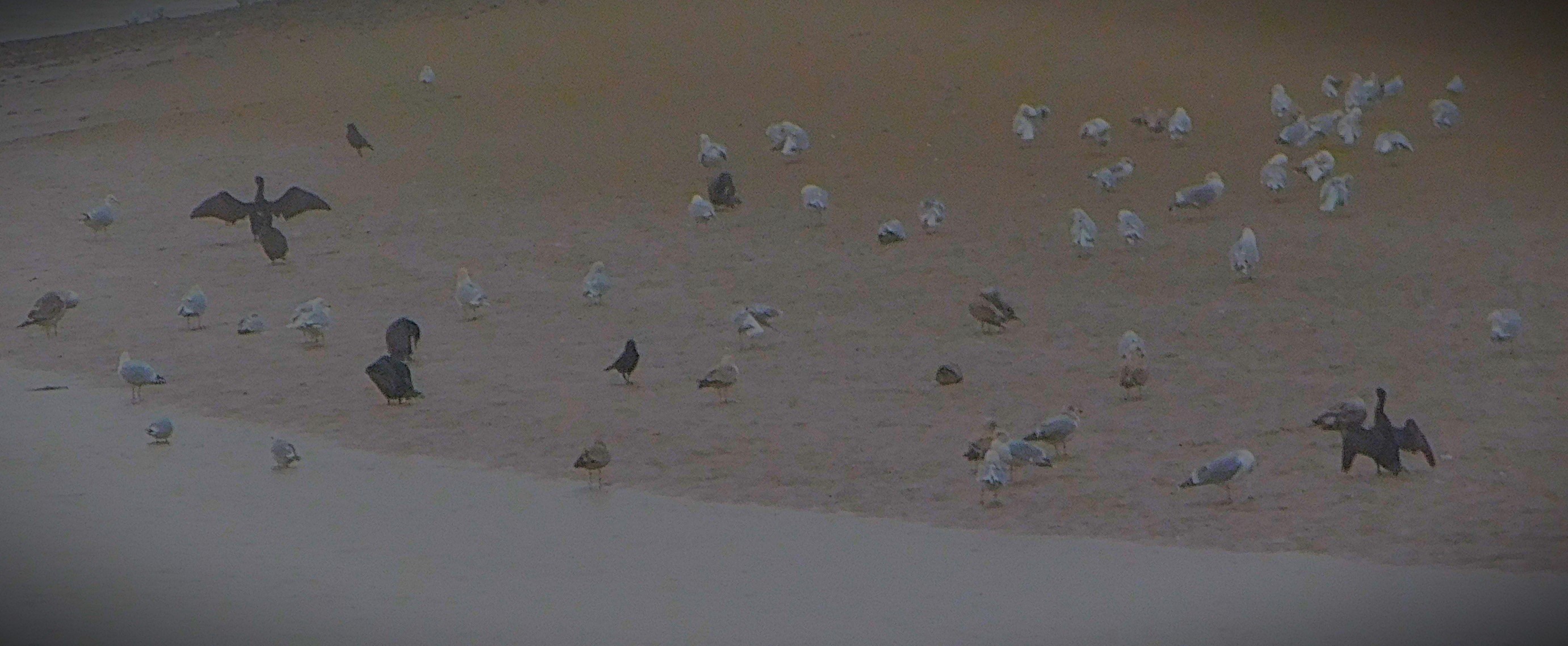
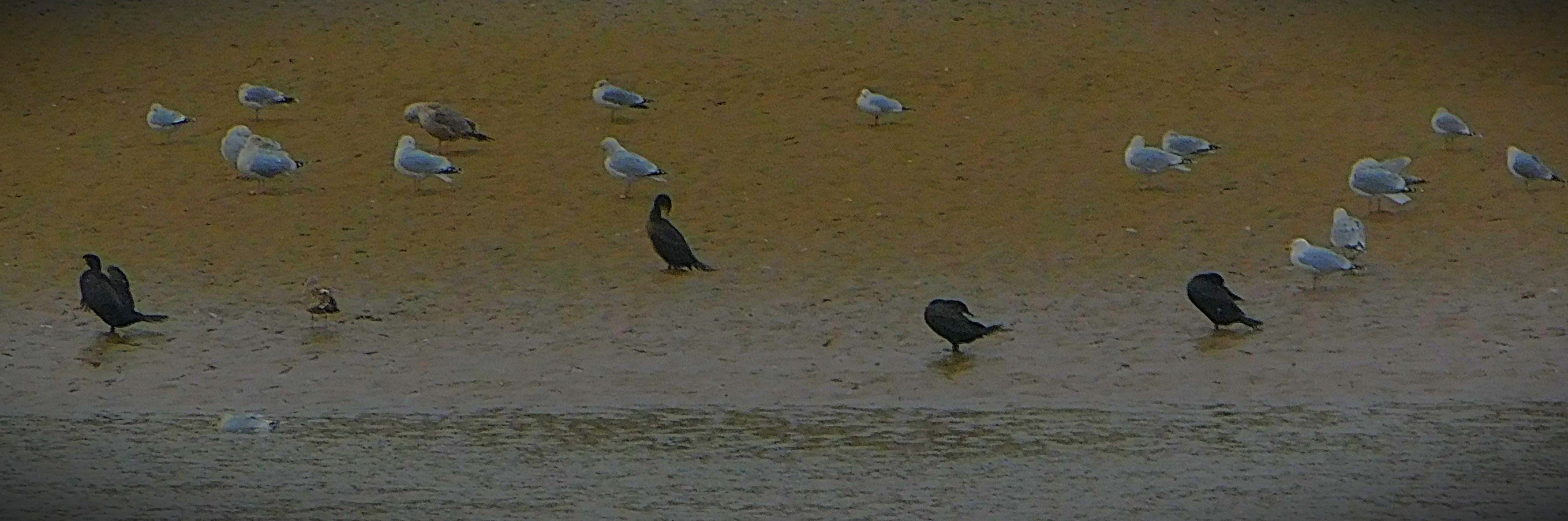
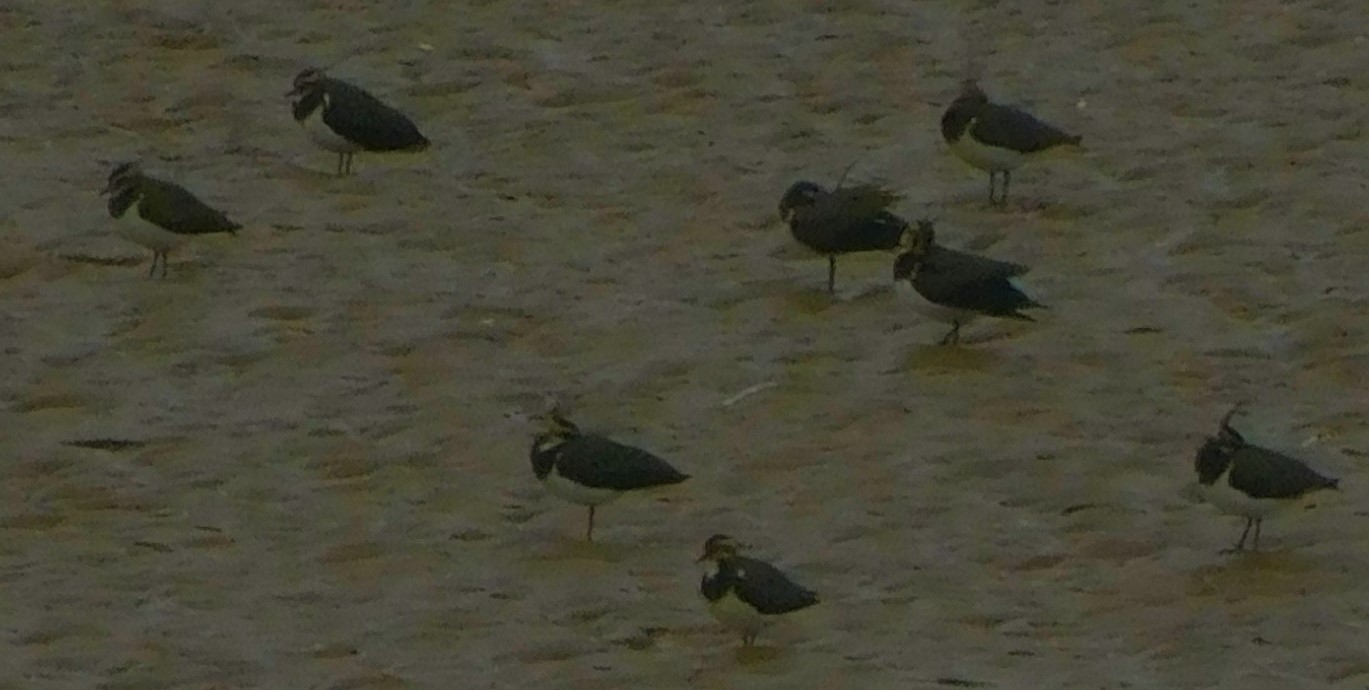
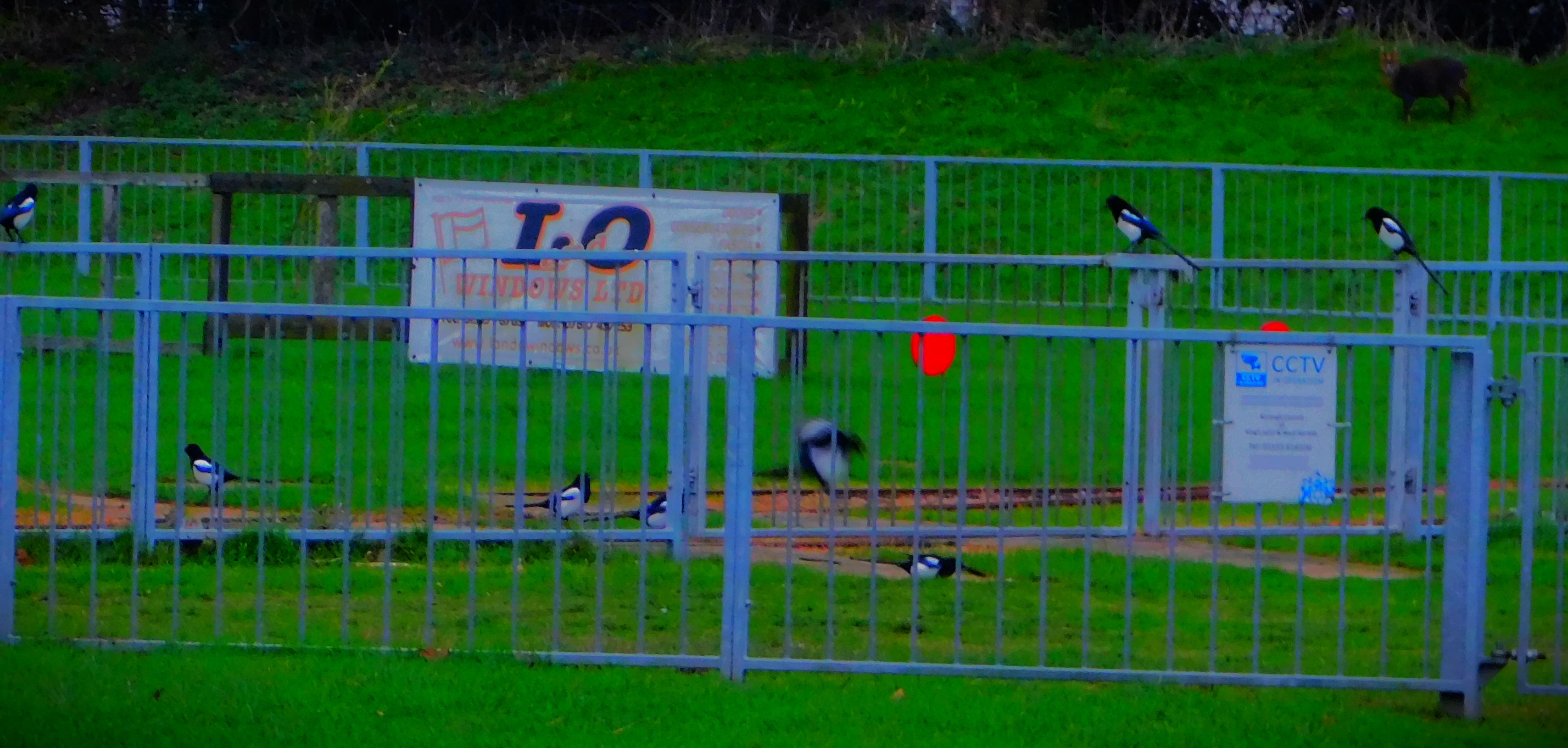
Yesterday morning was bright and sunny, and I got out for a long walk while the weather was pleasant. I was well rewarded, including sightings of an egret and a couple of cormorants among other things…

Home Alone for Christmas

An account of how I made the best of being alone for Christmas and ,enjoyed my day. Lots of photographs.

My parents, sister and nephew are all off in far flung parts of the world, and my aunt is also away for Christmas. This meant that my own Christmas would be what I made of it . The rest of this post is my own account of yesterday.

I decided that I would spend the hours of daylight away from my computer, and that I would have my fancy Christmas Day meal (a home cooked variation on the steak & chips theme) in the evening. I selected some Christmas music to play through the day, and planned to do some walking during the daylight hours. My parents had arranged that I would have a package to open on the day.

I went out for my first walk just before 9AM, which took in both the ponds near where I live, the Kettlewell Lane tree/ river area, The Walks, the Peace Garden/ Greyfriars tower, the town centre, St Nicholas’ Chapel, Bawsey Drain and back along Columbia Way. I then played the first of my chosen Christmas Music CDs. When this CD finished I headed off for my second walk, which again included both ponds, but this time I took the footpath from the second pond that leads to Loke Road just before the junction with Gaywood Road, crossed Loke Road, headed onto Gaywood Road for a short stretch before crossing it and heading down Tennyson Avenue. Just before the railway crossing I took the footpath that heads towards Lynnsport and followed to the point at which it meets the Gaywood River path, which I walked along until I reached a path off it towards the Discovery Centre and thence back home.

I had lunch while a second CD played. When the second CD finished I went out for a third walk, taking in the first pond, a route through to the footpath alongside Bawsey Drain and followed that footpath until Columbia Way, at which point spots of rain warned me that I needed to take the direct route home, along Columbia Way, rather than extend the walk further as I had been considering. I then played the rest of the Christmas music I had picked out, returning to the computer briefly in the early evening. 

I put the oven on at about 7PM, set to approximately 175 Celsius, taking care to turn the extractor fan on and open a kitchen window. I oiled a baking tray next. Then I cut a large potato into slices of approximately equal thickness, thick enough that when cooked they would still obviously be potato and thin enough that they would have a bit of crunch. I placed this slices on the oiled baking tray, sprinkled some salt over them, and then added a little more oil. I put them into the oven to cook. Then I got to work on the brussels sprouts, preparing a dozen for cooking, placing them in a saucepan and boiling a kettle full of water to cook them in. Once they were on and cooking I turned the potato slices over. I tenderised the steak, got some oil in small frying pan heating up (to colour on the outside while still being red in the middle the steak has to go in to oil that is already hot), and at the appropriate moment I put the steak into cook, flash-frying it for a minute on each side at high heat. I then plated it up, before draining the sprouts, pouring a drink and then getting the potatoes out. This is what my variation on a steak & chips theme looked like on the plate:

For the record it tasted splendid.

For afters I had a small jar of Kalamata olives.

I was mindful of the fact that the Boxing Day test match at Melbourne between Australia and Pakistan, which Test Match Special were covering, got underway at 11:30PM UK time (Melbourne is 11 hours ahead of us). I thus timed my heading to bed so that I could have that commentary playing while I was in bed. I enjoyed the day, and my Christmas meal worked well.

I have plenty of photographs to share…

The BBL So Far

A look at how the Big Bash League is panning out and a photo gallery.

The Big Bash League is well underway. This edition of the tournament features only 10 group matches per side rather than 14 and also sensibly only allows the top four sides to qualify for the knockout stages as opposed to the ludicrously overgenerous situation previously whereby fifth was good enough.

There was radio commentary on this match today for UK listeners. Renegades batted first and helped by a rare example of a reasonably well timed Power Surge (overs 16 and 17, making it a kick starter into the death overs rather than actually being part of the death overs, still an over or so later than I would like but the best timed one in any of the radio commentaries I have listened to so far) which they capitalized on, taking the two overs for a total of 34 runs, tallied an eminently respectable looking 185-5 from their 20 overs.

Unfortunately for them they bowled like drains, which in combination with some excellent Hurricanes batting, especially from Matthew Wade and Macallister Wright, saw the hosts home by six wickets with an over to spare.

Three sides, Brisbane Heat, Sydney Sixers and Perth Scorchers, are looking very likely to progress. Another three, Adelaide Strikers, Sydney Thunder and Hobart Hurricanes would appear to be fighting for the fourth qualification slot, while the two Melbourne sides, as happened in the women’s version of this tournament, look like propping up the table.

In the BBL the initial Power Play lasts for four overs rather than the usual six and the batting side then has a two over Power Surge which they have to take in the second half of their innings (this is to stop sides lazily using it for overs 5 and 6 and thereby having a standard Power Play). My feeling based on the games I have listened to so far this season is that most sides are very overcautious about taking the Power Surge which means it often happens later than it should. Personally the latest I would countenance those overs being taken is for overs 16 and 17 as happened today, but I would want to go earlier if possible. In one of the other games I listened to the side batting first had two well set batters together at the end of 12th over and still together at the end of the 13th, but they refused to take these golden opportunities to use the Power Surge, and lost a wicket in the 14th. They ended up using the Power Surge in the 18th and 19th overs of their innings, which I regard as plumb crazy. It depends on exact situations but I would always want to go fairly early. If the openers happened still to be together at the end of the 10th over I would seriously consider taking the Power Surge for overs 11 and 12 as a launch pad for the second half of the innings. The other time I might go that early as if a number of wickets have fallen and I want to use the surge while I still have two front line batters to capitalize on it. I would say that in intermediate situations between the two I have outlined above I would look at overs 13-14, overs 14-15, overs 15-16 and at the very outside overs 16-17 and would never allow the surge to unused going into the death overs.

My usual sign off…

P is for Power, Panache, Presence etc

An all time XI of players whose given names begin with P, an important honourable mentions section which starts with two ‘what might have beens’ and a photo gallery.

In this post I select an all time XI of players whose given names begin with the letter P. There is an extensive and important honourable mentions section as well, and some photographs to end.

  1. Peter Richardson (England, left handed opening batter). Had a fine test record in a generally low scoring decade, the 1950s. He also lacked a regular opening partner at England level, which makes his achievements in the role even more creditable.
  2. Phil Jaques (Australia, left handed opening batter). One of the many fine players to miss out on opportunities because Australia had a dominant and settled line up at the time. His performances in the nine test matches he got to play were excellent, and his first class record over a long career speaks for itself.
  3. Peter May (England, right handed batter). An outstanding career record, averaging 46 in test cricket’s lowest, slowest scoring decade.
  4. Phil Mead (England, left handed batter). A fine test record, and an outstanding first class one. His Hampshire tallies of 48,809 runs and 138 centuries are both records for a single first class team, while his overall career tallies place him fourth all time in both runs scored and centuries made.
  5. Polly Umrigar (India, right handed batter, occasional off spinner). He overcame a traumatic start to his test career, mainly at the hands of Fred Trueman, to end it as the holder of India career records for most runs and most centuries at test level, and with an average of 42 at that level. His India career records all stood as such until Sunil Gavaskar came along and didn’t so much raise the bar as blast it into the stratosphere.
  6. *Percy Fender (England, right handed batter, leg spinner, captain). Perhaps one place higher than would be absolutely ideal, but this side has a strong top five, and there is a very handy keeper/ batter to come. A fine all rounder, and an even finer captain, a role that Peter May’s presence not withstanding I have no hesitation in awarding him in this side.
  7. +Paul Nixon (England, wicket keeper, left handed batter). He was never picked by England for a test match, though he did play some limited overs internationals, but he was very fine wicket keeper, and good enough with the bat to average 35 in first class cricket.
  8. Pat Cummins (Australia, right arm fast bowler, right handed batter). One of the best contemporary fast bowlers.
  9. Peter Pollock (South Africa, right arm fast bowler, right handed batter). The spearhead of the South African bowling attack in the last years of their first incarnation as a test nation, he first developed his bowling in the backyard of the family home, where if he wanted a bat he had first to dismiss his younger brother, and since said younger brother was Graeme Pollock that, as many another bowler learned over the years, took quite a lot of doing.
  10. Peter Heine (South Africa, right arm fast bowler, right handed batter). Formed an excellent and nasty new ball pairing with Neil Adcock, who should probably have been in the Ns XI in the years immediately before Pollock.
  11. Palwankar Baloo (India, left arm orthodox spin bowler, left handed batter). India were not a test nation in his playing days, and since rather than being a Jam Saheb or a Nawab he was a humble member of a low caste he did not have the opportunity of going to England to play. 33 first class matches yielded him 179 wickets at 15.09 a piece, an astounding record, especially given the caste prejudice he faced while assembling it.

This side has a powerful top five, a fine all rounder who was also a very astute captain, an excellent keeper/ batter and four high quality specialist bowlers. Cummins, Pollock, Heine, Baloo and Fender, with Umrigar available as sixth bowler are unlikely to struggle to take 20 opposition wickets.

I begin this section, for reasons that I hope will become apparent, with…

My first what might have been, and the one that some would be gunning for me over my failure to include him is Phillip Hughes, a left handed opening batter who died after being hit on the back of the head by a bouncer in 2014, at the age of just 26. Hughes’ tragic demise does not change basic facts: in this case he had not done enough to earn his place in this XI, with a test average of under 33, including the 2010-11 Ashes when he looked decidedly ordinary. There is no way of knowing how his career would have developed, and I can only go on actual facts, therefore he misses out.

The second person to feature in this section is another Aussie. Some 40 years before Glenn McGrath was born there Dubbo, New South Wales had come very close to producing a champion fast bowler: Pat Crawford. His career came to a premature end after a horrible injury. In four test matches he took seven wickets at 15.28, while 37 first class matches yielded him 110 scalps at 21.02. In view of the achievements of Cummins, Pollock and Heine, plus one or two others who had to miss out I felt that while his figures did suggest a truly great performer I could not include him.

Two other openers whose test records definitely make them worthy of consideration were Paul Gibb and Peter Parfitt, the former of whom could also have been named as keeper. Pravin Amre of India started his first class career looking like he was going to shred the record books, but ultimately did not do so, though his records at both first class and test level were excellent by mosr reckonings. Pathum Nissanka of Sri Lanka has an outstanding first class batting record and a very respectable test one, and may ultimately claim a place in this XI, but at the moment he is not quite there. Peter Burge of Australia was also in the mix for a middle order batting slot, but although he definitively won one test match for his country (an innings of 160 that was largely responsible for what looked a substantial first innings deficit becoming a substantial first innings lead) his overall record was respectable rather than great. Paul Collingwood was a candidate for the place I gave to Umrigar, and would also be a candidate for being the designated substitute fielder, though he has a rival for that slot in Paul Parker. Phil Sharpe was a gritty batter who averaged 40 at test level and an outstanding slip fielder. Parthiv Patel, Paul Downton and Peter Nevill were the three wicket keepers closest to challenging Nixon. The fastest bowler to miss out was unquestionably Patrick Patterson, but he was nearly as erratic as he was quick, which is why his record falls short of greatness. Peter Siddle and Pat Trimborn were both quality practitioners of right arm fast medium bowling. Pedro Collins was another test match pacer not quite good enough for this XI. The spin options were thinner on the ground, though Pat Pocock, who once took seven wickets in 11 balls for Surrey against Sussex deserves a mention, and two contrasting left armers, Philippe-Henri Edmonds and Paul Adams of the ‘frog in a blender’ action would both have their advocates. Pat Symcox, a fine off spinner for South Africa, would also have his advocates. Peter Hatzoglou (leg spin) and Patrick Dooley (left arm wrist spin) would be candidates for a limited overs side. Australian left hander Phoebe Litchfield would also be a candidate for a batting slot in a limited overs XI.

My usual sign off…

England Swallow Dive Into New Era and Orchestrating an All Time XI

A look back at last night’s ODI series decider between West Indies and England, an all time XI with given names beginning with O as its theme and a photo gallery.

Last night saw the deciding ODI of the series between West Indies and England. That and an all time XI of players where the main focus is having a given name beginning with O form the bulk of today’s post.

As you will see it is more than usually appropriate that the heading of this section of the blog is in maroon, the colour of the West Indies.

Rain delayed the start significantly, and the by the time of the toss the match was reduced to 43 overs per side instead of 50. West Indies won the toss and put England into bat. Matthew Forde made an international debut in place of Oshane Thomas for West Indies and Matt Potts replaced Brydon Carse for England.

Ford bowled outstandingly with the new ball and was rewarded with three very quick wickets. Alzarri Joseph then struck twice, though he only got officially credited for one – a brilliant piece of fielding off his own bowling that in conjunction with a hesitation between the batters led to a run out was the one for which he got no credit, a terrible shot that led to a first ball duck for skipper Buttler was the one that he did get credit for. At that point England were reeling at 49-5. Liam Livingstone and Ben Duckett then shared a big partnership, and it looked like England’s early collapse might not be terminal.

England’s spinners bowled well, and the West Indies looked like failing in the chase on several occasions. Then, at the crucial moment, with the run rate definitely looking challenging for WI, and on a pitch on which extra pace had been at best a dubious asset (Forde, so successful for WI, is a medium pacer, and WI’s next best bowlers were their own spinners Motie and Cariah) Buttler entrusted Atkinson with an over. Atkinson immediately started trying for yorkers, and served up two delicious full tosses which both went for sixes. In total this over yielded 24 runs, and the result was no longer in doubt. WI duly won by four wickets and took the series.

There have been signs of promise from England this series, with Jacks and Salt looking like a decent opening pair, Jacks bowling well yesterday, Livingstone faring decently as an all rounder and Duckett’s innings yesterday, but there are also obvious problems, the biggest of them being Buttler’s inadequacy as skipper. West Indies bowl better than they bat (which as anyone familiar with my blog knows is the way round I would prefer things if I had to have a side that was stronger in one department than the other), with Forde a hugely promising new comer, Alzarri Joseph and Oshane Thomas both good pacers and Cariah and Motie good spinners. The batting is a trifle too dependent on Shai Hope for comfort, but they did the job yesterday without him making a huge score.

Today pick an all time XI with the theme being players whose given names begin with the letter O. I have had to resort to a couple of cheat picks to complete the XI, but nine of my players do indeed have given names beginning with O.

  1. Octavius Radcliffe (England, right handed opening batter, occasional off spinner). A west country based amateur of the late 19th century (born and died in Wiltshire, turned out for both Gloucestershire and Somerset, the former of which helped get him a place on the 1891-2 Ashes tour, skippered by WG Grace), and his record compares reasonably with those of a similar vintage.
  2. Felix Organ (Hampshire, right handed opening batter, off spinner). One of my ‘cheat picks’, and picked more on potential than actual achievement. He does have a name beginning with O, but not his given name.
  3. Ollie Pope (England, right handed batter, occasional wicket keeper). An excellent FC record and a respectable test record which he is well capable of improving. Number three has been his best position for England.
  4. Owais Shah (England, right handed batter, occasional off spinner). In common with many an English player of vintage he has a good domestic record while having done little of note at international level.
  5. O’Neill Gordon ‘Collie’ Smith (West Indies, right handed batter, occasional off spinner). He was killed in a car crash while in the process of establishing himself. He had done enough to earn his place in this XI.
  6. Azmatullah Omarzai (Afghanistan, right handed batter, right arm medium fast bowler). My second ‘cheat pick’, he has shown himself to be a fine player, and I expect him to improve further.
  7. +Oliver George Robinson (Kent, Durham, Wicket keeper, right handed batter). For me he should second choice for England men’s test wicket keeper right now behind Ben Stokes. He has recently moved from Kent to Durham, and the move north has not adversely affected his batting average, proof positive that he is genuinely skilled in that department, not merely a beneficiary of southern climes and pitches.
  8. Omar Henry (South Africa, left arm orthodox spinner, left handed batter). The first non-white cricketer ever picked for an official South Africa XI, though that came too late in his career to for him to really benefit, 443 Fc wickets at 25.17 and 4,566 FC runs at 27.34 with five centuries and an HS of 125 show him to have been a fine cricketer when in his prime.
  9. Oliver Edward Robinson (England, right arm fast medium bowler, right handed batter). When fully fit he is a formidable bowler. It is the necessity of that caveat that is problematic.
  10. Odean Brown (West Indies, leg spinner, right handed batter). Yet to play international cricket, but 255 FC wickets at 23.00 is a respectable record.
  11. Olly Stone (England, right arm fast bowler, right handed batter). Has been plagued by injuries, but when fit he is a devastating bowler.

I cannot pretend that this is a great XI, but it has a functional opening pair, a respectable 3,4,5, a hugely promising all rounder at six, a class keeper/ batter and four decent front line bowlers, though two of those would be injury worries.

Most of these are players who would merit consideration for a limited overs XI but not for a long form one. There are three exceptions: Ossie Wheatley and Oliver Hannon-Dalby established fine records bowling right arm fast medium at county level, and if worried about having both OE Robinson and Stone in the XI one of these two could replace OE Robinson, though it must be noted of Wheatley that he was a genuine liability except when actually bowling. Aussie Women’s leg spinner of the 1990s Olivia Magno was also a genuine candidate for the slot I gave to Odean Brown. Oliver Rayner, an off spin bowling all rounder, had to be overlooked due to the number of front line batters in this XI who could bowl off spin if needed. Four West Indians would in the mix if not on the team sheet if I were selecting with limited overs in mind: Obed McCoy (left arm seamer), Odean Smith (right arm seam bowling all rounder), Omari Banks (off spinner who could bat) and Oshane Thomas (right arm fast bowler, excellent in limited overs, but has an awful record in long form matches).

My usual sign off…