
And Then There Were Three

A look at goings on in the WBBL as that tournament approaches its climax. There are now only three teams left in the tournament. Also a huge photo gallery.

This morning saw the first of the knockout matches in the WBBL, between Sydney Thunder and Hobart Hurricanes, at the former’s home ground, the Drummoyne Oval, six kilometres or thereabouts west of Sydney city centre. This post looks at what happened today and how the KOs work in this tournament.

Four teams out of eight qualify for the knockout stages of the WBBL, and the system then works thus: third place take on fourth in what is termed the Knockout match, with third place having home advantage. The winners of this match then play away against the team who finished second, in what is called the Eliminator match, and finally the winners of that face up to the winners of the league stage at the latter’s home ground. In this edition of the tournament Melbourne Renegades and Brisbane Heat had 14 points each from their 10 group games, with the Renegades ahead on net run rate, while Sydney Thunder had 13, the single point coming from a washed out local derby against the Sydney Sixers, and Hobart Hurricanes had 10 points – five wins and five losses. They qualified with this modest tally through a combination of the top three all having such excellent records and the fact that having four teams in an eight team league qualify for knockout stages is over-generous (though less bad than the men’s equivalent where FIVE of the eight sides qualify, which means that there is a genuine chance of a team with an overall losing record making the KOs, which is plumb crazy).

Hobart Hurricanes won the toss and chose to bat first. They did not perform well. When Heather Graham was out to the last ball of the 10th over they were languishing at 47-4 halfway through their innings. They did pick things up in the second half of their innings, with Elyse Villani ending unbeaten on 49 from 42 balls, Suzie Bates managing 17 off 17 balls, and Kathryn Bryce with 10 off 6 and Lauren Smith with 6 not out off three balls giving things a late boost. A total of 126 still looked inadequate.

For a long time however, it looked as though Hurricanes might be defending it successfully. With three overs to go Thunder needed 26 to win, and although Litchfield was batting well Anika Learoyd was, as many had on both sides, progressing very slowly. The 18th over, bowled by Heather Graham, which was also the second of the Thunder’s Power Surge, turned the course of the match – 16 runs came from it, including three boundaries, one from Litchfield, and two, off the last two balls of it, from Learoyd. Litchfield then hit the first ball of the 19th over for six. The second and fourth balls yielded singles. The off the fifth ball Litchfield was bowled, which brought Georgia Adams to the crease with two runs needed for the win. Adams cut the only ball she faced for four runs to seal victory for the Thunder with an over to spare and send them on to Allan Border Field on Friday to do battle with Brisbane Heat for the right to face Melbourne Renegades. Litchfield’s 46 off 36 in a match in which few had struck at above 100 and three catches secured her Player of the Match. Molly Strano, one of the most successful bowlers in the WBBL’s history, had figures of 4-0-8-1 for the Hurricanes, unavailing in the end, but the joint most economical figures ever in the knockout stages of a WBBL tournament. A full scorecard of this match canb be seen here.

In many ways justice was done today, although Thunder were not convincing winners by any means. They were much better than the Hurricanes in the group stages, and it is right that the winner of this tournament should come from one of the top three – for Hurricanes to have emerged victorious after qualifying for the knockouts on 10 points would have left a bad taste in the mouth – and yes this is a pom criticizing an Aussie tournament for having overly soft qualification rules, and I stick by every comment I have made along these lines.

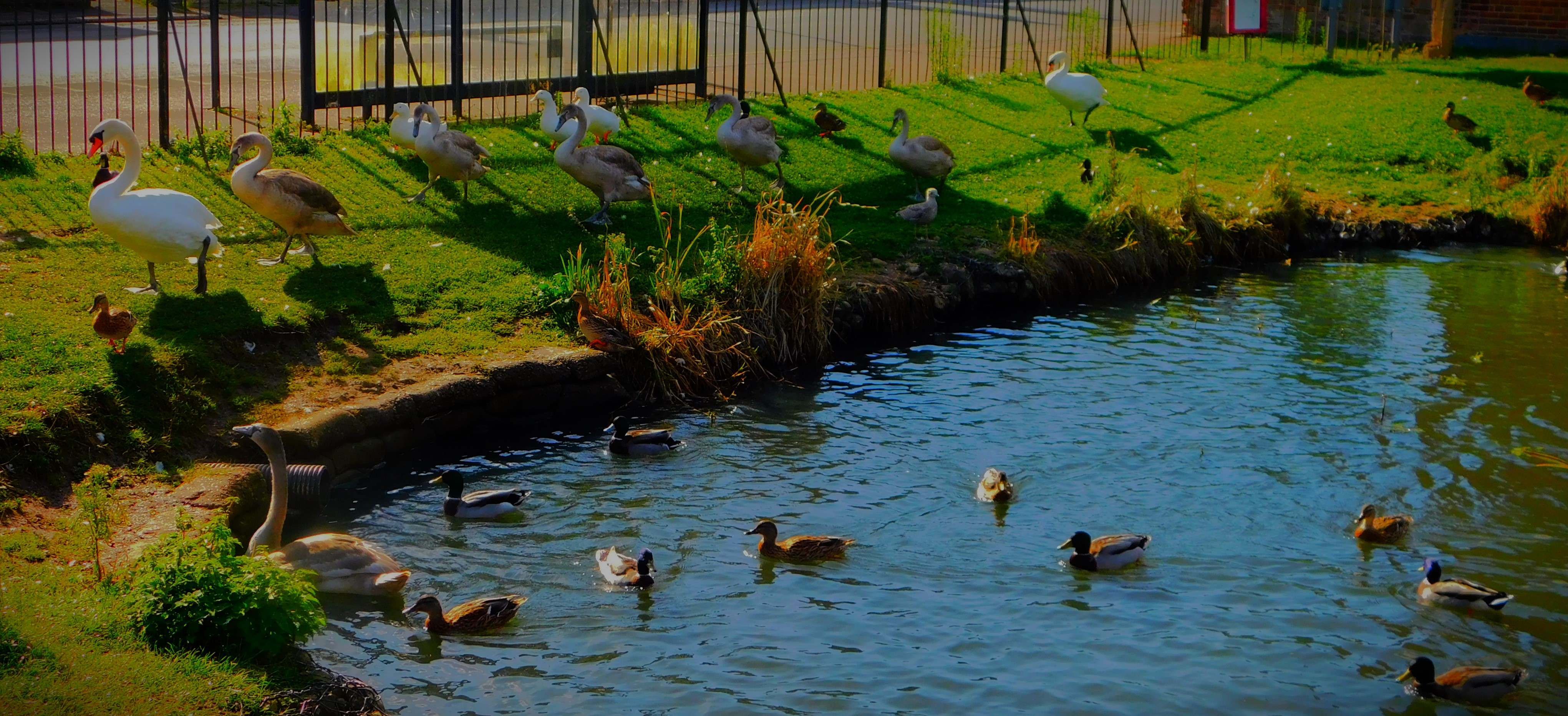
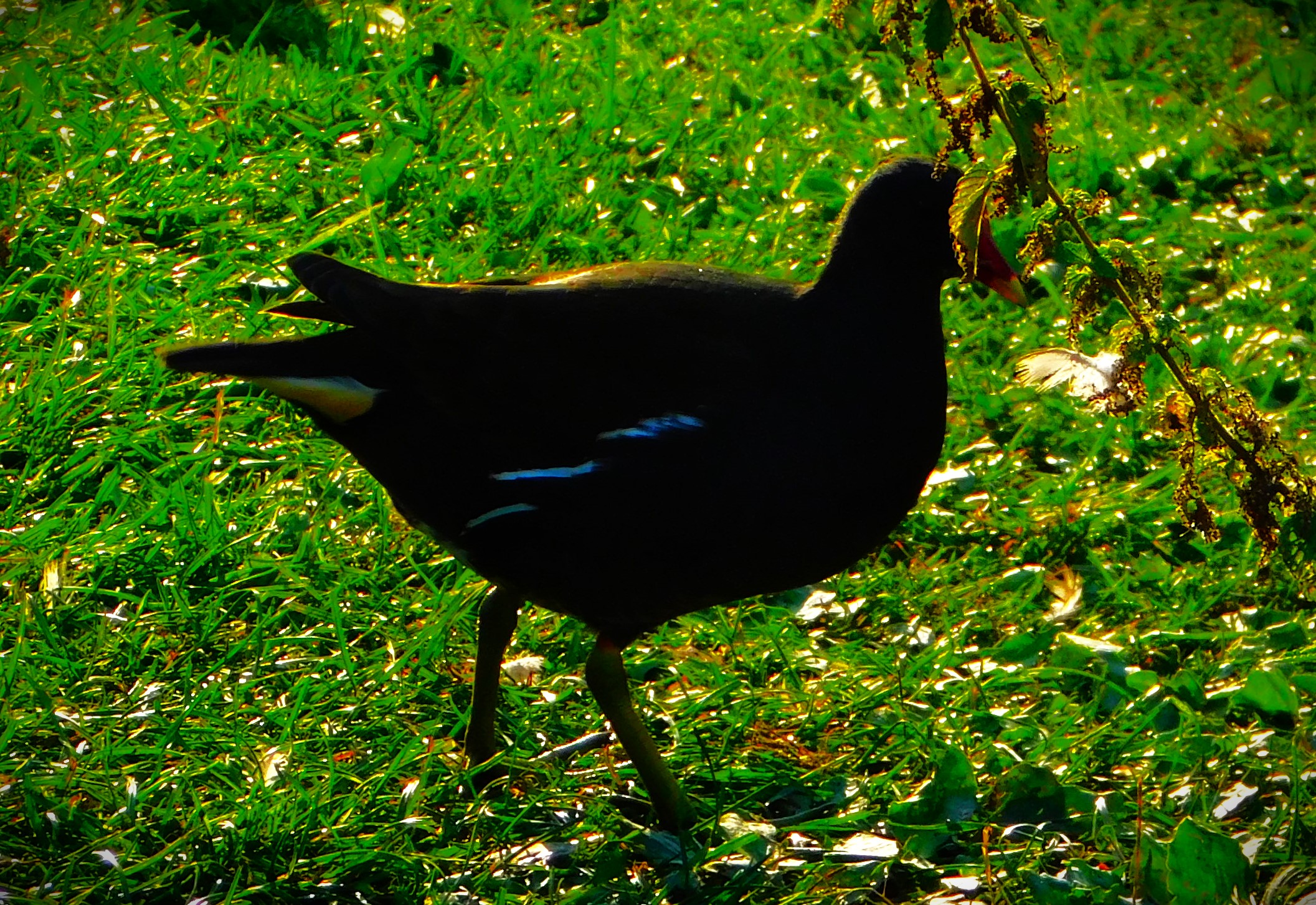
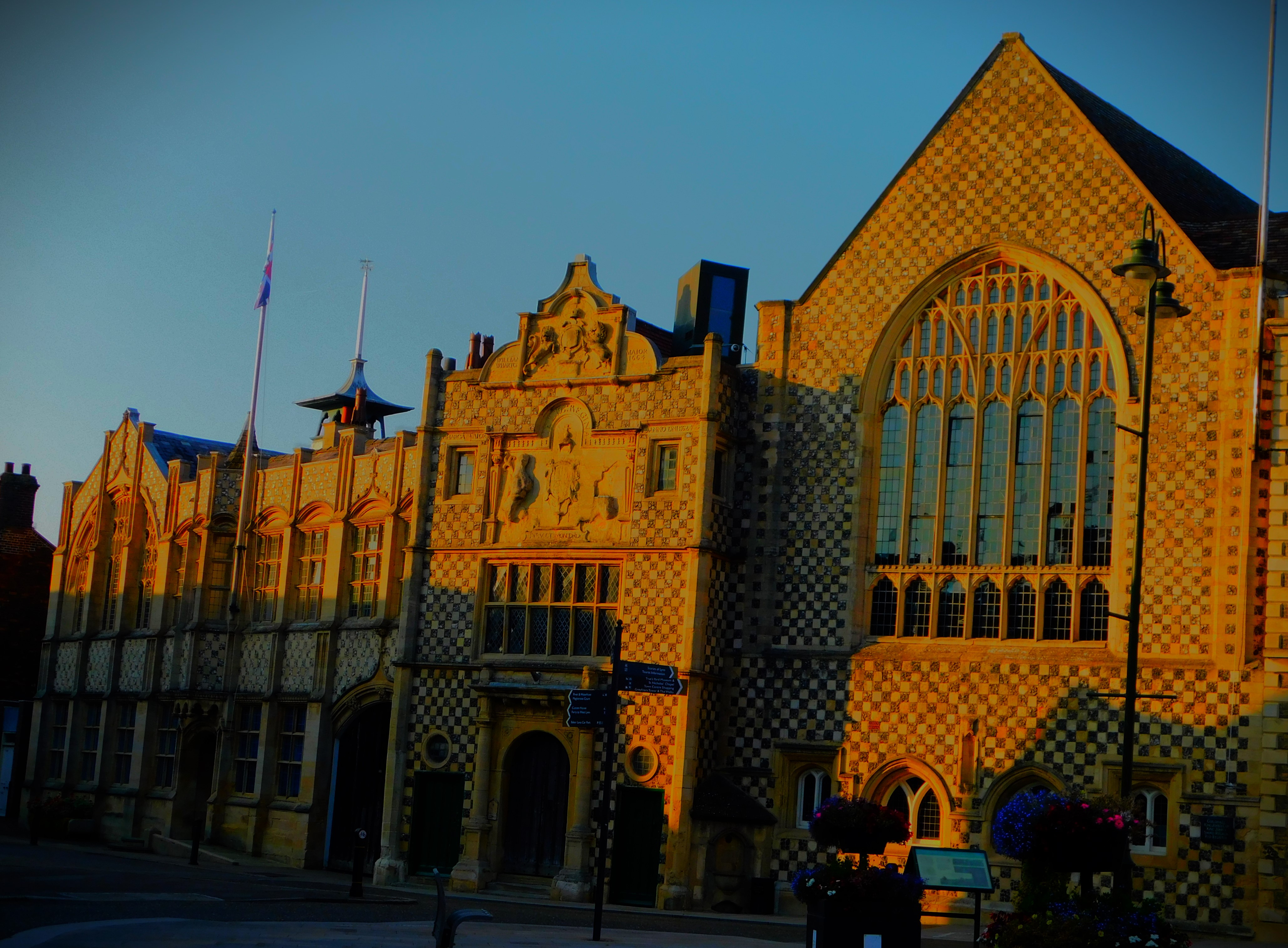
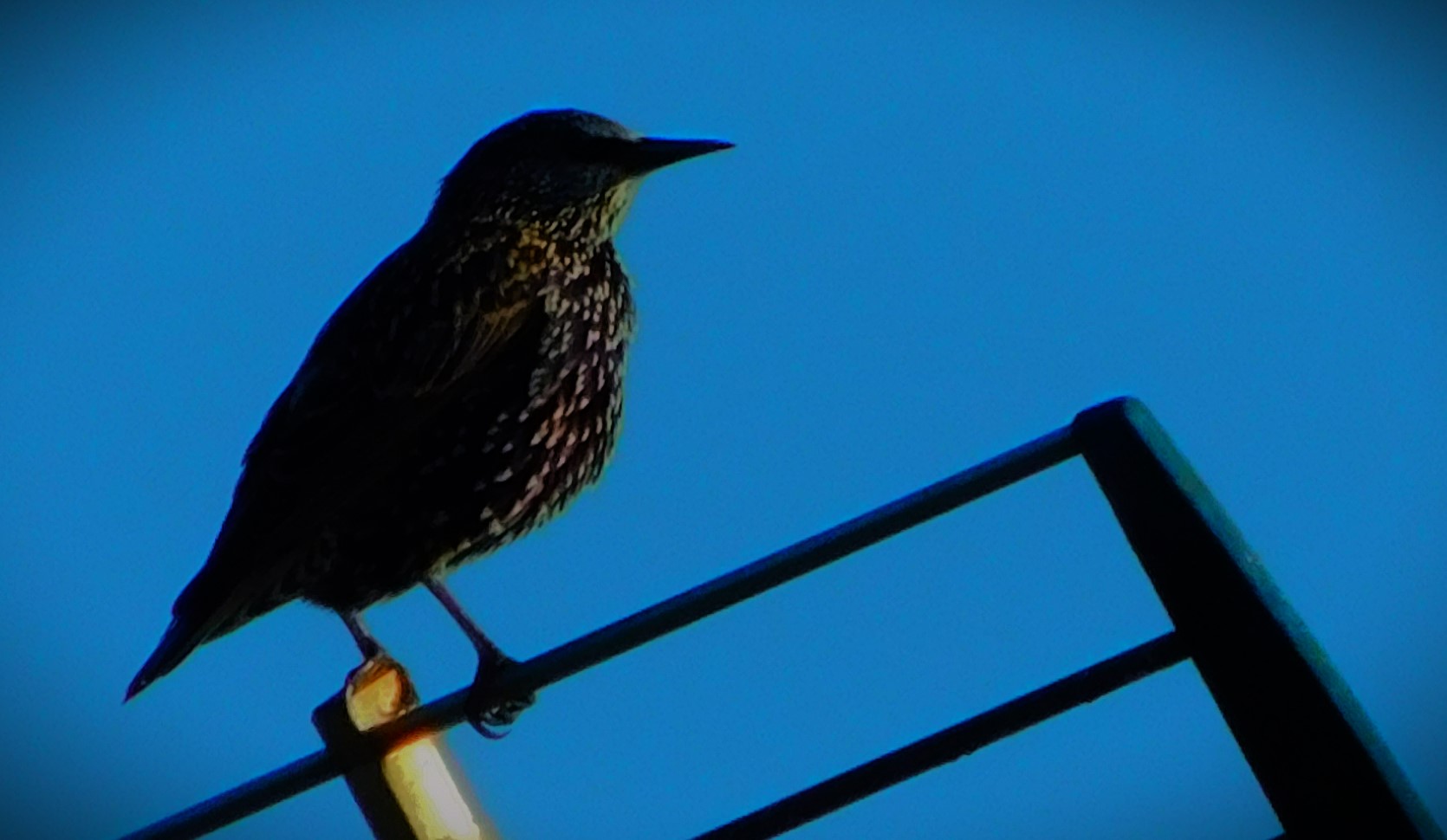
I have a very large gallery, due to not having posted on Monday. Monday and yesterday were both sunny although cold, while today has not been sunny and is still cold…

Three Rivers

An account of a walk in and around King’s Lynn. This particular variation on a favourite walking theme of mine took place yesterday late morning. There are plenty of photographs.

It is no secret to followers of this blog that I do a lot of walking, and that I go nowhere without my camera. This post looks in detail at a recent walk.

One of my favourite themes around which to construct walking routes in and around King’s Lynn is what I call the ‘three rivers’. The three rivers of that title are the Gaywood, multiple sections of which are encompassed, the Nar, which is crossed twice at different points, and Great Ouse, the main river in this part of the world, alongside which some of the walk takes place. The particular walk that this post uses for detail took place yesterday, when the weather was bright and sunny but cold.

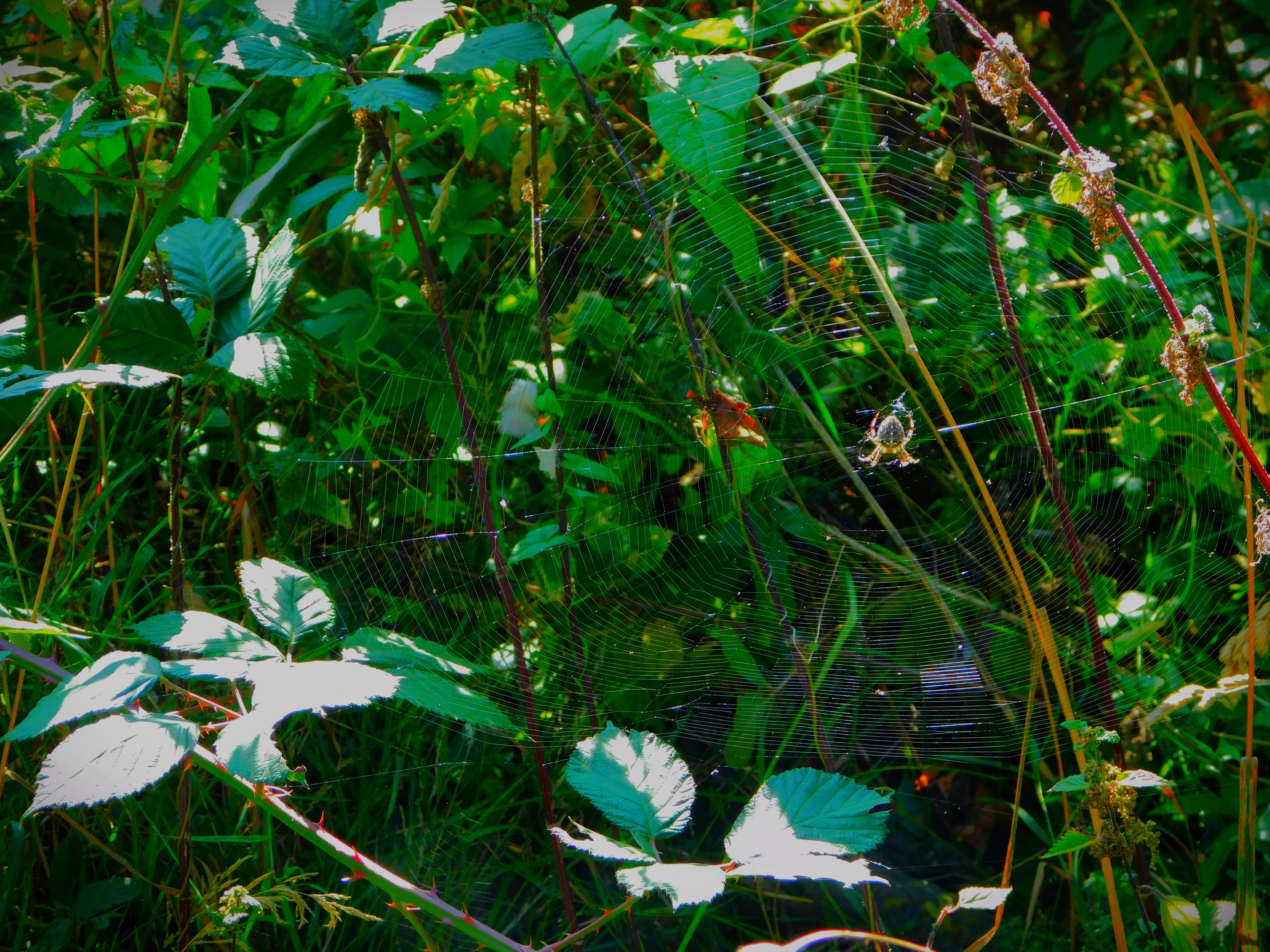
I started by leaving my house by the back door, as I was heading at first in the general direction of the town centre. The road that runs behind the row of houses in which I live is a private road and is unnamed. It disgorges on to Raby Avenue, which I crossed, and then headed down Townshend Terrace, a side road which forms a right angle, running from Raby Avenue to a pond at which point it swings 90 degrees and disgorges onto another road. However, as you will see I was not going that way. The pond usually yields pictures, and it did so this day as well…

While Townshend Terrace goes on way, a footpath leads in the opposite direction, through to Loke Road. On the far side of Loke Road, almost directly across from this footpath is a side road called Harewood Parade, which leads round the side of a second pond, until it terminates and is replaced by footpath which heads into a section of greenery flanked on one side by a section of the Gaywood River and on the other by Kettlewell Lane. Although the second pond did not yield anything for the camera on this occasion, the rest of this segment of the walk did…

Kettlewell Lane leads out on to what at that stage is Littleport Street, though a little way north it becomes Gaywood Road. By this stage one is very close to the town centre, but one is not committed to main roads. I crossed Littleport Street at the light controlled crossing on Eastgate Bridge, and headed down Highgate, past a little patch of greenery that sometimes yields pictures though not on this occasion, and down a little side passage that leads to a small bridge back over the Gaywood to the town side and another little section of greenery, which I exited on to Wyatt Street at the other side. I then crossed Wyatt Street, and took a footpath that runs alongside Eastgate primary school before coming out on Blackfriars Road, the road that runs past King’s Lynn station. At this point, for a brief period there are no further options for main road avoidance, so I followed the road round past the station, and shortly after the station headed into the park called The Walks. I headed alongside another section of the Gaywood (heavily sculpted at this stage of its route) until I reached the white metal bridge that leads in to the Vancouver Garden wherein is located the bandstand. I exited the Vancouver Garden by the other bridge from it, crossed the Broadwalk, and headed for the Seven Sisters exit. This section did not yield many pictures, but there were a few…

From the Seven Sisters exit I headed to where a passage leads through to London Road, joining that road at a light controlled crossing, which I availed myself of. I then headed away from town, passing the South Gate and then turning down the road that crosses the Nar, which I exited on to Hardings Way before taking a footpath through Hardings Pits to the Great Ouse at a point south of the town.

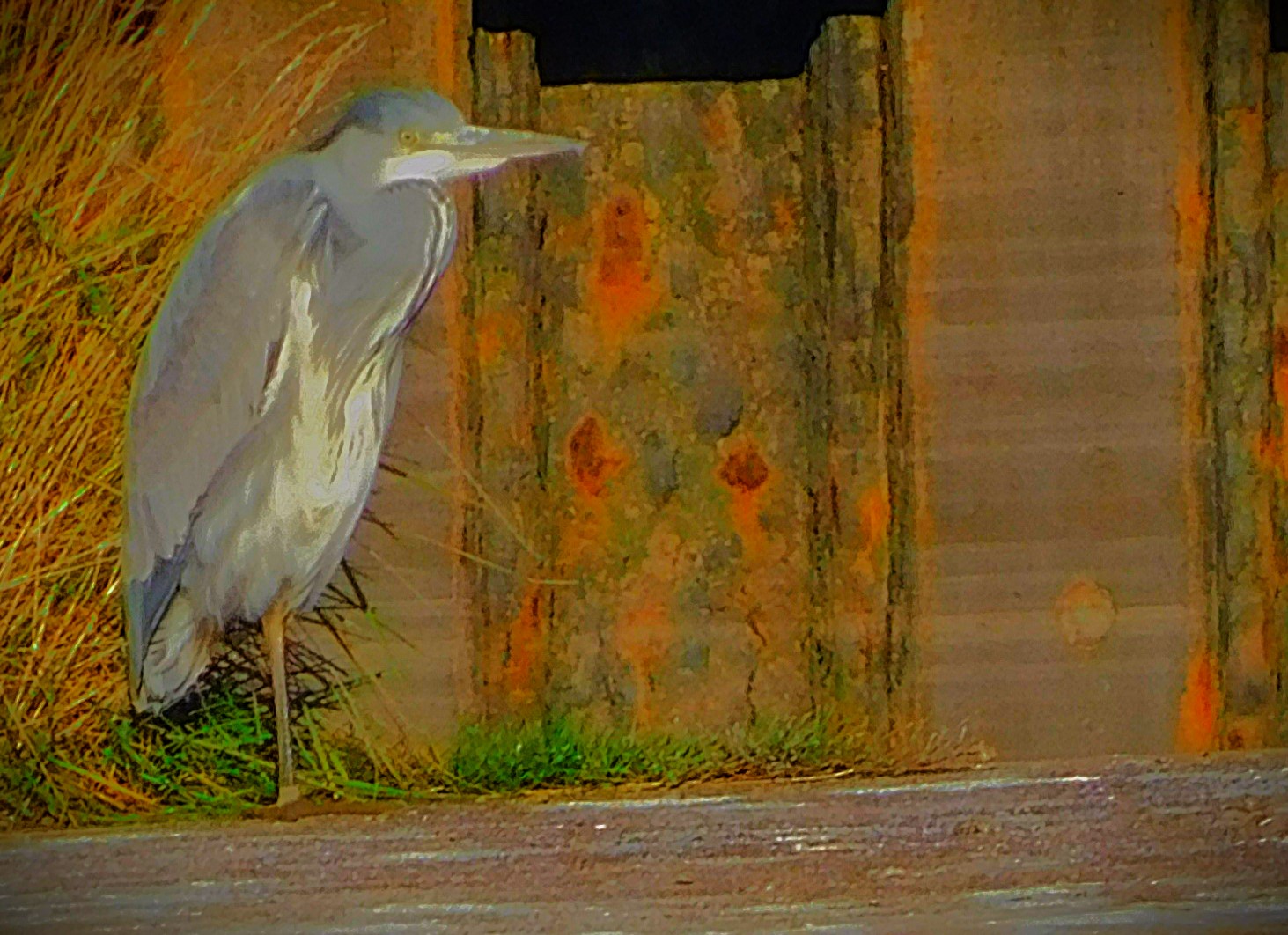
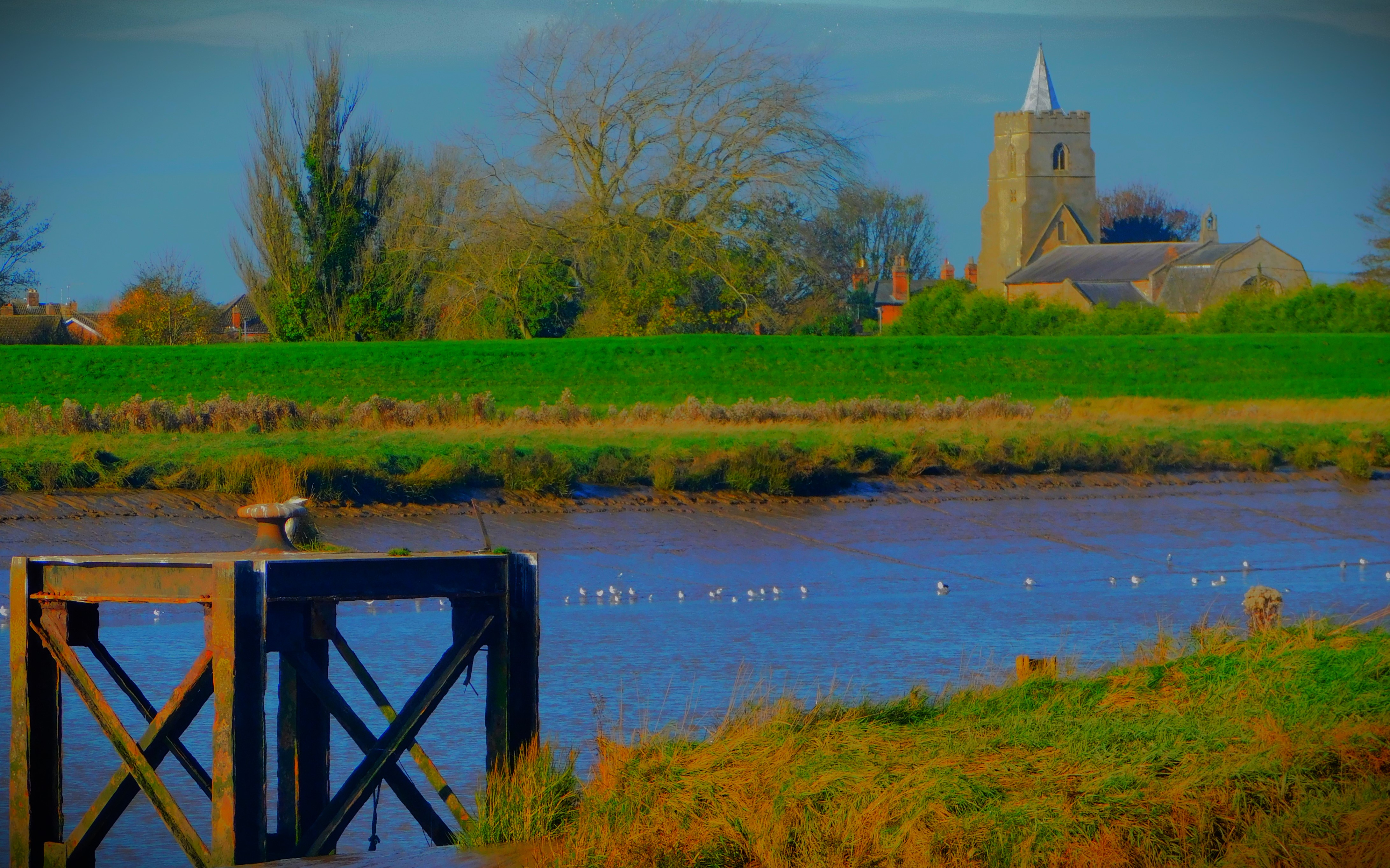
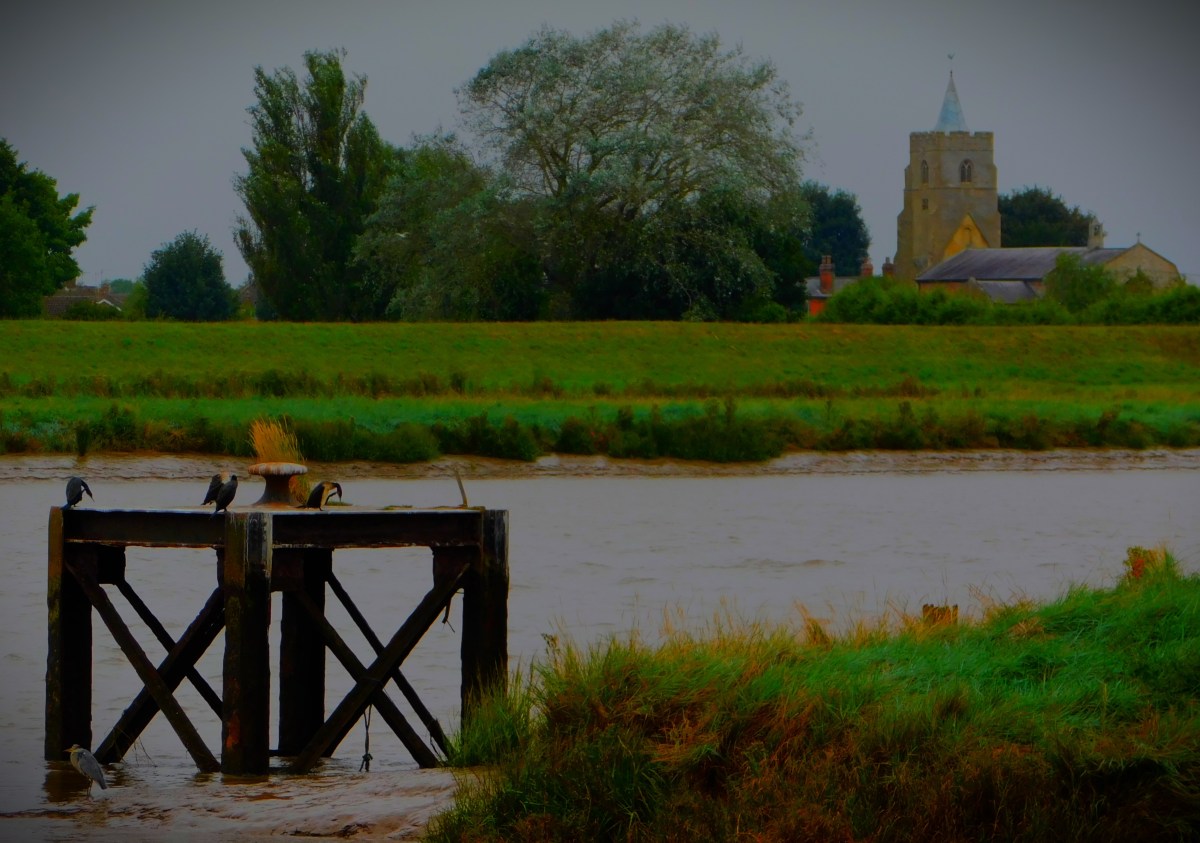
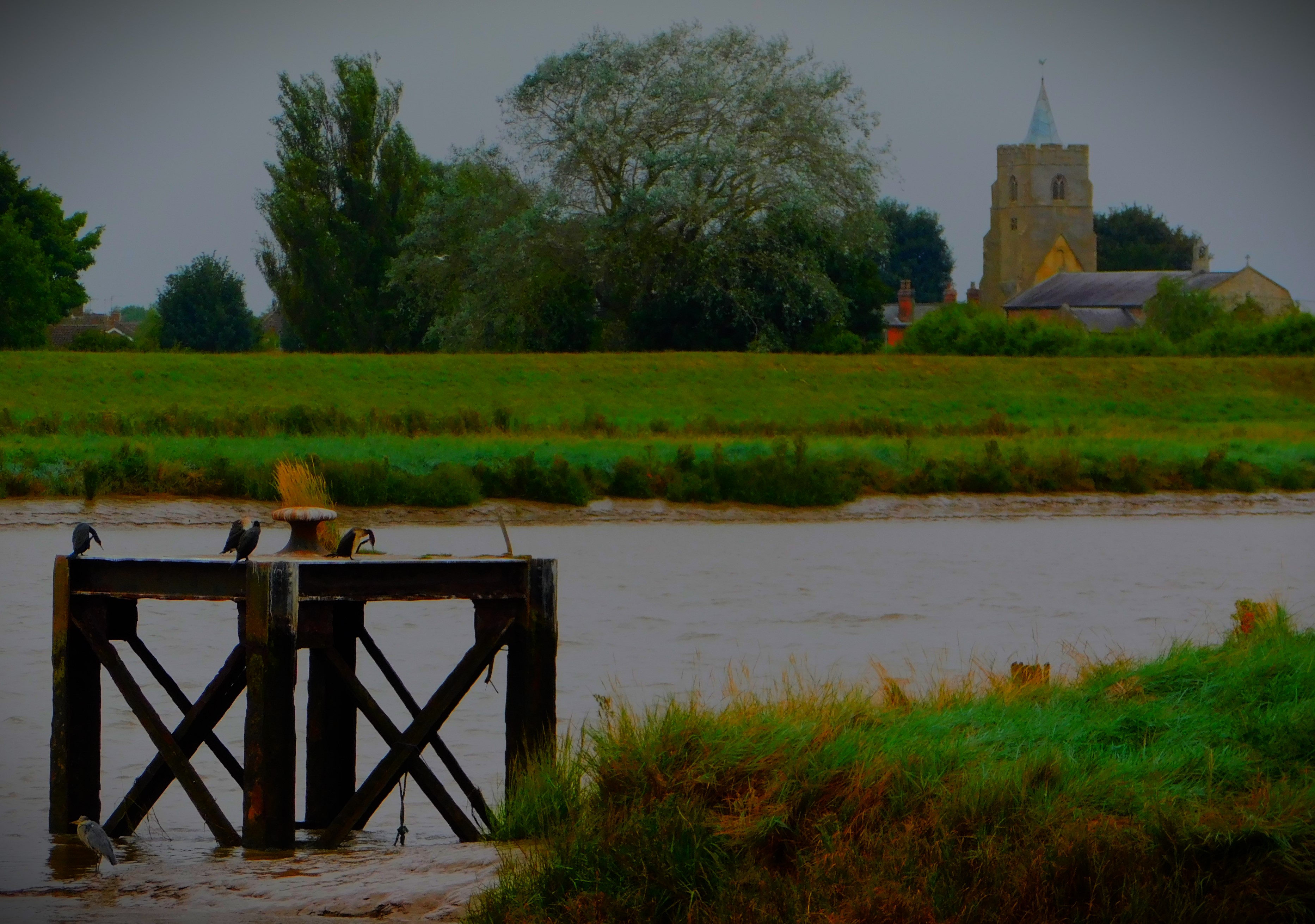
The next port of call was ‘Cormorant Platform’, although none of the birds that led me to give it that name were present on this occasion. There was a heron there however…
From here I headed on to a dike which can be muddy, but as we have had little rain of late I knew would be fine, and followed it until the path bifurcated – one route led to more of the Great Ouse, and the possibility of following that river as far as Purfleet Quay, but on this occasion i took the other, heading across another part of Hardings Way, through a gateway and down a side road which leads to play area that is at the meeting point of several roads, one of which leads to All Saints Church, reckoned to be the oldest church in King’s Lynn and then by way of Hillington Square to Millfleet.

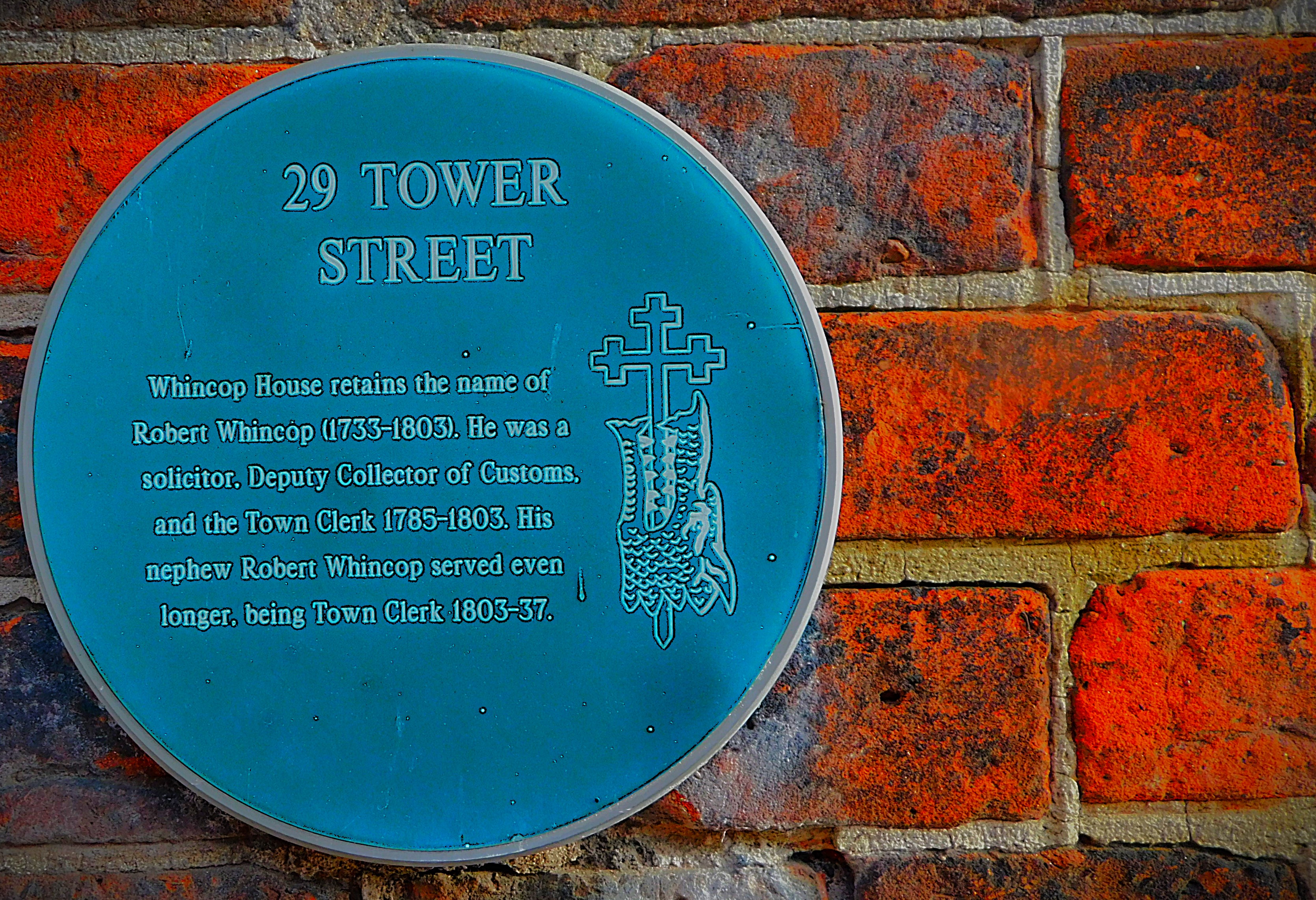
I crossed Millfleet at a light controlled crossing, headed up past the library, though on this occasion I did not visit that establishment as I already had a number of books out. I then went past the war memorial and Greyfriars Tower, before heading on to Tower Street and thence to the bus station, though I was merely passing through, not intending to catch a bus. From the bus station I headed along Railway Road, crossed at a light controlled crossing and walked along the northernmost section of Norfolk Street to arrived a triangular road crossing that invariably involves two waits if you are a pedestrian, followed Littleport Street until the junction with Kettlewell Lane, passing through the greenery to the second of the two ponds mentioned earlier in this piece, but I now did not entirely duplicated the starting route, instead heading along Loke Road, on to Columbia Way, and then availed myself of a recently opened cut through to the private road behind my house and thus got home.

I hope you have enjoyed this account of a variation on one of my favourite walking themes, that of the three rivers.

Two Small Run Chases, Two Very Different Approaches

A look back at yesterday’s matches in the Women’s T20 World Cup – two small run chases, and two very different approaches from the two chasing sides. Also a photo gallery.

Although a test match got underway today between the Pakistan and England men’s sides in Multan, which I will be writing about in due course my focus for this post is yesterday in the Women’s T20 World Cup.

Pakistan had won their first match of the tournament, India had lost theirs heavily. India bowled well and had moments in the field, though they were far from unblemished there – two easy catches went to ground. Pakistan messed up their batting order, with the captain coming in too late. In the end Pakistan left themselves with a mere 105 to defend. Surely this was time for India to stamp on the accelerator right from the start in an effort to undo some of the damage their shellacking by New Zealand had done to their net run rate. However they were consumed by caution, and in the end they completed the job with only seven balls to spare, which was not what they needed. Unless India can somehow beat Australia it now looks like the game between New Zealand and Pakistan will be a virtual play-off for a semi-final slot due to India’s poor net run rate.

Scotland never really got going at all, and in the end they failed even to reach 100, finishing their 20 overs with 99-8. West Indies did what India hadn’t earlier in the day and went hard at the chase. Qiana Joseph atoned for her horror innings in the previous game by scoring 31 off 18 balls, Deandra Dottin, in the second match of the second phase of her international career scored 28 not out off 15 balls, and Chinelle Henry hit 18 not out off 10 balls. West Indies needed only 11.4 overs to complete their task and had six wickets to spare. Joseph and Henry hit a six each along the way, and Dottin had two sixes, the second of which was the winning hit. West Indies with the boost to their net RR currently sit top of their group, though they will be displaced by whoever wins today’s match between England and South Africa.

My usual sign off…

England’s Poor Start to ODI Series

A look back at the first two matches of the ODI series between the England and Australia men’s teams and a photo gallery.

The England men’s side are finishing their home season with a One Day International series against Australia. This post looks at developments in that series so far.

At 214-2 with plenty of time to go in their innings England seemed set for a 350+ score. Then Ben Duckett and Harry Brook got out in quick succession in near identical fashion, each giving Marnus Labuschagne return catches. That put the skids under the innings, and wickets continued to fall. In the end England were all out in 49.4 of their 50 overs for 315, a total which was at least 50 short of what it should have been. Labuschagne, a batter who bowls rather than a genuine all rounder, had figures of 3-39. It was soon obvious that England would have their work cut out to defend this score. In the end Travis Head, who played a quite magnificent innings, was joined for the killing partnership by Labuschagne. Head, unlike Duckett who had thrown his wicket away for 91, batted right through to the end, which came with six whole overs and seven wickets to spare, topping 150 in the process, while Labuschagne was unbeaten on 77 at the other end. Scorecard here.

In the second match, which took place yesterday, Australia found themselves batting first, and England bowled well. When Australia lost their ninth wicket at 221 a 1-1 series score looked likely, even though Brydon Carse had been shockingly expensive. However England now resorted to the tactic of feeding Carey singles so that they could bowl at the number 11, Hazlewood. Hazlewood is a genuine number 11, but even he is capable of presenting a straight bat to a couple of deliveries per over. With no real pressure being imposed due to the decision not to attack Carey the last wicket accrued 49 before Carey was caught off the fourth ball of the 45th over for 74. Hazlewood was unbeaten on 4, but he had done all that the combination of Carey’s good batting and England’s poor tactics had required of him.

One result of this last wicket stand was that instead of heading into the innings break on the back of a clatter of wickets (the 7th, 8th and 9th had fallen quite close together) the sides returned to the pavilion with the momentum definitely with Australia. Australia had Salt and Jacks out fairly quickly, with just 28 on the board. Brook fell with 46 on the board, and then at 65 England suffered a double blow, as Duckett (32) was out to a fine return catch by Hardie, and then Livingstone feathered the next ball behind and Carey held another fine catch. Jamie Smith and Jacob Bethell added 55 for the sixth wicket, before Bethell gave Starc a catch off Maxwell. Carse then joined Smith for what might look like a respectable seventh wicket stand, but the problem was he failed abysmally to rotate to the strike – 56 balls were bowled between the fall of the sixth and seventh wickets, and Carse faced 40 of them, which is not what the balance of strike should be between a front line batter and a bowler who bats. It was Smith who was seventh out, for 49, a dismissal that more or less sealed things, although Adil Rashid did his best from number nine. England did just top 200, being all out for 202, giving Australia victory by 68 runs. Scorecard here.

Australia are thus 2-0 up in the series with three to play.

My usual sign off…

County Championship Crunch Contests

A look at goings on in the two most important county championship fixtures of this penultimate round of games – Lancashire v Somerset and Surrey v Durham. Also a large photo gallery,

After the previous round of County Championship matches Surrey held a slender eight point advantage over Somerset at the top of the table (Hampshire are the next closest challengers but they would need a quite remarkable series of events to unfold for them to get past both of the top two) thanks to Somerset beating Surrey. Surrey are bidding for a third successive title, a feat last achieved by anyone in 1968, while Somerset have never won the title, or been named ‘Champion County’ in the years before 1890 when the competition was first put on an organized footing. This post looks at what is going on in the matches involving these counties in this round.

Both were for different reasons in need of a big haul of points from this match. Lancashire are looking relegation full in the face, while Somerset have that eight point gap to close on Surrey – and the weather forecast for the time of the final round of fixtures is not hugely promising. Unfortunately the ground staff at Old Trafford did not get the memo, and left a large amount of grass on the pitch, meaning that the seamers had a fine old time. By the end of yesterday both sides had had their first innings, and while each got the full haul of three bowling points they also each collected zero batting points. Lancashire mustered 140, Somerset 146. Lancashire have batted better second time round, and their lead has recently crossed 150, with six second wickets still standing. Josh Bohannon made a fine 60, and first class debutant Harry Singh batted a very long time for his 31 (142 balls). Currently Rocky Flintoff (son of Andrew) is batting alongside Lancashire keeper Matty Hurst, and the score is 162-4, a lead of 156. Matty Hurst has just gone, playing a loose shot off Randell, giving the Kiwi seamer has second Somerset wicket, in his third bowling innings for the county, Craig Overton taking the catch in the slips. Lancashire, 164-5, lead by 158 overall. Rocky Flintoff has been absolutely done by a beauty from Jack Leach which has bowled him for 27 to make it 168-6, the youngster having just hit a boundary. Lancashire 162 ahead now.

Durham, batting first yesterday, scored 262, Colin Ackermann leading the way with 78 not out. Surrey are currently 214-5 in response. Rory Burns made 55, Ryan Patel is currently 47 not out, and Durham have given away 35 extras. While I have been recording a couple of Lancashire wickets falling Surrey have moved on to 220-5, with Ryan Patel now past 50.

My usual sign off…

England Victorious at Old Trafford

A look back at England’s win over Sri Lanka at Old Trafford and a large photo gallery.

At just after 7pm yesterday evening Joe Root straight drove a four off Prabath Jaysuriya to seal an England win the opening test match of the series against Sri Lanka. This post looks back at the match and gives England player ratings.

I put up a post on Friday and this section picks up the action from there. Mendis and Mathews fought well, and although Milan Rathnayake, promoted after his first innings efforts, did not fare well he did last long enough that Chandimal was able to resume his interrupted innings. He and Kamindu Mendis carried Sri Lanka to the close at 204-6, a lead of 82 overall. The biggest news of this period of the day was that Mark Wood suffered a thigh injury, which we now know has ruled him out of the rest of the series. Olly Stone will probably take his place in the XI for the next test, while 20 year old Leicestershire bowler Josh Hull has been added to the squad.

Sri Lanka initially responded superbly to their adversity, and Kamindu Mendis and Dinesh Chandimal took Sri Lanka past the 300 mark while still together. The breakthrough finally came when Atkinson had Mendis caught by Root for 113, a superb century that rightly earned him a standing ovation from the Manchester crowd. The tail then imploded and from the high water mark of 307-6 Sri Lanka were all out for 326, an advantage of 204.

Chandimal’s thumb injury meant that he could not keep wicket, and Kusal Mendis took his place behind the stumps, with yet another Mendis, Ramesh of that ilk, on as substitute fielder. Asitha Fernando had Duckett caught by the second choice keeper with the score at 34, Duckett 11. Pope never looked remotely comfortable, and his dismissal caught by skipper de Silva off Jayasuriya for 6 to make it 56-2 was no surprise in the circumstances. Lawrence after making a respectable start for the second time in two innings as opener also failed to convert that start into a really big score for the second time out of two, falling LBW to Rathnayake for 34 to make it 70-3. Brook was starting to look impressive when he hit a return catch to Jaysuriya to make it 119-4. Jamie Smith injected some vital momentum when England were threatening to atrophy, scoring 39 off 48 balls before Asitha Fernando bowled him to make it 183-5. That made it 150 runs in the match for Smith. Woakes joined Root, and the pair never looked in any difficulty as they knocked off the remaining 22 to win. On the face of it this was comfortable for England, but that run chase was definitely hard work for them, and had Sri Lanka’s top order functioned adequately in either innings (they were 6-3 at low water mark in the first innings and 1-2 in the second – five top order wickets across the two innings for a mere seven runs) they might well have embarrassed England. Jamie Smith whose 150 runs across the two innings, both contributions being crucial, and a wicket keeping performance marred by only one definite error, his role in the no-ball as per law 27.3.1, was deservedly named Player of the Match. Scorecard here.

Ben Duckett – 3. Two failures with the bat.
Dan Lawrence – 6. He is not an opener in spite of which he fared respectably in both innings, but loses points for not managing a major score either time.
Ollie Pope – 3. Failed even worse with the bat than Duckett, but gets some credit for winning his first match as captain.
Joe Root – 8. 104 runs for once out in the match, and his cool head in the final innings steered England through what could have become very choppy waters.
Harry Brook – 7. Two good counter attacking innings when England needed them, a combined 88 runs in the match.
Jamie Smith – 9. His first innings century turned a potentially sticky situation into one where England were in command, his 39 in the second innings injected some extra momentum at a crucial stage of the chase and his keeping was sound overall. The law 27.3.1 incident and the fact that he did not quite manage to see the chase through were the only negatives.
Chris Woakes – 7. Three wickets in each Sri Lankan innings, a crucial supporting innings first time round for England and there at the death second time round.
Gus Atkinson – 6. Wickets in both Sri Lankan innings and a crucial supporting knock first time round for England.
Matthew Potts – 5. The least impressive of England’s regular bowlers, he shipped runs at five an over in the first Sri Lanka innings, and his three wickets in the second looked a flattering return as well.
Mark Wood – 6.5. His searing pace, unmatched by anyone on either side, had more impact than his mere two wickets in the match might suggest. Sri Lanka’s best batting period in the match came, not coincidentally, after injury had removed him from proceedings.
Shoaib Bashir – 6. Three wickets in the first innings, wicketless second time round.

My usual sign off…

200 balls, 17 wickets, 226 runs

A look at the amazing tie between London Spirit and Oval Invincibles in The Hundred (women’s) which concluded jus before I started this post, a look at the England men’s squad for the upcoming series against Sri Lanka and a photo gallery.

This title refers to the extraordinary match in the Hundred (women’s) between London Spirit and Oval Invincibles. This was a very local derby – the home grounds of the two sides are less than five miles apart.

London Spirit batted first. Although Meg Lanning fell very early, bowled by Marizanne Kapp with just two runs on the board Spirit reached 30 for no further loss. At that point Kapp bowled Cordelia Griffith 19, and dismissed the other set batter, Georgia Redmayne the same way for 9 to make it 31-3. Ryana McDonald-Gay then bowled Dani Gibson for 2 to make it 34-4. 13 runs later, with the 50th ball of the innings and the last of her allocation of 20 Kapp claimed a fourth wicket, yet another clean bowled, this time Heather Knight for 6. She had also only conceded 11 runs from those 20 balls. Charlie Dean now provided Indian all rounder Deepti Sharma with some good support, before Amanda-Jade Wellington got through her defences to make it 72-6. Sharma and Eva Gray now shared the best partnership of the innings, before McDonald-Gay achieved the seventh clean bowled dismissal of the innings, getting through Sharma for a fine 44. The run of bowled dismissals ended when Sarah Glenn went for a big hit against Sophia Smale on the 98th ball of the innings and was caught by Mady Villiers. Smale then bowled Sophie Munro with the 99th ball of the innings and it was 111-9. Smale was denied a hat trick, and indeed Tara Norris scored two off the final ball of the innings to give Spirit a final total of 113-9.

Both of the Invincibles experienced openers, Chamari Athapaththu and Lauren Winfield-Hill fell cheaply, and it was 14-2. Marizanne Kapp and Alice Capsey had an excellent partnership, adding 55 for the third wicket before Capsey was bowled by Sharma to make it 69-3. Paige Scholfield, Villiers and Wellington all went cheaply and it was 82-6, but Joanne Gardner and Kapp looked to have settled things when they advanced the score to 110. Kapp just missed out on a half century when Sharma bowled her, but with four runs needed from eight balls it did not look like much difference. However Ryana McDonald-Gay now played a dreadful innings, failing to score of any of her first five balls, finally accruing two of her sixth, the 98th ball of the innings, and then having a swing and a miss at the next. That suddenly meant that Invincibles needed two off one ball. McDonald-Gay did make contact with this and got through for one, but was run out coming up for the second, which meant the match ended in a tie. It was a point thrown away by the Invincibles, and Kapp, taker of 4-11 and scorer of 47 off 32 was a clear Player of the Match. Gardner had 16*, and had McDonald-Gay had the wit to take a single early in her innings would probably have been able to finish things. Scorecard here.

Zak Crawley and Dillon Pennington have been ruled out of this series by injuries. Olly Stone has replaced Pennington in the squad. Of more moment given that Pennington did not play against the West Indies is the Crawley situation, and while Jordan Cox (once of Kent, now of Essex) has been added to the squad England are allegedly planning to bring in Dan Lawrence in place Crawley. On ‘next cab off the rank’ principles this is unarguable – Lawrence has done a lot of drinks waitering of late. However Lawrence has never opened in red ball cricket, and while many things done by Stokes and McCullum have worked beautifully for them this one does have a bit of a look of a ‘cunning plan’ about it, with the usual weakness of such plans! One possible solution within the confines of the announced squad is for Stokes to go in right at the top, with Jamie Smith and Lawrence occupying the number six and seven slots which ever way round one cares to have them (Smith generally bats above Lawrence for Surrey), which would leave numbers 2,3,4 and 5 in the order unaffected. Detailed look at the squad here.

My usual sign off…

The Amy Jones Show

A look at Birmingham Phoenix v Southern Brave earlier today and a large photo gallery.

There are two Hundred double headers today – at 11AM this morning Birmingham Phoenix women took on Southern Braves women, with the equivalent men’s game currently in progress. Meanwhile the women’s game between Trent Rockets and Welsh Fire is approaching the halfway stage. This post looks back the early match.

Brave came into this match without a win so far this season. An up and down batting performance saw Phoenix reach 137-7 from their 100 balls. The highlight was a half century from Amy Jones. Emily Arlott with 22 off 12 balls near the end was the only other Phoenix player to top 20. Best bowler for the Brave was 16 year old left arm spinner Tilly Corteen-Coleman with 2-22 from her 20 balls.

Smriti Mandhana made a racing start with the bat, and at 18-0 after 11 balls Brave seemed to be going well. Then came a truly bizarre passage of play, as three times in the space of seven balls Ellyse Perry had appeals for caught behind turned down on the field but given on review. The first one, to dismiss Mandhana was a slightly tricky one as there were two different noises, Mandhana’s bat hitting the ground, and then a teeny but later the ball hitting Mandhana’s bat. However both Maia Bouchier (0 off 2 balls) and Georgia Adams (2 off three balls) got big nicks, and in both cases the ball also deflected significantly after passing the bat). At 21-3 things looked bad for the Brave but then Danni Wyatt and Freya Kemp had a fine partnership, and at 89-3 Brave were looking in control. Charis Pavely then found the edge of Pavely’s bat, and for the fourth time Amy Jones took the catch. Three runs later came what proved the killer blow, Danni Wyatt going to catch by Fran Wilson off Hannah Baker for 43 to make it 92-5. Chloe Tryon and Naomi Dattani put on 21 together, but then Pavely struck twice in three balls, first trapping Tryon LBW and then finding the edge Rhianna Southby’s bat for Jones’ fifth catch of the innings. That was 113-7, and any slender hopes Brave might have had of this being their day would have finally vanished three runs later when Dattani edged Arlott to give Jones a sixth catch, making it 116-8. The two Laurens, Bell and Cheatle, cobbled together five runs for the ninth wicket before Cheatle was run out desperate going for a second to keep Bell on strike, and leg spinner Katie Levick then bowled Bell and Brave were all out for 121, beaten by 16 runs. Player of the Match was an easy decision in view of Jones’ half century and stellar work behind the stumps. Full scorecard here.

My usual sign off…

A Curate’s Egg Batting Performance

A look at the first innings of today’s Hundred (women’s) match between Trent Rockets and Birmingham Phoenix. Phoenix put up a respectable total, but maybe not enough – they certainly didn’t use all their batting resources. Also a large photo gallery.

Today in the Hundred the Trent Rockets are entertaining Birmingham Phoenix. I am typing this immediately after the end of the Phoenix innings (they won the toss and batted first).

The Phoenix total referred to in the headline above is roughly equivalent to 165 in a T20 innings for comparison purposes. Undoubtedly a respectable score, but not an invincible one. Ellyse Perry scored 66 of the runs off 33 balls in a magnificent display. That means that the rest of the Phoenix innings was 73 off 67 balls. Sterre Kalis was scoring at a rate of below a run a ball for most of her innings, and even after picking things up late on she had a mere 48* (42) to show for her efforts, and it is not as though she had the excuse of worries over Phoenix’s batting depth – Amy Jones faced only three balls in the innings, and Suzie Bates, down to bat at five, never got in at all, the third wicket, a run out, happening on the 100th ball of the innings. Even after those two there were still Fran Wilson, Emily Arlott and Seren Smale who can handle a bat to come – Phoenix left a lot of resources unused in this innings. Rockets themselves have questions to answer – Alexa Stonehouse bowled the first 10 balls of the match straight through, yielding only six runs and was not called on for the rest of the innings. The ten balls she did not bowl were bowled by Amanda-Jade Wellington who leaked 29. Of the four Rockets bowlers who bowled a full allocation Heather Graham was the stand out with 1-15. Nat Sciver-Brunt (0-30) and Kirstie Gordon (0-32) were expensive, and such are Alana King’s usual standards that she would regard 1-26 as a disappointing return.

My usual sign off…

A Humdinger in the Hundred

A look back at today’s Hundred (women’s) match between Manchester Originals and Trent Rockets, with special focus on the final ten balls. Also a photo gallery.

Today the Hundred has matches between Manchester Originals and Trent Rockets. The men’s match will be starting in a quarter of an hour. This post looks back at a the women’s match.

Manchester Originals have come in for considerable stick over the make up of their squad. They have an overload of opening batters – todays playing XI featured four regular openers (Emma Lamb and Eve Jones being the two to come in down the order). Today however Eve Jones went a long way to addressing such concerns with a fine innings from number 5. Originals skipper Sophie Ecclestone hit 13 off just five balls to give the total a late boost. Even so, a total of 137 didn’t look exactly mountainous.

The Rockets lost three wickets fairly early in the chase, but then Nat Sciver-Brunt and Ash Gardner settled into a stand that looked to be moving things in their favour. With ten balls to go in the chase Rockets needed 22 to win, with Sciver-Brunt and Gardner still in residence.

Lauren Filer was given responsibility for bowling balls 91-95, and she did an excellent job. Even with her final ball going for four the equation was 13 needed off the last five balls. Filer had 2-26 in total from her 20 balls. Kathryn Bryce was given responsibility for bowling the last five balls of the match. Gardner hit the first two of these balls for four to reduce the ask to five runs off three balls, and that point it looked like Rockets had done the job. Gardner went for glory off the 98th ball but hit it too high and Beth Mooney was able to get round underneath it, which meant the ask was now five off two balls with a brand new batter to face the first of them. Heather Graham, the new batter, did the sensible thing and grabbed a single, bringing Sciver-Brunt with an undefeated half century to her name down on strike with the task of hitting a four to win the match. Sciver-Brunt whipped the final ball towards midwicket, but while the shot had power it lacked for placement, failing to located a big enough gap in the field and Rockets only managed two runs of the final ball, meaning that Originals had hung on to win by one run. Filer was named Player of the Match for her bowling, and deservedly so. Scorecard here.

My usual sign off…