
All Time XIs – Essex

Continuing with the all-time XIs, today is the turn of Essex.

INTRODUCTION

Welcome to the latest post in my All Time XIs series. Today we are dealing with Essex.

ALL TIME ESSEX XI

  1. Graham Gooch – A huge run scorer over a very long period. In 1985 he made 196 at The Oval to ensure that England would regain The Ashes. In 1986 he made centuries against both India and New Zealand. In 1988 he scored 459 runs in a series against the West Indies that they won by four matches to nil (the series opener was drawn due to the weather), in 1990 he scored over 1,000 test runs in the home summer, the first (and to date) only time that such has ever been achieved, including 752 runs in a three match series v India (333 and 123 in the opener at Lords, 121 and 2 in the second and 88 and 85 in the third). In 1991 at Headingley he scored 154 not out against the West Indies in a team total of 252.
  2. Alastair Cook – England’s all time leading test run scorer by some margin, the left handed opener’s greatest series was against the Aussies in their own backyard, in 2010-11 when he helped England to a 3-1 series triumph (a scoreline that frankly flattered the Aussies) with 766 runs at 127.66. After digging England out of some trouble at Brisbane with 235 not out he scored 148 in the win at Adelaide, contributed a half century at Melbourne after Australia had been rolled for 98 in their first innings and finally at Sydney responding to a modest Aussie total he batted for over eight hours scoring 189 to set England up for another innings victory, a unique third in an Ashes series.
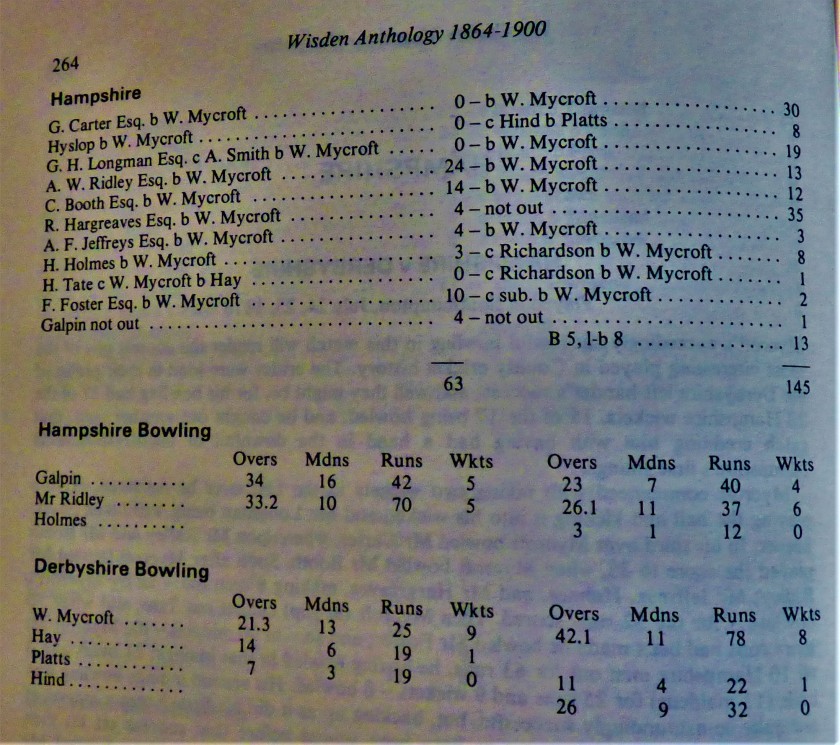
  3. Percy Perrin – a big run scorer at a time when Essex as a whole were not the strongest of sides. He hit 68 fours in making 343 not out, a boundary count rivalled only Brian Lara who hit 62 fours and 10 sixes in his 501 not out, against Derbyshire at Chesterfield in 1904. Unfortunately for Perrin, this innings was ultimately unavailing as Derbyshire ended up winning by nine wickets (Essex 597 and 97, Derbyshire 548 and 149-1).
  4. *Keith Fletcher – the man who captained Essex to their first county championship in 1979, and until Gooch overhauled him Essex’s leading first class run scorer.
  5. Nasser Hussain – a big run scorer through the 1990s, also the captain who initiated England’s climb back from bottom of the world test rankings, where they found themselves in 1999 after losing a home series against New Zealand in the immediate aftermath of a humiliating exit from a home world cup (in those days there was less separation between red and white ball cricket). Like many of his era he was mishandled at test level in the early stages of his career, which had an adverse effect on his overall career figures.
  6. Stan Nichols – an attacking left hand bat and right-arm fast bowler (does that remind you of any all-rounders of more recent vintage? hint – think Durham in county terms) whose first class career brought him over 17,000 runs and 1,800 wickets.
  7. +James Foster – a useful middle order batter and one of the finest wicket keepers ever to play the game.
  8. Peter Smith – a legspinner and a lower order batter who once scored 163 coming at no 11 (he and Frank Vigar, a rather more sedate type of player put on 218 for the tenth wicket, turning 199-9 into 417 all out).
  9. Simon Harmer – a South African born off spinner who played five test matches for his native land before deciding that English cricket offered brighter prospects he has been a key part of Essex’s recent successes, not just with his wickets, but also with some useful lower order runs at vital times.
  10. Charles Kortright – one of those whose name gets mentioned in discussions about just who was the quickest bowler ever. He produced what today would be described as an ‘epic burn’ when he cleaned up W G Grace, a notoriously reluctant leaver of the crease, with a snorter of a ball, saw that worthy look at the wreckage and head, face like thunder, towards the pavilion and chimed in with “You’re not going already are you Doctor? There’ s still one stump standing”.
  11. Walter Mead – a crafty medium pacer who still holds the record match figures for an Essex bowler – 17 wickets in a tour match against The Australians in 1893.

The decision that was most difficult in selecting this XI was who to have at no 6. As well as Nichols, Johnny Douglas and Trevor Bailey, both England regulars in their day had very obvious claims, but I went for Nichols both because of his left handed batting and his more aggressive approach in that department. Bowling wise this team has the pace of Kortright and Nichols, medium pace from Mead, off spin from Harmer, leg spin from Smith, with Gooch as a sixth option, while there are five top of the range batters, an all-rounder, a keeper-batter plus the possibility of runs from Smith, Harmer and Kortright.

PHOTOGRAPHS

P1310407 (2)P1310408 (2)P1310409 (2)P1310410 (2)P1310411 (2)P1310417 (2)P1310422 (2)P1310435 (2)P1310436 (2)P1310438 (2)

All Time XIs – Yorkshire

Continuing my all-time XIs series with Yorkshire.

INTRODUCTION

This is the fourth all-time XI post I have done (Surrey, Gloucestershire and Worcestershire were the first three). I have an ancestral connection to Yorkshire, and I lived in Barnsley for six years. As you would expect of the county that has by far the most outright championships (32 at the present time), there is a positive embarrassment of riches to choose from.

YORKSHIRE ALL TIME XI

  1. Herbert Sutcliffe – a big occasion player, as witnessed by the progression of his averages (overall FC 52.02, overall test 60.73, Ashes 66.85), he also overlapped for a few years at first class level and rather longer at club level (both were raised in Pudsey) with the person I have chosen as the other opener. He could claim that both World Wars affected his career since the first prevented his entry into first class cricket until he was 24, and the second led to his retirement from the game (and his 1939 performances were not those of a man preparing to lay aside his bat for the last time, though resuming after a six season layoff when past the age of 50 was obviously not going to happen). He tallied over 50,000 first class runs in total with 149 centuries.
  2. Leonard Hutton – a man who averaged 56.7 in test cricket and was also hugely productive in first class cricket, in spite of missing six of what would have been prime development years to World War II, from which he emerged with one arm shorter than the other due a training accident. In 1953 as captain he regained the Ashes which had been in Australian hands since Woodfull’s 1934 triumph, and eighteen months later he led England to victory down under.
  3. David Denton – in the first decade of the 20th century only one Yorkshire cricketer gained England selection purely on the strength of batting skill, and that person was David Denton. He was known as ‘lucky’ Denton because he seemed to benefit from plenty of dropped chances but there are two counters to that, firstly there is Napoleon’s “give me a lucky general rather than a good one”, and secondly people noticed him benefitting from dropped chances for the very simple reason that he made it count when such occurred.
  4. Maurice Leyland – a left handed bat and a bowler of ‘chinamen’, he scored heavily for both Yorkshire and England.
  5. Joe Root – the current England test captain, and a bat of proven world class, though his off spin would not see much use in this team, and you will note that I have not named as captain of this team.
  6. George Hirst – rated by his long time county captain Lord Hawke as the greatest of all county cricketers, he batted right handed and bowled left-arm pace. He achieved the season double of 1,000 runs and 100 wickets in first class matches 14 times, 10 of them in successive seasons. In each of 1904 and 1905 he had over 2,000 runs and 100 wickets, and in 1906 uniquely he had over 2,000 runs and 200 wickets. He was also noted for his fielding at mid-off.
  7. *Wilfred Rhodes – the other of the ‘Kirkheaton twins’, a right handed bat and slow left arm bowler with over 4,000 first class wickets and almost 40,000 first class runs in his career, the longest ever test career in time terms (31 and a half years between his first and last appearances) his astonishing career linked the era of Grace with that of Bradman. I have named as captain because although being a humble professional he never officially had the job I believe he would have been excellent at it- when asked about Percy Chapman as England captain Rhodes said “‘ee wor a good ‘un – he allus did what me an’ Jack telt him”.
  8. Tom Emmett – a left arm pace bowler who took his wickets very economically and was a good enough wielder of the willow to have a first class hundred at a time when they were not easy to come by. He accounted for W G Grace 36 times (as well as Gloucs v Yorks, there were fixtures such as North v South, Gentlemen vs Players etc, so top cricketers came up against one another frequently) and was highly rated by ‘The Doctor’.
  9. Fred Trueman – “T’finest bloody fast bowler that ever drew breath” at least in his own oft stated opinion, and it was close enough to true for the exaggeration to be pardonable. He was the first to take 300 test wickets, and in a 20 year first class career he bowled an average of 800 overs per year. He could also handle a bat and was a good fielder.
  10. Schofield Haigh – a right arm quick medium/ off cutter bowler and lower order bat who sometimes made useful contributions. He often bowled devastatingly in tandem with Hirst and/or Rhodes.
  11. +David Hunter – the only non-international in the XI, he made 1,200 dismissals as Yorkshire wicket keeper, and with the depth of the batting in this side I felt it right to go for the best wicket keeper irrespective of batting ability.

There are a stack of players who could have merited inclusion but for the limit of 11. Among the openers Louis Hall, Jack Brown and Percy Holmes (partner of Herbert Sutcliffe in 74 century opening stands, 69 of them for Yorkshire) could all have been considered, while Brian Close would have his advocates in the middle order, as would various others. Off spinning all rounders Ted Wainwright and Billy Bates could have had a place, and there are a number of slow left armers who could have been given the nod – any of Ted Peate, Bobby Peel, Hedley Verity, Johnny Wardle or Alonzo Drake. Among the faster bowlers for whom no space could be found were George Freeman, Emmett’s regular opening partner for a few years, who took his first-class wickets at less than 10 a piece, George Macaulay, Emmott Robinson, Darren Gough and Chris Silverwood, all of whom might have their advocates. Similarly I could have given the gloves to Arthur Dolphin, Arthur Wood (“always wor a good man for a crisis” when coming in at 770-6 at the Oval in 1938), Jimmy Binks, David Bairstow or Jonny Bairstow. One big name who I refuse to call unlucky to miss out is Geoffrey Boycott – I pick teams to win, not to draw, and Yorkshire’s record in the two seasons in which Boycs averaged over 100 is testimony to the problems his approach created in that regard. Undoubtedly he has the best career record of anyone I have neglected to pick for one of these teams, but too often his runs were not made in a winning cause. I try to balance my sides as well as possible, and in the one I chose I have five top of the range batters, two of the greatest all-rounders to ever play the game, three great and contrasting bowlers and a super gloveman. The bowling options include two different types of left arm pace (Emmett and Hirst), right arm pace (Trueman), right arm medium fast (Haigh), left arm spin (Rhodes), left arm wrist spin (Leyland) and at a push off spin in the person of Root and right arm  leg spin courtesy of Hutton. Also, if I am going to err in selecting a side it will be in the direction of stronger bowling rather than stronger batting – you will note that both two actual overseas players I have picked in previous posts and the potential one that I mentioned in the Surrey post are all bowlers. There are examples of teams with less than stellar batting but excellent bowling being big winners – Yorkshire in several of their most outstanding periods, Surrey in the 1950s and a few others, but there are few examples of the converse. Sussex in the the first decade of the 20th century had a powerful batting line up, with Fry and Ranjitsinhji among the all time greats and Joe Vine are top drawer opening partner for Fry plus a few other useful contributors, but they never came close to being champions because they did not have the bowling to press home the advantage that batting should have given them.

PHOTOGRAPHS

P1310397 (2)P1310398 (2)P1310399 (2)P1310400 (2)P1310401 (2)

P1310402 (2)
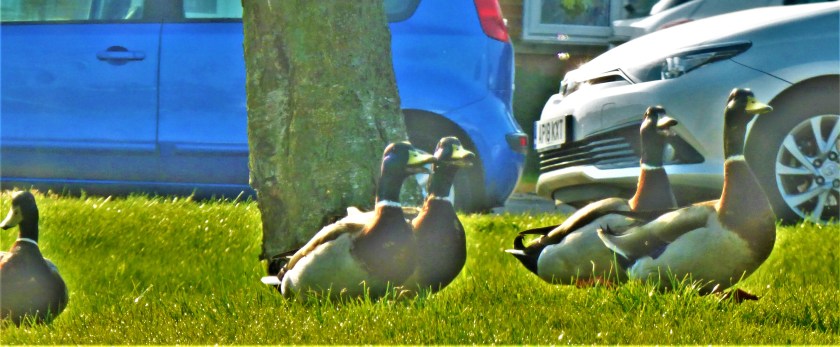
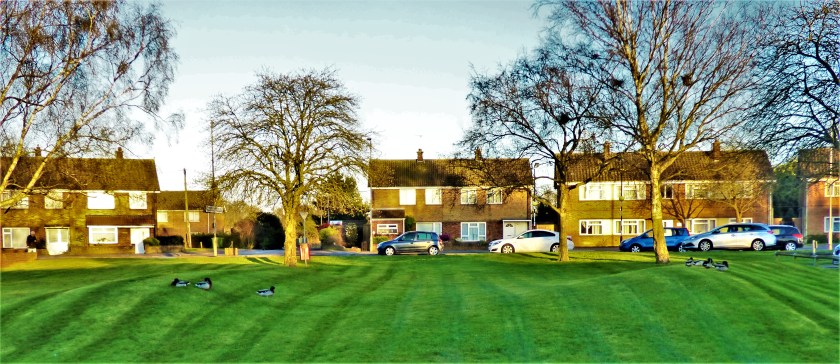
The cars in the background are parked, not travelling anywhere.

P1310403 (2)P1310404 (2)P1310405 (2)P1310406 (2)

All Time XIs – Worcestershire

Continuing my series of all time XIs with Worcestershire.

INTRODUCTION

Welcome to the next post in my series of All Time XIs. Today, following from the opening post which featured Surrey and the second about Gloucestershire the focus is on Worcestershire.

WORCESTERSHIRE

  1. Peter Richardson – an England opener in the 1950s, and an obvious choice for this side.
  2. Don Kenyon – from the same sort of era is Richardson, and unlucky not to play more international cricket than he did.
  3. Graeme Hick – a massively prolific batter at county level who was badly mishandled at international level. The rules of qualifying for England by residence were changed in his favour and he was then rushed into the side at the first opportunity, struggled badly against a four-pronged West Indies pace attack and was then left out of the one-off match against Sri Lanka which should have been earmarked for his debut. He never fully recovered from this at the top level and finished with a test average of 31. He is the only person to have scored first class triple centuries in three different decades (1980s, 1990s and 2000s), although W G Grace scored two of his three in 1876 and the third in 1896.
  4. Reginald Foster – a superb middle order batter who had the big occasion temperament – 171 in the Varsity Match, a century in each innings for the Gentlemen against the Players in 1900 and 287 on test debut at Sydney (one of two records he still holds, and the other of being the only man to captain full England teams at both cricket and football will definitely remain his).
  5. Wilfrid Foster – a second member of an extraordinary family, seven brothers from which played for the county. I have opted for him in spite of his brief career rather than his brother H K Foster because he and brother Reginald once achieved a family double of each scoring two centuries in the same game – proof of how well they could bat together (this dual feat of high scoring was later emulated by Ian and Greg Chappell playing for Australia against New Zealand).
  6. Basil D’Oliveira – attacking middle order batter and useful medium pacer who came late to first class cricket due being born in apartheid South Africa with non-white skin. With all due respect to Kevin Pietersen’s astounding Ashes clinching innings of 2005 he remains the author of the most influential innings of 158 ever to be played at The Oval – his effort triggered a series of events that led to South Africa spending a quarter of a century in cricketing isolation. Test series between England and South Africa are (when circumstances permit) contested for the D’Oliveira Trophy, currently in English hands after a very convincing victory in South Africa just a few months ago.
  7. +Steve Rhodes – a fine wicketkeeper.
  8. Robert Burrows – a speedster who still holds the record for sending a bail the furthest distance from the stumps (67 yards and six inches) and also capable of useful contributions with the bat.
  9. *Norman Gifford – a slow left arm bowler who played for Worcestershire and Warwickshire at different stages of his very long career.
  10. Len Coldwell – a medium pacer who spearheaded Worcestershire’s bowling the first two times they won the county champtionship (in 1964 and 1965, by which time Coldwell had already been on an Ashes tour).
  11. Glenn McGrath – my overseas player, he would of course open the bowling, probably with Coldwell, possibly with Burrows. The second highest tally of test wickets by a pace bowler (behind James Anderson)

I could have picked any number of fast-medium bowlers who have played for Worcestershire down the years, but I think that Burrows’ outright speed combined with the control of Coldwell and McGrath would work well, with Gifford providing the main spin option. D’Oliveira and Hick could also both bowl some overs, and each would bring something different to the table in that department. The batting also looks solid.

PHOTOGRAPHS

Here are a few of my latest…

P1310358 (2)

P1310364 (2)
The first jay of 2020 (two pics)

P1310365 (2)P1310367 (2)P1310369 (2)P1310370 (2)P1310372 (2)P1310380 (2)P1310390 (2)

P1310391 (2)
The first bee of 2020 (photographed while out getting my exercise for the day).

P1310393 (2)

All Time XIs – Gloucestershire

The next in my series of “All time XI’ posts, this time looking at Gloucestershire.

INTRODUCTION

Welcome to the continuation of my all-time XIs series that I started with my previous post on here. I started with Surrey, having grown up in south London. I am now moving west to the county of my birth, Gloucestershire.

GLOUCESTERSHIRE ALL TIME XI

  1. *W G Grace – his record was quite simply astonishing, and he was in many ways the creator of modern cricket. His apparently moderate test record is redeemed by the fact that he was 32 when he made is debut in the first test match on English soil in 1880 and almost 51 when he bowed after the opening match of the 1899 series at Trent Bridge. Gloucestershire was named as Champion County in 1876 and 1877 when he was in his prime. He is the first name on the team sheet for a Gloucetsershire all-time XI not just in terms of his place in the batting order, but in terms of selection.
  2. Charlie Barnett – an attack minded opener, who in the Trent Bridge test match of 1938 was 98 not out by lunch on the first day (yes, he did complete that ton).
  3. Tom Graveney – over 47,000 runs and 126 centuries in first class cricket, and apparently an incredibly stylish player as well. I have a set a rule for this series that I will pick a player for only one county, so although in the latter part of his career he played there Graveney will not feature in my Worcestershire XI (note to the proprietor of the fulltoss blog I have already selected this squad).
  4. Walter Hammond – the third leading all-time scorer of first class centuries, with 167 in all, of which 36 were doubles, including four triples. In 1927 after missing a whole season due to illness he came out and scored over 1,000 runs in May, starting that season on May 7th and reaching his 1,000th run on May 28th. In the winter of 1928-9 he was the batting star of the Ashes series, racking up 905 runs at 113.125 including 251 at Sydney, 200 not out at Melbourne and twin tons at Adelaide.
  5. Charles Townsend – a middle order batter and leg spin bowler who in 1899 became only the second first-class cricketer after W G Grace to score 2,000 runs and take 100 wickets in the same season, also the first half of the first father and son pair to both represent England.
  6. Gilbert Jessop – the most consistently aggressive and fast scoring batter ever (see this post – and bear in mind that for almost his whole career a ball had to be sent out of the ground to count six), an intelligent pace bowler (in 1900 he emulated Grace and Townsend by scoring 2,000 runs and taking 100 wickets in a first class season) and a fielder who was reckoned to be worth at least 30 runs an innings to his side in that department.
  7. Mike Procter – attacking middle order bat and superb fast bowler, my choice as overseas player.
  8. +Jack Russell – a brilliant wicket keeper, and the sight of him coming in at no 8 after the top seven above would not be a welcome one to any opposition bowlers. He was one of two English cricketers whose stocks unequivocally rose during the disastrous 1989 Ashes, Robin Smith being the other.
  9. David Lawrence – a genuinely fast bowler whose England chances were spoiled by injury and the fact that the selectors of the day were always too cowardly to select him and Devon Malcolm in the same side
  10. Charlie Parker – a slow left armer who took more first class wickets than anyone other than Freeman (3,776) and Rhodes (4,187). He did the hat trick six times in first class cricket, including a spell in his benefit match when he hit the stumps five times in succession, but the second was called no-ball.
  11. Tom Goddard – the leading first class wicket taker among off spinners, with 2,979 scalps in his career (5th all-time). He started as a fast bowler, and indeed took a hat trick in that style, before deciding that he did not enough of a future with that style, and remodelling himself as an off-spinner.

Probably unluckiest of all those who missed out was Reg Sinfield, a top order batter and off spinner, who would certainly by 12th man for me. Also slow left armer George Dennett who took over 2,000 first class wickets without ever gaining international recognition. Arthur Milton, Martin Young and Bill Athey all got to bat for England in their day. Courtney Walsh was also a possible overseas player, but I am limiting myself to one overseas player per XI, and I think that the multi-dimensional Procter has a clear advantage over genuine no11 Walsh. However my chosen combo has an awesome balance – Procter and Lawrence to take the new ball, with very good back up seam bowling options in the form of Jessop and Hammond, a spinner of each type and of course W G himself, making eight genuine bowling options, and the batting is also very strong, with seven definitely recognized batters plus Russell at 8.

PHOTOGRAPHS

P1310341 (2)
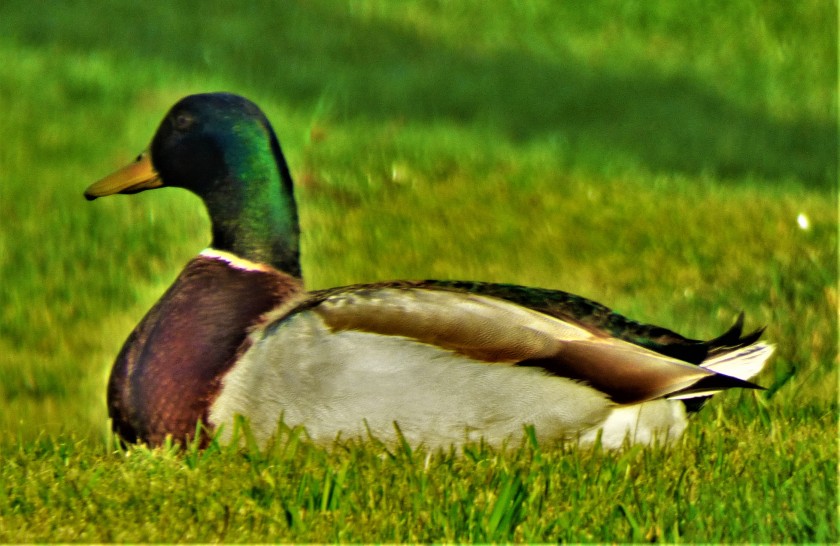
However superstitious you might be there is no need to worry about duck pictures in a cricket post this time – any resumption of live cricket is definitely some time away.

P1310342 (2)P1310343 (2)P1310344 (2)P1310345 (2)P1310346 (2)P1310347 (2)

All Time XIs – Surrey

My all-time Surrey XI, as I find ways to make up for the absence of live cricket.

INTRODUCTION

Since there will be no cricket, or any other sport come to that, for a while I am going to fill the void by playing selector for a few all-time squads. Since I grew up in south London I will start with Surrey.

MY SURREY XI EXPLAINED

  1. Jack Hobbs – more first class runs and more first class hundreds than anyone else, also still has the England record for Ashes runs – 3,636 of them, including another record, 12 centuries in those matches. He was also a more than handy bowler of medium pace and a brilliant fielder at cover point. His claim to an opening slot is unanswerable.
  2. John Edrich – the left hander was one of three strong contenders for this slot, and both of the other two, Andrew Sandham and Tom Hayward, actually did open the innings with Hobbs, but although I see the value of picking an existing partnership, Edrich’s left handedness creates an extra problem for the fielding side to contend with, and for me that is the crucial factor.
  3. Ken Barrington – finding big run scorers associated with Surrey is not difficult, but what sets Barrington apart (and no 3 is has natural position) is that he was even more of a heavy scorer at test level (average 58.67).
  4. Graham Thorpe – that rara avis an English middle order batter from the 1990s with a record to boast about. A century on debut against Australia and an average in the mid 40s maintained through precisely 100 test caps tells its own story about his consistency.
  5. Peter May – In what was an overall low scoring decade (the 1950s) he maintained a test average of 46.77, and was also highly prolific for his county.
  6. +Alec Stewart – in spite of the fact that doing so loses some of the brilliance of Stewart the batter I name him as keeper for the sake of the balance of the side. The leading scorer of test runs in the 1990s, and a very able keeper. Given the top five he would very likely be coming in with free rein to play his strokes.
  7. *Percy Fender – a fine all-rounder, a highly respected captain who many felt should have had the England job and precisely the right kind of person to be batting no 7 in a strong team – he holds the record (35 minutes) for the fastest century against genuinely first class bowling.#
  8. Alec Bedser – a man who in the period immediately after World War two was not just the spearhead, but pretty much the entire spear of England’s bowling attack, and the first to take 200 wickets for England.
  9. Jim Laker – probably the finest of all orthodox offspinners, and for Surrey he was frequently more successful away than at home (in each of seasons 1955, 1956 and 1957 this applied to name but three).
  10. Tony Lock – the other half of the great spin pairing of the 1950s, a slow left-armer.
  11. Tom Richardson – a fast bowler who took more wickets for Surrey than any other bowler in their history. His 1,000th first class wicket came in his 134th first class match, and his 2,000th in his 327th.

This team consists of an awesome top five, a batter-keeper at six, an all-rounder and four frontline bowlers. There are two left handers among the top batters, and the bowling contains the new ball pair of Richardson and Bedser, an offspinner, a slow left armer and a leg spinner (Fender), plus Hobbs’ medium pace if required. I have not included an overseas player, but if mandated to do so I would bring in Waqar Younis in place of Richardson.

George Lohmann (definitely in an all-time Surrey tour party as cover for Bedser), Martin Bicknell, Bill Lockwood and Alf Gover all merit consideration as bowlers, while other than the openers I could not accommodate Douglas Jardine and Eric Bedser were two of the better batters to miss out. Mark Ramprakash did not come into my calculations because his record at the highest level was ordinary, and the bulk of his runs for Surrey came while they were in division 2 and not up against the strongest bowling attacks.

PHOTOGRAPHS


P1310263 (2)
I am rationoing my photographs at the moment because I cannot be sure of getting opportunities to take more in the immediate future.

P1310264 (2)P1310265 (2)P1310266 (2)P1310336 (2)P1310340 (2)

Cornish Winter Break 7: Lanhydrock – Kitchens and Gatehouse

Completing my account of my visit to Lanhydrock.

INTRODUCTIONS

Following on from yesterday’s post about Lanhydrock I now complete my coverage of my visit there. As I type this I am listening to the final test match of the series in South Africa – England have made one good and one terrible decision thus far – they correctly batted first after winning the toss, but that came after inexcusably leaving out the spinner, Dom Bess. England have just reached the hundred mark with openers Crawley and Sibley still together (a top three of Crawley, Sibley and Burns, with Denly being eased out is starting to look a good prospect once the Surrey man recovers from his injury). Anywa, time to continue our look at Lanhydrock…

FROM HOUSE TO KITCHENS

Leaving the gift shop one passes some stuff about transport at Lanhydrock en route to the kitchens…

P1290653 (2)P1290654 (2)P1290655 (2)P1290656 (2)P1290657 (2)P1290658 (2)P1290659 (2)P1290661 (2)P1290663 (2)P1290662 (2)P1290664 (2)P1290665 (2)P1290666 (2)P1290667 (2)

THE KITCHENS

These are on an enormous scale, not surprisingly given the size of the household at its biggest (the family were effectively destroyed by World War One, between those who died in that conflict and those whose minds were destroyed by what they went through in those years). The rest of the story is best told by photographs…

P1290668 (2)P1290669 (2)P1290670 (2)P1290671 (2)P1290672 (2)P1290673 (2)P1290674 (2)P1290675 (2)P1290676 (2)P1290677 (2)P1290678 (2)P1290679 (2)P1290680 (2)P1290681 (2)P1290682 (2)P1290683 (2)P1290684 (2)P1290685 (2)P1290686 (2)P1290687 (2)P1290688 (2)P1290689 (2)P1290690 (2)P1290691 (2)P1290692 (2)P1290693 (2)P1290694 (2)P1290695 (2)P1290696 (2)P1290697 (2)P1290698 (2)P1290699 (2)P1290700 (2)P1290701 (2)

P1290702 (2)
We were at Lanhydrock on Boxing Day, and here is an explanation of where that name comes from.

P1290703 (2)P1290704 (2)P1290705 (2)P1290707 (2)P1290708 (2)P1290709 (2)P1290710 (2)P1290711 (2)P1290712 (2)P1290713 (2)P1290714 (2)P1290715 (2)P1290716 (2)P1290717 (2)P1290718 (2)P1290719 (2)P1290720 (2)P1290721 (2)P1290722 (2)

THE FINISH

After we had finished looking round the kitchens we went to the cafe for refreshments, checked out an excellent second hand bookshop in the grounds (I found three splendid additions to my cricket library), looked round the gatehouse and finally walked back to the car park to head home.

P1290747 (2)P1290748 (2)P1290749 (2)P1290750 (2)P1290751 (2)P1290752 (2)P1290764 (2)P1290765 (2)

P1290766 (2)
The gatehouse approached from the house.

P1290767 (2)

P1290768 (2)
A pattern fo wear in this stonework that makes it look like someone has inscibed a T in the middle of it,
P1290769 (2)
Inside the gatehouse.

P1290770 (2)P1290771 (2)P1290772 (2)P1290773 (2)P1290774 (2)P1290775 (2)P1290776 (2)P1290777 (2)P1290778 (2)P1290779 (2)

P1290780 (2)
Lookting towards the car park.
P1290781 (2)
Looking towards the house.

P1290782 (2)P1290783 (2)P1290784 (2)P1290785 (2)P1290786 (2)P1290787 (2)P1290788 (2)

P1290789 (2)
The chapel partly obscured by one wing of the house.

P1290790 (2)

Franchise Squad From The Before The White Ball Era

I name a franchise squad comprising entirely players from before white ball cricket was played – and challenge cricket fans among my readers to do likewise.

INTRODUCTION

I am deviating briefly from my coverage of my stay in Cornwall because mention was made of players from the past who would have been useful in franchise cricket during this morning’s BBL commentary on Test Match Special, and I got thinking about a franchise squad comprised of players who flourished before white ball cricket was played.

RULES

To be eligible for consideration under my rules players must have retired before the inaugural T20 cup took place in 2003. Also, unless a very good reason can be found players considered for this must have had some international experience. At least one recognized wicketkeeper must be in the squad.

THOMAS’S SQUAD

I have named 15 for my squad, an envisaged first XI and four reserves.

GILBERT LAIRD JESSOP

The most consistently fast scoring batter in the game’s history (he reached 100 in less than an hour at the crease 11 times in first class cricket, and in a career that included 53 centuries he only once batted as long as three hours in), a gun fielder (his credits include a direct hit run out of Victor Trumper in a test match) and a crafty pace bowler. If one had a time machine to fetch him in his prime into the present day he would send an IPL auction into meltdown.

GARFIELD ST AUBRUN SOBERS

Quite simply the most complete cricketer who ever played the game – a batter capable of hitting six sixes in an over and who averaged 57.78 in test cricket, three bowlers in one (left arm seam and swing, slow left arm orthodox and slow left arm wrist spin, the latter of which would be especially useful in T20) and a brilliant fielder.

ISAAC VIVIAN ALEXANDER RICHARDS

The best batter in the early days of ODI cricket and a brilliant fielder. In view of who else is available to bowl in this squad his off spin would be unlikely to be called on.

ROBERT GRAEME POLLOCK

He averaged over 60 in test cricket, and although he never played ODIs due to South Africa being in isolation by the time that form of cricket took off he averaged over 50 in List A cricket with a best of 222 not out.

FRANK EDWARD WOOLLEY

The only cricketer to have achieved the career triple of 10,000 runs (58,969 no less), 1,000 wickets (2,066 of those) and 1,000 catches (1,018) in first class cricket, and the only non-wicketkeeper to have pouched 1,000 catches.

BASIL LEWIS D’OLIVEIRA

An attacking middle order batter and the sort of medium pace nibbler who would be very useful in T20.

LESLIE ETHELBERT GEORGE AMES

The only recognized wicketkeeper ever to score 100 first class hundreds, and he won the Lawrence trophy for the fastest hundred of the season twice in the first three years of its existence.

GEORGE HERBERT HIRST

He achieved the double of 1,000 runs and 100 wickets in a first class season 14 times in his career, including the only occasion on which anyone managed the ‘double double’ (1906, 2,385 runs and 208 wickets). An aggressive right handed bat and left arm pace bowler, he was also like Jessop what is now termed a gun fielder.

JAMES CHARLES LAKER

Probably (sorry Nathan Lyon fans, I do not buy your claims on his behalf) the best ever at what he did, namely bowling off spin. In 1956 he took 46 wickets in the Ashes series, including 19-90 in the 4th match at Old Trafford), and also helped his county to beat the Aussies by taking 10-88 (off 46 overs on a good wicket in the first innings of the match) and 2-42 in the second Aussie innings.

ALFRED SHAW

He bowled more overs in first class cricket (no List A in his day) than he conceded runs (25,699 overs bowled, 24,873 runs conceded), and captured just over 2,000 first class wickets. His impeccable length and canny variations of pace would make him an excellent option in T20. I also choose him as captain – he proved himself good at the job at a time when few professional cricketers got the chance (most captains in his era were, nominally at least, amateurs who did not get paid to play cricket).

CLARENCE VICTOR GRIMMETT

Clarrie Grimmett (aka Scarl, Old Grum or Fox) the New Zealand born Aussie leg spinner took 216 wickets in only 37 test matches (he had to wait until he was 33 to get the call), and a record first-class tally for someone who never played County Championship cricket (1,424, again at just about six wickets per game). He was exceedingly economical, commanded a range of variations (and was forever experimenting with new types of delivery), and as such would seem made for T20 bowling (although like Shaw above he would probably not have been best pleased at being restricted to four overs per innings).

WALTER REGINALD HAMMOND

A stroke playing batter with a formidable record (over 50,000 first class runs including 167 centuries), a superb slip fielder and a very capable bowler (and in T20, knowing that he would not be bowling more than four overs at any one time he may have been a little less unenthusiastic about this aspect of his game than he was in first class and test cricket). He once hit the first five balls of a days play, bowled by no less a personage than Ted Macdonald, for fours, and according to reports it was only a good bit of fielding that stopped being six fours out of six for the over.

MULVANTRAI HIMMATLAL “VINOO” MANKAD

A slow left-arm bowler, a fine batter (he regularly opened for his country in test cricket) and a capable fielder. He was the first bowler in test cricket to run out an opposition batter for backing up too far, causing a controversy that continues to flare up every time something similar happens (my sympathies are exclusively with the bowler – the batter who gets run out is trying to gain an unfair advantage). If he were to be in the team it would be fun to have Ashwin in the ranks of the opposition!

MICHAEL JOHN PROCTER

An aggressive middle order batter, a fine fielder and a fast bowler who could also bowl off breaks, Procter could come in for anyone save Ames without the side as a whole suffering.

WILLIAM JOSEPH OREILLY

A very different type of legspinner to Grimmett, bowling at around medium pace and generating extra bounce (he was tall, unlike Grimmett), O’Reilly (though he would be voluble in expressing his dislike of the format, and I am quite certain that what he would have to say about The Hundred/ Harrison’s Harebrained Have a Hit would be unprintable) would be excellent at this form of the game.

This squad gives me a plentiful supply of attacking batters, a huge range of bowling options including every style of bowling and plenty of excellent fielders.

CONCLUSION, CHALLENGE AND PHOTOGRAPHS

For ease of references here is my squad listed without comments: 1)Gilbert Jessop, 2) Garry Sobers, 3)Viv Richards, 4)Graeme Pollock, 5)Frank Woolley, 6)Basil D’Oliveira
7) +Les Ames, 8)George Hirst, 9)Jim Laker 10)*Alfred Shaw 11)Clarrie Grimmett, Reserves: Wally Hammond, Vinoo Mankad, Mike Procter, Bill O’Reilly.

For the cricket fans among my readers here is a challenge: name your own franchise squad comprising players from before T20 cricket started, either directly in the comments, or in a post of your own which you link to in the comments below.

Here are a few Cornish photos to finish…

P1290156 (2)
Two shots showing waves crashing over the breakwater that is visible from my parents living room.

P1290157 (2)

P1290158 (2)
A few shots from Cawsand, the closest village to my parents home.

P1290159 (2)P1290160 (2)P1290161 (2)P1290162 (2)P1290163 (2)P1290164 (2)P1290165 (2)P1290166 (2)

P1290167 (2)
Three views of Fort Picklecombe from Cawsand.

P1290168 (2)P1290169 (2)P1290170 (2)

P1290177 (2)
A heron standing on the breakwater (two shots)

P1290179 (2)P1290182 (2)P1290183 (2)

P1290186 (2)
The officers mess at Fort Picklecombe (permission for the building was given on condition that this part be modelled on Warwick Castle).


Cricket Hat Trick at Sports Personality of the Year

A cricket hat trick at the BBC Sports Personality of the Year awards, the origin of the phrase hat trick and some photographs,

INTRODUCTION

This post looks at a great night for cricket, and also at the origins of the term hat trick and some of the more notable examples. There are also of course some of my photographs at the end.

SPORTS PERSONALITY OF THE YEAR

First the ‘team of the year’ award went to England’s world-cup winning cricket team (only if the rugby team had beaten South Africa in the final of their tournament would this even have been a contest), then the ‘moment of the year’ went to Jos Buttler’s run out of Martin Guptill that sealed that victory, again not really a contest. Finally the Sports Personality of the Year went to Ben Stokes (with great respect to Dina Asher-Smith and Katarina Johnson-Thomson who had strong cases – sorry Lewis Hamilton, being at the wheel of the best car out there does not give you a case). Ben Stokes is the fifth cricketer to be thus honoured after off-spinner Jim Laker (1956, 46 wickets at less than 10 a piece in an Ashes winning series, plus an all-ten – 10-88 from 46 overs in the first innings for Surrey against Australia), white-haired grafter David Steele (1975, brought in at the behest of new captain Tony Greig to stiffen the top order and responded with 365 runs in three test matches), Ian Botham (1981 – Botham’s Ashes) and Andrew Flintoff (2005, Ashes superhero).

So that is the story of cricket’s hat trick at SPOTY 2019, which leads on to….

THE ORIGIN OF THE PHRASE HAT TRICK

In the early 1850s Heathfield Harman Stephenson (Surrey) travelled north with the All England XI (one of a number of travelling elevens that existed at that time and for some years after, a development that could have radically altered the way in which cricket was organized had the MCC not taken urgent action to get the biggest draw in the game, W G Grace, on side – his membership was proposed the Treasurer of the club and seconded by the Secretary, so desperate were they) to play a match at the Hyde Park ground in Sheffield. During that match he dismissed three of the opposition with successive deliveries (not the first to do so in a big match – Nottingham tearaway Sam Redgate had accounted for Fuller Pilch, Alfred Mynn and James Stearman in successive balls in 1840) and this feat so impressed the locals that someone passed a hat round to collect money to present to Stephenson, and hat and contents were both given to the player, and the phrase hat trick was born. It has subsequently come to be used in other sports for notable achievements involving the number three, but it is in origin a pure cricket phrase.

VIDEO AND PHOTOGRAPHS

Before the photographs, here is the moment that secured cricket’s hat trick of awards at SPOTY:

Just before my usual sign off, a shout out to Sarah Glenn, who after taking 2-38 on debut and 2-37 in her second match for England then starred in the weather ruined final gamed of that series by collecting 4-18, which means that three matches into her ODI career she has total figures of 8-93, for an average of 11.625 per wicket.

P1280921 (2)P1280922 (2)P1280923 (2)P1280924 (2)P1280925 (2)P1280926 (2)P1280927 (2)P1280928 (2)P1280929 (2)P1280930 (2)P1280931 (2)P1280933 (2)P1280934 (2)P1280935 (2)P1280936 (2)P1280937 (2)P1280938 (2)P1280939 (2)P1280940 (2)P1280941 (2)


Post Election Thoughts (And Other Stuff)

Some thoughts on GE2019, cricket, an autism related twitter thread and of course a few photographs.

INTRODUCTION

I am not going to relive Thursday night and Friday morning here. I am going to look to the future.

LOOKING AHEAD

After the carnage of the 2019 General Election Johnson has emerged with a substantial majority, Northern Ireland has a majority of non-unionist MPs for the first time ever and Scotland saw the expected SNP tsunami. Labour has fewer MPs than at any time since 1935 – 203 – but also more female MPs than any party has ever had (see here), the Liberal Democrats had a disaster relieved only by Sarah Jane Olney winning Richmond Park from Zac Goldsmith, and the Greens failed to increase their MP count, but did get 850,000 votes in total, in yet another election that showed FPTP in a terrible light. Those MPs who switched parties and were standing for a new party for the first time all lost, though the vile Tory masquerading as Lib Dem Sam Gyimah (aided by a mendacious article in the Observer on the Sunday before the election) did enough to cost Emma Dent Coad Kensington and Chelsea.

The Liberal Democrats and Labour are both looking for new leaders. The likely pick for the LDs is Layla Moran. Labour need to work hard to regain trust in the North, and for that reason I think they need to select a leader who is not London based. For me (although this is not a prediction) the obvious choice, given that Laura Pidcock was among the election casualties, is Angela Rayner, with another northerner as deputy (possibly Chi Onwurah, the first MP to be officially confirmed as such at this election, and a north-easterner to go with north-westerner Rayner). Among Labour’s few bright spots was the election of 23 year old Nadia Whittome in Nottingham – and she has immediately announced that she will be taking only £35,000 of her £79,000 salary, the rest going to local charities. As this piece in The Mirror makes clear she is doing this not to say that MPs are overpaid but to say that nurses, teachers and the like are underpaid.

Labour, LDs and Greens are going to have to get better at working together to do anything in the ‘lesser Britain’ comprising England and Wales that we are likely to see in the not distant future (Scotland will go independent one way or another, and a united Ireland is firmly on the cards – note that the DUP’s Westminster leader Nigel Dodds lost his seat to John Finucane (son of murdered lawyer Pat Finucane).

CRICKET

England Women have been playing Pakistan Women in Kuala Lumpur. In the two ODIs that had enough play for a definite result England won comfortably both times. In the first openers Dani Wyatt (promoted, as following the retirement of Sarah Taylor, Amy Jones is now first choice keeper and has dropped to no 5 in the order) and Tammy Beaumont both racked up centuries, Kate Cross took four wickets and debutant spinner Sarah Glenn took 2-38. In the second match Natalie Sciver scored 100 not out, Heather Knight 86 and Fran Wilson a blistering 85 not out off 49 balls in a total of 327-4 and Pakistan were all out for exactly 200 in 44.5 overs. Anya Shrubsole, Sophie Ecclestone, Knight, and once again Glenn (2-37 this time) each took two wickets.

Meanwhile, although it has been spoiled by rain, test cricket has returned to Pakistan itself for the first time in a decade, with Sri Lanka (it was an attack on their team bus in Lahore that led to the removal of test matches from that country) the visitors.

In blazing Perth New Zealand have become the latest visitors to discover that Australia is a tough place to go – the home side began by racking up 416, with Marnus Labuschagne racking up his third successive test century, and then dismissed the Kiwis for 166, and declining to enforce the follow-on had reached 167-6, a lead of 417 by the close. Labuschagne managed a beggarly 50 this time round, with Joe Burns making 53. Assuming that Australia do not declare overnight Messrs Wade and Cummins are in occupation.

AN AUTISM RELATED THREAD

Steve Silberman, author of THE definitive history of Autism, Neurotribes, has produced this twitter thread about Greta Thunberg, Time “Person of the Year” for 2019:

A thread on the historical significance of @GretaThunberg being chosen as the first proudly autistic @Time Person of the Year. The fact that autistic folks often speak the truth bluntly, even rudely at times, is often framed as a social deficit. [1/7]
In Greta’s case, her relentless reiteration of the facts of #climate change, and the importance of science, has made her a focus of incandescent hatred by the same pompous liars and paid-for buffoons who are selling the earth from under the feet of their own grandchildren. [2/7]
The “autistic” qualities of Greta’s war on the status quo – her visceral distrust of rationalizations and vacuous rhetoric – are precisely the qualities all humanity must emulate at a time when global political discourse is dominated by nonsense and gaslighting. [3/7]
As the author of a history of autism, I’ve said for years that gut-level loathing for unfairness and injustice could practically be added to the diagnostic criteria for autism. At this point in human history, when lies and denial of facts are dooming future generations… [4/7]
Greta’s monotropic insistence on “walking her talk,” and her impatience even for vacuous praise instead of meaningful action, are vivid demonstrations of the role neurodivergent people can play in the advancement of human civilization. In the case of #climatechange… [5/7]
the “social deficits” are all on the neurotypical side, on Greta’s opponents and critics, who use misogyny, ableism, and ageism against her. They lie for a living, deceiving millions of fellow neurotypicals in the process. [6/7]
The success of climate disinformation campaigns in sowing seeds of doubt about science is proof of a potentially fatal “truth dysfunction” in non-autistic people. Want to know the role of #neurodiversity in our collective future? We may not have one without it. Go, Greta! [7/7]

PHOTOGRAPHS

My usual sign off…

P1280871 (2)
This giant monopoly board is in the foyer of the Norfolk Hospice, Tapping House (I went there on Monday to tell them my story for use in subsequent publicity materials).

P1280872 (2)P1280873 (2)P1280874 (2)P1280875 (2)P1280876 (2)P1280877 (2)P1280878 (2)P1280879 (2)

P1280880 (2)
My favourite set on this board – note the Pall Mall equivalent, the seals at Blakeney.
P1280881 (2)
About the only time you will see this in Norfolk!

P1280882 (2)P1280887 (2)P1280889 (2)P1280890 (2)P1280891 (2)P1280892 (2)P1280893 (2)P1280895 (2)P1280896 (2)P1280897 (2)P1280898 (2)P1280899 (2)P1280901 (2)P1280903 (2)P1280904 (2)P1280905 (2)P1280905 (3)P1280910 (2)P1280911 (2)P1280912 (2)P1280913 (2)P1280917 (2)P1280918 (2)


Brisbane Heat Retain WBBL

A brief account of the WBBL final which took place early this morning UK time.

INTRODUCTION

This post looks at the final of the Women’s Big Bash League, which took place in the early hours of this morning UK time.

A SPLENDID FINAL

Sophie Devine had had a dream season for the Adelaide Strikers but had a personal nightmare in the final. The Kiwi fell for just five, before her compatriot Suzie Bates and Tahlia McGrath righted things with a good second wicket stand. Both were out close together and Bridget Patterson and Kayleigh Mack both went cheaply, but AmandaJade Wellington whose previous competition best score was 23 made a splendid 55 off 33 balls to give the strikers a final total of 161-7 from their 20 overs. Maddy Green managed only 11 for Heat in the reply, but then SammyJo Johnson blasted 27 off just 11 balls (including four sixes off Sophie Devine) to put Heat well ahead of the rate. Jess Jonassen made 33 off 28, and Laura Harris was unbeaten on 19, in partnership with player of the final Beth Mooney who anchored the innings with an unbeaten 56, Heat having 11 balls to spare (and six wickets, including Kiwi all-rounder Amelia Kerr, due to come in next) when they completed the chase. To win a big tournament is a fine achievement, but to do so twice running is particularly impressive because on the second occasion everyone else knows that you are the team to beat. Sophie Devine was player of the tournament, but in the final she could only produce five and figures of 1-46 from three overs. It was a highly enjoyable final, but ultimately Brisbane Heat were simply too good for Adelaide Strikers.

PHOTOGRAPHS

My usual sign off…
P1280866 (2)P1280867 (2)P1280863 (2)P1280864 (2)P1280865 (2)P1280868 (2)P1280869 (2)P1280870 (2)