The Annabel and Ashleigh Show

An account of today’s match at the cricket world cup between the Australia and England women’s teams and two photo galleries.

Today’s match at the women’s cricket world cup saw a revisit to international sport’s oldest continuously maintained rivalry, that between Australia and England. This post looks back at the match.

Both sides were already qualified for the semi-finals but:

  1. This match could easily be a dress rehearsal for bigger match later in the tournament.
  2. Whoever emerged victorious from the encounter would temporarily displace South Africa from top spot in the table and
  3. No game between this particular pair of opponents can ever be described as meaningless.

Australia were missing Alyssa Healy with a calf strain, and her place at the top of the order went to Georgia Voll, while Beth Mooney took over the wicket keeping gauntlets and Tahlia McGrath assumed the captaincy (Mooney and McGrath are absolute regulars in the XI, so Voll for Healy was only the change in personnel). England were unchanged from the side that just prevailed over India at this same venue last time out. Australia won the toss and chose to put England in to bat.

England started fast, with Tammy Beaumont in particular playing impressively. However Australia soon adapted to the conditions, realizing that pace off was the way to go. Annabel Sutherland, the fastest of Australia’s bowlers was expensive early on, but once she worked the surface out and focussed on slower balls she bowled very well, and emerged with 3-60 from her 10 overs, her 13th, 14th and 15th wickets of the tournament, putting her two clear of Deepti Sharma at the top of the wicket takers list. Ashleigh Gardner fared well with her off spin as well, claiming 2-39 for the innings. Beaumont’s 78, which fizzled out after a blazing start, was the only innings of real substance for England, though a spirited partnership between Capsey and Dean, numbers seven and eight in the order, somewhat revived England in the closing stages. England ended their innings on 244-9.

With a modest total on the board England needed a good start, and they got it. Lauren Bell bowled Phoebe Litchfield with the third ball of the inning, Linsey Smith accounted for the other opener Voll in the fourth over and for Ellyse Perry in the sixth over at which point the score was 24-3. When Nat Sciver-Brunt took a catch off Ecclestone to dismiss Mooney for 20 it was 68-4, and Ashleigh Gardner was joining Annabel Sutherland. Their partnership turned the game, slowly at first, and then very rapidly. By the closing stages the only questions where whether both batters would reach three figures, and if so who would get there first. Gardner did reach three figures, off the 70th ball of her innings, and in the end Sutherland just missed out, though Gardner had tried to create the opportunity for her team mate to get there. In the end after the 41st over had start with a two and a single that took Sutherland to 98 not out but left her off strike, Gardner, who had blocked the last three balls of the 40th over to give Sutherland a shot at the landmark, straight drove the third ball of the 41st over for the winning runs, ending with 104 not out from 73 balls, including 16 fours, while Sutherland’s 98 not out took 123 balls and included nine fours and a six. Their stand was worth an unbroken 180 from 24.4 overs. England had their moments during the match, but against this Australian combination having one’s moments from time to time is simply not good enough. Sutherland’s 3-60 and 98 not out earned her Player of the Match, by a short head from Gardner (2-39 and 104 not out).

My usual sign off…

Two Great Turnarounds

A look back at yesterdays and todays Women’s World Cup matches, each of which saw the lower ranking side on top at times, and a photo gallery.

This post looks at two women’s world cup matches (I got more of yesterday’s than I usually would on a Tuesday because my employer had a commitment at West Raynham and wanted to go straight home once he had finished there, and there was no one else at work yesterday, so I ended up only being at work for a couple of hours, and being home in time for most of the England innings), Bangladesh v England and Australia v Pakistan.

When Bangladesh could do no better than 178 against England the match had all the signs of being ‘minnow v shark’. However Bangladesh are known to be stronger in bowling than they are in batting, and they rose to the occasion magnificently. When England were 103-6, with Heather Knight having escaped dismissal on three occasions, and still looking far from convincing a seismic shock looked on the cards. However Charlie Dean for all that she is selected for her bowling is a competent lower order batter as well, and she and Knight pulled the game round, Dean playing a determined supporting role while Knight blossomed from her difficult start to play the decisive innings. Knight’s first 15 runs occupied 50 balls and featured the three escapes mentioned. Her last 64 came off 61 balls. Dean and Knight added 79 undefeated runs for the seventh wicket (the winning hit, made by Dean, was a four). England made it two wins out of two to start the tournament, but it was a heck of a fight, and Knight probably used her entire tournament’s allocation of good fortune in the early part of what became the match winning innings.

Absolutely no one would have expected today’s match to provide much of a contest – Australia have never lost to Pakistan in any format of women’s cricket. However between some poor Australian batting and some excellent Pakistan bowling Australia found themselves struggling at 76-7. It was here that their immense batting depth came in to play. First Kim Garth helped Mooney to raise the score 115, and then came the real revival. Alana King, undoubtedly the best batter to be at number 10 in anyone’s line up at this tournament, joined Mooney in a partnership of two parts. First they took the innings within two overs of its scheduled end, adding 72 in the process, with Mooney reaching three figures, a mark that took her 110 balls to reach and contained a mere nine fours (no sixes) – almost as if Joe Root was a left handed female instead of a right handed male. Then in the last two overs they went a bit crazy – going into those two overs Australia were on 187, and by the end of their innings they had reached 221. Mooney was out to the last ball of the innings for 109 (114), but it was King who had done most of the damage in those last two overs, boosting her score to 51 not out (a maiden ODI 50) from 49 balls, with three fours and three sixes, the only such hits of the innings. Mooney’s Brisbane upbringing may have left her better equipped to handle the heat and humidity of Colombo than many non-natives but it was still a remarkable feat of endurance to bat for so long and to run so many runs in those conditions. Sadly Pakistan were not able to offer anything with the bat barring 35 from Sidra Amin and some determined resistance from the lower order (the last three Pakistan wickets, after Amin’s dismissal, held out for just over 15 overs between them), and in the end Australia had won by 107 runs, but do not be fooled by the magnitude of their final victory – there would have been moments when they were seriously worried. As it is they have now won two matches and had one rained out. Pakistan have some wonderful bowlers, but their batting is too weak. Sidra Amin has scored six ODI centuries, but her team mates have a grand total of four between them.

My usual sign off…

England Off to Winning Start at Women’s ODI World Cup

An account of England’s start at the Women’s ODI World Cup, against South Africa in Guwahati. Also a large photo gallery.

The latest edition of the women’s ODI world cup got underway this week. India beat Sri Lanka in the tournament opener, Australia beat New Zealand in the second match, which was harder fought than the eventual 89 run margin suggests – Australia were at point struggling at 127-5, and it was only their immense depth that enabled them to escape from there. Yesterday Bangladesh beat Pakistan by seven wickets. Bangladesh in that game opted for only one front line seam option, with five recognized spinners in their line up. That sole seamer, Marufa Akter, was named Player of the Match, having struck twice in her first over, a start from which Pakistan never recovered. Today saw England in action against South Africa, meaning that all sides have now played one match. The rest of this post looks back at that match.

This match took place in Guwahati in the far north-eastern corner of India. England won the toss and opted to bowl first. They pretty much followed the Bangladesh pattern of selection, going spin dominant, with Lauren Bell the only specialist seamer in the XI, though they also had Natalie Sciver-Brunt’s medium pace available to them, though giving her a full allocation given her recent injury issues would probably have been ill advised in game one of a long tournament. There was little sign of things to come in the first over, bowled by Bell, from which nine runs accrued. That was the last time anything really went South Africa’s way. Linsey Smith took the new ball at the other end to Bell, and her second ball accounted for Laura Wolvaardt, who essayed a drive and succeeded only in sending the ball straight back to Smith who took the return catch. The other opener, Tazmin Brits, was bowled by the first ball of the fourth over, Smith’s second, with the left arm spinner still yet to concede a run, and it was 12-2. South Africa could not come to terms with losing both openers so cheaply. In the fifth over Bell clean bowled Sune Luus to make it 17-3. Three balls later Linsey Smith clean bowled Marizanne Kapp for 4 and it was 19-4. Anneke Bosch and Sinalo Jafta managed a 12 run stand before Sciver-Brunt’s first ball as England skipper (she had been unable to bowl all summer) pinned Bosch so plumb in front that even with the dismissal making the score 31-5 the South African did not bother to go upstairs. Exactly two overs later Chloe Tryon was caught by Capsey off Sciver-Brunt for 2 and it was 38-6, and record books were being consulted for all time low scores in the format. The seventh wicket added 10 careful runs before the first ball of the 14th over saw Nadine de Klerk drive loosely at Sophie Ecclestone and succeed only in edging to slip where Heather Knight held a sharp catch to make it 48-7. Masabata Klaas managed to bat a little time (13 balls in total), but only accrued three runs before Charlie Dean bowled her and it was 60-8 in the 18th over. Sinalo Jafta, the only Protea to reach double figures, had got to 22, and batted pretty well, when she essayed a wild hoick against Ecclestone, missed and was bowled to make it 60-9. When those who are supposed to be able to bat have failed this epically one cannot expect a great deal from numbers 10 and 11, with no batting pedigree whatsoever, and in the circumstances Ayabonga Khaka (6 not out, a slight overachievement compared to her career batting average) and Nonkululeko Mlaba (3) did as well as anyone could have expected. It was Dean who took the final wicket, bowling Mlaba to make it 69 all out from 20.4 overs. Every England bowled who got on claimed at least one wicket, Linsey Smith finishing with 3-7 from four overs, while Sciver-Brunt, Dean and Ecclestone each took two wickets and Bell one. With only 70 to get the question was exactly how comprehensively would England end up winning. Tammy Beaumont never really got going but was not going to miss out on an opportunity to boost her batting average with a ‘not out’ – such opportunities are rarely granted to openers and she has been around a long time. Amy Jones did get going, and her unbeaten 40 from 50 balls put the South African collapse into perspective. Beaumont was 21 not out from 35 balls and South Africa gave away 12 extras (as compared to 8 by England). England won by 10 wickets with 35.5 overs to spare, and will go into their second match with a net run rate of +3.773.

My usual sign off…

England Men’s ODI Side Struggling

A look at the problems England men are having in their ODI series against South Africa men and a very large photo gallery.

There is an ODI series in progress between the England and South Africa men’s sides. This post looks briefly at what has happened so far.

The first match of the series happened on Tuesday, a working day. It was a day/night fixture so I was expecting to catch the second innings after I got home from work. Unfortunately England were so atrocious that I missed all the action. First they crashed to 131 all out, then it took South Africa only just over 20 overs to knock this derisory target off. Sonny Baker, making his first appearance in England colours after some great successes in domestic cricket, including The Hundred, leaked 76 runs from seven overs.

The second match, at Lord’s, was also a day-nighter. This one did go the distance, and in theory was a close one. However, save for when Bethell (58 off 40 balls) was firing on all cylinders England were always behind the rate, and there was never any great feeling that a successful chase was a likely outcome. The closeness of the final result (five runs in it) was largely down to a bat fling by Jofra Archer with all pressure eased because the game was to all intents and purposes already done. The Barbados born fast bowler scored an unbeaten 27 from 14 balls to reduce but not close the gap between the sides. All rounder Corbin Bosch, whose bowling stock in trade is right arm fast medium, was allowed to bowl his ten overs with figures of 1-38, which with a victory target of 331 was indefensible from England. The other thing to note here is that Lord’s is well known for being a hard ground on which to chase, and if England had any confidence in their ability to set a respectable target they would surely have opted to do so. The disaster in the first match meant that Brook apparently did not even consider batting first when the coin fell his way.

My usual sign off…

England’s Poor Start to ODI Series

A look back at the first two matches of the ODI series between the England and Australia men’s teams and a photo gallery.

The England men’s side are finishing their home season with a One Day International series against Australia. This post looks at developments in that series so far.

At 214-2 with plenty of time to go in their innings England seemed set for a 350+ score. Then Ben Duckett and Harry Brook got out in quick succession in near identical fashion, each giving Marnus Labuschagne return catches. That put the skids under the innings, and wickets continued to fall. In the end England were all out in 49.4 of their 50 overs for 315, a total which was at least 50 short of what it should have been. Labuschagne, a batter who bowls rather than a genuine all rounder, had figures of 3-39. It was soon obvious that England would have their work cut out to defend this score. In the end Travis Head, who played a quite magnificent innings, was joined for the killing partnership by Labuschagne. Head, unlike Duckett who had thrown his wicket away for 91, batted right through to the end, which came with six whole overs and seven wickets to spare, topping 150 in the process, while Labuschagne was unbeaten on 77 at the other end. Scorecard here.

In the second match, which took place yesterday, Australia found themselves batting first, and England bowled well. When Australia lost their ninth wicket at 221 a 1-1 series score looked likely, even though Brydon Carse had been shockingly expensive. However England now resorted to the tactic of feeding Carey singles so that they could bowl at the number 11, Hazlewood. Hazlewood is a genuine number 11, but even he is capable of presenting a straight bat to a couple of deliveries per over. With no real pressure being imposed due to the decision not to attack Carey the last wicket accrued 49 before Carey was caught off the fourth ball of the 45th over for 74. Hazlewood was unbeaten on 4, but he had done all that the combination of Carey’s good batting and England’s poor tactics had required of him.

One result of this last wicket stand was that instead of heading into the innings break on the back of a clatter of wickets (the 7th, 8th and 9th had fallen quite close together) the sides returned to the pavilion with the momentum definitely with Australia. Australia had Salt and Jacks out fairly quickly, with just 28 on the board. Brook fell with 46 on the board, and then at 65 England suffered a double blow, as Duckett (32) was out to a fine return catch by Hardie, and then Livingstone feathered the next ball behind and Carey held another fine catch. Jamie Smith and Jacob Bethell added 55 for the sixth wicket, before Bethell gave Starc a catch off Maxwell. Carse then joined Smith for what might look like a respectable seventh wicket stand, but the problem was he failed abysmally to rotate to the strike – 56 balls were bowled between the fall of the sixth and seventh wickets, and Carse faced 40 of them, which is not what the balance of strike should be between a front line batter and a bowler who bats. It was Smith who was seventh out, for 49, a dismissal that more or less sealed things, although Adil Rashid did his best from number nine. England did just top 200, being all out for 202, giving Australia victory by 68 runs. Scorecard here.

Australia are thus 2-0 up in the series with three to play.

My usual sign off…

England v Ireland So Far

A look at developments in the England v Ireland ODI so far and a large photo gallery.

The one-day series between England and Ireland should have started on Wednesday at Headingley, but not a single ball was bowled in that game. Today, officially the first day of autumn in the northern hemisphere, is a much pleasanter day than Wednesday was, and the second scheduled match, at Trent Bridge, is proceeding with no weather related problems.

England are not using any of their selected world cup players (tournament gets underway in early October, in India, with a replay of the 2019 final – England v New Zealand) in this series. The XI selected for this match includes four debutants, Sam Hain (batter, ridiculous given his domestic white ball record that he has waited this long), Jamie Smith (batter/ keeper, hugely talented youngster), George Scrimshaw (pace bowler, again very talented, though alsob very inexperienced, and the first Derbyshire player since Dominic Cork in 2002 to feature for England) and Tom Hartley (left arm spinner, decent limited overs record, but a surprise for me to see him in the side).

Ireland put England in, and Phil Salt and Will Jacks opened up for England. Salt made a rapid 28 before he and stand-in skipper Crawley fell in the space of three balls. Then Jacks and Duckett had an excellent stand before Duckett fell for 48. That brough debutant Sam Hain to the crease, and he and Jacks proceeded to share a superb partnership, ended only when Jacks holed out on the boundary trying to bring up his century with a six. Jacks’ 94 was still the third best ever score for England by someone with first two initials WG behind WG Grace’s two test tons – 152 on debut at The Oval in 1880 and 170 at the same ground six years later. Debutant number two, Smith, managed only nine but a fluent 32 from Carse at number seven maintained the tempo. The closing overs featured a race against the clock for Hain to reach a debut century, but four balls from the end he too holed out with the landmark just about in sight – 89 in his case, off 82 balls. England ended up with 334-8 from their 50 overs.

George Scrimshaw was given the new ball, and he had a traumatic start as an international bowler, conceding a number of wides and no-balls. However, with the last ball of his second over he claimed the wicket of Andrew Balbirnie, and then Matt Potts got Stirling with the first ball of the next over. Scrimshaw’s third over was then a massive improvement, going for just a single – 2-0-35-1 becoming 3-0-36-1. Ireland are currently 53-2 in the seventh over, well and truly up with the rate, but already two wickets down.

My usual sign off, courtesy of an evening walk yesterday and more importantly a long walk on the first autumn morning of the year today…

While I have been preparing this for publication the game has moved on. Potts has dismissed Campher to make it 69-3 in the ninth over.

England’s New ODI Squad

My thoughts on the new ODI squad that England have had to select, and some photographs.

The original England ODI squad for the upcoming series against Pakistan has had to go into self isolation due to seven positive covid-19 tests among their number. A new squad, to be captained by Ben Stokes, who was originally being eased back from injury and had therefore not been called up. In this post I look at the new squad, and provide some thoughts on it. This is the worst disruption faced by England cricket in my lifetime, beating even that caused by the rebel tours of Apartheid South Africa in 1982 and 1989, and overall the ECB have handled it well.

THE NEW SQUAD

The 18 names in the new squad are as follows (courtesy of the ECB website):

Ben Stokes (Durham, captain)
Jake Ball (Nottinghamshire)
Danny Briggs (Warwickshire)
Brydon Carse (Durham)
Zak Crawley (Kent)
Ben Duckett (Nottinghamshire)
Lewis Gregory (Somerset)
Tom Helm (Middlesex)
Will Jacks (Surrey)
Dan Lawrence (Essex)
Saqib Mahmood (Lancashire)
Dawid Malan (Yorkshire)
Craig Overton (Somerset)
Matt Parkinson (Lancashire)
David Payne (Gloucestershire)
Phil Salt (Sussex)
John Simpson (Middlesex)
James Vince (Hampshire)

Most of these names are fairly uncontroversial in the circumstances. The strangest selection among the 18 is John Simpson, a good cricketer but not my idea of international quality. I am also mistrustful of James Vince, whose England record is not impressive. Brydon Carse is a hugely exciting selection – he is in the same pace bracket as his county colleague Mark Wood and can handle a bat. Danny Briggs has a good limited overs record but I would preferred to see Dan Moriarty capped.

The omission of Sam Hain who averages almost 60 and has a strike rate of 86 in List A cricket almost defies understanding. I would have liked to see a call up for the veteran Darren Stevens. Also the ECB would do themselves a favour if they actually fronted up and said in as many words that they will not pick Alex Hales – the announcement of this squad makes it clear what their actual attitude is and it is just silly to keep pretending that the door has not been shut on an England recall for him.

PICKING AN XI

This XI will almost certainly not happen, but this is the way I would from the selected squad:

My opening pair would be Will Jacks and Phil Salt, with the latter keeping wicket, while the former’s off spin may well enter the equation. At number three I would have Dawid Malan, batting in his best position. Dan Lawrence, needed on ground of prior international experience would bat four. Skipper Stokes gets the no5 slot. In view of the make up of the squad I would play Gregory at six, Carse at seven and Craig Overton at eight (all three can bat very effectively), David Payne whose left arm pace offers a variation would be at nine, with Mahmood and Parkinson rounding out the order.

England are by no means out of this series even after having to select a completely new squad just before it starts.

PHOTOGRAPHS

My usual sign off:

ODI Series Decider Goes To The Wire

An account of the concluding ODI between India and England, plus some thoughts on over rates and some photographs.

This post is devoted to the events of yesterday’s final and deciding ODI between India and England.

THE PRELIMINARIES

England decided to retain both Malan and Livingstone, so Billings missed out. They also opted to replace Tom Curran with Mark Wood, a decision that would have been indisputable had Wood been fully fit, but it rapidly became clear that he was not. India replaced Kuldeep Yadav with T Natarajan, changing the balance of their bowling attack. Jos Buttler won the toss and decided to bowl.

THE INDIAN INNINGS

India got off to a flying start, with Sam Curran and Reece Topley both somewhat wayward. Mark Wood bowled fast in spite of obviously not being well. It took the arrival of the spinners Adil Rashid and Moeen Ali at the bowling crease to stem the flow at all. Rashid accounted for both openers, one bowled and one caught and bowled, in successive overs, while Ali clean bowled Virat Kohli. Liam Livingstone had made his first contribution to the game with a fine piece of fielding out on the boundary that saved two runs. KL Rahul and Rishabh Pant maintained the momentum and for a while it looked like something close to 400 was on for India, but then Livingstone got Rahul, as the batter could only put a filthy full toss straight into the hands of a fielder. Thereafter England picked up wickets regularly, and India were all out for 329 in the 49th over. At that stage it looked anyone’s game, with England possibly favourites.

THE ENGLAND REPLY

For once neither Roy nor Bairstow managed a substantial score, and Stokes and Buttler both also went fairly cheaply. At that stage it was 95-4 and England looked in deep trouble. Livingstone and Malan batted well however and at the end of the 20th England were 132-4, two fifths of the way to the target after two fifths of the overs and having lost two fifths of their wickets. Livingstone was fifth out, having batted well, and then Malan having completed a fine 50 was sixth to go. That brought Sam Curran in join Moeen Ali, with England in deep trouble. At the end of the 30th England were 196-6. Moeen Ali’s departure seemed to be the final nail, but Rashid provided Curran support, and then extraordinarily, Mark Wood, for all that he was obviously not well, continued the support work, while Curran was playing a very special innings. Wood was ninth out, but even Topley, the most genuine of genuine number 11s, did his bit, and at the end of the 49th England were 316-9 needing 14 to win, and crucially Curran was at the strikers end. He did his best, but the task was just too much, and England were beaten by seven runs, with Curran 95 not out off 83 balls.

PLAYER OF THE MATCH

Sam Curran was named Player of the Match for his fighting knock, a decision which Indian skipper Kohli disapproved of. Shardul Thakur with 30 and four wickets was the obvious alternative candidate, and normally I would say that this award should go to someone from the winning side. However, at the point at which Curran came in to bat England were staring an absolute hammering in the face, with a three figure margin looking likely, and Curran turned that around to the extent that the game ended as a nail biter. Also most of Curran’s batting was done with the support of a no9, a sick no10 and a n011. Thus on this occasion I think the decision to give the award to someone from the losing side was justified, although I would not have quarrelled with the award going to Thakur.

OVER RATES

This match was conducted at a tempo that to borrow from the world of music could only fairly be described as ‘adagio molto’ – very slow. 100 overs occupied eight and a quarter hours of actual playing time, with England being in the field for three hours fifty minutes and India for four hours twenty five minutes. This leads me to revisit an old idea of mine in slightly revised form: based on the 15 overs per hour officially required in test matches I would allocate each team a fixed time slot to bowl their overs of three hours and 20 minutes, and for each over they have not bowled in that period the batting team get awarded penalty runs at a rate of ten per over or double the scoring rate, whichever is the greater. Obviously umpires would have to watch out for batters deliberately wasting time in the hope of securing penalty runs. If this was adopted there might be one ODI series/ tournament in which extras had a Bradmanesque aggregate but I reckon over rates would speed up pretty quickly. Here is a very famous slow tempo piece of music, Albinoni’s “Adagio for Organ and Strings”, from youtube:

PHOTOGRAPHS

My usual sign off…
Suggestions For Tomorrow’s Deciding ODI

A look ahead to tomorrow’s final ODI between India and England, some photographs and the resumption of one of NAS West Norfolk’s activities.

The main body of this post is devoted to looking at what England should do in terms of selection for tomorrow’s final match of the tour of India.

THE BATTING

Morgan remains unavailable, though Billings could be picked. Personally although most of the work was done by Bairstow and Stokes I think that both Malan and Livingstone did enough to warrant continued selection, so I would not recall Billings. I believe an element of flexibility is needed after the 1,2,3 – if the second wicket goes before over 30 then either Malan (if Stokes is second out) or Livingstone (if both openers are out, meaning that the left handed Stokes is still in) come in at no4. If the second wicket goes after over 30 then skipper Buttler should promote himself and treat it like a T20.

THE BOWLING

Tom Curran has to go – he is not quick, he does not take many wickets and he is not exceptionally economical. I hope Wood will be fit, in which case he plays. Also, Adil Rashid has not been impressive, and Matt Parkinson has been in bio-secure bubbles since January for no cricket, so for my money he has to play. Reece Topley did quite enough to retain his place, so he rounds out the bowling options.

THE XI IN BATTING ORDER

Bear in mind the caveats in the section about the batting, and that therefore this is a ‘likely’, not a ‘set’ batting order:

  1. Jason Roy
  2. Jonny Bairstow
  3. Ben Stokes
  4. Liam Livingstone
  5. Dawid Malan
  6. *+Jos Buttler
  7. Moeen Ali
  8. Sam Curran
  9. Mark Wood
  10. Reece Topley
  11. Matt Parkinson

PHOTOGRAPHS

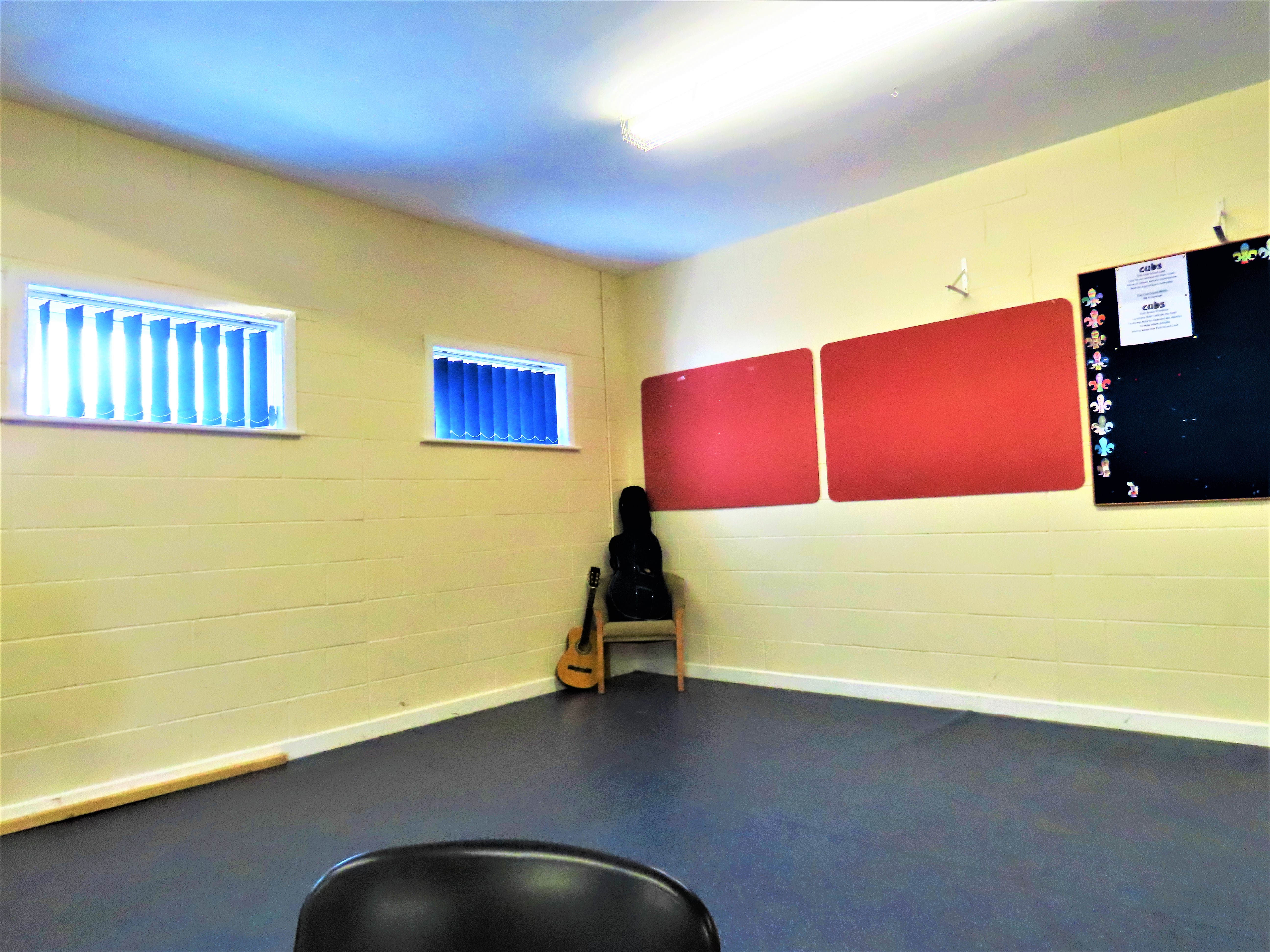
This usual sign off has a variation to it: today for the first time in over a year an NAS West Norfolk activity happened: music therapy at the scout hut on Beulah Street. This was organized in two 45 minute sessions, and at no time were there more than four people in the room, which is a very large room, and the back door was open to keep it properly ventilated (and with a classic Norfolk ‘lazy wind’ – can’t be bothered going round you, so it goes straight through you – blowing outside I can tell you that the place was most definitely properly ventilated!). Explanation complete, it is finally time for the photographs…

India v England ODI Series Goes To Decider On Sunday

A brief account of today’s second #INDvENG ODI, telling the story of a remarkable chase.

This post is an account of the match that has just finished in Pune.

THE PRELIMINARIES

Morgan and Billings were both injured, being replaced by Dawid Malan and Liam Livingstone, while Reece Topley came in for Mark Wood, leaving England without an out and out speedster. For India Shreyas Iyer was injured and Rishabh Pant was selected in his place. Stand in skipper Jos Buttler won the toss and decided that England would bowl, which at the time looked questionable.

THE INDIAN INNINGS

India started steadily, and built through the middle overs. Rashid Khan and Moeen Ali both bowled reasonably well but neither looked like getting wickets, and after 40 overs India were 210-3. Then, as in match one, England had a horror show in the final ten overs, as the Indian score mushroomed to 336-6. Though he picked up a couple of wickets among the mayhem Tom Curran has surely bowled his last for England. Moeen Ali was economical, but never looked like taking a wicket. India’s total looked formidable.

ENGLAND’S CHASE

Roy and Bairstow got England away to a strong start, but when Roy was out the game was far from settled either way. Ben Stokes came in at no3, and reached 50 from 40 balls, though he was a trifle fortunate to be given the benefit of the doubt on a very close run out caused by the fact that he had failed to realize the danger and was jogging rather than running full pelt. Having got himself a start Stokes proceeded to go absolutely berserk, blasting 49 from his next 11 balls before edging one behind to miss out on a century by the narrowest of margins. Bairstow and Buttler fell in quick succession, but England were so far ahead of the rate that even losing three wickets so quickly was barely a set back. Some solid blows from debutant Liam Livingstone and Dawid Malan took England home, Malan enjoying one moment of good fortune when an edged shot flew through third man for four – had India posted anyone in the slip area they would probably have been in business. I will draw a veil over the Indian bowling figures, none of which their owners would wish to be publicised. Hardik Pandya, supposed tn be an all rounder, was not called upon to bowl while his team mates took horrendous punishment. England had 6.3 overs as well as six wickets to spare when they completed the task and levelled the series.

FINAL THOUGHTS

England need to find a way of not being destroyed in the final ten overs – it has happened in both matches this series, though they made up for it today with the bat. They also have a virtual obligation to select leg spinner Matt Parkinson for the final game, given that he has been in bio-secure bubbles since January and played no cricket. India have a quandary in the spin bowling department – Kuldeep Yadav and Krunal Pandya were both slaughtered today. Also there are questions about their batting in the first 40 overs – it is not great to be reliant on a massive burst in the final 10, especially when it is not guaranteed that said burst will be enough: they scored 126 in overs 41-50 inclusive today and England made the chase look like an absolute cake walk. Sunday’s grand finale starts at 9:00AM UK time (an hour later than the first two games because British Summer Time kicks in overnight between Saturday and Sunday, with 12:59AM becoming 2:00AM as the clocks move forward an hour).

PHOTOGRAPHS

My usual sign off…