England Take the Moral Victory in Rajkot

My account of the first test match between India and England at Rajkot.

INTRODUCTION

At just after 11AM GMT yesterday the first test match of the five match series between Inida and England was confirmed as a draw.

THE FIRST INNINGS

Alastair Cook made the first right move of the series when he won the toss and chose to bat (on a plumb pitch, with the only hope of interesting developments being if it deteriorated this was a clear cut decision). Gary Ballance’s wretched form had finally caught up with him, and 19 year old Haseeb Hameed whose family originated in these parts came in for his debut, with Ben Duckett dropping to number four so that Hameed could open. In the two match series in Bangladesh England’s top five had a combined record of three 50 plus scores in 20 innings with no one reaching three figures. Here Joe Root and Moeen Ali (nos 3 and 5 respectively) racked up centuries, and Ben Stokes, for once given a base from which he could build rather than attempt to rebuild added another as England totalled 537, effectively putting defeat out of the question right from the start.

Ravi Ashwin, the offspinner who was expected to prove far too good for England’s batting finished with the less than commanding innings figures of 2-167. Jadeja, on home turf (with that surname he is definitely connected to the old royal family of Nawanagar, who ruled here in the days of the princely states, and produced cricketing legends of earlier times Ranjitsinhji and Duleepsinhji) took three wickets.

THE SECOND INNINGS

Murali Vijay and Chesteshwar Pujara each reached three figures, while Ashwin somewhat redeemed his bowling figures with 70. India were all out for 488, giving England a lead of 49. These two huge first innings scores had been acquired comparatively slowly as both sides bowled tightly, and the fourth of five days was nearing its conclusion by the time India’s last wicket fell. Adil Rashid, given the opportunity to bowl with runs on the board, picked up 4-114, while the other spinners, Moeen Ali and Zafar Ansari each picked up two wickets. None of the faster bowlers were able to extract anything from this pitch, but Stuart Broad, playing in his 100th test, was economical, taking 1-78 from his 29 overs and Woakes who finished wicketless was positively Scrooge like in only conceding 57 from 31 overs.

THE THIRD INNINGS

While it would have been nice to see England go on the all-out attack and see if they could make a genuinely challenging declaration I can fully understand, especially given events in Dhaka not so long ago, why Cook took the safer option of batting the game into oblivion before declaring to see if his bowlers could take a few Indian wickets at the end.Cook himself made 130, his 30th test century, while the debutant Hameed made 82, and Ben Stokes, promoted to have a bash before the declaration made 29 not out in quick time. England called a halt at 260-3, leaving India a purely nominal target of 310 off 49 overs. Ashwin took 1-63 in this innings, giving him match figures of 3-230.

THE FOURTH INNINGS

Given that four and a half days of action had produced a combined 1295-23 it was most unlikely that any result other than a draw would eventuate, so the real question was whether England could nab some wickets and thereby claim a moral victory. In the event, India finished on 172-6, with only Virat Kohli, 49 not out, emerging from the innings with real credit. Rashid took 3-64, emerging with comfortably the best match bowling performance on either side, while Woakes, Ansari and Ali all picked up wickets.

THE FINAL VERDICT

A total match score over the five days of 1467-29 makes the truth about this game obvious. The pitch, which never offered serious assistance to any kind of bowler, won hands down. For England almost everyone emerged with some kind of credit, with most of the batsmen making runs and the bowlers sticking well to the Sisyphean task inflicted on them by the groundsman. India, although never in serious danger of losing this game have less to be happy about – although he is a spinner rather than a quick bowler Ashwin’s 3-230 in this match have a bit of a look of Gillespie ’05 about them. England have bounced back well from their disaster in Dhaka. Haseeb Hameed has made a splendid start to his career, and has probably settled the question of an opening partner for Cook – in a few years time England will probably be faced with finding someone to replace Cook as Hameed’s opening partner.

PICTURES

These pictures are from work…
581
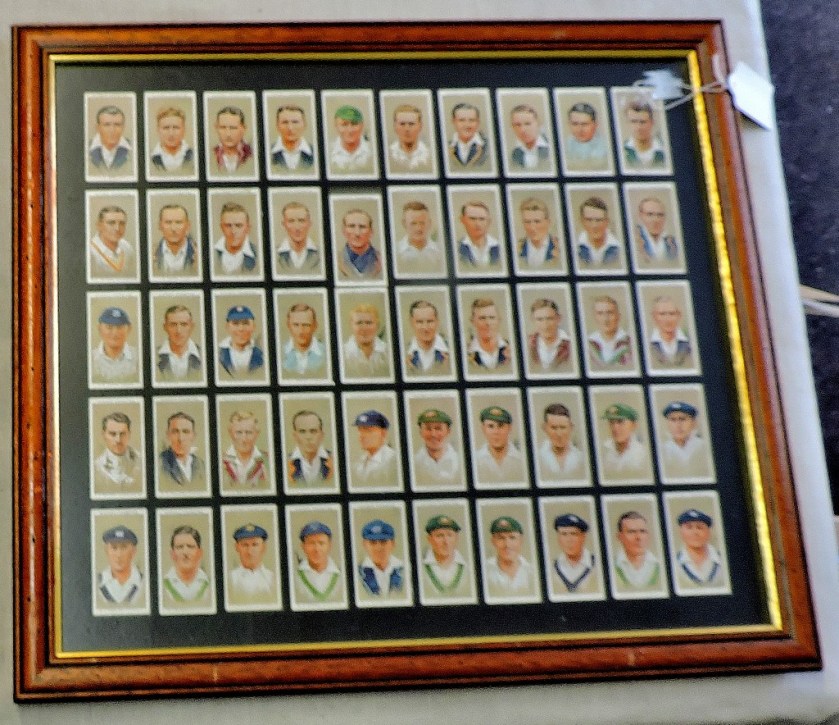
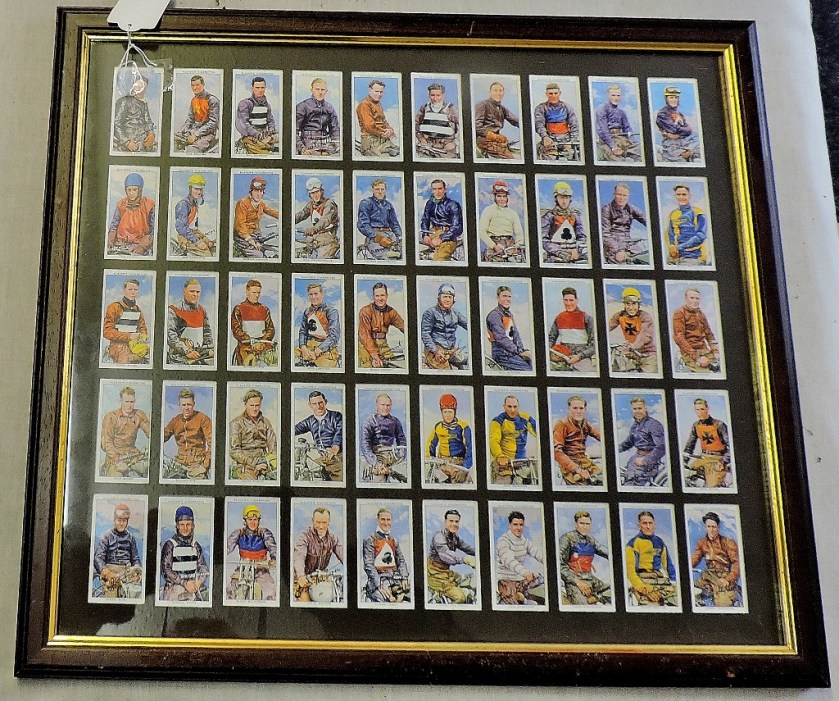
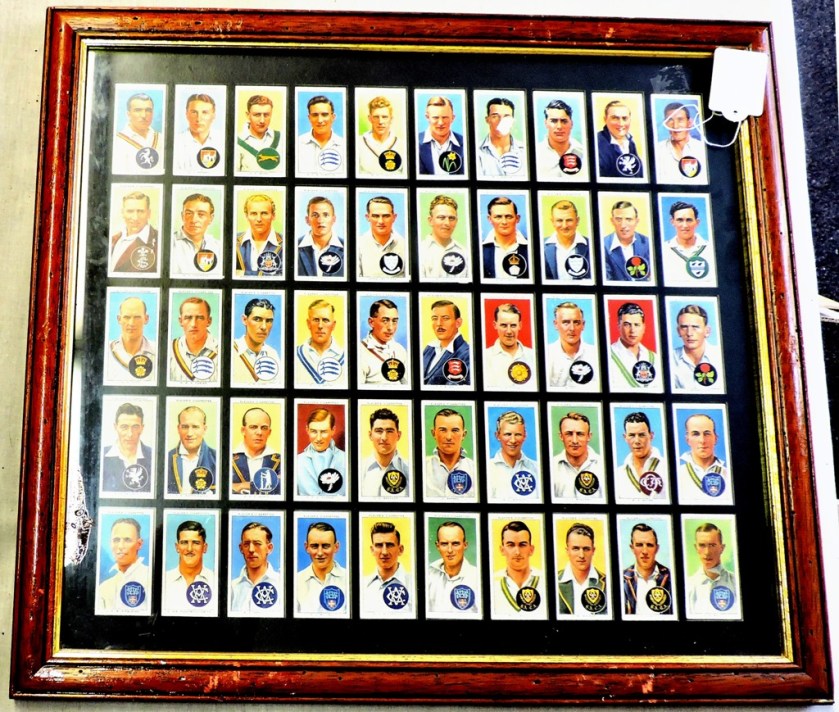
The first ten images here are of framed sets of cigarette cards, the first two bieing crickets from 1938 and 1934 respectively.

582583584585586587588589590

410
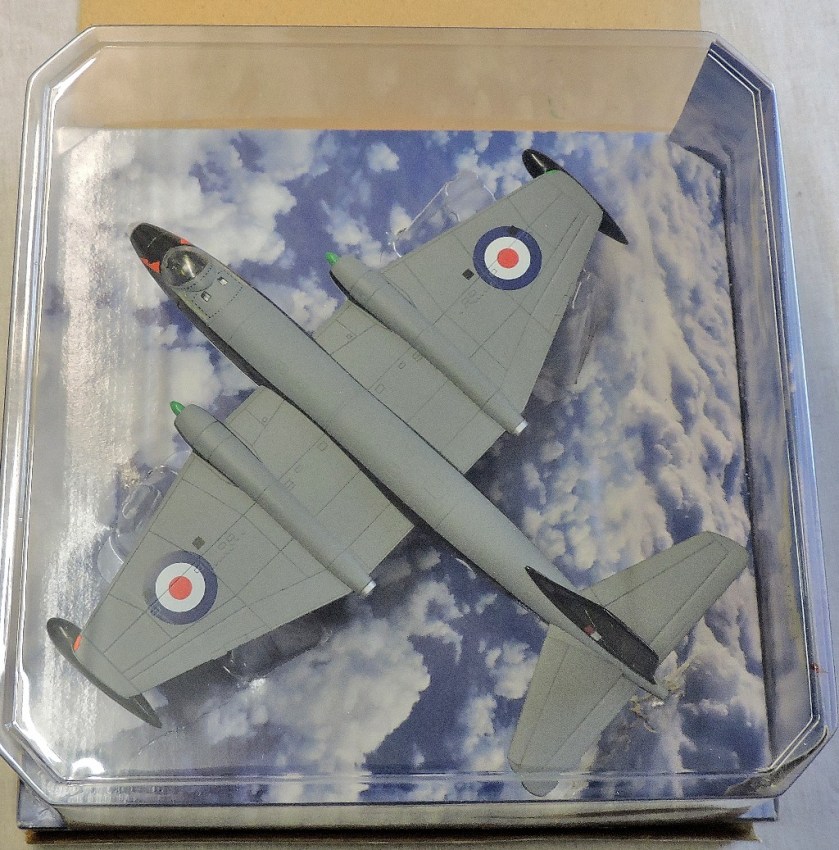
These two images are of the last of the collector’s models

418

brass-for-ebay
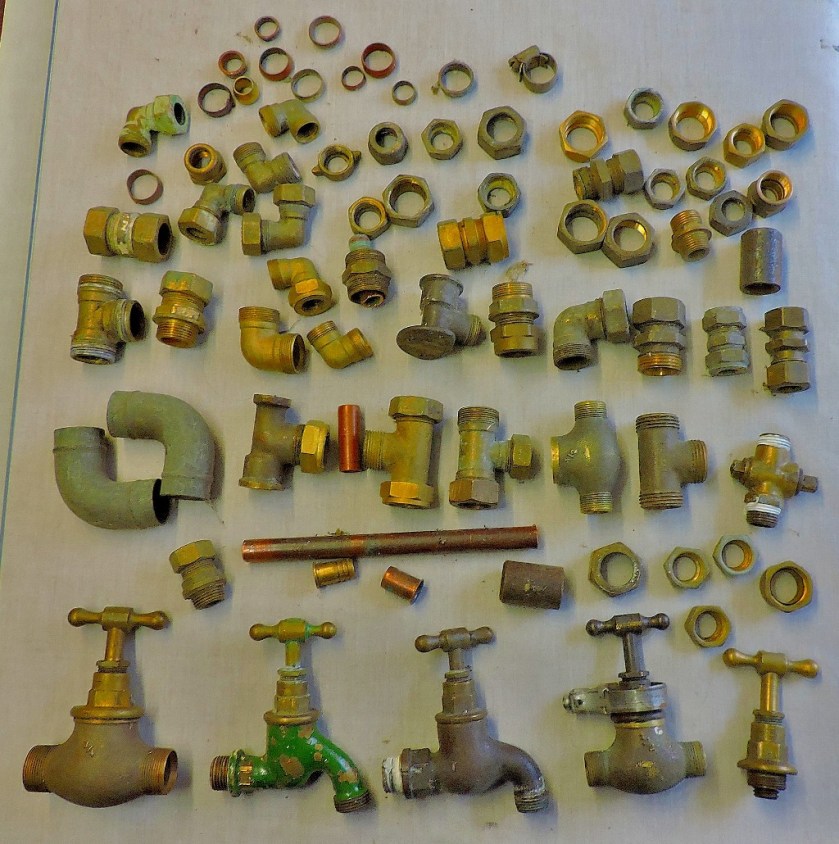
Not an auction lot – this collection of brass taps and fitments are being sold on ebay!

..
 

Musical Keys and Other Stuff

Musical Keys, Cricket, Photography and some links.

INTRODUCTION

The title of this post refers to Saturday’s Musical Keys session at the Scout Hut on Beulah Street (a place that by now is almost as familiar to me as my own humble abode such is the number of events I have attended there). I also have plenty of other stuff to share.

MUSICAL KEYS

Having missed the previous Musical Keys session because I was attending the “Marxism and Nature” Day School in London (well done to the International Socialism Journal team, you organised a great event) I was anticipating this session more eagerly than usual. Then came the news that the branch chair would probably not be able to attend as her son was playing up, which meant that I would be the sole NAS West Norfolk committee member present.

THE WALK THERE

I decided to go via Bawsey Drain (there was no decision to make as regards the mode of transport although it is a longish walk) and I was able to  take some pictures along the way.

dscn6974
Another splendid tree (to see lots of tree pics visit Anna’s blog and look at some of the recent posts there)

dscn6975dscn6976dscn6977

dscn6978
The outside of the scout hut.
dscn6979
This section of path has recently been resurfaced.

dscn6980

THE SESSION ITSELF

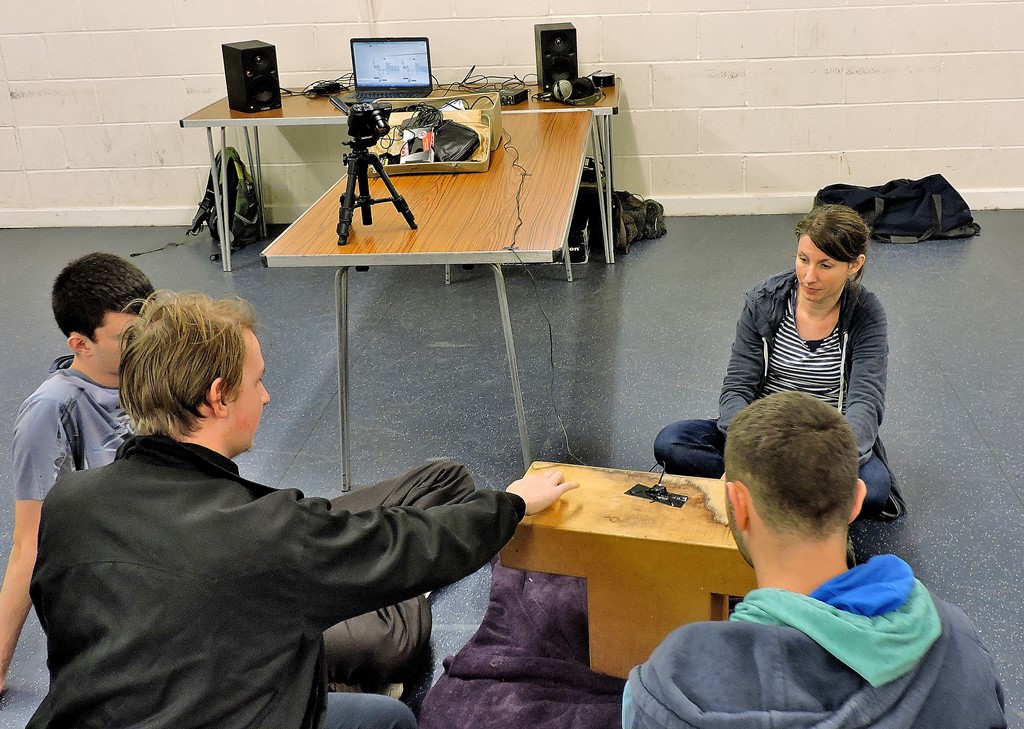
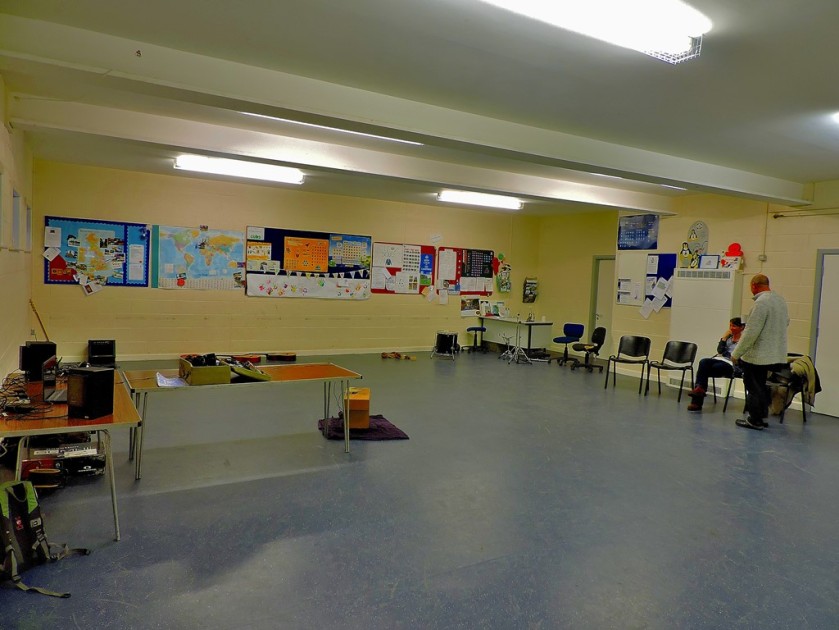
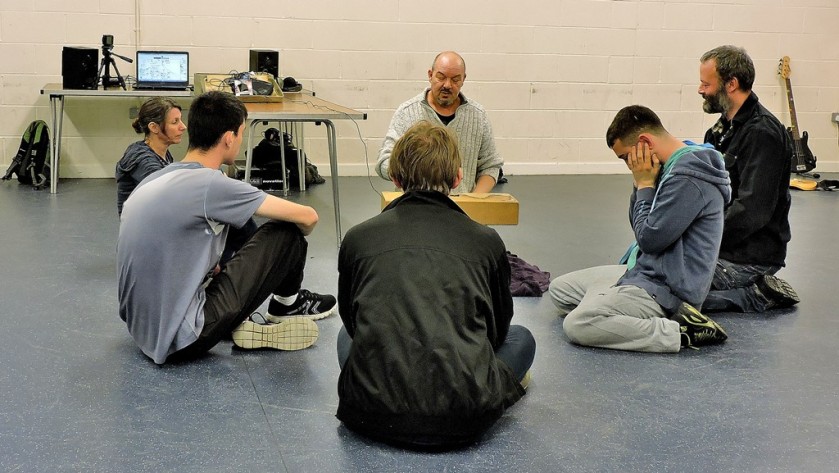
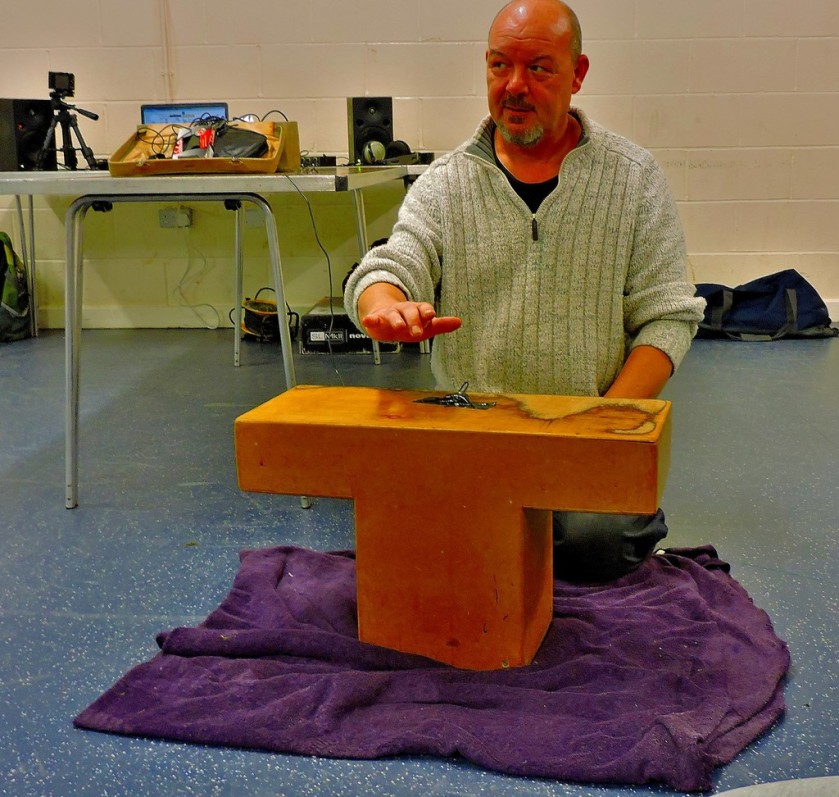
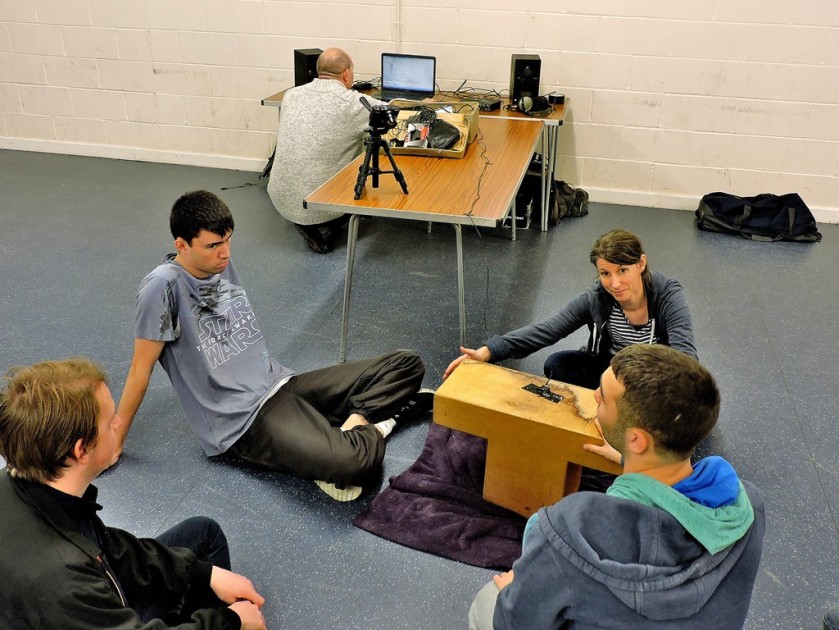
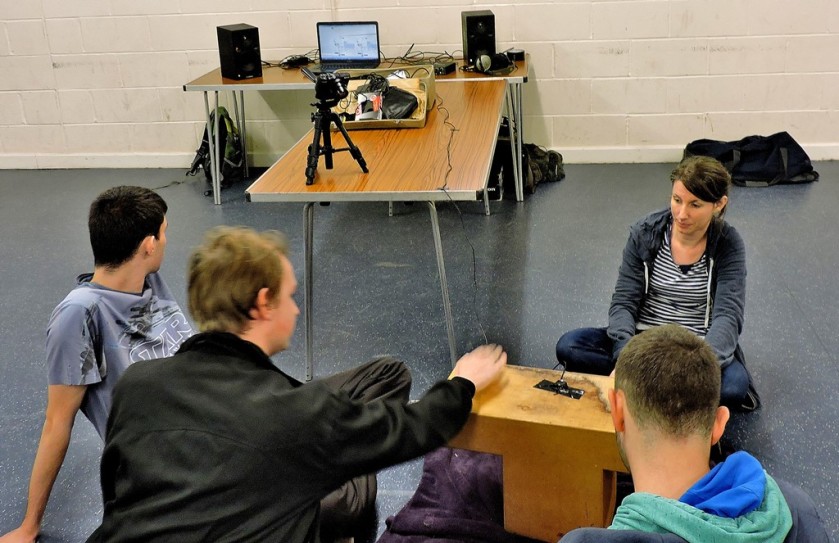
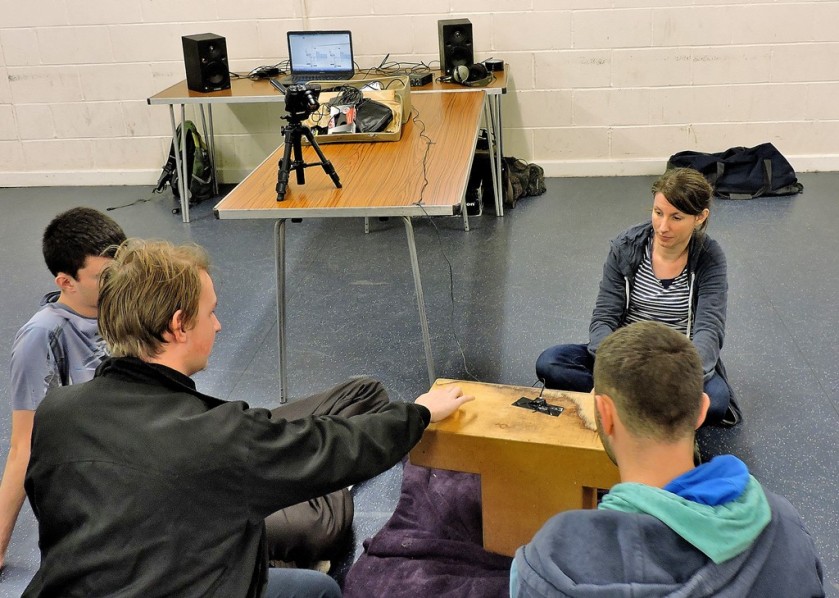
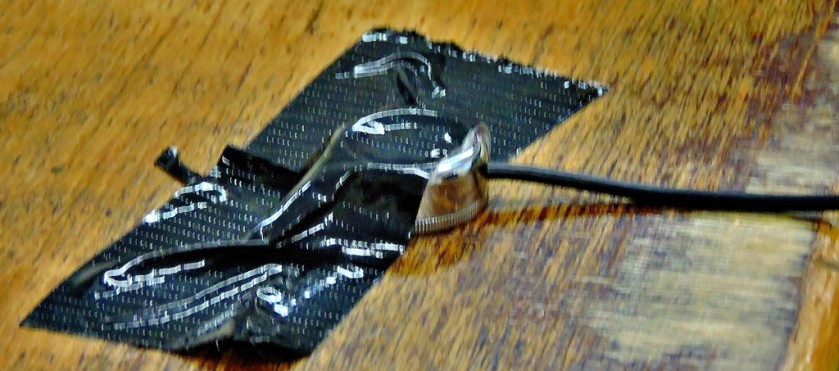
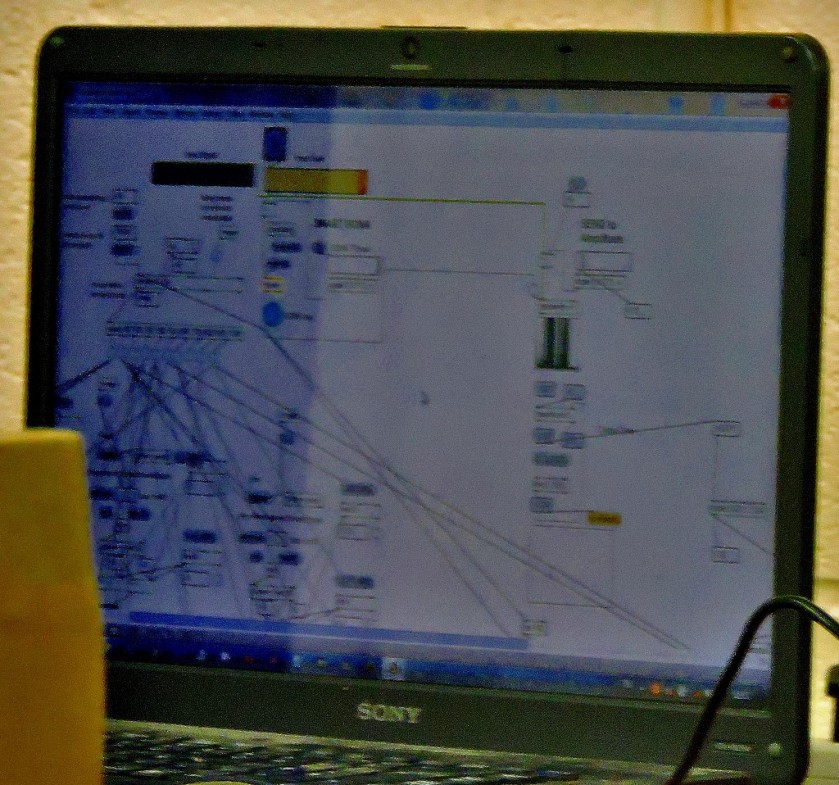
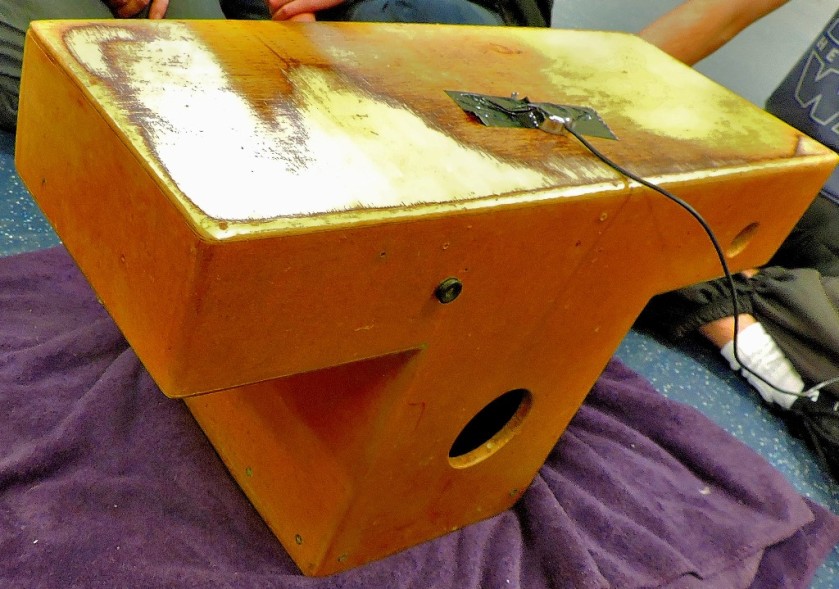
I was specifically requested to take pictures during this session by John and Kirsten, who run the sessions for Musical Keys. Therefore I have lots of pictures. The session began with the focus exclusively on a kind of wooden drum, shaped like a three dimensional capital T, which had been cunningly wired up to a computer.

dscn6981dscn6982dscn6983dscn6984dscn6985dscn6986dscn6987dscn6988dscn6989dscn6990dscn6991dscn6992dscn6994dscn6995

dscn6996
How this wooden instrument was wired up to a computer.

dscn6997dscn6998

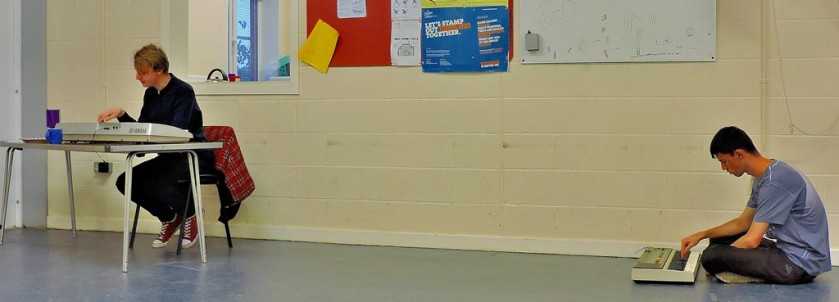
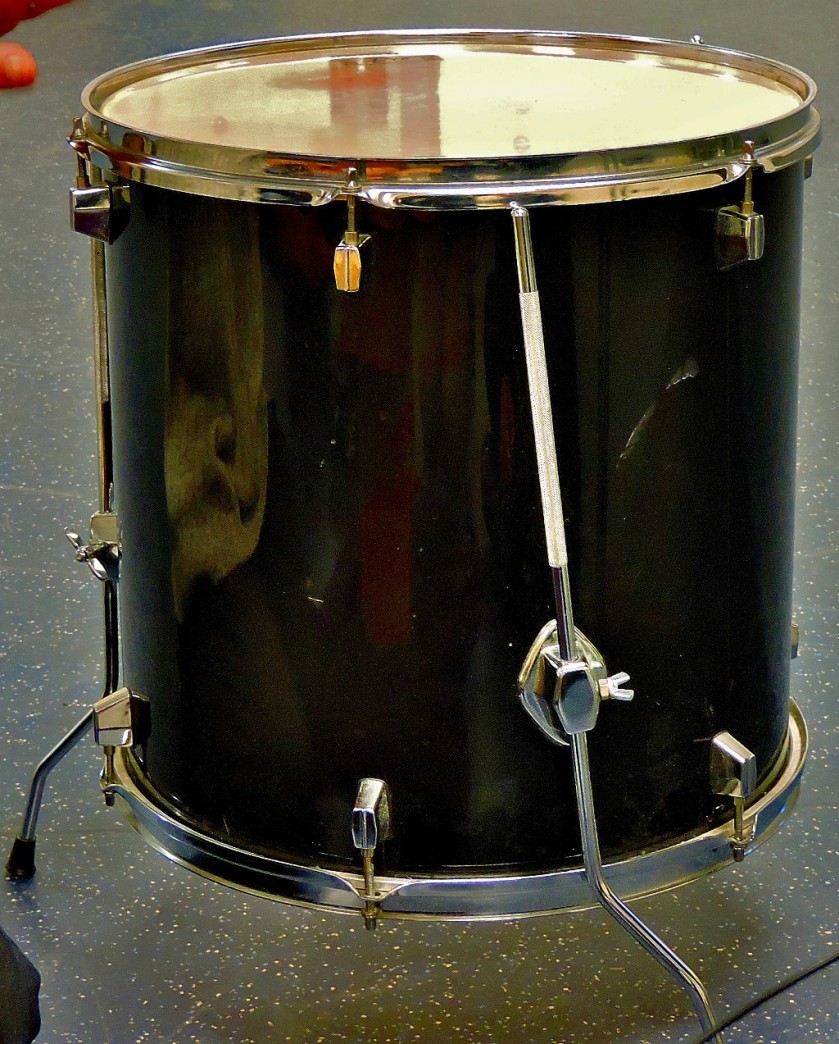
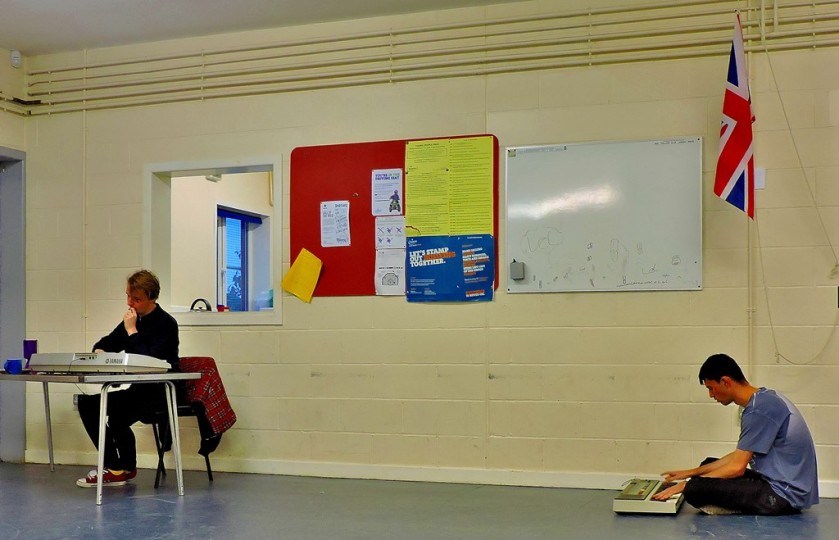
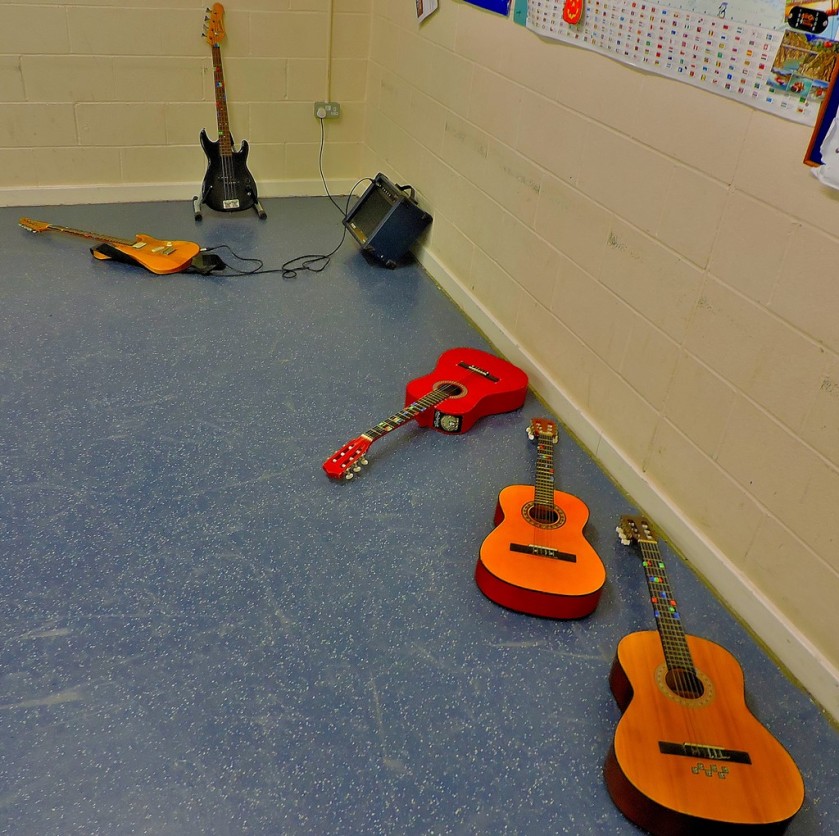
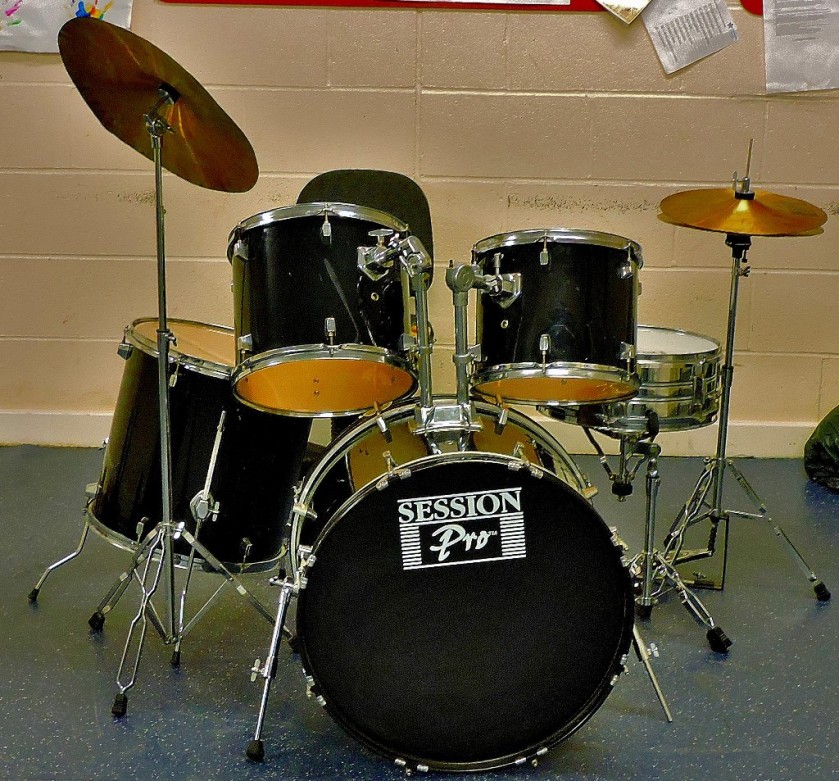
Later in the session people were encouraged to try other instruments – two electronic keyboards were available and both were used, I sampled an acoustic guitar and also an electric bass guitar, and a single drum was available for most of the session, with the full set (which tends to drown out everything else) in action for the last few minutes.

dscn6999
The keyboards being played.
dscn7000
A stand alone drum

dscn7001dscn7002

dscn7003
The range of guitars.
dscn7004
A couple of close-ups of the particular acoustic guitar that I played.

dscn7005

dscn7006
The full drum set ready for action
dscn7007
The drum set in use.
dscn7008
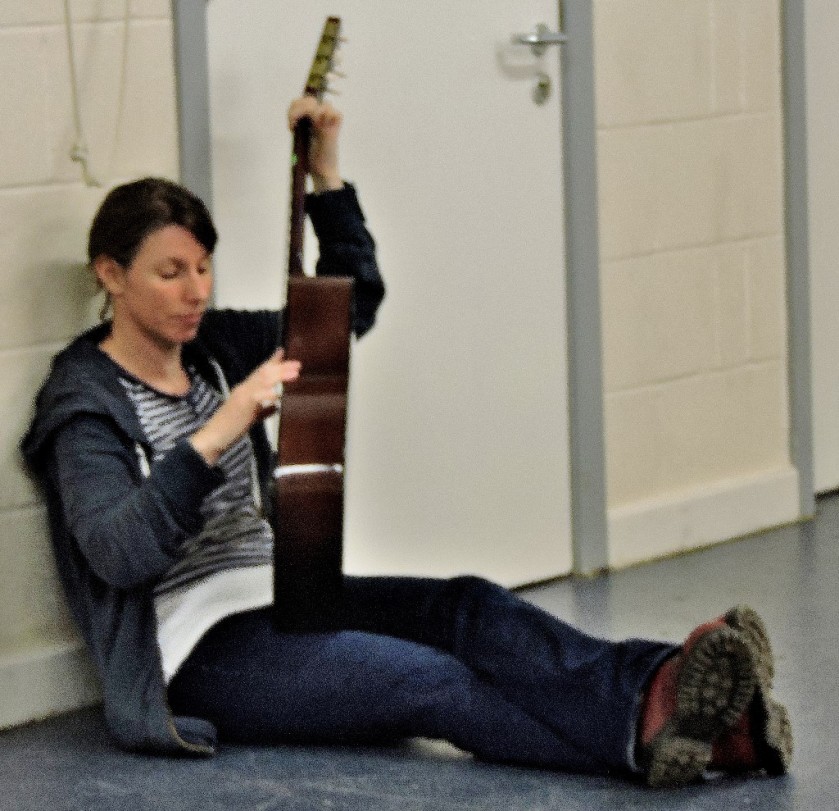
Kirsten (one of the two people who run the sessions) playing an acoustic guitar.

SOME FINAL THOUGHTS ON THE BANGLADESH – ENGLAND SERIES

The result of the second match in this two match series, which I celebrated here, was splendid not just for Bangladesh, but also for cricket as a whole. England now head for a five match series in India, where they can confidently expect every pitch to be turning from minute one of every match (and can have no complaints given the number of times they have had sub-continental teams play on green seamers at places such as Durham and Leeds early in the English season). Frankly having seen how England have handled spin friendly conditions in Bangladesh, India should probably reckon that any series outcome other than 5-0 to them is a disappointment.

England this series have been exposed in several areas:

  • Top order batting – in four completed innings the top five contributed only three individual scores above 50 between them, one a piece for Joe Root, Moeen Ali and Ben Duckett. Cook’s 39 in his final innings of the series was his best effort, while Ballance failed badly in all four innings, being out to a particularly gruesome shot in the final one.
  • Spin bowling – of the four front-line spinners played by England in this series (Moeen Ali, Adil Rashid, Zafar Ansari and Gareth Batty) none produced a really convincing performance overall, although Moeen Ali took five wickets during Bangladesh’s collapse from 170-1 to 220 all out in the first innings at Dhaka and Rashid 4-52 in second innings of that same match. England, in a spin dominated series, were saved from complete embarrassment by Ben Stokes who captured 11 wickets at 10.09 to be their joint leading wicket taker, as well as being their leading run scorer.
  • Captaincy – Alastair Cook had an even poorer series in this respect than he did with the bat. Whenever the spinners were bowling they had right from the word go fielders at deep long off and at deep point – meaning that singles were always easily obtainable. These field setting seem horribly like covering the bad ball (of which it must be said there were far too many from all of England’s spinners).

I am going to finish this section with individual player ratings for all those used by England (the player of the series on either side was Mehedi of Bangladesh btw).

Alastair Cook (C): a poor series with the bat and a poorer one as captain. Rating 3/10.

Ben Duckett: looked unconvincing in his first three innings, but redeemed himself to an extent in the fourth – his approach in that innings got Bangladesh on the back foot. His dismissal straight after tea in that innings was the trigger for Bangladesh’s greatest ever session in the field in test cricket. Rating 5/10

Joe Root: a gritty 50 in the first innings at Dhaka when no one else offered serious resistance until the partnership between Rashid and Woakes was his only major contribution with the bat. Rating 5/10

Gary Ballance: after his first three innings of this series I commented that he was not batting long enough to know what sort of form he was in. His fourth innings was equally brief, but the shot with which it ended was truly dreadful. Rating 0/10

Moeen Ali: a useful 50 in Chittagong, and wickets in both games. However as an off-spinner he was comprehensively outclassed by 19 year old Mehedi on the other side. Rating 7/10

Ben Stokes: England’s player of the series, his 85 at Chittagong was England’s highest individual score of the series, he was the teams overall leading run scorer and joint leading wicket taker (this latter in a series were quick bowlers were mainly bystanders). Without his efforts this series would certainly have been 2-0 to Bangladesh. Rating 9/10

Jonny Bairstow (WK): A competent series with gloves in difficult conditions and a fifty in the first match. Rating 6/10

Zafar Ansari: his selection in place of fellow Surrey man Batty for the second match of the series gave England a more varied bowling attack, and he picked up a couple of wickets. He failed to contribute with the bat. Rating 4/10

Chris Woakes: significant contributions with the bat in both matches, though his bowling was not of much significance in this series. Rating 5/10

Adil Rashid: A useful batting effort in the first innings at Dhaka, when he and Woakes rescued their supposed betters and gave England a lead, his bowling in favourable conditions was disappointing. Rating 5/10

Stuart Broad: Bowled well at Chittagong, was rested for Dhaka. Rating 5/10

Gareth Batty: His selection for this tour at the age of 39 and after a 12 year hiatus in his international career was a major indictment of English spin bowling, and he contributed little in the one match he played, at Chittagong. Rating 2/10

Stephen Finn: Came in for Stuart Broad at Dhaka, and his only contribution of note was to become the answer to the quiz question “whose dismissal gave Bangladesh their first ever test victory against England?” Rating 1/10

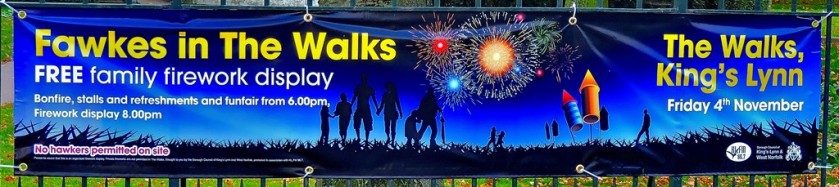
FAWKES IN THE WALKS

dscn6957

This has historically been a very successful event and I hope it will be so again. However, as an autistic person who reacts badly to sudden loud noises, I would also like to say that fireworks should be restricted to official displays of this sort.

LINKS

My first link in this section is to an online protest against the charity Mind, taking place between 3:30 and 5PM today.

The Climate Reality Project have produced this very accessible guide to climate change.

My next two links both relate to Debbie Abrahams’ announcement that they will replace the Work Capability Assessment:

My next and penultimate link is to Anna’s effort to get people to post about tree walks. To view her most recent post on the subject click on the screenshot below.

tw

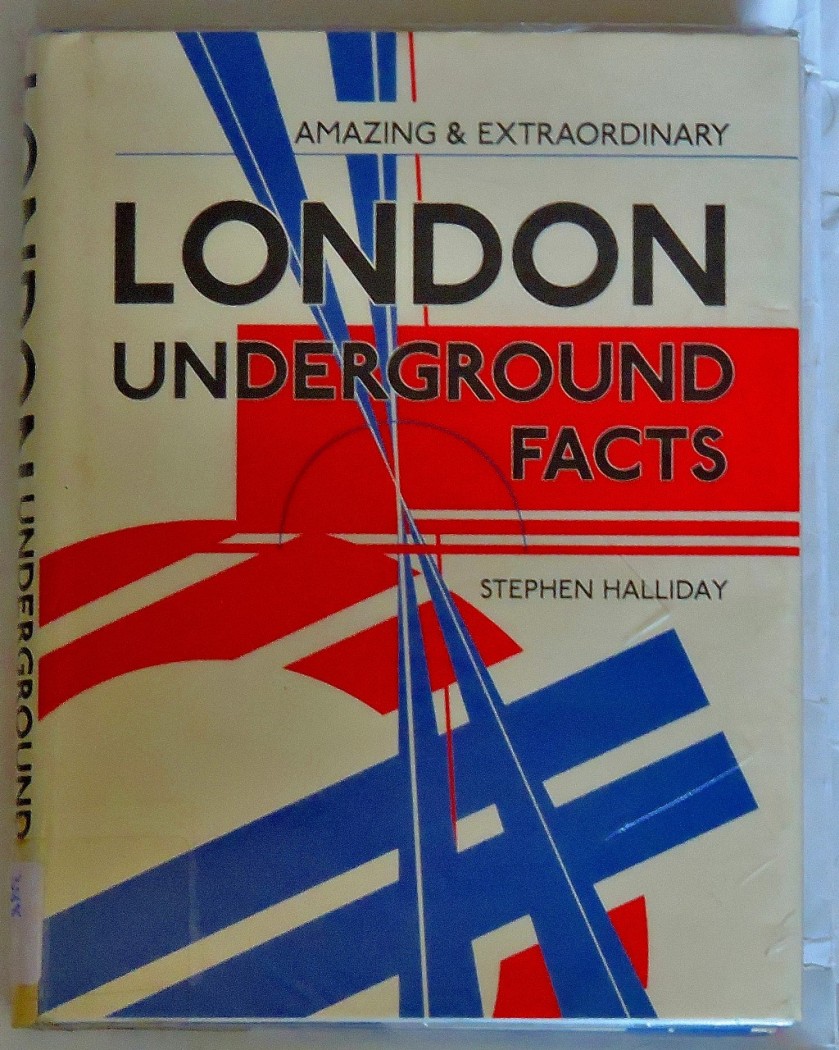
My final link is to a book review on my London transport themed website – click the screenshot below to visit it.

dscn6956


Close Fought Contest in Chittagong

An account of the amazing Test Match which concluded earlier this morning in Chittagong.

INTRODUCTION

This is going to be a rarity – a blog post from me with no pictures. Please note that although I am a native of one of the countries involved in the Test Match that has just concluded and that is the basis for this post I am writing as a cricket fan first and foremost.

THE FINAL MORNING

At 4:45AM my time the alarm went off, and I tuned in to the coverage of the final day’s play in the first Test Match of the two match series between Bangladesh and England. The situation when darkness ended the fourth days play was that Bangladesh needed 33 to win with two wickets standing. Going into this match the two teams had met eight times in the test arena and England had won all eight, most by ridiculously large margins. The first question to be answered was who Cook would ask to bowl first up, and the fact that his choice fell on Broad and Stokes, the two fast men, and that no one seriously disagreed with said choice on a pitch that has offered serious turn for the entire duration of the match has to count as an indictment of England’s three front line spinners in this game, Batty, Rashid and Ali and by extension of the lack of decent spinners playing in English cricket at the moment.

Bangladesh added 10 runs to their overnight total before Ben Stokes had an LBW appeal against Taijul Islam turned down, sent it upstairs (the 25th time in this game that on on-field decision had been treated thus – easily a new record, the previous highest being a mere 19). For the 11th time umpire Ravi concluded from the evidence he studied that his on-field colleague had made the wrong decision (and for the eighth of those 11 times the on-field umpire involved was Kumar Dharmasena) and Bangladesh were nine down. Two balls later Shafiul Islam was struck on the pads, the finger was raised, the decision was inevitably reviewed, but on this occasion it was deemed to be correct and England had won, with Sabbir Rahman stranded on 64 not out.

If that match was to end in an England victory it was only appropriate that the final wickets should fall to Stokes whose match figures of 6-46 (4-26 and 2-20) were paired with a total match aggregate of over 100 runs, including the highest individual score of the game, 85 in England’s second innings, making the recipient of the man-of-the-match award clear cut. It was also in keeping with this match that it should finish with a decision being reviewed and therefore that it was the TV replay umpire who actually confirmed the final result.

BOWLER FRIENDLY PITCH PROVIDES A MAGNIFICENT MATCH

The pitch at Chittagong has been a curio in a more than one way. It has turned from the first, batting never being easy. It has also reversed the normal in that the spinners have been most dangerous with a new ball and the quicker bowlers more dangerous with an older one – to the extent that the reason England did not take the new ball this morning although they were entitled to was that they had decided to start with two quickies – had they trusted their spinners taking the new ball would have been obvious.

This match was fascinating throughout because it was not high scoring, and because the bowlers were always in the game.

CONGRATULATIONS AND COMMISERATIONS TO BANGLADESH

The heading for this section is not a contradiction – I congratulate Bangladesh for a spirited effort over the whole course of the game and for coming very close to recording their first ever victory over a major test nation (their seven test victories to date have been five against Zimbabwe and two against a West Indies riven by internal strife). It would possibly have been better for cricket as a whole if Bangladesh had actually won, but there is a single solitary counter-argument: this being a two match series if Bangladesh had won no one could then have blamed the groundsman at Dhaka where the second match will take place for preparing a pitch to make Adelaide Oval look like a terror track, whereas in the actual situation it is virtually obligatory to produce a pitch with some life in it.

THE REST OF ENGLAND’S WINTER

After the second and final match of this series (for the record I would make a rule that no series should contain fewer than three matches, my disapproval of ultra-short series being that strong) England head to India for a five match test-series. It is very likely that every pitch England encounter there will turn viciously from moment one, and England cannot rely on Stokes, magnificent cricketer though he is,  to dig them out of every hole they find themselves in. The spinners will need to earn their keep for these six matches.

WHITHER BANGLADESH?

Bangladesh came very close to making history in Chittagong. I hope for their and cricket’s sake that they succeed in scaling the summit of Mt Improbable in Dhaka, which match starts on Friday. This Test Match was Bangladesh’s first in a period of fourteen months – they need to be given more test matches. Another issue raised by the England schedule outlined above is that quite clearly Bangladesh were perceived as being a decent warm-up for the main event in India. They have done enough over four and a bit days in Chittagong to suggest that in the not too distant future a series against Bangladesh could and should be regarded as a serious event in its own right.I end with a couple of links to cricinfo:

TWO TRIUMPHS

Accounts of England’s triumph in South Africa and of a local fund-raising triumph for NAS West Norfolk.

INTRODUCTION

My title refers to one great sporting triumph and one fabulous fund-raising triumph, which I shall cover in that order.

SOUTH AFRICA SUCCUMB TO
STUART’S BRUTAL BROAD-SIDE

An extraordinary Test match at the Bull Ring in Johannesburg ended on the third day. South Africa batted first and reached 313 without anyone managing a half century. England gained a lead of 10 largely due to the batting of three people, Root (110), Stokes (58) and Bairstow (45). South Africa had a tiny bit of batting before lunch which they achieved without loss, before things started to happen immediately thereafter. Stuart Broad settled the match, the series and the destination of the Player of the Match award in 10 overs which brought him 6-17 (I heard the commentary on the first five, but had to leave with South Africa score 67-8, and by the time I was back from my engagement, the last two South African wickets had fallen and England had knocked off their victory target for the loss of three wickets).

FABULOUS FUNDRAISING SUCCESS
AT COSTA COFFEE (HARDWICK)

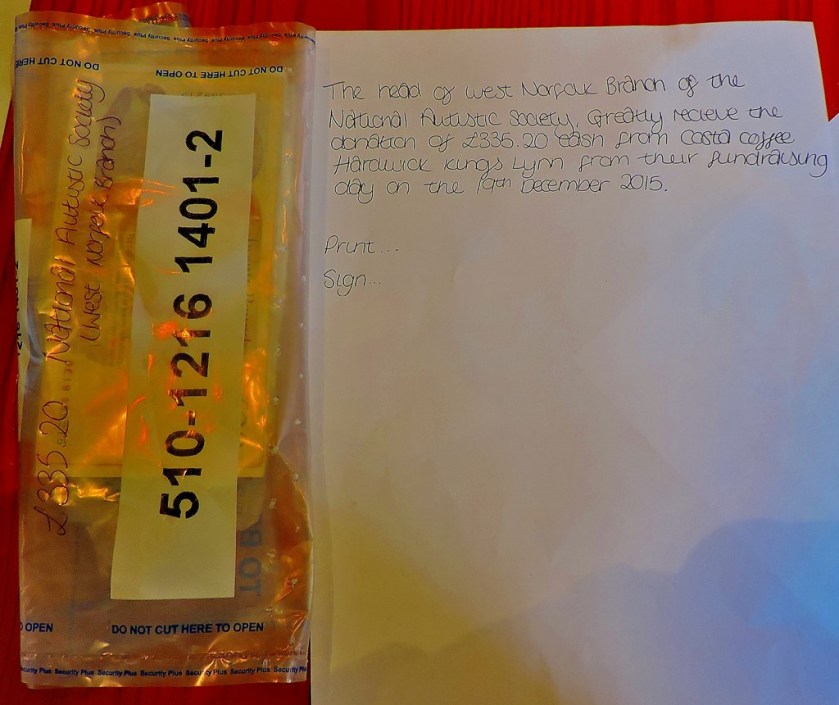
Molly, a barista at the Hardwick branch of Costa Coffee who has an autistic brother and whose mother is a former chair of NAS West Norfolk decided to do some fundraising on our behalf. She managed to raise £335.20 in cash which Costa will be matching with a direct payment into the NAS West Norfolk bank account, meaning that in total the organisation benefits to the tune of £670.40 from her endeavours.

We had arranged a presentation and photo-shoot at Costa Hardwick at 2:30PM today (not being clairvoyant I had not realized when I agreed to the arrangement that it would mean missing England sealing their series victory over South Africa).

Of course, it was not only at Costa itself that I got some photos…

Now for the fundraising pictures…

Costa - Social Media Size
For reference NAS West Norfolk chair Karan McKerrow is the one in the middle, Molly the fundraiser is to her left as you look and the store manager is on the other side.

DSCN8892DSCN8893DSCN8894


The Ashes 2015: A Personal View

A last look at the 2015 Ashes.

INTRODUCTION

This is the first of a several posts I shall be producing today. I hope you will all enjoy it.

AUSTRALIA WIN THE BATTLE HAVING ALREADY LOST THE WAR

Australia won the Oval test match very comfortably to narrow the series score to 3-2 in England’s favour. Although it takes a little gloss of England’s overall victory this cannot really be considered significant – there have been many occasions when a side who have already won the series early have failed in the final match. Examples include England in 1928-9, 1986-7 and 2015, and Australia in 1902, 1924-25, 1968, 1993 and 1997. For the rest of this post I am going to look at England’s players through the series…

ENGLAND SUCCESSES AND FAILURES

So, who did what?

Alastair Cook: as captain he unequivocally did was required – his task was to win the Ashes and that objective was achieved with a match to spare. As a batsman he had an ordinary series, with no century and only two really significant scores, one of which was made with the match already lost (85 at the Oval).

Adam Lyth: he was an unequivocal failure at the top of the order. Nevertheless, while I would have no quarrel with him being dropped at this point, I maintain that the England selectors were right to give him the whole home season of tests in which to make his mark – and as a veteran of the second half of the 1980s and the whole of the 1990s, during which England were an international laughing stock I saw far too many occasions when selectors chopped and changed and changed and chopped so that no one ever knew whether they were coming or going I was delighted to see this example of consistency of approach.

Ian Bell: By his own standards a poor series – only three 50 plus scores and none of them a century.

Joe Root: Quite simply magnificent – his century at Trent Bridge on a pitch on which the Aussies had rolled over for 60 in 18.3 overs was a classic innings, made when runs had to be earned.

Gary Ballance: Only played the first couple of matches, but he will be back.

Jonny Bairstow: A fine innings at Trent Bridge, when he backed Joe Root splendidly, but not much else to show for his participation in the series.

Ben Stokes: Mr X Factor – runs, wickets and the moment of the series – that catch at Trent Bridge.

Jos Buttler: A shocking series with the bat, adequate behind the stumps.

Moeen Ali: A fine cricketer, but not in the way England used him in this series – he is not a front-line spinner. In the UAE where pitches are likely to take spin he could be useful as an opening batsman (a role he plays for his county) and back up spinner to Adil Rashid and possibly another.

Mark Wood: A good prospect, and Cook’s decision to give him the opportunity (which he took) to wrap up the Trent Bridge match was an excellent piece of captaincy.

James Anderson: The only England bowler to date to have taken 400 test wickets – it is a tribute to messrs Broad, Finn and Wood that he was not missed at Trent Bridge. The UAE would be a good tour for him to miss – there will be no assistance for him there, and he will be needed in South Africa.

Stuart Broad: Can one be player of the series almost entirely on the strength of one spell of bowling? Yes, if that one spell is 8-15 off 9.3 overs and makes the outcome of the series effectively certain.

Stephen Finn: After a couple of years in the wilderness he is back to some thing like his best, he achieved one of a run of four straight six plus wicket hauls by four different England bowlers (the others were Anderson, Stokes and Broad).

Special Post: Oval and Vauxhall

A piece principally about Ashes moments at the Oval cricket ground, with an introductory mention of the history of the two stations that serve it.

INTRODUCTION

Welcome to the latest post in my series “London Station by Station”. I hope you will enjoy this post and that some of you will be encouraged to share it.

IN THE SHADOW OF THE GAS HOLDERS

I am treating these two stations together because they are at opposite ends of the Oval cricket ground. Oval was one of the original six stations of the City and South London Railway, the world’s first deep-level tube railway, which opened in 1890. Vauxhall only opened as an underground station in 1971, part of the newest section of the Victoria line, but is also a main-line railway station and would have opened in that capacity long before Oval.

Today is the Saturday of the Oval test, by tradition the last of the summer. At the moment things are not looking rosy for England, but more spectacular turnarounds have been achieved (bowled at for 15 in 1st dig and won by 155 runs a day and a half later – Hampshire v Warwickshire 1922, 523-4D in 1st dig and beaten by ten wickets two days later – Warwickshire v Lancashire 1982 to give but two examples). The Oval in it’s long and illustrious history has seen some of test cricket’s greatest moments:

1880: 1st test match on English soil – England won by five wickets, Billy Murdoch of Australia won a sovereign from ‘W G’ by topping his 152 in the first innings by a single run.

1882: the original ‘Ashes’ match – the term came from a joke obituary penned after this game by Reginald Shirley Brooks. Australia won by 7 runs, England needing a mere 85 to secure the victory were mown down by Fred Spofforth for 77.

1886: A triumph for England, with W G Grace running up 170, at the time the highest test score by an England batsman. Immediately before the fall of the first England wicket the scoreboard nicely indicated the difference in approach between Grace and his opening partner William Scotton (Notts): Batsman no 1: 134           Batsman no 2: 34

1902: Jessop’s Match – England needing 263 in the final innings were 48-5 and in the last-chance saloon with the tables being mopped when Jessop arrived at the crease. He scored 104 in 77 minutes, and so inspired the remainder of the English batsmen, that with those two cool Yorkshiremen, Hirst and Rhodes together at the death England sneaked home by one wicket.

1926: England’s first post World ward I Ashes win, secured by the batting of Sutcliffe (161) and Hobbs (100) and the bowling of young firebrand Larwood and old sage Rhodes – yes the very same Rhodes who was there at the death 24 years earlier.

1938: The biggest margin of victory in test history – England win by an innings and 579. Australia batted without opener Jack Fingleton and even more crucially no 3 Don Bradman in either innings (it was only confirmation that the latter would not be batting that induced England skipper Hammond to declare at 903-7)

1948: Donald Bradman’s farewell to test cricket – a single boundary would have guaranteed him a three figure batting average, but he failed to pick Eric Hollies’ googly, collecting a second-ball duck and finishing wit a final average of 99.94 – still almost 40 runs an innings better than the next best.

1953: England reclaim the Ashes they lost in 1934 with Denis Compton making the winning hit.

1968: A South-African born batsman scores a crucial 158, and then when it looks like England might be baulked by the weather secures a crucial breakthrough with the ball, exposing the Australian tail to the combination of Derek Underwood and a rain affected pitch. This as not sufficient to earn Basil D’Oliveira an immediate place on that winter’s tour of his native land, and the subsequent behaviour of the South African government when he is named as a replacement for Tom Cartwright (offically injured, unoffically unwilling to tour South Africa) sets off a chain of events that will leave South Africa in the sporting wilderness for almost quarter of a century.

1975: Australia 532-9D, England 191 – England in the mire … but a fighting effort all the way down the line in the second innings, Bob Woolmer leading the way with 149 sees England make 538 in the second innings and Australia have to settle for the draw (enough for them to win the series 1-0).

1985: England need only a draw to retain the Ashes, and a second-wicket stand of 351 between Graham Gooch (196) and David Gower (157) gives them a position of dominance they never relinquish, although a collapse, so typical of England in the 1980s and 90s sees that high-water mark of 371-1 turn into 464 all out. Australia’s final surrender is tame indeed, all out for 241 and 129 to lose by an innings and 94, with only Greg Ritchie’s 1st innings 64 worthy of any credit.

2005: For the second time in Oval history an innings of 158 by a South-African born batsman will be crucial to the outcome of the match, and unlike in 1968, the series. This innings would see Kevin Peter Pietersen, considered by many at the start of this match as there for a good time rather than a long time, finish the series as its leading run scorer.

2009: A brilliant combined bowling effort from Stuart Broad and Graeme Swann sees Australia all out for 160 after being 72-0 in their first innings, a debut century from Jonathan Trott knocks a few more nails into the coffin, and four more wickets for Swann in the second innings, backed by the other bowlers and by Andrew Flintoff’s last great moment in test cricket – the unassisted run out of Ricky Ponting (not accompanied by the verbal fireworks of Trent Bridge 2005 on this occasion!).

The above was all written without consulting books, but for those who wish to know more about test cricket at this iconic venue, there is a book dedicated to that subject by David Mortimer.

As usual I conclude this post with some map pics…

DSCN4600 DSCN4602

Thomas’s Composite Ashes XI

My composite Ashes XI, with a controversial choice at no 5.

INTRODUCTION

This post, which is purely and simply what the title says will be followed by one of more my more usual posts.

AN END OF SERIES TRADITION

One of the things that people do as an Ashes series approaches its conclusion is pick a composite team. A team is not simply the 11 players who have had the best series – to be properly selected it has to be capable of functioning as a team, so it needs sufficient batting and bowling resources and a genuine wicket-keeper. Having set out my criteria I will now begin selecting:

THE OPENERS

None of the openers in this series will remember it with especial fondness, but with Warner now established as the Caddick of batsmen (much better in the second innings than in the first), and Lyth having not had a big score at all, the selection is quite straightforward: Chris Rogers and Alastair Cook (Captain).

THE MIDDLE ORDER

Number 3 is clear cut – Stephen Smith is a flat track bully, not to be trusted if the ball is doing anything, whereas Ian Bell produced two fifties in the third match to help restore England’s lead in the series. Verdict: Bell by the proverbial country mile.

Number 4 is even more of a no-contest – Michael Clarke has barely scored a run in the series while Joe Root has been superb. Verdict: Root on a walkover.

Number 5 is a difficult one. There have been no convincing performances from anyone at number 5. I am going to resolve it by thinking outside the box, to someone who regularly bats no 5 and has been in superb form recently. It will come as no surprise to readers of this blog that my choice for no 5 goes to … Ellyse Perry.

Thinking outside the box: Ellyse Perry's excellence cuts the gordian knot of who to select at no 5 in the composite ashes XI!
Thinking outside the box: Ellyse Perry’s excellence cuts the gordian knot of who to select at no 5 in the composite ashes XI! (acknowledgements to cricinfo for the picture)

Number 6 takes us back to no-contest territory – it is Mr X Factor himself a.k.a Ben Stokes who stands out like the proverbial sore thumb for this position.

Number 7, and wicketkeeper is a bit tough – I have no doubts that Jos Buttler is the superior cricketer of the two keepers, but Peter Nevill has had a fine series whereas Buttler has not. Final verdict: Nevill, on ground of faring better in this particular series.

Number 8 and we are in the territory occupied by folk who are in the side for their bowling, and England’s domination in this area over the series is indisputable. Hence, this position and nos 9 and 10 are all occupied by England players. In the position of No 8 itself is Stuart Broad.

At Number 9 I have given James Anderson a promotion on his regular position in order to fit in my remaining two bowlers.

Number 10, back to his best after a couple of years in the wilderness is Steven Finn, probably third seamer behind Broad and Anderson but possibly sharing the new ball with Anderson.

We are at Number 11 and there is no recognized spinner in the side. In this area, and this is why the tail of my composite side is so long, there is no proper contest since England’s designated “spin option”, Moeen Ali, is in my humble opinion nothing of the kind (though a fine cricketer), so this slot goes to Nathan Lyon.

Here then in batting order is Thomas’s Composite Ashes XI 2015: (nb an asterisk next to a player designates captaincy, a plus sign having the wicketkeeping gloves)

C ROGERS
A COOK*
I BELL
J ROOT
E PERRY
B STOKES
P NEVILL+
S BROAD
J ANDERSON
S FINN
N LYON

The 4th Ashes Test

INTRODUCTION

Welcome this little look back the test match that finished yesterday morning. I also have links, photos and infographics to share.

ENGLAND REGAIN THE ASHES

The third and fourth matches of this series have just about totalled five days (one test match that goes the distance) between them, such has the speed with which England destroyed Australia in both games. Previously England had won the first match comfortably, but were utterly monstered at Lord’s in the second. All in all, this means that England now have an unassailable 3-1 lead in the five match series. Given what happened on the Lord’s shirtfront the groundsman at the Oval would be well advised to prepare a pitch with some life in it for the fifth match.

In four successive innings Australia have had their batting wrecked by four different bowlers (never before has one country had four different bowlers pick up six or more wickets in four successive innings). The figures that Stuart Broad produced in the first Australian innings of the match that concluded yesterday still test credulity.

Both captains had good moments near the end of the match: Cook by giving the youngster Mark Wood a chance, duly accepted, to finish things, and Clarke by announcing that the Oval will be his last test match, thereby sparing Cricket Australia an unpleasant but necessary decision.

Stuart Broad deservedly got the man of the match award for his destruction of the Australian first innings which set England on the road to victory, while Ben Stokes’ sensational catch (check it out here) deservedly won the champagne moment.

A PHOTOGRAPGIC INTERLUDE

Here a few pictures from yesterday evening…

DSCN4022 DSCN4024

This picture and the next two come from the same original but with different degrees of cropping.
A closer crop
A closer crop
The closest crop - a little blurred because it is so close.
The closest crop – a little blurred because it is so close.

LINKS

Not so many links to share as sometimes, but enough to split them into subsections.

PETITIONS

Three petitions for your consideration this morning:

A SINGLE AUTISM RELATED LINK

This piece, from respectfullyconnected is a heart-wrenching account of a piece of thuggery perpetrated someone referred to due to their conduct as “Ableist, Sexist Jerk” or “ASJ” for short. I am sharing at here, as I already have done elsewhere (twitter, facebook, google+) not in any hope that “ASJ” will see it but because it so outraged me that someone thought it was OK to behave in the manner described. The title of the piece is “Don’t You Dare Call My Autistic Son a Sissy”

A TRIO OF FUN FINDS

Switching away from the serious for a moment…

  1. A National Geographic piece about scientists successes and fails at fieldwork.
  2. A link to what looks to me be an excellent free resource.
  3. A link to quirky new blog, featuring Walthamstow among other locations, which I wish every success, called dutchgirlinlondon.

A SEGUE LINK

This is to a new find from this morning, which I got onto courtesy of a post on twitter by Jon Swindon. It is a blog called pollysshortattentionspan and it will no surprise to anyone familiar with Jon Swindon that the segue is to…

INFOGRAPHICS

This was the one that caught my eye on twitter.
And this caught my attention when I visited the blog for a closer look.

Australia Fall to Brutal Broad-side

An account of the extraordinary first day of the 4th ashes test at Trent Bridge, some links and infographics.

INTRODUCTION

The 4th Ashes test at Trent Bridge got under way today. As well as a brief account of the day I have some links and other bits to share.

AUSTRALIA FALL TO BRUTAL BROAD-SIDE

England 274-4 approaching the close of Day 1 with Root still there on 124 sounds like a solid, no frills opening day but actually England won the toss, put Australia in and this happened…

60

Stuart Broad’s (yes, Brisbane newspaper, the guy you call the tall English medium pacer) 8-15 beaten on wickets taken in an ashes innings by an English bowler only by Jim Laker’s Old Trafford double act of 1956 (9-37 1st inns, 10-53 2nd inns). In all test history only two cheaper eight wicket hauls have been taken, both in the 19th century for England against South Africa: 8-7 by George Lohmann and 8-11 by Johnny Briggs.

The irony behind this tale of woe (for them) is that Australia, acting very much in the style of 1990s England, had attempted to strengthen their batting by bringing specialist batsman Shaun Marsh in for his all-rounder brother Mitchell.

The nearest an opening day of an ashes match in my lifetime has come to being this one-sided was at Melbourne in 2010 (Aus 98 all out, Eng 157-0 in response).

Sometime between now and 6PM Monday, unless the weather puts up more of a fight than the Aussies have managed, the little urn will be returning to English possession.

For more check this word document: THE 4TH ASHES TEST MATCH

LINKS

In my last post but one I mentioned a story about an autistic child being refused access to a supervised play area in a branch of IKEA. Well I have now used change.org to create a petition around this issue. I urge you all to sign and share.

Some of my readers may also a recall a 38degrees petition regarding a museum whose creator gained planning permission by lying about his intentions. Well the story has moved a little further, with this effort to create a museum that really is dedicated to women’s history.

My penultimate general share comes courtesy of thepoorsideoflife and is a horrifying story about a full-time carer being scandalously treated.

Finally, courtesy of Patheos, comes this story of a small victory for secularism.

AUTISM

I am delighted to have several autism-related stories to share:

AAD

AFTERWORD

Two things:

  1. I hope that you have enjoyed this and that some of you will share.
  2. I would like to end by thanking Stephen Hurrell, author of the book I reviewed in my last post for acknowledging said post and following me on twitter.

England Take The Lead In 2015 Ashes

A bit about England’s magnificent win at Edgbaston, an infographic about an event being staged by Surrey, some quality links and infographics.

INTRODUCTION

I have some links and infographics as well as my main piece. I hope that you will enjoy this post and be encouraged to share it.

A THUMPING VICTORY

England responded to the battering they took at Lord’s in the best possible way, by storming to a three-day victory at Edgbaston to restore their lead in the series. Australia won by 405 runs at Lords, England by eight wickets here. I reckon this constitutes the most spectacular about turn in fortunes in successive ashes matches since 1965-66 when the teams traded innings victories in the second and third matches of the series.

Particularly welcome was the return to top form of Steven Finn who followed James Anderson’s first innings six-for with six wickets of his own the second. Among the scraps left by these two were enough wickets for Stuart Broad to reach 300 in tests. Ian Bell whose poor form had him in the last chance saloon with the last orders bell being sounded came up with two fifties in the match in front of his home crowd – and given the low scoring nature of the game these were easily worth centuries on a flat one.

An unfortunate injury means that for the fourth match at Trent Bridge England have the unenviable task of attempting to fill an Anderson shaped hole in their squad.

To finish this cricket related section, Surrey are putting on an event to celebrate women’s and girls cricket featuring current England captain Charlotte Edwards, head of ECB women’s cricket Clare Connor and being hosted by Surrey”s Director of women’s cricket Ebony Rainford-Brent…

Women's cricket

LINKS

My first set of links follow on from my last blog post and feature more on…

CECIL THE LION

First up an event that will probably remain unique in the history of aspiblog – a link to an article in the Daily Mail

Next, courtesy of Huffington Post, this piece by wildlife expert and occasional ballroom dancer Steve Backshall

Finally on this particular topic, this from The Age.

Lion

SCIENCE

Tonight is the second full moon in July – a rare event called a Blue Moon and best know for the cliche “once in a blue moon”. For a detailed account of the phenomenon check out this piece from discovery.com.

Next, courtesy of livescience come two dinosaur related links:

1)A new discovery of a dinosaur with an exceptional sense of smell

2)Photographs of remains of one of the largest animals ever to walk the earth.

Dinosaur bone

Ending this subsection on science, courtesy of bbc.co.uk, this piece about the Earth’s magnetic shield being older than previously thought.

ATHEISM

Just two connected pieces here:

1)A post on Patheos about an atheist suffering persecution

2)The original blog post that triggered the Patheos piece.

DISABILITY

Again, just two connected pieces:

1)An update on a change.org petition calling on Lego to positively represent disabled people

2)And a piece courtesy of themighty that connects to the above petition.

INFOGRAPHICS

I finish this post with two infographics, one from the Corbyn campaign and one on the subject of NHS pay…

Corbyn NHS