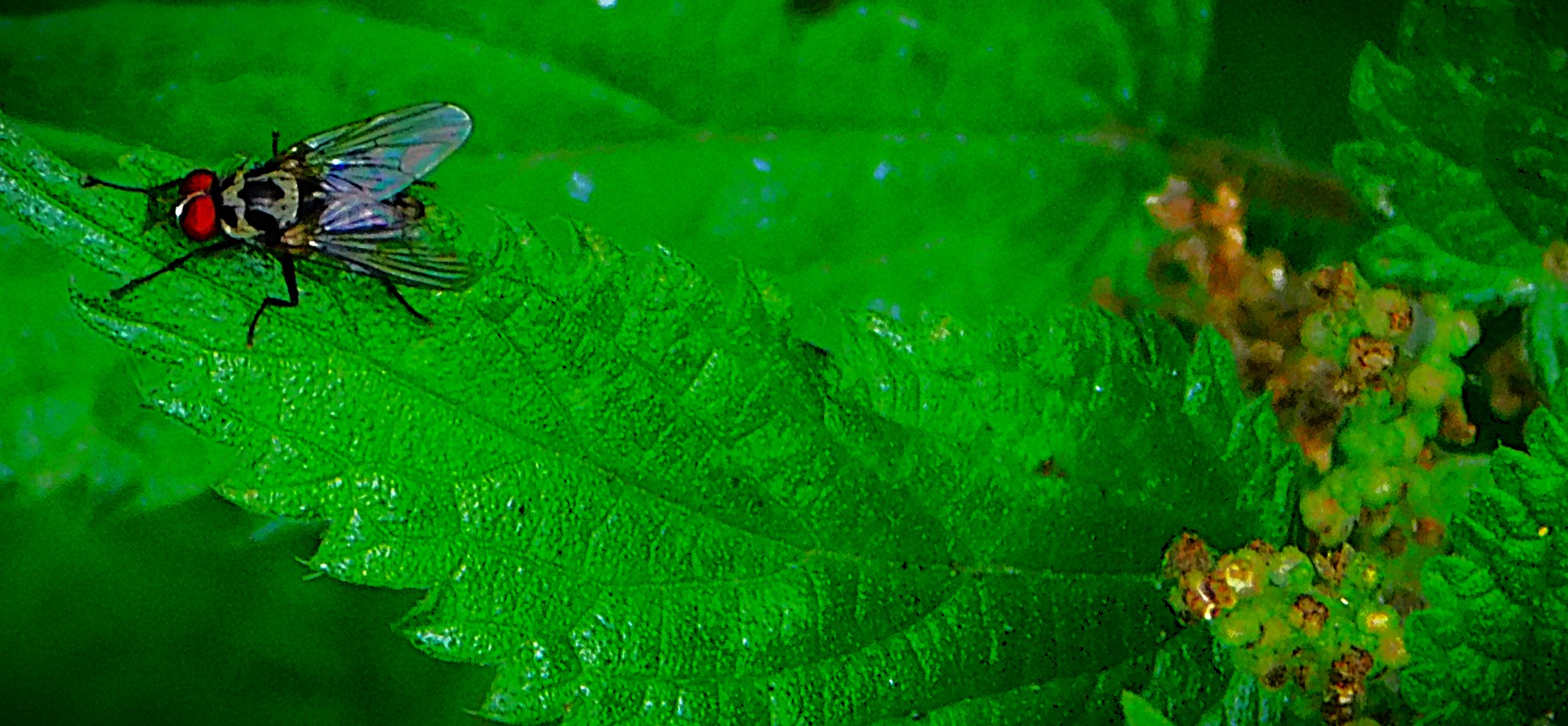
England Victorious

A look back at the test match that finished yesterday evening in a comfortable win for England, and at some of the other classics that Headingley has served up down the years. Also a photo gallery.

Just after 6:30 yesterday evening Jamie Smith hit Ravindra Jadeja for six, his second such blow in the space of four balls to take England to a five wicket win just after the last hour had been called (there had been rain early in the day, hence the late running of proceedings – in England at this time of year there was absolutely no danger of the light closing in). In truth, for all the size of the target England had been set (371), they never really looked in trouble. This post looks back at the match and some of the other classics that the Yorkshire ground has produced over the years.

At 12:30 on day two India, put in to bat by Stokes, were 430-3 and a total somewhere north of 600 looked likely. Then a collapse set in, and India ended up with 471, still a big score, but a lot less than it might have been. England fought their way almost to parity, managing 465, in the course of which it became obvious that India’s bowling menace began and ended with the great Jasprit Bumrah (the only bowler to have over 200 career test wickets at an average of under 20 a piece). The second Indian innings was remarkably similar in structure to the first – at 333-4 they looked to have wrested the initiative right back, but again they suffered a collapse, the last six wickets going for 31 to make them 364 all out, leaving England to score 371 in the final innings in just over a day. I missed most of the final day’s action (all bar the last hour or so of the chase), but I can tell you that Duckett and Crawley launched the chase with a stand of 188, and that the nearest India came to creating worry was when Duckett (149) and Brook (0) fell in very quick succession to make it 253-4, 118 still needed/ Root and Stokes put on 49 together for the fifth wicket before the skipper was out, and then Smith joined Root for the denouement. This passage of play, most of which I was tuned in for, saw the Indian bowlers horrifically exposed, and it has to be said also saw some undistinguished captaincy from Gill, new to the job at this level. It became clear that he was pinning all his hopes on the second new ball, but it was also clear that England were scoring freely enough that by the time he got to take it he would have very little to defend. In the event Bumrah was off the field when the new ball became due, and Siraj took it from the Kirkstall Lane end, which would have been Bumrah’s natural end to bowl from, and such was Gill’s trust in the capacities of either Krishna or Thakur that he used Jadeja, the spinner, from the other end. Jadeja had found some turn, but he had claimed only one wicket, and even before the Smith onslaught on him that ended proceedings he had been conceding runs at closer to four than three per over (the Smith fusillade pushed that ER over four). Neither Sudarsan, debuting at number three (presumably to avoid him having to occupy Kohli’s former slot one place lower down, which Gill did instead) nor Nair, restored at number six, managed many runs, and from number seven downwards, save for a couple of big hits by Jadeja in the second Indian innings, runs were conspicuous by their complete absence. Bumrah, Siraj and Krishna are all really number 11s, and number eight is probably a position too high for Thakur, though the latter’s medium pace is a very doubtful asset – in this match he was neither economical nor threatening – his two second innings scalps were both down to batter error, not to good bowling. Until this match, in all of first class cricket history (and some 60,000 matches are officially designated as first class) no team had lost a match in which they had had five individual centuries (Jaiswal, Gill, Rahul and two from Pant). If India are going to have as weak an 8-11 as they had in this match they cannot have someone of Jadeja’s type at seven (he is worth his place as a test match number seven, but he is a conventional player by nature, not an explosive one, and with limited time available due to the weakness of the tail an explosive number seven is needed).

In the only innings in which they were required England’s 8-11 contributed far more than their Indian equivalents with the bat. Also Josh Tongue, though he did not do very well against the top and middle order did exterminate the Indian tail very swiftly in both innings, emerging with a match haul of seven wickets (and England have often struggled to deal with opposition lower orders in recent times, so if Tongue can do this on a regular basis he will be very useful to England). In terms of that run chase I would say that this was the match in which Stokes/ McCullum England reached maturity – while they scored those 370 runs at a good rate they were also fundamentally disciplined – Duckett, famed for being averse to leaving anything actually declined to play either of the first two balls of his innings on this occasion. Even the Smith blitz at the finish was calculated – the calculation being that although there was a small amount of turn for him Jadeja actually posed little threat. It was not an exciting finish, because by the time the game had reached that stage England had long since been out of any danger. This was not a ridiculous bish-bash-bosh involving a large measure of fortune, it was an absolutely ruthless hunting down of a target that the side knew they would reach so long as they were not bowled out. The match aggregate of 1673 runs for 35 wickets was a record for any match between these two sides. Full scorecard here.

Headingley has long been a ground noted for generation stories. Here are brief mentions of a few of the other classics

The 1948 Ashes match at Headingley was in some ways a precursor to this one – England reached the dizzy heights of 423-2 in their first innings, before then falling away to be all out for 496, Australia replied with 458, England declared on the final morning at 365-8, and Australia made the target of 404 look a stroll in the park, knocking it off for the loss of three wickets.

The third match of the 1981 Ashes at Headingley was Ian Botham’s first back in the ranks after he had bagged a pair in the drawn match at Lord’s and resigned the captaincy just as the selectors were making up their minds to demote him in any case. Mike Brearley, restored as captain as a way for the selectors to buy themselves a bit of thinking time, actually went so far as to check with the all rounder that he actually wanted to play. Bob Willis, then 32 years old and with dodgy knees, also nearly missed out (an invitation was actually sent to Mike Hendrick and then revoked). Australia batted first and scored 401-9 declared on a pitch on which as Brearley told his bowlers “a side could be bowled out for 90”. Botham had taken 6-95 in that innings, has first five-for since before he had become captain. Botham also scored 50 in England’s first innings, was they managed a meagre 174. Australia enforced the follow-on (aversion to doing so is a recent phenomenon), and at first all went well for them. England were 41-4 at one point, then 105-5 when Willey departed. At 133, when the previously impenetrable Boycott was trapped LBW it looked done and dusted, and two runs later when keeper Bob Taylor was dismissed it looked even more so. However, Botham and Dilley now shared an exhilarating stand of 117 in just 80 minutes, Chris Old helped the ninth wicket to add 67 more, during which Botham reached three figures, and even Bob Willis at number 11 provided some support for the reinvigorated all rounder. Many of the England team had checked out of their hotel that morning and now had to book back in for another night – among those who had to do was a certain IT Botham, by then 145 not out. Even with this amazing turnaround Australia still needed only 130 to win, and with lunch on the horizon they seemed to have matters under control at 56-1, just 74 short of the target. At that point Bob Willis was put on to bowl from the Kirkstall Lane end, with his test career on the line. He started by producing a sharp, straight bouncer that Trevor Chappell, who resembled a test class number three in name only, could only fend away for a catch. Then right on the cusp of the interval he struck twice more, removing skipper Kim Hughes, caught in the slips by Botham and then Graham Yallop, caught at short leg by Mike Gatting. Thus at lunch on the final day Australia were 58-4, needing 72 to win, and they suddenly had 40 minutes in which to contemplate the fact that the job was not yet done. After lunch Old rattled Border’s stumps to make 65-5, and then John Dyson, who had been in since the start of the innings essayed a hook at Willis and succeeded only in gloving the ball behind to make it 68-6. Marsh also took Willis on, and Dilley did well at deep fine leg to both hold the catch and keep himself inside the ropes. That was 74-7, and one run later Lawson popped up a catch for Bob Taylor to make it 75-8. Ray Bright and Dennis Lillee staged a late fightback, plundering 35 in four overs, but then Lillee miscued a drive at Willis and Gatting at mid-on ran and dived forward to take the catch and make it 110-9. In the next over Alderman was dropped twice by Old at third slip, but then Willis, summoning up the energy for one more over, his tenth off the reel, produced a yorker that sent Bright’s middle stump cartwheeling, and England, at one stage 92 adrift with only three second innings wickets left had won by 18 runs, only the second time in test history a side had won after following on. Willis, who had been so close to missing the match, and who had been put on for that final spell as a last gamble by Brearley, had taken a ground record 8-43 for the innings.

The 2001 match was a slow burner – it was not until the final innings, with England needing 320 to win that the story happened. That story was Mark Butcher, who was normally a fairly staid batter, suddenly for this one innings batting like Adam Gilchrist in a blue helmet. Butcher in that amazing knock savaged an unbeaten 173 and England won by six wickets after being behind for most of the match.

The 2019 match was one of the great heists of all time. Even with Stokes’ incredible innings it also took Australia burning their last review in the closing stages, which meant that when they found themselves facing a decision a few moments later that would have been overturned they could not send it upstairs.

The match that ended yesterday evening was a worthy addition to the above list – one of only three in which all four innings have been over 350 (Adelaide 1929, and the 1948 match mentioned above being the others).

My usual sign off…

Two Very Different Routes to Similar Destinations

A look at the state of play in the first test of the England v India series, now being played for the Anderson-Tendulkar Trophy, and a photo gallery.

The first test match in a five-match series between England and India for what is now the Anderson-Tendulkar Trophy got underway on Friday. Each side has now batted once, and there is nothing to choose between them. This post looks back at two similar scores achieved in very different ways.

With Rohit Sharma and Virat Kohli having recently retired from test cricket India had given a debut to B Sai Sudarsan and recalled Karun Nair after an eight year test match hiatus. Sudarsan was to debut at number three, not a common slot for a newbie to occupy, with Shubman Gill, newly anointed as skipper, batting in Kohli’s old slot at number four. England had several absentees, and their chosen XI looked stronger in batting than in bowling: Crawley, Duckett, Pope, Root, Brook, *Stokes, +Smith, Woakes, Carse, Tongue and Bashir. Stokes won the toss and on a hot sunny day (not quite so much so in Leeds, as here in King’s Lynn), with the outfield sure to be lightning quick given the dryness of recent months and no sign of demons in the pitch he opted to bowl, rather than turning first to his side’s stronger suit, that powerful batting line up.

From the start of play on Friday until approximately 12:30 on Saturday India were in total control. Apart from the unfortunate Sudarsan who scored a duck on debut the Indian batters played sumptuously, with Jaiswal, Gill and Pant all reaching three figures. With half an hour to go until lunch on day two India were 430-3, and few would have bet against a total in excess of 600. However, once the 209 run stand between Gill and Pant was broken there followed a crash of wickets, and India lunched on 454-7. They added a further 17 after the interval. Ben Stokes had done his part with the ball, taking four wickets, a tally matched by Josh Tongue.

The start of the England innings was delayed by rain, and there was in the end time for 49 overs of it before the end of day two. Ollie Pope scored his second successive century, in an England tally of 209-3. I missed most of the morning session today due to another commitment. England lunched on 327-5. When the seventh England wicket went down India still looked like having a substantial lead on first innings, but a riotous 50 partnership between Chris Woakes and Brydon Carse in just six overs, plus minor contributions from Tongue and Bashir got England to 465, a mere six behind India on first innings. Jasprit Bumrah had underlined has status as the best current bowler in the world with 24.4-4-83-5, which means he now has 210 test wickets at 19.33. Prasidh Krishna had three wickets but a) two of those were given rather than being taken, and b) he also conceded 128 runs from a mere 20 overs, absurdly expensive in red ball cricket. Overall then, it is pretty much honours even after the first innings of each side. However, there may yet be genuine assistance for Ravindra Jadeja, the most economical of India’s bowlers in this England first innings. Shardul Thakur, supposedly there to give India four seam options, was entrusted with only six overs in this innings, and conceded 38, looking utterly innocuous. Bumrah cannot do the job entirely unassisted, and to get through a five match series he will need a degree of ‘nursing’ (I suspect that if the proverbial good fairy offered Indian team management an absolute guarantee that their star pacer would be fit and firing for four of the five matches that offer would be taken up with no discernible hesitation).

My usual sign off…

The T20 Cups

A look at some recent action in the men’s and women’s T20 cups and a large photo gallery.

Both the men’s and women’s domestic T20 cup competitions are going on at the moment. Yesterday both Surrey teams recorded wins at Southampton. Today Essex Women are closing in on victory over Birmingham Bears Women (I followed the early part of that match, before the first part of today’s action at The Oval got underway). This post looks at some of these matches.

I got home from work yesterday just in time to catch the closing stages of Hampshire Women v Surrey Women. It went down to the very final ball, which Paige Scholfield hit for four to get Surrey over the line. The men’s match provided plenty of entertainment, but not a close finish. Surrey’s strong bowling unit, given a total of 193 to defend by their batters, were simply too good for the Hampshire batting, and the margin was very substantial in Surrey’s favour. Southampton has been a happy hunting ground for Surrey men in this tournament – they last lost to Hampshire there way back in 2015. Is it time for Hampshire to schedule this fixture for an out ground? Bournemouth, Portsmouth and Basingstoke have all staged matches over the years.

Essex won the toss and batted. They scored 150-3 from their 20 overs, Cordelia Griffith scoring 47 not out of 36 balls and Madeline Penna 41 not out off 42 balls. Some good captaincy by Grace Scivens, at 21 a very young skipper, and some ordinary batting from Warwickshire seemed to have settled it. At 111-6 it looked all done. However, since then another youngster, Charis Pavely, a left arm spin bowling all rounder, has been showing an audience that includes a number of school parties what she can do with the bat, and it now looks like Birmingham Bears are going to win. Pavely is currently 67* (38), with five fours and three sixes.

Surrey Women are currently in action against Lancashire Thunder Women, while the second half of this somewhat unorthodox double header will feature Surrey Men against Sussex Sharks Men. The current match started with a bang – Bryony Smith hitting the first ball of it for four and then being bowled by the second to give Sophie Morris instant revenge. Sophia Dunkley got to 10 and was then bowled by Tara Norris. Then a disastrous piece of running between the wickets cost Surrey the wicket of Kira Chathli. A mini-revival led by Grace Harris and with Danni Wyatt-Hodge struggling but fighting gamely has just ended with Wyatt-Hodge going stumped by Threlkeld off Sophie Morris to make it 50-4 in the eighth over, S Morris 2-5. Paige Scholfield has joined Harris.

My usual sign off…

South Africa Champions at Last

A look back at the three and a bit days over which the South Africa men’s cricket team finally and decisively shed the chokers tag they had carried for over quarter of a century, and a photo gallery.

At 12:46 today, Saturday 14 June, Kyle Verreynne scored the single that completed a win by five wickets for South Africa over Australia in the World Test Championship final at Lord’s. This post looks back at the match.

Both sides were stronger in bowling than in batting, so even though there was potential trouble ahead from Lyon getting to use a fourth innings pitch it was no great surprise that South Africa opted to bowl first when they won the toss. South Africa provides probably the best conditions in the world for fast bowling, and that was reflected by the presence in their ranks of Rabada, Jansen and Ngidi plus Wiaan Mulder as fourth seamer, with Keshav Maharaj the only front line spinner, with Markram a part time off spinner. Rabada in particular bowled superbly on the opening day, and when Australia were all out for 212 it looked like South Africa were well placed. However, they had a tricky session of batting to navigate before the close, and did not do so very well. By the end of the day they were 43-4 and most of the good work of their bowlers looked to have been undone.

I missed almost the whole of this day due to being at work. However, I know that Cummins was in particularly fine form, and that South Africa were all out for 138, a deficit of 74 on first innings. South Africa hit back hard by reducing the Australian second innings to 73-7. However the character of the match changed from this point – the eighth wicket stand yielded 61. By the close Australia were 144-8, an overall advantage of 218, and it was already known that South Africa would need the largest total of the match in the final innings thereof.

I missed the first part of this day’s play as I was attending a first aid training course in the dockside area of King’s Lynn, somewhere I have never previously had occasion to visit. A long final wicket partnership between Starc and Hazlewood had left South Africa needing 282 to win. Ryan Rickelton was out very cheaply, and Wiaan Mulder once again suggested that he was miscast as test match number three, and should probably swap batting positions with David Bedingham, managing 27 on this occasion. However, from 70-2 at the dismissal of Mulder, Aiden Markram and Temba Bavuma, the South Africa captain, took complete control of the day and indeed of the match. There were precious few moments of vulnerability for either as they batted on through a sunny afternoon and evening. Markram reached his hundred just before the close, as valuable a test knock as has ever been played for South Africa, and with Bavuma solid in support the Proteas closed the day on 213-2, needing a mere 69 more to win. Markram had 102 not out to his name, Bavuma 65 noy out.

Bavuma did not last long on this morning, adding just one to his overnight tally before Cummins elicited an edge, and Carey took the catch behind the stumps. Tristan Stubbs, next in, never looked comfortable. At 241 came two big moments. First Starc appealed for LBW against Stubbs, and when it was turned down acceded to Carey’s suggestion that it be sent upstairs. Fine cricketer though he is, Carey has to be regarded as one of the worst judges of a review the DRS era has ever seen. Here, in an echo of Headingley 2019, though their opponents were rather more strongly placed than England back then, it was duly confirmed as being sufficiently clearly not out for Australia to have burned their last review. Stubbs did not benefit much personally, as Starc’s next delivery hit his stumps to make it 241-4, 41 needed. Bedingham settled in quickly, and he and Markram seemed to be heading toward the target quite serenely. The main question by now looked to be whether Markram was going to reach 3,000 test runs before the end of the match. With Markram on 136, and his career tally on 2,993, and South Africa needing just a further six he flicked a ball from Hazlewood into the on side and was caught by Travis Head. Australia unsurprisingly did not celebrate the dismissal. Wicket keeper Kyle Verreynne now came in to join Bedingham. This pair saw it home for the last few runs, with Verreynne as mentioned in the intro scoring the winning run. It has been 26 years since South Africa acquired the chokers tag. Then, in the 1999 ODI world cup a win in their last ‘Super Six’ match would have consigned Australia to an early flight home, put Zimbabwe in the semi-finals and left the tournament at the Proteas mercy. Allan Donald was the victim of a panic run out with the scores level, which meant that Australia and South Africa met again in the semi-final, and Australia did not grant South Africa an opportunity to redeem themselves, and went on to dominate the final as well. In the intervening years they have had other close calls, including in the 2024 T20 World Cup, when they need 30 from the last five overs with five wickets standing and failed to get home, largely because of some magnificent bowling by Jasprit Bumrah. Thus this is not merely a match and a trophy won for South Africa, it is much needed healing balm for some deep psychological wounds they have acquired over the years. Full scorecard here.

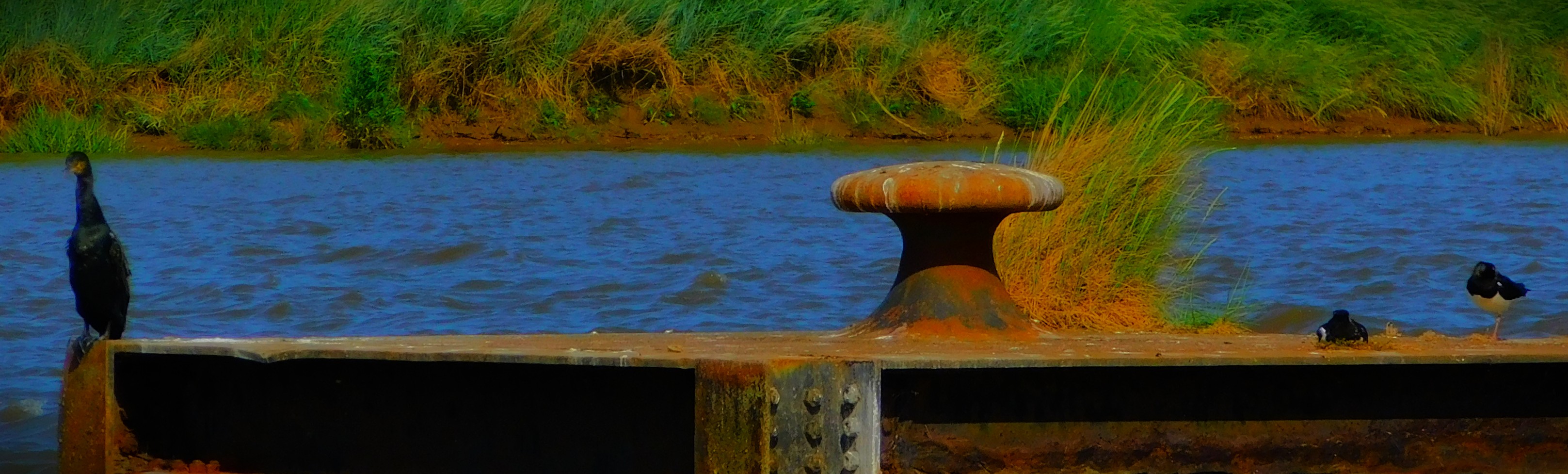
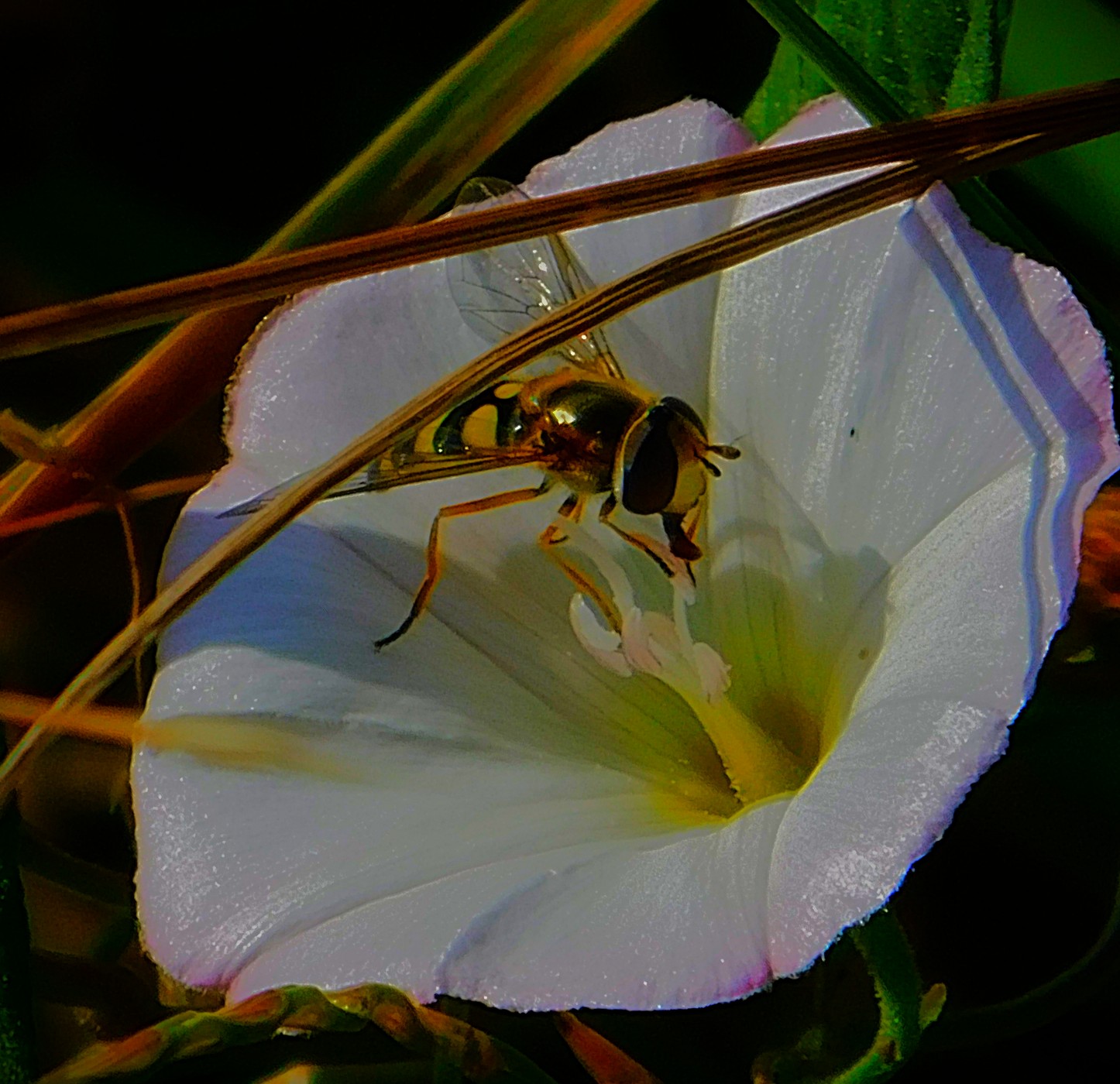
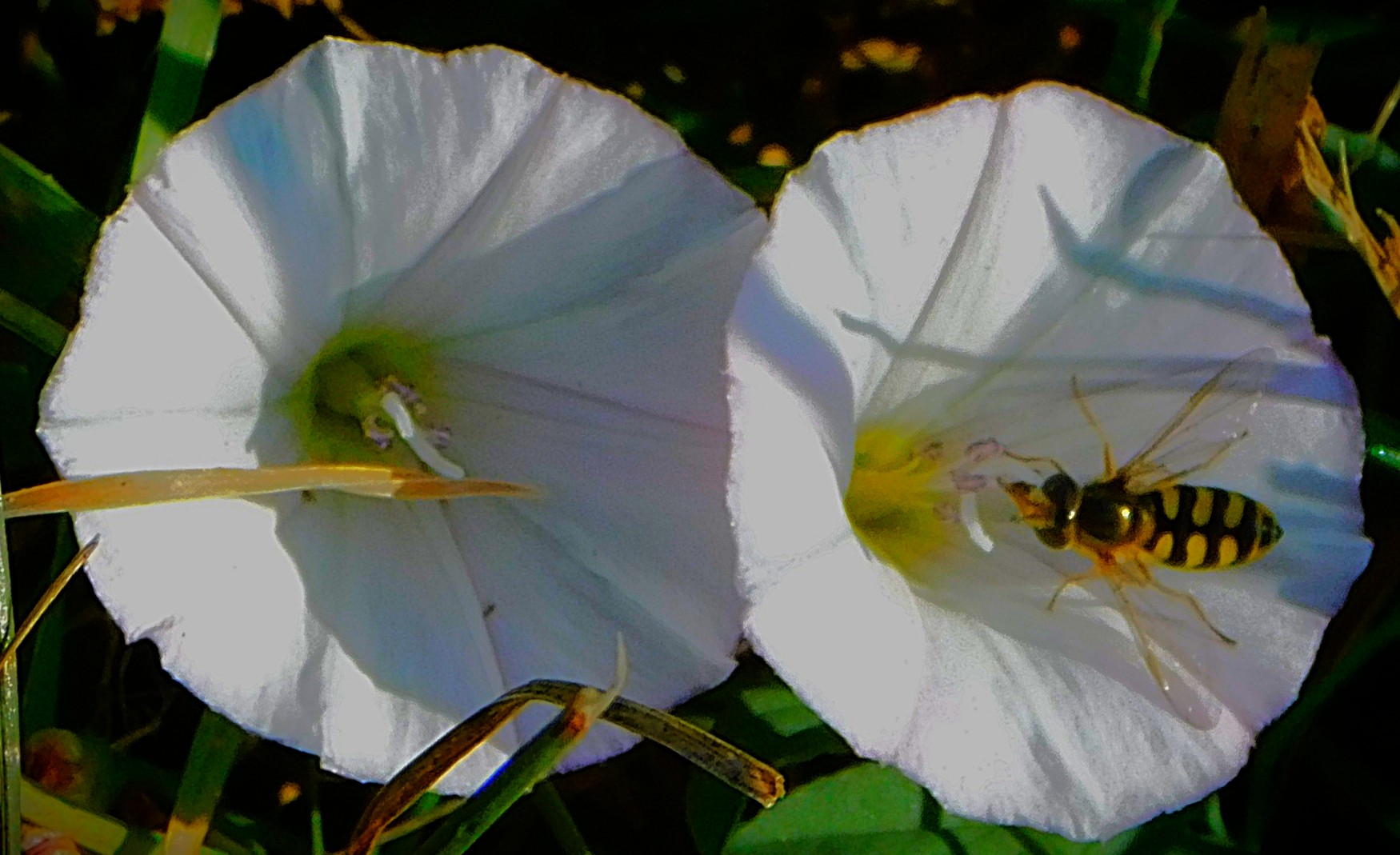
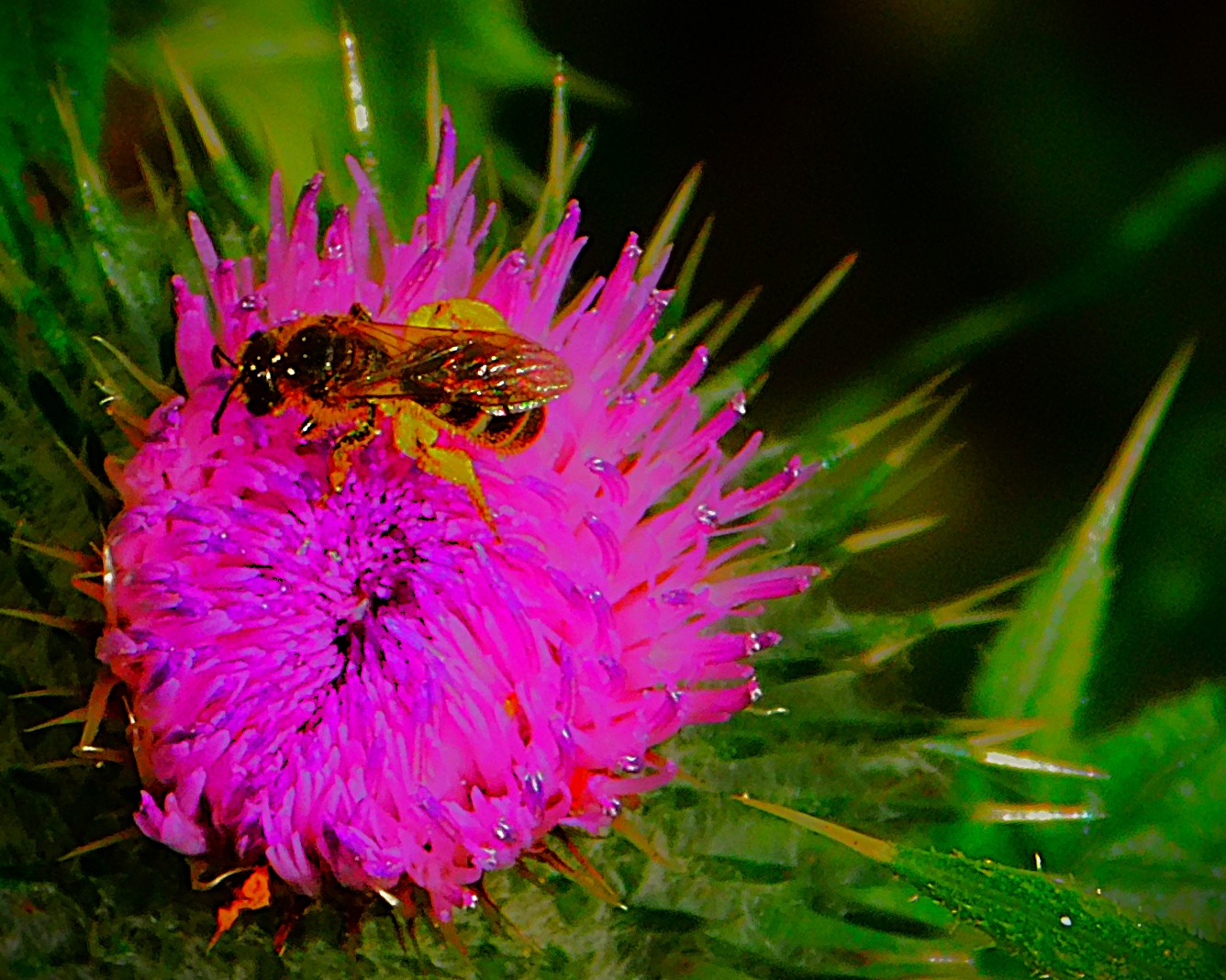
One small bit of housekeeping first: I have created a page listing my series of posts about my 50th Birthday Holiday in far western Scotland in chronological order. As you may imagine I have a fairly rich trove of unused photos since my return to King’s Lynn, so today’s offering is in the nature of a highlights package…

50th Birthday Holiday 15: Homeward Bound

An account in three parts of the return journey from the far west of Scotland to my home in eastern England,, by way of a conclusion to my series about my holiday around my 50th birthday.

Welcome to the final instalment in my series about my holiday in the far west of Scotland around my 50th birthday. The previous post dealt with the birthday meal, which was the last significant event of the holiday itself. This post looks at the journey home.

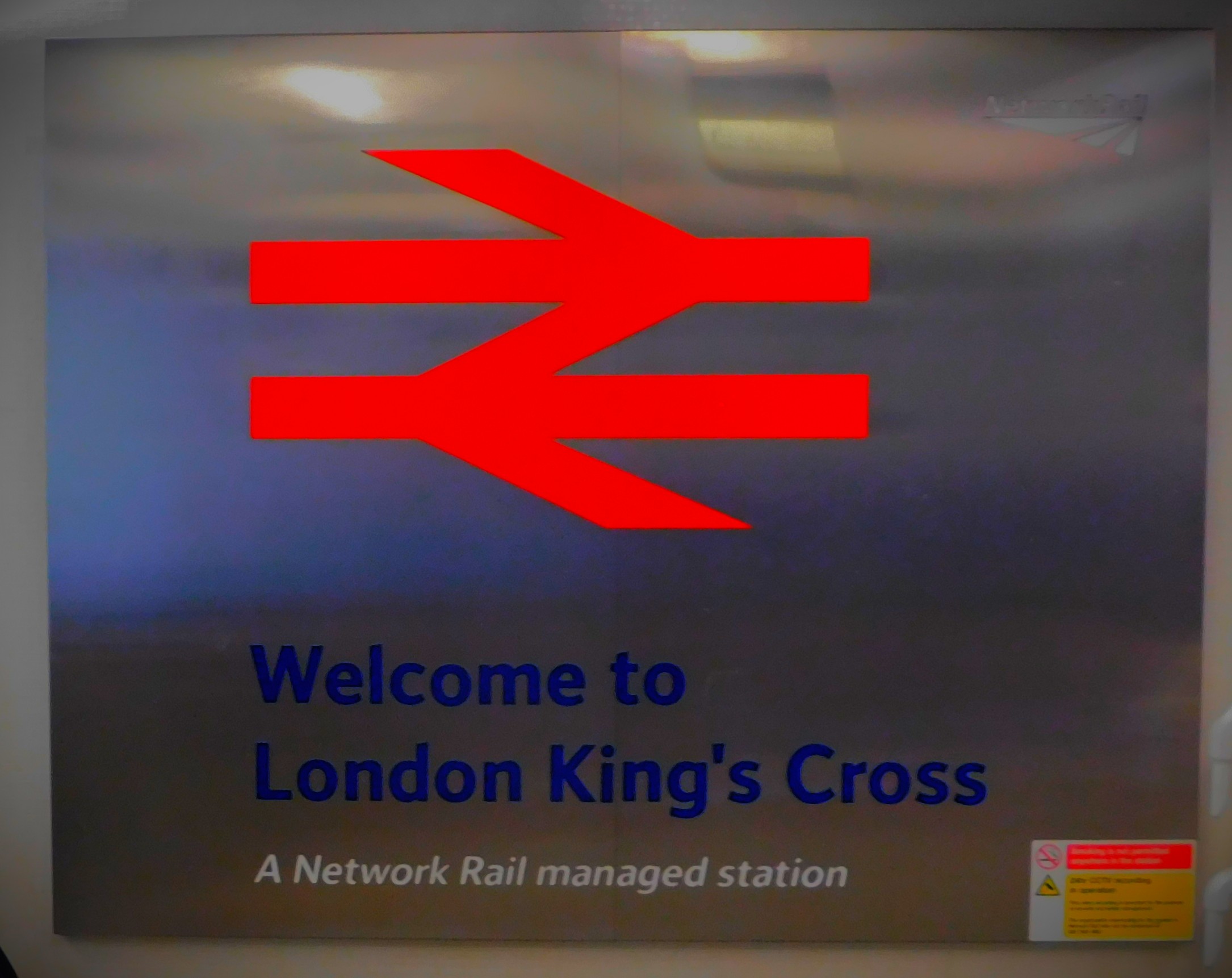
To combat the perils of Sunday travelling (necessitated by my birthday itself falling on a Saturday this year) I had limited the train part of my journey to Crianlarich, a junction station where the routes from Oban and Mallaig meet on their way into Glasgow, although I could have got significantly closer to the Ardnamurchan Peninsula had I trusted the Mallaig branch to be running. Thus for the first part of the journey I would be travelling in my parents car, sharing the back seat with my bags. We had decided that we should aim to be away by 9AM, to ensure getting to Crianlarich in good time. I did not have a booked seat on either this train or the connecting service from Glasgow to Edinburgh, but I did have a booked seat on the train from Edinburgh to Peterborough, and to make that I had to make both previous trains. We had a smooth journey to Crianlarich, though the sight of a crowd of people outside the station caused a bit of worry. It turned out that they were waiting for a replacement bus as a train heading towards Oban had malfunctioned and had to be pulled from service. There was thankfully no hint of trouble affecting services heading into Glasgow. Because of the role Crianlarich plays in this section of the railway the arrival of the service coming in from Oban did not end the wait – we still had to wait for the service from Mallaig to arrive and be coupled to the other for the onward run to Glasgow.

Here are my photos from Achosnich up to and including the platform at Crianlarich Station…

The run from Crianlarich to Glasgow was smooth but left me only a few minutes to make the change of trains at Glasgow Queen Street. The run on to Edinburgh was also smooth, and at Edinburgh Waverley I had the luxury of time. Owing to the station cafe at Crianlarich being closed and there being no other opportunities en route it was not until Waverley, around about 4:30PM, that I had the opportunity to get food. Safely ensconced in my booked seat for the long, though fast, run to Peterborough, and thus knowing that I would be home that night, I phoned my parents to let them know that all was going to be OK.

Here are my photographs for this section of the journey:

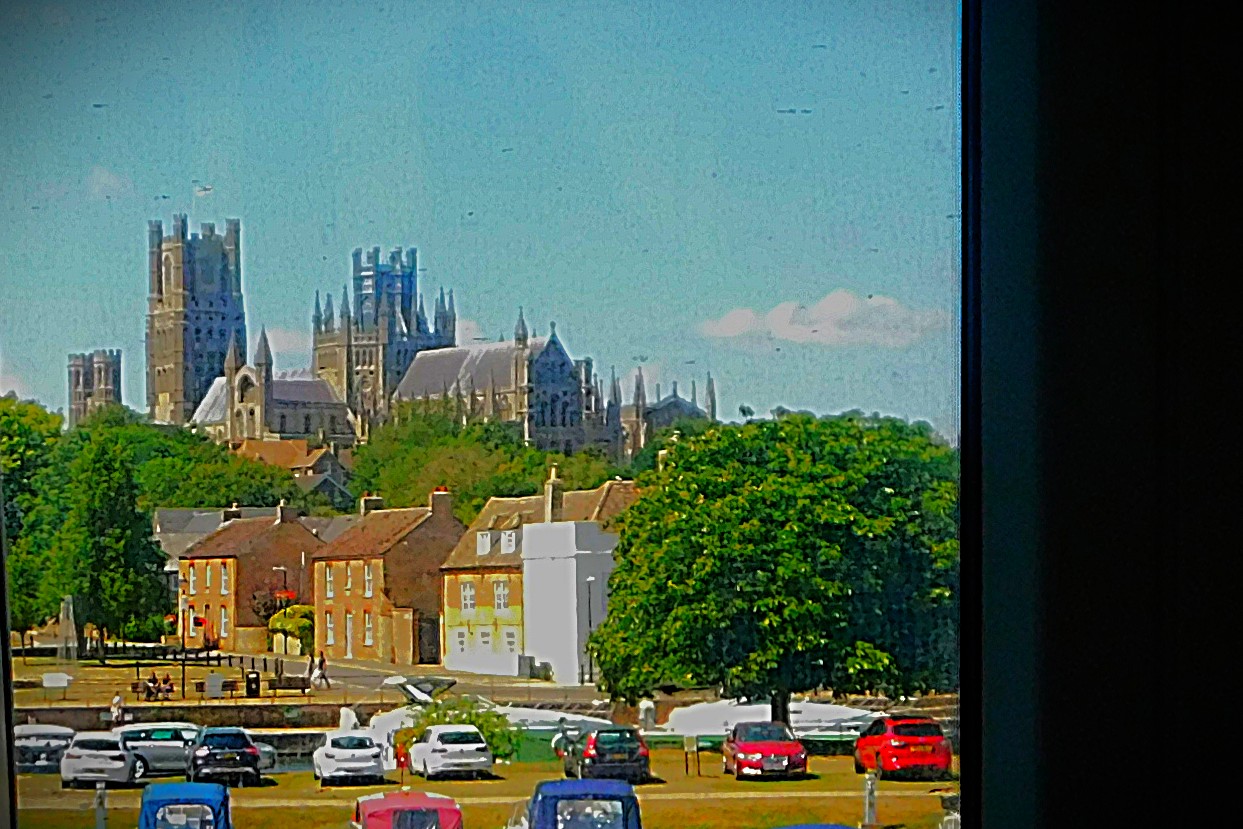
The Edinburgh to Peterborough run was smooth, though a trifle crowded. Just south of York I visited the buffet car for further sustenance. Owing to the fact that Sunday night train and bus services overlapped very poorly I was making the journey on from Peterborough by train on this occasion, which meant a change at Ely. Fortunately there were no issues at any stage, and it would have been about 11:15PM, somewhat more than 14 hours after setting off from Achosnich, that I got back to my home in North Lynn (the train to Lynn arrived there at about 10:50, but when tired and carrying holiday baggage the walk from the station to North Lynn is not as insignificant as I generally consider it).

Here are my photos from Edinburgh to home…

50th Birthday Holiday 14: The Birthday Meal

Continuing my account of my holiday in far western Scotland around the time of my 50th birthday with an account of the birthday meal.

Welcome to the latest post in my series about my holiday in the far west of Scotland around my 50th birthday. Following on from the post about the morning and afternoon of the day itself (Saturday 31 May) we now deal with the evening, when we having the birthday meal.

The birthday meal was booked for the Mingary Castle restaurant, and it seemed logical to arrive a bit early and have time to look at the castle and its grounds. In appearance Mingary Castle looks much as Tioram Castle, at the extreme east of the Ardnamurchan Peninsula, would had it not been allowed to fall into ruins (check this post from three years ago for more about Tioram). There are some splendid sea views from the grounds (while the castle does have windows they are effectively functionless). There is also an interesting little display near the car parking area including sculptures of two frogs and a bench on which three monkey sculptures sit side by side, one seeing no evil, one hearing no evil and one speaking no evil. Inside the castle is quite impressive as well.

There were some things that would be served anyway, and we had to choose two course out of three from a set menu. Since the starter was entirely tomato based we went for the main course and the dessert. When it came to drinks they had beer available – I chose a local product called Dark Mile, which proved to be excellent. The meal was magnificently cooked, especially the lamb for the main course, which was done in three different ways.

Here are my photographs from the evening…

50th Birthday Holiday 13: Portuairk Walk

Continuing my series about my holiday in the far west of Scotland around my 50th birthday with the first of two posts about the day itself.

Welcome to the latest post in my series about my holiday in Scotland around the time of my 50th birthday. We have arrived at the day itself, the last full day of the holiday.

Saturday May 31st started with heavy rainfall. I had brought my sister’s present to me with me so I would have something to open on the day, and my mother had brought a card from an aunt. This card is splendid, and now has its place in my collection of railwayana. The present from my sister was an incomplete scorecard from the legendary 1926 test match at The Oval, where England secured their first Ashes series win since before WWI. From the parts of the scorecard that were pre-filled in and the additions by its original owner I deduce that whoever it was attended days two and three in person but was not there for Australia’s final collapse on day four, though they definitely knew about it since at the bottom of the scorecard there is in big red characters (probably by way of a marker pen) the result: England won by 289 runs. There is a detailed account of this match written pretty much contemporaneously since England chairman of selectors at the time Pelham Warner wrote a book about the 1926 Ashes, “The Fight For The Ashes 1926”, a copy of which is in my cricket library.

In the afternoon the weather cleared up, and we walked to Portuairk and did some exploration of the seaside there. This helped us work up an appetite for the birthday meal, which will be the subject of the next post in the series.

To view pictures at full size click on them/ If you open the first picture in the gallery you can view all of them, including an option to do so as a slide show. Here are the photographs that relate to this post…
50th Birthday Holiday 12: Sanna

Continuing my account of my holiday in the far west of Scotland around the time of my 50th birthday with a post about our visit to Sanna.

Welcome to the latest post in my series about my holiday in the far west of Scotland around the time of my 50th birthday. This is the third post about the activities of a fairly busy Friday (May 30th), following on from the account of the Glenborrodale Nature Reserve walk and a post about the activities of the middle part of the day. This post covers our visit to Sanna.

Here is a map showing the location of Sanna:

This map, cropped from an image of a larger map, shows the location of Sanna and some other west Ardnamurchan landmarks, including the port of Kilchoan, the lighthouse and Achosnich, where we were staying.

Sanna is right in the heart of a ring of mountains created by volcanic action many millions of years ago, and is considered a site of Special Scientific Interest. This is also an area where crofting is practised, which means that sheep graze on the open land. As a visitor then (not applicable to us as none of us are pet owners) it is your responsibility to keep your pet under tight control – your right to have your pet run loose ends well before the crofters rights to have their sheep graze in safety begin – and if your pet is making trouble it may well be shot and you will have no redress. In addition to this the basic general rule of being out in the green places applies: take nothing except photographs and leave nothing except footprints.

Although Sanna is about as far from the birthplace of golf as one can get while still being in mainland Scotland (St Andrews is on the east coast of Scotland) the land in its vicinity is very much of the type of which that game was first played – the word links in its golf context derives from the terrain in question linking the land and the sea. It must be acknowledged that although I would regard building such a thing there as an act of desecration that the grassland around Sanna would undoubtedly make a very challenging golf course. There is a splendid river mouth very close to Sanna – it formed the furthest limits of our exploration. Some of the buildings in Sanna are quite interesting, but the true delight of the area is of course its scenery. There are detailed information boards about the geology of the area, to top up what I covered in this post. I enjoyed my visit and would recommend a visit there if you ever in the area (it would be an absurdly long detour if you were not already in the area for another purpose).

Here are my photographs from Sanna.

50th Birthday Holiday 11: the Middle of Friday

The middle part of the Friday of my birthday holiday – Camas Nan Geall, Kilchoan Jetty, an abortive attempt to access Greadal Fhinn and a successful location of St Comghan’s church.

Welcome to the latest post in my series about my holiday in the far west of Scotland around the time of my 50th birthday. This post follows naturally from its immediate predecessor in the series.

We had passed this on our way to the nature reserve and wanted a closer look, so on the way back we stopped there. We did not go all the way down to the seaside, but there was nevertheless plenty to see. We encountered a group of birdwatchers who had eyes on a white tailed eagle (it was too distant to be seen without binoculars). We had prepared sandwiches for lunch and I ate mine here.

We needed to visit the shop in Kilchoan anyway, and Kilchoan Jetty is very close to the shop. We also attempted to visit an old burial site called Greadal Fhinn but that proved abortive.

We were able, after a small amount of confusion over how to access it, to get to the old, now ruined, church of Kilchoan, dedicated to St Comghan. The new church and accompanying new manse have car parking space, and the walk up to the old church, which goes through two fields and along a stretch of what was once the old manse’s driveway. The site is very attractive and commands some splendid views. St Comghan started life as an eighth century prince of Leinster, but fled his native land and came to Scotland. The church named in his honour served Kilchoan for at least half a millennium. I end this post at this point, because our final port of call on this day, Sanna, merits a post of its own.

Here are my photographs from this part of Friday…

50th Birthday Holiday 10: Glenborrodale Nature Reserve

Continuing my account of my 50th birthday holiday with an account of the walk around Glenborrodale nature reserve.

Welcome to the latest post in my series about my holiday in the far west of Scotland around the time of my 50th birthday (I was away from 25th May to 1st June inclusive). We are now starting to deal with Friday May 30th which was a fairly busy day.

Glenborrodale is itself pretty far west, and the nature reserve is west of the village. Thus most people approaching the nature reserve do from the east, to the point that the directions in our booklet of walks for getting there assumed as a default that everyone would be approaching from the east. However, we were actually approaching from the west, which meant that the instructions for getting there had to be mentally flipped – we had to realize that we were going to see the nature reserve before we saw the village it is named after. Here is a map plus some supplementary detail:

This map, extracted from the information board at Strontian, shows the whole Ardnamurchan Peninsula. We were staying more or less at the point where the road to the lighthouse diverges from the road to Portuairk, right at the western end of the peninsula, while Glenborrodale is in the south-eastern corner of the peninsula. This was actually the furthest east we travelled on any of our excursions during the week.

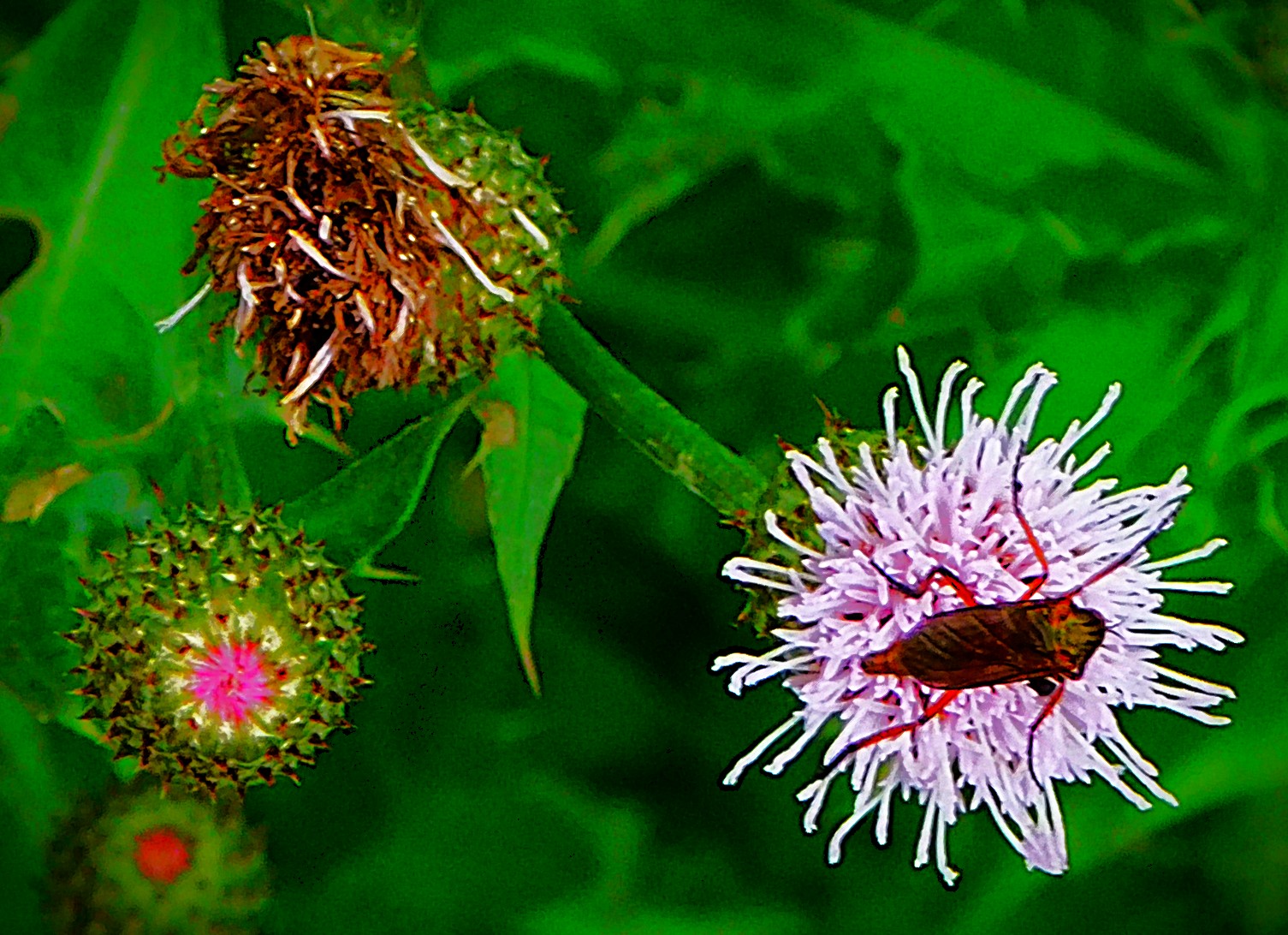
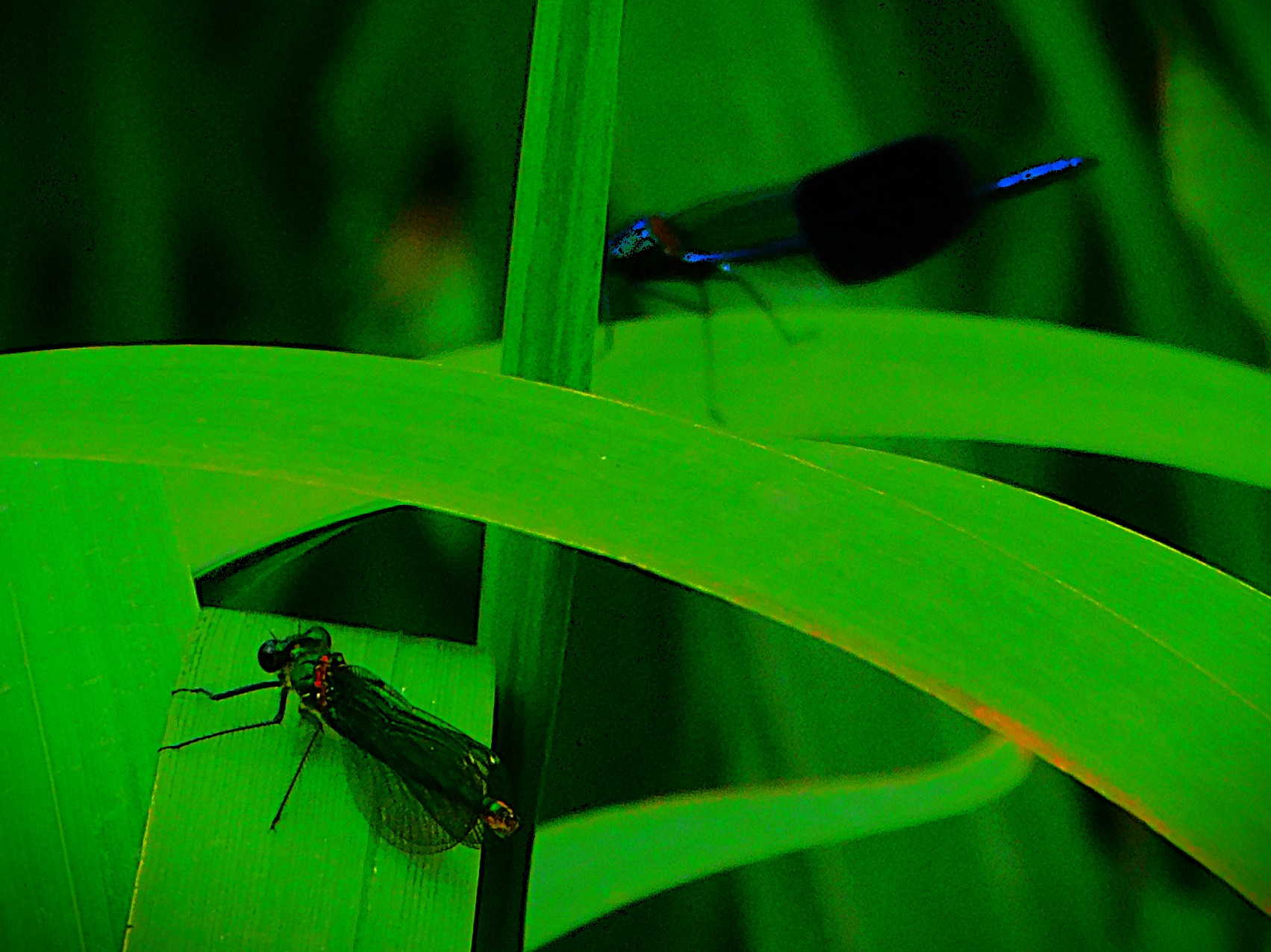
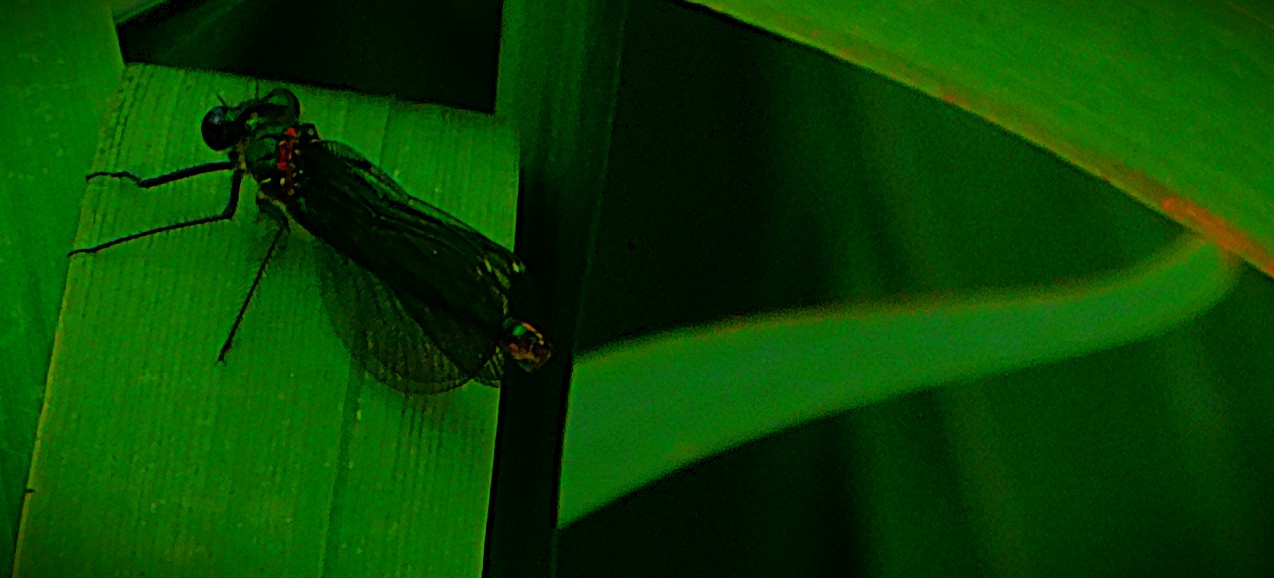
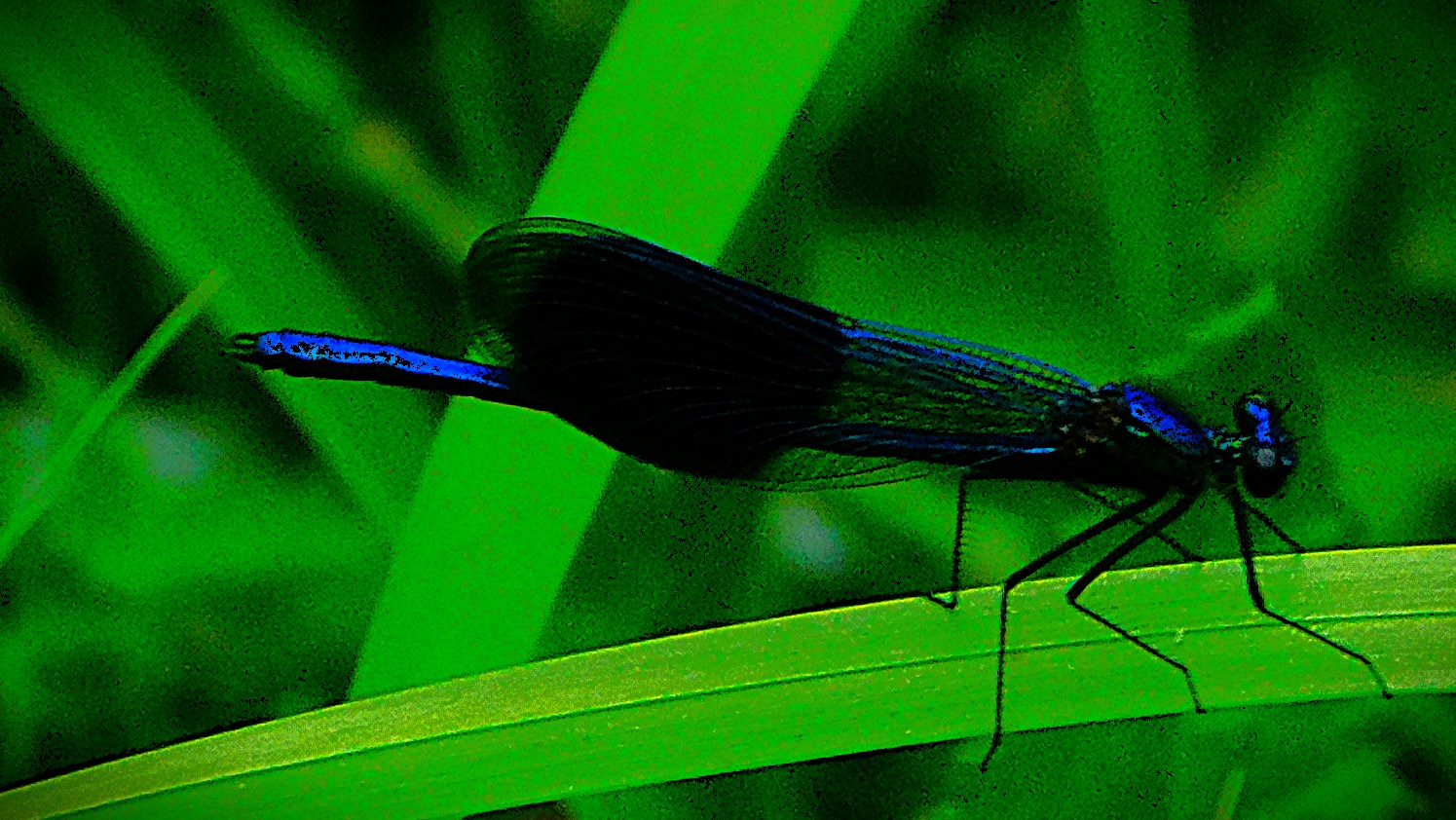
The walk is circular, ending with a stretch along the road to get back to the car park. The nature reserve part of the walk starts with a long ascent, then a brief flat patch where one walks on boardwalks (these boardwalks are superb, and made the walk much more enjoyable than it might have been). Then there is a long downhill section back to the road. There are information boards at various points along the route about what you can see. This nature reserve is under the aegis of the RSPB and they have a section about this walk on their website. I did not manage to spot a Violet Beetle, but I did get one green bodied dragon fly and three common/ highland darters in the course of the walk. I thoroughly recommend this walk should you be in the area.

Here is my gallery from this walk….