An account of Day 2 at Marxism 2018 (now a week ago).
INTRODUCTION
There has been a hiatus in my coverage of Marxism 2018 because I had no opportunity to blog on Sunday, due to the tight meetings schedule and my subsequent journey home, was working on Monday, Tuesday and Wednesday and travelling virtually all day yesterday (getting from northwest Norfolk to southeast Cornwall by public transport takes a long time). I have plans for several more posts about Marxism 2018, a batch of posts about Cornwall, and at least one work-related post in the near future.
FIRST MEETING: JAN NIELSEN ON THE POLITICS OF FOOD
This was a good though very disturbing start to the day. Some of the things that the speaker revealed about what is done to our food were quite shocking. There was an excellent discussion.
MEETING 2: WHY DOES CAPITALISM LOVE PLASTIC?
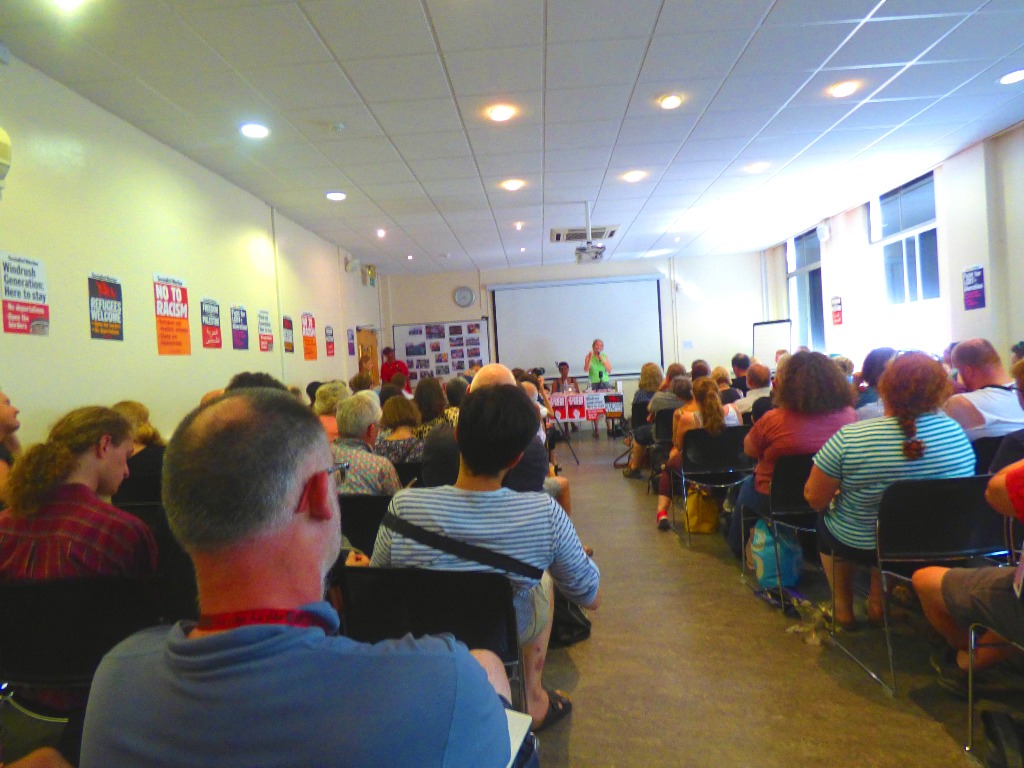
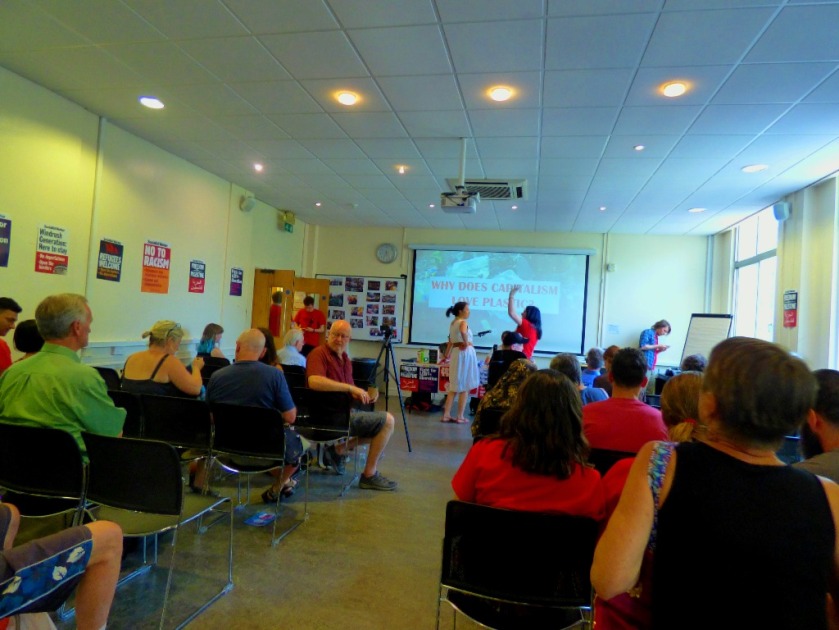
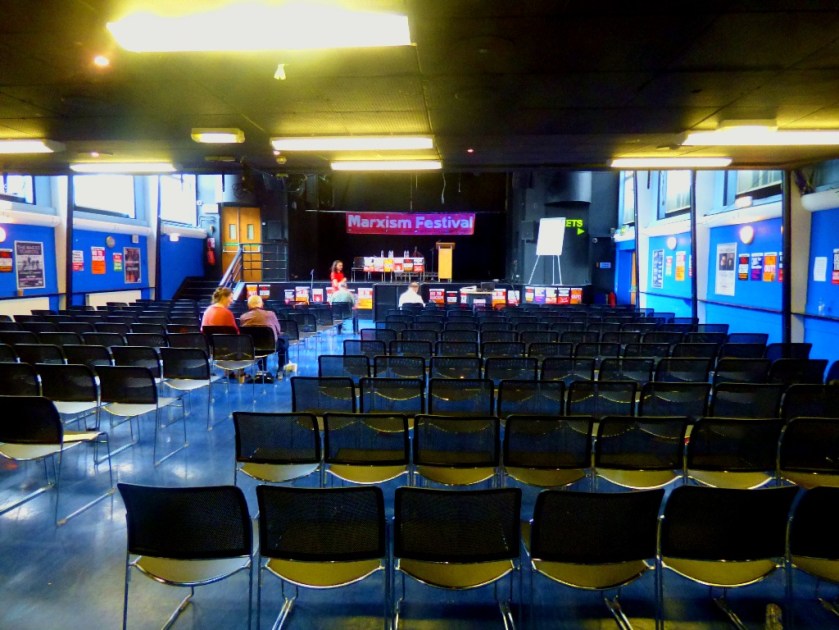
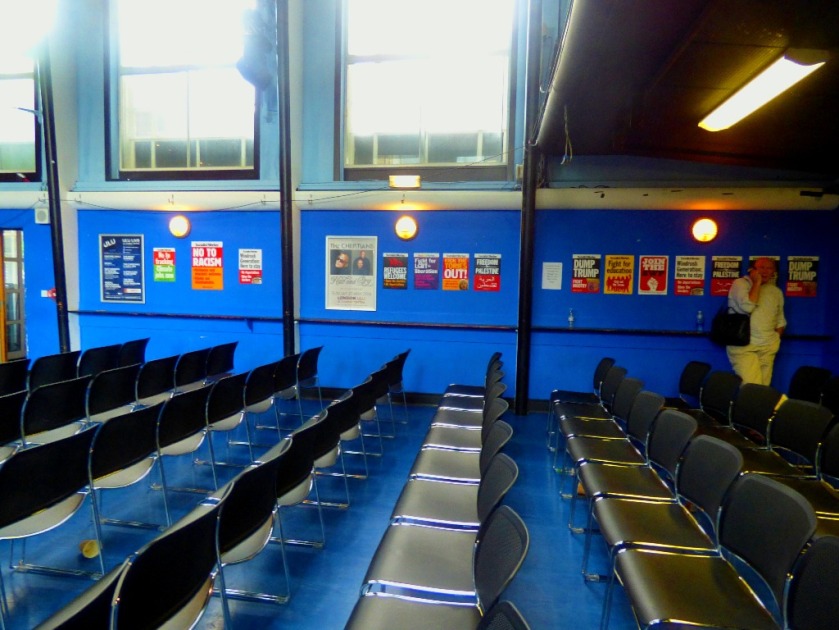
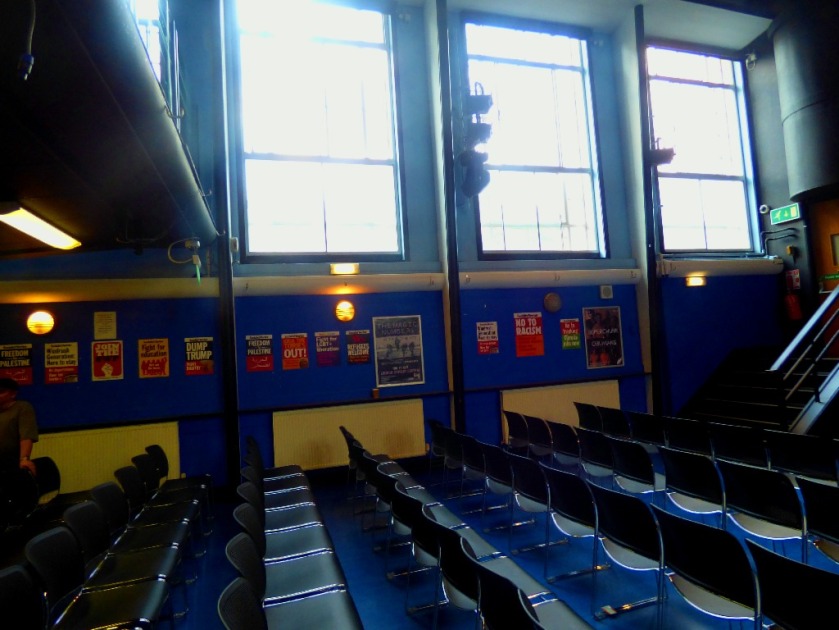
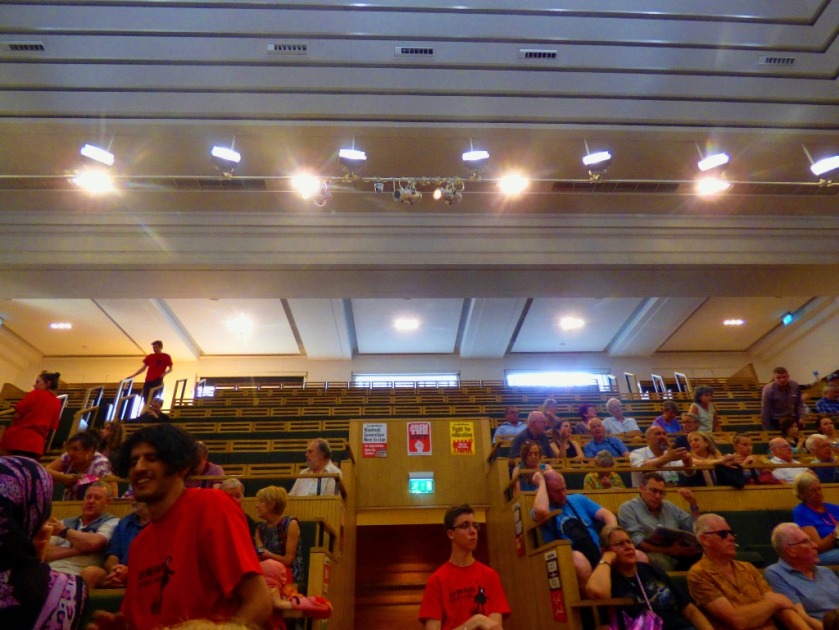
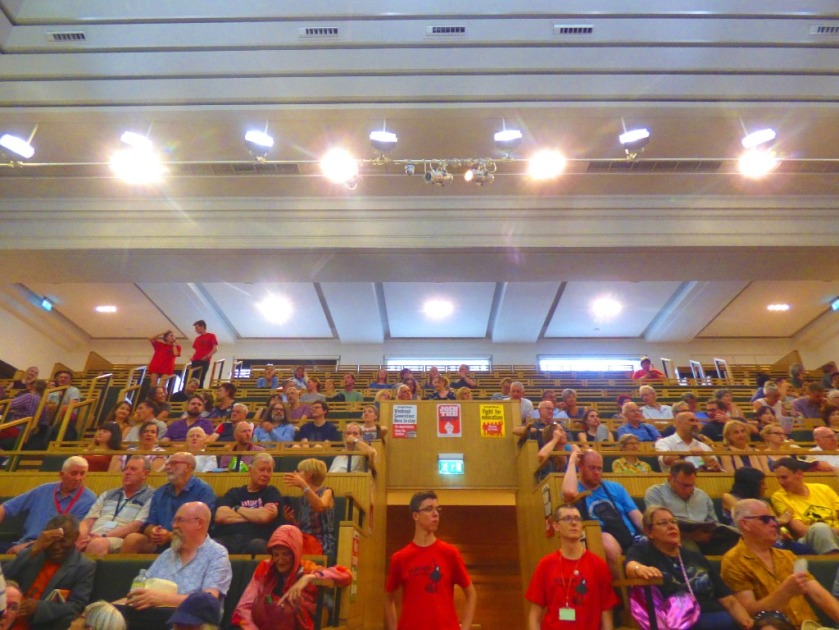
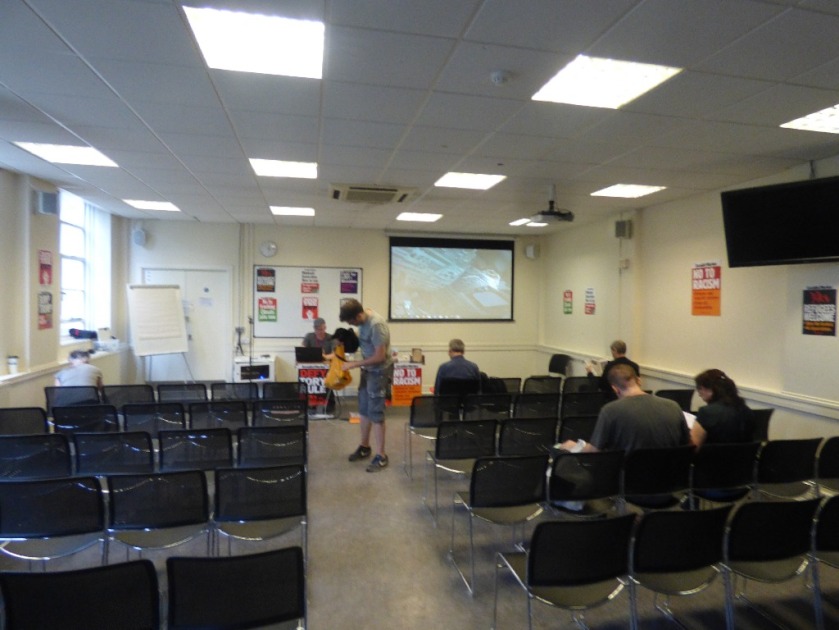
I will be covering this meeting in a later post along with several other environment related meetings. For the moment here is a photograph from the room:
MEETING 3: MARXISM AND RELIGION
The thrust of this meeting was that we are always willing to work with people no matter what their religion, or indeed whether they have one or not. Most people at this event are not religious themselves but would always consider arguig against religion to be a waste of time.
DEMOLITIONS TO SOCIAL CLEANSING – THE CLASS WAR ON HOUSING
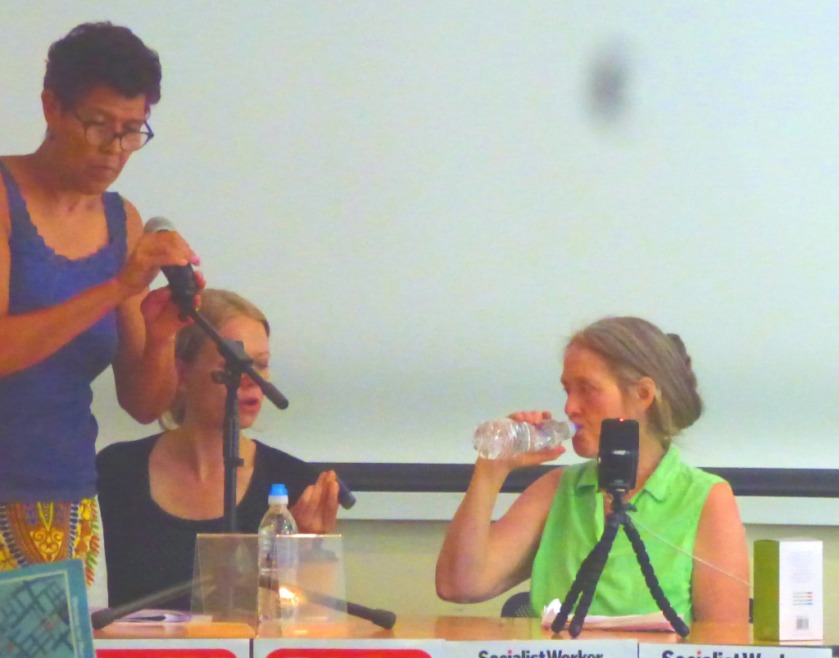
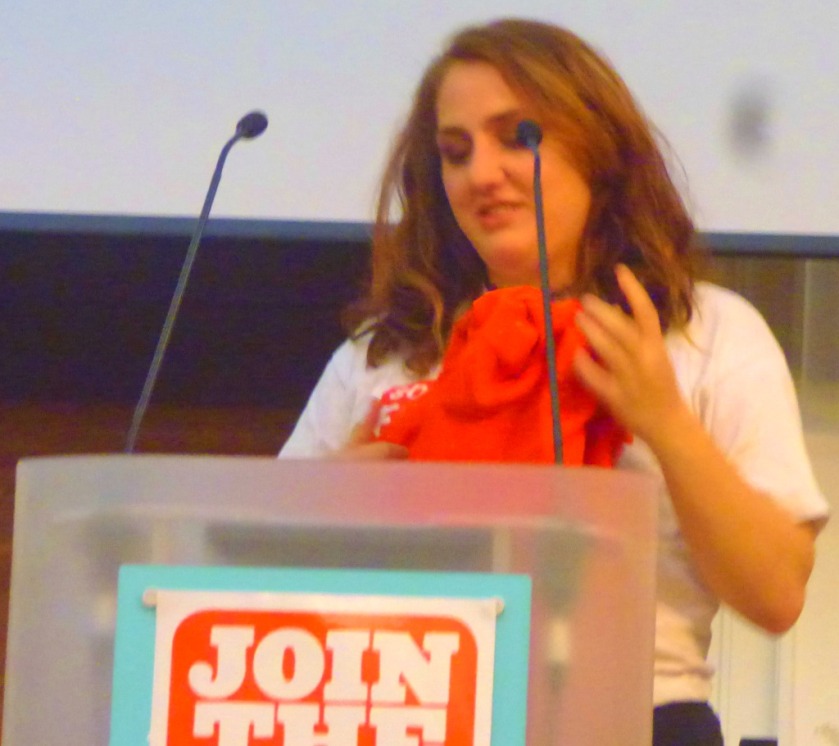
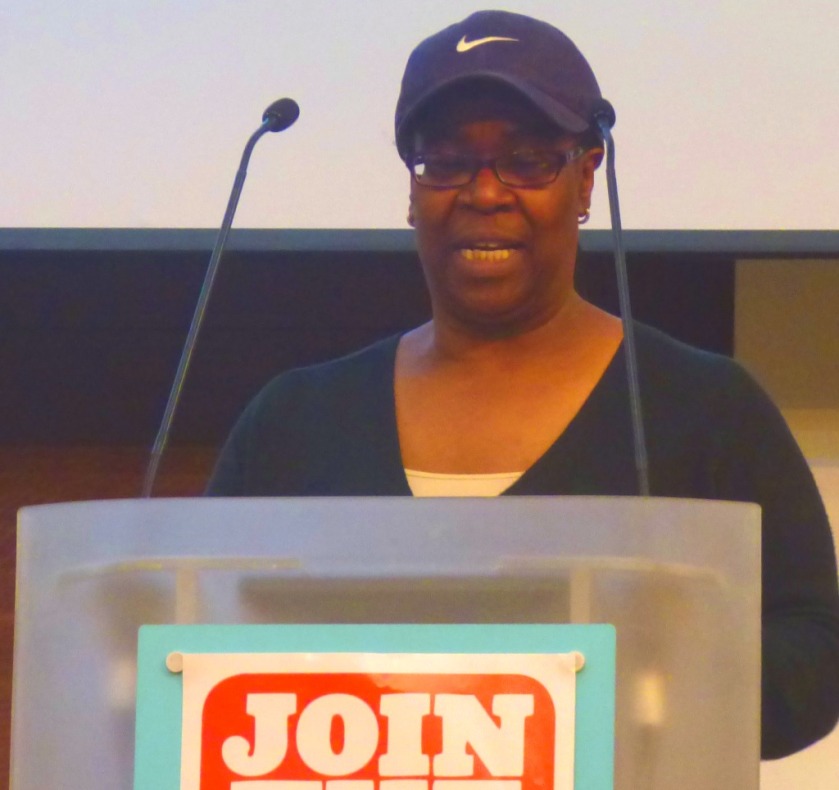
This meeting, excellently chaired by Moyra from the Justice for Grenfell campaign, began with a small disappointment. One of the scheduled speakers, Emma Dent Coad MP, was unable to get away from parliament to make her contribution and sent her apologies. The other two speakers were housing campaigner Eileen Short and London Assembly member and housing expert Sian Berryfrom the Green Party. I was particularly pleased to finally get to here Ms Berry (have a look at my coverage of the 2016 London Mayoral Election and my “Fantasy Cabinet” post for more about my opinions of Ms Berry).
She made an excellent speech, searing criticism of current housing policy and some good suggestions of her own.
Eileen Short was also excellent, and there were some great stories in the discussion.
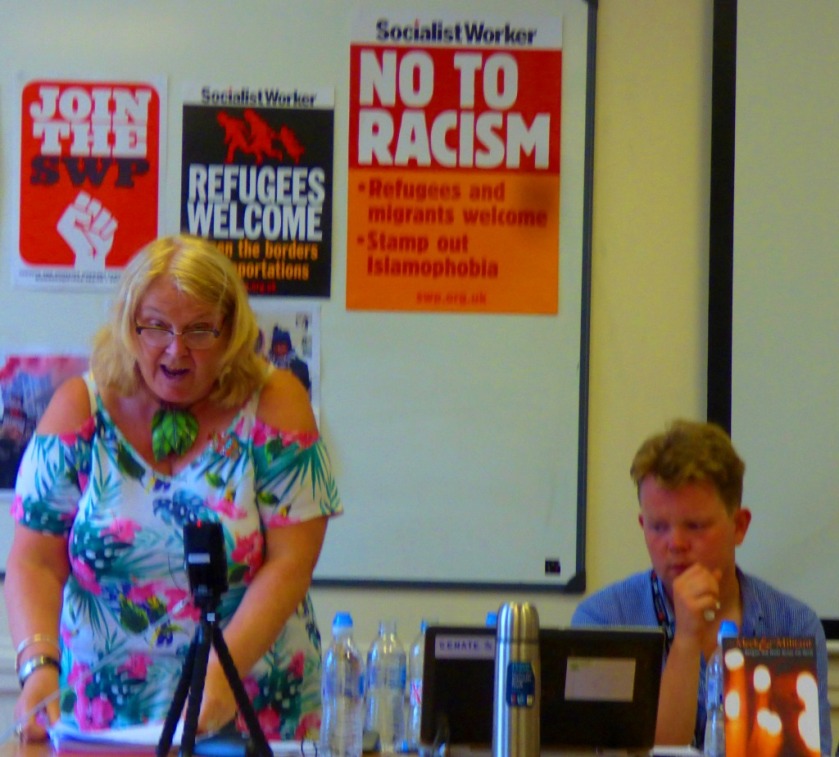
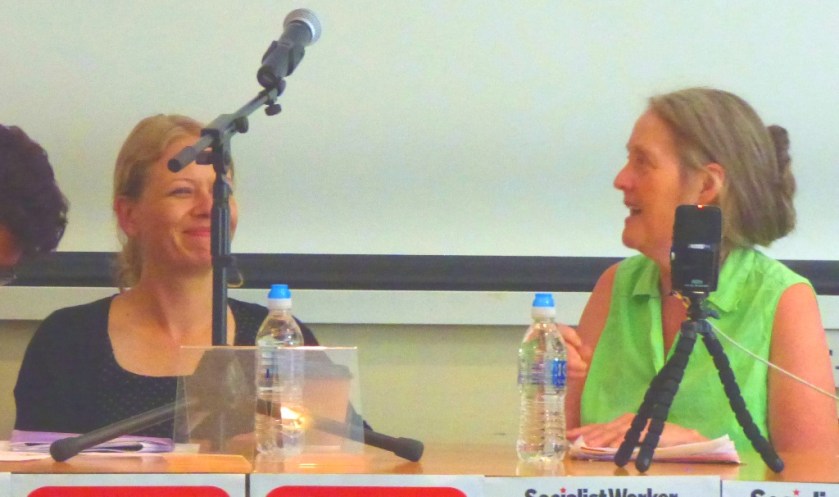
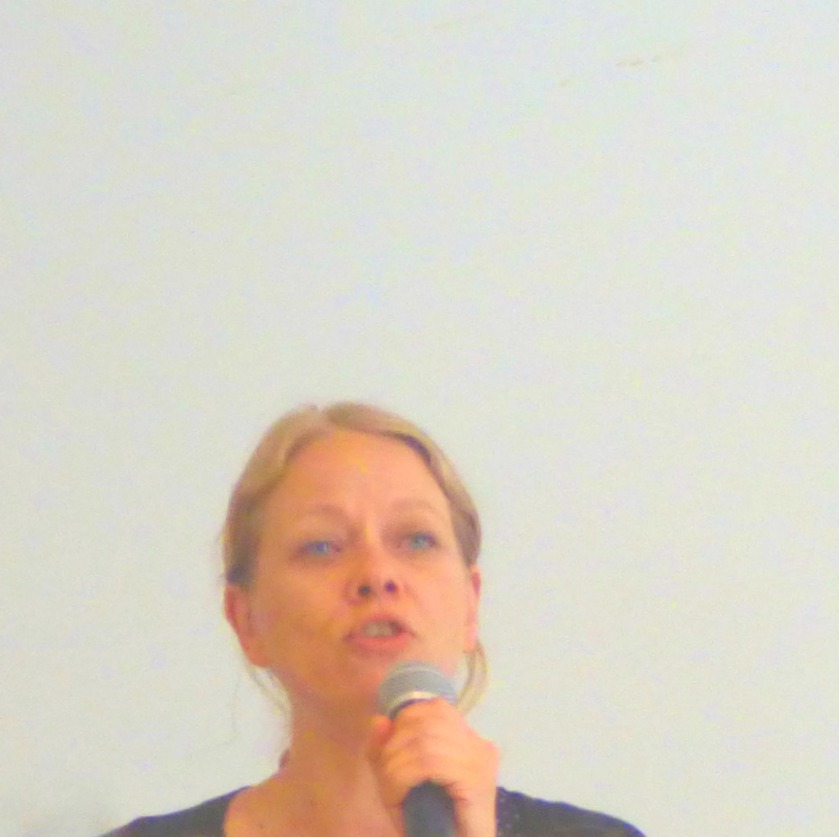
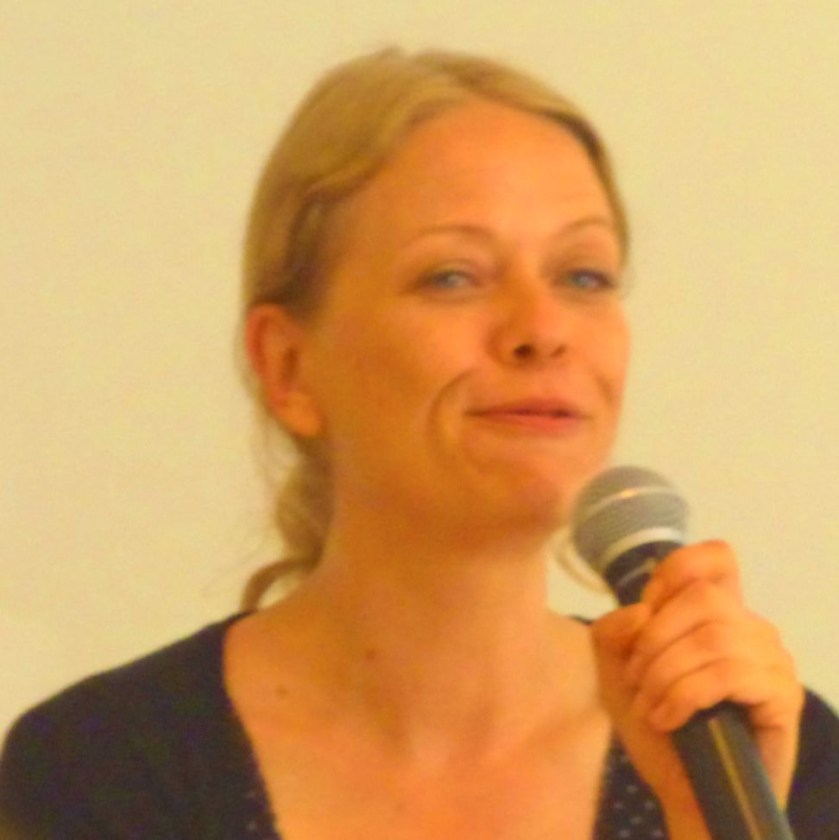
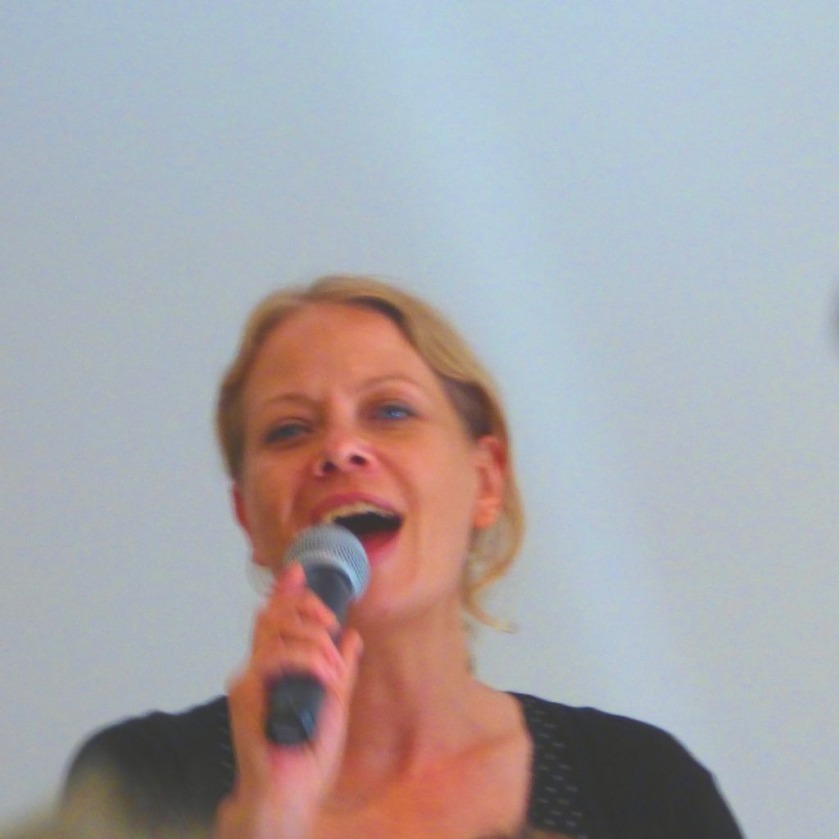
The first of a number of shots I got of Sian Berry in action.
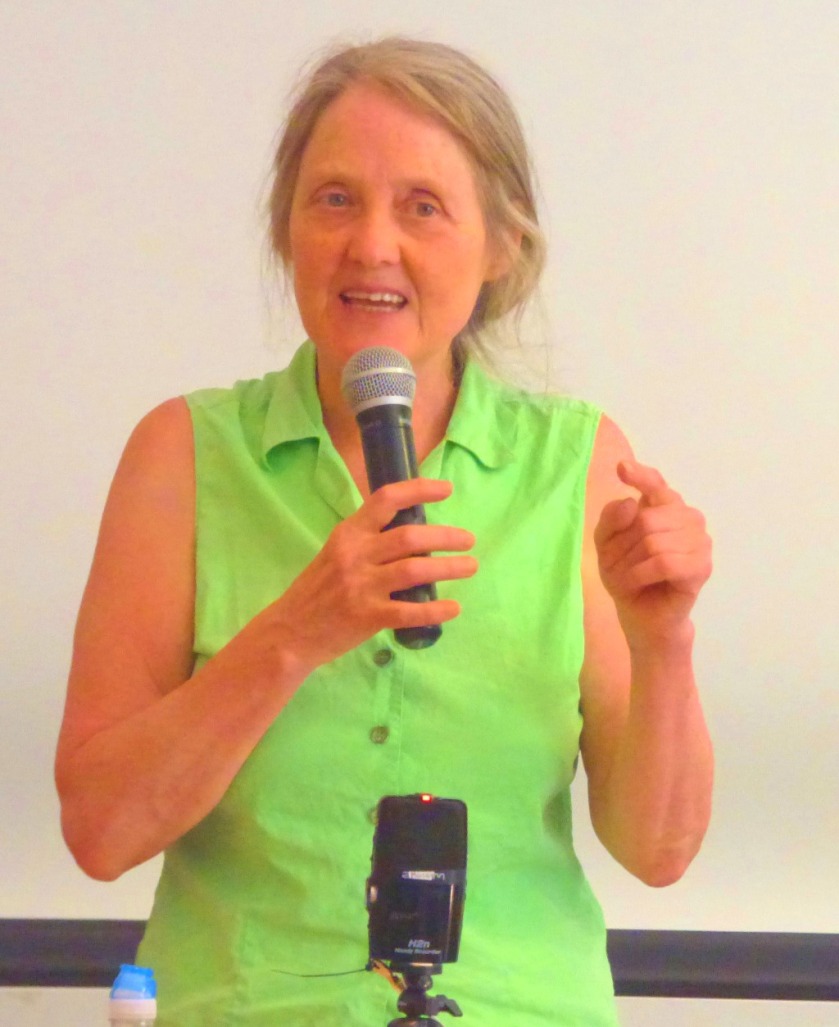
Eileen Short
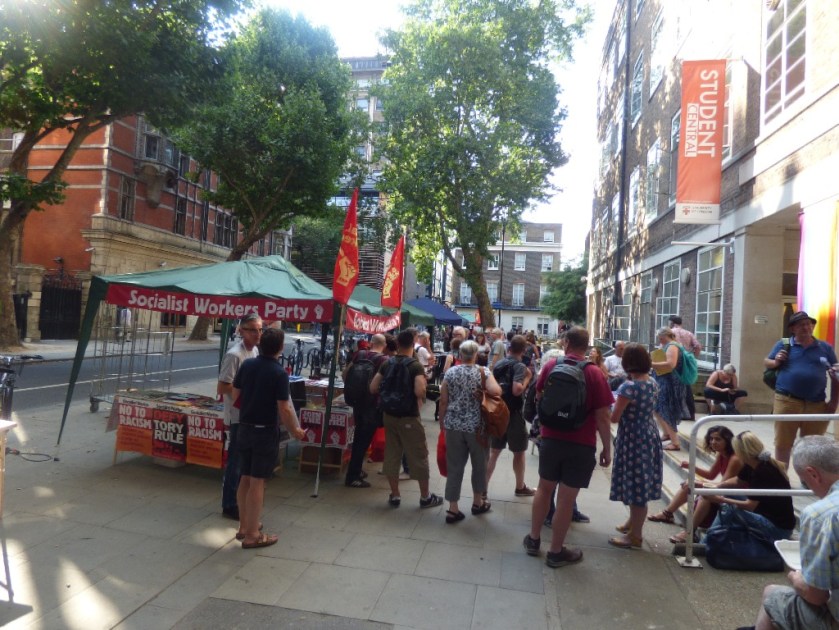
Outside the building after the meeting.
INJUSTICE AND THE BRITISH STATE
This meeting, which took place at The Venue (in it’s third incarnation, having started life as Manning Hall and then had a few years as Room 101), featured Sheila Coleman from the Hillsborough Campaign, Brian Richardson and Gareth Peirce. It was a superb ending to the day.
Jill from South Yorkshire chairing the meeting.Gareth Peirce spoke firstFollowed by Sheila ColemanBrian Richardson was third to speak.
An account of the Opening Rally at Marxism 2018, which took place on Thursday night.
INTRODUCTION
Welcome to the latest installment in my series about Marxism 2018. My previous post covered the second and third meetings of the first day, and this post takes up the story with coverage of the opening rally.
THE OPENING RALLY
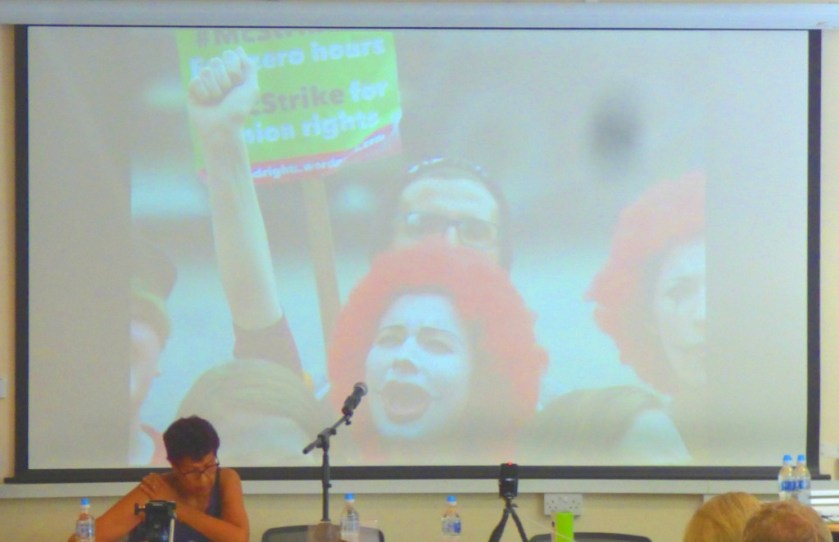
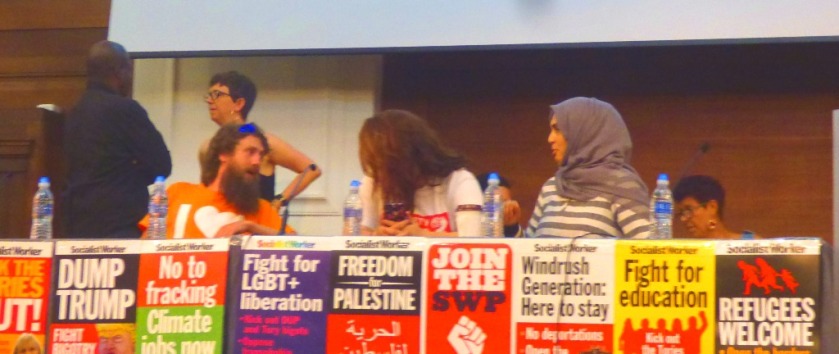
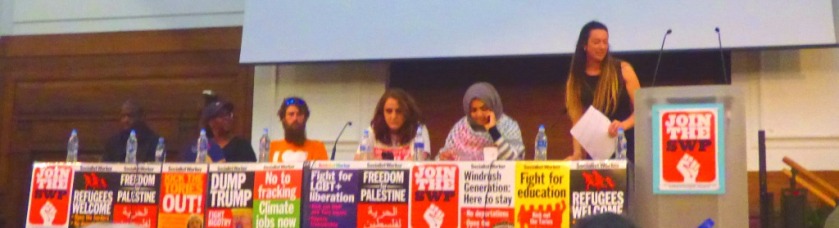
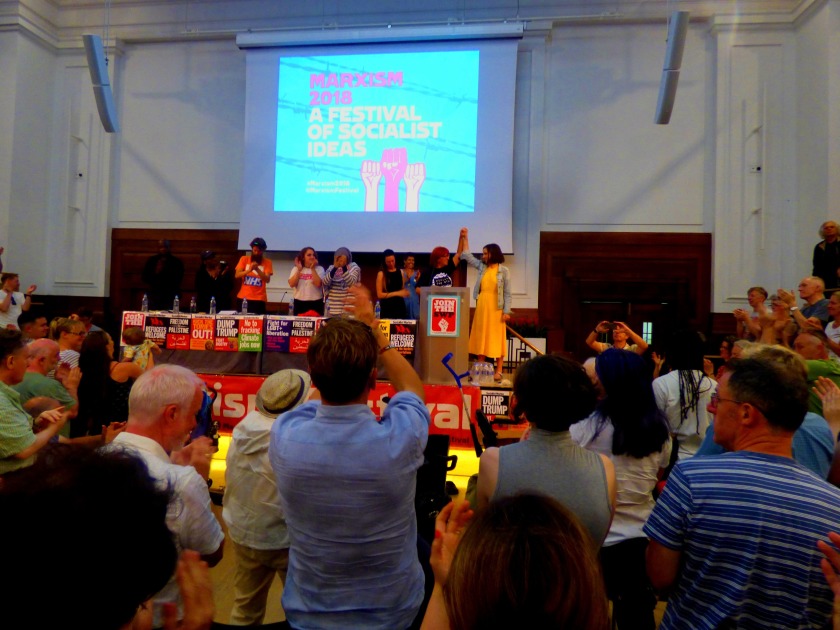
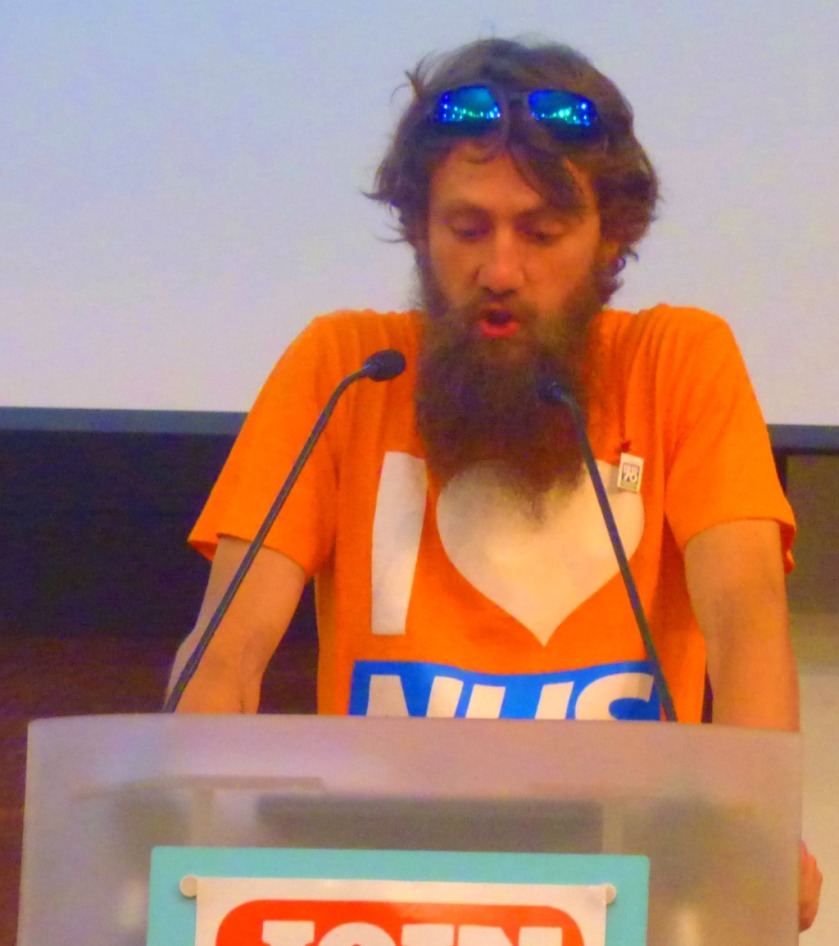
This event took place in Friends Meeting House on Euston Road. We heard from a McStriker about their ongoing battle, a victim of the Windrush scandal, a muslim woman talking about islamaphobia, two women, Siomha and Mary, giving a shared talk about the #Repealthe8th campaign in Ireland, one of the Wigan, Warrington and Leigh strikers about their determination to remain as NHS workers and not be contracted out (a battle that we now know has been successful), Moyra from Justice for Grenfell, and finally wrapping up the evening Weyman Bennett, co-convenor of Stand Up to Racism. Here are my pictures from the evening:
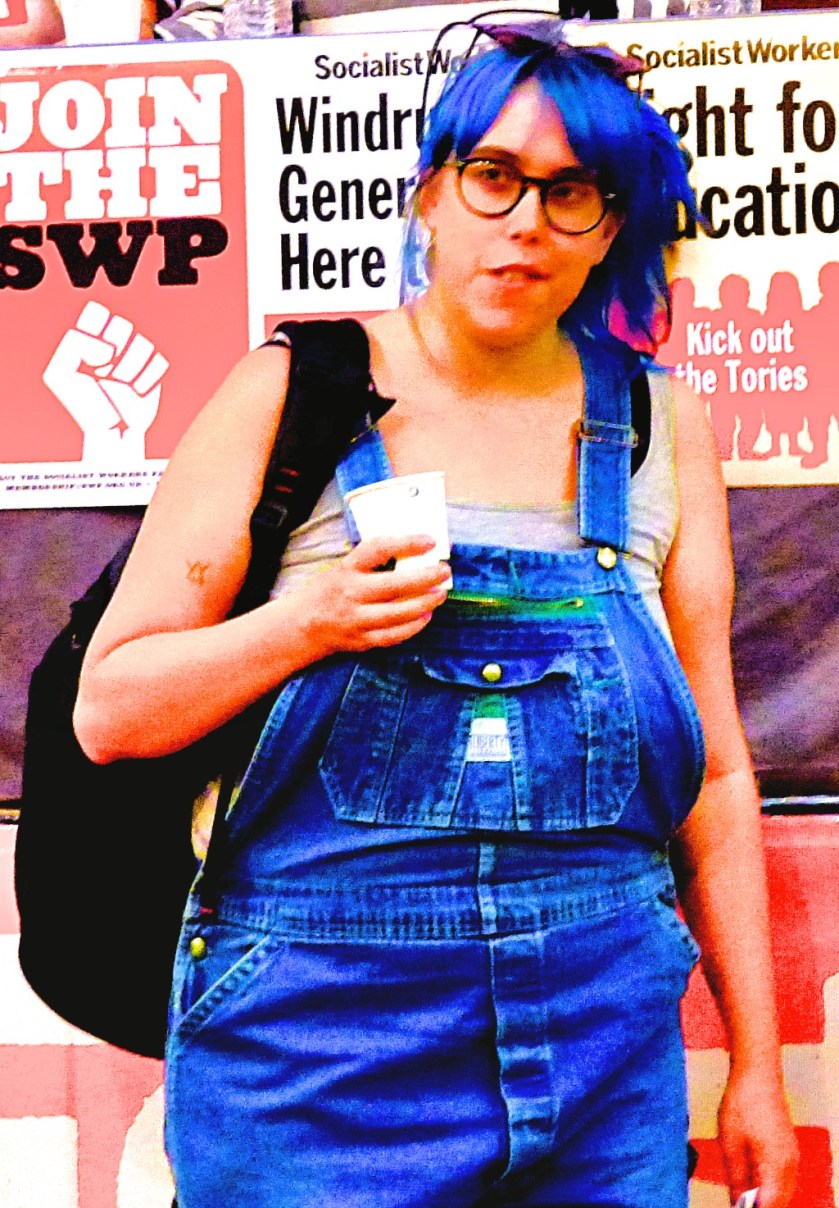
One of the Team – the group who ensure the smooth running of the event and deal with any queries.
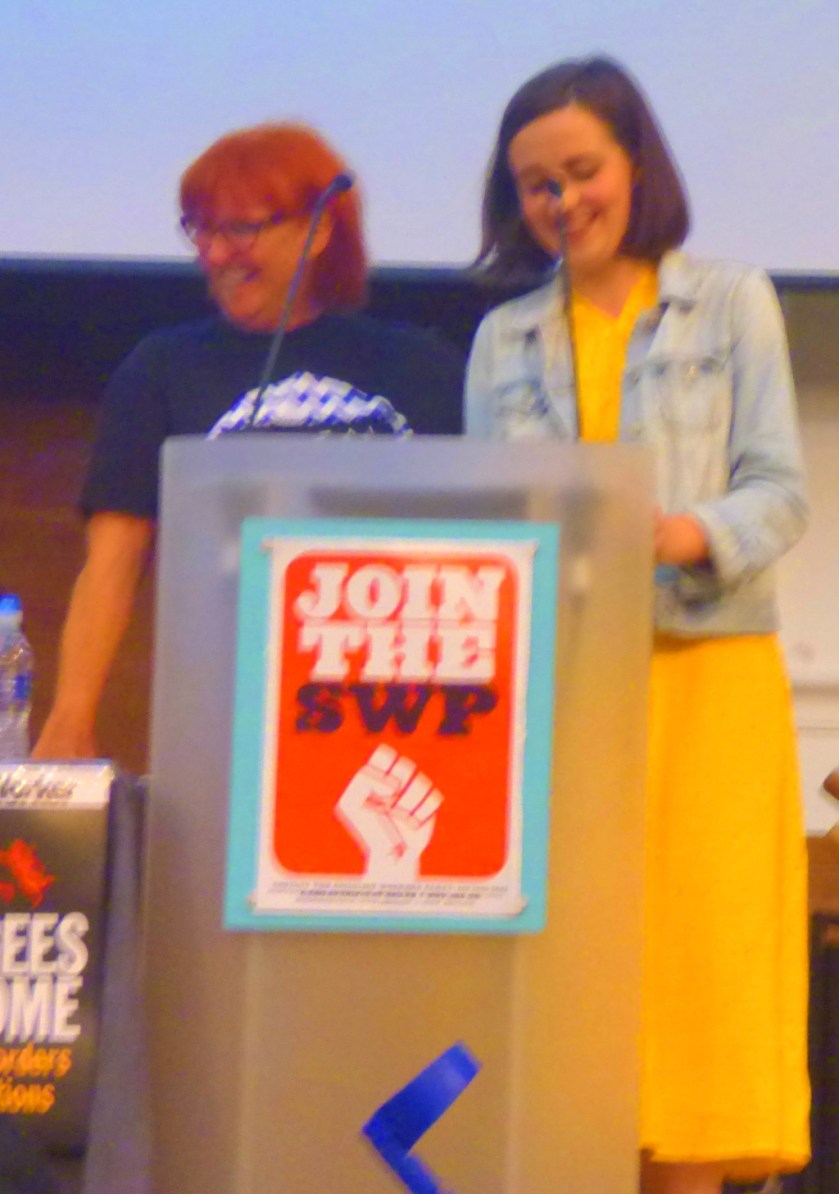
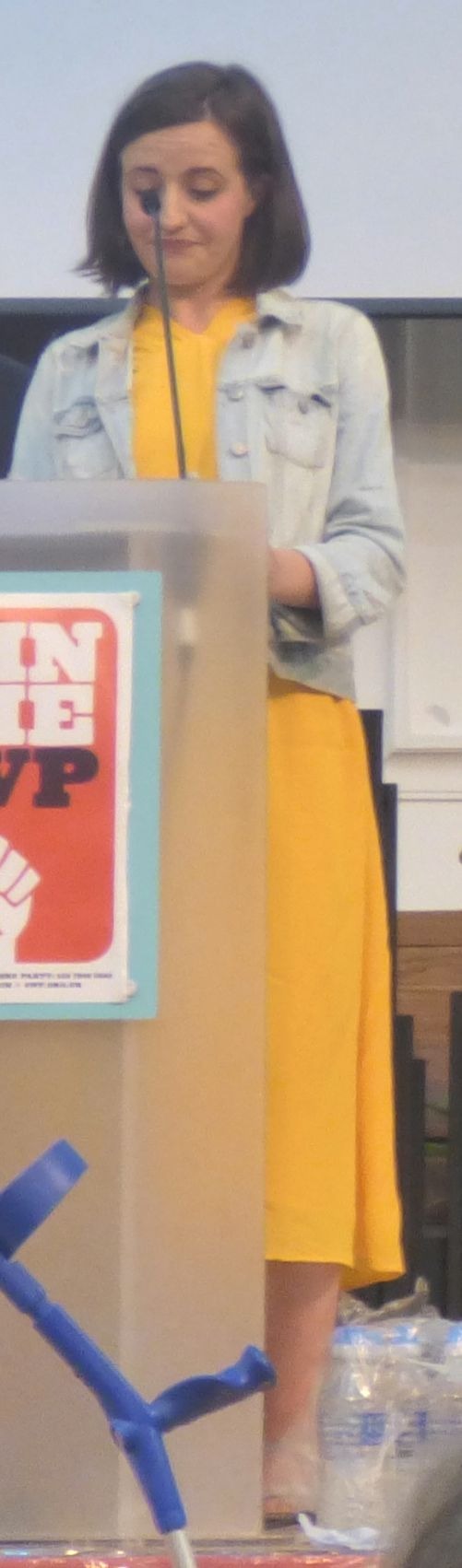
Siomha and Mary gave a very moving account of the campaign to #Repealthe8th
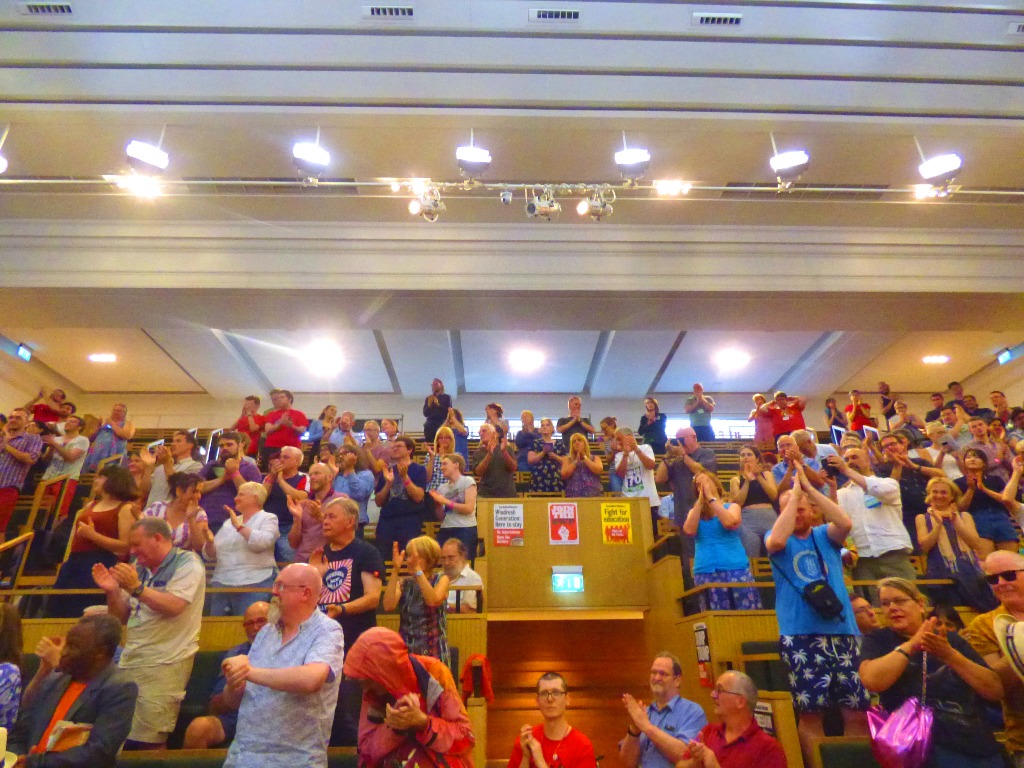
The next three images show how Siomha and Mary’s efforts were received by the audience.
Moyra was savage about the official response to the Grenfell tragedy, particularly their increasingly desperate efforts to pin blame anywheren other than where it belongs – the latest dirty trick they have pulled out being to point fingers at the firefighters – the very people who went into the burning building to attempt to save lives.
Weyman’s fiery speech was a splendid finish to evening.
Continuing my account of Marxism 2018, with the second and third meetings of the Thursday.
INTRODUCTION
This post continues my coverage of Marxism 2018, which started with an introductory post. In this post I cover the second and third meetings of the opening day, which for me were Camilla Royle on the Politics of Science and Ken Olende on What Was Unique About The Translatlantic Slave Trade.
CAMILLA ROYLE ON SCIENCE
Camilla’s actual title was “Is science political?” Most scientists would like the answer to this question to be no, but desirability and truth are two different things. Camilla demonstrated many examples of science being coopted for political ends. This was an excellent talk and it set the stage for a splendid discussion.
KEN OLENDE ON SLAVERY
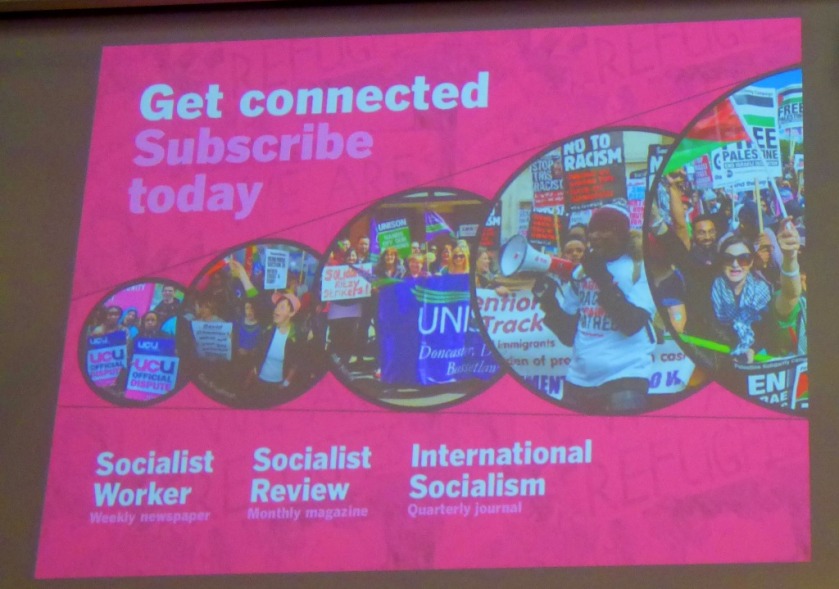
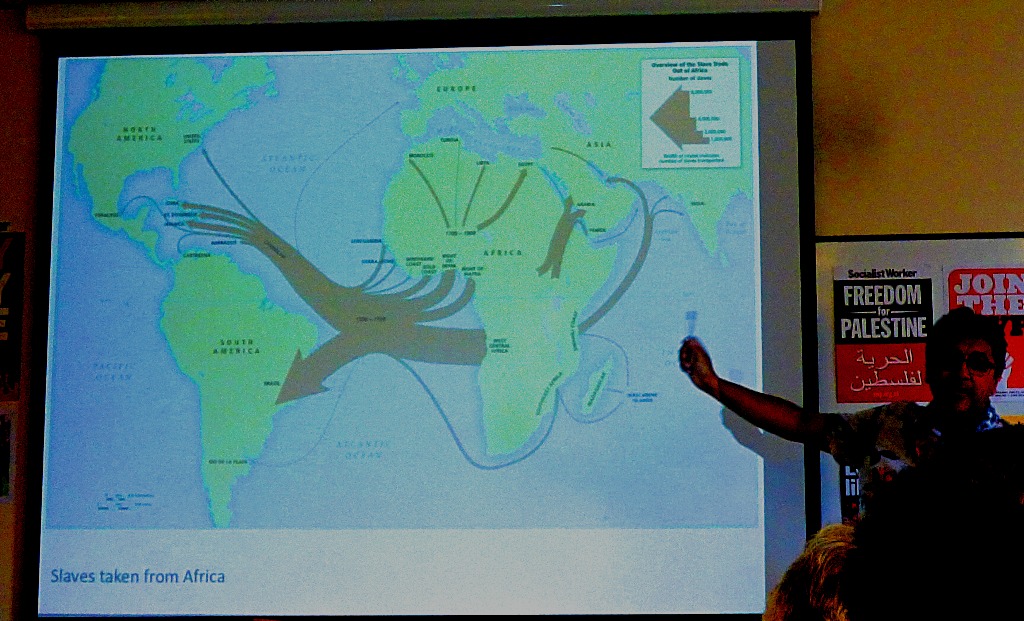
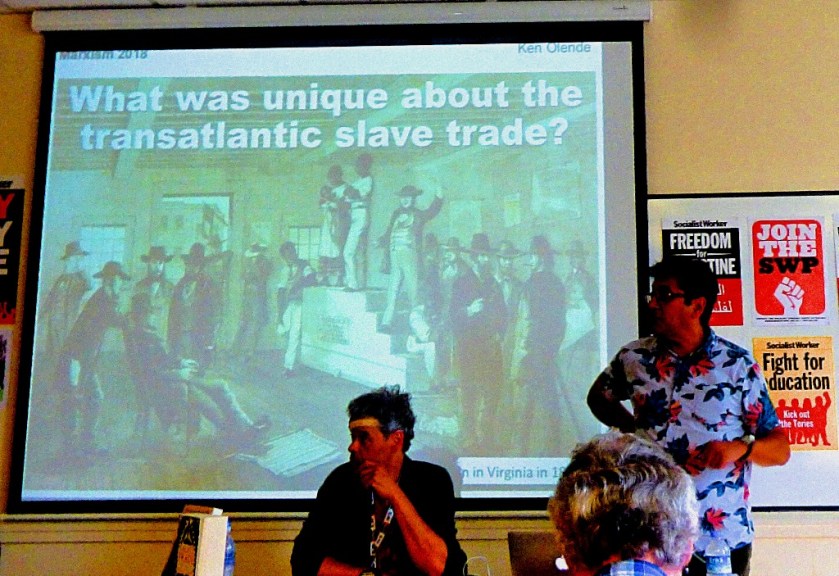
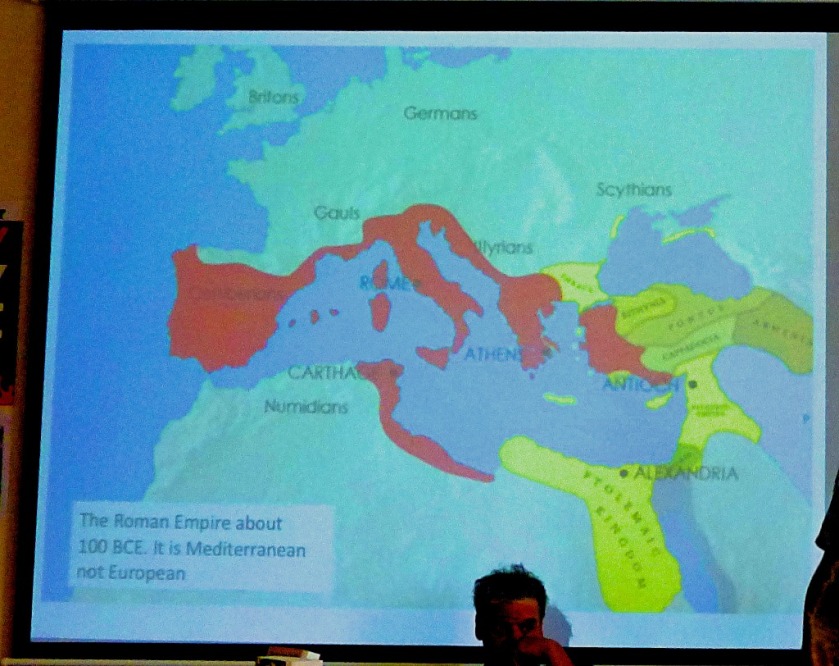
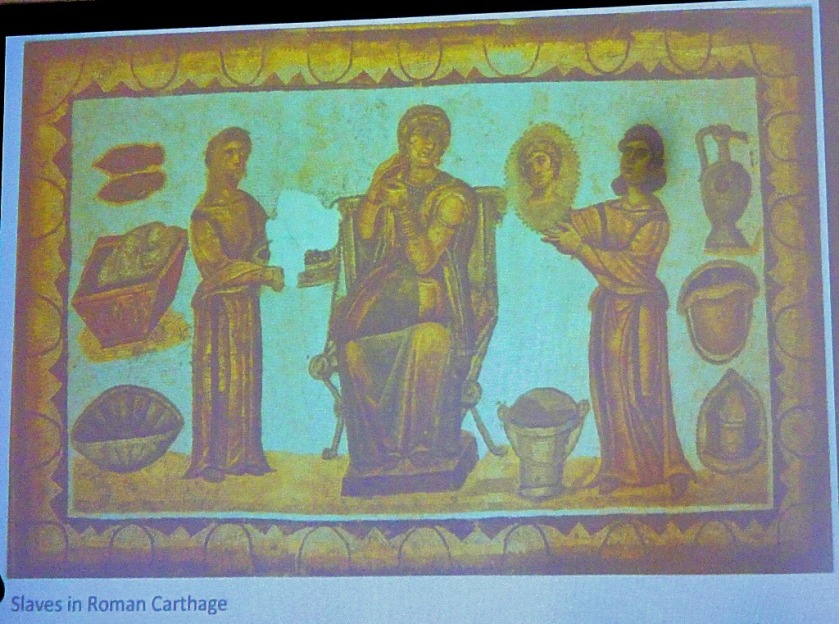
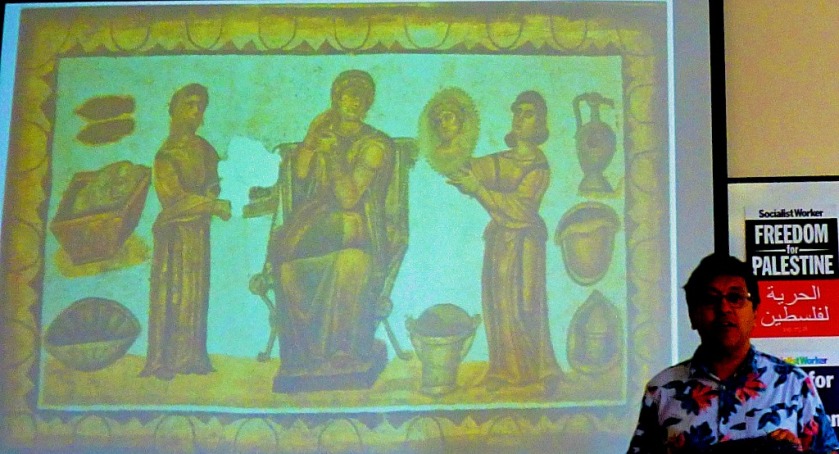
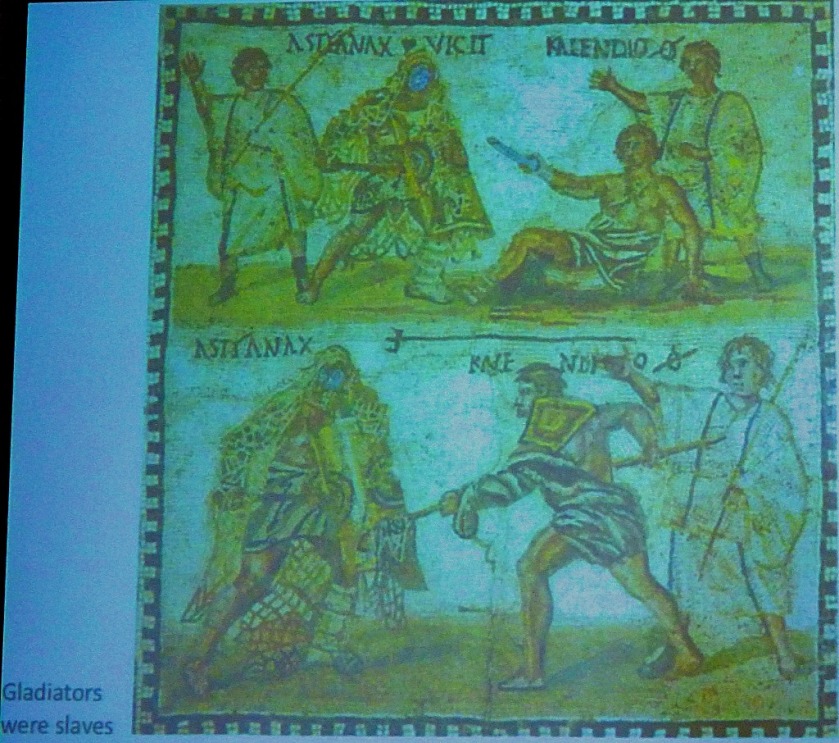
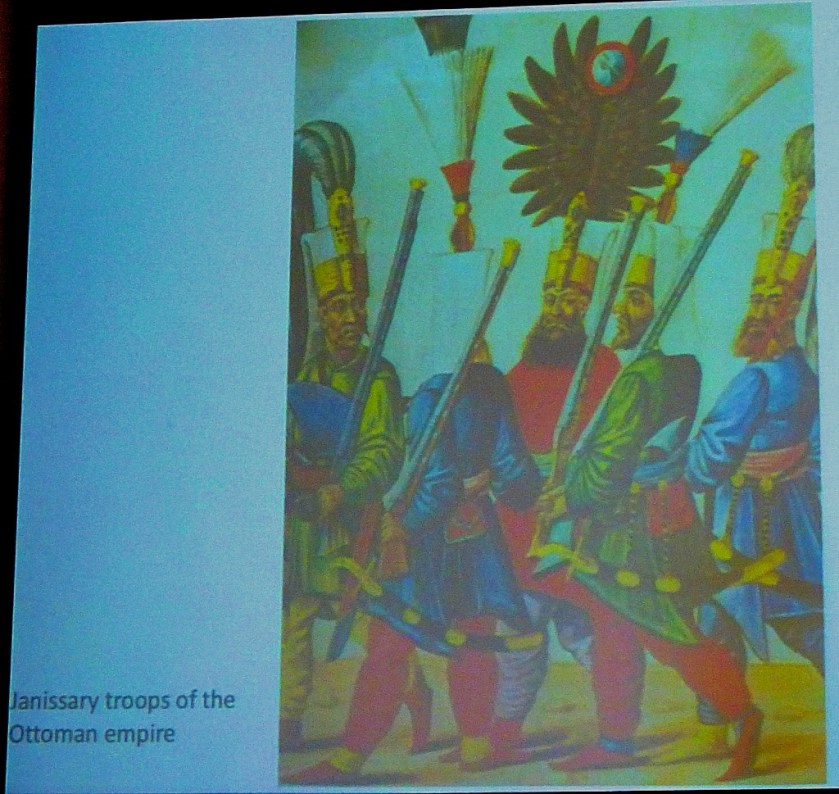
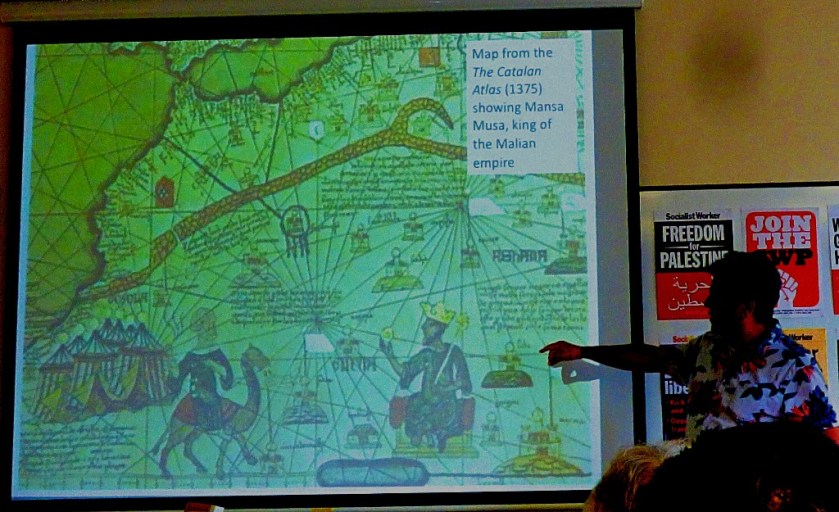
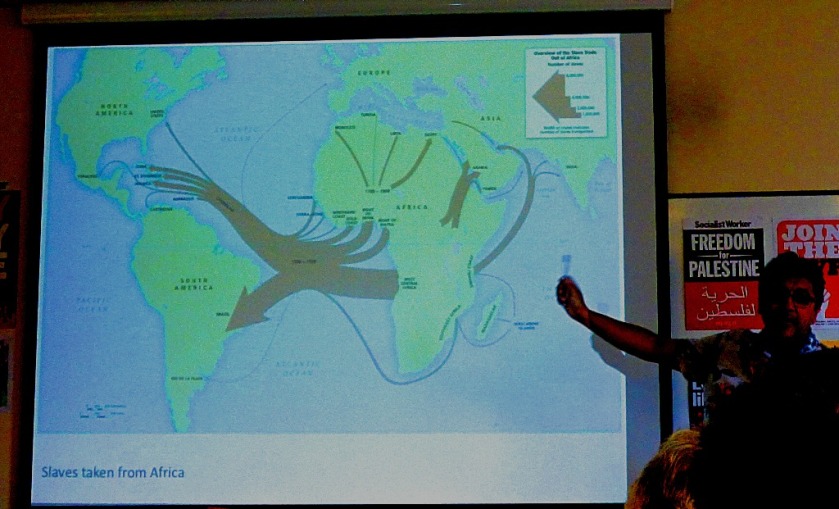
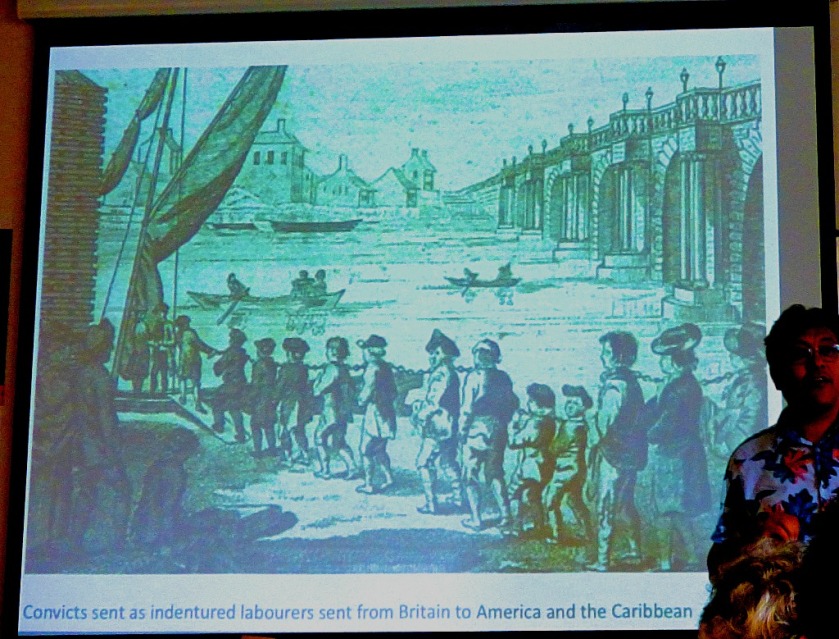
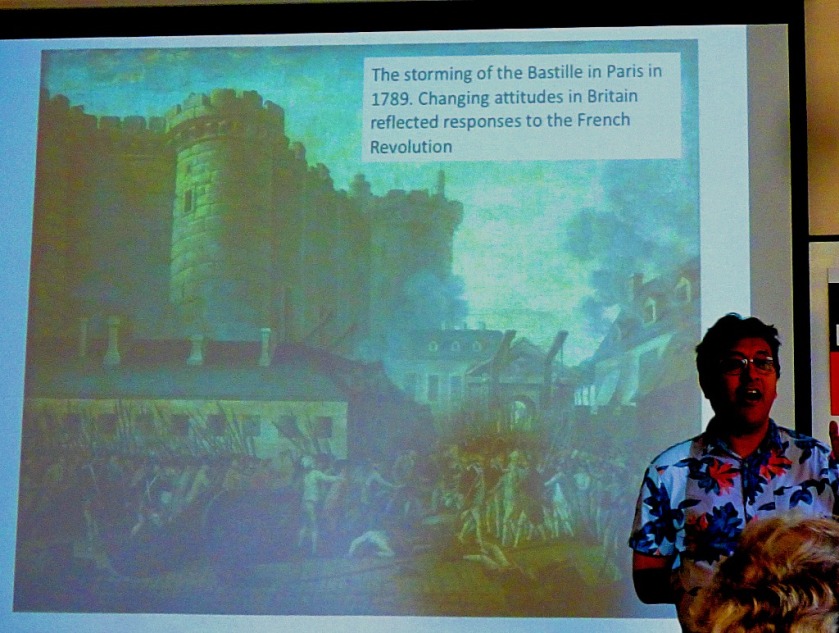
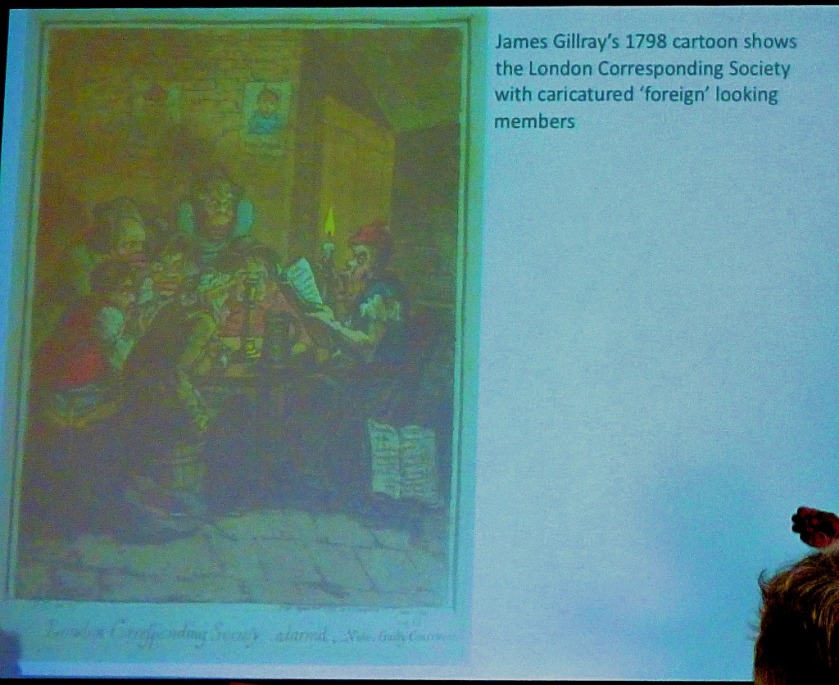
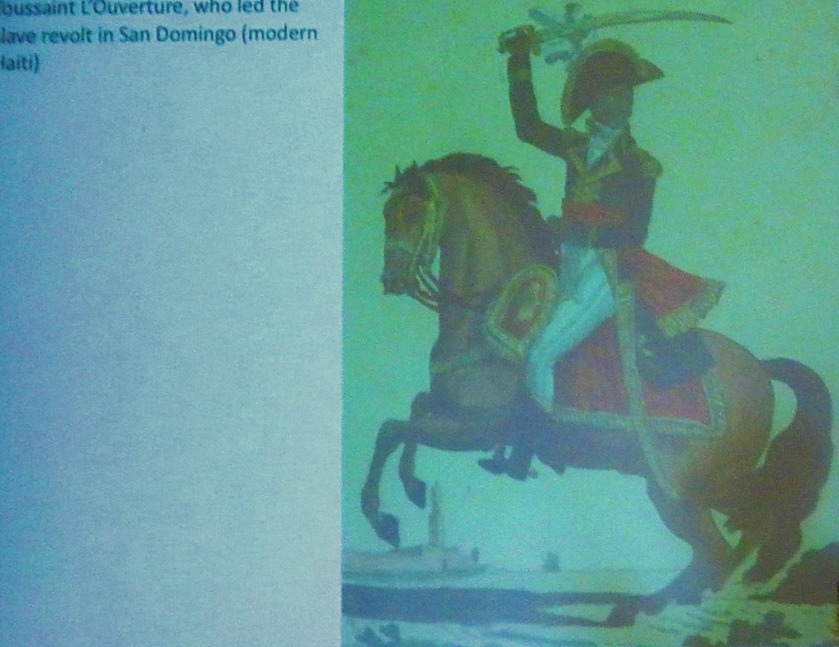
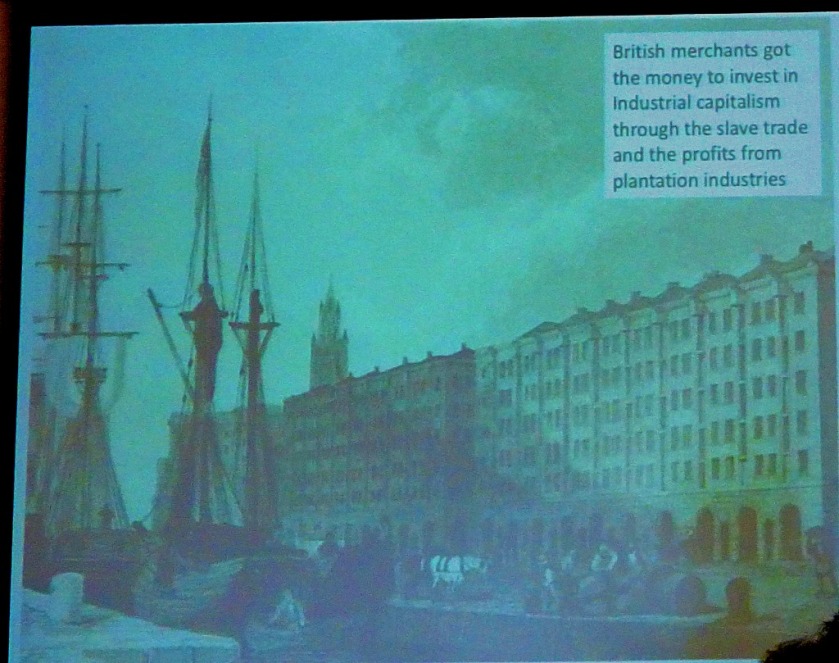
This talk was accompanied by slides which makes it easier to convey an impression of the ground covered.
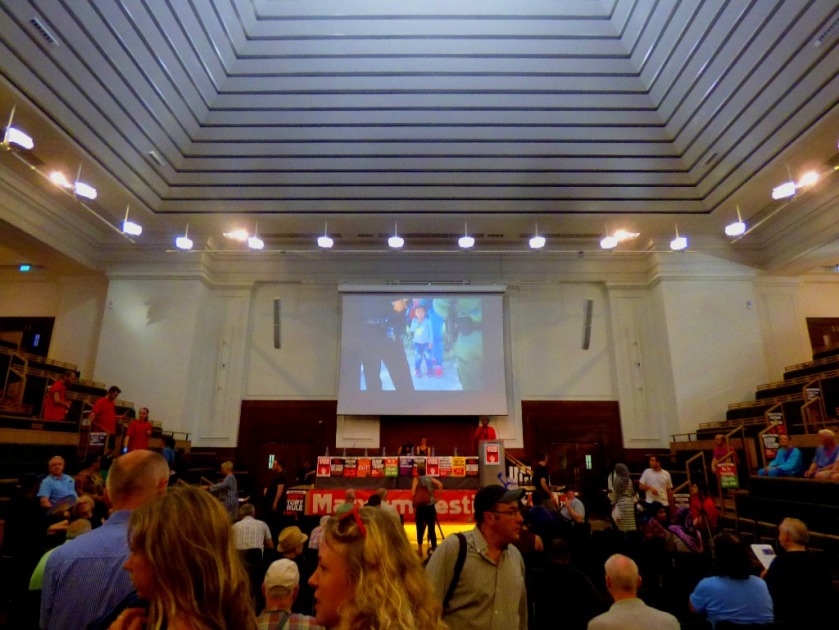
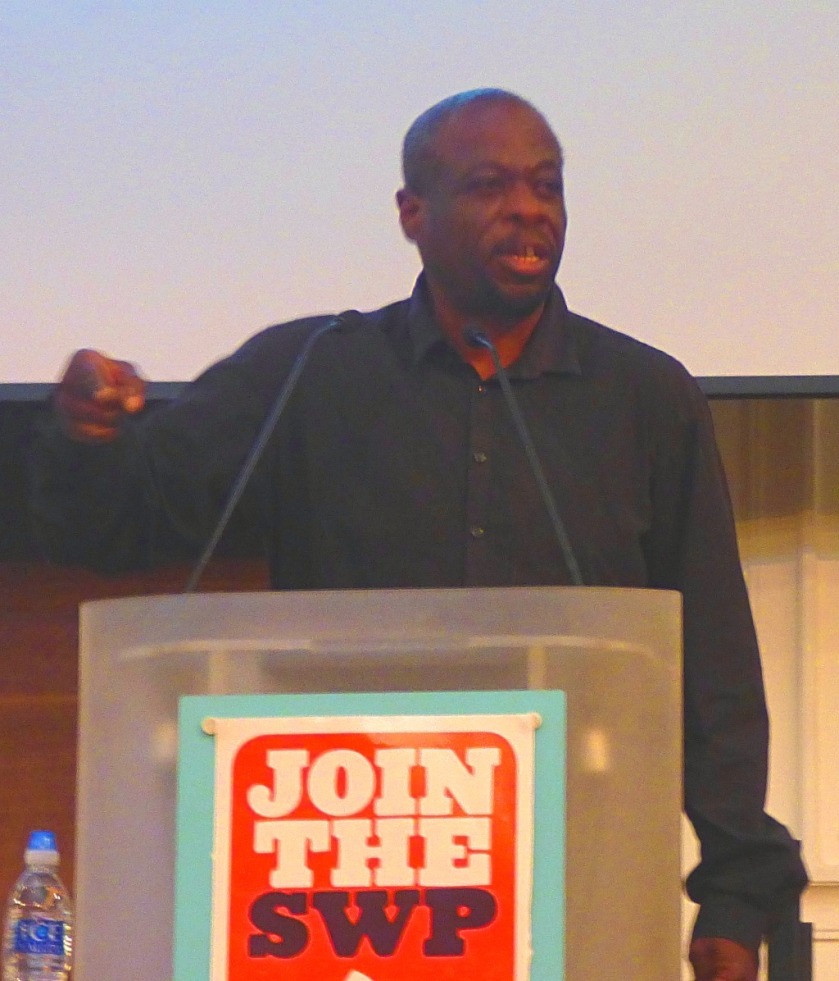
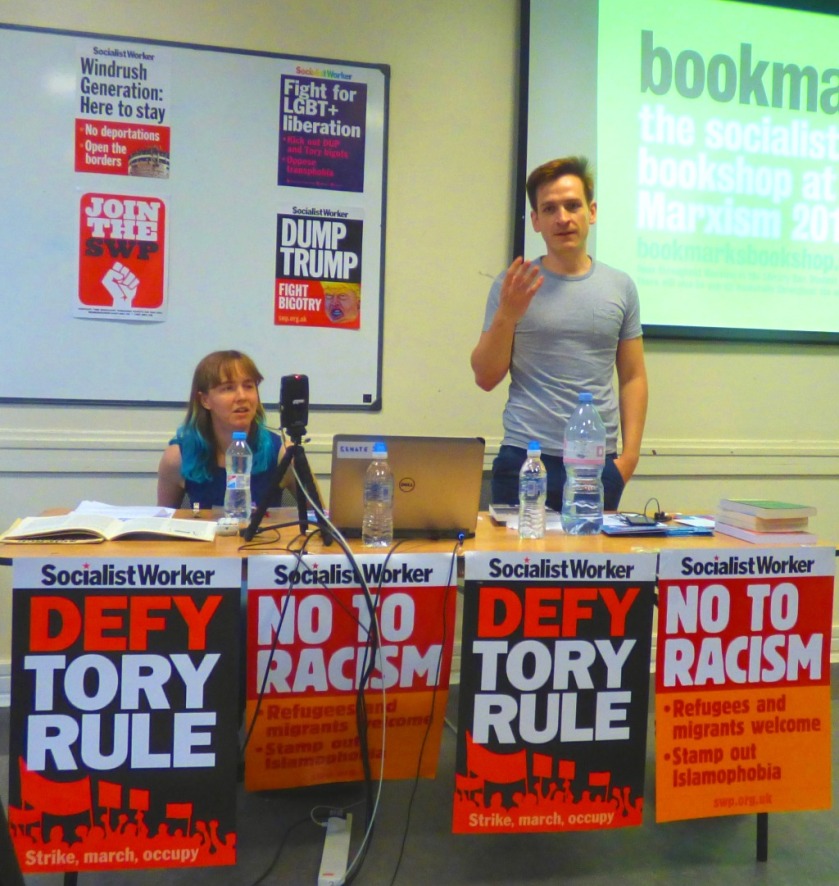
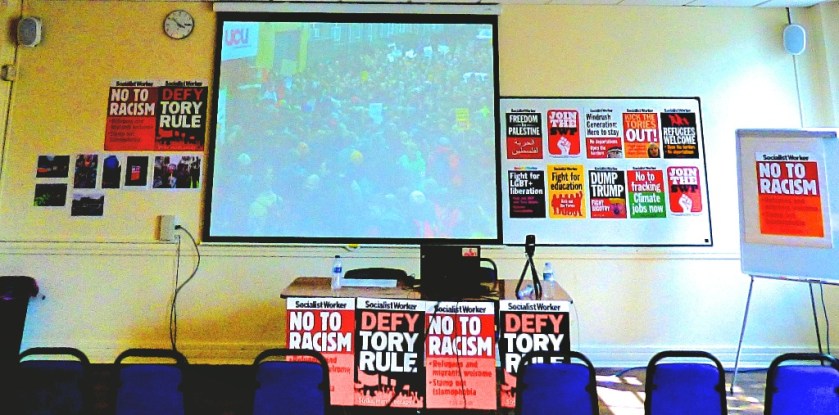
The big screen, speaker and chaiur before the meeting.chair Jay introduces the meetingKen starts his talk
A depiction of Moorish forces fighting for the Roman Empire – while Rome was a slave holding society skin colour did not come into the equation.
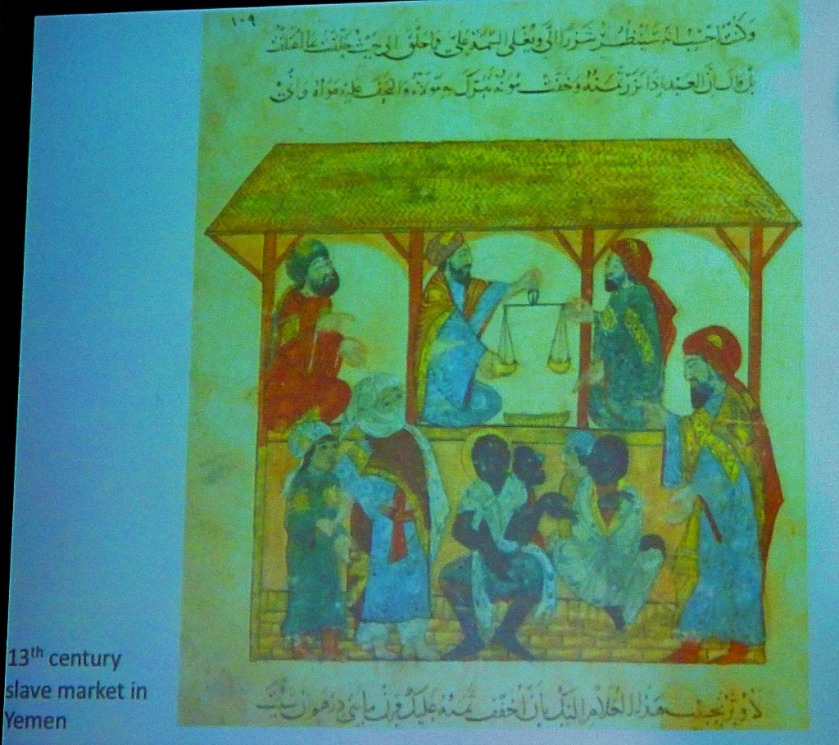
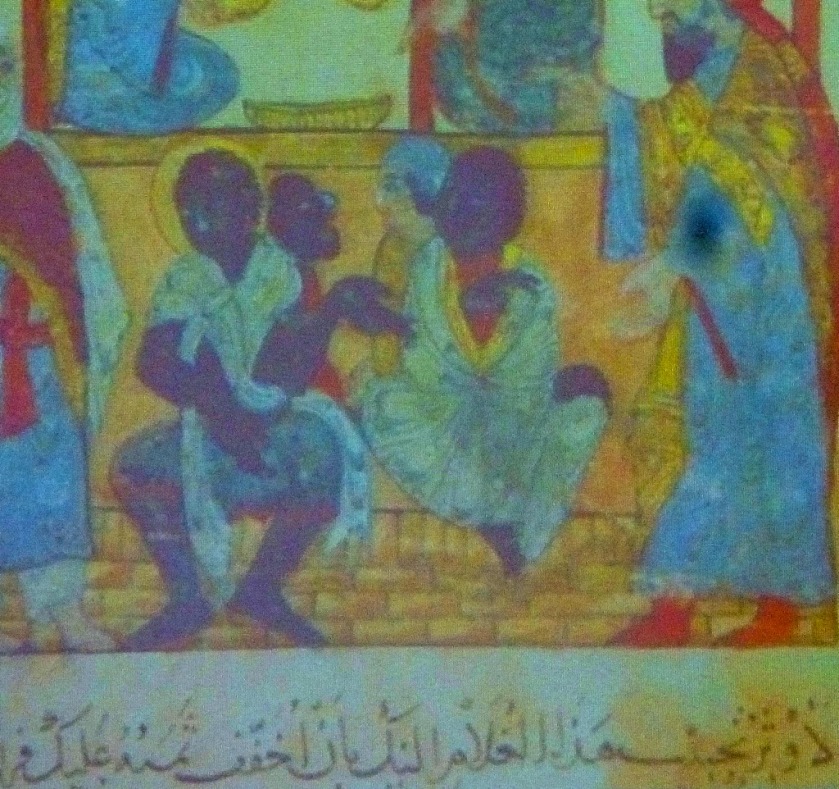
The extent to which the translatlantic slave trade dwarfed its predecesorsThis was a slave market in Yemen in the 13th centuryAs this close-up shows skin colour again was not decisive.
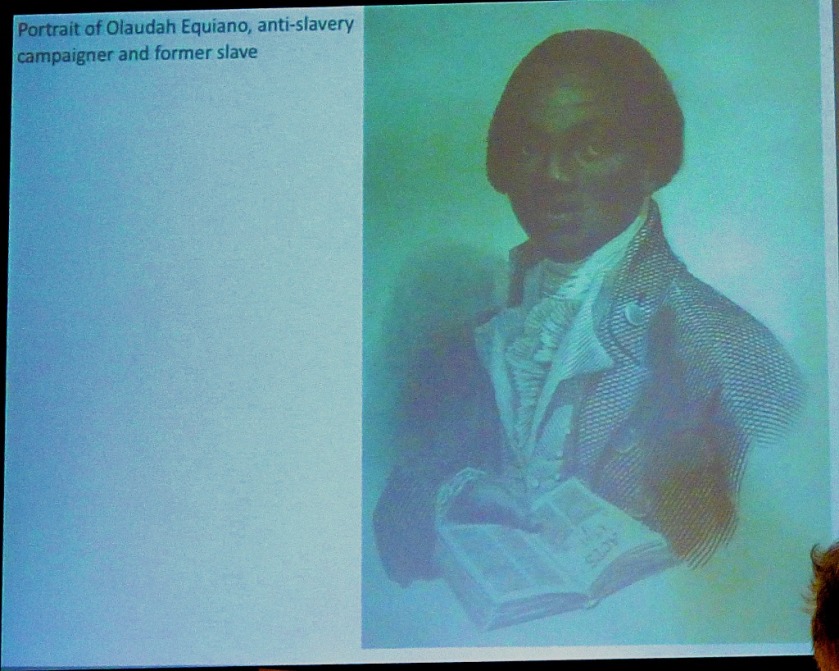
I heartily recommend that you read Olaudah Equiano’s book.
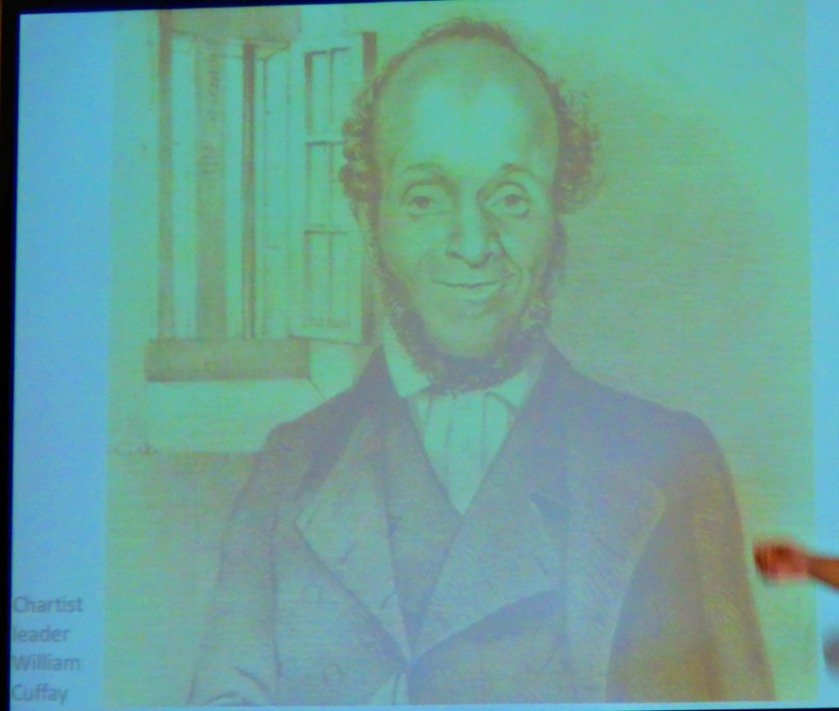
London Chartist leader William Cuffay – the establishment used the same sort of terms about him as they did about slaves.
A petition launched by DPAC to get rid of Esther McVey. This is really DPAC’s post, so to comment please visit their original.
INTRODUCTION
Disabled People Against Cuts (DPAC) have launched a petition calling for the sacking of Esther McVey for lying to Parliament. More details about their reasons can be seen in the post they put up to launch the petition.
THE PETITION
Below is a screenshot of the petition which I have formatted as a link so that you can sign and share this important petition
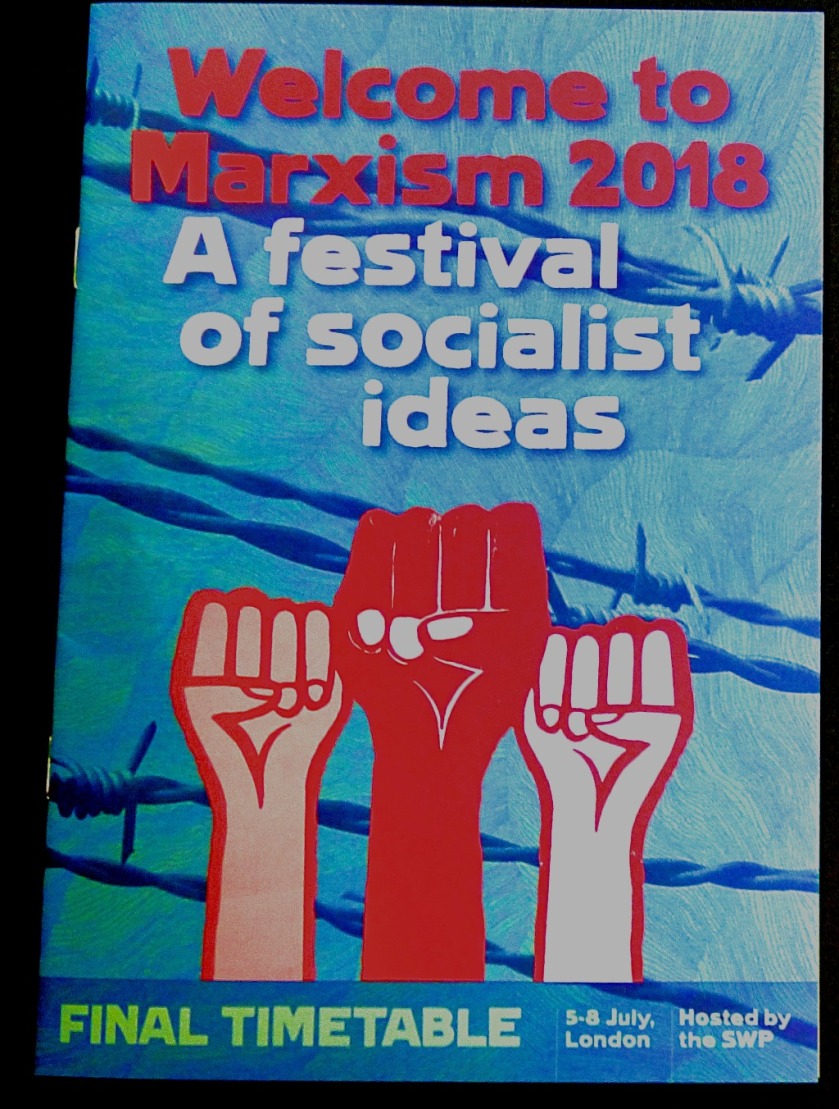
My first post about Marxism 2018 – which has kicked off in fine style.
INTRODUCTION
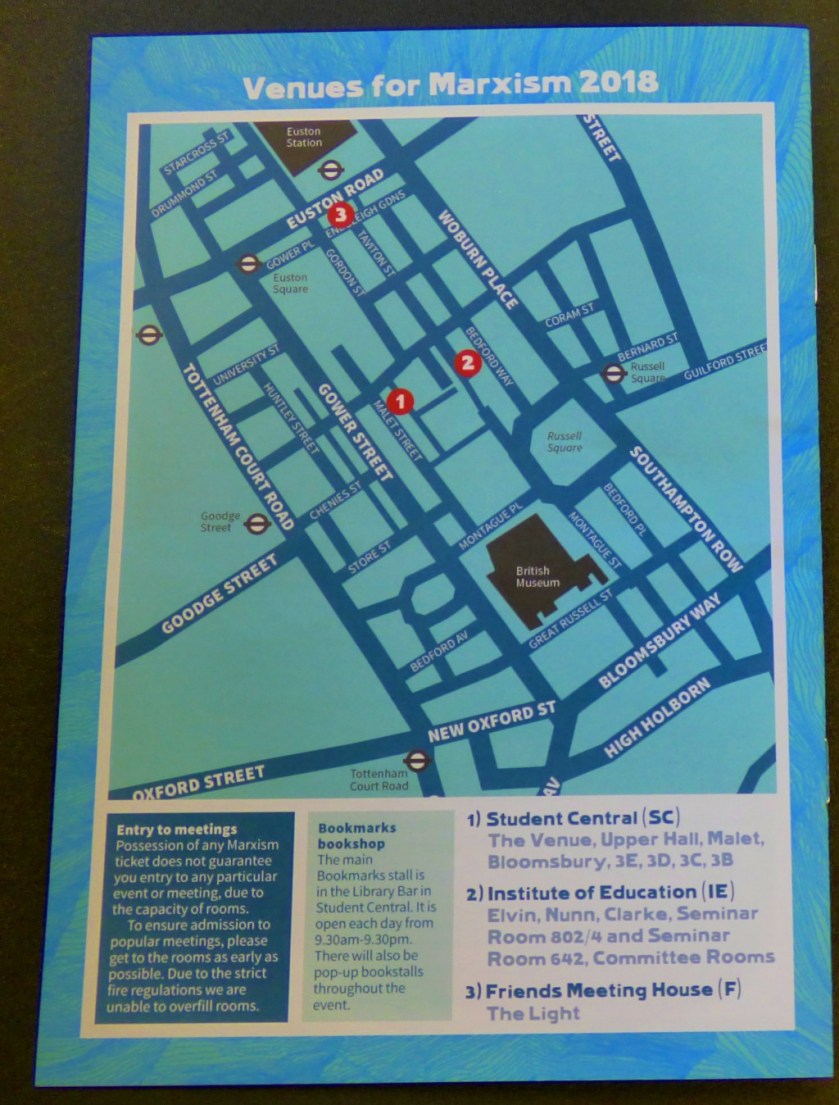
The Marxism Festival is always one of the highlights of the year for me, and it got underway today. My train to London ran a bit late, but I was still at the venue in good time to do everything that I needed to before the first meeting.
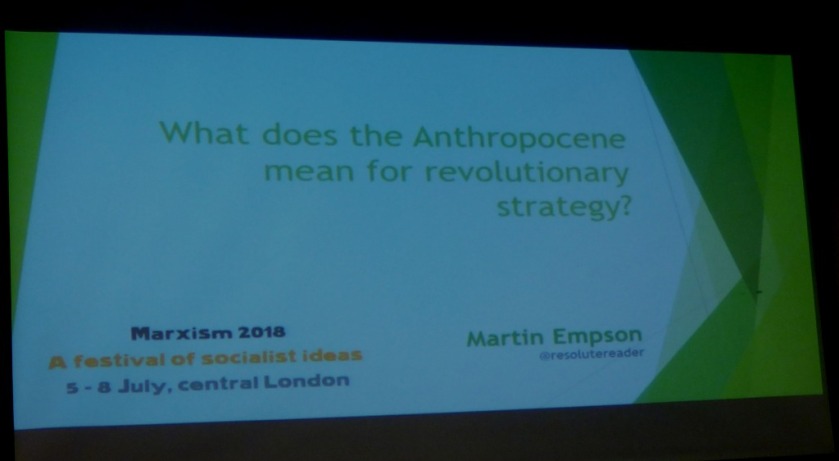
CLIMATE CHANGE: WHAT DOES THE ANTHROPOCENE MEAN FOR REVOLUTIONARY STRATEGY
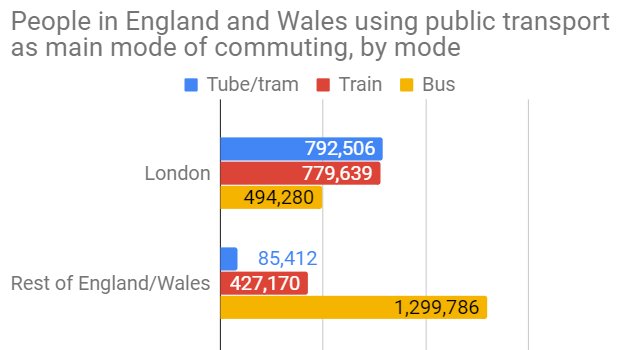
Just before I get on to covering this excellent meeting I wish to deal briefly with a related matter: Jeremy Corbyn has been getting stick in certain circles for choosing to use Prime Minister’s Questions this week to tackle Theresa May on the state of buses in Britain. He was right to take her to task on this topic, and she floundered hopelessly as she usually does, unable to answer the questions. Here are a couple of charts from nomisweb.co.uk that between them make quite clear the rightness of Corbyn on this issue, which I found by way of the twitter feed of somebody called David Ottewell:
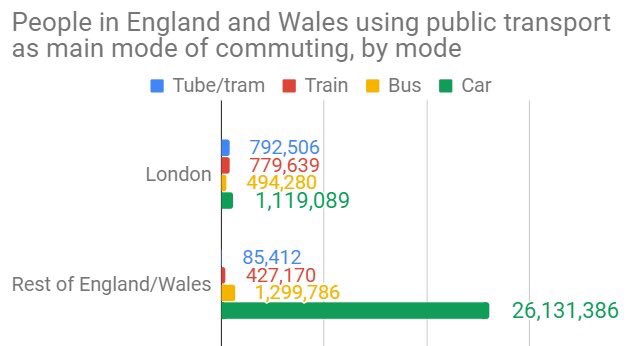
and with car journeys added to the chart:
That vast number of people using the car as their main mode of transport outside of London is a major problem in many ways, and is caused in large part by the scandalous state of bus services outside the capital. As a concrete example, King’s Lynn is the third largest town in Norfolk while Fakenham is a market town in the middle of Norfolk. The last bus out from King’s Lynn to Fakenham leaves Lynn at 5:40PM, while the last bus back from Fakenham to King’s Lynn leaves Fakenham at 5:30PM – and this is still a better bus service than most of Norfolk can count on.
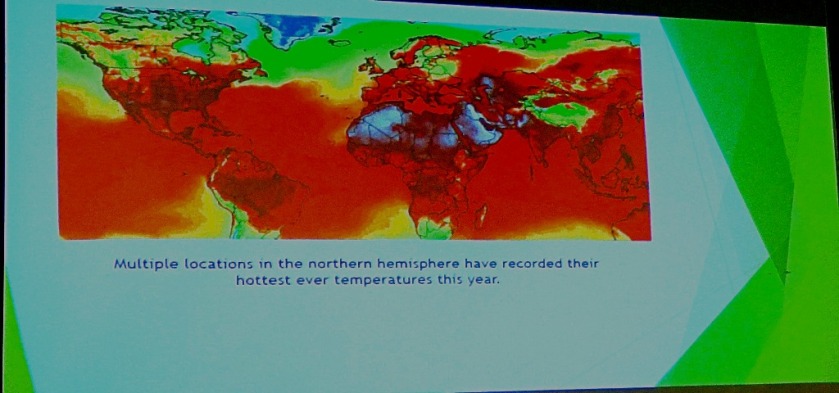
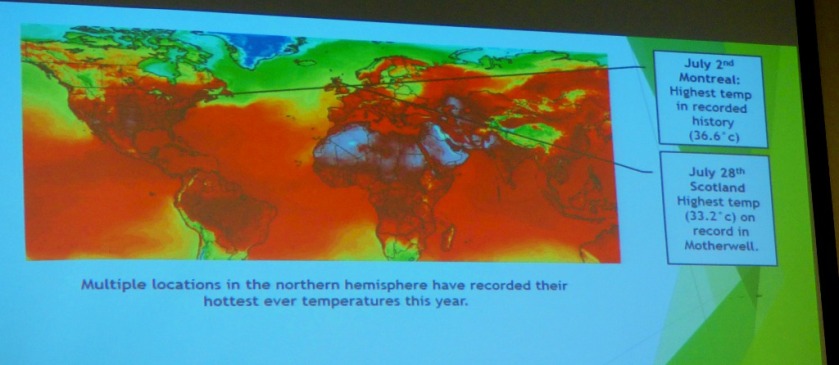
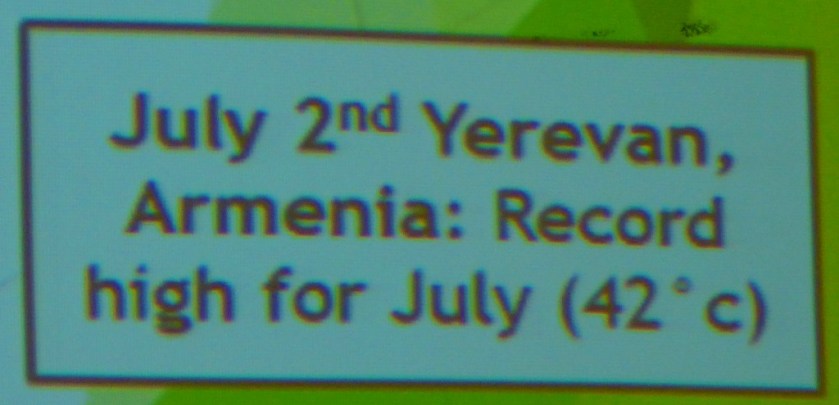
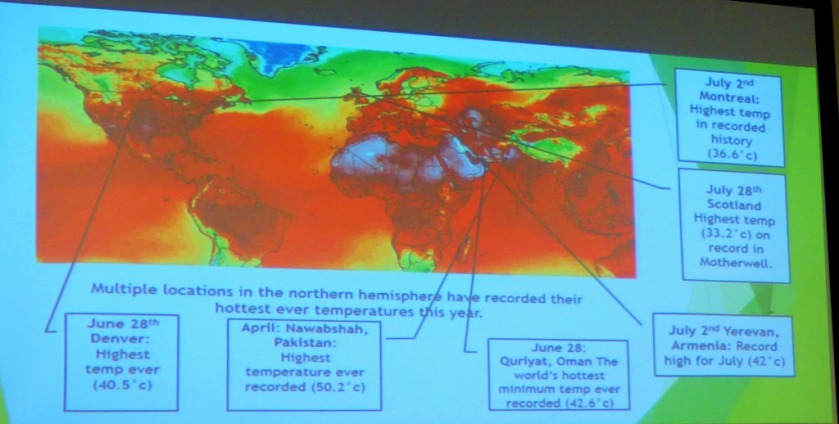
The meeting began with an explanation of the term Anthropocene, and then covered some details about recent heat records:
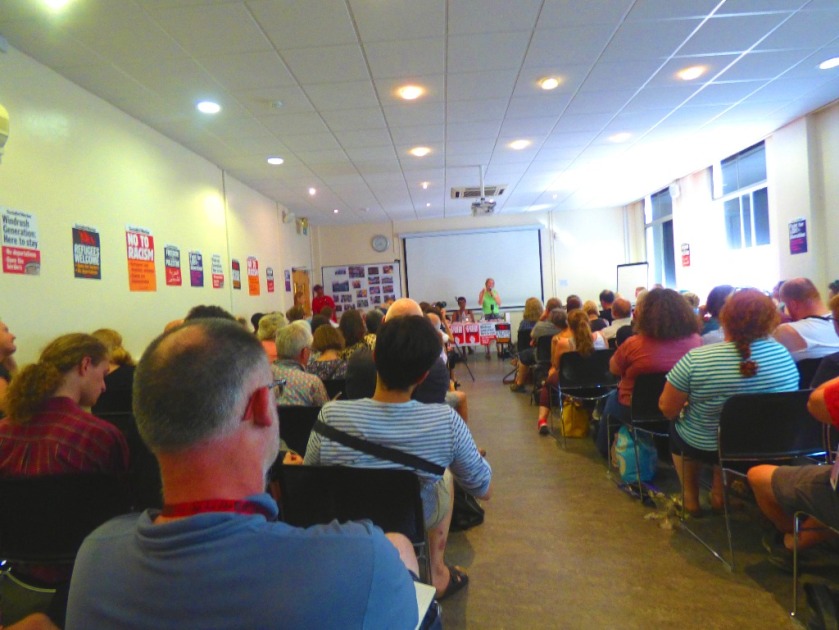
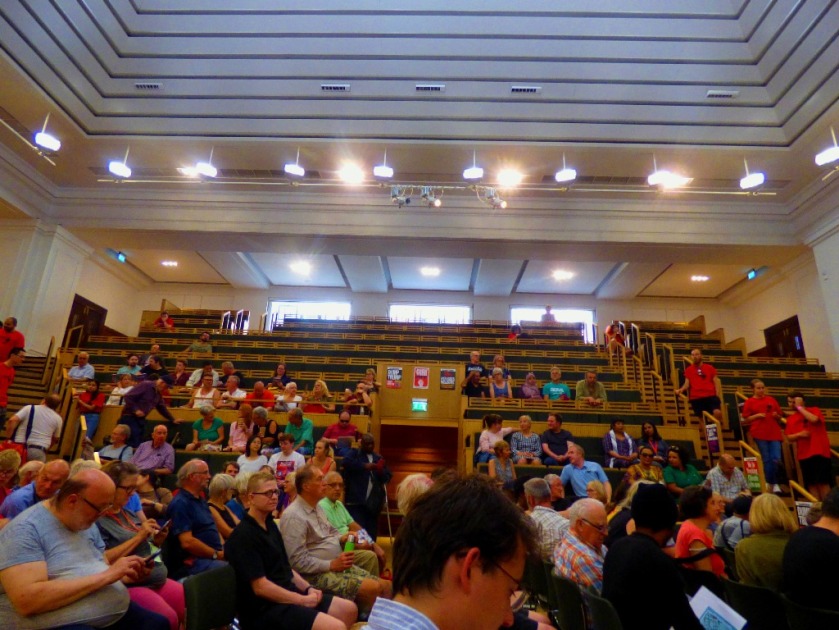
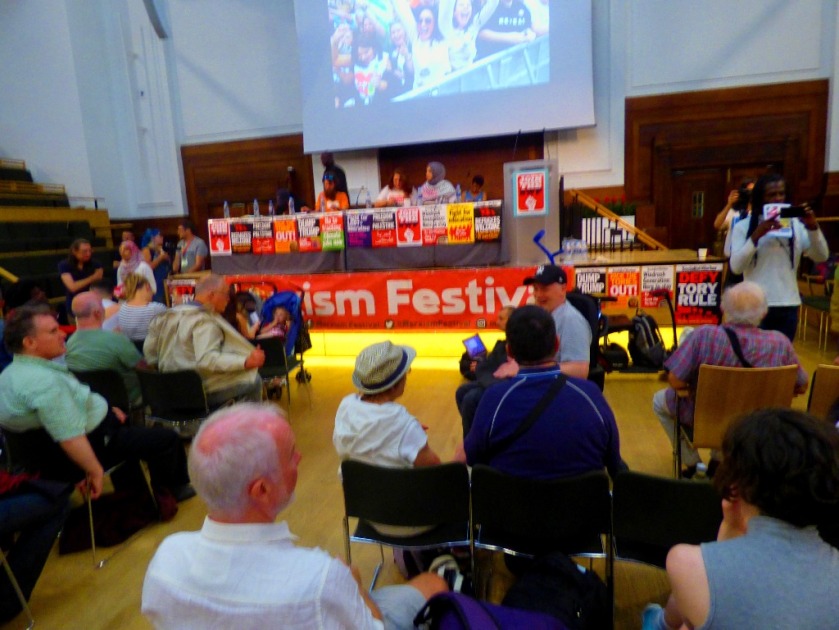
The room in which my first meeting was taking place.
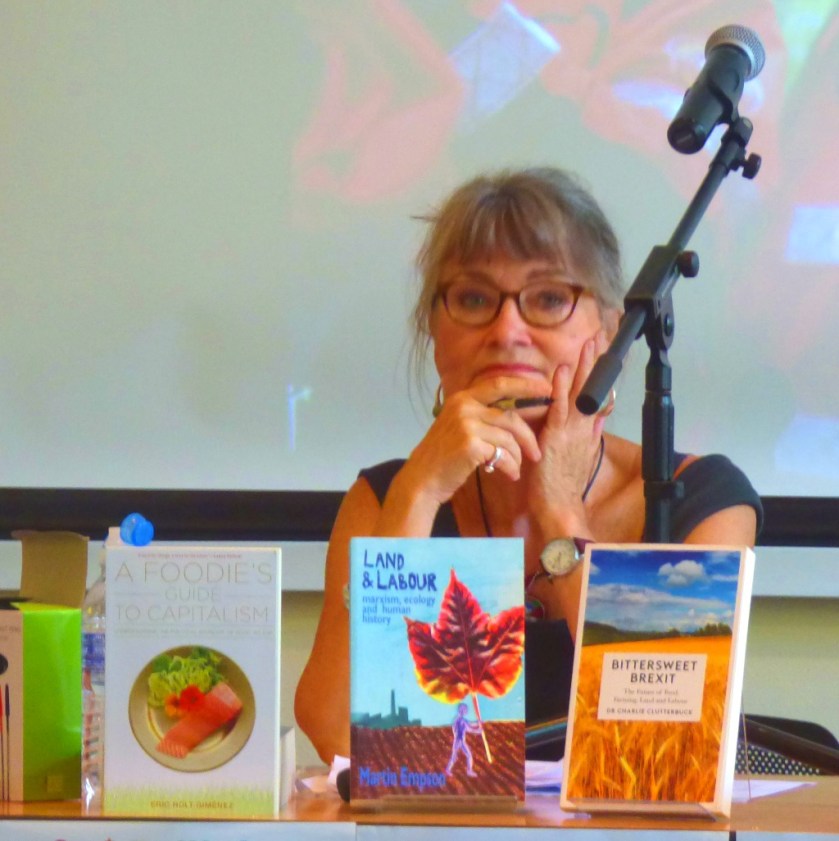
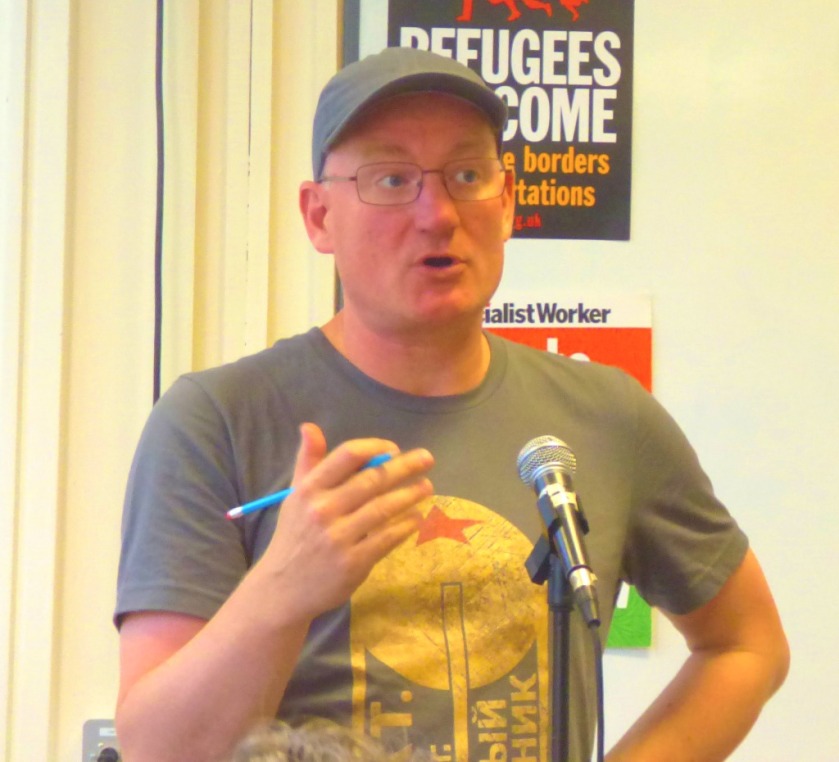
Martin Empson preparing himself.
Speaker Martin and chair Jasmine just before the start.
Jasmine introduces MartinThe first of six record temperatures set in a very short space of time to be shiown here.
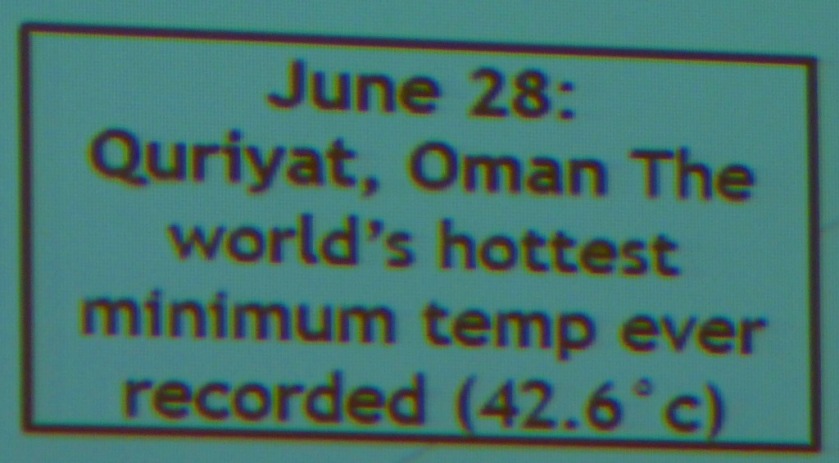
This means that there was whole 24-hour period in which the temperature was never at any point less than 42.6 celsius in this location.
A heat record set in the country with a climate change denier as president.The final slide showing all the records.
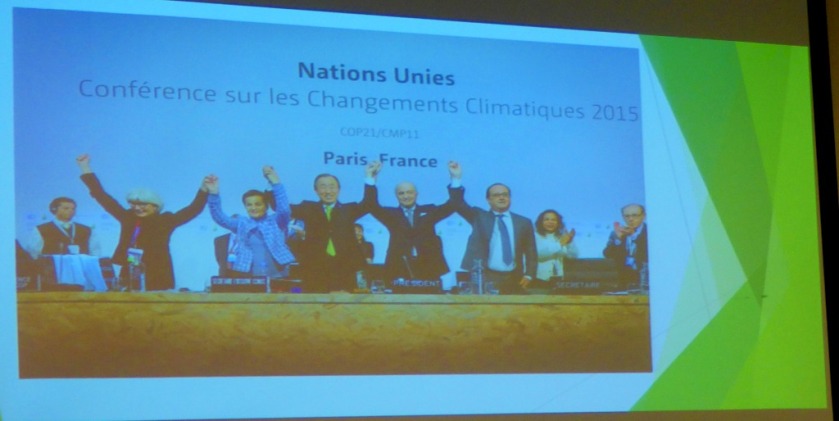
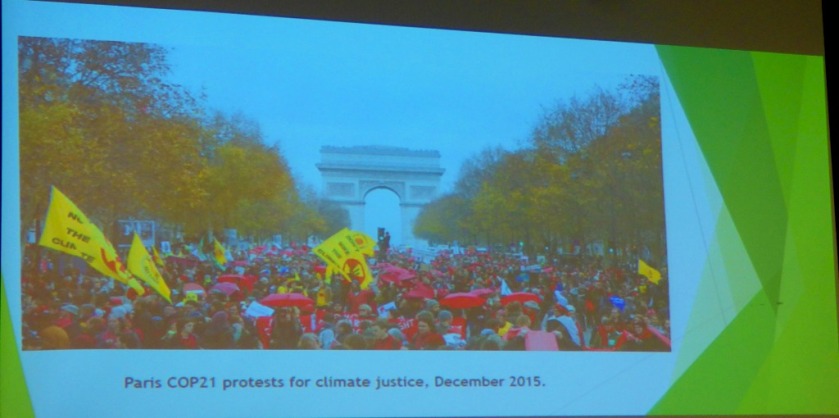
After this the speaker went on to talk about the inadequacy of the provisions made at an important meeting in Paris, the demonstration that occurred in Paris at the same time as that meeting and to end with a message:
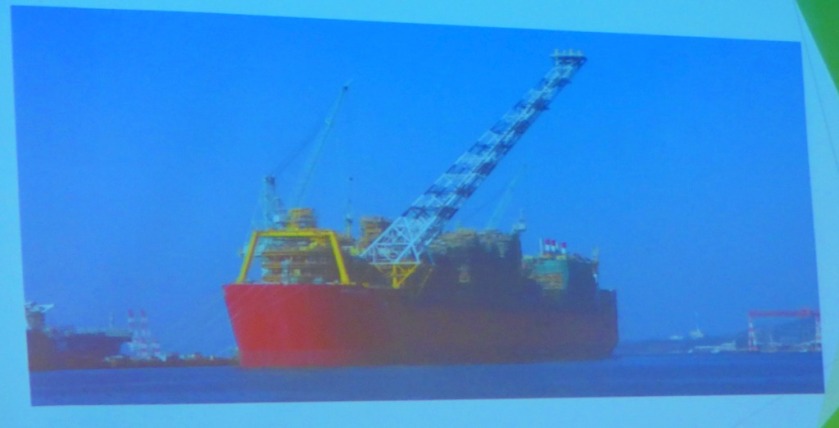
This is the largest floating object ever built by humans – an offshore gas platform owned by Shell.The ultimate message of this meeting.
There then followed an excellent discussion as people asked questions and made contributions, before Martin came back to tie everything together. This meeting was an excellent start to my Marxism 2018.
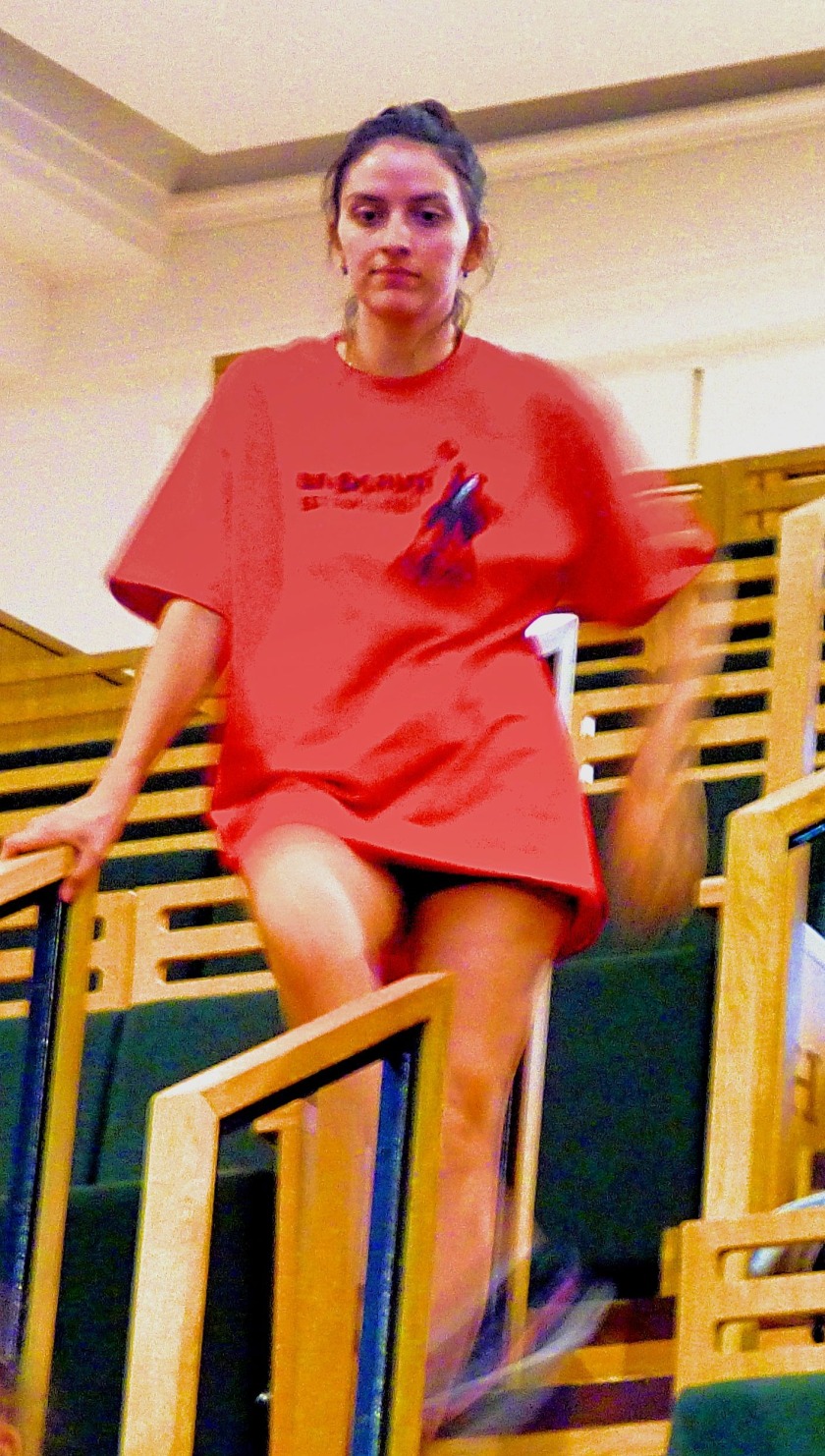
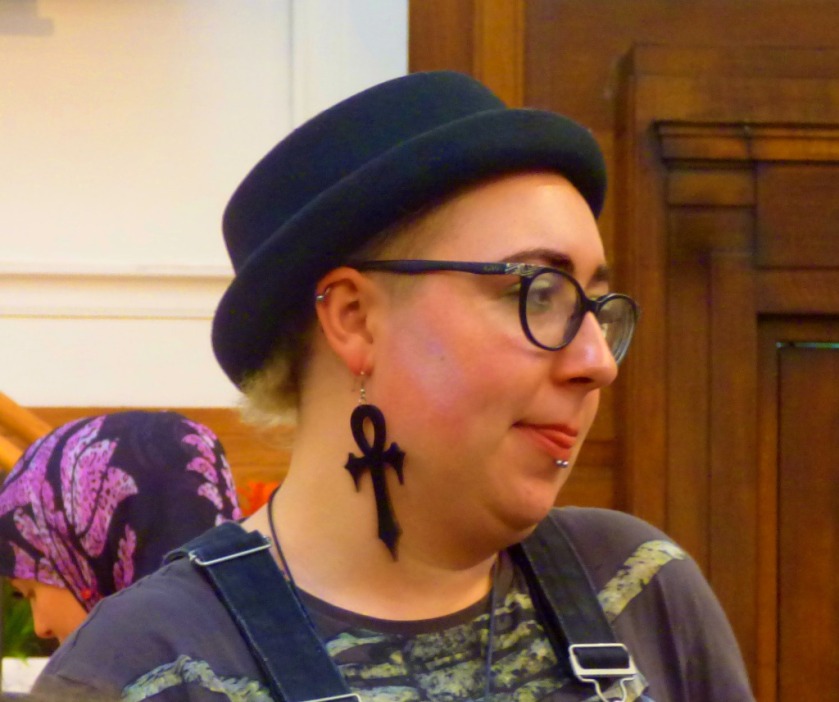
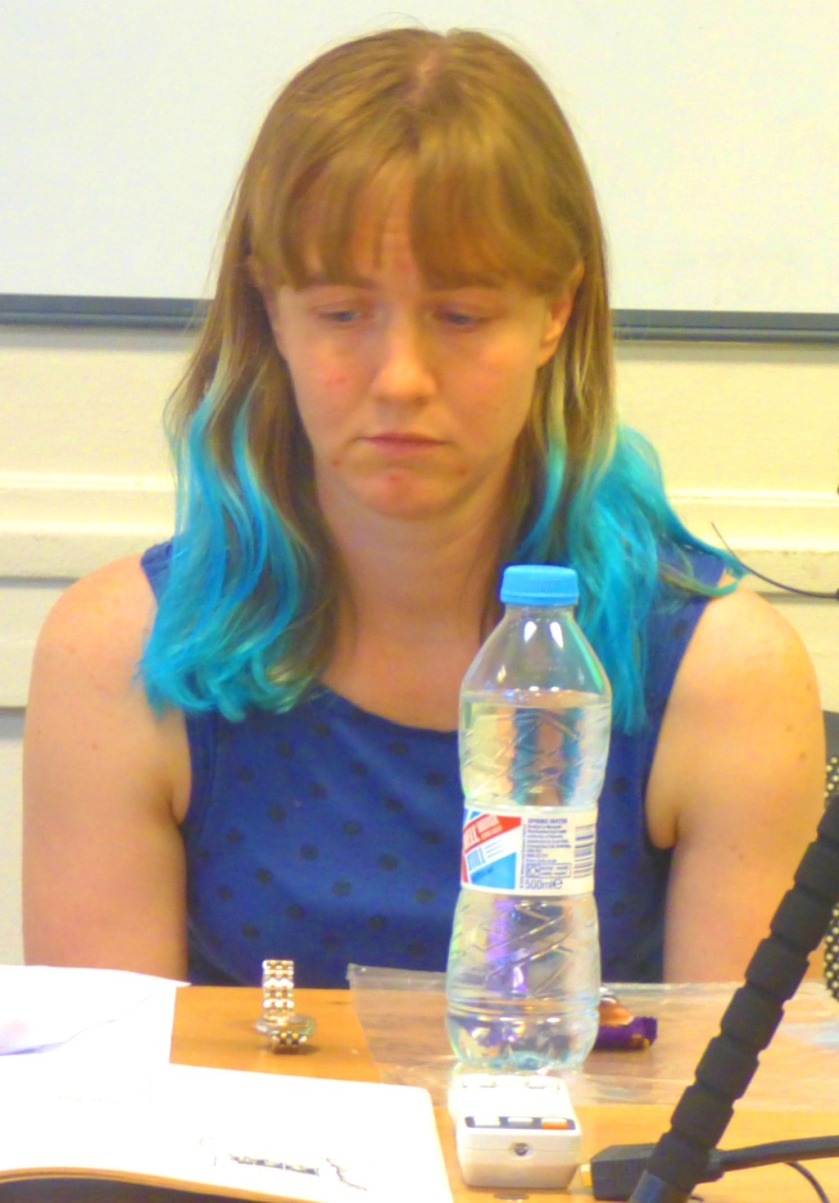
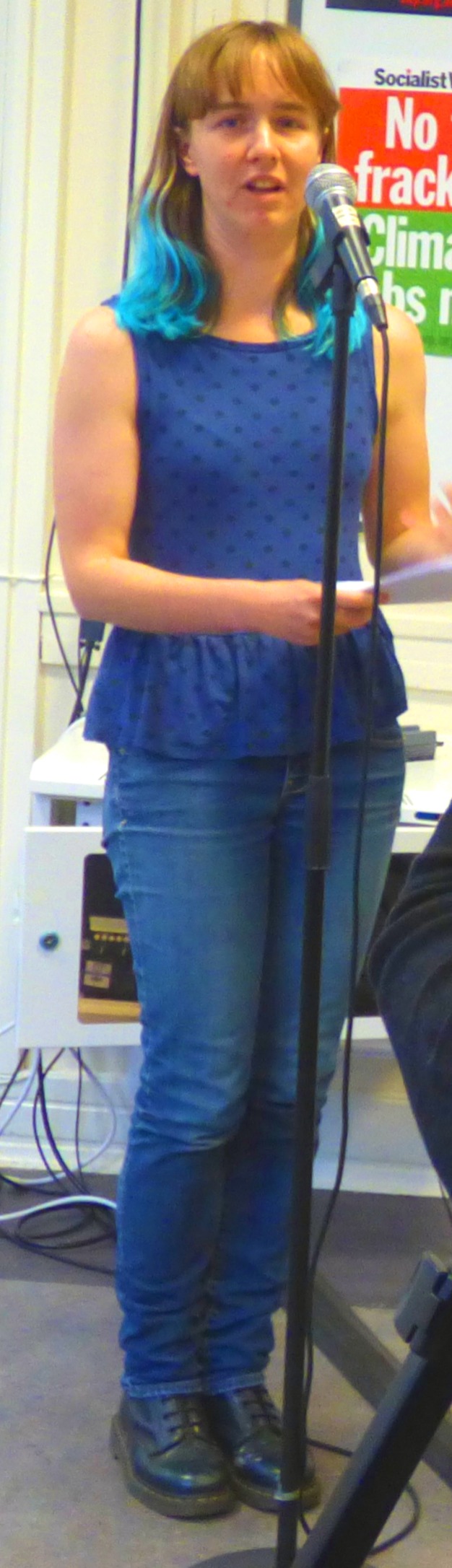
This young woman was to be the main speaker at the second meeting I attended, and her contribution from the floor in this one was excellent.Martin Emspon summing up.
A solution and two new problems by way of a quick post before setting off for Marxism 2018.
INTRODUCTION
I am writing this immediately before setting off for Marxism 2018, a four-day political festival taking place in London. I should be able to do some posting at the event and at my accommodation. In my recent “An A-Z of Me” I included a mathematical problem from brilliant.org, and I now post the solution to that problem and offer you a couple of others.
THE SOLUTION
The problem I posted earlier was this:
The answer is that there is not, because it turns out that the perimeter of a plus-plus is always a multiple of four, which 2018 is not.
TWO NEW PROBLEMS
These are also both from brilliant.org. One is easy but generated a bit of controversy, while the other is very hard to solve properly, but by applying logic it can be easily worked out what the correct answer is. First, the hard problem:
The easier problem which generated some controversy is this one:
Introducing the GoGo hares – worthy heirs to the elephants and dragons that preceded them.
INTRODUCTION
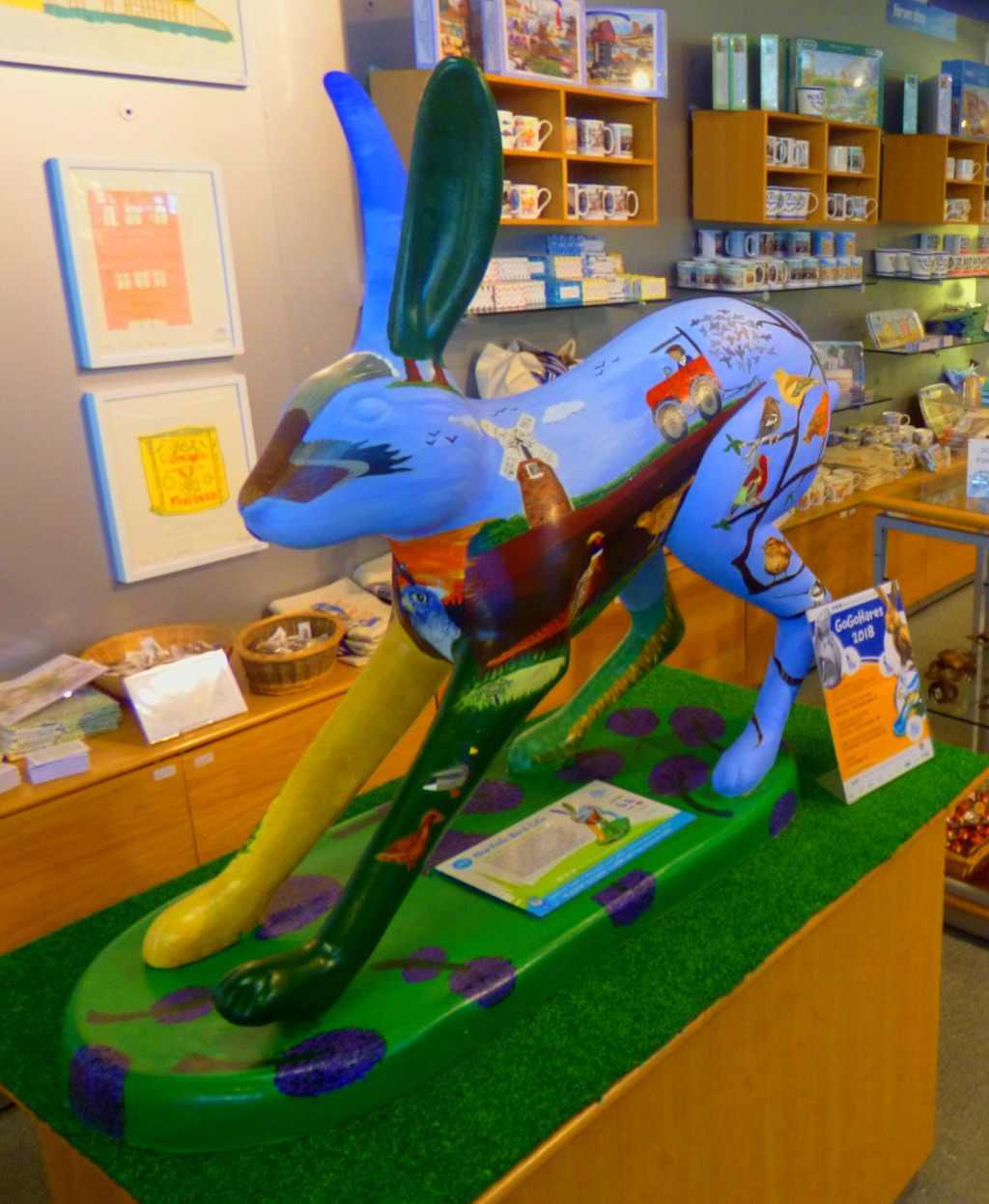
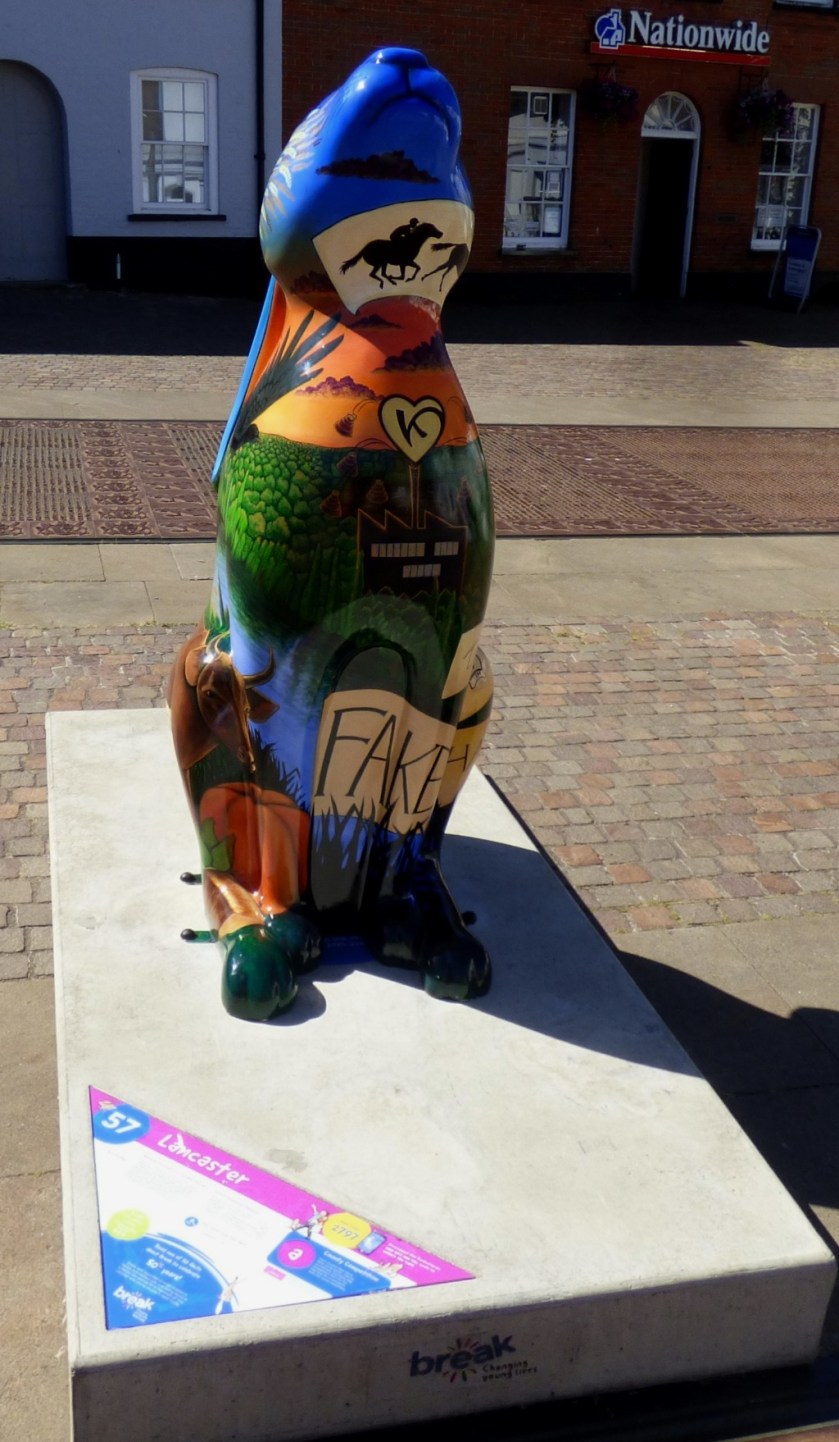
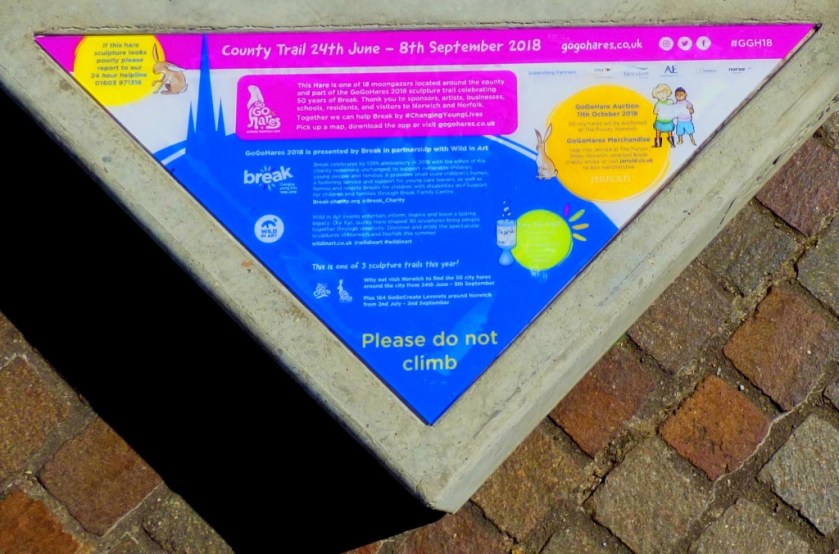
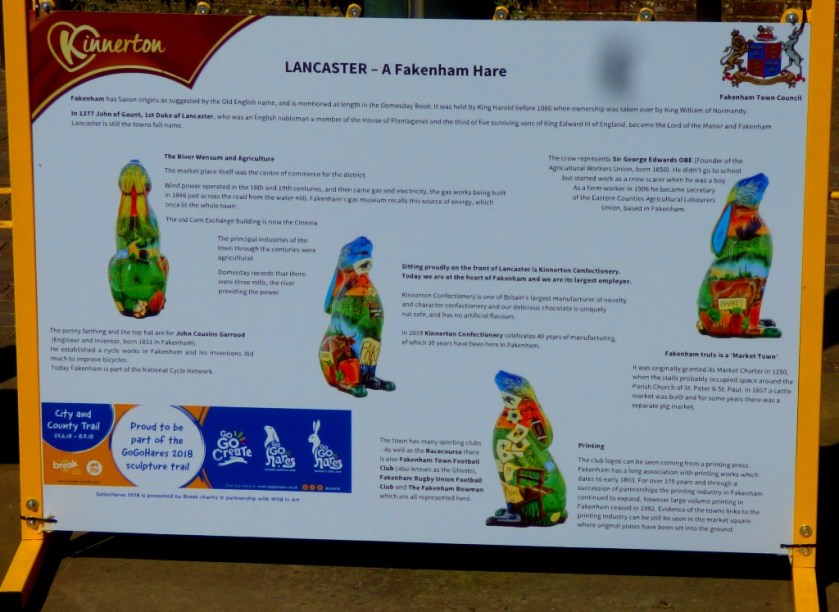
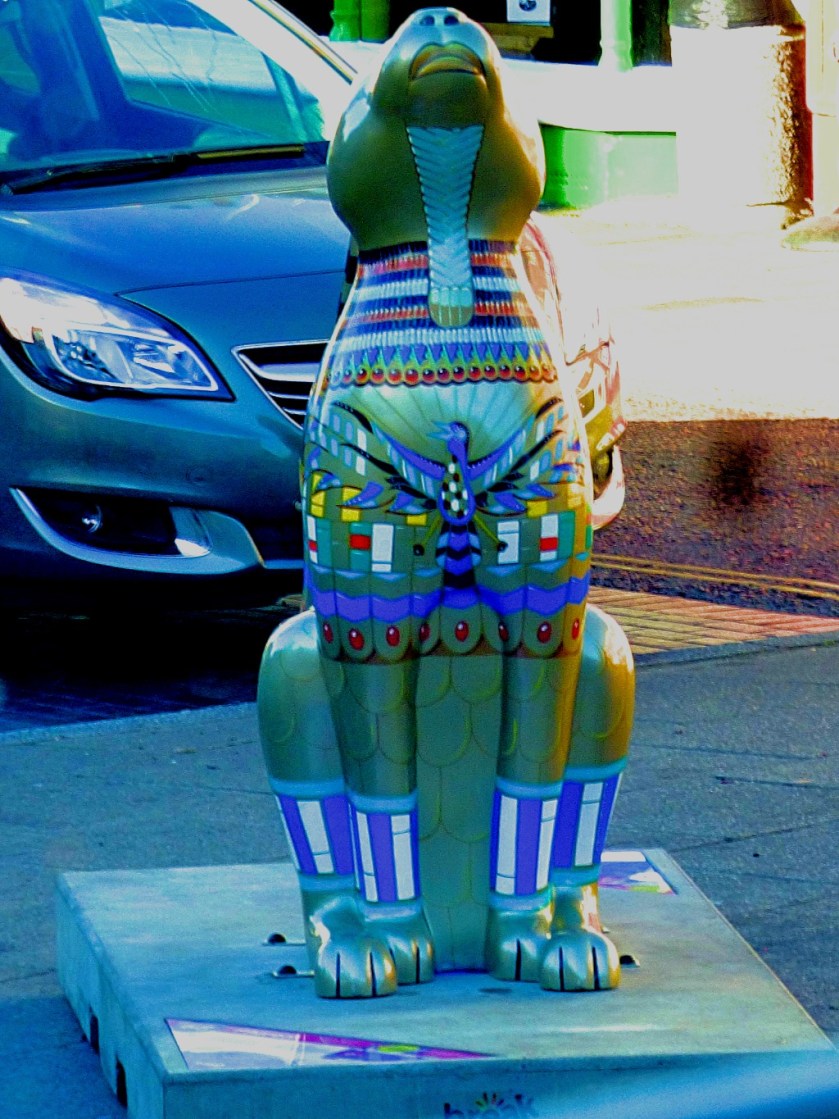
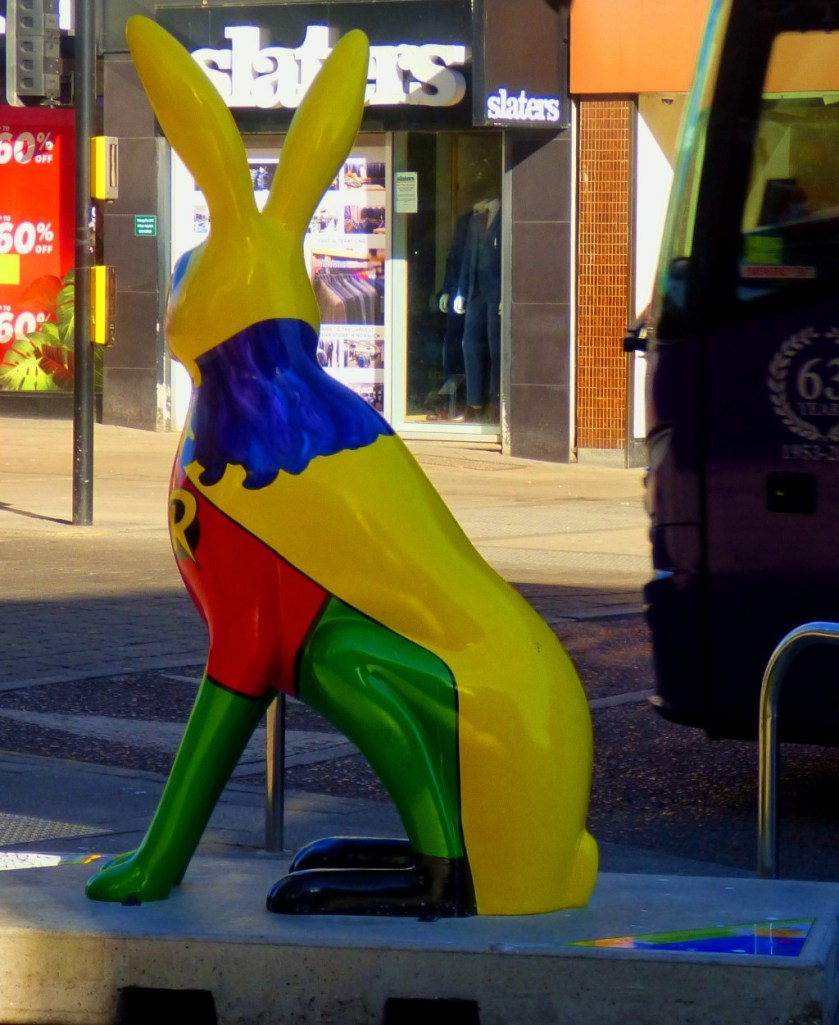
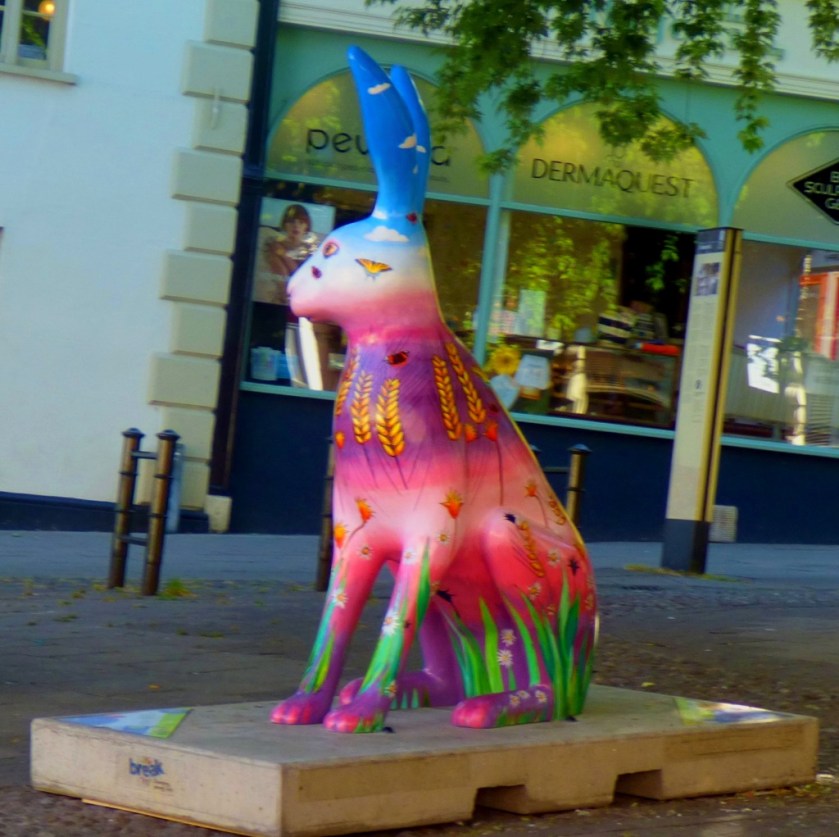
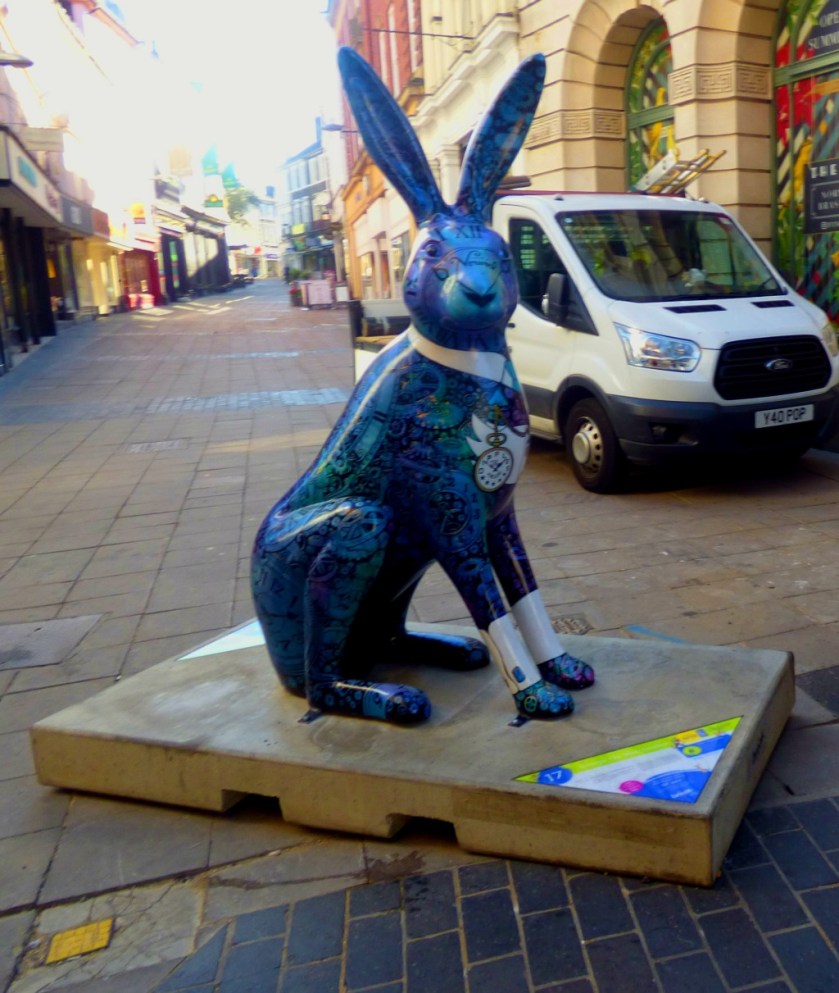
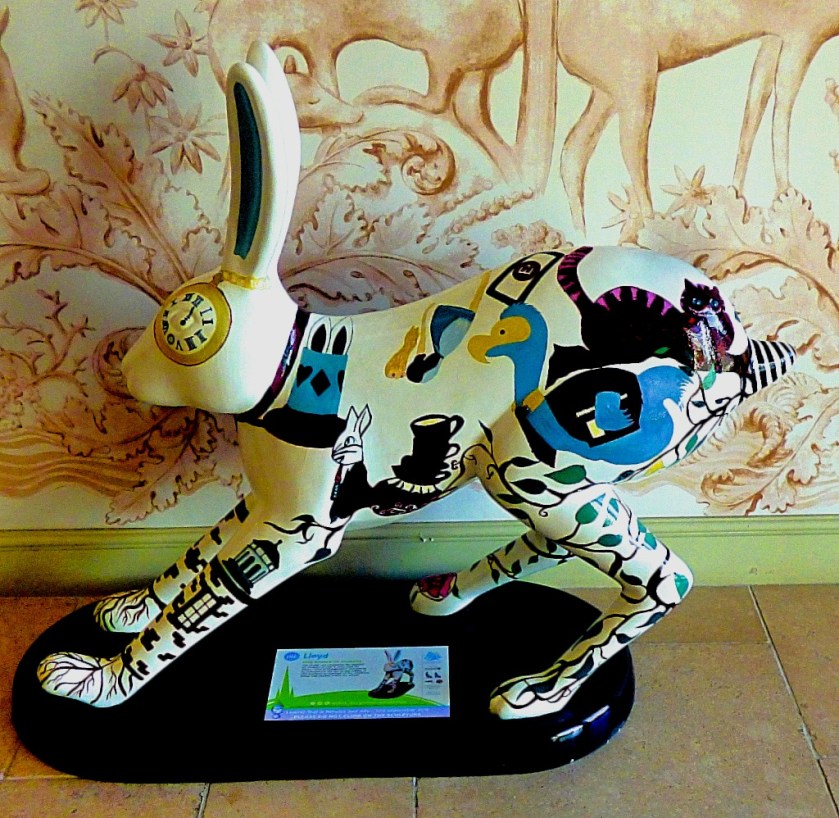
The charity Breakhave established something a tradition involving large painted fibreglass animals – it started with elephants, then dragons, and now for a third installment we have hares. This year they are looking beyond Norwich – there is one in Fakenham, which I saw on Friday, there is one in Dereham which I saw through the windows of the ExCel bus travelling to and from the auction that my employers had in the fine city of Norwich yesterday and there are a load of them distributed around Norwich, some of which I captured on camera.
PICTURES OF THE HARES
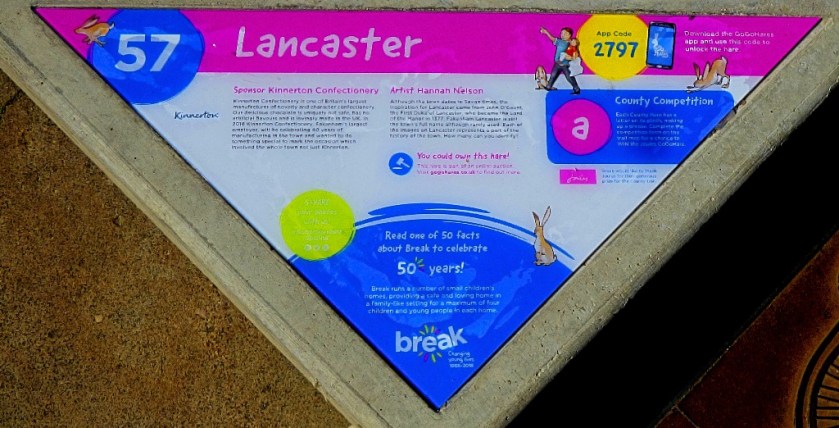
The first five images relate to Lancaster, the Falenham Hare, whose acquaintance I made while banking my wages.
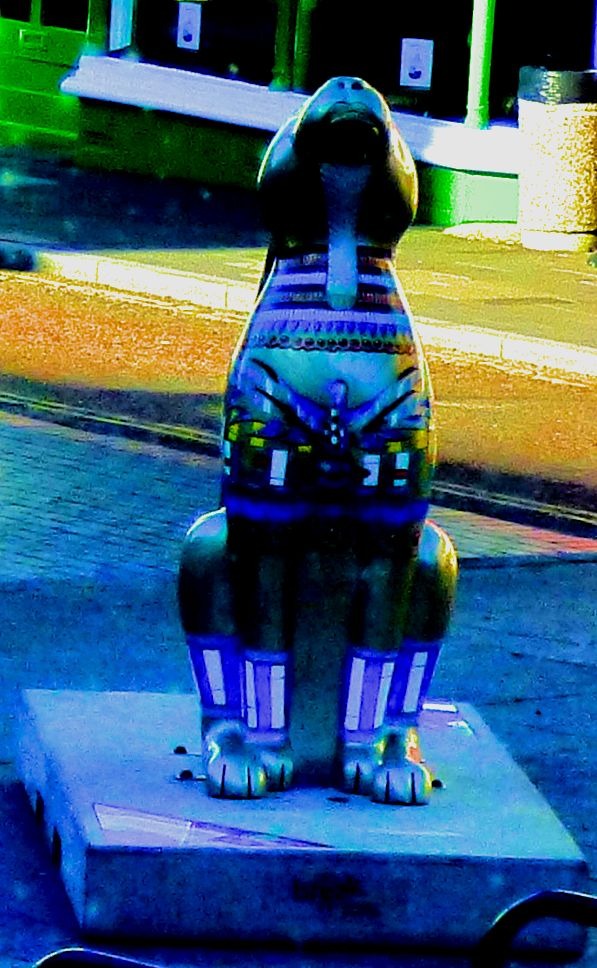
This Egyoptian style hare adorns the market place in Dereham
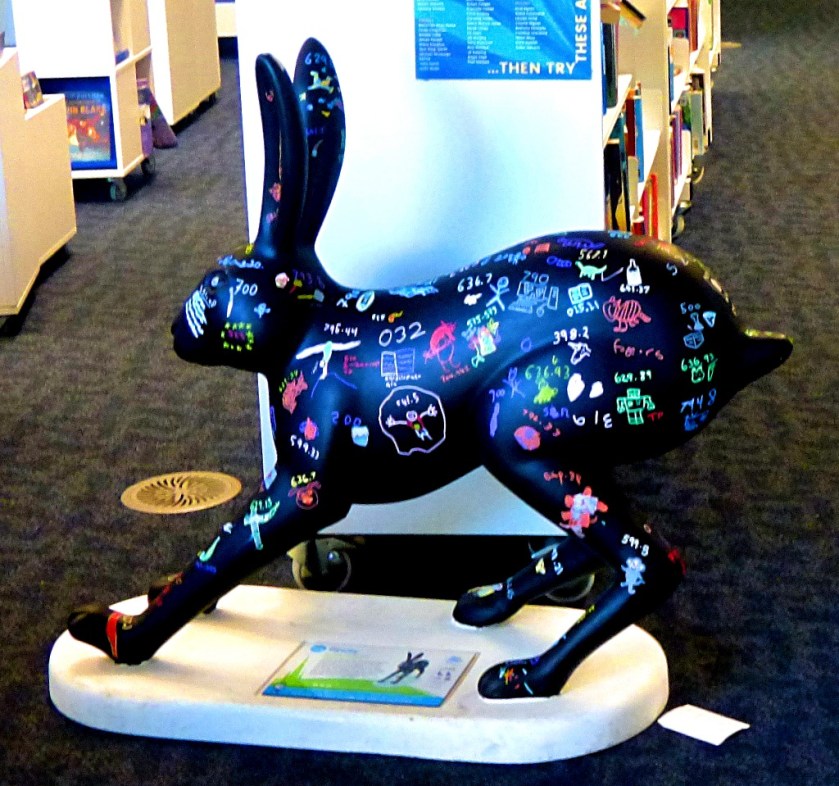
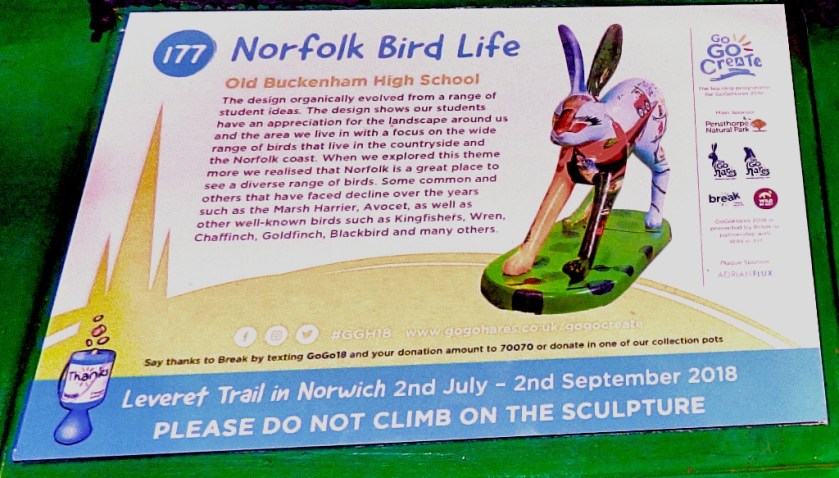
This hare resides at The Maids Head Hotel where we had our auction.Cruella De Vil might like this hare, located outside the Forum.This kafkaesque creation can be found just outside Norwich Millennium libraryWhile this one is inside the libraryThis “Norfolk birds” hare is in the main Tourist information office in Norwich
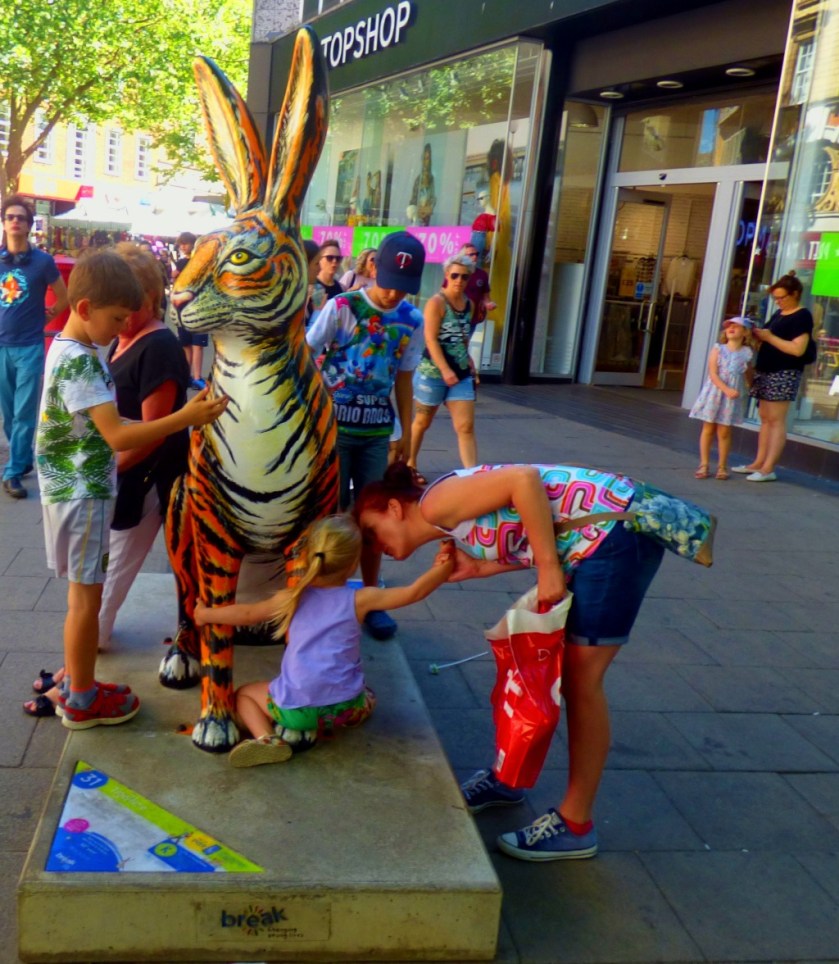
The late legendary Richard Whiteley would probably have described this as a hare-tigger (he specialised in this kind of pun).
A personal A-Z, inspired by a post on The Cornish Maid.
INTRODUCTION
This post was inspired by The Cornish Maid’spost “A-Z about Me!!!“. Like the post I have just referenced there will be one entry for each letter…
MY PERSONAL A-Z
A FOR AUTISM
I am autistic myself, and also branch secretary of NAS West Norfolk. This entry is a very appropriate starting point because it was my diagnosis and the role I then had running a support group for Asperger East Anglia that led me to create this blog.
B IS FOR BOOKS
I have always loved books, and am a very voracious reader. In addition to my own collection I am a regular user of several of Norfolk’s libraries, and yes I do use them to borrow books.
C IS FOR CRICKET
I have been an enthusiastic follower of cricket for over 3o years (my attempts at playing the game foundered on a chronic lack of talent). The fact that my employers had an auction yesterday and have another on Saturday means that I am off work today, and therefore able to listen both installments of the Women’s T20 double header. Here is the feature image from Saturday’s upcoming auction:
D IS FOR DETECTIVE STORIES
This is an extension of my love of books as a whole. I regularly borrow large quantities of detective ficition from thbe libraries. Among my very favourites are Edward Marston’s Railway Detective stories.
E IS FOR EAST RUDHAM
The village in West Norfolk where I began to rebuild my life after mental health issues had nearly destroyed me. I lived there for just over five years and was a regular visitor until my parents recently moved to Cornwall.
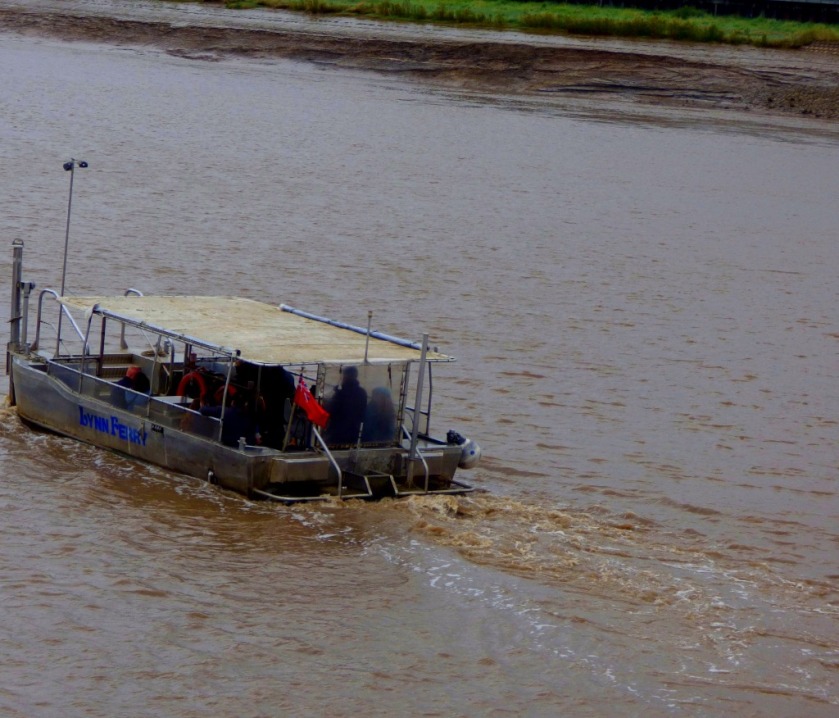
F IS FOR FERRY
I have travelled on many ferries in my lifetime, but the one I particularly think of nowadays is the Lynn Ferry which has been running for over 800 years.
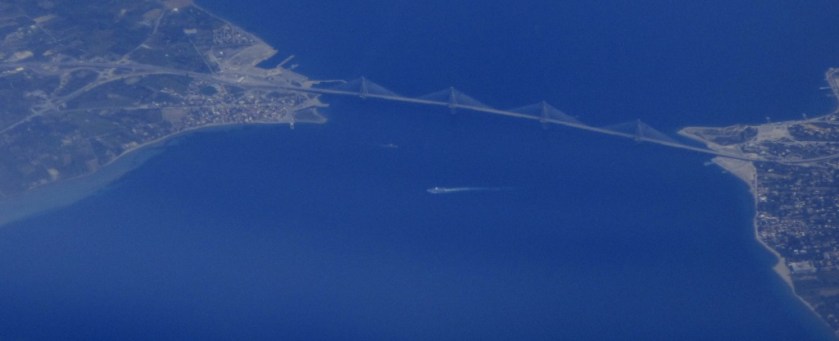
G IS FOR GREECE
I first visited Greece for a family holiday about 35 years ago and have been back mnay times. It remains a favourite holiday location. I have produced a number of posts about my most recent visit.
H IS FOR HISTORY
One of the many subjects I enjoy reading about. One of the reasons I enjoy going to Greece so much is the presence of so many historic sites.
I IS FOR IRRELIGIOUS
I have been a staunch atheist for my entire adult life. For those who take the approach that the Northern Ireland census form used to I am a “catholic atheist” – that being the specific religion that I rejected. To paraphrase Richard Dawkins most people are as atheist as me about almost every god who has ever been believed in – I just go one god further than they do.
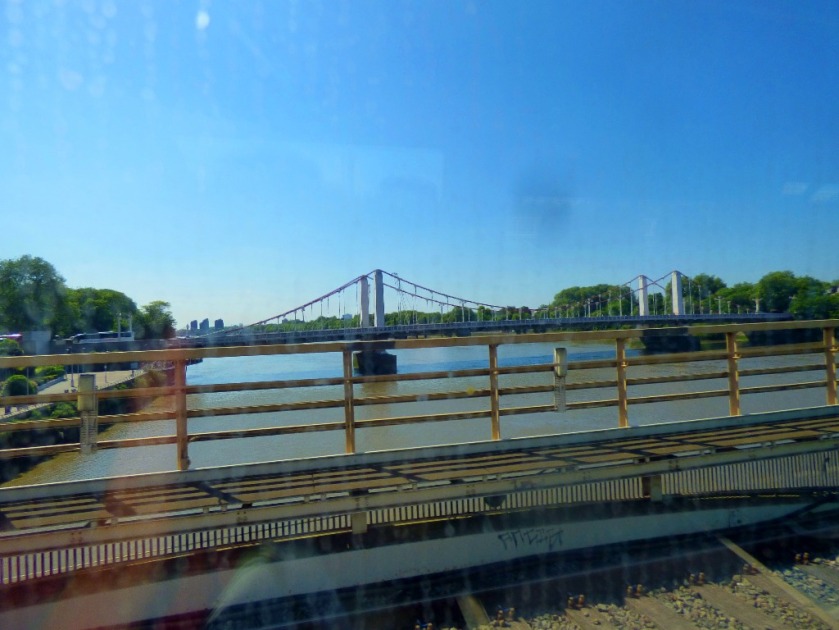
J IS FOR JOURNEYS
I love travelling, and being a lifelong non-driver am able to make good use of almost all my journeys – if the route is not familiar to me I will be observing the scenery and taking photographs, and if it is it represents reading time. K IS FOR KERNOW
Kernow is the Cornish name for Cornwall (this is the only entry in my A-Z that overlaps with The Cornish Maid’s), and although unlike the person who inspired this post I do not live there I have been there a number of times over the years and my parents have recently moved to that part of the world. It is a Cornish picture that appears on the reverse of my personal cards:
L IS FOR LONDON
I grew up in London, and still visit the place on occasion. Also, I run a London Transport themed website, www.londontu.be. I will be back in London during the latter part of next week, for Marxism 2018 which runs from Thursday to Sunday.
M IS FOR MATHEMATICS
Another lifelong interest, and something that I am very good at. Here is a frecnet problem from brilliant.orgthat took my fancy:
N IS FOR NATURE
Nature has always been very important to me, and I love being out and about in nature with my camera for company. My name is often to be found among those supporting campaigns to protect nature, and as a thoroughgoing internationalist I take pride in having been the first non-Swede to sign the online petition to save Trosa nature.
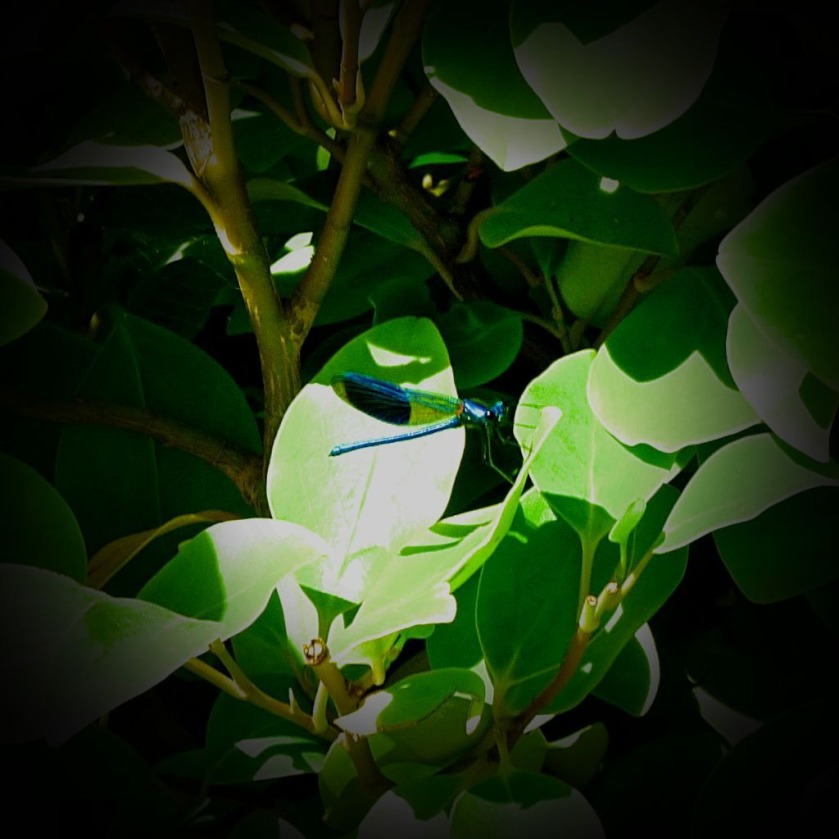
A spectacular creature, presumably some form of dragonfly.
O IS FOR OVAL
Because of their shape many cricket grounds have Oval in their name. The two with which I am most familiar are The Oval, in South London not very far from where I grew up, and served by two stations, Oval and Vauxhall; and the Adelaide Oval, which owes its name to a transplanted Surreyite who suggested it because he wanted to be reminded of home. Of the innings I have seen live at the ground the most memorable at either of these two venues was played by David Gower in 1990. England could do no better than draw the game, which as it happened was enough to give them the series. Gower made 157 in that innings, and by the time he was out the draw had long since been secured.
P IS FOR PHOTOGRAPHY
This is a hobby of mine, and also something I do at work. Here are some recent pictures:
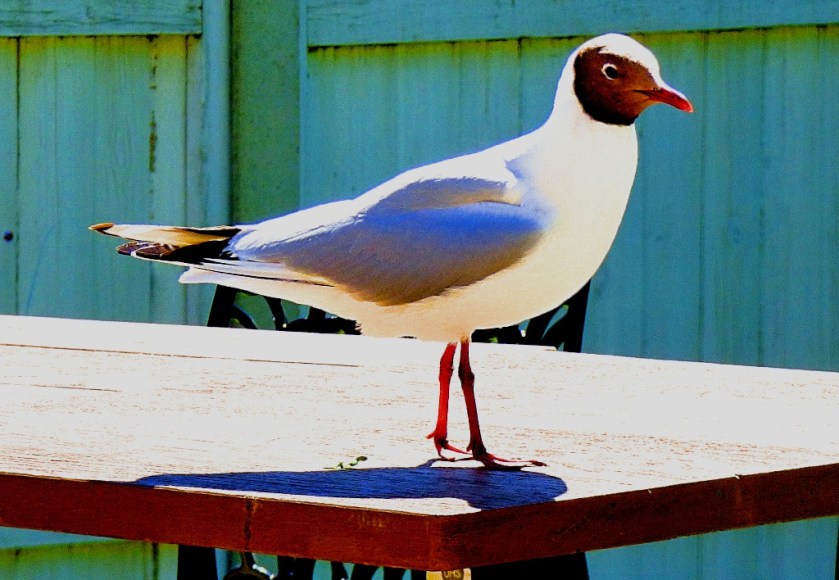
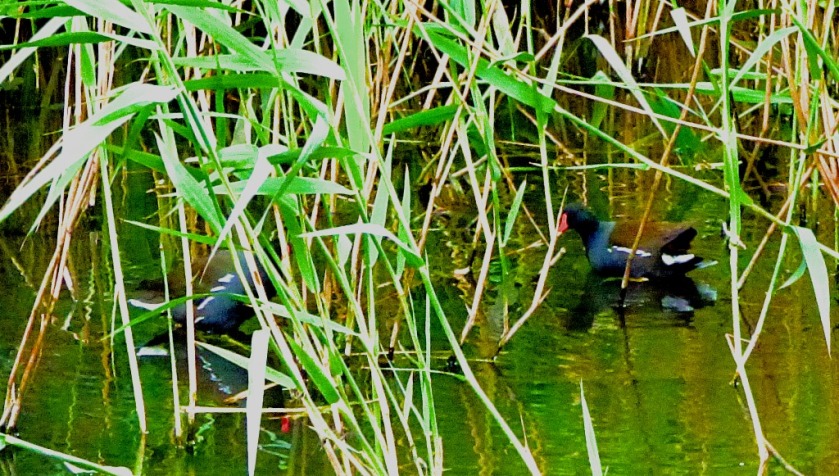
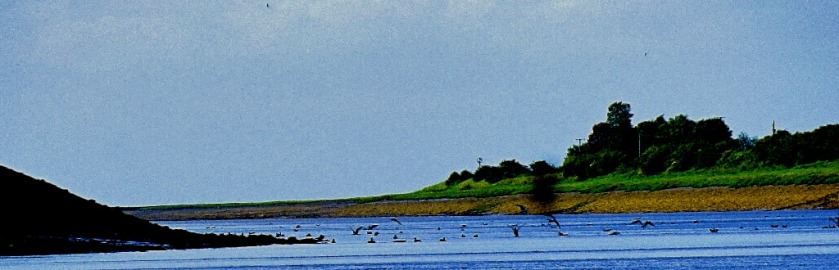
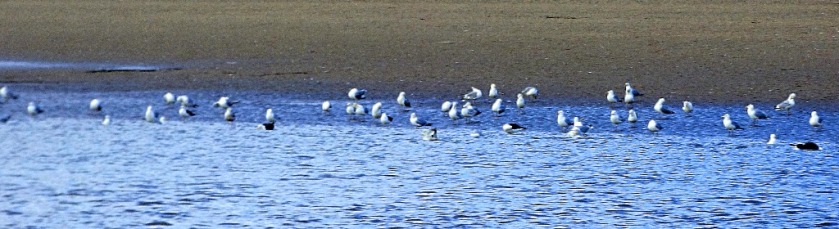
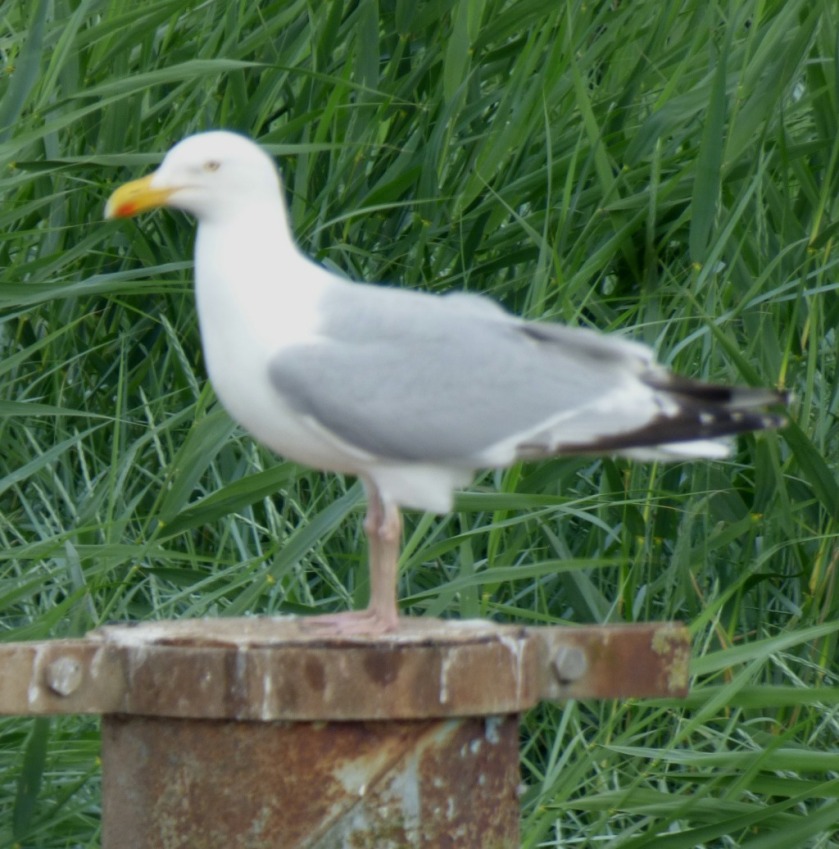
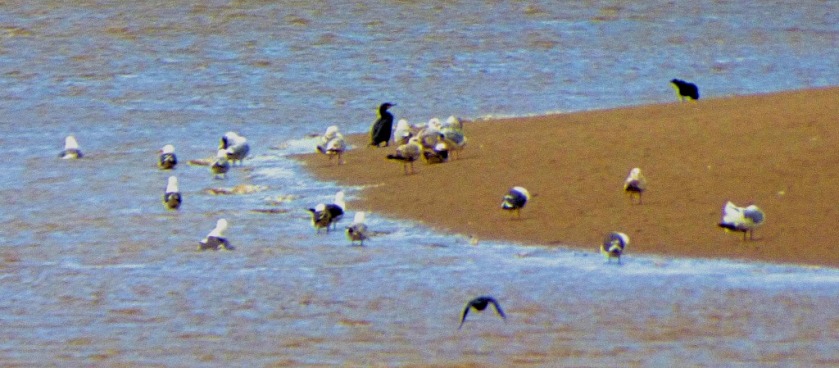
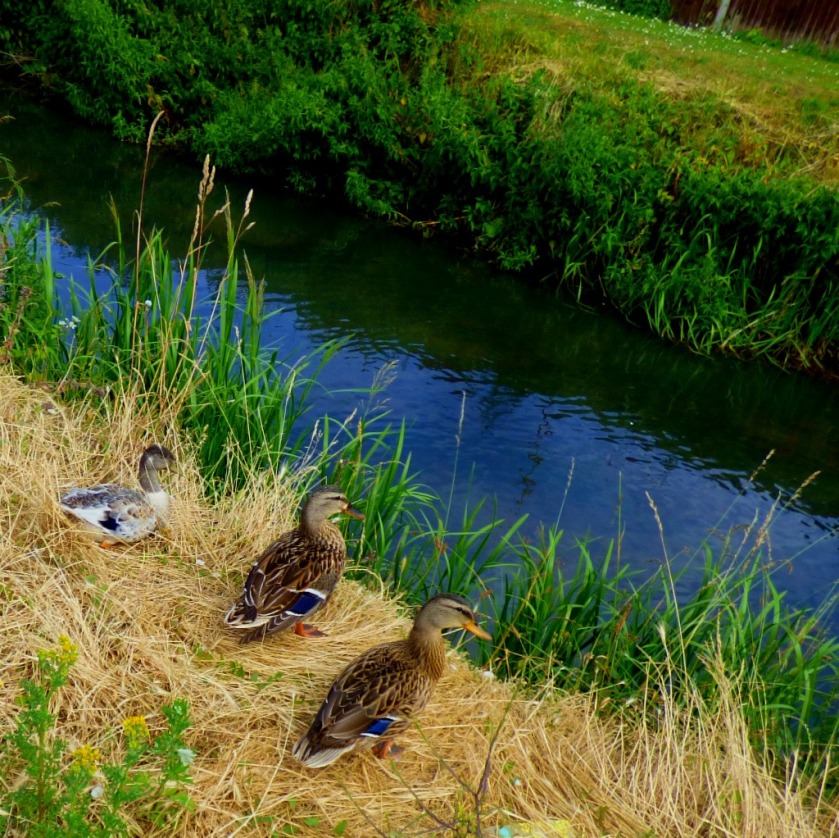
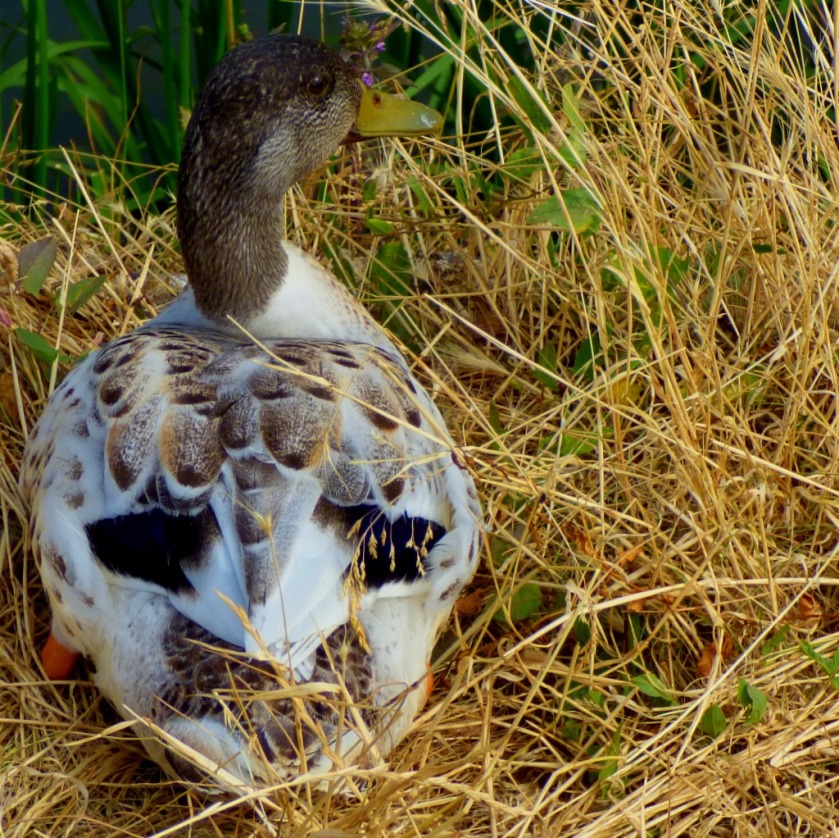
Three recent bird pictures
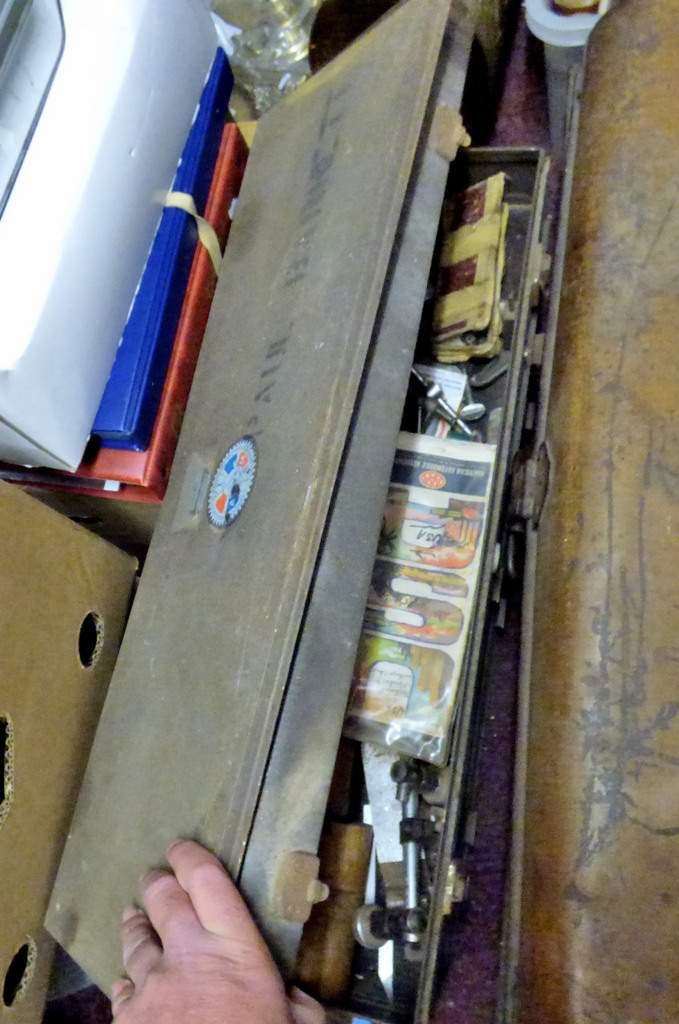
This was lot 840 at yesterday’s auction – some good tools but the box being solid iron makes for an extremely heavy item.
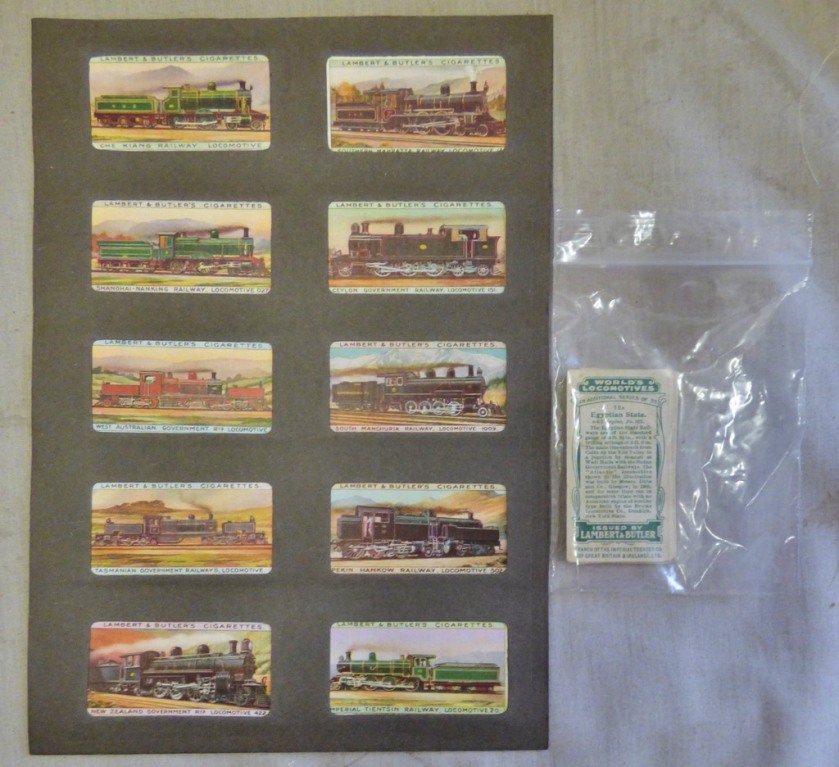
Lot 2188 in Saturday’s upcoming auction.
Q IS FOR QUIZ
With my eclectic interests and retentive memory I am pretty good at quizzes (unless they are overloaded with questions about pop music), and generally enjoy taking part.
R IS FOR RAILWAYS
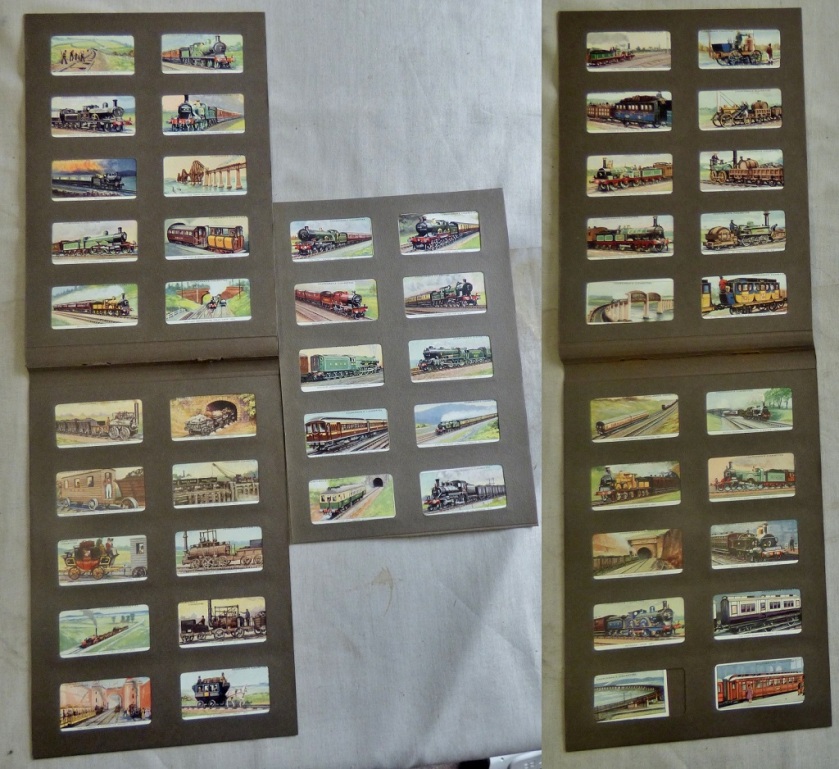
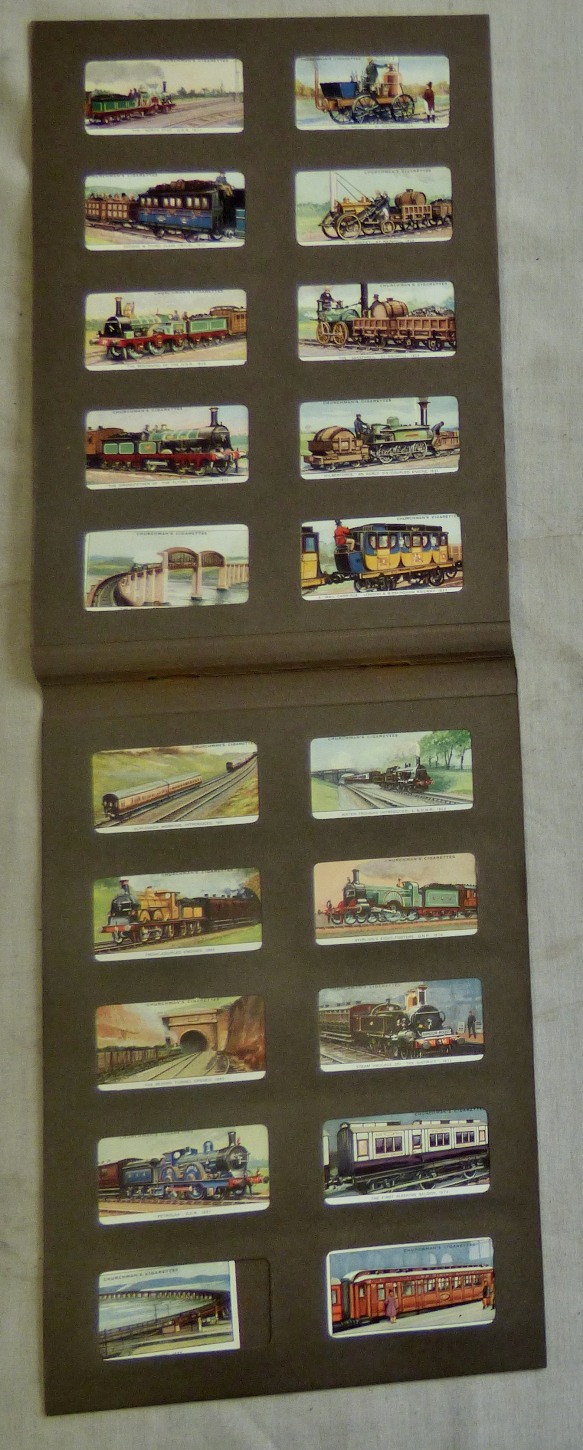
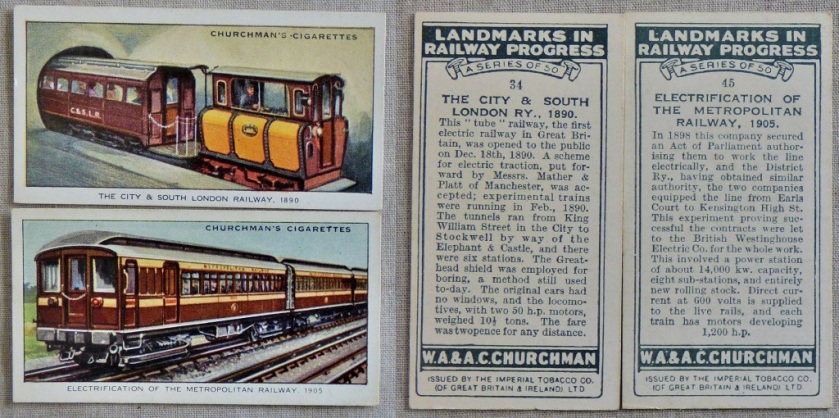
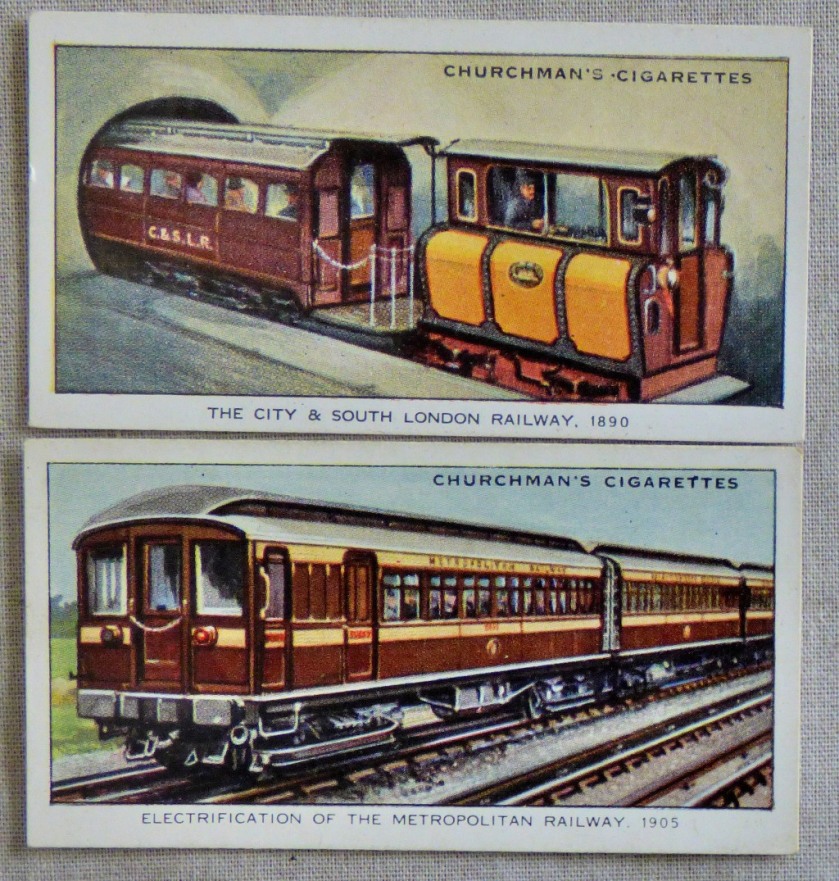
Railways are one of my special interests. I have travelled on railways in many different countries and have also built up a decent collection of railwayana. I may add to my collection on Saturday.
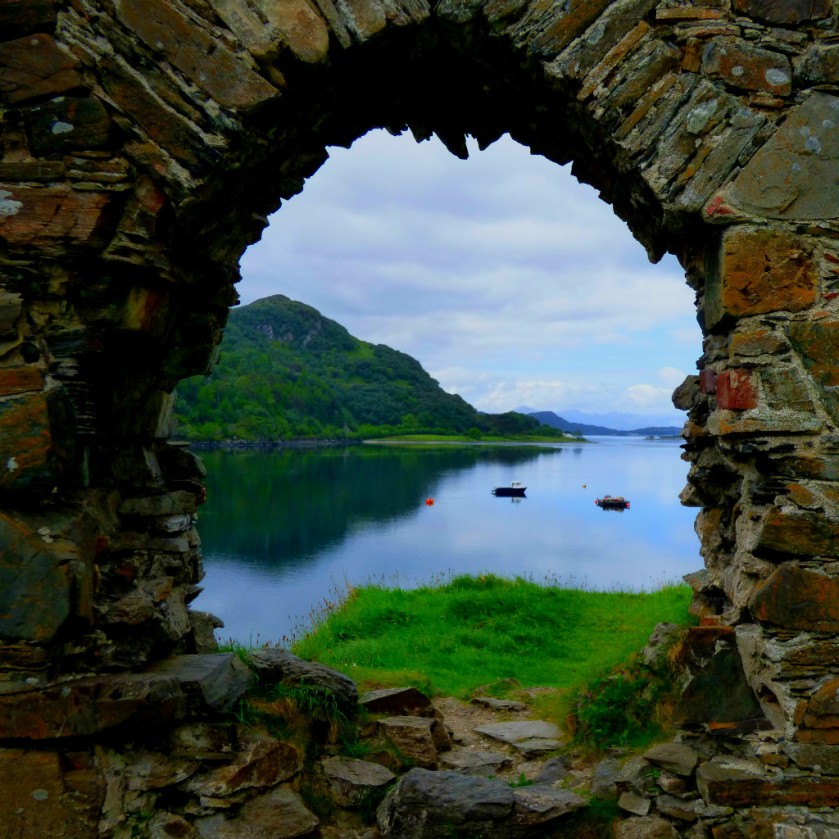
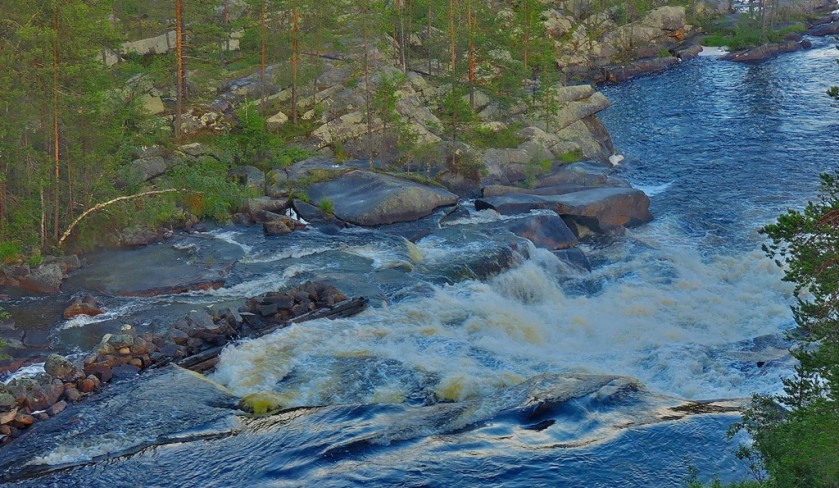
S IS FOR SCOTLAND AND SWEDEN
These are two of my favourite countries to visit, both very scenic. I could find no way to split them so I have decided to honour both places.I have produced a number of posts about both Sweden and Scotland. Here are a couple of pics: A view from Strome Castle, Scotland
This river is in Northern Sweden.
T IS FOR T20
Yes – another cricket related entry. T20 (where each side bats for 20 overs) has been a great success since its introductiuon in 2003. However the new 100-balls per side competition is being too clever by half (and consigning the County Championship to the start and end of the season when conditions are least suitable for long form cricket).
U IS FOR UNIVERSE
I find it fascination reading theories about our universe, its possible origins and its possible place in a wider cosmos. I also find the history of how we moved from considering our planet to be at the centre of a fixed universe to recognising it as pale blue dot (hat tip to Carl Sagan who wrote a book of that title) in the immensity of the cosmos to be fascinating.
V IS FOR VARIETY
One of the things I enjoy about my current job is that there is plenty of variety there. I am firmly in the camp of those who say that variety is the spice of life.
WHY EVOLUTION IS TRUE
Jerry Coyne’s 2009 book with that title remains a firm favourite (along with his more recent Faith versus Fact), and it is also the title of a blogrun by Professor Coyne that I follow.
X IS FOR EXHORT
As I near the end of this post I exhort you to produce your own version – it is time consuming but fun. You have seen my version, and if you followed the opening link you have seen the version that inspired me to take on this challenge – now go and do likewise!
Y IS FOR YARBOROUGH
This is a bit of a cheat – it is my way of mentioning the game of Bridge which is a firm favourite of mine. A yarborough is a hand with no card higher than a nine and 4-3-3-3 distribution, and is named in honour of Lord Yarborough who had all bridge players at his house contribute a guinea to a kitty, while if someone had the misfortune to be dealt the hand that now bears his name they got 1,000 guineas (he was on to a winner – the actual odds against the hand coming up are 1827 to 1). I do not get to play very often but I am a pretty good player of the game.
Z IS FOR ZOOM
A zoom lens can be a real boon for a photographer (my current camera has a zoom capacity of up to 60X) – a little tip from experience is to not stretch the zoom lens right to its limits – leave a bit of space around whatever you are photographing (you can always crop it out during the editing process). This post was inspired by a Cornish blogger, so I end with a Cornish picture.
An account of yesterday’s auction at Fakenham Racecourse.
INTRODUCTION
Yesterday James and Sons had an auction at Fakenham Racecourse, the first in 2018 to take place anywhere other than our shop in Fakenham, and the first at that venue with me in sole control of the IT side of things (the latter being a cause of some trepidation). The auctioneer and I had visited the racecourse the Friday before to establish that our IT setup (including the card terminal as part of the IT setup) would work there, and the auction lots and IT stuff were moved down to the racecourse on Tuesday.
GETTING THERE
I caught the 7:00 bus to Fakenham (the earliest, and my regular one on workdays anyway these days) and on what was already a warm sunny morning enjoyed the walk from Oak Street to the Racecourse (which is located not as its name suggests in Fakenham but just outside the adjoining village of Hempton), arriving at the venue at just before ten past eight. The auctioneer arrived a few minutes later and I was able to accomplish the IT setup before any viewers arrived. We had Croc’s providing catering at the event, and I took the opportunity in a quiet period to fortify myself with a bacon bap.
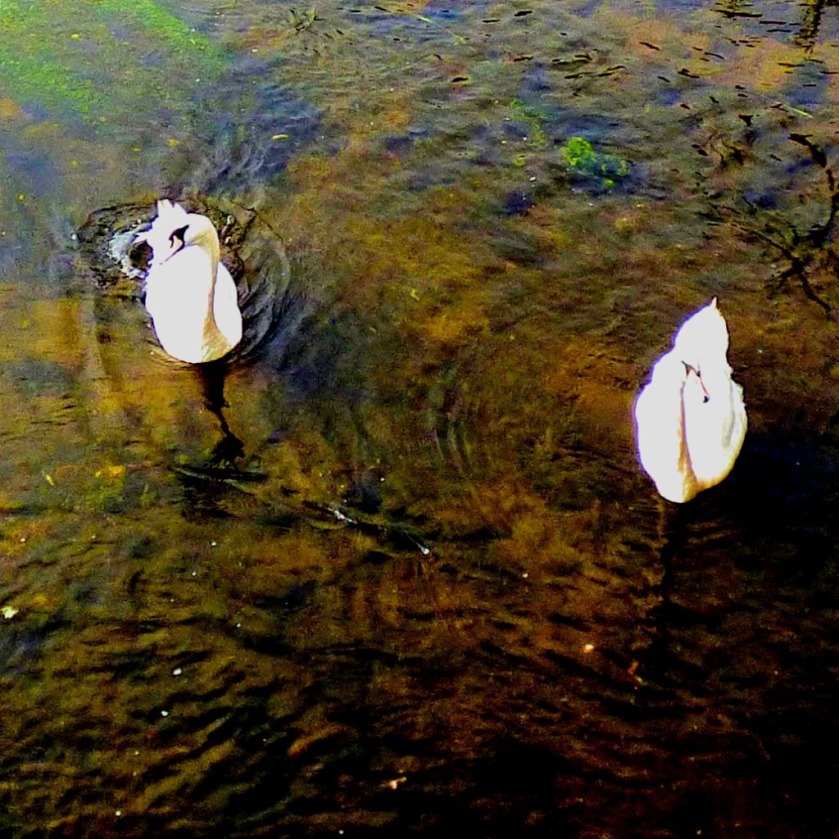
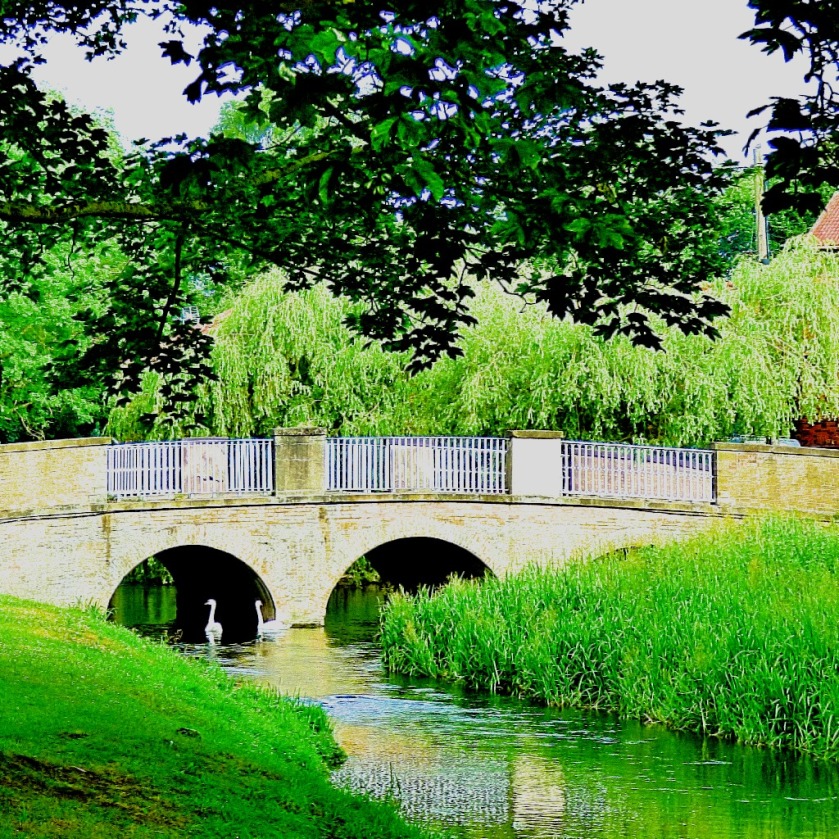
Crossing the Wensum en route to the racecourse I spotted this pair of mute swans enjoying the sun.
This bridge across the Wensum gives Bridge Street, Fakenham its name.
A BRIGHT START
For various reasons (to do with a combination of over-ambitious planning and an important member of staff being absent for a long period of time) this auction had some odd numbering of lots (it started at lot 741, and then there was a 50 lot gap between the end of the first section and the start of the coins at lot 901, then a massive gap after the last coin lot, no 1072 to the start of the Militaria at 1,466, then another major gap from the end of the militaria at lot 1,620 to the start of final segment at lot 1,920, with the last lot of the sale being lot 2,000), but although there was a range of almost 1,300 between the first and last lot number there were only 503 lots in the sale. We originally planned to take a short break at the end of the coin section before starting on the Militaria, but this as you will see changed part way through.
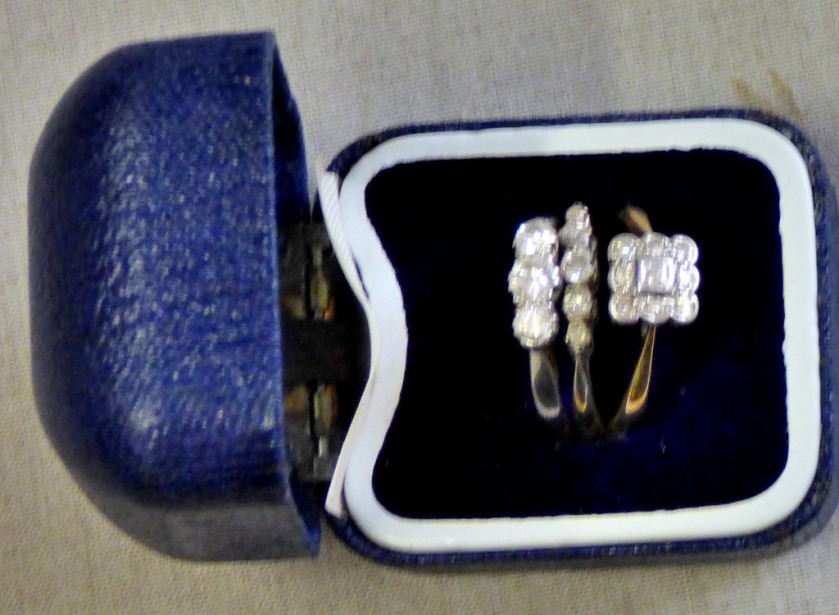
The first big success of the auction came at lot 747, three gold rings, which had been valued at £70-100 but ended up selling for £150…
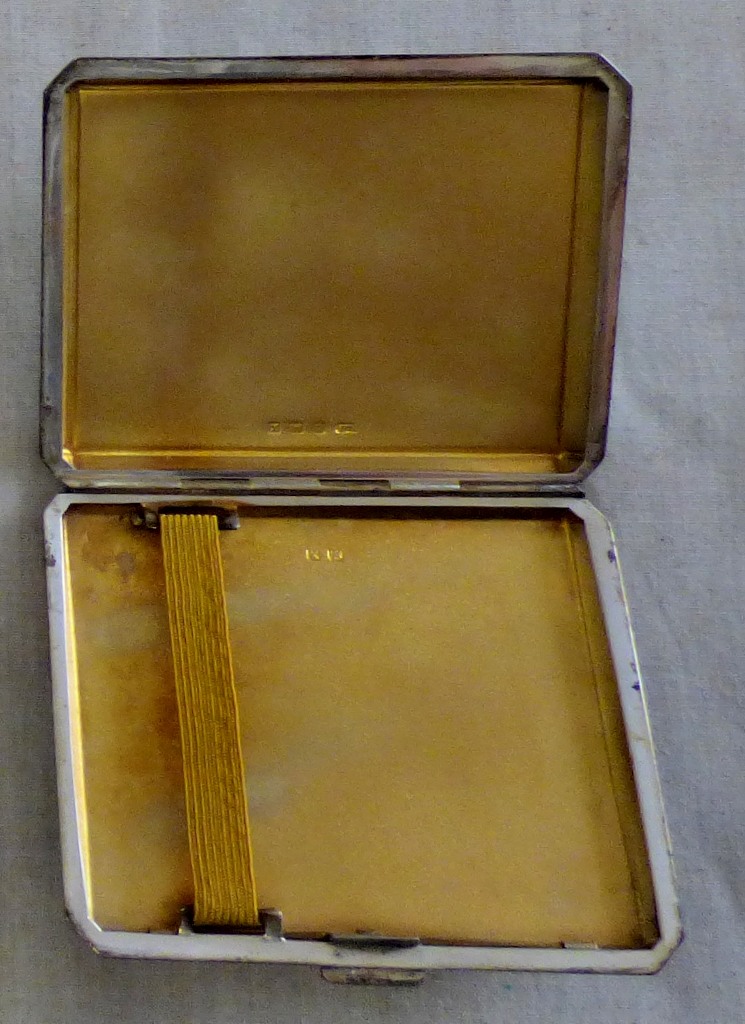
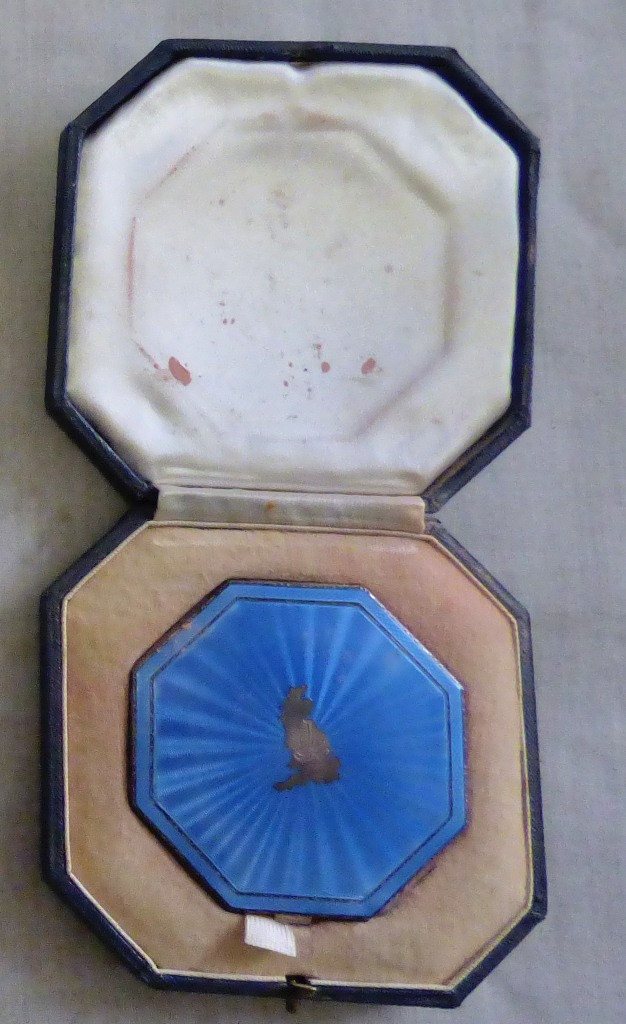
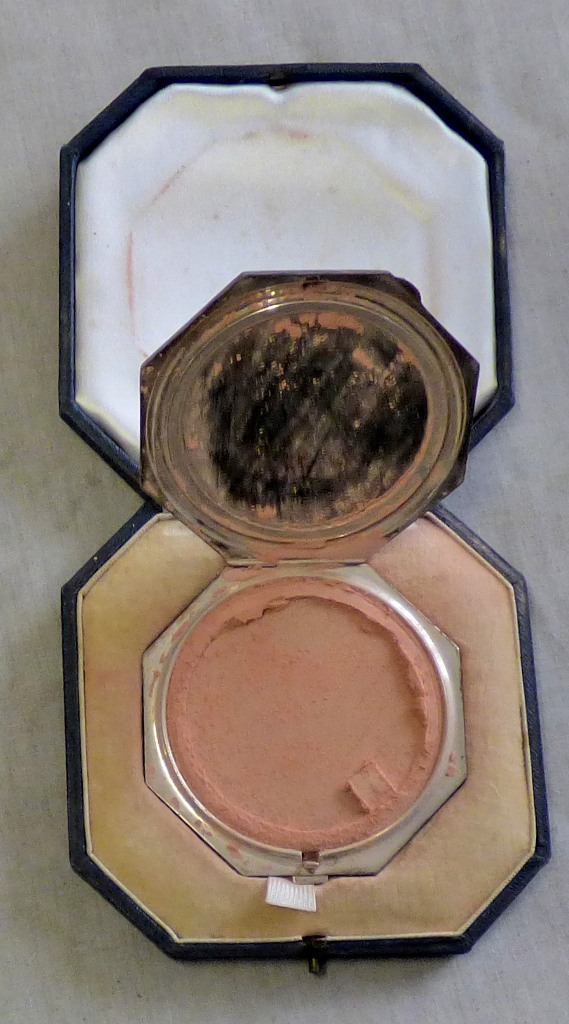
Then lots 757 and 760, a ladies cigarette case and a ladies powder compact of similar styles, both esitmated at £30-40 went for £65 and £60 respectively, both to the same online bidder.
Lot 757 (three images)
Lot 760 (two images
These however were a mere curtain-raiser for…
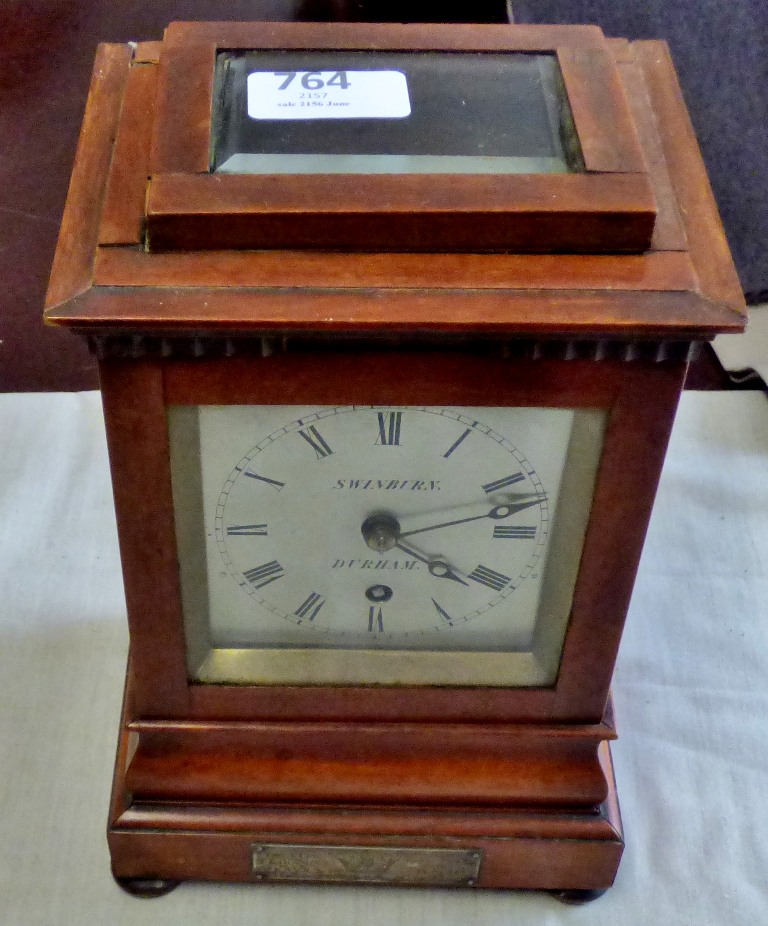
LOT 764 – A PHOTOGRAPHER’S TRIUMPH
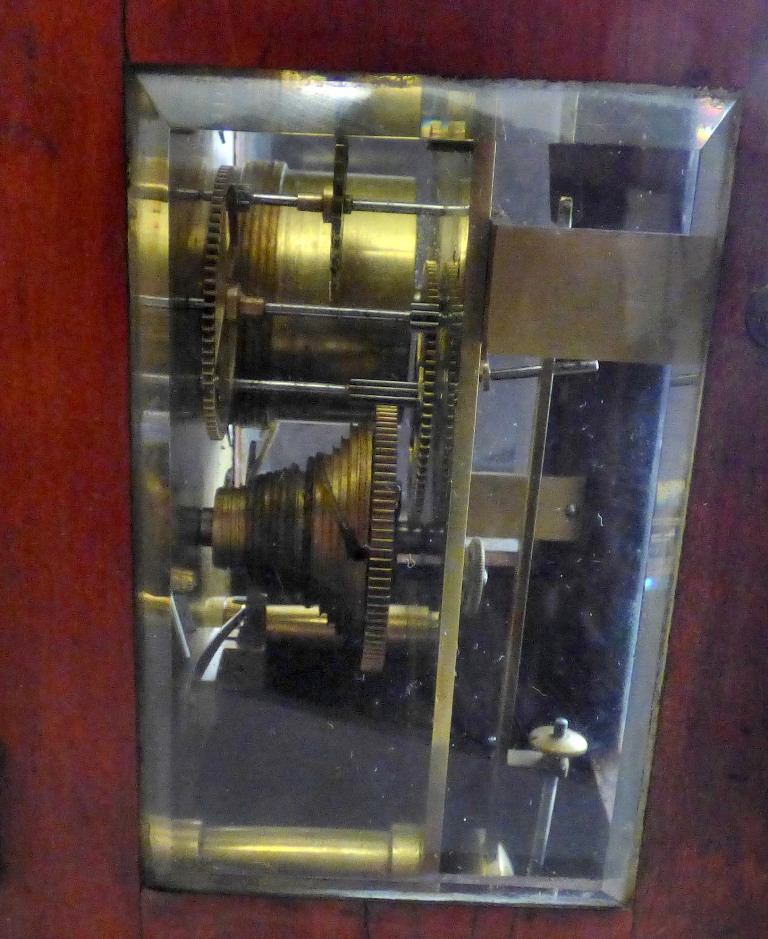
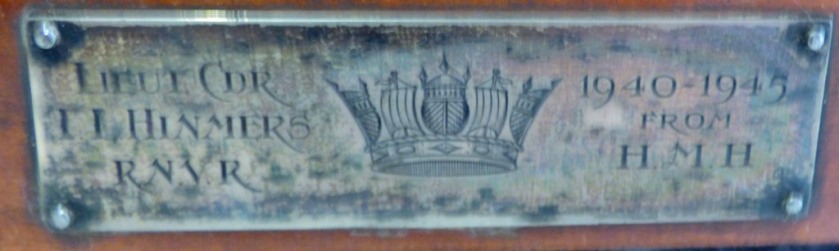
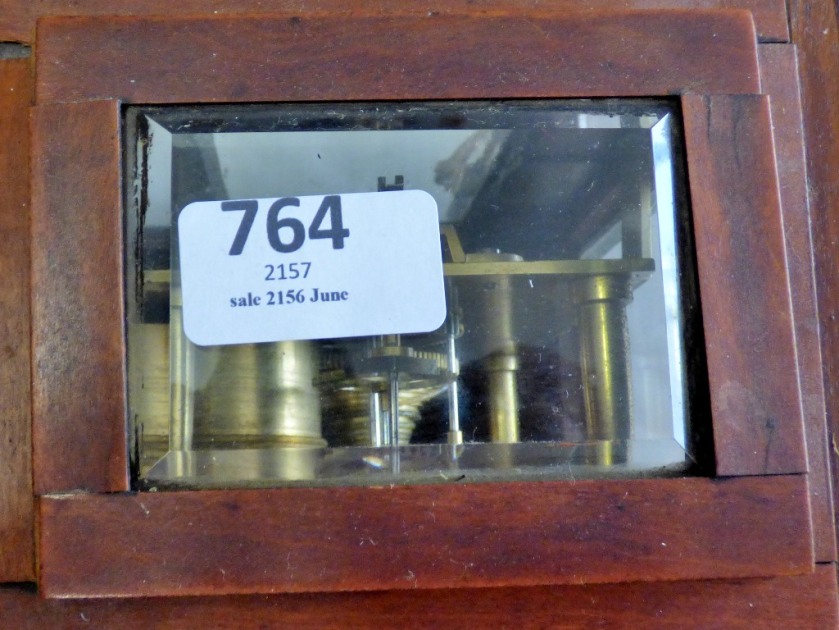
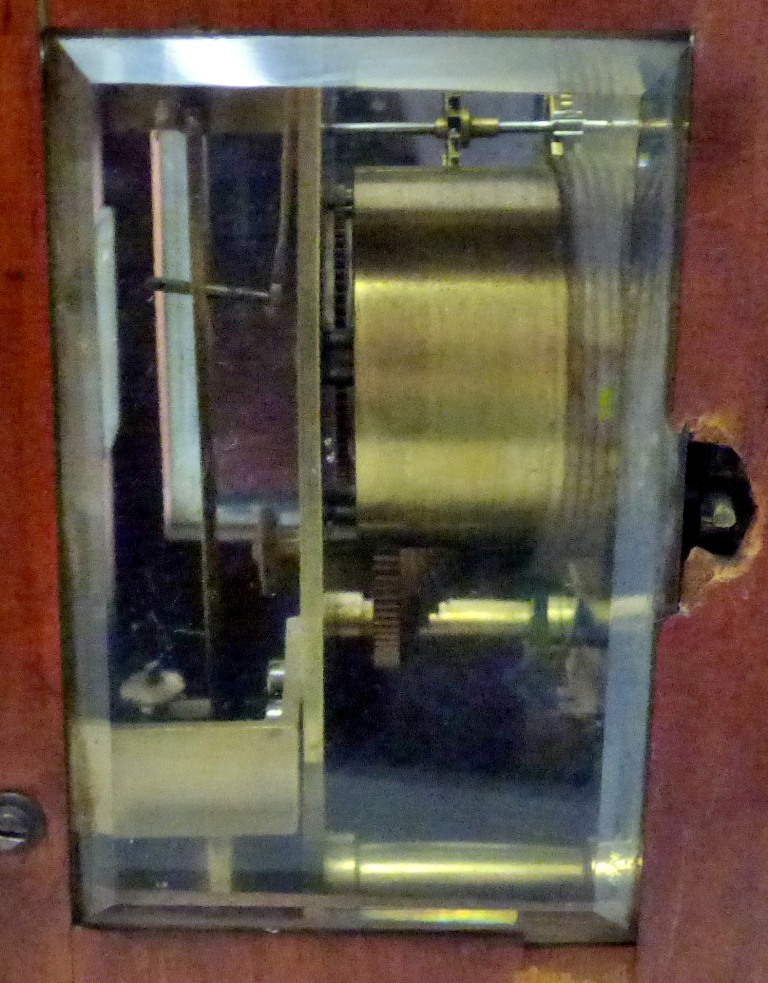
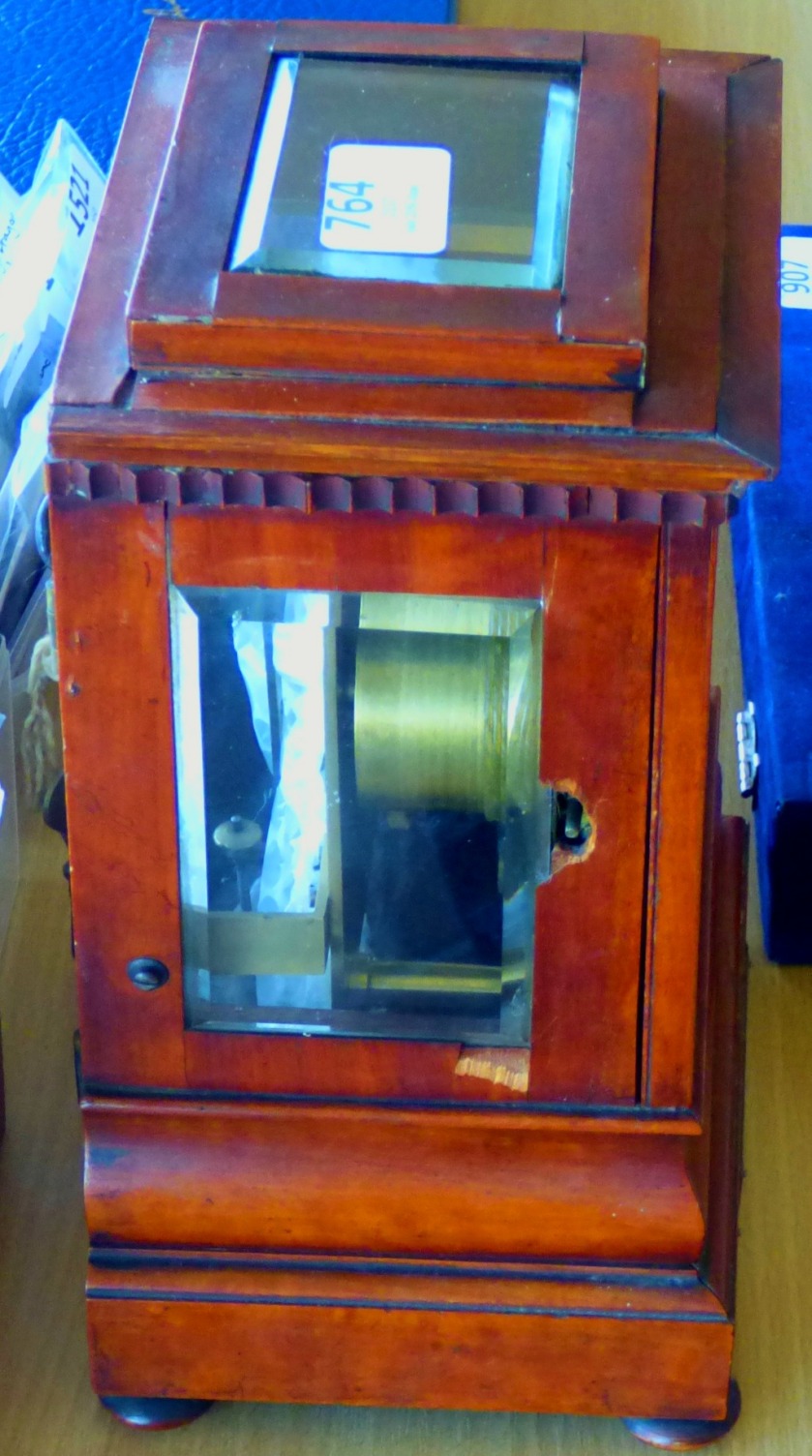
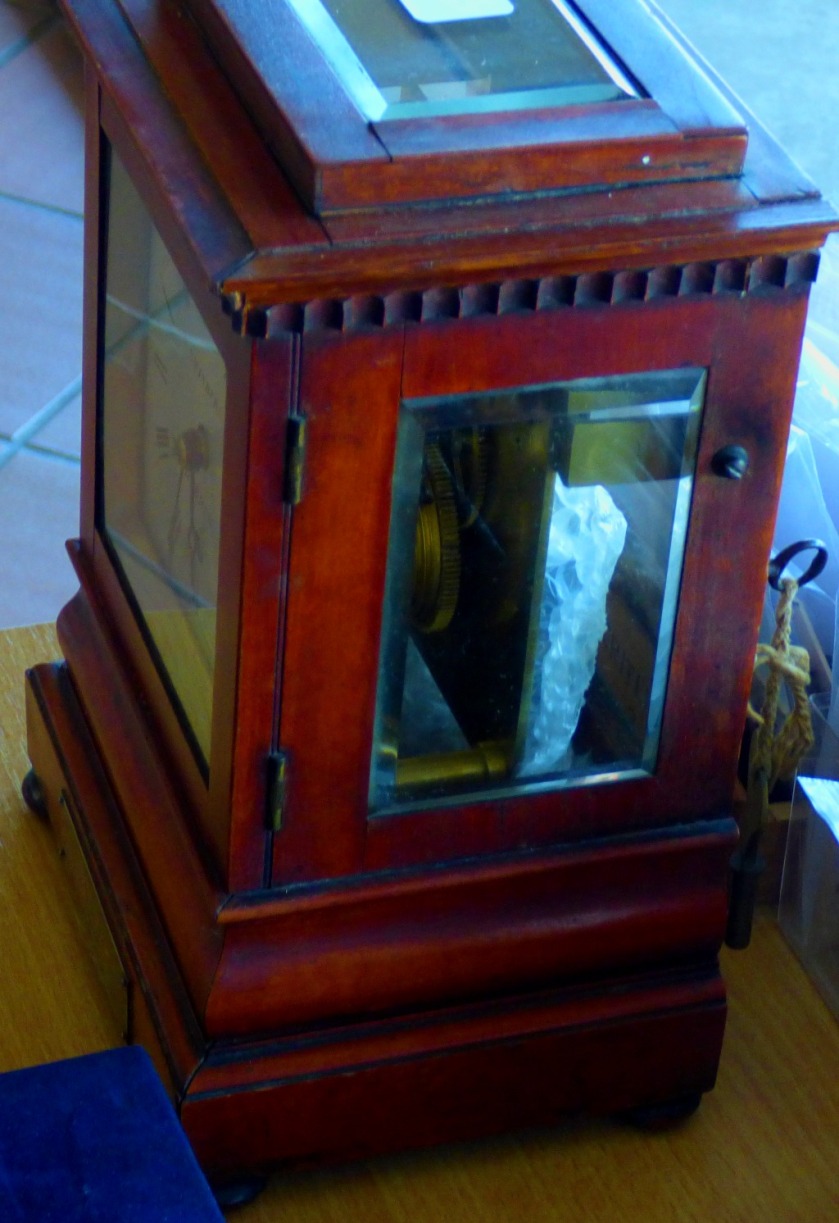
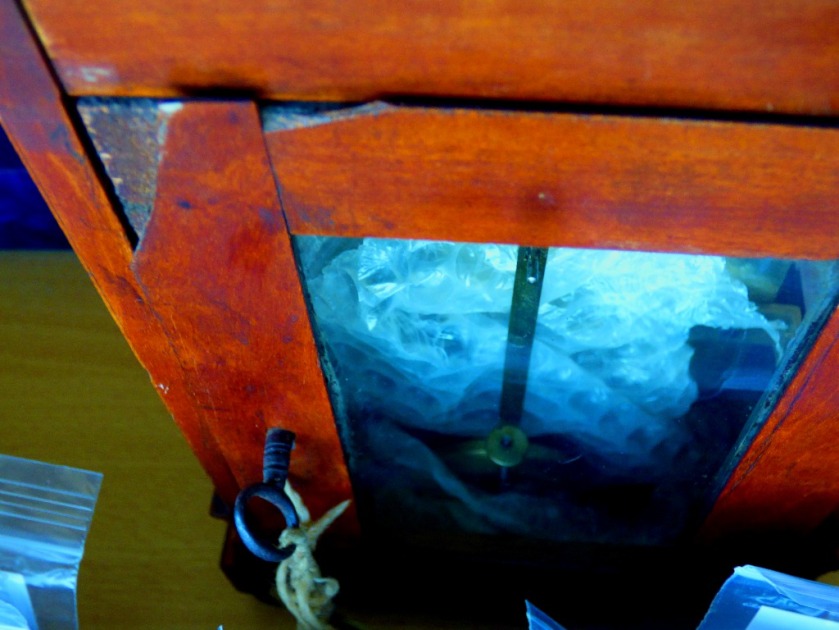
There were indications that this elegant Mantle Clock, with a case carefully designed to show off its workings was going to do extraordinarily well, but we were all absolutely gobsmacked by what actually happened. The item had gone in with a modest valuation of £10-20, but I having noted the effort to which the makers of this clock had gone to put the workings on display created an image gallery for it which reflected this:
The main image, showing the whole clock.This metal plaque was obviously of some significance, hence a close-up photograph of that.And since the makers had been so determined to make the workings visible I devoted no fewer than four photographs to ensuring that thsi was reflected in my online image gallery.
The opening bid was £310! Then, a bidding war between four internet bidders who all obviously saw something that eluded those who are not experts on clocks pushed this already barely credible looking price up to an eye-popping £750!!
Incidentally, just for the record, the valuer himself said that it was the photographs that did it for us, hence my title for this subsection. Here are some photographs of this item that I took during the break:
UP TO THE BREAK
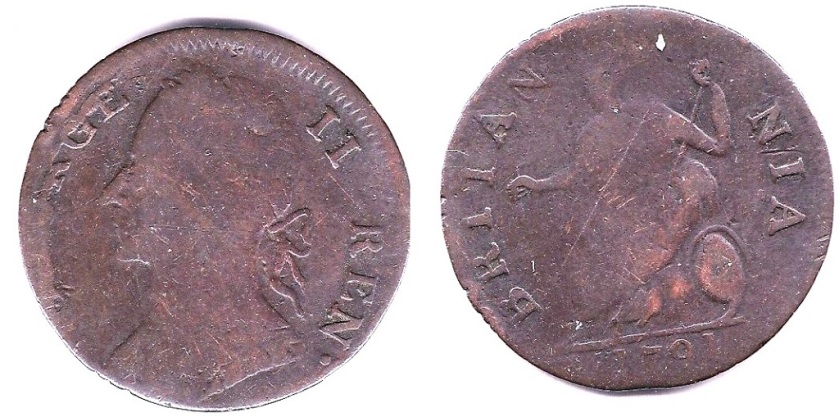
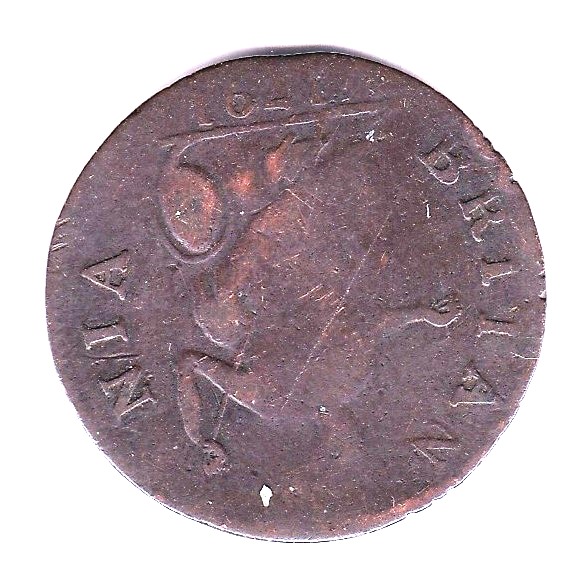
After the events described above almost anything else was going to feel a little anticlimactic, but a few items fared well nevertheless. Lot 919, a forged 1791 farthing estimated at £5-10 ended up going for £35.
The other effect that the early excitement had was that we were progressing slower than normal, and in the end the auctioneer brought our midauction break forward to lot 1,000.
AFTER THE BREAK
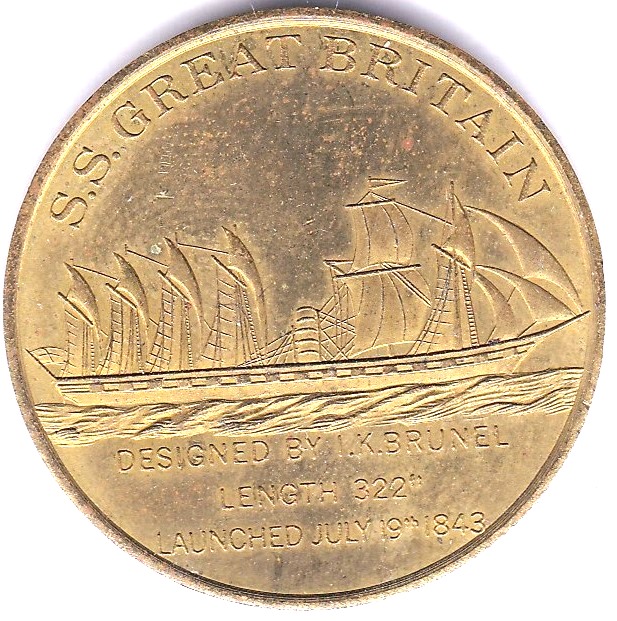
We finished the coins, ending with lot 1072, which went to me for £4 (it is a small medallion, which I considered to be railwayana by association since it refers to Isambard Kingdom Brunel):
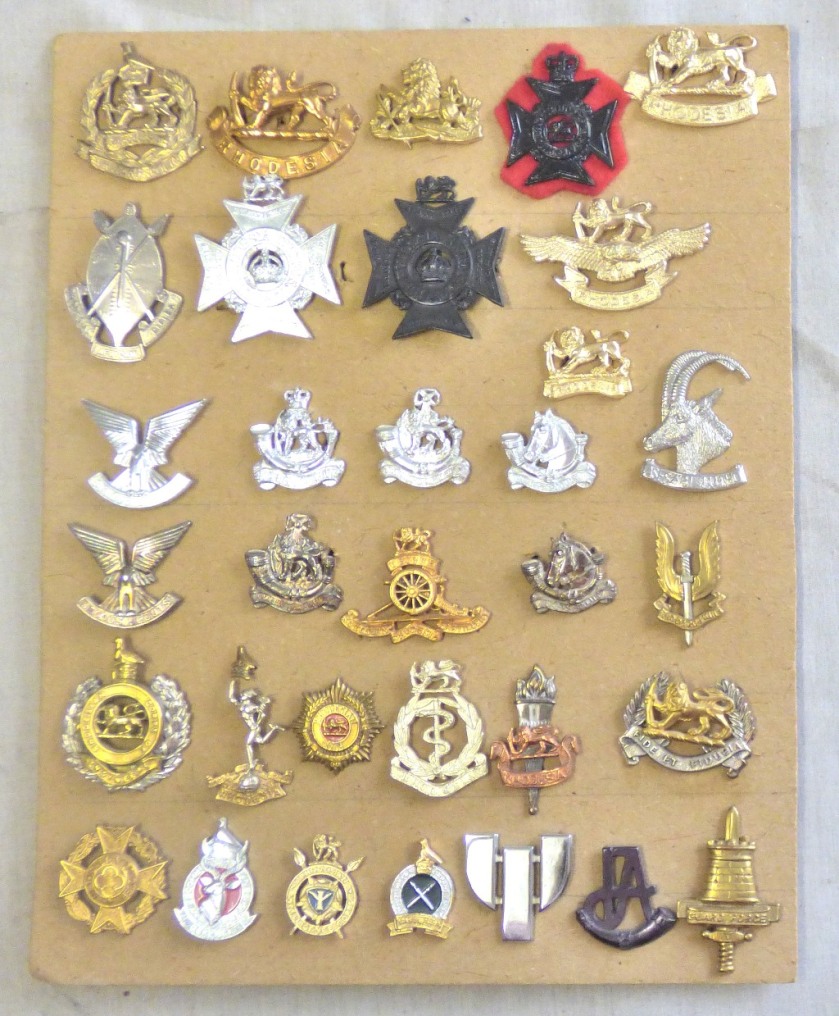
The Militaria section went pretty well, with most items selling, and two doing very well indeed:
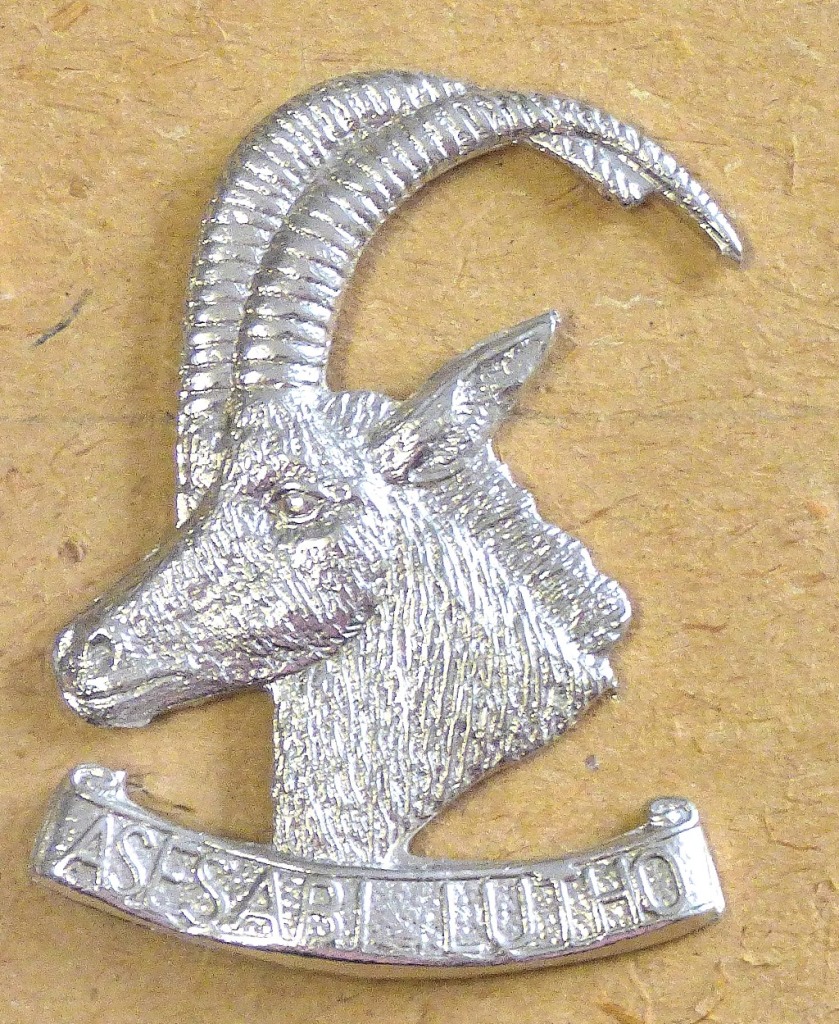
With this lot of badges being sold as one I could not spare the time to provide close-ups of all the badges……so I nselected a couple of what I considered to be good ones……the lots had been valued at £100-200, but interest possibly stoked by my choice of close-ups, pushed the final price up to £300.
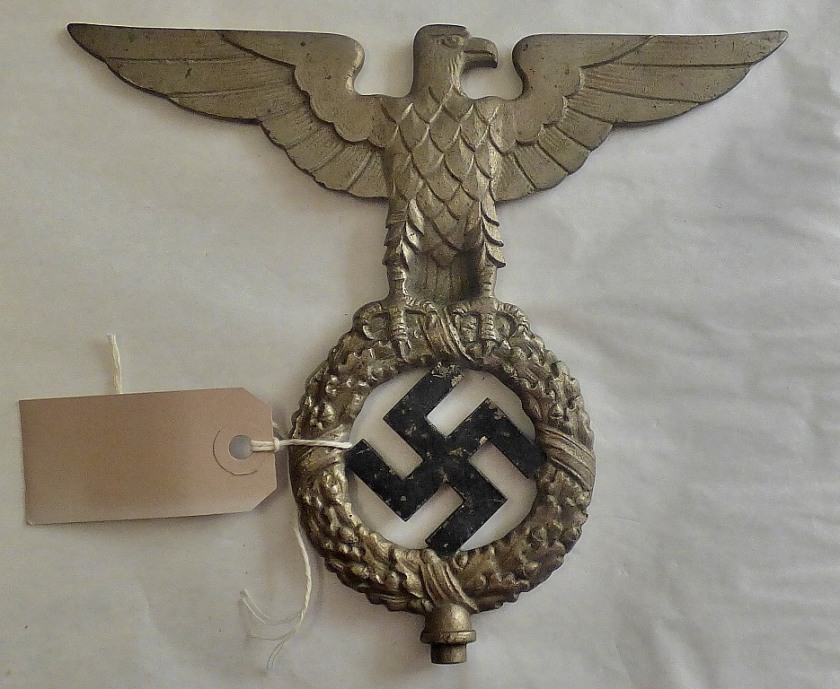
The other big success in this range was lot 1584, valued at £80-100 and going for £140.
Please note that the fact that we as auctioneers sometimes handle Nazi memorabilia does not mean that any of us entertain anhy sympathy for Nazi ideology.
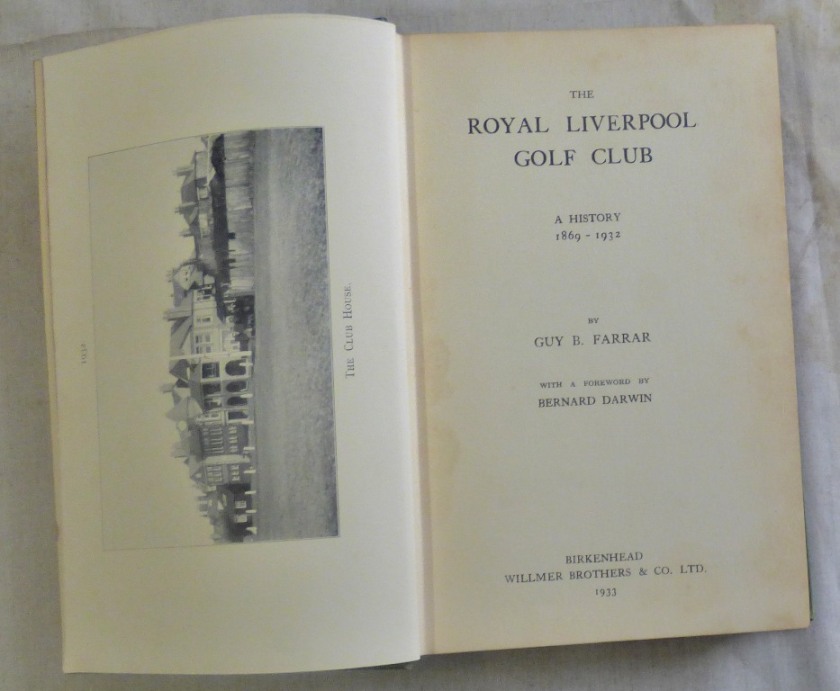
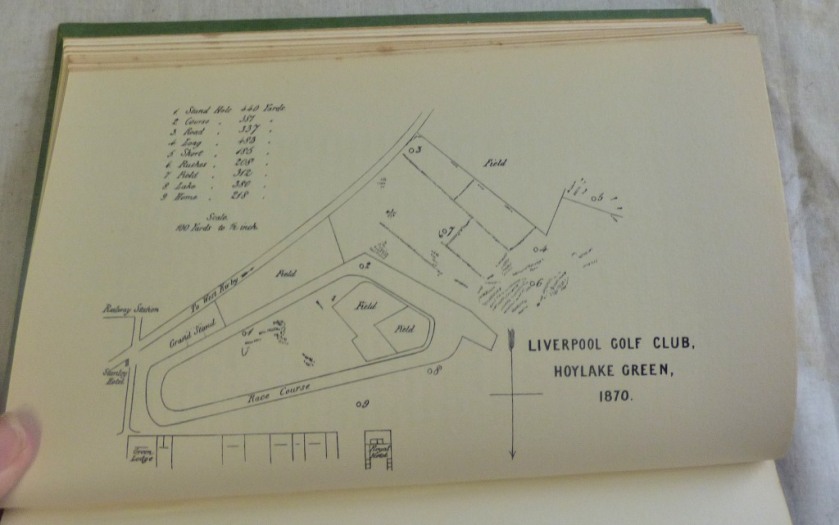
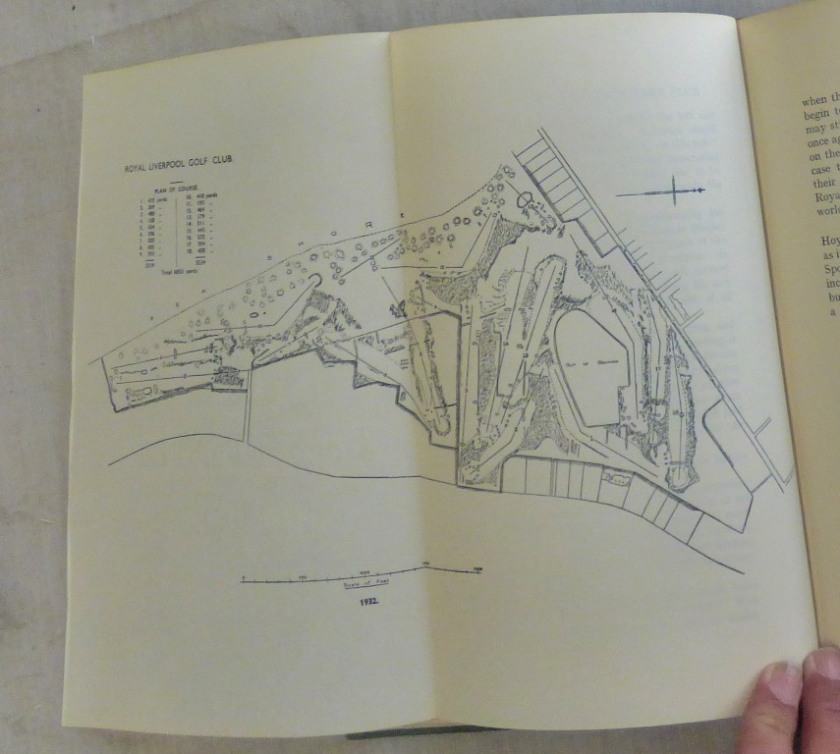
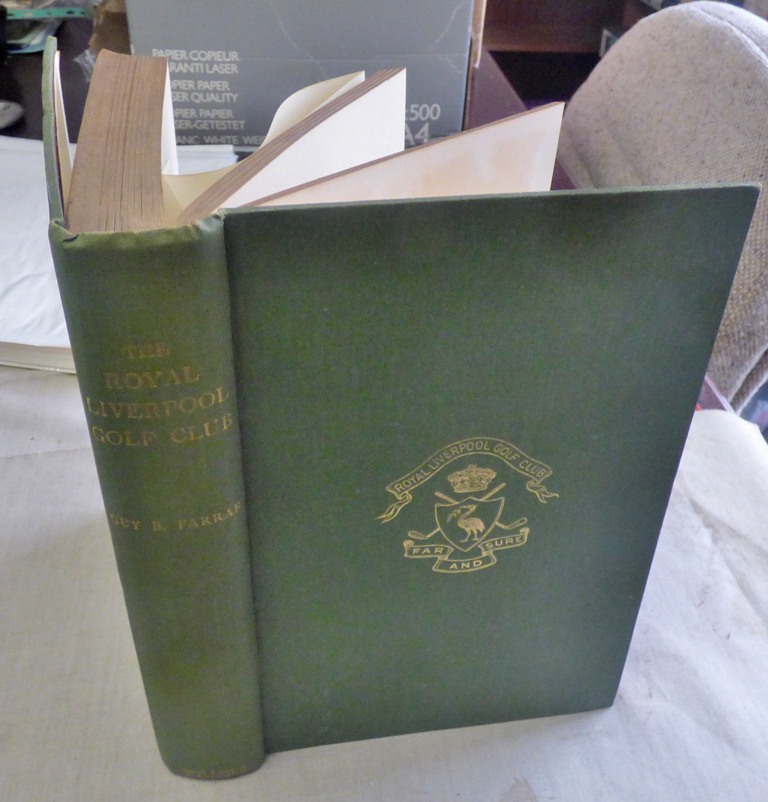
The books fared poorly, although The Royal Liverpool Golf Club by Guy Farrar which I had given a deliberately cautious estimate of £15-20 fetched £55.
The auction over, all that was left was the clear up, which was done by 3PM. I had one worrying moment when it seemed that a problem was developing with the internet connection, but fortunately it never got serious.
On Saturday the action shifts to The Maids Head Hotel, Norwich and the focus to cigarette cards. A full caftalogue listing for that auction can be viewed here.
A post celebrating recent successes for the England men’s and women’s cricket teams.
INTRODUCTION
The last few weeks have been magnificent for English cricketers of both sexes. Each side has been very dominant through a sequence of games, and each have set a team scoring record during the sequence of games.
THE WOMEN
The women warmed up with an ODI series against South Africa, losing the first match but winning matches 2 and 3 very comfortably, in each case with their efforts being spearheaded by centuries from Tammy Beaumont. Then they moved into a T20 tri-series featuring South Africa and New Zealand, the latter fresh from three straight 400-plus ODI tallies against Ireland, the last of which featured the first part of a ‘script rejection’ performance by Amelia Kerr – 232 not out with the bat, and then to settle things 5-17 with the ball. No author of a cricket themed novel would dare have a 17 year-old do that in an international match, but it happened in real life.
On Day 1 of the tri-series New Zealand opened proceedings by scoring 217 from their 20 overs against South Africa, which at the time was a new record in that form of the game, and won them the match comfortably. That record lasted until later that same evening when England took on South Africa, and with Beaumont scoring yet another century (getting there in a mere 47 balls) and Katherine Brunt responding to a promotion up the order by running up 42 not out off just 16 balls reached a total of 250-3. This proved way out of SA’s reach. On Saturday, the second set of games in the tri-series, England lost to South Africa but bounced back to beat New Zealand in the other match.
THE MEN
The men started the limited overs segment of their summer by losing to Scotland at The Grange, but then they commenced a five match series against Australia and were absolutely dominant through the first four matches, winning all comfortably and racking up 481-6 in the third match. The fifth match was a very different kettle of fish. Australia were all out for 205, a modest total that featured the most misjudged leave-alone in cricket history (perpetrated by Ashton Agar). England then collapsed to 114-8 and I was getting ready to point out that wins in dead rubbers don’t really count. However, Jos Buttler was still there, and now Adil Rashid provided some sensible support, and the pair put on 81 for the ninth wicket, turning the match into a nail-biter. Jake Ball, the England no 11 only scored 1 not out, but he survived 11 deliveries, while Buttler first completed an astonishing hundred (with a six that on sheer distance should probably have been a nine) and then sealed England’s one-wicket victory in this game and with it a 5-0 whitewash against the old enemy.
Tim Paine thus became the second Tasmanian born captain with a surname that begins with P to surrender a match in which the opponents had needed 92 with only two wickets left (look up Mohali 2010 for more details).
Buttler’s innings secured him both the player of the match and player of the series awards. Buttler was 110 not out in a score of 206-9, and the joint second biggest scores were 20 for Alex Hales and Adil Rashid, and he finished the series with 275 runs at a handy 137.50. In the course of this innings he passed 3,000 ODI runs. Unlike most of his previous big innings which have been all about putting opponents to the sword (his 3,000th ODI run came up off only just over 2,500 balls faced in this form of the game) this one involved getting his team out of trouble and probably rates as his finest for precisely that reason.
MAJOR CONTRIBUTORS
Both the men’s and women’s teams have benefitted from the fact that everyone has contributed somewhere along the line, but each also have had certain players who have been especially outstanding (see Buttler above), and I offer the following composite list of the best:
Moeen Ali: Watching the way the Aussies tackled his off-spin you might have thought they had been put in a time machine and taken back to 1956.
Jonny Bairstow: about the only thing he did wrong all the way through was get out in the game at The Grange when he was putting Scotland to the sword and would have had England firmly in control had he batted a few more overs. None of the Aussie bowlers, even the highly impressive Billy Stanlake, had any idea where to bowl at him.
Tammy Beaumont: the smallest player in physical stature in this list (5’3″ tall) she has been a metaphorical giant in these matches with three centuries from her position at the top of the order.
Katherine Brunt: In the first match she made 72 to give England something to defend. After her 42 not out in the 250-3 T20 game she followed up by picking up 2-18 from her four overs. Ignore talk of imminent retirement – so long as her body remains in one piece she will keep going.
Jos Buttler: The batsman-keeper did all that was asked of him in the first four matches of the series against Australia and when the going got tough in fifth match he got going and carried England to victory.
Alex Hales: started these matches as favourite to miss out once Stokes was available again but played several incredible innings, and I would now say that for all his all-round credentials Stokes has to be considered as far from certain to regain his place.
Adil Rashid: another of the ‘role-reversal’ aspects of this series was that on this occasion it was Aussie batsmen who looked like rabbits in headlights when facing an English leggie. In addition to his success with the ball he played that crucial little innings in the final match.
Jason Roy: the leading run scorer of the series with 304, including a ton which spearheaded the chase-down of 310 in the 4th game.
Anya Shrubsole: reliable as ever with the ball, and when really needed in the game against New Zealand on Saturday she delivered some quick runs.
Sarah Taylor: quite possibly the best wicketkeeper of either sex on the planet at present and she also scored some important runs.
Danielle Wyatt: opening with Beaumont in the 250-3 game she was quite magnificent, and she had other successes through the season.
PHOTOGRAPHS
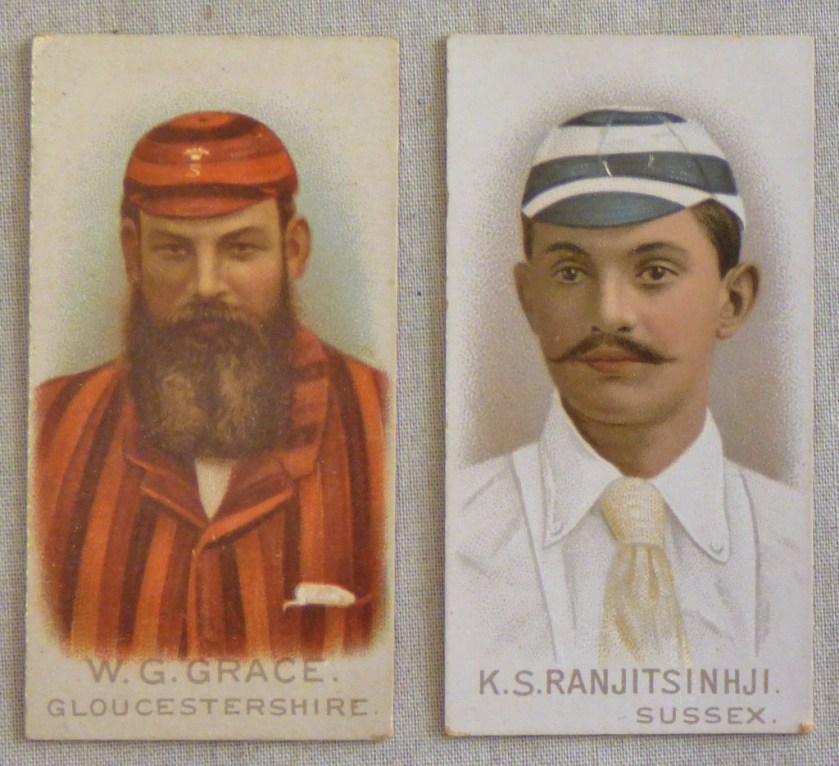
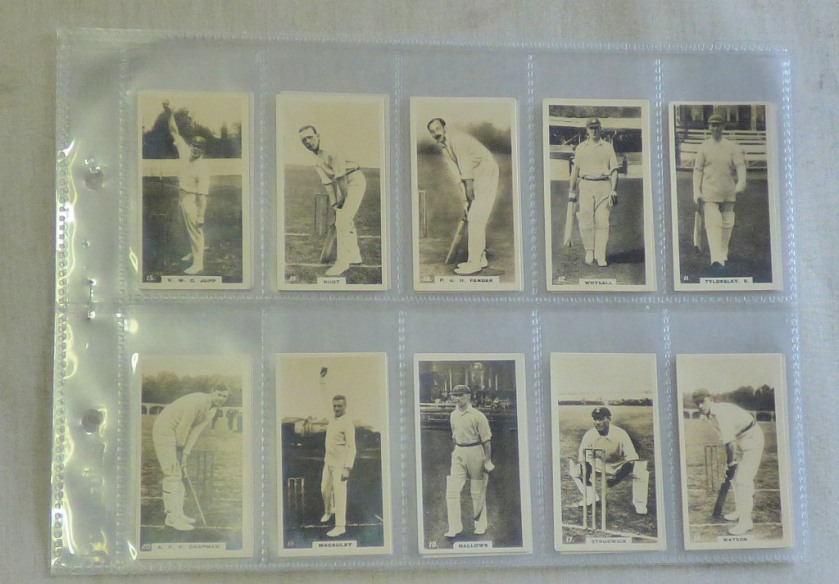
Time now for some photographs, starting with a cricket themed one from James and Sons’ upcoming cigarette cardauction.
While not super-famous these cricketers all have some noteworthy achievements: Vallance Jupp achieved the double of 1,000 runs and 100 wickets in each of eight successive seasons, Fred Root once took a seven-for against Australia. Percy Fender once reached a century in 35 minutes. Dodge Whysall batted no 3 for Nottinghamshire for many years. Ernest Tyldesley scored more first class runs for Lancashire than anyone else. Percy Chapman led England to victory in each of his first eight matches as captain. George Gibson Macaulay was a very successful bowler and enough of a batsman to have scored 76 in a test match. Charles Hallows was one of three cricketers to score 1,000 first-class runs within the month of May (half a dozen others reached 1,000 first class runs for the English season before the start of June, but had runs in April in that record). Herbert Strudwick was England’s first-choice keeper for 15 years in spite of regularly batting at no 11. Frank Watson was a good county player, who once made a triple-century.A spectacular creature, presumably some form of dragonfly.
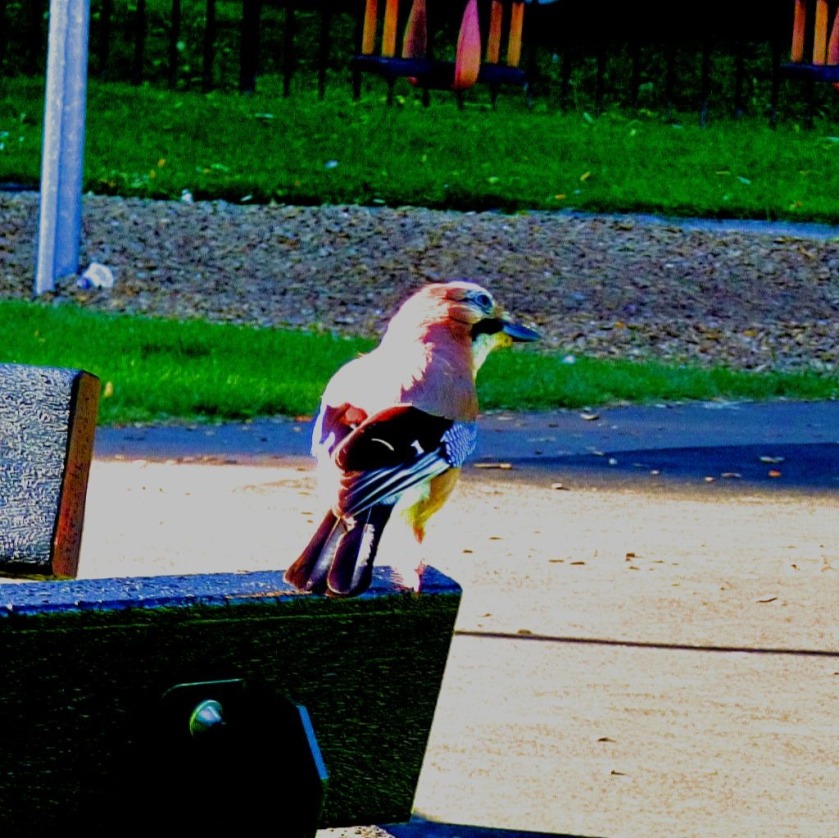
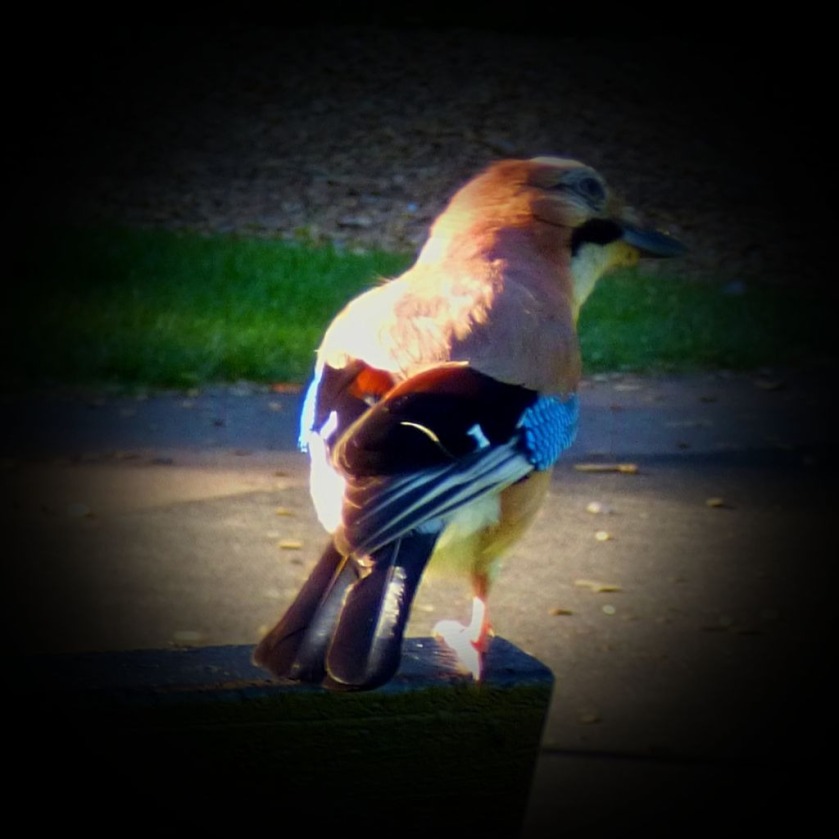
I saw this jay yesterday. This species is not threatened, but I use this caption to draw your attention to one that is, the nightingale. There is a petition to protect a threatened habitat for this bird at Lodge Hill – please sign and share it.



















































































 This river is in Northern Sweden.
















 aspiblog