100 Cricketers: The Sixth XI Opening Batters

Continuing my “100 cricketers” series with the opening batters from my sixth XI. Also features some of my photographs.

INTRODUCTION

Welcome to the latest installment in my “100 cricketers” series, in which the focus is on the opening batters from my sixth XI. The introductory post to the whole series can be found here, the post in which I introduce the sixth XI is here and the most recent post here. Before getting into the main meat of my post there is one little thing to do.

DRAW IN DUBAI

In the end rain intervened in Dubai to consign the “champion county” match between MCC and Surrey to a draw. The MCC will have been relieved as at one point they were four wickets down in their second innings and only nine runs to the good. Surrey played this match like the champions they are, and were better in all departments save spin bowling (it was unfortunately not difficult to see why Freddie van den Bergh pays almost 45 a piece for his first class wickets, while Scott Borthwick who snared a couple is principally a batter. With due respect to Olly Pope for his 251 (his quality was already well known before this game) the biggest single positive for Surrey from a match that contained many was the performance of first-class debutant Jamie Smith, excellent behind the stumps and a quite magnificent first effort with the bat, starting with his side in a spot of bother at 144-4 and ending with them in complete control – expect to hear a lot more of this young man, and on bigger stages than this. All in all these four days have been an excellent curtain-raiser for the 2019 English season, and I look forward to the season proper with considerable anticipation. I would not expect anyone to be given an Ashes series as their first international assignment unless they were doing absolutely sensationally, but there could certainly be some new faces in the winter touring parties. Time now for the main business of this post starting with…

SANATH JAYASURIYA

6,973 test runs at 40.07, with a best od 340 v India at Colombo, 98 test wickets at 34.34 with his slow left-arm and a decent fielder. His ODI figures were 13,430 runs at 32.36 and 323 wickets at 36.75, economy rate 4.78 (he played no fewer than 445 of these games). He was past his best by the time T20s became a thing but his T20 record from 31 appearances was 629 runs at 23.29, with a scoring rate of 129.15 per 100 balls and 19 wickets at 24 a piece with an economy rate of 7.37.

His finest hours came in the 1996 world cup, when he was the player of the tournament, explosive as an opening batter, taking advantage of the fielding restrictions that applied at that time. The key to Sri Lanka’s success with these tactics was that Jayasuriya and his opening partner Kaluwitherana were both batters of genuine quality – England tried using offspinner and useful lower-order batter Neil Smith in this role with no success, Zimbabwe once promoted legspinner Paul Strang only to see him record a 17 ball duck and Pakistan tried the effect of promoting younf all-rounder Abdul Razzaq without achieving the desired effect. His 82 off 44 balls which showed England the exit door of that tournament after they had posted an inadequate 235-7 in their innings (England were shocking in that tournament, reaching the quarter-final only because they had two associate nations in their group, who they were just about good enough to beat) was in the nature of a mercy killing, providing a quick end rather than slow torture.

His 213 in the one-off test of 1998 at The Oval ensured that Muralitharan got a decent rest between bowling stints, and helped his side to a comfortable win.

Sanath Jayasuriya was for a few years the most exciting opening batter in world cricket, and for many years after that remained a redoubtable competitor who could influence a game with contributions in any or all departments. We now move on to his opening partner in this XI…

NAVJOT SIDHU

In the years after Sunil Gavaskar and before Virender Sehwag most of the players selected to open the batting for India were distinctly unmemorable and had records that were less than awe-inspiring. The exception was Navjot Singh Sidhu, who should have played a lot more than the 51 test matches he actually got (3,202 runs at 42.13). He also played 136 ODIs, scoring 4,413 runs at 37.08. He had finished before T20 started, but with his aggressive approach to batting he would probably have fared well at that form of the game as well. When England visited India in 1992-3 he used his feet against the spinners with devastating effect – both the aging John Emburey, recently restored after his second ban for going on a rebel tour to South Africa, and the erratic legspinner Ian Salisbury copped fearful punishment.

Given his fine record one has to wonder why he was not picked more often at international level. He was an eccentric character and this may well have counted against him, as it has down the years with a few others.

NEXT IN THIS SERIES

The next post in this series will look at the remaining specialist batters in my sixth XI, before I finish the account of this XI with the two all-rounders, and introduce my seventh XI. 

PHOTOGRAPHS

I conclude this post in my signature fashion…

P1220153
The first seven images here come from The Badminton Book of Cricket. Major Robert Montagu Poore taught himself to bat using the chapter on batting, and in two months of extended leave in the 1899 season scored 1,551 runs for Hampshire at 91.23, a season’s batting average not beaten until Bradman and Sutcliffe in the 1930s.

P1220151P1220152P1220154P1220155P1220156P1220157P1220141P1220143P1220144

P1220145
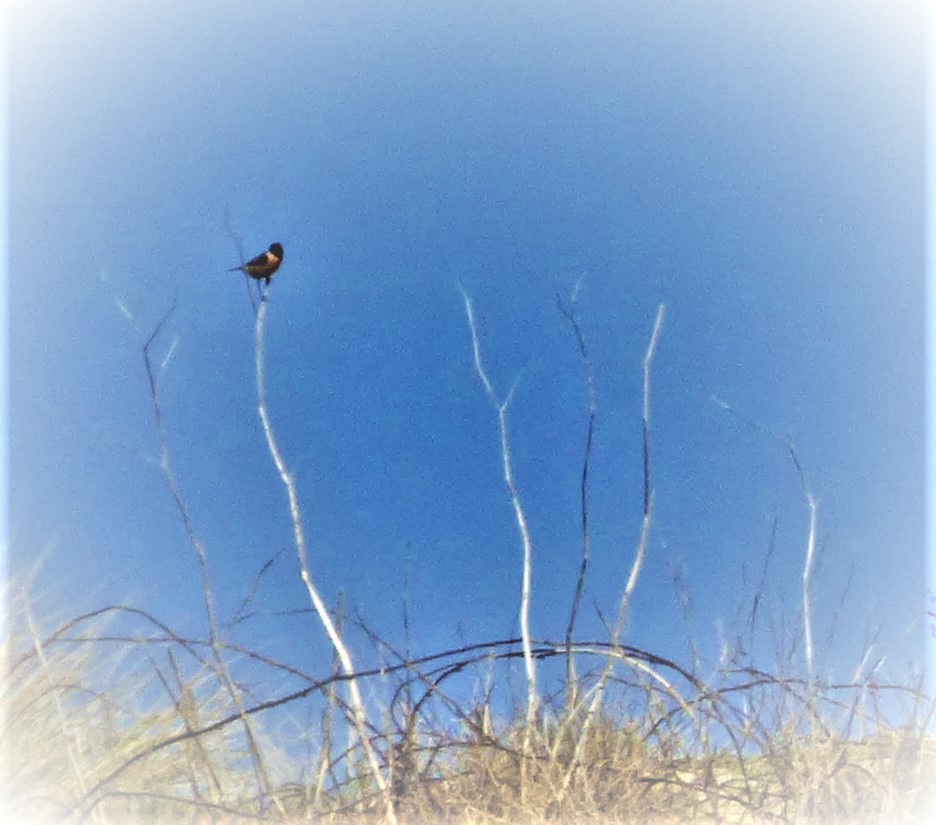
A starling (three pics)

P1220146P1220148P1220150P1220158

P1220159
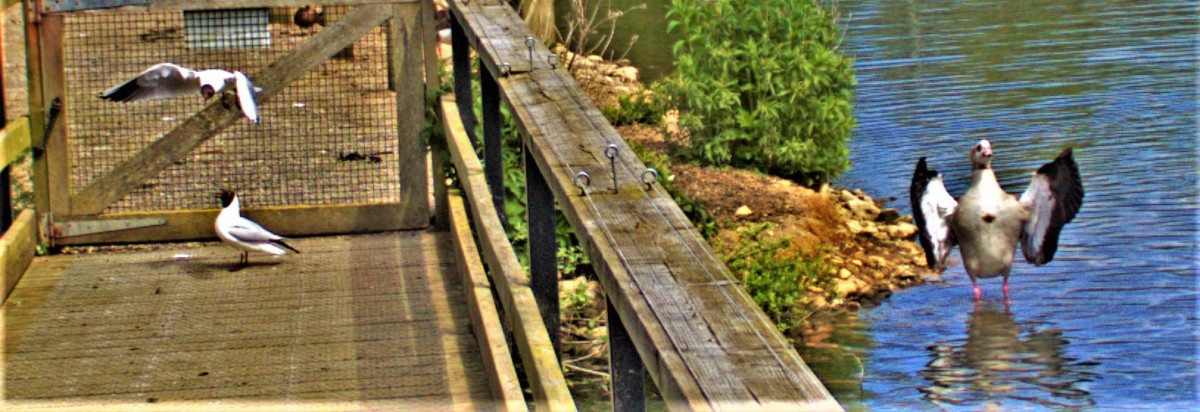
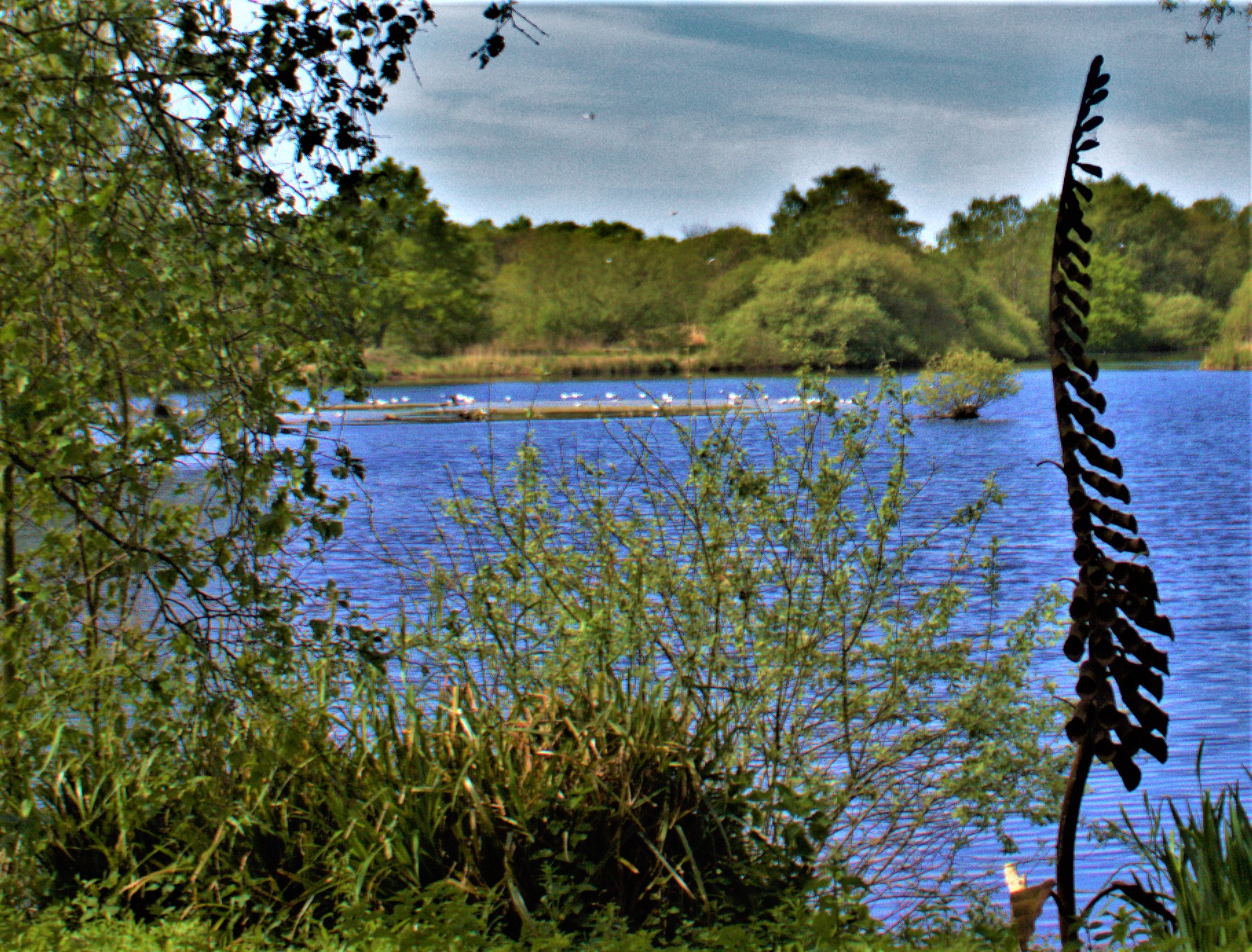
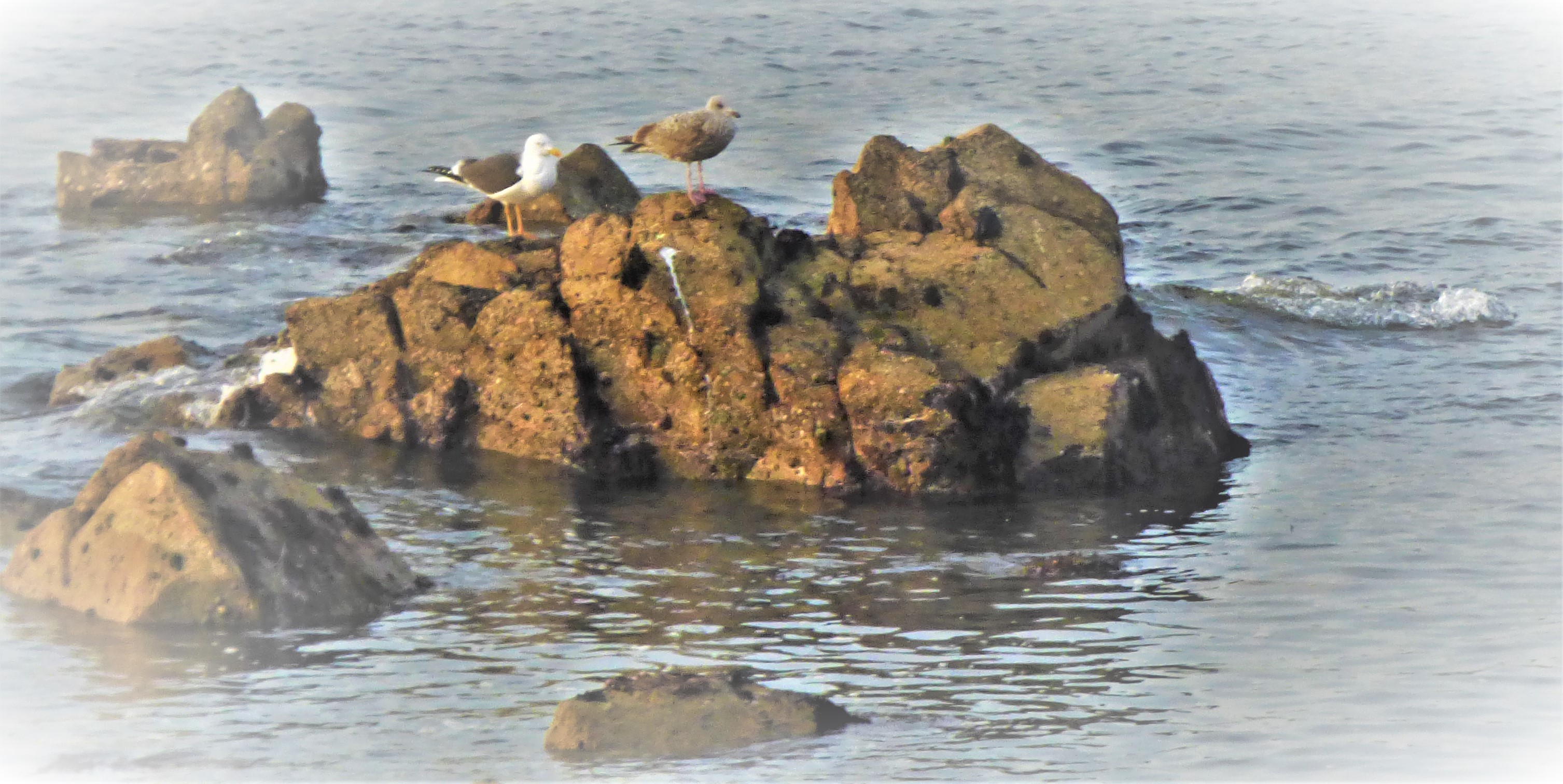
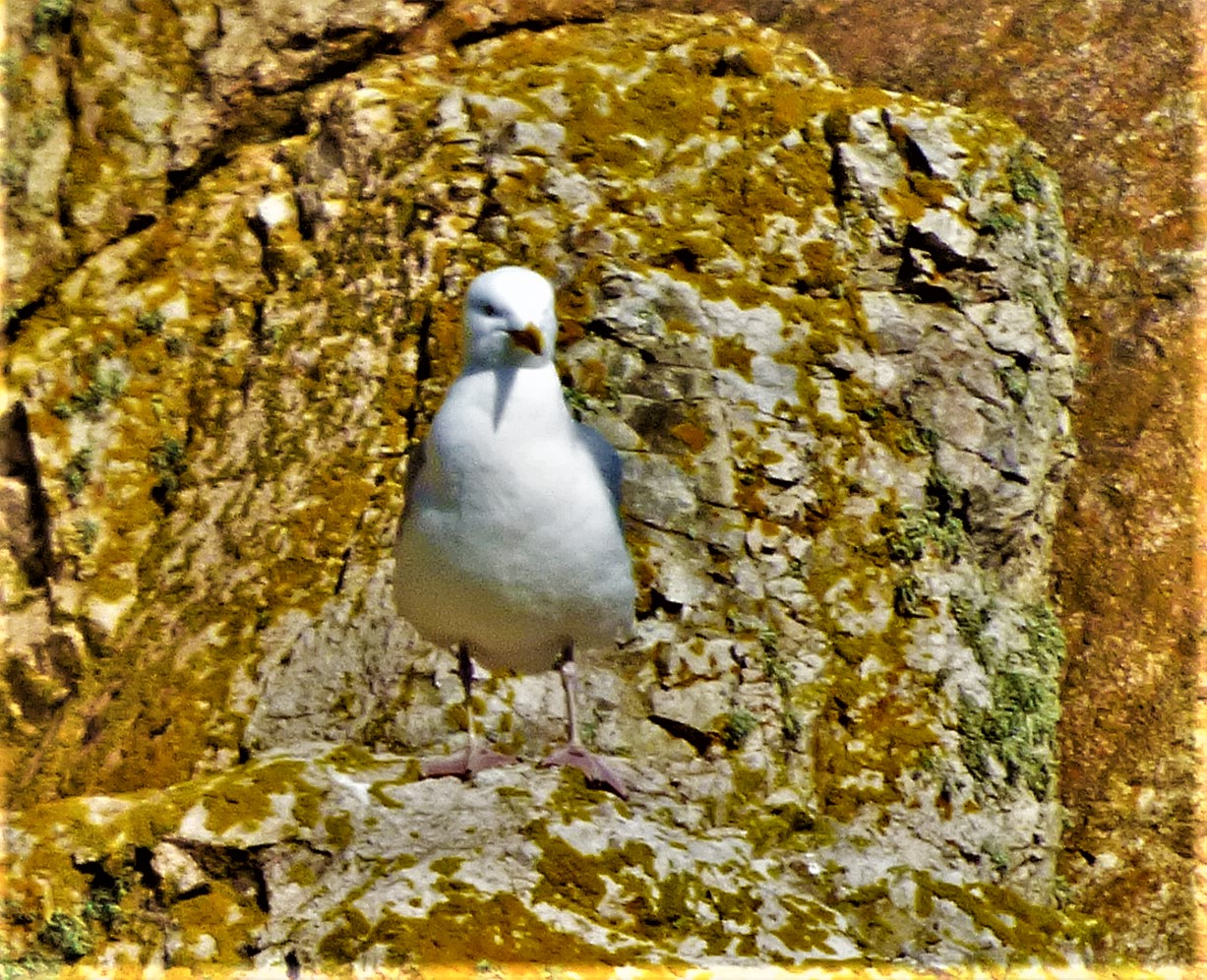
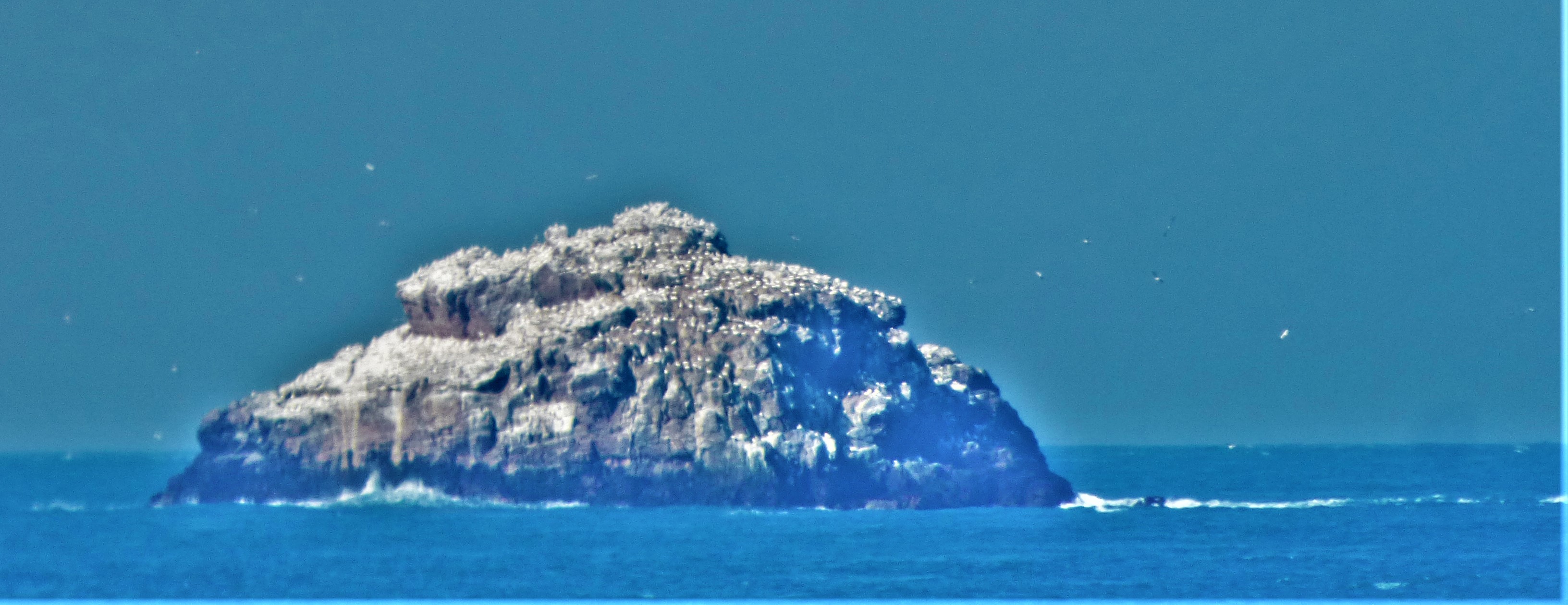
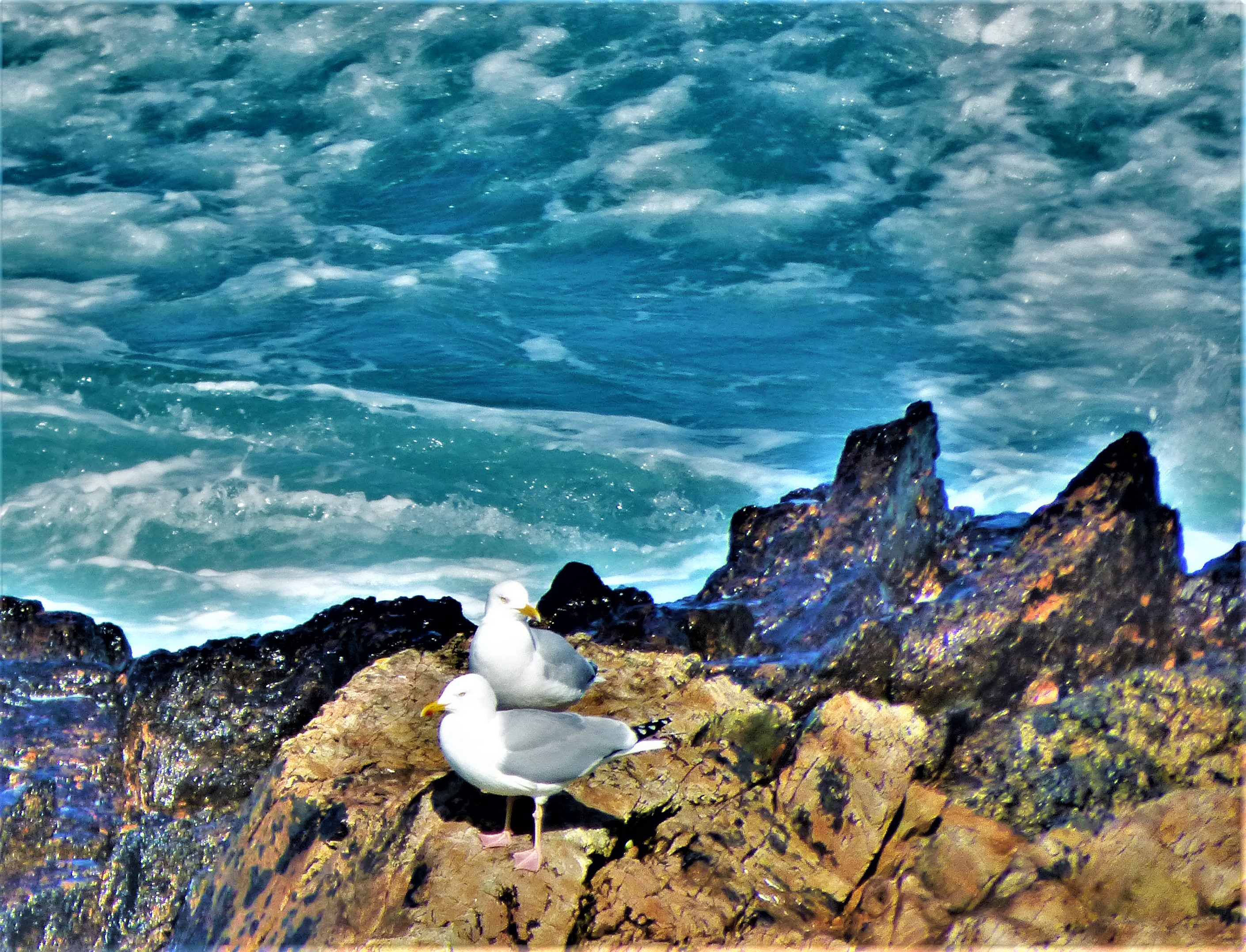
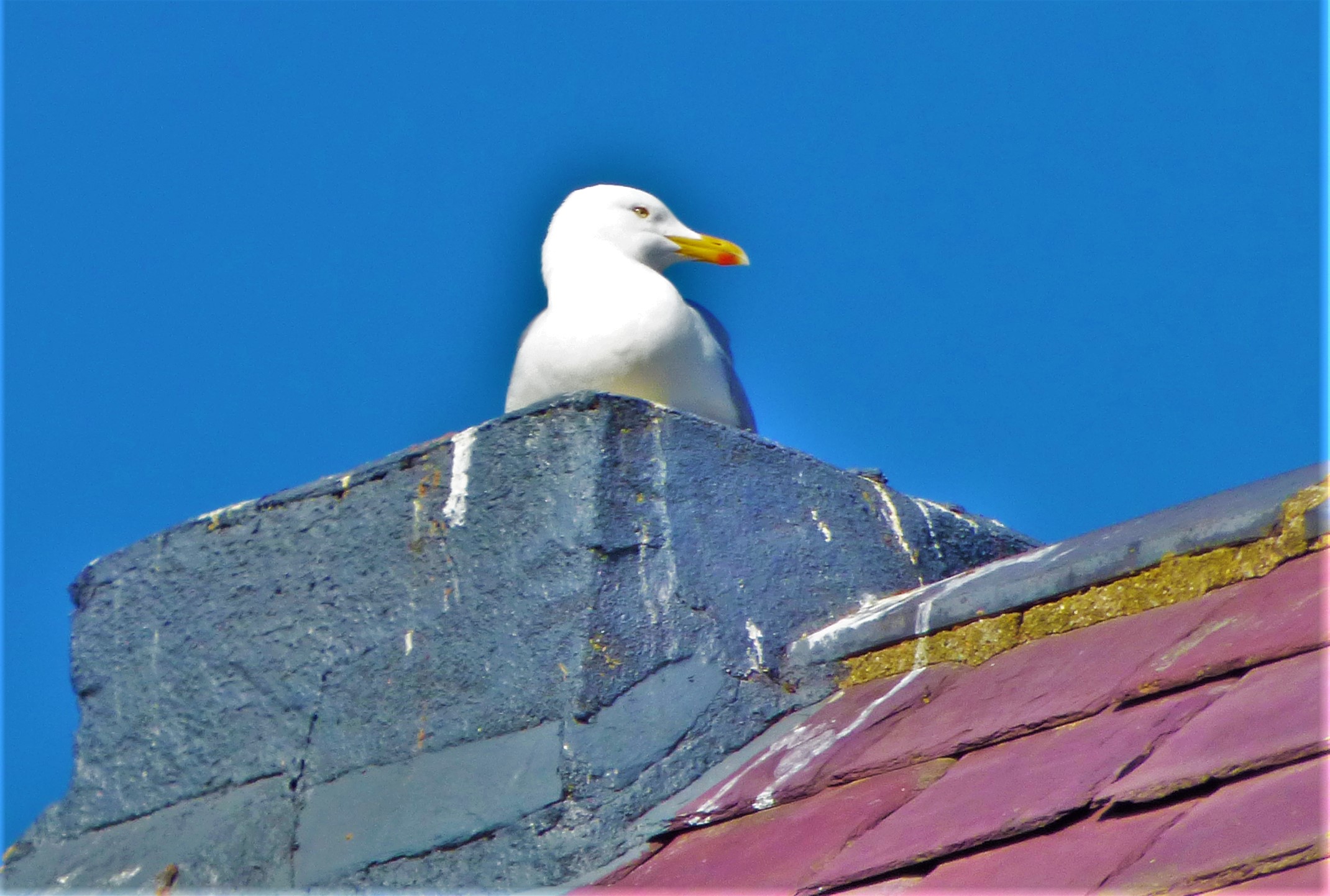
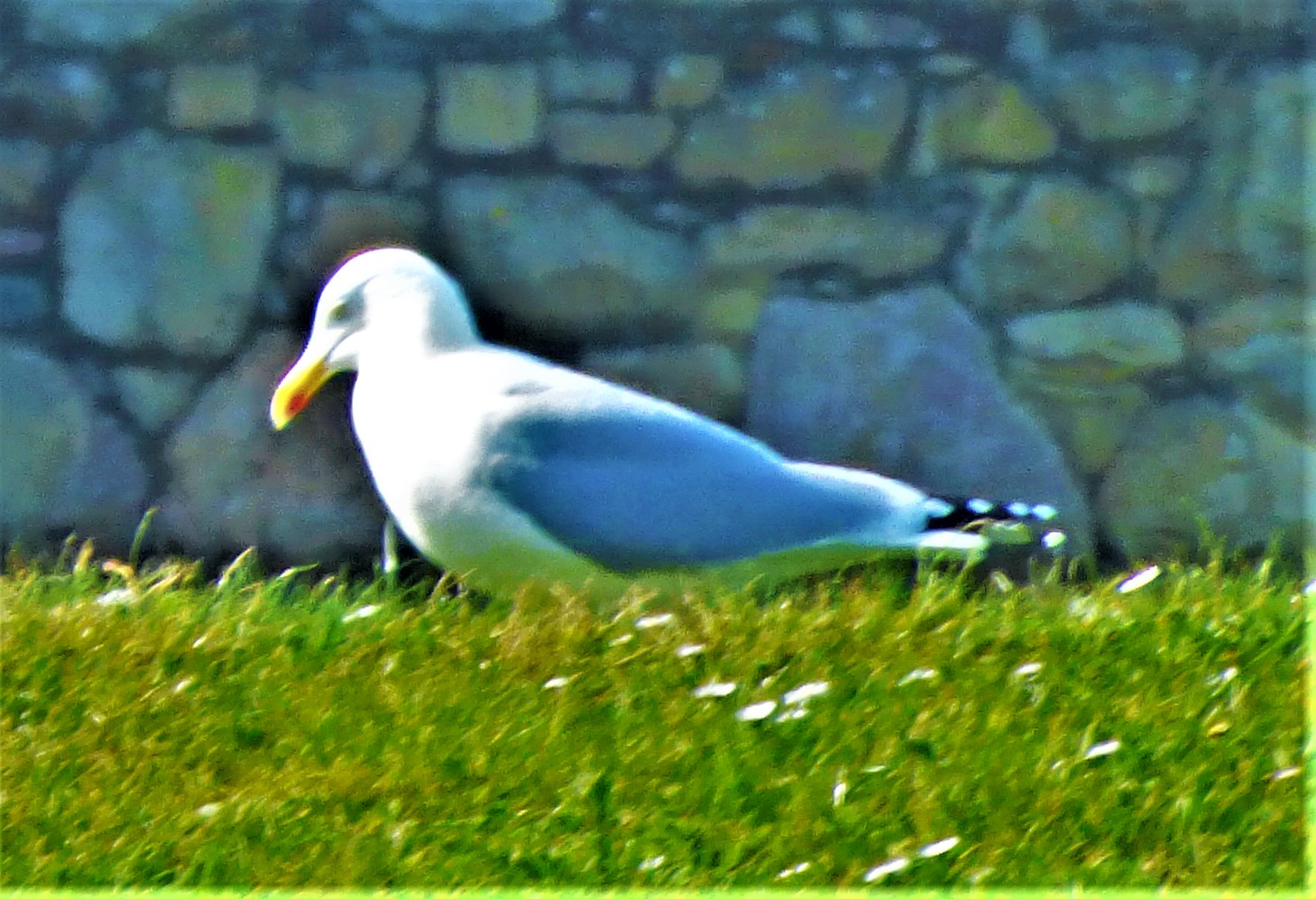
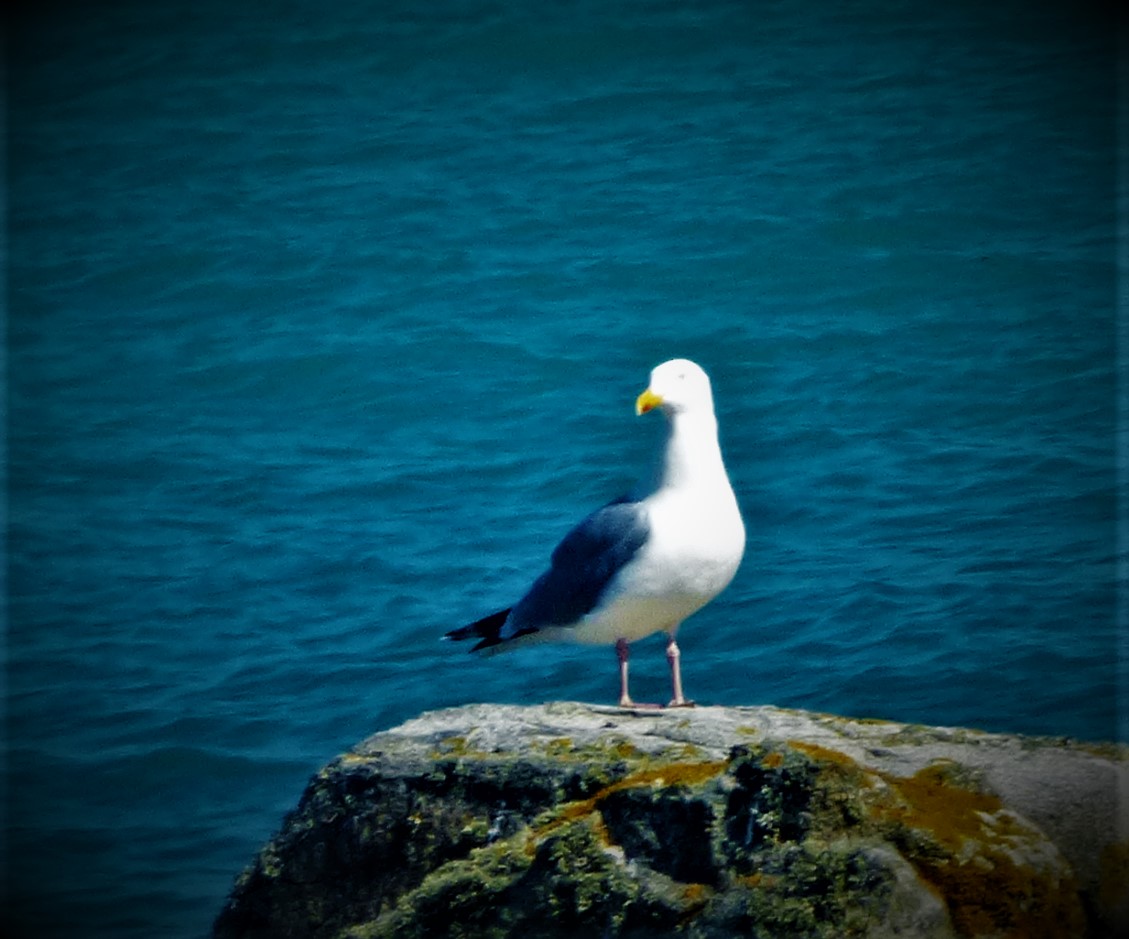
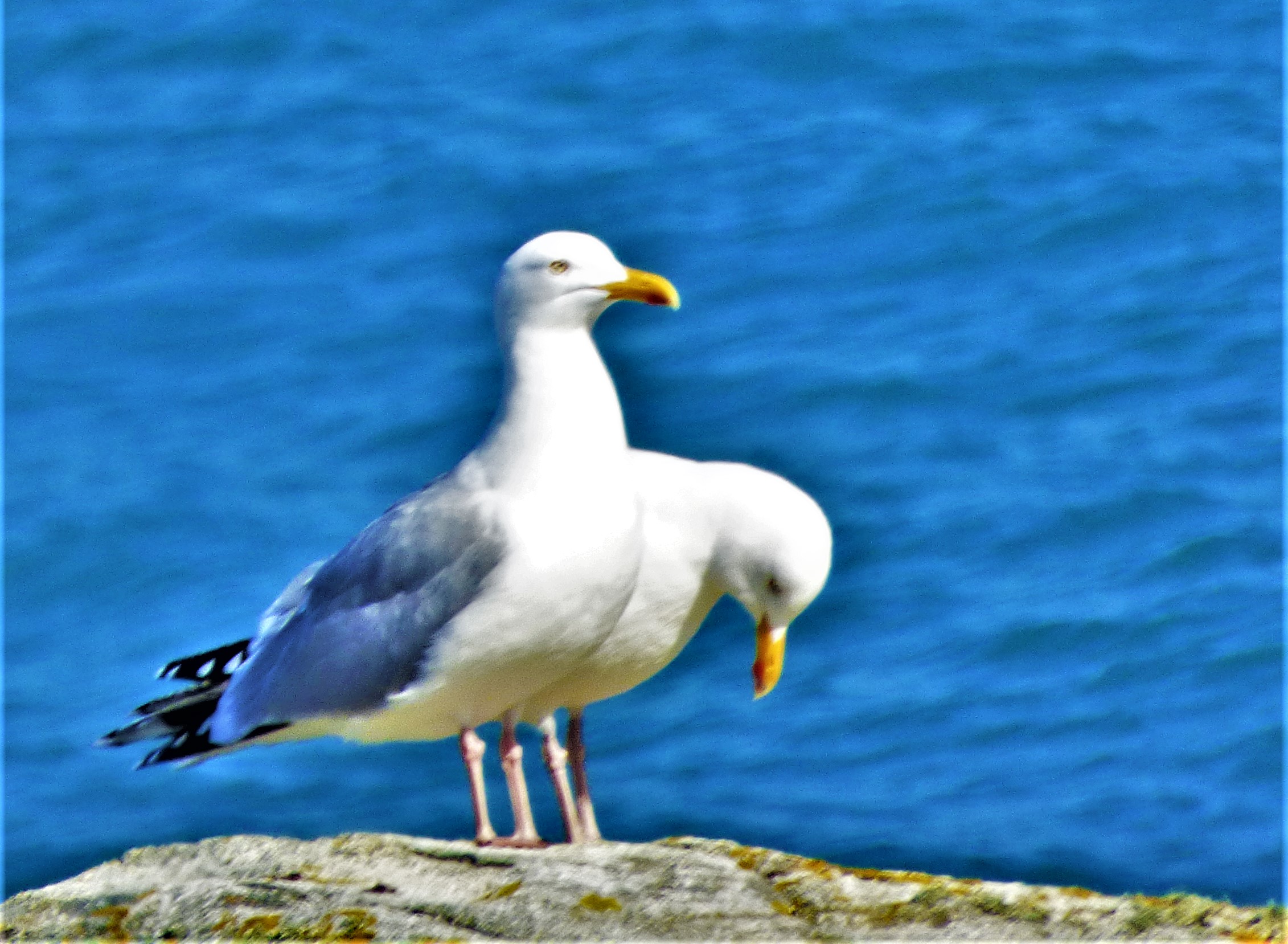
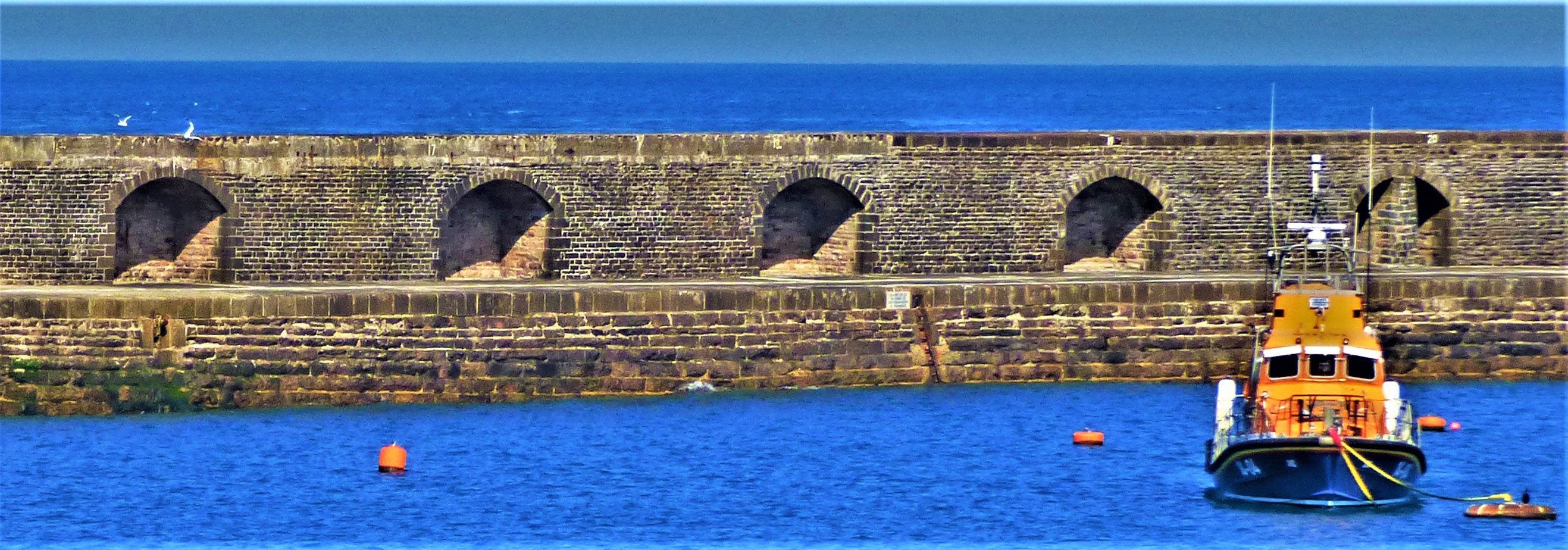
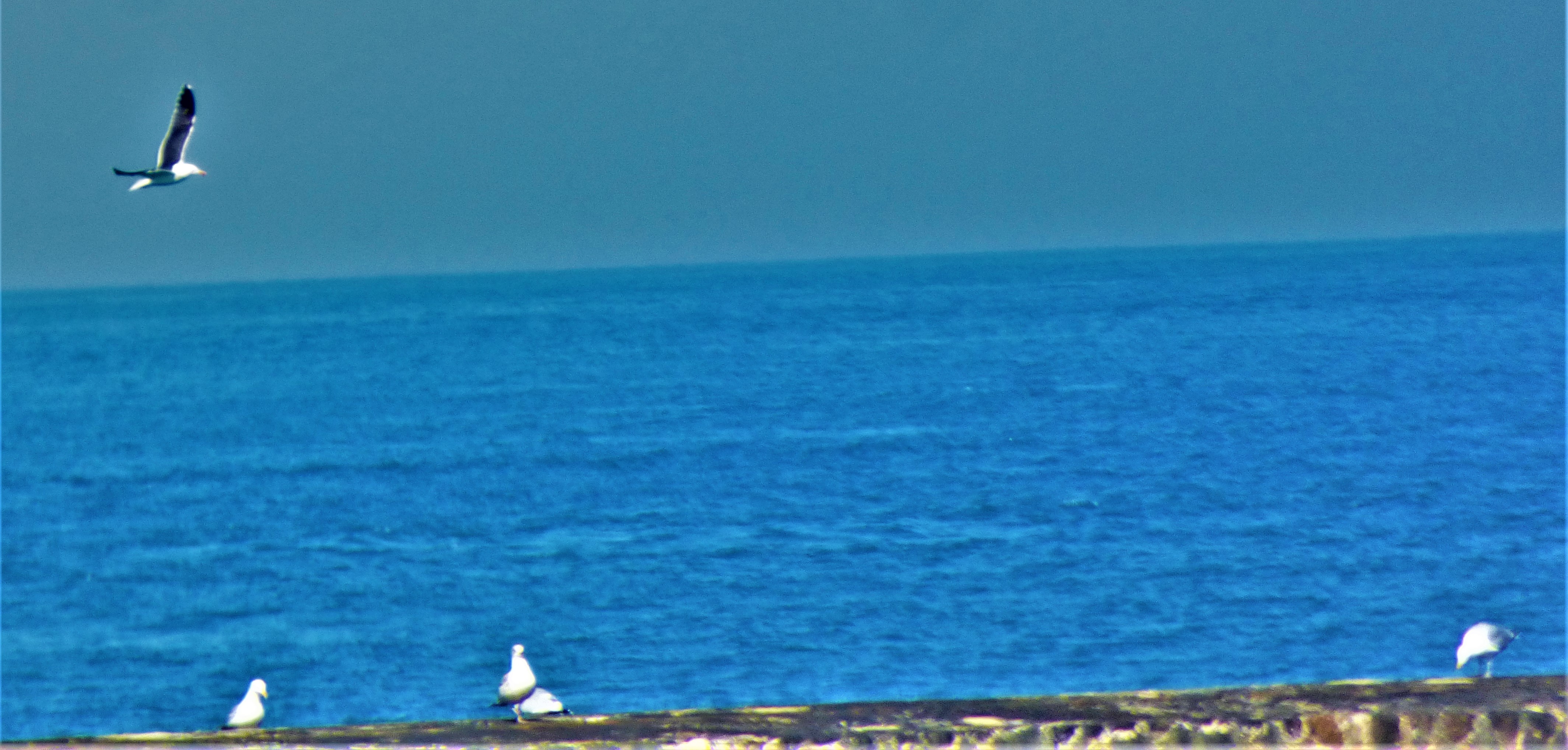
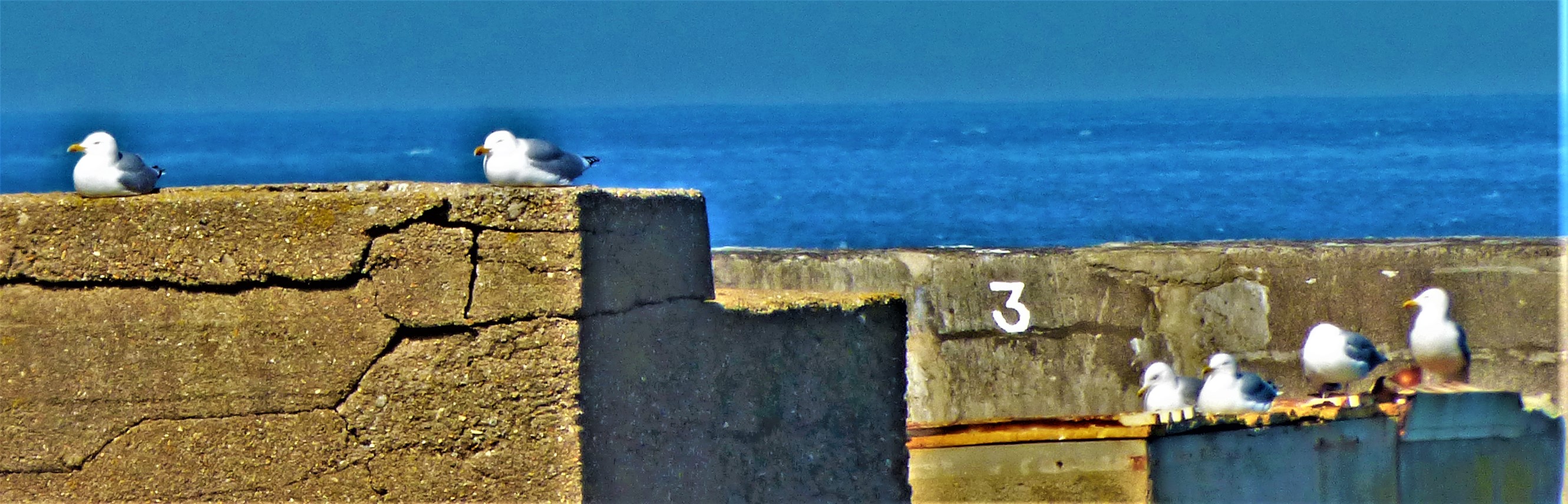
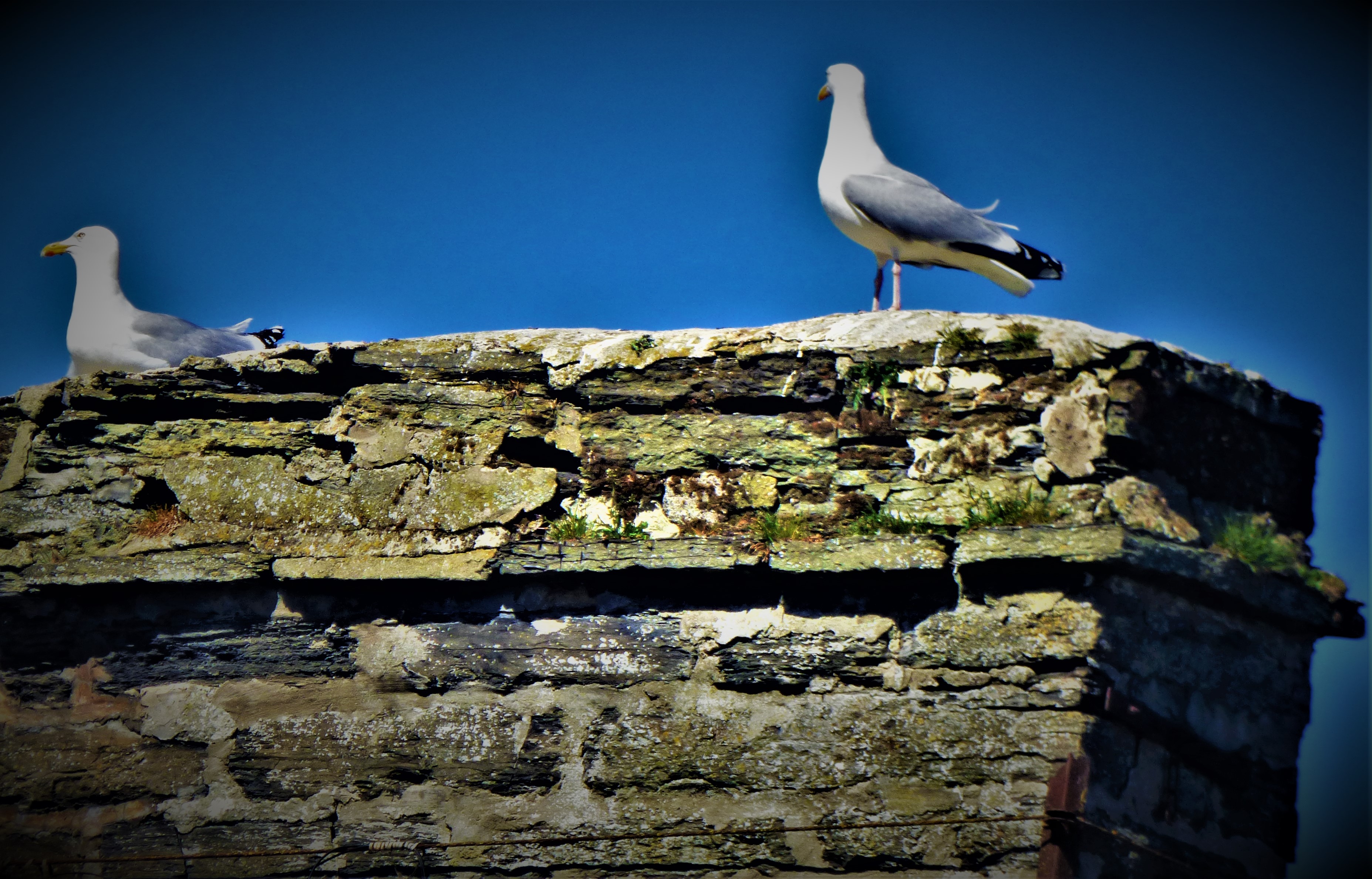
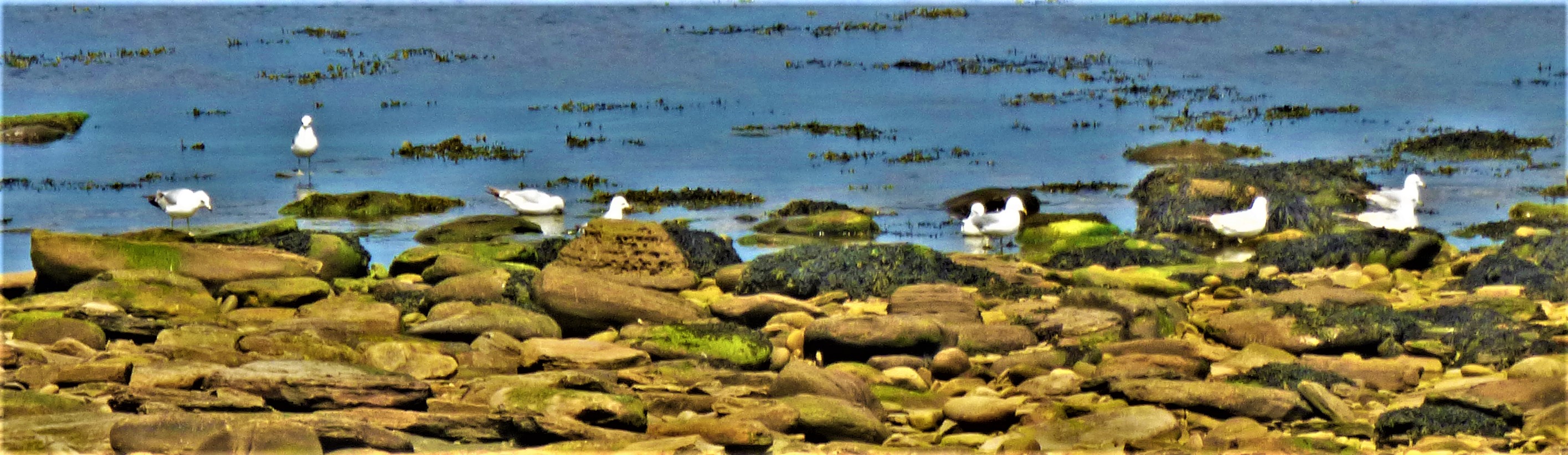
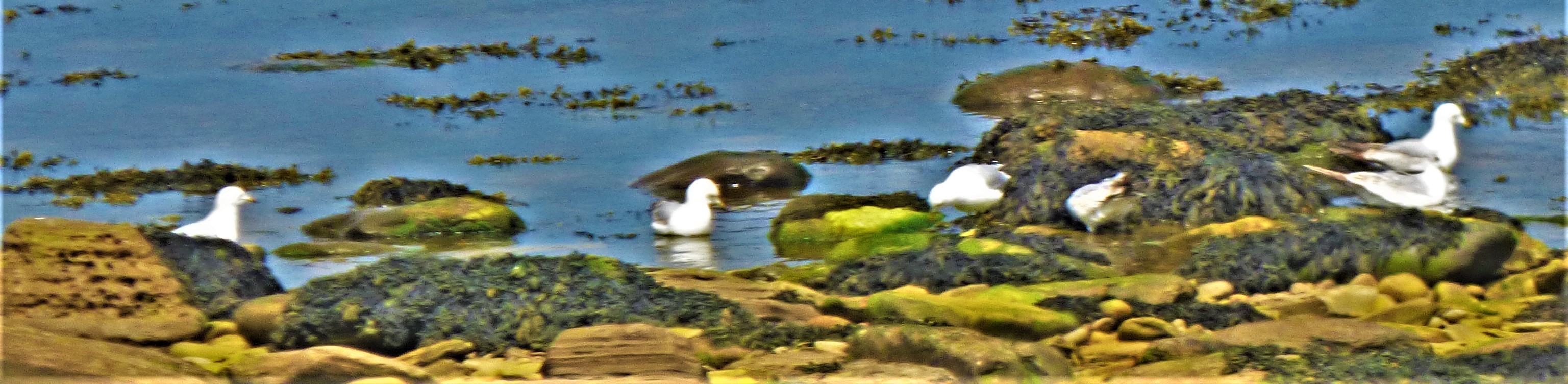
The gull shots feature three different species (Herring Gulls, Lesser Black Backed Gulls and Black Headed Gulls, the first two of which are opposite ends of a ‘ring species’)

P1220160P1220161P1220165P1220166

P1220167
These are Lesser Black Backed gulls – the main difference between them and Herring Gulls are the dark feathers that give them their name. Bottom right as you look as a lone Black Headed Gull – smaller and less solid of build than the others.

P1220168P1220169P1220170

P1220171
Each bungalow iin my little set has a piece of patterned brickwork like this. 


100 Cricketers: The 4th XI All-rounders and Introducing the 5th XI

The latest in my “100 cricketers” series – features the all-rounders from my 4th XI and introduces my fifth XI in batting order. Also includes some of my photographs.

INTRODUCTION

Welcome to the latest installment in my “100 cricketers” series. In this post we complete the examination of our fourth XI and present the fifth in batting order. The introductory post to the whole series can be found here, the post in which I introduced the 4th XI is here, and finally the most recent post in the series is here.

SOPHIE DEVINE

Her averages in ODIs are the wrong way round (32 with the bat and 37 with the ball), but in T20Is she averages 27.92 with the bat and 16.75 with the ball. She has had no test match experience to date, an issue in women’s cricket that have animadverted on before. I saw her as teenager, bowling fast and batting down the order, in the same series in which I saw a similarly young Ellyse Perry in action. As with Perry I suspected at the time that she would be moving up the order, and although she has not progressed as remarkably as he Aussie counterpart she has indeed moved up the order, and five ODI centuries with a best of 145 show that she has the capacity for big scores. She also makes big hits – in total across the formats in international cricket she has hit 121 sixes. Why have I got her at six and not seven in this batting order? The answer follows…

ADAM GILCHRIST

Although the search for wicketkeepers who could provide serious runs predated Adam Gilchrist he completely transformed the notion of what was possible in a wicketkeeper batting wise. For much of his test career he averaged over 50, and he ended at averaging 47.60. He always refused to move up from number seven, saying that playing there gave him licence to bat the way he did, and since I would want him to bat the way he did I am keeping him at number seven.

England suffered as brutally at his hands as anyone, notably when he scored a century off just 57 balls in Perth in 2006, helping to ensure the Ashes would change hands as rapidly as possible. However, in the previous Ashes series in 2005 England, chiefly through Hoggard and Flintoff, had so restricted him that he did not even manage a half-century. 

INTRODUCING THE 5TH XI

Here in batting order is the fifth XI:

  1. Punam Raut
  2. Laura Wolvaardt
  3. Rahul Dravid
  4. Viv Richards
  5. Daryll Cullinan
  6. +Jonathan Bairstow
  7. *Kapil Dev
  8. Adil Rashid
  9. Harbhajan Singh
  10. Brett Lee
  11. Glenn McGrath

PHOTOGRAPHS

Here are some of my photographs to finish with:

P1210972

P1210973
The first of four shots taken early yesterday evening which feature a remarkable full moon.
P1210974
Full moon and bird.
P1210978
First attempted close up of full moon
P1210979
ducks outside my window
P1210980
Second close-up of full moon
P1210981
The first butterfly of 2019 – captured through the window
P1210982
The remaining pics, including this one were taken during the two short walks I did this afternoon (each one being a circuit of the grassy area outside my bungalow).

P1210983P1210984P1210985P1210986P1210987P1210990P1210991P1210992


100 Cricketers – Second XI Bowlers and Introducing the Third X1

A continuation of my “100 cricketers” series, rounding out the second XI and introducing the third XI.

INTRODUCTION

Welcome to the latest post in my “100 cricketers” series. We have covered the batters and all-rounders from our second XI, as well as the whole of the first XI, so this post deals with the bowlers from the second XI and introduces the third XI in batting order. In keeping with usual philosophy I have equipped this XI with a well-balanced bowling attack. Later in this series we shall see an example where I depart from this, because having started following cricket when I did I believed it necessary to feature a quartet of West Indies fast bowlers somewhere along the way.

WASIM AKRAM

A left-arm fast bowler who took over 1,000 wickets in all forms of international cricket, and also a very handy batter to be coming in number 8. He was spotted bowling in the nets by Imran Khan, and called into the Pakistan team while still in his mid-teens. He made an immediate impact, and never looked back. Wasim was one of the pioneers of reverse swing bowling. 

WAQAR YOUNIS

Another left-arm fast bowler, even quicker than Wasim. Like Wasim he played county championship cricket as an overseas player, in his case for Surrey and then for Glamorgan. Overseas players in the championship is a thorny issue, my opinion being that an overseas player should only be signed if they are definitiely bringing something that no-one already in your squad can provide, and if they are good enough to attract the attention of their own national selectors. The temptation to sign any old overseas player just because you are allowed to do so should be resisted. Waqar’s great trademark was a thunderbolt yorker, although against Sri Lanka in the semi-final of the 1996 World Cup he memorably came a cropper when he deployed it too predictably and his last two overs went for 40 runs. With this pairing to open the bowling and Botham as back-up the pace bowling side of things is now well covered…

SHANE WARNE

In 1993 he settled the fate a series with his first delivery therein, the legendary “Gatting Ball”, which pitched well outside leg-stump and turned so much that it dislodged the off bail. From that moment on England were spooked and the series was only ever going one way. 12 years later when England ended a long Ashes drought by winning the 2005 series Warne still captured 40 wickets in the series, in the process becoming the first bowler to take 100 test wickets in a country other than his own. When Australia took their revenge on a complacent and under-prepared England 18 months later Warne had another fine series, including the spell that virtually settled things by turning the Adelaide match upside down.

Over 700 wickets (I will not give an exact tally here, because there is an inconsistency in his official record, where wickets against a World XI are counted as test wickets, while those who played against Rest of the World sides which were recruited to replace South African touring teams in the 1970s did not have their achievements counted in the test match records) in test cricket, a tally beaten by only one bowler, and not under any immediate threat from anyone else is testament to his amazing skills, which revived a largely forgotten art (through the 1970s and 1980s spinners had increasingly, if used at all, come to be seen as keeping things tight while the quicks rested) and changed the face of cricket.

There is one caveat about Warne however – if the match or matches were scheduled to be played in India I would not pick him because he paid very dearly for his wickets in that country. Nevertheless, his huge achievements everywhere else undoubtedly qualify him to be regarded as one of the finest of all-time.

MUTTIAH MURALITHARAN

The leading wicket taker in test match history with 800 scalps to his credit. At the Oval in 1998 his captain Arjuna Ranatunga chose to field first on a plumb pitch because he wanted to be sure that his main man got a proper rest between bowling stints. England made 445, but Murali claimed seven wickets with his off-spin. Sri Lanka then made almost 600, Sanath Jayasuriya leading the way with 213, and England collapsed second time round for 166, Murali adding nine wickets to his first innings seven, and Sri Lanka knocked off their tiny target without difficulty. 

There have been many questions over his action down the years, but as far I as concerned he is one of the all-time greats, and well worth a place in this list.

INTRODUCING THE THIRD XI

Here in batting order is my third XI, perparing the way for a continuation of this series:

  1. Chamari Atapattu
  2. Virender Sehwag
  3. Jonathan Trott
  4. A B De Villiers
  5. Graham Thorpe
  6. *Steve Waugh
  7. +Jeff Dujon
  8. Ravindra Jadeja
  9. Kagiso Rabada
  10. R Ashwin
  11. Allan Donald

PHOTOGRAPHS

P1210835
My aunt, whose house I had lunch at yesterday, has a large collection of bird themed cups, this one (three pics) being devoted to the Dartford Warbler.

P1210836P1210837

P1210840
This was a fun puzzle to complete (the place name that appears twice being Hayle ).
P1210841
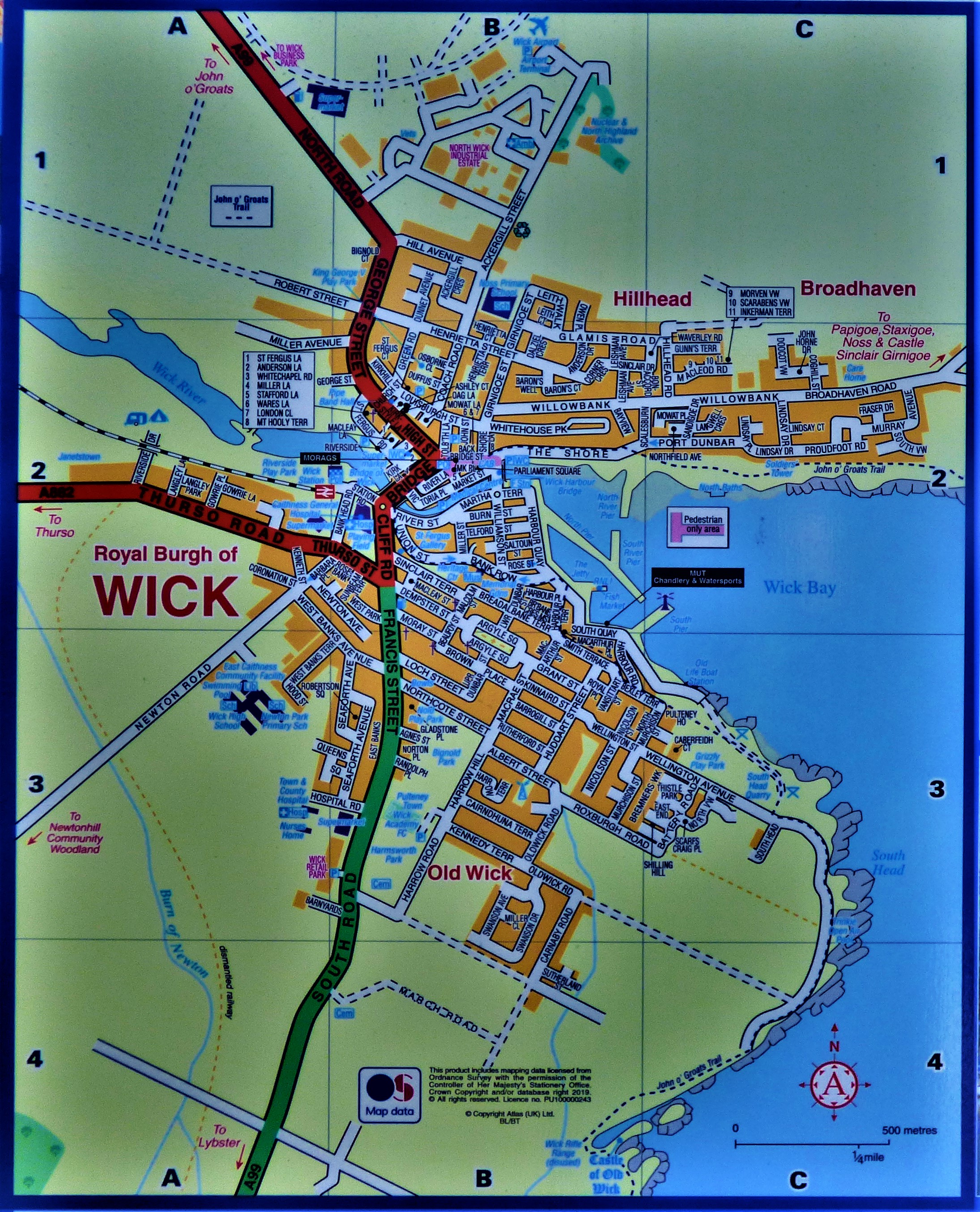
A map of the local area
P1210842
A close-up showing the part of town where I live.


Another Small Victory

A brief account of another staging post on my road to recovery.

INTRODUCTION

This afternoon saw another staging post in my receovery from cancer…

MY FIRST INDEPENDENT OUTDOOR WALK SINCE BECOMING ILL

Just before 2PM this afternoon I left my bungalow for a short walk. Although fairly cold and very grey the weather here is by no means terrible given that we are at the back end of December, so having donned by black beanie to cover the most obvious signs of the treatment that I have been undergoing I was ready to sally forth. I was out and about for approximately 15 minutes and save for occasional photography stops was walking all that time on my unaided own. Here are some pictures…

P1210555
This map is on display in my front porch.
P1210556
A Czech sculpture and some other bits beneath the map.
P1210557
The green space I look out on to viewed from one corner.
P1210558
My local shops (the chippy is closed, it being Sunday).
P1210561
A swiming gull on a pond that faces out on to Harewood Parade.
P1210564
The oldest item in my collection – this trilobite lived approximately 438 million years ago.

Congratulations to England on a Series Win Against the World Number One Ranked Test Nation

Congratulations to England on their series win, a farewell to Alastair Cook who has announced his impending retirement from international cricket, some maths problems and solutions and some photographs.

INTRODUCTION

This is going to be a long post because there is a massive story to cover concerning the cricket in addition to the match itself. I will also be including some mathematical problems and solutions and of course some of my own photographs.

ENGLAND WIN A THRILLER TO TAKE THE SERIES 3-1 WITH A MATCH TO GO

On Thursday when England stumbled to 86-6 after winning the toss and batting I was not expecting to be writing a piece of this nature. England failed to polish off the Indian first innings when they had a chance of a lead. When Stokes stuffed skipper Root (run out 48) it was 122-5 and England led by only 97. Then came another lower order fightback, and with Curran adding 46 to his first innings 78 England set India 245 to win. The match was settled while I was at the Mencap Beach Hut, Old Hunstanton on an NAS West Norfolk day out. As usual the key wicket was that of Kohli, and once he had gone India never got back into contention, Moeen Ali adding four wickets to the five he took in the first dig (he is very much a bowler who likes being at home – 91 wickets at 31 in England, 51 at 52 abroad) to help settle things. In neither innings did England’s top order deliver sufficiently (a recurring problem). Aside from Root’s 48 from his preferred no 4 slot in the second innings, the highest score from an England player in the top four was Jennings’ second innings 36. I am now going to through England player by player.

  1. A N Cook – see next section
  2. K K Jennings – a failure in the first innings, and in many ways a worse story in the second – an opener who gets as far as 36 should be settled in for the long haul. I believe that with the series safely won and the situation ripe for experimentation he should be dropped.
  3. J E Root – the skipper dropped himself to no 4 in the second innings and it took a run out to get rid of him then. 
  4. J M Bairstow – he was sufficiently injured to prevent him from keeping but not apparently from batting, but if he is to play as a specialist batsman it should be at no 3.
  5. B A Stokes – the new, responsible Stokes played well up to a point in this match but in the second innings he overdid the blocking to the point of handing the initiative to India. Also running out the skipper never looks great (save perhaps at Christchurch in 1978 when Botham, allegedly acting on instructions from vice captain Willis to do whatever was needed to up the run rate, stitched up skipper Boycott).
  6. J C Buttler – one of only two England batsmen to have topped the 250 run mark thus far in the series (the other being the wunderkind Curran) and competent behind the stumps.
  7. M M Ali – a useful batting effort after England’s disastrous start on day 1 and two good bowling performances. His mid-match promotion to number three (where he did recently hid a double century for Worcestershire v Yorkshire) shows how desperate England are to find a way for Root to bat at four.
  8. S M Curran – about the only thing the youngster hasn’t done in this series is walk on water! He is establishing himself as a star player.
  9. A U Rashid – a poor match with both bat and ball, but he is too good not be firing again soon.
  10. S C J Broad – a solid match for the veteran new ball bowler. He has now drawn level with Sir Richard Hadlee in the all-time test wicket takers list.
  11. J M Anderson – a quiet match for one of the all-time great swing bowlers, but even though he did not take many wickets he continued to command respect. 

I will end the cricket part of this post by naming my team for The Oval.

FAREWELL ALASTAIR COOK

Alastair Cook, after 160 test matches, the last 158 in sequence (the longest unbroken run of appearances in test history, and not likely to be challenged any time soon) has announced that the last match of this series, at The Oval, will be his international swansong. This marks the end of an epoch not just for England but for test cricket – in many ways Cook is the last true test match batsman, having made his debut before T20 was a really major thing and unlike many who get seduced by the bright lights and big money at tournaments such as the IPL he abandoned short form cricket to concentrate on his test match career. His achievements in test cricket placve him firmly among the greats of the game, and I think he has timed his announcement exactly right, bowing out on his own terms (which he had more than earned the right to do)  and before too many people began to ask just why he continued to be picked. 


On the 2010-11 Ashes tour Alastair Cook had to most successful visit to that part of the world by anyone named Cook since Captain James called by in 1770, and the most successful by an England batsman since Hammond in 1928-9. He played three monumental innings in that series, a match saving 235 not out at the Gabba (also sometimes referred to as the ‘Gabbatoir’ on account of what often happens to visiting sides there), his 148 at Adelaide that set the stage for the Pietersen innings that put Australia right out of that game and the 189 at Sydney in the final game that ensured that the final scoreline for the series would reflect England’s dominance (a 2-2 draw would have been an utter travesty, and even 2-1 to England after a drawn final match would have looked better than Australia deserved).

I have no doubt that there will be occasions in the near future when England find themselves wishing for Cook’s cool head and fighting qualities. It will be hard to get used to an England order without the name Cook at the top of it. 

From this huge cricket fan and devotee of test cricket the message is “Well done Alastair, and thanks for some fabulous memories, especially of the Aussies being humbled in their own backyards”.

THE TEAM FOR THE OVAL

HI do not expect that thsi team will actually be picked (!) but it is what I would do in these circumstances, with the series already won: A N Cook, R J Burns, T T Beaumont, *J E Root, O J D Pope, S M Curran, +J C Buttler, M M Ali, A U Rashid, S C J Broad, J M Anderson.

PROBLEMS AND SOLUTIONS

I begin with the solutions to the two problems I posed in my last post:

AKSHATHA AND DEV

A & D Answer

I give you a beautiful published solution from David Vreken:

Vreken strikes again!

1001 PROBLEM

Here is the answer:

1001 ans

I published a solution to this problem, which although more than half of all solvers got it wrong is actually very easy. My solution:

  1. 1001 is odd, and the only even prime number is two.
  2. 1001 – 2  = 999, which is obviously divisible by three (full prime factorization is 3 x 3 x 3 x 37)
  3. Negative numbers do not apply to these questions as with them no number matches the definition of a prime, but even if they did, 1,003 (1,001 – -2) is composite anyway (17 x 59).

WHAT IS THE AREA OF THE QUADRILATERAL?

This is first of two new problems from brilliant.org for you:

Screenshot 2018-09-03 at 5.08.56 PM

There are two ways to solve this one, the official method and a hack (no bonus points awarded for guessing which method I adopted!).

HOW MANY ITEMS?

Prices ending in 99

Incidentally this question should not be taken as suggesting that I approve of this method of pricing – the reverse is actually the case, I think it is utterly ridiculous and very irritating.

PHOTOGRAPHS

Church, North Norfolk
A church in North Norfolk
Sandcruiser
The new ‘Sandcruiser’ wheelchair at the beach hut.
Shell deposit
A deposit of shells

Hovercraft

Sandcruiser in action
The sandcruiser in action

Wind turbinesLincolnshire

Dolphin kite
No – not a real dolphin performing a record breaking acrobatic feat – merely a flashy kite being flown in the breeze.

No Flying birds

Bentley I
A vintage Bentley (six shots in total)

Bentley IIBentley MascotAA badgeThrough the windscreenDashboard

Amber
Possibly a small piece of amber with something preserved inside it.
fish
there were fish in this shballow water.

A Mixed Bag for Monday

Solutions to my last two maths problems, some sciencey pieces, a petition and some photographs.

INTRODUCTION

This post includes solutions to the problems I posed on Saturday, and a few other things from various sources. 

SPACE STATION DODECAHEDRON

Here is the question as a reminder:

Space station Dodecahedron

Here is the answer:

Dodecahedron answer

Here is a splendidly concise solution from David Vreken:

Vreken route

A VARIARION ON THE MALFATTI THEME

Here is the question:

Malfatti Mistake question

Here is the answer:

Malfatti Mistake answer

In the 19th century Malfatti conjectured that the way to maximise the area of a triangle you could fill with three circles was to fill in the three largest circles that touch specifically two of the three sides. Although he was not alive to be humiliated it turned out that he was not merely wrong, his proposed solution has been proved not to work for a single triangle. The solution that always works is first put in the largest single circle that touches all three sides that you can, then fill in the largest circle you can in the remaining space and then do so again. In an equilateral triangle the difference is small, but in a long thin isosceles triangle it is quite substantial. 

Here is Jeremy Galvagni’s published solution:

Galvagni outdoes Malfatti

SCHOOL REFUSAL SYNDROME PETITION

This on the official site for petitions to the UK government, which means that you have be a UK citizen to sign it. Please click the screenshot below to sign and share it if so minded:

School Refusal

A TRIO OF SCIENCE PIECES

First a fascinating piece from the National Geographic titled “Can Today’s Whale Species Survive the age of Humans” which covers the past and present of the cetaceans and speculates about their future. 

David Quammen, a good writer and a useful scientist to know about if you are planning an A to Z post, has a new book out on the subject of evolution, and Jerry Coyne of whyevolutionistrue has provided a very detailed review of it.

Finally, a letter to the Guardian signed by 60 well known environmental campaigners declaring their unwillingness to debate with climate change deniers, and why they are unwilling to do so. Below is the opening to the letter (please click to visit the original) and a list of signatories:

Guardian letter

signatories

SOME FINAL PHOTOGRAPHS

To finish here are some of my recent photographs:

Sea birdsFlying cormorantBlackbacked gull lands on the waterCormorant and rowing boatCormorant and sea birdsWingspanMoorhenCormorant


A Grockle’s Eye View of Cornwall 11: The End of the St Michaels Mount Day

Concluding my account of the day at St Michael’s Mount as we near the end of my series about my visit to Cornwall.

INTRODUCTION

Welcome to the latest installment in my series of posts about my recent visit to Cornwall. This post completes the day at St Michael’s Mount, leaving me with a post to do about the journey home and finally a page from which all the posts about this trip can be accessed. The fact that this will mean (including the page) 13 pieces relating to the trip bothers me not a jot – I have no more time for triskaidekaphobia than I do for any other ridiculous superstition.

WRAPPING UP ST MICHAEL’S MOUNT

Having finished our exploration of the mount itself it was time for lunch, which was excellent. The establishment at which we ate our lunch has a rule that alcoholic drinks can only be served if food is ordered at the same time, and according to their interpretation cream teas do not count as food, so on two occasions in the course of that meal we ordered portions of chips to go with drinks. Mention of cream teas (a speciality of the far west of England) brings me to a debate that rages unchecked: which goes on the scone first, the cream or the jam? The cream advocates argue that cream in this context is the equivalent of butter (and if it is Cornish clotted cream it is so thick that one can pretty much slice it like butter!), and that if you put the cream on first you do not get jam in it. I am not sure what the jam advocates base their case on.

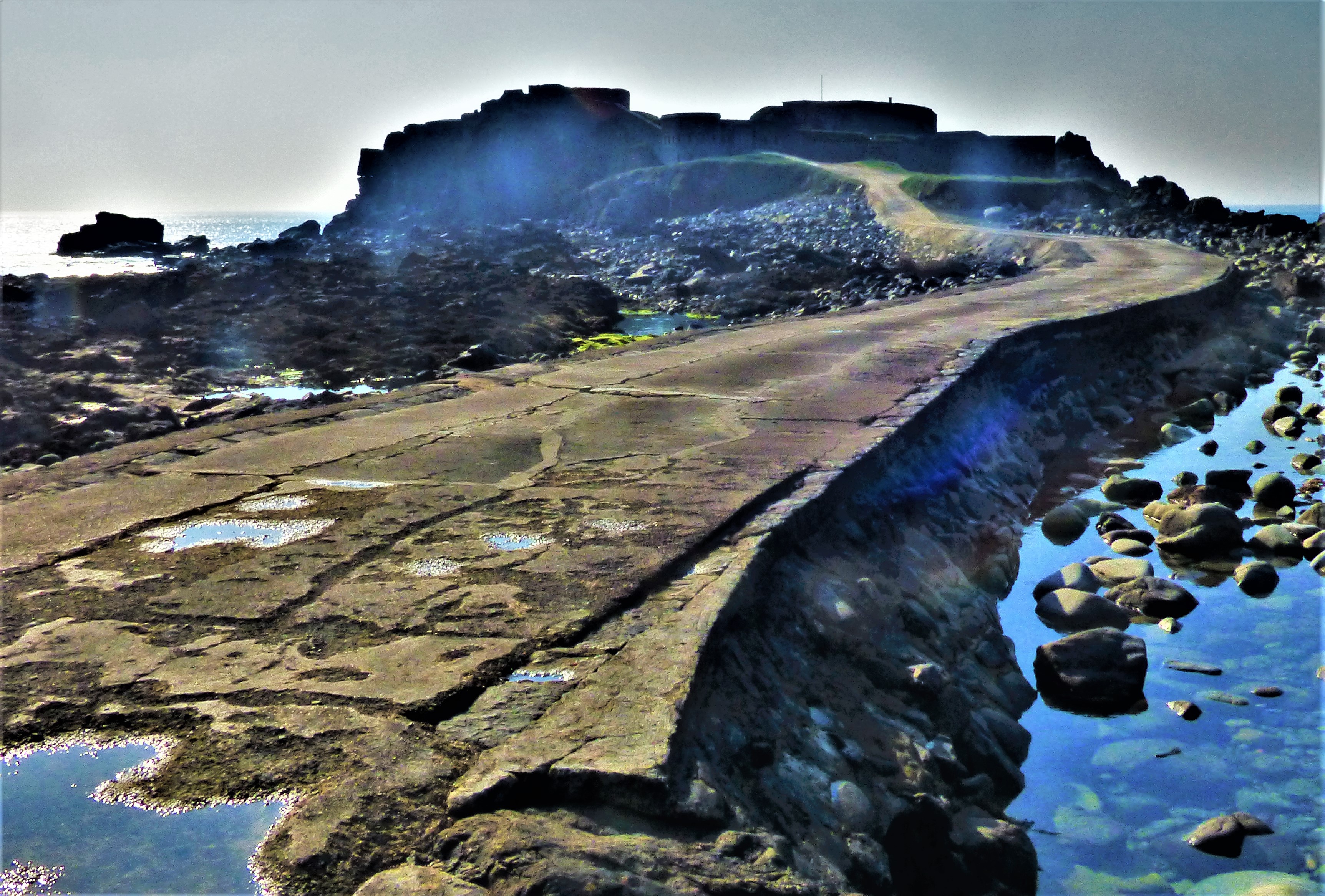
Lunch consumed it was time to head back to our parking place on the edge of Penzance. The tide was just starting to turn but was still a long way out, and unlike the Mont St Michel, on which the current setup of St Michael’s Mount is modelled the tide here comes in slowly (no danger of galloping horses being swallowed by an inrushing tide, as allegedly happened at Mont St Michel on one famous occasion), so we were still able to walk back across a vast expanse of beach to rejoin the official footpath just west of Marazion. I omitted to remove my socks and shoes for this part of the journey, and they ended up thoroughly soaked, although by the end of the walk they had dried out again (without the sea breeze the heat would have been fiendish).

Mathematical Pic
The first few photos here, including these mathematical pictures are from lunch

Mathematical picsMathematical Pic IIMetal pictureThrough the windowCornish beer ICornish Beer IICornish Beer IIIBoilersdetail from bottleDetail from bottle IIPaintingLooking towards the mainland

Sea birds
Just before recrossing the causeway to the mainland, we saw these birds – the one with the red bill used for digging would have been having a bonanza – there were huge numbers of worm casts in the sand.
Causeway close-up II
The causeway from close up

Worm castReturning to MarazionLooking WestGWR works, near PenzanceBeach viewShell

Farewell to St Michaels Mount
A farewell shot of the mount

St Michael's Mount panorama

Chough
A shore dwelling corvid, the Chough

A Grockle’s Eye View of Cornwall 6: Historic Plymouth

Continuing my account of my most recent visit to Cornwall.

INTRODUCTION

Yes, Plymouth is Devon not Cornwall, but my visit to the town was part of my stay in Cornwall, so it belongs in this very spread out series of posts.

THE WAR MEMORIAL

This particular memorial honours those lost at sea as well as those killed in war, because Plymouth is very much a naval town.

Memorial - distant view
A first, distant view of the memorial
Memorial base
A series of close-ups – each vertical bronze panel around the base is a list of names.

Memorial close-up IMemorial close-up IIMemorial close-up IIIMemorial close-up IVMemorial close-up VMemorial close-up VIMemorial close-up VII

Memorial and Lighthouse in the distance

OTHER PICTURES FROM HISTORIC PLYMOUTH

There were plenty of other things to see around the sea-front…

Warrior statuestatue and flagsColumn topLighthouseWarrior statue IILooking along The HoeTrident wielding statueIslandsbuildings overlooking The HoeLighthouse plaqueYachts and a warshipObservatoryWelcome to Plymouth HoeYahcts and a warship IILighthouse IIRAF StatueMapSea View IIIMemorial and Lighthouse in the distanceSmall HarbourIslandGrand building, PlymouthChurch Tower

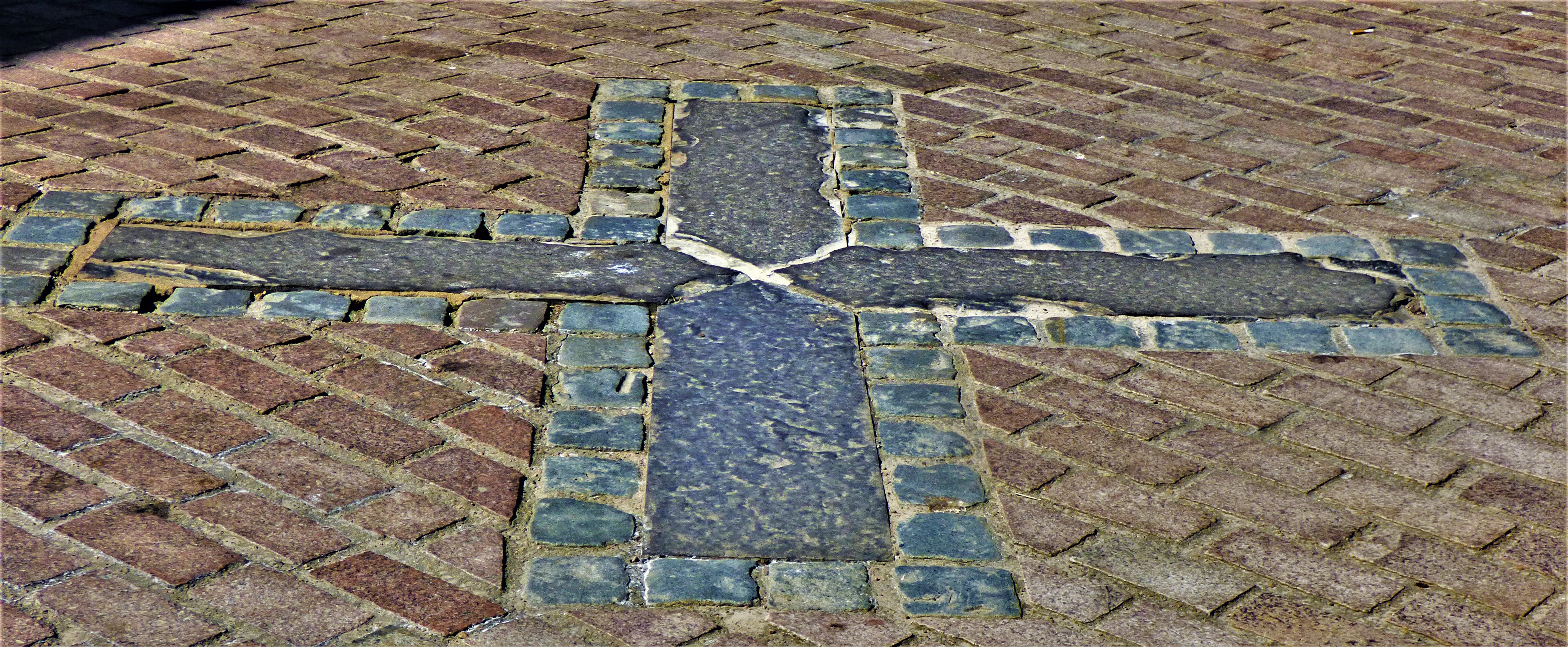
Circualr paving pattern
A quirky pavong arrangement…
Eddystione Lighthouse
…and an explanatory plaque

Building on way back to ferry

AN ITEM OF SHERLOCKIANA

It will be no news to followers of this blog that I am a fan of the world’s first and greatest consulting detective, so it was pleasing to acquire a photograph with a connection in that direction:

ACD blue plaque

One of Holmes’ most famous cases takes place on Dartmoor, not far from Plymouth.

THE RETURN CROSSING

It was now time to recross the county boundary into Cornwall, one again on the Edgecumbe Belle.

QuaysideStatue atop buildingWaterside buildingView from the Ferry (I)View from the Ferry (II)View from the ferry (III)Approaching CremyllCormorantFrameworkTrio of tower blocksSlipway

England Teams Flying High in Limited Overs Cricket

A post celebrating recent successes for the England men’s and women’s cricket teams.

INTRODUCTION

The last few weeks have been magnificent for English cricketers of both sexes. Each side has been very dominant through a sequence of games, and each have set a team scoring record during the sequence of games. 

THE WOMEN

The women warmed up with an ODI series against South Africa, losing the first match but winning matches 2 and 3 very comfortably, in each case with their efforts being spearheaded by centuries from Tammy Beaumont. Then they moved into a T20 tri-series featuring South Africa and New Zealand, the latter fresh from three straight 400-plus ODI tallies against Ireland, the last of which featured the first part of a ‘script rejection’ performance by Amelia Kerr – 232 not out with the bat, and then to settle things 5-17 with the ball. No author of a cricket themed novel would dare have a 17 year-old do that in an international match, but it happened in real life.

On Day 1 of the tri-series New Zealand opened proceedings by scoring 217 from their 20 overs against South Africa, which at the time was a new record in that form of the game, and won them the match comfortably. That record lasted until later that same evening when England took on South Africa, and with Beaumont scoring yet another century (getting there in a mere 47 balls) and Katherine Brunt responding to a promotion up the order by running up 42 not out off just 16 balls reached a total of 250-3. This proved way out of SA’s reach. On Saturday, the second set of games in the tri-series, England lost to South Africa but bounced back to beat New Zealand in the other match.

THE MEN

The men started the limited overs segment of their summer by losing to Scotland at The Grange, but then they commenced a five match series against Australia and were absolutely dominant through the first four matches, winning all comfortably and racking up 481-6 in the third match. The fifth match was a very different kettle of fish. Australia were all out for 205, a modest total that featured the most misjudged leave-alone in cricket history (perpetrated by Ashton Agar). England then collapsed to 114-8 and I was getting ready to point out that wins in dead rubbers don’t really count. However, Jos Buttler was still there, and now Adil Rashid provided some sensible support, and the pair put on 81 for the ninth wicket, turning the match into a nail-biter. Jake Ball, the England no 11 only scored 1 not out, but he survived 11 deliveries, while Buttler first completed an astonishing hundred (with a six that on sheer distance should probably have been a nine) and then sealed England’s one-wicket victory in this game and with it a 5-0 whitewash against the old enemy. 

Tim Paine thus became the second Tasmanian born captain with a surname that begins with P to surrender a match in which the opponents had needed 92 with only two wickets left (look up Mohali 2010 for more details). 

Buttler’s innings secured him both the player of the match and player of the series awards. Buttler was 110 not out in a score of 206-9, and the joint second biggest scores were 20 for Alex Hales and Adil Rashid, and he finished the series with 275 runs at a handy 137.50. In the course of this innings he passed 3,000 ODI runs. Unlike most of his previous big innings which have been all about putting opponents to the sword (his 3,000th ODI run came up off only just over 2,500 balls faced in this form of the game) this one involved getting his team out of trouble and probably rates as his finest for precisely that reason. 

MAJOR CONTRIBUTORS

Both the men’s and women’s teams have benefitted from the fact that everyone has contributed somewhere along the line, but each also have had certain players who have been especially outstanding (see Buttler above), and I offer the following composite list of the best:

Moeen Ali: Watching the way the Aussies tackled his off-spin you might have thought they had been put in a time machine and taken back to 1956.

Jonny Bairstow: about the only thing he did wrong all the way through was get out in the game at The Grange when he was putting Scotland to the sword and would have had England firmly in control had he batted a few more overs. None of the Aussie bowlers, even the highly impressive Billy Stanlake, had any idea where to bowl at him.

Tammy Beaumont: the smallest player in physical stature in this list (5’3″ tall) she has been a metaphorical giant in these matches with three centuries from her position at the top of the order.

Katherine Brunt: In the first match she made 72 to give England something to defend. After her 42 not out in the 250-3 T20 game she followed up by picking up 2-18 from her four overs. Ignore talk of imminent retirement – so long as her body remains in one piece she will keep going.
Jos Buttler: The batsman-keeper did all that was asked of him in the first four matches of the series against Australia and when the going got tough in fifth match he got going and carried England to victory.
Alex Hales: started these matches as favourite to miss out once Stokes was available again but played several incredible innings, and I would now say that for all his all-round credentials Stokes has to be considered as far from certain to regain his place.

Adil Rashid: another of the ‘role-reversal’ aspects of this series was that on this occasion it was Aussie batsmen who looked like rabbits in headlights when facing an English leggie. In addition to his success with the ball he played that crucial little innings in the final match.

Jason Roy: the leading run scorer of the series with 304, including a ton which spearheaded the chase-down of 310 in the 4th game.

Anya Shrubsole: reliable as ever with the ball, and when really needed in the game against New Zealand on Saturday she delivered some quick runs.

Sarah Taylor: quite possibly the best wicketkeeper of either sex on the planet at present and she also scored some important runs.

Danielle Wyatt: opening with Beaumont in the 250-3 game she was quite magnificent, and she had other successes through the season.

PHOTOGRAPHS

Time now for some photographs, starting with a cricket themed one from James and Sons’ upcoming cigarette card auction.


2489
While not super-famous these cricketers all have some noteworthy achievements: Vallance Jupp achieved the double of 1,000 runs and 100 wickets in each of eight successive seasons, Fred Root once took a seven-for against Australia. Percy Fender once reached a century in 35 minutes. Dodge Whysall batted no 3 for Nottinghamshire for many years. Ernest Tyldesley scored more first class runs for Lancashire than anyone else. Percy Chapman led England to victory in each of his first eight matches as captain. George Gibson Macaulay was a very successful bowler and enough of a batsman to have scored 76 in a test match. Charles Hallows was one of three cricketers to score 1,000 first-class runs within the month of May (half a dozen others reached 1,000 first class runs for the English season before the start of June, but had runs in April in that record). Herbert Strudwick was England’s first-choice keeper for 15 years in spite of regularly batting at no 11. Frank Watson was a good county player, who once made a triple-century.
Dragonfly
A spectacular creature, presumably some form of dragonfly.

Small TortiseshellDucksSmall birdGulls on the Great OuseGulls on the riverbankdrakesGulls on The Great OuseJay

Jay II
I saw this jay yesterday. This species is not threatened, but I use this caption to draw your attention to one that is, the nightingale. There is a petition to protect a threatened habitat for this bird at Lodge Hill please sign and share it.

DrakeDrake and gullGull and churchGullBird mootSmall Bird IIDucks IIPale duckbirds on the Grat Ouse

Greek Wildlife

Some of the creatures I observed in the course of my holiday in Greece.

INTRODUCTION

Welcome to the latest post in my series about my holiday in Greece (12th to 19th May). This one is an almost purely pictorial post showing some of the plant and animal life that I encountered there.

THE FLORA AND FAUNA I CAPTURED

Lizard I
This little green lizard was the only such creature I amanged to capture on camera, but I also saw a larger yellow/brown lizard at Methoni, although it made itself scarce before I could photograph it.

Lizard IICleopatraLizard IIIButterfly (1)Butterfly IIButterfly - folded wingsButterfly on spiky plantFish in rockpoolred beetleOrange ButterflyGiant green beetleYellow butterflyHopping insectHouse Martin nestsAdult House Martin visits one of the nests

Three cats at the noms plate
We had decided that we would put out cat food, but no treats, so the cats who visited were genuinely hungry..

Orange butterflyLizardYellow and green butterflyButterflygreen butterfly

dark butterfly
This picture and the next demonstrate that not all the butterflies in Greece are brightly coloured.

stony butterflylong legged insectbugmulticoloured beetlemulti-coloured beetle IIOrange catOld terracingFish in rockpool IIFishOrange bitterfly IIOrange butterfly IIIOrange Butterfly IVOrange butterfly VOrange butterfly VIGrasshopper IIHouse Martin visits the nests

Mountain snail
I saw this mountain snail during the ascent to Karytaina Castle, on the Friday, after the visit to Dimitsana.
arachnid
I could not identify this one with any confidence, although the shape suggests an arachnid of some sort rather than an insect.
Beetle
The size and shape of tbhis creature and the apparent solidity of its carapace suggested a large beetle, although such creatures do not usually display their wings when on the ground.

During one of the walks I saw a tiny snake which concealed itself very quickly, and I missed many other intended shots, but I think I got a fair selection!