India Demonstrate How Not To Polish Off an Innings

Some thoughts on the current test match, some mathematics, some climate change themed links and some photographs from an upcoming militgaria auction.

INTRODUCTION

Although my first and main focus in on the current test match between England and India I also have my usual assortment of other goodies.

SWITCHBACK RIDE AT THE OVAL

When England were 120-1 at one point yesterday it looked like they were making a solid if slow start. India then took control of the game, England finishing the day 198-7, with Jos Buttler looking to marshal the tail in a recovery act (the first time this millennium that an uninterrupted test match day in England has yielded less than 200 runs). When Rashid was out fairly early this morning to make it 214-8 the question was whether the Broad and Anderson could last long enough to see England to 250. Thanks to some crazy Indian tactics the final England wicket did not fall until the total had reached 332, Buttler top scorer with 87 and Broad a useful 38. Buttler was last out when it finally occurred to India that it might not be a good idea to allow him singles at will and set a field that necessitated improvisation if he wanted to farm the strike.

The “tactic” of concentrating all one’s efforts on the tailender and declining to make any effort to pressurise the senior batter is not one I have ever approved of, and today saw one of it’s many ignominious failures. 

Having failed yet again Jennings now surely has one innings left to save his test career. There are seven test matches for England, six overseas and one at home against recently elevated Ireland before the Aussies come calling, and it is those matches which can be used to bed in a new opening pair (it would be a major ask for an opener to make their debut against them) – and I do not see Jennings being one half of that pair. As I was writing this paragraph Stuart Broad picked up the first Indian wicket. Those who read my previous post know that I have my own highly unorthodox solution to the problem of who the new opening pair should be (the driver of the bus I travelled home from work on yesterday, who is a follower of this blog, commented approvingly on the controversial element of this, so I am not alone). 

If, as now seems to be one of two live possibilties (a draw and overall 3-1 being the other) England end this series with the scoreline 4-1 in their favour India will have chucked this match in the first part of day 2. Virat Kohli is a great player but on all available evidence he has precisely no aptitude for captaincy. In thirty years of being an avid cricket follower I cannot recall a finer demonstration of how not to polish off an innings.

TEASERS

First up solutions to the problems I set on Wednesday (all problems in this section come by way of brilliant.org):

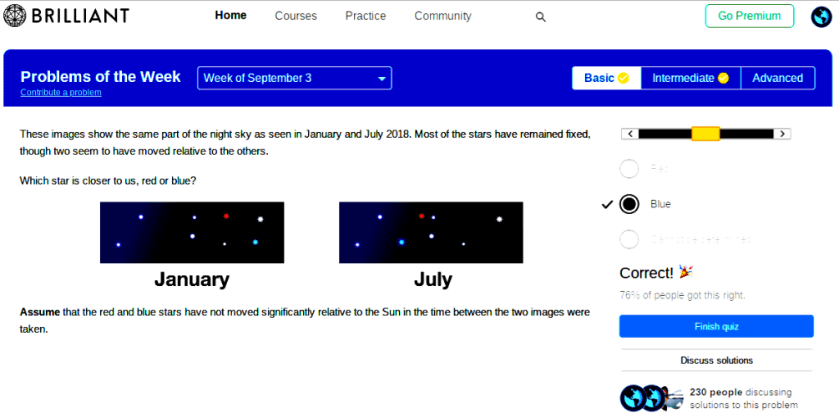
WHICH STAR IS CLOSER?

astroproblem

First the answer:

Star answer

The blue star has changed relative position more than the red, hence it must be closer, while all the other stars are so far distant that they have not changed relative position. 

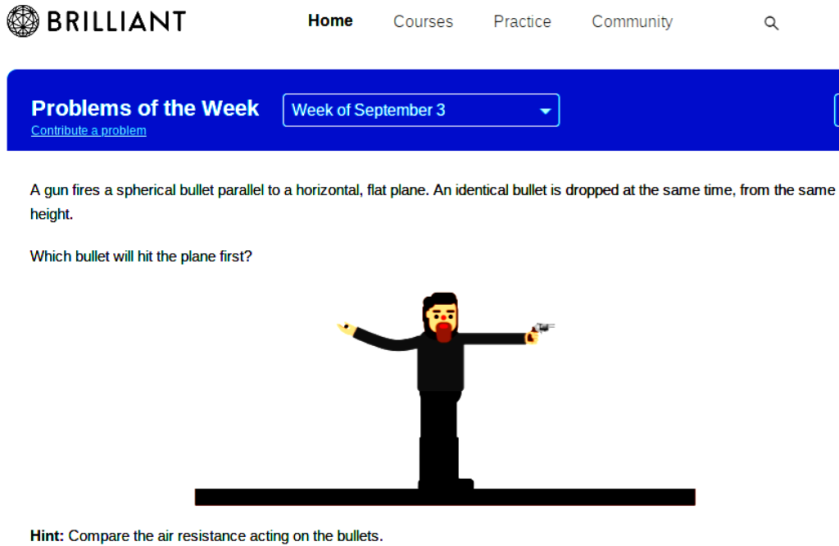
BULLETS
Bullets

The answer:

Bullet answer

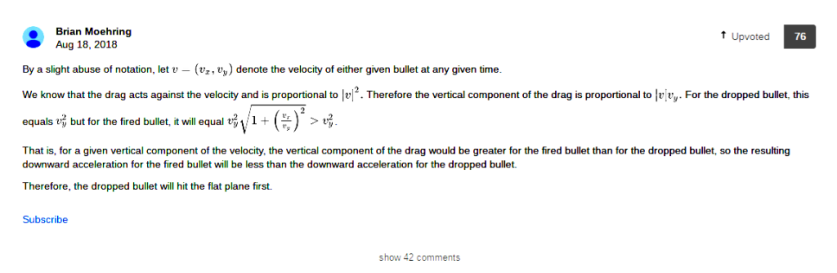
Here is Brian Moehring’s solution:

BMbullets

NEW PROBLEMS

31 problem

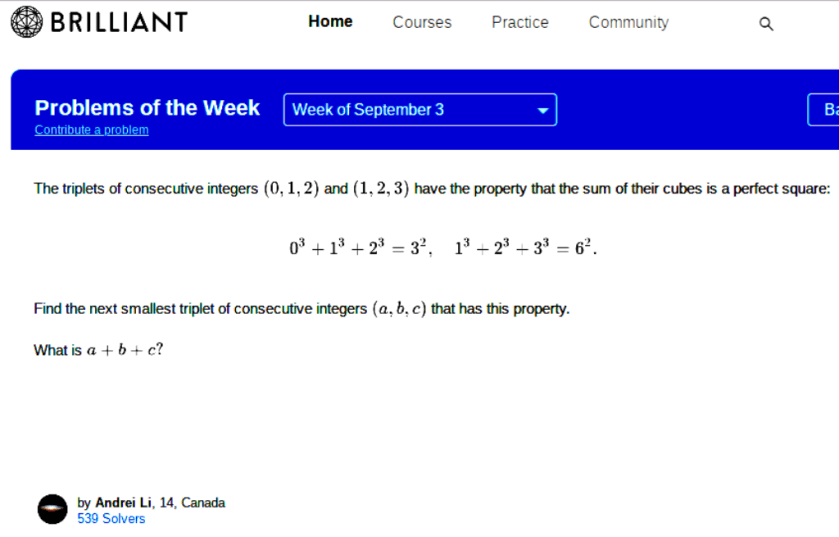
Here is another problem:

squacubes

LINKS

Three closely related pieces here. 

  1. Richard Murphy brings news of a campaign victory – the BBC has admitted to getting its coverage of climate change wrong and has warned people that it is not necessary to give airtime to climate change deniers for the sake of balance. Here is the end of Murphy’s piece on this:
    Of course I am pleased.

    And massive credit to Rupert Read for achieving this.

    Next the BBC should stop platforming tax deniers.

    And those who will not disclose their funding.

  2. Rise for Climate – this is a new source of information about actions being taken to combat climate change – feel free to visit and sign up for emails as I have.
  3. Anna presents a detailed and very clearly laid out Q & A on the campaign the prevent the building a big new road through Trosa. An English version follows the Swedish.

PHOTOGRAPHS

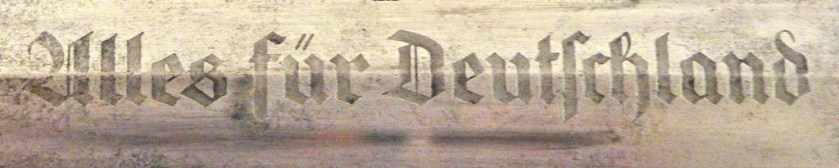
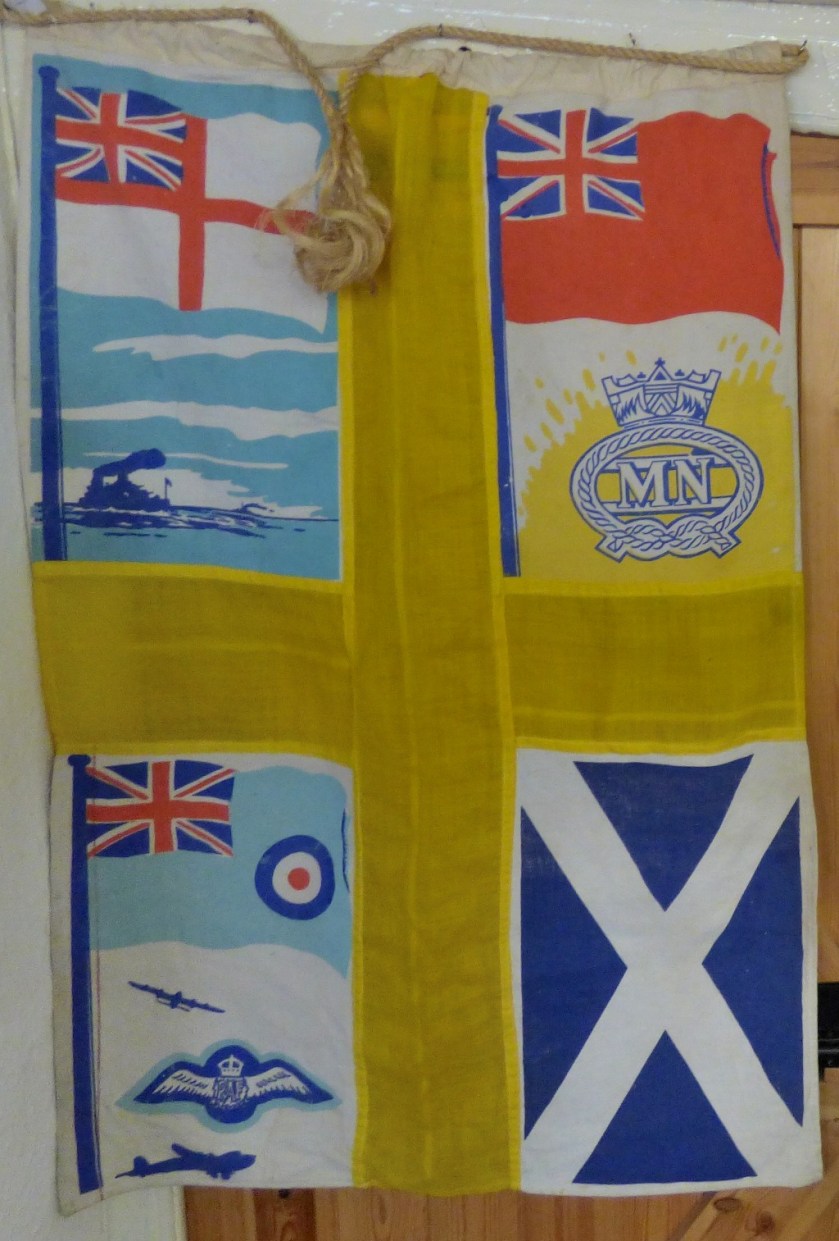
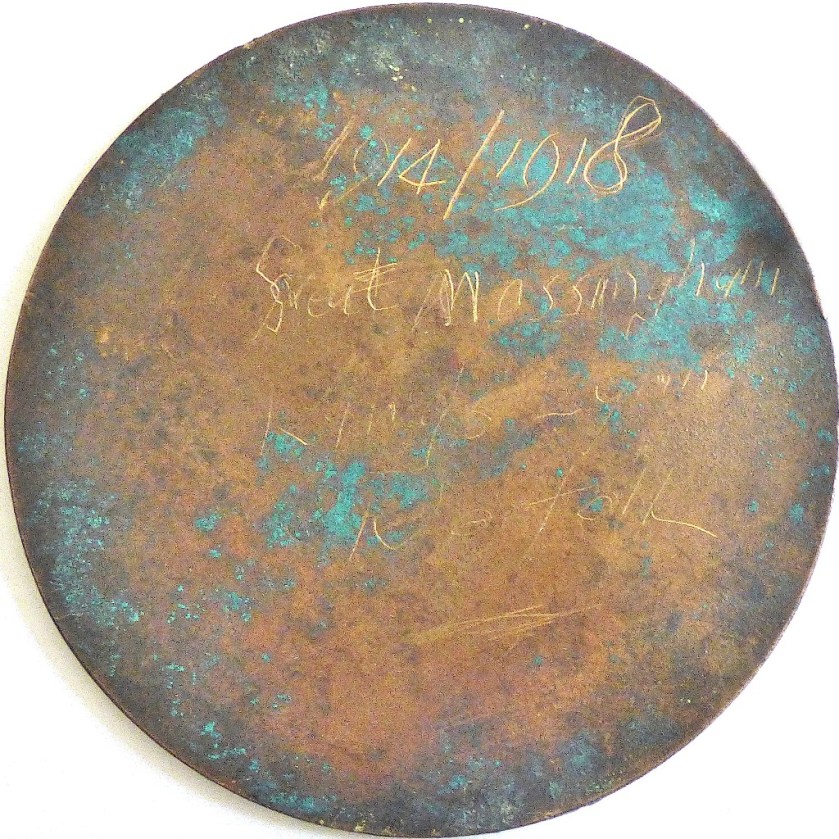
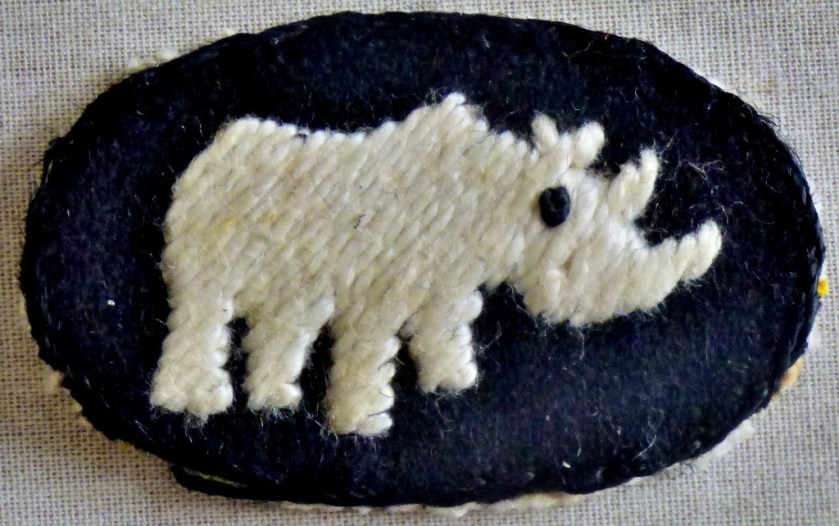
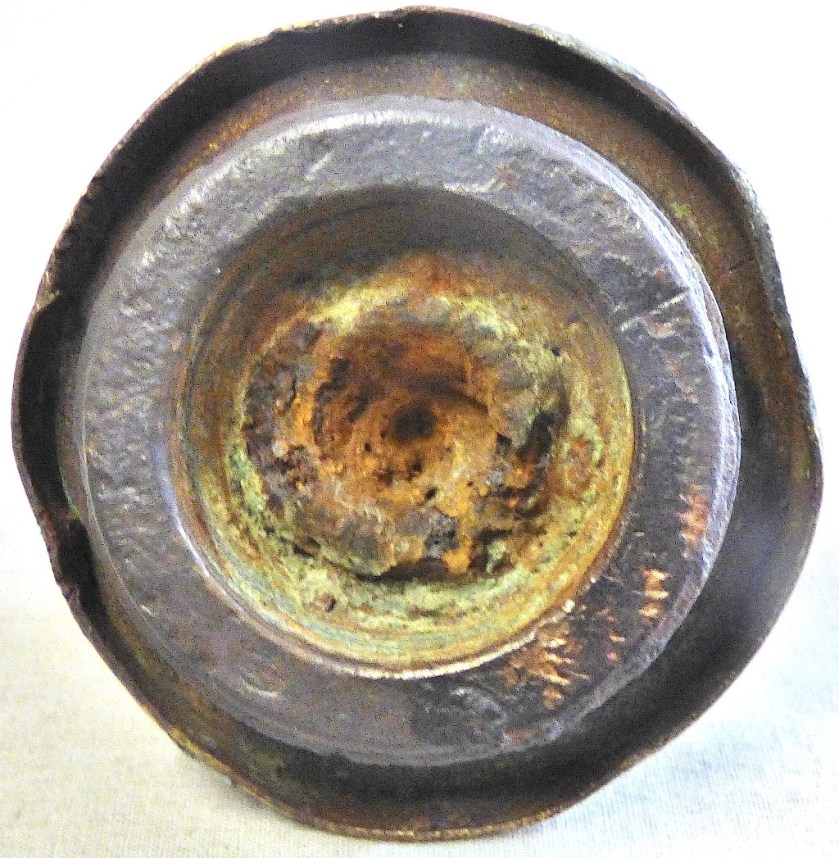
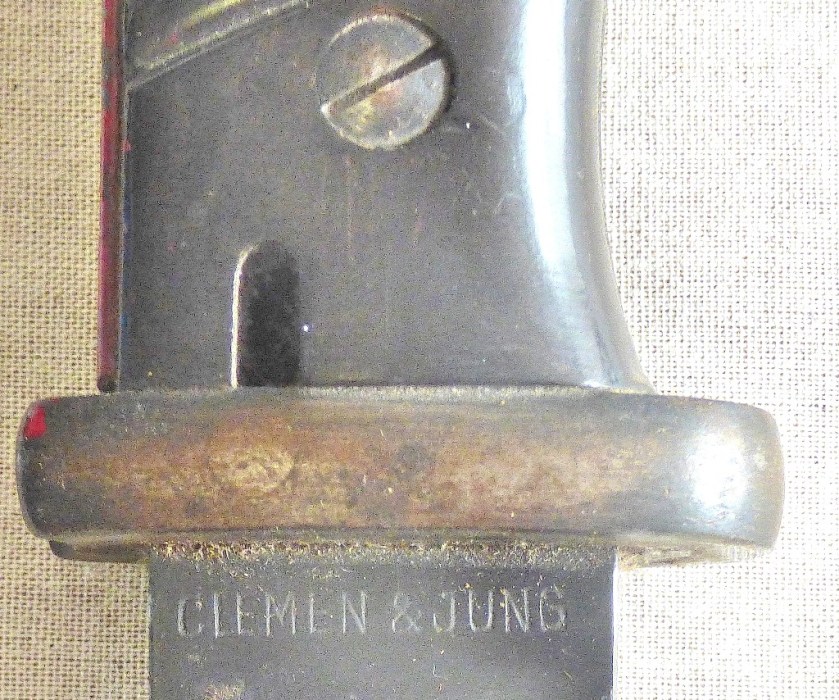
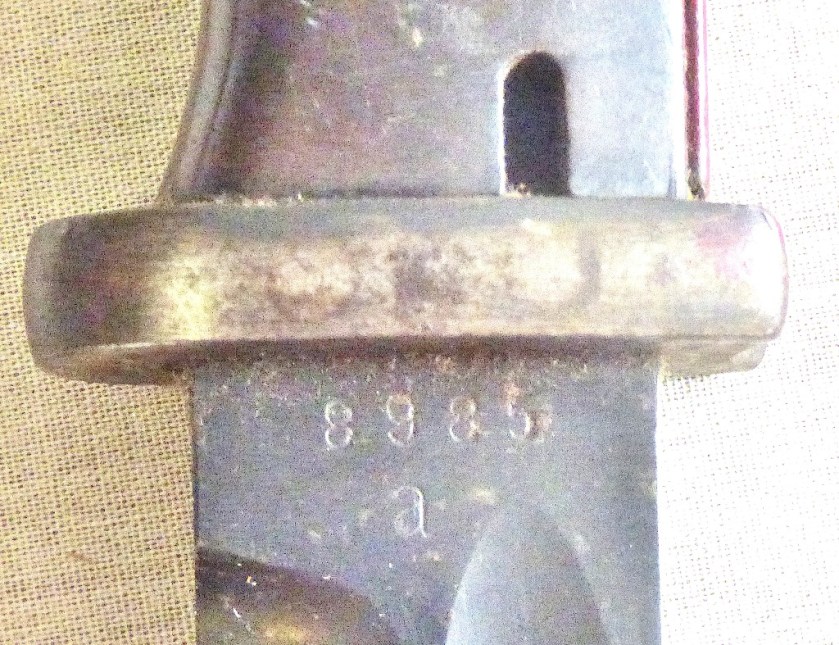
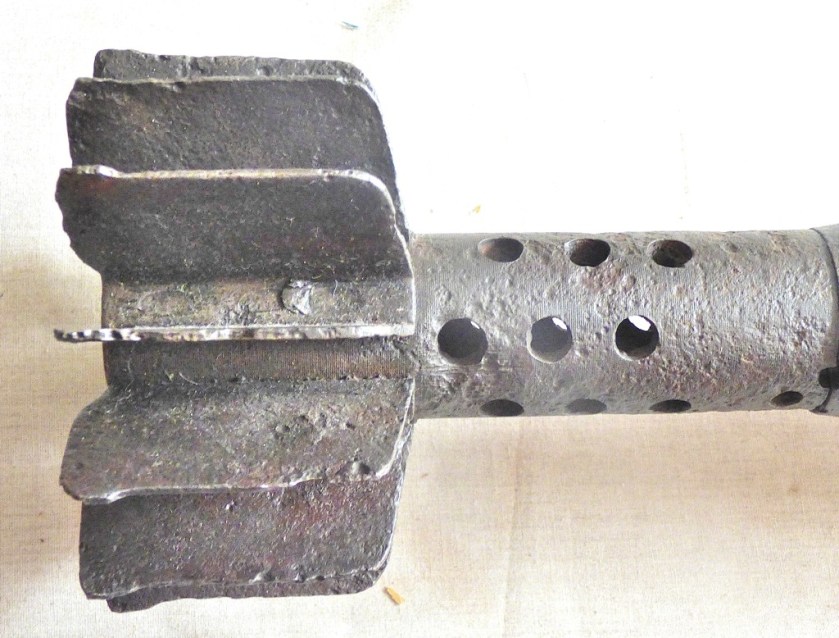
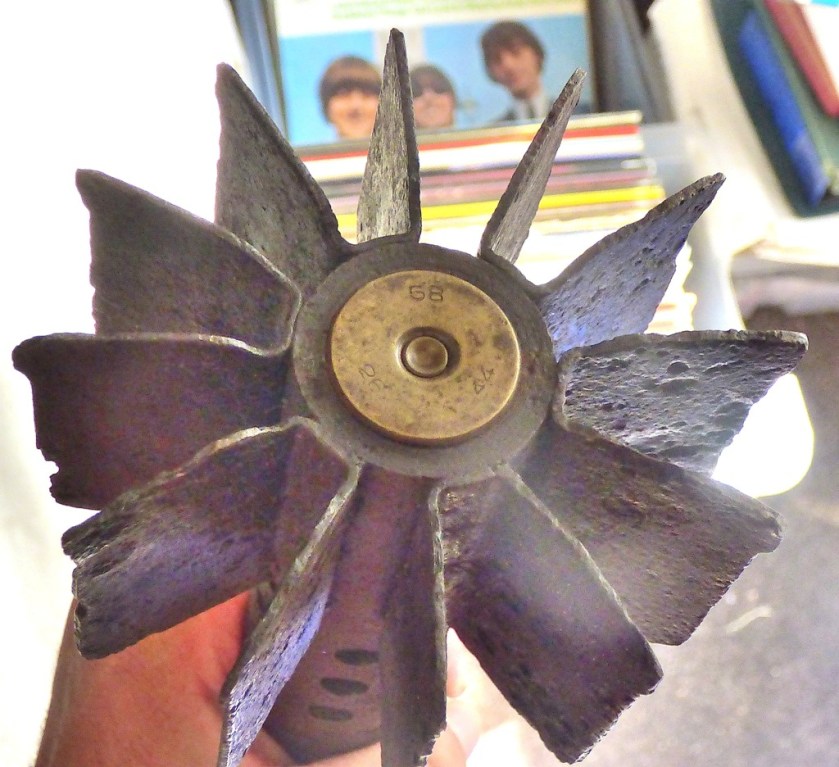
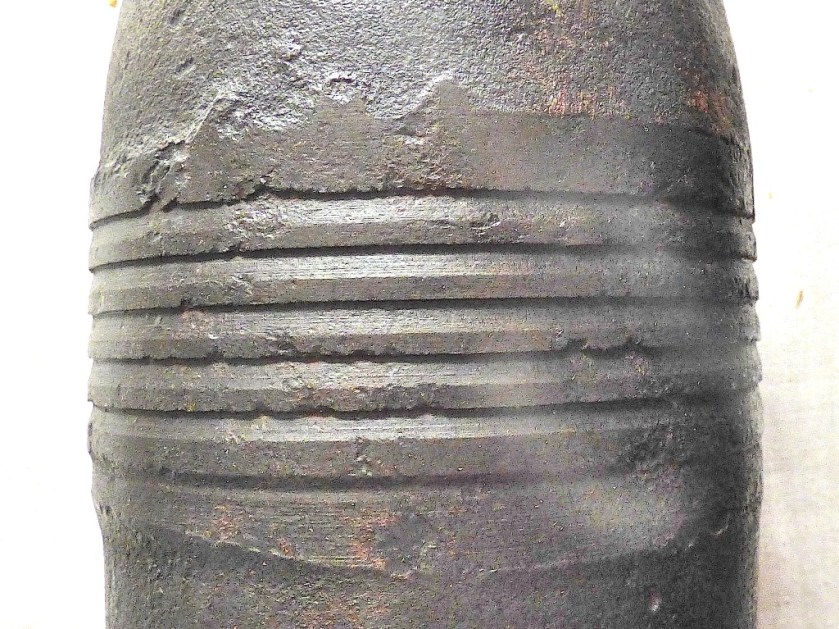
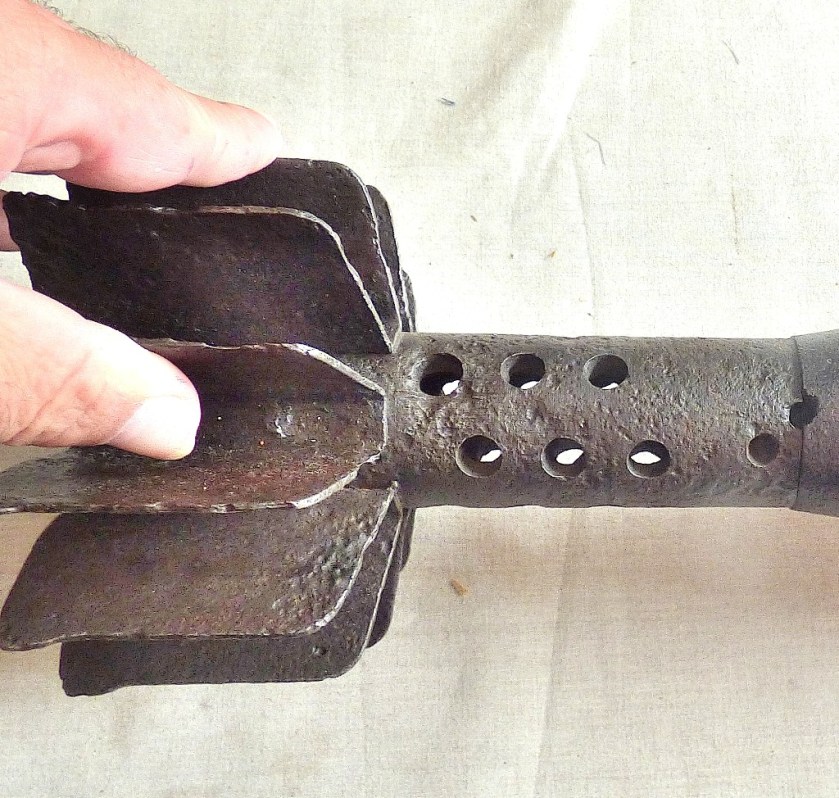
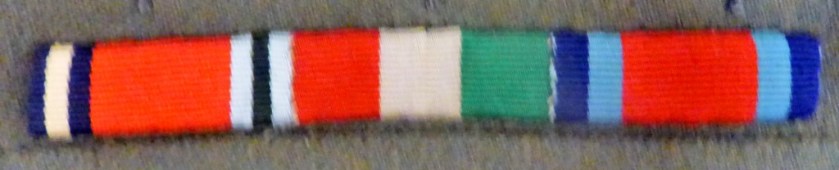
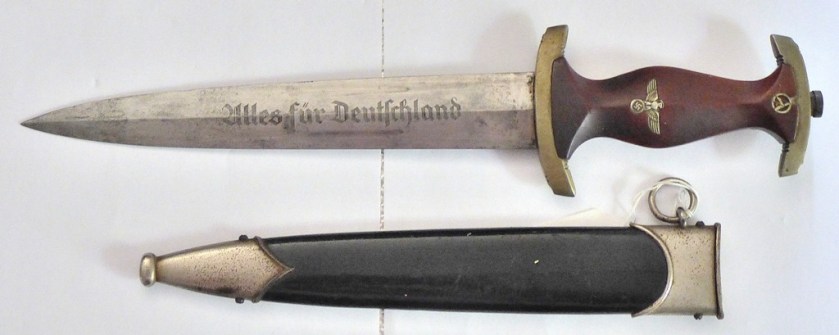
These pictures all come from our militaria sale that will be happening on September 19th. Disclaimer: one of the items pictured is a relic from one of history’s vilest regimes – I show it because it is a remarkable specimen which has already attracted large amounts of interest.
2
Lot 2 – this dagger is definitely genuine – and will go for a lot of money.

2-a2-b2-d2-e2-f2-g2-h2-c2-i

10
Lot 10, this will be on the front cover of the catalogue.
51
Lot 51

51-a51-b51-c51-e51-f51-g51-d

231
Lot 231
402
Lot 402
406
Lot 406
405
Lot 405

405-d405-c405-b405-a

404-c
Lot 404

404-b404-a404

204
Lot 204

204-a204-b204-c

373
Lot 373
372
Lot 372

372-a372-b372-c372-d372-f372-e

407
Lot 407 – this uniform will bring the cujrtain down on the sale.

407-a407-b407-c

England Selectors’ Ostrich Impression and Other Stuff

Some thoughts on the (in)action of the England selectors this week, some mathematical teasers and a few pictures.

INTRODUCTION

A couple of days ago I wrote about England’s series win over India and presented some problems and solutions. This post is on similar lines, dealing with the actual behaviour of the England selectors and my thoughts thereon.

AN OPPORTUNITY SQUANDERED

England, with the series already in the bag, had a diamond-encrusted golden opportunity to experiment with options to fill gaping holes in their top order. Cook’s announcement of his impending retirement from international cricket should have acted as an extra spur. Instead of which we see very little in the way of forward planning or of experimentation of any sort. Even with the certain knowledge that a new opener will have to come in to replace Cook the selectors persevere with the proven failure Jennings.

Three individuals who can feel more aggrieved than most by this behaviour are Rory Burns (another 90 against Essex yesterday after the latter won the toss and chose to bowl first), Dan Lawrence and Liam Livingstone

In view of Cook’s impending retirement I would have recognized openers at 1,2 and 3 (not a bad approach in test cricket anyway), with a view to the two other openers than forming a partnership in future matches. This is why in the previous post I mentioned Tammy Beaumont, a recognized opener who has been scoring stacks of runs recently. Batting is at least as much about timing and placement as it is about brute power, and that is why I believe (unlike in the case of fast bowling) a woman could mix it with the men even at the highest level, similarly with slow bowling and possibly wicket-keeping (for my money the best user of the gauntlets in world cricket across the board at the moment is Sarah Taylor). A number of the all-time greats of test match batting have been of diminutive stature (Bradman, Gavaskar, Tendulkar, Sehwag, Hanif Mohammad and several of the finest Sri Lankans spring to mind instantly). I am well aware that this super-radical option will not happen, but the alternatives that that leaves with are:

  1. Two brand new openers, neither of whom have any experience of international cricket.
  2. One new opener and one opener who has shown already that they are not actually good enough (Jennings)
  3. Two openers who gave failed to prove themselves (presumably Jennings and a recalled Stoneman). 

Of those three options, none of which massively appeal, my choice would number 1, which might end up working out well, and then the question is who to choose to open alongside Burns (whose case for selection is undisputable in the circumstances). 

Having taken the “ostrich option” re their top order difficulties the only outcome from this game that could be acceptable is not merely a win to make it 4-1 for the series but a win by a massive margin. The timidity of the England selectors means that at least one and possibly two England openers will be starting their careers on overseas tours, with their first home test series being against those well known softies, the Aussies.

PROBLEMS AND SOLUTIONS

I will start as usual with answers and solutions to the previous problems (all from brilliant.org) before offering up some new problems.

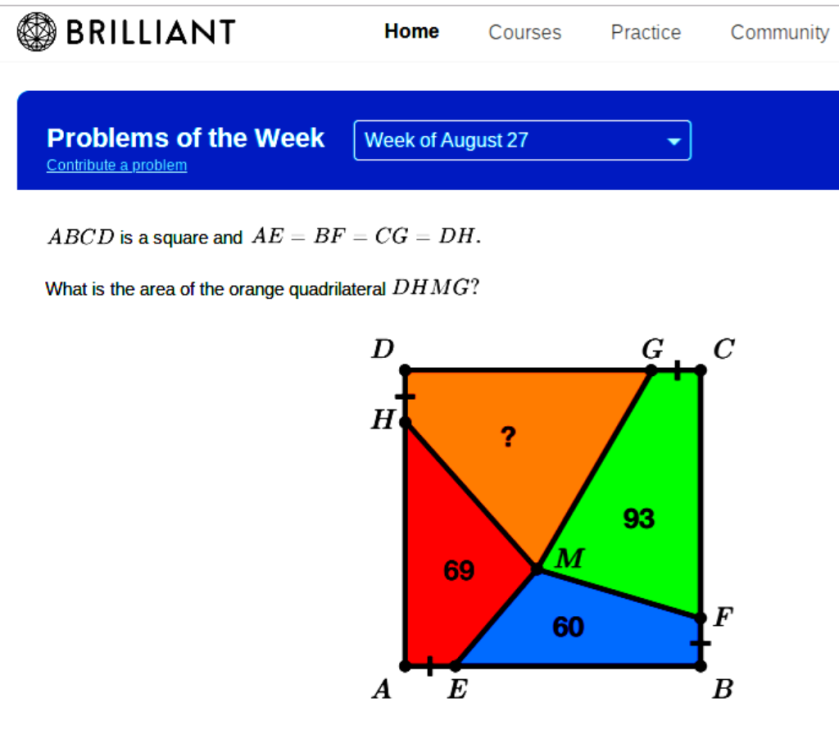
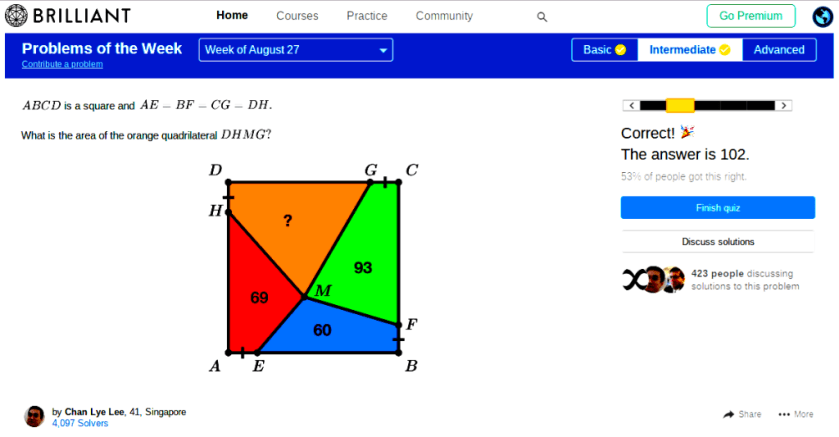
WHAT IS THE AREA OF THE QUADRILATERAL

Screenshot 2018-09-03 at 5.08.56 PM

First the answer:

quad answer

The hackers solution is that there are only two really serious possibilites since the shape is a square, namely 67 (giving an area of 289 = sides 17 units long) and 102 (giving an area of 324 = sides 18 units long), and since the question gave one three tries just enter those values for the first two tries (if your first entry does not come up right). Here, courtesy of Jeremy Galvagni is an elegant genuine solution:

quadsol

THE .99 STORE

First the answer:

Screenshot 2018-09-05 at 3.09.42 PM

The figure in front of the .99 part of the price can vary, so all we need to know is how many .99s add up to answer ending in .89, and the answer is 11 (11 x 99 = 1,089, so 11 x 0.99 = 10.89), and the next number of items after 11 that would give us an answer ending in .89 is 111, the lowest price total for which would be $109.89. Thus Marie purchased 11 items.

NEW PROBLEMS

First an astronomy themed problem:

astroproblem

Now a question that has got almost three-quarters of those who tackled in on brilliant, but is not actually difficult:

Bullets

PHOTOGRAPHS

Swimming MoorhenMoorhen on branchTwo MoorhensMoorhensMagpie

Congratulations to England on a Series Win Against the World Number One Ranked Test Nation

Congratulations to England on their series win, a farewell to Alastair Cook who has announced his impending retirement from international cricket, some maths problems and solutions and some photographs.

INTRODUCTION

This is going to be a long post because there is a massive story to cover concerning the cricket in addition to the match itself. I will also be including some mathematical problems and solutions and of course some of my own photographs.

ENGLAND WIN A THRILLER TO TAKE THE SERIES 3-1 WITH A MATCH TO GO

On Thursday when England stumbled to 86-6 after winning the toss and batting I was not expecting to be writing a piece of this nature. England failed to polish off the Indian first innings when they had a chance of a lead. When Stokes stuffed skipper Root (run out 48) it was 122-5 and England led by only 97. Then came another lower order fightback, and with Curran adding 46 to his first innings 78 England set India 245 to win. The match was settled while I was at the Mencap Beach Hut, Old Hunstanton on an NAS West Norfolk day out. As usual the key wicket was that of Kohli, and once he had gone India never got back into contention, Moeen Ali adding four wickets to the five he took in the first dig (he is very much a bowler who likes being at home – 91 wickets at 31 in England, 51 at 52 abroad) to help settle things. In neither innings did England’s top order deliver sufficiently (a recurring problem). Aside from Root’s 48 from his preferred no 4 slot in the second innings, the highest score from an England player in the top four was Jennings’ second innings 36. I am now going to through England player by player.

  1. A N Cook – see next section
  2. K K Jennings – a failure in the first innings, and in many ways a worse story in the second – an opener who gets as far as 36 should be settled in for the long haul. I believe that with the series safely won and the situation ripe for experimentation he should be dropped.
  3. J E Root – the skipper dropped himself to no 4 in the second innings and it took a run out to get rid of him then. 
  4. J M Bairstow – he was sufficiently injured to prevent him from keeping but not apparently from batting, but if he is to play as a specialist batsman it should be at no 3.
  5. B A Stokes – the new, responsible Stokes played well up to a point in this match but in the second innings he overdid the blocking to the point of handing the initiative to India. Also running out the skipper never looks great (save perhaps at Christchurch in 1978 when Botham, allegedly acting on instructions from vice captain Willis to do whatever was needed to up the run rate, stitched up skipper Boycott).
  6. J C Buttler – one of only two England batsmen to have topped the 250 run mark thus far in the series (the other being the wunderkind Curran) and competent behind the stumps.
  7. M M Ali – a useful batting effort after England’s disastrous start on day 1 and two good bowling performances. His mid-match promotion to number three (where he did recently hid a double century for Worcestershire v Yorkshire) shows how desperate England are to find a way for Root to bat at four.
  8. S M Curran – about the only thing the youngster hasn’t done in this series is walk on water! He is establishing himself as a star player.
  9. A U Rashid – a poor match with both bat and ball, but he is too good not be firing again soon.
  10. S C J Broad – a solid match for the veteran new ball bowler. He has now drawn level with Sir Richard Hadlee in the all-time test wicket takers list.
  11. J M Anderson – a quiet match for one of the all-time great swing bowlers, but even though he did not take many wickets he continued to command respect. 

I will end the cricket part of this post by naming my team for The Oval.

FAREWELL ALASTAIR COOK

Alastair Cook, after 160 test matches, the last 158 in sequence (the longest unbroken run of appearances in test history, and not likely to be challenged any time soon) has announced that the last match of this series, at The Oval, will be his international swansong. This marks the end of an epoch not just for England but for test cricket – in many ways Cook is the last true test match batsman, having made his debut before T20 was a really major thing and unlike many who get seduced by the bright lights and big money at tournaments such as the IPL he abandoned short form cricket to concentrate on his test match career. His achievements in test cricket placve him firmly among the greats of the game, and I think he has timed his announcement exactly right, bowing out on his own terms (which he had more than earned the right to do)  and before too many people began to ask just why he continued to be picked. 

On the 2010-11 Ashes tour Alastair Cook had to most successful visit to that part of the world by anyone named Cook since Captain James called by in 1770, and the most successful by an England batsman since Hammond in 1928-9. He played three monumental innings in that series, a match saving 235 not out at the Gabba (also sometimes referred to as the ‘Gabbatoir’ on account of what often happens to visiting sides there), his 148 at Adelaide that set the stage for the Pietersen innings that put Australia right out of that game and the 189 at Sydney in the final game that ensured that the final scoreline for the series would reflect England’s dominance (a 2-2 draw would have been an utter travesty, and even 2-1 to England after a drawn final match would have looked better than Australia deserved).

I have no doubt that there will be occasions in the near future when England find themselves wishing for Cook’s cool head and fighting qualities. It will be hard to get used to an England order without the name Cook at the top of it. 
From this huge cricket fan and devotee of test cricket the message is “Well done Alastair, and thanks for some fabulous memories, especially of the Aussies being humbled in their own backyards”.

THE TEAM FOR THE OVAL

HI do not expect that thsi team will actually be picked (!) but it is what I would do in these circumstances, with the series already won: A N Cook, R J Burns, T T Beaumont, *J E Root, O J D Pope, S M Curran, +J C Buttler, M M Ali, A U Rashid, S C J Broad, J M Anderson.

PROBLEMS AND SOLUTIONS

I begin with the solutions to the two problems I posed in my last post:

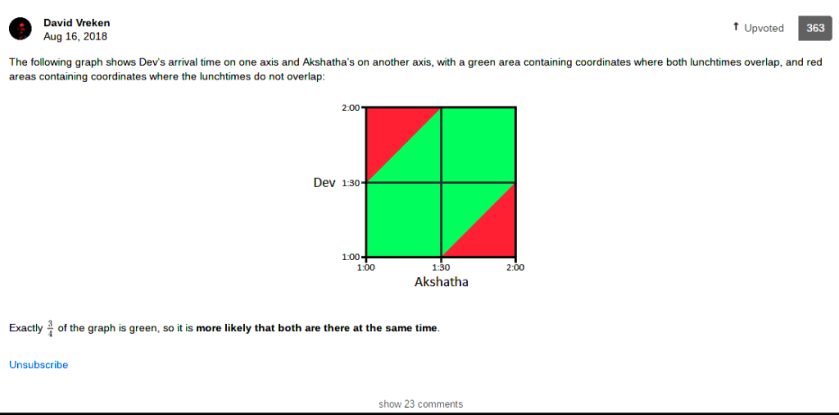
AKSHATHA AND DEV

A & D Answer

I give you a beautiful published solution from David Vreken:

Vreken strikes again!

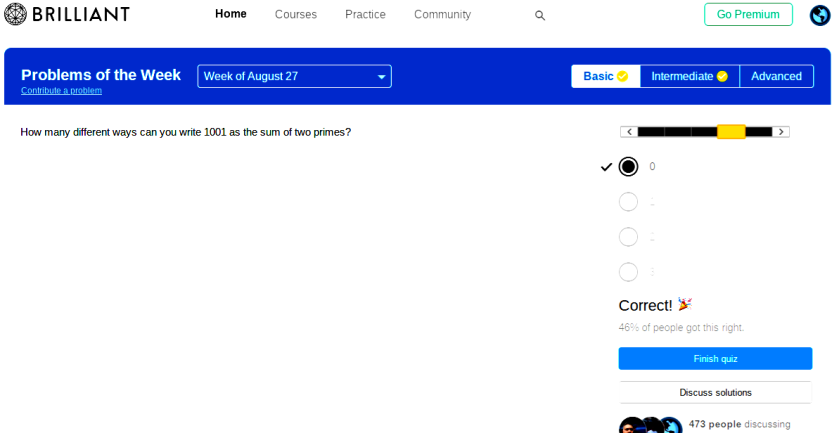
1001 PROBLEM

Here is the answer:

1001 ans

I published a solution to this problem, which although more than half of all solvers got it wrong is actually very easy. My solution:

  1. 1001 is odd, and the only even prime number is two.
  2. 1001 – 2  = 999, which is obviously divisible by three (full prime factorization is 3 x 3 x 3 x 37)
  3. Negative numbers do not apply to these questions as with them no number matches the definition of a prime, but even if they did, 1,003 (1,001 – -2) is composite anyway (17 x 59).

WHAT IS THE AREA OF THE QUADRILATERAL?

This is first of two new problems from brilliant.org for you:

Screenshot 2018-09-03 at 5.08.56 PM

There are two ways to solve this one, the official method and a hack (no bonus points awarded for guessing which method I adopted!).

HOW MANY ITEMS?

Prices ending in 99

Incidentally this question should not be taken as suggesting that I approve of this method of pricing – the reverse is actually the case, I think it is utterly ridiculous and very irritating.

PHOTOGRAPHS

Church, North Norfolk
A church in North Norfolk
Sandcruiser
The new ‘Sandcruiser’ wheelchair at the beach hut.
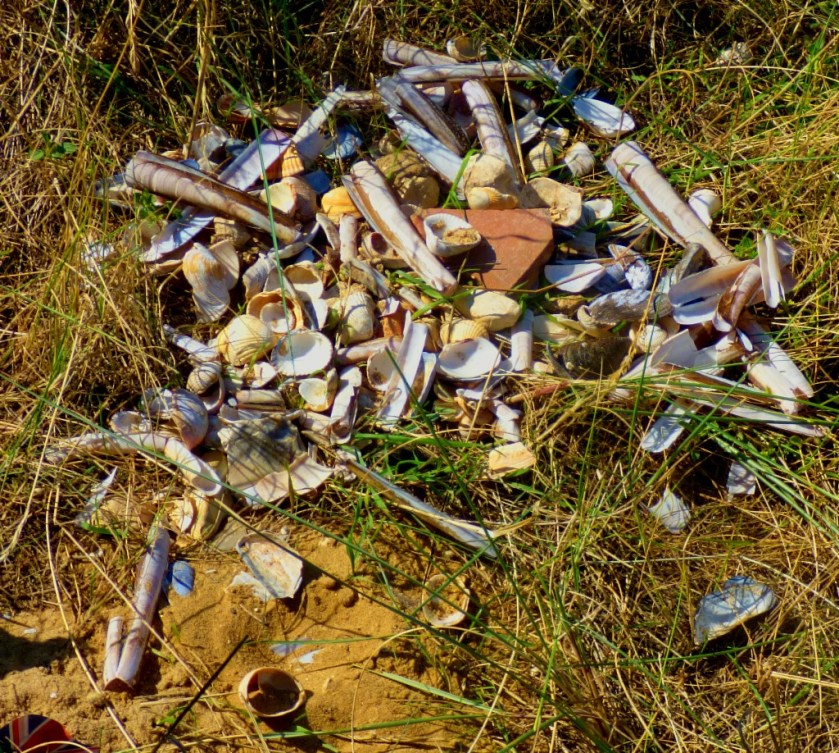
Shell deposit
A deposit of shells

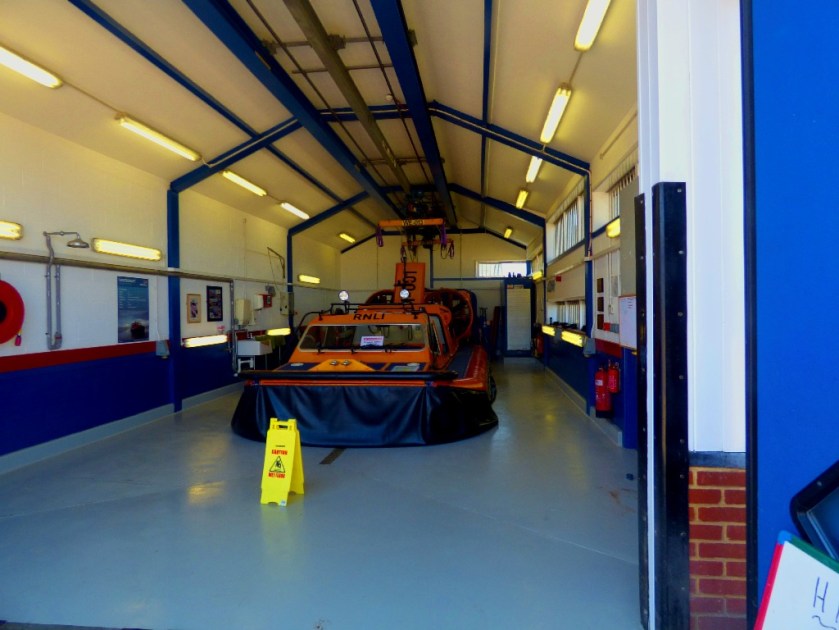
Hovercraft

Sandcruiser in action
The sandcruiser in action

Wind turbinesLincolnshire

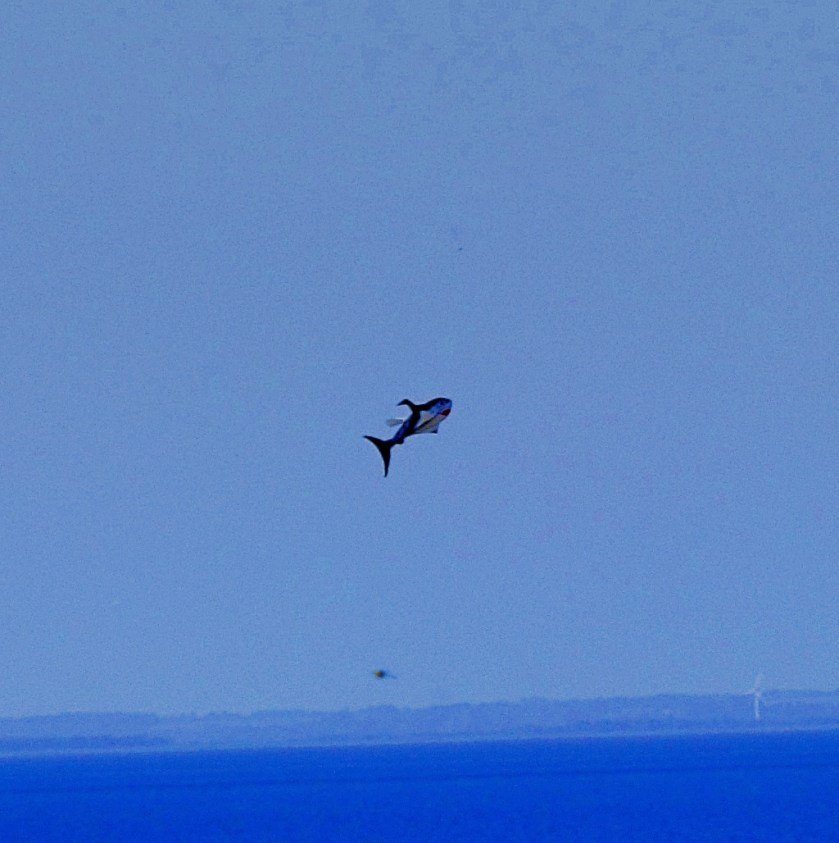
Dolphin kite
No – not a real dolphin performing a record breaking acrobatic feat – merely a flashy kite being flown in the breeze.

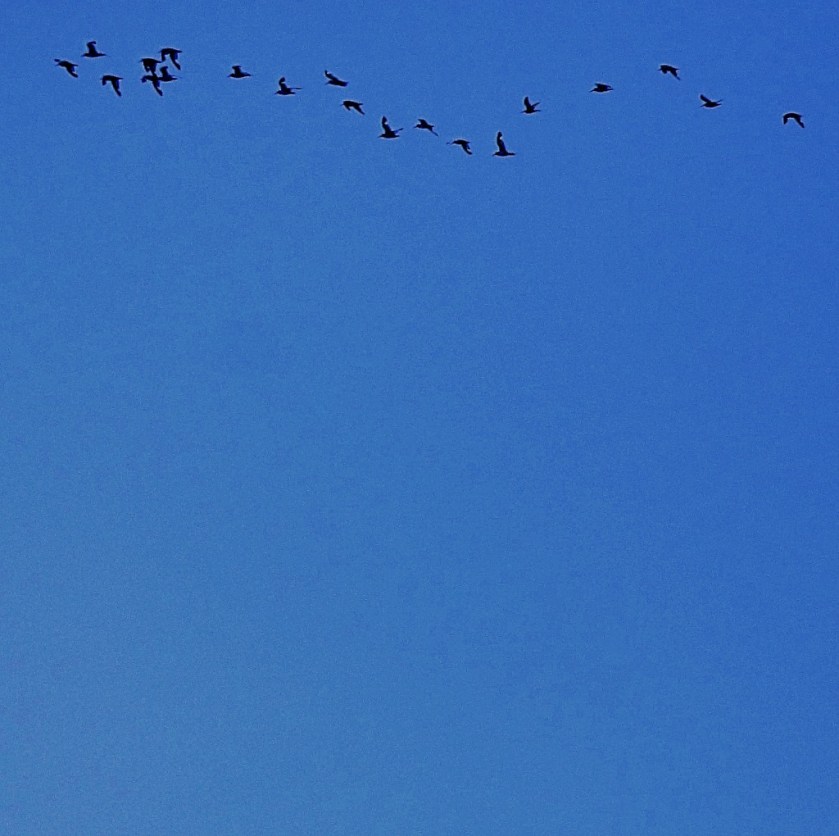
No Flying birds

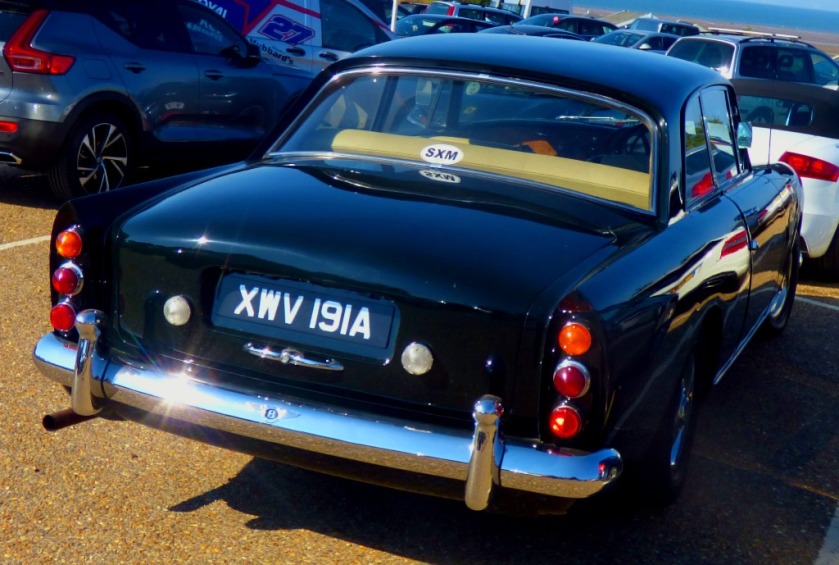
Bentley I
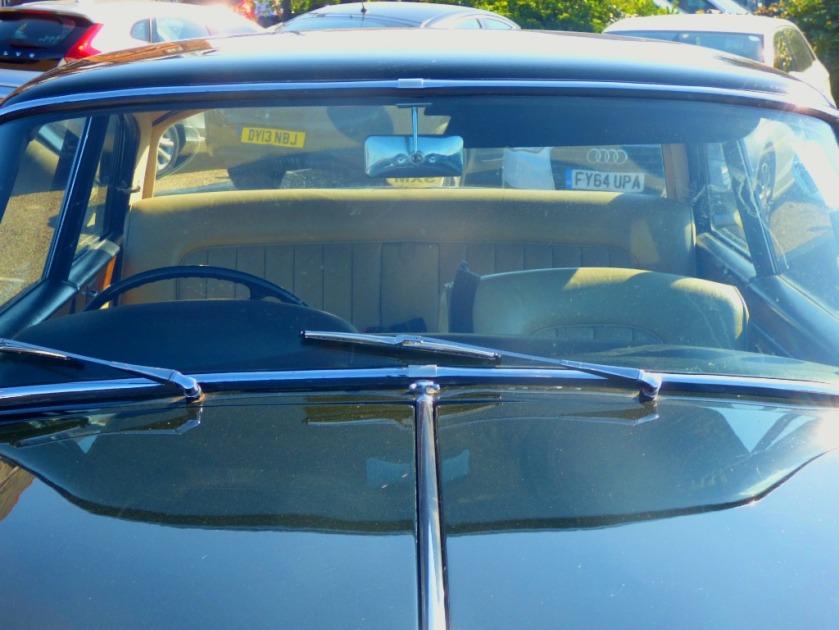
A vintage Bentley (six shots in total)

Bentley IIBentley MascotAA badgeThrough the windscreenDashboard

Amber
Possibly a small piece of amber with something preserved inside it.
fish
there were fish in this shballow water.

Cricket and Other Stuff

Cricket, in the course of which I make a very radical suggestion for dealing with England’s top order woes, and a few other things, including Maths and Public TGransport.

INTRODUCTION

As well as some stuff about the state of play in the current England vs India series I have a couple of mathematical problems for you and some of my own photographs at the end.

ENGLAND’S DREADFUL START

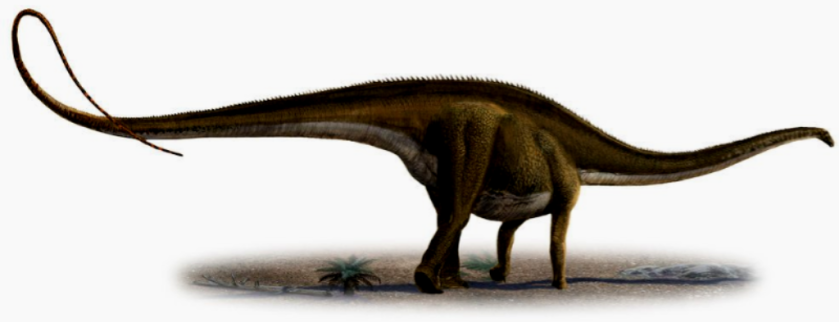
England won the toss yesterday morning before the fourth test match of the five match series against India at the Ageas Bowl, Botley Southampton. This was the last thing they managed to do right for some considerable time. At last, with the scoreboard reading a barely credible 86-6, Sam Curran, inexplicably dropped from the last test match and now returning to the fray, emerged from the pavilion. Much of the carnage was more due to good Indian bowling than bad batting, although Jennings (already on borrowed time for my money) will not want to see replays of his LBW (however good a piece of bowling it may have been padding up to one which would have uprooted the middle stump otherwise never looks good). Fortunately England’s tail managed to produce a diplodocid (see picture at end of this paragraph) proportion of the innings. Curran, making the ridiculous decision to drop him from the previous game look positively ludicrous, racked up 78 before he was last out, the total hvaing reached a semi-respectable 246.

Diplodocus
This is why I described the contribution of the England tail as being of diplodocid proportions.

India are currently 135-2 in response. Only once in test match history has a side come back from 0-2 down to take a five match series, in 1936-7 when Australia’s comeback was fuelled by scores of 270, 212 and 169 from Don Bradman in the course of those last three matches. In 1894-5 Australia levelled the series at 2-2 after being 0-2 down but Andrew Stoddart’s England rallied to win the decider. 

England’s continuing top-order woes need to be addressed if they are to avoid surrendering a series on which they seemed nto so long ago to have a vice-like grip. Rory Burns must come into the side in place of Jennings. I would also bring Pope back but place him lower in the order. brief interjection – BIG NEWS – Kohli Is Out! Also, thinking about the need for top order runs I now tender a suggestion far more radical than Rory Burns – there is one England opener who has making stacks of runs all over the place of late – the one and only Tammy Beaumont! The way they have performed thus far none of the current top order are entitled to object to that suggestion.

Beaumont on the attack

Yes going with two new openers would be a colossal gamble, but they could scarcely fare much worse than Cook and Jennings have in this series.

A COUPLE OF MATHEMATICAL TEASERS

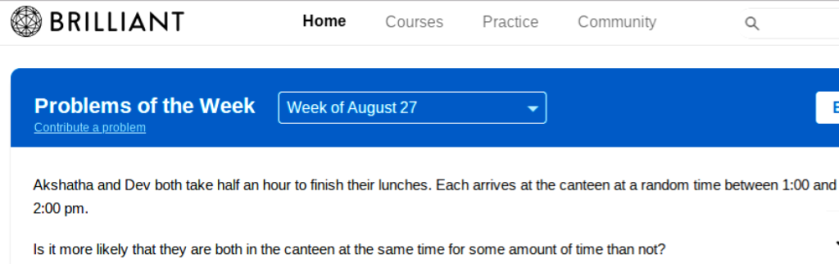
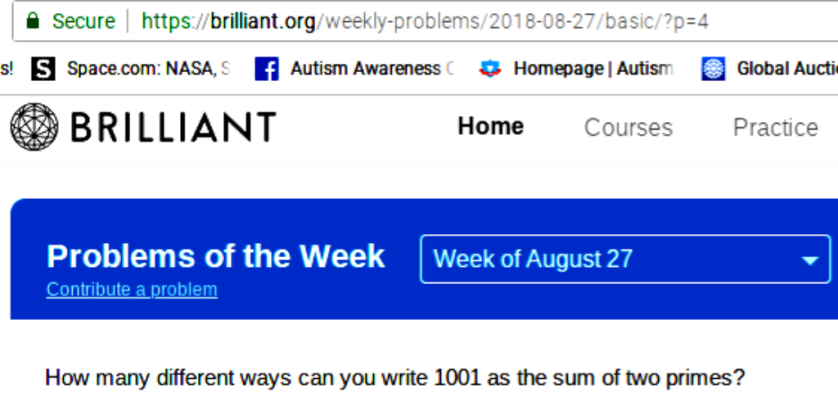
Both of these, from my usual source,  are very easy problems which have tripped a number of solvers up. I give them in the reverse order to which they appeared:

Canteen problem.jpg

And

1,001.jpg

HERITAGE OPEN DAY

Heritage Open Day this year is Sunday September 16th. There will be some 60 sites open in the King’s Lynn area, and if you there on the day do make sure you visit. If you happen to visit the cellars at the Bank House between 12 noon and 2PM I will be one of the volunteers you encounter.

TWO STORIES OF BRITISH PUBLIC TRANSPORT DAFTNESS

I start this section with the more minor but also more personal of these stories. Today I made my travel arrangements to Sheffield for a cousin’s wedding. I checked bookings from King’s Lynn to Sheffield, and the cheapest ticket would have cost me £68.20. Knowing that a ‘plan B’ was available I then checked out bookings from Peterborough to Sheffield and lo and behold up came a ticket for just £38.50, which when the two bus tickets on the ExCel are added in amounts to £51 all up. In other words to have travelled by train from King’s Lynn all the way to Sheffield would have cost me 33% more than the combined bus/ train route I am actually taking. Now of course not everyone booking this journey would have known of the alternative, and I wonder how many people have been swindled in this. 

My second story of public transport daftness is that The Elizabeth Line (aka Crossrail) will not now be coming into service until nearly a whole year later than planned (more here).

PHOTOGRAPHS

The pictures here are of items I purchased at our auction on Wednesday (it was reasonably successful, with a few big sales, and a lot of items finding buyers).

121
Lot 121 – I scanned these items rather than photographing of them.

121-a121-b

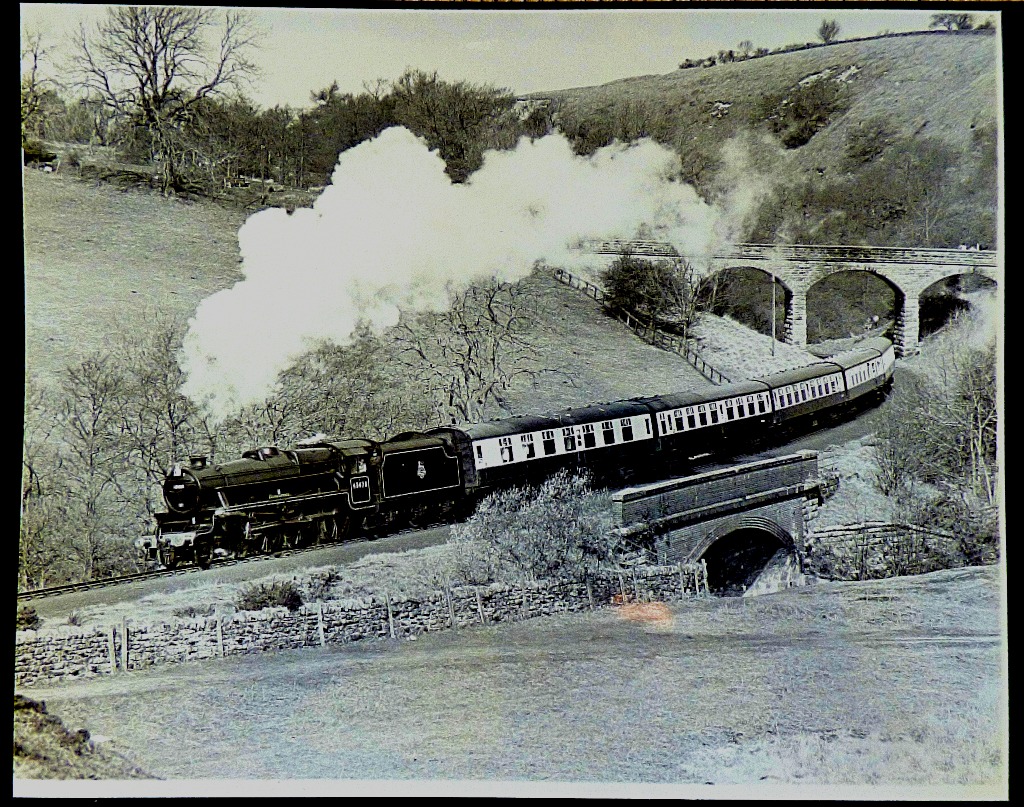
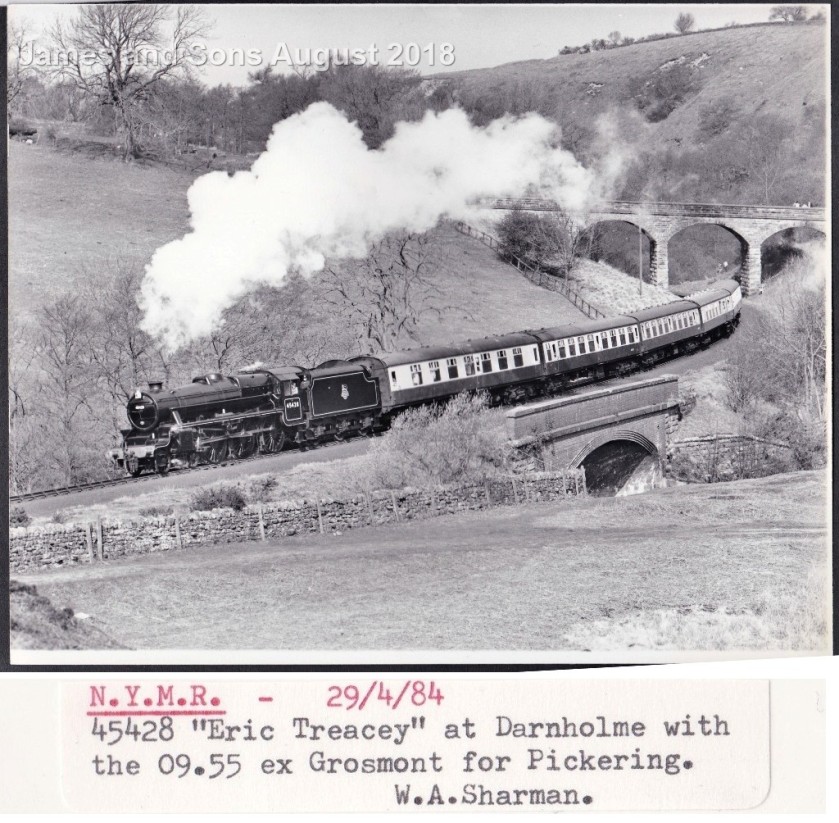
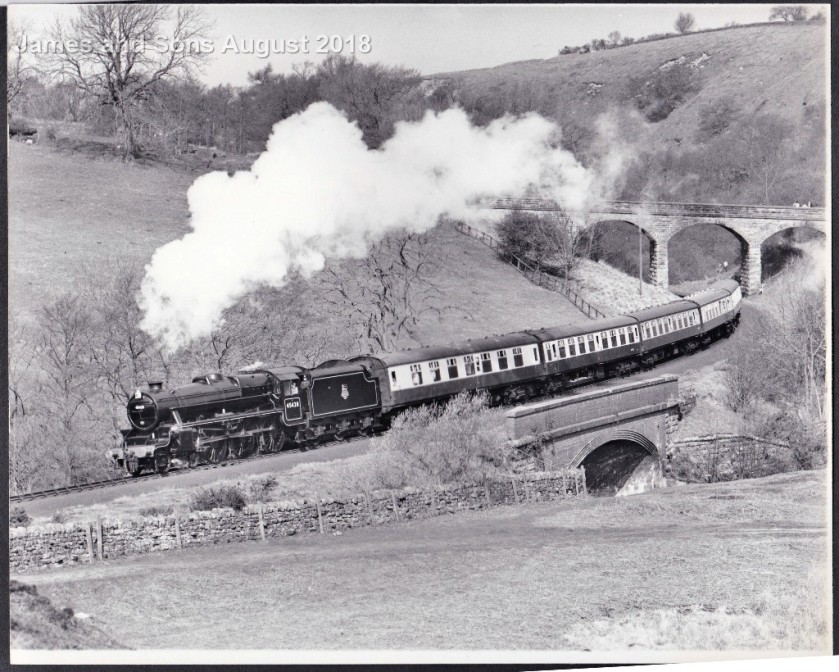
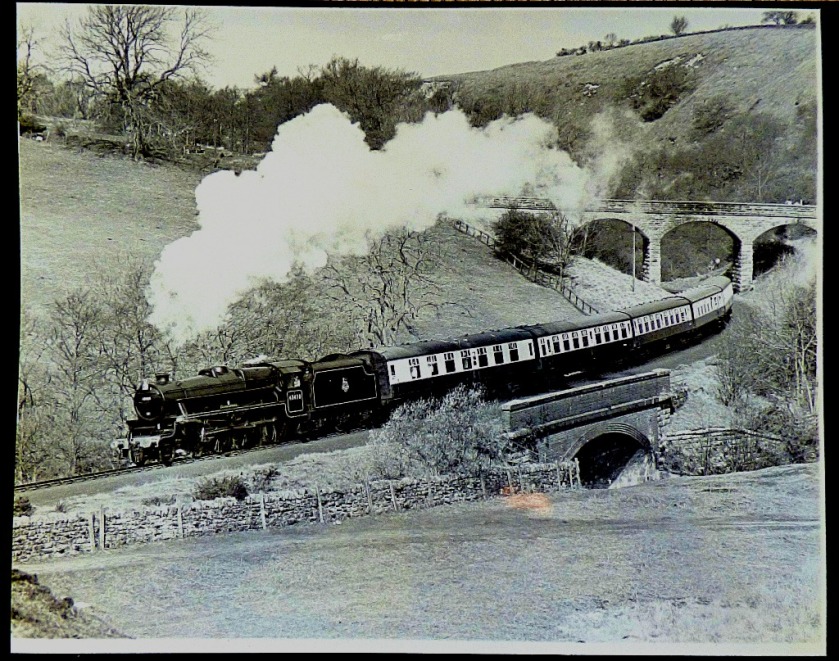
Under a viaduct and over a bridge
A photograph of the item taken this morning

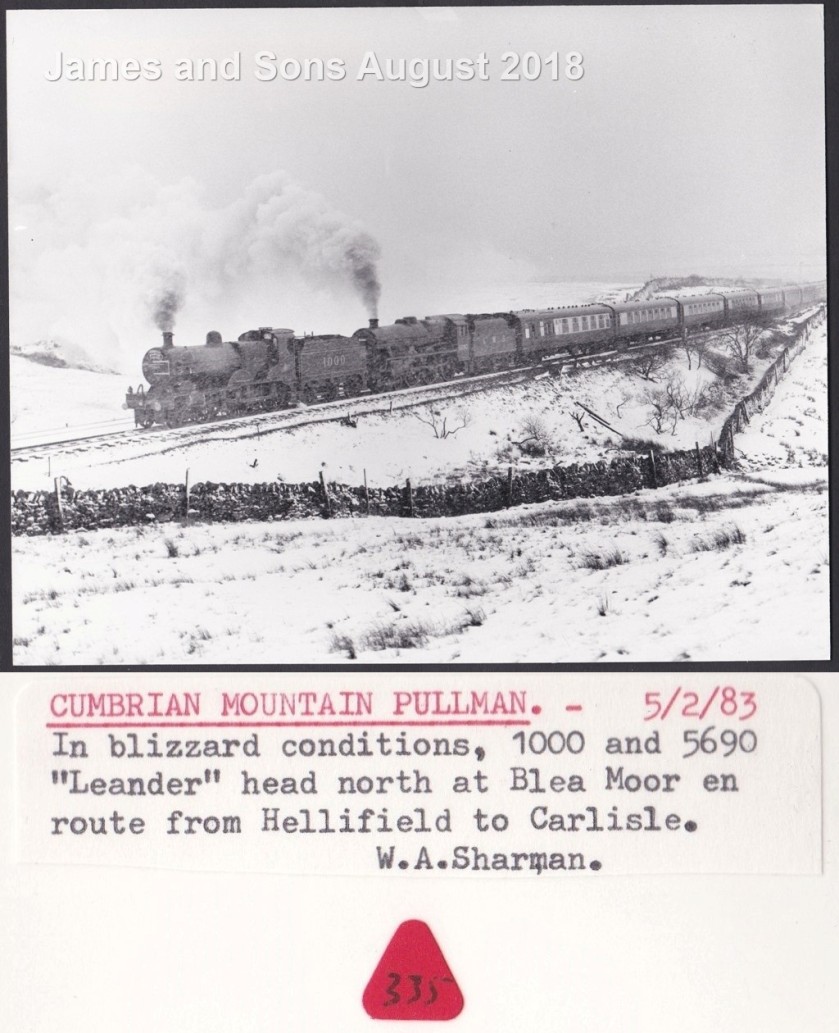
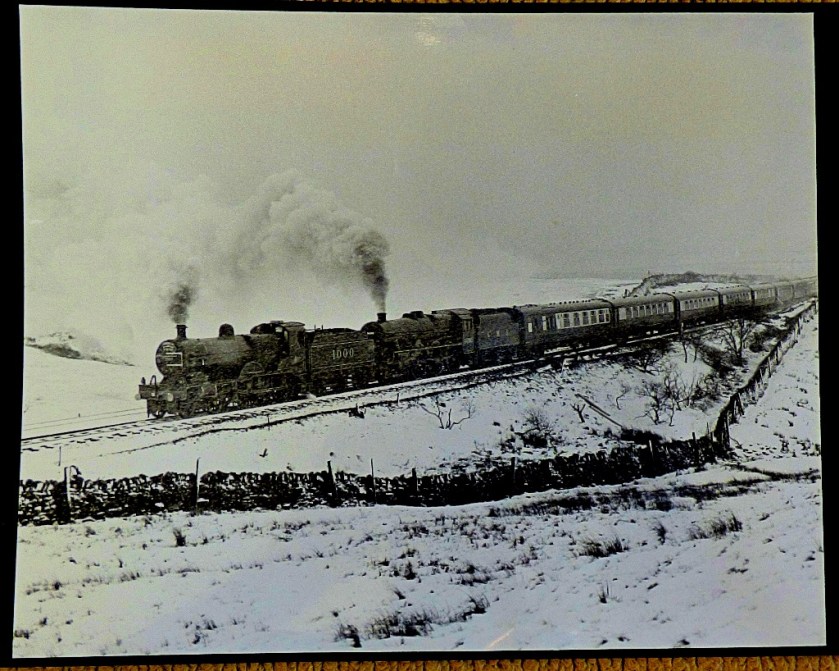
148148-a148-bBlizzard conditions

360
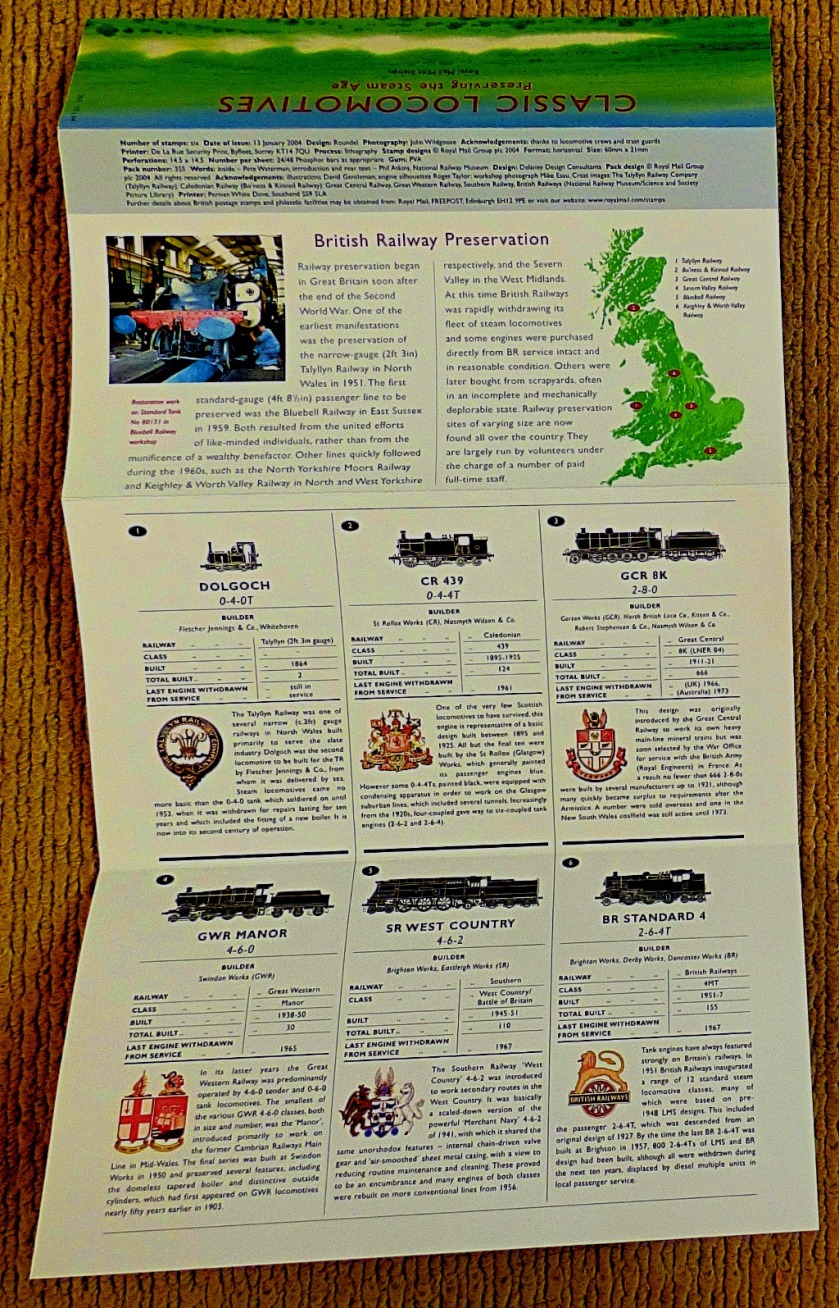
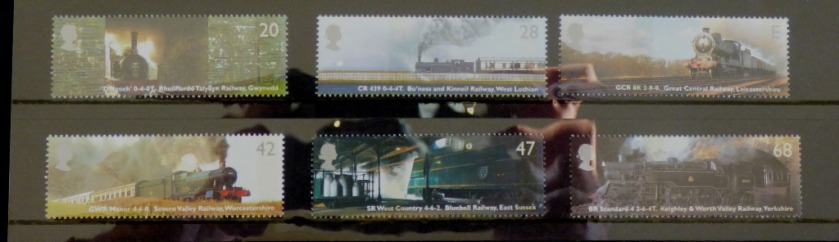
Two of the four items in this lot were of sufficient interest for me to consider bidding, the Nobel Prize cover, and the one that really settled it, the Classic Locomotives.

360-a360-b

Classic Locomotives FDC
The main cover photographed this morning.
Classic Lcomotives stamps II
The first of two close-ups of the stamps (the reflectivity of the protective covering makes this a challenge).

Classic Locomotives stamps I

Classic Locomotives other side
The ‘cover’ part of this item contains a lot of information when opened up (see also next picture for the other side).

Locos fact sheet


A Mixed Bag for Monday

Solutions to my last two maths problems, some sciencey pieces, a petition and some photographs.

INTRODUCTION

This post includes solutions to the problems I posed on Saturday, and a few other things from various sources. 

SPACE STATION DODECAHEDRON

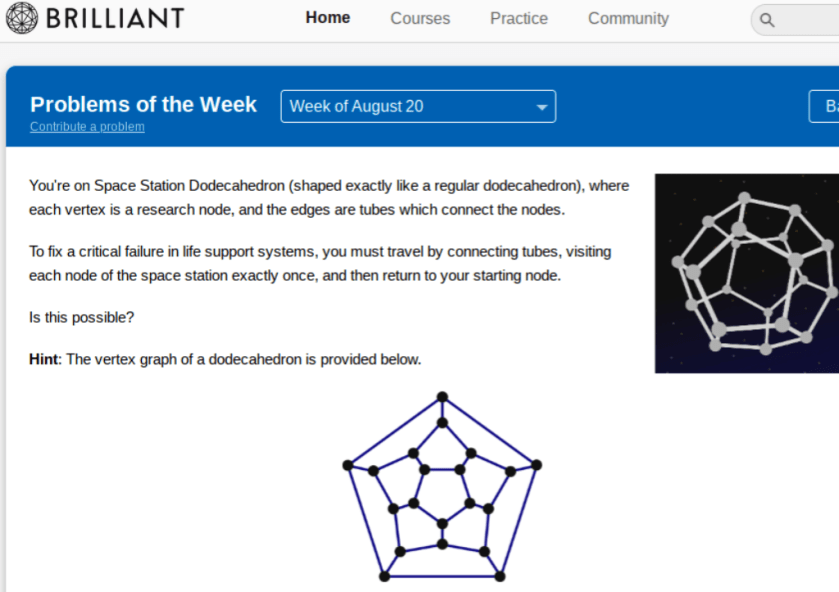
Here is the question as a reminder:

Space station Dodecahedron

Here is the answer:

Dodecahedron answer

Here is a splendidly concise solution from David Vreken:

Vreken route

A VARIARION ON THE MALFATTI THEME

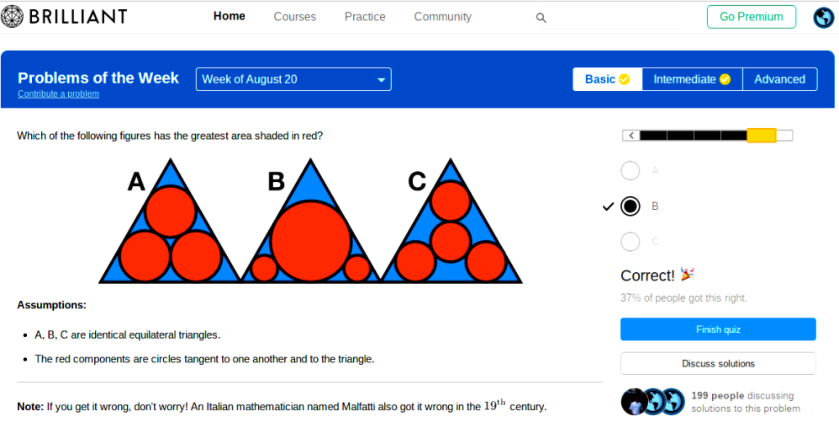
Here is the question:

Malfatti Mistake question

Here is the answer:

Malfatti Mistake answer

In the 19th century Malfatti conjectured that the way to maximise the area of a triangle you could fill with three circles was to fill in the three largest circles that touch specifically two of the three sides. Although he was not alive to be humiliated it turned out that he was not merely wrong, his proposed solution has been proved not to work for a single triangle. The solution that always works is first put in the largest single circle that touches all three sides that you can, then fill in the largest circle you can in the remaining space and then do so again. In an equilateral triangle the difference is small, but in a long thin isosceles triangle it is quite substantial. 

Here is Jeremy Galvagni’s published solution:

Galvagni outdoes Malfatti

SCHOOL REFUSAL SYNDROME PETITION

This on the official site for petitions to the UK government, which means that you have be a UK citizen to sign it. Please click the screenshot below to sign and share it if so minded:

School Refusal

A TRIO OF SCIENCE PIECES

First a fascinating piece from the National Geographic titled “Can Today’s Whale Species Survive the age of Humans” which covers the past and present of the cetaceans and speculates about their future. 

David Quammen, a good writer and a useful scientist to know about if you are planning an A to Z post, has a new book out on the subject of evolution, and Jerry Coyne of whyevolutionistrue has provided a very detailed review of it.

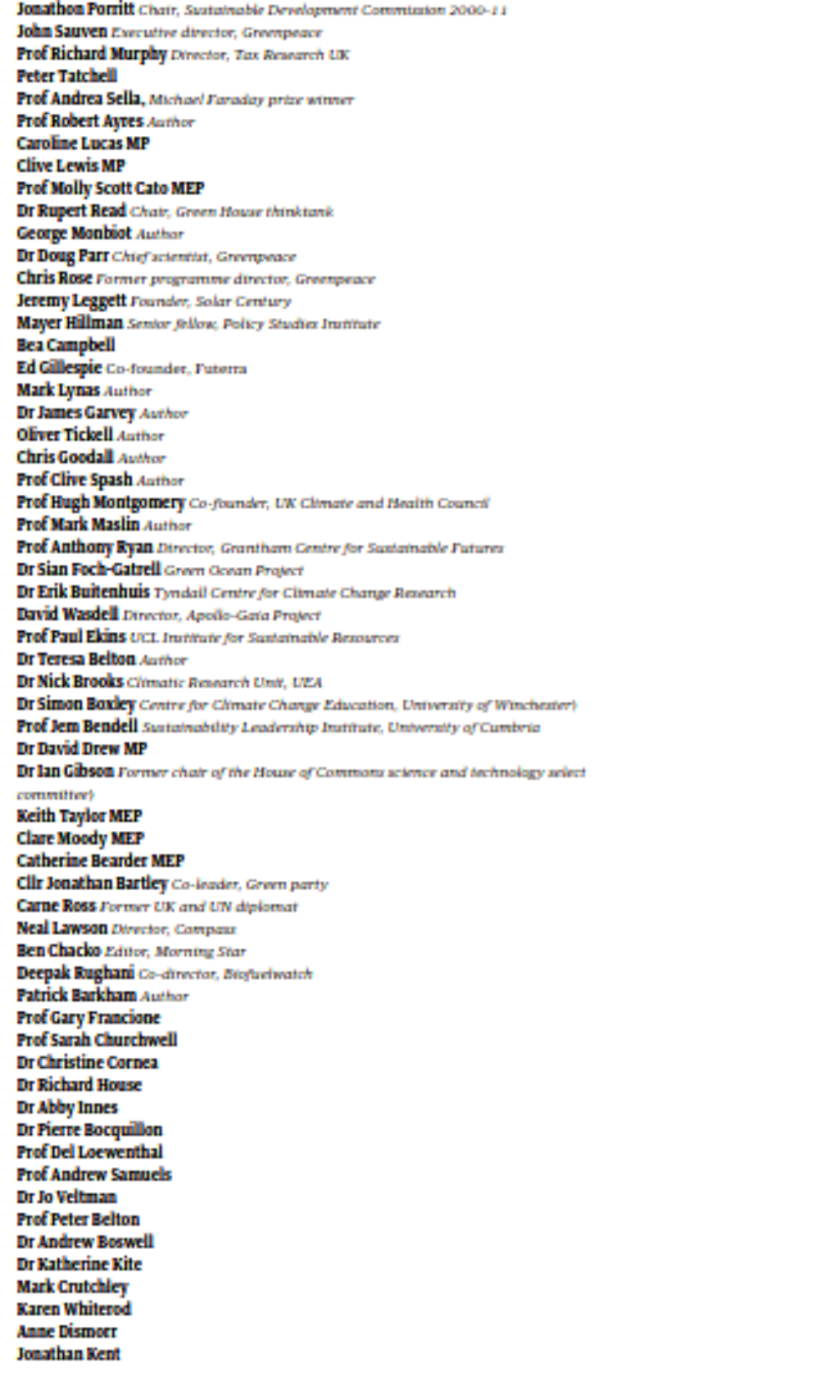
Finally, a letter to the Guardian signed by 60 well known environmental campaigners declaring their unwillingness to debate with climate change deniers, and why they are unwilling to do so. Below is the opening to the letter (please click to visit the original) and a list of signatories:

Guardian letter

signatories

SOME FINAL PHOTOGRAPHS

To finish here are some of my recent photographs:

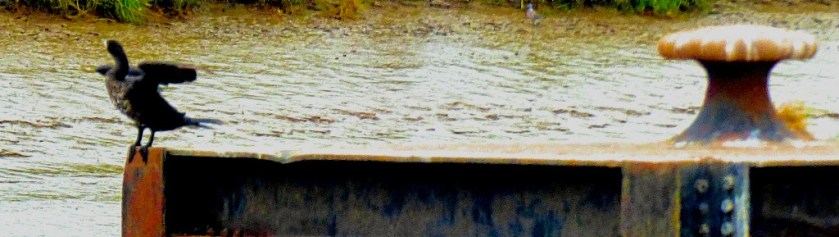
Sea birdsFlying cormorantBlackbacked gull lands on the waterCormorant and rowing boatCormorant and sea birdsWingspanMoorhenCormorant


Book Review: The Mitford Murders

A review of “The Mitford Murders” by Jessica Fellowes.

INTRODUCTION

I was in King’s Lynn Library on Friday when I saw a copy of this book, by Jessica Felloweson the shelves and decided to take a punt. The fact that today is the following Monday and I am posting this review gives a clue as to what I made of the book.

THE SETUP OF THE BOOK

This book is based on a real life murder, that of Florence Nightingale Shore,  god-daughter of “The lady with the lamp” and like her famous godmother a war-time nurse. At the heart of the story is a fictionalised account of goings on in the aristocratic Mitford Family. The heroine is Louisa, who takes a job in the household helping to look after the children. Crucial to the development of the story is the friendship she forms with Nancy, the eldest of the Mitford children (16 when the story opens to Louisa’s 18). 

Spanning just over two years, and taking in two countries the story is developed with expert touch, and the revelation of the true murderer is a gobsmacker.

This is a splendid story, combining its other merits with giving a panoramic view of immediate post WW1 life, covering the full range of society.

CLOSING THOUGHTS

I understand that a second book in the series is due soon, and I say “Bring it on”. I follow that by saying that if you see a book with Jessica Fellowes’ name on the cover you should definitely pick it up. Rating *****.

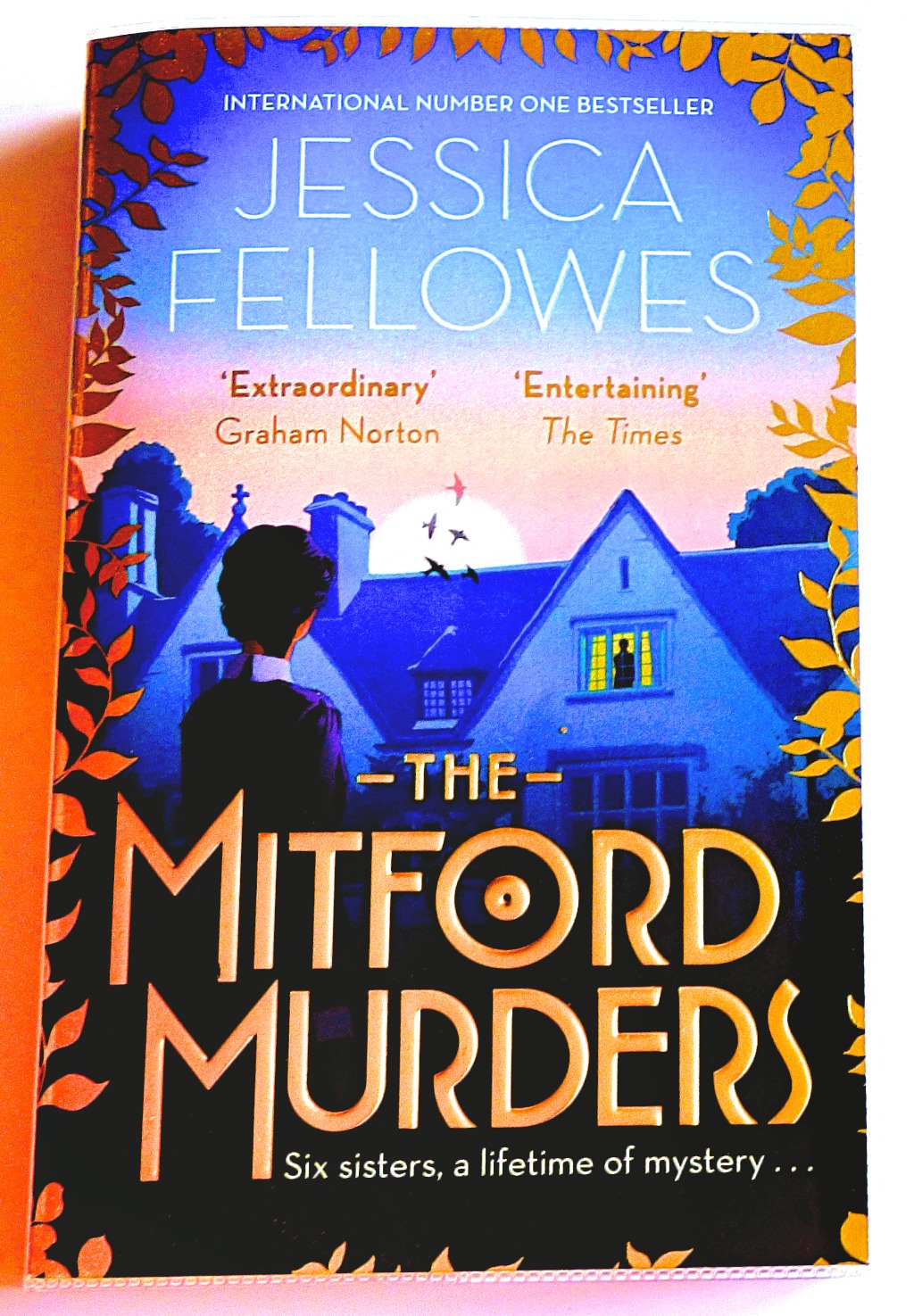
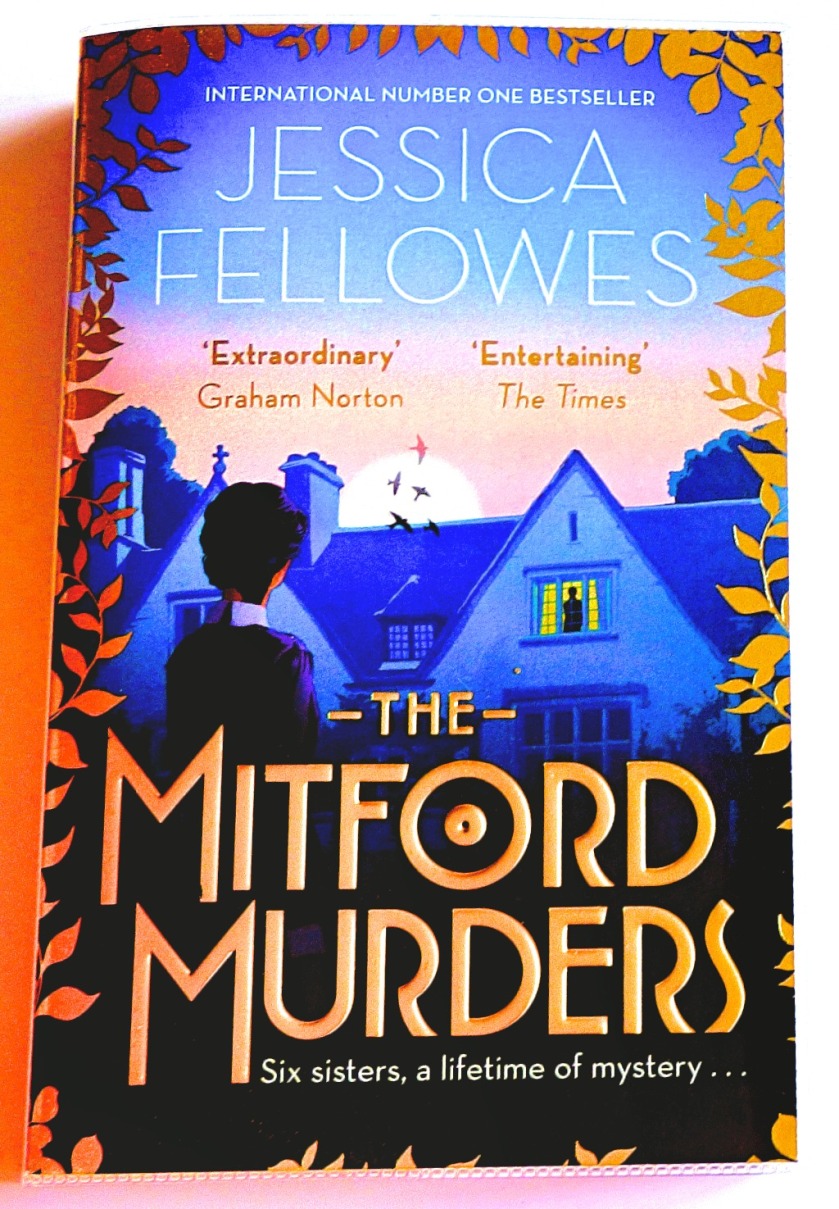
Mitford Murders


A Massively Successful Auction

An account of yesterday’s splendidly successful auction.

INTRODUCTION

On Wednesday James and Sons had a small but very important auction featuring gold coins and proof sets. We were anticipating a very considerable success, because we knew that there were bids of sufficient size on every lot that everything would sell, and we also knew that some of the items had a very large number of watchers online (one had no fewer than 17). The rest of this post tells the story of a truly amazing auction.

TUESDAY – FINAL PREPARATIONS

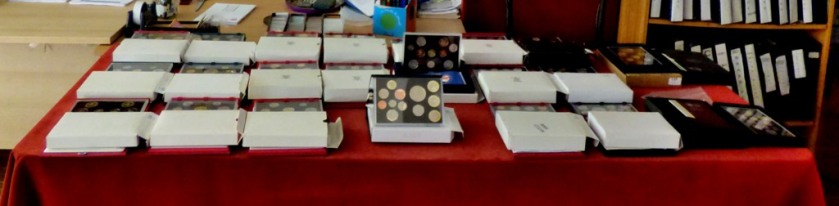
In view of the high value of the gold the only items that were set out on display were as many of the proof sets as I could lay out on one large table. I also made sure that the IT was all fully functional, as the last thing we wanted was for a glitch to affect this auction. I was able to enjoy the NAS West Norfolk Steak Night at The Globe later that evening in the knowledge that all had gone as smoothly as it could have (I restricted myself to a modest two pints of Ringwood Fortyniner in view of the importance of the following day). 

WEDNESDAY – A DAY OF TRIUMPHS

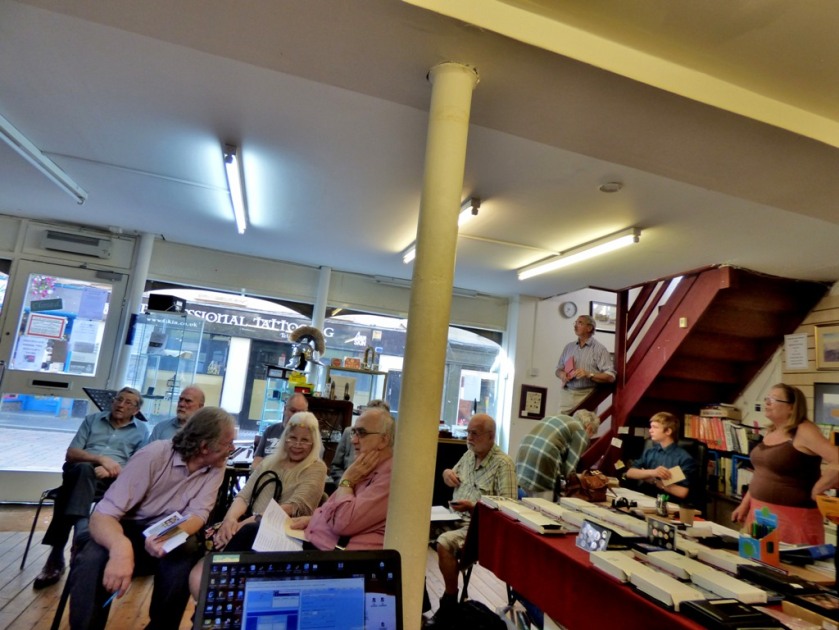
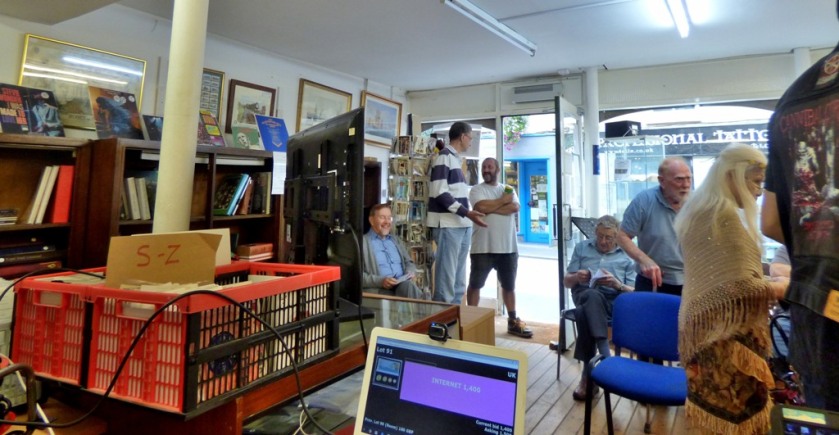
I awoke a few minutes before my alarm was due to go off (not uncommon with me – the alarm is more insurance policy than necessity) and left my flat precisely as intended at 6:45, ensuring that there was no chance of missing the bus. Arriving at the shop, I unlocked, deactivated the alarm, then relocked the door as in view of what was in the shop I did not want customers coming in while I was there on my own. I then began to set up for the day. The auctioneer arrived not very long after me, and I was able to complete the setup, verify that everything was working and take some photographs. Before nine o’clock customers started arriving, and by 9:30 it was standing room only in the shop, as no fewer than 16 potential room bidders were present, in addition to over 60 online bidders and not a few who had put commission bids in in advance of the sale.

P1190889
The proof set display, with lot 135 front centre
P1190886
One of the two significant coins from lot 139…
P1190887
…and the other
P1190888
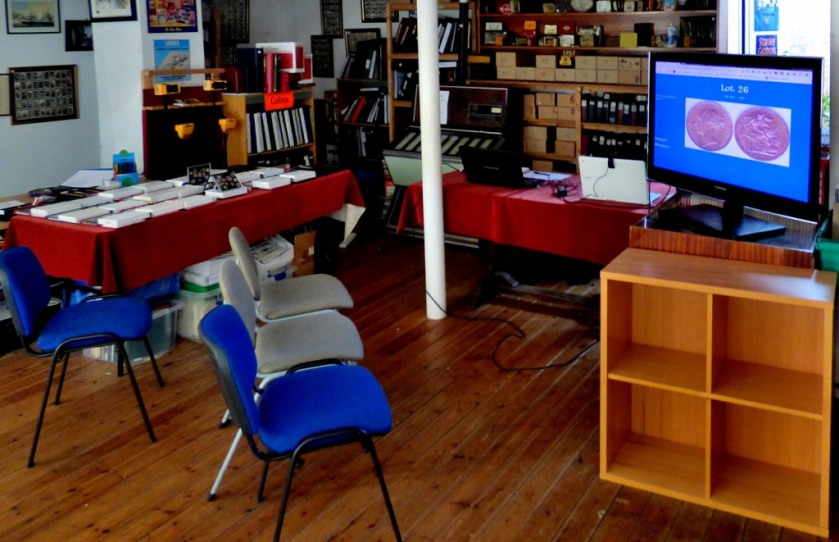
The setup before anyone else had arrived.
P1190892
Potential room bidders (three pics)

P1190893P1190894

P1190891
Lot 139 on the big screen.

THE AUCTION STARTS

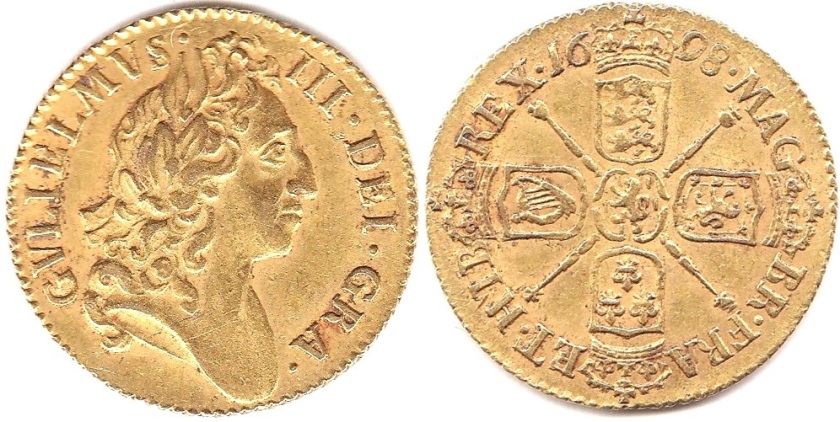
The first five lots were 1974 Krugerrands which were expected to make approximately £800 each and did exactly that. Then came lot 6, the James II Guinea which was one of two items that had been the subject of a query the previous day as a result of which it had extra images above the regular image gallery for such an item. Estimated at £500-750 the interest it had attracted saw the final hammer price reach exactly £1,000.

6
The first three images constitute my regular image gallery for a single coin.

6-a6-b

6-c
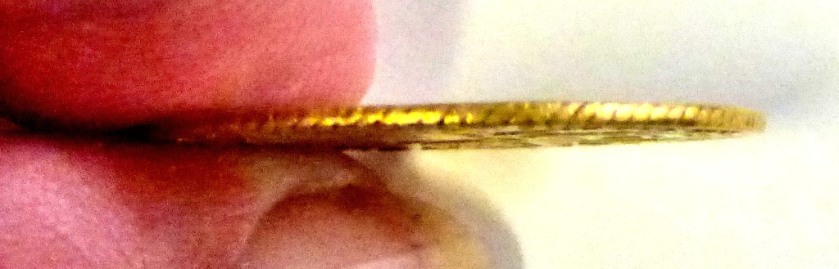
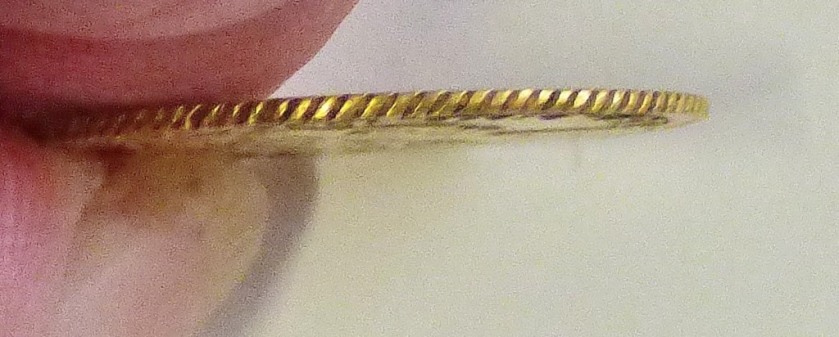
One of the questions asked about this coin related to the edge, and to help back up my own comments on the edge of this coin I took two photographs that between showed it in its entirety.

6-d

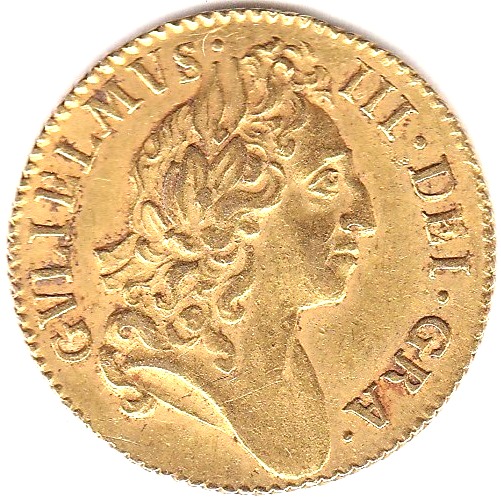
Lot 7 was a William III Half Guinea, which in relative terms fared even better since with an estimate of £300-500 it actually went for £900!

77-b7-a7-c7-d

Lots 8 to 24 inclusive were half sovereigns, and all sold well, most going for around the £100 mark. Lots 25 to 90 incluisve were…

SOVEREIGNS FROM VICTORIA THROUGH ELIZABETH II

These we knew would sell respectably, because a major and long standing client whose job is to sell gold items had put in commission bids of £180 a time on the whole lot, confirming our auctioneers valuation was on the mark. Most of the sovereigns actually sold for more than that, £190 being a common figure and a few of them going to and in some cases beyond £200. Then came…

LOTS 91-5 – THE HUGE SUCCESSES

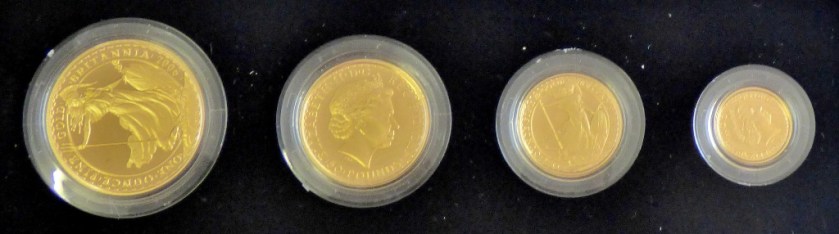
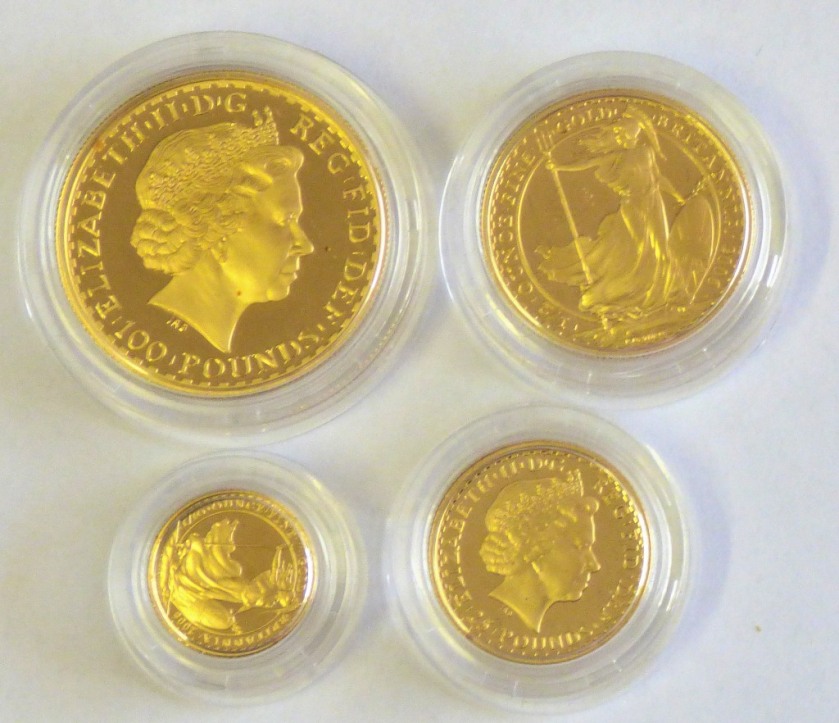
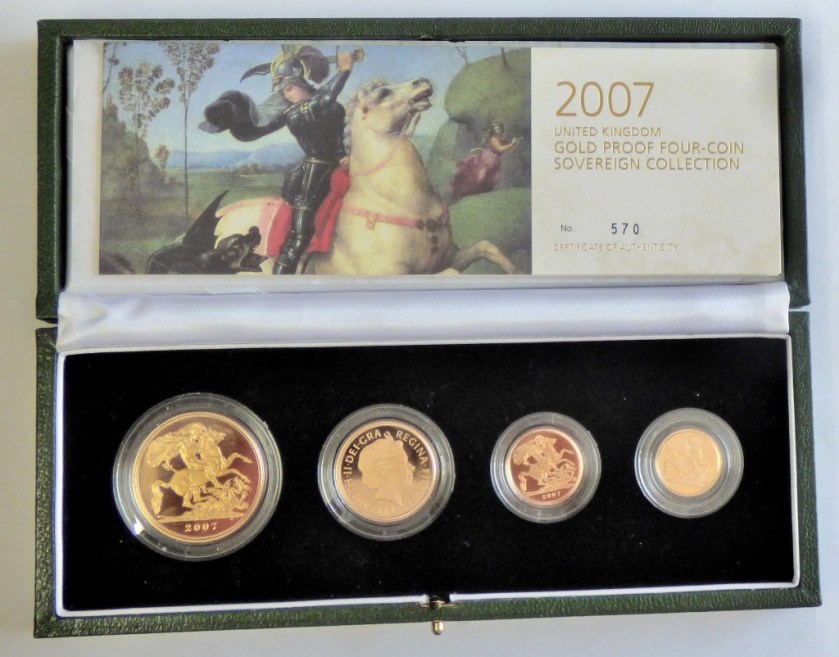
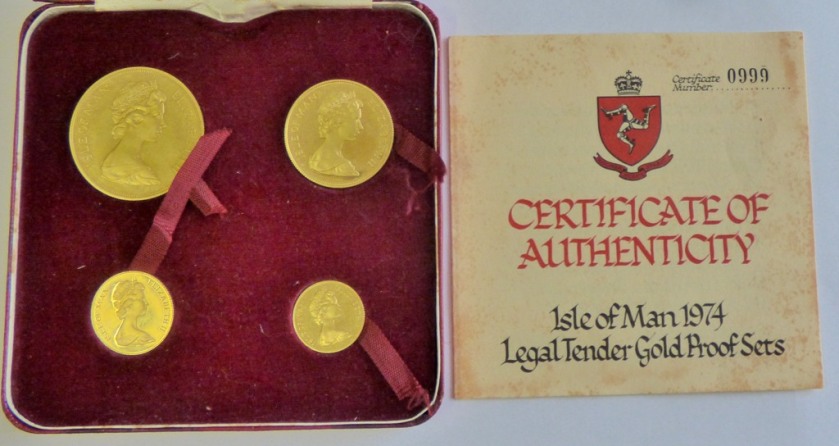
The first four of these lots were high value gold proof sets which we were expecting to be on or around the four figure mark. Actually, and barely believable they went for £1,600, £2,000, £2,000 and £1,600 respectively!!

9191-a91-c91-d91-e9292-a92-c92-d92-e9393-a93-b9494-a94-b

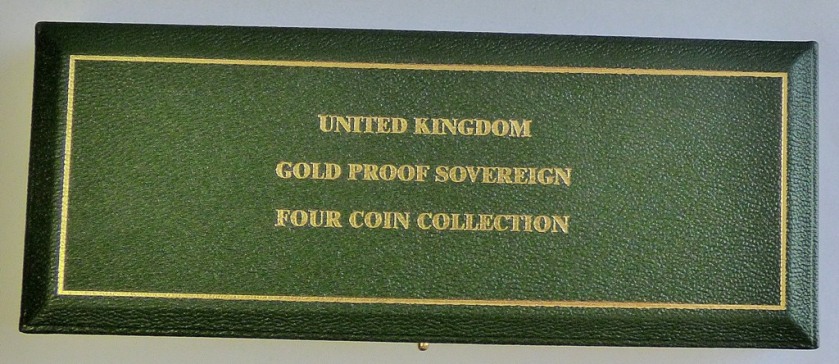
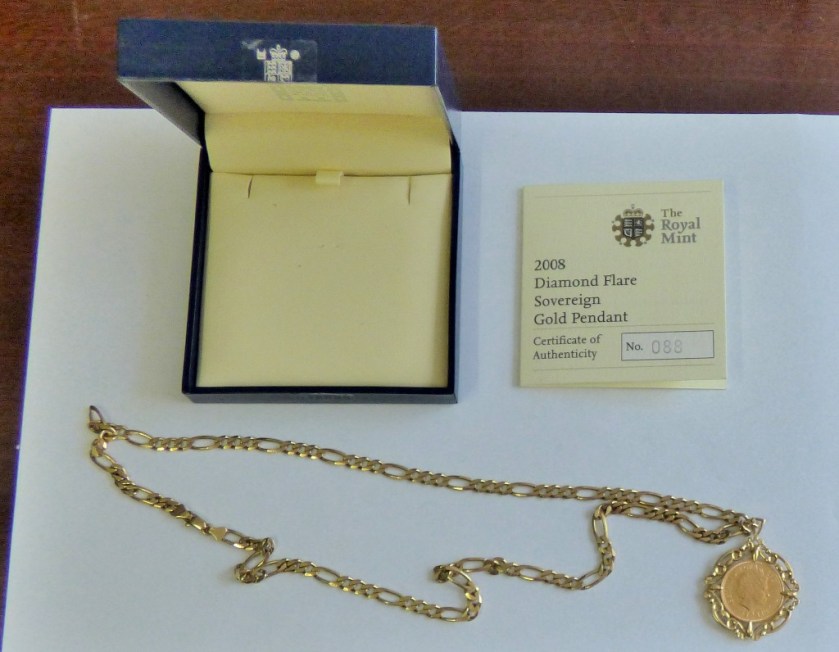
Lot 95 was a sovereign in a gold mount with a gold chain and 8 1mm diamonds (in otherwords a very fancy necklace). Estimate at £300-400 it eventually sold for £550.

9595-a

After these it was time for…

THE REGULAR PROOF SETS

Of course after what gone before the proof sets were a little bit “after the Lord Mayor’s show”, but there were still a handful of highlights to come.

LOTS 113 AND 114

These were respectively a Scottish and Welsh proof set (hence the split colouring of the heading) each expected to make £8-12. The Scottish set went for £20 and the Welsh for £18

113113-a113-b114-a114

These were a mere curtain raiser for…

LOT 121

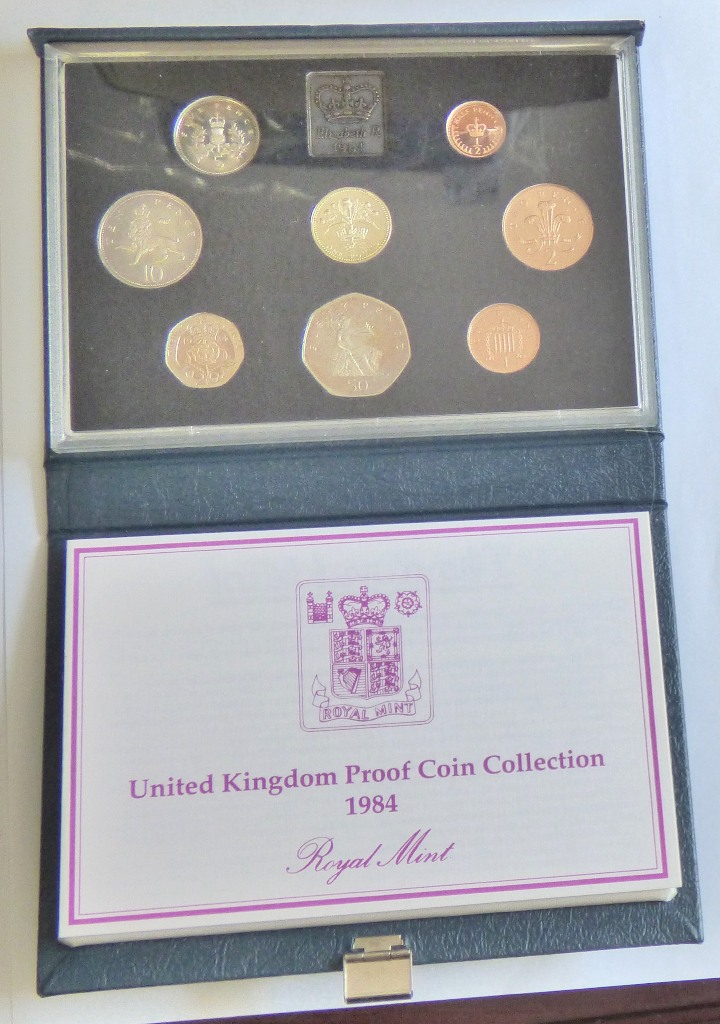
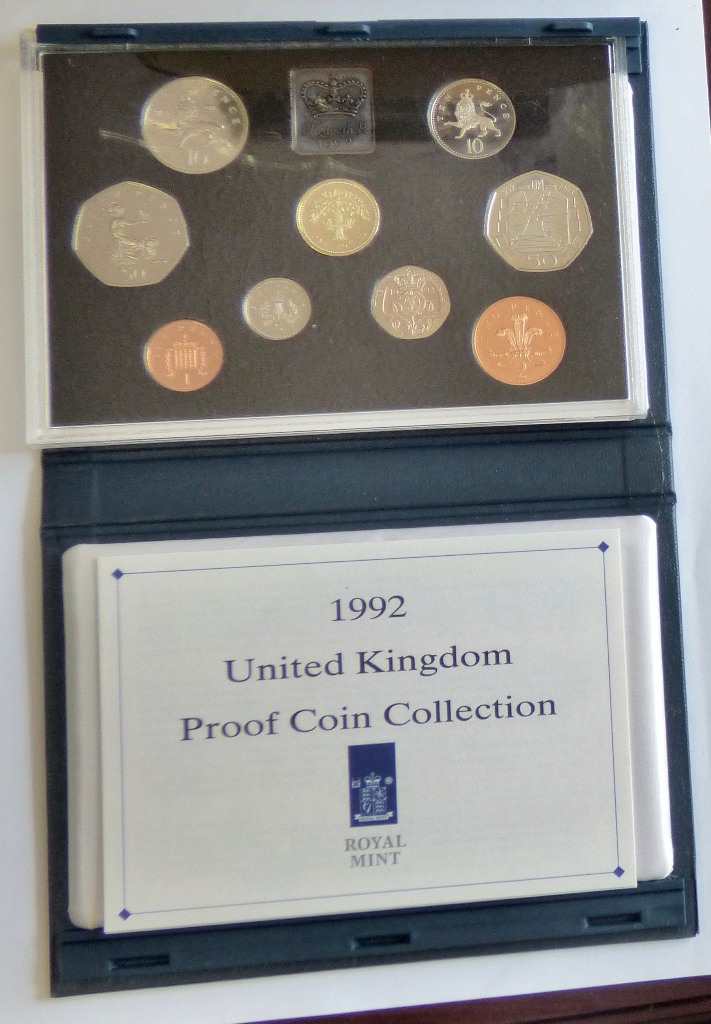
A 1992 proof set featuring an EEC 50p coin the rarity of which turned a £10-15 estimate into a £50 hammer price!

121

The next big success was…

LOT 128

This 1999 proof set featuring a Diana Princess of Wales £5, a bimetallic rugby £2 and Scottish coins from £1 down to 1p had an estimate of £15-20 and ended up going for £32.

128

Then came two successive monster successes with…

LOTS 135 and 136

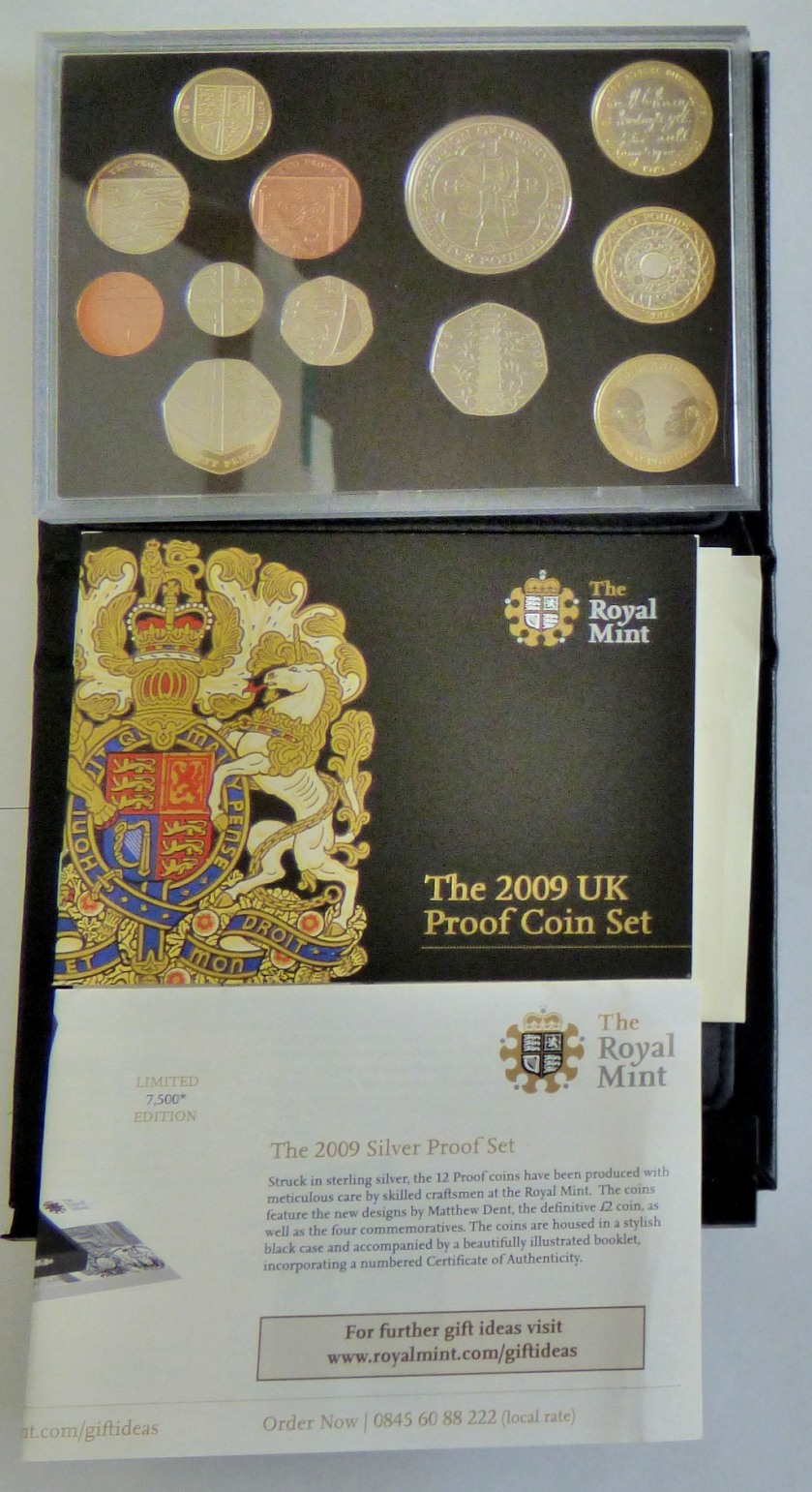
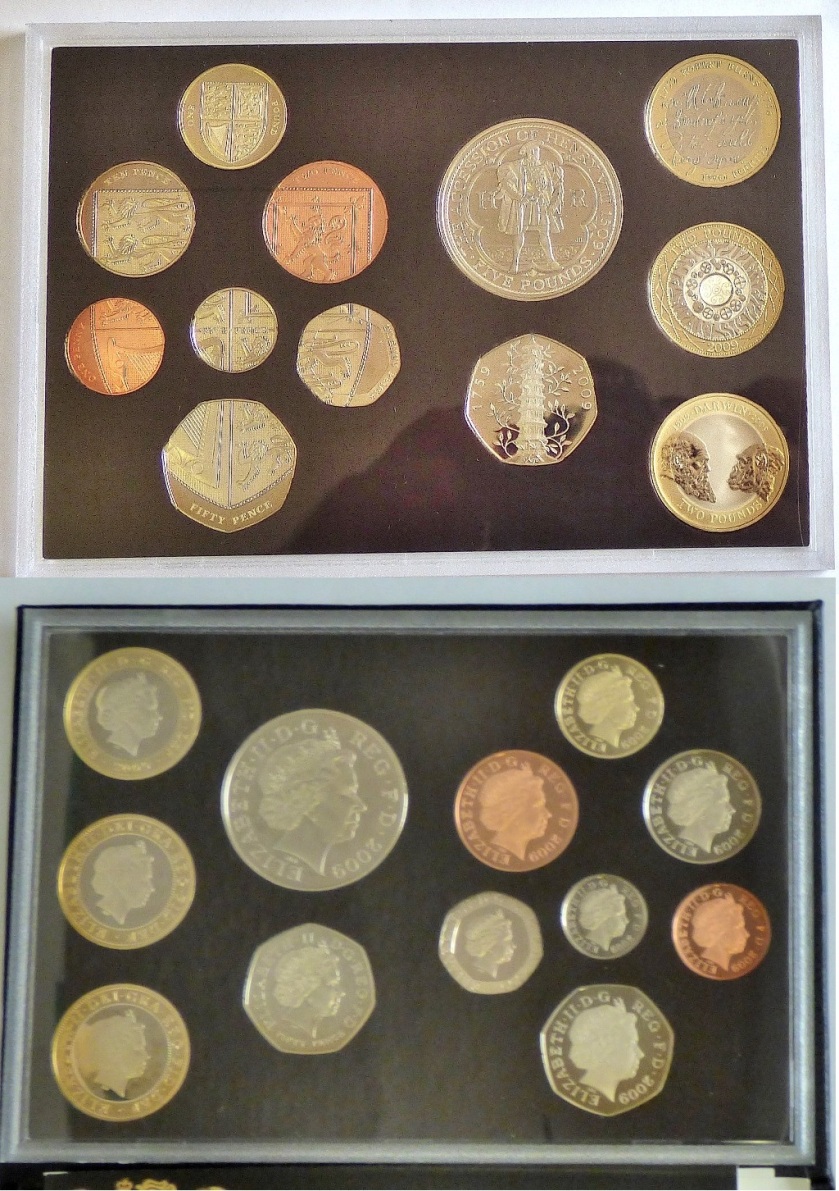
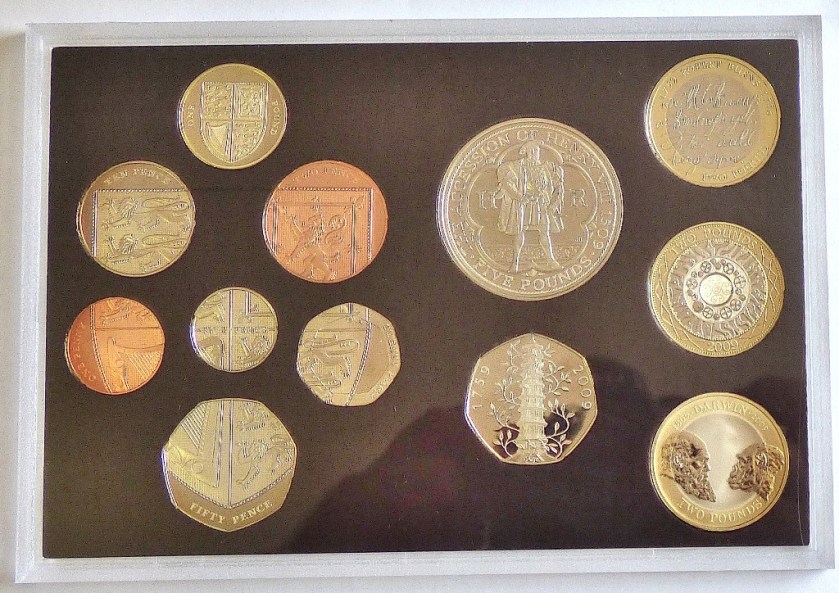
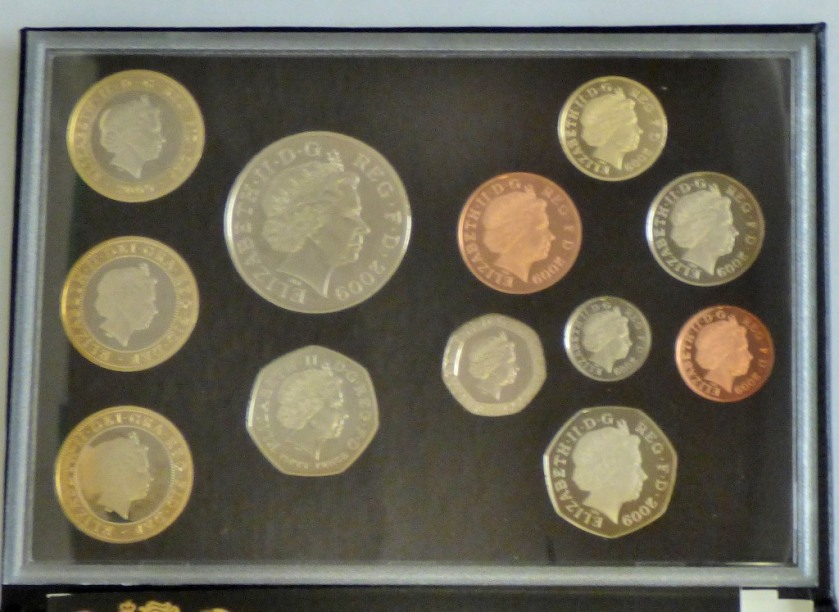
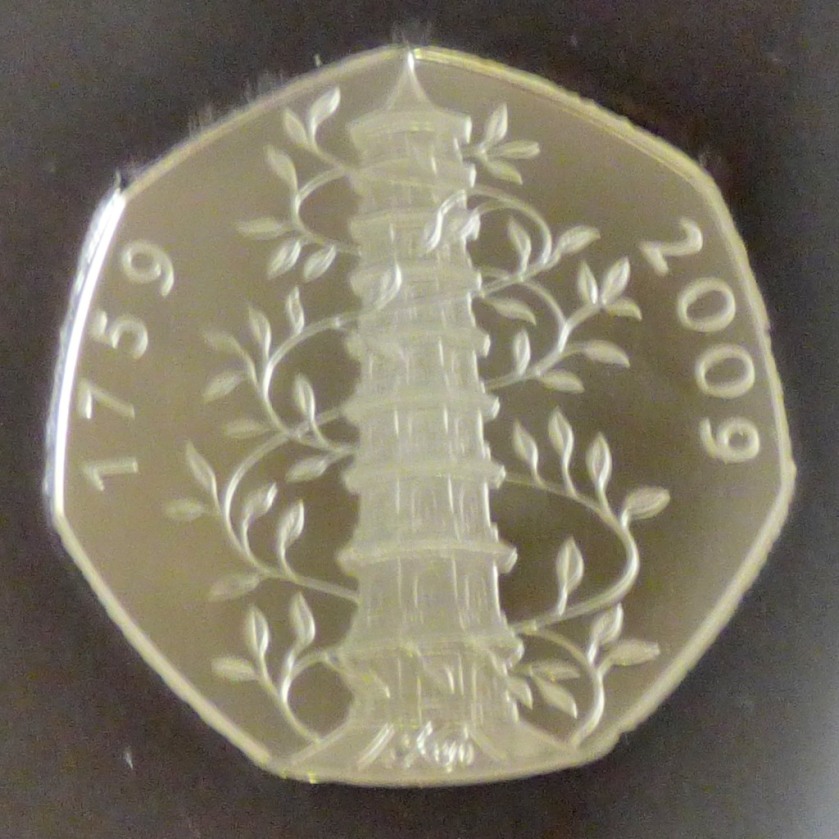
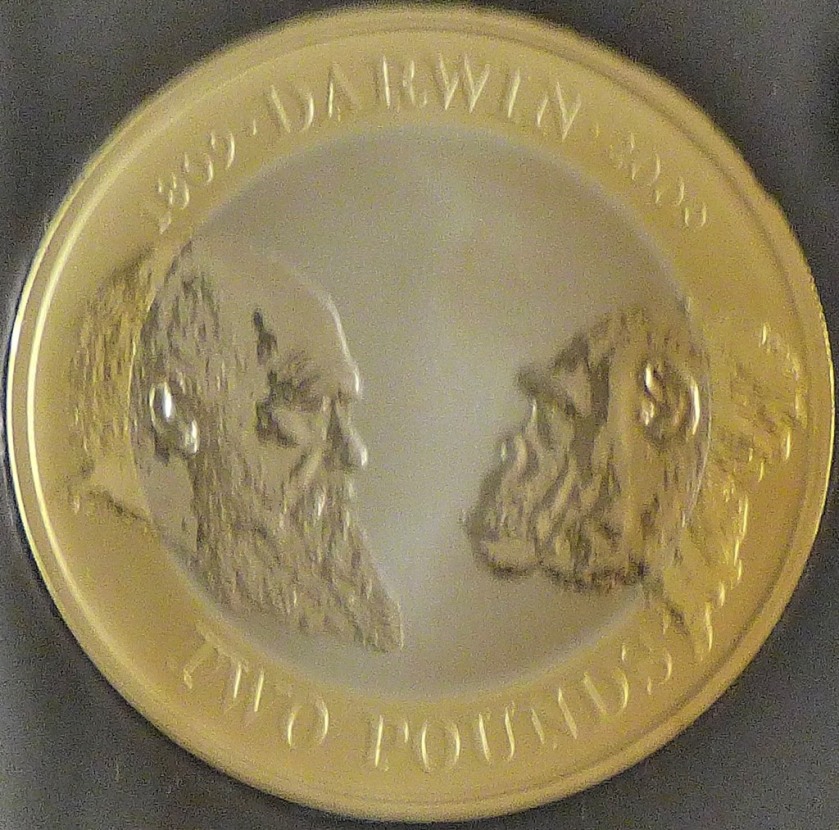
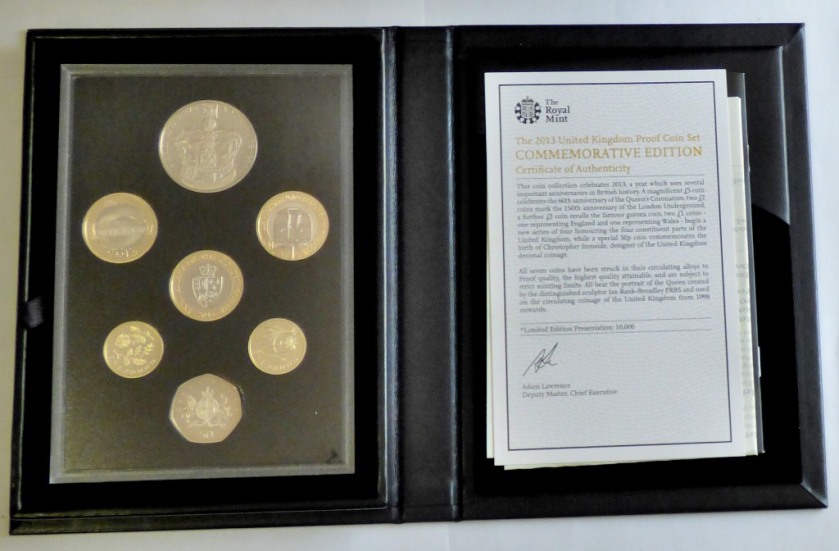
Lot 135, a 2009 proof set, featuring as it did the highly prized Kew Gardens 50p, the Henry VIII £5, and the Darwin and Burns £2 coins was estimated at £100-120 but ended up going for £220!

135135-a135-b135-c

135-d
A close up of this one was mandatory.
135-e
I also deemed the Darwin £2 worthy of a close-up

135-f

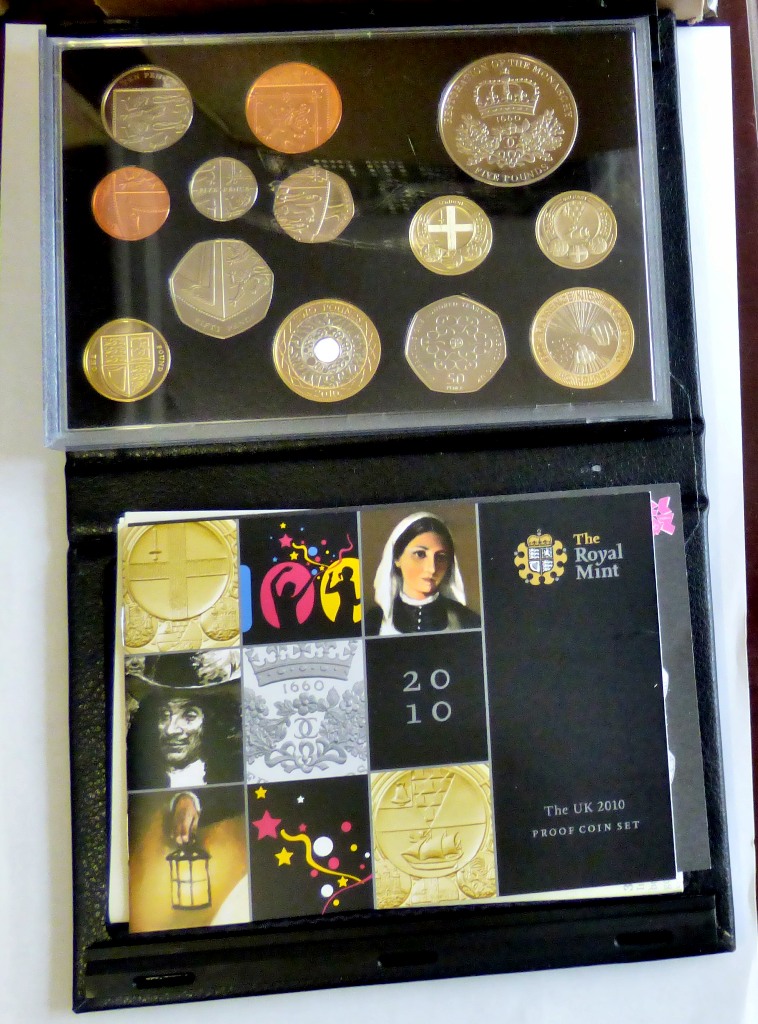
Lot 136 was a 2010 proof set featuring a Restoration of the Monarchy £5 (350th anniversary thereof), A Florence Nightingale £2, a London £1 and a Girl Guiding 50p. Estimated at £20-25 it sold for £100!!

136

Not long later came…

LOT 139 – A BITTERSWEET IMAGER’S TRIUMPH

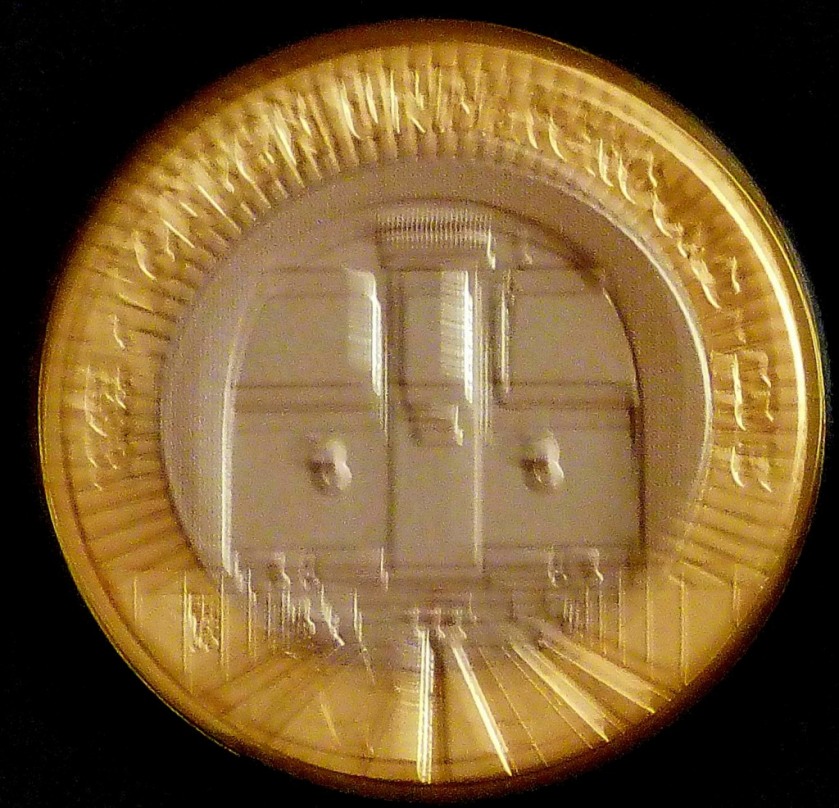
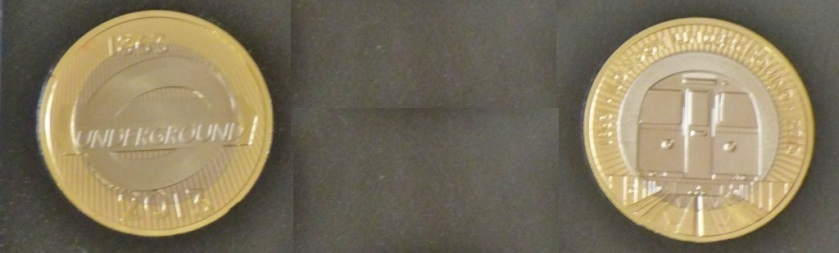
This London Underground 150th anniversary proof set had been badly misdescribed, with one of the £2 coins mentioned as featuring trains, and the roundel coin not even mentioned, but the imager’s efforts more than compensated for this. Estimated at £25-30 it attracted sufficient interest to push the final price up to £52 (and inter alia out of the imager’s reach, hence the heading of this section).

139
Lot 139 in all it’s glory.
139-c
The ’roundel’ coin which is fairly rare.
139-b
The other London Underground 150th anniversary coin, which is much less rare.

139-a

That was the last of the yearly proof sets, but there were still a few lots to go, and two of them provided noteworthy results.

LOT 148 – A SENEGALESE STUNNER

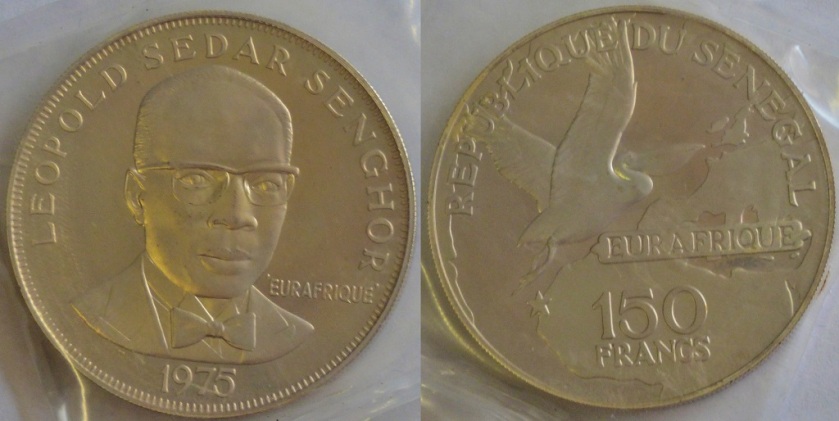
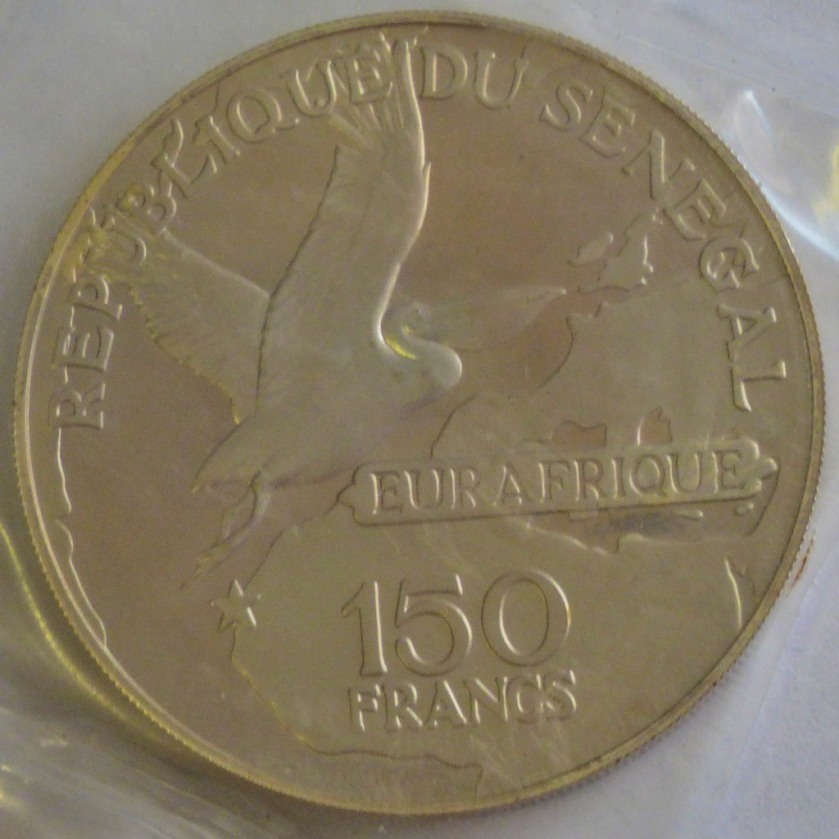
This 1975 Senegal Triple Crown, solid sterling silver, Euroafrique 150 franc coin, boxed and with a certificate was estimated at £15-20, but a lively bidding battle pushed the final price up to £48.

148148-a148-b148-c

Finally, came…

A STRONG FINISH

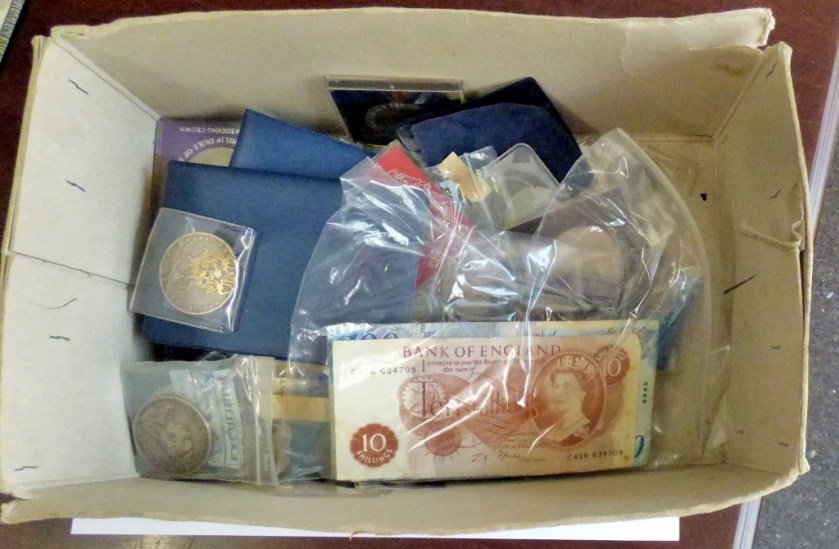
Lot 151, the final lot in this small sale,  was an accumulation box containing a few good bits and some ordinary stuff.  Estimated at £40-50 it ended up going for £95.

151

Once the auction setup had been dismantled and the last room bidders had gone it was time for me to attend to other matters. You can view a catalogue for the general collector’s auction we have next Wednesday here.

THURSDAY – PUTTING TOGETHER A PRESS RELEASE ABOUT THIS AUCTION

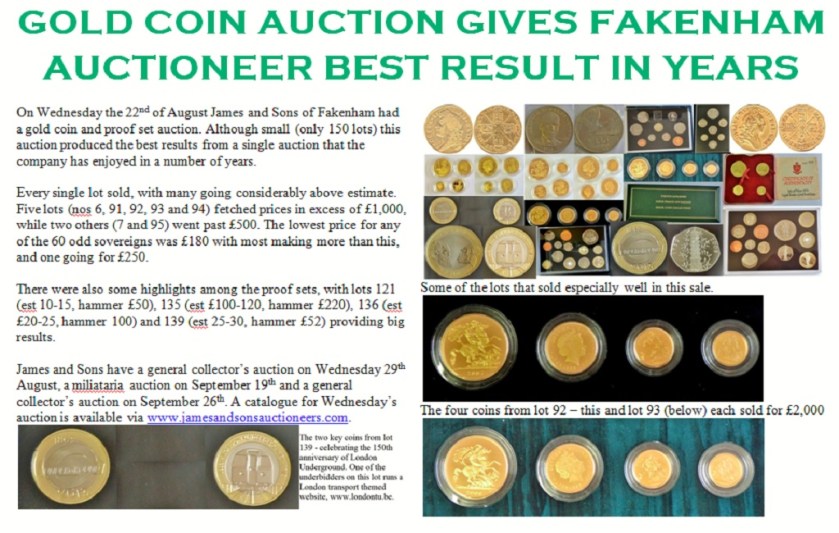
Yesterday morning I produced a PR piece about the success of this sale, going big on the images as well. I conclude this piece with a link and a screenshot:

GOLD COIN AUCTION GIVES FAKENHAM AUCTIONEER BEST RESULT IN YEARSPRimage


A Grockle’s Eye View of Cornwall 12: Homeward Bound

Bringing my series on my visit to Cornwall to a close.

INTRODUCTION

All good things come to an end, even this series of blog posts, and with this post we do indeed reach the end of my account of my visit to Cornwall. 

THE JOURNEY HOME

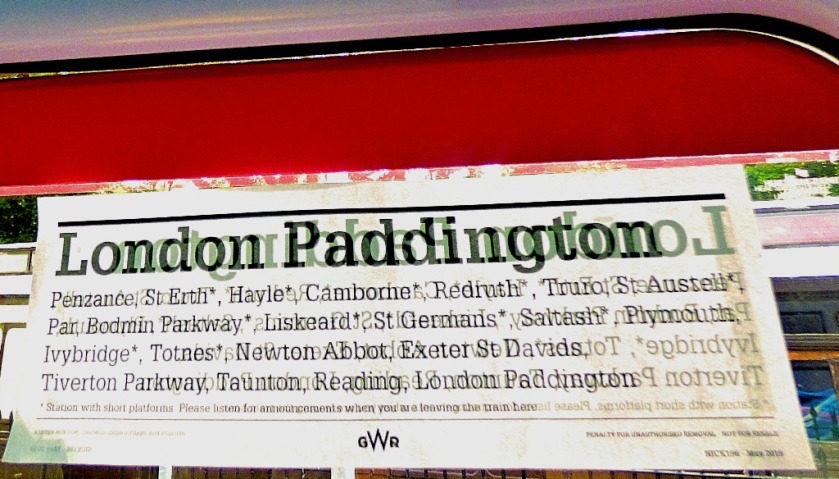
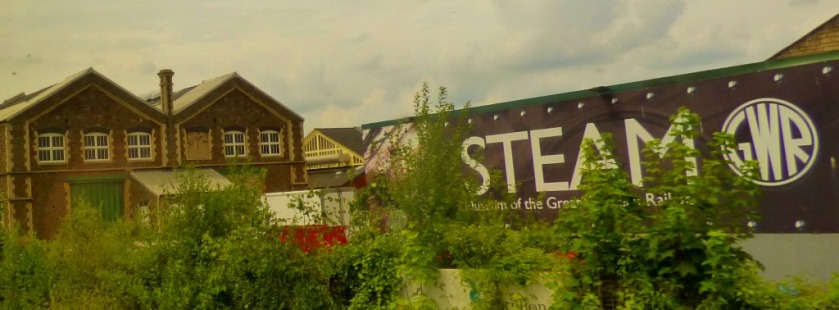
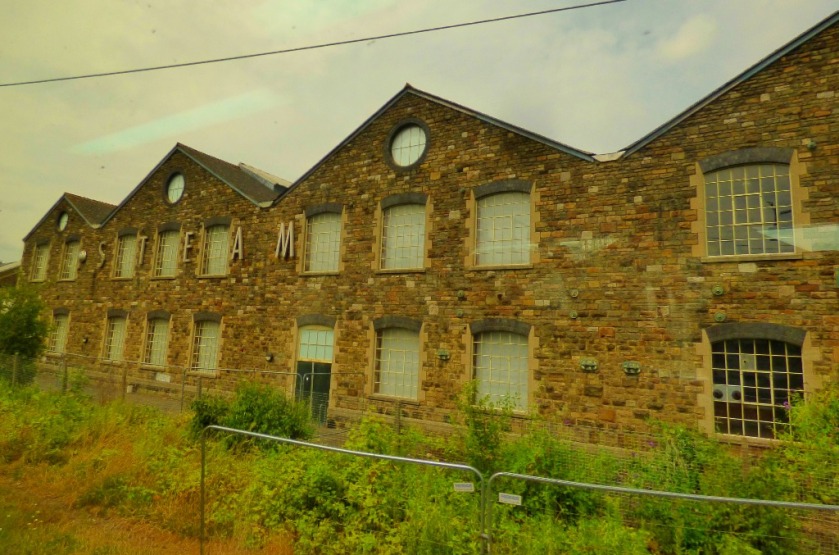
With my train due to leave St Germans at 9:27AM on Monday July 16th we had decided that a departure from Fort Picklecombe at 8:30AM was warranted due to the fact that I had a reserved seat on that train, which was going all the way to London, and would have been in the region of £100 down had I missed it. We arrived early at the station, and once the train arrived I found my seat easily enough, although as had happened on the journey down they had reversed the running order of the train and I was facing against the direction of travel instead of with it (trust me, for a photographer this is quite significant). Here are the last of the Cornish pictures…

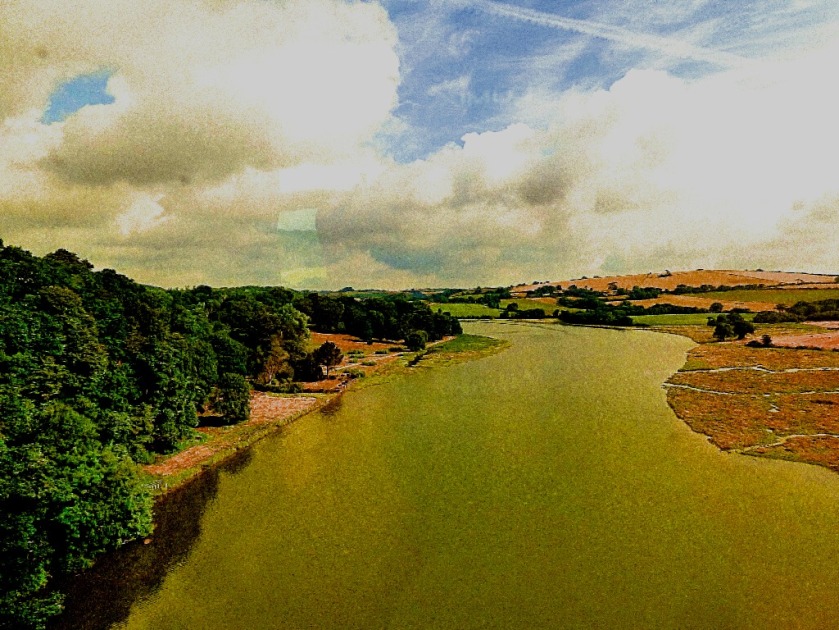
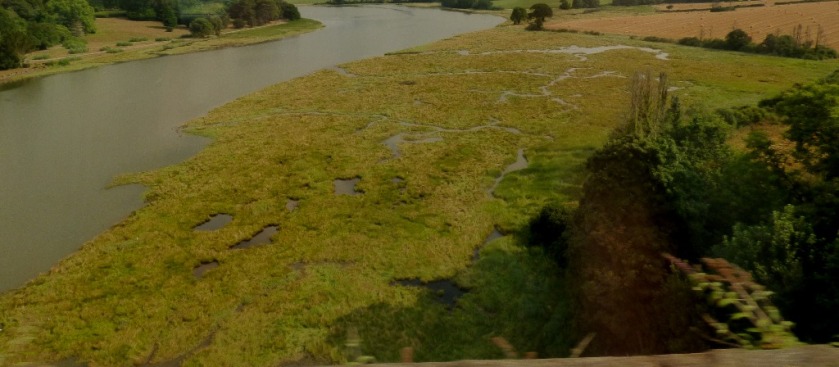
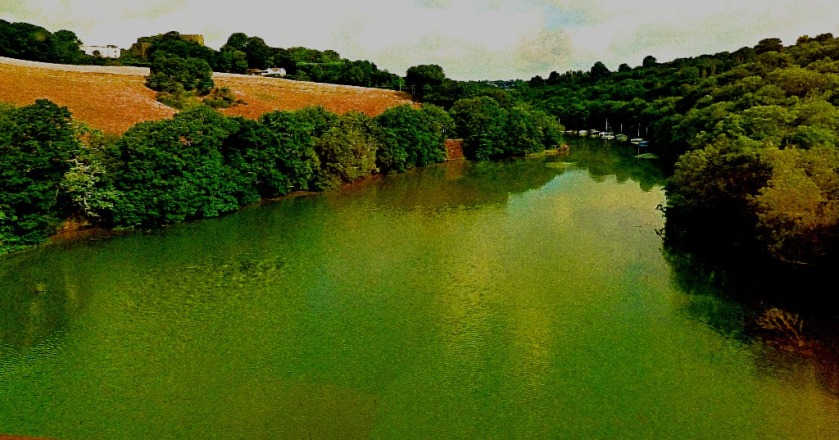
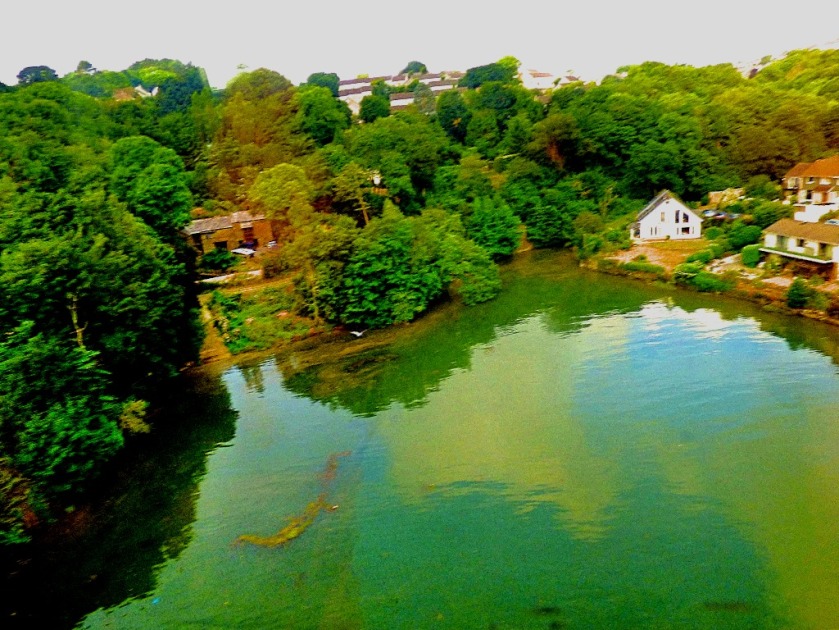
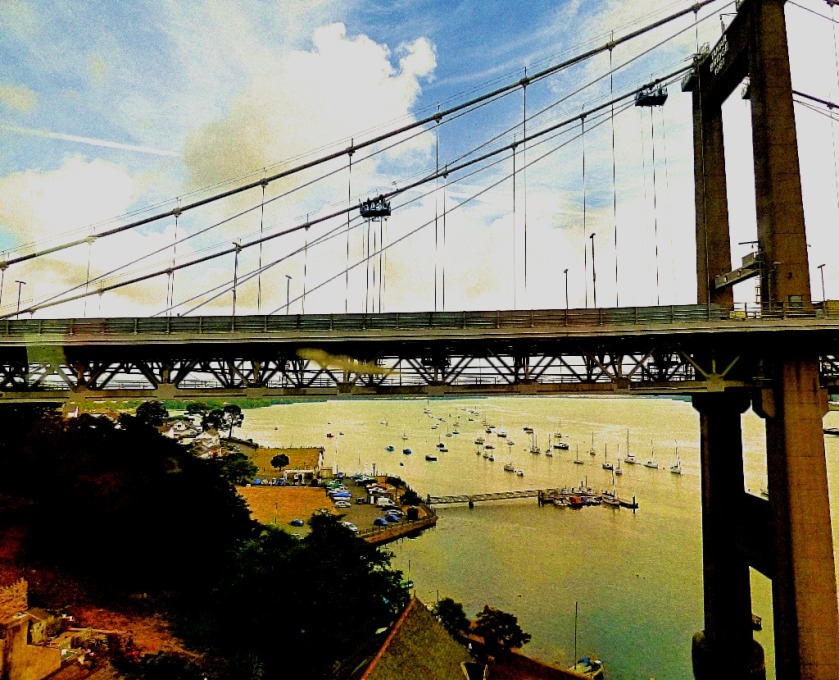
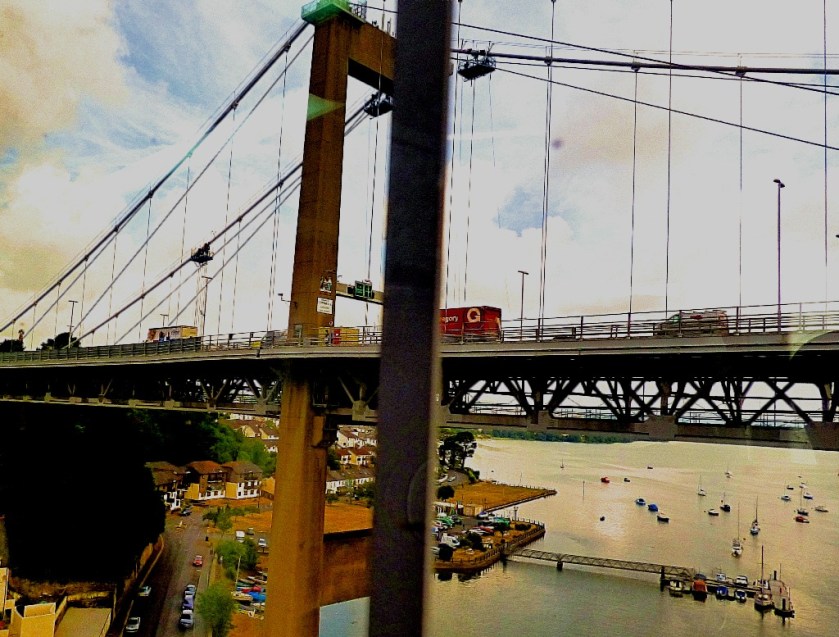
sea birdSt GermansScheduleRiverMarshy riverRiver with boardsYacht and buoyWaterside housesSaltash stationCrossing the Tamardetail from suspension bridgesuspension bridge and boatsTamar Bridge

The rest of this post takes place outside Cornwall. The train ran a trifle slow, arriving into Paddington sufficiently late to ensure that I would not make my intended connection at Kings Cross. However, the failings of Great Western were as nothing compared to those of Great Northern. The train arrived at Cambridge where it was supposed to divide in two as usual with four coaches going on to King’s Lynn and the rest going back to London, then a good couple of minutes later we got an announcement telling us that the split was not happening and that we needed to go to Platform 7. As a direct consequence of this mess up we then hit two red signals, at Waterbeach and again at Watlington, arriving into King’s Lynn much later than we should. This made it four successive journeys on Great Northern where the schedule had not been adhered to. Their failures appear to have got worse – just a few days ago I saw a special bus service running between King’s Lynn and Ely.

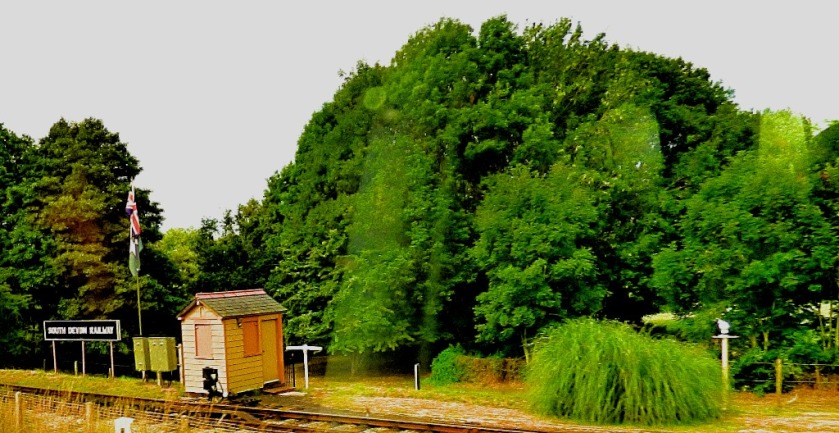
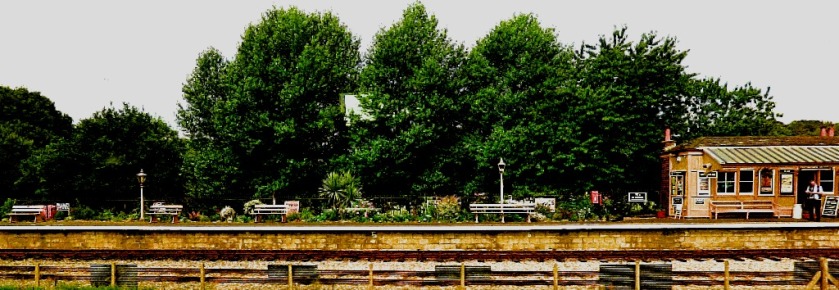
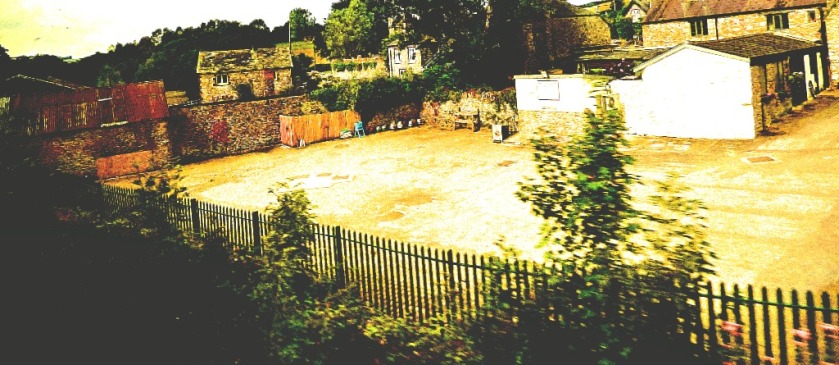
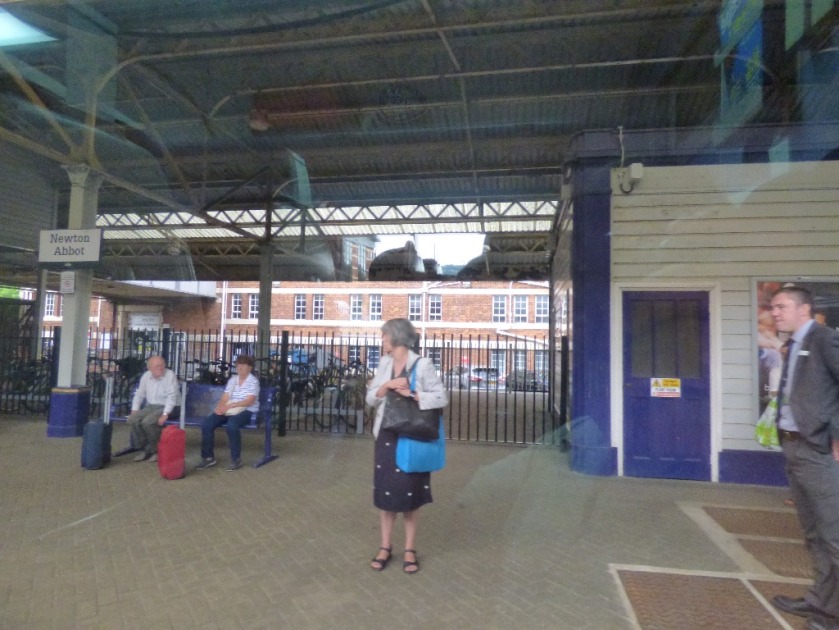
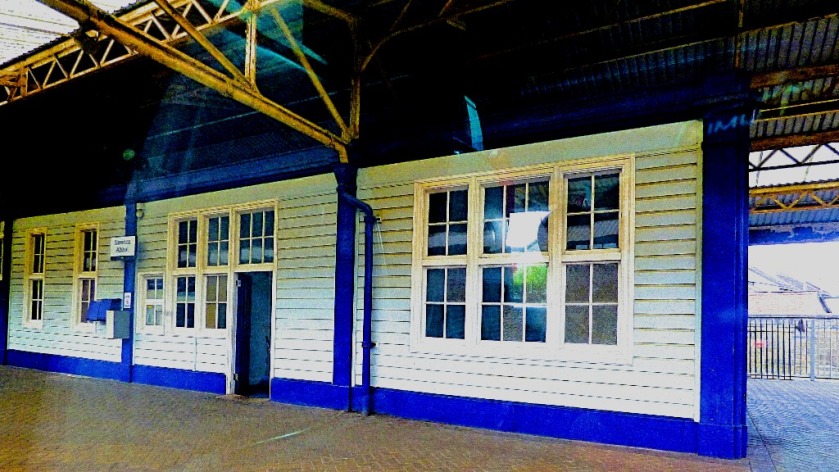
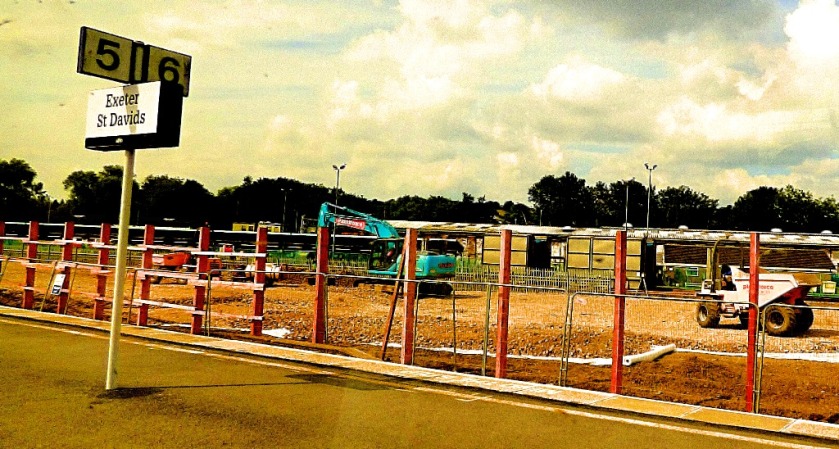
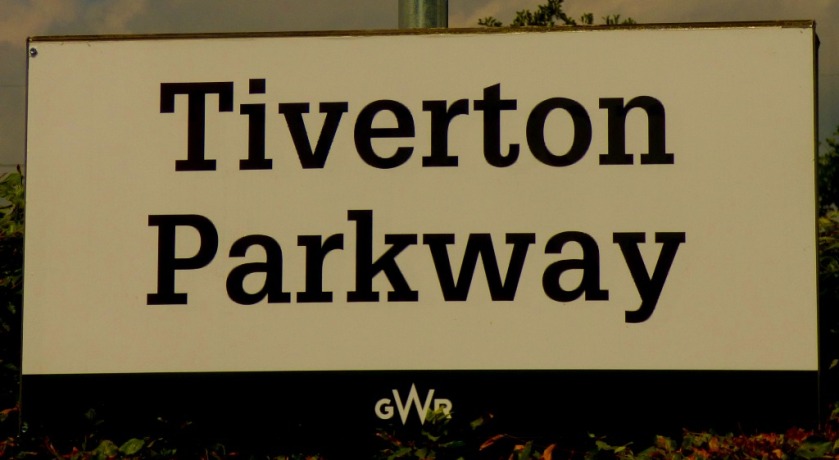
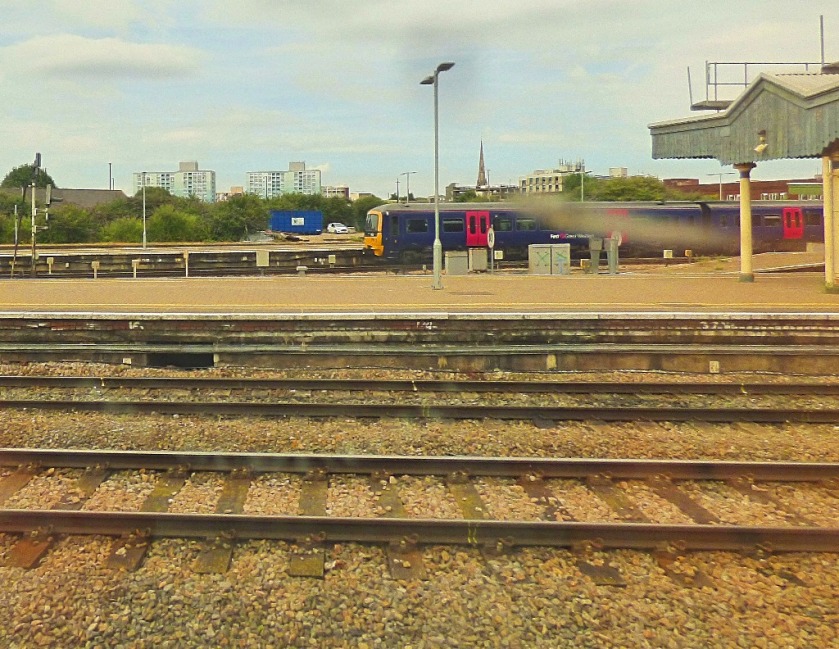
DevonportSouth Devon RailwayStationStation IIView from the trainNewton Abbot stationNewton AbbotNewton Abbot canopy and big buildingRiver near Newton AbbotRacecourselong bridgeLone boatAcross the waterAcross the water IIChurch towerAcross the water IIIBoats and buildingsBoats and hillsidesGrand HouseChurchButterflyriverside walksrural riverExeter St Davidstree and housesTiverton ParkwayTiverton Parkway IITauntonTrain, ExeterTrain, Bristol IIMetal curlicuesTrains, BristolBristol with trainsBristol Temple MeadsCleaning Britain's Railwaysbridge and pipebridge and pipe IIBath SpaBath Spa IIChurch tower IIBarge and churchBig churchcricket fieldRailway buildingGWR MuseumGWR Museum IISTEAM building

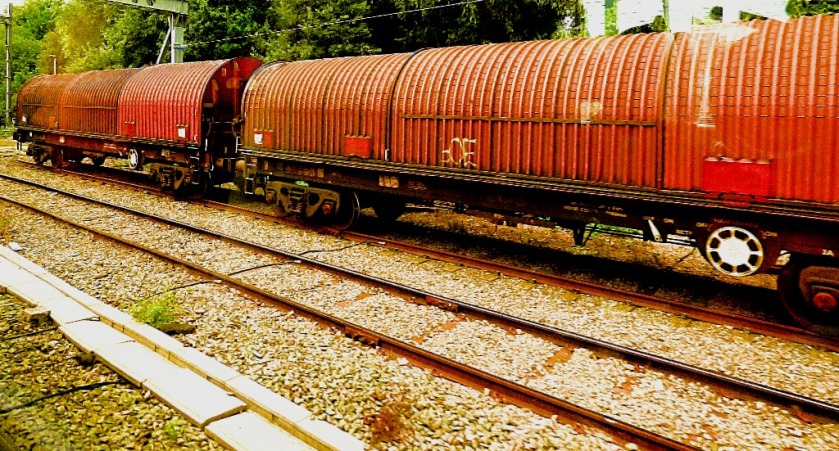
Tunnel trucks
These trucks look like tunnel segments on wheels.

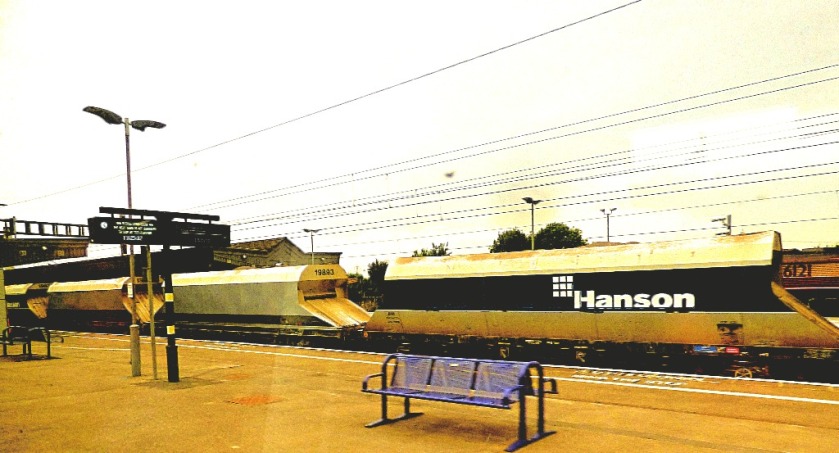
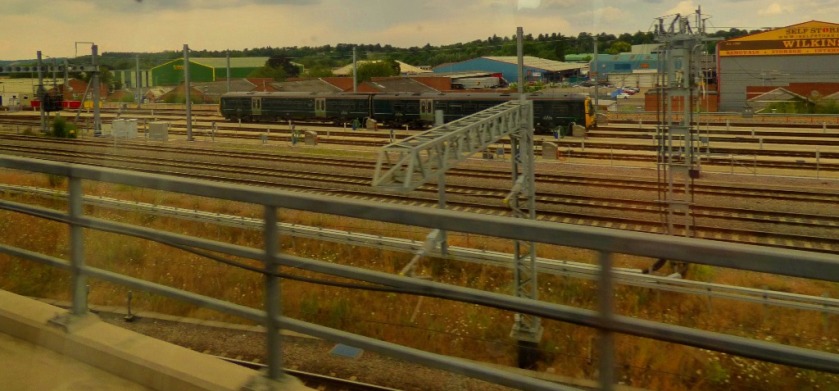
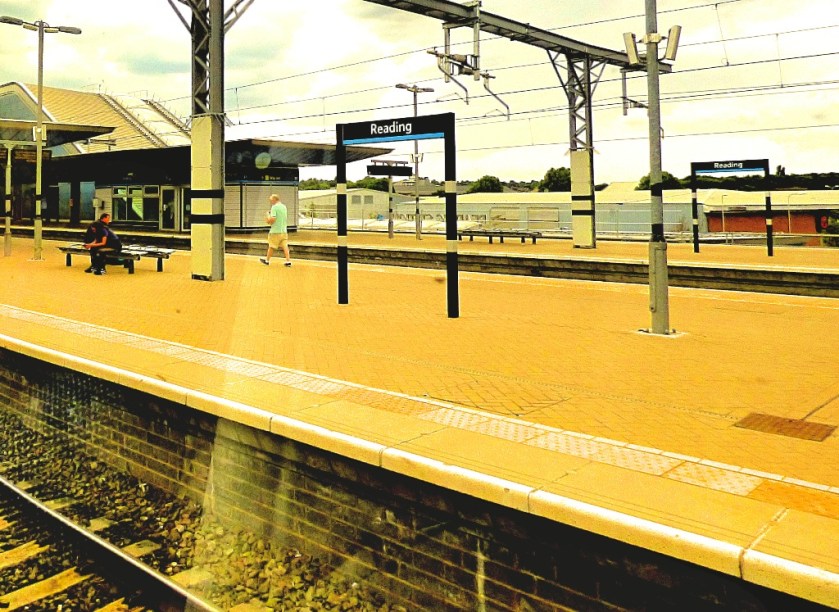
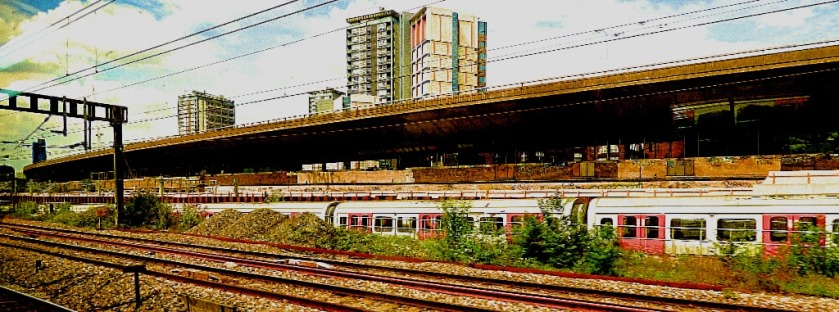
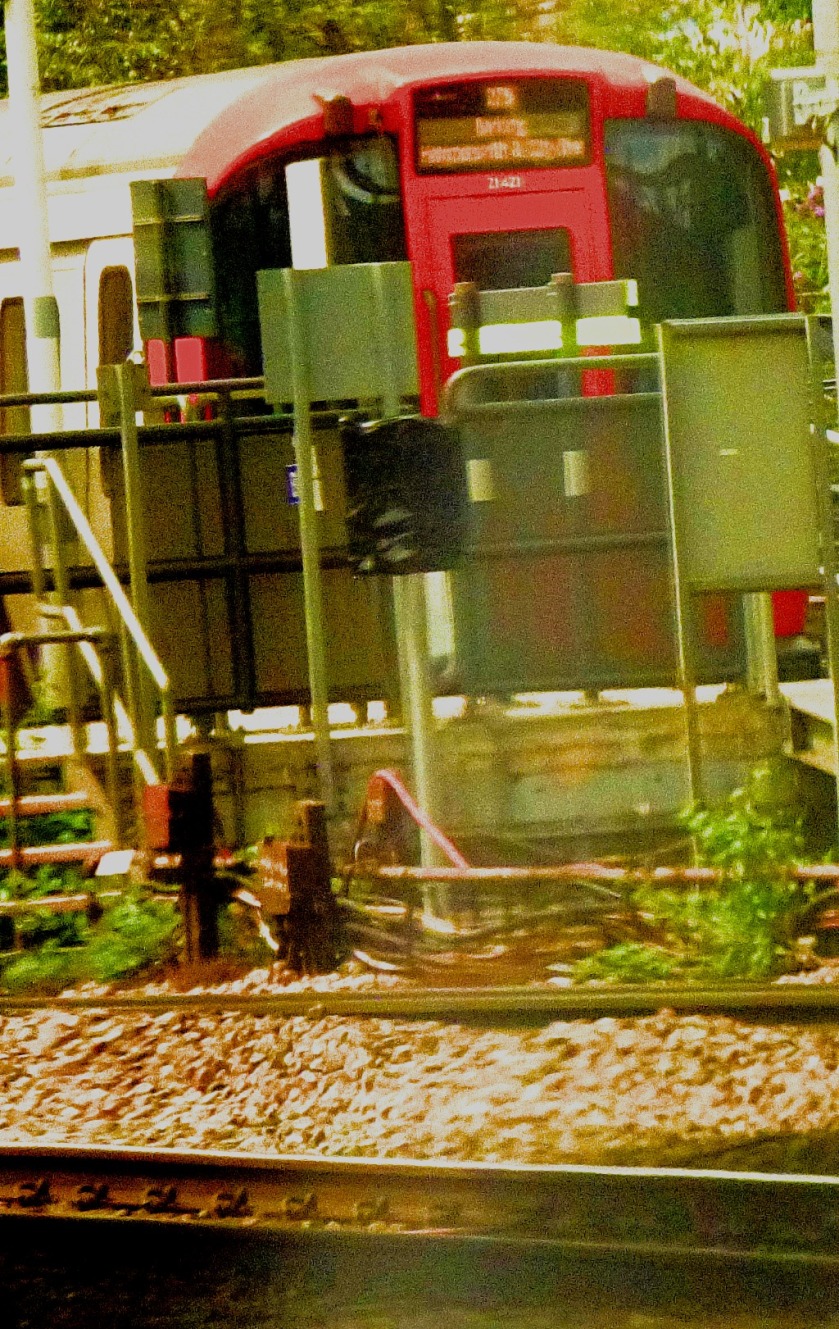
SwindonPlatform detailGoods trainsingle trainReadingReading Stationtrains near ReadingLondon Underground train

Royal Oak
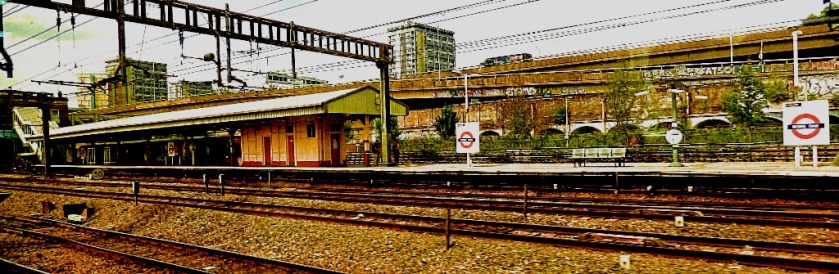
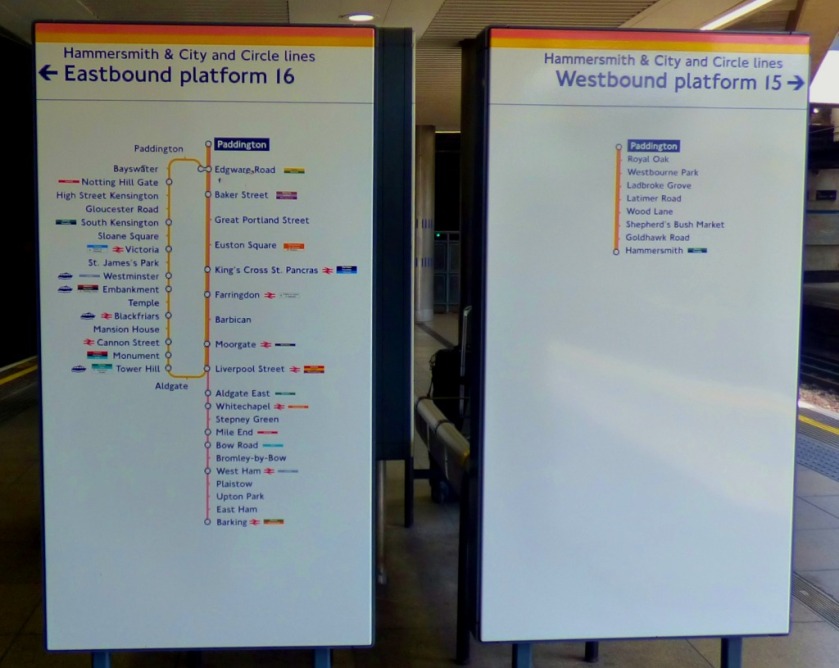
Westbourne Park, the penultimate Hammersmith & City line station west of Paddington – until quite recently local mainline train services stopped here as well. When the Metropolitan Railway opened in 1863 it used GWR rolling stock (broad guage in those days), and there were track connections between the two railways. This line to Hammersmith became part of the Metropolitan Railway in 1864, and between 1877 and 1910 services ran through to Richmond by way of a viaduct from Goldhawk Road the far end of which can still be obeserved at Ravenscourt Park. The last legacy of these connections is that today the Hammersmith and City platforms at Paddington are nos 15 and 16 of the main station.

Hammersmith and City line trainPaddington platforms

Interchange, Baker Street
The interchange from Circle and Hammersmith and City through to the four platforms that serve the Metropolitan line at this station (and escalators down another four platforms which serve the Bakerloo and Jubilee lines)

Screen


A Grockle’s Eye View of Cornwall 11: The End of the St Michaels Mount Day

Concluding my account of the day at St Michael’s Mount as we near the end of my series about my visit to Cornwall.

INTRODUCTION

Welcome to the latest installment in my series of posts about my recent visit to Cornwall. This post completes the day at St Michael’s Mount, leaving me with a post to do about the journey home and finally a page from which all the posts about this trip can be accessed. The fact that this will mean (including the page) 13 pieces relating to the trip bothers me not a jot – I have no more time for triskaidekaphobia than I do for any other ridiculous superstition.

WRAPPING UP ST MICHAEL’S MOUNT

Having finished our exploration of the mount itself it was time for lunch, which was excellent. The establishment at which we ate our lunch has a rule that alcoholic drinks can only be served if food is ordered at the same time, and according to their interpretation cream teas do not count as food, so on two occasions in the course of that meal we ordered portions of chips to go with drinks. Mention of cream teas (a speciality of the far west of England) brings me to a debate that rages unchecked: which goes on the scone first, the cream or the jam? The cream advocates argue that cream in this context is the equivalent of butter (and if it is Cornish clotted cream it is so thick that one can pretty much slice it like butter!), and that if you put the cream on first you do not get jam in it. I am not sure what the jam advocates base their case on.

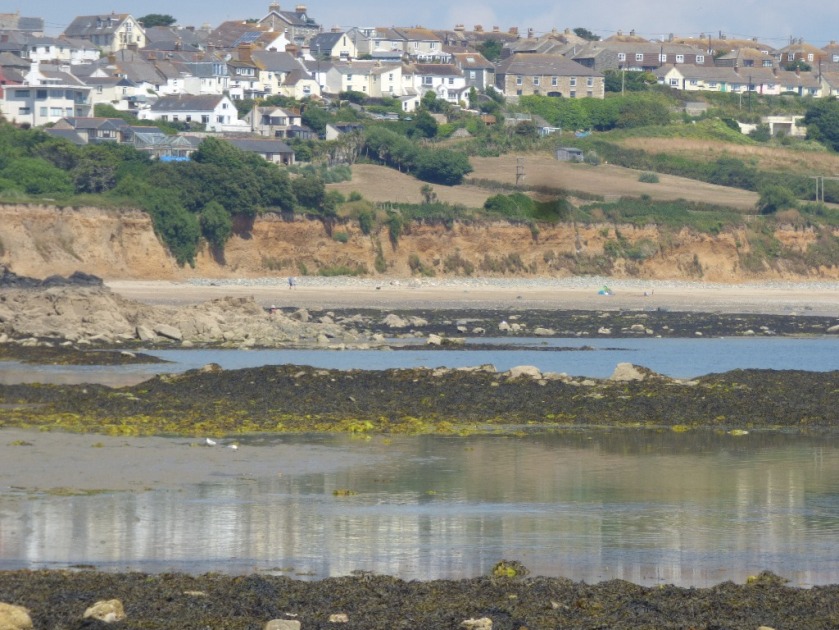
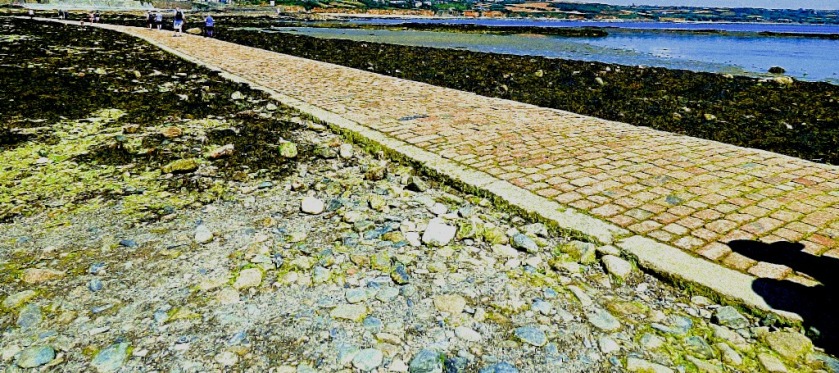
Lunch consumed it was time to head back to our parking place on the edge of Penzance. The tide was just starting to turn but was still a long way out, and unlike the Mont St Michel, on which the current setup of St Michael’s Mount is modelled the tide here comes in slowly (no danger of galloping horses being swallowed by an inrushing tide, as allegedly happened at Mont St Michel on one famous occasion), so we were still able to walk back across a vast expanse of beach to rejoin the official footpath just west of Marazion. I omitted to remove my socks and shoes for this part of the journey, and they ended up thoroughly soaked, although by the end of the walk they had dried out again (without the sea breeze the heat would have been fiendish).

Mathematical Pic
The first few photos here, including these mathematical pictures are from lunch

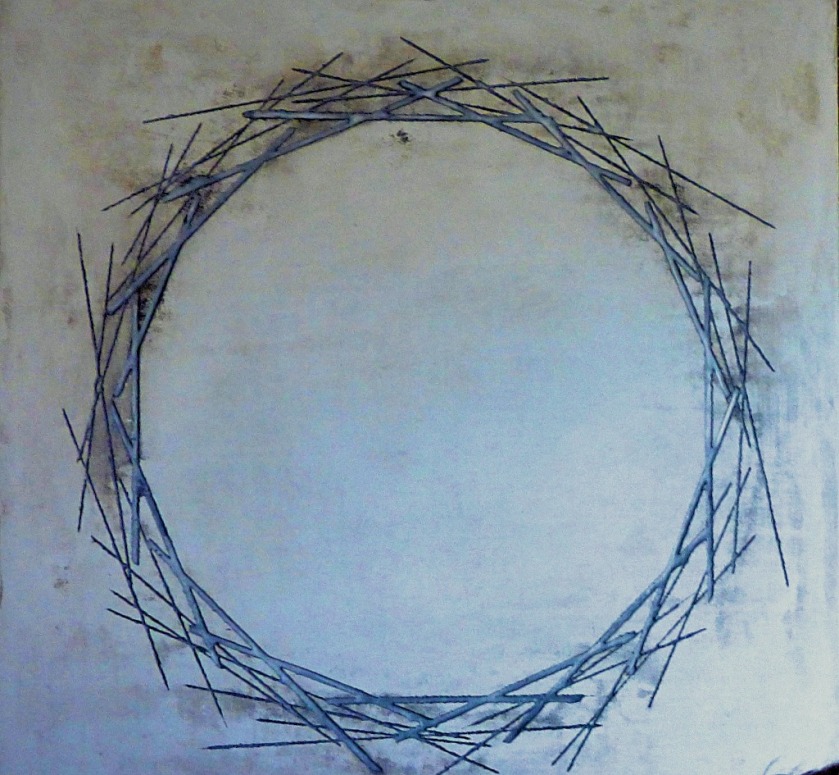
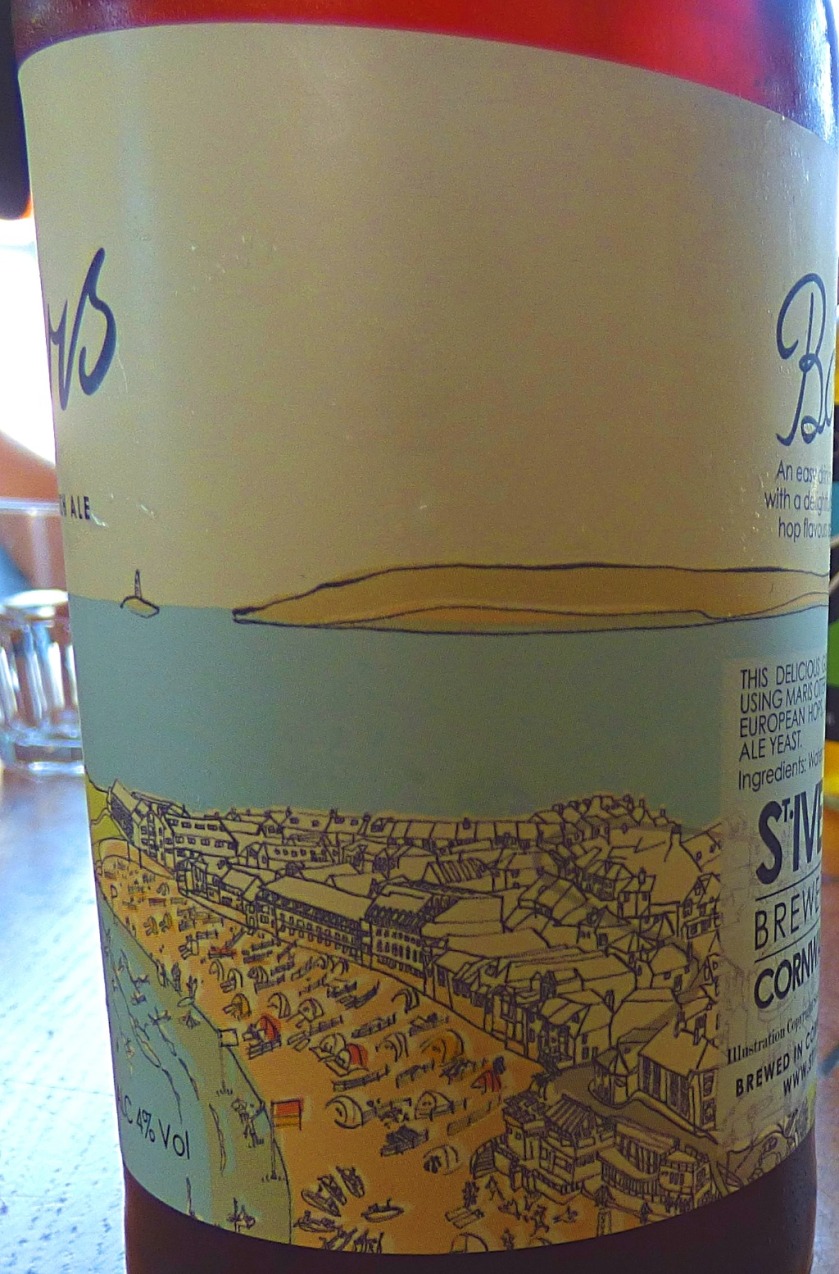
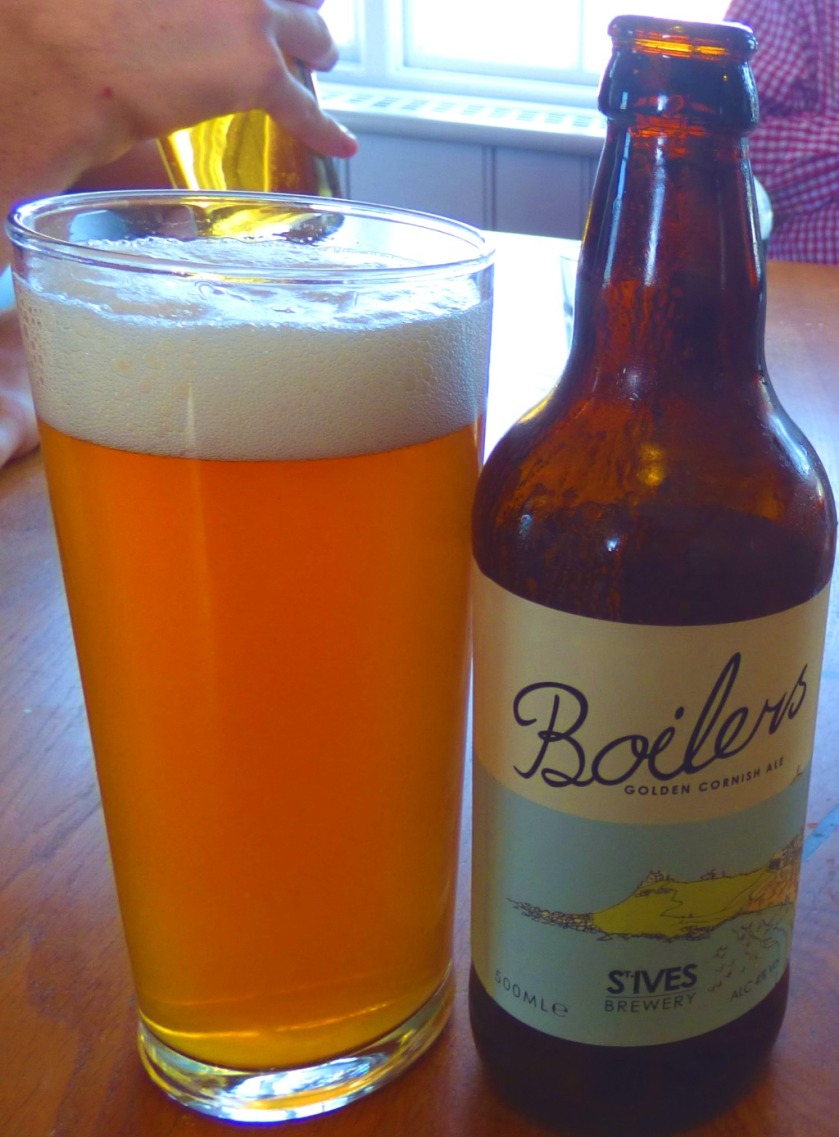
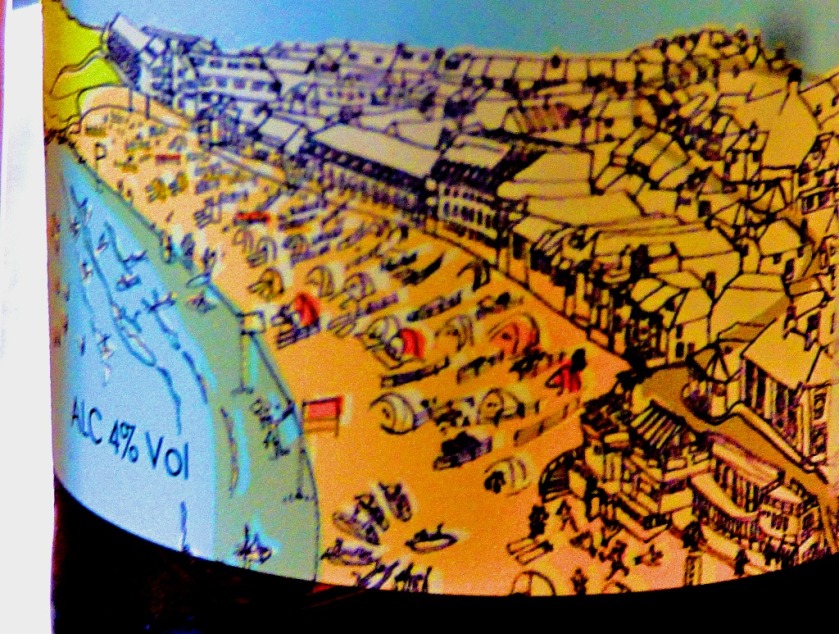
Mathematical picsMathematical Pic IIMetal pictureThrough the windowCornish beer ICornish Beer IICornish Beer IIIBoilersdetail from bottleDetail from bottle IIPaintingLooking towards the mainland

Sea birds
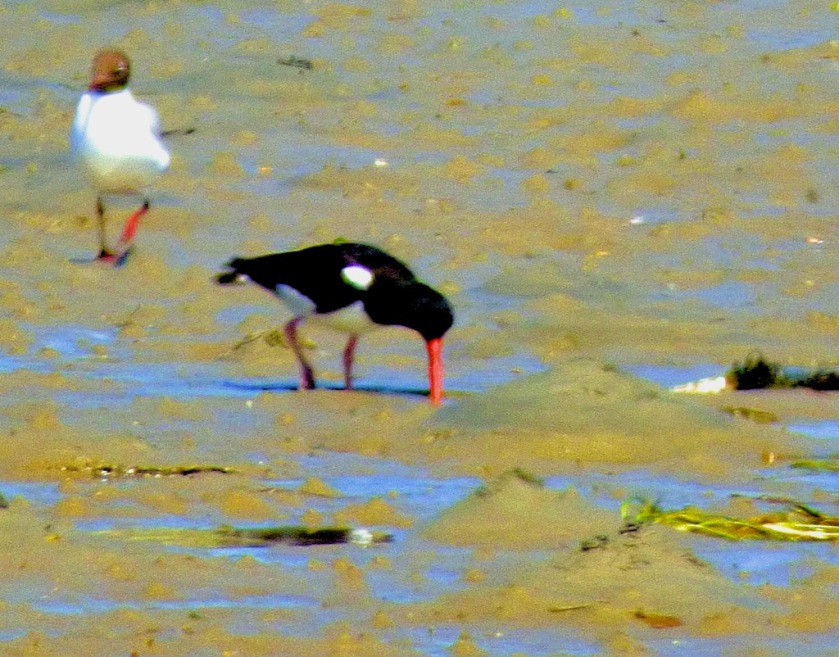
Just before recrossing the causeway to the mainland, we saw these birds – the one with the red bill used for digging would have been having a bonanza – there were huge numbers of worm casts in the sand.
Causeway close-up II
The causeway from close up

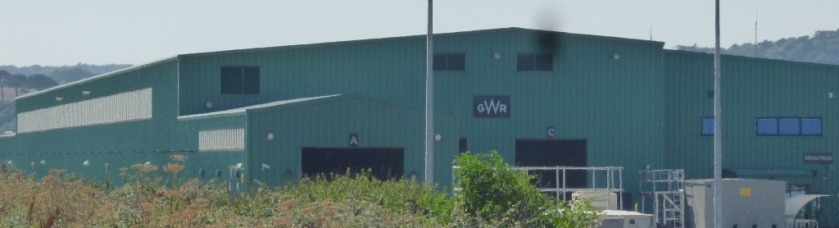
Worm castReturning to MarazionLooking WestGWR works, near PenzanceBeach viewShell

Farewell to St Michaels Mount
A farewell shot of the mount

St Michael's Mount panorama

Chough
A shore dwelling corvid, the Chough

A Grockle’s Eye View of Cornwall 10: The Map Room at St Michael’s Mount

Continuing my account of my visit to Cornwall. Today we look at the map room at St Michael’s Mount.

INTRODUCTION

Welcome to the latest post in my series about my visit to Cornwall. As part of my coverage of a day at St Michael’s Mount I am devoting a whole post to the map collection there.

A Collection of Antique Maps

For a cartophile such as me this section of the visit was particularly good fun…

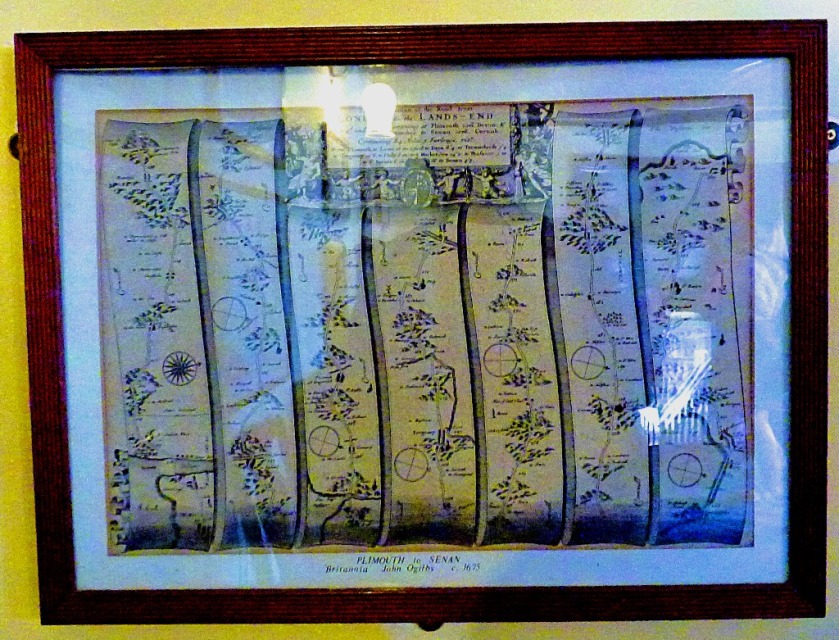
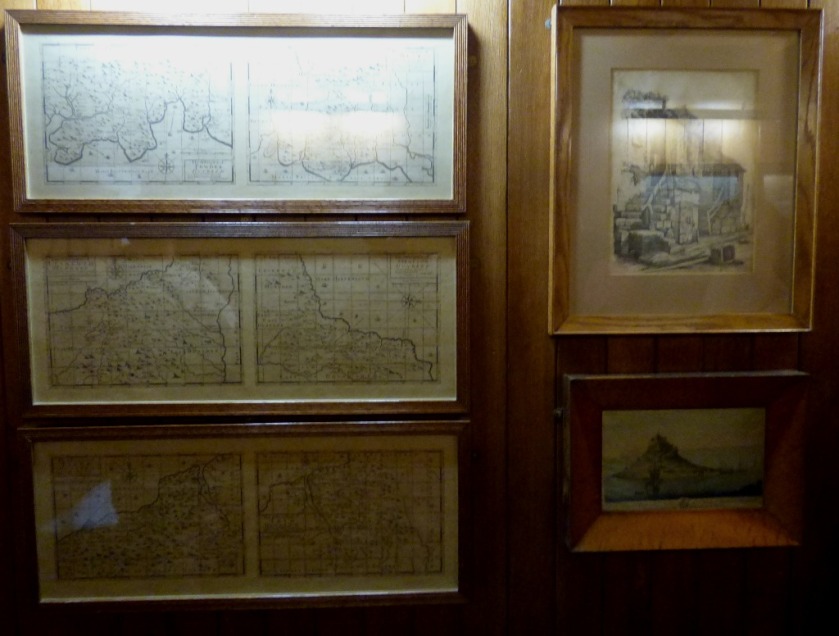
Plymouth to Senan
In the days before googlemaps this is what a walking route looked like!

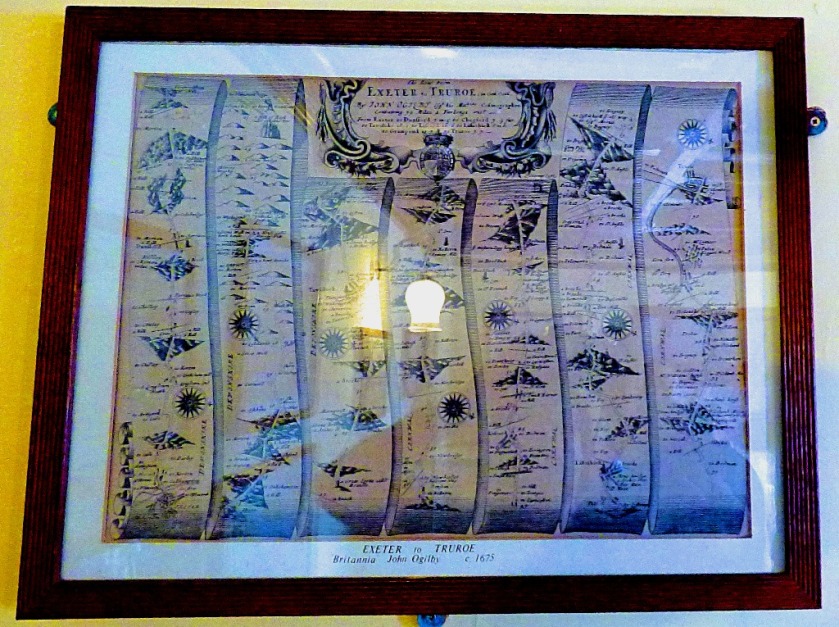
Exeter to TruroeWilliam Holes - Devon and Cornwall

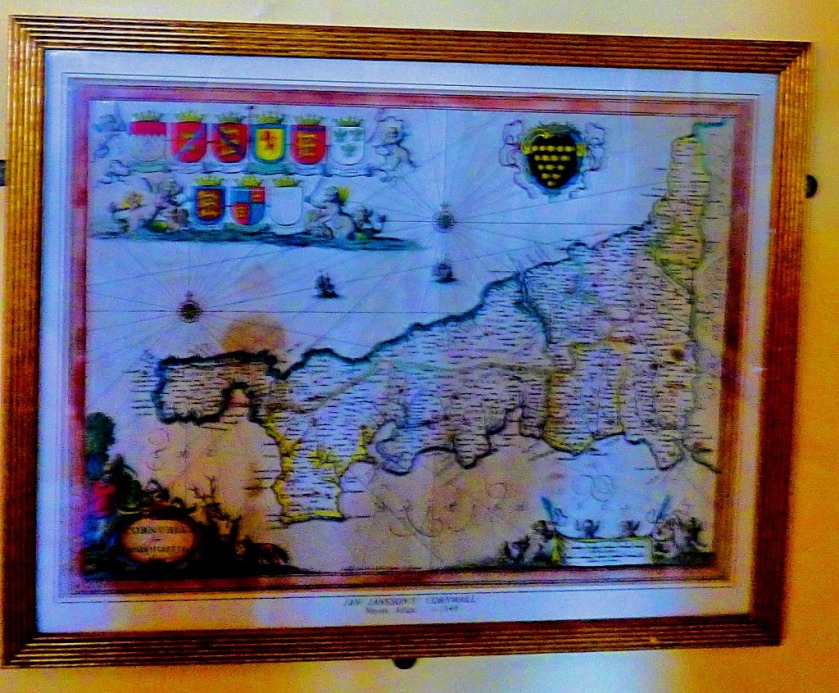
Jan Janssons Cornwall
At one time the Dutch were trailblazers when it came to cartography.

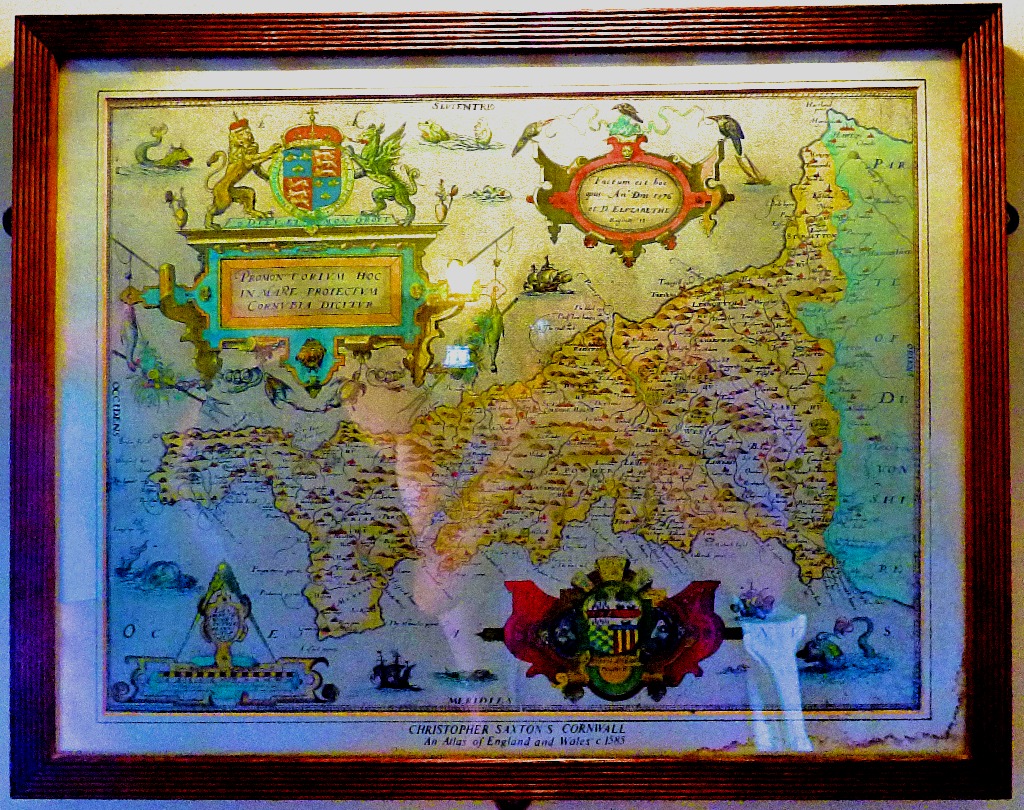
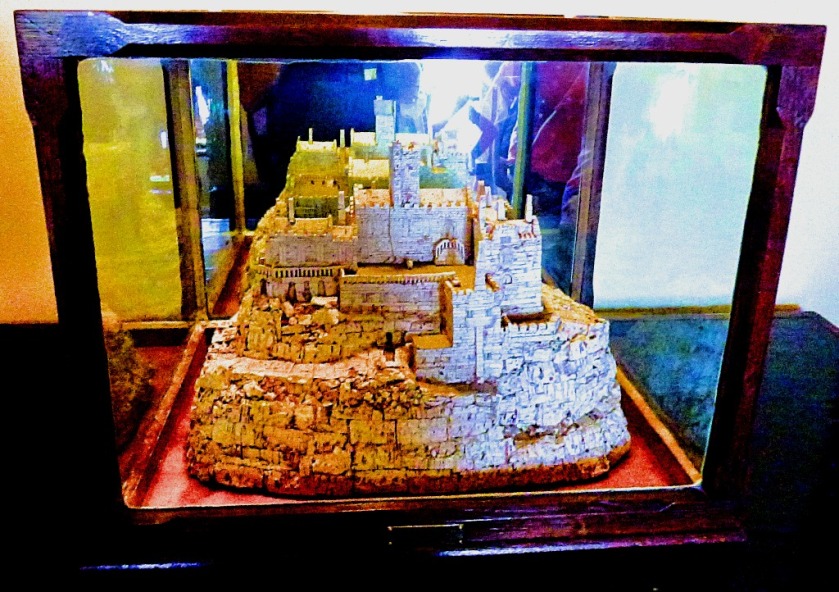
two antique maps of CornwallJames Pigot's CornwallModelFour antique maps of CornwallNicolas Sansons West of England MapThe Isles of ScillyChristopher Saxton's CornwallMounts BayMap room mantelshelfMounts Bay IIThree views of cornish buildingsduoDuo IICottage PicSextetSextet II

Falmouth
Falmouth – one of the people who have noticed my posts about cornwall is thecornishbird, whose offerings include this about Falmouth: https://cornishbirdblog.com/2018/07/14/things-to-do-in-falmouth/

sextet IIIThree maps in one frameCornwall and Devonshiresix maps, two pictures