A look at developments on days two and three of this round of County Championship fixtures and a two part photo gallery.
Today is day three in the current round of championship fixtures. None of the matches have ended as yet. This post looks mainly at Surrey v Hampshire.
SIBLEY THE STAYER
Surrey are in pretty much total against Hampshire. Hampshire won the toss on Friday and opted to bowl first. Surrey reached 253, just enough for a batting bonus point. Dominic Sibley carried his bat for Surrey, scoring exactly 100 not out. Brad Wheal had 4-65, while overseas signing Brett Hampton was somewhat flattered by a return of 1-46 from 14 overs. Hampshire in reply reached 219, giving Surrey a lead of 34. It took a bit of a tail wag for them to even limit the lead to 34. Daniel Worrall and Jordan Clark took three wickets a piece for Surrey, and Lawrence, the part time spinner, nipped in at the end with 2-7 from 4.2 overs. Surrey have taken total control of proceedings in their second innings. They are currently 255-2. Sibley, still unbudgeable, is 102 not out, with Jamie Smith is 62 not out, and Ollie Pope contributed a fluent 65 to proceedings. It sums up the value of overseas signing Hampton that in an innings that is now into its 78th over he has been called upon to bowl a mere six of those overs, from which he has conceded 28 runs. Incidentally in the process of reaching his second ton of this match Sibley has ensured that his career FC average will be above 40 at the end of it. Sibley has finally gone for 105, caught by Baker off Dawson. In total across the two innings it has taken Hampshire 440 balls to find a way through him (217 without dismissal in the first jnnings, 223 in the second). Smith is really motoring now, and Hampton continues to demonstrate his inadequacy as an overseas player. Surrey are 274-3 in the 81st over, and Hampton, in his eighth over of the innings, has 0-41.
ELSEWHERE
Somerset are struggling against Sussex, though as against Warwickshire last week Sussex are showing a distinct lack of enterprise, which may yet save S0merset.
PHOTOGRAPHS
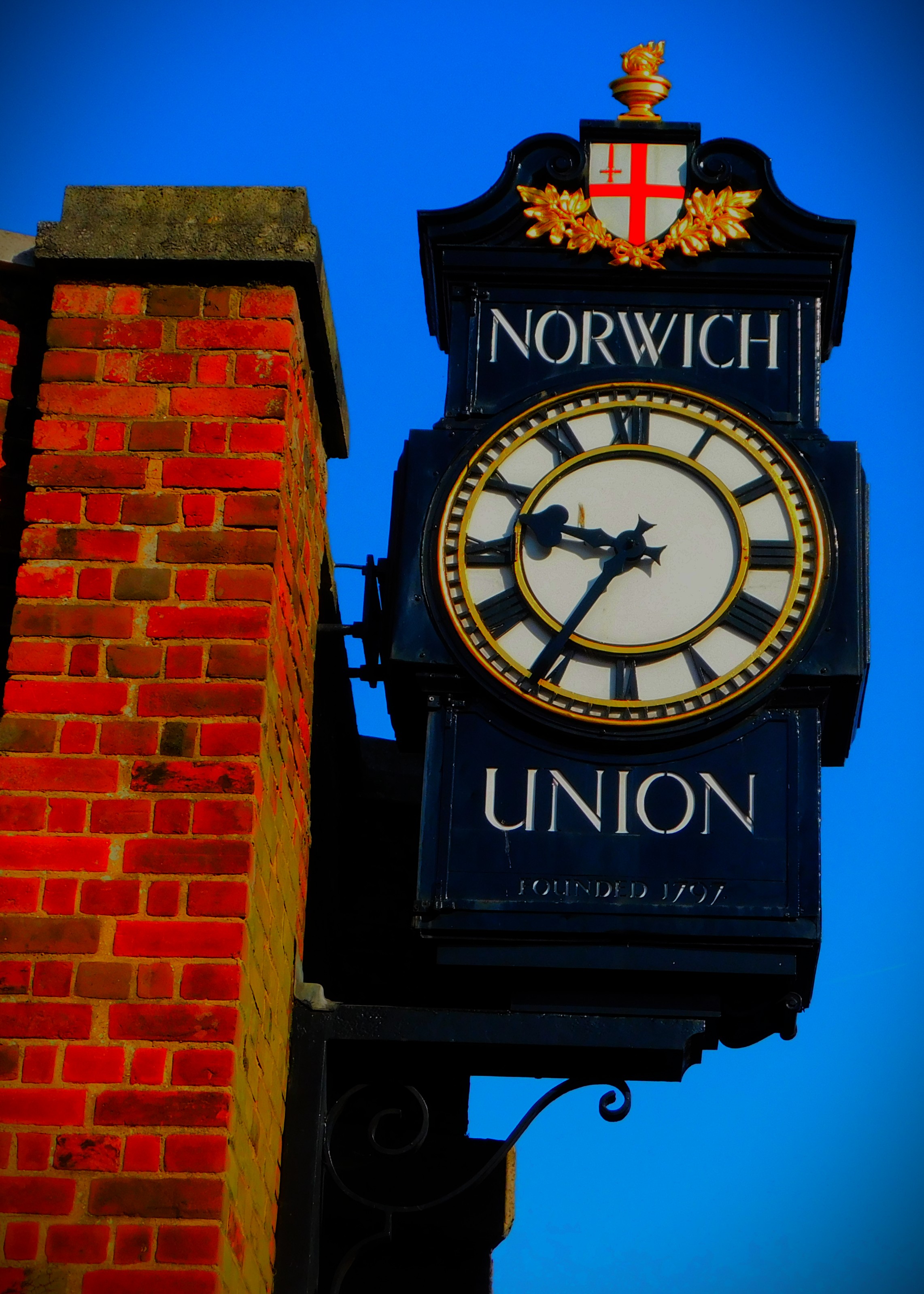
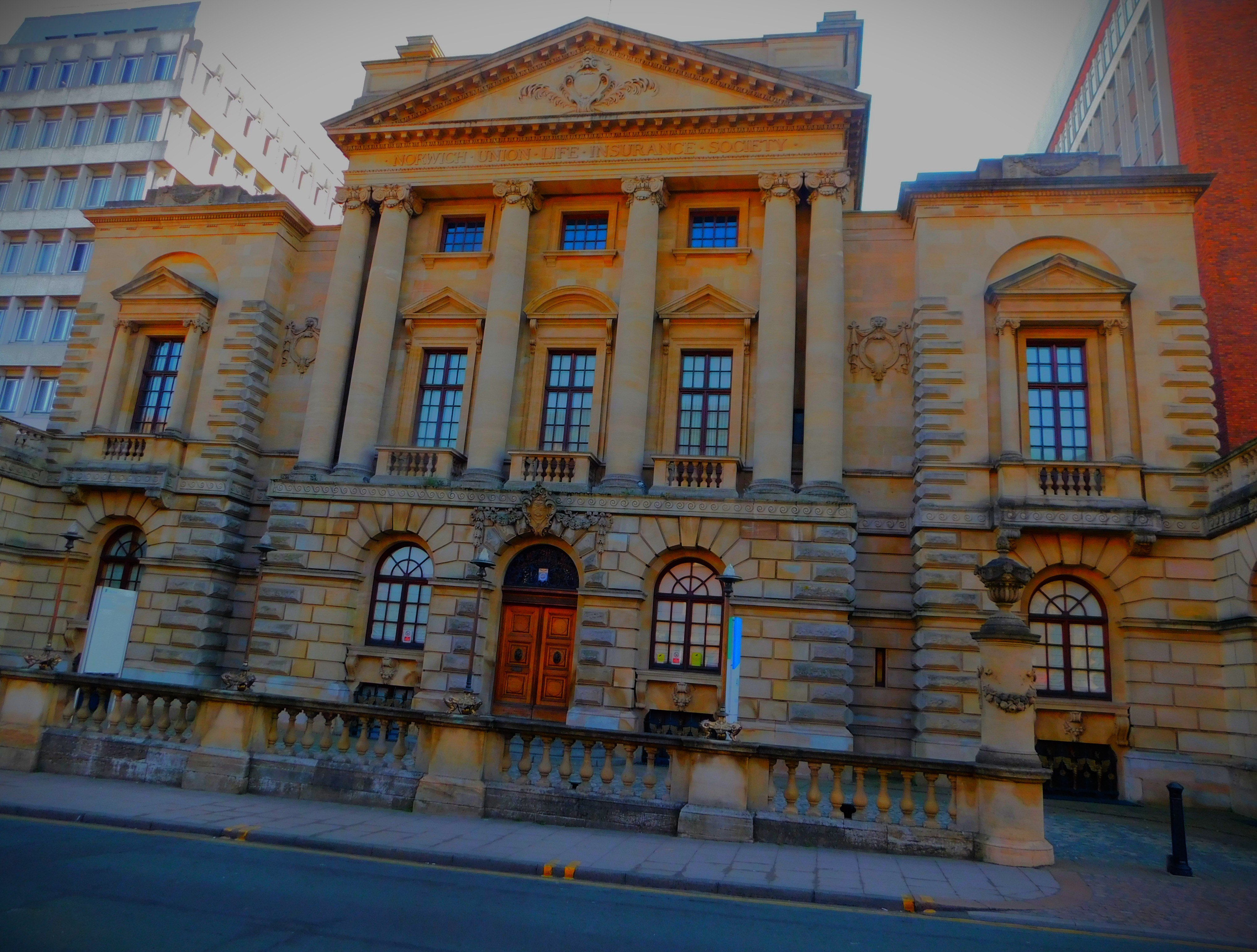
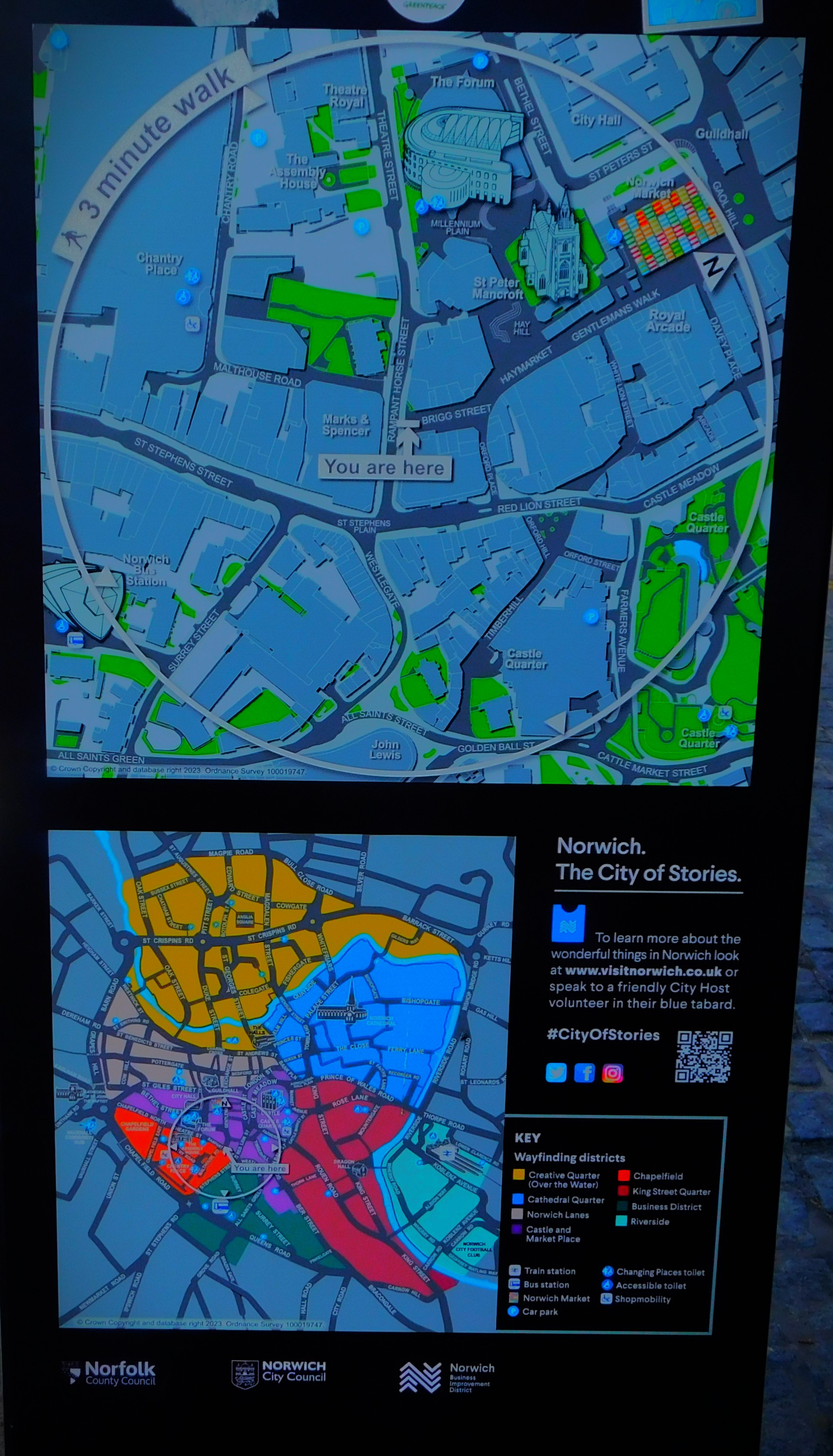
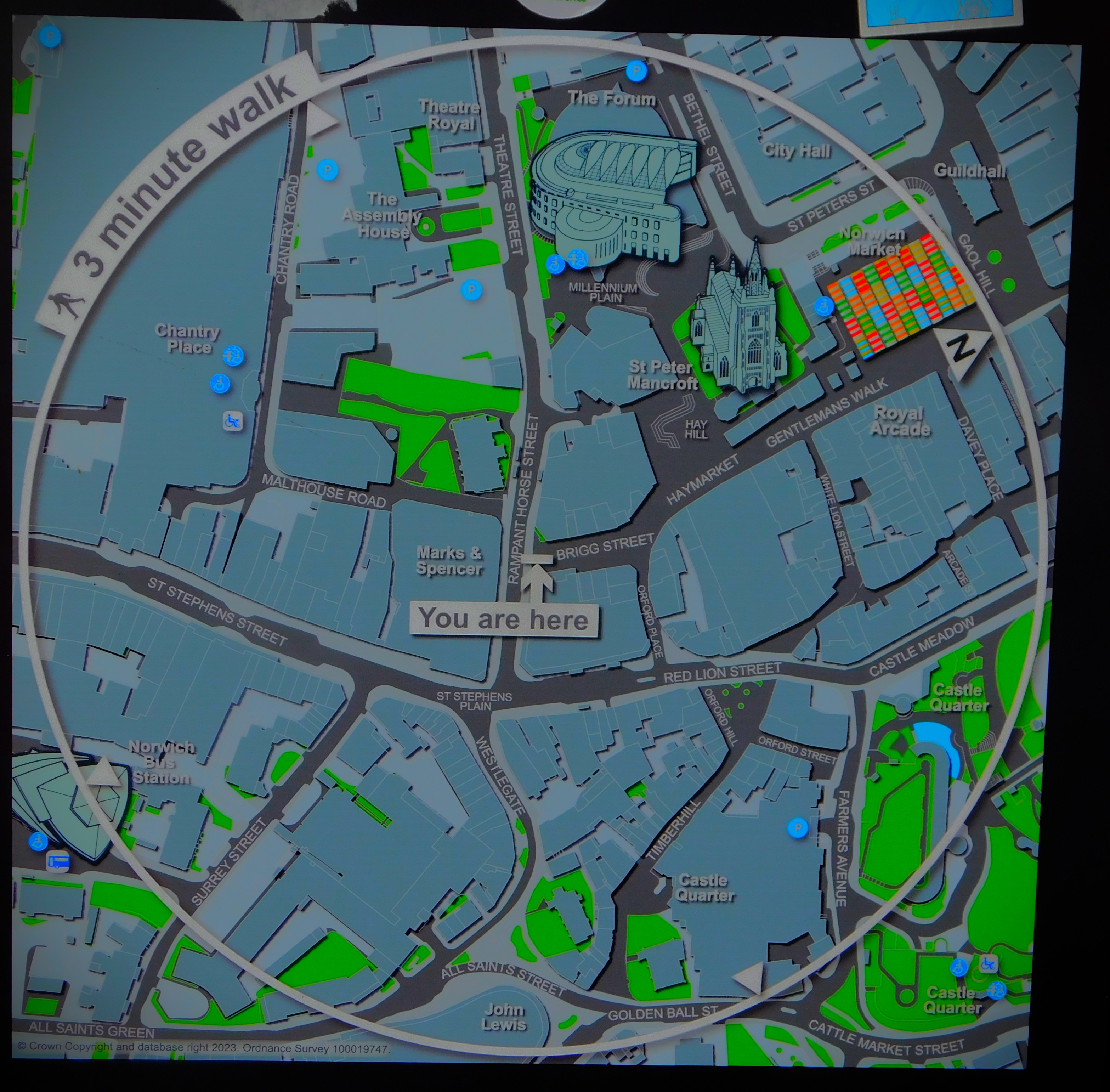
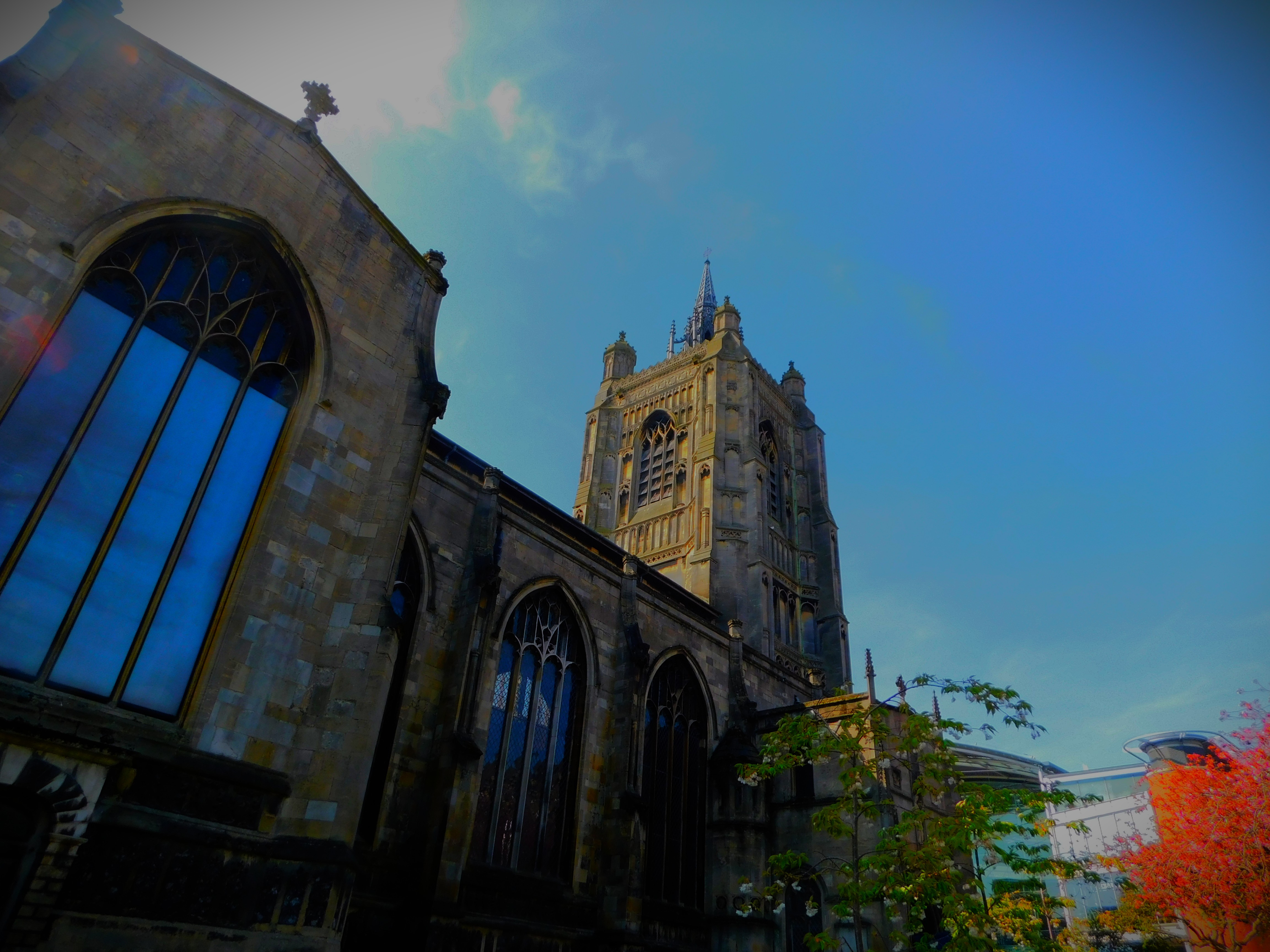
Today the gallery comes in two parts. Yesterday morning I travelled to Norwich, intending to take part in a Take Down Tesla activity at the Tesla dealership on Mile Cross Lane and then visit the Millennium Library on my way home. Unfortunately I failed to locate Mile Cross Lane, and eventually have up in despair (I have subsequently been in email contact with the organizer to explain what happened, and we have had a very civilized exchange). I did get to the library, and having carefully ensured that I had no books out on loan I was able to take out a large number – the Millennium library is of course far better stocked than any other in Norfolk. The first part of the gallery shows the pictures I took during the Norwich part of the day…
The second part of the gallery is one of my regular type galleries…
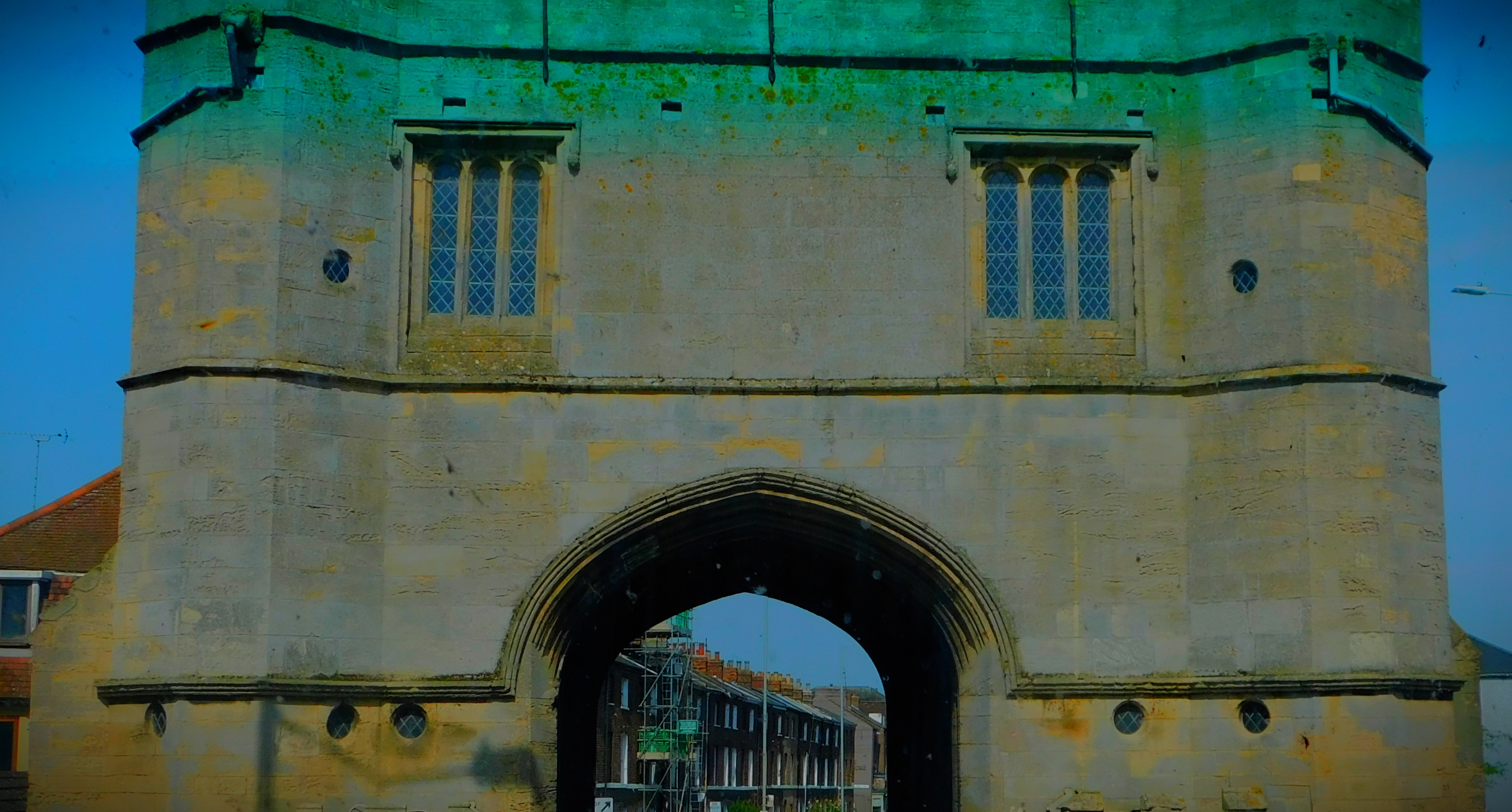
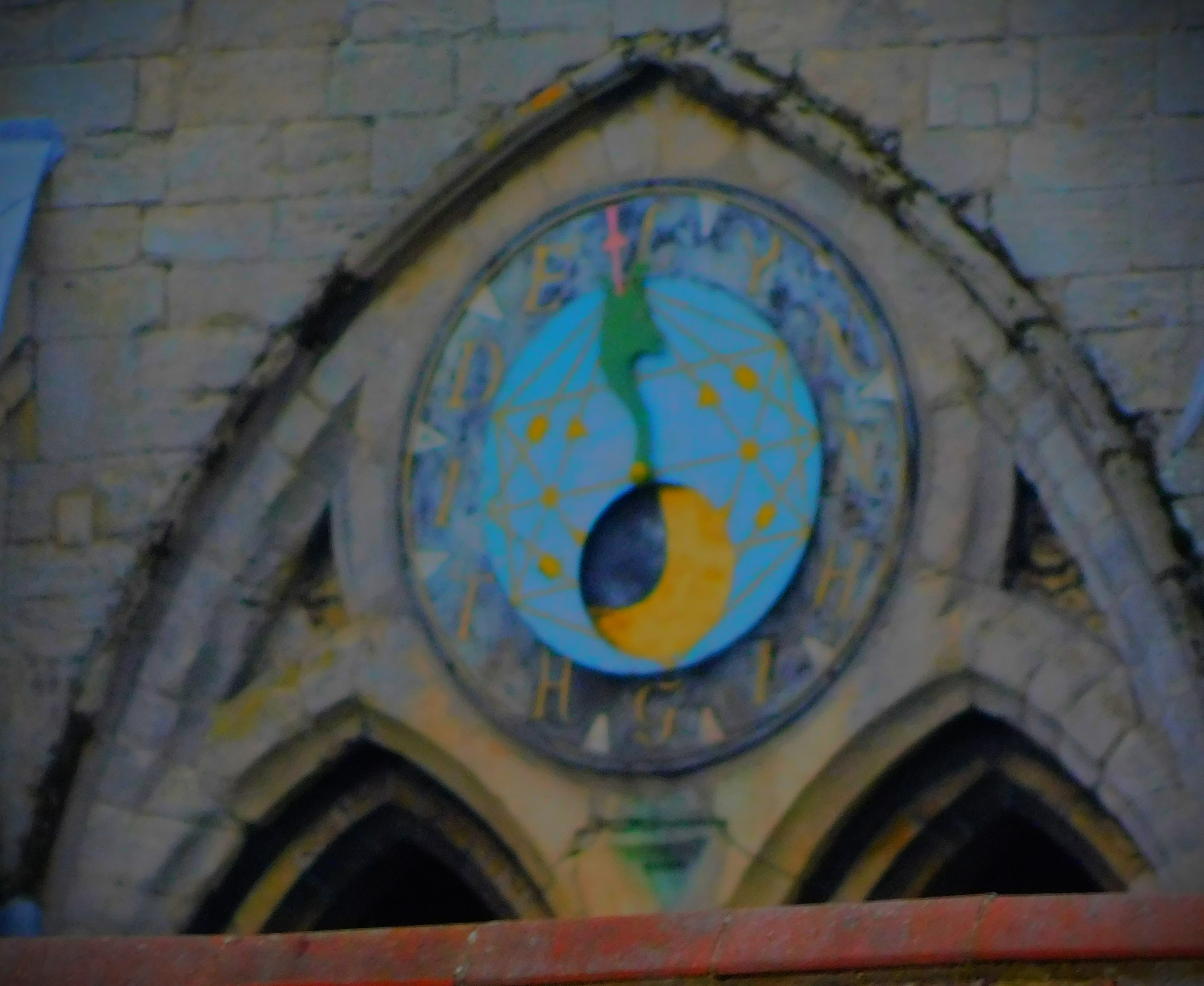
The Guildhall of St George, now into its seventh century.
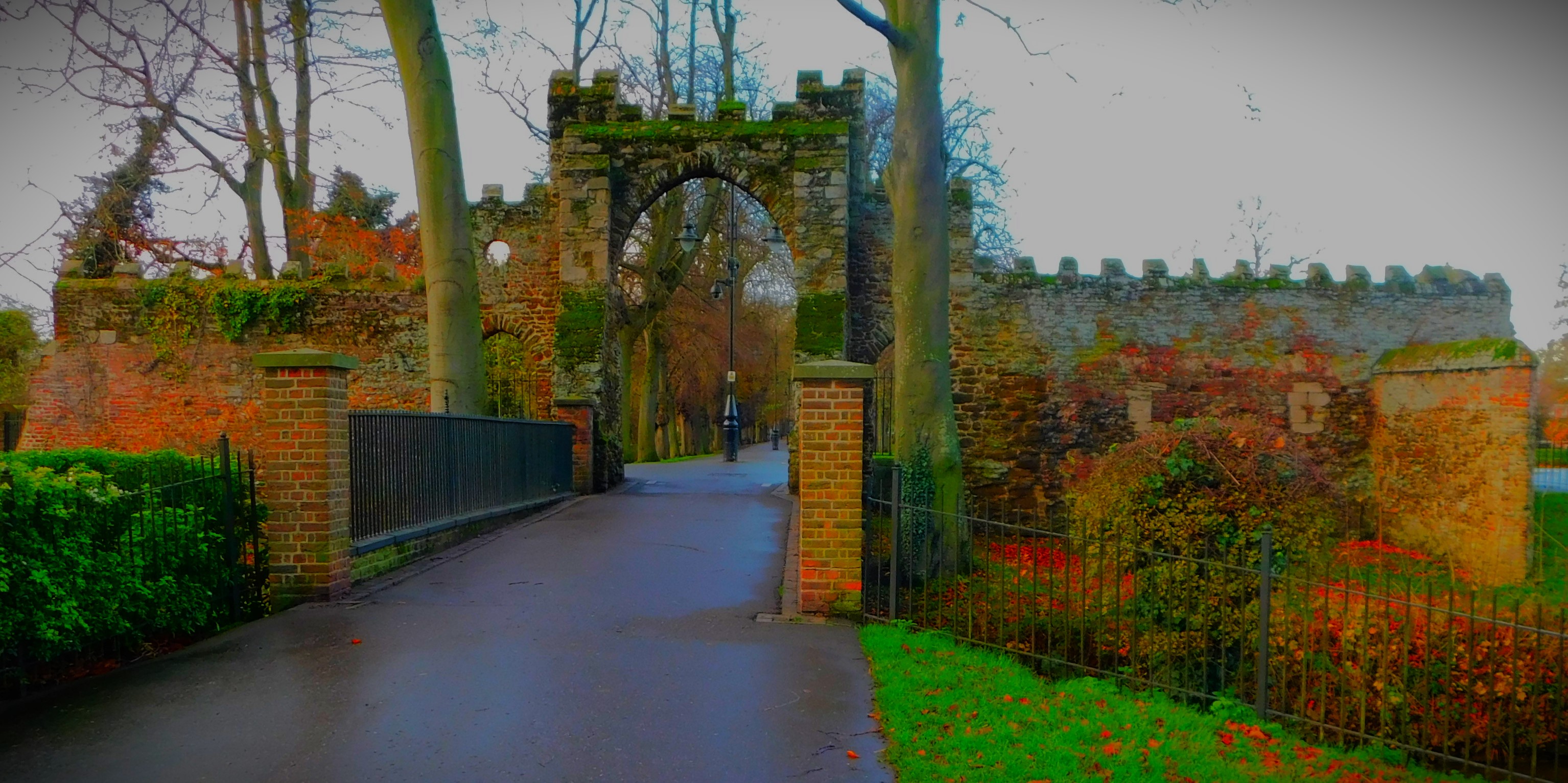
The vernal equinox, the official start of spring in the northern hemisphere, is still three days away. However, by any reckoning other than the strictly official spring has already come to Norfolk this year. This brief post is solely for the purpose of sharing photos, mainly from Monday and yesterday, but with a couple from today as well…
This is the inside front cover picture of “The Murder of Crows” by Stephen Done, part of a series of novels set on this railway featuring Inspector Vignoles.
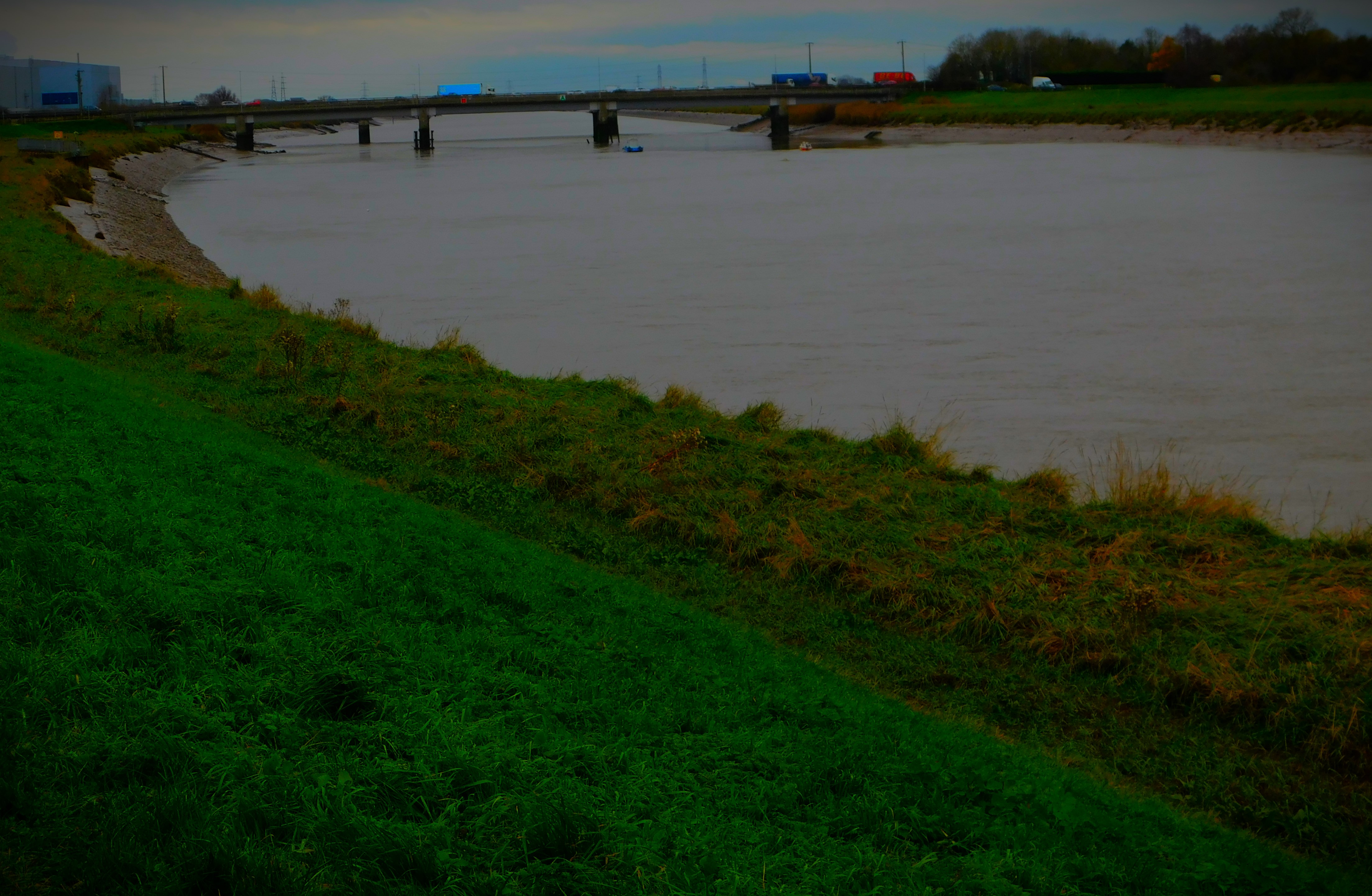
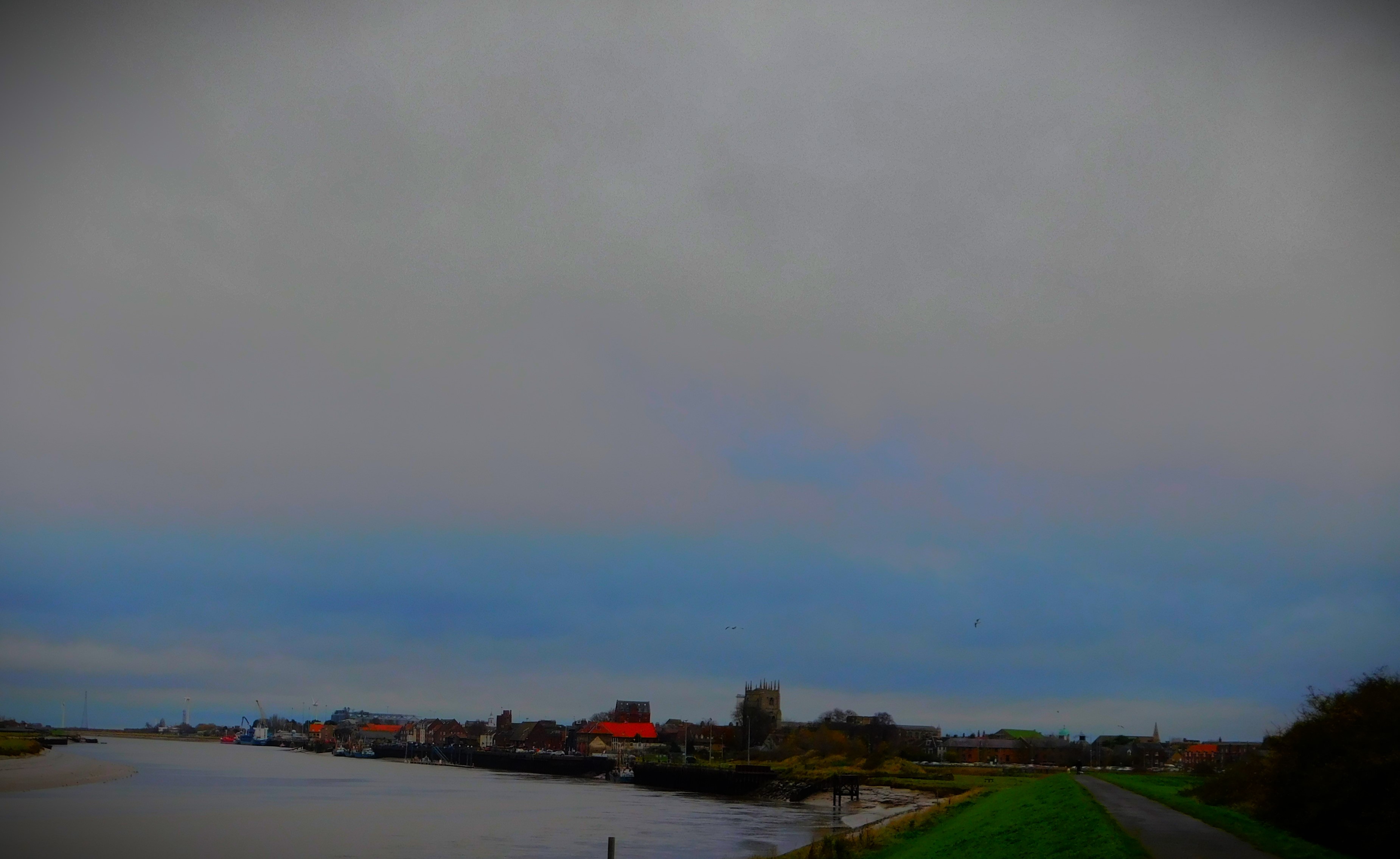
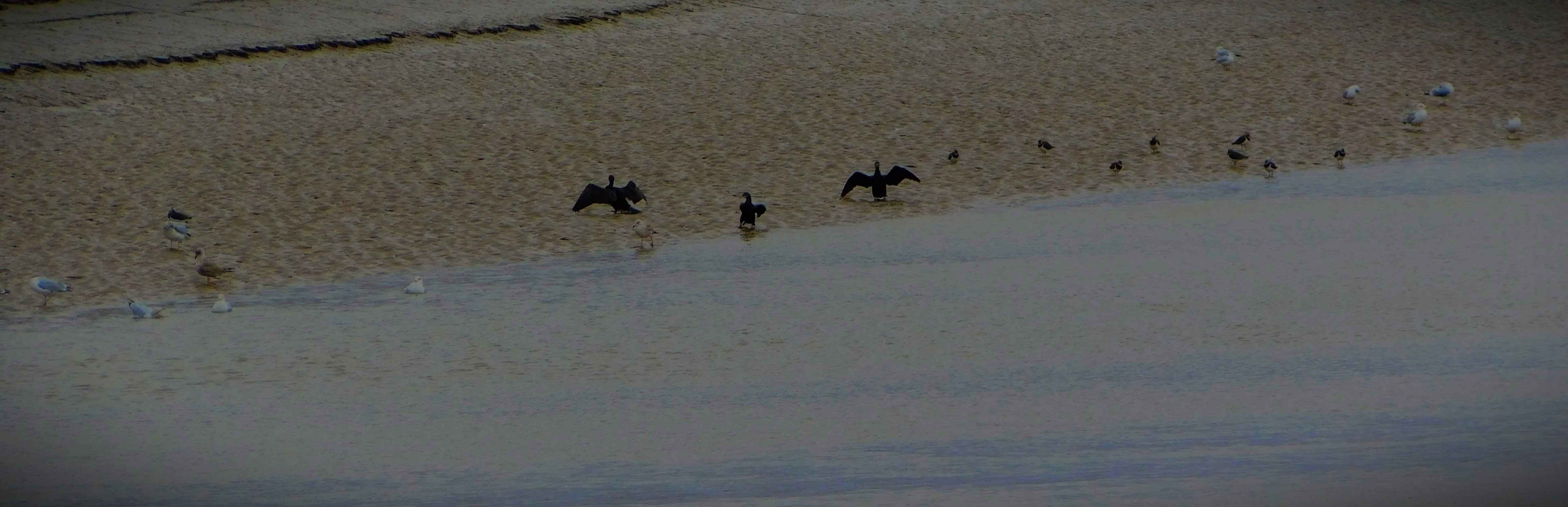
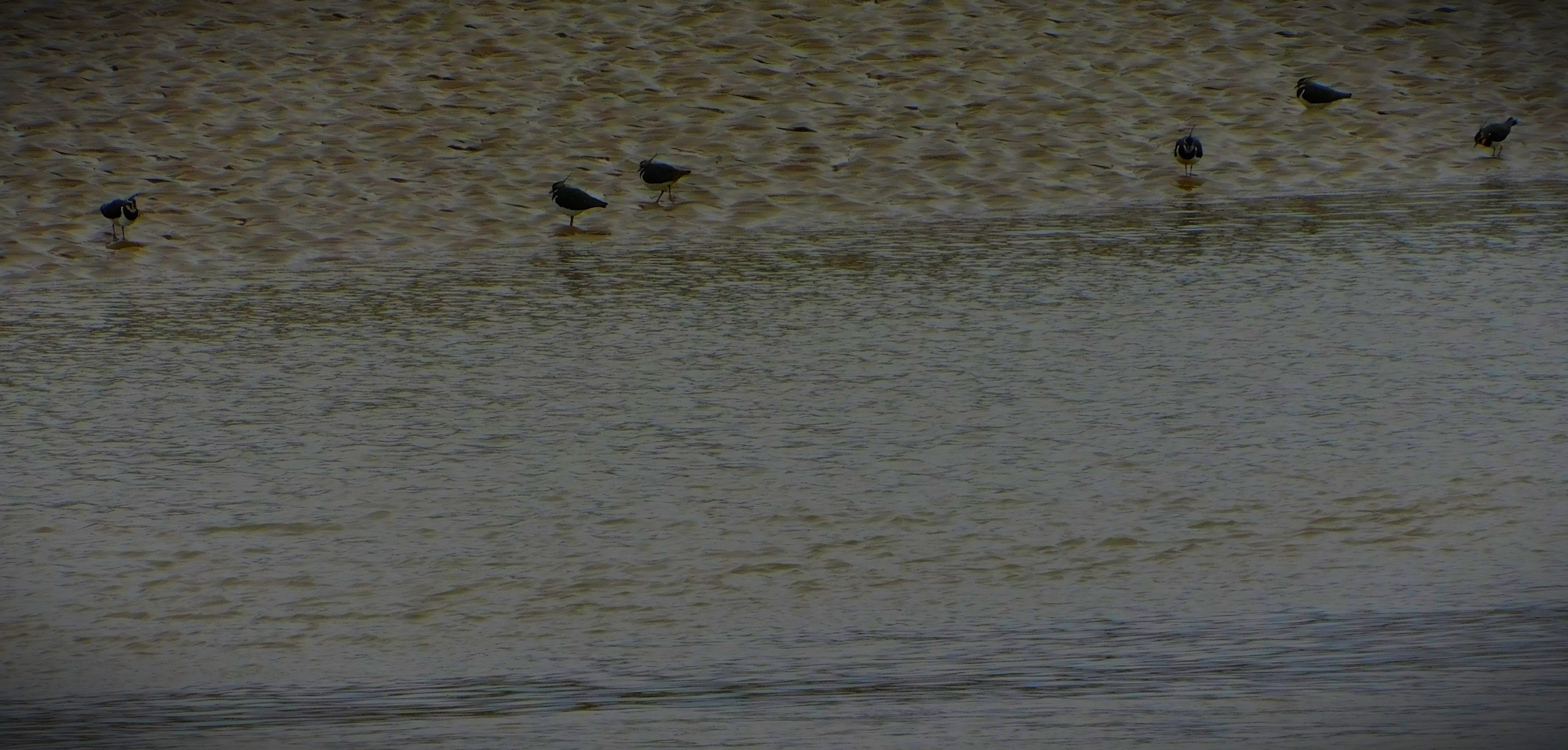
Sharing a large quantity of photographs taken in the last two days in and around King’s Lynn.
I did two walks during the daytime yesterday, visited my sister and nephew for supper in the evening. I have also done a very long walk this morning, taking full advantage of weather that was genuinely pleasant by December standards – it started to rain lightly near the end of the walk, but I got over two hours worth of dry weather before the rain came.
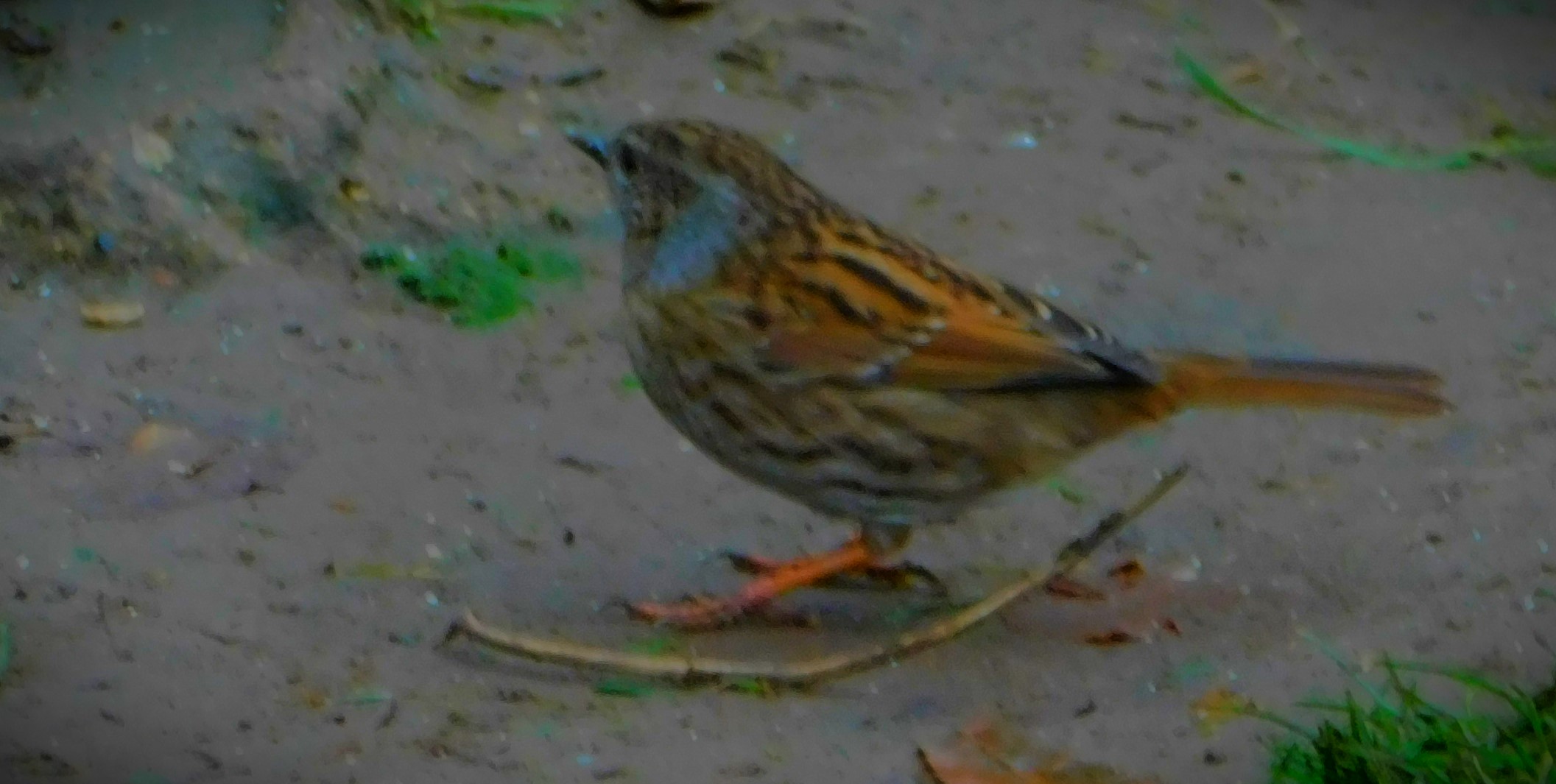
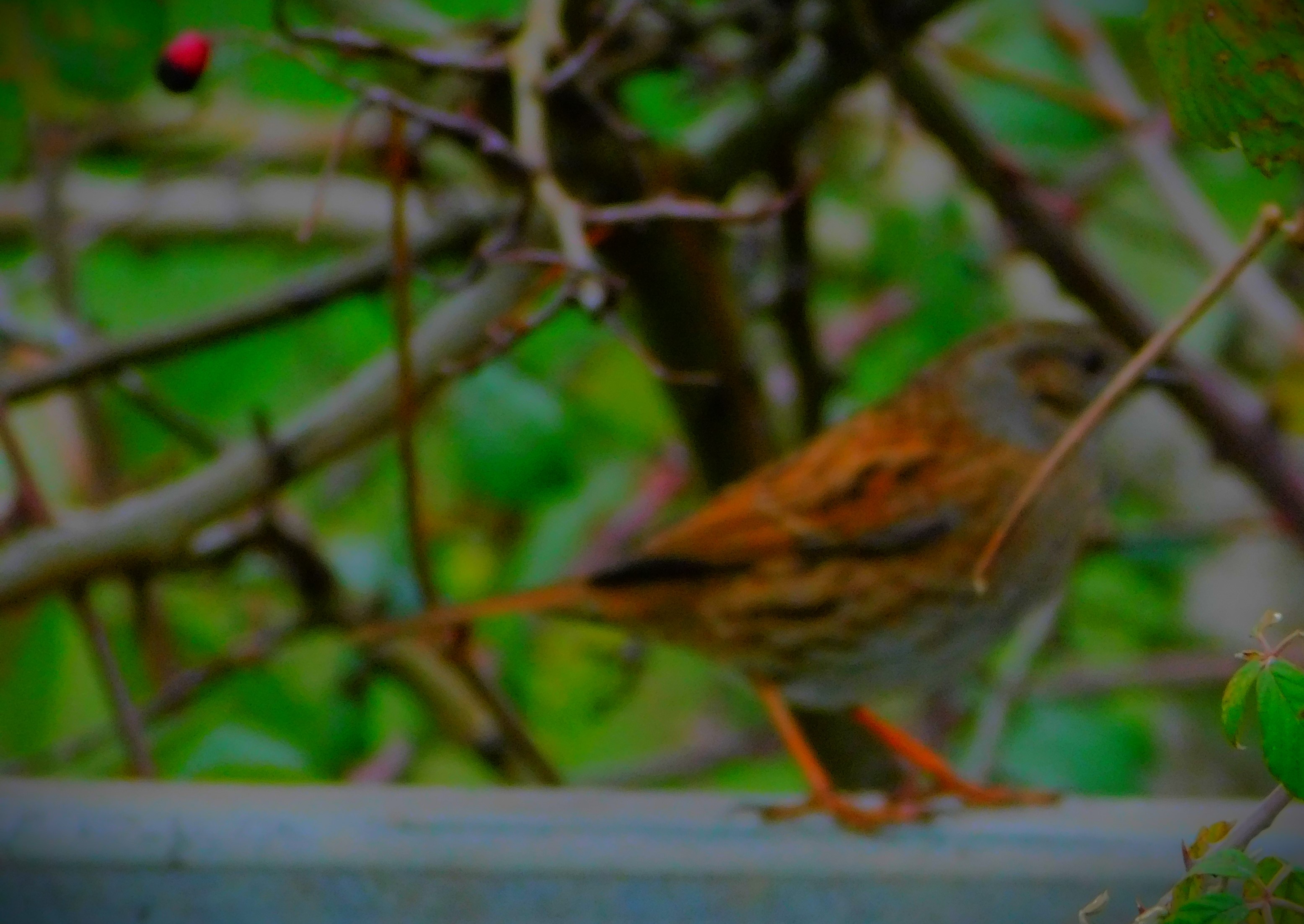
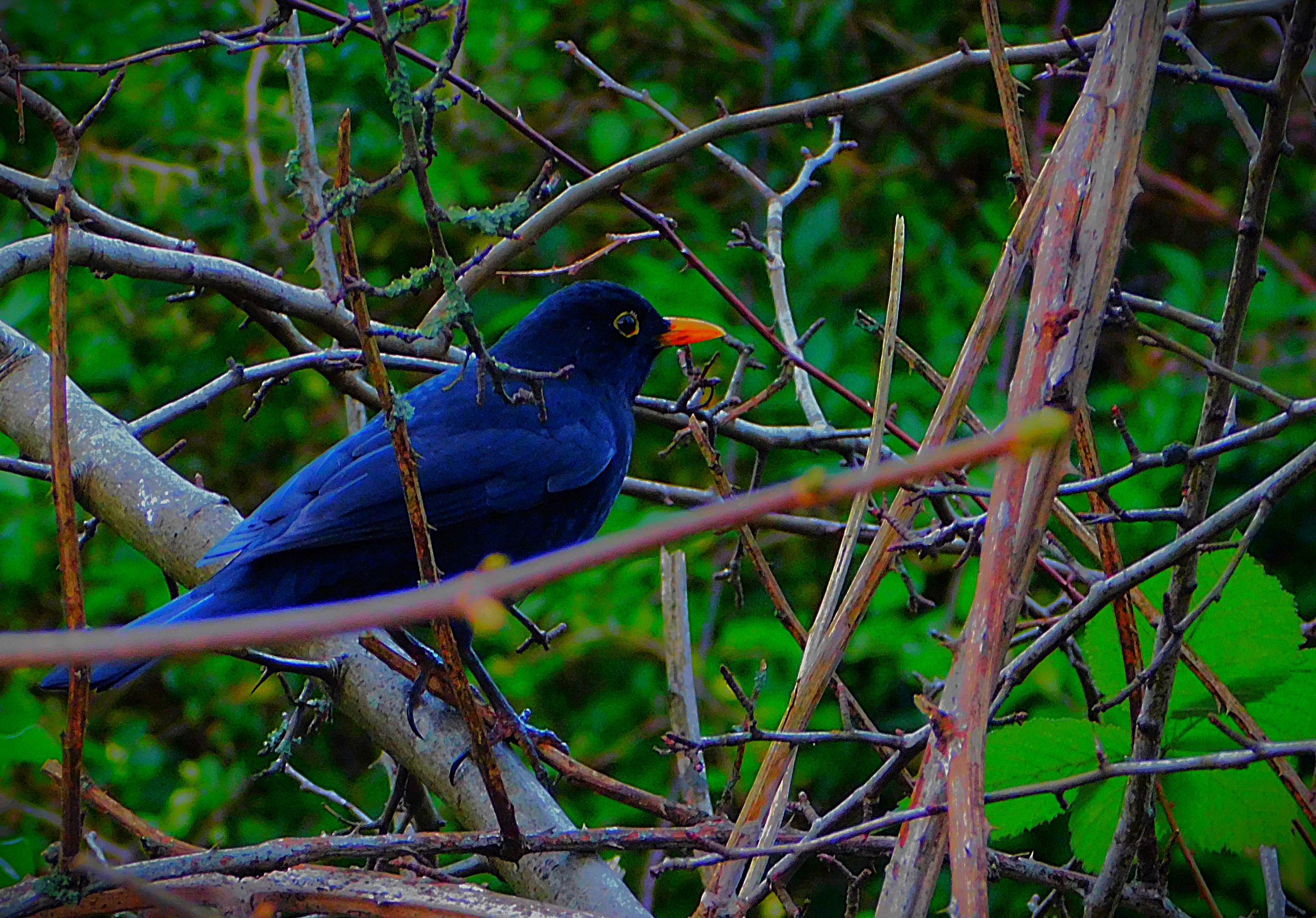
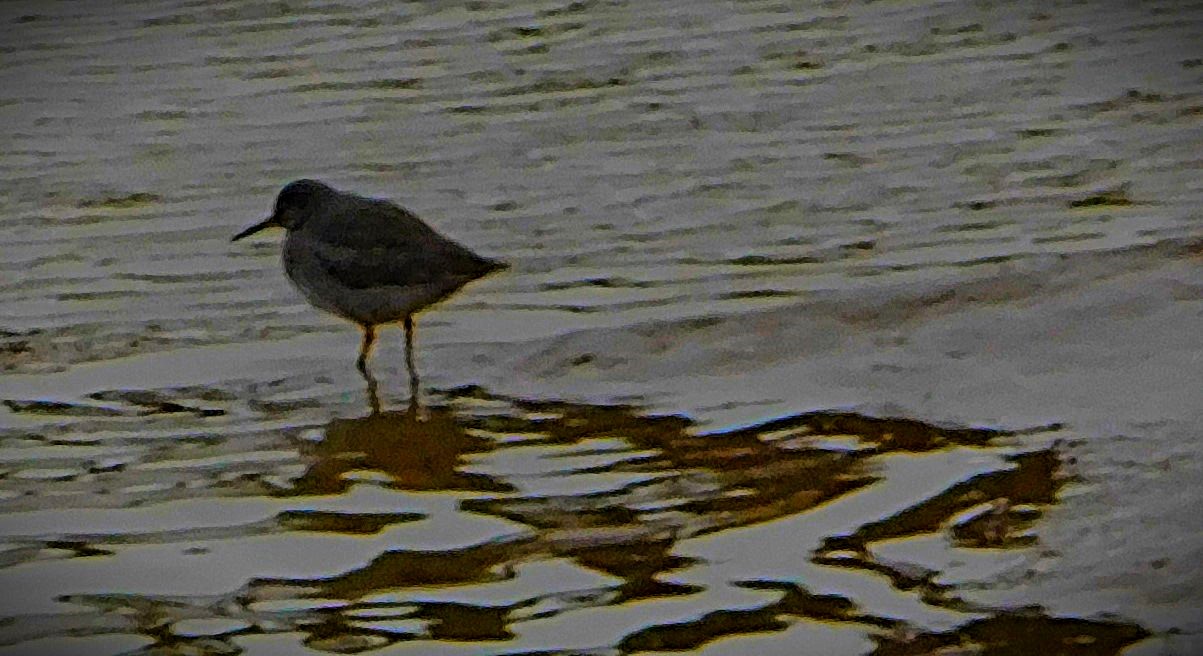
These excursions provided me with a very large photo gallery – once I had finished the editing process there were 150 pictures there. As well as pretty much all the regular bird sightings I managed to get pictures of a dunnock and a common sandpiper (the latter was near the mouth of the Nar this morning).
This afternoon has been unyieldingly grim, and this being December even at 4PM the such daylight as there was is already beginning to fade.
Enjoy a bumper gallery (and don’t forget to click to view pictures at larger size)…
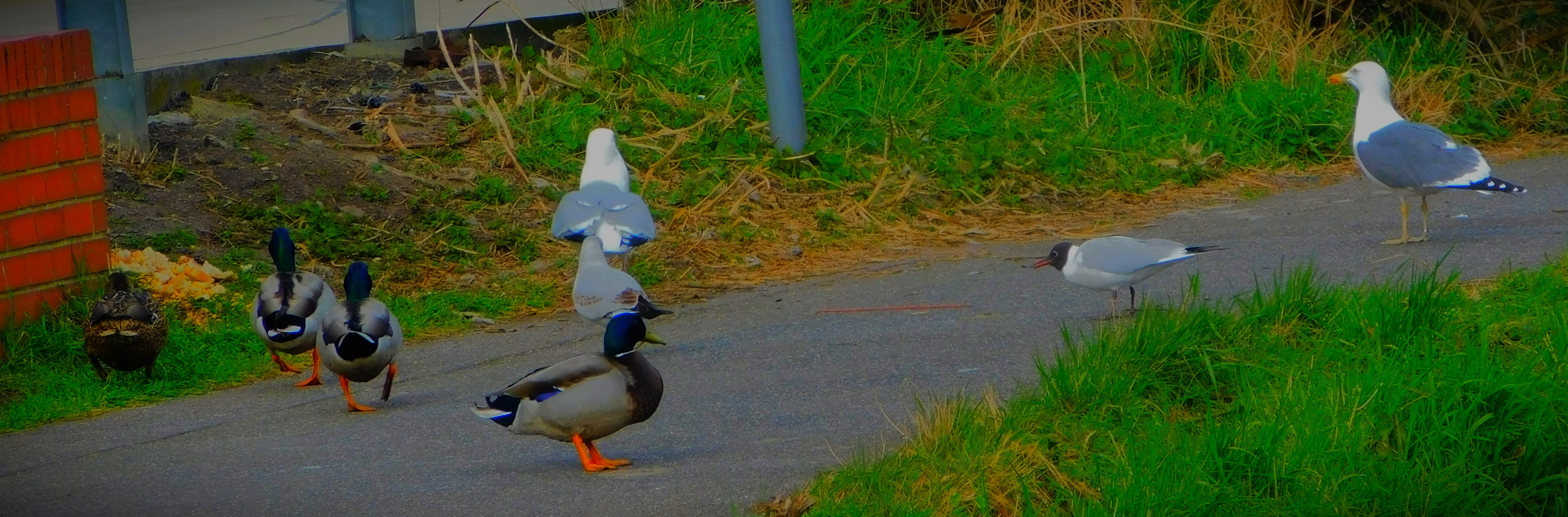
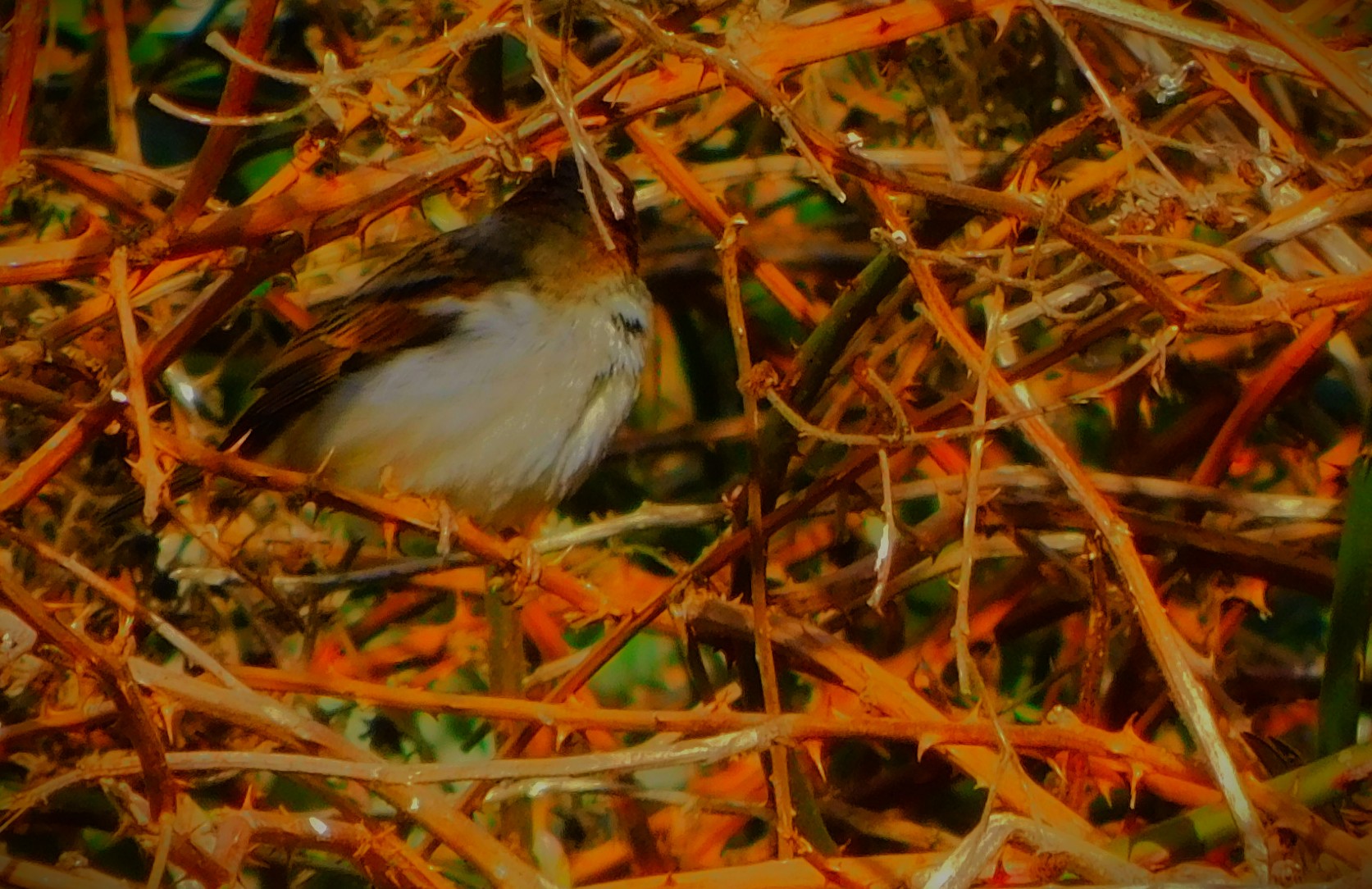
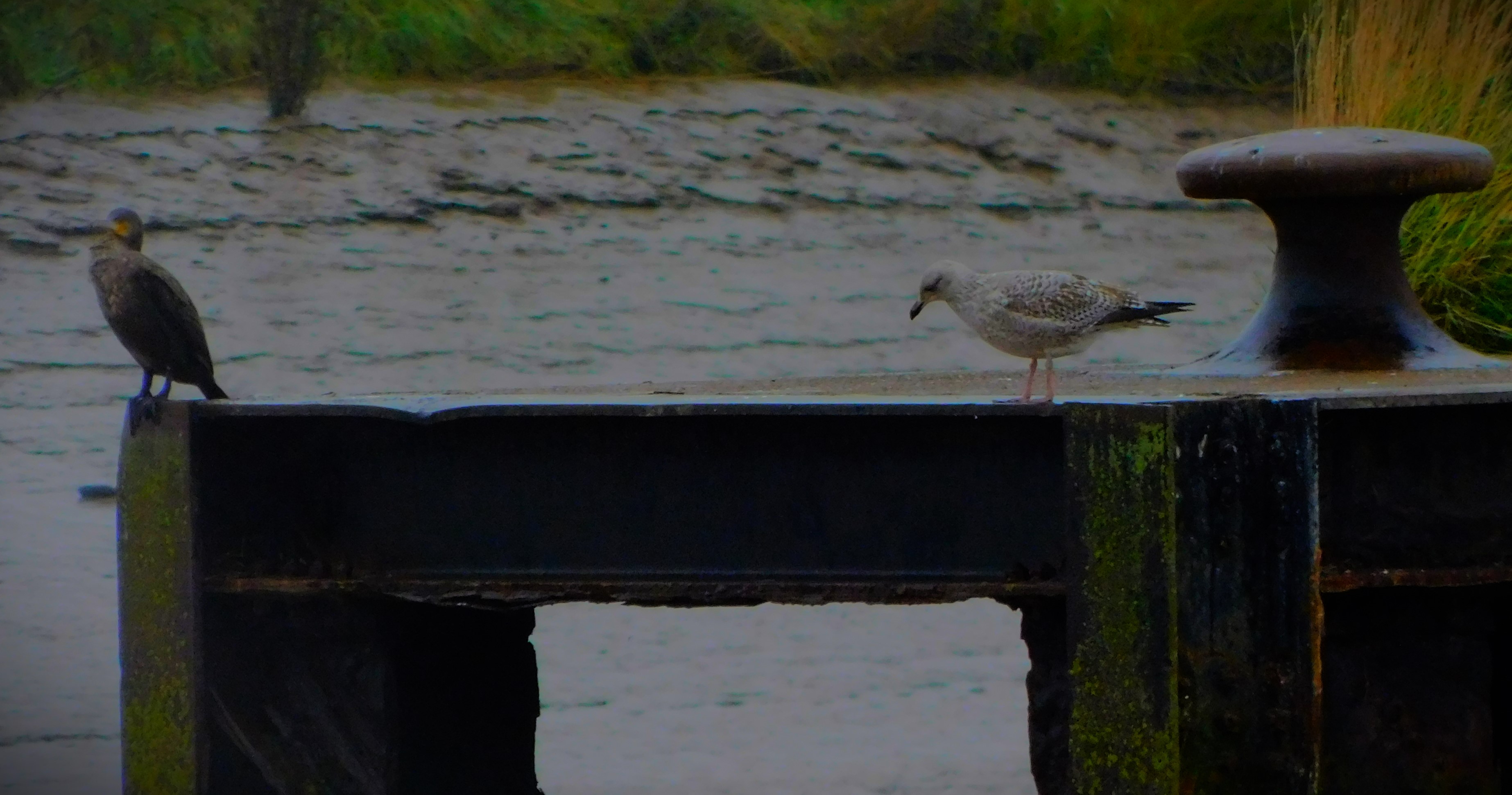
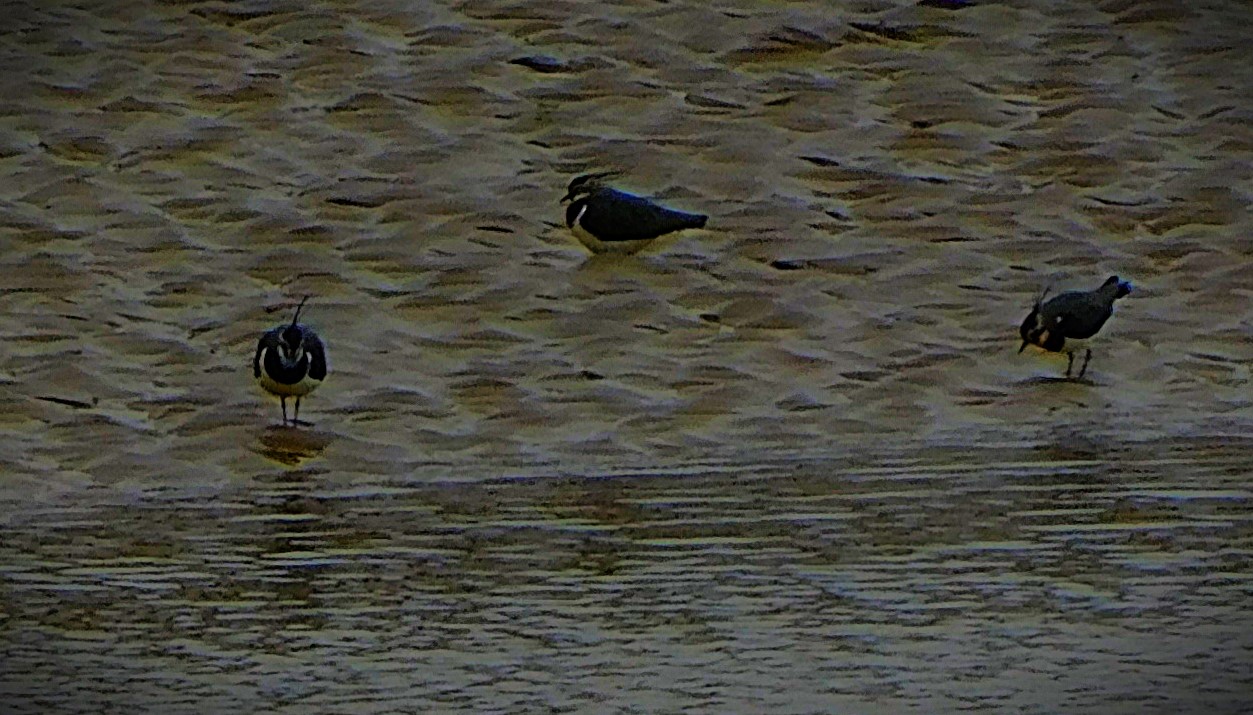
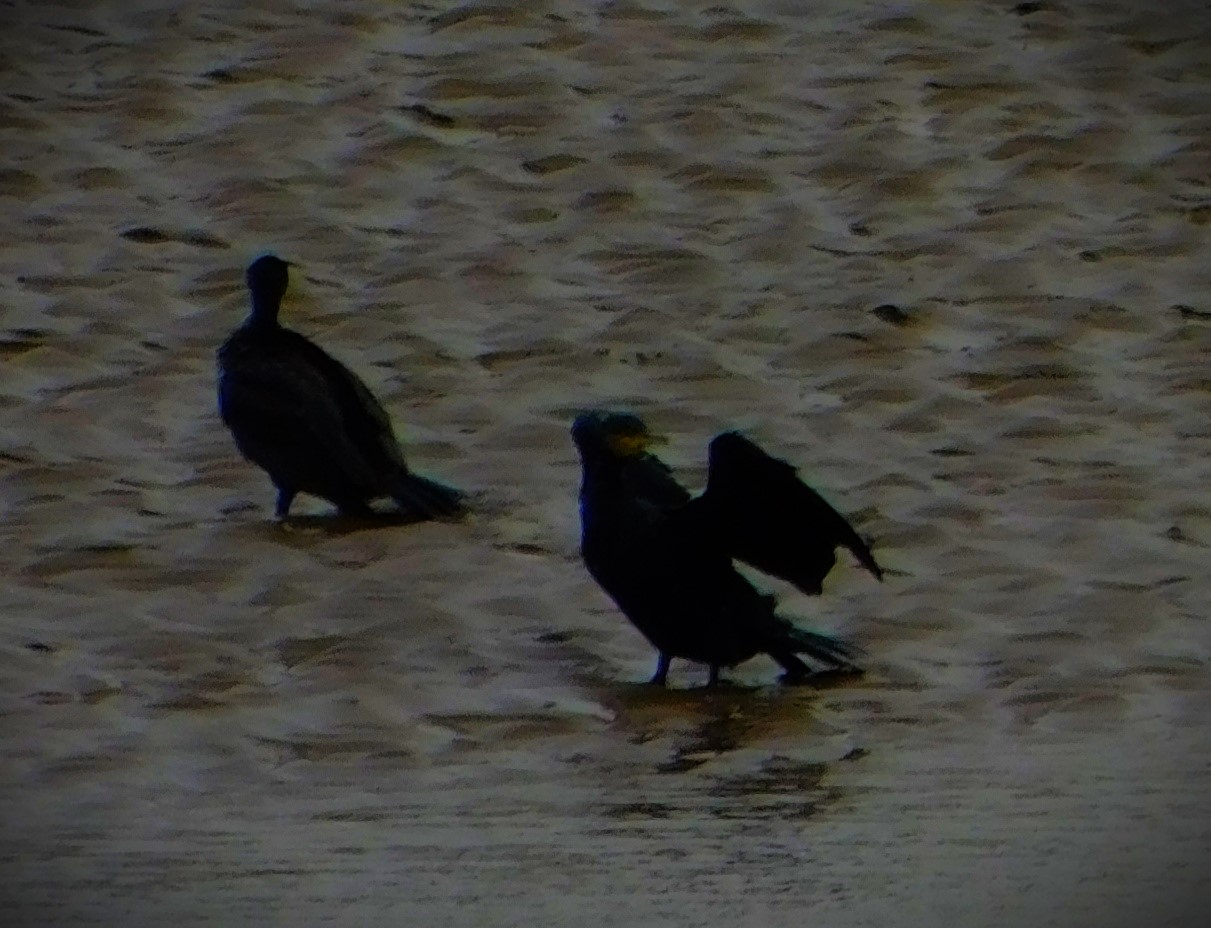
Sunday morning pics…The dunnock. In size and build it is not dissimilar to a sparrow, but the colouring is very different.Sunday afternoon pictures…This new building……was inspired by this much older one opposite it.Sunday night pics.I got a picture of the train fully lit up at the third attempt.Todays pictures start here.The official start of King’s Lynn coming in from the southeast of the town.In olden times this was the southern edge of the town.A stretch of the Nar – this river has its source near the town of East Dereham, close to the centre of Norfolk.Two cormorants with wings outstretched simultaneously.Lapwings in triangular formation at the waters edge (the far side of the Great Ouse from me).The common sandpiper, which features in five images in total.The feature image.
A look back at two women’s T20 matches which have taken place in the last 24 hours – South Africa v England and Melbourne Renegades v Brisbane Heat, the final of WBBL10. Also a substantial photo gallery.
Two important women’s T20 matches took place in the space of the last 24 hours. This post looks at both.
POMS PUMMEL PROTEAS
A multi-format series between the South African and England women’s teams is in progress. Yesterday saw the third of three T20Is that started the series off. England had already won the first two matches, and South Africa had weakened side for this match. South Africa batted first and had a horrible start. Lauren Filer, the quickest bowler on either side in this series (the absence of Shabnim Ismail from SA ranks ends all debate on this subject) clean bowled Anneke Bosch with the second ball of the match. In the second over another Lauren, the 6’1″ seamer Bell had Faye Tunnicliffe caught by Bouchier and it was 3-2. Annerie Dercksen got to 19 but then holed to Nat Sciver-Brunt off Bell to make it 25-3. Sune Luus and Chloe Tryon tried to revive things, but the last ball of the sixth over, off spinner Charlie Dean’s first, saw Luus caught by Knight. Eight balls and a mere three runs later Tryon also fell to the Knight/ Dean combo. Nadine de Klerk and Nondumiso Shangase shared a good stand until Shangase was stumped by Amy Jones off the bowling of left arm medium pacer Freya Kemp to make it 97-6. South Africa eventually reached 124, their last wicket falling to the final ball of the innings, with number 11 Ayanda Hlubi run out for 7 to end it. Charlie Dean had 3-26 from her four overs, while the other spinner Sophie Ecclestone had 1-16 from her four, the wicket being that of Eliz-Mari Marx, bowled by an absolute ripper of a delivery. This total looked modest on a pitch with a good deal of bounce (Centurion pitches tend to have this attribute) but little in the way of actual mischief. England soon made it look downright risible. Maia Bouchier and Danni Wyatt-Hodge got things going with a stand of 56 in 5.4 overs before Bouchier was out for 35 (21). That brought Sophia Dunkley out to join Wyatt-Hodge. Dunkley hit one massive six, but it was Wyatt-Hodge who was leading the charge by this stage. There were still 8.3 overs scheduled to be bowled when Wyatt-Hodge hit the four, her tenth to go with one six, that took her to 53* (31) and England to a nine-wicket win. Dunkley had scored 24* off 17 balls, and South Africa had damaged their own cause by conceding 16 extras. I will draw a veil over their bowling figures. A full scorecard can be seen here.
FROM ZEROS TO HEROS
In the ninth edition of the Women’s Big Bash League, last year, the Melbourne Renegades were an absolute laughing stock of an outfit, taking the wooden spoon and never really looking like doing anything else all the way through.
In the small hours of this morning UK time they completed a remarkable transformation, with some assistance from the Duckworth-Lewis-Stern (DLS) method, winning the final against Brisbane Heat to lift the trophy.
Brisbane Heat won the toss, and with weather interruptions threatening opted to bowl first. DLS recalculations frequently do benefit chasing sides. Renegades were less than impressive in totalling 141-9 from their 20 overs, for which they were indebted to Hayley Matthews, already confirmed as Player of the Tournament, who held things together for them with an innings of 69. Charli Knott took three wickets and Grace Parsons two, but the most impressive bowling performance for Heat came from 18 year old Lucy Hamilton who capped a memorable first WBBL tournament of her career by producing figures of 4-0-19-1.
Heat were 19-2 after 3.2 overs when the rain came. The adjusted target once play could resume was 98 off 12 overs, meaning that Heat needed 79 off 8.4 overs from the resumption to win the match. Renegades could bowl two bowlers for three overs each if they so desired but otherwise two overs per bowler was the new limit. Heat never came close to getting on terms with the chase, and it was only a by then irrelevant six from Nicola Hancock off the final ball of the match reduced the margin to seven runs. Hayley Matthews had 2-24 to put alongside her 69 and was the clear-cut Player of the Match. Matthews this tournament has scored 324 runs at an average of 40.50 and a strike rate of 130.64 runs per 100 balls, and taken 14 wickets at 17.78 a piece, with an economy rate of 6.98 and taking a wicket every 15.2 balls on average.
The DLS recalculation undoubtedly worked against Heat because they had lost those two early wickets when the rain came, but I do not believe that it changed the outcome of this match – Heat were not favourites by the time the rain started, and were somewhat more clearly second favourites after the adjusted target was issued.
PHOTOGRAPHS
These pictures were all taken yesterday, in the course of two walks – yesterday morning was dull but not cold, yesterday afternoon was genuinely pleasant. Here are the photographs, plus a reminder that they can be viewed at a larger size by clicking on them…
A look back at the first three days of the first test of a five match series between Australia and India, taking place in Perth.
The opening test of a five match series between the Australia and India men’s teams is under way in Perth, contested for the Border-Gavaskar Trophy. This post looks back at the action from the first three days of that match.
THE PRELIMINARIES
This series had one very unusual feature – both captains, Pat Cummins, who is Australia’s regular incumbent, and Jasprit Bumrah who is standing in for the unavailable Rohit Sharma are specialist fast bowlers. Australia had a controversial debutant in Nathan McSweeney. McSweeney has a fine batting record at state level, but his most productive positions in the order are numbers four and five, and at number three he averages a very modest 30, while he has never opened in professional cricket, and that was the job he was being selected to do in a test match. India won the toss and chose to bat first.
DAY ONE – BOWLERS ON TOP
At lunch on day one India’s decision to bat first was looking questionable – they were four wickets down, and no one had looked remotely good for them. Two further wickets shortly after the interval and it was looking like India were handling Perth no better than most visiting sides. Rishabh Pant, returning to test ranks after a long layoff due to injuries sustained in a car crash, and Nitish Kumar Reddy making his test debut. staged something of a revival for India, getting the total to 150 all out, which did not seem enough for a side choosing to bat first.
Jasprit Bumrah had other ideas. The captain and star bowler for India was soon getting busy among the Australian batters. His first victim was McSweeney for 10, pinned absolutely plumb in front of the stumps. Then he had the other opener Khawaja caught by Kohli for 8 and with his very next ball pinned Steve Smith plumb in front to make it 19-3. Labuschagne dug in, but simply could not get the ball away, and wickets fell at the other end from him with great frequency. Travis Head was clean bowled to become the first victim of the second of India’s test debutants, Harshit Rana., having scored 11. That was 31-4, and when Siraj had Mitchell Marsh caught behind for 6. Siraj struck again nine runs later, putting Labsuchagne out of his misery by pinning him LBW for 2, scored off 52 balls. For a slower innings of 2 by an Australian one has to go back to the 1960s and Bill ‘Phant’ Lawry who once took 55 balls over a score of 2. Australia were 47-6. There was still one wicket to come on this eventful day, one that symbolised the respective positions of the sides by then as Indian skipper Bumrah had his opposite number Cummins caught behind to make it 59-7. By the close Australia were 67-7. The pitch had pace and bounce, but no real mischief – the bounce was consistent and reliable, and there was nothing in the way of extravagant sideways movement. Bumrah ended his first day as Indian test skipper with figures of 4-12 from seven overs.
DAY TWO – CONSOLIDATION
Jasprit Bumrah completed his five-for by dismissing Alex Carey, caught behind for 21. That was 70-8. When Harshit Rana had Lyon caught by KL Rahul it was 79-9. The final Australian pairing of Starc and Hazlewood added 25 to this score, Starc becoming along the way top scorer of the innings, in itself a devastating statistic for Australia. Starc had scored 26, and had faced 112 balls to do so. Bumrah’s final figures were 5-30, while Rana had 3-48 and Mohammed Siraj 2-20.
Australia needed wickets, and quickly if the match wasn’t to get away from them. Yashavsi Jaiswal and KL Rahul realized this, and batted superbly for the situation. They batted through the 57 overs that Australia managed by stumps (over rates have been dire in this match from both sides), leaving India in complete control on 172-0, an overall advantage of 218. Jaiswal had 90*, Rahul 62* and 20 extras had been donated by Australia.
DAY THREE: RIPLEY’S BELIEVE IT OR NOT
If you had asked Jasprit Bumrah to script the third day of this match I don’t think he would have dared to make it as favourable for India as it actually was. India spent the first two sessions building their advantage steadily, Jaiswal advancing his score to 161, his fourth test century, and all four scores have ended up crossing 150. Only one other person in test history has a similar distinction, Graeme Smith of South Africa, also an opening batter. Although India had a minor blip, a high water mark of 275-1 becoming 321-5, Kohli, supported first by Washington Sundar and then by Nitish Kumar Reddy steadied the ship, and then in the final stages of the Indian innings attacked as a declaration loomed. Kohli reached his hundred off 143 balls, at which point India declared, with Reddy 38 not our from 27 balls at the other end. Australia needed 534 to win and had about 20 minutes plus two full days to bat. With the fourth ball of the innings Bumrah pinned McSweeney LBW for a duck to end a miserable debut for the ersatz opener. McSweeney’s efforts here, and those of Daniel Lawrence when asked by England to open the batting for the first time in his professional career in a test match constitute fairly damning evidence about how doing this works in practice, i.e. it doesn’t. Cummins now made what I consider a ‘right wrong call’ – he wrongly deemed this a sensible situation in which to use a nightwatch, but having made that error at least assumed responsibility for playing that role himself, rather than sacrificing one of his fellow bowlers. Siraj got Cummins, caught by Kohli for 2 to make it 9-2. Then just to put the cherry on top of this most one-sided of days, Bumrah pinned Labuschagne, the guy Cummins had tried to protect, LBW with what turned out to be the last ball of the day – there were four balls still to come in the over but were past the official close, so the umpires correctly called stumps (slow over rates have been around long enough that the Laws of Cricket have this contingency of a wicket falling after the scheduled close covered). That left Australia 12-3, and Bumrah with figures of 2-1. This means that Bumrah currently has 180 test wickets at 19.94 a piece. The last person to finish a test career with over 150 wickets at under 20 was Syd Barnes, with 189 wickets at 16.43, and the last of his 27 test appearances was in 1914. Australia with two whole days to come need 522 more runs to win and have seven wickets standing. India had won all three days outright, and on session scores I make it 7.5-1.5 – Australia had the better of the morning session on the opening day with those four wickets, the afternoon session was about even, the evening session of that day was overwhelmingly India’s, and days two and three belonged entirely to India, with Australia’s one decent passage of play on those days, when they reduced India from 275-1 to 321-5 being too insignificant in the scheme of things to matter – India were so utterly in command by then that even the wicket taking had continued and India had been say 350 all out it would have made no difference to the final result. With it also being IPL auction time, the commentators raised a question about their four expert summarisers, Sunil Gavaskar, Darren Lehmann, Glenn McGrath and Tom Moody: if all were available and in their pomp but you could sign only one for an IPL who it be? My answer is McGrath – I reckon I am getting four cheap overs, and wickets into the bargain, in pretty much every match. Moody’s all round skills make him second choice in my view, with Lehmann a poor third, and Gavaskar due to his approach to batting not even worth considering in this context.
PHOTOGRAPHS
My usual sign off…
The photos in this gallery were taken on three different days, Friday which was sunny but very cold……Saturday which was just plain horrible……and today, grey but dry, and much warmer (indeed so warm that I deemed a coat unnecessary)
An account of a walk in and around King’s Lynn. This particular variation on a favourite walking theme of mine took place yesterday late morning. There are plenty of photographs.
It is no secret to followers of this blog that I do a lot of walking, and that I go nowhere without my camera. This post looks in detail at a recent walk.
WALKING IN AND AROUND KING’S LYNN
One of my favourite themes around which to construct walking routes in and around King’s Lynn is what I call the ‘three rivers’. The three rivers of that title are the Gaywood, multiple sections of which are encompassed, the Nar, which is crossed twice at different points, and Great Ouse, the main river in this part of the world, alongside which some of the walk takes place. The particular walk that this post uses for detail took place yesterday, when the weather was bright and sunny but cold.
THE WALK
I started by leaving my house by the back door, as I was heading at first in the general direction of the town centre. The road that runs behind the row of houses in which I live is a private road and is unnamed. It disgorges on to Raby Avenue, which I crossed, and then headed down Townshend Terrace, a side road which forms a right angle, running from Raby Avenue to a pond at which point it swings 90 degrees and disgorges onto another road. However, as you will see I was not going that way. The pond usually yields pictures, and it did so this day as well…
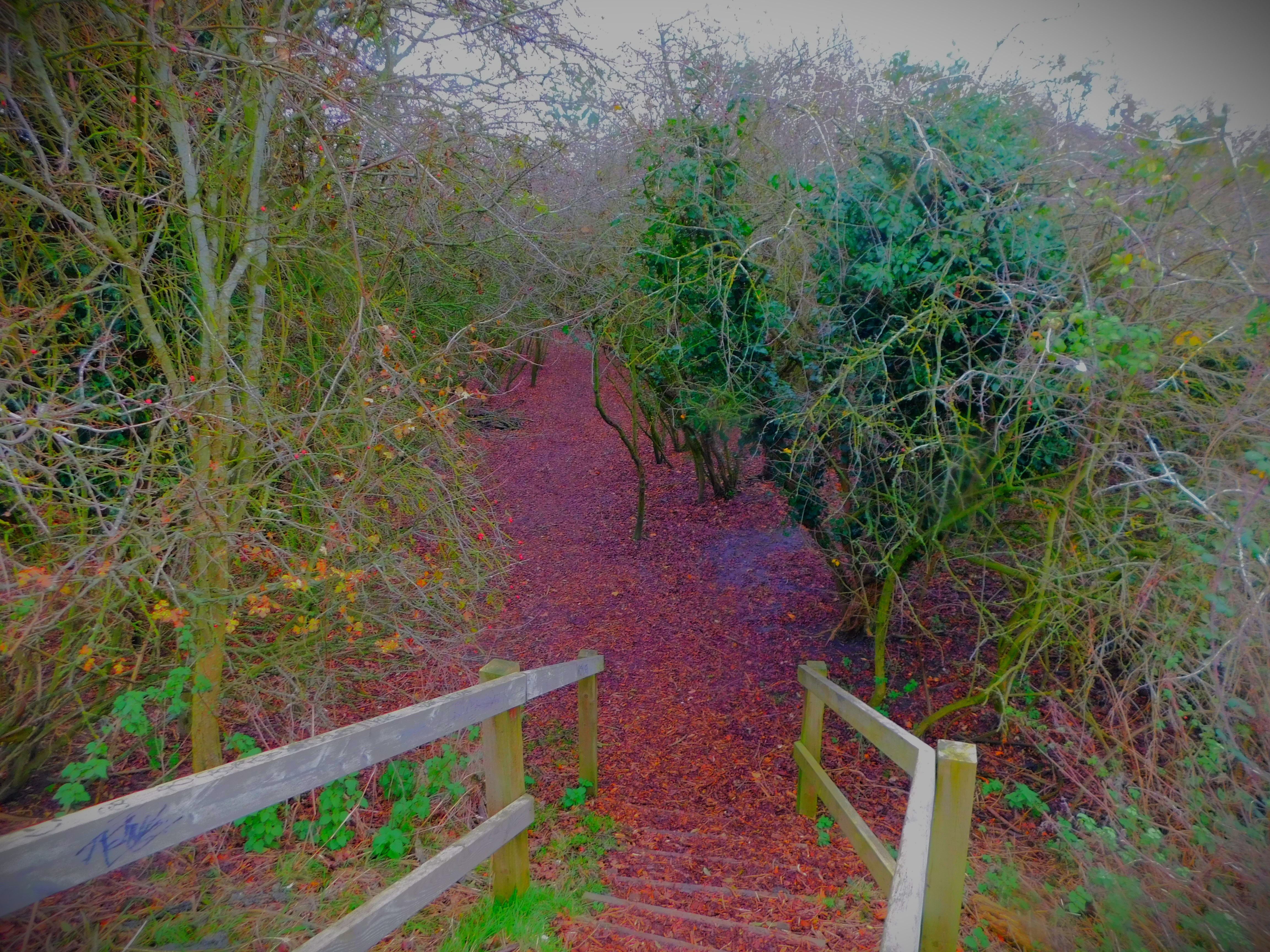
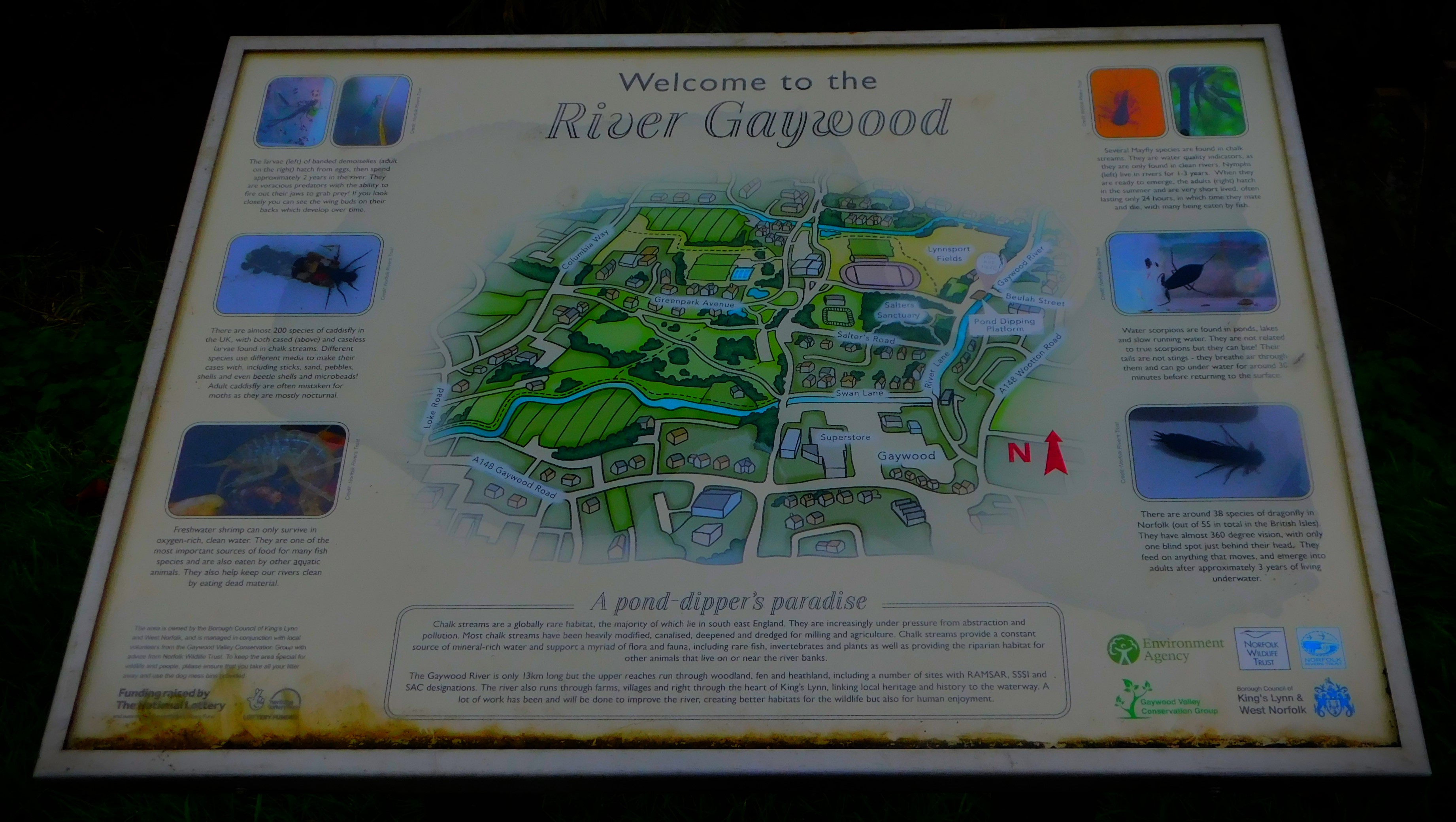
While Townshend Terrace goes on way, a footpath leads in the opposite direction, through to Loke Road. On the far side of Loke Road, almost directly across from this footpath is a side road called Harewood Parade, which leads round the side of a second pond, until it terminates and is replaced by footpath which heads into a section of greenery flanked on one side by a section of the Gaywood River and on the other by Kettlewell Lane. Although the second pond did not yield anything for the camera on this occasion, the rest of this segment of the walk did…
Kettlewell Lane leads out on to what at that stage is Littleport Street, though a little way north it becomes Gaywood Road. By this stage one is very close to the town centre, but one is not committed to main roads. I crossed Littleport Street at the light controlled crossing on Eastgate Bridge, and headed down Highgate, past a little patch of greenery that sometimes yields pictures though not on this occasion, and down a little side passage that leads to a small bridge back over the Gaywood to the town side and another little section of greenery, which I exited on to Wyatt Street at the other side. I then crossed Wyatt Street, and took a footpath that runs alongside Eastgate primary school before coming out on Blackfriars Road, the road that runs past King’s Lynn station. At this point, for a brief period there are no further options for main road avoidance, so I followed the road round past the station, and shortly after the station headed into the park called The Walks. I headed alongside another section of the Gaywood (heavily sculpted at this stage of its route) until I reached the white metal bridge that leads in to the Vancouver Garden wherein is located the bandstand. I exited the Vancouver Garden by the other bridge from it, crossed the Broadwalk, and headed for the Seven Sisters exit. This section did not yield many pictures, but there were a few…
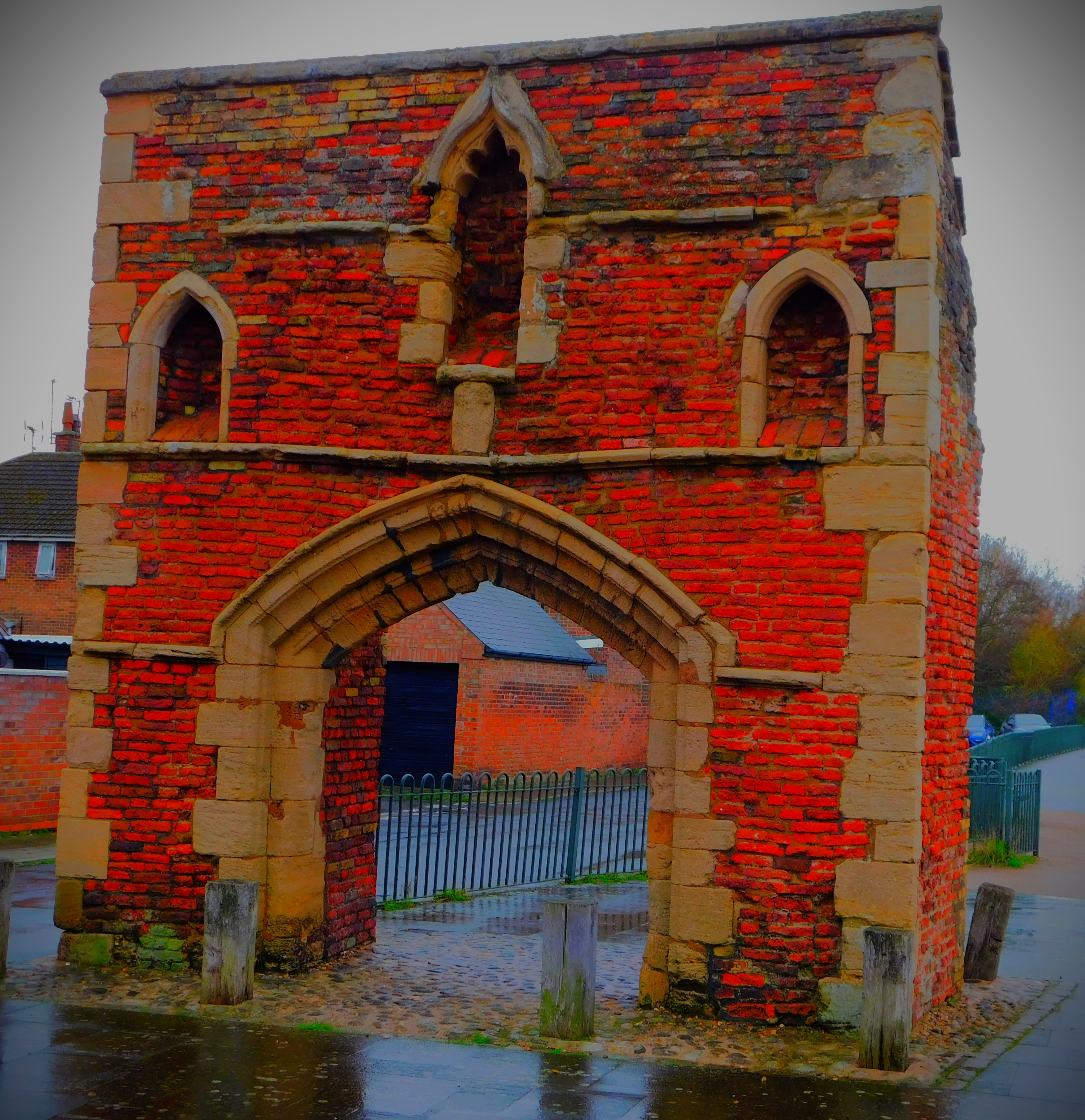
The Guanock Gate
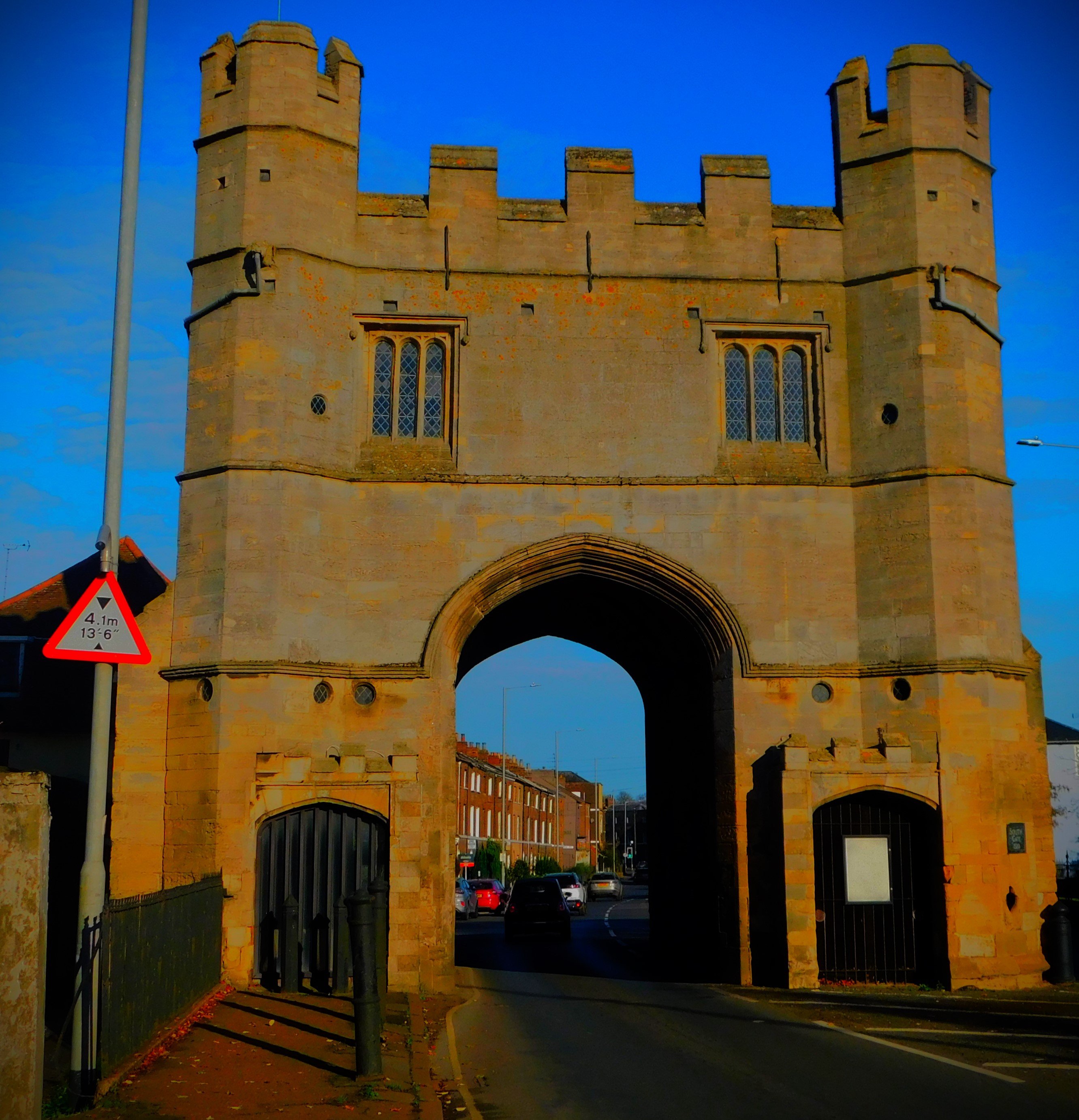
From the Seven Sisters exit I headed to where a passage leads through to London Road, joining that road at a light controlled crossing, which I availed myself of. I then headed away from town, passing the South Gate and then turning down the road that crosses the Nar, which I exited on to Hardings Way before taking a footpath through Hardings Pits to the Great Ouse at a point south of the town.
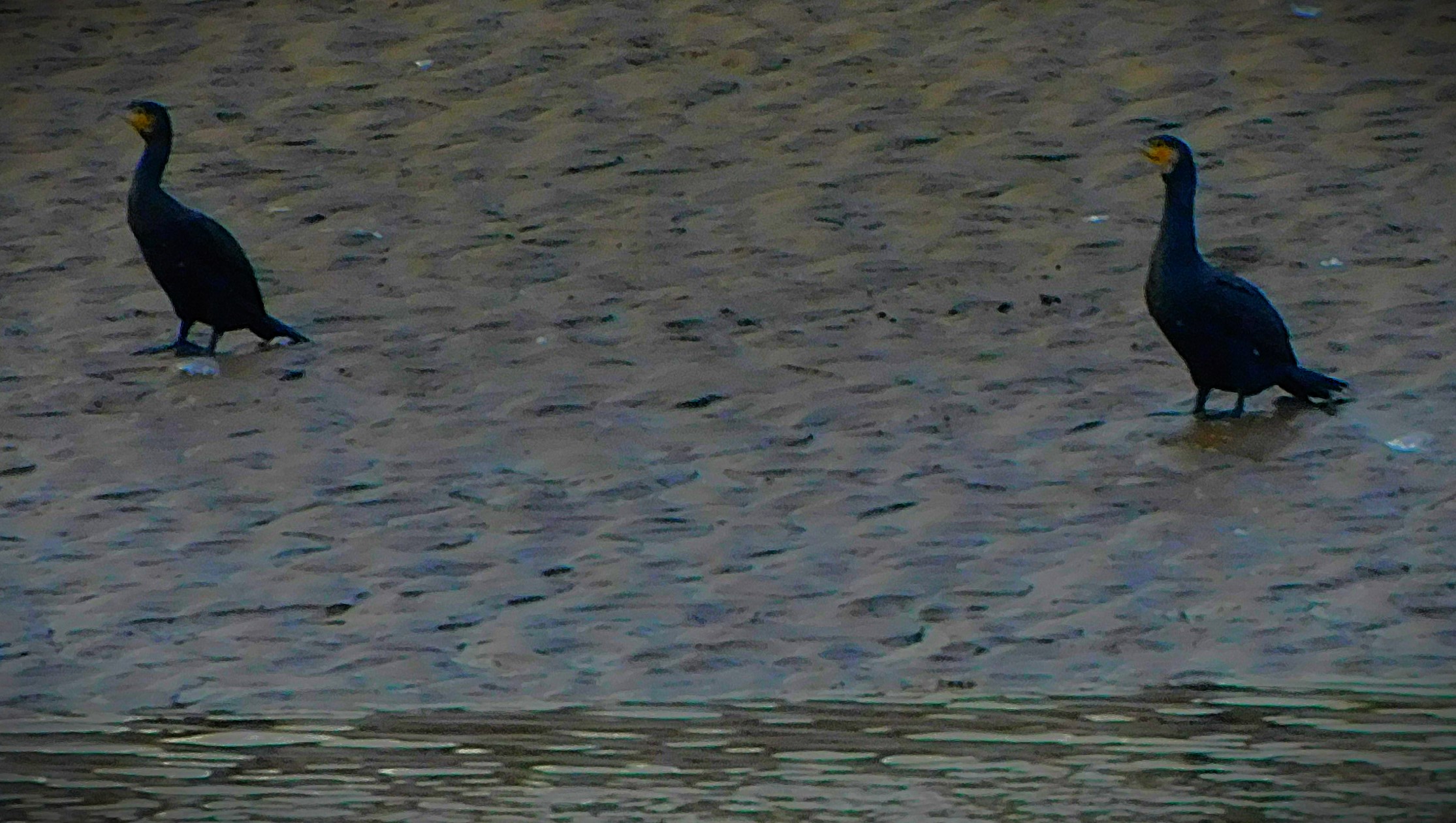
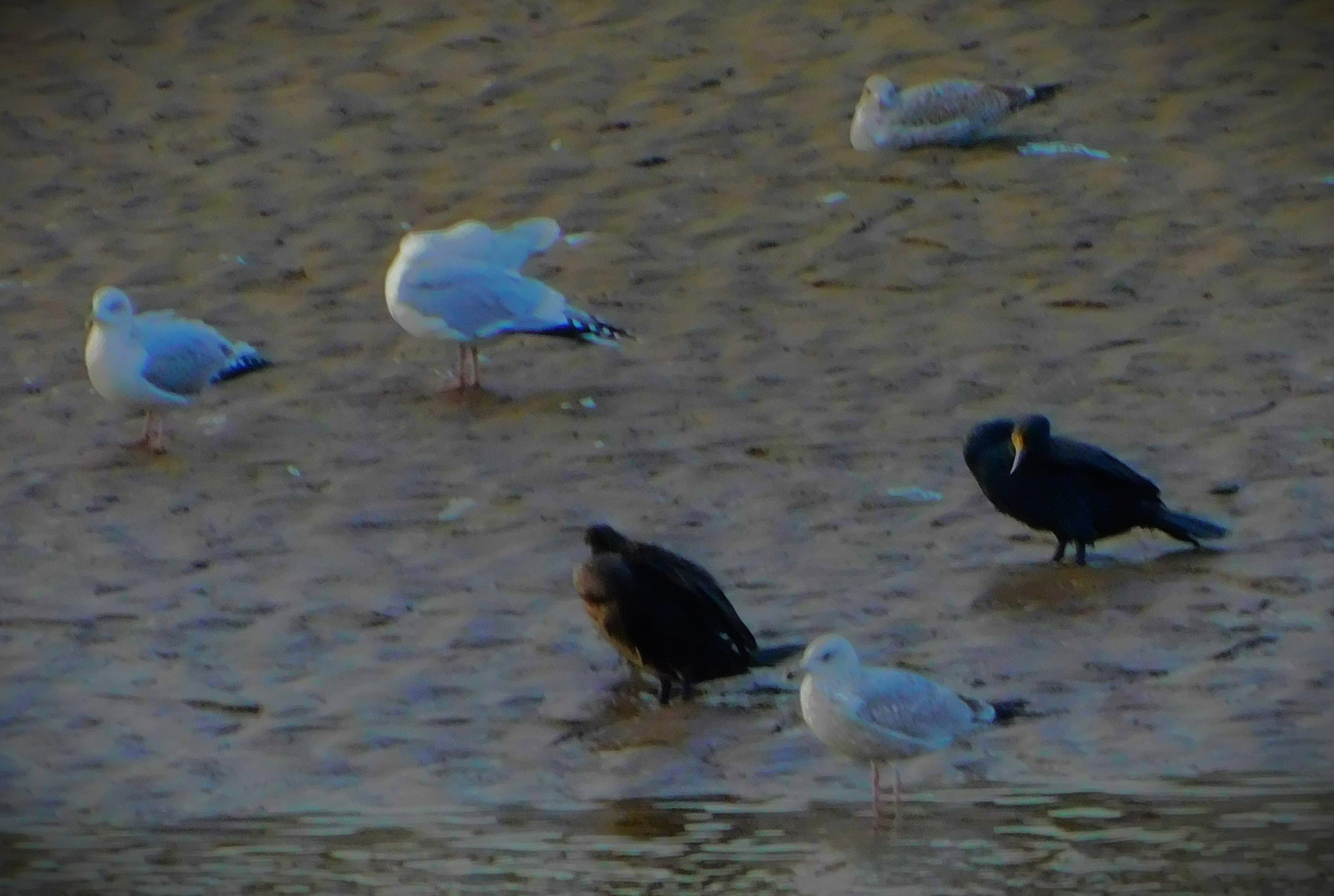
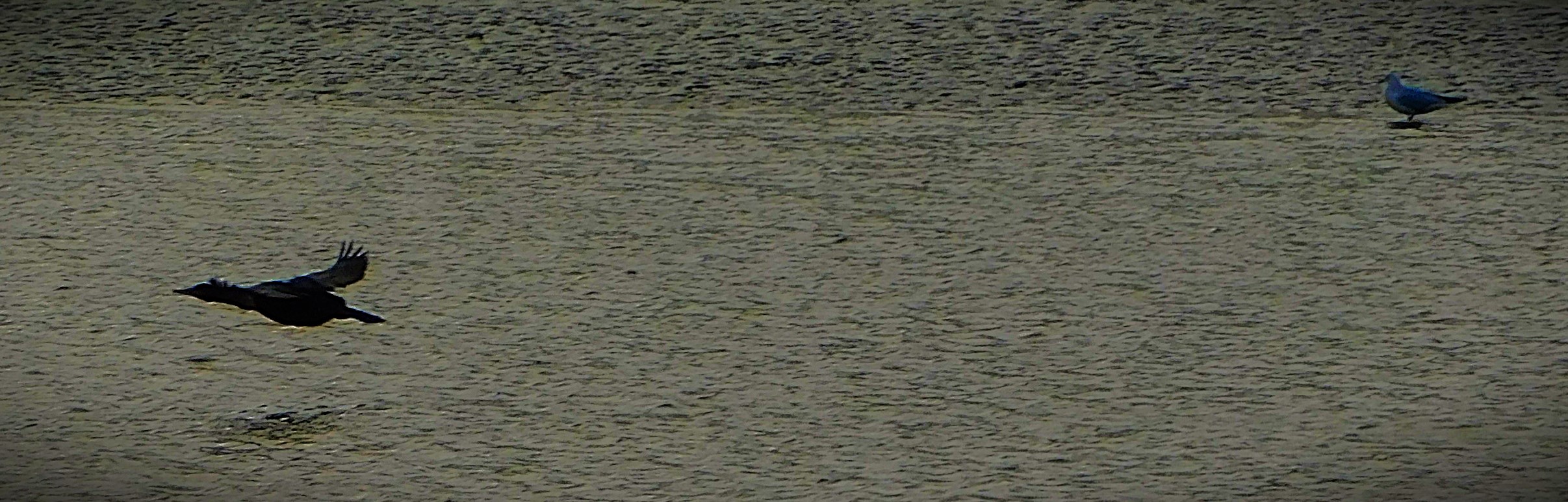
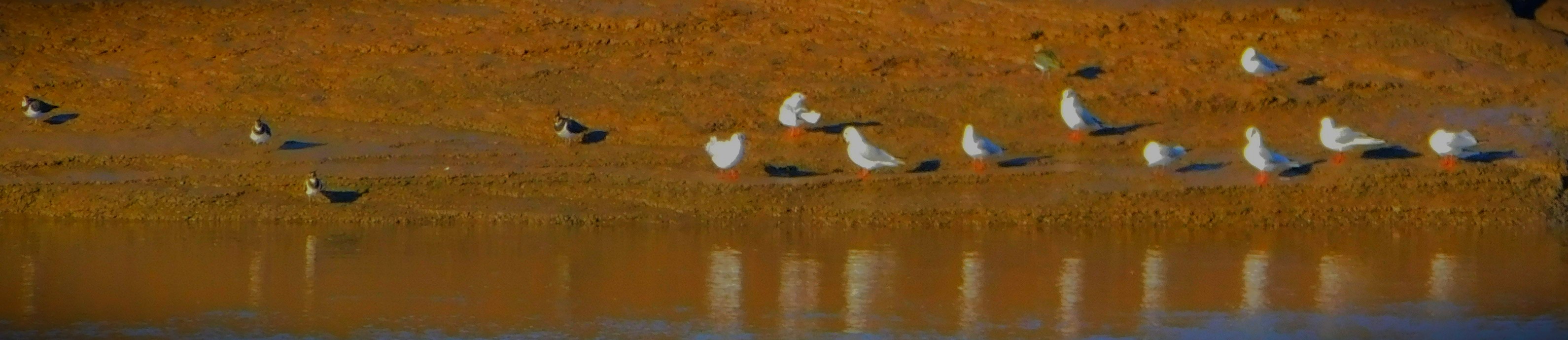
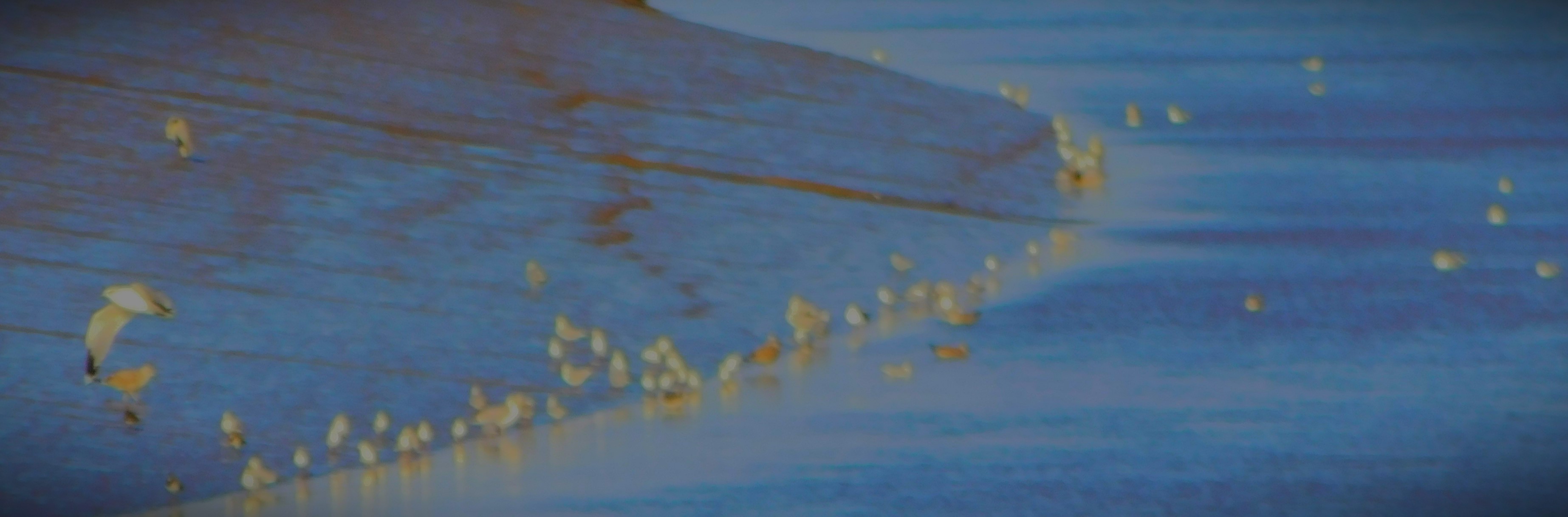
The South Gate (town side)The South Gate (out of town side).The only picture I got in Hardings PitsLapwings and Gulls at the far edge of the Great OuseKing’s Lynn viewed from the river bank on leaving Hardings Pits/A gathering of birds.
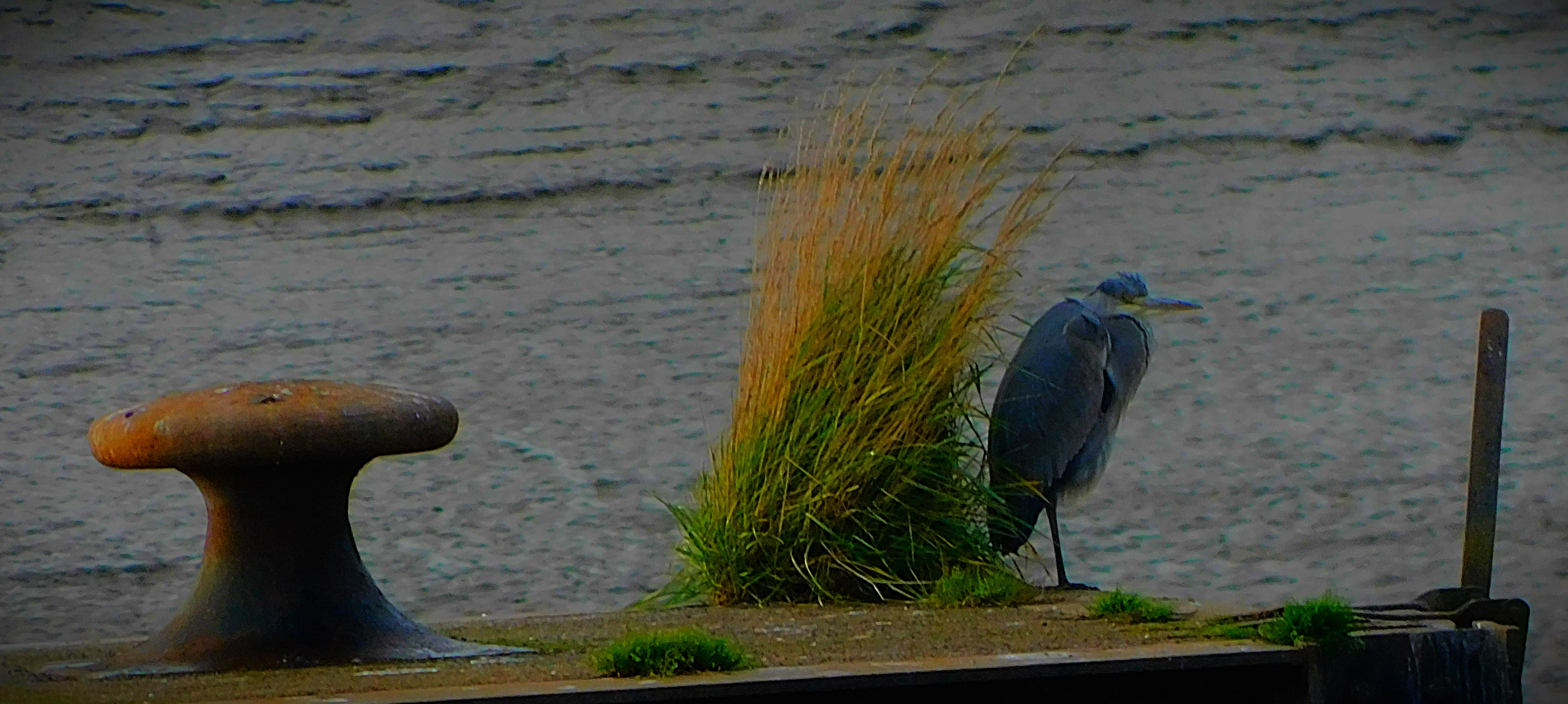
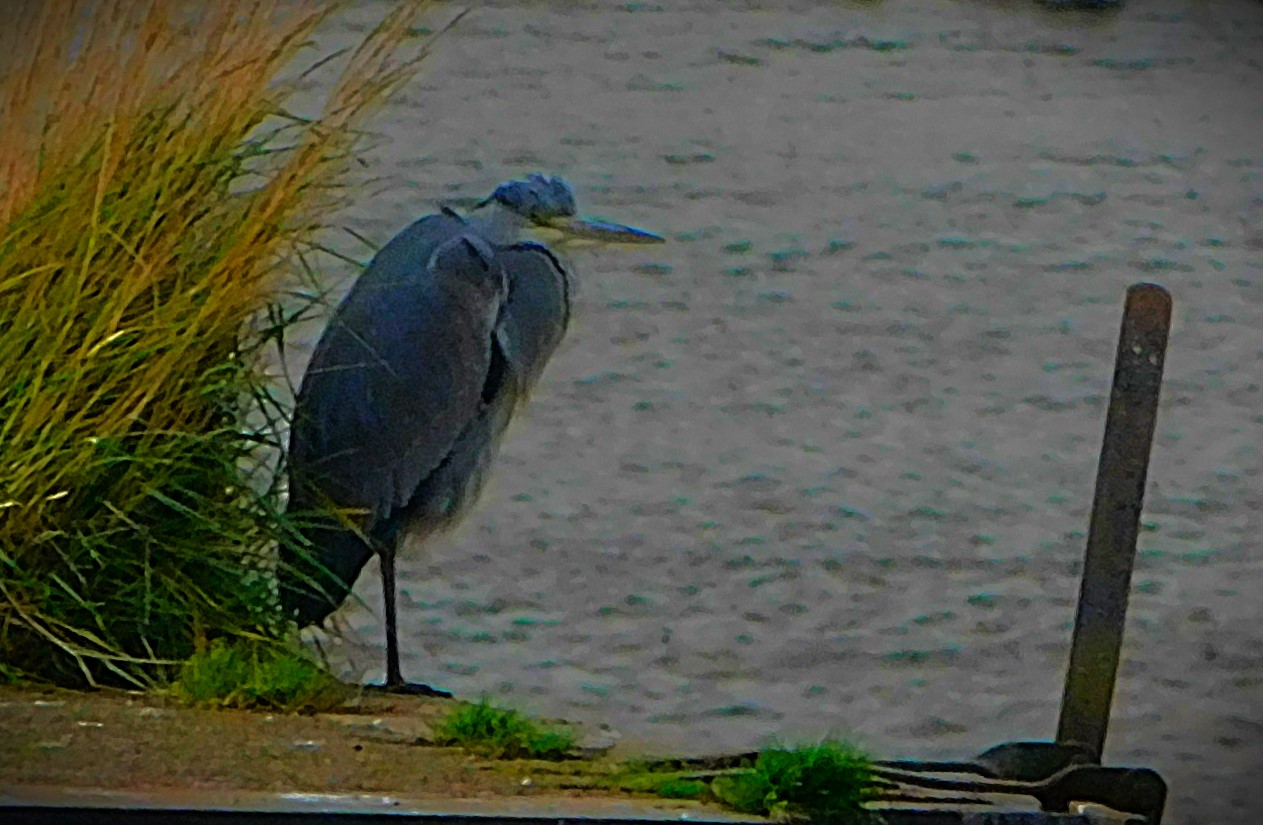
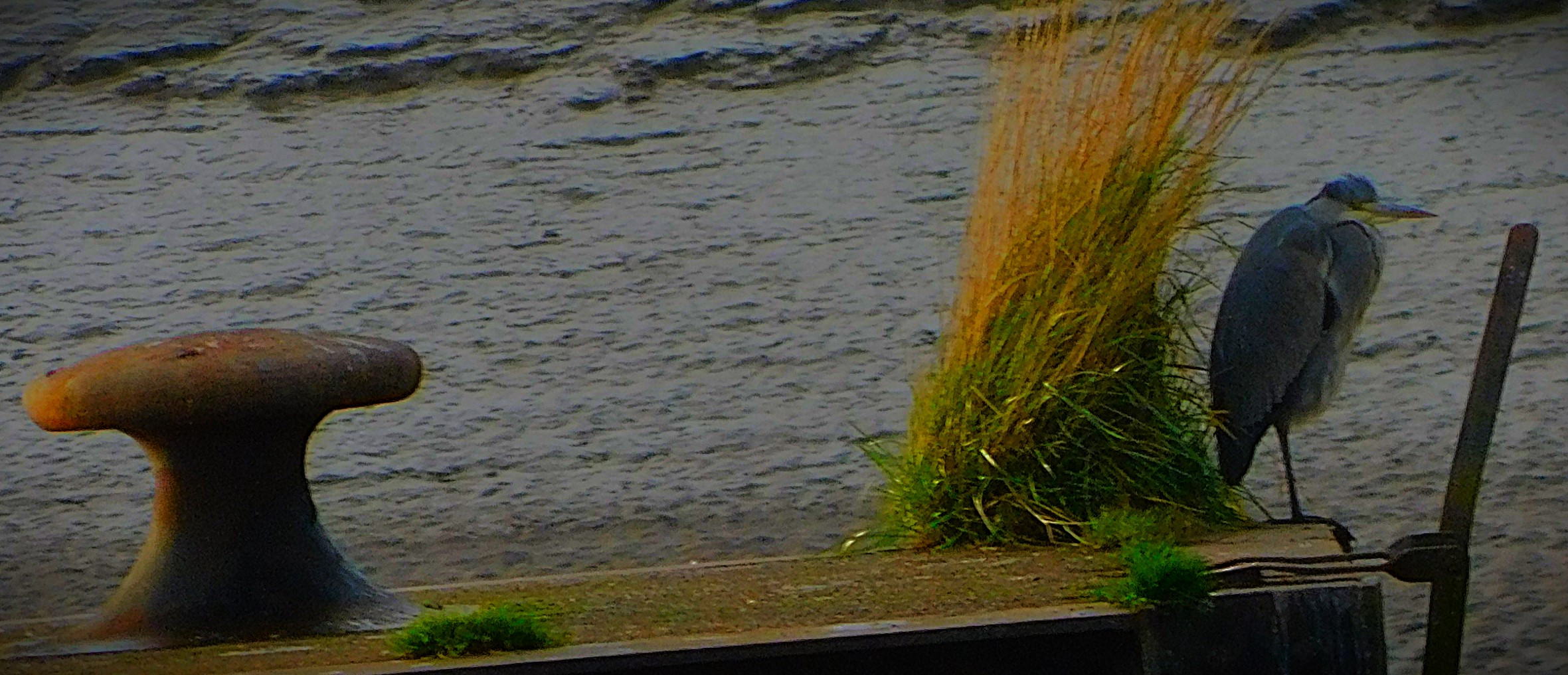
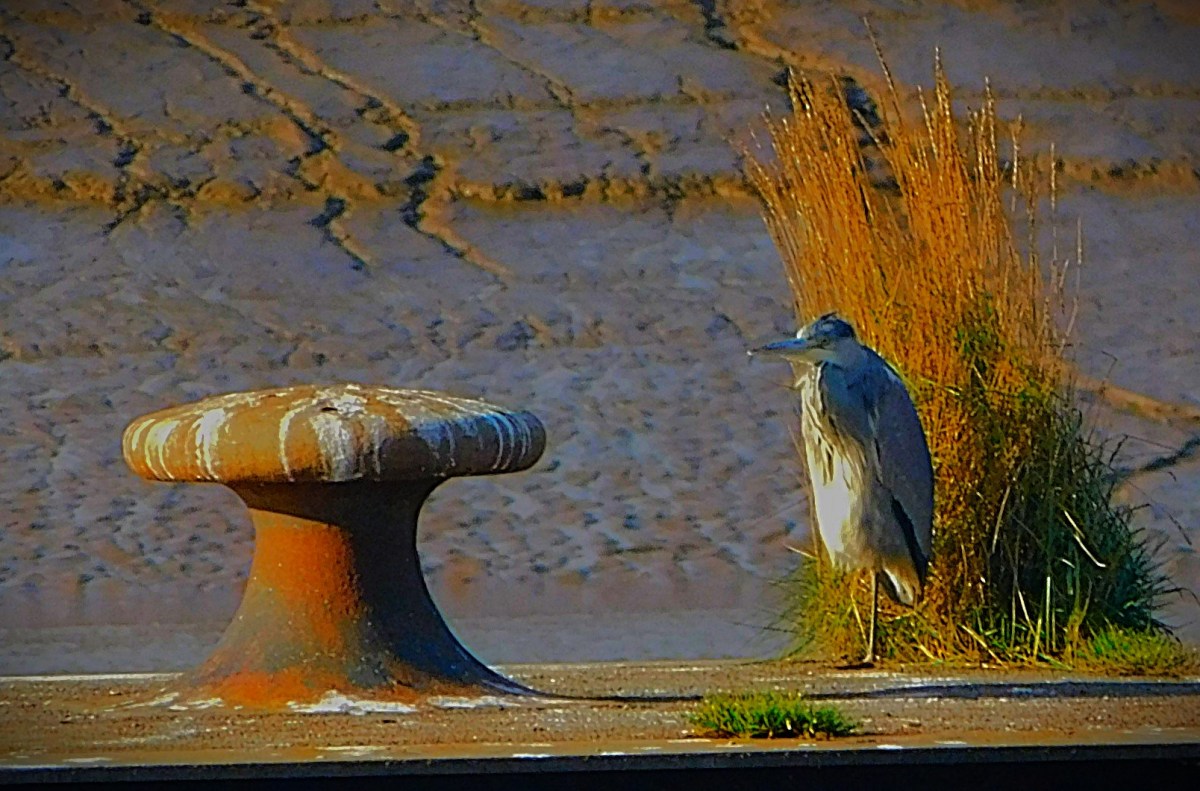
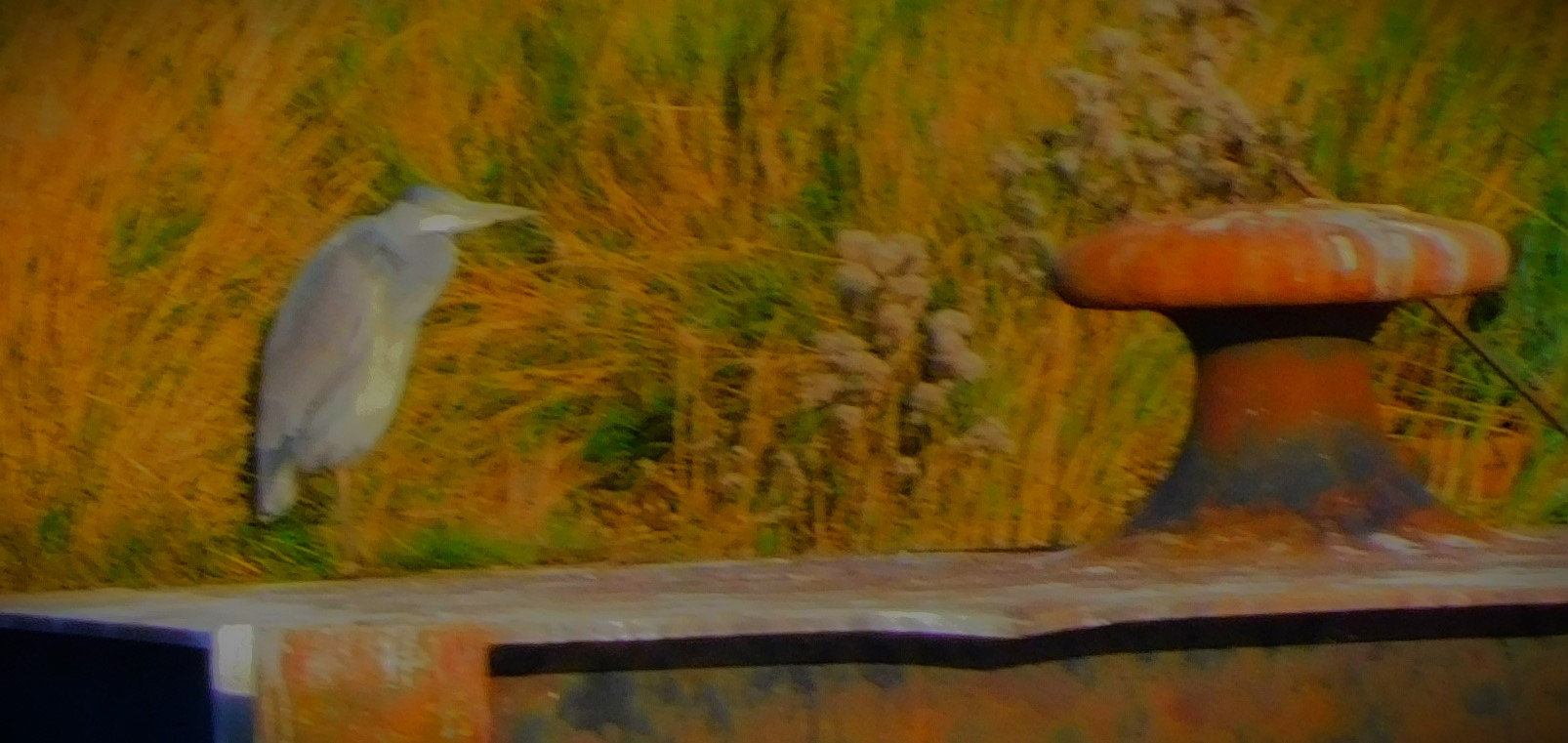
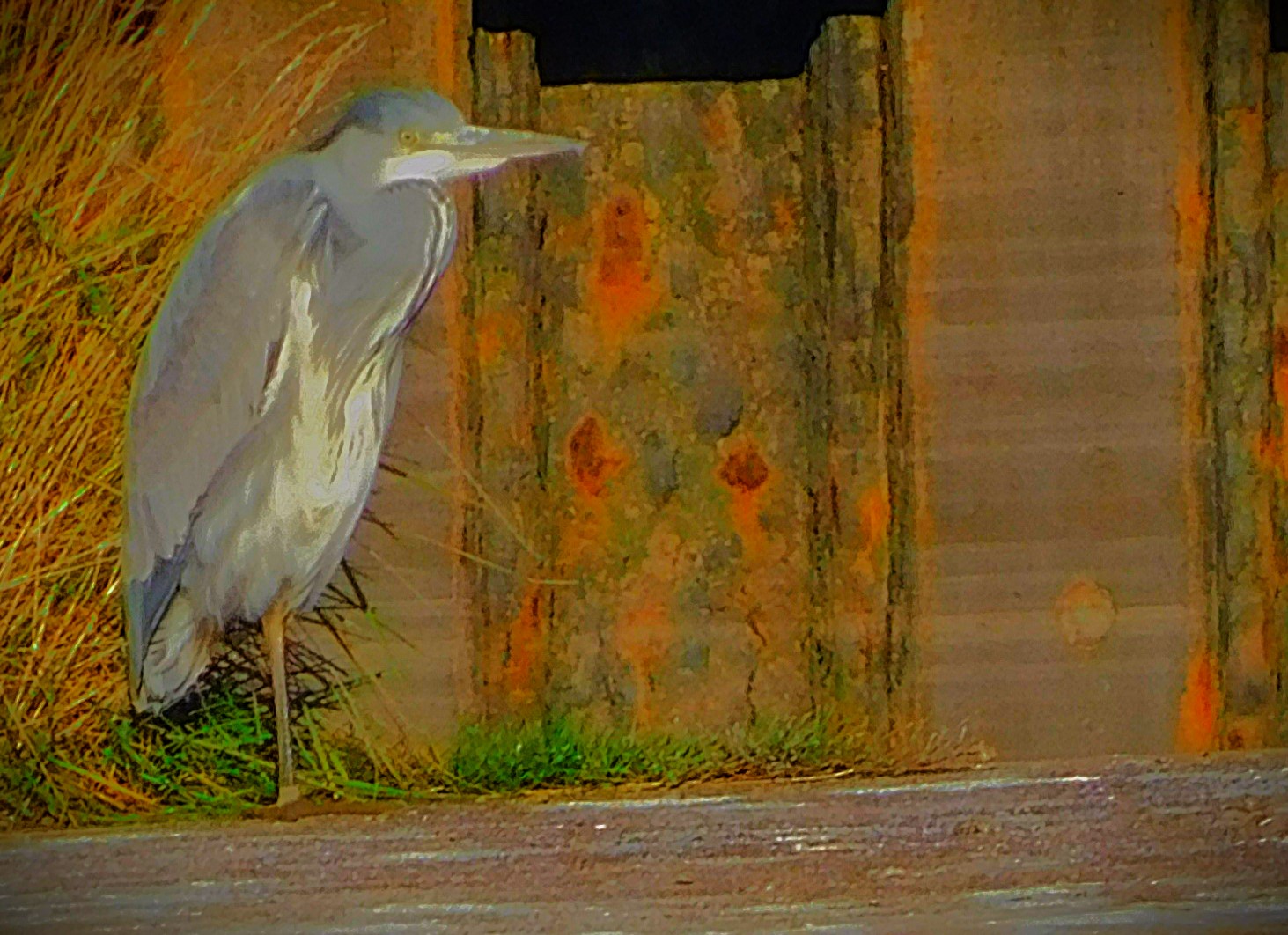
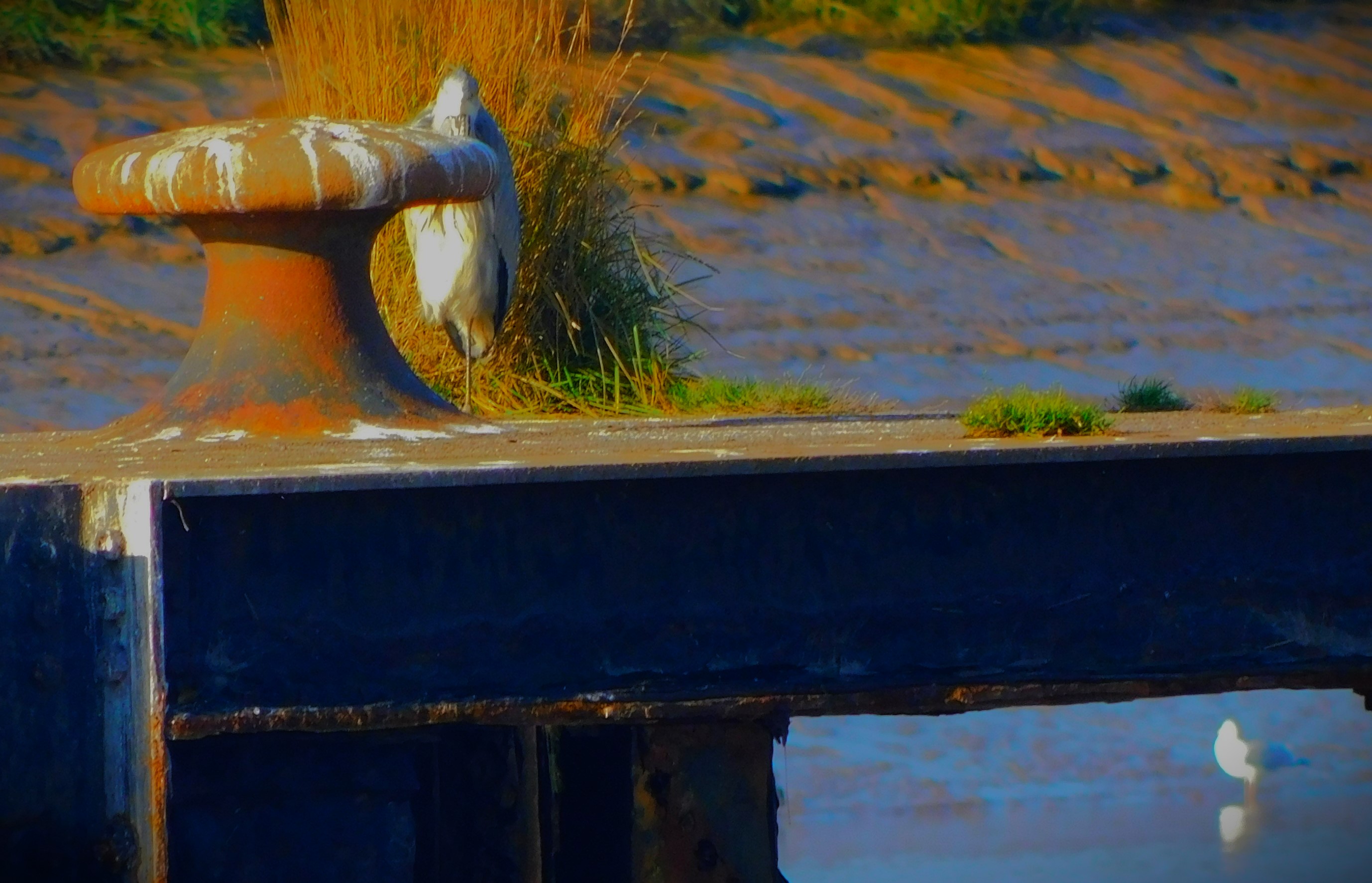
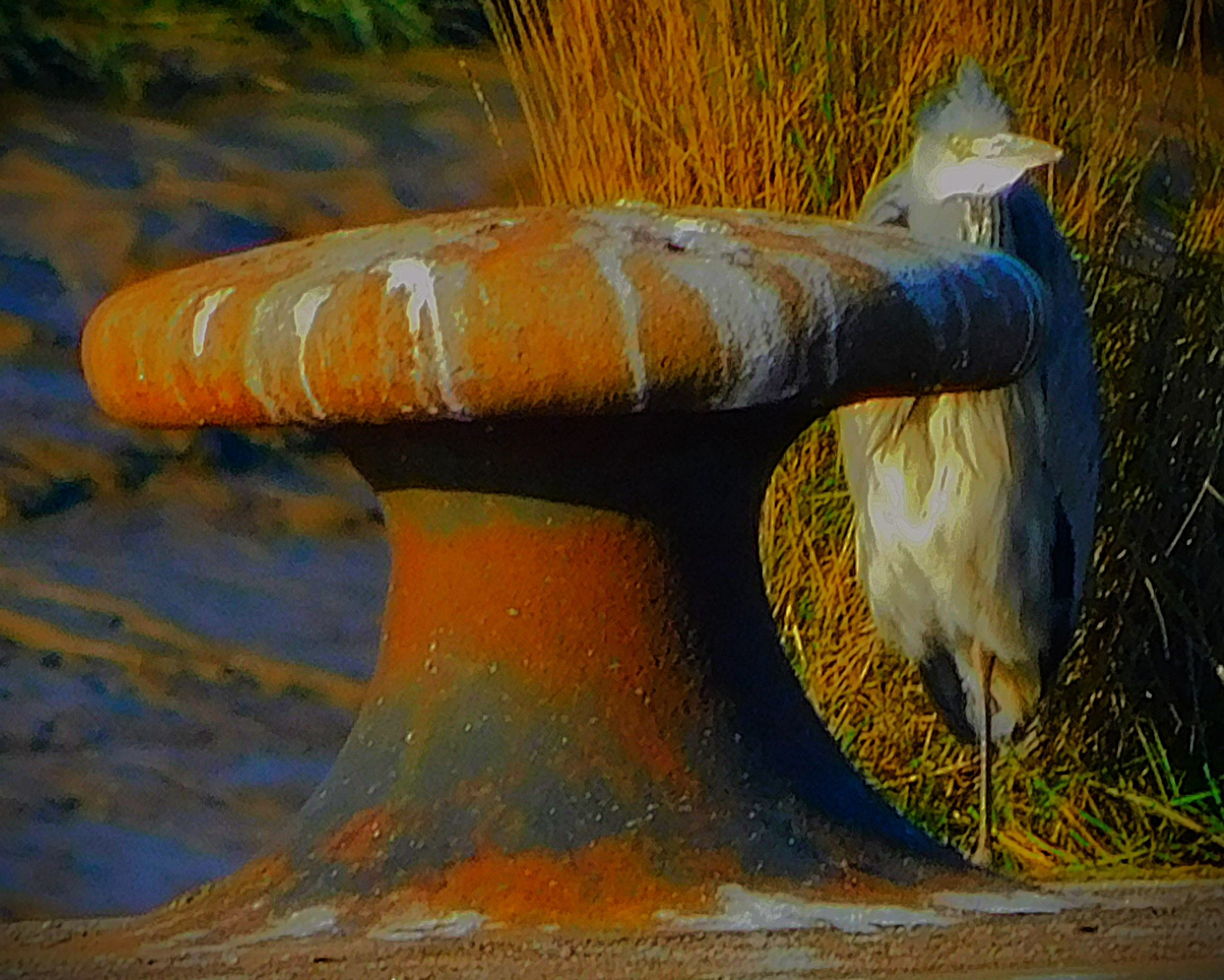
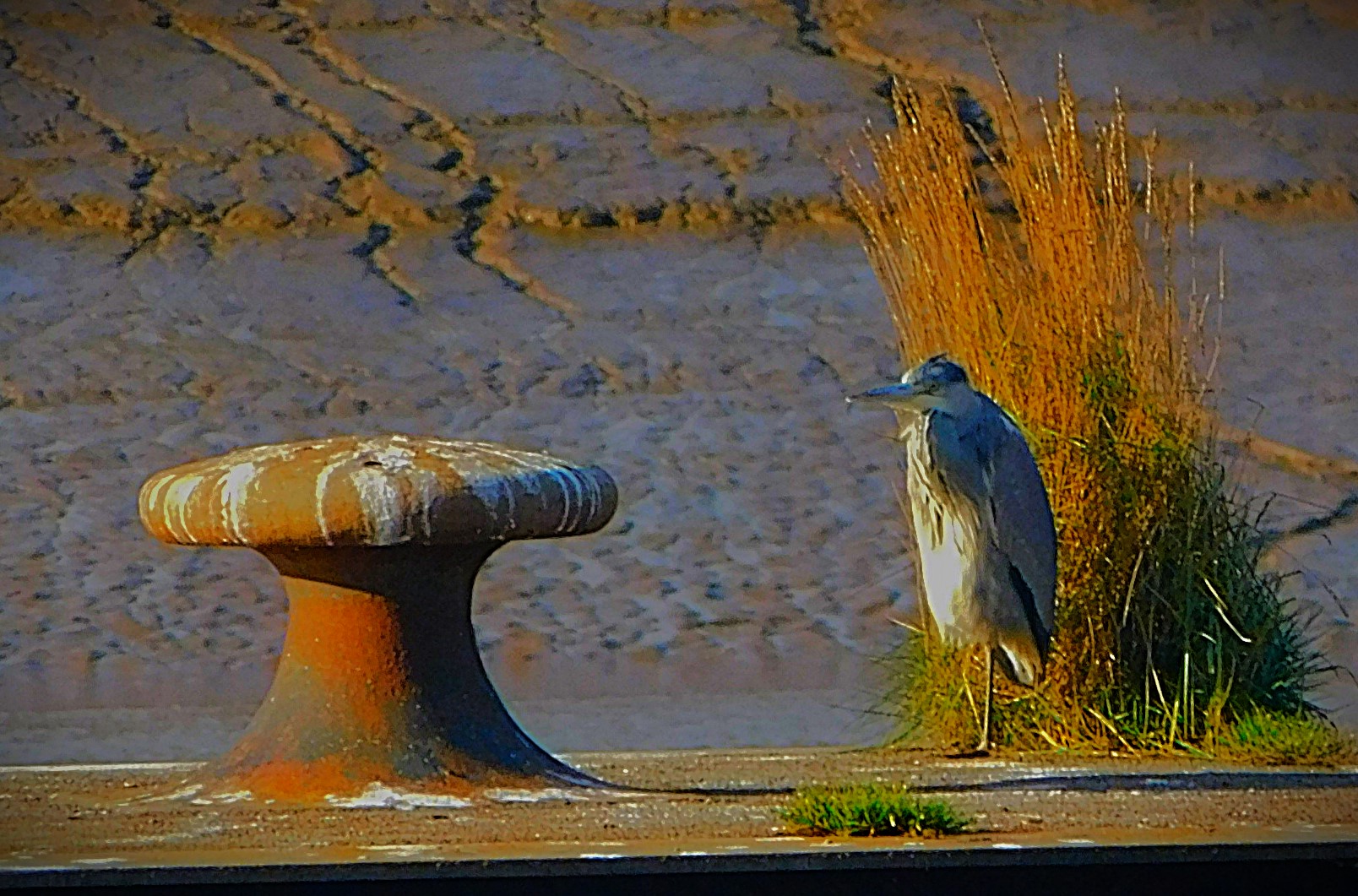
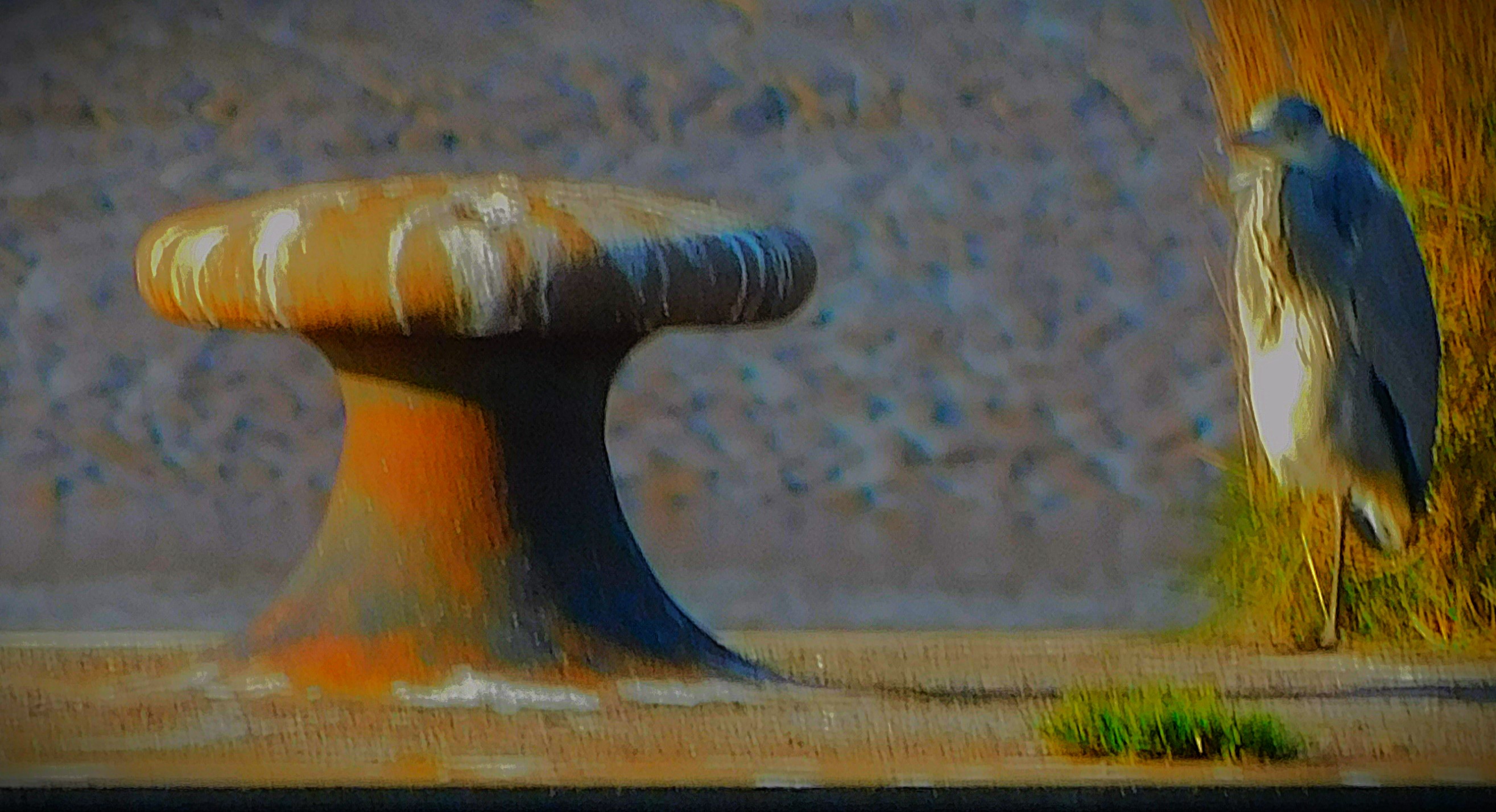
The next port of call was ‘Cormorant Platform’, although none of the birds that led me to give it that name were present on this occasion. There was a heron there however…
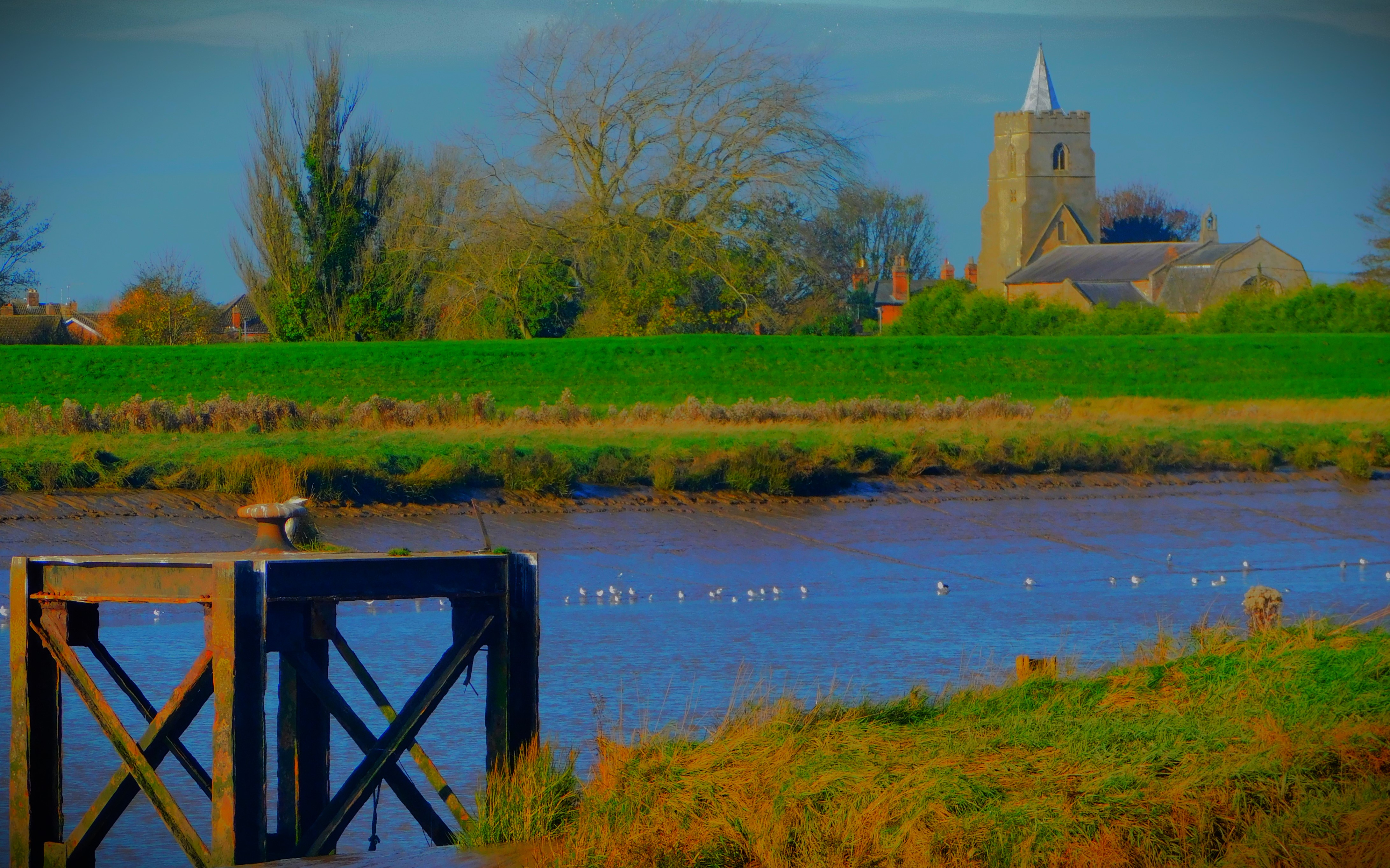
The heron and platform in the foreground, West Lynn church in the background.
From here I headed on to a dike which can be muddy, but as we have had little rain of late I knew would be fine, and followed it until the path bifurcated – one route led to more of the Great Ouse, and the possibility of following that river as far as Purfleet Quay, but on this occasion i took the other, heading across another part of Hardings Way, through a gateway and down a side road which leads to play area that is at the meeting point of several roads, one of which leads to All Saints Church, reckoned to be the oldest church in King’s Lynn and then by way of Hillington Square to Millfleet.
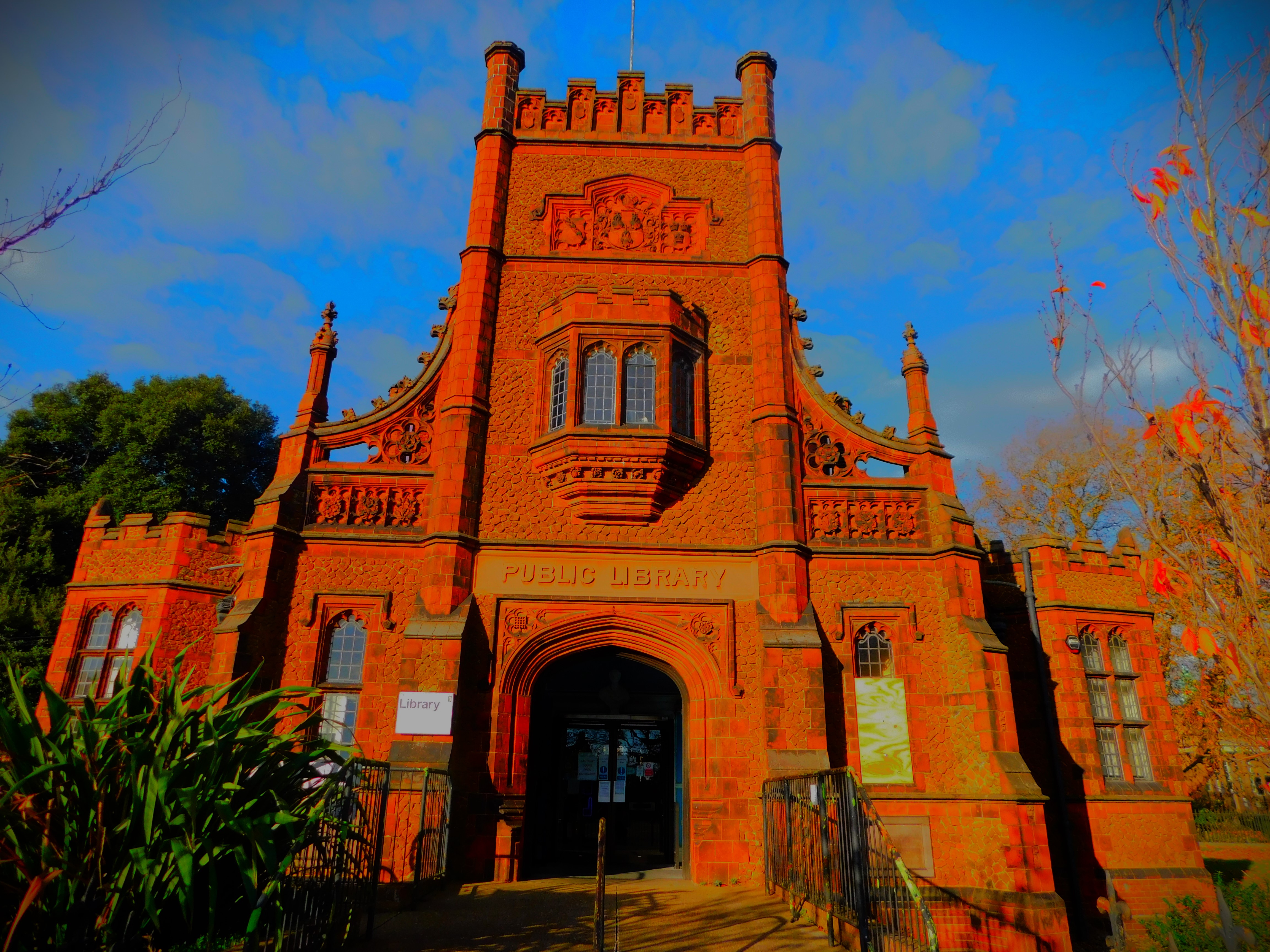
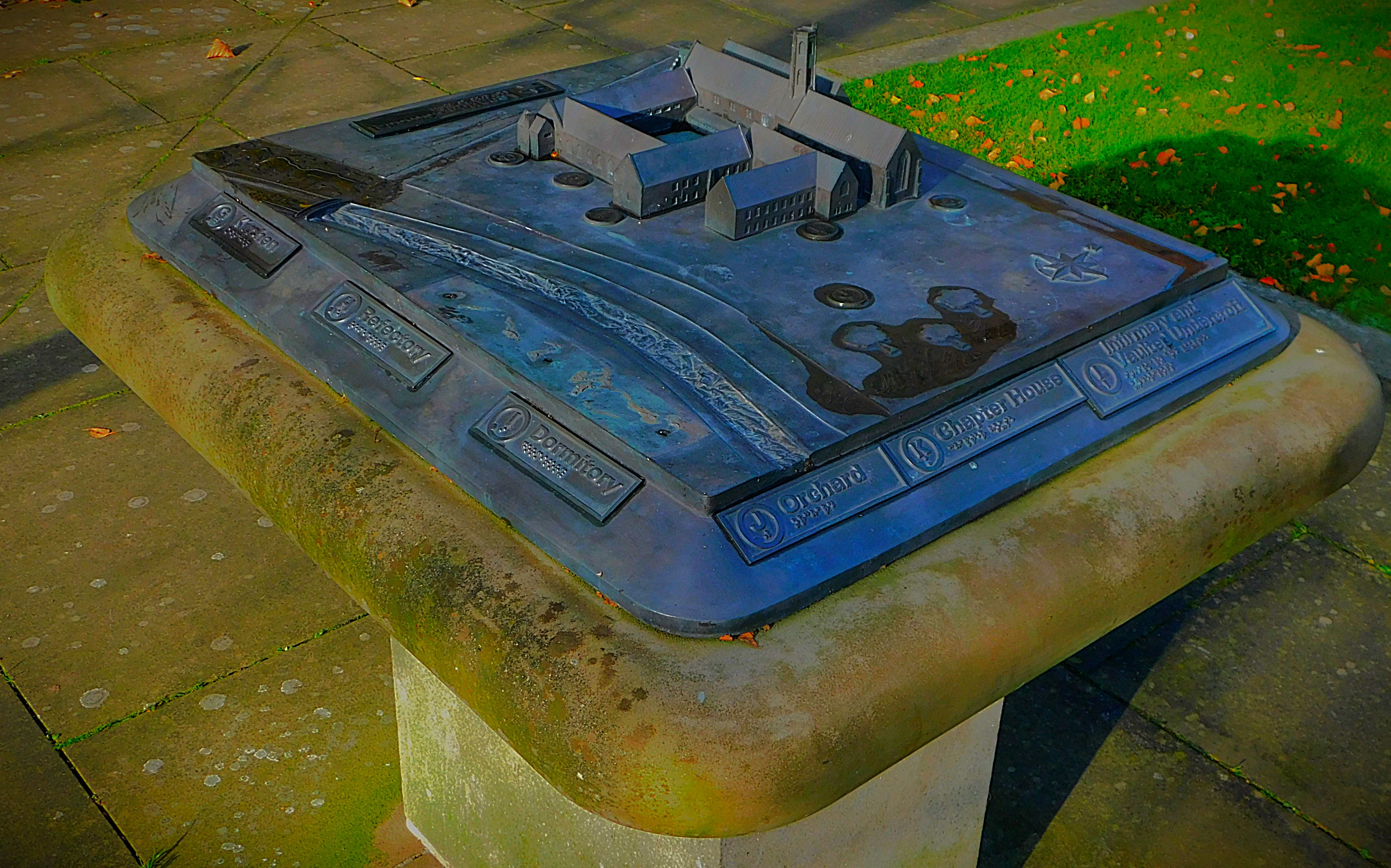
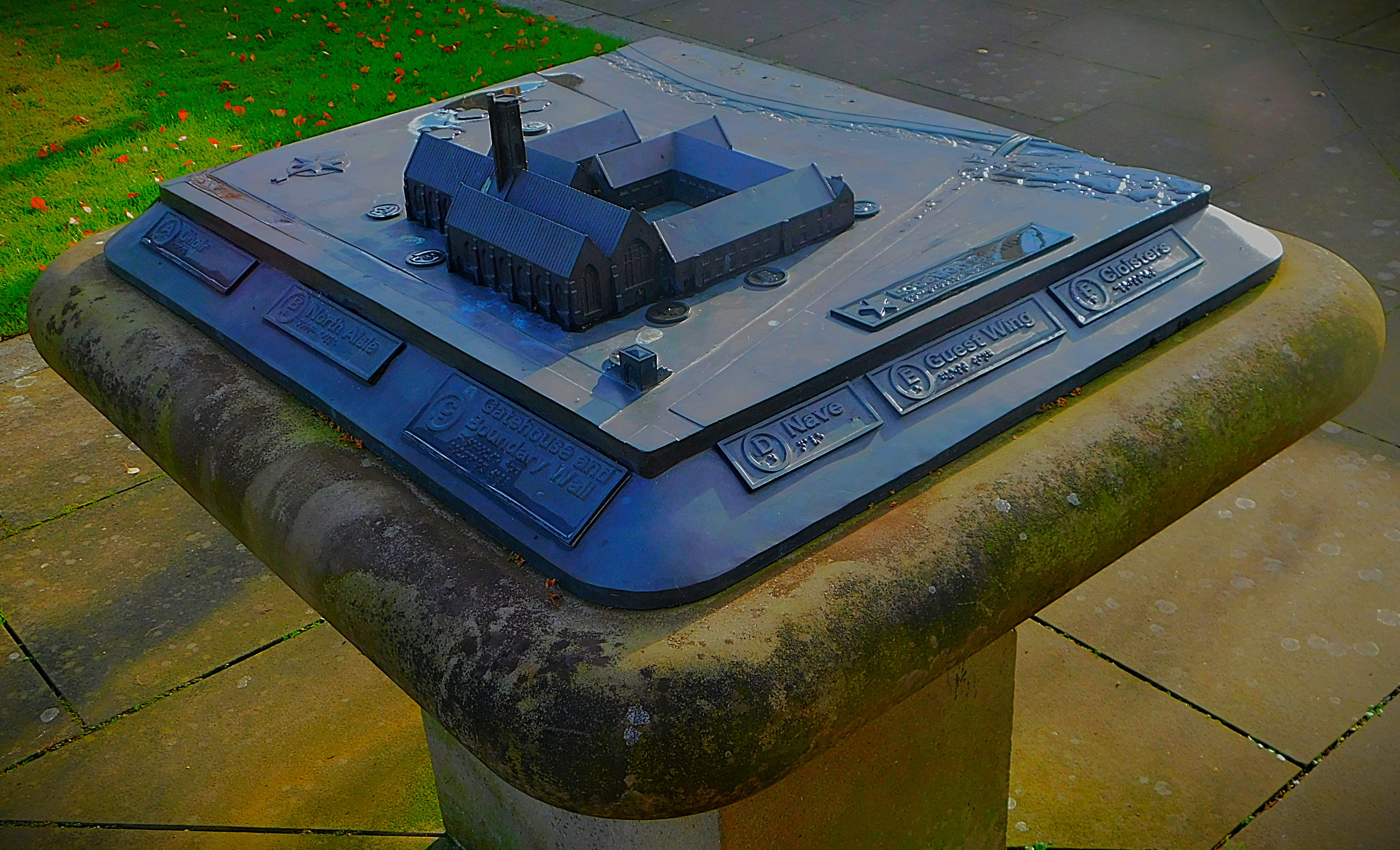
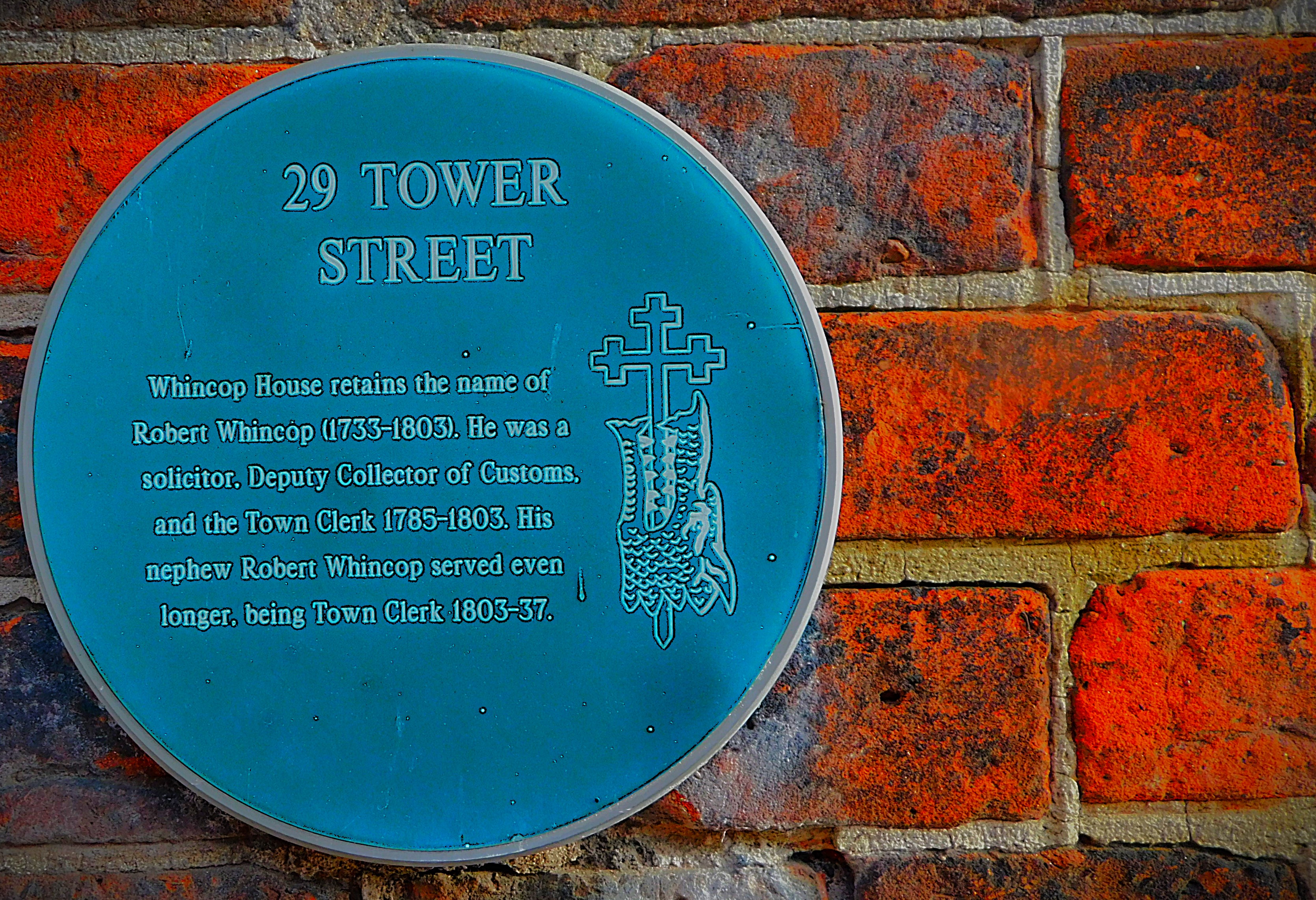
I crossed Millfleet at a light controlled crossing, headed up past the library, though on this occasion I did not visit that establishment as I already had a number of books out. I then went past the war memorial and Greyfriars Tower, before heading on to Tower Street and thence to the bus station, though I was merely passing through, not intending to catch a bus. From the bus station I headed along Railway Road, crossed at a light controlled crossing and walked along the northernmost section of Norfolk Street to arrived a triangular road crossing that invariably involves two waits if you are a pedestrian, followed Littleport Street until the junction with Kettlewell Lane, passing through the greenery to the second of the two ponds mentioned earlier in this piece, but I now did not entirely duplicated the starting route, instead heading along Loke Road, on to Columbia Way, and then availed myself of a recently opened cut through to the private road behind my house and thus got home.
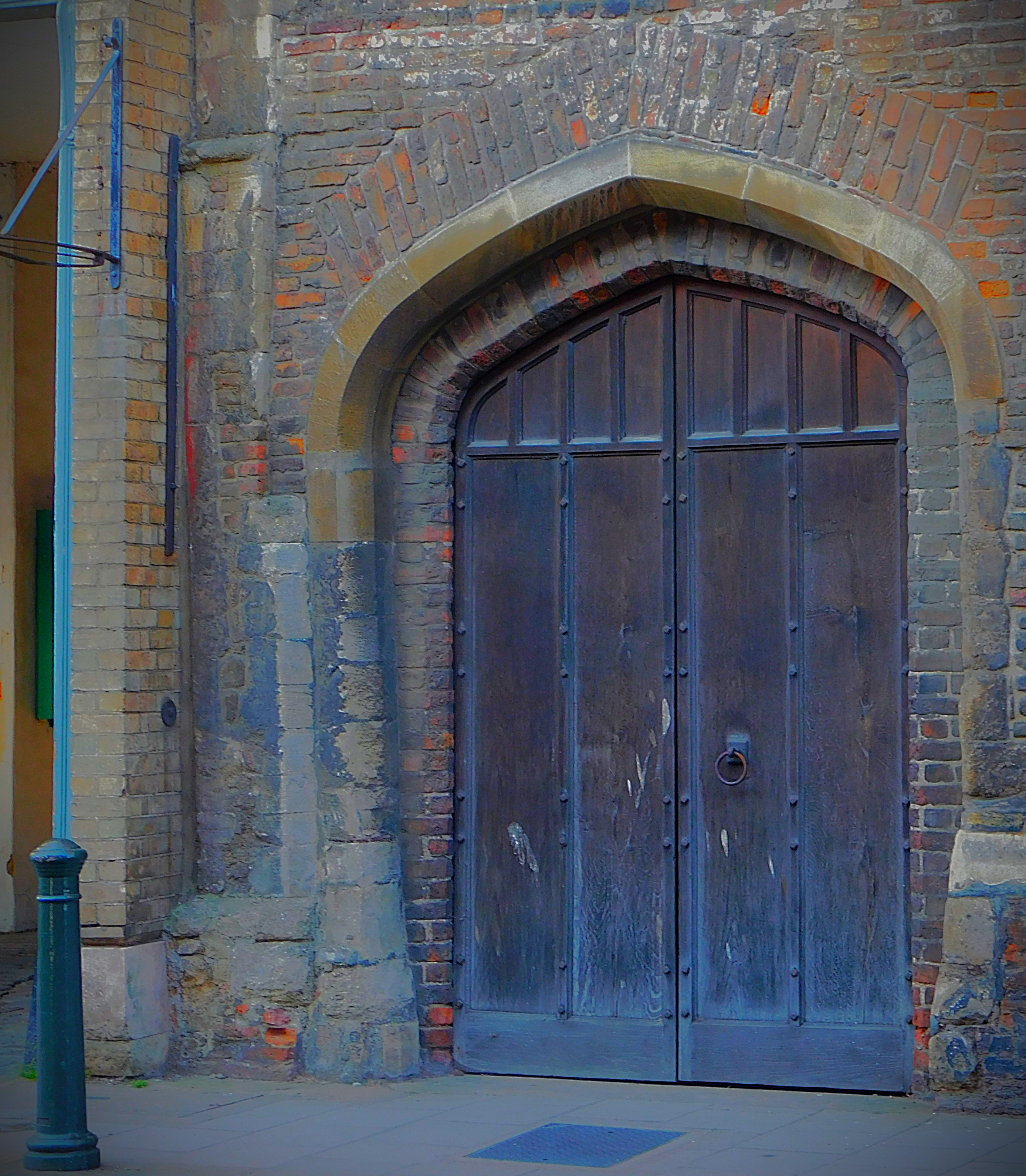
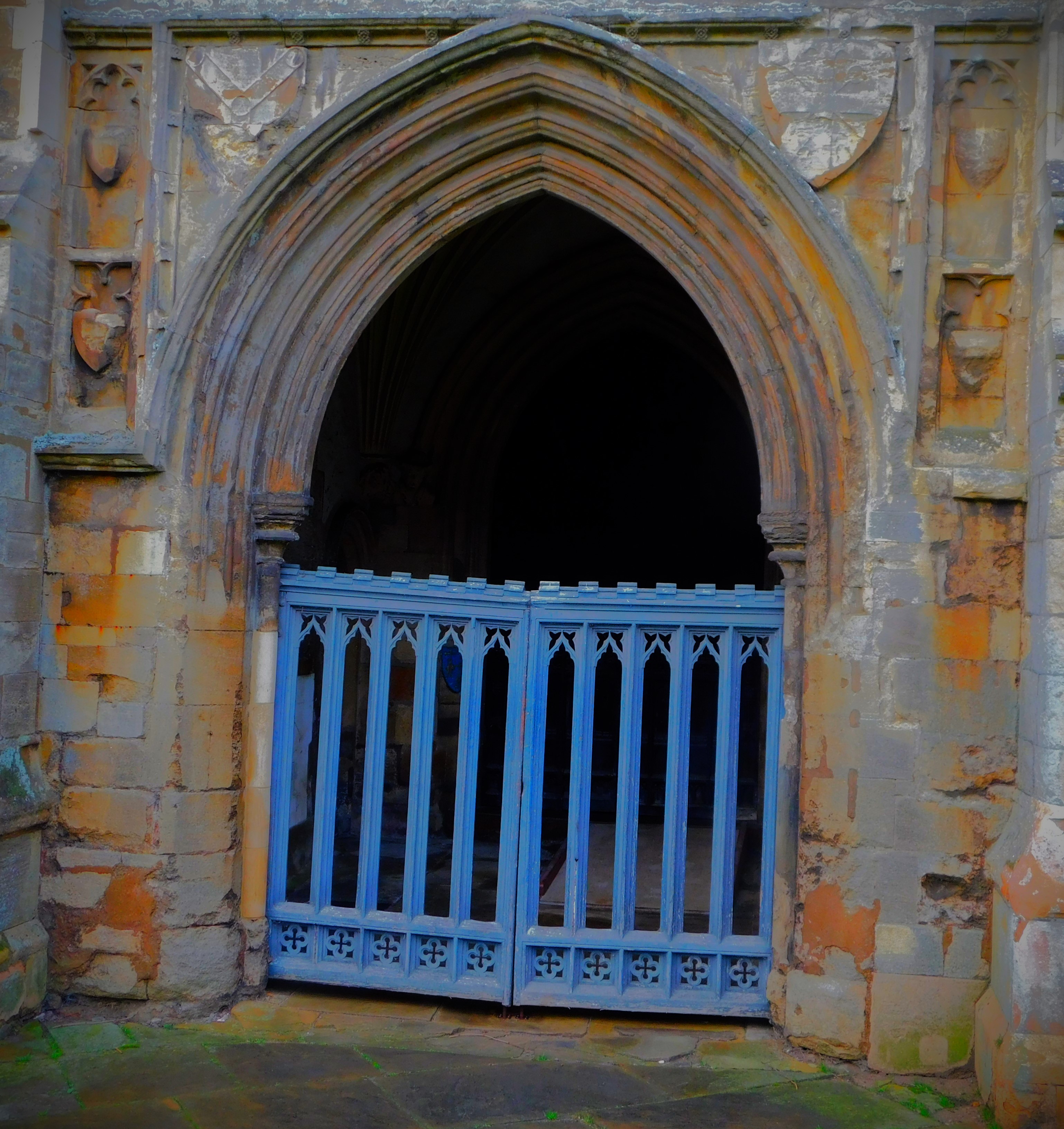
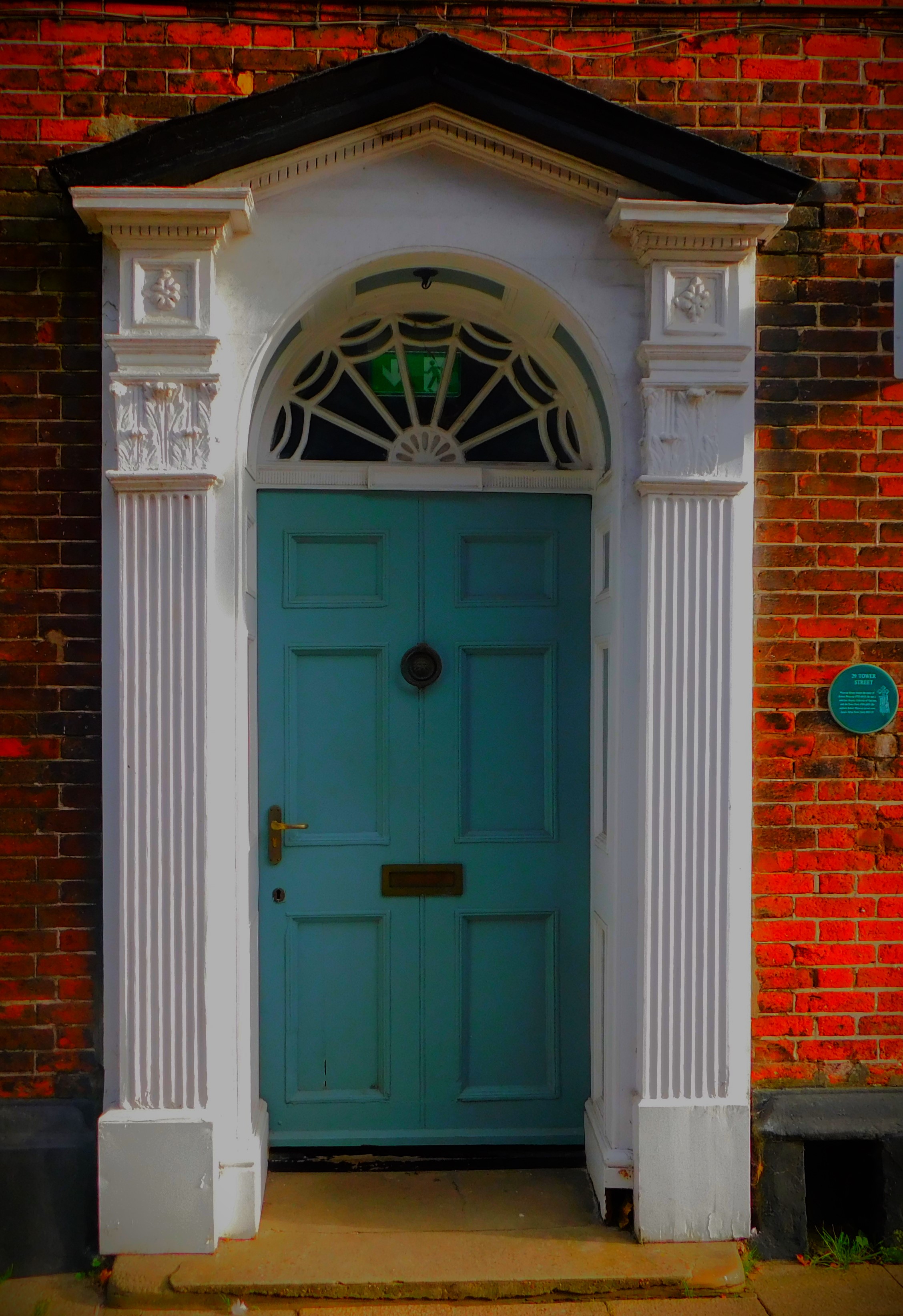
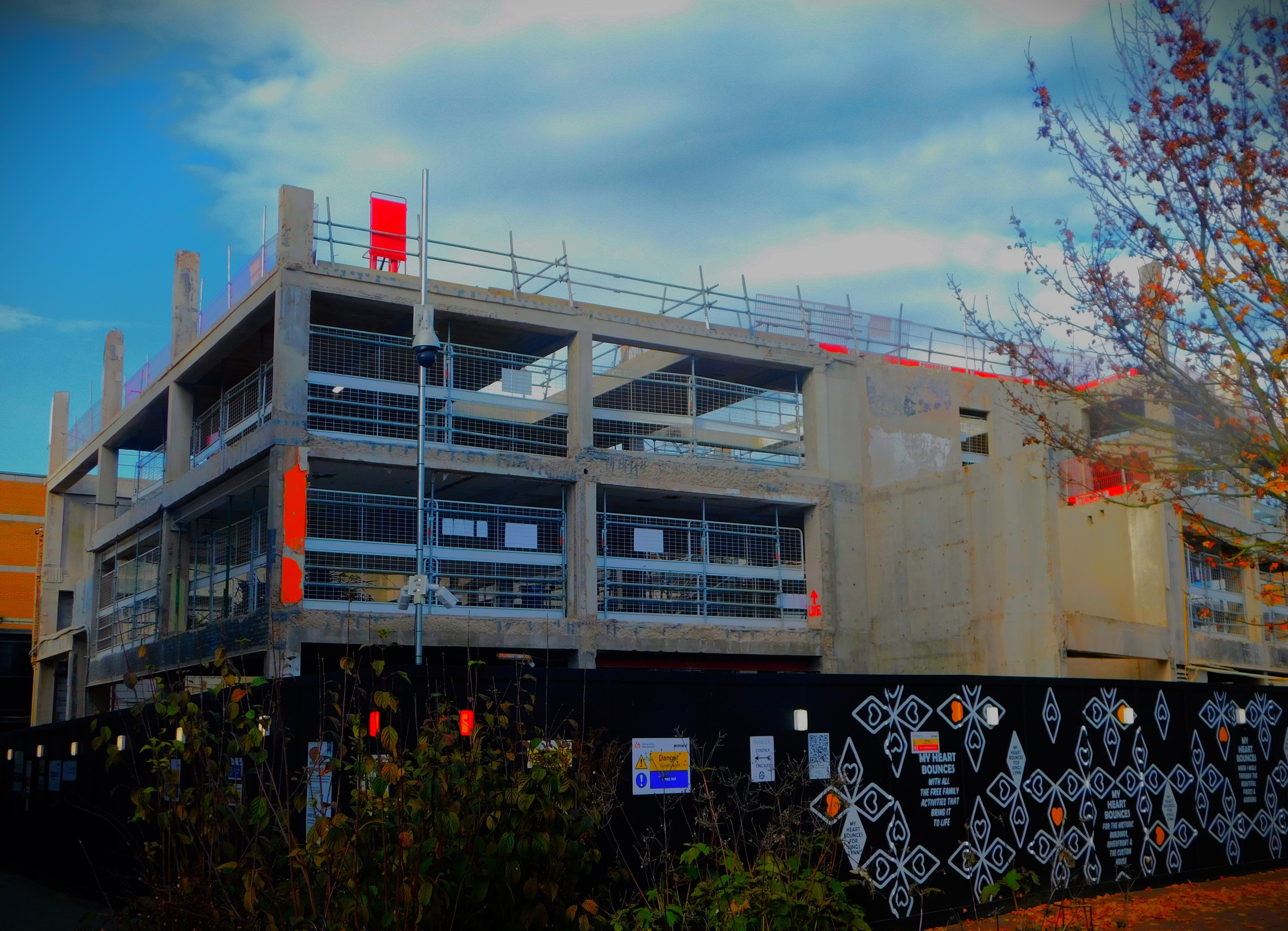
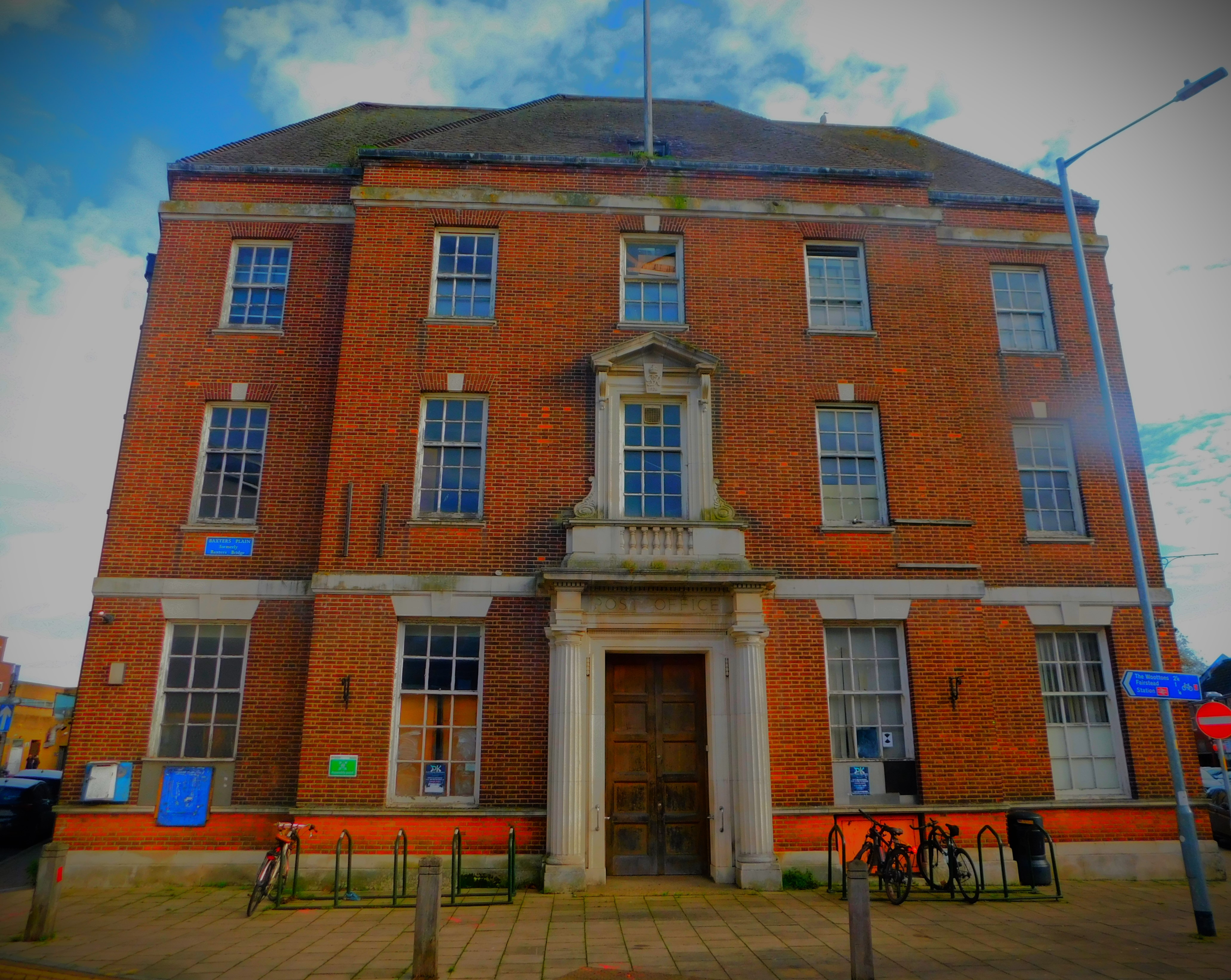
King’s Lynn library.The war memorial and Greyfriars Tower.Two images of a scale model showing what the Franciscan Friary would have been like in its 13th/ 14th century heyday.An arched doorway on Tower StreetThis used to be Argos, and when work on it is finished it will be a Library and community hub for King’s Lynn. The old building will remain fully accessible to the public whatever use it may be put to.Once upon a time, when such things still existed, this was King’s Lynn Main Post Office.
I hope you have enjoyed this account of a variation on one of my favourite walking themes, that of the three rivers.
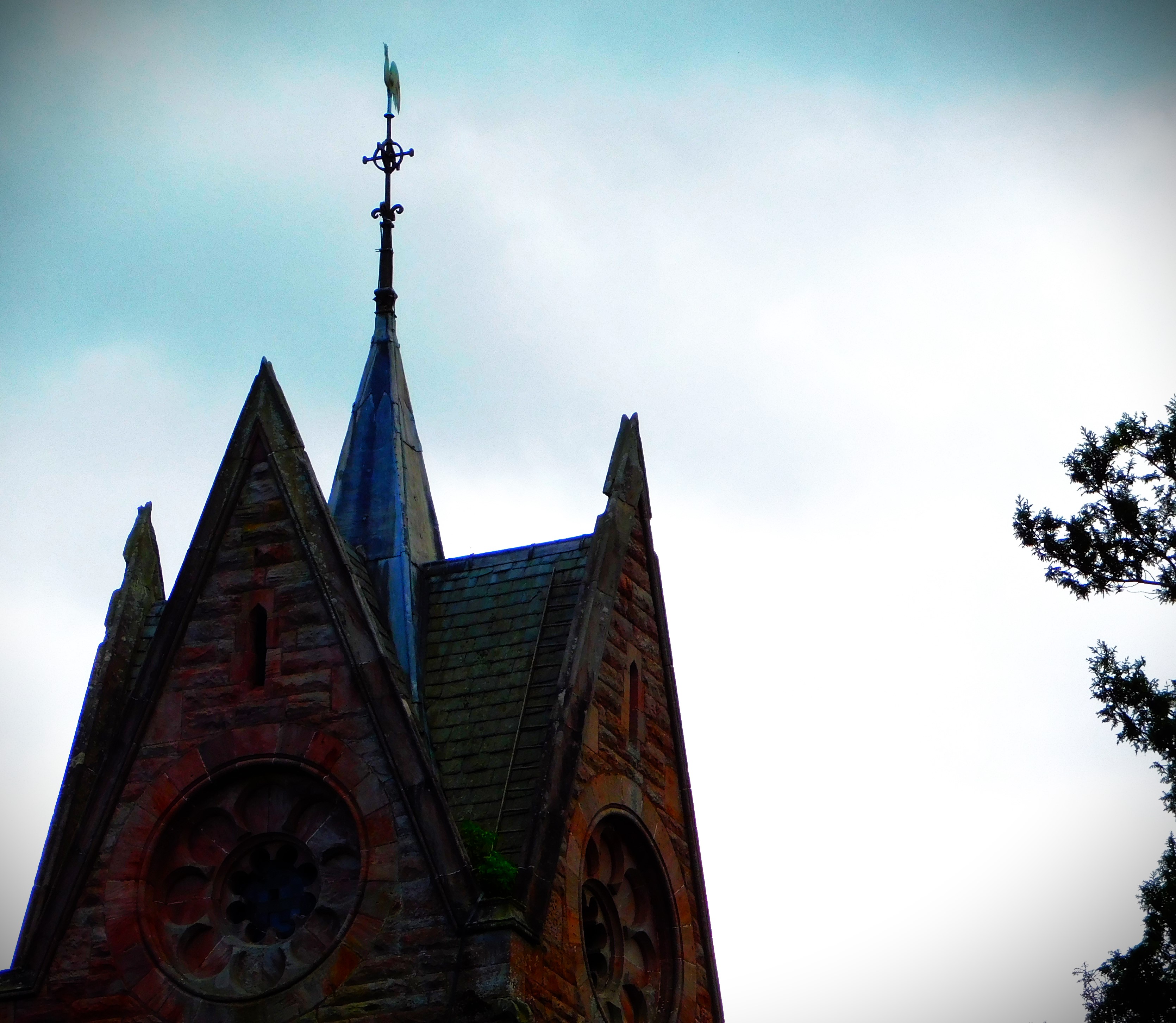
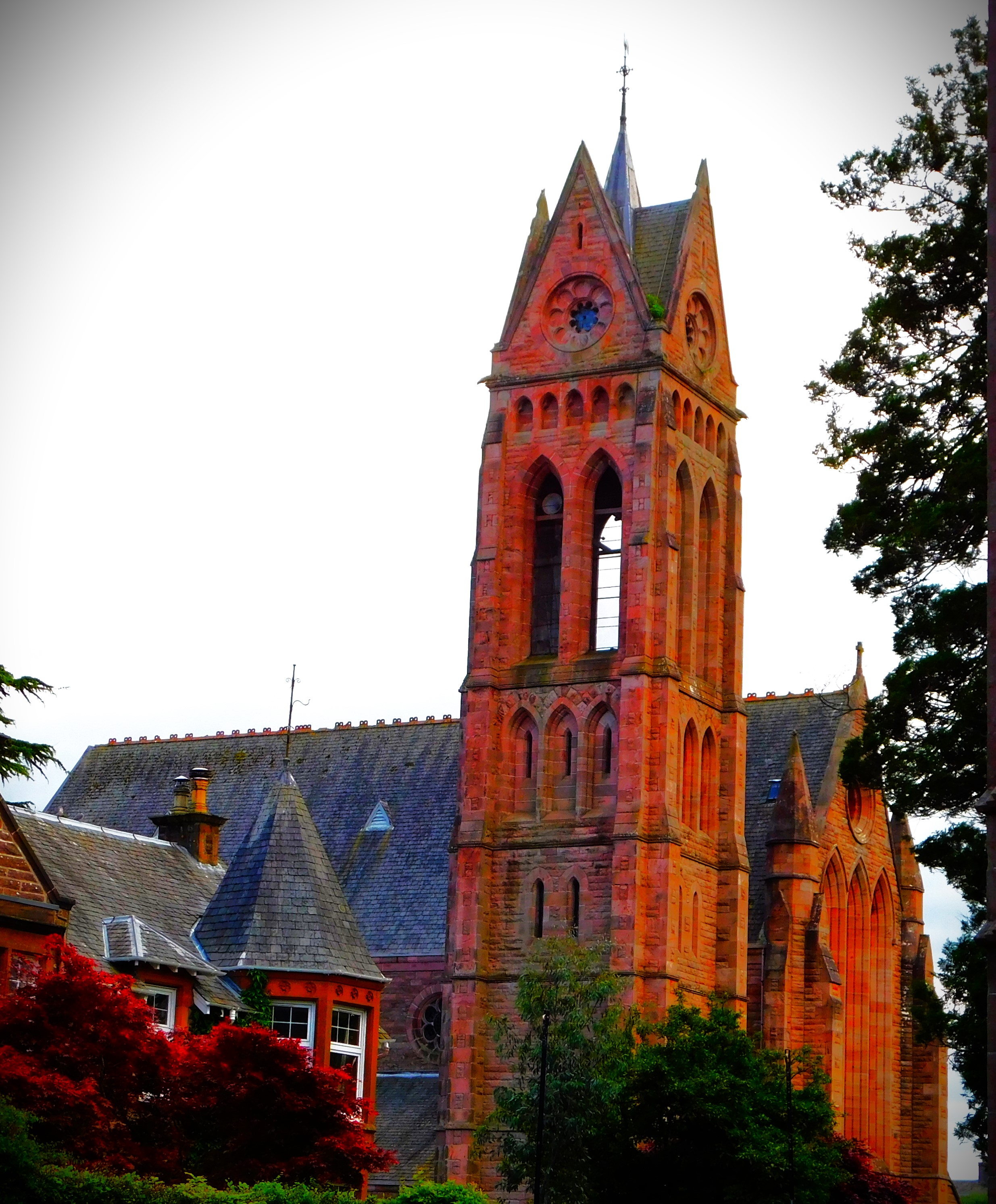
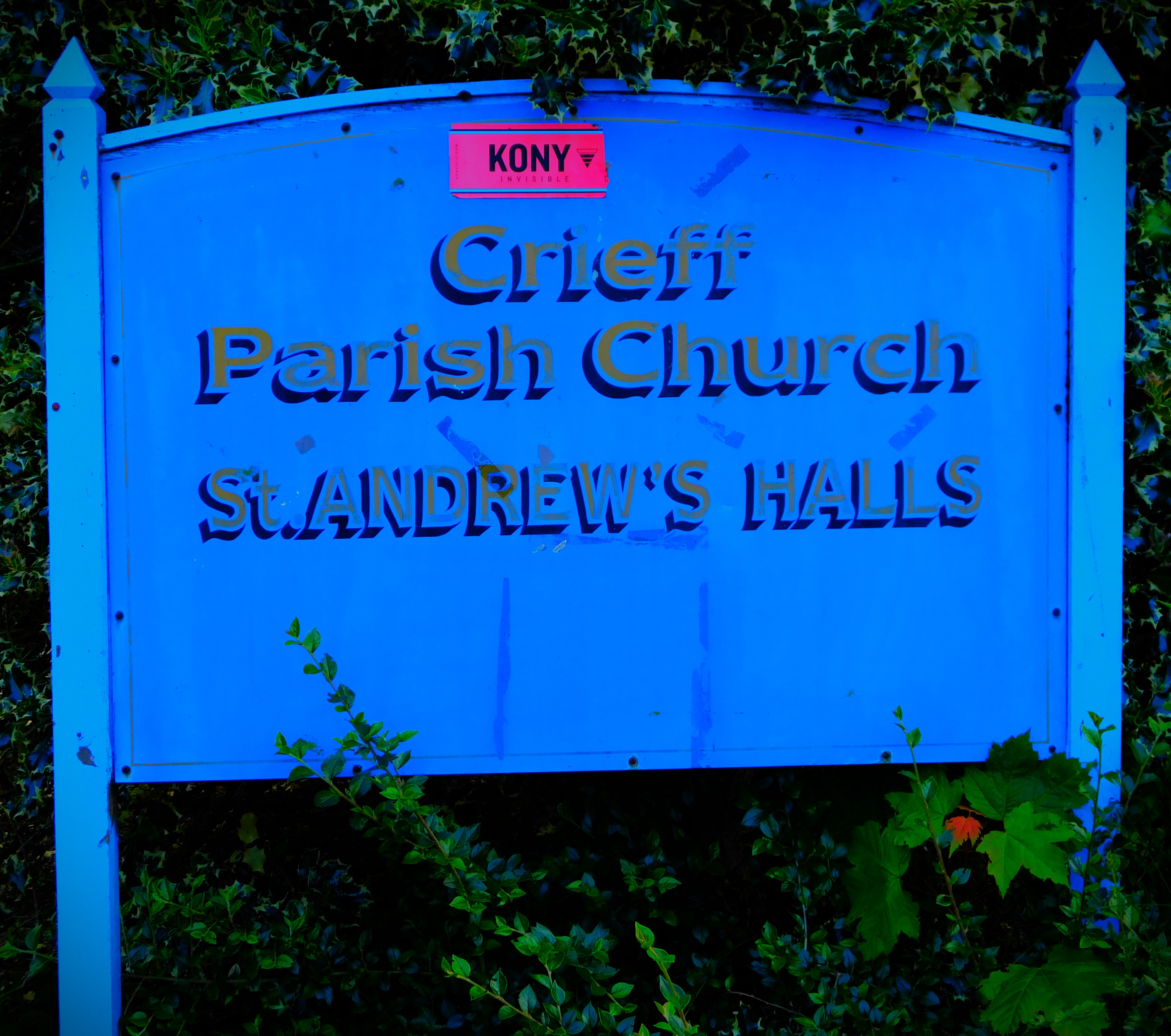
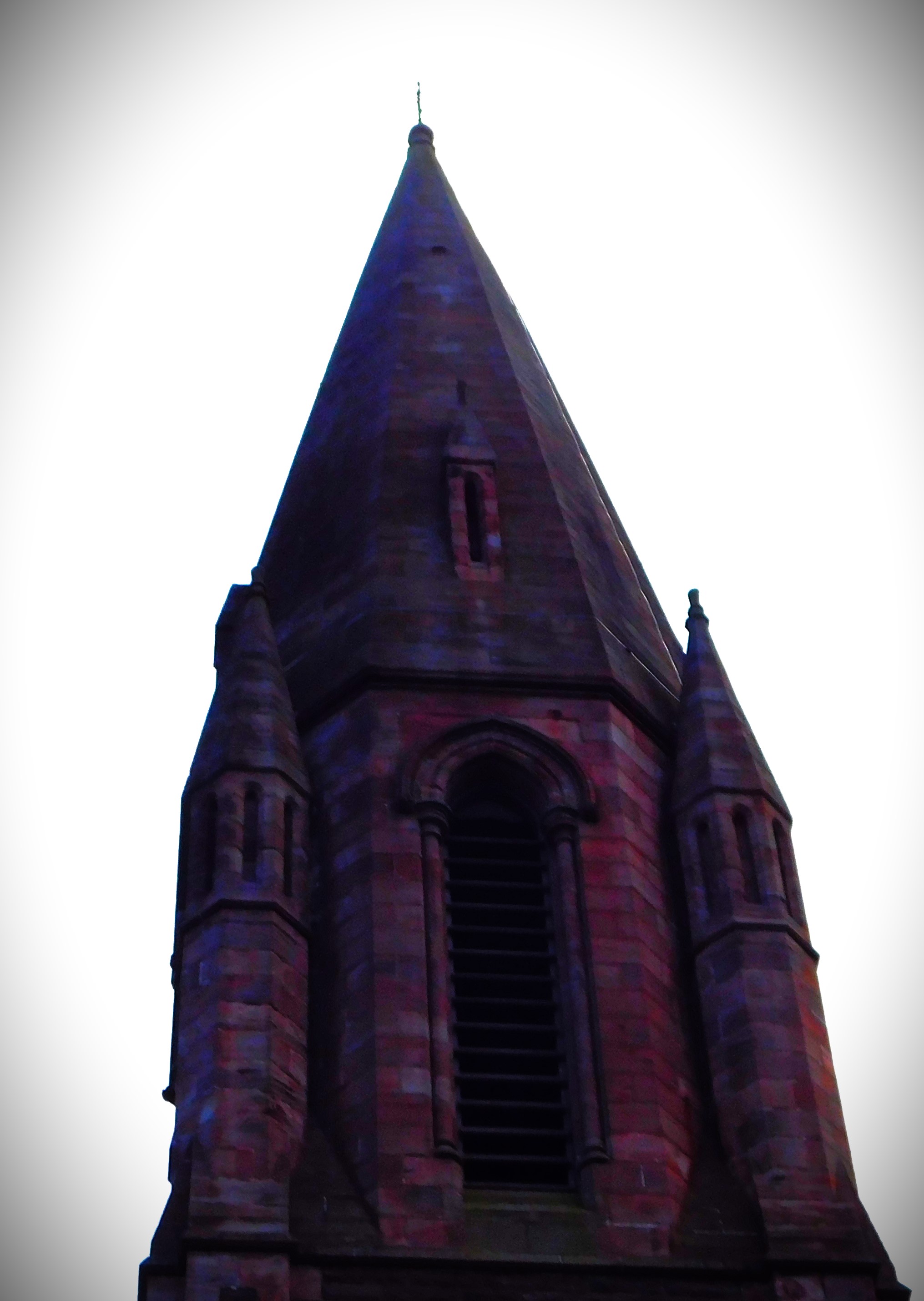
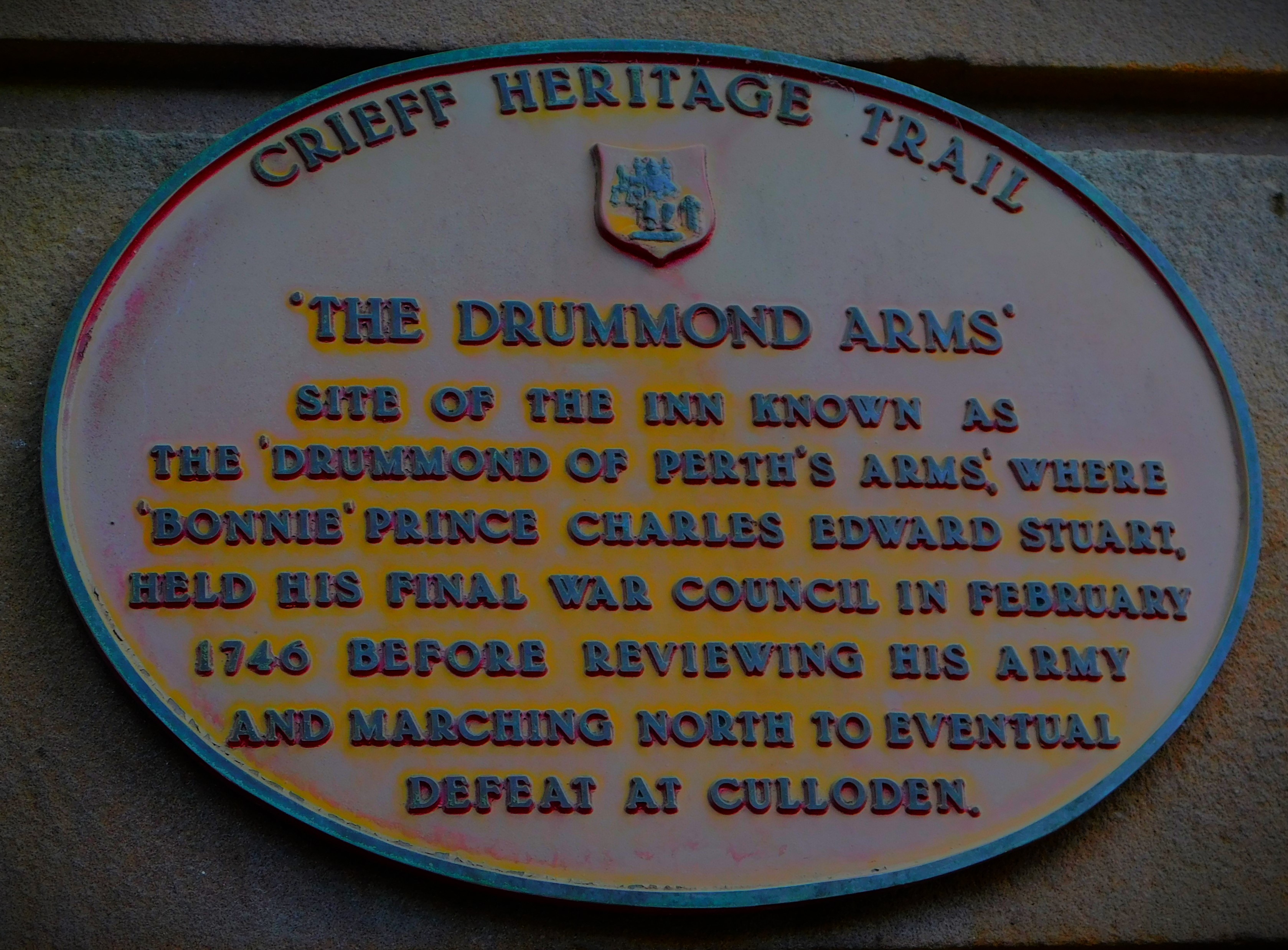
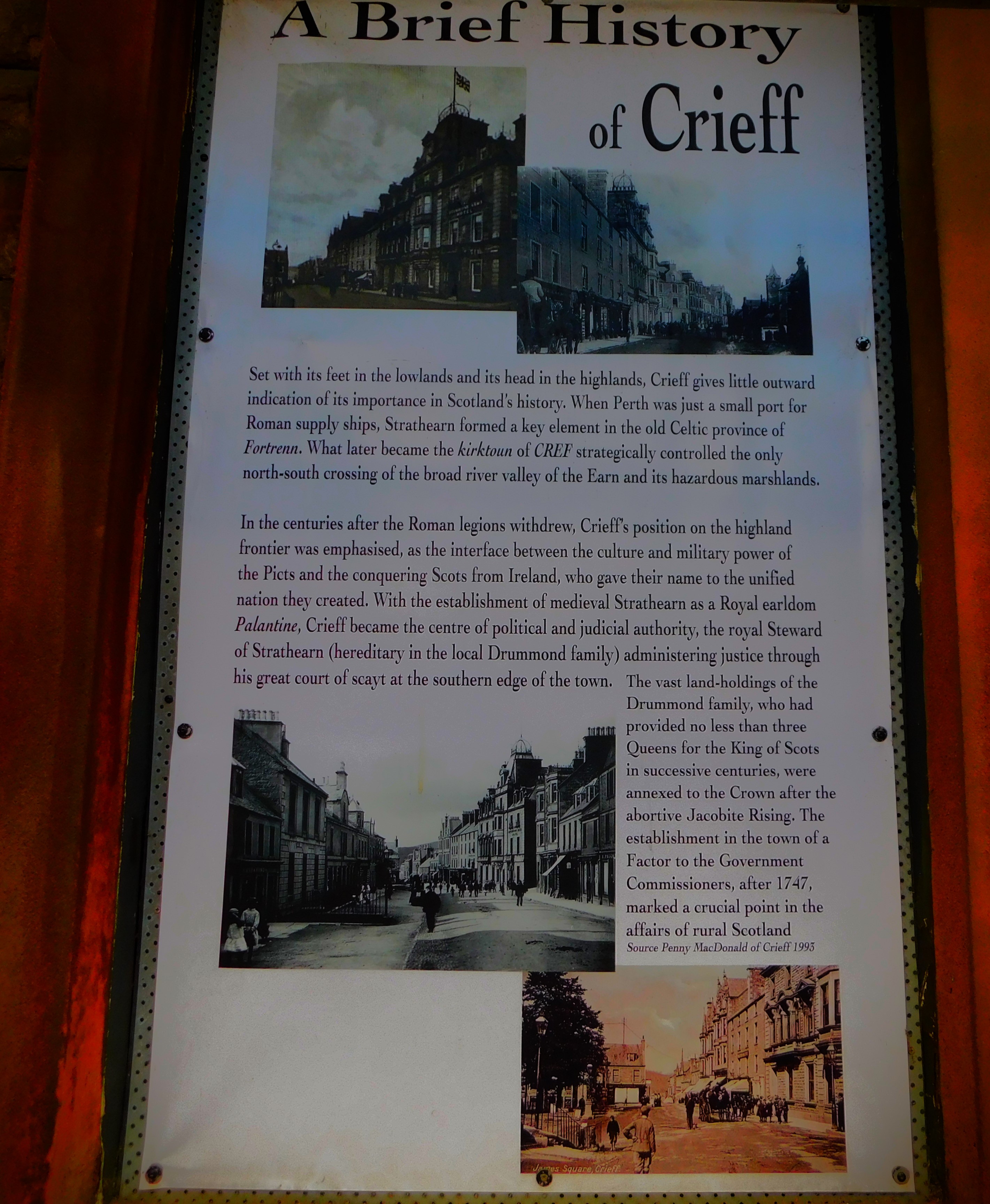
Continuing my account of my Scottish holiday with a look at Crieff.
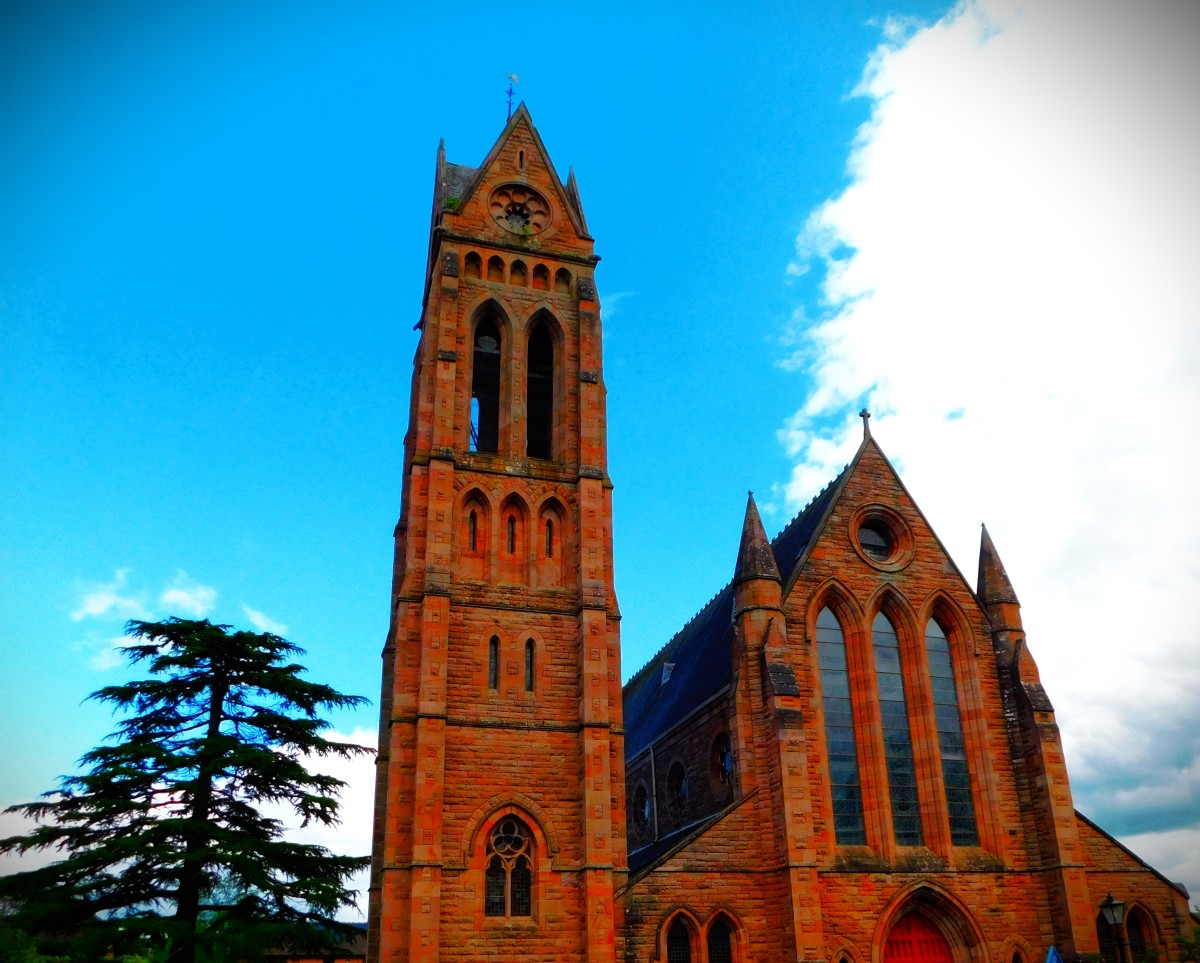
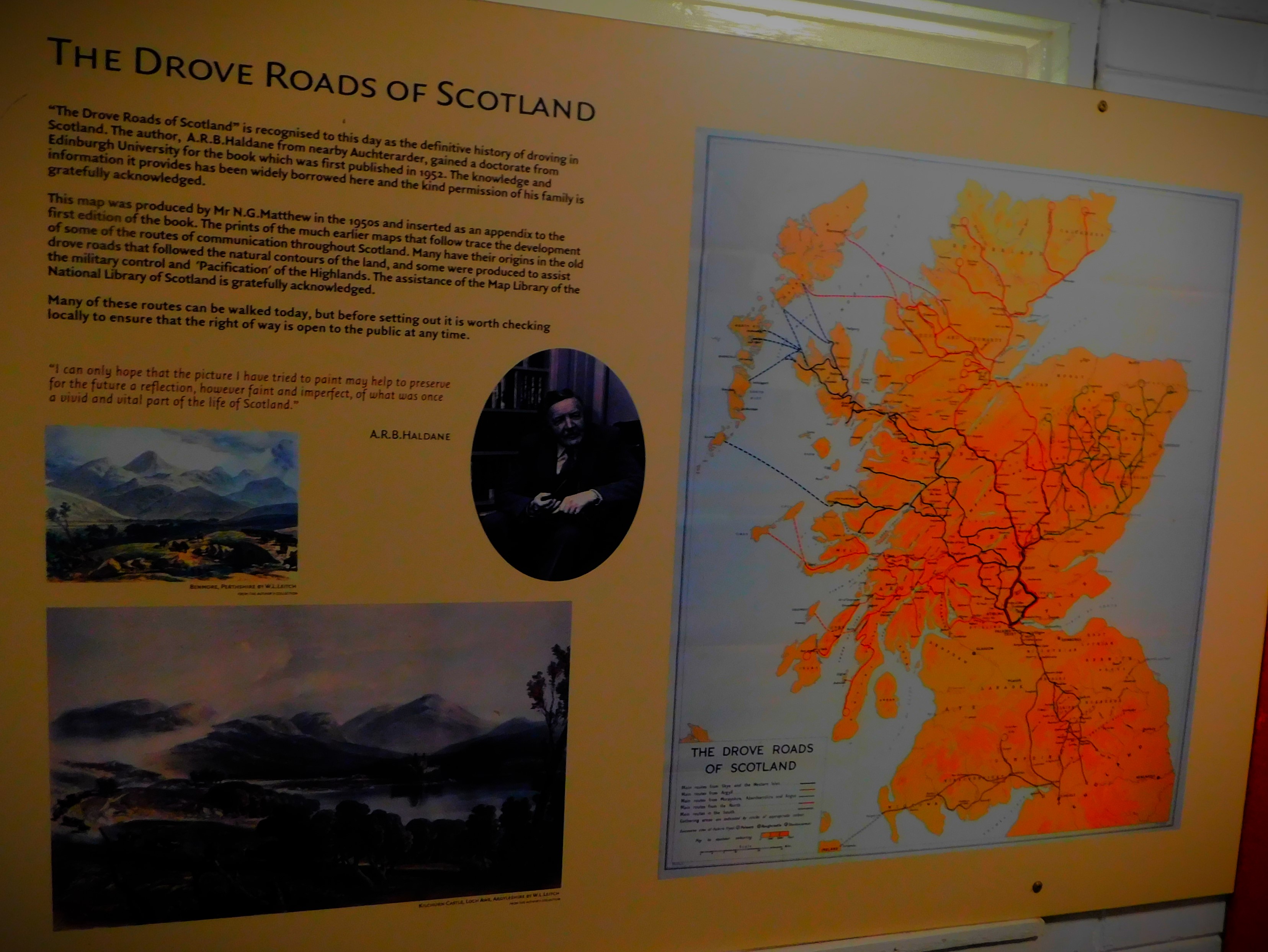
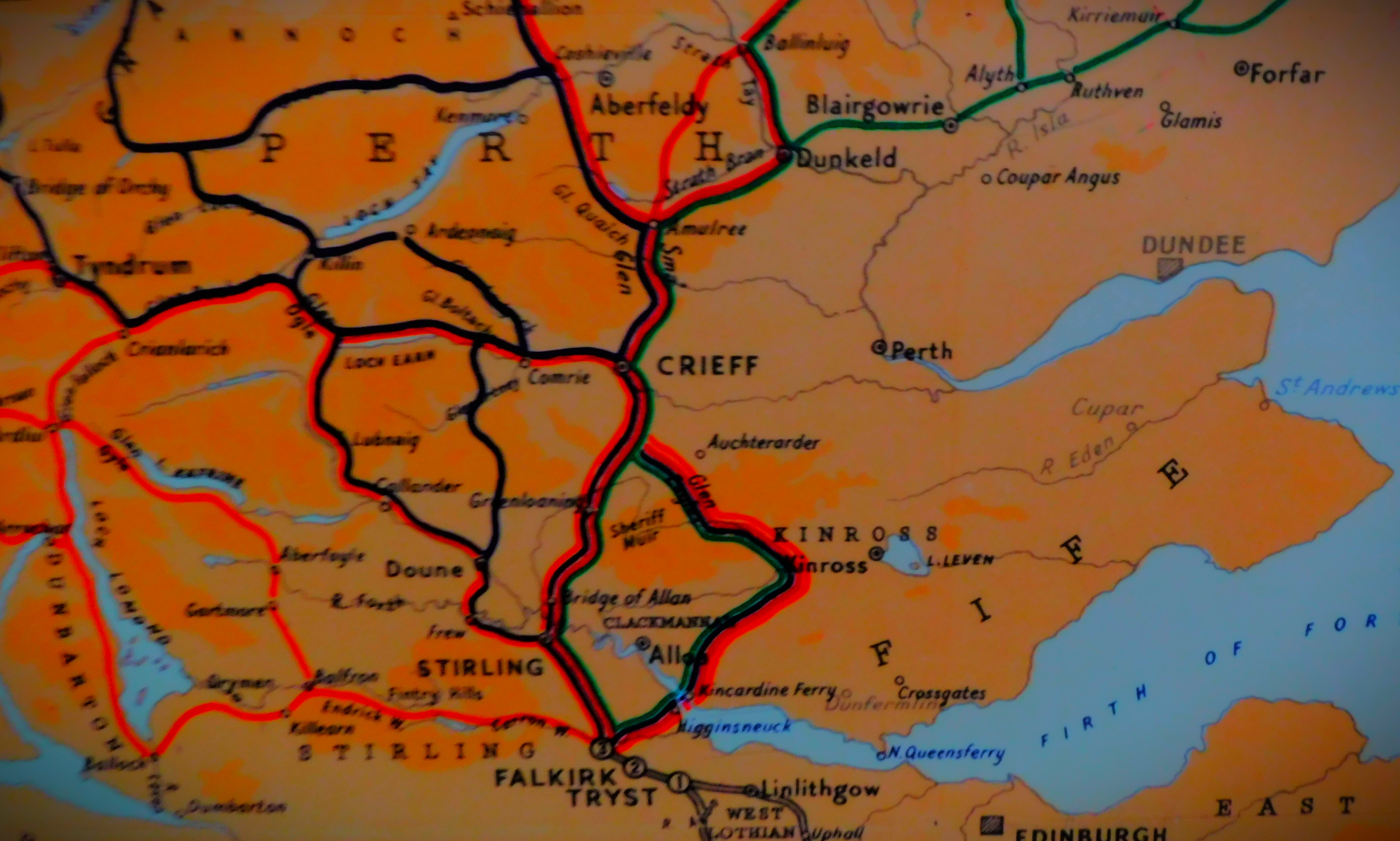
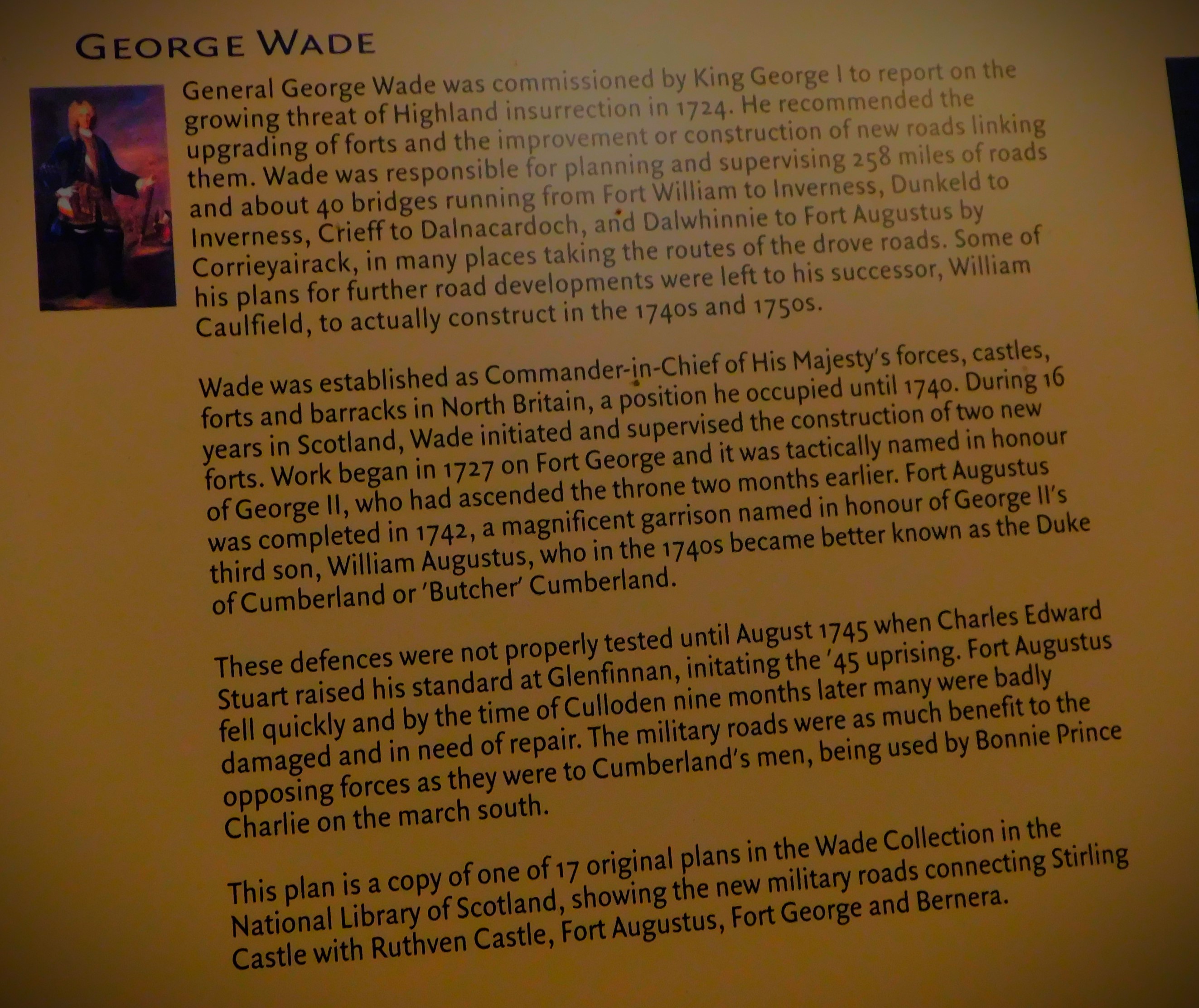
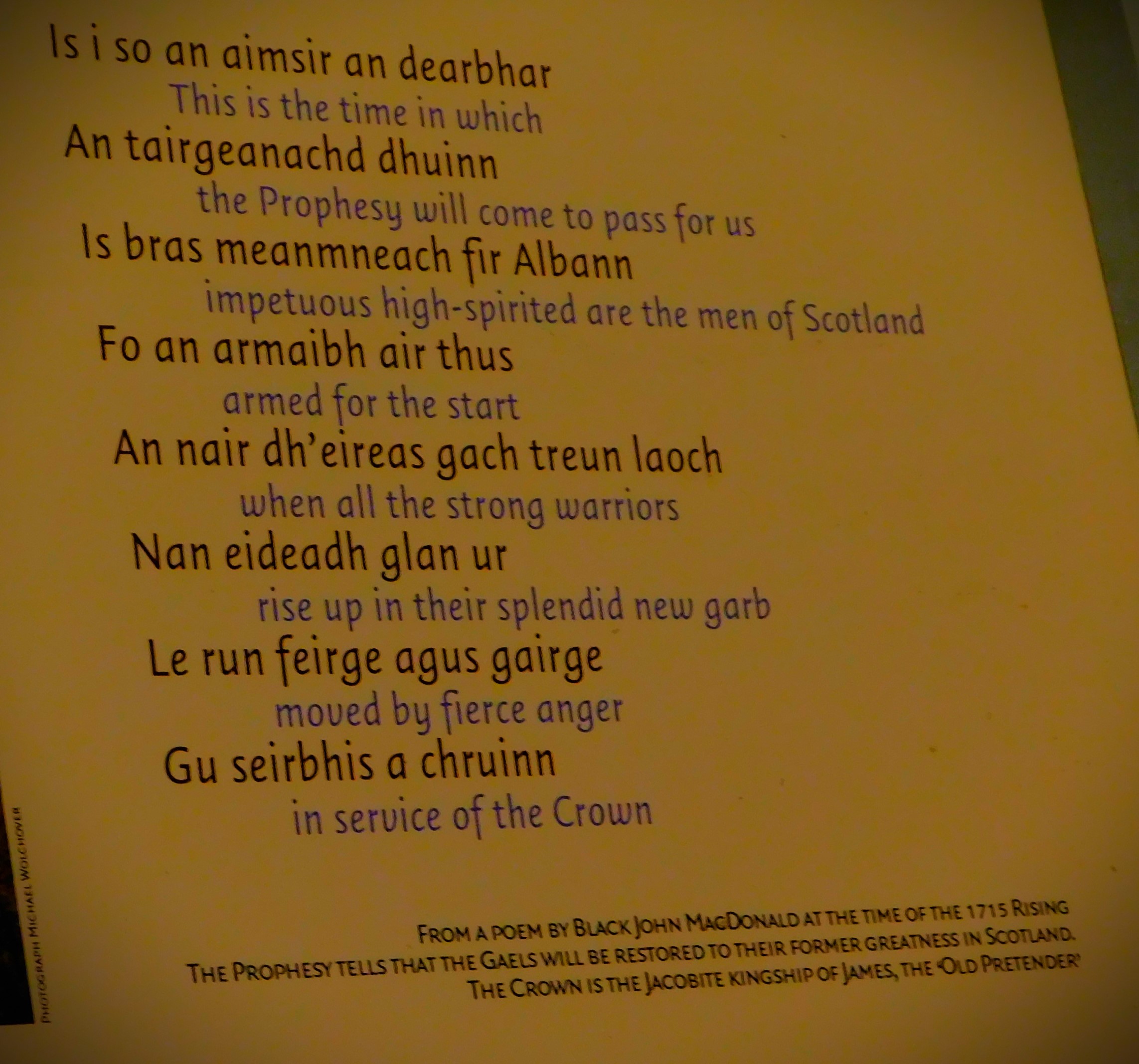
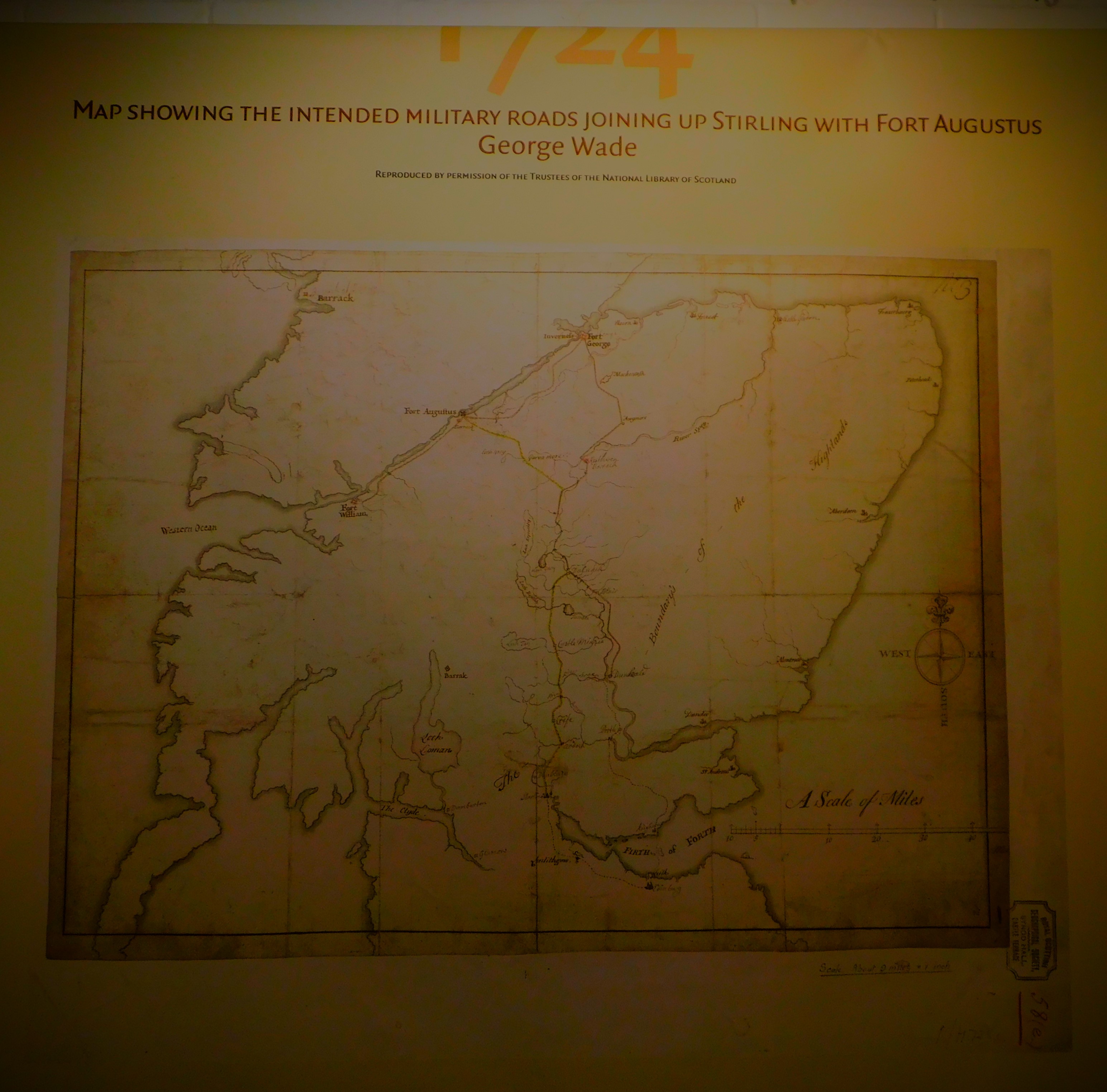
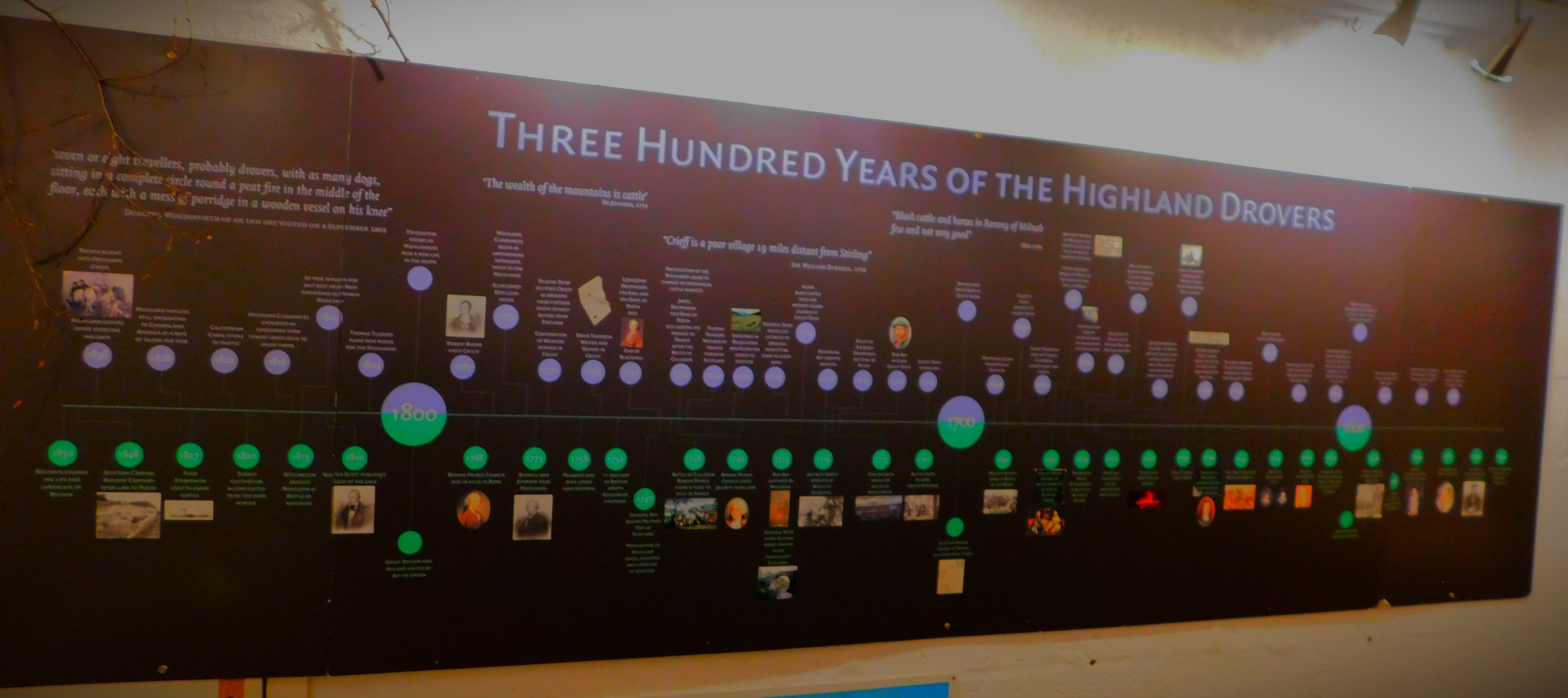
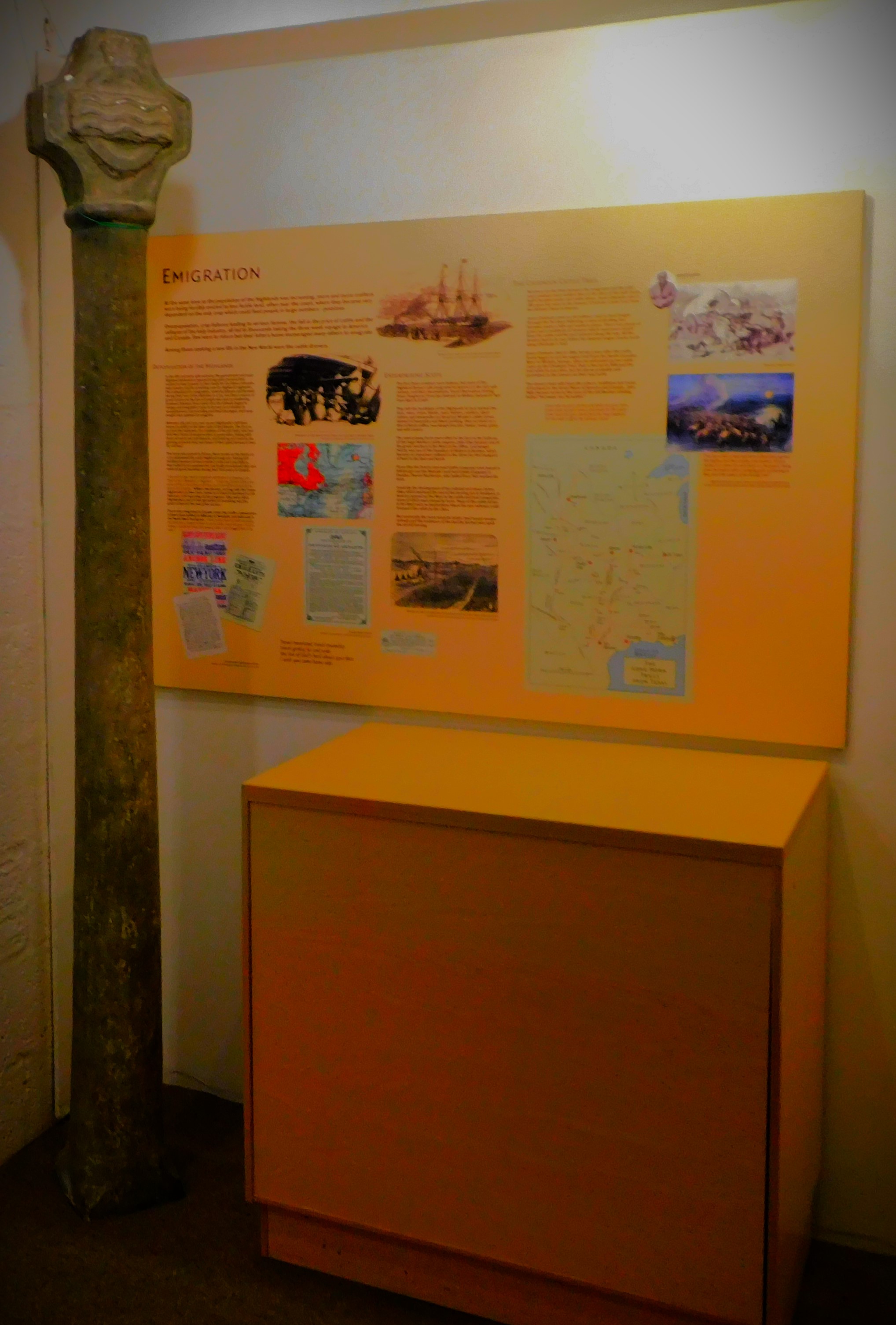
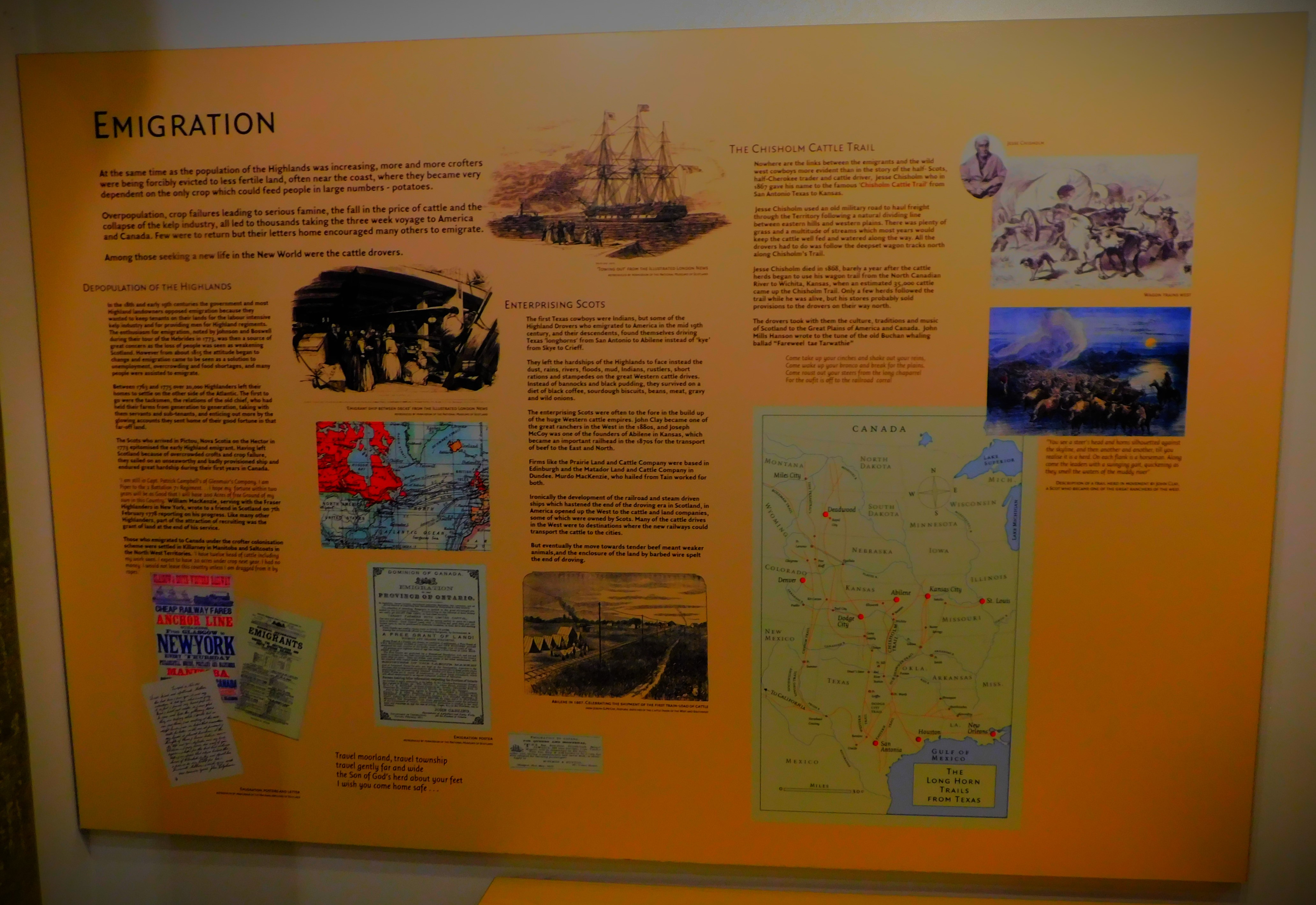
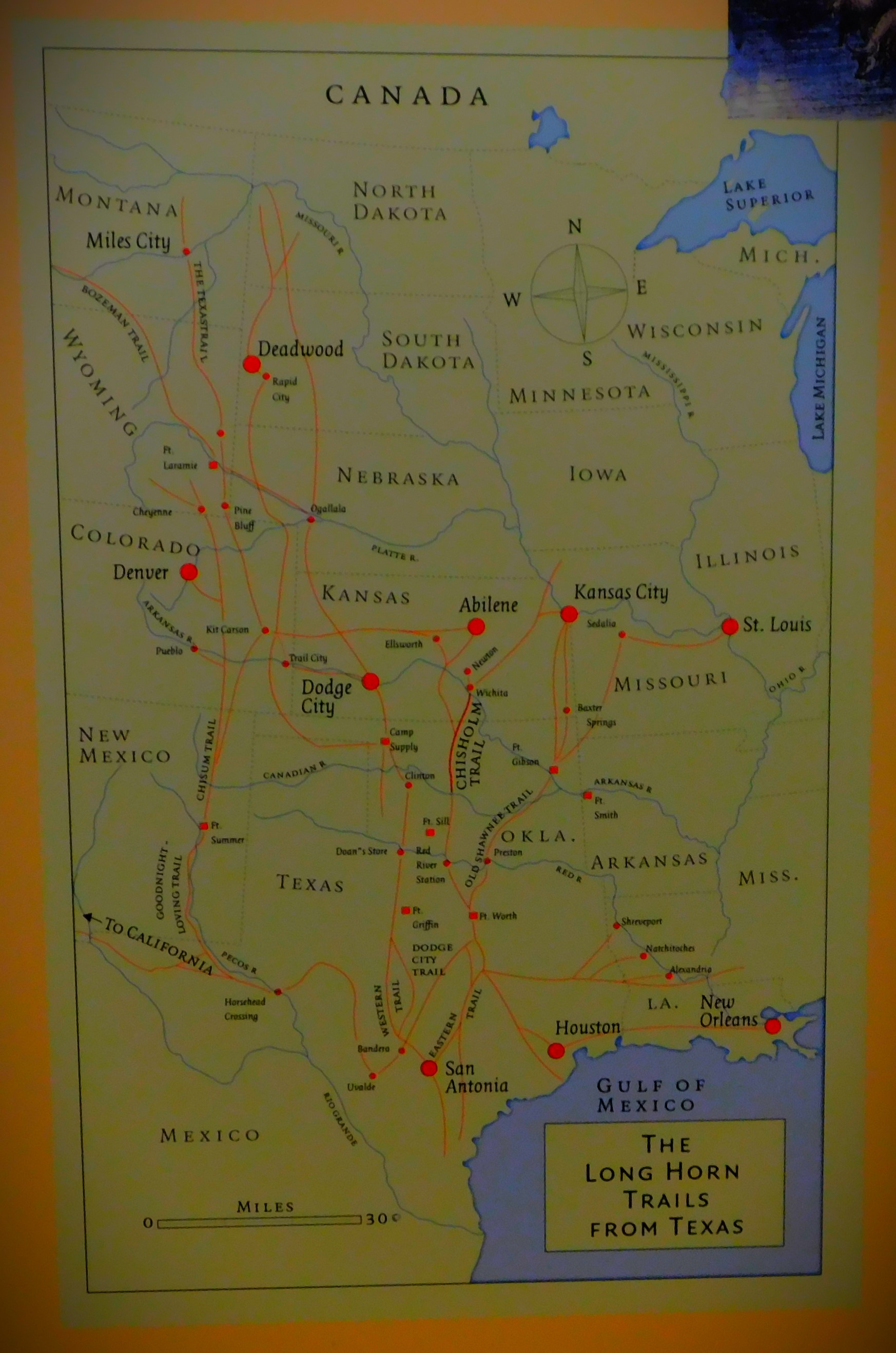
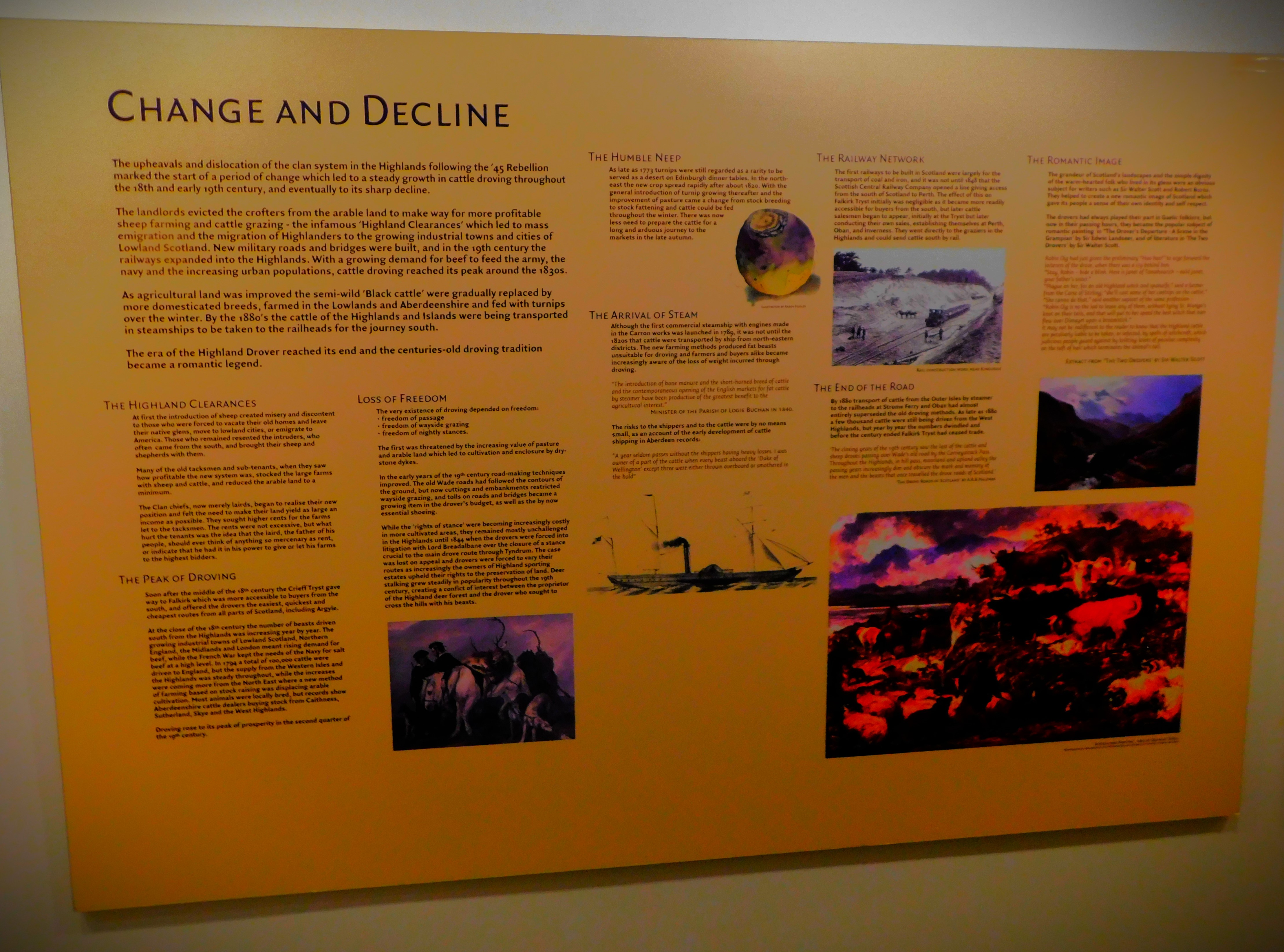
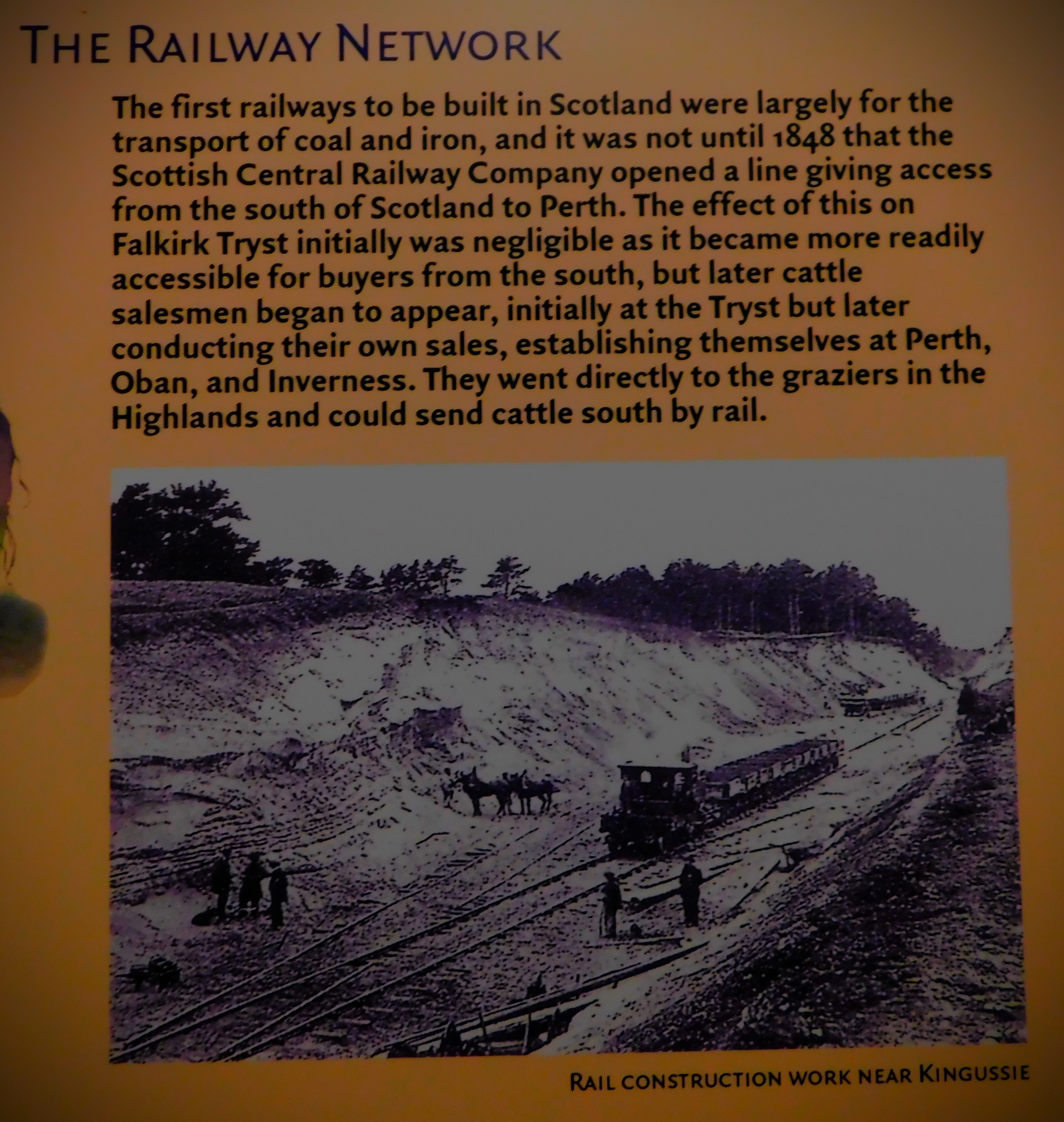
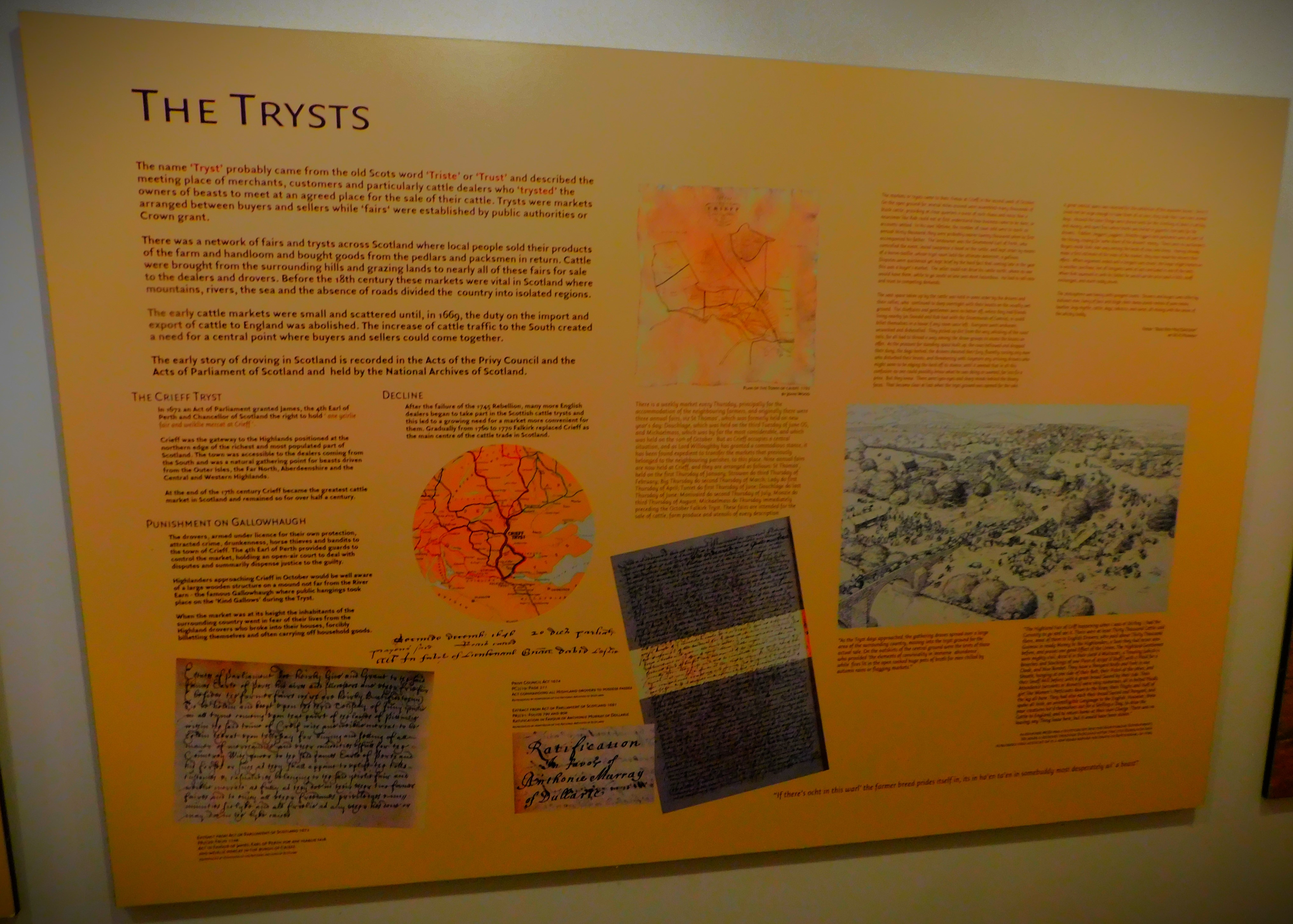
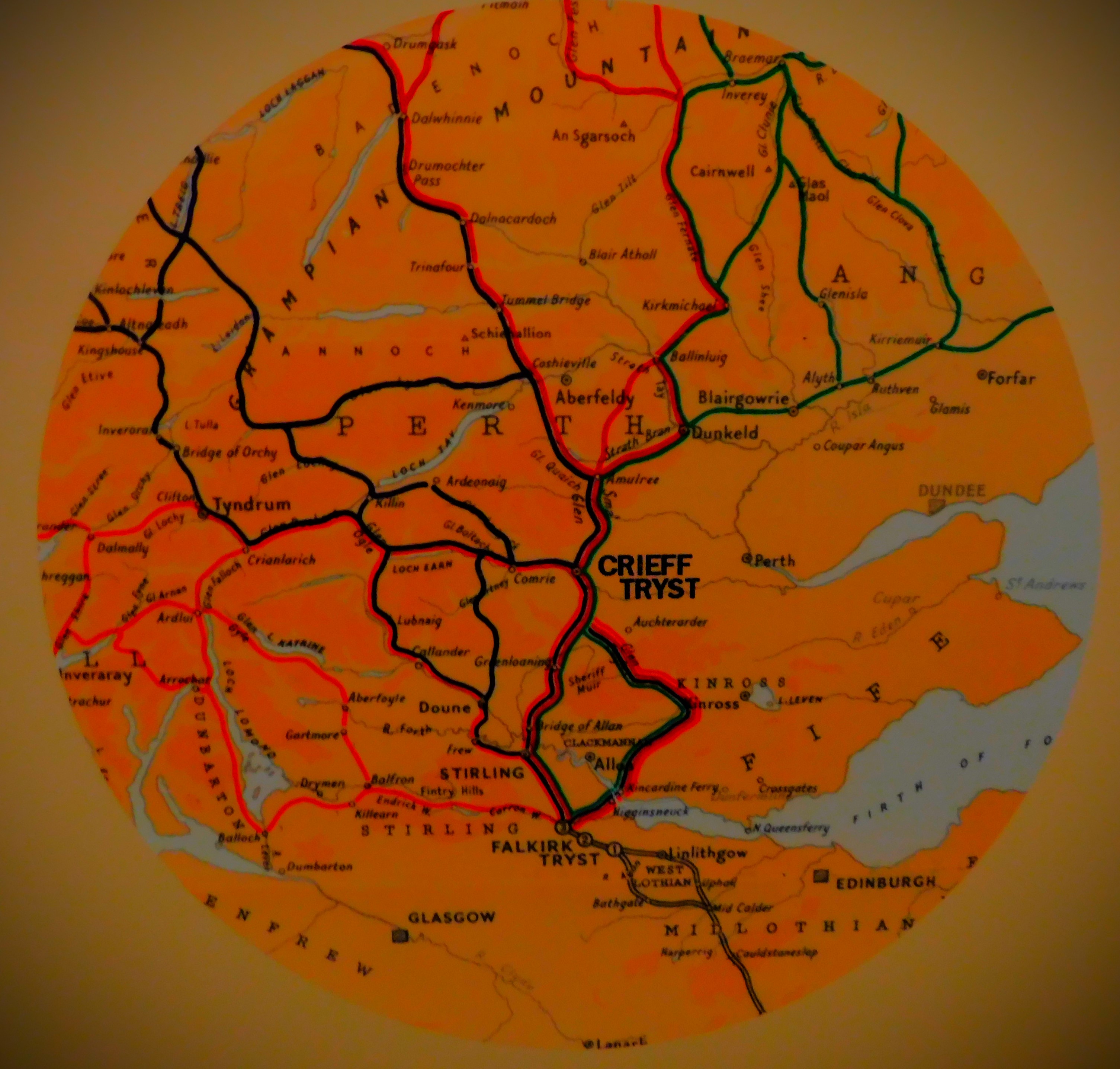
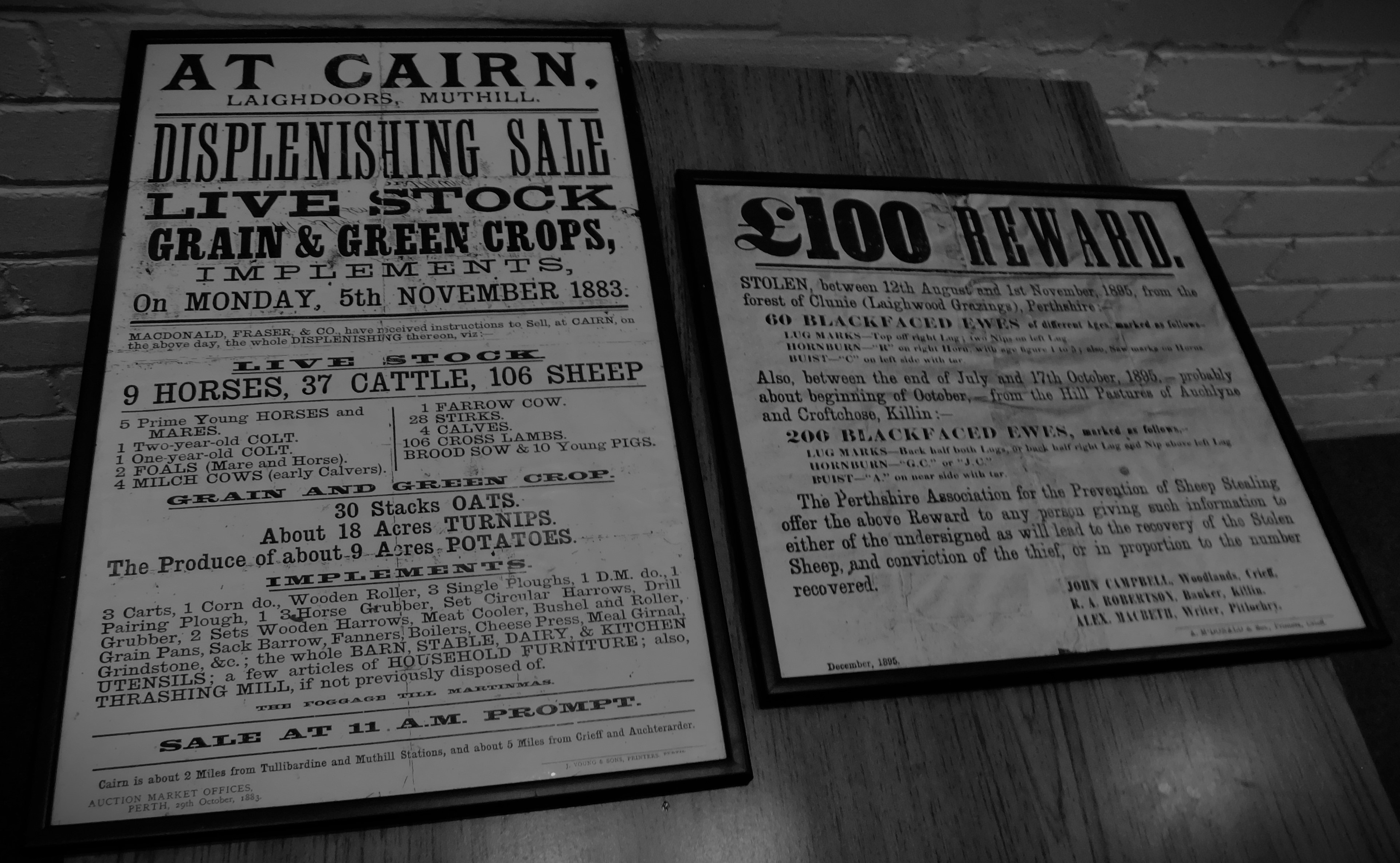
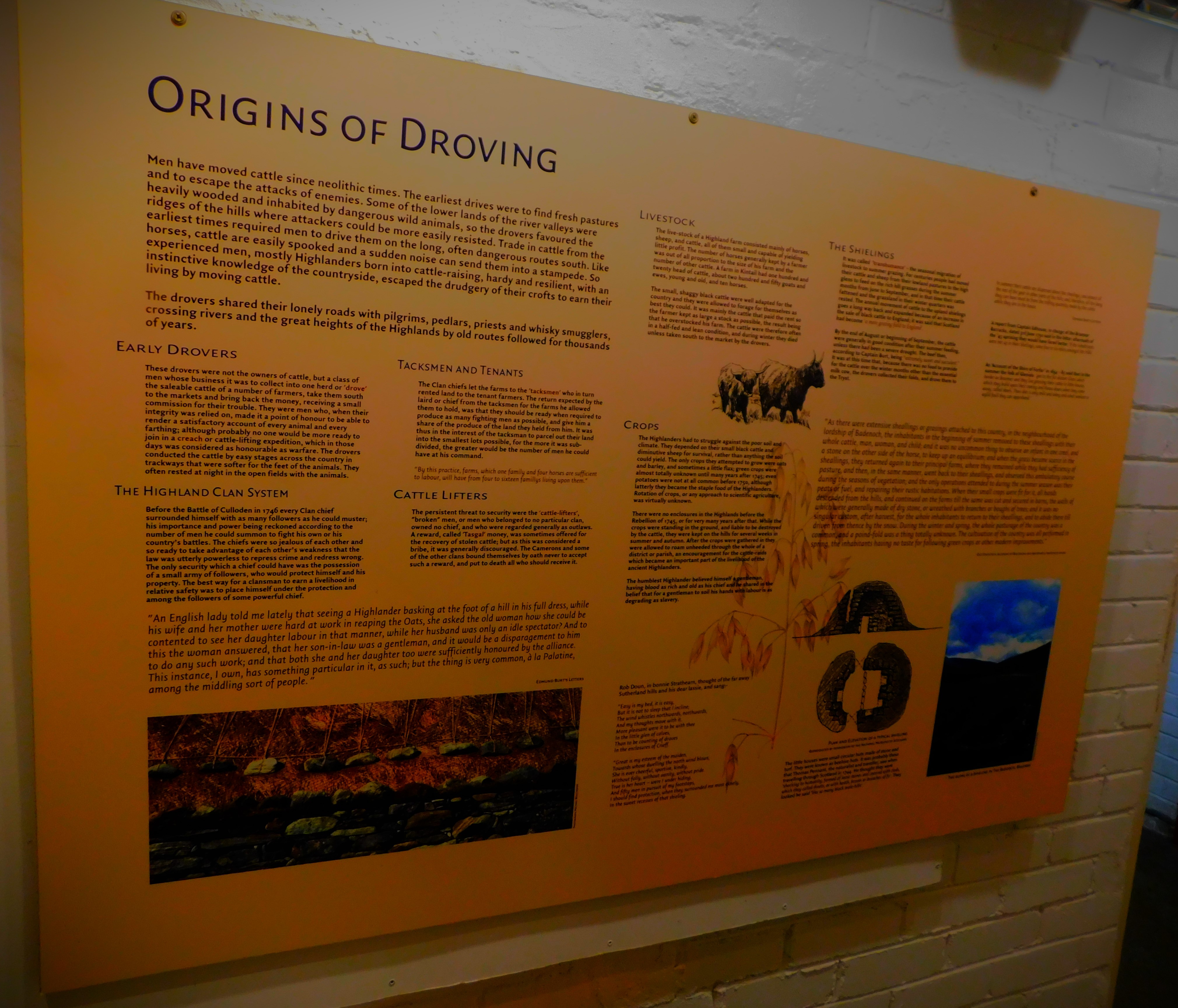
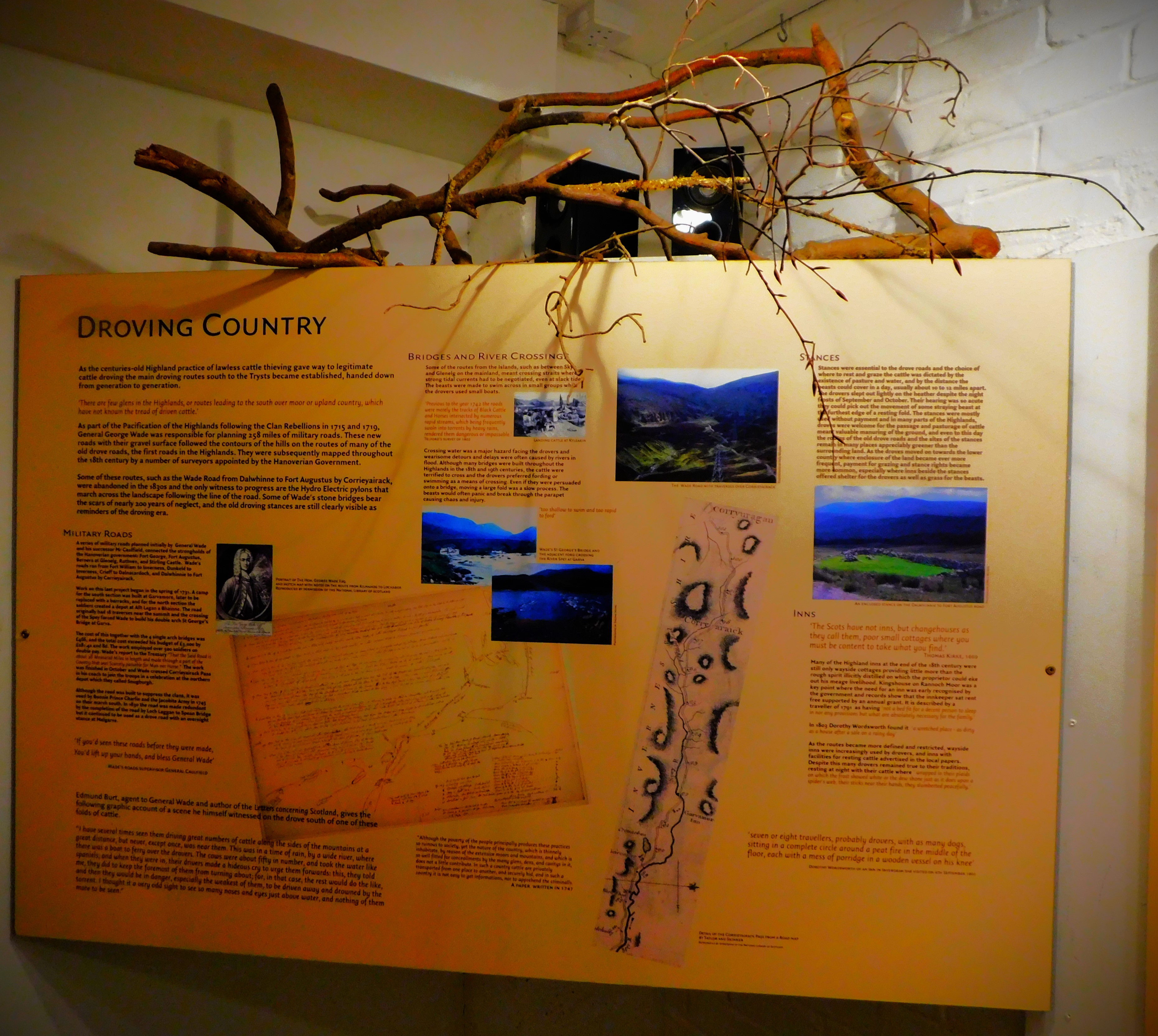
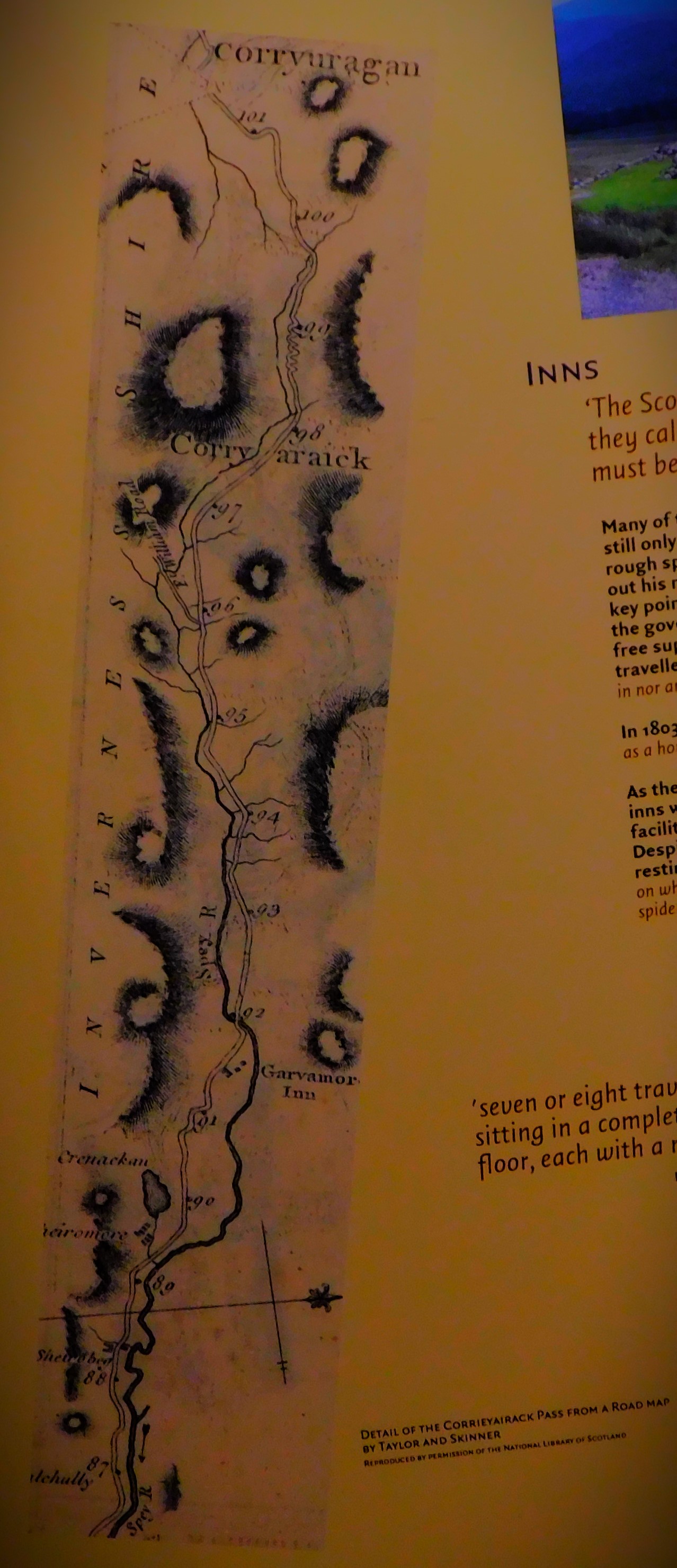
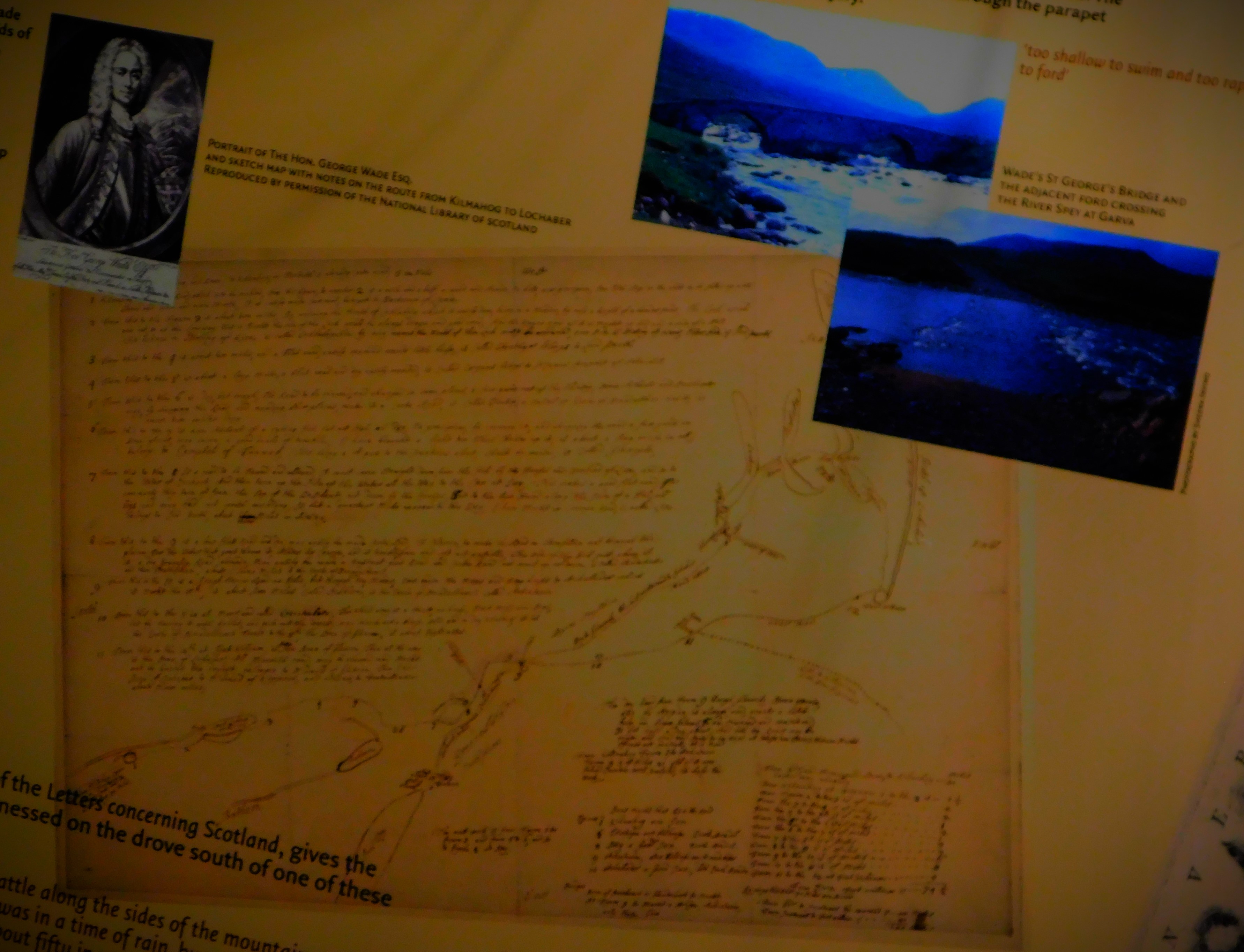
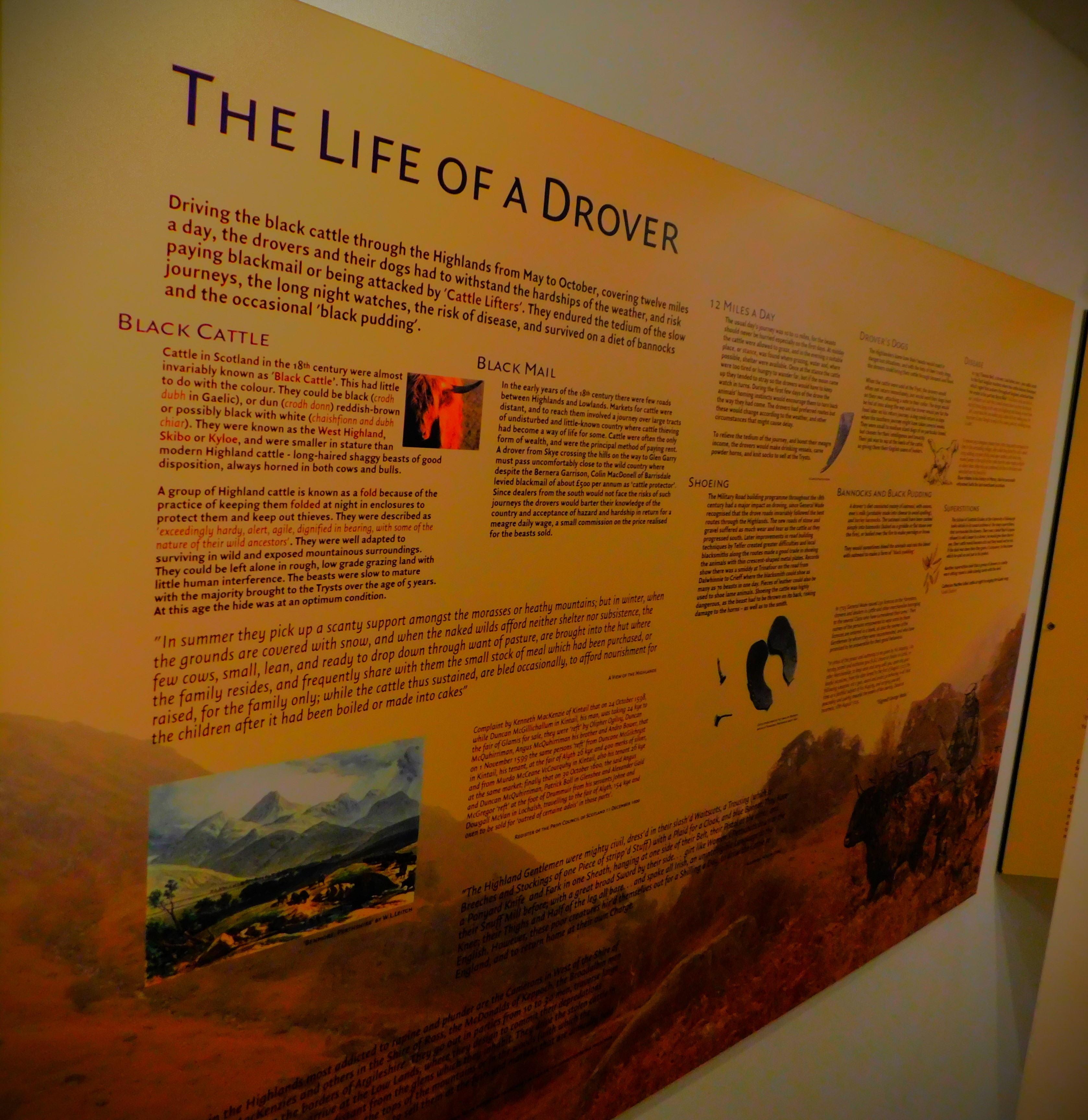
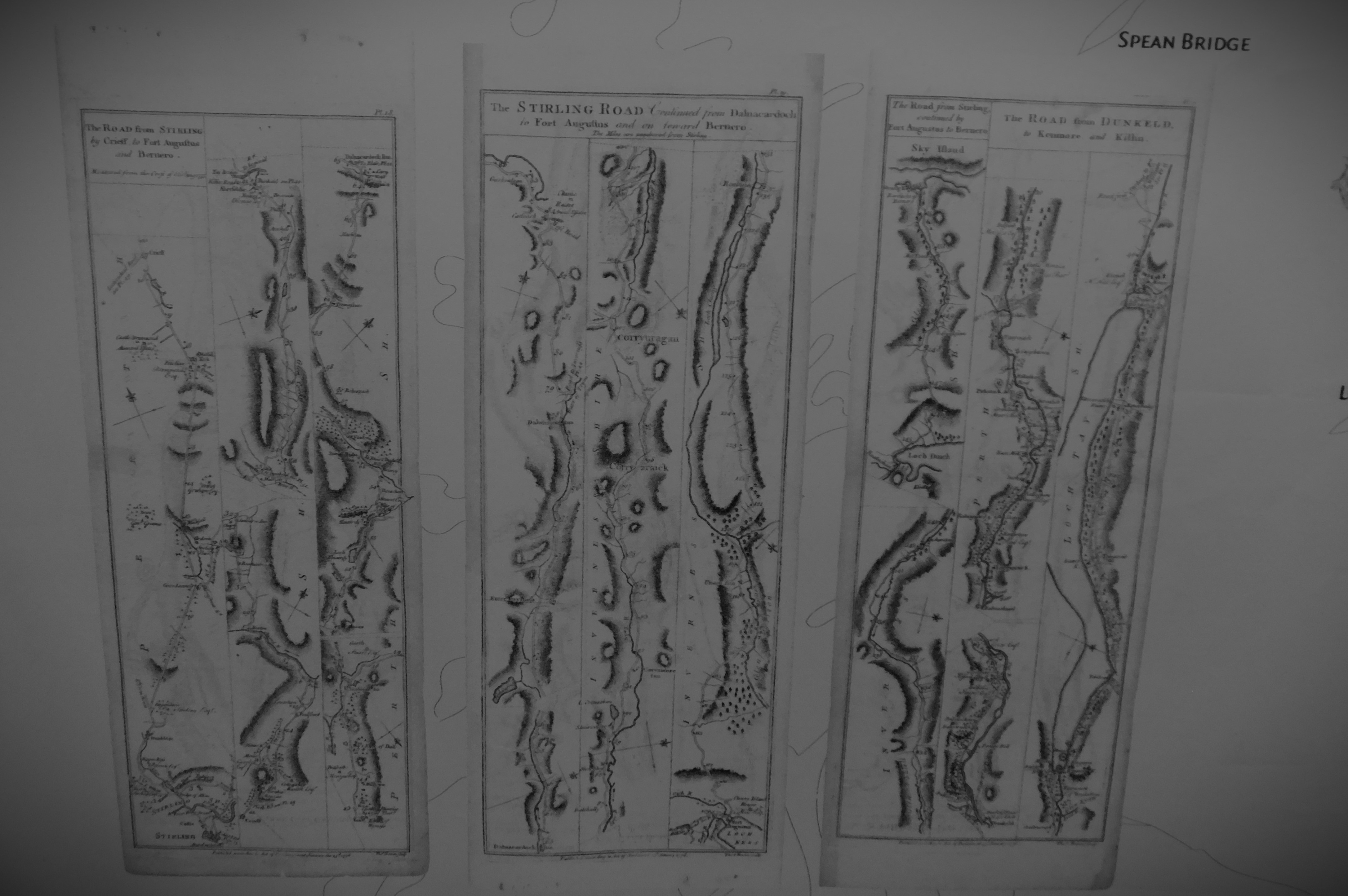
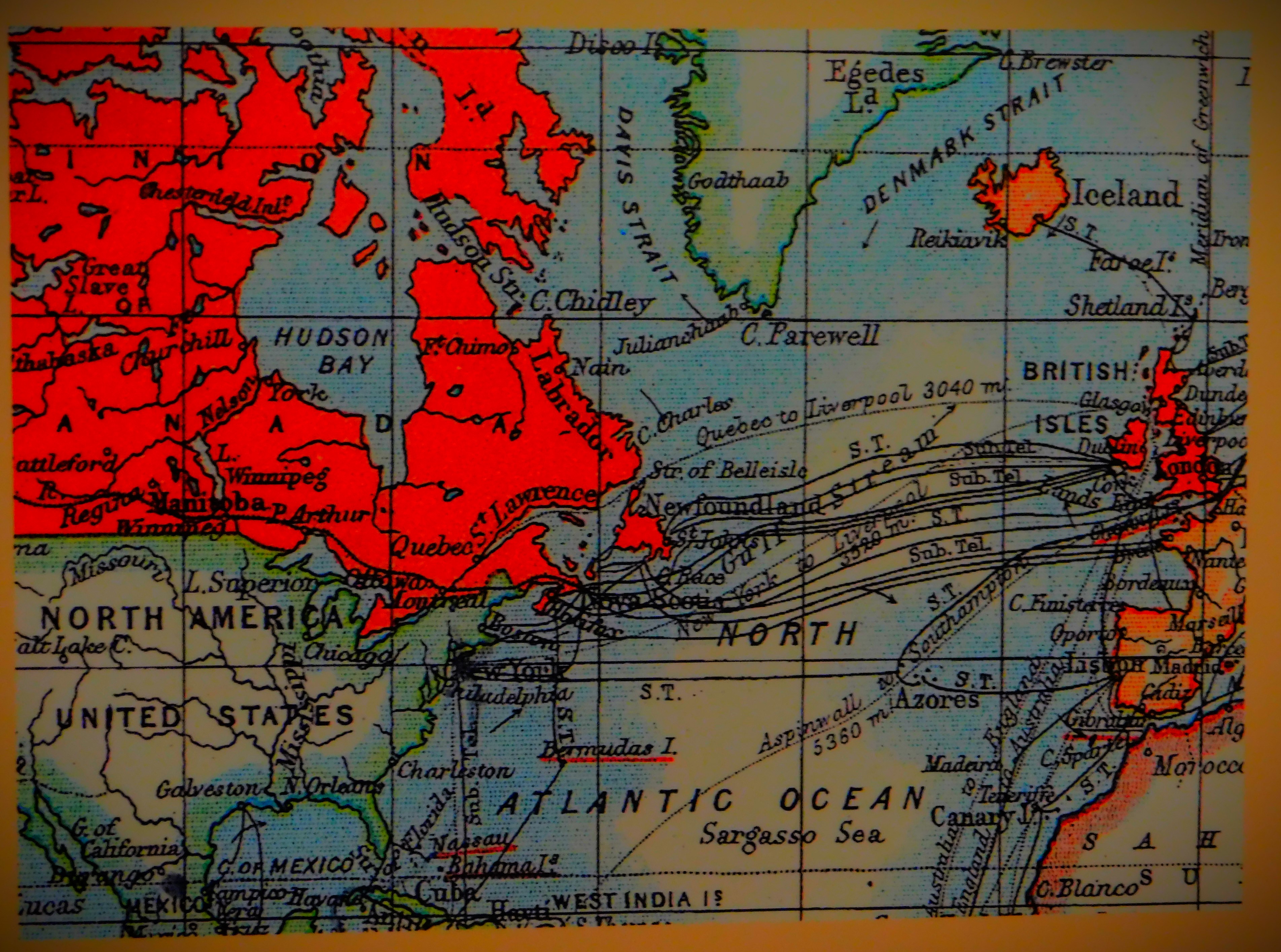
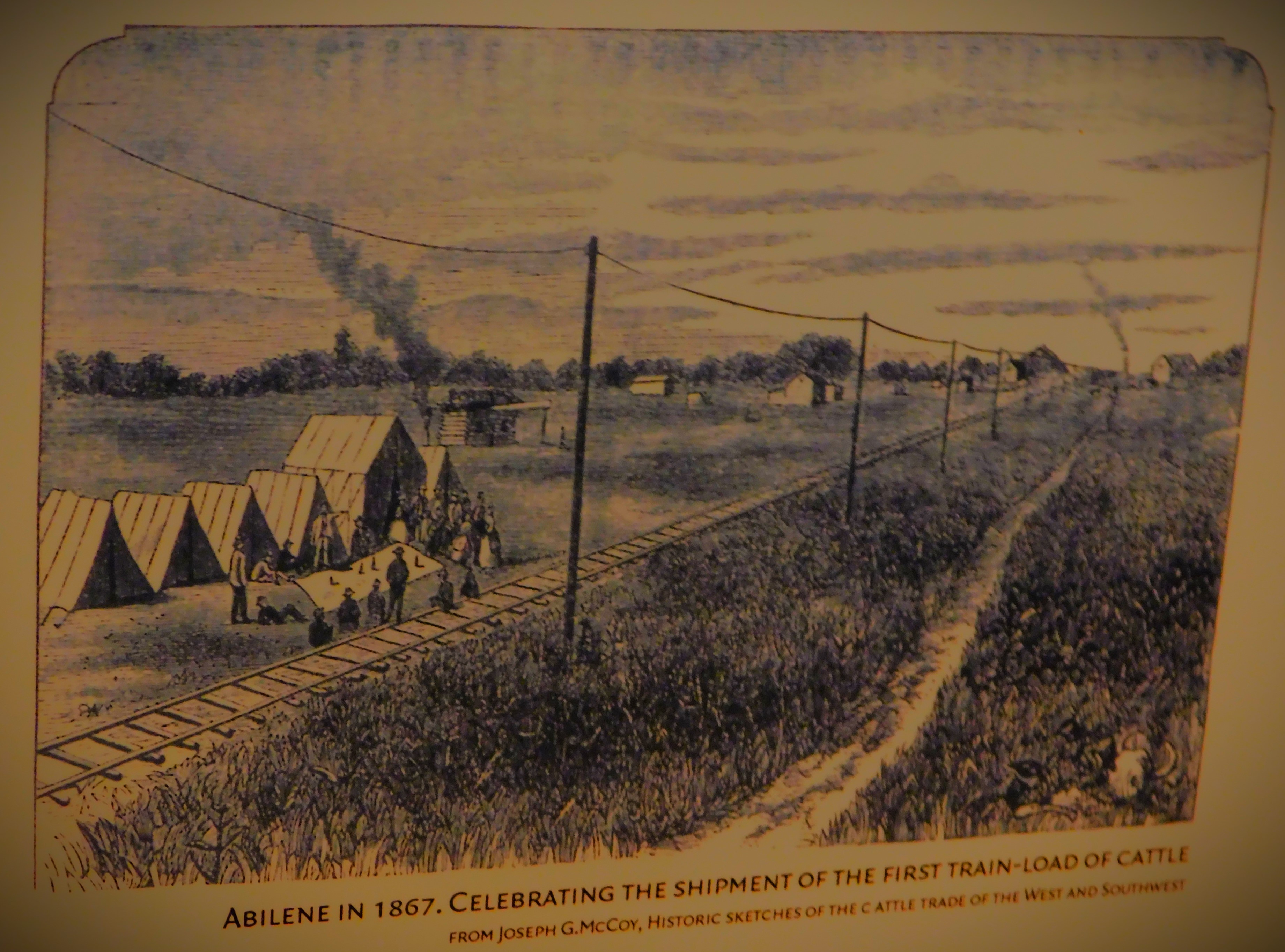
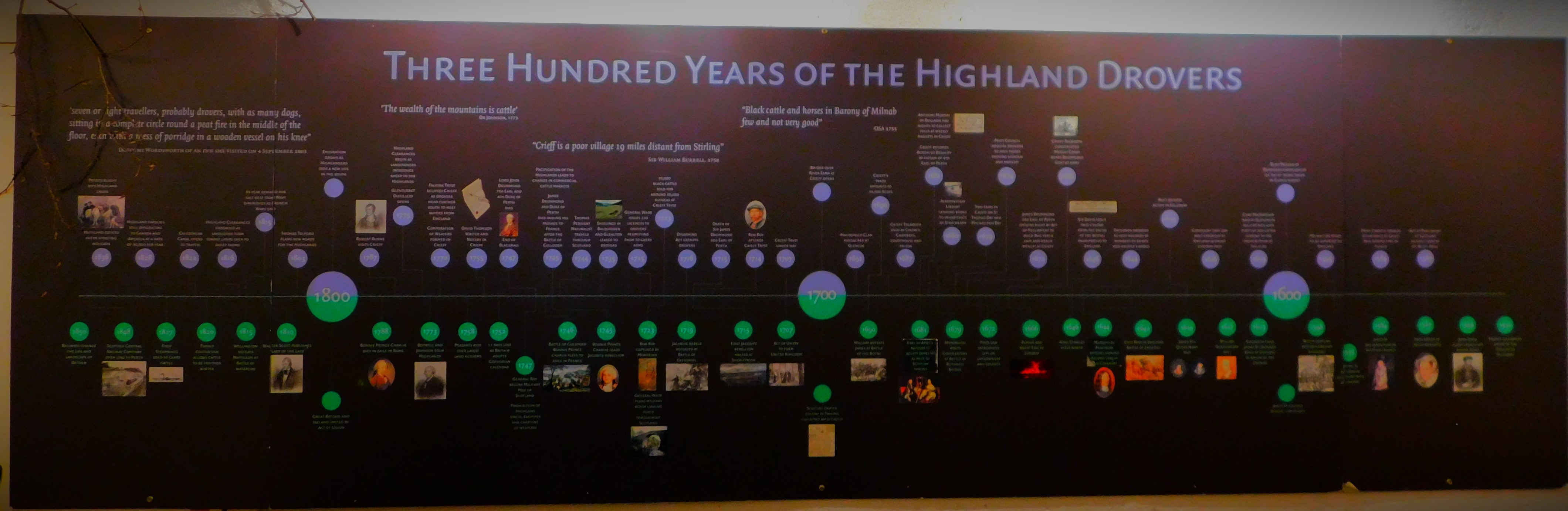
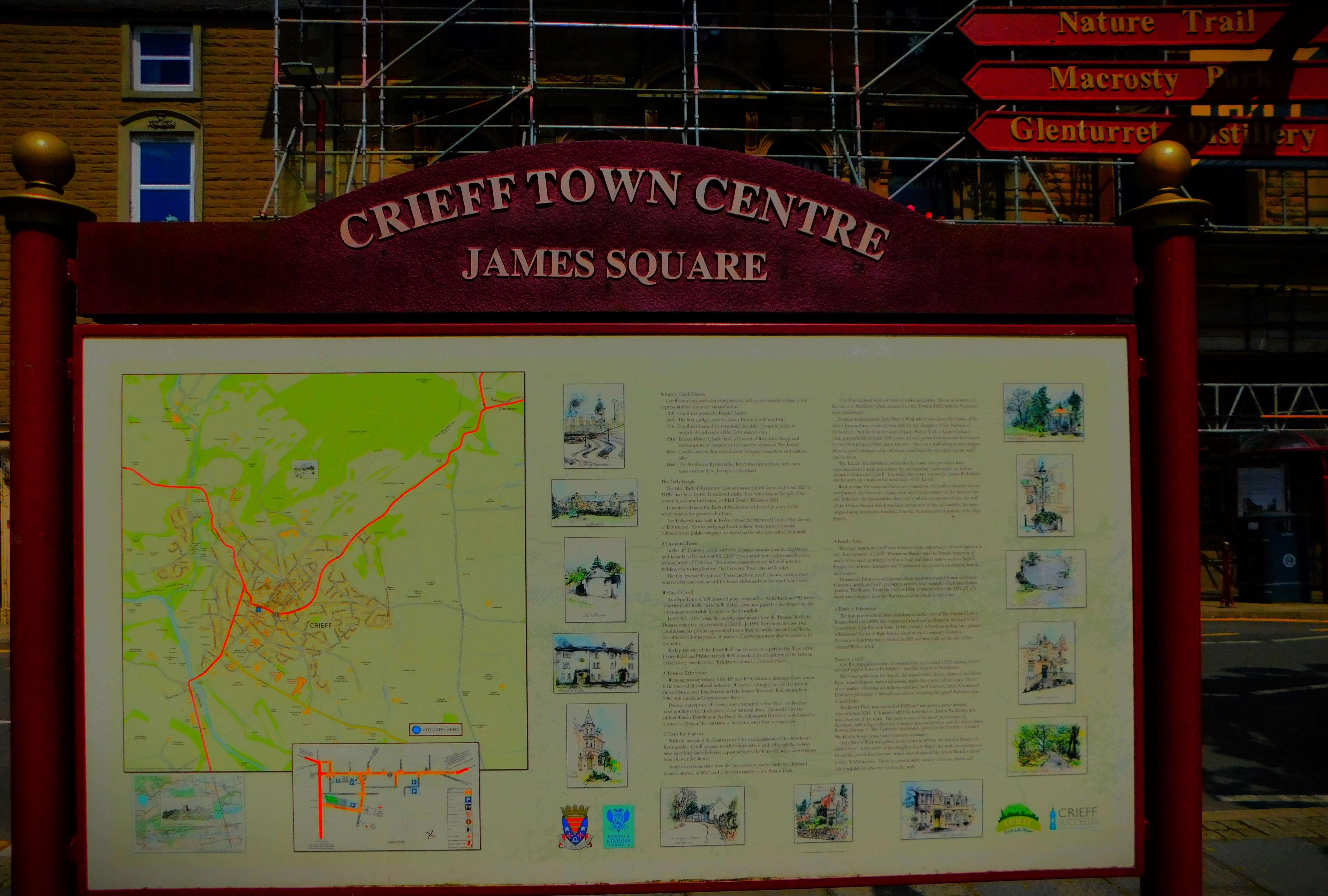
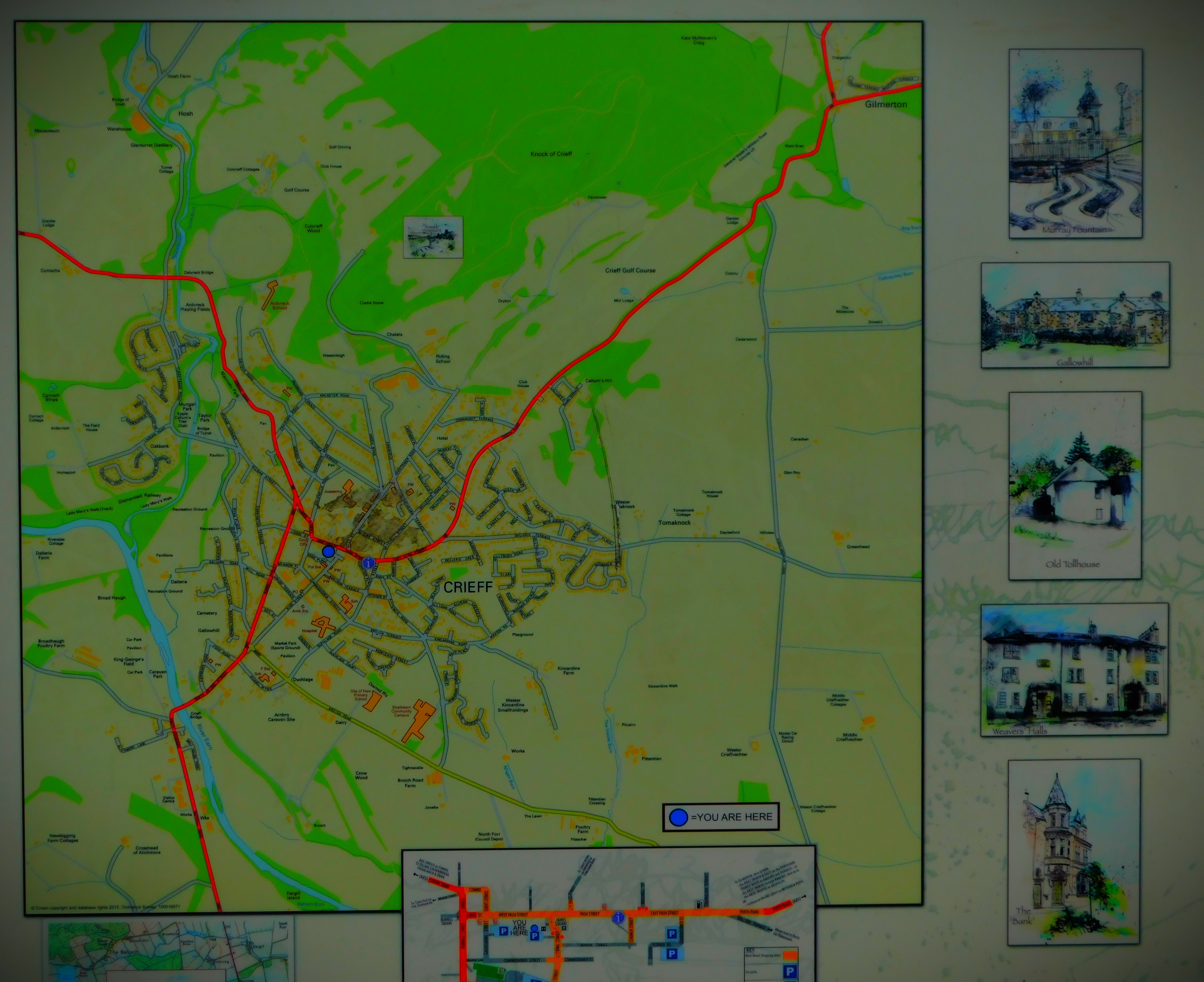
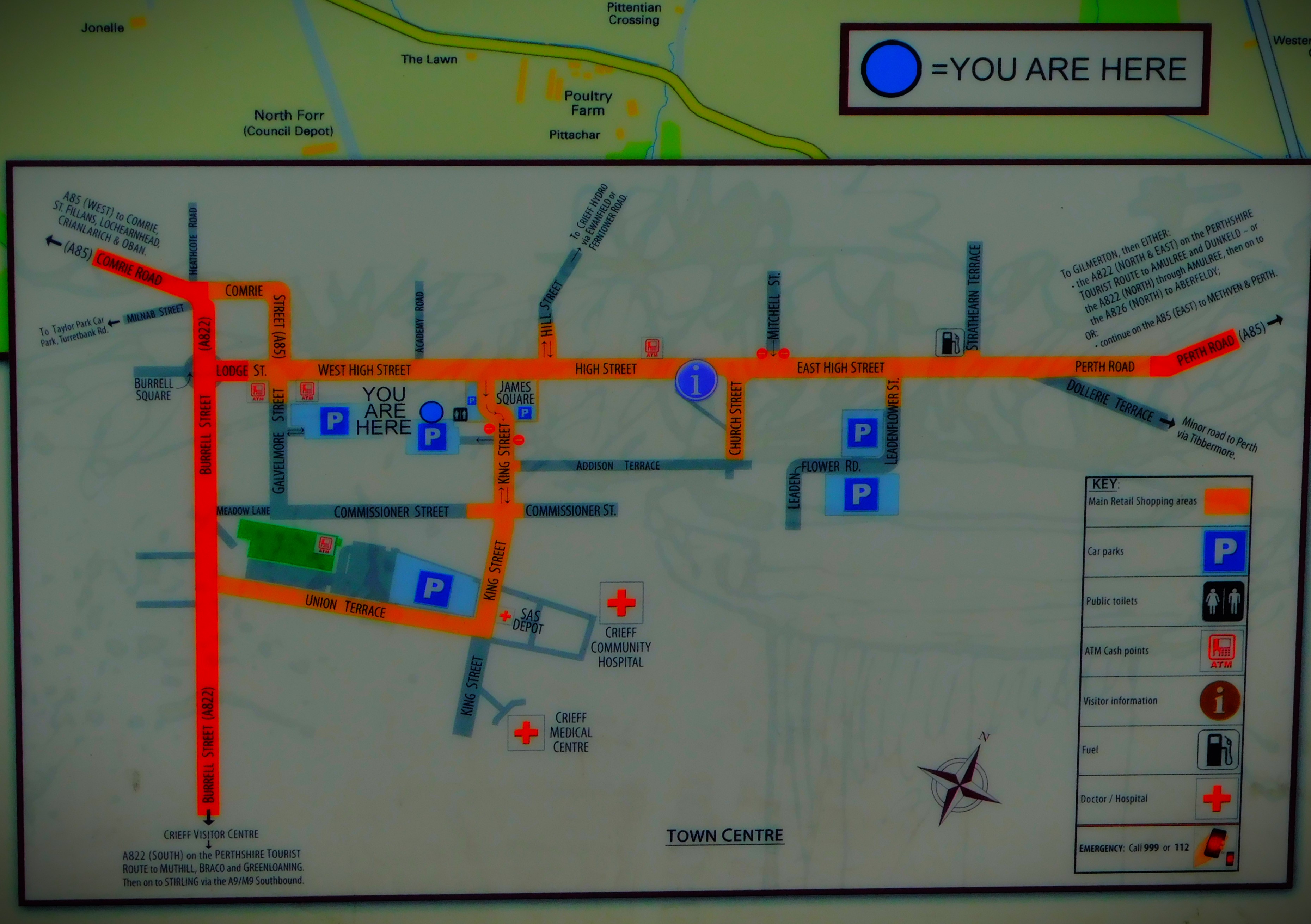
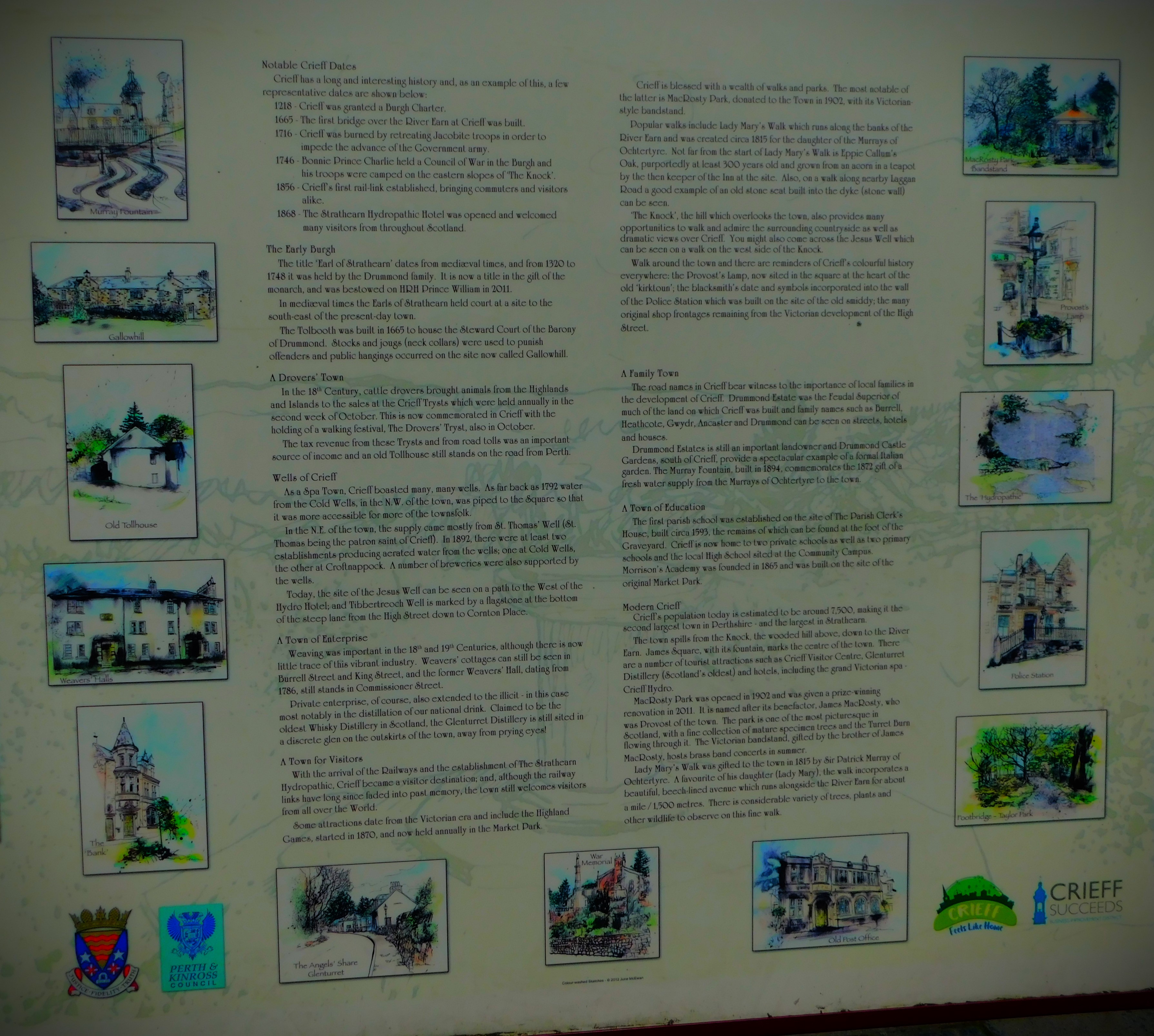
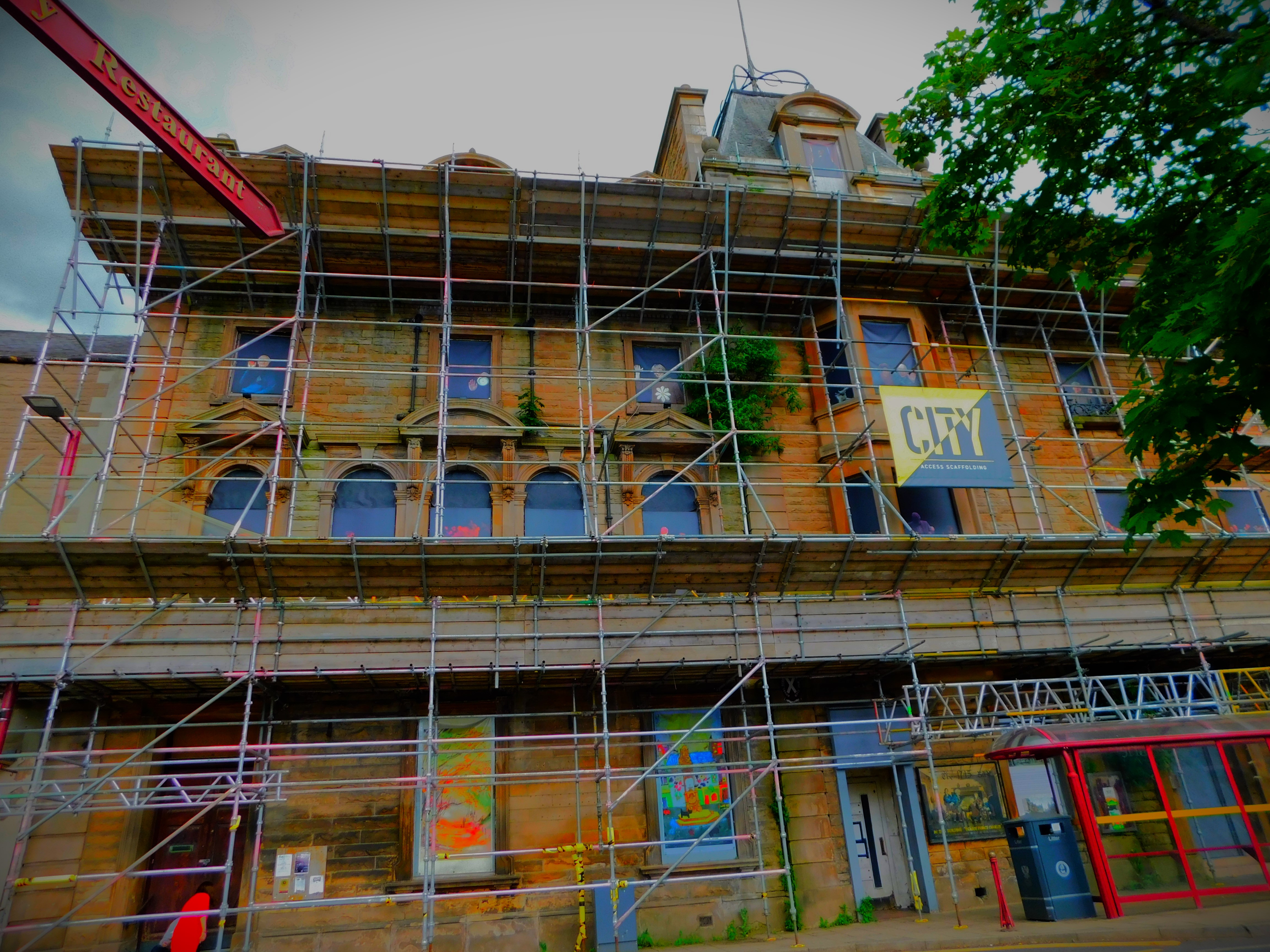
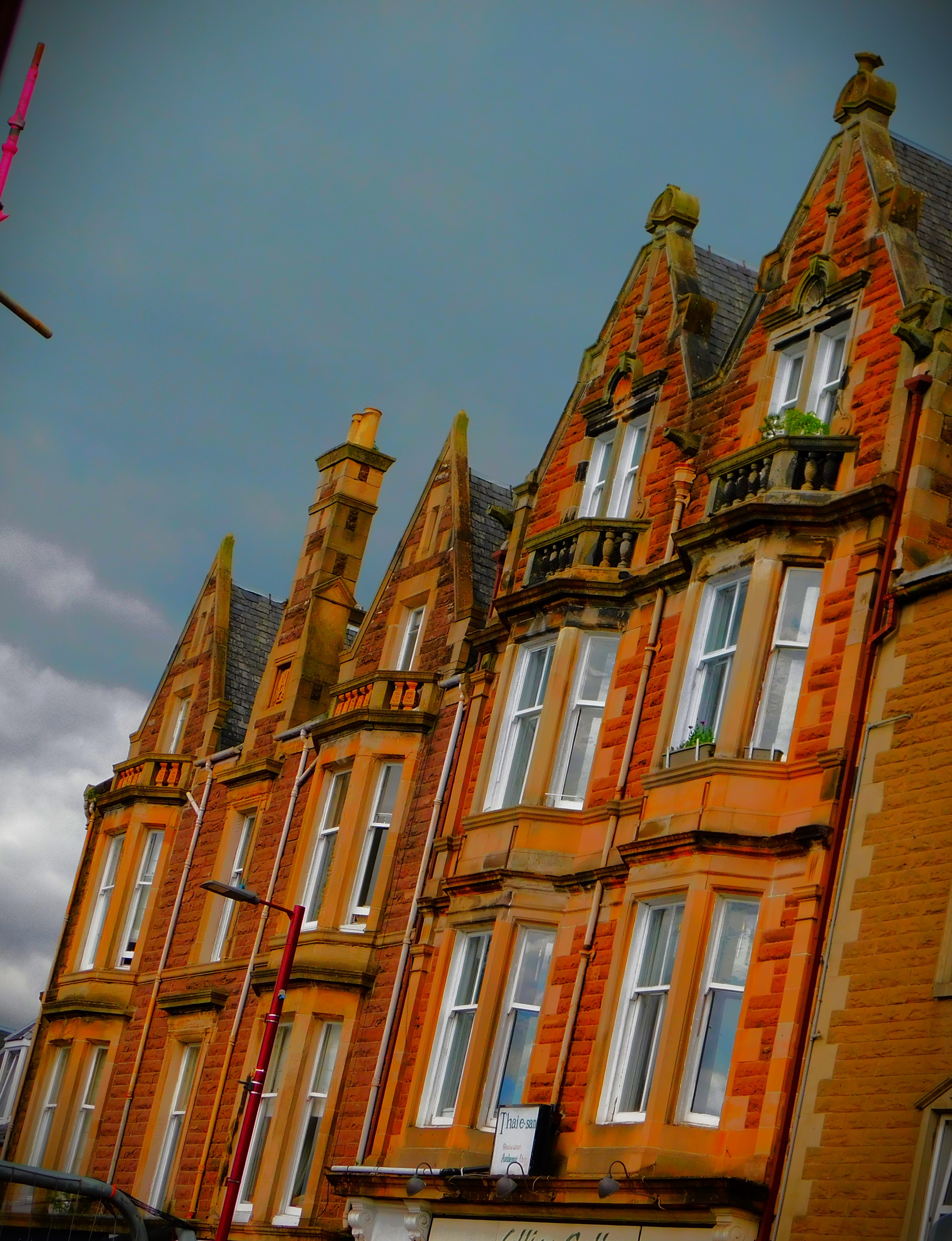
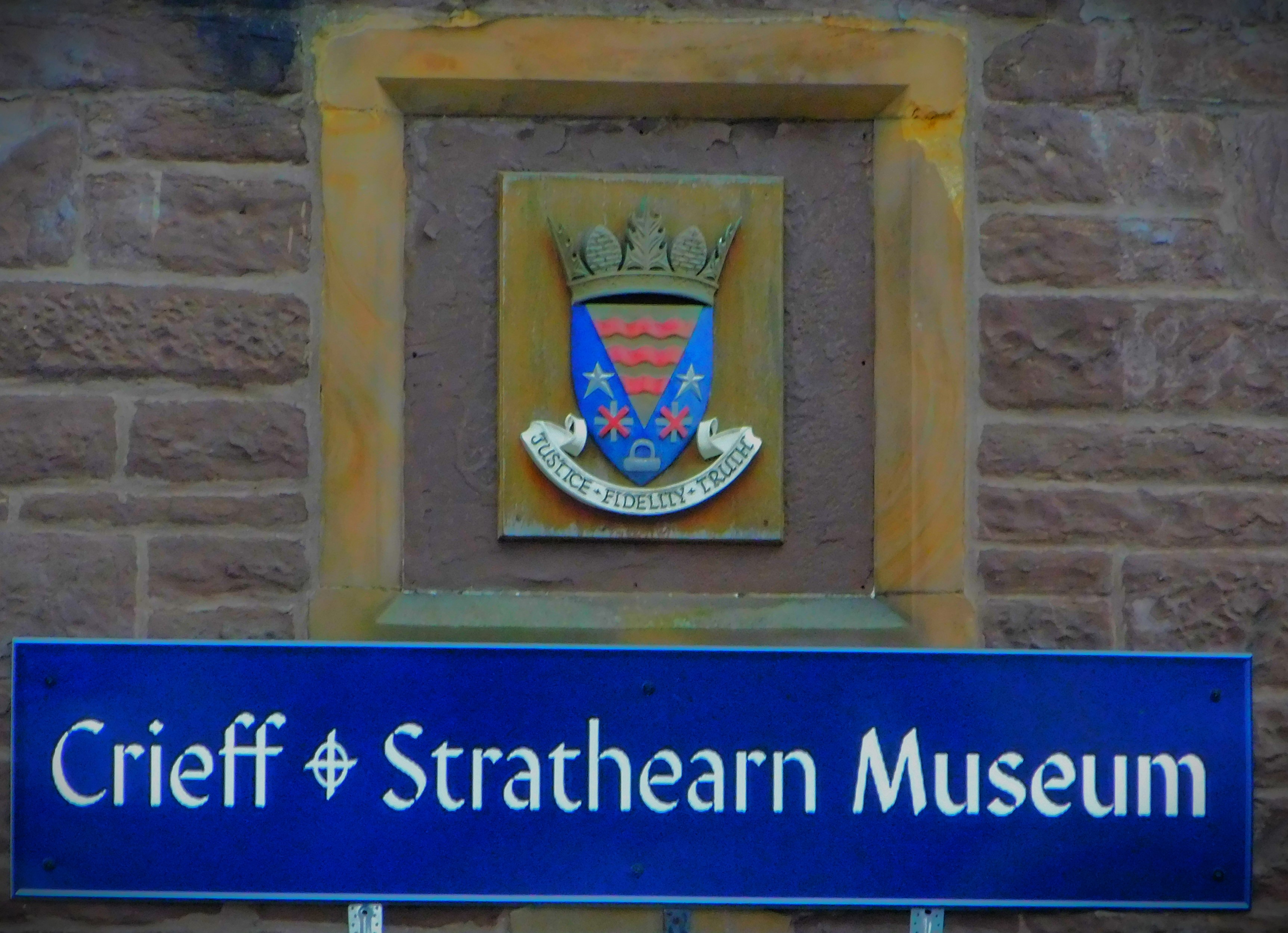
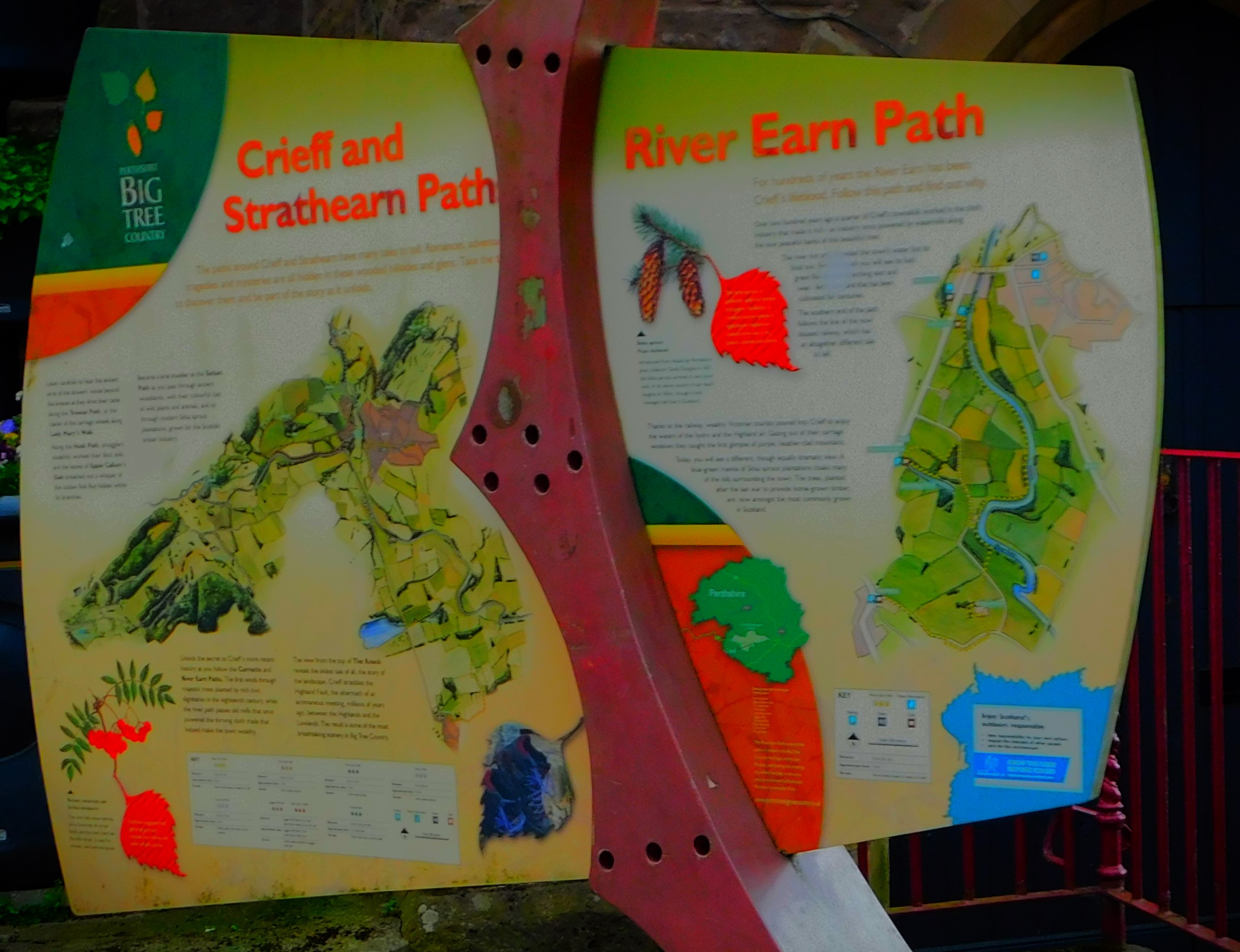
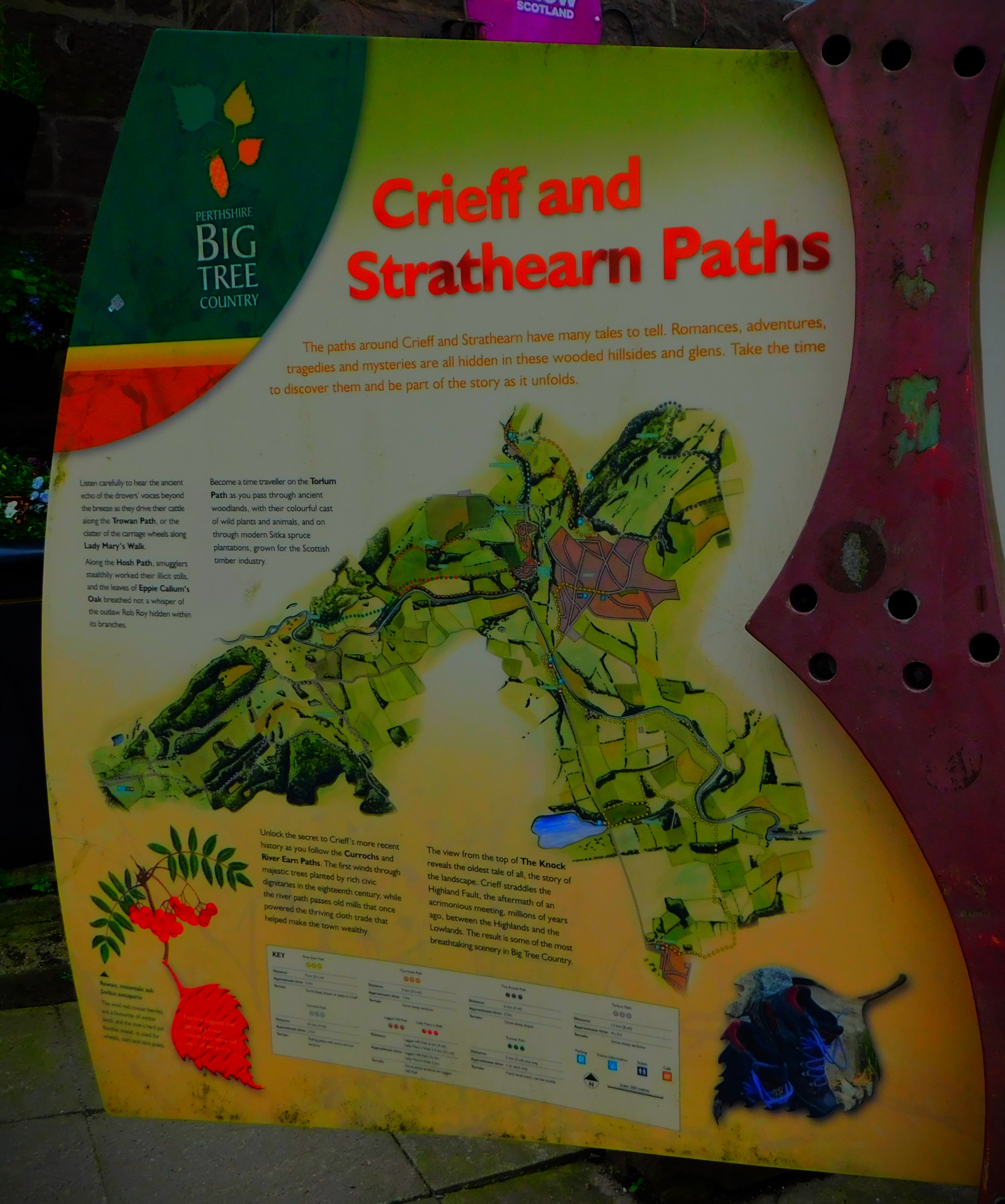
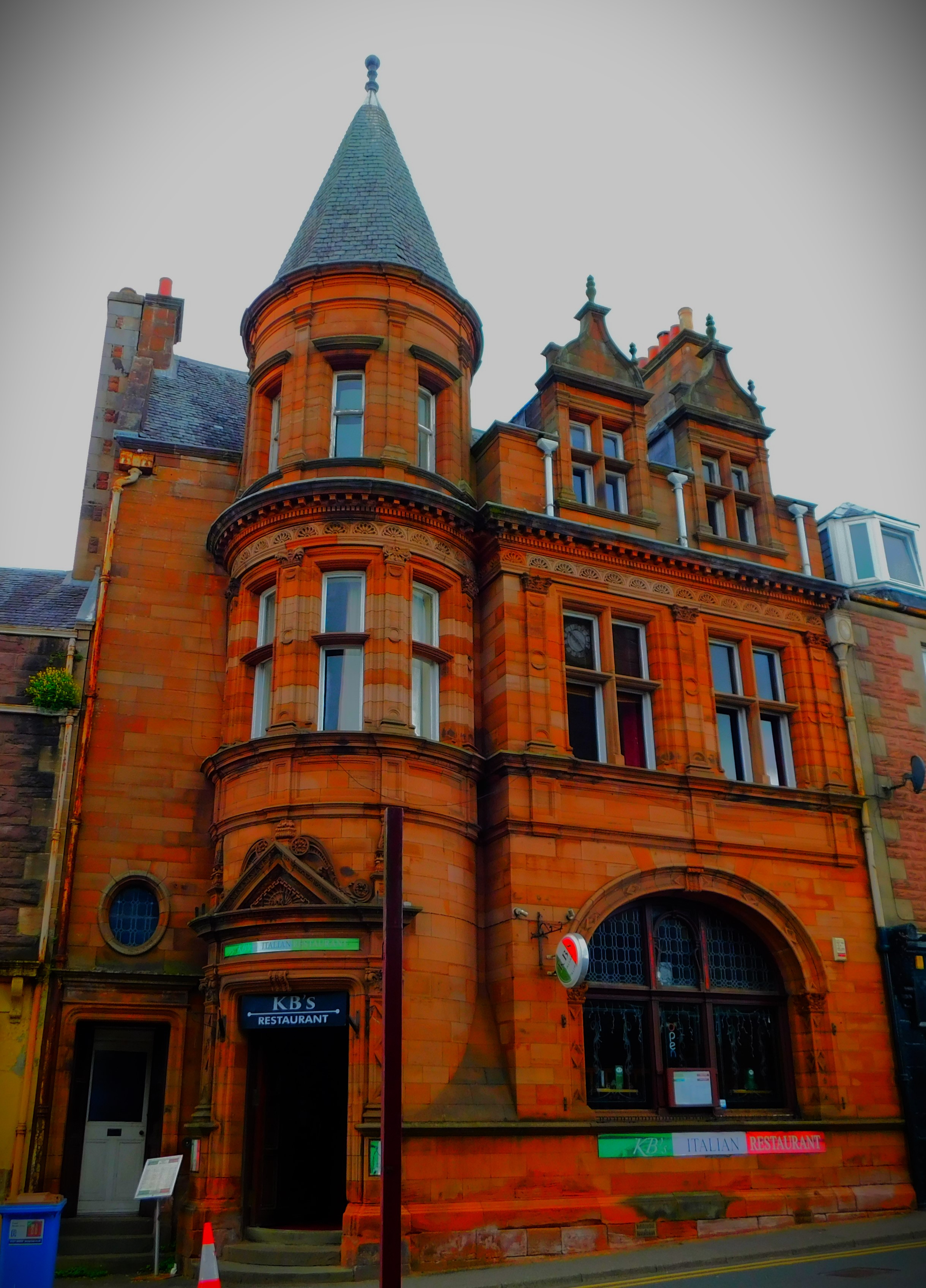
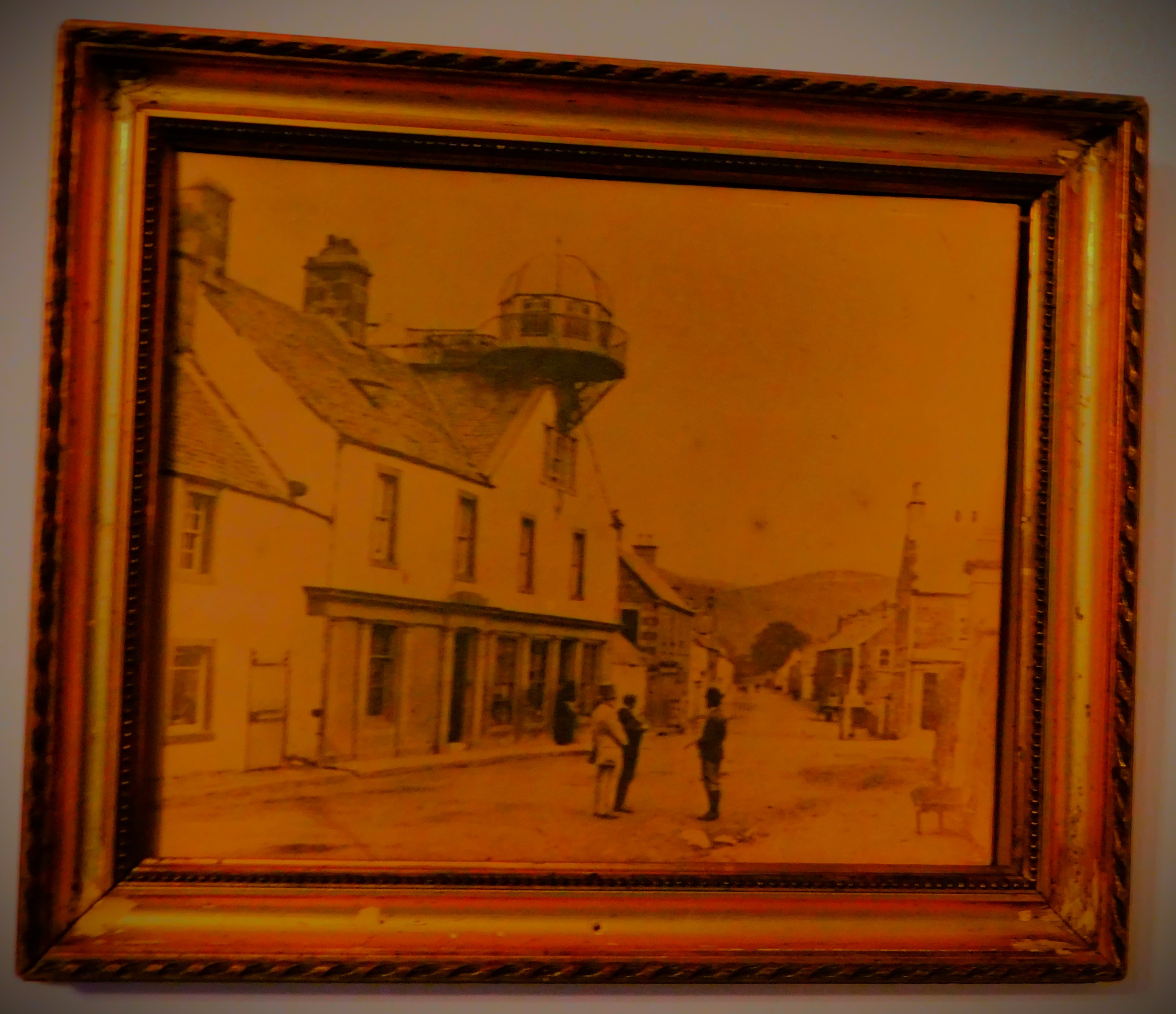
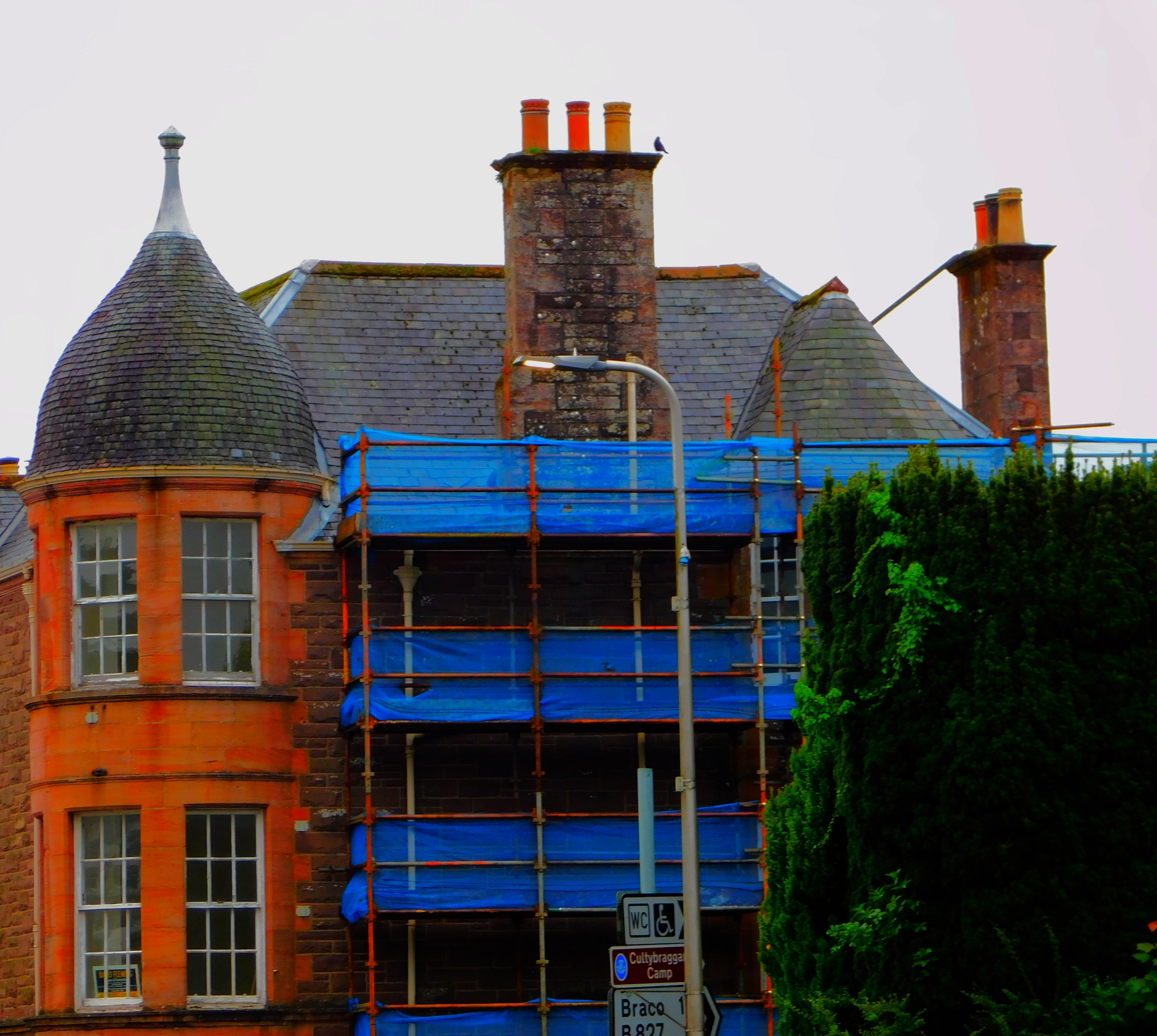
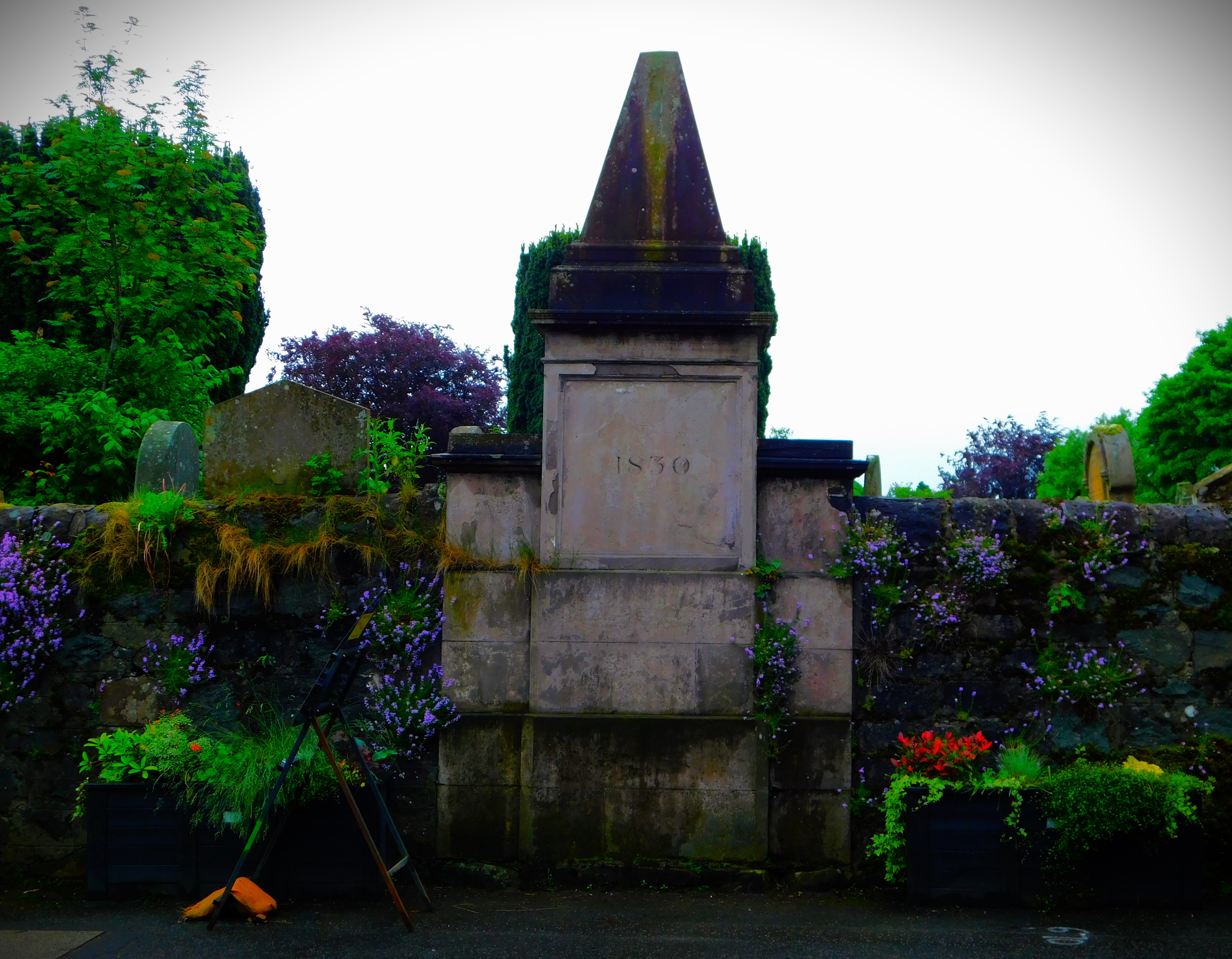
This is the penultimate post in my series about my recent holiday in Scotland. After Cultybraggan Camp and Ardoch Roman Fort we headed for Crieff. There is an excellent visitor centre, with a small museum about the cattle drovers who back in the day travelled from the far west of Scotland to Stirling with their cattle, with Crieff being an important staging post on the route. In the 19th century some of these people migrated to the US and Canada in search of better lives, and this was also covered in the museum. Crieff is home to some very fine buildings but time constraints limited our exploration of the town itself.
A look at the Charles Rennie Mackintosh building, the village of Comrie and the river Earn. Also a waterfall video.
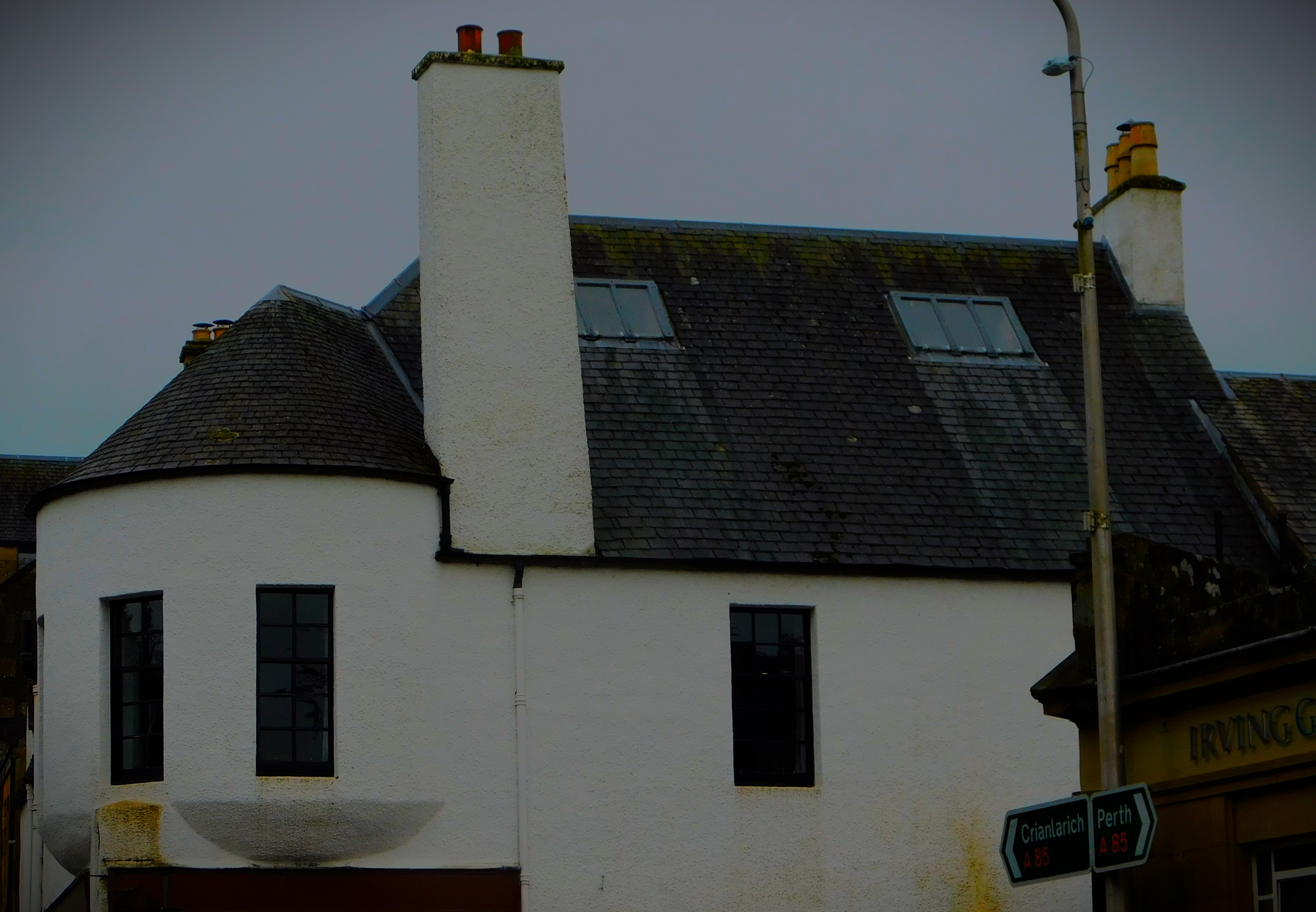
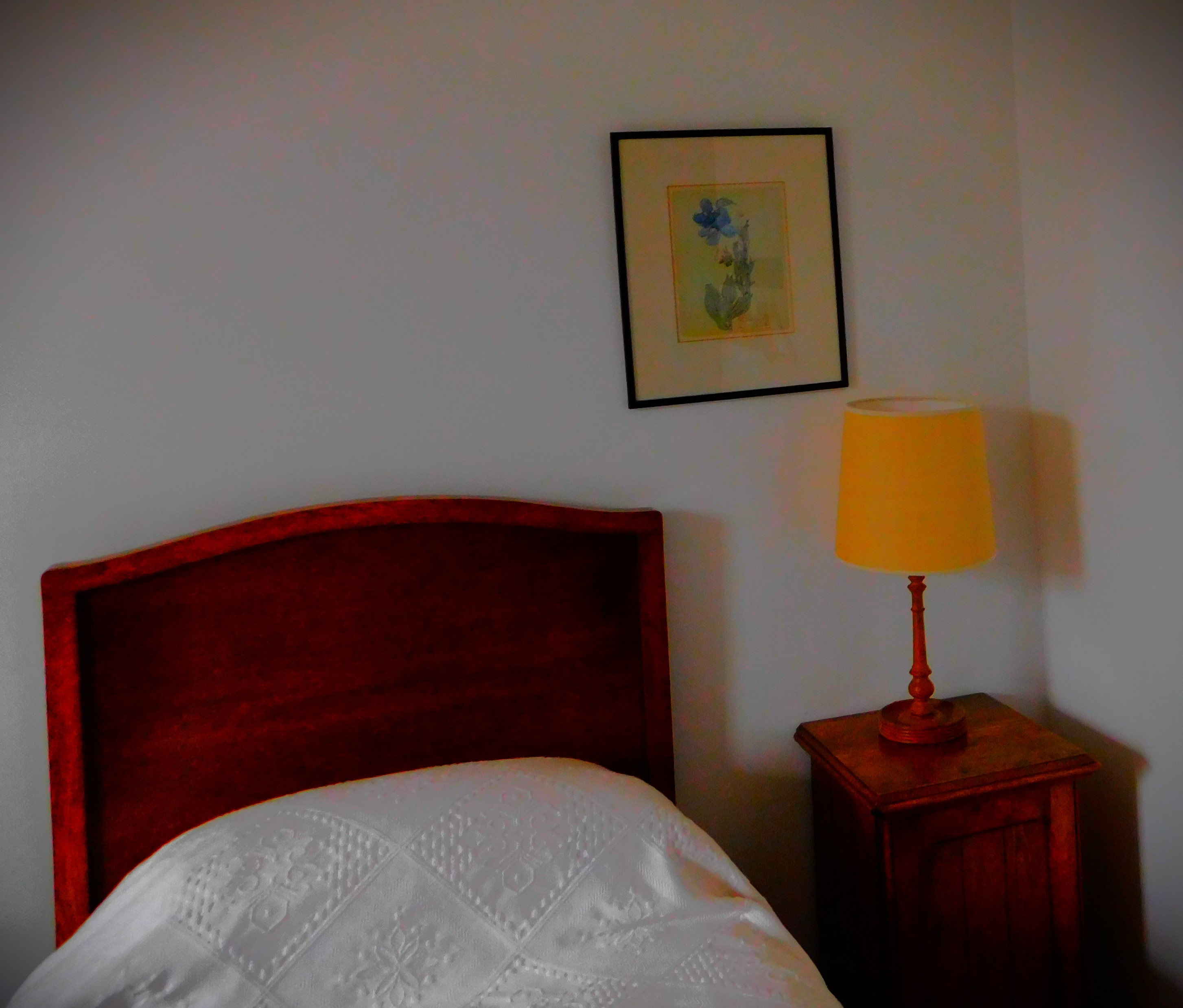
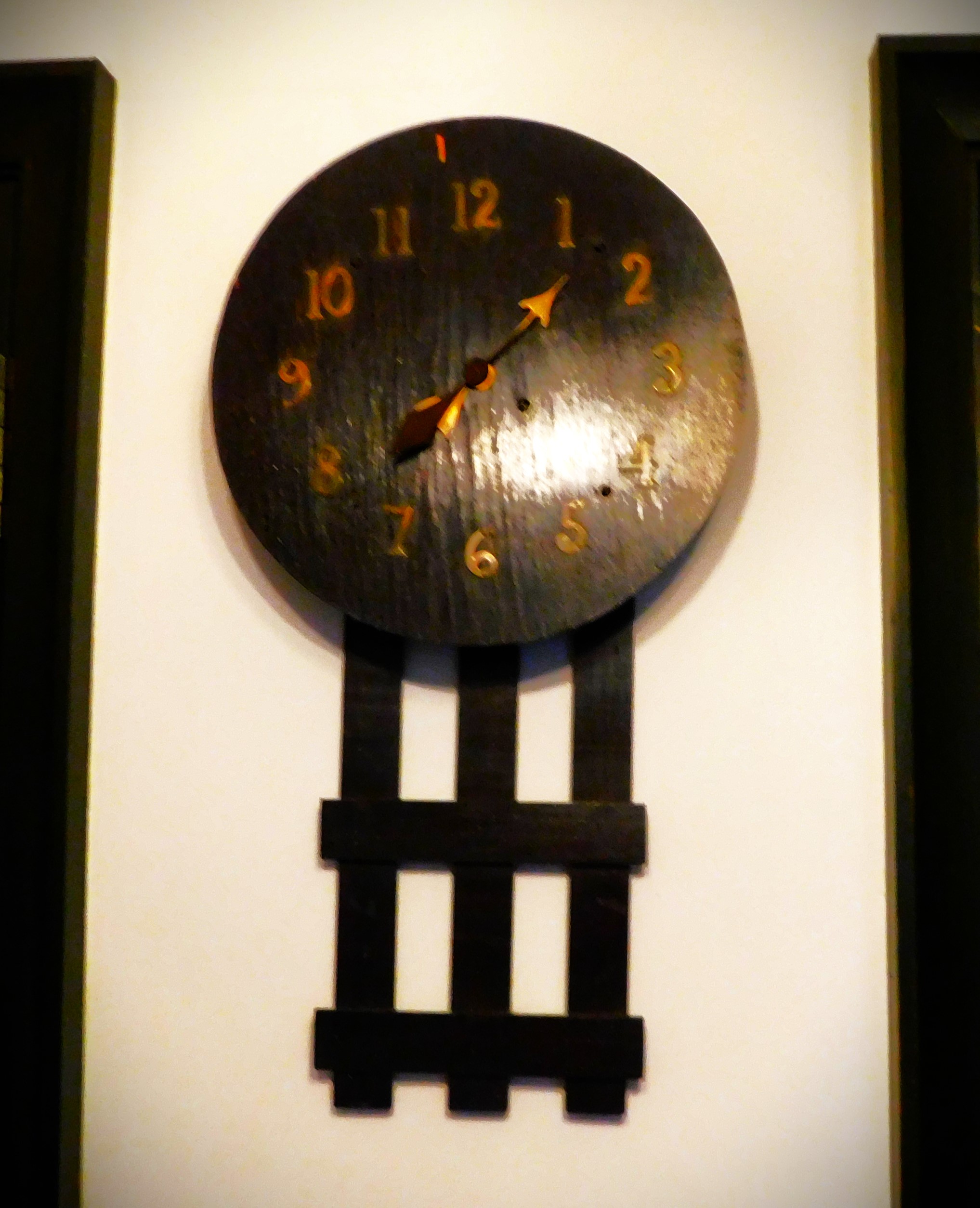
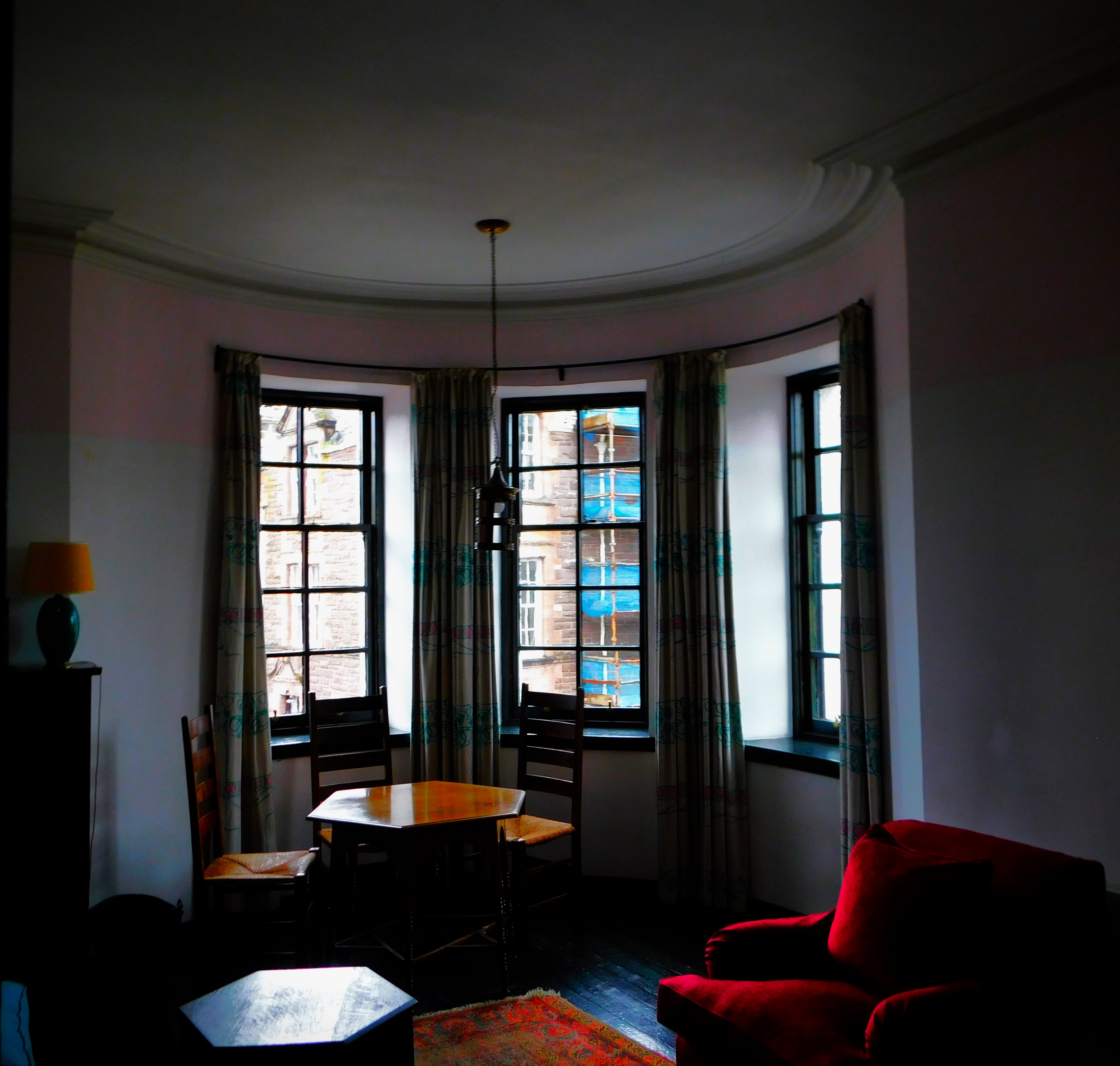
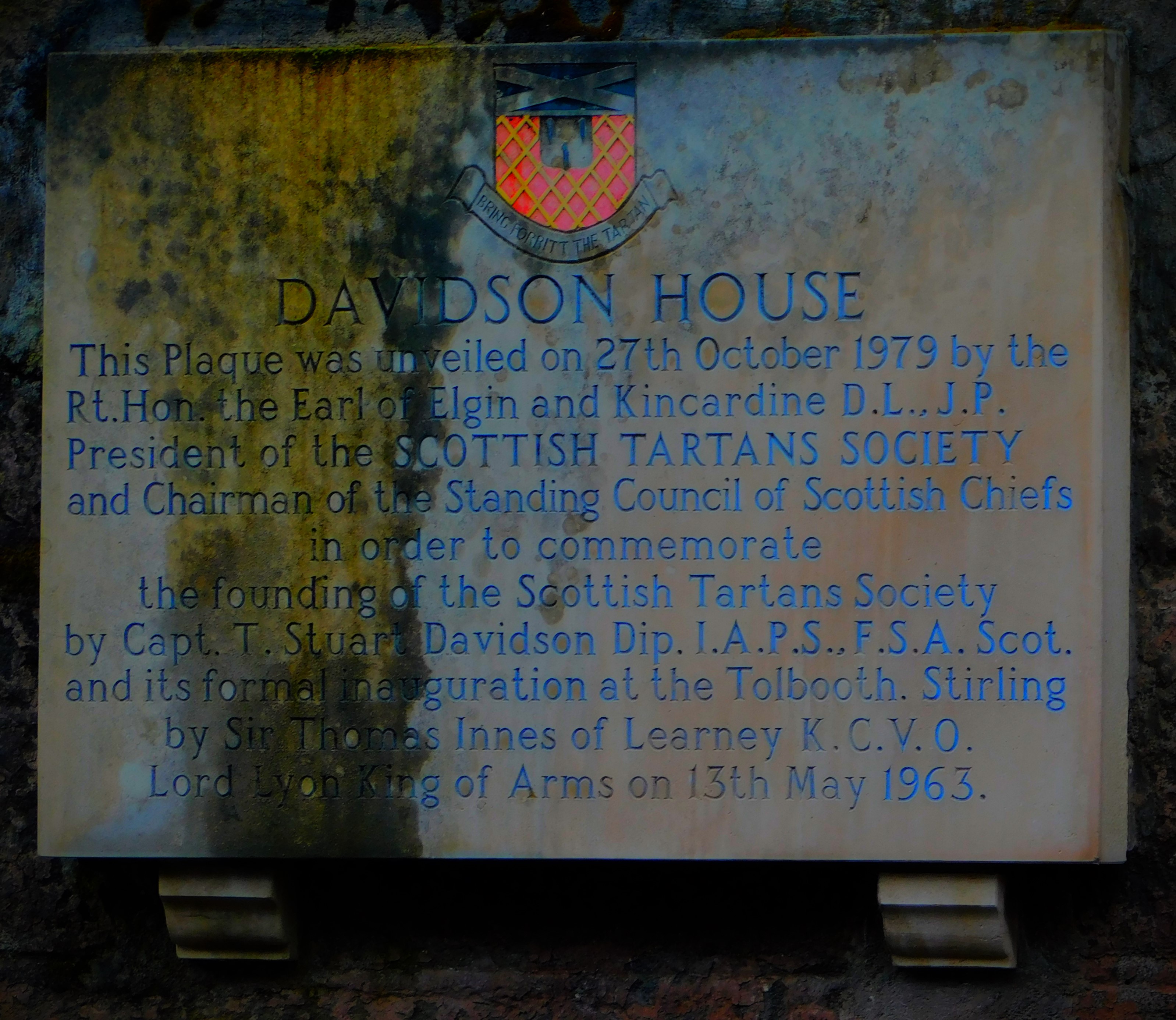
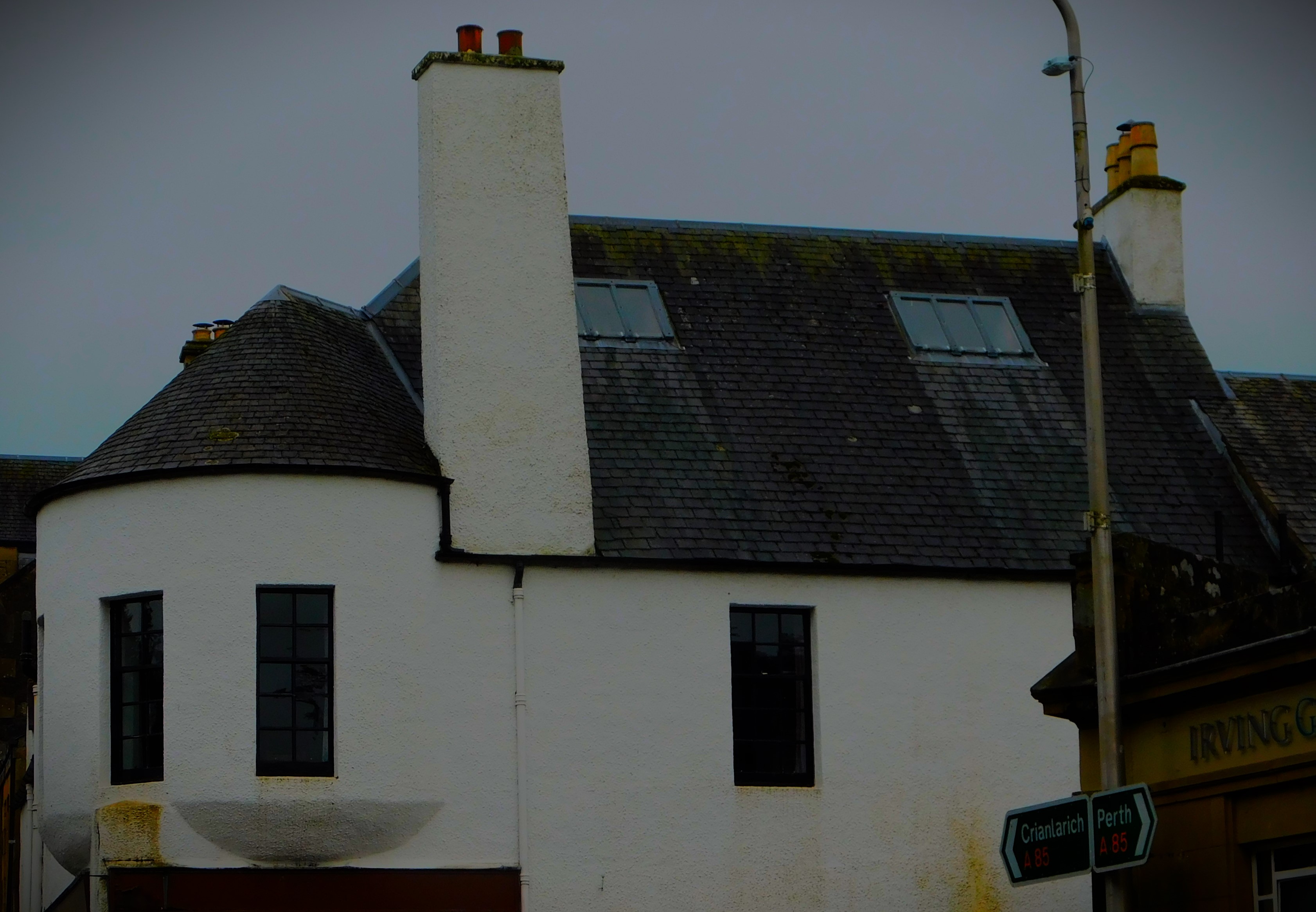
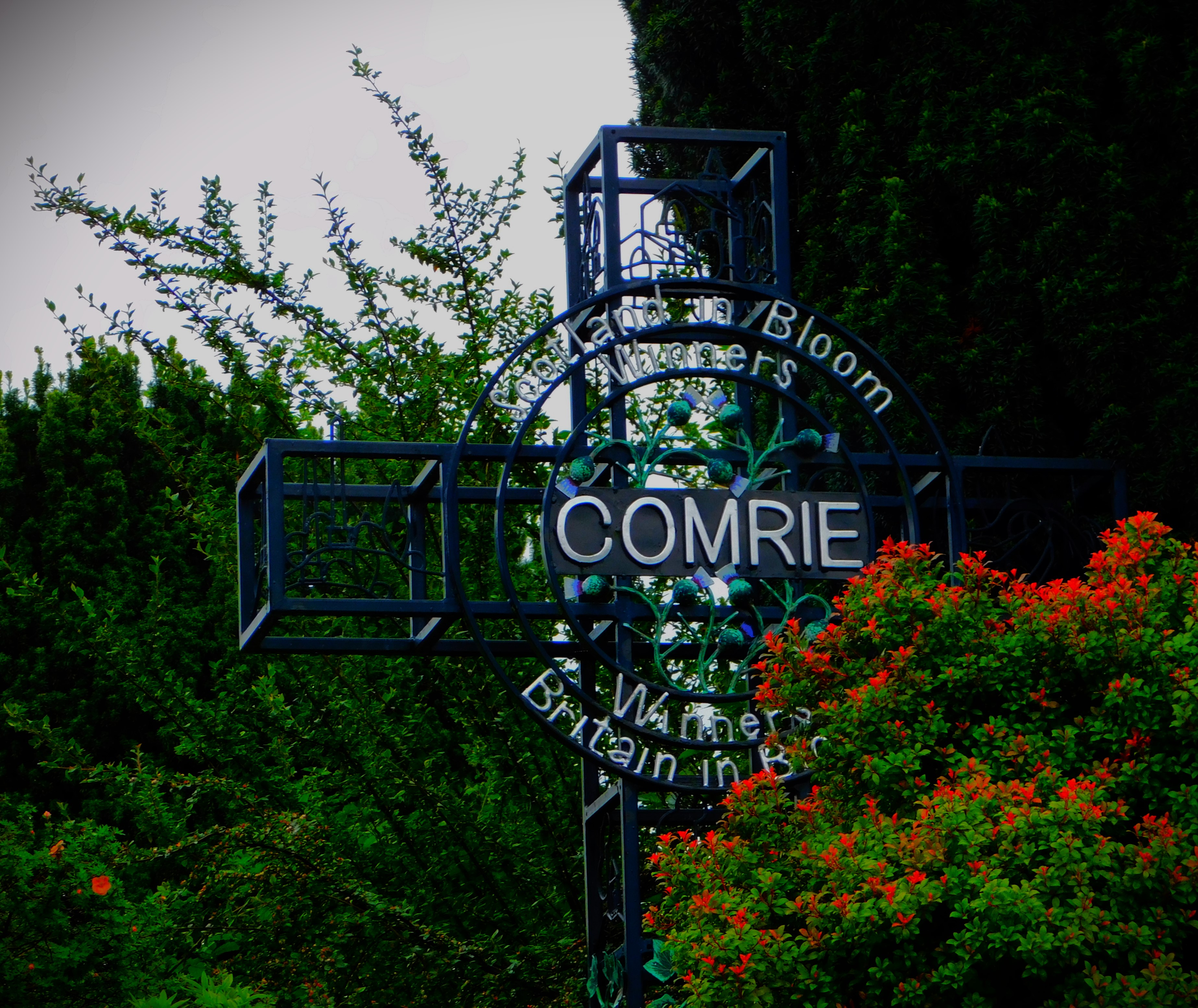
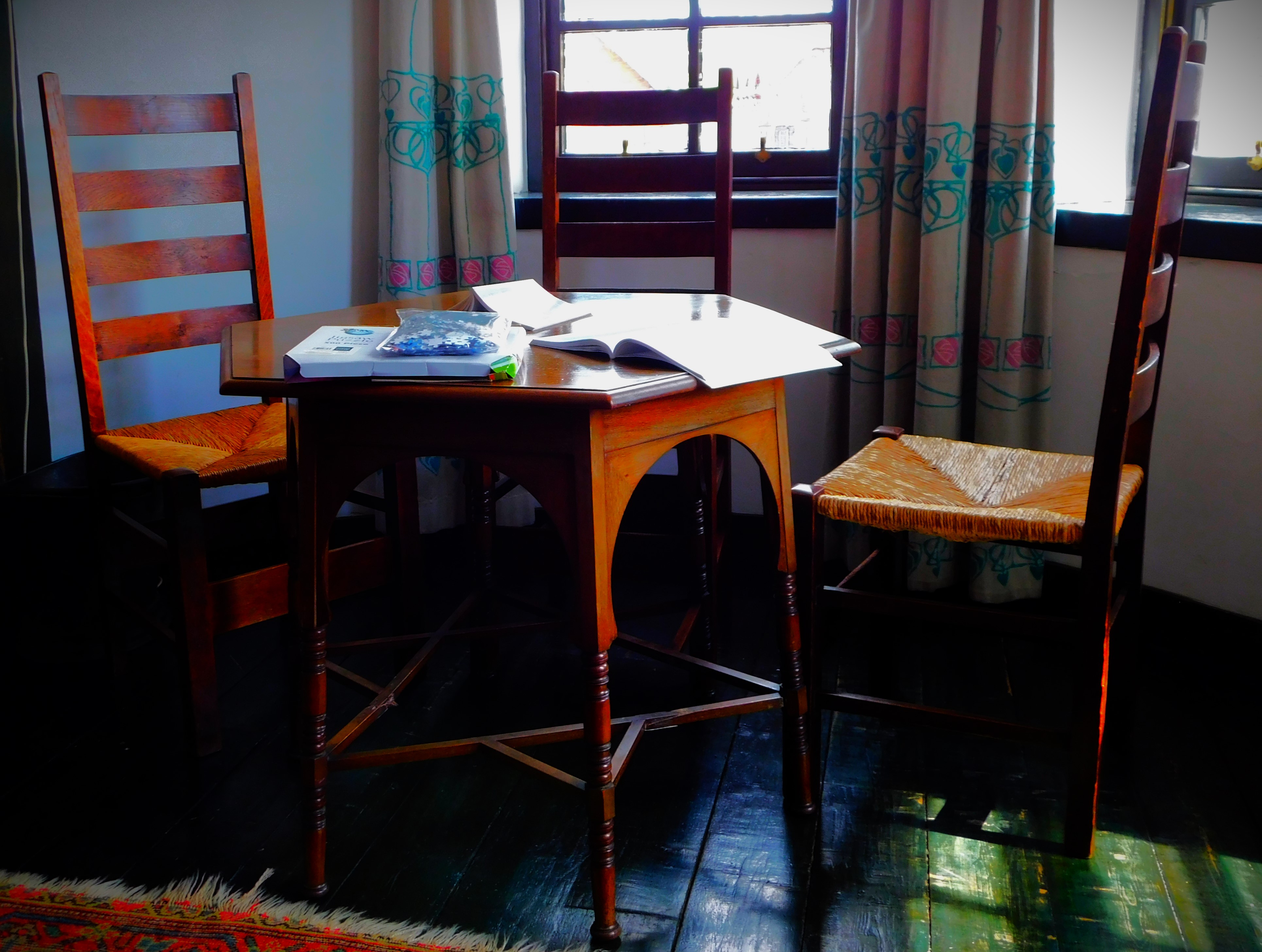
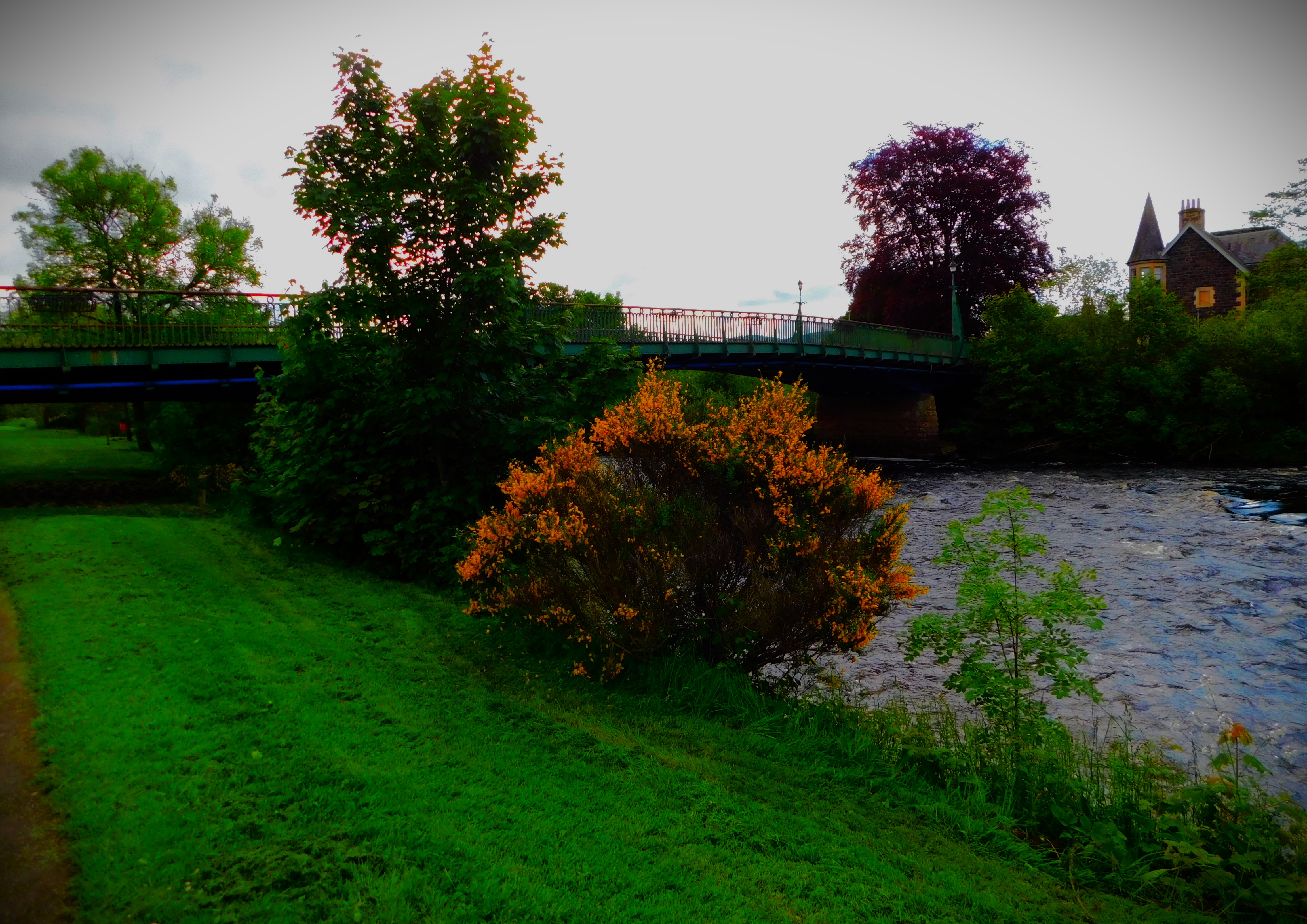
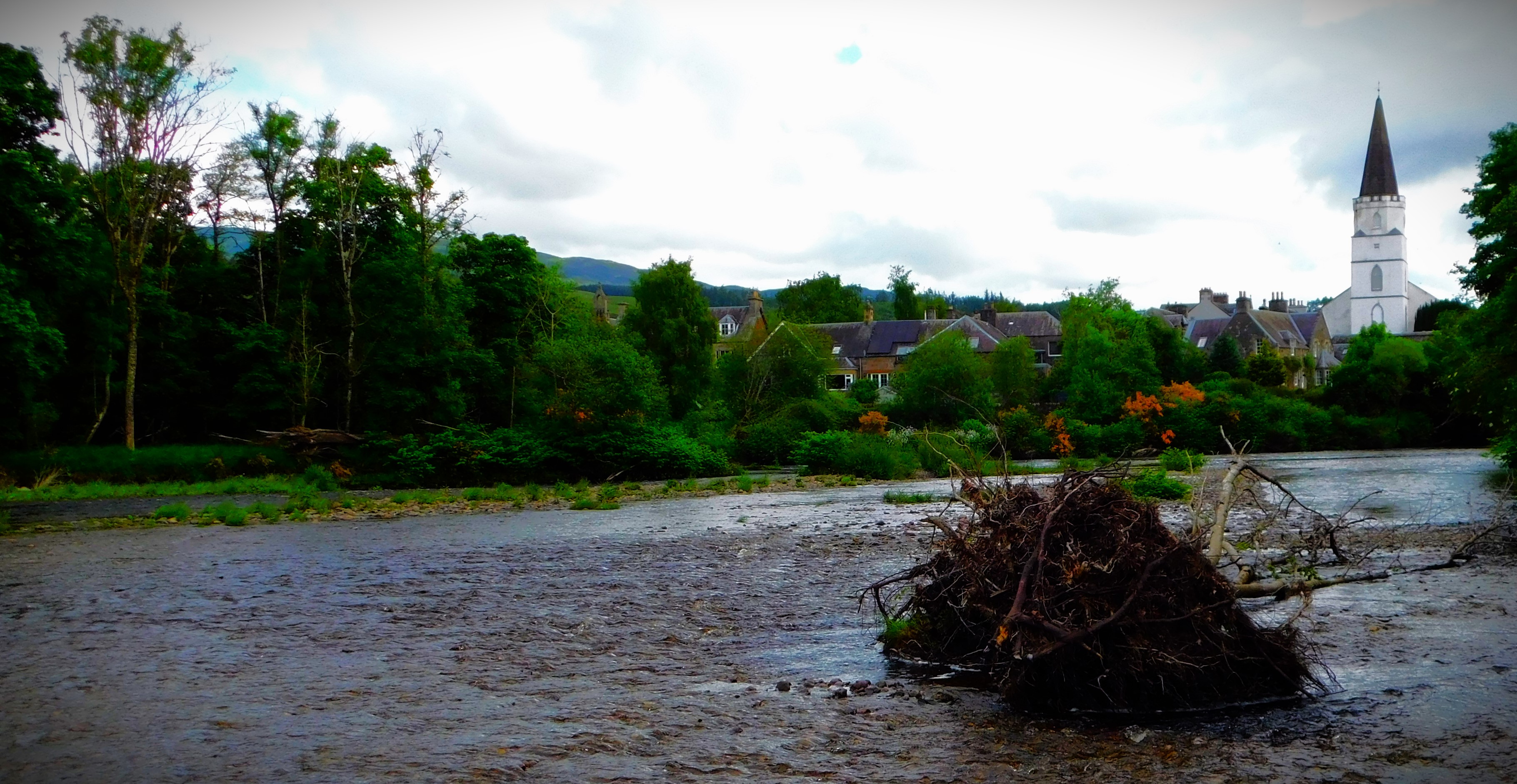
Welcome to the next post in my series about my holiday in Scotland. This post looks at the house itself and the the village of Comrie including the river Earn. It is in the nature of clearing the decks for the more specific posts that will follow. This is an outside view of the house itself:
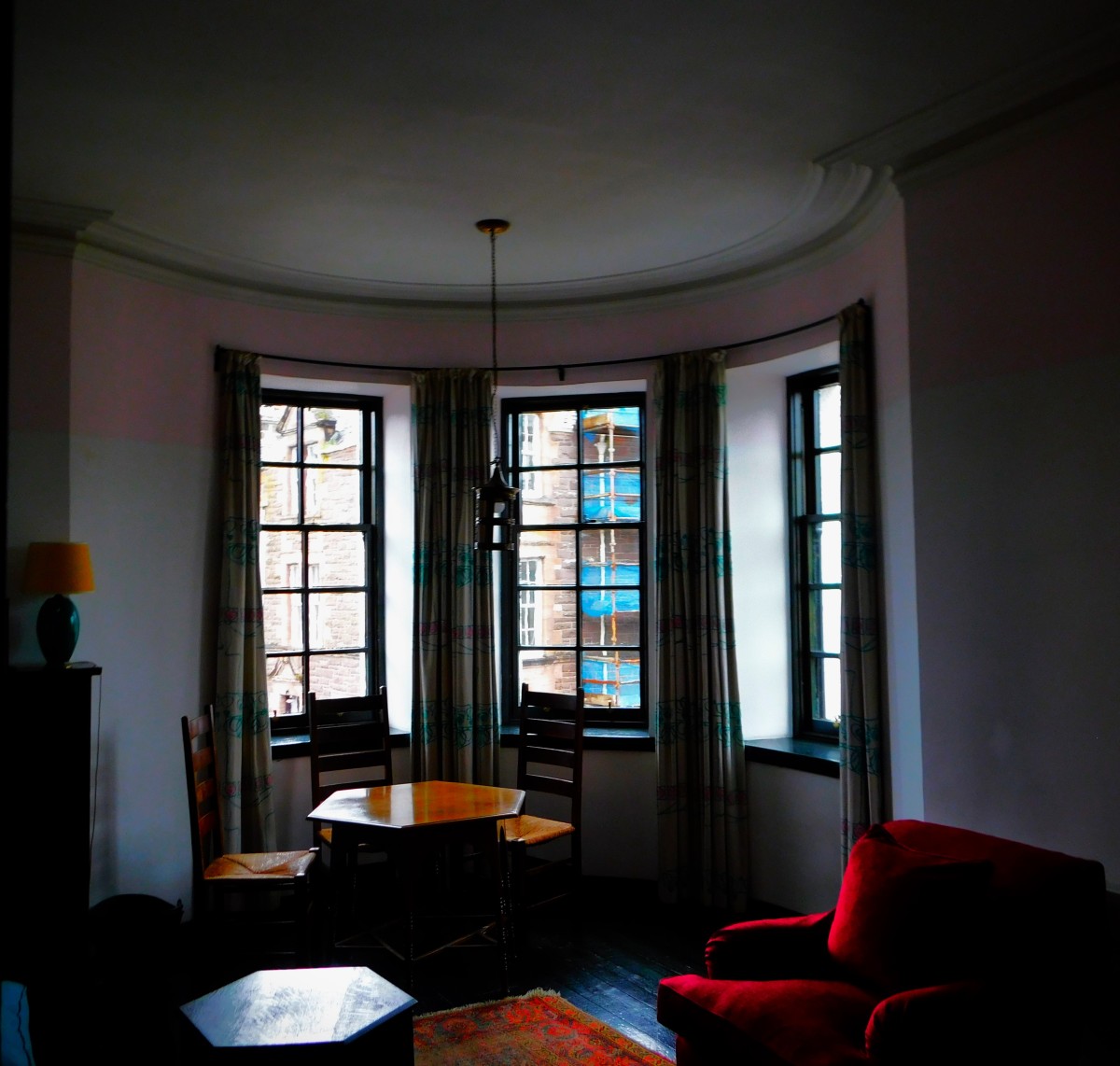
This is the outside view of our accommodation. The sitting room includes the turret, although there is an internal ceiling which means we don’t get to see the whole of the inside of the turret.
THE SETTING OF THE HOUSE
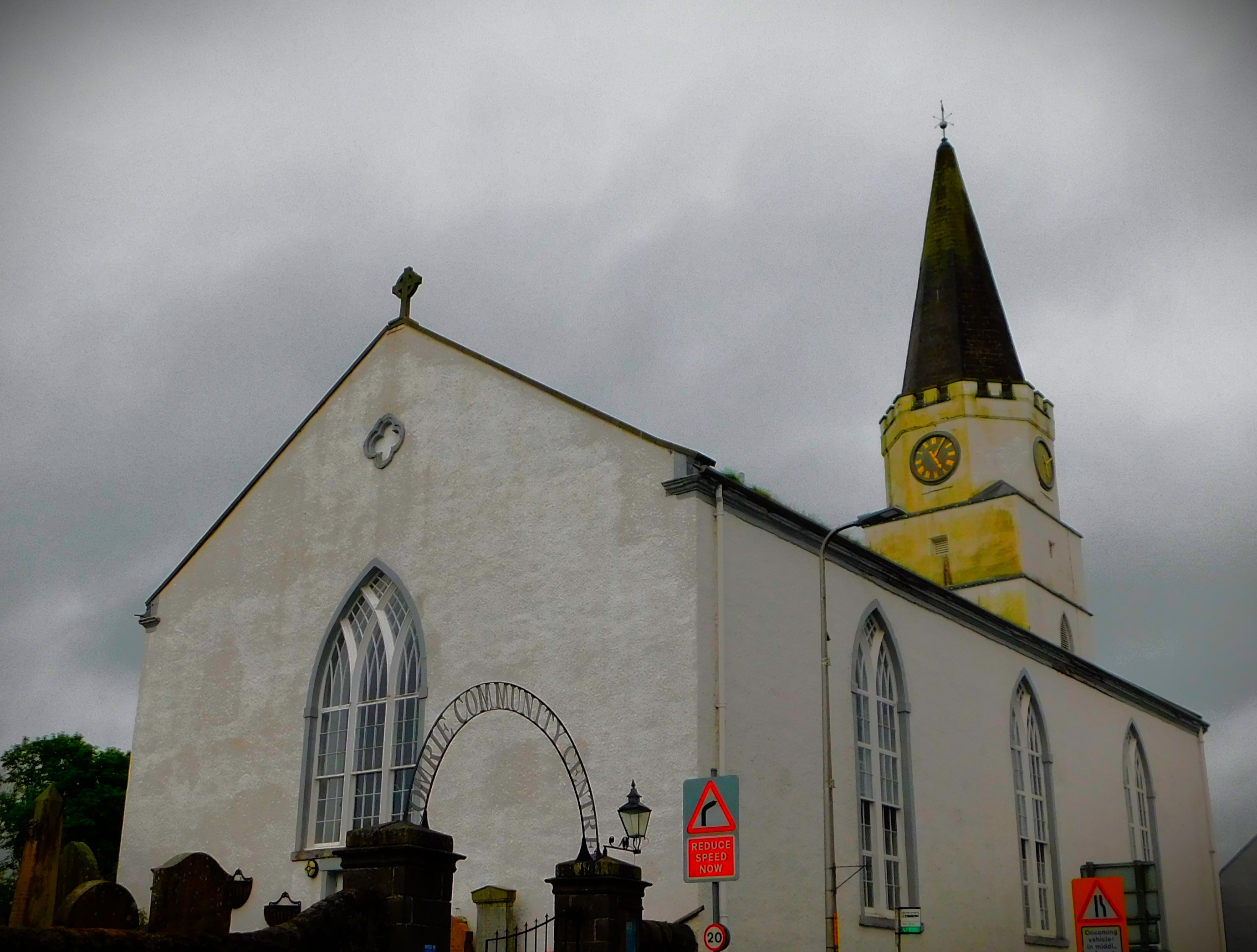
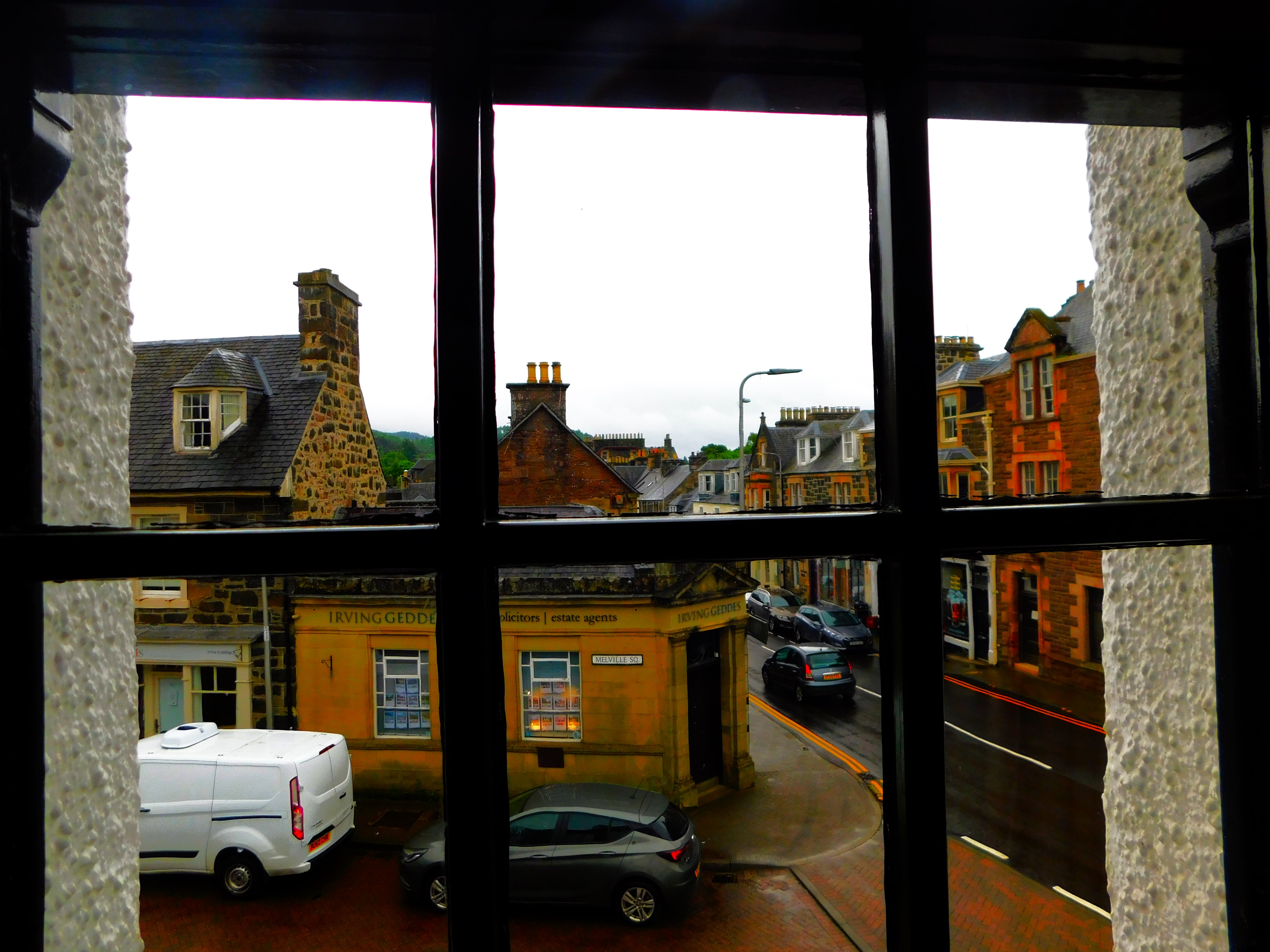
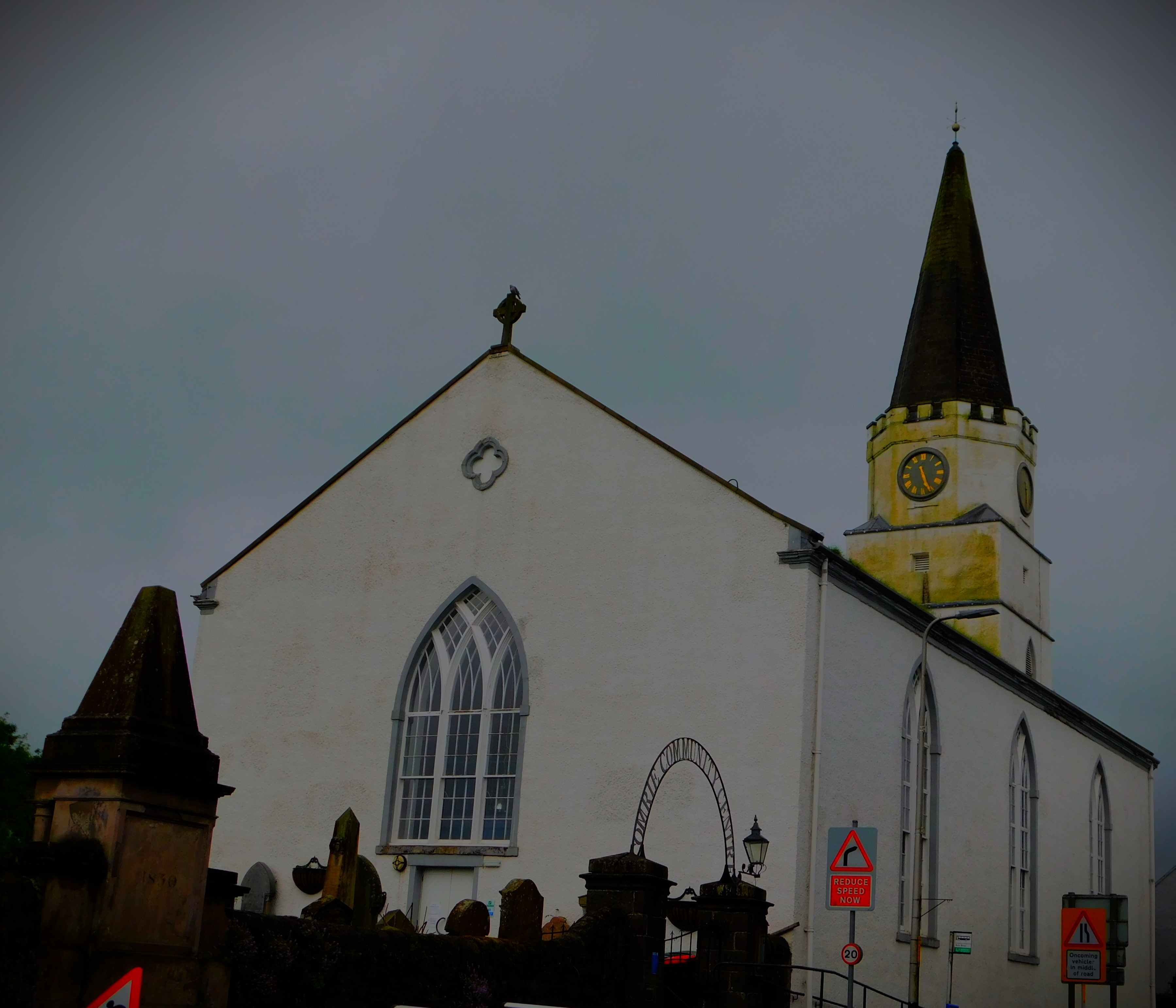
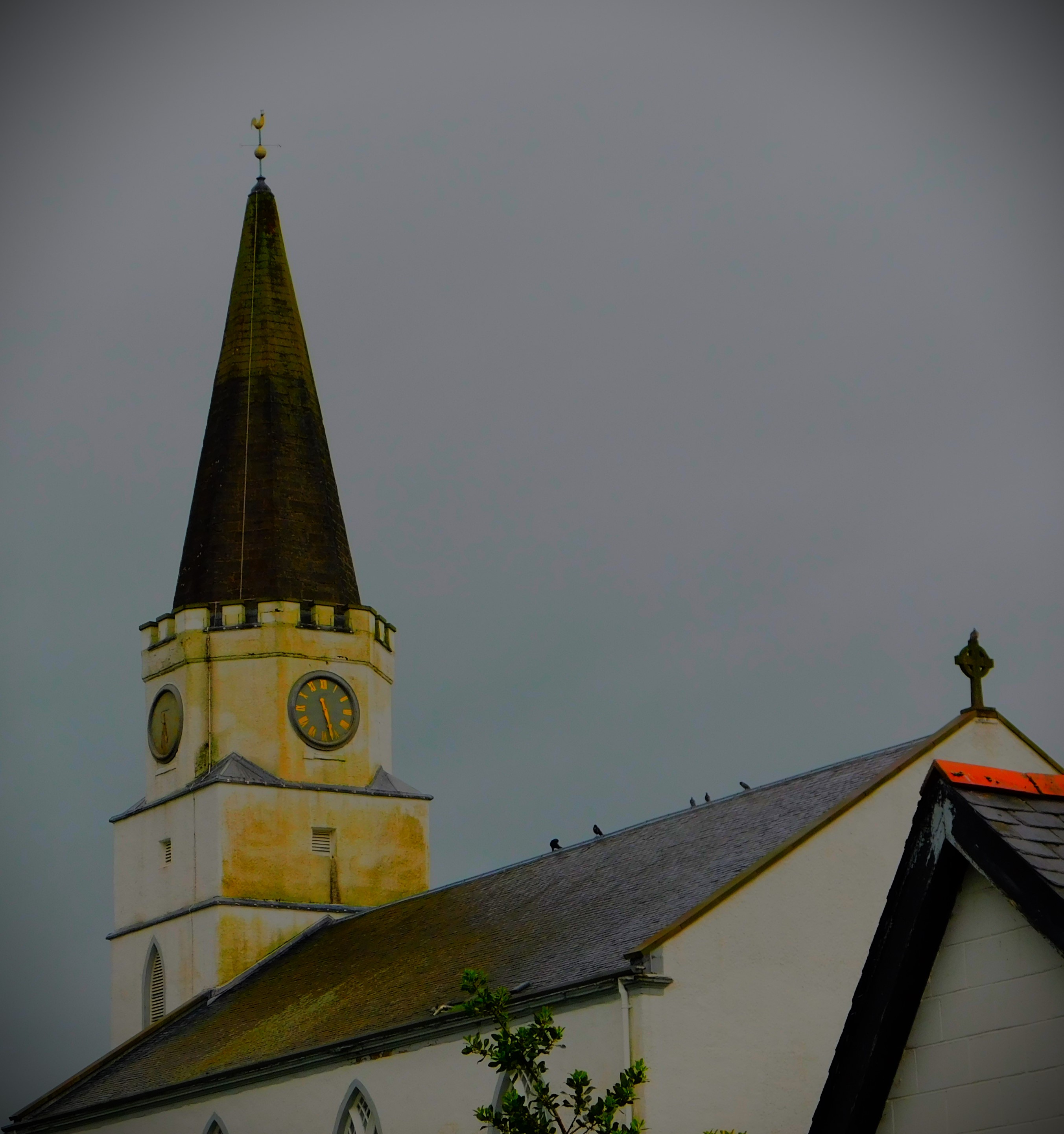
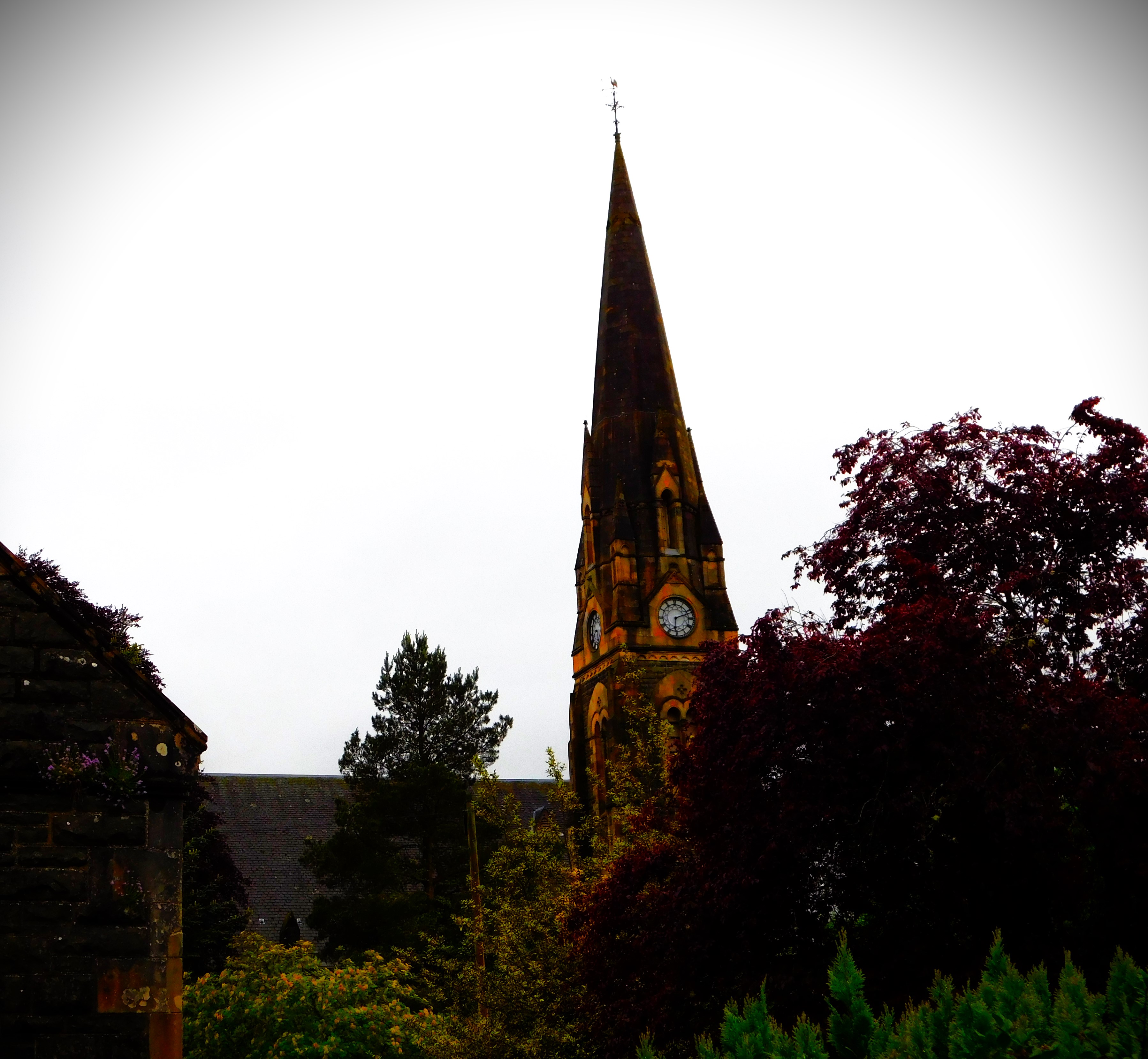
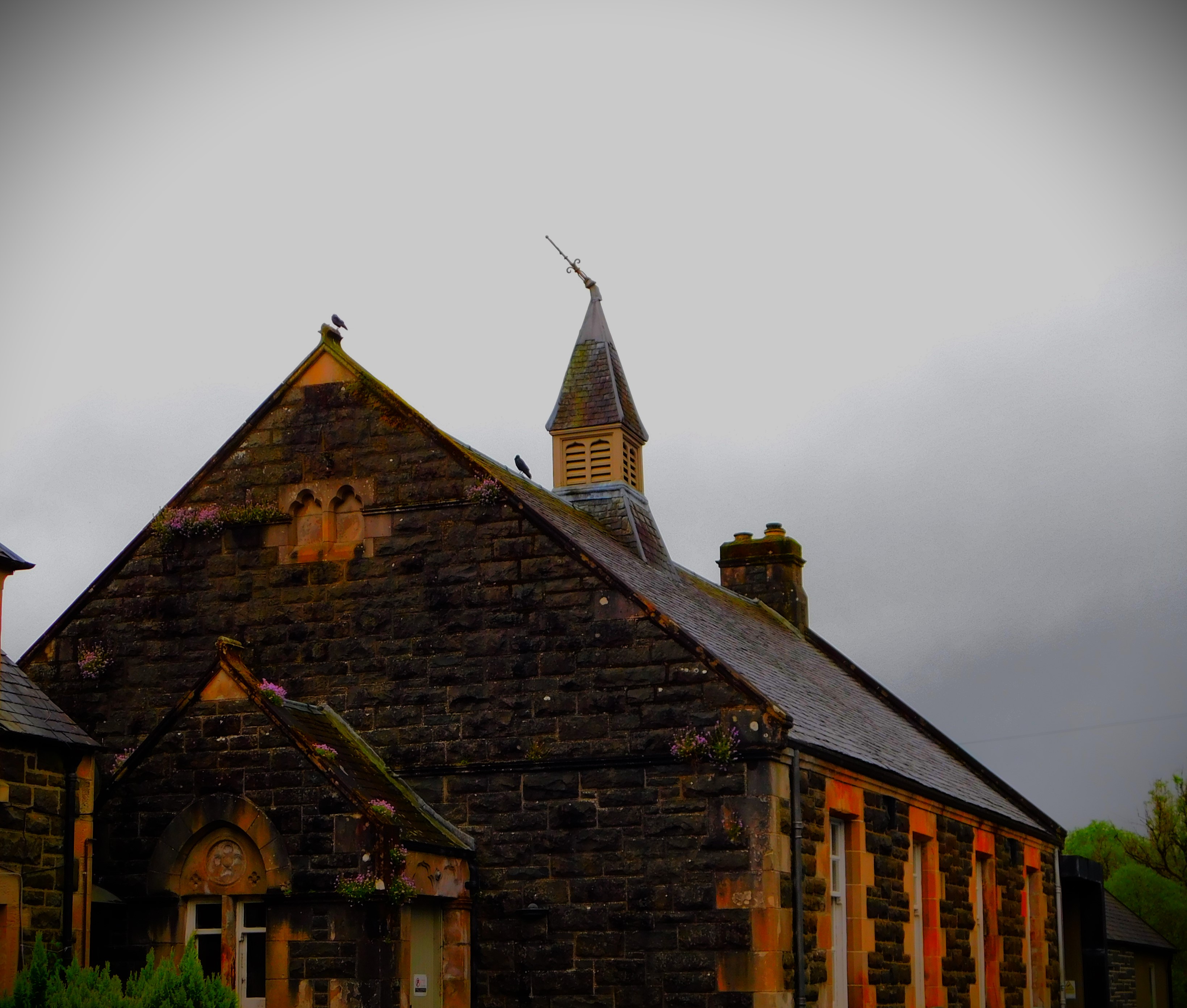
The house is directly opposite Comrie Community Centre, a building that looks remarkably like a church but is not (though it clearly used to be) – Comrie Church is about a five minute walk away. Next door it in one direction is an estate agent housed in what clearly used to be a local bank in the dim and distant days when such things existed while on the other side is a pet shop. Down one side of the house is a path that provides pedestrian access to the car parking area. There is a small shopping area, while the river, not quite visible from the house, is just the other side of the community centre from it.
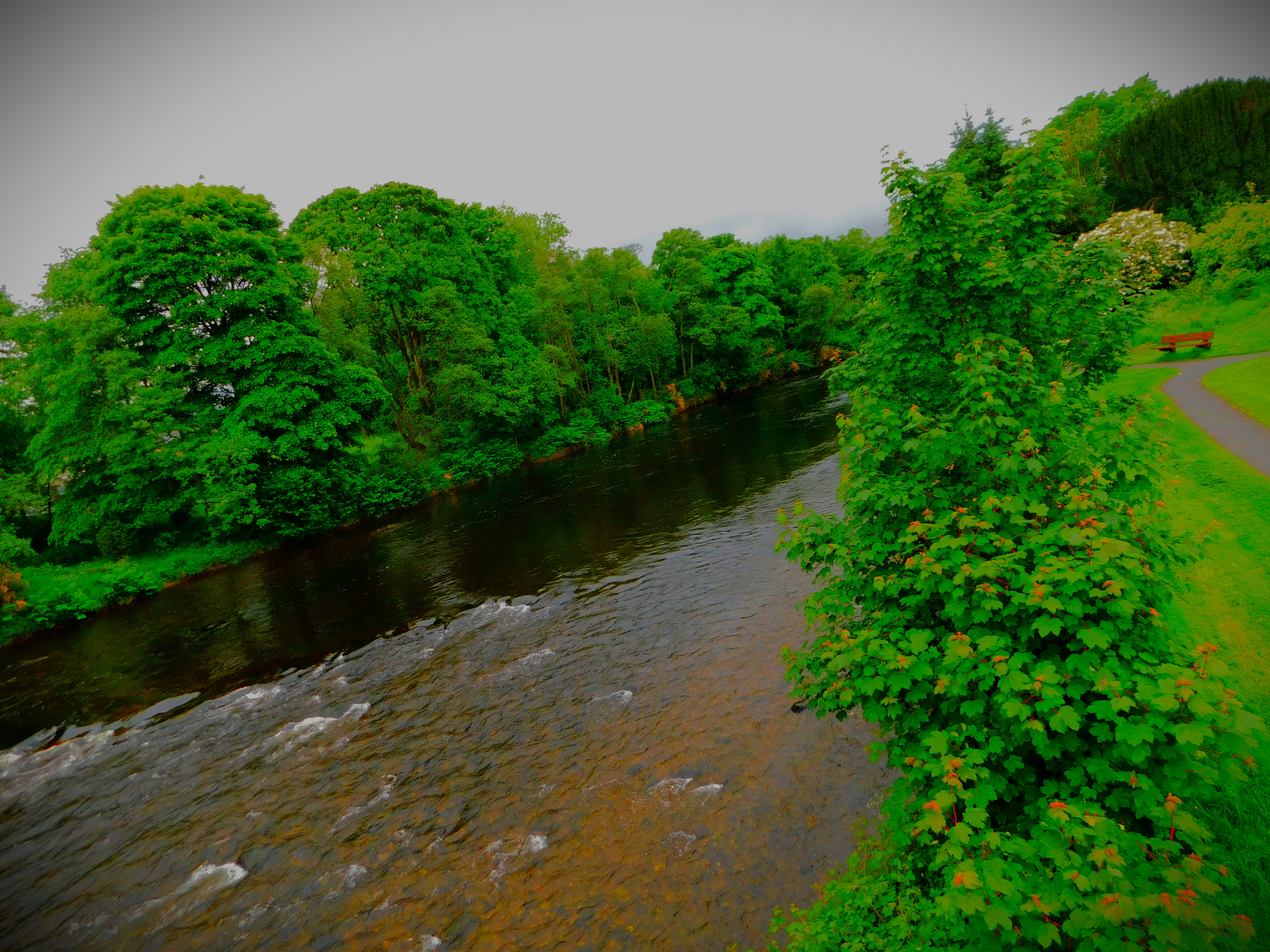
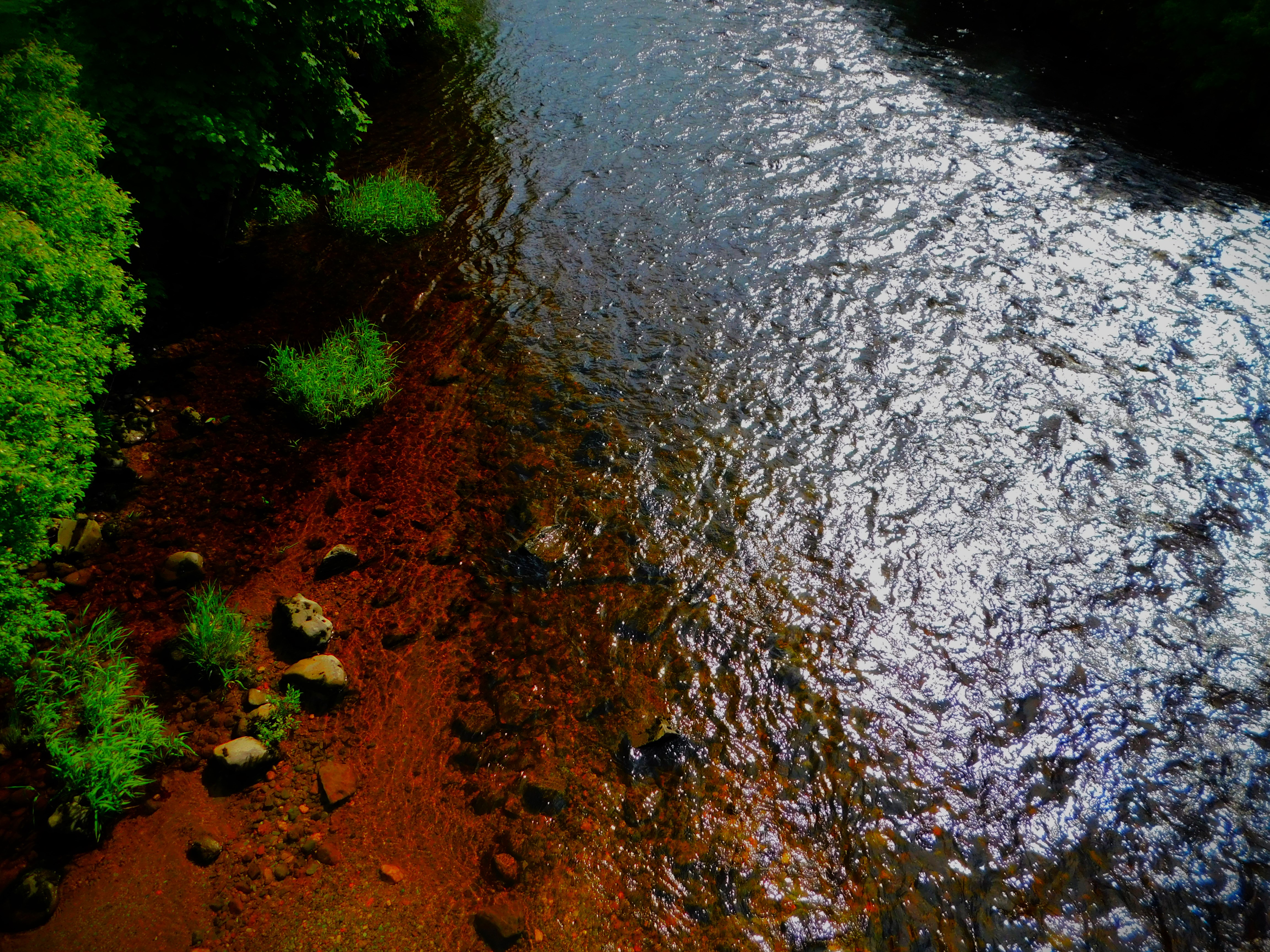
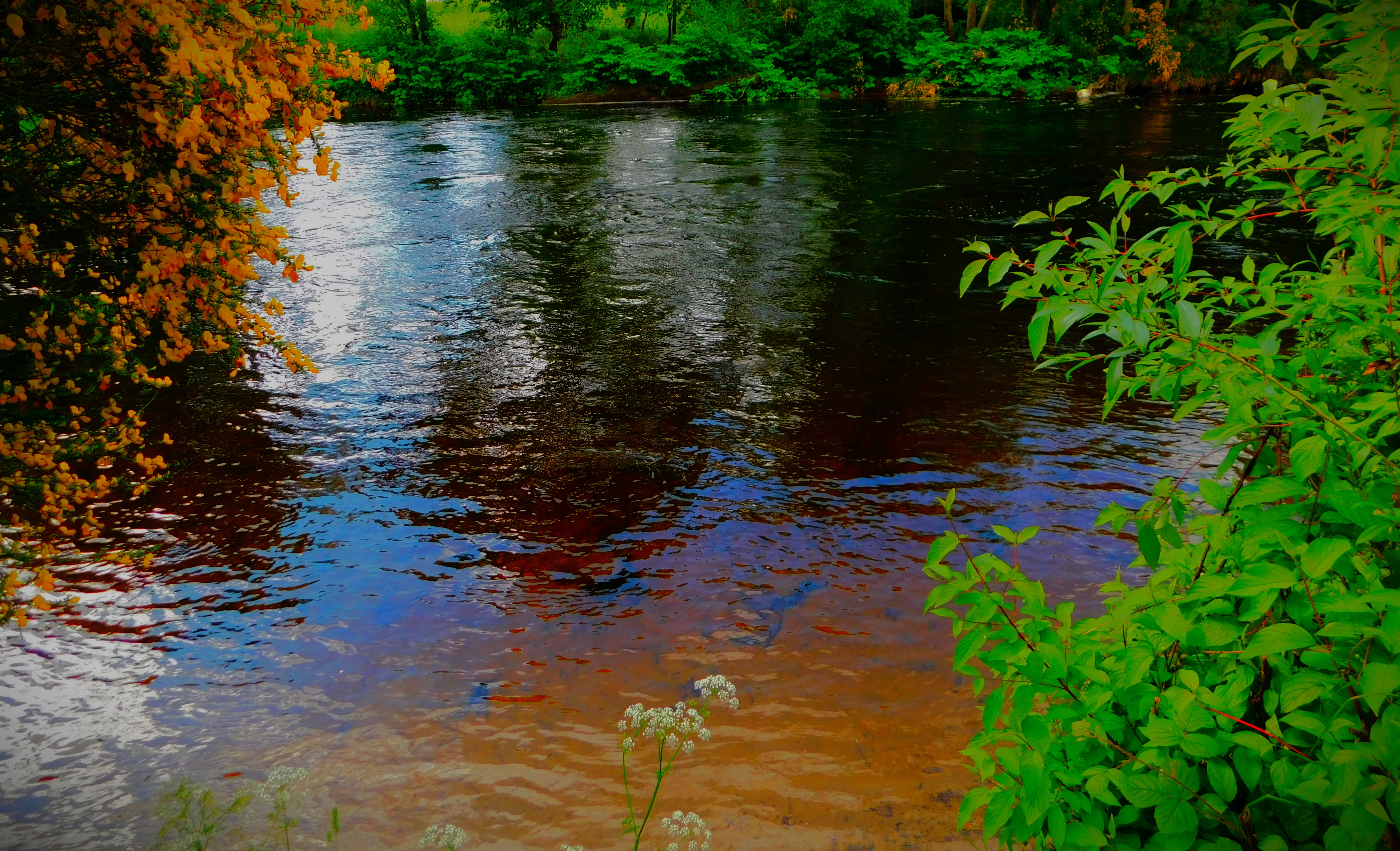
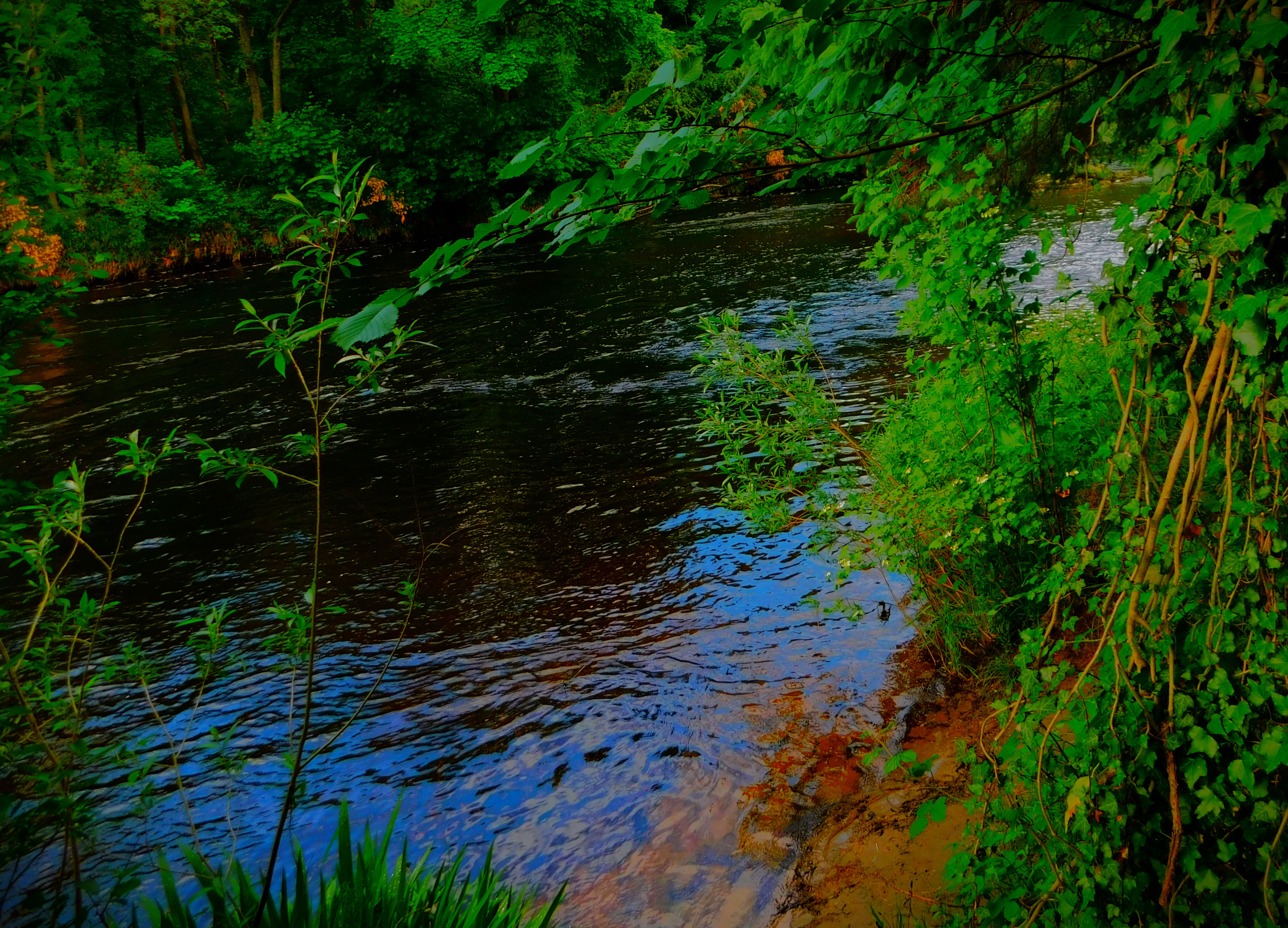
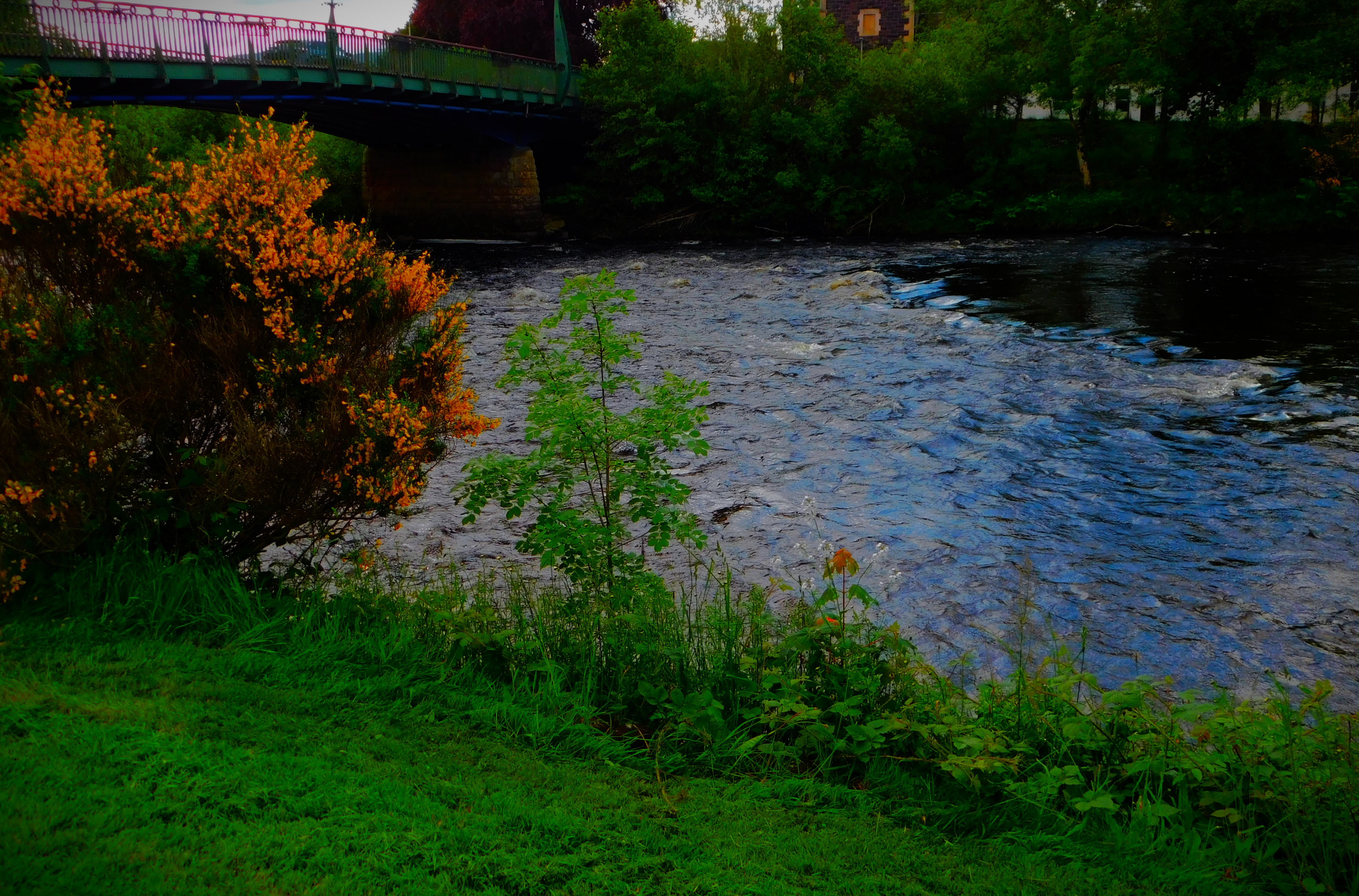
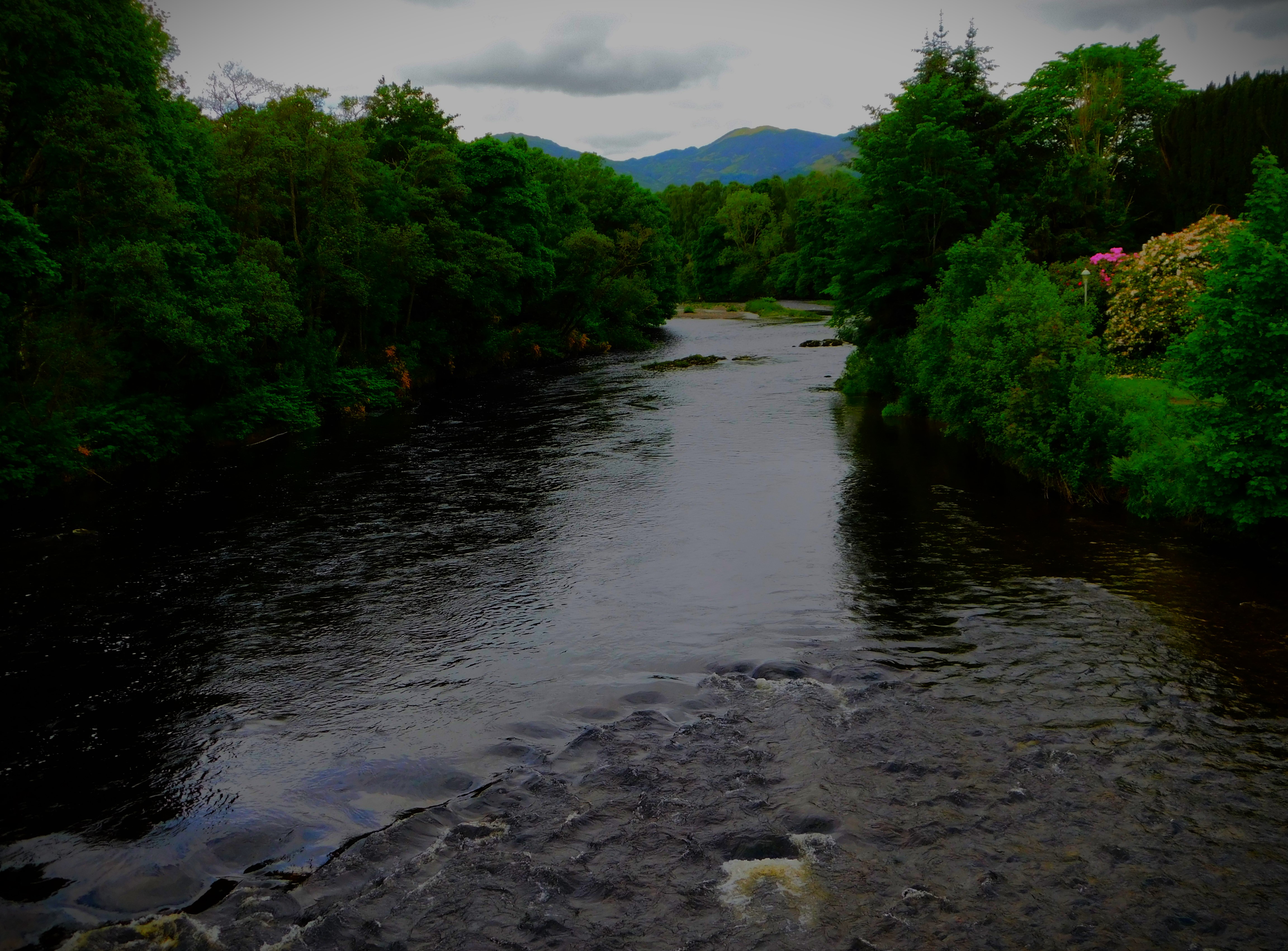
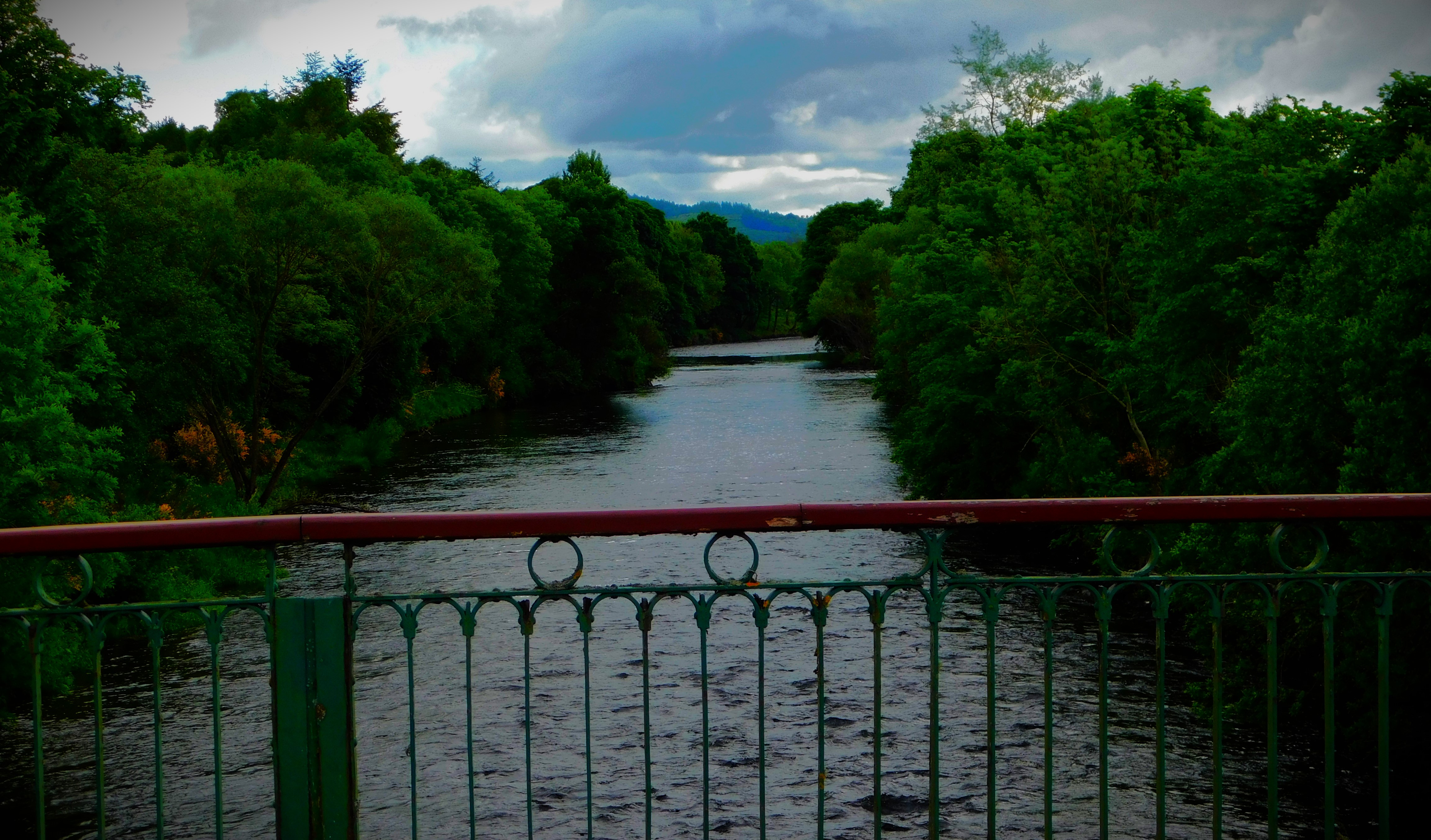
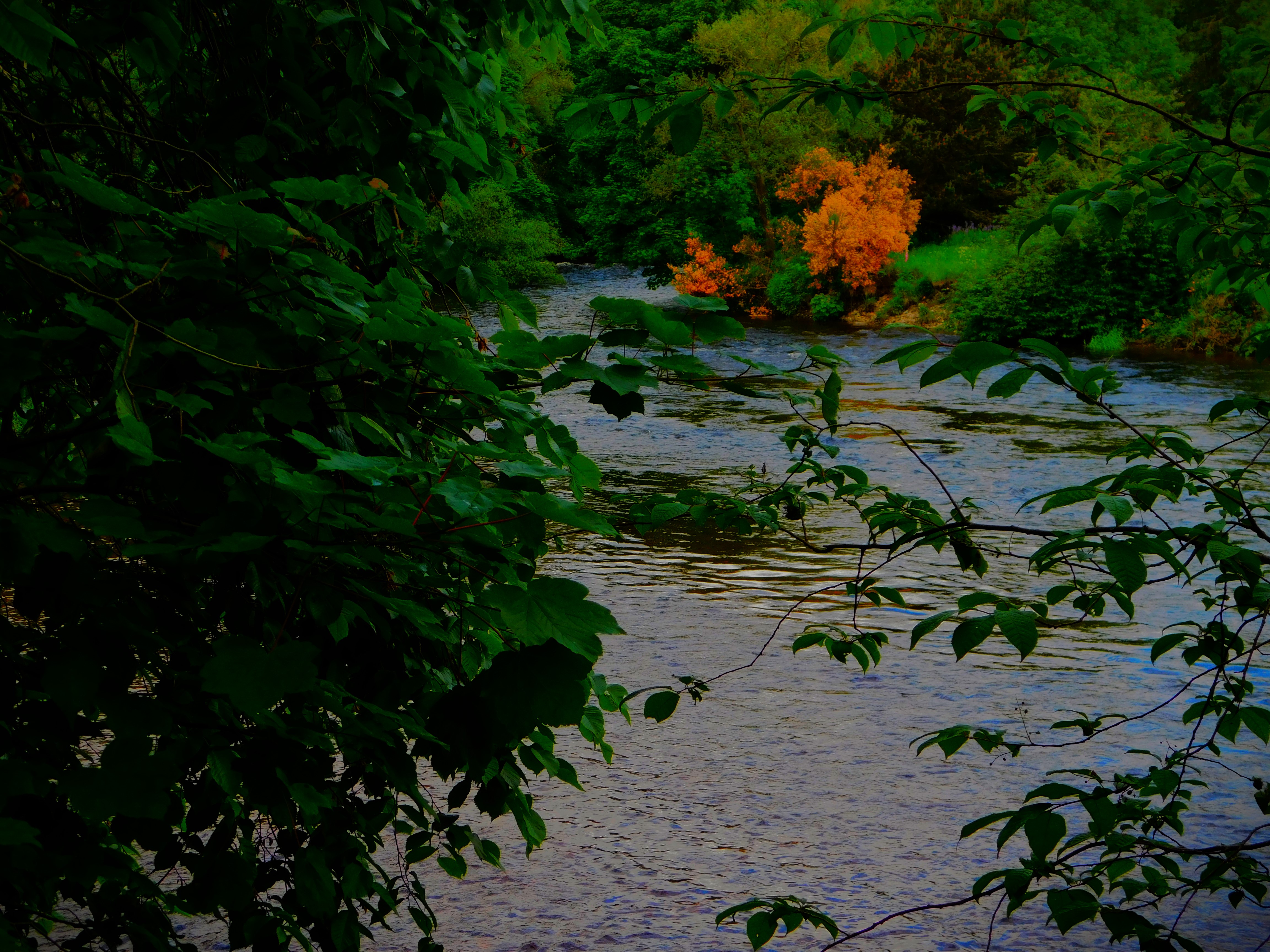
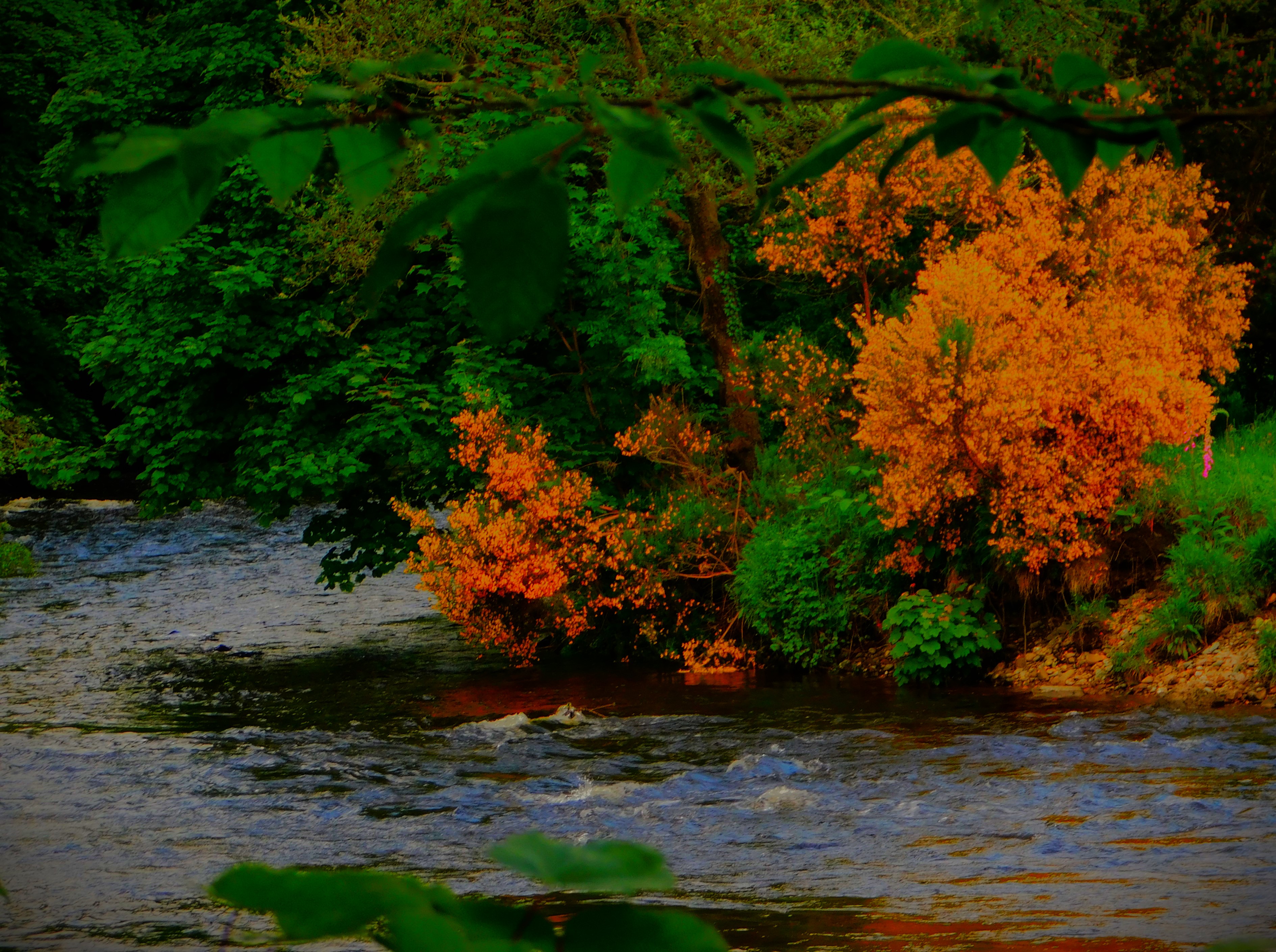
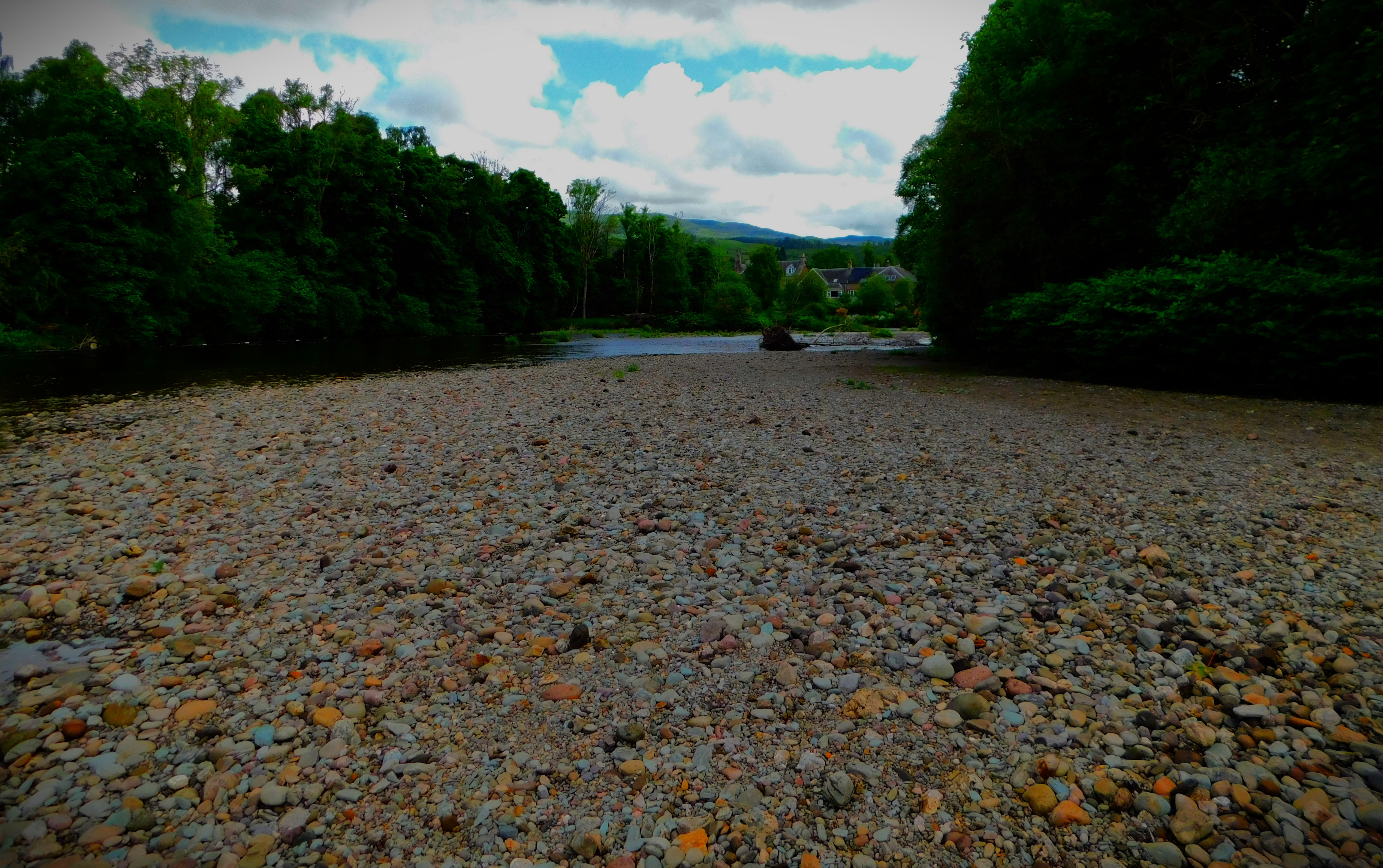
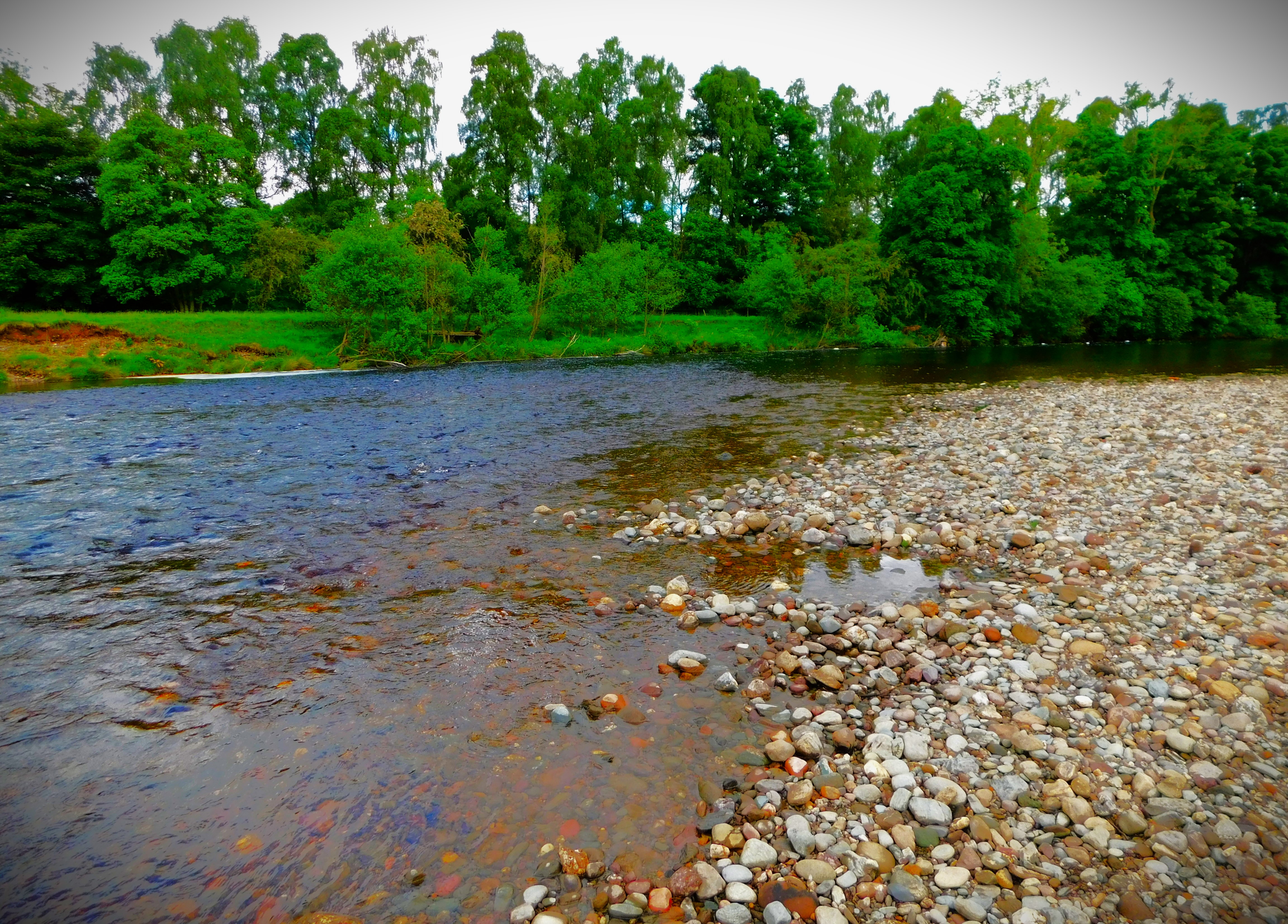
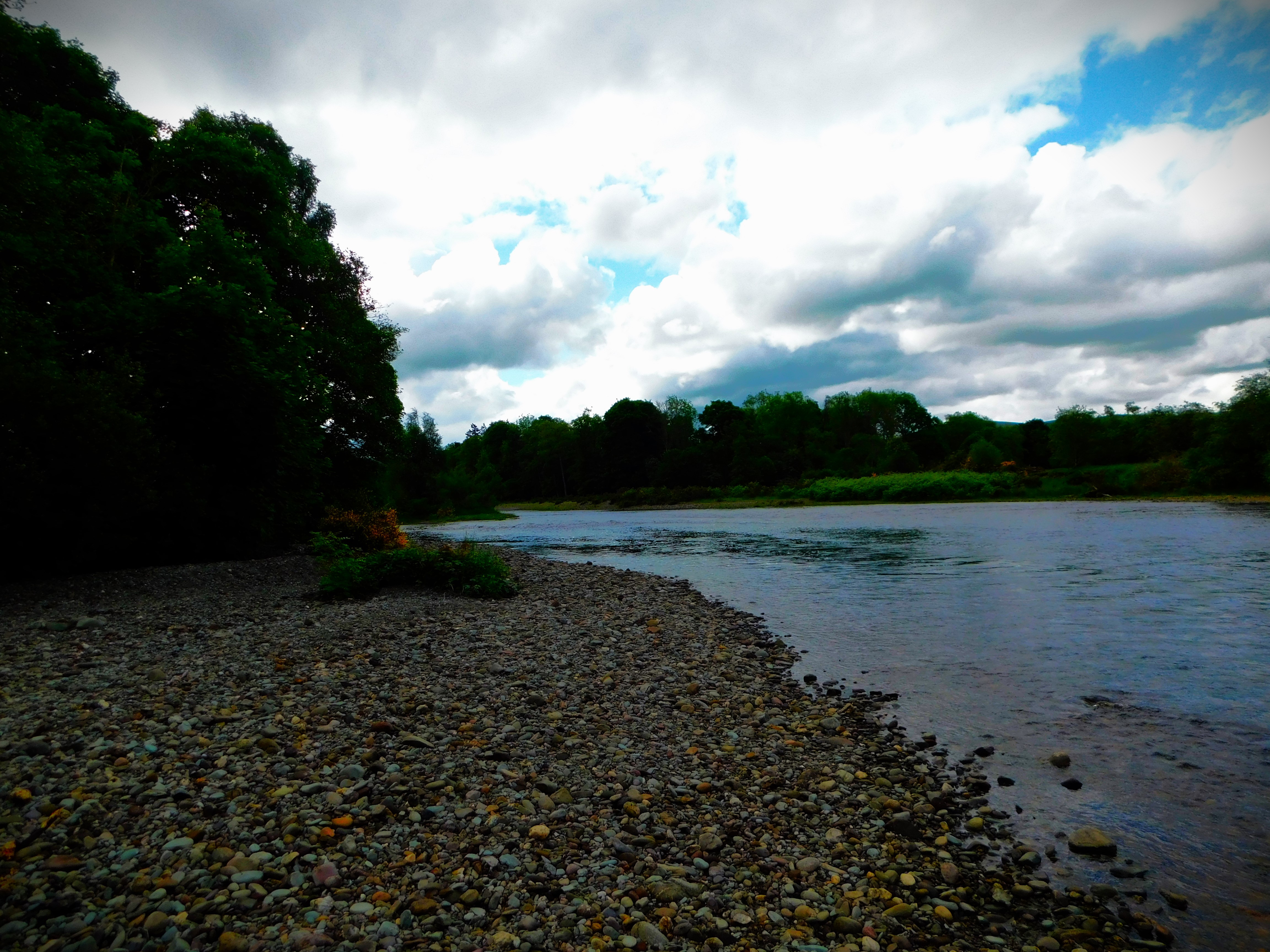
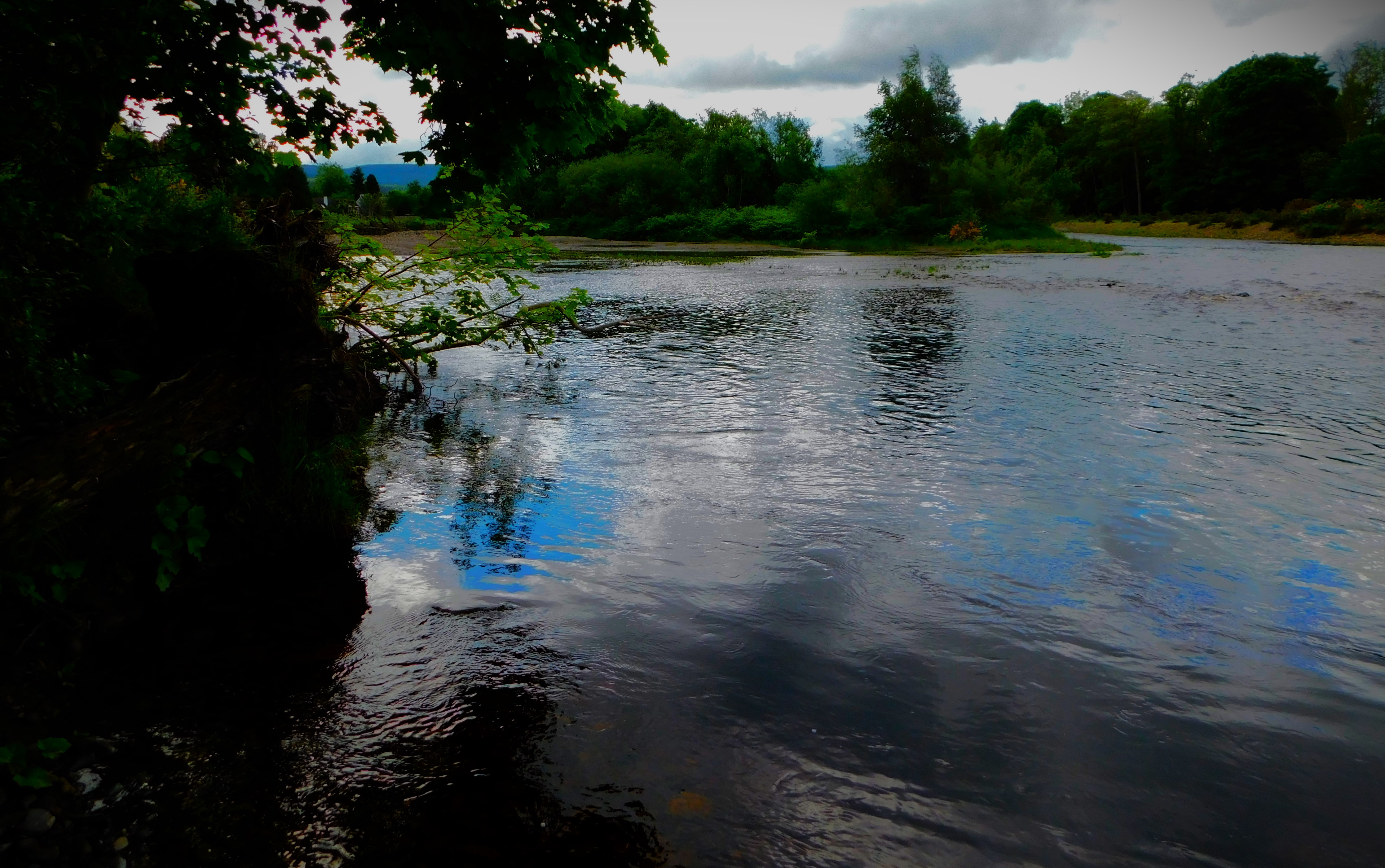
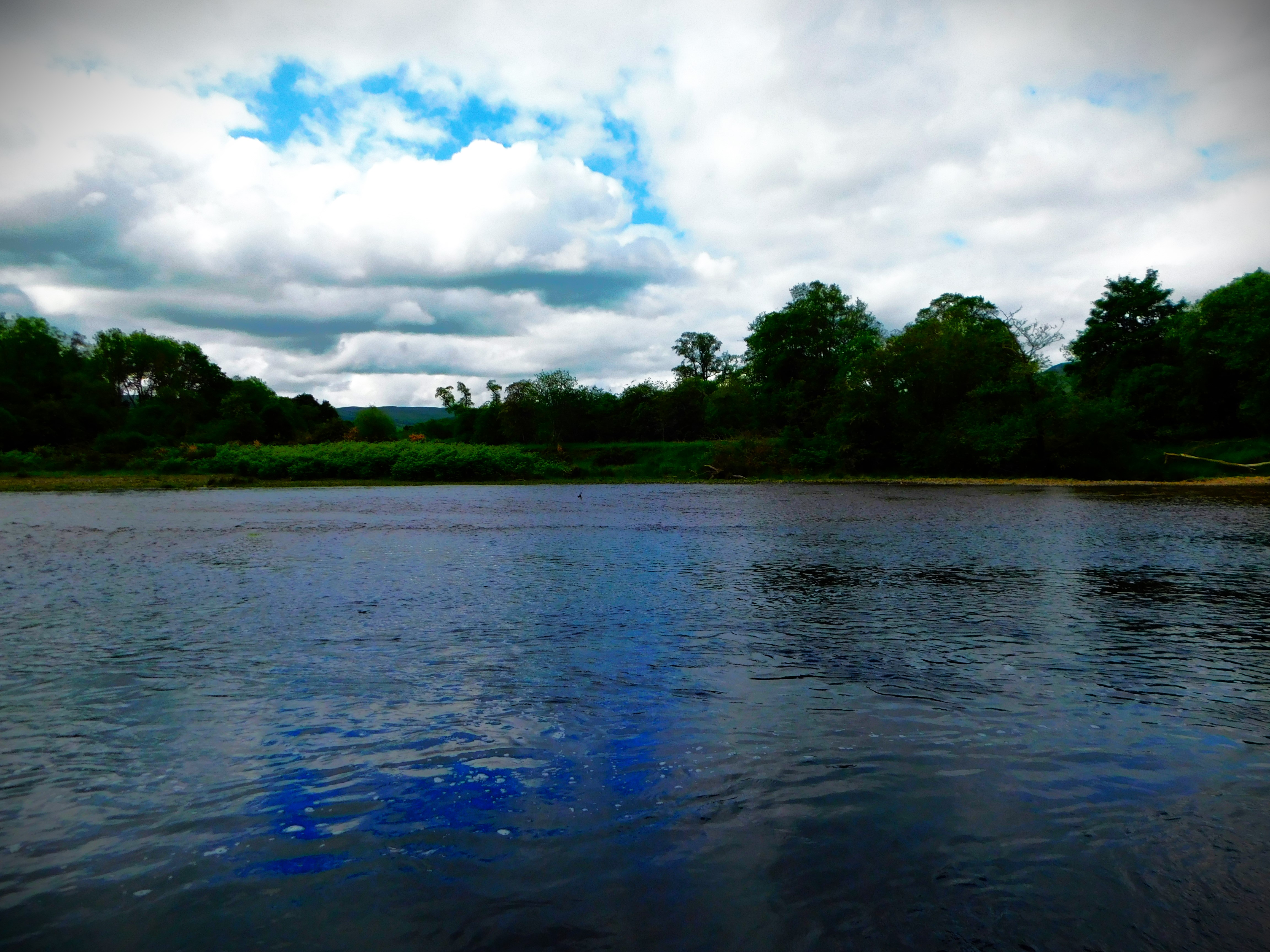
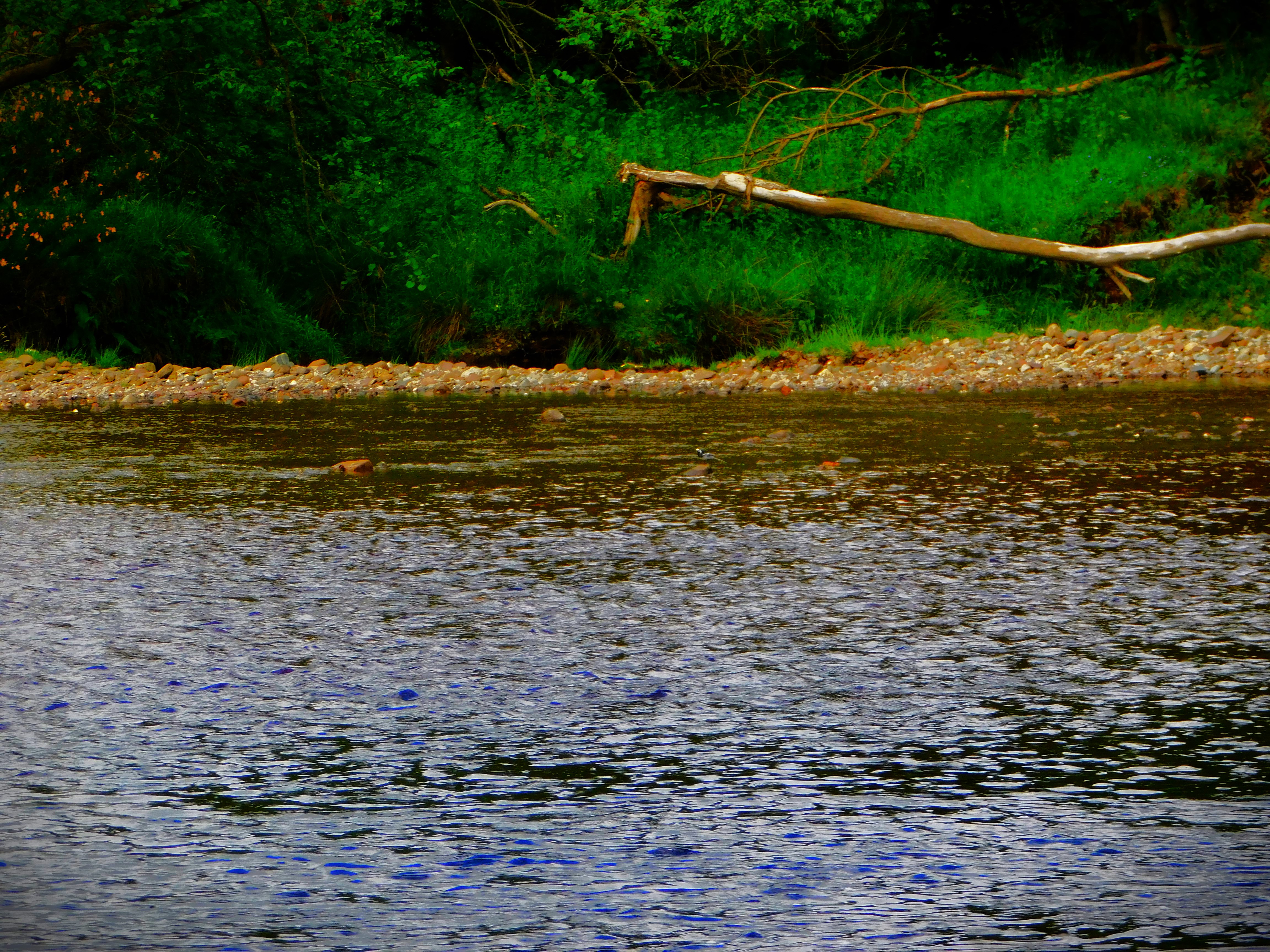
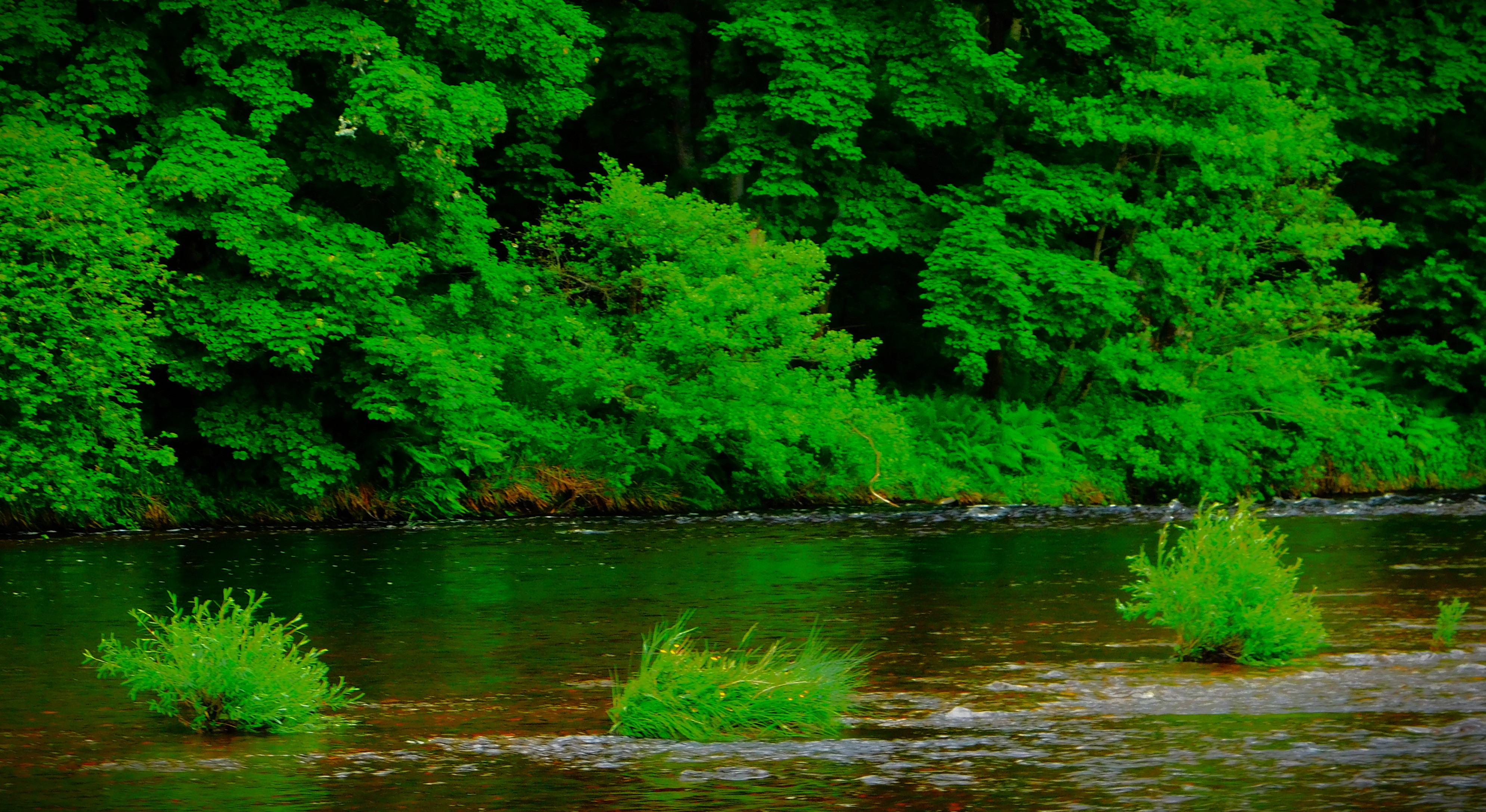
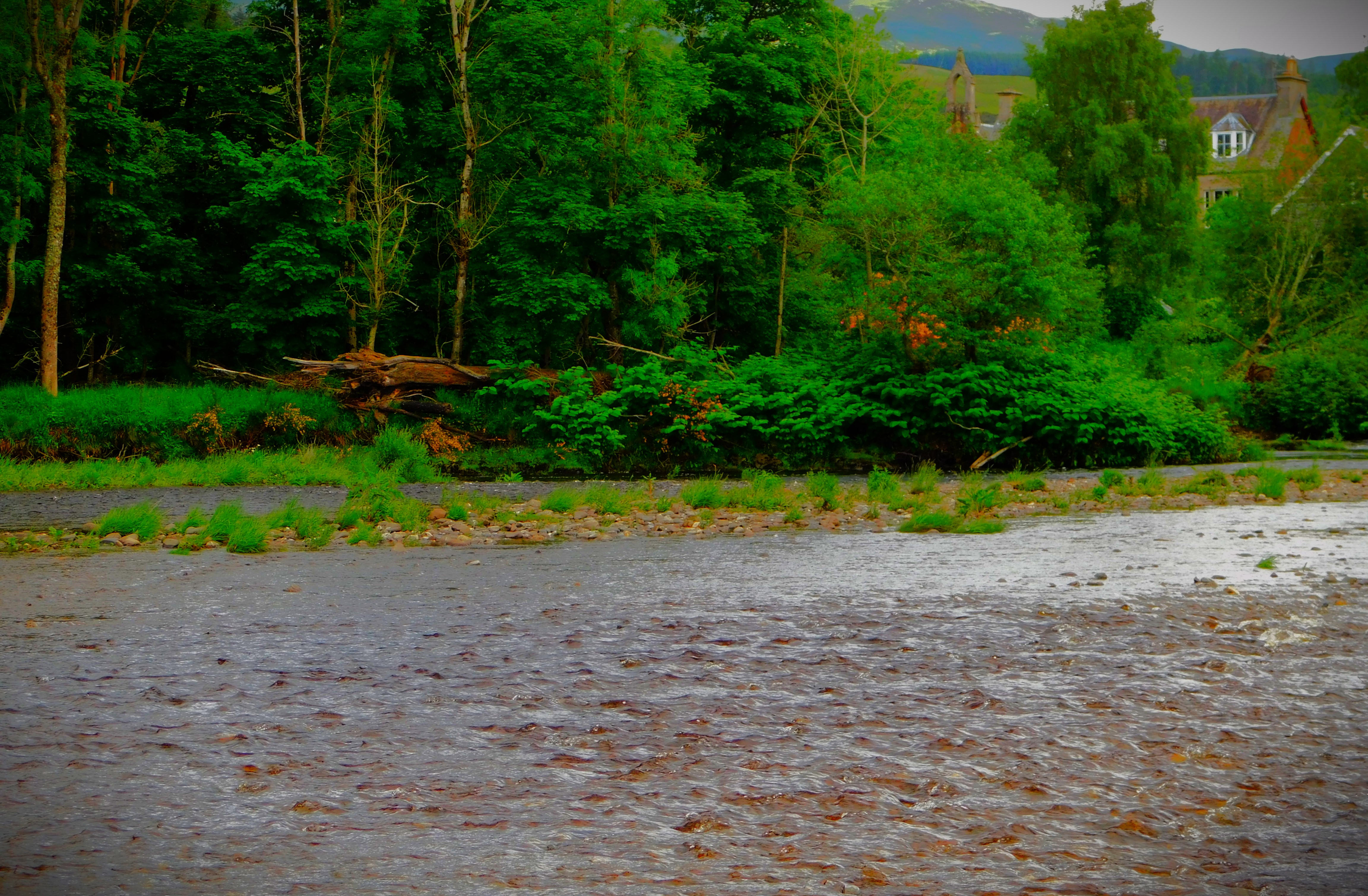
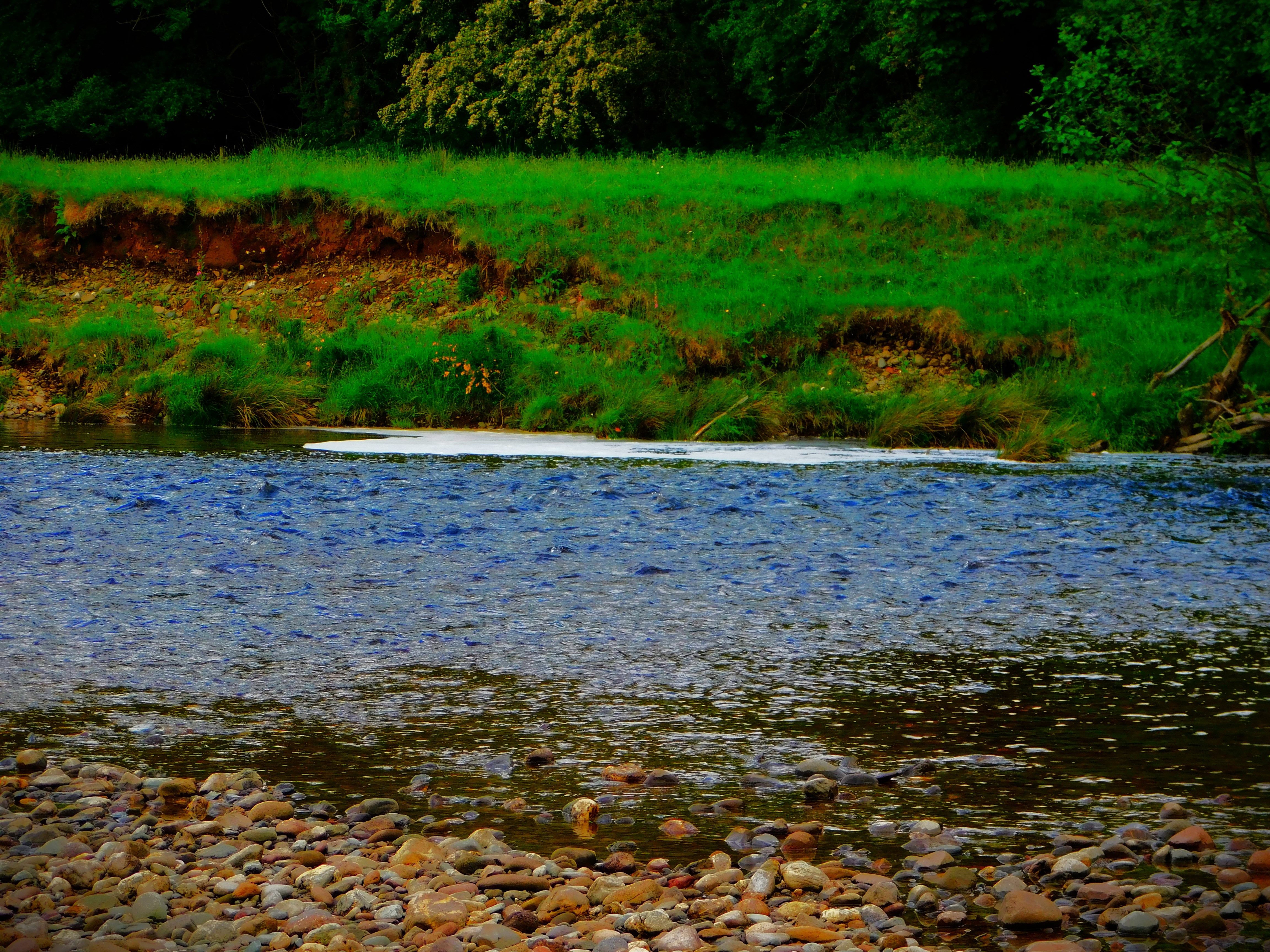
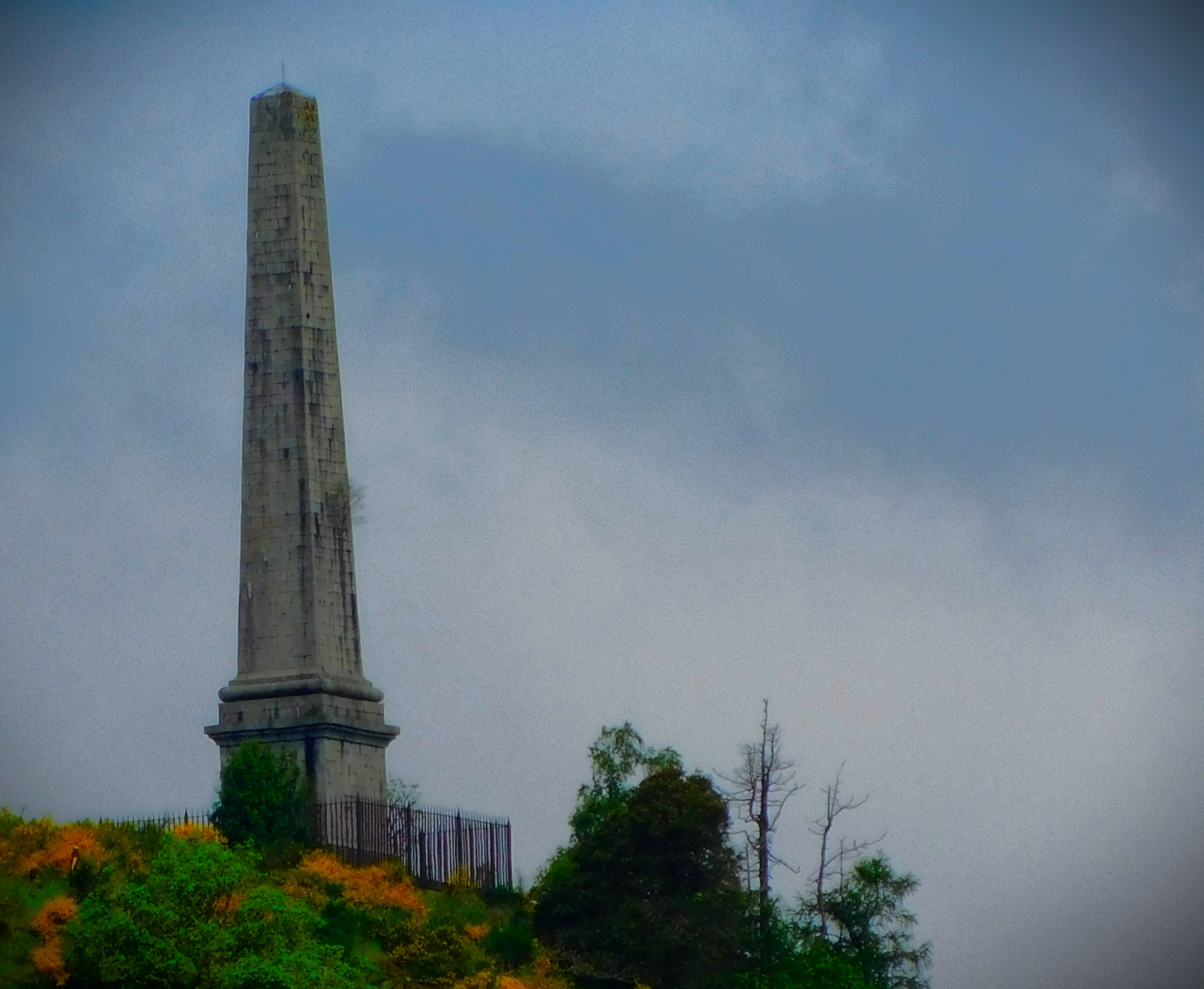
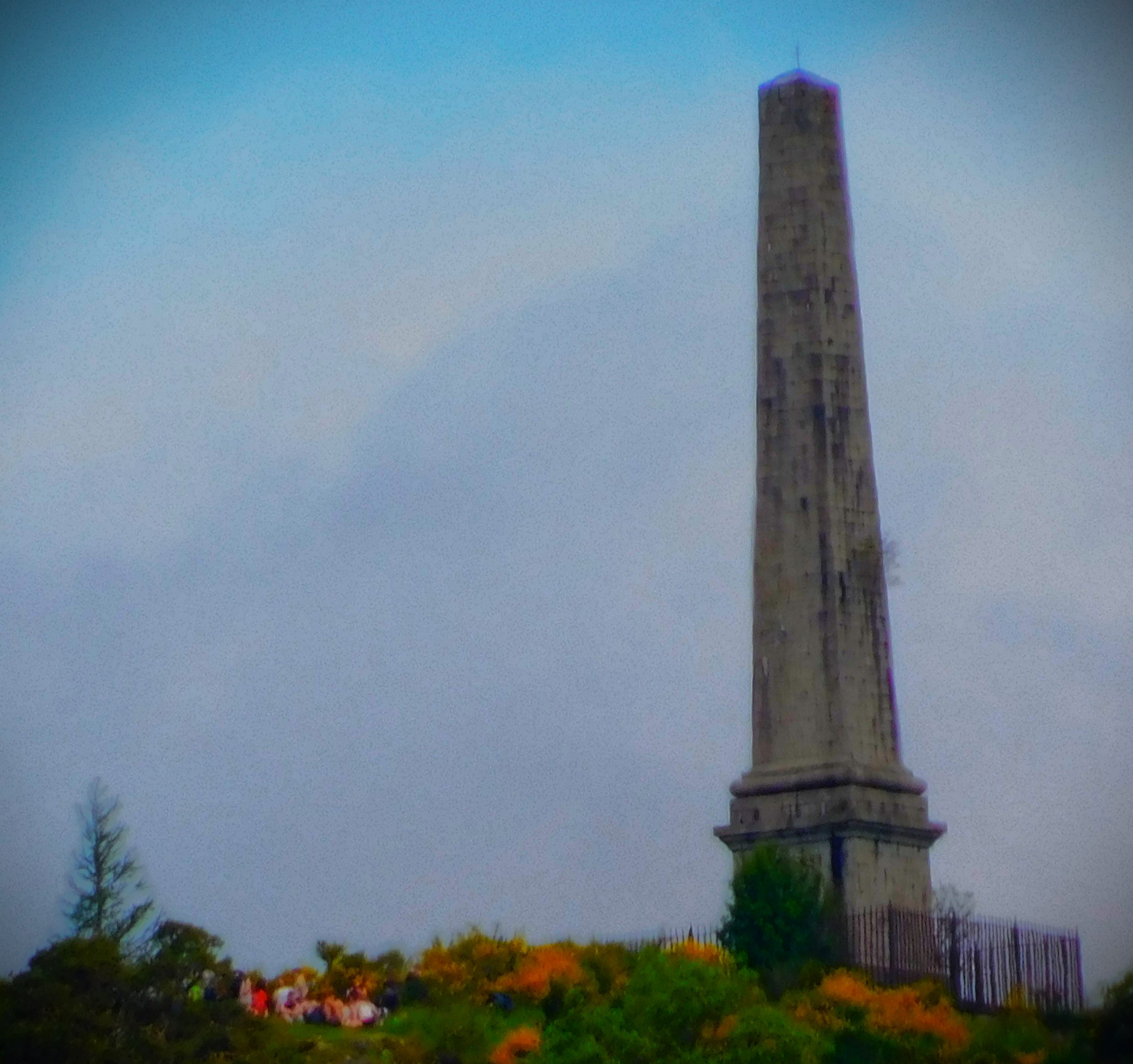
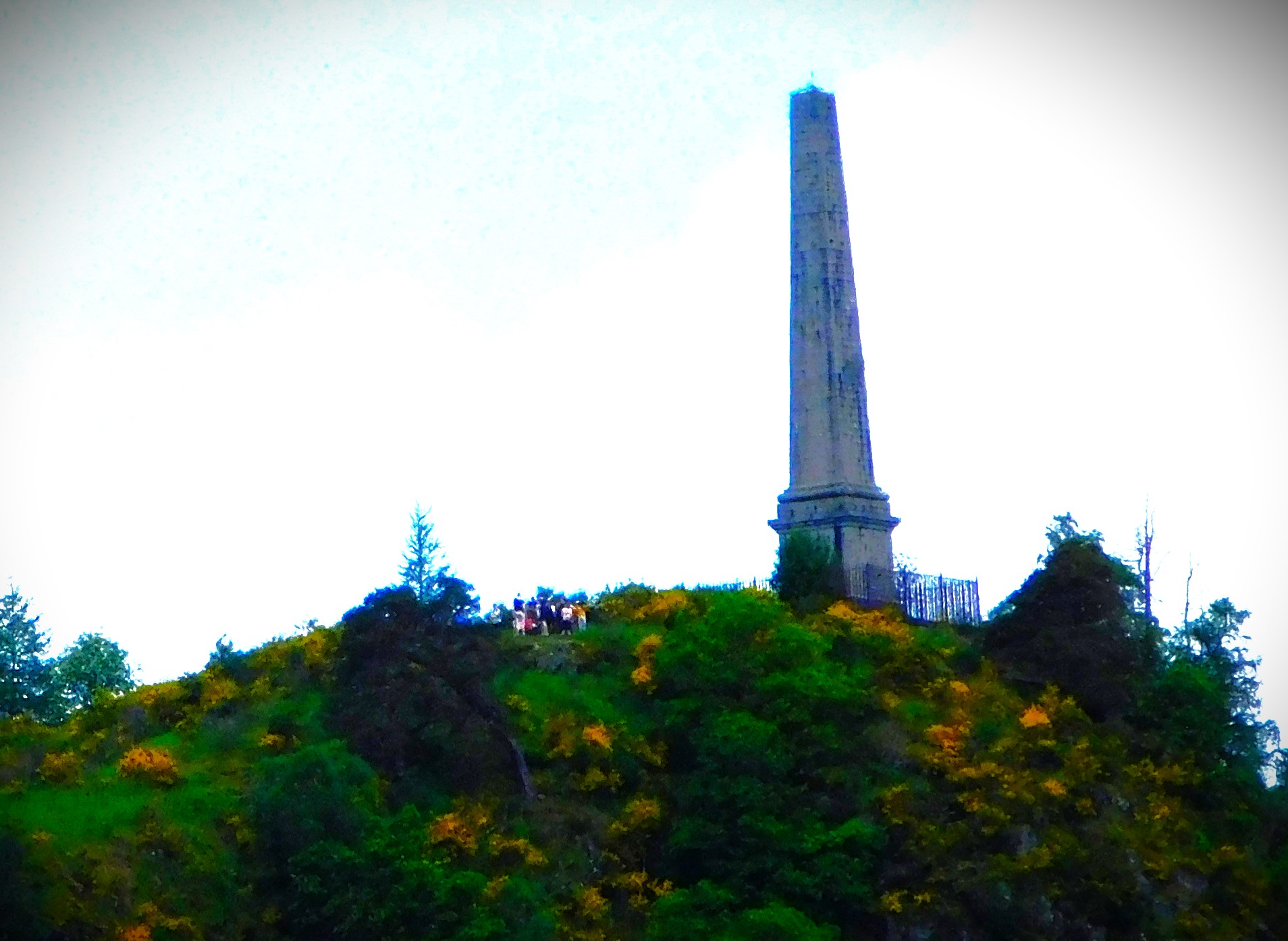
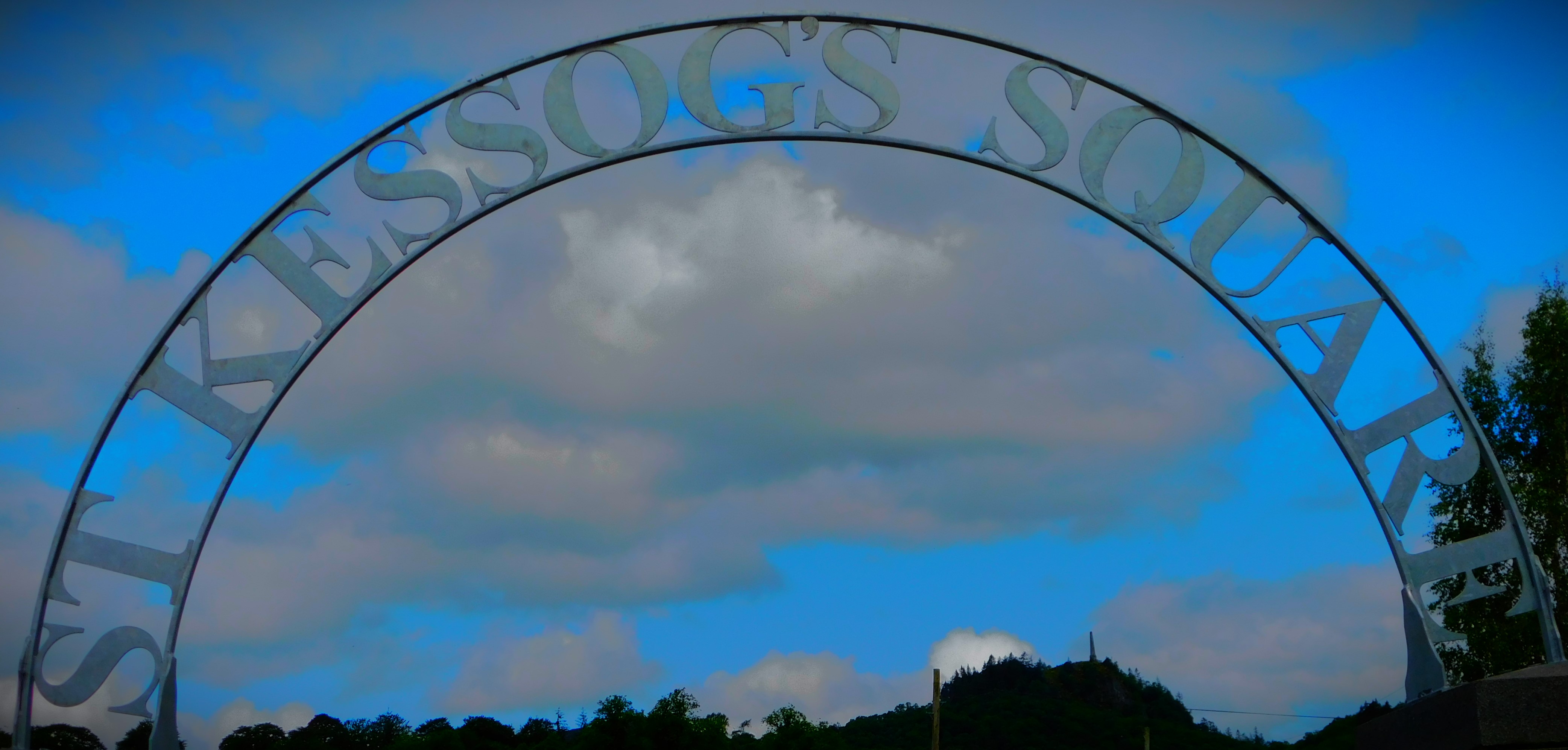
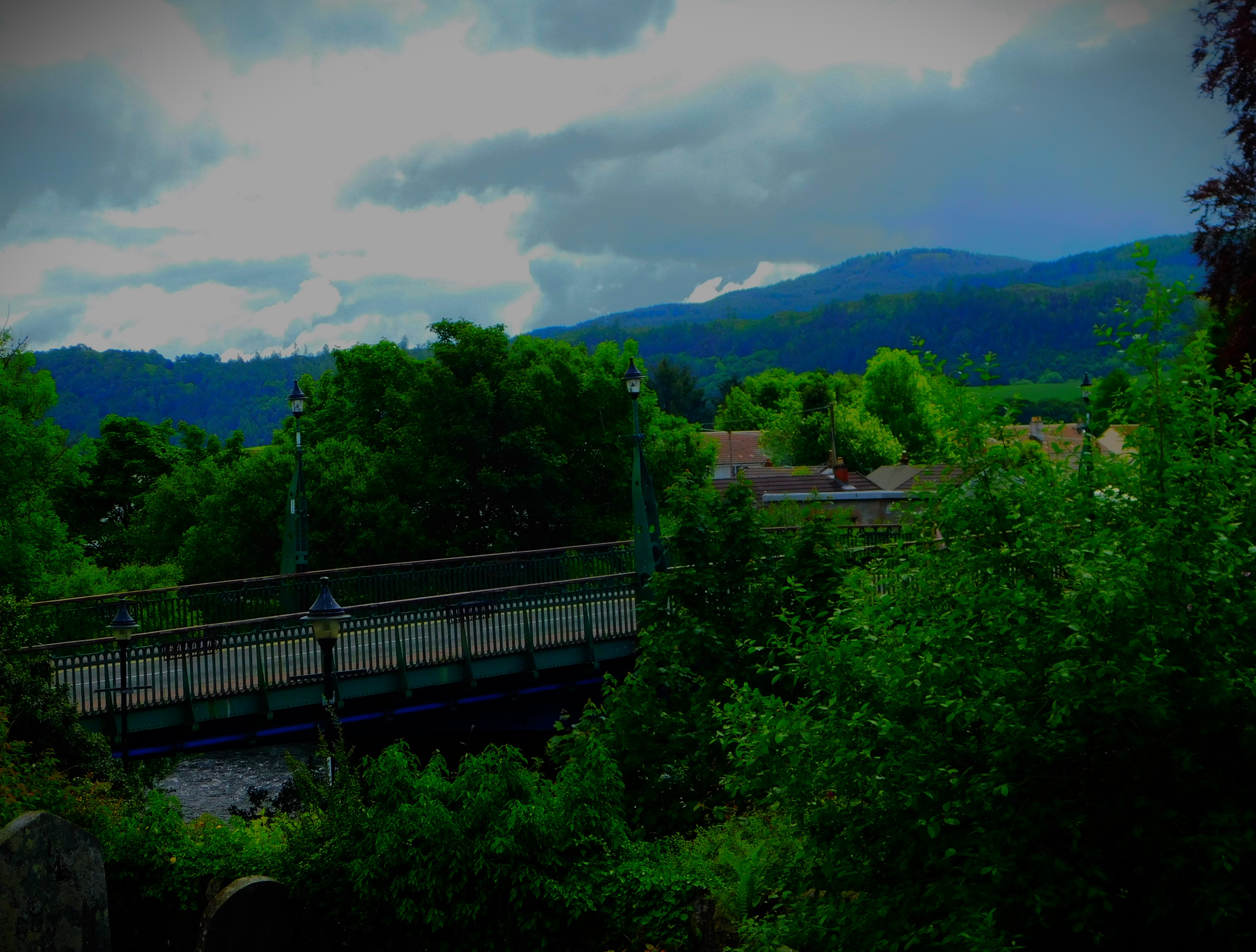
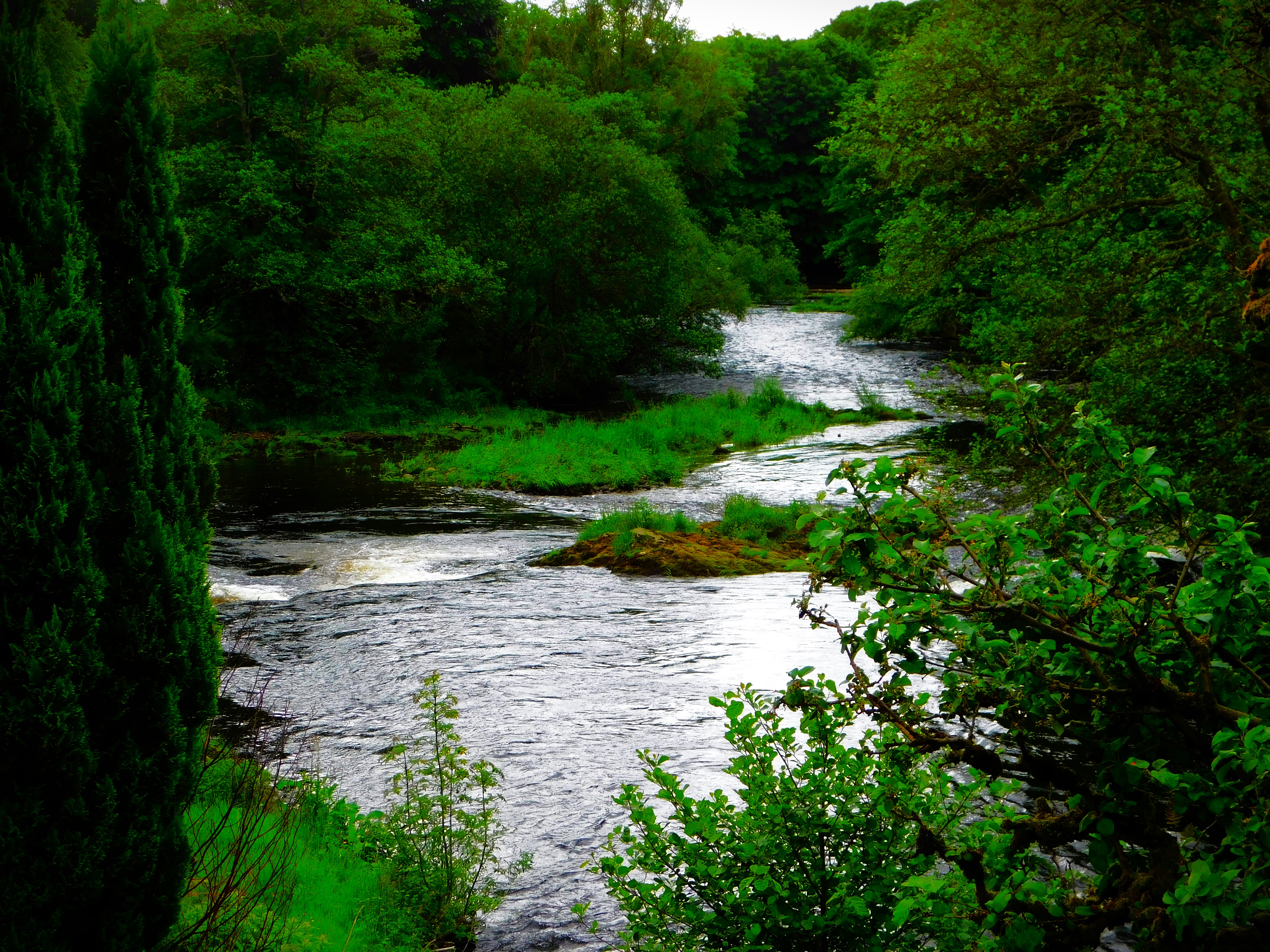
On the Wednesday morning I explored the river a little way in each direction. One way is a path that leads to Cultybraggan. In the other direction I got as far as Legion Park. From certain locations a hill top monument is visible – I photographed it more than once.
PHOTOGRAPHS
Here are the pictures for this post…
A community centre that looks like a church.The sitting room, showing the inside of the turret.
For those who made it to this point, here is the first of a series of waterfall videos which will feature in this series:
The public transport elements of my journey from King’s Lynn to Comrie.
This is the first of what I plan to be a series of posts about my recent holiday in Scotland. This post looks in detail at the public transport elements of the journey there.
KING’S LYNN TO PETERBOROUGH
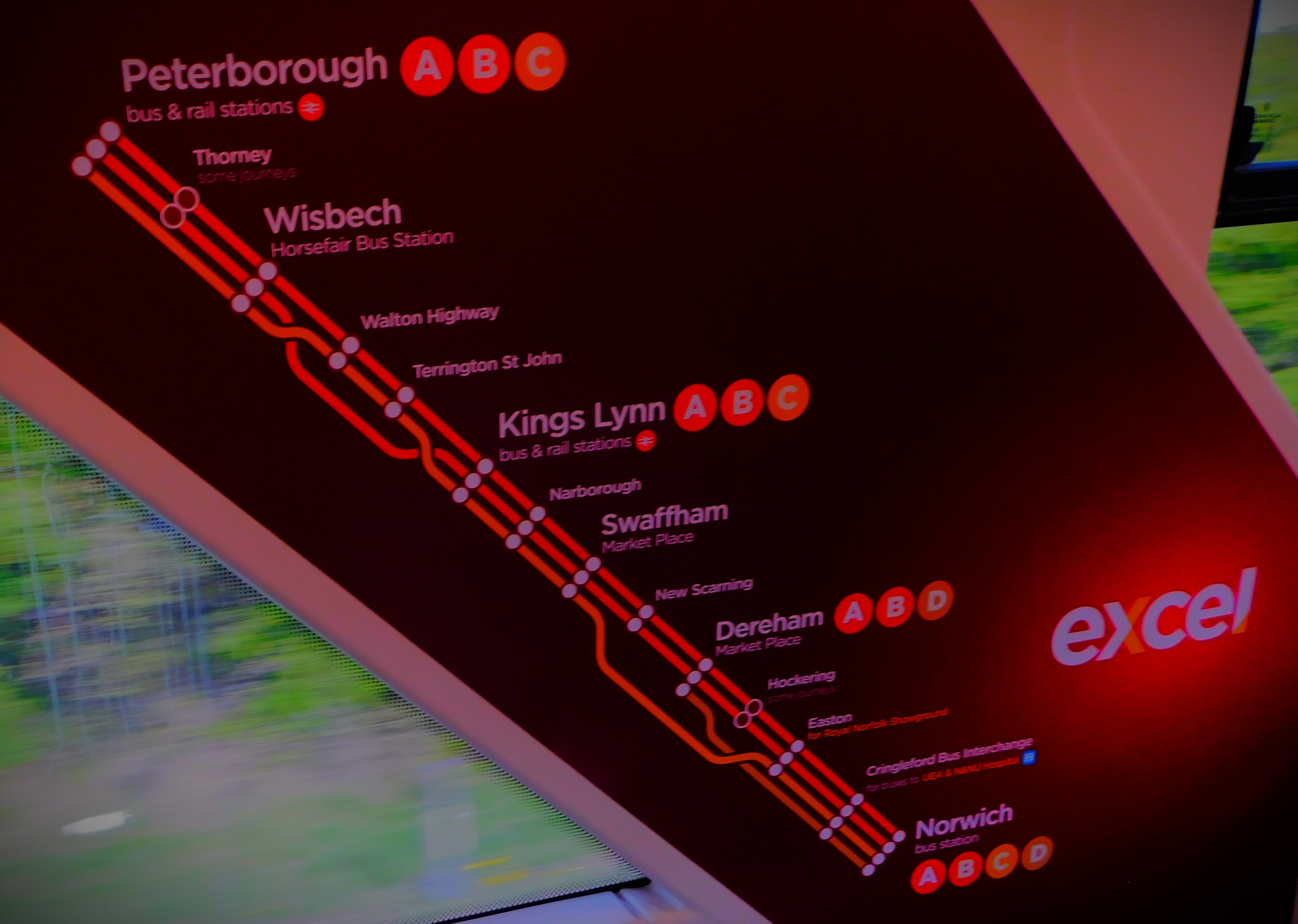
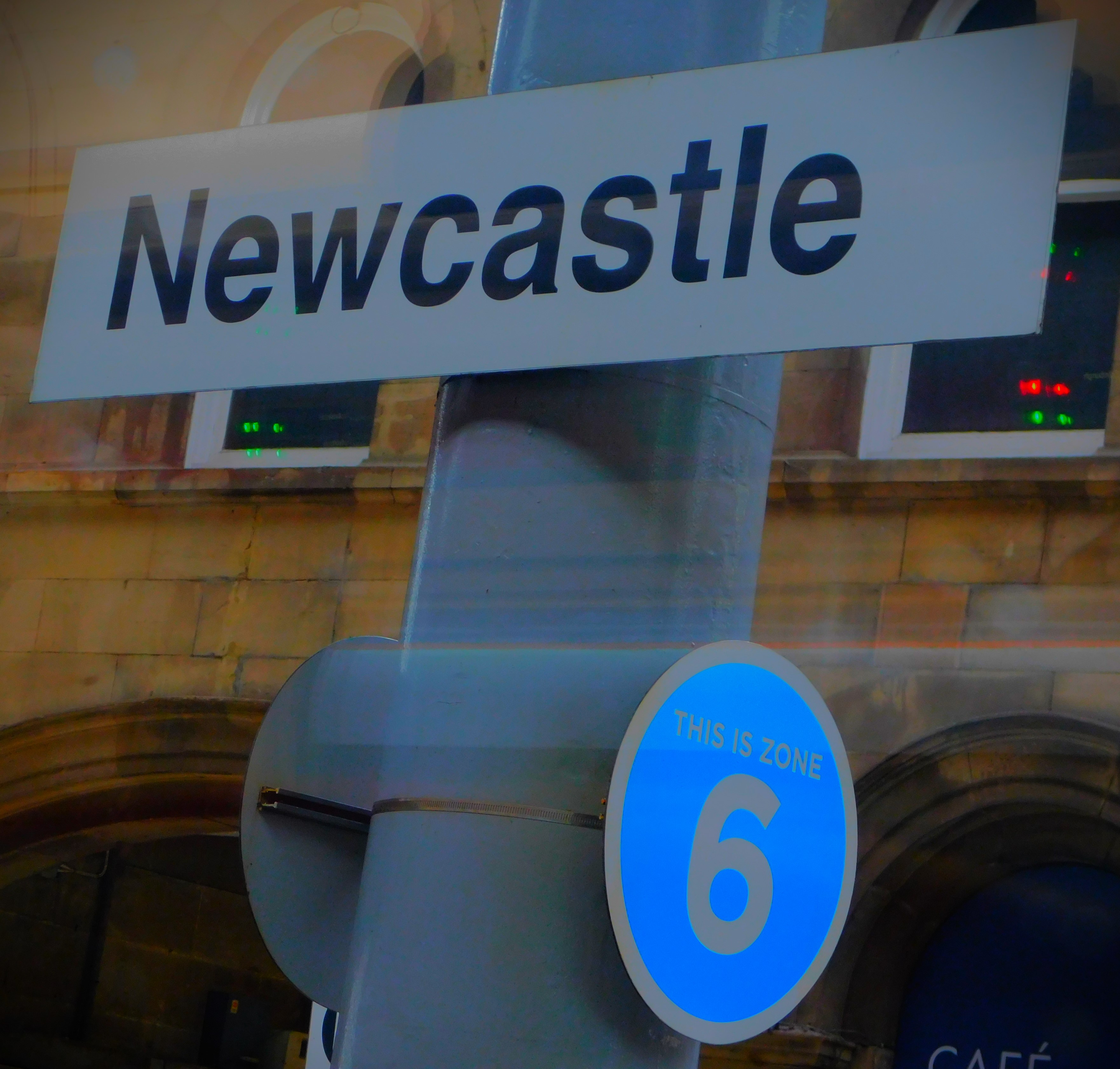
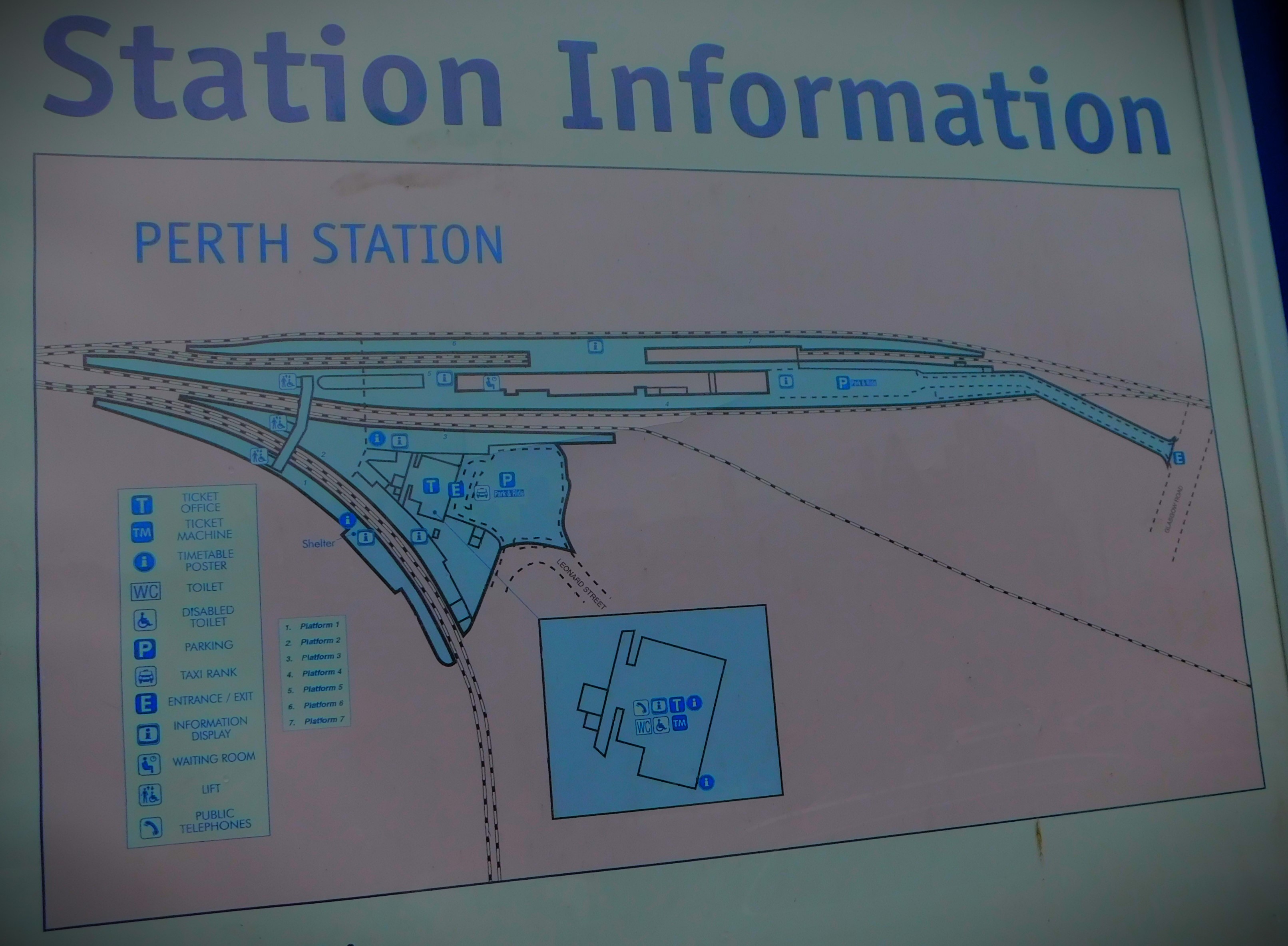
I booked my train tickets to and from Peterborough because it is significantly cheaper that way and also the train journey to Peterborough involves a change at Ely. With the train on which I had a reserved seat leaving Peterborough at 10:18AM I assessed that the right bus to be on was the 8:30AM bus, which meant I needed to leave before 8 o’clock to be sure of catching it. This did not prove to be any great problem. The bus ran smoothly and I arrived at Peterborough with plenty of time to find the correct platform and the correct place on that platform to wait to board the train at the right point (I was in coach H, which was shown on the information screen as needing me to be in zone 5 of the platform…
PETERBOROUGH TO EDINBURGH WAVERLEY
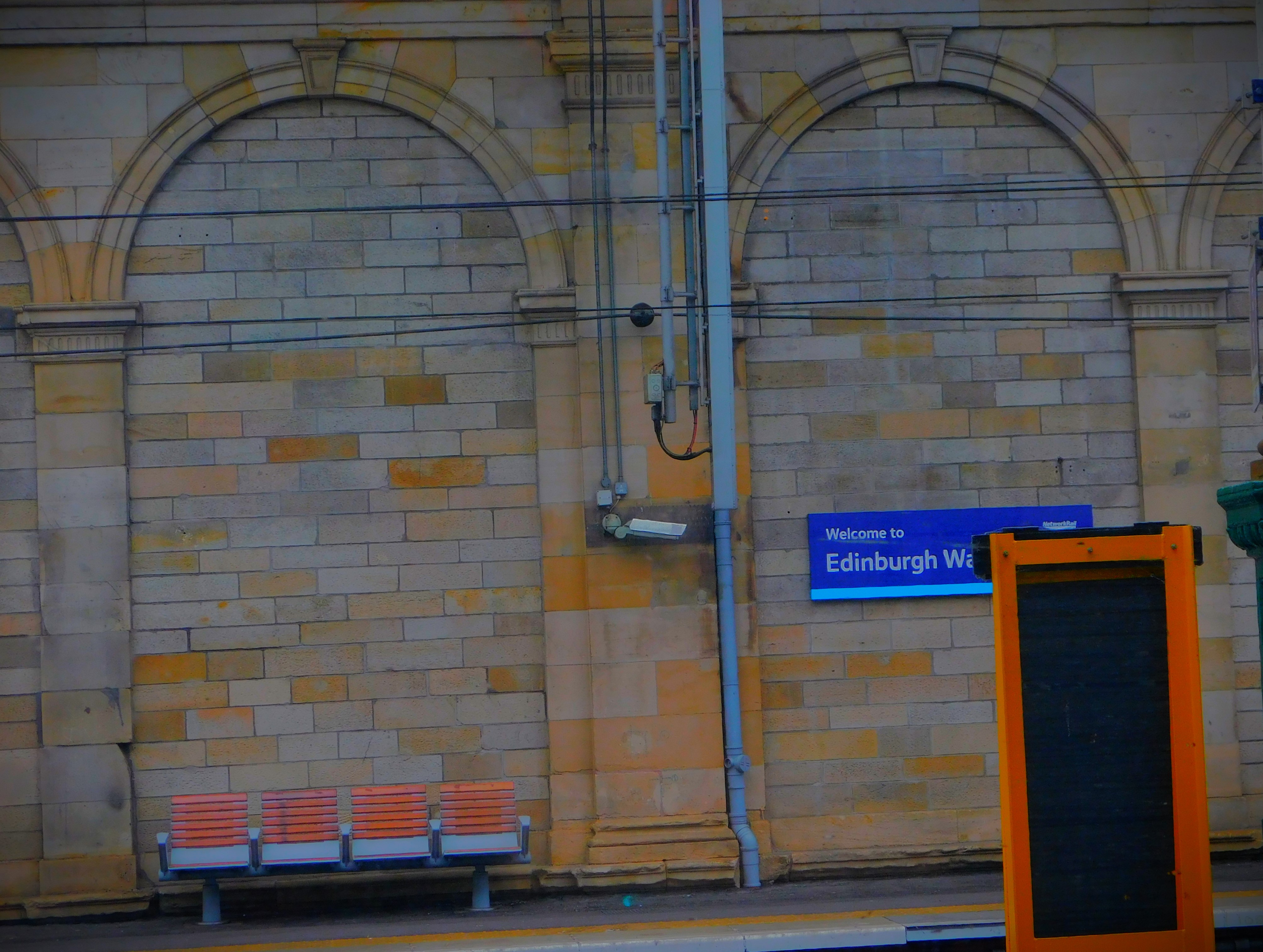
This was the longest leg of the journey, but compensated by also being the fastest. Finding my reserved seat was straightforward, and no one had unthinkingly occupied it, so I was able to seat myself without having to ask anyone to move (even though reservations are very clearly indicated as such it is not unknown to find a reserved seat already occupied, and I will get the person occupying it to move if that is the case). I had booked a forward facing window seat, and on this occasion that was what it proved to be – and it was on the better side of the train for photography. This route provides plenty of fine views, especially between York and Edinburgh (though there a few good bits south of York as well). The task at Edinburgh was to locate the train I was to travel on as far as Stirling, which I did…
EDINBURGH TO STIRLING
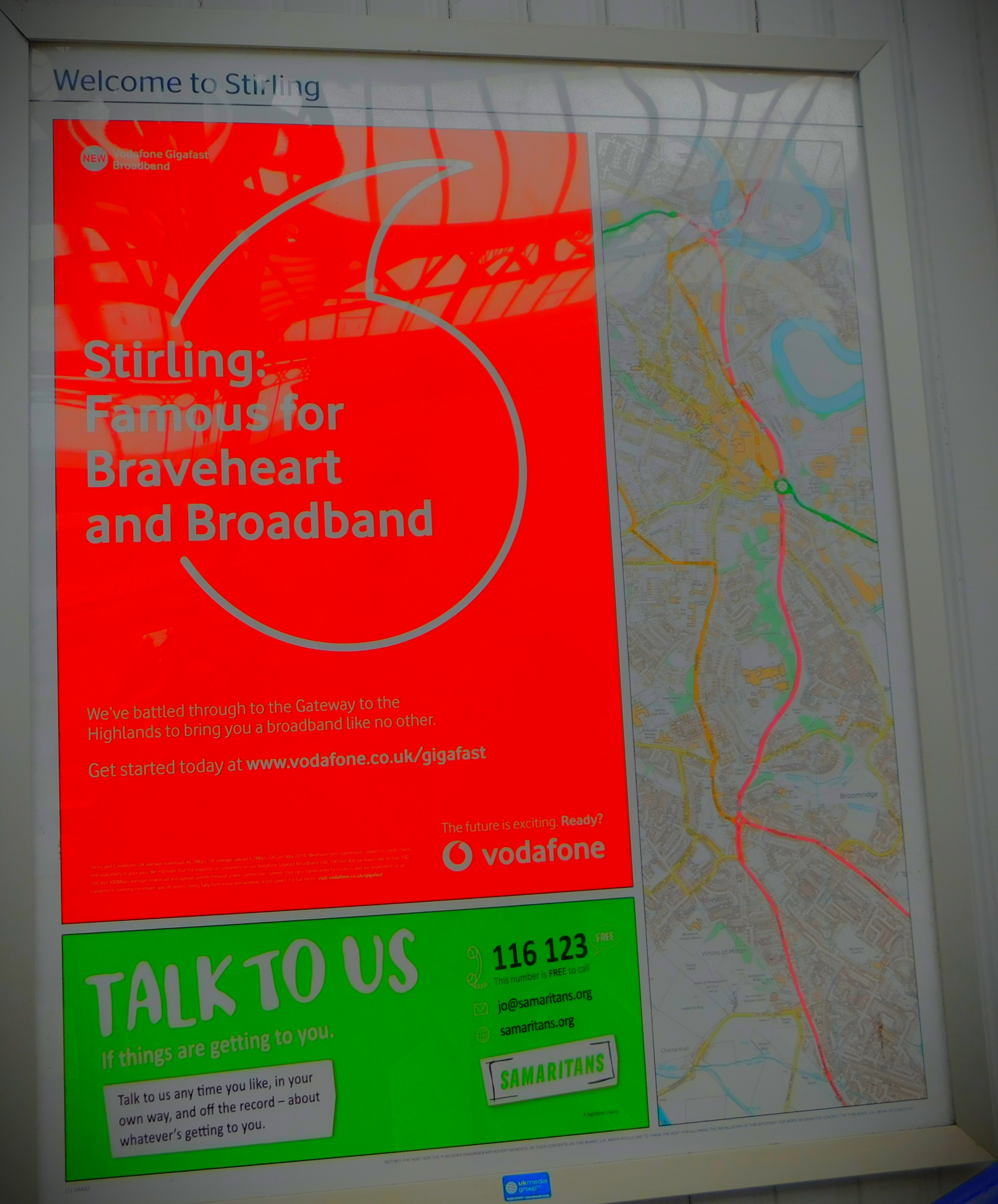
This was on a stopping service which was ultimately headed for Dunblane, and passed through a few interesting places. At Stirling I had to change trains for the final leg of the journey to Perth, but this did involve moving platforms, for which I was grateful.
STIRLING TO PERTH
This was a non-stop journey on a Scotrail Intercity service heading towards Inverness. Unfortunately I was unable to secure a window seat for this final leg of the journey, though I did spot one or two interesting things on arrival at Perth. The train arrived at Perth at the scheduled time, which meant that seven and a half hours of public transport travel involving one bus and three trains had ended with the traveller in the right place at the right time – which in 21st century Britain comes close to qualifying as miraculous.
PHOTOGRAPHS
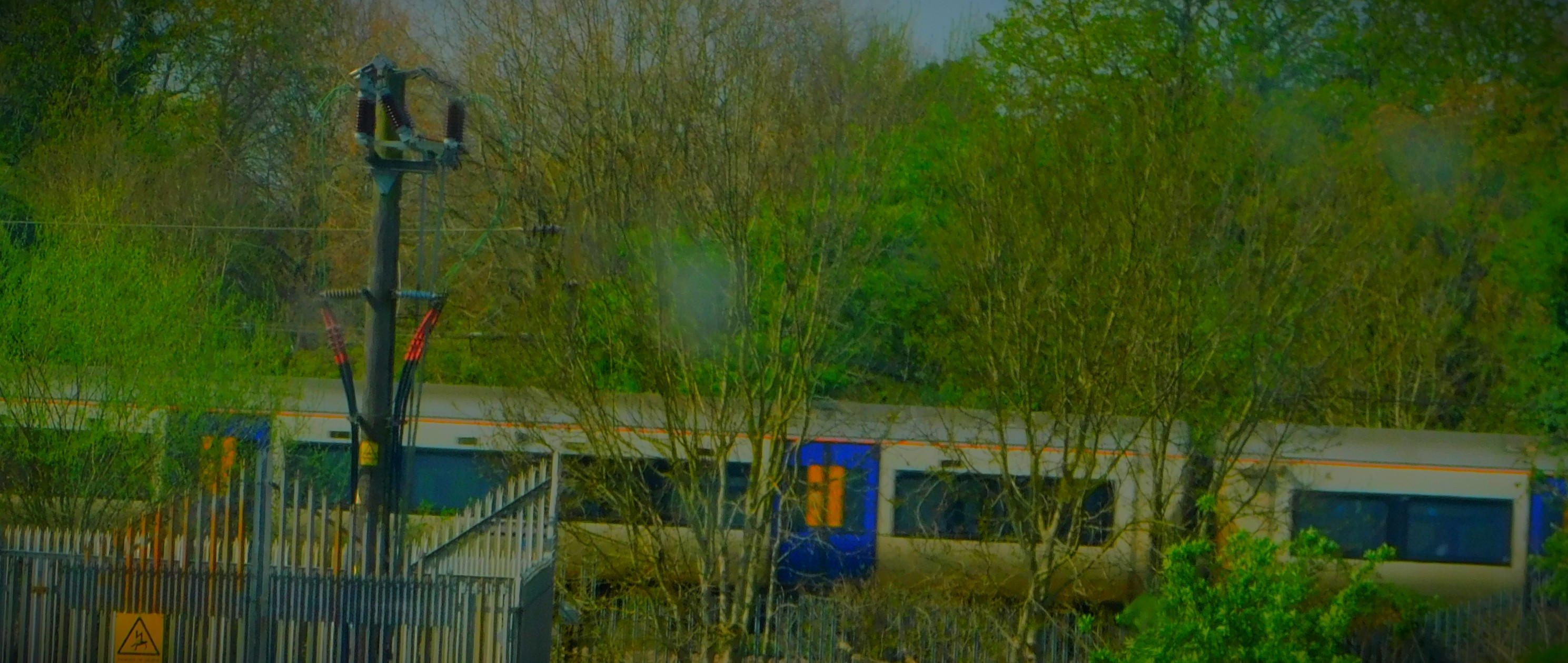
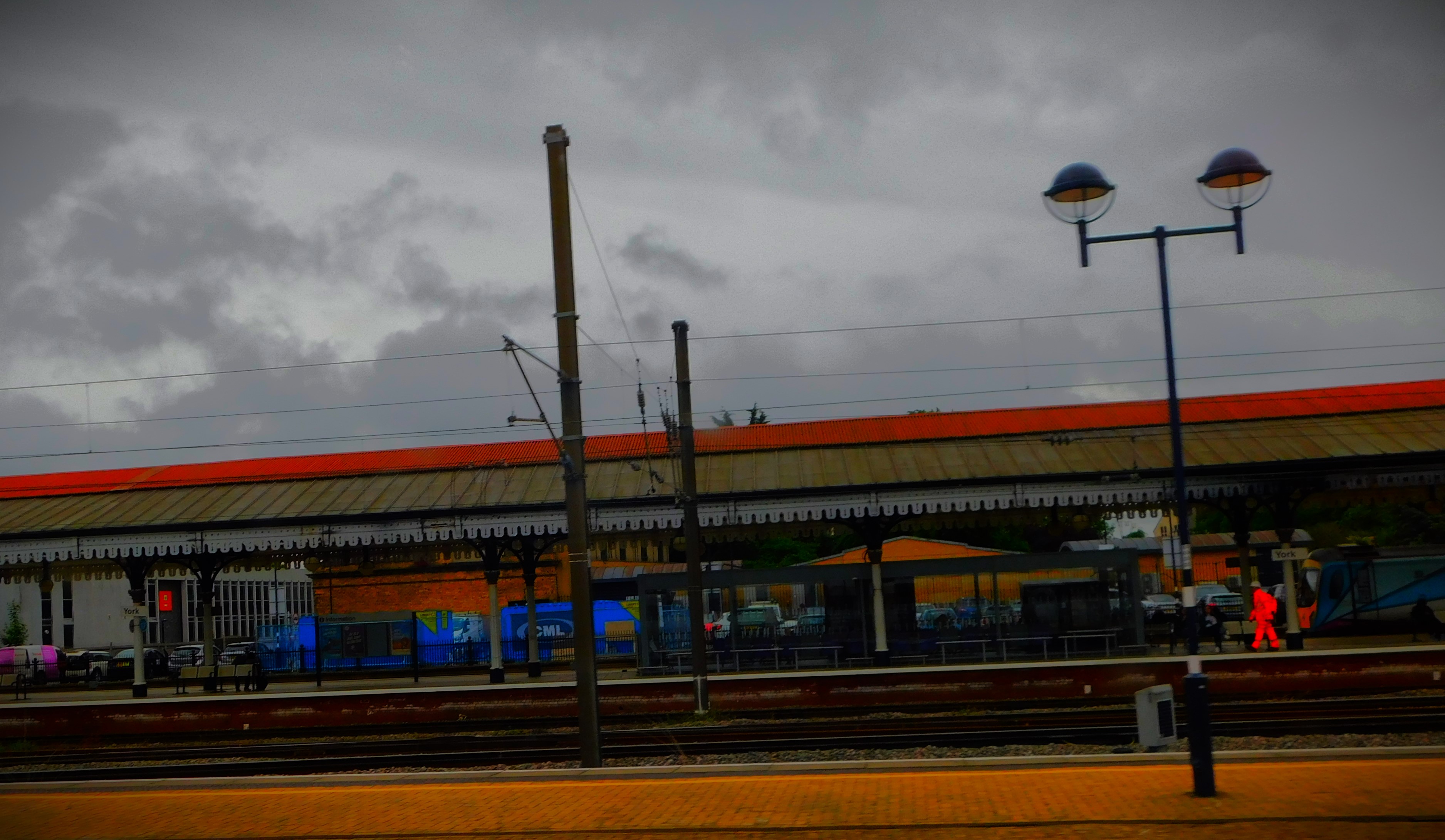
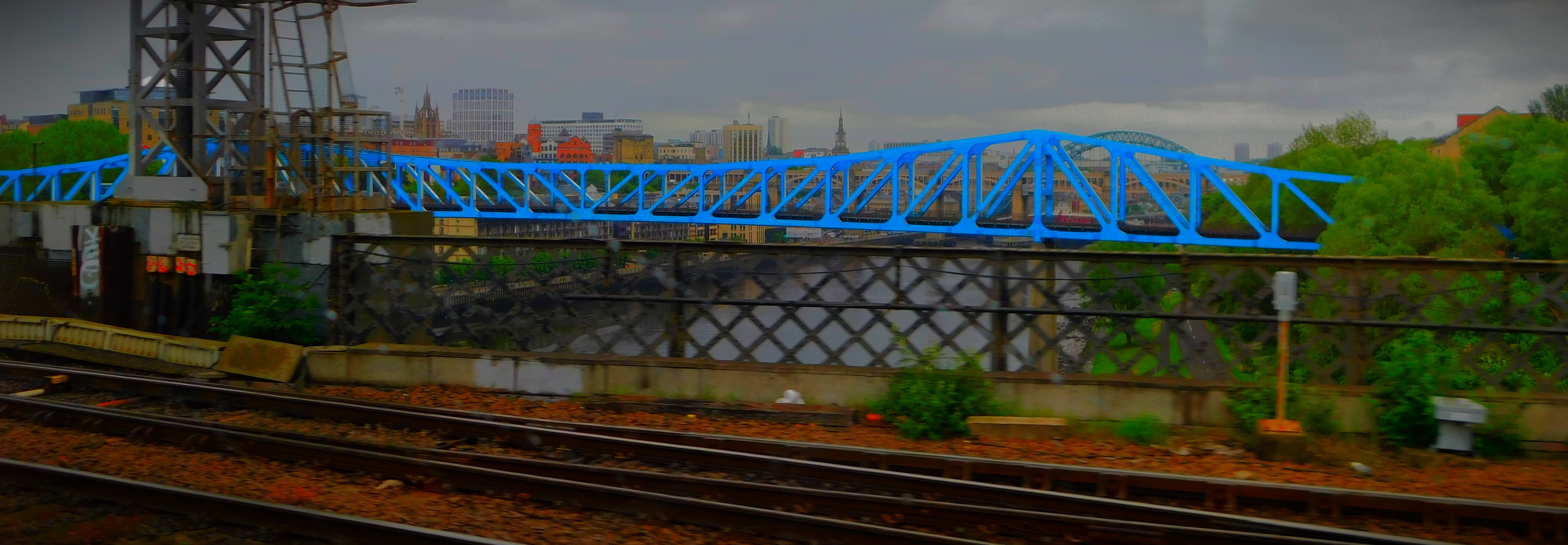
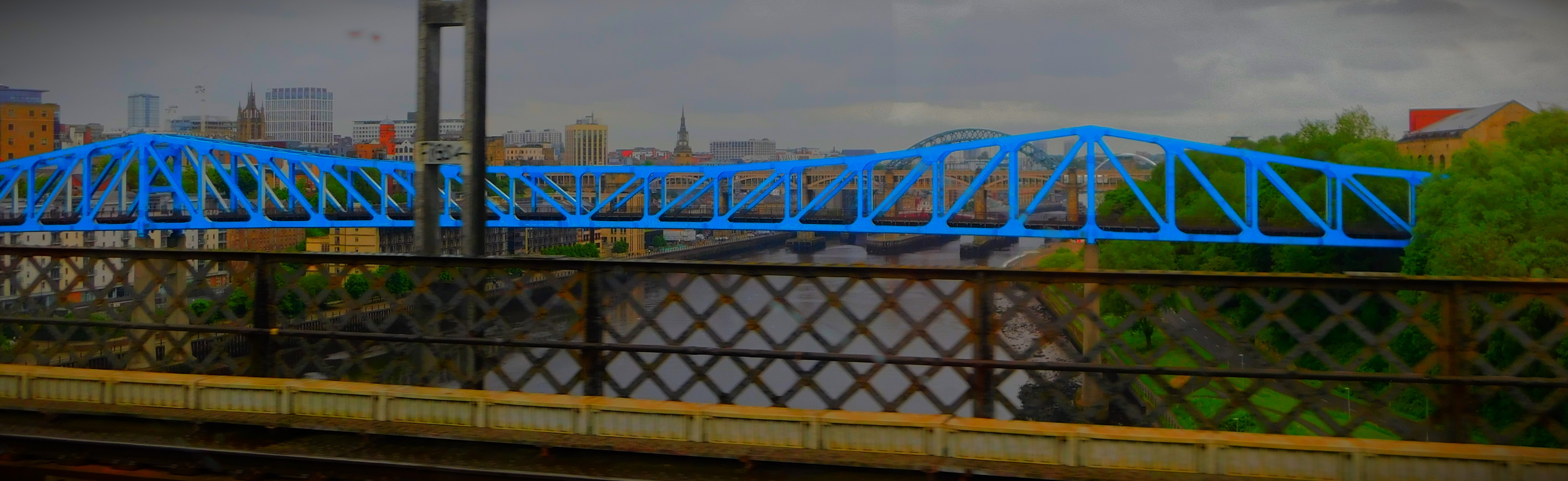
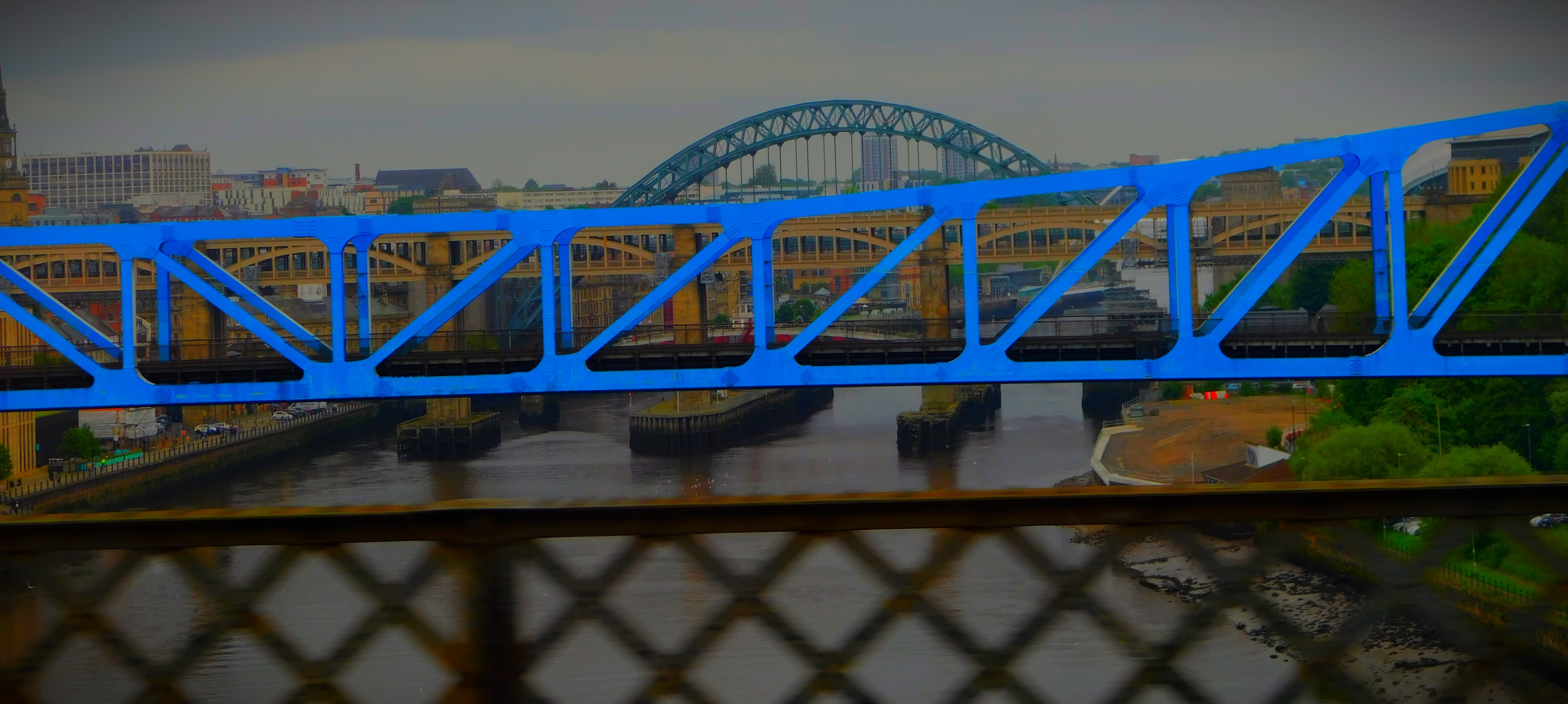
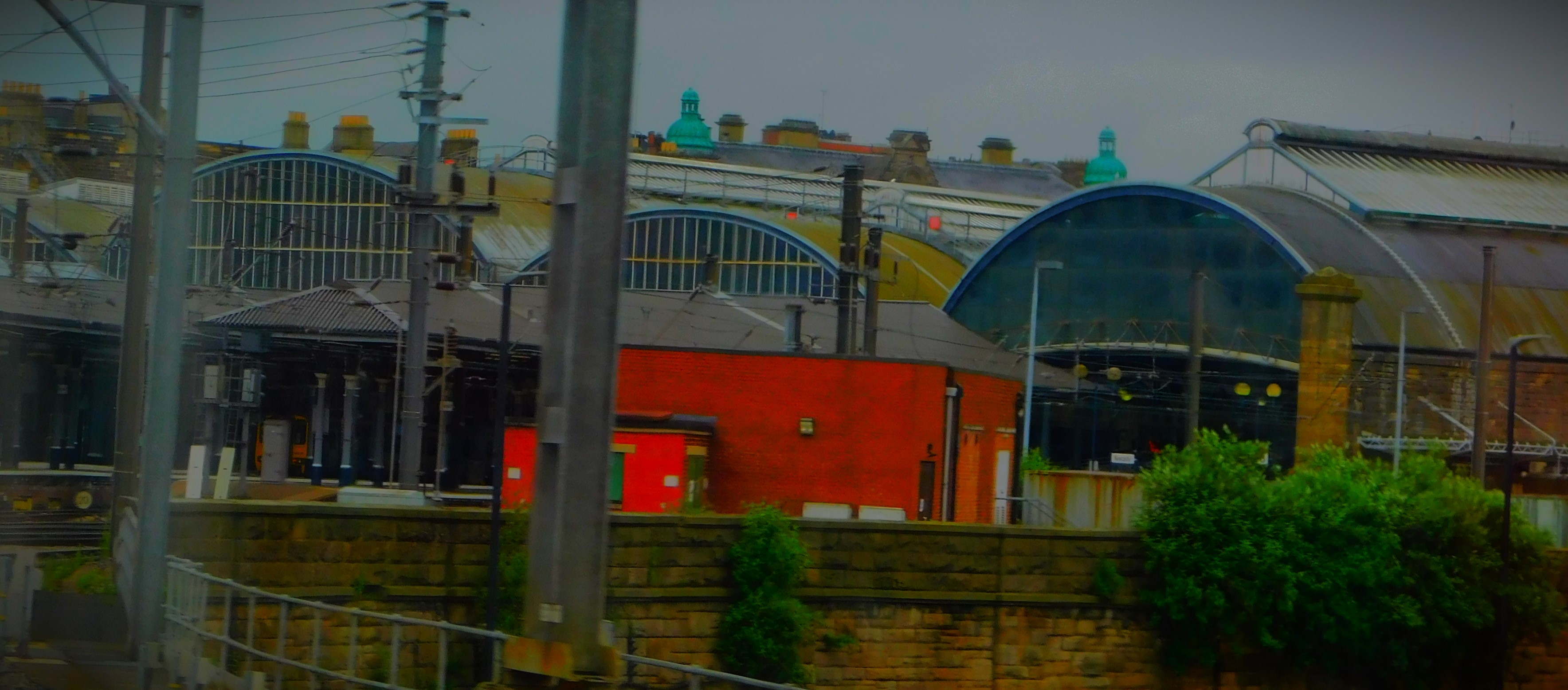
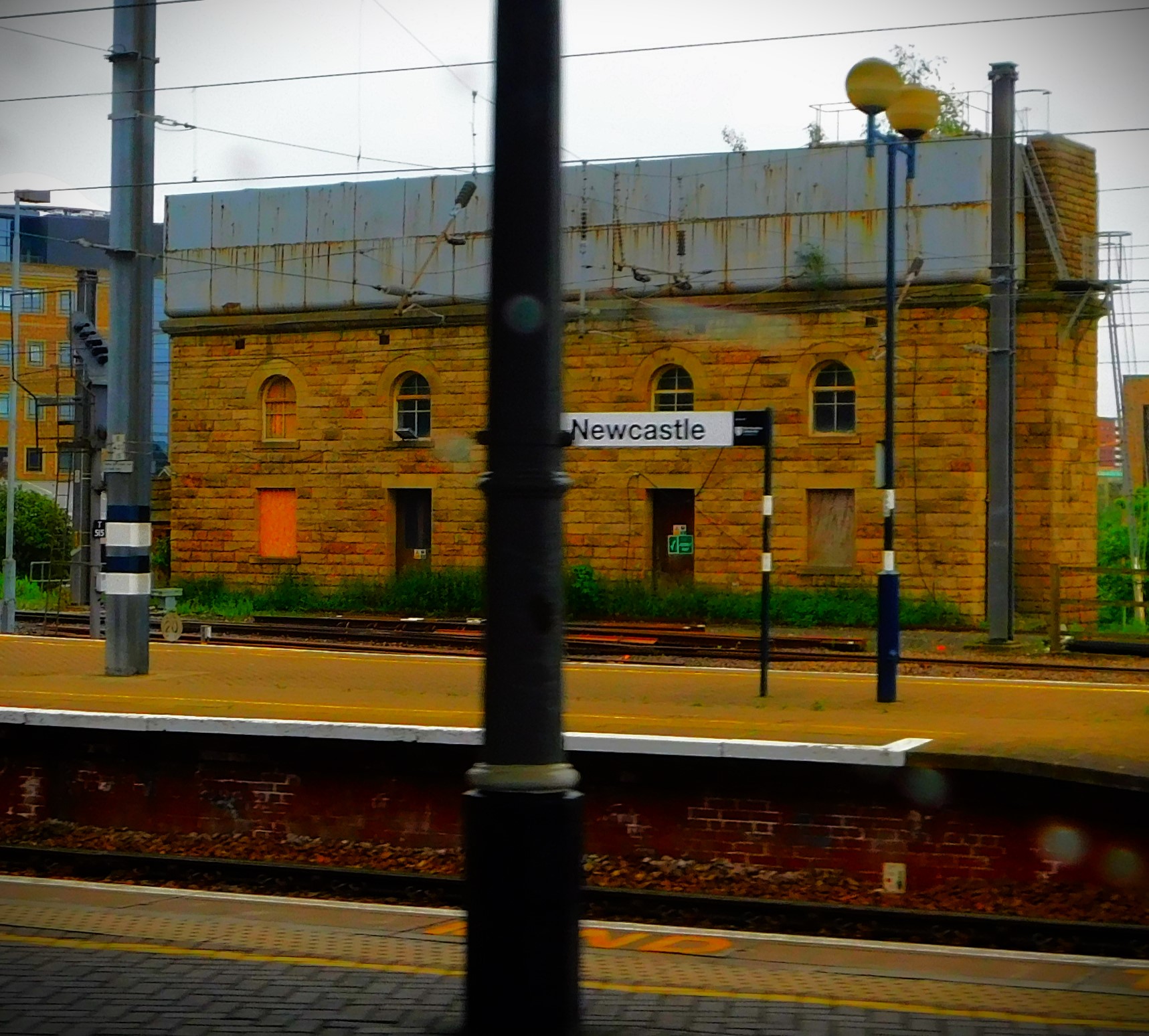
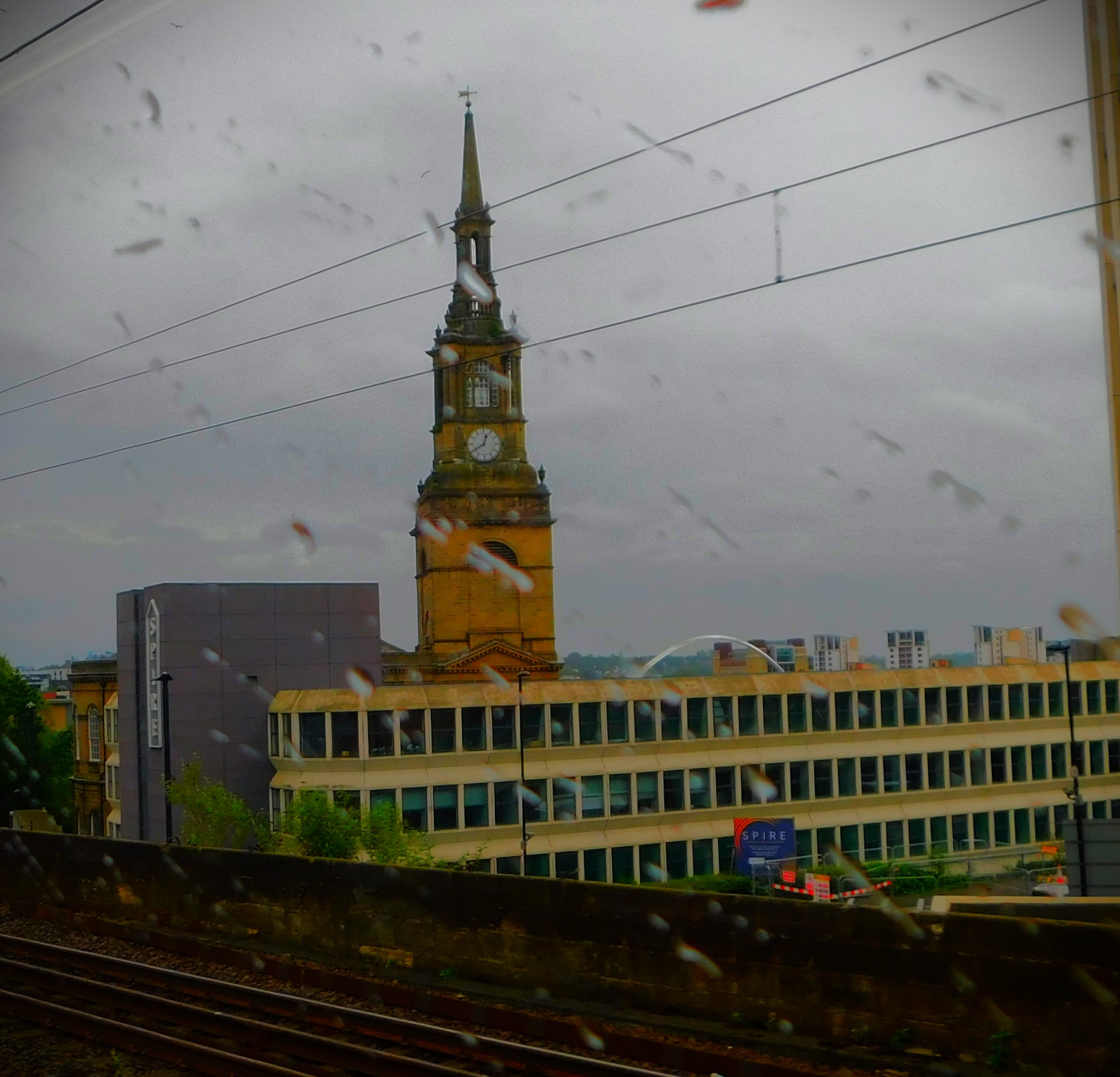
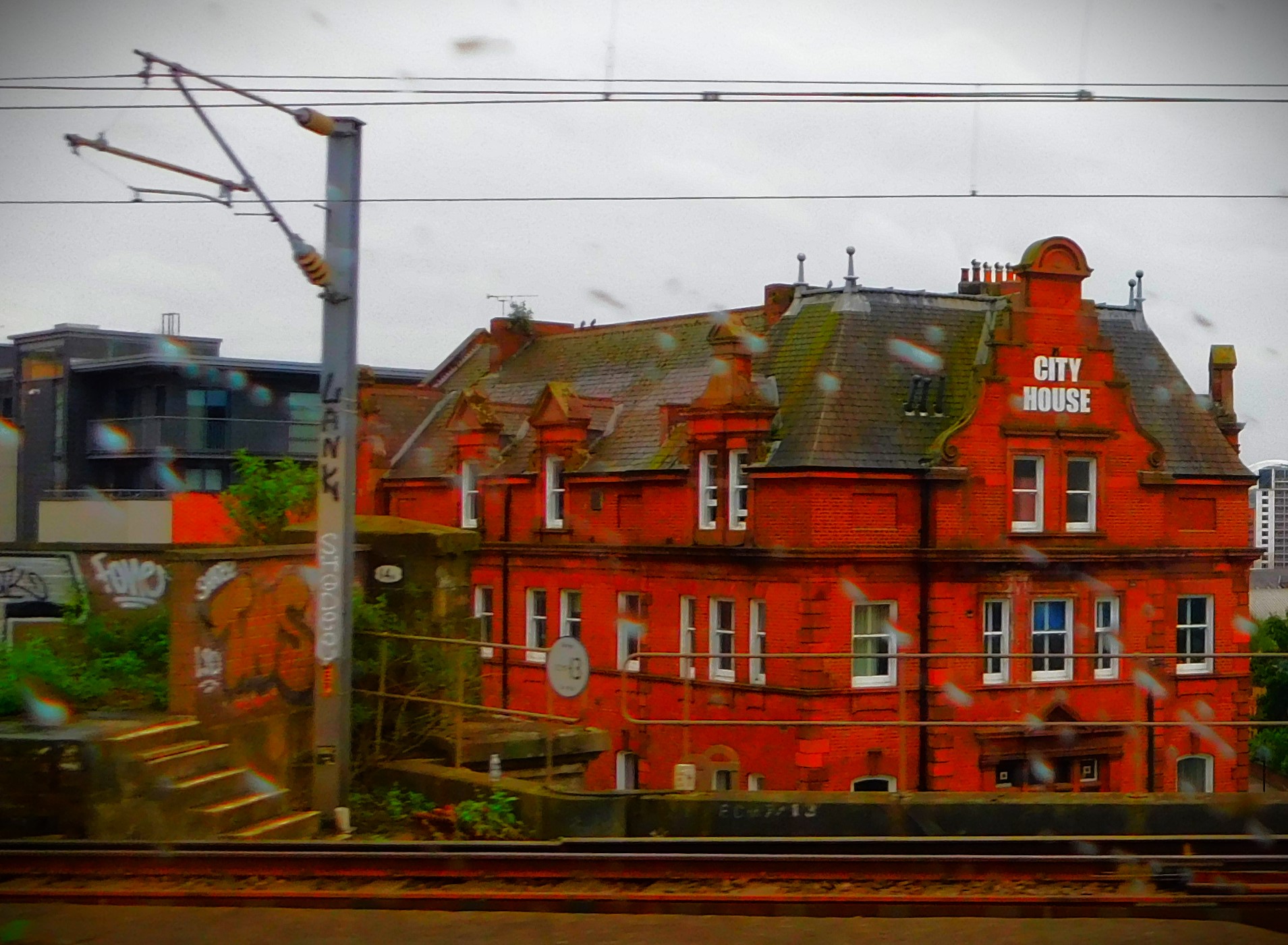
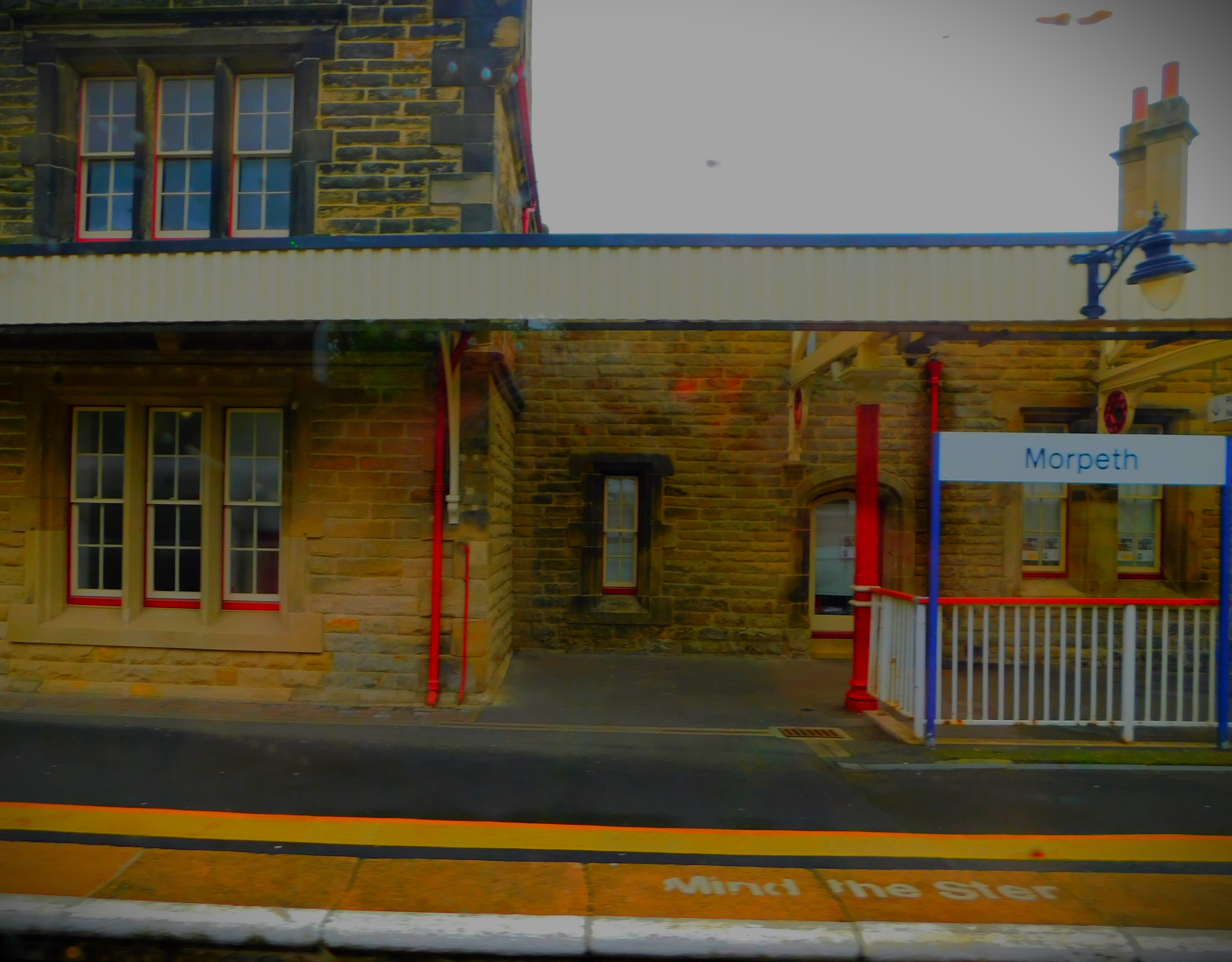
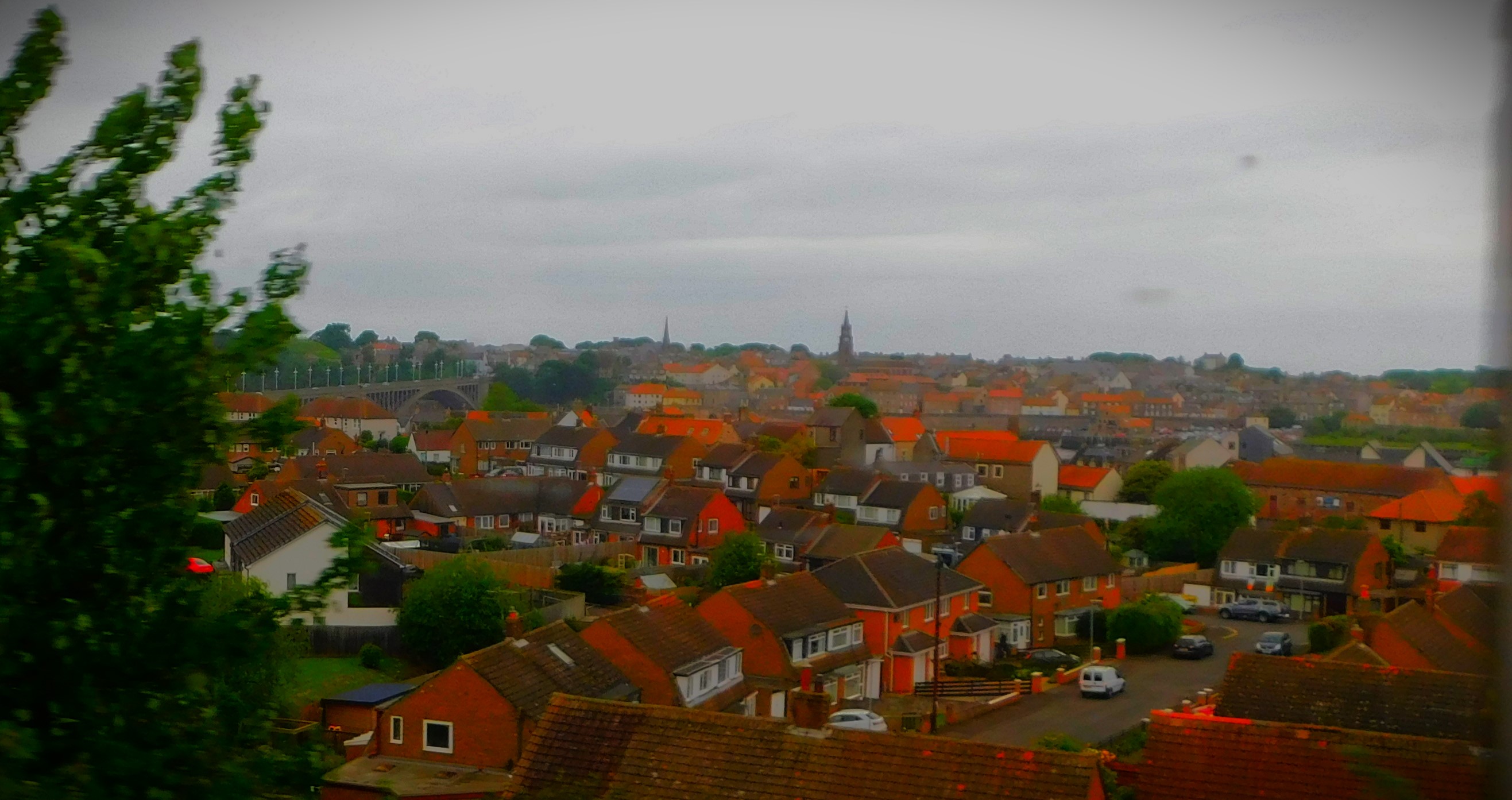
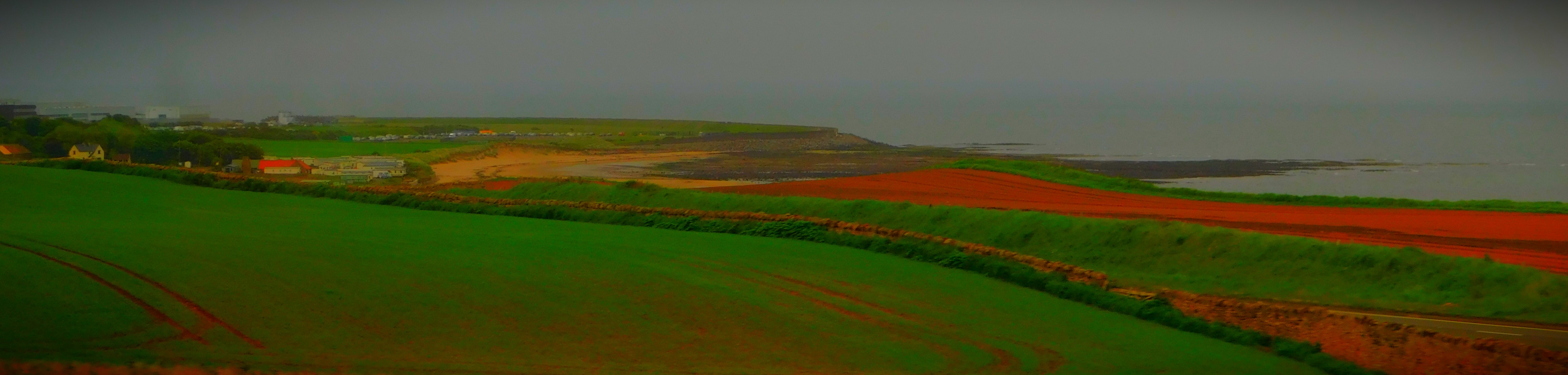
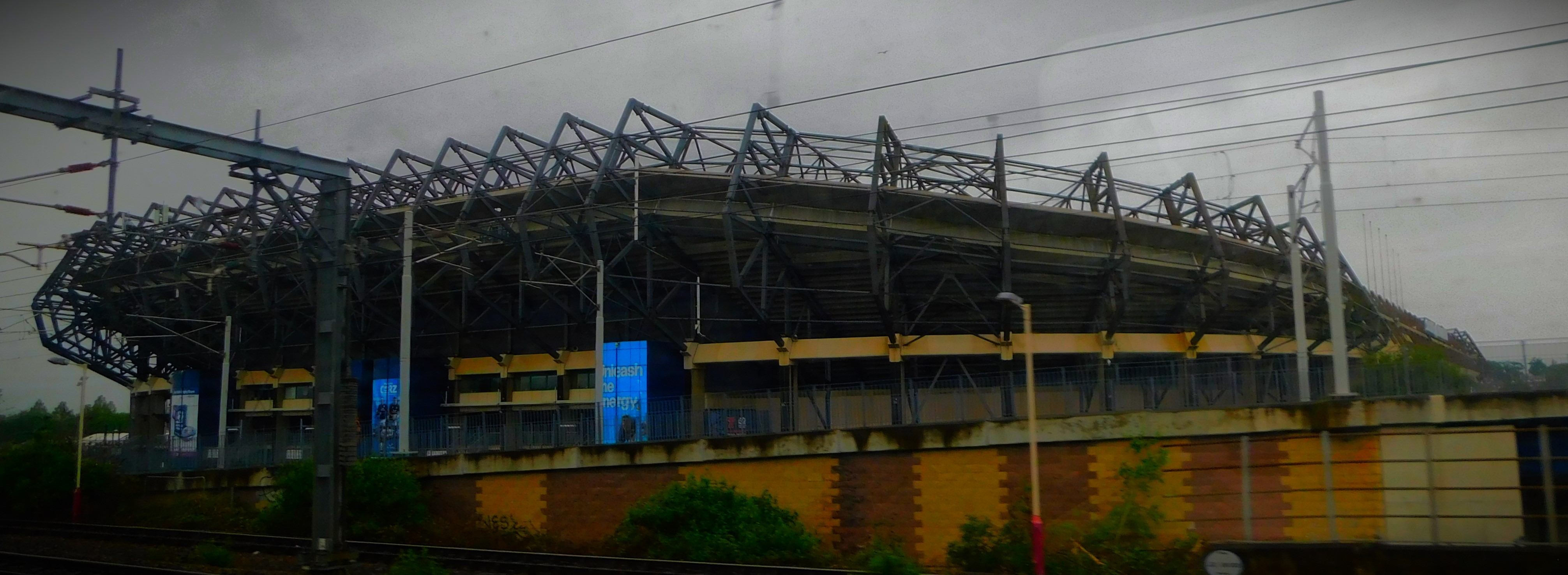
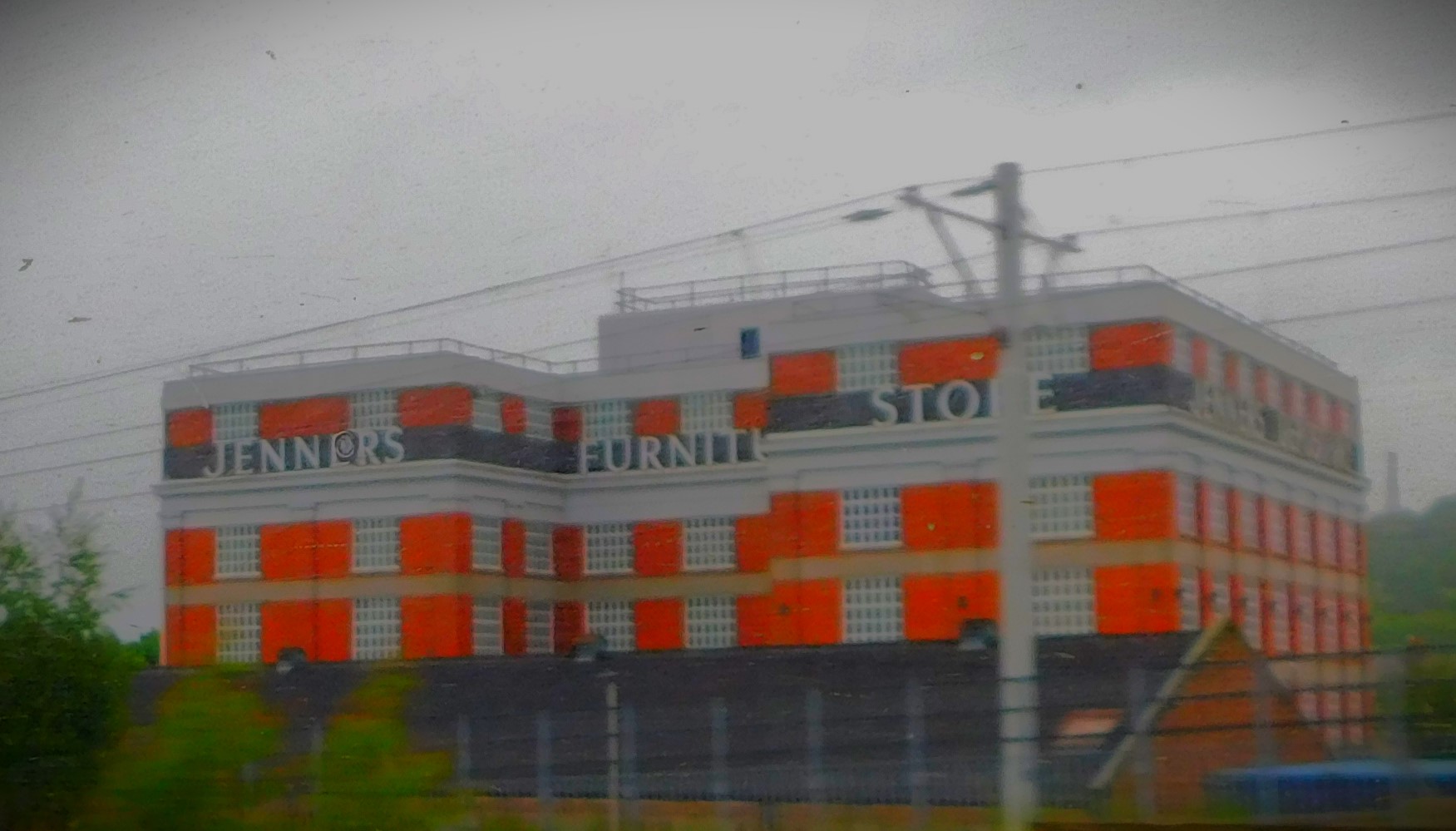
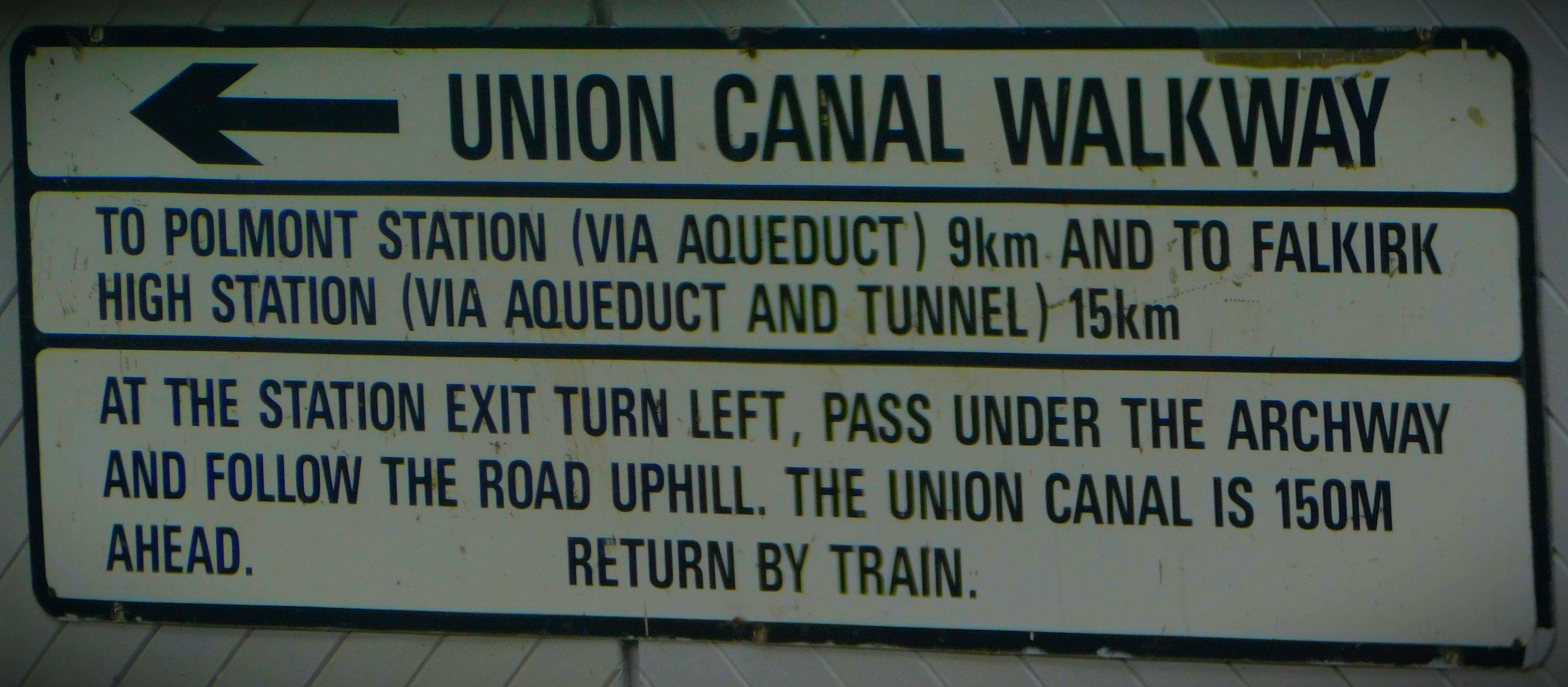
Taking photographs through the windows of buses and trains is often frustrating, but yields enough good pictures to be worthwhile….
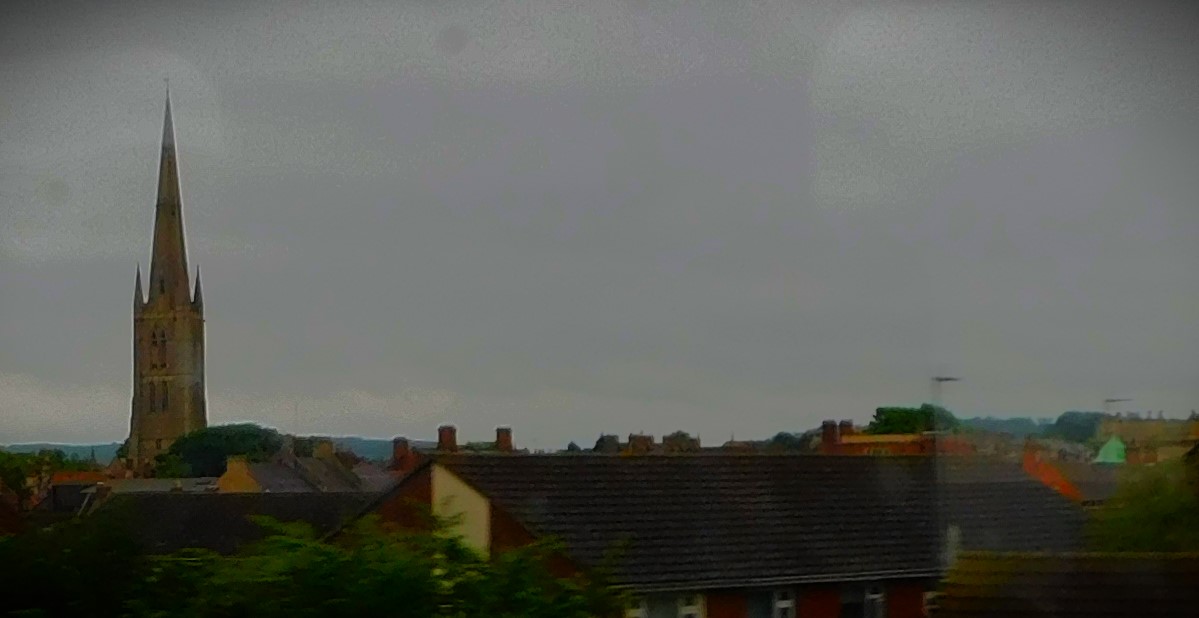
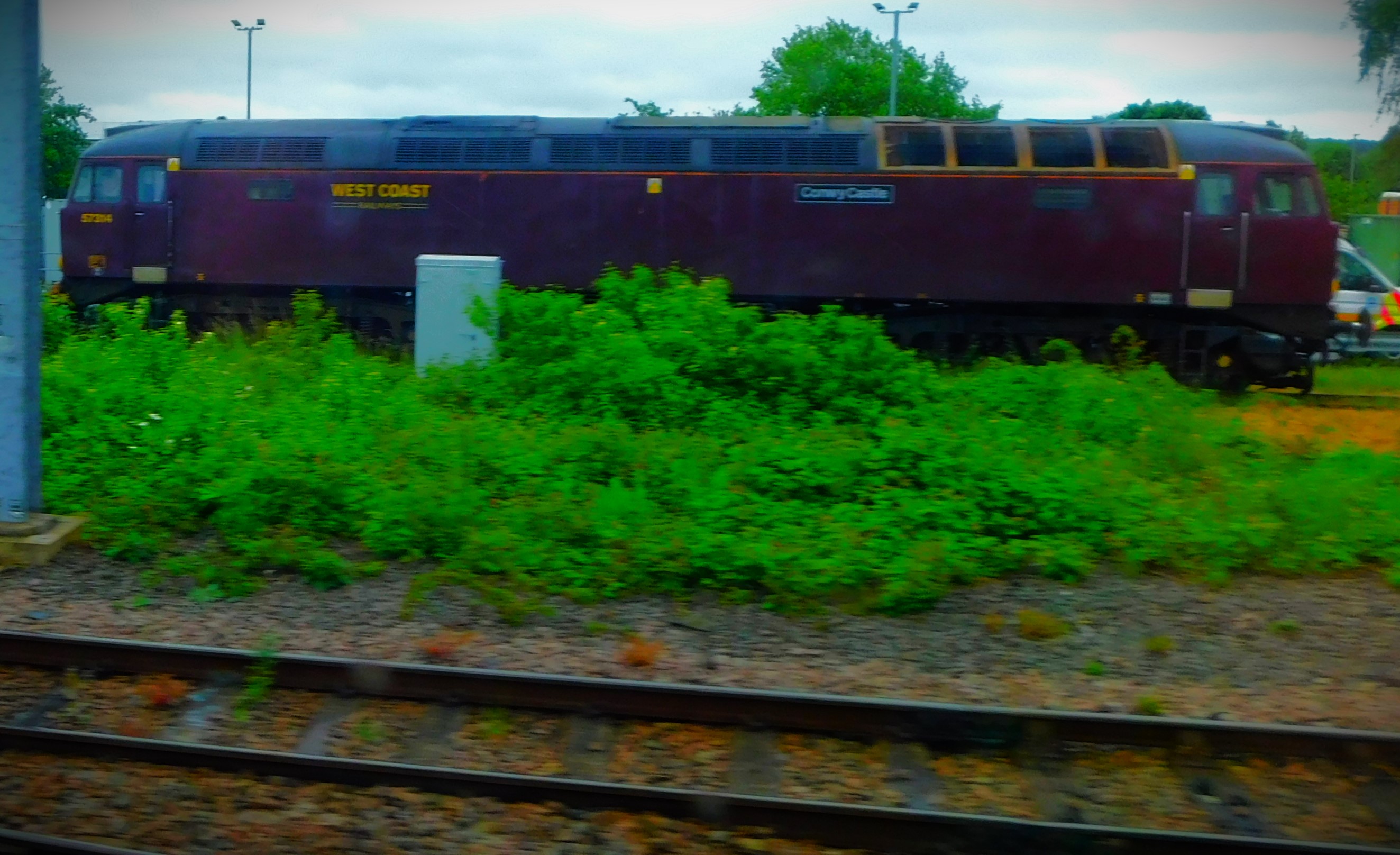
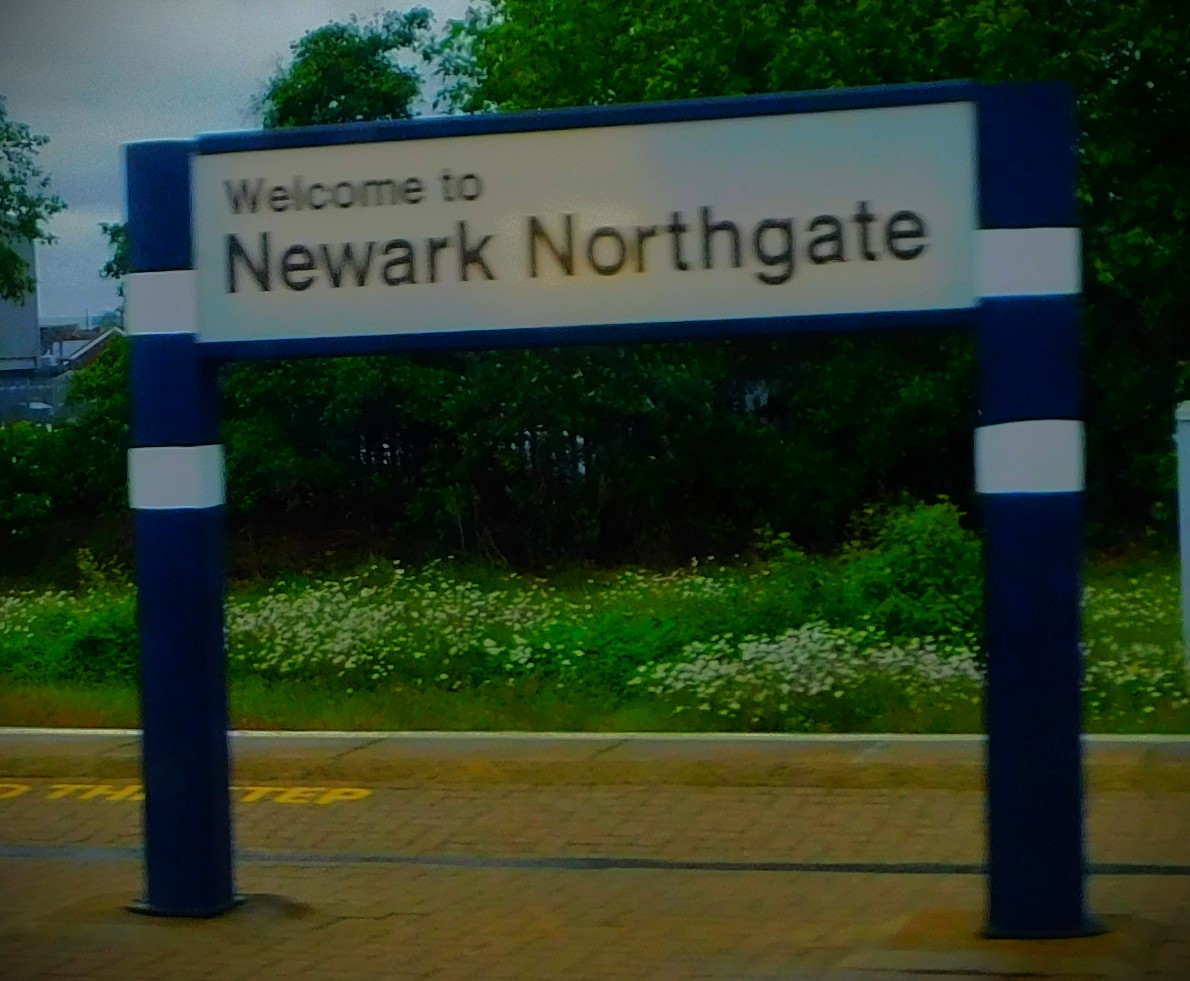
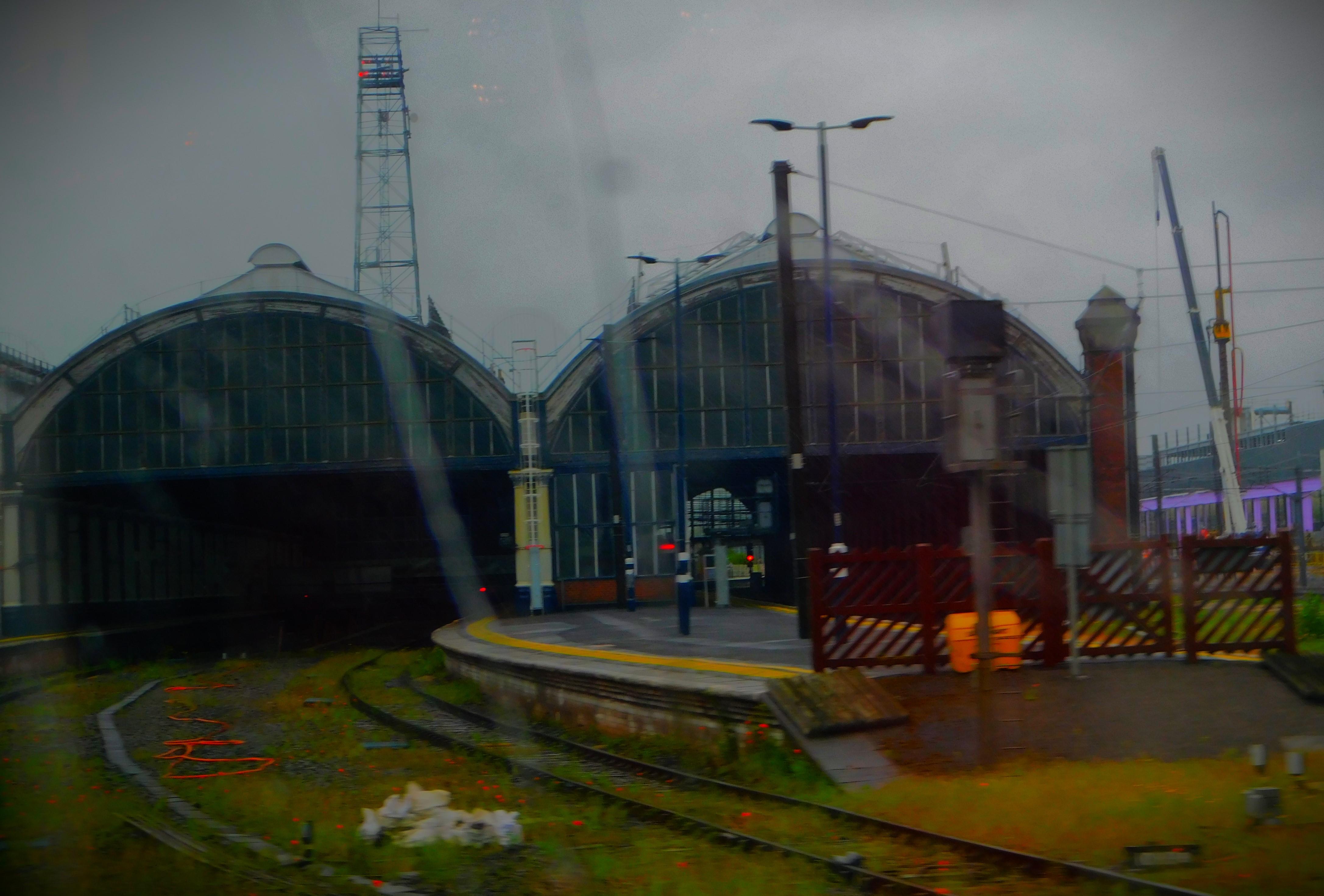
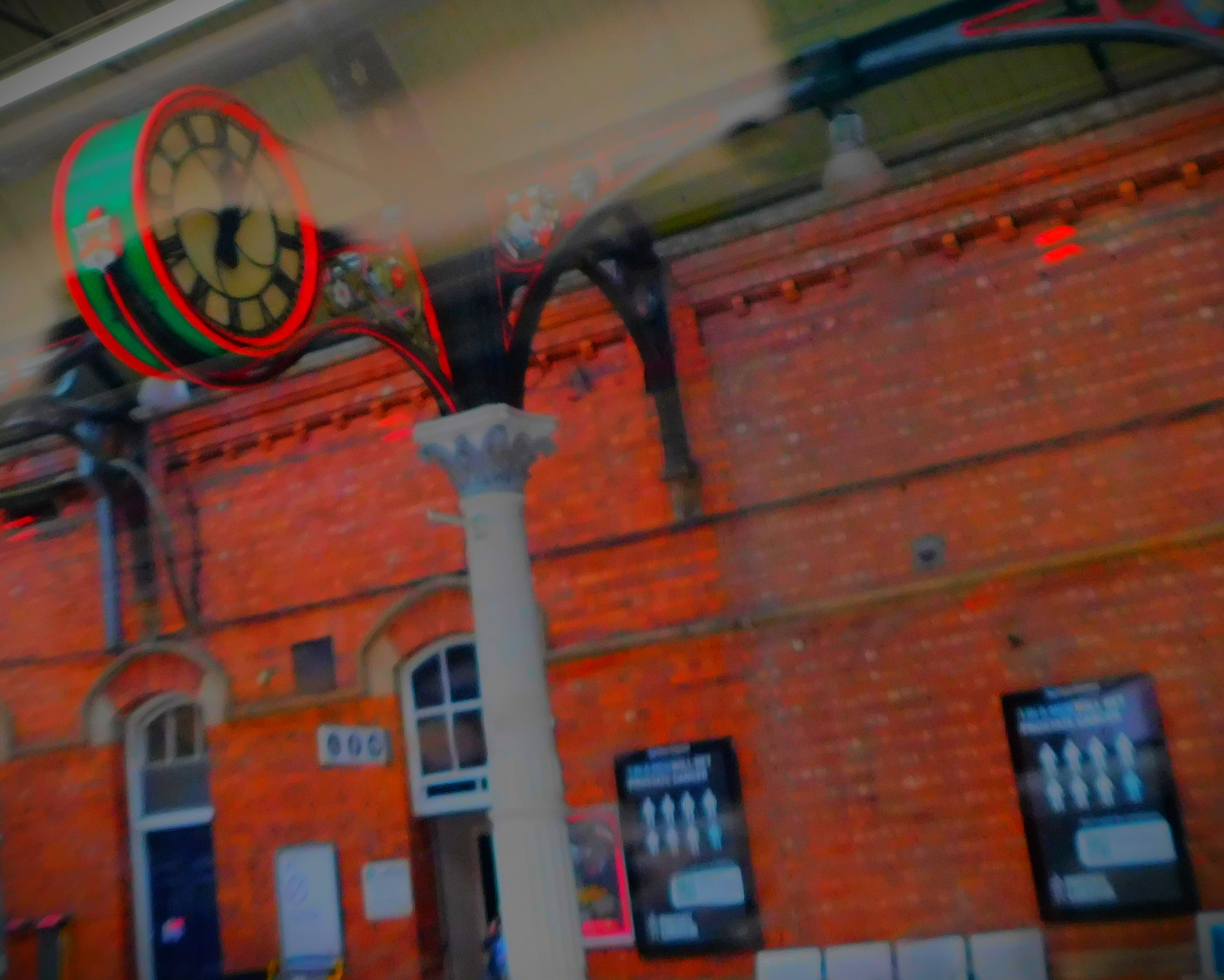
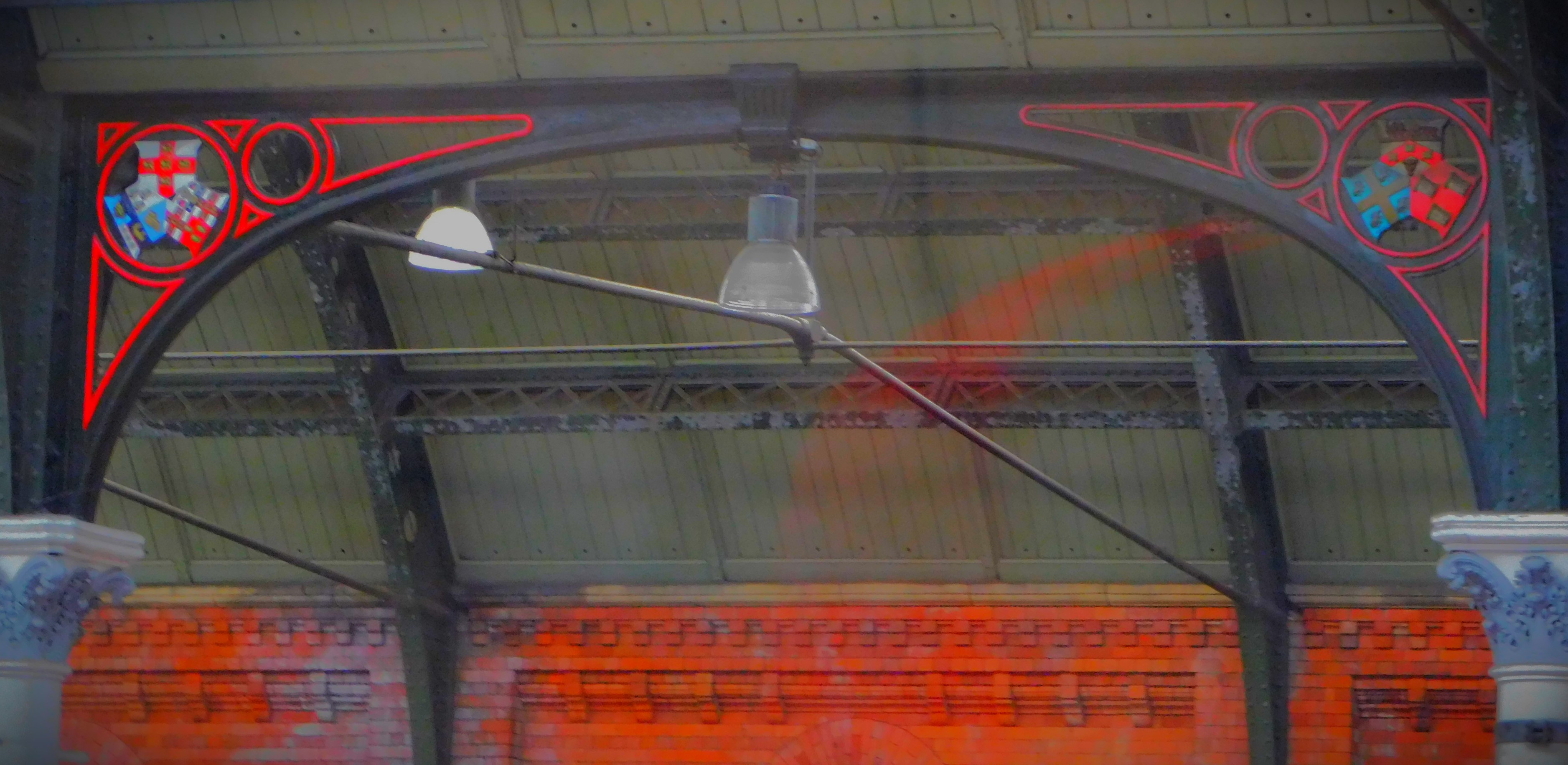
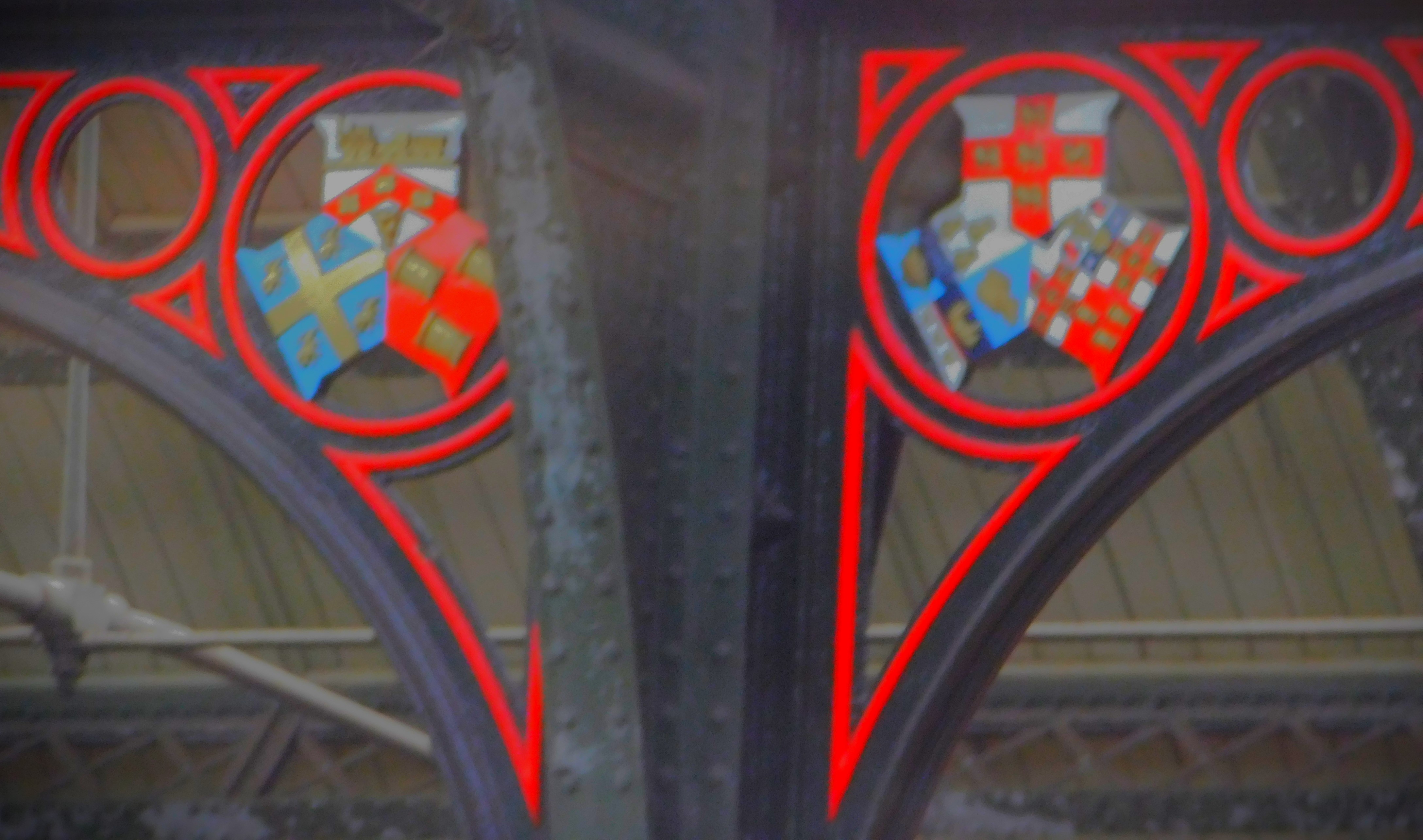
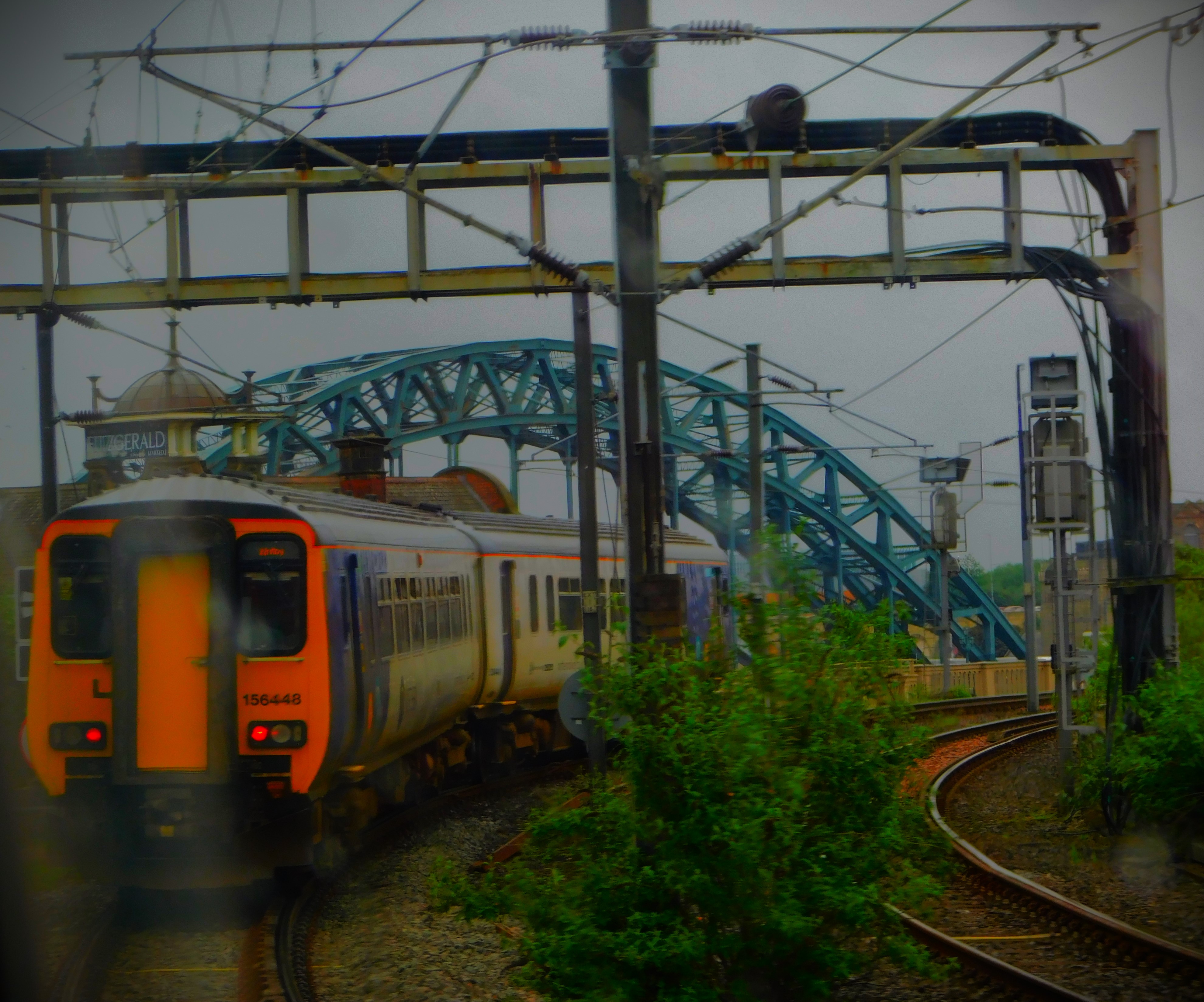
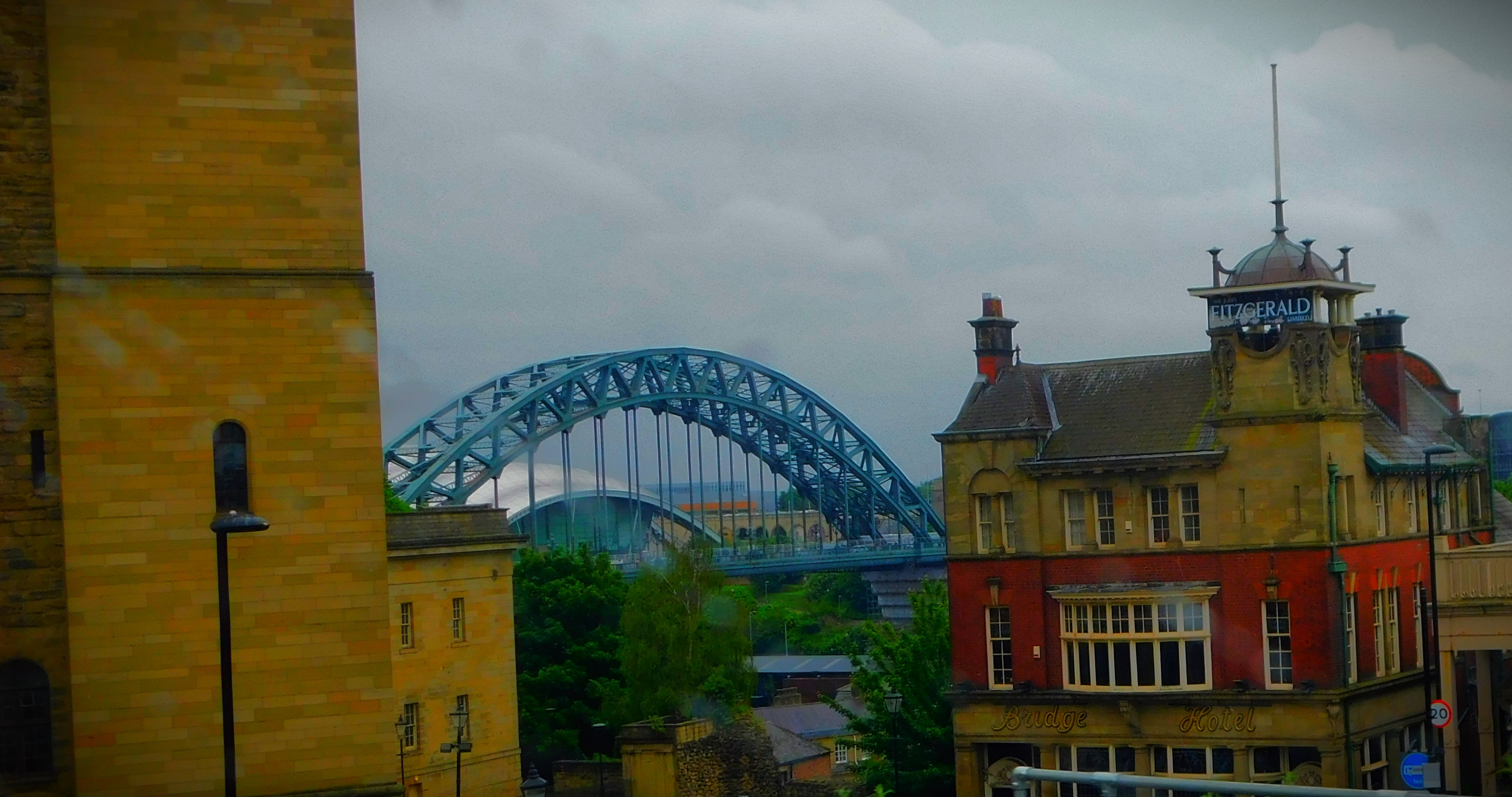
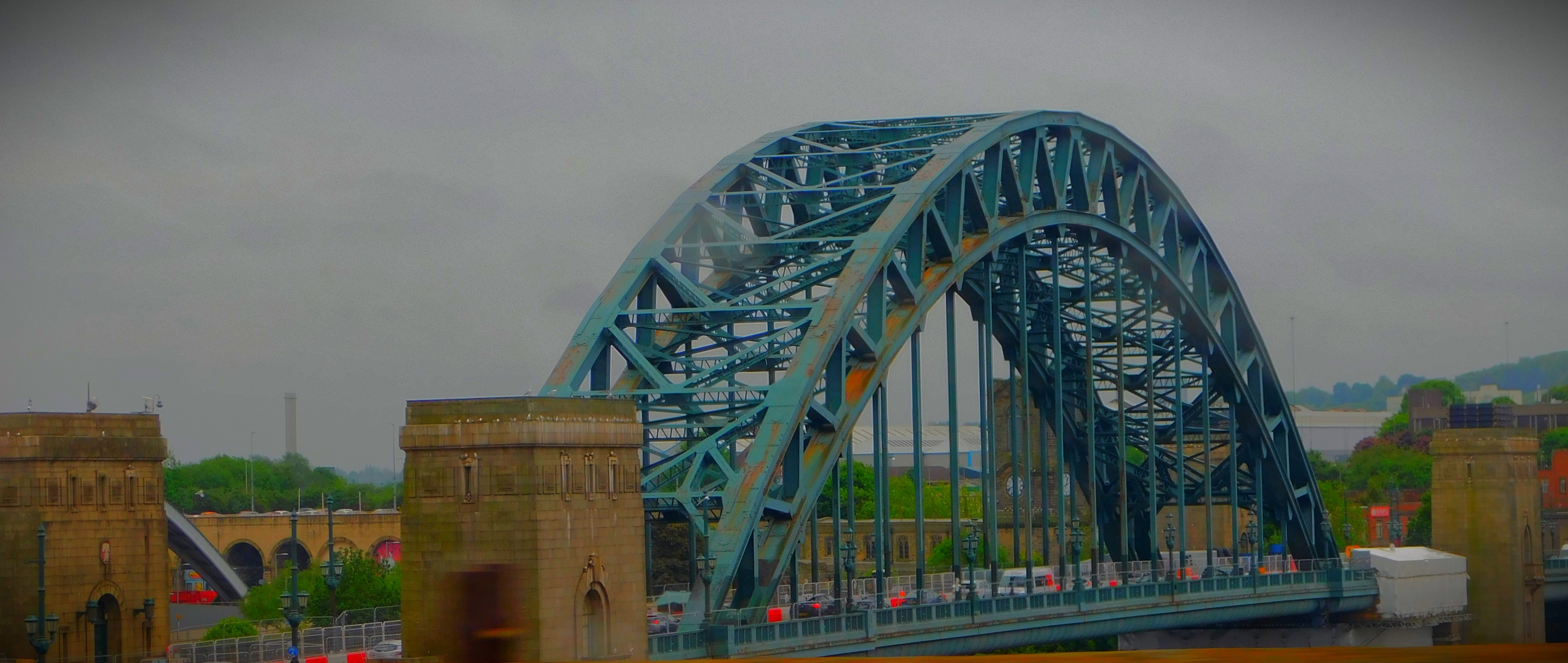
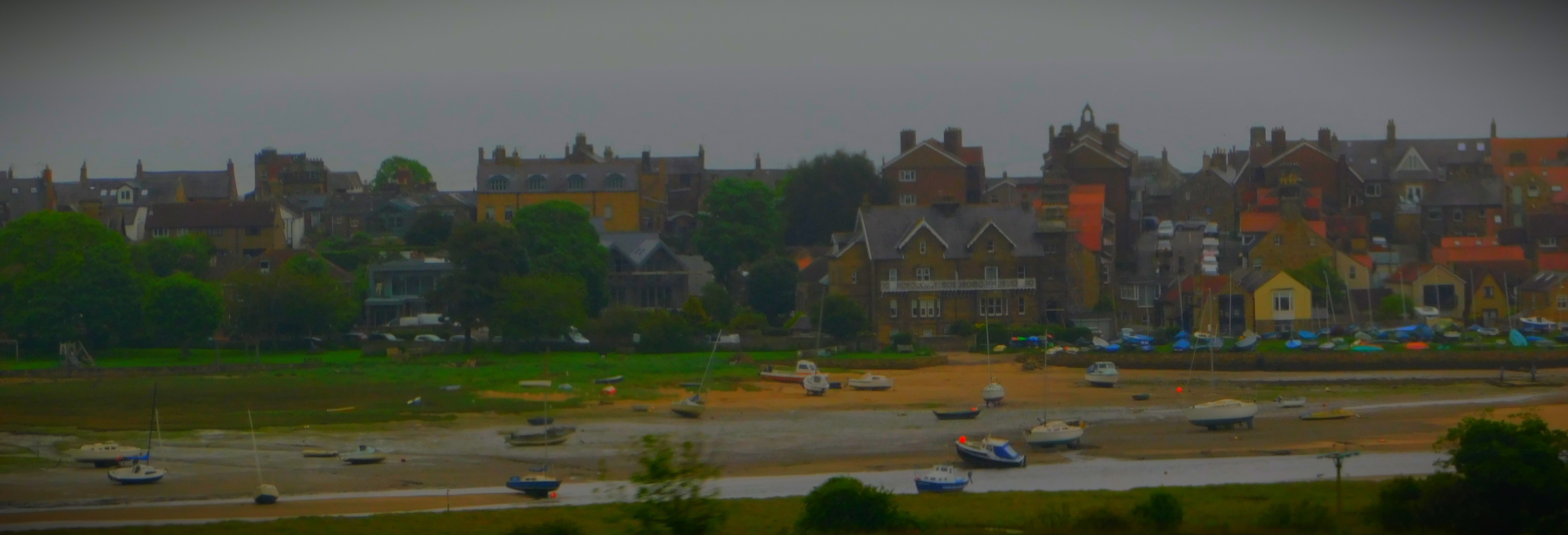
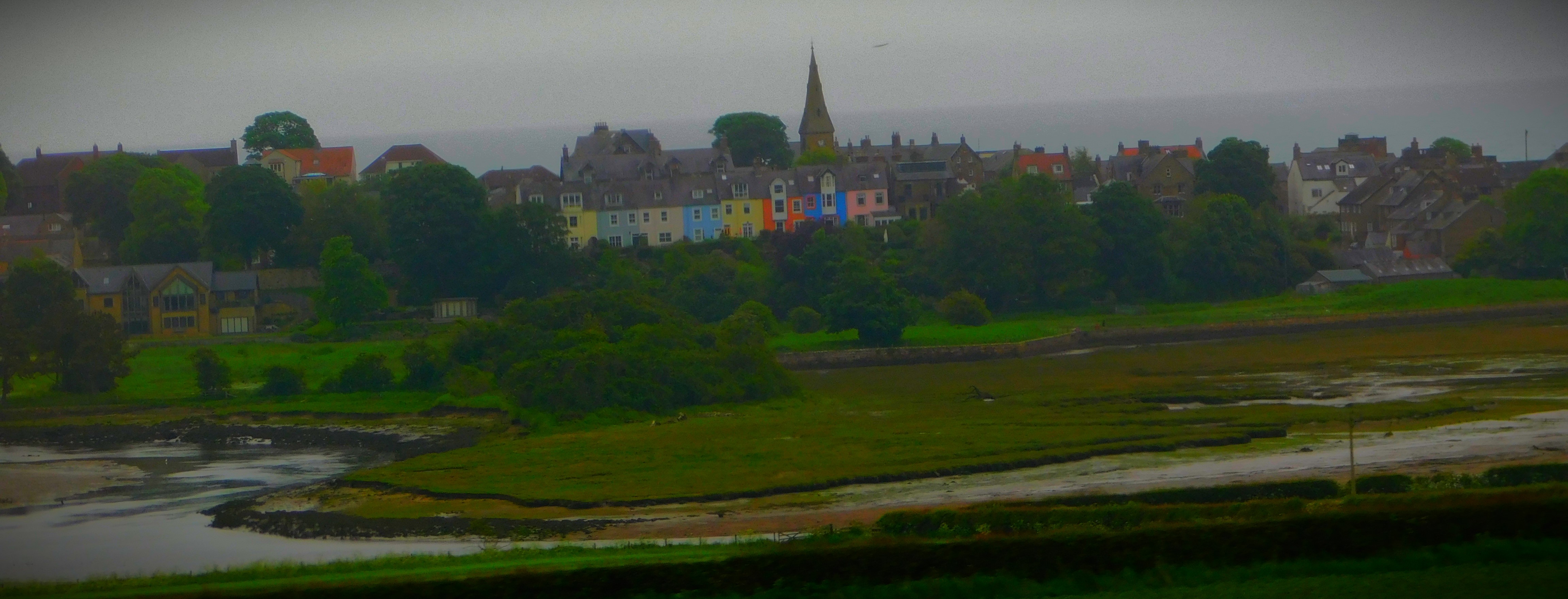
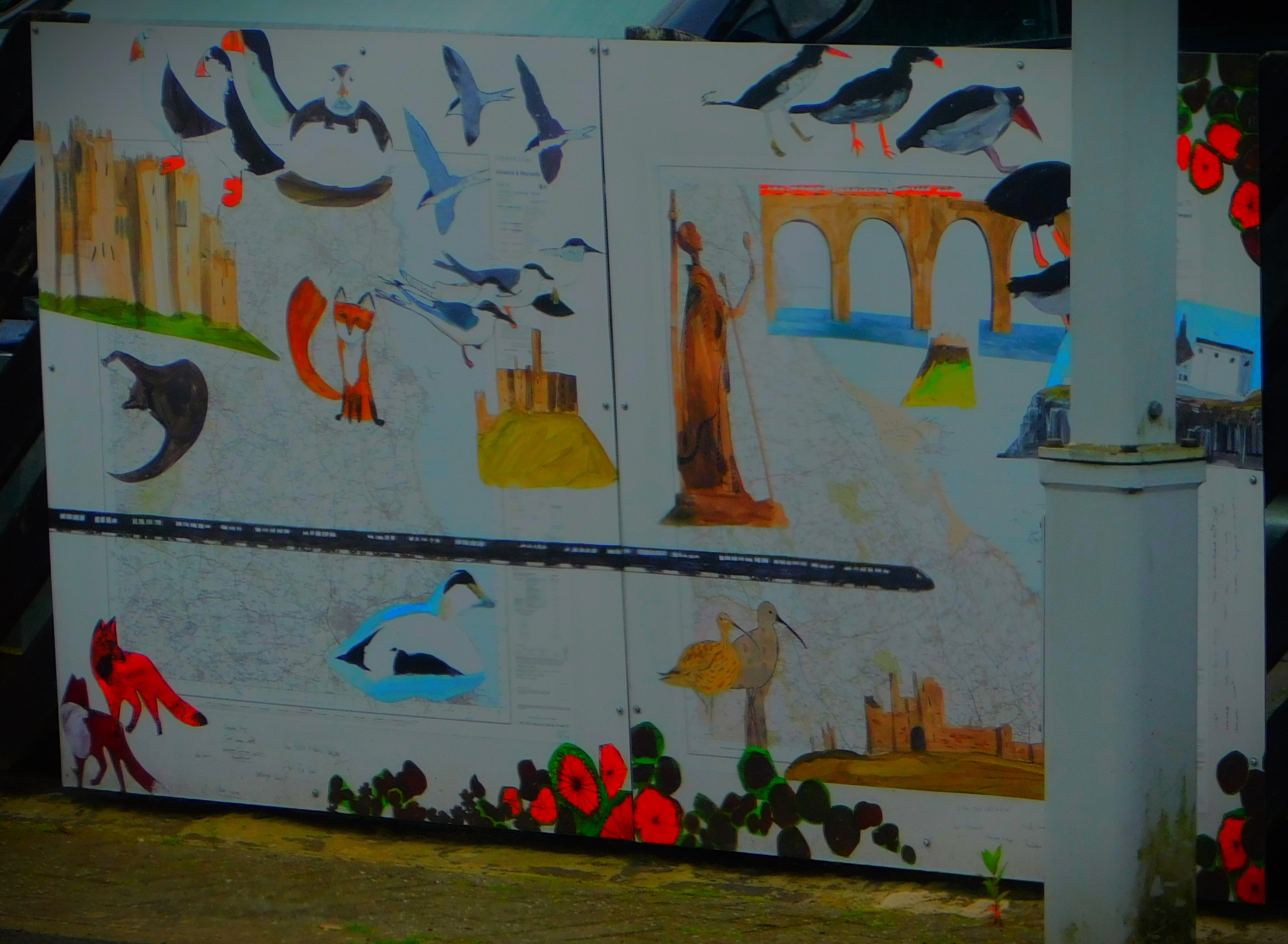
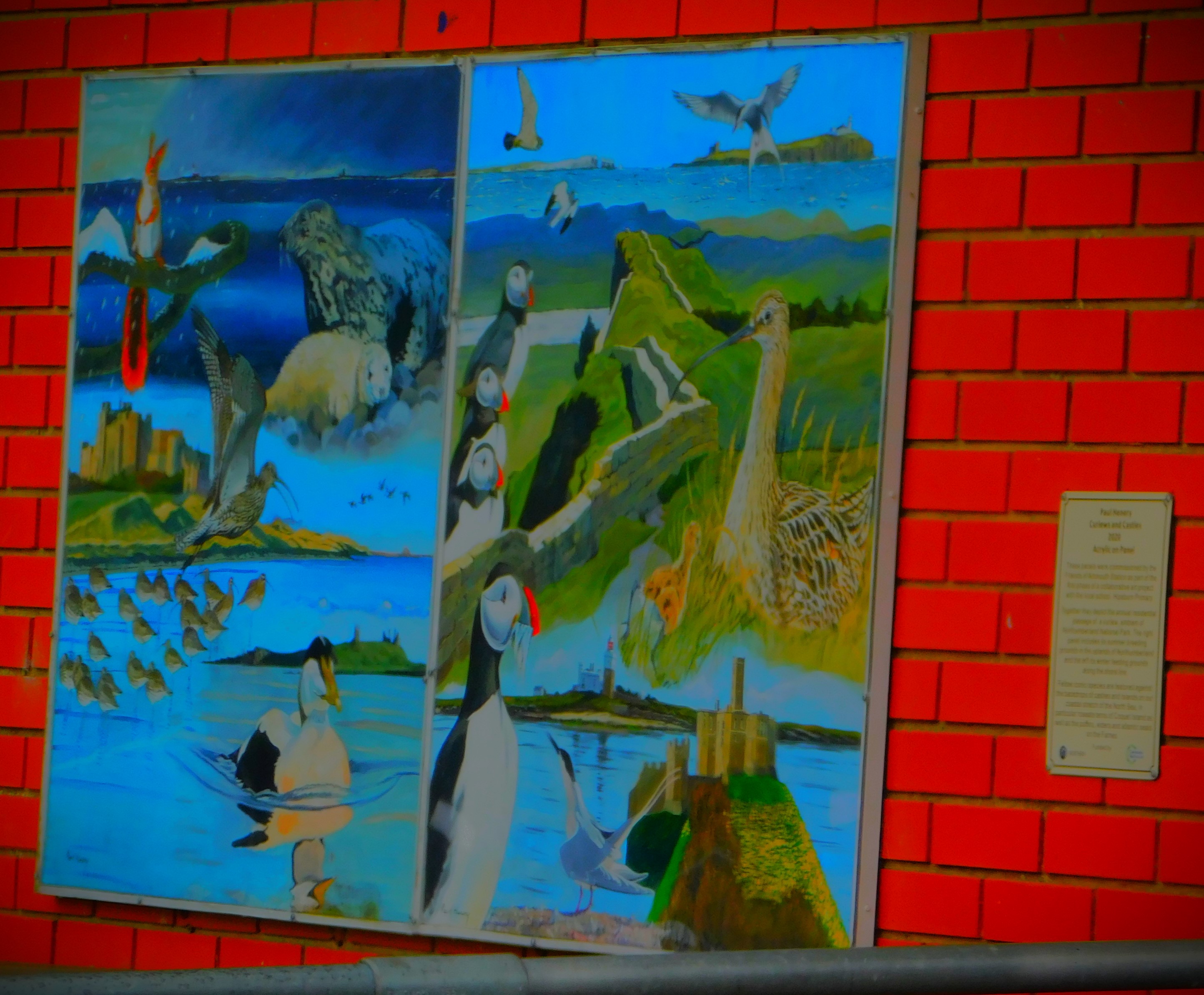
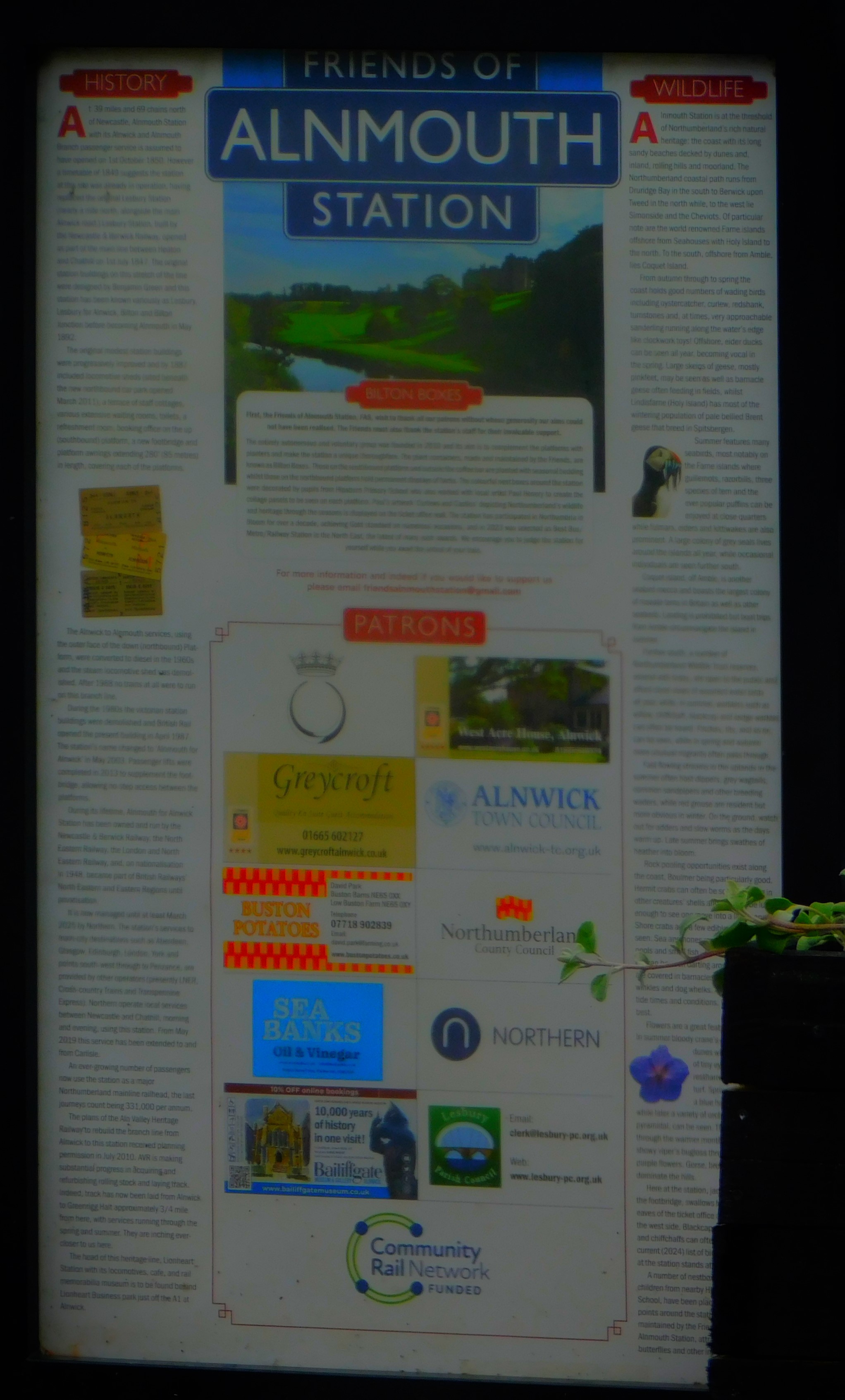
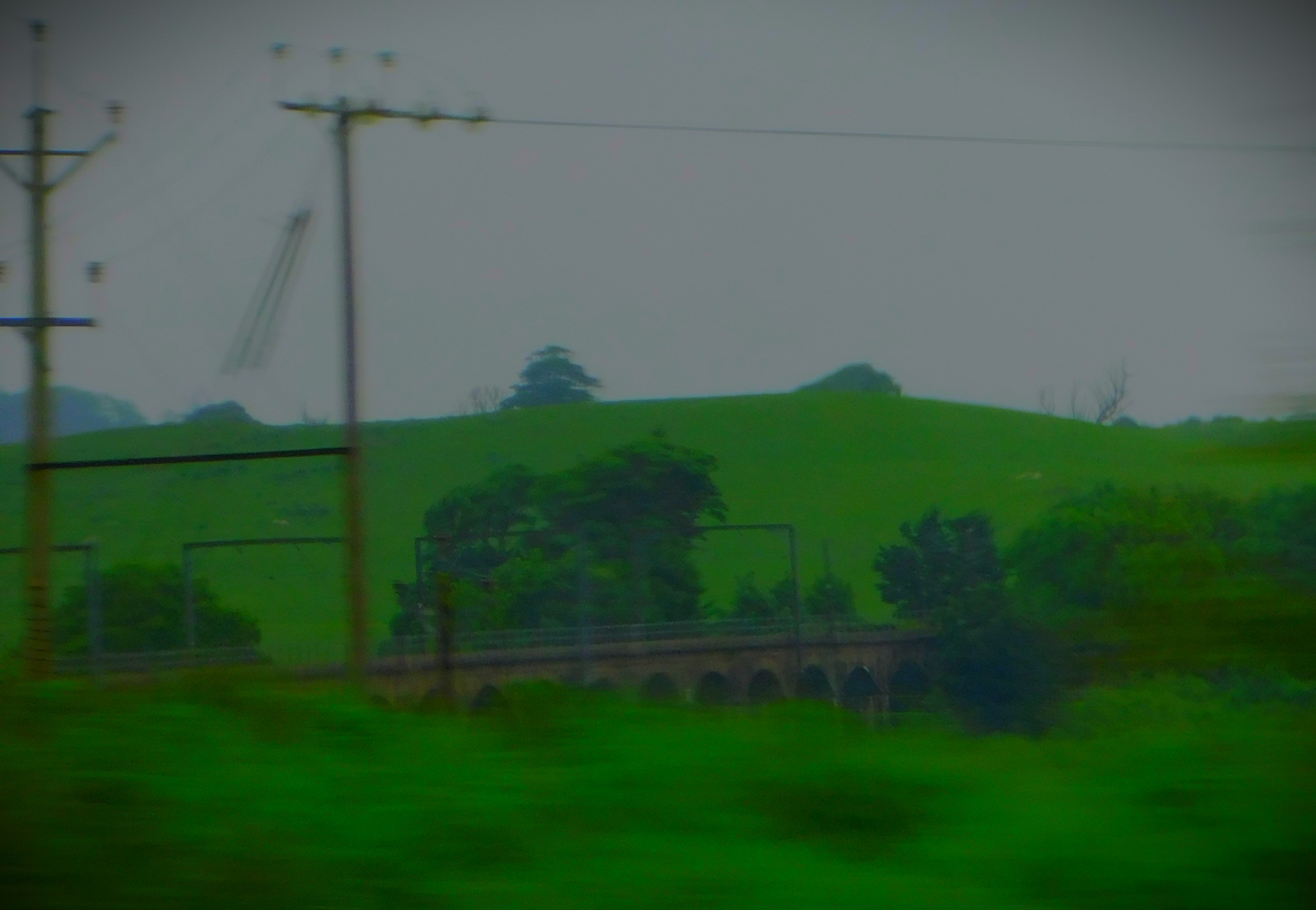
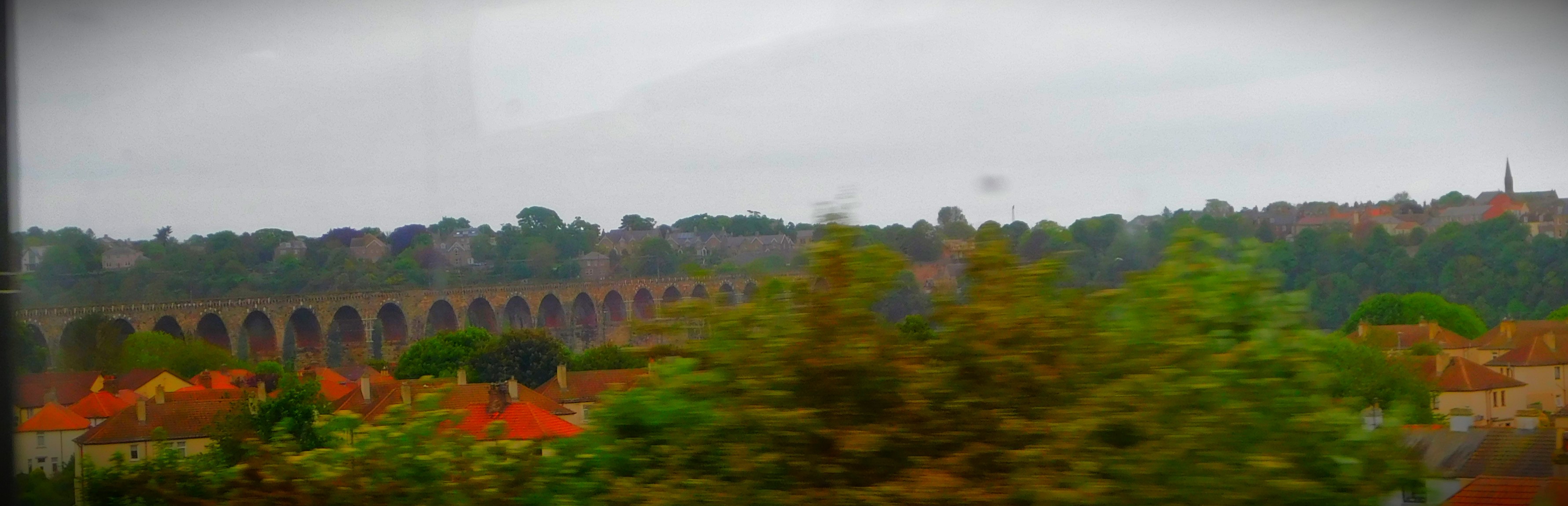
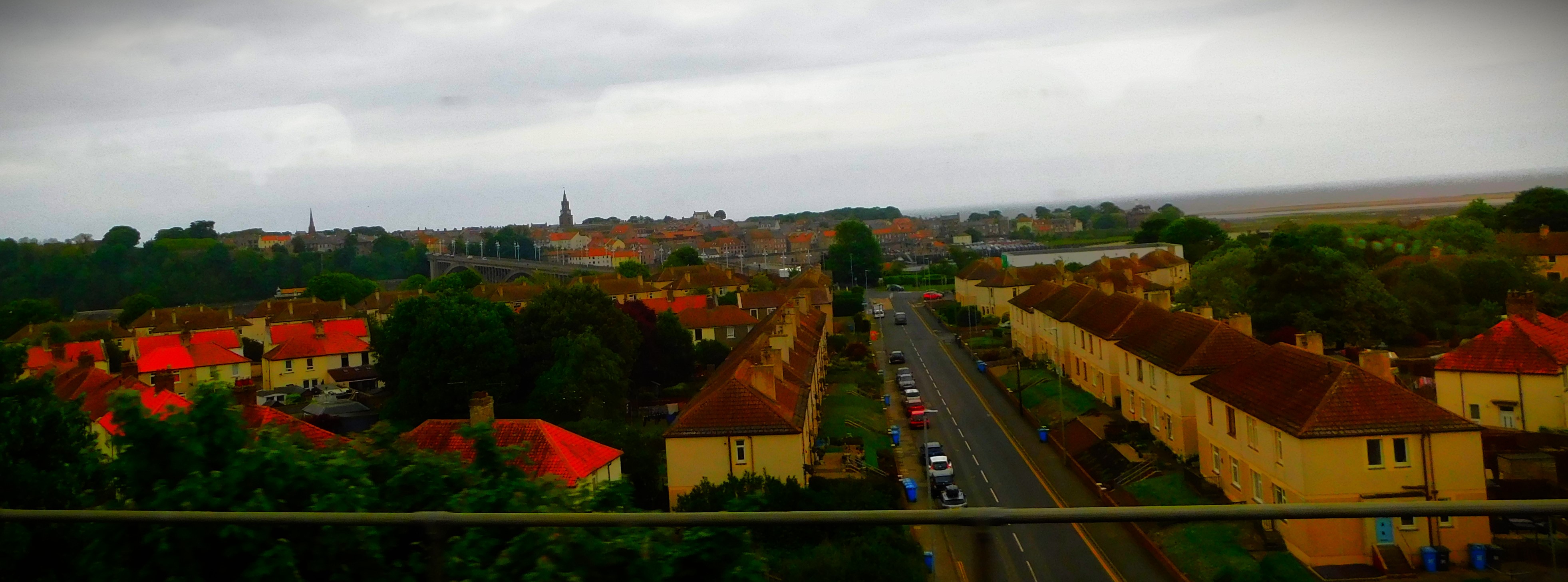
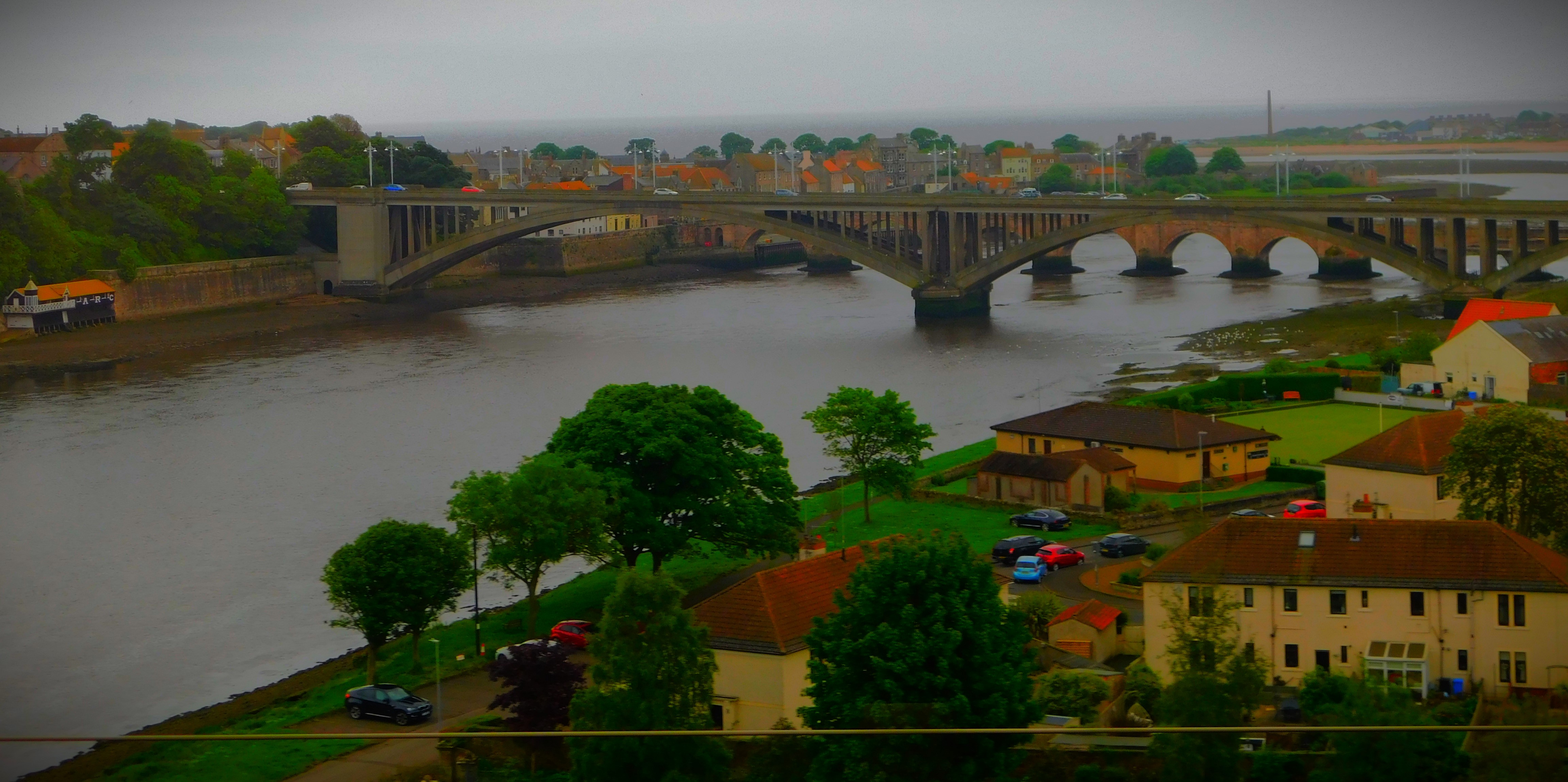
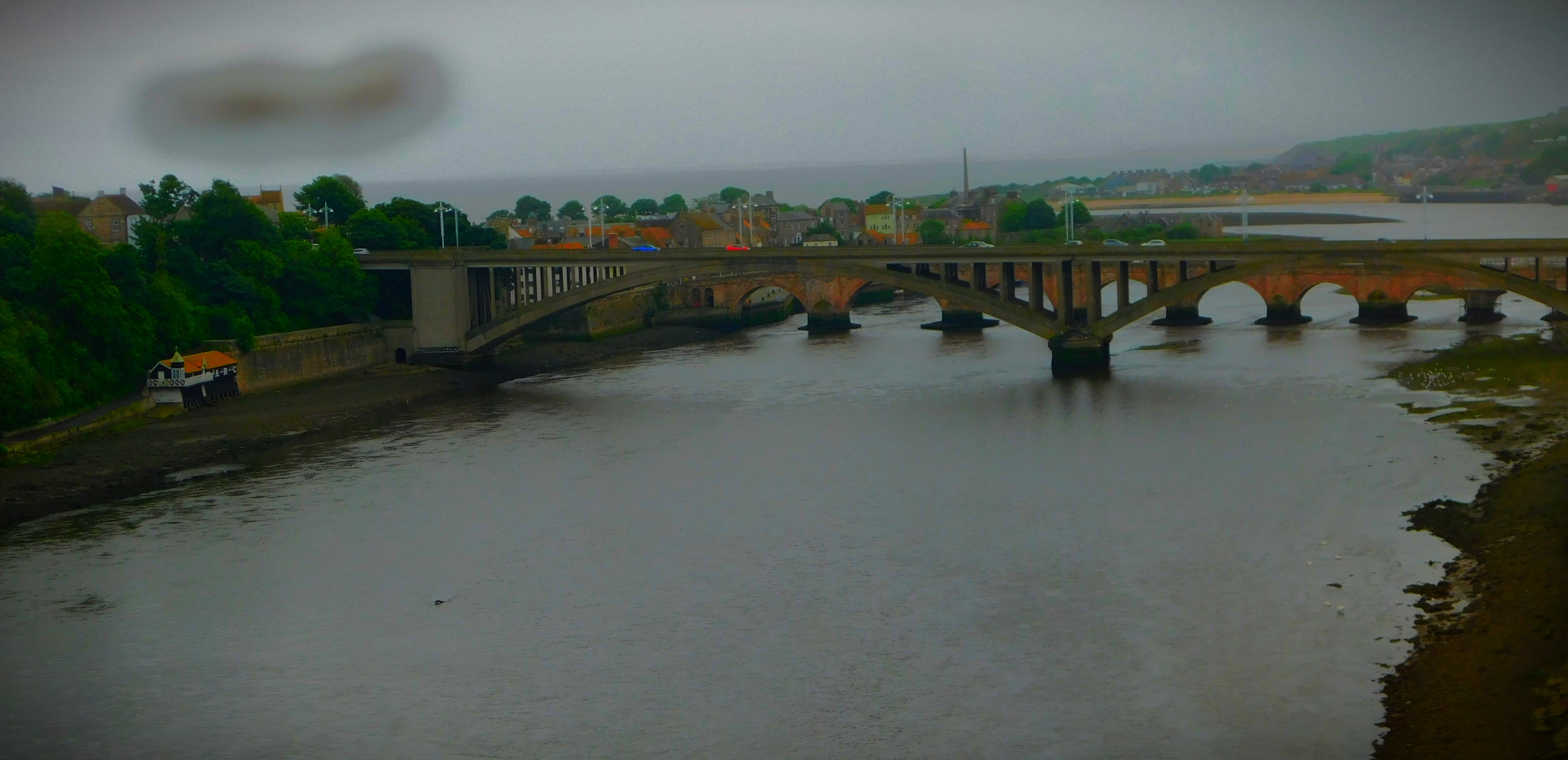
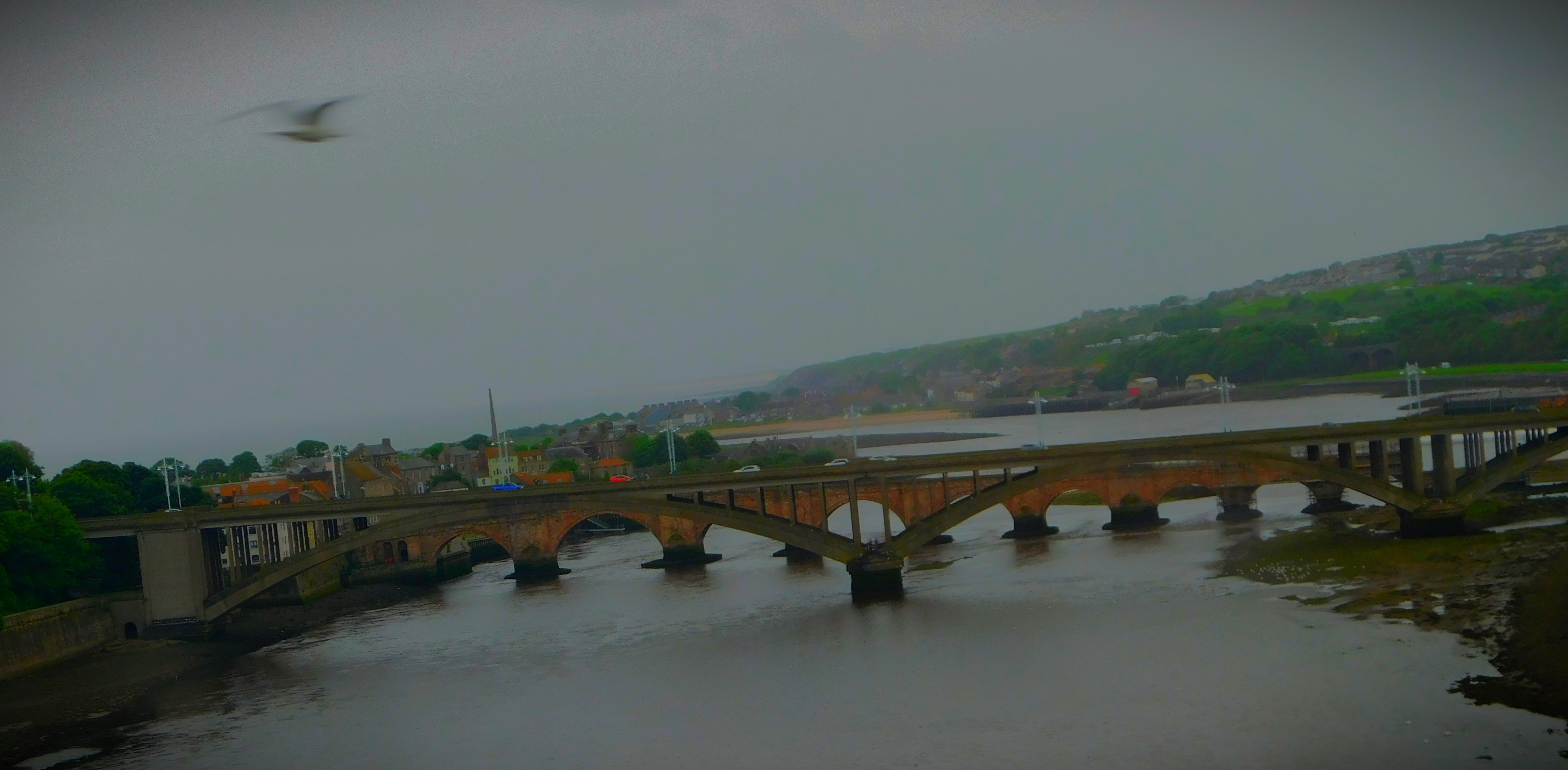
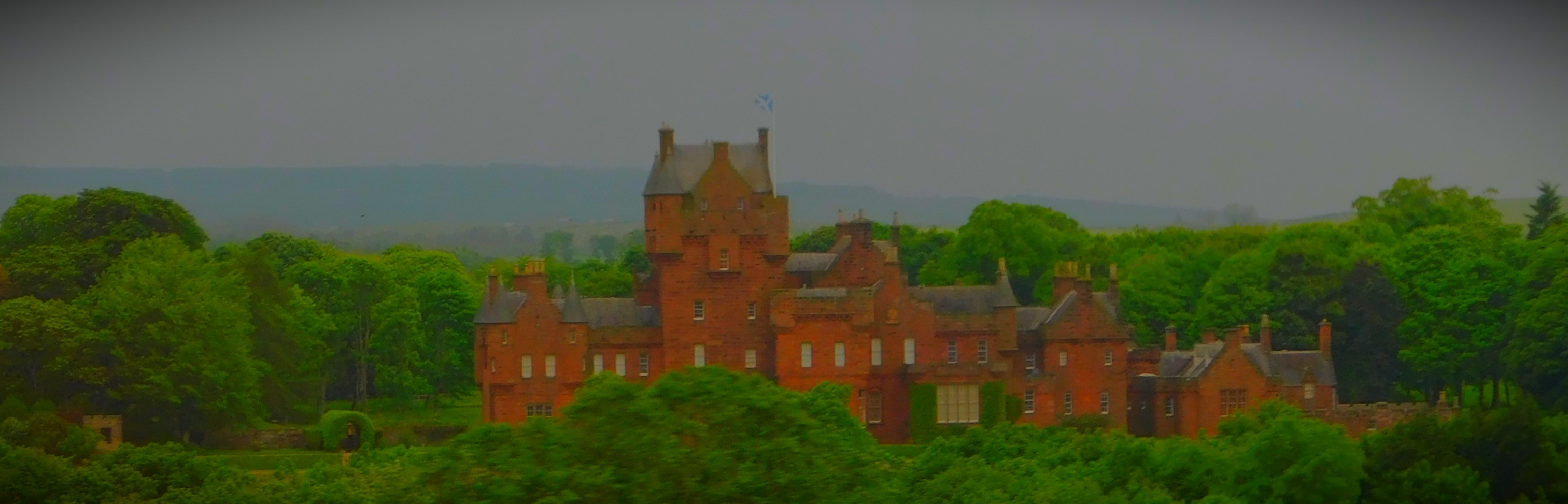
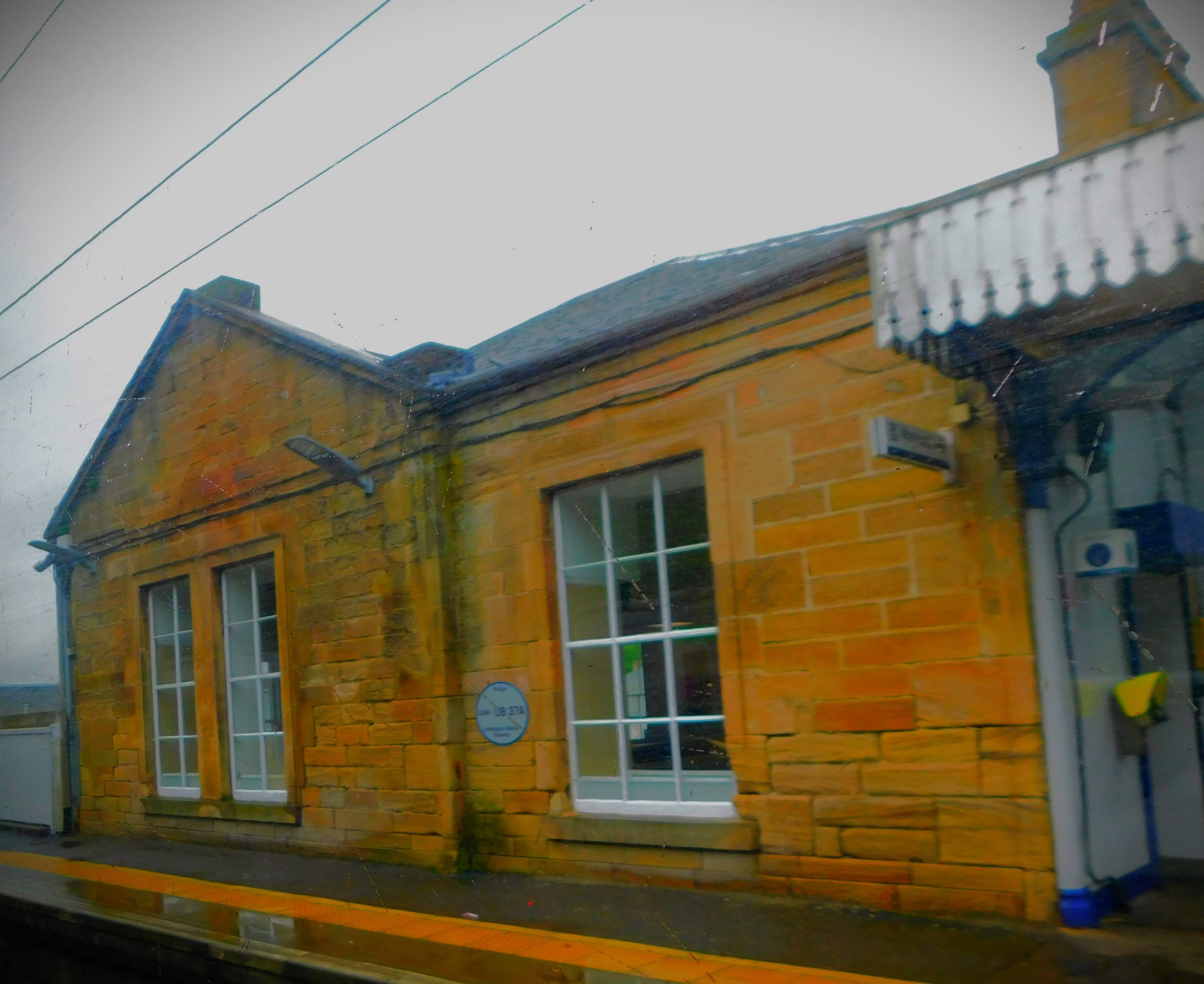
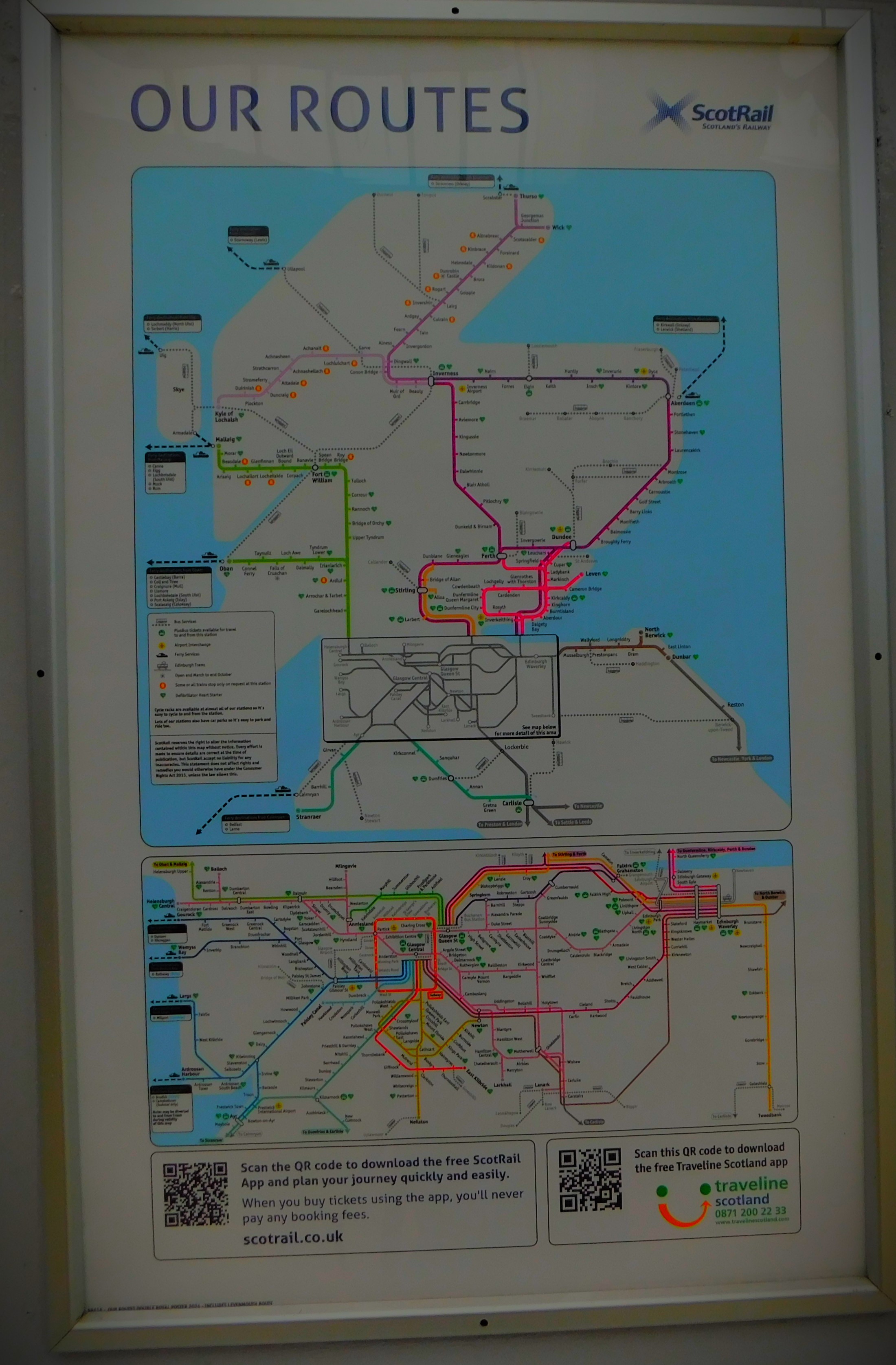
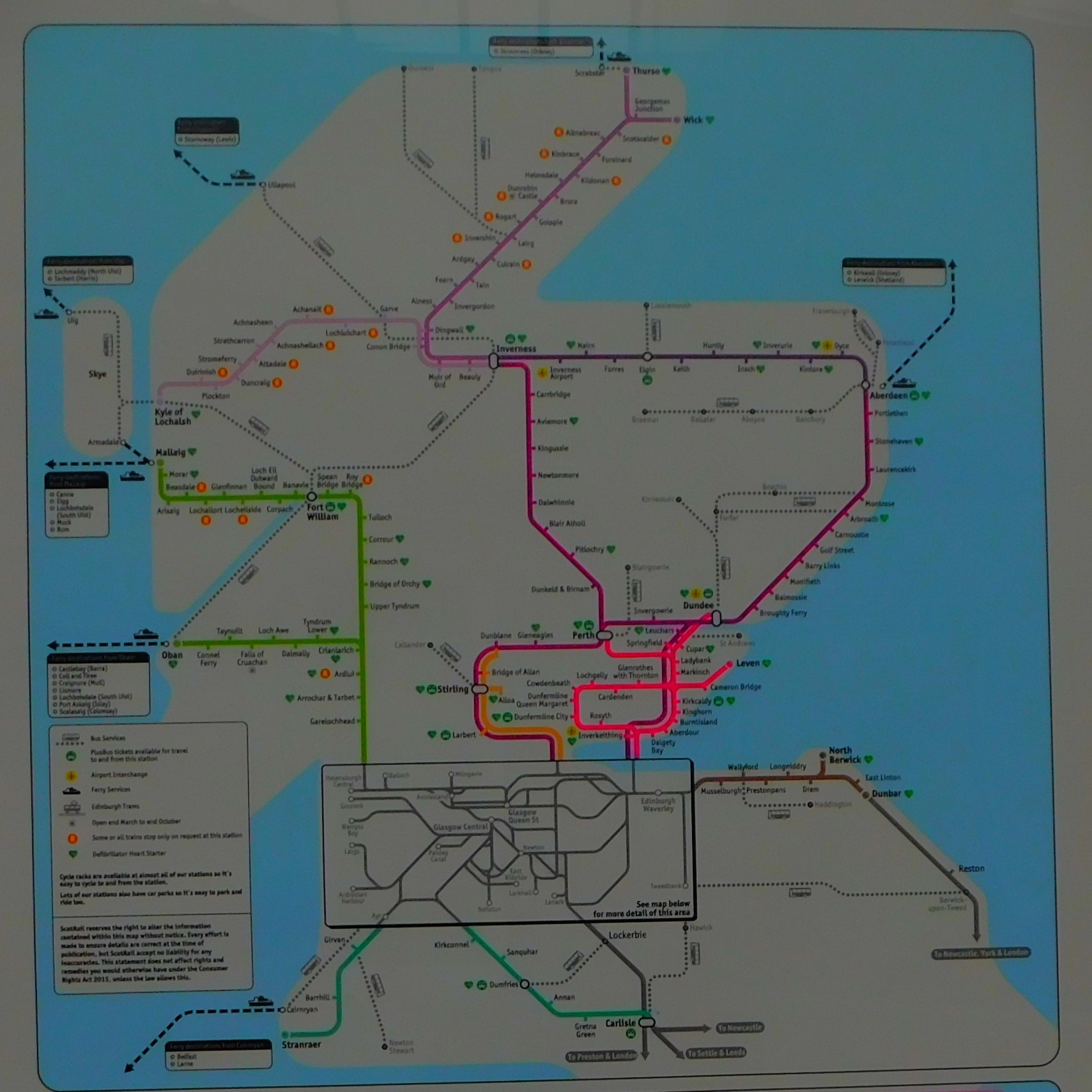
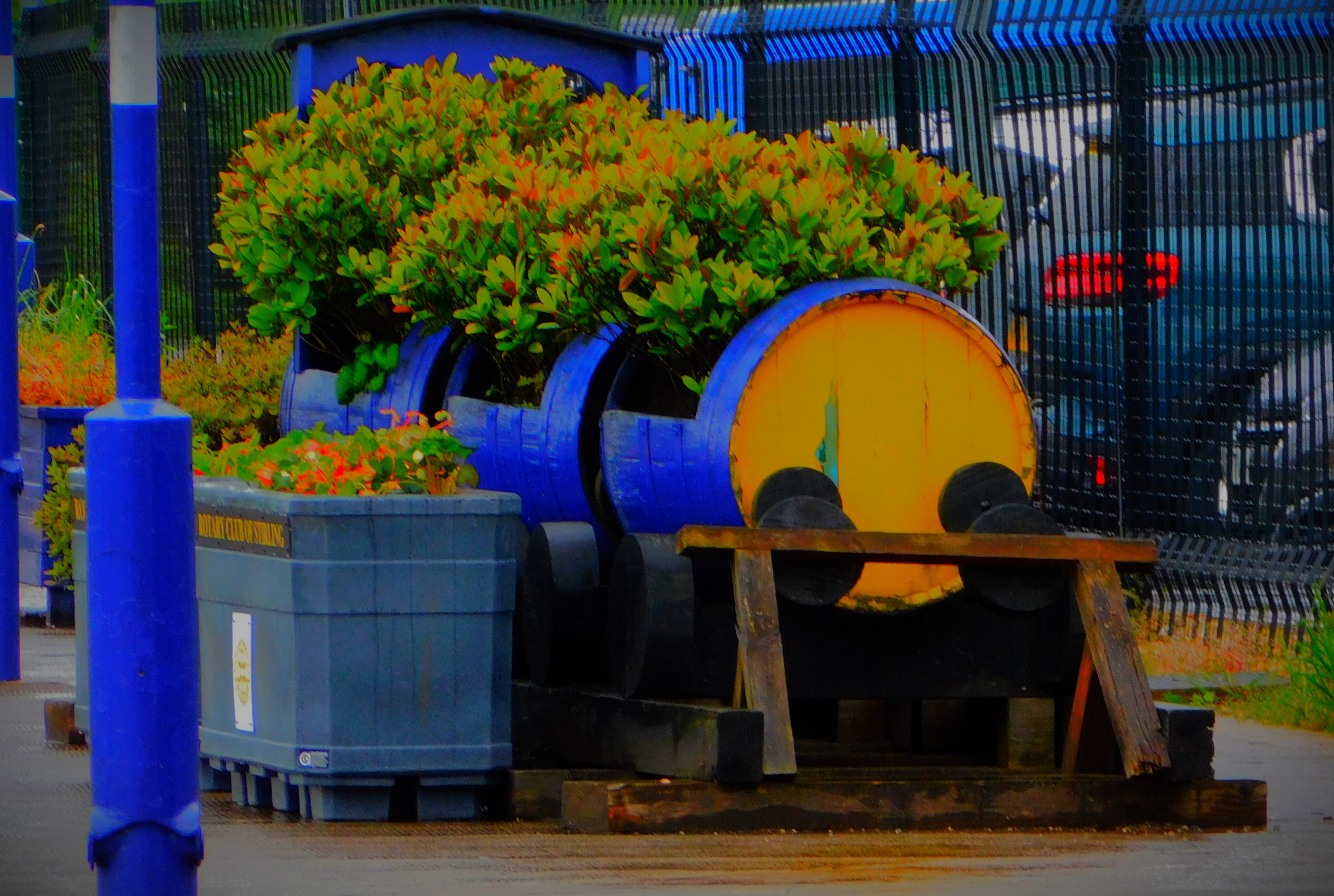
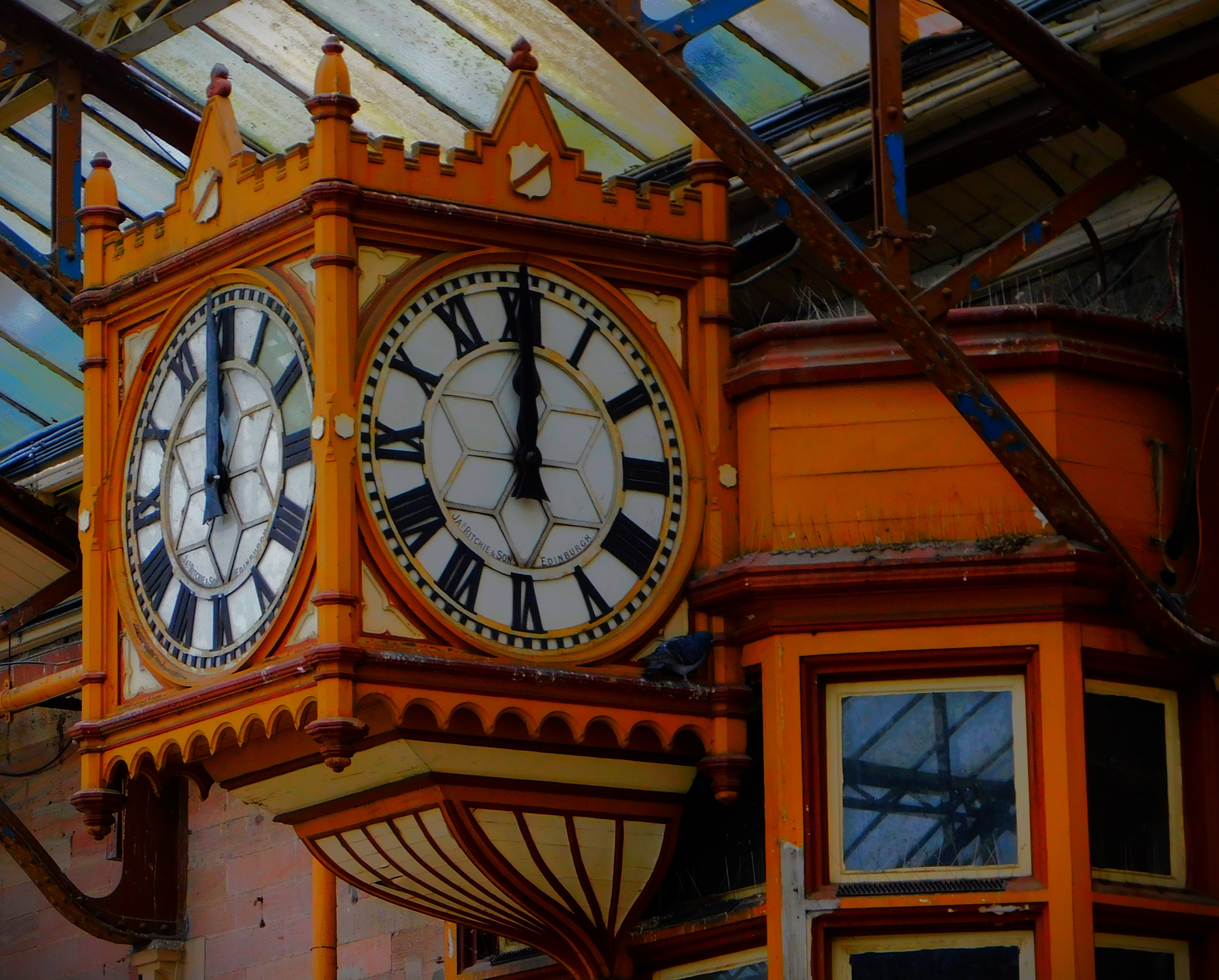
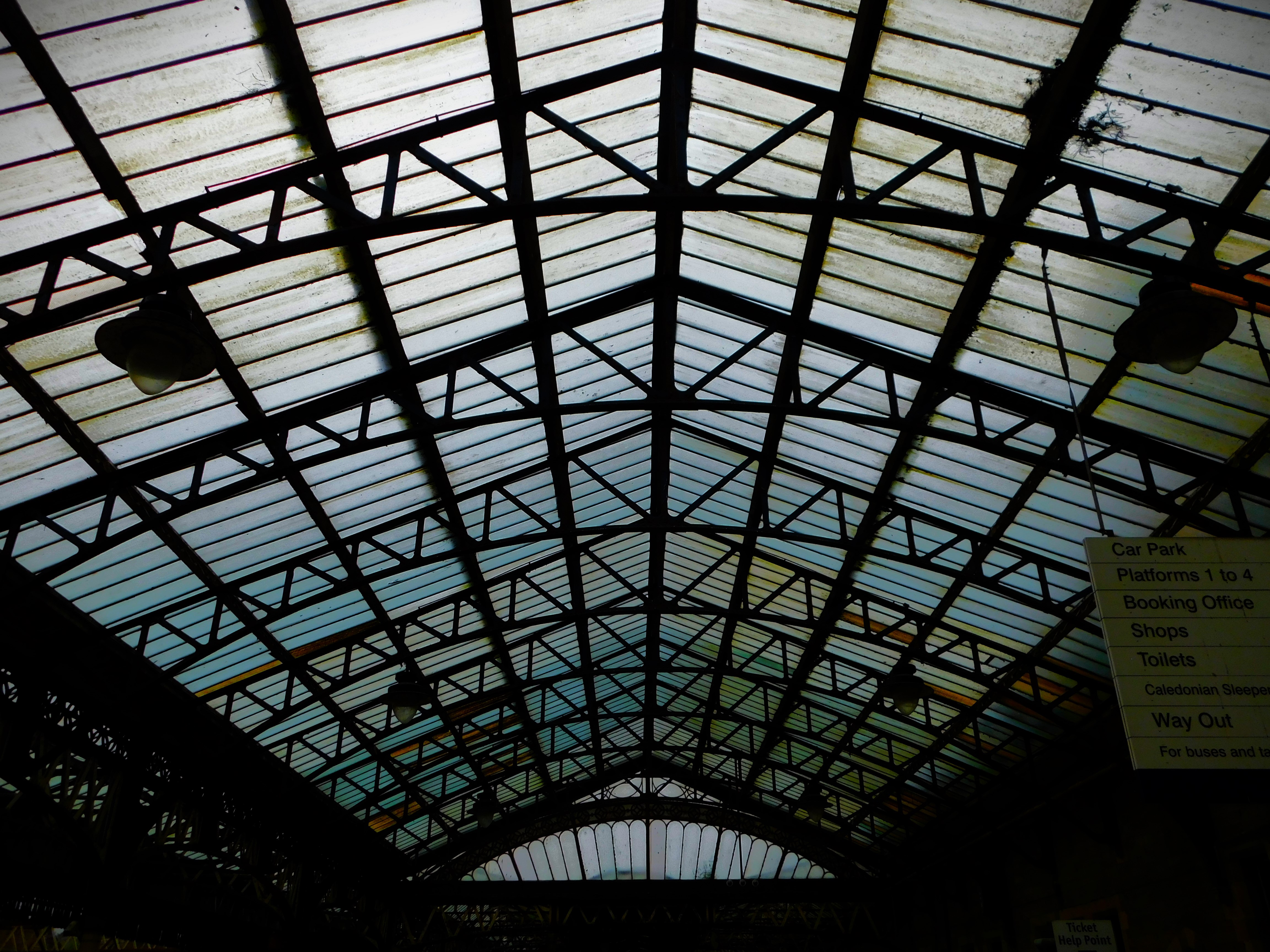
The first 15 pictures are King’s Lynn pictures, some taken on the Monday evening, a couple while walking to the bus station on Tuesday morning.This picture and the next two were taken while passing through Wisbech.The train pictures start here.Our first stop.On the approach to Alnmouth.The train would soon be crossing this viaduct.Looking along the Tweed as the train moves from England into Scotland.This is now a Radisson hotel, but it would have been built by the original railway company as the station hotel.
A look at goings on in the second round of the 2024 County Championship with the main focus on Surrey v Somerset. Also a short section on the Kookaburra experiment, and of course a photo gallery.
We are at the halfway stage of the second round of County Championship matches for 2024. My main focus is on Surrey v Somerset, but I will also mention other games.
DAY ONE
Surrey won the toss and elected to bowl first. At 196-1 with Renshaw and especially Lammonby going very well it wasn’t looking great for the home side. However a run out accounted for Renshaw for 87, and Lammonby fell immediately after reaching three figures (a bit of an issue for him – he now has a double figure tally of FC hundreds but has yet to go on even as far as 120). That got Surrey on a roll, and Somerset soon found themselves 216-8. A bit of a revival, spearheaded by Lewis Gregory, boosted the final total to 285, which looked at least 100 below par given the flatness of the pitch and the fact of the Kookaburra ball being in use. Cam Steel, treated by his first county, Durham, as a specialist batter claimed four wickets to follow his five against Lancashire, and ended the innings with an FC bowling average of below 30 for the first time in his career. Gus Atkinson had 3-57 from 19 overs, proving that not all seamers are completely emasculated by the Kookaburra (see also Sam Cook’s cheap 6-for v Nottinghamshire in the first round of fixtures). Surrey reached the close on 42-0, with no Somerset bowler posing a threat, and both Burns and Sibley looking comfortable.
DAY TWO
Surrey batted sensibly, and never had anything approaching a collapse. Gregory looked an unthreatening medium pacer, Craig Overton was decent but not massively threatening and it was the two youngest Somerset bowlers, Bashir with his off spin and right arm fast medium bowler Kasey Aldridge who by far the most impressive. Sibley reached three figures, Burns just missed that mark, Jamie Smith played a little gem of an innings and Foakes made a solid half century. Dan Lawrence’s first innings for his new county was a failure, but Cam Steel followed his good bowling by settling in nicely with the bat, and Surrey closed day two on 358-6, 73 runs to the good with four wickets standing (and Jamie Overton is probably the best number nine batter in current county cricket while number 10 Gus Atkinson is far from being a mug with the bat).
DAY THREE SO FAR
There is no sign of any early trouble for Surrey as yet, and they have added six to their overnight total for no loss.
ELSEWHERE
Durham, after not getting on the field at home for their opening game, had a deeply chastening experience at Edgbaston, putting their hosts into bat and watching them amass 698-3 declared, with all of the top three passing 150 (skipper Alex Davies leading the rampage with 256). Middlesex also suffered horribly at Northamptonshire, the home side’s 552-6 declared meaning that the two first innings that Middlesex have bowled through so far have a combined aggregate of 1172-9. Derbyshire and Glamorgan are locked in a low scoring battle which proves that wicket taking is possible with the Kookaburra. Off spinning all rounder Alex Thomson has a 10 wicket match haul for the home side. The Thames Estuary derby between Essex and Kent looks like being a high scoring draw, but the Nottinghamshire v Worcestershire and Hampshire v Lancashire games look less batter dominated. The county of my birth, Gloucestershire, are currently having somewhat the worse of their match against Yorkshire. While I have been typing this Aldridge has claimed a thoroughly deserved third wicket of the Surrey innings, dismissing Jordan Clark. We are about to witness twin against twin – Craig Overton bowling to Jamie Overton.
THE KOOKABURRA EXPERIMENT
Many are bemoaning the absence of seriously low scoring April games which used to be a feature of the championship with the Duke ball in use. I am not among them, and nor am I rushing to judgement on the experiment. The purpose of using the Kookaburra in place of the Duke at the extremes of the season is to lessen the influence of those who have been making a living nipping the Duke around at 75mph – such bowlers will never succeed at test level, and increase the variety of bowling on show. The efforts of Sam Cook, Gus Atkinson and Kasey Aldridge shows that high quality seamers can still do it with the Kookaburra (only Atkinson of this trio is capable of touching the sort of speeds that would be considered genuinely fast, and even for him that kind of pace is the exception rather than the rule), while spinners never used to feature this early in the season, and the performances of Thomson, Steel and a few others are showing that these bowlers now get a look in early in the year. One season is not enough to form a definite judgement, so even I was unimpressed with the Kookaburra experiment I would want it to continue. As it is I see no reason to believe that it cannot work, and I hope it is persevered with.










































































































































































































































































































































































































































































 aspiblog