Two Great Turnarounds

A look back at yesterdays and todays Women’s World Cup matches, each of which saw the lower ranking side on top at times, and a photo gallery.

This post looks at two women’s world cup matches (I got more of yesterday’s than I usually would on a Tuesday because my employer had a commitment at West Raynham and wanted to go straight home once he had finished there, and there was no one else at work yesterday, so I ended up only being at work for a couple of hours, and being home in time for most of the England innings), Bangladesh v England and Australia v Pakistan.

When Bangladesh could do no better than 178 against England the match had all the signs of being ‘minnow v shark’. However Bangladesh are known to be stronger in bowling than they are in batting, and they rose to the occasion magnificently. When England were 103-6, with Heather Knight having escaped dismissal on three occasions, and still looking far from convincing a seismic shock looked on the cards. However Charlie Dean for all that she is selected for her bowling is a competent lower order batter as well, and she and Knight pulled the game round, Dean playing a determined supporting role while Knight blossomed from her difficult start to play the decisive innings. Knight’s first 15 runs occupied 50 balls and featured the three escapes mentioned. Her last 64 came off 61 balls. Dean and Knight added 79 undefeated runs for the seventh wicket (the winning hit, made by Dean, was a four). England made it two wins out of two to start the tournament, but it was a heck of a fight, and Knight probably used her entire tournament’s allocation of good fortune in the early part of what became the match winning innings.

Absolutely no one would have expected today’s match to provide much of a contest – Australia have never lost to Pakistan in any format of women’s cricket. However between some poor Australian batting and some excellent Pakistan bowling Australia found themselves struggling at 76-7. It was here that their immense batting depth came in to play. First Kim Garth helped Mooney to raise the score 115, and then came the real revival. Alana King, undoubtedly the best batter to be at number 10 in anyone’s line up at this tournament, joined Mooney in a partnership of two parts. First they took the innings within two overs of its scheduled end, adding 72 in the process, with Mooney reaching three figures, a mark that took her 110 balls to reach and contained a mere nine fours (no sixes) – almost as if Joe Root was a left handed female instead of a right handed male. Then in the last two overs they went a bit crazy – going into those two overs Australia were on 187, and by the end of their innings they had reached 221. Mooney was out to the last ball of the innings for 109 (114), but it was King who had done most of the damage in those last two overs, boosting her score to 51 not out (a maiden ODI 50) from 49 balls, with three fours and three sixes, the only such hits of the innings. Mooney’s Brisbane upbringing may have left her better equipped to handle the heat and humidity of Colombo than many non-natives but it was still a remarkable feat of endurance to bat for so long and to run so many runs in those conditions. Sadly Pakistan were not able to offer anything with the bat barring 35 from Sidra Amin and some determined resistance from the lower order (the last three Pakistan wickets, after Amin’s dismissal, held out for just over 15 overs between them), and in the end Australia had won by 107 runs, but do not be fooled by the magnitude of their final victory – there would have been moments when they were seriously worried. As it is they have now won two matches and had one rained out. Pakistan have some wonderful bowlers, but their batting is too weak. Sidra Amin has scored six ODI centuries, but her team mates have a grand total of four between them.

My usual sign off…

Highlights from the County Championship

A back at the round of county championship fixtures that took place over the bank holiday weekend, a look at the points system and a photo gallery.

The most recent round of county championship fixtures took place between Friday 2 and Monday 5 May. It was an excellent round of fixtures overall, with the only clear cut dud game, the one at the Utilita Bowl where both hosts Hampshire and visitors Durham seem to have decided almost from moment one that a high scoring draw and consequent boost to a few people’s batting averages was all that was available. In the rest of this post I will look at the games I actually followed some of, and will end with something about the current points system in the county championship.

Somerset came into this round without a win so far this season, and for a long time it did not look like that would be changing. Somerset had surrendered tamely for 145 in response to Essex’s first innings 206. When Essex led by over 300 with only four wickets down in their second innings it was looking horribly one-sided. Although it did not look like it at the time the injury sustained by Jordan Cox in his anxiety to get to three figures (at that stage the previous highest score of the game was the 41 made Noah Thain in the Essex first innings) was a turning point in the match. Cox completed his ton, and immediately retired hurt. From that point five wickets crashed for seven runs, which precluded any return to the crease on Cox’s part. A total of 321 still looked beyond Somerset’s capabilities. At 78-5 the only question seemed to be whether or not there would be a fourth day – with not seeming the more likely answer. However Lewis Gregory now joined James Rew, and redeemed a less than stellar effort with the ball by launching a counter attack. The sixth wicket pair put on a century stand before Gregory was out. Craig Overton now came in and supported Rew to such good purpose that they were still together at the close. On the fourth morning the pair continued their good work, and the Essex bowling, normally among the best in the country, became somewhat ragged, with even the usually metronomic Sam Cook struggling to locate the right areas and regular fourth innings destroyer Harmer not quite looking at his best. A Somerset win had looked very distant when play started, but as Rew and Overton kept going and going it went from deeply improbable through unlikely and on to possible, then probable and finally, as Rew moved past three figures, a near certainty. When Rew finally fell for a magnificent 116 a mere nine more were needed for the win, and Josh Davey, by no means a mug with the bat, was joining Overton. It was Overton, appropriately enough, who struck the final blow, a six that simultaneously propelled Somerset to victory and him past the 50 mark. Somerset have a long history of involvement in bizarre matches (e.g. Headingley 1901 – Somerset 87, Yorkshire 325, Somerset 630, Yorkshire 113, Somerset won by 279 runs after trailing by 238 on first innings), but not even they have been involved in many games to equal this one.

Lancashire v Gloucestershire bore all the hallmarks of a dull draw deep into day three, when in response to a Lancashire score of 450 Gloucestershire were steadily moving into a lead. However, once they had the lead Gloucestershire did attack, led by Oliver Price, who before this innings had never topped 150 in a first class match. Now he made it 250, a mark that only one previous Gloucestershire batter, Walter Hammond, had ever reached against Lancashire. Gloucestershire ended the third day on 589-8, a score at which they promptly declared. Lancashire were at one point four wickets down and level in terms of runs, but in the end they did enough to draw the match.

Glamorgan against Derbyshire got very tense in the closing stages. When Derbyshire were 248-5 chasing a target of 338 it looked all over, but a clatter of wickets suddenly left Derbyshire clinging on by their finger tips. In the end the match was drawn, with Derbyshire surviving the final over with their score 308-9. This innings featured a maiden first class five-wicket haul for Ben Kellaway, who like Aussie women’s player Jemma Barsby cam bowl both off spin and left arm orthodox spin. Kellaway had earlier played a big innings for Glamorgan as well.

Middlesex and Kent also had an incredible finish. In their case the draw was off the table, but win for either side or a tie were possible deep into the closing stages. The fortunes of wat swayed hither and thither with first one side and then the other looking favourites. In the end Middlesex skipper Toby Roland-Jones got his side over the line for a two wicket win. This was harsh on Daniel Bell-Drummond who had scored a double century in the Kent second innings to put Middlesex under pressure.

As it currently stands a win is worth 16 points, a draw is worth 8 points and there are 8 bonus points available, 5 for batting (250 = 1, 300 = 2, 350 = 3, 400 = 4, 450 = 5) and 3 for bowling (3, 6 and 9 wickets). These bonus points are awarded specifically in the first 110 overs of each side’s first innings. The big problem is the valuation put on the draw, because a draw with a full ration of bonus points nets 16 points, making it almost as valuable as a win with a low bonus point tally. Although the round that has just gone was a good one overall, there was the game I mentioned in passing at the Utilita Bowl where both sides settled early for a high scoring draw, and there have been several notably cowardly declarations earlier in the season where sides have built their leads to an absurd extent and ultimately declared so late in the game that only rank incompetence by their opponents could result in victory. I would either reduce the award for drawing a game to 6 points, or if keeping the draw at eight points boost the award for winning a match to 20 points, to make sure achieving victory even with a small bonus point count is definitely more desirable than a high scoring draw. Matches like the abomination at the Utilita Bowl are a poor advert for what is actually a great competition – witness the four matches that I looked at in more detail in the course of this post.

My usual sign off…

James and Sons April Auction

A look back at James and Sons’ April Auction, a brief mention of County Championship action and a photo gallery.

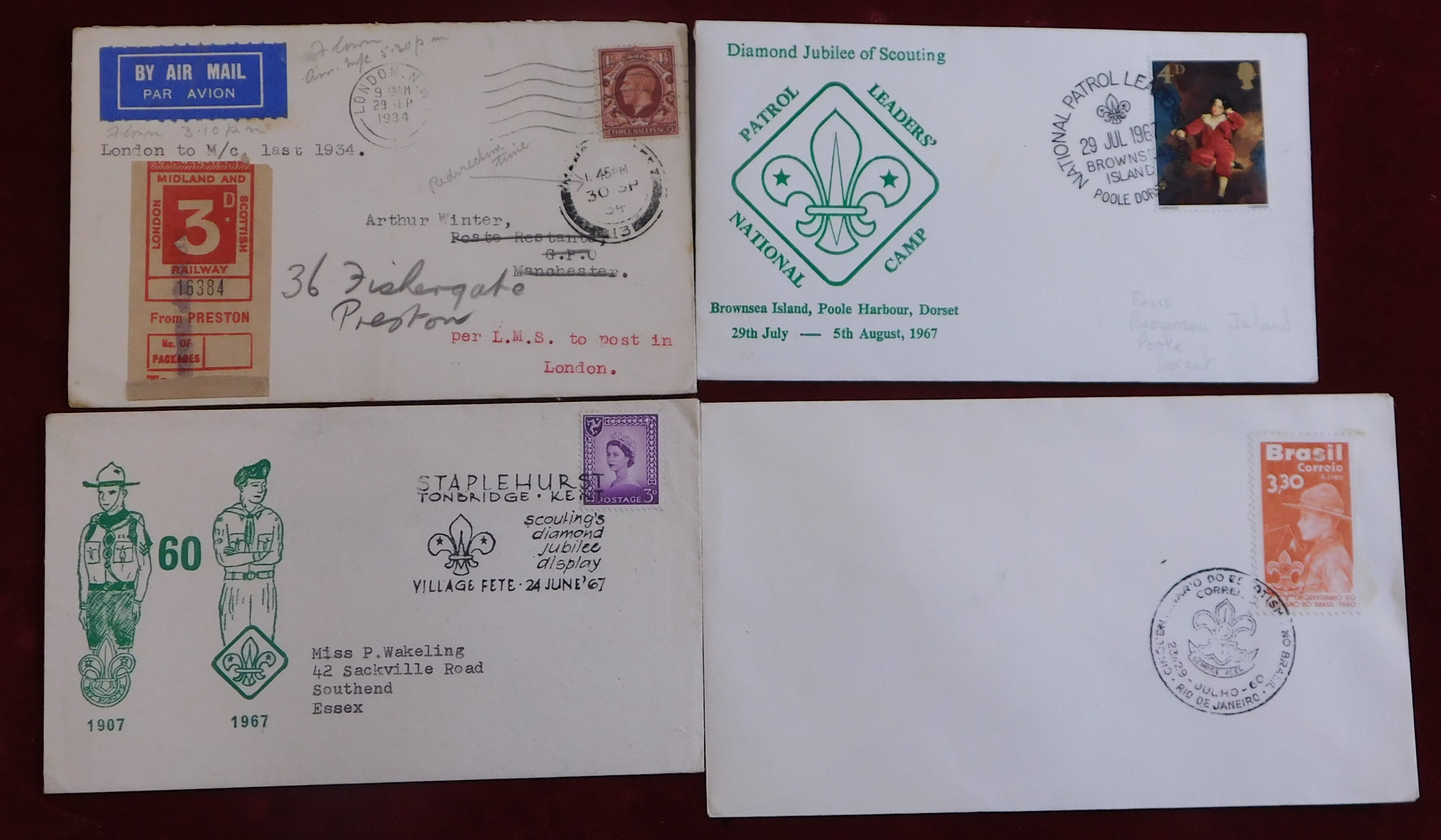
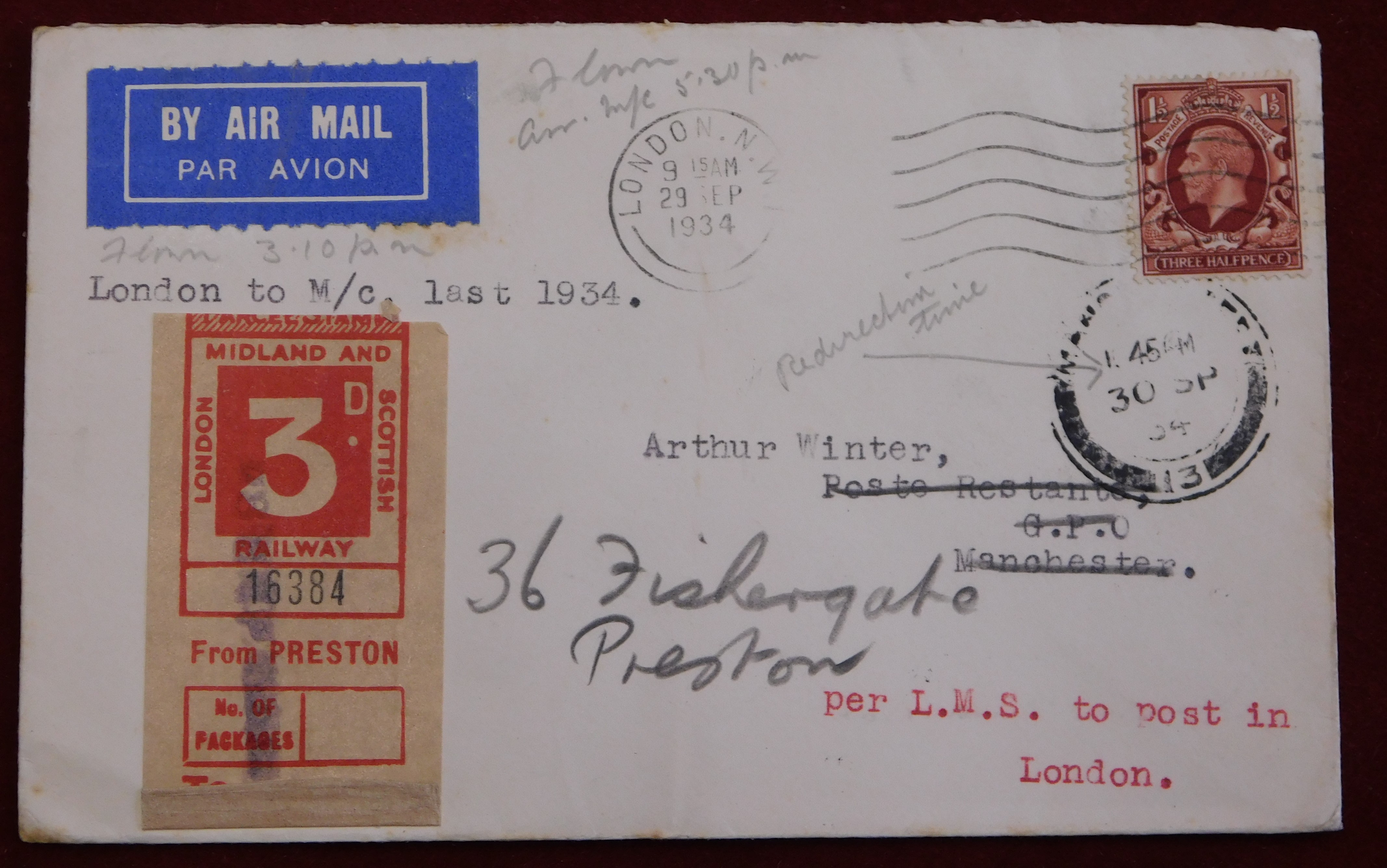
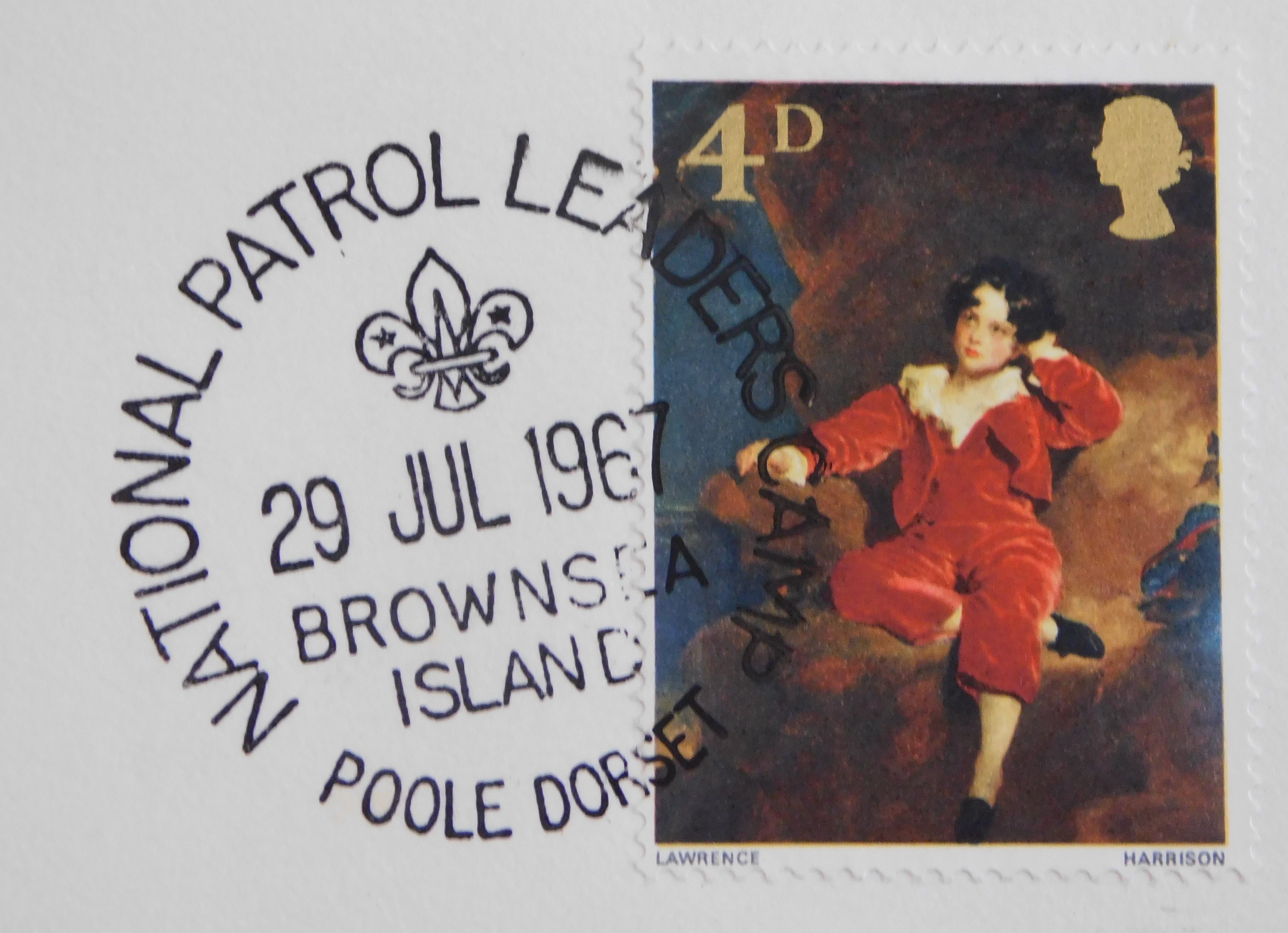
On Tuesday and Wednesday of this week James and Sons had its April auction, 1,000 stamp and postal history lots across the two days. On day one I was at work, one floor above where the auction was taking place, but had left bids on two lots, the fate of which would decide my approach to day two where I would be following from home.

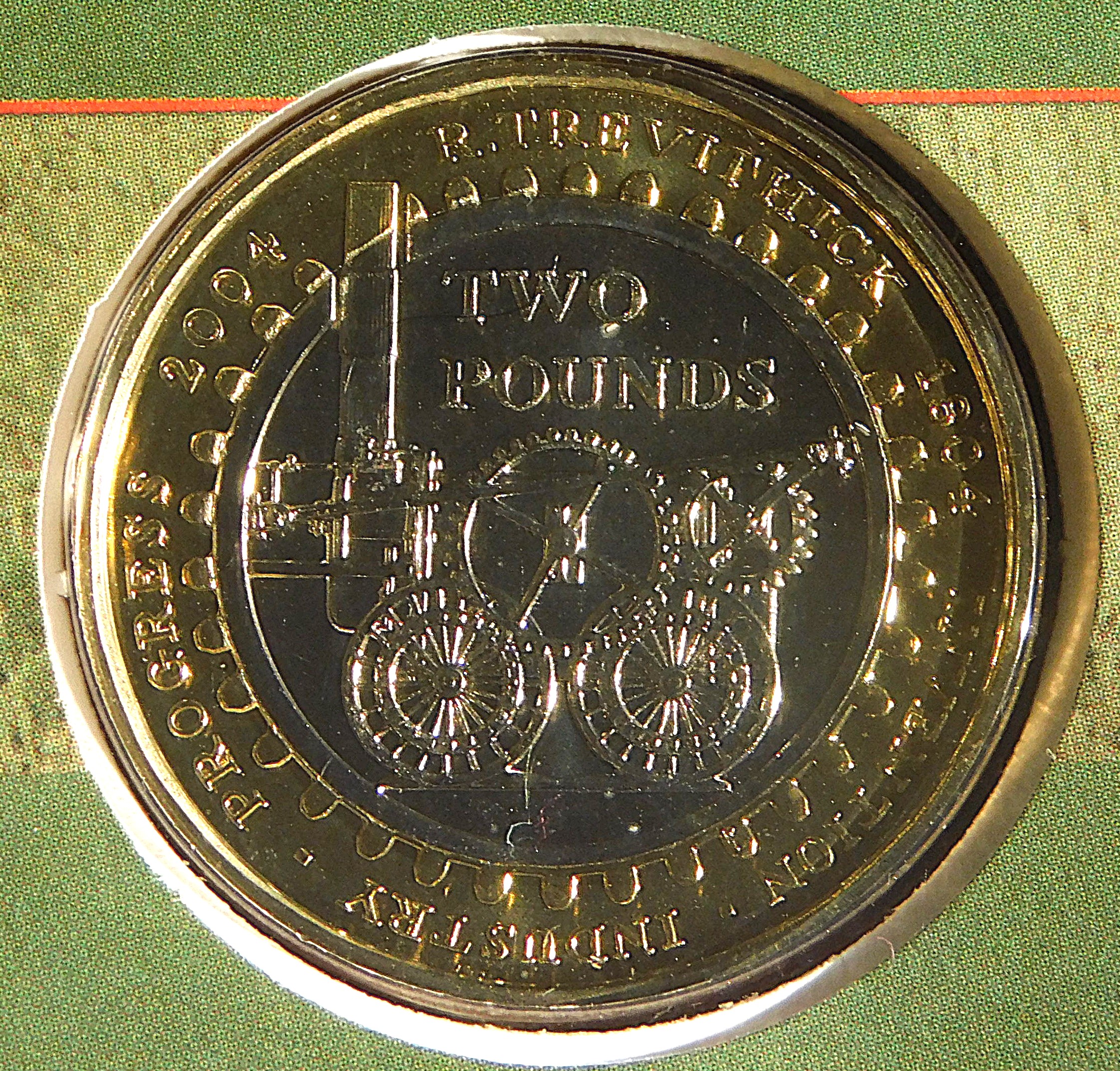
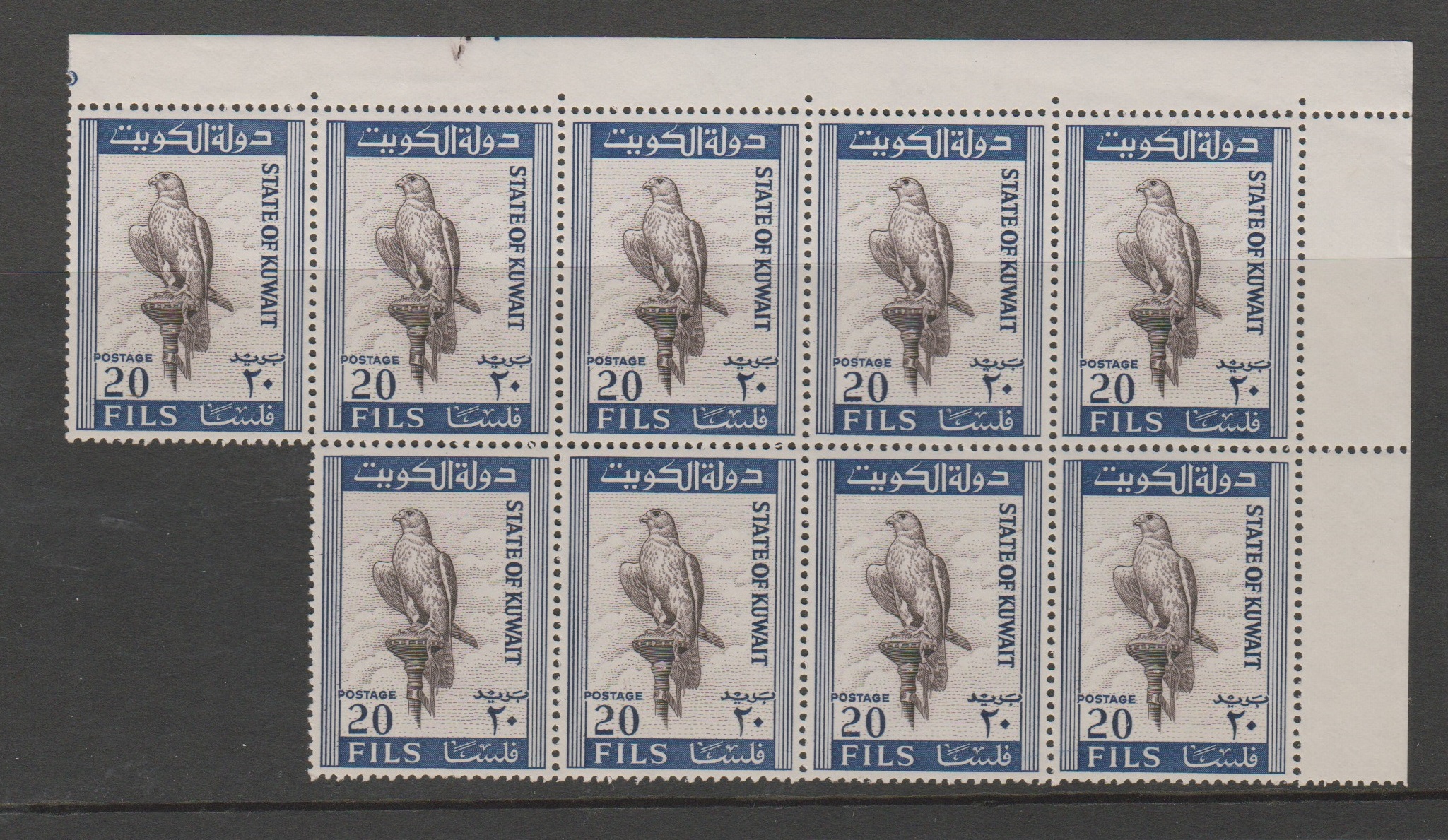
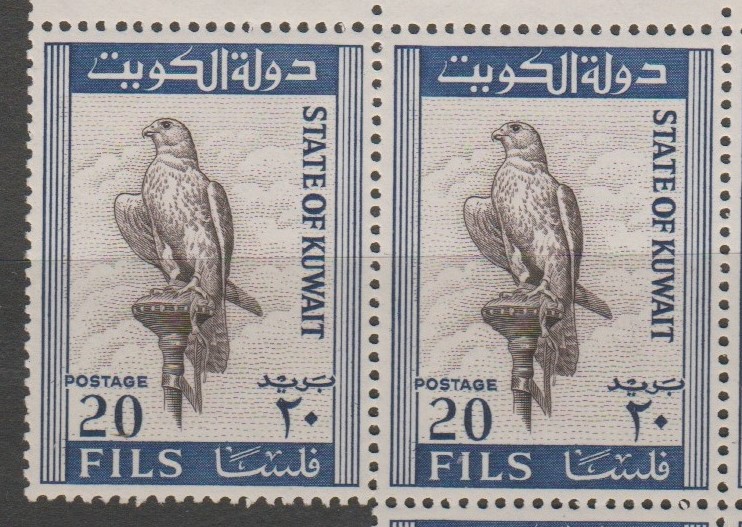
The opening day of the auction went well overall for the company, and well for me personally – I got both lots I had left bids on, and both sufficiently cheaply that I was still in a position to bid on more items on day two. Lot 193 was the first of my lots:

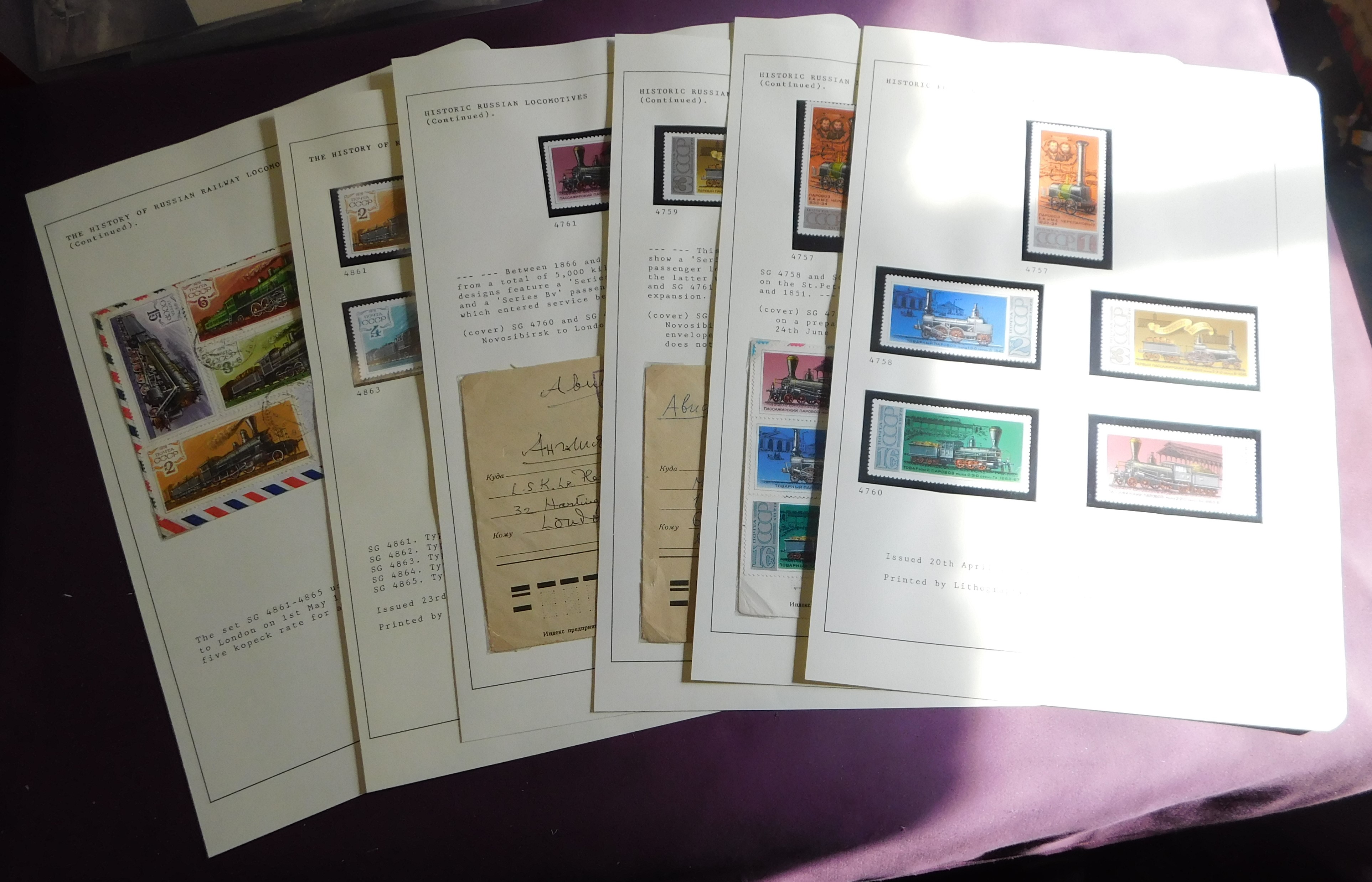
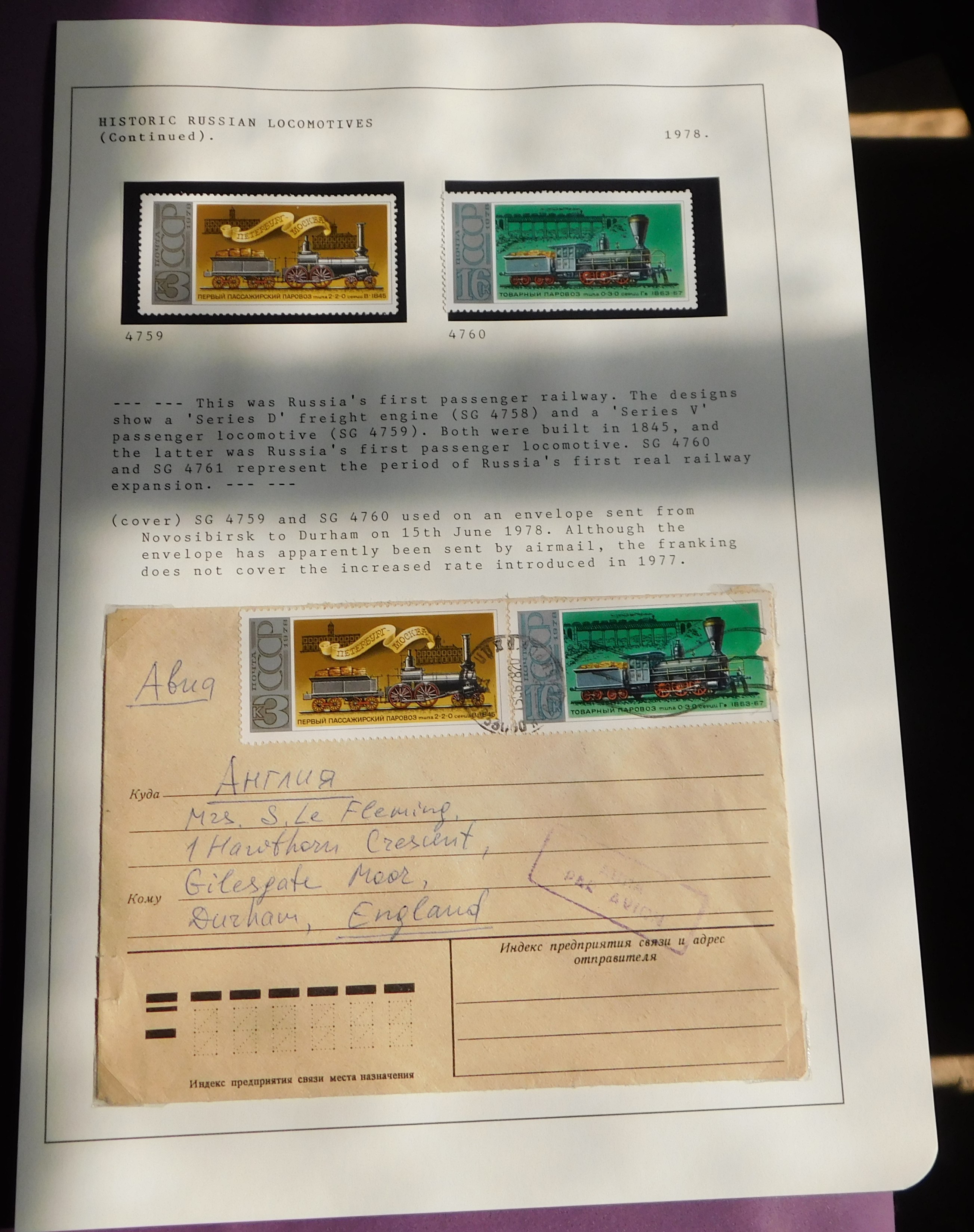
Lot 398 was five pages of Russian steam locomotive stamps:

This could have been a very quiet day, but fortunately it wasn’t completely so. The biggest success of the day was lot 762, which went for £140. My first bid of the day was on lot 701, and I was successful:

Lot 728 was my next success…

Lots 785 and 840 also went to me…

Another round of County Championship fixtures got underway today. Due to a meeting this morning I missed the first session of play, and I will be missing most of tomorrow as it is the West Norfolk Autism Group’s annual outing to Pensthorpe. However I have got to enjoy Somerset having superb afternoon and evening against Essex at Taunton. Essex were 115-2 at the high water mark of their innings, but since then it has been one-way traffic – they are now 180-9 with Noah Thain having just gone for 41, caught Rew bowled Pretorius. I am not entirely sure about Kasun Rajitha;s batting credentials, though the fact that he is below Sam Cook, sometimes adhesive (as indeed he was today) but unquestionably a tail ender, tells one something, but Jamie Porter is an absolutely blown in the glass genuine number 11.

My usual sign off…

Derbyshire v Middlesex

A look at the final day of Derbyshire v Middlesex in the county championship, a harsh but justified assessment of Derbyshire’s overseas seamer and a photo gallery,

The only live cricket today was the final day of Derbyshire versus Middlesex, and this post looks briefly at the final day’s action.

From the start of play at 11 o’clock until 12:56PM, four minutes before the scheduled lunch break the overnight batters for Middlesex, Stevie Eskinazi and Max Holden batted largely serenely through on a so called ‘hybrid’ pitch. A couple of hard chances went down, but few would have said that a wicketless morning was other than a fair reflection on the balance of play. Then Holden, on 94 and anxious to reach three figures before the interval had a total brain fade, essayed a huge drive at left arm orthodox spinner Jack Morley, missed and was bowled. That brought the injured Leus du Plooy, recently moved south from Derbyshire (Martin Andersson, who went the other way, will have much fonder memories of this match than him) in to bat, with Nathan Fernandes who had been out to the first ball of the innings acting as runner. Immediately there was a calamitous mix up which cost the other set batter, Eskinazi, his wicket for 61, and suddenly the door which had seemed firmly shut and all but bolted was ajar.

Derbyshire had an excellent afternoon, and had Middlesex six down at tea, but the lead by then was just over 100, and though they had work still to do, Middlesex really were within sight of victory. The two batters resuming for them, Ryan Higgins and Zafar Gohar played sensibly until, with the game virtually safe a couple of moments of silliness occurred. First Gohar, on 44, tried to get to 50 in one blow, did not quite get all of it, but got lucky when the chance was dropped, and then in the very next over Higgins, on 56, offered a chance that was accepted. However, by this stage the main question appeared to be at what point hands would be shaken on the draw, with the smart money being on with 15 overs still scheduled. Gohar got his 50, and new batter Blake Cullen played sensibly, and with the score 307-7, a lead for Middlesex of exactly 150, and 15 overs remaining to be bowled Derbyshire skipper Madsen did indeed accept that Middlesex had done enough, on a pitch that did not offer enough to the bowlers for a result ever to be likely. Middlesex had missed avoiding the follow-on by just eight runs, and had they scored those eight it is wildly unlikely that Derbyshire would have been able to create even the hope of a winning position – Madsen would probably had had to tell his side to go hell for leather until lunch, declare at that interval and then hope they bowled and fielded superbly, but he would probably not have been bold enough to take this approach. One final point: I looked up Derbyshire’s overseas seamer, New Zealander Blair Tickner and discovered that in 83 first class matches before this one he had taken 251 wickets at 34.22. The average would be on the high side for a home bowler, and for an overseas one, with the extra pay they get, it is simply unacceptable. The wicket taking rate of three scalps per match (almost exactly) is on the low side as well, a whole wicket per match below what I would consider acceptable. My own view is that if Tickner, a workaday seamer, was the best Derbyshire could do in this regard, they would have been better not to bother with an overseas signing.

My usual sign off…

Pakistan Level Test Series Against England

An account of the second test of the Pakistan v England series in Multan, which ended this morning UK time, and a photo gallery.

The second test of the three test series between Pakistan and England has just ended with the home side winning by 152 runs. The pitch was reused from the first match, and it was always likely that the side winning the toss would also win the match. This post looks back at a compelling match.

Pakistan, with a selection committee so large it almost outnumbered their playing staff, had named a completely revamped XI. They had picked only one front line seamer, Aamer Jamal, with their second ranked operator in that department being skipper Shan Masood with eight wickets in over 150 FC matches. The side was packed with spinners. The other big news was that Babar Azam was replaced by Kamran Ghulam. For England a fit again Stokes replaced Woakes, and of course captained the side, and Potts replaced Atkinson, meaning that England’s three front line seamers in the match all played for Durham, the first time an England seam attack containing at least three players were all from one county since the 1894-5 Ashes when Tom Richardson, Bill Lockwood and Bill Brockwell all of Surrey played all five test matches. The two front line spinners, Leach and Bashir, both play for Somerset, whereas in the 1894-5 Ashes the spin was in the hands of Peel (Yorkshire) and Briggs (Lancashire). Pakistan won the toss, and as was mandatory on what was already a day six pitch chose to bat first.

The debutant Kamran Ghulam scored a century, Saim Ayub managed 77, and with a few contributions from further down the order Pakistan tallied 366. Carse was impressive, taking 3-50, Potts had 2-66, Leach took 4-114, and Bashir’s inexperience was exposed as he finished with 1-85.

England lost Crawley early, but Ben Duckett played a magnificent innings, and at 211-2 England might have hoped for a first innings lead. However Root and Duckett fell in fairly quick succession, and a collapse ser in. Jamie Smith’s dismissal made it 262-9. Leach and Bashir added 29 to that tally before Bashir fell for 9, leaving Leach unbeaten on 25. Aamer Jamal was innocuous, and Zahid Mahmood, the leg spinner, also went wicketless, the damage being done by off spinner Sajid Khan, 7-111 and left arm spinner Noman Ali, 3-101.

England bowled well second time round, and Pakistan at one stage were 156-8, 231 ahead overall. However Salman Agha and Sajid Khan shared a ninth wicket stand of 65, which meant that England ultimately needed 297 to win. Bashir took 4-66, though he also went at 3.5 an over. Leach had 3-67, and was even more expensive. Carse took two wickets and Potts one. Salman Agha scored 63.

By the end of day three England were 36-2, with both openers gone. The fourth and final day, such as there was of it, belong to Noman Ali. The 38 year old left arm spinner whose appearances at the highest level have been sporadic tore through England. The only wicket to go anywhere else in this session was that of Pope, caught and bowled by Sajid Khan for 22. Ali had Root and Brook LBW, Stokes stumped (a particularly embarrassing dismissal for the skipper since he lost his grip on his bat while essaying the shot and had to have said implement returned to him by a fielder), and Smith, Carse, Leach and Bashir all caught, the last two in successive balls, both by Abdullah Shafique. This left England 144 all out, Stokes top scoring with 37, Carse second best with 27, which included three sixes. Noman Ali had innings figures of 8-46, giving him 11 in the match, and Sajid Khan had the other two giving him nine wickets for the match. This was only the seventh time in history that two bowlers had accounted for all 20 wickets for their side in a test match, and only the second occasion for two spinners to do so after Laker (19) and Lock (1) at Old Trafford in 1956. Sajid Khan, who had done the damage in the first innings when the pitch wasn’t offering so much, and shared in two significant ninth wicket stands (49 in the first innings as well as that 65 in the second) was named Player of the Match. Incidentally while a spectacular reversal of fortunes going from winning by an innings and 47 runs to losing 152 is not an England record for such – in the 1965-6 Ashes they won one match by an innings and lost the next by an innings to even things up. I have no issues with this pitch – I prefer matches where the bowlers are properly in the game, as they were in this one. Of course it was a challenge for England in the later stages – not since Durban in 1939 has anyone faced a day nine surface! The challenge for the Rawalpindi ground staff is to produce a surface that has something to offer without already having had five days played on it – they have only one match there.

My usual sign off…

Two Crunch Matches

Accounts of yesterday’s matches at the Women’s T20 World Cup and a photo gallery.

Yesterday saw two matches in the Women’s T20 World Cup. In the early match England faced Scotland in a match they had win if they were to qualify for the semi-finals. The late match was in the other group and was that group’s biggest match, Australia v India, with the latter knowing that if they did not win they would be relying on Pakistan beating New Zealand today for their own hopes of progression. This post looks back at both matches.

Before getting into my account of the match, Edward I, who was King of England from 1272-1307, earned the nicknamed ‘Hammer of the Scots’ for his victories over his northern neighbours.

Although England had won both their matches at the tournament so far going into this match, their third in a row at Sharjah, their position was precarious due to the way the group had panned out. Effectively the matches so far had separated the group into three strong sides (England, South Africa, West Indies) and two weak ones (Bangladesh and Scotland), so even a third successive win would not guarantee England progression – South Africa have played all four of their matches, and their net run rate is such that however the final match in this group, between England and West Indies, pans out the proteas will almost certainly qualify for the semi-final.

England brought Lauren Bell in for Linsey Smith, changing the balance of their attack, and Alice Capsey was ill, meaning that Sophia Dunkley came in to the side in her place. Scotland had made only one change, McColl in for Chatterji.

Scotland won the toss and opted to bat first, a decision that Heather Knight confirmed that she would also have made had she won the toss.

Scotland never really got going, although Kathryn Bryce batted well for them, and 20 year old Ailsa Lister hit a six for them, their only one of the tournament. No England bowler was really expensive, though Sarah Glenn would have been disappointed to concede 24 from three overs. Sophie Ecclestone had 2-13 from her four overs, Lauren Bell 1-16 from her four, and Danielle Gibson bowled her first over of the tournament, taking 1-5. Scotland finished with 109-6, which looked on the low side even before the England innings began.

Maia Bouchier and Danni Wyatt-Hodge were ruthlessness personified in exposing the inadequacy of Scotland’s total and the lack of bite possessed by their bowling attack. Bouchier top scored with 62* (34), a knock that included 12 fours. Wyatt-Hodge scored 51* (26), hitting seven fours and showing once again that veteran though she is she is as quick between the wickets as anyone in the game. The winning hit came off the last ball of the tenth over, and because it was a four and not the single that would have been enough England’s net run rate passed that of West Indies. England are thus top of the group with three wins out of three, but because of the failings of Bangladesh and Scotland, and South Africa’s good net run rate they almost certainly need to make it four wins out of four to qualify – a West Indies win would send them through alongside South Africa. Scorecard here.

Australia had lost two players to injury, skipper Alyssa Healy and fast bowler Tayla Vlaeminck. The latter had flown home, replaced in the squad by all rounder Heather Graham. Healy remained, either because Australia hoped she would recover in time to play later in the tournament or because the rules on injury replacements decreed that a player who was officially replaced was not allowed in the dressing room, and Healy as official captain was someone whose presence was wanted even if she couldn’t play. Healy’s role as opening batter was taken by Grace Harris, while Mooney took over the keeping duties and Tahlia McGrath became stand-in captain. Vlaeminck was replaced by Darcie Brown. Australia lined up with Annabel Sutherland officially due to come in at number eight. India’s line up was initially as expected, but then Asha Sobhana suffered an injury between the toss and the start of the game, and Australia graciously acceded to India’s request to change their XI at the last minute, bringing Radha Yadav in to the side in Sobhana’s place.

Australia did not start very well – Mooney was out for 2 (7) with the score at 17, and the tactically promoted Wareham was out first ball. However Harris and McGrath added 62 for the third wicket before McGrath fell for 32 off 26 balls. Perry injected some extra pace into the scoring, and by the time she was sixth out, for 32 off 23 balls the score had reached 134 and there were nine balls left in the innings. Sutherland scored 10 off six balls, and Phoebe Litchfield struck the last ball of the innings for six to take her score the 15 off nine balls and Australia’s to 151-8.

India fought hard, with Harmanpreet Kaur making a fine 50. With four overs to go they were in with a chance of pulling off the upset. However Megan Schutt, previously uncharacteristically expensive (she had conceded more in her first three overs in this innings than she had previously done all tournament put together – 23 to 22) bowled a quite superb 17th over, conceding just two runs to reassert Australia’s control. The 18th and 19th overs were both good for India, but not quite good enough. They needed 14 off the final over for the win. Pooja Vastrakar was bowled by the second ball of the final over, and the next two balls both saw run outs, of Arundhati Reddy and Shreyanka Patil respectively. That was 141-8, 11 needed and two balls to come. The penultimate ball of the match trapped number 10, Radha Yadav, LBW, and now all Sutherland needed to do was make sure she bowled a legal delivery. This proved straightforward enough for her, and Renuka Singh Thakur accrued a single to reduce the margin of defeat to nine runs. India as a whole are not a great fielding side, and the other area in which they were noticeably poor was running between the wickets. As well as the run outs (even before the events of the final over Richa Ghosh had suffered an appalling one – having already once been guilty of lazy running and got away with it she made the same mistake a second time and was punished) they were far too often accepting singles when had they run harder they might have induced mistakes which lead to extra runs. They fought hard, but against Australia you cannot win unless you do everything right – getting most things right is not good enough against the women from down under.

My usual sign off…

The Women’s World T20 Cup

A look at developments in the Women’s T20 World Cup, including comments about both of today’s games. Also a photo gallery prefaced by a couple of lots which are in James and Sons’ November sale but otherwise containing pictures from today.

The group stage of the Women’s T20 World Cup is approaching its conclusion. This post looks at the situation, with some stuff about today’s games.

The group table, from cricinfo:

Group A

TeamMWLPTNRR
AUS-W33062.786
IND-W32140.576
NZ-W32140.282
PAK-W3122-0.488
SL-W4040-2.173

Sri Lanka are eliminated, and after today’s loss to New Zealand are confirmed as finishing last in the group. India face Australia tomorrow, and because of today’s result they need to win that game to prevent New Zealand v Pakistan become a straight shoot out for a semi-final slot. Australia are the only absolutely confirmed qualifiers, and they been incredibly impressive so far.

The table, again from cricinfo:

Group B

TeamMWLPTNRR
WI-W32141.708
SA-W32141.527
ENG-W22040.653
BAN-W3122-0.835
SCO-W3030-2.671

Scotland are out, and will almost certainly finish last (unless they can beat England heavily, and Bangladesh, currently in action against South Africa, win that match, which is looking very unlikely right now). Bangladesh are also unable to qualify. England are currently third on net run rate, but have a game in hand on South Africa and West Indies, and have a 100% record, whereas the other two sides have each lost once. If as seems likely South Africa win today they will be qualified, and West Indies will be hanging on by their finger nails.

Sri Lanka have had a wretched tournament, though it briefly looked improving for them today. That bright prognosis lasted until Amelia Kerr bowled Chamari Athapaththu for 35. I have written previously about Sri Lanka’s dependence on the veteran opener to get them to a competitive total. They very rarely win when their talisman doesn’t score as many as 40, and the remainder of their innings after her dismissal showed why. 74-2 after 13.3 overs became 115-5 after 20 overs – the death overs barely saw the scoring rate climb, as Sri Lanka needed it to. Bates struggled with the bat for New Zealand, and her dismissal for 17 (22) to make it 49-1 was probably better news for them than it was for Sri Lanka. Amelia Kerr, who had figures of 4-0-13-2 including the prize wicket mentioned earlier, came in to join Georgia Plimmer who was going well. Plimmer and Kerr shared an excellent partnership, and victory was well and truly in sight when Plimmer fell to a catch by Silva off Athapaththu for 53 (44). Sophie Devine joined Kerr to complete the job. It was Devine who made the winning hit, a colossal six off Kumari, but Kerr had scored 34* (31) to help NZ to an eight wicket win with 15 balls remaining. I understand why the Player of the Match award went to Plimmer for her 50 but I am 100% sure it was a wrong call. Kerr made important contributions in both departments. NZ may well have won even had Plimmer not scored big, they would not have won without Kerr’s contribution. Scorecard here.

This match is approaching the half way stage and it has only been a late flourish that has got Bangladesh to three figures. At one stage they were going at only two an over, and even with a big finish they have only managed 106-3 from their 20 overs. South Africa have given away 11 wides. Mlaba, South Africa’s impressive left arm spinner, recorded figures of 4-0-11-1, and Marizanne Kapp was even more economical – 4-0-10-1.

Today’s gallery starts with a few pictures from work this week…

England Triumph in Multan

An account of days four and five in Multan is England created history by winning by an innings margin after conceding over 500 in the first innings. Also a photo gallery.

In my previous post I told the story of the first three days of the opening test of the Pakistan v England series in Multan. I now tell the story of days four and five (please bear in mind day four was a work day for me and therefore I did not to get follow all of it).

England started day four on 492-3. They utterly dominated the morning session, Root and Brook batting like a pair of titans. Had England scripted the session they would hardly have dared to make as good for themselves as it actually was. Not only did the Yorkies remain together throughout the session, they plundered 166 runs from 29 overs in the course of it. Both were well past 200 by the lunch interval, only the second time England had ever had two double centuries in a single test innings after Chennai in 1984 when Graeme Fowler and Mike Gatting did likewise. The partnership was worth an unbroken 409 at this point, already England’s second best ever for any wicket against all comers, also the highest ever England partnership between two players from the same county, relegating Hutton/ Leyland (Yorkshire, 382 for the second wicket v Australia at The Oval in 1938) into second place in this particular league table, with Denis Compton/ Bill Edrich (Middlesex, 370 v South Africa for the third wicket in 1947) and Ken Barrington/ John Edrich (Surrey, 369 for the second wicket v New Zealand in 1965).

After lunch the pair continued the assault, taking the total past 700 while they were still together. Both passed 250 along the way, Root first, closely followed by Brook who in spite of having given his partner an 80-odd run head start was threatening to overhaul him. Finally, Pakistan gained a measure of relief, when Salman Agha trapped Root LBW for a new test best of 262 to make it 703-4, ending the stand at 454, England’s record for any wicket in all test cricket, the all time fourth wicket record for all test cricket, and the fourth biggest partnership in test history, beaten only by Martin Crowe/ Andrew Jones 467 for the third wicket v Sri Lanka, Jayasuriya/ Mahanama 576 for the second wicket v India and Jayawardene/ Sangakkara 624 for the third wicket v South Africa, which means that this was also the biggest ever partnership in a test match not involving Sri Lanka.

Brook kept going, ticking off a few more milestones. At 270 he claimed possession of the highest test score by any member of this XI, a four taking past Crawley’s 267 also against Pakistan. Then came Cook’s 294, the highest score for England in the 21st century, then the triple century. It was at this point that I headed off to catch the bus to work, having made all my preparations and decided that I would take my leave either when Brook was out or when he reached 300, whichever came first, so I missed the last period of England’s charge towards a declaration. Later checks revealed that the declaration had finally come at 823-7, with Brook’s innings ending on 317, the second highest ever score for an England batter abroad behind Hammond’s 336* v new Zealand in 1933, and that Saim Ayub, pressed into service due Abrar Ahmed being ill (ill enough to hospitalized) had become a record breaking sixth Pakistan bowler to concede 100 or more in the innings. The previous was five, although in the first such instance of that happening, when Australia scored 758-8 declared v West Indies back in the 1950s, a sixth bowler, Sobers, avoided joining them by the narrowest possible margin, going for 99.

Pakistan thus began their second innings 267 runs adrift. It would appear to be in the early stages of their second innings that their hopes of escaping with a draw were killed. Abdullah Shafique was bowled by the first ball of the innings, and Pakistan somehow lost six wickets in the space of 24.2 overs, for 82 runs. The seventh wicket pair stopped the collapse to the extent of taking Pakistan to the close of day four on 156-6.

Day five started with Pakistan needing 111 to avoid the innings defeat, with three wickets standing (it was confirmed that Abrar Ahmed was still ill in hospital and would not bat, though as a regular number 11 he was unlikely candidate for becoming a latter-day Eddie Paynter, rising from his hospital bed in his country’s hour of need and becoming the batting hero, as the Lancashire left hander did in the fourth test of the 1932-3 Ashes). Salman Agha and Aamer Jamal took their partnership past the 100 mark, but at 191 Jack Leach pinned Agha LBW for 63. Shaheen Shah Afridi resisted for a time, but after an over in which Brydon Carse gave him a tough time he drilled one back at Leach who took a superb return catch to make it 214-8. Naseem Shah got off the mark with a six, but missed another huge heave at the next ball and was stumped by Smith to end proceedings with Pakistan 47 short of avoiding the innings defeat. Leach’s polishing off of the tail gave him innings figures of 4-30, the stuff of miracles on this pitch, and match figures of 7-190. To put those figures in their true perspective, it means he took his wickets in this match at 27.14 each, while outside of his efforts the total score was 1,409-19, an average of 74.16 per wicket. Pakistan’s 556 is the highest first innings total by any side to lose a test match by an innings. There have been two higher scores in the first innings of a match by a side who ended up beaten: Bangladesh 595-8 declared v New Zealand quite recently, and Australia’s 586 at Sydney in 1894, when overnight rain at the end of the fifth day of a timeless match saw Australia caught on a vicious sticky and spun to defeat by Bobby Peel and Johnny Briggs, 113-2 becoming 166 all out and a loss by ten runs. Pakistan under Shan Masood have now lost six successive matches. The second match of this series starts, also in Multan, on Tuesday.

My usual sign off…

Two Small Run Chases, Two Very Different Approaches

A look back at yesterday’s matches in the Women’s T20 World Cup – two small run chases, and two very different approaches from the two chasing sides. Also a photo gallery.

Although a test match got underway today between the Pakistan and England men’s sides in Multan, which I will be writing about in due course my focus for this post is yesterday in the Women’s T20 World Cup.

Pakistan had won their first match of the tournament, India had lost theirs heavily. India bowled well and had moments in the field, though they were far from unblemished there – two easy catches went to ground. Pakistan messed up their batting order, with the captain coming in too late. In the end Pakistan left themselves with a mere 105 to defend. Surely this was time for India to stamp on the accelerator right from the start in an effort to undo some of the damage their shellacking by New Zealand had done to their net run rate. However they were consumed by caution, and in the end they completed the job with only seven balls to spare, which was not what they needed. Unless India can somehow beat Australia it now looks like the game between New Zealand and Pakistan will be a virtual play-off for a semi-final slot due to India’s poor net run rate.

Scotland never really got going at all, and in the end they failed even to reach 100, finishing their 20 overs with 99-8. West Indies did what India hadn’t earlier in the day and went hard at the chase. Qiana Joseph atoned for her horror innings in the previous game by scoring 31 off 18 balls, Deandra Dottin, in the second match of the second phase of her international career scored 28 not out off 15 balls, and Chinelle Henry hit 18 not out off 10 balls. West Indies needed only 11.4 overs to complete their task and had six wickets to spare. Joseph and Henry hit a six each along the way, and Dottin had two sixes, the second of which was the winning hit. West Indies with the boost to their net RR currently sit top of their group, though they will be displaced by whoever wins today’s match between England and South Africa.

My usual sign off…

The Women’s T20 World Cup

A look at the Women’s T20 World Cup, now underway in the United Arab Emirates, and a photo gallery.

The Women’s T20 World Cup 2024 is underway. It was due to be staged in Bangladesh but was then moved at the last minute to the United Arab Emirates, although Bangladesh are still officially tournament hosts. In this post I look at what has happened so far in the matches I have been able to follow.

Australia, winners of six of the previous eight editions of this tournament, are as expected looking formidable once more. The extraordinary number of genuine all rounders they have in their squad (including the two recognized wicket keepers, who opened the batting together – Healy getting the gloves, Mooney playing as a pure batter – they had no fewer than six such players in their XI – Ellyse Perry, Ashleigh Gardner, Tahlia McGrath and Annabel Sutherland, all in the top seven of the batting order, and all well capable of bowling their full four overs, are the others) means that rather than struggling to cover all bases they have a positive embarrassment of riches. Effectively they were taking to the field with a team of about 15 – seven front line batters including the keeper, and eight front line bowlers – the four all rounders listed and four players chosen specifically on ground of their bowling skills.

England were fairly impressive in disposing of ‘hosts’ Bangladesh – their 118-7 from their 20 overs is the highest team total thus far recorded at Sharjah, where the pitches have been low and slow, and runs have been at a massive premium, and was enough for them to win by 26 runs. To give you an idea of the nature of the Sharjah surface, England picked four specialist spinners – Linsey Smith, Charlie Dean, Sophie Ecclestone and Sarah Glenn, and Nat Sciver-Brunt’s four overs of medium pace were the only overs by anyone other than those four for them. Further commentary on this is provided by Danni Wyatt-Hodge’s innings – the recently married (hence new, hyphenated surname) opener scored 41, but even she, normally exceptionally quick scoring, was barely striking at 100.

India suffered a humiliation against New Zealand in their opening match, going down by 58 runs. They were sloppy in the field (though far from the only offenders in this regard – a shedload of catches have gone down this tournament), with at least two very easy catches going down and a good 20 runs being conceded through poor ground fielding, and very poor with the bat. They were better today against Pakistan, but again there were lapses in the field, and they were overcautious with the bat, eventually getting home with only seven balls to spare, doing little to reduce the massive negative net run rate the NZ game left them with. This is important because they also have Australia in the group which almost certainly means that the other sides are fighting over one semi-final slot. Sri Lanka have yet to grow out of their dependence on Chamari Athapaththu – once the batting all rounder fell cheaply in their opening fixture they never looked like making a contest of it. South Africa were impressive – left arm spinner Nonkululeko Mlaba took four cheap wickets for them, and their opening pair of skipper Laura Wolvaardt and Tazmin Brits knocked the target off without being parted, each topping 50 in the process.

Dubai has been a better venue for cricket than Sharjah, which I am not convinced is still up to international standard, but even there the 160 that New Zealand posted against India is a massive outlier – 120 would still be respectable there, and 130 would be make the side scoring it favourites to win.

My usual sign off…