A Test XI From My Lifetime

A test match XI made up of players some or all of whose prime years were in my lifetime, a few honourable mentions and a photo gallery.

In this post I select an all time XI intended to be perfectly balanced, and made up exclusively of players at least some of whose peak years have been in my lifetime. I also look at some of the players I omitted and explain my reasoning- in an exercise like this the challenge is just who one leaves out.

  1. Graeme Smith (South Africa, left handed opening batter). Over 9,000 test runs at an average of 48.
  2. Sunil Gavaskar (India, right handed opening batter). The first ever to reach the career milestone of 10,000 test runs, and an average of over 50 at that level, and a good record outside Asia as well.
  3. Brian Lara (West Indies, left handed batter). The greatest left hander to have batted in my lifetime, with any number of extraordinary knocks to cite in support of that claim.
  4. Sachin Tendulkar (India, right handed batter). Holder of the records for most test career runs, most test centuries and various others.
  5. Allan Border (Australia, left handed batter). For much of his career he carried a decidedly moderate Australian batting line up – it was only in the last few years of his career that he got to be part of a strong line up.
  6. *Imran Khan (Pakistan, right handed batter, right arm fast bowler). My chosen all rounder, and my chosen captain. Ian Botham was sensational for the firts few years of his career, a producer of occasional sensations for another few years and then tailed off badly as the 1980s wore on, whereas Imran Khan was a much more enduring cricketer.
  7. +Adam Gilchrist (Australia, wicket keeper, left handed batter). The man who revolutionized the role of the wicket keeper, playing many match winning innings from number seven. Unfortunately too many sides since his prime have been dazzled by the batting side of the equation and have given the gauntlets to folk whose keeping is not up to scratch (Gilchrist’s was).
  8. Wasim Akram (Pakistan, left arm fast bowler, left handed batter). While it is possible that peak Mitchell Johnson was even more devastating with the the ball than peak Akram it is certain that Johnson when the force was not with him operated at a lower level than Akram ever did.
  9. Malcolm Marshall (West Indies, right arm fast bowler, right handed batter). The greatest fast bowler of the golden age of West Indies fast bowling and a handy lower order batter.
  10. Shane Warne (Australia, leg spinner, right handed batter). Leg spin was a dying art when he appeared on the scene – Abdul Qadir of Pakistan was the only leg spinner of real quality in the 1980s, and until Warne’s emergence there was no one coming through in the 1990s either.
  11. Muthiah Muralidaran (Sri Lanka, off spinner, right handed batter). Only one bowler has ever taken 800 test wickets in a career, and unless James Anderson somehow continues to defy Father Time for another few years there is no prospect of anyone else reaching that landmark – the rise of franchise leagues around the world makes it likely that few if any of today’s younger players will be looking at having exceptionally long test careers. Murali took those 800 wickets at a rate of six per match, better among those to have played 20 or more test matches than anyone save SF Barnes who claimed 189 wickets in 27 matches for a wicket taking rate of seven per match.

This XI has good balance of left and right handed batters, great depth with everyone down to Akram at eight capable of playing a match winning knock and Marshall and Warne far from being genuine tail enders. The bowling above with three great fast bowlers and two great spinners is ideal for most pitches. If the match were to be played at Perth or Johannesburg I would drop Muralidaran and further strengthen the pace attack by bringing in McGrath, while on an absolute raging Bunsen I would replace Imran Khan with Ravindra Jadeja (India, left handed batter, left arm orthodox spinner) and rely on Akram and Marshall to bowl such pace as would be required. I also take this opportunity to explain the positioning of the captain and wicket keeper in the listed order – Gilchrist always said he never wanted to bat above seven at test level, while Imran Khan was comfortable batting at number six, so although Gilchrist was undoubtedly a finer batter than Imran Khan I have respected the Aussie keeper’s preferences and kept him at number seven.

A full honourable mentions section for a post of this nature would be virtually book length, there being so many potential candidates. So, if I make no mention of your favourite please assume I have my reasons for having not picked them – the listing that follows is not remotely comprehensive.

Left handed openers: Alastair Cook’s sheer longevity deserves a mention, and I would entertain arguments made on behalf of any of Saeed Anwar, Mark Taylor, Matthew Hayden, Justin Langer or Chris Gayle. I would not give the time of day to any arguments on behalf of David Warner – the absence of a single test century in any of seam friendly England/ New Zealand and spin friendly India/ Sri Lanka in my view disqualifies him from being regarded as a genuine great.

Right handed openers: The West Indian pair of Gordon Greenidge and Desmond Haynes come closest in my view to challenging Gavaskar.

Number three: I wanted a left hander in this slot, and I considered Lara’s case to be unanswerable.

Number four: Besides my actual choice there were three serious challengers for the slot – Steve Smith, Virat Kohli and Joe Root, the latter of whom enters the equation because he spent so much of his career carrying a weak England batting line up.

Number five: I opted for the left hander for extra balance. Jacques Kallis was unlucky to be right handed given that he would also have offered an extra bowling option. The other potential candidate had I wanted a right hander would have been Viv Richards. As it was the main challenger to Border was Sangakkara, and I would in no way object to the Sri Lankan’s inclusion in place of the gritty Aussie.

Number six: has been covered in the main part of the post. Had circumstances allowed him to play test cricket Clive Rice (SA) would almost certainly have provided stiff competition for this slot.

Number nine: In a few years time, if he maintains his current standards up to the end of his career Jasprit Bumrah of India will require that I move Warne up one place to this slot and put him in at number 10, but at the moment I am not quite prepared to make such a massive call as dropping Marshall, though I fully acknowledge the Indian’s greatness.

Number ten: Warne at the moment looks unchallengeable, but Rashid Khan (Afghanistan) merits an honourable mention.

Number 11: There are two remotely credible challengers for Murali’s slot – R Ashwin of India, who would make the batting ridiculously deep – he would slot in at nine, with Marshall at ten and Warne at 11, and Nathan Lyon of Australia, who gets extra credit for having succeeded as an off spinner when playing his home matches in Australia (check out the records of English off spinners in Australia for an emphatic illustration of this point).

My usual sign off…

An Aspiblog All Time XI

A bit of fun on the all time XI theme, a look back at a James and Sons auction, and a photo gallery.

The first test match of a five match series between India and England is two days old as I type this post, but I am holding fire on that for the moment. This all time XI is picked with a view to being an entertaining watch. I have restricted it to players who played before I started following cricket, and save for allowing myself one overseas player I have concentrated on English cricketers. After I have paraded the XI there will be a section about some of the players who missed out, though I will limit myself, otherwise that section could be very long indeed.

  1. Frank Woolley (left handed batter, left arm orthodox spinner). An attacking batter, an excellent spinner and the only non-wicket keeper ever to take 1,000 first class catches.
  2. *WG Grace (right handed batter, right arm bowler of various types through his career, captain). Cricket’s first superstar.
  3. Wally Hammond (right handed batter, right arm medium fast bowler). Over 50,000 first class runs, including 167 centuries, in spite of missing eight complete seasons in the course of his career – one to bureaucratic malice on the part of Lord Harris, one to illness and six to WWII. Considered by Bradman to possess the best of all cover drives.
  4. Denis Compton (right handed batter, occasional left arm wrist spin bowler). A great cricketer and an even greater entertainer.
  5. Garry Sobers (left handed batter, left arm bowler of every type known to cricket). No cricketer before or since has mastered so great a range of skills as my chosen overseas player.
  6. +Les Ames (wicket keeper, right handed batter). Twice winner of the Lawrence trophy for the fastest first class hundred of the season, scorer of over 100 FC hundreds, maker of a record 418 first class stumpings in his career. The “wicket keeper’s double” of 1,000 runs and 100 dismissals in first class matches in an English season was only achieved four times before the reduction of first class fixtures in 1969 made it impossible, and three of those were by Ames (John Murray of Middlesex was the other to do it).
  7. Percy Fender (right handed batter, leg spinner, vice-captain). I have remarked before on his suitability for batting at seven in a strong line up and his tactical acumen.
  8. Jim Laker (off spinner, right handed batter). In 1956 he absolutely destroyed the visiting Australians, and it wasn’t all about the pitches helping him – when Australia played Surrey before the test series had started they batted first, and Laker, on a good pitch and having not slept the previous night due to his children being sick had figures of 46-18-88-10 in the first innings.
  9. George Simpson-Hayward (under-arm off spinner, right handed batter). The last specialist under arm bowler to play at the highest level, and his five test matches yielded him 23 wickets. Someone prepared to buck the trends as spectacularly as he did must have been worth watching,
  10. Syd Barnes (right arm fast medium bowler, right handed batter). My pick for the greatest bowler of them all – 189 wickets in just 27 test matches, at 16.43 a piece.
  11. Tom Richardson (right arm fast bowler, right handed batter). Only 14 test matches, which yielded him 88 wickets. His first class record was outstanding – he took his 1,000th first class wicket in his 134th first class match, and his 2,000th in his 327th match, both these figures being records.

This side has a powerful batting line up, and a spectacular bowling line up, with massive variety on show – Barnes, Richardson, Sobers in his quicker guises and Hammond to bowl pace/ seam, and Laker, Simpson-Hayward, Fender, Woolley, Sobers in his slower guises, and Compton to bowl spin plus of course the wild card of WG Grace.

The number seven slot was a two-way choice, and I opted for Fender who bowled spin over Jessop who bowled pace. I considered the presence of Woolley and Sobers to obviate the need for a specialist left arm spinner. There would have been a number of possibilities, Rhodes, Blythe, Verity and Wardle being just four of those I might have chosen. Digby Jephson who bowled fast underarm just a few years before Simpson-Hayward’s prime and was enough of a bat to be considered an all rounder was a possibility there, but Simpson-Hayward got the nod for two reasons: he played test cricket and Jephson did not, and also in view of the current state of England’s spin bowling, and some of the comments flying around that imply that England have never had great spinners I wanted to place extra emphasis on spin. I regretted not being able to accommodate either Harold Larwood or Frank Tyson, but I had only 11 spaces to fill. I also didn’t include a specialist left arm quick bowler, relying on Sobers for that. Had I done so William Mycroft would have got the nod.

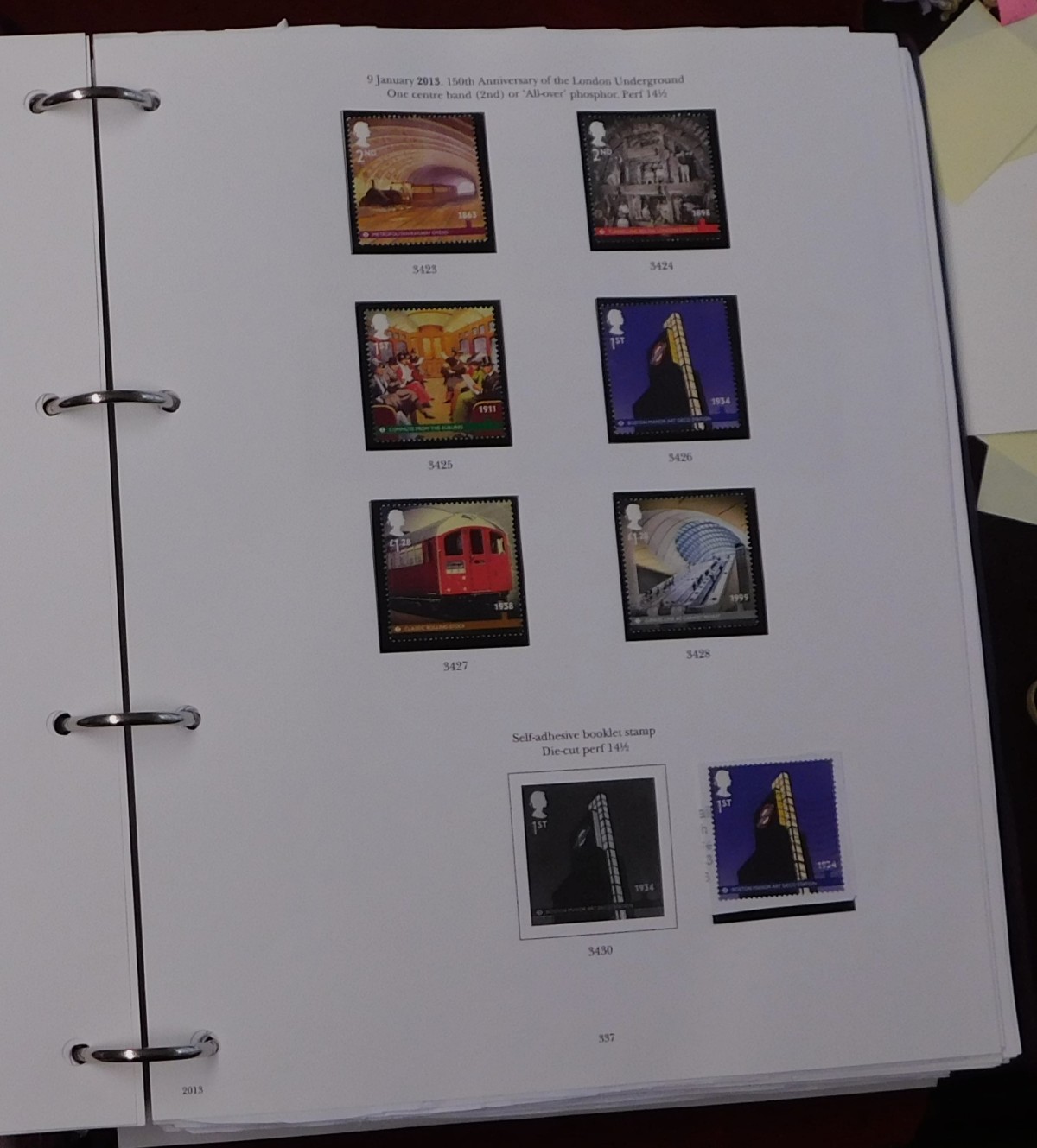
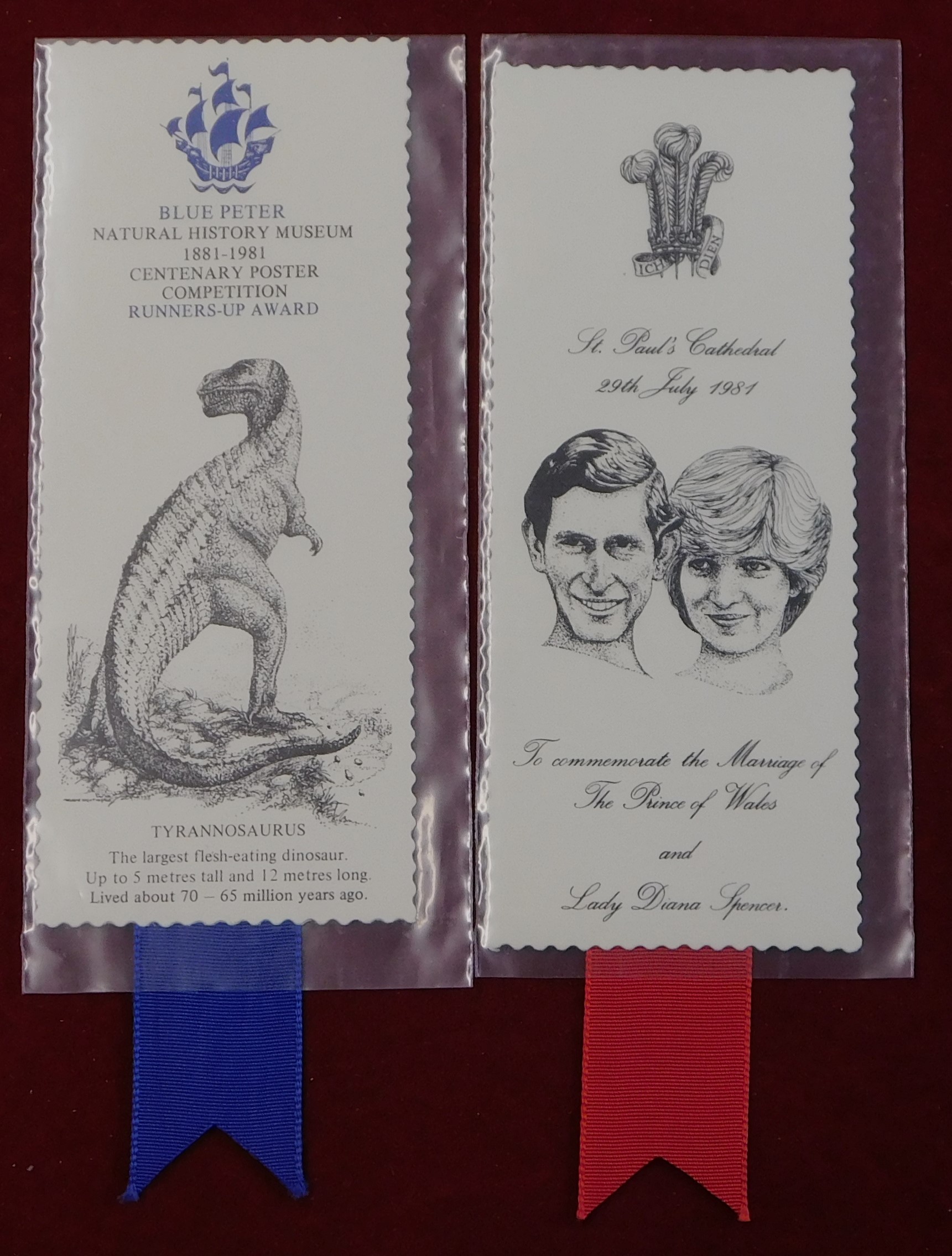
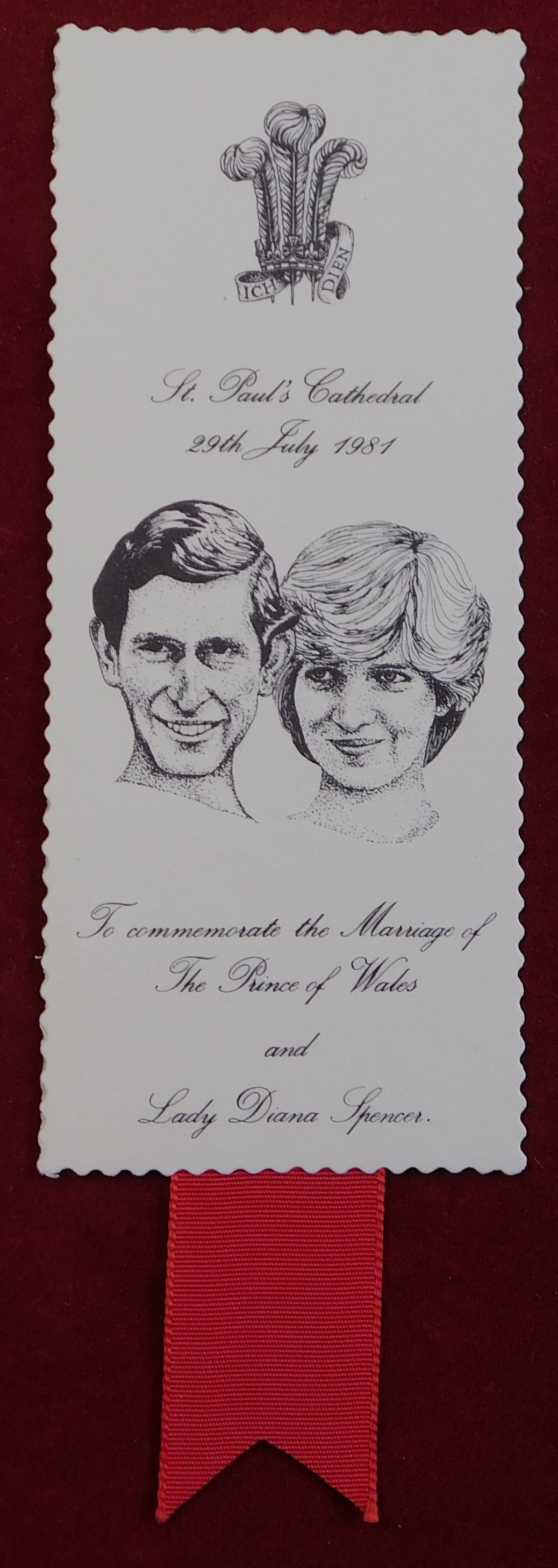
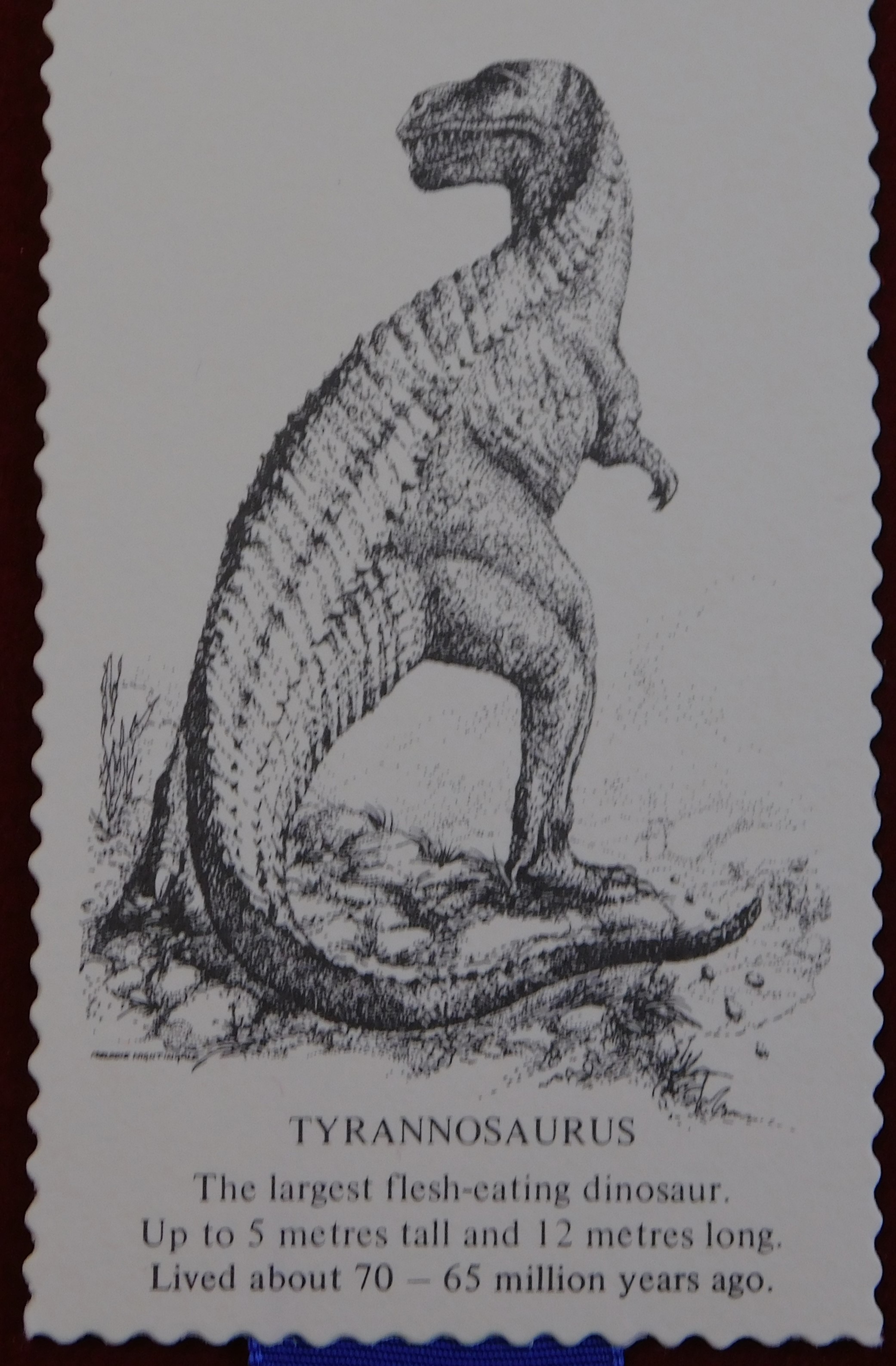
James and Sons had an auction earlier this week, which did reasonably well, especially given that it was basically an appetizer for next week’s auction of sporting memorabilia. There were a few items of interest to me. Lot 68 was a pair of bookmarks, which went my way cheaply.

No prizes for guessing which bookmark I actually wanted!

Lots 141 and 142 would have been of interest to me but were beyond my purchasing power.

I did get lot 269.

Lot 329 also went to me…

I ignored lot 399…

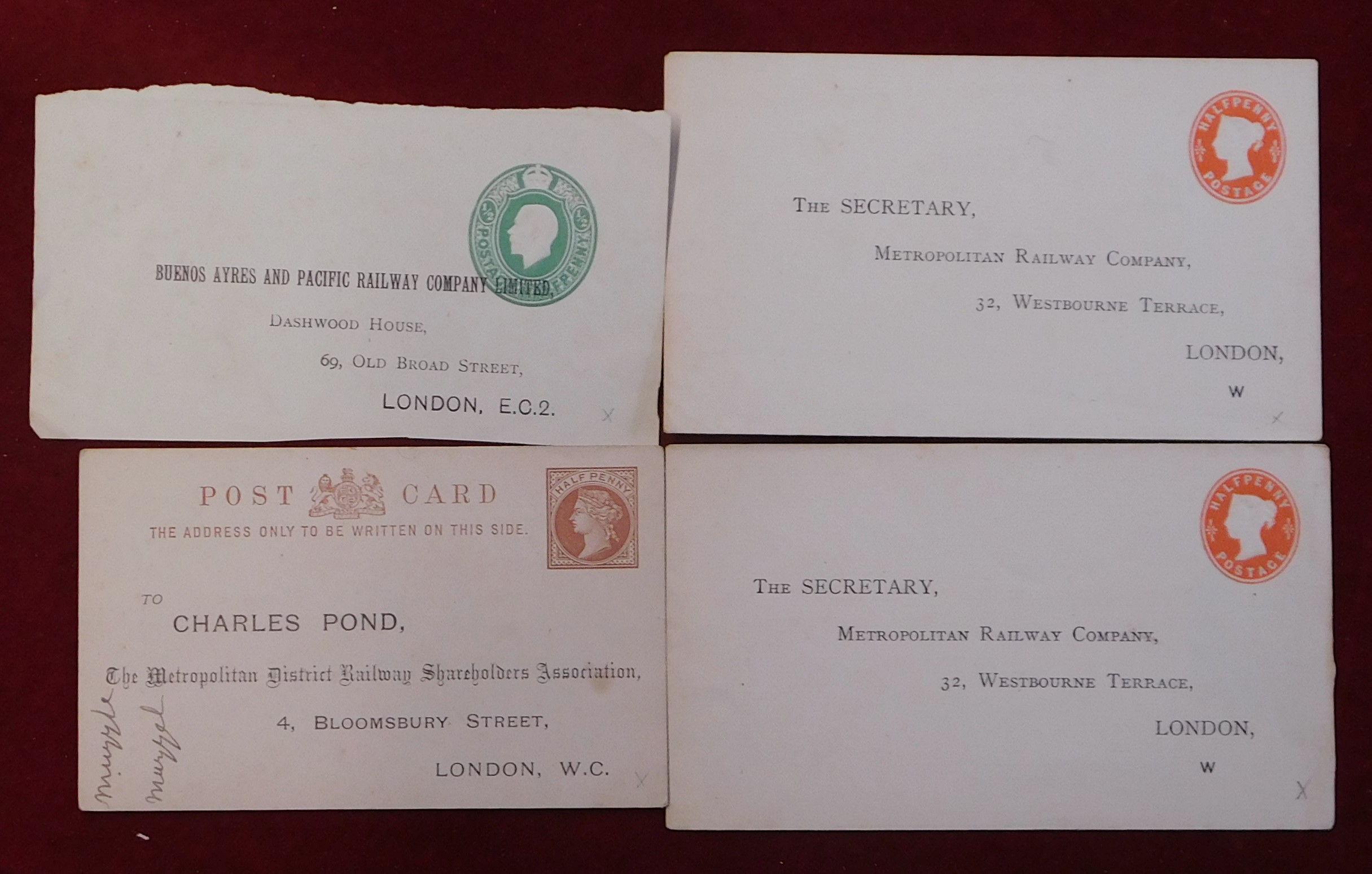
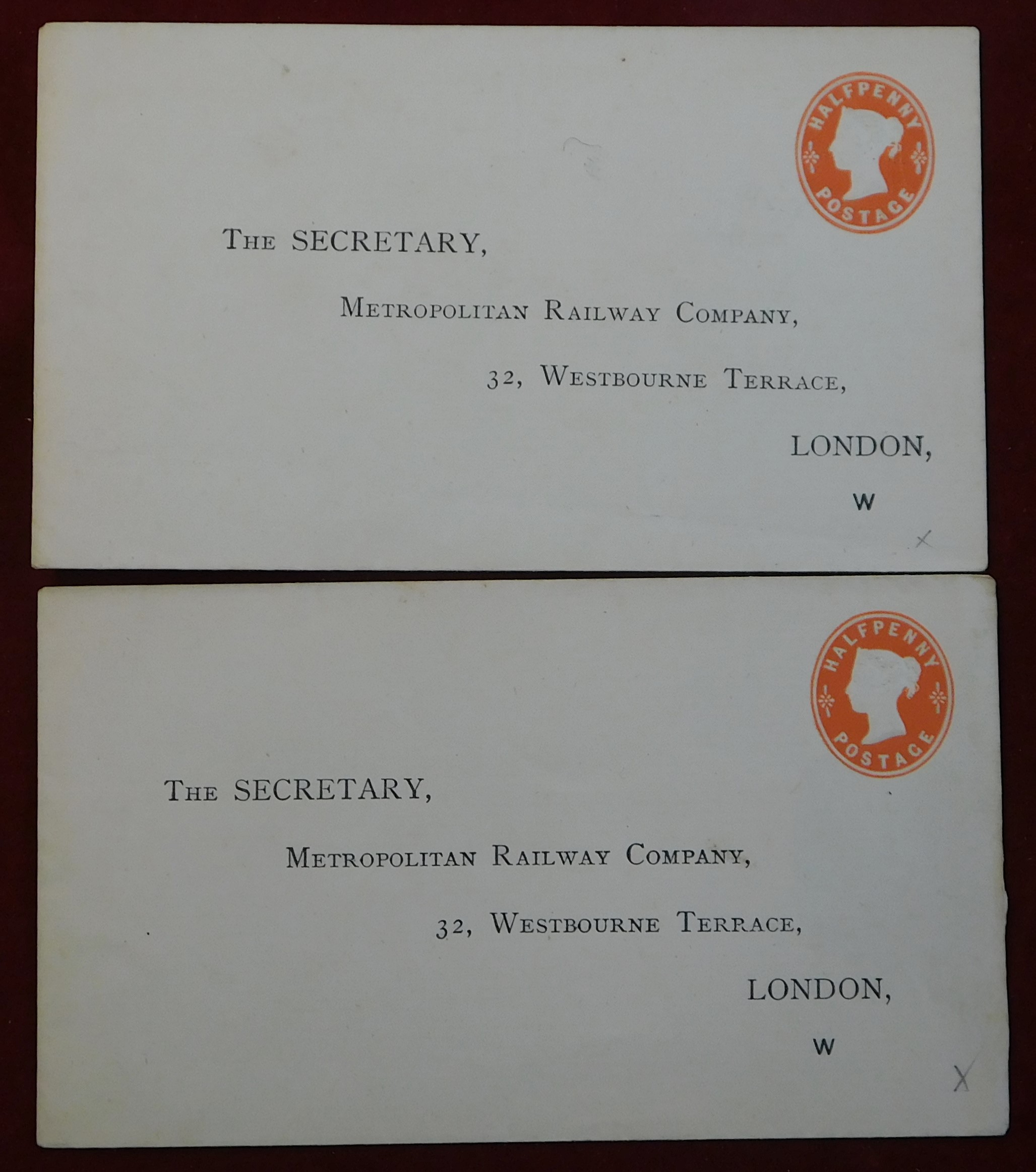
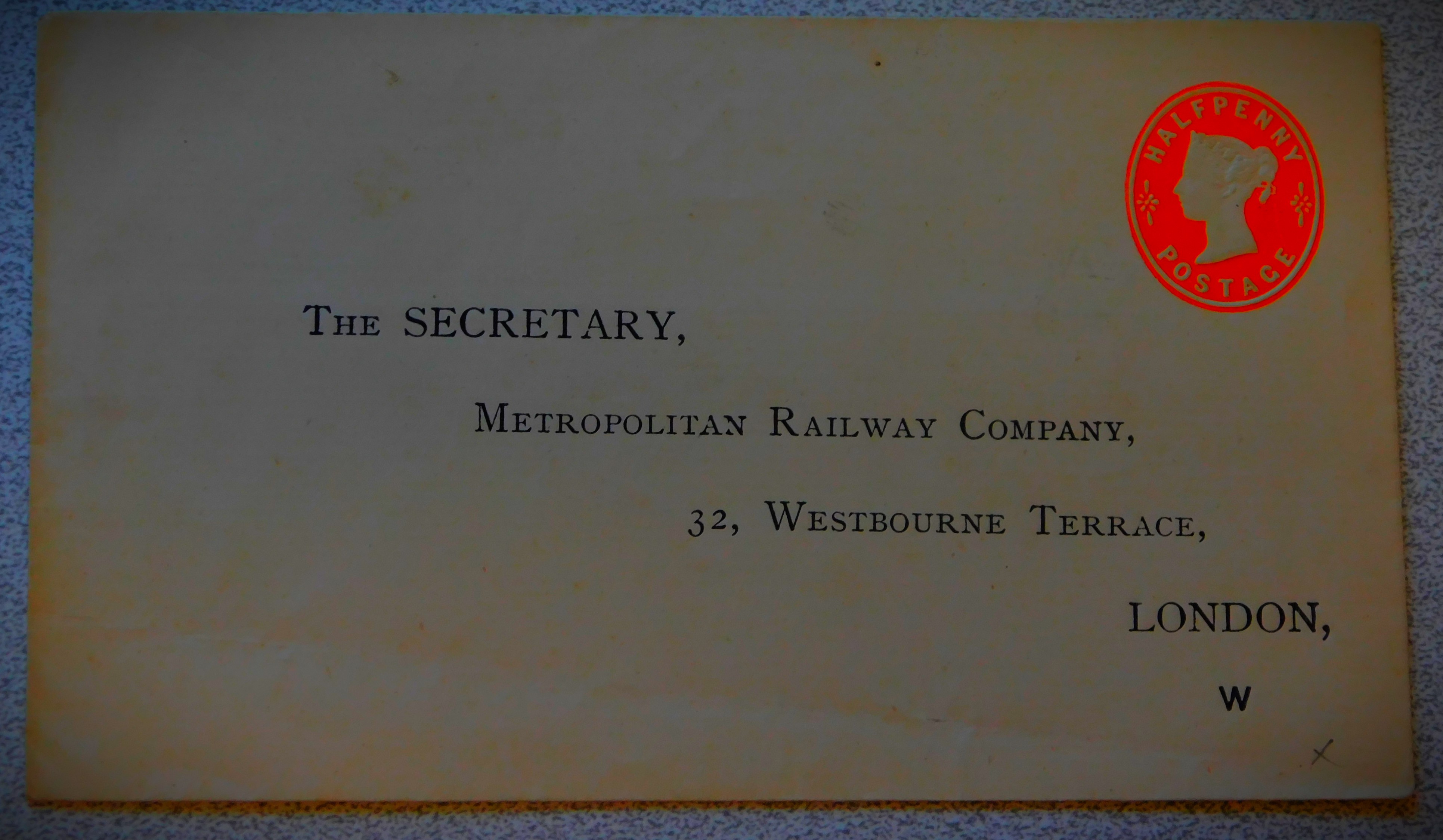
I had produced a very extensive image gallery for lot 400, made more so by fielding a query on that lot. However, in the end my opportunistic bid was the only one on the lot.

Lots 402 was also railway related but discipline had to prevail.

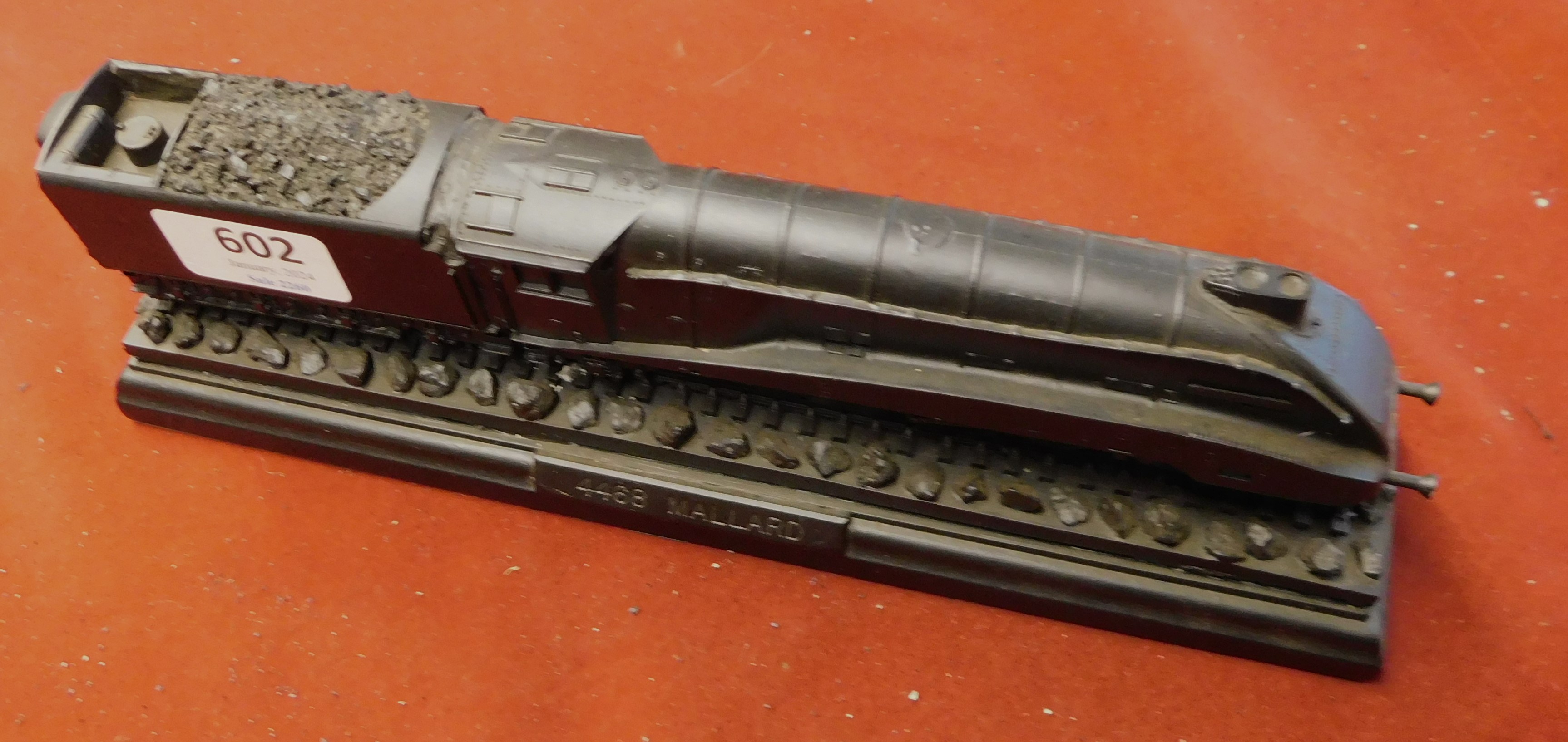
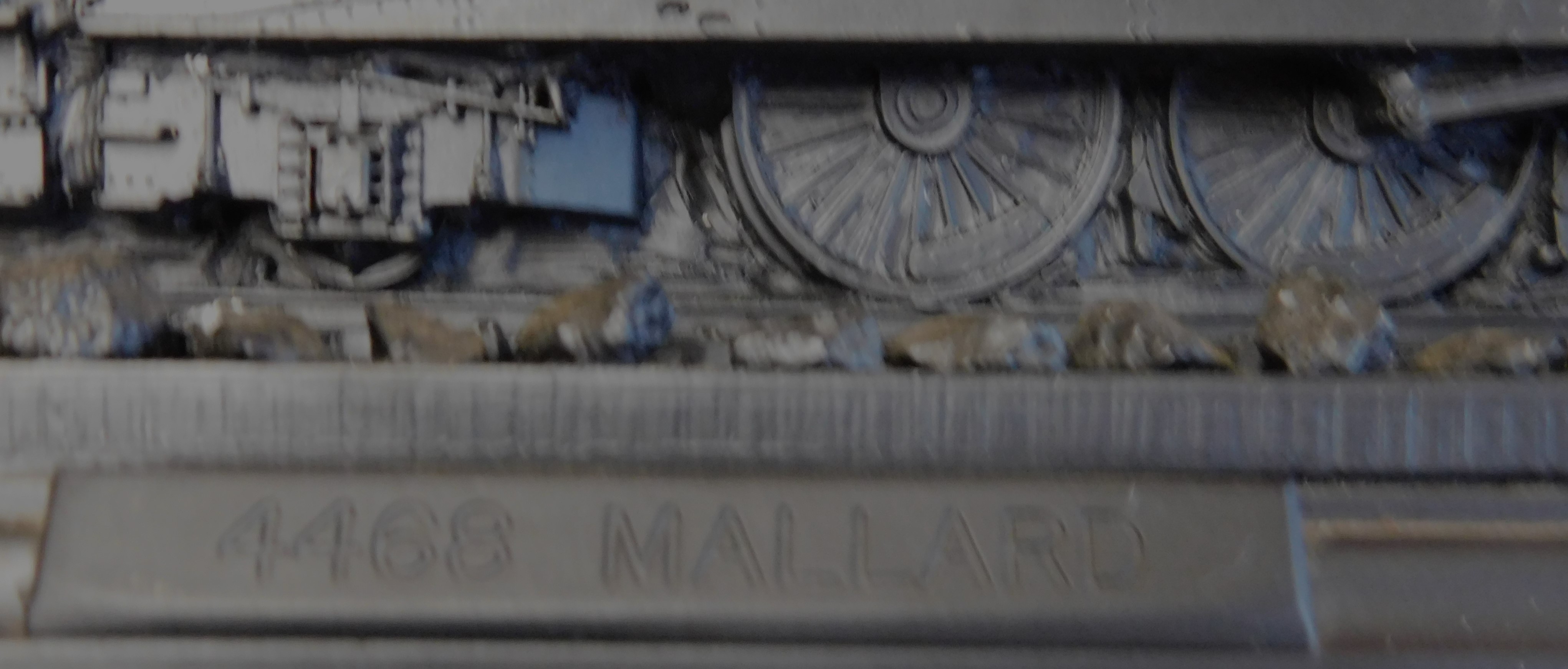
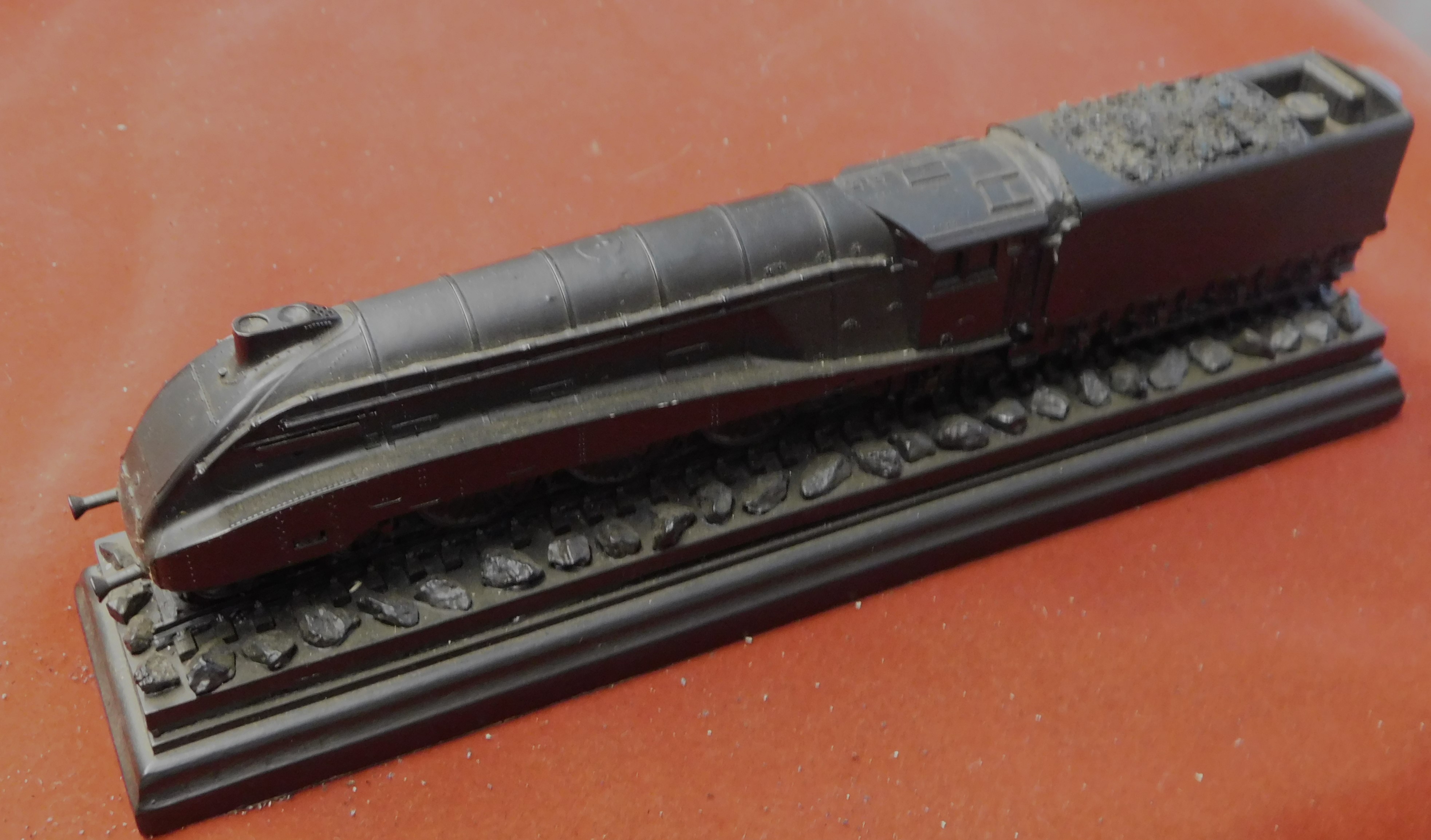
Lot 602, a model of a locomotive sculpted from coal proved, as I expected to be the case, to be beyond my price range.

I end this section with a lot that attracted a fierce bidding war (in which I had no part, other than creating the images that generated it), and ended up fetching £150, having been expected to do no more than 20-30, number 197.

My usual sign off…

95 Days To The Start of The County Championship

Noting that the county championship is only 95 days away, by featuring Tom Soar’s career best. Also the first photo gallery of the new year.

Welcome to a new year. I have decided to make the main body of my first post of 2024 fit with the start of a new county championship season being 95 days away. I then have a photo gallery to share – today has been largely bright and sunny and I have been out and about.

Tom Soar is not an illustrious name in the history of cricket, and fast bowling was his main occupation (323 FC wickets at 23.82 with a best of 8-38). His highest score with the bat was 95, and it came in a truly remarkable match.

Somerset had batted first and posted a total of 315, Ernie Robson top scoring with 74. Hampshire began poorly in reply and it would have been even worse for them had Somerset keeper Wickham pulled off a stumping chance against Major Robert Poore. Poore survived, which would have felt ominous to Somerset, given that at Portsmouth earlier that season he had already smashed them for two centuries in the match. Hampshire were 62-4 when Soar joined Poore. The pair put on 196 together before Soar was out for 95. Poore was now joined by another army officer, Captain Teddy Wynyard, and just over four hours this pair proceeded to hammer 411 runs, before Wynyard fell for 225. Poore was out a few balls, for precisely 300 runs more than he had scored at the time Wickham missed that stumping. Hampshire declared at 672-7, an advantage of 357. A dispirited Somerset could only manage 206 at the second time of asking and lost by an innings and 151 runs.

My usual sign off…

Pakistan in Trouble in Boxing Day Test Match

A look at the first two days play between Australia and Pakistan at the MCG and a splendid photo gallery.

The Boxing Day test match between Australia and Pakistan at Melbourne has now seen two days play, albeit one of them disrupted by the weather, and is beginning to take shape.

Pakistan won the toss and elected to put Australia in to bat. A truncated opening day ended with the hosts 187-3 after a “curate’s egg” bowling and fielding effort by Pakistan. At 226-4 Australia still looked very well placed, but then Pakistan fought their way back into things, and Australia eventually tallied a mere 318, respectable after being sent in but by no means formidable. Marnus Labuschagne with 63 had the only half century off the bat in the innings, but Pakistan may well come to regret the fact that they allowed Extras to tally a half century as well (52, including 15 wides). Debutant Aamer Jamal claimed three wickets, while Shaheen Shah Afridi, Mir Hamza and Hasan Ali each had two, and Agha Salman, brought on to bowl the last over before lunch on day one, was gifted the wicket of David Warner.

Pakistan began well, and at 124-1 it looked like things were going their way, but then came a passage of play that completely changed things. Pat Cummins removed Abdullah Shafique for 62, hanging on to a hard return chance. Then he widened the breach by bowling new batter Babar Azam for 1. Lyon got Shan Masood for 54, Hazlewood produced a beauty to get through the defences of Saud Shakeel for 9, and Pakistan were 151-5 and in a lot of trouble. Cummins claimed a third scalp of the innings when he got one to take the edge of Salman’s bat to make it 170-6. However Jamal defended stoutly, while wicketkeeper Mohammad Rizwan, who had performed better behind the stumps than 20 byes and 15 leg byes might suggest, batted well. When the cut off time arrived Pakistan were 194-6, with Rizwan 29*. Much rests on him on day three – it will largely by his further contribution or lack of it that decides whether Australia will have a really commanding lead or not. At the moment Australia are in the box seat, but many worse positions than the one Pakistan are currently in have seen sides emerge victorious.

Yesterday morning was bright and sunny, and I got out for a long walk while the weather was pleasant. I was well rewarded, including sightings of an egret and a couple of cormorants among other things…

Home Alone for Christmas

An account of how I made the best of being alone for Christmas and ,enjoyed my day. Lots of photographs.

My parents, sister and nephew are all off in far flung parts of the world, and my aunt is also away for Christmas. This meant that my own Christmas would be what I made of it . The rest of this post is my own account of yesterday.

I decided that I would spend the hours of daylight away from my computer, and that I would have my fancy Christmas Day meal (a home cooked variation on the steak & chips theme) in the evening. I selected some Christmas music to play through the day, and planned to do some walking during the daylight hours. My parents had arranged that I would have a package to open on the day.

I went out for my first walk just before 9AM, which took in both the ponds near where I live, the Kettlewell Lane tree/ river area, The Walks, the Peace Garden/ Greyfriars tower, the town centre, St Nicholas’ Chapel, Bawsey Drain and back along Columbia Way. I then played the first of my chosen Christmas Music CDs. When this CD finished I headed off for my second walk, which again included both ponds, but this time I took the footpath from the second pond that leads to Loke Road just before the junction with Gaywood Road, crossed Loke Road, headed onto Gaywood Road for a short stretch before crossing it and heading down Tennyson Avenue. Just before the railway crossing I took the footpath that heads towards Lynnsport and followed to the point at which it meets the Gaywood River path, which I walked along until I reached a path off it towards the Discovery Centre and thence back home.

I had lunch while a second CD played. When the second CD finished I went out for a third walk, taking in the first pond, a route through to the footpath alongside Bawsey Drain and followed that footpath until Columbia Way, at which point spots of rain warned me that I needed to take the direct route home, along Columbia Way, rather than extend the walk further as I had been considering. I then played the rest of the Christmas music I had picked out, returning to the computer briefly in the early evening. 

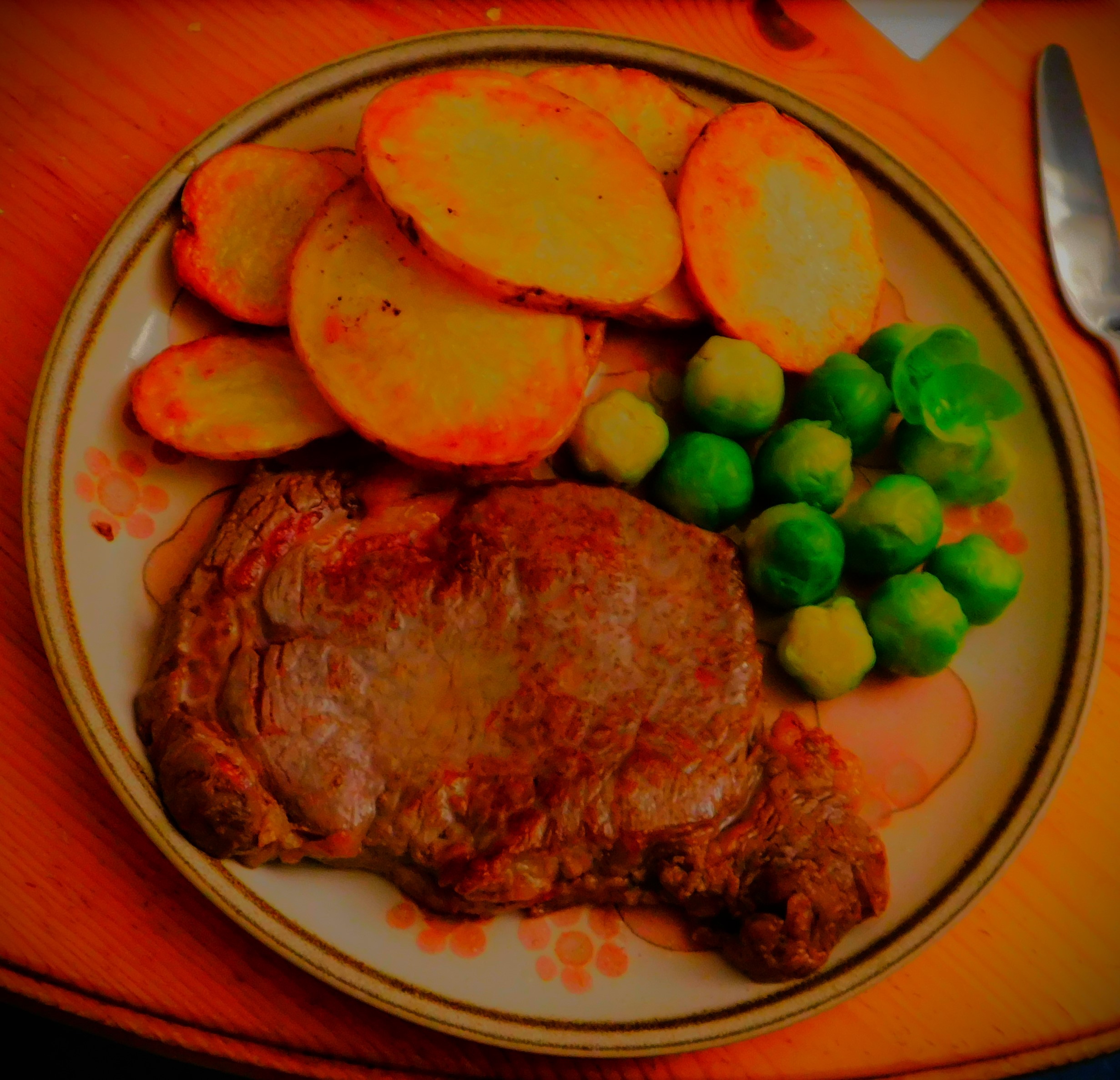
I put the oven on at about 7PM, set to approximately 175 Celsius, taking care to turn the extractor fan on and open a kitchen window. I oiled a baking tray next. Then I cut a large potato into slices of approximately equal thickness, thick enough that when cooked they would still obviously be potato and thin enough that they would have a bit of crunch. I placed this slices on the oiled baking tray, sprinkled some salt over them, and then added a little more oil. I put them into the oven to cook. Then I got to work on the brussels sprouts, preparing a dozen for cooking, placing them in a saucepan and boiling a kettle full of water to cook them in. Once they were on and cooking I turned the potato slices over. I tenderised the steak, got some oil in small frying pan heating up (to colour on the outside while still being red in the middle the steak has to go in to oil that is already hot), and at the appropriate moment I put the steak into cook, flash-frying it for a minute on each side at high heat. I then plated it up, before draining the sprouts, pouring a drink and then getting the potatoes out. This is what my variation on a steak & chips theme looked like on the plate:

For the record it tasted splendid.

For afters I had a small jar of Kalamata olives.

I was mindful of the fact that the Boxing Day test match at Melbourne between Australia and Pakistan, which Test Match Special were covering, got underway at 11:30PM UK time (Melbourne is 11 hours ahead of us). I thus timed my heading to bed so that I could have that commentary playing while I was in bed. I enjoyed the day, and my Christmas meal worked well.

I have plenty of photographs to share…

The BBL So Far

A look at how the Big Bash League is panning out and a photo gallery.

The Big Bash League is well underway. This edition of the tournament features only 10 group matches per side rather than 14 and also sensibly only allows the top four sides to qualify for the knockout stages as opposed to the ludicrously overgenerous situation previously whereby fifth was good enough.

There was radio commentary on this match today for UK listeners. Renegades batted first and helped by a rare example of a reasonably well timed Power Surge (overs 16 and 17, making it a kick starter into the death overs rather than actually being part of the death overs, still an over or so later than I would like but the best timed one in any of the radio commentaries I have listened to so far) which they capitalized on, taking the two overs for a total of 34 runs, tallied an eminently respectable looking 185-5 from their 20 overs.

Unfortunately for them they bowled like drains, which in combination with some excellent Hurricanes batting, especially from Matthew Wade and Macallister Wright, saw the hosts home by six wickets with an over to spare.

Three sides, Brisbane Heat, Sydney Sixers and Perth Scorchers, are looking very likely to progress. Another three, Adelaide Strikers, Sydney Thunder and Hobart Hurricanes would appear to be fighting for the fourth qualification slot, while the two Melbourne sides, as happened in the women’s version of this tournament, look like propping up the table.

In the BBL the initial Power Play lasts for four overs rather than the usual six and the batting side then has a two over Power Surge which they have to take in the second half of their innings (this is to stop sides lazily using it for overs 5 and 6 and thereby having a standard Power Play). My feeling based on the games I have listened to so far this season is that most sides are very overcautious about taking the Power Surge which means it often happens later than it should. Personally the latest I would countenance those overs being taken is for overs 16 and 17 as happened today, but I would want to go earlier if possible. In one of the other games I listened to the side batting first had two well set batters together at the end of 12th over and still together at the end of the 13th, but they refused to take these golden opportunities to use the Power Surge, and lost a wicket in the 14th. They ended up using the Power Surge in the 18th and 19th overs of their innings, which I regard as plumb crazy. It depends on exact situations but I would always want to go fairly early. If the openers happened still to be together at the end of the 10th over I would seriously consider taking the Power Surge for overs 11 and 12 as a launch pad for the second half of the innings. The other time I might go that early as if a number of wickets have fallen and I want to use the surge while I still have two front line batters to capitalize on it. I would say that in intermediate situations between the two I have outlined above I would look at overs 13-14, overs 14-15, overs 15-16 and at the very outside overs 16-17 and would never allow the surge to unused going into the death overs.

My usual sign off…

All Time XIs – G for Glory

An all time XI of players whose given names begin with G, a massive honourable mentions section which includes mention of today’s WBBL Challenger match, and a photo gallery.

Today I choose an all time XI of players whose given names begin with Gs. This letter poses particular challenges which I will explain in the course of the post, and there are a vast number of honourable mentions.

  1. *Graeme Smith (South Africa, left handed opening batter, captain). A superb playing record and an outstanding captain.
  2. Gordon Greenidge (West Indies, right handed opening batter). One half of the West Indies greatest ever opening pair. His highlights include twin tons on the most difficult surface of the 1976 series, two contrasting double centuries against England in 1984, one a brutal match winning knock at Lord’s after England had the temerity to declare their second innings closed on the final morning (and some reckoned they should have done so earlier), and the other a ten hour marathon innings which put his side fully in control of the match at Old Trafford.
  3. George Headley (West Indies, right handed batter). Nicknamed ‘Atlas’ because he seemed to carry his side on his shoulders, he is among the select few to have played over 20 test matches and have an average of above 60 – 60.83.
  4. Graeme Pollock (South Africa, left handed batter). Another member of the select club referred to above. In what proved to be South Africa’s last series before isolation he set an individual scoring record for that country with 274 against Australia. That score has been beaten by four players since South Africa’s readmission – Daryll Cullinan, Gary Kirsten, Graeme Smith and Hashim Amla.
  5. Greg Chappell (Australia, right handed batter, occasional medium pacer, occasional leg spinner). A superb batter, one of the safest slip fielders the game ever saw and a part time bowler of two types.
  6. Garry Sobers (West Indies, left handed batter, left arm bowler of every type known to cricket). The most complete player the game has ever seen, and therefore, as always when he is eligible for selection, the first name on the team sheet for this XI.
  7. Gilbert Jessop (England, right handed batter, right arm fast bowler). The ultimate X-factor player, with an approach to batting ideally suited to someone coming at number seven in a strong side.
  8. +George Duckworth (England, wicket keeper, right handed batter). A great wicket keeper, and in a side with the batting guns possessed by this one I am not worried about his limited skill in the latter department.
  9. George Lohmann (England, right arm medium fast bowler, right handed batter). Of bowlers to have taken at least 100 wickets he has the best average by some way, a barely believable 10.75, and also the best strike rate – a wicket every five and a half overs on average.
  10. George Dennett (Gloucestershire, left arm orthodox spinner, left handed batter). Never capped for England, but 2,151 FC scalps at 19.82 a piece. England were exceptionally well served by left arm spinners in his playing days – Rhodes, Blythe, the all round skills of Frank Woolley and Roy Kilner etc.
  11. Glenn McGrath (Australia, right arm fast bowler, right handed batter). We have our ‘enforcer’, one of the greatest of all time.

This side has a stellar top six, including the most complete player the game has ever known, the ultimate in x-factor players at number seven, a great keeper and three great specialist bowlers. The bowling does not have quite the dazzling array of options possessed by some of my sides, but I do not think that McGrath, Lohmann, Dennett, Jessop and Sobers would be likely to find capturing 20 opposition wickets beyond them on any surface.

This will require a systematic approach, so I shall work my way down the order…

Glenn Turner, the only New Zealander ever to score 100 first class hundreds is the biggest miss here, but Gautam Gambhir of India would also have his advocates, Gary Kirsten of South Africa deserves a mention (and can have the head coach job that England infamously refused to give him allegedly because his power point presentation wasn’t good enough) and George Gunn, who played for England many years ago, and absolutely did things his way also deserves a name check.

These guys missed out because of the stellar cast available to fill these slots. Geoff Howarth of New Zealand, Gundappa Viswanath of India and Gilbert Parkhouse of England would all have merited serious consideration for a letter less well stocked with world beating batters, but none can get in here.

The presence of five of the greatest ever specialist batters and Sobers limited the scope for the inclusion of all rounders. Luminaries such as George Giffen (Australia, right handed batter, off spinner), George Hirst (England, right handed batter, left arm fast medium) and two leg spinning all rounders, Greville Stevens (England) and Garnet Lee (Nottinghamshire, Derbyshire) all missed out. Had I been picking with limited overs in mind Glenn Maxwell of Australia would have been one of the first names on the team sheet, but I preferred Jessop at seven, and the only one of the top six who I could even have contemplated not picking was Greg Chappell. George Pope of Derbyshire and England was a good enough all rounder to merit a mention as well. George Ulyett, who played for England in their very early days and had an HS of 149 and a BB of 7-36 was also unlucky.

Godfrey Evans was the nearest challenger to Duckworth, wkith Graham Manou, a fine keeper who was scurvily treated by the Aussie selectors of his day and Gil Langley of Australia also in the mix.

George Simpson-Hayward, the last underarm bowler to make a serious impression at test level (over 20 wickets in his only test series, against South Africa in South Africa) was close to dislodging Dennett. George Macaulay of Yorkshire and England never managed much at test level.

It is in this category that we meet the greatest number of top cricketers to miss out for this letter. Garth Le Roux, the giant South African quick of the 1970s and 80s never got to play test cricket, otherwise he might well have had a slot. Graham McKenzie, the best Aussie pacer between the retirement of Davidson and the rise of Lillee was also close. George John was rated by CLR James as the finest of the early West Indian fast bowlers, but he was finished before they started playing test cricket. Gideon Elliott who had a very brief but freakishly successful fast bowling career in the late 1850s and early 1860s (48 wickets at less than 5 a piece, including innings figures of 9-2) deserves a mention. George “Tear ’em” Tarrant was a hugely successful fast bowler in the era immediately before the rise of WG Grace, but the way the good Doctor quelled those who before he came along had intimidated by dint of sheer pace on often treacherous pitches explains why I overlooked him. Had I not had Sobers to perform the role, two candidates for the role of left arm pacer would have been Gary Gilmour (Australia) and a gamble on George Garton, yet to establish himself as an England player. George Freeman, whose 288 FC scalps came at less than 10 a piece was another in the mix. George Geary might have had the slot I gave to Lohmann, but my feeling is that the difference between their test records is too great to be put down solely to the flat pitches on which Geary had to operate at that level. Glenn Chapple of Lancashire is a what might have been – injuries prevented him from gaining international recognition, and as fine a player as he was in domestic cricket I cannot justify dropping either Lohmann or the other Glenn to make way for him.

I was not able to include a female in this XI, but the Challenger in the Women’s BBL took place today, and Grace Harris with a superb innings, Georgia Redmayne with a great display of wicket keeping, and Georgia Voll with a stellar bowling performance all had big days out in a superb win for Brisbane Heat over Perth Scorchers, while Georgia Adams, a spin bowling all rounder, is also making a name for herself. Of the players I have named the most likely to earn a place in this squad in years to come is Redmayne, who if she continues to keep the way she did today could challenge Duckworth.

I have doubtless missed some of the riches available for this XI, though I do remind people wishing to comment that I have declared a policy of not selecting anyone who made rebel tours of Apartheid South Africa. Please feel free to make suggestions, so long as you examine the effect they would have on the balance of the side. With five batters and a batting all rounder having ironclad cases for inclusion fitting in enough bowling is a challenge for this letter.

My usual sign off…

All Time XIs – Given Names Beginning With E

An all time XI of cricketers whose given names begin with the letter E and a large photo gallery.

Today I pick an all time XI of players whose given names begin with the letter E. A couple of selections may well raise eyebrows but I reckon all are well justified. There will be an honourable mentions section.

  1. Eric Rowan (South Africa, right handed opening batter). At a time when South Africa weren’t the strongest he managed to record a test average of 43.66. His highest score was 236, which at the time was the highest individual score for South Africa, beaten by Graeme Pollock in the last series of South Africa’s first incarnation as a test nation. There was a famous occasion when notified while a match was in progress that he had been dropped for the next one he proceeded to show the selectors what they were missing by scoring a match saving 156* in the final innings, batting right through the final day.
  2. EM Grace (England, right handed opening batter, lob bowler). He was the first member of his family to be an acknowledged cricket marvel (his eldest brother Henry first developed the family’s ruling passion, and his love for the game led to their father and an uncle, Alfred Pocock, coaching the whole family). His bowling achieved some great successes as well – on one occasion he accounted for the famously hard to shift Harry ‘Not at Dorking’ Jupp with a steepling lob that landed exactly on top of the stumps, dislodging a bail.
  3. Everton Weekes (West Indies, right handed batter). One of the greatest batters ever to play the game.
  4. Eddie Paynter (England, left handed batter). The highest career average of any left hander to have played 20 or more tests, 59.23. That included double centuries against both Australia and South Africa. His most famous innings was an 83 in stifling heat at Brisbane, when he was suffering severe tonsilitis and rose from his hospital bed in England’s hour of need, which helped England secure the victory that confirmed them as winners of the 1932-3 Ashes.
  5. Elias ‘Patsy’ Hendren (England, right handed batter). Only Hobbs scored more than his 170 first class hundreds, and only Hobbs and Woolley exceeded his 57,610 first class runs. One record which remains his is most FC centuries at a single ground, 74 of his having come at Lord’s.
  6. *Eddie Barlow (South Africa, right handed batter, right arm medium pace bowler, captain). He averaged 45 with the bat at test level, and while his bowling was not much used at that level his FC bowling figures stack up well. He was an inspiring captain, in the 1970s he invigorated a Derbyshire side who had grown used to propping up the championship table and led them to some very respectable finishes.
  7. +Eleanor Threlkeld (England, wicket keeper, right handed batter). One of the best contemporary wicket keepers, and a fine batter as well, as evidenced by the match winning hundred she scored for Thunder against Storm in the Rachael Heyhoe-Flint Trophy (50 overs per side, the longest non-test match format played by women) on September 16 this year.
  8. Ernie Robson (Somerset, right arm medium fast bowler, right handed batter). An excellent bowling all rounder. His outswing was rated by Jack Hobbs, aka The Master, as the most difficult bowling he ever faced.
  9. Ernest Jones (Australia, right arm fast bowler, right handed batter). One of the fastest bowlers of the 1890s, he once famously sent a ball through WG’s beard.
  10. Erapalli Prasanna (India, off spinner, right handed batter). One of four spinners to regularly play for India in the 1970s (he, Bedi and Chandrasekhar were indisputably world class practitioners, the fourth member of the quartet, Srinisvaraghavan Venkataraghavan was a cut below the rest).
  11. Eric Hollies (England, leg spinner, right handed batter). Possessor of the all time worst wrong way round disparity between runs scored and wickets taken in FC cricket (1,673 FC runs at 5.00, boosted by 282 not outs in 616 innings, and 2,323 Fc wickets taken at 20.94 each). Also the man who stopped Bradman from recording a final test average in three figures, bowling him for a duck in his last test innings, which turned 6,996 runs at 101.39 into 6,996 at 99.94.

This side has a powerful top five, a quality all rounder, a quality keeper who can bat, a fine bowling all rounder and three splendid and contrasting specialist bowlers. A bowling attack that has Jones, Robson and Barlow to bowl pace/ seam, Hollies and Prasanna to bowl spin, and EM Grace as a wildcard has both depth and variety.

The opening batters had few challengers – Eve Jones’ left handedness bringing her into the picture, but not being sufficient to dislodge either of my choices. On a spinning pitch Eddie Barlow would give way to Enid Bakewell, an all rounder whose bowling stock in trade was left arm orthodox spin, with EM Grace taking the captaincy. Ernest Tyldesley was the best batter to miss out, a member of the 100 FC hundreds club and possessor of a very respectable test record. Two Eds, Joyce (Ireland/ England/ Ireland) and Smith (England) were respectable rather than outstanding. The main keeping rivals to Threlkeld were EFS Tylecote who as a schoolboy in 1868 took advantage of the batting friendly conditions of Clifton College to score the first recorded quadruple century in any form of cricket, 404* in a house match (31 years later another schoolboy, AEJ Collins, scored 628* in a house match at the same ground), and going on to keep wicket for England, Edward Pooley who should have been England’s first ever keeper but was cooling his heels in a New Zealand prison when the appointed time arrived and EJ ‘Tiger’ Smith of Warwickshire and England. Ernie McCormick was fast but erratic, and his 1938 tour of England was ruined by no-ball problems. Ernest Toshack had his moments as a left arm medium pacer, including taking 5-2 in an innings against England but did not have a weighty enough record to garner more than an honourable mention. Eiulf Peter ‘Buster’ Nupen, the only test cricketer to date to have been born in Norway, would be in the mix if the match was to be played on a matting wicket, but not otherwise. Edwin Tyler, a left arm orthodox spinner, once took an all-ten for Somerset, but falls short overall. Edward Wainwright of Yotrkshire and England had a good record as an off spinning all rounder in FC cricket, but failed to take a wicket in any of his five test appearances, finding the Australian pitches of 1897-8 unresponsive to his type of bowling, setting a trend that has continued to the present day when it comes to English off spinners in Australia. Ellyse Perry is a magnificent cricketer, but for this exercise she could only be picked if her batting was good enough on its own, and given the strength of the upper and middle order of this side I do not think it is. I end with a ‘what might have been’ – Edwin Boaler Alletson (Nottinghamshire). At Hove in 1911 he reached lunch on the final day on 47* from 50 minutes, which appeared to be merely delaying the inevitable. 40 minutes after the resumption he holed out in the deep – for 189! Those last 142 came out of a last wicket stand of 152 with Bill Riley, which left Sussex grateful to emerge with a draw after they lost a few early wickets in their second innings. This was Alletson’s maiden ton, and it ended up being a first and only for him. Had that innings given his career the boost it should he might well have had the slot I gave to Ernie Robson, but it proved a flash in the pan, and nor was his bowling that impressive overall.

My usual sign off…

All Time XIs – Given Name Begins With B

An all time XI of players whose given names begin with B with a lot of honourable mentions, a look at plans for the creation of a new library/ community hub in King’s Lynn and a large photo gallery.

Today I look at cricketers whose given names begin with B. My XI is I believe a very good one and quite a few fine players had to miss out.

  1. Bert Sutcliffe (New Zealand, left handed opening batter, occasional off spinner). The Kiwi left hander, scorer of the two highest first class innings ever played by anyone from that country (385 and 355) and successful at test level as well deserves his place here.
  2. Barry Richards (South Africa, right handed opening batter, occasional off spinner). He played in what turned out to be the last series of South Africa’s first incarnation as a test nation, and in four matches scored 508 runs at 72.57 with two centuries. Normally I would not read much into such a small sample size, but pretty much everyone who saw him bat and has expressed an opinion on the matter reckons that he was good enough to have maintained that average over a long test career had he been given the chance (among them Don Bradman, who officially consigned South Africa to exile from the international arena) and that domestic cricket was just too easy for him to keep him properly motivated.
  3. Brian Lara (West Indies, left handed batter). The holder of the world first class and test record individual innings (501* and 400*), also scorer of 688 runs in a series in which he, a left hander, had to contend with Muralidaran on pitches made to measure for the off spinner.
  4. Babar Azam (Pakistan, right handed batter). One of the finest of contemporary batters.
  5. Basil D’Oliveira (England, right handed batter, right arm medium pacer). In spite of the fact that due to the circumstances of his birth (born in South Africa and possessed of dark skin) the opportunity to play international cricket arrived far later than it should have done, and at an age when many are thinking about the impending end of their careers he established a fine test record.
  6. +Ben Foakes (England, wicket keeper, right handed batter). This slot was one of the first to be filled in this XI.
  7. *Ben Stokes (England, left handed batter, right arm fast medium bowler, captain). I have named him as captain of this XI due to his success with the England test team, and placed him at number seven because I think he is well suited to batting in that position in a strong line up, which this is.
  8. Bart King (Philadelphians, right arm fast bowler, right handed batter). over 400 wickets in 65 first class appearances at just 15 runs a piece, and a batting average of 20 as well. In the last of his four visits to England with Philadelphian touring sides he topped the first class bowling averages for the season, claiming 87 wickets at 11 each.
  9. Brian Statham (England, right arm fast bowler, right handed batter). For England, where he was generally number two bowler to either Tyson or Trueman, and had to take the end they did not want he took 252 wickets at 24 a piece. For Lancashire, when he had the choice of ends, he claimed wickets at just 18 a piece.
  10. Bishan Singh Bedi (India, left arm orthodox spinner, right handed batter, vice captain). I don’t always name a vice-captain in these XIs, but although there are several other former skippers in this XI I feel that while Stokes has to be skipper, Bedi stands far enough clear of the rest to warrant being named vice-captain. 266 test wickets at 28.71 each earn him his place in this XI.
  11. Bhagwath Chandrasekhar (India, leg spinner, right handed batter). Whereas Bedi was a classic left arm orthodox spinner and was simply better at doing what such bowlers do than most other such this guy was an absolute one of a kind bowler. The pair were regular team mates through their careers, and I reckon they would do even better in this side than they did in actual life.

This side has a powerful batting line up – a very strong top four, and arguably four all rounders, with King’s batting and bowling averages being the right way round. The bowling, with Statham and King opening the attack, Stokes and D’Oliveira available as back up seam options, two superb specialist spinners, and the opening batters able to bowl fill-in off spin if needed is both strong and superbly varied. This side will take a lot of beating.

Before I get into the actual honourable mentions there are two things to be cleared up to set the scene.

Bill and Billy are nearly always diminutive forms of William, and would therefore belong under the letter W in my classification. The two main exceptions I can think of are Billy Stanlake and Billy Taylor, both of whom were actually given the name Billy. Neither have records that would enable them to dislodge any of my choices, though Stanlake would enter the reckoning were I thinking in limited overs terms. Similarly, Bob and Bobby are generally diminutives of Robert and would be filed under R. NB while it is a diminutive Ben escapes this because it is short for either Benjamin or Benedict, which begin with the same letter.

I will go through the actual honourable mentions in batting order. Belinda Clark of Australia was closest to dislodging either of my chosen openers, though not massively close. Brendon Kuruppu, scorer of Sri Lanka’s first ever test double century did little outside of that one huge innings, while two Bens, Compton and Charlesworth, have yet to be given the opportunity to show their mettle at the highest level. Barry Wood would have merited serious consideration for a limited overs XI – his list A record was outstanding, and in that format his medium pace was often very valuable as well. Brad Hodge like so many of his generation missed out on international recognition due to the sheer strength of Australian sides in that era. Basil Fitzherbert Butcher had a fine test record, but not good enough to dislodge any of my chosen batters. There have been many quality keepers whose given names begin with B: Ben Barnett, Brian Taber, Brad Haddin, Budhi Kunderan and Brendon McCullum being five who deserve a mention, with the last named obviously getting a coaching gig. Brian Close had a fine record for Yorkshire and later for Somerset, where he taught a county unused to winning how to do so, but his England record does not stack up. Another Yorkshire Brian, Sellers, could only have been considered had I been struggling for a skipper, and I wasn’t. Brian McMillan had a fine record for South Africa, but not good enough IMO to dislodge D’Oliveira. Bruce Taylor of New Zealand was a decent all rounder, but not good enough to dislodge Stokes or King. Ben Hollioake’s untimely death in a car accident prevented him from qualifying. Brett Lee had a respectable record as a fast bowler, but he was somewhat expensive. Bruce Reid might well have had a place had he been able to keep himself in one piece for any length of time, but his actual record does not qualify him for selection. Ben Hilfenhaus was a useful fast-medium bowler, but in the 2010-11 Ashes when confronted with a strong batting line up he looked decidedly unthreatening. Brydon Carse is genuinely quick, but is also very erratic and hence always likely to be expensive. The almost anagrammatical Brian Brain fell too far short of the necessary class for me to accommodate him. Brian Langford and Bruce Yardley were fine off spinners, but with Bert Sutcliffe and Barry Richards both part time offies I preferred the Indian duo of Bedi and Chandrasekhar as my specialist spinners.

King’s Lynn Library will be moving from its current premises to the site of what used to be the King’s Lynn branch of Argos. The current premises are a listed building and therefore have to be preserved, and it is an essential part of the plan that whatever the current premises become it will be something that is fully accessible to the public (so no flats, no private business premises etc.). The new building will be constructed using environmentally friendly materials, with the ground floor featuring stone, and the upper floors and the roof featuring bricks and tiles, the latter made from recycled materials (I have seen samples of such materials at the library, and was favourably impressed). There is an initial consultation taking place which has two days to run (click here). If this scheme is carried out properly the new library/ community hub could become a modern landmark fully in keeping with Lynn’s history as a medieval town, as well as serving its purpose as library and community hub. Also a vibrant new establishment in place of the shell of the old Argos cannot fail to be an improvement.

Time for my usual sign off…

All Time XIs: ODI From Before the ODI Era

The Men’s ODI World Cup is now underway (I did not get to catch any of the opener between England and New Zealand yesterday – between 9:30AM when I set out on an extended walk to the bus stop to get the bus to Fakenham before work and 8:25PM when I got home from an evening talk at The Globe Hotel in central King’s Lynn I was at home for less than 20 minutes, in between the two events, though the evidence is pretty conclusive that England either batted badly, bowled badly, or weren’t good enough in either department), with The Netherlands giving a decent account of themselves against Pakistan today. I am marking the start of the tournament with an ODI XI made up exclusively of players who played before ODIs were a thing (I have slightly cheated with one player, who made a duck in his only ODI appearance).

ODIs are different from T20Is and other very short form games. While the emphasis is still on fast scoring it is also necessary to be able score genuinely big runs to do well in ODIs, whereas a collection of lightning fast 20s, 30s and 40s will do very nicely in T20. Thus, at least at the top of the order one cannot simply select super fast scorers with no regard for the size of their scores.

  1. Bert Sutcliffe (New Zealand, left handed opening batter). The possessor of the two highest FC innings ever played in New Zealand (385 and 355), and noted for the speed of his scoring – that 385 came in a total of 500 all out, and the opponents, Canterbury, managed only 382 off the bat in their two innings combined. One account I have read of that innings said that he “dominated the Canterbury bowlers and dominated his partners”.
  2. Victor Trumper (Australia, right handed opening batter). At Old Trafford in 1902, knowing that Bill Lockwood would be dangerous once the pitch and the run up area had dried sufficiently for him to be risked, Trumper scored a hundred before lunch on the opening day, by which time Australia were 173-1. Lockwood was indeed difficult after lunch, and even with Joe Darling smashing a rapid half century by way of a counter Australia only managed 299. They won the match by three runs, after England had reached 92-3 in pursuit of 124 in the final innings and then collapsed, and with that victory secured retention of The Ashes.
  3. Charles Macartney (Australia, right handed batter, left arm orthodox spinner). Against Nottinghamshire in 1921 he scored 345 in less than four hours at the crease, still the highest score by a member of an Australian touring party in England. Five years later at Headingley, after Warren Bardsley fell to the first ball of the match, he emulated Trumper’s 1902 feat of having a century on the board by lunch on the first day of a test match. His bowling feats included a ten-wicket match haul in a test match.
  4. Graeme Pollock (South Africa, left handed batter). One of the greatest batters ever to play the game, and known for seriously rapid scoring.
  5. Garry Sobers (Nottinghamshire, West Indies, left handed batter, left arm bowler of every type known to cricket). The most complete player ever to player to play the game.
  6. +Les Ames (Kent, England, right handed batter, wicket keeper). Over 1,100 FC dismissals, including an all time record 418 stumpings, and over 100 FC hundreds, 75 of which were scored while in possession of the gauntlets (at the start of his career he had to wait for John Hubble to retire before getting the keeping gig, and lumbago in the later stages of his career meant that he had to yield the gloves to a young Godfrey Evans. He twice won the Lawrence trophy for the fastest FC century and once when Kent were set 219 to win in 90 minutes Frank Woolley was asked if they could do it and replied “yes, if Les fires”. Les did fire on that occasion, and with Woolley himself also contributing handsomely Kent achieved their outlandish chase.
  7. *Gilbert Jessop (Gloucestershire, England, right handed batter, right arm fast bowler, captain). The holder of the record for the fastest test century ever scored for England, a record he has held since 1902 (it has been challenged a couple of times recently, but stands for the moment). In FC cricket he scored the second and third fastest hundreds ever made against serious bowling (i.e not bowlers who were giving runs away in an effort to induce a declaration), in 40 and 42 minutes respectively. The latter became the fastest ever FC 150 (63 minutes) as well, and ended in a score of 191 in 90 minutes. He was also a useful fast bowler, habitually taking the new ball for his county, and a gun fielder.
  8. Alan Davidson (Australia, left arm fast bowler, occasional left arm orthodox spin bowler, left handed batter). 186 test wickets at 20.53, a test match HS of 80 (in test cricket’s first ever tie – his four contributions being 5-135, 44, 6-87, 80). He was also a brilliant fielder, nicknamed ‘the claw’ on account of his ability to hold barely believable catches.
  9. Billy Bates (Yorkshire, England, off spinner, right handed batter). A superb all rounder, the first ever to score a 50 and take a 10 wicket haul in the same test match. He was also extremely economical as a bowler, on one occasion bowling a spell of 17 (four ball) overs from which just eight runs accrued.
  10. Alfred Shaw (Nottinghamshire, Sussex, England, right arm medium, right arm slow bowler, right handed batter). Possibly the most economical bowler ever to play the game – he bowled more FC overs than he conceded runs. He took just over 2,000 FC wickets at 12 a piece, including 186 at 8.54 in his best season.
  11. Sydney Barnes (Warwickshire, Lancashire, England, right arm fast medoiujm bowler, right handed batter). 189 wickets in just 27 test matches at 16.43. Although he fared a lot better against South Africa, who were often fairly hapless with the bat than he did against Australia, his record against the latter was still mighty fine – 106 wickets in 20 appearances, 77 of those wickets in 13 matches down under. Although his position at number 11 is justified he did once produce a crucial 38* in a test match, helping the last wickets to score the 73 needed for England to win.

This side has massive batting depth – even Barnes at number 11 was far from being a bunny, while there are seven top line batters, and two bowling all rounders at eight and nine. The bowling, with Barnes, Davidson, Shaw, Bates, Jessop, Macartney and Sobers is similarly replete with both depth and variety.

There are far too many of these for a full listing, and many would fully justify places in this XI. I particularly regretted not being able to accommodate leg spinning all rounder Percy Fender. I look forward to seeing reader suggestions.

My usual sign off…