A mixed bag of a post, featuring autism, politics, mathematics and photography.
INTRODUCTION
As well as the wide variety of ,links that give this post its title it will feature some of my own stuff, notably pictures.
AUTISM
I start with some stuff about Autism, beginning with…
AN ANNOUNCEMENT FROM LAINA
Laina, guiding genius of thesilentwaveblog, has set up a new blog specifically for sharing stuff. Her announcement of this is here, while the new blog can be seen here.
STIM THE LINE
I end this little section with what is a new find for me, stimtheline, with a post titled “Autism is Me“.
GENERAL LINKS
The four links in this section are links that form no natural groupings:
From slate.com comes this piece about how to avoid all-male panels (“manels”) – it is long but an excellent read. As the author points out there is no excuse for an all-male panel. I would similarly say that if you are getting together a panel to talk about autism your starting point should be autistic people – and only when you have several lined up should you consider the desirability of including neurotypicals on the panel.
This refers to three related pieces that I have seen on robertlovespi. Fullerenes are spheroid carbon allotropes (also known in some circles as buckyballs – both the formal and informal deisgnation pay tribute to the architect Richard Buckminster Fuller who was particularly known for geodesic domes). The three pieces are:
This one comes from brilliant, though it has a little addition of my own as well:
This is an easy question, even without the multi-choice options given on the site. If the 51 under the dividing line was replaced by 53 it would become fiendishly difficult – can you work out why?
Both my original “Trees in Transistion” and the post I put up yesterday morning, “Trees in Transistion II” have proved popular, and I have some more tree pictures for you today.
THE TREES SPEAK
These pictures were taken yesterday evening, and the light was fading as time passed. I did not use the flash for any of these pictures.
Links, puzzles and pictures. Public transport features, as does some general politics, and mathematics. The pictures are of course my own.
INTRODUCTION
I have many links to share with you, and wilkl be setting a puzzle. I will be putting up another of my tree posts immediately after this one, so my pictures feature stuff other than trees.
PUBLIC TRANSPORT
This section comes in two parts, starting with…
NEWS FROM MY LONDON TRANSPORT WEBSITE
Just before lunchtime today I received the following email:
My name is Andrew and I work for Nicola at Tour London. Nicola is a tour guide in London UK who takes individuals and groups to the most famous landmarks in London, as well as discovering hidden gems along the way! We were wondering if it were possible for us to appear on your “links” page in any way given that we share such a similar topic.
Alternatively would you be interested in content pieces? Nicola has a vast knowledge of London and would love to share it with your audience. Finally, If not content, do you have any other advertising opportunities?
Naturally, I was delighted to receive such a communication, and I have since put in some links, done a special post about this site and ‘pressed’ a couple of their pieces. Please visit londontu.be to read about this in more detail, and then explore tourlondon to see what they have to offer.
WE OWN IT – TRANSPORT
The campaign group weownit have created a resource with the catchy title Privatisation Fails. Below is a screenshot of the homepage for this resource:
Of course, I followed up the bus and train links. Here is a paragraph from PrivatisationFails Buses:
Buses
30 years ago, our bus services were deregulated and privatised. This has been a disaster for our buses. Fares went up and routes that weren’t profitable were cut, meaning you now pay more for less. In 2017, the Bus Service Users Bill was passed, which included a clause which bans local councils from creating their own public bus companies.
On this page are the Big Five bus companies that grew out of deregulation and privatisation in the 1980s – together they control 70% of the bus travel industry in the UK. Many of these companies either own, or are owned by, rail companies as well.
Read more about bus services, and how and why we want to bring them into public ownership, here.
British Rail was broken up and privatised between 1994 and 1997, and since then rail services in the UK have been provided by private companies. There are 16 rail franchises in the UK, where the government gives train companies funding to run services for a certain period.
Many of the companies that run our trains are European state-owned companies who reinvest millions of pounds a year in dividends from their British operations into their own transport systems. As you’ll see, these companies often own franchises within franchises. You might be surprised to learn who owns your morning commute! We’ve also listed three ‘ROSCOs’ or rolling stock companies, who lease trains to rail companies.
Read more about the privatisation of rail and what we can do about it here.
POLITICAL LINKS
Royal Mail workers have voted by a huge margin to take strike action. The official voting figures are:
Turnout 73.7%
Yes 89%
No 11%
This means that 65.593% of all those eligible to vote cast their vote in favour of strike action. I did this calculation myself, entirely in my head, but here for the record is how to get there…
Calling Turnout T and Yes votes Y and Overall Percent Yes as O we have O = TY/100. Putting the known figures into this we have O = (73.7 x 89)/100. To avoid decimals until absolutely necessary we change this to O = (737 x 89)/1000. To calculate 737 x 89 we can reduce to single figure calculations as follows:
737 x 89 = (700 x 89) + (30 x 89) + (7 x 89), and then splitting these up 700 x 89 = (700 x 80) + (700 x 9), 30 x 89 = (30 x 80) + (30 x 9) and 7 x 89 = (7 x 80) + (7 x 9). We now have a series of multiplications which can all be treated as single figure multiplications, with in some cases zeroes to be stuck on the end. Multiplying them out gives us 56,000 + 6,300 + 2,400 + 270 +560 + 63. Adding these together we get 65,593, and dividing by 1,000 requires a decimal point to go between the first and second five, giving us 65.593%. PS It took a lot longer writing this out than performing the calculations in my head!
After the success that made original “Trees in Transistion” post has had I am back with another. As in the first one all the trees featured are within walking distance of central King’s Lynn, though there is no overlap between the two.
TREES TO THE FORE
These trees are all in the area between the town end of Bawsey Drain and the junction of Littleport Street, Blackfriars Street and Norfolk Street.
Why is it necessary to intervene with the natural course of being Autistic?
“Early” implies that there is a need to “catch” things early, before it progresses.
Autism is not a disease. It is not progressive. It just IS.
It is disrespectful because it ignores our own timing. Autism is a developmental disability and respecting that is important, instead of applying a neurotypical timeline of neurotypical milestones to neurodivergent children.
And while some aspects of occupational therapy and life skills can be beneficial, if there is no respect for each child’s timing, and if it is done in a manner that is compliance based/reward based, and if this is called “Early Intervention”, then it is just another name for ABA”
My next link is to thge early stages of wbhat looks set to be an excellent series of posts. BloggingAstrid is writing a series of posts about autism under the banner #Write31Days. I have two links for you:
My next two links come from firebrightstarsoul and both concern education and autism:
“Enough to break your heart” which deals with a school day which (due entirely to failings on the part of the school) went very badly wrong. I quote one paragraph, which comes near the end of the story: We were told we’d be given parent codes to log in to the school’s app so we could find her missing assignments and help her on the weekend until she’s caught up. She didn’t know where to even find this information on her laptop, and when she tried to tell the teacher she didn’t know what she was supposed to work on, the teacher smirked at her and dismissed her with the pithy remark, “I bet you do.”
“The one-room school-house” which (unsurprisingly given the above) looks at the possibility of homeschooling. Here is a picture from this piece:
Claire has autism and says: “The world is a very unpredictable and confusing place.” (Image: Transport for All)
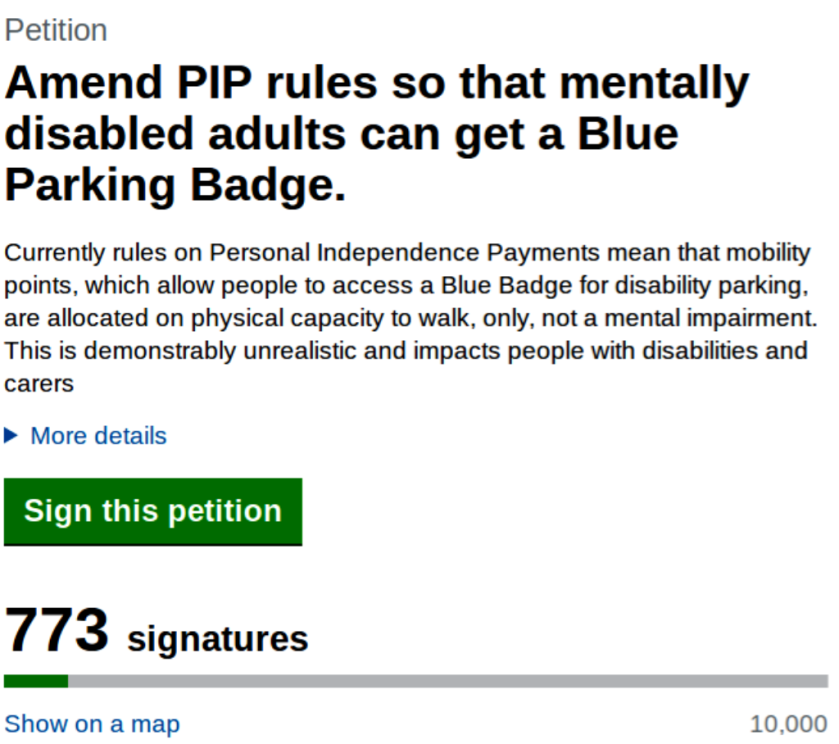
Finally, a petition on the official site for petitioning the UK Parliament, which means that it is only open to UK citizens, calling for a necessary change to the PIP rules. Below is a screenshot link:
Please visit, sign and share.
LINKS RELATING TO RENATIONALISATION AND TRANSPORT
My first link in this section is to a piece on Vox Political titled “McDonnell States Labour Will Take Back Rail, Water, Energy and Royal Mail | Beastrabban\’s weblog” This excellent piece sets the stage for the rest of this section. Below is the single most important paragraph, by way of a tempter:
And if Labour does, as I fervently hope, renationalize those industries, I would very much like a form of workers’ control implemented in them. One reason why the Tories were able to privatize these industries was because, when Labour nationalized them after the Second World War, the party was too timid in the form nationalization took. The state took over the ownership of these industries, but otherwise left the existing management structures intact. This disappointed many trade unionists and socialists, who hoped that nationalization would mean that the people, who actually worked in these industries would also play a part in their management.
Since that piece was produced Richard Murphy of Tax Research UK has put up a post titled “The public want nationalisationbecause nationalisation makes sense” in response to a hand-wringing editorial in The Observer, which started from noting that a recent study had revealed the full extent of public support for renationalisation (water – 83% in favour, electricity and gas – 77% in favour andr railways – 76% in favour – leading the way) and went full-on Tory from there, regarding renationalisation as a bad thing and coming with ideas for how this ‘threat’ might be dealt with. Professor Murphy, like me, takes the opposite stand-point, and points out how flawed the Observer piece is.
PHOTOGRAPHS 1
This set of photographs is of Lot 553 from the auction of Monday September 25th (see this post):
SOLUTIONS TO PUZZLES
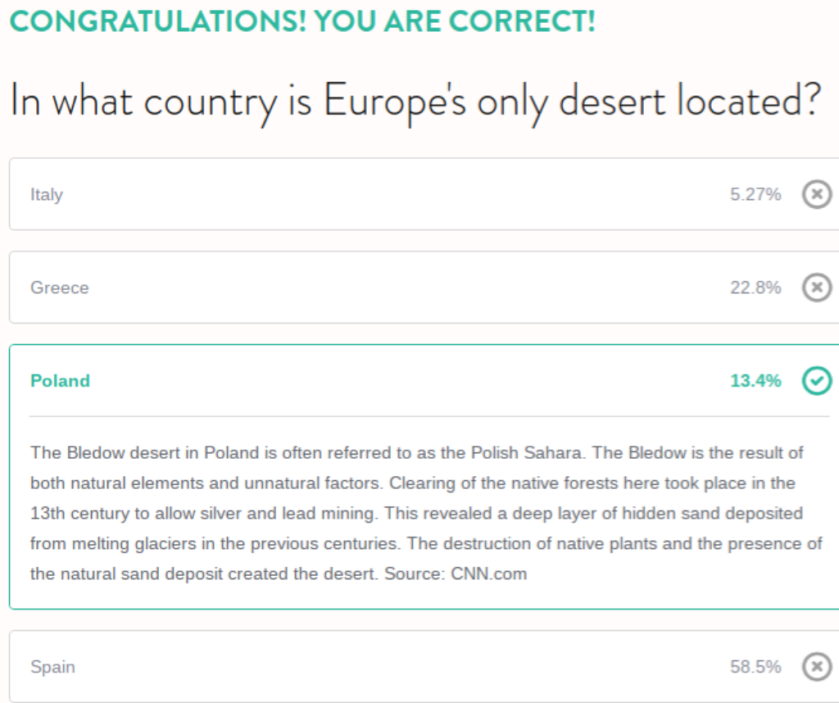
The first of three puzzles I set that I have not yet provided answers to was a question from Triva Hive:
In which country is Europe’s only desert located?
a)Italy b)Greece c)Poland d)Spain
I am sufficiently well informed about Italy, Greece and Spain that I was fairly sure that none of them is the answer. Thus, having ruled out the impossibles I was left withe one answer that however improbable must be the true one – Poland. The screenshot below shows that my Sherlockian approach to the question bore fruit:
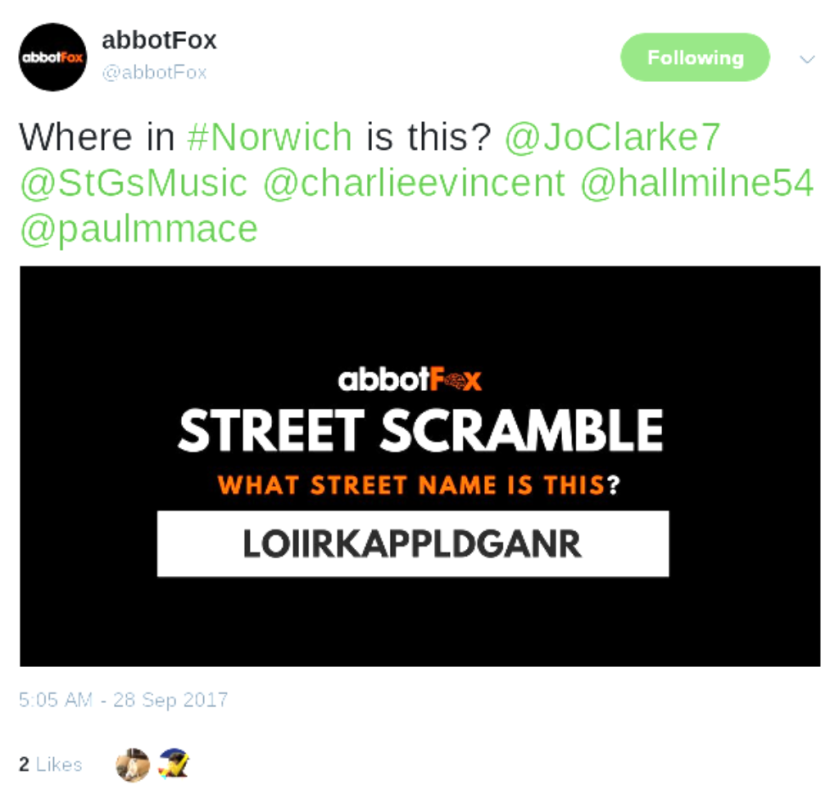
The second puzzle wasAbbotFox‘s “street scramble”:
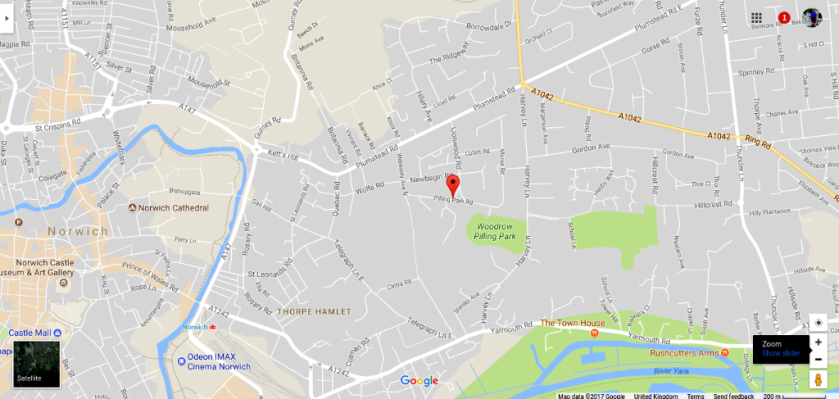
Unscrambling this gives “Pilling Park Road”, and the map below shows the location of said street:
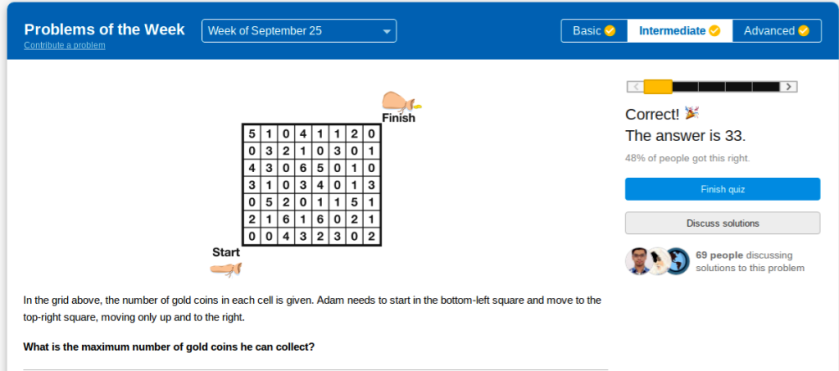
The third problem came from brilliant and featured a treasure hunt. Below is the answer:
PHOTOGRAPHS
Just before I publish this and head out for a spot of ecotherapy and to top up the photo collection here are some non-tree pics from yesterday:
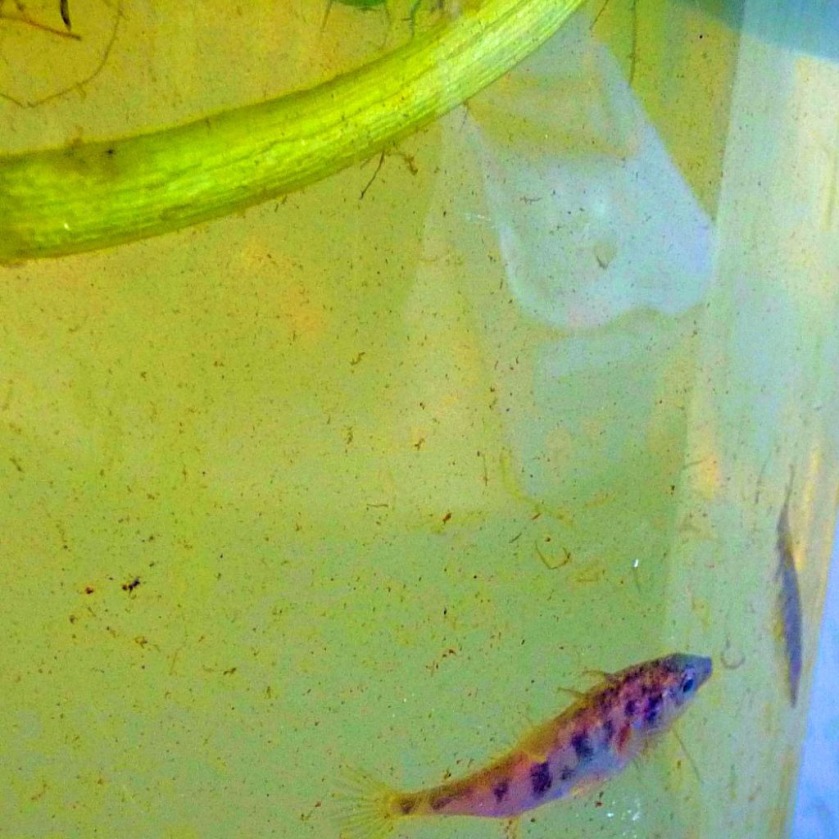
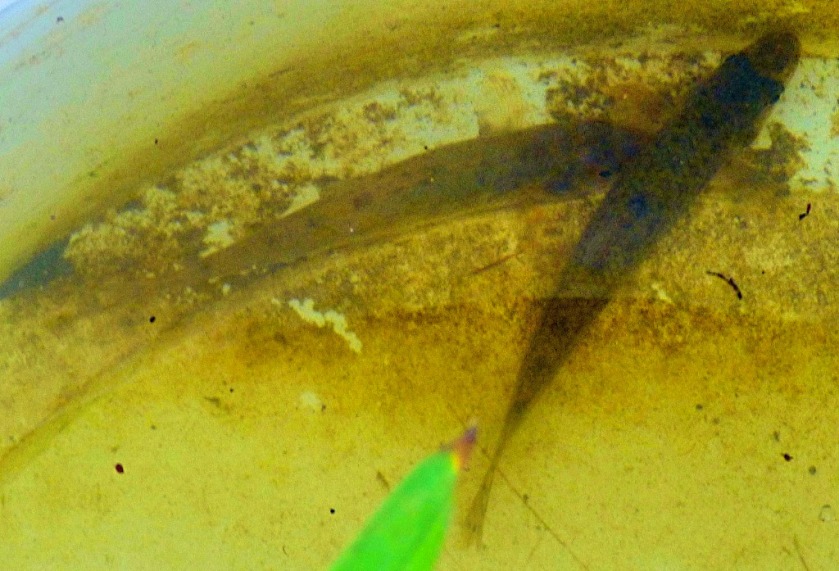
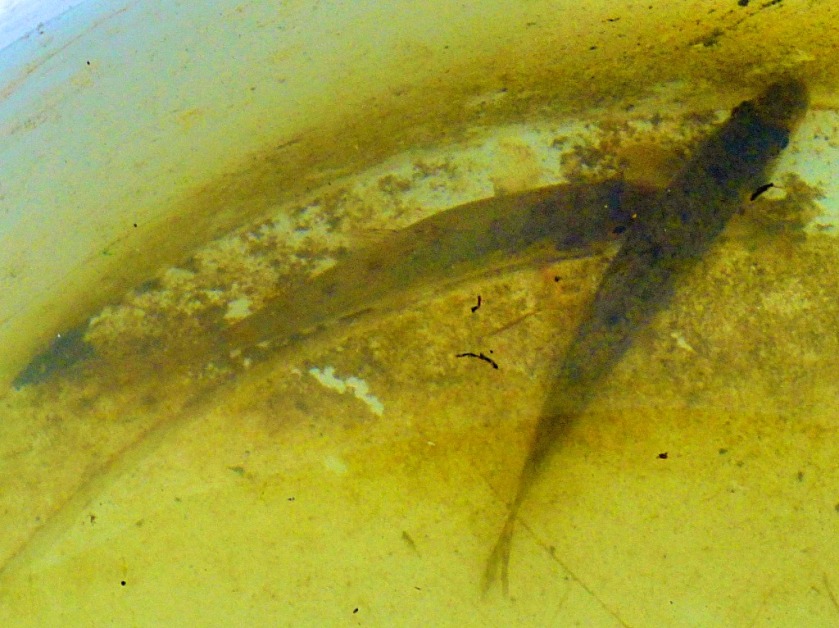
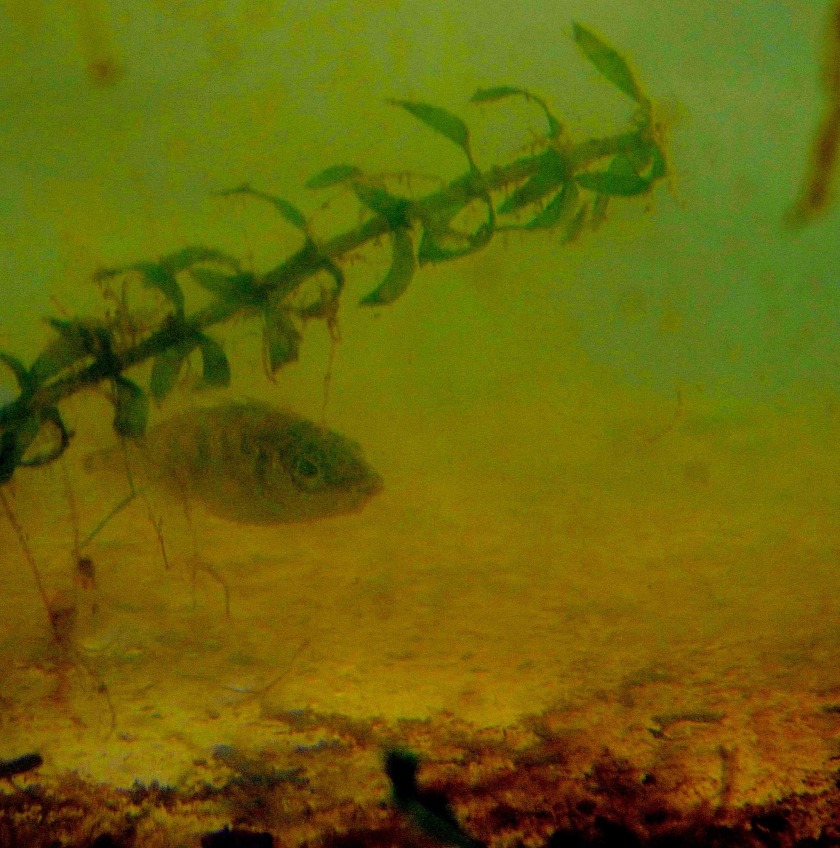
A rarity – a fish sufficiently close to the surface of the Gaywood River that I could take a picture of it that (just about) came out.
The trees take centre stage – this is the most interesting time of year for observing trees (at least in the northern hemisphere).
INTRODUCTION
Ir is October, and the leaves on the trees here in Norfolk are starting to change colour. This is the first of several posts that I envisage putting up to documenting this process by way of photographs.
KING’S LYNN TREES ON OCTOBER 1
I am presenting these pictures as a tiled mosaic – a left click or equivalent on each image will enable you to view it at full size, while a right-click or equivalent will give you a menu that includes various options including opening the image in a new tab. Enjoy…
A whole post to make a correction? Yes – this error is important enough to warrant such treatment as far as I am concerned.
THE CORRECTION
In the first published version of the postI put up earlier today I misattributed the exhibits that included living creatures from the Gaywood River to the Gaywood ValleyConservation Group. It was in fact put on by the Norfolk Rivers Trust, and I have just corrected the original (I realised my error while on the bus to Norwich and have been waiting for access to a computer to correct it).
An account of an educational event about the Gaywood River that took place in the Scout Hut on Beulah Street on Sunday.
INTRODUCTION
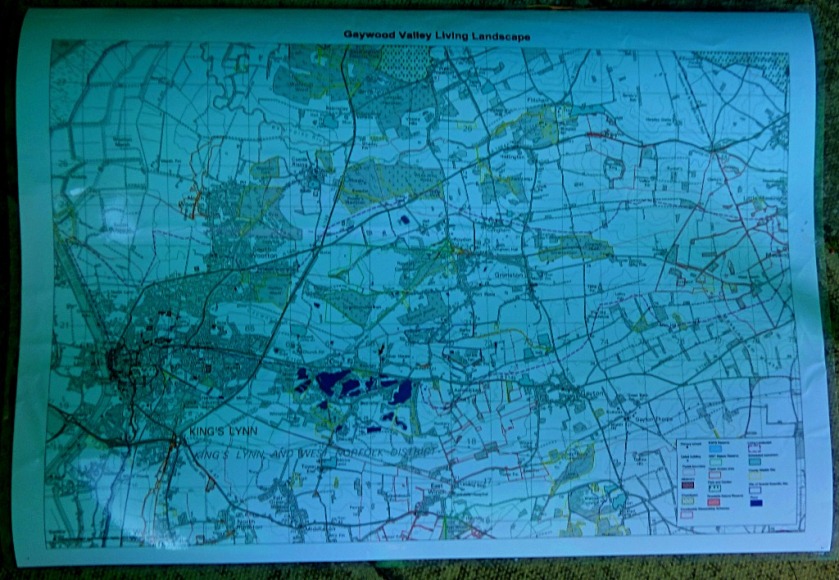
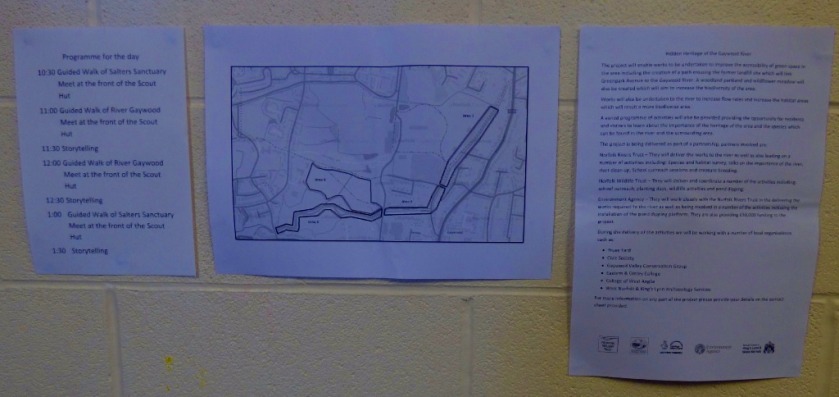
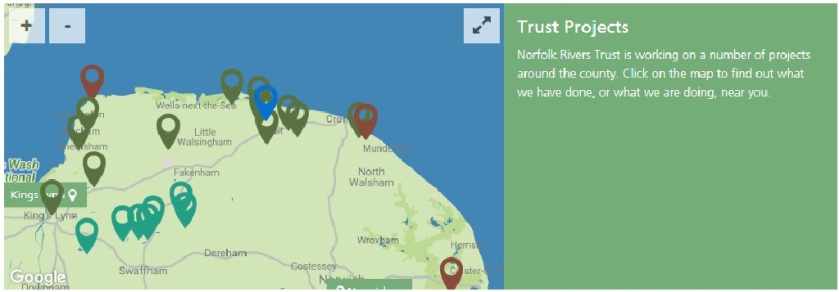
I have had a very busy few days, which is why there have been no new posts here since Saturday. I will mention my activities since Monday in later posts, but this post is solely concerned with the activity that dominated (in a good way) my Sunday. At the end of this post I will be including a variety of links related in various ways to its content. Here is a map showing the course of the Gaywood River:
FINDING OUT ABOUT THE EVENT
I got an email from my aunt a few days before the event was due to happen explaining her role in it and asking if I wished to meet her there and go back to hers for sausage and chips or if I would prefer a saturday supper. I decided that the event could be quite interesting, so I opted for the former course of action.
GETTING THERE
Since the event was taking place at the Scout Hut on Beulah Street, which is on the bank of the Gaywood (Beulah Street ends in a bridge that crosses the Gaywood into the car park that serves the Scout Hut) I was going to walking, and since it was a bright, sunny morning I decided on an extended route. Leaving my flat I headed across Baker Lane Car Park to the bridge over the upper Purfleet, heading across King Street to the north bank of the lower Purfleet. Here are some photos from that early part of the walk:
From there I followed the line of the Great Ouse as far as my favourite cormorant observation point…
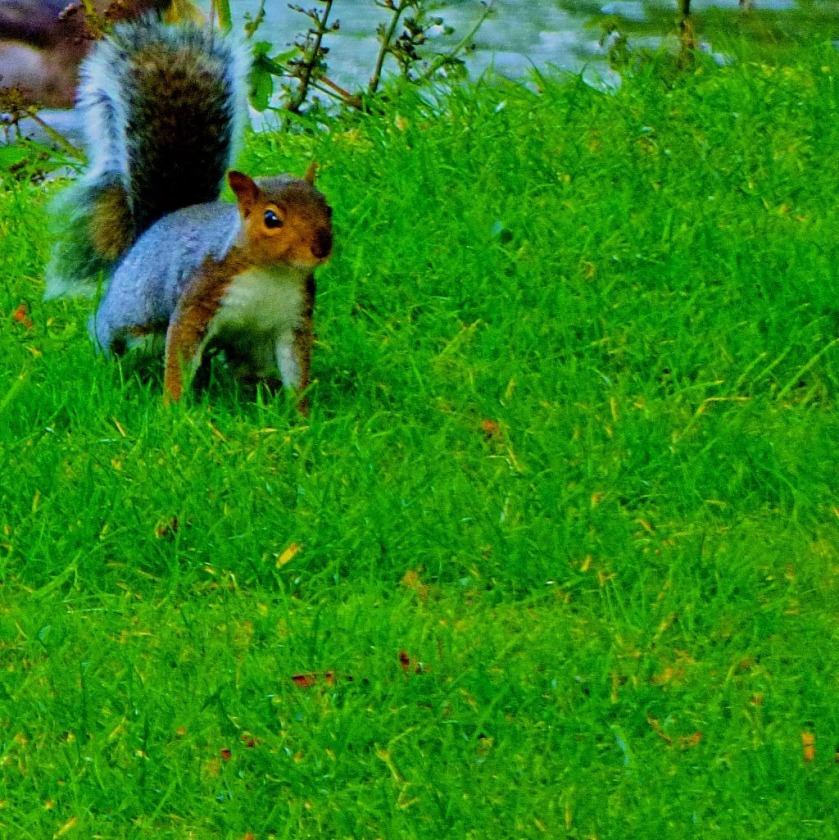
…before heading round by way of All Saint’s Church to the Library and entering the parkland area, following the Broadwalk until the path through the Vancouver Garden splits off from it, when I followed that and then the path out of the Vancouver Garden that joins the Tennyson Road end of St John’s Walk, at which point I was back on what would be the officially recommended walking route to Gaywood. There were squirrels about (in King’s Lynn only the grey ‘bushy-tailed rat’ variety as opposed to the red ‘Squirrel Nutkin” variety), though it is not always easy to get good photos of them…
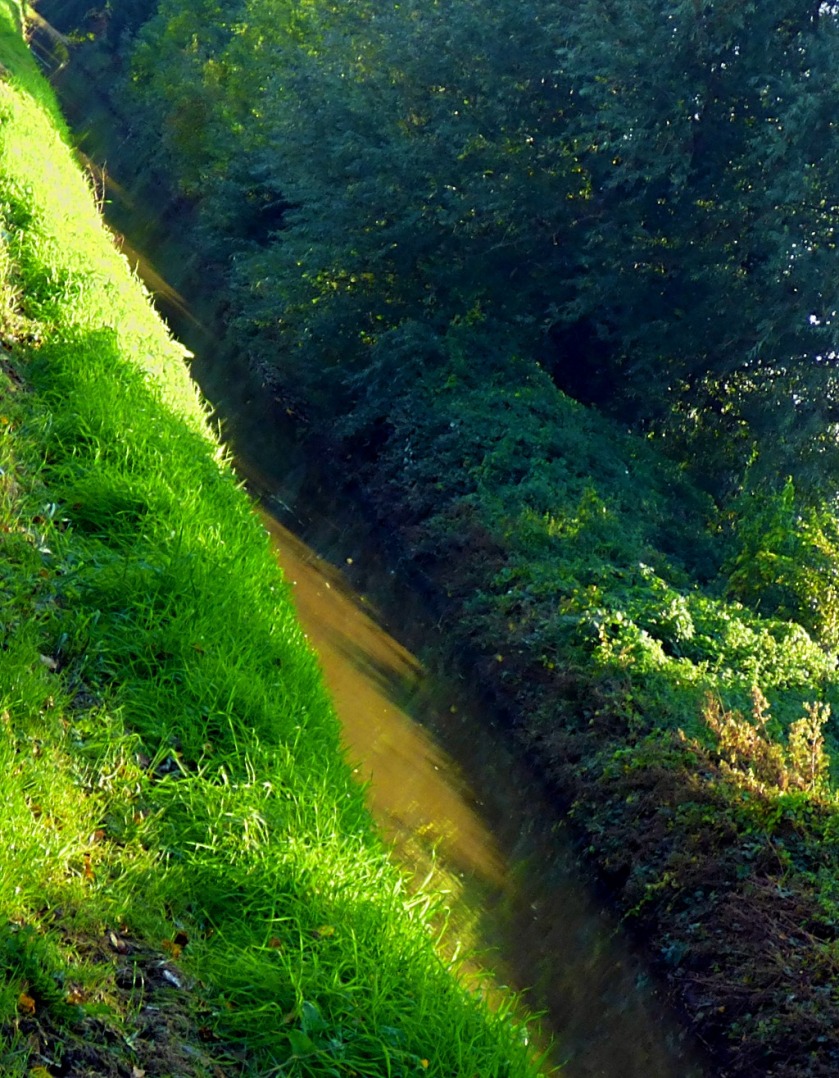
This picture and the next feature the heavily sculpted segment of the Gaywood River that passes through the parkland.
Apart from photograph opportunities the other plus side to being held up a by a train at the Tennyson Road level crossing is that you can cross the road itself in perfect safety as the cars are all stationary.
From Tennysod Road I followed the footpath the runs between the King Edward VII Academy and the Lynn Academy to Gaywood Road, which I crossed, then crossing the Gaywood on a pedestrian bridge before following its bank all the way to the Scout Hut.
Although darker than their usual colouring I think from the markings that this is a peacock butterfly.A section of the Gaywood River
AT THE SCOUT HUT
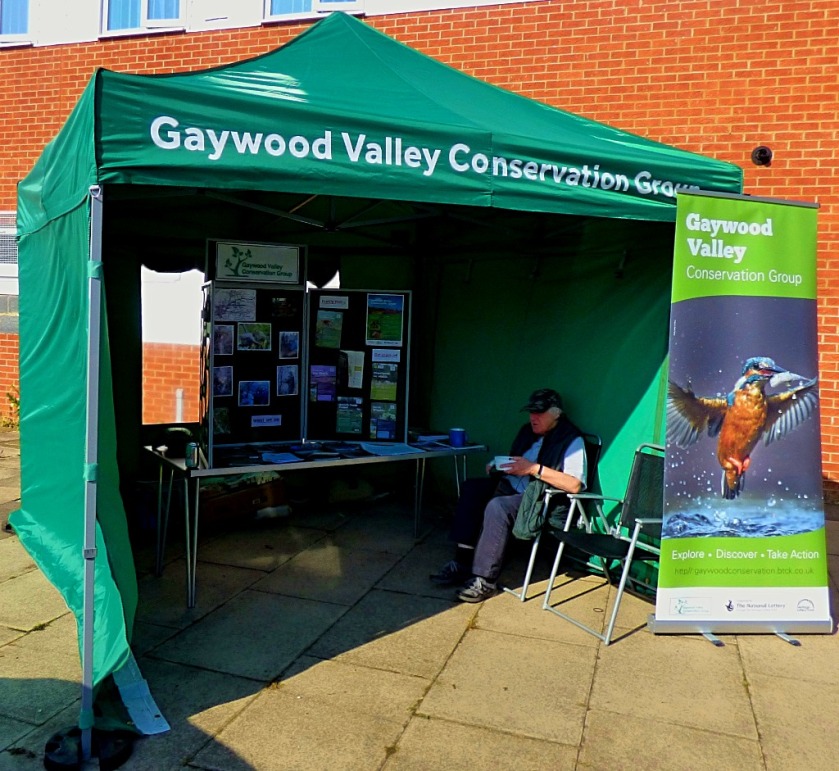
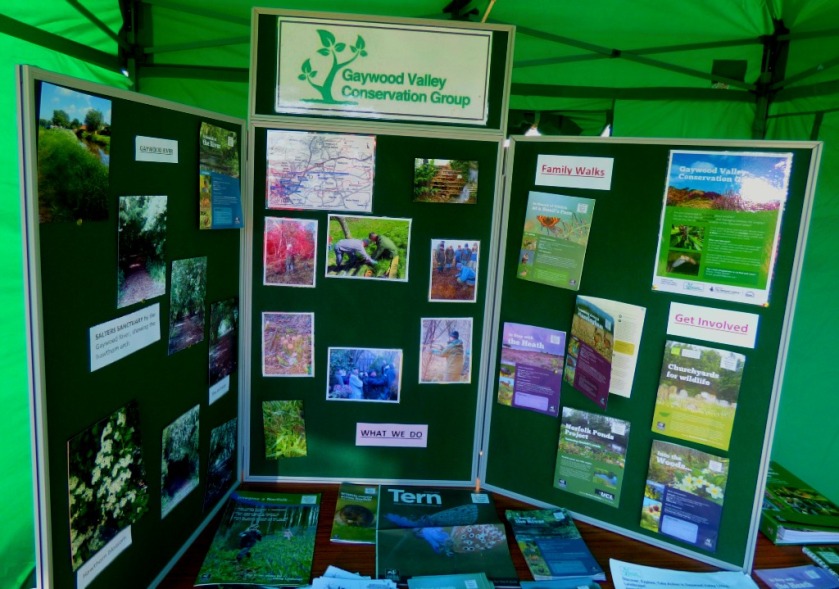
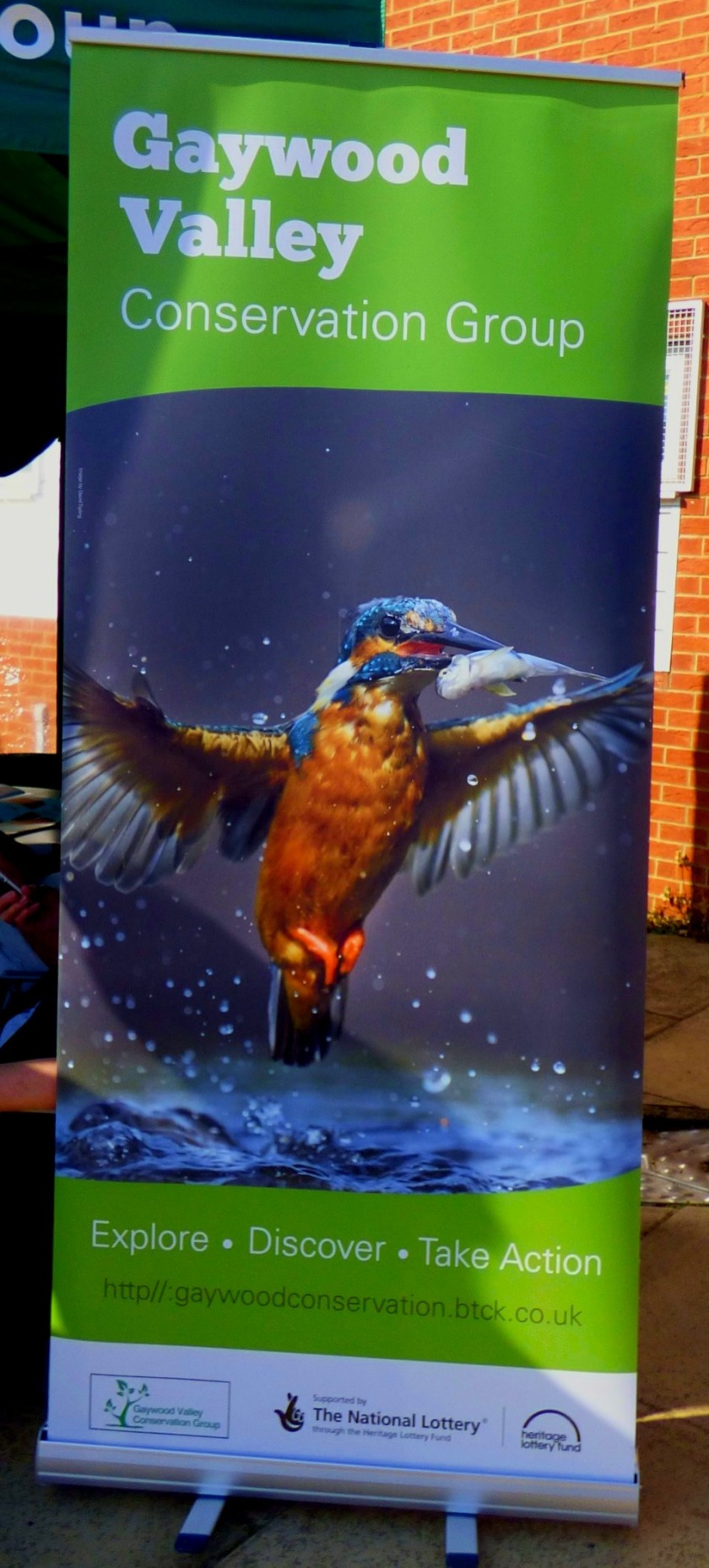
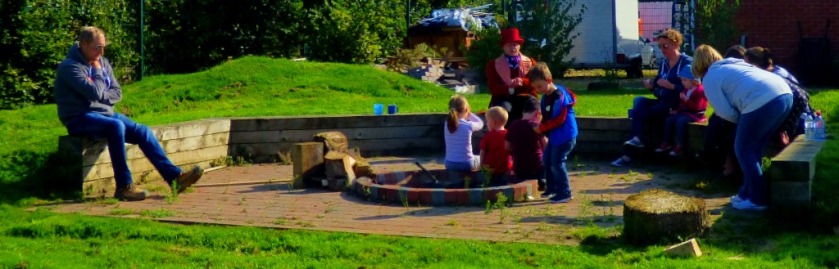
Immediately outside the Scout Hut the Gaywood Valley Conservation Group had a gazebo and display boards (it was there that I took the photo that appears in the introduction).
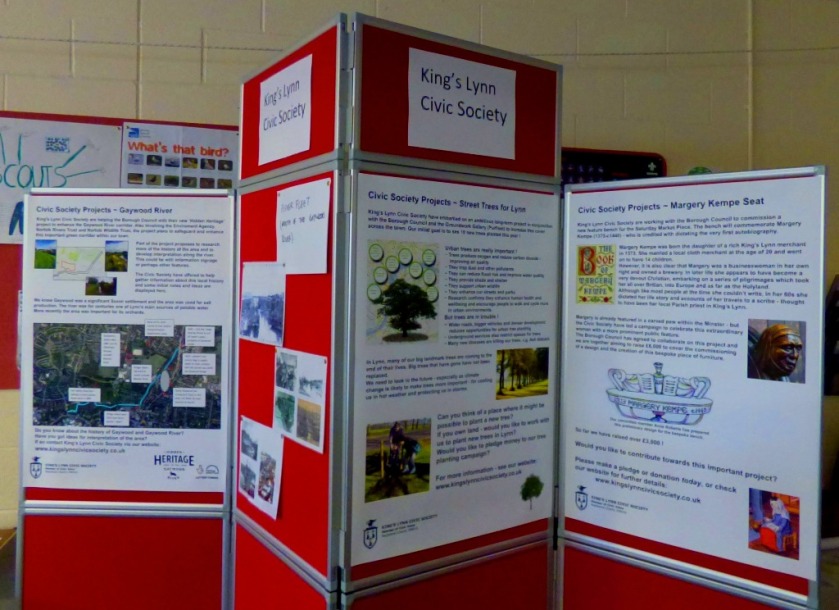
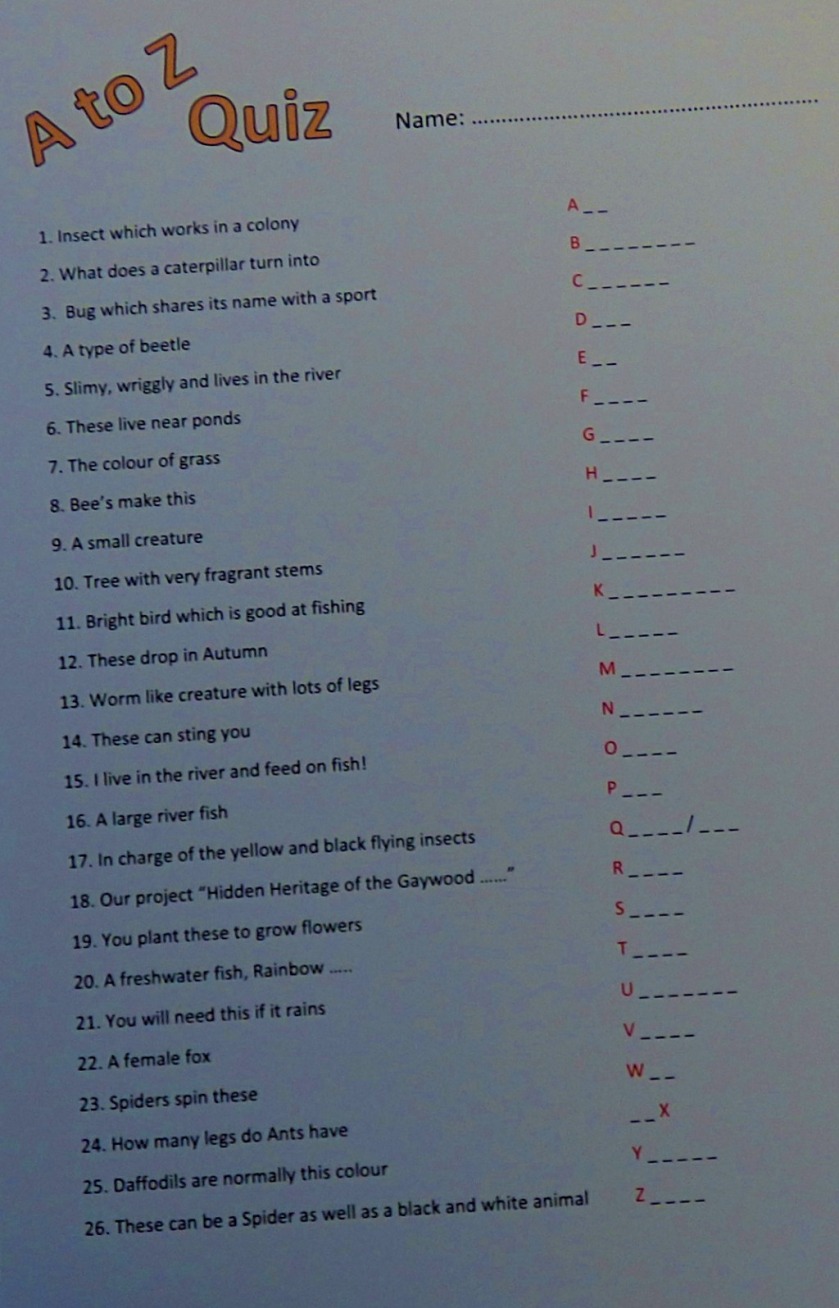
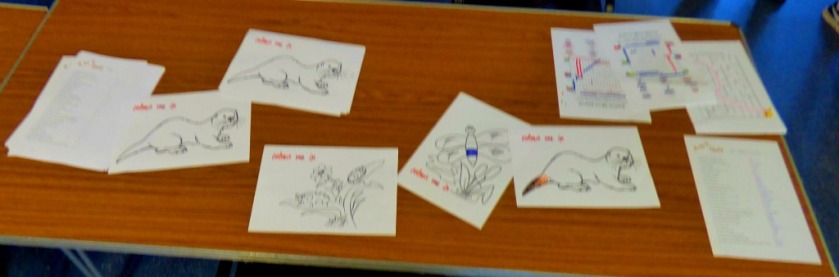
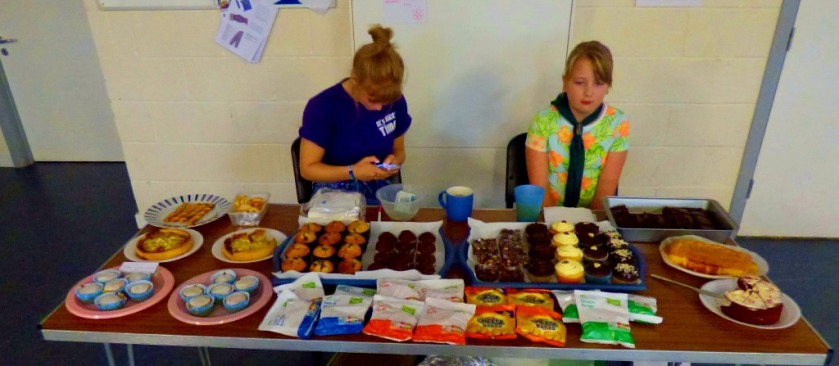
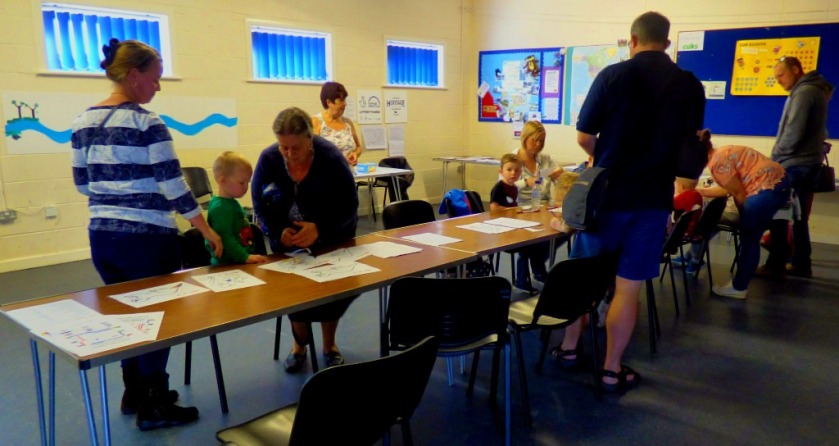
Inside the hut was the Civic Society Stall, a cake stall, and various river related learning activities (colouring in pictures of river creatures for the artistically minded, an A-Z quiz of which more later). Although it was not the first thing I looked at, because it was my aunt’s reason for being there I start with…
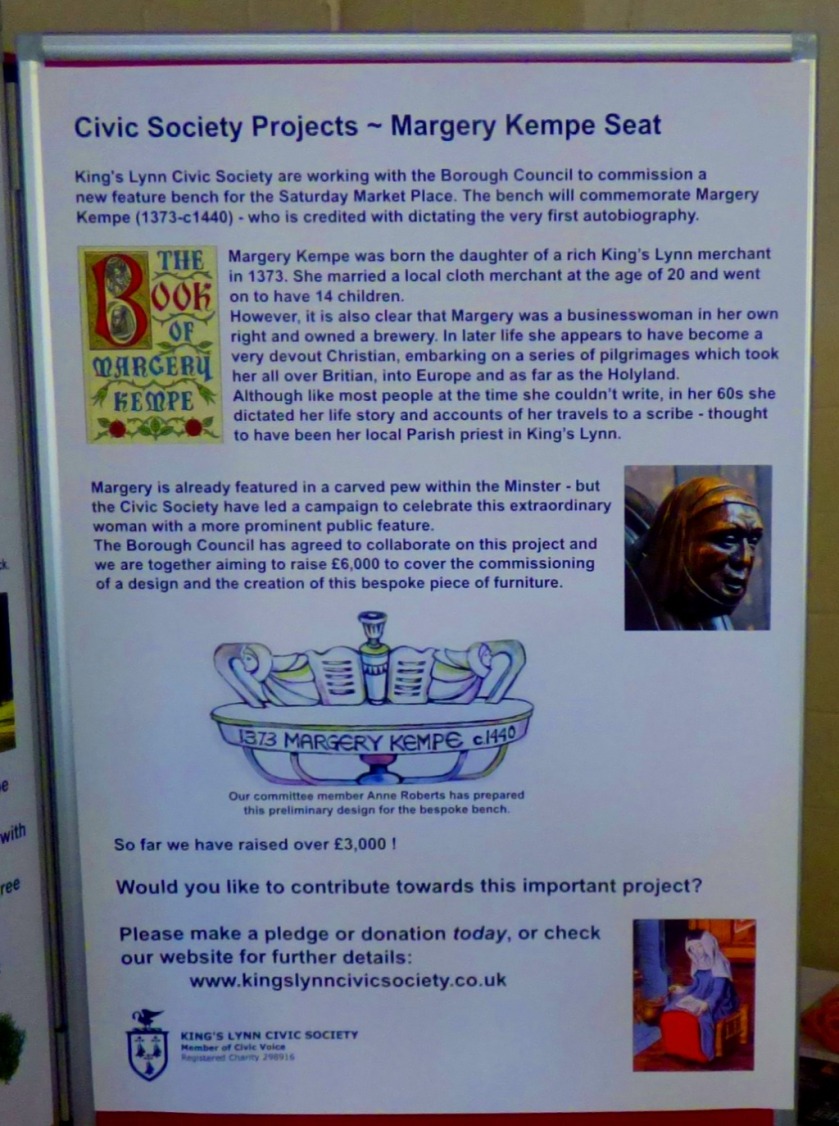
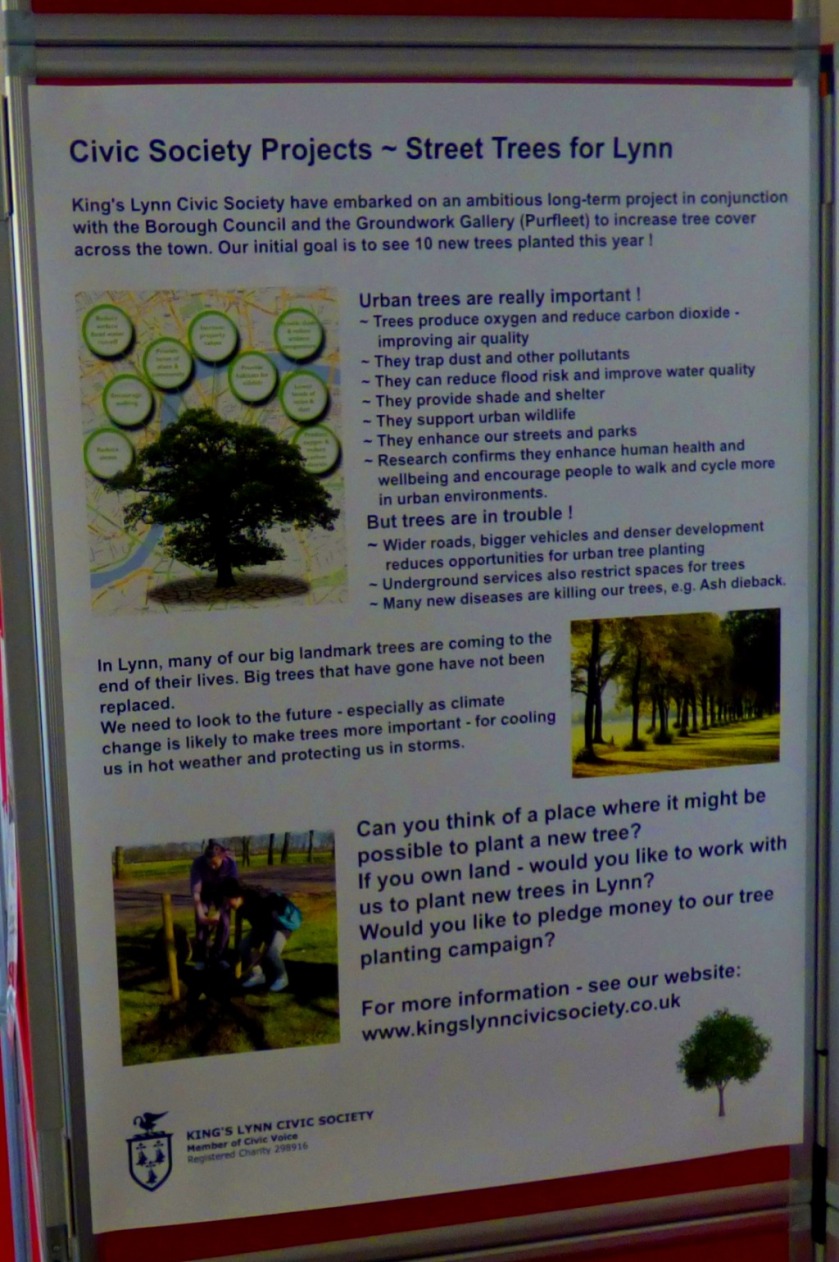
THE CIVIC SOCIETY STALL
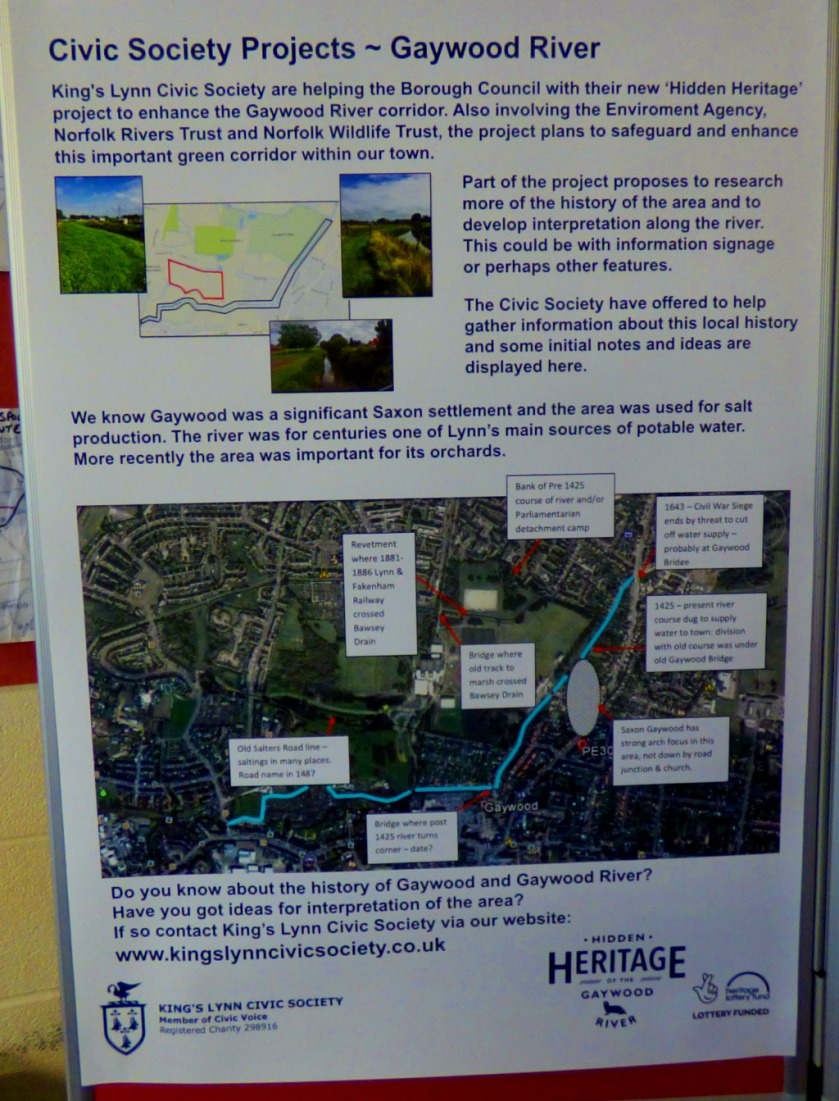
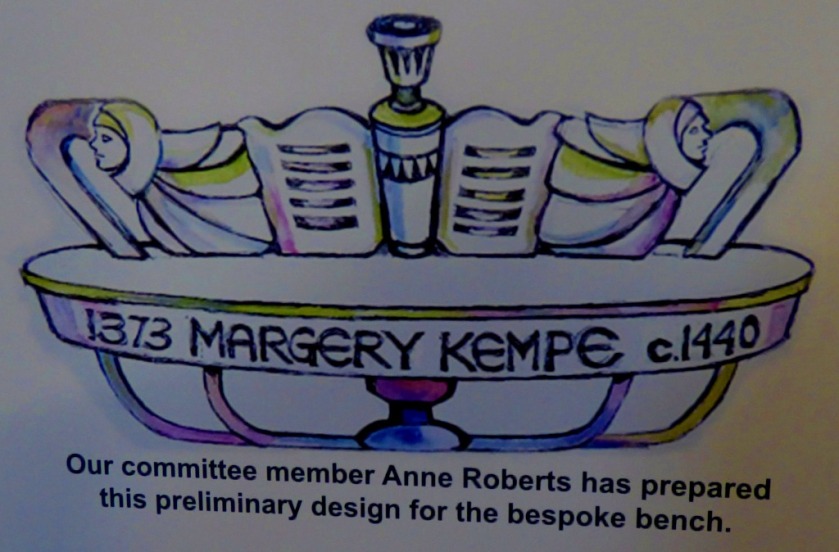
They were looking for people who knew about the history of the Gaywood river, because information boards will be going up at various points along it. They already had some good stuff, but wanted more.
Now we turn out attention to…
THE REST OF THE INDOOR ACTIVITIES
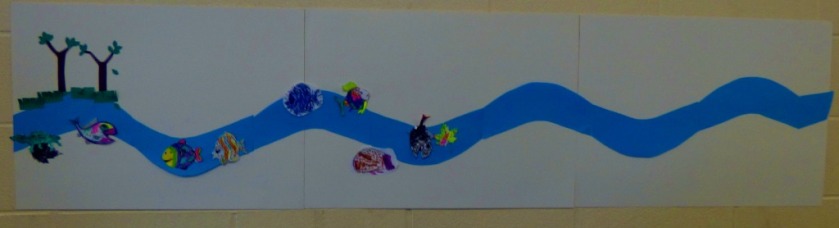
The cake stand looked awesome but discipline prevailed, and I did not sample any of the products. Although it was not really aimed at people my age I did the quiz, and predictably got all the answers in short order. The colouring proved popular, and many of the coloured creatures were then stuck on to a large picture of a river on the wall of the hut.
I will reveal the answers (just in case anyone did not get them all) in a later post.
That is the inside stuff finished, but there was also plenty going on…
IN THE BACK GARDEN
There were two major centres of activity in the back garden, and I make my first port of call there, as I did on the day, at…
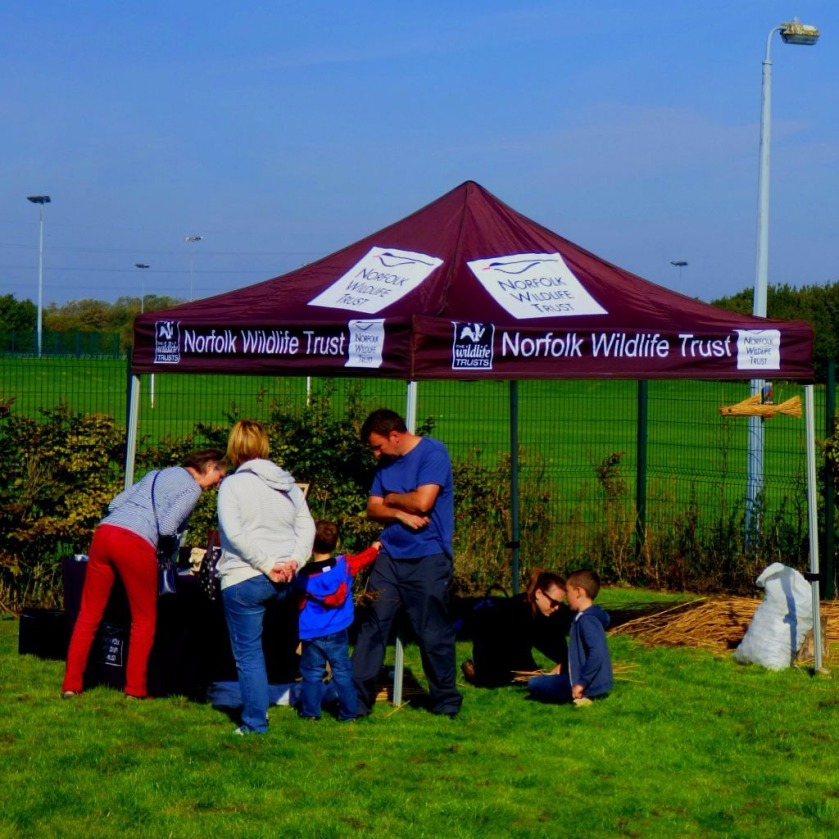
THE NORFOLK WILDLIFE TRUST GAZEBO
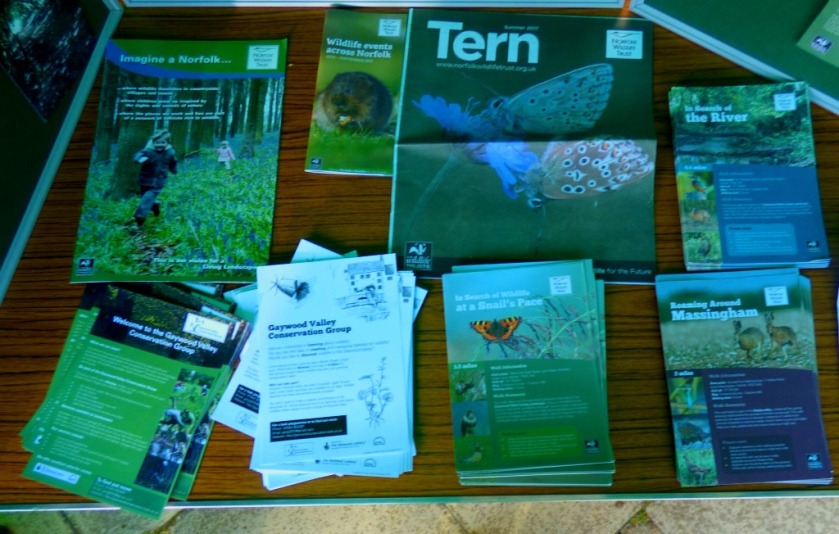
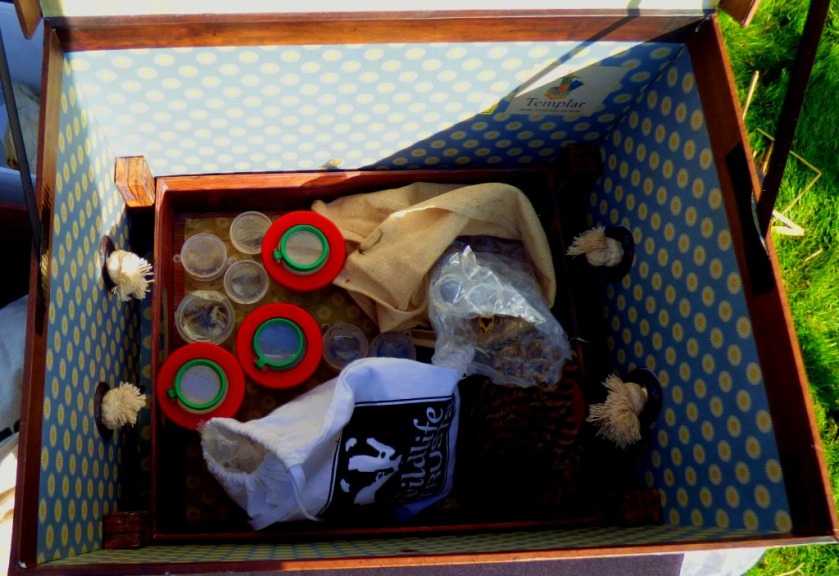
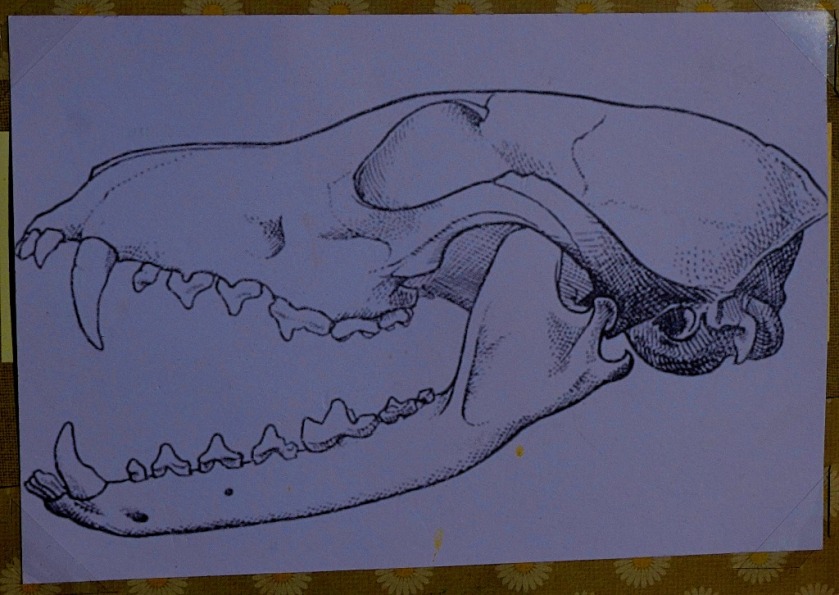
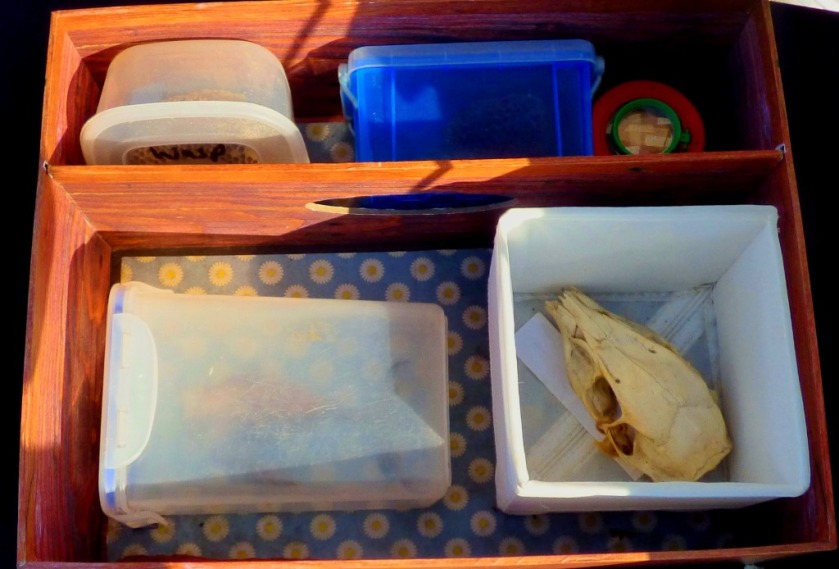
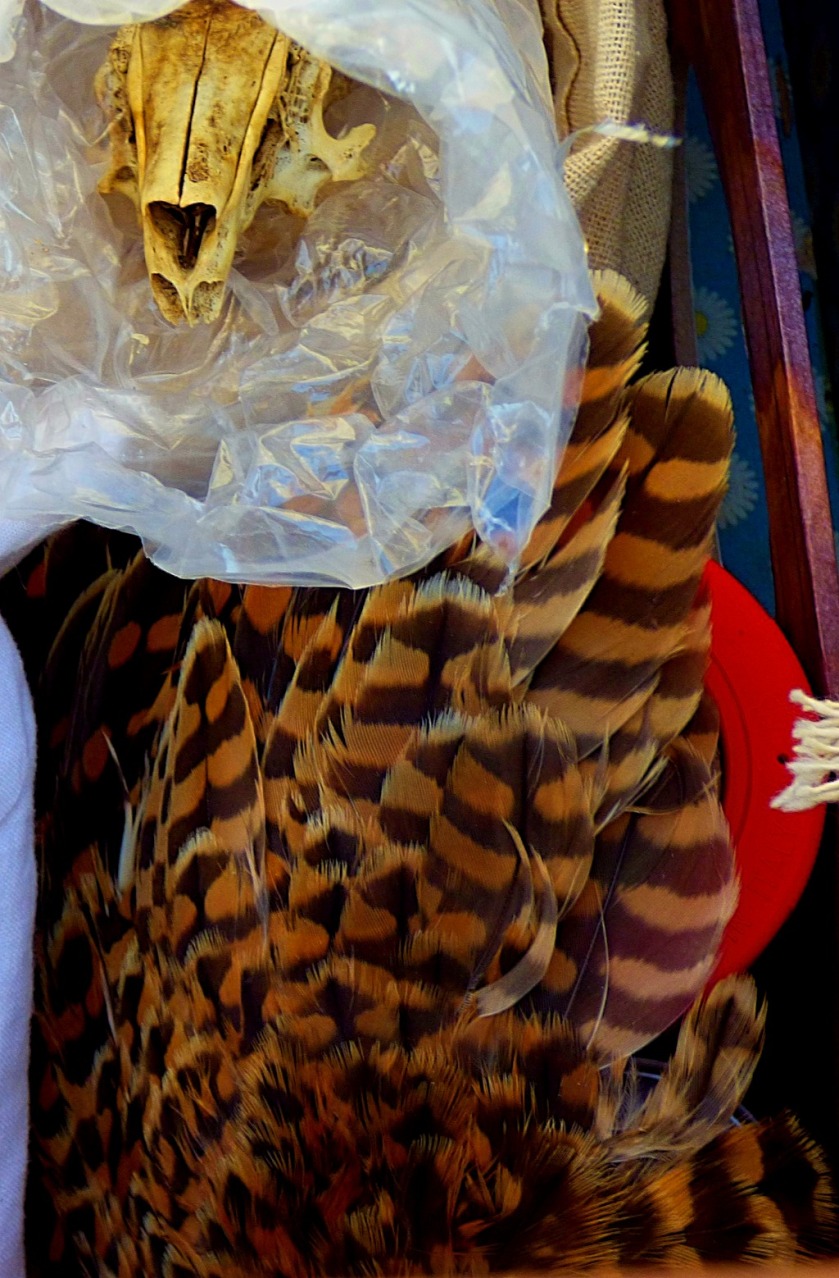
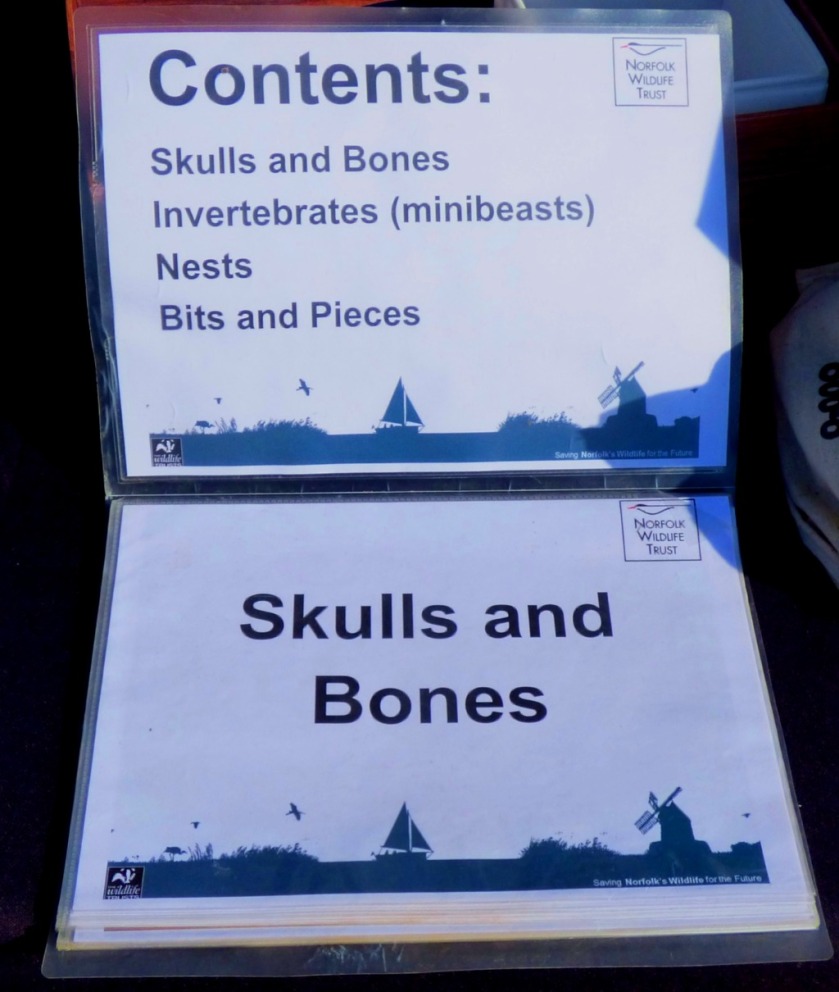
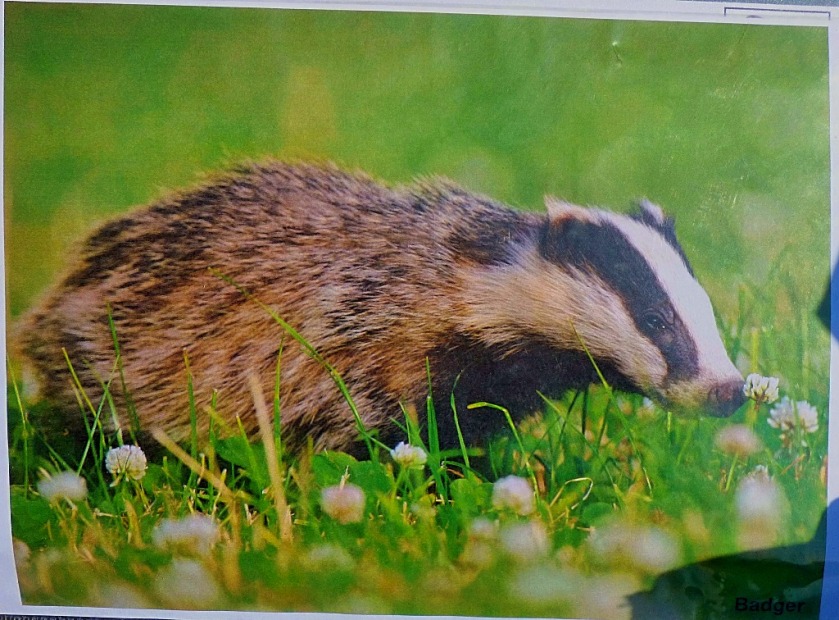
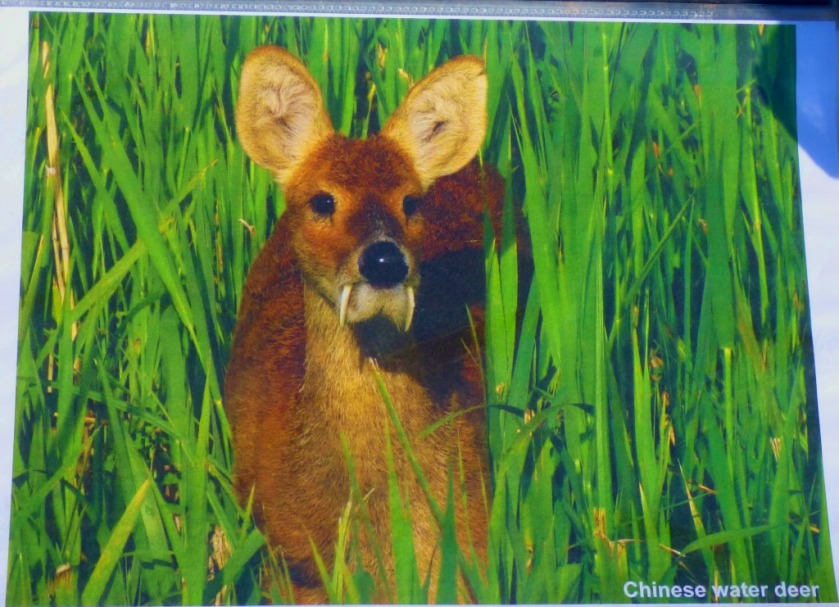
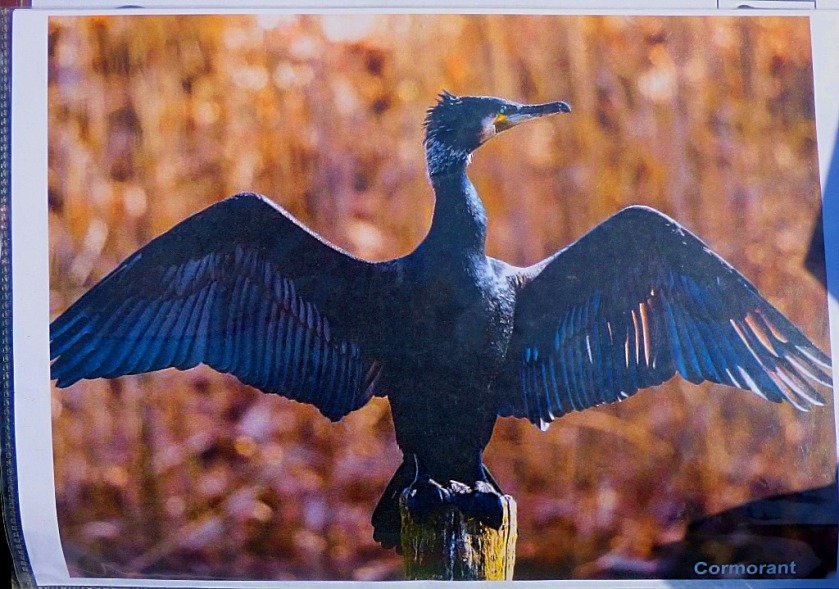
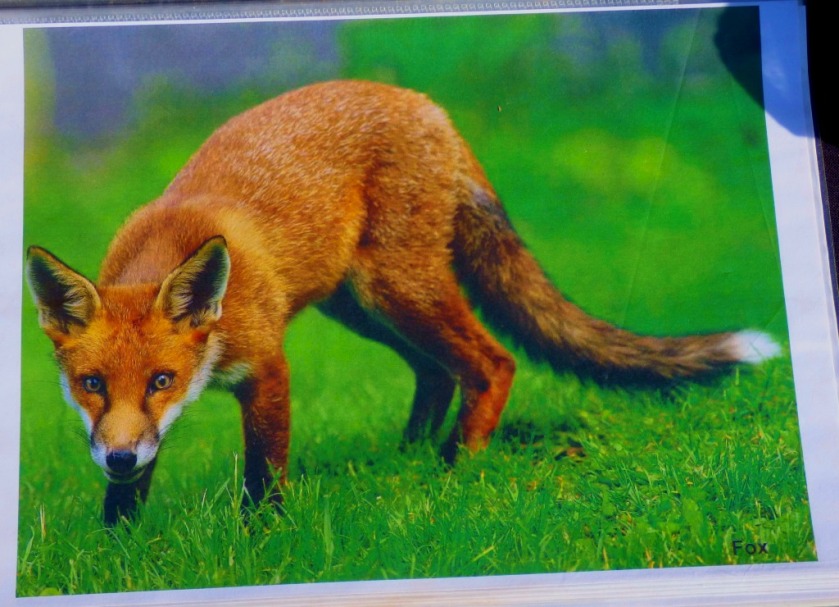
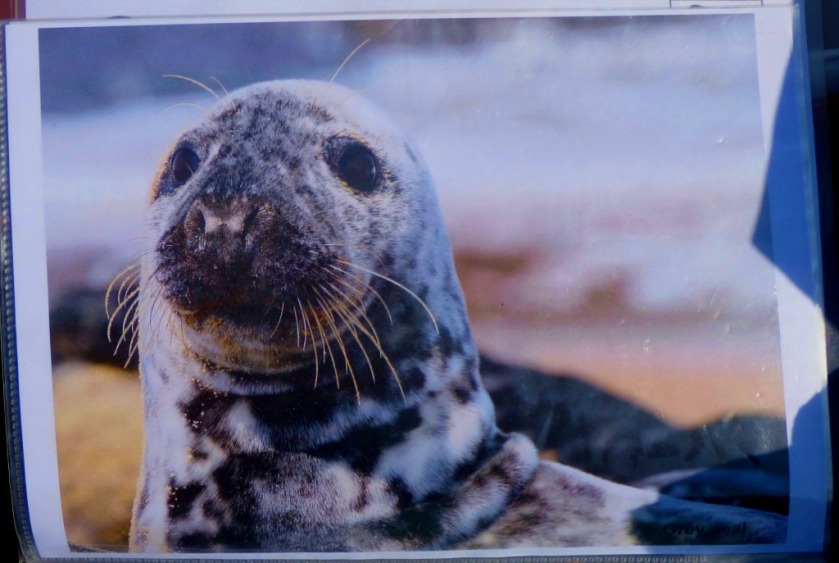
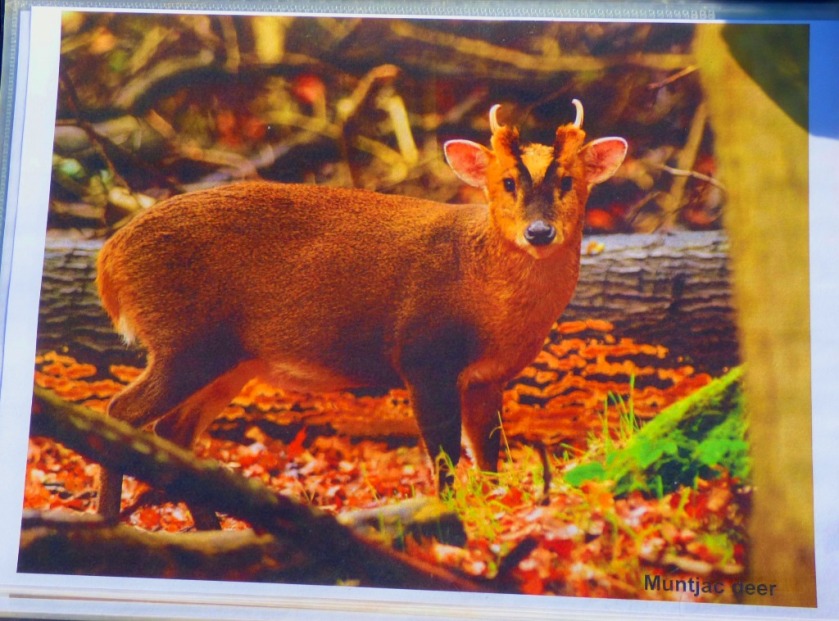
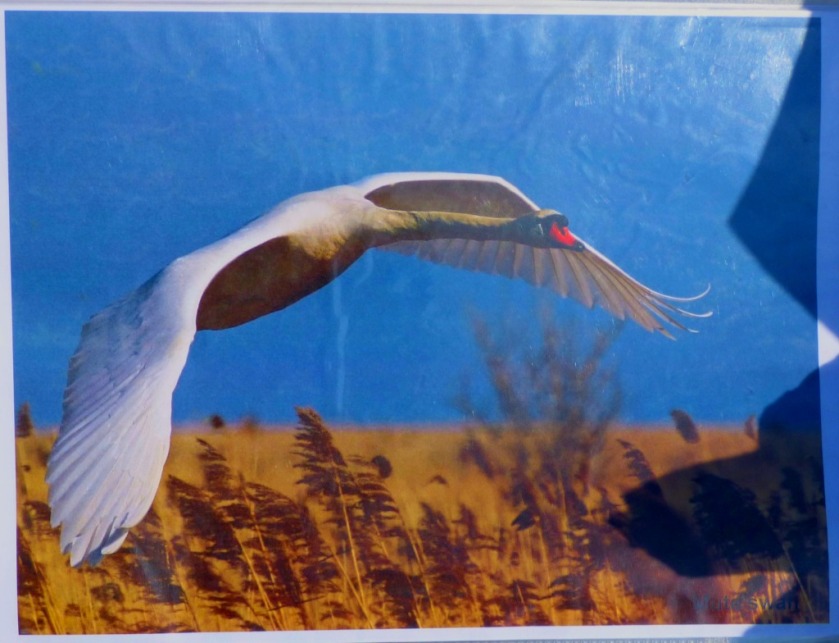
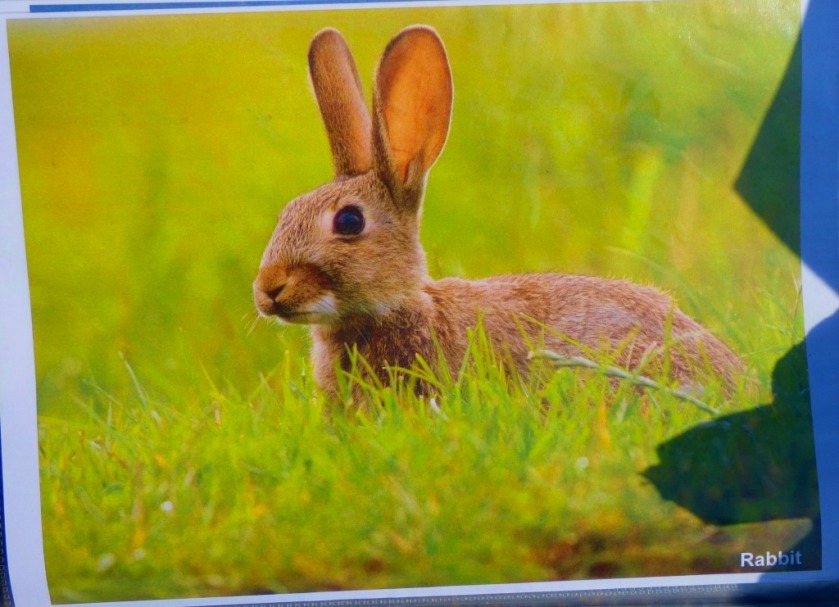
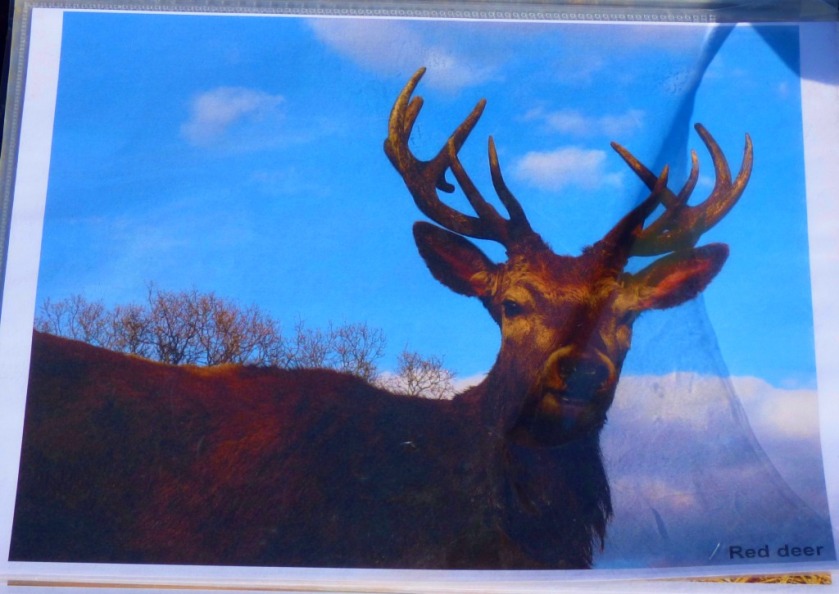
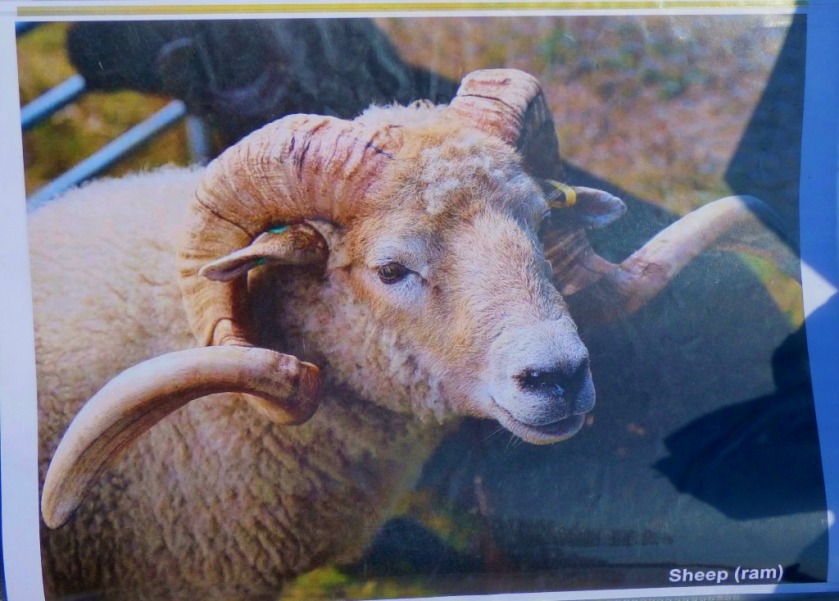
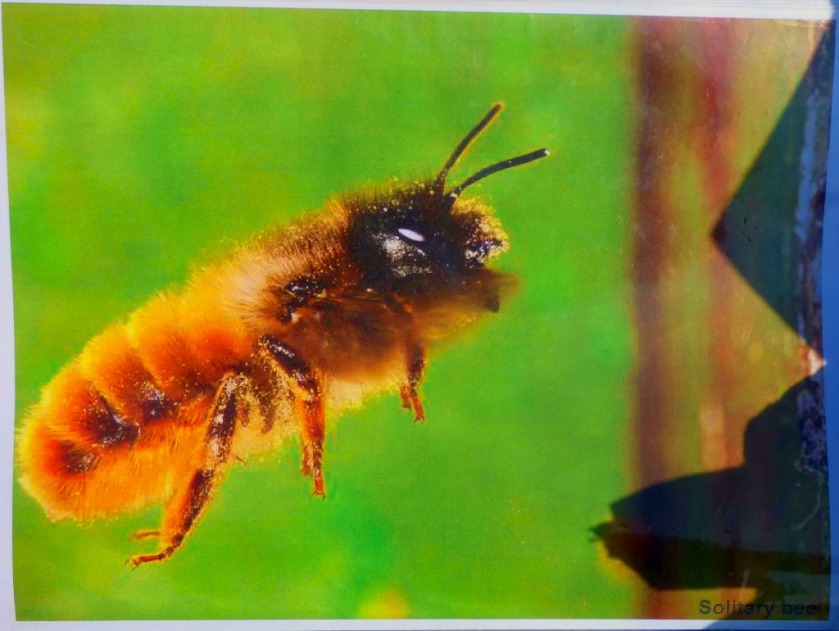
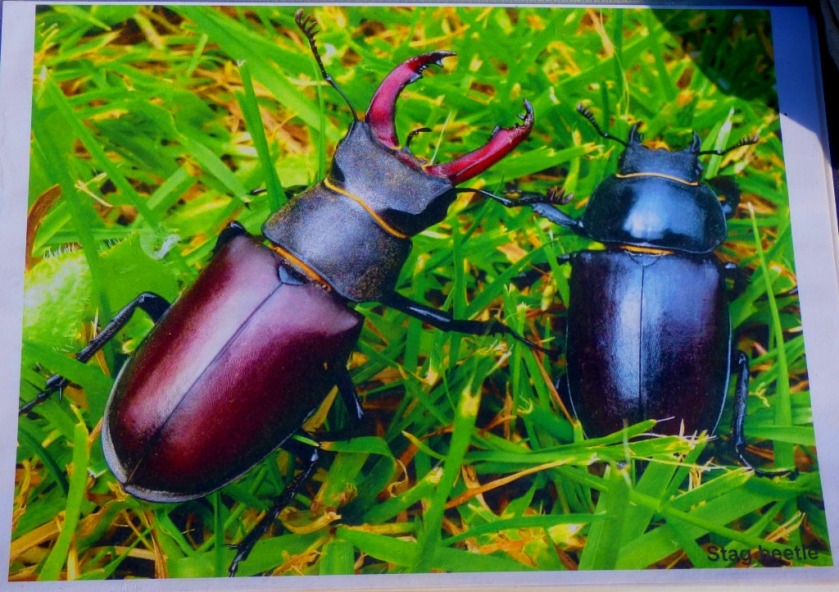
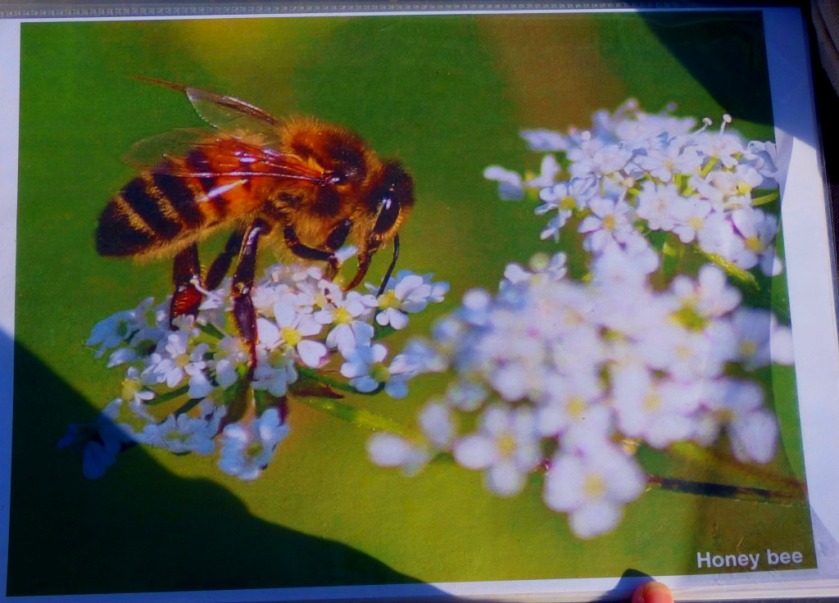
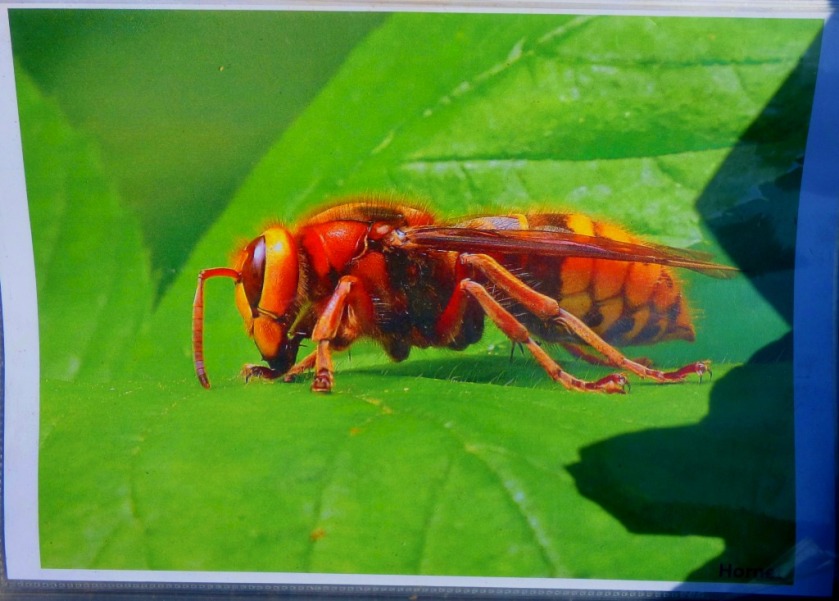
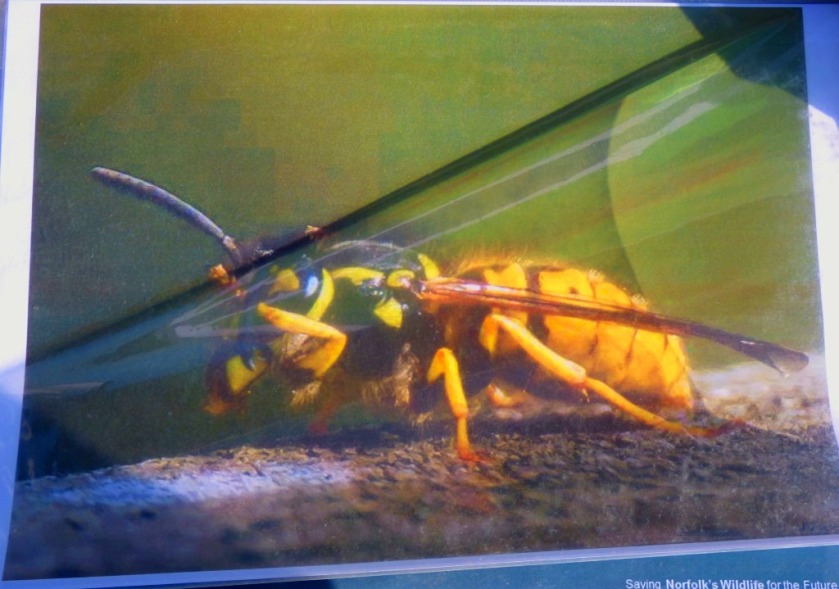
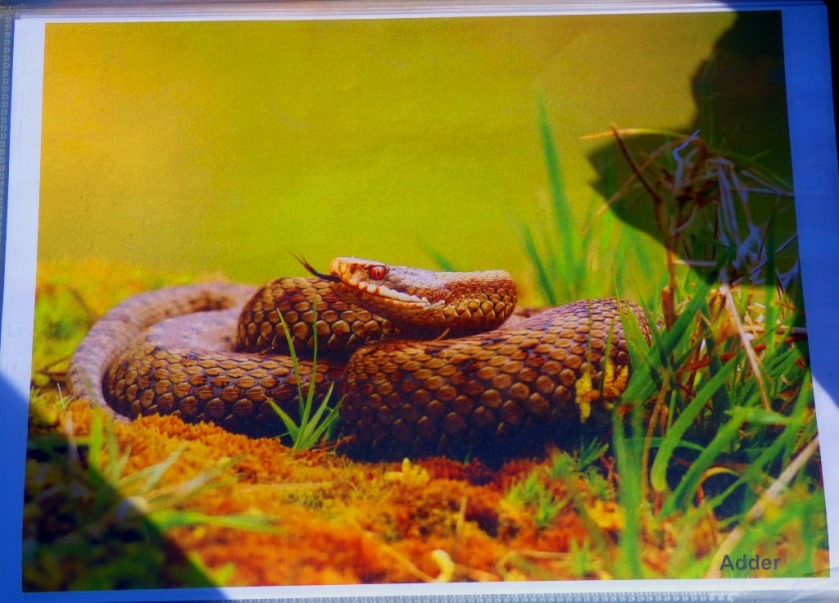
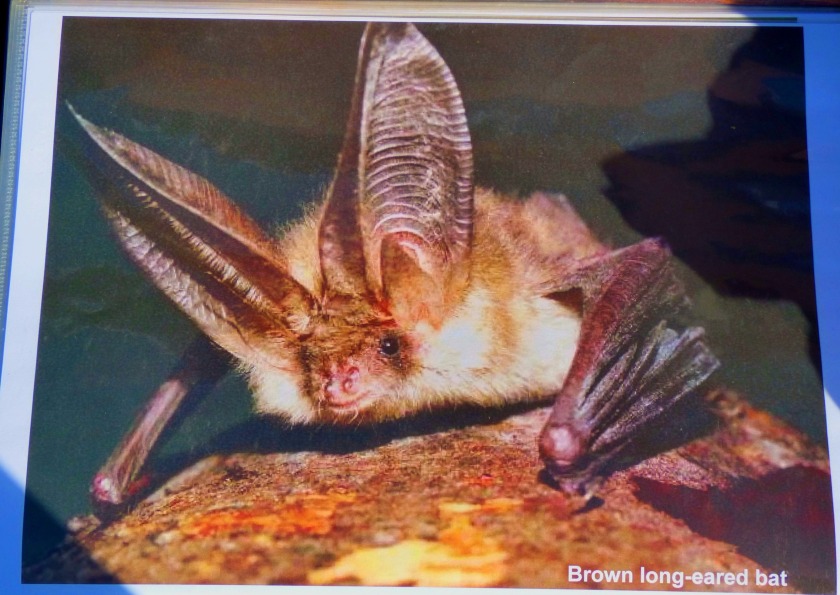
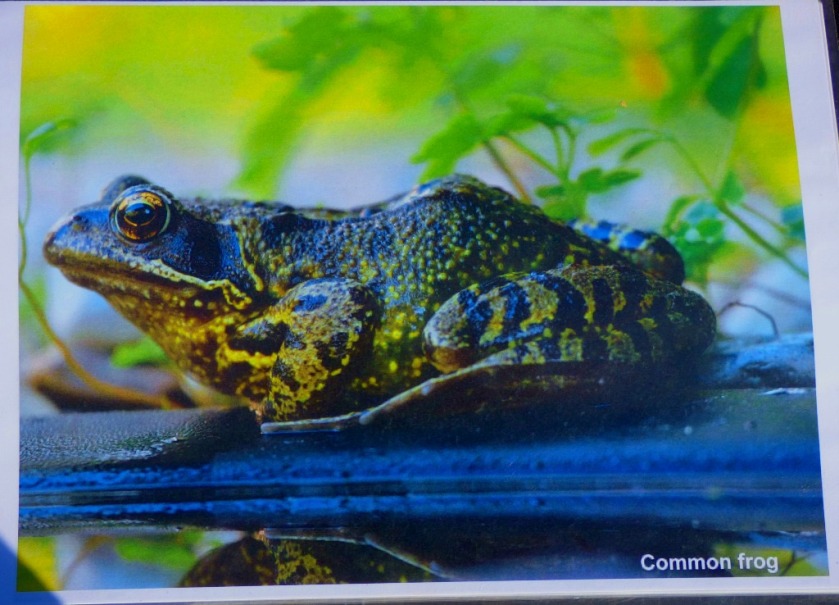
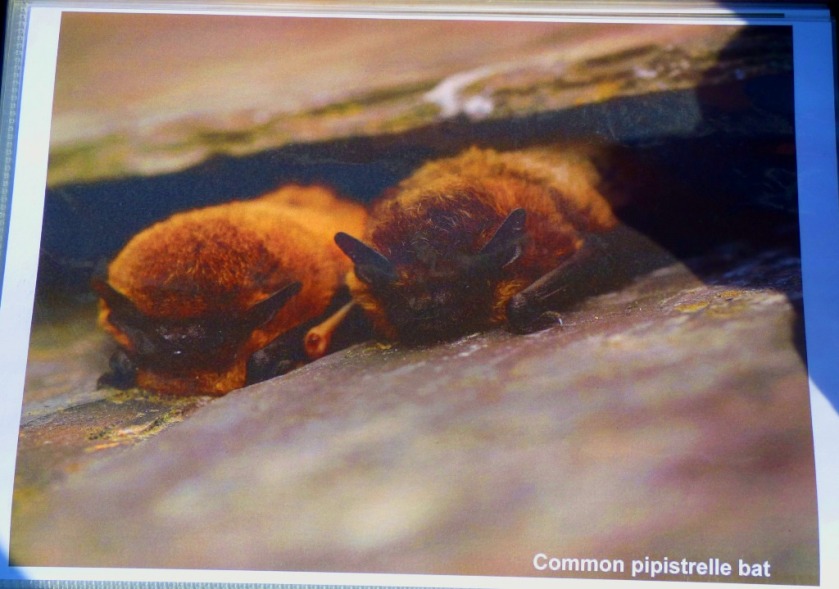
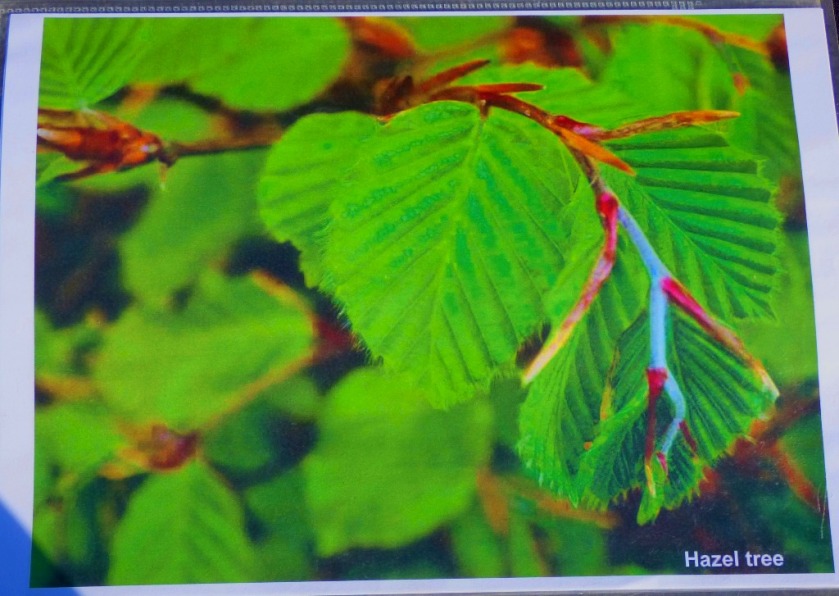
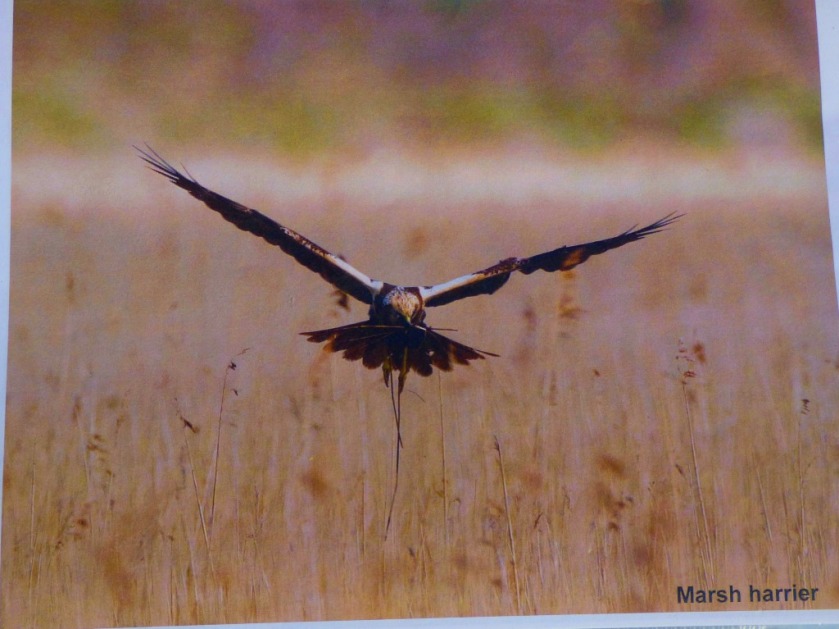
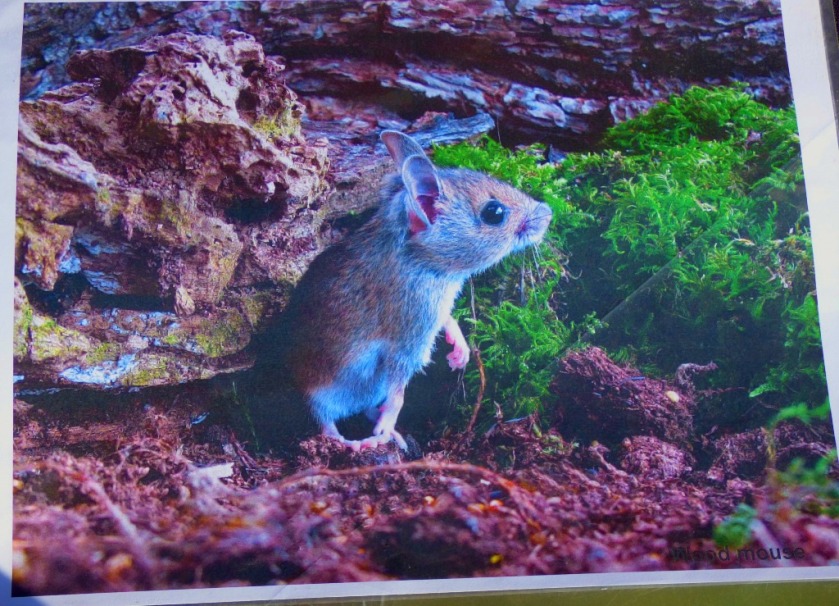
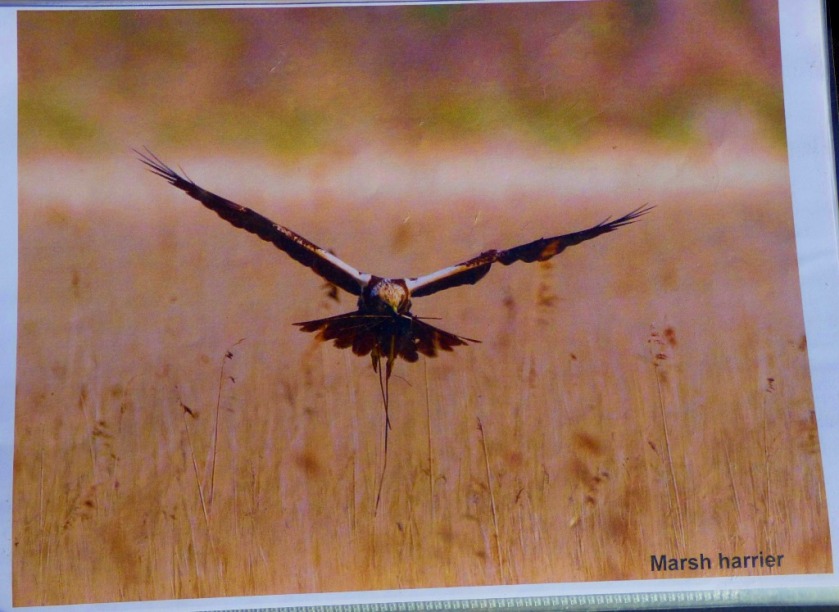
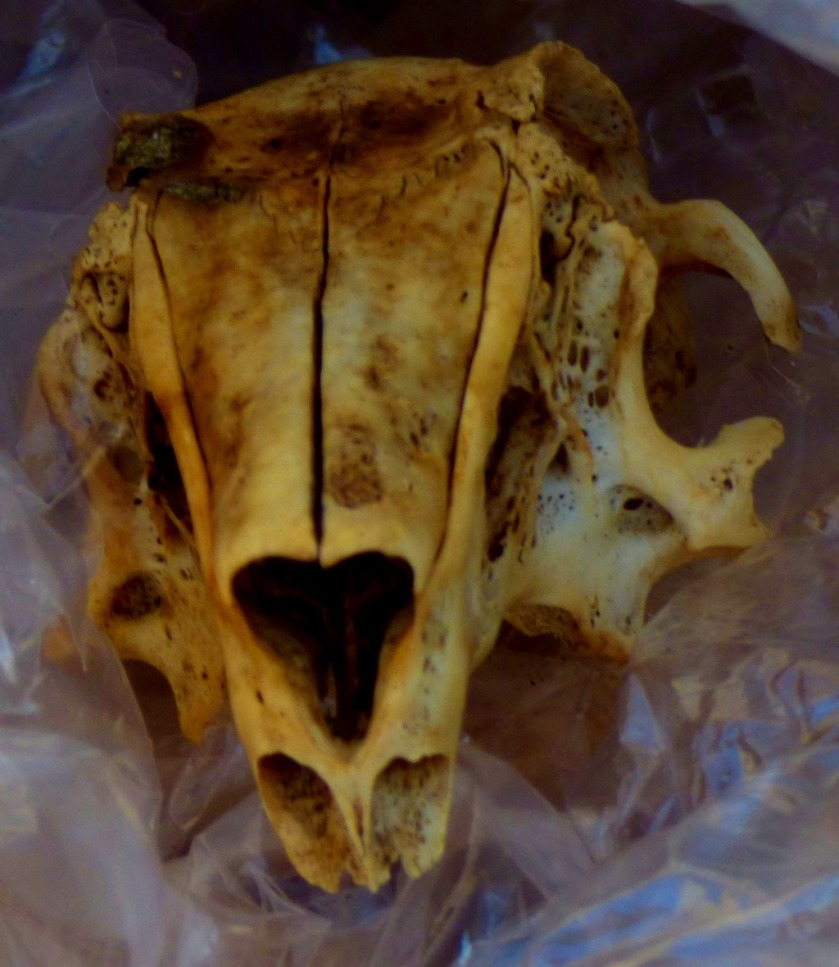
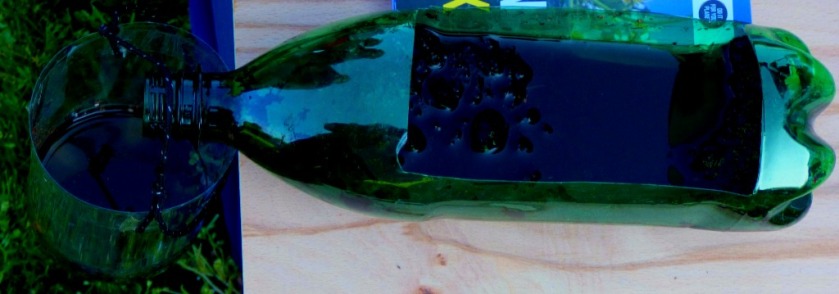
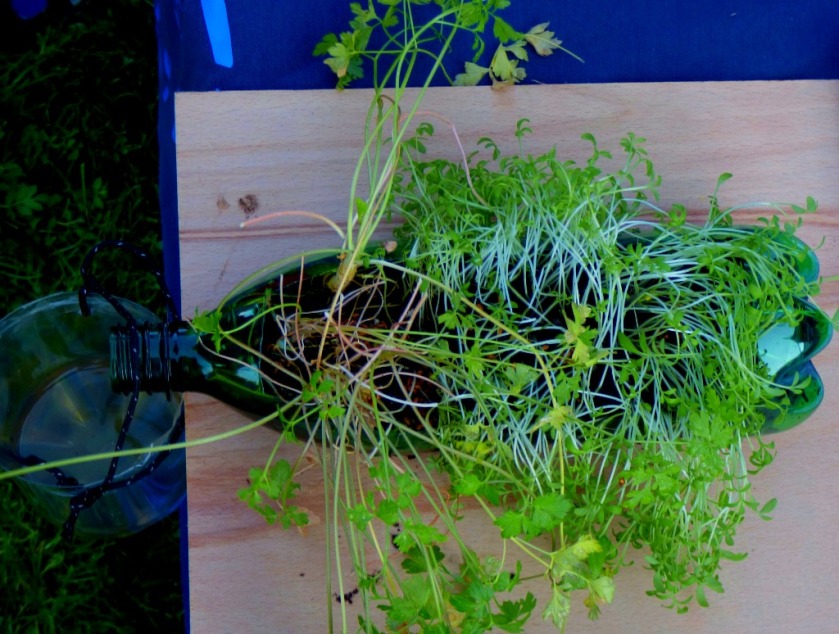
The Norfolk Wildlife Trust were showing children how to make portable ‘bug hotels’, and they also had a natural history display including a folder full of photographs of animals, and a stash of leaflets, to which I may return in a later post.
We now come to what was for me the best of all the exhibits, courtesy of…
THE NORFOLK RIVERS TRUST
There were two parts to this exhibit. The minor part was display showing graphically how different treatment of land in the winter affects the soil:
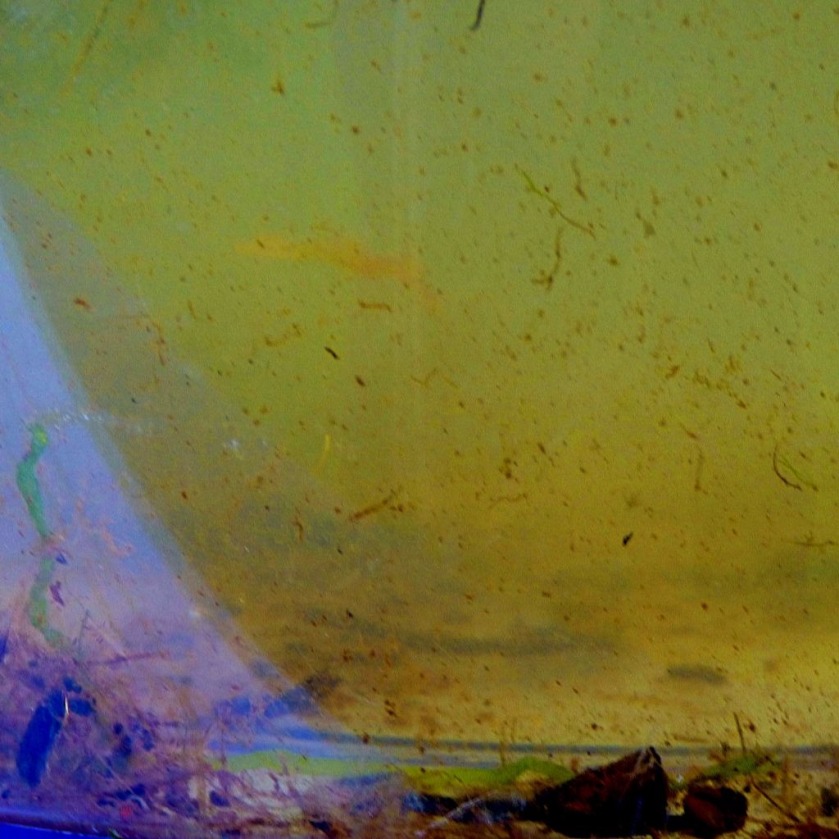
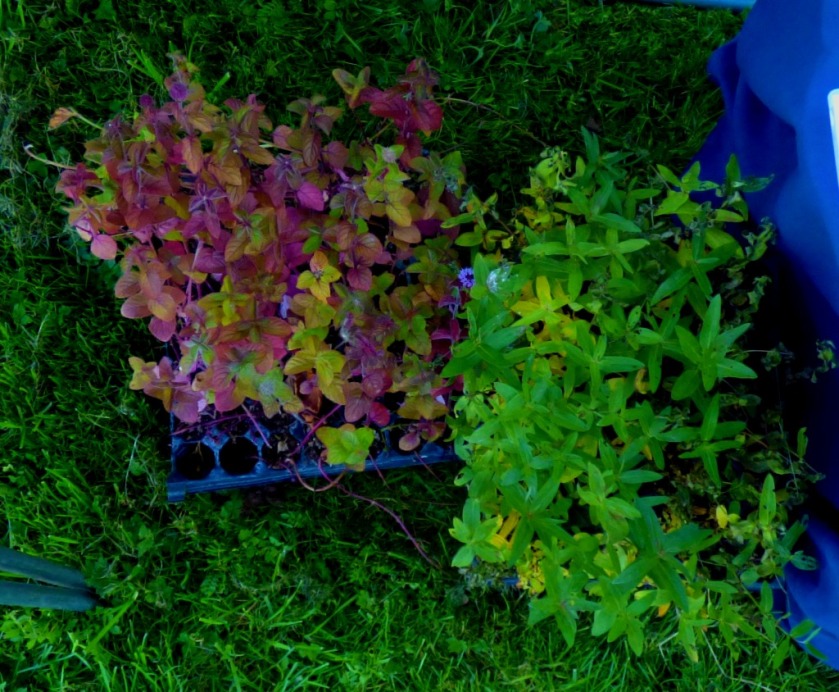
These three models were side by side demonstrating what happens to soil when there is nothing there at all – gets washed straight into the river)…When there are dead leaves covering it – still lots of it ends up in the river……and what happens when something suitable is planted – note the much clearer water at the end – most of this soil remains in place.
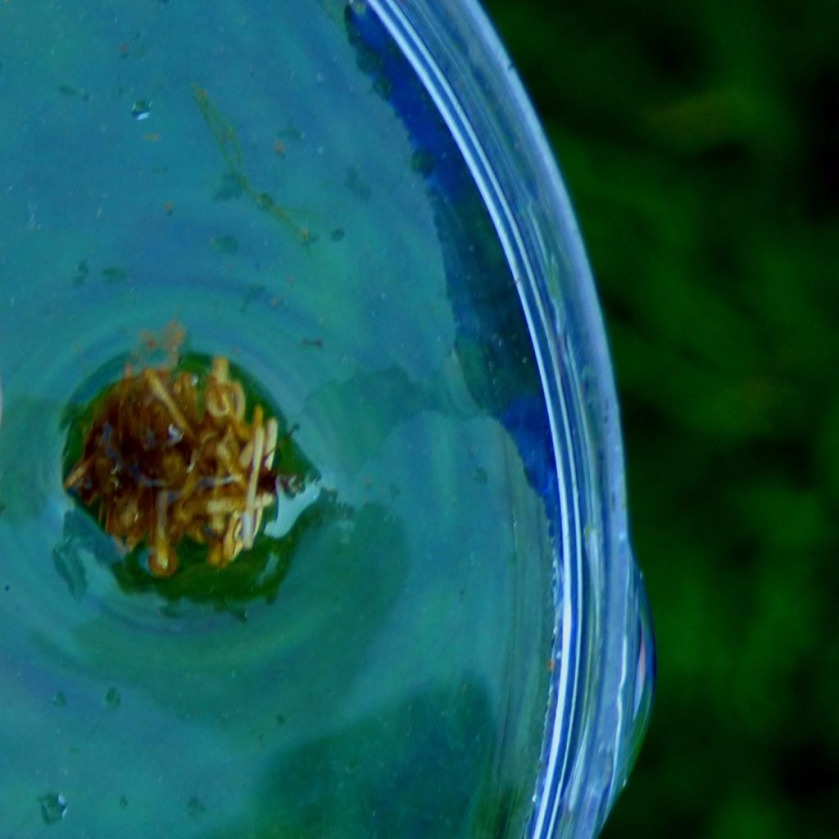
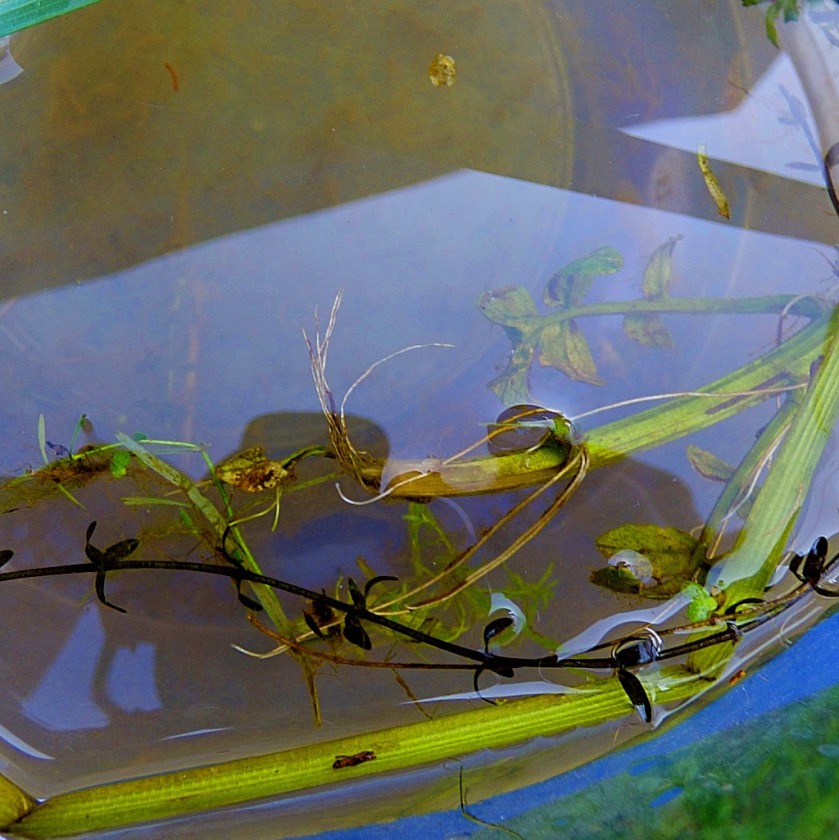
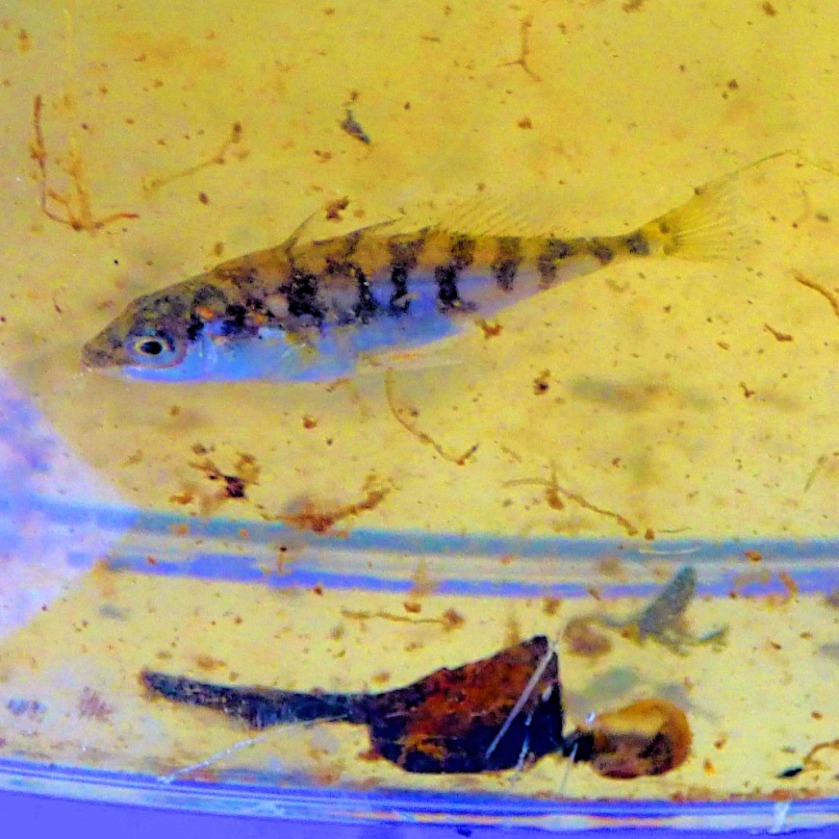
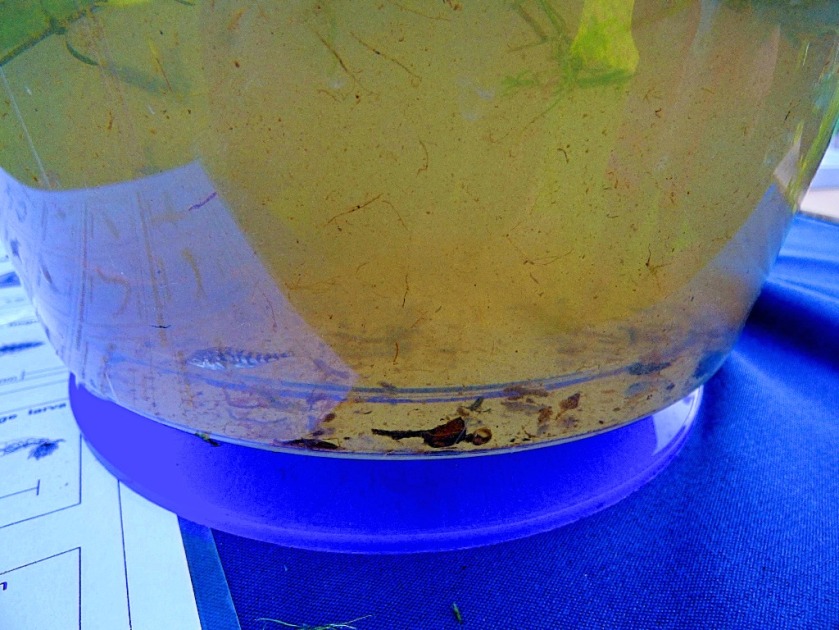
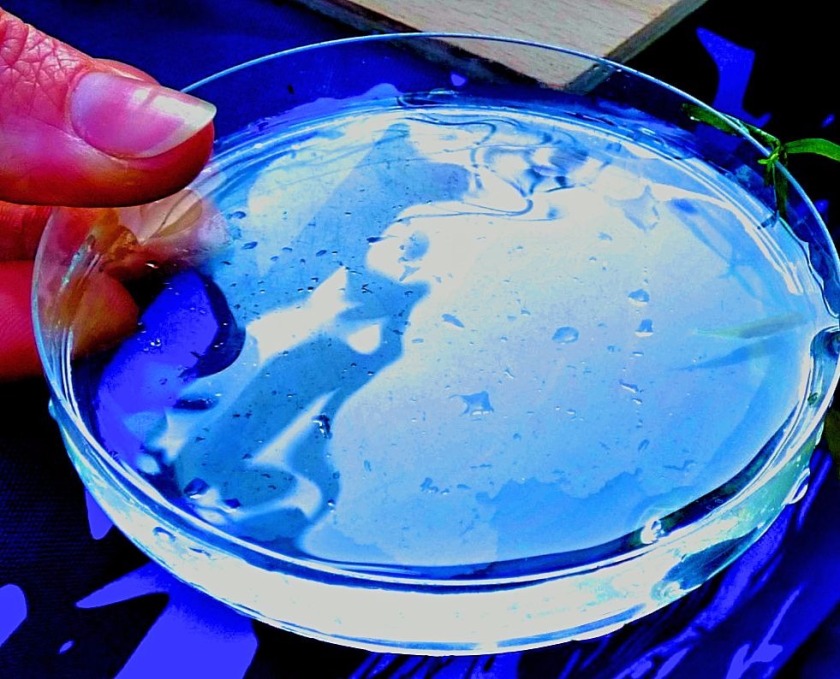
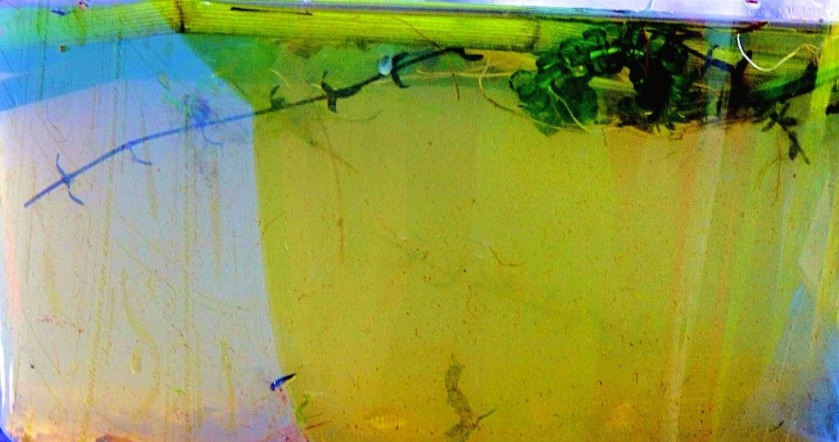
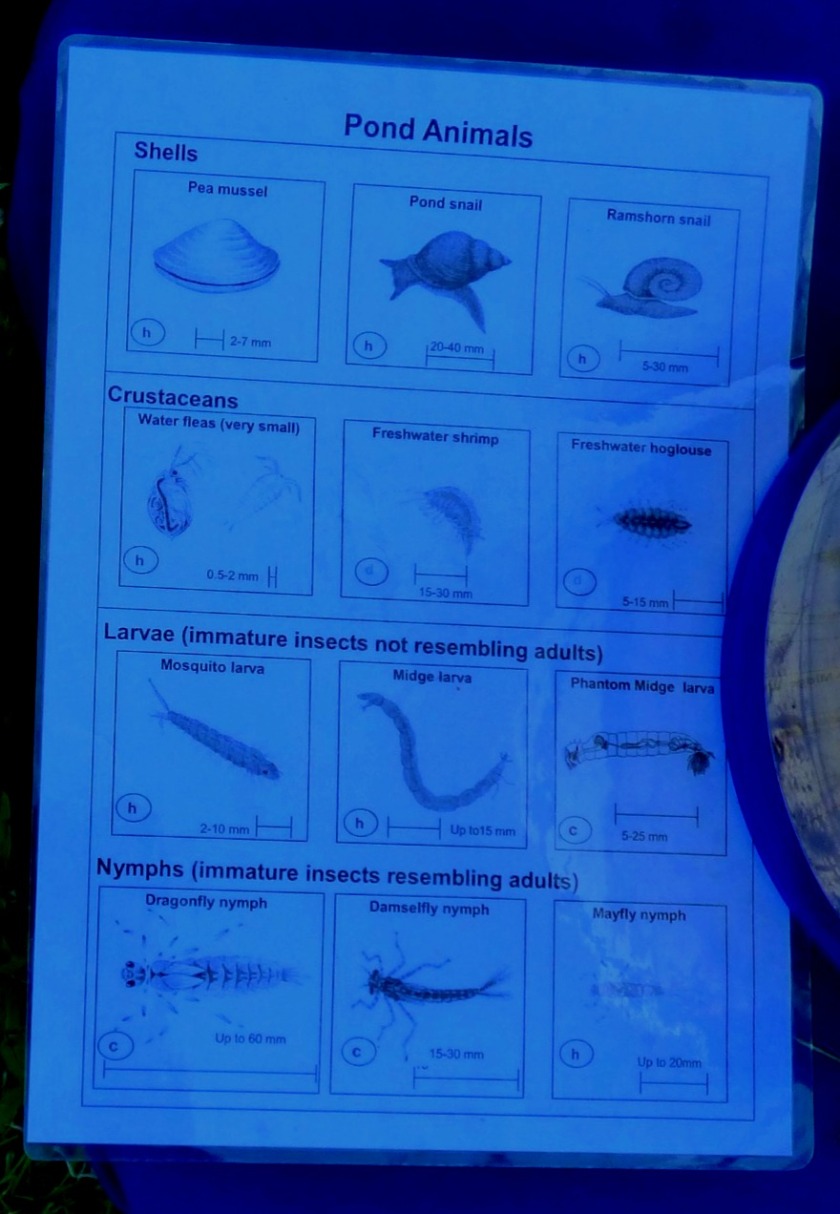
The second part of this display was a living exhibit from the river – two large buckets of river water with creatures that naturally live in it there to be seen (the amount of dissolved sediment in the water, the small size of these creatures and the fact that some of them live on the bottom of the river means that this the only way to make them visible). There was also a small sample dish which the person running the exhibit used to show as very small curiosities…
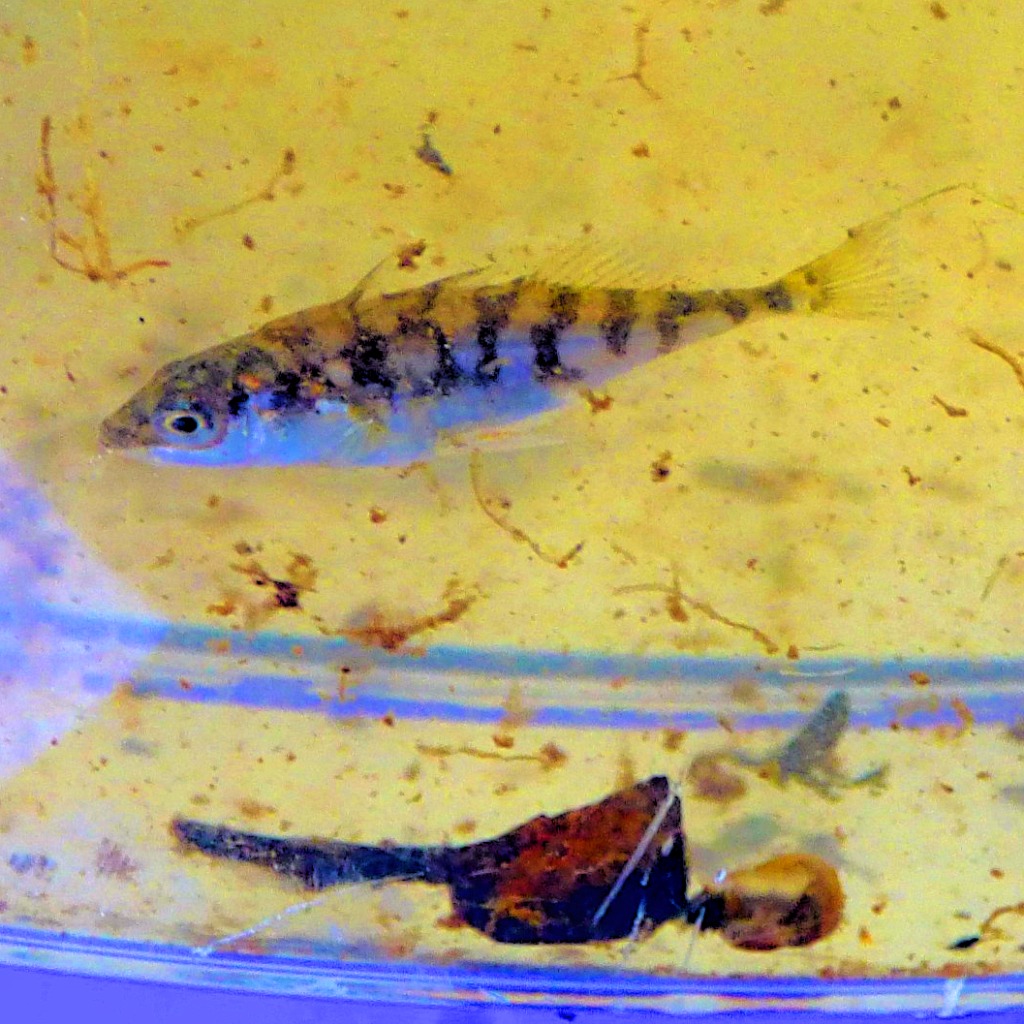
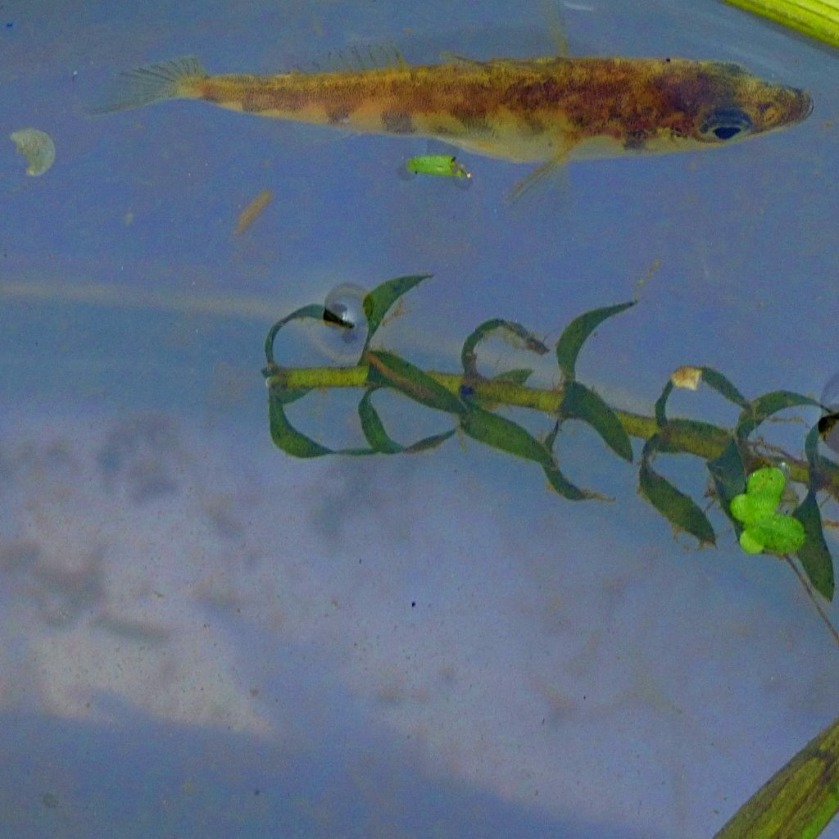
This is one of nature’s smallest houses – within it is a caddis fly larva, and at some point the adult fly will emerge.The next three shots are of small sticklebacks.
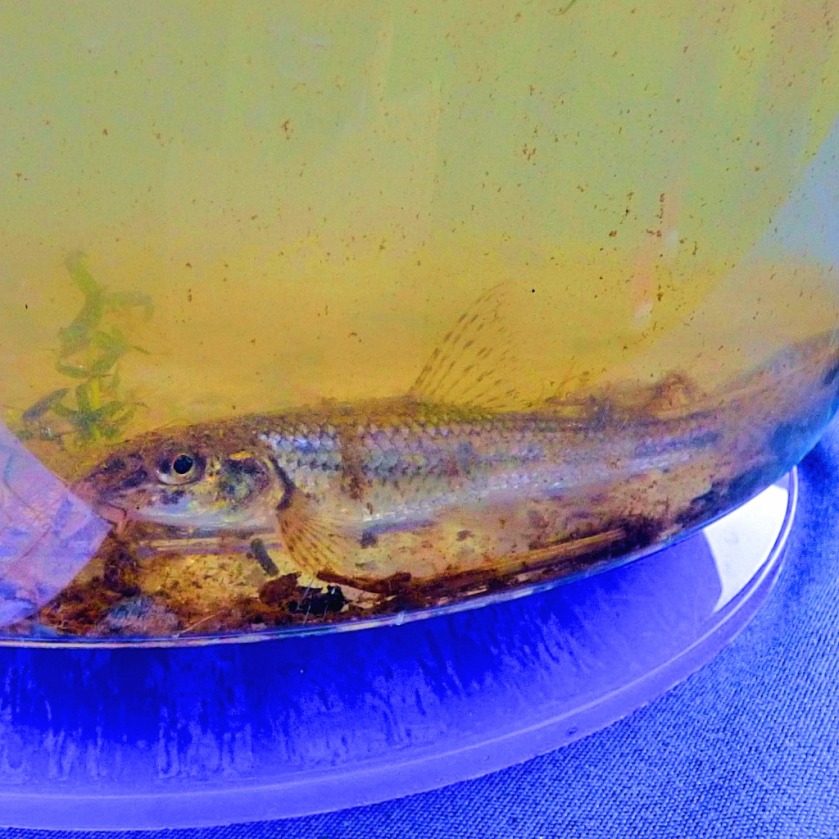
This was described as a gudgeon, but looks different to the other gudgeons we will see later. The silvery sheen to its scales suggests a dace to my eyes.
I am not sure what this piebald fish is, though it could be a stickleback.
This shot of the sample dish showing the thumbnail of the dxemonstrator reveals just how tiny that Caddis fly home actually is – it was in this same dish that I saw it.
Two gudgeons in the second bucket – note that as would be the case in the river they are at the bottom.
There was also a story teller outside…
LINKS
To start this section we look at organisations who were actually involved in some way or other with this event:
Wildlife & Planet – interesting stuff about wildlife from all over the world.
WEIT– the website that grew out of Jerry Coyne’s classic book Why Evolution is True.
Science Whys – the blog of Brandeis biology professor James Morris.
Rationalising the Universe – sets about accomplishing the big task laid out in its title and does a good job of it.
Faraday’s Candle – a science website that will really illuminate your life.
I conclude this section by mentioning a couple of bloggers who regularly feature nature in their work:
CindyKnoke – keen photographer and nature lover. Below is the feature image from (and link to) her most recent post:
Anna – her posts about fighting to save nature in her part of the world are always inspiring, and her two recent series of posts “Paradise on Earth” and “Butterflies in Trosa” are both stunning. Below is the feature image from (and link to) her most recent butterfly post.
CONCLUSION
This was an excellent event and I learned a good deal about the history and nature of the Gaywood River. I have one kvetch which is that the event was poorly publicised – I only found out about it through my aunt and then only a few days before it was happening, meaning that anyone else I might have alerted would almost certainly have had other plans. If half of you have enjoyed this post even half as much as I enjoyed the event I have done a good job. I finish by urging you to take the time to follow up those links.
Letting people know that I will be visiting Cornwall in the near future, and a few other bits and bobs.
INTRODUCTION
My parents have recently moved to a place near Plymouth, and all they are currently out of the country travelling they will be back for a month or thereabouts from late October. I will be visiting their place in mid-November. I have asked for leave on the 9th and 10th of November so that I can go down on the 8th and come back on the 13th.
THE JOURNEY
To get from King’s Lynn to Plymouth (nearest station to my parents’ new place) by public transport one needs to to travel from King’s Lynn to London King’s Cross, get a Hammersmith & City line train from King’s Cross to Paddington and then travel from Paddington to Plymouth (I already knew this). The journey takes in the region of six hours (I expected this to be the case but until I investigated did not know for certain). This why I requested leave for the two days concerned because the two days on which one travels are not going to be much use for anything else.
THE TICKETS
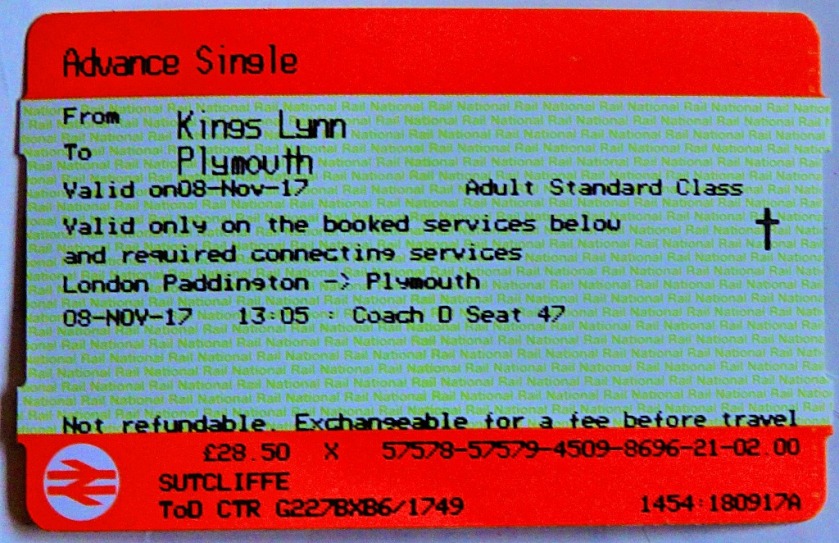
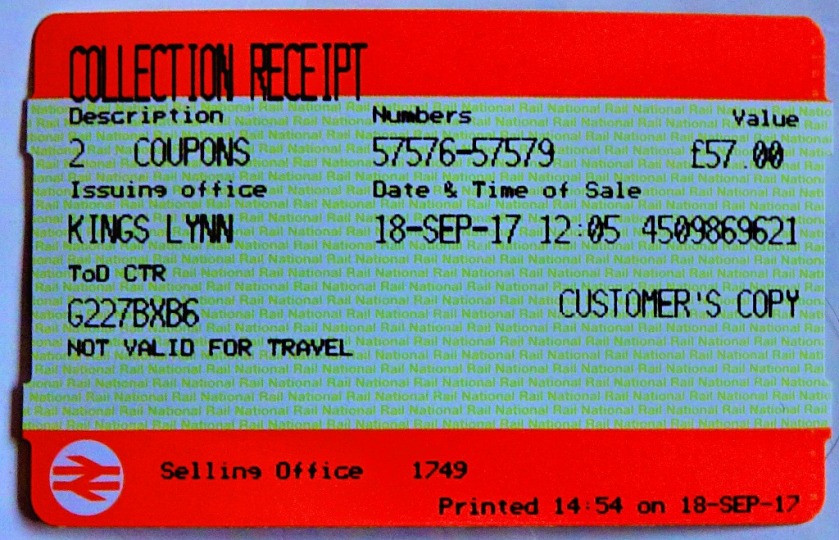
I discovered via www.thetrainline.com that tickets were available for £57. Thus I have made the booking and picked up the tickets.
COLLECTING THE TICKETS
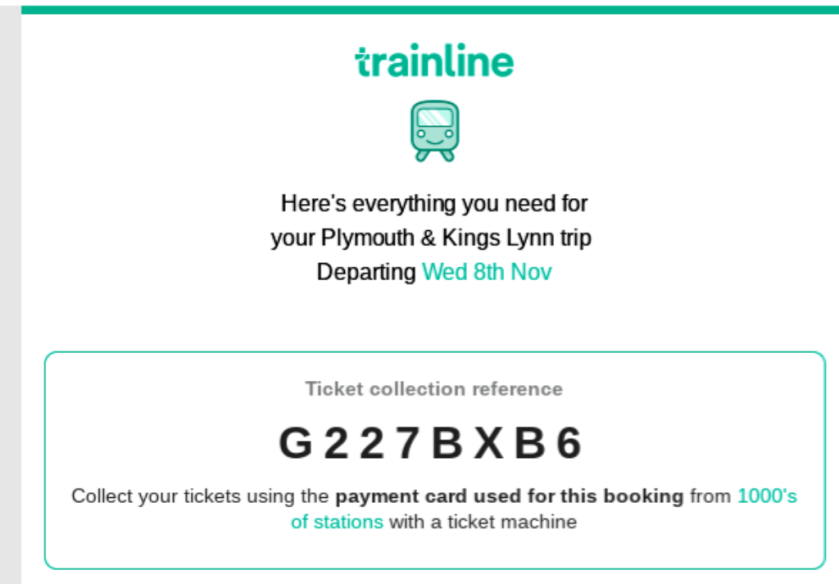
Having made the booking I was assigned a code I could use to collect the tickets:
I decided that memorising an alphanumeric code of eight characters would be a bit of an ask even for me, so I called in at the library where I could screenshot the email containing the above, paste into paint and edit as appropriate before printing at a cost of 10p.
From there it was a short walk through the park to the station to pick up the tickets.
Outbound ticketThe Homebound ticket
The receipt.
The email giving me the code to collect my tickets also included itineraries for both journeys.
This is a little stretched out, but I for one would not care to be on a train the was due to arrive at Kings Cross at 12:35 when I had to make a connection at Paddington at 13:05 – given British public transport’s usual “punctuality” that would be courting disaster.
The journey back could be a little quicker – but note that since there is no pre-booking on the London to Lynn line it is merely an annoyance should I miss the 14:44.
THE BRILLIANT.ORG 100-DAY
SUMMER CHALLENGE
I recently received (by email) my certificate for having attempted all 100 of the problems (almost 50,000 people attempted at least one of these problems, of whom 1,797 attempted the whole lot).
Before moving on to the photographs that will conclude this post I offer you…
A PUZZLE OF MY OWN CREATION
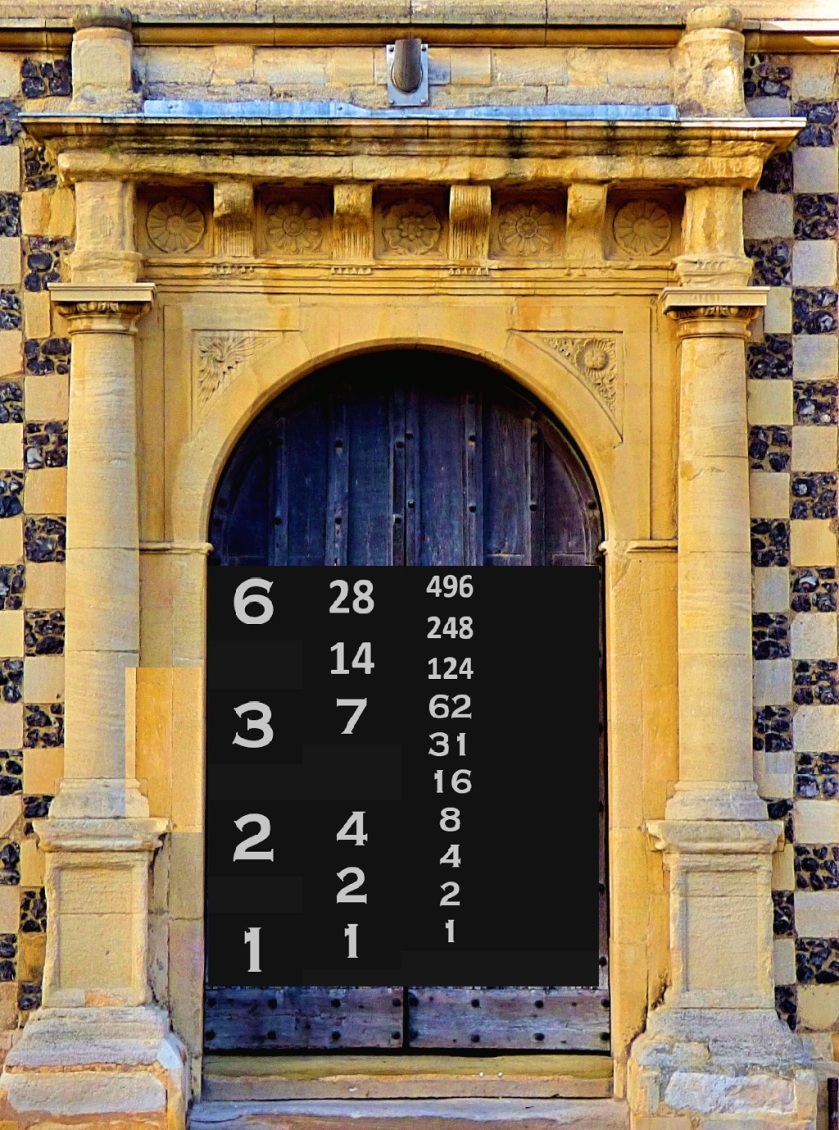
Archaeologist and adventurer Idaho Johnson is near to making the biggest find of her life, but to do so she needs to get past the “Door of Death”:
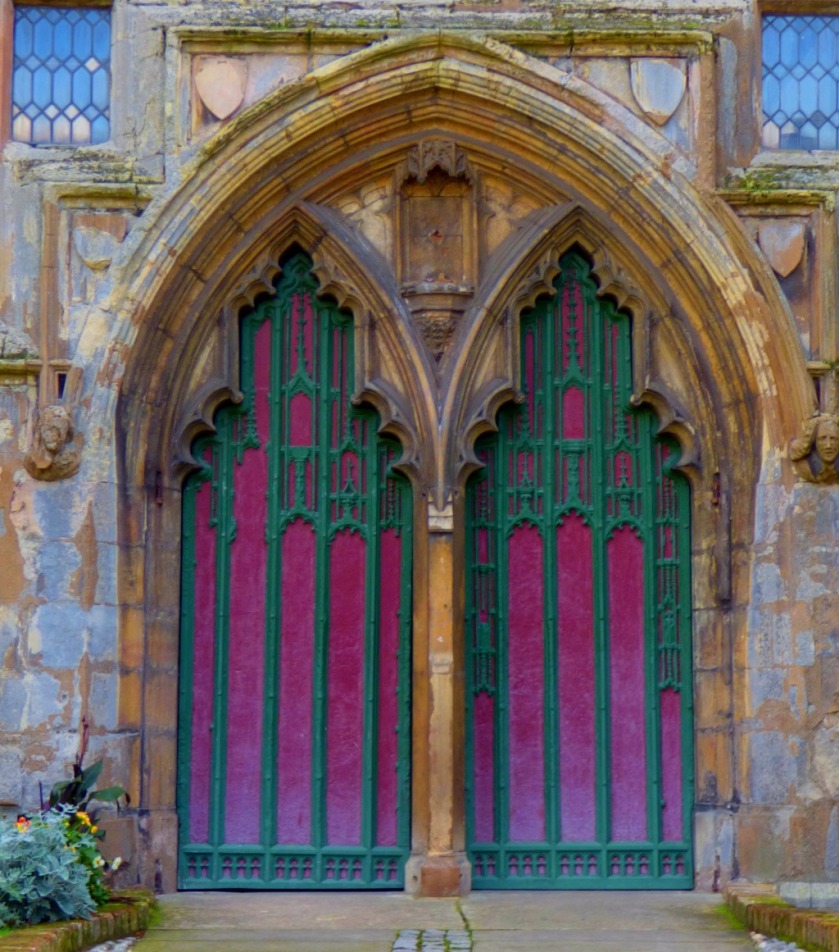
Can you fill in the missing fourth vertical panel of numbers and get Ms Johnson through the “Door of Death”? As a bonus question can you identify the real door that I have used to create the above image?
A review of a new find – Steve Burrows’ Birder Murders, with some Norfolk bird pictures of my own for company.
INTRODUCTION
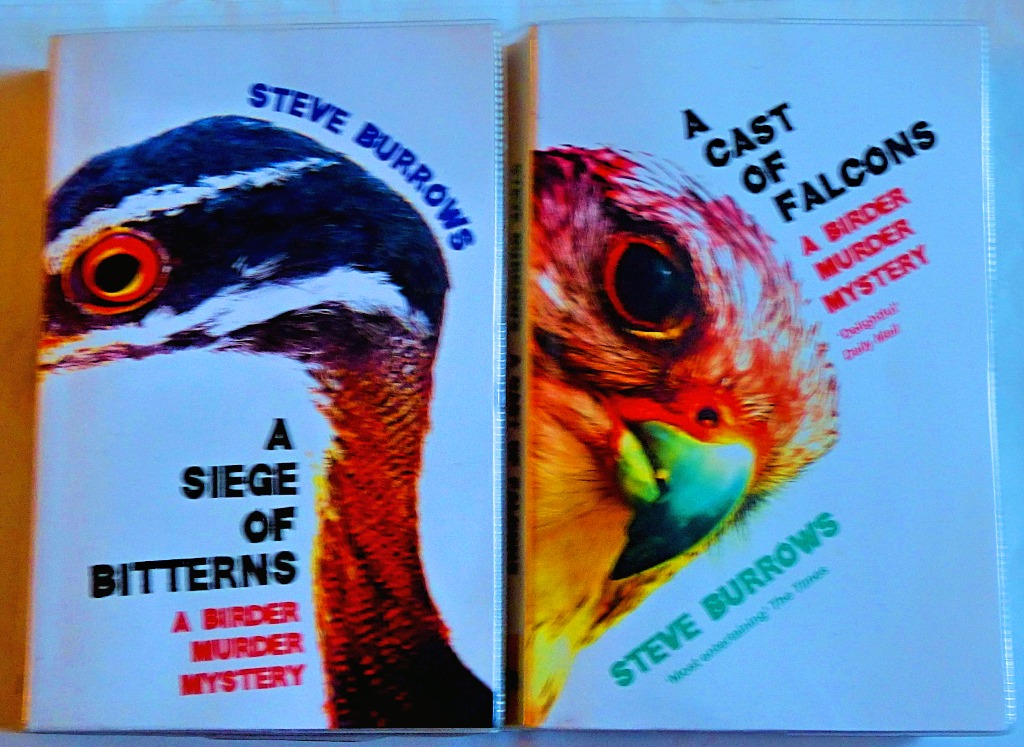
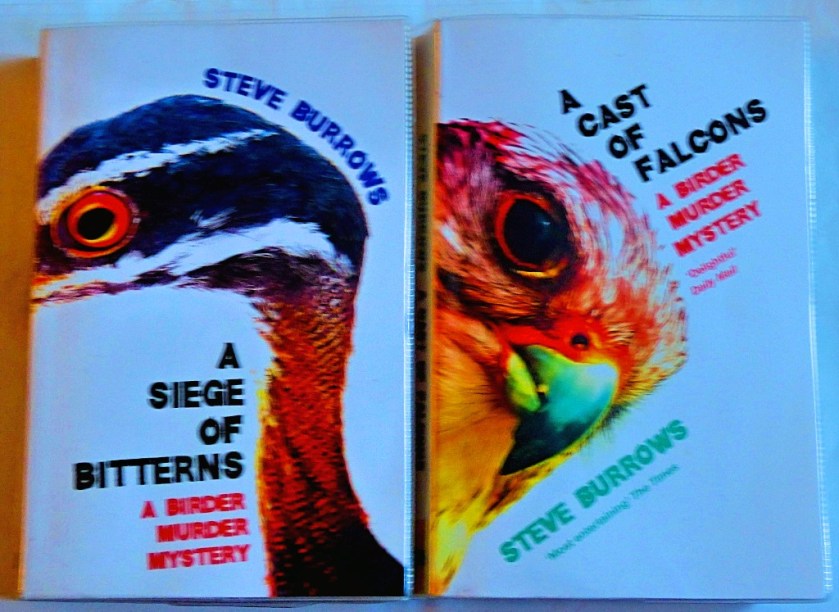
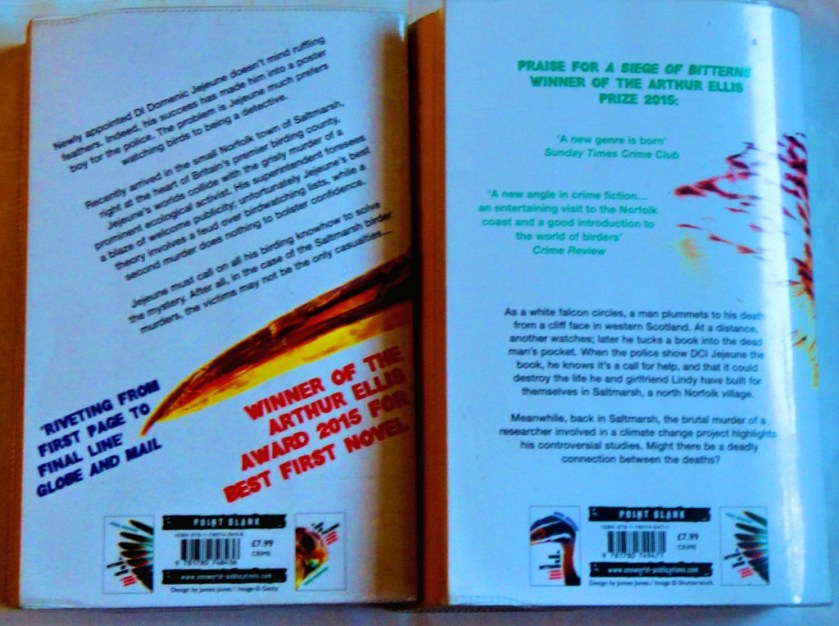
This post concerns two books by a writer I discovered in the last few days:
MAKING THE DISCOVERY
When I saw these in the library there was never any doubt about borrowing them – detective stories set in Norfolk and heavily concerned with birds looks a darned good mix.
THE BOOKS
There is much of interest about birds and about North Norfolk in these books, and the strikingly different characters of each of the police officers makes for some good interplay between them.
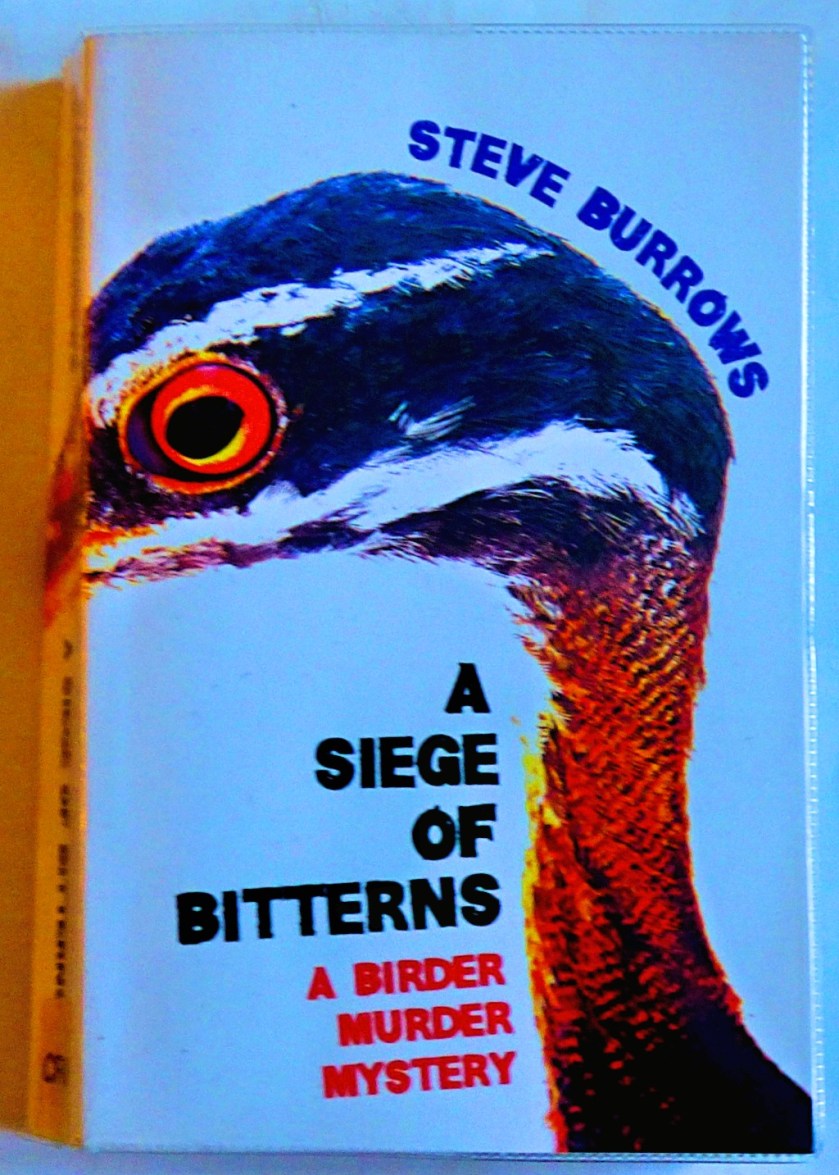
In the first of these two books, “A Siege of Bitterns”, the first victim is actually a birdwatcher. The second victim is a suspect in the first case until he is found dead. It eventjually turns out that the first case was not murder but suicide, and that the murderer in the second case was the MP.
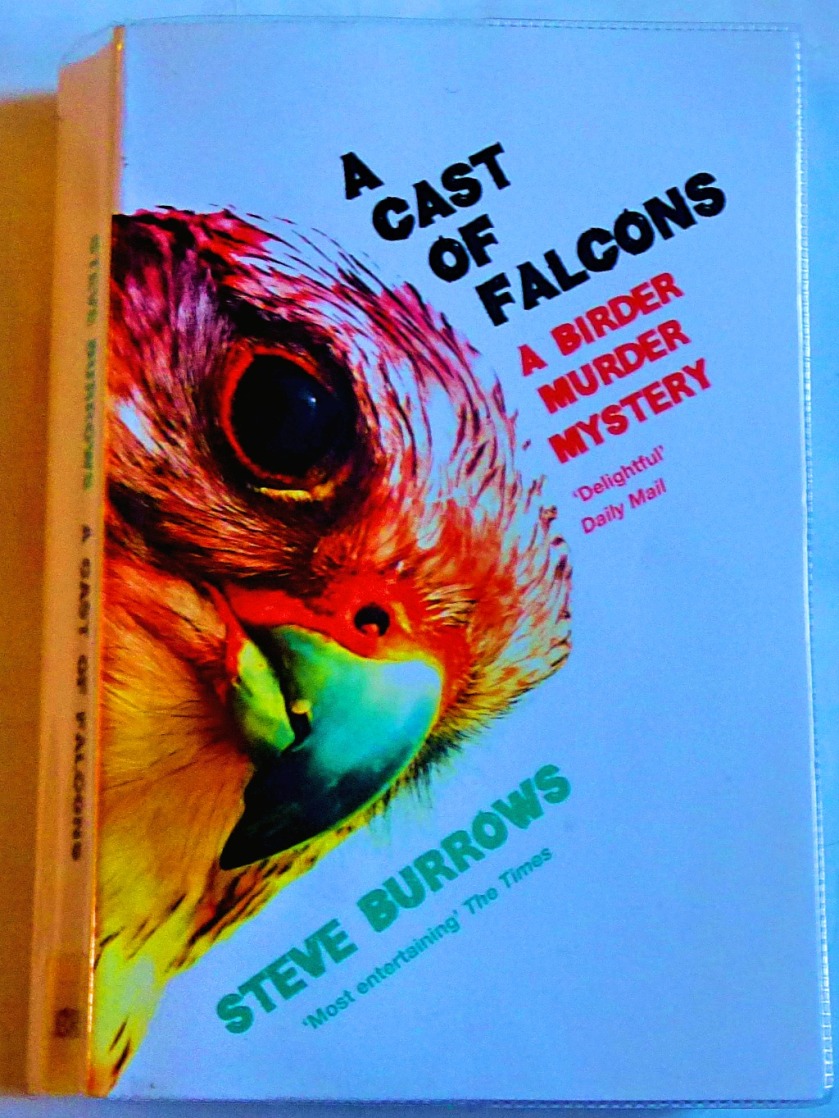
In “A Cast of Falcons”, the hero’s boss, DCS Shepherd, is shown up in a very poor light when she initially refuses even to entertain the notion that the exceedingly rich Sheik who has bought an old dairy farm for his pet project (research on method of carbon capture) could be guilty. She shows herself to be more concerned with not annoying someone who is rich and powerful than with justice, which given her job is entirely unacceptable.
There is a third book in this series that I know of, called “A Pitying of Doves”, and it is sufficient comment on just how good these two books are that I have reserved a copy (costs 60p) and am awaiting it’s arrival at King’s Lynn library.
If you get the opportunity to pick up a book with the name Steve Burrows on the cover please take it!
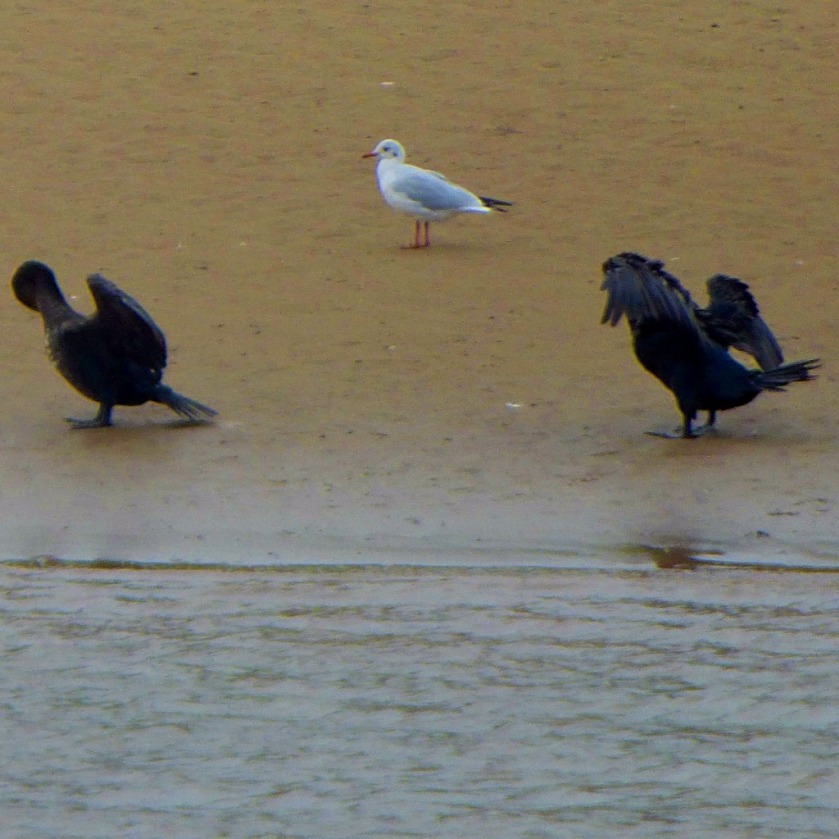
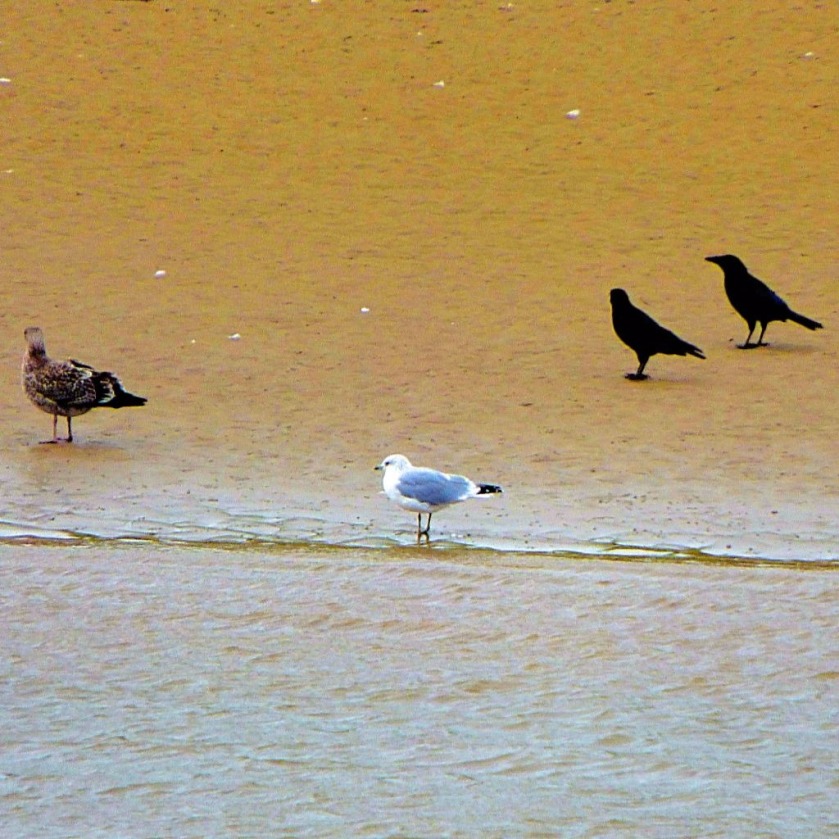
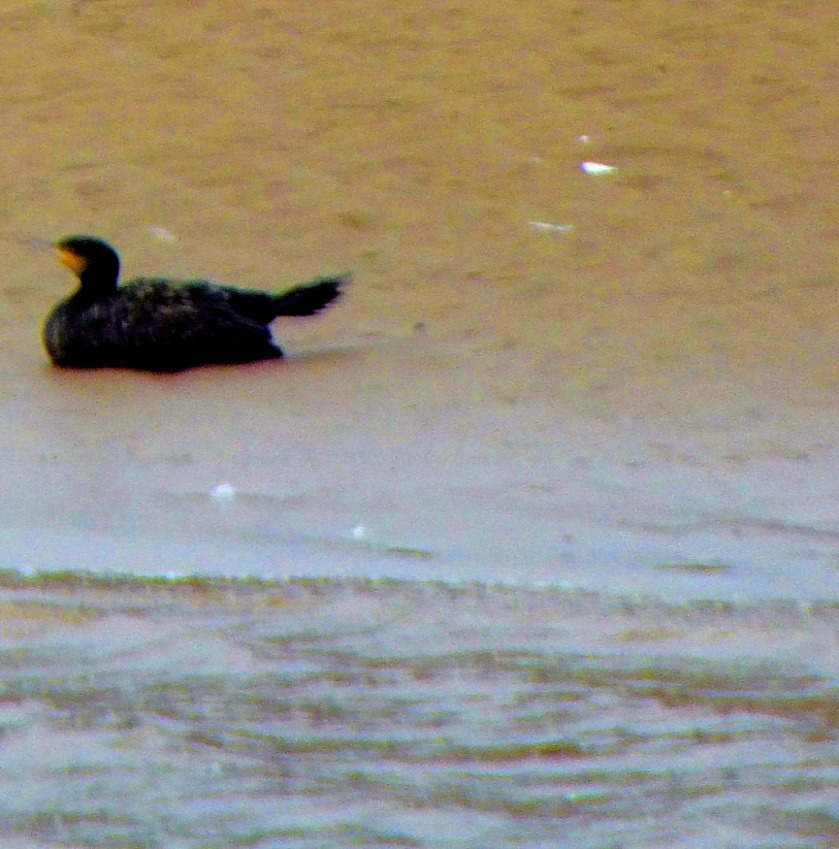
SOME NORFOLK BIRDS
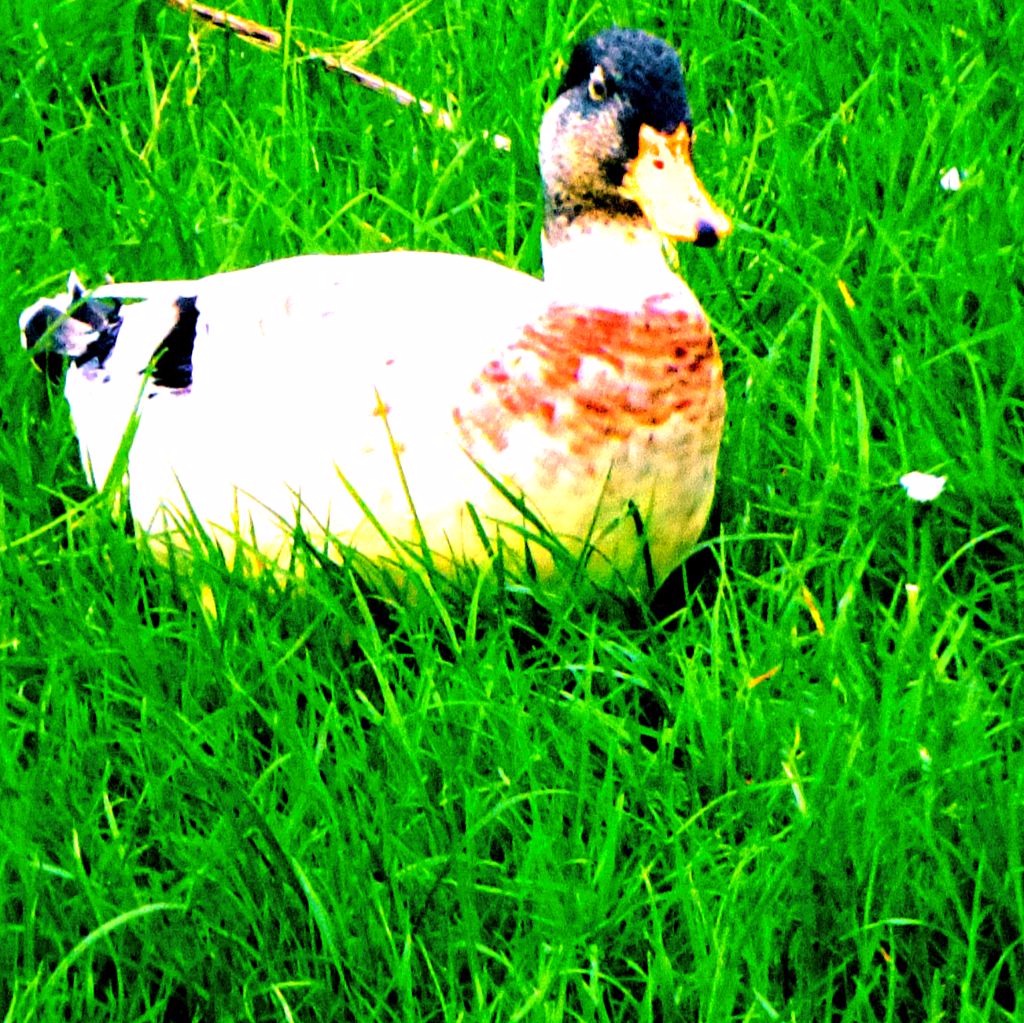
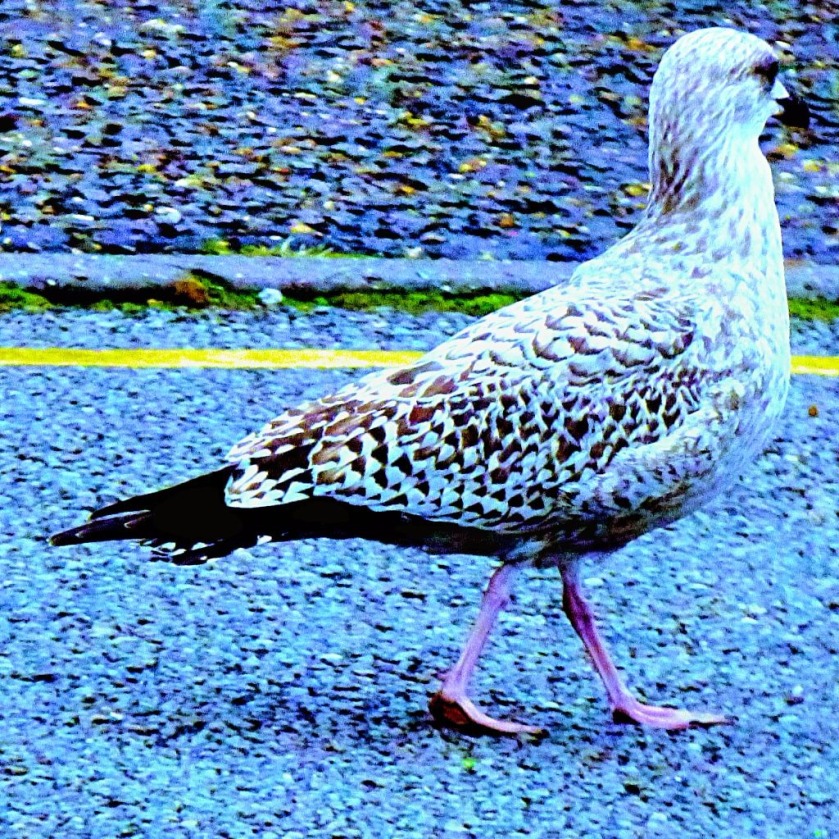
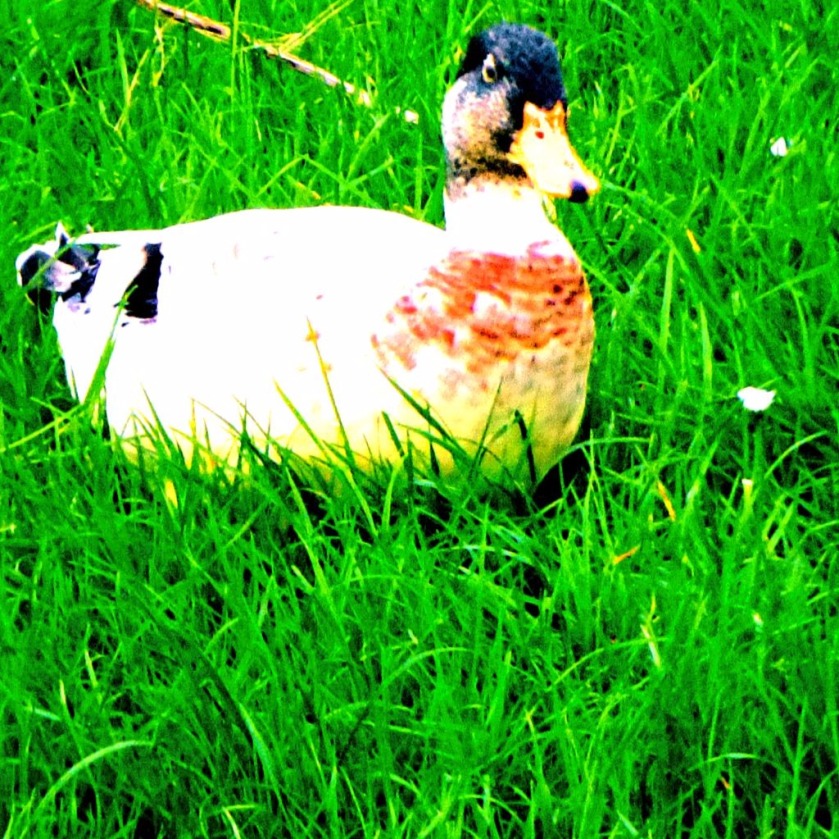
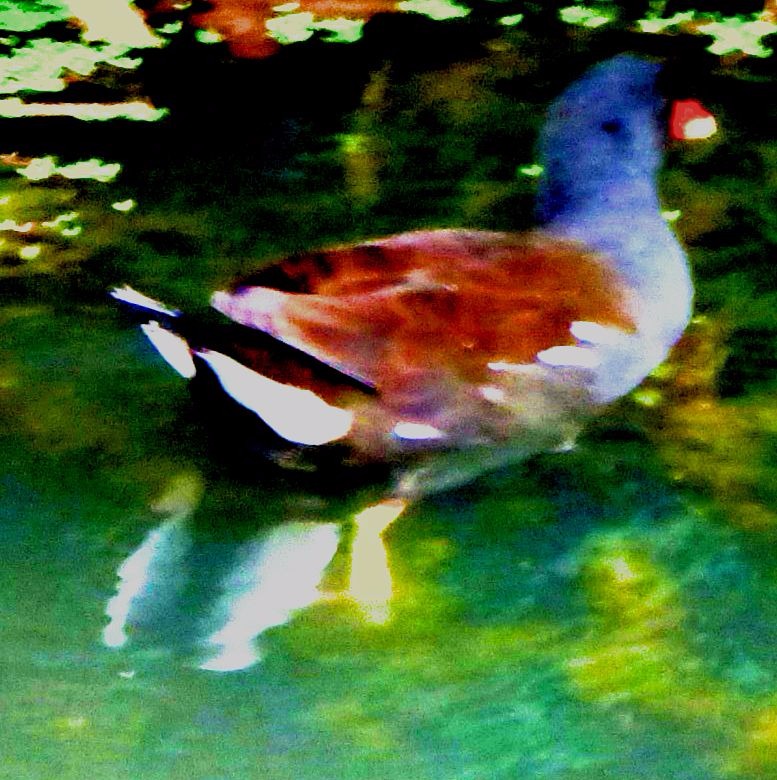
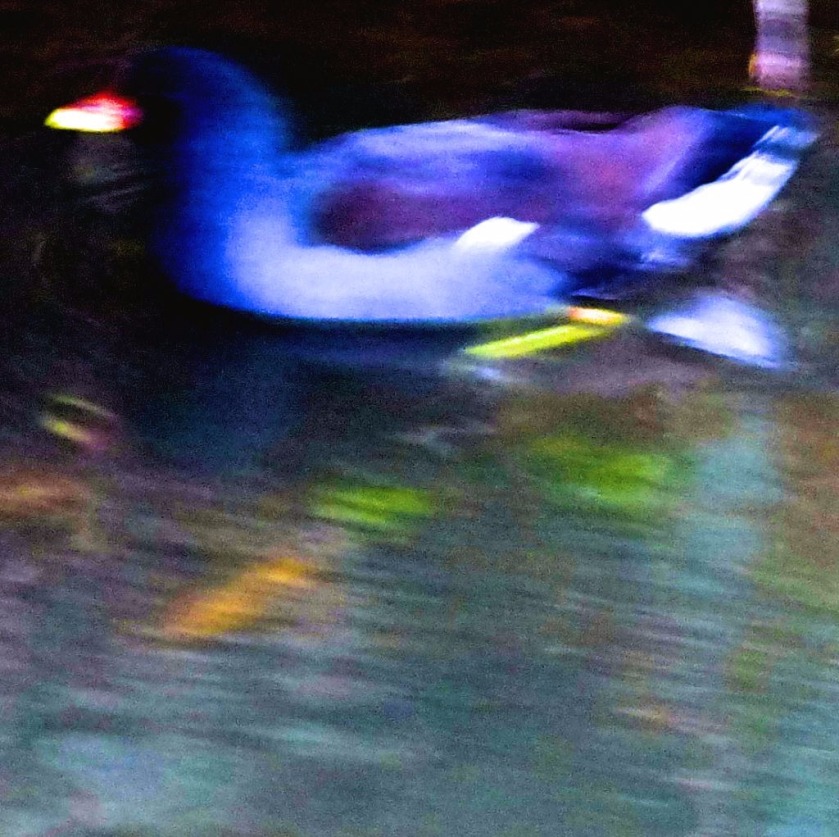
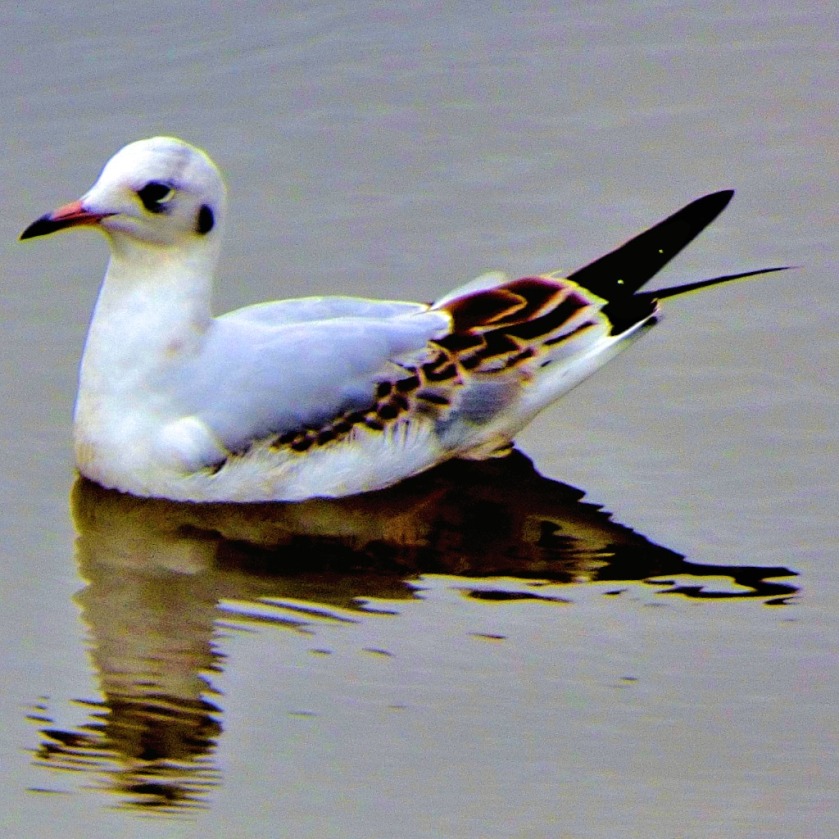
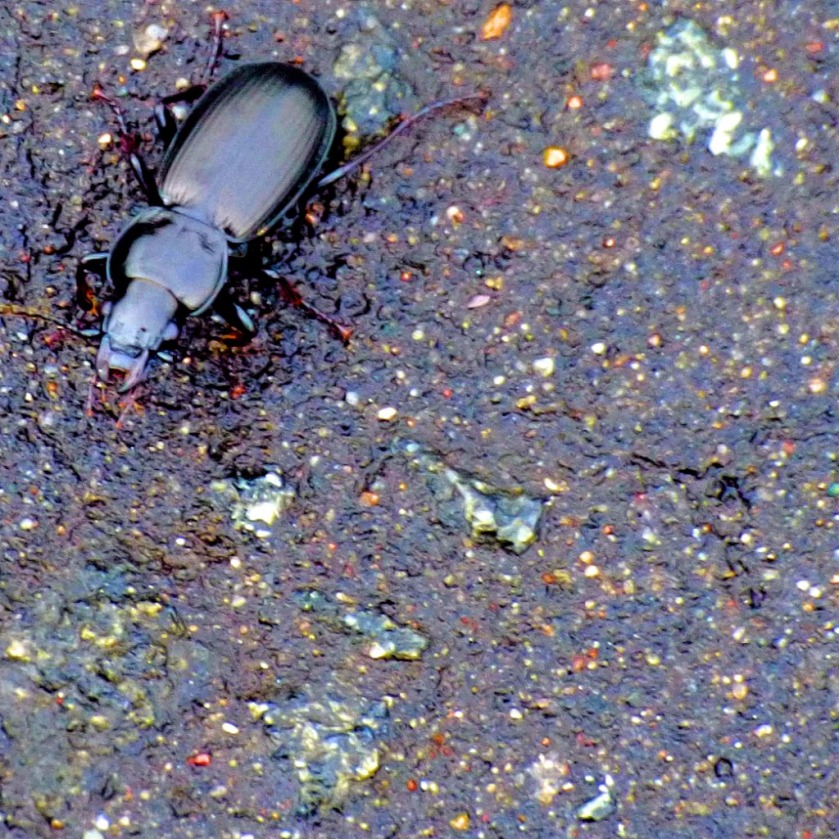
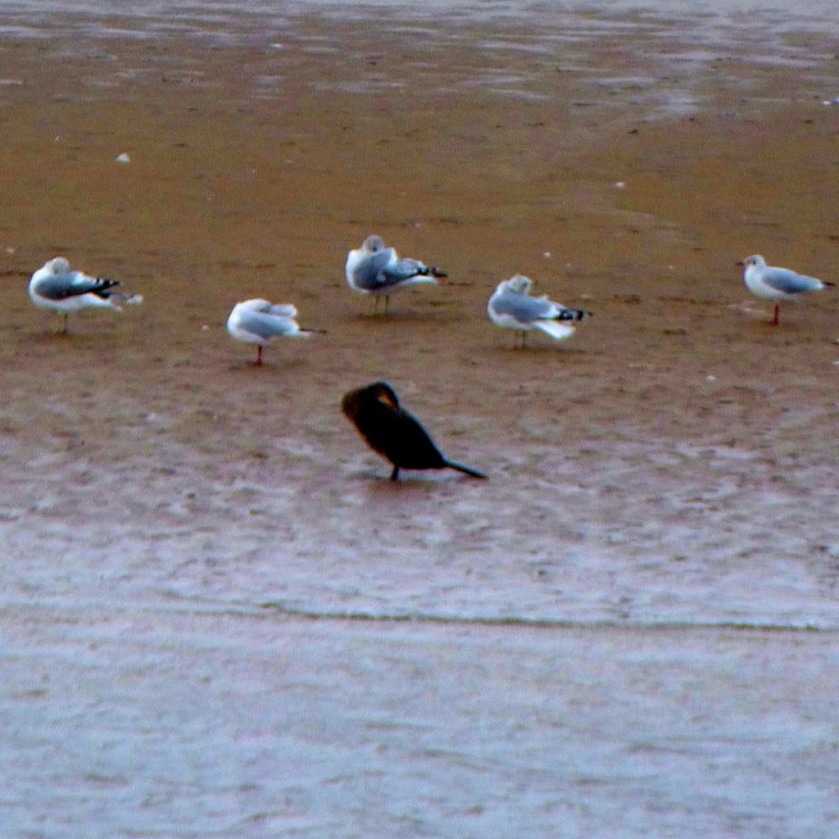
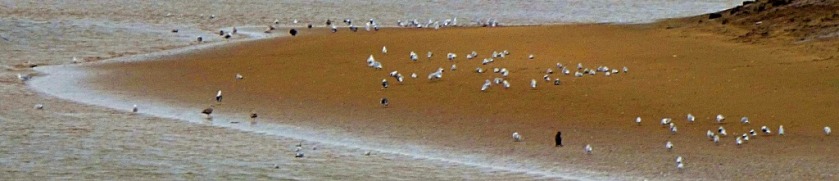
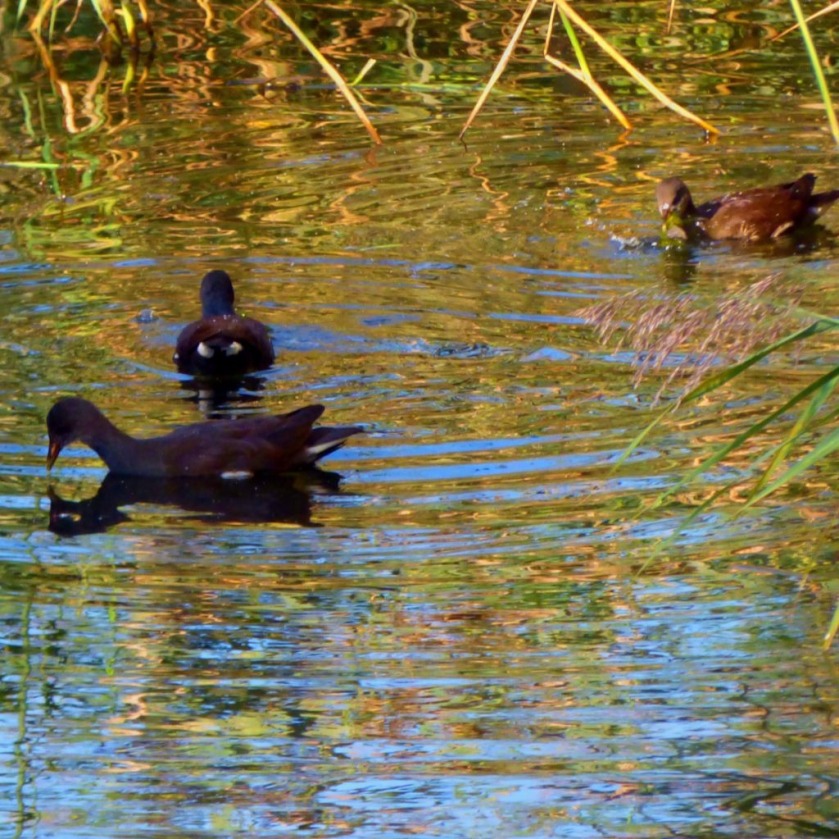
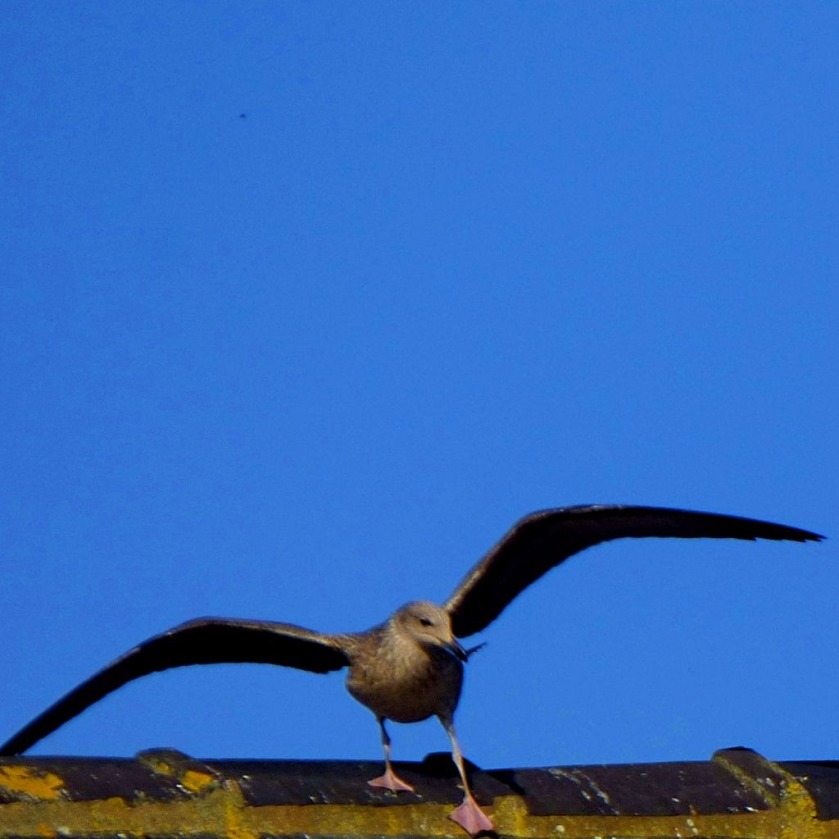
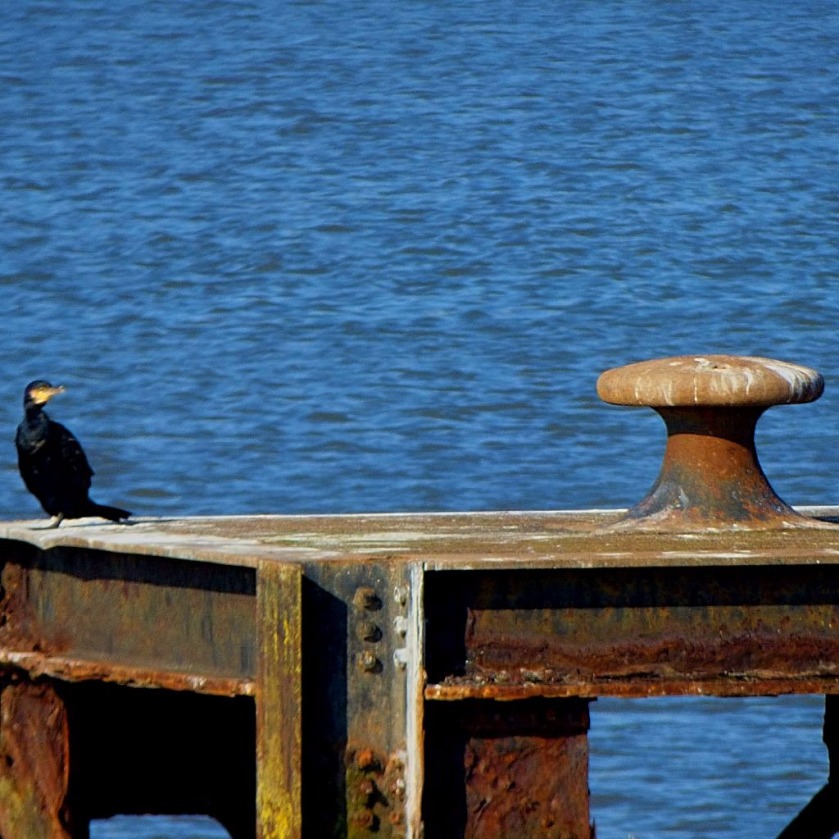
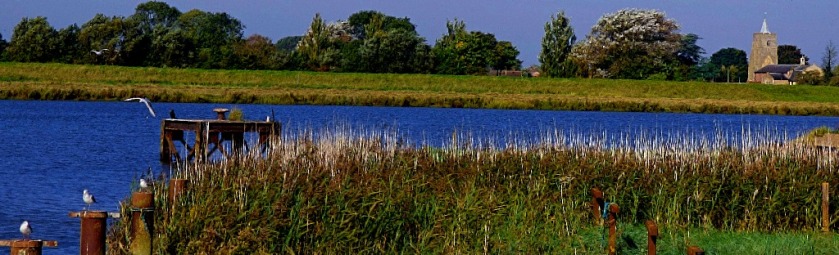
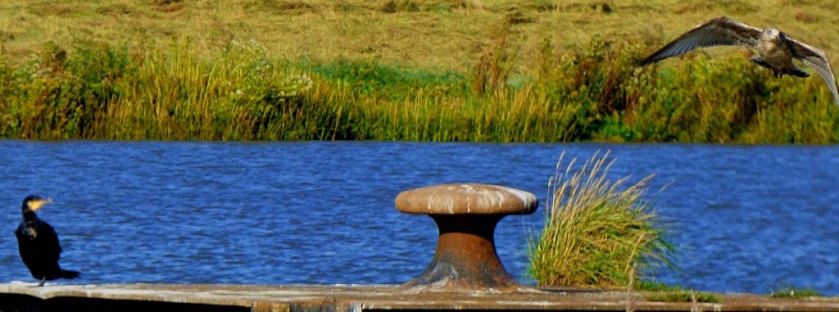
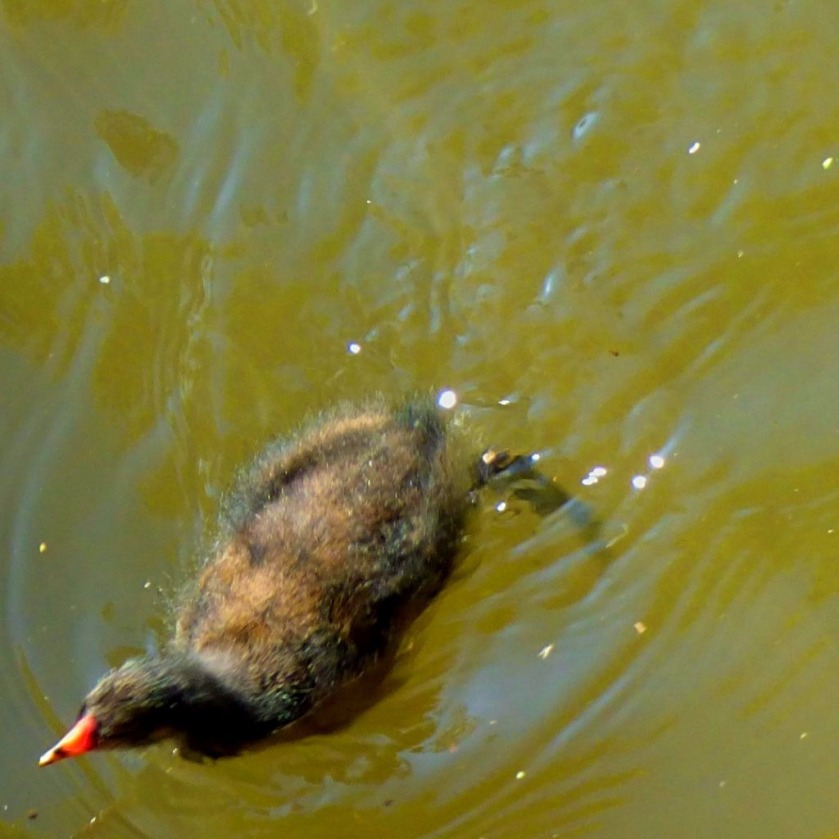
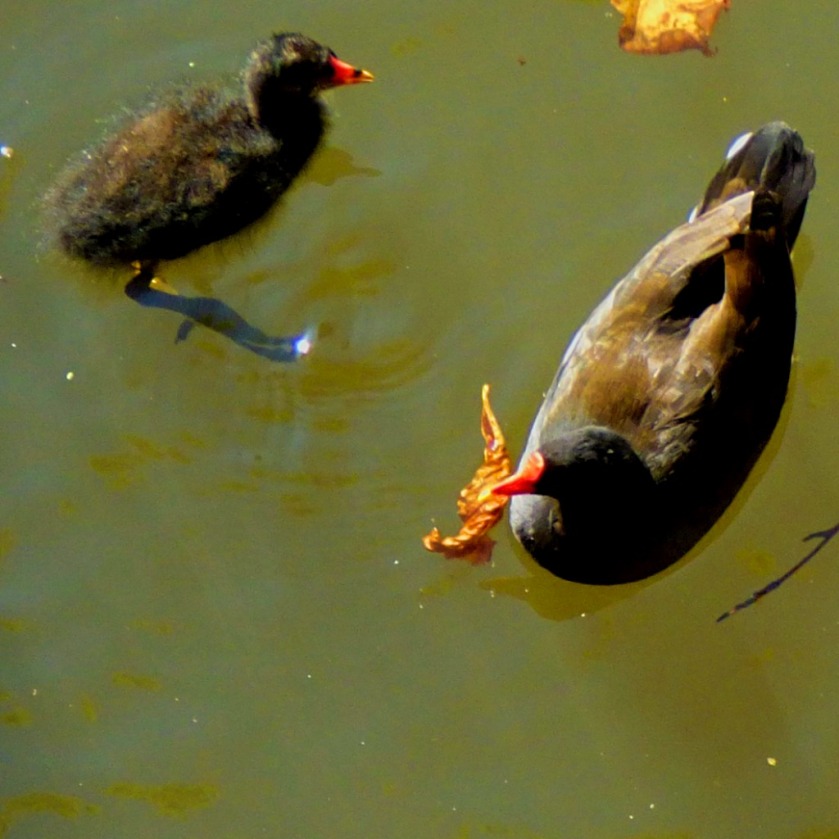
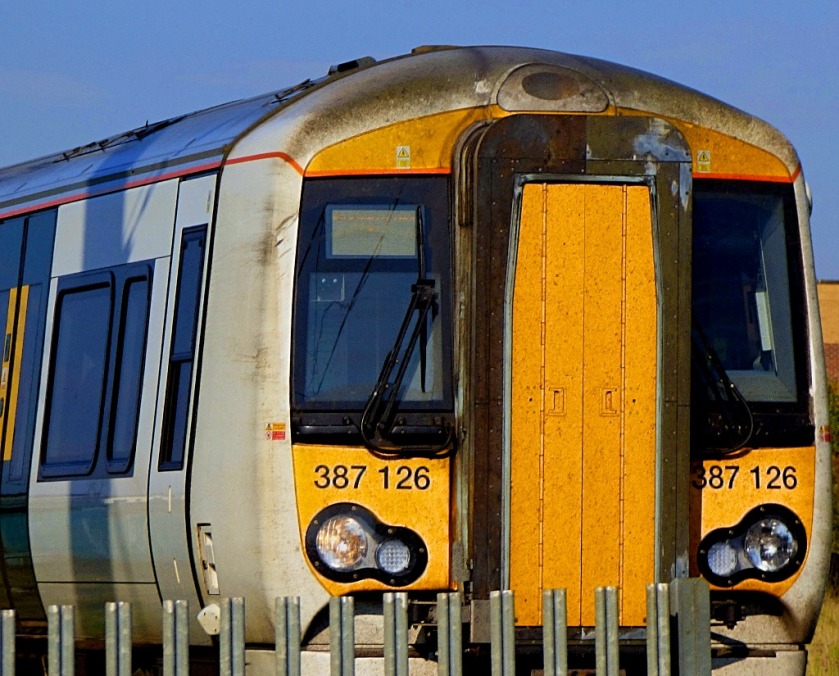
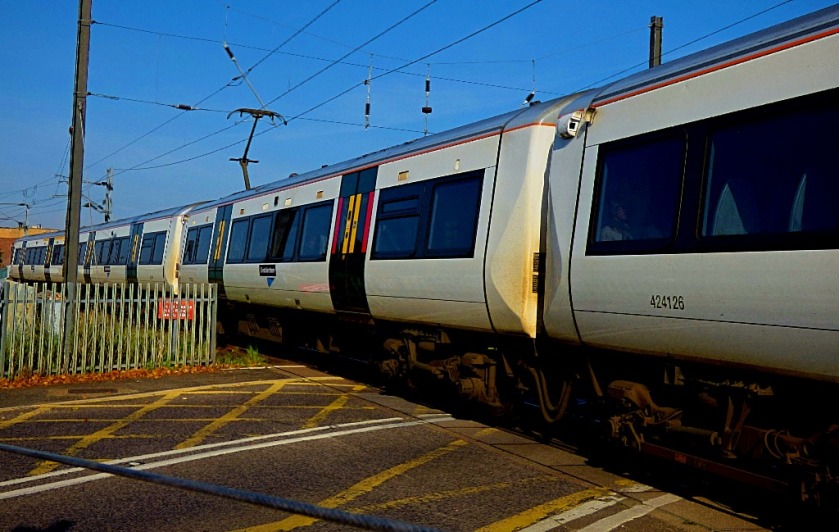
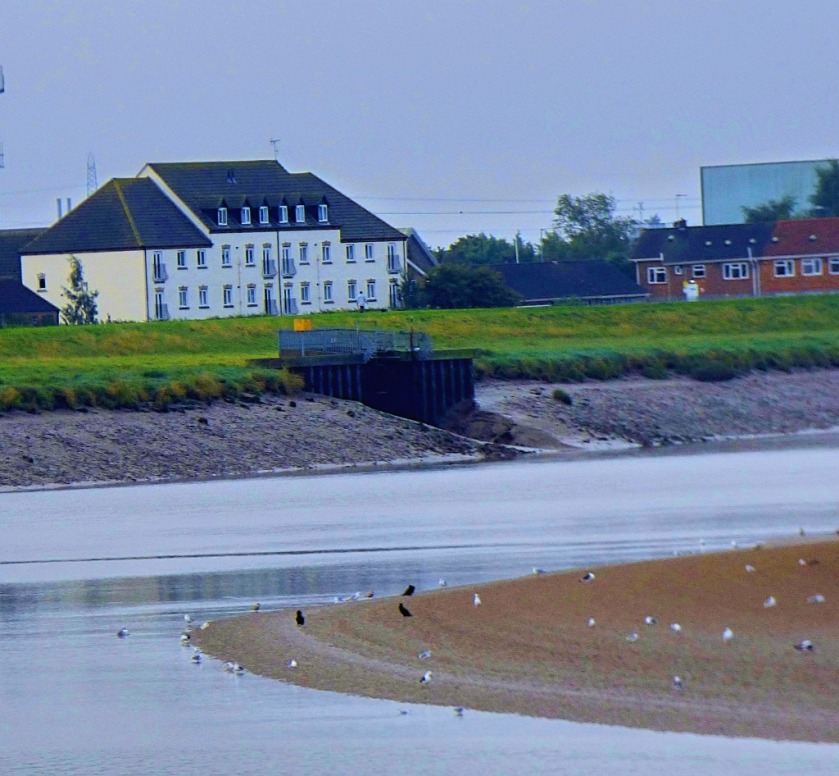
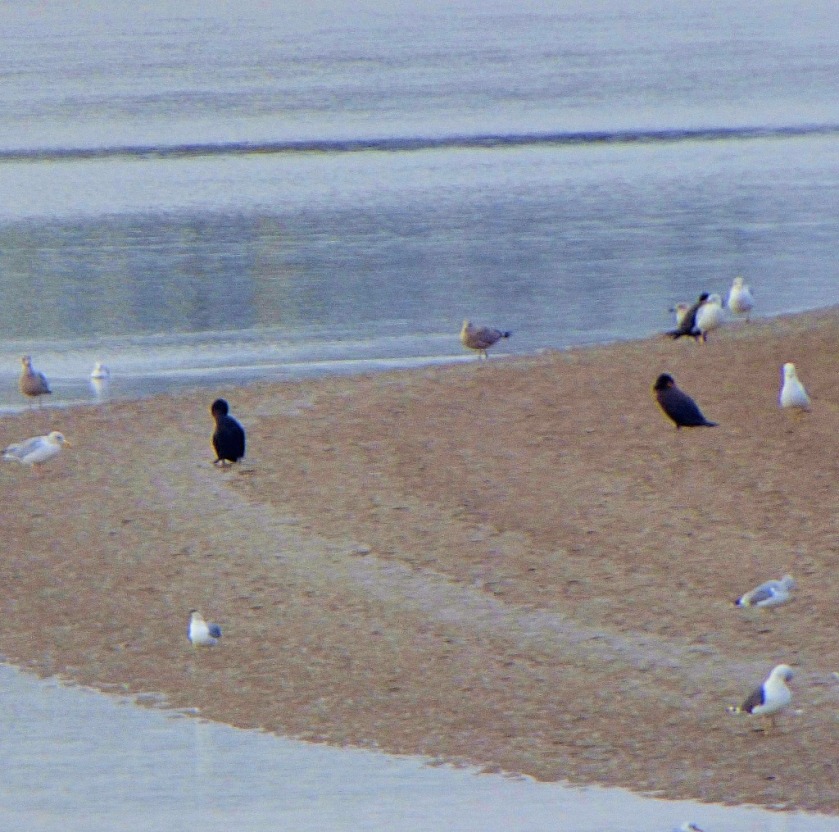
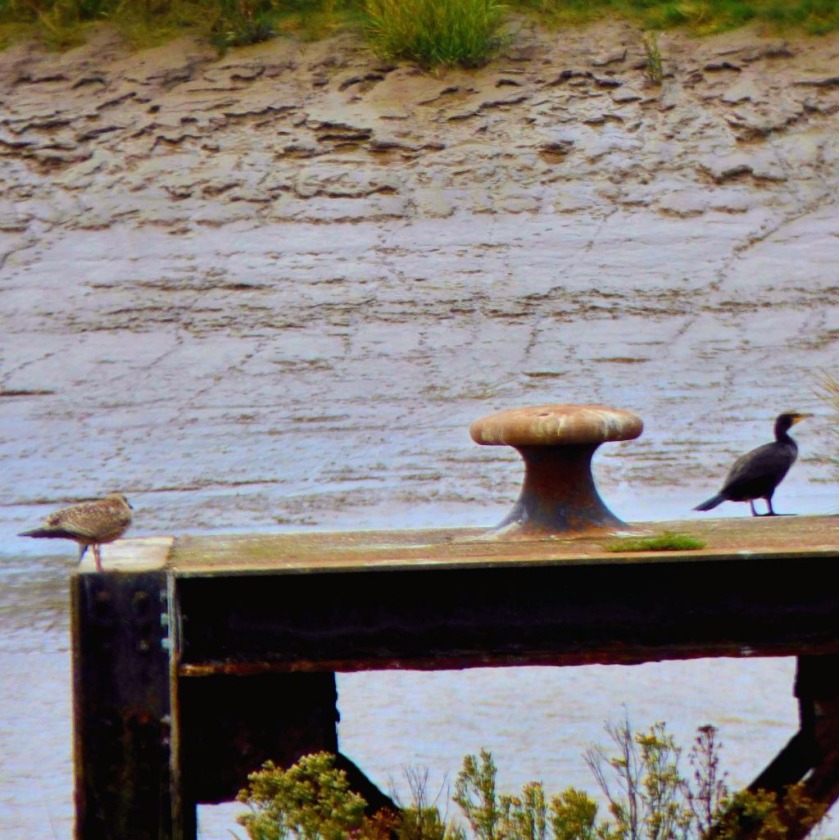
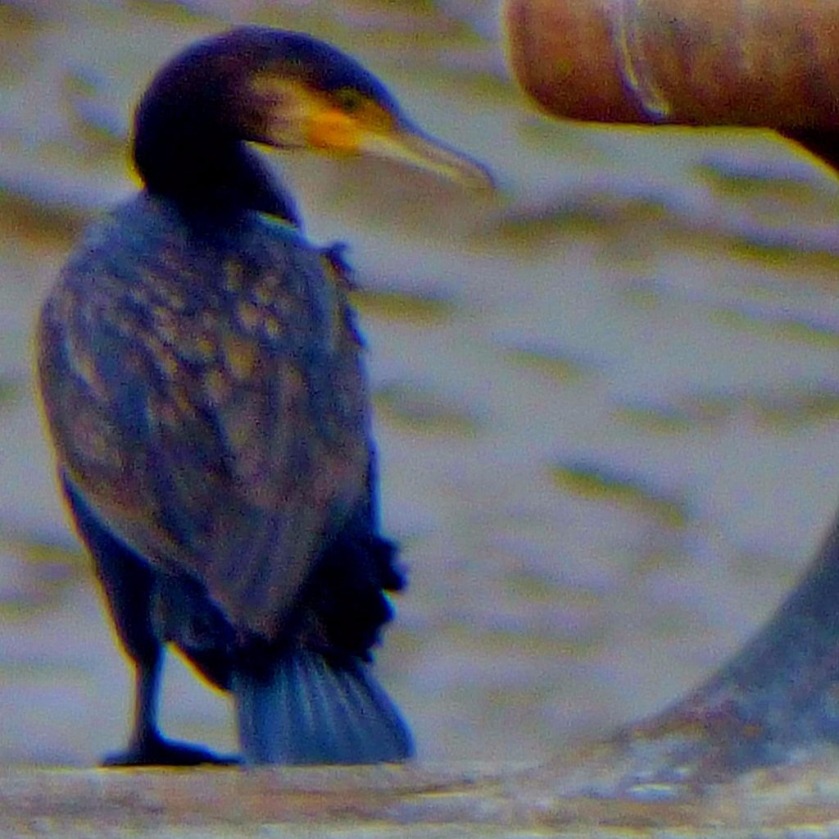
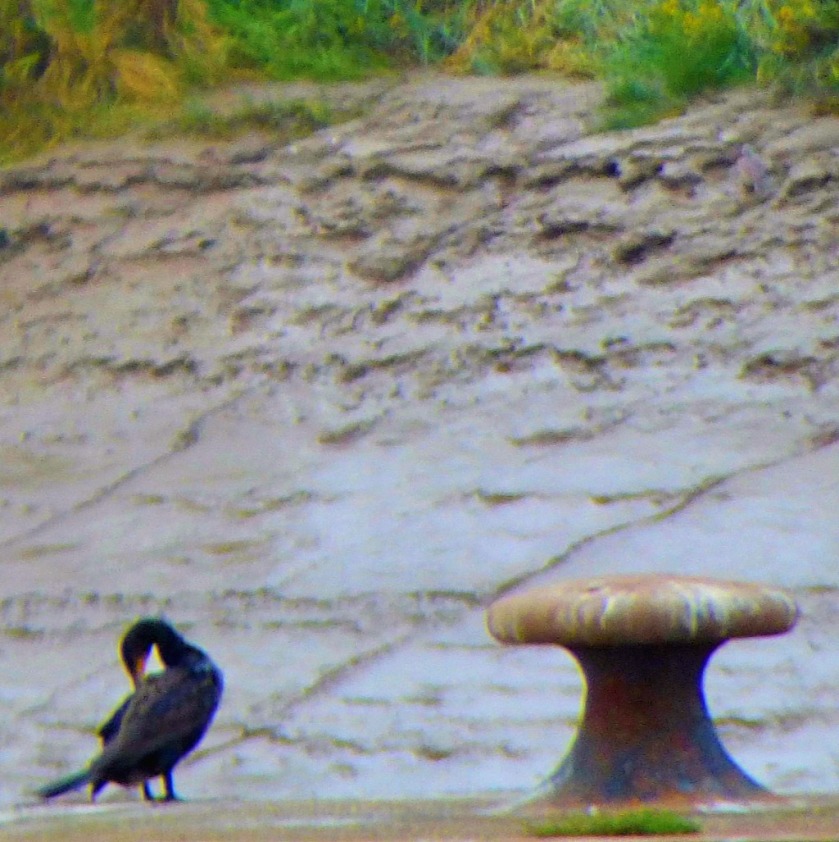
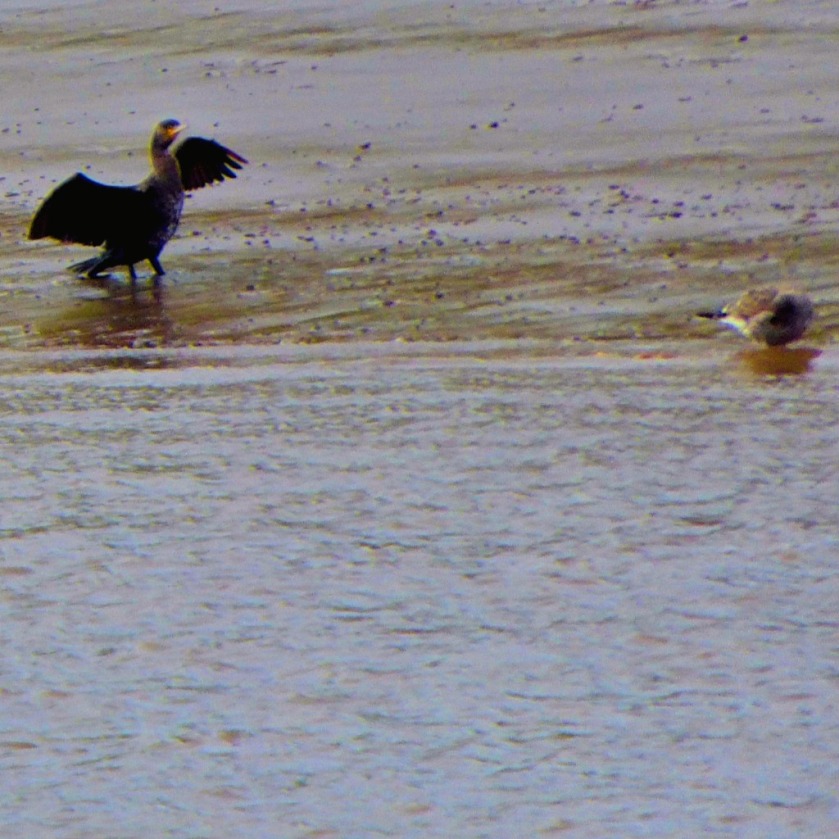
To finish this post here are some new pictures of Norfolk birds…
























.jpg.aspx?ext=.jpg&width=238&maxsidesize=422)

















 aspiblog