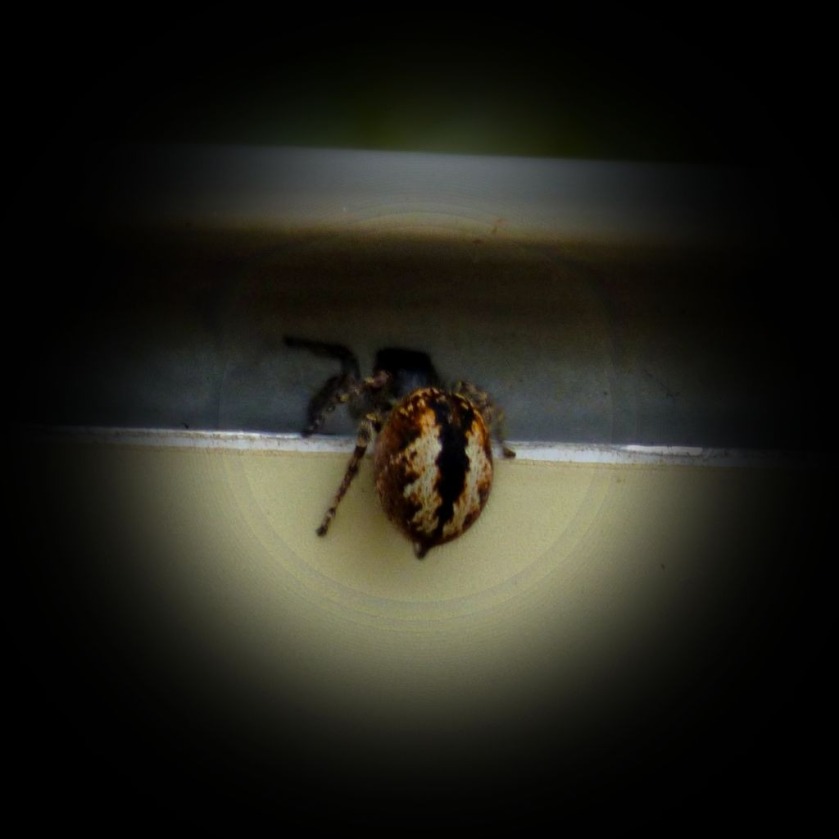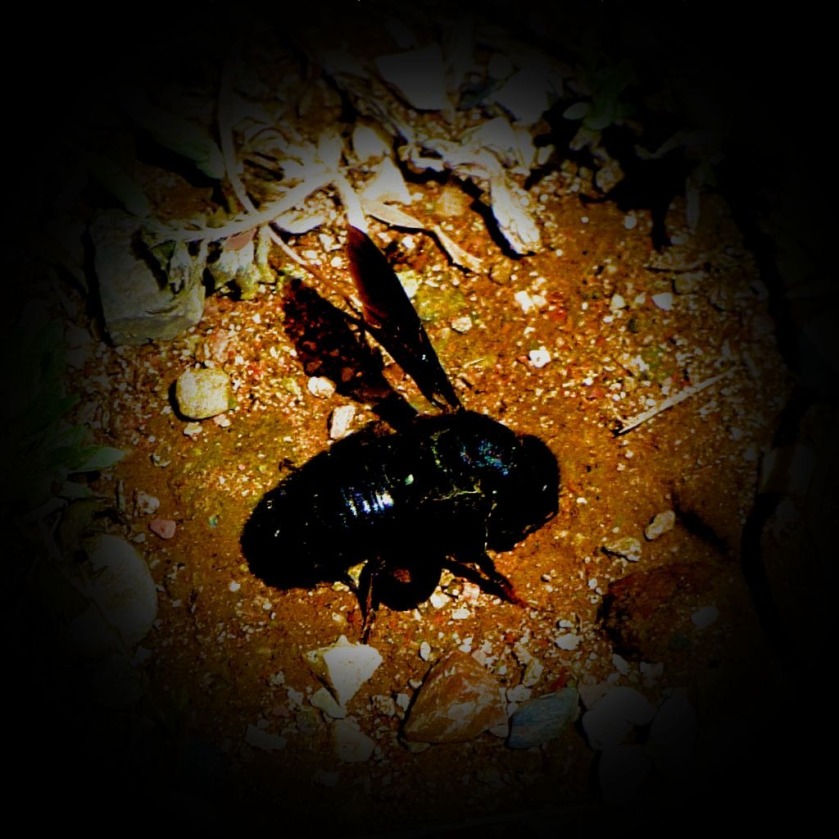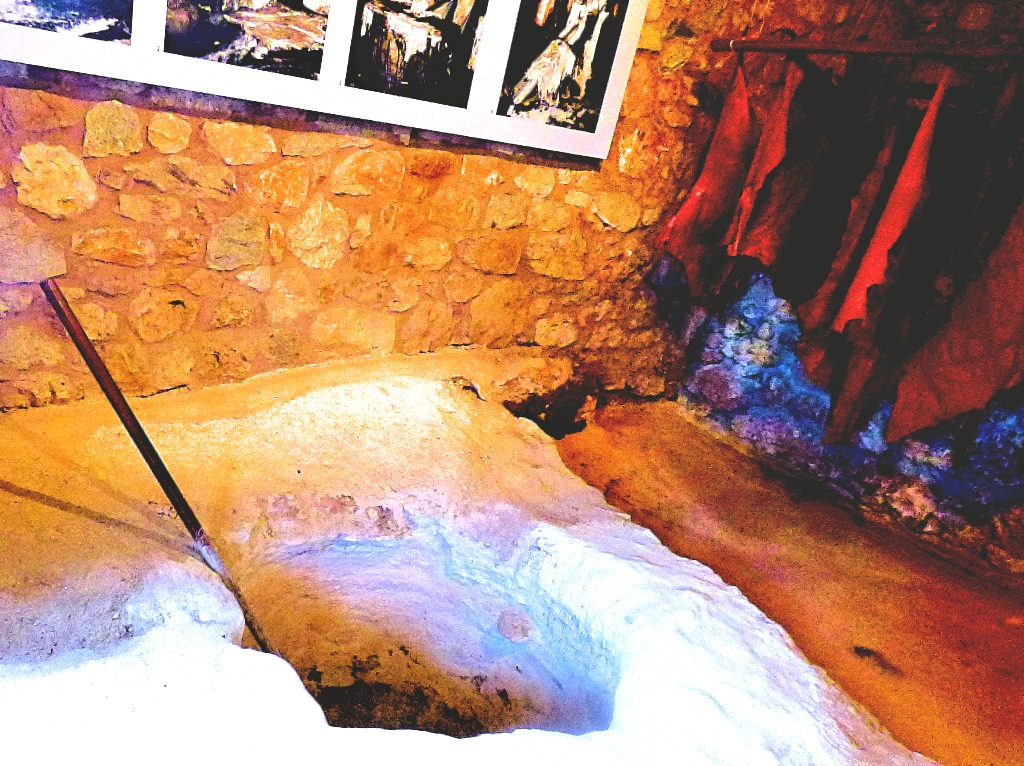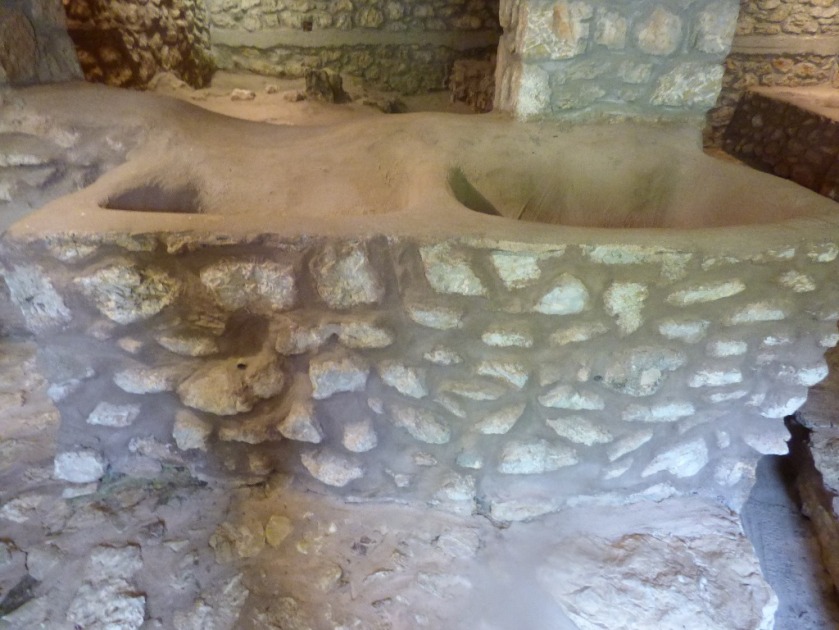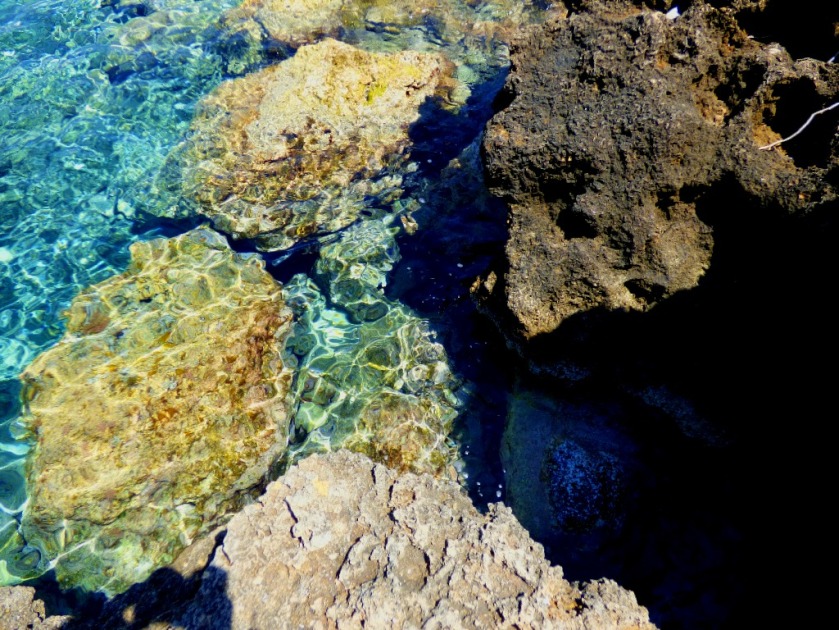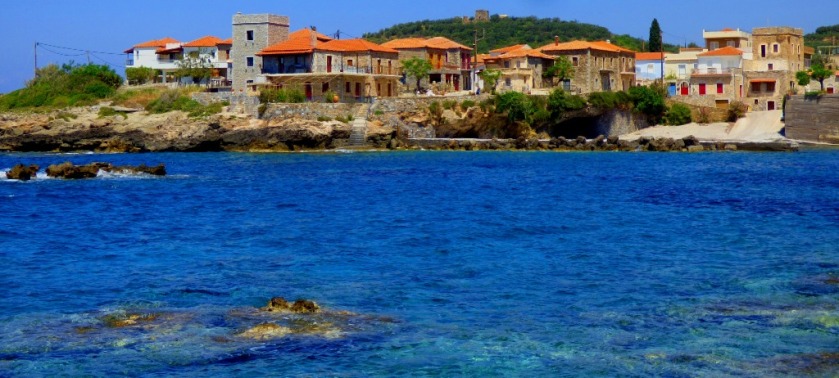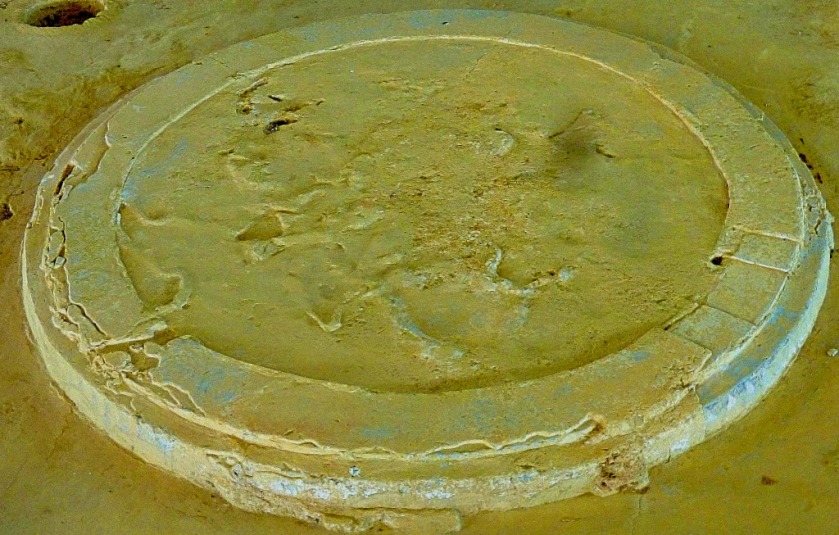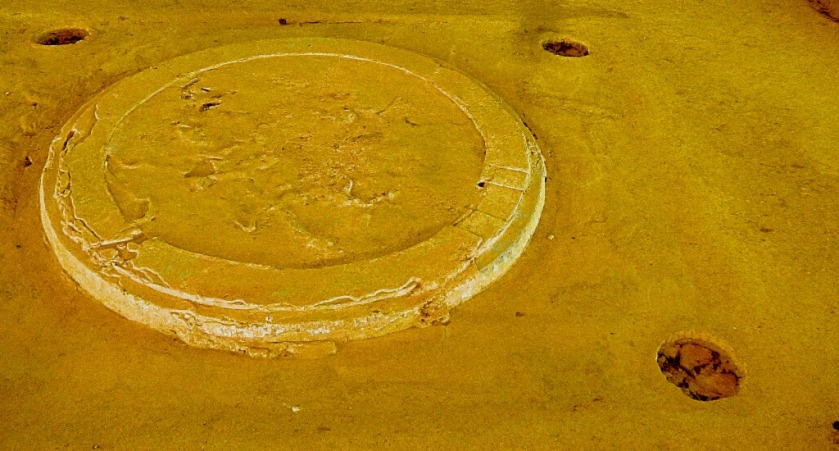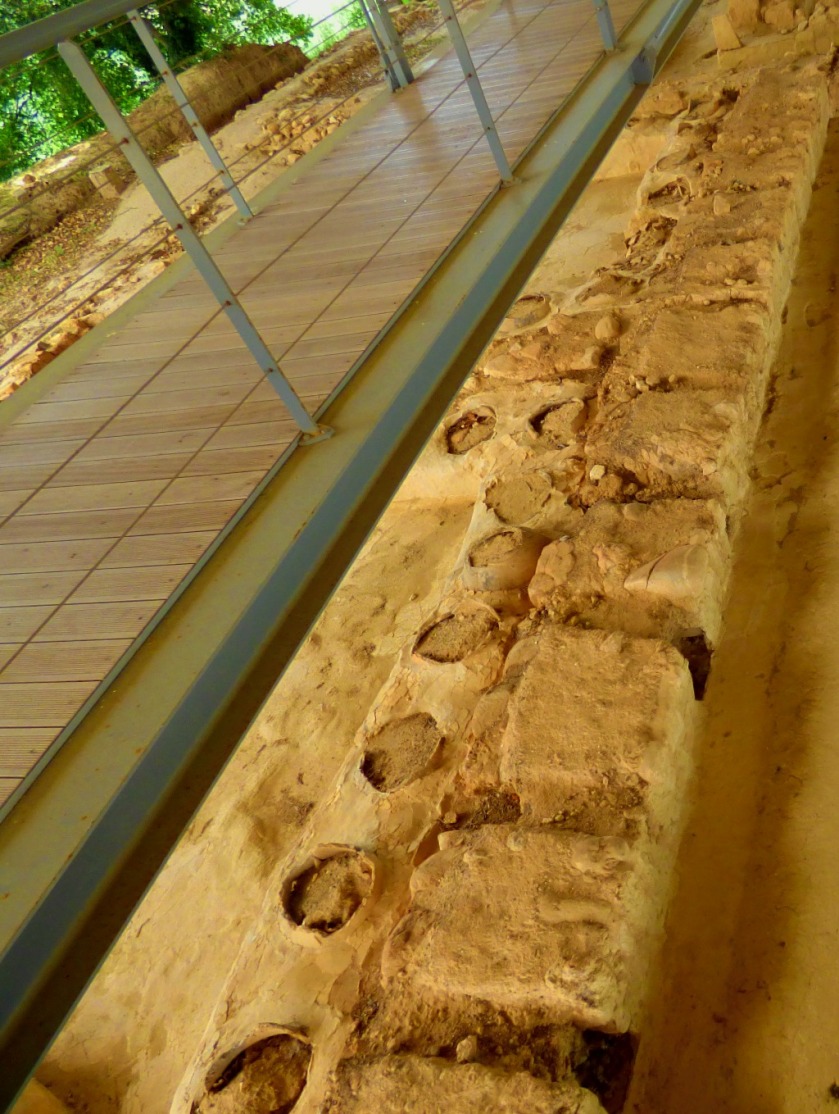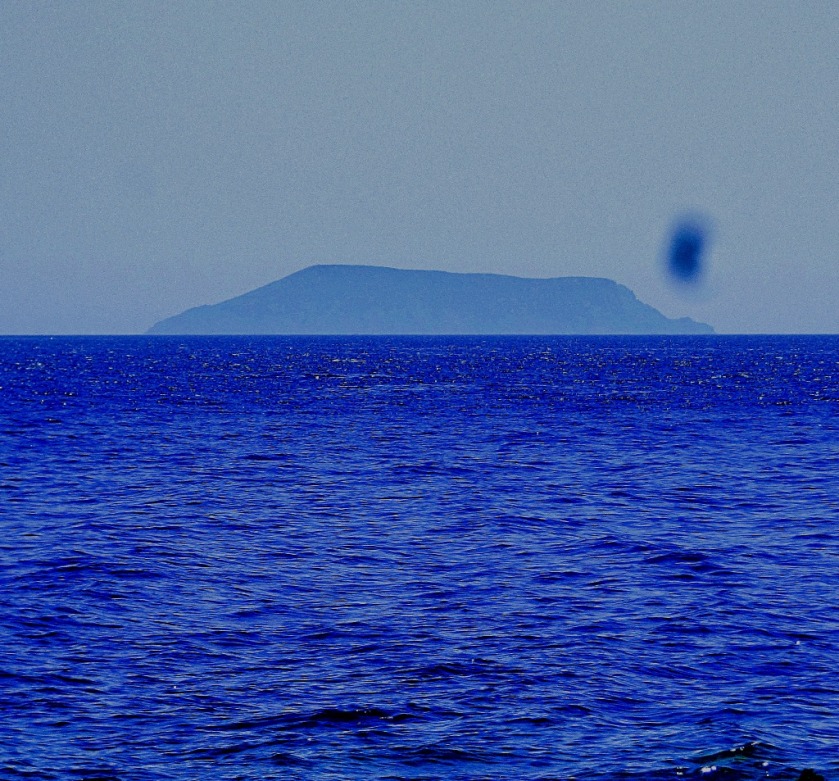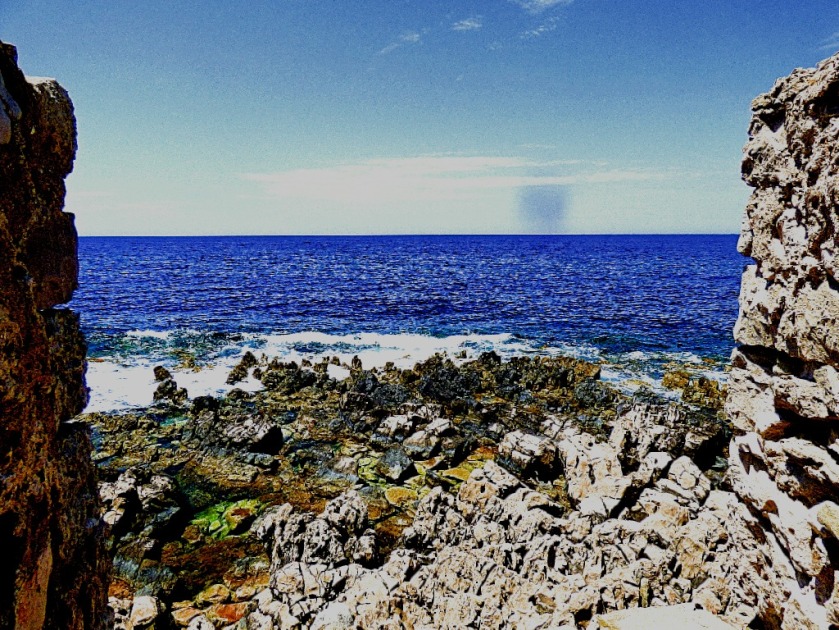
Through a combination of work commitments and still having large numbers of photos to edit it has been a while since I posted, so just to remind people I was in Greece from May 12th to May 19th, and have so far produced five posts relating to that holiday:
Aperiftif – setting the scene for subseqent posts going into more detail about the holiday and various aspects thereof.
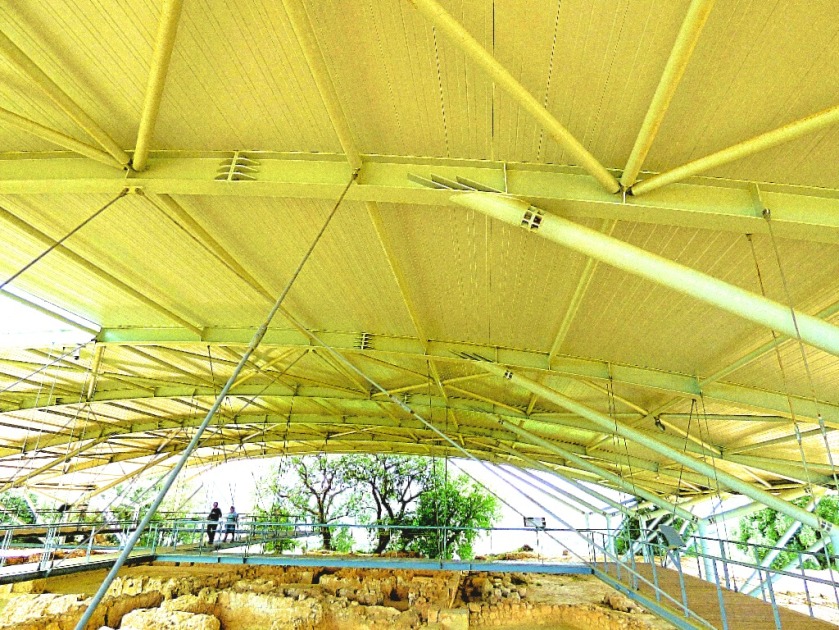
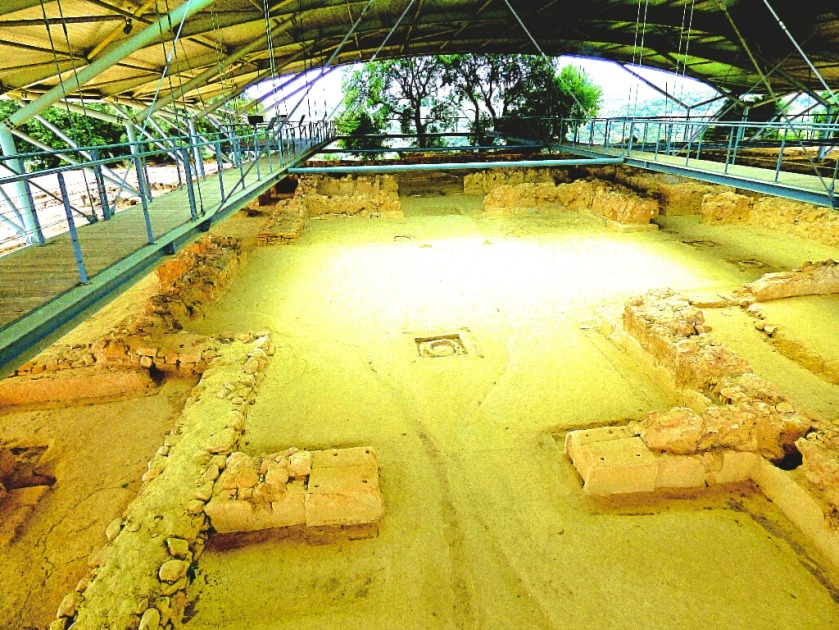
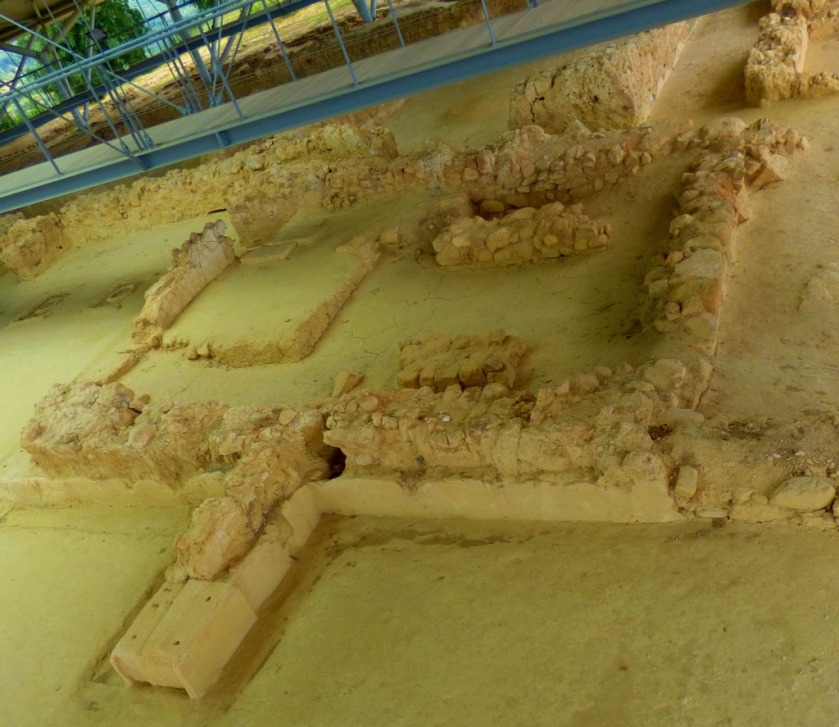
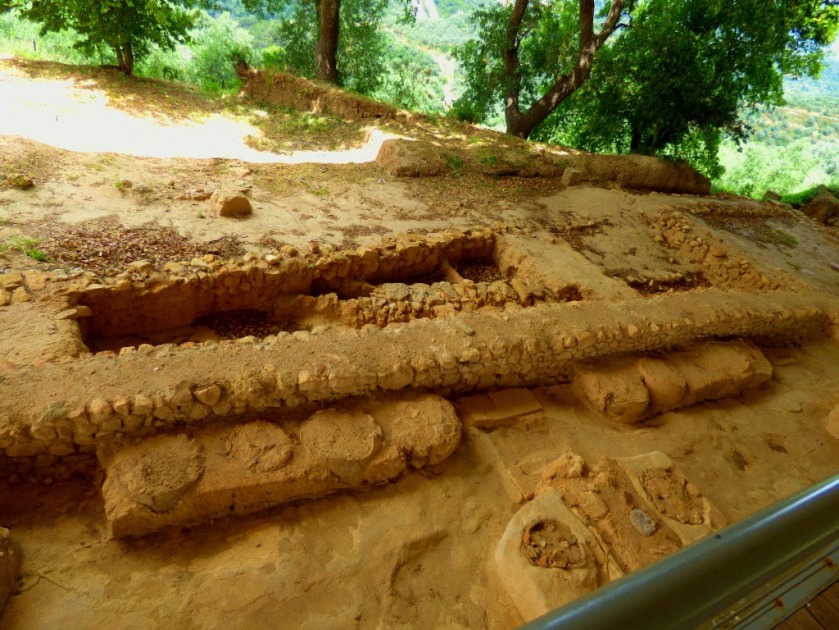
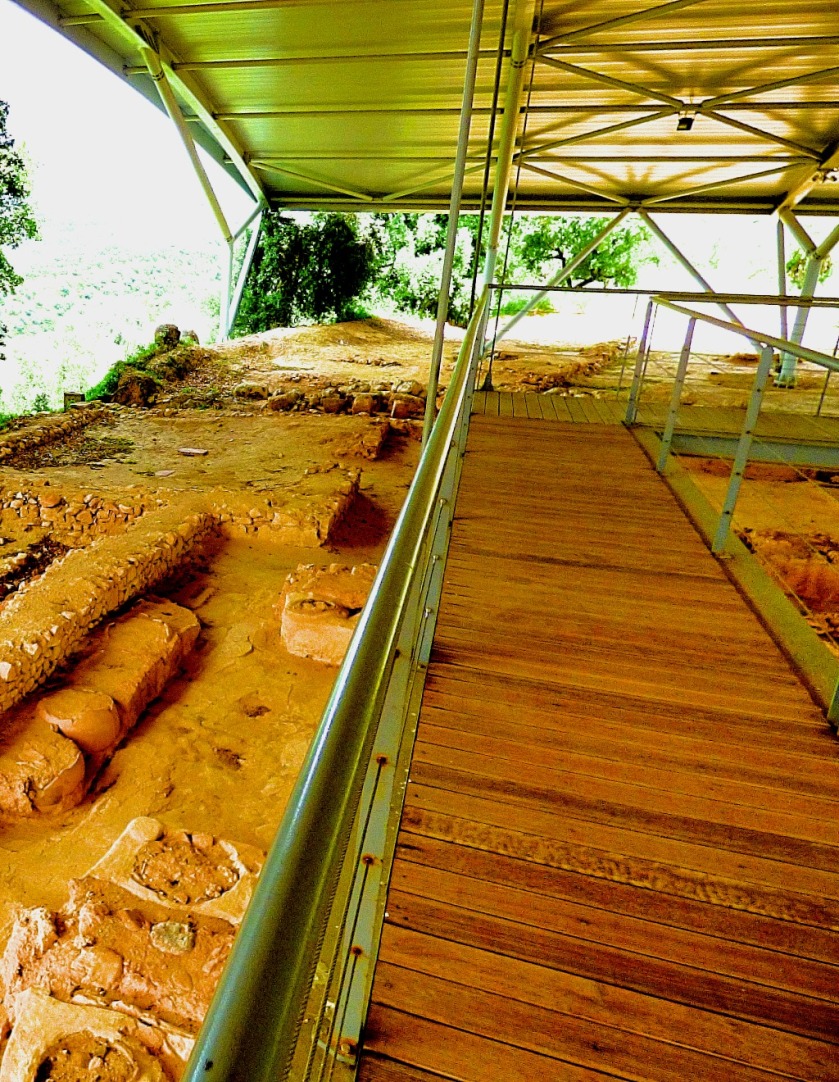
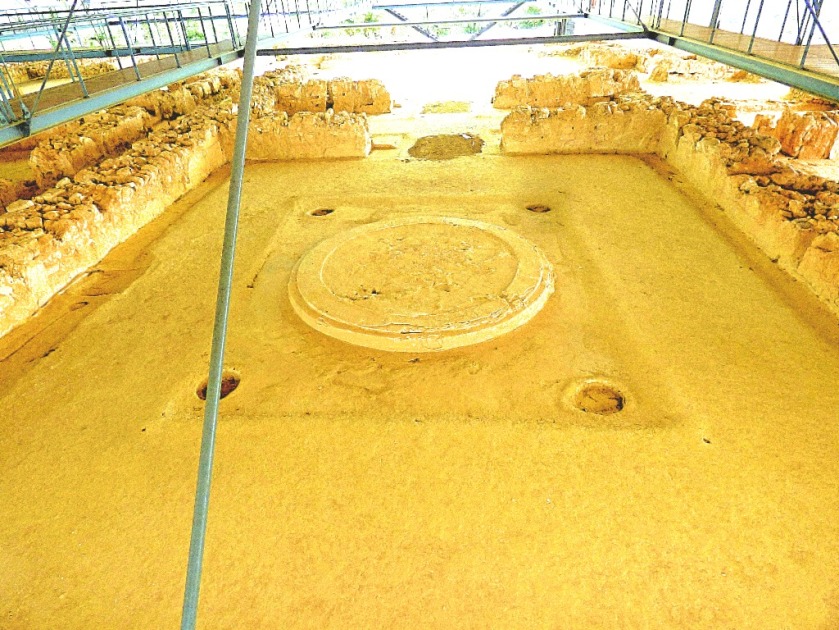
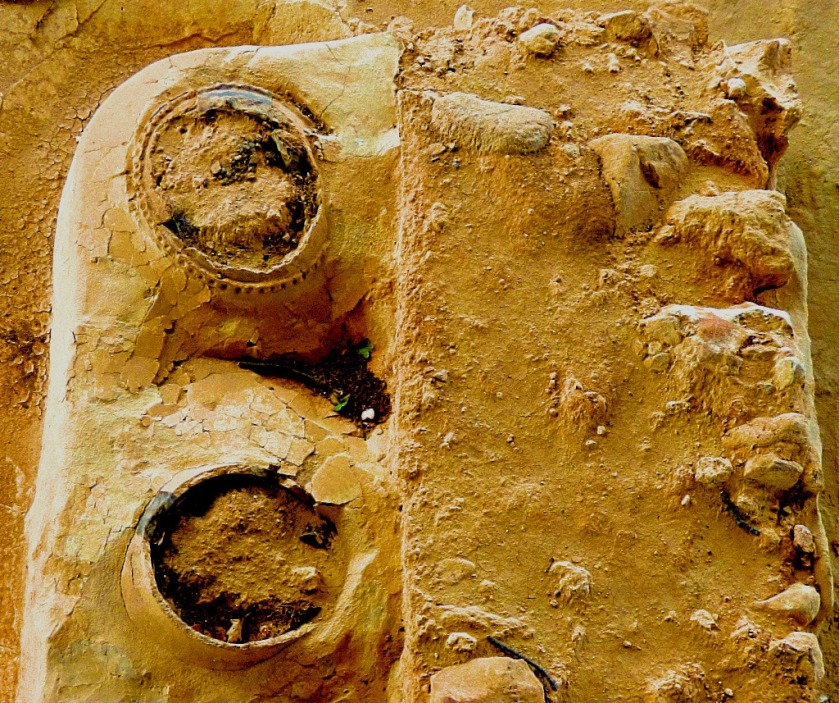
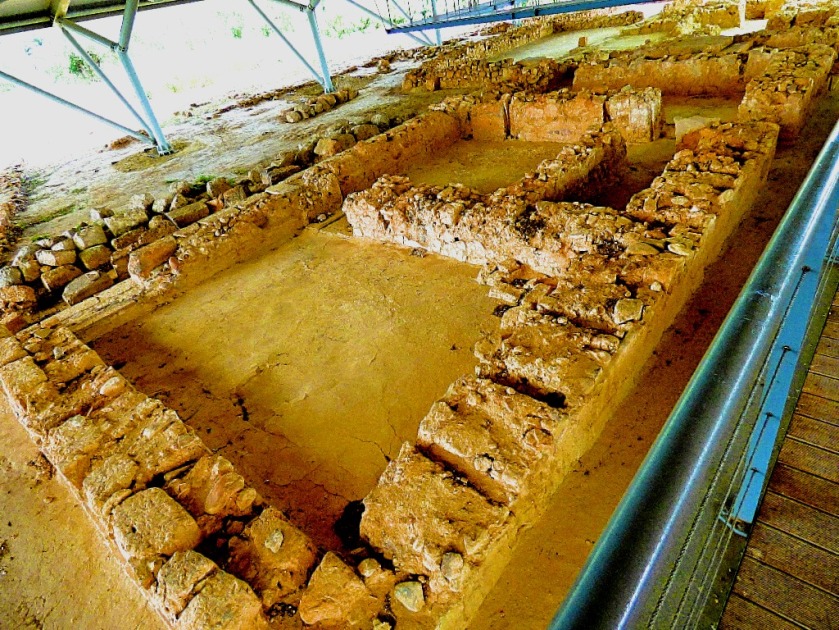
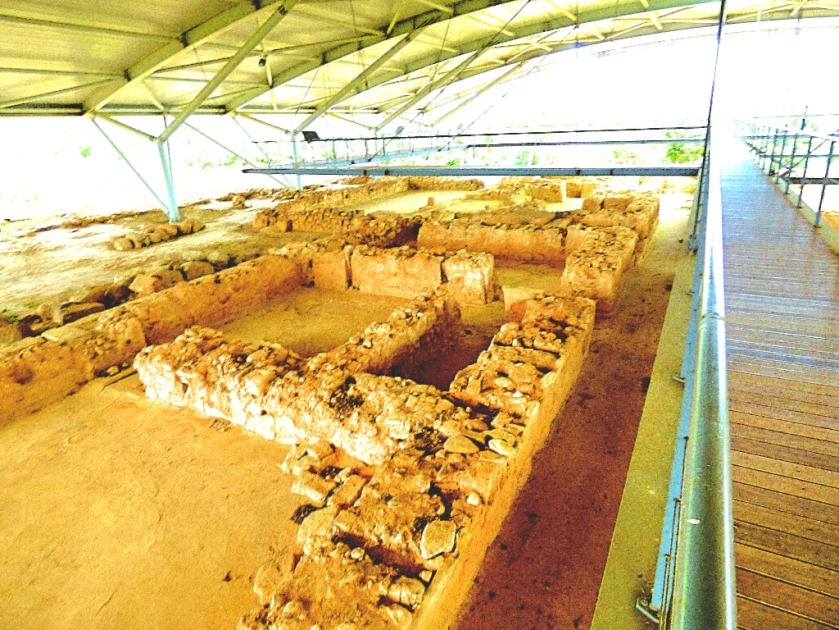
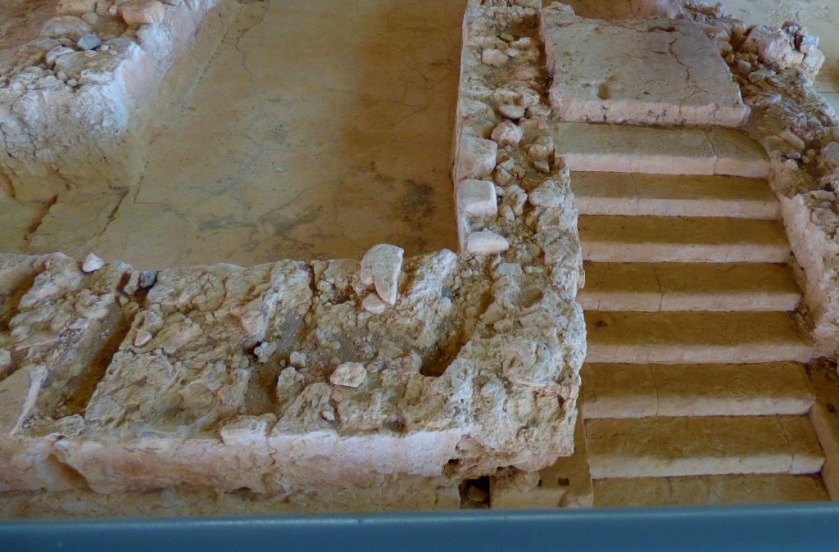
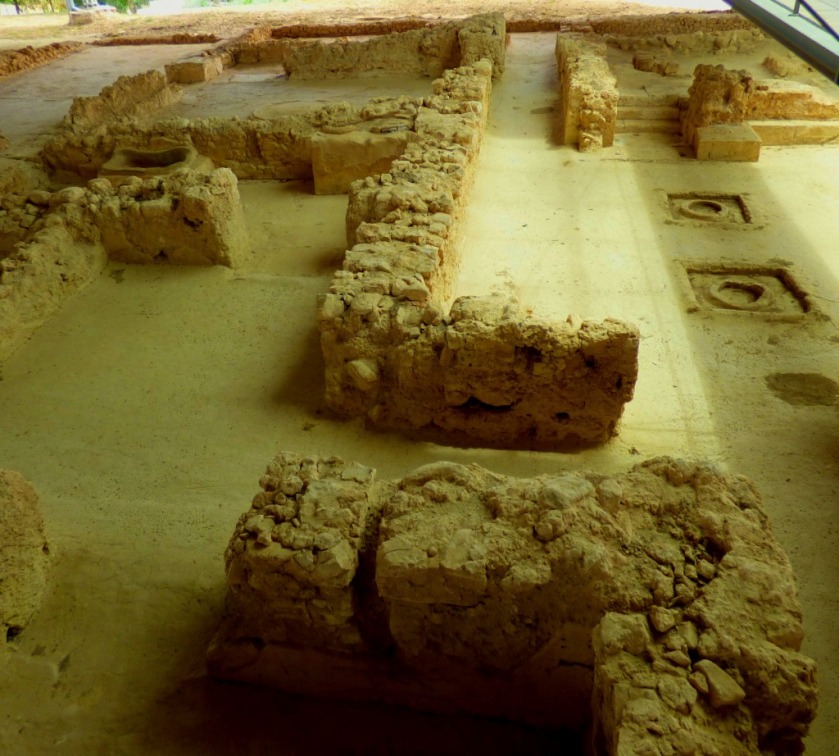
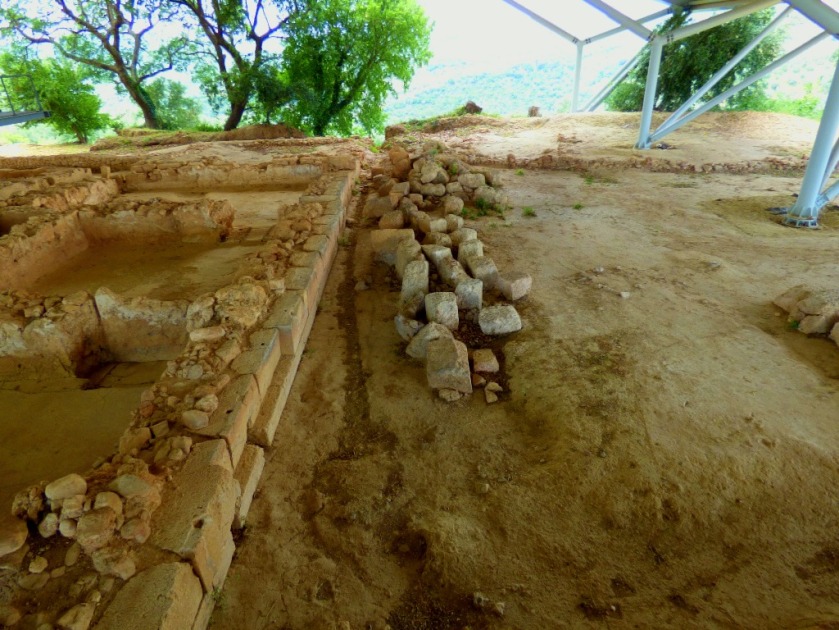
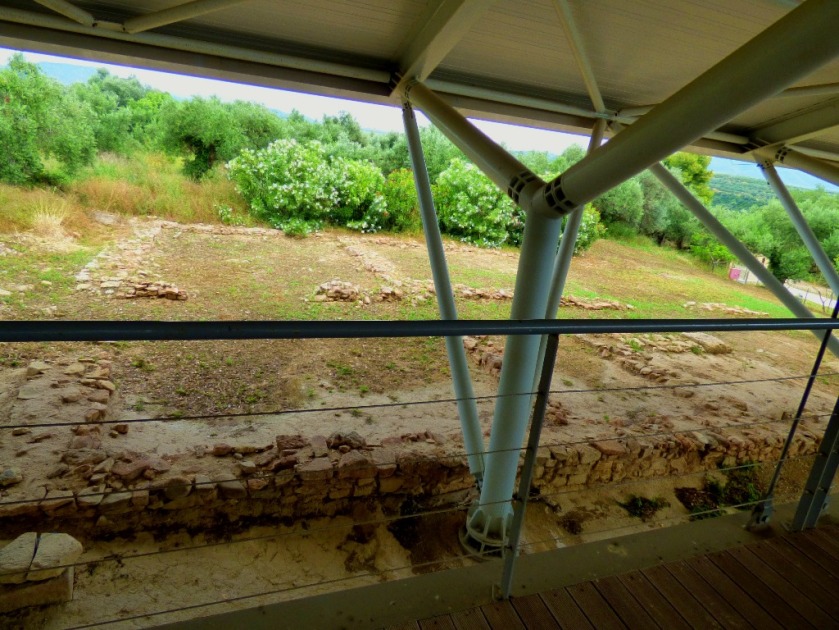
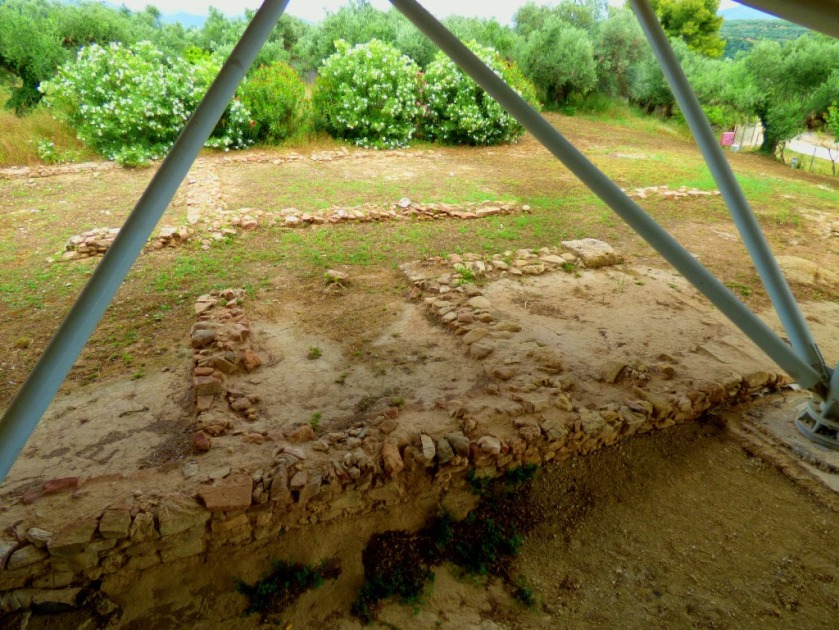
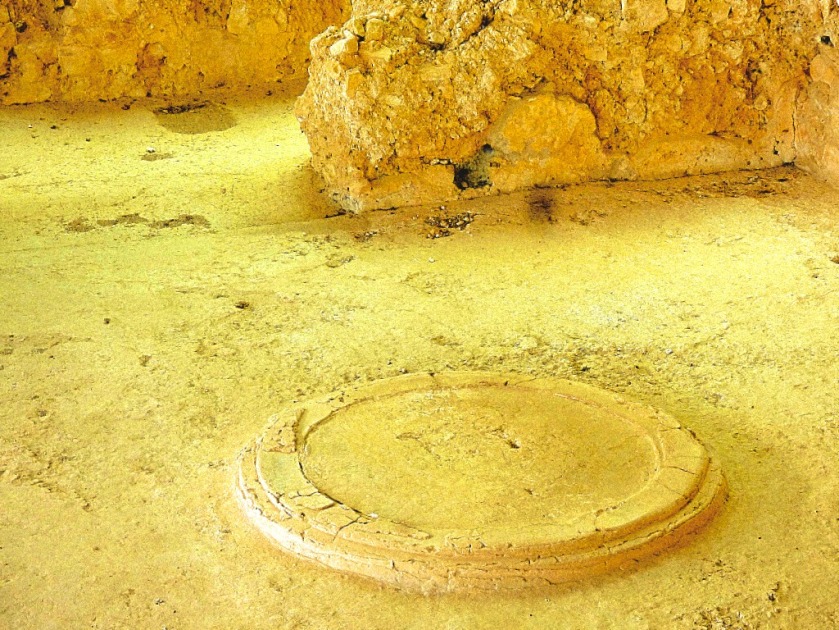
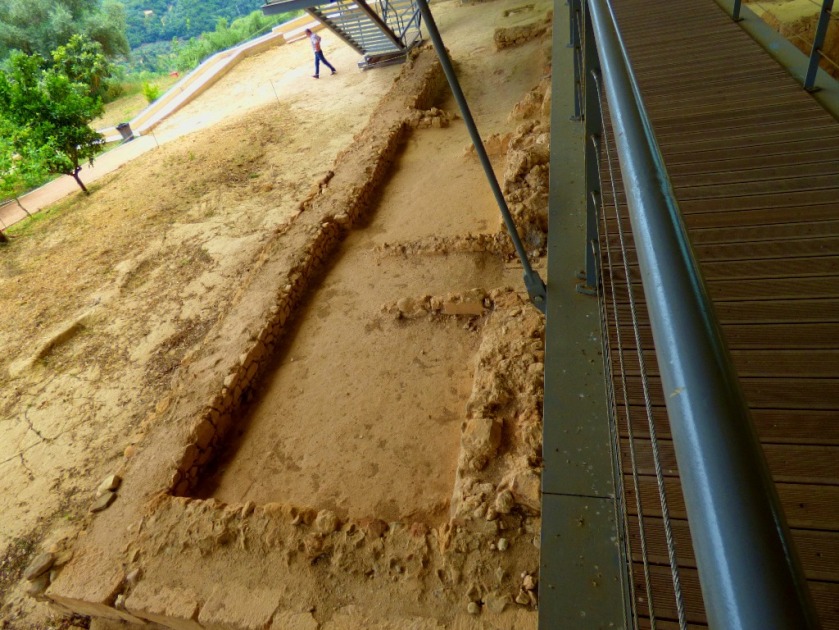
Whereas nothing at Methoni is above 800 years old, and most of it is around half that age (making it a youngster in terms of Greek sites) Nestor’s Palace at Pylos (about 15 kilometres from the modern town of that name) was in its pomp 3,300 years ago or thereabouts, which means that even by Greek standards it counts as old (although Gortyn on the island of Crete is about twice as old as even this). In an effort to preserve these remains a shelter has been built around the site, and part of this structure is a raised walkway from which visitors view the site – no walking round at ground level these days.
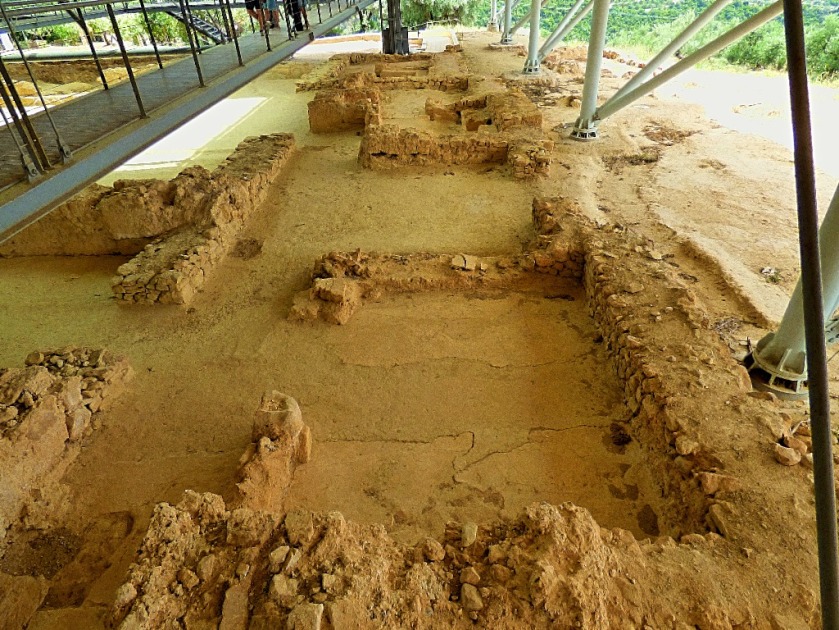
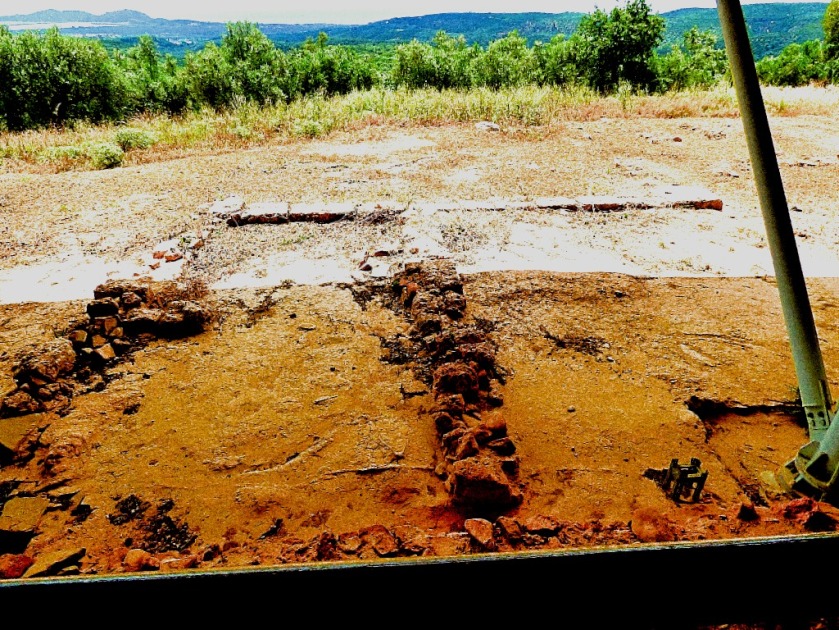
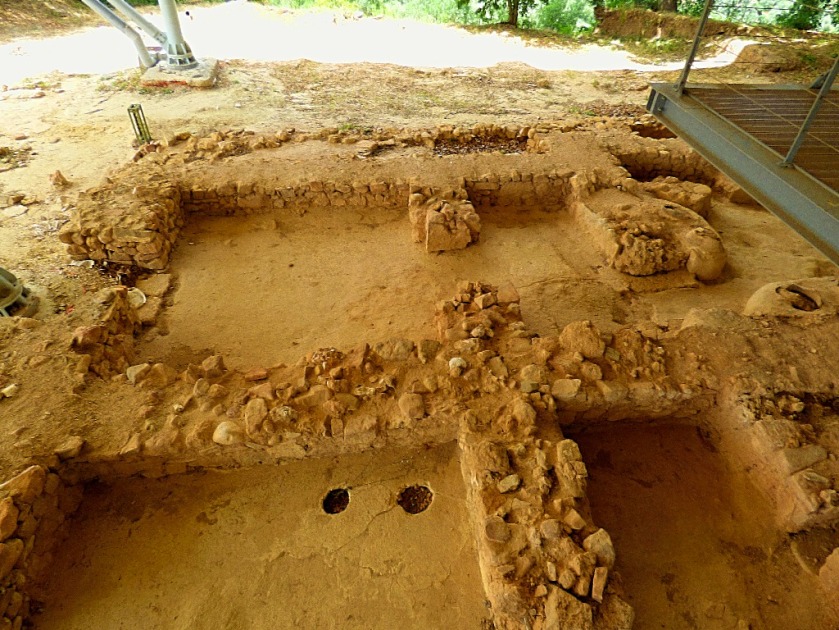
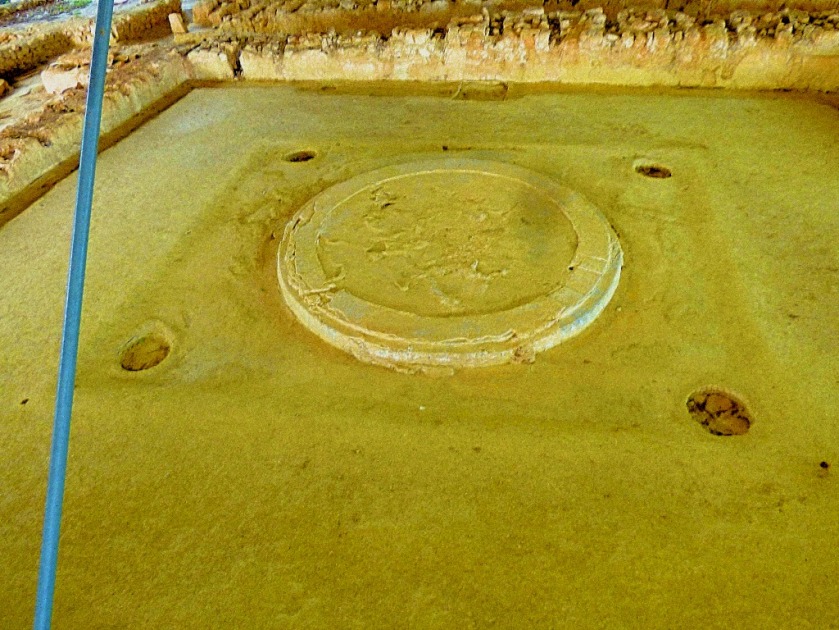
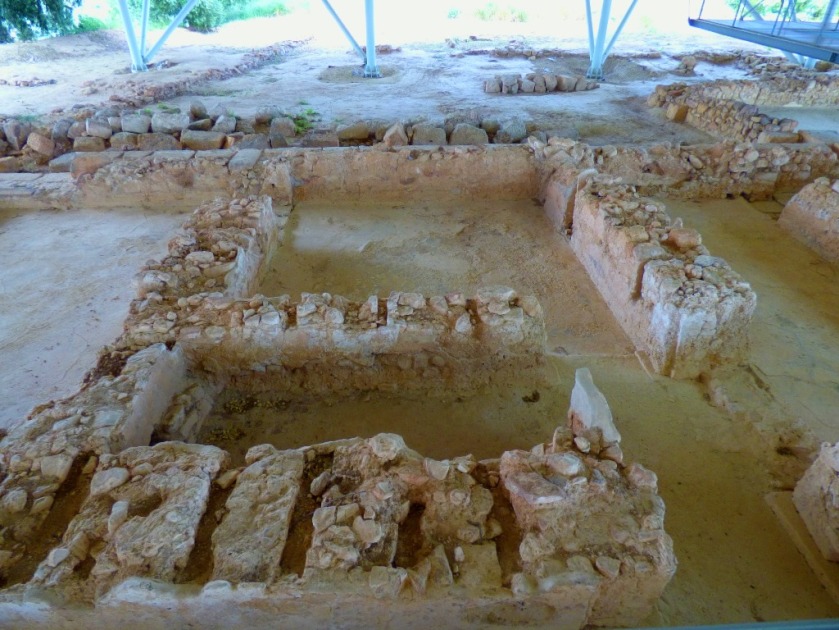
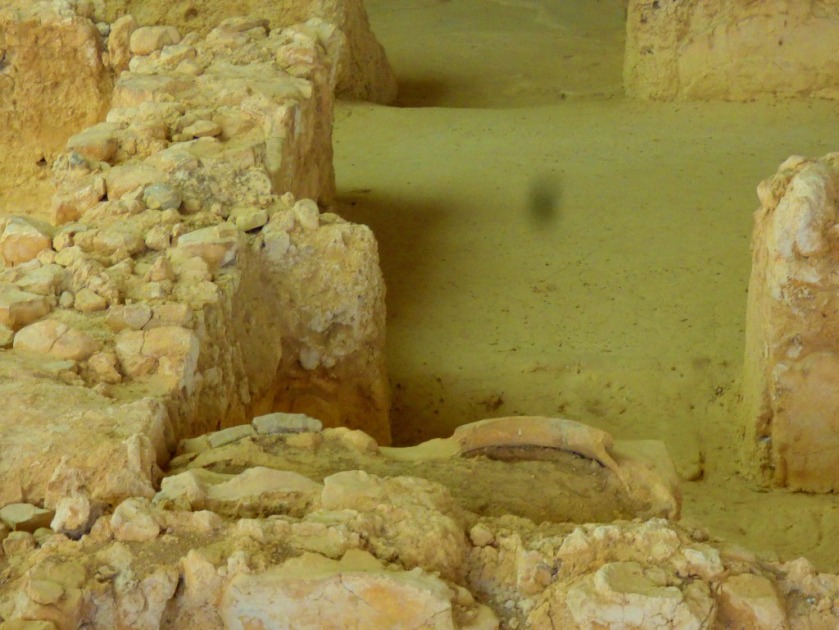
NESTOR’S PALACE IN PICTURES
It is now time for the combination of my camera and photo-editing skills to take over and give you a virtual tour of Nestor’s Palace…
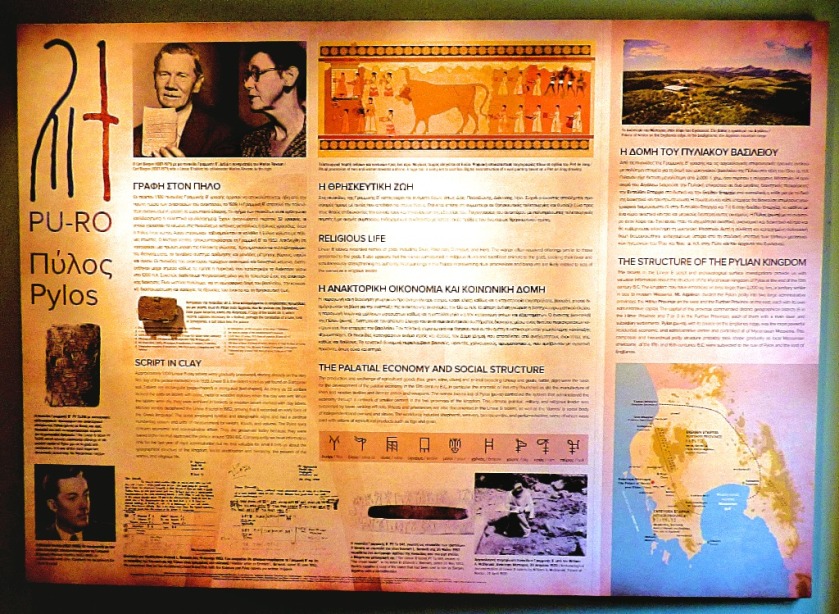
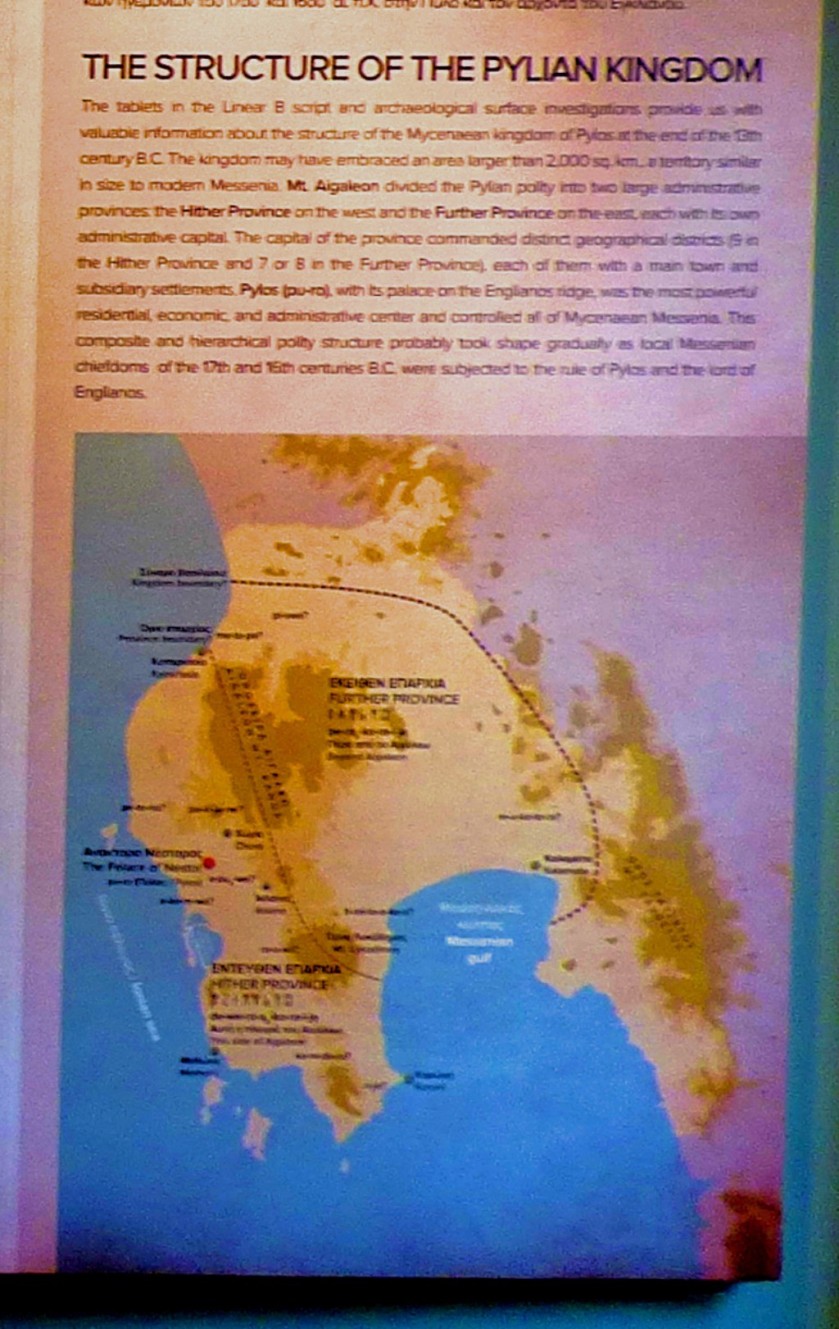
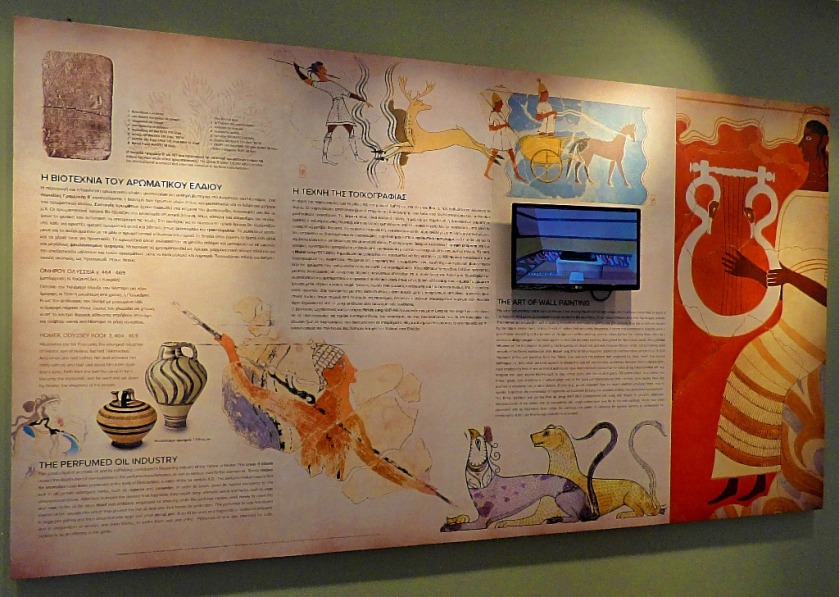
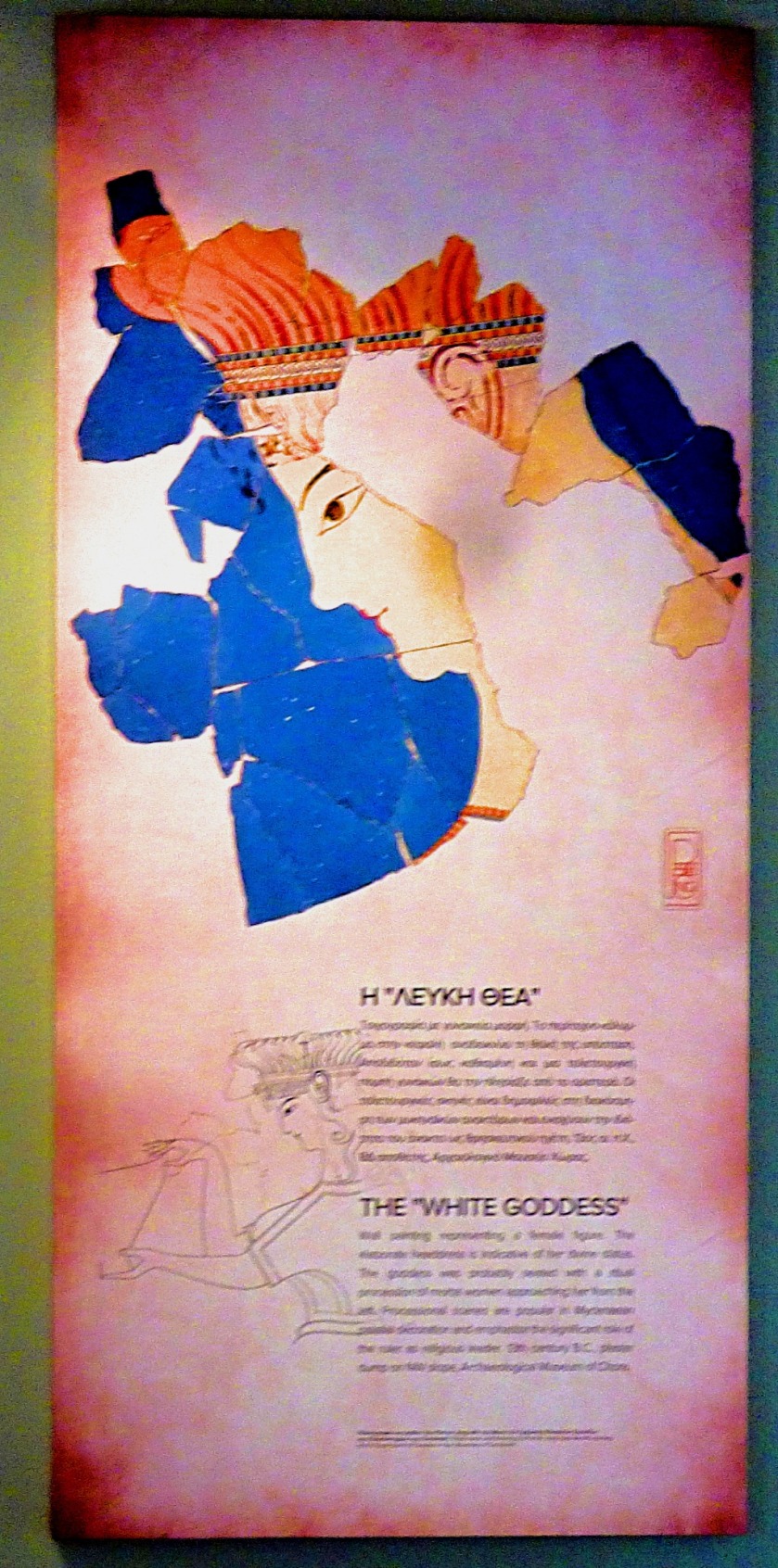
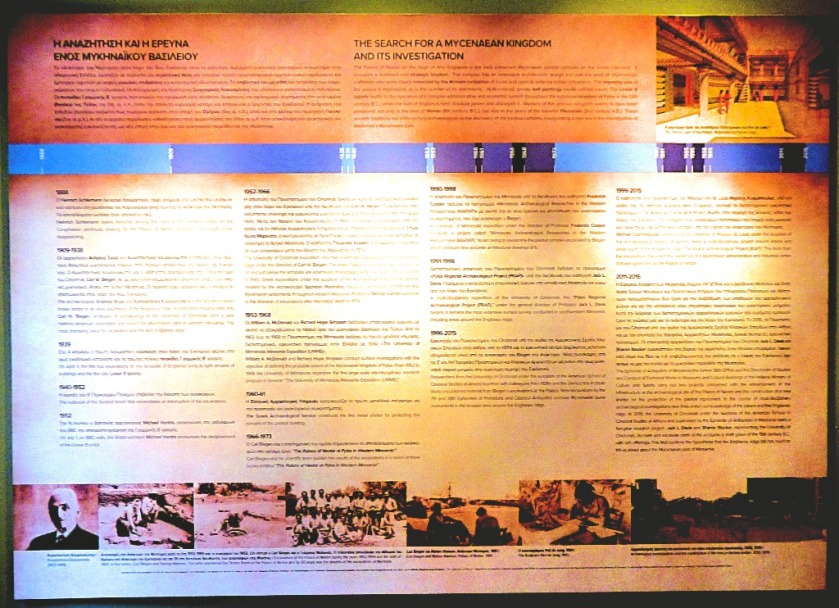
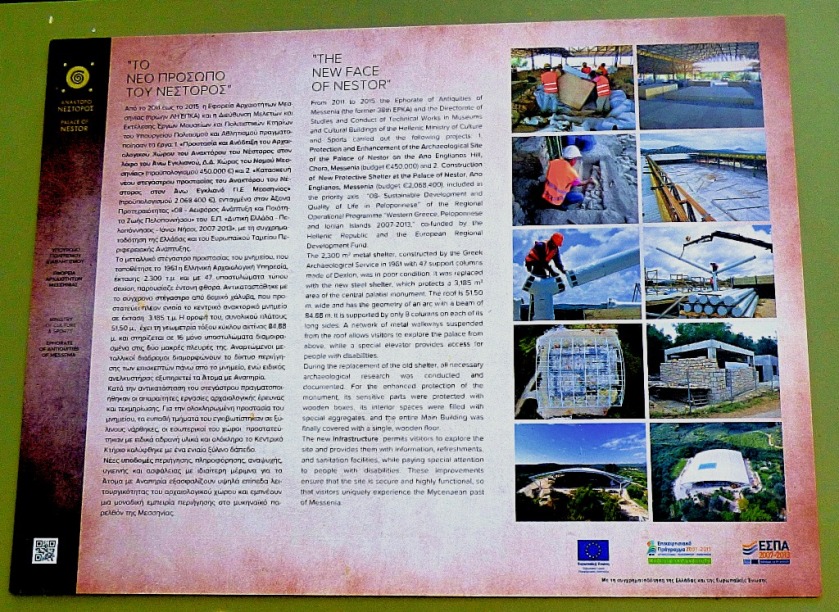
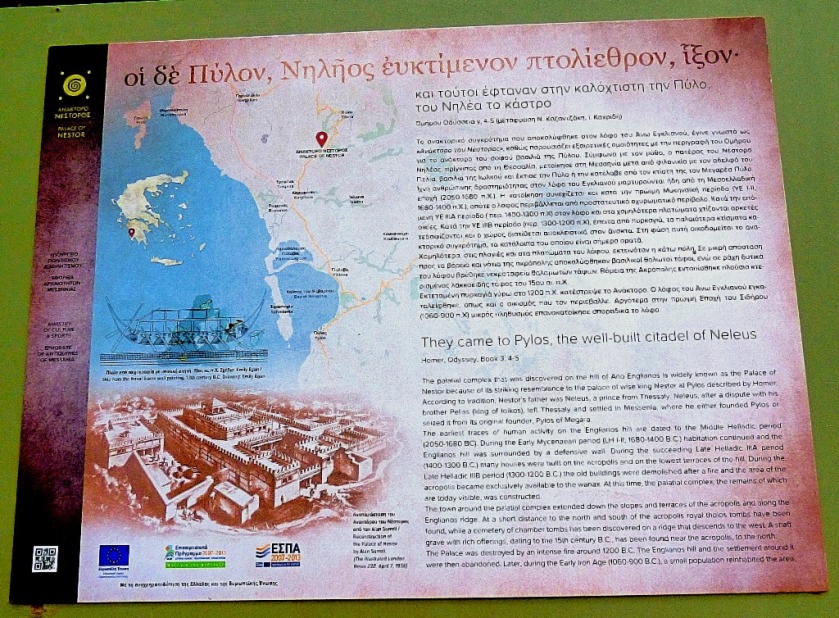
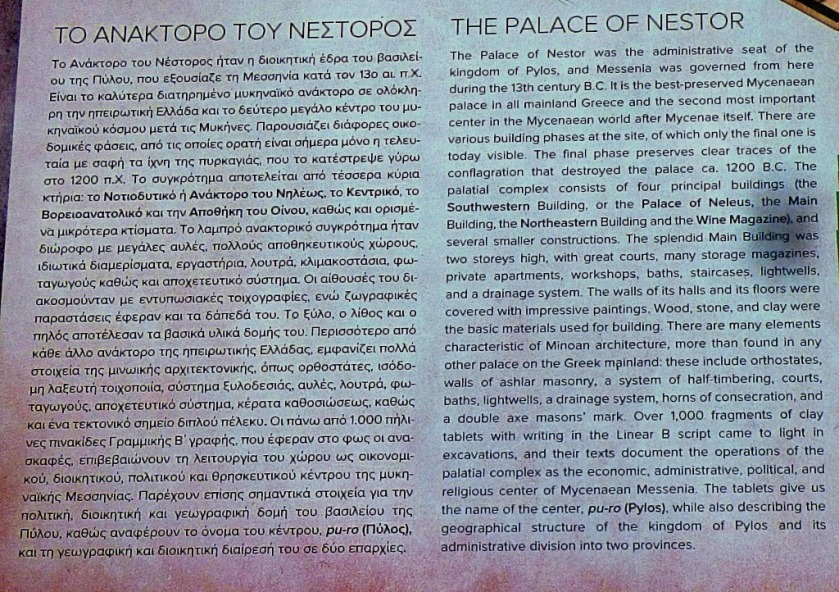
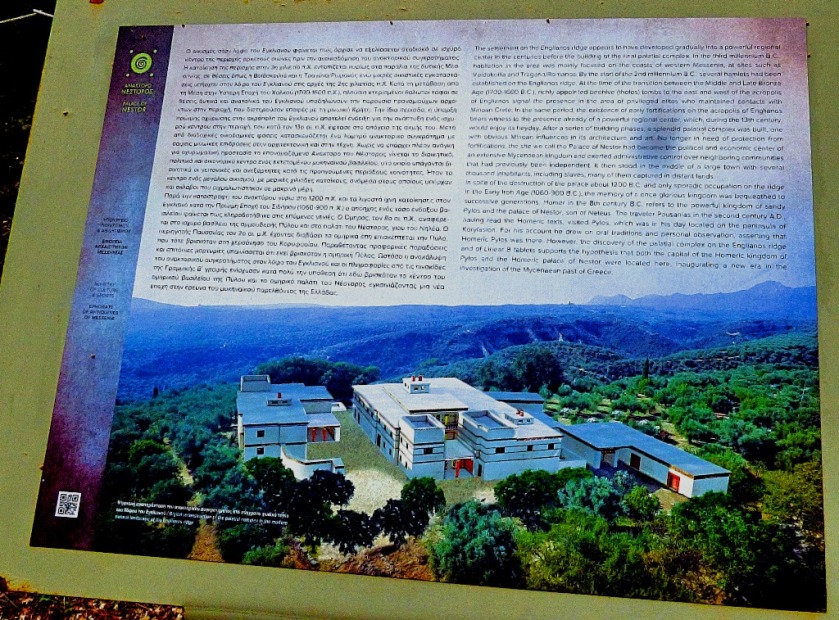
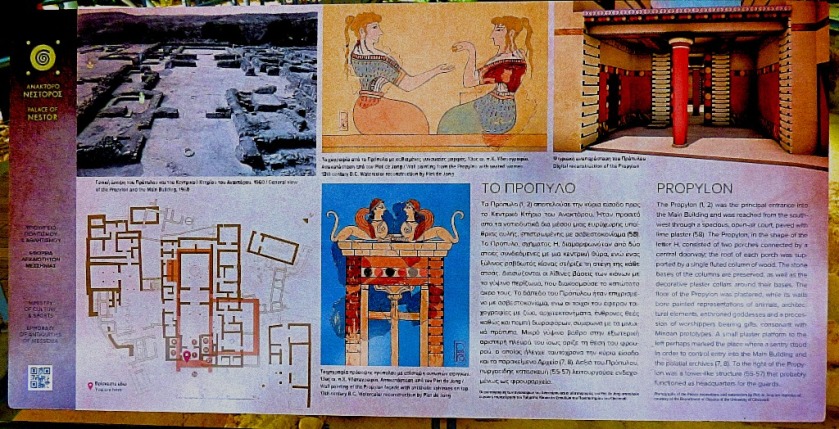
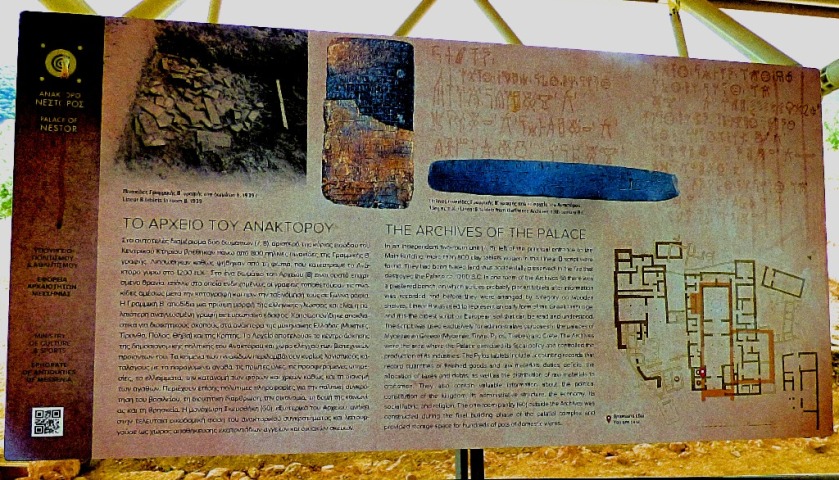
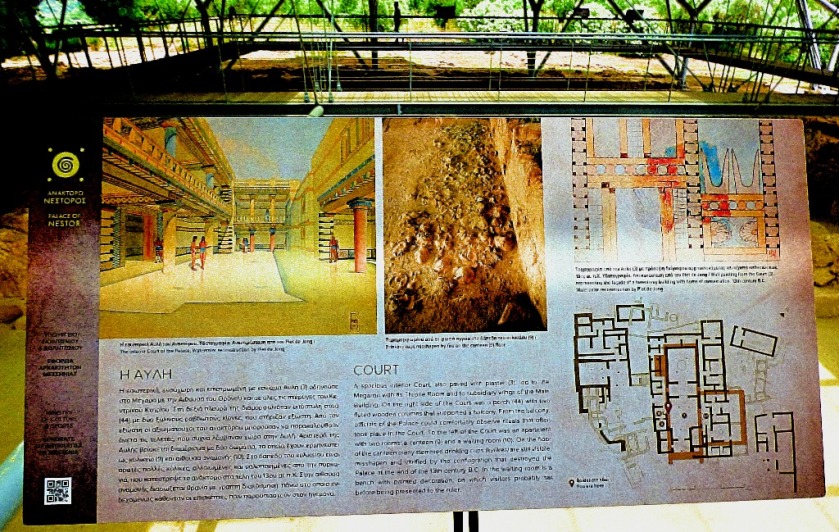
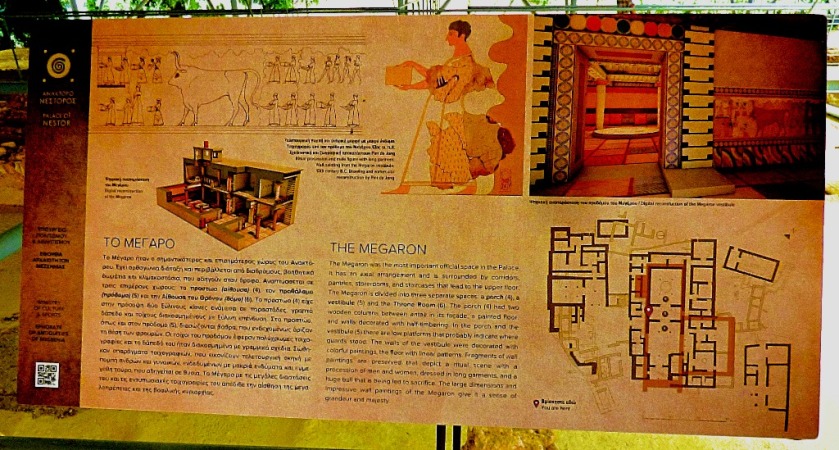
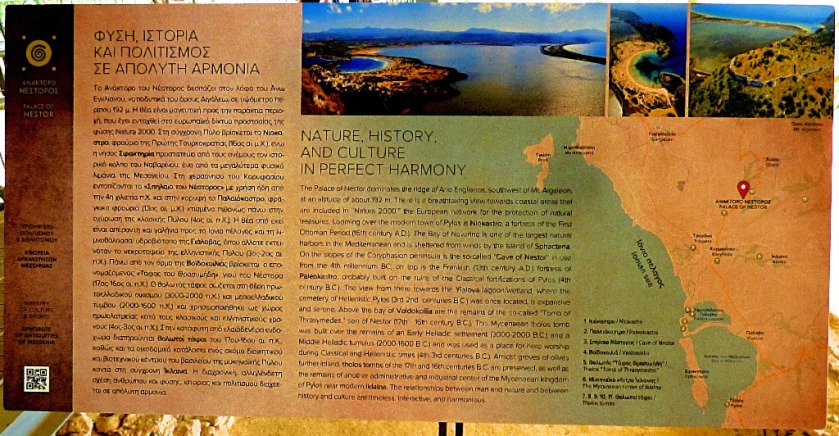
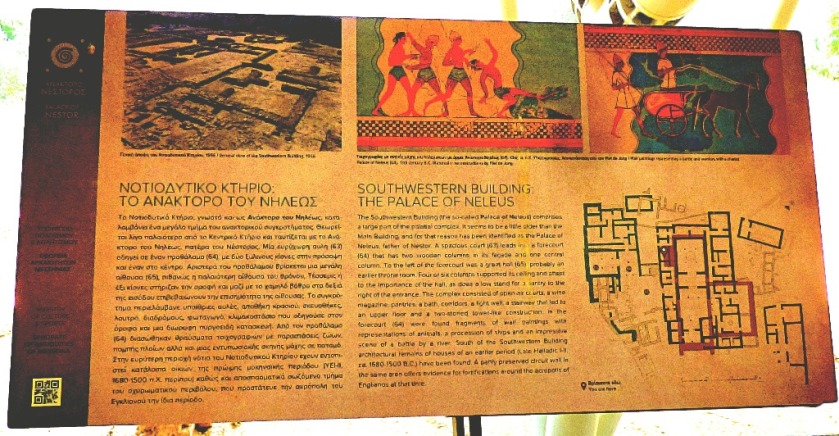
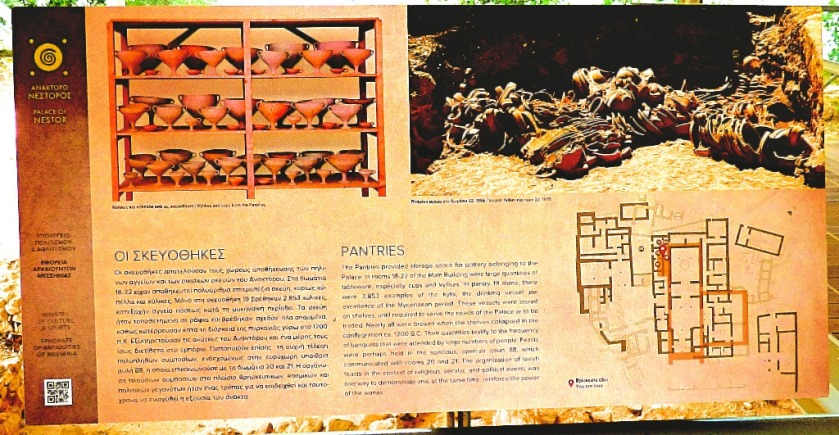
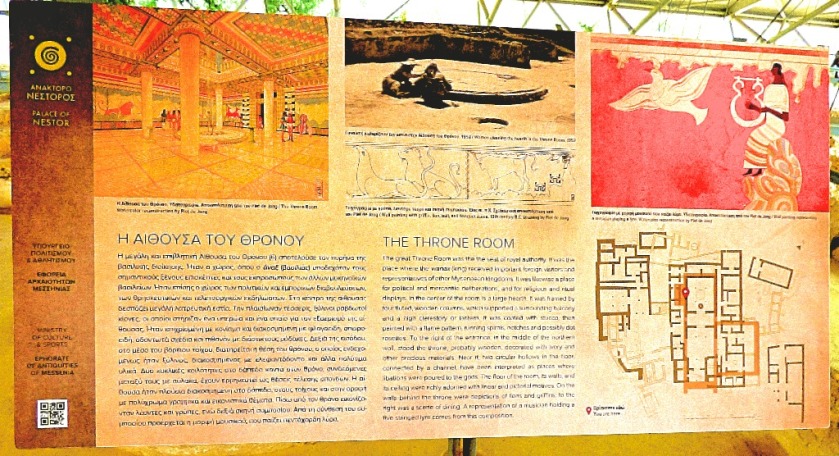
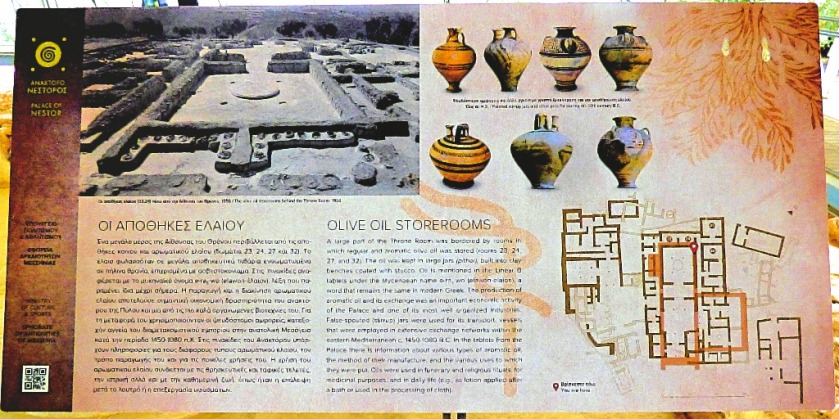
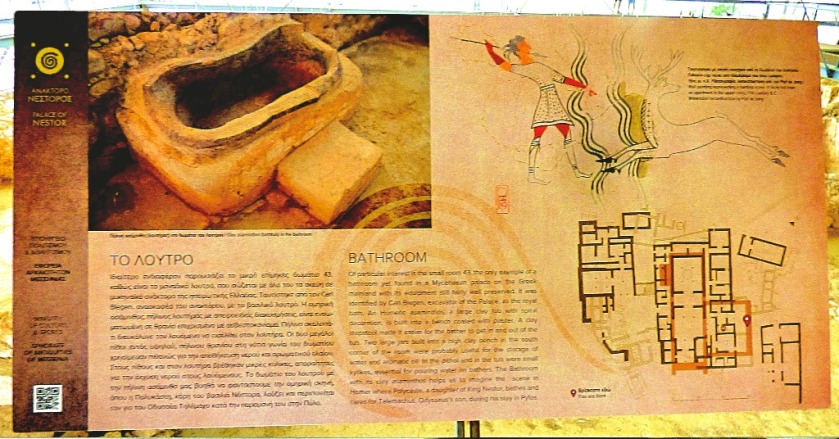
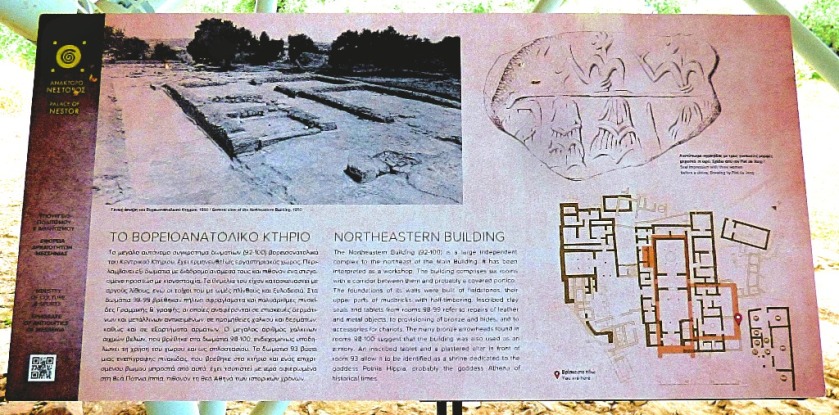
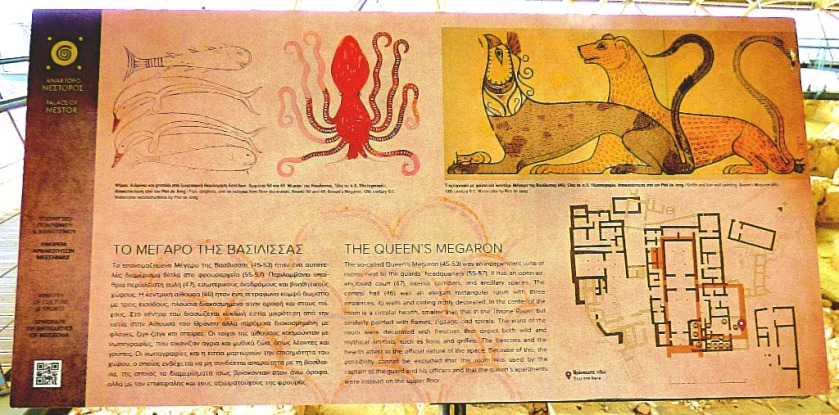
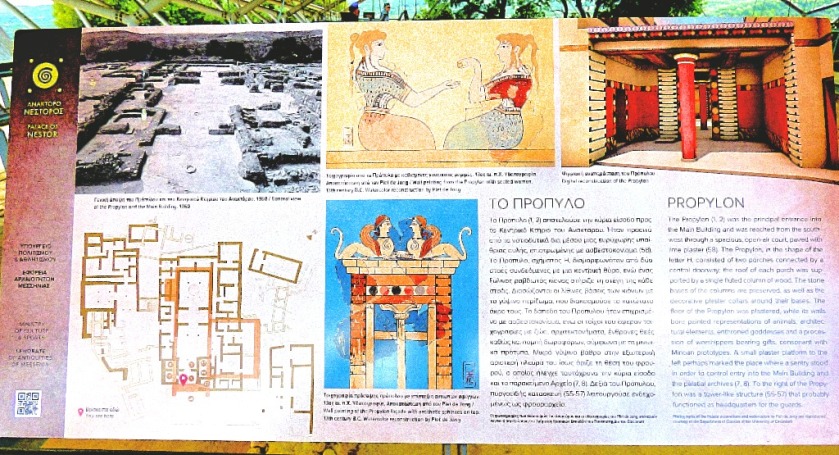
There is lots of informatrion about the palace and the kingdom it was a part of.
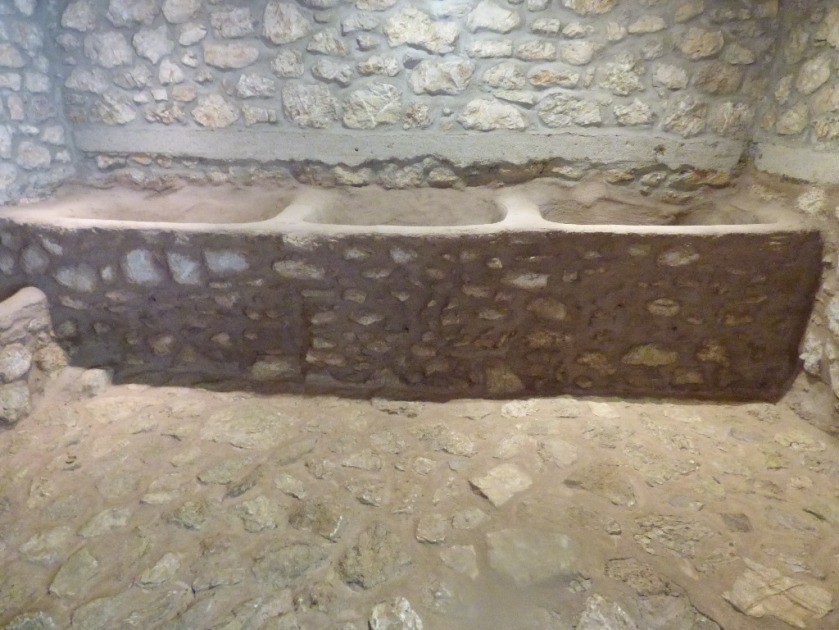
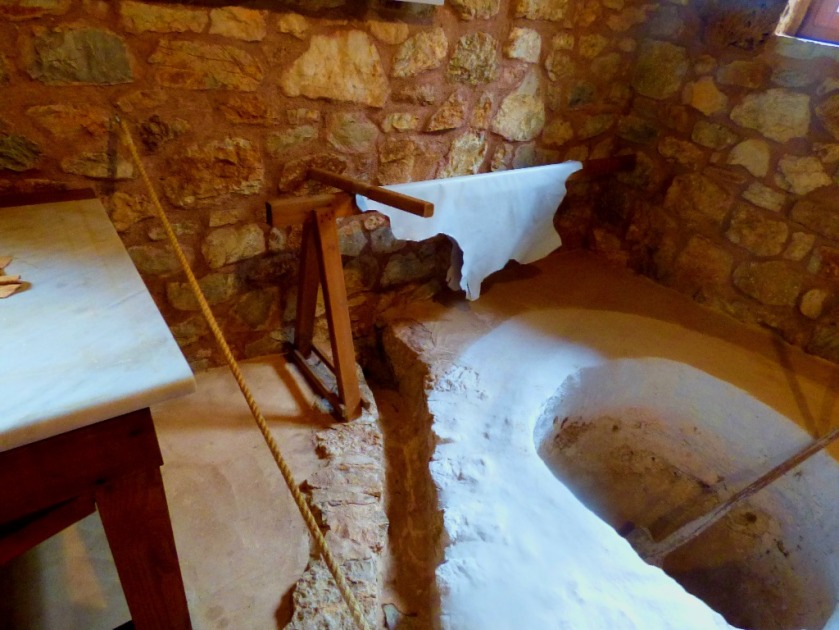
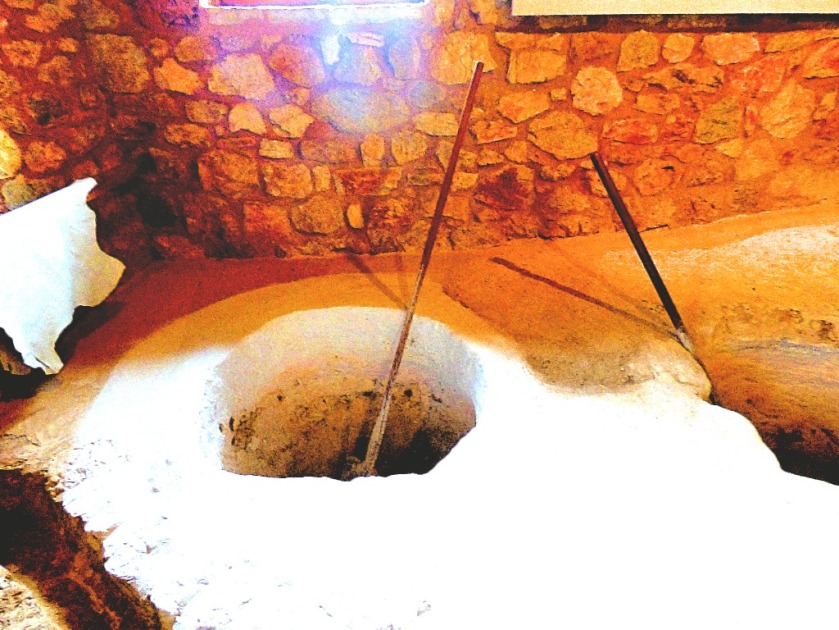
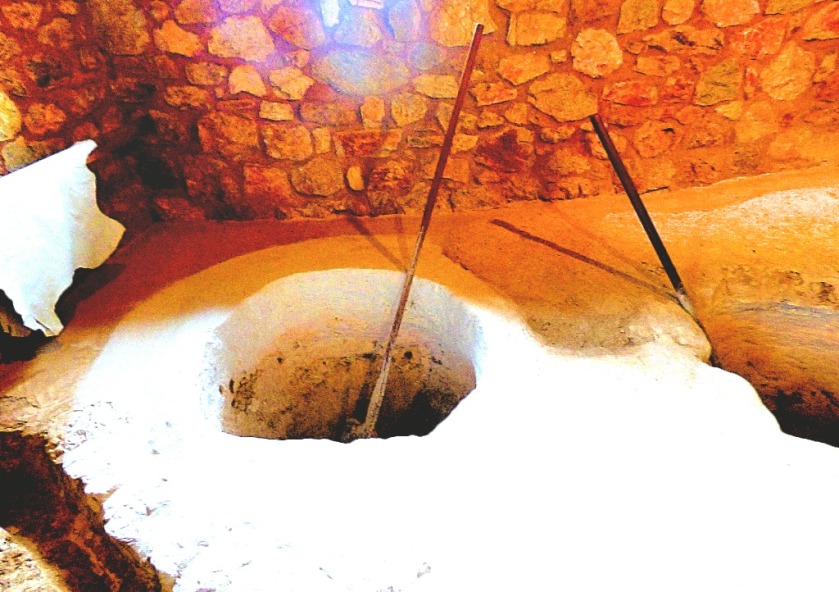
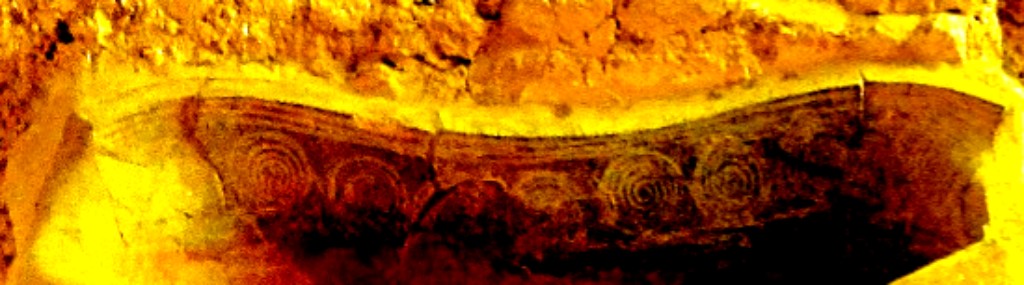
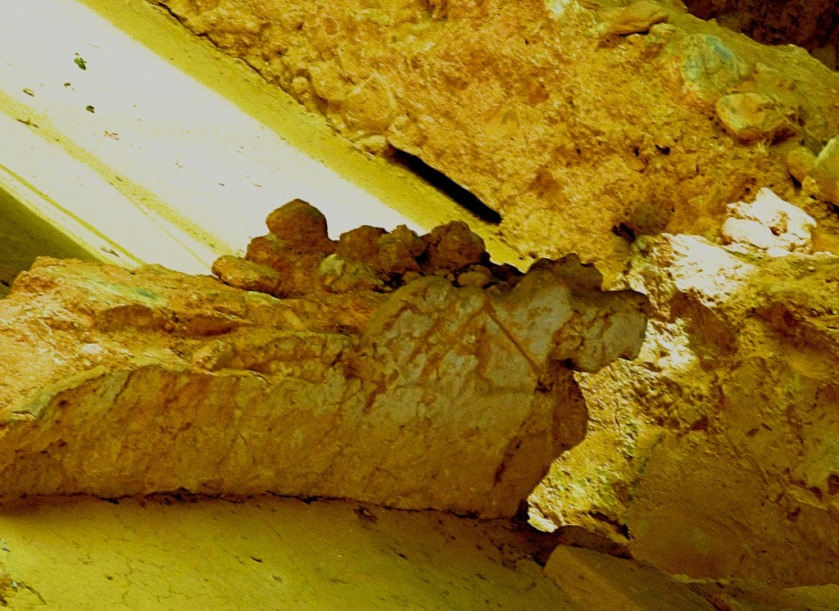
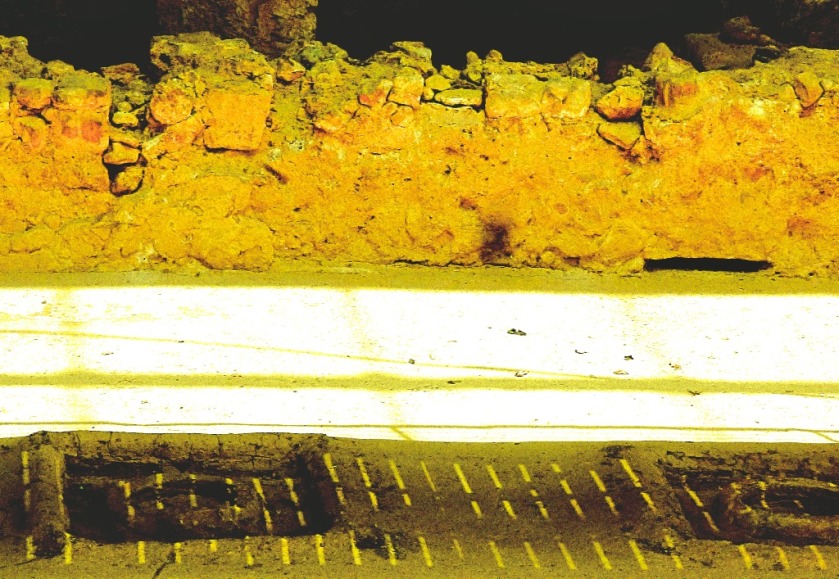
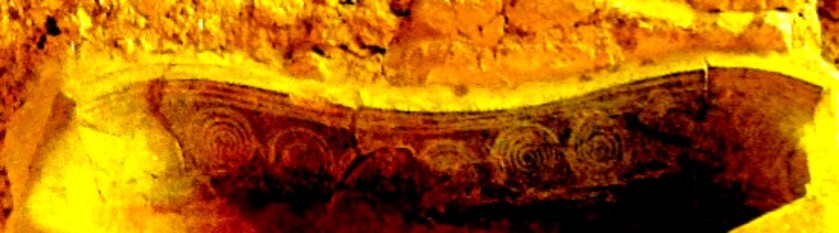
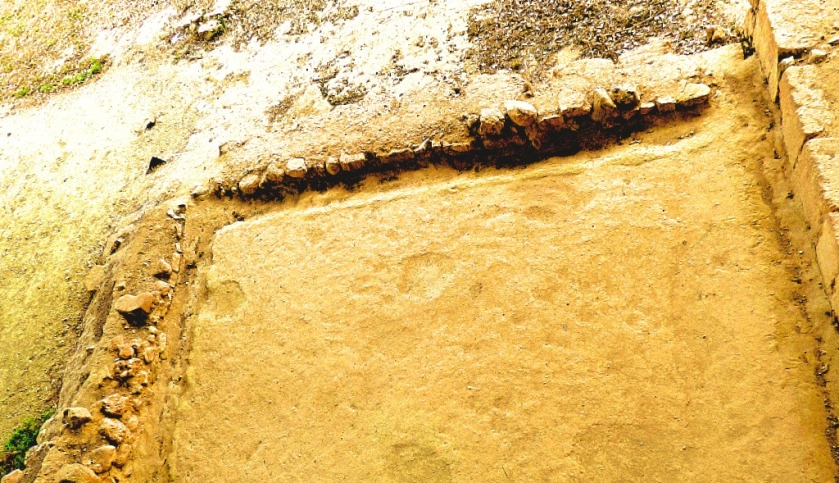
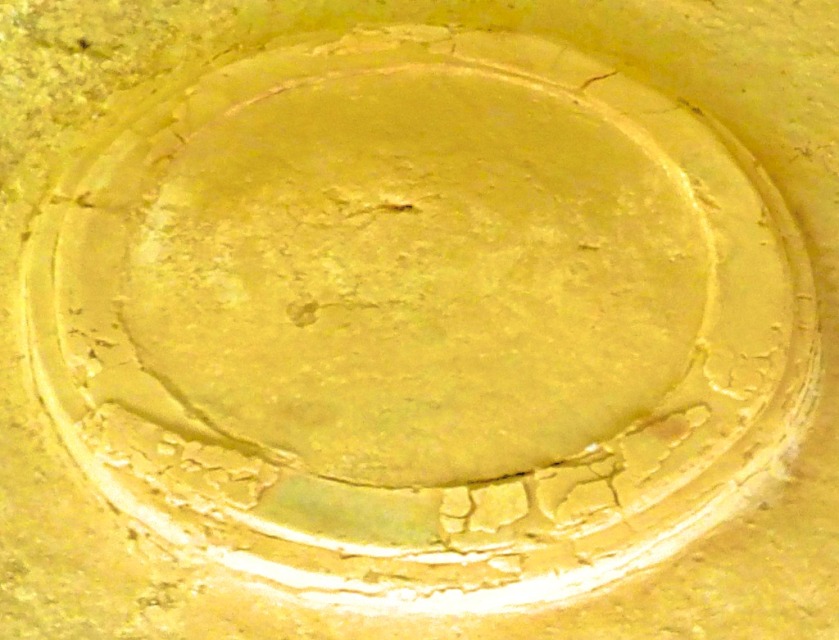
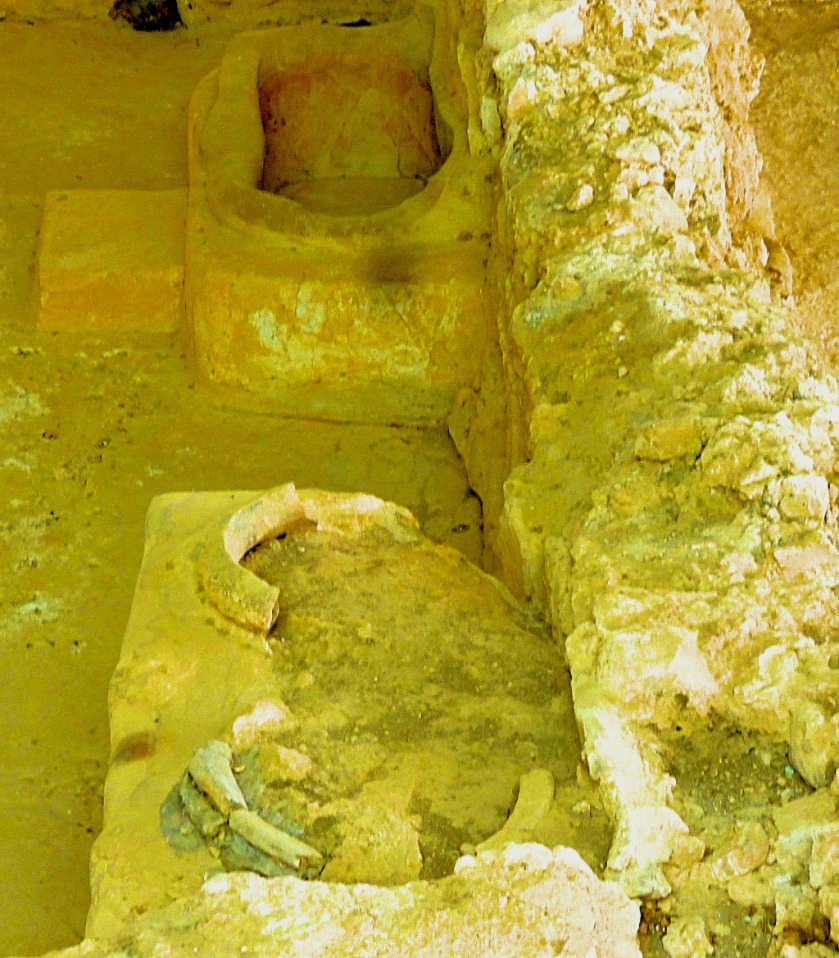
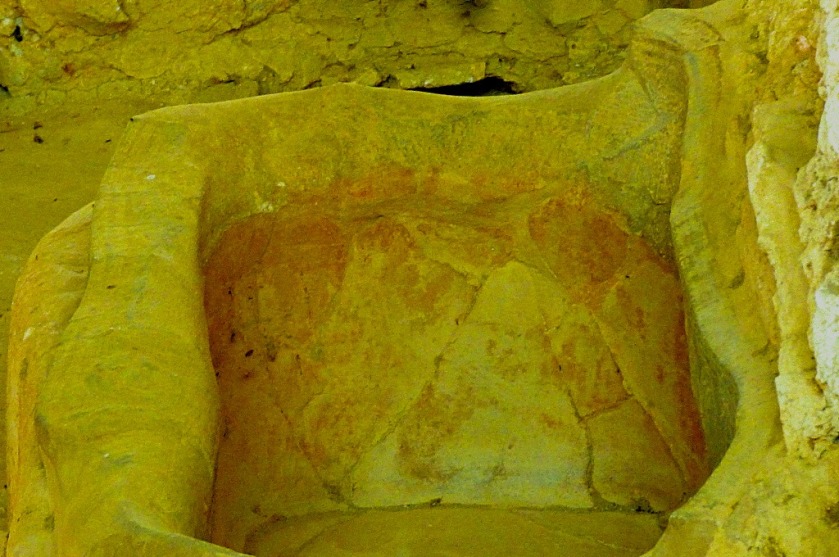
some detail from the inside facing of Nestor’s bath.
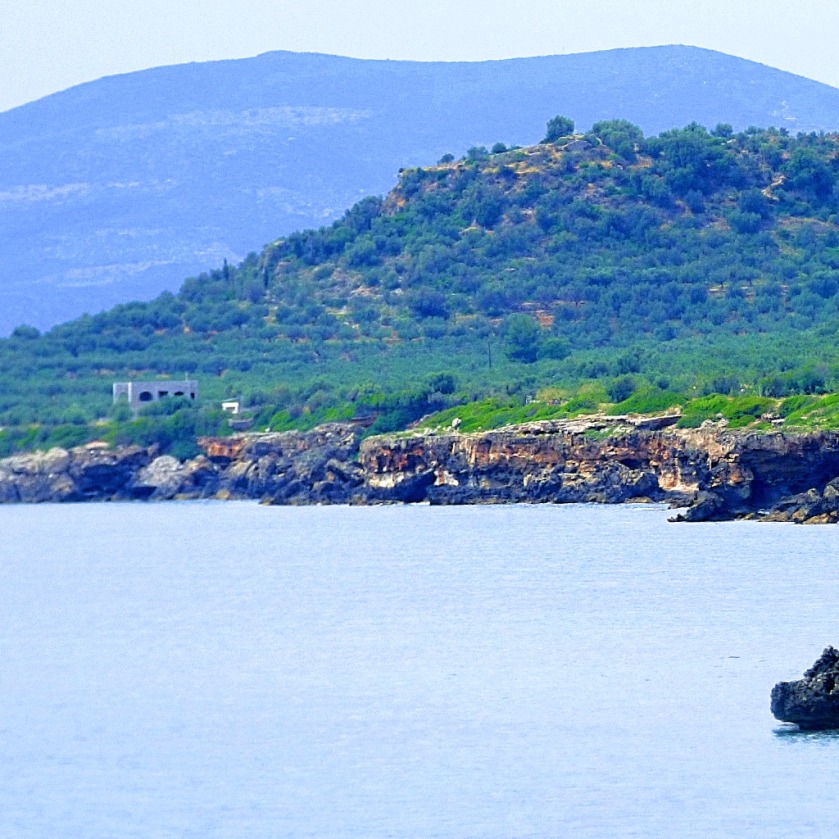
The first of several sea views I captured from Nestor’s palace.
SEA VIEWS FROM THE PALACE
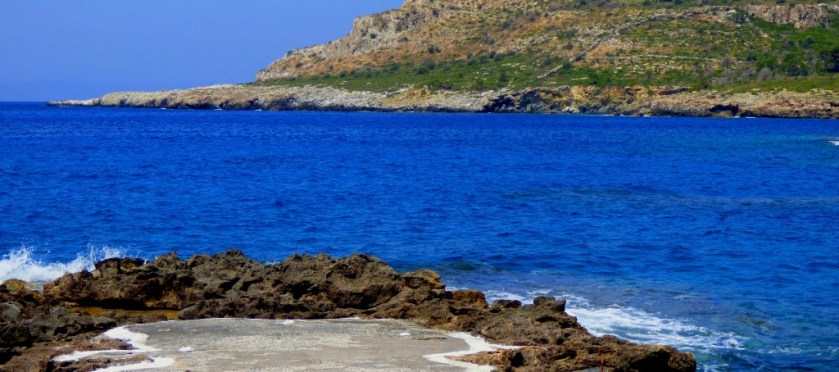
Here are my remaining sea views from the palace itself…
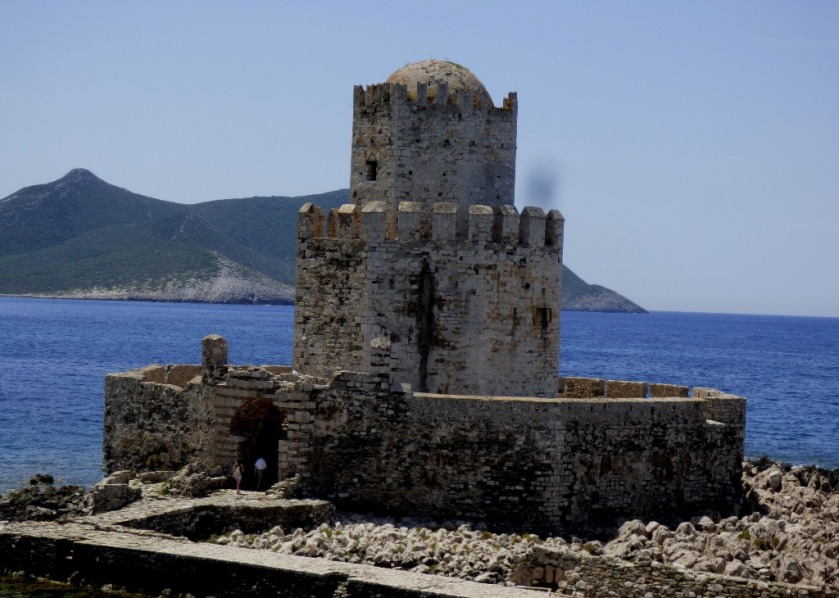
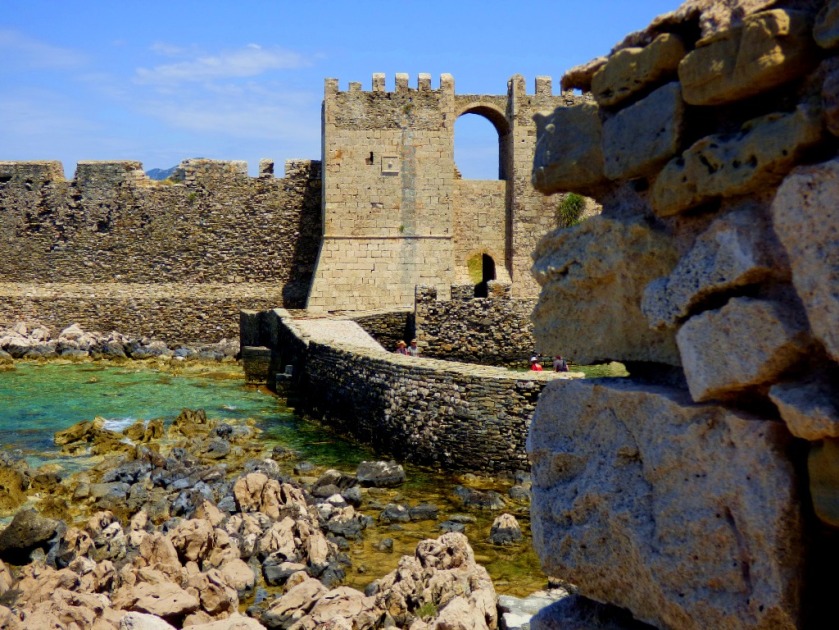
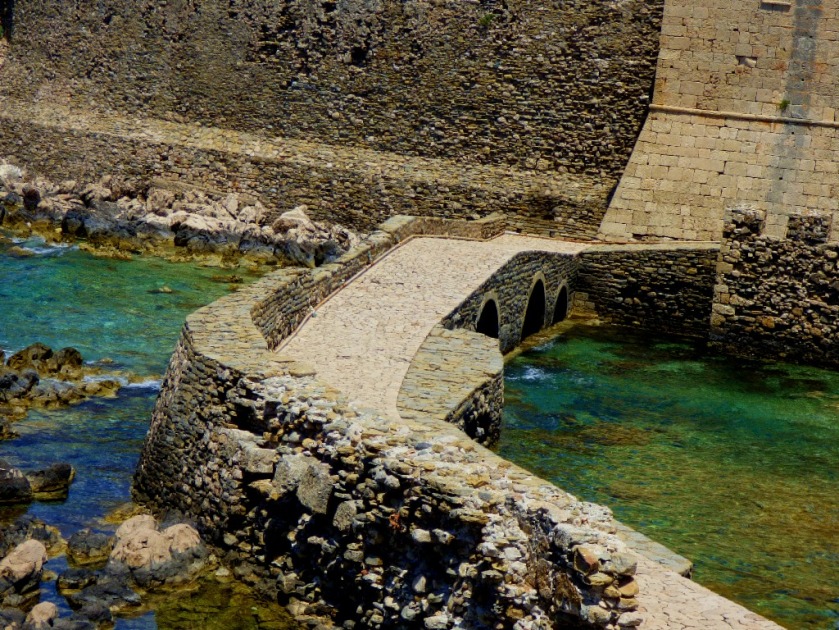
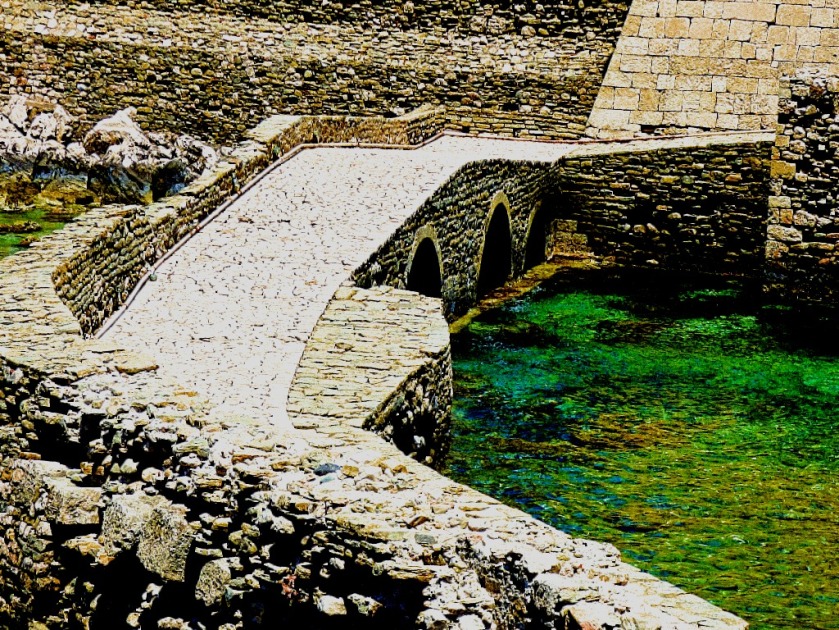
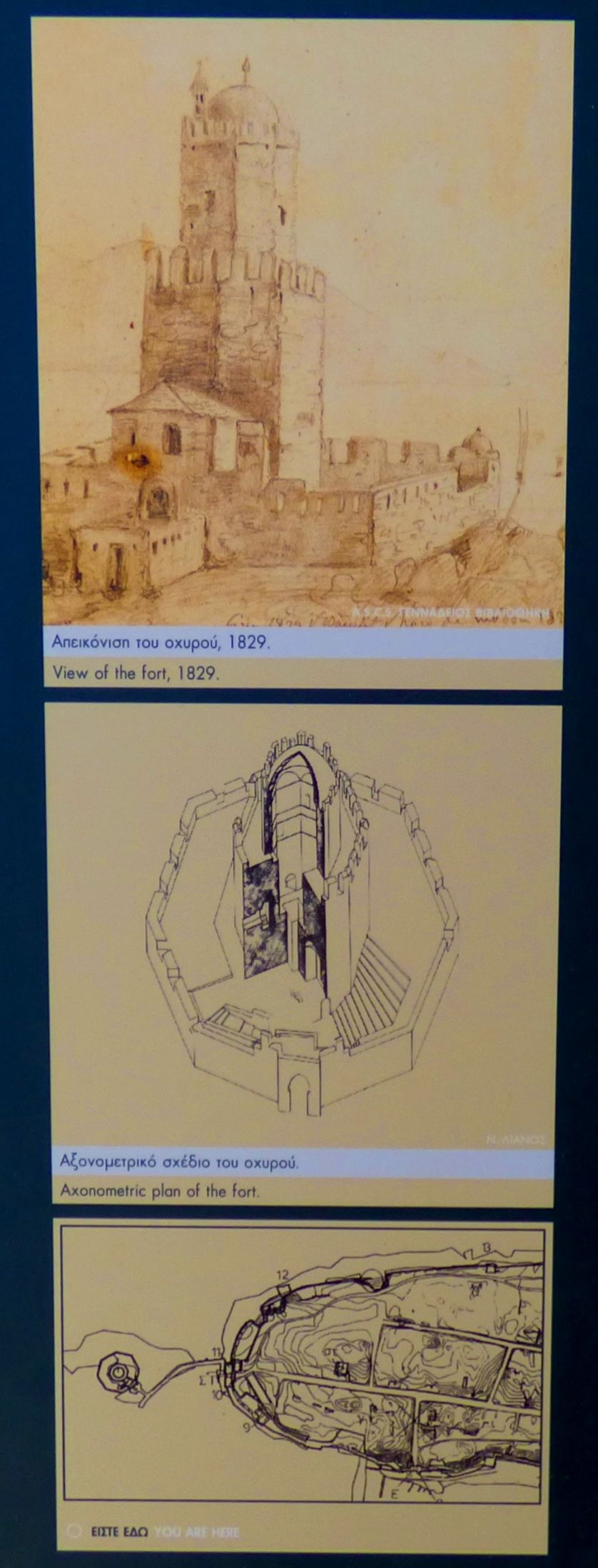
In my last post I gave you a photographic tour of the main castle at Methoni, finishing at the gateway to the Bourtzi, a small outpost castle that guarded the sea, which I shall now focus on.
THE WORD BOURTZI
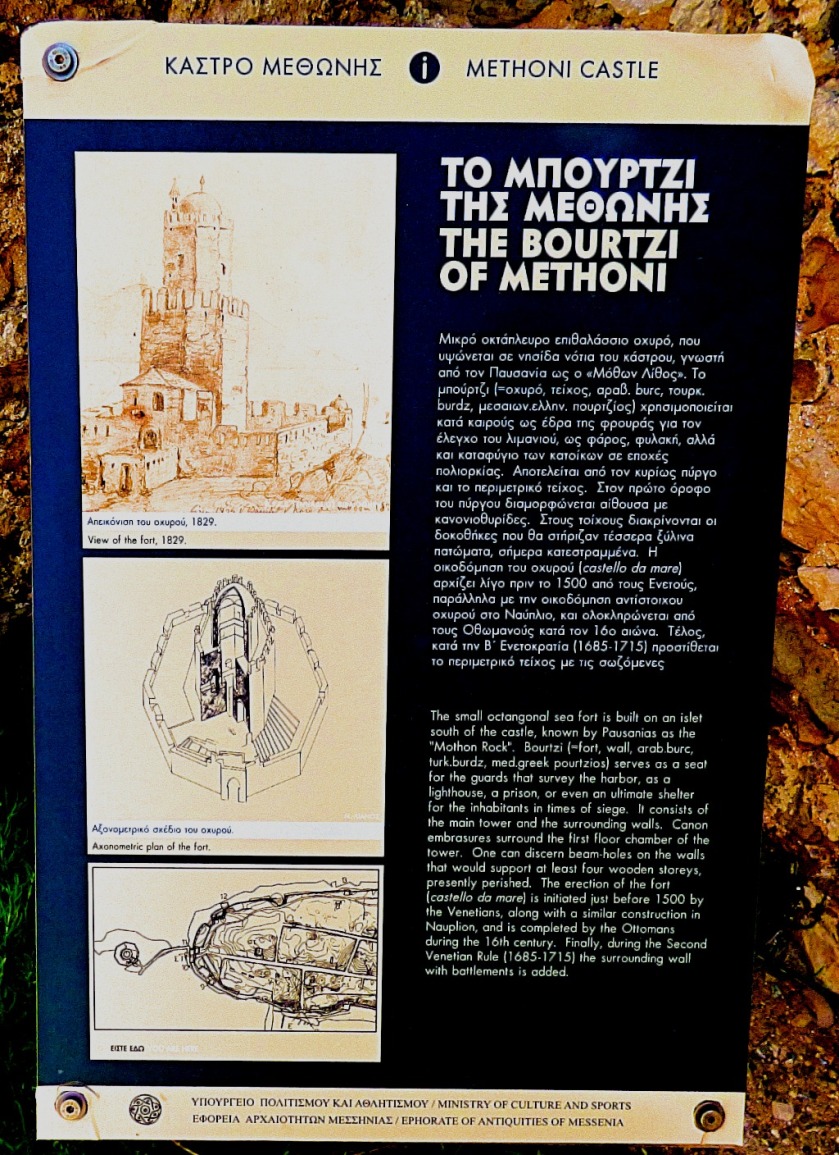
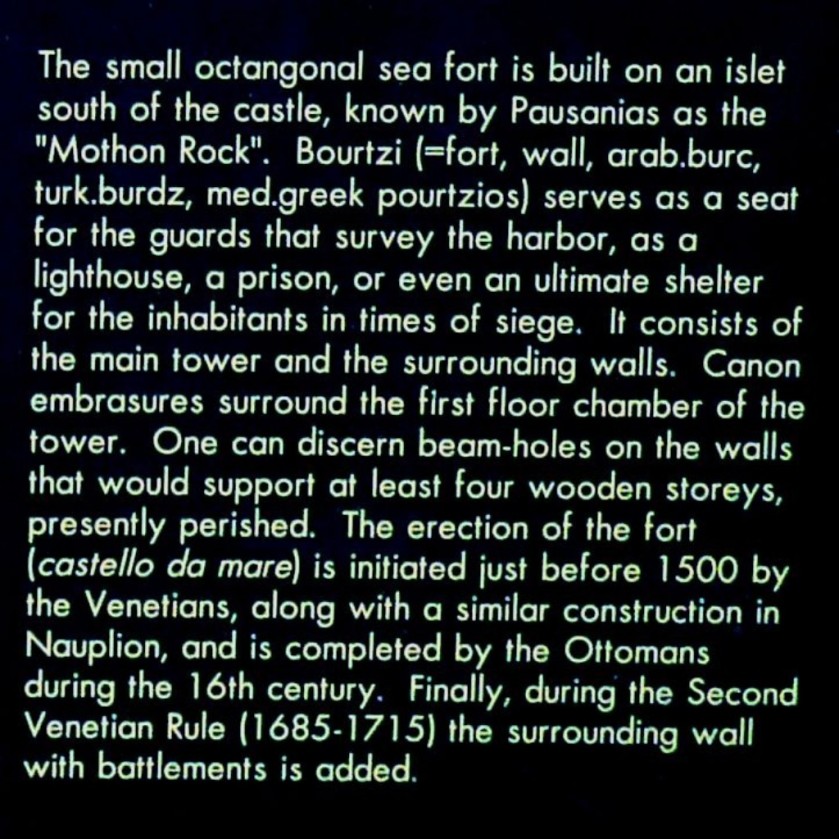
Here are the origins of the word Bourtzi:
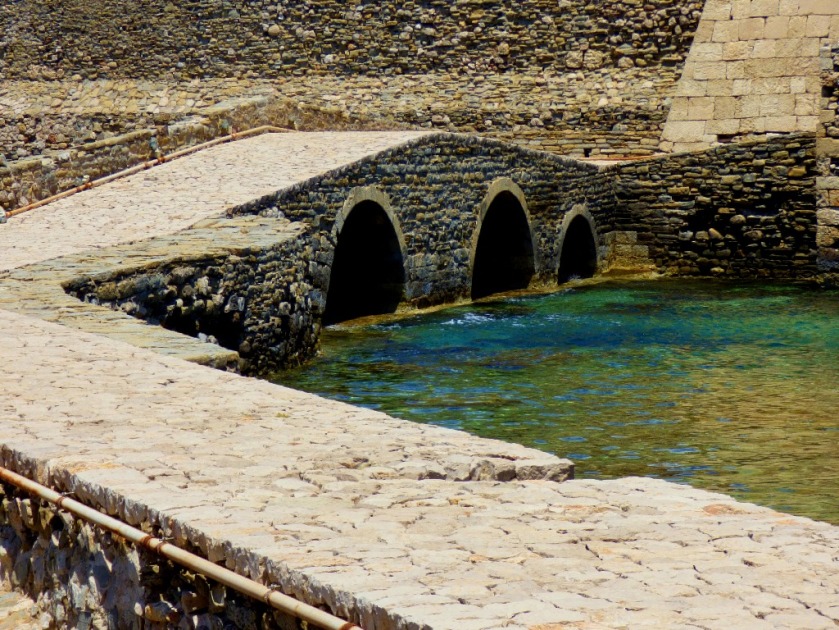
THE BOURTZI OF METHONI IN PICTURES
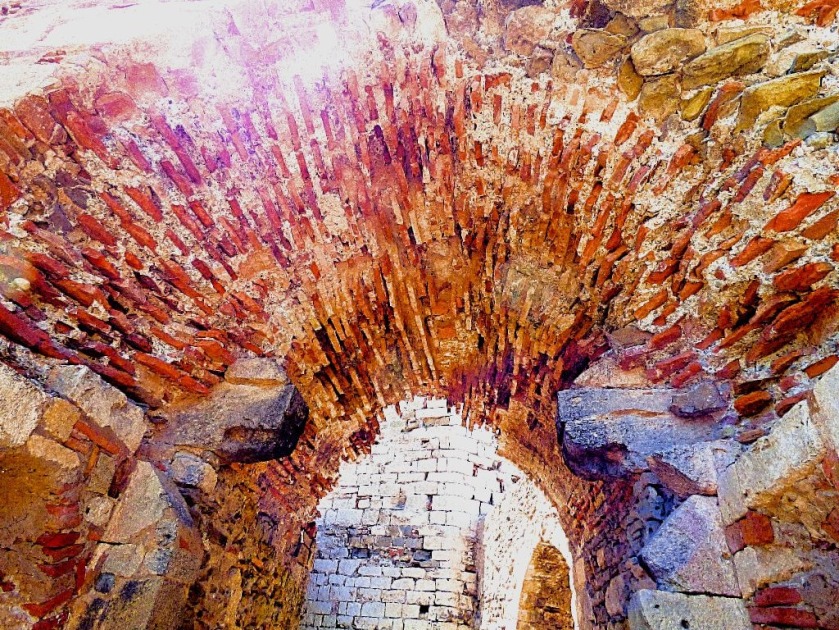
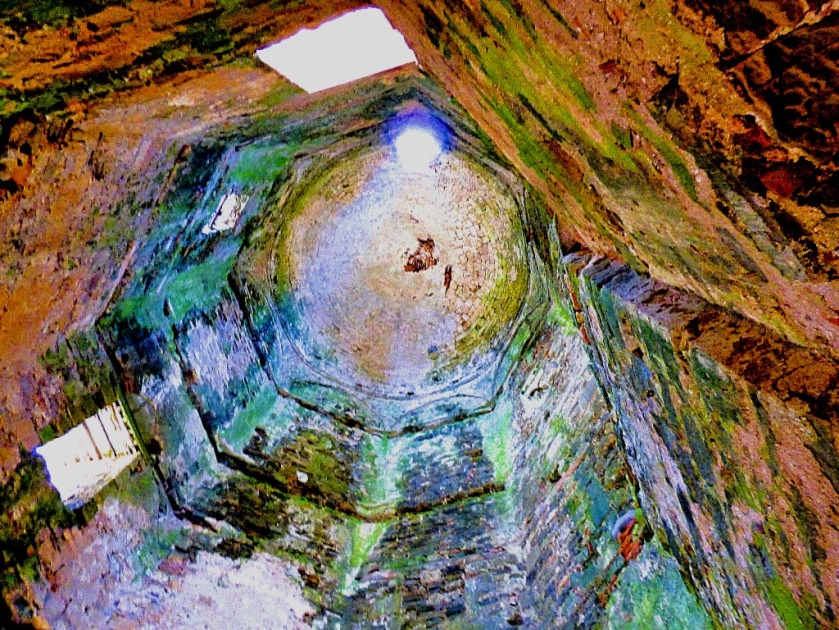
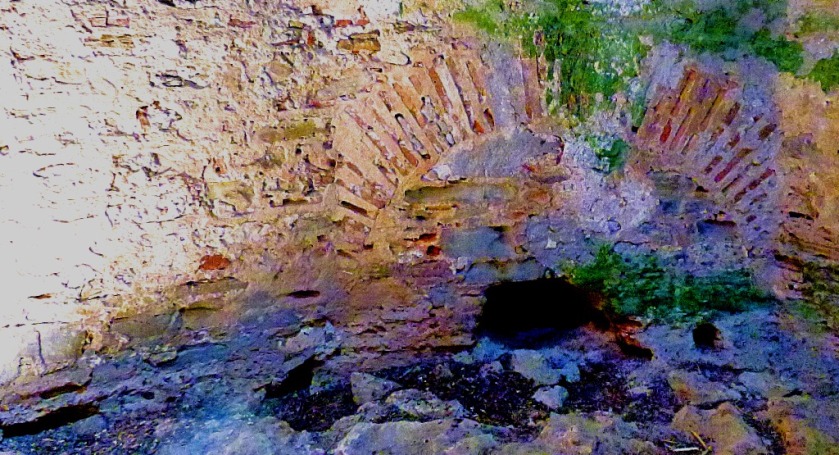
This passage leads into the Bourtzi. This style of brickwork is a feature of Byzantine architecture.
LEAVING METHONI CASTLE
There were a few final photograophs as we headed back to the car preparatory to moving on to Nestor’s palace.
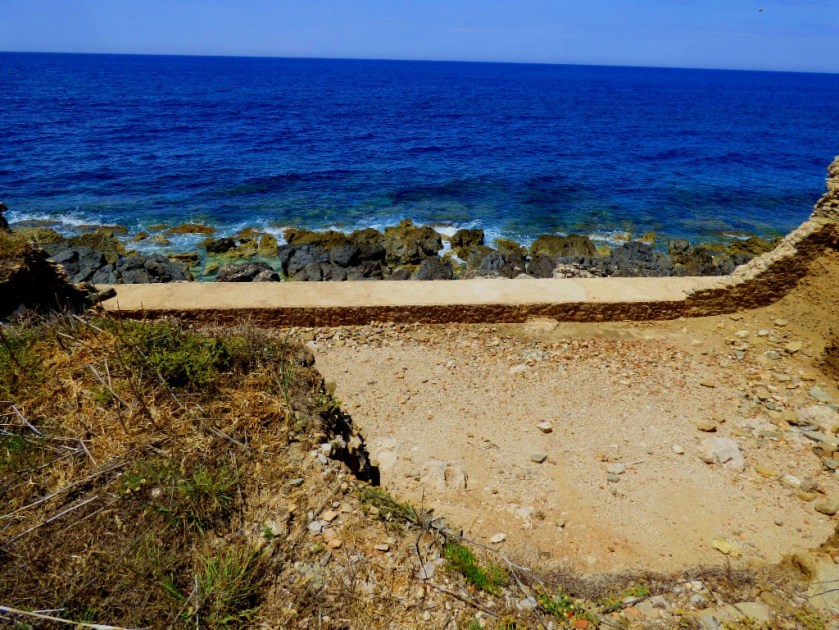
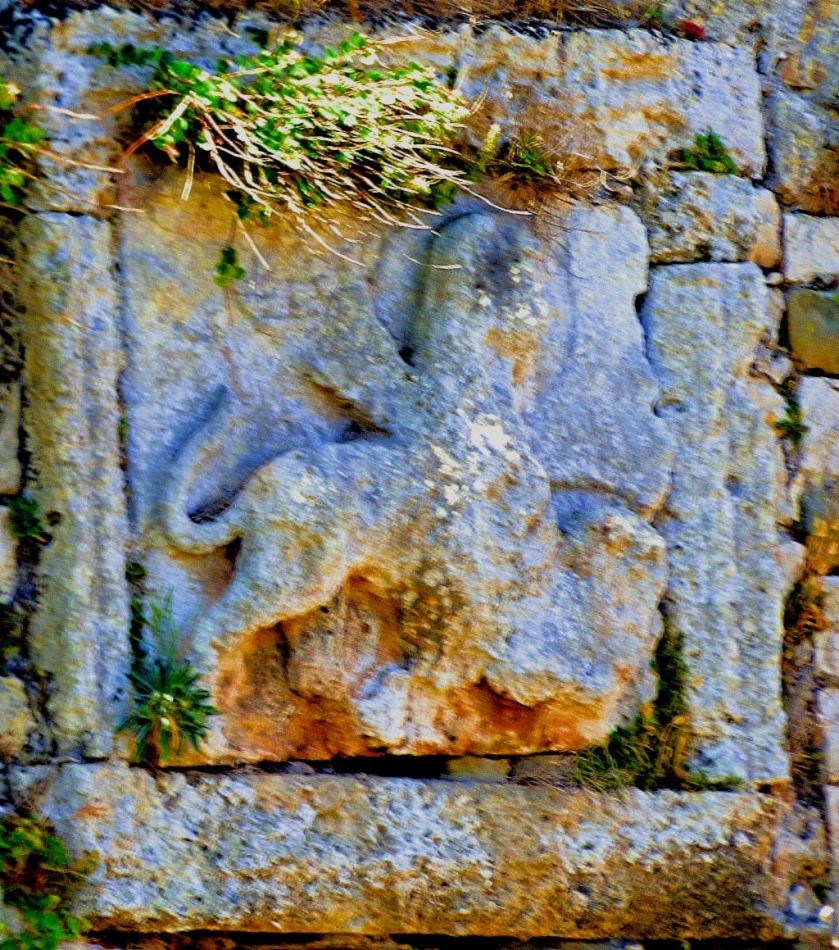
Coastal defences for Methoni castle.The Lion of St Mark – the emblem of Venice.
A photographic of the main part of Methoni Castle, setting the scene for the Bourtzi of Methoni, the subject of the my next post in this series.
INTRODUCTION
Followijng on from my last post which described the journey to Methoni this post covers the main castle, while my next post will deal with the Bourtzi of Methoni.
A VENETIAN MASTERPIECE
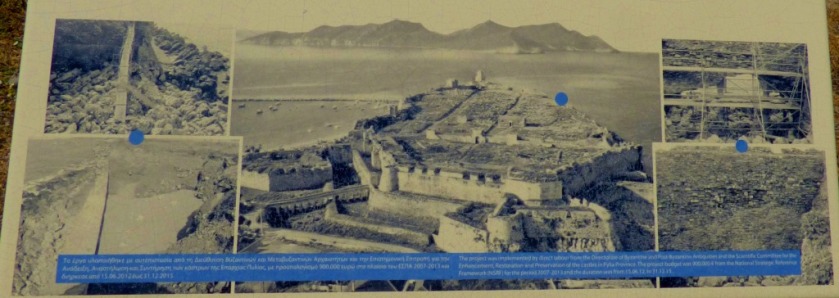
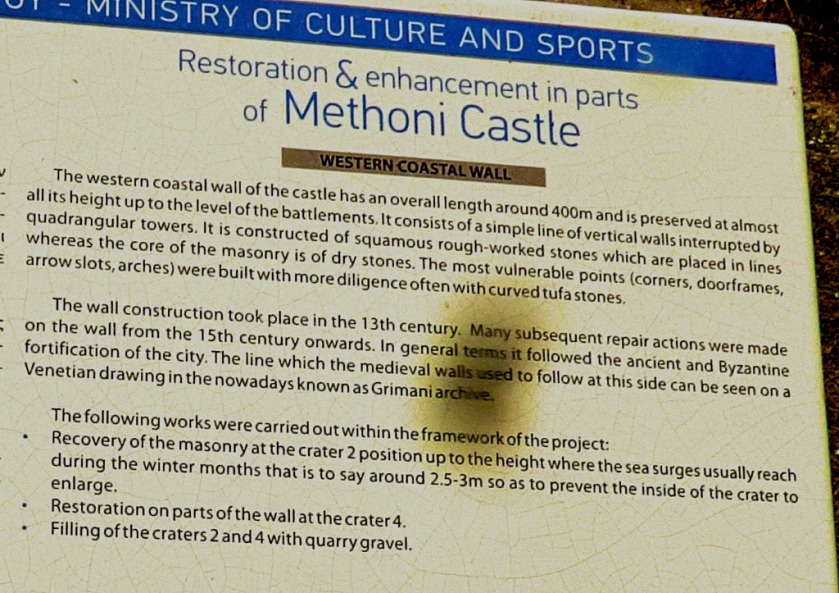
Methoni castle was first built by the Venetians in the 13th century, and then massively expanded when the retook possession of it from the Turks in the late 17th century. Here is some official information:
Here is the approach to the Castle:
Looking towards the sea as one approaches the castleThe bridge across the moatThe gateway to the castleThose who have read my preliminary post to this series have already seen this picture once, and it is of the course the origin of my current profile picture.
Here are some pictures from inside the castle…
This castle was first built in the 13th century during the first expansion of Venetian power, then the Turks took over until 1685, when the Venetians retook the place and held it for thirty years, before the Turks took it back again and held it until Greece gained its independence in 1821. This building is very obviously an old Hammam (a Turkish bath house)
A braille information board.
A caper plant growing in the castle grounds.
The entrance to the Bourtzi of Methoni, the subject of the next post in this series.
Setting the scene for the accounts of Methoni and Nestor’s palace.
INTRODUCTION
On the Tuesday of my Greek holiday (Tuesday 15th May) we visited first the Venetian castle at Methoni and then Nestor’s palace at Pylos. This post sets the scene for the rest of that day by describing things up to the point at which we were poised to visit the castle.
UNDER WAY
We had intended to get underway by nine o’clock and we did. Although being in the back of a hatchback with small rear windows is somewhat limiting of what one can photograph I got a few shots as we approached our main destination.
This is a Turkish built medieval aqueduct, and I got three shots of it from the car, before we stopped because there was an information board about it.
THE AQUEDUCT CLOSE UP
I took full advantage of our brief stop…
The Information board.
THE FINAL APPROACH TO METHONI
We passed a scene that featured both good and bad…
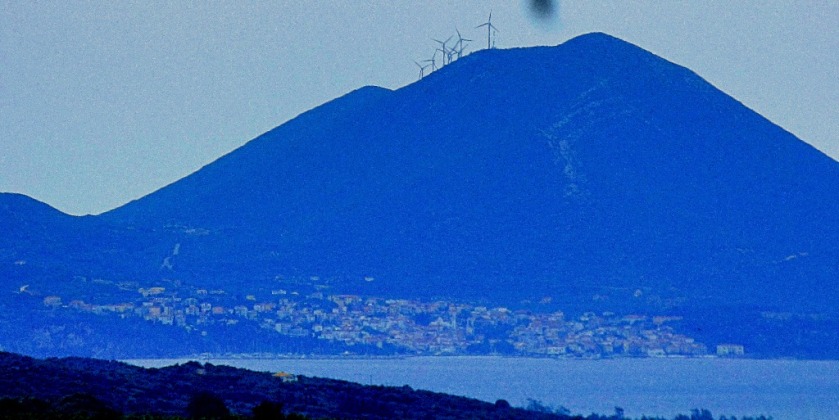
The wind turbines on the hill are a positive sign, but the derelict shell of a building at the bottom is unfortunate to say the least. After parking in Methoni we passed the Venetial Well en route to a cafe…
At the cafe we were served water and decided to sample their chocolate crepes, which proved to be ill-advised. These were served in absurd quantities, and the principal covering was nutella. I realised after eating one of the three crepes I was served that I needed to scrape away the nutella before continuing with the others. Half way through the second I gave up, realising that trouble was in store if I continued eating the stuff. This decision came too late to entirely save me from adverse consequences, but at least meant that I only became a little nauseous rather than ever actually feeling or being sick.
Once we were all finished it was time to visit the castle, which will form the subject of my next post.
The beginning of full coverage of my holiday, starting atv the beginning with the journey to Tseria and the rest of that day.
INTRODUCTION
Yes folks, after yesterday’slittle offering I am now able to start the story of my Greek holiday in earnest, and my usual logical fashion I am beginning at the beginning.
THE JOURNEY TO TSERIA
The flight to Kalamata (nearest airport to my parent’s house in Tseria) takes off at 5:40AM (the return flight leaves Kalamata at 12:00 Greek time, enabling the same crew to do both flights), which means that for a public transport user who lives in Norfolk the only way to get to the airport is to travel down the night before. I did this, arriving at Gatwick as planned just after 1AM, and making my way via the automatic monorail to the North terminal, where I waited landside until the EasyJet check in desks opened just after 3AM. An uneventful passage through security and I was safely airside and had about 90 minutes to wait for gate information to appear on the screen. I had had a beer landside, and now airside I had a bagel and a coffee while waiting.
There were equally few dramas boarding the plane. I had an aisle seat, which meant no chance of seeing anything through the windows (they are too small to be of use unless you are in a window seat) and also that I had to get up more often than would have been the case had I been in a window seat.
I had had the forethought to equip myself with plenty of reading matter. We landed at Kalamata fractionally ahead of schedule, a gain that was more than lost to slow baggage handling at that end. My parents collected me in their hire car, a nice sensible Skoda Citigo, very economical on the fuel, and suitably robust for handling rural Greek roads (which are much better than they were when I visited Greece in the early 1980s, but still a fair way from being describable as ‘good’).
Inspite of a sleepless night I managed to get through the day without napping and went to bed at a sensible time, following a meal at the new taverna that has opened in the village. It was good of its kind and I thoroughly enjoyed it.
PHOTOGRAPHS
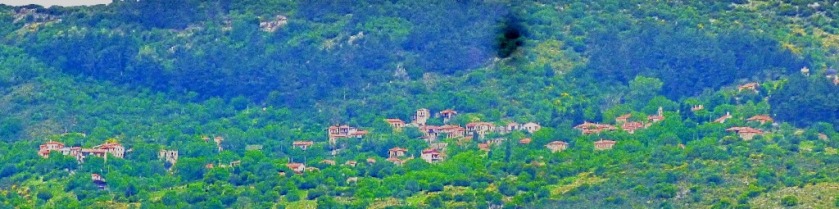
This is the first of a number of pictures taken from the balcony outside my parent’s house.
This tower is newly built since I was last in Tseria.
A distant view of Kardamili and the mouth of the Viros Gorge.There is a lot of fascinating artwork set into the walls of the church just below my parent’s house in Tseria and I captured some of it.
Introducing what will be a series about my holiday in Greece.
INTRODUCTION
I am just back from a week in Greece, mainly in places without internet connections. I have huge numbers of photos to edit, so to keep things going for the moment I am presenting a selection from across the week, plus the return flight, on which I had a window seat.
THE PHOTOGRAPHS
The first few pictures here are from in and arouns Tseria, where I was staying.
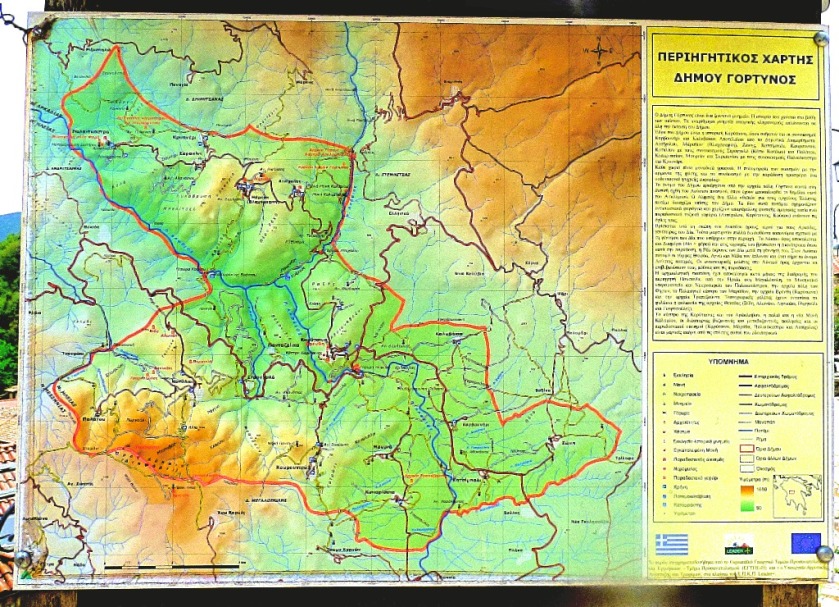
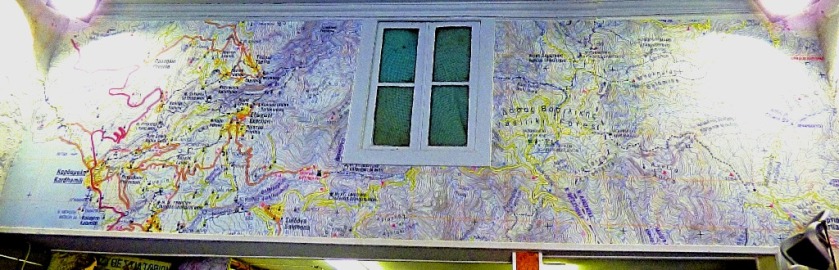
This map is part of the decor of the shop from which my new Sandals came.
My new profile pic – me at the gateway to Methoni Castle.
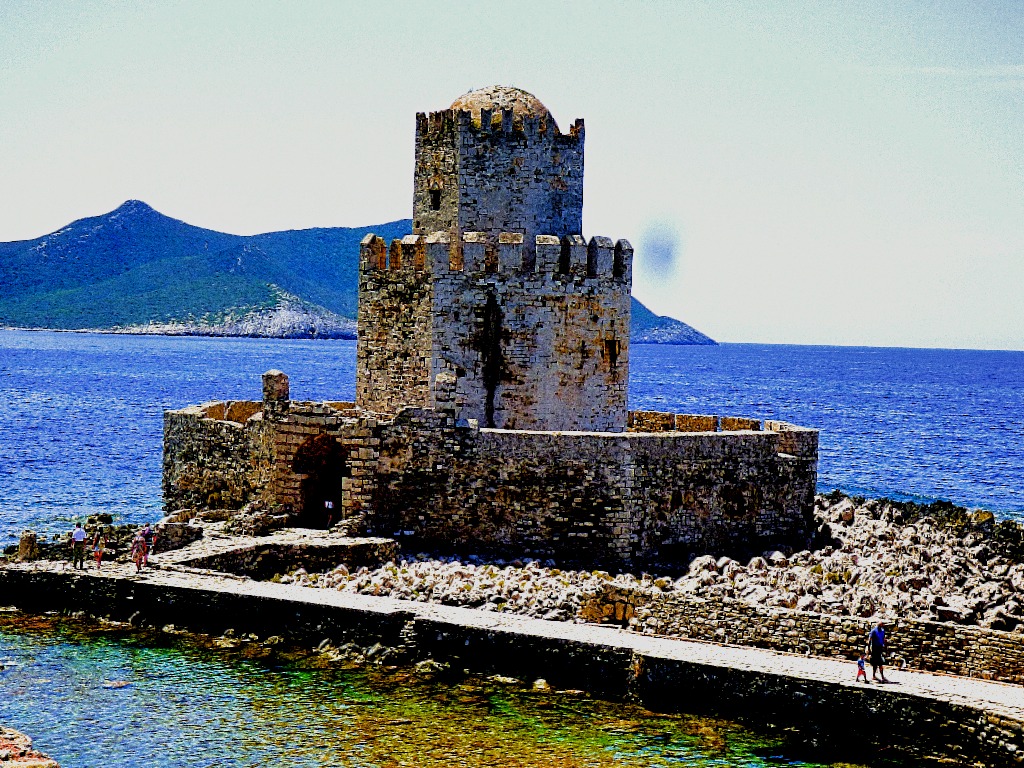
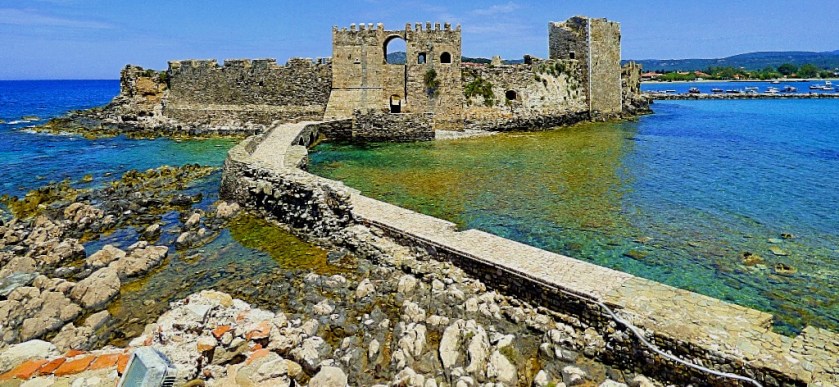
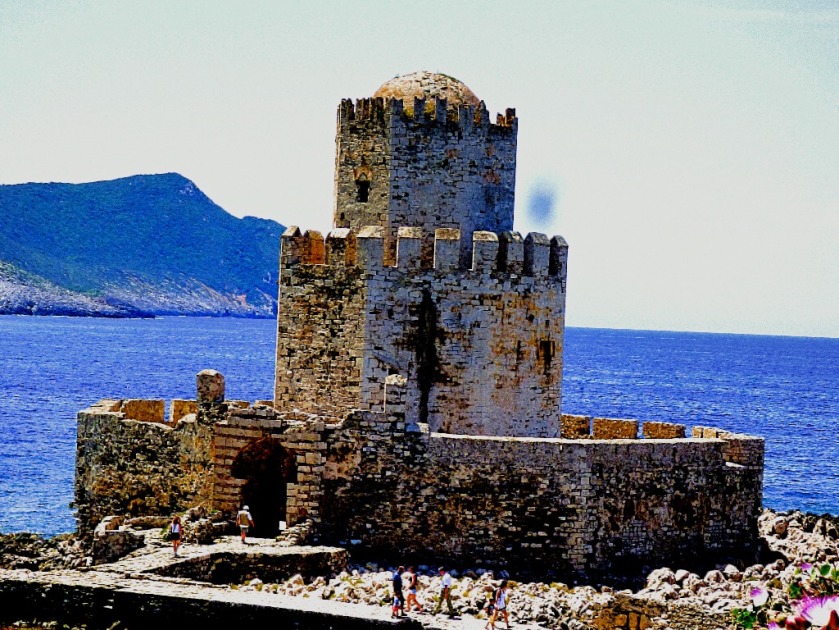
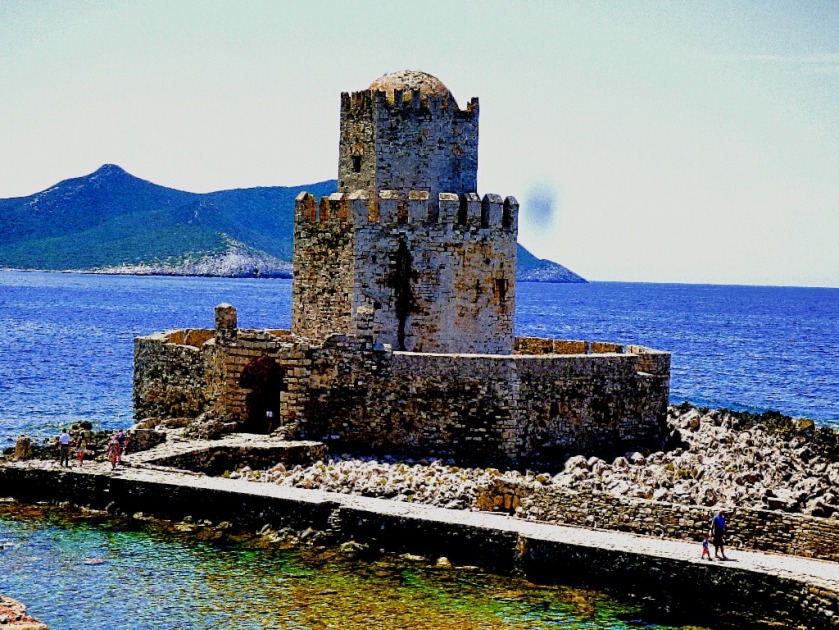
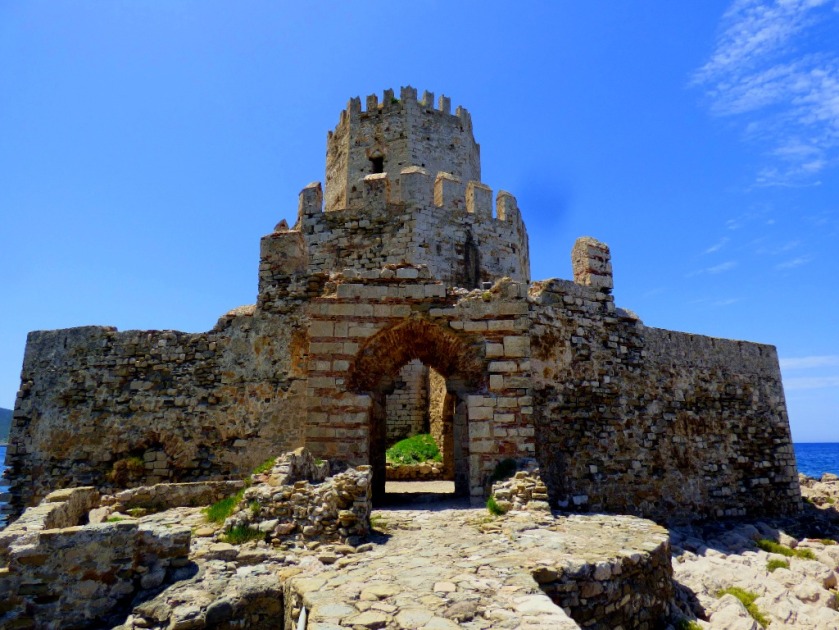
The Bourtzi of Methoni.The bridge linking the main castle and the BourtziThe main castle from the BourtziA heraldic lion set into the stonework of the outer wall of the castle
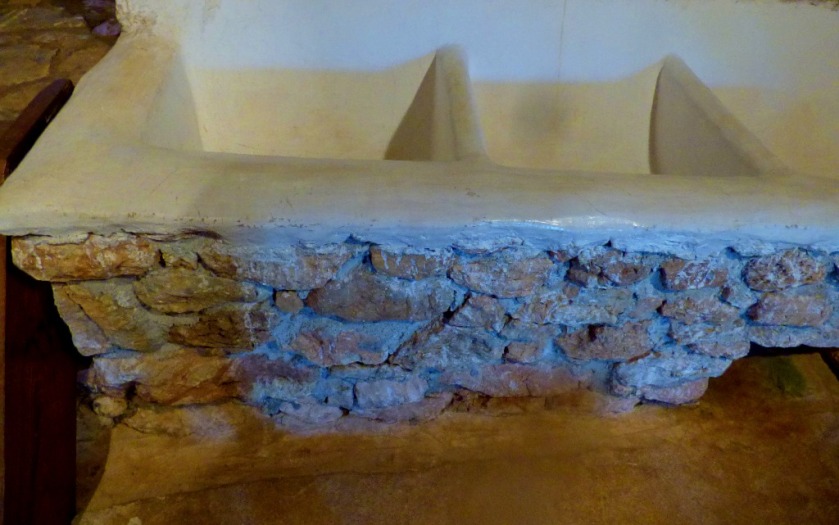
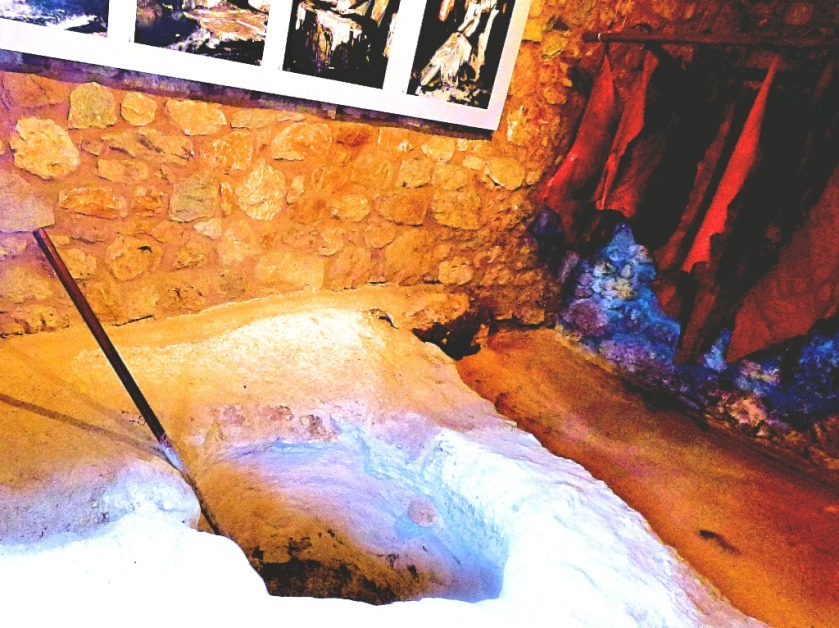
The bath of Nestor, Pylos
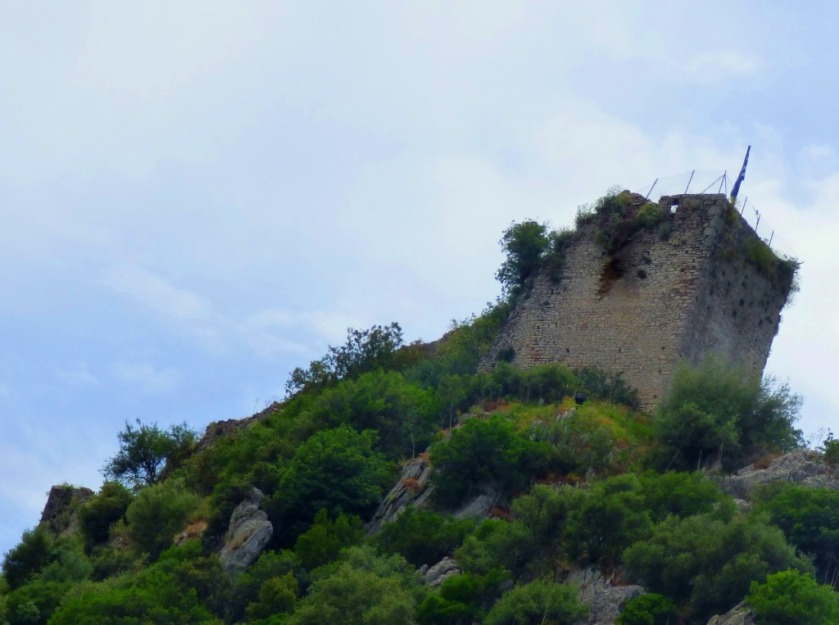
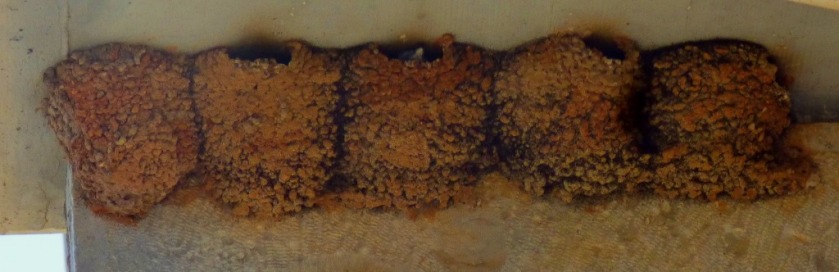
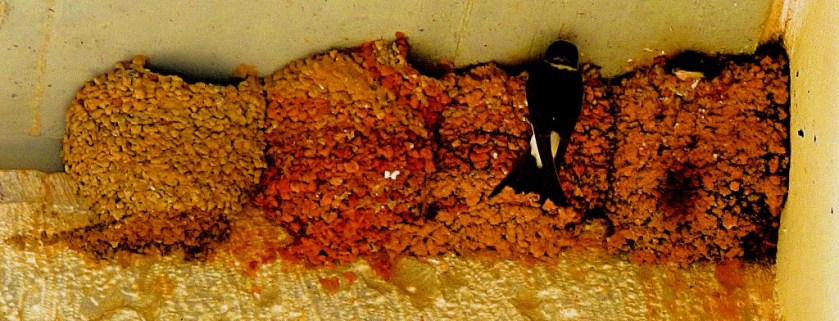
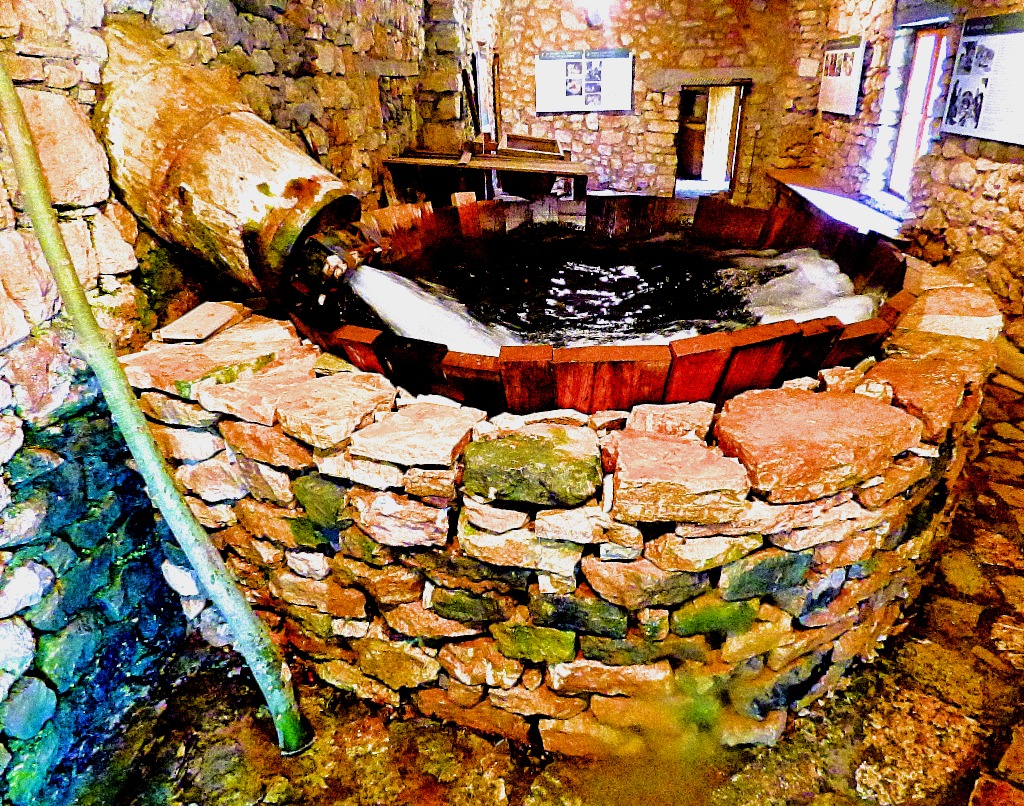
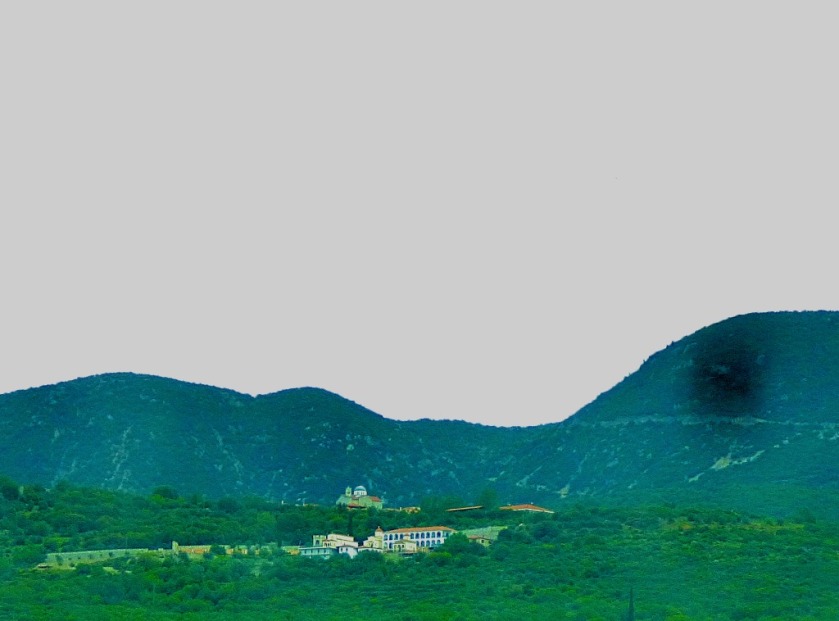
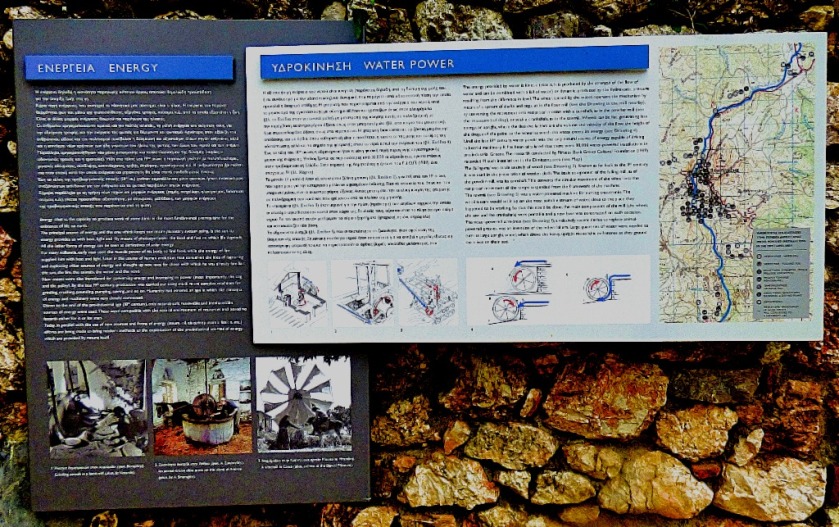
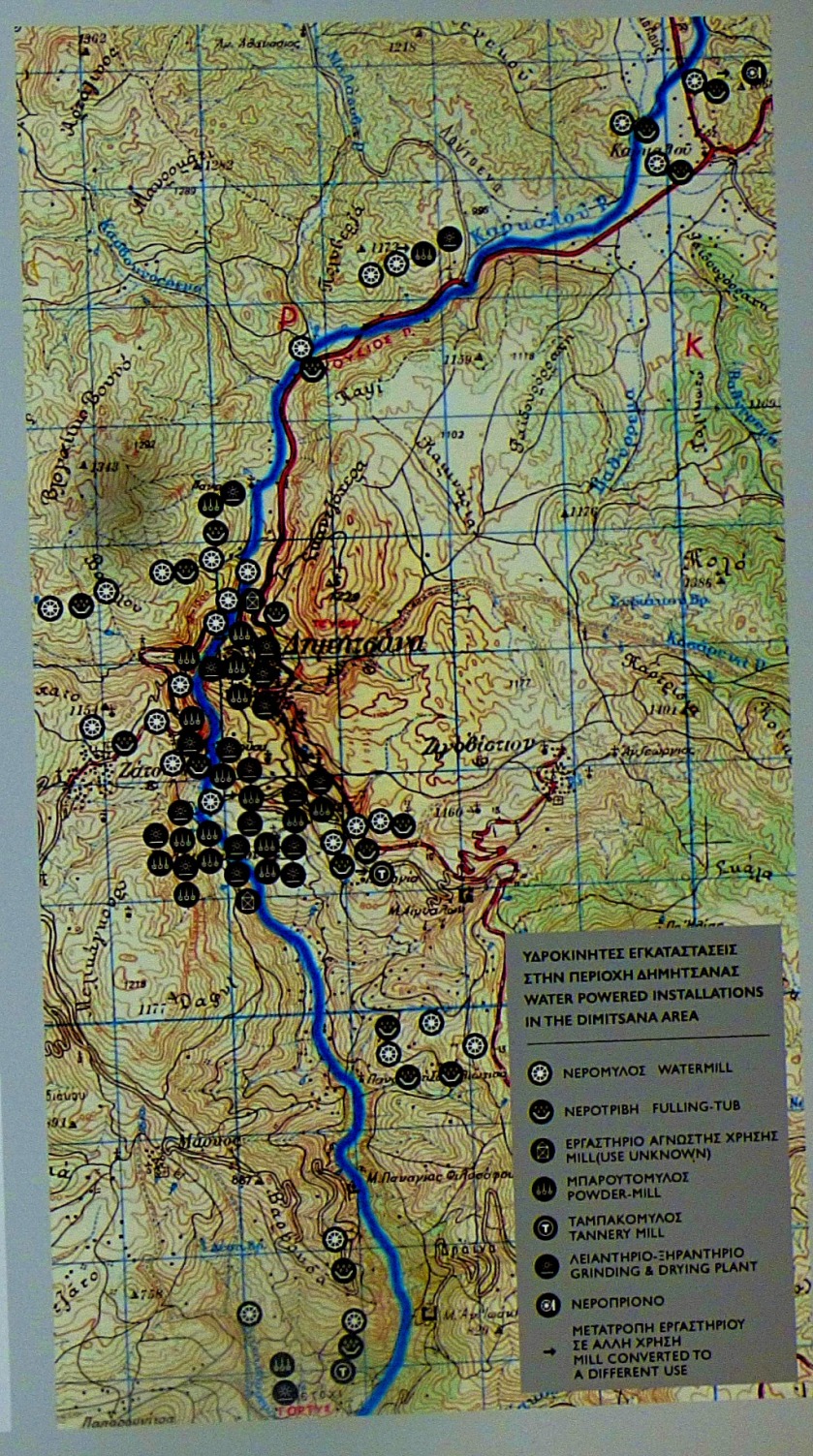
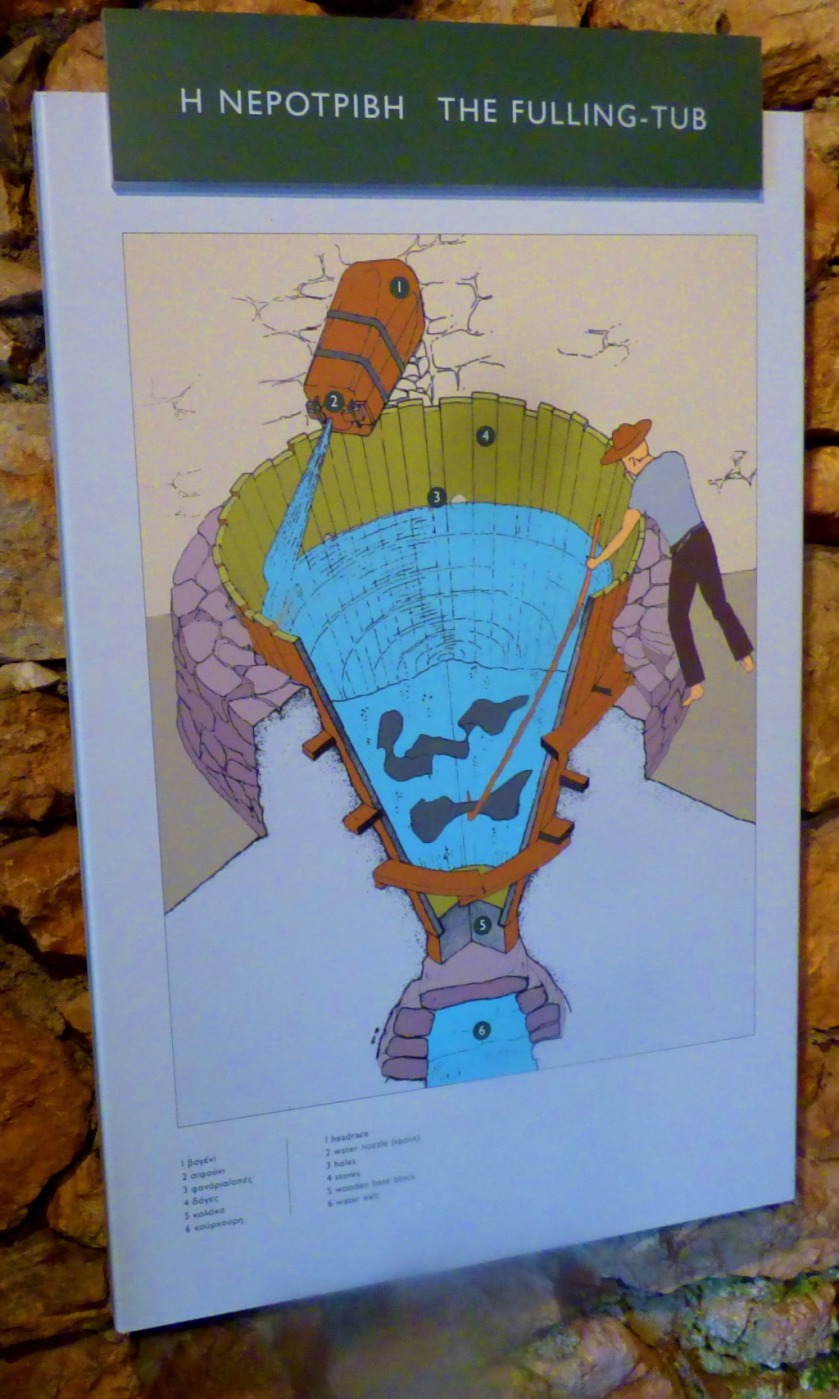
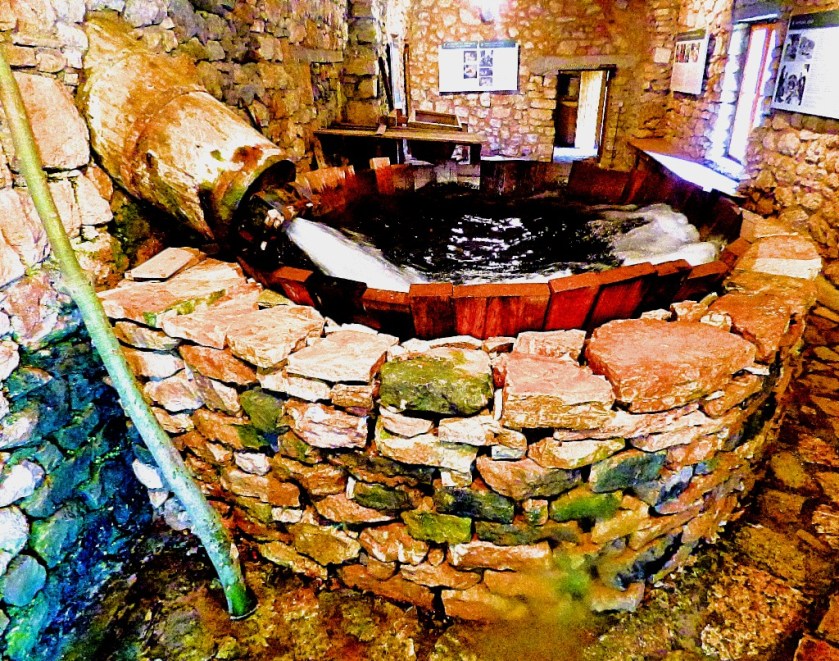
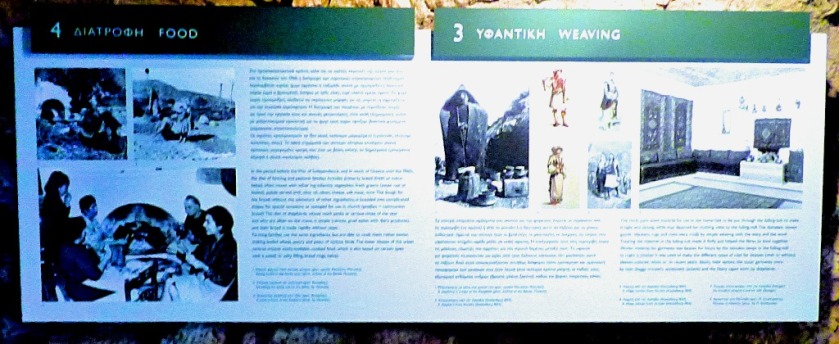
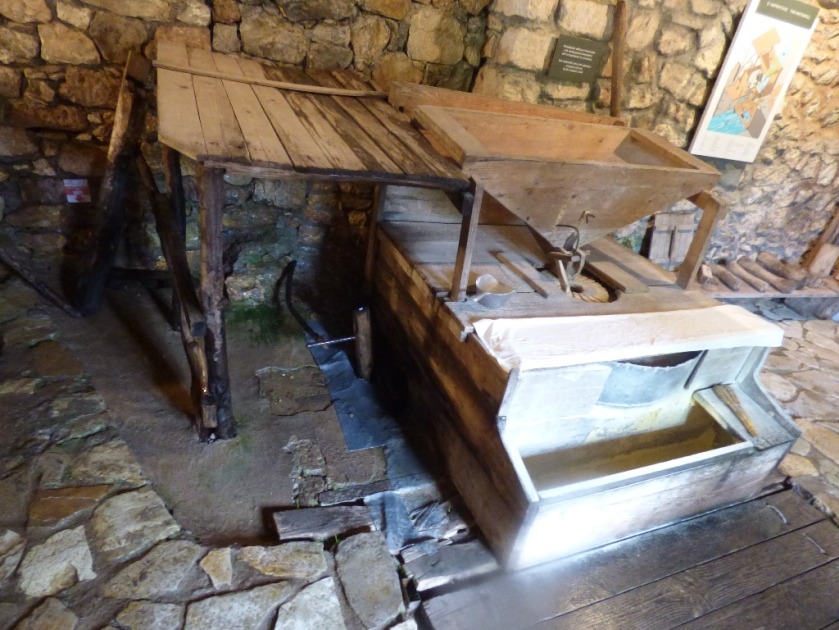
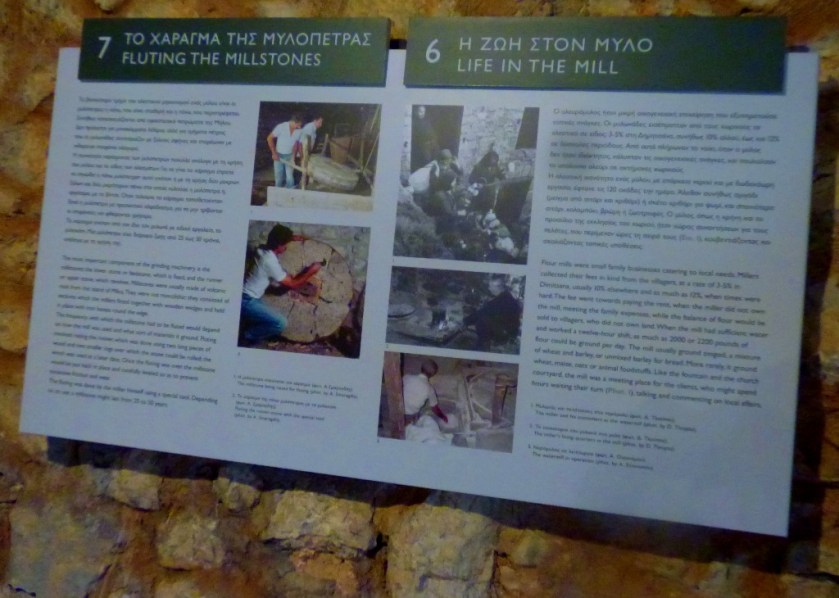
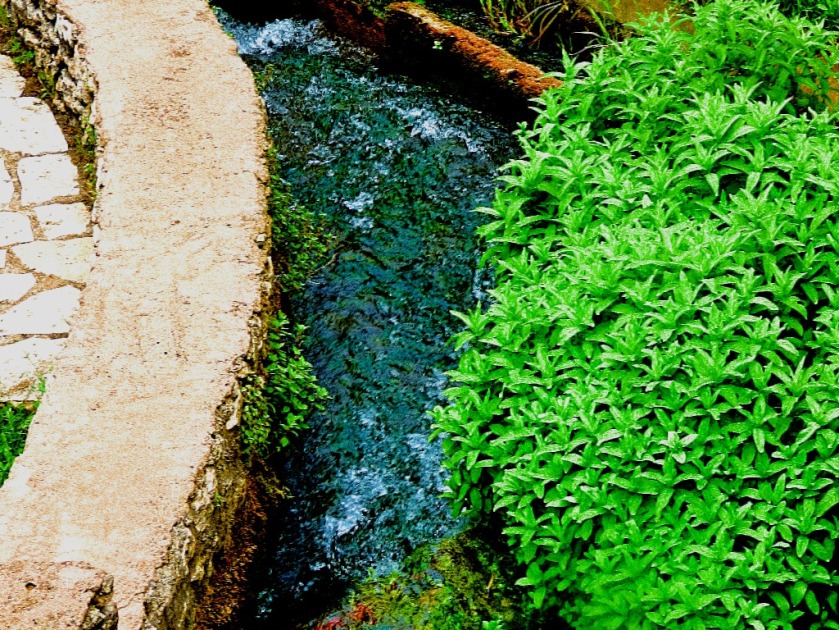
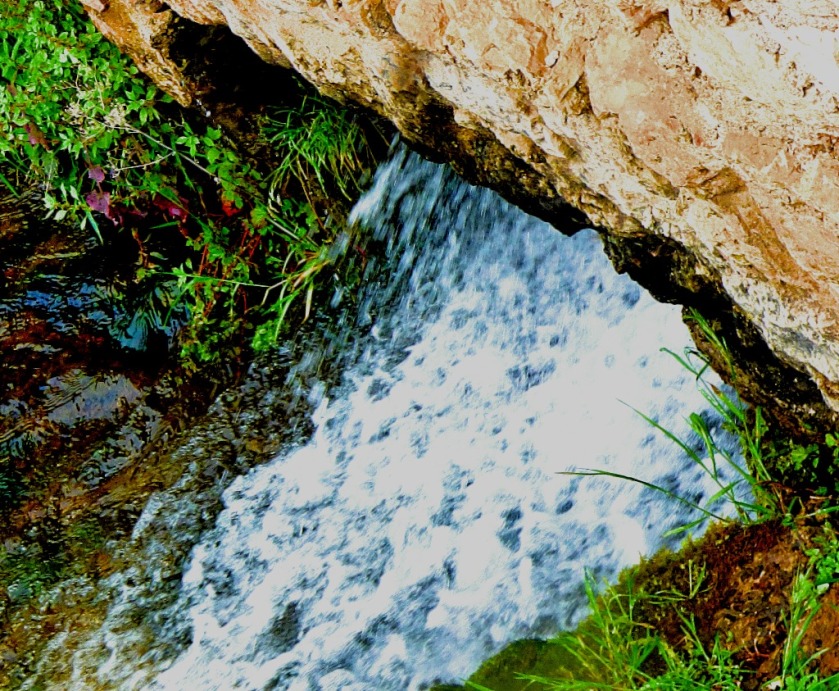
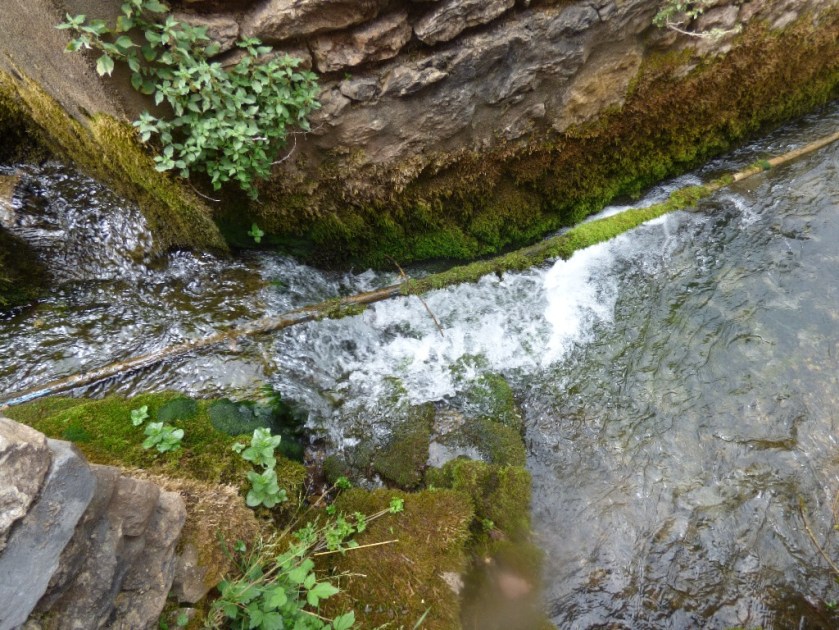
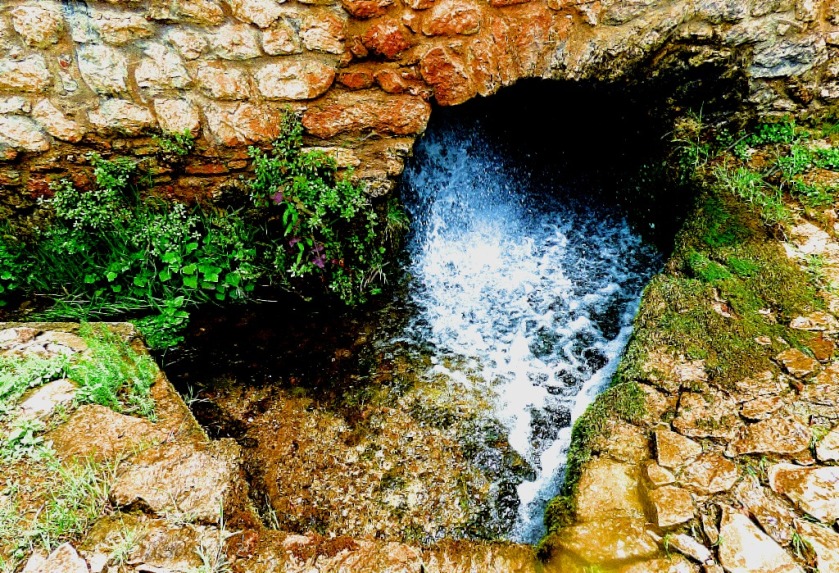
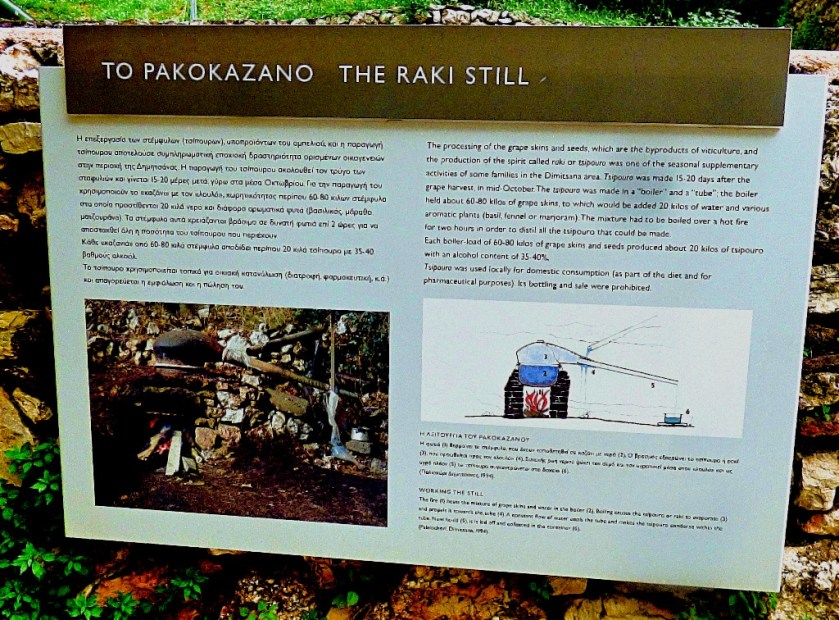
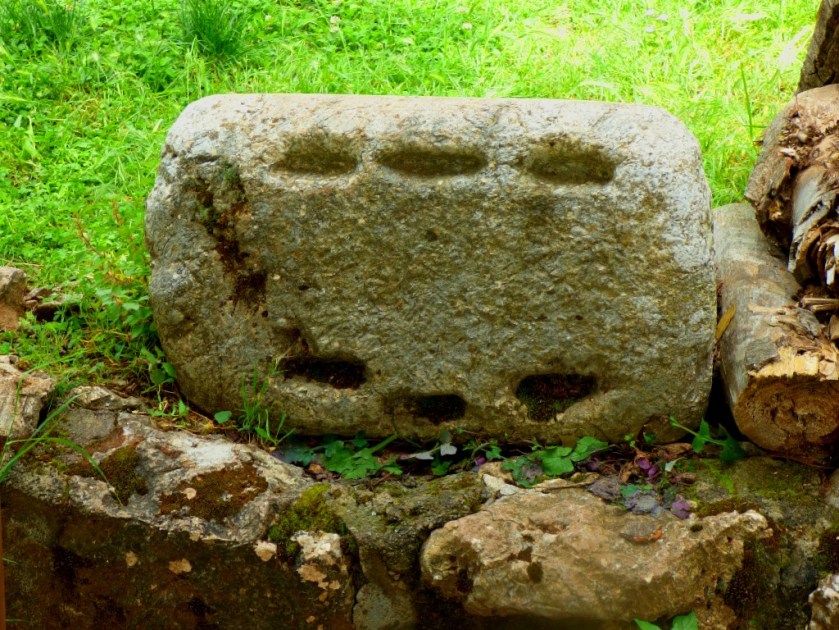
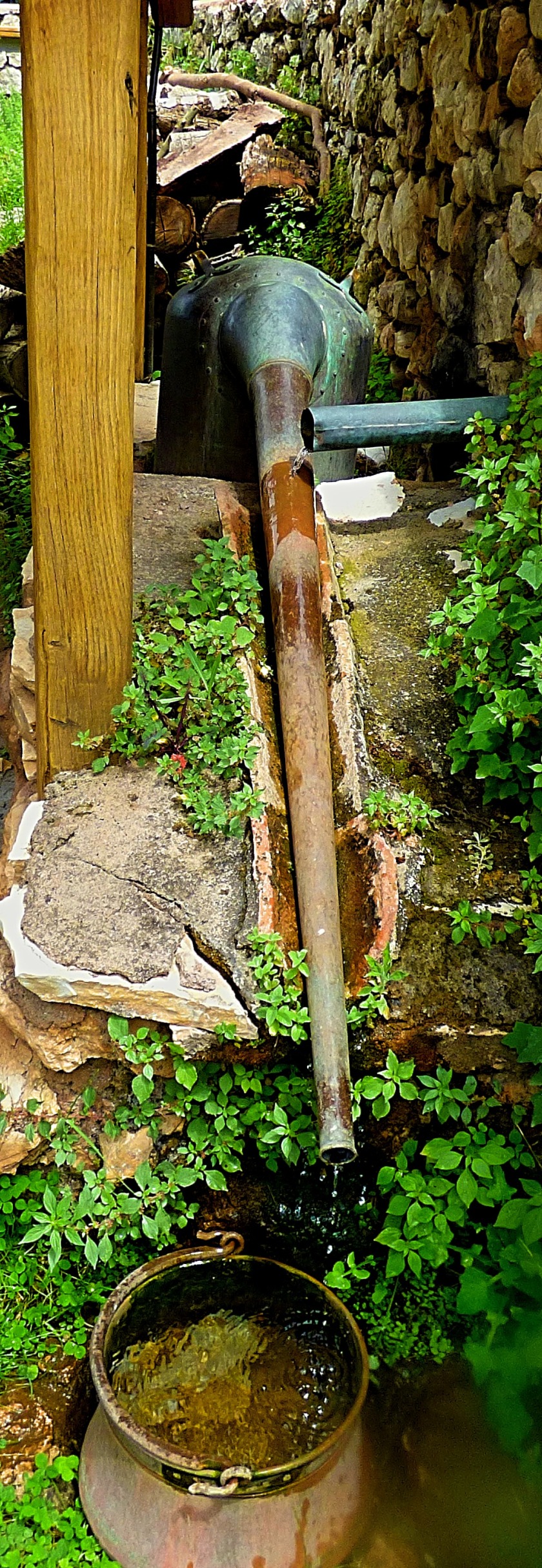
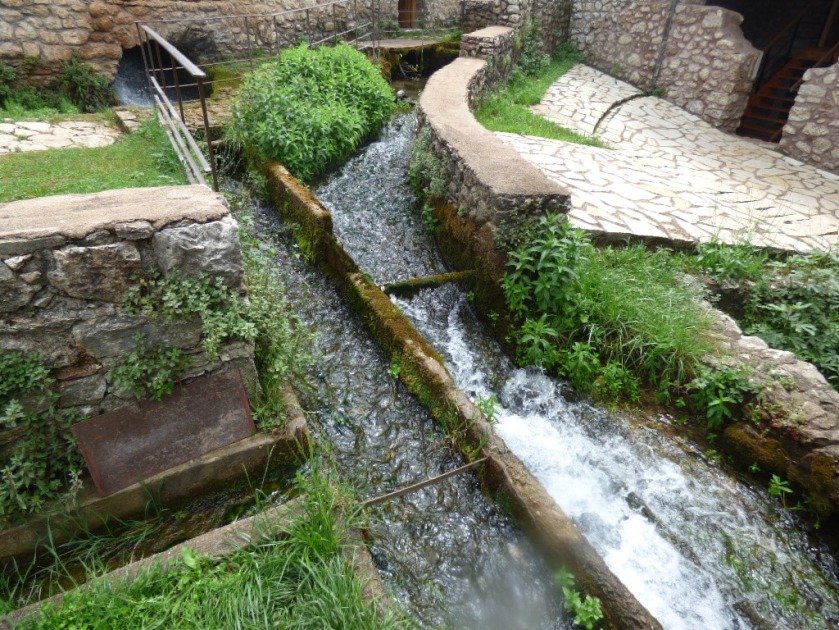
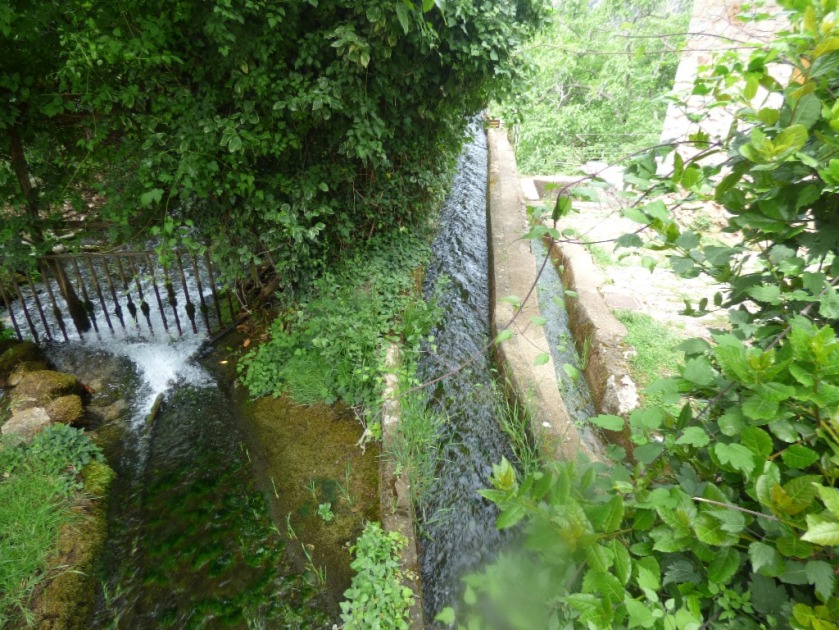
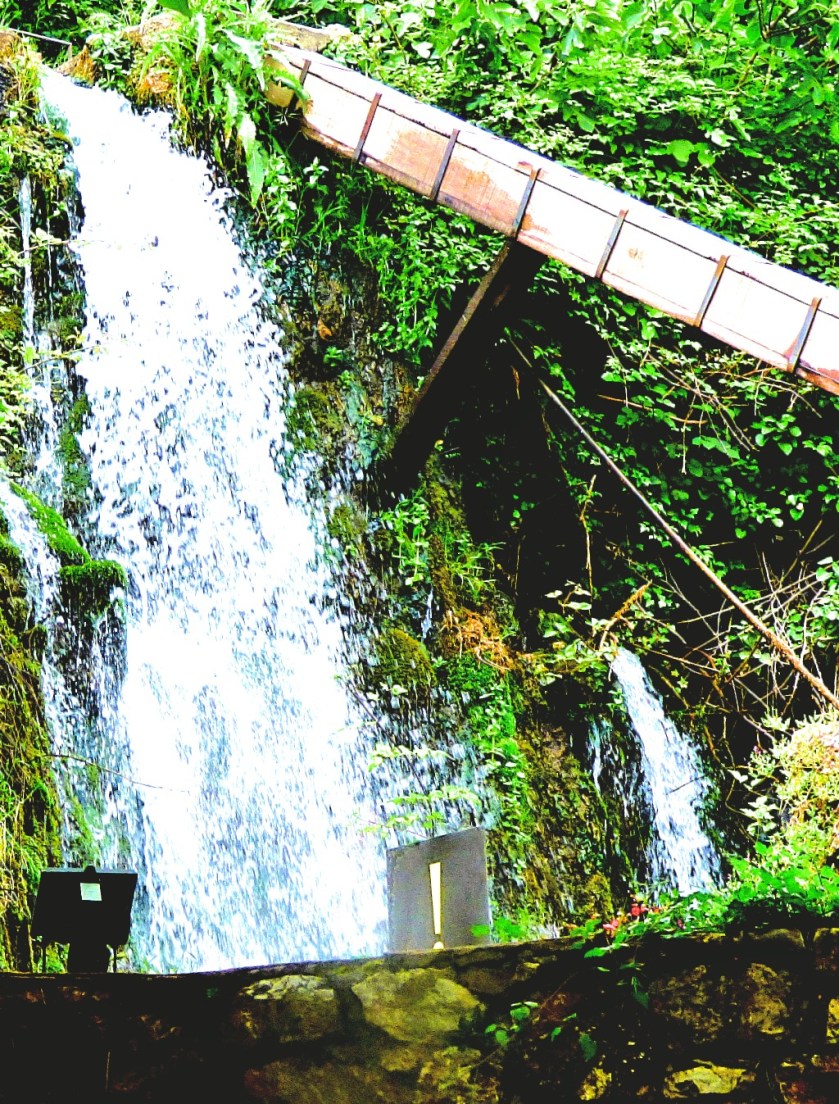
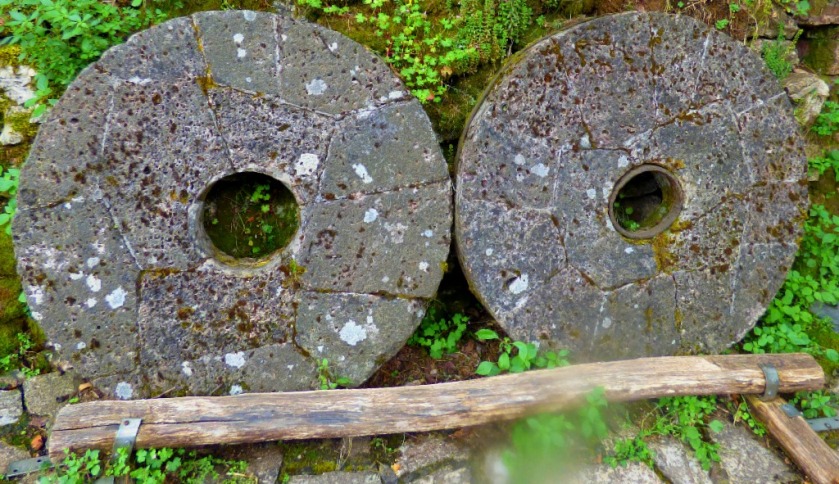
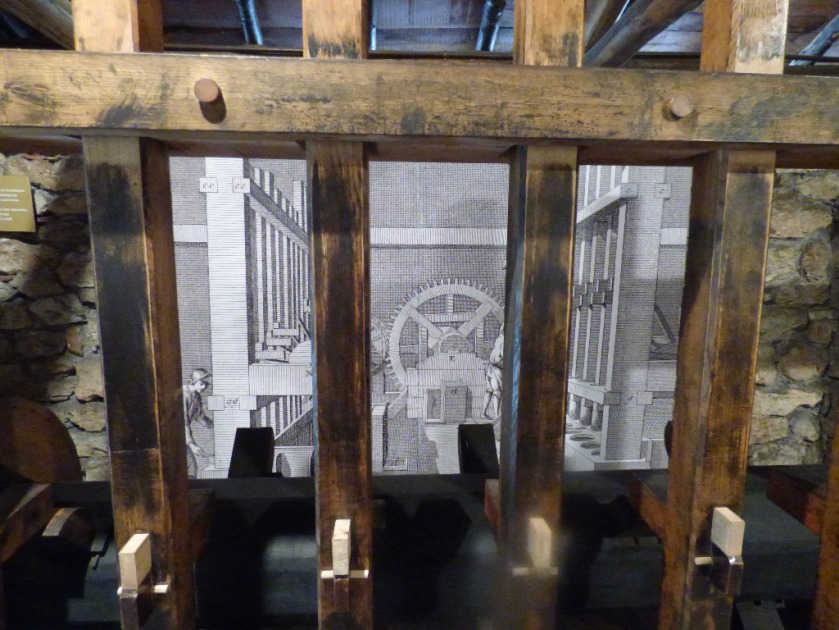
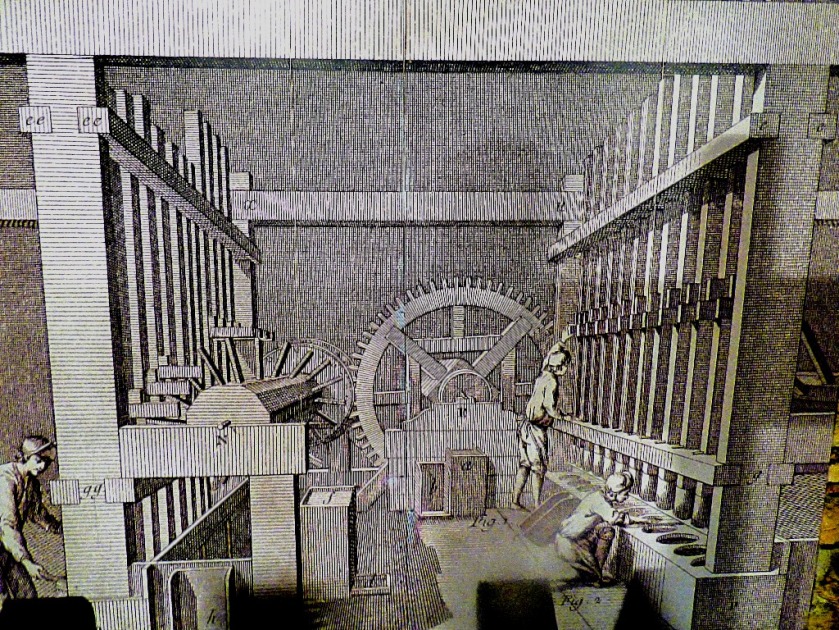
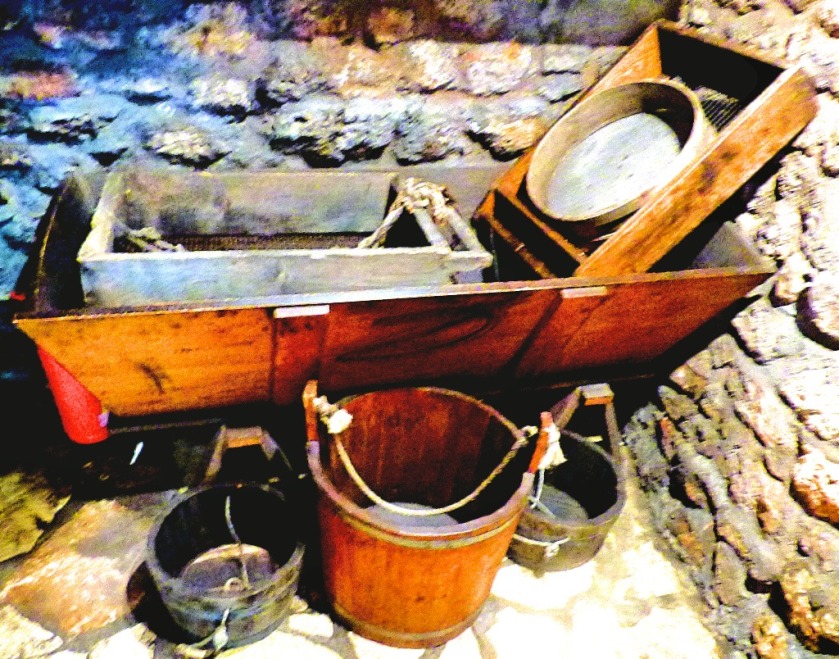
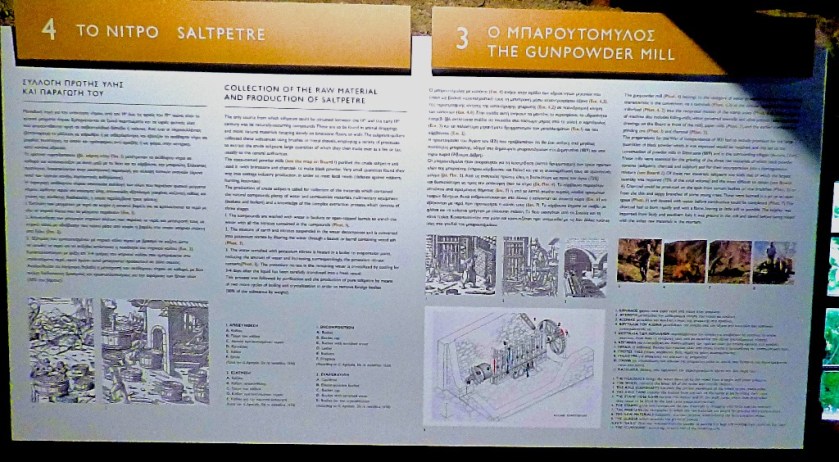
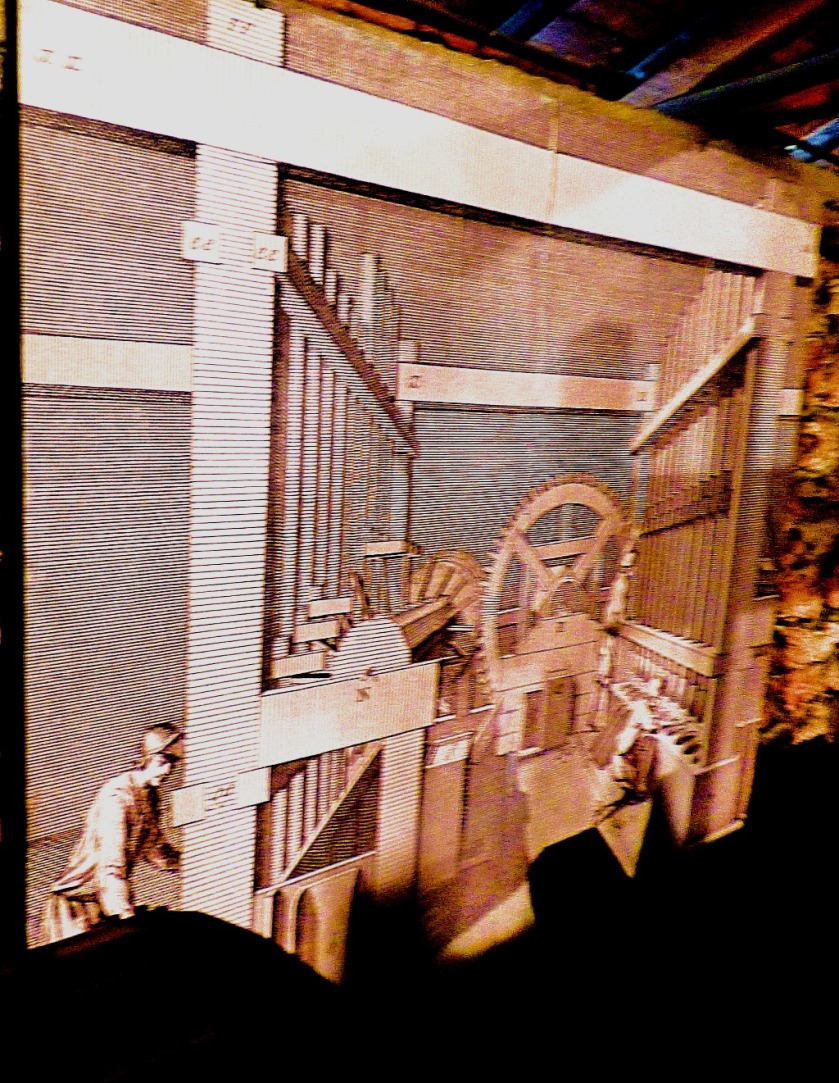
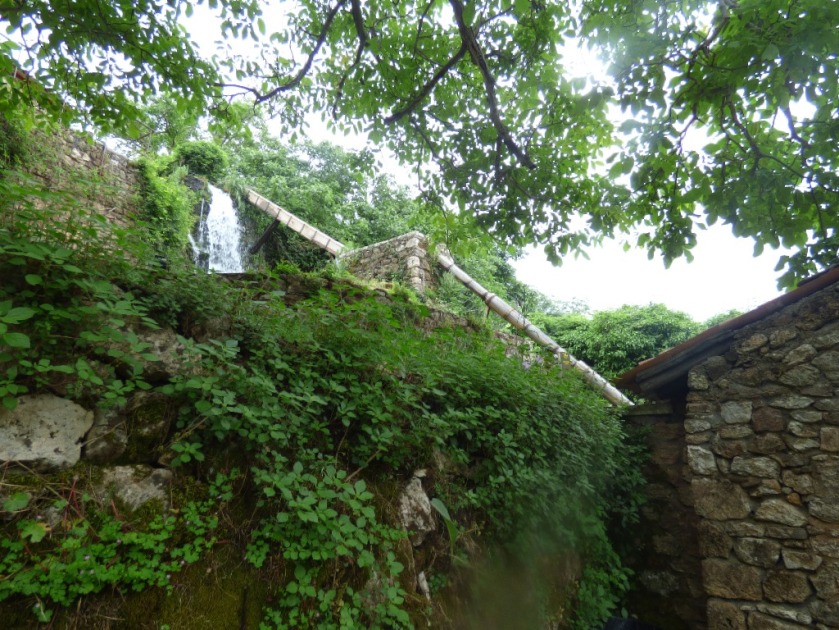
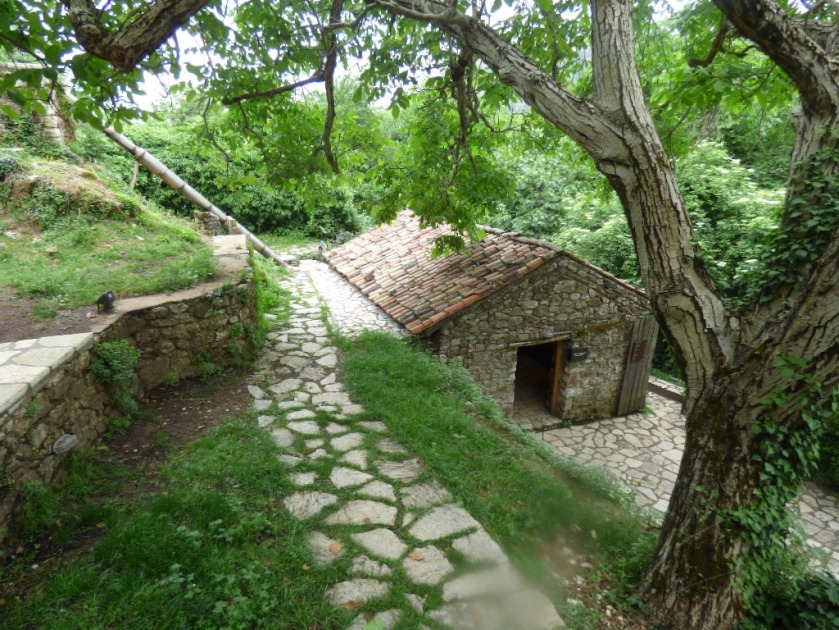
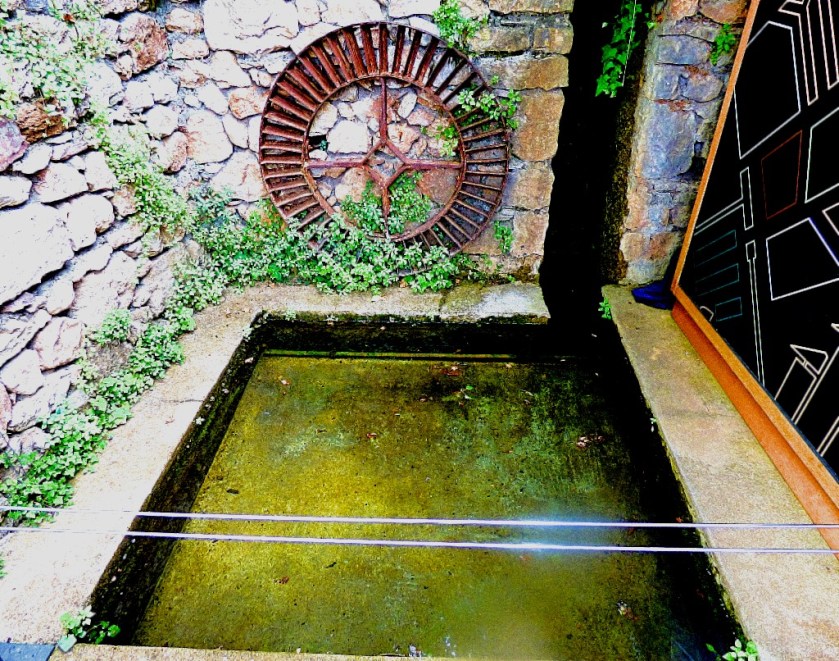
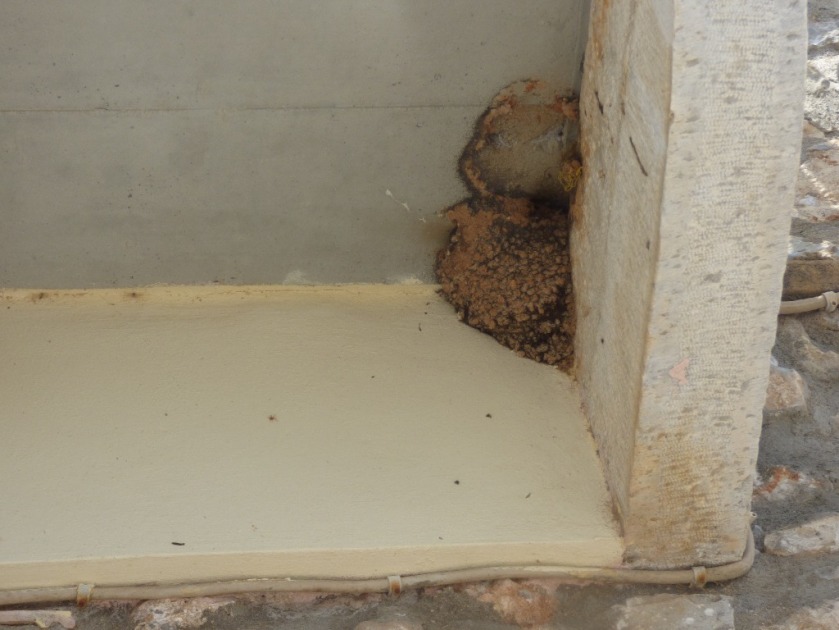
House Martin nests, Agios NikolaosAn adult House Martin visits one of the nestsKarytaina CastleThe next three shots show water power – all taken at the open-air museum of water-power, Dimitsana
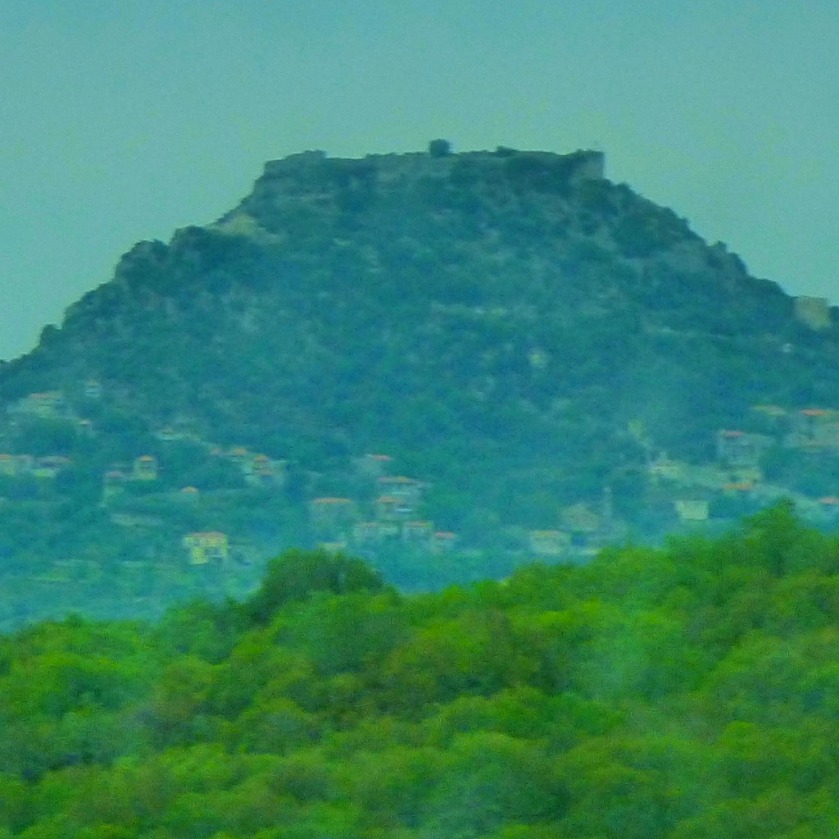
Two shots of Karytaina Castle from below
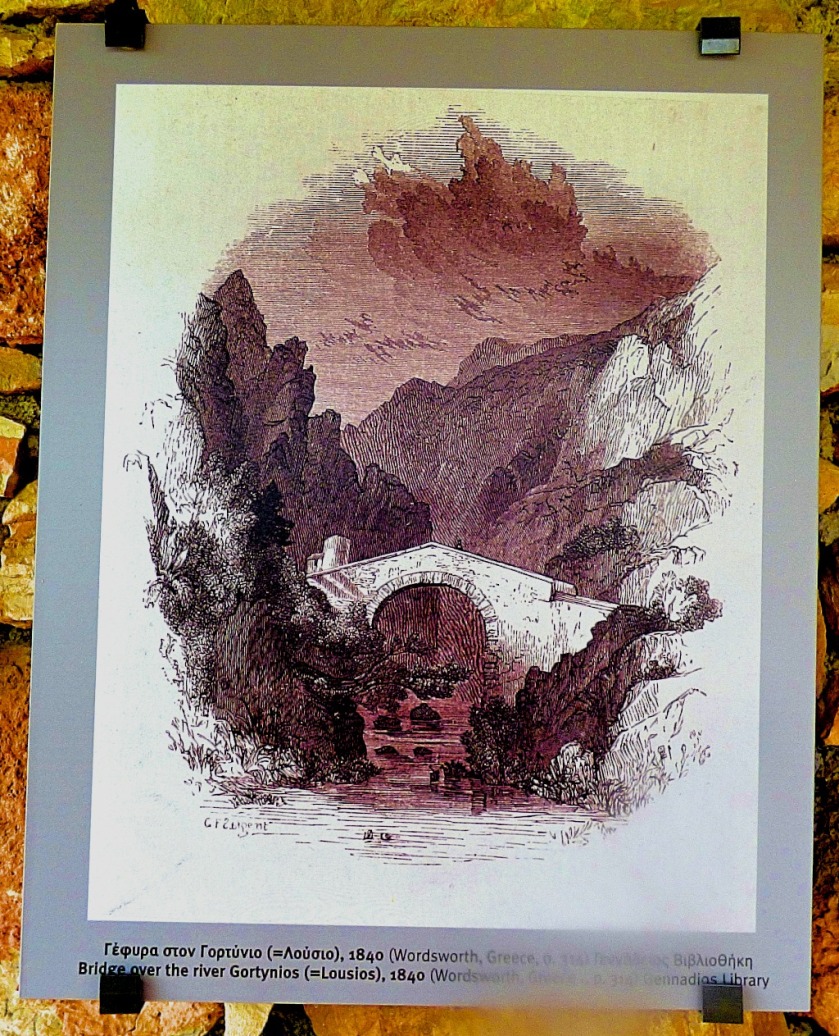
The first of four shots of the bridges over the Lousios.
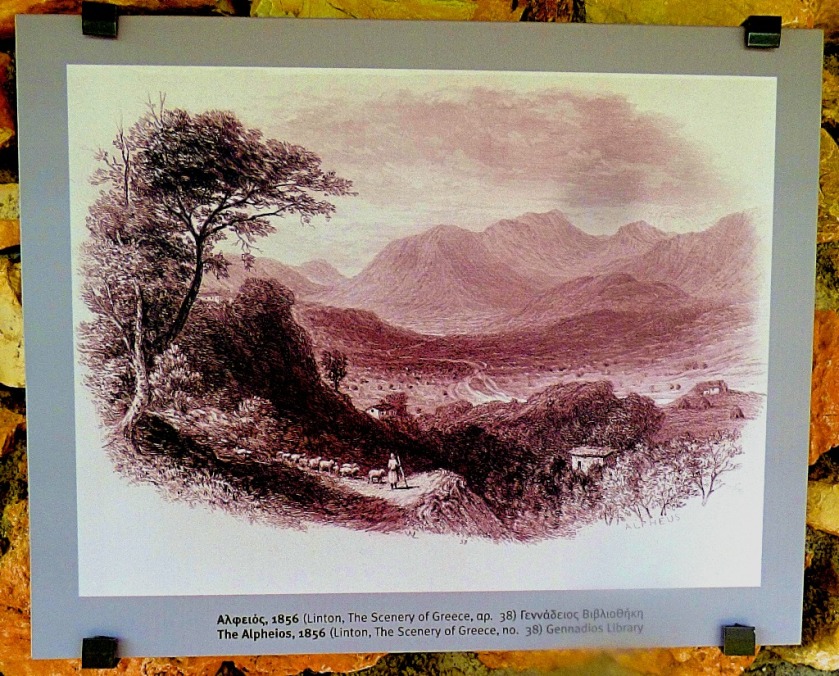
The Alfios, the other river guarded by Karytaina
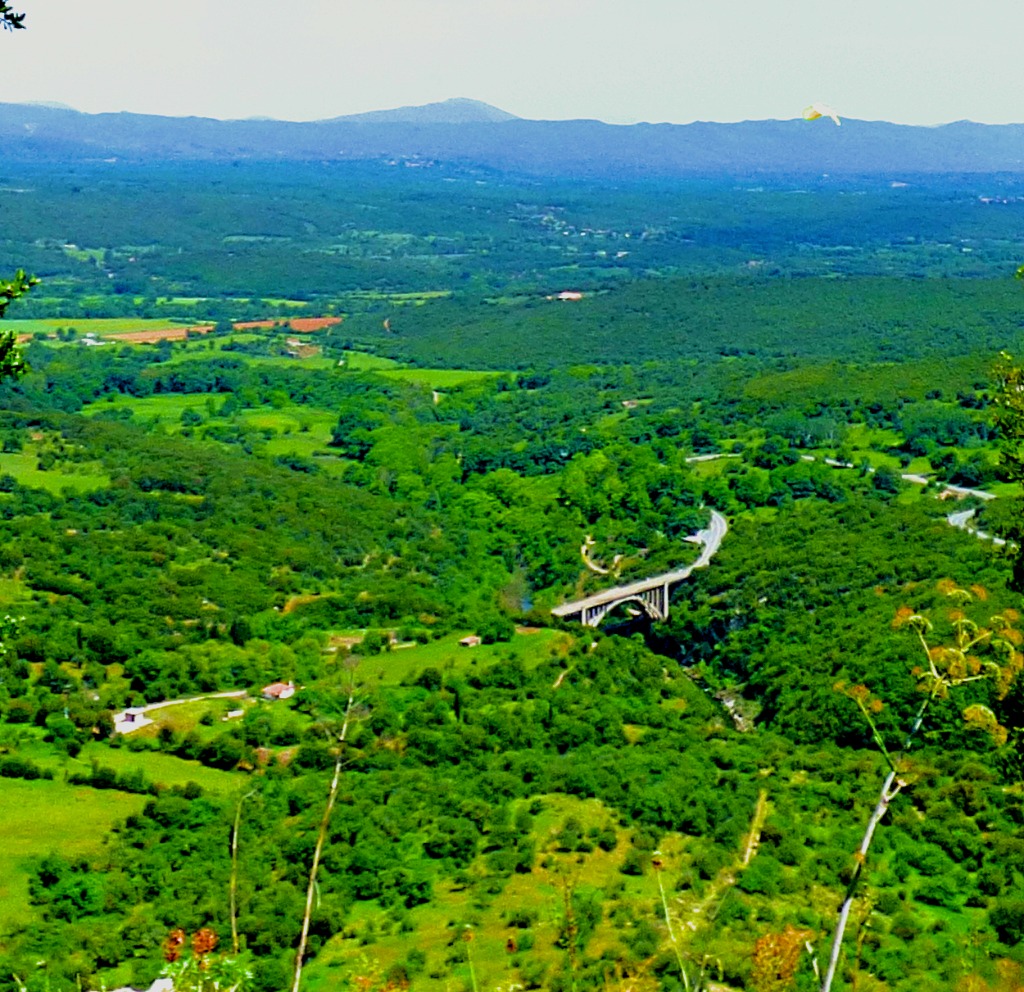
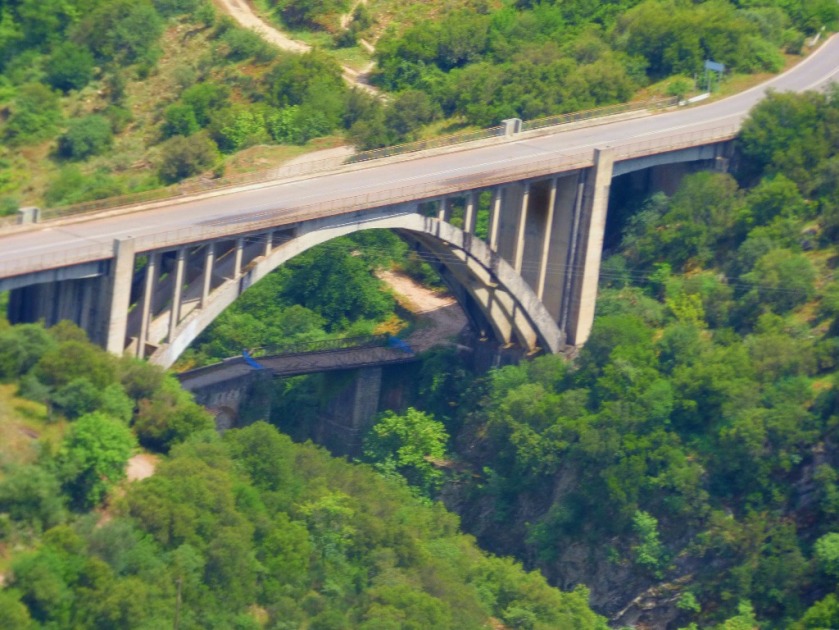
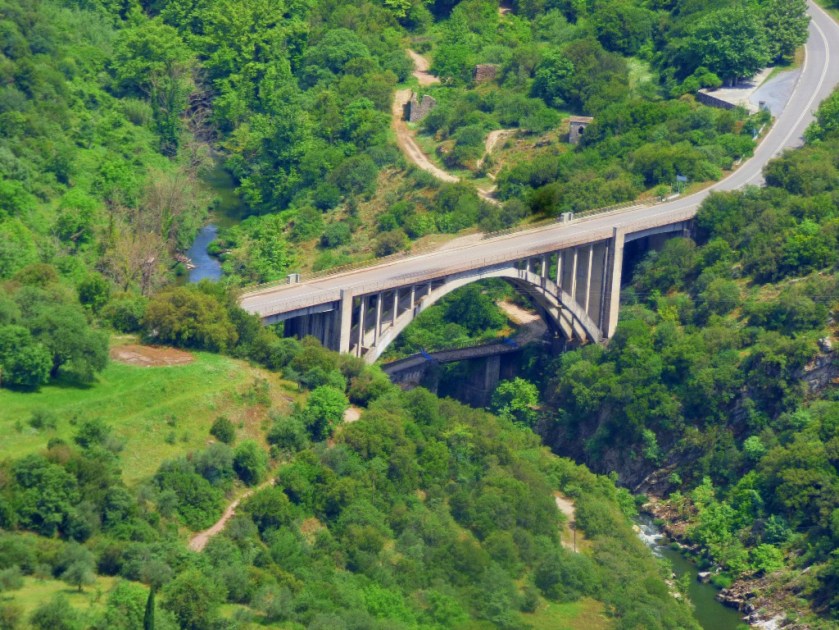
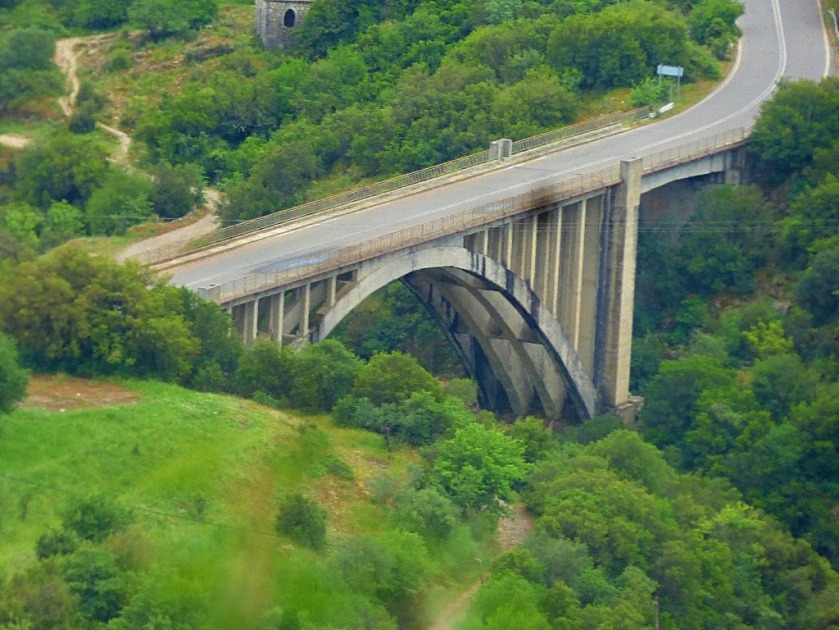
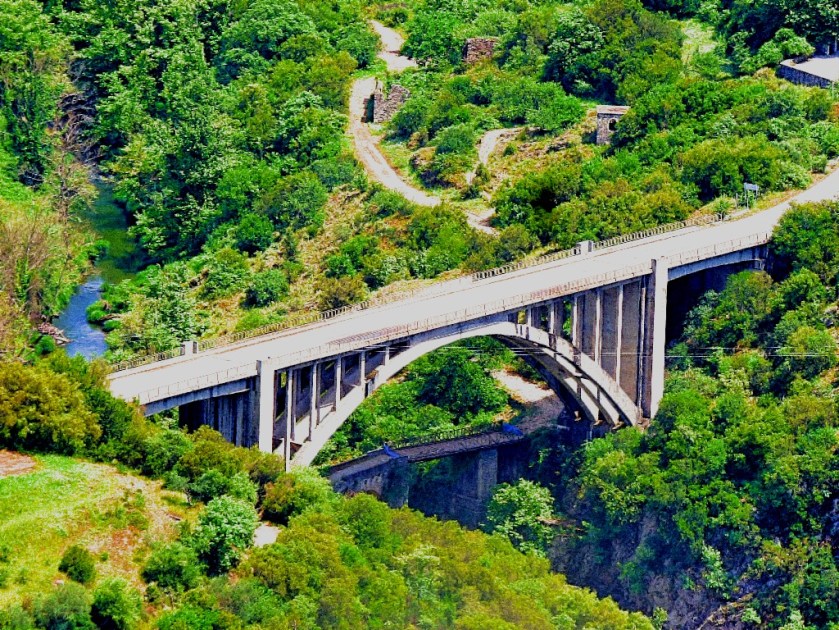
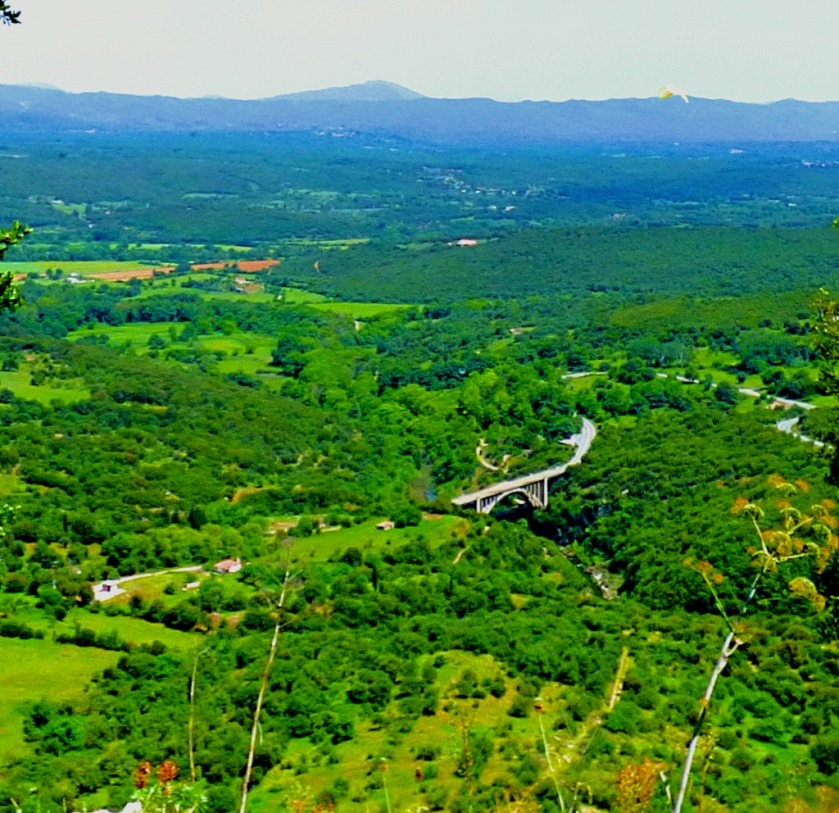
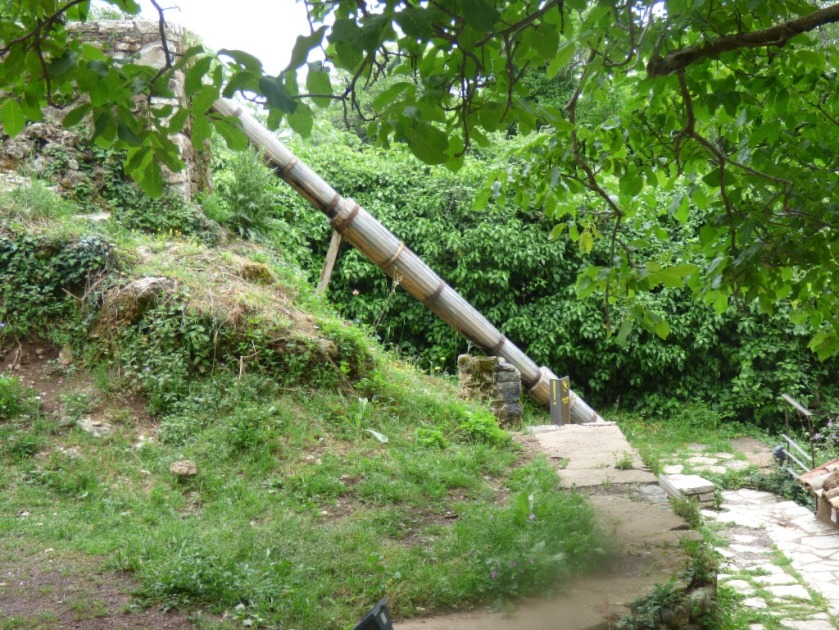
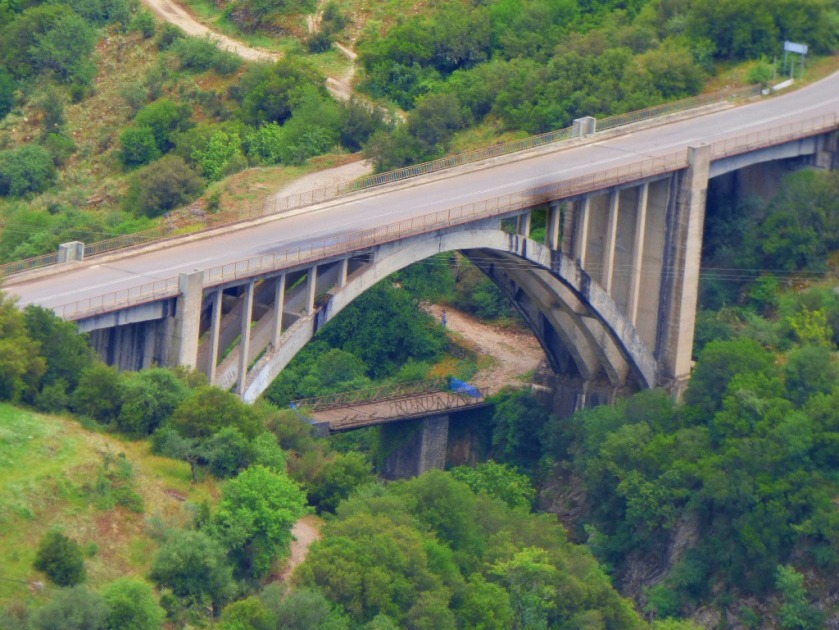
A tower between Tseria and Kalamata, the last picture taken from ground level to feature in this post.Even with 37,000 feet of vertical distance between me and it this bridge looked impressive.
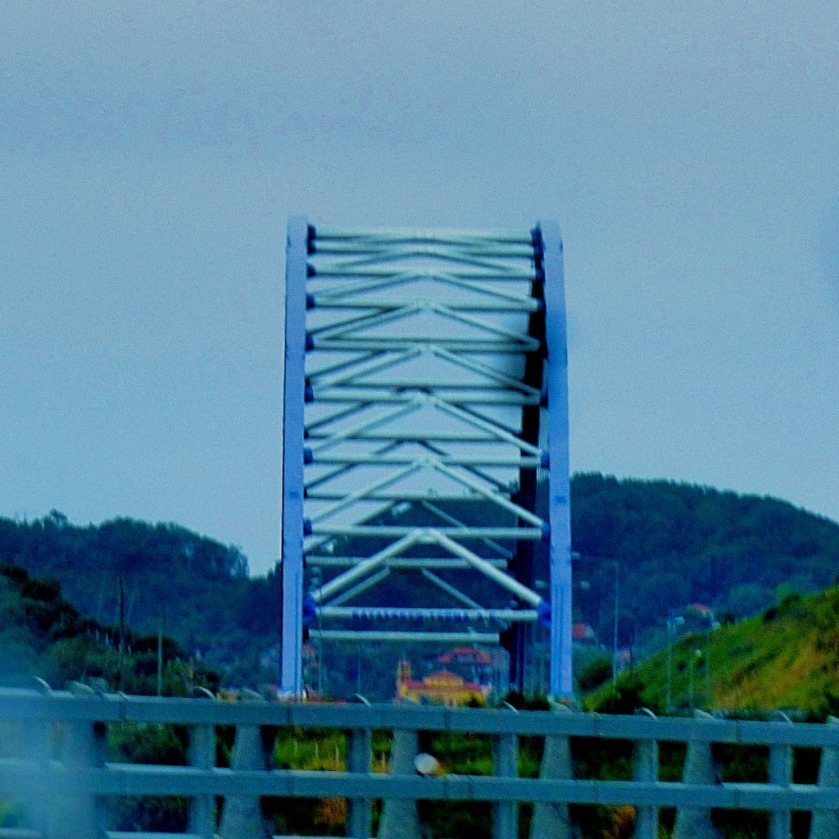
Another fine bridge (two shots)
This aeroplane was flying at a lesser altitude than the Airbus A320 that I was aboardA stretch of French coastline.The approach to Britain – I believe we flew directly over Brighton, if the combination of a large pier and a major cricket ground (Sussex CCC’s HQ if I am correct) is anything to go on.
A couple of easy problems on brilliant.org that have generated considerable controversy, and some butterfly pics of my own.
INTRODUCTION
A couple of this weeks puzzles on brilliant.org have generated considerable controversy, so I am going to share them with you as a prelude to the butterfly pics. Both puzzles are actually very simple, and I will provide solutions and explanations some time on Friday.
PUZZLE 1: DR FRANKENINE
Here is a screenshot of the first puzzle:
PUZZLE TWO: FUEL TANK
Here it is:
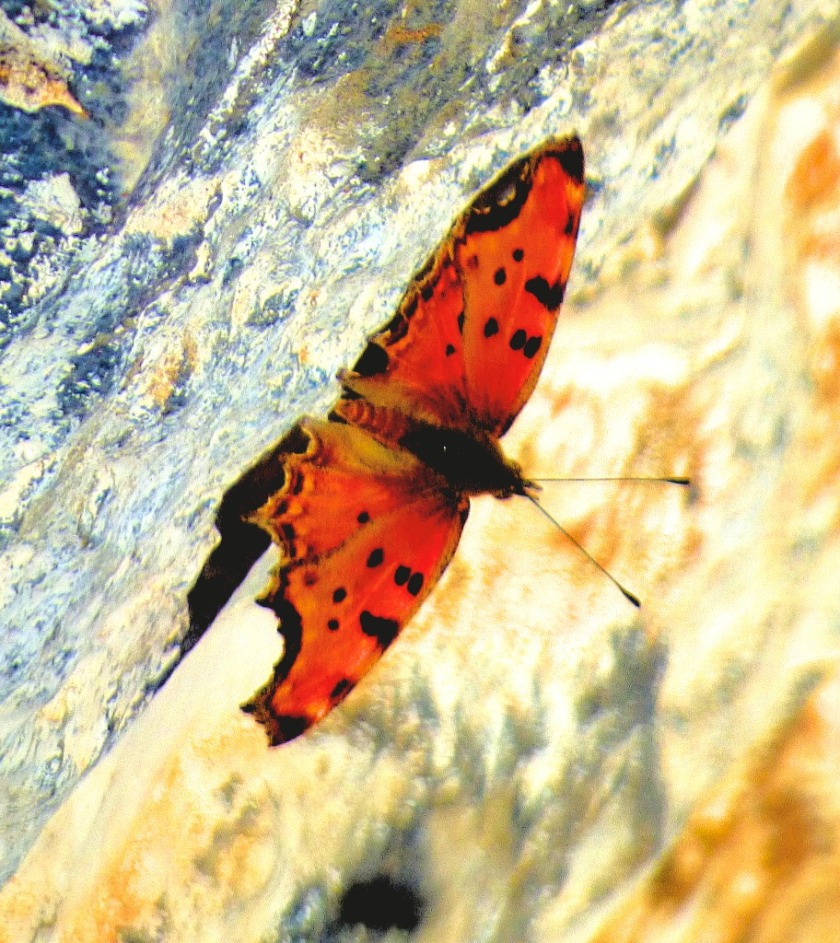
BUTTERFLIES
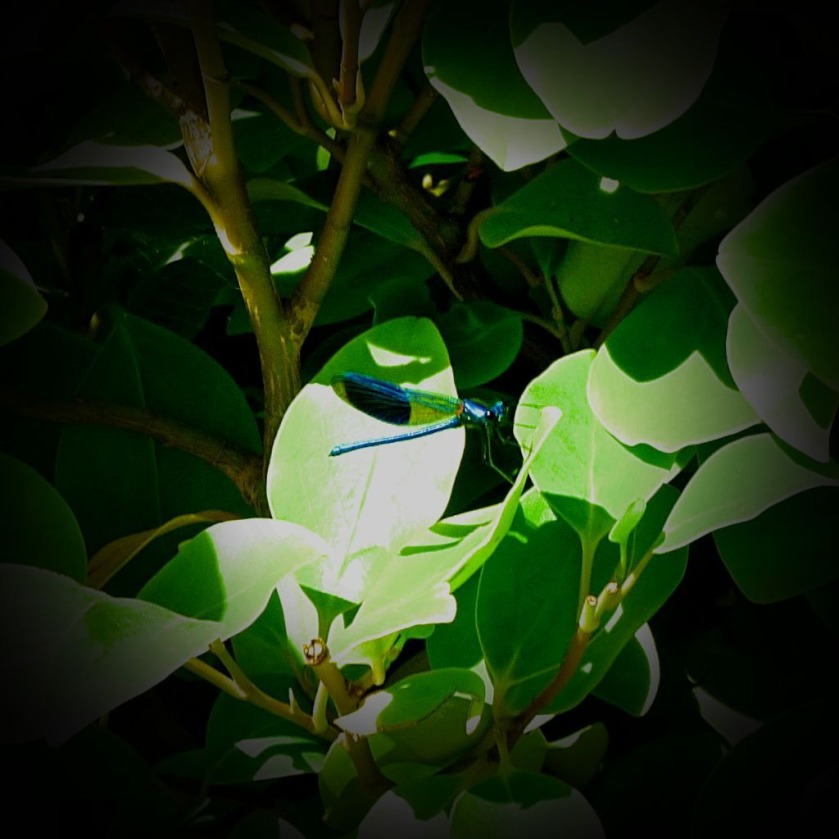
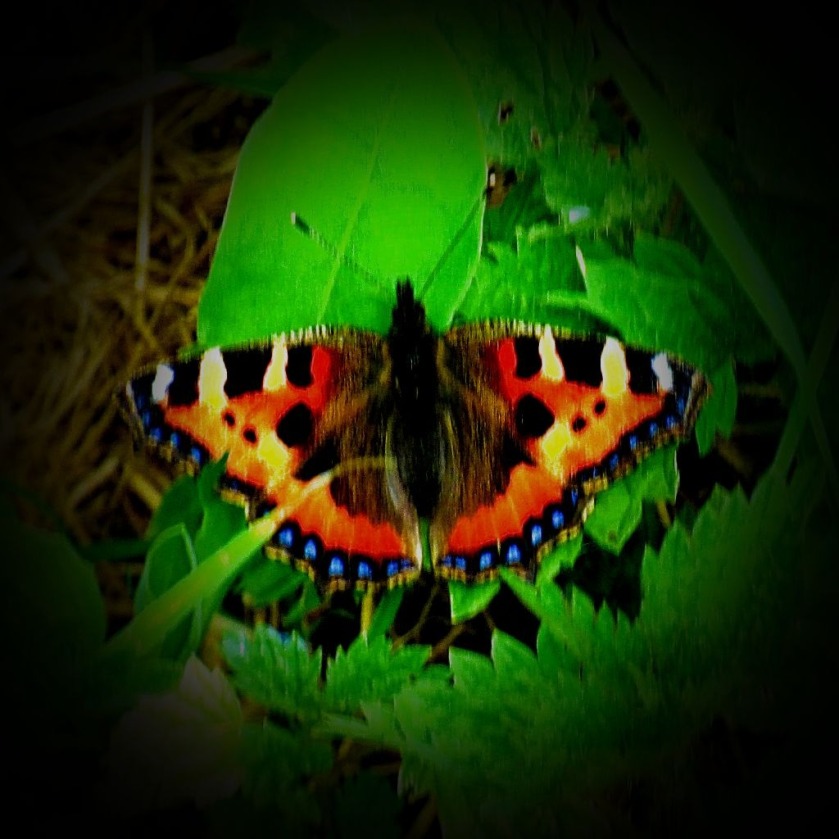
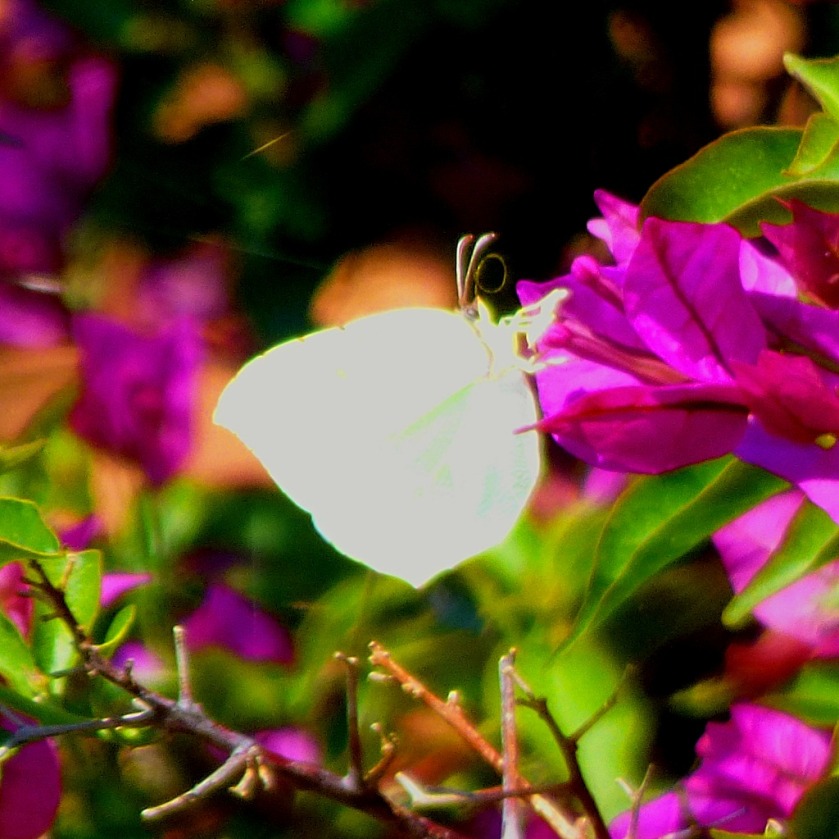
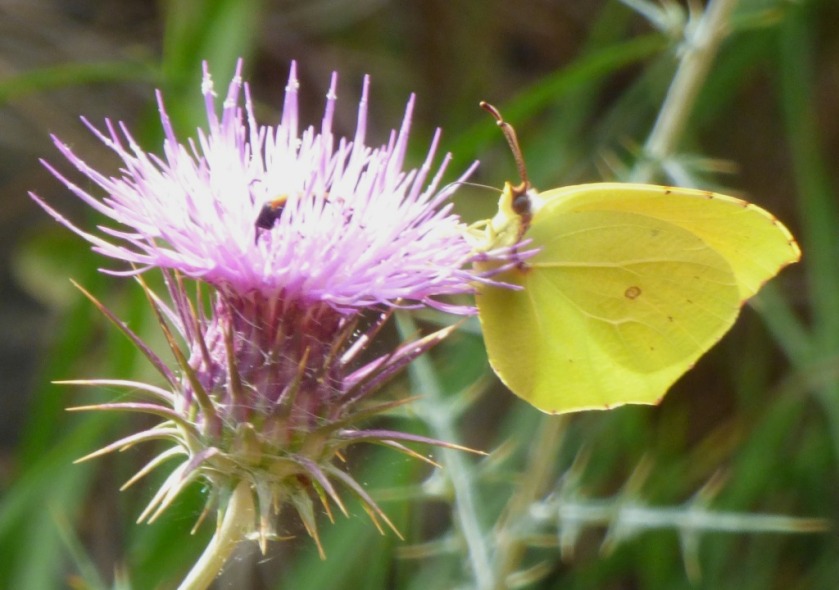
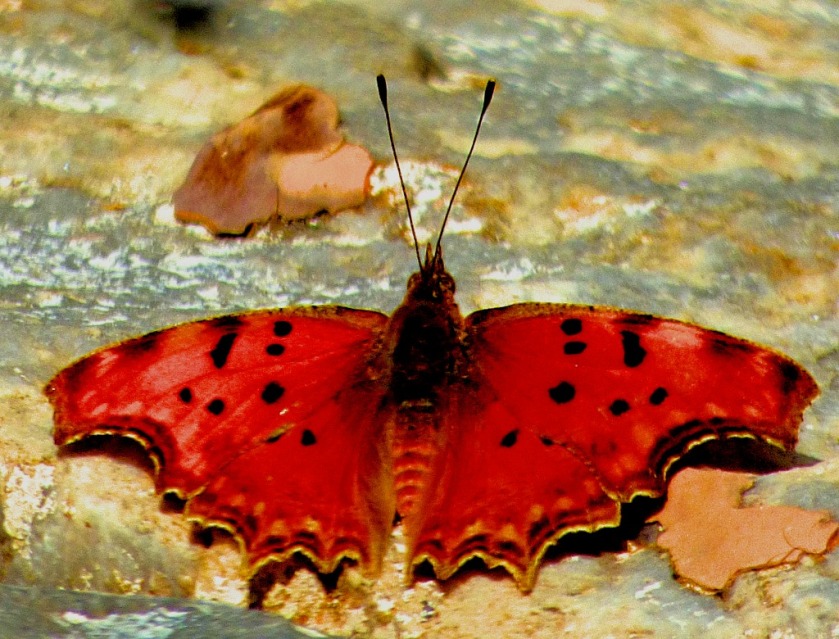
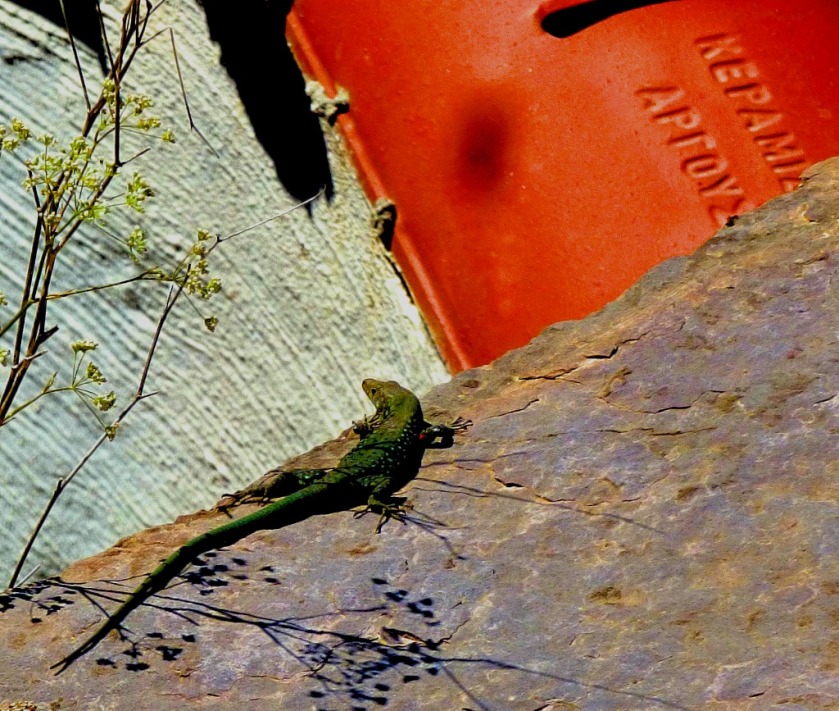
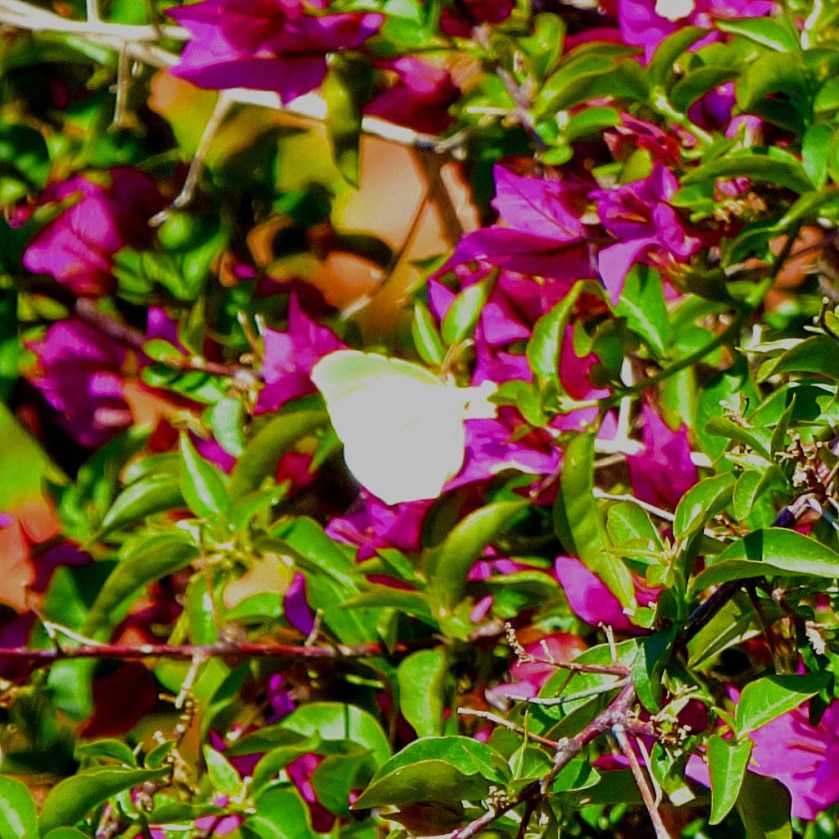
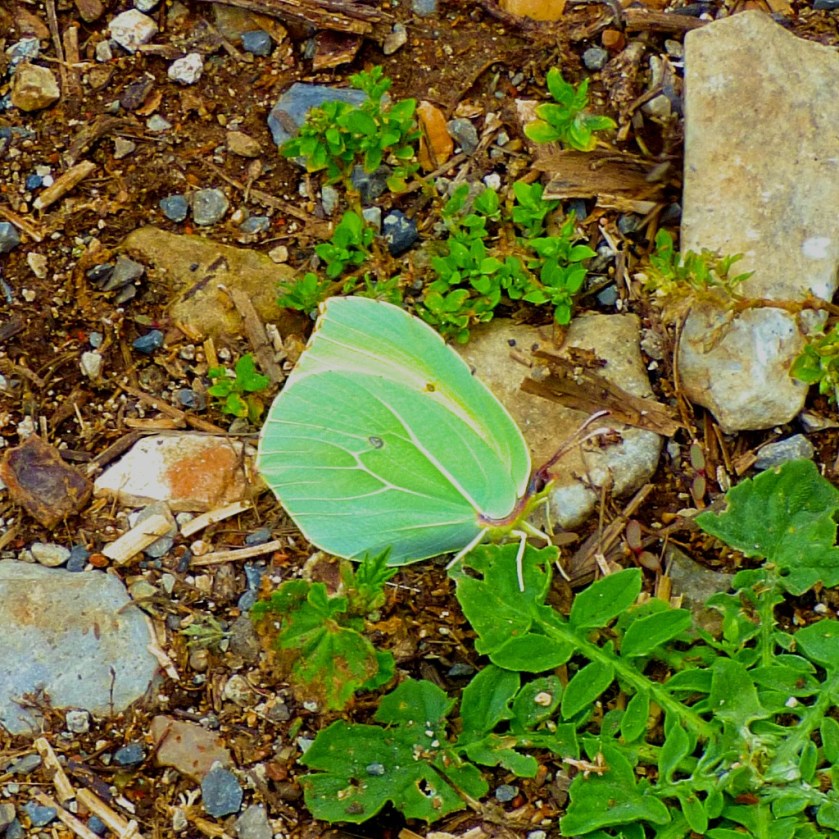
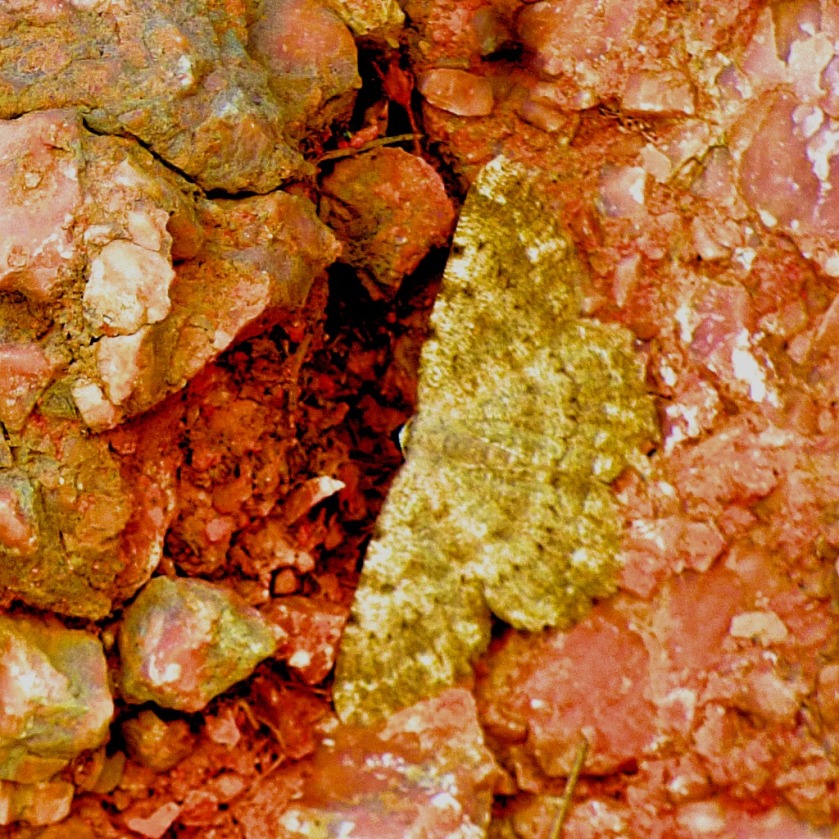
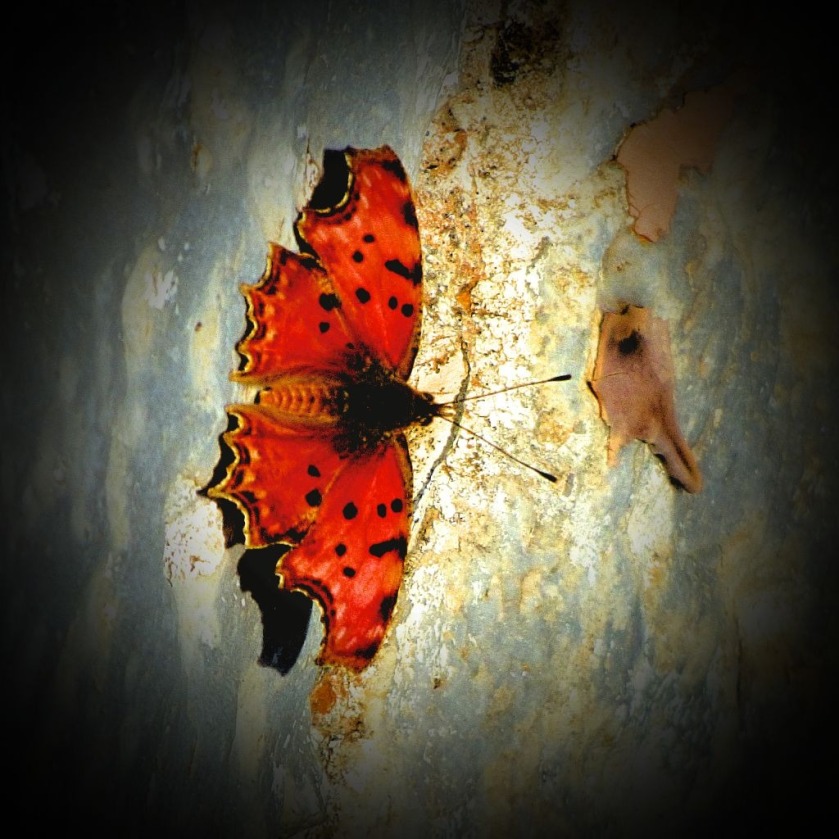
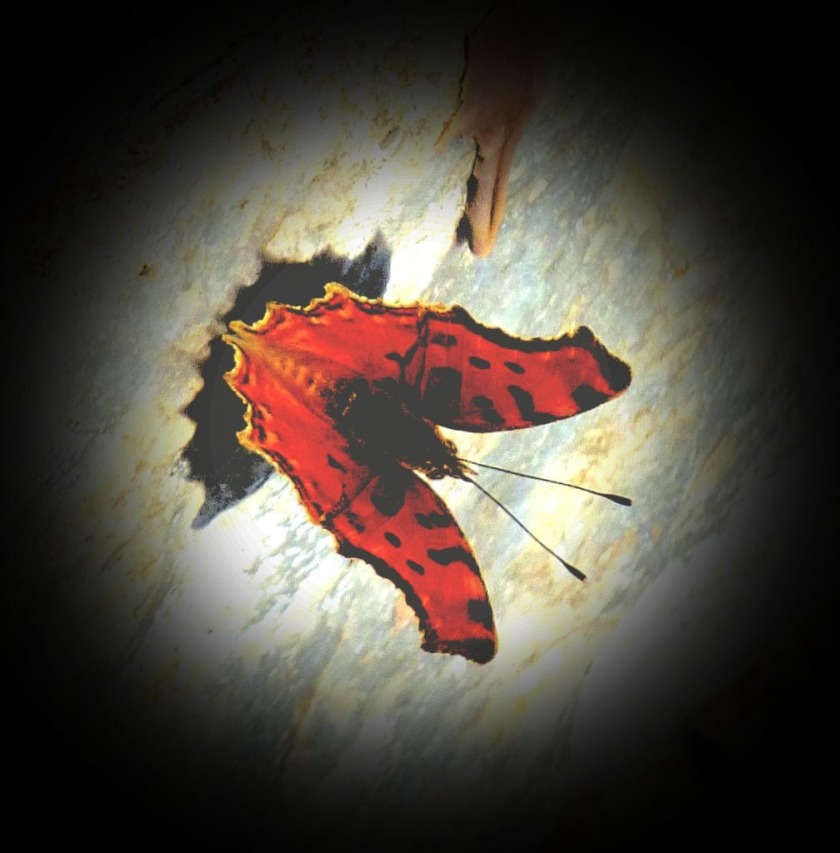
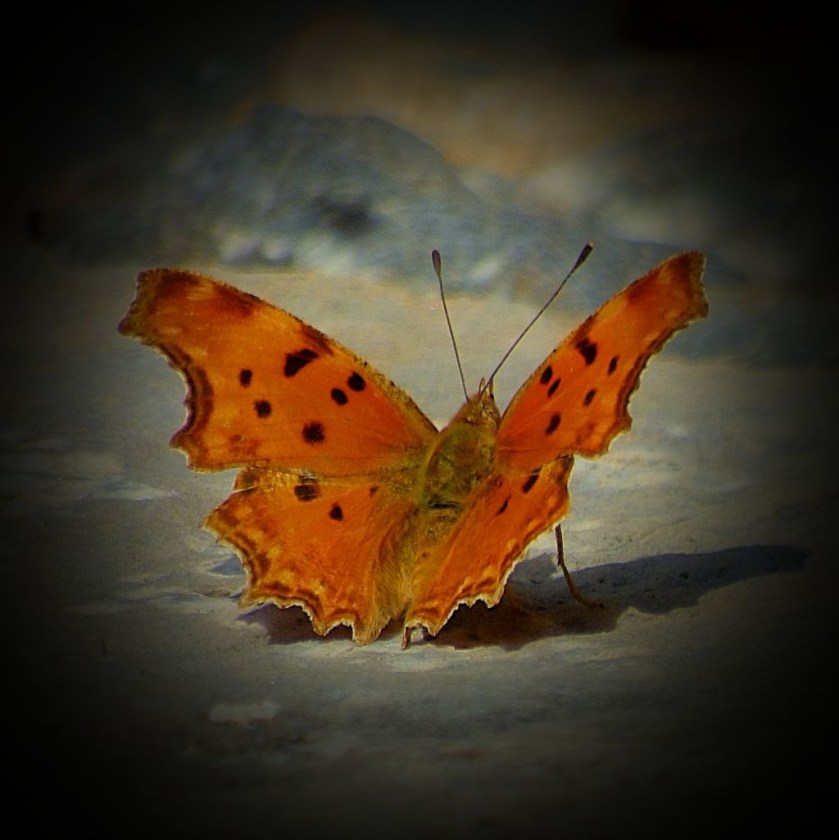
These are from Saturday and Monday. In addition the ones I have photographs of I have seen one other species, mainly white but with flame coloured wingtips but not yet been able to photograph it.
The second post in my personal series about #autisticspecialinterests.
INTRODUCTION
Welcome to my second ‘special interests’ post for the month of May. The first, which set the scene can be seen here. The first post dealt exclusively with London, where I grew up. This post looks wider, although it still deals with events from before I was diagnosed. NB – undiagnosed means just that, not diagnosed – it DOES NOT mean “not autistic”.
ST PETERSBURG
This overlaps with the first post, because I visited St Petersburg in 1991. The two week visit I made to that city in 1991 was significant in many ways – it was there that I learned to eat a more varied diet, because I was just mature enough to appreciate that it was a choice between eating what was served or not eating at all and make the best of things. Also, because the family I was staying with were living very close to one of its stations I gained a considerable acquaintanceship withe the St Petersburg Metro, and also experienced the trolleybuses and trams that were a feature of daily life there.
Other than being horrendously overcrowded the St Petersburg Metro was a significant improvement on the London equivalent – a far more frequent service, and no delays. Also the underground portions were much deeper than in London, with often two colossally long escalators (far longer than any London equivalent) between the platform and the surface. This was my first major experience of public transport anywhere other than London.
GOING SOLO 1: SCOTLAND 1993
My first solo holiday took place in the summer of 1993, when I travelled to Scotland for two weeks. I travelled all around Scotland in those two weeks. As well as some seriously scenic journeys on mainline railways (I experienced both the lines the head towards Skye among others) I also made the acquaintance of the Glasgow undeground system (a single, circular route).
This holiday was a splendid experience overall, but a mere curtain raiser for…
A SCANDINAVIAN HOLIDAY
This happened in the following summer., Equipped with a rucksack and a two week rail pass for Norway, Sweden and Finland I started by taking a plane to Gothenburg. From there I travelled north, pausing in Stockholm. From Sundsvall I temporarily abandoned trains to take a boat across to Vaasa in Finland. From Vaasa I headed for Helsinki, and then the longest single journey of the trip, to Narvik, the most northerly railway station in the world. I continued my northerly exploration by bus as far as Tromso, before switching to boat for a journey along the coast to Hammerfest, the northenmost town in Norway. I varied my route back by taking a bus from Hammerfest to Alta (a mistake, this place is the Nordic equivalent of Brandon, only with even less appeal). Back in Narvik I selected a bus to Bodo, Norway’s other northern rail outpost. This decision cost me a night spent on the sgtatiopon platform at Bodo before I could head south to Oslo. From Oslo I headed east to Stockholm, and my last journey of the holiday (other than the flight home) was from Stockholm to Gothenburg.
Not having previously explored any foreign public transort systems in this kind of detail I was highly impressed. Although there are many ways in which Nordic public transport is a vast improvement on British I note a few things in particular:
Comprehensiveness – although the terrain in these countries is much more difficult than anything in Britain pretty much anywhere of any size has some sort of public transport connection.
Integration – there is not much duplication between bus and train routes. The buses tend to cover the routes that the trains do not. The only small flaw I noted in that first visit to these countries was that en route from Helsinki to Narvik we had to disembark at Haparanda on the Finnish side of the Finland/ Sweden border to transfer to Boden on the Swedish side for the last leg of the journey to Narvik, and even that was handled efficiently.
Reliability – never once in these two weeks, nor in my more recent trip to Sweden, did I encounter a service not running precisely when it was supposed to, and there has never been a two week period in my lifetime when one could be in Britain, travelling by public transoort most days, and get that kind of service.
FUTURE POSTS AND PICTURES
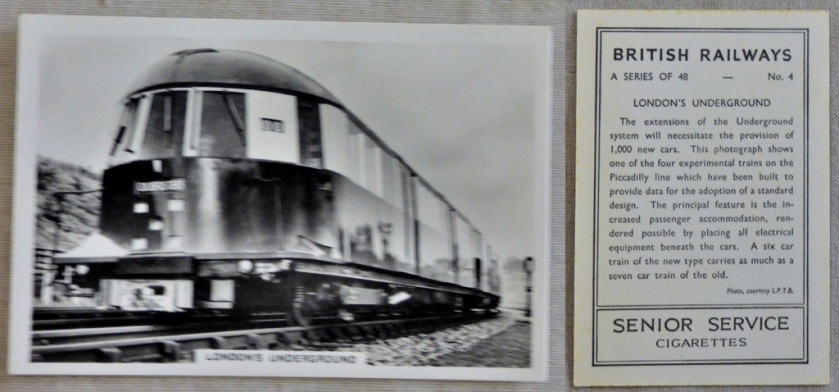
My next post in this series will look at public transport in various cities that I have experience of. Here to end are some public transport themed pictures…
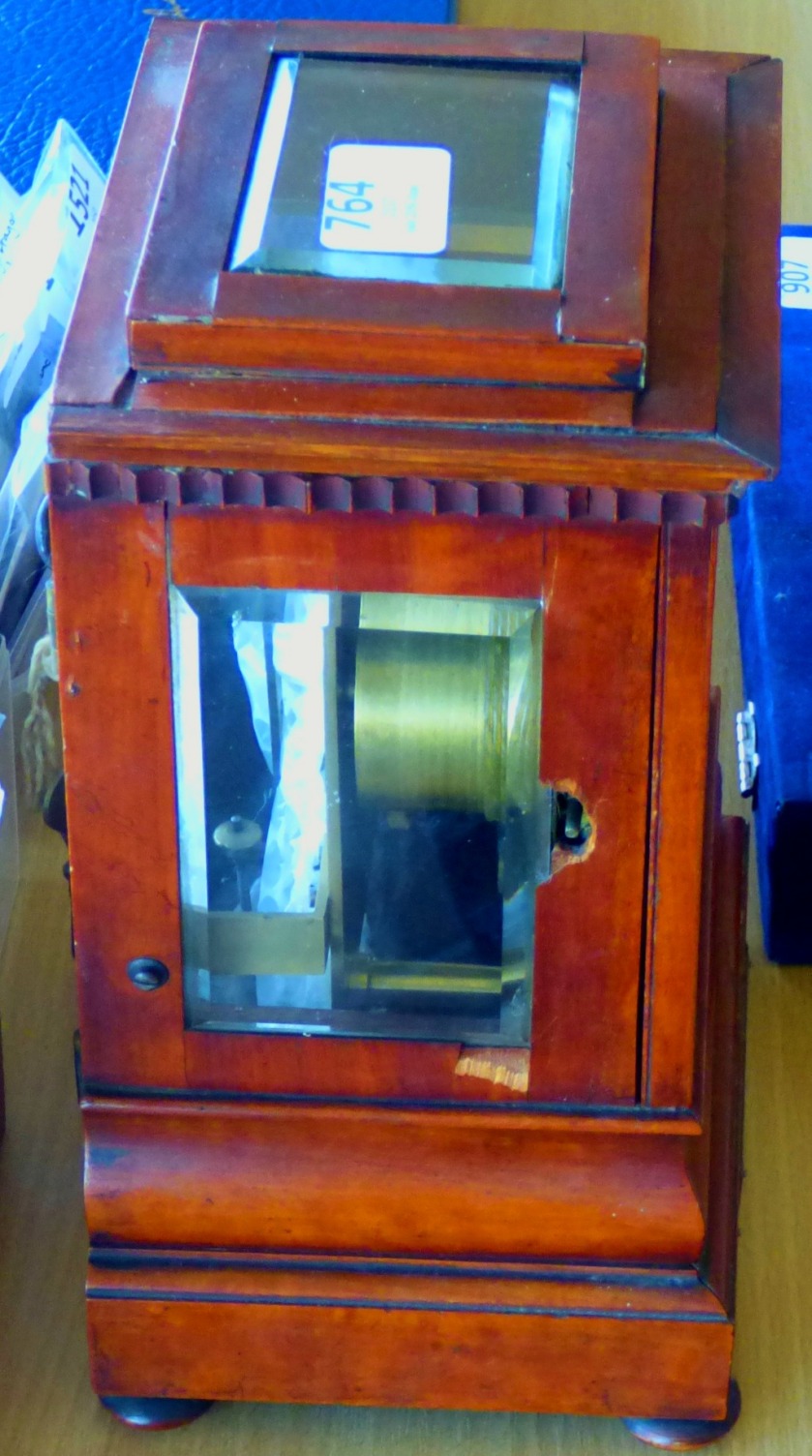
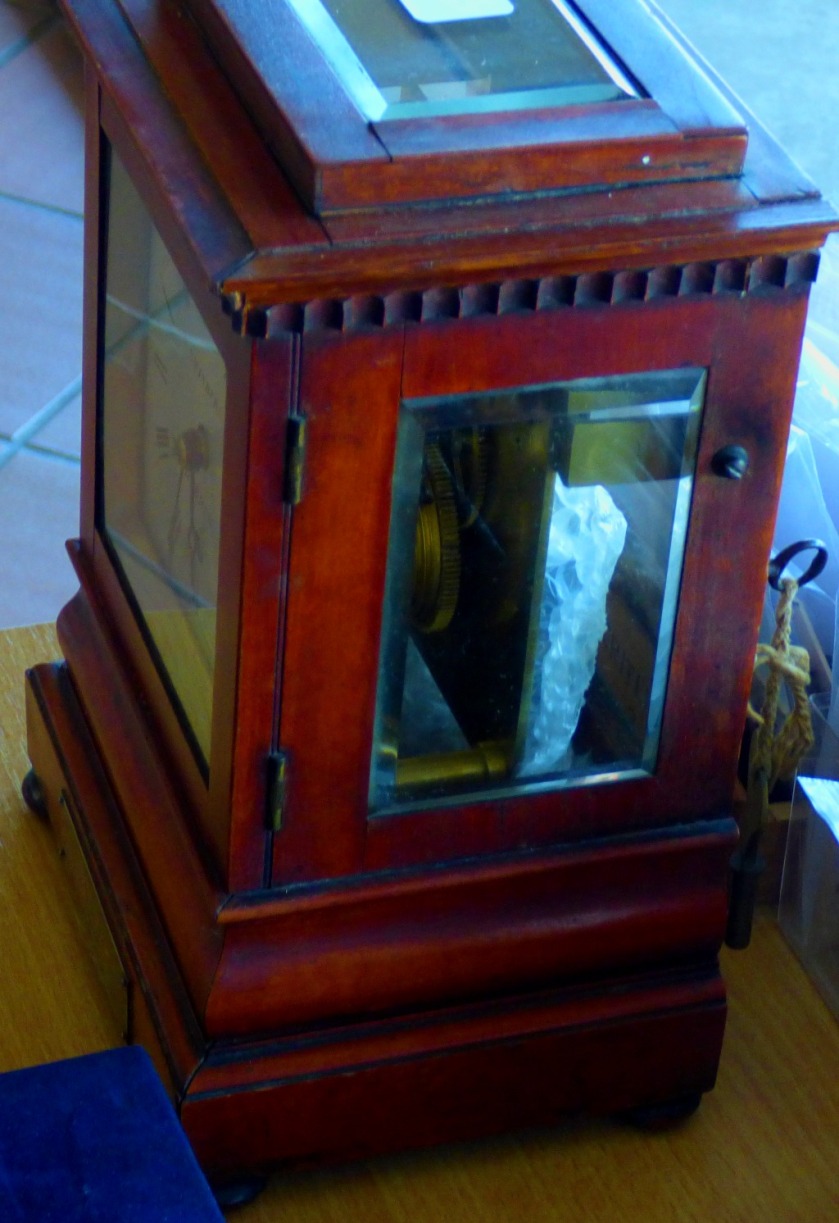
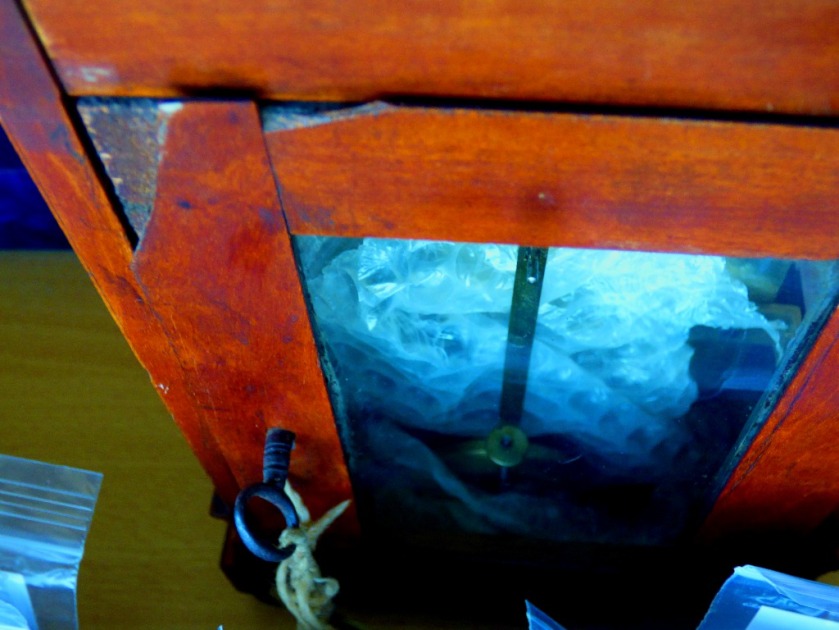
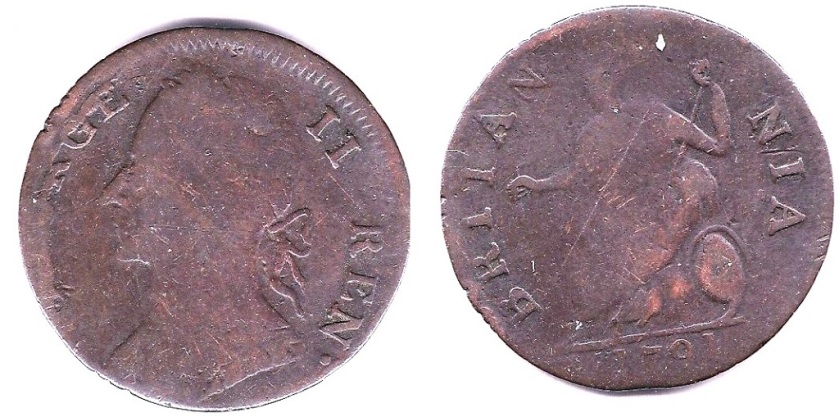
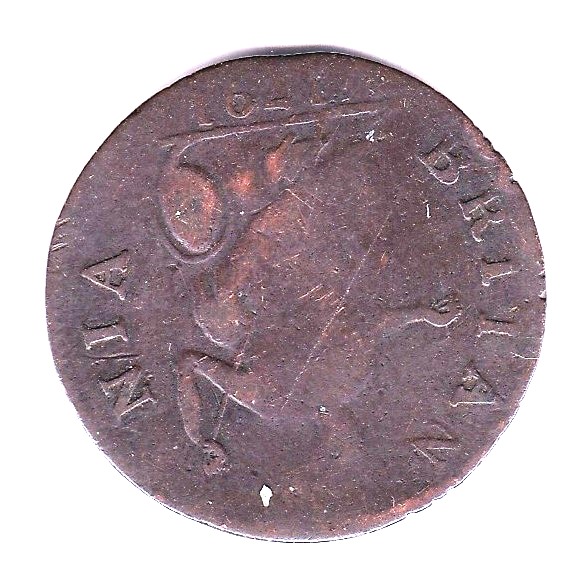
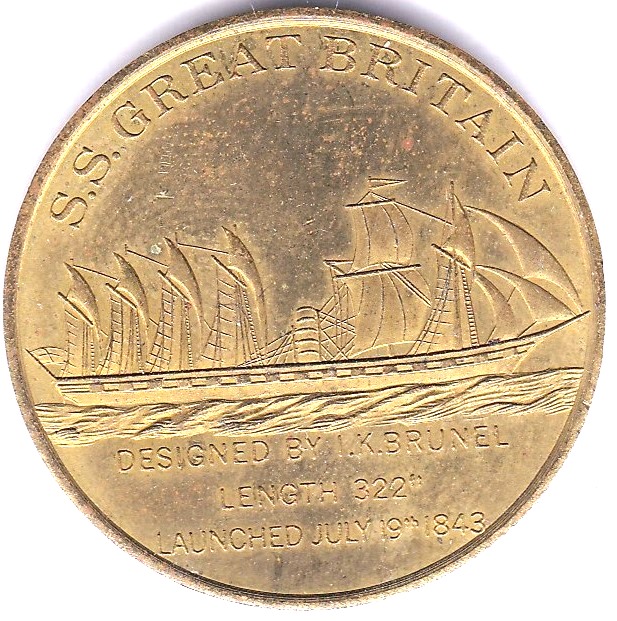
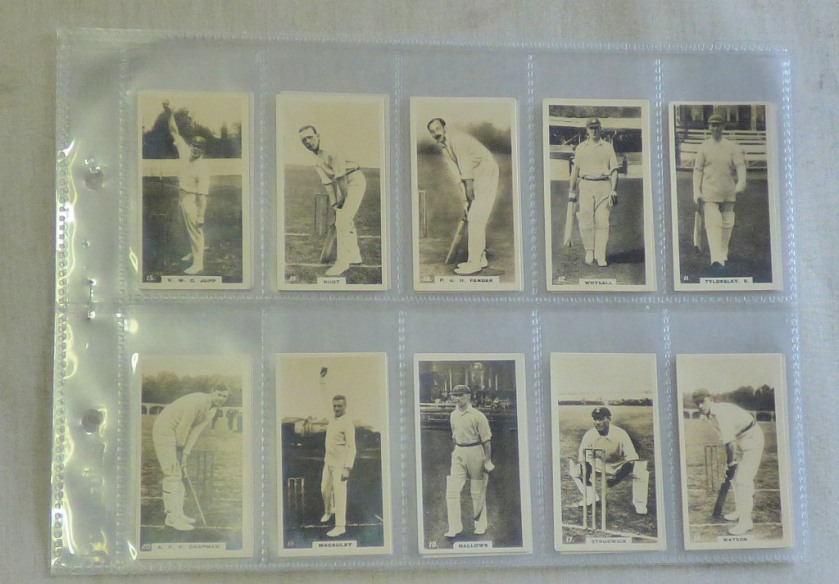
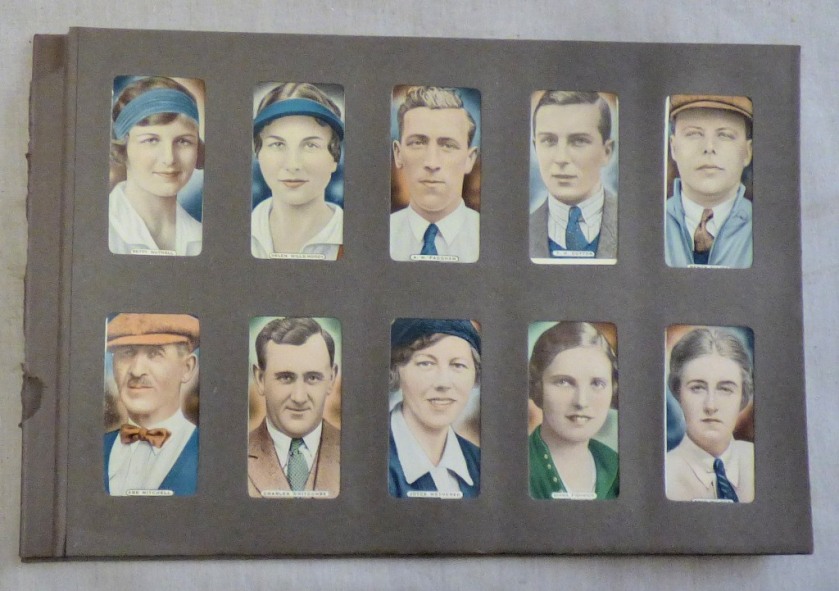
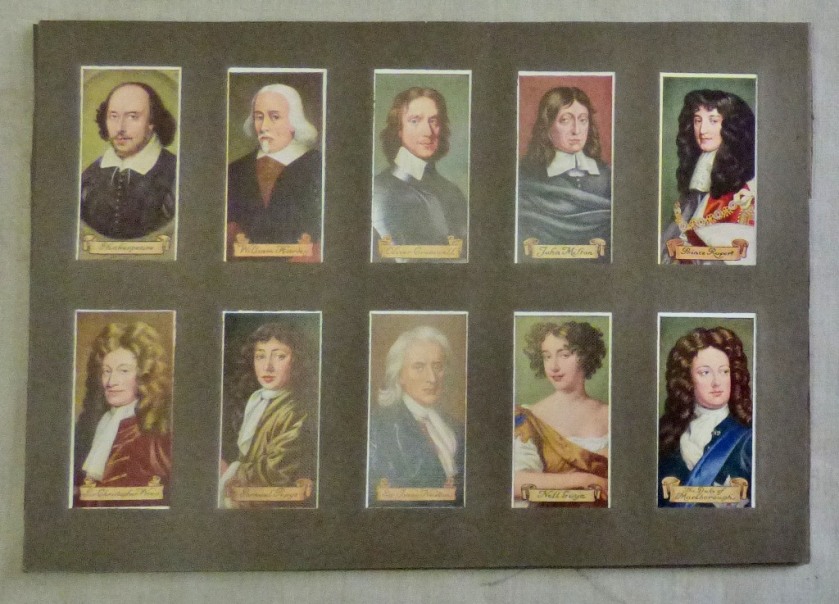
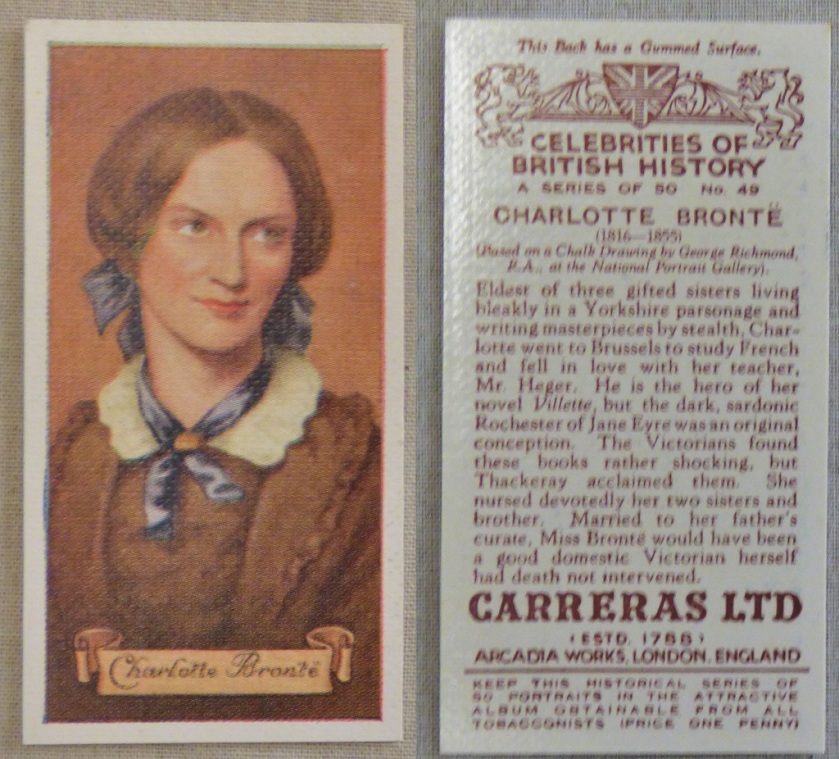
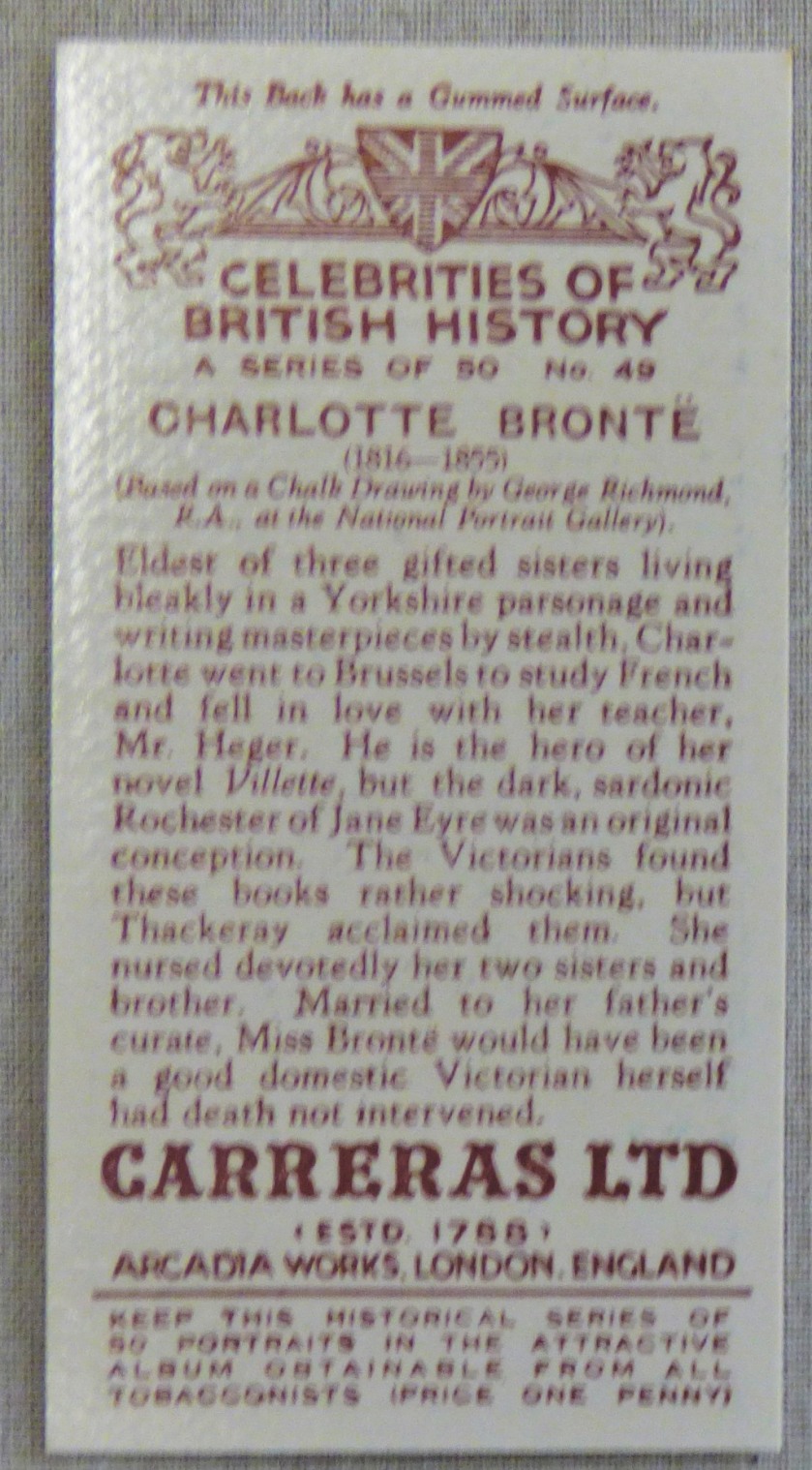
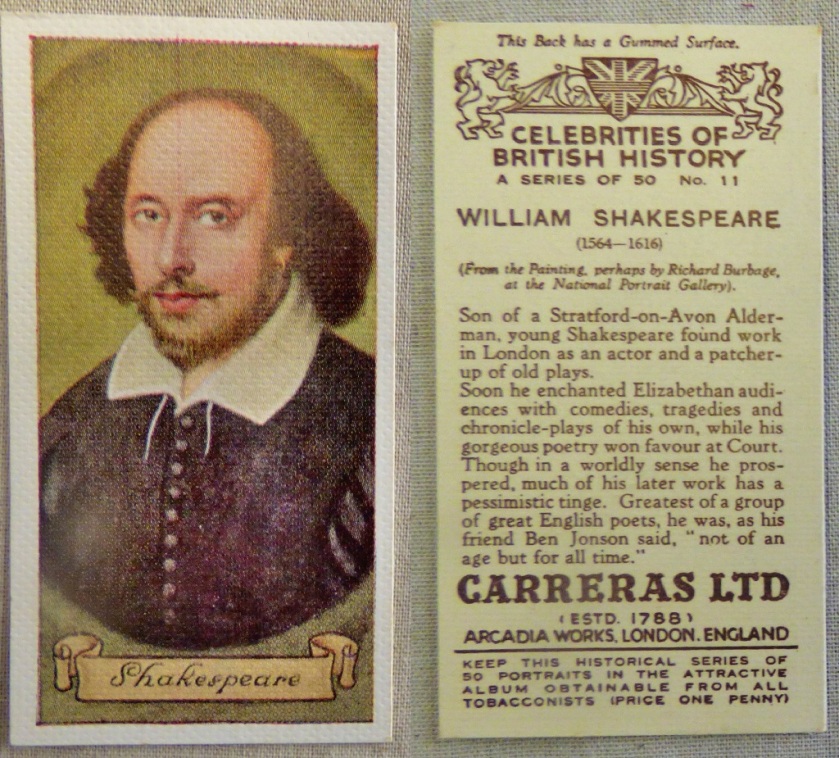
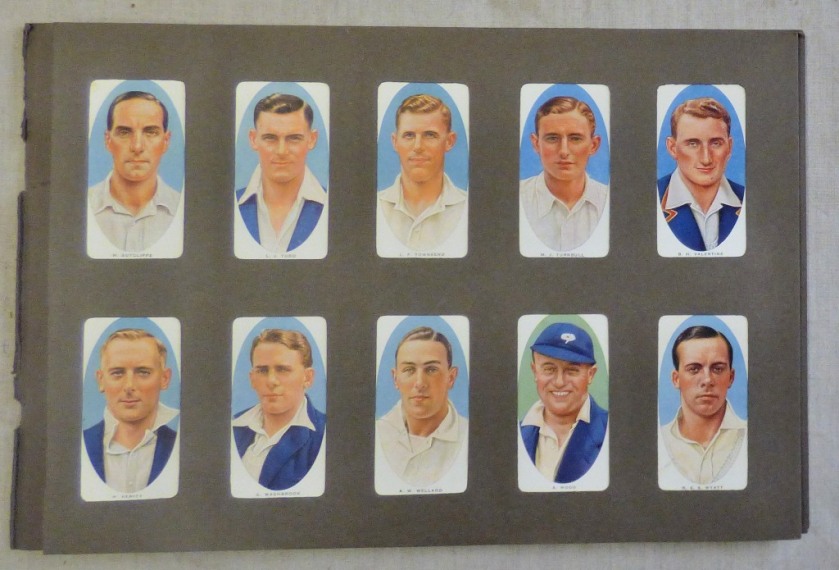
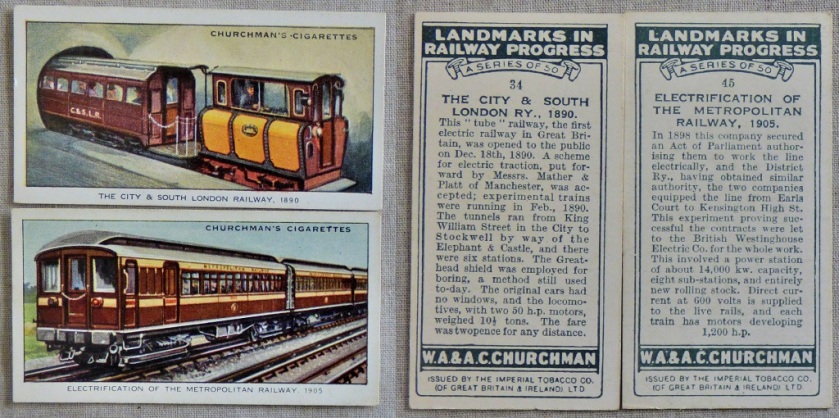
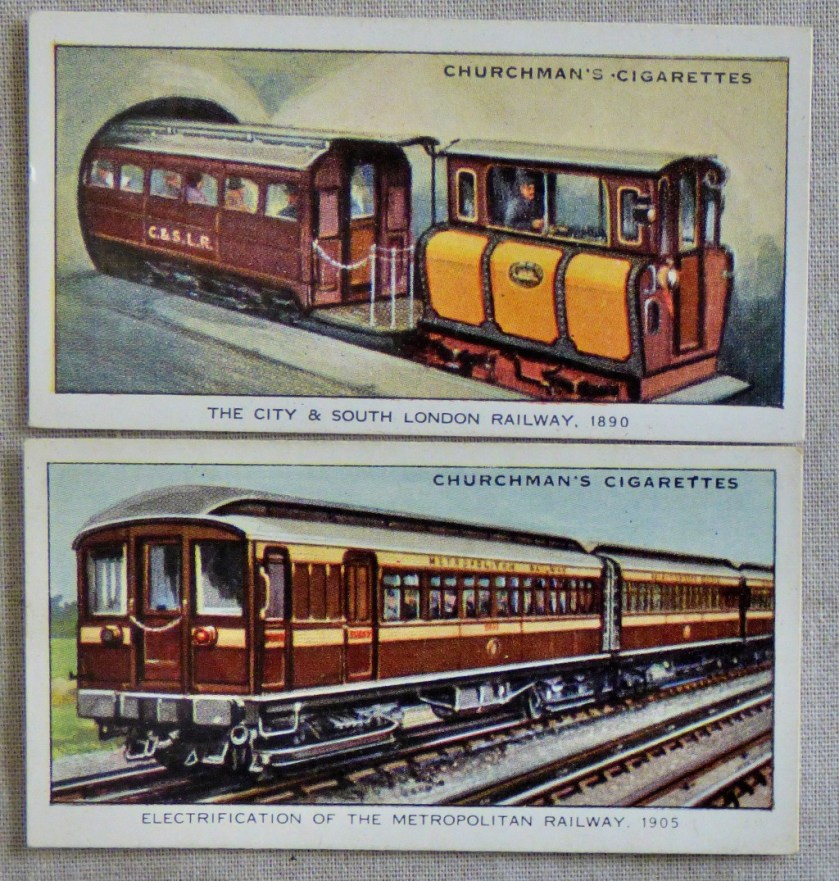
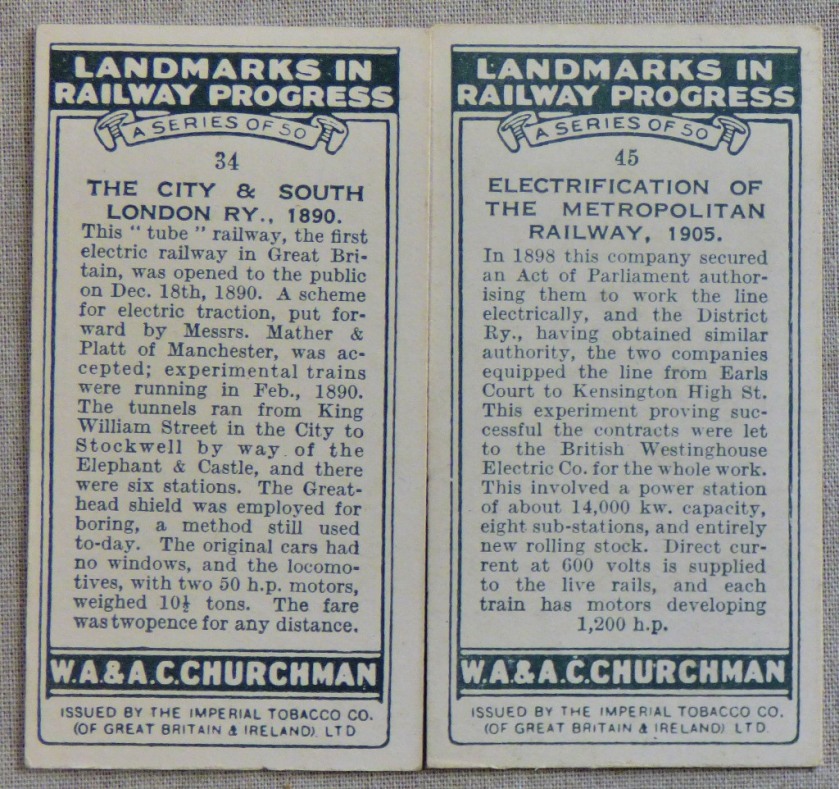
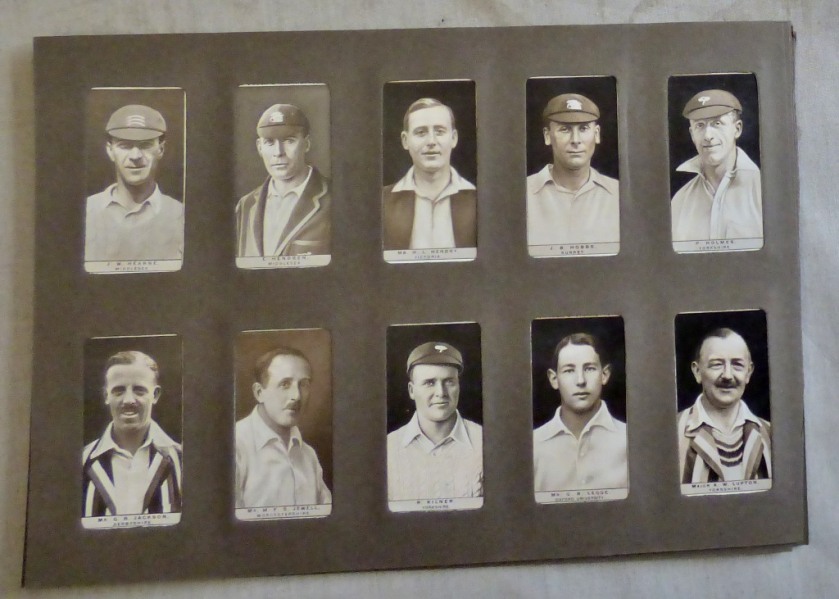
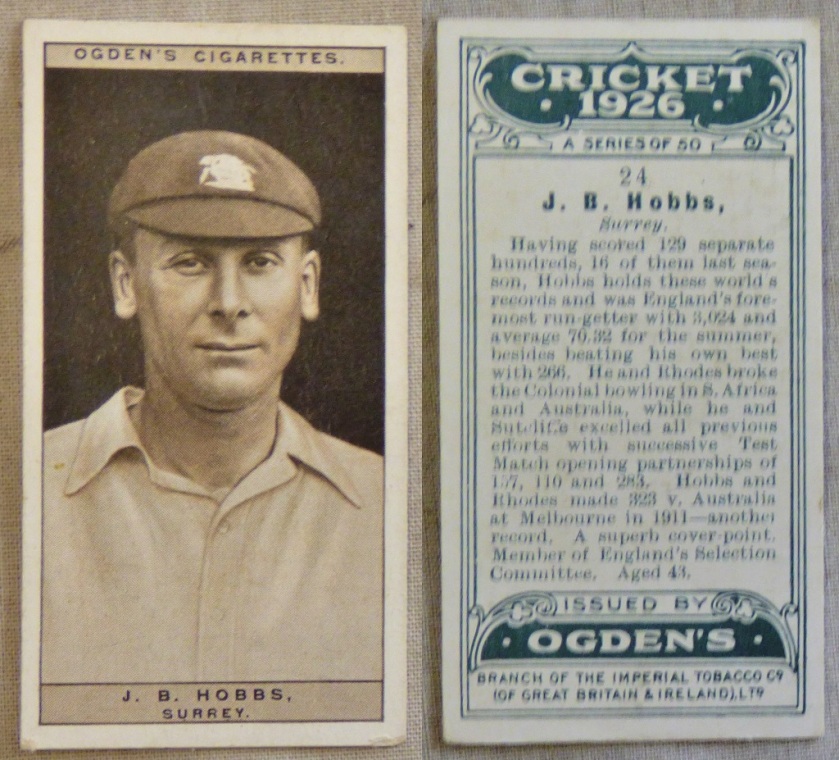
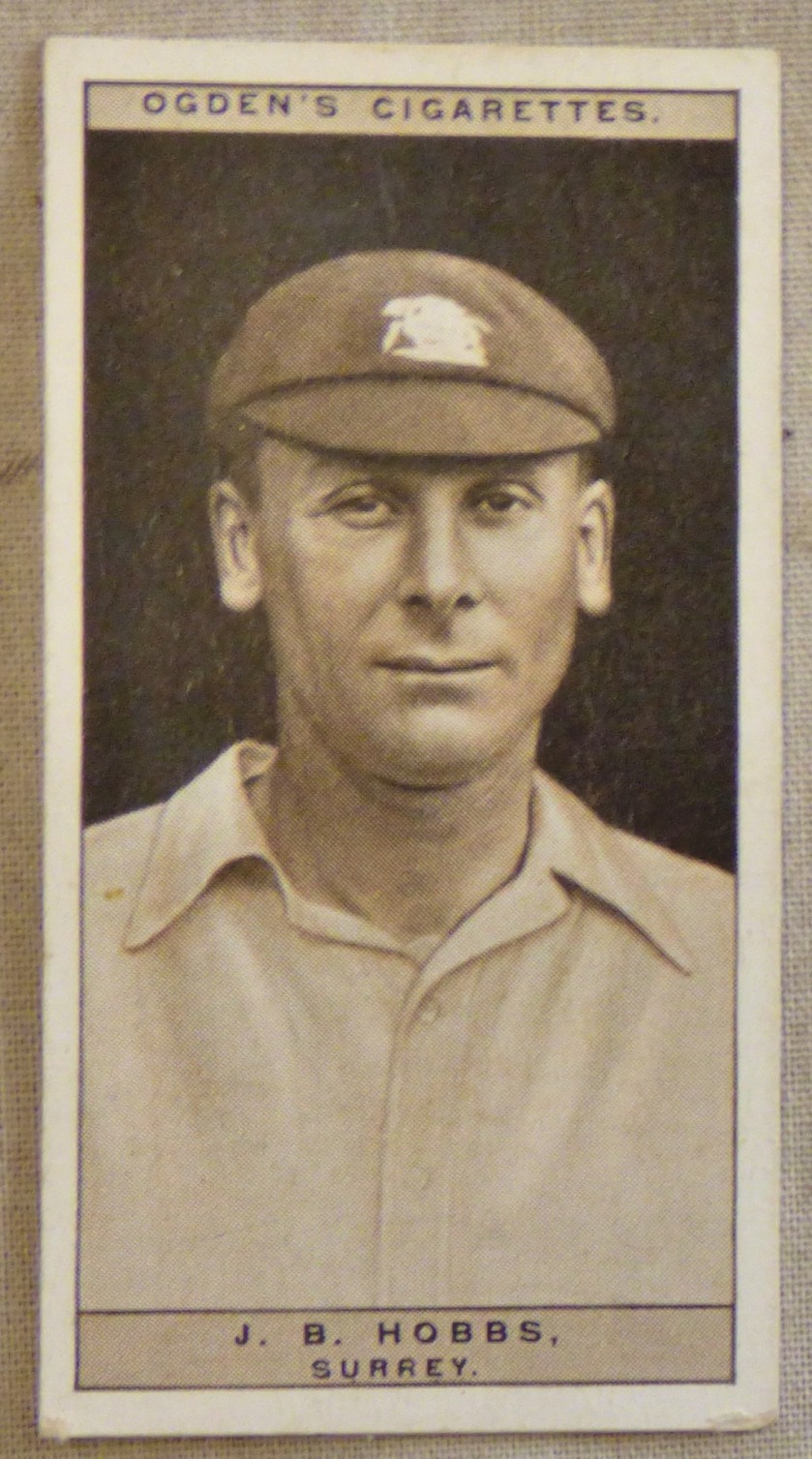
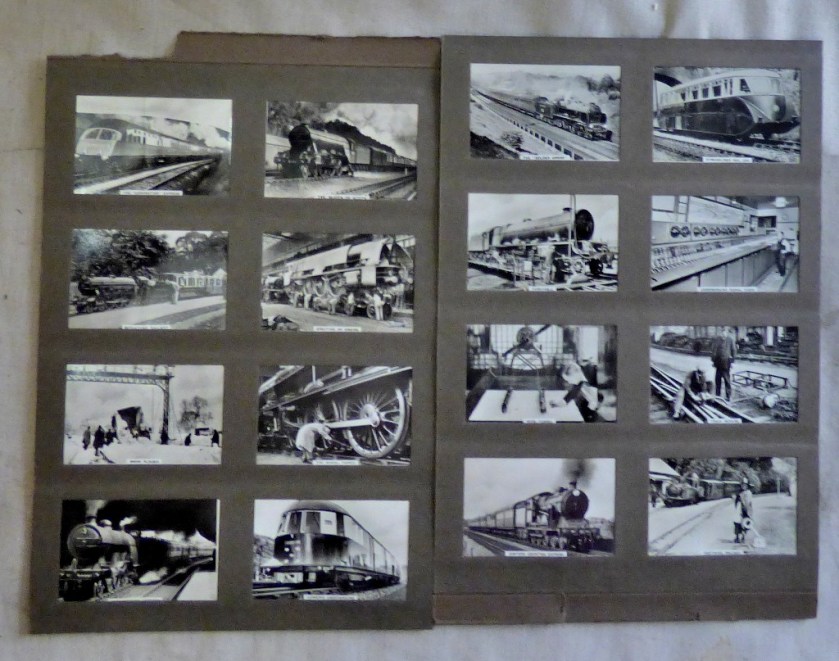
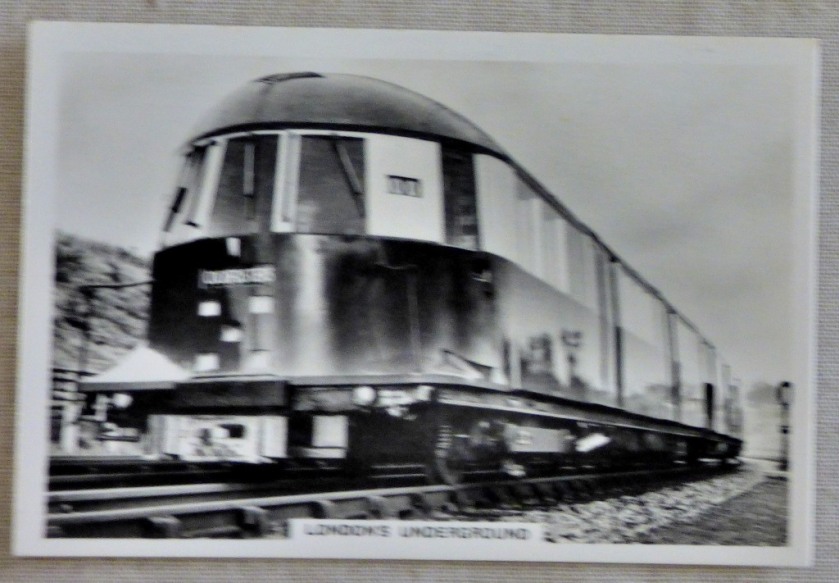
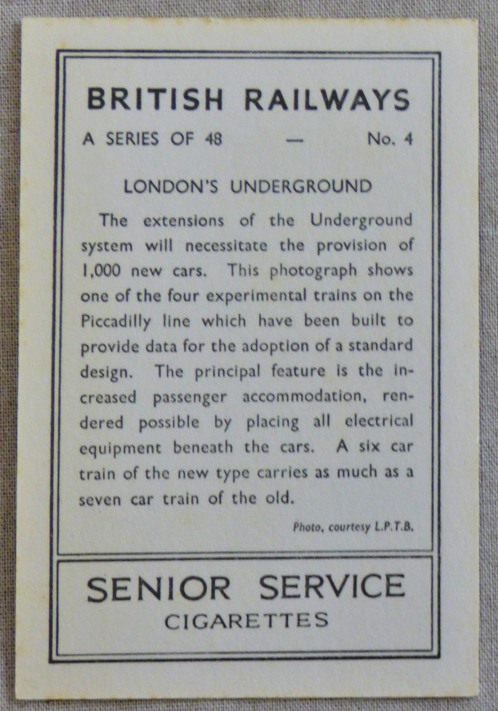
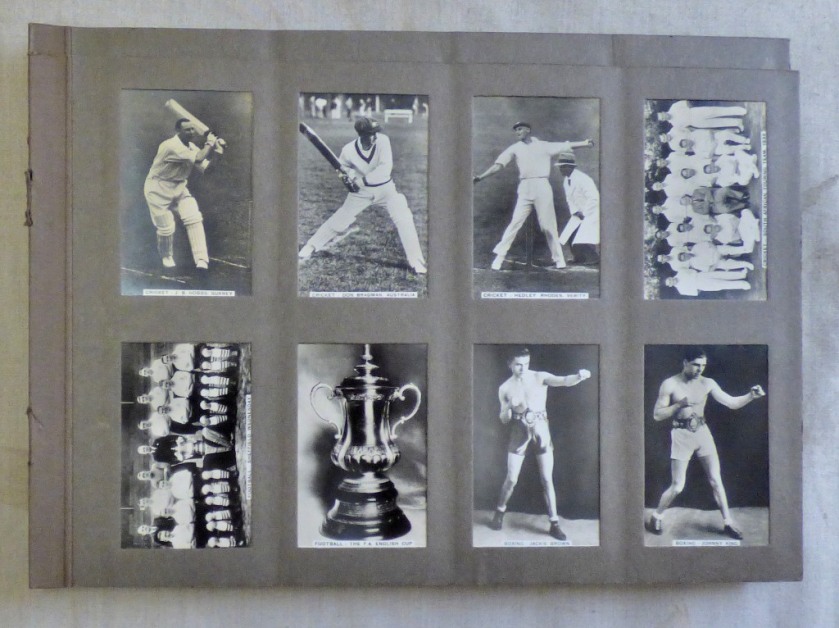
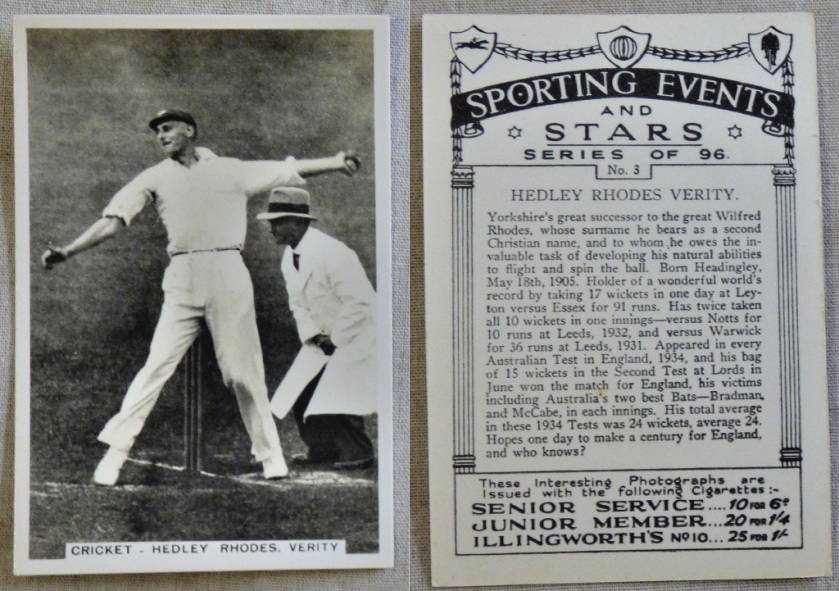
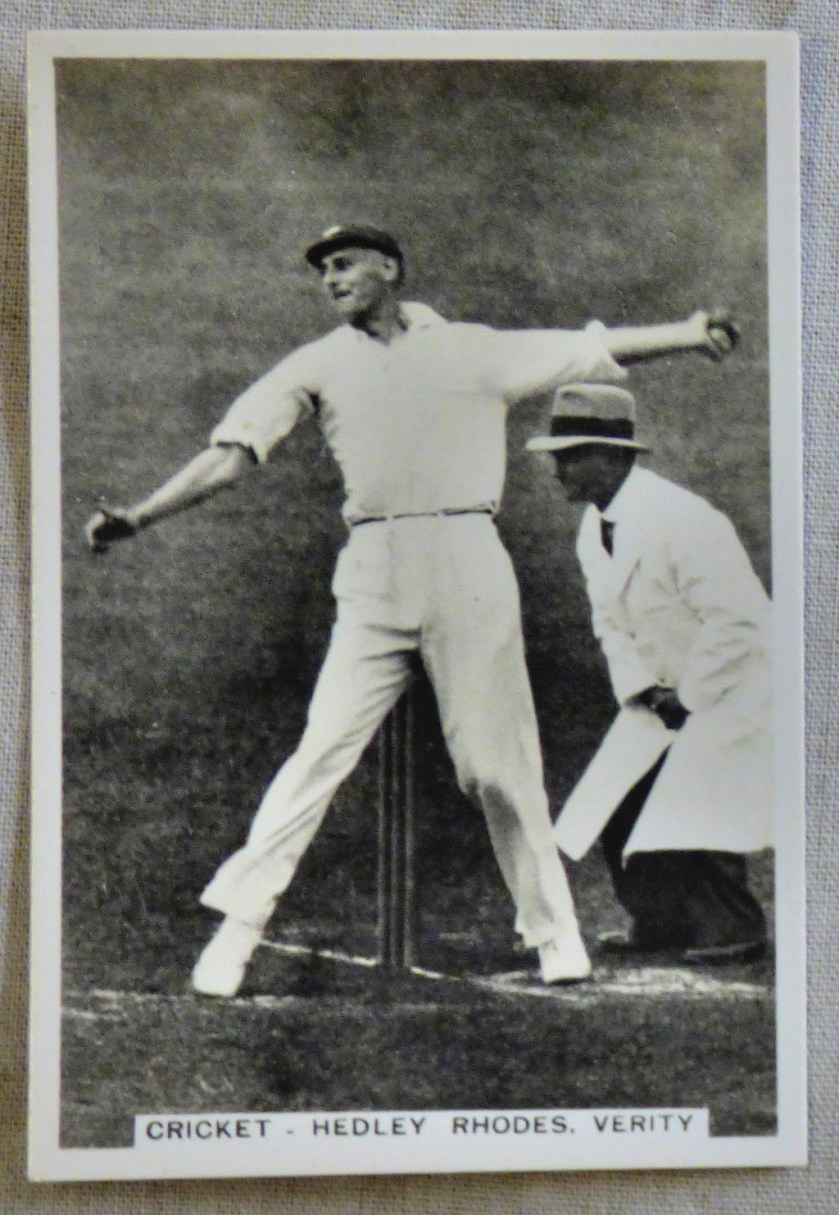
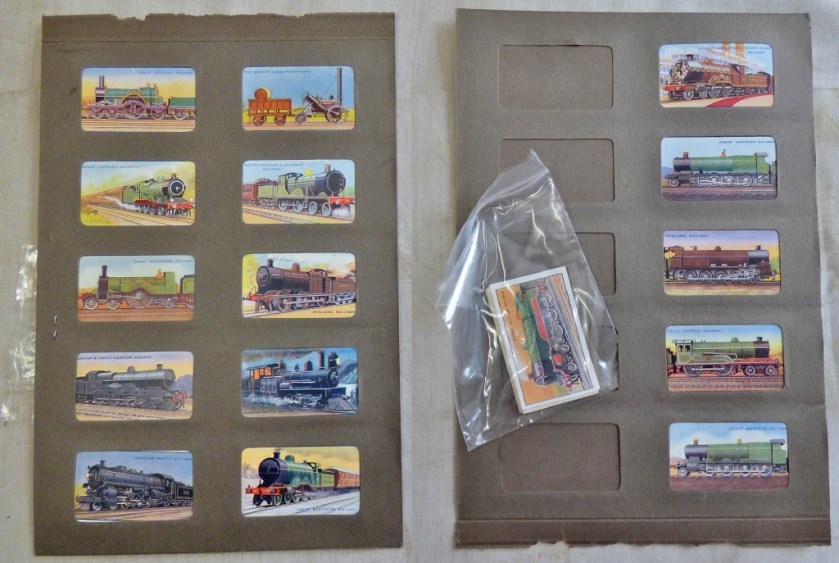
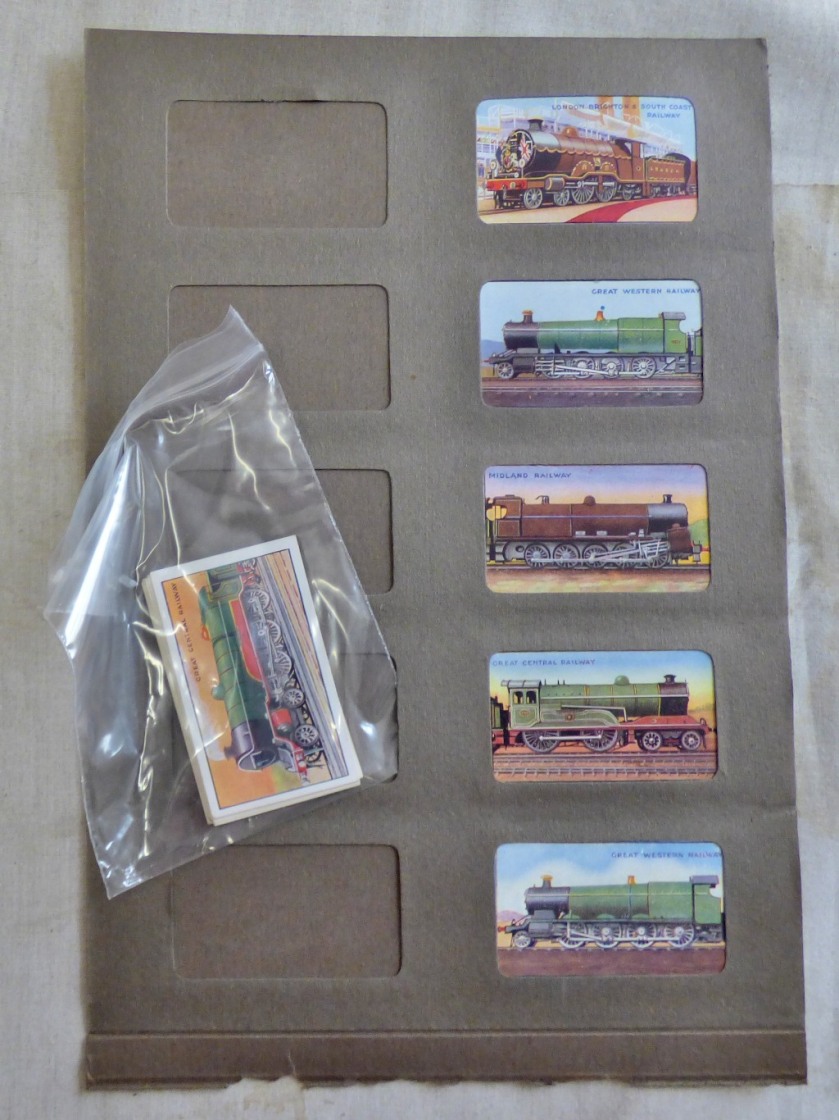
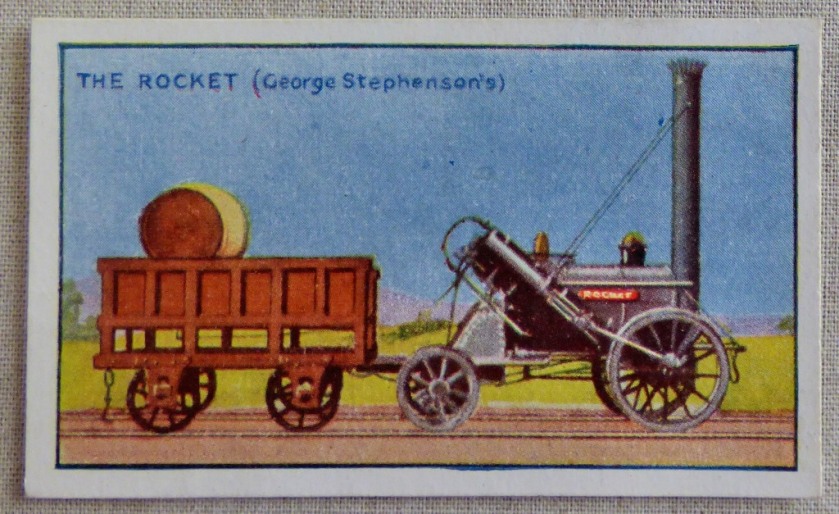
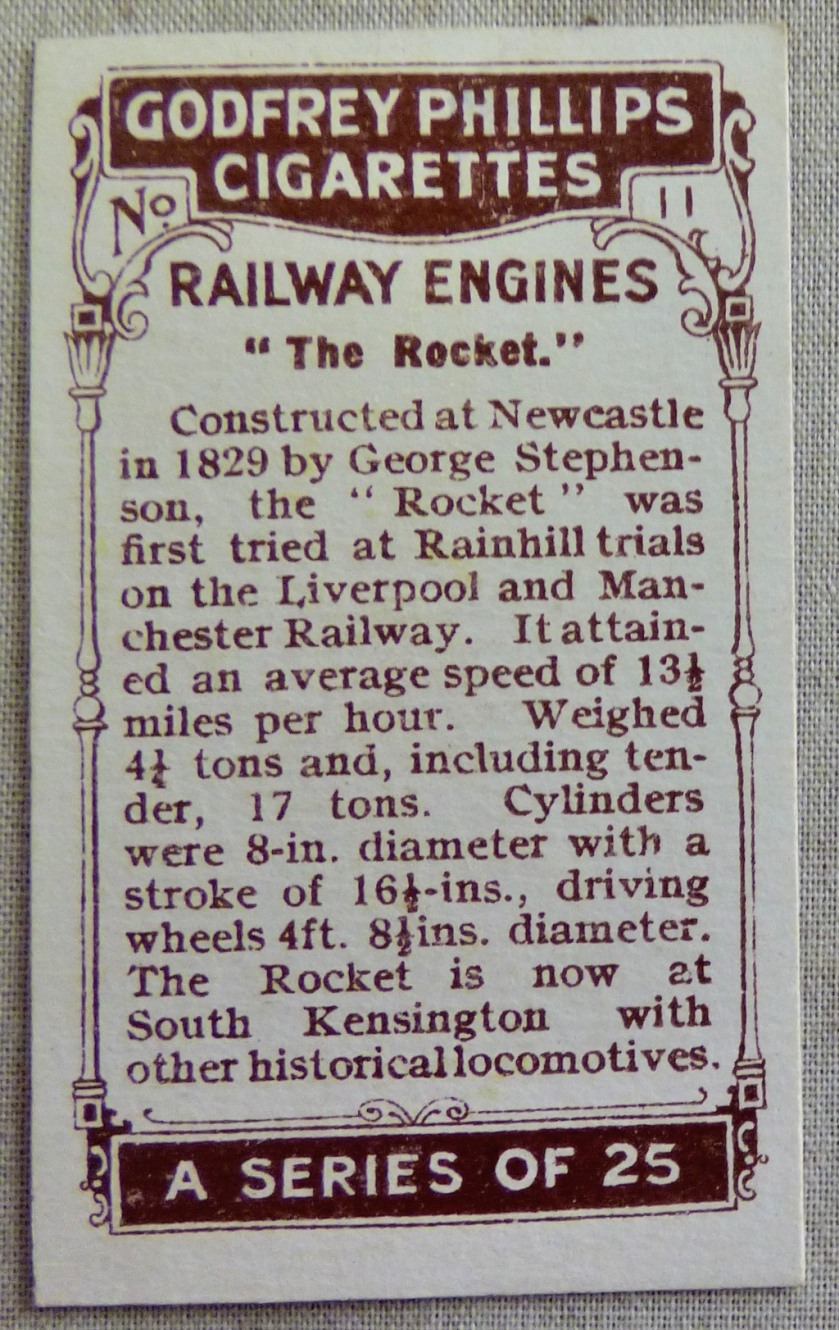
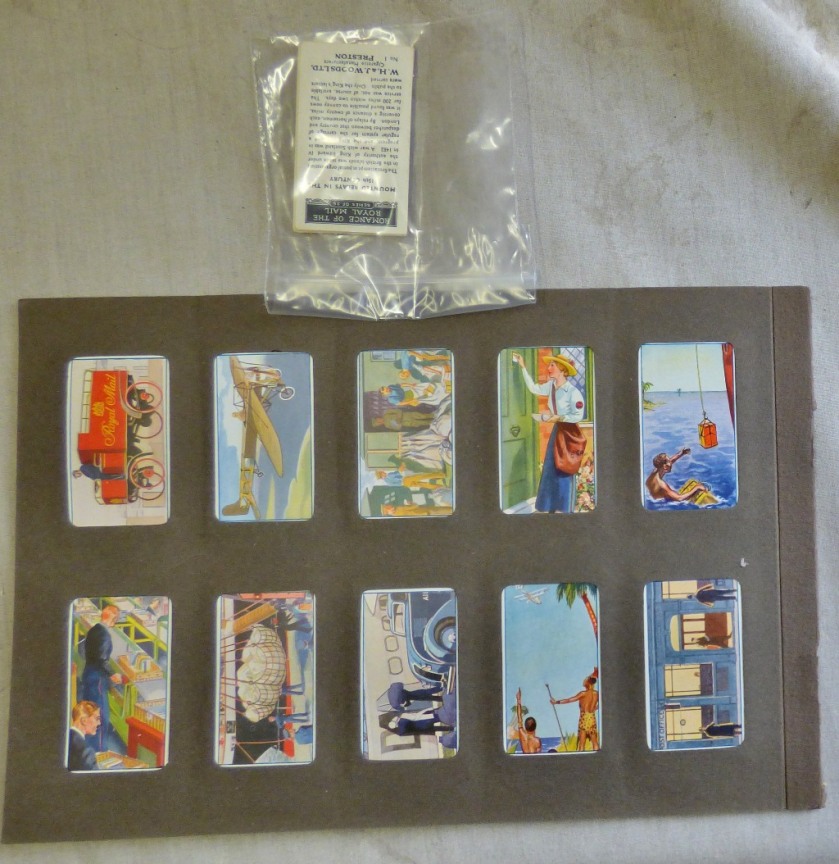
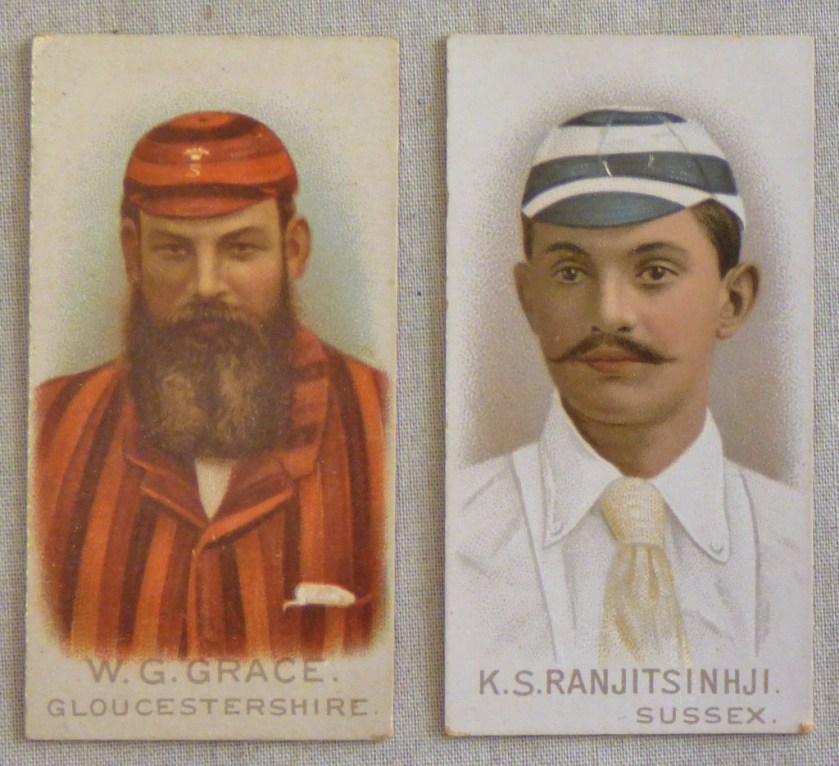
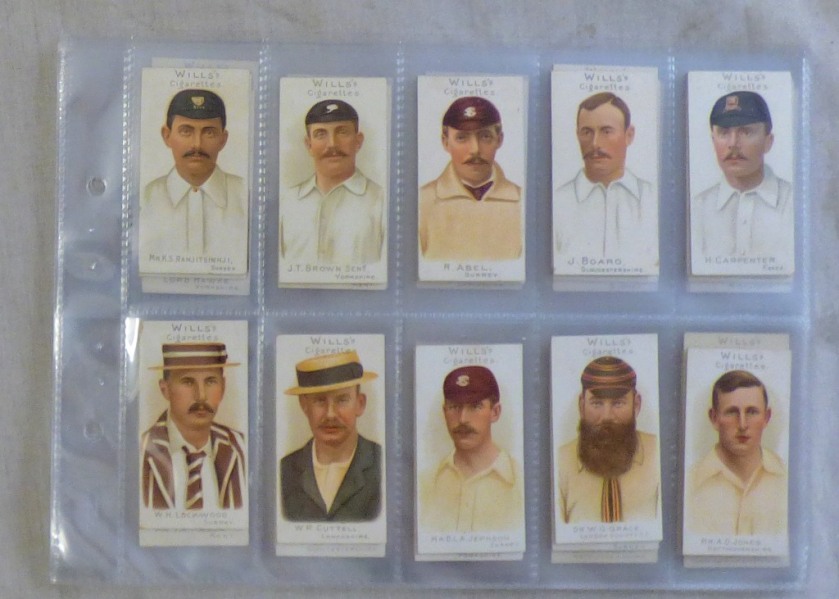
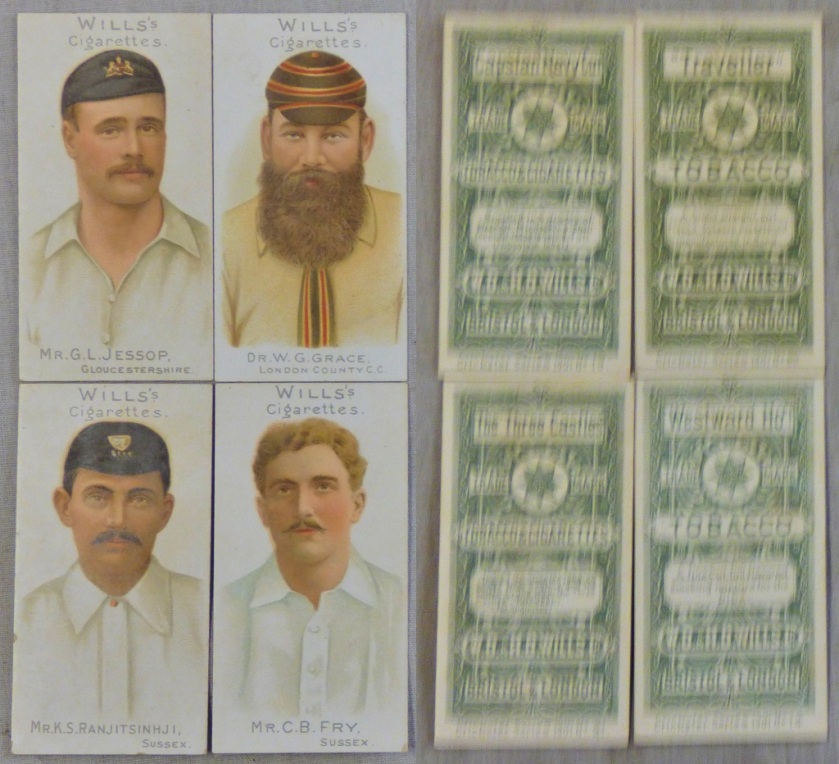
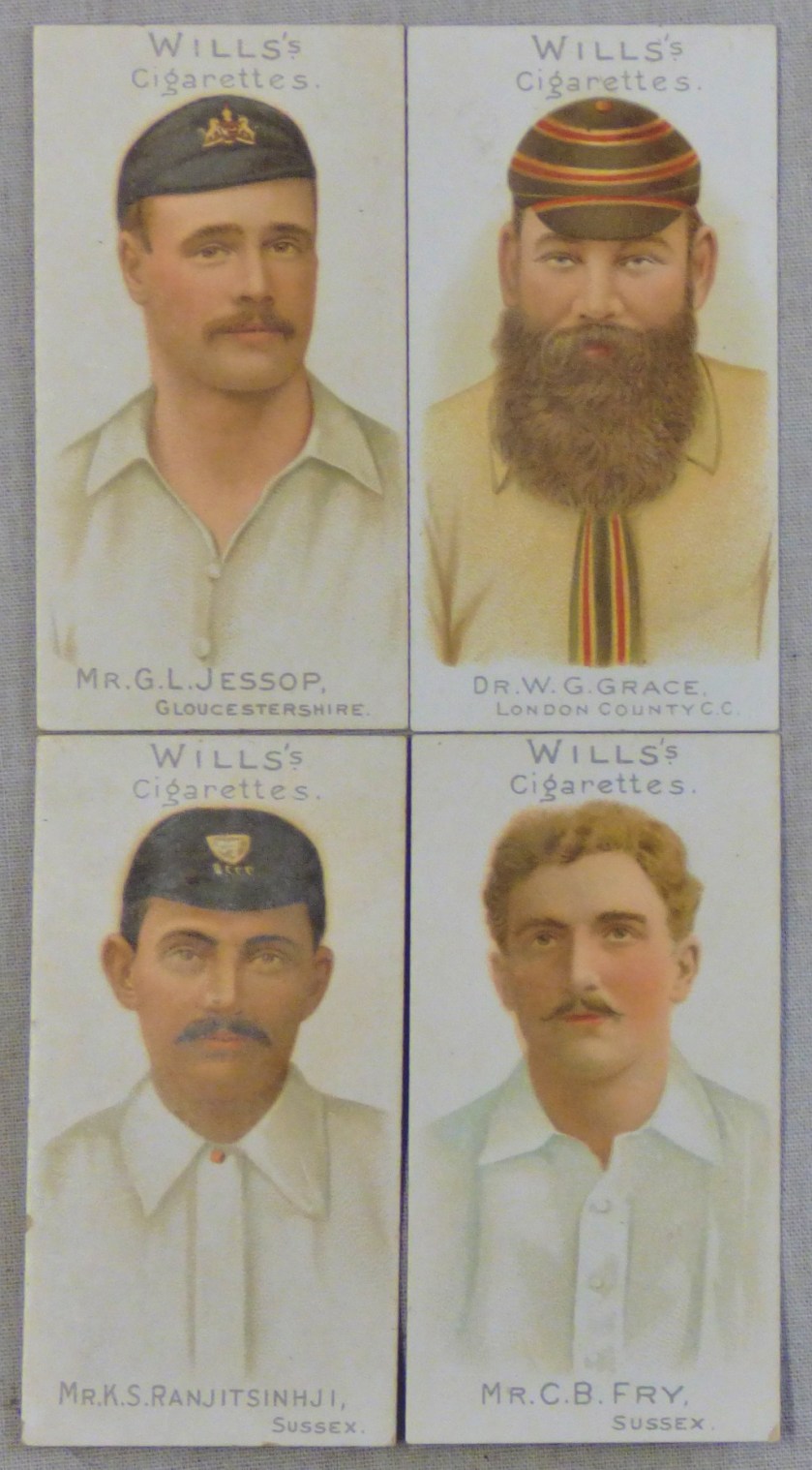
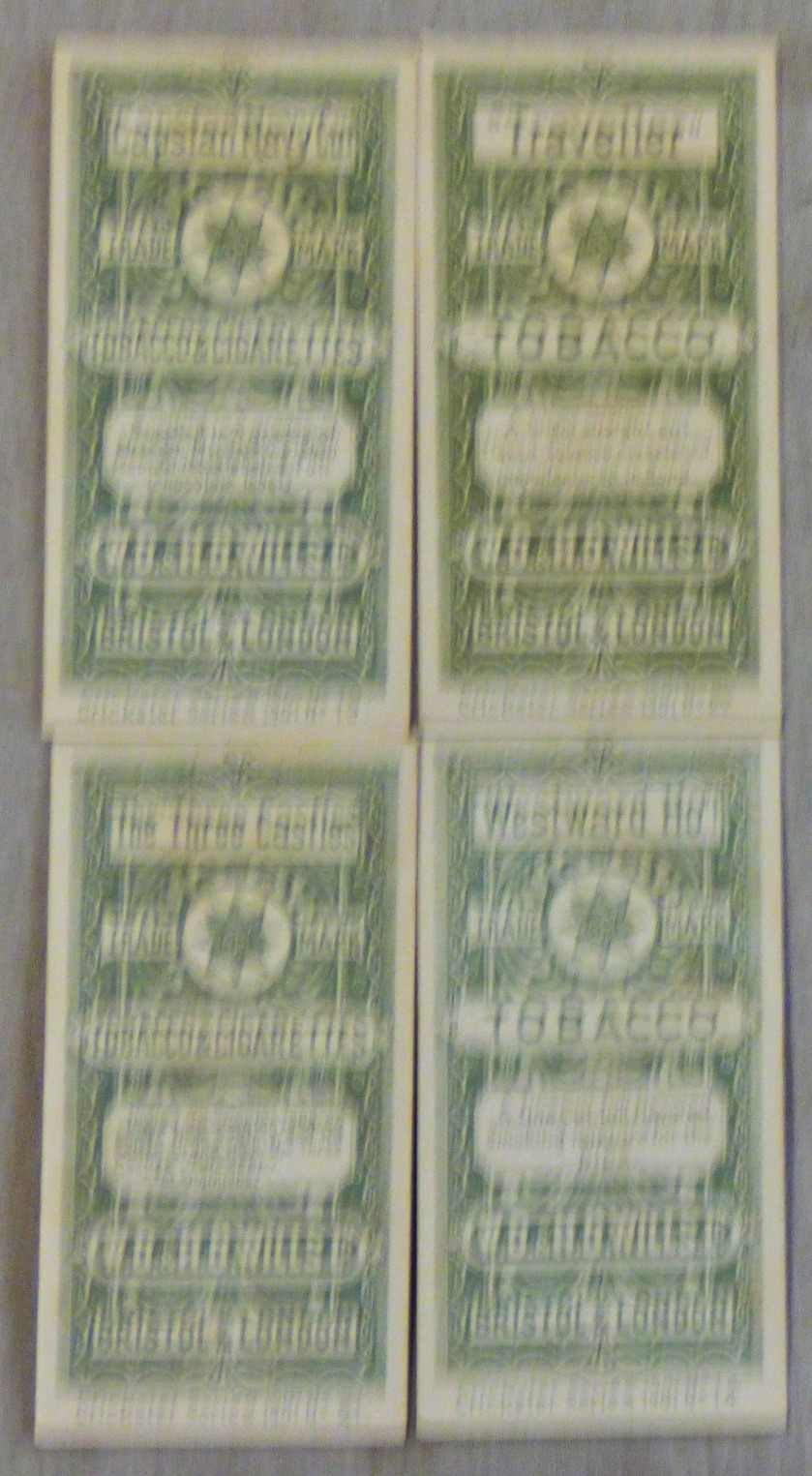
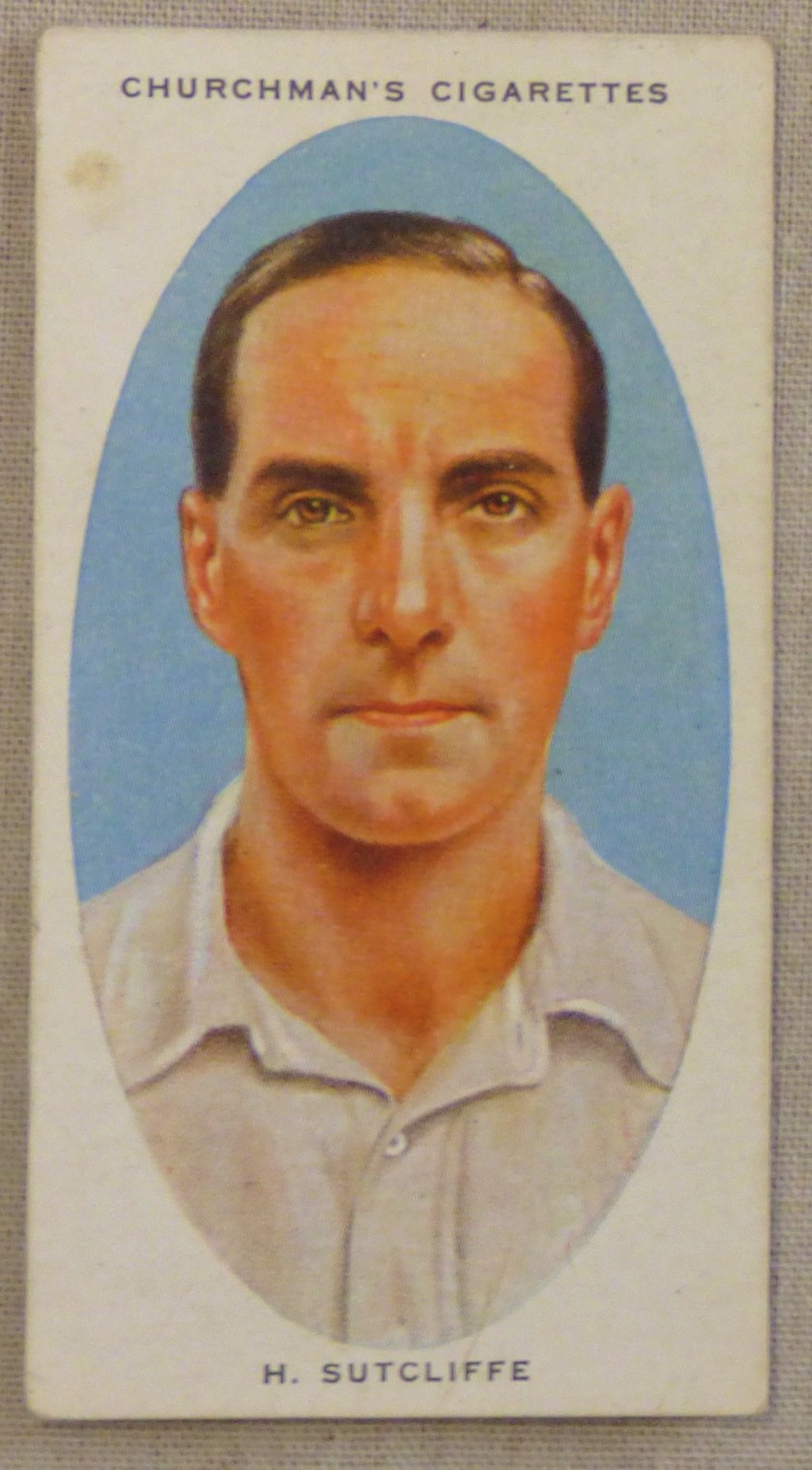
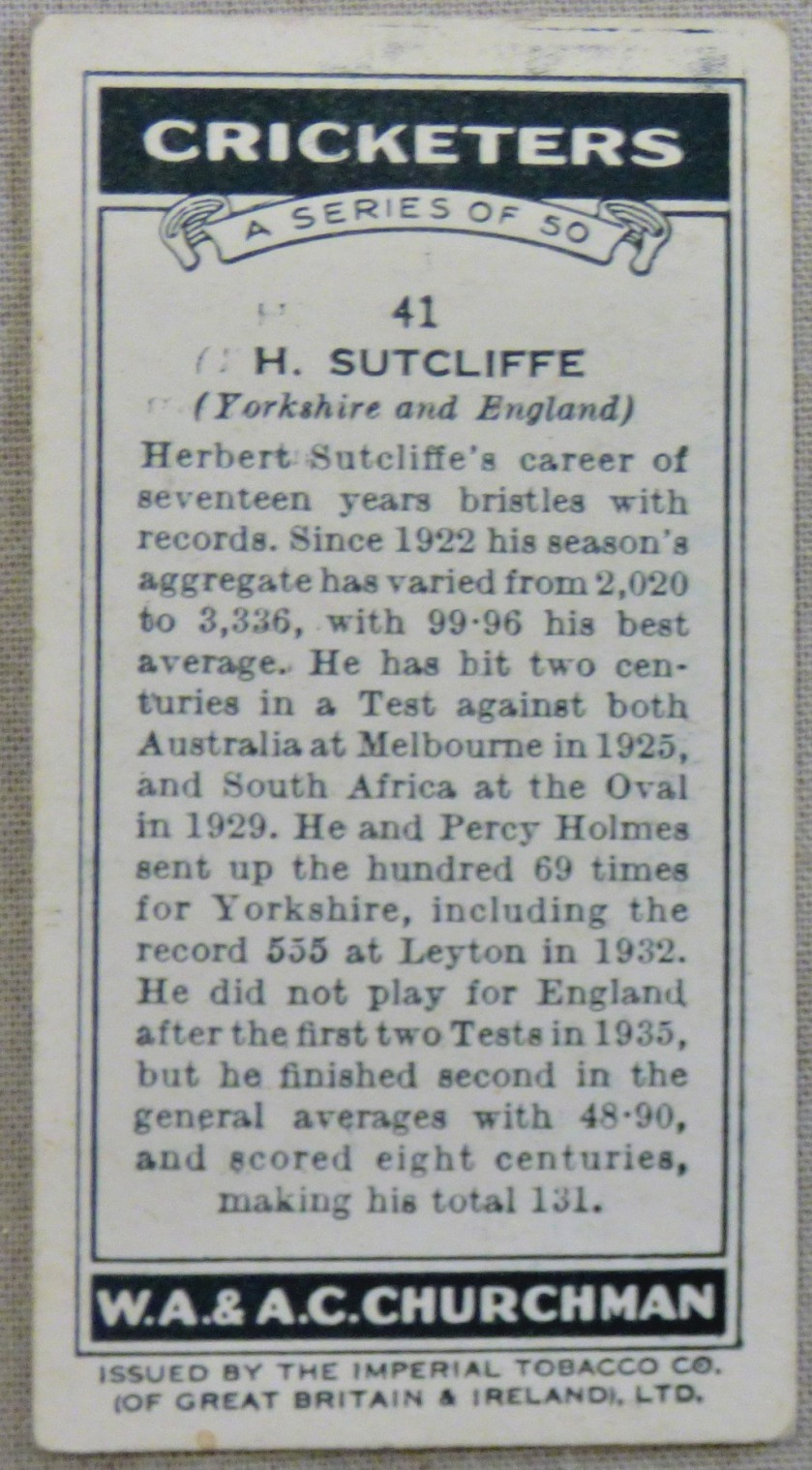
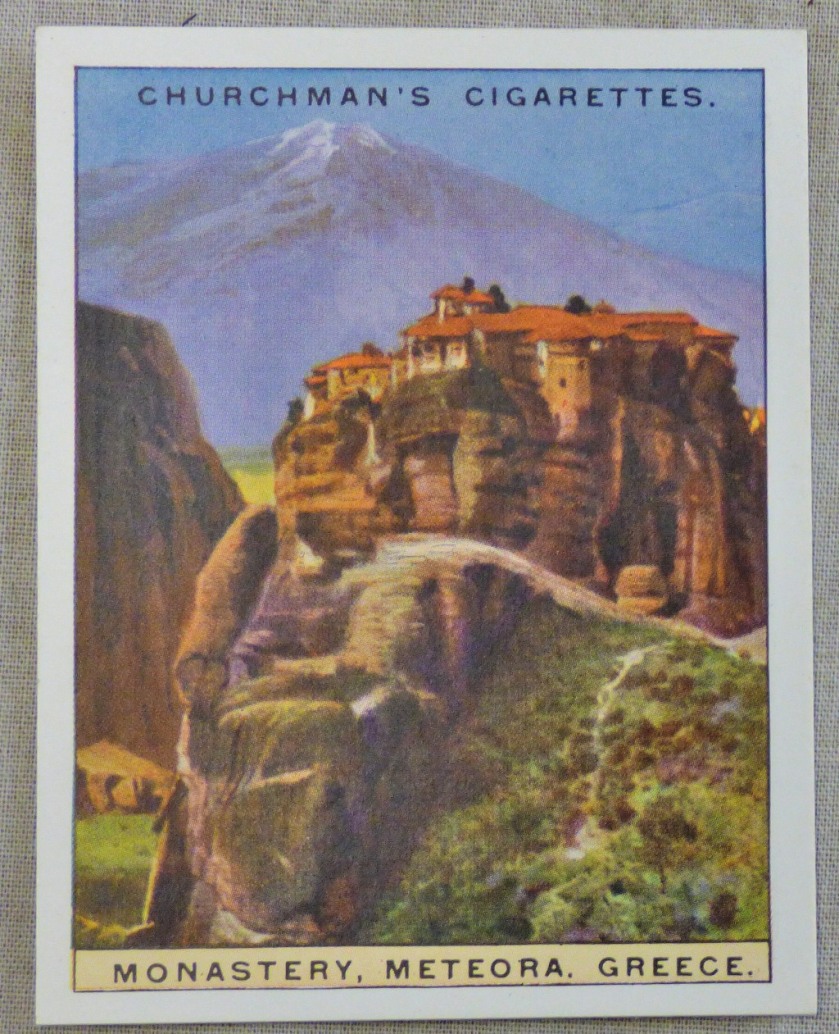
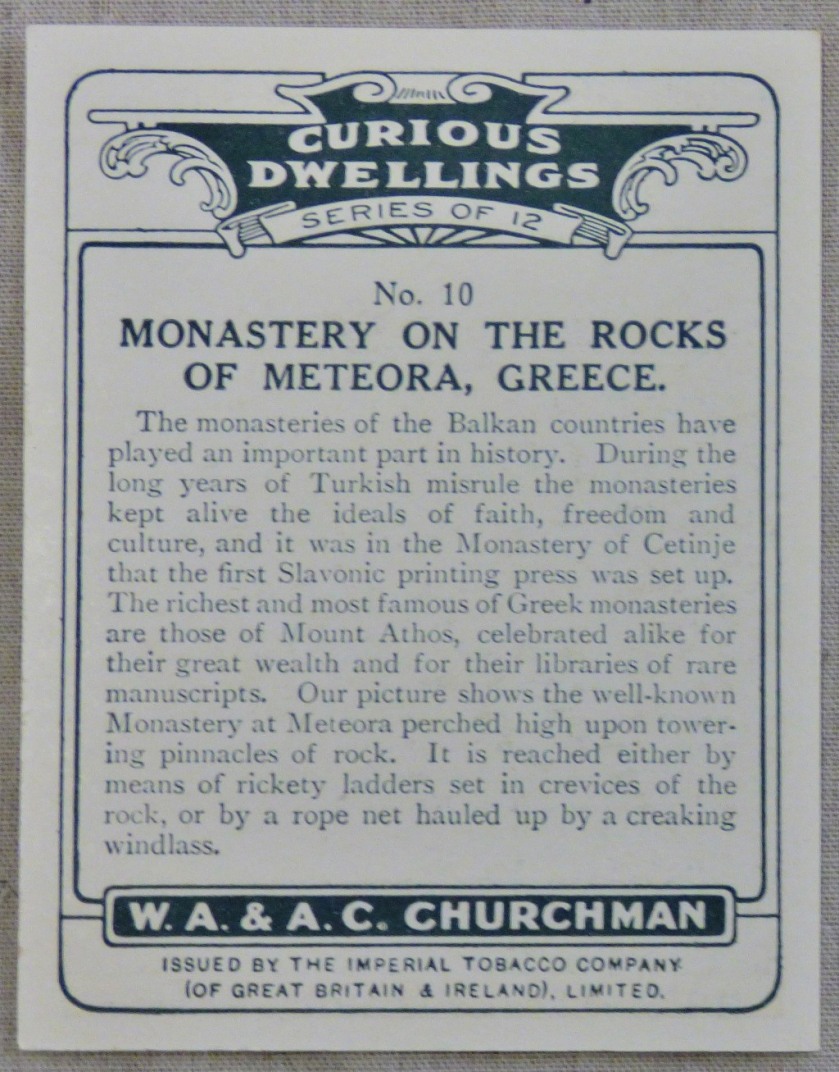
Lot 86 in our next auction – see my post about my first week as a commuter on the Lynx njumber 49 re the rarity of such uncut cigarette cards
Lot 110Lot 181
Lot 199 – second behind on lot 86 on my wanted list……not least for this.Lot 200Lot 223Lot 224Lot 278
Thoughts onthe new bus service between King’s Lynn and Fakenham one week in.
INTRODUCTION
I have now done one work week using the new Lynx Bus 49 for the journeys, the withdrawal of Stagecoach from King’s Lynn now being an accomplished fact (apart from the 505 to Spalding, most of which route is in Lincolnshire). This post covers my week at work as well as detailing my thoughts about the new services.
TUESDAY
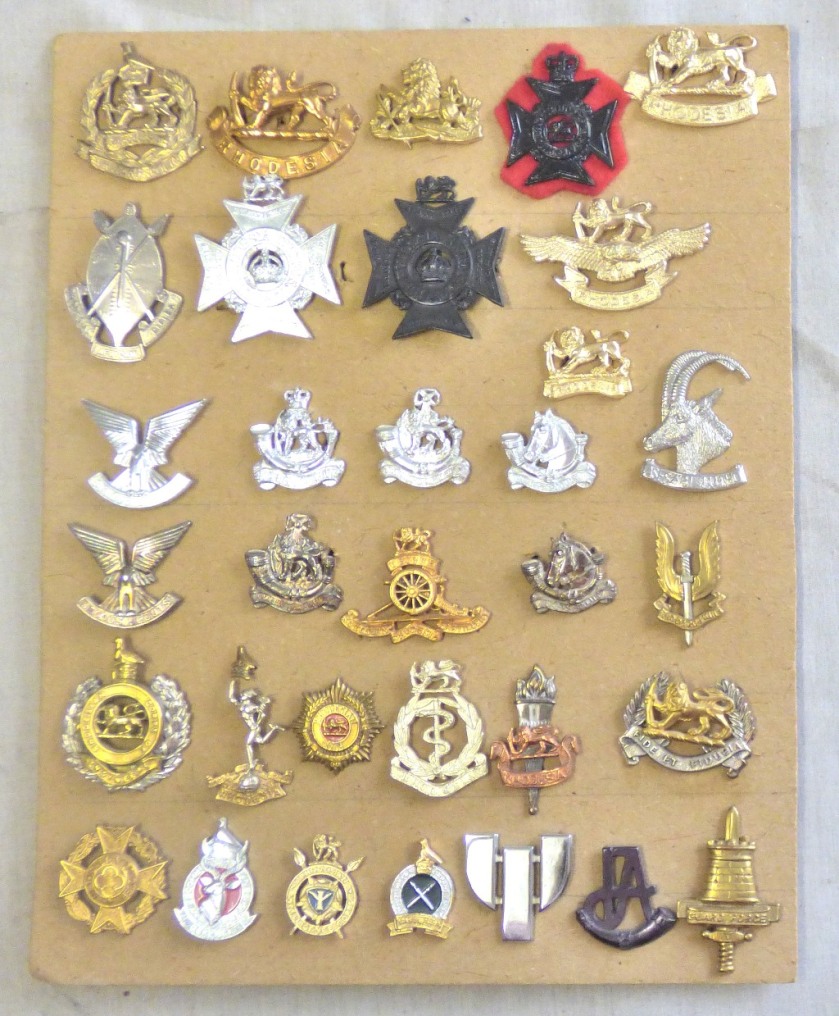
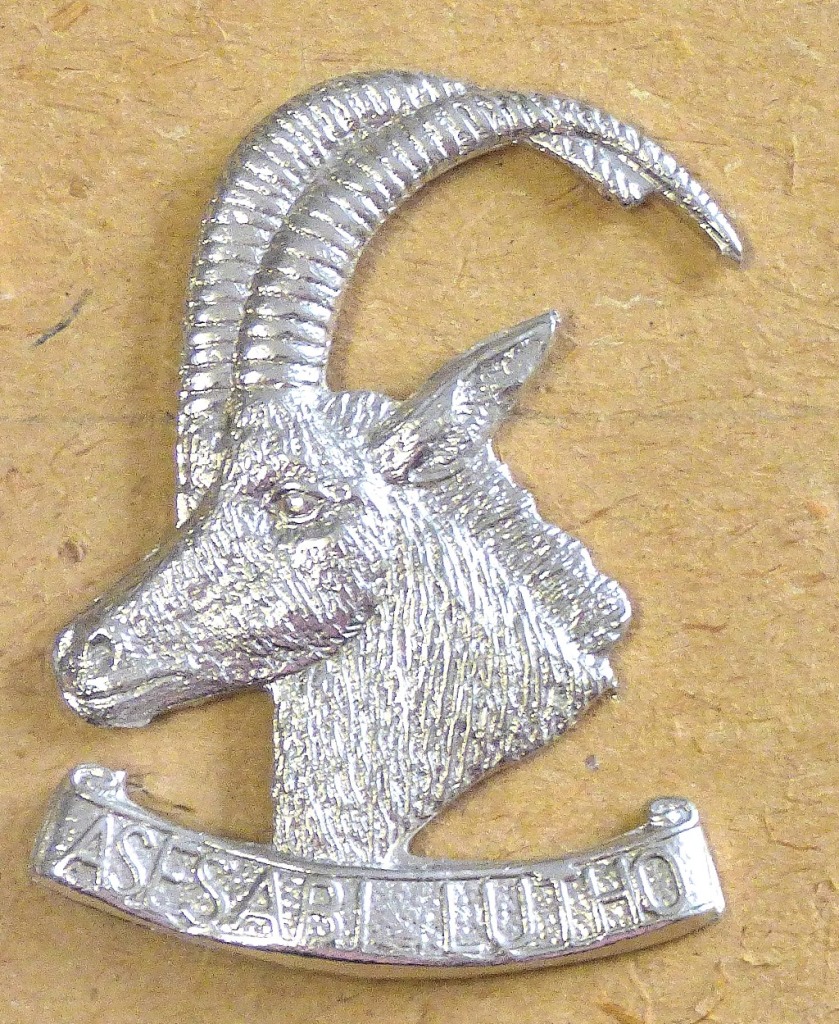
Setting off from my flat at 6:45AM I was at the bus station in good time for the bus that I needed to catch at 7:00. The bus arrived and departed in good time, and arrived in Fakenham at 7:49, as indicated by the timetable (unlike the unlamented Stagecoach their schedules include some slack, so that a traffic jam does not always mean running behind schedule). As it was warm enough that my workplace would definitely be bearable, and I had a lot of imaging to do and little time in which to do it I decided to go straight there and get stuck in early. I commenced proceedings by finishing off the badges on boards as images of these were needed for the catalogue, and then got to work on the cigarette cards, and managed to image the first 50 lots of those as well, before closing time, and my departure for the library, to do stuff there until I could catch the bus home (the service is very infrequent at present). I have already shown some images from this day’s work in a previous post. The bus back duly arrived and set off exactly as it should (a double decker for the evening run btw), and there were no significant delays en route.
THURSDAY
Again no issue with the journey out. Tony’s Deli stall was still being set up when I headed to work, so I got ready to start the day, and then popped back out to make my purchases there, before returning to get stuck into work. I did the loose badges (imaging them in batches of six to save time) for the first of the two days of badge sales, before once again focussing my attention of the cigarette cards, the last lot of the day being lot 166. Another visit to Fakenham library to fill in time at the end of the day, and once again home on a bus that ran to time.
Lot 88, uncut cigarette cards – very unusual (until we got this consignment our expert on such cards, with nearly half a century of experience had not seen any.
Lot 100, famous cathedralsClose-ups of the two local examples (even if you cavil at Ely being described as local to a Norfolk auctioneer, the octagonal tower was designed a mid-14th century prior named Alan of Norwich).
Lot 133, famous castlesA close up shot of two among the castles that I have visited.Lot 134 – famous cathedrals
FRIDAY
After another uneventful journey in I imaged some militaria for the first day of that sale, reverted to cigarette cards until I had imaged the last album to have been numbered up (ending at lot 294), at which point I started imaging badges on boards for the second day of that sale.
These backpacks (three items, there are two images of this one and one of each of the other two) are quite heavy even when empty, but that metal framework probably gives them gfreat stability.
A close up of the local building.
Both local and arguably the most iconic of all the buildings in this set.
Lot 279 – the cigarette card equivalent of a 50-piece jigsaw.
It was warm and sunny when I locked up at work, and also of course a Friday, so I headed for The Limes and some liquid refreshment taken in the outside seating area. I had entertained hopes of finding a locally brewed craft ale, but given the actual options settled for Hobgoblin (still a very decent drink). The bus back was significantly late, but the still left Lynx with a score of 5 out of 6 for punctuality on the week – something that Stagecoach had not approached in a very long time.
THE LYNX BUS 49
The buses themselves are clean and comfortable, the drivers are friendly, such services as there are by and large run punctually. The trouble is that there are so few services on the new route. I might, particularly in winter, see if I can use my tickets on the route via Wells, which ultimately gets to King’s Lynn by way of Hunstanton. The prime disadvantage of this route is its length (doing the journey by that route would take about two hours on the bus. However, Lynx have stepped up to the plate in difficult circumstances, and their service standards are much better than Stagecoach. The cost of tickets is greater than on Stagecoach as well. I believe there remains a possibility of the 48 route, which currently terminates at Pott Row being extended to join the A148 and then on to Fakenham.
The first in a series of posts about #Autisticspecialinterests that will be appearing here during May.
INTRODUCTION
Here as promised is the first of a series of posts I shall be doing about my special interests. I am starting with public transport, and in this post I shall be referring to events that took place long before I was diagnosed as autistic.
GREAT ORMOND STREET HOSPITAL AND THE BIRTH OF A SPECIAL INTEREST
I was a patient in a child psychiatric unit at Great Ormond Street Hospital for over a year in the early 1980s. The trigger for the illness that put me there appears to have been a bout of chickenpox. For the first half of my time there I was an in-patient, at the hospital 24/7, and then when they deemed it safe for me to sent home at nights I was a day patient. Although I cannot remember a time when trains did not interest me, it was during this period that I would say that my special interest in public transport was formed.
My family moved to London in 1979, when I was four, and I have a London Underground map from that time:
Now, here is an edited version, highlighting the two key stations:
Tooting Bec was our local station, just about a mile from our house, while Russell Squareis the station for Great Ormond Street Hospital. My father would take me there in the mornings and pick me up in the afternoons, using London Underground. We took some very bizarre routes, as my fascination grew, which sometimes led to my father getting awkward questions from ticket inspectors (yes folks, in those days London Underground had on-train ticket inspectors).
TEENAGE YEARS – GOING SOLO
In later years I was able to explore on my own, and when I was in my early teens the child rate for a one-day travelcard was only 90p, so I would often go out on a Saturday and explore London transport in detail (I used various local railway lines as well as the Underground, though in those days I did not make much use of buses). It was also in this period that I discovered the London Transport Museum at Covent Garden.
A big moment for me was the opening of The Docklands Light Railway (I travelled on it on its first day of operation way back in 1987, and it was a huge buzz to be there at the start of a new development in public transport). In particular I first developed the method of visiting Greenwich described in this post on www.londontu.be as a teenager, and since the DLR was then pretty much brand spanking new I claim to be the pioneer of that method.
Like most who have been regular users of it I came to despise the Northern Line, and later in my teenage years it was a thing with me to make my excursions without using the Northern line (this meant starting and finishing at one of various railway stations which were walkable from home – Tooting, Streatham Common, Streatham, or Streatham Hill). A frequent finish to my excursions was to take the Hammersmith & City line to Hammersmith, get an eastbound District line train to Earl’s Court and then cross the platform to get a Wimbledon train, finally changing to railway train to Tooting.
At the same time as I was exploring public transport in London to the full I was also learning more about its history and development.
Very late in my teens I became a regular commuter, because after finishing at my local comprehensive I decided to resit my Chemistry ‘A’ Level and do the first year of Maths and Physics ‘A’ Levels at Richmond Upon Thames College of Further Education, whose local station was Twickenham, two stops west of Richmond. I had two regular routes there, either travelling in my mother’s car as far as Baron’s Court (the nearest station to the school she was teaching at in that period), District to Richmond, train to Twickenham, or from home, walk to Balham (about a half-hour walk, perfectly manageable for an 18 year old), get a train to Clapham Junction and change for another train to Twickenham. The fastest trains over the Clapham Junction – Twickenham section were those going to Reading, which did it non-stop. Those trains were also the only ones that still had manually opened and closed doors (two choices folks, either slam the thing, making a monstrous crash, which most people did, or learn, as I did, how the catches worked so that one could shut the door quietly).
FURTHER POSTS
When I revisit this series, probably at the weekend, the story will move away from London, as I did, and will indeed go international. To finish for today, here are some old pictures of Tooting Bec Station, taken from the book Bright Underground Spaces:
The Stapleton Road sufrface building agt Tooting Bec, which was the one I used to enter and exit by.Both of Tooting Bec;s surface buildings (from 1926-50 the station was called Trinity Road).