All Time XIs – Holmesian

An all time XI of players with links to Sherlock Holmes stories and a large photo gallery.

A whimsical variation on the all time XIs theme – this XI is made up of players whose names connect in some way to Sherlock Holmes stories.

  1. *WG Grace (right handed opening batter, right arm bowler of various types through his career, captain). He sneaks in by way of “Thor Bridge”, which features a governess by the name of Grace Dunbar, who June Thomson makes a persuasive case for being the second Mrs Watson. His cricketing credentials need no amplification.
  2. Percy Holmes (right handed opening batter, fine fielder). One half of the most successful opening pair in first class history, the senior by precisely seven years in age, though the junior in cricketing stature (he and Herbert Sutcliffe shared 74 century opening stands together, 69 of them for Yorkshire and 64 in the county championship).
  3. Colin Munro (left handed batter). The Kiwi boasts an FC batting average of over 50. He qualifies by virtue of Mr Grant Munro, who seeks Holmes’ advice/assistance in “The Adventure of the Yellow Face”.
  4. Elias ‘Patsy’ Hendren (right handed batter, brilliant fielder). The third leading run scorer in FC history and second leading century maker in FC history, he gets in through his rarely used given name – two Eliases at least, Elias Whitney in “The Adventure of the Twisted Lip” and Elias Openshaw in “The Five Orange Pips” play walk on roles in Holmes stories.
  5. Vic Wilson (left handed batter, brilliant close fielder). Had a fine FC record, and eventually became Yorkshire’s first professional skipper since before Lord Hawke’s time. He gets in by way of Jabez Wilson in “The Adventure of the Red Headed League”, and incidentally he appears on the scoresheet as JV Wilson, while ‘Wilson the notorious canary trainer’ gets a passing mention in another of the stories.
  6. Johnny Douglas (right handed batter, right arm medium fast bowler). Trevor Bailey’s spiritual forebear as an adhesive middle order batter and useful seam bowler, also played his county cricket at Essex. Jack Douglas is the name by which we are introduced to the Pinkerton agency ace Birdy Edwards in “The Valley of Fear”.
  7. +Adam Gilchrist (left handed batter, wicket keeper). One of the three students in the story with that title is named Gilchrist. My chosen keeper’s credentials need no amplification.
  8. Johnnie Clay (off spinner, right handed batter). Captained Glamorgan when they were promoted to first class status in 1921, and was still playing for them when they won the 1948 championship, their first such title. He took 1,317 FC wickets at 19.76 a piece, and was good enough with the bat to score two first class centuries. He gets in by way of John Clay in “The Adventure of the Red Headed League”, rated by Holmes as the fourth most dangerous man in London at the time.
  9. Frank Holmes Tyson (right arm fast bowler, right handed batter). A brief and meteoric career, but he blitzed the Aussies in their own backyard along the way (in the 1954-5 Ashes). His middle name gets him in, hence my including it here.
  10. Dan Moriarty (left arm orthodox spinner, left handed batter). 49 FC wickets at 29 each, and has good records in List A and T20 as well, and at 24 definitely still young enough to be improving. He of course gets in courtesy of Holmes’ archenemy Professor Moriarty.
  11. William Mycroft (left arm fast bowler, right handed batter). Over 800 FC wickets at 12 a piece, just missing out on test cricket (he was approaching 36 years of age when the first such match was played in 1877). He qualifies at least twice over – through his surname, which is the given name of the elder Holmes brother (not necessarily coincidence – Doyle was a keen cricketer and avid cricket fan, and one theory about the names of the brothers is that Sherlock was an amalgam of Shacklock and Sherwin, respectively fast bowler and keeper for Nottinghamshire, while Mycroft came from William and Thomas Mycroft who played similar roles for neighbouring Derbyshire) and through William Kirwan, the murdered coachman in “The Adventure of the Reigate Squires”.

This side has a good top five, an all rounder at six, the greatest batter of all genuine top line keepers and four great and well varied bowlers. With Tyson and Mycroft to take the new ball, Douglas as third seamer and Clay and Moriarty contrasting spinners this side is unlikely to struggle to take 20 wickets.

All 11 players I have named save for Munro are home grown, but two who might have had an extra overseas slot, in each case coming in place of Douglas were the 1920s Australians Hunter ‘Stork’ Hendry who would have qualified by way of Violet Hunter from “The Adventure of the Copper Beeches” and Jack Ryder, who would get in courtesy of James Ryder from “The Adventure of the Blue Carbuncle”. However, while both these worthies would outrank Douglas as a batter he outranks both as a bowler, and given the strength of the top five and the presence of Gilchrist at number seven I felt that was reason to give Douglas the nod.

Many readers doubtless have their own ideas. Second choice keeper would be Amy Jones, who would qualify by virtue of Inspector Athelney Jones in “The Sign of Four”, and there are many other possibilities, and I would welcome suggestions in the comments.

My usual sign off…

A Grockle’s Eye View of Cornwall 6: Historic Plymouth

Continuing my account of my most recent visit to Cornwall.

INTRODUCTION

Yes, Plymouth is Devon not Cornwall, but my visit to the town was part of my stay in Cornwall, so it belongs in this very spread out series of posts.

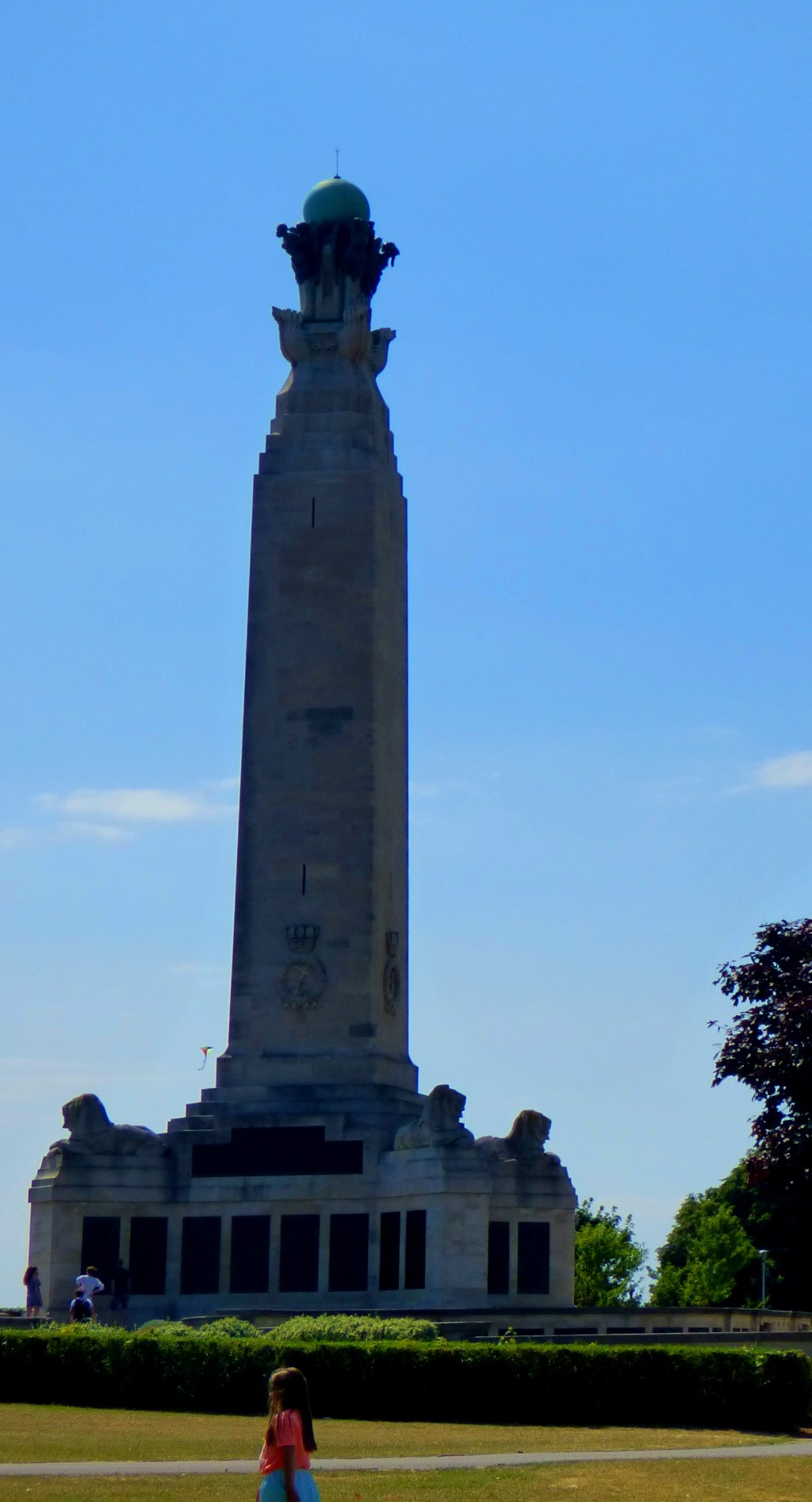
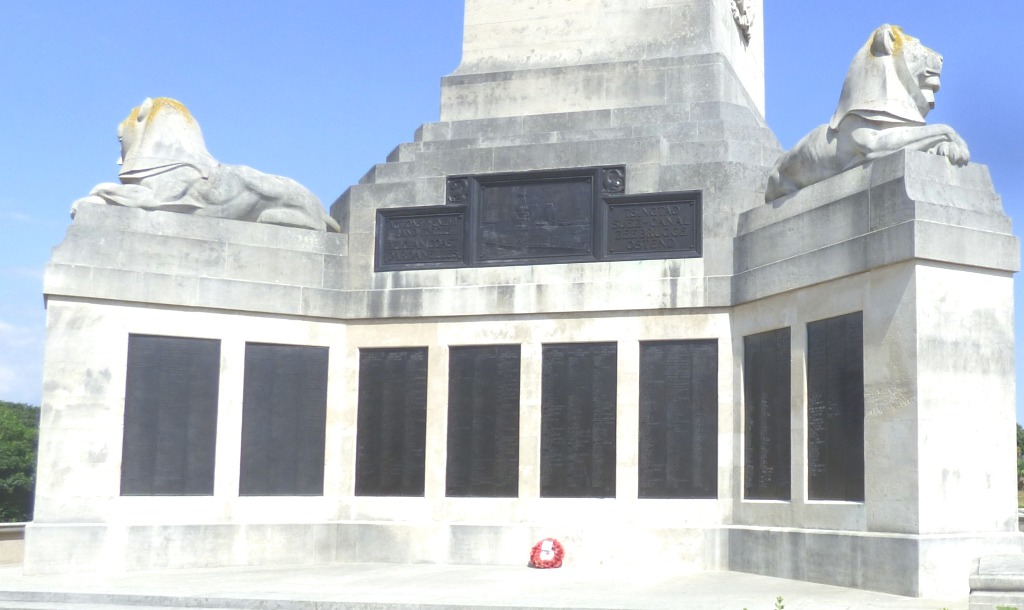
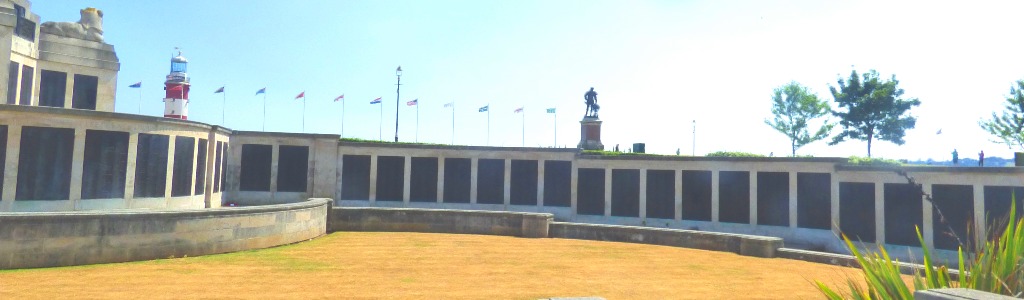
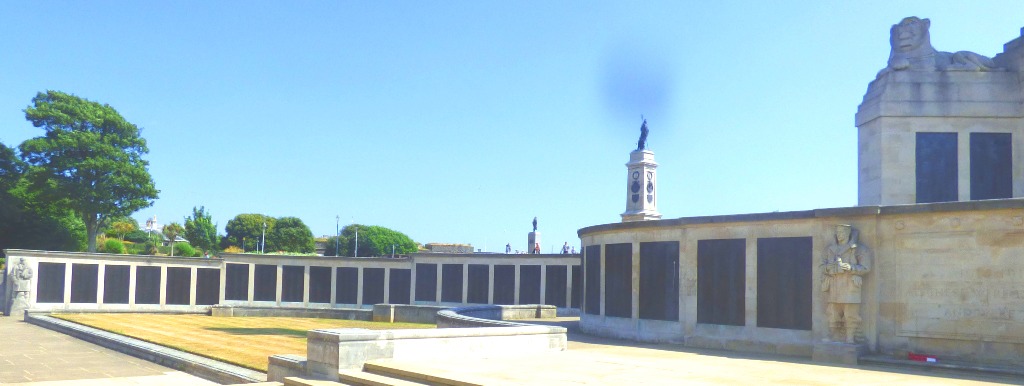
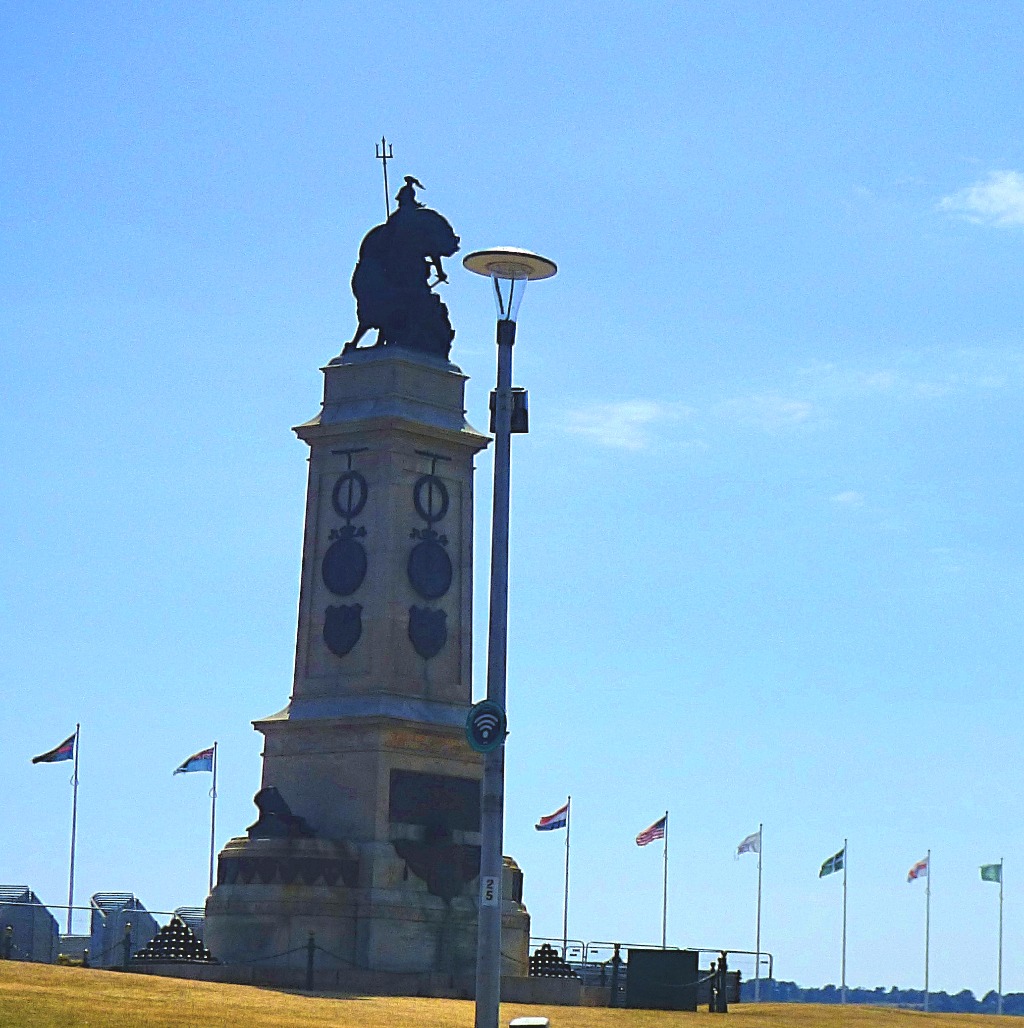
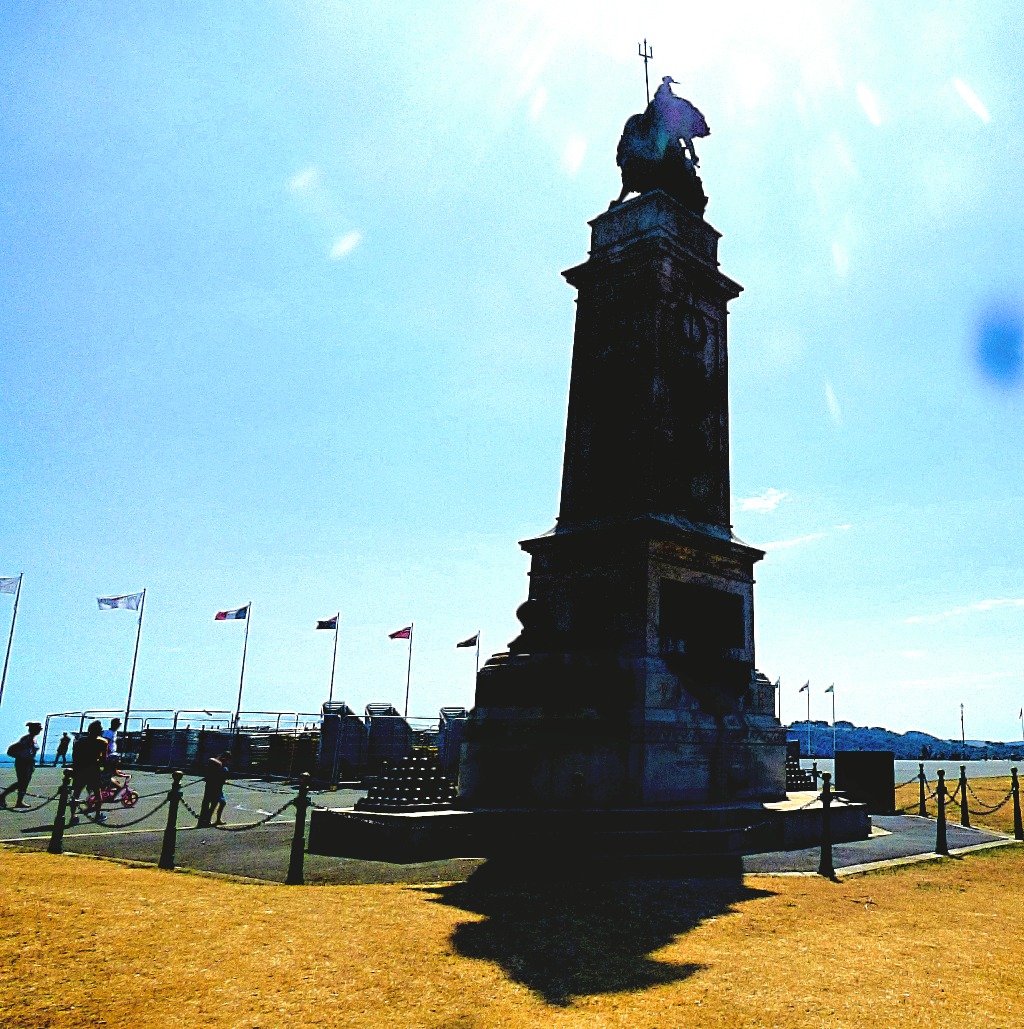
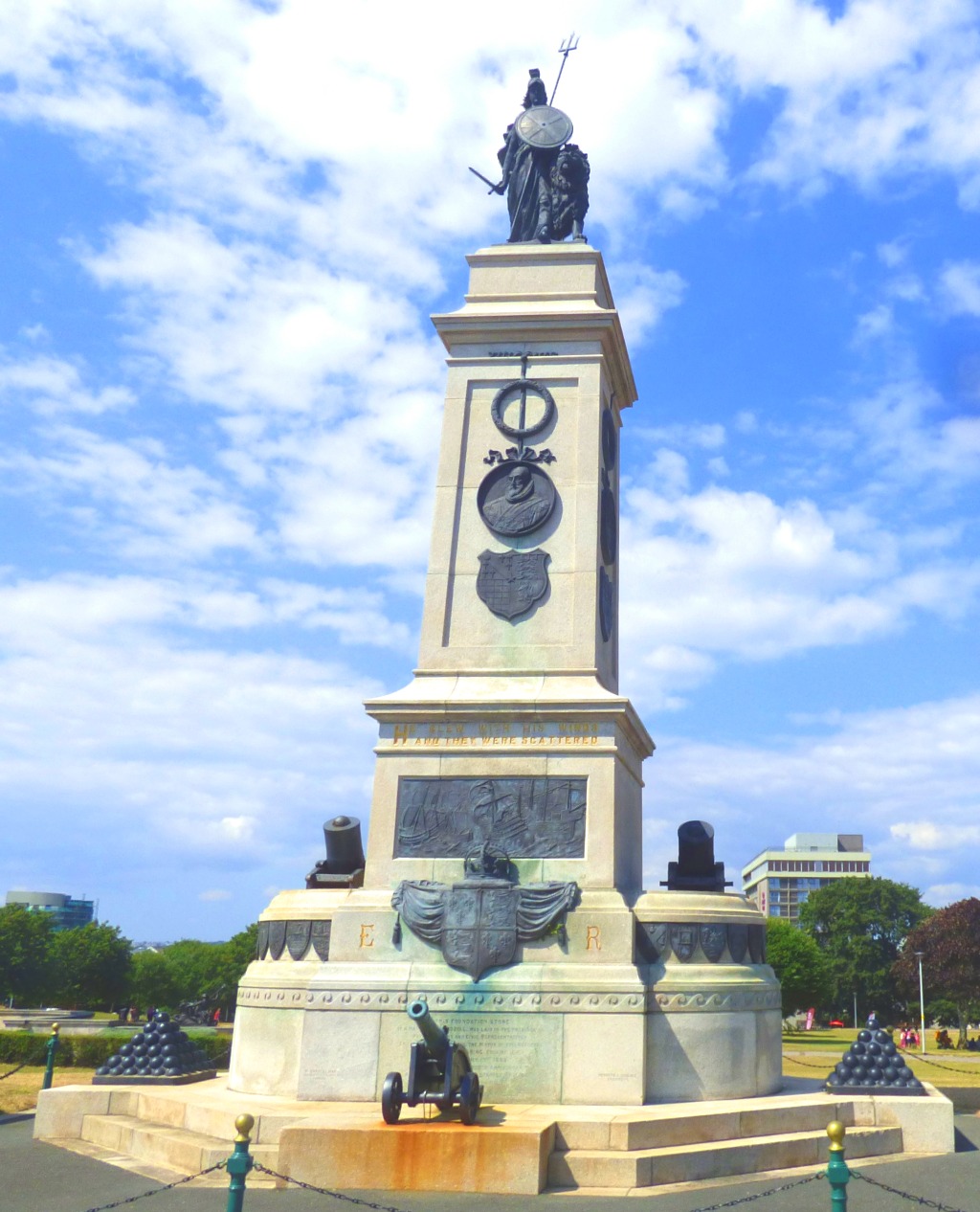
THE WAR MEMORIAL

This particular memorial honours those lost at sea as well as those killed in war, because Plymouth is very much a naval town.

Memorial - distant view
A first, distant view of the memorial

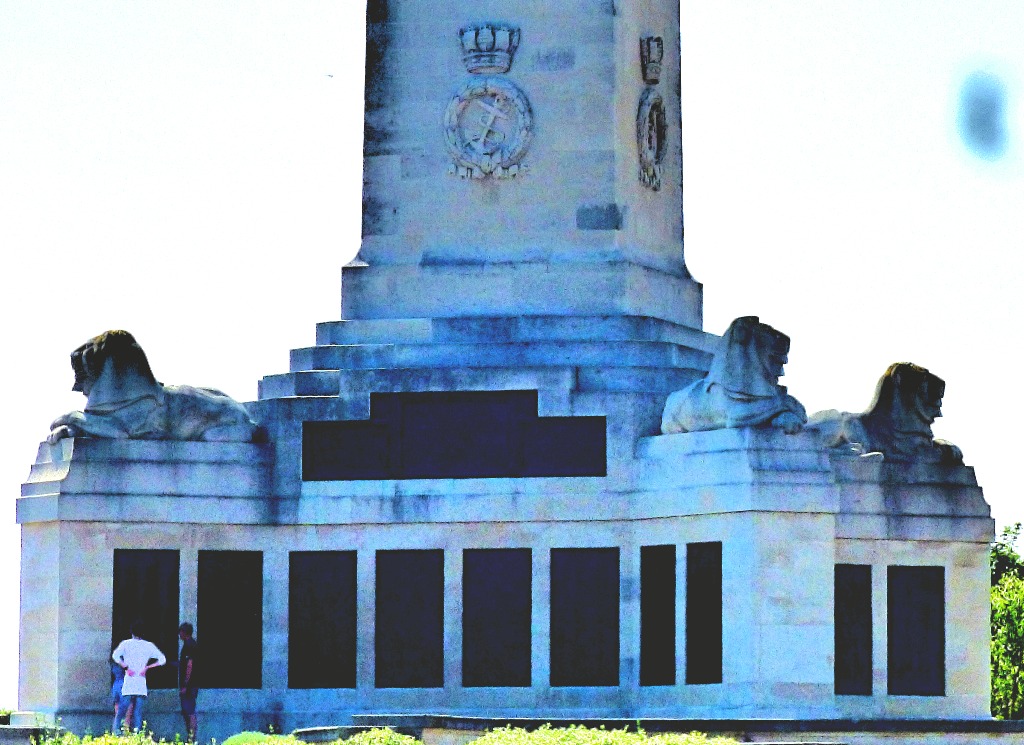
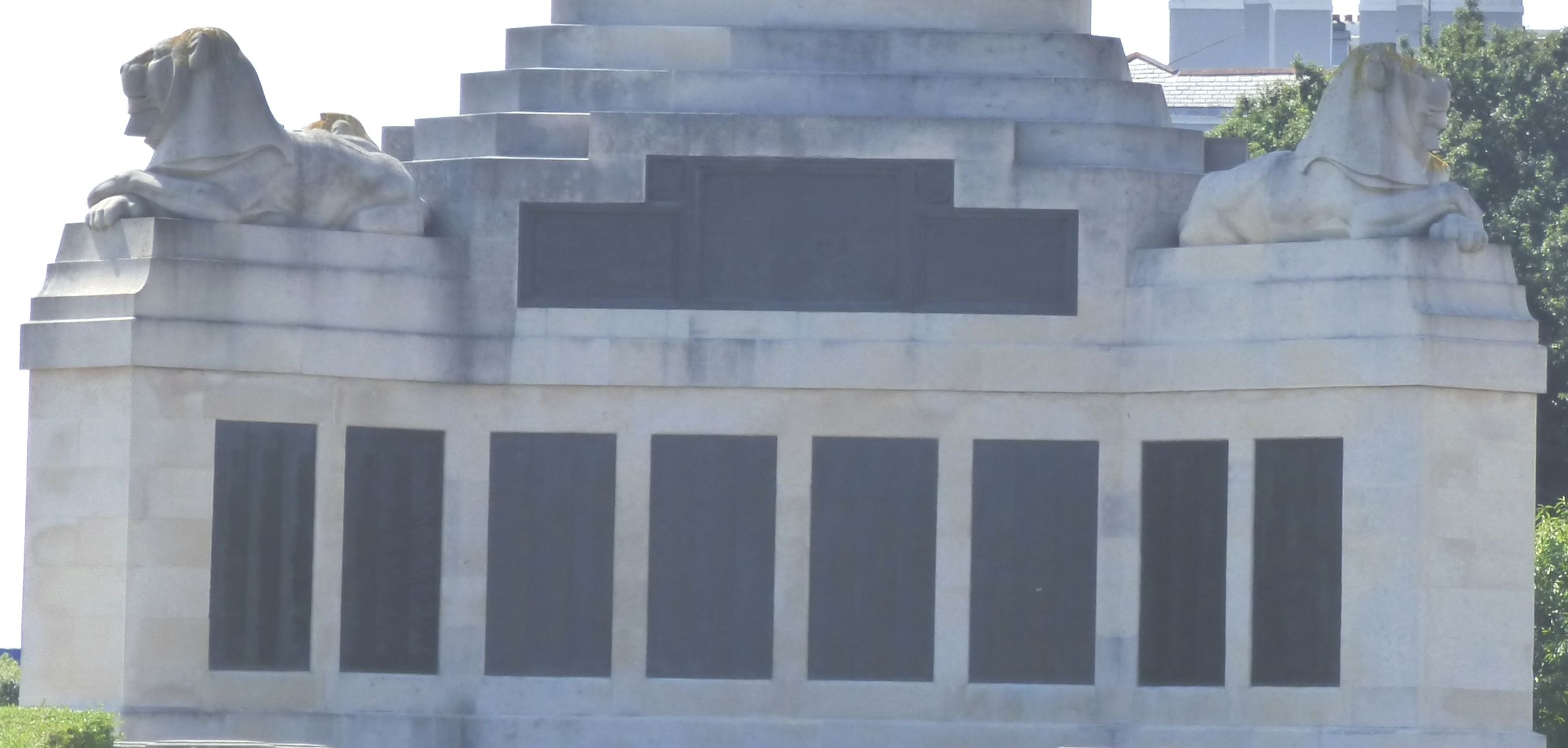
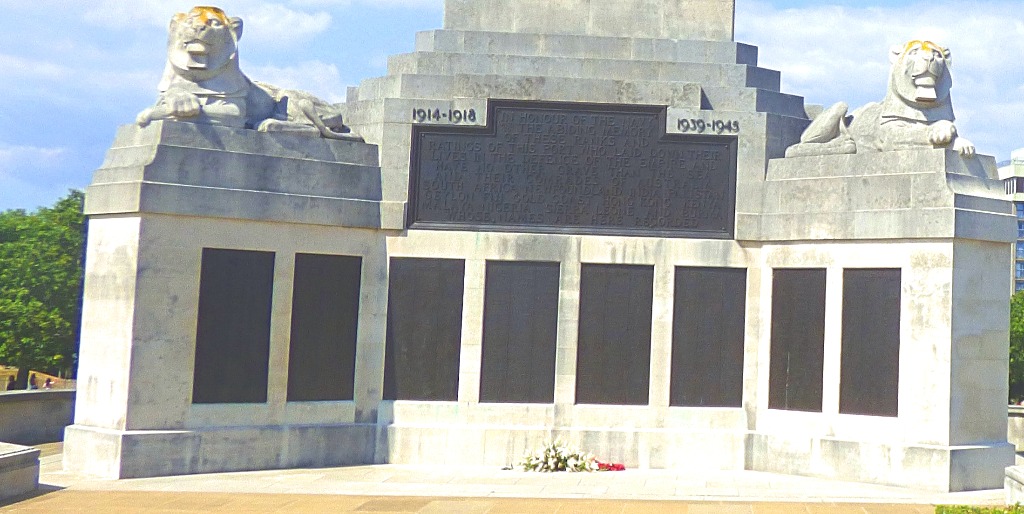
Memorial base
A series of close-ups – each vertical bronze panel around the base is a list of names.

Memorial close-up IMemorial close-up IIMemorial close-up IIIMemorial close-up IVMemorial close-up VMemorial close-up VIMemorial close-up VII

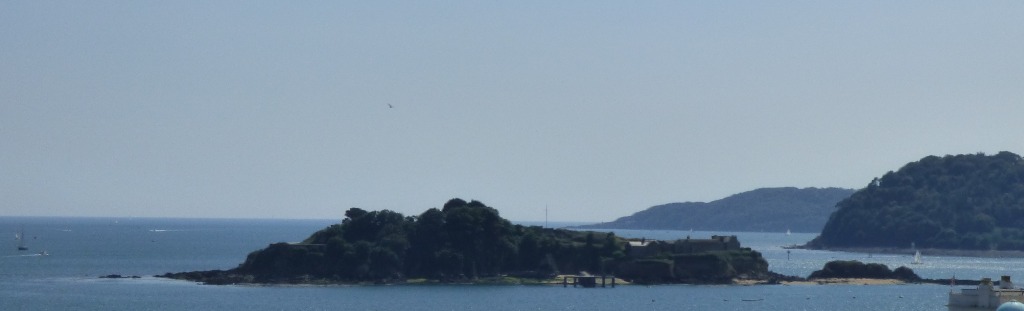
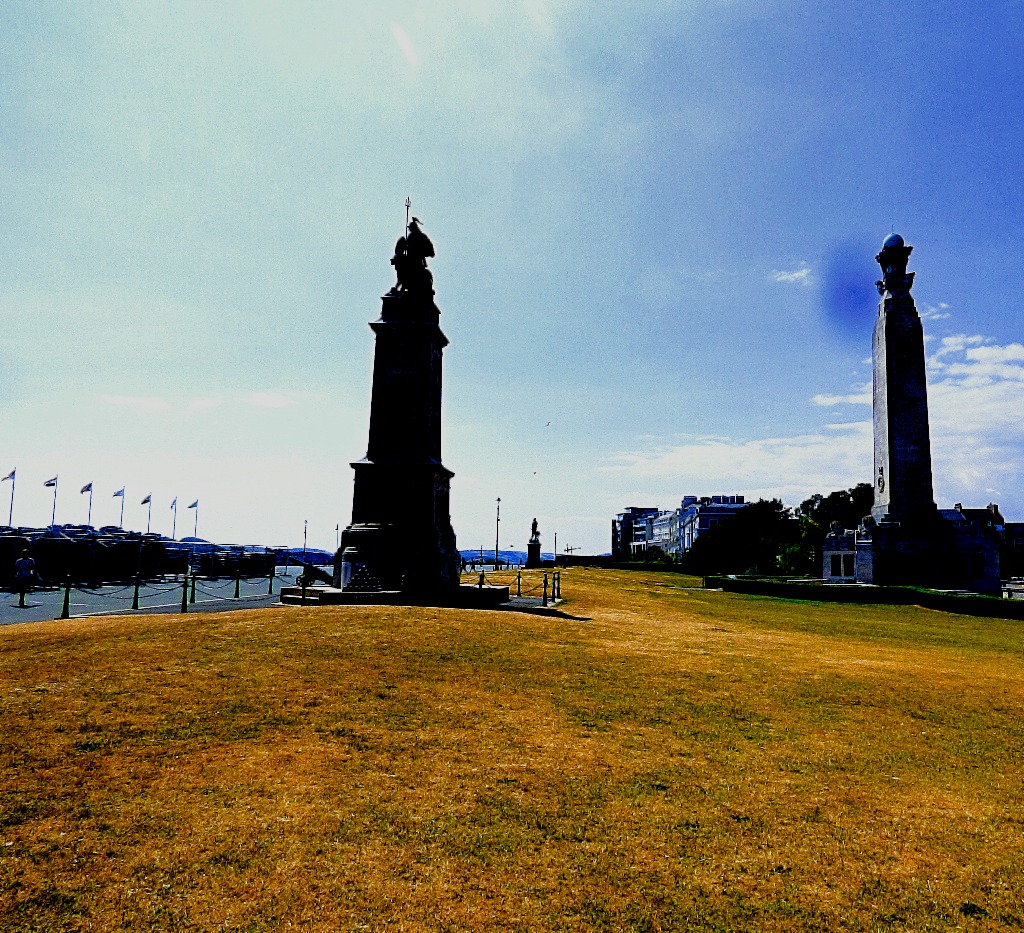
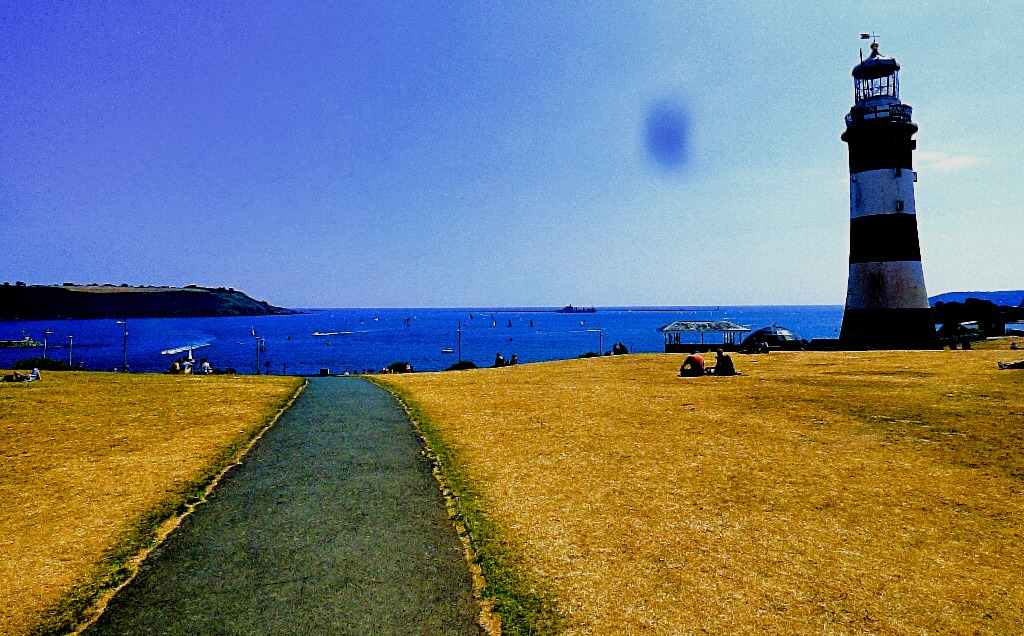
Memorial and Lighthouse in the distance

OTHER PICTURES FROM HISTORIC PLYMOUTH

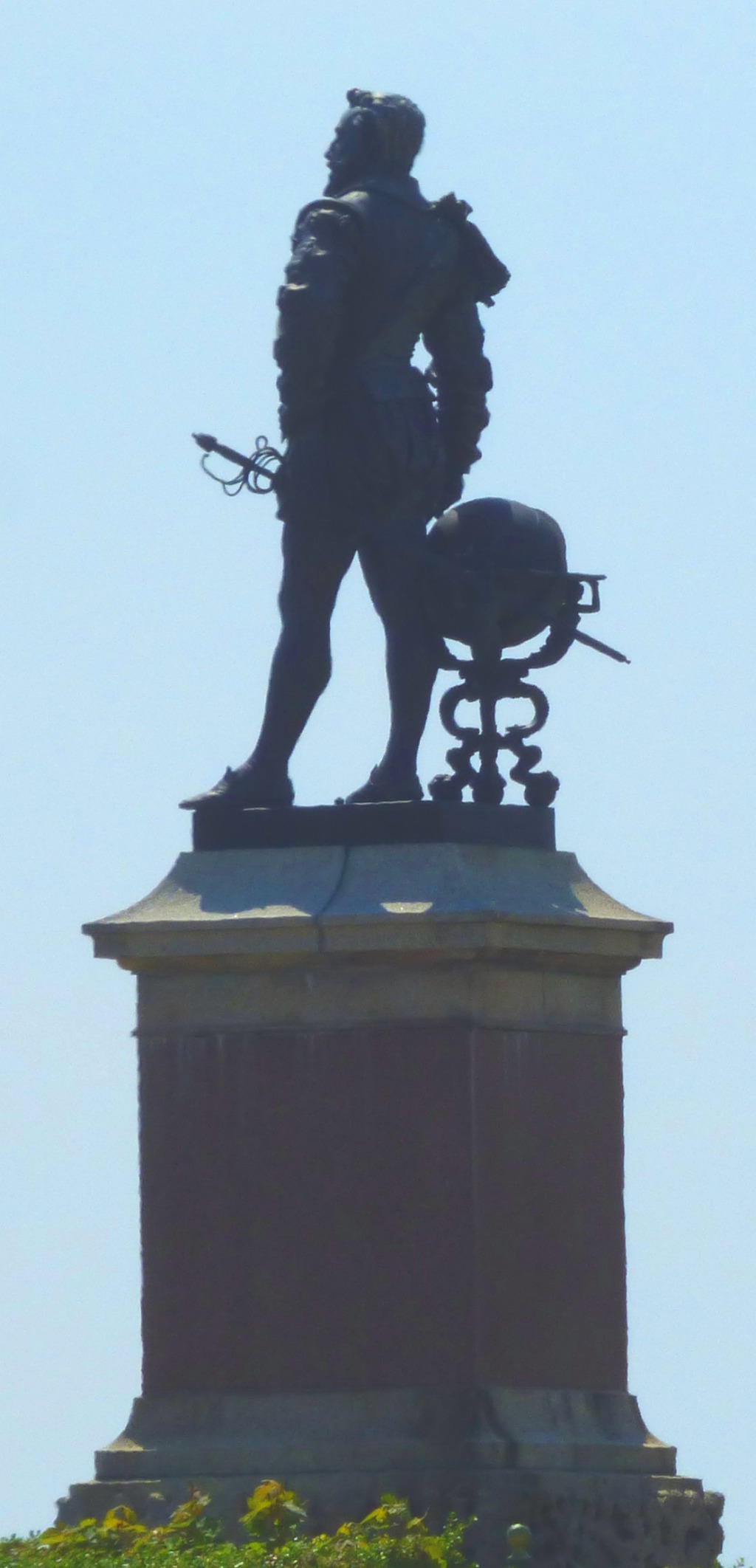
There were plenty of other things to see around the sea-front…

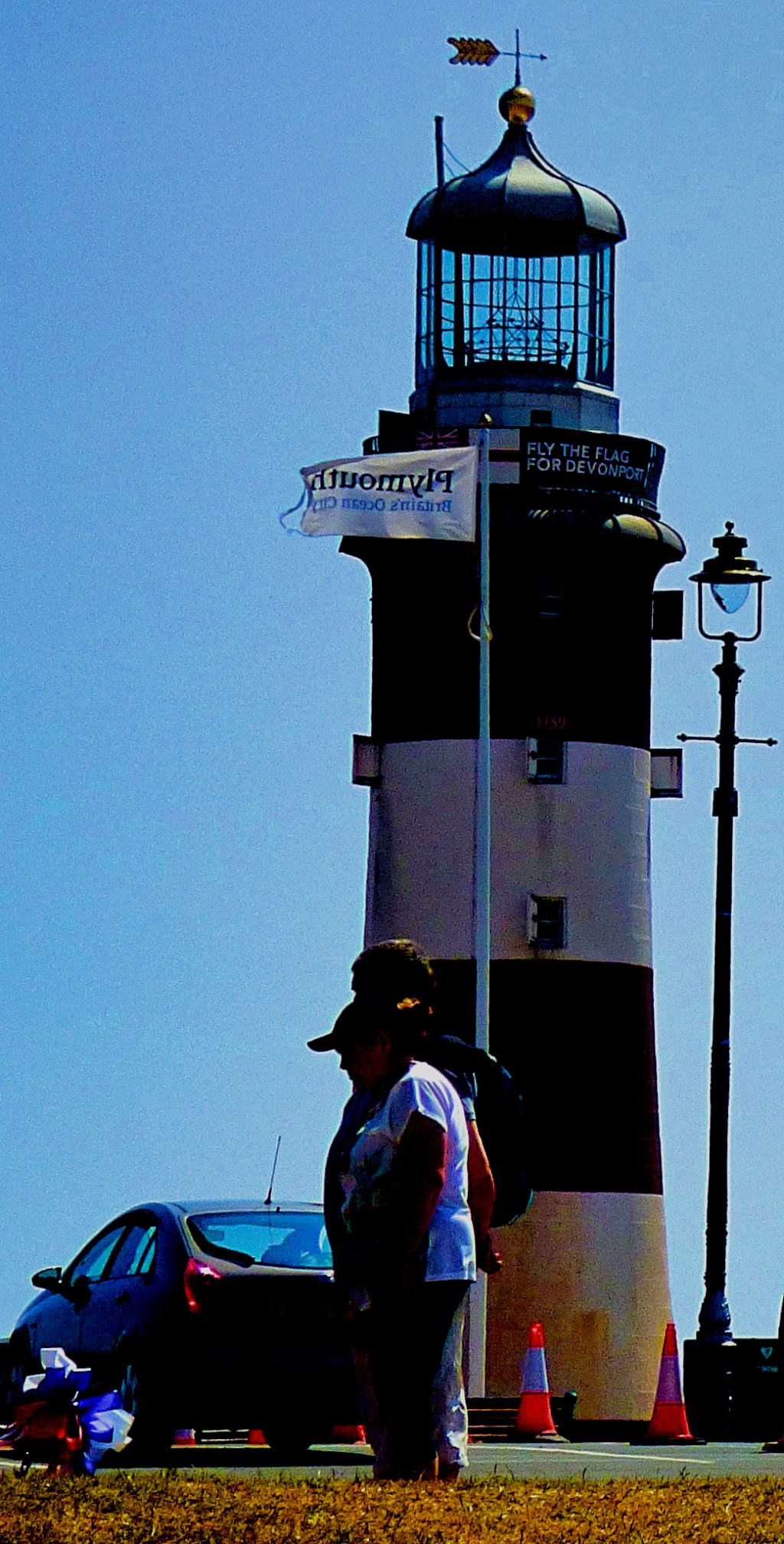
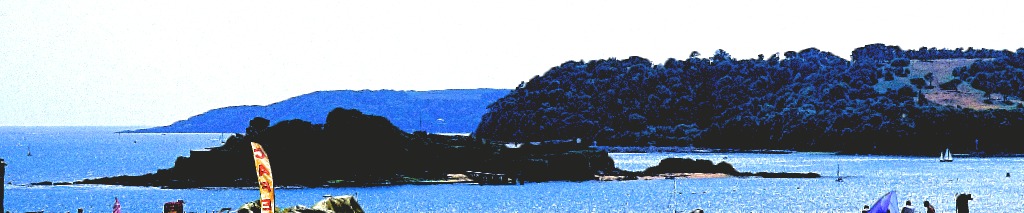
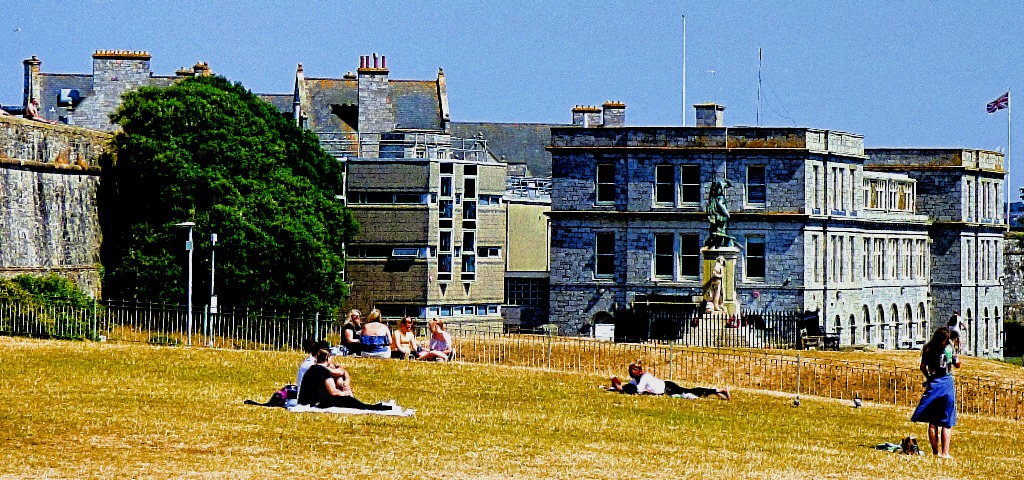
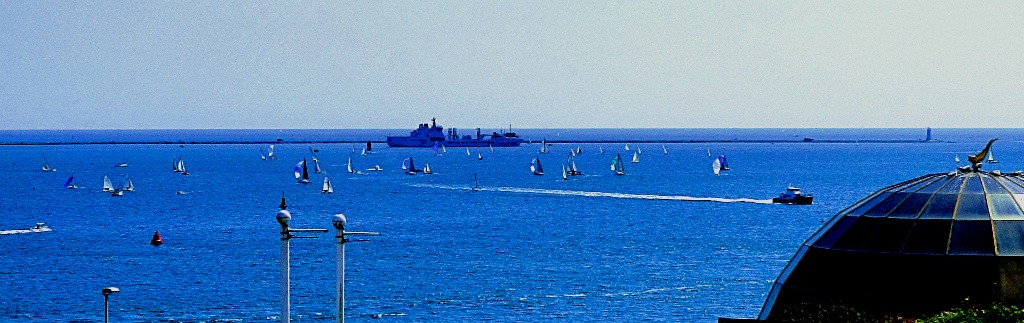
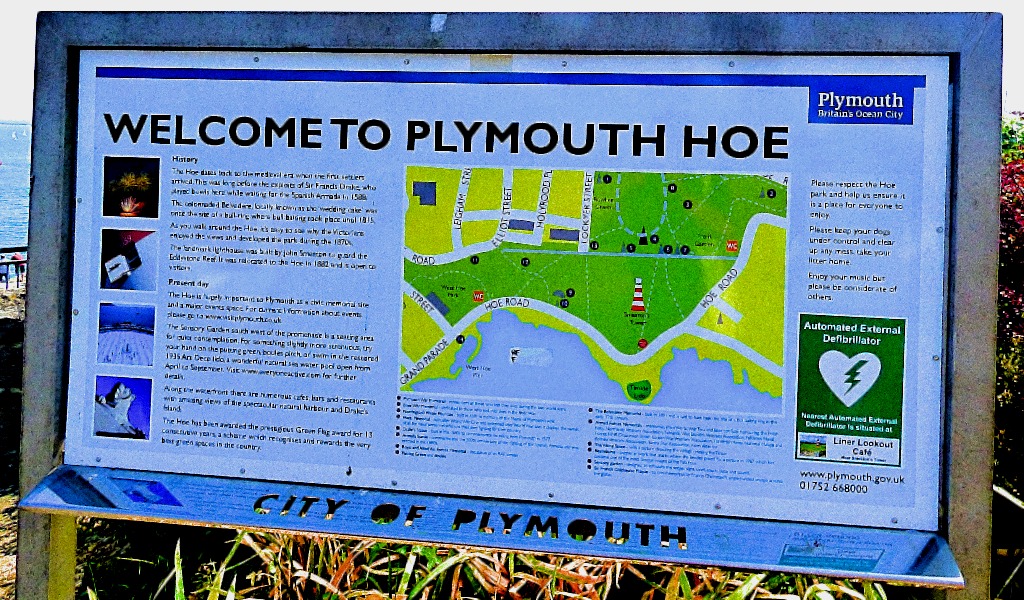
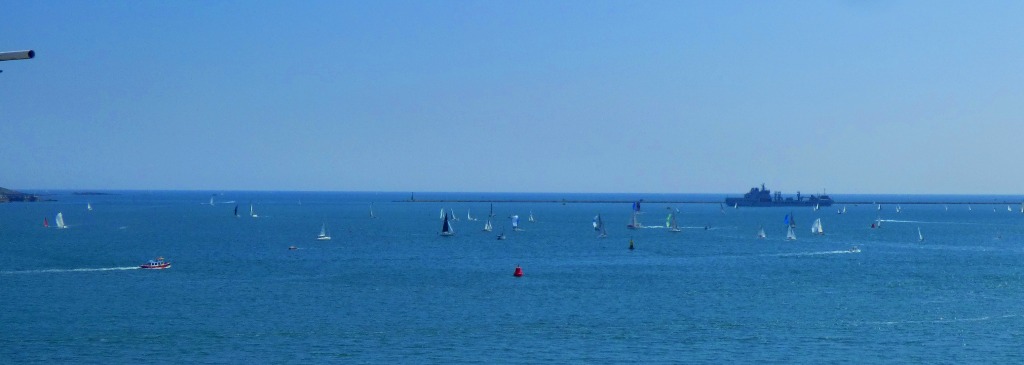
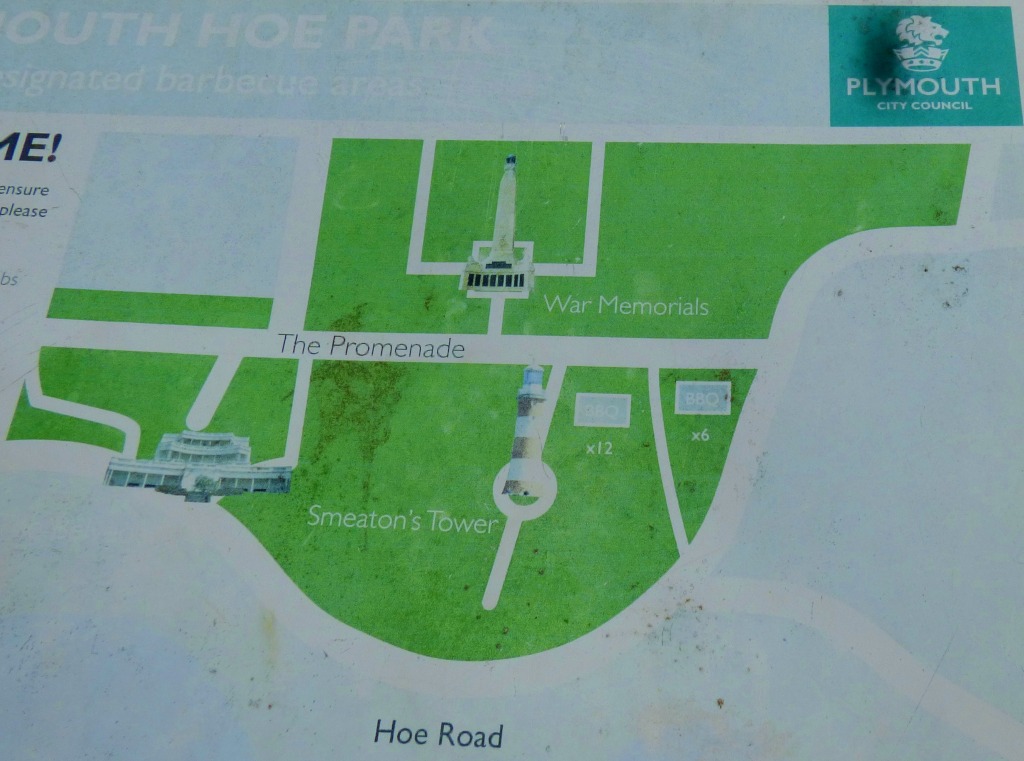
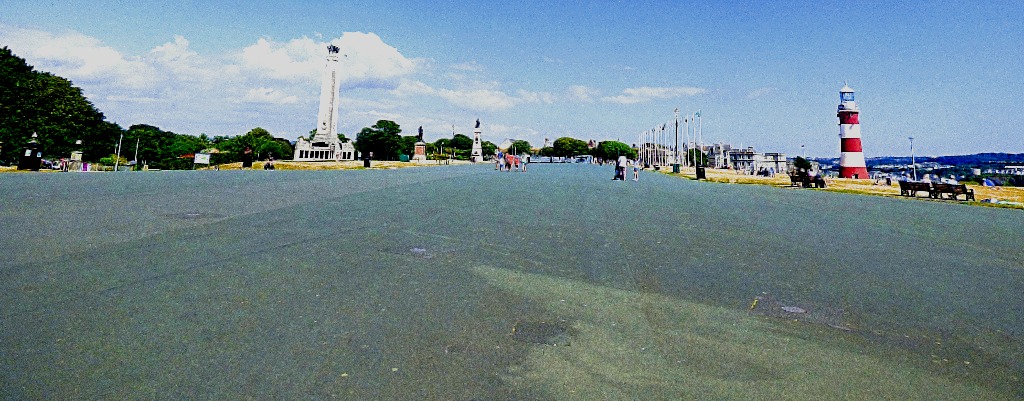
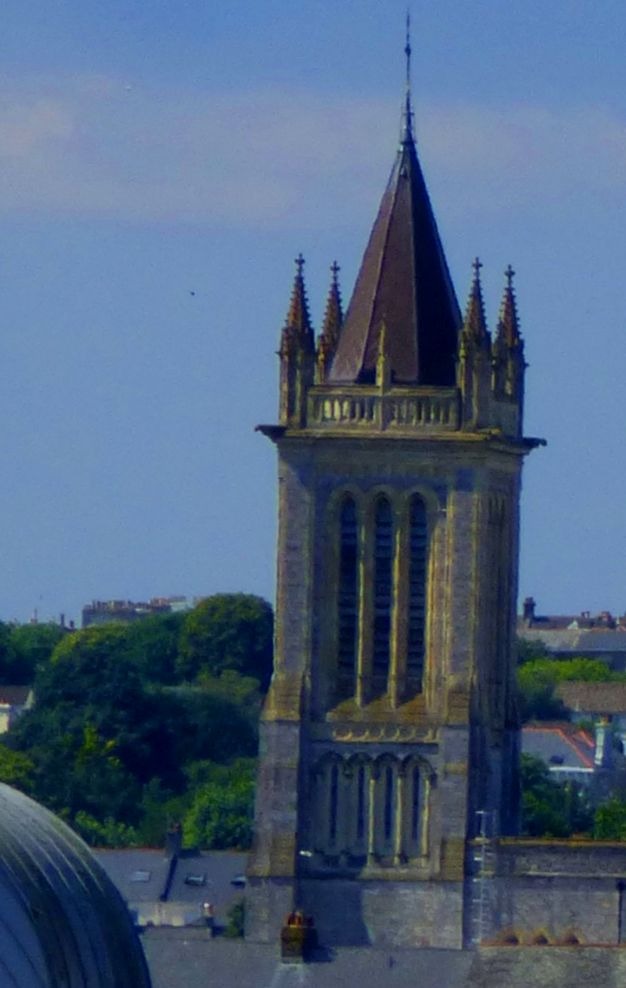
Warrior statuestatue and flagsColumn topLighthouseWarrior statue IILooking along The HoeTrident wielding statueIslandsbuildings overlooking The HoeLighthouse plaqueYachts and a warshipObservatoryWelcome to Plymouth HoeYahcts and a warship IILighthouse IIRAF StatueMapSea View IIIMemorial and Lighthouse in the distanceSmall HarbourIslandGrand building, PlymouthChurch Tower

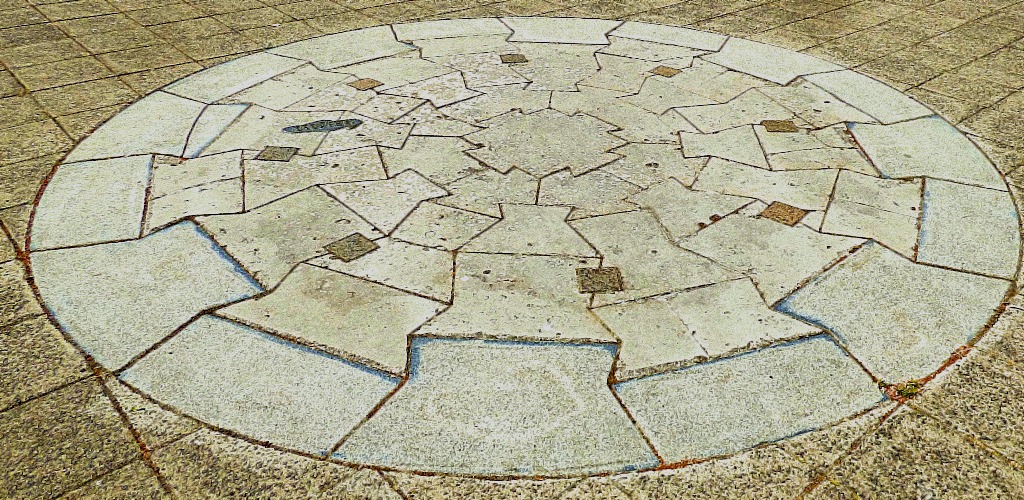
Circualr paving pattern
A quirky pavong arrangement…

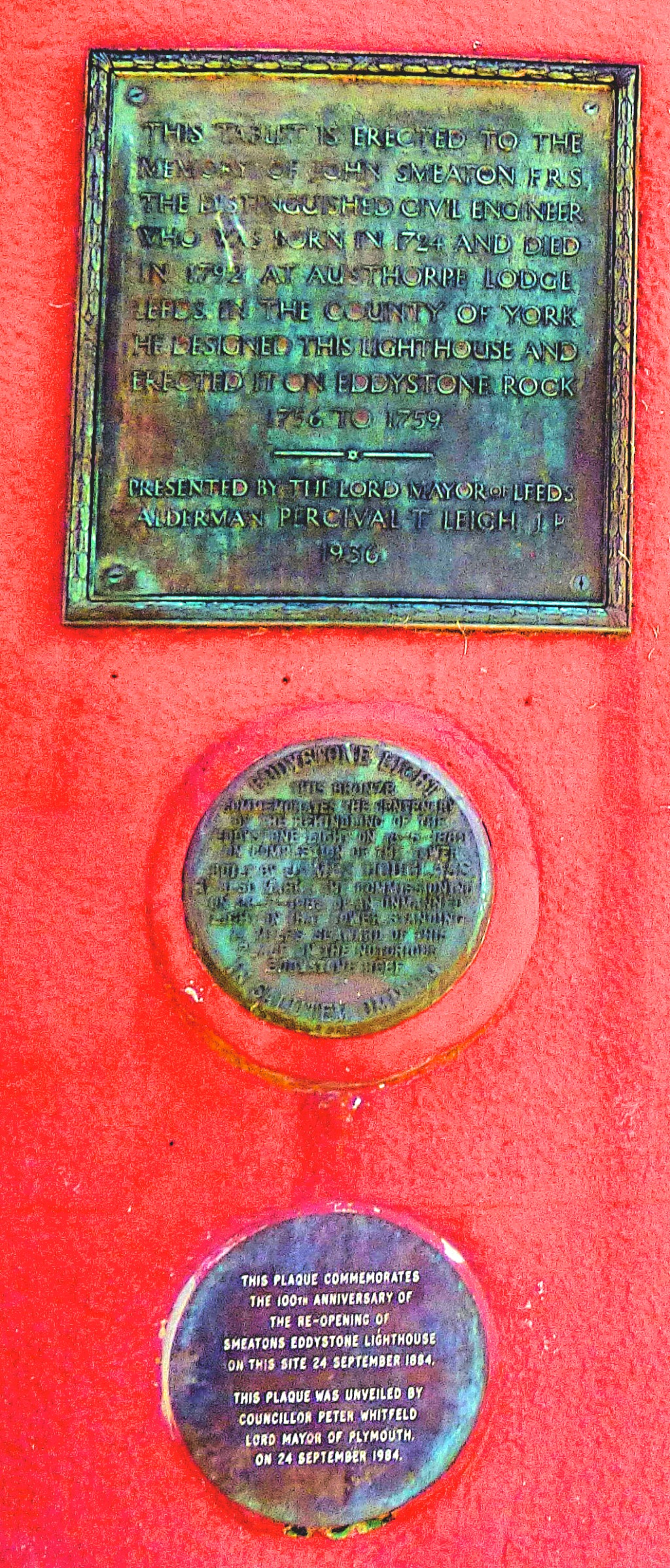
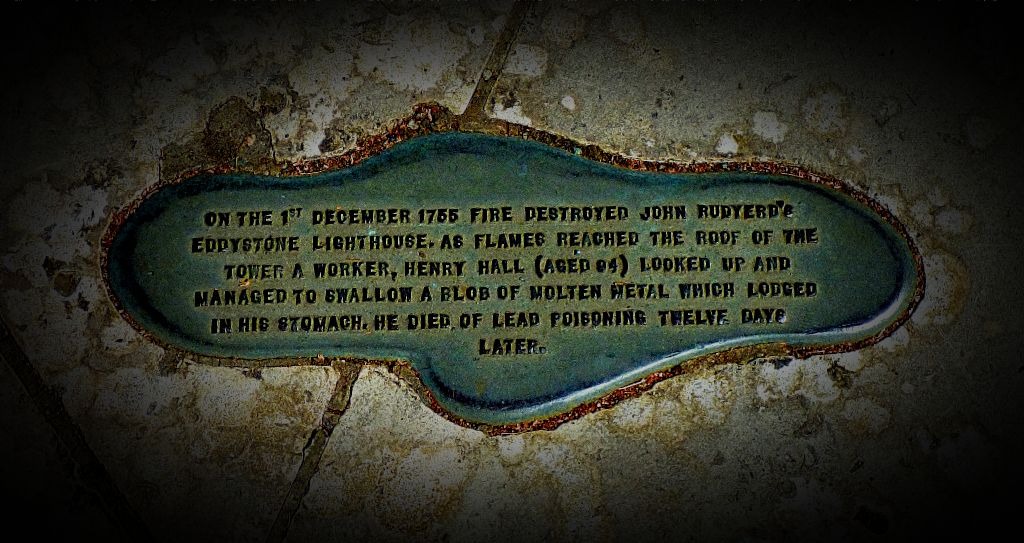
Eddystione Lighthouse
…and an explanatory plaque

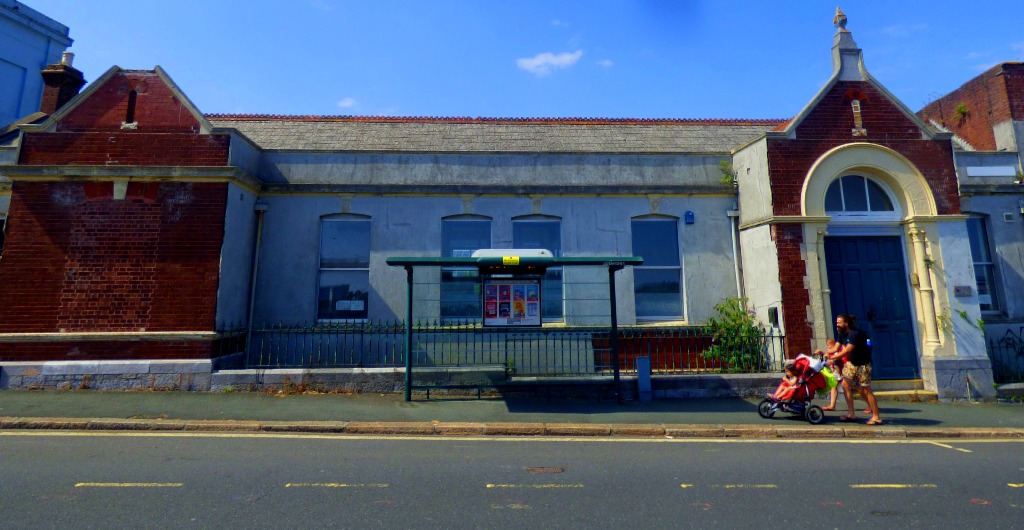
Building on way back to ferry

AN ITEM OF SHERLOCKIANA

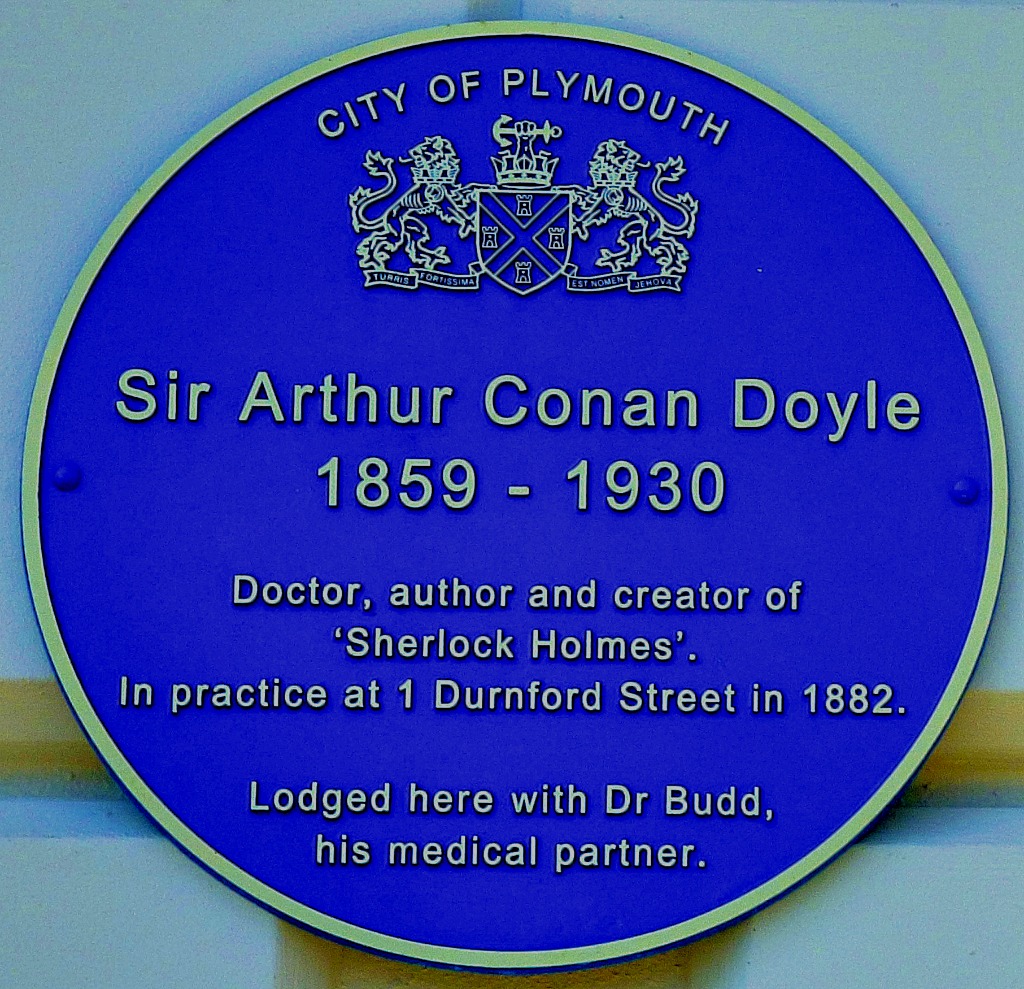
It will be no news to followers of this blog that I am a fan of the world’s first and greatest consulting detective, so it was pleasing to acquire a photograph with a connection in that direction:

ACD blue plaque

One of Holmes’ most famous cases takes place on Dartmoor, not far from Plymouth.

THE RETURN CROSSING

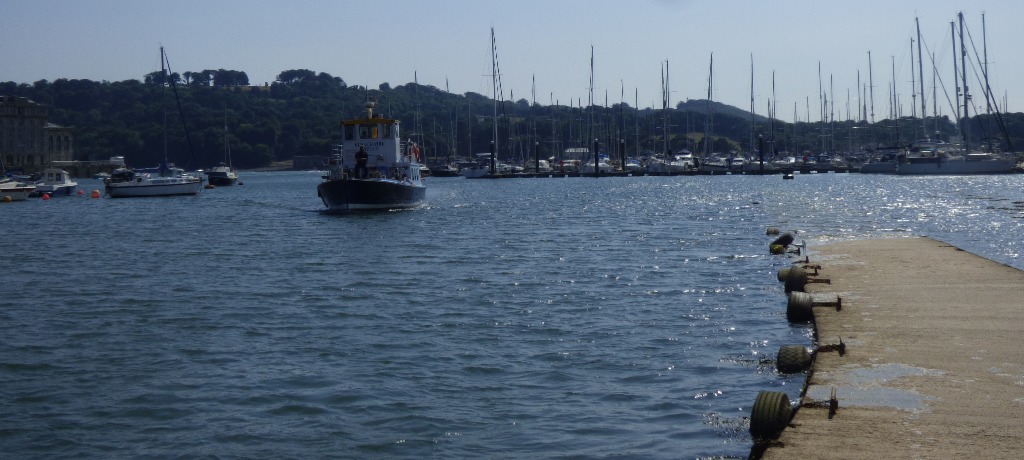
It was now time to recross the county boundary into Cornwall, one again on the Edgecumbe Belle.

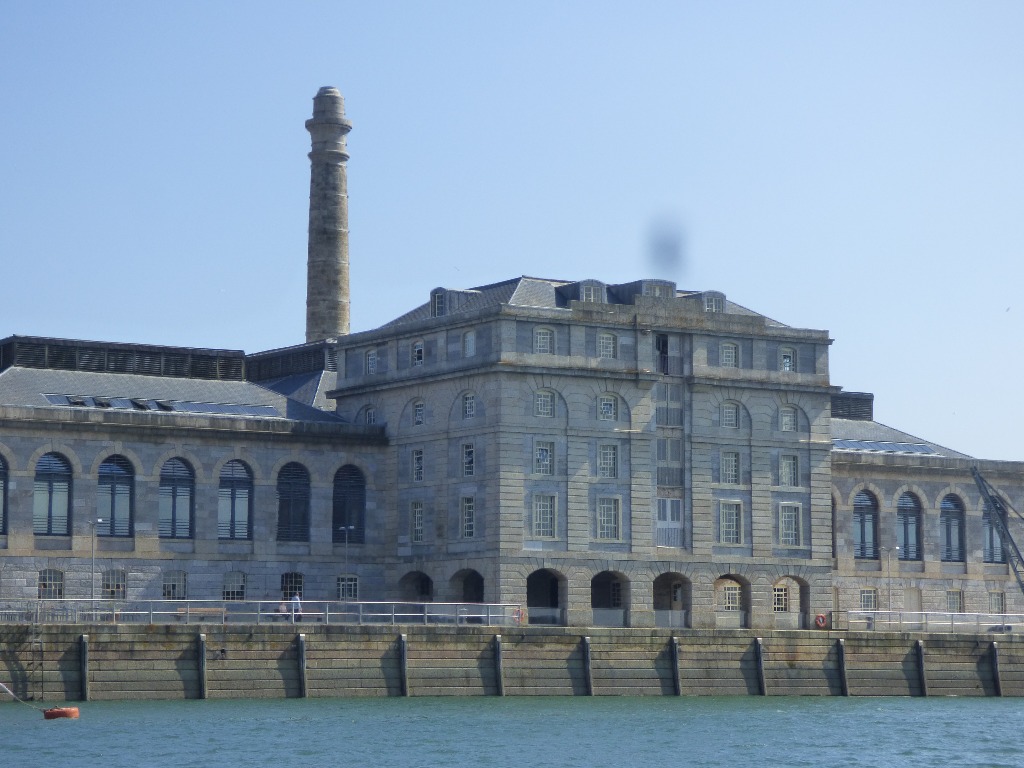
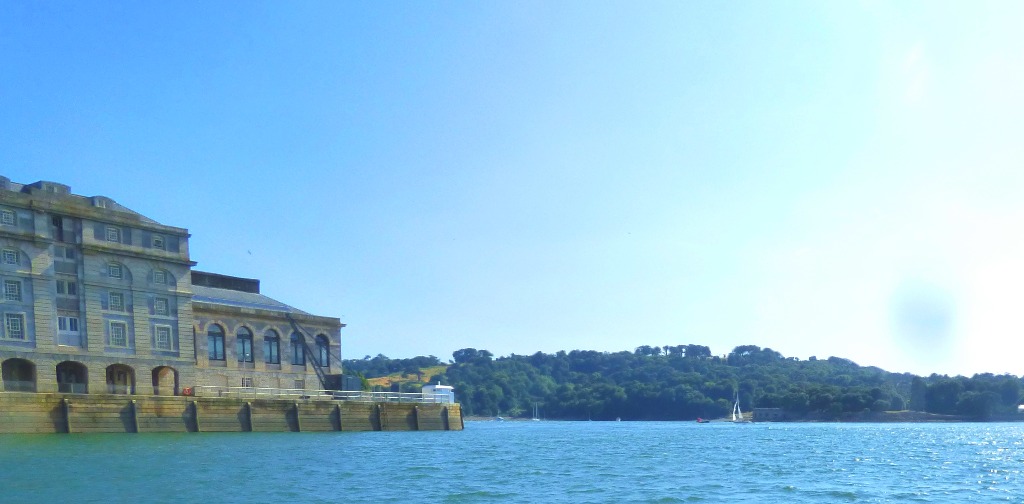
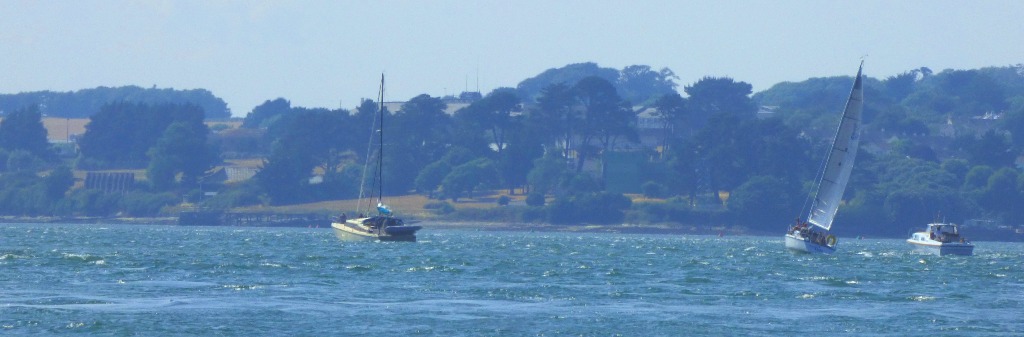
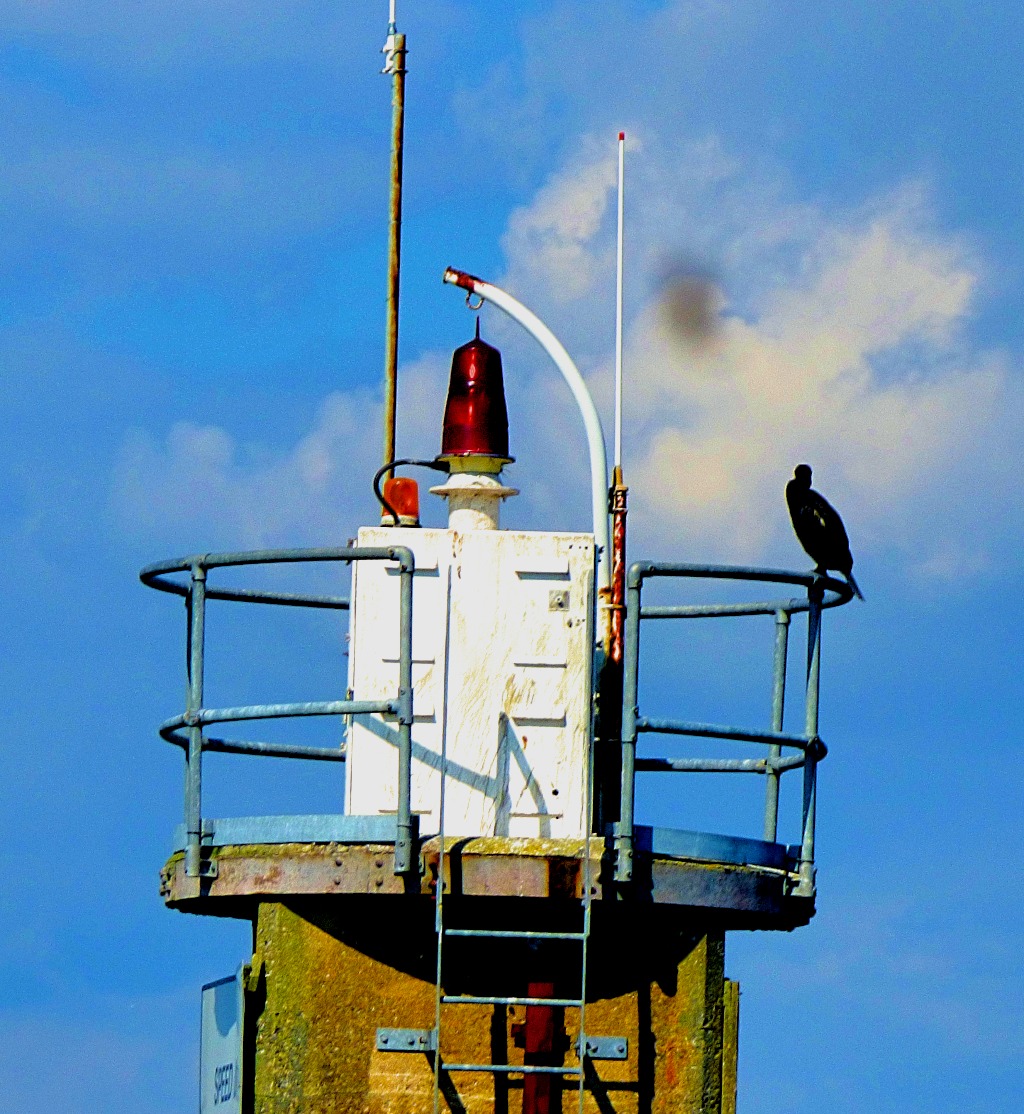
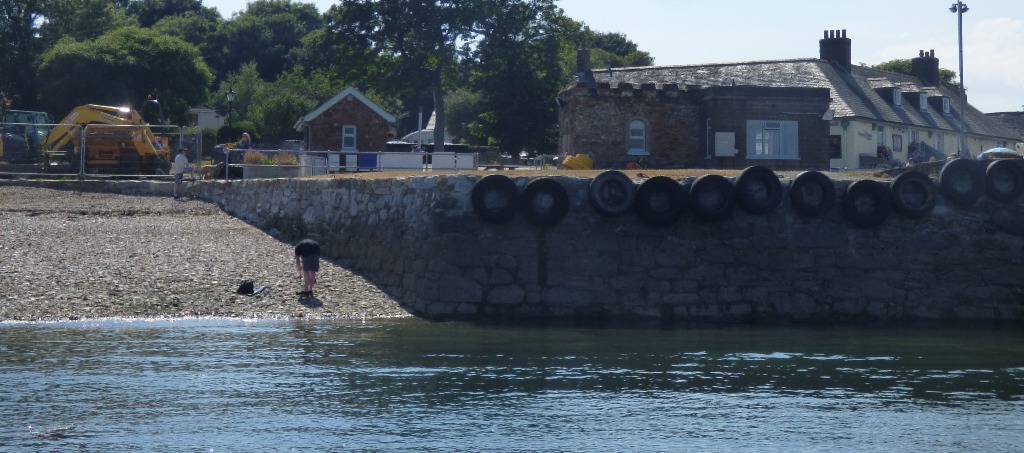
QuaysideStatue atop buildingWaterside buildingView from the Ferry (I)View from the Ferry (II)View from the ferry (III)Approaching CremyllCormorantFrameworkTrio of tower blocksSlipway

Calling All Sherlockians…

A flag-up of the latest piece on my London Transport themed website.

The latest post on my London Transport themed website looks at the paucity of mentions of London Underground in the official canon of stories about the world’s most famous consulting detective (from whose rooms Baker Street station is visible vide The Adventure of the Beryl Coronet).

INTRODUCTION

Only one of the original canon of Sherlock Holmes stories features any action on what is now London Underground, the Adventure of the Bruce-Partington Plans, which features tracks on today’s Metropolitan, District, Circle and Hammersmith & City lines. In The Adventure of the Beryl Coronet mention is made of the fact that Baker Street station is visible from 221B. The rest of this post is going to examine that lacuna from the London Underground viewpoint.

Read the rest of the piece at: http://www.londontu.be/sherlock-holmes-and-london-underground/

Please share widely!

Special Post: Baker Street

INTRODUCTION

This post is the fifth in a series I am running on this blog providing a station by station guide to London.

HISTORY, ASTRONOMY AND DETECTIVES

Baker Street was one of the original stations that opened in 1863 as The Metropolitan Railway, the world’s first underground public transport system, on January the 10th 1863. Those platforms, two of 10 at that station (the most on the entire system) to be served by underground trains, are still in service today, and have been restored to look as they would have done when first opened. Ironically, they are no longer served by the Metropolitan line, which uses two terminal and two through platforms just to the north of the originals, its tracks joining those of the Hammersmith and City and Circle lines just east of Baker Street. By way of explanation I turn to Douglas Rose’s London Underground: A Diagrammatic History


DSCN6333

The other two lines that serve this station are the Bakerloo and Jubilee lines. Baker Street is a division point between the old and new Jubilee lines – south of Baker Street is all new track, northwards old, dating from 1939, when it was opened as a branch of the Bakerloo, taking some of the strain of the Metropolitan by taking over services to Stanmore and assuming sole responsibility for intermediate stops between Baker Street and Finchley Road, and also between Finchley Road and Wembley Park. When the Jubilee opened in 1979 it comprised the old Stanmore branch of the Bakerloo and three stations south of Baker Street.

Reverting temporarily to the Metropolitan, those four platforms at Baker Street, from which trains go to a variety of destinations developed from what started as a single track branch going only as far as Swiss Cottage. It grew out of all recognition during the tenure of Edward Watkin, who saw the Metropolitan as a crucial link in his plan for a railway system to link his three favourite cities, London, Paris and Manchester. At one time, as my next picture shows, the Metropolitan went far beyond it’s current reach…

DSCN6336

Baker Street is home to Madame Tussaud’s and the London Planetarium, both of which merit a visit.

Of course, no post about Baker Street would be complete without something about it’s most famous ever resident, Mr Sherlock Holmes, consulting detective.

I am an avid fan of the great detective, having read all the original stories and many modern stories that feature the great detective. As well as owning a respectable collection of my own, I regularly borrow books about this subject from the libraries that I use…

A remarkable recent find.

The great originals.
The great originals

Some of my modern Holmes stories.

To end this post, along with my customary hopes that you have enjoyed it and that you will share it, a couple more maps, first a facsimile of the original Beck map of 1933 and then for comparison a facsimile of the 1926 Underground Map…

When Beck first produced a prototype of this map in 1931 his superiors thought that no-one would like it - but eventually they agreed to a trial of it in 1933, and now every public transport system in the world uses schematic diagrams of this type.
When Beck first produced a prototype of this map in 1931 his superiors thought that no-one would like it – but eventually they agreed to a trial of it in 1933, and now every public transport system in the world uses schematic diagrams of this type.

When Beck first produced a prototype of this map in 1931 his superiors thought that no-one would like it - but eventually they agreed to a trial of it in 1933, and now every public transport system in the world uses schematic diagrams of this type.

Heritage Open Day 3: Masonic Temple

The Masonic Temple, at the heart of Philanthropic Lodge 107, is quite remarkable, all the more so  for being housed within another building that serves an altogether different purpose – The Dukes Head which faces the Tuesday Market Place in King’s Lynn.

Masonic regalia frequently goes under the hammer at James and Sons auctions and has been known to do well, but this collection was astonishing.

There are rumours that Mozart joined a Masonic Lodge, while Sherlockians will recall that Jabez Wilson in “The Adventure of the Red Headed League” is a freemason. For fans of more modern literature, Matthew Reilly’s Jack West series features freemasonry.

The next installment of this series features a house on Ferry Lane and in the meantime here are my attempts to do photographic justice to Philanthropic Lodge 107…

Philanthropic 107
The door mat tells you what you are entering.

?????????? ?????????? Grandmasters ?????????? ??????????

Even the ceiling had points of interest!

Throne Sword Flags

Globes
I particularly liked this display

?????????? ??????????

Atc and Compass
The famed arc and compass

?????????? ?????????? ?????????? ?????????? ??????????

Medals
Medals